EP3607051B1 - Isolierung von zellen aus geschlüpften reptilieneiern zur verwendung in der herstellung von bioartifizieller haut und leder - Google Patents
Isolierung von zellen aus geschlüpften reptilieneiern zur verwendung in der herstellung von bioartifizieller haut und leder Download PDFInfo
- Publication number
- EP3607051B1 EP3607051B1 EP18717303.4A EP18717303A EP3607051B1 EP 3607051 B1 EP3607051 B1 EP 3607051B1 EP 18717303 A EP18717303 A EP 18717303A EP 3607051 B1 EP3607051 B1 EP 3607051B1
- Authority
- EP
- European Patent Office
- Prior art keywords
- cells
- reptile
- isolated
- fibroblasts
- melanocytes
- Prior art date
- Legal status (The legal status is an assumption and is not a legal conclusion. Google has not performed a legal analysis and makes no representation as to the accuracy of the status listed.)
- Active
Links
Images

Classifications
-
- C—CHEMISTRY; METALLURGY
- C12—BIOCHEMISTRY; BEER; SPIRITS; WINE; VINEGAR; MICROBIOLOGY; ENZYMOLOGY; MUTATION OR GENETIC ENGINEERING
- C12N—MICROORGANISMS OR ENZYMES; COMPOSITIONS THEREOF; PROPAGATING, PRESERVING, OR MAINTAINING MICROORGANISMS; MUTATION OR GENETIC ENGINEERING; CULTURE MEDIA
- C12N5/00—Undifferentiated human, animal or plant cells, e.g. cell lines; Tissues; Cultivation or maintenance thereof; Culture media therefor
- C12N5/06—Animal cells or tissues; Human cells or tissues
- C12N5/0602—Vertebrate cells
- C12N5/0625—Epidermal cells, skin cells; Cells of the oral mucosa
- C12N5/0626—Melanocytes
-
- B—PERFORMING OPERATIONS; TRANSPORTING
- B32—LAYERED PRODUCTS
- B32B—LAYERED PRODUCTS, i.e. PRODUCTS BUILT-UP OF STRATA OF FLAT OR NON-FLAT, e.g. CELLULAR OR HONEYCOMB, FORM
- B32B9/00—Layered products comprising a layer of a particular substance not covered by groups B32B11/00 - B32B29/00
- B32B9/02—Layered products comprising a layer of a particular substance not covered by groups B32B11/00 - B32B29/00 comprising animal or vegetable substances, e.g. cork, bamboo, starch
- B32B9/025—Layered products comprising a layer of a particular substance not covered by groups B32B11/00 - B32B29/00 comprising animal or vegetable substances, e.g. cork, bamboo, starch comprising leather
-
- C—CHEMISTRY; METALLURGY
- C12—BIOCHEMISTRY; BEER; SPIRITS; WINE; VINEGAR; MICROBIOLOGY; ENZYMOLOGY; MUTATION OR GENETIC ENGINEERING
- C12N—MICROORGANISMS OR ENZYMES; COMPOSITIONS THEREOF; PROPAGATING, PRESERVING, OR MAINTAINING MICROORGANISMS; MUTATION OR GENETIC ENGINEERING; CULTURE MEDIA
- C12N5/00—Undifferentiated human, animal or plant cells, e.g. cell lines; Tissues; Cultivation or maintenance thereof; Culture media therefor
- C12N5/06—Animal cells or tissues; Human cells or tissues
- C12N5/0602—Vertebrate cells
- C12N5/0603—Embryonic cells ; Embryoid bodies
- C12N5/0605—Cells from extra-embryonic tissues, e.g. placenta, amnion, yolk sac, Wharton's jelly
-
- C—CHEMISTRY; METALLURGY
- C12—BIOCHEMISTRY; BEER; SPIRITS; WINE; VINEGAR; MICROBIOLOGY; ENZYMOLOGY; MUTATION OR GENETIC ENGINEERING
- C12N—MICROORGANISMS OR ENZYMES; COMPOSITIONS THEREOF; PROPAGATING, PRESERVING, OR MAINTAINING MICROORGANISMS; MUTATION OR GENETIC ENGINEERING; CULTURE MEDIA
- C12N5/00—Undifferentiated human, animal or plant cells, e.g. cell lines; Tissues; Cultivation or maintenance thereof; Culture media therefor
- C12N5/06—Animal cells or tissues; Human cells or tissues
- C12N5/0602—Vertebrate cells
- C12N5/0652—Cells of skeletal and connective tissues; Mesenchyme
- C12N5/0656—Adult fibroblasts
-
- C—CHEMISTRY; METALLURGY
- C12—BIOCHEMISTRY; BEER; SPIRITS; WINE; VINEGAR; MICROBIOLOGY; ENZYMOLOGY; MUTATION OR GENETIC ENGINEERING
- C12N—MICROORGANISMS OR ENZYMES; COMPOSITIONS THEREOF; PROPAGATING, PRESERVING, OR MAINTAINING MICROORGANISMS; MUTATION OR GENETIC ENGINEERING; CULTURE MEDIA
- C12N5/00—Undifferentiated human, animal or plant cells, e.g. cell lines; Tissues; Cultivation or maintenance thereof; Culture media therefor
- C12N5/06—Animal cells or tissues; Human cells or tissues
- C12N5/0602—Vertebrate cells
- C12N5/0652—Cells of skeletal and connective tissues; Mesenchyme
- C12N5/0662—Stem cells
- C12N5/0668—Mesenchymal stem cells from other natural sources
-
- C—CHEMISTRY; METALLURGY
- C14—SKINS; HIDES; PELTS; LEATHER
- C14C—CHEMICAL TREATMENT OF HIDES, SKINS OR LEATHER, e.g. TANNING, IMPREGNATING, FINISHING; APPARATUS THEREFOR; COMPOSITIONS FOR TANNING
- C14C13/00—Manufacture of special kinds or leather, e.g. vellum
Definitions
- the present disclosure relates to a method of isolating cells from already hatched reptile eggs for use in production of bioartificial skin and leather.
- the disclosure allows for isolation of cells for the production of reptile leather and leather without the ethical issues of conventional reptile farming and the trapping and killing of wildlife for their skins.
- the disclosure also allows isolation of cells for production of leather from species that are not abundantly available as products, such as reptile leather from endangered species.
- the isolated cells can be used to reduce the waste of leather due to scar tissue formation in farmed animals by using the cells for tissue regeneration which might lead to less animals used in traditional farming.
- the method of isolating cells from already hatched eggs means that no negative impact will be imposed on animals as opposed to e.g. biopsies taken for the same purpose.
- US 2016/097109 is an example of a method for production of artificial skin according to the prior art.
- XP028326571 Cell Culture from lizard skin: A tool for the study of epidermal differentiation", in the name of Elisabetta Polazzi et al.
- XP028326571 Cell Culture from lizard skin: A tool for the study of epidermal differentiation", in the name of Elisabetta Polazzi et al.
- an in vitro method for obtaining cells for reptile leather production is claimed in claim 1.
- Preferred embodiments of the method according to the present invention are claimed in claims 2-27.
- the present disclosure relates to a method for isolating cells from the chorioallantois from a hatched reptile egg:
- An in vitro method for obtaining cells for reptile leather production comprising the steps of:
- the cells are isolated from a hatched reptile egg where the live hatchling has already emerged.
- One source of cells inside a hatched reptile egg is the chorioallantois.
- Other possible sources of cells from hatched reptile eggs include the allantois, the allantoic sac, the amnion, the amniotic sac, the albumen, the yolk, and the yolk sac.
- the stem cells may be dermal stem cells or mesenchymal stem cells.
- the cells are isolated by culture in appropriate cell culture media where the cells can be kept in a stem cell or precursor cell state or differentiated into fibroblasts, keratinocytes, and melanocytes or any other cell type needed for in vitro production of reptile leather thus isolating the cells of the disclosure.
- fibroblasts and keratinocytes can be obtained directly from the chorioallantois and be expanded into substantially pure cultures of these cells. It is expected that melanocytes can likewise be isolated from chorioallantois or be differentiated from precursor or stem cells.
- the cells isolated from the hatched egg shell or the chorioallantois of a specific individual of reptile can be cryopreserved and used later for tissue regeneration of that specific individual in case of damage to the skin in a farming facility.
- Another aspect of the present disclosure relates to a bioartificial reptile leather obtained or obtainable by the methods described herein above.
- a further aspect of the present disclosure relates to an article of clothing or of leather goods comprising at least a portion which incorporates a bioartificial reptile leather obtained or obtainable by the method described herein above.
- an aspect of the present disclosure relates to the use of isolated keratinocytes, isolated dermal stem cells and mesenchymal stem cells, melanocytes, or immortalized fibroblast cells, obtained from a hatched reptile egg for in vitro production of a bioartificial reptile leather product.
- Reptile collagen can be used to produce artificial reptile leather product according to methods described in WO2013149083 , WO2014201406 , and WO2017003999 .
- the present disclosure relates to isolation of cells from hatched eggs from reptiles for artificial leather produced entirely by in vitro methods from cells obtained from a hatched reptile egg.
- reptile By a reptile is meant the traditional understanding of the term reptiles. According to this definition reptiles are those amniotes that lack fur or feathers.
- the group comprises today's (i.e. non-extinct) turtles, crocodilians, snakes, amphisbaenians, lizards, and tuatara.
- Examples of representative reptiles include turtles, tortoises, iguana, agamas, chameleons, skinks, anoles, lizards, geckos, boas, anacondas, pythons, mambas, vipers, adders, rattlesnakes, crocodiles, alligators, and gavials.
- the isolation of cells from hatched reptile eggs for production of bioartificial reptile leather has the advantage that no negative impact will be imposed on animals as opposed to e.g biopsies for isolating the required cells.
- the isolated cells can subsequently be used to produce bioartificial reptile leather using in vitro methods only and thereby avoiding any ethical issues relating to trapping and killing of wildlife for their skins only and animal welfare issues relating to conventional reptile farming.
- Another advantage of isolating cells from hatched reptile eggs is that cells can be isolated from endangered species without the risk of harm to individual animals and thereby the conservation of the species as a whole.
- Yet another advantage is that the isolation of cells from the chorioallantois from a specific reptile individual can be cryopreserved.
- the cells can subsequently be used in scarless tissue regeneration of the skin in animals sustaining skin injuries on farms. If scar tissue develops parts of the skin will have to be discarded and cannot be used in production of luxury items. With scarless tissue regeneration less skins will have to be discarded and thereby the number of animals used to produce a certain amount of luxury items could be reduced.
- the cells isolated from the hatched reptile egg according to the disclosure may be used to produce artificial reptile leather that may be used in any way that reptile leather is traditionally used, such as for clothing, furniture, applications and accessories on clothing or furniture, and other reptile leather wear including home wear.
- the cells isolated from the hatched reptile egg according to the present disclosure are preferably cells isolated from the vascularized chorioallantois obtained from a hatched egg from a reptile of choice. As described elsewhere, other parts of the hatched reptile egg may give rise to cells as well.
- the isolated cells are preferably keratinocytes, dermal stem cells, mesenchymal stem cells, melanocytes, or fibroblast cells.
- the cells isolated in the present disclosure may be subsequently dedifferentiated and/or transdifferentiated from fibroblasts, keratinocytes, melanocytes etc. into cells exhibiting stem cell properties which subsequently can be (re-)differentiated into cells suitable for being used for in vitro reptile leather production or tissue regeneration.
- Dedifferentiation and/or transdifferentiation (e.g. by means of Basic Fibroblast Growth Factor) of fibroblast cells and/or a fibroblast cell line into cells which exhibit stem cell properties such as progenitor cells may be performed after isolation of cells from the chorioallantois, Such progenitor cells may further be differentiated into cells suitable for in vitro production of reptile leather.
- Dedifferentiation and/or transdifferentiation of keratinocytes into their precursor cells may as well be used by the present disclosure. Dedifferentiation and/or transdifferentiation of the present disclosure may be reversine-mediated.
- the isolation of cells of the present disclosure may be based on chorioallantois obtained from any reptile that may or may not presently be utilized for their leather such as Crocodilia (alligators and crocodiles) Chelonia (tortoises and turtles) Squamata (lizards and snakes), and Rhynchocephalia (the tuatara or Sphenodon puntatus ).
- Crocodilia alligators and crocodiles
- Chelonia toises and turtles
- Squamata lizards and snakes
- Rhynchocephalia the tuatara or Sphenodon puntatus
- the present disclosure relates to a method for isolating viable cells from a hatched reptile egg:
- Figure 1 illustrates the different components of a reptile egg. Including the chorion, allantoic sac, amnion, amniotic sac, amniotic fluid, umbilical stalk, yolk sac and yolk.
- the albumen (3) provides a source of water, which becomes reduced to rubbery pads as development proceeds. Also conspicuous is the yolk, contained within the yolk sac (6) and the embryo developing within its amniotic sac (2). Less noticeably, the whole contents of the egg are surrounded by the membranous chorion (4). The embryo is nourished by the yolk via the vitelline artery and vein, which exit and enter the embryo via the umbilical stalk. This arrangement is reminiscent of the way in which developing placental mammals acquire nourishment from the maternal blood supply across the placenta.
- the allantois is a balloon like out-pocketing from the gut, which stores waste products.
- the embryo At the time of laying, the embryo, atop the yolk, is only a few millimetres in length and the egg contents are almost entirely yolk and albumen. As the embryo grows, these are consumed progressively, taking up less space as the volumes of both embryo and allantoic sac increase ( Biology and evolution of crocodylians, Gordon Grigg and David Kirshner, 2015 ).
- the cells of the present disclosure are isolated from chorioallantois from a hatched reptile egg. Other parts of the hatched egg may also give rise to cells.
- the reptile as referred to in the present disclosure is an endangered species and/or selected from the group consisting of Crocodilian (alligators and crocodiles), Chelonia (tortoises and turtles), Squamata (lizards and snakes), and Rhynchocephalia (the tuatara or Sphendon puntatus )
- the cells are isolated from different individuals of a species of a reptile or, according to a preferred embodiment, the cells are isolated from a one and same individual of a species of a reptile.
- the cells are not genetically modified.
- the cells from the chorioallantois can be propagated and stored for later use, thus eliminating the need for sampling of hatched eggs for each production of bioartificial reptile leather. Further, cells from a hatched reptile egg may be stored as a source of donor cells for that individual, for example to repair damages to the animal's reptile skin.
- Reptile leather in one embodiment may be produced by culturing fibroblasts, keratinocytes and melanocytes and growing the cells into a skin.
- the cells may be grown on a fibrous or mesh support. Further colorants may be added to make a reptile pattern to the skin. Methods for growing cells into a fiber or mesh reinforced leather are described in WO2016073453 .
- isolated reptile fibroblasts, keratinocytes, and melanocytes are grown in vitro to produce collagen.
- the collagen can be harvested and be processed into an artificial reptile leather, for example by methods described in WO2013149083 , WO2014201406 , and WO2017003999 .
- Keratinocytes Keratinocytes, dermal stem cells, mesenchymal stem cells, melanocytes, and/or immortalized fibroblast cells
- the stem cells such as dermal stem cells, and mesenchymal stem cells, keratinocytes, melanocytes and/or fibroblast cells, as described herein, can be isolated by culturing in cell specific media.
- the epidermal and dermal stem cells are isolated by culturing.
- Keratinocytes may be isolated by culturing in conditioned CnT-prime epithelial culturing media (CellnTec) added 10% chelated FBS in TC treated cell culture plates with or without a feeder layer.
- CellnTec CnT-prime epithelial culturing media
- Fibroblasts may be isolated by culturing in CnT-prime fibroblast culturing media (CellnTec) in TC treated cell culture plates.
- Mesenchymal stem cells may be isolated by culture in DMEM/F12 (1:1), 20ng/mL EGF, 40ng/mL bFGF, 2% B27 in non TC treated cell culture plates where cells form free floating spheres. Culturing can also be one on TC treated plates where cells attach to the culture plate and spheres are subsequently formed and released by the adherent cells.
- Mesenchymal stem cells may differentiate into fibroblasts and keratinocytes, as well as other cell types according to methods known in the art. Differentiation of mesenchymal stem cells into fibroblasts may require addition of Connective tissue Growth Factor in growth media such as DMEM/F12, 2%B27, 20 ⁇ g/mL EGF, 40 ⁇ g/mL FGF.
- Connective tissue Growth Factor in growth media such as DMEM/F12, 2%B27, 20 ⁇ g/mL EGF, 40 ⁇ g/mL FGF.
- Certain cells may be grown into substantially pure cultures by physically separating the cells during culture, for example by taking advantage of different degrees of attachment among cells and between cells and the surface they grow on.
- Keratinocytes Base media Proliferation media: CnT-Prime epithelial culturre media + 10% chelated FBS. Media is conditioned on reptile fibroblasts for 1-5 days and subsequently sterile filtered using a 0.22 ⁇ M sterile filter.
- DMEM/F12 3:1) 3.07g Sodium Bicarbonate 0.475g L-glutamine 10 mL 100x Penicillin-Streptomycin Fibroblast media CnT-prime fibroblast culture media Mensenchymal cells Propagation media Differentiation DMEM/F12 DMEM/F12 2% B27 2%B27 20ng/mL EGF 100ng/mL cTGF 40ng/mL FGF
- the chorioallantois was harvested from freshly hatched Alligator mississippiensis eggs according to the method previously described by Kjelland and Kreamer, Avian Biology Research 5(3), 2012 .
- Post-hatched eggs were sampled as soon as the reptile emerged by collecting the vascularized chorioallantois membrane from inside the egg using sterile forceps.
- the chorioallantois was washed by transferring to a tube containing 25 mL DMEM/F12 1:1, 10 % FBS, 50 ⁇ g/mL Gentamycin, 1% PSA (Penicillin streptamycin amphotericin B), 0.25 ⁇ g/mL Amphotericin B and swirled to wash. The washing procedure was repeated 3 times in total by transferring the chorioallantois to tubes with fresh washing media as described above.
- the chorioallantois was then digested in 25 mL accutase for 30 - 60 min @31°C, and the tube is gently swirled every 5 min.
- the accutase was aspirated and transferred to a tube with CnT Prime epithelial culture media (CellnTech) containing 10% chelated FBS, 1% Penicillin/streptomycin/amphotericin B. Cell solution was strained serially through 100, 70, and 40 ⁇ M cell strainers. Cells were spun down @300xg for 10 min and supernatant removed.
- Cell pellet was resuspended in conditioned CnT Prime epithelial culture media (CellnTech) containing 10% chelated FBS, 1% Penicillin/streptomycin/amphotericin B. To avoid cell culture infection other antibiotics and antifungals can also be used i.e. gentamycin, nystatin.
- keratinocytes For isolation of keratinocytes the cell solution was plated on TC treated cell culture plates without feeder layer with conditioned CnT Prime epithelial culture media (CellnTech) containing 10% chelated FBS, 1% Penicillin/streptomycin/amphotericin B (PSA). Cell cultures were incubated @31°C, 5% CO 2 .
- CellnTech conditioned CnT Prime epithelial culture media
- PSA Penicillin/streptomycin/amphotericin B
- the accutase treated chorioallantois was transferred to a tube containing 25mL DMEM with 0.2-1% collagenase I. Tube was incubated at 31°C overnight for digestion. The following day the tube was retrieved and the cell solution with the digested chorioallantois was added 25 mL DMEM/F12 (1:1), 10% FBS, 1% PSA. The cell solution was strained serially through 100, 70, and 40 ⁇ M cell strainers. Cells were spun down @300xg for 10 min and supernatant was removed.
- cell pellet is re-suspended in DMEM/F12 (1:1), 20ng/mL EGF, 40ng/mL bFGF, 2% B27, 1% PSA and plated on a non TC treated cell culture dish. Cells are incubated @ 31°C, 5% CO2. Mesenchymal stem cells will form spheres and proliferation occurs in sphereform and the cells can be isolated by removal of media with spheres and subsequent centrifugation. Elimination of some other cell types will be due to their adherence to the culture dish which is discarded after removal of media with spheres.
- EuroClone was taken from 31°C and added slowly to the vial. Cells were transferred to a tube containing 5mL complete medium.
- the cells were centrifuged at 1200 rpm for 4 minutes at RT. Supernatant was removed, and 1 mL of Phosphate Buffered Saline (PBS ; EuroClone) was added to and cells pellet was washed.
- PBS Phosphate Buffered Saline
- a cell count was done using a part of the cell suspension using a cell counter (Countess II, Thermo Fisher Scientific, Waltham, MA, USA) with a result of 3.05x10e5 cells/mL. The remaining cells were centrifuged at 1200 rpm for 4 minutes at RT.
- Total RNA was isolated from control and test samples using the Total RNA purification kit (Norgen Biotek, Thorold, Canada) according to the manufacturers procedure.
- RNA samples were centrifuged at 140000 rpm for 1 min at RT. The flow through was collected and added to 210 ⁇ L of absolute Ethanol and subsequently loaded on a RNA
- RNAs collected was diluted by adding 20 ⁇ L of Elution Solution A to each column and centrifuging for 2 min at 2000 rpm, followed by centrifuging for 14000 rpm for 1 min at room temperature.
- RNA The complementary DNA (cDNA) was synthesized following the SensiFASTTM cDNA Synthesis Kit (Bioline, Singapore). For Sample and Control, 500 ng of total RNA was retro-transcribed in a reaction volume of 20 ⁇ L. Each reaction contained 4 ⁇ L of 5xTransAmp Buffer, 1 ⁇ L of Reverse Transcriptase, and 15 ⁇ L of RNA (500ng of RNA each for Sample and Control). Reaction was performed in the LifePro Thermal Cycler (Bioer Technology, China) using the following program: primer annealing for 10 min at 25°C, reverse transcription for 15 min at 42°C, and enzyme inactivation for 5 min at 85°C. Their resultant cDNA was stored at -20°C until Real-Time PCR was performed.
- Real-time PCR was performed on a Rotor-Gene 3000 (Corbett Research, Sydney, Australia). A total of 1,5 ⁇ L cDNA was added to the final reaction volume of 15 ⁇ L.
- the reaction mixture consisted of 7,5 ⁇ L of 2X SensiFASTTM SYBR®No-ROX mix (Bioline), 1,2 ⁇ L each of 10 ⁇ M forward and reverse primer, and 3,6 ⁇ L of H 2 O.
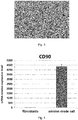
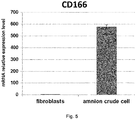
- the following PCR program was used: 95°C for 2 minutes, followed by 45 cycles of 95°C for 5 seconds, 60°C for 10 seconds and 72°C for 20 seconds. Sample and Control was tested for CD90 and CD166, well-characterized markers of stem cells of mesenchymal origin. Actin Beta was used as an internal reference to ensure identical starting conditions and for normalizing relative expression data.
- the primer sequences used were: CD90 Forward primer: AGCAAGGACGAGGG-CACCTACA, Reverse Primer: TGGGAGGAGATGGGTGGGGAAT, CD166 Forward primer: TCAAGGTGTTCAAGCAACCA Reverse Primer: CTGAAATGCAGTCAC-CCAAC, Actin Beta Forward primer: TGGTGGGCATGGGTCAGAAGGA, Reverse Primer: ATGCCGTGCTCGATGGGGTACT.
- the relative 2 ⁇ Ct method was used [Pfaffl]. Relative quantification is commonly used to compare the expression levels of a gene in different samples. When studying gene expression, the quantity of the target gene transcript needs to be normalized against variation in sample quality and quantity between samples. To ensure identical starting conditions, the relative expression data were normalized using Actin Beta (ACTB) as internal reference.
- CD90 also known as THY1
- CD166 also known as ALCAM
Landscapes
- Health & Medical Sciences (AREA)
- Engineering & Computer Science (AREA)
- Life Sciences & Earth Sciences (AREA)
- Biomedical Technology (AREA)
- Chemical & Material Sciences (AREA)
- Organic Chemistry (AREA)
- Bioinformatics & Cheminformatics (AREA)
- Genetics & Genomics (AREA)
- Zoology (AREA)
- Wood Science & Technology (AREA)
- Biotechnology (AREA)
- Cell Biology (AREA)
- Biochemistry (AREA)
- Developmental Biology & Embryology (AREA)
- Microbiology (AREA)
- General Health & Medical Sciences (AREA)
- General Engineering & Computer Science (AREA)
- Gynecology & Obstetrics (AREA)
- Rheumatology (AREA)
- Reproductive Health (AREA)
- Pregnancy & Childbirth (AREA)
- Dermatology (AREA)
- General Chemical & Material Sciences (AREA)
- Chemical Kinetics & Catalysis (AREA)
- Manufacturing & Machinery (AREA)
- Micro-Organisms Or Cultivation Processes Thereof (AREA)
Claims (27)
- Ein in-vitro-Verfahren zur Gewinnung von Zellen für die Herstellung von Reptilienleder, die folgenden Schritte umfassend:a. Gewinnung von Zellen aus einem geschlüpften Reptilienei, undb. Isolierung und/oder Kultivierung von Keratinozyten, Fibroblasten, Melanozyten, Stammzellen oder Vorläuferzellen.
- Das Verfahren nach einem der vorhergehenden Ansprüche, wobei die Zellen durch die Verwendung von Oberflächenmarkern isoliert werden.
- Das Verfahren nach einem der vorhergehenden Ansprüche, wobei die genannten Zellen durch Durchflusszytometrie, wie z.B. durch fluoreszenzaktivierte Zellsortierung (FACS), isoliert werden.
- Das Verfahren nach einem der vorhergehenden Ansprüche, wobei die Zellen durch Kultivierung einer Mischkultur von Zellen in zellspezifischen Medien isoliert werden, um im Wesentlichen reine Kulturen spezifischer Zelltypen zu erhalten.
- Das Verfahren nach einem der vorhergehenden Ansprüche, wobei eine im Wesentlichen reine Kultur eines der Zelltypen durch physikalische Trennung von Zellen eines Typs von anderen Zellen, z.B. durch Trypsinisierung, erhalten wird.
- Das Verfahren nach einem der vorhergehenden Ansprüche, wobei die Zellen aus der Chorioallantois isoliert werden.
- Das Verfahren nach einem der vorhergehenden Ansprüche, wobei die Zellen aus der Allantois, dem Allantois-Sack, dem Amnion, der Fruchtblase, dem Albumen, dem Dotter, oder dem Dottersack isoliert werden.
- Das Verfahren nach einem der vorhergehenden Ansprüche, wobei epidermale und dermale Stammzellen, mesenchymale Stammzellen, Melanozyten und/oder Fibroblastenzellen durch Kultivierung in zellspezifischen Medien isoliert werden.
- Das Verfahren nach einem der vorhergehenden Ansprüche, wobei Keratinozyten, Fibroblasten oder Melanozyten durch Differenzierung von Stammzellen oder Vorläuferzellen erhalten werden.
- Das Verfahren nach Anspruch 5, wobei Fibroblasten aus mesenchymalen Stammzellen differenziert werden.
- Das Verfahren nach einem der vorhergehenden Ansprüche, wobei die Zellen in Gegenwart von mindestens einem Wachstumsfaktor kultiviert werden.
- Das Verfahren nach einem der vorhergehenden Ansprüche, wobei die Zellen in Gegenwart von Fibroblasten-Wachstumsfaktor, epidermalem Wachstumsfaktor und/oder Bindegewebe-Wachstumsfaktor kultiviert werden.
- Das Verfahren nach einem der vorhergehenden Ansprüche, wobei die Zellen auf einer Schicht aus Feederzellen kultiviert werden.
- Das Verfahren nach einem der vorhergehenden Ansprüche, wobei die Zellen nicht genetisch modifiziert sind.
- Das Verfahren nach einem der vorhergehenden Ansprüche, umfassend das Erhalten von im Wesentlichen reinen Kulturen von Keratinozyten, Fibroblasten und Melanozyten.
- Das Verfahren nach einem der vorhergehenden Ansprüche, wobei Kulturen von einem oder mehreren der Zelltypen kryokonserviert werden.
- Das Verfahren nach einem der vorhergehenden Ansprüche, wobei Keratinozyten, Fibroblasten und Melanozyten von einer Spezies erhalten werden.
- Das Verfahren nach einem der vorhergehenden Ansprüche, wobei Keratinozyten, Fibroblasten, Melanozyten aus demselben Ei erhalten werden.
- Das Verfahren nach einem der vorhergehenden Ansprüche, wobei verschiedene Zelltypen aus verschiedenen Eiern der gleichen Spezies isoliert werden.
- Das Verfahren nach einem der vorhergehenden Ansprüche, wobei verschiedene Zelltypen aus verschiedenen Eiern verschiedener Spezies isoliert werden.
- Das Verfahren nach einem der vorhergehenden Ansprüche, wobei das Reptil ausgewählt ist aus Crocodilia (Alligatoren und Krokodile), Chelonia (Landschildkröten und Wasserschildkröten), Doppelschleichen, Squamata (Eidechsen und Schlangen) und Rhynchocephalia (Brückenechse oder Sphenodon punctatus).
- Das Verfahren nach einem der vorhergehenden Ansprüche, wobei das Reptil ausgewählt ist aus Schlange, Alligator, Krokodil, Brückenechse, Landschildkröten, Wasserschildkröten, Leguane, Agamen, Chamäleons, Skinke, Anolis, Eidechsen, Geckos, Boas, Anakondas, Pythons, Mambas, Vipern, Ottern, Klapperschlangen, Krokodile, Alligatoren und Gaviale.
- Das Verfahren nach einem der vorhergehenden Ansprüche, ferner umfassend das Züchten einer Mischkultur aus Keratinozyten, Fibroblasten und Melanozyten zu einem bioartifizielles Reptilienleder.
- Das Verfahren nach Anspruch 23, wobei die Zellen auf einem Träger kultiviert werden, wie z. B. einem Faser- oder Gitterträger.
- Das Verfahren nach einem der vorhergehenden Ansprüche, ferner umfassend die Transplantation einer Mischkultur aus Keratinozyten, Fibroblasten und Melanozyten auf ein Reptil zur Hautreparatur.
- Das Verfahren nach einem der vorhergehenden Ansprüche, ferner umfassend die Kultivierung von Keratinozyten, Fibroblasten und/oder Melanozyten und das Ernten von Reptilienkollagen aus den genannten Zellen.
- Das Verfahren nach Anspruch 26, ferner umfassend die Herstellung von künstlichem Reptilienleder aus dem genannten geernteten Kollagen.
Applications Claiming Priority (2)
| Application Number | Priority Date | Filing Date | Title |
|---|---|---|---|
| DKPA201700241 | 2017-04-07 | ||
| PCT/EP2018/058782 WO2018185246A1 (en) | 2017-04-07 | 2018-04-05 | Isolation of cells from hatched reptile eggs for use in production of bioartificial skin and leather |
Publications (2)
| Publication Number | Publication Date |
|---|---|
| EP3607051A1 EP3607051A1 (de) | 2020-02-12 |
| EP3607051B1 true EP3607051B1 (de) | 2021-08-25 |
Family
ID=61965965
Family Applications (1)
| Application Number | Title | Priority Date | Filing Date |
|---|---|---|---|
| EP18717303.4A Active EP3607051B1 (de) | 2017-04-07 | 2018-04-05 | Isolierung von zellen aus geschlüpften reptilieneiern zur verwendung in der herstellung von bioartifizieller haut und leder |
Country Status (7)
| Country | Link |
|---|---|
| US (1) | US11624055B2 (de) |
| EP (1) | EP3607051B1 (de) |
| CN (1) | CN110691842A (de) |
| DK (1) | DK3607051T3 (de) |
| ES (1) | ES2899148T3 (de) |
| RU (1) | RU2019134339A (de) |
| WO (1) | WO2018185246A1 (de) |
Families Citing this family (7)
| Publication number | Priority date | Publication date | Assignee | Title |
|---|---|---|---|---|
| WO2017142887A1 (en) | 2016-02-15 | 2017-08-24 | Modern Meadow, Inc. | Biofabricated material containing collagen fibrils |
| AU2018253595A1 (en) | 2017-11-13 | 2019-05-30 | Modern Meadow, Inc. | Biofabricated leather articles having zonal properties |
| EP3704202B1 (de) | 2019-01-17 | 2026-07-29 | Modern Meadow, Inc. | Geschichtete kollagenmaterialien und verfahren zu ihrer herstellung |
| CN110669728A (zh) * | 2019-11-07 | 2020-01-10 | 张伟 | 一种鳄鱼脂肪干细胞分离培养方法和无血清培养基 |
| AU2021265269A1 (en) | 2020-05-01 | 2022-10-27 | Modern Meadow, Inc. | Protein polyurethane alloys and layered materials including the same |
| EP4305960A1 (de) | 2022-07-12 | 2024-01-17 | Maia & Muller - Biotech, Lda | Manipuliertes leder, verfahren zur herstellung und verwendungen davon |
| CN115820535B (zh) * | 2022-11-17 | 2025-11-11 | 杭州联川生物技术股份有限公司 | 一种制备爬行纲动物单细胞的试剂盒和方法 |
Family Cites Families (5)
| Publication number | Priority date | Publication date | Assignee | Title |
|---|---|---|---|---|
| WO2014201406A1 (en) | 2013-06-13 | 2014-12-18 | Modern Meadow, Inc. | Engineered leather and methods of manufacture thereof |
| US20160097109A1 (en) * | 2012-03-28 | 2016-04-07 | Gabor Forgacs | Engineered leather and methods of manufacture thereof |
| EP2831291B1 (de) | 2012-03-28 | 2019-04-24 | Modern Meadow, Inc. | Manipuliertes leder und verfahren zur herstellung davon |
| WO2016073453A1 (en) | 2014-11-03 | 2016-05-12 | Modern Meadow, Inc. | Reinforced engineered biomaterials and methods of manufacture thereof |
| AU2016285906A1 (en) | 2015-06-29 | 2017-12-21 | Modern Meadow, Inc. | Fabrics and methods of making them from cultured cells |
-
2018
- 2018-04-05 US US16/603,162 patent/US11624055B2/en active Active
- 2018-04-05 EP EP18717303.4A patent/EP3607051B1/de active Active
- 2018-04-05 WO PCT/EP2018/058782 patent/WO2018185246A1/en not_active Ceased
- 2018-04-05 DK DK18717303.4T patent/DK3607051T3/da active
- 2018-04-05 RU RU2019134339A patent/RU2019134339A/ru unknown
- 2018-04-05 CN CN201880023482.9A patent/CN110691842A/zh active Pending
- 2018-04-05 ES ES18717303T patent/ES2899148T3/es active Active
Non-Patent Citations (1)
| Title |
|---|
| None * |
Also Published As
| Publication number | Publication date |
|---|---|
| EP3607051A1 (de) | 2020-02-12 |
| RU2019134339A3 (de) | 2021-12-24 |
| US20200032206A1 (en) | 2020-01-30 |
| ES2899148T3 (es) | 2022-03-10 |
| WO2018185246A1 (en) | 2018-10-11 |
| CN110691842A (zh) | 2020-01-14 |
| RU2019134339A (ru) | 2021-05-07 |
| US11624055B2 (en) | 2023-04-11 |
| DK3607051T3 (da) | 2021-11-22 |
Similar Documents
| Publication | Publication Date | Title |
|---|---|---|
| US11624055B2 (en) | Isolation of cells from hatched reptile eggs for use in production of bioartificial skin and leather | |
| TWI535377B (zh) | Storage, culture and application of umbilical cord tissue and its derived cells | |
| CA2203148C (fr) | Milieu de culture de cellules embryonnaires totipotentes aviaires, depourvu d'acide retinoique actif | |
| US10526581B2 (en) | Modulation of cardiac stem-progenitor cell differentiation, assays and uses thereof | |
| JP6386453B2 (ja) | インスリン依存性糖尿病の治療に有用な幹細胞と膵臓細胞 | |
| GB2467982A (en) | Pluripotent adult stem cells | |
| KR20220110265A (ko) | 세포 배양, 세포로부터의 가수분해물의 제조를 위한 방법 및 이들의 적용 | |
| JP2003506076A5 (de) | ||
| CA2657065A1 (en) | A novel population of multipotent cardiac precursor cells derived from human blastocysts derived stem cells | |
| Xie et al. | Derivation of chicken primordial germ cells using an indirect Co-culture system | |
| CN111621465A (zh) | 一种肝脏类器官、其快速构建的方法及其应用 | |
| US20100319079A1 (en) | Isolated proliferating cells with stem cell properties from adult tissue of poikilothermic vertebrates, stable cell cultures thereof, and methods for their preparation | |
| JP5564679B2 (ja) | 心筋細胞分化誘導促進剤およびその使用方法 | |
| CN113151147B (zh) | 功能性肝实质细胞及其制备方法 | |
| Yuan et al. | Primary culture of germ cells that portray stem cell characteristics and recipient preparation for autologous transplantation in the rhesus monkey | |
| CN120624339A (zh) | 羊形成态多能干细胞培养基及其应用 | |
| CN107236703B (zh) | 一种饲养层细胞、培养方法及应用 | |
| Shang | Isolation, identification, culture, cryopreservation, genetic transformation and transplantation of catfish germline stem cells | |
| CN111848743B (zh) | 表皮干细胞向胰腺细胞分化的改进方法 | |
| RU2430158C1 (ru) | Способ дифференцировки стволовых клеток взрослого человека в клетки, секретирующие инсулин | |
| CN108315304A (zh) | 一种猪naive胚胎干细胞系的构建方法 | |
| CN120519376B (zh) | 一种高效的中华乌塘鳢精原细胞体外诱导产生单倍体精子的方法 | |
| KR20240029430A (ko) | 폐포세포 유래 유도만능줄기세포를 이용한 폐포 오가노이드 제작 방법 | |
| Martignani et al. | Bovine Skeletal Muscle Satellite Cells: Isolation, Growth | |
| Xie | In vitro kultivace zárodečných kmenových buněk jesetera |
Legal Events
| Date | Code | Title | Description |
|---|---|---|---|
| STAA | Information on the status of an ep patent application or granted ep patent |
Free format text: STATUS: UNKNOWN |
|
| STAA | Information on the status of an ep patent application or granted ep patent |
Free format text: STATUS: THE INTERNATIONAL PUBLICATION HAS BEEN MADE |
|
| PUAI | Public reference made under article 153(3) epc to a published international application that has entered the european phase |
Free format text: ORIGINAL CODE: 0009012 |
|
| STAA | Information on the status of an ep patent application or granted ep patent |
Free format text: STATUS: REQUEST FOR EXAMINATION WAS MADE |
|
| 17P | Request for examination filed |
Effective date: 20191030 |
|
| AK | Designated contracting states |
Kind code of ref document: A1 Designated state(s): AL AT BE BG CH CY CZ DE DK EE ES FI FR GB GR HR HU IE IS IT LI LT LU LV MC MK MT NL NO PL PT RO RS SE SI SK SM TR |
|
| AX | Request for extension of the european patent |
Extension state: BA ME |
|
| STAA | Information on the status of an ep patent application or granted ep patent |
Free format text: STATUS: EXAMINATION IS IN PROGRESS |
|
| 17Q | First examination report despatched |
Effective date: 20200508 |
|
| DAV | Request for validation of the european patent (deleted) | ||
| DAX | Request for extension of the european patent (deleted) | ||
| GRAP | Despatch of communication of intention to grant a patent |
Free format text: ORIGINAL CODE: EPIDOSNIGR1 |
|
| STAA | Information on the status of an ep patent application or granted ep patent |
Free format text: STATUS: GRANT OF PATENT IS INTENDED |
|
| INTG | Intention to grant announced |
Effective date: 20210317 |
|
| GRAS | Grant fee paid |
Free format text: ORIGINAL CODE: EPIDOSNIGR3 |
|
| GRAA | (expected) grant |
Free format text: ORIGINAL CODE: 0009210 |
|
| STAA | Information on the status of an ep patent application or granted ep patent |
Free format text: STATUS: THE PATENT HAS BEEN GRANTED |
|
| AK | Designated contracting states |
Kind code of ref document: B1 Designated state(s): AL AT BE BG CH CY CZ DE DK EE ES FI FR GB GR HR HU IE IS IT LI LT LU LV MC MK MT NL NO PL PT RO RS SE SI SK SM TR |
|
| REG | Reference to a national code |
Ref country code: CH Ref legal event code: EP |
|
| REG | Reference to a national code |
Ref country code: IE Ref legal event code: FG4D Ref country code: AT Ref legal event code: REF Ref document number: 1423821 Country of ref document: AT Kind code of ref document: T Effective date: 20210915 |
|
| REG | Reference to a national code |
Ref country code: DE Ref legal event code: R096 Ref document number: 602018022379 Country of ref document: DE |
|
| REG | Reference to a national code |
Ref country code: DK Ref legal event code: T3 Effective date: 20211118 |
|
| REG | Reference to a national code |
Ref country code: LT Ref legal event code: MG9D |
|
| REG | Reference to a national code |
Ref country code: NL Ref legal event code: MP Effective date: 20210825 |
|
| REG | Reference to a national code |
Ref country code: AT Ref legal event code: MK05 Ref document number: 1423821 Country of ref document: AT Kind code of ref document: T Effective date: 20210825 |
|
| PG25 | Lapsed in a contracting state [announced via postgrant information from national office to epo] |
Ref country code: SE Free format text: LAPSE BECAUSE OF FAILURE TO SUBMIT A TRANSLATION OF THE DESCRIPTION OR TO PAY THE FEE WITHIN THE PRESCRIBED TIME-LIMIT Effective date: 20210825 Ref country code: RS Free format text: LAPSE BECAUSE OF FAILURE TO SUBMIT A TRANSLATION OF THE DESCRIPTION OR TO PAY THE FEE WITHIN THE PRESCRIBED TIME-LIMIT Effective date: 20210825 Ref country code: HR Free format text: LAPSE BECAUSE OF FAILURE TO SUBMIT A TRANSLATION OF THE DESCRIPTION OR TO PAY THE FEE WITHIN THE PRESCRIBED TIME-LIMIT Effective date: 20210825 Ref country code: FI Free format text: LAPSE BECAUSE OF FAILURE TO SUBMIT A TRANSLATION OF THE DESCRIPTION OR TO PAY THE FEE WITHIN THE PRESCRIBED TIME-LIMIT Effective date: 20210825 Ref country code: NO Free format text: LAPSE BECAUSE OF FAILURE TO SUBMIT A TRANSLATION OF THE DESCRIPTION OR TO PAY THE FEE WITHIN THE PRESCRIBED TIME-LIMIT Effective date: 20211125 Ref country code: PT Free format text: LAPSE BECAUSE OF FAILURE TO SUBMIT A TRANSLATION OF THE DESCRIPTION OR TO PAY THE FEE WITHIN THE PRESCRIBED TIME-LIMIT Effective date: 20211227 Ref country code: BG Free format text: LAPSE BECAUSE OF FAILURE TO SUBMIT A TRANSLATION OF THE DESCRIPTION OR TO PAY THE FEE WITHIN THE PRESCRIBED TIME-LIMIT Effective date: 20211125 Ref country code: AT Free format text: LAPSE BECAUSE OF FAILURE TO SUBMIT A TRANSLATION OF THE DESCRIPTION OR TO PAY THE FEE WITHIN THE PRESCRIBED TIME-LIMIT Effective date: 20210825 Ref country code: LT Free format text: LAPSE BECAUSE OF FAILURE TO SUBMIT A TRANSLATION OF THE DESCRIPTION OR TO PAY THE FEE WITHIN THE PRESCRIBED TIME-LIMIT Effective date: 20210825 |
|
| PG25 | Lapsed in a contracting state [announced via postgrant information from national office to epo] |
Ref country code: PL Free format text: LAPSE BECAUSE OF FAILURE TO SUBMIT A TRANSLATION OF THE DESCRIPTION OR TO PAY THE FEE WITHIN THE PRESCRIBED TIME-LIMIT Effective date: 20210825 Ref country code: LV Free format text: LAPSE BECAUSE OF FAILURE TO SUBMIT A TRANSLATION OF THE DESCRIPTION OR TO PAY THE FEE WITHIN THE PRESCRIBED TIME-LIMIT Effective date: 20210825 Ref country code: GR Free format text: LAPSE BECAUSE OF FAILURE TO SUBMIT A TRANSLATION OF THE DESCRIPTION OR TO PAY THE FEE WITHIN THE PRESCRIBED TIME-LIMIT Effective date: 20211126 |
|
| REG | Reference to a national code |
Ref country code: ES Ref legal event code: FG2A Ref document number: 2899148 Country of ref document: ES Kind code of ref document: T3 Effective date: 20220310 |
|
| PG25 | Lapsed in a contracting state [announced via postgrant information from national office to epo] |
Ref country code: NL Free format text: LAPSE BECAUSE OF FAILURE TO SUBMIT A TRANSLATION OF THE DESCRIPTION OR TO PAY THE FEE WITHIN THE PRESCRIBED TIME-LIMIT Effective date: 20210825 |
|
| REG | Reference to a national code |
Ref country code: DE Ref legal event code: R097 Ref document number: 602018022379 Country of ref document: DE |
|
| PG25 | Lapsed in a contracting state [announced via postgrant information from national office to epo] |
Ref country code: SM Free format text: LAPSE BECAUSE OF FAILURE TO SUBMIT A TRANSLATION OF THE DESCRIPTION OR TO PAY THE FEE WITHIN THE PRESCRIBED TIME-LIMIT Effective date: 20210825 Ref country code: SK Free format text: LAPSE BECAUSE OF FAILURE TO SUBMIT A TRANSLATION OF THE DESCRIPTION OR TO PAY THE FEE WITHIN THE PRESCRIBED TIME-LIMIT Effective date: 20210825 Ref country code: RO Free format text: LAPSE BECAUSE OF FAILURE TO SUBMIT A TRANSLATION OF THE DESCRIPTION OR TO PAY THE FEE WITHIN THE PRESCRIBED TIME-LIMIT Effective date: 20210825 Ref country code: EE Free format text: LAPSE BECAUSE OF FAILURE TO SUBMIT A TRANSLATION OF THE DESCRIPTION OR TO PAY THE FEE WITHIN THE PRESCRIBED TIME-LIMIT Effective date: 20210825 Ref country code: CZ Free format text: LAPSE BECAUSE OF FAILURE TO SUBMIT A TRANSLATION OF THE DESCRIPTION OR TO PAY THE FEE WITHIN THE PRESCRIBED TIME-LIMIT Effective date: 20210825 Ref country code: AL Free format text: LAPSE BECAUSE OF FAILURE TO SUBMIT A TRANSLATION OF THE DESCRIPTION OR TO PAY THE FEE WITHIN THE PRESCRIBED TIME-LIMIT Effective date: 20210825 |
|
| PLBE | No opposition filed within time limit |
Free format text: ORIGINAL CODE: 0009261 |
|
| STAA | Information on the status of an ep patent application or granted ep patent |
Free format text: STATUS: NO OPPOSITION FILED WITHIN TIME LIMIT |
|
| 26N | No opposition filed |
Effective date: 20220527 |
|
| PG25 | Lapsed in a contracting state [announced via postgrant information from national office to epo] |
Ref country code: SI Free format text: LAPSE BECAUSE OF FAILURE TO SUBMIT A TRANSLATION OF THE DESCRIPTION OR TO PAY THE FEE WITHIN THE PRESCRIBED TIME-LIMIT Effective date: 20210825 |
|
| REG | Reference to a national code |
Ref country code: BE Ref legal event code: MM Effective date: 20220430 |
|
| PG25 | Lapsed in a contracting state [announced via postgrant information from national office to epo] |
Ref country code: LU Free format text: LAPSE BECAUSE OF NON-PAYMENT OF DUE FEES Effective date: 20220405 |
|
| PG25 | Lapsed in a contracting state [announced via postgrant information from national office to epo] |
Ref country code: BE Free format text: LAPSE BECAUSE OF NON-PAYMENT OF DUE FEES Effective date: 20220430 |
|
| PG25 | Lapsed in a contracting state [announced via postgrant information from national office to epo] |
Ref country code: IE Free format text: LAPSE BECAUSE OF NON-PAYMENT OF DUE FEES Effective date: 20220405 |
|
| P01 | Opt-out of the competence of the unified patent court (upc) registered |
Effective date: 20230515 |
|
| PG25 | Lapsed in a contracting state [announced via postgrant information from national office to epo] |
Ref country code: MK Free format text: LAPSE BECAUSE OF FAILURE TO SUBMIT A TRANSLATION OF THE DESCRIPTION OR TO PAY THE FEE WITHIN THE PRESCRIBED TIME-LIMIT Effective date: 20210825 Ref country code: CY Free format text: LAPSE BECAUSE OF FAILURE TO SUBMIT A TRANSLATION OF THE DESCRIPTION OR TO PAY THE FEE WITHIN THE PRESCRIBED TIME-LIMIT Effective date: 20210825 |
|
| PG25 | Lapsed in a contracting state [announced via postgrant information from national office to epo] |
Ref country code: HU Free format text: LAPSE BECAUSE OF FAILURE TO SUBMIT A TRANSLATION OF THE DESCRIPTION OR TO PAY THE FEE WITHIN THE PRESCRIBED TIME-LIMIT; INVALID AB INITIO Effective date: 20180405 |
|
| PG25 | Lapsed in a contracting state [announced via postgrant information from national office to epo] |
Ref country code: MT Free format text: LAPSE BECAUSE OF FAILURE TO SUBMIT A TRANSLATION OF THE DESCRIPTION OR TO PAY THE FEE WITHIN THE PRESCRIBED TIME-LIMIT Effective date: 20210825 |
|
| PG25 | Lapsed in a contracting state [announced via postgrant information from national office to epo] |
Ref country code: TR Free format text: LAPSE BECAUSE OF FAILURE TO SUBMIT A TRANSLATION OF THE DESCRIPTION OR TO PAY THE FEE WITHIN THE PRESCRIBED TIME-LIMIT Effective date: 20210825 |
|
| PGFP | Annual fee paid to national office [announced via postgrant information from national office to epo] |
Ref country code: GB Payment date: 20260319 Year of fee payment: 9 |
|
| PGFP | Annual fee paid to national office [announced via postgrant information from national office to epo] |
Ref country code: MC Payment date: 20260323 Year of fee payment: 9 |
|
| PGFP | Annual fee paid to national office [announced via postgrant information from national office to epo] |
Ref country code: DK Payment date: 20260319 Year of fee payment: 9 |
|
| PGFP | Annual fee paid to national office [announced via postgrant information from national office to epo] |
Ref country code: IT Payment date: 20260319 Year of fee payment: 9 |
|
| PGFP | Annual fee paid to national office [announced via postgrant information from national office to epo] |
Ref country code: FR Payment date: 20260319 Year of fee payment: 9 |
|
| REG | Reference to a national code |
Ref country code: CH Ref legal event code: U11 Free format text: ST27 STATUS EVENT CODE: U-0-0-U10-U11 (AS PROVIDED BY THE NATIONAL OFFICE) Effective date: 20260501 |
|
| PGFP | Annual fee paid to national office [announced via postgrant information from national office to epo] |
Ref country code: ES Payment date: 20260504 Year of fee payment: 9 |
|
| PGFP | Annual fee paid to national office [announced via postgrant information from national office to epo] |
Ref country code: DE Payment date: 20260319 Year of fee payment: 9 |
|
| PGFP | Annual fee paid to national office [announced via postgrant information from national office to epo] |
Ref country code: CH Payment date: 20260501 Year of fee payment: 9 |