EP3606494B1 - Pulver zur reinigung eines inneren körperteils und/oder eines implantats, verfahren zur herstellung eines solchen pulvers und geeignete verwendungen - Google Patents
Pulver zur reinigung eines inneren körperteils und/oder eines implantats, verfahren zur herstellung eines solchen pulvers und geeignete verwendungen Download PDFInfo
- Publication number
- EP3606494B1 EP3606494B1 EP18716976.8A EP18716976A EP3606494B1 EP 3606494 B1 EP3606494 B1 EP 3606494B1 EP 18716976 A EP18716976 A EP 18716976A EP 3606494 B1 EP3606494 B1 EP 3606494B1
- Authority
- EP
- European Patent Office
- Prior art keywords
- powder
- sterilization process
- sterile
- implant
- cleaning
- Prior art date
- Legal status (The legal status is an assumption and is not a legal conclusion. Google has not performed a legal analysis and makes no representation as to the accuracy of the status listed.)
- Active
Links
Images
Classifications
-
- A—HUMAN NECESSITIES
- A61—MEDICAL OR VETERINARY SCIENCE; HYGIENE
- A61C—DENTISTRY; APPARATUS OR METHODS FOR ORAL OR DENTAL HYGIENE
- A61C3/00—Dental tools or instruments
- A61C3/02—Tooth drilling or cutting instruments; Instruments acting like a sandblast machine
- A61C3/025—Instruments acting like a sandblast machine, e.g. for cleaning, polishing or cutting teeth
-
- A—HUMAN NECESSITIES
- A61—MEDICAL OR VETERINARY SCIENCE; HYGIENE
- A61K—PREPARATIONS FOR MEDICAL, DENTAL OR TOILETRY PURPOSES
- A61K8/00—Cosmetics or similar toiletry preparations
- A61K8/02—Cosmetics or similar toiletry preparations characterised by special physical form
- A61K8/0216—Solid or semisolid forms
- A61K8/022—Powders; Compacted Powders
-
- A—HUMAN NECESSITIES
- A61—MEDICAL OR VETERINARY SCIENCE; HYGIENE
- A61K—PREPARATIONS FOR MEDICAL, DENTAL OR TOILETRY PURPOSES
- A61K8/00—Cosmetics or similar toiletry preparations
- A61K8/02—Cosmetics or similar toiletry preparations characterised by special physical form
- A61K8/0216—Solid or semisolid forms
- A61K8/022—Powders; Compacted Powders
- A61K8/0225—Granulated powders
-
- A—HUMAN NECESSITIES
- A61—MEDICAL OR VETERINARY SCIENCE; HYGIENE
- A61K—PREPARATIONS FOR MEDICAL, DENTAL OR TOILETRY PURPOSES
- A61K8/00—Cosmetics or similar toiletry preparations
- A61K8/18—Cosmetics or similar toiletry preparations characterised by the composition
- A61K8/19—Cosmetics or similar toiletry preparations characterised by the composition containing inorganic ingredients
-
- A—HUMAN NECESSITIES
- A61—MEDICAL OR VETERINARY SCIENCE; HYGIENE
- A61K—PREPARATIONS FOR MEDICAL, DENTAL OR TOILETRY PURPOSES
- A61K8/00—Cosmetics or similar toiletry preparations
- A61K8/18—Cosmetics or similar toiletry preparations characterised by the composition
- A61K8/19—Cosmetics or similar toiletry preparations characterised by the composition containing inorganic ingredients
- A61K8/25—Silicon; Compounds thereof
-
- A—HUMAN NECESSITIES
- A61—MEDICAL OR VETERINARY SCIENCE; HYGIENE
- A61K—PREPARATIONS FOR MEDICAL, DENTAL OR TOILETRY PURPOSES
- A61K8/00—Cosmetics or similar toiletry preparations
- A61K8/18—Cosmetics or similar toiletry preparations characterised by the composition
- A61K8/30—Cosmetics or similar toiletry preparations characterised by the composition containing organic compounds
- A61K8/60—Sugars; Derivatives thereof
-
- A—HUMAN NECESSITIES
- A61—MEDICAL OR VETERINARY SCIENCE; HYGIENE
- A61Q—SPECIFIC USE OF COSMETICS OR SIMILAR TOILETRY PREPARATIONS
- A61Q11/00—Preparations for care of the teeth, of the oral cavity or of dentures; Dentifrices, e.g. toothpastes; Mouth rinses
-
- A—HUMAN NECESSITIES
- A61—MEDICAL OR VETERINARY SCIENCE; HYGIENE
- A61Q—SPECIFIC USE OF COSMETICS OR SIMILAR TOILETRY PREPARATIONS
- A61Q11/00—Preparations for care of the teeth, of the oral cavity or of dentures; Dentifrices, e.g. toothpastes; Mouth rinses
- A61Q11/02—Preparations for deodorising, bleaching or disinfecting dentures
-
- B—PERFORMING OPERATIONS; TRANSPORTING
- B24—GRINDING; POLISHING
- B24C—ABRASIVE OR RELATED BLASTING WITH PARTICULATE MATERIAL
- B24C11/00—Selection of abrasive materials or additives for abrasive blasts
- B24C11/005—Selection of abrasive materials or additives for abrasive blasts of additives, e.g. anti-corrosive or disinfecting agents in solid, liquid or gaseous form
-
- B—PERFORMING OPERATIONS; TRANSPORTING
- B24—GRINDING; POLISHING
- B24C—ABRASIVE OR RELATED BLASTING WITH PARTICULATE MATERIAL
- B24C7/00—Equipment for feeding abrasive material; Controlling the flowability, constitution, or other physical characteristics of abrasive blasts
- B24C7/0046—Equipment for feeding abrasive material; Controlling the flowability, constitution, or other physical characteristics of abrasive blasts the abrasive material being fed in a gaseous carrier
-
- A—HUMAN NECESSITIES
- A61—MEDICAL OR VETERINARY SCIENCE; HYGIENE
- A61K—PREPARATIONS FOR MEDICAL, DENTAL OR TOILETRY PURPOSES
- A61K2800/00—Properties of cosmetic compositions or active ingredients thereof or formulation aids used therein and process related aspects
- A61K2800/80—Process related aspects concerning the preparation of the cosmetic composition or the storage or application thereof
- A61K2800/81—Preparation or application process involves irradiation
Definitions
- the present invention relates to a powder for cleaning an inner body part and / or an implant according to claims 1-5, a method for producing such a powder according to claims 6-11 and the use of the powder according to claim 12.
- a powder for cleaning an inner body part and / or an implant, in particular by means of a powder jet device, the powder being sterile as a result of a sterilization process, ie. H. free of germs and bacteria or essentially free of reproductive microorganisms.
- a sterile powder can advantageously be provided according to the invention with which inner body parts and / or implants, in particular a surface of the inner body parts and / or the implants, can be simply abrasively cleaned, even in sterile operating theater environments.
- the powder is advantageously prepared in such a way that no additional post-treatment step, in particular time-consuming sterilization, of the inner body part and / or implant is required after cleaning. This advantageously also allows short-term or partial cleaning using the powder.
- implant includes, in particular, tissue-free implants, such as. B. implants for bone or dentures, and under internal body parts bones, such. B. jaw bones or hip bones to understand.
- tissue-free implants such as. B. implants for bone or dentures
- internal body parts bones such as. B. jaw bones or hip bones to understand.
- the implant is a hip bone implant, a jaw bone implant or the like.
- the term powder is to be understood as any powder or powder mixture that is suitable for use in a powder jet device, ie from which a powder-air mixture can be formed by means of the powder jet device.
- the term powder includes any accumulation of particles or particles. This can also be a mixture of particles of different materials or material compositions.
- the particles of the powder are advantageously ascribed an abrasive property, ie the particles are designed or selected in such a way that they hit this surface when they hit a surface of the inner body part or of the implant in a jet of a powder-air mixture clean abrasively.
- the powder implant can be specifically selected, ie the powder can be selected in such a way that the probability of surface damage to the respective implant when it is cleaned with the powder can be reduced individually.
- a sterile powder is preferably to be understood as one whose residual content of viable microorganisms in the powder is at most 10 -6 colony-forming units, ie a million equally treated particles of the powder may contain at most one viable microorganism.
- the expression “essentially” is to be understood as meaning those deviations which deviate from the respective exact value by +/- 15%, preferably by +/- 10%, particularly preferably +/- 5%, and / or deviations in the form of for the function correspond to insignificant changes.
- the powder is sodium bicarbonate or sodium hydrogen carbonate (NaHCO 2 ), calcium carbonate (CaCO 3 ), aluminum trihydroxide (Al [OH] 3), calcium sodium phosphosilicate (CaNaO 6 PSi), sugar alcohols such as erythritol (C 4 H 10 O 4 ), disaccharides, in particular trehalose (C 12 H 22 O 11 ) or isomaltulose and / or glycine or glycocoll, aminoacetic acid (C 2 H 5 NO 2 ), depending on the application.
- NaHCO 2 sodium bicarbonate or sodium hydrogen carbonate
- CaCO 3 calcium carbonate
- Al [OH] 3 aluminum trihydroxide
- CaNaO 6 PSi calcium sodium phosphosilicate
- sugar alcohols such as erythritol (C 4 H 10 O 4 )
- disaccharides in particular trehalose (C 12 H 22 O 11 ) or isomaltulose and / or glycine or glycocoll,
- compositions of matter are suitable for cleaning bones and / or implants. It is particularly preferably erythritol and / or glycine with medium Grain sizes of approx. 10-20 ⁇ m, preferably approx. 14 ⁇ m, which allow a comparatively gentle treatment due to their nature.
- the powder is a powder based on sodium bicarbonate.
- the powder based on sodium bicarbonate preferably has an average grain size of essentially 12-20 ⁇ m. It is preferably provided that the powder, in particular a powder comprising sodium bicarbonate, has an average grain size between 5 and 100 ⁇ m, preferably between 10 and 50 ⁇ m and particularly preferably essentially 17 ⁇ m.
- the powder is preferably designed in such a way that the grain sizes are distributed around the average grain size with a standard deviation ⁇ of 20 ⁇ m, preferably 10 ⁇ m and particularly preferably 5 ⁇ m.
- Erythritol powder-water mixtures can be applied to the gum line, at the pocket entrance and also specifically within the pocket without any problems. Erythritol powder is suitable for removing light deposits and discoloration, for polishing teeth and removing biofilms, especially on sensitive implant surfaces.
- the powder has a density between 0.2 and 1.6 g / cm 3 . It has been found to be advantageous that such powders with a density between 0.2 and 1.6 g / cm 3 can be easily sterilized and at the same time rarely cause surface damage to internal body parts and / or implants when cleaning with a powder jet device.
- Water-soluble blasting media are preferably used in the powder jet cleaning according to the invention, although these are generally more difficult to sterilize. This is because non-water-soluble substances leave behind a “typically sandy” impression when used on the patient, in particular in the oral cavity, and are also difficult to remove again. This applies to both the oral cavity and the doctor's office. In addition, there is a risk of damage to or the retention of water-insoluble powder particles in the lungs if they cannot be dissolved and flushed out by means of a fluid such as water. The water-soluble property is therefore advantageous for the powders according to the invention.
- substances are classified as water-soluble in which more than 1 g of powder per liter can be dissolved.
- the powder is water-soluble, the water solubility at a temperature of 20 ° C. being over 1 g / l, preferably over 50 g / l, preferably around 100 g / l , or even over 100 g / l.
- the preferred powders have the following properties: (Table 1) powder Solubility in water (g / l at 20 ° C) Density (g / cm 3 ) Erythritol 540 1.45 Trehalose 690 1.80 Glycine 225 1.61 Sodium bicarbonate 96 2.54
- the method according to the invention can advantageously be used to provide a sterile powder which is suitable for cleaning internal body parts and implants. All of the features described for the powder according to the invention and their advantages can also be applied to the method according to the invention and vice versa.
- a sterilization process is to be understood here in particular as one in which, after it has been carried out, a powder is provided that is immediately, ie. H. without any further treatment step, suitable as a powder for a powder jet device.
- the sterilization process must advantageously be adapted to the powder in such a way that the powder is sufficiently dry and fine-grained after the sterilization process and is therefore suitable for use in a powder jet device.
- the moisture in the powder has preferably increased by a maximum of 5%, preferably by a maximum of 2.5% and particularly preferably by 1.5% as a result of the sterilization process.
- the humidity can be determined with an infrared humidity meter.
- the sterilization process is therefore preferably adapted to or dependent on the powder or powder type. It is preferably provided that the powder is filled into a powder chamber for a powder jet device immediately after the sterilization process. This avoids recontamination of the sterile powder.
- the sterile powder can be used in case Agglomerates have formed during the sterilization process and are broken up again into fine grains by a whirling, sieving, shaking, rubbing or milling process.
- the powder is heated in the sterilization process, in particular to a temperature between 110 ° C and 210 ° C, preferably to a temperature below 180 ° C, between 120 ° C and 160 ° C and is particularly preferably heated to 160 ° C.
- sterilization can advantageously be effected in a comparatively short time, for example in two hours, without the powder's property of forming a powder-air mixture being impaired.
- the use of lower temperatures advantageously allows a larger number of powders or types of powder to be sterilized without their property of forming the powder-air mixture for a powder jet device being impaired.
- the powder is heated for between 0.5 and 60 hours, preferably between 1 and 40 hours, and particularly preferably essentially two hours at temperatures of 100.degree. C. to 250.degree. C., preferably 120.degree. C. to 160.degree becomes.
- Sufficient sterilization can be achieved comparatively quickly with heating for two hours; temperatures of around 160 ° C are suitable for this. This has a positive effect in particular with regard to the production time and thus also the costs of the sterile powder.
- a powder comprising erythritol, trehalose and / or glycine is heated at 160 ° C. for two hours.
- the powder, which comprises erythritol, trehalose and / or glycine is heated at 120 ° C. for 40 hours.
- solubilities or melting point result as follows: (Table 2) powder Solubility in water (g / l at 20 ° C) Melting point (° C) Erythritol 540 121 Trehalose 690 215 Glycine 225 233 Sodium bicarbonate 96 851
- the heat sterilization described above is particularly suitable for sodium bicarbonate, while the other powders, in particular erythritol, can be more appropriately sterilized by other sterilization methods. Since the melting points of this and most of the other powders are not far from the treatment temperatures, the powder particles can fuse or stick to them undesirably.
- the containers must also be temperature-resistant, which leads to further restrictions.
- the powder is exposed to radiation, in particular ⁇ -, ⁇ -X-rays and / or UV radiation, in the sterilization process. It is also conceivable, for example, to bombard the powder with an electron beam.
- the powder is preferably exposed to radiation from a radioactive cobalt-60 (60 CO) or cesium-137 ( 137 Cs) source.
- ⁇ and / or ⁇ rays are used to sterilize the powder. While the ⁇ -rays are only suitable for surface sterilization due to their low penetration depth, ⁇ -rays have a high penetration depth.
- Such sterilization irradiation e.g. with radioactive beta or gamma irradiation of powder particles, leads to changes in smell and appearance, which is undesirable.
- the powder is exposed to steam, in particular steam or hydrogen peroxide steam, in the sterilization process.
- the powder can be heated for this purpose in an autoclave, an interior of the autoclave being filled with water vapor or hydrogen peroxide vapor, in particular completely with water vapor or hydrogen peroxide vapor.
- the powder is preferably heated to a temperature between 60 ° C. and 132 ° C. in the autoclave for a period of time between 30 minutes and 60 minutes. With a duration of 60 minutes and a temperature of 132 ° C, a majority of all microorganisms can be destroyed and the powder attains resistance level VI. It has been found to be advantageous that calcium carbonate can be sterilized using sterilizing steam.
- ETO ethylene oxide
- Ethylene oxide gas advantageously kills bacteria, viruses and fungi.
- the sterilization with ETO is in particular a low-temperature process which is carried out at preferably 5 to 100 ° C, preferably 2 to 80 ° C and particularly preferably 37 to 63 ° C. It can therefore be used to gas heat-sensitive substances.
- ETO is preferably mixed in gaseous form and, for example, with other substances such as CO 2 or steam.
- This method is advantageously suitable for those powders that cannot withstand high temperatures, for example a have a low melting point.
- the use of ETO thus also allows the use of powders with a low melting point.
- the use of ETO is essentially steam-free or steam-reduced, ie steam as an additive to the ETO gas is dispensed with or the proportion is reduced compared to the proportion commonly used.
- air humidity is monitored during the sterilization process. This allows especially the light and very water-soluble erythritol, which achieves the best results in use in the subgingival area, to be sterilized.
- a sterilization process with ETO has also proven to be particularly advantageous in the case of sodium bicarbonate, in particular sodium bicarbonate with a grain size of essentially 17 ⁇ m.
- the powder is exposed to a sodium hypochlorite (NaClO) and / or a chlorhexidine (CHX) solution.
- the powder is preferably exposed in succession to a sodium hypochlorite (NaClO) and / or a chlorhexidine (CHX) solution, in particular a chlorhexidine (CHX) solution is used after the sodium hypochlorite solution. This allows the powder to be sterilized.
- a 0.01 to 6% by weight sodium hypochlorite solution in particular a 0.1% by weight sodium hypochlorite solution, and / or a 0.01 to 2% by weight chlorhexidine (CHX) solution, in particular a 0, 1% by weight solution is used.
- CHX chlorhexidine
- the microorganisms go into solution and can be removed together with the used solution, for example rinsed out.
- the powder and the sodium hypochlorite (NaClO) - and / or a chlorhexidine (CHX) solution of a mechanical treatment, such as. B. be subjected to ultrasound treatment.
- a method from the document is used in the sterilization process US 2015/0 352 023 A1 is used, the content of which is hereby expressly referred to with regard to the destruction or removal of microorganisms.
- the powder is sufficiently dried before it is used, for example when it is poured into a powder chamber.
- the present invention advantageously uses a reduced humidity cycle.
- ETO ethylene oxide sterilization
- the treatment usually takes place between 30 ° C - 60 ° C, with a relative humidity of more than 30%, a gas concentration of 200 mg / l - 800 mg / l and takes a period of at least 3 hours.
- the active substances must be able to act through this packaging.
- the packaging is therefore normally exposed to 100% moisture, which then assumes a value of approximately 10% to 50%, preferably approximately 30%, within the packaging, which is a suitable value for an ETO process.
- a value of 85% moisture (outside the packaging) has proven to be ideal, the limit being around 90%.
- the ETO itself does not seem to have a negative impact on the powders tested.
- a particularly preferred sterilization temperature has proven to be 42 ° -52 ° C., particularly preferably 46 ° -48 ° C.
- the powders of the present invention are hygroscopic.
- amorphous silica silicon dioxide
- amorphous silica silicon dioxide
- the addition of amorphous silica leads to a hydrophobic coating of the powder particles and thus counteracts the moisture absorption of the powder particles during the sterilization process.
- the addition of amorphous silica can be reduced or the addition can even be dispensed with entirely.
- the following types of powder are to be classified: sodium hydrogen carbonate, glycine and erythritol. Trehalose is a little less sensitive.
- the protection of the powder particles from moisture with a view to maintaining the functionality of a water-soluble powder as a blasting agent, is essential.
- Another way to obtain a sterile but non-hygroscopic powder is to use calcium carbonate as an abrasive. This powder is not soluble in water and can therefore be better sterilized by means of steam / heat sterilization.
- a sterile powder according to the invention is also provided. All of the features described for the powder according to the invention and the method for producing the sterile powder and their advantages can likewise be applied to the method according to the invention and vice versa.
- the powder jet device is such as that described in the publication WO 2016 142 272 A1 is disclosed and reference is hereby expressly made to the description of the powder jet device.
- the powder is used to fill exchangeable powder chambers.
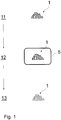
- a method for producing a sterile powder 1 is shown schematically in a flow chart.
- a powder 1 which is provided for a powder jet device.
- a powder-air mixture is produced in such powder jet devices, the powder-air mixture for cleaning by means of the powder jet device being directed onto an inner body part or implant to be cleaned and the powder 1 striking the inner body part or implant in the jet Abrasively removes contamination or soiling for cleaning purposes.
- the powder-air mixture leaves the powder jet device together with a fluid, the fluid being mixed with the powder-air mixture and / or enveloping it.
- the powder 1 is sterilized outside the powder jet device in a sterilization process 12 prior to its use in the powder jet device, ie is freed from microorganisms such as bacteria and germs.
- the powder 1 is designed in such a way that it does not damage a surface of the implant or the inner body part.
- the powder 1 preferably has a density between 0.2 and 3 g / cm 3 , preferably between 0.2 and 2.4 g / cm 3 and particularly preferably between 0.2 and 1.6 g / cm 3 .
- it is a powder 1 which comprises sodium bicarbonate, calcium carbonate, erythritol, trehalose and / or glycine, the powder, in particular a powder comprising sodium bicarbonate, having an average grain size between 5 and 100 ⁇ m, preferably between 10 and 50 ⁇ m and particularly preferably essentially of 17 ⁇ m.
- powders 1 are also suitable for cleaning implants which, because of their high requirements for their biocompatibility and ability to grow in quickly, are prone to surface damage, because the materials from which they are made or coated are porous and / or hydrophilic.
- a powder 1, in particular sodium bicarbonate with an average grain size of 17 ⁇ m is first provided.
- This powder 1 is then positioned in a closed chamber 5 in which the sterilization process is carried out.
- the powder is heated in the sterilization process in the chamber 5, exposed to electromagnetic radiation and / or steam.
- the powder is heated in the sterilization process in the chamber 5, exposed to electromagnetic radiation and / or steam.
- the powder is heated in the sterilization process in the chamber 5, exposed to electromagnetic radiation and / or steam.
- the powder 1 is provided 13 in a sterile powder chamber, in order to avoid decontamination of the sterile powder 1 immediately after its manufacture.
- the closed chamber 5 comprises an outlet via which the powder 1 can be guided directly into a powder chamber which, for example, is compatible with a powder jet device.
Landscapes
- Health & Medical Sciences (AREA)
- Life Sciences & Earth Sciences (AREA)
- Animal Behavior & Ethology (AREA)
- General Health & Medical Sciences (AREA)
- Public Health (AREA)
- Veterinary Medicine (AREA)
- Epidemiology (AREA)
- Birds (AREA)
- Oral & Maxillofacial Surgery (AREA)
- Chemical & Material Sciences (AREA)
- Inorganic Chemistry (AREA)
- Engineering & Computer Science (AREA)
- Mechanical Engineering (AREA)
- Dentistry (AREA)
- Apparatus For Disinfection Or Sterilisation (AREA)
- Medicinal Preparation (AREA)
- Cosmetics (AREA)
- Pharmaceuticals Containing Other Organic And Inorganic Compounds (AREA)
- Acyclic And Carbocyclic Compounds In Medicinal Compositions (AREA)
Description
- Die vorliegende Erfindung betrifft ein Pulver zur Reinigung eines inneren Körperteils und/oder eines Implantats gemäß Ansprüchen 1 - 5, ein Verfahren zur Herstellung eines solchen Pulvers gemäß Ansprüchen 6-11 und die Verwendung des Pulvers gemäß Anspruch 12.
- Das Reinigen von inneren Körperteilen, wie z. B. Knochen, und Implantaten, z. B. im Vorfeld einer Operation, ist ein typisches Erfordernis, um beispielsweise prophylaktisch bakterielle Infektionen zu vermeiden. Dabei erweist sich das Reinigen von Implantaten allerdings gerade deswegen als Herausforderung, weil Implantate wegen ihren hohen Anforderungen an ihre Biokompatibilität und ihre Fähigkeit zum möglichst schnellen Verwachsen mit menschlichem bzw. tierischem Gewebe bzw. inneren Körperteilen, meist aus Materialien gefertigt bzw. mit Materialien beschichtet sind, deren Oberflächen anfällig sind für Beschädigungen. Typischerweise sind diese Materialien porös und hydrophil.
- Aus der Zahnmedizin ist die Verwendung von Pulver-Luft-Gemischen bekannt, die zu Reinigungszwecken mittels Pulverstrahlgeräten auf die Zahnoberfläche aufgestrahlt werden. Allerdings würde der Einsatz eines solchen Pulver-Luft-Gemischs eine anschließende Sterilisation der inneren Körperteile bzw. Implantate erforderlich machen, bevor diese in den Körper eingesetzt werden können. Siehe insbesondere
EP 2 228 175 A1 undDE 10 2013 109758 A1 . - Es ist daher eine Aufgabe der vorliegenden Erfindung, eine Möglichkeit bereitzustellen, mit der innere Körperteile und/oder Implantate möglichst schonend gereinigt werden können und kein zwingend erforderlicher Nachbehandlungsschritt nötig ist.
- Diese Aufgabe wird gelöst durch ein Pulver gemäß Anspruch 1 und ein Verfahren gemäß Anspruch 5. Weitere Vorteile und Merkmale der Erfindung ergeben sich aus den Unteransprüchen sowie der Beschreibung und den beigefügten Figuren.
- Erfindungsgemäß ist ein Pulver zur Reinigung eines inneren Körperteils und/oder eines Implantats, insbesondere mittels eines Pulverstrahlgeräts, vorgesehen, wobei das Pulver infolge eines Sterilisierungsvorgangs steril, d. h. keim- und bakterienfrei bzw. im Wesentlichen frei von vermehrungsfähigen Mikroorganismen, ist. Gegenüber dem Stand der Technik lässt sich mit Vorteil erfindungsgemäß ein steriles Pulver bereitstellen, mit dem sich innere Körperteile und/oder Implantate, insbesondere eine Oberfläche der inneren Körperteile und/oder der Implantate, einfach abrasiv reinigen lassen und zwar auch in sterilen OP-Umgebungen. Durch den Sterilisierungsvorgang ist das Pulver in vorteilhafter Weise derart präpariert, dass nach der Reinigung kein zusätzlicher Nachbehandlungsschritt, insbesondere zeitintensive Sterilisierung, des inneren Körperteils und/oder Implantates erforderlich ist. Dies gestattet in vorteilhafter Weise auch eine kurzfristige bzw. partielle Reinigung unter Einsatz des Pulvers.
- Unter dem Begriff Implantat sind insbesondere gewebefreie Implantate, wie z. B. Implantate zum Knochen- oder Zahnersatz, und unter inneren Körperteilen Knochen, wie z. B. Kieferknochen oder Hüftknochen, zu verstehen. Beispielsweise handelt es sich bei dem Implantat um ein Hüftknochenimplantat, ein Kieferknochenimplantat oder Vergleichbares.
- Insbesondere ist unter dem Begriff Pulver ein jedes Pulver oder Pulvergemisch zu verstehen, das zur Verwendung in einem Pulverstrahlgerät geeignet ist, d. h. aus dem sich mittels des Pulverstrahlgeräts ein Pulver-Luft-Gemisch bilden lässt. Grundsätzlich fallen unter den Begriff Pulver jede Akkumulation von Teilchen bzw. Partikel. Dabei kann es sich auch um ein Gemisch aus Partikeln verschiedener Materialien bzw. Materialzusammensetzungen handeln. Weiterhin ist den Partikeln des Pulvers vorteilhafter Weise eine abrasive Eigenschaft zuzusprechen, d. h. die Partikel sind derart ausgestaltet bzw. ausgewählt, dass sie, wenn sie in einem Strahl eines Pulver-Luft-Gemisches auf eine Oberfläche des inneren Körperteils oder des Implantats treffen, diese Oberfläche abrasiv reinigen. Dabei ist es ein weiterer Vorteil, dass sich das Pulver Implantat spezifisch auswählen lässt, d. h. das Pulver kann derart ausgewählt werden, dass eine Wahrscheinlichkeit für eine Oberflächenschädigung für das jeweilige Implantat bei dessen Reinigung mit dem Pulver individuell reduziert werden kann. Vorzugsweise ist unter einem sterilen Pulver ein solches zu verstehen, dessen Restgehalt an vermehrungsfähigen Mikroorganismen im Pulver höchstens 10-6 koloniebildende Einheiten beträgt, d. h. in einer Million gleichbehandelten Partikeln des Pulvers darf maximal ein vermehrungsfähiger Mikroorganismus enthalten sein.
- Insbesondere sind unter dem Ausdruck "im Wesentlichen" solche Abweichungen zu verstehen, die vom jeweiligen exakten Wert um +/- 15%, bevorzugt um +/-10%, besonders bevorzugt +/- 5% abweichen und/oder Abweichungen in Form von für die Funktion unbedeutenden Änderungen entsprechen.
- Gemäß einer weiteren Ausführungsform der vorliegenden Erfindung ist es vorgesehen, dass das Pulver Natriumbikarbonat bzw. Natriumhydrogencarbonat (NaHCO2), Kalziumkarbonat (CaCO3), Aluminiumtrihydroxid (Al[OH]3), Kalzium-Natrium-Phosphosilikat (CaNaO6PSi), Zuckeralkohole wie Erythritol (C4H10O4), Disaccharide, insbesondere Trehalose (C12H22O11) oder Isomaltuloseund/oder Glycin bzw. Glykokoll, Aminoessigsäure (C2H5NO2), je nach Anwendungszweck, umfasst. Dabei handelt es sich in vorteilhafter Weise um Stoffzusammensetzungen, die bei der Oberflächenbehandlung von Zähnen bereits verwendet werden. Hierbei hat sich in überraschender Weise herausgestellt, dass sich diese Stoffzusammensetzungen zur Reinigung von Knochen und/oder Implantaten eignen. Besonders bevorzugt handelt es sich um Erythritol und/oder Glycin mit mittleren Korngrößen von ca. 10-20 µm, bevorzugt ca. 14 µm, die eine vergleichsweise schonende Behandlung aufgrund ihrer Beschaffenheit ermöglichen. Insbesondere handelt es sich bei dem Pulver um ein Pulver auf Natriumbikarbonat-Basis. Dabei weist das Pulver auf Natriumbikarbonat-Basis vorzugsweise eine mittlere Korngröße von im Wesentlichen 12 - 20 µm auf. Vorzugsweise ist es vorgesehen, dass das Pulver, insbesondere ein Natriumbikarbonat umfassendes Pulver, eine durchschnittliche Korngröße zwischen 5 und 100 µm, bevorzugt zwischen 10 und 50 µm und besonders bevorzugt im Wesentlichen von 17 µm aufweist. Insbesondere hat sich herausgestellt, dass sich Natriumbikarbonat vergleichsweise einfach sterilisieren lässt und zudem bei einer Reduzierung auf eine Korngröße von im Wesentlichen 17 µm, die Wahrscheinlichkeit für eine Schädigung durch das Pulver-Luft-Gemisch, das dieses Natriumbikarbonat umfasst, im Allgemeinen gemindert ist im Vergleich zu einem grobkörnigeren Natriumbikarbonatpulver. Im Fall der hier im Absatz angegebenen Zahlenwerte für die Korngrößen ist das Pulver vorzugsweise derart gestaltet, dass sich die Korngrößen mit einer Standardabweichung σ von 20 µm, vorzugsweise 10 µm und besonders bevorzugt von 5 µm um die durchschnittliche Korngröße verteilen. Erythritol-Pulver-Wasser-Gemische können unproblematisch am Zahnfleischrand, am Tascheneingang sowie auch gezielt innnerhalb der Tasche appliziert werden. Erythrit-Pulver eignet sich sowohl zur Entfernung von leichten Belägen und Verfärbungen, zur Zahnpolitur sowie zur Biofilmentfernung insbesondere und auf empfindlichen Implantatoberflächen.
- In der vorliegenden Erfindung ist es vorgesehen, dass das Pulver eine Dichte zwischen 0,2 und 1,6 g/cm3 aufweist. Dabei hat es sich mit Vorteil herausgestellt, dass sich solche Pulver mit einer Dichte zwischen 0,2 und 1,6 g/cm3 einfach sterilisieren lassen und gleichzeitig beim Reinigen mittels eines Pulverstrahlgeräts selten Oberflächenschädigungen an inneren Körperteilen und/oder Implantaten verursachen.
- Bevorzugt kommen bei der Pulverstrahlreiningung gemäß der Erfindung wasserlösliche Strahlmittel zum Einsatz, obwohl diese generell schwieriger zu sterilisieren sind. Nicht-wasserlösliche Substanzen hinterlassen nämlich bei der Anwendung beim Patienten, insbesondere im Mundraum, einen "typisch sandigen" Eindruck und sind auch nur schwer wieder zu entfernen. Das bezieht sich sowohl auf den Mundraum, als auch auf die Praxisräume des Arztes. Zudem sind Schädigungen oder der Verbleib von nicht wasserlöslichen Pulver-Teilchen in der Lunge zu befürchten, wenn diese nicht mittels eines Fluids, wie Wasser, gelöst und ausgeschwemmt warden können. Die wasserlösliche Eigenschaft ist daher für die erfindungsgemäßen Pulver vorteilhaft.
- Als wasserlöslich werden gemäß der vorliegenden Erfindung Stoffe eingestuft, bei denen sich mehr als 1g Pulver pro Liter auflösen lässt. In einer weiteren Ausführungsform der vorliegenden Erfindung ist es daher vorgesehen, dass das Pulver wasserlöslich ist, wobei die Wasserlöslichkeit bei einer Temperatur von 20°C bei über 1 g/l, bevorzugt bei über 50 g/l, bevorzugt bei etwa 100 g/l, oder sogar bei über 100 g/l liegt. Die bevorzugten Pulver weisen dabei folgende Eigenschaften auf:
(Tabelle 1) Pulver Löslichkeit in Wasser (g/l bei 20°C) Dichte (g/cm3) Erythritol 540 1,45 Trehalose 690 1,80 Glycin 225 1,61 Natriumbikarbonat 96 2,54 - Erythritol hat hier die besten Werte, da es eine hohe Wasserlöslichkeit gegenüber einer sehr geringen Dichte hat, was die Anwendung im subgingivalen Bereich, besonders als steriles Pulver, bei geöffnetem Zahnfleisch besonders indiziert. Erfindungsgemäß ist ebenfalls ein Verfahren zur Herstellung eines sterilen Pulvers, insbesondere eines erfindungsgemäßen sterilen Pulvers, vorgesehen, umfassend die Schritte:
- Bereitstellen eines Pulvers und
- Sterilisieren des Pulvers in einem Sterilisierungsvorgangs.
- Mittels des erfindungsgemäßen Verfahrens lässt sich mit Vorteil ein steriles Pulver bereitstellen, das sich zur Reinigung von inneren Körperteilen und Implantaten eignet. Alle für das erfindungsgemäße Pulver beschriebenen Merkmale und deren Vorteile lassen sich sinngemäß ebenfalls auf das erfindungsgemäße Verfahren übertragen und andersherum.
- Dabei ist unter einem Sterilisierungsvorgang insbesondere ein solcher zu verstehen, nach dessen Durchführung ein Pulver bereitgestellt wird, das sich unmittelbar, d. h. ohne weiteren Behandlungsschritt, als Pulver für ein Pulverstrahlgerät eignet. Hierzu muss der Sterilisierungsvorgang mit Vorteil derart an das Pulver angepasst sein, dass das Pulver nach dem Sterilisierungsvorgang ausreichend trocken sowie feinkörnig ist und sich damit zum Einsatz in einem Pulverstrahlgerät eignet. Vorzugsweise hat sich die Feuchtigkeit im Pulver durch den Sterilisierungsvorgang maximal um 5 %, bevorzugt um maximal 2,5 % und besonders bevorzugt um 1,5 % erhöht. Beispielsweise lässt sich die Feuchtigkeit hierbei mit einem Infrarot-Feuchtemesser feststellen.
- Vorzugsweise ist der Sterilisierungsprozess daher angepasst an bzw. abhängig vom Pulver bzw. Pulvertyp. Vorzugsweise ist es vorgesehen, dass das Pulver zeitlich unmittelbar nach dem Sterilisierungsvorgang in eine Pulverkammer für ein Pulverstrahlgerät gefüllt wird. Dadurch lässt sich eine erneute Kontamination des sterilen Pulvers vermeiden. Wahlweise kann das sterile Pulver, falls sich durch den Sterilisationsvorgang Agglomerate gebildet haben, durch einen Wirbel-, Sieb-, Schüttel-, Reib- oder Mühlprozess wieder feinkörnig zerteilt werden.
- Gemäß einem weiteren Gesichtspunkt der vorliegenden Erfindung ist es vorgesehen, dass im Sterilisierungsvorgang das Pulver erhitzt wird, insbesondere auf eine Temperatur zwischen 110 °C und 210 °C, bevorzugt auf eine Temperatur unterhalb von 180°C, zwischen 120 °C und 160 °C und besonders bevorzugt auf 160 °C erhitzt wird.
- Bei dem Verwenden eine Temperatur von im Wesentlichen 160 °C lässt sich in vorteilhafter Weise in vergleichsweise kurzer Zeit, beispielsweise in zwei Stunden, eine Sterilisierung bewirken, ohne dass das Pulver in seiner Eigenschaft zur Bildung eines Pulver-Luft-Gemischs beeinträchtigt wird. Die Verwendung von niedrigeren Temperaturen gestattet mit Vorteil, einer größeren Zahl an Pulvern bzw. Pulverarten, sterilisiert zu werden, ohne in ihrer Eigenschaft zur Bildung des Pulver-Luft-Gemischs für ein Pulverstrahlgerät beeinträchtigt zu werden.
- Zweckmäßig ist es vorgesehen, dass das Pulver zwischen 0,5 und 60 Stunden, bevorzugt zwischen 1 und 40 Stunden, und besonders bevorzugt im Wesentlichen zwei Stunden bei Temperaturen von 100°C bis 250°C, bevorzugt 120°C bis 160°C erhitzt wird. Beim zwei Stunden andauernden Erhitzen lässt sich vergleichsweise schnell eine ausreichende Sterilisierung realisieren, dazu eignen sich Temperaturen von etwa 160°C. Dies wirkt sich insbesondere in Hinblick auf die Herstellungsdauer und somit auch auf die Kosten des sterilen Pulvers positiv aus.
- Bei tieferen Temperaturen, wie z.B. 120°C und einem längeren Erhitzen, beispielswiese einem zwischen 20 und 40 Stunden andauernden Erhitzen, lässt sich sicherstellen, dass das Pulver ausreichend sterilisiert ist. Besonders bevorzugt ist es vorgesehen, dass ein Pulver, das Erythritol, Trehalose und/oder Glycin umfasst, zwei Stunden lang bei 160 °C erhitzt wird. Alternativ ist es auch denkbar, dass das Pulver, das Erythritol, Trehalose und/oder Glycin umfasst, bei 120 °C 40 Stunden lang erhitzt wird.
- Die Löslichkeiten bzw. Schmelzpunkt ergeben sich wie folgt:
(Tabelle 2) Pulver Löslichkeit in Wasser (g/l bei 20°C) Schmelzpunkt (°C) Erythritol 540 121 Trehalose 690 215 Glycin 225 233 Natriumbikarbonat 96 851 - Erkennbar ist, dass sich die vorbeschriebene Erhitzungssterilisation besonders für Natriumbikarbonat eignet, während die anderen Pulver, insbesondere Erythritol, durch andere Sterilisationsverfahren geeigneter zu sterilisieren sind. Da die Schmelzpunkte dieser und der meisten anderen Pulver nicht weit entfernt von den Behandlungstemperaturen liegen, ist ein Verschmelzen der Pulverteilchen oder ein unerwünschtes Anheften möglich. Auch die Behältnisse müssen temperaturbeständig sein, was zu weiteren Einschränkungen führt.
- In einer weiteren Ausführungsform der vorliegenden Erfindung ist es vorgesehen, dass das Pulver im Sterilisierungsvorgang einer Strahlung, insbesondere β-, γ-Röntgenstrahlung oder/oder UV-Strahlung, ausgesetzt wird. Denkbar ist beispielsweise auch ein Beschuss des Pulvers mit einem Elektronenstrahl. Im Falle einer Röntgenstrahlung wird das Pulver vorzugsweise der Strahlung einer radioaktiven Cobalt-60 (60CO) oder Caesium-137 (137 Cs)- Quelle ausgesetzt. Zur Sterilisation des Pulvers werden beispielsweise β- und/oder γ-Strahlen eingesetzt. Während die β-Strahlen aufgrund ihrer geringen Eindringtiefe nur zur Oberflächensterilisation geeignet sind, besitzen γ -Strahlen eine hohe Durchdringungstiefe.
- Eine solche Sterilisations-Bestrahlung, z.B. mit einer radioaktiven Beta- oder Gamma-Bestrahlung, von Pulverteilchen, führt allerdings zu Veränderungen von Geruch und Aussehen, was unerwünscht ist.
- Vorstellbar ist es auch, dass das Pulver im Sterilisierungsvorgang einem Dampf, insbesondere Wasserdampf oder Wasserstoffperoxid-Dampf, ausgesetzt wird. Beispielsweise lässt sich das Pulver hierzu in einem Autoklaven erhitzen, wobei ein Innenraum des Autoklaven mit Wasserdampf oder Wasserstoffperoxid-Dampf, insbesondere vollständig mit Wasserdampf oder Wasserstoffperoxid-Dampf, gefüllt ist. Vorzugsweise wird das Pulver auf eine Temperatur zwischen 60 °C und 132 °C im Autoklaven für eine Zeitdauer zwischen 30 min und 60 min erhitzt. Bei einer Dauer von 60 min und einer Temperatur von 132 °C lässt sich eine Mehrheit aller Mikroorganismen zerstören und das Pulver erlangt eine Resistenzstufe VI. Mit Vorteil hat sich herausgestellt, dass sich Kalziumkarbonat unter Verwendung von sterilisierendem Dampf sterilisieren lässt.
- Die Wasserlöslichkeit der Pulverteilchen nach einer bevorzugten Ausführungsform der Erfindung bedingt allerdings bestimmte Einschränkungen bei der Sterilisierung, da ein Befeuchten zum Verkleben der Pulverpartikel führen würde. Dampfsterilisation ist daher bei wasserlöslichen Teilchen schwierig.
- Gemäß einer bevorzugten Ausführungsform der vorliegenden Erfindung und insbesondere für wasserlösliche und/oder hitzeempfindliche Pulver, hat sich überraschend herausgestellt, dass das Pulver im Sterilisierungsvorgang Ethylenoxid (ETO), insbesondere ein Ethylenoxidgas, ausgesetzt wird. Ethylenoxidgas tötet mit Vorteil Bakterien, Viren und Pilze ab. Die Sterilisation mit ETO ist insbesondere ein Niedrigtemperatur Prozess, der bei vorzugsweise 5 bis 100 C°, bevorzugt 2 bis 80 °C und besonders bevorzugt 37 bis 63 °C durchgeführt wird. Daher kann es zur Begasung von hitzeempfindlichen Substanzen verwendet werden. ETO wird vorzugsweise in gasförmiger Form und beispielsweise mit anderen Substanzen, wie z.B. CO2 oder Dampf, gemischt. Mit Vorteil eignet sich dieses Verfahren für solche Pulver, die hohen Temperaturen nicht standhalten, beispielsweise einen niedrigen Schmelzpunkt haben. Die Verwendung von ETO gestattet somit auch den Einsatz von Pulvern mit niedrigem Schmelzpunkt. Insbesondere ist es vorgesehen, dass die Verwendung von ETO im Wesentlichen dampffrei oder dampfreduziert erfolgt, d. h. es wird auf Dampf als Zusatz zum ETO-Gas verzichtet oder der Anteil gegenüber dem üblich verwendeten Anteil reduziert. Ferner ist es vorstellbar, dass eine Luftfeuchte beim Sterilisierungsvorgang überwacht wird. Dadurch lässt sich besonders das leichte und sehr gut wasserlösliche Erythritol, das im subgingivalen Bereich die besten Ergebnisse in der Anwendung erzielt, sterilisieren.
- Als besonders vorteilhaft hat sich ein Sterilisierungsvorgang mit ETO auch im Falle von Natriumbikarbonat erwiesen, insbesondere von Natriumbikarbonat mit einer Korngröße von im Wesentlichen 17 µm.
- In einer weiteren Ausführungsform der vorliegenden Erfindung ist es vorgesehen, dass das Pulver einer Natriumhypochlorit (NaClO) - und/oder einer Chlorhexidin (CHX) -Lösung ausgesetzt wird. Vorzugsweise wird das Pulver nacheinander einer Natriumhypochlorit (NaClO) - und/oder einer Chlorhexidin (CHX) -Lösung ausgesetzt, insbesondere wird eine Chlorhexidin (CHX) -Lösung zeitlich nach der Natriumhypochlorit-Lösung verwendet. Dadurch lässt sich das Pulver sterilisieren. Vorzugsweise wird eine 0,01 bis 6 Gew-% Natriumhypochlorit-Lösung, insbesondere eine 0,1 Gew-% Natriumhypochlorit-Lösung, und/oder eine 0,01 bis 2 Gew-% Chlorhexidin (CHX) -Lösung, insbesondere eine 0,1 Gew-%-Lösung, verwendet. Dabei gehen die Mikroorganismen in Lösung und lassen sich zusammen mit der verbrauchten Lösung entfernen, beispielsweise ausspülen.
- Ferner ist es vorstellbar, dass das Pulver und die Natriumhypochlorit (NaClO) - und/oder einer Chlorhexidin (CHX) -Lösung einer mechanischen Behandlung, wie z. B. einer Ultraschallbehandlung unterzogen werden. Beispielsweise wird im Sterilisationsvorgang ein Verfahren aus der Druckschrift
US 2015 / 0 352 023 A1 verwendet, auf deren Inhalt bezüglich der Zerstörung bzw. Entfernung von Mikroorganismen hiermit ausdrücklich Bezug genommen wird. Bevorzugt ist es vorgesehen, dass das Pulver vor seiner Nutzung, beispielsweise dem Einfüllen in einer Pulverkammer, ausreichend getrocknet wird. - Da auch bei einer ETO Sterilisation Wasserdampf eingesetzt wird, um die Wirksamkeit der Sterilisation zu erhöhen, ist auch hier mit Einschränkungen zu rechnen. Um dem zu begegnen verwendet die vorliegende Erfindung mit Vorteil einen feuchtigkeitsreduzierten Zyklus. Bei der Ethylenoxid-Sterilisation (ETO) erfolgt die Behandlung in der Regel zwischen 30°C - 60°C, bei einer relativen Luftfeuchtigkeit über 30%, einer Gas-Konzentration von 200 mg/l - 800 mg/l und nimmt einen Zeitraum von mindestens 3 Stunden in Anspruch.
- Da das Sterilgut, also das Pulver, in seiner Verpackung sterilisiert wird, müssen die aktiven Substanzen durch diese Verpackung hindurch wirken können. Daher wird die Verpackung normalerweise einer 100% Feuchte ausgesetzt, die dann innerhalb der Verpackung einen Wert von etwa 10% bis 50%, bevorzugt etwa 30% annimmt, was für ein ETO Verfahren einen geeigneten Wert darstellt. Für die Pulver der vorleigenden Erfindung hat sich ein Wert von 85% Feuchte (ausserhalb der Verpackung) als ideal erwiesen, wobei die Grenze bei etwa 90% liegt. Das ETO selbst scheint keinen negativen Einfluss auf die getesteten Pulver zu haben. Als besonders bevorzugte Sterilisationstemperatur hat sich 42°-52 C bewährt, besonders bevorzugt 46-48°C.
- Die Pulver der vorliegenden Erfindung sind hygroskopisch. Erfindungsgemäss werden den Pulvern daher amorphe Kieselsäure (Siliziumdioxid), insbesondere in einem Volumenverhältnis von 0,1 bis 2,5 %, beigemischt. Dadurch kann eine Feuchtigkeitsaufnahme der Pulver bei der Sterilisierung verringert, bzw. sogar ganz verhindern werden. Die Beigabe von amorpher Kieselsäure führt zu einer hydrophoben Beschichtung der Pulverteilchen und begegnet so der Feuchtigkeitsaufnahme der Pulverteilchen bei dem Sterilisationsprozess. Bei weniger hygroskopischen Pulvern kann die Beigabe von amorpher Kieselsäure reduziert oder auf die Beigabe kann sogar ganz verzichtet werden. Als hygroskopisch sind folgende Pulversorten einzustufen: Natriumhydrogenkarbonat, Glyzin und Erythritol. Trehalose ist etwas weniger empfindlich.
- Für das Gelingen einer Sterilisation ist der Schutz der Pulverteilchen vor Feuchtigkeit, im Hinblick auf den Erhalt der Funktionstüchtigkeit eines wasserlöslichen Pulvers als Strahlmittel, massgeblich.
- Eine weitere Möglichkeiten zum Erhalt eines sterilen aber nicht hygroskopischen Pulvers ist die Verwendung von Kalziumkarbonat als Strahlmittel. Dieses Pulver ist nicht wasserlöslich und kann daher besser, auch mittles Dampf- / Hitzesterilisation sterilisiert werden.
- Erfindungsgemäß ist ebenfalls eine Verwendung eines erfindungsgemäßen sterilen Pulvers vorgesehen. Alle für das erfindungsgemäße Pulver und Verfahren zur Herstellung des sterilen Pulvers beschriebenen Merkmale und deren Vorteile lassen sich sinngemäß ebenfalls auf das erfindungsgemäße Verfahren übertragen und andersherum. Beispielsweise handelt es sich bei dem Pulverstrahlgerät um ein solches, wie es in der Druckschrift
WO 2016 142 272 A1 offenbart ist und auf dessen Beschreibung bezüglich des Pulverstrahlgeräts hiermit ausdrücklich Bezug genommen wird. Weiterhin ist es bevorzugt vorgesehen, dass das Pulver zum Befüllen von austauschbaren Pulverkammern verwendet wird. - Weitere Vorteile und Merkmale ergeben sich aus der nachfolgenden Beschreibung bevorzugter Ausführungsformen des erfindungsgemäßen Gegenstands mit Bezug auf die beigefügten Figuren. Einzelne Merkmale der einzelnen Ausführungsform können dabei im Rahmen der Erfindung miteinander kombiniert werden.
- Es zeigt:
- Fig.1:
- ein Verfahren zur Herstellung eines sterilen Pulvers gemäß einer beispielhaften Ausführungsform der vorliegenden Erfindung in einem schematischen Flussdiagramm
- In
Figur 1 ist ein Verfahren zur Herstellung eines sterilen Pulvers 1 gemäß einer beispielhaften Ausführungsform der vorliegenden Erfindung schematisch in einem Flussdiagramm dargestellt. Insbesondere handelt es sich um ein Pulver 1, das für ein Pulverstrahlgerät vorgesehen ist. Typischerweise wird in solchen Pulverstrahlgeräten ein Pulver-Luft-Gemisch hergestellt, wobei das Pulver-Luft-Gemisch zur Reinigung mittels des Pulverstahlgeräts auf ein zu reinigendes inneres Körperteil bzw. Implantat gerichtet wird und das im Strahl auf das innere Körperteil bzw. Implantat auftreffende Pulver 1 Verunreinigungen bzw. Verschmutzungen abrasiv zu Reinigungszwecken abträgt. Denkbar ist ferner, dass das Pulver-Luft-Gemisch das Pulverstrahlgerät gemeinsam mit einem Fluid verlässt, wobei das Fluid mit dem Pulver-Luft-Gemisch vermischt ist und/oder dieses ummantelt. Mit Vorteil ist es vorgesehen, dass das Pulver 1 zeitlich vor seiner Verwendung im Pulverstrahlgerät außerhalb des Pulverstrahlgeräts in einem Sterilisierungsvorgang 12 sterilisiert wird, d. h. von Mikroorganismen, wie Bakterien und Keimen, befreit wird. Dies gestattet in vorteilhafter Weise die Verwendung eines Pulvers 1 beim Reinigen von inneren Körperteilen bzw. Implantaten, insbesondere ohne dass im Anschluss an das Reinigen eine Sterilisation bzw. ggf. eine erneute Sterilisation des Implantats bzw. des inneren Körperteils erforderlich ist. Insbesondere ist das Pulver 1 derart gestaltet, dass es eine Oberfläche des Implantats bzw. des Inneren Körperteils nicht beschädigt. - Hierzu weist das Pulver 1 vorzugsweise eine Dichte zwischen 0,2 und 3 g/cm3, bevorzugt zwischen 0,2 und 2,4 g/cm3 und besonders bevorzugt zwischen 0,2 und 1,6 g/cm3 auf. Beispielsweise handelt es sich um ein Pulver 1, das Natriumbikarbonat, Kalziumkarbonat, Erythritol, Trehalose und/oder Glycin umfasst, wobei das Pulver, insbesondere ein Natriumbikarbonat umfassendes Pulver, eine durchschnittliche Korngröße zwischen 5 und 100 µm, bevorzugt zwischen 10 und 50 µm und besonders bevorzugt im Wesentlichen von 17 µm aufweist. Hierbei hat sich insbesondere gezeigt, dass sich derartige Pulver 1 auch zur Reinigung von Implantaten eignen, die wegen ihrer hohen Anforderungen an ihre Biokompatibilität und Fähigkeit schnell einzuwachsen, anfällig sind für Oberflächenschädigungen, da die Materialien, aus denen sie gefertigt oder beschichtet sind, porös und/oder hydrophil sind.
- In dem in der
Figur 1 dargestellten Verfahren wird zunächst ein Pulver 1, insbesondere Natriumbikarbonat mit einer durchschnittlichen Korngröße von 17 µm, bereitgestellt. Dieses Pulver 1 wird anschließend in einer geschlossenen Kammer 5 positioniert, in der der Sterilisierungsvorgang vollzogen wird. Beispielsweise wird das Pulver im Sterilisationsvorgang in der Kammer 5 erwärmt, einer elektromagnetischen Strahlung und/oder einem Dampf ausgesetzt. Als besonders vorteilhaft hat sich herausgestellt, das Pulver 1, insbesondere Natriumbikarbonat mit einer durchschnittlichen Korngröße von 17 µm, einem Ethylenoxid umfassenden Gas auszusetzten. Nach Ablauf einer Verweilzeit des Ethylenoxid umfassenden Gases in der geschlossen Kammer 5 und nach dessen Abzug aus der geschlossen Kammer 5, erfolgt das Bereitstellen 13 des sterilen Pulvers 1. Vorzugsweise wird das Pulver 1 unmittelbar nach dem Sterilisierungsvorgang 12 in eine Pulverkammer für ein Pulverstrahlgerät, insbesondere in eine sterile Pulverkammer, eingefüllt, um eine Dekontamination des sterilen Pulvers 1 unmittelbar nach dessen Herstellung zu vermeiden. Beispielsweise umfasst die geschlossene Kammer 5 einen Ausgang, über den das Pulver 1 unmittelbar in eine Pulverkammer, die beispielsweise kompatibel mit einem Pulverstrahlgerät ist, führbar ist. -
- 1
- Pulver
- 5
- Kammer
- 11
- Bereitstellen eines Pulvers
- 12
- Sterilisationsvorgang
- 13
- Bereitstellen steriles Pulver
Claims (12)
- Pulver (1) zur Reinigung eines inneren Körperteils und/oder eines Implantats mittels eines Pulverstrahlgeräts, wobei das Pulver (1) infolge eines Sterilisierungsvorgangs (12) steril ist, dadurch gekennzeichnet, dass das Pulver eine Dichte zwischen 0,2 und 1,6 g/cm3 aufweist und dem Pulver amorphe Kieselsäure (Siliziumdioxid) beigemischt ist.
- Pulver (1) gemäß Anspruch 1, wobei das Pulver (1) Natriumbikarbonat, Kalziumkarbonat, Erythritol, Trehalose und/oder Glycin umfasst.
- Pulver (1) gemäß einem der vorhergehenden Ansprüche, wobei das Pulver (1), eine durchschnittliche Korngröße zwischen 5 und 100 µm, bevorzugt zwischen 10 und 50 µm und besonders im Wesentlichen von 12-20 µm aufweist.
- Pulver (1) gemäß einem der vorhergehenden Ansprüche, wobei das Pulver (1) wasserlöslich ist, wobei die Wasserlöslichkeit bei einer Temperatur von 20°C bei über 1 g/l, bevorzugt bei über 50 g/l, bevorzugt bei etwa 100 g/l, oder sogar bei über 100 g/l liegt.
- Pulver (1) gemäß einem der vorhergehenden Ansprüche, wobei dem Pulver amorphe Kieselsäure (Siliziumdioxid) in einem Volumenverhältnis von 0,1 bis 2,5 % beigemischt ist.
- Verfahren zur Herstellung eines sterilen Pulvers (1), insbesondere eines sterilen Pulvers (1) gemäß einem der vorhergehenden Ansprüche, umfassend die Schritte:- Bereitstellen (11) eines Pulvers (1),- Beimischen von amorpher Kieselsäure (Siliziumdioxid) und- Sterilisieren des Pulvers (1) in einem Sterilisierungsvorgang (12).
- Verfahren gemäß Anspruch 6, wobei das Pulver (1) im Sterilisierungsvorgang (12) Ethylenoxid, insbesondere einem Ethylenoxidgas, ausgesetzt wird.
- Verfahren gemäß Anspruch 6 oder 7, wobei das Pulver einer Natriumhypochlorit (NaClO) - und/oder einer Chlorhexidin (CHX) -Lösung ausgesetzt wird
- Verfahren gemäß Anspruch 6 bis 8, wobei im Sterilisierungsvorgang (12) das Pulver (1) erhitzt wird, insbesondere auf eine Temperatur zwischen 110 °C und 210 °C, bevorzugt auf eine Temperatur zwischen 120 °C und 160 °C und besonders bevorzugt auf 160 °C erhitzt wird.
- Verfahren gemäß einem der Ansprüche 6 bis 9, wobei das Pulver (1) im Sterilisierungsvorgang (12) einer Strahlung, insbesondere β-, γ-Röntgenstrahlung oder/oder UV-Strahlung, ausgesetzt wird.
- Verfahren gemäß einem der Ansprüche 6 bis 10, wobei das Pulver (1) im Sterilisierungsvorgang (12) einem sterilisierenden Dampf ausgesetzt wird.
- Verwendung eines sterilen Pulvers (1) gemäß einem der Ansprüche 1 bis 5 in einem Pulverstrahlgerät zur Reinigung eines inneren Körperteils oder eines Implantats.
Applications Claiming Priority (2)
| Application Number | Priority Date | Filing Date | Title |
|---|---|---|---|
| DE102017107124.5A DE102017107124A1 (de) | 2017-04-03 | 2017-04-03 | Pulver zur Reinigung eines inneren Körperteils und/oder eines Implantats, Verfahren zur Herstellung eines solchen Pulvers und geeignete Verwendungen |
| PCT/EP2018/058481 WO2018134446A1 (de) | 2017-04-03 | 2018-04-03 | Pulver zur Reinigung eines inneren Körperteils und/oder eines Implantats, Verfahren zur Herstellung eines solchen Pulvers und geeignete Verwendungen |
Publications (2)
| Publication Number | Publication Date |
|---|---|
| EP3606494A1 EP3606494A1 (de) | 2020-02-12 |
| EP3606494B1 true EP3606494B1 (de) | 2021-06-30 |
Family
ID=61952678
Family Applications (1)
| Application Number | Title | Priority Date | Filing Date |
|---|---|---|---|
| EP18716976.8A Active EP3606494B1 (de) | 2017-04-03 | 2018-04-03 | Pulver zur reinigung eines inneren körperteils und/oder eines implantats, verfahren zur herstellung eines solchen pulvers und geeignete verwendungen |
Country Status (11)
| Country | Link |
|---|---|
| US (1) | US20210177542A1 (de) |
| EP (1) | EP3606494B1 (de) |
| JP (2) | JP7297669B2 (de) |
| KR (1) | KR102321276B1 (de) |
| CN (1) | CN110475535A (de) |
| AU (1) | AU2018209810B2 (de) |
| CA (1) | CA3058037C (de) |
| DE (1) | DE102017107124A1 (de) |
| DK (1) | DK3606494T3 (de) |
| ES (1) | ES2890434T3 (de) |
| WO (1) | WO2018134446A1 (de) |
Families Citing this family (2)
| Publication number | Priority date | Publication date | Assignee | Title |
|---|---|---|---|---|
| US12478573B2 (en) * | 2020-02-17 | 2025-11-25 | Ferton Holding S.A. | Cyclodextrins as dental cleaning powders |
| US20230414465A1 (en) * | 2020-12-11 | 2023-12-28 | Kabushiki Kaisha Shofu | Powder mixture for spraying into tooth surface or into gingival sulcus/periodontal pocket |
Citations (11)
| Publication number | Priority date | Publication date | Assignee | Title |
|---|---|---|---|---|
| US5865620A (en) | 1997-06-12 | 1999-02-02 | Kreativ, Inc. | Abrasive dental composition and method for use |
| WO2000053154A1 (de) | 1999-03-10 | 2000-09-14 | 3M Espe Ag | Subgingivales pulverstrahlen |
| WO2001072273A2 (de) | 2000-03-24 | 2001-10-04 | 3M Espe Ag | Supragingivales pulverstrahlen |
| CN101613119A (zh) | 2009-08-07 | 2009-12-30 | 哈药集团制药总厂 | 一种制备药用无菌碳酸氢钠原粉的方法 |
| EP2228175A1 (de) | 2009-03-12 | 2010-09-15 | Ferton Holding SA | Pulver zum Pulverstrahlen, Pulvermischung und Verwendung zur Bearbeitung von insbesondere Zahnoberflächen |
| US20120263704A1 (en) | 2009-10-26 | 2012-10-18 | Hiroshima University | Powdery malted rice extract composition |
| WO2013164409A1 (de) | 2012-05-04 | 2013-11-07 | Kendlbacher Andreas | Vorrichtung zum strahlschneiden von knochen |
| WO2013191903A1 (en) | 2012-06-18 | 2013-12-27 | 3M Innovative Properties Company | Powder composition for air polishing the surface of hard dental tissue |
| DE102013109758A1 (de) | 2013-09-06 | 2015-03-12 | Ferton Holding S.A. | Pulvergemisch, Verwendung des Pulvergemischs und Pulverstrahlgerät |
| WO2016062742A1 (de) | 2014-10-22 | 2016-04-28 | orochemie GmbH + Co. KG | Pulver für die dentale pulverstrahlreinigung |
| WO2016124381A1 (de) | 2015-02-03 | 2016-08-11 | Ferton Holding S.A. | Pulver und verfahren zur reinigung von zähnen |
Family Cites Families (16)
| Publication number | Priority date | Publication date | Assignee | Title |
|---|---|---|---|---|
| US3520656A (en) * | 1966-03-30 | 1970-07-14 | Du Pont | Silicon carbide compositions |
| US4448750A (en) * | 1981-06-05 | 1984-05-15 | Fuesting Michael L | Sterilization method |
| EP0313409B1 (de) * | 1987-10-22 | 1993-06-02 | Robert E. Duthie Jr. | Verfahren und Sterilisationsvorrichtung |
| US4937046A (en) * | 1988-01-26 | 1990-06-26 | H. W. Andersen Products Inc. | Sterilization system and method |
| FR2646341B1 (fr) * | 1989-04-28 | 1994-02-18 | Farcy Bertrand De | Appareil de soins dentaires |
| CA2086124C (en) * | 1990-07-06 | 2002-04-16 | Jack E. Bridges | Method and apparatus for rendering medical materials safe |
| US5551909A (en) * | 1990-12-28 | 1996-09-03 | Bailey; Donald C. | Method and apparatus for cleaning with high pressure liquid at low flow rates |
| US6207201B1 (en) * | 1993-06-03 | 2001-03-27 | Amuchina International, Inc. | Sodium hypochlorite based disinfectant and sterilizer for medical-surgical instruments |
| JPH07324012A (ja) * | 1994-05-31 | 1995-12-12 | Tomey Technol Corp | 消毒剤組成物及びそれを用いた消毒方法 |
| US6287180B1 (en) * | 1998-02-05 | 2001-09-11 | Reuben Hertz | Handheld apparatus for propelling particulate matter against a surface of a patient's tooth, and method |
| AU2011203862A1 (en) * | 2010-01-08 | 2012-07-26 | President And Fellows Of Harvard College | D- amino acids for use in treating biofilms |
| EP2758024B1 (de) * | 2011-09-23 | 2015-09-09 | Tsu, Christopher Louis | Pulver für zahnpulverstrahlen |
| US10953115B2 (en) * | 2012-05-09 | 2021-03-23 | Icrom S.R.L. | Production of sterile active pharmaceutical ingredients |
| EP2950777B1 (de) | 2013-01-30 | 2021-06-23 | Straumann Holding AG | Zahnfleischerkrankungsbehandlung |
| DE102015103291A1 (de) | 2015-03-06 | 2016-09-08 | Ferton Holding S.A. | Pulverstrahlgerät |
| ES2999379T3 (en) * | 2017-10-04 | 2025-02-25 | PRISMAN GmbH | Use of a monosaccharide for sub and/or supragingival cleaning of teeth |
-
2017
- 2017-04-03 DE DE102017107124.5A patent/DE102017107124A1/de active Pending
-
2018
- 2018-04-03 US US16/493,922 patent/US20210177542A1/en active Pending
- 2018-04-03 KR KR1020197029120A patent/KR102321276B1/ko active Active
- 2018-04-03 DK DK18716976.8T patent/DK3606494T3/da active
- 2018-04-03 AU AU2018209810A patent/AU2018209810B2/en active Active
- 2018-04-03 CA CA3058037A patent/CA3058037C/en active Active
- 2018-04-03 WO PCT/EP2018/058481 patent/WO2018134446A1/de not_active Ceased
- 2018-04-03 JP JP2019551396A patent/JP7297669B2/ja active Active
- 2018-04-03 ES ES18716976T patent/ES2890434T3/es active Active
- 2018-04-03 CN CN201880022824.5A patent/CN110475535A/zh active Pending
- 2018-04-03 EP EP18716976.8A patent/EP3606494B1/de active Active
-
2021
- 2021-08-06 JP JP2021129769A patent/JP2021178864A/ja active Pending
Patent Citations (11)
| Publication number | Priority date | Publication date | Assignee | Title |
|---|---|---|---|---|
| US5865620A (en) | 1997-06-12 | 1999-02-02 | Kreativ, Inc. | Abrasive dental composition and method for use |
| WO2000053154A1 (de) | 1999-03-10 | 2000-09-14 | 3M Espe Ag | Subgingivales pulverstrahlen |
| WO2001072273A2 (de) | 2000-03-24 | 2001-10-04 | 3M Espe Ag | Supragingivales pulverstrahlen |
| EP2228175A1 (de) | 2009-03-12 | 2010-09-15 | Ferton Holding SA | Pulver zum Pulverstrahlen, Pulvermischung und Verwendung zur Bearbeitung von insbesondere Zahnoberflächen |
| CN101613119A (zh) | 2009-08-07 | 2009-12-30 | 哈药集团制药总厂 | 一种制备药用无菌碳酸氢钠原粉的方法 |
| US20120263704A1 (en) | 2009-10-26 | 2012-10-18 | Hiroshima University | Powdery malted rice extract composition |
| WO2013164409A1 (de) | 2012-05-04 | 2013-11-07 | Kendlbacher Andreas | Vorrichtung zum strahlschneiden von knochen |
| WO2013191903A1 (en) | 2012-06-18 | 2013-12-27 | 3M Innovative Properties Company | Powder composition for air polishing the surface of hard dental tissue |
| DE102013109758A1 (de) | 2013-09-06 | 2015-03-12 | Ferton Holding S.A. | Pulvergemisch, Verwendung des Pulvergemischs und Pulverstrahlgerät |
| WO2016062742A1 (de) | 2014-10-22 | 2016-04-28 | orochemie GmbH + Co. KG | Pulver für die dentale pulverstrahlreinigung |
| WO2016124381A1 (de) | 2015-02-03 | 2016-08-11 | Ferton Holding S.A. | Pulver und verfahren zur reinigung von zähnen |
Non-Patent Citations (4)
| Title |
|---|
| ANONYMOUS: "EMS Air-Flow Perio erfolgreich in klinischen Studien getestet", EMS, 23 August 2012 (2012-08-23), pages 1 - 2, XP055913761, Retrieved from the Internet <URL:https://www.zwp-online.info/zwpnews/dental-news/branchenmeldungen/ems-air-flow-perio-erfolgreich-klinischen-studien-getestet> [retrieved on 20220420] |
| ANONYMOUS: "Guideline on the sterilization of the medicinal product, active substance, excipient and primary container", EUROPEAN MEDICINES AGENCY, 11 April 2016 (2016-04-11), pages 1 - 15, XP055913745 |
| GORDON JOHN, SCHWARZ FRANK, JOHN DR GORDON: "Oberflächendekontamination an Titanimplantaten in der nichtchirurgischen und chirurgischen Periimplantitstherapie", DEUTSCHE ZAHNÄRZTLICHE ZEITSCHRIFT, vol. 71, no. 6, 1 January 2016 (2016-01-01), pages 424 - 430, XP055913752, DOI: 10.3238/dzz.2016.0424–0430 |
| TOCHA JOHANNES: "Die In Vitro Auswirkungen konventioneller und experimenteller Pulverstrahlapplikationen auf Komposit-, Dentrin- und Schmelzoberflächen", VVB LAUFERSWEILER VERLAG, 1 January 2013 (2013-01-01), pages 1 - 138, XP055913756 |
Also Published As
| Publication number | Publication date |
|---|---|
| JP2020515534A (ja) | 2020-05-28 |
| CA3058037C (en) | 2022-10-25 |
| EP3606494A1 (de) | 2020-02-12 |
| ES2890434T3 (es) | 2022-01-19 |
| KR20190125411A (ko) | 2019-11-06 |
| CA3058037A1 (en) | 2018-07-26 |
| DK3606494T3 (da) | 2021-10-04 |
| KR102321276B1 (ko) | 2021-11-03 |
| AU2018209810B2 (en) | 2021-03-25 |
| AU2018209810A1 (en) | 2019-11-14 |
| JP2021178864A (ja) | 2021-11-18 |
| WO2018134446A1 (de) | 2018-07-26 |
| JP7297669B2 (ja) | 2023-06-26 |
| CN110475535A (zh) | 2019-11-19 |
| DE102017107124A1 (de) | 2018-10-04 |
| US20210177542A1 (en) | 2021-06-17 |
Similar Documents
| Publication | Publication Date | Title |
|---|---|---|
| DE69432184T2 (de) | Chirurgisch implantierbare prothesenteile | |
| DE69731184T2 (de) | Bioaktive glaszusammensetzungen zur verwendung zur behandlung von zahnstrukturen | |
| DE10066408B4 (de) | Verwendung feinkörniger Pulver für supragingivales Pulverstrahlen | |
| DE102015201871B4 (de) | Verwendung eines Pulvers als Mittel zur Pulverstrahlbearbeitung in einem Pulverstrahlgerät und Verfahren zur Reinigung von Zähnen | |
| EP1434607A1 (de) | Osteophile implantate | |
| DE19910559A1 (de) | Subgingivales Pulverstrahlen | |
| DE102014115412A1 (de) | Pulver für die dentale Pulverstrahlreinigung | |
| US11737956B2 (en) | Composition for intracanal medication | |
| EP3606494B1 (de) | Pulver zur reinigung eines inneren körperteils und/oder eines implantats, verfahren zur herstellung eines solchen pulvers und geeignete verwendungen | |
| DE60206476T2 (de) | Rezepturen für die remineralisierung von zähnen | |
| DE602005006329T2 (de) | Antimikrobielle Dentalzusammensetzung | |
| EP2900334B1 (de) | Zusammensetzung für die mundpflege | |
| DE102017009626A1 (de) | Oralzusammensetzung mit Zitrusextrakt und Hydroxylapatit | |
| DE102005060761B4 (de) | Formteil zur Neubildung von Knochenmaterial | |
| DE102013109847A1 (de) | Formulierungen und Kit zur biomimetischen Abscheidung von Apatit auf Zähnen | |
| WO2012032146A1 (de) | Implantat zur anwendung bei einer photo-dynamischen behandlung | |
| DE10207968A1 (de) | Lösungsvermittler für ein karbonisiertes Wurzelkanal-Füllmaterial auf Calciumhydroxidbasis | |
| AT397612B (de) | Zahnpaste und verfahren zu ihrer herstellung | |
| Rathe et al. | Komplikationsmanagement Periimplantitis. | |
| DE102019117205A1 (de) | Verfahren zur Herstellung eines Kompressionsbüstenhalters | |
| WO2020049033A1 (de) | Verfahren zur behandlung von oberflächen | |
| DE20023919U1 (de) | Subgingivales Pulverstrahlen | |
| KR20040034924A (ko) | 기능성물질을 포함하고 있는 근관충전용 봉함재의 조성물 |
Legal Events
| Date | Code | Title | Description |
|---|---|---|---|
| STAA | Information on the status of an ep patent application or granted ep patent |
Free format text: STATUS: UNKNOWN |
|
| STAA | Information on the status of an ep patent application or granted ep patent |
Free format text: STATUS: THE INTERNATIONAL PUBLICATION HAS BEEN MADE |
|
| PUAI | Public reference made under article 153(3) epc to a published international application that has entered the european phase |
Free format text: ORIGINAL CODE: 0009012 |
|
| STAA | Information on the status of an ep patent application or granted ep patent |
Free format text: STATUS: REQUEST FOR EXAMINATION WAS MADE |
|
| 17P | Request for examination filed |
Effective date: 20190919 |
|
| AK | Designated contracting states |
Kind code of ref document: A1 Designated state(s): AL AT BE BG CH CY CZ DE DK EE ES FI FR GB GR HR HU IE IS IT LI LT LU LV MC MK MT NL NO PL PT RO RS SE SI SK SM TR |
|
| AX | Request for extension of the european patent |
Extension state: BA ME |
|
| DAV | Request for validation of the european patent (deleted) | ||
| DAX | Request for extension of the european patent (deleted) | ||
| REG | Reference to a national code |
Ref country code: DE Ref legal event code: R079 Ref document number: 502018005924 Country of ref document: DE Free format text: PREVIOUS MAIN CLASS: A61K0008020000 Ipc: A61Q0011020000 |
|
| RIC1 | Information provided on ipc code assigned before grant |
Ipc: A61K 8/60 20060101ALI20200810BHEP Ipc: A61K 8/02 20060101ALI20200810BHEP Ipc: A61Q 11/00 20060101ALI20200810BHEP Ipc: A61Q 11/02 20060101AFI20200810BHEP |
|
| GRAP | Despatch of communication of intention to grant a patent |
Free format text: ORIGINAL CODE: EPIDOSNIGR1 |
|
| STAA | Information on the status of an ep patent application or granted ep patent |
Free format text: STATUS: GRANT OF PATENT IS INTENDED |
|
| INTG | Intention to grant announced |
Effective date: 20201006 |
|
| GRAJ | Information related to disapproval of communication of intention to grant by the applicant or resumption of examination proceedings by the epo deleted |
Free format text: ORIGINAL CODE: EPIDOSDIGR1 |
|
| STAA | Information on the status of an ep patent application or granted ep patent |
Free format text: STATUS: REQUEST FOR EXAMINATION WAS MADE |
|
| INTC | Intention to grant announced (deleted) | ||
| GRAP | Despatch of communication of intention to grant a patent |
Free format text: ORIGINAL CODE: EPIDOSNIGR1 |
|
| STAA | Information on the status of an ep patent application or granted ep patent |
Free format text: STATUS: GRANT OF PATENT IS INTENDED |
|
| INTG | Intention to grant announced |
Effective date: 20210120 |
|
| GRAS | Grant fee paid |
Free format text: ORIGINAL CODE: EPIDOSNIGR3 |
|
| GRAA | (expected) grant |
Free format text: ORIGINAL CODE: 0009210 |
|
| STAA | Information on the status of an ep patent application or granted ep patent |
Free format text: STATUS: THE PATENT HAS BEEN GRANTED |
|
| AK | Designated contracting states |
Kind code of ref document: B1 Designated state(s): AL AT BE BG CH CY CZ DE DK EE ES FI FR GB GR HR HU IE IS IT LI LT LU LV MC MK MT NL NO PL PT RO RS SE SI SK SM TR |
|
| REG | Reference to a national code |
Ref country code: CH Ref legal event code: EP |
|
| REG | Reference to a national code |
Ref country code: AT Ref legal event code: REF Ref document number: 1405784 Country of ref document: AT Kind code of ref document: T Effective date: 20210715 |
|
| REG | Reference to a national code |
Ref country code: DE Ref legal event code: R096 Ref document number: 502018005924 Country of ref document: DE |
|
| REG | Reference to a national code |
Ref country code: IE Ref legal event code: FG4D Free format text: LANGUAGE OF EP DOCUMENT: GERMAN |
|
| REG | Reference to a national code |
Ref country code: FI Ref legal event code: FGE |
|
| REG | Reference to a national code |
Ref country code: DK Ref legal event code: T3 Effective date: 20210928 |
|
| REG | Reference to a national code |
Ref country code: NO Ref legal event code: T2 Effective date: 20210630 Ref country code: LT Ref legal event code: MG9D |
|
| REG | Reference to a national code |
Ref country code: SE Ref legal event code: TRGR |
|
| REG | Reference to a national code |
Ref country code: NL Ref legal event code: FP |
|
| PG25 | Lapsed in a contracting state [announced via postgrant information from national office to epo] |
Ref country code: HR Free format text: LAPSE BECAUSE OF FAILURE TO SUBMIT A TRANSLATION OF THE DESCRIPTION OR TO PAY THE FEE WITHIN THE PRESCRIBED TIME-LIMIT Effective date: 20210630 Ref country code: BG Free format text: LAPSE BECAUSE OF FAILURE TO SUBMIT A TRANSLATION OF THE DESCRIPTION OR TO PAY THE FEE WITHIN THE PRESCRIBED TIME-LIMIT Effective date: 20210930 |
|
| PG25 | Lapsed in a contracting state [announced via postgrant information from national office to epo] |
Ref country code: RS Free format text: LAPSE BECAUSE OF FAILURE TO SUBMIT A TRANSLATION OF THE DESCRIPTION OR TO PAY THE FEE WITHIN THE PRESCRIBED TIME-LIMIT Effective date: 20210630 Ref country code: LV Free format text: LAPSE BECAUSE OF FAILURE TO SUBMIT A TRANSLATION OF THE DESCRIPTION OR TO PAY THE FEE WITHIN THE PRESCRIBED TIME-LIMIT Effective date: 20210630 Ref country code: GR Free format text: LAPSE BECAUSE OF FAILURE TO SUBMIT A TRANSLATION OF THE DESCRIPTION OR TO PAY THE FEE WITHIN THE PRESCRIBED TIME-LIMIT Effective date: 20211001 |
|
| REG | Reference to a national code |
Ref country code: ES Ref legal event code: FG2A Ref document number: 2890434 Country of ref document: ES Kind code of ref document: T3 Effective date: 20220119 |
|
| PG25 | Lapsed in a contracting state [announced via postgrant information from national office to epo] |
Ref country code: SM Free format text: LAPSE BECAUSE OF FAILURE TO SUBMIT A TRANSLATION OF THE DESCRIPTION OR TO PAY THE FEE WITHIN THE PRESCRIBED TIME-LIMIT Effective date: 20210630 Ref country code: SK Free format text: LAPSE BECAUSE OF FAILURE TO SUBMIT A TRANSLATION OF THE DESCRIPTION OR TO PAY THE FEE WITHIN THE PRESCRIBED TIME-LIMIT Effective date: 20210630 Ref country code: EE Free format text: LAPSE BECAUSE OF FAILURE TO SUBMIT A TRANSLATION OF THE DESCRIPTION OR TO PAY THE FEE WITHIN THE PRESCRIBED TIME-LIMIT Effective date: 20210630 Ref country code: RO Free format text: LAPSE BECAUSE OF FAILURE TO SUBMIT A TRANSLATION OF THE DESCRIPTION OR TO PAY THE FEE WITHIN THE PRESCRIBED TIME-LIMIT Effective date: 20210630 Ref country code: PT Free format text: LAPSE BECAUSE OF FAILURE TO SUBMIT A TRANSLATION OF THE DESCRIPTION OR TO PAY THE FEE WITHIN THE PRESCRIBED TIME-LIMIT Effective date: 20211102 Ref country code: CZ Free format text: LAPSE BECAUSE OF FAILURE TO SUBMIT A TRANSLATION OF THE DESCRIPTION OR TO PAY THE FEE WITHIN THE PRESCRIBED TIME-LIMIT Effective date: 20210630 |
|
| PG25 | Lapsed in a contracting state [announced via postgrant information from national office to epo] |
Ref country code: PL Free format text: LAPSE BECAUSE OF FAILURE TO SUBMIT A TRANSLATION OF THE DESCRIPTION OR TO PAY THE FEE WITHIN THE PRESCRIBED TIME-LIMIT Effective date: 20210630 |
|
| REG | Reference to a national code |
Ref country code: DE Ref legal event code: R026 Ref document number: 502018005924 Country of ref document: DE |
|
| PLBI | Opposition filed |
Free format text: ORIGINAL CODE: 0009260 |
|
| REG | Reference to a national code |
Ref country code: FI Ref legal event code: MDE Opponent name: W & H DENTALWERK BUERMOOS GMBH |
|
| 26 | Opposition filed |
Opponent name: W & H DENTALWERK BUERMOOS GMBH Effective date: 20220330 |
|
| PLAX | Notice of opposition and request to file observation + time limit sent |
Free format text: ORIGINAL CODE: EPIDOSNOBS2 |
|
| PG25 | Lapsed in a contracting state [announced via postgrant information from national office to epo] |
Ref country code: AL Free format text: LAPSE BECAUSE OF FAILURE TO SUBMIT A TRANSLATION OF THE DESCRIPTION OR TO PAY THE FEE WITHIN THE PRESCRIBED TIME-LIMIT Effective date: 20210630 |
|
| PLBB | Reply of patent proprietor to notice(s) of opposition received |
Free format text: ORIGINAL CODE: EPIDOSNOBS3 |
|
| PG25 | Lapsed in a contracting state [announced via postgrant information from national office to epo] |
Ref country code: MC Free format text: LAPSE BECAUSE OF FAILURE TO SUBMIT A TRANSLATION OF THE DESCRIPTION OR TO PAY THE FEE WITHIN THE PRESCRIBED TIME-LIMIT Effective date: 20210630 Ref country code: LU Free format text: LAPSE BECAUSE OF NON-PAYMENT OF DUE FEES Effective date: 20220403 |
|
| PG25 | Lapsed in a contracting state [announced via postgrant information from national office to epo] |
Ref country code: LT Free format text: LAPSE BECAUSE OF FAILURE TO SUBMIT A TRANSLATION OF THE DESCRIPTION OR TO PAY THE FEE WITHIN THE PRESCRIBED TIME-LIMIT Effective date: 20210630 Ref country code: IE Free format text: LAPSE BECAUSE OF NON-PAYMENT OF DUE FEES Effective date: 20220403 |
|
| P01 | Opt-out of the competence of the unified patent court (upc) registered |
Effective date: 20230530 |
|
| REG | Reference to a national code |
Ref country code: DE Ref legal event code: R100 Ref document number: 502018005924 Country of ref document: DE |
|
| PLCK | Communication despatched that opposition was rejected |
Free format text: ORIGINAL CODE: EPIDOSNREJ1 |
|
| PLBN | Opposition rejected |
Free format text: ORIGINAL CODE: 0009273 |
|
| STAA | Information on the status of an ep patent application or granted ep patent |
Free format text: STATUS: OPPOSITION REJECTED |
|
| 27O | Opposition rejected |
Effective date: 20231025 |
|
| REG | Reference to a national code |
Ref country code: FI Ref legal event code: FGE |
|
| PG25 | Lapsed in a contracting state [announced via postgrant information from national office to epo] |
Ref country code: MK Free format text: LAPSE BECAUSE OF FAILURE TO SUBMIT A TRANSLATION OF THE DESCRIPTION OR TO PAY THE FEE WITHIN THE PRESCRIBED TIME-LIMIT Effective date: 20210630 Ref country code: CY Free format text: LAPSE BECAUSE OF FAILURE TO SUBMIT A TRANSLATION OF THE DESCRIPTION OR TO PAY THE FEE WITHIN THE PRESCRIBED TIME-LIMIT Effective date: 20210630 |
|
| PG25 | Lapsed in a contracting state [announced via postgrant information from national office to epo] |
Ref country code: HU Free format text: LAPSE BECAUSE OF FAILURE TO SUBMIT A TRANSLATION OF THE DESCRIPTION OR TO PAY THE FEE WITHIN THE PRESCRIBED TIME-LIMIT; INVALID AB INITIO Effective date: 20180403 |
|
| PG25 | Lapsed in a contracting state [announced via postgrant information from national office to epo] |
Ref country code: TR Free format text: LAPSE BECAUSE OF FAILURE TO SUBMIT A TRANSLATION OF THE DESCRIPTION OR TO PAY THE FEE WITHIN THE PRESCRIBED TIME-LIMIT Effective date: 20210630 |
|
| PG25 | Lapsed in a contracting state [announced via postgrant information from national office to epo] |
Ref country code: MT Free format text: LAPSE BECAUSE OF FAILURE TO SUBMIT A TRANSLATION OF THE DESCRIPTION OR TO PAY THE FEE WITHIN THE PRESCRIBED TIME-LIMIT Effective date: 20210630 |
|
| PGFP | Annual fee paid to national office [announced via postgrant information from national office to epo] |
Ref country code: SE Payment date: 20250311 Year of fee payment: 8 |
|
| PGFP | Annual fee paid to national office [announced via postgrant information from national office to epo] |
Ref country code: NL Payment date: 20250422 Year of fee payment: 8 |
|
| PGFP | Annual fee paid to national office [announced via postgrant information from national office to epo] |
Ref country code: FI Payment date: 20250417 Year of fee payment: 8 |
|
| PGFP | Annual fee paid to national office [announced via postgrant information from national office to epo] |
Ref country code: DE Payment date: 20250417 Year of fee payment: 8 |
|
| PGFP | Annual fee paid to national office [announced via postgrant information from national office to epo] |
Ref country code: ES Payment date: 20250519 Year of fee payment: 8 Ref country code: DK Payment date: 20250423 Year of fee payment: 8 |
|
| PGFP | Annual fee paid to national office [announced via postgrant information from national office to epo] |
Ref country code: NO Payment date: 20250422 Year of fee payment: 8 |
|
| PGFP | Annual fee paid to national office [announced via postgrant information from national office to epo] |
Ref country code: BE Payment date: 20250422 Year of fee payment: 8 Ref country code: IT Payment date: 20250430 Year of fee payment: 8 |
|
| PGFP | Annual fee paid to national office [announced via postgrant information from national office to epo] |
Ref country code: FR Payment date: 20250422 Year of fee payment: 8 |
|
| PGFP | Annual fee paid to national office [announced via postgrant information from national office to epo] |
Ref country code: CH Payment date: 20250501 Year of fee payment: 8 |
|
| PGFP | Annual fee paid to national office [announced via postgrant information from national office to epo] |
Ref country code: AT Payment date: 20250416 Year of fee payment: 8 |
|
| PGFP | Annual fee paid to national office [announced via postgrant information from national office to epo] |
Ref country code: GB Payment date: 20260324 Year of fee payment: 9 |