EP3605357A2 - System zur maschinellen übersetzung für unterhaltung und medien - Google Patents
System zur maschinellen übersetzung für unterhaltung und medien Download PDFInfo
- Publication number
- EP3605357A2 EP3605357A2 EP19175423.3A EP19175423A EP3605357A2 EP 3605357 A2 EP3605357 A2 EP 3605357A2 EP 19175423 A EP19175423 A EP 19175423A EP 3605357 A2 EP3605357 A2 EP 3605357A2
- Authority
- EP
- European Patent Office
- Prior art keywords
- text
- processor
- translated
- computer
- language translation
- Prior art date
- Legal status (The legal status is an assumption and is not a legal conclusion. Google has not performed a legal analysis and makes no representation as to the accuracy of the status listed.)
- Withdrawn
Links
Images




Classifications
-
- G—PHYSICS
- G06—COMPUTING OR CALCULATING; COUNTING
- G06F—ELECTRIC DIGITAL DATA PROCESSING
- G06F40/00—Handling natural language data
- G06F40/40—Processing or translation of natural language
- G06F40/58—Use of machine translation, e.g. for multi-lingual retrieval, for server-side translation for client devices or for real-time translation
-
- G—PHYSICS
- G06—COMPUTING OR CALCULATING; COUNTING
- G06F—ELECTRIC DIGITAL DATA PROCESSING
- G06F3/00—Input arrangements for transferring data to be processed into a form capable of being handled by the computer; Output arrangements for transferring data from processing unit to output unit, e.g. interface arrangements
- G06F3/16—Sound input; Sound output
- G06F3/167—Audio in a user interface, e.g. using voice commands for navigating, audio feedback
-
- G—PHYSICS
- G06—COMPUTING OR CALCULATING; COUNTING
- G06F—ELECTRIC DIGITAL DATA PROCESSING
- G06F40/00—Handling natural language data
- G06F40/20—Natural language analysis
- G06F40/205—Parsing
-
- G—PHYSICS
- G06—COMPUTING OR CALCULATING; COUNTING
- G06F—ELECTRIC DIGITAL DATA PROCESSING
- G06F40/00—Handling natural language data
- G06F40/40—Processing or translation of natural language
-
- G—PHYSICS
- G06—COMPUTING OR CALCULATING; COUNTING
- G06F—ELECTRIC DIGITAL DATA PROCESSING
- G06F40/00—Handling natural language data
- G06F40/40—Processing or translation of natural language
- G06F40/51—Translation evaluation
-
- G—PHYSICS
- G06—COMPUTING OR CALCULATING; COUNTING
- G06F—ELECTRIC DIGITAL DATA PROCESSING
- G06F40/00—Handling natural language data
- G06F40/40—Processing or translation of natural language
- G06F40/55—Rule-based translation
-
- G—PHYSICS
- G10—MUSICAL INSTRUMENTS; ACOUSTICS
- G10L—SPEECH ANALYSIS TECHNIQUES OR SPEECH SYNTHESIS; SPEECH RECOGNITION; SPEECH OR VOICE PROCESSING TECHNIQUES; SPEECH OR AUDIO CODING OR DECODING
- G10L15/00—Speech recognition
- G10L15/08—Speech classification or search
- G10L15/18—Speech classification or search using natural language modelling
- G10L15/1822—Parsing for meaning understanding
-
- G—PHYSICS
- G10—MUSICAL INSTRUMENTS; ACOUSTICS
- G10L—SPEECH ANALYSIS TECHNIQUES OR SPEECH SYNTHESIS; SPEECH RECOGNITION; SPEECH OR VOICE PROCESSING TECHNIQUES; SPEECH OR AUDIO CODING OR DECODING
- G10L15/00—Speech recognition
- G10L15/22—Procedures used during a speech recognition process, e.g. man-machine dialogue
-
- G—PHYSICS
- G10—MUSICAL INSTRUMENTS; ACOUSTICS
- G10L—SPEECH ANALYSIS TECHNIQUES OR SPEECH SYNTHESIS; SPEECH RECOGNITION; SPEECH OR VOICE PROCESSING TECHNIQUES; SPEECH OR AUDIO CODING OR DECODING
- G10L15/00—Speech recognition
- G10L15/26—Speech to text systems
-
- G—PHYSICS
- G10—MUSICAL INSTRUMENTS; ACOUSTICS
- G10L—SPEECH ANALYSIS TECHNIQUES OR SPEECH SYNTHESIS; SPEECH RECOGNITION; SPEECH OR VOICE PROCESSING TECHNIQUES; SPEECH OR AUDIO CODING OR DECODING
- G10L21/00—Speech or voice signal processing techniques to produce another audible or non-audible signal, e.g. visual or tactile, in order to modify its quality or its intelligibility
-
- G—PHYSICS
- G10—MUSICAL INSTRUMENTS; ACOUSTICS
- G10L—SPEECH ANALYSIS TECHNIQUES OR SPEECH SYNTHESIS; SPEECH RECOGNITION; SPEECH OR VOICE PROCESSING TECHNIQUES; SPEECH OR AUDIO CODING OR DECODING
- G10L25/00—Speech or voice analysis techniques not restricted to a single one of groups G10L15/00 - G10L21/00
- G10L25/48—Speech or voice analysis techniques not restricted to a single one of groups G10L15/00 - G10L21/00 specially adapted for particular use
- G10L25/51—Speech or voice analysis techniques not restricted to a single one of groups G10L15/00 - G10L21/00 specially adapted for particular use for comparison or discrimination
- G10L25/57—Speech or voice analysis techniques not restricted to a single one of groups G10L15/00 - G10L21/00 specially adapted for particular use for comparison or discrimination for processing of video signals
-
- H—ELECTRICITY
- H04—ELECTRIC COMMUNICATION TECHNIQUE
- H04N—PICTORIAL COMMUNICATION, e.g. TELEVISION
- H04N21/00—Selective content distribution, e.g. interactive television or video on demand [VOD]
- H04N21/20—Servers specifically adapted for the distribution of content, e.g. VOD servers; Operations thereof
- H04N21/25—Management operations performed by the server for facilitating the content distribution or administrating data related to end-users or client devices, e.g. end-user or client device authentication, learning user preferences for recommending movies
- H04N21/251—Learning process for intelligent management, e.g. learning user preferences for recommending movies
-
- H—ELECTRICITY
- H04—ELECTRIC COMMUNICATION TECHNIQUE
- H04N—PICTORIAL COMMUNICATION, e.g. TELEVISION
- H04N21/00—Selective content distribution, e.g. interactive television or video on demand [VOD]
- H04N21/40—Client devices specifically adapted for the reception of or interaction with content, e.g. set-top-box [STB]; Operations thereof
- H04N21/43—Processing of content or additional data, e.g. demultiplexing additional data from a digital video stream; Elementary client operations, e.g. monitoring of home network or synchronising decoder's clock; Client middleware
- H04N21/44—Processing of video elementary streams, e.g. splicing a video clip retrieved from local storage with an incoming video stream or rendering scenes according to encoded video stream scene graphs
- H04N21/4402—Processing of video elementary streams, e.g. splicing a video clip retrieved from local storage with an incoming video stream or rendering scenes according to encoded video stream scene graphs involving reformatting operations of video signals for household redistribution, storage or real-time display
- H04N21/440236—Processing of video elementary streams, e.g. splicing a video clip retrieved from local storage with an incoming video stream or rendering scenes according to encoded video stream scene graphs involving reformatting operations of video signals for household redistribution, storage or real-time display by media transcoding, e.g. video is transformed into a slideshow of still pictures, audio is converted into text
-
- H—ELECTRICITY
- H04—ELECTRIC COMMUNICATION TECHNIQUE
- H04N—PICTORIAL COMMUNICATION, e.g. TELEVISION
- H04N21/00—Selective content distribution, e.g. interactive television or video on demand [VOD]
- H04N21/40—Client devices specifically adapted for the reception of or interaction with content, e.g. set-top-box [STB]; Operations thereof
- H04N21/45—Management operations performed by the client for facilitating the reception of or the interaction with the content or administrating data related to the end-user or to the client device itself, e.g. learning user preferences for recommending movies, resolving scheduling conflicts
- H04N21/466—Learning process for intelligent management, e.g. learning user preferences for recommending movies
-
- H—ELECTRICITY
- H04—ELECTRIC COMMUNICATION TECHNIQUE
- H04N—PICTORIAL COMMUNICATION, e.g. TELEVISION
- H04N21/00—Selective content distribution, e.g. interactive television or video on demand [VOD]
- H04N21/40—Client devices specifically adapted for the reception of or interaction with content, e.g. set-top-box [STB]; Operations thereof
- H04N21/47—End-user applications
- H04N21/485—End-user interface for client configuration
- H04N21/4856—End-user interface for client configuration for language selection, e.g. for the menu or subtitles
-
- H—ELECTRICITY
- H04—ELECTRIC COMMUNICATION TECHNIQUE
- H04N—PICTORIAL COMMUNICATION, e.g. TELEVISION
- H04N21/00—Selective content distribution, e.g. interactive television or video on demand [VOD]
- H04N21/40—Client devices specifically adapted for the reception of or interaction with content, e.g. set-top-box [STB]; Operations thereof
- H04N21/47—End-user applications
- H04N21/488—Data services, e.g. news ticker
- H04N21/4884—Data services, e.g. news ticker for displaying subtitles
-
- H—ELECTRICITY
- H04—ELECTRIC COMMUNICATION TECHNIQUE
- H04N—PICTORIAL COMMUNICATION, e.g. TELEVISION
- H04N21/00—Selective content distribution, e.g. interactive television or video on demand [VOD]
- H04N21/80—Generation or processing of content or additional data by content creator independently of the distribution process; Content per se
- H04N21/81—Monomedia components thereof
- H04N21/8106—Monomedia components thereof involving special audio data, e.g. different tracks for different languages
-
- G—PHYSICS
- G10—MUSICAL INSTRUMENTS; ACOUSTICS
- G10L—SPEECH ANALYSIS TECHNIQUES OR SPEECH SYNTHESIS; SPEECH RECOGNITION; SPEECH OR VOICE PROCESSING TECHNIQUES; SPEECH OR AUDIO CODING OR DECODING
- G10L21/00—Speech or voice signal processing techniques to produce another audible or non-audible signal, e.g. visual or tactile, in order to modify its quality or its intelligibility
- G10L21/06—Transformation of speech into a non-audible representation, e.g. speech visualisation or speech processing for tactile aids
- G10L21/10—Transforming into visible information
- G10L2021/105—Synthesis of the lips movements from speech, e.g. for talking heads
Definitions
- This disclosure generally relates to the field of language translation.
- Machine translation systems typically allow for computerized translation from text and/or audio in a first language (e.g., English) into text and/or audio of a second language (e.g., Spanish).
- a first language e.g., English
- a second language e.g., Spanish
- some machine translation systems allow for a word-for-word translation from a first language into a second language.
- Such systems typically focus only on pure linguistic translation.
- a computer program product comprises a non-transitory computer readable storage device having a computer readable program stored thereon.
- the computer readable program when executed on a computer causes the computer to receive, with a processor, audio corresponding to media content. Further, the computer is caused to convert, with the processor, the audio to text. In addition, the computer is caused to concatenate, with the processor, the text with one or more time codes. The computer is also caused to parse, with the processor, the concatenated text into one or more text chunks according to one or more subtitle parameters. Further, the computer is caused to automatically translate, with the processor, the parsed text from a first spoken language to a second spoken language.
- the computer is caused to determine, with the processor, if the language translation complies with the one or more subtitle parameters. Additionally, the computer is caused to output, with the processor, the language translation to a display device for display of the one or more text chunks as one or more subtitles at one or more times corresponding to the one or more time codes based on the language translation complying with the one or more subtitle parameters.
- a computer program product comprises a non-transitory computer readable storage device having a computer readable program stored thereon.
- the computer readable program when executed on a computer causes the computer to receive, with a processor, audio corresponding to media content. Further, the computer is caused to convert, with the processor, the audio to text. In addition, the computer is caused to concatenate, with the processor, the text with one or more time codes and one or more untranslated mouth shape indicia. Moreover, the computer is caused to parse, with the processor, the concatenated text into one or more text chunks according to one or more dubbing parameters. The computer is also caused to automatically translate, with the processor, the parsed text from a first spoken language to a second spoken language.
- the computer is caused to automatically generate, with the processor, one or more translated mouth shape indicia.
- the computer is caused to determine, with the processor, if the one or more translated mouth shape indicia match the one or more untranslated mouth shape indicia within a predetermined tolerance threshold.
- the computer is caused to generate, with a voice synthesizer, a translated audio output based on the one or more translated mouth shape indicia matching the one or more untranslated mouth shape indicia within the predetermined tolerance threshold.
- the computer is caused to generate, with the processor, a video output based on the one or more translated mouth shape indicia.
- an apparatus has a processor that performs the functionality of the aforementioned computer readable programs. In yet another aspect, a process performs such functionality.
- a machine translation system is provided to perform a language translation and adjust the language translation for entertainment-specific parameters.
- the machine translation system may use an automated pipeline to receive an input (e.g., text and/or audio) in a first language and output a translation that is adjusted for the entertainment-specific parameters.
- the automated pipeline may be computerized to minimize, or completely avoid, human involvement.
- the machine translation system is configured according to a subtitle configuration.
- the machine translation system is configured according to a dubbing configuration.
- Fig. 1 illustrates a block diagram of the internal components of a language translation system 100 that is used to automatically generate a language translation based on one or more entertainment-specific parameters.
- the language translation system 100 has a processor 101, a memory 102, an input/output (“I/O") device 103 (e.g., microphone, keyboard, mouse, pointing device, camera, display device, etc.), and a data storage device 104.
- I/O input/output
- the data storage device 104 stores thereon subtitle translation code 105 and/or dubbing translation code 106.
- the processor 101 executes the subtitle translation code 105 to automatically generate a machine translation according to one or more subtitle parameters (e.g. space requirements associated with the amount of text that may be displayed within an image frame, timing requirements associated with the speed at which humans may comfortably read the amount of displayed text, etc.).
- the processor 101 executes the dubbing translation code 106 to automatically generate a machine translation according to one or more dubbing parameters (e.g., mouth shape matching requirements that entail the sounds of the translated language to match the mouth shapes of the untranslated language in a substantially similar manner).
- Previous machine translation systems were directed to general consumer translations, which could not be practically applied in the entertainment and media contexts.
- a general machine translation system applied to a movie with subtitles could easily result in translated text not fitting on the display screen, subtitles disappearing too quickly before a viewer could comfortably read the subtitles, etc.
- a word-for-word translation generated for a movie with dubbing could easily result in dubbing that appears unrealistic (e.g., an actor appearing to speak the translated language with a mouth shape that does not coincide with the word being spoken).
- the language translation system 100 improves the technology associated with automated language translation to generate language translations in entertainment-specific contexts (e.g., subtitles and dubbing). Rather than applying routine, conventional technology to perform language translation, the language translation system 100 performs a language translation according to one or more specific rules associated with one or more entertainment-specific parameters. Accordingly, the language translation system 100 generates a non-abstract result (e.g., translated media with subtitles and/or dubbing and adding the subtitles and/or dubbing to the video content) via an improvement to machine translation technology.
- a non-abstract result e.g., translated media with subtitles and/or dubbing and adding the subtitles and/or dubbing to the video content
- the language translation system 100 is a neural machine translation ("NMT") system. In another aspect, a different machine translation system is used to perform automated language translation.
- NMT neural machine translation
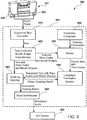
- Fig. 2 illustrates a subtitle language translation configuration 200 that uses the language translation system 100 illustrated in Fig. 1 to automatically generate a machine language translation as one or more subtitles for media content.
- a subtitle system 209 which may be a computing device with specialized instructions to generate subtitles for language translation in a media context, may receive an audio track from one or more output devices 202 (e.g., speakers) of an audio system 201.
- the subtitle system 209 may receive the audio track at a speech-to-text converter 203, which converts the audio track into text. Further, the subtitle system 209 may use a time code concatenator 204 to concatenate the converted text with time code metadata so that the text is demarcated with one or more time codes indicating one or more times at which the text is played during the audio track.
- the time code concatenator 204 may then send the concatenated text and time codes to a parser 205.
- the parser 205 also receives one or more subtitle parameters from a parameter composer 206, which allows a machine or a user to generate one or more subtitle parameters specific to an entertainment context.
- the subtitle parameters may indicate a threshold time to read a specific amount of words in the translated language, a maximum amount of space on the display screen that may be used to display the subtitle, etc.
- the parser 205 then parses the concatenated text and time codes according to the one or more subtitle parameters. As a result, the parser 205 outputs a plurality of text chunks with corresponding time codes.
- the language translation system 100 then performs a language translation on the plurality of text chunks.
- a checker 207 then checks the translated text to ensure that each of the plurality of text chunks complies with the one or more subtitle parameters (e.g., space and/or timing requirements) in the translated language. If the checker 207 determines that the plurality of text chunks complies with the one or more subtitle parameters, the subtitle system 209 sends the plurality of text chunks to a display device 208 for rendering as one or more subtitles.
- the one or more subtitle parameters e.g., space and/or timing requirements
- the subtitle system 209 may initially send the translated text to a text modifier 210.
- the text modifier 210 may attempt to edit the translated text so that it complies with the one or more subtitle parameters. For example, the text modifier 210 may determine any time expansion availability (i.e., if the text may be displayed after an actor spoke to fill extra time resulting from the translation). As another example, the text modifier 210 may determine contraction availability (i.e., shortening of the translation) by removing certain words that lack significant meaning (e.g., "umm"). The text modifier 210 may then send the modified text to the checker 207 to determine if the modified text complies with the one or more subtitle parameters.
- the checker 207 may send an indication to the language translation system 100 that the text translation was a failure.
- the language translation system 100 may then retranslate the plurality of text chunks by expanding or contracting words within the translated text. For example, the language translation system 100 may search for words that are shorter, and synonymous, with words in the translated text to contract the retranslated text to comply with the one or more subtitle parameters.
- a confidence score is generated for each of a plurality of potential retranslations.
- the language translation system 100 may then iterate (e.g., via a programmatic loop) through each of the plurality of potential retranslations, from the highest to lowest confidence score, until a re-translation is deemed to meet the one or more subtitle parameters.
- the checker 207 may request that the language translation system 100 discard the translation and perform a new translation.
- the subtitle language translation configuration 200 may operate in conjunction with a human translator, rather than entirely automatically via a machine translator.
- the checker 207 may automatically highlight one or more portions of a translation for editing by a human translator to bring the translation within compliance of the one or more subtitle parameters.
- the subtitle language translation configuration 200 is not limited to receiving an audio input form the audio system 201.
- the subtitle language translation configuration 200 may receive a script in text form and perform parsing without the speech-to-text converter 203.
- the subtitle language translation configuration 200 may enforce specific word translations according to a pre-approved dictionary.
- the pre-approved dictionary may be a translation list for certain terms and phrases (e.g., corresponding to character names, fictional world references, etc.).
- the pre-approved dictionary allows for consistency of language usage across one or more entertainment contexts.
- the checker 207 or an additional module, may check a translation word-by-word to determine if a word is in the pre-approved dictionary. If so, the subtitle language translation configuration 200 may automatically use that particular word from the pre-approved dictionary, or phrase containing the word, rather than sending it to the language translation system 100.
- the language translation system 100 may assign a weighted score to a word that is in the pre-approved dictionary rather than one that is not so that the language translation system 100 is more likely to select the word that is in the pre-approved dictionary.
- Fig. 3 illustrates a process 300 that may be used by the subtitle language translation configuration 200 illustrated in Fig. 2 to perform a language translation.
- the process 300 receives, with the processor 101 ( Fig. 1 ), audio corresponding to media content.
- the process 300 converts, with the processor 101, the audio to text.
- the process 300 concatenates, with the processor 101, the text with one or more time codes.
- the process 300 parses, with the processor 101, the concatenated text into one or more text chunks according to one or more subtitle parameters.
- the process 300 automatically translates, with the processor 101, the parsed text from a first spoken language to a second spoken language.
- the process 300 determines, with the processor 101, if the language translation complies with the one or more subtitle parameters.
- the process 300 outputs, with the processor 101, the language translation to a display device for display of the one or more text chunks as one or more subtitles at one or more times corresponding to the one or more time codes based on the language translation complying with the one or more subtitle parameters.
- Fig. 4A illustrates an example of a screenshot 401 of a failed translation displayed by a display device 400 (e.g., television, projection screen, etc.).
- a display device 400 e.g., television, projection screen, etc.
- the subtitle language translation configuration 200 Fig. 2
- the screenshot 401 is illustrated to exemplify translated text that did not get fully displayed.
- the illustrated phrase ("Would you be so kind as to tell me which way that man went?") exceeded a spacing requirements box 403 (depicted only for illustrative purposes). Because the portions of the subtitle appearing outside of the spacing requirements box 403 do not comply with the spacing requirements, the intended question would not be fully displayed.
- the original translation of the text may have been truncated when displayed by the display device 400.
- Fig. 4B illustrates an example of a screenshot 402 of a successful translation displayed by the display device 400.
- the text modifier 210 illustrated in Fig. 2 may have modified the original text to replace certain words/phrases with other words/phrases that connote a substantially similar meaning.
- the modified phrase ("Please, which way did he go?") connotes the same, or a substantially similar meaning, to the original text, but would fit into the spacing requirements box 403 illustrated in Fig. 4A .
- the entirety of the translated question is displayed by the display device 400, as depicted by Fig. 4B .
- the dialogue between two actors may be truncated to by removing the lines of one of the actors to meet the spacing requirements.
- Fig. 5 illustrates a dubbing translation configuration 500 that uses the language translation system 100 illustrated in Fig. 1 to automatically generate a machine language translation as dubbing for media content.
- a dubbing system 501 which may be a computing device with specialized instructions to generate dubbing (i.e., audio language translation in a second language that replaces the original audio in a first language) in a media context, may receive an audio track from the one or more output devices 202 (e.g., speakers) of the audio system 201.
- the audio track may be converted to text via a speech-to-text converter 203.
- the text may be sent to a time code and mouth shape concatenator 502 that concatenates the text with mouth shape data (e.g., symbols/text indicating a particular mouth shape) and time code data for times in the audio at which the mouth shape would be displayed in corresponding video.
- mouth shape data e.g., symbols/text indicating a particular mouth shape
- time code data e.g., symbols/text indicating a particular mouth shape
- the parser 205 parses the text based into one or more plurality of text chunks and corresponding time codes.
- the mouth shapes in the annotated text correspond to the untranslated language.
- the parser 205 may not use the mouth shape portion of the annotated text.
- the parser 205 sends the linguistic portion, and corresponding time codes, of the annotated text to the language translation system 100, which performs a language translation of the linguistic portion of the annotated text and generates one or more mouth shape indicia (e.g., symbols/text) corresponding to the translated text at one or more times corresponding to one or more time codes.
- the language translation system 100 then sends the translated text, with the corresponding time codes and mouth shape indicia, to the dubbing matcher 503.
- the dubbing matcher 503 performs a comparison between the mouth shape indicia of the untranslated text and the translated text to determine if a match occurs within a predetermined tolerance threshold.
- the mouth shape (perceived, but not displayed) of the translated text may not be the exact the same as the translated text given the language translation, so deviation within a predetermined tolerance threshold is deemed to be a successful dubbing match.
- the dubbing matcher 503 sends the translated text with time codes to a voice synthesizer 504, or other text-to-speech converter, to convert the translated text to audio.
- the voice synthesizer 504 generates audio, which is outputted by an audio/visual ("A/V”) device in conjunction with the translated mouth shapes.
- A/V audio/visual
- the dubbing matcher 503 may request that the language translation system 100 retranslate the text to find a text translation with perceived mouth shapes (corresponding to the translated text) that match the displayed mouth shapes (corresponding to the untranslated text).
- the dubbing matcher 503 may allow for a text modifier 210, as illustrated in Fig. 2 , to be used to select and edit words or phrases to semantically equivalent variants that meet the one or more dubbing parameters composed by the parameter composer 206.
- a confidence score is generated for each of a plurality of potential retranslations.
- the language translation system 100 may then iterate (e.g., via a programmatic loop) through each of the plurality of potential retranslations, from the highest to lowest confidence score, until a re-translation is deemed to meet the one or more dubbing parameters.
- the dubbing translation configuration 500 may operate in conjunction with a human translator, rather than entirely automatically via a machine translator.
- the checker 207 may automatically highlight one or more portions of a translation for editing by a human translator to bring the translation within compliance of the one or more dubbing parameters.
- the dubbing translation configuration 500 is not limited to receiving an audio input form the audio system 201.
- the dubbing translation configuration 500 may receive a script in text form and perform parsing without the speech-to-text converter 203.
- Fig. 6 illustrates an example of a screenshot 601 of media content, which is displayed by the display device 400, corresponding to a mouth shape for the untranslated content.
- a mouth shape 604 corresponding to the sound for the letter "o" may be illustrated.
- the mouth shape 604 is preserved, but the audio synchronized with the display of the mouth shape 604 is translated.
- the language translation may be adjusted to select a word that has a sound that is substantially similar to the sound corresponding to the displayed mouth shape 604. For instance, a sound corresponding to the articulation "m” would correspond to a closed-mouth shape rather than the open-mouth shape 604 illustrated in Fig. 6 . Therefore, a translation corresponding to the sound "m” would not have complied with the one or more dubbing parameters. Although sounding different than the vowel "o,” a translation corresponding to the vowel "u” would have a mouth shape that appears substantially similar to the vowel "u.” Accordingly, a translation using the vowel "u” would comply with the one or more dubbing parameters.
- the dubbing translation configuration 500 may enforce specific word translations according to the pre-approved dictionary discussed with respect to Fig. 2 .
- the dubbing translation configuration 500 may automatically use that particular word from the pre-approved dictionary, or phrase containing the word, rather than sending it to the language translation system 100.
- the language translation system 100 may assign a weighted score to a word that is in the pre-approved dictionary rather than one that is not so that the language translation system 100 is more likely to select the word that is in the pre-approved dictionary.
- Fig. 7 illustrates a process 700 that may be used by the dubbing translation configuration 500 to automatically generate a machine language translation as dubbing for media content.
- the process 700 receives, with the processor 101 ( Fig. 1 ), audio corresponding to media content.
- the process 700 converts, with the processor 101, the audio to text.
- the process 700 concatenates, with the processor 101, the text with one or more time codes and one or more untranslated mouth shape indicia.
- the process 700 parses, with the processor 101, the concatenated text into one or more text chunks according to one or more dubbing parameters.
- the process 700 automatically translates, with the processor 101, the parsed text from a first spoken language to a second spoken language.
- the process 700 automatically generates, with the processor 101, one or more translated mouth shape indicia.
- the process 700 determines, with the processor, if the one or more translated mouth shape indicia match the one or more untranslated mouth shape indicia within a predetermined tolerance threshold.
- the process 700 generates, with the voice synthesizer 504 ( Fig. 5 ), a translated audio output based on the one or more translated mouth shape indicia matching the one or more untranslated mouth shape indicia within the predetermined tolerance threshold.
- a computer readable medium may be any medium, e.g., computer readable storage device, capable of carrying those instructions and include a CD-ROM, DVD, magnetic or other optical disc, tape, silicon memory (e.g., removable, non-removable, volatile or non-volatile), packetized or non-packetized data through wireline or wireless transmissions locally or remotely through a network.
- a computer is herein intended to include any device that has a specialized, general, multi-purpose, or single purpose processor as described above.
- a computer may be a desktop computer, laptop, smartphone, tablet device, set top box, etc.
Landscapes
- Engineering & Computer Science (AREA)
- Theoretical Computer Science (AREA)
- Audiology, Speech & Language Pathology (AREA)
- Physics & Mathematics (AREA)
- Health & Medical Sciences (AREA)
- Computational Linguistics (AREA)
- Multimedia (AREA)
- General Engineering & Computer Science (AREA)
- Artificial Intelligence (AREA)
- General Health & Medical Sciences (AREA)
- General Physics & Mathematics (AREA)
- Signal Processing (AREA)
- Human Computer Interaction (AREA)
- Acoustics & Sound (AREA)
- Databases & Information Systems (AREA)
- Computing Systems (AREA)
- Quality & Reliability (AREA)
- Machine Translation (AREA)
Applications Claiming Priority (1)
| Application Number | Priority Date | Filing Date | Title |
|---|---|---|---|
| US16/052,478 US11847425B2 (en) | 2018-08-01 | 2018-08-01 | Machine translation system for entertainment and media |
Publications (2)
| Publication Number | Publication Date |
|---|---|
| EP3605357A2 true EP3605357A2 (de) | 2020-02-05 |
| EP3605357A3 EP3605357A3 (de) | 2020-04-22 |
Family
ID=66625102
Family Applications (1)
| Application Number | Title | Priority Date | Filing Date |
|---|---|---|---|
| EP19175423.3A Withdrawn EP3605357A3 (de) | 2018-08-01 | 2019-05-20 | System zur maschinellen übersetzung für unterhaltung und medien |
Country Status (2)
| Country | Link |
|---|---|
| US (2) | US11847425B2 (de) |
| EP (1) | EP3605357A3 (de) |
Cited By (3)
| Publication number | Priority date | Publication date | Assignee | Title |
|---|---|---|---|---|
| CN113723342A (zh) * | 2021-09-08 | 2021-11-30 | 北京奇艺世纪科技有限公司 | 一种字幕显示方法、装置、电子设备及可读存储介质 |
| CN115278331A (zh) * | 2022-06-23 | 2022-11-01 | 中译语通科技股份有限公司 | 基于机器翻译的多语言字幕展示方法、系统、设备及介质 |
| EP4336853A4 (de) * | 2021-06-01 | 2024-09-25 | Lemon Inc. | Videoverarbeitungsverfahren und -vorrichtung |
Families Citing this family (15)
| Publication number | Priority date | Publication date | Assignee | Title |
|---|---|---|---|---|
| US11847425B2 (en) * | 2018-08-01 | 2023-12-19 | Disney Enterprises, Inc. | Machine translation system for entertainment and media |
| US10860648B1 (en) * | 2018-09-12 | 2020-12-08 | Amazon Technologies, Inc. | Audio locale mismatch detection |
| US11195507B2 (en) * | 2018-10-04 | 2021-12-07 | Rovi Guides, Inc. | Translating between spoken languages with emotion in audio and video media streams |
| US11159597B2 (en) * | 2019-02-01 | 2021-10-26 | Vidubly Ltd | Systems and methods for artificial dubbing |
| US11202131B2 (en) | 2019-03-10 | 2021-12-14 | Vidubly Ltd | Maintaining original volume changes of a character in revoiced media stream |
| CN112825561A (zh) * | 2019-11-21 | 2021-05-21 | 上海幻电信息科技有限公司 | 字幕显示方法、系统、计算机设备及可读存储介质 |
| US11301644B2 (en) * | 2019-12-03 | 2022-04-12 | Trint Limited | Generating and editing media |
| US11551013B1 (en) * | 2020-03-02 | 2023-01-10 | Amazon Technologies, Inc. | Automated quality assessment of translations |
| US20210312122A1 (en) * | 2020-04-07 | 2021-10-07 | International Business Machines Corporation | Methods and systems for generating documents with a targeted style |
| US11886829B2 (en) | 2020-05-18 | 2024-01-30 | T-Mobile Usa, Inc. | Content access devices that use local audio translation for content presentation |
| CN117769739A (zh) * | 2021-08-09 | 2024-03-26 | 谷歌有限责任公司 | 用于配音的辅助翻译和嘴唇匹配的系统和方法 |
| US12094448B2 (en) * | 2021-10-26 | 2024-09-17 | International Business Machines Corporation | Generating audio files based on user generated scripts and voice components |
| CN114885197B (zh) * | 2022-04-26 | 2023-07-14 | 中山亿联智能科技有限公司 | 一种应用于机顶盒字幕的多国语言翻译系统及其方法 |
| US12282755B2 (en) | 2022-09-10 | 2025-04-22 | Nikolas Louis Ciminelli | Generation of user interfaces from free text |
| US12380736B2 (en) | 2023-08-29 | 2025-08-05 | Ben Avi Ingel | Generating and operating personalized artificial entities |
Family Cites Families (34)
| Publication number | Priority date | Publication date | Assignee | Title |
|---|---|---|---|---|
| JPH03268062A (ja) * | 1990-03-19 | 1991-11-28 | Fujitsu Ltd | 機械翻訳電子メール装置における私用単語の登録装置 |
| US20010029455A1 (en) * | 2000-03-31 | 2001-10-11 | Chin Jeffrey J. | Method and apparatus for providing multilingual translation over a network |
| US7747434B2 (en) * | 2000-10-24 | 2010-06-29 | Speech Conversion Technologies, Inc. | Integrated speech recognition, closed captioning, and translation system and method |
| US6778252B2 (en) | 2000-12-22 | 2004-08-17 | Film Language | Film language |
| US7035804B2 (en) * | 2001-04-26 | 2006-04-25 | Stenograph, L.L.C. | Systems and methods for automated audio transcription, translation, and transfer |
| US7447624B2 (en) * | 2001-11-27 | 2008-11-04 | Sun Microsystems, Inc. | Generation of localized software applications |
| GB2395029A (en) * | 2002-11-06 | 2004-05-12 | Alan Wilkinson | Translation of electronically transmitted messages |
| JP2006524856A (ja) | 2003-04-14 | 2006-11-02 | コーニンクレッカ フィリップス エレクトロニクス エヌ ヴィ | 自動ダビングをオーディオ・ビジュアル・ストリームに対して行うシステム及び方法 |
| US7865353B2 (en) * | 2005-03-22 | 2011-01-04 | Fuji Xerox Co., Ltd. | Translation device, image processing device, translation method, and recording medium |
| US20060241932A1 (en) * | 2005-04-20 | 2006-10-26 | Carman Ron C | Translation previewer and validator |
| WO2008055273A2 (en) * | 2006-11-05 | 2008-05-08 | Sean Joseph Leonard | System and methods for rapid subtitling |
| US8131536B2 (en) * | 2007-01-12 | 2012-03-06 | Raytheon Bbn Technologies Corp. | Extraction-empowered machine translation |
| US20100332214A1 (en) * | 2009-06-30 | 2010-12-30 | Shpalter Shahar | System and method for network transmision of subtitles |
| US20110246172A1 (en) * | 2010-03-30 | 2011-10-06 | Polycom, Inc. | Method and System for Adding Translation in a Videoconference |
| GB201017174D0 (en) * | 2010-10-12 | 2010-11-24 | Muvemedia Ltd | System and method for delivering multilingual video or film sound tracks or multilingual spoken or sung dialog for synchronization and playback |
| JP5211193B2 (ja) * | 2010-11-10 | 2013-06-12 | シャープ株式会社 | 翻訳表示装置 |
| US8914276B2 (en) * | 2011-06-08 | 2014-12-16 | Microsoft Corporation | Dynamic video caption translation player |
| US9104661B1 (en) * | 2011-06-29 | 2015-08-11 | Amazon Technologies, Inc. | Translation of applications |
| TWI489862B (zh) * | 2011-11-09 | 2015-06-21 | Inst Information Industry | Digital TV instant translation system and its method |
| JP6040715B2 (ja) * | 2012-11-06 | 2016-12-07 | ソニー株式会社 | 画像表示装置及び画像表示方法、並びにコンピューター・プログラム |
| GB2510116A (en) | 2013-01-23 | 2014-07-30 | Sony Corp | Translating the language of text associated with a video |
| US9552807B2 (en) * | 2013-03-11 | 2017-01-24 | Video Dubber Ltd. | Method, apparatus and system for regenerating voice intonation in automatically dubbed videos |
| JP5449633B1 (ja) * | 2013-03-22 | 2014-03-19 | パナソニック株式会社 | 広告翻訳装置、広告表示装置、および広告翻訳方法 |
| US9324340B2 (en) | 2014-01-10 | 2016-04-26 | Sony Corporation | Methods and apparatuses for use in animating video content to correspond with audio content |
| US9818450B2 (en) * | 2015-03-31 | 2017-11-14 | Sony Interactive Entertainment Europe Limited | System and method of subtitling by dividing script text into two languages |
| US9442923B1 (en) * | 2015-11-24 | 2016-09-13 | International Business Machines Corporation | Space constrained text translator |
| US10114819B2 (en) * | 2016-06-24 | 2018-10-30 | Facebook, Inc. | Optimizing machine translations for user engagement |
| US20180143974A1 (en) * | 2016-11-18 | 2018-05-24 | Microsoft Technology Licensing, Llc | Translation on demand with gap filling |
| US9916305B1 (en) * | 2016-12-28 | 2018-03-13 | Facebook, Inc. | Translating terms within a digital communication |
| US20180189249A1 (en) * | 2017-01-04 | 2018-07-05 | Microsoft Technology Licensing, Llc | Providing application based subtitle features for presentation |
| US10339973B2 (en) * | 2017-02-13 | 2019-07-02 | International Business Machines Corporation | System and method for audio dubbing and translation of a video |
| US10419828B2 (en) * | 2018-01-08 | 2019-09-17 | Netflix, Inc. | Modifying subtitles to reflect changes to audiovisual programs |
| KR102598824B1 (ko) * | 2018-02-26 | 2023-11-06 | 구글 엘엘씨 | 미리 레코딩된 비디오들에 대한 자동화된 보이스 번역 더빙 |
| US11847425B2 (en) * | 2018-08-01 | 2023-12-19 | Disney Enterprises, Inc. | Machine translation system for entertainment and media |
-
2018
- 2018-08-01 US US16/052,478 patent/US11847425B2/en active Active
-
2019
- 2019-05-20 EP EP19175423.3A patent/EP3605357A3/de not_active Withdrawn
-
2023
- 2023-10-31 US US18/385,484 patent/US20240062022A1/en active Pending
Cited By (6)
| Publication number | Priority date | Publication date | Assignee | Title |
|---|---|---|---|---|
| EP4336853A4 (de) * | 2021-06-01 | 2024-09-25 | Lemon Inc. | Videoverarbeitungsverfahren und -vorrichtung |
| US12470775B2 (en) | 2021-06-01 | 2025-11-11 | Lemon Inc. | Method and apparatus for video processing |
| CN113723342A (zh) * | 2021-09-08 | 2021-11-30 | 北京奇艺世纪科技有限公司 | 一种字幕显示方法、装置、电子设备及可读存储介质 |
| CN113723342B (zh) * | 2021-09-08 | 2023-09-29 | 北京奇艺世纪科技有限公司 | 一种字幕显示方法、装置、电子设备及可读存储介质 |
| CN115278331A (zh) * | 2022-06-23 | 2022-11-01 | 中译语通科技股份有限公司 | 基于机器翻译的多语言字幕展示方法、系统、设备及介质 |
| CN115278331B (zh) * | 2022-06-23 | 2023-10-20 | 中译语通科技股份有限公司 | 基于机器翻译的多语言字幕展示方法、系统、设备及介质 |
Also Published As
| Publication number | Publication date |
|---|---|
| EP3605357A3 (de) | 2020-04-22 |
| US20200042601A1 (en) | 2020-02-06 |
| US11847425B2 (en) | 2023-12-19 |
| US20240062022A1 (en) | 2024-02-22 |
Similar Documents
| Publication | Publication Date | Title |
|---|---|---|
| US20240062022A1 (en) | Machine translation system for entertainment and media | |
| KR102375115B1 (ko) | 엔드-투-엔드 모델들에서 교차-언어 음성 인식을 위한 음소-기반 컨텍스트화 | |
| Agarwal et al. | Findings of the IWSLT 2023 evaluation campaign | |
| US20120010869A1 (en) | Visualizing automatic speech recognition and machine | |
| JP6471074B2 (ja) | 機械翻訳装置、方法及びプログラム | |
| KR20180129486A (ko) | 외국어학습을 위한 청크단위 분리 규칙과 핵심어 자동 강세 표시 구현 방법 및 시스템 | |
| US20160314116A1 (en) | Interpretation apparatus and method | |
| De Araújo et al. | An approach to generate and embed sign language video tracks into multimedia contents | |
| CN113225612B (zh) | 字幕生成方法、装置、计算机可读存储介质及电子设备 | |
| CA2973221C (en) | Use of a program schedule to facilitate modifying closed-captioning text | |
| Song et al. | Talking face generation with multilingual tts | |
| KR20150005608A (ko) | 기존의 단일 언어 프로세스로부터 다수의 언어 프로세스를 구축하는 기법 | |
| Ciobanu et al. | Speech recognition and synthesis technologies in the translation workflow | |
| US11928440B2 (en) | Systems and methods for handling multilingual queries | |
| WO2015019774A1 (ja) | データ生成装置、データ生成方法、翻訳処理装置、プログラム、およびデータ | |
| Karakanta et al. | Between flexibility and consistency: Joint generation of captions and subtitles | |
| HK40020363A (en) | Machine translation system for entertainment and media | |
| Kumar et al. | Autodubs: translating and dubbing videos | |
| Kochar et al. | Towards disfluency annotated corpora for Indian languages | |
| US20130080144A1 (en) | Machine translation apparatus, a method and a non-transitory computer readable medium thereof | |
| JP2018156593A (ja) | 情報処理装置、情報処理方法およびプログラム | |
| KR102802250B1 (ko) | 강의를 위한 실시간 번역자막 시스템 | |
| de Araújo et al. | Accessibility as a service: Augmenting multimedia content with sign language video tracks | |
| KR20120046414A (ko) | 중간 번역처리 결과 제공 장치 및 그 방법 | |
| Cettolo | Evaluating Subtitle Segmentation for End-to-end Generation Systems |
Legal Events
| Date | Code | Title | Description |
|---|---|---|---|
| PUAI | Public reference made under article 153(3) epc to a published international application that has entered the european phase |
Free format text: ORIGINAL CODE: 0009012 |
|
| STAA | Information on the status of an ep patent application or granted ep patent |
Free format text: STATUS: REQUEST FOR EXAMINATION WAS MADE |
|
| 17P | Request for examination filed |
Effective date: 20190520 |
|
| AK | Designated contracting states |
Kind code of ref document: A2 Designated state(s): AL AT BE BG CH CY CZ DE DK EE ES FI FR GB GR HR HU IE IS IT LI LT LU LV MC MK MT NL NO PL PT RO RS SE SI SK SM TR |
|
| AX | Request for extension of the european patent |
Extension state: BA ME |
|
| REG | Reference to a national code |
Ref country code: DE Ref legal event code: R079 Free format text: PREVIOUS MAIN CLASS: G06F0017280000 Ipc: H04N0021488000 |
|
| PUAL | Search report despatched |
Free format text: ORIGINAL CODE: 0009013 |
|
| AK | Designated contracting states |
Kind code of ref document: A3 Designated state(s): AL AT BE BG CH CY CZ DE DK EE ES FI FR GB GR HR HU IE IS IT LI LT LU LV MC MK MT NL NO PL PT RO RS SE SI SK SM TR |
|
| AX | Request for extension of the european patent |
Extension state: BA ME |
|
| RIC1 | Information provided on ipc code assigned before grant |
Ipc: G06F 40/51 20200101ALI20200317BHEP Ipc: G06F 40/58 20200101ALI20200317BHEP Ipc: H04N 9/82 20060101ALI20200317BHEP Ipc: G06F 40/205 20200101ALI20200317BHEP Ipc: H04N 21/488 20110101AFI20200317BHEP |
|
| REG | Reference to a national code |
Ref country code: HK Ref legal event code: DE Ref document number: 40020363 Country of ref document: HK |
|
| STAA | Information on the status of an ep patent application or granted ep patent |
Free format text: STATUS: EXAMINATION IS IN PROGRESS |
|
| 17Q | First examination report despatched |
Effective date: 20211216 |
|
| P01 | Opt-out of the competence of the unified patent court (upc) registered |
Effective date: 20230509 |
|
| STAA | Information on the status of an ep patent application or granted ep patent |
Free format text: STATUS: THE APPLICATION HAS BEEN WITHDRAWN |
|
| 18W | Application withdrawn |
Effective date: 20250623 |