EP3600657B1 - Single brick scr/asc/pna/doc close-coupled catalyst - Google Patents
Single brick scr/asc/pna/doc close-coupled catalyst Download PDFInfo
- Publication number
- EP3600657B1 EP3600657B1 EP18721886.2A EP18721886A EP3600657B1 EP 3600657 B1 EP3600657 B1 EP 3600657B1 EP 18721886 A EP18721886 A EP 18721886A EP 3600657 B1 EP3600657 B1 EP 3600657B1
- Authority
- EP
- European Patent Office
- Prior art keywords
- pna
- scr catalyst
- substrate
- combination
- platinum group
- Prior art date
- Legal status (The legal status is an assumption and is not a legal conclusion. Google has not performed a legal analysis and makes no representation as to the accuracy of the status listed.)
- Active
Links
Images












Classifications
-
- B—PERFORMING OPERATIONS; TRANSPORTING
- B01—PHYSICAL OR CHEMICAL PROCESSES OR APPARATUS IN GENERAL
- B01D—SEPARATION
- B01D53/00—Separation of gases or vapours; Recovering vapours of volatile solvents from gases; Chemical or biological purification of waste gases, e.g. engine exhaust gases, smoke, fumes, flue gases, aerosols
- B01D53/34—Chemical or biological purification of waste gases
- B01D53/92—Chemical or biological purification of waste gases of engine exhaust gases
- B01D53/94—Chemical or biological purification of waste gases of engine exhaust gases by catalytic processes
- B01D53/9404—Removing only nitrogen compounds
- B01D53/9409—Nitrogen oxides
- B01D53/9413—Processes characterised by a specific catalyst
- B01D53/9418—Processes characterised by a specific catalyst for removing nitrogen oxides by selective catalytic reduction [SCR] using a reducing agent in a lean exhaust gas
-
- B—PERFORMING OPERATIONS; TRANSPORTING
- B01—PHYSICAL OR CHEMICAL PROCESSES OR APPARATUS IN GENERAL
- B01D—SEPARATION
- B01D53/00—Separation of gases or vapours; Recovering vapours of volatile solvents from gases; Chemical or biological purification of waste gases, e.g. engine exhaust gases, smoke, fumes, flue gases, aerosols
- B01D53/34—Chemical or biological purification of waste gases
- B01D53/92—Chemical or biological purification of waste gases of engine exhaust gases
- B01D53/94—Chemical or biological purification of waste gases of engine exhaust gases by catalytic processes
-
- B—PERFORMING OPERATIONS; TRANSPORTING
- B01—PHYSICAL OR CHEMICAL PROCESSES OR APPARATUS IN GENERAL
- B01D—SEPARATION
- B01D53/00—Separation of gases or vapours; Recovering vapours of volatile solvents from gases; Chemical or biological purification of waste gases, e.g. engine exhaust gases, smoke, fumes, flue gases, aerosols
- B01D53/34—Chemical or biological purification of waste gases
- B01D53/92—Chemical or biological purification of waste gases of engine exhaust gases
- B01D53/94—Chemical or biological purification of waste gases of engine exhaust gases by catalytic processes
- B01D53/9404—Removing only nitrogen compounds
- B01D53/9436—Ammonia
-
- B—PERFORMING OPERATIONS; TRANSPORTING
- B01—PHYSICAL OR CHEMICAL PROCESSES OR APPARATUS IN GENERAL
- B01D—SEPARATION
- B01D53/00—Separation of gases or vapours; Recovering vapours of volatile solvents from gases; Chemical or biological purification of waste gases, e.g. engine exhaust gases, smoke, fumes, flue gases, aerosols
- B01D53/34—Chemical or biological purification of waste gases
- B01D53/92—Chemical or biological purification of waste gases of engine exhaust gases
- B01D53/94—Chemical or biological purification of waste gases of engine exhaust gases by catalytic processes
- B01D53/944—Simultaneously removing carbon monoxide, hydrocarbons or carbon making use of oxidation catalysts
-
- B—PERFORMING OPERATIONS; TRANSPORTING
- B01—PHYSICAL OR CHEMICAL PROCESSES OR APPARATUS IN GENERAL
- B01D—SEPARATION
- B01D53/00—Separation of gases or vapours; Recovering vapours of volatile solvents from gases; Chemical or biological purification of waste gases, e.g. engine exhaust gases, smoke, fumes, flue gases, aerosols
- B01D53/34—Chemical or biological purification of waste gases
- B01D53/92—Chemical or biological purification of waste gases of engine exhaust gases
- B01D53/94—Chemical or biological purification of waste gases of engine exhaust gases by catalytic processes
- B01D53/9459—Removing one or more of nitrogen oxides, carbon monoxide, or hydrocarbons by multiple successive catalytic functions; systems with more than one different function, e.g. zone coated catalysts
- B01D53/9463—Removing one or more of nitrogen oxides, carbon monoxide, or hydrocarbons by multiple successive catalytic functions; systems with more than one different function, e.g. zone coated catalysts with catalysts positioned on one brick
- B01D53/9468—Removing one or more of nitrogen oxides, carbon monoxide, or hydrocarbons by multiple successive catalytic functions; systems with more than one different function, e.g. zone coated catalysts with catalysts positioned on one brick in different layers
-
- B—PERFORMING OPERATIONS; TRANSPORTING
- B01—PHYSICAL OR CHEMICAL PROCESSES OR APPARATUS IN GENERAL
- B01D—SEPARATION
- B01D53/00—Separation of gases or vapours; Recovering vapours of volatile solvents from gases; Chemical or biological purification of waste gases, e.g. engine exhaust gases, smoke, fumes, flue gases, aerosols
- B01D53/34—Chemical or biological purification of waste gases
- B01D53/92—Chemical or biological purification of waste gases of engine exhaust gases
- B01D53/94—Chemical or biological purification of waste gases of engine exhaust gases by catalytic processes
- B01D53/9459—Removing one or more of nitrogen oxides, carbon monoxide, or hydrocarbons by multiple successive catalytic functions; systems with more than one different function, e.g. zone coated catalysts
- B01D53/9463—Removing one or more of nitrogen oxides, carbon monoxide, or hydrocarbons by multiple successive catalytic functions; systems with more than one different function, e.g. zone coated catalysts with catalysts positioned on one brick
- B01D53/9472—Removing one or more of nitrogen oxides, carbon monoxide, or hydrocarbons by multiple successive catalytic functions; systems with more than one different function, e.g. zone coated catalysts with catalysts positioned on one brick in different zones
-
- B—PERFORMING OPERATIONS; TRANSPORTING
- B01—PHYSICAL OR CHEMICAL PROCESSES OR APPARATUS IN GENERAL
- B01D—SEPARATION
- B01D53/00—Separation of gases or vapours; Recovering vapours of volatile solvents from gases; Chemical or biological purification of waste gases, e.g. engine exhaust gases, smoke, fumes, flue gases, aerosols
- B01D53/34—Chemical or biological purification of waste gases
- B01D53/92—Chemical or biological purification of waste gases of engine exhaust gases
- B01D53/94—Chemical or biological purification of waste gases of engine exhaust gases by catalytic processes
- B01D53/9481—Catalyst preceded by an adsorption device without catalytic function for temporary storage of contaminants, e.g. during cold start
-
- B—PERFORMING OPERATIONS; TRANSPORTING
- B01—PHYSICAL OR CHEMICAL PROCESSES OR APPARATUS IN GENERAL
- B01J—CHEMICAL OR PHYSICAL PROCESSES, e.g. CATALYSIS OR COLLOID CHEMISTRY; THEIR RELEVANT APPARATUS
- B01J29/00—Catalysts comprising molecular sieves
- B01J29/04—Catalysts comprising molecular sieves having base-exchange properties, e.g. crystalline zeolites
- B01J29/06—Crystalline aluminosilicate zeolites; Isomorphous compounds thereof
- B01J29/70—Crystalline aluminosilicate zeolites; Isomorphous compounds thereof of types characterised by their specific structure not provided for in groups B01J29/08 - B01J29/65
- B01J29/72—Crystalline aluminosilicate zeolites; Isomorphous compounds thereof of types characterised by their specific structure not provided for in groups B01J29/08 - B01J29/65 containing iron group metals, noble metals or copper
-
- B—PERFORMING OPERATIONS; TRANSPORTING
- B01—PHYSICAL OR CHEMICAL PROCESSES OR APPARATUS IN GENERAL
- B01J—CHEMICAL OR PHYSICAL PROCESSES, e.g. CATALYSIS OR COLLOID CHEMISTRY; THEIR RELEVANT APPARATUS
- B01J29/00—Catalysts comprising molecular sieves
- B01J29/04—Catalysts comprising molecular sieves having base-exchange properties, e.g. crystalline zeolites
- B01J29/06—Crystalline aluminosilicate zeolites; Isomorphous compounds thereof
- B01J29/70—Crystalline aluminosilicate zeolites; Isomorphous compounds thereof of types characterised by their specific structure not provided for in groups B01J29/08 - B01J29/65
- B01J29/72—Crystalline aluminosilicate zeolites; Isomorphous compounds thereof of types characterised by their specific structure not provided for in groups B01J29/08 - B01J29/65 containing iron group metals, noble metals or copper
- B01J29/74—Noble metals
-
- B—PERFORMING OPERATIONS; TRANSPORTING
- B01—PHYSICAL OR CHEMICAL PROCESSES OR APPARATUS IN GENERAL
- B01J—CHEMICAL OR PHYSICAL PROCESSES, e.g. CATALYSIS OR COLLOID CHEMISTRY; THEIR RELEVANT APPARATUS
- B01J29/00—Catalysts comprising molecular sieves
- B01J29/04—Catalysts comprising molecular sieves having base-exchange properties, e.g. crystalline zeolites
- B01J29/06—Crystalline aluminosilicate zeolites; Isomorphous compounds thereof
- B01J29/80—Mixtures of different zeolites
-
- B—PERFORMING OPERATIONS; TRANSPORTING
- B01—PHYSICAL OR CHEMICAL PROCESSES OR APPARATUS IN GENERAL
- B01J—CHEMICAL OR PHYSICAL PROCESSES, e.g. CATALYSIS OR COLLOID CHEMISTRY; THEIR RELEVANT APPARATUS
- B01J35/00—Catalysts, in general, characterised by their form or physical properties
- B01J35/19—Catalysts containing parts with different compositions
-
- B—PERFORMING OPERATIONS; TRANSPORTING
- B01—PHYSICAL OR CHEMICAL PROCESSES OR APPARATUS IN GENERAL
- B01J—CHEMICAL OR PHYSICAL PROCESSES, e.g. CATALYSIS OR COLLOID CHEMISTRY; THEIR RELEVANT APPARATUS
- B01J37/00—Processes, in general, for preparing catalysts; Processes, in general, for activation of catalysts
- B01J37/02—Impregnation, coating or precipitation
- B01J37/024—Multiple impregnation or coating
- B01J37/0244—Coatings comprising several layers
-
- B—PERFORMING OPERATIONS; TRANSPORTING
- B01—PHYSICAL OR CHEMICAL PROCESSES OR APPARATUS IN GENERAL
- B01J—CHEMICAL OR PHYSICAL PROCESSES, e.g. CATALYSIS OR COLLOID CHEMISTRY; THEIR RELEVANT APPARATUS
- B01J37/00—Processes, in general, for preparing catalysts; Processes, in general, for activation of catalysts
- B01J37/02—Impregnation, coating or precipitation
- B01J37/024—Multiple impregnation or coating
- B01J37/0246—Coatings comprising a zeolite
-
- B—PERFORMING OPERATIONS; TRANSPORTING
- B01—PHYSICAL OR CHEMICAL PROCESSES OR APPARATUS IN GENERAL
- B01J—CHEMICAL OR PHYSICAL PROCESSES, e.g. CATALYSIS OR COLLOID CHEMISTRY; THEIR RELEVANT APPARATUS
- B01J37/00—Processes, in general, for preparing catalysts; Processes, in general, for activation of catalysts
- B01J37/02—Impregnation, coating or precipitation
- B01J37/024—Multiple impregnation or coating
- B01J37/0248—Coatings comprising impregnated particles
-
- F—MECHANICAL ENGINEERING; LIGHTING; HEATING; WEAPONS; BLASTING
- F01—MACHINES OR ENGINES IN GENERAL; ENGINE PLANTS IN GENERAL; STEAM ENGINES
- F01N—GAS-FLOW SILENCERS OR EXHAUST APPARATUS FOR MACHINES OR ENGINES IN GENERAL; GAS-FLOW SILENCERS OR EXHAUST APPARATUS FOR INTERNAL-COMBUSTION ENGINES
- F01N3/00—Exhaust or silencing apparatus having means for purifying, rendering innocuous, or otherwise treating exhaust
- F01N3/02—Exhaust or silencing apparatus having means for purifying, rendering innocuous, or otherwise treating exhaust for cooling, or for removing solid constituents of, exhaust
- F01N3/021—Exhaust or silencing apparatus having means for purifying, rendering innocuous, or otherwise treating exhaust for cooling, or for removing solid constituents of, exhaust by means of filters
- F01N3/033—Exhaust or silencing apparatus having means for purifying, rendering innocuous, or otherwise treating exhaust for cooling, or for removing solid constituents of, exhaust by means of filters in combination with other devices
- F01N3/035—Exhaust or silencing apparatus having means for purifying, rendering innocuous, or otherwise treating exhaust for cooling, or for removing solid constituents of, exhaust by means of filters in combination with other devices with catalytic reactors
-
- F—MECHANICAL ENGINEERING; LIGHTING; HEATING; WEAPONS; BLASTING
- F01—MACHINES OR ENGINES IN GENERAL; ENGINE PLANTS IN GENERAL; STEAM ENGINES
- F01N—GAS-FLOW SILENCERS OR EXHAUST APPARATUS FOR MACHINES OR ENGINES IN GENERAL; GAS-FLOW SILENCERS OR EXHAUST APPARATUS FOR INTERNAL-COMBUSTION ENGINES
- F01N3/00—Exhaust or silencing apparatus having means for purifying, rendering innocuous, or otherwise treating exhaust
- F01N3/08—Exhaust or silencing apparatus having means for purifying, rendering innocuous, or otherwise treating exhaust for rendering innocuous
- F01N3/0807—Exhaust or silencing apparatus having means for purifying, rendering innocuous, or otherwise treating exhaust for rendering innocuous by using absorbents or adsorbents
- F01N3/0814—Exhaust or silencing apparatus having means for purifying, rendering innocuous, or otherwise treating exhaust for rendering innocuous by using absorbents or adsorbents combined with catalytic converters, e.g. NOx absorption/storage reduction catalysts
-
- F—MECHANICAL ENGINEERING; LIGHTING; HEATING; WEAPONS; BLASTING
- F01—MACHINES OR ENGINES IN GENERAL; ENGINE PLANTS IN GENERAL; STEAM ENGINES
- F01N—GAS-FLOW SILENCERS OR EXHAUST APPARATUS FOR MACHINES OR ENGINES IN GENERAL; GAS-FLOW SILENCERS OR EXHAUST APPARATUS FOR INTERNAL-COMBUSTION ENGINES
- F01N3/00—Exhaust or silencing apparatus having means for purifying, rendering innocuous, or otherwise treating exhaust
- F01N3/08—Exhaust or silencing apparatus having means for purifying, rendering innocuous, or otherwise treating exhaust for rendering innocuous
- F01N3/0807—Exhaust or silencing apparatus having means for purifying, rendering innocuous, or otherwise treating exhaust for rendering innocuous by using absorbents or adsorbents
- F01N3/0828—Exhaust or silencing apparatus having means for purifying, rendering innocuous, or otherwise treating exhaust for rendering innocuous by using absorbents or adsorbents characterised by the absorbed or adsorbed substances
- F01N3/0842—Nitrogen oxides
-
- F—MECHANICAL ENGINEERING; LIGHTING; HEATING; WEAPONS; BLASTING
- F01—MACHINES OR ENGINES IN GENERAL; ENGINE PLANTS IN GENERAL; STEAM ENGINES
- F01N—GAS-FLOW SILENCERS OR EXHAUST APPARATUS FOR MACHINES OR ENGINES IN GENERAL; GAS-FLOW SILENCERS OR EXHAUST APPARATUS FOR INTERNAL-COMBUSTION ENGINES
- F01N3/00—Exhaust or silencing apparatus having means for purifying, rendering innocuous, or otherwise treating exhaust
- F01N3/08—Exhaust or silencing apparatus having means for purifying, rendering innocuous, or otherwise treating exhaust for rendering innocuous
- F01N3/10—Exhaust or silencing apparatus having means for purifying, rendering innocuous, or otherwise treating exhaust for rendering innocuous by thermal or catalytic conversion of noxious components of exhaust
- F01N3/103—Oxidation catalysts for HC and CO only
-
- F—MECHANICAL ENGINEERING; LIGHTING; HEATING; WEAPONS; BLASTING
- F01—MACHINES OR ENGINES IN GENERAL; ENGINE PLANTS IN GENERAL; STEAM ENGINES
- F01N—GAS-FLOW SILENCERS OR EXHAUST APPARATUS FOR MACHINES OR ENGINES IN GENERAL; GAS-FLOW SILENCERS OR EXHAUST APPARATUS FOR INTERNAL-COMBUSTION ENGINES
- F01N3/00—Exhaust or silencing apparatus having means for purifying, rendering innocuous, or otherwise treating exhaust
- F01N3/08—Exhaust or silencing apparatus having means for purifying, rendering innocuous, or otherwise treating exhaust for rendering innocuous
- F01N3/10—Exhaust or silencing apparatus having means for purifying, rendering innocuous, or otherwise treating exhaust for rendering innocuous by thermal or catalytic conversion of noxious components of exhaust
- F01N3/105—General auxiliary catalysts, e.g. upstream or downstream of the main catalyst
- F01N3/106—Auxiliary oxidation catalysts
-
- F—MECHANICAL ENGINEERING; LIGHTING; HEATING; WEAPONS; BLASTING
- F01—MACHINES OR ENGINES IN GENERAL; ENGINE PLANTS IN GENERAL; STEAM ENGINES
- F01N—GAS-FLOW SILENCERS OR EXHAUST APPARATUS FOR MACHINES OR ENGINES IN GENERAL; GAS-FLOW SILENCERS OR EXHAUST APPARATUS FOR INTERNAL-COMBUSTION ENGINES
- F01N3/00—Exhaust or silencing apparatus having means for purifying, rendering innocuous, or otherwise treating exhaust
- F01N3/08—Exhaust or silencing apparatus having means for purifying, rendering innocuous, or otherwise treating exhaust for rendering innocuous
- F01N3/10—Exhaust or silencing apparatus having means for purifying, rendering innocuous, or otherwise treating exhaust for rendering innocuous by thermal or catalytic conversion of noxious components of exhaust
- F01N3/18—Exhaust or silencing apparatus having means for purifying, rendering innocuous, or otherwise treating exhaust for rendering innocuous by thermal or catalytic conversion of noxious components of exhaust characterised by methods of operation; Control
- F01N3/20—Exhaust or silencing apparatus having means for purifying, rendering innocuous, or otherwise treating exhaust for rendering innocuous by thermal or catalytic conversion of noxious components of exhaust characterised by methods of operation; Control specially adapted for catalytic conversion
-
- F—MECHANICAL ENGINEERING; LIGHTING; HEATING; WEAPONS; BLASTING
- F01—MACHINES OR ENGINES IN GENERAL; ENGINE PLANTS IN GENERAL; STEAM ENGINES
- F01N—GAS-FLOW SILENCERS OR EXHAUST APPARATUS FOR MACHINES OR ENGINES IN GENERAL; GAS-FLOW SILENCERS OR EXHAUST APPARATUS FOR INTERNAL-COMBUSTION ENGINES
- F01N3/00—Exhaust or silencing apparatus having means for purifying, rendering innocuous, or otherwise treating exhaust
- F01N3/08—Exhaust or silencing apparatus having means for purifying, rendering innocuous, or otherwise treating exhaust for rendering innocuous
- F01N3/10—Exhaust or silencing apparatus having means for purifying, rendering innocuous, or otherwise treating exhaust for rendering innocuous by thermal or catalytic conversion of noxious components of exhaust
- F01N3/18—Exhaust or silencing apparatus having means for purifying, rendering innocuous, or otherwise treating exhaust for rendering innocuous by thermal or catalytic conversion of noxious components of exhaust characterised by methods of operation; Control
- F01N3/20—Exhaust or silencing apparatus having means for purifying, rendering innocuous, or otherwise treating exhaust for rendering innocuous by thermal or catalytic conversion of noxious components of exhaust characterised by methods of operation; Control specially adapted for catalytic conversion
- F01N3/206—Adding periodically or continuously substances to exhaust gases for promoting purification, e.g. catalytic material in liquid form, NOx reducing agents
- F01N3/2066—Selective catalytic reduction [SCR]
-
- F—MECHANICAL ENGINEERING; LIGHTING; HEATING; WEAPONS; BLASTING
- F01—MACHINES OR ENGINES IN GENERAL; ENGINE PLANTS IN GENERAL; STEAM ENGINES
- F01N—GAS-FLOW SILENCERS OR EXHAUST APPARATUS FOR MACHINES OR ENGINES IN GENERAL; GAS-FLOW SILENCERS OR EXHAUST APPARATUS FOR INTERNAL-COMBUSTION ENGINES
- F01N3/00—Exhaust or silencing apparatus having means for purifying, rendering innocuous, or otherwise treating exhaust
- F01N3/08—Exhaust or silencing apparatus having means for purifying, rendering innocuous, or otherwise treating exhaust for rendering innocuous
- F01N3/10—Exhaust or silencing apparatus having means for purifying, rendering innocuous, or otherwise treating exhaust for rendering innocuous by thermal or catalytic conversion of noxious components of exhaust
- F01N3/24—Exhaust or silencing apparatus having means for purifying, rendering innocuous, or otherwise treating exhaust for rendering innocuous by thermal or catalytic conversion of noxious components of exhaust characterised by constructional aspects of converting apparatus
- F01N3/28—Construction of catalytic reactors
- F01N3/2803—Construction of catalytic reactors characterised by structure, by material or by manufacturing of catalyst support
- F01N3/2825—Ceramics
- F01N3/2828—Ceramic multi-channel monoliths, e.g. honeycombs
-
- B—PERFORMING OPERATIONS; TRANSPORTING
- B01—PHYSICAL OR CHEMICAL PROCESSES OR APPARATUS IN GENERAL
- B01D—SEPARATION
- B01D2255/00—Catalysts
- B01D2255/10—Noble metals or compounds thereof
- B01D2255/102—Platinum group metals
- B01D2255/1021—Platinum
-
- B—PERFORMING OPERATIONS; TRANSPORTING
- B01—PHYSICAL OR CHEMICAL PROCESSES OR APPARATUS IN GENERAL
- B01D—SEPARATION
- B01D2255/00—Catalysts
- B01D2255/10—Noble metals or compounds thereof
- B01D2255/102—Platinum group metals
- B01D2255/1023—Palladium
-
- B—PERFORMING OPERATIONS; TRANSPORTING
- B01—PHYSICAL OR CHEMICAL PROCESSES OR APPARATUS IN GENERAL
- B01D—SEPARATION
- B01D2255/00—Catalysts
- B01D2255/20—Metals or compounds thereof
- B01D2255/207—Transition metals
- B01D2255/2073—Manganese
-
- B—PERFORMING OPERATIONS; TRANSPORTING
- B01—PHYSICAL OR CHEMICAL PROCESSES OR APPARATUS IN GENERAL
- B01D—SEPARATION
- B01D2255/00—Catalysts
- B01D2255/20—Metals or compounds thereof
- B01D2255/207—Transition metals
- B01D2255/20738—Iron
-
- B—PERFORMING OPERATIONS; TRANSPORTING
- B01—PHYSICAL OR CHEMICAL PROCESSES OR APPARATUS IN GENERAL
- B01D—SEPARATION
- B01D2255/00—Catalysts
- B01D2255/20—Metals or compounds thereof
- B01D2255/207—Transition metals
- B01D2255/20761—Copper
-
- B—PERFORMING OPERATIONS; TRANSPORTING
- B01—PHYSICAL OR CHEMICAL PROCESSES OR APPARATUS IN GENERAL
- B01D—SEPARATION
- B01D2255/00—Catalysts
- B01D2255/30—Silica
-
- B—PERFORMING OPERATIONS; TRANSPORTING
- B01—PHYSICAL OR CHEMICAL PROCESSES OR APPARATUS IN GENERAL
- B01D—SEPARATION
- B01D2255/00—Catalysts
- B01D2255/50—Zeolites
-
- B—PERFORMING OPERATIONS; TRANSPORTING
- B01—PHYSICAL OR CHEMICAL PROCESSES OR APPARATUS IN GENERAL
- B01D—SEPARATION
- B01D2255/00—Catalysts
- B01D2255/90—Physical characteristics of catalysts
- B01D2255/902—Multilayered catalyst
- B01D2255/9022—Two layers
-
- B—PERFORMING OPERATIONS; TRANSPORTING
- B01—PHYSICAL OR CHEMICAL PROCESSES OR APPARATUS IN GENERAL
- B01D—SEPARATION
- B01D2255/00—Catalysts
- B01D2255/90—Physical characteristics of catalysts
- B01D2255/903—Multi-zoned catalysts
- B01D2255/9032—Two zones
-
- B—PERFORMING OPERATIONS; TRANSPORTING
- B01—PHYSICAL OR CHEMICAL PROCESSES OR APPARATUS IN GENERAL
- B01D—SEPARATION
- B01D2255/00—Catalysts
- B01D2255/90—Physical characteristics of catalysts
- B01D2255/91—NOx-storage component incorporated in the catalyst
-
- B—PERFORMING OPERATIONS; TRANSPORTING
- B01—PHYSICAL OR CHEMICAL PROCESSES OR APPARATUS IN GENERAL
- B01J—CHEMICAL OR PHYSICAL PROCESSES, e.g. CATALYSIS OR COLLOID CHEMISTRY; THEIR RELEVANT APPARATUS
- B01J35/00—Catalysts, in general, characterised by their form or physical properties
- B01J35/50—Catalysts, in general, characterised by their form or physical properties characterised by their shape or configuration
- B01J35/56—Foraminous structures having flow-through passages or channels, e.g. grids or three-dimensional monoliths
-
- F—MECHANICAL ENGINEERING; LIGHTING; HEATING; WEAPONS; BLASTING
- F01—MACHINES OR ENGINES IN GENERAL; ENGINE PLANTS IN GENERAL; STEAM ENGINES
- F01N—GAS-FLOW SILENCERS OR EXHAUST APPARATUS FOR MACHINES OR ENGINES IN GENERAL; GAS-FLOW SILENCERS OR EXHAUST APPARATUS FOR INTERNAL-COMBUSTION ENGINES
- F01N2250/00—Combinations of different methods of purification
- F01N2250/02—Combinations of different methods of purification filtering and catalytic conversion
-
- F—MECHANICAL ENGINEERING; LIGHTING; HEATING; WEAPONS; BLASTING
- F01—MACHINES OR ENGINES IN GENERAL; ENGINE PLANTS IN GENERAL; STEAM ENGINES
- F01N—GAS-FLOW SILENCERS OR EXHAUST APPARATUS FOR MACHINES OR ENGINES IN GENERAL; GAS-FLOW SILENCERS OR EXHAUST APPARATUS FOR INTERNAL-COMBUSTION ENGINES
- F01N2250/00—Combinations of different methods of purification
- F01N2250/12—Combinations of different methods of purification absorption or adsorption, and catalytic conversion
-
- F—MECHANICAL ENGINEERING; LIGHTING; HEATING; WEAPONS; BLASTING
- F01—MACHINES OR ENGINES IN GENERAL; ENGINE PLANTS IN GENERAL; STEAM ENGINES
- F01N—GAS-FLOW SILENCERS OR EXHAUST APPARATUS FOR MACHINES OR ENGINES IN GENERAL; GAS-FLOW SILENCERS OR EXHAUST APPARATUS FOR INTERNAL-COMBUSTION ENGINES
- F01N2250/00—Combinations of different methods of purification
- F01N2250/14—Combinations of different methods of purification absorption or adsorption, and filtering
-
- F—MECHANICAL ENGINEERING; LIGHTING; HEATING; WEAPONS; BLASTING
- F01—MACHINES OR ENGINES IN GENERAL; ENGINE PLANTS IN GENERAL; STEAM ENGINES
- F01N—GAS-FLOW SILENCERS OR EXHAUST APPARATUS FOR MACHINES OR ENGINES IN GENERAL; GAS-FLOW SILENCERS OR EXHAUST APPARATUS FOR INTERNAL-COMBUSTION ENGINES
- F01N2330/00—Structure of catalyst support or particle filter
- F01N2330/06—Ceramic, e.g. monoliths
-
- F—MECHANICAL ENGINEERING; LIGHTING; HEATING; WEAPONS; BLASTING
- F01—MACHINES OR ENGINES IN GENERAL; ENGINE PLANTS IN GENERAL; STEAM ENGINES
- F01N—GAS-FLOW SILENCERS OR EXHAUST APPARATUS FOR MACHINES OR ENGINES IN GENERAL; GAS-FLOW SILENCERS OR EXHAUST APPARATUS FOR INTERNAL-COMBUSTION ENGINES
- F01N2330/00—Structure of catalyst support or particle filter
- F01N2330/30—Honeycomb supports characterised by their structural details
-
- F—MECHANICAL ENGINEERING; LIGHTING; HEATING; WEAPONS; BLASTING
- F01—MACHINES OR ENGINES IN GENERAL; ENGINE PLANTS IN GENERAL; STEAM ENGINES
- F01N—GAS-FLOW SILENCERS OR EXHAUST APPARATUS FOR MACHINES OR ENGINES IN GENERAL; GAS-FLOW SILENCERS OR EXHAUST APPARATUS FOR INTERNAL-COMBUSTION ENGINES
- F01N2330/00—Structure of catalyst support or particle filter
- F01N2330/60—Discontinuous, uneven properties of filter material, e.g. different material thickness along the longitudinal direction; Higher filter capacity upstream than downstream in same housing
-
- F—MECHANICAL ENGINEERING; LIGHTING; HEATING; WEAPONS; BLASTING
- F01—MACHINES OR ENGINES IN GENERAL; ENGINE PLANTS IN GENERAL; STEAM ENGINES
- F01N—GAS-FLOW SILENCERS OR EXHAUST APPARATUS FOR MACHINES OR ENGINES IN GENERAL; GAS-FLOW SILENCERS OR EXHAUST APPARATUS FOR INTERNAL-COMBUSTION ENGINES
- F01N2370/00—Selection of materials for exhaust purification
- F01N2370/02—Selection of materials for exhaust purification used in catalytic reactors
- F01N2370/04—Zeolitic material
-
- F—MECHANICAL ENGINEERING; LIGHTING; HEATING; WEAPONS; BLASTING
- F01—MACHINES OR ENGINES IN GENERAL; ENGINE PLANTS IN GENERAL; STEAM ENGINES
- F01N—GAS-FLOW SILENCERS OR EXHAUST APPARATUS FOR MACHINES OR ENGINES IN GENERAL; GAS-FLOW SILENCERS OR EXHAUST APPARATUS FOR INTERNAL-COMBUSTION ENGINES
- F01N2510/00—Surface coverings
- F01N2510/06—Surface coverings for exhaust purification, e.g. catalytic reaction
- F01N2510/063—Surface coverings for exhaust purification, e.g. catalytic reaction zeolites
-
- F—MECHANICAL ENGINEERING; LIGHTING; HEATING; WEAPONS; BLASTING
- F01—MACHINES OR ENGINES IN GENERAL; ENGINE PLANTS IN GENERAL; STEAM ENGINES
- F01N—GAS-FLOW SILENCERS OR EXHAUST APPARATUS FOR MACHINES OR ENGINES IN GENERAL; GAS-FLOW SILENCERS OR EXHAUST APPARATUS FOR INTERNAL-COMBUSTION ENGINES
- F01N2510/00—Surface coverings
- F01N2510/06—Surface coverings for exhaust purification, e.g. catalytic reaction
- F01N2510/068—Surface coverings for exhaust purification, e.g. catalytic reaction characterised by the distribution of the catalytic coatings
- F01N2510/0682—Surface coverings for exhaust purification, e.g. catalytic reaction characterised by the distribution of the catalytic coatings having a discontinuous, uneven or partially overlapping coating of catalytic material, e.g. higher amount of material upstream than downstream or vice versa
-
- F—MECHANICAL ENGINEERING; LIGHTING; HEATING; WEAPONS; BLASTING
- F01—MACHINES OR ENGINES IN GENERAL; ENGINE PLANTS IN GENERAL; STEAM ENGINES
- F01N—GAS-FLOW SILENCERS OR EXHAUST APPARATUS FOR MACHINES OR ENGINES IN GENERAL; GAS-FLOW SILENCERS OR EXHAUST APPARATUS FOR INTERNAL-COMBUSTION ENGINES
- F01N2510/00—Surface coverings
- F01N2510/06—Surface coverings for exhaust purification, e.g. catalytic reaction
- F01N2510/068—Surface coverings for exhaust purification, e.g. catalytic reaction characterised by the distribution of the catalytic coatings
- F01N2510/0684—Surface coverings for exhaust purification, e.g. catalytic reaction characterised by the distribution of the catalytic coatings having more than one coating layer, e.g. multi-layered coatings
-
- Y—GENERAL TAGGING OF NEW TECHNOLOGICAL DEVELOPMENTS; GENERAL TAGGING OF CROSS-SECTIONAL TECHNOLOGIES SPANNING OVER SEVERAL SECTIONS OF THE IPC; TECHNICAL SUBJECTS COVERED BY FORMER USPC CROSS-REFERENCE ART COLLECTIONS [XRACs] AND DIGESTS
- Y02—TECHNOLOGIES OR APPLICATIONS FOR MITIGATION OR ADAPTATION AGAINST CLIMATE CHANGE
- Y02C—CAPTURE, STORAGE, SEQUESTRATION OR DISPOSAL OF GREENHOUSE GASES [GHG]
- Y02C20/00—Capture or disposal of greenhouse gases
- Y02C20/10—Capture or disposal of greenhouse gases of nitrous oxide (N2O)
-
- Y—GENERAL TAGGING OF NEW TECHNOLOGICAL DEVELOPMENTS; GENERAL TAGGING OF CROSS-SECTIONAL TECHNOLOGIES SPANNING OVER SEVERAL SECTIONS OF THE IPC; TECHNICAL SUBJECTS COVERED BY FORMER USPC CROSS-REFERENCE ART COLLECTIONS [XRACs] AND DIGESTS
- Y02—TECHNOLOGIES OR APPLICATIONS FOR MITIGATION OR ADAPTATION AGAINST CLIMATE CHANGE
- Y02T—CLIMATE CHANGE MITIGATION TECHNOLOGIES RELATED TO TRANSPORTATION
- Y02T10/00—Road transport of goods or passengers
- Y02T10/10—Internal combustion engine [ICE] based vehicles
- Y02T10/12—Improving ICE efficiencies
Definitions
- exhaust gas that contains, in large part, relatively benign nitrogen (N 2 ), water vapor (H 2 O), and carbon dioxide (CO 2 ).
- the exhaust gases also contain, in relatively small part, noxious and/or toxic substances, such as carbon monoxide (CO) from incomplete combustion, hydrocarbons (HC) from un-burnt fuel, nitrogen oxides (NO x ) from excessive combustion temperatures, and particulate matter (mostly soot).
- CO carbon monoxide
- HC hydrocarbons
- NO x nitrogen oxides
- particulate matter mostly soot
- NO x which includes nitric oxide (NO) and nitrogen dioxide (NO 2 ).
- NO x includes nitric oxide (NO) and nitrogen dioxide (NO 2 ).
- NO x can be reduced by a process commonly known as Selective Catalytic Reduction (SCR).
- SCR Selective Catalytic Reduction
- An SCR process involves the conversion of NO x , in the presence of a catalyst and with the aid of a nitrogenous reducing agent, such as ammonia, into elemental nitrogen (N 2 ) and water.
- a gaseous reductant such as ammonia is added to an exhaust gas stream prior to contacting the exhaust gas with the SCR catalyst.
- the reductant is adsorbed onto the catalyst and the NO x reduction reaction takes place as the gases pass through or over the catalyzed substrate.
- the chemical equation for stoichiometric SCR reactions using ammonia is: 4NO + 4NH 3 + O 2 ⁇ 4N 2 + 6H 2 O 2NO 2 + 4NH 3 + O 2 ⁇ 3N 2 + 6H 2 O NO + NO 2 + 2NH 3 ⁇ 2N 2 + 3H 2 O
- NH 3 SCR emission control systems are very efficient once they reach their operating temperature (typically, 200°C and higher). However, these systems are relatively inefficient below their operating temperature (the "cold start" period). As even more stringent national and regional legislation lowers the amount of pollutants that can be emitted from diesel engines, reducing emissions during the cold start period is becoming a major challenge. Thus, catalysts and methods for reducing the level of NO x emitted during cold start condition continue to be explored. The present invention addresses this issue by combining a passive NOx adsorber catalyst which can trap NOx at low temperature with an NH 3 SCR catalyst. The PNA can provide the additional benefit of assisting with controlling NH 3 slip as well as CO and HC emission.
- US2010/175372 relates to a compact diesel engine exhaust treatment system.
- US2016/367973 relates to ammonia slip catalysts.
- US2017/209857 relates to a selective catalytic reduction catalyst.
- a catalyst article includes a substrate with an inlet side and an outlet side, a first zone and a second zone, where the first zone comprises a passive NOx adsorber (PNA), and an ammonia slip catalyst (ASC) comprising a platinum group metal on a support and a first SCR catalyst; where the second zone comprises a catalyst selected from the group consisting of a diesel oxidation catalyst (DOC) and a diesel exotherm catalyst (DEC); and where the first zone is located upstream of the second zone.
- the first zone may include a bottom layer with a blend of: (1) the platinum group metal on a support and (2) the first SCR catalyst; and a top layer including a second SCR catalyst, the top layer located over the bottom layer.
- the support may include a siliceous material, such as a material selected from the group consisting of: (1) silica and (2) a zeolite with a silica-to-alumina ratio higher than 200.
- the platinum group metal may be present on the support in an amount of about 0.5 wt% to about 10 wt%; about 1 wt% to about 6 wt%; or about 1.5 wt% to about 4 wt% of the total weight of the platinum group metal and the support.
- the platinum group metal may include platinum, palladium or a combination of platinum and palladium.
- the platinum group metal may comprise platinum.
- a weight ratio of the first SCR catalyst to the platinum group metal on a support may be about 3:1 to about 300:1; about 5:1 to about 100:1; or about 10:1 to about 50:1.
- the first and/or second SCR catalyst may include a base metal, an oxide of a base metal, a molecular sieve, a metal exchanged molecular sieve or a mixture thereof.
- the first and/or second SCR catalyst may comprise copper, iron, manganese, palladium, or combinations thereof.
- the first SCR catalyst and the PNA may be present in a ratio of 5:1 to 1:5; 3:1 to 1:3; or 2:1 to 1:2.
- the PNA and the first SCR catalyst may have a common formulation.
- the PNA and the first SCR catalyst may comprise a same material.
- the PNA may comprise, for example, a platinum group metal on a molecular sieve.
- the PNA may further comprises a base metal.
- the PNA may comprise Pd on a zeolite.
- the bottom layer may further comprise the PNA.
- the bottom layer may include a section comprising the PNA ("PNA section"), and the PNA section is located upstream of the blend.
- the blend may further comprise the PNA.
- the bottom layer may comprise a section comprising the PNA and a third SCR catalyst ("PNA/SCR section").
- the bottom layer may include the PNA/SCR section and the blend, with the PNA/SCR section located upstream of the blend.
- the bottom layer may comprise the PNA/SCR section and the blend, with the blend located on top of the PNA/SCR section.
- the bottom layer may comprise the PNA/SCR section and the blend, with the PNA/SCR section located on top of the blend.
- the first zone and the second zone may be located on a single substrate and the first zone is located on the inlet side of the substrate and the second zone is located on the outlet side of the substrate.
- the substrate may comprise a first substrate and a second substrate, where the first zone is located on the first substrate and the second zone is located on the second substrate and the first substrate is located upstream of the second substrate.
- a method of reducing emissions from an exhaust stream includes contacting the exhaust stream with catalyst article including a substrate with an inlet side and an outlet side, a first zone and a second zone, where the first zone includes a passive NOx adsorber (PNA), and an ammonia slip catalyst (ASC) comprising a platinum group metal on a support and a first SCR catalyst; where the second zone comprises a catalyst selected from the group consisting of a diesel oxidation catalyst (DOC) and a diesel exotherm catalyst (DEC); and where the first zone is located upstream of the second zone.
- the first zone may include a bottom layer with a blend of: (1) the platinum group metal on a support and (2) the first SCR catalyst; and a top layer including a second SCR catalyst, the top layer located over the bottom layer.
- the support may include a siliceous material, such as a material selected from the group consisting of: (1) silica and (2) a zeolite with a silica-to-alumina ratio higher than 200.
- a siliceous material such as a material selected from the group consisting of: (1) silica and (2) a zeolite with a silica-to-alumina ratio higher than 200.
- the platinum group metal may be present on the support in an amount of about 0.5 wt% to about 10 wt%; about 1 wt% to about 6 wt%; or about 1.5 wt% to about 4 wt% of the total weight of the platinum group metal and the support.
- the platinum group metal may include platinum, palladium or a combination of platinum and palladium.
- the platinum group metal may comprise platinum.
- a weight ratio of the first SCR catalyst to the platinum group metal on a support may be about 3:1 to about 300:1; about 5:1 to about 100:1; or about 10:1 to about 50:1.
- the first and/or second SCR catalyst may include a base metal, an oxide of a base metal, a molecular sieve, a metal exchanged molecular sieve or a mixture thereof.
- the first and/or second SCR catalyst may comprise copper, iron, manganese, palladium, or combinations thereof.
- the first SCR catalyst and the PNA may be present in a ratio of 5:1 to 1:5; 3:1 to 1:3; or 2:1 to 1:2.
- the PNA and the first SCR catalyst may have a common formulation.
- the PNA and the first SCR catalyst may comprise a same material.
- the PNA may comprise, for example, a platinum group metal on a molecular sieve.
- the PNA further comprises a base metal.
- the PNA may comprise Pd on a zeolite.
- the bottom layer may further comprise the PNA.
- the bottom layer may include a section comprising the PNA ("PNA section"), and the PNA section is located upstream of the blend.
- the blend may further comprise the PNA.
- the bottom layer may comprise a section comprising the PNA and a third SCR catalyst ("PNA/SCR section").
- the bottom layer may include the PNA/SCR section and the blend, with the PNA/SCR section located upstream of the blend.
- the bottom layer may comprise the PNA/SCR section and the blend, with the blend located on top of the PNA/SCR section.
- the bottom layer may comprise the PNA/SCR section and the blend, with the PNA/SCR section located on top of the blend.
- the first zone and the second zone may be located on a single substrate and the first zone is located on the inlet side of the substrate and the second zone is located on the outlet side of the substrate.
- the substrate may comprise a first substrate and a second substrate, where the first zone is located on the first substrate and the second zone is located on the second substrate and the first substrate is located upstream of the second substrate.
- the exhaust stream may comprise an ammonia:NOx ratio of ⁇ 1 when a temperature of the exhaust stream entering the catalyst article is ⁇ 180°C.
- the exhaust stream may comprise an ammonia:NOx ratio of > 0.5 when a temperature of the exhaust stream entering the catalyst article is ⁇ 180°C.
- a catalyst article includes a substrate with an inlet end and an outlet end, a first zone, a second zone, and a third zone, where the first zone includes a second SCR catalyst; where the second zone includes an ammonia slip catalyst (ASC) comprising a blend of: (1) a platinum group metal on a support and (2) a first SCR catalyst; where the third zone includes a catalyst ("third zone catalyst") selected from the group consisting of a diesel oxidation catalyst (DOC) and a diesel exotherm catalyst (DEC); where the first zone is located upstream of the second zone, and the second zone is located upstream of the third zone; and where the catalyst article comprises a passive NOx adsorber ("PNA").
- ASC ammonia slip catalyst
- the ASC is included in a first layer; the third zone catalyst is included in a second layer which extends from the outlet end to less than a total length of the substrate, where the second layer is located on top of the first layer and is shorter in length than the first layer; and the second SCR catalyst is included in a layer which extends from the inlet end to less than a total length of the substrate, and which at least partially overlaps the first layer.
- the first zone and/or the second zone comprises the PNA.
- the first layer extends from the outlet end to less than a total length of the substrate.
- first layer extends from the inlet end to less than a total length of the substrate.
- the first layer extends the length of the substrate.
- the first layer covers the length of the first zone and the second zone.
- the first layer further includes the PNA.
- the first layer may include a section comprising the PNA ("PNA section"), and the PNA section may be located upstream of the blend.
- the blend further comprises the PNA.
- the first layer includes a section comprising the PNA and a third SCR catalyst ("PNA/SCR section").
- PNA/SCR section a third SCR catalyst
- the first layer includes the PNA/SCR section and the blend, with the PNA/SCR layer located upstream of the blend.
- the first layer includes the PNA/SCR section, with the blend located on top of the PNA/SCR section.
- the first layer includes the blend, with the PNA/SCR section located on top of the blend.
- the support may include a siliceous material, such as a material selected from the group consisting of: (1) silica and (2) a zeolite with a silica-to-alumina ratio higher than 200.
- the platinum group metal is present on the support in an amount of about 0.5 wt% to about 10 wt%; about 1 wt% to about 6 wt%; or about 1.5 wt% to about 4 wt% of the total weight of the platinum group metal and the support.
- the platinum group metal may include platinum, palladium or a combination of platinum and palladium. In some embodiments, the platinum group metal comprises platinum.
- a weight ratio of the first SCR catalyst to the platinum group metal on a support is about 3:1 to about 300:1; about 5:1 to about 100:1; or about 10:1 to about 50:1.
- the first and/or second SCR catalyst may include a base metal, an oxide of a base metal, a molecular sieve, a metal exchanged molecular sieve or a mixture thereof.
- the first and/or second SCR catalyst comprises copper, iron, manganese, palladium, or combinations thereof.
- the first SCR catalyst and the PNA are present in a ratio of 5:1 to 1:5; 3:1 to 1:3; or 2:1 to 1:2.
- the PNA and the first SCR catalyst may have a common formulation.
- the PNA and the first SCR catalyst comprise a same material.
- the PNA may comprise, for example, a platinum group metal on a molecular sieve.
- the PNA further comprises a base metal.
- the PNA comprises Pd on a zeolite.
- a method of reducing emissions from an exhaust stream includes contacting the exhaust stream with a catalyst article including a substrate with an inlet end and an outlet end, a first zone, a second zone, and a third zone, where the first zone includes a second SCR catalyst; where the second zone includes an ammonia slip catalyst (ASC) comprising a blend of: (1) a platinum group metal on a support and (2) a first SCR catalyst; where the third zone includes a catalyst ("third zone catalyst") selected from the group consisting of a diesel oxidation catalyst (DOC) and a diesel exotherm catalyst (DEC); where the first zone is located upstream of the second zone, and the second zone is located upstream of the third zone; and where the catalyst article comprises a passive NOx adsorber ("PNA").
- ASC ammonia slip catalyst
- the first zone and/or the second zone comprises the PNA.
- the ASC is included in a first layer;
- the third zone catalyst is included in a second layer which extends from the outlet end to less than a total length of the substrate, where the second layer is located on top of the first layer and is shorter in length than the first layer;
- the second SCR catalyst is included in a layer which extends from the inlet end to less than a total length of the substrate, and which at least partially overlaps the first layer.
- the first layer extends from the outlet end to less than a total length of the substrate.
- first layer extends from the inlet end to less than a total length of the substrate.
- the first layer extends the length of the substrate.
- the first layer covers the length of the first zone and the second zone.
- the first layer further includes the PNA.
- the first layer may include a section comprising the PNA ("PNA section"), and the PNA section may be located upstream of the blend.
- the blend further comprises the PNA.
- the first layer includes a section comprising the PNA and a third SCR catalyst ("PNA/SCR section").
- PNA/SCR section a third SCR catalyst
- the first layer includes the PNA/SCR section and the blend, with the PNA/SCR layer located upstream of the blend.
- the first layer includes the PNA/SCR section, with the blend located on top of the PNA/SCR section.
- the first layer includes the blend, with the PNA/SCR section located on top of the blend.
- the support may include a siliceous material, such as a material selected from the group consisting of: (1) silica and (2) a zeolite with a silica-to-alumina ratio higher than 200.
- the platinum group metal is present on the support in an amount of about 0.5 wt% to about 10 wt%; about 1 wt% to about 6 wt%; or about 1.5 wt% to about 4 wt% of the total weight of the platinum group metal and the support.
- the platinum group metal may include platinum, palladium or a combination of platinum and palladium. In some embodiments, the platinum group metal comprises platinum.
- a weight ratio of the first SCR catalyst to the platinum group metal on a support is about 3:1 to about 300:1; about 5:1 to about 100:1; or about 10:1 to about 50:1.
- the first and/or second SCR catalyst may include a base metal, an oxide of a base metal, a molecular sieve, a metal exchanged molecular sieve or a mixture thereof.
- the first and/or second SCR catalyst comprises copper, iron, manganese, palladium, or combinations thereof.
- the first SCR catalyst and the PNA are present in a ratio of 5:1 to 1:5; 3:1 to 1:3; or 2:1 to 1:2.
- the PNA and the first SCR catalyst may have a common formulation.
- the PNA and the first SCR catalyst comprise a same material.
- the PNA may comprise, for example, a platinum group metal on a molecular sieve.
- the PNA further comprises a base metal.
- the PNA comprises Pd on a zeolite.
- the exhaust stream comprises an ammonia:NOx ratio of ⁇ 1 when a temperature of the exhaust stream entering the catalyst article is ⁇ 180°C. In some embodiments, the exhaust stream comprises an ammonia:NOx ratio of > 0.5 when a temperature of the exhaust stream entering the catalyst article is ⁇ 180°C.
- an exhaust purification system for reduction of emissions from an exhaust stream includes in order: a third SCR catalyst; and a catalyst article including a substrate with an inlet side and an outlet side, a first zone and a second zone, where the first zone comprises a passive NOx adsorber (PNA), and an ammonia slip catalyst (ASC) comprising a platinum group metal on a support and a first SCR catalyst; where the second zone comprises a catalyst selected from the group consisting of a diesel oxidation catalyst (DOC) and a diesel exotherm catalyst (DEC); and where the first zone is located upstream of the second zone.
- the first zone may include a bottom layer with a blend of: (1) the platinum group metal on a support and (2) the first SCR catalyst; and a top layer including a second SCR catalyst, the top layer located over the bottom layer.
- the third SCR catalyst and the catalyst article may be located on a single substrate, with the third SCR catalyst located upstream of the first zone and the second zone. In some embodiments, the third SCR catalyst is located on a substrate upstream of the catalyst article substrate. The third SCR catalyst may be close-coupled with the catalyst article.
- the system may further include a filter.
- the system may include a downstream SCR catalyst, located downstream from the catalyst article. The system may include a reductant injector located upstream of the third SCR catalyst and/or a reductant injector located upstream of the downstream SCR catalyst.
- the support may include a siliceous material, such as a material selected from the group consisting of: (1) silica and (2) a zeolite with a silica-to-alumina ratio higher than 200.
- the platinum group metal may be present on the support in an amount of about 0.5 wt% to about 10 wt%; about 1 wt% to about 6 wt%; or about 1.5 wt% to about 4 wt% of the total weight of the platinum group metal and the support.
- the platinum group metal may include platinum, palladium or a combination of platinum and palladium.
- the platinum group metal may comprise platinum.
- a weight ratio of the first SCR catalyst to the platinum group metal on a support may be about 3:1 to about 300:1; about 5:1 to about 100:1; or about 10:1 to about 50:1.
- the first and/or second SCR catalyst may include a base metal, an oxide of a base metal, a molecular sieve, a metal exchanged molecular sieve or a mixture thereof.
- the first and/or second SCR catalyst may comprise copper, iron, manganese, palladium, or combinations thereof.
- the first SCR catalyst and the PNA may be present in a ratio of 5:1 to 1:5; 3:1 to 1:3; or 2:1 to 1:2.
- the PNA and the first SCR catalyst may have a common formulation.
- the PNA and the first SCR catalyst may comprise a same material.
- the PNA may comprise, for example, a platinum group metal on a molecular sieve.
- the PNA may further comprises a base metal.
- the PNA may comprise Pd on a zeolite.
- the bottom layer may further comprises the PNA.
- the bottom layer may include a section comprising the PNA ("PNA section"), and the PNA section is located upstream of the blend.
- the blend may further comprise the PNA.
- the bottom layer may comprise a section comprising the PNA and a third SCR catalyst ("PNA/SCR section").
- the bottom layer may include the PNA/SCR section and the blend, with the PNA/SCR section located upstream of the blend.
- the bottom layer may comprise the PNA/SCR section and the blend, with the blend located on top of the PNA/SCR section.
- the bottom layer may comprises the PNA/SCR section and the blend, with the PNA/SCR section located on top of the blend.
- the first zone and the second zone may be located on a single substrate and the first zone may be located on the inlet side of the substrate and the second zone may be located on the outlet side of the substrate.
- the substrate may comprises a first substrate and a second substrate, where the first zone is located on the first substrate and the second zone is located on the second substrate and the first substrate is located upstream of the second substrate.
- an exhaust purification system for reduction of emissions from an exhaust stream includes, in order: a third SCR catalyst; and a catalyst article including a substrate with an inlet end and an outlet end, a first zone, a second zone, and a third zone, where the first zone includes a second SCR catalyst; where the second zone includes an ammonia slip catalyst (ASC) comprising a blend of: (1) a platinum group metal on a support and (2) a first SCR catalyst; where the third zone includes a catalyst ("third zone catalyst") selected from the group consisting of a diesel oxidation catalyst (DOC) and a diesel exotherm catalyst (DEC); where the first zone is located upstream of the second zone, and the second zone is located upstream of the third zone; and where the catalyst article comprises a passive NOx adsorber ("PNA").
- ASC ammonia slip catalyst
- the third SCR catalyst and the catalyst article may be located on a single substrate, with the third SCR catalyst located upstream of the first zone, the second zone, and the third zone.
- the third SCR catalyst may be located on a substrate upstream of the catalyst article substrate.
- the third SCR catalyst may be close-coupled with the catalyst article.
- the system may further include a filter.
- the system may further includes a downstream SCR catalyst, located downstream from the catalyst article.
- the system may include a reductant injector located upstream of the third SCR catalyst and/or a reductant injector located upstream of the downstream SCR catalyst.
- the first zone and/or the second zone may comprise the PNA.
- the ASC may be included in a first layer;
- the third zone catalyst may be included in a second layer which extends from the outlet end to less than a total length of the substrate, where the second layer is located on top of the first layer and is shorter in length than the first layer;
- the second SCR catalyst may be included in a layer which extends from the inlet end to less than a total length of the substrate, and which at least partially overlaps the first layer.
- the first layer may extend from the outlet end to less than a total length of the substrate.
- the first layer may extend from the inlet end to less than a total length of the substrate.
- the first layer may extend the length of the substrate.
- the first layer may covers the length of the first zone and the second zone.
- the first layer may further include the PNA.
- the first layer may include a section comprising the PNA ("PNA section"), and the PNA section may be located upstream of the blend.
- the blend may further comprise the PNA.
- the first layer may include a section comprising the PNA and a third SCR catalyst ("PNA/SCR section").
- the first layer may include the PNA/SCR section and the blend, with the PNA/SCR layer located upstream of the blend.
- the first layer may include the PNA/SCR section, with the blend located on top of the PNA/SCR section.
- the first layer may include the blend, with the PNA/SCR section located on top of the blend.
- the support may include a siliceous material, such as a material selected from the group consisting of: (1) silica and (2) a zeolite with a silica-to-alumina ratio higher than 200.
- the platinum group metal may be present on the support in an amount of about 0.5 wt% to about 10 wt%; about 1 wt% to about 6 wt%; or about 1.5 wt% to about 4 wt% of the total weight of the platinum group metal and the support.
- the platinum group metal may include platinum, palladium or a combination of platinum and palladium.
- the platinum group metal may comprise platinum.
- a weight ratio of the first SCR catalyst to the platinum group metal on a support may be about 3:1 to about 300:1; about 5:1 to about 100:1; or about 10:1 to about 50:1.
- the first and/or second SCR catalyst may include a base metal, an oxide of a base metal, a molecular sieve, a metal exchanged molecular sieve or a mixture thereof.
- the first and/or second SCR catalyst may comprise copper, iron, manganese, palladium, or combinations thereof.
- the first SCR catalyst and the PNA may be present in a ratio of 5:1 to 1:5; 3:1 to 1:3; or 2:1 to 1:2.
- the PNA and the first SCR catalyst may have a common formulation.
- the PNA and the first SCR catalyst may comprise a same material.
- the PNA may comprise, for example, a platinum group metal on a molecular sieve.
- the PNA may further comprises a base metal.
- the PNA may comprise Pd on a zeolite.
- Reduction of NOx from a lean burn diesel engine during engine cold start period is essential for meeting future legislative regulations.
- One approach to addressing this challenge may relate to a system configured to take advantage of the thermal swing from the engine to reduce the duration of the cold start period.
- exhaust gas recirculation circuits may be removed from the engine with such treatment system configurations, allowing for improved fuel economy and engine power output.
- a challenge for such system design is that the space may be very limited. Therefore, it may be desirable to combine SCR/ASC/DOC functionality into as compact space as possible.
- the minimal temperature for urea decomposition and for an SCR catalyst to be active is about 180°C to about 200°C, there may still be a significant gap where the initial cold start emissions is not accounted for.
- Catalysts, systems, and methods of the present invention have been found to incorporate SCR/ASC/DOC functionalities without compromising NOx conversion and N 2 selectivity.
- a passive NOx adsorber PNA
- PNA passive NOx adsorber
- Catalysts, methods, and systems of the present invention relate to catalyst articles including various configurations of SCR catalyst(s), ASC, and DOC or DEC, with a PNA incorporated into the SCR/ASC component(s).
- the catalysts and specific configurations, methods, and systems are described in further detail below.
- a catalyst article comprising a substrate with an inlet end and an outlet end, a first zone and a second zone, where the first zone is located upstream of the second zone.
- the first zone can include a passive NOx adsorber (PNA), and an ammonia slip catalyst (ASC) including a platinum group metal on a support; and an SCR layer having an SCR catalyst, where the SCR layer is located over the ASC bottom layer and a first SCR catalyst.
- the second zone may include a diesel oxidation catalyst (DOC) or a diesel exotherm catalyst (DEC).
- the first zone may include a bottom layer including a blend of the platinum group metal on a support and the first SCR catalyst, and a top layer including a second SCR catalyst, with the top layer located over the bottom layer.
- PNA may be included in a catalyst article of the present invention in various configurations.
- PNA is included in the bottom layer.
- PNA is included in the blend of the platinum group metal on a support and the first SCR catalyst.
- the bottom layer may include a section comprising the PNA ("PNA section"), and the PNA section is located upstream of the blend.
- the bottom layer may comprise a section comprising the PNA and a third SCR catalyst ("PNA/SCR section").
- the bottom layer may include the PNA/SCR section and the blend, with the PNA/SCR section located upstream of the blend, with the blend located on top of the PNA/SCR section, or with the PNA/SCR section located on top of the blend.
- the first and second zone may be located on a single substrate, with the first zone located on the inlet side of the substrate and the second zone located on the outlet side of the substrate.
- the first zone may be located on a first substrate and the second zone is located on a second substrate, wherein the first substrate is located upstream of the second substrate.
- the first and second substrate may be close coupled. When the first and second substrate are close coupled, the second substrate may be placed close to and/or directly downstream from the first substrate.
- a method of reducing emissions from an exhaust stream may include contacting the exhaust stream with a catalyst article as described herein.
- Embodiments of the present invention relate to catalyst articles having a first zone, a second zone, and a third zone.
- the first zone includes an SCR catalyst.
- the second zone includes an ASC having a blend of a platinum group metal on a support and a first SCR catalyst.
- the third zone includes a catalyst ("third zone catalyst") selected from the group consisting of a DOC and a DEC.
- the catalyst article includes a PNA.
- the first zone is located upstream of the second zone, and the second zone is located upstream of the third zone.
- the ASC is included in a first layer
- the third zone catalyst is included in a second layer which extends from the outlet end to less than a total length of the substrate, where the second layer is located on top of the first layer and is shorter than length than the first layer.
- the SCR catalyst of the first zone is included in a layer which extends from the inlet end to less than a total length of the substrate, and which at least partially overlaps the first layer.
- the first layer may extend from the outlet end to less than a total length of the substrate; the first layer may extend from the inlet end to less than a total length of the substrate; the first layer may extend the length of the substrate; and/or the first layer may cover the length of the first zone, the second zone, and/or the third zone.
- the PNA is included in the first zone. In some embodiments, the PNA is included in the second zone. PNA may be included in a catalyst article of the present invention in various configurations. For example, in some embodiments, PNA is included in the first layer. In some embodiments, PNA is included in the blend of the platinum group metal on a support and the first SCR catalyst. In some embodiments, the first layer includes a section comprising the PNA ("PNA section"), and the PNA section is located upstream of the blend. In some embodiments, the first layer comprises a section comprising the PNA and a third SCR catalyst ("PNA/SCR section"). The first layer may include the PNA/SCR section and the blend, with the PNA/SCR section located upstream of the blend, with the blend located on top of the PNA/SCR section, or with the PNA/SCR section located on top of the blend.
- the first zone is located on a first substrate
- the second zone is located on a second substrate
- the third zone is located on a third substrate
- the first substrate is located upstream of the second substrate and the second substrate is located upstream of the third substrate.
- the first, second, and/or third substrate may be close coupled.
- the second substrate may be placed close to and/or directly downstream from the first substrate
- the third substrate may be placed close to and/or directly downstream from the second substrate.
- a method of reducing emissions from an exhaust stream may include contacting the exhaust stream with a catalyst article as described herein.
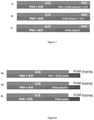
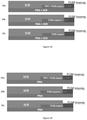
- a catalytic article may include a PNA extending from the inlet end toward the outlet end, and a combination of an SCR catalyst, a PNA, and a platinum group metal on a support extending from the outlet end towards the inlet end.
- a top layer including an SCR catalyst extends from the inlet end towards the outlet end, covering the PNA and partially covering the combination of the SCR catalyst, PNA, and platinum group metal.
- a DOC layer extends from the outlet end toward the inlet end, partially covering the combination of the SCR catalyst, PNA, and platinum group metal on a support.
- a catalytic article may include a PNA extending from the inlet end toward the outlet end, and a combination of an SCR catalyst and a platinum group metal on a support extending from the outlet end towards the inlet end.
- a top layer including an SCR catalyst extends from the inlet end towards the outlet end, covering the PNA and partially covering the combination of the SCR catalyst and platinum group metal on a support.
- a DOC layer extends from the outlet end toward the inlet end, partially covering the combination of the SCR catalyst and platinum group metal on a support.
- a catalytic article may include a PNA extending from the inlet end toward the outlet end, and a platinum group metal on a support extending from the outlet end towards the inlet end.
- a top layer including an SCR catalyst extends from the inlet end towards the outlet end, covering the PNA and partially covering the platinum group metal on a support.
- a DOC layer extends from the outlet end toward the inlet end, partially covering the platinum group metal on a support.
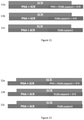
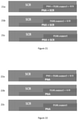
- a catalytic article may include a PNA extending from the inlet end toward the outlet end, and a combination of an SCR catalyst, a PNA, and a platinum group metal on a support extending from the outlet end towards the inlet end.
- a top layer including an SCR catalyst extends from the inlet end towards the outlet end, covering the PNA and partially covering the combination of the SCR catalyst, PNA, and platinum group metal on a support.
- a platinum group metal is impregnated on the combination of an SCR catalyst, a PNA, and a platinum group metal on a support which is not covered by the top layer SCR catalyst.
- a catalytic article may include a PNA extending from the inlet end toward the outlet end, and a combination of an SCR catalyst and a platinum group metal on a support extending from the outlet end towards the inlet end.
- a top layer including an SCR catalyst extends from the inlet end towards the outlet end, covering the PNA and partially covering the combination of the SCR catalyst and platinum group metal on a support.
- a platinum group metal is impregnated on the combination of an SCR catalyst and a platinum group metal on a support which is not covered by the top layer SCR catalyst.
- a catalytic article may include a PNA extending from the inlet end toward the outlet end, and a platinum group metal on a support extending from the outlet end towards the inlet end.
- a top layer including an SCR catalyst extends from the inlet end towards the outlet end, covering the PNA and partially covering the platinum group metal on a support.
- a platinum group metal is impregnated on the platinum group metal on a support which is not covered by the top layer SCR catalyst.
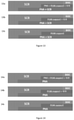
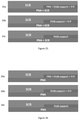
- a catalytic article may include a PNA extending from the inlet end toward the outlet end, and a combination of an SCR catalyst, a PNA, and a platinum group metal on a support extending from the outlet end towards the inlet end.
- a top layer including an SCR catalyst extends from the outlet end towards the inlet end, extending less than the length of the substrate, covering the combination of the SCR catalyst, PNA, and platinum group metal on a support and partially covering the PNA.
- a platinum group metal is impregnated on the outlet end of the substrate.
- a catalytic article may include a PNA extending from the inlet end toward the outlet end, and a combination of an SCR catalyst and a platinum group metal on a support extending from the outlet end towards the inlet end.
- a top layer including an SCR catalyst extends from the outlet end towards the inlet end, extending less than the length of the substrate, covering the combination of the SCR catalyst and platinum group metal on a support and partially covering the PNA.
- a platinum group metal is impregnated on the outlet end of the substrate.
- a catalytic article may include a PNA extending from the inlet end toward the outlet end, and a platinum group metal on a support extending from the outlet end towards the inlet end.
- a top layer including an SCR catalyst extends from the outlet end towards the inlet end, extending less than the length of the substrate, covering the combination of the SCR catalyst and platinum group metal on a support and partially covering the PNA.
- a platinum group metal is impregnated on the outlet end of the substrate.
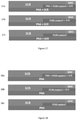
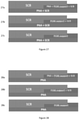
- a catalytic article may include a PNA extending from the inlet end toward the outlet end, and a combination of an SCR catalyst, a PNA, and a platinum group metal on a support extending from the outlet end towards the inlet end.
- a top layer including an SCR catalyst extends the length of the substrate, covering the PNA and the combination of the SCR catalyst, PNA, and platinum group metal.
- a catalytic article may include a PNA extending from the inlet end toward the outlet end, and a combination of an SCR catalyst and a platinum group metal on a support extending from the outlet end towards the inlet end.
- a top layer including an SCR catalyst extends the length of the substrate, covering the PNA and the combination of the SCR catalyst and platinum group metal on a support.
- a catalytic article may include a PNA extending from the inlet end toward the outlet end, and a platinum group metal on a support extending from the outlet end towards the inlet end.
- a top layer including an SCR catalyst extends the length of the substrate, covering the PNA and the platinum group metal on a support.
- a catalytic article may include a PNA extending from the inlet end toward the outlet end, and a combination of an SCR catalyst, a PNA, and a platinum group metal on a support extending from the outlet end towards the inlet end.
- a top layer including an SCR catalyst extends from the inlet end towards the outlet end, covering the PNA and partially covering the combination of the SCR catalyst, PNA, and platinum group metal on a support.
- a catalytic article may include a PNA extending from the inlet end toward the outlet end, and a combination of an SCR catalyst and a platinum group metal on a support extending from the outlet end towards the inlet end.
- a top layer including an SCR catalyst extends from the inlet end towards the outlet end, covering the PNA and partially covering the combination of the SCR catalyst and platinum group metal on a support.
- a catalytic article may include a PNA extending from the inlet end toward the outlet end, and a platinum group metal on a support extending from the outlet end towards the inlet end.
- a top layer including an SCR catalyst extends from the inlet end towards the outlet end, covering the PNA and partially covering the platinum group metal on a support.
- a catalytic article may include a PNA extending from the inlet end toward the outlet end, and a combination of an SCR catalyst, a PNA, and a platinum group metal on a support extending from the outlet end towards the inlet end.
- a top layer including an SCR catalyst extends from the outlet end towards the inlet end, extending less than the length of the substrate, covering the combination of the SCR catalyst, PNA, and platinum group metal on a support and partially covering the PNA.
- a catalytic article may include a PNA extending from the inlet end toward the outlet end, and a combination of an SCR catalyst and a platinum group metal on a support extending from the outlet end towards the inlet end.
- a top layer including an SCR catalyst extends from the outlet end towards the inlet end, extending less than the length of the substrate, covering the combination of the SCR catalyst and platinum group metal on a support and partially covering the PNA.
- a catalytic article may include a PNA extending from the inlet end toward the outlet end, and a platinum group metal on a support extending from the outlet end towards the inlet end.
- a top layer including an SCR catalyst extends from the outlet end towards the inlet end, extending less than the length of the substrate, covering the combination of the SCR catalyst and platinum group metal on a support and partially covering the PNA.
- a catalytic article may include a combination of a PNA and an SCR catalyst extending from the inlet end toward the outlet end, and a combination of an SCR catalyst, a PNA, and a platinum group metal on a support extending from the outlet end towards the inlet end.
- a top layer including an SCR catalyst extends from the inlet end towards the outlet end, covering the combination of the PNA and SCR catalyst and partially covering the combination of the SCR catalyst, PNA, and platinum group metal.
- a DOC layer extends from the outlet end toward the inlet end, partially covering the combination of the SCR catalyst, PNA, and platinum group metal on a support.
- a catalytic article may include a combination of a PNA and an SCR catalyst extending from the inlet end toward the outlet end, and a combination of an SCR catalyst and a platinum group metal on a support extending from the outlet end towards the inlet end.
- a top layer including an SCR catalyst extends from the inlet end towards the outlet end, covering the combination of the PNA and SCR catalyst and partially covering the combination of the SCR catalyst and platinum group metal on a support.
- a DOC layer extends from the outlet end toward the inlet end, partially covering the combination of the SCR catalyst and platinum group metal on a support.
- a catalytic article may include a combination of a PNA and an SCR catalyst extending from the inlet end toward the outlet end, and a platinum group metal on a support extending from the outlet end towards the inlet end.
- a top layer including an SCR catalyst extends from the inlet end towards the outlet end, covering the combination of the PNA and SCR catalyst and partially covering the platinum group metal on a support.
- a DOC layer extends from the outlet end toward the inlet end, partially covering the platinum group metal on a support.
- a catalytic article may include a combination of a PNA and an SCR catalyst extending from the inlet end toward the outlet end, and a combination of an SCR catalyst, a PNA, and a platinum group metal on a support extending from the outlet end towards the inlet end.
- a top layer including an SCR catalyst extends from the inlet end towards the outlet end, covering the combination of the PNA and SCR catalyst and partially covering the combination of the SCR catalyst, PNA, and platinum group metal on a support.
- a platinum group metal is impregnated on the combination of an SCR catalyst, a PNA, and a platinum group metal on a support which is not covered by the top layer SCR catalyst.
- a catalytic article may include a combination of a PNA and an SCR catalyst extending from the inlet end toward the outlet end, and a combination of an SCR catalyst and a platinum group metal on a support extending from the outlet end towards the inlet end.
- a top layer including an SCR catalyst extends from the inlet end towards the outlet end, covering the combination of the PNA and SCR catalyst and partially covering the combination of the SCR catalyst and platinum group metal on a support.
- a platinum group metal is impregnated on the combination of an SCR catalyst and a platinum group metal on a support which is not covered by the top layer SCR catalyst.
- a catalytic article may include a combination of a PNA and an SCR catalyst extending from the inlet end toward the outlet end, and a platinum group metal on a support extending from the outlet end towards the inlet end.
- a top layer including an SCR catalyst extends from the inlet end towards the outlet end, covering the combination of the PNA and SCR catalyst and partially covering the platinum group metal on a support.
- a platinum group metal is impregnated on the platinum group metal on a support which is not covered by the top layer SCR catalyst.
- a catalytic article may include a combination of a PNA and an SCR catalyst extending from the inlet end toward the outlet end, and a combination of an SCR catalyst, a PNA, and a platinum group metal on a support extending from the outlet end towards the inlet end.
- a top layer including an SCR catalyst extends from the outlet end towards the inlet end, extending less than the length of the substrate, covering the combination of the SCR catalyst, PNA, and platinum group metal on a support and partially covering the combination of the PNA and SCR catalyst.
- a platinum group metal is impregnated on the outlet end of the substrate.
- a catalytic article may include a combination of a PNA and an SCR catalyst extending from the inlet end toward the outlet end, and a combination of an SCR catalyst and a platinum group metal on a support extending from the outlet end towards the inlet end.
- a top layer including an SCR catalyst extends from the outlet end towards the inlet end, extending less than the length of the substrate, covering the combination of the SCR catalyst and platinum group metal on a support and partially covering the combination of the PNA and SCR catalyst.
- a platinum group metal is impregnated on the outlet end of the substrate.
- a catalytic article may include a combination of a PNA and an SCR catalyst extending from the inlet end toward the outlet end, and a platinum group metal on a support extending from the outlet end towards the inlet end.
- a top layer including an SCR catalyst extends from the outlet end towards the inlet end, extending less than the length of the substrate, covering the combination of the SCR catalyst and platinum group metal on a support and partially covering the combination of the PNA and SCR catalyst.
- a platinum group metal is impregnated on the outlet end of the substrate.
- a catalytic article may include a combination of a PNA and an SCR catalyst extending from the inlet end toward the outlet end, and a combination of an SCR catalyst, a PNA, and a platinum group metal on a support extending from the outlet end towards the inlet end.
- a top layer including an SCR catalyst extends the length of the substrate, covering the combination of the PNA and SCR catalyst and the combination of the SCR catalyst, PNA, and platinum group metal.
- a catalytic article may include a combination of a PNA and an SCR catalyst extending from the inlet end toward the outlet end, and a combination of an SCR catalyst and a platinum group metal on a support extending from the outlet end towards the inlet end.
- a top layer including an SCR catalyst extends the length of the substrate, covering the combination of the PNA and SCR catalyst and the combination of the SCR catalyst and platinum group metal on a support.
- a catalytic article may include a combination of a PNA and an SCR catalyst extending from the inlet end toward the outlet end, and a platinum group metal on a support extending from the outlet end towards the inlet end.
- a top layer including an SCR catalyst extends the length of the substrate, covering the combination of the PNA and SCR catalyst and the platinum group metal on a support.
- a catalytic article may include a combination of a PNA and an SCR catalyst extending from the inlet end toward the outlet end, and a combination of an SCR catalyst, a PNA, and a platinum group metal on a support extending from the outlet end towards the inlet end.
- a top layer including an SCR catalyst extends from the inlet end towards the outlet end, covering the combination of the PNA and SCR catalyst and partially covering the combination of the SCR catalyst, PNA, and platinum group metal on a support.
- a catalytic article may include a combination of a PNA and an SCR catalyst extending from the inlet end toward the outlet end, and a combination of an SCR catalyst and a platinum group metal on a support extending from the outlet end towards the inlet end.
- a top layer including an SCR catalyst extends from the inlet end towards the outlet end, covering the combination of the PNA and SCR catalyst and partially covering the combination of the SCR catalyst and platinum group metal on a support.
- a catalytic article may include a combination of a PNA and an SCR catalyst extending from the inlet end toward the outlet end, and a platinum group metal on a support extending from the outlet end towards the inlet end.
- a top layer including an SCR catalyst extends from the inlet end towards the outlet end, covering the combination of the PNA and SCR catalyst and partially covering the platinum group metal on a support.
- a catalytic article may include a combination of a PNA and an SCR catalyst extending from the inlet end toward the outlet end, and a combination of an SCR catalyst, a PNA, and a platinum group metal on a support extending from the outlet end towards the inlet end.
- a top layer including an SCR catalyst extends from the outlet end towards the inlet end, extending less than the length of the substrate, covering the combination of the SCR catalyst, PNA, and platinum group metal on a support and partially covering the combination of the PNA and SCR catalyst.
- a catalytic article may include a combination of a PNA and an SCR catalyst extending from the inlet end toward the outlet end, and a combination of an SCR catalyst and a platinum group metal on a support extending from the outlet end towards the inlet end.
- a top layer including an SCR catalyst extends from the outlet end towards the inlet end, extending less than the length of the substrate, covering the combination of the SCR catalyst and platinum group metal on a support and partially covering the combination of the PNA and SCR catalyst.
- a catalytic article may include a combination of a PNA and an SCR catalyst extending from the inlet end toward the outlet end, and a platinum group metal on a support extending from the outlet end towards the inlet end.
- a top layer including an SCR catalyst extends from the outlet end towards the inlet end, extending less than the length of the substrate, covering the combination of the SCR catalyst and platinum group metal on a support and partially covering the combination of the PNA and SCR catalyst.
- a catalytic article may include a combination of a PNA and an SCR catalyst extending from the outlet end toward the inlet end, extending less than the entire length of the substrate.
- a combination of an SCR catalyst, a PNA, and a platinum group metal on a support extends from the outlet end towards the inlet end, on top of the combination of the PNA and SCR catalyst, extending less than the entire length of the substrate.
- the combination of SCR/PNA/PGM.support layer may be shorter in length than the PNA/SCR combination.
- a DOC layer extends from the outlet end toward the inlet end, partially covering the combination of the SCR catalyst, PNA, and platinum group metal on a support.
- An SCR catalyst extends from the inlet end towards the outlet end, extending less than the entire length of the substrate, partially covering the combination of the PNA and SCR catalyst and the combination of the SCR catalyst, PNA, and platinum group metal on a support.
- a catalytic article may include a combination of a PNA and an SCR catalyst extending from the outlet end toward the inlet end, extending less than the entire length of the substrate.
- a combination of an SCR catalyst and a platinum group metal on a support extends from the outlet end towards the inlet end, on top of the combination of the PNA and SCR catalyst, extending less than the entire length of the substrate.
- the combination of SCR/PGM.support layer may be shorter in length than the PNA/SCR combination.
- a DOC layer extends from the outlet end toward the inlet end, partially covering the combination of the SCR catalyst and platinum group metal on a support.
- An SCR catalyst extends from the inlet end towards the outlet end, extending less than the entire length of the substrate, partially covering the combination of the PNA and SCR catalyst and the combination of the SCR catalyst and platinum group metal on a support.
- a catalytic article may include a combination of a PNA and an SCR catalyst extending from the outlet end toward the inlet end, extending less than the entire length of the substrate.
- a platinum group metal on a support extends from the outlet end towards the inlet end, on top of the combination of the PNA and SCR catalyst, extending less than the entire length of the substrate.
- the PGM.support layer may be shorter in length than the PNA/SCR combination.
- a DOC layer extends from the outlet end toward the inlet end, partially covering the platinum group metal on a support.
- An SCR catalyst extends from the inlet end towards the outlet end, extending less than the entire length of the substrate, partially covering the combination of the PNA and SCR catalyst and the platinum group metal on a support.
- a catalytic article may include a PNA extending from the outlet end toward the inlet end, extending less than the entire length of the substrate.
- a combination of an SCR catalyst, a PNA, and a platinum group metal on a support extends from the outlet end towards the inlet end, on top of the PNA, extending less than the entire length of the substrate.
- the combination of SCR/PNA/PGM.support layer may be shorter in length than the PNA.
- a DOC layer extends from the outlet end toward the inlet end, partially covering the combination of the SCR catalyst, PNA, and platinum group metal on a support.
- An SCR catalyst extends from the inlet end towards the outlet end, extending less than the entire length of the substrate, partially covering the PNA and the combination of the SCR catalyst, PNA, and platinum group metal on a support.
- a catalytic article may include a PNA extending from the outlet end toward the inlet end, extending less than the entire length of the substrate.
- a combination of an SCR catalyst and a platinum group metal on a support extends from the outlet end towards the inlet end, on top of the PNA, extending less than the entire length of the substrate.
- the combination of SCR/PGM.support layer may be shorter in length than the PNA.
- a DOC layer extends from the outlet end toward the inlet end, partially covering the combination of the SCR catalyst and platinum group metal on a support.
- An SCR catalyst extends from the inlet end towards the outlet end, extending less than the entire length of the substrate, partially covering the PNA and the combination of the SCR catalyst and platinum group metal on a support.
- a catalytic article may include a PNA extending from the outlet end toward the inlet end, extending less than the entire length of the substrate.
- a platinum group metal on a support extends from the outlet end towards the inlet end, on top of the PNA, extending less than the entire length of the substrate.
- the PGM.support layer may be shorter in length than the PNA.
- a DOC layer extends from the outlet end toward the inlet end, partially covering the platinum group metal on a support.
- An SCR catalyst extends from the inlet end towards the outlet end, extending less than the entire length of the substrate, partially covering the PNA and the platinum group metal on a support.
- a catalytic article may include a combination of a PNA and an SCR catalyst extending from the outlet end toward the inlet end, extending less than the entire length of the substrate.
- a combination of an SCR catalyst, a PNA, and a platinum group metal on a support extends from the outlet end towards the inlet end, on top of the combination of the PNA and SCR catalyst, extending less than the entire length of the substrate.
- the combination of SCR/PNA/PGM.support layer may be shorter in length than the PNA/SCR combination.
- An SCR catalyst extends from the inlet end towards the outlet end, extending less than the entire length of the substrate, partially covering the combination of the PNA and SCR catalyst and the combination of the SCR catalyst, PNA, and platinum group metal on a support.
- a platinum group metal is impregnated on the combination of the PNA and SCR catalyst and the combination of the SCR catalyst, PNA, and platinum group metal on a support at the outlet end of the substrate.
- a catalytic article may include a combination of a PNA and an SCR catalyst extending from the outlet end toward the inlet end, extending less than the entire length of the substrate.
- a combination of an SCR catalyst and a platinum group metal on a support extends from the outlet end towards the inlet end, on top of the combination of the PNA and SCR catalyst, extending less than the entire length of the substrate.
- the combination of SCR/PGM.support layer may be shorter in length than the PNA/SCR combination.
- An SCR catalyst extends from the inlet end towards the outlet end, extending less than the entire length of the substrate, partially covering the combination of the PNA and SCR catalyst and the combination of the SCR catalyst and platinum group metal on a support.
- a platinum group metal is impregnated on the combination of the PNA and SCR catalyst and the combination of the SCR catalyst and platinum group metal on a support at the outlet end of the substrate.
- a catalytic article may include a combination of a PNA and an SCR catalyst extending from the outlet end toward the inlet end, extending less than the entire length of the substrate.
- a platinum group metal on a support extends from the outlet end towards the inlet end, on top of the combination of the PNA and SCR catalyst, extending less than the entire length of the substrate.
- the PGM.support layer may be shorter in length than the PNA/SCR combination.
- An SCR catalyst extends from the inlet end towards the outlet end, extending less than the entire length of the substrate, partially covering the combination of the PNA and SCR catalyst and the platinum group metal on a support.
- a platinum group metal is impregnated on the combination of the PNA and SCR catalyst and the platinum group metal on a support at the outlet end of the substrate.
- a catalytic article may include a PNA extending from the outlet end toward the inlet end, extending less than the entire length of the substrate.
- a combination of an SCR catalyst, a PNA, and a platinum group metal on a support extends from the outlet end towards the inlet end, on top of the PNA, extending less than the entire length of the substrate.
- the combination of SCR/PNA/PGM.support layer may be shorter in length than the PNA.
- An SCR catalyst extends from the inlet end towards the outlet end, extending less than the entire length of the substrate, partially covering the PNA and the combination of the SCR catalyst, PNA, and platinum group metal on a support.
- a platinum group metal is impregnated on the PNA and the combination of the SCR catalyst, PNA, and platinum group metal on a support at the outlet end of the substrate.
- a catalytic article may include a PNA extending from the outlet end toward the inlet end, extending less than the entire length of the substrate.
- a combination of an SCR catalyst and a platinum group metal on a support extends from the outlet end towards the inlet end, on top of the PNA, extending less than the entire length of the substrate.
- the combination of SCR/PGM.support layer may be shorter in length than the PNA.
- An SCR catalyst extends from the inlet end towards the outlet end, extending less than the entire length of the substrate, partially covering the PNA and the combination of the SCR catalyst and platinum group metal on a support.
- a platinum group metal is impregnated on the PNA and the combination of the SCR catalyst and platinum group metal on a support at the outlet end of the substrate.
- a catalytic article may include a PNA extending from the outlet end toward the inlet end, extending less than the entire length of the substrate.
- a platinum group metal on a support extends from the outlet end towards the inlet end, on top of the PNA, extending less than the entire length of the substrate.
- the PGM.support layer may be shorter in length than the PNA.
- An SCR catalyst extends from the inlet end towards the outlet end, extending less than the entire length of the substrate, partially covering the PNA and the platinum group metal on a support.
- a platinum group metal is impregnated on the PNA and the platinum group metal on a support at the outlet end of the substrate.
- a catalytic article may include a combination of a PNA and an SCR catalyst extending the entire length of the substrate.
- a combination of an SCR catalyst, a PNA, and a platinum group metal on a support extends from the outlet end towards the inlet end, on top of the combination of the PNA and SCR catalyst, extending less than the entire length of the substrate.
- a DOC layer extends from the outlet end toward the inlet end, partially covering the combination of the SCR catalyst, PNA, and platinum group metal on a support.
- An SCR catalyst extends from the inlet end towards the outlet end, extending less than the entire length of the substrate, partially covering the combination of the PNA and SCR catalyst and the combination of the SCR catalyst, PNA, and platinum group metal on a support.
- a catalytic article may include a combination of a PNA and an SCR catalyst extending the entire length of the substrate.
- a combination of an SCR catalyst and a platinum group metal on a support extends from the outlet end towards the inlet end, on top of the combination of the PNA and SCR catalyst, extending less than the entire length of the substrate.
- a DOC layer extends from the outlet end toward the inlet end, partially covering the combination of the SCR catalyst and platinum group metal on a support.
- An SCR catalyst extends from the inlet end towards the outlet end, extending less than the entire length of the substrate, partially covering the combination of the PNA and SCR catalyst and the combination of the SCR catalyst and platinum group metal on a support.
- a catalytic article may include a combination of a PNA and an SCR catalyst extending the entire length of the substrate.
- a platinum group metal on a support extends from the outlet end towards the inlet end, on top of the combination of the PNA and SCR catalyst, extending less than the entire length of the substrate.
- a DOC layer extends from the outlet end toward the inlet end, partially covering the platinum group metal on a support.
- An SCR catalyst extends from the inlet end towards the outlet end, extending less than the entire length of the substrate, partially covering the combination of the PNA and SCR catalyst and the platinum group metal on a support.
- a catalytic article may include a PNA extending the entire length of the substrate.
- a combination of an SCR catalyst, a PNA, and a platinum group metal on a support extends from the outlet end towards the inlet end, on top of the PNA, extending less than the entire length of the substrate.
- a DOC layer extends from the outlet end toward the inlet end, partially covering the combination of the SCR catalyst, PNA, and platinum group metal on a support.
- An SCR catalyst extends from the inlet end towards the outlet end, extending less than the entire length of the substrate, partially covering the PNA and the combination of the SCR catalyst, PNA, and platinum group metal on a support.
- a catalytic article may include a PNA extending the entire length of the substrate.
- a combination of an SCR catalyst and a platinum group metal on a support extends from the outlet end towards the inlet end, on top of the PNA, extending less than the entire length of the substrate.
- a DOC layer extends from the outlet end toward the inlet end, partially covering the combination of the SCR catalyst and platinum group metal on a support.
- An SCR catalyst extends from the inlet end towards the outlet end, extending less than the entire length of the substrate, partially covering the PNA and the combination of the SCR catalyst and platinum group metal on a support.
- a catalytic article may include a PNA extending the entire length of the substrate.
- a platinum group metal on a support extends from the outlet end towards the inlet end, on top of the PNA, extending less than the entire length of the substrate.
- a DOC layer extends from the outlet end toward the inlet end, partially covering the platinum group metal on a support.
- An SCR catalyst extends from the inlet end towards the outlet end, extending less than the entire length of the substrate, partially covering the PNA and the platinum group metal on a support.
- a catalytic article may include a combination of a PNA and an SCR catalyst extending the entire length of the substrate.
- a combination of an SCR catalyst, a PNA, and a platinum group metal on a support extends from the outlet end towards the inlet end, on top of the combination of the PNA and SCR catalyst, extending less than the entire length of the substrate.
- An SCR catalyst extends from the inlet end towards the outlet end, extending less than the entire length of the substrate, partially covering the combination of the PNA and SCR catalyst and the combination of the SCR catalyst, PNA, and platinum group metal on a support.
- a platinum group metal is impregnated on the combination of the PNA and SCR catalyst and the combination of the SCR catalyst, PNA, and platinum group metal on a support at the outlet end of the substrate.
- a catalytic article may include a combination of a PNA and an SCR catalyst extending the entire length of the substrate.
- a combination of an SCR catalyst and a platinum group metal on a support extends from the outlet end towards the inlet end, on top of the combination of the PNA and SCR catalyst, extending less than the entire length of the substrate.
- An SCR catalyst extends from the inlet end towards the outlet end, extending less than the entire length of the substrate, partially covering the combination of the PNA and SCR catalyst and the combination of the SCR catalyst and platinum group metal on a support.
- a platinum group metal is impregnated on the combination of the PNA and SCR catalyst and the combination of the SCR catalyst and platinum group metal on a support at the outlet end of the substrate.
- a catalytic article may include a combination of a PNA and an SCR catalyst extending the entire length of the substrate.
- a platinum group metal on a support extends from the outlet end towards the inlet end, on top of the combination of the PNA and SCR catalyst, extending less than the entire length of the substrate.
- An SCR catalyst extends from the inlet end towards the outlet end, extending less than the entire length of the substrate, partially covering the combination of the PNA and SCR catalyst and the platinum group metal on a support.
- a platinum group metal is impregnated on the combination of the PNA and SCR catalyst and the platinum group metal on a support at the outlet end of the substrate.
- a catalytic article may include a PNA extending the entire length of the substrate.
- a combination of an SCR catalyst, a PNA, and a platinum group metal on a support extends from the outlet end towards the inlet end, on top of the PNA, extending less than the entire length of the substrate.
- An SCR catalyst extends from the inlet end towards the outlet end, extending less than the entire length of the substrate, partially covering the PNA and the combination of the SCR catalyst, PNA, and platinum group metal on a support.
- a platinum group metal is impregnated on the combination of the PNA and the combination of the SCR catalyst, PNA, and platinum group metal on a support at the outlet end of the substrate.
- a catalytic article may include a PNA extending the entire length of the substrate.
- a combination of an SCR catalyst and a platinum group metal on a support extends from the outlet end towards the inlet end, on top of the PNA, extending less than the entire length of the substrate.
- An SCR catalyst extends from the inlet end towards the outlet end, extending less than the entire length of the substrate, partially covering the PNA and the combination of the SCR catalyst and platinum group metal on a support.
- a platinum group metal is impregnated on the combination of the PNA and the combination of the SCR catalyst and platinum group metal on a support at the outlet end of the substrate.
- a catalytic article may include a PNA extending the entire length of the substrate.
- a platinum group metal on a support extends from the outlet end towards the inlet end, on top of the PNA, extending less than the entire length of the substrate.
- An SCR catalyst extends from the inlet end towards the outlet end, extending less than the entire length of the substrate, partially covering the PNA and the platinum group metal on a support.
- a platinum group metal is impregnated on the combination of the PNA and the platinum group metal on a support at the outlet end of the substrate.
- a catalytic article may include a combination of a PNA and an SCR catalyst extending from the outlet end toward the inlet end, extending less than the entire length of the substrate.
- a combination of an SCR catalyst, a PNA, and a platinum group metal on a support extends from the outlet end towards the inlet end, on top of the combination of the PNA and SCR catalyst, extending less than the entire length of the substrate.
- the combination of SCR/PNA/PGM.support layer may be shorter in length than the PNA/SCR combination.
- An SCR catalyst extends the entire length of the substrate, covering the combination of the PNA and SCR catalyst and the combination of the SCR catalyst, PNA, and platinum group metal on a support.
- a catalytic article may include a combination of a PNA and an SCR catalyst extending from the outlet end toward the inlet end, extending less than the entire length of the substrate.
- a combination of an SCR catalyst and a platinum group metal on a support extends from the outlet end towards the inlet end, on top of the combination of the PNA and SCR catalyst, extending less than the entire length of the substrate.
- the combination of SCR/PGM.support layer may be shorter in length than the PNA/SCR combination.
- An SCR catalyst extends the entire length of the substrate, covering the combination of the PNA and SCR catalyst and the combination of the SCR catalyst and platinum group metal on a support.
- a catalytic article may include a combination of a PNA and an SCR catalyst extending from the outlet end toward the inlet end, extending less than the entire length of the substrate.
- a platinum group metal on a support extends from the outlet end towards the inlet end, on top of the combination of the PNA and SCR catalyst, extending less than the entire length of the substrate.
- the PGM.support layer may be shorter in length than the PNA/SCR combination.
- An SCR catalyst extends the entire length of the substrate, covering the combination of the PNA and SCR catalyst and the platinum group metal on a support.
- a catalytic article may include a PNA extending from the outlet end toward the inlet end, extending less than the entire length of the substrate.
- a combination of an SCR catalyst, a PNA, and a platinum group metal on a support extends from the outlet end towards the inlet end, on top of the PNA, extending less than the entire length of the substrate.
- the combination of SCR/PNA/PGM.support layer may be shorter in length than the PNA.
- An SCR catalyst extends the entire length of the substrate, covering the PNA and the combination of the SCR catalyst, PNA, and platinum group metal on a support.
- a catalytic article may include a PNA extending from the outlet end toward the inlet end, extending less than the entire length of the substrate.
- a combination of an SCR catalyst and a platinum group metal on a support extends from the outlet end towards the inlet end, on top of the PNA, extending less than the entire length of the substrate.
- the combination of SCR/PGM.support layer may be shorter in length than the PNA.
- An SCR catalyst extends the entire length of the substrate, covering the PNA and the combination of the SCR catalyst and platinum group metal on a support.
- a catalytic article may include a PNA extending from the outlet end toward the inlet end, extending less than the entire length of the substrate.
- a platinum group metal on a support extends from the outlet end towards the inlet end, on top of the PNA, extending less than the entire length of the substrate.
- the PGM.support layer may be shorter in length than the PNA.
- An SCR catalyst extends the entire length of the substrate, covering the PNA and the platinum group metal on a support.
- a catalytic article may include a combination of a PNA and an SCR catalyst extending from the outlet end toward the inlet end, extending less than the entire length of the substrate.
- a combination of an SCR catalyst, a PNA, and a platinum group metal on a support extends from the outlet end towards the inlet end, on top of the combination of the PNA and SCR catalyst, extending less than the entire length of the substrate.
- the combination of SCR/PNA/PGM.support layer may be shorter in length than the PNA/SCR combination.
- An SCR catalyst extends from the inlet end towards the outlet end, extending less than the entire length of the substrate, partially covering the combination of the PNA and SCR catalyst and the combination of the SCR catalyst, PNA, and platinum group metal on a support.
- a catalytic article may include a combination of a PNA and an SCR catalyst extending from the outlet end toward the inlet end, extending less than the entire length of the substrate.
- a combination of an SCR catalyst and a platinum group metal on a support extends from the outlet end towards the inlet end, on top of the combination of the PNA and SCR catalyst, extending less than the entire length of the substrate.
- the combination of SCR/PGM.support layer may be shorter in length than the PNA/SCR combination.
- An SCR catalyst extends from the inlet end towards the outlet end, extending less than the entire length of the substrate, partially covering the combination of the PNA and SCR catalyst and the combination of the SCR catalyst and platinum group metal on a support.
- a catalytic article may include a combination of a PNA and an SCR catalyst extending from the outlet end toward the inlet end, extending less than the entire length of the substrate.
- a platinum group metal on a support extends from the outlet end towards the inlet end, on top of the combination of the PNA and SCR catalyst, extending less than the entire length of the substrate.
- the PGM.support layer may be shorter in length than the PNA/SCR combination.
- An SCR catalyst extends from the inlet end towards the outlet end, extending less than the entire length of the substrate, partially covering the combination of the PNA and SCR catalyst and the platinum group metal on a support.
- a catalytic article may include a PNA extending from the outlet end toward the inlet end, extending less than the entire length of the substrate.
- a combination of an SCR catalyst, a PNA, and a platinum group metal on a support extends from the outlet end towards the inlet end, on top of the PNA, extending less than the entire length of the substrate.
- the combination of SCR/PNA/PGM.support layer may be shorter in length than the PNA.
- An SCR catalyst extends from the inlet end towards the outlet end, extending less than the entire length of the substrate, partially covering the PNA and the combination of the SCR catalyst, PNA, and platinum group metal on a support.
- a catalytic article may include a PNA extending from the outlet end toward the inlet end, extending less than the entire length of the substrate.
- a combination of an SCR catalyst and a platinum group metal on a support extends from the outlet end towards the inlet end, on top of the PNA, extending less than the entire length of the substrate.
- the combination of SCR/PGM.support layer may be shorter in length than the PNA.
- An SCR catalyst extends from the inlet end towards the outlet end, extending less than the entire length of the substrate, partially covering the PNA and the combination of the SCR catalyst and platinum group metal on a support.
- a catalytic article may include a PNA extending from the outlet end toward the inlet end, extending less than the entire length of the substrate.
- a platinum group metal on a support extends from the outlet end towards the inlet end, on top of the PNA, extending less than the entire length of the substrate.
- the PGM.support layer may be shorter in length than the PNA.
- An SCR catalyst extends from the inlet end towards the outlet end, extending less than the entire length of the substrate, partially covering the PNA and the platinum group metal on a support
- a catalytic article may include a combination of a PNA and an SCR catalyst extending the entire length of the substrate.
- a combination of an SCR catalyst, a PNA, and a platinum group metal on a support extends from the outlet end towards the inlet end, on top of the combination of the PNA and SCR catalyst, extending less than the entire length of the substrate.
- An SCR catalyst extends the entire length of the substrate, covering the combination of the PNA and SCR catalyst and the combination of the SCR catalyst, PNA, and platinum group metal on a support.
- a catalytic article may include a combination of a PNA and an SCR catalyst extending the entire length of the substrate.
- a combination of an SCR catalyst and a platinum group metal on a support extends from the outlet end towards the inlet end, on top of the combination of the PNA and SCR catalyst, extending less than the entire length of the substrate.
- An SCR catalyst extends the entire length of the substrate, covering the combination of the PNA and SCR catalyst and the combination of the SCR catalyst and platinum group metal on a support.
- a catalytic article may include a combination of a PNA and an SCR catalyst extending the entire length of the substrate.
- a platinum group metal on a support extends from the outlet end towards the inlet end, on top of the combination of the PNA and SCR catalyst, extending less than the entire length of the substrate.
- An SCR catalyst extends the entire length of the substrate, covering the combination of the PNA and SCR catalyst and the platinum group metal on a support.
- a catalytic article may include a PNA extending the entire length of the substrate.
- a combination of an SCR catalyst, a PNA, and a platinum group metal on a support extends from the outlet end towards the inlet end, on top of the PNA, extending less than the entire length of the substrate.
- An SCR catalyst extends the entire length of the substrate, covering the PNA and the combination of the SCR catalyst, PNA, and platinum group metal on a support.
- a catalytic article may include a PNA extending the entire length of the substrate.
- a combination of an SCR catalyst and a platinum group metal on a support extends from the outlet end towards the inlet end, on top of the PNA, extending less than the entire length of the substrate.
- An SCR catalyst extends the entire length of the substrate, covering the PNA and the combination of the SCR catalyst and platinum group metal on a support.
- a catalytic article may include a PNA extending the entire length of the substrate.
- a platinum group metal on a support extends from the outlet end towards the inlet end, on top of the PNA, extending less than the entire length of the substrate.
- An SCR catalyst extends the entire length of the substrate, covering the PNA and the platinum group metal on a support.
- a catalytic article may include a combination of a PNA and an SCR catalyst extending the entire length of the substrate.
- a combination of an SCR catalyst, a PNA, and a platinum group metal on a support extends from the outlet end towards the inlet end, on top of the combination of the PNA and SCR catalyst, extending less than the entire length of the substrate.
- An SCR catalyst extends from the inlet end towards the outlet end, extending less than the entire length of the substrate, partially covering the combination of the PNA and SCR catalyst and the combination of the SCR catalyst, PNA, and platinum group metal on a support.
- a catalytic article may include a combination of a PNA and an SCR catalyst extending the entire length of the substrate.
- a combination of an SCR catalyst and a platinum group metal on a support extends from the outlet end towards the inlet end, on top of the combination of the PNA and SCR catalyst, extending less than the entire length of the substrate.
- An SCR catalyst extends from the inlet end towards the outlet end, extending less than the entire length of the substrate, partially covering the combination of the PNA and SCR catalyst and the combination of the SCR catalyst and platinum group metal on a support.
- a catalytic article may include a combination of a PNA and an SCR catalyst extending the entire length of the substrate.
- a platinum group metal on a support extends from the outlet end towards the inlet end, on top of the combination of the PNA and SCR catalyst, extending less than the entire length of the substrate.
- An SCR catalyst extends from the inlet end towards the outlet end, extending less than the entire length of the substrate, partially covering the combination of the PNA and SCR catalyst and the platinum group metal on a support.
- a catalytic article may include a PNA extending the entire length of the substrate.
- a combination of an SCR catalyst, a PNA, and a platinum group metal on a support extends from the outlet end towards the inlet end, on top of the PNA, extending less than the entire length of the substrate.
- An SCR catalyst extends from the inlet end towards the outlet end, extending less than the entire length of the substrate, partially covering the PNA and the combination of the SCR catalyst, PNA, and platinum group metal on a support.
- a catalytic article may include a PNA extending the entire length of the substrate.
- a combination of an SCR catalyst and a platinum group metal on a support extends from the outlet end towards the inlet end, on top of the PNA, extending less than the entire length of the substrate.
- An SCR catalyst extends from the inlet end towards the outlet end, extending less than the entire length of the substrate, partially covering the PNA and the combination of the SCR catalyst and platinum group metal on a support.
- a catalytic article may include a PNA extending the entire length of the substrate.
- a platinum group metal on a support extends from the outlet end towards the inlet end, on top of the PNA, extending less than the entire length of the substrate.
- An SCR catalyst extends from the inlet end towards the outlet end, extending less than the entire length of the substrate, partially covering the PNA and the platinum group metal on a support.
- a catalytic article may include a combination of an SCR catalyst, a PNA, and a platinum group metal on a support extending from the outlet end towards the inlet end, extending less than the entire length of the substrate.
- a combination of a PNA and an SCR catalyst extends from the outlet end toward the inlet end, extending less than the entire length of the substrate, and covering the combination of the SCR catalyst, PNA, and platinum group metal on a support.
- the PNA/SCR combination may be longer in length than the combination of SCR/PNA/PGM.support layer.
- a DOC layer extends from the outlet end toward the inlet end, partially covering the combination of the PNA and SCR catalyst.
- An SCR catalyst extends from the inlet end towards the outlet end, extending less than the entire length of the substrate, partially covering the combination of the PNA and SCR catalyst.
- a catalytic article may include a combination of an SCR catalyst and a platinum group metal on a support extending from the outlet end towards the inlet end, extending less than the entire length of the substrate.
- a combination of a PNA and an SCR catalyst extends from the outlet end toward the inlet end, extending less than the entire length of the substrate, and covering the combination of the SCR catalyst and platinum group metal on a support.
- the PNA/SCR combination may be longer in length than the combination of SCR/PGM.support layer.
- a DOC layer extends from the outlet end toward the inlet end, partially covering the combination of the PNA and SCR catalyst.
- An SCR catalyst extends from the inlet end towards the outlet end, extending less than the entire length of the substrate, partially covering the combination of the PNA and SCR catalyst.
- a catalytic article may include a platinum group metal on a support extending from the outlet end towards the inlet end, extending less than the entire length of the substrate.
- a combination of a PNA and an SCR catalyst extends from the outlet end toward the inlet end, extending less than the entire length of the substrate, and covering the platinum group metal on a support.
- the PNA/SCR combination may be longer in length than the platinum group metal on a support.
- a DOC layer extends from the outlet end toward the inlet end, partially covering the combination of the PNA and SCR catalyst.
- An SCR catalyst extends from the inlet end towards the outlet end, extending less than the entire length of the substrate, partially covering the combination of the PNA and SCR catalyst.
- a catalytic article may include a combination of an SCR catalyst, a PNA, and a platinum group metal on a support extending from the outlet end towards the inlet end, extending less than the entire length of the substrate.
- a PNA extends from the outlet end toward the inlet end, extending less than the entire length of the substrate, and covering the combination of the SCR catalyst, PNA, and platinum group metal on a support.
- the PNA may be longer in length than the combination of SCR/PNA/PGM.support layer.
- a DOC layer extends from the outlet end toward the inlet end, partially covering the PNA.
- An SCR catalyst extends from the inlet end towards the outlet end, extending less than the entire length of the substrate, partially covering the PNA.
- a catalytic article may include a combination of an SCR catalyst and a platinum group metal on a support extending from the outlet end towards the inlet end, extending less than the entire length of the substrate.
- a PNA extends from the outlet end toward the inlet end, extending less than the entire length of the substrate, and covering the combination of the SCR catalyst and platinum group metal on a support.
- the PNA may be longer in length than the combination of SCR/PGM.support layer.
- a DOC layer extends from the outlet end toward the inlet end, partially covering the PNA.
- An SCR catalyst extends from the inlet end towards the outlet end, extending less than the entire length of the substrate, partially covering the PNA.
- a catalytic article may include a platinum group metal on a support extending from the outlet end towards the inlet end, extending less than the entire length of the substrate.
- a PNA extends from the outlet end toward the inlet end, extending less than the entire length of the substrate, and covering the platinum group metal on a support.
- the PNA may be longer in length than the platinum group metal on a support.
- a DOC layer extends from the outlet end toward the inlet end, partially covering the PNA.
- An SCR catalyst extends from the inlet end towards the outlet end, extending less than the entire length of the substrate, partially covering the PNA.
- a catalytic article may include a combination of an SCR catalyst, a PNA, and a platinum group metal on a support extending from the outlet end towards the inlet end, extending less than the entire length of the substrate.
- a combination of a PNA and an SCR catalyst extends from the outlet end toward the inlet end, extending less than the entire length of the substrate, and covering the combination of the SCR catalyst, PNA, and platinum group metal on a support.
- the PNA/SCR combination may be longer in length than the combination of SCR/PNA/PGM.support layer.
- An SCR catalyst extends from the inlet end towards the outlet end, extending less than the entire length of the substrate, partially covering the combination of the PNA and SCR catalyst.
- a platinum group metal is impregnated on the combination of the PNA and SCR catalyst and the combination of the SCR catalyst, PNA, and platinum group metal on a support at the outlet end of the substrate.
- a catalytic article may include a combination of an SCR catalyst and a platinum group metal on a support extending from the outlet end towards the inlet end, extending less than the entire length of the substrate.
- a combination of a PNA and an SCR catalyst extends from the outlet end toward the inlet end, extending less than the entire length of the substrate, and covering the combination of the SCR catalyst and platinum group metal on a support.
- the PNA/SCR combination may be longer in length than the combination of SCR/PGM.support layer.
- An SCR catalyst extends from the inlet end towards the outlet end, extending less than the entire length of the substrate, partially covering the combination of the PNA and SCR catalyst.
- a platinum group metal is impregnated on the combination of the PNA and SCR catalyst and the combination of the SCR catalyst and platinum group metal on a support at the outlet end of the substrate.
- a catalytic article may include a platinum group metal on a support extending from the outlet end towards the inlet end, extending less than the entire length of the substrate.
- a combination of a PNA and an SCR catalyst extends from the outlet end toward the inlet end, extending less than the entire length of the substrate, and covering the platinum group metal on a support.
- the PNA/SCR combination may be longer in length than the platinum group metal on a support.
- An SCR catalyst extends from the inlet end towards the outlet end, extending less than the entire length of the substrate, partially covering the combination of the PNA and SCR catalyst.
- a platinum group metal is impregnated on the combination of the PNA and SCR catalyst and the platinum group metal on a support at the outlet end of the substrate.
- a catalytic article may include a combination of an SCR catalyst, a PNA, and a platinum group metal on a support extending from the outlet end towards the inlet end, extending less than the entire length of the substrate.
- a PNA extends from the outlet end toward the inlet end, extending less than the entire length of the substrate, and covering the combination of the SCR catalyst, PNA, and platinum group metal on a support.
- the PNA may be longer in length than the combination of SCR/PNA/PGM.support layer.
- An SCR catalyst extends from the inlet end towards the outlet end, extending less than the entire length of the substrate, partially covering the PNA.
- a platinum group metal is impregnated on the PNA and the combination of the SCR catalyst, PNA, and platinum group metal on a support at the outlet end of the substrate.
- a catalytic article may include a combination of an SCR catalyst and a platinum group metal on a support extending from the outlet end towards the inlet end, extending less than the entire length of the substrate.
- a PNA extends from the outlet end toward the inlet end, extending less than the entire length of the substrate, and covering the combination of the SCR catalyst and platinum group metal on a support.
- the PNA may be longer in length than the combination of SCR/PGM.support layer.
- An SCR catalyst extends from the inlet end towards the outlet end, extending less than the entire length of the substrate, partially covering the PNA.
- a platinum group metal is impregnated on the PNA and the combination of the SCR catalyst and platinum group metal on a support at the outlet end of the substrate.
- a catalytic article may include a platinum group metal on a support extending from the outlet end towards the inlet end, extending less than the entire length of the substrate.
- a PNA extends from the outlet end toward the inlet end, extending less than the entire length of the substrate, and covering the platinum group metal on a support.
- the PNA may be longer in length than the platinum group metal on a support.
- An SCR catalyst extends from the inlet end towards the outlet end, extending less than the entire length of the substrate, partially covering the PNA.
- a platinum group metal is impregnated on the PNA and the platinum group metal on a support at the outlet end of the substrate.
- a catalytic article may include a combination of an SCR catalyst, a PNA, and a platinum group metal on a support extending from the outlet end towards the inlet end, extending less than the entire length of the substrate.
- a combination of a PNA and an SCR catalyst extends the entire length of the substrate, covering the combination of the SCR catalyst, PNA, and platinum group metal on a support.
- a DOC layer extends from the outlet end toward the inlet end, partially covering the combination of the PNA and SCR catalyst.
- An SCR catalyst extends from the inlet end towards the outlet end, extending less than the entire length of the substrate, partially covering the combination of the PNA and SCR catalyst.
- a catalytic article may include a combination of an SCR catalyst and a platinum group metal on a support extending from the outlet end towards the inlet end, extending less than the entire length of the substrate.
- a combination of a PNA and an SCR catalyst extends the entire length of the substrate, covering the combination of the SCR catalyst and platinum group metal on a support.
- a DOC layer extends from the outlet end toward the inlet end, partially covering the combination of the PNA and SCR catalyst.
- An SCR catalyst extends from the inlet end towards the outlet end, extending less than the entire length of the substrate, partially covering the combination of the PNA and SCR catalyst.
- a catalytic article may include a platinum group metal on a support extending from the outlet end towards the inlet end, extending less than the entire length of the substrate.
- a combination of a PNA and an SCR catalyst extends the entire length of the substrate, covering the platinum group metal on a support.
- a DOC layer extends from the outlet end toward the inlet end, partially covering the combination of the PNA and SCR catalyst.
- An SCR catalyst extends from the inlet end towards the outlet end, extending less than the entire length of the substrate, partially covering the combination of the PNA and SCR catalyst.
- a catalytic article may include a combination of an SCR catalyst, a PNA, and a platinum group metal on a support extending from the outlet end towards the inlet end, extending less than the entire length of the substrate.
- a PNA extends the entire length of the substrate, covering the combination of the SCR catalyst, PNA, and platinum group metal on a support.
- a DOC layer extends from the outlet end toward the inlet end, partially covering the PNA.
- An SCR catalyst extends from the inlet end towards the outlet end, extending less than the entire length of the substrate, partially covering the PNA.
- a catalytic article may include a combination of an SCR catalyst and a platinum group metal on a support extending from the outlet end towards the inlet end, extending less than the entire length of the substrate.
- a PNA extends the entire length of the substrate, covering the combination of the SCR catalyst and platinum group metal on a support.
- a DOC layer extends from the outlet end toward the inlet end, partially covering the PNA.
- An SCR catalyst extends from the inlet end towards the outlet end, extending less than the entire length of the substrate, partially covering the PNA.
- a catalytic article may include a platinum group metal on a support extending from the outlet end towards the inlet end, extending less than the entire length of the substrate.
- a PNA extends the entire length of the substrate, covering the platinum group metal on a support.
- a DOC layer extends from the outlet end toward the inlet end, partially covering the PNA.
- An SCR catalyst extends from the inlet end towards the outlet end, extending less than the entire length of the substrate, partially covering the PNA.
- a catalytic article may include a combination of an SCR catalyst, a PNA, and a platinum group metal on a support extending from the outlet end towards the inlet end, extending less than the entire length of the substrate.
- a combination of a PNA and an SCR catalyst extends the entire length of the substrate, covering the combination of the SCR catalyst, PNA, and platinum group metal on a support.
- An SCR catalyst extends from the inlet end towards the outlet end, extending less than the entire length of the substrate, partially covering the combination of the PNA and SCR catalyst.
- a platinum group metal is impregnated on the combination of the PNA and SCR catalyst and the combination of the SCR catalyst, PNA, and platinum group metal on a support at the outlet end of the substrate.
- a catalytic article may include a combination of an SCR catalyst and a platinum group metal on a support extending from the outlet end towards the inlet end, extending less than the entire length of the substrate.
- a combination of a PNA and an SCR catalyst extends the entire length of the substrate, covering the combination of the SCR catalyst and platinum group metal on a support.
- An SCR catalyst extends from the inlet end towards the outlet end, extending less than the entire length of the substrate, partially covering the combination of the PNA and SCR catalyst.
- a platinum group metal is impregnated on the combination of the PNA and SCR catalyst and the combination of the SCR catalyst and platinum group metal on a support at the outlet end of the substrate.
- a catalytic article may include a platinum group metal on a support extending from the outlet end towards the inlet end, extending less than the entire length of the substrate.
- a combination of a PNA and an SCR catalyst extends the entire length of the substrate, covering the platinum group metal on a support.
- An SCR catalyst extends from the inlet end towards the outlet end, extending less than the entire length of the substrate, partially covering the combination of the PNA and SCR catalyst.
- a platinum group metal is impregnated on the combination of the PNA and SCR catalyst and the platinum group metal on a support at the outlet end of the substrate.
- a catalytic article may include a combination of an SCR catalyst, a PNA, and a platinum group metal on a support extending from the outlet end towards the inlet end, extending less than the entire length of the substrate.
- a PNA extends the entire length of the substrate, covering the combination of the SCR catalyst, PNA, and platinum group metal on a support.
- An SCR catalyst extends from the inlet end towards the outlet end, extending less than the entire length of the substrate, partially covering the PNA.
- a platinum group metal is impregnated on the PNA and the combination of the SCR catalyst, PNA, and platinum group metal on a support at the outlet end of the substrate.
- a catalytic article may include a combination of an SCR catalyst and a platinum group metal on a support extending from the outlet end towards the inlet end, extending less than the entire length of the substrate.
- a PNA extends the entire length of the substrate, covering the combination of the SCR catalyst and platinum group metal on a support.
- An SCR catalyst extends from the inlet end towards the outlet end, extending less than the entire length of the substrate, partially covering the PNA.
- a platinum group metal is impregnated on the PNA and the combination of the SCR catalyst and platinum group metal on a support at the outlet end of the substrate.
- a catalytic article may include a platinum group metal on a support extending from the outlet end towards the inlet end, extending less than the entire length of the substrate.
- a PNA extends the entire length of the substrate, covering the platinum group metal on a support.
- An SCR catalyst extends from the inlet end towards the outlet end, extending less than the entire length of the substrate, partially covering the PNA.
- a platinum group metal is impregnated on the PNA and the platinum group metal on a support at the outlet end of the substrate.
- a catalytic article may include a combination of an SCR catalyst, a PNA, and a platinum group metal on a support extending from the outlet end towards the inlet end, extending less than the entire length of the substrate.
- a combination of a PNA and an SCR catalyst extends from the outlet end toward the inlet end, extending less than the entire length of the substrate, and covering the combination of the SCR catalyst, PNA, and platinum group metal on a support.
- the PNA/SCR combination may be longer in length than the combination of SCR/PNA/PGM.support layer.
- An SCR catalyst extends the entire length of the substrate, covering the combination of the PNA and SCR catalyst.
- a catalytic article may include a combination of an SCR catalyst and a platinum group metal on a support extending from the outlet end towards the inlet end, extending less than the entire length of the substrate.
- a combination of a PNA and an SCR catalyst extends from the outlet end toward the inlet end, extending less than the entire length of the substrate, and covering the combination of the SCR catalyst and platinum group metal on a support.
- the PNA/SCR combination may be longer in length than the combination of SCR/PGM.support layer.
- An SCR catalyst extends the entire length of the substrate, covering the combination of the PNA and SCR catalyst.
- a catalytic article may include a platinum group metal on a support extending from the outlet end towards the inlet end, extending less than the entire length of the substrate.
- a combination of a PNA and an SCR catalyst extends from the outlet end toward the inlet end, extending less than the entire length of the substrate, and covering the platinum group metal on a support.
- the PNA/SCR combination may be longer in length than the platinum group metal on a support.
- An SCR catalyst extends the entire length of the substrate, covering the combination of the PNA and SCR catalyst.
- a catalytic article may include a combination of an SCR catalyst, a PNA, and a platinum group metal on a support extending from the outlet end towards the inlet end, extending less than the entire length of the substrate.
- a PNA extends from the outlet end toward the inlet end, extending less than the entire length of the substrate, and covering the combination of the SCR catalyst, PNA, and platinum group metal on a support.
- the PNA may be longer in length than the combination of SCR/PNA/PGM.support layer.
- An SCR catalyst extends the entire length of the substrate, covering the PNA.
- a catalytic article may include a combination of an SCR catalyst and a platinum group metal on a support extending from the outlet end towards the inlet end, extending less than the entire length of the substrate.
- a PNA extends from the outlet end toward the inlet end, extending less than the entire length of the substrate, and covering the combination of the SCR catalyst and platinum group metal on a support.
- the PNA may be longer in length than the combination of SCR/PGM.support layer.
- An SCR catalyst extends the entire length of the substrate, covering the PNA.
- a catalytic article may include a platinum group metal on a support extending from the outlet end towards the inlet end, extending less than the entire length of the substrate.
- a PNA extends from the outlet end toward the inlet end, extending less than the entire length of the substrate, and covering the platinum group metal on a support.
- the PNA may be longer in length than the platinum group metal on a support.
- An SCR catalyst extends the entire length of the substrate, covering the PNA.
- a catalytic article may include a combination of an SCR catalyst, a PNA, and a platinum group metal on a support extending from the outlet end towards the inlet end, extending less than the entire length of the substrate.
- a combination of a PNA and an SCR catalyst extends from the outlet end toward the inlet end, extending less than the entire length of the substrate, and covering the combination of the SCR catalyst, PNA, and platinum group metal on a support.
- the PNA/SCR combination may be longer in length than the combination of SCR/PNA/PGM.support layer.
- An SCR catalyst extends from the inlet end towards the outlet end, extending less than the entire length of the substrate, partially covering the combination of the PNA and SCR catalyst.
- a catalytic article may include a combination of an SCR catalyst and a platinum group metal on a support extending from the outlet end towards the inlet end, extending less than the entire length of the substrate.
- a combination of a PNA and an SCR catalyst extends from the outlet end toward the inlet end, extending less than the entire length of the substrate, and covering the combination of the SCR catalyst and platinum group metal on a support.
- the PNA/SCR combination may be longer in length than the combination of SCR/PGM.support layer.
- An SCR catalyst extends from the inlet end towards the outlet end, extending less than the entire length of the substrate, partially covering the combination of the PNA and SCR catalyst.
- a catalytic article may include a platinum group metal on a support extending from the outlet end towards the inlet end, extending less than the entire length of the substrate.
- a combination of a PNA and an SCR catalyst extends from the outlet end toward the inlet end, extending less than the entire length of the substrate, and covering the platinum group metal on a support.
- the PNA/SCR combination may be longer in length than the platinum group metal on a support.
- An SCR catalyst extends from the inlet end towards the outlet end, extending less than the entire length of the substrate, partially covering the combination of the PNA and SCR catalyst.
- a catalytic article may include a combination of an SCR catalyst, a PNA, and a platinum group metal on a support extending from the outlet end towards the inlet end, extending less than the entire length of the substrate.
- a PNA extends from the outlet end toward the inlet end, extending less than the entire length of the substrate, and covering the combination of the SCR catalyst, PNA, and platinum group metal on a support.
- the PNA may be longer in length than the combination of SCR/PNA/PGM.support layer.
- An SCR catalyst extends from the inlet end towards the outlet end, extending less than the entire length of the substrate, partially covering the PNA.
- a catalytic article may include a combination of an SCR catalyst and a platinum group metal on a support extending from the outlet end towards the inlet end, extending less than the entire length of the substrate.
- a PNA extends from the outlet end toward the inlet end, extending less than the entire length of the substrate, and covering the combination of the SCR catalyst and platinum group metal on a support.
- the PNA may be longer in length than the combination of SCR/PGM.support layer.
- An SCR catalyst extends from the inlet end towards the outlet end, extending less than the entire length of the substrate, partially covering the PNA.
- a catalytic article may include a platinum group metal on a support extending from the outlet end towards the inlet end, extending less than the entire length of the substrate.
- a PNA extends from the outlet end toward the inlet end, extending less than the entire length of the substrate, and covering the platinum group metal on a support.
- the PNA may be longer in length than the platinum group metal on a support.
- An SCR catalyst extends from the inlet end towards the outlet end, extending less than the entire length of the substrate, partially covering the PNA.
- a catalytic article may include a combination of an SCR catalyst, a PNA, and a platinum group metal on a support extending from the outlet end towards the inlet end, extending less than the entire length of the substrate.
- a combination of a PNA and an SCR catalyst extends the entire length of the substrate, covering the combination of the SCR catalyst, PNA, and platinum group metal on a support.
- An SCR catalyst extends the entire length of the substrate, covering the combination of the PNA and SCR catalyst.
- a catalytic article may include a combination of an SCR catalyst and a platinum group metal on a support extending from the outlet end towards the inlet end, extending less than the entire length of the substrate.
- a combination of a PNA and an SCR catalyst extends the entire length of the substrate, covering the combination of the SCR catalyst and platinum group metal on a support.
- An SCR catalyst extends the entire length of the substrate, covering the combination of the PNA and SCR catalyst.
- a catalytic article may include a platinum group metal on a support extending from the outlet end towards the inlet end, extending less than the entire length of the substrate.
- a combination of a PNA and an SCR catalyst extends the entire length of the substrate, covering the platinum group metal on a support.
- An SCR catalyst extends the entire length of the substrate, covering the combination of the PNA and SCR catalyst.
- a catalytic article may include a combination of an SCR catalyst, a PNA, and a platinum group metal on a support extending from the outlet end towards the inlet end, extending less than the entire length of the substrate.
- a PNA extends the entire length of the substrate, covering the combination of the SCR catalyst, PNA, and platinum group metal on a support.
- An SCR catalyst extends the entire length of the substrate, covering the PNA.
- a catalytic article may include a combination of an SCR catalyst and a platinum group metal on a support extending from the outlet end towards the inlet end, extending less than the entire length of the substrate.
- a PNA extends the entire length of the substrate, covering the combination of the SCR catalyst and platinum group metal on a support.
- An SCR catalyst extends the entire length of the substrate, covering the PNA.
- a catalytic article may include a platinum group metal on a support extending from the outlet end towards the inlet end, extending less than the entire length of the substrate.
- a PNA extends the entire length of the substrate, covering the platinum group metal on a support.
- An SCR catalyst extends the entire length of the substrate, covering the PNA.
- a catalytic article may include a combination of an SCR catalyst, a PNA, and a platinum group metal on a support extending from the outlet end towards the inlet end, extending less than the entire length of the substrate.
- a combination of a PNA and an SCR catalyst extends the entire length of the substrate, covering the combination of the SCR catalyst, PNA, and platinum group metal on a support.
- An SCR catalyst extends from the inlet end towards the outlet end, extending less than the entire length of the substrate, partially covering the combination of the PNA and SCR catalyst.
- a catalytic article may include a combination of an SCR catalyst and a platinum group metal on a support extending from the outlet end towards the inlet end, extending less than the entire length of the substrate.
- a combination of a PNA and an SCR catalyst extends the entire length of the substrate, and covering the combination of the SCR catalyst and platinum group metal on a support.
- An SCR catalyst extends from the inlet end towards the outlet end, extending less than the entire length of the substrate, partially covering the combination of the PNA and SCR catalyst.
- a catalytic article may include a platinum group metal on a support extending from the outlet end towards the inlet end, extending less than the entire length of the substrate.
- a combination of a PNA and an SCR catalyst extends the entire length of the substrate, and covering the platinum group metal on a support.
- An SCR catalyst extends from the inlet end towards the outlet end, extending less than the entire length of the substrate, partially covering the combination of the PNA and SCR catalyst.
- a catalytic article may include a combination of an SCR catalyst, a PNA, and a platinum group metal on a support extending from the outlet end towards the inlet end, extending less than the entire length of the substrate.
- a PNA extends from the entire length of the substrate, covering the combination of the SCR catalyst, PNA, and platinum group metal on a support.
- An SCR catalyst extends from the inlet end towards the outlet end, extending less than the entire length of the substrate, partially covering the PNA.
- a catalytic article may include a combination of an SCR catalyst and a platinum group metal on a support extending from the outlet end towards the inlet end, extending less than the entire length of the substrate.
- a PNA extends the entire length of the substrate, covering the combination of the SCR catalyst and platinum group metal on a support.
- An SCR catalyst extends from the inlet end towards the outlet end, extending less than the entire length of the substrate, partially covering the PNA.
- a catalytic article may include a platinum group metal on a support extending from the outlet end towards the inlet end, extending less than the entire length of the substrate.
- a PNA extends the entire length of the substrate, covering the platinum group metal on a support.
- An SCR catalyst extends from the inlet end towards the outlet end, extending less than the entire length of the substrate, partially covering the PNA.
- System configurations described herein but not claimed may an upstream SCR catalyst, and a catalytic article having a two- or three-zone configuration as described in the preceding sections.
- the upstream SCR catalyst may be located upstream of the catalytic article having a two- or three-zone configuration as described in the preceding sections; in some embodiments, the upstream SCR catalyst and the catalytic article may be close-coupled.
- the upstream SCR catalyst and the catalytic article may be located on a single substrate, with the upstream SCR catalyst located upstream of the first and second (and third, if present) zones of the catalytic article.
- the system may include an SCR catalyst located downstream of the catalytic article having a two- or three-zoned configuration as described above.
- a system may also include a filter.
- the system may include one or more reductant injectors, for example, upstream of any SCR catalyst in the system.
- the system may include a reductant injector upstream of the SCR catalyst and/or the catalytic article having a two- or three-zone configuration as described above.
- a reductant injector may be included upstream of the downstream SCR catalyst.
- Catalyst articles of the present invention include one or more ammonia oxidation catalysts, also called an ammonia slip catalyst ("ASC").
- ASC ammonia slip catalyst
- One or more ASC is included downstream from an SCR catalyst, to oxidize excess ammonia and prevent it from being released to the atmosphere.
- the ASC may be included on the same substrate as an SCR catalyst.
- the ammonia oxidation catalyst material may be selected to favor the oxidation of ammonia instead of the formation of NO x or N 2 O.
- Preferred catalyst materials include platinum, palladium, or a combination thereof.
- the ammonia oxidation catalyst may comprise platinum and/or palladium supported on a metal oxide.
- the catalyst is disposed on a high surface area support, including but not limited to alumina.
- the ammonia oxidation catalyst comprises a platinum group metal on a siliceous support.
- a siliceous material may include a material such as: (1) silica; (2) a zeolite with a silica-to-alumina ratio of at least 200; and (3) amorphous silica-doped alumina with SiO2 content ⁇ 40 % .
- a siliceous material may include a material such as a zeolite with a silica-to-alumina ratio of at least 200; at least 250; at least 300; at least 400; at least 500; at least 600; at least 750; at least 800; or at least 1000.
- a platinum group metal is present on the support in an amount of about 0.5 wt% to about 10 wt% of the total weight of the platinum group metal and the support; about 1 wt% to about 6 wt% of the total weight of the platinum group metal and the support; about 1.5 wt% to about 4 wt% of the total weight of the platinum group metal and the support; about 10 wt% of the total weight of the platinum group metal and the support; about 0.5 wt% of the total weight of the platinum group metal and the support; about 1 wt% of the total weight of the platinum group metal and the support; about 2 wt% of the total weight of the platinum group metal and the support; about 3 wt% of the total weight of the platinum group metal and the support; about 4 wt% of the total weight of the platinum group metal and the support; about 5 wt% of the total weight of the platinum group metal and the support; about 6 wt% of the total weight of the platinum group metal and the support; about 7 w
- the siliceous support can comprise a molecular sieve having a BEA, CDO, CON, FAU, MEL, MFI or MWW Framework Type.
- Catalyst articles of the present invention include two or more SCR catalysts.
- a catalyst article includes a first SCR catalyst and a second SCR catalyst, and may optionally include a third SCR catalyst.
- the SCR catalysts may comprise the same formulation as each other. In some embodiments, the SCR catalysts may comprise different formulations than each other.
- the exhaust system described herein may include an SCR catalyst which is positioned downstream of an injector for introducing ammonia or a compound decomposable to ammonia into the exhaust gas.
- the SCR catalyst may be positioned directly downstream of the injector for injecting ammonia or a compound decomposable to ammonia (e.g. there is no intervening catalyst between the injector and the SCR catalyst).
- the SCR catalyst includes a substrate and a catalyst composition.
- the substrate may be a flow-through substrate or a filtering substrate.
- the substrate may comprise the SCR catalyst composition (i.e. the SCR catalyst is obtained by extrusion) or the SCR catalyst composition may be disposed or supported on the substrate (i.e. the SCR catalyst composition is applied onto the substrate by a washcoating method).
- the SCR catalyst When the SCR catalyst has a filtering substrate, then it is a selective catalytic reduction filter catalyst, which is referred to herein by the abbreviation "SCRF".
- SCRF comprises a filtering substrate and the selective catalytic reduction (SCR) composition.
- SCR selective catalytic reduction
- the selective catalytic reduction composition may comprise, or consist essentially of, a metal oxide based SCR catalyst formulation, a molecular sieve based SCR catalyst formulation, or mixture thereof.
- SCR catalyst formulations are known in the art.
- the selective catalytic reduction composition may comprise, or consist essentially of, a metal oxide based SCR catalyst formulation.
- the metal oxide based SCR catalyst formulation comprises vanadium or tungsten or a mixture thereof supported on a refractory oxide.
- the refractory oxide may be selected from the group consisting of alumina, silica, titania, zirconia, ceria and combinations thereof.
- the concentration of the oxide of vanadium is from 0.5 to 6 wt % (e.g. of the metal oxide based SCR formulation) and/or the concentration of the oxide of tungsten (e.g. WO 3 ) is from 5 to 20 wt % . More preferably, the oxide of vanadium (e.g. V 2 O 5 ) and the oxide of tungsten (e.g. WO 3 ) are supported on titania (e.g. TiO 2 ).
- the concentration of the oxide of vanadium is from 0.1 to 9 wt% (e.g. of the metal oxide based SCR formulation) and/or the concentration of the oxide of tungsten (e.g. WO 3 ) is from 0.1 to 9 wt%.
- the metal oxide based SCR catalyst formulation may comprise, or consist essentially of, an oxide of vanadium (e.g. V 2 O 5 ) and optionally an oxide of tungsten (e.g. WO 3 ), supported on titania (e.g. TiO 2 ).
- an oxide of vanadium e.g. V 2 O 5
- an oxide of tungsten e.g. WO 3
- titania e.g. TiO 2
- the selective catalytic reduction composition may comprise, or consist essentially of, a molecular sieve based SCR catalyst formulation.
- the molecular sieve based SCR catalyst formulation comprises a molecular sieve, which is optionally a transition metal exchanged molecular sieve. It is preferable that the SCR catalyst formulation comprises a transition metal exchanged molecular sieve.
- the molecular sieve based SCR catalyst formulation may comprise a molecular sieve having an aluminosilicate framework (e.g. zeolite), an aluminophosphate framework (e.g. AlPO), a silicoaluminophosphate framework (e.g. SAPO), a heteroatom-containing aluminosilicate framework, a heteroatom-containing aluminophosphate framework (e.g. MeAlPO, where Me is a metal), or a heteroatom-containing silicoaluminophosphate framework (e.g. MeAPSO, where Me is a metal).
- the heteroatom i.e.
- heteroatom-containing framework in a heteroatom-containing framework
- B boron
- Ga gallium
- Ti titanium
- Zr zirconium
- Zn zinc
- iron Fe
- V vanadium
- the heteroatom is a metal (e.g. each of the above heteroatom-containing frameworks may be a metal-containing framework).
- the molecular sieve based SCR catalyst formulation comprises, or consist essentially of, a molecular sieve having an aluminosilicate framework (e.g. zeolite) or a silicoaluminophosphate framework (e.g. SAPO).
- aluminosilicate framework e.g. zeolite
- SAPO silicoaluminophosphate framework
- the molecular sieve has an aluminosilicate framework (e.g. the molecular sieve is a zeolite)
- the molecular sieve has a silica to alumina molar ratio (SAR) of from 5 to 200 (e.g. 10 to 200), 10 to 100 (e.g. 10 to 30 or 20 to 80), such as 12 to 40, or 15 to 30.
- a suitable molecular sieve has a SAR of > 200; > 600; or > 1200.
- the molecular sieve has a SAR of from about 1500 to about 2100.
- the molecular sieve is microporous.
- a microporous molecular sieve has pores with a diameter of less than 2 nm (e.g. in accordance with the IUPAC definition of "microporous” [see Pure & Appl. Chem., 66(8), (1994), 1739-1758 )]).
- the molecular sieve based SCR catalyst formulation may comprise a small pore molecular sieve (e.g. a molecular sieve having a maximum ring size of eight tetrahedral atoms), a medium pore molecular sieve (e.g. a molecular sieve having a maximum ring size of ten tetrahedral atoms) or a large pore molecular sieve (e.g. a molecular sieve having a maximum ring size of twelve tetrahedral atoms) or a combination of two or more thereof.
- a small pore molecular sieve e.g. a molecular sieve having a maximum ring size of eight tetrahedral atoms
- a medium pore molecular sieve e.g. a molecular sieve having a maximum ring size of ten tetrahedral atoms
- a large pore molecular sieve e.
- the small pore molecular sieve may have a framework structure represented by a Framework Type Code (FTC) selected from the group consisting of ACO, AEI, AEN, AFN, AFT, AFX, ANA, APC, APD, ATT, CDO, CHA, DDR, DFT, EAB, EDI, EPI, ERI, GIS, GOO, IHW, ITE, ITW, LEV, LTA, KFI, MER, MON, NSI, OWE, PAU, PHI, RHO, RTH, SAT, SAV, SFW, SIV, THO, TSC, UEI, UFI, VNI, YUG and ZON, or a mixture and/or an intergrowth of two or more thereof.
- FTC Framework Type Code
- the small pore molecular sieve has a framework structure represented by a FTC selected from the group consisting of CHA, LEV, AEI, AFX, ERI, LTA, SFW, KFI, DDR and ITE. More preferably, the small pore molecular sieve has a framework structure represented by a FTC selected from the group consisting of CHA and AEI.
- the small pore molecular sieve may have a framework structure represented by the FTC CHA.
- the small pore molecular sieve may have a framework structure represented by the FTC AEI.
- the small pore molecular sieve is a zeolite and has a framework represented by the FTC CHA, then the zeolite may be chabazite.
- the medium pore molecular sieve may have a framework structure represented by a Framework Type Code (FTC) selected from the group consisting of AEL, AFO, AHT, BOF, BOZ, CGF, CGS, CHI, DAC, EUO, FER, HEU, IMF, ITH, ITR, JRY, JSR, JST, LAU, LOV, MEL, MFI, MFS, MRE, MTT, MVY, MWW, NAB, NAT, NES, OBW, -PAR, PCR, PON, PUN, RRO, RSN, SFF, SFG, STF, STI, STT, STW, -SVR, SZR, TER, TON, TUN, UOS, VSV, WEI and WEN, or a mixture and/or an intergrowth of two or more thereof.
- FTC Framework Type Code
- the medium pore molecular sieve has a framework structure represented by a FTC selected from the group consisting of FER, MEL, MFI, and STT. More preferably, the medium pore molecular sieve has a framework structure represented by a FTC selected from the group consisting of FER and MFI, particularly MFI.
- the medium pore molecular sieve is a zeolite and has a framework represented by the FTC FER or MFI, then the zeolite may be ferrierite, silicalite or ZSM-5.
- the large pore molecular sieve may have a framework structure represented by a Framework Type Code (FTC) selected from the group consisting of AFI, AFR, AFS, AFY, ASV, ATO, ATS, BEA, BEC, BOG, BPH, BSV, CAN, CON, CZP, DFO, EMT, EON, EZT, FAU, GME, GON, IFR, ISV, ITG, IWR, IWS, IWV, IWW, JSR, LTF, LTL, MAZ, MEI, MOR, MOZ, MSE, MTW, NPO, OFF, OKO, OSI, -RON, RWY, SAF, SAO, SBE, SBS, SBT, SEW, SFE, SFO, SFS, SFV, SOF, SOS, STO, SSF, SSY, USI, UWY, and VET, or a mixture and
- FTC Framework Type Code
- the large pore molecular sieve has a framework structure represented by a FTC selected from the group consisting of AFI, BEA, MAZ, MOR, and OFF. More preferably, the large pore molecular sieve has a framework structure represented by a FTC selected from the group consisting of BEA, MOR and MFI.
- the zeolite may be a beta zeolite, faujasite, zeolite Y, zeolite X or mordenite.
- the molecular sieve is a small pore molecular sieve.
- the molecular sieve based SCR catalyst formulation preferably comprises a transition metal exchanged molecular sieve.
- the transition metal may be selected from the group consisting of cobalt, copper, iron, manganese, nickel, palladium, platinum, ruthenium and rhenium.
- the transition metal may be copper.
- An advantage of SCR catalyst formulations containing a copper exchanged molecular sieve is that such formulations have excellent low temperature NO x reduction activity (e.g. it may be superior to the low temperature NO x reduction activity of an iron exchanged molecular sieve).
- Systems and method of the present invention may include any type of SCR catalyst, however, SCR catalysts including copper (“Cu-SCR catalysts") may experience more notable benefits from systems of the present invention, as they are particularly vulnerable to the effects of sulfation.
- Cu-SCR catalyst formulations may include, for example, Cu exchanged SAPO-34, Cu exchanged CHA zeolite, Cu exchanged AEI zeolites, or combinations thereof.
- the transition metal may be present on an extra-framework site on the external surface of the molecular sieve or within a channel, cavity or cage of the molecular sieve.
- the transition metal exchanged molecular sieve comprises an amount of 0.10 to 10 % by weight of the transition metal exchanged molecular, preferably an amount of 0.2 to 5 % by weight.
- the selective catalytic reduction catalyst comprises the selective catalytic reduction composition in a total concentration of 3.1 ⁇ 10 4 g/m 3 to 2.4 ⁇ 10 5 g/m 3 (0.5 to 4.0 g in -3 ), preferably 6.1 ⁇ 10 4 to 1.8 ⁇ 10 5 g/m 3 (1.0 to 3.0 4.0 g in -3 ).
- the SCR catalyst composition may comprise a mixture of a metal oxide based SCR catalyst formulation and a molecular sieve based SCR catalyst formulation.
- the (a) metal oxide based SCR catalyst formulation may comprise, or consist essentially of, an oxide of vanadium (e.g. V 2 O 5 ) and optionally an oxide of tungsten (e.g. WO 3 ), supported on titania (e.g. TiO 2 ) and
- the molecular sieve based SCR catalyst formulation may comprise a transition metal exchanged molecular sieve.
- the filtering substrate may preferably be a wall flow filter substrate monolith.
- the wall flow filter substrate monolith e.g. of the SCR-DPF
- the wall flow filter substrate monolith has a cell density of 1.6 ⁇ 10 5 to 5.4 ⁇ 10 5 cells per square meter (100 to 350 cpsi), more preferably 3.1 ⁇ 10 5 cells per square meter to 4.7 ⁇ 10 5 cells per square meter (200 to 300 cpsi).
- the wall flow filter substrate monolith may have a wall thickness (e.g. average internal wall thickness) of 0.20 to 0.50 mm, preferably 0.25 to 0.35 mm (e.g. about 0.30 mm).
- a wall thickness e.g. average internal wall thickness
- the uncoated wall flow filter substrate monolith has a porosity of from 50 to 80 %, preferably 55 to 75 % , and more preferably 60 to 70 % .
- the uncoated wall flow filter substrate monolith typically has a mean pore size of at least 5 ⁇ m. It is preferred that the mean pore size is from 10 to 40 ⁇ m, such as 15 to 35 ⁇ m, more preferably 20 to 30 ⁇ m.
- the wall flow filter substrate may have a symmetric cell design or an asymmetric cell design.
- the selective catalytic reduction composition is disposed within the wall of the wall-flow filter substrate monolith. Additionally, the selective catalytic reduction composition may be disposed on the walls of the inlet channels and/or on the walls of the outlet channels.
- Embodiments of the present invention include a blend of (1) a platinum group metal on a support, and (2) an SCR catalyst.
- a weight ratio of the SCR catalyst to the platinum group metal on a support is about 3:1 to about 300:1; about 3:1 to about 250:1; about 3:1 to about 200:1; about 4:1 to about 150:1; about 5:1 to about 100:1; about 6:1 to about 90:1; about 7:1 to about 80:1; about 8:1 to about 70:1; about 9:1 to about 60:1; about 10:1 to about 50:1; about 3:1; about 4:1; about 5:1; about 6:1; about 7:1; about 8:1; about 9:1; about 10:1; about 15:1; about 20:1; about 25:1; about 30:1; about 40:1; about 50:1; about 75:1; about 100:1; about 125:1; about 150:1; about 175:1; about 200:1; about 225:1;
- the NOx adsorber comprises a metal-containing molecular sieve or palladium on ceria.
- the metal may be selected from the group consisting of cerium, chromium, cobalt, copper, iron, lanthanum, manganese, molybdenum, nickel, niobium, palladium, tungsten, silver vanadium, and zinc, and mixtures thereof.
- the metal is cobalt, manganese, palladium, or zinc.
- the metal is palladium or zinc.
- the metal in the SCR catalyst is copper and the metal in the PNA is palladium.
- the molecular sieve in the metal-containing molecular sieve in the PNA can comprise an aluminosilicate (e.g. zeolite), an aluminophosphate, or a silicoaluminophosphate, as described above in the description of molecular sieves in SCR catalysts.
- the SCR catalyst comprises a metal-containing molecular sieve
- the molecular sieve in the metal-containing molecular sieve in the SCR catalyst can be the same molecular sieve in the metal-containing molecular sieve in the PNA, or the molecular sieve in the metal-containing molecular sieve in the SCR catalyst can be the different than the molecular sieve in the metal-containing molecular sieve in the PNA.
- a same formulation and/or component may function as both a PNA and an SCR catalyst.
- the molecular sieve in the metal-containing molecular sieve in the PNA can be a small-pore, a medium-pore or a large-pore molecular sieve, as described above in the SCR catalyst.
- the molecular sieve in the metal-containing molecular sieve in the PNA is preferably a small pore molecular sieve, as described above in the SCR catalyst.
- the small pore molecular sieve can comprise a Framework Type selected from the group consisting of: ACO, AEI, AEN, AFN, AFT, AFX, ANA, APC, APD, ATT, CDO, CHA, DDR, DFT, EAB, EDI, EPI, ERI, GIS, GOO, IHW, ITE, ITW, LEV, LTA, KFI, MER, MON, NSI, OWE, PAU, PHI, RHO, RTH, SAT, SAV, SIV, THO, TSC, UEI, UFI, VNI, YUG, and ZON, and mixtures or intergrowths thereof.
- a Framework Type selected from the group consisting of: ACO, AEI, AEN, AFN, AFT, AFX, ANA, APC, APD, ATT, CDO, CHA, DDR, DFT, EAB, EDI, EPI, ERI, GIS, GOO, IHW,
- the small pore molecular sieve is a chabazite (CHA) or an AEI.
- Preferred medium pore molecular sieves include FER, MEL, MFI and STT.
- Preferred large pore molecular sieves include AFI, BEA, MAZ, MOR and OFF.
- the molecular sieve in the metal-containing molecular sieve comprises an aluminosilicate or an aluminophosphate having an SAR from 5 to 100, inclusive.
- the palladium containing molecular sieve is a palladium containing silicoaluminophosphate, preferably the silicoaluminophosphate comprises between 5% and 15%, inclusive, of silica.
- the metal in the PNA can be present at a concentration of 0.01 to 20 wt. %.
- the metal-containing molecular sieve can be present in the catalyst article at a concentration of about 0.031 to about 0.024 g/cm 3 (0.5 to about 0.4 g/in 3 )
- Catalyst articles of the present invention may include a mixture of an SCR catalyst with a NOx adsorber catalyst (PNA).
- the mixture may also include an ASC, such as when the PNA is included in the SCR/ASC blend.
- a catalyst article can comprise an SCR catalyst and a PNA, where the SCR catalyst comprises a metal-containing molecular sieve, where the metal is selected from the group consisting of cerium, copper, iron, and manganese, and mixtures thereof, and the PNA comprises a metal-containing molecular sieve, wherein the metal is selected from the group consisting of palladium or silver, and mixtures thereof, wherein the SCR catalyst and the PNA comprise the same molecular sieve and both the metal of the SCR catalyst and the metal of the PNA are exchanged and/or substituted in the molecular sieve.
- the molecular sieve in the metal-containing molecular sieve in the SCR catalyst and the PNA can comprise an aluminosilicate, an aluminophosphate, or a silicoaluminophosphate.
- the molecular sieve in the metal-containing molecular sieve in the PNA is preferably a small pore molecular sieve.
- the molecular sieve in the metal-containing molecular sieve in PNA comprises a Framework Type selected from the group consisting of: ACO, AEI, AEN, AFN, AFT, AFX, ANA, APC, APD, ATT, CDO, CHA, DDR, DFT, EAB, EDI, EPI, ERI, GIS, GOO, IHW, ITE, ITW, LEV, LTA, KFI, MER, MON, NSI, OWE, PAU, PHI, RHO, RTH, SAT, SAV, SIV, THO, TSC, UEI, UFI, VNI, YUG, and ZON, and mixtures or intergrowths thereof.
- the molecular sieve comprises an AEI or CHA Framework Type.
- a method of preparing a catalyst article comprising an SCR catalyst and a PNA where the SCR catalyst comprises a metal-containing molecular sieve, where the metal is selected from the group consisting of cerium, copper, iron, and manganese, and mixtures thereof, and the PNA comprises a metal-containing molecular sieve, where the metal is selected from the group consisting of palladium or silver, and mixtures thereof, where the SCR catalyst and the PNA comprise the same molecular sieve and both the metal of the SCR catalyst and the metal of PNA catalyst are exchanged and/or substituted in the molecular sieve is described.
- the method comprises : (a) adding a first metal selected from the group selected from the group consisting of cerium, copper, iron, and manganese, and mixtures thereof, to a molecular sieve to form a molecular sieve containing the first metal; (b) calcining the molecular sieve containing the first metal to form a first calcined molecular sieve; (c) adding a second metal selected from the group selected from the group consisting of palladium or silver, and mixtures thereof, to the first calcined molecular sieve to form a molecular sieve containing the first metal and the second metal; and (d) calcining the molecular sieve containing the first metal and the second metal.
- the method can further comprise steps (al) and (cl), where step (al) comprises drying the molecular sieve containing the first metal and step (c1) comprises drying the molecular sieve containing the first metal and the second metal.
- Steps (a) and (c), adding the first and second metal can be performed by one or more of impregnation, adsorption, ion-exchange, incipient wetness, precipitation, spray drying or the like.
- a catalyst article can comprise an SCR catalyst and a PNA having the compositions described above, where: (a) when the molecular sieve in the NOx adsorber catalyst is the same as the molecular sieve in a metal-containing molecular sieve in the SCR catalyst, the metal in the NOx adsorber catalyst and the metal in the SCR catalyst are in combination with the molecular sieve or (b) when the molecular sieve in the NOx adsorber catalyst is different than the molecular sieve in a metal-containing molecular sieve in the SCR catalyst, the metal in the NOx adsorber catalyst is in a first combination with the molecular sieve in the NOx adsorber catalyst, the metal in the SCR catalyst is in a second combination with the molecular sieve in the SCR catalyst and the first combination and the second combination are present in a third combination.
- the metal in the PNA is palladium.
- the metal in the SCR catalyst is copper
- the metal in the PNA is palladium
- the molecular sieve is a chabazite or an AEI.
- Palladium can be in introduced into the molecular sieve by spray drying or by impregnating with Pd nitrate.
- the molecular sieve can be hydrothermally aged.
- the catalyst article can further comprise hydrocarbon-SCR activity.
- the catalyst article can reduce stored NOx by hydrocarbon SCR.
- the copper loading is between 0.1 and 10.0 wt. %, based on the total weight of the article.
- the palladium loading is between 0.01 and 20.0 wt. %, based on the total weight of the article.
- the SCR catalyst and PNA are present in a weight ratio of about 10:1 to about 1:10; about 9:1 to about 1:9; about 8:1 to about 1:8; about 7:1 to about 1:7; about 6:1 to about 1:6; about 5:1 to about 1:5; about 4:1 to about 1:4; about 3:1 to about 1:3; about 2:1 to about 1:2; about 10:1; about 9:1; about 8:1; about 7:1; about 6:1; about 5:1; about 4:1; about 3:1; about 2:1; about 1:1; about 1:2; about 1:3; about 1:4: about 1:5; about 1:6; about 1:7; about 1:8; about 1:9; or about 1:10.
- Catalyst articles and systems of the present invention may include one or more diesel oxidation catalysts.
- Oxidation catalysts and in particular diesel oxidation catalysts (DOCs), are well-known in the art.
- Oxidation catalysts are designed to oxidize CO to CO 2 and gas phase hydrocarbons (HC) and an organic fraction of diesel particulates (soluble organic fraction) to CO 2 and H 2 O.
- Typical oxidation catalysts include platinum and optionally also palladium on a high surface area inorganic oxide support, such as alumina, silica-alumina and a zeolite.
- Catalysts of the present invention may each further comprise a flow-through substrate or filter substrate.
- the catalyst may be coated onto the flow-through or filter substrate, and preferably deposited on the flow-through or filter substrate using a washcoat procedure.
- SCRF catalyst selective catalytic reduction filter
- An SCRF catalyst is a single-substrate device that combines the functionality of an SCR and particulate filter, and is suitable for embodiments of the present invention as desired. Description of and references to the SCR catalyst throughout this application are understood to include the SCRF catalyst as well, where applicable.
- the flow-through or filter substrate is a substrate that is capable of containing catalyst/adsorber components.
- the substrate is preferably a ceramic substrate or a metallic substrate.
- the ceramic substrate may be made of any suitable refractory material, e.g., alumina, silica, titania, ceria, zirconia, magnesia, zeolites, silicon nitride, silicon carbide, zirconium silicates, magnesium silicates, aluminosilicates, metallo aluminosilicates (such as cordierite and spudomene), or a mixture or mixed oxide of any two or more thereof. Cordierite, a magnesium aluminosilicate, and silicon carbide are particularly preferred.
- the metallic substrates may be made of any suitable metal, and in particular heat-resistant metals and metal alloys such as titanium and stainless steel as well as ferritic alloys containing iron, nickel, chromium, and/or aluminum in addition to other trace metals.
- the flow-through substrate is preferably a flow-through monolith having a honeycomb structure with many small, parallel thin-walled channels running axially through the substrate and extending throughout from an inlet or an outlet of the substrate.
- the channel cross-section of the substrate may be any shape, but is preferably square, sinusoidal, triangular, rectangular, hexagonal, trapezoidal, circular, or oval.
- the flow-through substrate may also be high porosity which allows the catalyst to penetrate into the substrate walls.
- the filter substrate is preferably a wall-flow monolith filter.
- the channels of a wall-flow filter are alternately blocked, which allow the exhaust gas stream to enter a channel from the inlet, then flow through the channel walls, and exit the filter from a different channel leading to the outlet. Particulates in the exhaust gas stream are thus trapped in the filter.
- the catalyst/adsorber may be added to the flow-through or filter substrate by any known means, such as a washcoat procedure.
- the system may include a means for introducing a nitrogenous reductant into the exhaust system upstream of the SCR and/or SCRF catalyst. It may be preferred that the means for introducing a nitrogenous reductant into the exhaust system is directly upstream of the SCR or SCRF catalyst (e.g. there is no intervening catalyst between the means for introducing a nitrogenous reductant and the SCR or SCRF catalyst).
- the reductant is added to the flowing exhaust gas by any suitable means for introducing the reductant into the exhaust gas.
- suitable means include an injector, sprayer, or feeder. Such means are well known in the art.
- the nitrogenous reductant for use in the system can be ammonia per se, hydrazine, or an ammonia precursor selected from the group consisting of urea, ammonium carbonate, ammonium carbamate, ammonium hydrogen carbonate, and ammonium formate.
- Urea is particularly preferred.
- the exhaust system may also comprise a means for controlling the introduction of reductant into the exhaust gas in order to reduce NOx therein.
- Preferred control means may include an electronic control unit, optionally an engine control unit, and may additionally comprise a NOx sensor located downstream of the NO reduction catalyst.
- Catalyst articles of the present invention may provide many benefits, including advantages compared to a catalyst article which is generally equivalent except does not include a PNA. Catalyst articles of the present invention may allow for the reduction or removal of an EGR circuit within an exhaust system, which may be beneficial in improving fuel economy and power output as well as lowering hydrocarbon and particulate matter emissions. Additionally, catalyst articles of the present invention may provide equivalent or near-equivalent NO conversion as compared to an SCR catalyst when the catalyst article is placed in a close-coupled position after the engine. Catalyst articles may provide equivalent or near-equivalent N 2 O formation compared to an SCR catalyst during NH 3 under-injection.
- Catalyst articles of the present invention may provide significantly reduced N 2 O formation during NH 3 over-injection.
- Catalyst articles of the present invention may be said to behave as an SCR/DOC catalyst under urea under-injection conditions, while behaving as an SCR/ASC/DOC with high NH 3 selectivity when excess NH 3 is present.
- Catalyst articles of the present invention may achieve SCR/ASC/DOC functionalities in a single block, which is particularly desirable when space is limited.
- the catalyst articles may provide a fast response to engine thermal swing, which may be beneficial for NOx conversion during a cold start period.
- the catalyst articles may provide NOx storage before the urea-injection temperature is reached, providing additional cold-start NOx control.
- the catalyst article may provide HC storage during cold start.
- the NOx storage capacity of the PNA component can be much lower than the configuration with Engine ⁇ PNA/DOC ⁇ filter ⁇ SCR/ASC.
- the NOx release temperature of the PNA component may be much lower than the configuration with Engine ⁇ PNA/DOC ⁇ filter ⁇ SCR/ASC
- optimal benefit may be derived for a system with the inventive catalyst as the first block when an ammonia:NOx ratio is ⁇ 1 and when a temperature of the exhaust stream entering the catalyst article is ⁇ 180°C.
- a downstream SCR/ASC may be too cold to be active.
- the ammonia:NOx ratio of is more optimally > 0.5, to allow the catalyst to convert the maximum amount of NOx with minimal amount of N2O production.
- a catalyst article of the present invention may be able to selectively oxidize excess NH 3 to N 2 without a separate/additional ASC component.
- Catalysts of the present invention may provide excellent SCR and ASC functionalities while being able to store NOx during cold start period and convert released NOx at higher temperatures if NH 3 is provided in the feed.
- This invention may essentially eliminate the temperature gap between NOx release temperature on the PNA catalyst and the necessary temperature for SCR reaction to be active in the downstream SCR catalyst in a PNA/DOC -> filter -> SCR/ASC system.
- ammonia slip means the amount of unreacted ammonia that passes through the SCR catalyst.
- support means the material to which a catalyst is fixed.
- Calcination is performed to decompose a metal salt and promote the exchange of metal ions within the catalyst and also to adhere the catalyst to a substrate.
- the temperatures used in calcination depend upon the components in the material to be calcined and generally are between about 400 °C to about 900 °C for approximately 1 to 8 hours. In some cases, calcination can be performed up to a temperature of about 1200 °C. In applications involving the processes described herein, calcinations are generally performed at temperatures from about 400 °C to about 700 °C for approximately 1 to 8 hours, preferably at temperatures from about 400 °C to about 650 °C for approximately 1 to 4 hours.
- N 2 selectivity means the percent conversion of ammonia into nitrogen.
- DOC diesel oxidation catalyst
- DEC diesel exotherm catalyst
- NOx absorber sulfur absorber
- SCR/PNA selective catalytic reduction/passive NOx adsorber
- CSC cold-start catalyst
- TWC three-way catalyst
- platinum group metal refers to platinum, palladium, ruthenium, rhodium, osmium and iridium.
- the platinum group metals are preferably platinum, palladium, ruthenium or rhodium.
- downstream and upstream describe the orientation of a catalyst or substrate where the flow of exhaust gas is from the inlet end to the outlet end of the substrate or article.
- the SCR catalysts include Cu.zeolite.
- the blend ASC catalyst was prepared having a first zone with an SCR catalyst top layer of Cu on a zeolite, and a bottom layer with a blend of (1) platinum on a zeolite and (2) Cu on a zeolite; and a second zone with a DOC.
- a traditional ASC catalyst was prepared having a first zone with an SCR catalyst top layer of Cu on a zeolite, and a bottom layer with a platinum on a zeolite (and no SCR catalyst). Both catalysts were prepared with 106 g/m 3 (3 g/ft 3 ) of Pt loading in the ASC zone.
- the DOC zone in the SCR/DOC and SCR-ASC/DOC configuration includes 3:1:0/20 PtPd.alumina.
- the DOC zone in the PNA/SCR-ASC/DOC configuration includes 3:1:0/40 PtPd.alumina. All catalysts were aged at 650 °C/10% H2O in air/50 h.
- test conditions were as follows: 600ppm or 1200 ppm NH 3 , 1000 ppm NO, 500ppm (C 1 -based) C 10 H 22 , 200ppm CO, 10% O 2 , 4.5% CO 2 , 4.5% H 2 O, total 40,000 h -1 .
- the SCR-ASC/DOC configuration with the traditional ASC produces most amount of N 2 O ( Figure 50 ) and has the lowest NO conversion (i.e. highest NO re-make) ( Figure 47 ) across the temperature window.
- the traditional SCR-ASC in the SCR-ASC/DOC is replaced with SCR or blend SCR-ASC, both N 2 selectivity and NO conversion ( Figure 47 ) is significantly improved by reducing the unselective NO + NH 3 reaction on Pt.
- a three zoned catalyst with PNA/SCR-ASC/DOC functionalities was tested to compare to the above references without PNA functionality.
- the PNA/SCR-ASC/DOC catalyst showed excellent N 2 selectivity and NO conversion ( Figure 47 ) that is comparable to SCR/DOC and SCR-ASC/DOC with the blend ASC, demonstrating that in the inventive catalyst, the addition of Pd.zeolite does not have negative effect on its SCR and ASC performance.
- the DOC performance of the PNA/SCR-ASC/DOC catalyst is slightly lower than the other references, mostly due to the shorter zone length, but is not expected to affect the total system performance as it can be easily compensated by a separate downstream DOC catalyst and/or a CSF catalyst.
- the aforementioned PNA/SCR-ASC/DOC catalyst was tested under simulated NOx storage-release conditions, where the catalyst was exposed to a simulated engine out gas mixture containing NOx at 80°C for 100 seconds, followed by a temperature ramp to 500°C.
- the catalysts were aged at 650 °C/10% H 2 O in air/50 h.
- the catalyst provides significant NOx storage capacity during the "cold-start” period until the exhaust temperature reaches about 200°C when NO release starts to occur.
- the test was then repeated under the same conditions except NH 3 was added to the feed once the temperature reaches 180 °C; this time, the catalyst still provides the same amount of NOx storage as in the first test, but the released NOx was converted through NH 3 -SCR reaction on the catalyst instead of releasing to the reactor outlet.
- inventive catalyst provides excellent SCR and ASC functionalities while being able to store NOx during cold start period and convert released NOx at higher temperatures if NH 3 is provided in the feed.
- This invention essentially eliminates the temperature gap between NOx release temperature on the PNA catalyst and the necessary temperature for SCR reaction to be active in the downstream SCR catalyst in the PNA/DOC -> filter -> SCR/ASC system.
Landscapes
- Chemical & Material Sciences (AREA)
- Engineering & Computer Science (AREA)
- Chemical Kinetics & Catalysis (AREA)
- Combustion & Propulsion (AREA)
- Materials Engineering (AREA)
- Health & Medical Sciences (AREA)
- General Engineering & Computer Science (AREA)
- Mechanical Engineering (AREA)
- Organic Chemistry (AREA)
- Environmental & Geological Engineering (AREA)
- Oil, Petroleum & Natural Gas (AREA)
- General Chemical & Material Sciences (AREA)
- Analytical Chemistry (AREA)
- Biomedical Technology (AREA)
- Toxicology (AREA)
- Crystallography & Structural Chemistry (AREA)
- Ceramic Engineering (AREA)
- Exhaust Gas After Treatment (AREA)
- Catalysts (AREA)
- Exhaust Gas Treatment By Means Of Catalyst (AREA)
Applications Claiming Priority (2)
| Application Number | Priority Date | Filing Date | Title |
|---|---|---|---|
| US201762478824P | 2017-03-30 | 2017-03-30 | |
| PCT/US2018/025085 WO2018183639A1 (en) | 2017-03-30 | 2018-03-29 | Single brick scr/asc/pna/doc close-coupled catalyst |
Publications (2)
| Publication Number | Publication Date |
|---|---|
| EP3600657A1 EP3600657A1 (en) | 2020-02-05 |
| EP3600657B1 true EP3600657B1 (en) | 2022-02-16 |
Family
ID=62104364
Family Applications (1)
| Application Number | Title | Priority Date | Filing Date |
|---|---|---|---|
| EP18721886.2A Active EP3600657B1 (en) | 2017-03-30 | 2018-03-29 | Single brick scr/asc/pna/doc close-coupled catalyst |
Country Status (9)
| Country | Link |
|---|---|
| US (2) | US10926221B2 (enExample) |
| EP (1) | EP3600657B1 (enExample) |
| JP (1) | JP7224298B2 (enExample) |
| CN (1) | CN111050908B (enExample) |
| BR (1) | BR112019020349B1 (enExample) |
| DE (1) | DE102018107779A1 (enExample) |
| GB (2) | GB2571640B (enExample) |
| RU (1) | RU2759670C2 (enExample) |
| WO (1) | WO2018183639A1 (enExample) |
Families Citing this family (19)
| Publication number | Priority date | Publication date | Assignee | Title |
|---|---|---|---|---|
| JP6693406B2 (ja) * | 2016-12-20 | 2020-05-13 | 三菱自動車工業株式会社 | 排気ガス浄化装置 |
| DE102018107545A1 (de) * | 2017-03-30 | 2018-10-04 | Johnson Matthey Public Limited Company | Asc/dec mit rückwärtig konzentrierter exothermenerzeugung |
| RU2762284C2 (ru) * | 2017-03-30 | 2021-12-17 | Джонсон Мэтти Паблик Лимитед Компани | МЕТАЛЛ ПЛАТИНОВОЙ ГРУППЫ И НЕБЛАГОРОДНЫЙ МЕТАЛЛ НА МОЛЕКУЛЯРНОМ СИТЕ ДЛЯ СИСТЕМ С ВПЛОТНУЮ СОЕДИНЕННЫМИ ПАССТИВНЫМ АДСОРБЕРОМ NOх, КАТАЛИЗАТОРОМ ПРЕДОТВРАЩЕНИЯ ПРОСКОКА АММИАКА И КАТАЛИЗАТОРОМ СЕЛЕКТИВНОГО КАТАЛИТИЧЕСКОГО ВОССТАНОВЛЕНИЯ |
| US10926221B2 (en) * | 2017-03-30 | 2021-02-23 | Johnson Matthey Public Limited Company | Single brick SCR/ASC/PNA/DOC close-coupled catalyst |
| GB201705158D0 (en) * | 2017-03-30 | 2017-05-17 | Johnson Matthey Plc | Catalyst article for use in a emission treatment system |
| BR112019020841A2 (pt) * | 2017-04-04 | 2020-04-28 | Basf Corp | artigo catalítico de filtro de fluxo de parede monolítico, veículos, sistemas de tratamento de gases de escape e métodos para tratar uma corrente de escape |
| EP3636340B1 (en) * | 2017-07-11 | 2023-08-23 | Cataler Corporation | Catalyst for exhaust gas purification |
| KR20250057920A (ko) * | 2017-10-12 | 2025-04-29 | 바스프 모바일 에미션스 카탈리스츠 엘엘씨 | 조합된 NOx 흡수제 및 SCR 촉매 |
| EP3735310A1 (de) * | 2018-01-05 | 2020-11-11 | Umicore Ag & Co. Kg | Passiver stickoxid-adsorber |
| BR112020017976A2 (pt) * | 2018-03-14 | 2020-12-22 | Johnson Matthey Public Limited Company | Artigo catalítico, sistema de exaustão, método para melhorar a conversão de nh3 de um gás de exaustão, e, método para tratamento de gás de exaustão |
| GB201805312D0 (en) * | 2018-03-29 | 2018-05-16 | Johnson Matthey Plc | Catalyst article for use in emission treatment system |
| US11187127B2 (en) * | 2019-06-28 | 2021-11-30 | Deere & Company | Exhaust gas treatment system and method with four-way catalyzed filter element |
| WO2021116683A1 (en) * | 2019-12-10 | 2021-06-17 | Johnson Matthey Public Limited Company | Zoned ammonia slip catalyst for improved selectivity, activity and poison tolerance |
| EP4072709A1 (en) * | 2019-12-13 | 2022-10-19 | BASF Corporation | Zeolite with cu and pd co-exchanged in a composite |
| JP2022178611A (ja) * | 2021-05-20 | 2022-12-02 | トヨタ自動車株式会社 | 排ガス浄化装置 |
| JP2022186014A (ja) * | 2021-06-04 | 2022-12-15 | トヨタ自動車株式会社 | 排ガス浄化装置 |
| EP4415880A1 (en) * | 2021-10-12 | 2024-08-21 | Johnson Matthey (Shanghai) Chemicals Limited | Novel zoned catalysts for cng engine exhaust gas treatments with improved ammonia emission control |
| EP4268940A1 (en) * | 2022-04-27 | 2023-11-01 | Johnson Matthey Public Limited Company | Method of treating exhaust gas and system for same |
| JPWO2025134852A1 (enExample) * | 2023-12-22 | 2025-06-26 |
Family Cites Families (37)
| Publication number | Priority date | Publication date | Assignee | Title |
|---|---|---|---|---|
| US8844274B2 (en) * | 2009-01-09 | 2014-09-30 | Ford Global Technologies, Llc | Compact diesel engine exhaust treatment system |
| GB2475740B (en) | 2009-11-30 | 2017-06-07 | Johnson Matthey Plc | Catalysts for treating transient NOx emissions |
| RU2583374C2 (ru) * | 2010-09-15 | 2016-05-10 | Джонсон Мэтти Паблик Лимитед Компани | Объединенные катализатор удаления просочившегося аммиака и катализатор экзотермического окисления углеводородов |
| KR101651950B1 (ko) * | 2011-05-31 | 2016-08-29 | 존슨 맛쎄이 퍼블릭 리미티드 컴파니 | 이중 기능 촉매 필터 |
| US9114376B2 (en) * | 2011-06-05 | 2015-08-25 | Johnson Matthey Public Limited Company | Platinum group metal (PGM) catalyst for treating exhaust gas |
| US8789356B2 (en) * | 2011-07-28 | 2014-07-29 | Johnson Matthey Public Limited Company | Zoned catalytic filters for treatment of exhaust gas |
| AR093197A1 (es) * | 2012-02-29 | 2015-05-27 | Qwtip Llc | Sistema y metodo de levitacion y distribucion |
| GB2514177A (en) * | 2013-05-17 | 2014-11-19 | Johnson Matthey Plc | Oxidation catalyst for a compression ignition engine |
| GB2556231B (en) * | 2013-07-30 | 2019-04-03 | Johnson Matthey Plc | Ammonia slip catalyst |
| US10005075B2 (en) * | 2013-12-06 | 2018-06-26 | Johnson Matthey Public Limited Company | Passive NOx adsorber |
| GB201322842D0 (en) * | 2013-12-23 | 2014-02-12 | Johnson Matthey Plc | Exhaust system for a compression ingition engine comprising a water absorbent material |
| GB2530129B (en) * | 2014-05-16 | 2016-10-26 | Johnson Matthey Plc | Catalytic article for treating exhaust gas |
| EP3164211A1 (en) * | 2014-07-02 | 2017-05-10 | Johnson Matthey Public Limited Company | Perovskite with an ovlerlayer scr component as an ammonia oxidation catalyst and a system for exhaust emission control on diesel engines |
| BR112017002298B1 (pt) * | 2014-08-07 | 2022-01-25 | Johnson Matthey Public Limited Company | Sistema e método para tratamento de um gás de escape. |
| WO2016024126A1 (en) * | 2014-08-15 | 2016-02-18 | Johnson Matthey Public Limited Company | Zoned catalyst for treating exhaust gas |
| EP3221032B1 (en) * | 2014-11-19 | 2020-09-09 | Johnson Matthey Public Limited Company | Combining scr with pna for low temperature emission control |
| JP7203494B2 (ja) * | 2015-03-19 | 2023-01-13 | ビーエーエスエフ コーポレーション | Scr触媒担持フィルター、系および方法 |
| RU2704422C2 (ru) * | 2015-03-30 | 2019-10-28 | Басф Корпорейшн | Многофункциональные фильтры для регулирования выбросов дизельного двигателя |
| CA2989122C (en) * | 2015-06-12 | 2023-06-13 | Basf Corporation | Exhaust gas treatment system |
| EP3307997B1 (en) * | 2015-06-12 | 2020-03-18 | BASF Corporation | Exhaust gas treatment system |
| US9937489B2 (en) * | 2015-06-18 | 2018-04-10 | Johnson Matthey Public Limited Company | Exhaust system without a DOC having an ASC acting as a DOC in a system with an SCR catalyst before the ASC |
| CN107847924B (zh) * | 2015-06-18 | 2021-04-06 | 庄信万丰股份有限公司 | 具有低n2o形成的氨泄漏催化剂 |
| US9878287B2 (en) * | 2015-06-18 | 2018-01-30 | Johnson Matthey Public Limited Company | NH3 overdosing-tolerant SCR catalyst |
| US10201807B2 (en) * | 2015-06-18 | 2019-02-12 | Johnson Matthey Public Limited Company | Ammonia slip catalyst designed to be first in an SCR system |
| JP6867956B2 (ja) * | 2015-06-18 | 2021-05-12 | ジョンソン、マッセイ、パブリック、リミテッド、カンパニーJohnson Matthey Public Limited Company | ゾーン化排気システム |
| KR20180020215A (ko) * | 2015-06-18 | 2018-02-27 | 존슨 맛쎄이 퍼블릭 리미티드 컴파니 | 단일 또는 이중 층 암모니아 슬립 촉매 |
| GB201517579D0 (en) * | 2015-10-06 | 2015-11-18 | Johnson Matthey Plc | Passive nox adsorber |
| US10005031B2 (en) * | 2015-12-08 | 2018-06-26 | GM Global Technology Operations LLC | Dual-layer catalyst |
| GB201617350D0 (en) * | 2016-10-13 | 2016-11-30 | Johnson Matthey Public Limited Company | Oxidation catalyst for a diesel engine exhaust |
| US20180078926A1 (en) * | 2016-09-22 | 2018-03-22 | Johnson Matthey Public Limited Company | Ruthenium supported on supports having a rutile phase as stable catalysts for nh3-slip applications |
| GB2556453A (en) * | 2016-10-26 | 2018-05-30 | Johnson Matthey Plc | Hydrocarbon injection through small pore CU-zeolite catalyst |
| CN110072619A (zh) | 2016-10-31 | 2019-07-30 | 庄信万丰股份有限公司 | 用于处理排气的具有骨架外铁和/或锰的lta催化剂 |
| RU2770069C2 (ru) * | 2017-03-29 | 2022-04-14 | Джонсон Мэтти Паблик Лимитед Компани | Катализатор предотвращения проскока аммиака (asc) с металлом платиновой группы в множестве слоев |
| US10828603B2 (en) * | 2017-03-30 | 2020-11-10 | Johnson Matthey Public Limited Company | SCR with turbo and ASC/DOC close-coupled system |
| US10926221B2 (en) * | 2017-03-30 | 2021-02-23 | Johnson Matthey Public Limited Company | Single brick SCR/ASC/PNA/DOC close-coupled catalyst |
| DE102018107545A1 (de) * | 2017-03-30 | 2018-10-04 | Johnson Matthey Public Limited Company | Asc/dec mit rückwärtig konzentrierter exothermenerzeugung |
| RU2762284C2 (ru) * | 2017-03-30 | 2021-12-17 | Джонсон Мэтти Паблик Лимитед Компани | МЕТАЛЛ ПЛАТИНОВОЙ ГРУППЫ И НЕБЛАГОРОДНЫЙ МЕТАЛЛ НА МОЛЕКУЛЯРНОМ СИТЕ ДЛЯ СИСТЕМ С ВПЛОТНУЮ СОЕДИНЕННЫМИ ПАССТИВНЫМ АДСОРБЕРОМ NOх, КАТАЛИЗАТОРОМ ПРЕДОТВРАЩЕНИЯ ПРОСКОКА АММИАКА И КАТАЛИЗАТОРОМ СЕЛЕКТИВНОГО КАТАЛИТИЧЕСКОГО ВОССТАНОВЛЕНИЯ |
-
2018
- 2018-03-29 US US15/939,369 patent/US10926221B2/en active Active
- 2018-03-29 JP JP2019553395A patent/JP7224298B2/ja active Active
- 2018-03-29 RU RU2019134058A patent/RU2759670C2/ru active
- 2018-03-29 BR BR112019020349-4A patent/BR112019020349B1/pt active IP Right Grant
- 2018-03-29 GB GB1904214.2A patent/GB2571640B/en active Active
- 2018-03-29 GB GB1805133.4A patent/GB2566568B/en active Active
- 2018-03-29 CN CN201880032760.7A patent/CN111050908B/zh active Active
- 2018-03-29 WO PCT/US2018/025085 patent/WO2018183639A1/en not_active Ceased
- 2018-03-29 EP EP18721886.2A patent/EP3600657B1/en active Active
- 2018-04-03 DE DE102018107779.3A patent/DE102018107779A1/de active Pending
-
2021
- 2021-02-09 US US17/248,813 patent/US11857925B2/en active Active
Also Published As
| Publication number | Publication date |
|---|---|
| JP2020515394A (ja) | 2020-05-28 |
| BR112019020349B1 (pt) | 2023-01-10 |
| CN111050908A (zh) | 2020-04-21 |
| RU2019134058A (ru) | 2021-04-30 |
| CN111050908B (zh) | 2023-04-21 |
| RU2759670C2 (ru) | 2021-11-16 |
| JP7224298B2 (ja) | 2023-02-17 |
| EP3600657A1 (en) | 2020-02-05 |
| WO2018183639A1 (en) | 2018-10-04 |
| US20210162344A1 (en) | 2021-06-03 |
| GB2566568B (en) | 2021-06-16 |
| US20190001268A1 (en) | 2019-01-03 |
| DE102018107779A1 (de) | 2018-10-04 |
| GB201904214D0 (en) | 2019-05-08 |
| GB201805133D0 (en) | 2018-05-16 |
| GB2571640A (en) | 2019-09-04 |
| US11857925B2 (en) | 2024-01-02 |
| GB2566568A (en) | 2019-03-20 |
| US10926221B2 (en) | 2021-02-23 |
| GB2571640B (en) | 2021-04-14 |
| RU2019134058A3 (enExample) | 2021-04-30 |
| BR112019020349A2 (pt) | 2020-04-28 |
Similar Documents
| Publication | Publication Date | Title |
|---|---|---|
| US11857925B2 (en) | Single brick SCR/ASC/PNA/DOC close-coupled catalyst | |
| EP3600626B1 (en) | Catalytic article comprising a platinum group metal and base metal on a molecular sieve for pna-scr-asc close-coupled systems | |
| US10828603B2 (en) | SCR with turbo and ASC/DOC close-coupled system | |
| US11000838B2 (en) | ASC with platinum group metal in multiple layers | |
| US10807040B2 (en) | ASC/DEC with rear-concentrated exotherm generation | |
| WO2019116268A1 (en) | Improved nh3 abatement with greater selectivity to n2 | |
| EP3775510B1 (en) | Exhaust system including scrf catalyst with oxidation zone |
Legal Events
| Date | Code | Title | Description |
|---|---|---|---|
| STAA | Information on the status of an ep patent application or granted ep patent |
Free format text: STATUS: UNKNOWN |
|
| STAA | Information on the status of an ep patent application or granted ep patent |
Free format text: STATUS: THE INTERNATIONAL PUBLICATION HAS BEEN MADE |
|
| PUAI | Public reference made under article 153(3) epc to a published international application that has entered the european phase |
Free format text: ORIGINAL CODE: 0009012 |
|
| STAA | Information on the status of an ep patent application or granted ep patent |
Free format text: STATUS: REQUEST FOR EXAMINATION WAS MADE |
|
| 17P | Request for examination filed |
Effective date: 20191023 |
|
| AK | Designated contracting states |
Kind code of ref document: A1 Designated state(s): AL AT BE BG CH CY CZ DE DK EE ES FI FR GB GR HR HU IE IS IT LI LT LU LV MC MK MT NL NO PL PT RO RS SE SI SK SM TR |
|
| AX | Request for extension of the european patent |
Extension state: BA ME |
|
| DAV | Request for validation of the european patent (deleted) | ||
| DAX | Request for extension of the european patent (deleted) | ||
| STAA | Information on the status of an ep patent application or granted ep patent |
Free format text: STATUS: EXAMINATION IS IN PROGRESS |
|
| 17Q | First examination report despatched |
Effective date: 20210115 |
|
| RIC1 | Information provided on ipc code assigned before grant |
Ipc: F01N 3/28 20060101ALI20210827BHEP Ipc: F01N 3/10 20060101ALI20210827BHEP Ipc: F01N 3/08 20060101ALI20210827BHEP Ipc: F01N 3/035 20060101ALI20210827BHEP Ipc: B01J 37/02 20060101ALI20210827BHEP Ipc: B01J 35/04 20060101ALI20210827BHEP Ipc: B01J 29/80 20060101ALI20210827BHEP Ipc: B01J 29/74 20060101ALI20210827BHEP Ipc: B01J 29/72 20060101ALI20210827BHEP Ipc: F01N 3/20 20060101ALI20210827BHEP Ipc: B01D 53/94 20060101ALI20210827BHEP Ipc: B01J 35/00 20060101AFI20210827BHEP |
|
| GRAP | Despatch of communication of intention to grant a patent |
Free format text: ORIGINAL CODE: EPIDOSNIGR1 |
|
| STAA | Information on the status of an ep patent application or granted ep patent |
Free format text: STATUS: GRANT OF PATENT IS INTENDED |
|
| GRAJ | Information related to disapproval of communication of intention to grant by the applicant or resumption of examination proceedings by the epo deleted |
Free format text: ORIGINAL CODE: EPIDOSDIGR1 |
|
| GRAP | Despatch of communication of intention to grant a patent |
Free format text: ORIGINAL CODE: EPIDOSNIGR1 |
|
| INTG | Intention to grant announced |
Effective date: 20211011 |
|
| INTG | Intention to grant announced |
Effective date: 20211026 |
|
| GRAS | Grant fee paid |
Free format text: ORIGINAL CODE: EPIDOSNIGR3 |
|
| GRAA | (expected) grant |
Free format text: ORIGINAL CODE: 0009210 |
|
| STAA | Information on the status of an ep patent application or granted ep patent |
Free format text: STATUS: THE PATENT HAS BEEN GRANTED |
|
| AK | Designated contracting states |
Kind code of ref document: B1 Designated state(s): AL AT BE BG CH CY CZ DE DK EE ES FI FR GB GR HR HU IE IS IT LI LT LU LV MC MK MT NL NO PL PT RO RS SE SI SK SM TR |
|
| REG | Reference to a national code |
Ref country code: GB Ref legal event code: FG4D |
|
| REG | Reference to a national code |
Ref country code: CH Ref legal event code: EP |
|
| REG | Reference to a national code |
Ref country code: DE Ref legal event code: R096 Ref document number: 602018030894 Country of ref document: DE |
|
| REG | Reference to a national code |
Ref country code: AT Ref legal event code: REF Ref document number: 1468551 Country of ref document: AT Kind code of ref document: T Effective date: 20220315 |
|
| REG | Reference to a national code |
Ref country code: IE Ref legal event code: FG4D |
|
| REG | Reference to a national code |
Ref country code: LT Ref legal event code: MG9D |
|
| REG | Reference to a national code |
Ref country code: NL Ref legal event code: MP Effective date: 20220216 |
|
| REG | Reference to a national code |
Ref country code: AT Ref legal event code: MK05 Ref document number: 1468551 Country of ref document: AT Kind code of ref document: T Effective date: 20220216 |
|
| PG25 | Lapsed in a contracting state [announced via postgrant information from national office to epo] |
Ref country code: SE Free format text: LAPSE BECAUSE OF FAILURE TO SUBMIT A TRANSLATION OF THE DESCRIPTION OR TO PAY THE FEE WITHIN THE PRESCRIBED TIME-LIMIT Effective date: 20220216 Ref country code: RS Free format text: LAPSE BECAUSE OF FAILURE TO SUBMIT A TRANSLATION OF THE DESCRIPTION OR TO PAY THE FEE WITHIN THE PRESCRIBED TIME-LIMIT Effective date: 20220216 Ref country code: PT Free format text: LAPSE BECAUSE OF FAILURE TO SUBMIT A TRANSLATION OF THE DESCRIPTION OR TO PAY THE FEE WITHIN THE PRESCRIBED TIME-LIMIT Effective date: 20220616 Ref country code: NO Free format text: LAPSE BECAUSE OF FAILURE TO SUBMIT A TRANSLATION OF THE DESCRIPTION OR TO PAY THE FEE WITHIN THE PRESCRIBED TIME-LIMIT Effective date: 20220516 Ref country code: NL Free format text: LAPSE BECAUSE OF FAILURE TO SUBMIT A TRANSLATION OF THE DESCRIPTION OR TO PAY THE FEE WITHIN THE PRESCRIBED TIME-LIMIT Effective date: 20220216 Ref country code: LT Free format text: LAPSE BECAUSE OF FAILURE TO SUBMIT A TRANSLATION OF THE DESCRIPTION OR TO PAY THE FEE WITHIN THE PRESCRIBED TIME-LIMIT Effective date: 20220216 Ref country code: HR Free format text: LAPSE BECAUSE OF FAILURE TO SUBMIT A TRANSLATION OF THE DESCRIPTION OR TO PAY THE FEE WITHIN THE PRESCRIBED TIME-LIMIT Effective date: 20220216 Ref country code: ES Free format text: LAPSE BECAUSE OF FAILURE TO SUBMIT A TRANSLATION OF THE DESCRIPTION OR TO PAY THE FEE WITHIN THE PRESCRIBED TIME-LIMIT Effective date: 20220216 Ref country code: BG Free format text: LAPSE BECAUSE OF FAILURE TO SUBMIT A TRANSLATION OF THE DESCRIPTION OR TO PAY THE FEE WITHIN THE PRESCRIBED TIME-LIMIT Effective date: 20220516 |
|
| PG25 | Lapsed in a contracting state [announced via postgrant information from national office to epo] |
Ref country code: PL Free format text: LAPSE BECAUSE OF FAILURE TO SUBMIT A TRANSLATION OF THE DESCRIPTION OR TO PAY THE FEE WITHIN THE PRESCRIBED TIME-LIMIT Effective date: 20220216 Ref country code: LV Free format text: LAPSE BECAUSE OF FAILURE TO SUBMIT A TRANSLATION OF THE DESCRIPTION OR TO PAY THE FEE WITHIN THE PRESCRIBED TIME-LIMIT Effective date: 20220216 Ref country code: GR Free format text: LAPSE BECAUSE OF FAILURE TO SUBMIT A TRANSLATION OF THE DESCRIPTION OR TO PAY THE FEE WITHIN THE PRESCRIBED TIME-LIMIT Effective date: 20220517 Ref country code: FI Free format text: LAPSE BECAUSE OF FAILURE TO SUBMIT A TRANSLATION OF THE DESCRIPTION OR TO PAY THE FEE WITHIN THE PRESCRIBED TIME-LIMIT Effective date: 20220216 Ref country code: AT Free format text: LAPSE BECAUSE OF FAILURE TO SUBMIT A TRANSLATION OF THE DESCRIPTION OR TO PAY THE FEE WITHIN THE PRESCRIBED TIME-LIMIT Effective date: 20220216 |
|
| PG25 | Lapsed in a contracting state [announced via postgrant information from national office to epo] |
Ref country code: IS Free format text: LAPSE BECAUSE OF FAILURE TO SUBMIT A TRANSLATION OF THE DESCRIPTION OR TO PAY THE FEE WITHIN THE PRESCRIBED TIME-LIMIT Effective date: 20220617 |
|
| PG25 | Lapsed in a contracting state [announced via postgrant information from national office to epo] |
Ref country code: SM Free format text: LAPSE BECAUSE OF FAILURE TO SUBMIT A TRANSLATION OF THE DESCRIPTION OR TO PAY THE FEE WITHIN THE PRESCRIBED TIME-LIMIT Effective date: 20220216 Ref country code: SK Free format text: LAPSE BECAUSE OF FAILURE TO SUBMIT A TRANSLATION OF THE DESCRIPTION OR TO PAY THE FEE WITHIN THE PRESCRIBED TIME-LIMIT Effective date: 20220216 Ref country code: RO Free format text: LAPSE BECAUSE OF FAILURE TO SUBMIT A TRANSLATION OF THE DESCRIPTION OR TO PAY THE FEE WITHIN THE PRESCRIBED TIME-LIMIT Effective date: 20220216 Ref country code: EE Free format text: LAPSE BECAUSE OF FAILURE TO SUBMIT A TRANSLATION OF THE DESCRIPTION OR TO PAY THE FEE WITHIN THE PRESCRIBED TIME-LIMIT Effective date: 20220216 Ref country code: DK Free format text: LAPSE BECAUSE OF FAILURE TO SUBMIT A TRANSLATION OF THE DESCRIPTION OR TO PAY THE FEE WITHIN THE PRESCRIBED TIME-LIMIT Effective date: 20220216 Ref country code: CZ Free format text: LAPSE BECAUSE OF FAILURE TO SUBMIT A TRANSLATION OF THE DESCRIPTION OR TO PAY THE FEE WITHIN THE PRESCRIBED TIME-LIMIT Effective date: 20220216 |
|
| REG | Reference to a national code |
Ref country code: CH Ref legal event code: PL |
|
| REG | Reference to a national code |
Ref country code: DE Ref legal event code: R097 Ref document number: 602018030894 Country of ref document: DE |
|
| PG25 | Lapsed in a contracting state [announced via postgrant information from national office to epo] |
Ref country code: MC Free format text: LAPSE BECAUSE OF FAILURE TO SUBMIT A TRANSLATION OF THE DESCRIPTION OR TO PAY THE FEE WITHIN THE PRESCRIBED TIME-LIMIT Effective date: 20220216 Ref country code: AL Free format text: LAPSE BECAUSE OF FAILURE TO SUBMIT A TRANSLATION OF THE DESCRIPTION OR TO PAY THE FEE WITHIN THE PRESCRIBED TIME-LIMIT Effective date: 20220216 |
|
| REG | Reference to a national code |
Ref country code: BE Ref legal event code: MM Effective date: 20220331 |
|
| PLBE | No opposition filed within time limit |
Free format text: ORIGINAL CODE: 0009261 |
|
| STAA | Information on the status of an ep patent application or granted ep patent |
Free format text: STATUS: NO OPPOSITION FILED WITHIN TIME LIMIT |
|
| 26N | No opposition filed |
Effective date: 20221117 |
|
| PG25 | Lapsed in a contracting state [announced via postgrant information from national office to epo] |
Ref country code: LU Free format text: LAPSE BECAUSE OF NON-PAYMENT OF DUE FEES Effective date: 20220329 Ref country code: LI Free format text: LAPSE BECAUSE OF NON-PAYMENT OF DUE FEES Effective date: 20220331 Ref country code: IE Free format text: LAPSE BECAUSE OF NON-PAYMENT OF DUE FEES Effective date: 20220329 Ref country code: FR Free format text: LAPSE BECAUSE OF NON-PAYMENT OF DUE FEES Effective date: 20220416 Ref country code: CH Free format text: LAPSE BECAUSE OF NON-PAYMENT OF DUE FEES Effective date: 20220331 |
|
| PG25 | Lapsed in a contracting state [announced via postgrant information from national office to epo] |
Ref country code: SI Free format text: LAPSE BECAUSE OF FAILURE TO SUBMIT A TRANSLATION OF THE DESCRIPTION OR TO PAY THE FEE WITHIN THE PRESCRIBED TIME-LIMIT Effective date: 20220216 Ref country code: BE Free format text: LAPSE BECAUSE OF NON-PAYMENT OF DUE FEES Effective date: 20220331 |
|
| P01 | Opt-out of the competence of the unified patent court (upc) registered |
Effective date: 20230526 |
|
| PG25 | Lapsed in a contracting state [announced via postgrant information from national office to epo] |
Ref country code: IT Free format text: LAPSE BECAUSE OF FAILURE TO SUBMIT A TRANSLATION OF THE DESCRIPTION OR TO PAY THE FEE WITHIN THE PRESCRIBED TIME-LIMIT Effective date: 20220216 |
|
| PG25 | Lapsed in a contracting state [announced via postgrant information from national office to epo] |
Ref country code: MK Free format text: LAPSE BECAUSE OF FAILURE TO SUBMIT A TRANSLATION OF THE DESCRIPTION OR TO PAY THE FEE WITHIN THE PRESCRIBED TIME-LIMIT Effective date: 20220216 Ref country code: CY Free format text: LAPSE BECAUSE OF FAILURE TO SUBMIT A TRANSLATION OF THE DESCRIPTION OR TO PAY THE FEE WITHIN THE PRESCRIBED TIME-LIMIT Effective date: 20220216 |
|
| PG25 | Lapsed in a contracting state [announced via postgrant information from national office to epo] |
Ref country code: HU Free format text: LAPSE BECAUSE OF FAILURE TO SUBMIT A TRANSLATION OF THE DESCRIPTION OR TO PAY THE FEE WITHIN THE PRESCRIBED TIME-LIMIT; INVALID AB INITIO Effective date: 20180329 |
|
| PG25 | Lapsed in a contracting state [announced via postgrant information from national office to epo] |
Ref country code: TR Free format text: LAPSE BECAUSE OF FAILURE TO SUBMIT A TRANSLATION OF THE DESCRIPTION OR TO PAY THE FEE WITHIN THE PRESCRIBED TIME-LIMIT Effective date: 20220216 |
|
| PG25 | Lapsed in a contracting state [announced via postgrant information from national office to epo] |
Ref country code: MT Free format text: LAPSE BECAUSE OF FAILURE TO SUBMIT A TRANSLATION OF THE DESCRIPTION OR TO PAY THE FEE WITHIN THE PRESCRIBED TIME-LIMIT Effective date: 20220216 |
|
| PGFP | Annual fee paid to national office [announced via postgrant information from national office to epo] |
Ref country code: DE Payment date: 20250218 Year of fee payment: 8 |
|
| PGFP | Annual fee paid to national office [announced via postgrant information from national office to epo] |
Ref country code: GB Payment date: 20250221 Year of fee payment: 8 |