EP3583218B1 - Targeted ligand-payload based drug delivery for cell therapy - Google Patents
Targeted ligand-payload based drug delivery for cell therapy Download PDFInfo
- Publication number
- EP3583218B1 EP3583218B1 EP18754879.7A EP18754879A EP3583218B1 EP 3583218 B1 EP3583218 B1 EP 3583218B1 EP 18754879 A EP18754879 A EP 18754879A EP 3583218 B1 EP3583218 B1 EP 3583218B1
- Authority
- EP
- European Patent Office
- Prior art keywords
- cell
- drug delivery
- delivery platform
- drug
- payload
- Prior art date
- Legal status (The legal status is an assumption and is not a legal conclusion. Google has not performed a legal analysis and makes no representation as to the accuracy of the status listed.)
- Active
Links
Images










Classifications
-
- A—HUMAN NECESSITIES
- A61—MEDICAL OR VETERINARY SCIENCE; HYGIENE
- A61K—PREPARATIONS FOR MEDICAL, DENTAL OR TOILETRY PURPOSES
- A61K31/00—Medicinal preparations containing organic active ingredients
- A61K31/70—Carbohydrates; Sugars; Derivatives thereof
- A61K31/7088—Compounds having three or more nucleosides or nucleotides
- A61K31/713—Double-stranded nucleic acids or oligonucleotides
-
- A—HUMAN NECESSITIES
- A61—MEDICAL OR VETERINARY SCIENCE; HYGIENE
- A61K—PREPARATIONS FOR MEDICAL, DENTAL OR TOILETRY PURPOSES
- A61K35/00—Medicinal preparations containing materials or reaction products thereof with undetermined constitution
- A61K35/12—Materials from mammals; Compositions comprising non-specified tissues or cells; Compositions comprising non-embryonic stem cells; Genetically modified cells
- A61K35/14—Blood; Artificial blood
- A61K35/17—Lymphocytes; B-cells; T-cells; Natural killer cells; Interferon-activated or cytokine-activated lymphocytes
-
- A—HUMAN NECESSITIES
- A61—MEDICAL OR VETERINARY SCIENCE; HYGIENE
- A61K—PREPARATIONS FOR MEDICAL, DENTAL OR TOILETRY PURPOSES
- A61K40/00—Cellular immunotherapy
- A61K40/10—Cellular immunotherapy characterised by the cell type used
-
- A—HUMAN NECESSITIES
- A61—MEDICAL OR VETERINARY SCIENCE; HYGIENE
- A61K—PREPARATIONS FOR MEDICAL, DENTAL OR TOILETRY PURPOSES
- A61K40/00—Cellular immunotherapy
- A61K40/10—Cellular immunotherapy characterised by the cell type used
- A61K40/11—T-cells, e.g. tumour infiltrating lymphocytes [TIL] or regulatory T [Treg] cells; Lymphokine-activated killer [LAK] cells
-
- A—HUMAN NECESSITIES
- A61—MEDICAL OR VETERINARY SCIENCE; HYGIENE
- A61K—PREPARATIONS FOR MEDICAL, DENTAL OR TOILETRY PURPOSES
- A61K40/00—Cellular immunotherapy
- A61K40/30—Cellular immunotherapy characterised by the recombinant expression of specific molecules in the cells of the immune system
- A61K40/31—Chimeric antigen receptors [CAR]
-
- A—HUMAN NECESSITIES
- A61—MEDICAL OR VETERINARY SCIENCE; HYGIENE
- A61K—PREPARATIONS FOR MEDICAL, DENTAL OR TOILETRY PURPOSES
- A61K40/00—Cellular immunotherapy
- A61K40/40—Cellular immunotherapy characterised by antigens that are targeted or presented by cells of the immune system
- A61K40/41—Vertebrate antigens
- A61K40/42—Cancer antigens
- A61K40/4202—Receptors, cell surface antigens or cell surface determinants
- A61K40/421—Immunoglobulin superfamily
- A61K40/4211—CD19 or B4
-
- A—HUMAN NECESSITIES
- A61—MEDICAL OR VETERINARY SCIENCE; HYGIENE
- A61K—PREPARATIONS FOR MEDICAL, DENTAL OR TOILETRY PURPOSES
- A61K45/00—Medicinal preparations containing active ingredients not provided for in groups A61K31/00 - A61K41/00
-
- A—HUMAN NECESSITIES
- A61—MEDICAL OR VETERINARY SCIENCE; HYGIENE
- A61K—PREPARATIONS FOR MEDICAL, DENTAL OR TOILETRY PURPOSES
- A61K47/00—Medicinal preparations characterised by the non-active ingredients used, e.g. carriers or inert additives; Targeting or modifying agents chemically bound to the active ingredient
- A61K47/50—Medicinal preparations characterised by the non-active ingredients used, e.g. carriers or inert additives; Targeting or modifying agents chemically bound to the active ingredient the non-active ingredient being chemically bound to the active ingredient, e.g. polymer-drug conjugates
- A61K47/51—Medicinal preparations characterised by the non-active ingredients used, e.g. carriers or inert additives; Targeting or modifying agents chemically bound to the active ingredient the non-active ingredient being chemically bound to the active ingredient, e.g. polymer-drug conjugates the non-active ingredient being a modifying agent
- A61K47/54—Medicinal preparations characterised by the non-active ingredients used, e.g. carriers or inert additives; Targeting or modifying agents chemically bound to the active ingredient the non-active ingredient being chemically bound to the active ingredient, e.g. polymer-drug conjugates the non-active ingredient being a modifying agent the modifying agent being an organic compound
- A61K47/545—Heterocyclic compounds
-
- A—HUMAN NECESSITIES
- A61—MEDICAL OR VETERINARY SCIENCE; HYGIENE
- A61K—PREPARATIONS FOR MEDICAL, DENTAL OR TOILETRY PURPOSES
- A61K47/00—Medicinal preparations characterised by the non-active ingredients used, e.g. carriers or inert additives; Targeting or modifying agents chemically bound to the active ingredient
- A61K47/50—Medicinal preparations characterised by the non-active ingredients used, e.g. carriers or inert additives; Targeting or modifying agents chemically bound to the active ingredient the non-active ingredient being chemically bound to the active ingredient, e.g. polymer-drug conjugates
- A61K47/51—Medicinal preparations characterised by the non-active ingredients used, e.g. carriers or inert additives; Targeting or modifying agents chemically bound to the active ingredient the non-active ingredient being chemically bound to the active ingredient, e.g. polymer-drug conjugates the non-active ingredient being a modifying agent
- A61K47/62—Medicinal preparations characterised by the non-active ingredients used, e.g. carriers or inert additives; Targeting or modifying agents chemically bound to the active ingredient the non-active ingredient being chemically bound to the active ingredient, e.g. polymer-drug conjugates the non-active ingredient being a modifying agent the modifying agent being a protein, peptide or polyamino acid
- A61K47/64—Drug-peptide, drug-protein or drug-polyamino acid conjugates, i.e. the modifying agent being a peptide, protein or polyamino acid which is covalently bonded or complexed to a therapeutically active agent
-
- A—HUMAN NECESSITIES
- A61—MEDICAL OR VETERINARY SCIENCE; HYGIENE
- A61K—PREPARATIONS FOR MEDICAL, DENTAL OR TOILETRY PURPOSES
- A61K47/00—Medicinal preparations characterised by the non-active ingredients used, e.g. carriers or inert additives; Targeting or modifying agents chemically bound to the active ingredient
- A61K47/50—Medicinal preparations characterised by the non-active ingredients used, e.g. carriers or inert additives; Targeting or modifying agents chemically bound to the active ingredient the non-active ingredient being chemically bound to the active ingredient, e.g. polymer-drug conjugates
- A61K47/51—Medicinal preparations characterised by the non-active ingredients used, e.g. carriers or inert additives; Targeting or modifying agents chemically bound to the active ingredient the non-active ingredient being chemically bound to the active ingredient, e.g. polymer-drug conjugates the non-active ingredient being a modifying agent
- A61K47/62—Medicinal preparations characterised by the non-active ingredients used, e.g. carriers or inert additives; Targeting or modifying agents chemically bound to the active ingredient the non-active ingredient being chemically bound to the active ingredient, e.g. polymer-drug conjugates the non-active ingredient being a modifying agent the modifying agent being a protein, peptide or polyamino acid
- A61K47/65—Peptidic linkers, binders or spacers, e.g. peptidic enzyme-labile linkers
-
- A—HUMAN NECESSITIES
- A61—MEDICAL OR VETERINARY SCIENCE; HYGIENE
- A61K—PREPARATIONS FOR MEDICAL, DENTAL OR TOILETRY PURPOSES
- A61K47/00—Medicinal preparations characterised by the non-active ingredients used, e.g. carriers or inert additives; Targeting or modifying agents chemically bound to the active ingredient
- A61K47/50—Medicinal preparations characterised by the non-active ingredients used, e.g. carriers or inert additives; Targeting or modifying agents chemically bound to the active ingredient the non-active ingredient being chemically bound to the active ingredient, e.g. polymer-drug conjugates
- A61K47/51—Medicinal preparations characterised by the non-active ingredients used, e.g. carriers or inert additives; Targeting or modifying agents chemically bound to the active ingredient the non-active ingredient being chemically bound to the active ingredient, e.g. polymer-drug conjugates the non-active ingredient being a modifying agent
- A61K47/62—Medicinal preparations characterised by the non-active ingredients used, e.g. carriers or inert additives; Targeting or modifying agents chemically bound to the active ingredient the non-active ingredient being chemically bound to the active ingredient, e.g. polymer-drug conjugates the non-active ingredient being a modifying agent the modifying agent being a protein, peptide or polyamino acid
- A61K47/66—Medicinal preparations characterised by the non-active ingredients used, e.g. carriers or inert additives; Targeting or modifying agents chemically bound to the active ingredient the non-active ingredient being chemically bound to the active ingredient, e.g. polymer-drug conjugates the non-active ingredient being a modifying agent the modifying agent being a protein, peptide or polyamino acid the modifying agent being a pre-targeting system involving a peptide or protein for targeting specific cells
-
- A—HUMAN NECESSITIES
- A61—MEDICAL OR VETERINARY SCIENCE; HYGIENE
- A61K—PREPARATIONS FOR MEDICAL, DENTAL OR TOILETRY PURPOSES
- A61K47/00—Medicinal preparations characterised by the non-active ingredients used, e.g. carriers or inert additives; Targeting or modifying agents chemically bound to the active ingredient
- A61K47/50—Medicinal preparations characterised by the non-active ingredients used, e.g. carriers or inert additives; Targeting or modifying agents chemically bound to the active ingredient the non-active ingredient being chemically bound to the active ingredient, e.g. polymer-drug conjugates
- A61K47/69—Medicinal preparations characterised by the non-active ingredients used, e.g. carriers or inert additives; Targeting or modifying agents chemically bound to the active ingredient the non-active ingredient being chemically bound to the active ingredient, e.g. polymer-drug conjugates the conjugate being characterised by physical or galenical forms, e.g. emulsion, particle, inclusion complex, stent or kit
- A61K47/6901—Conjugates being cells, cell fragments, viruses, ghosts, red blood cells or viral vectors
-
- A—HUMAN NECESSITIES
- A61—MEDICAL OR VETERINARY SCIENCE; HYGIENE
- A61K—PREPARATIONS FOR MEDICAL, DENTAL OR TOILETRY PURPOSES
- A61K49/00—Preparations for testing in vivo
- A61K49/001—Preparation for luminescence or biological staining
- A61K49/0013—Luminescence
- A61K49/0017—Fluorescence in vivo
- A61K49/0019—Fluorescence in vivo characterised by the fluorescent group, e.g. oligomeric, polymeric or dendritic molecules
- A61K49/0021—Fluorescence in vivo characterised by the fluorescent group, e.g. oligomeric, polymeric or dendritic molecules the fluorescent group being a small organic molecule
- A61K49/0041—Xanthene dyes, used in vivo, e.g. administered to a mice, e.g. rhodamines, rose Bengal
-
- A—HUMAN NECESSITIES
- A61—MEDICAL OR VETERINARY SCIENCE; HYGIENE
- A61K—PREPARATIONS FOR MEDICAL, DENTAL OR TOILETRY PURPOSES
- A61K49/00—Preparations for testing in vivo
- A61K49/001—Preparation for luminescence or biological staining
- A61K49/0013—Luminescence
- A61K49/0017—Fluorescence in vivo
- A61K49/0019—Fluorescence in vivo characterised by the fluorescent group, e.g. oligomeric, polymeric or dendritic molecules
- A61K49/0021—Fluorescence in vivo characterised by the fluorescent group, e.g. oligomeric, polymeric or dendritic molecules the fluorescent group being a small organic molecule
- A61K49/0041—Xanthene dyes, used in vivo, e.g. administered to a mice, e.g. rhodamines, rose Bengal
- A61K49/0043—Fluorescein, used in vivo
-
- A—HUMAN NECESSITIES
- A61—MEDICAL OR VETERINARY SCIENCE; HYGIENE
- A61K—PREPARATIONS FOR MEDICAL, DENTAL OR TOILETRY PURPOSES
- A61K49/00—Preparations for testing in vivo
- A61K49/001—Preparation for luminescence or biological staining
- A61K49/0013—Luminescence
- A61K49/0017—Fluorescence in vivo
- A61K49/005—Fluorescence in vivo characterised by the carrier molecule carrying the fluorescent agent
- A61K49/0056—Peptides, proteins, polyamino acids
-
- A—HUMAN NECESSITIES
- A61—MEDICAL OR VETERINARY SCIENCE; HYGIENE
- A61K—PREPARATIONS FOR MEDICAL, DENTAL OR TOILETRY PURPOSES
- A61K49/00—Preparations for testing in vivo
- A61K49/001—Preparation for luminescence or biological staining
- A61K49/0063—Preparation for luminescence or biological staining characterised by a special physical or galenical form, e.g. emulsions, microspheres
- A61K49/0069—Preparation for luminescence or biological staining characterised by a special physical or galenical form, e.g. emulsions, microspheres the agent being in a particular physical galenical form
-
- A—HUMAN NECESSITIES
- A61—MEDICAL OR VETERINARY SCIENCE; HYGIENE
- A61K—PREPARATIONS FOR MEDICAL, DENTAL OR TOILETRY PURPOSES
- A61K49/00—Preparations for testing in vivo
- A61K49/001—Preparation for luminescence or biological staining
- A61K49/0063—Preparation for luminescence or biological staining characterised by a special physical or galenical form, e.g. emulsions, microspheres
- A61K49/0069—Preparation for luminescence or biological staining characterised by a special physical or galenical form, e.g. emulsions, microspheres the agent being in a particular physical galenical form
- A61K49/0097—Cells, viruses, ghosts, red blood cells, viral vectors, used for imaging or diagnosis in vivo
-
- A—HUMAN NECESSITIES
- A61—MEDICAL OR VETERINARY SCIENCE; HYGIENE
- A61K—PREPARATIONS FOR MEDICAL, DENTAL OR TOILETRY PURPOSES
- A61K51/00—Preparations containing radioactive substances for use in therapy or testing in vivo
- A61K51/02—Preparations containing radioactive substances for use in therapy or testing in vivo characterised by the carrier, i.e. characterised by the agent or material covalently linked or complexing the radioactive nucleus
- A61K51/04—Organic compounds
- A61K51/0474—Organic compounds complexes or complex-forming compounds, i.e. wherein a radioactive metal (e.g. 111In3+) is complexed or chelated by, e.g. a N2S2, N3S, NS3, N4 chelating group
- A61K51/0482—Organic compounds complexes or complex-forming compounds, i.e. wherein a radioactive metal (e.g. 111In3+) is complexed or chelated by, e.g. a N2S2, N3S, NS3, N4 chelating group chelates from cyclic ligands, e.g. DOTA
-
- A—HUMAN NECESSITIES
- A61—MEDICAL OR VETERINARY SCIENCE; HYGIENE
- A61K—PREPARATIONS FOR MEDICAL, DENTAL OR TOILETRY PURPOSES
- A61K51/00—Preparations containing radioactive substances for use in therapy or testing in vivo
- A61K51/02—Preparations containing radioactive substances for use in therapy or testing in vivo characterised by the carrier, i.e. characterised by the agent or material covalently linked or complexing the radioactive nucleus
- A61K51/04—Organic compounds
- A61K51/08—Peptides, e.g. proteins, carriers being peptides, polyamino acids, proteins
- A61K51/088—Peptides, e.g. proteins, carriers being peptides, polyamino acids, proteins conjugates with carriers being peptides, polyamino acids or proteins
-
- A—HUMAN NECESSITIES
- A61—MEDICAL OR VETERINARY SCIENCE; HYGIENE
- A61P—SPECIFIC THERAPEUTIC ACTIVITY OF CHEMICAL COMPOUNDS OR MEDICINAL PREPARATIONS
- A61P43/00—Drugs for specific purposes, not provided for in groups A61P1/00-A61P41/00
-
- C—CHEMISTRY; METALLURGY
- C07—ORGANIC CHEMISTRY
- C07K—PEPTIDES
- C07K14/00—Peptides having more than 20 amino acids; Gastrins; Somatostatins; Melanotropins; Derivatives thereof
- C07K14/435—Peptides having more than 20 amino acids; Gastrins; Somatostatins; Melanotropins; Derivatives thereof from animals; from humans
- C07K14/705—Receptors; Cell surface antigens; Cell surface determinants
-
- C—CHEMISTRY; METALLURGY
- C07—ORGANIC CHEMISTRY
- C07K—PEPTIDES
- C07K14/00—Peptides having more than 20 amino acids; Gastrins; Somatostatins; Melanotropins; Derivatives thereof
- C07K14/435—Peptides having more than 20 amino acids; Gastrins; Somatostatins; Melanotropins; Derivatives thereof from animals; from humans
- C07K14/705—Receptors; Cell surface antigens; Cell surface determinants
- C07K14/70503—Immunoglobulin superfamily
- C07K14/7051—T-cell receptor (TcR)-CD3 complex
-
- C—CHEMISTRY; METALLURGY
- C12—BIOCHEMISTRY; BEER; SPIRITS; WINE; VINEGAR; MICROBIOLOGY; ENZYMOLOGY; MUTATION OR GENETIC ENGINEERING
- C12N—MICROORGANISMS OR ENZYMES; COMPOSITIONS THEREOF; PROPAGATING, PRESERVING, OR MAINTAINING MICROORGANISMS; MUTATION OR GENETIC ENGINEERING; CULTURE MEDIA
- C12N15/00—Mutation or genetic engineering; DNA or RNA concerning genetic engineering, vectors, e.g. plasmids, or their isolation, preparation or purification; Use of hosts therefor
- C12N15/09—Recombinant DNA-technology
- C12N15/11—DNA or RNA fragments; Modified forms thereof; Non-coding nucleic acids having a biological activity
- C12N15/62—DNA sequences coding for fusion proteins
-
- C—CHEMISTRY; METALLURGY
- C12—BIOCHEMISTRY; BEER; SPIRITS; WINE; VINEGAR; MICROBIOLOGY; ENZYMOLOGY; MUTATION OR GENETIC ENGINEERING
- C12N—MICROORGANISMS OR ENZYMES; COMPOSITIONS THEREOF; PROPAGATING, PRESERVING, OR MAINTAINING MICROORGANISMS; MUTATION OR GENETIC ENGINEERING; CULTURE MEDIA
- C12N9/00—Enzymes; Proenzymes; Compositions thereof; Processes for preparing, activating, inhibiting, separating or purifying enzymes
- C12N9/90—Isomerases (5.)
-
- A—HUMAN NECESSITIES
- A61—MEDICAL OR VETERINARY SCIENCE; HYGIENE
- A61K—PREPARATIONS FOR MEDICAL, DENTAL OR TOILETRY PURPOSES
- A61K39/00—Medicinal preparations containing antigens or antibodies
- A61K2039/51—Medicinal preparations containing antigens or antibodies comprising whole cells, viruses or DNA/RNA
- A61K2039/515—Animal cells
- A61K2039/5158—Antigen-pulsed cells, e.g. T-cells
-
- A—HUMAN NECESSITIES
- A61—MEDICAL OR VETERINARY SCIENCE; HYGIENE
- A61K—PREPARATIONS FOR MEDICAL, DENTAL OR TOILETRY PURPOSES
- A61K2239/00—Indexing codes associated with cellular immunotherapy of group A61K40/00
- A61K2239/31—Indexing codes associated with cellular immunotherapy of group A61K40/00 characterized by the route of administration
-
- A—HUMAN NECESSITIES
- A61—MEDICAL OR VETERINARY SCIENCE; HYGIENE
- A61K—PREPARATIONS FOR MEDICAL, DENTAL OR TOILETRY PURPOSES
- A61K2239/00—Indexing codes associated with cellular immunotherapy of group A61K40/00
- A61K2239/38—Indexing codes associated with cellular immunotherapy of group A61K40/00 characterised by the dose, timing or administration schedule
-
- A—HUMAN NECESSITIES
- A61—MEDICAL OR VETERINARY SCIENCE; HYGIENE
- A61K—PREPARATIONS FOR MEDICAL, DENTAL OR TOILETRY PURPOSES
- A61K2239/00—Indexing codes associated with cellular immunotherapy of group A61K40/00
- A61K2239/46—Indexing codes associated with cellular immunotherapy of group A61K40/00 characterised by the cancer treated
- A61K2239/48—Blood cells, e.g. leukemia or lymphoma
-
- A—HUMAN NECESSITIES
- A61—MEDICAL OR VETERINARY SCIENCE; HYGIENE
- A61K—PREPARATIONS FOR MEDICAL, DENTAL OR TOILETRY PURPOSES
- A61K38/00—Medicinal preparations containing peptides
-
- C—CHEMISTRY; METALLURGY
- C07—ORGANIC CHEMISTRY
- C07K—PEPTIDES
- C07K2319/00—Fusion polypeptide
- C07K2319/01—Fusion polypeptide containing a localisation/targetting motif
- C07K2319/03—Fusion polypeptide containing a localisation/targetting motif containing a transmembrane segment
-
- C—CHEMISTRY; METALLURGY
- C07—ORGANIC CHEMISTRY
- C07K—PEPTIDES
- C07K2319/00—Fusion polypeptide
- C07K2319/20—Fusion polypeptide containing a tag with affinity for a non-protein ligand
-
- C—CHEMISTRY; METALLURGY
- C07—ORGANIC CHEMISTRY
- C07K—PEPTIDES
- C07K2319/00—Fusion polypeptide
- C07K2319/90—Fusion polypeptide containing a motif for post-translational modification
- C07K2319/91—Fusion polypeptide containing a motif for post-translational modification containing a motif for glycosylation
- C07K2319/912—Fusion polypeptide containing a motif for post-translational modification containing a motif for glycosylation containing a GPI (phosphatidyl-inositol glycane) anchor
-
- C—CHEMISTRY; METALLURGY
- C12—BIOCHEMISTRY; BEER; SPIRITS; WINE; VINEGAR; MICROBIOLOGY; ENZYMOLOGY; MUTATION OR GENETIC ENGINEERING
- C12Y—ENZYMES
- C12Y502/00—Cis-trans-isomerases (5.2)
- C12Y502/01—Cis-trans-Isomerases (5.2.1)
- C12Y502/01008—Peptidylprolyl isomerase (5.2.1.8), i.e. cyclophilin
Definitions
- This disclosure provides a drug delivery platform for cell therapy.
- an engineered protein is coupled with a high affinity ligand carrying at least one payload of drug to be internalized by the transplanted cell through the engineered protein to regulate transplanted cell therapy effects.
- CARs chimeric antigen receptors
- CAR T also known as chimeric T cell receptors, chimeric immunoreceptors or artificial T cell receptors, enable immune effector cells (usually T cells or NK cells) to recognize target cells with corresponding antigen and exercise their cytotoxic activity.
- immune effector cells usually T cells or NK cells
- Regenerative medicine is a game-changing area of medicine with the potential to fully heal damaged tissues and organs, offering solutions and hope for people who have conditions that today are beyond repair. Advances in developmental and cell biology, immunology, and other fields have unlocked new opportunities to refine existing regenerative therapies and develop novel ones.
- Zhou & Brenner relates to improving the safety of T-Cell therapies using an inducible caspase-9 gene.
- Xia & Low J. Med. Chem. (2010) 53: 6811-6824 ) relates to folate-targeted therapies for cancer.
- Stem cells have the ability to develop - through a process called differentiation - into many different types of cells, such as skin cells, brain cells, lung cells and so on. Stem cells are a key component of regenerative medicine, as they open the door to new clinical applications.
- stem cells including adult and embryonic stem cells may be used in regenerative medicine.
- various types of progenitor cells such as those found in umbilical cord blood, and bioengineered cells called induced pluripotent stem cells are used in regenerative medicine. Each type has unique qualities, with some being more versatile than others.
- a patient's own skin cells may be collected, reprogrammed in a laboratory to give them certain characteristics, and delivered back to the patient to treat his or her disease.
- CAR T cells Another long lasting concern about the CAR T cells as well as other stem cell based regenerative therapy is the tumorigenic potential of these transplanted cells.
- it will be ideal to have a private doorway to control the activity of the transplanted cell, either CAR T cell or stem cell, after they are being transplanted.
- the present invention provides a drug delivery platform as claimed in the claims.
- the drug delivery system comprises:
- the aforementioned drug delivery platform has a payload of drug of imaging agent.
- imaging agent may be selected from from the group consisting of fluorescent dye rhodamine, fluorescein, and S0456.
- imaging agent is selected from the group consisting of radioisotope chelating imaging moieties, EC 20 chelating head, NOTA and DOTA.
- the aforementioned drug delivery platform has a payload of drug of cytotoxic drug.
- cytotoxic drug may be selected from the group consisting of tubulysin, DM1, DM4, and an auristatin.
- the aforementioned drug delivery platform has a payload of drug of a modulator of gene expression.
- the aforementioned drug delivery platform has a payload of drug of modulator of the cell's activity.
- the aforementioned modulator may be selected from the group of Dasatinib, MEK1/2 inhibitor, and PI3K inhibitor; group of HDAC inhibitor, kinase inhibitor and metabolic inhibitor; group of GSK3 beta inhibitor, MAO-B inhibitor and Cdk5 inhibitor.
- the aforementioned modulator is a phosphatase inhibitor, an ROR ⁇ t agonist or an siRNA mi181a1.
- the aforementioned payload of drug is a phosphatase inhibitor, including but not limited to inhibitors against SHP1/2, TC-PTP.
- the aforementioned payload of drug in the drug delivery platform is further internalized by the target cell when the small ligand binds to at least one component of the engineered protein.
- the aforementioned drug delivery platform has a releasable linker to connect the small ligand and the payload drug.
- the linker can be selected from the group consisting of
- the aforementioned engineered protein components are are selected from the group consisting of Folate Receptor alpha (FRa), Folate Receptor beta (FRb), Urokinase receptor (uPAR), FK506 binding protein (FKBP), dihydrofolate reductase (DHFR), Single Chain Fragment Variable against Fluorescein isothiocyanate (scFv against FITC), and Single Chain Fragment Variable against dinitrophenol (scFv against DNP).
- FRa Folate Receptor alpha
- FRb Folate Receptor beta
- uPAR Urokinase receptor
- FKBP FK506 binding protein
- DHFR dihydrofolate reductase
- scFv against FITC Single Chain Fragment Variable against Fluorescein isothiocyanate
- scFv against DNP Single Chain Fragment Variable against dinitrophenol
- the aforementioned small ligand is selected from the group consisting of
- the aforementioned drug delivery platform has the first component as FKBP, the second component is a peptide that confers a glycosylphosphatidyl inositol (GPI) anchor on the first component, and the small ligand is FK506 or its derivative.
- the FK506 derivative abolishes Calcineurin binding site.
- the aforementioned second component is a full length or truncated Folate Receptor (FR).
- the aforementioned drug delivery platform has at least one segment of flexible peptide linker SGGGS to connect the first component and the second component of the engineered protein.
- the aforementioned drug delivery platform comprises an engineered protein selected from the group consisting of SEQ ID NOS:1-2 (amino acid sequence for mouse FKBP-FRa and amino acid sequence for human FKBP-FRa respectively).
- the aforementioned drug delivery platform comprises an engineered protein selected from the group consisting of SEQ ID NOS:12-15.
- the aforementioned target cell for transplant is an immune cell.
- the immune cell can be a NK cell or a Chemeric Antigen Receptor T (CAR T) cell.
- CAR T may be expressing amino acid sequence selected from SEQ ID NOS: 3-4.
- the aforementioned drug delivery platform has the small ligand conjugate with formula I.
- the aforementioned drug delivery platform has a target cell for transplant as CAR T cell expressing SEQ ID NO:3 (amino acid sequence for mouse antiCD19 CAR T construct) or SEQ ID NO:4 (amino acid sequence for human antiCD19 CAR T construct).
- the aforementioned small ligand is further conjugated to a flurorescent dye or radioactive probe for tracking the drug internalization.
- the aforementioned drug delivery platform comprises a small ligand that is further conjugated to a regulator of endogenous gene expression of a regulator of a transduced transgene expression.
- the aforementioned drug delivery platform, the target cell for transplant is a stem cell, a progenitor cell, or a transplanted cell designed to synthesize a biochemical that is deficient in a patient.
- CAR T cell comprising a construct expressing amino acid sequences selected from SEQ ID NOS:12-15.
- DNA construct encoding an amino acid sequence selected from the group consisting of SEQ ID NOS:12-15.
- a DNA construct encoding a FKBP-FRa fusion receptor comprising any of SEQ ID NOS:1-2 operably linked to an EFla promoter in a expression vector.
- Such expression vector may be pWPI having SEQ ID NO:5.
- transplanted cell comprising insert genes hFKBP-FR (SEQ ID NO:7) and human antiCD19 CAR (SEQ ID NO:9).
- transplant cell comprising insert genes mFKBP-FR(SEQ ID NO:8) and mouse antiCD19 CAR (SEQ ID NO:10).
- the present invention further provides a drug delivery platform as claimed in the claims for use in a method of modulating a cell therapy effect.
- this disclosure further provides a drug delivery platform for use in a method to modulate cell therapy effect, wherein the method comprises:
- the aforementioned drug delivery platform is for use in a cell therapy function to provide optically guided surgery to a subject.
- the aforementioned drug delivery platform is for use in a cell therapy function to control the target cell proliferation.
- the aforementioned drug delivery platform is for use in a cell therapy function to execute cytotoxicty to the target cell engaged cancer cell.
- the aforementioned transplanted target cell is an immune cell.
- the target cell is a CAR T cell.
- the aforementioned transplanted target cell is a stem cell, a progenitor cell or a transplanted cell designed to synthesize a biochemical that is deficient in a patient.
- the aforementioned payload of drug is an imaging agent selected from flurescent dye of Rhodamine and FITC, or a radioisotope imaging agent selected from EC20 chelating head, NOTA and DOTA.
- the aforementioned payload of drug is a cytotoxic drug selected from the group consisting of Tubulysin, DM1, DM4 and auristatin.
- the aforementioned payload of drug is a modulator of gene expression selected from kinase inhibitors consisting of Dasatinib, MEK1/2 inhibitor and PI3 Kinase inhibitor, or an siRNA of mi181a1.
- the aforementioned transplanted target cell comprises a fusion protein selected from the group consisting of SEQ ID NOS: 12-15.
- the aforementioned engineered protein components are selected from the group consisting of FRa, FRb, uPAR, FKBP, DHFR, scFv against FITC, and scFv against DNP.
- the aforementioned small ligand is selected from the group consisting of
- the aforementioned linker to connect the small ligand and the payload drug is selected from the group consisting of
- the aforementioned transplanted target cell comprises an engineered FKBP-LINKER-FRa fusion protein selected from group consisting of SEQ ID NO:1 and SEQ ID NO:2.
- the aforementioned transplanted target cell is CAR T cell comprising an engineered antiCD19 CAR T construct selected from group consisting of SEQ ID NO:3 and SEQ ID NO:4.
- the aforementioned drug conjugate is FK506-releasable linker comprising formula I, wherein the binding domain of FK506 has an affinity to FKBP of about 4pM to about 100pM.
- the aforementioned transplanted target cell is a CAR T cell and the drug conjugate is selected from the group consisting of GSK3b inhibitor, MAPK inhibitor to control excessive cytokine storm of transplanted CAR T cell.
- the aforementioned transplanted target cell is a CAR T cell and the drug conjugate is a modulator designed to control unwanted T cell proliferation.
- the aforementioned transplanted target cell is a stem cell or progenitor cell and the drug conjugate is GSK3b inhibtor to boost bone fracture repair.
- the aforementioned transplanted target cell is a stem cell, a progenitor cell or a transplanted cell designed to synthesize a biochemical that is deficient in a patient; and the drug conjugate is selected from the group consisting of MAO-B inhibitor and cdk5 inhibtior to treat Parkinson disease or other neurodegerative disease.
- the aforementioned transplanted target cell is a NK cell and the drug conjugate is a ROR ⁇ t agonist to control Th17 cell mediated immune responses.
- This disclosure provides a novel platform for controlling the transplanted cell activity by genetically incorporating a fusion receptor on the transplanted cell surface. These transplanted cells will then be specifically targeted by a small molecule ligand conjugated-drug payload, using the intrinsic high affinity between the small molecule ligand and the fusion receptor on the transplanted cell surface. One part of the fusion receptor is responsible for internalizing the conjugate and the payload will be released through a releasable linker once it is inside of the transplanted cells.
- the drug payload can be various functions. By changing the payload in the conjugate, for example, as cytotoxic drug or kinase inhibitors, the drug payload may be used to control the multiple aspects of the transplanted cells, such as proliferation, differentiation or cytokine release profile.
- the peptidyl-proline isomerase (PPIases) family consists of FK506-binding protein (FKBP), cyclophilins and parvulins. In human, there are 18 FKBPs, 24 cyclophilins and 3 parvulins. Among these, FKBP51 and FKBP52 share high to moderate binding affinity of FK506, KD FK506 ⁇ 104 nM and KD FK506 ⁇ 23 nM, respectively, comparing to FKBP12 (KD FK506 ⁇ 0.2 nM). Additionally, none of these two FKBPs are expressed on the cell membrane, resulting in little cross binding activity in our system.
- FKBP FK506-binding protein
- cyclophilins In human, there are 18 FKBPs, 24 cyclophilins and 3 parvulins.
- FKBP51 and FKBP52 share high to moderate binding affinity of FK506, KD FK506 ⁇ 104 nM and KD
- an exemplified pair of small molecule ligand and fusion receptor is chosen as FK506-FKBP.
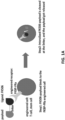
- the entire process can be generalized in Figure 1A , where the FK-506-payload binds to the FKBP-FRa engineered cell first; upon this binding, the transmembrane fusion protein will internalize the payload-linker-FK506. Next, the internalized FK506-payload is cleaved at the linker, and the payload got released in the cell. Depending on the cell type and the payload type, the released payload drug can exert its desired function.
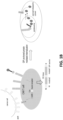
- FIG. 1B a specific Chimeric Antigen Receptor T cell mediated cell therapy is illustrated.
- a CAR T cell expressing a fusion protein with the structure from N terminus to C terminus comprising a suitable signal peptide, a protein module 2 linked to a protein module 1 of GPI anchor is presented to a cancer cell.
- the cancer cell has CD19 surface protein, which will be recognized by the CAR T cell and engaged with the payload associated with the CAR T cell, when a targeting ligand binds to at least one module of the fusion receptor.
- the payload associated with the ligand may be internalized into the target cell and be released to engage the cancer cell through the chimeric antigen receptor.
- Module 1 and its ligands There can be many different combinations of GPI anchored proteins, represented as Module 1 and its ligands, and Module 2 target cell surface protein and its respective ligands, represented in Figure 2B . It is contemplated that either module 1 protein or module 2 protein, or both can engage a high affinity targeting ligand to facilitate the ligand conjugated payload delivery.
- a fusion protein comprising FRa-Linker-FKBP structure, wherein FRa engaging with an FA derivative, at the same time, FKBP engaging a FK506 derivative, either FA derivative or FK 506 derivative or both can be linked to a payload, such as a cytotoxic drug, or an imaging agent, or a modulator.
- ligand paired with a GPI anchored protein can be paired with uPAR.
- FITC or its derivatives may bind to a single chain fragment of variant (scFv) of an antibody against FITC, for example, a ligand structure of or a structure of paired with FKBP, or paired with DHFR, or paired with scFV against DNP.
- scFv single chain fragment of variant
- FKBP is not a membrane protein that naturally present on the mammalian cell membrane, so that the FK506-payload conjugate will specifically bind to the target cell;
- FKBP protein is a relatively small protein with molecular weight of 12kDa, which makes it easier to be fused with other receptors with minimum perturbation to the receptors' structure and internalization properties.
- FK506 is not naturally present inside human being, so that the fusion receptor will not be blocked; 4.
- the binding affinity between FK506-FKBP is around 4pM so that the payload drug can be delivered with high affinity; 5.
- FK506-FKBP co-crystal structure of FK506-FKBP is available and the well-established derivative site of FK506 preserves the binding of FK506-FKBP while abolishes the unwanted binding between FK506 and calcineurin (See Figure 2A ).
- sequence of FKBP can be modified, and the corresponding FK506 ligand can be modified accordingly to the extent that the modified versions of FKBP and modified version of FK506 still have the desired affinity as exemplified herein or better than the current disclosure.
- folate receptor For the other portion of the fusion protein, folate receptor (FR) is chosen for its well understood internalization process as a monomer.
- FR folate receptor
- the current disclosure has several advantages over these reported methods: 1. Instead of a binary ON/OFF switch, our platform can delivery multiple kinds of regulating payloads, modifying many aspects of the target cells, thus it has great flexibility compared to binary ON/OFF switch; 2. the controlling moiety, FK506-payload, is a small molecule, which makes it possible for linear control and dosage optimization compared to pre-engineered cells. 3. The platform can be utilized in not only CAR T cell, but many other stem cell based regenerative therapies.
- cytotoxic drugs can be delivered to the transplanted cells if: 1. the cells over-proliferate and affect the normal organ or system, like anti CD19 CAR T cell. 2. The cells become tumorigenic, which lies in the lentivirus based gene modification and the intrinsic characteristic of stem cells.
- some cell therapies receive less success because of the suppressive microenvironment of the target tissue.
- CAR T cell therapy against solid tumor aside from the low penetration rate, the proliferation and activation of CAR T is highly suppressed by the MDSC and the tumor cells. This can be potentially alleviated by the RORrt agonist or MAP kinase inhibitor induced T cell activation as well as TLR8 agonist induced expression of granzyme B in CAR T cells.
- intracellular targets like RORrt, may be more suitable for our payload, membrane receptors such as TLR8 may also be accessible due to the proximity on the cell membrane.
- the payload is more diverse according to the disease models.
- the current disclosure provides a fine tune to transplanted cells and their microenvironment, and obtains the desired phenotype through diverse small molecule payloads. Since the small molecule is conjugated to FK506, which specifically target the FKBP-FRa overexpressed transplant cell, the non-specific targeting of normal tissues of the small molecule is also avoided.
- One of the many examples is to induce the overexpression of BMP2 in mesenchymal stem cell (MSC) for bone fracture repair in skeletal regenerative therapy.
- MSC mesenchymal stem cell
- the expression level of BMP2 and/or VEGF can be increased by introducing GSK3 beta inhibitor to the transplanted cells through this drug payload delivery system.
- GSK3 beta inhibitor is a desired drug for bone fracture repair. Therefore, GSK3 beta inhibitors is ideal as a potential payload for further modulating the function of the transplanted MSC as well as the microenvironment within the bone fracture sites.
- Targeting ligand is linked with payload through linkers.
- linker optimization options are listed below.
- payloads are characterized into 3 classes: I imaging, II cytotoxic drug, III regulatory small molecule drug.
- Imaging Fluorescent dye Rhodamine, FITC Radioisotope imaging: EC20 chelating head, NOTA, DOTA II Cytotoxic drug Anti-microtubule drug: Tubulysin, DM1, DM4 III Modulator Kinase inhibitor: Dasatinib, MEK1/2i, PI3Ki siRNA: mi181a1
- Rhodamine-NHS ester (1.0 equiv.) in dimethylformamide was reacted with Boc-NH-PEG 3 -NH 2 (1.2 equiv.) and diisopropylethylamine (3.0 equiv.) for 2h at room temperature.
- the product was purified by preparative reverse-phase HPLC with a UV detector.
- the purified Rhodamine-PEG 3 -NH-Boc conjugate (1.0 equiv.) was subjected to Boc deprotection by stirring in a 1:10 TFA-dichloromethane system for 2h.
- PEG polyethylene glycol
- EDC 1-Ethyl-3-(3-dimethylaminopropyl)carbodiimide
- HOBT Hydroxybenzotriazole
- HPLC High Performance Liquid Chromatography.
- 293TN cells were cultured in DMEM with 10% FBS, no antibiotic for lentivirus packaging.
- Raji and Jurkat cells were cultured in RPMI-1640 with 10% FBS, 10% Penicillin/Streptomycin.
- Primary human T cells were isolated from hPBMC using ficoll, enriched by negative selection with EasySep TM Human T Cell Enrichment Kit (19051, Stemcell Tech), activated by Dynabeads CD3/CD28 (11161D, Thermo Fisher) for 1 days, cultured with TexMACS medium supplemented with 30IU hIL2 (130-097-745, Miltenyi Biotec Inc.).
- T cells were cryopreserved in RPMI-1640 with 20% human AB serum (HP1022, Valley Biomedical) and 10% DMSO.
- Pantropic VSV-G pseudotyped lentivirus was produced via transfection of 293TN cell with the transgene expression vector and packaging plasmid mix (CPCP-K2A, Cellecta) using Lipofectamine 2000. At 24h, viral supernatant was harvested, concentrated and then added to certain cell lines or the primary T cells that were thawed the same day. For T cell transduction, cells were centrifuged at 2500rpm for 90 mins, 37 degree after adding the virus supernatant and 8ug/ml polybrene.
- FRET imaging of FK506-Rhodamine and FA-S0456 To understand the occupation of the fusion receptor, FKBP-FRa+ jurkat cells are incubated with FA/FA-S0456, FK506/FK506-Rhodamine at the indicated sequence and concentration. FRET is visualized by the loss of intensity of FA-Rhodamine as its energy transferred to FA-OTL38 on the same or nearby receptor, detected by BD Fortessa flow cytometer. Results were analyzed using FlowJo software.
- Cells were seeded to 96 well plate and incubated with different concentration of certain ligand-cytotoxic drug for 2h, with or without 100x preincubation of the free ligand competition. After 2h incubation, cells were washed by warm medium 3 times and replenished with fresh medium. After 72h, cell number were tested by CellTiter-Glo ® assay (G7570, Promega) or quantified by ligand-dye staining of receptor positive cell.
- luc+Raji cells 4 ⁇ 10 5 luc+Raji cells were iv injected into the NSG mice. After 6 days, 1 ⁇ 10 7 fusion receptor positive CAR T cells were iv injected. On Day 7, ligand-drug drug (0.5umole/kg, 1umole/kg) were iv injected once. In the case of CAR T exhaustion model, 1 ⁇ 10 5 CAR T were iv injection on Day 6, once the CAR T population were shown in peripheral blood and tumor burden is not stabilized and continue to increase, ligand-drug (0.5umole/kg, 1umole/kg) were iv injected.
- FK506 derivatives FK506-Rhodamine and FK506-tubulysin Synthesis was described in materials and methods section.
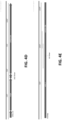
- hFRa is a GPI anchored membrane protein, which has 24 amino acids on the N terminal as a signal peptide.
- hFKBP sequence As well as a flexible peptide linker (SGGGS) between T24 and R25 of hFRa ( Figure 4a ).
- SGGGS flexible peptide linker
- the flexible linker is chosen to be resistant to common enzyme digestions in human body. The whole sequence is then inserted into a pWPI lentivirus expression vector, with EFla as the desired promoter for protein expression in transduced T cell.
- FKBP-FRa Expression of FKBP-FRa is confirmed by western blot in lentivirus transduced K562.
- Transduced K562 cell lysis shows specific band around 50kDa compared to non-transduced cells against hFRa antibody ( Figure 4b ).
- the construct is also named as 4M5.3 FR (SEQ ID NO:13). From N-terminal to C-terminal, it has hCD8 signal peptide, svFv of 4M5.3 (against FITC), GS linker, 25-258 aa of human FRa.
- CAR T cell model 1 ⁇ 10 6 KB cells are subcutaneously implanted in NSG (Jackson laboratory). After the tumor reaches 100mm 3 , 15 million anti-FITC CAR+ FKBP-FRa+ or anti-FITC CAR+ FKBP-FRa- human T cells are intravenously injected to the mice. FITC-FA is injected at the indicated days to induce the proliferation of the CAR T. Mice are imaged every two days after the CAR T implantation by the following procedure. At the day of imaging, FK506-EC20 head is formulated with 99mTc according to previous report. 200uCi 99mTc in 100ul solution is i.v.
- mice are euthanized and 99mTc distribution in each organ are counted by gamma counter.
- humanized NSG mice are generated as reported before. 10 million CD34+ FKBP-FRa+ hHSC are i.v infused into the humanized NSG mice. 4 months later, whole body image is taken using FK506-99mTc as mentioned above, focusing on the bone marrow and spine.
- FKBP-FRa fusion receptor specifically binds and internalizes FK506-payload
- FKBP-FRa fusion receptor specifically binds FK506-Rhodamine
- FKBP-FRa+ jurkat cells are incubated with FA/FA-S0456, FK506/FK506-Rhodamine at the indicated sequence and concentration.
- FRET is visualized by the loss of intensity of FA-Rhodamine as its energy transferred to FA-OTL38 on the same or nearby receptor, detected by BD Fortessa flow cytometer.
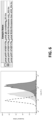
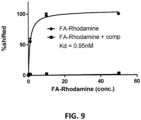
- Figure 5 shows binding of Folate acid in FKBPFR1GS fusion protein blocks the binding of FK506-Rhodamine at as low as 0.01nM and totally abolishes FK506 Rhodamine binding at 50nM.
- Figure 6 shows FKBPFR1GS jurkat cells have decreased FK506-Rhodamine intensity after binding to OTL38, a folate receptor targeted dye.
- FRET from FK506-Rhodamine (donor) to OTL38 (FA-S0456, acceptor, ex/em:774/794nm) indicates the interaction between FR and FKBP within the fusion receptor.
- Figure 7 shows increasing the linker length between FKBP and FR significantly lowers the interference between the two components of the fusion protein. Compare to FF1 (1GS between FKBP and FR), FF3 (3GS between FKBP and FR) preserves the binding of FK506-Rhodamine in the presence of 10nM FA, which is comparable to the physiological concentration of FA in human body.
- PI-PLC treat T cells having FF3 fusion protein resulted the release of GPI anchored receptor FF3.
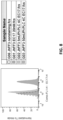
- Jurkat T cell with FF3 fusion receptor shows saturated binding with 20nM FA-FITC (EC17), while after 5mU PI-PLC or 50mU PI-PLC treatment, the FA-FITC loses binding to the cell, which indicates the release of the GPI anchored FF3 fusion receptor. See Figure 8 .
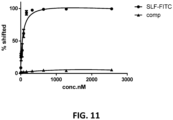
- SLF-FITC binding a mimic of FK506
- FKBPFR fusion receptor a 10 times lower binding affinity to FKBPFR fusion receptor, compared to the parent ligand FK506. See Figure 11 and compare with Figure 10 .
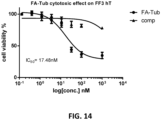
- FA-Tubulysin is able to mediate a receptor specific killing effect against FF3+ human T cell. Compensation with FA (100x preincubation with FA) blocks the effect. This implies the successful internalization and release of the free drug Tubulysin through the FF3 fusion receptor system. See Figure 14 .
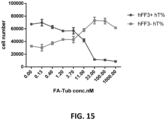
- FA-Tubulysin specifically kills the hFF3+ population in a mixed human T cell culture. Percentage of hFF3+ cell decrease as the FA-Tub concentration increases. See Figure 15 .
- Both FITC-DM4 and FITC-Tub can specifically kill the 4M5.3FR+ human T cells, while FITC-Tub has a higher IC 50 . Compensation of free FITC sodium (100x preincubation) blocks the receptor mediated killing effect. This implies the successful internalization and release of FITC-cytotoxic drug into T cell through 4M5.3FR fusion receptor. See Figure 17 .
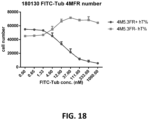
- FITC-Tubulysin specifically kill the 4M5.3FR+ population in a mixed human T cell culture.
- FITC-DM4 specifically kill the 4M5.3FR+ population in a mixed human T cell culture.
- Exhausted antiCD19 CAR T cells are generated by 7 times of stimulation with CD19+Raji cells, see detailed procedure in material and methods section).
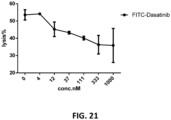
- PD-1 positive, LAG3 positive and double positive population decreases upon treatment. See Figure 22 .
- the technical advantageous feature of this drug payload delivery system is to have multi-functionality.
- the potential payloads and corresponding effects are listed below (Table 1).
- the small molecule payloads are selected based on the following parameters: 1. the functionality assay of the free drug, both in vitro and in vivo, has been confirmed by either published literature or work in our lab. 2. The chemical structure of the drug has relatively more accessible free amine for derivatization. 3. Any of the following will be preferable: FDA proved drug; commercially available for reasonable price.
- the FK506-payload will be tested first for in vitro experiments, T cell activation and stem cell cytokine release will be monitored by multiplex immunoassays. For in vivo disease models, we have well established CAR T therapy and bone fracture mouse models in our lab, and several potential collaborators for the neurodegenerative mouse models.
Landscapes
- Health & Medical Sciences (AREA)
- Life Sciences & Earth Sciences (AREA)
- Chemical & Material Sciences (AREA)
- General Health & Medical Sciences (AREA)
- Engineering & Computer Science (AREA)
- Veterinary Medicine (AREA)
- Animal Behavior & Ethology (AREA)
- Public Health (AREA)
- Epidemiology (AREA)
- Organic Chemistry (AREA)
- Bioinformatics & Cheminformatics (AREA)
- Medicinal Chemistry (AREA)
- Genetics & Genomics (AREA)
- Zoology (AREA)
- Proteomics, Peptides & Aminoacids (AREA)
- Molecular Biology (AREA)
- Pharmacology & Pharmacy (AREA)
- Biochemistry (AREA)
- Biomedical Technology (AREA)
- Immunology (AREA)
- Wood Science & Technology (AREA)
- Cell Biology (AREA)
- General Engineering & Computer Science (AREA)
- Biotechnology (AREA)
- Biophysics (AREA)
- Gastroenterology & Hepatology (AREA)
- Toxicology (AREA)
- Microbiology (AREA)
- Virology (AREA)
- Hematology (AREA)
- Physics & Mathematics (AREA)
- Optics & Photonics (AREA)
- Nuclear Medicine, Radiotherapy & Molecular Imaging (AREA)
- Plant Pathology (AREA)
- Developmental Biology & Embryology (AREA)
- Radiology & Medical Imaging (AREA)
- Pathology (AREA)
- General Chemical & Material Sciences (AREA)
- Chemical Kinetics & Catalysis (AREA)
- Medicinal Preparation (AREA)
Priority Applications (1)
| Application Number | Priority Date | Filing Date | Title |
|---|---|---|---|
| EP25163099.2A EP4600267A3 (en) | 2017-02-17 | 2018-02-17 | Targeted ligand-payload based drug delivery for cell therapy |
Applications Claiming Priority (2)
| Application Number | Priority Date | Filing Date | Title |
|---|---|---|---|
| US201762460118P | 2017-02-17 | 2017-02-17 | |
| PCT/US2018/018557 WO2018152451A1 (en) | 2017-02-17 | 2018-02-17 | Targeted ligand-payload based drug delivery for cell therapy |
Related Child Applications (2)
| Application Number | Title | Priority Date | Filing Date |
|---|---|---|---|
| EP25163099.2A Division EP4600267A3 (en) | 2017-02-17 | 2018-02-17 | Targeted ligand-payload based drug delivery for cell therapy |
| EP25163099.2A Division-Into EP4600267A3 (en) | 2017-02-17 | 2018-02-17 | Targeted ligand-payload based drug delivery for cell therapy |
Publications (3)
| Publication Number | Publication Date |
|---|---|
| EP3583218A1 EP3583218A1 (en) | 2019-12-25 |
| EP3583218A4 EP3583218A4 (en) | 2020-12-30 |
| EP3583218B1 true EP3583218B1 (en) | 2025-04-16 |
Family
ID=63170493
Family Applications (2)
| Application Number | Title | Priority Date | Filing Date |
|---|---|---|---|
| EP25163099.2A Pending EP4600267A3 (en) | 2017-02-17 | 2018-02-17 | Targeted ligand-payload based drug delivery for cell therapy |
| EP18754879.7A Active EP3583218B1 (en) | 2017-02-17 | 2018-02-17 | Targeted ligand-payload based drug delivery for cell therapy |
Family Applications Before (1)
| Application Number | Title | Priority Date | Filing Date |
|---|---|---|---|
| EP25163099.2A Pending EP4600267A3 (en) | 2017-02-17 | 2018-02-17 | Targeted ligand-payload based drug delivery for cell therapy |
Country Status (9)
| Country | Link |
|---|---|
| US (2) | US12343403B2 (enExample) |
| EP (2) | EP4600267A3 (enExample) |
| JP (2) | JP7288402B2 (enExample) |
| KR (1) | KR102595249B1 (enExample) |
| CN (2) | CN118634339B (enExample) |
| AU (1) | AU2018221171B2 (enExample) |
| CA (1) | CA3053534A1 (enExample) |
| ES (1) | ES3024357T3 (enExample) |
| WO (1) | WO2018152451A1 (enExample) |
Families Citing this family (23)
| Publication number | Priority date | Publication date | Assignee | Title |
|---|---|---|---|---|
| EP2934532B1 (en) | 2012-12-20 | 2019-10-23 | Purdue Research Foundation | Chimeric antigen receptor-expressing t cells as anti-cancer therapeutics |
| CN108697798A (zh) | 2016-02-16 | 2018-10-23 | 达纳-法伯癌症研究所有限公司 | 免疫疗法组合物及方法 |
| CA3019835A1 (en) | 2016-04-08 | 2017-10-12 | Purdue Research Foundation | Methods and compositions for car t cell therapy |
| US11649288B2 (en) | 2017-02-07 | 2023-05-16 | Seattle Children's Hospital | Phospholipid ether (PLE) CAR T cell tumor targeting (CTCT) agents |
| ES3024357T3 (en) * | 2017-02-17 | 2025-06-04 | Purdue Research Foundation | Targeted ligand-payload based drug delivery for cell therapy |
| US11850262B2 (en) | 2017-02-28 | 2023-12-26 | Purdue Research Foundation | Compositions and methods for CAR T cell therapy |
| CN120154716A (zh) * | 2018-01-22 | 2025-06-17 | 恩多塞特公司 | Car t细胞的使用方法 |
| JP7774961B2 (ja) | 2018-02-06 | 2025-11-25 | シアトル チルドレンズ ホスピタル ディー/ビー/エイ シアトル チルドレンズ リサーチ インスティテュート | フルオレセイン結合エーテルリン脂質(fl-ple)で標識された腫瘍に対して最適なt細胞機能を示すフルオレセイン特異的car |
| CA3091674A1 (en) | 2018-02-23 | 2019-08-29 | Endocyte, Inc. | Sequencing method for car t cell therapy |
| BR112020020887A2 (pt) | 2018-04-12 | 2021-04-06 | Umoja Biopharma, Inc | Vetores virais e linhagens celulares de empacotamento |
| CN112399852A (zh) | 2018-06-28 | 2021-02-23 | 达纳-法伯癌症研究所有限公司 | 固体和液体恶性肿瘤中多重抗原受体t细胞对多种抗原的靶向 |
| EP3833400A4 (en) * | 2018-08-07 | 2022-06-15 | Purdue Research Foundation | REJUVENATION OF CAR-T CELLS |
| WO2020154455A1 (en) * | 2019-01-23 | 2020-07-30 | The Johns Hopkins University | Non-immunosuppressive fk506 analogs and use thereof |
| AR119271A1 (es) | 2019-06-11 | 2021-12-09 | Shire Human Genetic Therapies | Administración del vector viral adenoasociado para el tratamiento de enfermedades mediadas por la calicreína plasmática desregulada |
| CA3150095A1 (en) * | 2019-09-06 | 2021-03-11 | Shirley O'dea | IMMUNE CELL ENGINEERING FOR EX VIVO CELLULAR THERAPY APPLICATIONS |
| WO2021081280A1 (en) | 2019-10-23 | 2021-04-29 | Shire Human Genetic Therapies, Inc. | Adeno-associated virus vectors based gene therapy for hereditary angioedema |
| WO2022044024A1 (en) * | 2020-08-31 | 2022-03-03 | Ramot At Tel-Aviv University Ltd. | Small molecule modulators of gsk-3 activity |
| WO2022130014A1 (en) | 2020-12-16 | 2022-06-23 | Takeda Pharmaceutical Company Limited | Adeno associated viral vector delivery of antibodies for the treatment of disease mediated by dysregulated plasma kallikrein |
| US20240043529A1 (en) * | 2020-12-22 | 2024-02-08 | Eutropics Pharmaceuticals, Inc. | Methods and compositions related to bcl2 and bim heterodimer antibodies |
| CN113462649B (zh) * | 2021-05-27 | 2022-08-23 | 浙江大学 | Mek抑制剂在减少car-t细胞耗竭和终末分化中的应用 |
| JP2024526860A (ja) * | 2021-07-21 | 2024-07-19 | イミュニティバイオ,インコーポレーテッド | 初代NK細胞内での発現のためのキメラ抗原受容体mRNA分子の生成 |
| CN116041545A (zh) * | 2022-12-12 | 2023-05-02 | 南方医科大学 | 一种靶向荧光素或生物素的通用型car及其应用 |
| WO2024206913A2 (en) * | 2023-03-31 | 2024-10-03 | Northwestern University | Compositions for antigen-specific immune cell activation |
Family Cites Families (13)
| Publication number | Priority date | Publication date | Assignee | Title |
|---|---|---|---|---|
| GB9523469D0 (en) * | 1995-11-16 | 1996-01-17 | Sandoz Ltd | Organic compounds |
| US6093382A (en) | 1998-05-16 | 2000-07-25 | Bracco Research Usa Inc. | Metal complexes derivatized with folate for use in diagnostic and therapeutic applications |
| US7547759B2 (en) | 2001-03-09 | 2009-06-16 | Board Of Regents, The University Of Texas System | Induction of tumor immunity by variants of folate binding protein |
| WO2005103250A1 (ja) * | 2004-04-26 | 2005-11-03 | Takami Matsuyama | 葉酸リセプターベータ(FR-β)に対する単クローン抗体を含有する治療薬 |
| WO2011079227A1 (en) * | 2009-12-23 | 2011-06-30 | Endocyte, Inc. | Vitamin receptor drug delivery conjugates for treating inflammation |
| WO2010118169A2 (en) | 2009-04-08 | 2010-10-14 | The Regents Of The University Of California | Human protein scaffold with controlled serum pharmacokinetics |
| US20190054117A1 (en) * | 2014-12-19 | 2019-02-21 | Novartis Ag | Dimerization switches and uses thereof |
| US10683506B2 (en) | 2015-04-10 | 2020-06-16 | The Methodist Hospital System | CD117 ligand-drug conjugates for targeted cancer therapy |
| JP6887685B2 (ja) * | 2015-08-12 | 2021-06-16 | マサチューセッツ インスティテュート オブ テクノロジー | ナノ粒子の細胞表面共役 |
| TW201740958A (zh) * | 2016-01-15 | 2017-12-01 | 依圖比克斯公司 | 用於t細胞免疫療法之方法及組合物 |
| AU2017345479B2 (en) * | 2016-10-19 | 2024-03-21 | The Scripps Research Institute | Chimeric antigen receptor effector cell switches with humanized targeting moieties and/or optimized chimeric antigen receptor interacting domains and uses thereof |
| CN110191948A (zh) * | 2016-11-02 | 2019-08-30 | 巴塞尔大学 | 用于细胞疗法的免疫可识别的细胞表面变体 |
| ES3024357T3 (en) | 2017-02-17 | 2025-06-04 | Purdue Research Foundation | Targeted ligand-payload based drug delivery for cell therapy |
-
2018
- 2018-02-17 ES ES18754879T patent/ES3024357T3/es active Active
- 2018-02-17 EP EP25163099.2A patent/EP4600267A3/en active Pending
- 2018-02-17 JP JP2019544016A patent/JP7288402B2/ja active Active
- 2018-02-17 CN CN202410423409.8A patent/CN118634339B/zh active Active
- 2018-02-17 EP EP18754879.7A patent/EP3583218B1/en active Active
- 2018-02-17 CN CN201880024308.6A patent/CN110662839A/zh active Pending
- 2018-02-17 AU AU2018221171A patent/AU2018221171B2/en active Active
- 2018-02-17 KR KR1020197026818A patent/KR102595249B1/ko active Active
- 2018-02-17 WO PCT/US2018/018557 patent/WO2018152451A1/en not_active Ceased
- 2018-02-17 US US16/486,632 patent/US12343403B2/en active Active
- 2018-02-17 CA CA3053534A patent/CA3053534A1/en active Pending
-
2023
- 2023-03-24 JP JP2023047827A patent/JP2023082054A/ja active Pending
-
2025
- 2025-04-30 US US19/194,112 patent/US20250262313A1/en active Pending
Also Published As
| Publication number | Publication date |
|---|---|
| KR102595249B1 (ko) | 2023-10-27 |
| AU2018221171B2 (en) | 2024-01-18 |
| US20200054676A1 (en) | 2020-02-20 |
| US20250262313A1 (en) | 2025-08-21 |
| JP2020508042A (ja) | 2020-03-19 |
| EP4600267A2 (en) | 2025-08-13 |
| JP7288402B2 (ja) | 2023-06-07 |
| CA3053534A1 (en) | 2018-08-23 |
| KR20190118180A (ko) | 2019-10-17 |
| CN118634339A (zh) | 2024-09-13 |
| US12343403B2 (en) | 2025-07-01 |
| EP3583218A4 (en) | 2020-12-30 |
| CN110662839A (zh) | 2020-01-07 |
| AU2018221171A1 (en) | 2019-09-26 |
| CN118634339B (zh) | 2025-07-01 |
| JP2023082054A (ja) | 2023-06-13 |
| EP4600267A3 (en) | 2025-11-19 |
| ES3024357T3 (en) | 2025-06-04 |
| WO2018152451A1 (en) | 2018-08-23 |
| EP3583218A1 (en) | 2019-12-25 |
Similar Documents
| Publication | Publication Date | Title |
|---|---|---|
| EP3583218B1 (en) | Targeted ligand-payload based drug delivery for cell therapy | |
| EP3532490B1 (en) | Adapter chimeric antigen receptor expressing cells for targeting of multiple antigens | |
| Zheng et al. | Optimization of CAR-T cell-based therapies using small-molecule-based safety switches | |
| Kennard et al. | A novel iron uptake mechanism mediated by GPI‐anchored human p97. | |
| JP2020015760A (ja) | キメラ抗原受容体t細胞スイッチおよびその使用 | |
| US20180311373A1 (en) | Conjugate molecule | |
| EP3721902A1 (en) | Targeting agent antibody conjugates and uses thereof | |
| Roth et al. | Cell vehicle targeting strategies | |
| Nichakawade et al. | TRBC1-targeting antibody–drug conjugates for the treatment of T cell cancers | |
| Shevtsov et al. | Exogenously delivered heat shock protein 70 displaces its endogenous analogue and sensitizes cancer cells to lymphocytes-mediated cytotoxicity | |
| Philippova et al. | GD2-targeting therapy: a comparative analysis of approaches and promising directions | |
| WO2014081300A1 (en) | Channel protein activatable liposomes | |
| Lin et al. | Multimodal targeting chimeras enable integrated immunotherapy leveraging tumor-immune microenvironment | |
| CN112543651A (zh) | 使car t细胞恢复活力 | |
| KR20180086183A (ko) | 유전자 조작 약물 내성 t 세포 및 이것의 사용 방법 | |
| Mao et al. | Development of a MMAE-based antibody-drug conjugate targeting B7–H3 for glioblastoma | |
| US20230372395A1 (en) | Car cells targeting an inserted ligand | |
| US12234273B2 (en) | Programmable immunocyte receptor complex system | |
| Dai et al. | Site-specific antibody-drug conjugates with variable drug-to-antibody-ratios for AML therapy | |
| WO2024081824A2 (en) | Synthetic intermediates for universal chimeric antigen receptor immune cell therapies | |
| US20210179673A1 (en) | Methods and materials for treating cancer | |
| Zhang | Design of a Private Passageway Fusion Receptor for Sensitive Control of Adoptive Cell Therapies | |
| Labanieh | Enhancing the Safety and Efficacy of Engineered Cell Therapies using Protease-Regulated Platforms | |
| Shin | Development of Rationally Engineered Peptide-Targeted Liposomal Nanoparticles to Achieve Enhanced Therapeutic Efficacy with Selectivity and Design of Novel Inhibitors for Allergy | |
| Ziaei | Design, Synthesis, and Evaluation of a Novel Cytotoxic Peptide-Doxorubicin Conjugate Targeting Triple-Negative Breast Cancer |
Legal Events
| Date | Code | Title | Description |
|---|---|---|---|
| STAA | Information on the status of an ep patent application or granted ep patent |
Free format text: STATUS: THE INTERNATIONAL PUBLICATION HAS BEEN MADE |
|
| PUAI | Public reference made under article 153(3) epc to a published international application that has entered the european phase |
Free format text: ORIGINAL CODE: 0009012 |
|
| STAA | Information on the status of an ep patent application or granted ep patent |
Free format text: STATUS: REQUEST FOR EXAMINATION WAS MADE |
|
| 17P | Request for examination filed |
Effective date: 20190912 |
|
| AK | Designated contracting states |
Kind code of ref document: A1 Designated state(s): AL AT BE BG CH CY CZ DE DK EE ES FI FR GB GR HR HU IE IS IT LI LT LU LV MC MK MT NL NO PL PT RO RS SE SI SK SM TR |
|
| AX | Request for extension of the european patent |
Extension state: BA ME |
|
| DAV | Request for validation of the european patent (deleted) | ||
| DAX | Request for extension of the european patent (deleted) | ||
| REG | Reference to a national code |
Ref country code: HK Ref legal event code: DE Ref document number: 40019970 Country of ref document: HK |
|
| A4 | Supplementary search report drawn up and despatched |
Effective date: 20201126 |
|
| RIC1 | Information provided on ipc code assigned before grant |
Ipc: A61K 38/00 20060101ALI20201120BHEP Ipc: C12N 15/63 20060101ALI20201120BHEP Ipc: C12N 9/90 20060101ALI20201120BHEP Ipc: C07K 14/725 20060101ALI20201120BHEP Ipc: C07K 14/705 20060101ALI20201120BHEP Ipc: C12N 15/62 20060101AFI20201120BHEP |
|
| STAA | Information on the status of an ep patent application or granted ep patent |
Free format text: STATUS: EXAMINATION IS IN PROGRESS |
|
| 17Q | First examination report despatched |
Effective date: 20220718 |
|
| RAP3 | Party data changed (applicant data changed or rights of an application transferred) |
Owner name: PURDUE RESEARCH FOUNDATION |
|
| REG | Reference to a national code |
Ref country code: DE Free format text: PREVIOUS MAIN CLASS: C12N0015620000 Ref country code: DE Ref legal event code: R079 Ref document number: 602018081136 Country of ref document: DE Free format text: PREVIOUS MAIN CLASS: C12N0015620000 Ipc: A61K0039000000 |
|
| GRAP | Despatch of communication of intention to grant a patent |
Free format text: ORIGINAL CODE: EPIDOSNIGR1 |
|
| STAA | Information on the status of an ep patent application or granted ep patent |
Free format text: STATUS: GRANT OF PATENT IS INTENDED |
|
| RIC1 | Information provided on ipc code assigned before grant |
Ipc: C07K 14/725 20060101ALI20241015BHEP Ipc: C07K 14/705 20060101ALI20241015BHEP Ipc: C12N 9/90 20060101ALI20241015BHEP Ipc: A61K 38/00 20060101ALI20241015BHEP Ipc: A61K 39/00 20060101AFI20241015BHEP |
|
| INTG | Intention to grant announced |
Effective date: 20241111 |
|
| GRAS | Grant fee paid |
Free format text: ORIGINAL CODE: EPIDOSNIGR3 |
|
| GRAA | (expected) grant |
Free format text: ORIGINAL CODE: 0009210 |
|
| STAA | Information on the status of an ep patent application or granted ep patent |
Free format text: STATUS: THE PATENT HAS BEEN GRANTED |
|
| AK | Designated contracting states |
Kind code of ref document: B1 Designated state(s): AL AT BE BG CH CY CZ DE DK EE ES FI FR GB GR HR HU IE IS IT LI LT LU LV MC MK MT NL NO PL PT RO RS SE SI SK SM TR |
|
| REG | Reference to a national code |
Ref country code: GB Ref legal event code: FG4D |
|
| REG | Reference to a national code |
Ref country code: CH Ref legal event code: EP |
|
| REG | Reference to a national code |
Ref country code: IE Ref legal event code: FG4D |
|
| REG | Reference to a national code |
Ref country code: DE Ref legal event code: R096 Ref document number: 602018081136 Country of ref document: DE |
|
| REG | Reference to a national code |
Ref country code: ES Ref legal event code: FG2A Ref document number: 3024357 Country of ref document: ES Kind code of ref document: T3 Effective date: 20250604 |
|
| REG | Reference to a national code |
Ref country code: NL Ref legal event code: MP Effective date: 20250416 |
|
| PG25 | Lapsed in a contracting state [announced via postgrant information from national office to epo] |
Ref country code: NL Free format text: LAPSE BECAUSE OF FAILURE TO SUBMIT A TRANSLATION OF THE DESCRIPTION OR TO PAY THE FEE WITHIN THE PRESCRIBED TIME-LIMIT Effective date: 20250416 |
|
| REG | Reference to a national code |
Ref country code: AT Ref legal event code: MK05 Ref document number: 1785104 Country of ref document: AT Kind code of ref document: T Effective date: 20250416 |
|
| PG25 | Lapsed in a contracting state [announced via postgrant information from national office to epo] |
Ref country code: FI Free format text: LAPSE BECAUSE OF FAILURE TO SUBMIT A TRANSLATION OF THE DESCRIPTION OR TO PAY THE FEE WITHIN THE PRESCRIBED TIME-LIMIT Effective date: 20250416 Ref country code: PT Free format text: LAPSE BECAUSE OF FAILURE TO SUBMIT A TRANSLATION OF THE DESCRIPTION OR TO PAY THE FEE WITHIN THE PRESCRIBED TIME-LIMIT Effective date: 20250818 |
|
| REG | Reference to a national code |
Ref country code: LT Ref legal event code: MG9D |
|
| PG25 | Lapsed in a contracting state [announced via postgrant information from national office to epo] |
Ref country code: NO Free format text: LAPSE BECAUSE OF FAILURE TO SUBMIT A TRANSLATION OF THE DESCRIPTION OR TO PAY THE FEE WITHIN THE PRESCRIBED TIME-LIMIT Effective date: 20250716 Ref country code: GR Free format text: LAPSE BECAUSE OF FAILURE TO SUBMIT A TRANSLATION OF THE DESCRIPTION OR TO PAY THE FEE WITHIN THE PRESCRIBED TIME-LIMIT Effective date: 20250717 |
|
| PG25 | Lapsed in a contracting state [announced via postgrant information from national office to epo] |
Ref country code: PL Free format text: LAPSE BECAUSE OF FAILURE TO SUBMIT A TRANSLATION OF THE DESCRIPTION OR TO PAY THE FEE WITHIN THE PRESCRIBED TIME-LIMIT Effective date: 20250416 |
|
| PG25 | Lapsed in a contracting state [announced via postgrant information from national office to epo] |
Ref country code: BG Free format text: LAPSE BECAUSE OF FAILURE TO SUBMIT A TRANSLATION OF THE DESCRIPTION OR TO PAY THE FEE WITHIN THE PRESCRIBED TIME-LIMIT Effective date: 20250416 |
|
| PG25 | Lapsed in a contracting state [announced via postgrant information from national office to epo] |
Ref country code: HR Free format text: LAPSE BECAUSE OF FAILURE TO SUBMIT A TRANSLATION OF THE DESCRIPTION OR TO PAY THE FEE WITHIN THE PRESCRIBED TIME-LIMIT Effective date: 20250416 |
|
| PG25 | Lapsed in a contracting state [announced via postgrant information from national office to epo] |
Ref country code: AT Free format text: LAPSE BECAUSE OF FAILURE TO SUBMIT A TRANSLATION OF THE DESCRIPTION OR TO PAY THE FEE WITHIN THE PRESCRIBED TIME-LIMIT Effective date: 20250416 |
|
| PG25 | Lapsed in a contracting state [announced via postgrant information from national office to epo] |
Ref country code: RS Free format text: LAPSE BECAUSE OF FAILURE TO SUBMIT A TRANSLATION OF THE DESCRIPTION OR TO PAY THE FEE WITHIN THE PRESCRIBED TIME-LIMIT Effective date: 20250716 |
|
| PG25 | Lapsed in a contracting state [announced via postgrant information from national office to epo] |
Ref country code: IS Free format text: LAPSE BECAUSE OF FAILURE TO SUBMIT A TRANSLATION OF THE DESCRIPTION OR TO PAY THE FEE WITHIN THE PRESCRIBED TIME-LIMIT Effective date: 20250816 |
|
| PG25 | Lapsed in a contracting state [announced via postgrant information from national office to epo] |
Ref country code: LV Free format text: LAPSE BECAUSE OF FAILURE TO SUBMIT A TRANSLATION OF THE DESCRIPTION OR TO PAY THE FEE WITHIN THE PRESCRIBED TIME-LIMIT Effective date: 20250416 |