EP3580920B1 - Kommunikationsnetzwerk - Google Patents
Kommunikationsnetzwerk Download PDFInfo
- Publication number
- EP3580920B1 EP3580920B1 EP18715659.1A EP18715659A EP3580920B1 EP 3580920 B1 EP3580920 B1 EP 3580920B1 EP 18715659 A EP18715659 A EP 18715659A EP 3580920 B1 EP3580920 B1 EP 3580920B1
- Authority
- EP
- European Patent Office
- Prior art keywords
- call
- calls
- distribution
- robot
- classified
- Prior art date
- Legal status (The legal status is an assumption and is not a legal conclusion. Google has not performed a legal analysis and makes no representation as to the accuracy of the status listed.)
- Active
Links
Images


Classifications
-
- H—ELECTRICITY
- H04—ELECTRIC COMMUNICATION TECHNIQUE
- H04M—TELEPHONIC COMMUNICATION
- H04M3/00—Automatic or semi-automatic exchanges
- H04M3/42—Systems providing special services or facilities to subscribers
- H04M3/436—Arrangements for screening incoming calls, i.e. evaluating the characteristics of a call before deciding whether to answer it
-
- H—ELECTRICITY
- H04—ELECTRIC COMMUNICATION TECHNIQUE
- H04M—TELEPHONIC COMMUNICATION
- H04M2201/00—Electronic components, circuits, software, systems or apparatus used in telephone systems
- H04M2201/12—Counting circuits
-
- H—ELECTRICITY
- H04—ELECTRIC COMMUNICATION TECHNIQUE
- H04M—TELEPHONIC COMMUNICATION
- H04M2201/00—Electronic components, circuits, software, systems or apparatus used in telephone systems
- H04M2201/18—Comparators
-
- H—ELECTRICITY
- H04—ELECTRIC COMMUNICATION TECHNIQUE
- H04M—TELEPHONIC COMMUNICATION
- H04M2203/00—Aspects of automatic or semi-automatic exchanges
- H04M2203/55—Aspects of automatic or semi-automatic exchanges related to network data storage and management
- H04M2203/555—Statistics, e.g. about subscribers but not being call statistics
- H04M2203/556—Statistical analysis and interpretation
-
- H—ELECTRICITY
- H04—ELECTRIC COMMUNICATION TECHNIQUE
- H04M—TELEPHONIC COMMUNICATION
- H04M3/00—Automatic or semi-automatic exchanges
- H04M3/22—Arrangements for supervision, monitoring or testing
- H04M3/2218—Call detail recording
-
- H—ELECTRICITY
- H04—ELECTRIC COMMUNICATION TECHNIQUE
- H04M—TELEPHONIC COMMUNICATION
- H04M3/00—Automatic or semi-automatic exchanges
- H04M3/42—Systems providing special services or facilities to subscribers
- H04M3/42025—Calling or Called party identification service
- H04M3/42034—Calling party identification service
- H04M3/42059—Making use of the calling party identifier
Definitions
- the present invention relates to a method of classifying telephone calls, and in particular to a method of classifying telephone calls such that automated telephone calls can be detected.
- Automated unwanted telephone calls have become problematic for many users and it is known to use telephone answering machines or systems to block calls which are from unidentified numbers, which are from numbers held in a blacklist (or alternatively are not present on a whitelist), or which are from numbers of a particular category (for example international calls).
- An example of such a system is disclosed in GB-B-2 425 913 .
- Automated unwanted calls are typically initiated by a computer dialler and, when answered, a pre-recorded message is played back to the called party.
- the call will automatically terminate. It will be understood that a bank of computer diallers can generate a significant number of calls within a limited period of time.
- a computing terminal configured to execute any of the methods listed above.
- data carrier device comprising computer executable code for performing any of the methods listed above.
- FIG 1 shows a schematic depiction of a conventional telephony network 100 in which a plurality of core exchanges 110 are interconnected by a plurality of communications links 115.
- Each of the plurality of core exchanges 110 are further connected to one or more local exchanges 120 by further communications links (for the sake of clarity in Figure 1 , not all of the core exchanges are shown as being connected to local exchanges) and customers' telephony terminals 200 are connected to one of the plurality of local exchanges.
- a call can be made from a first telephony terminal to a second telephony terminal with the call being routed via a local exchange, if both telephony terminals are connected to the same local exchange or via a local exchange, one or more core exchanges and a second local exchange.
- the network 100 will also comprise one or more domestic gateways 130 which allow calls from other telephony networks in that country to be routed to the telephony terminals connected to the telephony network 100, and vice versa.
- the telephony network 100 will further comprise one or more international gateways 140 which allow calls from other international telephony networks to be routed to the telephony terminals connected to the telephony network 100, and vice versa.
- Figure 2 shows graphical depictions of the of the distribution of call durations for robot and non-robot calls:
- Figure 2a shows the distribution of call durations for calls which are believed to be unwanted automated calls (hereinafter 'robot calls' and
- Figure 2b shows the distribution of call durations for non-automated calls (hereinafter 'non-robot calls').
- each of the distributions of robot call duration comprises two or more peaks.
- a first peak very early in the distribution (the minimum call duration is constrained to 2 seconds), followed by a second peak at around 7 seconds and a final peak at around 25-40 seconds.
- the first peak may be partially caused by the call being answered manually and the call being terminated by the called party almost immediately.
- Other reasons for the first peak may include the calling party terminating the call, for example if it detects that the call is answered by an answering machine or because the calling party wished to have the CLI of the calling party logged by the called party.
- the second peak is likely to be caused by the called party answering the call and then terminating it once they have determined that it is not of interest to them.
- the final peak is believed to represent calls which are answered automatically, that is by answering machines or voice mail services, which therefore allow the robot call to play out in its entirety.
- This supposition is reinforced as there are very few calls which terminate after the final peak, which is to be expected if the robot message has a fixed duration.
- Table 2 shows the same data parameters for a number of distributions of non-robot calls: Table 2: Non-robot call duration data Distribution Number of peaks Median (seconds) 75th percentile (seconds) First peak (seconds) Last peak (seconds) 1 1 105 232 27.60 27.60 2 1 184 486 25.20 25.20 3 1 14 32 7.81 7.81 4 1 8 24 5.10 5.10 5 1 6 13 3.55 3.55 6 1 7 20 4.32 4.32 7 1 7 20 4.32 4.32
- the non-robot call distributions comprise a single peak, which occurs before the median value of the distribution.
- the final peak in the robot call distributions tends to occur at, or after, the 75th percentile of the distribution (distribution 2 shows the peak occurring significantly after the 75th percentile value).
- the peak finding is based on the MALDlquant package for R (which is a software environment for statistical computing and graphics), which was designed for finding peaks in mass spectrometry data.
- a narrow halfWindowSize was used in an attempt to not miss closely spaced peaks. In doing so, peaks with a very low intensity needed to be rejected. This was achieved by imposing a threshold value based on the test data distributions. Appendix A below shows the code used to identify the peaks.
- Figure 3 shows graphical depictions of the results which are obtained when the data shown in Figure 2 is processed to detect peaks using the code listed below in Appendix A.
- Figure 3a shows the peaks in the robot call distribution of Figure 2a
- Figure 3b shows the peaks in the non-robot call distribution of Figure 2b .
- the data shown in Figures 2a & 3a correspond to robot call distribution 3 from Table 1 above and the data shown in Figures 2b & 3b correspond to non-robot call distribution 3 from Table 2 above.
- a source of robot calls could be identified by the identification of one or more of the following features:
- FIG. 4 shows a flowchart which describes how a method according to the present invention can be implemented.
- a calling party is selected and then at step S410 call data is extracted for that calling party for a pre-determined time period.
- the call data for the identified calling party is processed in order to determine the duration of each of the calls made by the identified calling party in the particular time period.
- the call duration distribution is determined and at step S440 the call duration distribution, as has been discussed above.
- step S450 if the analysis of the call duration distribution indicates that the calls made were not robot calls then the process returns to step S400 and a further calling party is selected. If the analysis indicates that the calls made by the identified calling party in the particular time period were robot calls then the call routing for future calls for that calling party will be altered.
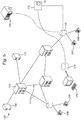
- FIG. 5 shows a schematic depiction of a telephony network 100' configured to implement a method according to the present invention.
- the telephony network 100' comprises a plurality of core exchanges 110 that are interconnected by a plurality of communications links 115. Each of the plurality of core exchanges 110 are further connected to one or more local exchanges 120 by further communications links and customers' telephony terminals 200 are connected to one of the plurality of local exchanges.
- the telephony network 100' also comprises one or more domestic gateways 130 and one or more international gateways 140.
- the network 100' further comprises call datastore 320 and call analyst terminal 310.
- Call data is periodically supplied to call datastore 320 and represents some or all of the telephony calls made over the network for a given period of time.
- Each call data record will comprise the telephone number used by the calling party, the telephone number of the called party, the time that the call started and the time that the call was terminated.
- the call analyst terminal 310 can analyse the call data held within the call datastore 320 to:
- the call analyst terminal will transmit a message to an intelligent network (IN) platform 170 indicating that the calling party is making robot calls using a specific number.
- the IN platform will store that number within a blacklist datastore 175.
- the call hits an IN trigger which suspends normal call processing, and passes control to the IN.
- the IN will compare the CLI of the incoming call with the numbers stored within the blacklist datastore 175. If the CLI of the incoming call matches a number held in the blacklist datastore 175 then the local exchange will be instructed to route the call to a voicemail server 330.
- the IN instructs the local exchange to continue normal processing and thus the call proceeds to ring the customer.
- a call is routed to the voicemail server then a notification will then be sent to the customer informing them that a calling party attempted to make a robot call to them.
- the customer may be sent an email indicating that a robot call has been received, with a hyperlink which can be activated in order to allow the customer to access the contents of the robot call as and when they wish to do so, a notification may be sent to a computer or smartphone app, an SMS message may be sent, etc.
- the present invention relates to a method of classifying a source of telephone calls to determine whether they can be classified as robot calls or non-robot calls. It will be further understood that exact details of how these calls are then processed are not directly relevant to the present invention and that alternative schemes to that outlined above with respect to Figure 5 may be used.
- Some large users of the telephony network (banks, government agencies, etc.) will make many calls each day but that these calls will be in the main non-robot calls or will be a source of legitimate robot calls.
- the network operator may establish a whitelist of telephone numbers used by such entities which will be generating large numbers of calls. Telephone numbers on this whitelist will not be analysed in accordance with the method described above.
- the call analyst terminal will also need to select the telephone numbers which are to be analysed. This may be done by selecting all the telephone numbers which make more than a threshold number of calls in a pre-determined time period, for example selecting all of the numbers which generate in excess of 5000 calls per day, for example, or selecting all of the numbers which generate calls at a rate in excess of 20 calls per minute, for example. Alternatively, or in addition, the telephone numbers which generate the most calls may be selected, for example the 1000 telephone numbers which made the most calls in the preceding day. If a particular telephone number is added to the 'robot caller list' then the owner of the that number may be informed by the network operator. The network operator may provide a mechanism by which such numbers can be removed from the 'robot caller list'.
- the entities which make large numbers of unwanted robot calls typically lease telephone numbers from third party brokers and thus are likely to move from number to number as they are added to the 'robot caller list'.
- the method described above requires a call data source which comprises the telephone number used by the calling party, the telephone number of the called party, the time that the call started and the time that the call was terminated. It will be understood that this data could be created solely for the purpose of implementing the method according to the present invention but it is preferred that an existing source of data can be re-used. For example, the billing data which is created for each telephone call could be used. To simplify processing, additional data which is held in the billing data may be removed before it is made available to the call analyst terminal.
- the call data source will comprise a unique identifier of the calling party which may comprise an email address, a SIP address, a conventional telephone number or other unique identifier.
- the call data source may comprise a unique identifier for the called party, which again may comprise an email address, a SIP address, a conventional telephone number or other unique identifier.
- the present invention is implemented on software within a conventional computing terminal
- computer code may be accessed via download, for example via the internet from an ISP, or on some physical media, for example, DVD, CD-ROM, USB memory stick, etc. for which the terminal has an appropriate media reader.
- the call analyst terminal and the blacklist datastore may be implemented using a single terminal as shown above in Figure 5 but it will be understood that distributed computing or cloud technology may be used such that a plurality of call analyst terminals are analysing call data, with numbers which are classified as being robot calls being distributed amongst a number of blacklist datastores.
- the present invention provides a method of classifying unwanted robot calls on the basis of the duration of a plurality of calls made from a single telephone number. If analysis of the distribution of call duration indicates that the calls are robot calls then the single telephone number is flagged such that subsequent calls from that number are not connected to the called party.
Landscapes
- Engineering & Computer Science (AREA)
- Signal Processing (AREA)
- Telephonic Communication Services (AREA)
Claims (11)
- Verfahren zum Verarbeiten eines Anrufs in einem Kommunikationsnetz (100), wobei das Verfahren die folgenden Schritte umfasst:Bestimmen (S420) der Dauer eines Anrufs für jeden mehrerer Anrufe von einer ersten Netzidentität;Erzeugen (S430) einer Verteilung von Anrufdauern;Klassifizieren (S450) der mehreren Anrufe von der ersten Netzidentität gemäß der Verteilung von Anrufdauern, wobei ein Anruf als ein unerwünschter automatisierter Anruf klassifiziert wird, wenn die Verteilung von Anrufdauerwerten zwei oder mehr Spitzen umfasst;Routen (S460) weiterer Anrufe von der ersten Netzidentität gemäß der Klassifizierung der mehreren Anrufe.
- Verfahren nach Anspruch 1, wobei ein Anruf als ein unerwünschter automatisierter Anruf klassifiziert wird, wenn die erste Spitze in der Verteilung von Anrufdauerwerten bei einer Zeit von weniger als 10 Sekunden auftritt.
- Verfahren nach einem der Ansprüche 1 bis 2, wobei ein Anruf als ein unerwünschter automatisierter Anruf klassifiziert wird, wenn die mediane Anrufdauer weniger als 20 Sekunden beträgt.
- Verfahren nach einem der Ansprüche 1 bis 3, wobei ein Anruf als ein unerwünschter automatisierter Anruf klassifiziert wird, wenn die letzte Spitze in der Verteilung von Anrufdauerwerten bei einer Zeit von mehr als 25 Sekunden auftritt.
- Verfahren nach Anspruch 4, wobei ein Anruf als ein unerwünschter automatisierter Anruf klassifiziert wird, wenn die letzte Spitze in der Verteilung von Anrufdauerwerten bei einer Zeit von weniger als 50 Sekunden auftritt.
- Verfahren nach einem der Ansprüche 1 bis 5, wobei ein Anruf als ein unerwünschter automatisierter Anruf klassifiziert wird, wenn die letzte Spitze in der Verteilung von Anrufdauerwerten bei oder nach dem 75. Perzentil der Verteilung von Anrufdauerwerten auftritt.
- Verfahren nach einem der Ansprüche 1 bis 6, wobei ein Anruf, der als ein unerwünschter automatisierter Anruf klassifiziert wird, an einen Voicemail-Server geliefert wird.
- Verfahren nach einem der Ansprüche 1 bis 6, wobei ein Anruf, der nicht als ein unerwünschter automatisierter Anruf klassifiziert wird, an die ursprüngliche angerufene Nummer geliefert wird.
- Verfahren nach Anspruch 7, wobei eine Benachrichtigung an eine weitere Kommunikationsadresse, die mit der ursprünglichen angerufenen Nummer assoziiert ist, übertragen wird.
- Rechenterminal, ausgelegt zum Ausführen des Verfahrens nach einem der Ansprüche 1 bis 9.
- Datenträgereinrichtung, die computerausführbaren Code zum Durchführen eines Verfahrens nach einem der Ansprüche 1 bis 9 umfasst.
Applications Claiming Priority (2)
| Application Number | Priority Date | Filing Date | Title |
|---|---|---|---|
| EP17163914 | 2017-03-30 | ||
| PCT/EP2018/058458 WO2018178393A1 (en) | 2017-03-30 | 2018-04-03 | Communications network |
Publications (2)
| Publication Number | Publication Date |
|---|---|
| EP3580920A1 EP3580920A1 (de) | 2019-12-18 |
| EP3580920B1 true EP3580920B1 (de) | 2020-10-07 |
Family
ID=58461207
Family Applications (1)
| Application Number | Title | Priority Date | Filing Date |
|---|---|---|---|
| EP18715659.1A Active EP3580920B1 (de) | 2017-03-30 | 2018-04-03 | Kommunikationsnetzwerk |
Country Status (3)
| Country | Link |
|---|---|
| US (1) | US10701205B2 (de) |
| EP (1) | EP3580920B1 (de) |
| WO (1) | WO2018178393A1 (de) |
Families Citing this family (4)
| Publication number | Priority date | Publication date | Assignee | Title |
|---|---|---|---|---|
| US10848619B2 (en) * | 2019-03-07 | 2020-11-24 | At&T Intellectual Property I, L.P. | Communications network security for handling proxy voice calls |
| JP7285436B2 (ja) * | 2019-06-26 | 2023-06-02 | 日本電信電話株式会社 | 不審通話対処システム、不審通話対処方法、発着信情報収集サーバ及びプログラム |
| CN112291441A (zh) * | 2020-10-29 | 2021-01-29 | 上海淇玥信息技术有限公司 | 一种智能机器人调度方法、装置和电子设备 |
| GB202104475D0 (en) * | 2021-03-30 | 2021-05-12 | British Telecomm | Communications network |
Family Cites Families (11)
| Publication number | Priority date | Publication date | Assignee | Title |
|---|---|---|---|---|
| US7283808B2 (en) * | 2001-01-18 | 2007-10-16 | Research In Motion Limited | System, method and mobile device for remote control of a voice mail system |
| US7577239B1 (en) * | 2004-05-10 | 2009-08-18 | Cisco Technology, Inc. | Tracking and controlling the impact of unwanted messages |
| GB2425913B (en) | 2005-05-04 | 2009-07-08 | Arona Ltd | Call handling |
| DE102006023924A1 (de) * | 2006-05-19 | 2007-11-22 | Nec Europe Ltd. | Verfahren zur Identifizierung von unerwünschten Telefonanrufen |
| US8548149B2 (en) * | 2011-06-17 | 2013-10-01 | Asd Inc. | System and method employed by answering service to dynamically shield against unwanted telephonic contact attempts |
| US9014359B1 (en) * | 2013-01-11 | 2015-04-21 | Time Warner Cable Enterprises Llc | Generation of phone number lists and call filtering |
| US20150003600A1 (en) * | 2013-06-28 | 2015-01-01 | Vonage Network, Llc | Systems and methods for blocking undesired automated telephone calls |
| JP6368487B2 (ja) * | 2013-12-27 | 2018-08-01 | トビラシステムズ株式会社 | リスト生成装置 |
| US9167078B2 (en) * | 2014-02-28 | 2015-10-20 | Invoca, Inc. | Systems and methods of processing inbound calls |
| US10009461B2 (en) * | 2015-06-08 | 2018-06-26 | Sadiq Aziz Ansari | Dynamic user interface to reduce impact of unwanted calls |
| US9706048B2 (en) * | 2015-12-04 | 2017-07-11 | Oracle International Corporation | Methods, systems, and computer readable media for nuisance call management |
-
2018
- 2018-04-03 EP EP18715659.1A patent/EP3580920B1/de active Active
- 2018-04-03 WO PCT/EP2018/058458 patent/WO2018178393A1/en not_active Ceased
- 2018-04-03 US US16/498,679 patent/US10701205B2/en active Active
Non-Patent Citations (1)
| Title |
|---|
| None * |
Also Published As
| Publication number | Publication date |
|---|---|
| EP3580920A1 (de) | 2019-12-18 |
| US10701205B2 (en) | 2020-06-30 |
| WO2018178393A1 (en) | 2018-10-04 |
| US20200045169A1 (en) | 2020-02-06 |
Similar Documents
| Publication | Publication Date | Title |
|---|---|---|
| US20250126198A1 (en) | System and method for identifying unwanted communications using communication fingerprinting | |
| US12081696B2 (en) | System and method for determining unwanted call origination in communications networks | |
| US11876927B2 (en) | Fraud detection system for incoming calls | |
| EP3580920B1 (de) | Kommunikationsnetzwerk | |
| CN113794805B (zh) | 一种goip诈骗电话的检测方法、检测系统 | |
| US11223955B2 (en) | Mitigation of spoof communications within a telecommunications network | |
| US11876928B2 (en) | Fraud detection system | |
| EP3991396B1 (de) | Identifizierung, abschirmung und blockierung von anrufen problematischer telekommunikationsträger und nummerblöcken | |
| US20150003600A1 (en) | Systems and methods for blocking undesired automated telephone calls | |
| US20210092223A1 (en) | Robocall detection using acoustic profiling | |
| CN114257688A (zh) | 电话诈骗识别方法及相关装置 | |
| GB2560961A (en) | Communications Network | |
| CN115733924A (zh) | 一种呼叫中心电话拦截数据识别系统 | |
| CN111328086A (zh) | 一种定位呼叫接通时延异常段的方法及系统 | |
| CA3186040A1 (en) | System and method for determining unwanted call origination in communications networks | |
| EP4391513A1 (de) | Computerimplementiertes verfahren zur erkennung und verhinderung von telekommunikationsbetrug durch online-kunstliche intelligenz | |
| CN119012195A (zh) | 号码识别方法 | |
| CN111787170A (zh) | 外呼处理方法及装置 | |
| CN118784622A (zh) | 隐私号分配器接入ip多媒体系统的控制方法及系统 | |
| CN121418516A (zh) | 呼叫转移风险的识别方法及相关装置 | |
| HK40023088A (en) | Fraud detection system |
Legal Events
| Date | Code | Title | Description |
|---|---|---|---|
| STAA | Information on the status of an ep patent application or granted ep patent |
Free format text: STATUS: UNKNOWN |
|
| STAA | Information on the status of an ep patent application or granted ep patent |
Free format text: STATUS: THE INTERNATIONAL PUBLICATION HAS BEEN MADE |
|
| PUAI | Public reference made under article 153(3) epc to a published international application that has entered the european phase |
Free format text: ORIGINAL CODE: 0009012 |
|
| STAA | Information on the status of an ep patent application or granted ep patent |
Free format text: STATUS: REQUEST FOR EXAMINATION WAS MADE |
|
| 17P | Request for examination filed |
Effective date: 20190912 |
|
| AK | Designated contracting states |
Kind code of ref document: A1 Designated state(s): AL AT BE BG CH CY CZ DE DK EE ES FI FR GB GR HR HU IE IS IT LI LT LU LV MC MK MT NL NO PL PT RO RS SE SI SK SM TR |
|
| AX | Request for extension of the european patent |
Extension state: BA ME |
|
| GRAP | Despatch of communication of intention to grant a patent |
Free format text: ORIGINAL CODE: EPIDOSNIGR1 |
|
| STAA | Information on the status of an ep patent application or granted ep patent |
Free format text: STATUS: GRANT OF PATENT IS INTENDED |
|
| DAV | Request for validation of the european patent (deleted) | ||
| DAX | Request for extension of the european patent (deleted) | ||
| INTG | Intention to grant announced |
Effective date: 20200504 |
|
| GRAS | Grant fee paid |
Free format text: ORIGINAL CODE: EPIDOSNIGR3 |
|
| GRAA | (expected) grant |
Free format text: ORIGINAL CODE: 0009210 |
|
| STAA | Information on the status of an ep patent application or granted ep patent |
Free format text: STATUS: THE PATENT HAS BEEN GRANTED |
|
| AK | Designated contracting states |
Kind code of ref document: B1 Designated state(s): AL AT BE BG CH CY CZ DE DK EE ES FI FR GB GR HR HU IE IS IT LI LT LU LV MC MK MT NL NO PL PT RO RS SE SI SK SM TR |
|
| REG | Reference to a national code |
Ref country code: GB Ref legal event code: FG4D |
|
| REG | Reference to a national code |
Ref country code: CH Ref legal event code: EP Ref country code: AT Ref legal event code: REF Ref document number: 1322424 Country of ref document: AT Kind code of ref document: T Effective date: 20201015 |
|
| REG | Reference to a national code |
Ref country code: DE Ref legal event code: R096 Ref document number: 602018008543 Country of ref document: DE |
|
| REG | Reference to a national code |
Ref country code: IE Ref legal event code: FG4D |
|
| REG | Reference to a national code |
Ref country code: NL Ref legal event code: MP Effective date: 20201007 |
|
| REG | Reference to a national code |
Ref country code: AT Ref legal event code: MK05 Ref document number: 1322424 Country of ref document: AT Kind code of ref document: T Effective date: 20201007 |
|
| PG25 | Lapsed in a contracting state [announced via postgrant information from national office to epo] |
Ref country code: RS Free format text: LAPSE BECAUSE OF FAILURE TO SUBMIT A TRANSLATION OF THE DESCRIPTION OR TO PAY THE FEE WITHIN THE PRESCRIBED TIME-LIMIT Effective date: 20201007 Ref country code: PT Free format text: LAPSE BECAUSE OF FAILURE TO SUBMIT A TRANSLATION OF THE DESCRIPTION OR TO PAY THE FEE WITHIN THE PRESCRIBED TIME-LIMIT Effective date: 20210208 Ref country code: FI Free format text: LAPSE BECAUSE OF FAILURE TO SUBMIT A TRANSLATION OF THE DESCRIPTION OR TO PAY THE FEE WITHIN THE PRESCRIBED TIME-LIMIT Effective date: 20201007 Ref country code: NO Free format text: LAPSE BECAUSE OF FAILURE TO SUBMIT A TRANSLATION OF THE DESCRIPTION OR TO PAY THE FEE WITHIN THE PRESCRIBED TIME-LIMIT Effective date: 20210107 Ref country code: GR Free format text: LAPSE BECAUSE OF FAILURE TO SUBMIT A TRANSLATION OF THE DESCRIPTION OR TO PAY THE FEE WITHIN THE PRESCRIBED TIME-LIMIT Effective date: 20210108 |
|
| REG | Reference to a national code |
Ref country code: LT Ref legal event code: MG4D |
|
| PG25 | Lapsed in a contracting state [announced via postgrant information from national office to epo] |
Ref country code: ES Free format text: LAPSE BECAUSE OF FAILURE TO SUBMIT A TRANSLATION OF THE DESCRIPTION OR TO PAY THE FEE WITHIN THE PRESCRIBED TIME-LIMIT Effective date: 20201007 Ref country code: AT Free format text: LAPSE BECAUSE OF FAILURE TO SUBMIT A TRANSLATION OF THE DESCRIPTION OR TO PAY THE FEE WITHIN THE PRESCRIBED TIME-LIMIT Effective date: 20201007 Ref country code: PL Free format text: LAPSE BECAUSE OF FAILURE TO SUBMIT A TRANSLATION OF THE DESCRIPTION OR TO PAY THE FEE WITHIN THE PRESCRIBED TIME-LIMIT Effective date: 20201007 Ref country code: LV Free format text: LAPSE BECAUSE OF FAILURE TO SUBMIT A TRANSLATION OF THE DESCRIPTION OR TO PAY THE FEE WITHIN THE PRESCRIBED TIME-LIMIT Effective date: 20201007 Ref country code: IS Free format text: LAPSE BECAUSE OF FAILURE TO SUBMIT A TRANSLATION OF THE DESCRIPTION OR TO PAY THE FEE WITHIN THE PRESCRIBED TIME-LIMIT Effective date: 20210207 Ref country code: SE Free format text: LAPSE BECAUSE OF FAILURE TO SUBMIT A TRANSLATION OF THE DESCRIPTION OR TO PAY THE FEE WITHIN THE PRESCRIBED TIME-LIMIT Effective date: 20201007 Ref country code: BG Free format text: LAPSE BECAUSE OF FAILURE TO SUBMIT A TRANSLATION OF THE DESCRIPTION OR TO PAY THE FEE WITHIN THE PRESCRIBED TIME-LIMIT Effective date: 20210107 |
|
| PG25 | Lapsed in a contracting state [announced via postgrant information from national office to epo] |
Ref country code: HR Free format text: LAPSE BECAUSE OF FAILURE TO SUBMIT A TRANSLATION OF THE DESCRIPTION OR TO PAY THE FEE WITHIN THE PRESCRIBED TIME-LIMIT Effective date: 20201007 Ref country code: NL Free format text: LAPSE BECAUSE OF FAILURE TO SUBMIT A TRANSLATION OF THE DESCRIPTION OR TO PAY THE FEE WITHIN THE PRESCRIBED TIME-LIMIT Effective date: 20201007 |
|
| REG | Reference to a national code |
Ref country code: DE Ref legal event code: R097 Ref document number: 602018008543 Country of ref document: DE |
|
| PG25 | Lapsed in a contracting state [announced via postgrant information from national office to epo] |
Ref country code: RO Free format text: LAPSE BECAUSE OF FAILURE TO SUBMIT A TRANSLATION OF THE DESCRIPTION OR TO PAY THE FEE WITHIN THE PRESCRIBED TIME-LIMIT Effective date: 20201007 Ref country code: LT Free format text: LAPSE BECAUSE OF FAILURE TO SUBMIT A TRANSLATION OF THE DESCRIPTION OR TO PAY THE FEE WITHIN THE PRESCRIBED TIME-LIMIT Effective date: 20201007 Ref country code: CZ Free format text: LAPSE BECAUSE OF FAILURE TO SUBMIT A TRANSLATION OF THE DESCRIPTION OR TO PAY THE FEE WITHIN THE PRESCRIBED TIME-LIMIT Effective date: 20201007 Ref country code: EE Free format text: LAPSE BECAUSE OF FAILURE TO SUBMIT A TRANSLATION OF THE DESCRIPTION OR TO PAY THE FEE WITHIN THE PRESCRIBED TIME-LIMIT Effective date: 20201007 Ref country code: SM Free format text: LAPSE BECAUSE OF FAILURE TO SUBMIT A TRANSLATION OF THE DESCRIPTION OR TO PAY THE FEE WITHIN THE PRESCRIBED TIME-LIMIT Effective date: 20201007 Ref country code: SK Free format text: LAPSE BECAUSE OF FAILURE TO SUBMIT A TRANSLATION OF THE DESCRIPTION OR TO PAY THE FEE WITHIN THE PRESCRIBED TIME-LIMIT Effective date: 20201007 |
|
| PLBE | No opposition filed within time limit |
Free format text: ORIGINAL CODE: 0009261 |
|
| STAA | Information on the status of an ep patent application or granted ep patent |
Free format text: STATUS: NO OPPOSITION FILED WITHIN TIME LIMIT |
|
| PG25 | Lapsed in a contracting state [announced via postgrant information from national office to epo] |
Ref country code: DK Free format text: LAPSE BECAUSE OF FAILURE TO SUBMIT A TRANSLATION OF THE DESCRIPTION OR TO PAY THE FEE WITHIN THE PRESCRIBED TIME-LIMIT Effective date: 20201007 |
|
| 26N | No opposition filed |
Effective date: 20210708 |
|
| PG25 | Lapsed in a contracting state [announced via postgrant information from national office to epo] |
Ref country code: IT Free format text: LAPSE BECAUSE OF FAILURE TO SUBMIT A TRANSLATION OF THE DESCRIPTION OR TO PAY THE FEE WITHIN THE PRESCRIBED TIME-LIMIT Effective date: 20201007 Ref country code: AL Free format text: LAPSE BECAUSE OF FAILURE TO SUBMIT A TRANSLATION OF THE DESCRIPTION OR TO PAY THE FEE WITHIN THE PRESCRIBED TIME-LIMIT Effective date: 20201007 |
|
| PG25 | Lapsed in a contracting state [announced via postgrant information from national office to epo] |
Ref country code: SI Free format text: LAPSE BECAUSE OF FAILURE TO SUBMIT A TRANSLATION OF THE DESCRIPTION OR TO PAY THE FEE WITHIN THE PRESCRIBED TIME-LIMIT Effective date: 20201007 Ref country code: MC Free format text: LAPSE BECAUSE OF FAILURE TO SUBMIT A TRANSLATION OF THE DESCRIPTION OR TO PAY THE FEE WITHIN THE PRESCRIBED TIME-LIMIT Effective date: 20201007 |
|
| PG25 | Lapsed in a contracting state [announced via postgrant information from national office to epo] |
Ref country code: LU Free format text: LAPSE BECAUSE OF NON-PAYMENT OF DUE FEES Effective date: 20210403 |
|
| REG | Reference to a national code |
Ref country code: BE Ref legal event code: MM Effective date: 20210430 |
|
| PG25 | Lapsed in a contracting state [announced via postgrant information from national office to epo] |
Ref country code: CH Free format text: LAPSE BECAUSE OF NON-PAYMENT OF DUE FEES Effective date: 20210430 Ref country code: LI Free format text: LAPSE BECAUSE OF NON-PAYMENT OF DUE FEES Effective date: 20210430 |
|
| PG25 | Lapsed in a contracting state [announced via postgrant information from national office to epo] |
Ref country code: IE Free format text: LAPSE BECAUSE OF NON-PAYMENT OF DUE FEES Effective date: 20210403 |
|
| PG25 | Lapsed in a contracting state [announced via postgrant information from national office to epo] |
Ref country code: IS Free format text: LAPSE BECAUSE OF FAILURE TO SUBMIT A TRANSLATION OF THE DESCRIPTION OR TO PAY THE FEE WITHIN THE PRESCRIBED TIME-LIMIT Effective date: 20210207 |
|
| PG25 | Lapsed in a contracting state [announced via postgrant information from national office to epo] |
Ref country code: BE Free format text: LAPSE BECAUSE OF NON-PAYMENT OF DUE FEES Effective date: 20210430 |
|
| PG25 | Lapsed in a contracting state [announced via postgrant information from national office to epo] |
Ref country code: CY Free format text: LAPSE BECAUSE OF FAILURE TO SUBMIT A TRANSLATION OF THE DESCRIPTION OR TO PAY THE FEE WITHIN THE PRESCRIBED TIME-LIMIT Effective date: 20201007 |
|
| PG25 | Lapsed in a contracting state [announced via postgrant information from national office to epo] |
Ref country code: HU Free format text: LAPSE BECAUSE OF FAILURE TO SUBMIT A TRANSLATION OF THE DESCRIPTION OR TO PAY THE FEE WITHIN THE PRESCRIBED TIME-LIMIT; INVALID AB INITIO Effective date: 20180403 |
|
| P01 | Opt-out of the competence of the unified patent court (upc) registered |
Effective date: 20230623 |
|
| PG25 | Lapsed in a contracting state [announced via postgrant information from national office to epo] |
Ref country code: MK Free format text: LAPSE BECAUSE OF FAILURE TO SUBMIT A TRANSLATION OF THE DESCRIPTION OR TO PAY THE FEE WITHIN THE PRESCRIBED TIME-LIMIT Effective date: 20201007 |
|
| PG25 | Lapsed in a contracting state [announced via postgrant information from national office to epo] |
Ref country code: MT Free format text: LAPSE BECAUSE OF FAILURE TO SUBMIT A TRANSLATION OF THE DESCRIPTION OR TO PAY THE FEE WITHIN THE PRESCRIBED TIME-LIMIT Effective date: 20201007 |
|
| PGFP | Annual fee paid to national office [announced via postgrant information from national office to epo] |
Ref country code: DE Payment date: 20250319 Year of fee payment: 8 |
|
| PG25 | Lapsed in a contracting state [announced via postgrant information from national office to epo] |
Ref country code: TR Free format text: LAPSE BECAUSE OF FAILURE TO SUBMIT A TRANSLATION OF THE DESCRIPTION OR TO PAY THE FEE WITHIN THE PRESCRIBED TIME-LIMIT Effective date: 20201007 |
|
| PGFP | Annual fee paid to national office [announced via postgrant information from national office to epo] |
Ref country code: GB Payment date: 20260319 Year of fee payment: 9 |
|
| PGFP | Annual fee paid to national office [announced via postgrant information from national office to epo] |
Ref country code: FR Payment date: 20260319 Year of fee payment: 9 |