EP3578141A1 - Medical stent device - Google Patents
Medical stent device Download PDFInfo
- Publication number
- EP3578141A1 EP3578141A1 EP18181993.9A EP18181993A EP3578141A1 EP 3578141 A1 EP3578141 A1 EP 3578141A1 EP 18181993 A EP18181993 A EP 18181993A EP 3578141 A1 EP3578141 A1 EP 3578141A1
- Authority
- EP
- European Patent Office
- Prior art keywords
- woven portion
- stent
- wires
- axial direction
- woven
- Prior art date
- Legal status (The legal status is an assumption and is not a legal conclusion. Google has not performed a legal analysis and makes no representation as to the accuracy of the status listed.)
- Withdrawn
Links
- 238000009941 weaving Methods 0.000 claims abstract description 10
- QNRATNLHPGXHMA-XZHTYLCXSA-N (r)-(6-ethoxyquinolin-4-yl)-[(2s,4s,5r)-5-ethyl-1-azabicyclo[2.2.2]octan-2-yl]methanol;hydrochloride Chemical compound Cl.C([C@H]([C@H](C1)CC)C2)CN1[C@@H]2[C@H](O)C1=CC=NC2=CC=C(OCC)C=C21 QNRATNLHPGXHMA-XZHTYLCXSA-N 0.000 claims abstract description 8
- -1 poly(lactic acid) Polymers 0.000 description 28
- 230000006835 compression Effects 0.000 description 18
- 238000007906 compression Methods 0.000 description 18
- 238000013508 migration Methods 0.000 description 14
- 238000004904 shortening Methods 0.000 description 8
- 238000011161 development Methods 0.000 description 7
- 238000004519 manufacturing process Methods 0.000 description 7
- 208000031481 Pathologic Constriction Diseases 0.000 description 6
- 230000036262 stenosis Effects 0.000 description 6
- 208000037804 stenosis Diseases 0.000 description 6
- 230000005012 migration Effects 0.000 description 5
- 229920006237 degradable polymer Polymers 0.000 description 4
- 229910052751 metal Inorganic materials 0.000 description 4
- 239000002184 metal Substances 0.000 description 4
- 230000000644 propagated effect Effects 0.000 description 4
- 229910001285 shape-memory alloy Inorganic materials 0.000 description 4
- HZEWFHLRYVTOIW-UHFFFAOYSA-N [Ti].[Ni] Chemical compound [Ti].[Ni] HZEWFHLRYVTOIW-UHFFFAOYSA-N 0.000 description 3
- 229910045601 alloy Inorganic materials 0.000 description 3
- 239000000956 alloy Substances 0.000 description 3
- 229920001577 copolymer Polymers 0.000 description 3
- 238000000034 method Methods 0.000 description 3
- 229910001000 nickel titanium Inorganic materials 0.000 description 3
- 229910000684 Cobalt-chrome Inorganic materials 0.000 description 2
- PXHVJJICTQNCMI-UHFFFAOYSA-N Nickel Chemical compound [Ni] PXHVJJICTQNCMI-UHFFFAOYSA-N 0.000 description 2
- 238000005452 bending Methods 0.000 description 2
- 210000004204 blood vessel Anatomy 0.000 description 2
- 239000010952 cobalt-chrome Substances 0.000 description 2
- 210000003238 esophagus Anatomy 0.000 description 2
- 238000011156 evaluation Methods 0.000 description 2
- 230000003902 lesion Effects 0.000 description 2
- 239000000463 material Substances 0.000 description 2
- 229920005615 natural polymer Polymers 0.000 description 2
- 230000008855 peristalsis Effects 0.000 description 2
- BASFCYQUMIYNBI-UHFFFAOYSA-N platinum Chemical compound [Pt] BASFCYQUMIYNBI-UHFFFAOYSA-N 0.000 description 2
- 229920001343 polytetrafluoroethylene Polymers 0.000 description 2
- 229920001059 synthetic polymer Polymers 0.000 description 2
- KIUKXJAPPMFGSW-DNGZLQJQSA-N (2S,3S,4S,5R,6R)-6-[(2S,3R,4R,5S,6R)-3-Acetamido-2-[(2S,3S,4R,5R,6R)-6-[(2R,3R,4R,5S,6R)-3-acetamido-2,5-dihydroxy-6-(hydroxymethyl)oxan-4-yl]oxy-2-carboxy-4,5-dihydroxyoxan-3-yl]oxy-5-hydroxy-6-(hydroxymethyl)oxan-4-yl]oxy-3,4,5-trihydroxyoxane-2-carboxylic acid Chemical compound CC(=O)N[C@H]1[C@H](O)O[C@H](CO)[C@@H](O)[C@@H]1O[C@H]1[C@H](O)[C@@H](O)[C@H](O[C@H]2[C@@H]([C@@H](O[C@H]3[C@@H]([C@@H](O)[C@H](O)[C@H](O3)C(O)=O)O)[C@H](O)[C@@H](CO)O2)NC(C)=O)[C@@H](C(O)=O)O1 KIUKXJAPPMFGSW-DNGZLQJQSA-N 0.000 description 1
- FHVDTGUDJYJELY-UHFFFAOYSA-N 6-{[2-carboxy-4,5-dihydroxy-6-(phosphanyloxy)oxan-3-yl]oxy}-4,5-dihydroxy-3-phosphanyloxane-2-carboxylic acid Chemical compound O1C(C(O)=O)C(P)C(O)C(O)C1OC1C(C(O)=O)OC(OP)C(O)C1O FHVDTGUDJYJELY-UHFFFAOYSA-N 0.000 description 1
- 229920000936 Agarose Polymers 0.000 description 1
- 102000009027 Albumins Human genes 0.000 description 1
- 108010088751 Albumins Proteins 0.000 description 1
- 229920002134 Carboxymethyl cellulose Polymers 0.000 description 1
- 229920001661 Chitosan Polymers 0.000 description 1
- VYZAMTAEIAYCRO-UHFFFAOYSA-N Chromium Chemical compound [Cr] VYZAMTAEIAYCRO-UHFFFAOYSA-N 0.000 description 1
- 102000008186 Collagen Human genes 0.000 description 1
- 108010035532 Collagen Proteins 0.000 description 1
- 229920002307 Dextran Polymers 0.000 description 1
- VGGSQFUCUMXWEO-UHFFFAOYSA-N Ethene Chemical compound C=C VGGSQFUCUMXWEO-UHFFFAOYSA-N 0.000 description 1
- 239000005977 Ethylene Substances 0.000 description 1
- 229920002683 Glycosaminoglycan Polymers 0.000 description 1
- HTTJABKRGRZYRN-UHFFFAOYSA-N Heparin Chemical compound OC1C(NC(=O)C)C(O)OC(COS(O)(=O)=O)C1OC1C(OS(O)(=O)=O)C(O)C(OC2C(C(OS(O)(=O)=O)C(OC3C(C(O)C(O)C(O3)C(O)=O)OS(O)(=O)=O)C(CO)O2)NS(O)(=O)=O)C(C(O)=O)O1 HTTJABKRGRZYRN-UHFFFAOYSA-N 0.000 description 1
- 229910000861 Mg alloy Inorganic materials 0.000 description 1
- 206010028980 Neoplasm Diseases 0.000 description 1
- 229920003171 Poly (ethylene oxide) Polymers 0.000 description 1
- 239000004952 Polyamide Substances 0.000 description 1
- 229920002732 Polyanhydride Polymers 0.000 description 1
- 229920000805 Polyaspartic acid Polymers 0.000 description 1
- 229920000954 Polyglycolide Polymers 0.000 description 1
- 229920000331 Polyhydroxybutyrate Polymers 0.000 description 1
- 229920001710 Polyorthoester Polymers 0.000 description 1
- 239000004743 Polypropylene Substances 0.000 description 1
- BQCADISMDOOEFD-UHFFFAOYSA-N Silver Chemical compound [Ag] BQCADISMDOOEFD-UHFFFAOYSA-N 0.000 description 1
- QAOWNCQODCNURD-UHFFFAOYSA-L Sulfate Chemical compound [O-]S([O-])(=O)=O QAOWNCQODCNURD-UHFFFAOYSA-L 0.000 description 1
- 239000004433 Thermoplastic polyurethane Substances 0.000 description 1
- RTAQQCXQSZGOHL-UHFFFAOYSA-N Titanium Chemical compound [Ti] RTAQQCXQSZGOHL-UHFFFAOYSA-N 0.000 description 1
- 229940072056 alginate Drugs 0.000 description 1
- 235000010443 alginic acid Nutrition 0.000 description 1
- 229920000615 alginic acid Polymers 0.000 description 1
- 230000009286 beneficial effect Effects 0.000 description 1
- 210000000013 bile duct Anatomy 0.000 description 1
- 239000001768 carboxy methyl cellulose Substances 0.000 description 1
- 235000010948 carboxy methyl cellulose Nutrition 0.000 description 1
- 239000008112 carboxymethyl-cellulose Substances 0.000 description 1
- 239000000679 carrageenan Substances 0.000 description 1
- 229920001525 carrageenan Polymers 0.000 description 1
- 235000010418 carrageenan Nutrition 0.000 description 1
- 229940113118 carrageenan Drugs 0.000 description 1
- 239000001913 cellulose Substances 0.000 description 1
- 229920002678 cellulose Polymers 0.000 description 1
- 229910052804 chromium Inorganic materials 0.000 description 1
- 239000011651 chromium Substances 0.000 description 1
- 229920001436 collagen Polymers 0.000 description 1
- 239000004205 dimethyl polysiloxane Substances 0.000 description 1
- 238000006073 displacement reaction Methods 0.000 description 1
- 210000001198 duodenum Anatomy 0.000 description 1
- 239000013013 elastic material Substances 0.000 description 1
- 230000006870 function Effects 0.000 description 1
- 150000004676 glycans Chemical class 0.000 description 1
- PCHJSUWPFVWCPO-UHFFFAOYSA-N gold Chemical compound [Au] PCHJSUWPFVWCPO-UHFFFAOYSA-N 0.000 description 1
- 229910052737 gold Inorganic materials 0.000 description 1
- 239000010931 gold Substances 0.000 description 1
- 229920000669 heparin Polymers 0.000 description 1
- 229960002897 heparin Drugs 0.000 description 1
- 229920002674 hyaluronan Polymers 0.000 description 1
- 229960003160 hyaluronic acid Drugs 0.000 description 1
- 238000002513 implantation Methods 0.000 description 1
- 238000003780 insertion Methods 0.000 description 1
- 230000037431 insertion Effects 0.000 description 1
- 229920001684 low density polyethylene Polymers 0.000 description 1
- 239000004702 low-density polyethylene Substances 0.000 description 1
- 229910000734 martensite Inorganic materials 0.000 description 1
- 229910052759 nickel Inorganic materials 0.000 description 1
- 210000000056 organ Anatomy 0.000 description 1
- 229910052697 platinum Inorganic materials 0.000 description 1
- HWLDNSXPUQTBOD-UHFFFAOYSA-N platinum-iridium alloy Chemical compound [Ir].[Pt] HWLDNSXPUQTBOD-UHFFFAOYSA-N 0.000 description 1
- 229920000729 poly(L-lysine) polymer Polymers 0.000 description 1
- 229920000435 poly(dimethylsiloxane) Polymers 0.000 description 1
- 239000005015 poly(hydroxybutyrate) Substances 0.000 description 1
- 229920000747 poly(lactic acid) Polymers 0.000 description 1
- 229920003229 poly(methyl methacrylate) Polymers 0.000 description 1
- 229920002627 poly(phosphazenes) Polymers 0.000 description 1
- 229920002432 poly(vinyl methyl ether) polymer Polymers 0.000 description 1
- 229920002647 polyamide Polymers 0.000 description 1
- 108010064470 polyaspartate Proteins 0.000 description 1
- 229920000139 polyethylene terephthalate Polymers 0.000 description 1
- 239000005020 polyethylene terephthalate Substances 0.000 description 1
- 229920002643 polyglutamic acid Polymers 0.000 description 1
- 229920002338 polyhydroxyethylmethacrylate Polymers 0.000 description 1
- 239000004926 polymethyl methacrylate Substances 0.000 description 1
- 229920001155 polypropylene Polymers 0.000 description 1
- 229920001282 polysaccharide Polymers 0.000 description 1
- 239000005017 polysaccharide Substances 0.000 description 1
- 229920002451 polyvinyl alcohol Polymers 0.000 description 1
- 235000018102 proteins Nutrition 0.000 description 1
- 102000004169 proteins and genes Human genes 0.000 description 1
- 108090000623 proteins and genes Proteins 0.000 description 1
- 229910052709 silver Inorganic materials 0.000 description 1
- 239000004332 silver Substances 0.000 description 1
- 229910001220 stainless steel Inorganic materials 0.000 description 1
- 239000010935 stainless steel Substances 0.000 description 1
- 229910052715 tantalum Inorganic materials 0.000 description 1
- GUVRBAGPIYLISA-UHFFFAOYSA-N tantalum atom Chemical compound [Ta] GUVRBAGPIYLISA-UHFFFAOYSA-N 0.000 description 1
- 229920002803 thermoplastic polyurethane Polymers 0.000 description 1
- 229910052719 titanium Inorganic materials 0.000 description 1
- 239000010936 titanium Substances 0.000 description 1
- WFKWXMTUELFFGS-UHFFFAOYSA-N tungsten Chemical compound [W] WFKWXMTUELFFGS-UHFFFAOYSA-N 0.000 description 1
- 229910052721 tungsten Inorganic materials 0.000 description 1
- 239000010937 tungsten Substances 0.000 description 1
- 210000003708 urethra Anatomy 0.000 description 1
- UHVMMEOXYDMDKI-JKYCWFKZSA-L zinc;1-(5-cyanopyridin-2-yl)-3-[(1s,2s)-2-(6-fluoro-2-hydroxy-3-propanoylphenyl)cyclopropyl]urea;diacetate Chemical compound [Zn+2].CC([O-])=O.CC([O-])=O.CCC(=O)C1=CC=C(F)C([C@H]2[C@H](C2)NC(=O)NC=2N=CC(=CC=2)C#N)=C1O UHVMMEOXYDMDKI-JKYCWFKZSA-L 0.000 description 1
Images



Classifications
-
- A—HUMAN NECESSITIES
- A61—MEDICAL OR VETERINARY SCIENCE; HYGIENE
- A61F—FILTERS IMPLANTABLE INTO BLOOD VESSELS; PROSTHESES; DEVICES PROVIDING PATENCY TO, OR PREVENTING COLLAPSING OF, TUBULAR STRUCTURES OF THE BODY, e.g. STENTS; ORTHOPAEDIC, NURSING OR CONTRACEPTIVE DEVICES; FOMENTATION; TREATMENT OR PROTECTION OF EYES OR EARS; BANDAGES, DRESSINGS OR ABSORBENT PADS; FIRST-AID KITS
- A61F2/00—Filters implantable into blood vessels; Prostheses, i.e. artificial substitutes or replacements for parts of the body; Appliances for connecting them with the body; Devices providing patency to, or preventing collapsing of, tubular structures of the body, e.g. stents
- A61F2/82—Devices providing patency to, or preventing collapsing of, tubular structures of the body, e.g. stents
- A61F2/86—Stents in a form characterised by the wire-like elements; Stents in the form characterised by a net-like or mesh-like structure
- A61F2/90—Stents in a form characterised by the wire-like elements; Stents in the form characterised by a net-like or mesh-like structure characterised by a net-like or mesh-like structure
-
- A—HUMAN NECESSITIES
- A61—MEDICAL OR VETERINARY SCIENCE; HYGIENE
- A61F—FILTERS IMPLANTABLE INTO BLOOD VESSELS; PROSTHESES; DEVICES PROVIDING PATENCY TO, OR PREVENTING COLLAPSING OF, TUBULAR STRUCTURES OF THE BODY, e.g. STENTS; ORTHOPAEDIC, NURSING OR CONTRACEPTIVE DEVICES; FOMENTATION; TREATMENT OR PROTECTION OF EYES OR EARS; BANDAGES, DRESSINGS OR ABSORBENT PADS; FIRST-AID KITS
- A61F2/00—Filters implantable into blood vessels; Prostheses, i.e. artificial substitutes or replacements for parts of the body; Appliances for connecting them with the body; Devices providing patency to, or preventing collapsing of, tubular structures of the body, e.g. stents
- A61F2/82—Devices providing patency to, or preventing collapsing of, tubular structures of the body, e.g. stents
- A61F2/844—Devices providing patency to, or preventing collapsing of, tubular structures of the body, e.g. stents folded prior to deployment
-
- A—HUMAN NECESSITIES
- A61—MEDICAL OR VETERINARY SCIENCE; HYGIENE
- A61F—FILTERS IMPLANTABLE INTO BLOOD VESSELS; PROSTHESES; DEVICES PROVIDING PATENCY TO, OR PREVENTING COLLAPSING OF, TUBULAR STRUCTURES OF THE BODY, e.g. STENTS; ORTHOPAEDIC, NURSING OR CONTRACEPTIVE DEVICES; FOMENTATION; TREATMENT OR PROTECTION OF EYES OR EARS; BANDAGES, DRESSINGS OR ABSORBENT PADS; FIRST-AID KITS
- A61F2250/00—Special features of prostheses classified in groups A61F2/00 - A61F2/26 or A61F2/82 or A61F9/00 or A61F11/00 or subgroups thereof
- A61F2250/0014—Special features of prostheses classified in groups A61F2/00 - A61F2/26 or A61F2/82 or A61F9/00 or A61F11/00 or subgroups thereof having different values of a given property or geometrical feature, e.g. mechanical property or material property, at different locations within the same prosthesis
- A61F2250/0015—Special features of prostheses classified in groups A61F2/00 - A61F2/26 or A61F2/82 or A61F9/00 or A61F11/00 or subgroups thereof having different values of a given property or geometrical feature, e.g. mechanical property or material property, at different locations within the same prosthesis differing in density or specific weight
- A61F2250/0017—Special features of prostheses classified in groups A61F2/00 - A61F2/26 or A61F2/82 or A61F9/00 or A61F11/00 or subgroups thereof having different values of a given property or geometrical feature, e.g. mechanical property or material property, at different locations within the same prosthesis differing in density or specific weight differing in yarn density
-
- A—HUMAN NECESSITIES
- A61—MEDICAL OR VETERINARY SCIENCE; HYGIENE
- A61F—FILTERS IMPLANTABLE INTO BLOOD VESSELS; PROSTHESES; DEVICES PROVIDING PATENCY TO, OR PREVENTING COLLAPSING OF, TUBULAR STRUCTURES OF THE BODY, e.g. STENTS; ORTHOPAEDIC, NURSING OR CONTRACEPTIVE DEVICES; FOMENTATION; TREATMENT OR PROTECTION OF EYES OR EARS; BANDAGES, DRESSINGS OR ABSORBENT PADS; FIRST-AID KITS
- A61F2250/00—Special features of prostheses classified in groups A61F2/00 - A61F2/26 or A61F2/82 or A61F9/00 or A61F11/00 or subgroups thereof
- A61F2250/0014—Special features of prostheses classified in groups A61F2/00 - A61F2/26 or A61F2/82 or A61F9/00 or A61F11/00 or subgroups thereof having different values of a given property or geometrical feature, e.g. mechanical property or material property, at different locations within the same prosthesis
- A61F2250/0029—Special features of prostheses classified in groups A61F2/00 - A61F2/26 or A61F2/82 or A61F9/00 or A61F11/00 or subgroups thereof having different values of a given property or geometrical feature, e.g. mechanical property or material property, at different locations within the same prosthesis differing in bending or flexure capacity
Definitions
- the present disclosure relates to a stent and, more particularly, to a medical stent to be inserted into a lumen of a human body such as an esophagus and a blood vessel for securing a passage.
- a stenosis occurs in a lumen of a human body such as esophagus, duodenum, bile duct, urethra, or airway due to a tumor or other cause
- the organ cannot function normally.
- a stent is inserted into the stenosis site to expand the lumen.
- the stent is widely being used to keep the passageway of the human lumen open.
- the stent is composed of a hollow cylindrical body having a plurality of rhombic meshes formed by interweaving wires of a hyperelastic shape memory alloy such that the wires cross in a diagonal direction.
- a hollow cylindrical body exerts a radial tension against the lumen wall to expand the stenosis site.
- the stent include a plurality of rhombic meshes formed by interweaving the wires, a strain applied in one side of the stent may induce an elastic movement of the stent in the axial or longitudinal direction, which may result in a migration of the stent from its original position. In such a case, the stent cannot relieve the stenosis at the lesion site, and the patient may have to be subject to a new stenting procedure.
- Korean Patent No. 10-1657648 entitled MANUFACTURING METHODS FOR ANTI-MIGRATION STENT AND THE ANTI-MIGRATION STENT THEREOF disclose a stent in which a shoulder bump protruding in a radial direction is formed to prevent a migration of the stent.
- This stent disclosed in this document may have disadvantages that it is difficult to maintain a shape of the shoulder bump for a long time, the shoulder bump may lower a lateral compression ratio. Further, the stent may exhibit a large axial expansion ratio enough to result in the migration of the stent from the lesion site to another position after the procedure.
- Korean Unexamined Patent Publication No. 2013-0126776 entitled MEDICAL STENT HAVING ENDS WITH RADIAL FORCE THAN CENTRAL PORTION discloses a stent in which the wires are loosely twisted near the ends of the stent than its central portion so that a radial force in end portions is smaller than the central portion and a pressure applied to a certain position on the surface is prevented from being propagated in the axial direction.
- the stent described in this document may have a low lateral compression ratio, and it is difficult to laterally compress the stent during the procedure, and thus it is difficult to insert the stent into the narrow lumen of the human body.
- the wires are bent in the opposite direction, it is difficult to automate the manufacture of the stent, which may result in a low production yield and a high production cost of the stent.
- a stent capable of preventing a strain occurred in a certain position on the stent from being propagated along an axial direction and having a structure that maximizes a lateral compression ratio so as to be inserted easily into a narrow lumen of a human body.
- a stent device includes a first woven portion and a second woven portion.
- the first woven portion is configured to have a mesh structure including a plurality of rhombic meshes and is formed by weaving a plurality of wires such that each of the wires crosses one another to form crests and valleys.
- the second woven portion is elongated in an axial direction from the first woven portion. In the second woven portion, a traveling direction of each of the wires extending from the first woven portion is bent into the axial direction.
- the second woven portion may have a cylindrical shape. The first woven portion and the second woven portion are arranged alternately in the axial direction.
- two adjacent wires may be weaved in such a manner that the two adjacent wires cross each other in a twisted fashion.
- the two adjacent wires may cross each other twice or more times.
- the first woven portion may be longer than the second woven portion.
- the first woven portion may be shorter than the second woven portion.
- the second woven portion has a bent portion where the wires are bent in the axial direction, and a strain occurred in a certain position on the stent is prevented from being propagated along the axial direction.
- a weaving pattern of adjacent wires in a twisted fashion according to the present disclosure exhibits a lateral compression ratio which is comparable to that of a mesh structure including a plurality of rhombic meshes and is a than a weaving pattern of a conventional hook structure, which facilitates the insertion of the stent into a narrow lumen of a human body.
- the compression ratio can be changed only by adjusting relative lengths of the first and second woven portions, and thus the stent may be adapted easily for the stenting site.
- the stent of the present disclosure it is possible to automate the manufacture of the stent contrary to a conventional stent having a hook structure, which may enhance a production yield and lower a production cost of the stent.
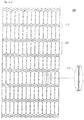
- FIG. 1A is a photograph of a stent according to an embodiment of the present disclosure
- FIG. 1B is a development view of the stent.
- the stent 100 may include two woven portions 110 and 120 which are formed by weaving a plurality of wires 10 and have different shapes.
- the wire 10 may be made of a elastic material such as a metal, a synthetic polymer, a natural polymer, or the like.
- the metal may be a shape memory alloy such as a nickel-titanium (Ni-Ti) shape memory alloy and a martensitic Ni-Ti shape memory alloy.
- Ni-Ti nickel-titanium
- the kind of metal is not limited thereto, and the metal may be stainless steel, tantalum, tungsten, gold, platinum, silver, nickel, titanium, chromium, a cobalt-chrome (Co-Cr) alloy, a platinum-chrome (Pt-Cr) alloy, a platinum-iridium (Pt-Ir) alloy, and a magnesium alloy.
- the synthetic polymer may be one of degradable polymers and non-degradable polymers.
- degradable polymer include poly(lactic acid) and its copolymers, poly(glycolic acid) and its copolymers, (poly(hydroxy butyrate), poly(e-caprolactone) and its copolymers, poly(alkylene succinates), polyanhydrides, and poly(ortho esters).
- non-degradable polymer examples include polyamides, poly(cyano acrylates), polyphosphazenes, thermoplastic polyurethanes, low density polyethylene, poly(vinyl alcohol), poly(ethylene oxide), poly(hydroxyethyl methacrylate), poly(methyl methacrylate), poly(tetrafluoroethylene) (PTFE), polydimethylsiloxane, poly(ethylene oxide-b-propylene oxide), poly(vinyl methyl ether), poly(N-alkyl acrylamide), and polyethylene terephthalate, polypropylene.
- polyamides poly(cyano acrylates), polyphosphazenes
- thermoplastic polyurethanes low density polyethylene
- poly(vinyl alcohol) poly(ethylene oxide), poly(hydroxyethyl methacrylate), poly(methyl methacrylate), poly(tetrafluoroethylene) (PTFE), polydimethylsiloxane, poly(ethylene oxide-b-propylene oxide), poly(vinyl
- Examples of the natural polymers include collagen, albumin, silk protein, poly(L-lysine), (poly(L-glutamic acid), polyaspartic acid, polysaccharide and derivatives thereof, carboxymethylcellulose, cellulose sulfate, agarose, alginate, carrageenan, hyaluronic acid, heparin, glycosaminoglycan, dextran and derivatives thereof, and chitosan and derivatives thereof.
- the wire 10 may be made of one material in order to keep an axial expansion ratio and a lateral compression ratio uniform. However, the present disclosure is not limited thereto, and the wire 10 may be formed by combining two or more materials.
- the wire 10 can be coated so as to be used in a lumen of a human body.
- the stent 100 may include a first woven portion 110, and a second woven portion 120.
- the first and second woven portions 110 and 120 may be alternately arranged in the axial direction.
- the first woven portion 110 has a mesh structure including a plurality of rhombic meshes and may be formed by weaving a plurality of wires 10 such that each of the wires 10 crosses one another to form crests and valleys.
- the plurality of wires 10 extend in the axial direction but are arranged obliquely at a certain inclination angle to form a spiral shape spatially.
- the inclination angle of the wires 10 may be chosen in a range of 20-70 degrees when being measured with reference to an imaginary vertical line while the stent is rotated.
- the inclination angle may be chosen in accordance with the diameter of the lumen of the human body, and the axial expansion ratio and the lateral compression ratio are getting larger as the inclination angle increases.
- the helical inclination angle of the wires 10 may be chosen to be a small value.
- the helical inclination angle of the wires 10 may be chosen to be a larger value.
- each wire may be extended continuously without changing its traveling direction (i.e., without being bended to another direction) while maintaining the inclination angle.
- the first woven portion 110 may be formed by weaving directly into a hollow cylindrical shape. Instead, however, the first woven portion 110 may be bent into the hollow circular shape after weaving in a flat development shape.
- the first woven portion 110 has the mesh structure having a plurality of rhombic meshes, is capable of maintaining a maximum an axial expansion ratio and lateral compression ratio since the traveling direction of the wire 10 is extended without being changed.
- the second woven portion 120 has a cylindrical shape and extends in the axial direction.
- the second woven portion 120 which is provided to block or minimize the axial expansion of the stent 100, may be formed by bending the wires into the downward direction.
- the second woven portion 120 may be formed by bending each of the wires 10 downwards at an end of the first woven portion 110, so that the travelling direction of the wires are changed into the axial direction. Accordingly, the traveling direction of the wires 10 changes from the helical shape into an almost vertically straight-line shape disposed in the axial direction.
- the wires 10 When the inclination angle of the wires 10, which is measured with reference to an imaginary vertical line while the stent is rotated, is zero, the wires 10 would be disposed in the axial direction. Contrarily, when the inclination angle of the wires 10 is greater than zero degree, the wires 10 would have the helical shape. In case the wires 10 have the helical shape, the axial expansion may occur in the second woven portion 120 also. If the wires 10 are provided with an inclination angle other than zero degree, the inclination angle may be chosen from a range from 0 to 20 degrees in consideration that the inclination angle of the wires in the first woven portion 110 ranges from 20 to 70 degrees.
- the second woven portion 120 can be constructed by weaving two adjacent wires 10, of which traveling directions are changed into the axial direction, such that the two adjacent wires 10 cross each other in a twisted fashion.
- the second woven portion 120 may have a multiple crossing structure that the adjacent wires 10 cross each other twice or more times. If the adjacent wires 10 cross each other just a single time, the travelling direction of each of the wires 10 will be reversed when the second woven portion 120 is terminated and the first woven portion 110 starts again. If the adjacent wires 10 cross each other twice, the travelling direction of each of the wires 10 will remain unchanged when the second woven portion 120 is terminated and the first woven portion 110 starts again.
- each of the wires 10 will be reversed if the wires 10 cross each other an odd number of times, but will remain unchanged if the wires 10 cross each other an even number of times.
- the adjacent wires 10 of the first woven portions 110 disposed in both ends of the second woven portion 120 travel in the same direction as each other.
- the crossing of the adjacent wires 10 in the second woven portion 120 is provided an even number of times.
- the axial expansion ratio is almost zero.
- the longer the second woven portion 120 is the smaller the axial expansion ratio of the entire stent 100 is.
- the second woven portion 120 is shortened, the axial expansion ratio of the entire stent 100 is increased.
- the traveling directions of the wires 10 remain unchanged unlike a hook structure in which the traveling directions of the wires 10 are symmetrically reversed.
- the lateral compression ratio of the second woven portion 120 can be maintained at substantially the same level as that of the first woven portion 110 having the mesh structure.
- the second woven portion 120 enables to adjust the axial expansion ratio of the stunt 100 according to a change of the length of the second woven portion 120 while the axial compression ratio of the stent 100 is maintained almost constant.
- the stunt 100 can be implanted into a narrow lumen of the human body such as a blood vessel with no problem, and a strain applied in one side of the stent 100 can be blocked from being propagated to adjacent portions and the migration of the stent 100 due to the peristalsis of the lumen of the human body can be effectively prevented.
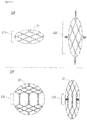
- FIG. 2 illustrates operational characteristics of the stent 100 according to an embodiment of the present disclosure.
- the first woven portion 110 can be stretched in the axial direction while being compressed in the lateral direction when a lateral pressure is applied.
- the second woven portion 120 when the lateral pressure is applied, the second woven portion 120 is compressed in the lateral direction but shows little change in the axial direction.
- the wires 10 of the second woven portion 120 are elongated in the axial direction as shown in FIG. 2 , there is little expansion of the second woven portion 120 in the axial direction.
- evaluation indexes for evaluating the characteristics of the stent 100.
- evaluation indexes include shortening and anti-migration.
- the shortening indicates a degree of the axial deformation due to the lateral compression.
- the stent 100 having a certain diameter is compressed and mounted on a delivery device having a smaller diameter, the stent 100 is mounted in a shape of being longer than its original length, and thus the stent 100 may not be mounted correctly in an implantation target location. Therefore, it is preferable that the stent 100 shows less shortening characteristics, that is, has a smaller axial expansion ratio as long as the lateral compression ratio is sufficient.
- the anti-migration indicates a degree of a displacement of a mounted stent 100 due to some reason such as the peristalsis of the lumen of the human body. Generally, higher anti-migration characteristic is beneficial to the patient.
- conventional stents have adopted the hook structure in which the traveling directions of the wires 10 are symmetrically reversed at each joint because of its superior shortening and anti-migration characteristics.
- the hook structure is disadvantageous in that the lateral compression ratio is so small that it is difficult to reduce a volume of the stent and to mount the stent on the delivery device having a smaller diameter.
- the lateral compression ratio of the second woven portion 120 is as good as the lateral compression ratio of the first woven portion 110 as shown in FIG. 2 .
- the stent 100 can exhibit a maximized lateral compression ratio while maintaining good shortening and anti-migration characteristics. As a result, the difficulty in mounting the stent 100 to the delivery device can be eliminated.
- the second woven portion 120 is configured to be longer than the first woven portion 110, desired shortening and anti-movement characteristics can be attained easily.
- FIG. 3 is a development view of a stent according to another embodiment of the present disclosure.
- a first woven portion 210 may be configured to be longer than the second woven portion 220 or to have a length comparable to that of the second woven portion 220. According to the present embodiment, the lateral compression ratio may be increased.
- FIG. 4 is a development view of a stent according to yet another embodiment of the present disclosure.
- a first woven portion 310 may be configured to be shorter than the second woven portion 320.
- the axial expansion ratio of the stent 300 can be lowered while the shortening and anti-migration characteristics may be enhanced further.
Landscapes
- Health & Medical Sciences (AREA)
- Engineering & Computer Science (AREA)
- Biomedical Technology (AREA)
- Cardiology (AREA)
- Oral & Maxillofacial Surgery (AREA)
- Transplantation (AREA)
- Heart & Thoracic Surgery (AREA)
- Vascular Medicine (AREA)
- Life Sciences & Earth Sciences (AREA)
- Animal Behavior & Ethology (AREA)
- General Health & Medical Sciences (AREA)
- Public Health (AREA)
- Veterinary Medicine (AREA)
- Media Introduction/Drainage Providing Device (AREA)
Applications Claiming Priority (1)
| Application Number | Priority Date | Filing Date | Title |
|---|---|---|---|
| KR1020180065592A KR102095834B1 (ko) | 2018-06-07 | 2018-06-07 | 의료용 스텐트 |
Publications (1)
| Publication Number | Publication Date |
|---|---|
| EP3578141A1 true EP3578141A1 (en) | 2019-12-11 |
Family
ID=62874685
Family Applications (1)
| Application Number | Title | Priority Date | Filing Date |
|---|---|---|---|
| EP18181993.9A Withdrawn EP3578141A1 (en) | 2018-06-07 | 2018-07-05 | Medical stent device |
Country Status (3)
| Country | Link |
|---|---|
| EP (1) | EP3578141A1 (enExample) |
| JP (1) | JP7011259B2 (enExample) |
| KR (1) | KR102095834B1 (enExample) |
Cited By (3)
| Publication number | Priority date | Publication date | Assignee | Title |
|---|---|---|---|---|
| CN113855321A (zh) * | 2021-11-05 | 2021-12-31 | 领博生物科技(杭州)有限公司 | 一种人工血管骨架制备装置及方法 |
| CN116407325A (zh) * | 2021-12-29 | 2023-07-11 | 先健科技(深圳)有限公司 | 支架假体 |
| CN119548199A (zh) * | 2024-12-21 | 2025-03-04 | 上海励楷科技有限公司 | 轴向交互支架及其的制备方法 |
Families Citing this family (4)
| Publication number | Priority date | Publication date | Assignee | Title |
|---|---|---|---|---|
| KR102264476B1 (ko) * | 2020-11-30 | 2021-06-11 | 제성호 | 스텐트 및 그 제조 방법 |
| KR102264171B1 (ko) * | 2020-12-09 | 2021-06-11 | 주식회사 제가텍 | 스텐트 및 그 제조 방법 |
| KR102270438B1 (ko) * | 2020-12-14 | 2021-06-29 | 주식회사 제가텍 | 육각 메쉬 스텐트 및 그 제조 방법 |
| KR102660943B1 (ko) * | 2023-12-27 | 2024-04-25 | 주식회사 제가텍 | 스텐트 및 그 제조 방법 |
Citations (5)
| Publication number | Priority date | Publication date | Assignee | Title |
|---|---|---|---|---|
| KR20130126776A (ko) | 2012-04-12 | 2013-11-21 | (주) 태웅메디칼 | 길이방향의 중앙 보다 양측 부위 레디얼 포스를 작게 갖는 의료용 스텐트 |
| WO2014026870A2 (de) * | 2012-08-15 | 2014-02-20 | Pfm Medical Ag | Implantierbare einrichtung zur verwendung im menschlichen und/oder tierischen körper zum ersatz einer organklappe |
| WO2016003470A1 (en) * | 2014-07-03 | 2016-01-07 | The Curators Of The University Of Missouri | Embolic protection system |
| KR101657648B1 (ko) | 2014-10-21 | 2016-09-19 | (주) 태웅메디칼 | 미끄럼 방지용 스텐트 제조 방법 및 그에 의해 제조된 미끄럼 방지 스텐트 |
| WO2017071231A1 (zh) * | 2015-10-26 | 2017-05-04 | 先健科技(深圳)有限公司 | 管腔编织支架 |
Family Cites Families (3)
| Publication number | Priority date | Publication date | Assignee | Title |
|---|---|---|---|---|
| JP4094367B2 (ja) * | 2002-07-24 | 2008-06-04 | 株式会社パイオラックスメディカルデバイス | ステント及びステント付きグラフト |
| DE102014115337A1 (de) * | 2014-10-21 | 2016-04-21 | Nasib Dlaikan-Campos | Stent zum Schienen einer Vene und System zum Setzen eines Stents |
| KR101791142B1 (ko) * | 2015-08-03 | 2017-10-27 | 가톨릭대학교 산학협력단 | 체중 저감용 스텐트, 스텐트 제조용 지그 및 그 제조방법 |
-
2018
- 2018-06-07 KR KR1020180065592A patent/KR102095834B1/ko not_active Expired - Fee Related
- 2018-07-05 EP EP18181993.9A patent/EP3578141A1/en not_active Withdrawn
- 2018-10-29 JP JP2018202915A patent/JP7011259B2/ja active Active
Patent Citations (5)
| Publication number | Priority date | Publication date | Assignee | Title |
|---|---|---|---|---|
| KR20130126776A (ko) | 2012-04-12 | 2013-11-21 | (주) 태웅메디칼 | 길이방향의 중앙 보다 양측 부위 레디얼 포스를 작게 갖는 의료용 스텐트 |
| WO2014026870A2 (de) * | 2012-08-15 | 2014-02-20 | Pfm Medical Ag | Implantierbare einrichtung zur verwendung im menschlichen und/oder tierischen körper zum ersatz einer organklappe |
| WO2016003470A1 (en) * | 2014-07-03 | 2016-01-07 | The Curators Of The University Of Missouri | Embolic protection system |
| KR101657648B1 (ko) | 2014-10-21 | 2016-09-19 | (주) 태웅메디칼 | 미끄럼 방지용 스텐트 제조 방법 및 그에 의해 제조된 미끄럼 방지 스텐트 |
| WO2017071231A1 (zh) * | 2015-10-26 | 2017-05-04 | 先健科技(深圳)有限公司 | 管腔编织支架 |
Cited By (3)
| Publication number | Priority date | Publication date | Assignee | Title |
|---|---|---|---|---|
| CN113855321A (zh) * | 2021-11-05 | 2021-12-31 | 领博生物科技(杭州)有限公司 | 一种人工血管骨架制备装置及方法 |
| CN116407325A (zh) * | 2021-12-29 | 2023-07-11 | 先健科技(深圳)有限公司 | 支架假体 |
| CN119548199A (zh) * | 2024-12-21 | 2025-03-04 | 上海励楷科技有限公司 | 轴向交互支架及其的制备方法 |
Also Published As
| Publication number | Publication date |
|---|---|
| JP2019209111A (ja) | 2019-12-12 |
| KR20190139060A (ko) | 2019-12-17 |
| KR102095834B1 (ko) | 2020-04-01 |
| JP7011259B2 (ja) | 2022-01-26 |
Similar Documents
| Publication | Publication Date | Title |
|---|---|---|
| JP7011259B2 (ja) | 医療用ステント | |
| CN1183978C (zh) | 可膨胀扩张器 | |
| US5980552A (en) | Articulated stent | |
| CN110731843B (zh) | 一种血管支架 | |
| KR100788336B1 (ko) | 혈관 스텐트용 선재 및 이를 사용한 혈관 스텐트 | |
| US6241757B1 (en) | Stent for expanding body's lumen | |
| US10743980B2 (en) | Lumen woven support | |
| CN113456294B (zh) | 具有不对称的支架弹簧的脉管植入物 | |
| KR102471626B1 (ko) | 스텐트 보철 | |
| UA59435C2 (uk) | Стент, що розгортається (варіанти) | |
| US20130012967A1 (en) | Repairing material for lumens of living body | |
| KR20160101146A (ko) | 혈관 스텐트 및 혈관 스텐트를 제조하는 방법 | |
| JP2009528112A (ja) | 支持を最適化する可変形体を有するステント及び該ステントの作成方法 | |
| US20100256733A1 (en) | Implant, method and device for producing an implant of this type | |
| WO2011153110A2 (en) | Stent device having focal elevating elements for minimal surface area contact with lumen walls | |
| CN106880429B (zh) | 一种螺旋式血管支架 | |
| US20130218254A1 (en) | Medical device | |
| EP4279112A1 (en) | Ureteral stent and manufacturing method | |
| WO2017039389A1 (ko) | 의료용 스텐트 | |
| CN209695473U (zh) | 一种刚度自适应型镍钛合金食道支架 | |
| CN112656543B (zh) | 迁移能力降低的外周血管支架 | |
| CN118267205A (zh) | 管腔支架 | |
| KR102754821B1 (ko) | 이탈 방지용 스텐트 | |
| US20170281374A1 (en) | Stent | |
| KR102894778B1 (ko) | 미끄럼 방지용 스텐트 |
Legal Events
| Date | Code | Title | Description |
|---|---|---|---|
| PUAI | Public reference made under article 153(3) epc to a published international application that has entered the european phase |
Free format text: ORIGINAL CODE: 0009012 |
|
| AK | Designated contracting states |
Kind code of ref document: A1 Designated state(s): AL AT BE BG CH CY CZ DE DK EE ES FI FR GB GR HR HU IE IS IT LI LT LU LV MC MK MT NL NO PL PT RO RS SE SI SK SM TR |
|
| AX | Request for extension of the european patent |
Extension state: BA ME |
|
| STAA | Information on the status of an ep patent application or granted ep patent |
Free format text: STATUS: THE APPLICATION IS DEEMED TO BE WITHDRAWN |
|
| 18D | Application deemed to be withdrawn |
Effective date: 20200613 |