EP3575274A1 - Glass article - Google Patents
Glass article Download PDFInfo
- Publication number
- EP3575274A1 EP3575274A1 EP19176531.2A EP19176531A EP3575274A1 EP 3575274 A1 EP3575274 A1 EP 3575274A1 EP 19176531 A EP19176531 A EP 19176531A EP 3575274 A1 EP3575274 A1 EP 3575274A1
- Authority
- EP
- European Patent Office
- Prior art keywords
- glass
- weight
- outermost
- pane
- amount
- Prior art date
- Legal status (The legal status is an assumption and is not a legal conclusion. Google has not performed a legal analysis and makes no representation as to the accuracy of the status listed.)
- Pending
Links
Images




Classifications
-
- B—PERFORMING OPERATIONS; TRANSPORTING
- B32—LAYERED PRODUCTS
- B32B—LAYERED PRODUCTS, i.e. PRODUCTS BUILT-UP OF STRATA OF FLAT OR NON-FLAT, e.g. CELLULAR OR HONEYCOMB, FORM
- B32B17/00—Layered products essentially comprising sheet glass, or glass, slag, or like fibres
- B32B17/06—Layered products essentially comprising sheet glass, or glass, slag, or like fibres comprising glass as the main or only constituent of a layer, next to another layer of a specific material
- B32B17/10—Layered products essentially comprising sheet glass, or glass, slag, or like fibres comprising glass as the main or only constituent of a layer, next to another layer of a specific material of synthetic resin
- B32B17/10005—Layered products essentially comprising sheet glass, or glass, slag, or like fibres comprising glass as the main or only constituent of a layer, next to another layer of a specific material of synthetic resin laminated safety glass or glazing
- B32B17/10009—Layered products essentially comprising sheet glass, or glass, slag, or like fibres comprising glass as the main or only constituent of a layer, next to another layer of a specific material of synthetic resin laminated safety glass or glazing characterized by the number, the constitution or treatment of glass sheets
- B32B17/10036—Layered products essentially comprising sheet glass, or glass, slag, or like fibres comprising glass as the main or only constituent of a layer, next to another layer of a specific material of synthetic resin laminated safety glass or glazing characterized by the number, the constitution or treatment of glass sheets comprising two outer glass sheets
-
- B—PERFORMING OPERATIONS; TRANSPORTING
- B32—LAYERED PRODUCTS
- B32B—LAYERED PRODUCTS, i.e. PRODUCTS BUILT-UP OF STRATA OF FLAT OR NON-FLAT, e.g. CELLULAR OR HONEYCOMB, FORM
- B32B17/00—Layered products essentially comprising sheet glass, or glass, slag, or like fibres
- B32B17/06—Layered products essentially comprising sheet glass, or glass, slag, or like fibres comprising glass as the main or only constituent of a layer, next to another layer of a specific material
- B32B17/10—Layered products essentially comprising sheet glass, or glass, slag, or like fibres comprising glass as the main or only constituent of a layer, next to another layer of a specific material of synthetic resin
- B32B17/10005—Layered products essentially comprising sheet glass, or glass, slag, or like fibres comprising glass as the main or only constituent of a layer, next to another layer of a specific material of synthetic resin laminated safety glass or glazing
- B32B17/10009—Layered products essentially comprising sheet glass, or glass, slag, or like fibres comprising glass as the main or only constituent of a layer, next to another layer of a specific material of synthetic resin laminated safety glass or glazing characterized by the number, the constitution or treatment of glass sheets
- B32B17/10082—Properties of the bulk of a glass sheet
- B32B17/10119—Properties of the bulk of a glass sheet having a composition deviating from the basic composition of soda-lime glass, e.g. borosilicate
-
- B—PERFORMING OPERATIONS; TRANSPORTING
- B32—LAYERED PRODUCTS
- B32B—LAYERED PRODUCTS, i.e. PRODUCTS BUILT-UP OF STRATA OF FLAT OR NON-FLAT, e.g. CELLULAR OR HONEYCOMB, FORM
- B32B17/00—Layered products essentially comprising sheet glass, or glass, slag, or like fibres
- B32B17/06—Layered products essentially comprising sheet glass, or glass, slag, or like fibres comprising glass as the main or only constituent of a layer, next to another layer of a specific material
- B32B17/10—Layered products essentially comprising sheet glass, or glass, slag, or like fibres comprising glass as the main or only constituent of a layer, next to another layer of a specific material of synthetic resin
- B32B17/10005—Layered products essentially comprising sheet glass, or glass, slag, or like fibres comprising glass as the main or only constituent of a layer, next to another layer of a specific material of synthetic resin laminated safety glass or glazing
- B32B17/1055—Layered products essentially comprising sheet glass, or glass, slag, or like fibres comprising glass as the main or only constituent of a layer, next to another layer of a specific material of synthetic resin laminated safety glass or glazing characterized by the resin layer, i.e. interlayer
- B32B17/10761—Layered products essentially comprising sheet glass, or glass, slag, or like fibres comprising glass as the main or only constituent of a layer, next to another layer of a specific material of synthetic resin laminated safety glass or glazing characterized by the resin layer, i.e. interlayer containing vinyl acetal
-
- B—PERFORMING OPERATIONS; TRANSPORTING
- B32—LAYERED PRODUCTS
- B32B—LAYERED PRODUCTS, i.e. PRODUCTS BUILT-UP OF STRATA OF FLAT OR NON-FLAT, e.g. CELLULAR OR HONEYCOMB, FORM
- B32B17/00—Layered products essentially comprising sheet glass, or glass, slag, or like fibres
- B32B17/06—Layered products essentially comprising sheet glass, or glass, slag, or like fibres comprising glass as the main or only constituent of a layer, next to another layer of a specific material
- B32B17/10—Layered products essentially comprising sheet glass, or glass, slag, or like fibres comprising glass as the main or only constituent of a layer, next to another layer of a specific material of synthetic resin
- B32B17/10005—Layered products essentially comprising sheet glass, or glass, slag, or like fibres comprising glass as the main or only constituent of a layer, next to another layer of a specific material of synthetic resin laminated safety glass or glazing
- B32B17/1055—Layered products essentially comprising sheet glass, or glass, slag, or like fibres comprising glass as the main or only constituent of a layer, next to another layer of a specific material of synthetic resin laminated safety glass or glazing characterized by the resin layer, i.e. interlayer
- B32B17/10788—Layered products essentially comprising sheet glass, or glass, slag, or like fibres comprising glass as the main or only constituent of a layer, next to another layer of a specific material of synthetic resin laminated safety glass or glazing characterized by the resin layer, i.e. interlayer containing ethylene vinylacetate
-
- B—PERFORMING OPERATIONS; TRANSPORTING
- B32—LAYERED PRODUCTS
- B32B—LAYERED PRODUCTS, i.e. PRODUCTS BUILT-UP OF STRATA OF FLAT OR NON-FLAT, e.g. CELLULAR OR HONEYCOMB, FORM
- B32B17/00—Layered products essentially comprising sheet glass, or glass, slag, or like fibres
- B32B17/06—Layered products essentially comprising sheet glass, or glass, slag, or like fibres comprising glass as the main or only constituent of a layer, next to another layer of a specific material
- B32B17/10—Layered products essentially comprising sheet glass, or glass, slag, or like fibres comprising glass as the main or only constituent of a layer, next to another layer of a specific material of synthetic resin
- B32B17/10005—Layered products essentially comprising sheet glass, or glass, slag, or like fibres comprising glass as the main or only constituent of a layer, next to another layer of a specific material of synthetic resin laminated safety glass or glazing
- B32B17/10807—Making laminated safety glass or glazing; Apparatus therefor
- B32B17/10889—Making laminated safety glass or glazing; Apparatus therefor shaping the sheets, e.g. by using a mould
-
- B—PERFORMING OPERATIONS; TRANSPORTING
- B32—LAYERED PRODUCTS
- B32B—LAYERED PRODUCTS, i.e. PRODUCTS BUILT-UP OF STRATA OF FLAT OR NON-FLAT, e.g. CELLULAR OR HONEYCOMB, FORM
- B32B7/00—Layered products characterised by the relation between layers; Layered products characterised by the relative orientation of features between layers, or by the relative values of a measurable parameter between layers, i.e. products comprising layers having different physical, chemical or physicochemical properties; Layered products characterised by the interconnection of layers
- B32B7/02—Physical, chemical or physicochemical properties
-
- B—PERFORMING OPERATIONS; TRANSPORTING
- B60—VEHICLES IN GENERAL
- B60J—WINDOWS, WINDSCREENS, NON-FIXED ROOFS, DOORS, OR SIMILAR DEVICES FOR VEHICLES; REMOVABLE EXTERNAL PROTECTIVE COVERINGS SPECIALLY ADAPTED FOR VEHICLES
- B60J1/00—Windows; Windscreens; Accessories therefor
-
- C—CHEMISTRY; METALLURGY
- C03—GLASS; MINERAL OR SLAG WOOL
- C03C—CHEMICAL COMPOSITION OF GLASSES, GLAZES OR VITREOUS ENAMELS; SURFACE TREATMENT OF GLASS; SURFACE TREATMENT OF FIBRES OR FILAMENTS MADE FROM GLASS, MINERALS OR SLAGS; JOINING GLASS TO GLASS OR OTHER MATERIALS
- C03C27/00—Joining pieces of glass to pieces of other inorganic material; Joining glass to glass other than by fusing
- C03C27/06—Joining glass to glass by processes other than fusing
- C03C27/10—Joining glass to glass by processes other than fusing with the aid of adhesive specially adapted for that purpose
-
- C—CHEMISTRY; METALLURGY
- C03—GLASS; MINERAL OR SLAG WOOL
- C03C—CHEMICAL COMPOSITION OF GLASSES, GLAZES OR VITREOUS ENAMELS; SURFACE TREATMENT OF GLASS; SURFACE TREATMENT OF FIBRES OR FILAMENTS MADE FROM GLASS, MINERALS OR SLAGS; JOINING GLASS TO GLASS OR OTHER MATERIALS
- C03C3/00—Glass compositions
- C03C3/04—Glass compositions containing silica
- C03C3/076—Glass compositions containing silica with 40% to 90% silica, by weight
- C03C3/083—Glass compositions containing silica with 40% to 90% silica, by weight containing aluminium oxide or an iron compound
- C03C3/085—Glass compositions containing silica with 40% to 90% silica, by weight containing aluminium oxide or an iron compound containing an oxide of a divalent metal
-
- C—CHEMISTRY; METALLURGY
- C03—GLASS; MINERAL OR SLAG WOOL
- C03C—CHEMICAL COMPOSITION OF GLASSES, GLAZES OR VITREOUS ENAMELS; SURFACE TREATMENT OF GLASS; SURFACE TREATMENT OF FIBRES OR FILAMENTS MADE FROM GLASS, MINERALS OR SLAGS; JOINING GLASS TO GLASS OR OTHER MATERIALS
- C03C3/00—Glass compositions
- C03C3/04—Glass compositions containing silica
- C03C3/076—Glass compositions containing silica with 40% to 90% silica, by weight
- C03C3/083—Glass compositions containing silica with 40% to 90% silica, by weight containing aluminium oxide or an iron compound
- C03C3/085—Glass compositions containing silica with 40% to 90% silica, by weight containing aluminium oxide or an iron compound containing an oxide of a divalent metal
- C03C3/087—Glass compositions containing silica with 40% to 90% silica, by weight containing aluminium oxide or an iron compound containing an oxide of a divalent metal containing calcium oxide, e.g. common sheet or container glass
-
- C—CHEMISTRY; METALLURGY
- C03—GLASS; MINERAL OR SLAG WOOL
- C03C—CHEMICAL COMPOSITION OF GLASSES, GLAZES OR VITREOUS ENAMELS; SURFACE TREATMENT OF GLASS; SURFACE TREATMENT OF FIBRES OR FILAMENTS MADE FROM GLASS, MINERALS OR SLAGS; JOINING GLASS TO GLASS OR OTHER MATERIALS
- C03C3/00—Glass compositions
- C03C3/04—Glass compositions containing silica
- C03C3/076—Glass compositions containing silica with 40% to 90% silica, by weight
- C03C3/089—Glass compositions containing silica with 40% to 90% silica, by weight containing boron
- C03C3/091—Glass compositions containing silica with 40% to 90% silica, by weight containing boron containing aluminium
- C03C3/093—Glass compositions containing silica with 40% to 90% silica, by weight containing boron containing aluminium containing zinc or zirconium
-
- C—CHEMISTRY; METALLURGY
- C03—GLASS; MINERAL OR SLAG WOOL
- C03C—CHEMICAL COMPOSITION OF GLASSES, GLAZES OR VITREOUS ENAMELS; SURFACE TREATMENT OF GLASS; SURFACE TREATMENT OF FIBRES OR FILAMENTS MADE FROM GLASS, MINERALS OR SLAGS; JOINING GLASS TO GLASS OR OTHER MATERIALS
- C03C3/00—Glass compositions
- C03C3/04—Glass compositions containing silica
- C03C3/076—Glass compositions containing silica with 40% to 90% silica, by weight
- C03C3/097—Glass compositions containing silica with 40% to 90% silica, by weight containing phosphorus, niobium or tantalum
-
- B—PERFORMING OPERATIONS; TRANSPORTING
- B32—LAYERED PRODUCTS
- B32B—LAYERED PRODUCTS, i.e. PRODUCTS BUILT-UP OF STRATA OF FLAT OR NON-FLAT, e.g. CELLULAR OR HONEYCOMB, FORM
- B32B2250/00—Layers arrangement
- B32B2250/03—3 layers
-
- B—PERFORMING OPERATIONS; TRANSPORTING
- B32—LAYERED PRODUCTS
- B32B—LAYERED PRODUCTS, i.e. PRODUCTS BUILT-UP OF STRATA OF FLAT OR NON-FLAT, e.g. CELLULAR OR HONEYCOMB, FORM
- B32B2307/00—Properties of the layers or laminate
- B32B2307/40—Properties of the layers or laminate having particular optical properties
- B32B2307/412—Transparent
-
- B—PERFORMING OPERATIONS; TRANSPORTING
- B32—LAYERED PRODUCTS
- B32B—LAYERED PRODUCTS, i.e. PRODUCTS BUILT-UP OF STRATA OF FLAT OR NON-FLAT, e.g. CELLULAR OR HONEYCOMB, FORM
- B32B2605/00—Vehicles
- B32B2605/006—Transparent parts other than made from inorganic glass, e.g. polycarbonate glazings
Definitions
- This disclosure generally relates to a glass article having a first outermost pane and a second outermost pane, wherein a glass transition temperature of the second outermost pane is 1 to 40°C greater than a first glass transition temperature of the first outermost pane which results in formation of a superior glass article.
- the glass transition temperature of soda lime glass is from about 530 to 560°C. If the glass is heated above this temperature, the glass can deform and/or shrink, thereby changing dimensions and becoming unusable. This can particularly be the case when a continuous furnace such as a belt furnace is used. This type of furnace can lead to temperature differences between various sides of a single pane of glass or between various panes of glass in the furnace. For example, if two panes of glass are going to be used to create a windshield, when they are placed in the furnace for bending, temperature differences can cause physical asymmetry. This can be especially pronounced in the panes of glass that have different thicknesses or compositions and may lead to areas having optical and physical abnormalities. In some cases, these abnormalities can be severe enough to cause the glass to fail quality control checks. Accordingly, there remains opportunity for improvement.
- This disclosure provides a glass article that includes a first outermost pane, a second outermost pane disposed opposite the first outermost pane, and a transparent interlayer disposed between the first and second outermost panes.
- the first outermost pane includes soda-lime glass, has a thickness of from 1.1 to 4.0 mm, and has a first glass transition temperature.
- the second outermost pane includes soda-lime glass and/or aluminosilicate glass, has a thickness of from 0.3 to 1.0 mm, and has a second glass transition temperature.
- the second glass transition temperature of the second outermost pane is from 1 to 40°C greater than the first glass transition temperature of the first outermost pane.
- This disclosure provides a glass article 10 having a first outermost pane 12, a second outermost pane 14 and an interlayer 16, e.g. as shown in Figures 2 and 3 .
- the glass article 10 is not particularly limited in type, construct, or design except as described herein.
- the glass article 10 is typically a windshield, e.g. for use in automobiles, trucks, trains, ships, airplanes, etc. Most typically, the glass article 10 is the front windshield of an automobile.
- one or both outermost panes 12,14 maybe described as a layer or sheet.
- the terminology "outermost” describes that the first and second outermost panes 12,14 are disposed on the outside of the article 10 and do not have any other layers on top of themselves. In other words, these outermost panes 12,14 face the environment and are the most exterior of the article 10.
- the first and second outermost panes 12,14 can be alternatively described as top and bottom panes, outside panes, front and back panes, or exterior panes.
- the first outermost pane 12 of the article 10 if an automobile windshield, faces the exterior of the automobile while the second outermost pane 14 faces the interior of the automobile. Accordingly, in some embodiments, the first and second outermost panes 12,14 may be alternatively described as outer facing and inner facing panes of an automobile windshield, respectively.
- the first and second outermost panes 12, 14 may have any shape and size. Typically, the first and second outermost panes 12, 14 are complementary in shape. In one embodiment, the first and second outermost panes 12, 14 are each curved. The first and second outermost panes 12,14 may each independently have a crossbend at center of 0.1 to 100 mm. Alternatively, the first and second outermost panes 12,14 may each independently have a crossbend at center of 0.1 to 50mm. The first and second outermost panes 12,14 also may each independently have a radius of curvature of 0 to 100,000 mm. Alternatively, the first and second outermost panes 12,14 also may each independently have a radius of curvature of 0 to 50,000 mm.
- the crossbend at center and the radius of curvature may be determined with a CMM bench, or any other suitable 3D physical measurement device.
- the crossbend may be determined using a LP-150F-C Conductive Plastic Linear Sensor manufactured by Green Pot and the radius of curvature may be determined using a 5200 Spring Loaded Probes manufactured by Linear Measurement Instruments (LMI), Corp.
- LMI Linear Measurement Instruments
- the first outermost pane 12 has a thickness (t 1 ) of from 1.1 to 4.0 mm, e.g. as shown in Figure 3 .
- the thickness (t 1 ) is 1.1, 1.15, 1.2, 1.25, 1.3, 1.35, 1.4, 1.45, 1.5,1.55,1.6,1.65,1.7,1.75,1.8,1.85,1.9,1.95,2.0,2.05,2.1,2.15,2.2,2.25,2.3,2.35,2.4,2.45, 2.5, 2.55, 2.6, 2.65, 2.7, 2.75, 2.8, 2.85, 2.9, 2.95, 3.0, 3.05, 3.1, 3.15, 3.2, 3.25, 3.3, 3.35, 3.4, 3.45, 3.5, 3.55, 3.6, 3.65, 3.7, 3.75, 3.8, 3.85, 3.9, 3.95, 4.0, mm.
- all values and ranges of values including and between those described above are expressly contemplated.
- the length and width of the first outermost pane are not particularly limited and may be chosen by one
- the second outermost pane 14 is disposed opposite the first outermost pane 12, i.e., on an opposite side of the glass article 10.
- the second outermost pane 14 is typically described as ultrathin glass (UTG) and has a thickness (t 2 ) of from 0.3 to 1.5 mm, e.g. as shown in Figure 3 .
- the thickness (t 2 ) is 0.3, 0.35, 0.4, 0.45, 0.5, 0.55, 0.6, 0.65, 0.7, 0.75, 0.8, 0.85, 0.9, 0.95, 1.0, or 1.05, mm.
- all values and ranges of values including and between those described above are expressly contemplated.
- the length and width of the second outermost pane are not particularly limited and may be chosen by one of skill in the art.
- the first and second outermost panes 12,14 may have the same or different chemical compositions.
- the first and second outermost panes 12, 14 may independently be, include, consist essentially of, or consist of, soda-lime glass, as is understood in the art.
- the terminology "consist essentially of' describes embodiments wherein the soda-lime glass is free from additives, compounds, reactants, or elements of other types of glass, as recognized in the art, such as aluminosilicate glass.
- the article 10 as a whole and/or the first and second outermost panes 12,14 are free of aluminosilicate glass, ground glass, plate glass, etc.
- the first and/or second outermost panes 12,14 include, are, consist essentially of, or consist of, soda-lime glass having following compositions: Compound Embodiment 1 Embodiment 2 SiO 2 60 to 80 weight % 65 to 75 weight % Al 2 O 3 0 to 5 weight % 0 to 3 weight % CaO 5 to 20 weight % 5 to 15 weight % MgO 0 to 15 weight % 0 to 10 weight % Na 2 O 5 to 20 weight % 5 to 15 weight % K 2 O 0 to 8 weight % 0 to 5 weight % Na 2 O and K 2 O in total 10 to 20 weight % 10 to 15 weight %
- all values and ranges of values including and between those described above are expressly contemplated. For example, all whole values and fractional values to the tenth position, e.g., 0.1, 1.1, etc. between those described above, are hereby expressly contemplated in various non-limiting embodiments.
- the first and/or second outermost panes 12,14 include, are, consist essentially of, or consist of, soda-lime glass including the following elements: Element Embodiment 3 Embodiment 4 Oxygen 45 to 55 weight % 48 to 54 weight % Sodium 0 to 7 weight % 0 to 5 weight % Magnesium 0 to 7 weight % 0 to 5 weight % Aluminum 0 to 5 weight % 0 to 3 weight % Silicon 20 to 40 weight % 25 to 35 weight % Potassium 0 to 15 weight % 5 to 15 weight % Calcium 3 to 10 weight % 3 to 7 weight % In other embodiments, all values and ranges of values including and between those described above are expressly contemplated. For example, all whole values and fractional values to the tenth position, e.g., 0.1, 1.1, etc. between those described above, are hereby expressly contemplated in various non-limiting embodiments.
- the second outermost pane 14 includes, is, consists essentially of, or consists of aluminosilicate glass having the following compositions: Compound Embodiment 5 Embodiment 6 Embodiment 7 Embodiment 8 Embodiment 9 SiO 2 60 to 80 mol % 65 to 70 mol % 62 to 78 mol % 62 to 65 mol % 62 to 78 mol % B 2 O 3 0 to 10 mol % 0 to 5 mol % 0 to 7 mol % 0 to 5 mol % 0 to 3 mol % Al 2 O 3 0 to 15 mol % 2 to 12 mol % 0 to 15 mol % 1 to 4 mol % 6 to 15 mol % P 2 O 5 0 to 10 mol % 0 to 5 mol % 0 to 10 mol % 0 to 5 mol % 0 to 10 mol % Li 2 O 0 to 10 mol % 0 to 5 mol %
- the second outermost pane 14 includes, is, consists essentially of, or consists of aluminosilicate glass having the following compositions: Compound Embodiment 10 Embodiment 11 Embodiment 12 Embodiment 13 Embodiment 14 SiO 2 62 to 70 mol % 65 to 75 mol % 66 to 74 mol % 60 to 72 mol % 62 to 66 mol % B 2 O 3 0 to 1 mol % 0 to 10 mol % 0 to 3 mol % 0 to 5 mol % 0 to 3 mol % Al 2 O 3 6 to 10 mol % 5 to 20 mol % 8 to 14 mol % 5 to 10 mol % 6 to 15 mol % P 2 O 5 0 to 3 mol % 0 to 5 mol % 0 to 2 mol % 0 to 10 mol % 0 to 5 mol % Li 2 O 0 to 3 mol % 0 to 5 mol % Li 2 O
- the second outermost pane 14 includes, is, consists essentially of, or consists of aluminosilicate glass having the following compositions: Element Embodiment 15 Embodiment 16 Oxygen 45 to 55 weight % 48 to 54 weight % Sodium 0 to 7 weight % 0 to 5 weight % Magnesium 0 to 7 weight % 0 to 5 weight % Aluminum 1 to 5 weight % 1 to 3 weight % Silicon 20 to 40 weight % 25 to 35 weight % Potassium 0 to 15 weight % 5 to 15 weight % Calcium 0 to 5 weight % 0 to 3 weight %
- all values and ranges of values including and between those described above are expressly contemplated. For example, all whole values and fractional values to the tenth position, e.g., 0.1, 1.1, etc. between those described above, are hereby expressly contemplated in various non-limiting embodiments.
- the first outermost pane 12 is soda-lime glass including: Al 2 O 3 : 0 to 2.0 weight %, and Na 2 O and K 2 O in total: 13.0 to 15.5 weight % while the second outermost pane is soda-lime glass including: Al 2 O 3 : 0 to 3.5 weight %, and Na 2 O and K 2 O in total: 12.0 to 14.5 weight %.
- the first outermost pane is soda-lime glass including SiO 2 : 68.0 to 75.0 weight %, Al 2 O 3 : 0 to 2.0 weight %, CaO: 7.0 to 13.0 weight %, MgO: 0 to 7.0 weight %, Na 2 O: 12.0 to 15.0 weight %, K 2 O: 0 to 3.0 weight %, and Na 2 O and K 2 O in total: 13.0 to 15.5 weight % while the second outermost pane 14 is soda-lime glass including: SiO 2 : 68.0 to 75.0 weight %, Al 2 O 3 : 0 to 3.5 weight %, CaO: 7.0 to 13.0 weight %, MgO: 0 to 7.0 weight %, Na 2 O: 12.0 to 15.0 weight %, K 2 O: 0 to 3.0 weight %, Na 2 O and K 2 O in total: 12.0 to 14.5 weight %, and Na 2 O and K 2 O in total: 13.0 to 15.5 weight %.
- the soda-lime glass of the first outermost pane and/or the second outermost pane 12,14 each independently includes: SiO 2 in an amount of from 65 to 75 weight %, Al 2 O 3 in an amount of from 0 to 3 weight %, CaO in an amount of from 5 to 15 weight %, MgO in an amount of from 0 to 10 weight %, Na 2 O in an amount of from 5 to 15 weight %, and K 2 O in an amount of from 0 to 5 weight %, wherein a sum of the amounts of Na 2 O and K 2 O is from 10 to 15 weight %, each based on a total weight of said soda-lime glass.
- the aluminosilicate glass may comprise SiO 2 in an amount of from 60 to 70 weight %, B 2 O 3 in an amount of from 0 to 5 weight %, Al 2 O 3 in an amount of from 1 to 15 weight %, P 2 O 5 present in an amount of from 0 to 5 weight %, Li 2 O present in an amount of from 0 to 5 weight %, Na 2 O present in an amount of from 12 to 18 weight %, K 2 O present in an amount of from 0 to 5 weight %, MgO present in an amount of from 5 to 12 weight %, CaO present in an amount of from 0 to 10 weight %, SrO present in an amount of from 0 to 5 weight %, BaO present in an amount of from 0 to 5 weight %, ZnO present in an amount of from 0 to 5 weight %, ZrO 2 present in an amount of from 0 to 5 weight %, TiO 2
- the second outermost pane 14 may be a combination, mixture, or hybrid, of soda-lime glass and aluminosilicate glass.
- the glass article 10 further includes a transparent interlayer 16 that is disposed between and the first and second outermost panes 12,14.
- the transparent interlayer 16 is sandwiched between the first and second outermost panes 12,14.
- the transparent interlayer 16 is in direct contact with the first and second outermost panes 12,14 without any intervening layers, such as tie layers, e.g. as shown in Figure 3 .
- a portion of the transparent layer 16 is in direct contact with both the first and second outermost panes 12,14.
- a portion of the transparent layer 16 may be in direct contact with both the first and second outermost panes 12,14 when the glass article 10 includes black ceramic edging, heated grid lines, etc.
- the transparent interlayer 16 may be disposed between the first and second outermost panes 12,14 with the transparent interlayer 16 physically separated from one or both of the first or second outermost panes 12,14, such as, for example, when the glass article 10 includes a layer of silver or other coating layer.
- transparent is as understood in the float glass and windshield arts and typically describes that light passes through the interlayer 16.
- the transparent interlayer 16 is not opaque.
- the transparent interlayer 16 also is not particularly limited in size and shape and is shaped most often in a shape complementary to the shape of the first and second outermost panes 12,14, e.g. as shown in Figures 2 and 3 .
- the transparent interlayer 16 typically has a thickness (t 3 ) of from 0.3 to 2.28 mm, e.g. as shown in Figure 3 .
- the thickness (t 3 ) is 0.3, 0.35, 0.4, 0.45, 0.5, 0.55, 0.6, 0.65, 0.7, 0.75, 0.76, 0.8, 0.85, 0.9, 0.95, 1.0, 1.05, 1.1, 1.15, 1.2, 1.25, 1.3, 1.35, 1.4, 1.45, 1.5, 1.52, 1.55, 1.6, 1.65, 1.7, 1.75, 1.8, 1.85, 1.9, 1.95, 2.0, 2.05, 2.1, 2.15, 2.2, 2.25, or 2.28, mm. All ranges and values including and between those described above are also hereby expressly contemplated for use herein in various non-limiting embodiments.
- the transparent interlayer 16 is not particularly limited in composition and typically is or includes polyvinyl butyral or ethylene-vinyl acetate.
- the transparent interlayer 16 may be utilized as a sheet, as a polymer, or as individual reactive components that then react to form the transparent interlayer 16.
- the transparent interlayer 16 may be provided in a cured, partially cured, or uncured state.
- suitable polymers to use for the transparent interlayer 16 include plasticized polyvinyl butyral, polyurethanes, etc.
- the transparent interlayer 16 may be provided as a non-transparent polymer or compound which then becomes transparent upon heating and/or processing.
- the first outermost pane 12 has a thickness (t 1 ) of 2.1 mm ⁇ 0.05 mm.
- the second outermost pane 14 has a thickness (t 2 ) of 0.7 mm ⁇ 0.05 mm.
- the transparent interlayer 16 has a thickness (t 3 ) of 0.76 mm ⁇ 0.25 mm. All ranges and values including and between those described above are also hereby expressly contemplated for use herein in various non-limiting embodiments.
- the first and second outermost panes 12,14 each have a glass transition temperature, T g1 and T g2 , respectively. More specifically, the first outermost pane 12 has a first glass transition temperature T g1 and the second outermost pane 14 has a second glass transition temperature T g2 .
- T g1 is typically from 535 to 554°C. Alternatively, T g1 is from 535 to 550, 535 to 545, 540 to 554, 545 to 554, or 540 to 550, °C.
- T g2 is typically from 550 to 590°C. Alternatively, T g2 is from 560 to 590, 570 to 590, 550 to 580, 550 to 570, or 560 to 580, °C.
- the second glass transition temperature T g2 of the second outermost pane 14 is from 1 to 40°C greater than the first glass transition temperature T g1 of the first outermost pane 12.
- the second glass transition temperature T g2 is from 1 to 5, 1 to 10, 1 to 15, 1 to 20, 1 to 25, 1 to 30, 1 to 35, 5 to 10, 5 to 15, 10 to 15, etc., °C greater than the first glass transition temperature T g1 of the first outermost pane 12.
- the second glass transition temperature T g2 may be any value or range of values including and between the aforementioned values greater than the first glass transition temperature of the first outermost pane.
- the differences in the glass transition temperatures T g1 and T g2 can typically be customized based on composition of the first and second outermost panes 12,14, respectively.
- the second glass transition temperature T g2 of the second outermost pane 14 is customized such that the second outermost pane 14 can bend in the same way as, or consistently with, the first outermost pane 12 in a furnace notwithstanding the difference in thickness, and thus, thermal mass. Since the second outermost pane 14 is thinner than the first outermost pane 12, the difference in glass transition temperatures T g1 and T g2 promotes more predictable and consistent bending between the first and second outermost panes 12,14. This allows for production of a glass article 10 with more uniform optical and physical properties.
- the glass article 10 typically has excellent optical and strength properties.
- the glass article 10 has one or more of the following ISRA values: a central zone of less than 160 milidiopters, a top zone of less than 180 milidiopters, and a side pillar of less than 120 milidiopters.
- the glass article 10 has all of the following ISRA values: a central zone of less than 160 milidiopters, a top zone of less than 180 milidiopters, and a side pillar of less than 120 milidiopters.
- the combination of the particular pane thicknesses i.e., the thickness of the first and second outermost panes 12,14
- the Tg differential between the first and second outermost panes 12,14 cooperate to establish the excellent optical properties of the glass article 10 as demonstrated by the ISRA values.
- the disclosure also provides a method of forming the glass article 10.
- the method includes the step of forming a first pane of soda-lime glass via a float process wherein the first pane has a thickness of from 1.1 to 4.0 mm.
- the first pane may be any as described above.
- the method also includes the step of forming a second pane of soda-lime glass and/or aluminosilicate glass via a float process wherein the second pane has a thickness of from 0.3 to 1.05 mm.
- the second may also be any as described above.
- the float process is known in the art and the instant disclosure may utilize any one or more steps of the float process herein.
- the blanks may have the same thickness as described above.
- the method also includes the step of cutting a first blank from the first pane and a second blank from the second pane.
- the first and second blanks are not limited in size and shape and may be chosen by one of skill in the art.
- Blanks used for automotive windshields are often rectangular.
- the rectangular blanks may be oriented either so the long axis is parallel to the axis of the ribbon of glass from the float, or so the long axis is perpendicular to the axis of the ribbon.
- After the blanks are cut it is customary to cut from the blanks pieces of a suitable outline shape to produce glass for a specific window for a specific vehicle, using a pattern cutter. Subsequently, edging, beveling, or inspecting may be completed.
- the method further includes the step of forming the first and second blanks into a desired shape.
- the desired shape may be any chosen by one of skill in the art and may be curved, e.g. for a windshield.
- the step of forming may be completed by any step known in the art.
- the step of forming may be further defined as bending or curving the first and second blanks.
- the first and second blanks may be of slightly different outline.
- the first and second blanks may be mounted on a series of bending molds 20 of concave elevation with a suitable parting material between the blanks, such as diatomaceous earth or calcium carbonate, e.g. as shown in Figure 1 .
- the glass-laden molds 20 can then be conveyed through an elongated tunnel where the blanks are heated to bending temperature to sag the blanks to the concave elevational shape of the mold 20.
- the bent blanks may then be cooled at a controlled rate until they are cool enough for handling.
- An alternative technique involving press bending individual blanks to their desired shape.
- the method also includes the step of providing an interlayer.
- the interlayer may be provided as a sheet, as a polymer, or as reactive components that then react to form the transparent interlayer.
- the interlayer may be provided in a cured, partially cured, or uncured state.
- the interlayer may be opaque or otherwise non transparent when provided and then may become transparent upon processing or heating.
- the method further includes the step of aligning the first shaped blank, the interlayer, and the second shaped blank.
- the step of aligning may be any known in the art.
- the first shaped blank, the interlayer, and the second shaped blank can be rotated into a desired position.
- the method also includes the step of combining the first shaped blank, the interlayer, and the second shaped blank thereby forming the glass article.
- the step of combining may include, or may be further defined as, laminating the first shaped blank, the interlayer, and the second shaped blank such that the interlayer changes from opaque or non-transparent to transparent.
- the first shaped blank may be described as the first outermost pane 12.
- the second shaped blank may be described as the second outermost pane 14 and the interlayer may be described as the transparent interlayer 16.
- a sandwich is assembled to form a concave outer surface of the sandwich to face the interior of a vehicle and the other bent blank of the pair forming a convex outer surface of the sandwich to face the exterior of the vehicle.
- the step of laminating is conducted in two stages.
- the first stage e.g. pre-pressing
- the matching pairs of bent first and second blanks can be assembled with the interlayer disposed therebetween to form sandwich structures.
- the tubing can then fitted around an edge periphery of each sandwich and connected to a vacuum source.
- the pre-pressing can be performed at a set point temperature of approximately 120-150°C and a target glass temperature of approximately 95°C for 10-30 minutes under vacuum.
- Those of ordinary skill in the art will appreciate that alternative methods may also be used for pre-pressing, such as, vacuum bag or nip roller methods.
- the sandwich can then be autoclaved and allowed to cool to room temperature.
- Glass articles are formed as automobile windshields.
- Three of the glass articles (Articles 1-3) are representative of embodiments of this disclosure.
- One of the glass articles (Comparative Article 1) does not represent an embodiment of this disclosure, does not include a difference in glass transition temperatures between first and second outermost panes, and is evaluated as a comparative example.
- Articles 1-3 and Comparative Article 1 are formed and each includes a first outermost pane 12, a transparent interlayer 16, and a second outermost pane 14.
- Each of the first outermost panes 12 is formed using a first soda-lime glass composition so as to maintain the same first glass transition temperature (e.g. T g1 ).
- Each of the second outermost panes 12 is formed using differing soda-lime glass compositions to customize different glass transition temperatures (e.g. T g2 ).
- Each transparent interlayer 16 is formed using the same polyvinyl butyral.
- the length and width of the Articles 1 and 2 and Comparative Articles 1-3 are also the same. The difference between these Articles is the second glass transition temperature (e.g.
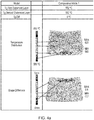
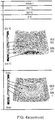
- Figure 4a is a table that includes the thickness (t 1 ) of the first outermost pane of 2.1mm and the thickness (t 2 ) of the second outermost pane of 0.55mm. Moreover, the difference in glass transition temperatures is also set forth.
- the first row of Figure 4a is labeled "temperature distribution" and is the same for all Articles.
- Figure 4a also includes a maximum and minimum temperature value in degrees Celsius.
- Figure 4a shows the temperature distribution is held as a constant across the articles when in the furnace.
- Figure 4a also includes a row of shape difference having a scale of from -5mm to +5mm. Negative values represent the second outermost pane 14 of 0.55mm being over bent and positive values represent the second outermost pane 14 being under bent. A value of zero mm represents no bend difference and represents a theoretically perfect fit, relative to bend, between the first and second outermost panes 12,14.
- an expressly contemplated embodiment may include any one or more elements described above selected and combined from any portion of the disclosure.
- any ranges and subranges relied upon in describing various embodiments of the present disclosure independently and collectively fall within the scope of the appended claims, and are understood to describe and contemplate all ranges including whole and/or fractional values therein, even if such values are not expressly written herein.
- One of skill in the art readily recognizes that the enumerated ranges and subranges sufficiently describe and enable various embodiments of the present disclosure, and such ranges and subranges may be further delineated into relevant halves, thirds, quarters, fifths, and so on.
Landscapes
- Chemical & Material Sciences (AREA)
- Engineering & Computer Science (AREA)
- Life Sciences & Earth Sciences (AREA)
- Chemical Kinetics & Catalysis (AREA)
- General Chemical & Material Sciences (AREA)
- Geochemistry & Mineralogy (AREA)
- Materials Engineering (AREA)
- Organic Chemistry (AREA)
- Ceramic Engineering (AREA)
- Mechanical Engineering (AREA)
- Glass Compositions (AREA)
- Joining Of Glass To Other Materials (AREA)
Applications Claiming Priority (1)
| Application Number | Priority Date | Filing Date | Title |
|---|---|---|---|
| US15/994,991 US10981357B2 (en) | 2018-05-31 | 2018-05-31 | Glass article |
Publications (1)
| Publication Number | Publication Date |
|---|---|
| EP3575274A1 true EP3575274A1 (en) | 2019-12-04 |
Family
ID=66647305
Family Applications (1)
| Application Number | Title | Priority Date | Filing Date |
|---|---|---|---|
| EP19176531.2A Pending EP3575274A1 (en) | 2018-05-31 | 2019-05-24 | Glass article |
Country Status (4)
| Country | Link |
|---|---|
| US (1) | US10981357B2 (enExample) |
| EP (1) | EP3575274A1 (enExample) |
| JP (1) | JP7340959B2 (enExample) |
| CN (1) | CN110550872B (enExample) |
Families Citing this family (8)
| Publication number | Priority date | Publication date | Assignee | Title |
|---|---|---|---|---|
| JP7350009B2 (ja) | 2018-04-13 | 2023-09-25 | コーニング インコーポレイテッド | 均一に対垂下されたガラス物品およびハイブリッド積層板 |
| EP3826841A1 (fr) * | 2018-07-25 | 2021-06-02 | Saint-Gobain Glass France | Vitrage feuillete comprenant une feuille de verre mince trempe chimiquement |
| EP3953170A1 (en) * | 2019-04-11 | 2022-02-16 | Corning Incorporated | Improved edge strength using cte mismatch |
| EP3953172A1 (en) | 2019-04-11 | 2022-02-16 | Corning Incorporated | Improved edge stress using differential cooling |
| CN113924278A (zh) * | 2019-04-16 | 2022-01-11 | 康宁公司 | 用于离子交换和汽车玻璃的填充孔装饰层 |
| US11318817B2 (en) * | 2020-04-24 | 2022-05-03 | GM Global Technology Operations LLC | Articulating locating and retention member |
| CN117185649A (zh) * | 2023-09-08 | 2023-12-08 | 清远南玻节能新材料有限公司 | 铝硅酸盐玻璃、钢化玻璃及其制备方法、玻璃制品 |
| CN118219630A (zh) * | 2024-04-03 | 2024-06-21 | 清远南玻节能新材料有限公司 | 夹层玻璃及其制备方法 |
Citations (6)
| Publication number | Priority date | Publication date | Assignee | Title |
|---|---|---|---|---|
| US3083551A (en) | 1957-05-03 | 1963-04-02 | Pilkington Brothers Ltd | Manufacture of flat glass |
| US3700542A (en) | 1971-05-03 | 1972-10-24 | Ppg Industries Inc | Safety windshield and method of making same |
| US20130295357A1 (en) * | 2011-06-24 | 2013-11-07 | Corning Incorporated | Light-weight hybrid glass laminates |
| WO2015158464A1 (de) * | 2014-04-15 | 2015-10-22 | Saint-Gobain Glass France | Verbundglas mit dünner innenscheibe |
| WO2017103471A1 (fr) * | 2015-12-17 | 2017-06-22 | Saint-Gobain Glass France | Verre feuillete asymetrique |
| WO2017103032A1 (de) * | 2015-12-16 | 2017-06-22 | Saint-Gobain Glass France | Beheizbares verbundglas mit dünner innenscheibe und dünner aussenscheibe |
Family Cites Families (16)
| Publication number | Priority date | Publication date | Assignee | Title |
|---|---|---|---|---|
| US3700543A (en) | 1970-11-12 | 1972-10-24 | Ppg Industries Inc | Safety windshield and method of making same |
| IT1131319B (it) | 1980-06-13 | 1986-06-18 | Siv Soc Italiana Vetro | Procedimento di formatura ed assemblaggio di due o piu' lastre di vetro curvate aventi caratteristiche fisico-chimiche e/o spessori diversi,particolarmente adatte per parabrezza ed altri vetri di sicurezza per autoveicoli e simili |
| GB2171990B (en) * | 1985-03-08 | 1988-12-07 | Central Glass Co Ltd | Method of strengthening glass article formed of float glass by ion exchange and strengthened glass article |
| GB2335423A (en) * | 1998-03-20 | 1999-09-22 | Pilkington Plc | Chemically toughenable glass |
| EP1209130A4 (en) * | 1999-07-23 | 2005-07-20 | Nippon Sheet Glass Co Ltd | HANGING GLASS PLATE FOR AUTOMOTIVE WINDOWS |
| JP5007044B2 (ja) | 2005-12-21 | 2012-08-22 | 日本板硝子株式会社 | 曲げガラス板の成形方法及び曲げガラス板 |
| JP2007290549A (ja) | 2006-04-25 | 2007-11-08 | Nippon Sheet Glass Co Ltd | 車両用合わせガラス及びその製造方法 |
| CN101443284B (zh) | 2006-05-10 | 2013-06-12 | 旭硝子株式会社 | 显示基板用浮法玻璃及其制造方法 |
| FR2945985B1 (fr) * | 2009-05-27 | 2011-05-20 | Saint Gobain | Vitrage a faible niveau de double image. |
| JP5929903B2 (ja) * | 2011-04-01 | 2016-06-08 | 旭硝子株式会社 | 合わせガラス、およびその製造方法 |
| FR3012072B1 (fr) * | 2013-10-23 | 2021-01-01 | Saint Gobain | Verre feuillete mince pour pare-brise |
| GB201322240D0 (en) * | 2013-12-16 | 2014-01-29 | Pilkington Group Ltd | Laminated glazing |
| US10252492B2 (en) | 2014-02-14 | 2019-04-09 | Nippon Sheet Glass Company, Limited | Laminated glass |
| GB201415163D0 (en) * | 2014-08-27 | 2014-10-08 | Pilkington Group Ltd | Laminated glazing |
| JP6849650B2 (ja) | 2015-07-10 | 2021-03-24 | コーニング インコーポレイテッド | 冷間形成積層体 |
| JP6720984B2 (ja) | 2015-12-08 | 2020-07-08 | Agc株式会社 | 合わせガラス |
-
2018
- 2018-05-31 US US15/994,991 patent/US10981357B2/en active Active
-
2019
- 2019-05-24 EP EP19176531.2A patent/EP3575274A1/en active Pending
- 2019-05-30 JP JP2019101055A patent/JP7340959B2/ja active Active
- 2019-05-31 CN CN201910465807.5A patent/CN110550872B/zh active Active
Patent Citations (6)
| Publication number | Priority date | Publication date | Assignee | Title |
|---|---|---|---|---|
| US3083551A (en) | 1957-05-03 | 1963-04-02 | Pilkington Brothers Ltd | Manufacture of flat glass |
| US3700542A (en) | 1971-05-03 | 1972-10-24 | Ppg Industries Inc | Safety windshield and method of making same |
| US20130295357A1 (en) * | 2011-06-24 | 2013-11-07 | Corning Incorporated | Light-weight hybrid glass laminates |
| WO2015158464A1 (de) * | 2014-04-15 | 2015-10-22 | Saint-Gobain Glass France | Verbundglas mit dünner innenscheibe |
| WO2017103032A1 (de) * | 2015-12-16 | 2017-06-22 | Saint-Gobain Glass France | Beheizbares verbundglas mit dünner innenscheibe und dünner aussenscheibe |
| WO2017103471A1 (fr) * | 2015-12-17 | 2017-06-22 | Saint-Gobain Glass France | Verre feuillete asymetrique |
Also Published As
| Publication number | Publication date |
|---|---|
| JP2019210209A (ja) | 2019-12-12 |
| US10981357B2 (en) | 2021-04-20 |
| CN110550872A (zh) | 2019-12-10 |
| CN110550872B (zh) | 2022-12-27 |
| US20190366692A1 (en) | 2019-12-05 |
| JP7340959B2 (ja) | 2023-09-08 |
Similar Documents
| Publication | Publication Date | Title |
|---|---|---|
| US10981357B2 (en) | Glass article | |
| JP7090134B2 (ja) | 積層ガラス | |
| US20230271483A1 (en) | Cold-formed laminates | |
| CN111093977B (zh) | 汽车玻璃组成物、制品和混合层叠物 | |
| KR102586148B1 (ko) | 자동차 및 건축용 유리 물품 및 적층물 | |
| JP6583844B2 (ja) | 接合ガラスおよび接合ガラスの製造方法 | |
| EP3548277B1 (en) | Fusion-formable automotive glass compositions, articles, and laminates | |
| CN116442606B (zh) | 一种制备夹层窗玻璃的方法 | |
| CN101765567A (zh) | 制备弯曲的、经涂覆的夹层窗玻璃的方法及所得窗玻璃 | |
| CN104755265A (zh) | 用于挡风玻璃的薄的叠层玻璃 | |
| CN111601782B (zh) | 挡风玻璃 | |
| JP2019210209A5 (enExample) | ||
| US11897804B2 (en) | Uniformly pair sagged glass articles and hybrid laminates | |
| EP3575271B1 (en) | Glass article having perpendicular draw lines | |
| US20200325056A1 (en) | System and process for forming curved glass laminate article utilizing glass viscosity differential for improved shape matching | |
| EP3844113B1 (en) | Method for pair bending glass articles and glass laminate | |
| CN110300737A (zh) | 夹层玻璃及其制造方法 | |
| KR102716148B1 (ko) | 적층물용 연질의, 화학적-강화가능한 유리 |
Legal Events
| Date | Code | Title | Description |
|---|---|---|---|
| PUAI | Public reference made under article 153(3) epc to a published international application that has entered the european phase |
Free format text: ORIGINAL CODE: 0009012 |
|
| STAA | Information on the status of an ep patent application or granted ep patent |
Free format text: STATUS: THE APPLICATION HAS BEEN PUBLISHED |
|
| AK | Designated contracting states |
Kind code of ref document: A1 Designated state(s): AL AT BE BG CH CY CZ DE DK EE ES FI FR GB GR HR HU IE IS IT LI LT LU LV MC MK MT NL NO PL PT RO RS SE SI SK SM TR |
|
| AX | Request for extension of the european patent |
Extension state: BA ME |
|
| STAA | Information on the status of an ep patent application or granted ep patent |
Free format text: STATUS: REQUEST FOR EXAMINATION WAS MADE |
|
| 17P | Request for examination filed |
Effective date: 20200601 |
|
| RBV | Designated contracting states (corrected) |
Designated state(s): AL AT BE BG CH CY CZ DE DK EE ES FI FR GB GR HR HU IE IS IT LI LT LU LV MC MK MT NL NO PL PT RO RS SE SI SK SM TR |
|
| STAA | Information on the status of an ep patent application or granted ep patent |
Free format text: STATUS: EXAMINATION IS IN PROGRESS |
|
| 17Q | First examination report despatched |
Effective date: 20210406 |