EP3571287B1 - Getrockneter mikroorganismus mit hilfsstoff - Google Patents
Getrockneter mikroorganismus mit hilfsstoff Download PDFInfo
- Publication number
- EP3571287B1 EP3571287B1 EP18702616.6A EP18702616A EP3571287B1 EP 3571287 B1 EP3571287 B1 EP 3571287B1 EP 18702616 A EP18702616 A EP 18702616A EP 3571287 B1 EP3571287 B1 EP 3571287B1
- Authority
- EP
- European Patent Office
- Prior art keywords
- composition
- phosphate salt
- hpo
- microorganism
- lactobacillus
- Prior art date
- Legal status (The legal status is an assumption and is not a legal conclusion. Google has not performed a legal analysis and makes no representation as to the accuracy of the status listed.)
- Active
Links
Images


Classifications
-
- C—CHEMISTRY; METALLURGY
- C12—BIOCHEMISTRY; BEER; SPIRITS; WINE; VINEGAR; MICROBIOLOGY; ENZYMOLOGY; MUTATION OR GENETIC ENGINEERING
- C12N—MICROORGANISMS OR ENZYMES; COMPOSITIONS THEREOF; PROPAGATING, PRESERVING, OR MAINTAINING MICROORGANISMS; MUTATION OR GENETIC ENGINEERING; CULTURE MEDIA
- C12N1/00—Microorganisms; Compositions thereof; Processes of propagating, maintaining or preserving microorganisms or compositions thereof; Processes of preparing or isolating a composition containing a microorganism; Culture media therefor
- C12N1/04—Preserving or maintaining viable microorganisms
-
- C—CHEMISTRY; METALLURGY
- C12—BIOCHEMISTRY; BEER; SPIRITS; WINE; VINEGAR; MICROBIOLOGY; ENZYMOLOGY; MUTATION OR GENETIC ENGINEERING
- C12N—MICROORGANISMS OR ENZYMES; COMPOSITIONS THEREOF; PROPAGATING, PRESERVING, OR MAINTAINING MICROORGANISMS; MUTATION OR GENETIC ENGINEERING; CULTURE MEDIA
- C12N1/00—Microorganisms; Compositions thereof; Processes of propagating, maintaining or preserving microorganisms or compositions thereof; Processes of preparing or isolating a composition containing a microorganism; Culture media therefor
- C12N1/20—Bacteria; Culture media therefor
-
- A—HUMAN NECESSITIES
- A23—FOODS OR FOODSTUFFS; TREATMENT THEREOF, NOT COVERED BY OTHER CLASSES
- A23L—FOODS, FOODSTUFFS OR NON-ALCOHOLIC BEVERAGES, NOT OTHERWISE PROVIDED FOR; PREPARATION OR TREATMENT THEREOF
- A23L33/00—Modifying nutritive qualities of foods; Dietetic products; Preparation or treatment thereof
- A23L33/10—Modifying nutritive qualities of foods; Dietetic products; Preparation or treatment thereof using additives
- A23L33/135—Bacteria or derivatives thereof, e.g. probiotics
-
- A—HUMAN NECESSITIES
- A61—MEDICAL OR VETERINARY SCIENCE; HYGIENE
- A61K—PREPARATIONS FOR MEDICAL, DENTAL OR TOILETRY PURPOSES
- A61K35/00—Medicinal preparations containing materials or reaction products thereof with undetermined constitution
- A61K35/66—Microorganisms or materials therefrom
-
- A—HUMAN NECESSITIES
- A61—MEDICAL OR VETERINARY SCIENCE; HYGIENE
- A61K—PREPARATIONS FOR MEDICAL, DENTAL OR TOILETRY PURPOSES
- A61K35/00—Medicinal preparations containing materials or reaction products thereof with undetermined constitution
- A61K35/66—Microorganisms or materials therefrom
- A61K35/74—Bacteria
- A61K35/741—Probiotics
- A61K35/742—Spore-forming bacteria, e.g. Bacillus coagulans, Bacillus subtilis, clostridium or Lactobacillus sporogenes
-
- A—HUMAN NECESSITIES
- A61—MEDICAL OR VETERINARY SCIENCE; HYGIENE
- A61K—PREPARATIONS FOR MEDICAL, DENTAL OR TOILETRY PURPOSES
- A61K35/00—Medicinal preparations containing materials or reaction products thereof with undetermined constitution
- A61K35/66—Microorganisms or materials therefrom
- A61K35/74—Bacteria
- A61K35/741—Probiotics
- A61K35/744—Lactic acid bacteria, e.g. enterococci, pediococci, lactococci, streptococci or leuconostocs
- A61K35/745—Bifidobacteria
-
- A—HUMAN NECESSITIES
- A61—MEDICAL OR VETERINARY SCIENCE; HYGIENE
- A61K—PREPARATIONS FOR MEDICAL, DENTAL OR TOILETRY PURPOSES
- A61K35/00—Medicinal preparations containing materials or reaction products thereof with undetermined constitution
- A61K35/66—Microorganisms or materials therefrom
- A61K35/74—Bacteria
- A61K35/741—Probiotics
- A61K35/744—Lactic acid bacteria, e.g. enterococci, pediococci, lactococci, streptococci or leuconostocs
- A61K35/747—Lactobacilli, e.g. L. acidophilus or L. brevis
-
- A—HUMAN NECESSITIES
- A61—MEDICAL OR VETERINARY SCIENCE; HYGIENE
- A61K—PREPARATIONS FOR MEDICAL, DENTAL OR TOILETRY PURPOSES
- A61K9/00—Medicinal preparations characterised by special physical form
- A61K9/14—Particulate form, e.g. powders, Processes for size reducing of pure drugs or the resulting products, Pure drug nanoparticles
- A61K9/19—Particulate form, e.g. powders, Processes for size reducing of pure drugs or the resulting products, Pure drug nanoparticles lyophilised, i.e. freeze-dried, solutions or dispersions
-
- A—HUMAN NECESSITIES
- A61—MEDICAL OR VETERINARY SCIENCE; HYGIENE
- A61K—PREPARATIONS FOR MEDICAL, DENTAL OR TOILETRY PURPOSES
- A61K9/00—Medicinal preparations characterised by special physical form
- A61K9/48—Preparations in capsules, e.g. of gelatin, of chocolate
- A61K9/4841—Filling excipients; Inactive ingredients
- A61K9/485—Inorganic compounds
-
- A—HUMAN NECESSITIES
- A23—FOODS OR FOODSTUFFS; TREATMENT THEREOF, NOT COVERED BY OTHER CLASSES
- A23V—INDEXING SCHEME RELATING TO FOODS, FOODSTUFFS OR NON-ALCOHOLIC BEVERAGES AND LACTIC OR PROPIONIC ACID BACTERIA USED IN FOODSTUFFS OR FOOD PREPARATION
- A23V2002/00—Food compositions, function of food ingredients or processes for food or foodstuffs
-
- A—HUMAN NECESSITIES
- A23—FOODS OR FOODSTUFFS; TREATMENT THEREOF, NOT COVERED BY OTHER CLASSES
- A23V—INDEXING SCHEME RELATING TO FOODS, FOODSTUFFS OR NON-ALCOHOLIC BEVERAGES AND LACTIC OR PROPIONIC ACID BACTERIA USED IN FOODSTUFFS OR FOOD PREPARATION
- A23V2200/00—Function of food ingredients
- A23V2200/30—Foods, ingredients or supplements having a functional effect on health
- A23V2200/32—Foods, ingredients or supplements having a functional effect on health having an effect on the health of the digestive tract
- A23V2200/3204—Probiotics, living bacteria to be ingested for action in the digestive tract
-
- A—HUMAN NECESSITIES
- A23—FOODS OR FOODSTUFFS; TREATMENT THEREOF, NOT COVERED BY OTHER CLASSES
- A23V—INDEXING SCHEME RELATING TO FOODS, FOODSTUFFS OR NON-ALCOHOLIC BEVERAGES AND LACTIC OR PROPIONIC ACID BACTERIA USED IN FOODSTUFFS OR FOOD PREPARATION
- A23V2400/00—Lactic or propionic acid bacteria
- A23V2400/11—Lactobacillus
- A23V2400/113—Acidophilus
-
- A—HUMAN NECESSITIES
- A61—MEDICAL OR VETERINARY SCIENCE; HYGIENE
- A61K—PREPARATIONS FOR MEDICAL, DENTAL OR TOILETRY PURPOSES
- A61K35/00—Medicinal preparations containing materials or reaction products thereof with undetermined constitution
- A61K2035/11—Medicinal preparations comprising living procariotic cells
- A61K2035/115—Probiotics
Definitions
- the present invention relates to the field of dried microorganisms.
- Probiotics are live microorganisms which are beneficial for human or animal health when administered at appropriate dosages.
- One way of administering probiotics is through ingestion of dried probiotic mixed with excipients and packaged in capsules or sachets.
- dried probiotic cells are not very stable during storage, with the result that live cell counts decrease with time, rendering the treatment less effective. This is particularly true when probiotics are blended with excipients having high humidity content, when container walls are permeable to external atmospheric moisture, and when the probiotic is stored in a high relative humidity environment.
- the invention provides a composition comprising a blend of (a) dried microorganism, and (b) a phosphate salt in powder form; wherein the phosphate salt is selected from K 2 HPO 4 , KH 2 PO 4 , Na 2 HPO 4 , NaH 2 PO 4 , MgHPO 4 , Mg[H 2 PO 4 ] 2 and mixtures thereof; and wherein the phosphate salt is present in an amount of at least 50 wt% based on the total weight of microorganism and phosphate salt.
- the invention provides a unit microbial dose, containing a composition comprising a mixture of (a) dried microorganism, and (b) a phosphate salt in powder form; wherein the phosphate salt is selected from K 2 HPO 4 , KH 2 PO 4 , Na 2 HPO 4 , NaH 2 PO 4 , MgHPO 4 , Mg[H 2 PO 4 ] 2 and mixtures thereof; and wherein the phosphate salt is present in an amount of at least 50 wt% based on the total weight of microorganism and phosphate salt.
- the invention provides a process for the preparation of a composition comprising the steps:
- the inventors have surprisingly found that the survival of dried microorganisms is improved by using a phosphate salt as excipient.
- the effect is particularly remarkable in high water activity (a w ) environments.
- a high water activity is considered to be a w > 0.15.
- microorganism dry powders in particular probiotics
- excipients are blended with excipients to standardize the microorganism concentration.
- MCC microcrystalline cellulose
- the inventors have used MCC as a reference excipient.
- the inventors found that the use of phosphate salts can provide for greater than 60% survival of dried microorganism over 3 months compared to almost 0% survival in MCC excipient. This effect is particularly remarkable in high water activity environments (a w > 0.15, particularly a w > 0.2, more particularly a w > 0.3).
- Water activity is preferably measured by dew point hygrometer.
- Microorganism survival rate is expressed in two different ways.
- composition of the present invention contains a dried microorganism.
- the microorganism in particular a probiotic, may be dried by any means, however, freeze-drying and spray-drying are preferred, with freeze-drying being particularly preferred.
- microorganism is meant to encompass any bacteria or yeast, or mixtures of these, and in particular a probiotic.
- probiotic includes any live microorganisms which are administered to a host with a view to conferring a health benefit on the host.
- it may be a yeast or a bacterium, or mixtures of any of these.
- the dried microorganism in particular a probiotic
- the dried microorganism, in particular a probiotic may be provided in form of granules or powder.
- the microorganism, in particular a probiotic is in powder form.
- the composition of the present invention may contain one species of microorganism, in particular a probiotic, one strain of microorganism, in particular a probiotic, a mixture of species of microorganism, in particular a probiotic, or a mixture of strains of microorganism, in particular a probiotic.
- the composition of the present invention contains one species of microorganism, in particular a probiotic and, optionally, one strain of microorganism, in particular a probiotic.
- the composition of the present invention contains a mixture of strains of microorganism, in particular a probiotic.
- the composition of the present invention contains a mixture of species of microorganisms, in particular probiotics.
- the microorganism in particular a probiotic, is selected from lactobacilli, bifidobacteria, saccharomyces and mixtures thereof.
- the microorganism in particular a probiotic, is selected from species selected from Bacillus coagulans, Bifidobacterium longum subsp. infantis, Lactobacillus acidophilus, Lactobacillus paracasei, Lactobacillus johnsonii, Lactobacillus plantarum, Lactobacillus reuteri, Lactobacillus reuteri protectis, Lactobacillus reuteri prodentis, Saccharomyces boulardii, Lactobacillus rhamnosus, Lactobacillus casei, Lactobacillus plantarum, Lactobacillus paracasei and mixtures thereof.
- the microorganism in particular a probiotic, is selected from species selected from Lactobacillus acidophilus, Lactobacillus casei, Bifidobacterium lactis, and mixtures thereof.
- the microorganism in particular a probiotic, is selected from probiotics of the strains Lactobacillus acidophilus (NCFM strain), Lactobacillus Casei (LPC37 strain), Bifidobacterium Lactis (HN0019) and mixtures thereof.
- NCFM strain Lactobacillus acidophilus
- LPC37 strain Lactobacillus Casei
- HN0019 Bifidobacterium Lactis
- the microorganism in particular a probiotic, may be present in any suitable amount to deliver the required amount of microorganism, in particular a probiotic.
- the 'concentration' of the microorganism, in particular a probiotic in colony forming units (CFU) of microorganism per gram of the composition may also be selected by one skilled in the art.
- the microorganism, in particular a probiotic is present in an amount of at least 1 ⁇ 10 8 CFU per gram of the composition.
- the microorganism, in particular a probiotic is present in an amount of at least 1 ⁇ 10 9 CFU per gram of the composition.
- the microorganism, in particular a probiotic is present in an amount of at least 1 ⁇ 10 10 CFU per gram of the composition. In one aspect the microorganism, in particular a probiotic, is present in an amount of from 1 ⁇ 10 9 to 5 ⁇ 10 9 CFU per gram of the composition.
- the dose When formulated as a unit probiotic dose, the dose contains any desired amount of probiotic.
- a typical unit dose will contain 10 8 to 10 14 CFU per dose, more preferably 10 9 to 10 12 CFU per dose, particularly preferably 10 9 to 10 11 CFU.
- the microorganism, in particular a probiotic is in dried form, preferably spraydried or freeze-dried, in particular freeze-dried.
- the dried microorganism, in particular a probiotic has a water activity of no greater than 0.4, more preferably no greater than 0.3, particularly preferably no greater than 0.2. More particularly preferably, the dried microorganism, in particular a probiotic has a water activity of no greater than 0.1.
- the composition of the present invention contains a phosphate salt; wherein the phosphate salt is selected from K 2 HPO 4 , KH 2 PO 4 , Na 2 HPO 4 , NaH 2 PO 4 , MgHPO 4 , Mg[H 2 PO 4 ] 2 and mixtures thereof; and wherein the phosphate salt is present in an amount of at least 50 wt% based on the total weight of microorganism and phosphate salt.
- a phosphate salt is any salt of phosphoric acid (H 3 PO 4 ), and includes salts based on dihydrogen phosphate (H 2 PO 4 - ), hydrogen phosphate (HP0 4 2- ), and phosphate (PO 4 3- ).
- the composition of the present invention contains a salt of hydrogen phosphate (HPO 4 2- ), or a mixture of hydrogen phosphate (HPO 4 2- ) and dihydrogen phosphate (H 2 PO 4 - ).
- Both hydrated and anhydrous phosphate salts can be used.
- the cation of the phosphate salt is selected from sodium, potassium, and magnesium.
- Phosphate salts include K 2 HPO 4 , KH 2 PO 4 , Na 2 HPO 4 , NaH 2 PO 4 , MgHPO 4 , Mg[H 2 PO 4 ] 2 ,
- the phosphate salt is a potassium phosphate salt.
- the phosphate salt is dipotassium phosphate (K 2 HPO 4 ), or a mixture of dipotassium phosphate (K 2 HPO 4 ) and potassium dihydrogen phosphate (KH 2 PO 4 ).
- the phosphate salt is pH adjusted to between pH 6 and pH 9, preferably between pH 6.5 and 8, more particularly preferably pH 6.8 to 7.2.
- pH of the salt is meant the pH of a solution when the salt is dissolved in water.
- the pH may be adjusted by using blends of dihydrogen phosphate, hydrogen phosphate and phosphate.
- a blend of HPO 4 2- and H 2 PO 4 - salts is used.
- the relative amounts of these salts to yield a desired pH is well known. For example, a molar ratio of 61.5/38.5 HPO 4 2- /H 2 PO 4 - gives a pH of 7.
- pH adjusted salts may be prepared by titrating solutions of salts of PO 4 3- and/or HPO 4 2- with an acid or base to the desired pH and then drying the resulting solution, for example, by spray drying.
- the phosphate salt is present in an amount of at least 50 wt% based on the total weight of microorganism and phosphate salt.
- the phosphate salt is present in the composition of the invention in an amount of at least 50 wt% based on the total weight of microorganism and phosphate salt to provide the desired stabilisation of the dried microorganism, in particular a probiotic.
- the wt%'s are given with respect to the total weight of microorganism, in particular a probiotic and phosphate salt.
- the phosphate salt is present in an amount of at least 50% by weight of the composition.
- the phosphate salt is present in an amount of at least 60% by weight of the composition.
- the phosphate salt is present in an amount of at least 70% by weight of the composition.
- the phosphate salt is present in an amount of at least 80% by weight of the composition.
- the phosphate salt is present in an amount of from 50 to 90% by weight of the composition. In one aspect, the phosphate salt is present in an amount of from 50 to 80 % by weight. In one aspect, the phosphate salt is present in an amount of from 50 to 90% by weight of the composition. In one aspect, the phosphate salt is present in an amount of from 60 to 90% by weight of the composition. In one aspect, the phosphate salt is present in an amount of from 70 to 90% by weight of the composition. In one aspect, the phosphate salt is present in an amount of from 80 to 90% by weight of the composition. In the present context, the wt%'s are given with respect to the total weight of microorganism, in particular a probiotic and phosphate salt.
- the phosphate salt is present in an amount of at least 50% by weight of the total composition. In one aspect, the phosphate salt is present in an amount of at least 59%, or 60% by weight of the total composition. In one aspect, the phosphate salt is present in an amount of at least 70% by weight of the total composition. In one aspect, the phosphate salt is present in an amount of at least 80% by weight of the total composition.
- a suitable mixture is 80 wt% phosphate salt and 20 wt% microorganism, in particular a probiotic.
- the phosphate salt is preferably in the form of a powder.
- the particle size distribution has a D10 value in microns of 5-120 (more preferably 5-90), a D50 value in microns of 70-180 (more preferably 80-140), and a D90 value in microns of 160-400 (more preferably 180-350).
- the survival rate of microorganism, in particular a probiotic is particularly increased under high water activity (a w > 0.15, preferably a w > 0.2, more preferably a w > 0.3) conditions.
- composition of the invention preferably increases the survival of microorganism, in particular a probiotic by at least 30% as compared to microorganism alone, more preferably by at least 40%, particularly preferably more than 60%.
- composition of the invention preferably increases the survival of microorganism, in particular a probiotic under humid conditions (a w > 0.15, preferably > 0.2, more preferably > 0.3) by at least 1% to 30% as compared to microorganism alone, more preferably by at least 20%, particularly preferably more than 30%.
- composition of the invention preferably increases the survival of probiotic by at least 30% as compared to probiotic with MCC as excipient, more preferably by at least 40%, particularly preferably more than 60%.
- composition of the invention preferably increases the survival of probiotic under humid conditions (a w > 0.15, preferably > 0.2, more preferably > 0.3) by at least 30% as compared to probiotic with MCC as excipient, more preferably by at least 40%, particularly preferably more than 60%.
- composition of the present invention may contain only probiotic and phosphate salt or it may contain one or more additional components.
- composition further comprises additional excipients such as maltodextrin, microcrystalline cellulose (MCC), prebiotics such as inulin, fructooligosaccharides, galactooligosaccharides, polydextrose, flow aid agents such silica, magnesium stearate.
- excipients such as maltodextrin, microcrystalline cellulose (MCC), prebiotics such as inulin, fructooligosaccharides, galactooligosaccharides, polydextrose, flow aid agents such silica, magnesium stearate.
- additional components preferably they constitute less than 20 wt% of the total composition, more preferably less than 10 wt%.
- composition of the invention may be used for administration to a human or animal as a probiotic, or it may be used for industrial or food applications.
- Typical food applications include the production of cheese, yoghourt, fermented soy products (such as miso, natto, etc.), sauerkraut, comestible alcohol products, etc.
- Typical industrial applications include the production of raw or finished materials by fermentation such as industrial alcohol production.
- composition of the invention may be in the form of a bulk powder mix, for example for storage or transport before food or industrial use or before administration to a human or animal, and/or before division into suitable dosage forms.
- the invention provides a unit microbial dose for administration to a human or animal.
- the unit microbial dose comprises a suitable amount of the composition of the invention, which may be packaged, for example, in sachets, capsules or tablets.
- a typical unit dose will contain 10 8 to 10 14 CFU per dose, more preferably 10 10 to 10 12 CFU per dose.
- the invention provides a process for the preparation of the composition of the invention comprising (i) providing (a) a dried microorganism, and (b) a phosphate salt in powder form; (ii) mixing the dried microorganism, and the phosphate salt in powder form, to provide the composition wherein the phosphate salt is selected from K 2 HPO 4 , KH 2 PO 4 , Na 2 HPO 4 , NaH 2 PO 4 , MgHPO 4 , Mg[H 2 PO 4 ] 2 and mixtures thereof; and wherein the phosphate salt is present in an amount of at least 50 wt% based on the total weight of microorganism and phosphate salt.
- the microorganism is freeze-dried.
- the mixing can be performed by any method that does not damage the microorganism. For example, rotation or shaking in a suitable container, and/or mixing with a mixing implement, such as a paddle.
- Lactobacillus acidophilus (NCFM strain), Lactobacillus casei (LPC37 strain), Bifidobacterium lactis (BBi), Bifidobacterium lactis (BBL), and Bifidobacterium lactis (HN0019).
- NCFM strain Lactobacillus acidophilus
- LPC37 strain Lactobacillus casei
- Bifidobacterium lactis BBi
- BBL Bifidobacterium lactis
- HN0019 Bifidobacterium lactis
- Microcrystalline cellulose was supplied by Mingtai Chemical Company, and the di-potassium phosphate was obtained from BK Glulhi Gmbh Company.
- Capsules used were Vcaps, size 0, CS, hypromellose from Capsugel cie.
- Silica was Sipernat 50s, obtained from Evonik industries AG.
- Magnesium stearate was obtained from Aceto corporation.
- the cell count method used is the method from quality control laboratory according to the strain. The results were given in colony forming unit per gram of product (CFU/g).
- the various probiotic species were blended with MCC to obtain a CFU between 1.5 ⁇ 10 10 and 3 ⁇ 10 10 CFU/g.
- the blends were mixed by rotation (about 60tr/min) in a plastic bottle for 20 min. Then, the capsules were filled with the blends.
- the preparation of the samples was made in a clean room at 40% RH and 25 deg. C.
- Maltodextrin was exposed to an atmosphere at 40% RH until equilibrium was reached. As a consequence, the a w of the maltodextrin was close to 0.4. The same method was used to obtain maltodextrin equilibrated at a w 's of 0.3 and 0.1.
- the capsules were stored in an environmental chamber at 30°C for 6 months.
- CFU and a w were measured at time 0 months, 1 months, and 3 months to evaluate the impact of excipient type on stability performance.
- Probiotic survival rate was expressed in two different ways.
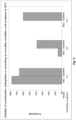
- Percent survival of different strains of bacteria in humid conditions (a w 0.4) after three months according to excipient used are shown in Table 1.
- MCC represents the case where the probiotic was mixed with MCC
- K 2 HPO 4 represents the case where the probiotics were mixed with K 2 HPO 4
- "freeze-dried probiotic” represents the case where the probiotic powder alone was used.
- FIG. 1 shows the same results in graphic form.
- MCC represents the case where the probiotic was mixed with MCC
- K 2 HPO 4 represents the case where the probiotics were mixed with K 2 HPO 4
- "freeze-dried probiotic” represents the case where the probiotic powder alone was used.
- Table 1 and Figure 1 show that the impact of K 2 HPO 4 on stability varies as a function of strain. Survival is always higher with K 2 HPO 4 as excipient than with MCC or probiotic alone. It is clear that the use of K 2 HPO 4 as excipient improves the stability (survival) of the strains, and in particular in humid conditions.
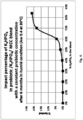
- Percent survival of Lactobacillus acidophilus after three months at 30°C as a function of a w and excipient is shown in Table 2.
- MCC represents the case where the probiotic was mixed with MCC
- K 2 HPO 4 represents the case where the probiotics were mixed with K 2 HPO 4 .
- Table 2 Percent survival of Lactobacillus acidophilus after three months at 30°C and different a w and dependence on excipient a w 0.1 0.3 0.4 MCC 78% 6% 0% K 2 HPO 4 66% 39% 60%
- FIG. 2 shows the same results in graphic form.
- MCC represents the case where the probiotic was mixed with MCC
- K 2 HPO 4 represents the case where the probiotics were mixed with K 2 HPO 4 .
- This example looks at stability of probiotics in a humid environment as a function of K 2 HPO 4 concentration. Sipernat 50s and magnesium stearate were added as flow aids to have a sample composition similar to a commercial blend composition. For this example, freeze-dried Lactobacillus acidophilus powder was used. The example was prepared in two steps. In Part 1, the probiotic was mixed with K 2 HPO 4 only. In Part 2, the probiotic was mixed with K 2 HPO 4 and MCC.
- Part 1 Probiotics mixed with K 2 HPO 4
- Blends consisting of freeze-dried Lactobacillus acidophilus powder, K 2 HPO 4 , Sipernat 50s, and Magnesium Stearate were prepared. Ten samples were made in which the concentration of freeze-dried Lactobacillus acidophilus was gradually increased and the concentration of K 2 HPO 4 gradually decreased while the concentrations of Sipernat 50s and Stearate Magnesium were kept constant. The table below shows the description of the different samples for Part 1.
- Part 2 Probiotics mixed with K 2 HPO 4 and MCC
- Blends consisting of freeze-dried Lactobacillus acidophilus powder, and K 2 HPO 4 , MCC, Sipernat 50s, and Magnesium Stearate were prepared.
- K 2 HPO 4 concentration of K 2 HPO 4 was gradually increased and the concentration of MCC gradually decreased, while the concentrations of the Lactobacillus acidophilus powder, Sipernat 50s and Stearate Magnesium were kept constant.
- the table below shows the description of the different samples for Part 2.
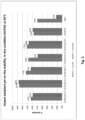
- Percent survival of Lactobacillus acidophilus as a function of the weight percent of K 2 HPO 4 excipient under humid conditions (a w 0.4) after six months at 30°C is shown in Table 5.
- Table 5 Percent survival of Lactobacillus acidophilus as a function of the percent of K 2 HPO 4 excipient under humid conditions (a w 0.4) after six months at 30°C wt% K 2 HPO 4 in blend % Survival 0% 0% 9% 0% 19% 0% 29% 0% 39% 0% 49% 0% 59% 2% 69% 9% 79% 17% 89% 12%
- FIG. 3 shows the same results in graphic form.
- Table 5 and Figure 3 show that the survival varies as a function of the amount of K 2 HPO 4 .
- the results show that above 50 wt% K 2 HPO 4 the survival is significantly increased. Above 80 wt% K 2 HPO 4 survival is still significantly better than without K 2 HPO 4 , although less than at 80 wt%.
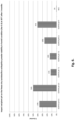
- Percent survival of Lactobacillus acidophilus as a function of the percentage of K 2 HPO 4 excipient in a blend with MCC under humid conditions (a w 0.4) at 30°C after 6 months are shown in Table 6.
- Table 6 Percent survival of Lactobacillus acidophilus as a function of the percentage of K 2 HPO 4 excipient in a blend with MCC under humid conditions (a w 0.4) at 30°C after 6 months % K2HPO4 in blend %Survival 0% 0.0% 0% 0.0% 10% 0.0% 20% 0.0% 30% 0.0% 40% 0.2% 50% 0.8% 60% 3.2% 70% 15.3% 84% 20.4%
- Figure 4 shows the same results in graphic form.
- Table 6 and Figure 4 show that the survival varies as a function of the K 2 HPO 4 percentage, and above 40 wt% K 2 HPO 4 is significantly better than without K 2 HPO 4 .
- Part 1 Impact of pH of excipient on survival under dry conditions:
- Freeze-dried Lactobacillus acidophilus powder was blended with the different excipients at various pH's.
- the composition of each blend was 80% of excipient K 2 HPO 4 powder and 20% freeze-dried probiotic powder.
- the blends were mixed by rotation (about 60tr/min) in plastic bottles for 20 min. Sachets were filled with the blends.
- the preparation of the samples was made in a clean room at 40% RH and 25°C. During testing the sachets were stored at 30°C in dry humidity (a w ⁇ 0.1) for 3 months.
- Part 2 Impact of pH of excipient on survival under humid conditions:
- Freeze-dried Lactobacillus acidophilus powder was blended with the different K 2 HPO 4 powders at different pH's and MCC.
- the composition of each blend was 80% of excipient and 20% of freeze dry probiotic powder.
- the blends were mixed by rotation (about 60tr/min) in plastic bottles for 20 min.
- the preparation of the samples was made in a clean room at 40% RH and 25°C.
- Capsules were filled with the blends and the capsules were introduced into a glass bottle. Maltodextrin at an a w of approximately 0.4 was then added on top and the bottle was shaken.
- the bottles were stored at 30°C for 3 months.
- a control with 80% of dry MCC and 20% of freeze-dried probiotic powder was prepared and tested in the same way.
- Figure 5 shows the same results in graphic form.
- Table 7 and Figure 5 show that survival/stability under dry conditions varies as a function of pH, but in all cases is better than survival with MCC as sole excipient. Stability was impacted by the pH of excipient. For stability under dry conditions, the optimal pH of K 2 HPO 4 is between 6.9 and 7.1. Other species evaluated included Bifidobacterium lactis and Lactobacillus casei.
- Figure 6 shows the same results in graphic form.
- Table 8 and Figure 6 show that the stability varies as function of pH value. All excipients with pH adjusted have a better stability than MCC powder under humid conditions. To obtain the best stability under humid conditions, the optimal pH is 6.9.
Landscapes
- Health & Medical Sciences (AREA)
- Life Sciences & Earth Sciences (AREA)
- Chemical & Material Sciences (AREA)
- Engineering & Computer Science (AREA)
- Microbiology (AREA)
- Bioinformatics & Cheminformatics (AREA)
- Zoology (AREA)
- General Health & Medical Sciences (AREA)
- Medicinal Chemistry (AREA)
- Genetics & Genomics (AREA)
- Wood Science & Technology (AREA)
- Biotechnology (AREA)
- Organic Chemistry (AREA)
- Mycology (AREA)
- Pharmacology & Pharmacy (AREA)
- Veterinary Medicine (AREA)
- Public Health (AREA)
- Animal Behavior & Ethology (AREA)
- Epidemiology (AREA)
- Biochemistry (AREA)
- Biomedical Technology (AREA)
- Tropical Medicine & Parasitology (AREA)
- Virology (AREA)
- General Engineering & Computer Science (AREA)
- Molecular Biology (AREA)
- Nutrition Science (AREA)
- Polymers & Plastics (AREA)
- Food Science & Technology (AREA)
- Inorganic Chemistry (AREA)
- Medicines Containing Material From Animals Or Micro-Organisms (AREA)
- Micro-Organisms Or Cultivation Processes Thereof (AREA)
- Medicinal Preparation (AREA)
- Medicines Containing Plant Substances (AREA)
Claims (19)
- Zusammensetzung, die eine gleichförmige Mischung aus (a) getrocknetem Mikroorganismus und (b) einem Phosphatsalz in Pulverform umfasst, wobei das Phosphatsalz aus K2HPO4, KH2PO4, Na2HPO4, NaH2PO4, MgHPO4, Mg[H2PO4]2 und deren Mischungen ausgewählt ist, und wobei das Phosphatsalz in einer Menge von mindestens 50 Gew.-% vorliegt, bezogen auf das Gesamtgewicht an Mikroorganismus und Phosphatsalz.
- Zusammensetzung nach Anspruch 1, wobei das Phosphatsalz aus K2HPO4, KH2PO4, Na2HPO4, NaH2PO4 und deren Mischungen ausgewählt ist.
- Zusammensetzung nach Anspruch 1, wobei das Phosphatsalz aus K2HPO4, KH2PO4 und deren Mischungen ausgewählt ist.
- Zusammensetzung nach Anspruch 1, 2 oder 3, wobei es sich bei dem Phosphatsalz um eine Mischung aus Salzen von HPO42- und H2PO4- handelt.
- Zusammensetzung nach einem beliebigen vorhergehenden Anspruch, wobei das Phosphatsalz eine pH-Einstellung auf einen pH-Wert zwischen 6 und 9 erfährt.
- Zusammensetzung nach einem beliebigen vorhergehenden Anspruch, wobei das Phosphatsalz eine pH-Einstellung auf 6,8 bis 7,2 erfährt.
- Zusammensetzung nach einem beliebigen vorhergehenden Anspruch, wobei das Phosphatsalz in einer Menge von mindestens 60 Gew.-% vorliegt, bezogen auf das Gesamtgewicht an Mikroorganismus und Phosphatsalz.
- Zusammensetzung nach einem beliebigen vorhergehenden Anspruch, wobei das Phosphatsalz in einer Menge von mindestens 80 Gew.-% vorliegt, bezogen auf das Gesamtgewicht an Mikroorganismus und Phosphatsalz.
- Zusammensetzung nach einem beliebigen vorhergehenden Anspruch, wobei der Mikroorganismus gefriergetrocknet ist.
- Zusammensetzung nach einem beliebigen vorhergehenden Anspruch, wobei es sich bei dem Mikroorganismus um ein Probiotikum handelt.
- Zusammensetzung nach einem beliebigen vorhergehenden Anspruch, wobei der Mikroorganismus aus Lactobacilli, Bifidobacteria, Saccharomyces und deren Mischungen ausgewählt ist.
- Zusammensetzung nach einem beliebigen vorhergehenden Anspruch, wobei der Mikroorganismus aus Bacillus coagulans, Bifidobacterium longum subsp. infantis, Lactobacillus acidophilus, Lactobacillus paracasei, Lactobacillus johnsonii, Lactobacillus plantarum, Lactobacillus reuteri, Lactobacillus reuteri protectis, Lactobacillus reuteri prodentis, Saccharomyces boulardii, Lactobacillus rhamnosus, Lactobacillus casei, Lactobacillus plantarum, Lactobacillus paracasei und deren Mischungen ausgewählt ist.
- Zusammensetzung nach einem beliebigen vorhergehenden Anspruch, wobei es sich bei dem Mikroorganismus um einen Lactobacillus acidophilus handelt.
- Mikrobielle Dosiseinheit, die eine Zusammensetzung gemäß einem beliebigen der Ansprüche 1 bis 13 umfasst.
- Mikrobielle Dosiseinheit nach Anspruch 14, in Form einer Kapsel, welche die Zusammensetzung enthält.
- Mikrobielle Dosiseinheit nach Anspruch 14, in Form eines Beutels, welcher die Zusammensetzung enthält.
- Mikrobielle Dosiseinheit nach Anspruch 14, in Form einer Tablette.
- Mikrobielle Dosiseinheit nach Anspruch 14, in Form einer pulverförmigen Formel für Ernährungszwecke.
- Verfahren zur Herstellung der Zusammensetzung nach einem beleibigen der Ansprüche 1 bis 13, wobei es die folgenden Schritte umfasst:(i) Bereitstellen (a) eines getrockneten Mikroorganismus sowie (b) eines Phosphatsalzes in Pulverform; und(ii) Vermischen des getrockneten Mikroorganismus und des Phosphatsalzes in Pulverform, um die Zusammensetzung bereitzustellen,wobei das Phosphatsalz aus K2HPO4, KH2PO4, Na2HPO4, NaH2PO4, MgHPO4, Mg[H2PO4]2 und deren Mischungen ausgewählt ist; und wobei das Phosphatsalz in einer Menge von mindestens 50 Gew.-% vorliegt, bezogen auf das Gesamtgewicht an Mikroorganismus und Phosphatsalz.
Applications Claiming Priority (3)
| Application Number | Priority Date | Filing Date | Title |
|---|---|---|---|
| US201762448066P | 2017-01-19 | 2017-01-19 | |
| EP17159494 | 2017-03-07 | ||
| PCT/EP2018/050761 WO2018134135A1 (en) | 2017-01-19 | 2018-01-12 | Dried microorganism with excipient |
Publications (4)
| Publication Number | Publication Date |
|---|---|
| EP3571287A1 EP3571287A1 (de) | 2019-11-27 |
| EP3571287C0 EP3571287C0 (de) | 2023-12-27 |
| EP3571287B1 true EP3571287B1 (de) | 2023-12-27 |
| EP3571287B8 EP3571287B8 (de) | 2024-03-13 |
Family
ID=61148179
Family Applications (1)
| Application Number | Title | Priority Date | Filing Date |
|---|---|---|---|
| EP18702616.6A Active EP3571287B8 (de) | 2017-01-19 | 2018-01-12 | Getrockneter mikroorganismus mit hilfsstoff |
Country Status (9)
| Country | Link |
|---|---|
| US (2) | US20190338239A1 (de) |
| EP (1) | EP3571287B8 (de) |
| JP (1) | JP7181879B2 (de) |
| KR (1) | KR20190104395A (de) |
| CN (1) | CN110214177A (de) |
| AU (1) | AU2018209083B2 (de) |
| ES (1) | ES2973979T3 (de) |
| HU (1) | HUE065794T2 (de) |
| PL (1) | PL3571287T3 (de) |
Families Citing this family (5)
| Publication number | Priority date | Publication date | Assignee | Title |
|---|---|---|---|---|
| KR102133811B1 (ko) * | 2020-02-14 | 2020-07-14 | 이혜경 | 애완동물의 건강관리를 위한 가금육 간식 조성물 및 그 제조 방법 |
| KR102302336B1 (ko) * | 2021-01-20 | 2021-09-15 | 코스맥스엔비티 주식회사 | 프로바이오틱스의 장내 생존율과 부착능을 향상시키기 위한 동결 건조 프로바이오틱스의 재활성화 조성물 |
| AU2021418327B2 (en) * | 2021-01-20 | 2024-11-28 | Cosmax Nbt, Inc. | Probiotic lyophilizate reactivation composition for improving intestinal survivability and adhesion of probiotics |
| CN115491309B (zh) * | 2022-09-19 | 2023-06-16 | 江西省科学院微生物研究所(江西省流域生态研究所) | 一种乳酸菌发酵稳定剂及其制备方法和应用方法 |
| CN116103153A (zh) * | 2023-02-20 | 2023-05-12 | 河南新仰韶生物科技有限公司 | 复合保护剂、凝结芽孢杆菌菌粉及其制备方法 |
Citations (7)
| Publication number | Priority date | Publication date | Assignee | Title |
|---|---|---|---|---|
| US4927763A (en) | 1984-03-21 | 1990-05-22 | Chr. Hansen's Laboratory, Inc. | Stabilization of dried bacteria extended in particulate carriers |
| US4956295A (en) | 1984-05-21 | 1990-09-11 | Chr. Hansen's Laboratory, Inc. | Stabilization of dried bacteria extended in particulate carriers |
| WO2002009515A1 (en) | 2000-07-26 | 2002-02-07 | Wisconsin Alumni Research Foundation | Preservation and storage medium for biological materials |
| WO2011018509A1 (en) | 2009-08-14 | 2011-02-17 | Danisco A/S | Coated dehydrated microorganisms with enhanced stability and viability |
| CN103333840A (zh) | 2013-07-08 | 2013-10-02 | 昆山佰生优生物科技有限公司 | 一种益生菌超低温冷冻工艺及其在益生菌制剂中的应用 |
| WO2016014497A1 (en) | 2014-07-21 | 2016-01-28 | Abbott Laboratories | Nutritional powder pods containing nutritional powders with volume flowability properties |
| US9504750B2 (en) | 2010-01-28 | 2016-11-29 | Advanced Bionutrition Corporation | Stabilizing composition for biological materials |
Family Cites Families (3)
| Publication number | Priority date | Publication date | Assignee | Title |
|---|---|---|---|---|
| JP2002306125A (ja) | 2001-04-12 | 2002-10-22 | Morinaga Milk Ind Co Ltd | プロバイオティクスを含有する包装容器入り乳幼児用栄養組成物 |
| NZ555022A (en) | 2007-11-07 | 2010-09-30 | Encoate Holdings Ltd | Stabilisation of dried biological material with oil and biopolymer |
| FI122247B (fi) | 2009-08-12 | 2011-10-31 | Vetcare Oy | Probioottinen valmiste koiran maha- ja suolistokanavassa ilmenevien häiriöiden ennaltaehkäisemiseksi tai hoitamiseksi |
-
2018
- 2018-01-12 CN CN201880007706.7A patent/CN110214177A/zh active Pending
- 2018-01-12 KR KR1020197023565A patent/KR20190104395A/ko not_active Ceased
- 2018-01-12 ES ES18702616T patent/ES2973979T3/es active Active
- 2018-01-12 US US16/479,342 patent/US20190338239A1/en not_active Abandoned
- 2018-01-12 PL PL18702616.6T patent/PL3571287T3/pl unknown
- 2018-01-12 AU AU2018209083A patent/AU2018209083B2/en active Active
- 2018-01-12 EP EP18702616.6A patent/EP3571287B8/de active Active
- 2018-01-12 HU HUE18702616A patent/HUE065794T2/hu unknown
- 2018-01-12 JP JP2019538674A patent/JP7181879B2/ja active Active
-
2024
- 2024-07-15 US US18/772,349 patent/US20250011710A1/en active Pending
Patent Citations (7)
| Publication number | Priority date | Publication date | Assignee | Title |
|---|---|---|---|---|
| US4927763A (en) | 1984-03-21 | 1990-05-22 | Chr. Hansen's Laboratory, Inc. | Stabilization of dried bacteria extended in particulate carriers |
| US4956295A (en) | 1984-05-21 | 1990-09-11 | Chr. Hansen's Laboratory, Inc. | Stabilization of dried bacteria extended in particulate carriers |
| WO2002009515A1 (en) | 2000-07-26 | 2002-02-07 | Wisconsin Alumni Research Foundation | Preservation and storage medium for biological materials |
| WO2011018509A1 (en) | 2009-08-14 | 2011-02-17 | Danisco A/S | Coated dehydrated microorganisms with enhanced stability and viability |
| US9504750B2 (en) | 2010-01-28 | 2016-11-29 | Advanced Bionutrition Corporation | Stabilizing composition for biological materials |
| CN103333840A (zh) | 2013-07-08 | 2013-10-02 | 昆山佰生优生物科技有限公司 | 一种益生菌超低温冷冻工艺及其在益生菌制剂中的应用 |
| WO2016014497A1 (en) | 2014-07-21 | 2016-01-28 | Abbott Laboratories | Nutritional powder pods containing nutritional powders with volume flowability properties |
Non-Patent Citations (5)
| Title |
|---|
| ANONYMOUS: "Abbott Pediasure Plus Milk Drink With Classic Vanilla Flavor For Children Of Preschool Age Above 3 Years Old", INNOVA MARKET INSIGHTS, 1 September 2016 (2016-09-01), pages 1 - 2, XP093230441 |
| D10 "Phosphate Buffers", BUFFERS |
| D12 Printout from the WayBack Machine |
| DEANGELIS K M: "phosphate buffer", UNL, 15 January 2007 (2007-01-15), pages 1 - 1, XP093229073, Retrieved from the Internet <URL:https://www.unl.edu/cahoonlab/phosphate%20buffer.pdf> [retrieved on 20241128] |
| LIDON FERNANDO, SILVA MARIA: "An Overview on Applications and Side Effects of Antioxidant Food Additives", EMIRATES JOURNAL OF FOOD AND AGRICULTURE, vol. 28, no. 12, 1 January 2016 (2016-01-01), pages 823 - 832, XP093229068, ISSN: 2079-052X, DOI: 10.9755/ejfa.2016-07-806 |
Also Published As
| Publication number | Publication date |
|---|---|
| BR112019013357A2 (pt) | 2019-12-24 |
| KR20190104395A (ko) | 2019-09-09 |
| AU2018209083A1 (en) | 2019-07-11 |
| ES2973979T3 (es) | 2024-06-25 |
| JP7181879B2 (ja) | 2022-12-01 |
| HUE065794T2 (hu) | 2024-06-28 |
| AU2018209083B2 (en) | 2024-05-16 |
| PL3571287T3 (pl) | 2024-05-13 |
| US20250011710A1 (en) | 2025-01-09 |
| CN110214177A (zh) | 2019-09-06 |
| US20190338239A1 (en) | 2019-11-07 |
| EP3571287A1 (de) | 2019-11-27 |
| JP2020505361A (ja) | 2020-02-20 |
| EP3571287C0 (de) | 2023-12-27 |
| EP3571287B8 (de) | 2024-03-13 |
Similar Documents
| Publication | Publication Date | Title |
|---|---|---|
| US20250011710A1 (en) | Dried microorganism with excipient | |
| AU2009286711B2 (en) | Bacterial composition | |
| EP2451300B2 (de) | Wärmebeständige probiotische zusammensetzungen und gesunde nahrungsmittel damit | |
| EP3383999B1 (de) | Stabilisierte, trockene zusammensetzungen mit keinen oder wenig zuckern | |
| US20100266727A1 (en) | Stabilisation of dried biological material | |
| EP3050960B1 (de) | Metabolisch aktive probiotika | |
| KR20210003138A (ko) | 내습성 프로바이오틱 과립 및 그의 제조 방법 | |
| CN119110844A (zh) | 高储存稳定性的微囊化微生物培养物制剂 | |
| CN116507718A (zh) | 稳定的乳酸菌组合物 | |
| WO2018134135A1 (en) | Dried microorganism with excipient | |
| HK40007547A (en) | Dried microorganism with excipient | |
| US20240207191A1 (en) | Use of maltodextrin as an excipient | |
| BR112019013357B1 (pt) | Composição, dose microbiana unitária e processo para a preparação da composição | |
| WO2026017460A1 (en) | Stabilizing zeolites for probiotic composition | |
| LT5578B (lt) | Maistinio arba farmacinio biopreparato kompozicija | |
| Sreeja et al. | Effect of bulking agents, type of cultures and compression pressures on functional properties of probiotic and starter culture tablets | |
| HK1153775B (en) | Bacterial composition | |
| CN113115949A (zh) | 一种益生元组合物、合生元组合物及其应用 | |
| HK1061644B (en) | Solid composition containing bacillus-type non-pathogenic bacterial spores | |
| LT6202B (lt) | Maistinio arba farmacinio biopreparato kompozicija | |
| HK1061644A1 (zh) | 含有桿菌型非致病性細菌孢子的固體組合物 | |
| CZ20004011A3 (cs) | Sušené kultury mikroorganismu a způsob jejich přípravy |
Legal Events
| Date | Code | Title | Description |
|---|---|---|---|
| STAA | Information on the status of an ep patent application or granted ep patent |
Free format text: STATUS: UNKNOWN |
|
| STAA | Information on the status of an ep patent application or granted ep patent |
Free format text: STATUS: THE INTERNATIONAL PUBLICATION HAS BEEN MADE |
|
| PUAI | Public reference made under article 153(3) epc to a published international application that has entered the european phase |
Free format text: ORIGINAL CODE: 0009012 |
|
| STAA | Information on the status of an ep patent application or granted ep patent |
Free format text: STATUS: REQUEST FOR EXAMINATION WAS MADE |
|
| 17P | Request for examination filed |
Effective date: 20190808 |
|
| AK | Designated contracting states |
Kind code of ref document: A1 Designated state(s): AL AT BE BG CH CY CZ DE DK EE ES FI FR GB GR HR HU IE IS IT LI LT LU LV MC MK MT NL NO PL PT RO RS SE SI SK SM TR |
|
| AX | Request for extension of the european patent |
Extension state: BA ME |
|
| DAV | Request for validation of the european patent (deleted) | ||
| DAX | Request for extension of the european patent (deleted) | ||
| STAA | Information on the status of an ep patent application or granted ep patent |
Free format text: STATUS: EXAMINATION IS IN PROGRESS |
|
| 17Q | First examination report despatched |
Effective date: 20210430 |
|
| P01 | Opt-out of the competence of the unified patent court (upc) registered |
Effective date: 20230530 |
|
| GRAP | Despatch of communication of intention to grant a patent |
Free format text: ORIGINAL CODE: EPIDOSNIGR1 |
|
| STAA | Information on the status of an ep patent application or granted ep patent |
Free format text: STATUS: GRANT OF PATENT IS INTENDED |
|
| INTG | Intention to grant announced |
Effective date: 20230725 |
|
| GRAS | Grant fee paid |
Free format text: ORIGINAL CODE: EPIDOSNIGR3 |
|
| GRAA | (expected) grant |
Free format text: ORIGINAL CODE: 0009210 |
|
| STAA | Information on the status of an ep patent application or granted ep patent |
Free format text: STATUS: THE PATENT HAS BEEN GRANTED |
|
| AK | Designated contracting states |
Kind code of ref document: B1 Designated state(s): AL AT BE BG CH CY CZ DE DK EE ES FI FR GB GR HR HU IE IS IT LI LT LU LV MC MK MT NL NO PL PT RO RS SE SI SK SM TR |
|
| RAP3 | Party data changed (applicant data changed or rights of an application transferred) |
Owner name: INTERNATIONAL N&H DENMARK APS |
|
| REG | Reference to a national code |
Ref country code: GB Ref legal event code: FG4D |
|
| REG | Reference to a national code |
Ref country code: CH Ref legal event code: EP |
|
| REG | Reference to a national code |
Ref country code: DE Ref legal event code: R096 Ref document number: 602018063158 Country of ref document: DE |
|
| REG | Reference to a national code |
Ref country code: IE Ref legal event code: FG4D |
|
| GRAT | Correction requested after decision to grant or after decision to maintain patent in amended form |
Free format text: ORIGINAL CODE: EPIDOSNCDEC |
|
| REG | Reference to a national code |
Ref country code: CH Ref legal event code: PK Free format text: BERICHTIGUNG B8 |
|
| RAP4 | Party data changed (patent owner data changed or rights of a patent transferred) |
Owner name: INTERNATIONAL N&H DENMARK APS |
|
| U01 | Request for unitary effect filed |
Effective date: 20240122 |
|
| P04 | Withdrawal of opt-out of the competence of the unified patent court (upc) registered |
Effective date: 20240126 |
|
| U07 | Unitary effect registered |
Designated state(s): AT BE BG DE DK EE FI FR IT LT LU LV MT NL PT SE SI Effective date: 20240131 |
|
| REG | Reference to a national code |
Ref country code: GR Ref legal event code: EP Ref document number: 20240400724 Country of ref document: GR Effective date: 20240410 |
|
| PG25 | Lapsed in a contracting state [announced via postgrant information from national office to epo] |
Ref country code: RS Free format text: LAPSE BECAUSE OF FAILURE TO SUBMIT A TRANSLATION OF THE DESCRIPTION OR TO PAY THE FEE WITHIN THE PRESCRIBED TIME-LIMIT Effective date: 20231227 Ref country code: NO Free format text: LAPSE BECAUSE OF FAILURE TO SUBMIT A TRANSLATION OF THE DESCRIPTION OR TO PAY THE FEE WITHIN THE PRESCRIBED TIME-LIMIT Effective date: 20240327 Ref country code: HR Free format text: LAPSE BECAUSE OF FAILURE TO SUBMIT A TRANSLATION OF THE DESCRIPTION OR TO PAY THE FEE WITHIN THE PRESCRIBED TIME-LIMIT Effective date: 20231227 |
|
| REG | Reference to a national code |
Ref country code: ES Ref legal event code: FG2A Ref document number: 2973979 Country of ref document: ES Kind code of ref document: T3 Effective date: 20240625 |
|
| REG | Reference to a national code |
Ref country code: HU Ref legal event code: AG4A Ref document number: E065794 Country of ref document: HU |
|
| PG25 | Lapsed in a contracting state [announced via postgrant information from national office to epo] |
Ref country code: IS Free format text: LAPSE BECAUSE OF FAILURE TO SUBMIT A TRANSLATION OF THE DESCRIPTION OR TO PAY THE FEE WITHIN THE PRESCRIBED TIME-LIMIT Effective date: 20240427 |
|
| U21 | Renewal fee for the european patent with unitary effect paid with additional fee |
Year of fee payment: 7 Effective date: 20240614 |
|
| PG25 | Lapsed in a contracting state [announced via postgrant information from national office to epo] |
Ref country code: SK Free format text: LAPSE BECAUSE OF FAILURE TO SUBMIT A TRANSLATION OF THE DESCRIPTION OR TO PAY THE FEE WITHIN THE PRESCRIBED TIME-LIMIT Effective date: 20231227 |
|
| PG25 | Lapsed in a contracting state [announced via postgrant information from national office to epo] |
Ref country code: SM Free format text: LAPSE BECAUSE OF FAILURE TO SUBMIT A TRANSLATION OF THE DESCRIPTION OR TO PAY THE FEE WITHIN THE PRESCRIBED TIME-LIMIT Effective date: 20231227 Ref country code: SK Free format text: LAPSE BECAUSE OF FAILURE TO SUBMIT A TRANSLATION OF THE DESCRIPTION OR TO PAY THE FEE WITHIN THE PRESCRIBED TIME-LIMIT Effective date: 20231227 Ref country code: RO Free format text: LAPSE BECAUSE OF FAILURE TO SUBMIT A TRANSLATION OF THE DESCRIPTION OR TO PAY THE FEE WITHIN THE PRESCRIBED TIME-LIMIT Effective date: 20231227 Ref country code: IS Free format text: LAPSE BECAUSE OF FAILURE TO SUBMIT A TRANSLATION OF THE DESCRIPTION OR TO PAY THE FEE WITHIN THE PRESCRIBED TIME-LIMIT Effective date: 20240427 |
|
| REG | Reference to a national code |
Ref country code: CH Ref legal event code: PL |
|
| REG | Reference to a national code |
Ref country code: DE Ref legal event code: R026 Ref document number: 602018063158 Country of ref document: DE |
|
| PG25 | Lapsed in a contracting state [announced via postgrant information from national office to epo] |
Ref country code: MC Free format text: LAPSE BECAUSE OF FAILURE TO SUBMIT A TRANSLATION OF THE DESCRIPTION OR TO PAY THE FEE WITHIN THE PRESCRIBED TIME-LIMIT Effective date: 20231227 |
|
| PLBI | Opposition filed |
Free format text: ORIGINAL CODE: 0009260 |
|
| PLAX | Notice of opposition and request to file observation + time limit sent |
Free format text: ORIGINAL CODE: EPIDOSNOBS2 |
|
| PG25 | Lapsed in a contracting state [announced via postgrant information from national office to epo] |
Ref country code: CH Free format text: LAPSE BECAUSE OF NON-PAYMENT OF DUE FEES Effective date: 20240131 |
|
| PG25 | Lapsed in a contracting state [announced via postgrant information from national office to epo] |
Ref country code: CH Free format text: LAPSE BECAUSE OF NON-PAYMENT OF DUE FEES Effective date: 20240131 |
|
| 26 | Opposition filed |
Opponent name: DSM IP ASSETS B.V. Effective date: 20240927 Opponent name: RIECK, MARKUS Effective date: 20240927 |
|
| P05 | Withdrawal of opt-out of the competence of the unified patent court (upc) changed |
Free format text: CASE NUMBER: APP_4722/2024 Effective date: 20240131 |
|
| U20 | Renewal fee for the european patent with unitary effect paid |
Year of fee payment: 8 Effective date: 20241205 |
|
| PG25 | Lapsed in a contracting state [announced via postgrant information from national office to epo] |
Ref country code: IE Free format text: LAPSE BECAUSE OF NON-PAYMENT OF DUE FEES Effective date: 20240112 |
|
| PG25 | Lapsed in a contracting state [announced via postgrant information from national office to epo] |
Ref country code: IE Free format text: LAPSE BECAUSE OF NON-PAYMENT OF DUE FEES Effective date: 20240112 |
|
| PLBB | Reply of patent proprietor to notice(s) of opposition received |
Free format text: ORIGINAL CODE: EPIDOSNOBS3 |
|
| PG25 | Lapsed in a contracting state [announced via postgrant information from national office to epo] |
Ref country code: CY Free format text: LAPSE BECAUSE OF FAILURE TO SUBMIT A TRANSLATION OF THE DESCRIPTION OR TO PAY THE FEE WITHIN THE PRESCRIBED TIME-LIMIT; INVALID AB INITIO Effective date: 20180112 |
|
| PG25 | Lapsed in a contracting state [announced via postgrant information from national office to epo] |
Ref country code: TR Free format text: LAPSE BECAUSE OF FAILURE TO SUBMIT A TRANSLATION OF THE DESCRIPTION OR TO PAY THE FEE WITHIN THE PRESCRIBED TIME-LIMIT Effective date: 20231227 |
|
| PGFP | Annual fee paid to national office [announced via postgrant information from national office to epo] |
Ref country code: GB Payment date: 20251204 Year of fee payment: 9 |
|
| U20 | Renewal fee for the european patent with unitary effect paid |
Year of fee payment: 9 Effective date: 20251205 |
|
| PGFP | Annual fee paid to national office [announced via postgrant information from national office to epo] |
Ref country code: GR Payment date: 20251210 Year of fee payment: 9 |
|
| PGFP | Annual fee paid to national office [announced via postgrant information from national office to epo] |
Ref country code: CZ Payment date: 20251219 Year of fee payment: 9 |
|
| PGFP | Annual fee paid to national office [announced via postgrant information from national office to epo] |
Ref country code: PL Payment date: 20251212 Year of fee payment: 9 |
|
| PGFP | Annual fee paid to national office [announced via postgrant information from national office to epo] |
Ref country code: HU Payment date: 20260112 Year of fee payment: 9 |
|
| PLAY | Examination report in opposition despatched + time limit |
Free format text: ORIGINAL CODE: EPIDOSNORE2 |
|
| PGFP | Annual fee paid to national office [announced via postgrant information from national office to epo] |
Ref country code: ES Payment date: 20260212 Year of fee payment: 9 |