EP3571225B1 - Improved serum albumin binders - Google Patents
Improved serum albumin binders Download PDFInfo
- Publication number
- EP3571225B1 EP3571225B1 EP18707848.0A EP18707848A EP3571225B1 EP 3571225 B1 EP3571225 B1 EP 3571225B1 EP 18707848 A EP18707848 A EP 18707848A EP 3571225 B1 EP3571225 B1 EP 3571225B1
- Authority
- EP
- European Patent Office
- Prior art keywords
- amino acid
- seq
- serum albumin
- compound
- polypeptide
- Prior art date
- Legal status (The legal status is an assumption and is not a legal conclusion. Google has not performed a legal analysis and makes no representation as to the accuracy of the status listed.)
- Active
Links
Images





Classifications
-
- C—CHEMISTRY; METALLURGY
- C07—ORGANIC CHEMISTRY
- C07K—PEPTIDES
- C07K16/00—Immunoglobulins [IG], e.g. monoclonal or polyclonal antibodies
- C07K16/18—Immunoglobulins [IG], e.g. monoclonal or polyclonal antibodies against material from animals or humans
-
- A—HUMAN NECESSITIES
- A61—MEDICAL OR VETERINARY SCIENCE; HYGIENE
- A61K—PREPARATIONS FOR MEDICAL, DENTAL OR TOILETRY PURPOSES
- A61K39/00—Medicinal preparations containing antigens or antibodies
- A61K2039/505—Medicinal preparations containing antigens or antibodies comprising antibodies
-
- C—CHEMISTRY; METALLURGY
- C07—ORGANIC CHEMISTRY
- C07K—PEPTIDES
- C07K2317/00—Immunoglobulins specific features
- C07K2317/20—Immunoglobulins specific features characterized by taxonomic origin
- C07K2317/22—Immunoglobulins specific features characterized by taxonomic origin from camelids, e.g. camel, llama or dromedary
-
- C—CHEMISTRY; METALLURGY
- C07—ORGANIC CHEMISTRY
- C07K—PEPTIDES
- C07K2317/00—Immunoglobulins specific features
- C07K2317/20—Immunoglobulins specific features characterized by taxonomic origin
- C07K2317/24—Immunoglobulins specific features characterized by taxonomic origin containing regions, domains or residues from different species, e.g. chimeric, humanized or veneered
-
- C—CHEMISTRY; METALLURGY
- C07—ORGANIC CHEMISTRY
- C07K—PEPTIDES
- C07K2317/00—Immunoglobulins specific features
- C07K2317/30—Immunoglobulins specific features characterized by aspects of specificity or valency
-
- C—CHEMISTRY; METALLURGY
- C07—ORGANIC CHEMISTRY
- C07K—PEPTIDES
- C07K2317/00—Immunoglobulins specific features
- C07K2317/30—Immunoglobulins specific features characterized by aspects of specificity or valency
- C07K2317/33—Crossreactivity, e.g. for species or epitope, or lack of said crossreactivity
-
- C—CHEMISTRY; METALLURGY
- C07—ORGANIC CHEMISTRY
- C07K—PEPTIDES
- C07K2317/00—Immunoglobulins specific features
- C07K2317/50—Immunoglobulins specific features characterized by immunoglobulin fragments
- C07K2317/56—Immunoglobulins specific features characterized by immunoglobulin fragments variable (Fv) region, i.e. VH and/or VL
- C07K2317/565—Complementarity determining region [CDR]
-
- C—CHEMISTRY; METALLURGY
- C07—ORGANIC CHEMISTRY
- C07K—PEPTIDES
- C07K2317/00—Immunoglobulins specific features
- C07K2317/50—Immunoglobulins specific features characterized by immunoglobulin fragments
- C07K2317/56—Immunoglobulins specific features characterized by immunoglobulin fragments variable (Fv) region, i.e. VH and/or VL
- C07K2317/569—Single domain, e.g. dAb, sdAb, VHH, VNAR or nanobody®
-
- C—CHEMISTRY; METALLURGY
- C07—ORGANIC CHEMISTRY
- C07K—PEPTIDES
- C07K2317/00—Immunoglobulins specific features
- C07K2317/90—Immunoglobulins specific features characterized by (pharmaco)kinetic aspects or by stability of the immunoglobulin
- C07K2317/92—Affinity (KD), association rate (Ka), dissociation rate (Kd) or EC50 value
-
- C—CHEMISTRY; METALLURGY
- C07—ORGANIC CHEMISTRY
- C07K—PEPTIDES
- C07K2317/00—Immunoglobulins specific features
- C07K2317/90—Immunoglobulins specific features characterized by (pharmaco)kinetic aspects or by stability of the immunoglobulin
- C07K2317/94—Stability, e.g. half-life, pH, temperature or enzyme-resistance
Definitions
- the present invention relates to amino acid sequences that are immunoglobulin single variable domains that can bind to human serum albumin as defined by the claims.
- the immunoglobulin single variable domains provided by the invention are VHHs, humanized VHHs or camelized VHs and are such that they can (at least) bind (and in particular, specifically bind) to human serum albumin. As further described herein, these immunoglobulin single variable domains are further such that they are cross-reactive (as described herein) between human serum albumin and serum albumin from at least one other species of mammal.
- the invention also relates to proteins, polypeptides and other constructs or compounds that comprise at least one of the immunoglobulin single variable domains binding to serum albumin as defined by the claims.
- Immunoglobulin single variable domains will also generally be referred to herein by means of the abbreviations "ISV's " or " ISVD's” (which will be used interchangeably herein).
- immunoglobulin single variable domains binding to human serum albumin that are as defined by the claims will also be referred to herein as " amino acid sequences of the invention", or " serum albumin binders of the invention”.
- serum albumin binders of the invention may in particular be Nanobodies (as further described herein).
- proteins, polypeptides and other constructs or compounds that comprise at least one of the serum albumin binder of the invention will also referred to herein as " compounds of the invention” or as " polypeptides of the invention".
- the compounds of the invention are proteins or polypeptides, and may in particular be fusion proteins.
- the CDR's As is well-known in the art, there are multiple conventions to define and describe the CDR's of a VH or VHH fragment, such as the Kabat definition (which is based on sequence variability and is the most commonly used) and the Chothia definition (which is based on the location of the structural loop regions). Reference is for example made to the website http://www.bioinf.org.uk/abs/. For the purposes of the present specification and claims, even though the CDRs according to Kabat may also be mentioned, the CDRs are most preferably defined on the basis of the Abm definition (which is based on Oxford Molecular's AbM antibody modelling software), as this is considered to be an optimal compromise between the Kabat and Chothia definitions. Reference is again made to the website http://www.bioinf.org.uk/abs/).
- ISVD's (and in particular Nanobodies) that can bind to serum albumin and their uses are well-known in the art, for example from WO 2004/041865 , WO 2006/122787 , WO 2012/175400 , WO 2015/173325 and PCT/EP2016/077973 , which describe serum albumin-binding ISVD's and their use for extending the serum half-life (as defined in these applications) of therapeutic compounds, moieties and entities.
- WO 2006/122787 discloses as SEQ ID NO: 62 a humanized serum albumin-binding Nanobody called Alb-8 (see SEQ ID NO:1 herein).
- WO 2012/175400 discloses as SEQ ID NO: 6 a humanized serum albumin-binding Nanobody called Alb-23D (see SEQ ID NO:2 herein).
- SEQ ID NO: 6 a humanized serum albumin-binding Nanobody called Alb-23D (see SEQ ID NO:2 herein).
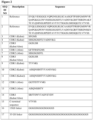
- the amino acid sequences of Alb-8 and Alb-23D and their CDR's (which are the same for Alb-8 and Alb-23D) are given in Table A below as SEQ ID NO: 1, 2 and 3 to 8, respectively.
- Some other references that disclose ISVD's against serum albumin include WO 2003/035694 , WO 2004/003019 , EP 2 139 918 , WO 2011/006915 and WO 2014/111550 .
- WO 2008/096158 describes dAbs that bind to serum albumin.
- WO 2008/028977 describes ISVDs against human serum albumin termed Alb1 to Alb10.
- WO2010/035012 describes antibodies and Fab fragments binding to human serum albumin.
- Kang et al. 2015 (Immunology letters 169, p. 33-40 ) describe the isolation of human anti-serum albumin Fab antibodies.
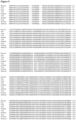
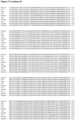
- Figures 3A and 3B show alignments of Alb-8 (reference), Alb-23D (reference), SEQ ID NO: 18 (invention) and SEQ ID NO: 19 (invention).
- the present invention aims to provide improved serum albumin binders, and in particular serum albumin binders that have improved properties compared to the serum albumin binders known in the art.
- the invention aims to provide serum albumin binders that can bind to dog serum albumin and/or that have improved cross-reactivity between human serum albumin and dog serum albumin (i.e. compared to prior art serum albumin binders like Alb-8 and/or Alb-23D).
- Alb-8, Alb-23D and their CDRs SEQ ID NO Description Sequence 1 Alb-8 ( WO 2006/122787 ; SEQ ID NO: 62) 2 Alb-23D ( WO 2012/175400 ; SEQ ID NO: 6) 3 CDR1 (Kabat) SFGMS 4 CDR2 (Kabat) SISGSGSDTLYADSVKG 5 CDR3 (Kabat/Abm) GGSLSR 6 CDR1 (Abm) GFTFRSFGMS 7 CDR2 (Abm) SISGSGSDTL 8 CDR3 (Kabat/Abm) GGSLSR Note: - SEQ ID NOs: 1 and 2 share the same CDRs according to Kabat.
- SEQ ID NO: 1 has a different CDR1 from SEQ ID NOs: 2 compared to SEQ ID NOs: 2, SEQ ID NO: 1 has an S at position 30 instead of an R.
- SEQ ID NO:5 and SEQ ID NO:8 are identical.
- - all CDRs are defined according to the Abm convention, unless indicated otherwise.
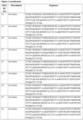
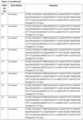
- Table B SEQ ID NOs: 18 and 19 and their CDR's SEQ ID NO Description Sequence 18 T0235002C06 (wild type) 19 T023500029 9 CDR1 (Kabat) TYVMG 10 CDR2 (Kabat) AISQNSIHTYYANSVKG 11 CDR2 (Kabat) AISQNSIHTYYADSVKG 12 CDR1 (Abm) GGTFSTYVMG 13 CDR2 (Abm) AISQNSIHTY 14 CDR3 (Kabat/Abm) SRFTSWYTADYEYDY Note: - all CDRs are defined according to the Abm convention, unless indicated otherwise.
- serum albumin-binding ISVD's provided by the present invention are variants of the sequences of SEQ ID NO:18 and 19, in that:
- serum albumin-binding ISVD's provided by the present invention will generally have a (limited) number of "amino acid differences" (as described herein) compared to the sequence of SEQ ID NO: 18 and/or 19.
- amino acid differences may be present in the framework regions (as defined according to Kabat and/or according to Abm).
- these amino acid differences may for example be humanizing substitutions, substitutions that improve expression in a desired host cell or host organism, substitutions that improve stability and/or resistance to degradation and/or proteases, mutations that reduce binding by pre-existing antibodies, and/or other mutations that are intended to optimize the sequence of the amino acid sequences of the invention; or any suitable combination of such amino acid differences.
- the invention relates to an ISVD that can bind (and in particular, specifically bind) to human serum albumin, and that has:
- the serum albumin binders according to the invention are preferably such that they have:
- the serum albumin binders according to the invention are generally preferably such that they bind to human serum albumin with a dissociation constant (KD) of 10 -5 to 10 -12 moles/liter or less, and preferably 10 -7 to 10 -12 moles/liter or less and more preferably 10 -8 to 10 -12 moles/liter, and/or with a binding affinity of at least 10 7 M -1 , preferably at least 10 8 M -1 , more preferably at least 10 9 M -1 , such as at least 10 12 M -1 , as determined using ProteOn (reference is made to Example 1).
- KD dissociation constant
- a serum albumin binder of the invention will bind to the desired antigen with an affinity less than 500 nM, preferably less than 200 nM, more preferably less than 10 nM, such as less than 500 pM, again as determined using ProteOn (reference is again made to Example 1).
- the serum albumin binders according to the different aspects of the invention are generally also such that they are cross-reactive between human serum albumin and serum albumin from at least one, preferably from at least two, more preferably from at least three and up to essentially all of the following species of mammal: dog, rat, mouse, rabbit, guinea pig, pig, sheep, cow and cynomolgus monkey.
- the serum albumin binders according to the different aspects of the invention are such that they are (at least) cross-reactive between human serum albumin and dog serum albumin, and preferably also between either human serum albumin and/or dog serum albumin on the one hand, and at least one, preferably at least two, more preferably at all three of rat serum albumin, mouse serum albumin and serum albumin from cynomolgus monkey on the other hand.
- the serum albumin binders of the invention may have improved cross-reactivity (in particular between human serum albumin on the one hand and dog serum albumin on the other hand) compared to serum albumin binders that have (essentially) the same CDR's as Alb-11 and/or Alb-23D. Reference is made to the data in the Experimental Part below.
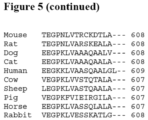
- Figure 5 gives an alignment of serum albumin from different species of mammal (source: http://macromoleculeinsights.com/albumin.php , the amino acid numbering in Figure 5 is the numbering used on said webpage).
- a serum albumin binder of the invention can be considered to be cross-reactive between human serum albumin and serum albumin from one of these species when it can bind to human serum albumin with an affinity less than 500 nM, preferably less than 200 nM, more preferably less than 10 nM; and also to the serum albumin from said species with an affinity less than 500 nM, preferably less than 200 nM, more preferably less than 10 nM, again both as determined using ProteOn (reference is again made to Example 1).
- the serum albumin binders according to the invention are preferably also such that either:
- the half-life in mammalian species other than man will, among other factors, mainly depend on the binding properties (such as affinity) of the albumin binder of the invention for the serum albumin from said mammalian species as well on the half-life of the naive serum albumin in said species.
- the half-life of the serum albumin binder of the invention is preferably at least 5%, such as at least 10%, more preferably at least 25%, for example about 50% and possibly up to 100% of the half-life of the naive serum albumin in said species.
- the serum albumin binders of the invention preferably also contain (at least):
- WO 09/138519 or in the prior art cited in WO 09/138519
- WO 08/020079 or in the prior art cited in WO 08/020079
- Tables A-3 to A-8 from WO 08/020079 which are lists showing possible humanizing substitutions.
- Some preferred but non-limiting examples of such humanizing substitutions are Q108L and A14P or a suitable combination thereof.
- Such humanizing substitutions may also be suitably combined with one or more other mutations as described herein (such as with one or more mutations that reduce binding by pre-existing antibodies).
- Such mutations can comprise (a suitable combination of) one or more amino acid substitutions, deletions or additions (and in particular substitutions), which mutations will often be in the so-called C-terminal region of the ISV.
- such mutations can comprise mutations (and in particular substitutions) at one or more of positions 11, 13, 14, 15, 40, 41, 42, 82, 82a, 82b, 83, 84, 85, 87, 88, 89, 103, 108 and/or mutations at one or more positions in the C-terminal VTVSS sequence (i.e. positions 109, 110, 111, 112 and 113), with one or more mutations at positions 11, 89, 110 and/or 112 being particularly preferred.
- Such mutations are suitable substitutions (where required) such that after the mutation, at the indicated position, one of the following amino acid residues is present: 11L, 11K, 11V, 14A, 14P, 41A, 41L, 41P, 41S, 41T, 42E, 42G, 87A, 87T, 89A, 89L, 89T, 108L, 110K, 110Q, 112K and/or 112Q (with 11L, 89A, 89L, 89T, 110K, 110Q, 112K and 112Q being particularly preferred); or any suitable combination of such substitutions, such as for example and without limitation: 11V in combination with 89L or 89T; 11V in combination with 110K or 110Q; or 11V in combination with 89L and 110K or 110Q.
- Such mutations that reduce binding by pre-existing antibodies may also be suitably combined with one or more other mutations as described herein (such as with one or more humanizing substitutions).
- the serum albumin binders of the invention may also comprise a C-terminal extension (such as a C-terminal alanine residue). As described in WO 2012/175741 , such a C-terminal extension reduces binding by pre-existing antibodies.
- a suitable C-terminal extension can generally be further described herein and can in particular have the formula -(X) n , in which X can be any naturally occurring amino acid (but preferably not cysteine) and n can be 1, 2, 3, 4 or 5.
- X can be any naturally occurring amino acid (but preferably not cysteine) and n can be 1, 2, 3, 4 or 5.
- WO 2012/175741 to also to for example WO 2015/173325 , WO 2013/024059 and WO 2016/118733 .
- the presence of such a C-terminal extension may also be suitably combined with one or more of the other mutations described herein (such as with one or more humanizing substitutions and/or one or more mutations that reduce binding by pre-existing antibodies).
- mutations that may be present in the serum albumin binders of the invention for example and without limitation include one or more mutations (an in particular substitutions) that improve expression in a desired host cell or host organism, one or more mutations (and in particular substitutions) that improve stability and/or resistance to degradation and/or proteases, and/or one or more other mutations that are intended to optimize the sequence of the amino acid sequences of the invention (for example and without limitation, one or more mutations that (further) reduce any tendency of the albumin binders to form dimers); or any suitable combination of such mutations.
- the serum albumin binders of the invention may have a D at position 1 (i.e. a E1D mutation compared to the sequence of SEQ ID NO:18 and/or 19), in particular when the serum albumin binder of the invention is present at and/or forms the N-terminal end of the compound of the invention in which it is present.
- Such mutations may again be suitably combined with one or more other mutations as described herein (such as with one or more humanizing substitutions and/or one or more mutations that reduce binding by pre-existing antibodies).
- a single mutation (or a suitable combination of mutations) provides multiple functionalities or advantages.
- a humanizing Q108L substitution may also reduce binding by pre-existing antibodies.
- amino acid residues i.e. mutations compared to the amino acid sequence of SEQ ID NO:18
- amino acid residues include: 11V (i.e. L11V), 14P (i.e. A14P), 16G (i.e. D16G), 49A (i.e. S49A), 61D (i.e. N61D), 74S (i.e. D74S), 82M (i.e. L82M), 83R (i.e.
- Some preferred but non-limiting amino acid sequences of the invention are those in which (i) position 11 is V and position 89 is L; (ii) position 89 is T; (iii) positions 74-76 form an SKN motif; (iv) position 11 is V, position 89 is L and positions 74-76 form an SKN motif; and (iv) position 89 is T and positions 74-76 form an SKN motif; which amino acid sequences of the invention are as further described herein (and accordingly can also suitably contain one or more further amino acid mutations as described herein).
- amino acid sequences of SEQ ID NOs: 18 to 44 as well as proteins, polypeptides and other compounds and constructs comprising the same (as further described herein), form further aspects of the present invention.
- the invention relates to an amino acid sequence which is one of the amino acid sequences of SEQ ID NO: 18, SEQ ID NO: 19, SEQ ID NO:20, SEQ ID NO:21, SEQ ID NO:22, SEQ ID NO:23, SEQ ID NO:24, SEQ ID NO:25, SEQ ID NO:26, SEQ ID NO:27, SEQ ID NO:28, SEQ ID NO:29, SEQ ID NO:30, SEQ ID NO:31, SEQ ID NO:32, SEQ ID NO:33, SEQ ID NO:34, SEQ ID NO:35, SEQ ID NO:36, SEQ ID NO:37, SEQ ID NO:38, SEQ ID NO:39, SEQ ID NO:40, SEQ ID NO:41, SEQ ID NO:42, SEQ ID NO:43, and/or SEQ ID NO:44; and each of these amino acid sequences of the invention (as well as polypeptides of the invention - as defined by the claims- that comprise such an amino acid sequence of the
- the amino acid sequences provided by the invention are proteins that can bind to, and that can in particular specifically (as described herein) bind to, human serum albumin.
- they can be used as binding units or binding domains for binding to (human) serum albumin, for example to confer an increase in half-life (as defined herein) to therapeutic compounds, moieties or entities.
- serum albumin-binding domains for example made to WO 2004/041865 , WO 2006/122787 , EP 2 139 918 , WO 2011/006915 , WO 2012/175400 and/or WO 2014/111550 .
- the serum albumin binders of the invention can generally be used in the same way and for the same purposes as the serum albumin binders described in these references.
- the invention also relates to:
- half-life as used herein in relation to an ISVD, Nanobody, ISVD-based biological, Nanobody-based biological or any other amino acid sequence, compound or polypeptide referred to herein can generally be defined as described in paragraph o) on page 57 of WO 2008/020079 and as mentioned therein refers to the time taken for the serum concentration of the amino acid sequence, compound or polypeptide to be reduced by 50%, in vivo, for example due to degradation of the sequence or compound and/or clearance or sequestration of the sequence or compound by natural mechanisms.
- the in vivo half-life of an amino acid sequence, compound or polypeptide of the invention can be determined in any manner known per se, such as by pharmacokinetic analysis.
- the half-life can be expressed using parameters such as the t1/2-alpha, t1/2-beta and the area under the curve (AUC).
- AUC area under the curve
- the amino acid residues of a Nanobody can be numbered according to the general numbering for VHs given by Kabat et al. ("Sequence of proteins of immunological interest", US Public Health Services, NIH Bethesda, MD, Publication No. 91 ), as applied to VHH domains from Camelids in the article of Riechmann and Muyldermans, J. Immunol. Methods 2000 Jun 23; 240 (1-2): 185-195 ; or referred to herein.
- FR1 of a Nanobody comprises the amino acid residues at positions 1-30
- CDR1 of a Nanobody comprises the amino acid residues at positions 31-35
- FR2 of a Nanobody comprises the amino acids at positions 36-49
- CDR2 of a Nanobody comprises the amino acid residues at positions 50-65
- FR3 of a Nanobody comprises the amino acid residues at positions 66-94
- CDR3 of a Nanobody comprises the amino acid residues at positions 95-102
- FR4 of a Nanobody comprises the amino acid residues at positions 103-113.
- the total number of amino acid residues in each of the CDR's may vary and may not correspond to the total number of amino acid residues indicated by the Kabat numbering (that is, one or more positions according to the Kabat numbering may not be occupied in the actual sequence, or the actual sequence may contain more amino acid residues than the number allowed for by the Kabat numbering).
- the numbering according to Kabat may or may not correspond to the actual numbering of the amino acid residues in the actual sequence.
- position 1 according to the Kabat numbering corresponds to the start of FR1 and vice versa
- position 36 according to the Kabat numbering corresponds to the start of FR2 and vice versa
- position 66 according to the Kabat numbering corresponds to the start of FR3 and vice versa
- position 103 according to the Kabat numbering corresponds to the start of FR4 and vice versa.
- serum albumin binders of the invention can be used with advantage as a moiety, binding unit or fusion partner in order to increase the half-life of therapeutic compounds, moieties or entities such as polypeptides, proteins, compounds (including, without limitation, small molecules) or other therapeutic entities.
- the invention provides polypeptides, proteins, constructs, compounds or other chemical entities that comprise or essentially consist of a serum albumin binder of the invention and one or more other amino acid sequences, (binding) domains, binding units or other moieties or chemical entities.
- the invention provides polypeptides, proteins, constructs or compounds that comprise a serum albumin binder of the invention and one or more (such as one or two) therapeutic moieties (which may be the same or different, and may for example be directed against the same target or to different targets, and when they are directed to the same target may be directed towards the same or different epitopes, parts, domains or subunits of said target), suitably linked to each other either directly or via one or more suitable linkers or spacers.
- Such polypeptides, proteins or constructs may for example and without limitation be a fusion protein, as further described herein.
- the at least one therapeutic moiety comprises or essentially consists of a therapeutic protein, polypeptide, compound, factor or other entity.
- the therapeutic moiety is directed against a desired antigen or target, is capable of binding to a desired antigen (and in particular capable of specifically binding to a desired antigen), and/or is capable of interacting with a desired target.
- the at least one therapeutic moiety comprises or essentially consists of a therapeutic protein or polypeptide.
- the at least one therapeutic moiety comprises or essentially consists of a binding domain or binding unit, such as an immunoglobulin or immunoglobulin sequence (including but not limited to a fragment of an immunoglobulin), such as an antibody or an antibody fragment (including but not limited to an ScFv fragment), or of another suitable protein scaffold, such as protein A domains (such as Affibodies TM ), tendamistat, fibronectin, lipocalin, CTLA-4, T-cell receptors, designed ankyrin repeats, avimers and PDZ domains ( Binz et al., Nat. Biotech 2005, Vol 23:1257 ), and binding moieties based on DNA or RNA including but not limited to DNA or RNA aptamers ( Ulrich et al., Comb Chem High Throughput Screen 2006 9(8):619-32 ).
- a binding domain or binding unit such as an immunoglobulin or immunoglobulin sequence (including but not limited to a fragment of an immunoglobulin), such as an antibody
- the at least one therapeutic moiety comprises or essentially consists of an antibody variable domain, such as a heavy chain variable domain or a light chain variable domain.
- the at least one therapeutic moiety comprises or essentially consists of at least one immunoglobulin single variable domain, such as a domain antibody, single domain antibody, "dAb” or Nanobody (such as a VHH, a humanized VHH or a camelized VH) or an IgNAR domain.
- immunoglobulin single variable domain such as a domain antibody, single domain antibody, "dAb” or Nanobody (such as a VHH, a humanized VHH or a camelized VH) or an IgNAR domain.
- the at least one therapeutic moiety comprises or essentially consists of at least one monovalent Nanobody or a bivalent, multivalent, bispecific or multispecific Nanobody construct.
- polypeptides, (fusion) proteins, constructs or compounds that comprise a serum albumin binder of the invention and one or more therapeutic moieties can generally be (prepared and used) as described in the prior art cited above (such as WO 04/041865 , WO 06/122787 , WO 2012/175400 and WO 2015/173325 ; reference is also made to for example, WO 2004/003019 , EP 2 139 918 , WO 2011/006915 and WO 2014/111550 ) with a serum albumin binder of the invention instead of the half-life increasing moieties described in said
- polypeptides, (fusion) proteins, constructs or compounds that comprise a serum albumin binder of the invention and one or more therapeutic moieties will generally and preferably have an increased half-life (as described herein, and preferably expressed as t1/2-beta), compared to the therapeutic moiety or moieties per se.
- the compounds, polypeptides, constructs or fusion proteins described herein preferably have a half-life (again, as described herein, and preferably expressed as t1/2-beta) that is at least 1.5 times, preferably at least 2 times, such as at least 5 times, for example at least 10 times or more than 20 times, greater than the half-life of the corresponding therapeutic moiety per se (as measured in either in man or a suitable animal, such as mouse or cynomolgus monkey).
- any such compound, polypeptide, fusion protein or construct has a half-life (again, as described herein, and preferably expressed as t1/2-beta) in man that is increased with more than 1 hour, preferably more than 2 hours, more preferably of more than 6 hours, such as of more than 12 hours, compared to the half-life of the corresponding therapeutic moiety per se.
- a compound or polypeptide of the invention has a half-life (again, as described herein, and preferably expressed as t1/2-beta) in man that is more than 1 hour, preferably more than 2 hours, more preferably of more than 6 hours, such as of more than 12 hours, and for example of about one day, two days, one week, two weeks and up to the half-life of serum albumin in man (estimated to be around 19 days).
- a half-life (again, as described herein, and preferably expressed as t1/2-beta) in man that is more than 1 hour, preferably more than 2 hours, more preferably of more than 6 hours, such as of more than 12 hours, and for example of about one day, two days, one week, two weeks and up to the half-life of serum albumin in man (estimated to be around 19 days).
- a serum albumin binder of the invention is used to increase the half-life of (one or more) immunoglobulin single variable domains, such as domain antibodies, single domain antibodies, "dAb's", VHH's or Nanobodies (such as VHH's, humanized VHH's or camelized VH's such as camelized human VH's).
- immunoglobulin single variable domains such as domain antibodies, single domain antibodies, "dAb's", VHH's or Nanobodies (such as VHH's, humanized VHH's or camelized VH's such as camelized human VH's).
- one embodiment of the invention relates to a polypeptide, construct or fusion protein that comprises a serum albumin binder of the invention and one or more (such as one or two) immunoglobulin single variable domain sequences, which are suitably linked to each other, either directly or optionally via one or more suitable linkers or spacers.
- each such immunoglobulin single variable domain present in such a polypeptide, construct or fusion protein may independently be a domain antibody, single domain antibody, "dAb'" or Nanobody (such as a VHH, humanized VHH or camelized VH, such as a camelized human VH); and according to one specific but non-limiting aspect, at least one (and up to all) of these immunoglobulin single variable domains comprises two or three disulphide bridges.
- all ISVDs present in such a compound of the invention are Nanobodies.
- a compound of the invention When a compound of the invention has an ISVD at its C-terminal end (such as a serum albumin binder of the invention or an ISVD that is directed against a therapeutic target), then said C-terminal ISVD (and thus, by extension, the entire compound of the invention) preferably has a C-terminal extension at its C-terminal end.
- This C-terminal extension will be directly linked to the last C-terminal amino acid residue of the ISVD, which will usually be the amino acid residue at position 113 according to Kabat (unless the ISVD contains one or more amino acid deletions such that the sequence of the ISVD ends before position 113).
- the C-terminal extension will be directly linked to the C-terminal VTVSS sequence (SEQ ID NO:15) of the C-terminal ISV (and thus, by extension, to the C-terminal TVTSS sequence of the compound of the invention) or the C-terminal sequence of the C-terminal ISVD that corresponds to the C-terminal ISVD sequence (for example, where said C-terminal sequence of the C-terminal ISVD contains one or more substitutions or deletions compared to the usual VTVSS sequence, such as T110K, T110Q, S112K or S112K).
- any C-terminal extension that is used herein i.e. at the C-terminal end of a compound of the invention and/or at the C-terminal end of a serum albumin binder of the invention
- a C-terminal extension may have the formula (X) n , in which n is 1 to 10, preferably 1 to 5, such as 1, 2, 3, 4 or 5 (and preferably 1 or 2, such as 1); and each X is an (preferably naturally occurring) amino acid residue that is independently chosen from naturally occurring amino acid residues (although according to preferred one aspect, it does not comprise any cysteine residues), and preferably independently chosen from the group consisting of alanine (A), glycine (G), valine (V), leucine (L) or isoleucine (I).
- A alanine
- G glycine
- V valine
- L leucine
- I isoleucine
- any C-terminal extension present in a serum albumin binder of the invention does not contain a (free) cysteine residue (unless said cysteine residue is used or intended for further functionalization, for example for pegylation).
- C-terminal extensions are the following amino acid sequences: A, AA, AAA, G, GG, GGG, AG, GA, AAG, AGG, AGA, GGA, GAA or GAG.
- a compound of the invention when a compound of the invention has an ISVD at its C-terminal end (such as a serum albumin binder of the invention or an ISVD that is directed against a therapeutic target), then (at least) said C-terminal ISVD preferably contains, even more preferably in addition to a C-terminal extension as described herein, one or more mutations that reduce binding by pre-existing antibodies (i.e. as described herein for the serum albumin binders of the invention and as more generally described in WO 2012/175741 and WO 2015/173325 and also for example in WO 2013/024059 and WO 2016/118733 ).
- a compound of the invention has a serum albumin binder of the invention at its C-terminal end, that then (at least) said serum albumin binder of the invention preferably will contain such mutations (i.e. preferably in addition to a C-terminal extension).
- a compound of the invention contains two or more ISVDs (e.g. a serum albumin binder of the invention and one or more ISVDs against a therapeutic target), then preferably all these ISVDs contain mutations that reduce binding to pre-existing antibodies (again, preferably in addition to the C-terminal extension that is linked to the C-terminal ISVD if the compound of the invention has an ISVD at its C-terminal end).
- ISVDs e.g. a serum albumin binder of the invention and one or more ISVDs against a therapeutic target
- all these ISVDs contain mutations that reduce binding to pre-existing antibodies (again, preferably in addition to the C-terminal extension that is linked to the C-terminal ISVD if the compound of the invention has an ISVD at its C-terminal end).
- a compound of the invention When a compound of the invention has an ISVD at its N-terminal end (such as a serum albumin binder of the invention or an ISVD that is directed against a therapeutic target), then said N-terminal ISVD (and thus, by extension, the entire compound of the invention) preferably contain a D at position 1.
- said serum albumin binder of the invention will preferably have a D at position 1 (e.g. an E1D mutation compared to for example the sequence of SEQ ID NO:18 and/or 19, such as the in the amino acid sequences of the invention of SEQ ID NOs: 36 to 44).
- the invention relates to a protein, polypeptide or other compound or construct that comprises or essentially consists of at least one (and preferably only one) serum albumin binder of the invention and at least one (such as one, two or three) therapeutic moiety or entity (in which said serum albumin binder and the one or more therapeutic moieties or entities are suitably linked, optionally via one or more suitable linkers), which protein, polypeptide, compound, construct is such that:
- all therapeutic moieties present in a compound of the invention are ISVD's (i.e. ISVDs against a therapeutic target), and in particular heavy-chain ISVDs, and more in particular Nanobodies (i.e. Nanobodies against a therapeutic target).
- such compounds of the invention may comprise:
- constructs, fusion proteins or polypeptides of the invention can be schematically represented as follows, in which "[Alb]” represents a serum albumin binder of the invention, “[therapeutic moiety 1]” and “[therapeutic moiety 2]” represent the therapeutic moieties (which as mentioned may each independently be an immunoglobulin single variable domain), " - " represents a suitable linker (which is optional; suitable examples are 9GS and 35GS linkers) and the N-terminus is on the left hand side and the C-terminus is on the right hand side:
- fusion proteins or polypeptides of the invention can be schematically represented as follows, in which "[Alb]” represents a serum albumin binder of the invention, "[therapeutic ISVD 1]” and “[therapeutic ISVD 2]” represent ISVDs against a therapeutic target (which ISVDs may be the same or different and when different may be directed against the same target, against different epitopes on the same target or against different therapeutic targets), " - " represents a suitable linker (which is optional), X(n) represents a C-terminal extension as described herein, and the N-terminus is on the left hand side and the C-terminus is on the right hand side:
- the invention relates to a multispecific (and in particular bispecific) Nanobody construct that comprises a serum albumin binder of the invention and at least one other Nanobody (such as one or two other Nanobodies, which may be the same or different), in which said at least one other Nanobody is preferably directed against a desired target (which is preferably a therapeutic target) and/or another Nanobody that useful or suitable for therapeutic, prophylactic and/or diagnostic purposes.
- a desired target which is preferably a therapeutic target
- the serum albumin binder of the invention and the other Nanobodies may be suitably linked to each other either directly or optionally via one or more suitable linkers or spacers.
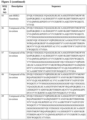
- SEQ ID NOs:46 to 52 some examples of compounds of the invention are given in SEQ ID NOs:46 to 52, using the anti-HER2-Nanobody of SEQ ID NO: 45 as a representative example of an anti-target Nanobody, and with the constituent Nanobodies being in different positions in the compound of the invention.
- the compounds of SEQ ID NOs: 46 to 49 are examples illustrating bivalent bispecific compounds of the invention and the compounds of SEQ ID NOs: 50 to 52 are examples illustrating trivalent bispecific compounds of the invention.
- the compounds contain an E1D mutation and a C-terminal alanine residue, and contain representative but non-limiting examples of the use of suitable linkers (i.e. a 15GS linker in SEQ ID NOs:47 and 48 and or 35GS linkers in SEQ ID NO:s 46 and 49 to 52).
- Some other examples of some specific multispecific and/or multivalent polypeptide of the invention can be found in the applications by Ablynx N.V. mentioned herein.
- the serum albumin binders of the invention described herein can generally be used analogously to the half-life extending Nanobodies described therein such as Alb-8), as well as to the general description and specific examples of such constructs given in for example WO 04/041862 , WO 2006/122786 , WO 2008/020079 , WO 2008/142164 or WO 2009/068627 .
- the invention also relates to nucleotide sequences or nucleic acids that encode the albumin binders or polypeptides of the invention.
- the invention further includes genetic constructs that include the foregoing nucleotide sequences or nucleic acids and one or more elements for genetic constructs known per se.
- the genetic construct may be in the form of a plasmid or vector. Again, such constructs can be generally as described in the published patent applications of Ablynx N.V., such as for example WO 04/041862 , WO 2006/122786 , WO 2008/020079 , WO 2008/142164 or WO 2009/068627 .
- the invention also relates to host cells that contain such nucleotide sequences or nucleic acids, and/or that express (or are capable of expressing), the albumin binders, compounds or polypeptides of the invention.
- host cells can be generally as described in the published patent applications of Ablynx N.V., such as for example WO 04/041862 , WO 2006/122786 , WO 2008/020079 , WO 2008/142164 or WO 2009/068627 .
- the invention also relates to a method for preparing an albumin binder, compound or polypeptide of the invention, which method comprises cultivating or maintaining a host cell as described herein under conditions such that said host cell produces or expresses an albumin binder, compound or polypeptide of the invention, and optionally further comprises isolating the albumin binder, compound or polypeptide of the invention so produced.
- a method for preparing an albumin binder, compound or polypeptide of the invention comprises cultivating or maintaining a host cell as described herein under conditions such that said host cell produces or expresses an albumin binder, compound or polypeptide of the invention, and optionally further comprises isolating the albumin binder, compound or polypeptide of the invention so produced.
- such methods can be performed as generally described in the published patent applications of Ablynx N.V., such as for example WO 04/041862 , WO 2006/122786 , WO 2008/020079 , WO 2008/142164 or WO 2009/068627 .
- the invention also relates to a pharmaceutical composition that comprises at least one compound or polypeptide of the invention, and optionally at least one pharmaceutically acceptable carrier, diluent or excipient.
- a pharmaceutical composition that comprises at least one compound or polypeptide of the invention, and optionally at least one pharmaceutically acceptable carrier, diluent or excipient.
- Such preparations, carriers, excipients and diluents may generally be as described in the published patent applications of Ablynx N.V., such as for example WO 04/041862 , WO 2006/122786 , WO 2008/020079 , WO 2008/142164 or WO 2009/068627 .
- the compounds or polypeptides of the invention have an increased half-life, they are preferably administered to the circulation.
- they can be administered in any suitable manner that allows the compound or polypeptide of the invention to enter the circulation, such as intravenously, via injection or infusion, or in any other suitable manner (including oral administration, subcutaneous administration, intramuscular administration, administration through the skin, intranasal administration, administration via the lungs, etc.).
- suitable methods and routes of administration will be clear to the skilled person, again for example also from the teaching of the published patent applications of Ablynx N.V., such as for example WO 04/041862 , WO 2006/122786 , WO 2008/020079 , WO 2008/142164 or WO 2009/068627 .
- the diseases and disorders that can be prevented or treated by the use of a compound or polypeptide of the invention as described herein will generally be the same as the diseases and disorders that can be prevented or treated by the use of the therapeutic moiety or moieties that is/are present in the compound or polypeptide of the invention.
- prevention and/or treatment not only comprises preventing and/or treating the disease, but also generally comprises preventing the onset of the disease, slowing or reversing the progress of disease, preventing or slowing the onset of one or more symptoms associated with the disease, reducing and/or alleviating one or more symptoms associated with the disease, reducing the severity and/or the duration of the disease and/or of any symptoms associated therewith and/or preventing a further increase in the severity of the disease and/or of any symptoms associated therewith, preventing, reducing or reversing any physiological damage caused by the disease, and generally any pharmacological action that is beneficial to the patient being treated.
- the subject to be treated may be any warm-blooded animal, but is in particular a mammal, and more in particular a human being.
- the subject to be treated will in particular be a person suffering from, or at risk from, the diseases and disorders mentioned herein.
- the invention relates to the compound or polypeptide of the invention for use in a method for immunotherapy, and in particular for passive immunotherapy, which method comprises administering, to a subject suffering from or at risk of the diseases and disorders mentioned herein, a pharmaceutically active amount of a compound or polypeptide of the invention, and/or of a pharmaceutical composition comprising the same.
- the compound or polypeptide of the invention and/or the compositions comprising the same are administered according to a regime of treatment that is suitable for preventing and/or treating the disease or disorder to be prevented or treated.
- the clinician will generally be able to determine a suitable treatment regimen, depending on factors such as the disease or disorder to be prevented or treated, the severity of the disease to be treated and/or the severity of the symptoms thereof, the specific polypeptide of the invention to be used, the specific route of administration and pharmaceutical formulation or composition to be used, the age, gender, weight, diet, general condition of the patient, and similar factors well known to the clinician.
- the treatment regimen will comprise the administration of one or more compounds or polypeptides of the invention, or of one or more compositions comprising the same, in one or more pharmaceutically effective amounts or doses.
- the specific amount(s) or doses to be administered can be determined by the clinician, again based on the factors cited above.
- the compounds or polypeptides of the invention will generally be administered in an amount between 1 gram and 0.01 microgram per kg body weight per day, preferably between 0.1 gram and 0.1 microgram per kg body weight per day, such as about 1, 10, 100 or 1000 microgram per kg body weight per day, either continuously (e.g., by infusion), as a single daily dose or as multiple divided doses during the day.
- the clinician will generally be able to determine a suitable daily dose, depending on the factors mentioned herein.
- the compounds of the invention contain a half-life extending serum albumin binder of the invention, they do not need to be administered essentially continuously (e.g. by infusion), but they can be administered at suitable intervals (to be determined by the skilled person). For example, they can be administered (at a suitable dose) once every two days, once every four days, once weekly, once every two weeks and in some cases once every four weeks or even less frequently, for example by injection or infusion.
- compositions comprising at least one compound or polypeptide of the invention wherein said composition is intended for administration at an interval between once weekly and once every 4 weeks, and in particular between once every 7 days and once every 21 days, such as once every 7 days or 14 days.
- polypeptide of the invention usually, in the above medical use, a single polypeptide of the invention will be used. It is however within the scope of the invention to use two or more polypeptides of the invention in combination.
- polypeptides of the invention may also be used in combination with one or more further pharmaceutically active compounds or principles, i.e., as a combined treatment regimen, which may or may not lead to a synergistic effect.
- a combined treatment regimen which may or may not lead to a synergistic effect.
- the clinician will be able to select such further compounds or principles, as well as a suitable combined treatment regimen, based on the factors cited above and his expert judgement.
- polypeptides of the invention may be used in combination with other pharmaceutically active compounds or principles that are or can be used for the prevention and/or treatment of the diseases and disorders that can be prevented or treated with the fusion proteins or constructs of the invention, and as a result of which a synergistic effect may or may not be obtained.
- the effectiveness of the treatment regimen used according to the invention may be determined and/or followed in any manner known per se for the disease or disorder involved, as will be clear to the clinician.
- the clinician will also be able, where appropriate and or a case-by-case basis, to change or modify a particular treatment regimen, so as to achieve the desired therapeutic effect, to avoid, limit or reduce unwanted side-effects, and/or to achieve an appropriate balance between achieving the desired therapeutic effect on the one hand and avoiding, limiting or reducing undesired side effects on the other hand.
- the treatment regimen will be followed until the desired therapeutic effect is achieved and/or for as long as the desired therapeutic effect is to be maintained. Again, this can be determined by the clinician. Any reference to a method of treatment practised on the human or animal body is to be understood as substances and compositions for use in such treatments.
- Serum albumin was immobilized via amine coupling on GLC ProteOn chip using ProteOn Amine Coupling Kit (BioRad). Different concentrations (300 nM, 100 nM, 33.3 nM, 11.1 nM, 3.7 nM and 1.23 nM) of the serum albumin binder of SEQ ID NO:19 (invention) were injected in HBS-P+ pH 7.4 buffer (GE Healthcare) at 45 ⁇ L/min for 120 s, followed by dissociation for 900 s. There was no or very low binding observed for the serum albumin binder of SEQ ID NO:19 (invention) on rabbit, sheep and bovine SA.
- the affinities of the serum albumin binder of SEQ ID NO:19 (invention) for human, cynomolgus monkey, rat, mouse and guinea pig SA were higher compared to the respective affinities of the albumin binder of SEQ ID NO:1.
- the results are given in Table 1 below and show that the serum albumin binder of SEQ ID NO:19 (invention) is cross-reactive with dog and pig SA.
- Table 1 Kinetic parameters for binding of SEQ ID NO:19 (invention) on SA from different species.
- SEQ ID NO:19 (invention) SEQ ID NO: 1 (reference) SA ka (s-1M-1) Kd (s-1) KD (M) ka (s-1M-1) Kd (s-1) KD (M) human 6,1E+05 2,7E-04 4,4E-10 4.9E+05 1.6E-03 3.3E-09 cyno 5,2E+05 2,3E-04 4,5E-10 4.6E+05 1.4E-03 3.1E-09 rat 1,2E+06 8,0E-05 6,7E-11 3.9E+05 2.6E-01 6.7E-07 mouse 9,1E+05 2,5E-04 2,7E-10 6.6E+05 3.0E-02 3.9E-08 guinea pig 1,0E+06 3,1E-04 3,0E-10 9.4E+05 1.9E-02 2.0E-08 dog 7,2E+05 8,4E-04 1,2E-09 no binding pig 1,0E+05 4,6E-03 4,5E-08 no binding
- albumin The long half-life of albumin in blood is mainly driven by two characteristics: (i) the large size (65 kDa) of albumin limits its glomerular filtration and (ii) albumin binds to FcRn at low pH (pH 6), which protects albumin from degradation in the lysosomes after passive endocytosis in endothelial and epithelial cells, by recycling from early endosome back to the extracellular environment.
- pH pH
- Nanobodies to result in long serum half-life through albumin binding and subsequent recycling, these should stay bound to albumin in the pH range from 5.0 to 7.4.
- the dissociation rate of the serum albumin binder of SEQ ID NO:19 (invention) from HSA at pH 5, pH 6 and pH 7.4 was measured on a ProteOn instrument as described above, including SEQ ID NO:1 (reference) as a reference, the serum albumin binder of SEQ ID NO:19 (invention) and SEQ ID NO:1 (reference) were injected at 500 nM and 300 nM respectively in HBS-P+ pH 7.4 buffer.
- Dissociation buffers were 50 mM NaOAc/HOAc + 150 mM NaCl + 0.05 % Tween-20 pH 5.0, 50 mM NaOAc/HOAc + 150 mM NaCl + 0.05 % Tween-20 pH 6.0 and HBS-P+ pH 7.4 respectively. Dissociation was analysed for 2700 s. Dissociation rates for the serum albumin binder of SEQ ID NO:19 (invention) do not differ significantly across the pH range from 5.0 to 7.4. The results are shown in Table 2. Table 2 Dissociation rate of the serum albumin binder of SEQ ID NO:19 (invention) from HSA at different pH.
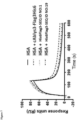
- Epitope binning was analysed in a competition ELISA. Human serum albumin was coated at 125 ng/ml in PBS at 4 °C overnight. After blocking with PBS + 1 % casein, 1.5 nM SEQ ID NO:1 (reference)-cMycHis6 and a concentration series of competitors (His6Flag3-the serum albumin binder of SEQ ID NO:19 (invention), His6Flag3-SEQ ID NO:1 (reference) as positive control or hen egg lysozyme binding single domain antibody cAblys3-Flag3His6 as negative control) were added.
- Bound SEQ ID NO:1 (reference)-cMycHis6 was detected with goat anti-cMyc (Abeam ab19234) and HRP-labelled rabbit anti-goat (Genway 18-511-244226) antibodies.
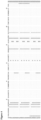
- the serum albumin binder of SEQ ID NO:19 (invention) and SEQ ID NO:1 (reference) do not bind identical epitopes on HSA ( Figure 6 ).
- the trivalent construct was produced in Pichia pastoris and comprises two Nanobodies against respiratorial syncytial virus (RSV) with the albumin binding Nanobody of SEQ ID NO:21 at the C-terminal end (in which the three Nanobodies are linked to each other using (Gly4Ser)7 linkers).
- RSV respiratorial syncytial virus
- the pharmacokinetic profile of the construct is evaluated in a pharmacokinetic study (non-crossover, single dose) in twelve fasted healthy male Beagle dogs (healthy as determined by a pre-study health examination).
- the construct is administered intraveneously.
- the animals are fasted (with uninterrupted access to water) overnight prior to dosing, and prior to collection of blood samples at pre-dose, 24, 168, and 336 hours after dosing (total fasting time no longer than 24 hours).
- Food is returned 4 hours post-dose, or immediately after blood collection at 24, 168, and 336 hours. Body weight is also recorded and tracked during the study.
- 1 ml of whole blood (or 2-3 ml pre-dose and at 24, 168 and 336 hours) for plasma is collected from a peripheral vessel pre-dose and at 5, 15, 30 min and 1, 4, 8, 12, 24, 72, 168, 240, 336, 504, and 672 hours post initial dose.
- Collected samples for serum processing are kept at room temperature and are allowed to clot. Blood is be centrifuged at 10,000 rpm for 2 minutes using a refrigerated centrifuge (set to maintain 4°C). Samples are frozen within 30 minutes from collection until they are submitted for analysis (including measurement of concentration of the relevant Nanobody construct).
Landscapes
- Chemical & Material Sciences (AREA)
- Organic Chemistry (AREA)
- Health & Medical Sciences (AREA)
- Medicinal Chemistry (AREA)
- Proteomics, Peptides & Aminoacids (AREA)
- Biophysics (AREA)
- General Health & Medical Sciences (AREA)
- Genetics & Genomics (AREA)
- Life Sciences & Earth Sciences (AREA)
- Molecular Biology (AREA)
- Biochemistry (AREA)
- Immunology (AREA)
- Peptides Or Proteins (AREA)
- Medicines Containing Antibodies Or Antigens For Use As Internal Diagnostic Agents (AREA)
- Micro-Organisms Or Cultivation Processes Thereof (AREA)
- Preparation Of Compounds By Using Micro-Organisms (AREA)
- Medicinal Preparation (AREA)
- Medicines That Contain Protein Lipid Enzymes And Other Medicines (AREA)
Priority Applications (5)
| Application Number | Priority Date | Filing Date | Title |
|---|---|---|---|
| SI201831169T SI3571225T1 (sl) | 2017-01-17 | 2018-01-17 | Izboljšana veziva seruma albumina |
| EP24191393.8A EP4442709A3 (en) | 2017-01-17 | 2018-01-17 | Improved serum albumin binders |
| HRP20241469TT HRP20241469T1 (hr) | 2017-01-17 | 2018-01-17 | Poboljšana veziva albumina u serumu |
| EP24191388.8A EP4442707A3 (en) | 2017-01-17 | 2018-01-17 | Improved serum albumin binders |
| RS20241215A RS66117B1 (sr) | 2017-01-17 | 2018-01-17 | Poboljšana veziva serumskog albumina |
Applications Claiming Priority (2)
| Application Number | Priority Date | Filing Date | Title |
|---|---|---|---|
| US201762446988P | 2017-01-17 | 2017-01-17 | |
| PCT/EP2018/051083 WO2018134235A1 (en) | 2017-01-17 | 2018-01-17 | Improved serum albumin binders |
Related Child Applications (2)
| Application Number | Title | Priority Date | Filing Date |
|---|---|---|---|
| EP24191393.8A Division EP4442709A3 (en) | 2017-01-17 | 2018-01-17 | Improved serum albumin binders |
| EP24191388.8A Division EP4442707A3 (en) | 2017-01-17 | 2018-01-17 | Improved serum albumin binders |
Publications (2)
| Publication Number | Publication Date |
|---|---|
| EP3571225A1 EP3571225A1 (en) | 2019-11-27 |
| EP3571225B1 true EP3571225B1 (en) | 2024-08-07 |
Family
ID=61521465
Family Applications (3)
| Application Number | Title | Priority Date | Filing Date |
|---|---|---|---|
| EP18707848.0A Active EP3571225B1 (en) | 2017-01-17 | 2018-01-17 | Improved serum albumin binders |
| EP24191393.8A Pending EP4442709A3 (en) | 2017-01-17 | 2018-01-17 | Improved serum albumin binders |
| EP24191388.8A Pending EP4442707A3 (en) | 2017-01-17 | 2018-01-17 | Improved serum albumin binders |
Family Applications After (2)
| Application Number | Title | Priority Date | Filing Date |
|---|---|---|---|
| EP24191393.8A Pending EP4442709A3 (en) | 2017-01-17 | 2018-01-17 | Improved serum albumin binders |
| EP24191388.8A Pending EP4442707A3 (en) | 2017-01-17 | 2018-01-17 | Improved serum albumin binders |
Country Status (21)
| Country | Link |
|---|---|
| US (1) | US11414481B2 (enExample) |
| EP (3) | EP3571225B1 (enExample) |
| JP (3) | JP7219220B2 (enExample) |
| KR (2) | KR102662499B1 (enExample) |
| CN (2) | CN117285623A (enExample) |
| AU (2) | AU2018209151B2 (enExample) |
| BR (1) | BR112019014599A2 (enExample) |
| CA (1) | CA3050575A1 (enExample) |
| DK (1) | DK3571225T3 (enExample) |
| ES (1) | ES2991459T3 (enExample) |
| FI (1) | FI3571225T3 (enExample) |
| HR (1) | HRP20241469T1 (enExample) |
| HU (1) | HUE068790T2 (enExample) |
| IL (2) | IL267894B2 (enExample) |
| LT (1) | LT3571225T (enExample) |
| MX (2) | MX2019008496A (enExample) |
| PT (1) | PT3571225T (enExample) |
| RS (1) | RS66117B1 (enExample) |
| SG (2) | SG11201906264YA (enExample) |
| SI (1) | SI3571225T1 (enExample) |
| WO (1) | WO2018134235A1 (enExample) |
Families Citing this family (43)
| Publication number | Priority date | Publication date | Assignee | Title |
|---|---|---|---|---|
| US11644471B2 (en) | 2010-09-30 | 2023-05-09 | Ablynx N.V. | Techniques for predicting, detecting and reducing aspecific protein interference in assays involving immunoglobulin single variable domains |
| HUE031828T2 (en) | 2011-06-23 | 2017-08-28 | Ablynx Nv | Procedures for Predicting, Detecting, and Reducing Aspiration Protein Interference in Assays Containing Immunoglobulin Variable Single Domain |
| EP3551656A1 (en) | 2016-12-07 | 2019-10-16 | Ablynx NV | Improved serum albumin binding immunoglobulin single variable domains |
| DK3571224T3 (da) | 2017-01-17 | 2024-11-11 | Ablynx Nv | Forbedrede serumalbuminbindere |
| CN117285623A (zh) * | 2017-01-17 | 2023-12-26 | 埃博灵克斯股份有限公司 | 改进的血清白蛋白结合物 |
| JP7657797B2 (ja) | 2019-12-06 | 2025-04-07 | アブリンクス エン.ヴェー. | TNFαおよびIL-23を標的化する免疫グロブリン単一可変ドメインを含むポリペプチド |
| MX2022006881A (es) | 2019-12-06 | 2022-07-11 | Ablynx Nv | Polipeptidos que comprenden dominios variables unicos de inmunoglobulina dirigidos a tnf alfa y ox40l. |
| IL293548A (en) | 2019-12-09 | 2022-08-01 | Ablynx Nv | Polypeptides comprising immunoglobulin with single variable domains targeting 13 il and tsl |
| WO2021140205A1 (en) | 2020-01-10 | 2021-07-15 | Confo Therapeutics N.V. | Methods for generating antibodies and antibody fragments and libraries comprising same |
| CA3175873A1 (en) | 2020-03-30 | 2021-10-07 | Ablynx Nv | Method for the production and purification of multivalent immunoglobulin single variable domains |
| WO2024133935A1 (en) | 2022-12-23 | 2024-06-27 | Ablynx Nv | Protein-based conjugation carriers |
| WO2022063984A1 (en) | 2020-09-25 | 2022-03-31 | Ablynx Nv | Polypeptides comprising immunoglobulin single variable domains targeting il-13 and ox40l |
| JP7842101B2 (ja) | 2020-12-18 | 2026-04-07 | アブリンクス エン.ヴェー. | IL-6およびTNF-αを標的化する免疫グロブリン単一可変ドメインを含むポリペプチド |
| TW202241947A (zh) | 2020-12-18 | 2022-11-01 | 比利時商艾伯霖克斯公司 | 包含靶向磷脂醯肌醇蛋白聚糖—3和t細胞受體的免疫球蛋白單可變結構域的多肽 |
| CA3203141A1 (en) | 2020-12-18 | 2022-06-23 | Ablynx Nv | T cell recruiting polypeptides based on tcr alpha/beta reactivity |
| AU2022409733A1 (en) | 2021-12-17 | 2024-08-01 | Ablynx Nv | POLYPEPTIDES COMPRISING IMMUNOGLOBULIN SINGLE VARIABLE DOMAINS TARGETING TCRαβ, CD33 AND CD123 |
| CA3259417A1 (en) | 2022-06-14 | 2023-12-21 | Ablynx Nv | UNIQUE VARIABLE DOMAINS OF IMMUNOGLOBULIN TARGETING THE T LYMPHOCYTE RECEPTOR |
| KR20250042176A (ko) | 2022-07-27 | 2025-03-26 | 아블린쓰 | 신생아 fc 수용체의 특정 에피토프에 결합하는 폴리펩타이드 |
| WO2024084203A1 (en) | 2022-10-18 | 2024-04-25 | Isogenica Limited | Single domain antibodies binding to albumin |
| CN120529914A (zh) | 2023-01-09 | 2025-08-22 | 奥德赛治疗股份有限公司 | 抗tnfr2抗原结合蛋白及其用途 |
| AR131869A1 (es) | 2023-02-17 | 2025-05-07 | Ablynx Nv | POLIPÉPTIDOS QUE SE UNEN AL RECEPTOR DE Fc NEONATAL |
| IL323035A (en) | 2023-03-14 | 2025-10-01 | Odyssey Therapeutics Inc | Anti-CD25 antigen-binding proteins and their uses |
| CN121511255A (zh) | 2023-05-17 | 2026-02-10 | 奥德赛治疗股份有限公司 | 经修饰的单结构域抗体 |
| KR102822958B1 (ko) * | 2023-05-23 | 2025-06-20 | 대한민국(해양경찰청 해양경찰연구센터장) | 고래 불법포획 감식용 신속진단키트 |
| EP4731770A1 (en) | 2023-06-22 | 2026-04-29 | Ablynx NV | Chimeric proteins for modulating cytokine receptor activity |
| KR20260032566A (ko) | 2023-06-29 | 2026-03-09 | 오디세이 테라퓨틱스, 인코포레이티드 | 항-trailr2 항원-결합 단백질 및 그의 용도 |
| CN121443644A (zh) | 2023-07-05 | 2026-01-30 | 阿布林克斯有限公司 | 用于治疗IgG相关疾病和障碍的改善的FcRn拮抗剂 |
| AR133725A1 (es) | 2023-09-04 | 2025-10-29 | Sanofi Sa | Polipéptidos para uso en el tratamiento de tumores que expresan glipicano-3 |
| CN121986112A (zh) | 2023-09-22 | 2026-05-05 | 阿布林克斯有限公司 | 二价和多价白蛋白结合剂 |
| WO2025080751A2 (en) | 2023-10-13 | 2025-04-17 | Odyssey Therapeutics, Inc. | Anti-cdh17 antigen-binding proteins and uses thereof |
| WO2025099632A1 (en) | 2023-11-08 | 2025-05-15 | Sanofi | Cd25 based lysosomal degrader and uses thereof |
| AR134512A1 (es) | 2023-12-01 | 2026-01-21 | Ablynx Nv | Polipéptidos activados con precisión |
| TW202543670A (zh) | 2023-12-22 | 2025-11-16 | 比利時商艾伯霖克斯公司 | 用於核內投予之基於蛋白質的接合載劑 |
| AR134804A1 (es) | 2023-12-22 | 2026-04-01 | Ablynx Nv | Portadores a base de proteínas para la conjugación de aminas específicas de sitio |
| TW202602941A (zh) | 2024-04-10 | 2026-01-16 | 美商奧迪希治療公司 | 抗tnfr2抗原結合蛋白及其用途 |
| WO2025217497A1 (en) | 2024-04-12 | 2025-10-16 | Paragon Therapeutics, Inc. | Albumin binding proteins and methods of use |
| TW202547857A (zh) * | 2024-04-12 | 2025-12-16 | 美商派拉岡醫療公司 | 抗has抗體及其組合物 |
| WO2025255558A2 (en) | 2024-06-07 | 2025-12-11 | Odyssey Therapeutics, Inc. | Anti-thymic stromal lymphopoietin (tslp) antigen-binding proteins and uses thereof |
| WO2025255435A2 (en) | 2024-06-07 | 2025-12-11 | Odyssey Therapeutics, Inc. | Antigen-binding proteins against serum albumin and uses thereof |
| WO2026006708A2 (en) | 2024-06-27 | 2026-01-02 | Odyssey Therapeutics, Inc. | Anti-cd25 antigen-binding proteins and uses thereof |
| WO2026030375A2 (en) | 2024-07-30 | 2026-02-05 | Genzyme Corporation | Lipid nanoparticles and methods of manufacture and use thereof |
| WO2026052756A1 (en) | 2024-09-05 | 2026-03-12 | Ablynx Nv | Her2 binding immunoglobulin single variable domains, constructs comprising the same and uses thereof |
| WO2026078159A1 (en) | 2024-10-10 | 2026-04-16 | Ablynx Nv | Immune cell engagers and methods comprising the same |
Family Cites Families (45)
| Publication number | Priority date | Publication date | Assignee | Title |
|---|---|---|---|---|
| EP0739981A1 (en) | 1995-04-25 | 1996-10-30 | Vrije Universiteit Brussel | Variable fragments of immunoglobulins - use for therapeutic or veterinary purposes |
| WO1999023221A2 (en) | 1997-10-27 | 1999-05-14 | Unilever Plc | Multivalent antigen-binding proteins |
| US6742038B2 (en) | 2000-04-07 | 2004-05-25 | Danger, Inc. | System and method of linking user identification to a subscriber identification module |
| JP2005289809A (ja) | 2001-10-24 | 2005-10-20 | Vlaams Interuniversitair Inst Voor Biotechnologie Vzw (Vib Vzw) | 突然変異重鎖抗体 |
| US20060002935A1 (en) | 2002-06-28 | 2006-01-05 | Domantis Limited | Tumor Necrosis Factor Receptor 1 antagonists and methods of use therefor |
| EP1600459A3 (en) | 2002-06-28 | 2005-12-07 | Domantis Limited | Ligand |
| US9321832B2 (en) * | 2002-06-28 | 2016-04-26 | Domantis Limited | Ligand |
| EP2284192A3 (en) | 2002-11-08 | 2011-07-20 | Ablynx N.V. | Camelidae antibodies for sublingual administration |
| CA2588892A1 (en) | 2004-12-02 | 2006-06-08 | Dormantis Limited | Anti-il-1r1 single domain antibodies and therapeutic uses |
| AU2006249144B2 (en) | 2005-05-18 | 2011-11-17 | Ablynx Nv | Improved NanobodiesTM against Tumor Necrosis Factor-alpha |
| MX2007014564A (es) | 2005-05-20 | 2008-02-07 | Ablynx Nv | Anticuerpos de vhh de dominio unico contra el factor de von willebrand. |
| CN101454344A (zh) | 2005-12-01 | 2009-06-10 | 杜门蒂斯有限公司 | 与白细胞介素-1受体1型结合的非竞争性域抗体形式 |
| KR20080077237A (ko) | 2005-12-01 | 2008-08-21 | 도만티스 리미티드 | 인터루킨 1 수용체 타입 1에 결합하는 경쟁적 도메인 항체포맷 |
| FR2894741B1 (fr) | 2005-12-08 | 2009-12-04 | Centre Nat Etd Spatiales | Chaine de reception par satellite |
| WO2007085814A1 (en) | 2006-01-24 | 2007-08-02 | Domantis Limited | Fusion proteins that contain natural junctions |
| CA2666599A1 (en) | 2006-08-18 | 2008-02-21 | Ablynx N.V. | Amino acid sequences directed against il-6r and polypeptides comprising the same for the treatment of diseases and disorders associated with il-6-mediated signalling |
| CN101646689A (zh) * | 2006-09-08 | 2010-02-10 | 埃博灵克斯股份有限公司 | 具有长半衰期的血清清蛋白结合蛋白 |
| KR101264473B1 (ko) | 2007-05-24 | 2013-05-29 | 아블린쓰 엔.브이. | Rank-l에 대한 아미노산 서열, 및 이를 포함하는 골 질환 및 장애 치료용 폴리펩티드 |
| WO2009068631A1 (en) | 2007-11-27 | 2009-06-04 | Ablynx N.V. | Method for obtaining polypeptide constructs comprising two or more single domain antibodies |
| DE102008023620A1 (de) | 2008-05-15 | 2009-11-19 | Mettler-Toledo (Albstadt) Gmbh | Funktionseinheit mit einer aufrufbaren Funktion und Verfahren zu deren Aufruf |
| NZ589036A (en) | 2008-05-16 | 2012-07-27 | Ablynx Nv | AMINO ACID SEQUENCES DIRECTED AGAINST CXCR4 AND OTHER GPCRs AND COMPOUNDS COMPRISING THE SAME |
| WO2010035012A1 (en) | 2008-09-26 | 2010-04-01 | Ucb Pharma S.A. | Biological products |
| WO2010130832A2 (en) | 2009-05-15 | 2010-11-18 | Ablynx N.V. | Amino acid sequences directed against dickkopf-1 and polypeptides comprising the same for the treatment of diseases and disorders associated with bone loss and/or osteolytic lesions |
| EP2454285A2 (en) | 2009-07-16 | 2012-05-23 | Glaxo Group Limited | Improved anti-serum albumin binding single variable domains |
| SG10201406063XA (en) | 2009-09-30 | 2014-11-27 | Glaxo Group Ltd | Drug fusions and conjugates with extended half life |
| US9012609B2 (en) | 2010-08-13 | 2015-04-21 | Glaxosmithkline Intellectual Property Development Limited | Anti-serum albumin binding variants |
| SG188204A1 (en) | 2010-08-20 | 2013-04-30 | Glaxo Group Ltd | Improved anti-serum albumin binding variants |
| US11644471B2 (en) * | 2010-09-30 | 2023-05-09 | Ablynx N.V. | Techniques for predicting, detecting and reducing aspecific protein interference in assays involving immunoglobulin single variable domains |
| HUE031828T2 (en) * | 2011-06-23 | 2017-08-28 | Ablynx Nv | Procedures for Predicting, Detecting, and Reducing Aspiration Protein Interference in Assays Containing Immunoglobulin Variable Single Domain |
| EP2944654A1 (en) * | 2011-06-23 | 2015-11-18 | Ablynx N.V. | Techniques for predicting, detecting and reducing aspecific protein interference in assays involving immunoglobin single variable domains |
| EP3466972B1 (en) | 2011-06-23 | 2026-03-04 | Ablynx NV | Serum albumin binding proteins |
| US20150344568A1 (en) * | 2011-06-23 | 2015-12-03 | Ablynx N.V. | Techniques for predicting, detecting and reducing aspecific protein interference in assays involving immunoglobulin single variable domains |
| WO2012174741A1 (en) | 2011-06-24 | 2012-12-27 | Google Inc. | Determining cross-language query suggestion based on query translations |
| PE20141522A1 (es) | 2011-08-17 | 2014-11-17 | Glaxo Group Ltd | Proteinas y peptidos modificados |
| US20130129727A1 (en) | 2011-11-17 | 2013-05-23 | Nanjingjinsirui Science & Technology Biology Corporation | Methods and systems for increasing protein stability |
| WO2014037419A1 (en) | 2012-09-04 | 2014-03-13 | Vib Vzw | Immunoglobulin single variable domains directed against cd74 and uses derived thereof |
| US20140186365A1 (en) * | 2013-01-03 | 2014-07-03 | Institute For Cancer Research D/B/A The Research Institute Of Fox Chase Cancer Center | Antibodies that specifically bind to serum albumin without interfering with albumin's capability to interact with the fcrn |
| WO2014111550A1 (en) | 2013-01-17 | 2014-07-24 | Glaxosmithkline Intellectual Property Development Limited | Modified anti-serum albumin binding proteins |
| SG11201609162SA (en) | 2014-05-16 | 2016-12-29 | Ablynx Nv | Improved immunoglobulin variable domains |
| JP7001474B2 (ja) | 2015-01-21 | 2022-01-19 | インヒブルクス,インコーポレイティド | 非免疫原性単一ドメイン抗体 |
| PT3294768T (pt) | 2015-05-13 | 2019-11-05 | Ablynx Nv | Polipétidos de recrutamento de células t com base na reatividade do tcr alfa/beta |
| CN108473561B (zh) | 2015-11-27 | 2022-12-16 | 埃博灵克斯股份有限公司 | 抑制cd40l的多肽 |
| EP3551656A1 (en) | 2016-12-07 | 2019-10-16 | Ablynx NV | Improved serum albumin binding immunoglobulin single variable domains |
| CN117285623A (zh) | 2017-01-17 | 2023-12-26 | 埃博灵克斯股份有限公司 | 改进的血清白蛋白结合物 |
| DK3571224T3 (da) * | 2017-01-17 | 2024-11-11 | Ablynx Nv | Forbedrede serumalbuminbindere |
-
2018
- 2018-01-17 CN CN202311123454.3A patent/CN117285623A/zh active Pending
- 2018-01-17 ES ES18707848T patent/ES2991459T3/es active Active
- 2018-01-17 JP JP2019538382A patent/JP7219220B2/ja active Active
- 2018-01-17 KR KR1020197024113A patent/KR102662499B1/ko active Active
- 2018-01-17 SG SG11201906264YA patent/SG11201906264YA/en unknown
- 2018-01-17 WO PCT/EP2018/051083 patent/WO2018134235A1/en not_active Ceased
- 2018-01-17 RS RS20241215A patent/RS66117B1/sr unknown
- 2018-01-17 IL IL267894A patent/IL267894B2/en unknown
- 2018-01-17 EP EP18707848.0A patent/EP3571225B1/en active Active
- 2018-01-17 HR HRP20241469TT patent/HRP20241469T1/hr unknown
- 2018-01-17 CA CA3050575A patent/CA3050575A1/en active Pending
- 2018-01-17 SG SG10202108972RA patent/SG10202108972RA/en unknown
- 2018-01-17 EP EP24191393.8A patent/EP4442709A3/en active Pending
- 2018-01-17 FI FIEP18707848.0T patent/FI3571225T3/fi active
- 2018-01-17 IL IL312292A patent/IL312292A/en unknown
- 2018-01-17 LT LTEPPCT/EP2018/051083T patent/LT3571225T/lt unknown
- 2018-01-17 EP EP24191388.8A patent/EP4442707A3/en active Pending
- 2018-01-17 AU AU2018209151A patent/AU2018209151B2/en active Active
- 2018-01-17 US US16/477,918 patent/US11414481B2/en active Active
- 2018-01-17 MX MX2019008496A patent/MX2019008496A/es unknown
- 2018-01-17 KR KR1020247002265A patent/KR20240013861A/ko not_active Ceased
- 2018-01-17 PT PT187078480T patent/PT3571225T/pt unknown
- 2018-01-17 CN CN201880007313.6A patent/CN110191896B/zh active Active
- 2018-01-17 BR BR112019014599-0A patent/BR112019014599A2/pt unknown
- 2018-01-17 DK DK18707848.0T patent/DK3571225T3/da active
- 2018-01-17 SI SI201831169T patent/SI3571225T1/sl unknown
- 2018-01-17 HU HUE18707848A patent/HUE068790T2/hu unknown
-
2019
- 2019-07-16 MX MX2023005374A patent/MX2023005374A/es unknown
-
2022
- 2022-12-08 JP JP2022196232A patent/JP7628996B2/ja active Active
-
2024
- 2024-11-22 JP JP2024204085A patent/JP2025026992A/ja active Pending
-
2025
- 2025-05-13 AU AU2025203430A patent/AU2025203430A1/en active Pending
Also Published As
Similar Documents
| Publication | Publication Date | Title |
|---|---|---|
| US20240294617A1 (en) | Serum albumin binders | |
| JP7628996B2 (ja) | 改善された血清アルブミン結合剤 | |
| CA3045726A1 (en) | Improved serum albumin binding immunoglobulin single variable domains | |
| US12630617B2 (en) | Serum albumin binders | |
| HK40118030A (en) | Improved serum albumin binders | |
| HK40117444A (en) | Improved serum albumin binders | |
| HK40116819A (en) | Improved serum albumin binders | |
| HK40119626A (en) | Improved serum albumin binders | |
| HK40017968B (en) | Improved serum albumin binders | |
| HK40017968A (en) | Improved serum albumin binders | |
| HK40018516A (en) | Improved serum albumin binders | |
| HK40018516B (en) | Improved serum albumin binders |
Legal Events
| Date | Code | Title | Description |
|---|---|---|---|
| REG | Reference to a national code |
Ref country code: HR Ref legal event code: TUEP Ref document number: P20241469T Country of ref document: HR |
|
| STAA | Information on the status of an ep patent application or granted ep patent |
Free format text: STATUS: UNKNOWN |
|
| STAA | Information on the status of an ep patent application or granted ep patent |
Free format text: STATUS: THE INTERNATIONAL PUBLICATION HAS BEEN MADE |
|
| PUAI | Public reference made under article 153(3) epc to a published international application that has entered the european phase |
Free format text: ORIGINAL CODE: 0009012 |
|
| STAA | Information on the status of an ep patent application or granted ep patent |
Free format text: STATUS: REQUEST FOR EXAMINATION WAS MADE |
|
| 17P | Request for examination filed |
Effective date: 20190703 |
|
| AK | Designated contracting states |
Kind code of ref document: A1 Designated state(s): AL AT BE BG CH CY CZ DE DK EE ES FI FR GB GR HR HU IE IS IT LI LT LU LV MC MK MT NL NO PL PT RO RS SE SI SK SM TR |
|
| AX | Request for extension of the european patent |
Extension state: BA ME |
|
| RIN1 | Information on inventor provided before grant (corrected) |
Inventor name: MORIZZO, ERIKA Inventor name: CERDOBBEL, AN Inventor name: STAELENS, STEPHANIE Inventor name: STEFFENSEN, SOREN |
|
| DAV | Request for validation of the european patent (deleted) | ||
| DAX | Request for extension of the european patent (deleted) | ||
| STAA | Information on the status of an ep patent application or granted ep patent |
Free format text: STATUS: EXAMINATION IS IN PROGRESS |
|
| 17Q | First examination report despatched |
Effective date: 20200623 |
|
| REG | Reference to a national code |
Ref country code: HK Ref legal event code: DE Ref document number: 40017968 Country of ref document: HK |
|
| GRAP | Despatch of communication of intention to grant a patent |
Free format text: ORIGINAL CODE: EPIDOSNIGR1 |
|
| STAA | Information on the status of an ep patent application or granted ep patent |
Free format text: STATUS: GRANT OF PATENT IS INTENDED |
|
| INTG | Intention to grant announced |
Effective date: 20240229 |
|
| GRAS | Grant fee paid |
Free format text: ORIGINAL CODE: EPIDOSNIGR3 |
|
| GRAA | (expected) grant |
Free format text: ORIGINAL CODE: 0009210 |
|
| STAA | Information on the status of an ep patent application or granted ep patent |
Free format text: STATUS: THE PATENT HAS BEEN GRANTED |
|
| AK | Designated contracting states |
Kind code of ref document: B1 Designated state(s): AL AT BE BG CH CY CZ DE DK EE ES FI FR GB GR HR HU IE IS IT LI LT LU LV MC MK MT NL NO PL PT RO RS SE SI SK SM TR |
|
| P01 | Opt-out of the competence of the unified patent court (upc) registered |
Free format text: CASE NUMBER: APP_39690/2024 Effective date: 20240703 |
|
| REG | Reference to a national code |
Ref country code: GB Ref legal event code: FG4D |
|
| REG | Reference to a national code |
Ref country code: CH Ref legal event code: EP |
|
| REG | Reference to a national code |
Ref country code: IE Ref legal event code: FG4D |
|
| REG | Reference to a national code |
Ref country code: DE Ref legal event code: R096 Ref document number: 602018072708 Country of ref document: DE |
|
| REG | Reference to a national code |
Ref country code: FI Ref legal event code: FGE |
|
| REG | Reference to a national code |
Ref country code: DK Ref legal event code: T3 Effective date: 20241029 |
|
| REG | Reference to a national code |
Ref country code: PT Ref legal event code: SC4A Ref document number: 3571225 Country of ref document: PT Date of ref document: 20241105 Kind code of ref document: T Free format text: AVAILABILITY OF NATIONAL TRANSLATION Effective date: 20241029 |
|
| REG | Reference to a national code |
Ref country code: NL Ref legal event code: FP |
|
| REG | Reference to a national code |
Ref country code: SE Ref legal event code: TRGR |
|
| REG | Reference to a national code |
Ref country code: ES Ref legal event code: FG2A Ref document number: 2991459 Country of ref document: ES Kind code of ref document: T3 Effective date: 20241203 |
|
| REG | Reference to a national code |
Ref country code: EE Ref legal event code: FG4A Ref document number: E024696 Country of ref document: EE Effective date: 20241029 |
|
| REG | Reference to a national code |
Ref country code: SK Ref legal event code: T3 Ref document number: E 45262 Country of ref document: SK |
|
| REG | Reference to a national code |
Ref country code: GR Ref legal event code: EP Ref document number: 20240402607 Country of ref document: GR Effective date: 20241209 |
|
| REG | Reference to a national code |
Ref country code: HR Ref legal event code: T1PR Ref document number: P20241469 Country of ref document: HR |
|
| PG25 | Lapsed in a contracting state [announced via postgrant information from national office to epo] |
Ref country code: LV Free format text: LAPSE BECAUSE OF FAILURE TO SUBMIT A TRANSLATION OF THE DESCRIPTION OR TO PAY THE FEE WITHIN THE PRESCRIBED TIME-LIMIT Effective date: 20240807 |
|
| PG25 | Lapsed in a contracting state [announced via postgrant information from national office to epo] |
Ref country code: IS Free format text: LAPSE BECAUSE OF FAILURE TO SUBMIT A TRANSLATION OF THE DESCRIPTION OR TO PAY THE FEE WITHIN THE PRESCRIBED TIME-LIMIT Effective date: 20241207 |
|
| REG | Reference to a national code |
Ref country code: HU Ref legal event code: AG4A Ref document number: E068790 Country of ref document: HU |
|
| PG25 | Lapsed in a contracting state [announced via postgrant information from national office to epo] |
Ref country code: LV Free format text: LAPSE BECAUSE OF FAILURE TO SUBMIT A TRANSLATION OF THE DESCRIPTION OR TO PAY THE FEE WITHIN THE PRESCRIBED TIME-LIMIT Effective date: 20240807 Ref country code: IS Free format text: LAPSE BECAUSE OF FAILURE TO SUBMIT A TRANSLATION OF THE DESCRIPTION OR TO PAY THE FEE WITHIN THE PRESCRIBED TIME-LIMIT Effective date: 20241207 |
|
| REG | Reference to a national code |
Ref country code: HR Ref legal event code: ODRP Ref document number: P20241469 Country of ref document: HR Payment date: 20241210 Year of fee payment: 8 |
|
| PG25 | Lapsed in a contracting state [announced via postgrant information from national office to epo] |
Ref country code: SM Free format text: LAPSE BECAUSE OF FAILURE TO SUBMIT A TRANSLATION OF THE DESCRIPTION OR TO PAY THE FEE WITHIN THE PRESCRIBED TIME-LIMIT Effective date: 20240807 |
|
| REG | Reference to a national code |
Ref country code: DE Ref legal event code: R097 Ref document number: 602018072708 Country of ref document: DE |
|
| PLBE | No opposition filed within time limit |
Free format text: ORIGINAL CODE: 0009261 |
|
| STAA | Information on the status of an ep patent application or granted ep patent |
Free format text: STATUS: NO OPPOSITION FILED WITHIN TIME LIMIT |
|
| 26N | No opposition filed |
Effective date: 20250508 |
|
| PG25 | Lapsed in a contracting state [announced via postgrant information from national office to epo] |
Ref country code: MC Free format text: LAPSE BECAUSE OF FAILURE TO SUBMIT A TRANSLATION OF THE DESCRIPTION OR TO PAY THE FEE WITHIN THE PRESCRIBED TIME-LIMIT Effective date: 20240807 |
|
| PGFP | Annual fee paid to national office [announced via postgrant information from national office to epo] |
Ref country code: LT Payment date: 20251218 Year of fee payment: 9 Ref country code: GB Payment date: 20251204 Year of fee payment: 9 |
|
| PGFP | Annual fee paid to national office [announced via postgrant information from national office to epo] |
Ref country code: FI Payment date: 20251230 Year of fee payment: 9 |
|
| PG25 | Lapsed in a contracting state [announced via postgrant information from national office to epo] |
Ref country code: IT Free format text: LAPSE BECAUSE OF NON-PAYMENT OF DUE FEES Effective date: 20250117 |
|
| PGFP | Annual fee paid to national office [announced via postgrant information from national office to epo] |
Ref country code: HR Payment date: 20251208 Year of fee payment: 9 Ref country code: NL Payment date: 20251215 Year of fee payment: 9 Ref country code: FR Payment date: 20251208 Year of fee payment: 9 |
|
| PGFP | Annual fee paid to national office [announced via postgrant information from national office to epo] |
Ref country code: GR Payment date: 20251210 Year of fee payment: 9 Ref country code: BE Payment date: 20251223 Year of fee payment: 9 |
|
| PGFP | Annual fee paid to national office [announced via postgrant information from national office to epo] |
Ref country code: SE Payment date: 20251210 Year of fee payment: 9 |
|
| PGFP | Annual fee paid to national office [announced via postgrant information from national office to epo] |
Ref country code: IE Payment date: 20251209 Year of fee payment: 9 |
|
| PGFP | Annual fee paid to national office [announced via postgrant information from national office to epo] |
Ref country code: PL Payment date: 20251212 Year of fee payment: 9 |
|
| PGFP | Annual fee paid to national office [announced via postgrant information from national office to epo] |
Ref country code: BG Payment date: 20251215 Year of fee payment: 9 Ref country code: EE Payment date: 20251208 Year of fee payment: 9 |
|
| PGFP | Annual fee paid to national office [announced via postgrant information from national office to epo] |
Ref country code: SK Payment date: 20251212 Year of fee payment: 9 Ref country code: RO Payment date: 20251223 Year of fee payment: 9 |
|
| PGFP | Annual fee paid to national office [announced via postgrant information from national office to epo] |
Ref country code: RS Payment date: 20251219 Year of fee payment: 9 |
|
| PGFP | Annual fee paid to national office [announced via postgrant information from national office to epo] |
Ref country code: SI Payment date: 20251215 Year of fee payment: 9 |
|
| REG | Reference to a national code |
Ref country code: HR Ref legal event code: ODRP Ref document number: P20241469 Country of ref document: HR Payment date: 20251208 Year of fee payment: 9 |
|
| REG | Reference to a national code |
Ref country code: CH Ref legal event code: U11 Free format text: ST27 STATUS EVENT CODE: U-0-0-U10-U11 (AS PROVIDED BY THE NATIONAL OFFICE) Effective date: 20260201 |
|
| PGFP | Annual fee paid to national office [announced via postgrant information from national office to epo] |
Ref country code: LU Payment date: 20260116 Year of fee payment: 9 |
|
| PGFP | Annual fee paid to national office [announced via postgrant information from national office to epo] |
Ref country code: HU Payment date: 20260112 Year of fee payment: 9 |
|
| PGFP | Annual fee paid to national office [announced via postgrant information from national office to epo] |
Ref country code: ES Payment date: 20260212 Year of fee payment: 9 |
|
| PGFP | Annual fee paid to national office [announced via postgrant information from national office to epo] |
Ref country code: DE Payment date: 20251203 Year of fee payment: 9 Ref country code: NO Payment date: 20260109 Year of fee payment: 9 Ref country code: DK Payment date: 20260113 Year of fee payment: 9 |
|
| PGFP | Annual fee paid to national office [announced via postgrant information from national office to epo] |
Ref country code: AT Payment date: 20251230 Year of fee payment: 9 |
|
| PG25 | Lapsed in a contracting state [announced via postgrant information from national office to epo] |
Ref country code: IT Free format text: LAPSE BECAUSE OF NON-PAYMENT OF DUE FEES Effective date: 20250117 |
|
| PGFP | Annual fee paid to national office [announced via postgrant information from national office to epo] |
Ref country code: IT Payment date: 20251219 Year of fee payment: 9 |
|
| PGRI | Patent reinstated in contracting state [announced from national office to epo] |
Ref country code: IT Effective date: 20250603 |
|
| PGFP | Annual fee paid to national office [announced via postgrant information from national office to epo] |
Ref country code: TR Payment date: 20260114 Year of fee payment: 9 |
|
| PGFP | Annual fee paid to national office [announced via postgrant information from national office to epo] |
Ref country code: PT Payment date: 20260119 Year of fee payment: 9 Ref country code: CH Payment date: 20260201 Year of fee payment: 9 Ref country code: CZ Payment date: 20260109 Year of fee payment: 9 |