EP3564253B1 - Antidepressant compound and preparation method and application thereof - Google Patents
Antidepressant compound and preparation method and application thereof Download PDFInfo
- Publication number
- EP3564253B1 EP3564253B1 EP17889516.5A EP17889516A EP3564253B1 EP 3564253 B1 EP3564253 B1 EP 3564253B1 EP 17889516 A EP17889516 A EP 17889516A EP 3564253 B1 EP3564253 B1 EP 3564253B1
- Authority
- EP
- European Patent Office
- Prior art keywords
- substituted
- alkyl
- compound
- group
- aryl
- Prior art date
- Legal status (The legal status is an assumption and is not a legal conclusion. Google has not performed a legal analysis and makes no representation as to the accuracy of the status listed.)
- Active
Links
Images

Classifications
-
- C—CHEMISTRY; METALLURGY
- C07—ORGANIC CHEMISTRY
- C07H—SUGARS; DERIVATIVES THEREOF; NUCLEOSIDES; NUCLEOTIDES; NUCLEIC ACIDS
- C07H17/00—Compounds containing heterocyclic radicals directly attached to hetero atoms of saccharide radicals
- C07H17/04—Heterocyclic radicals containing only oxygen as ring hetero atoms
-
- C—CHEMISTRY; METALLURGY
- C07—ORGANIC CHEMISTRY
- C07J—STEROIDS
- C07J71/00—Steroids in which the cyclopenta(a)hydrophenanthrene skeleton is condensed with a heterocyclic ring
- C07J71/0005—Oxygen-containing hetero ring
-
- A—HUMAN NECESSITIES
- A61—MEDICAL OR VETERINARY SCIENCE; HYGIENE
- A61K—PREPARATIONS FOR MEDICAL, DENTAL OR TOILETRY PURPOSES
- A61K31/00—Medicinal preparations containing organic active ingredients
- A61K31/56—Compounds containing cyclopenta[a]hydrophenanthrene ring systems; Derivatives thereof, e.g. steroids
- A61K31/58—Compounds containing cyclopenta[a]hydrophenanthrene ring systems; Derivatives thereof, e.g. steroids containing heterocyclic rings, e.g. danazol, stanozolol, pancuronium or digitogenin
-
- A—HUMAN NECESSITIES
- A61—MEDICAL OR VETERINARY SCIENCE; HYGIENE
- A61P—SPECIFIC THERAPEUTIC ACTIVITY OF CHEMICAL COMPOUNDS OR MEDICINAL PREPARATIONS
- A61P25/00—Drugs for disorders of the nervous system
- A61P25/14—Drugs for disorders of the nervous system for treating abnormal movements, e.g. chorea, dyskinesia
-
- A—HUMAN NECESSITIES
- A61—MEDICAL OR VETERINARY SCIENCE; HYGIENE
- A61P—SPECIFIC THERAPEUTIC ACTIVITY OF CHEMICAL COMPOUNDS OR MEDICINAL PREPARATIONS
- A61P25/00—Drugs for disorders of the nervous system
- A61P25/14—Drugs for disorders of the nervous system for treating abnormal movements, e.g. chorea, dyskinesia
- A61P25/16—Anti-Parkinson drugs
-
- A—HUMAN NECESSITIES
- A61—MEDICAL OR VETERINARY SCIENCE; HYGIENE
- A61P—SPECIFIC THERAPEUTIC ACTIVITY OF CHEMICAL COMPOUNDS OR MEDICINAL PREPARATIONS
- A61P25/00—Drugs for disorders of the nervous system
- A61P25/18—Antipsychotics, i.e. neuroleptics; Drugs for mania or schizophrenia
-
- A—HUMAN NECESSITIES
- A61—MEDICAL OR VETERINARY SCIENCE; HYGIENE
- A61P—SPECIFIC THERAPEUTIC ACTIVITY OF CHEMICAL COMPOUNDS OR MEDICINAL PREPARATIONS
- A61P25/00—Drugs for disorders of the nervous system
- A61P25/22—Anxiolytics
-
- A—HUMAN NECESSITIES
- A61—MEDICAL OR VETERINARY SCIENCE; HYGIENE
- A61P—SPECIFIC THERAPEUTIC ACTIVITY OF CHEMICAL COMPOUNDS OR MEDICINAL PREPARATIONS
- A61P25/00—Drugs for disorders of the nervous system
- A61P25/24—Antidepressants
-
- A—HUMAN NECESSITIES
- A61—MEDICAL OR VETERINARY SCIENCE; HYGIENE
- A61P—SPECIFIC THERAPEUTIC ACTIVITY OF CHEMICAL COMPOUNDS OR MEDICINAL PREPARATIONS
- A61P25/00—Drugs for disorders of the nervous system
- A61P25/28—Drugs for disorders of the nervous system for treating neurodegenerative disorders of the central nervous system, e.g. nootropic agents, cognition enhancers, drugs for treating Alzheimer's disease or other forms of dementia
-
- A—HUMAN NECESSITIES
- A61—MEDICAL OR VETERINARY SCIENCE; HYGIENE
- A61P—SPECIFIC THERAPEUTIC ACTIVITY OF CHEMICAL COMPOUNDS OR MEDICINAL PREPARATIONS
- A61P29/00—Non-central analgesic, antipyretic or antiinflammatory agents, e.g. antirheumatic agents; Non-steroidal antiinflammatory drugs [NSAID]
-
- A—HUMAN NECESSITIES
- A61—MEDICAL OR VETERINARY SCIENCE; HYGIENE
- A61P—SPECIFIC THERAPEUTIC ACTIVITY OF CHEMICAL COMPOUNDS OR MEDICINAL PREPARATIONS
- A61P3/00—Drugs for disorders of the metabolism
- A61P3/06—Antihyperlipidemics
-
- A—HUMAN NECESSITIES
- A61—MEDICAL OR VETERINARY SCIENCE; HYGIENE
- A61P—SPECIFIC THERAPEUTIC ACTIVITY OF CHEMICAL COMPOUNDS OR MEDICINAL PREPARATIONS
- A61P3/00—Drugs for disorders of the metabolism
- A61P3/08—Drugs for disorders of the metabolism for glucose homeostasis
- A61P3/10—Drugs for disorders of the metabolism for glucose homeostasis for hyperglycaemia, e.g. antidiabetics
-
- A—HUMAN NECESSITIES
- A61—MEDICAL OR VETERINARY SCIENCE; HYGIENE
- A61P—SPECIFIC THERAPEUTIC ACTIVITY OF CHEMICAL COMPOUNDS OR MEDICINAL PREPARATIONS
- A61P31/00—Antiinfectives, i.e. antibiotics, antiseptics, chemotherapeutics
- A61P31/04—Antibacterial agents
-
- A—HUMAN NECESSITIES
- A61—MEDICAL OR VETERINARY SCIENCE; HYGIENE
- A61P—SPECIFIC THERAPEUTIC ACTIVITY OF CHEMICAL COMPOUNDS OR MEDICINAL PREPARATIONS
- A61P35/00—Antineoplastic agents
-
- A—HUMAN NECESSITIES
- A61—MEDICAL OR VETERINARY SCIENCE; HYGIENE
- A61P—SPECIFIC THERAPEUTIC ACTIVITY OF CHEMICAL COMPOUNDS OR MEDICINAL PREPARATIONS
- A61P35/00—Antineoplastic agents
- A61P35/04—Antineoplastic agents specific for metastasis
-
- A—HUMAN NECESSITIES
- A61—MEDICAL OR VETERINARY SCIENCE; HYGIENE
- A61P—SPECIFIC THERAPEUTIC ACTIVITY OF CHEMICAL COMPOUNDS OR MEDICINAL PREPARATIONS
- A61P37/00—Drugs for immunological or allergic disorders
- A61P37/02—Immunomodulators
-
- A—HUMAN NECESSITIES
- A61—MEDICAL OR VETERINARY SCIENCE; HYGIENE
- A61P—SPECIFIC THERAPEUTIC ACTIVITY OF CHEMICAL COMPOUNDS OR MEDICINAL PREPARATIONS
- A61P37/00—Drugs for immunological or allergic disorders
- A61P37/02—Immunomodulators
- A61P37/06—Immunosuppressants, e.g. drugs for graft rejection
-
- C—CHEMISTRY; METALLURGY
- C07—ORGANIC CHEMISTRY
- C07D—HETEROCYCLIC COMPOUNDS
- C07D493/00—Heterocyclic compounds containing oxygen atoms as the only ring hetero atoms in the condensed system
- C07D493/02—Heterocyclic compounds containing oxygen atoms as the only ring hetero atoms in the condensed system in which the condensed system contains two hetero rings
- C07D493/10—Spiro-condensed systems
-
- C—CHEMISTRY; METALLURGY
- C07—ORGANIC CHEMISTRY
- C07H—SUGARS; DERIVATIVES THEREOF; NUCLEOSIDES; NUCLEOTIDES; NUCLEIC ACIDS
- C07H17/00—Compounds containing heterocyclic radicals directly attached to hetero atoms of saccharide radicals
Definitions
- the present invention relates to the field of medicine, and in particular to an antidepressant compound or a pharmaceutically acceptable salt or solvate thereof and a preparation method and use thereof.
- Depression is a common and frequently-occurring disease that endangers human health. In China, the incidence of affective psychosis is 0.76%. The incidence of depression is high, but the cause of morbidity is still not very clear.
- the traditional view is that the pathogenesis of depression is associated with abnormalities of monoamine neurotransmitters in the brain, including serotonin, acetylcholine and catecholamines, norepinephrine and epinephrine.
- the most commonly used antidepressants in clinical practice include tricyclic and tetracyclic antidepressants, monoamine oxidase inhibitors, selective 5-HT reuptake inhibitors (SSRIs), atypical antidepressants and lithium salts, etc.
- Chinese medicine believes that depression is caused by excessive anxiety, and fatigue and injured heart and spleen, and treatment should be based on tranquility and nourishment for vitality. Therefore, in most prescriptions for the treatment of depression in Chinese medicine, Anemarrhena asphodeloides Bge. is also a commonly used Chinese herbal medicine.
- AD Alzheimer's disease
- the clinical manifestations of AD are a series of symptoms such as progressive cognitive decline and aggravation of emotional disorders, including short-term memory, speech function, living habit and attention.
- the pathogenesis of AD is unclear. Therefore, to date, the available medicament treatments for AD are very limited, and the medicaments used to treat AD are mainly aimed at improving the cognitive behavioral symptoms, including: (1) improvement of cholinergic neurotransmission, mainly cholinesterase inhibitors; (2). N-methyl-D-aspartate (NMDA) receptor antagonists, such as memantine.
- NMDA N-methyl-D-aspartate
- the main chemical components of Chinese herbal medicine, Anemarrhena asphodeloides Bge. are steroidal saponins, dibenzopyrones, polysaccharides and lignins, such as timosaponin A-I, A-II, A-III, A-IV, B-I, B-II and B-III, wherein the structures of the timosaponins A-II and A-IV are unknown; and amemarsaponin A2, i.e., marlogenin-3-O- ⁇ -D-glucopyranosy (1 ⁇ 2)- ⁇ -D-galactopyranoside B, desgalactotigonin, F-gitonin, smilageninoside and the like.
- it also comprises anemaran A/B/C/D, cis-hinokiresinol, monomethyl-cis-hinokiresinol, oxy-cis-himokiresinol, 2,6,4'-trihydroxy-4-methoxy benzophenone, p-hydroxyphenyl crotonic acid, pentacosyl vinyl ester, ⁇ -sitosterol, mangiferin, nicotinic acid, nicotinamide, pantothenic acid and the like.
- timosaponin has a role in anti-senile dementia symptoms, anti-aging, anti-depression and the like.
- the total saponins of Rhizoma Anemarrhenae have antidepressant effects in various depression models, which may be related to enhancing noradrenergic and serotonergic nervous system ( Traditional Chinese Drug Research and Clinical Pharmacology, 2007, 18, 29 ). It has been confirmed by animal experiments that sarsasapogenin contained in Anemarrhena asphodeloides Bge. has a certain effect on experimental depression in mice, which can affect the activity of dopamine and monoamine oxidase in the brain of mice, and make such saponins have antidepressant activity ( Biol. Pharm.
- timosaponin B-II has antidepressant activity, and its mechanism may be related to enhancing the effects of 5-HT and DA nervous system in the brain ( CN101214253A ; Journal of Pharmaceutical Practice, 2010, 28, 283-287 ).
- WO-A-2015/163318 discloses a 3-urea derivative of spirost-5-ene for use in the treatment of Central Nervous System disorders.
- the object of the present invention is to provide a sarsasapogenin compound and a pharmaceutically acceptable salt thereof.
- the first aspect of the invention provides a compound of formula I, or a pharmaceutically acceptable salt or solvate thereof, or a mixture thereof,
- R 3 is alkyl, substituted alkyl, cycloalkyl, substituted cycloalkyl, aryl, substituted aryl, heteroaryl, substituted heteroaryl, heterocycle, substituted heterocycle; or R 2 , R 3 and attached N together form the following structure:
- R 2 and R 3 are each independently selected from the group consisting of H, cycloalkyl, substituted cycloalkyl, heterocyclyl, substituted heterocyclyl, aryl, substituted aryl, and -MX 3 PX 5 Q, wherein,
- the fragment B is selected from the group consisting of:
- X 1 is O.
- R 1 is H.
- X 1 is O
- fragment B is any fragment of fragment B1 - fragment B8.
- R 1 is H
- R 2 is H
- R 3 is a cyclohexyl
- fragment B is fragment B1, fragment B3, fragment B5 or fragment B7.
- X 1 is O
- the compound is:
- the second aspect of the present invention provides a preparation method of the compound, or the pharmaceutically acceptable salt or solvate thereof according to the first aspect, which comprises the step of: (a) reacting 3-aminosteroid ligand with an isocyanate to give the compound according to the first aspect, wherein R 1 and R 2 are H, and the other substituents are as defined in the first aspect.
- the above 3-aminosteroid ligand may be an optically pure chiral compound or a mixture of optically pure chiral compounds in various ratios.
- the preparation method further comprises a step of subjecting the compound of the first aspect obtained in the step a) to chiral resolution to obtain an optically pure chiral compound.
- the third aspect of the present invention provides a preparation method of the compound, or the pharmaceutically acceptable salt or solvate thereof according to the first aspect, which comprises the steps of:
- the above 3-aminosteroid ligand may be an optically pure chiral compound or a mixture of optically pure chiral compounds in various ratios.
- the preparation method further comprises the step of subjecting the compound of the first aspect obtained in the step ii) to chiral resolution to obtain an optically pure chiral compound.
- the compounds of the invention are synthesized using the following route:
- the fourth aspect of the invention provides a pharmaceutical mixture comprising two or more compounds selected from the group consisting of the compound, or the pharmaceutically acceptable salt or solvate thereof according to the first aspect.
- the pharmaceutical mixture is a mixture of any two or more of compounds C-1 to C-20, C-23, C-24, C-27 to C-30 and C-33 to C-56.
- the components in the pharmaceutical mixture in the present invention may be mixed in any mass ratio.
- the mass ratio is 0.01:0.99 - 0.99:0.01, preferably 1:9 - 9:1, 2:8-8:2, 3:7 - 7:3 or 4:6-6:4.
- the fifth aspect of the invention provides a pharmaceutical composition
- a pharmaceutical composition comprising the compound, or the pharmaceutically acceptable salt or solvate thereof according to the first aspect or the pharmaceutical mixture according to fourth aspect; and a pharmaceutically acceptable carrier.
- the pharmaceutical composition may further comprise an additional therapeutic agent selected from the group consisting of: an antidepressant, an anti-manic drug, a Parkinson's disease therapeutic, an Alzheimer's disease therapeutic, or a combination thereof.
- an additional therapeutic agent selected from the group consisting of: an antidepressant, an anti-manic drug, a Parkinson's disease therapeutic, an Alzheimer's disease therapeutic, or a combination thereof.
- the pharmaceutical composition may further comprise an additional therapeutic agent, such as moclobemide, toloxatone, fluoxetine, paroxetine, citalopram, sertraline, venlafaxine, trimipramine, trazodone, imipramine, desipramine, clomipramine, amitriptyline, nortriptyline, doxepin, maprotiline, loxapine, amoxapine, mirtazapine, buspirone, chlormezanone, tandospirone, lithium carbonate, tacrine, huperzine A, galantamine, donepezil, rivastigmine, memantine, pramipexole, talipexole, ropinirole, or a combination thereof.
- an additional therapeutic agent such as moclobemide, toloxatone, fluoxetine, paroxetine, citalopram, sertraline, venlafaxine, trimipramine, trazodone, imipra
- the compounds of the invention may be used alone or in combination with other therapeutic agents.
- the combination therapy can provide a synergistic effect, i.e., an effect achieved by the use of the compounds together is greater than the sum of the effects produced by the use of the compounds, respectively.
- the combination therapy can be carried out in a simultaneous or continuous regimen.
- the composition can be administered in two or more ways.
- the compounds can be administered together in a single pharmaceutical combination, or separately, and when administered separately, the compounds can be administered simultaneously or sequentially in any order.
- the compounds of the invention may be administered by any route appropriate to the condition being treated. Suitable routes include, but are not limited to, oral, parenteral (including subcutaneous, intramuscular, intravenous, intraarterial, intradermal), vaginal, intraperitoneal, intrapulmonary, and intranasal administration. It will be appreciated that the preferred route may vary, for example, based on the condition of the patient.
- parenteral including subcutaneous, intramuscular, intravenous, intraarterial, intradermal
- vaginal intraperitoneal, intrapulmonary, and intranasal administration.
- intrapulmonary intrapulmonary
- intranasal administration may vary, for example, based on the condition of the patient.
- the compound When the compound is administered orally, it can be formulated into a pill, capsule, tablet or the like with a pharmaceutically acceptable carrier or excipient.
- the compound When the compound is formulated to be administered parenterally, it can be formulated with a pharmaceutically acceptable parenteral carrier.
- formulation refers to a dosage form containing a compound of the formula I of the present invention which is advantageous for drug delivery, such as, but not limited to, an aqueous solution injection, powder injection, pill, pulvis, tablet, patch, suppository, emulsion, cream, gel, granule, capsule, aerosol, spray, powder, sustained release agent and controlled release agent.
- formulation refers to a dosage form containing a compound of the formula I of the present invention which is advantageous for drug delivery, such as, but not limited to, an aqueous solution injection, powder injection, pill, pulvis, tablet, patch, suppository, emulsion, cream, gel, granule, capsule, aerosol, spray, powder, sustained release agent and controlled release agent.
- auxiliary materials may be conventionally used in various preparations such as, but not limited to, isotonic agents, buffers, flavoring agents, excipients, fillers, binders, disintegrators, lubricants, and the like, or may be selected for use in accordance with the substance, such as: emulsifiers, solubilizers, bacteriostatic agents, analgesics and antioxidants, etc.
- auxiliary materials can effectively improve the stability and solubility of the compounds contained in the composition or change the release rate and absorption rate of the compound, etc., thereby improving the metabolism of the compound of the present invention in vivo, thereby enhancing the administration effect.
- auxiliary materials such as, but not limited to, gelatin, albumin, chitosan, polyethers and polyesters (such as, but not limited to, polyethylene glycol, polyurethane, polycarbonate and copolymers thereof), may be used for achieving specific administration purposes or modes such as sustained release administration, controlled release administration, and pulse administration.
- the main manifestations of "advantageous drug delivery” are: but not limited to improving the therapeutic effect, improving bioavailability, reducing toxic side effects, and improving patient compliance.
- the sixth aspect of the invention provides the compound, or pharmaceutically acceptable salt or solvate thereof according to the first aspect, the pharmaceutical mixture according to the fourth aspect or the pharmaceutical composition according to the fifth aspect for use in protecting, handling, treating or ameliorating a disease, disorder or condition of a patient, the disease, disorder or condition is depression, anxiety, Parkinson's disease, Alzheimer's disease, Huntington's disease, schizophrenia, mania, cancer, tumor metastasis, hyperglycemia, hyperlipidemia, viral disorder, bacterial infection, angiogenic disorder, autoimmune disease, inflammatory disorder, a condition associated with organ transplantation.
- the disease, disorder or condition is selected from the group consisting of depression, anxiety, Parkinson's disease, Alzheimer's disease, Huntington's disease, schizophrenia, and mania.
- the disease, disorder or condition is selected from the group consisting of depression, anxiety, Parkinson's disease, Alzheimer's disease, and mania.
- the disease, disorder or condition is depression.
- the seventh aspect of the invention provides the compounds of the present invention for use in a method for preventing and/or treating depression, which comprises: administering the compound or the pharmaceutically acceptable salt or solvate thereof according to the first aspect, the pharmaceutical mixture according to the fourth aspect or the pharmaceutical composition according to the fifth aspect to a subject or patient in need of.
- the compounds of the present invention can be used to protect, handle, treat or alleviate various diseases and conditions such as depression. On the basis of this, the present invention has been completed.
- substituted means that any of the substituents mentioned in the specification of the invention, including but not limited to, halogen, nitro, cyano, carboxyl, oxo, alkyl, substituted alkyl, cycloalkyl, substituted cycloalkyl, alkenyl, substituted alkenyl, alkynyl, substituted alkynyl, aryl, substituted aryl, heteroaryl, substituted heteroaryl, heterocycle, substituted heterocycle, hydroxy, alkoxy, aryloxy, alkanoyloxy, aroyloxy, amino, alkanoylamino, aroylamino, arylalkylacylamino, heteroarylalkylacylamino, aminoalkylacylamino, alkylaminoalkylacylamino, dialkylaminoalkylacylamino, alkylamino, arylamino, arylalkylamino, disubstit
- halogen refers to fluoro, chloro, bromo, iodo.
- alkyl refers to a straight or branched and unsubstituted hydrocarbyl having 1 to 20 carbon atoms, preferably 1 to 7 carbon atoms.
- alkyl include, but are not limited to, methyl, ethyl, 1-propyl, 2-propyl, 1-butyl, 2-butyl, and the like.
- substituted alkyl refers to an alkyl group substituted with from 1 to 4 substituents, such as halogen, nitro, cyano, carboxyl, oxo, alkyl, substituted alkyl, cycloalkyl, substituted cycloalkyl, alkenyl, substituted alkenyl, alkynyl, substituted alkynyl, aryl, substituted aryl, heteroaryl, substituted heteroaryl, heterocycle, substituted heterocycle, hydroxy, alkoxy, aryloxy, alkanoyloxy, aroyloxy, amino, alkanoylamino, aroylamino, arylalkylacylamino, heteroarylalkylacylamino, aminoalkylacylamino, alkylaminoalkylacylamino, dialkylaminoalkylacylamino, alkylamino, arylamino, arylalkylamino, disub
- alkylene is obtained by removing two hydrogen atoms from a single carbon atom or two carbon atoms of an alkane structure having 1 to 20 carbon atoms, preferably 1 to 7 or 1 to 4 carbon atoms.
- alkenyl refers to a straight or branched hydrocarbyl having from 2 to 20 carbon atoms, preferably from 2 to 15 carbon atoms, most preferably from 2 to 8 carbon atoms, and having from 1 to 4 double bonds.
- substituted alkenyl refers to an alkenyl substituted by 1-2 substituents such as halogen, nitro, cyano, aryl, substituted aryl, heteroaryl, substituted heteroaryl, alkoxy, aryloxy, alkanoyloxy, aroyloxy, amino, alkylamino, arylamino, arylalkylamino, disubstituted amino (wherein two substituents on the amino are selected from the group consisting of alkyl, aryl and arylalkyl).
- alkynyl refers to a straight or branched hydrocarbyl having from 2 to 20 carbon atoms, preferably from 2 to 15 carbon atoms, most preferably from 2 to 8 carbon atoms, and having from 1 to 4 triple bonds.
- substituted alkynyl refers to an alkynyl substituted by a substituent such as halogen, nitro, cyano, aryl, substituted aryl, heteroaryl, substituted heteroaryl, hydroxy, alkoxy, aryloxy, alkanoyloxy, aroyloxy, amino, alkylamino, arylamino, arylalkylamino, disubstituted amino (wherein two substituents on the amino are selected from the group consisting of alkyl, aryl and arylalkyl).
- a substituent such as halogen, nitro, cyano, aryl, substituted aryl, heteroaryl, substituted heteroaryl, hydroxy, alkoxy, aryloxy, alkanoyloxy, aroyloxy, amino, alkylamino, arylamino, arylalkylamino, disubstituted amino (wherein two substituents on the amino are selected from the group consist
- aryl refers to a monocyclic or bicyclic aromatic hydrocarbyl having from 6 to 12 carbon atoms in the ring portion.
- the aryl includes a bicyclic group including a ring fused to a saturated or partially unsaturated aromatic ring, or an aromatic carbocycle or heterocycle.
- aryl includes, but is not limited to, the following groups: benzene, naphthalene, anthracene, biphenyl, 1,2-dihydronaphthalene, 1,2,3,4-tetrahydronaphthyl, and the like.
- substituted aryl refers to an aryl substituted with from 1 to 4 substituents such as halogen, halogen, nitro, cyano, ureido, carboxyl, trifluoromethoxy, trifluoromethyl, alkyl, substituted alkyl, cycloalkyl, substituted cycloalkyl, alkenyl, substituted alkenyl, alkynyl, substituted alkynyl, aryl, substituted aryl, heteroaryl, substituted heteroaryl, heterocycle, substituted heterocycle, hydroxy, alkoxy, aryloxy, alkanoyloxy, aroyloxy, amino, alkylamino, arylamino, arylalkylamino, disubstituted amino (wherein two substituents on the amino are selected from the group consisting of alkyl), aryl and arylalkyl), alkanoyl, substituted alkanoyl, alkoxycarbon
- cycloalkyl refers to a non-aromatic, saturated or partially unsaturated cyclic hydrocarbyl which may be optionally substituted with one or more substituents described herein, which is a monocyclic ring having 3-30 carbon atoms, or a bicyclic or tricyclic ring having 7-12 carbon atoms.
- Examples of monocyclic cycloalkyl includes, but is not limited to, cyclopropyl, cyclobutyl, cyclopentyl, 1-cyclopent-1-enyl, 1-cyclopent-2-enyl, 1-cyclopenta-3-enyl, cyclohexyl, 1-cyclohex-1-enyl, cycloheptyl, cyclooctyl.
- Exemplary bridged bicyclic cycloalkyl includes, but is not limited to, bicyclo[2.2.1]heptane, bicyclo[2.2.2]octane, bicyclo[3.2.2]decane, adamantyl.
- cycloalkylene is derived by removing two hydrogen atoms from a single carbon atom or two carbon atoms of a cyclic hydrocarbon structure.
- the cyclic hydrocarbon has from 3 to 30 carbon atoms, preferably from 3 to 10 carbon atoms including, but not limited to, cyclopropyl, cyclobutyl, cyclopentyl, 1-cyclopent-1-enyl, 1-cyclopent-2-enyl, 1-cyclopent-3-enyl, cyclohexyl, 1-cyclohex-1-enyl, cycloheptyl, cyclooctyl, bicyclo[2.2.1]heptane, bicyclo[2.2.2]octane, bicyclo[3.2.2]decane, adamantyl.
- heterocycle refers to an optionally substituted, fully saturated or unsaturated, aromatic or non-aromatic ring group, for example it may be 4-7 membered monocyclic, 7-11 membered bicyclic or 10-15 membered tricyclic system having at least one heteroatom in at least one ring containing carbon atoms.
- Each ring of heterocyclyl containing hetero atom may have 1, 2 or 3 hetero atoms selected from N, O and S.
- heterocyclyl may be optionally substituted by one or more substituents described herein, and examples of" heterocyclyl” include, but are not limited to, pyrrolidinyl, tetrahydrofuranyl, tetrahydropyranyl, morpholino, thiomorpholino, piperazinyl, homopiperazinyl, epoxypropanyl, imidazolidinyl, 3-azabicyclo[3.1.0]hexanyl, 3-azabicyclo[4.1.0]heptyl, azabicyclo[2.2.2]hexanyl, N-pyridylurea, pyrimidinonyl and 1,1-dioxo-thiomorpholinyl.
- heteroaryl refers to a monovalent aromatic group of a 5-, 6-, 7-, 8, 9, or 10-membered ring, and includes a fused system of 5-20 atoms, containing one or more heteroatoms selected from the group consisting of nitrogen, oxygen, phosphorus and sulfur, which may be optionally substituted by one or more substituents described herein.
- heteroaryl examples include, but are not limited to, pyridyl, imidazolyl, imidazopyridyl, pyrimidinyl, pyrazolyl, triazolyl, pyrazinyl, tetrazolyl, furyl, thienyl, thiazolyl, quinolyl, fluorenyl and the like.
- sulfonamido refers to -SO 2 NH 2 .
- substituted carbamoyl means that at least one hydrogen of amide, sulfonamide or carbamate is substituted by a substituent selected from the group consisting of alkyl, substituted alkyl, alkenyl, substituted alkenyl, cycloalkyl, substituted cycloalkyl, aryl, substituted aryl, heteroaryl, substituted heteroaryl, heterocyclyl, and substituted heterocyclyl.
- acceptable salt refers to a pharmaceutically acceptable organic or inorganic salt of a compound of the invention.
- Exemplary salts include, but are not limited to, sulfate, citrate, acetate, oxalate, chloride, bromide, iodide, nitrate, acidic sulfate, ionicotite, lactate, alicylate, acidic citrate, succinate, maleate, fumarate, gluconate, formate, methanesulfonate and pamoate.
- the "acceptable salt” can involve the inclusion of another molecule such as a maleate or other counterion. The counterion stabilizes the charge in the parent compound.
- the "acceptable salt” can have more than one charged atom, and a plurality of charged atoms can have multiple counterions.
- the desired “acceptable salt” can be prepared by a suitable method, for example, treating the free base with the following inorganic acid: hydrochloric acid, hydrobromic acid, sulfuric acid, nitric acid, phosphoric acid; or with the following organic acid: acetic acid, maleic acid, succinic acid, mandelic acid, fumaric acid, malonic acid, pyruvic acid, salicylic acid, pyranoside acid such as glucuronic acid or galacturonic acid, ⁇ -hydroxy acid such as citric acid or tartaric acid, an amino acid such as glutamic acid, an aromatic acid such as benzoic acid or cinnamic acid, a sulfonic acid such as methanesulfonic acid or p-toluenesulfonic acid.
- inorganic acid hydrochloric acid, hydrobromic acid, sulfuric acid, nitric acid, phosphoric acid
- organic acid acetic acid, maleic acid, succinic acid, mandelic acid,
- the desired "acceptable salt” can be prepared by a suitable method, for example, by treating the free acid with an inorganic base or an organic base: an amine, an alkali metal hydroxide or an alkaline earth metal hydroxide.
- suitable salts include, but are not limited to, organic salts derived from amino acids, salts of primary, secondary, and tertiary amines, and salts of cyclic amines such as piperidine, morpholine, and piperazine, and inorganic salts obtained from sodium, calcium, potassium, magnesium, manganese, iron, copper, zinc, aluminum and lithium.
- solvate refers to a combination or complex of one or more solvent molecules with a compound of the invention.
- solvents that form solvates include, but are not limited to, water, isopropanol, ethanol, methanol, dimethyl sulfoxide, ethyl acetate, acetic acid, and ethanolamine.
- the compounds of the invention may exist in unsolvated form as well as in solvated forms with pharmaceutically acceptable solvents such as water, ethanol, and the like, so the present invention will include both solvated and unsolvated forms.
- Pure optical isomers can be prepared by physical methods such as fractional crystallization, separation or crystallization of diastereomeric derivatives, or by HPLC preparative column, chiral preparative column resolution.
- the conditions for the resolution of optical isomers by the HPLC preparation column used in the present invention are as follows:
- the analytical chromatographic conditions are as follows:
- the chromatographic conditions (1) for preparation are as follows:
- the mobile phase is subjected to ultrasonic degassing before use; the injection volume is 600 ⁇ l.
- the compounds C-12 and C-19 of example 26, being 5.beta.-compounds are compounds of the present invention, whereas compounds C-21 and C-32 of example 26 are only for the purposes of comparison.
- the intermediates of examples 1-4 and 29 are only part of the present invention in as far as they appear in processes for the preparation of the 5.beta.-compounds of claim 1 and of the other examples.
- the DCM layer was removed and the aqueous lay was extracted with DCM.
- sarsasapogenin 1 g was weighed, dissolved in 20 ml of anhydrous DCM, and 800 g of PCC was slowly added under ice-cooling condition, and then the mixture was slowly warmed to room temperature and reacted.
- the TLC dot-plate was used to track the complete of the reaction.
- DCM and water were added to the reaction system, and several layers were separated.
- the aqueous layer was extracted with DCM, and the combined organic layer was washed with water, dried over anhydrous sodium sulfate, evaporated to remove solvent under reduced pressure and separated by silica gel column chromatography to give 790 mg of oxidation product of sarsasapogenin.
- the crude product was subjected to silica gel column chromatography to give 350 mg of product as a mixture of the diastereomers 3 ⁇ -amino sarsasapogenin and 3 ⁇ -amino sarsasapogenin.
- 3-amino sarsasapogenin (mixture) obtained by silica gel column chromatography in example 3 was subjected to resolution by HPLC preparation column to give optically pure isomer, 150 mg of 3 ⁇ -amino sarsasapogenin and 130 mg of 3 ⁇ -amino sarsasapogenin.
- triphosgene 740 mg was weighed and dissolved in 20 ml of DCM.
- 1.0 g of 3 ⁇ -amino sarsasapogenin was dissolved in 20 ml of DCM, and then slowly added dropwise into the reaction system.
- 0.76 ml of triethylamine was dissolved in 20 ml of DCM, and then slowly added dropwise into the reaction system. The solvent was evaporated under reduced pressure, and the residue was separated by column chromatography to obtain 1.0 g of compound.
- triphosgene 75 mg was weight and dissolved in 2 ml of DCM.
- 100 mg of 3-amino sarsasapogenin (a mixture of ⁇ conformation and ⁇ conformation) was dissolved in 2 ml of DCM, and then slowly added dropwise into the reaction system.
- 80 ⁇ l of triethylamine was dissolved in 2 ml of DCM and then slowly added dropwise into the reaction system, and the solvent was evaporated under reduced pressure.
- the residue was dissolved in 3 ml of DCM.
- a solution of 30 ⁇ l amine II in 30 ml of DCM was added dropwise to the reaction solution, and the solvent was evaporated under reduced pressure.
- triphosgene 75 mg was dissolved in 2 ml of DCM, and 100 mg of 3-amino sarsasapogenin (a mixture of ⁇ conformation and ⁇ conformation) was dissolved in 2 ml of DCM, and then slowly added dropwise into the reaction system.
- 80 ⁇ l of triethylamine was dissolved in 2 ml of DCM and then slowly added dropwise into the reaction system, and the solvent was evaporated under reduced pressure.
- the residue was dissolved in 3 ml of DCM.
- a solution of 40 ⁇ l amine II in 3 ml of DCM was added dropwise to the reaction solution, and the solvent was evaporated under reduced pressure.
- triphosgene 800 mg was dissolved in 5 ml of DCM, and a solution of 100 mg 3-amino sarsasapogenin (a mixture of two conformations) in 2 ml DCM was slowly added dropwise into the reaction system, 85 ⁇ l triethylamine was slowly added dropwise into the reaction system, then the solvent was evaporated under reduced pressure. The residue was dissolved in 5 ml of DCM. A solution of 2 equivalent cyclohexylamine in 2 ml of THF was added dropwise into the reaction system, and the solvent was evaporated under reduced pressure.
- Triphosgene (1mmol) was dissolved in 60ml DCM, 3 ⁇ -amino sarsasapogenin (1 mmol) was dissolved in 30ml DCM and then slowly added dropwise into the reaction system.
- Triethylamine (2.2 mmol) was dissolved in 30ml DCM, then slowly added dropwise into the reaction system, the solvent was evaporated under reduced pressure.
- the residue was dissolved in 60ml DCM, a solution of cyclopentylamine (2 mmol) in 30ml DCM was slowly added dropwise into the reaction system and reacted overnight.
- the mixture was washed with 1M hydrochloric acid, saturated sodium bicarbonate solution, and saturated sodium chloride solution, dried over anhydrous sodium sulfate, and separated by silica gel column chromatography to give the compound in a yield of 60%.
- Triphosgene (1mmol) was dissolved in 60ml DCM, and 3 ⁇ -amino sarsasapogenin (1mmol) was dissolved in 30ml DCM, then slowly added dropwise into the reaction system.
- Triethylamine (2.2mmol) was dissolved in 30ml DCM, then slowly added dropwise into the reaction system, the solvent was evaporated under reduced pressure. The residue was dissolved in 60ml DCM.
- a solution of amantadine hydrochloride (2mmol) and triethylamine (2mmol) in 30ml DCM was slowly added dropwise into the reaction system and reacted overnight. The mixture was washed with 1M hydrochloric acid, saturated sodium bicarbonate solution, and saturated sodium chloride solution, dried over anhydrous sodium sulfate, and separated by silica gel column chromatography to give the compound in a yield of 70%.
- Triphosgene (1mmol) was dissolved in 60ml DCM, 3 ⁇ -amino sarsasapogenin (1mmol) was dissolved in 30ml DCM, then slowly added dropwise into the reaction system.
- Triethylamine (2.2mmol) was dissolved in 30ml DCM, then slowly added dropwise into the reaction system.
- the solvent was evaporated under reduced pressure and the residue was dissolved in 60ml DCM and a solution of cyclohexane derivative (2mmol) in 30ml DCM was slowly added dropwise into the reaction system and reacted overnight.
- the synthesis of the urea-derivative was carried out by referring to the synthesis of compound C-34.
- the substrate (1 mmol) in 30 ml of THF and 30 ml of water was added with lithium hydroxide (8 mmol, and THF was removed by rotary evaporation.
- the remaining reaction mixture was added with 1 M hydrochloric acid to acidity, and a white solid was precipitated and filtered. After the residue was washed with water, the residue was dried under vacuum to give a compound (yield: 80%).
- the substrate (1 mmol) was dissolved in 30 ml of DCM, EDCI ⁇ HCl (2 mmol) and DMAP (3 mmol) was added to the reaction system, and R b COOH (2 mmol) was added to the reaction system, stirred at room temperature overnight. And the reaction mixture was diluted with DCM and washed with saturated sodium bicarbonate solution, washed with saturated sodium chloride solution, dried over anhydrous sodium sulfate and subjected to the silica gel column chromatography to give a compound as shown in Table 2.
- the substrate (1mmol) was dissolved in 30ml DCM, EDCI ⁇ HCl (2mmol) and DMAP (3mmol) were added to the reaction system and then R b COOH (2mmol) was added to the reaction system and stirred at room temperature overnight.
- the reaction mixture was diluted with DCM, washed with saturated sodium bicarbonate solution, washed with saturated sodium chloride solution, dried over anhydrous sodium sulfate and subjected to silica gel column chromatography to give a compound as shown in Table 3.
- the amidation reaction was carried out by referring to the synthesis of compounds C-47 to C-52.
- the Boc removing reaction was carried out by referring to the synthesis of compound C-46 to obtain a product in a yield of 50%.
- Anemarrhena asphodeloides Bge. contains a large amount of saponins, wherein spirostanol sarsasapogenins and sarsasapogenins, such as timosaponin A1, and timosaponin A3 etc., are related to the structure of compound of the present invention.
- the structural feature of these saponins is that the 3-position substituent is a glycosyl, for example, timosaponin A1 is a 3-position monosaccharide-substituted sapogenin; and timosaponin A3 is a 3-position disaccharide-substituted sapogenin.
- the compound of the present invention is characterized in that other substituent is linked at the 3-position by a chemical synthesis means.
- FST Animal forced swimming test
- TST tail suspension test
- timosaponin A1 timosaponin A3
- sarsasapogenin The chemical structures of timosaponin A1, timosaponin A3, sarsasapogenin are as follows:
- mice Male ICR mice (body weight, 20 ⁇ 2 g) used in the experiment were purchased from the Experimental Animal Center of Shanghai Institute of Materia Medica, Chinese Academy of Sciences. They were free access to water and kept at room temperature (23 ⁇ 2) °C in natural light. All mice were randomly divided into a blank control group and a test group, with 10 mice in each group and 5 mice/cage. The experiment was started after 3 days of adaptation in the breeding environment. The mice were fasted for 12 hours before the experiment but free access to water. The specific administration method was gavage administration, and the administration dose of the administration group was 10 mg/Kg, and the blank control group was given an equal volume of 0.5% CMC-Na.
- mice were continuously administered for 6 days, and tested 1 hour after the last administration. Firstly, the spontaneous activity of the mice was measured by the open field method, that is, the mice were individually placed in a cylindrical glass jar for 4 minutes, and the number of lifting arms within the last two minutes was recorded. The mice were then individually placed in a cylindrical glass jar (20 cm high and 14 cm in diameter) with a water depth of 10 cm and a water temperature of 23 °C to 25 °C. After mice entered into water, a 6-minute timing was conducted, the cumulative immobility time (the criteria for determining immobility: the mice stopped struggling in the water, or floated with only small limb movements to keep the head float on the water) within the last four minutes was recorded. Each group of mice was operated in parallel.
- Statistical analysis was performed using t-test to determine whether it was significant. Firstly, the t-test was performed on the index of autonomous movement, and P>0.05 indicated that the autonomous movements of the mice were not affected, so as to avoid the interference of the central stimulant. Then, the t-test was performed on the experimental index of forced swimming to determine whether it had antidepressant effect.
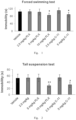
- Table 5 Effect of some compounds of the present invention and some natural products on the forced swimming immobility time of ICR mice Group TST cumulative immobility time (mean ⁇ SD, s) blank control group 118.1 ⁇ 41.9 timosaponin A1 86.3 ⁇ 47.1 timosaponin A3 100.8 ⁇ 43.7 sarsasapogenin 91.5 ⁇ 45.8 3-cyclohexyl ureidosarsasapogenin (Example 20) 62.7 ⁇ 35.6* compound C-11 58.9 ⁇ 22.4** compound C-12 57.0 ⁇ 31.5* "*" indicates P ⁇ 0.05; "**" indicates P ⁇ 0.01.
- Tail suspension test (TST) to investigate the antidepressant activity of some compounds and some natural products of the present invention
- mice Male ICR mice (body weight, 20 ⁇ 2 g) used in the experiment were purchased from the Experimental Animal Center of Shanghai Institute of Materia Medica, Chinese Academy of Sciences. They were free access to water and kept at room temperature (23 ⁇ 2) °C in natural light. All mice were randomly divided into a blank control group and a test group, with 10 mice in each group and 5 mice/cage. The experiment was started after 3 days of adaptation in the breeding environment. The mice were fasted for 12 hours before the experiment but free access to water. The specific administration method was gavage administration, and the administration dose was 10 mg/Kg, and the blank control group was given an equal volume of 0.5% CMC-Na.
- mice were continuously administered for 6 days, and tested 1 hour after the last administration. Firstly, the spontaneous activity of the mice was measured by the open field method, that is, the mice were individually placed in a cylindrical glass jar for 4 minutes, and the number of lifting arms within the last 2 minutes was recorded. Then the tail of the mice was stick onto the horizontal bar by the tape at 2 cm from the tip of the tail, and the animal eyesight was separated by the surrounding plates. The horizontal bar was about 25 cm from the ground, so that the mouse was about 10 cm from the ground, and the timing was 6 min. The cumulative immobility time within the last 4 minutes was recorded. Each group of mice was operated in parallel.
- Statistical analysis was performed using t-test to determine whether it was significant. Firstly, the t-test was performed on the index of autonomous movement, and P>0.05 indicated that the autonomous movements of the mice were not affected, so as to avoid the interference of the central stimulant. Then, the t-test was performed on the experimental index of tail suspension test to determine whether it had antidepressant effect.
- Table 9 Effect of some compounds of the present invention and some natural products on the immobility time of ICR mice in TST Group TST cumulative immobility time (mean ⁇ SD, s) blank control group 92.0 ⁇ 26.9 timosaponin A1 71.9 ⁇ 30.6 timosaponin A3 60.6 ⁇ 25.4* sarsasapogenin 85.4 ⁇ 33.6 3-cyclohexyl ureidosarsasapogenin (Example 20) 55.5 ⁇ 42.7* compound C-11 56.9 ⁇ 16.6** compound C-12 60.0 ⁇ 32.2* "*" indicates P ⁇ 0.05; "**" indicates P ⁇ 0.01.
- the anti-depressant comparison test results of some compounds of the present invention and some natural products showed that the naturally occurring spirostanol timosaponins, timosaponin A1 and sarsasapogenin had no antidepressant effect on both animal models; and timosaponin A3 was only effective in the tail-suspension model, but had no effect on the forced swimming model. It can be seen that the natural product, timosaponin A3, was not very effective for antidepression and had significant toxicity ( Acta Pharmacologica Sinica 2014; 35 (9): 1188-1198 ).
- the compounds of the invention showed significant antidepressant activity in both animal models.
- both compound C-12 and 3-cyclohexylureidosarsasapogenin (Example 20) of the present invention showed significant antidepressant activity (P ⁇ 0.05), and compound C-11 had extremely significant antidepressant activity (P ⁇ 0.01).
- both compound C-12 and 3-cyclohexylureidosarsasapogenin (Example 20) of the present invention showed significant antidepressant activity (P ⁇ 0.05), and compound C-11 had extremely significant antidepressant activity (P ⁇ 0.01). No significant toxicity was observed for the compounds C-11, 12 and 3-cyclohexylureidosarsasapogenin of the present invention (Example 20).
- compound C-13, compound C-23, compound C-5, compound C-7, compound C-19, and compound C-20 of the present invention also had significant or certain antidepressant activity.
- compound C-49 of the present invention showed significant antidepressant activity (P ⁇ 0.05) in the forced swimming model.
- both compound C-35 and compound C-49 of the present invention showed significant antidepressant activity (P ⁇ 0.05).
- compound C-49 showed significant antidepressant activity in both animal models.
- mice were placed in a cylindrical jar 24 hours before administration to accommodate the underwater environment for 15 min.
- animals were administered twice and administered orally 4 h and 1 h before the behavioral test.
- the mice were individually placed in a cylindrical glass jar, timed for 6 minutes, and the number of arm lift was recorded within the last 2 minutes.
- the mice were then placed in a cylindrical glass jar having 30 cm high and 20 cm in diameter.
- the water depth in the glass jar was 15 cm (for the rat, water depth was 20 cm), so that the animal could not escape the glass jar, and the feet and tail did not contact with the bottom of the jar. Water temperature was 23 °C -25 °C. After the mice entered into the water, a 6-minute video was taken.
- mice On the day of the behavioral test, animals were dosed twice and administered orally 4 h and 1 h before the behavioral test. During the experiment, the tail of the mouse was hung on a tail suspension test stand about 15 cm away from the ground with a tape or a clip at about 1 cm away from the tail end. The mice struggled to overcome the abnormal posture, but appeared intermittent immobility after a period of activity showing disappointment state. The experimental time for each group was 6 minutes. Since most of the mice struggled actively for the first two minutes, the immobility time within the last four minutes was recorded.
- the rats were placed in a cylindrical jar 24 hours before administration to accommodate the underwater environment for 15 min. On the day of the behavioral test, animals were administered twice and administered orally 4 h and 1 h before the behavioral test. The rats were individually placed in a cylindrical glass jar, timed for 6 minutes, and the number of arm lift was recorded within the last 2 minutes. The rats were then placed in a cylindrical glass jar having 30 cm high and 20 cm in diameter. The water depth in the glass jar was 20 cm, so that the animal could not escape the glass jar, and the feet and tail did not contact with the bottom of the jar. Water temperature was 23 °C -25 °C.
- mice were dosed twice and administered orally 4 h and 1 h before the behavioral test.
- the tail of the rat was hung on a tail suspension test stand about 15 cm away from the ground with a tape or a clip at about 1 cm away from the tail end.
- the rats struggled to overcome the abnormal posture, but appeared intermittent immobility after a period of activity showing disappointment state.
- the experimental time for each group was 6 minutes. Since most of the rats struggled actively for the first two minutes, the immobility time within the last four minutes was recorded.
- the effective dose of C-11 was small, the doses of 1.73mg/kg and 3.46mg/kg could significantly reduce the immobility time of rats in forced swimming test, and the oral dose of 3.46 mg/kg could significantly increases the wall climbing time (*p ⁇ 0.05, **p ⁇ 0.01 vs. vehicle group).
- mice Male CD-1 aged 4-6 months mice which had passed childbearing age were raised separately, allowed to eat freely and adapt to the environment for about one week. Male C57 mice (aged 8-20 weeks differently) were used to screen for aggressive CD-1 mice. The mice screened by C57 were placed directly in the cage of CD-1 for 3 minutes, and the latency period for CD-1 to start showing offensive was recorded, and then the mice screened by C57 were moved out. For each CD-1 mouse, the same C57 was used to screen it three times a day, and different C57-selected mice were selected every day for a total of three days of screening.
- mice having offensive were selected based on the aggressive latency period of each CD-1 mouse, wherein CD-1 mouse must exhibit attacking in at least two consecutive sessions within three 3-minute contact sessions of each day and it must exhibit less than 1 minute of aggressive latency period during each 3-minute contact session.
- each C57 test mouse was exposed to different CD-1 aggressive mice for 10 consecutive days, 10 minutes each day. During transient exposure, all test mice exhibited stress and compliance characteristics including vocalization, escape response, and compliance posture. After 10 minutes of contact, the test mice were isolated from the invaders. Test mice and aggressive mice were placed in adjacent sections of the same squirrel cage, separated by a porous transparent plastic baffle, allowing test mice to be exposed under a threatening chronic stress stimulation for the next 24 hours.
- SI ratio time for the mouse in the interaction area when the aggressor exists / time for the mouse in the interaction area when the aggressor is absent. If the SI ratio was less than 1, it indicated that the test mice had less time in the interactive area in the presence of the invader than in the absence of the aggressor, and it was used as criteria and threshold for identifying susceptible mice. All selected test mice and control mice were then housed individually for 3 weeks.
- mice were randomly divided into three groups: DEFEAT depression model group was administered by gavage with 0.5% CMC-Na every day, C-11 administration group was administered by gavage with 10 mg/kg C-11 every day, and the FLX administration group was administered with 10 mg/kg fluoxetine intraperitoneally every day.
- the mice in the vehicle group were administered by gavage with 0.5% CMC-Na every day.
- the SI ratio was assessed once a week.
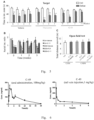
- Fig. 5A illustrated the pharmacodynamic evaluation of mouse model of social defeated stress, and the mouse social time was calculated.
- the results showed that C-11 significantly increased the social time of the mice during the second week of administration, while fluoxetine did not work during the third week of administration.
- Fig. 5B showed the social proportion of mice, the larger the value, the better the social behavior of the animals.
- C-11 could effectively increase the social activity of mice in the first week of administration, while fluoxetine was not effective after three weeks of administration.
- Fig. 5C showed the results of the open field experiment, and there was no significant change in the moving distance between the animals in each group, suggesting that there was no difference in the exercise ability of each group of animals, and it would not affect social behavior.
- the specific experimental procedures were as follows.
- the healthy male SD rats (about 270 g) were fasted for 10 h before administration, and were free to drink water.
- Compound C-49 (CMC-Na solvent suspension) was administered by gavage at a dose of 100 mg/kg rat body weight.
- the tail vein was injected with C-49 (a solution was prepared with 10% ethanol/15% Tween 80/75% normal saline) at a dose of 1 mg/kg rat body weight.
- the plasma was placed in a heparin-coated centrifuge tube, centrifuged for 10 min (8000 r), and the supernatant was taken and stored in a -80 °C refrigerator. After acetonitrile precipitation treatment, it was detected by HPLC-QQQ.
- the experiment results showed that the plasma concentration was high after the rats were orally administered with C-49 (100 mg/kg), C max and AUC were 250.8 ng/mL and 3115.3 h*ng/mL, respectively, and T 1/2 and MRT were 9.7 and 13.6 h, respectively.
- C-49 (1mg/kg) was injected into the tail vein of rats, the plasma concentration was low, C max and AUC were 284.7 ng/mL and 293.0 h*ng/mL, respectively, and T 1/2 and MRT were 9.7 and 13.6h, respectively.
- the bioavailability of C-49 was calculated to be 11.1% by comparing the AUC/Does of C-49 administered orally and injected tail vein in rats.
- the ethanol solution was administered to the mouse to block the memory reproduction process of the animal, resulting in memory reproduction disorder.
- mice 16-18 g were purchased from Shanghai Sippr-BK laboratory animal Co. Ltd..
- Animal feeding Animals were fed with standard sterilized rat feed, animal drinking water was supplied by drinking water bottle, and animals were free to drink water.
- Animal raising Each cage contained 10 animals. The animals were kept at room temperature of 20 °C to 22 °C, humidity of 40% to 70%, and illuminated for 12 hours and then kept in darkness. The padding was replaced at least twice a week, and the feeding box was replaced at the same time. When there was an abnormal situation, the feeding box could be replaced at any time. Sterile water bottles and bottle plugs were changed every day and the cage was disinfected once every two weeks. All the cages were autoclaved after being washed.
- mice 40 male mice were randomly divided into 4 groups by Excel, and each group contained 10 animals.
- the mice in group 1 (blank group) and mice in group 2 (model group) were orally administered (i.g.) with drinking water daily.
- the mice in group 3 (positive drug group) were administered (i.g.) with 1.6 mg/kg of donepezil, and the mice in group 4 were administered intragastrically with the corresponding C-49 solution at a dose of 15 mg/kg, once a day, 0.2 mL/10 g body weight/time, and continuously administered for 3 weeks.
- mice were placed in a dark avoidance box, and placed in the bright room with the back facing the hole.
- the video analysis device was activated, and the animal passed through the hole into the dark room and received an electric shock, and the timing was automatically stopped.
- the mice were removed and the screen analysis would record the time required for each mouse to experience an electric shock from the bright room to the dark room, which was the latency period.
- the test was carried out, and 45% ethanol solution (0.1 ml/10 g) was orally administered 30 min before the test.
- the video analysis system would automatically record all relevant data of the animal. Data were expressed as mean ⁇ standard deviation ( x ⁇ s), and data difference statistics were analyzed by one-way variance (ANOVA) or X 2 test. The difference between groups was judged by P ⁇ 0.05.
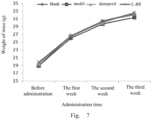
- mice were weighed and recorded weekly during the period. All animals showed no abnormal weight gain within 21 days of the administration period. The growth of animal weight was shown in Figure 7 .
- Table 15 The experimental results of the candidate drug C-49 administered to mice for memory reproduction disorder caused by ethanol for three consecutive weeks were shown in Table 15. Table 15.
Landscapes
- Health & Medical Sciences (AREA)
- Chemical & Material Sciences (AREA)
- Organic Chemistry (AREA)
- General Health & Medical Sciences (AREA)
- Life Sciences & Earth Sciences (AREA)
- Engineering & Computer Science (AREA)
- Veterinary Medicine (AREA)
- Public Health (AREA)
- Medicinal Chemistry (AREA)
- Animal Behavior & Ethology (AREA)
- Pharmacology & Pharmacy (AREA)
- General Chemical & Material Sciences (AREA)
- Bioinformatics & Cheminformatics (AREA)
- Nuclear Medicine, Radiotherapy & Molecular Imaging (AREA)
- Chemical Kinetics & Catalysis (AREA)
- Neurology (AREA)
- Biomedical Technology (AREA)
- Neurosurgery (AREA)
- Immunology (AREA)
- Psychiatry (AREA)
- Diabetes (AREA)
- Pain & Pain Management (AREA)
- Molecular Biology (AREA)
- Genetics & Genomics (AREA)
- Biotechnology (AREA)
- Biochemistry (AREA)
- Psychology (AREA)
- Oncology (AREA)
- Hematology (AREA)
- Obesity (AREA)
- Endocrinology (AREA)
- Transplantation (AREA)
- Rheumatology (AREA)
- Communicable Diseases (AREA)
- Emergency Medicine (AREA)
- Epidemiology (AREA)
- Hospice & Palliative Care (AREA)
- Pharmaceuticals Containing Other Organic And Inorganic Compounds (AREA)
- Acyclic And Carbocyclic Compounds In Medicinal Compositions (AREA)
- Steroid Compounds (AREA)
Applications Claiming Priority (2)
| Application Number | Priority Date | Filing Date | Title |
|---|---|---|---|
| CN201611260514.6A CN108264535A (zh) | 2016-12-30 | 2016-12-30 | 一种抗抑郁化合物及其制备方法和应用 |
| PCT/CN2017/120134 WO2018121770A1 (zh) | 2016-12-30 | 2017-12-29 | 一种抗抑郁化合物及其制备方法和应用 |
Publications (3)
| Publication Number | Publication Date |
|---|---|
| EP3564253A1 EP3564253A1 (en) | 2019-11-06 |
| EP3564253A4 EP3564253A4 (en) | 2020-07-29 |
| EP3564253B1 true EP3564253B1 (en) | 2024-10-30 |
Family
ID=62707894
Family Applications (1)
| Application Number | Title | Priority Date | Filing Date |
|---|---|---|---|
| EP17889516.5A Active EP3564253B1 (en) | 2016-12-30 | 2017-12-29 | Antidepressant compound and preparation method and application thereof |
Country Status (5)
| Country | Link |
|---|---|
| US (1) | US11142543B2 (enExample) |
| EP (1) | EP3564253B1 (enExample) |
| JP (1) | JP6901569B2 (enExample) |
| CN (2) | CN108264535A (enExample) |
| WO (1) | WO2018121770A1 (enExample) |
Families Citing this family (10)
| Publication number | Priority date | Publication date | Assignee | Title |
|---|---|---|---|---|
| CN109988218B (zh) * | 2017-12-29 | 2022-11-25 | 中国科学院上海药物研究所 | 一种菝葜皂苷元衍生物及其制备方法和应用 |
| WO2019129176A1 (zh) * | 2017-12-29 | 2019-07-04 | 中国科学院上海药物研究所 | 一种菝葜皂苷元衍生物及其制备方法和应用 |
| CN109206472A (zh) * | 2018-09-27 | 2019-01-15 | 华东理工大学 | 薯蓣皂苷元衍生物、其药物组合物及其应用 |
| CN109053854B (zh) * | 2018-09-29 | 2021-05-14 | 深圳清博汇能医药科技有限公司 | 基于知母菝契皂苷元结构的衍生物、药物组合物及其应用 |
| CN112142817B (zh) * | 2019-06-26 | 2021-10-22 | 中国科学院上海药物研究所 | 一种抗抑郁甾体化合物 |
| CN113831381A (zh) * | 2020-06-24 | 2021-12-24 | 中国科学院上海药物研究所 | 一种用于治疗抑郁症的甾体化合物 |
| CN113831382A (zh) * | 2020-06-24 | 2021-12-24 | 中国科学院上海药物研究所 | 一种甾体化合物 |
| CN113292629B (zh) * | 2021-06-21 | 2022-04-26 | 西南民族大学 | 薯蓣皂苷元羟肟酸类衍生物及其制备方法和应用 |
| CN116621912B (zh) * | 2022-02-18 | 2026-07-10 | 北京清博汇能医药科技有限公司 | 基于菝契皂苷元结构的衍生物及其药物组合物的用途 |
| EP4477225A4 (en) * | 2022-02-18 | 2026-01-21 | Beijing Phytovent Pharmaceutical Tech Co Ltd | USE OF A SARSASAPOGENIN STRUCTURE-BASED DERIVATIVE AND ASSOCIATED PHARMACEUTICAL COMPOSITION |
Family Cites Families (13)
| Publication number | Priority date | Publication date | Assignee | Title |
|---|---|---|---|---|
| GB9923077D0 (en) | 1999-09-29 | 1999-12-01 | Phytopharm Plc | Sapogenin derivatives and their use |
| GB0000228D0 (en) | 2000-01-06 | 2000-03-01 | Phytopharm Plc | Fluoro substituted sapogenins and their use |
| PL213697B1 (pl) * | 2002-03-27 | 2013-04-30 | Phytopharm Plc | Substancje czynne do stosowania w leczeniu chorób, zwlaszcza chorób neurodegeneracyjnych |
| WO2005051381A1 (en) * | 2003-11-26 | 2005-06-09 | Biovitrum Ab | Substituted urea-octatydroindols as antagonists of melanin concentrating hormone receptor 1 (MCH1R) |
| WO2005051380A1 (en) | 2003-11-26 | 2005-06-09 | Biovitrum Ab | Substituted urea-octahydroindols as antagonists of melanin concentrating hormone receptor 1 (mch1r) |
| US20050245495A1 (en) * | 2004-04-07 | 2005-11-03 | Chen Zhao | Azacyclosteroid histamine-3 receptor ligands |
| US7879834B2 (en) | 2004-08-19 | 2011-02-01 | Vertex Pharmaceuticals Incorporated | Spiroindoline modulators of muscarinic receptors |
| CN101214253B (zh) | 2008-01-07 | 2011-09-21 | 中国人民解放军第二军医大学 | 知母皂苷b-ⅱ用于制备抗抑郁产品的用途 |
| WO2009109477A1 (en) | 2008-03-05 | 2009-09-11 | F. Hoffmann-La Roche Ag | 2-aminoquinolines |
| CN101768202B (zh) | 2009-02-18 | 2013-10-30 | 沈阳药科大学 | 知母中菝葜皂苷元及其衍生物的制备方法及其医药新用途 |
| CN102924559B (zh) * | 2012-11-16 | 2015-10-28 | 沈阳药科大学 | 菝葜皂苷元衍生物及其制备和应用 |
| WO2015163318A1 (ja) * | 2014-04-25 | 2015-10-29 | レジリオ株式会社 | アルツハイマー病の治療剤を含む、神経細胞の軸索の機能不全が関与する疾患の治療剤 |
| WO2019129176A1 (zh) | 2017-12-29 | 2019-07-04 | 中国科学院上海药物研究所 | 一种菝葜皂苷元衍生物及其制备方法和应用 |
-
2016
- 2016-12-30 CN CN201611260514.6A patent/CN108264535A/zh active Pending
-
2017
- 2017-12-29 US US16/474,668 patent/US11142543B2/en active Active
- 2017-12-29 CN CN201780081277.3A patent/CN110121502B/zh active Active
- 2017-12-29 WO PCT/CN2017/120134 patent/WO2018121770A1/zh not_active Ceased
- 2017-12-29 EP EP17889516.5A patent/EP3564253B1/en active Active
- 2017-12-29 JP JP2019536014A patent/JP6901569B2/ja active Active
Also Published As
| Publication number | Publication date |
|---|---|
| WO2018121770A1 (zh) | 2018-07-05 |
| CN110121502B (zh) | 2022-09-23 |
| JP2020503341A (ja) | 2020-01-30 |
| JP6901569B2 (ja) | 2021-07-14 |
| EP3564253A1 (en) | 2019-11-06 |
| EP3564253A4 (en) | 2020-07-29 |
| US20200385418A1 (en) | 2020-12-10 |
| US11142543B2 (en) | 2021-10-12 |
| CN110121502A (zh) | 2019-08-13 |
| CN108264535A (zh) | 2018-07-10 |
Similar Documents
| Publication | Publication Date | Title |
|---|---|---|
| EP3564253A1 (en) | Antidepressant compound and preparation method and application thereof | |
| CN115427395A (zh) | 用于治疗cns病症的作为血清素能致幻剂的赛洛辛衍生物 | |
| EP3503879B1 (en) | Composition comprising (a) a dual agent acting as a 5-ht2a receptor antagonist and cyp2d6 inhibitor and (b) an nmda receptor antagonist for use in the treatment of diseases involving glucose | |
| JP2019116515A (ja) | 抗精神病薬物およびvmat2阻害剤を含む医薬組成物およびその使用 | |
| CN115380028A (zh) | 用于治疗cns病症的作为血清素能致幻剂的3-吡咯烷-吲哚衍生物 | |
| KR19990067698A (ko) | 세로토닌 재흡수 억제제의 위장 효과를 극복하기 위한 5ht4수용체 길항제의 용도 | |
| EA023751B1 (ru) | Набор, композиция, продукт или лекарственное средство для лечения нарушения познавательной способности | |
| KR20210038596A (ko) | 라노 스테롤 전구 약물 화합물의 결정 형태 및 이의 용도 | |
| EP3394083A1 (en) | Cftr regulators and methods of use thereof | |
| JP2025511974A (ja) | がんの治療のためのラクテート/ATP産生阻害剤としてのN-(3-(ベンゾ[b]チオフェン-2-カルボキシアミド)-フェニル)-2,3-ジヒドロベンゾ[b][1,4]ジオキシン-6-カルボキシアミド誘導体及び関連化合物 | |
| WO2017112951A1 (en) | Cftr regulators and methods of use thereof | |
| WO2019129176A1 (zh) | 一种菝葜皂苷元衍生物及其制备方法和应用 | |
| EP3233077A1 (en) | Dopamine d2 receptor ligands | |
| CN109988218B (zh) | 一种菝葜皂苷元衍生物及其制备方法和应用 | |
| JP2016508489A (ja) | プロトパナキサジオール誘導体、その製造方法及びその応用 | |
| WO2016191316A1 (en) | Modulation of drug-induced cardiotoxicity | |
| EP3233799A1 (en) | Dopamine d2 receptor ligands | |
| EP4071140B1 (en) | Cftr regulators and methods of use thereof | |
| CN100415728C (zh) | 烷醇哌嗪衍生物光学异构体或其盐及其制备药物的应用 | |
| WO2014159501A2 (en) | Processes for preparing tetrahydroisoquinolines | |
| US20170196883A1 (en) | Derivatives of 7-fluoro-8-chloro-5h-dibenzo [b,e,] [1,4] diazepine and use thereof | |
| CN107586281A (zh) | 芳烷杂环类衍生物及其在多靶点抗抑郁症中的应用 | |
| EP2784077A1 (en) | Norepinephrine and selective serotonin receptor blocker and use thereof | |
| CN112142817B (zh) | 一种抗抑郁甾体化合物 | |
| EP0460358B1 (en) | Agent for treating disorders from cerebral neuro-degeneration |
Legal Events
| Date | Code | Title | Description |
|---|---|---|---|
| STAA | Information on the status of an ep patent application or granted ep patent |
Free format text: STATUS: THE INTERNATIONAL PUBLICATION HAS BEEN MADE |
|
| PUAI | Public reference made under article 153(3) epc to a published international application that has entered the european phase |
Free format text: ORIGINAL CODE: 0009012 |
|
| STAA | Information on the status of an ep patent application or granted ep patent |
Free format text: STATUS: REQUEST FOR EXAMINATION WAS MADE |
|
| 17P | Request for examination filed |
Effective date: 20190718 |
|
| AK | Designated contracting states |
Kind code of ref document: A1 Designated state(s): AL AT BE BG CH CY CZ DE DK EE ES FI FR GB GR HR HU IE IS IT LI LT LU LV MC MK MT NL NO PL PT RO RS SE SI SK SM TR |
|
| AX | Request for extension of the european patent |
Extension state: BA ME |
|
| DAV | Request for validation of the european patent (deleted) | ||
| DAX | Request for extension of the european patent (deleted) | ||
| A4 | Supplementary search report drawn up and despatched |
Effective date: 20200630 |
|
| RIC1 | Information provided on ipc code assigned before grant |
Ipc: A61P 25/28 20060101ALI20200624BHEP Ipc: A61P 25/14 20060101ALI20200624BHEP Ipc: A61P 3/10 20060101ALI20200624BHEP Ipc: A61P 35/00 20060101ALI20200624BHEP Ipc: A61P 25/16 20060101ALI20200624BHEP Ipc: A61P 3/06 20060101ALI20200624BHEP Ipc: A61P 31/04 20060101ALI20200624BHEP Ipc: A61K 31/58 20060101ALI20200624BHEP Ipc: A61P 37/06 20060101ALI20200624BHEP Ipc: A61P 25/24 20060101ALI20200624BHEP Ipc: A61P 35/04 20060101ALI20200624BHEP Ipc: A61P 37/02 20060101ALI20200624BHEP Ipc: A61P 25/18 20060101ALI20200624BHEP Ipc: A61P 25/22 20060101ALI20200624BHEP Ipc: A61P 29/00 20060101ALI20200624BHEP Ipc: C07J 71/00 20060101AFI20200624BHEP |
|
| STAA | Information on the status of an ep patent application or granted ep patent |
Free format text: STATUS: EXAMINATION IS IN PROGRESS |
|
| 17Q | First examination report despatched |
Effective date: 20230424 |
|
| GRAP | Despatch of communication of intention to grant a patent |
Free format text: ORIGINAL CODE: EPIDOSNIGR1 |
|
| STAA | Information on the status of an ep patent application or granted ep patent |
Free format text: STATUS: GRANT OF PATENT IS INTENDED |
|
| INTG | Intention to grant announced |
Effective date: 20240326 |
|
| GRAS | Grant fee paid |
Free format text: ORIGINAL CODE: EPIDOSNIGR3 |
|
| GRAJ | Information related to disapproval of communication of intention to grant by the applicant or resumption of examination proceedings by the epo deleted |
Free format text: ORIGINAL CODE: EPIDOSDIGR1 |
|
| GRAL | Information related to payment of fee for publishing/printing deleted |
Free format text: ORIGINAL CODE: EPIDOSDIGR3 |
|
| STAA | Information on the status of an ep patent application or granted ep patent |
Free format text: STATUS: EXAMINATION IS IN PROGRESS |
|
| INTC | Intention to grant announced (deleted) | ||
| GRAP | Despatch of communication of intention to grant a patent |
Free format text: ORIGINAL CODE: EPIDOSNIGR1 |
|
| STAA | Information on the status of an ep patent application or granted ep patent |
Free format text: STATUS: GRANT OF PATENT IS INTENDED |
|
| GRAA | (expected) grant |
Free format text: ORIGINAL CODE: 0009210 |
|
| STAA | Information on the status of an ep patent application or granted ep patent |
Free format text: STATUS: THE PATENT HAS BEEN GRANTED |
|
| INTG | Intention to grant announced |
Effective date: 20240909 |
|
| AK | Designated contracting states |
Kind code of ref document: B1 Designated state(s): AL AT BE BG CH CY CZ DE DK EE ES FI FR GB GR HR HU IE IS IT LI LT LU LV MC MK MT NL NO PL PT RO RS SE SI SK SM TR |
|
| REG | Reference to a national code |
Ref country code: GB Ref legal event code: FG4D |
|
| REG | Reference to a national code |
Ref country code: CH Ref legal event code: EP |
|
| REG | Reference to a national code |
Ref country code: DE Ref legal event code: R096 Ref document number: 602017085850 Country of ref document: DE |
|
| REG | Reference to a national code |
Ref country code: IE Ref legal event code: FG4D |
|
| REG | Reference to a national code |
Ref country code: LT Ref legal event code: MG9D |
|
| REG | Reference to a national code |
Ref country code: NL Ref legal event code: MP Effective date: 20241030 |
|
| PG25 | Lapsed in a contracting state [announced via postgrant information from national office to epo] |
Ref country code: IS Free format text: LAPSE BECAUSE OF FAILURE TO SUBMIT A TRANSLATION OF THE DESCRIPTION OR TO PAY THE FEE WITHIN THE PRESCRIBED TIME-LIMIT Effective date: 20250228 Ref country code: HR Free format text: LAPSE BECAUSE OF FAILURE TO SUBMIT A TRANSLATION OF THE DESCRIPTION OR TO PAY THE FEE WITHIN THE PRESCRIBED TIME-LIMIT Effective date: 20241030 Ref country code: PT Free format text: LAPSE BECAUSE OF FAILURE TO SUBMIT A TRANSLATION OF THE DESCRIPTION OR TO PAY THE FEE WITHIN THE PRESCRIBED TIME-LIMIT Effective date: 20250228 |
|
| PG25 | Lapsed in a contracting state [announced via postgrant information from national office to epo] |
Ref country code: FI Free format text: LAPSE BECAUSE OF FAILURE TO SUBMIT A TRANSLATION OF THE DESCRIPTION OR TO PAY THE FEE WITHIN THE PRESCRIBED TIME-LIMIT Effective date: 20241030 Ref country code: NL Free format text: LAPSE BECAUSE OF FAILURE TO SUBMIT A TRANSLATION OF THE DESCRIPTION OR TO PAY THE FEE WITHIN THE PRESCRIBED TIME-LIMIT Effective date: 20241030 |
|
| REG | Reference to a national code |
Ref country code: AT Ref legal event code: MK05 Ref document number: 1736800 Country of ref document: AT Kind code of ref document: T Effective date: 20241030 |
|
| PG25 | Lapsed in a contracting state [announced via postgrant information from national office to epo] |
Ref country code: BG Free format text: LAPSE BECAUSE OF FAILURE TO SUBMIT A TRANSLATION OF THE DESCRIPTION OR TO PAY THE FEE WITHIN THE PRESCRIBED TIME-LIMIT Effective date: 20241030 |
|
| PG25 | Lapsed in a contracting state [announced via postgrant information from national office to epo] |
Ref country code: ES Free format text: LAPSE BECAUSE OF FAILURE TO SUBMIT A TRANSLATION OF THE DESCRIPTION OR TO PAY THE FEE WITHIN THE PRESCRIBED TIME-LIMIT Effective date: 20241030 |
|
| PG25 | Lapsed in a contracting state [announced via postgrant information from national office to epo] |
Ref country code: NO Free format text: LAPSE BECAUSE OF FAILURE TO SUBMIT A TRANSLATION OF THE DESCRIPTION OR TO PAY THE FEE WITHIN THE PRESCRIBED TIME-LIMIT Effective date: 20250130 |
|
| PG25 | Lapsed in a contracting state [announced via postgrant information from national office to epo] |
Ref country code: LV Free format text: LAPSE BECAUSE OF FAILURE TO SUBMIT A TRANSLATION OF THE DESCRIPTION OR TO PAY THE FEE WITHIN THE PRESCRIBED TIME-LIMIT Effective date: 20241030 Ref country code: GR Free format text: LAPSE BECAUSE OF FAILURE TO SUBMIT A TRANSLATION OF THE DESCRIPTION OR TO PAY THE FEE WITHIN THE PRESCRIBED TIME-LIMIT Effective date: 20250131 Ref country code: AT Free format text: LAPSE BECAUSE OF FAILURE TO SUBMIT A TRANSLATION OF THE DESCRIPTION OR TO PAY THE FEE WITHIN THE PRESCRIBED TIME-LIMIT Effective date: 20241030 |
|
| PG25 | Lapsed in a contracting state [announced via postgrant information from national office to epo] |
Ref country code: PL Free format text: LAPSE BECAUSE OF FAILURE TO SUBMIT A TRANSLATION OF THE DESCRIPTION OR TO PAY THE FEE WITHIN THE PRESCRIBED TIME-LIMIT Effective date: 20241030 |
|
| PG25 | Lapsed in a contracting state [announced via postgrant information from national office to epo] |
Ref country code: RS Free format text: LAPSE BECAUSE OF FAILURE TO SUBMIT A TRANSLATION OF THE DESCRIPTION OR TO PAY THE FEE WITHIN THE PRESCRIBED TIME-LIMIT Effective date: 20250130 |
|
| PG25 | Lapsed in a contracting state [announced via postgrant information from national office to epo] |
Ref country code: SM Free format text: LAPSE BECAUSE OF FAILURE TO SUBMIT A TRANSLATION OF THE DESCRIPTION OR TO PAY THE FEE WITHIN THE PRESCRIBED TIME-LIMIT Effective date: 20241030 |
|
| PG25 | Lapsed in a contracting state [announced via postgrant information from national office to epo] |
Ref country code: MC Free format text: LAPSE BECAUSE OF FAILURE TO SUBMIT A TRANSLATION OF THE DESCRIPTION OR TO PAY THE FEE WITHIN THE PRESCRIBED TIME-LIMIT Effective date: 20241030 |
|
| PG25 | Lapsed in a contracting state [announced via postgrant information from national office to epo] |
Ref country code: DK Free format text: LAPSE BECAUSE OF FAILURE TO SUBMIT A TRANSLATION OF THE DESCRIPTION OR TO PAY THE FEE WITHIN THE PRESCRIBED TIME-LIMIT Effective date: 20241030 |
|
| PG25 | Lapsed in a contracting state [announced via postgrant information from national office to epo] |
Ref country code: EE Free format text: LAPSE BECAUSE OF FAILURE TO SUBMIT A TRANSLATION OF THE DESCRIPTION OR TO PAY THE FEE WITHIN THE PRESCRIBED TIME-LIMIT Effective date: 20241030 |
|
| PG25 | Lapsed in a contracting state [announced via postgrant information from national office to epo] |
Ref country code: RO Free format text: LAPSE BECAUSE OF FAILURE TO SUBMIT A TRANSLATION OF THE DESCRIPTION OR TO PAY THE FEE WITHIN THE PRESCRIBED TIME-LIMIT Effective date: 20241030 |
|
| PG25 | Lapsed in a contracting state [announced via postgrant information from national office to epo] |
Ref country code: SK Free format text: LAPSE BECAUSE OF FAILURE TO SUBMIT A TRANSLATION OF THE DESCRIPTION OR TO PAY THE FEE WITHIN THE PRESCRIBED TIME-LIMIT Effective date: 20241030 |
|
| PG25 | Lapsed in a contracting state [announced via postgrant information from national office to epo] |
Ref country code: CZ Free format text: LAPSE BECAUSE OF FAILURE TO SUBMIT A TRANSLATION OF THE DESCRIPTION OR TO PAY THE FEE WITHIN THE PRESCRIBED TIME-LIMIT Effective date: 20241030 |
|
| PG25 | Lapsed in a contracting state [announced via postgrant information from national office to epo] |
Ref country code: IT Free format text: LAPSE BECAUSE OF FAILURE TO SUBMIT A TRANSLATION OF THE DESCRIPTION OR TO PAY THE FEE WITHIN THE PRESCRIBED TIME-LIMIT Effective date: 20241030 |
|
| REG | Reference to a national code |
Ref country code: CH Ref legal event code: PL Ref country code: DE Ref legal event code: R097 Ref document number: 602017085850 Country of ref document: DE |
|
| PG25 | Lapsed in a contracting state [announced via postgrant information from national office to epo] |
Ref country code: LU Free format text: LAPSE BECAUSE OF NON-PAYMENT OF DUE FEES Effective date: 20241229 |
|
| PLBE | No opposition filed within time limit |
Free format text: ORIGINAL CODE: 0009261 |
|
| STAA | Information on the status of an ep patent application or granted ep patent |
Free format text: STATUS: NO OPPOSITION FILED WITHIN TIME LIMIT |
|
| PG25 | Lapsed in a contracting state [announced via postgrant information from national office to epo] |
Ref country code: SE Free format text: LAPSE BECAUSE OF FAILURE TO SUBMIT A TRANSLATION OF THE DESCRIPTION OR TO PAY THE FEE WITHIN THE PRESCRIBED TIME-LIMIT Effective date: 20241030 |
|
| 26N | No opposition filed |
Effective date: 20250731 |
|
| REG | Reference to a national code |
Ref country code: BE Ref legal event code: MM Effective date: 20241231 |
|
| PG25 | Lapsed in a contracting state [announced via postgrant information from national office to epo] |
Ref country code: BE Free format text: LAPSE BECAUSE OF NON-PAYMENT OF DUE FEES Effective date: 20241231 |
|
| PG25 | Lapsed in a contracting state [announced via postgrant information from national office to epo] |
Ref country code: CH Free format text: LAPSE BECAUSE OF NON-PAYMENT OF DUE FEES Effective date: 20241231 |
|
| PG25 | Lapsed in a contracting state [announced via postgrant information from national office to epo] |
Ref country code: IE Free format text: LAPSE BECAUSE OF NON-PAYMENT OF DUE FEES Effective date: 20241229 |
|
| P01 | Opt-out of the competence of the unified patent court (upc) registered |
Free format text: CASE NUMBER: UPC_APP_0015670_3564253/2025 Effective date: 20251203 |
|
| PGFP | Annual fee paid to national office [announced via postgrant information from national office to epo] |
Ref country code: GB Payment date: 20260323 Year of fee payment: 9 |
|
| PGFP | Annual fee paid to national office [announced via postgrant information from national office to epo] |
Ref country code: DE Payment date: 20260319 Year of fee payment: 9 |
|
| PGFP | Annual fee paid to national office [announced via postgrant information from national office to epo] |
Ref country code: FR Payment date: 20260320 Year of fee payment: 9 |
|
| PG25 | Lapsed in a contracting state [announced via postgrant information from national office to epo] |
Ref country code: TR Free format text: LAPSE BECAUSE OF FAILURE TO SUBMIT A TRANSLATION OF THE DESCRIPTION OR TO PAY THE FEE WITHIN THE PRESCRIBED TIME-LIMIT Effective date: 20241030 |
|
| PG25 | Lapsed in a contracting state [announced via postgrant information from national office to epo] |
Ref country code: SI Free format text: LAPSE BECAUSE OF FAILURE TO SUBMIT A TRANSLATION OF THE DESCRIPTION OR TO PAY THE FEE WITHIN THE PRESCRIBED TIME-LIMIT Effective date: 20241030 |
|
| PG25 | Lapsed in a contracting state [announced via postgrant information from national office to epo] |
Ref country code: LT Free format text: LAPSE BECAUSE OF FAILURE TO SUBMIT A TRANSLATION OF THE DESCRIPTION OR TO PAY THE FEE WITHIN THE PRESCRIBED TIME-LIMIT Effective date: 20241030 |