EP3562825B1 - Oxazolderivate zur verwendung in der behandlung von krebs - Google Patents
Oxazolderivate zur verwendung in der behandlung von krebs Download PDFInfo
- Publication number
- EP3562825B1 EP3562825B1 EP17818247.3A EP17818247A EP3562825B1 EP 3562825 B1 EP3562825 B1 EP 3562825B1 EP 17818247 A EP17818247 A EP 17818247A EP 3562825 B1 EP3562825 B1 EP 3562825B1
- Authority
- EP
- European Patent Office
- Prior art keywords
- alkyl
- compound according
- compound
- lcms
- nmr
- Prior art date
- Legal status (The legal status is an assumption and is not a legal conclusion. Google has not performed a legal analysis and makes no representation as to the accuracy of the status listed.)
- Not-in-force
Links
- 0 CC(C)CCCC1C=CC(c(cc2)cc(C(C(c3c[o]c(*)n3)=C)=N)c2O)=CC1 Chemical compound CC(C)CCCC1C=CC(c(cc2)cc(C(C(c3c[o]c(*)n3)=C)=N)c2O)=CC1 0.000 description 27
- JGSFOVLLUJSXKI-OBXRKUNYSA-N C=CNc1nc(C(C(c(cc(cc2)/C(/C=N)=C/NCCC3CCNCCC3)c2N)=N)=O)c[o]1 Chemical compound C=CNc1nc(C(C(c(cc(cc2)/C(/C=N)=C/NCCC3CCNCCC3)c2N)=N)=O)c[o]1 JGSFOVLLUJSXKI-OBXRKUNYSA-N 0.000 description 1
- LCQSJQHNWGGKGW-UHFFFAOYSA-N CC(C)(C)OC(N(C)CC1CCN(Cc([s]2)ncc2Br)CC1)=O Chemical compound CC(C)(C)OC(N(C)CC1CCN(Cc([s]2)ncc2Br)CC1)=O LCQSJQHNWGGKGW-UHFFFAOYSA-N 0.000 description 1
- RPXIBBSHHYQVPT-UHFFFAOYSA-N CC(C)(C)OC(N(C)CCC[n]1ncc(Br)c1)=O Chemical compound CC(C)(C)OC(N(C)CCC[n]1ncc(Br)c1)=O RPXIBBSHHYQVPT-UHFFFAOYSA-N 0.000 description 1
- UMRASDXVLGSSED-UHFFFAOYSA-N CC(C)(C)OC(Nc1nc(C(Nc(cc(cc2)-c(cc3)cnc3F)c2Cl)=O)c[o]1)=O Chemical compound CC(C)(C)OC(Nc1nc(C(Nc(cc(cc2)-c(cc3)cnc3F)c2Cl)=O)c[o]1)=O UMRASDXVLGSSED-UHFFFAOYSA-N 0.000 description 1
- TZHCOBBMLMITRO-UHFFFAOYSA-N CC(C)(C)OC(Nc1nc(C(Nc(cc(cc2)-c(cn3)ccc3OC(CC3)CN3C(OC(C)(C)C)=O)c2Cl)=O)c[o]1)=O Chemical compound CC(C)(C)OC(Nc1nc(C(Nc(cc(cc2)-c(cn3)ccc3OC(CC3)CN3C(OC(C)(C)C)=O)c2Cl)=O)c[o]1)=O TZHCOBBMLMITRO-UHFFFAOYSA-N 0.000 description 1
- XDFKVFQXFYSCQM-UHFFFAOYSA-N CC(C)(C)OC(Nc1nc(C(Nc2cc(B3OC(C)(C)C(C)(C)O3)ccc2Cl)=O)c[o]1)=O Chemical compound CC(C)(C)OC(Nc1nc(C(Nc2cc(B3OC(C)(C)C(C)(C)O3)ccc2Cl)=O)c[o]1)=O XDFKVFQXFYSCQM-UHFFFAOYSA-N 0.000 description 1
- ONHTZVGIMYXRAT-JMIUGGIZSA-N CC(CCC1)CC/C1=C\CC1=C[IH]C(c(cc2)cc(CCC(C(C=C)/N=C(\C)/N)=O)c2Cl)=N1 Chemical compound CC(CCC1)CC/C1=C\CC1=C[IH]C(c(cc2)cc(CCC(C(C=C)/N=C(\C)/N)=O)c2Cl)=N1 ONHTZVGIMYXRAT-JMIUGGIZSA-N 0.000 description 1
- BXJHVFOVKIGRAN-UHFFFAOYSA-N CCC(C(C(C)C)NC)C=C Chemical compound CCC(C(C(C)C)NC)C=C BXJHVFOVKIGRAN-UHFFFAOYSA-N 0.000 description 1
- FBBCMKYDONDYJP-MRVPVSSYSA-N CCC([C@H]1N)=C1C(C)=C Chemical compound CCC([C@H]1N)=C1C(C)=C FBBCMKYDONDYJP-MRVPVSSYSA-N 0.000 description 1
- SNWZOWCCZGQOGX-UHFFFAOYSA-N CCCCCC=N Chemical compound CCCCCC=N SNWZOWCCZGQOGX-UHFFFAOYSA-N 0.000 description 1
- PKDQMOKKIZEPQO-UHFFFAOYSA-N CCCCN1CCN(C)CC1 Chemical compound CCCCN1CCN(C)CC1 PKDQMOKKIZEPQO-UHFFFAOYSA-N 0.000 description 1
- LCXGOCLJMHCEKC-UHFFFAOYSA-N CN(C)CC(N(CC1)CCC1[n]1ncc(-c(cc2NC(c3c[o]c(N)n3)=O)ccc2Cl)c1)=O Chemical compound CN(C)CC(N(CC1)CCC1[n]1ncc(-c(cc2NC(c3c[o]c(N)n3)=O)ccc2Cl)c1)=O LCXGOCLJMHCEKC-UHFFFAOYSA-N 0.000 description 1
- YELLCERAVPODJO-UHFFFAOYSA-N CN(C)CCCOc(nc1)ccc1-c(cc1)cc(NC(c2c[o]c(N)n2)=O)c1Cl Chemical compound CN(C)CCCOc(nc1)ccc1-c(cc1)cc(NC(c2c[o]c(N)n2)=O)c1Cl YELLCERAVPODJO-UHFFFAOYSA-N 0.000 description 1
- VQFUKZABULBWDH-UHFFFAOYSA-N CN(C)CCCOc1ncc(-c(cc2)cc(NC(c3c[o]c(N)n3)=O)c2SC)[s]1 Chemical compound CN(C)CCCOc1ncc(-c(cc2)cc(NC(c3c[o]c(N)n3)=O)c2SC)[s]1 VQFUKZABULBWDH-UHFFFAOYSA-N 0.000 description 1
- VWVQPIMPQZDKNS-UHFFFAOYSA-O CN(CC1)CCC1NC(C[NH2+]C=C(C=N)c(cc1)cc(NC(c2c[o]c(N)n2)=O)c1Cl)=O Chemical compound CN(CC1)CCC1NC(C[NH2+]C=C(C=N)c(cc1)cc(NC(c2c[o]c(N)n2)=O)c1Cl)=O VWVQPIMPQZDKNS-UHFFFAOYSA-O 0.000 description 1
- JMQFVZLTXNZSCO-UHFFFAOYSA-N CN(CC1)CCC1NCc(cc1)ccc1-c(cc1)cc(C(C(c2c[o]c(N)n2)=O)=N)c1Cl Chemical compound CN(CC1)CCC1NCc(cc1)ccc1-c(cc1)cc(C(C(c2c[o]c(N)n2)=O)=N)c1Cl JMQFVZLTXNZSCO-UHFFFAOYSA-N 0.000 description 1
- OHTWLXNDNAXMQL-UHFFFAOYSA-N CNC1CN(Cc2c[s]c(-c(cc3)cc(NC(c4c[o]c(N)n4)=O)c3Cl)n2)CCC1 Chemical compound CNC1CN(Cc2c[s]c(-c(cc3)cc(NC(c4c[o]c(N)n4)=O)c3Cl)n2)CCC1 OHTWLXNDNAXMQL-UHFFFAOYSA-N 0.000 description 1
- CCDHLWIXWILVTP-UHFFFAOYSA-N CNC1CN(Cc2ncc(-c(cc3NC(c4c[o]c(N)n4)=O)ccc3Cl)[s]2)CCC1 Chemical compound CNC1CN(Cc2ncc(-c(cc3NC(c4c[o]c(N)n4)=O)ccc3Cl)[s]2)CCC1 CCDHLWIXWILVTP-UHFFFAOYSA-N 0.000 description 1
- OCFTWEQEAQHUFX-UHFFFAOYSA-N CNCCCOc(nc1)ccc1-c(cc1)cc(NC(c2c[o]c(N)n2)=O)c1Cl Chemical compound CNCCCOc(nc1)ccc1-c(cc1)cc(NC(c2c[o]c(N)n2)=O)c1Cl OCFTWEQEAQHUFX-UHFFFAOYSA-N 0.000 description 1
- CRSLHFJHFDQSOO-UHFFFAOYSA-N C[N-]1CCN(CCC[n]2ncc(-c(cc3)cc(NC(c4c[o]c(N)n4)=O)c3Cl)c2)CC1 Chemical compound C[N-]1CCN(CCC[n]2ncc(-c(cc3)cc(NC(c4c[o]c(N)n4)=O)c3Cl)c2)CC1 CRSLHFJHFDQSOO-UHFFFAOYSA-N 0.000 description 1
- QEXZBGZROVORBP-UHFFFAOYSA-N Nc1nc(C(Nc(cc(cc2)-c(cn3)ccc3OC3CNCC3)c2Cl)=O)c[o]1 Chemical compound Nc1nc(C(Nc(cc(cc2)-c(cn3)ccc3OC3CNCC3)c2Cl)=O)c[o]1 QEXZBGZROVORBP-UHFFFAOYSA-N 0.000 description 1
- JITORRZFPAICTP-UHFFFAOYSA-N Nc1nc(C(Nc(cc(cc2)-c3c[n](C4CNCC4)nc3)c2Cl)=O)c[o]1 Chemical compound Nc1nc(C(Nc(cc(cc2)-c3c[n](C4CNCC4)nc3)c2Cl)=O)c[o]1 JITORRZFPAICTP-UHFFFAOYSA-N 0.000 description 1
- YYQFTEGRTNJWPT-UHFFFAOYSA-N Nc1nc(C(Nc(cc(cc2)-c3c[n](CC(N4CNNCC4)=O)nc3)c2Cl)=O)c[o]1 Chemical compound Nc1nc(C(Nc(cc(cc2)-c3c[n](CC(N4CNNCC4)=O)nc3)c2Cl)=O)c[o]1 YYQFTEGRTNJWPT-UHFFFAOYSA-N 0.000 description 1
- WBOCBXTXGMPBTG-UHFFFAOYSA-N Nc1nc(C(Nc(cc(cc2)-c3c[n](CCCN4CCNCC4)nc3)c2Cl)=O)c[o]1 Chemical compound Nc1nc(C(Nc(cc(cc2)-c3c[n](CCCN4CCNCC4)nc3)c2Cl)=O)c[o]1 WBOCBXTXGMPBTG-UHFFFAOYSA-N 0.000 description 1
- SMVGWVVJRKDXHQ-UHFFFAOYSA-N Nc1nc(C(Nc(cc(cc2)-c3cnc(CN4CCNCC4)cc3)c2Cl)=O)c[o]1 Chemical compound Nc1nc(C(Nc(cc(cc2)-c3cnc(CN4CCNCC4)cc3)c2Cl)=O)c[o]1 SMVGWVVJRKDXHQ-UHFFFAOYSA-N 0.000 description 1
- MRGUOVYPJILJTL-UHFFFAOYSA-O Nc1nc(C(Nc(cc(cc2)C(C=N)=C[NH2+]C3CCNCC3)c2Cl)=O)c[o]1 Chemical compound Nc1nc(C(Nc(cc(cc2)C(C=N)=C[NH2+]C3CCNCC3)c2Cl)=O)c[o]1 MRGUOVYPJILJTL-UHFFFAOYSA-O 0.000 description 1
- IVWJBNKDTAJLLN-UHFFFAOYSA-N Nc1nc(C(Nc2cc(-c3c[n](C4CCNCC4)nc3)ccc2Cl)=O)c[nH]1 Chemical compound Nc1nc(C(Nc2cc(-c3c[n](C4CCNCC4)nc3)ccc2Cl)=O)c[nH]1 IVWJBNKDTAJLLN-UHFFFAOYSA-N 0.000 description 1
Images


Classifications
-
- A—HUMAN NECESSITIES
- A61—MEDICAL OR VETERINARY SCIENCE; HYGIENE
- A61K—PREPARATIONS FOR MEDICAL, DENTAL OR TOILETRY PURPOSES
- A61K31/00—Medicinal preparations containing organic active ingredients
- A61K31/33—Heterocyclic compounds
- A61K31/395—Heterocyclic compounds having nitrogen as a ring hetero atom, e.g. guanethidine or rifamycins
- A61K31/41—Heterocyclic compounds having nitrogen as a ring hetero atom, e.g. guanethidine or rifamycins having five-membered rings with two or more ring hetero atoms, at least one of which being nitrogen, e.g. tetrazole
- A61K31/42—Oxazoles
- A61K31/422—Oxazoles not condensed and containing further heterocyclic rings
-
- A—HUMAN NECESSITIES
- A61—MEDICAL OR VETERINARY SCIENCE; HYGIENE
- A61P—SPECIFIC THERAPEUTIC ACTIVITY OF CHEMICAL COMPOUNDS OR MEDICINAL PREPARATIONS
- A61P35/00—Antineoplastic agents
-
- C—CHEMISTRY; METALLURGY
- C07—ORGANIC CHEMISTRY
- C07D—HETEROCYCLIC COMPOUNDS
- C07D263/00—Heterocyclic compounds containing 1,3-oxazole or hydrogenated 1,3-oxazole rings
- C07D263/02—Heterocyclic compounds containing 1,3-oxazole or hydrogenated 1,3-oxazole rings not condensed with other rings
- C07D263/30—Heterocyclic compounds containing 1,3-oxazole or hydrogenated 1,3-oxazole rings not condensed with other rings having two or three double bonds between ring members or between ring members and non-ring members
- C07D263/34—Heterocyclic compounds containing 1,3-oxazole or hydrogenated 1,3-oxazole rings not condensed with other rings having two or three double bonds between ring members or between ring members and non-ring members with hetero atoms or with carbon atoms having three bonds to hetero atoms with at the most one bond to halogen, e.g. ester or nitrile radicals, directly attached to ring carbon atoms
- C07D263/48—Nitrogen atoms not forming part of a nitro radical
-
- C—CHEMISTRY; METALLURGY
- C07—ORGANIC CHEMISTRY
- C07D—HETEROCYCLIC COMPOUNDS
- C07D413/00—Heterocyclic compounds containing two or more hetero rings, at least one ring having nitrogen and oxygen atoms as the only ring hetero atoms
- C07D413/02—Heterocyclic compounds containing two or more hetero rings, at least one ring having nitrogen and oxygen atoms as the only ring hetero atoms containing two hetero rings
- C07D413/12—Heterocyclic compounds containing two or more hetero rings, at least one ring having nitrogen and oxygen atoms as the only ring hetero atoms containing two hetero rings linked by a chain containing hetero atoms as chain links
-
- C—CHEMISTRY; METALLURGY
- C07—ORGANIC CHEMISTRY
- C07D—HETEROCYCLIC COMPOUNDS
- C07D413/00—Heterocyclic compounds containing two or more hetero rings, at least one ring having nitrogen and oxygen atoms as the only ring hetero atoms
- C07D413/14—Heterocyclic compounds containing two or more hetero rings, at least one ring having nitrogen and oxygen atoms as the only ring hetero atoms containing three or more hetero rings
-
- C—CHEMISTRY; METALLURGY
- C07—ORGANIC CHEMISTRY
- C07D—HETEROCYCLIC COMPOUNDS
- C07D417/00—Heterocyclic compounds containing two or more hetero rings, at least one ring having nitrogen and sulfur atoms as the only ring hetero atoms, not provided for by group C07D415/00
- C07D417/02—Heterocyclic compounds containing two or more hetero rings, at least one ring having nitrogen and sulfur atoms as the only ring hetero atoms, not provided for by group C07D415/00 containing two hetero rings
- C07D417/12—Heterocyclic compounds containing two or more hetero rings, at least one ring having nitrogen and sulfur atoms as the only ring hetero atoms, not provided for by group C07D415/00 containing two hetero rings linked by a chain containing hetero atoms as chain links
-
- C—CHEMISTRY; METALLURGY
- C07—ORGANIC CHEMISTRY
- C07D—HETEROCYCLIC COMPOUNDS
- C07D417/00—Heterocyclic compounds containing two or more hetero rings, at least one ring having nitrogen and sulfur atoms as the only ring hetero atoms, not provided for by group C07D415/00
- C07D417/14—Heterocyclic compounds containing two or more hetero rings, at least one ring having nitrogen and sulfur atoms as the only ring hetero atoms, not provided for by group C07D415/00 containing three or more hetero rings
-
- C—CHEMISTRY; METALLURGY
- C07—ORGANIC CHEMISTRY
- C07D—HETEROCYCLIC COMPOUNDS
- C07D487/00—Heterocyclic compounds containing nitrogen atoms as the only ring hetero atoms in the condensed system, not provided for by groups C07D451/00 - C07D477/00
- C07D487/02—Heterocyclic compounds containing nitrogen atoms as the only ring hetero atoms in the condensed system, not provided for by groups C07D451/00 - C07D477/00 in which the condensed system contains two hetero rings
- C07D487/04—Ortho-condensed systems
-
- A—HUMAN NECESSITIES
- A61—MEDICAL OR VETERINARY SCIENCE; HYGIENE
- A61K—PREPARATIONS FOR MEDICAL, DENTAL OR TOILETRY PURPOSES
- A61K45/00—Medicinal preparations containing active ingredients not provided for in groups A61K31/00 - A61K41/00
- A61K45/06—Mixtures of active ingredients without chemical characterisation, e.g. antiphlogistics and cardiaca
Definitions
- the present invention relates to substituted oxazole derivatives that are capable of inhibiting PAICS.
- the compounds find applications in the treatment of a variety of disorders, including proliferative disorders such as cancer.
- PAICS phosphoribosylaminoimidazole carboxylase, phosphoribosylaminoimidazole succinocarboxamide synthetase
- PAICS is a bifunctional 46kD enzyme catalysing the 6th and 7th steps of the de novo purine pathway (see Figure 1 ).
- PAICS converts 5-aminoimidazole ribonucleotide (AIR) to 4-carboxy-5-aminoimidazole ribonucleotide (CAIR) in an ATP dependent reaction, before finally generating 4-(N-succinylcarboxamide)-5-aminoimidazole ribonucleotide (SAICAR) in a carboxylation reaction (see Figure 2 ).
- This reaction series feeds into the overall generation of inositiol monophosphate (IMP), a nucleotide that forms the substrate for AMP and GMP production, from phosphoribosyl pyrophosphate (PRPP).
- IMP inositiol monophosphate
- PRPP phosphoribosyl pyrophosphate
- PAICS as an emerging novel target for cancer therapeutics.
- PAICS was identified as an anti-apoptotic oncogene, with PAICS shRNA protein knock-down reducing the proliferation of a melanoma cell line in vitro.
- PAICS knock-down cells in a xenograft model significantly reduced the rate of tumour growth ( Eißmann et al., PLoS One, 2013 May 22;8(5):e64873 ).
- PAICS expression is significantly upregulated in lung cancer, and moreover expression levels were related to the prognosis of the patient population; increased expression of PAICS was coupled with tumours of a more aggressive nature.
- Xenograft models performed using lung cancer PAICS knock-down cells led to a significant reduction in tumour volume and weight after several weeks ( Goswami et al., Oncotarget, 2015 Sep 15;6(27):23445-61 ).
- PAICS over-expression has been also associated with a wide range of other tumour types.
- PAICS may be a useful biomarker too for poor prognosis prostate cancer, with heightened expression found in prostate cancer and the severe castration-resistant form, relative to benign prostate hyperplasia samples ( Barfeld et al., Oncotarget, 2015 May 20;6(14):12587-602 ).
- the present invention seeks to provide small molecule inhibitors of PAICS.
- the invention seeks to provide small molecule inhibitors of PAICS that target the SAICAR synthetase domain.
- Such small molecule inhibitors have potential therapeutic applications in the treatment of proliferative disorders such as cancer.
- a first aspect of the invention relates to a compound of formula (I), or a pharmaceutically acceptable salt or ester thereof, wherein:
- a second aspect of the invention relates to a pharmaceutical composition
- a pharmaceutical composition comprising at least one compound as described above and a pharmaceutically acceptable carrier, diluent or excipient.
- a third aspect of the invention relates to a compound as described above for use in medicine.
- the present invention relates to substituted oxazole derivatives that are capable of inhibiting PAICS.
- Alkyl is defined herein as a straight-chain or branched alkyl radical, for example, methyl, ethyl, propyl, isopropyl, butyl, isobutyl, tert-butyl, pentyl, hexyl.
- the alkyl group is a C 1-12 -alkyl group, more preferably, a C 1-6 -alkyl group, even more preferably a C 1-4 -alkyl group.
- saturated heterocyclic group is defined herein as a saturated monocyclic or bicyclic group comprising one or more heteroatoms (that may be the same or different), such as oxygen, nitrogen or sulfur, which is optionally interrupted by one or more -(CO)- groups in the ring.
- the saturated heterocyclic group is a C 3 -C 7 -heterocycloalkyl group, more preferably a C 3 -C 6 -heterocycloalkyl group.
- the heterocycloalkyl group is a C 4 -C 7 -heterocycloalkyl, more preferably a C 4 -C 6 -heterocycloalkyl.
- Preferred saturated heterocyclic groups include, but are not limited to, piperazinyl, piperidinyl, morpholinyl, thiomorpholinyl and pyrrolidinyl.
- aryl refers to an aromatic group.
- the aryl group is phenyl.
- Heteroaryl is defined herein as a monocyclic or bicyclic C2-12 aromatic ring comprising one or more heteroatoms (that may be the same or different), such as oxygen, nitrogen or sulfur.
- suitable heteroaryl groups include thienyl, furanyl, pyrrolyl, pyridinyl, oxazolyl, thiazolyl, imidazolyl, pyrazolyl, isoxazolyl, isothiazolyl, oxadiazolyl, triazolyl, thiadiazolyl etc.
- the heteroaryl group is a monocyclic 5- or 6-membered aromatic ring comprising one or more heteroatoms (that may be the same or different), such as oxygen, nitrogen or sulfur.
- suitable heteroaryl groups include thienyl, furanyl, pyrrolyl, pyridinyl, oxazolyl, pyrazinyl, thiazolyl, imidazolyl, pyrazolyl, isoxazolyl, isothiazolyl, oxadiazolyl, triazolyl, thiadiazolyl, pyrimidinyl, pyridazinyl, triazinyl and the like.
- B is a 5- or 6-membered monocyclic aryl or heteroaryl group, each of which is optionally substituted by one or more R 10 groups.
- B is selected from thiazolyl, pyridinyl, pyrazolyl, pyrimidinyl and phenyl.
- the compound is of formula (Ib), or a pharmaceutically acceptable salt or ester thereof, wherein:
- G 1 is S
- G 2 C
- one of G 3 and G 4 N and the other is CH or CR 10.
- G 3 is S
- G 1 N
- G 2 C
- G 4 is CH or CR 10.
- R 1 is selected from Cl and SMe.
- R 1 is Cl
- R 1 is SMe.
- X is O.
- X is (CR 11 R 12 ) p , where p is 0 or 1.
- R 2 and R 3 are linked together with the nitrogen to which they are attached to form a pyrrolidinyl, piperidinyl or piperazinyl group, each of which is optionally substituted by one or more substituents selected from alkyl and (CH 2 ) s NR 18 R 19 .
- R 4 and R 5 are both H.
- R 8 and R 9 is H or alkyl and the other is linked to R 3 to form a piperidinyl group.
- one of R 8 or R 9 is linked to one of R 4 or R 5 to form a cyclic group, preferably a 5- or 6-membered cyclic group, preferably, a cyclohexyl group.
- X is (CR 11 R 12 ) p and p is 0.
- the compound is selected from 47, 49, 80, 85, 86, 87, 89, 90, 91 and 94.
- a further aspect of the invention relates to a compound as described above for use in medicine.
- Another aspect of the invention relates to a compound as described above for use in treating a proliferative disorder.
- proliferative disorder is used herein in a broad sense to include any disorder that requires control of the cell cycle, for example cardiovascular disorders such as restenosis and cardiomyopathy, auto-immune disorders such as glomerulonephritis and rheumatoid arthritis, dermatological disorders such as psoriasis, anti-inflammatory, antifungal, antiparasitic disorders such as malaria, emphysema and alopecia.
- cardiovascular disorders such as restenosis and cardiomyopathy
- auto-immune disorders such as glomerulonephritis and rheumatoid arthritis
- dermatological disorders such as psoriasis, anti-inflammatory, antifungal, antiparasitic disorders such as malaria, emphysema and alopecia.
- the compounds of the present invention may induce apoptosis or maintain stasis within the desired cells as required.
- the invention relates to a compound as described above for use in preventing or reducing metastasis.
- the compound is for use in preventing or alleviating or treating metastatic cancer, for example, secondary malignant growths at a distance from a primary site of cancer.
- the invention relates to a compound as described above for use in blocking cell growth.
- the cancer is selected from breast cancer, colon cancer, prostate melanoma, bladder, pancreatic, head and neck and ovarian cancer, with or without metastasis, and haematological cancers such as acute myeloid leukemia (AML), chronic lymphocytic leukemia (CLL), acute lymphocytic leukemia (ALL), multiple myeloma (MM) and non-Hodgkins lymphoma.
- haematological cancers such as acute myeloid leukemia (AML), chronic lymphocytic leukemia (CLL), acute lymphocytic leukemia (ALL), multiple myeloma (MM) and non-Hodgkins lymphoma.
- the proliferative disorder is selected from breast cancer, colon cancer, lung cancer, melanoma and prostate cancer. Studies by the applicant have demonstrated that PAICS mRNA is upregulated in these tumour types.
- the proliferative disorder is breast cancer. More preferably, the proliferative disorder is metastatic breast cancer or triple negative breast cancer (TNBC).
- TNBC triple negative breast cancer refers to any breast cancer that does not express the genes for estrogen receptor (ER), progesterone receptor (PR) or Her2/neu. This makes it more difficult to treat since most chemotherapies target one of the three receptors, so triple-negative cancers often require combination therapies.
- a compound as described above may be used in the preparation of a medicament for treating or preventing a proliferative disorder, for example, cancer or leukemia.
- the compound is administered in an amount sufficient to inhibit PAICS.
- Another aspect relates to a compound of the invention for use in the prevention or treatment of a disorder caused by, associated with or accompanied by any abnormal activity against a biological target, wherein the target is PAICS.
- a compound of the invention may be used in the preparation of a medicament for the prevention or treatment of a disorder caused by, associated with or accompanied by any abnormal activity against a biological target, wherein the target is PAICS.
- the method is effected by administering to a subject in need thereof a therapeutically effective amount of a compound of the present invention, as described hereinabove, either per se, or, more preferably, as a part of a pharmaceutical composition, mixed with, for example, a pharmaceutically acceptable carrier, as is detailed hereinafter.
- the subject is a mammal, more preferably a human.
- method refers to manners, means, techniques and procedures for accomplishing a given task including, but not limited to, those manners, means, techniques and procedures either known to, or readily developed from known manners, means, techniques and procedures by practitioners of the chemical, pharmacological, biological, biochemical and medical arts.
- administering refers to a method for bringing a compound of the present invention and PAICS together in such a manner that the compound can affect the enzyme activity of the PAICS either directly; i.e., by interacting with the PAICS itself or indirectly; i.e., by interacting with another molecule on which the catalytic activity of the PAICS is dependent.
- administration can be accomplished either in vitro, i.e. in a test tube, or in vivo, i.e., in cells or tissues of a living organism.
- terapéuticaally effective amount refers to that amount of the compound being administered which will relieve to some extent one or more of the symptoms of the disease or disorder being treated.
- a therapeutically effective amount can be estimated initially from cell culture assays.
- a dose can be formulated in animal models to achieve a circulating concentration range that includes the IC 50 or the IC 100 as determined in cell culture. Such information can be used to more accurately determine useful doses in humans.
- Initial dosages can also be estimated from in vivo data. Using these initial guidelines one of ordinary skill in the art could determine an effective dosage in humans.
- Acceptable carriers or diluents for therapeutic use are well known in the pharmaceutical art, and are described, for example, in Remington's Pharmaceutical Sciences, Mack Publishing Co. (A. R. Gennaro edit. 1985 ).
- Suitable binders include starch, gelatin, natural sugars such as glucose, anhydrous lactose, free-flow lactose, beta-lactose, corn sweeteners, natural and synthetic gums, such as acacia, tragacanth or sodium alginate, carboxymethyl cellulose and polyethylene glycol.
- compositions suitable for oral administration wherein the carrier is a solid are most preferably presented as unit dose formulations such as boluses, capsules or tablets each containing a predetermined amount of active compound.
- a tablet may be made by compression or moulding, optionally with one or more accessory ingredients.
- Compressed tablets may be prepared by compressing in a suitable machine an active compound in a free-flowing form such as a powder or granules optionally mixed with a binder, lubricant, inert diluent, lubricating agent, surface-active agent or dispersing agent.
- Moulded tablets may be made by moulding an active compound with an inert liquid diluent. Tablets may be optionally coated and, if uncoated, may optionally be scored.
- Capsules may be prepared by filling an active compound, either alone or in admixture with one or more accessory ingredients, into the capsule shells and then sealing them in the usual manner.
- Cachets are analogous to capsules wherein an active compound together with any accessory ingredient(s) is sealed in a rice paper envelope.
- An active compound may also be formulated as dispersible granules, which may for example be suspended in water before administration, or sprinkled on food. The granules may be packaged, e.g., in a sachet.
- Formulations suitable for oral administration wherein the carrier is a liquid may be presented as a solution or a suspension in an aqueous or non-aqueous liquid, or as an oil-in-water liquid emulsion.
- Formulations suitable for pulmonary administration via the buccal cavity are presented such that particles containing an active compound and desirably having a diameter in the range of 0.5 to 7 microns are delivered in the bronchial tree of the recipient.
- an active compound may be in the form of a solution or suspension for use in an atomizer or nebuliser whereby an accelerated airstream or ultrasonic agitation is employed to produce a fine droplet mist for inhalation.
- Formulations suitable for nasal administration include preparations generally similar to those described above for pulmonary administration. When dispensed such formulations should desirably have a particle diameter in the range 10 to 200 microns to enable retention in the nasal cavity; this may be achieved by, as appropriate, use of a powder of a suitable particle size or choice of an appropriate valve. Other suitable formulations include coarse powders having a particle diameter in the range 20 to 500 microns, for administration by rapid inhalation through the nasal passage from a container held close up to the nose, and nasal drops comprising 0.2 to 5% w/v of an active compound in aqueous or oily solution or suspension.
- Pharmaceutically acceptable carriers are well known to those skilled in the art and include, but are not limited to, 0.1 M and preferably 0.05 M phosphate buffer or 0.8% saline. Additionally, such pharmaceutically acceptable carriers may be aqueous or non-aqueous solutions, suspensions, and emulsions. Examples of non-aqueous solvents are propylene glycol, polyethylene glycol, vegetable oils such as olive oil, and injectable organic esters such as ethyl oleate.
- Aqueous carriers include water, alcoholic/aqueous solutions, emulsions or suspensions, including saline and buffered media.
- Liquid or powder formulations may also be provided which can be sprayed or sprinkled directly onto the site to be treated, e.g. a wound or ulcer.
- a carrier such as a bandage, gauze, mesh or the like can be sprayed or sprinkled with the formulation and then applied to the site to be treated.
- the formulations are prepared by uniformly and intimately bringing into association the active agent with liquid carriers or finely divided solid carriers or both, and then if necessary shaping the product.
- the invention extends to methods for preparing a pharmaceutical composition comprising bringing a compound of general formula (I) in conjunction or association with a pharmaceutically or veterinarily acceptable carrier or vehicle.
- Preferred salts include, for example, acetate, trifluoroacetate, lactate, gluconate, citrate, tartrate, maleate, malate, pantothenate, adipate, alginate, aspartate, benzoate, butyrate, digluconate, cyclopentanate, glucoheptanate, glycerophosphate, oxalate, heptanoate, hexanoate, fumarate, nicotinate, palmoate, pectinate, 3-phenylpropionate, picrate, pivalate, proprionate, tartrate, lactobionate, pivolate, camphorate, undecanoate and succinate, organic sulfonic acids such as methanesulfonate, ethanesulfonate, 2-hydroxyethane sulfonate, camphorsulfonate, 2-naphthalenesulfonate, benzenesulfonate, p-chloro
- Esters are formed either using organic acids or alcohols/hydroxides, depending on the functional group being esterified.
- Organic acids include carboxylic acids, such as alkanecarboxylic acids of 1 to 12 carbon atoms which are unsubstituted or substituted (e.g., by halogen), such as acetic acid; with saturated or unsaturated dicarboxylic acid, for example oxalic, malonic, succinic, maleic, fumaric, phthalic or tetraphthalic; with hydroxycarboxylic acids, for example ascorbic, glycolic, lactic, malic, tartaric or citric acid; with amino acids, for example aspartic or glutamic acid; with benzoic acid; or with organic sulfonic acids, such as (C 1 -C 4 )-alkyl- or aryl-sulfonic acids which are unsubstituted or substituted (for example, by a halogen) such as methane- or p-tolu
- Suitable hydroxides include inorganic hydroxides, such as sodium hydroxide, potassium hydroxide, calcium hydroxide, aluminium hydroxide.
- Alcohols include alkane alcohols of 1-12 carbon atoms which may be unsubstituted or substituted, (e.g. by a halogen).
- the invention includes, where appropriate all enantiomers, diastereoisomers and tautomers of the compounds of the invention.
- the person skilled in the art will recognise compounds that possess optical properties (one or more chiral carbon atoms) or tautomeric characteristics.
- the corresponding enantiomers and/or tautomers may be isolated/prepared by methods known in the art.
- Enantiomers are characterised by the absolute configuration of their chiral centres and described by the R- and S-sequencing rules of Cahn, Ingold and Prelog. Such conventions are well known in the art (e.g. see 'Advanced Organic Chemistry', 3rd edition, ed. March, J., John Wiley and Sons, New York, 1985 ).
- Compounds of the invention containing a chiral centre may be used as a racemic mixture, an enantiomerically enriched mixture, or the racemic mixture may be separated using well-known techniques and an individual enantiomer may be used alone.
- Some of the compounds of the invention may exist as stereoisomers and/or geometric isomers - e.g. they may possess one or more asymmetric and/or geometric centres and so may exist in two or more stereoisomeric and/or geometric forms.
- the present invention contemplates the use of all the individual stereoisomers and geometric isomers of those inhibitor agents, and mixtures thereof.
- the terms used in the claims encompass these forms, provided said forms retain the appropriate functional activity (though not necessarily to the same degree).
- the present invention also includes all suitable isotopic variations of the agent or a pharmaceutically acceptable salt thereof.
- An isotopic variation of an agent of the present invention or a pharmaceutically acceptable salt thereof is defined as one in which at least one atom is replaced by an atom having the same atomic number but an atomic mass different from the atomic mass usually found in nature.
- isotopes that can be incorporated into the agent and pharmaceutically acceptable salts thereof include isotopes of hydrogen, carbon, nitrogen, oxygen, phosphorus, sulfur, fluorine and chlorine such as 2 H, 3 H, 13 C, 14 C, 15 N, 17 O, 18 O, 31 P, 32 P, 35 S, 18 F and 36 Cl, respectively.
- isotopic variations of the agent and pharmaceutically acceptable salts thereof are useful in drug and/or substrate tissue distribution studies. Tritiated, i.e., 3 H, and carbon-14, i.e., 14 C, isotopes are particularly preferred for their ease of preparation and detectability. Further, substitution with isotopes such as deuterium, i.e., 2 H, may afford certain therapeutic advantages resulting from greater metabolic stability, for example, increased in vivo half-life or reduced dosage requirements and hence may be preferred in some circumstances.
- the invention includes compounds of general formula (I) where any hydrogen atom has been replaced by a deuterium atom. Isotopic variations of the agent of the present invention and pharmaceutically acceptable salts thereof of this invention can generally be prepared by conventional procedures using appropriate isotopic variations of suitable reagents.
- prodrugs are generally compounds of the invention wherein one or more appropriate groups have been modified such that the modification may be reversed upon administration to a human or mammalian subject. Reversion is usually performed by an enzyme naturally present in such subject, though it is possible for a second agent to be administered together with such a prodrug in order to perform the reversion in vivo. Examples of such modifications include esters (for example, any of those described above), wherein the reversion may be carried out be an esterase etc. Other such systems will be well known to those skilled in the art.
- the present invention also includes solvate forms of the compounds of the present invention.
- the terms used in the claims encompass these forms.
- the invention further relates to the compounds of the present invention in their various crystalline forms, polymorphic forms and (an)hydrous forms. It is well established within the pharmaceutical industry that chemical compounds may be isolated in any of such forms by slightly varying the method of purification and or isolation form the solvents used in the synthetic preparation of such compounds.
- compositions of the present invention may be adapted for rectal, nasal, intrabronchial, topical (including buccal and sublingual), vaginal or parenteral (including subcutaneous, intramuscular, intravenous, intraarterial and intradermal), intraperitoneal or intrathecal administration.
- the formulation is an orally administered formulation.
- the formulations may conveniently be presented in unit dosage form, i.e., in the form of discrete portions containing a unit dose, or a multiple or sub-unit of a unit dose.
- the formulations may be in the form of tablets and sustained release capsules, and may be prepared by any method well known in the art of pharmacy.
- Formulations for oral administration in the present invention may be presented as: discrete units such as capsules, gellules, drops, cachets, pills or tablets each containing a predetermined amount of the active agent; as a powder or granules; as a solution, emulsion or a suspension of the active agent in an aqueous liquid or a non-aqueous liquid; or as an oil-in-water liquid emulsion or a water-in-oil liquid emulsion; or as a bolus etc.
- these compositions contain from 1 to 250 mg and more preferably from 10-100 mg, of active ingredient per dose.
- the term "acceptable carrier” includes vehicles such as common excipients e.g. binding agents, for example syrup, acacia, gelatin, sorbitol, tragacanth, polyvinylpyrrolidone (Povidone), methylcellulose, ethylcellulose, sodium carboxymethylcellulose, hydroxypropylmethylcellulose, sucrose and starch; fillers and carriers, for example corn starch, gelatin, lactose, sucrose, microcrystalline cellulose, kaolin, mannitol, dicalcium phosphate, sodium chloride and alginic acid; and lubricants such as magnesium stearate, sodium stearate and other metallic stearates, glycerol stearate stearic acid, silicone fluid, talc waxes, oils and colloidal silica.
- Flavouring agents such as peppermint, oil of wintergreen, cherry flavouring and the like can also be used. It may be desirable to
- a tablet may be made by compression or moulding, optionally with one or more accessory ingredients.
- Compressed tablets may be prepared by compressing in a suitable machine the active agent in a free flowing form such as a powder or granules, optionally mixed with a binder, lubricant, inert diluent, preservative, surface-active or dispersing agent.
- Moulded tablets may be made by moulding in a suitable machine a mixture of the powdered compound moistened with an inert liquid diluent.
- the tablets may be optionally coated or scored and may be formulated so as to provide slow or controlled release of the active agent.
- compositions suitable for oral administration include lozenges comprising the active agent in a flavoured base, usually sucrose and acacia or tragacanth; pastilles comprising the active agent in an inert base such as gelatin and glycerin, or sucrose and acacia; and mouthwashes comprising the active agent in a suitable liquid carrier.
- Other forms of administration comprise solutions or emulsions which may be injected intravenously, intraarterially, intrathecally, subcutaneously, intradermally, intraperitoneally or intramuscularly, and which are prepared from sterile or sterilisable solutions. Injectable forms typically contain between 10 - 1000 mg, preferably between 10 - 250 mg, of active ingredient per dose.
- compositions of the present invention may also be in form of suppositories, pessaries, suspensions, emulsions, lotions, ointments, creams, gels, sprays, solutions or dusting powders.
- the active ingredient can be incorporated into a cream consisting of an aqueous emulsion of polyethylene glycols or liquid paraffin.
- the active ingredient can also be incorporated, at a concentration of between 1 and 10% by weight, into an ointment consisting of a white wax or white soft paraffin base together with such stabilisers and preservatives as may be required.
- a person of ordinary skill in the art can easily determine an appropriate dose of one of the instant compositions to administer to a subject without undue experimentation.
- a physician will determine the actual dosage which will be most suitable for an individual patient and it will depend on a variety of factors including the activity of the specific compound employed, the metabolic stability and length of action of that compound, the age, body weight, general health, sex, diet, mode and time of administration, rate of excretion, drug combination, the severity of the particular condition, and the individual undergoing therapy.
- the dosages disclosed herein are exemplary of the average case. There can of course be individual instances where higher or lower dosage ranges are merited, and such are within the scope of this invention.
- an effective amount of a compound of general formula (I) may be administered to inhibit PAICS.
- this dosage amount will further be modified according to the type of administration of the compound.
- parenteral administration of a compound of general formula (I) is preferred.
- An intravenous infusion of the compound in 5% dextrose in water or normal saline, or a similar formulation with suitable excipients, is most effective, although an intramuscular bolus injection is also useful.
- the parenteral dose will be about 0.01 to about 100 mg/kg; preferably between 0.1 and 20 mg/kg, in a manner to maintain the concentration of drug in the plasma at a concentration effective to inhibit a kinase.
- the compounds may be administered one to four times daily at a level to achieve a total daily dose of about 0.4 to about 400 mg/kg/day.
- the precise amount of an inventive compound which is therapeutically effective, and the route by which such compound is best administered, is readily determined by one of ordinary skill in the art by comparing the blood level of the agent to the concentration required to have a therapeutic effect.
- the compounds of this invention may also be administered orally to the patient, in a manner such that the concentration of drug is sufficient to achieve one or more of the therapeutic indications disclosed herein.
- a pharmaceutical composition containing the compound is administered at an oral dose of between about 0.1 to about 50 mg/kg in a manner consistent with the condition of the patient.
- the oral dose would be about 0.5 to about 20 mg/kg.
- the compounds of this invention which may have good bioavailability, may be tested in one of several biological assays to determine the concentration of a compound which is required to have a given pharmacological effect.
- the one or more compounds of the invention are administered in combination with one or more other active agents, for example, existing drugs available on the market.
- the compounds of the invention may be administered consecutively, simultaneously or sequentially with the one or more other active agents.
- Drugs in general are more effective when used in combination.
- combination therapy is desirable in order to avoid an overlap of major toxicities, mechanism of action and resistance mechanism(s).
- the major advantages of combining chemotherapeutic drugs are that it may promote additive or possible synergistic effects through biochemical interactions and also may decrease or delay the emergence of resistance.
- the invention relates to the use of a compound as described above in an assay for identifying compounds that promote additive and synergistic activity upon anti-cancer activities when combined with the compound.
- the assay is a high-throughput cell based phenotypic screen. This procedure can also be used to determine the order of administration of the agents, i.e. before, simultaneously, or after delivery. Such scheduling may be a feature of all the active agents identified herein.
- a further aspect of the invention relates to the use of a compound as described above in an assay for identifying further candidate compounds capable of inhibiting PAICS.
- the candidate compound is capable of selectively inhibiting PAICS.
- the assay is a competitive binding assay.
- the competitive binding assay comprises contacting a compound of the invention with PAICS, and a candidate compound and detecting any change in the interaction between the compound according to the invention and the PAICS.
- the candidate compound is generated by conventional SAR modification of a compound of the invention.
- conventional SAR modification refers to standard methods known in the art for varying a given compound by way of chemical derivatisation.
- the identified compound may act as a model (for example, a template) for the development of other compounds.
- the compounds employed in such a test may be free in solution, affixed to a solid support, borne on a cell surface, or located intracellularly. The abolition of activity or the formation of binding complexes between the compound and the agent being tested may be measured.
- the assay of the present invention may be a screen, whereby a number of agents are tested.
- the assay method of the present invention is a high throughput screen.
- This invention also contemplates the use of competitive drug screening assays in which neutralising antibodies capable of binding a compound specifically compete with a test compound for binding to a compound.
- HTS high throughput screening
- the competitive binding assay comprises contacting a compound of the invention with a kinase in the presence of a known substrate of said kinase and detecting any change in the interaction between said kinase and said known substrate.
- composition comprising a ligand identified by the method described hereinabove.
- Another aspect described is the use of a ligand identified by the method described hereinabove in the preparation of a pharmaceutical composition for use in the treatment of one or more disorders as described hereinabove.
- the above methods may be used to screen for a ligand useful as an inhibitor of one or more kinases.
- Compounds of general formula (I) are useful both as laboratory tools and as therapeutic agents. In the laboratory certain compounds of the invention are useful in establishing whether a known or newly discovered protein contributes a critical or at least significant biochemical function during the establishment or progression of a disease state, a process commonly referred to as 'target validation'.
- Another aspect of the invention relates to a process for preparing a compound of formula (I) as defined above, said process comprising the steps of:
- Preparative high pressure liquid chromatography was carried out using apparatus made by Agilent.
- the apparatus is constructed such that the chromatography is monitored by a multi-wavelength UV detector (G1365B manufactured by Agilent) and an MM-ES+APCI mass spectrometer (G-1956A, manufactured by Agilent) connected in series, and if the appropriate criteria are met the sample is collected by an automated fraction collector (G1364B manufactured by Agilent). Collection can be triggered by any combination of UV or mass spectrometry or can be based on time.
- Typical conditions for the separation process are as follows: Chromatography column was an Xbridge C-18 (19 x 100 mm); the gradient was run over a 7 minute period at a flow rate of 40 ml / min (gradient at start: 10% MeOH and 90% water, gradient at finish: 100% MeOH and 0% water; as buffer: either 0.1% formic acid, 0.1% ammonium hydroxide or 0.1% TFA was added to the water). It will be appreciated by those skilled in the art that it may be necessary or desirable to modify the conditions for each specific compound, for example by changing the solvent composition at the start or at the end, modifying the solvents or buffers, changing the run time, changing the flow rate and/or the chromatography column.
- Flash chromatography refers to silica gel chromatography and was carried out using an SP4 or an Isolera 4 MPLC system (manufactured by Biotage) and pre-packed silica gel cartridges (supplied by Biotage); or alternatively using conventional glass column chromatography.
- NMR spectra were typically recorded using an ECX400 spectrometer (manufactured by JEOL) in the stated solvent at around rt unless otherwise stated. In all cases, NMR data were consistent with the proposed structures. Characteristic chemical shifts ( ⁇ ) are given in parts-per-million using conventional abbreviations for designation of major peaks: e.g. s, singlet; d, doublet; t, triplet; q, quartet; dd, doublet of doublets; br, broad.
- Analytical LCMS was typically carried out using an Agilent HPLC instrument with C-18 Xbridge column (3.5 ⁇ m, 4.6 x 30 mm, gradient at start: 10% organic phase and 90% water, gradient at finish: organic and 0% water; as buffer: either 0.1% ammonium hydroxide or 0.1% TFA was added to the water).
- the organic solvent was either MeCN or MeOH.
- a flow rate of 3 mL/min was used with UV detection at 254 and 210 nm.
- Mass spectra were recorded using a MM-ES+APCI mass spectrometer (G-1956A, manufactured by Agilent).
- the microwave used is an Initiator 60 supplied by Biotage.
- the actual power supplied varies during the course of the reaction in order to maintain a constant temperature.
- reaction mixture was stirred for an additional 3h at rt and was then quenched with saturated NH 4 Cl solution (100 mL).
- the reaction mixture was then extracted with EtOAc (3 x 100 mL) and the combined organics were washed with brine (100 mL).
- the organic phase was dried over MgSO 4 , filtered and concentrated in vacuo to afford crude material.
- a microwave reaction vessel was charged with tert -butyl 4-(2-chloro-5-iodophenylcarbamoyl) oxazol-2-ylcarbamate 3 (111 mg, 0.24 mmol), Pd(Ph 3 P) 4 (28 mg, 0.024 mmol), 1-methyl-4-[5-(4,4,5,5-tetramethyl-1,3,2-dioxaborolan-2-yl)pyridin-2-yl]piperazine (109 mg, 0.36 mmol) and potassium phosphate (76 mg, 0.36 mmol).
- a microwave reaction vessel was charged with intermediate 5 (100 mg, 0.22 mmol), PdCl 2 (dppf) (12 mg, 0.014 mmol), potassium carbonate (50 mg, 0.36 mmol) and 3-[(5-bromopyridin-2-yl)oxy]- N , N -dimethylpropan-1-amine (37 mg, 0.14 mmol).
- Dioxane 1.2 mL
- water 0.3 mL
- the solvents were removed in vacuo and the residue passed through a 1g Isolute NH 2 cartridge (eluting with 3 column volumes of MeOH).
- Frozen cryovial stocks of LM2 and MDA-MB-231 breast cancer cell lines were thawed and cultured in 4.5 g/L glucose DMEM (31966-047, Invitrogen) supplemented with 10% Fetal Bovine Serum (10500-064, Invitrogen) until confluent in a T175 flask. Cells were incubated at 37°C with 5% CO 2 in a humidified incubator.
- Cells were collected from T175 flasks by washing with PBS (10010-056, Invitrogen) and dissociated using Accutase (A6964, Sigma Aldrich). This was followed by centrifuging (1200rpm, 5min) and resuspending the cells in 10ml of media containing 1% penicillin/streptomycin (15140-122, Invitrogen). Cells were counted by trypan blue exclusion method using an automated cell counter (Cellometer) and diluted to a concentration of 40,000/ml. 1000 cells were then seeded into 384-well white-walled plates (Corning, 3707) in a volume of 25 ⁇ l. Plates were incubated overnight at 37°C with 5% CO 2 .
- PAICS compounds were added onto the assay plates using an HP D300 Digital Dispenser (Hewlett Packard). 10mM stocks were used and dispensed as a 10 point concentration response curve (CRC) 1 ⁇ 2 log dilution series with a final top concentration of 100 ⁇ M.
- CRC 10 point concentration response curve
- Controls were added onto each plate: positive controls included Staurosporine CRC (100 ⁇ M stock dispensed as a 10 point CRC 1 ⁇ 2 log dilution series with a final top concentration of 1 ⁇ M) and PAICS compound MRT00211919 (10mM stock dispensed as a 10 point CRC 1 ⁇ 2 log dilution series with a final top concentration of 100 ⁇ M); a high control of Staurosporine (0.1 ⁇ M (LM2), 0.316 ⁇ M (MDA-MB-231) FAC) and a low control of media containing 1% DMSO. A final concentration of 1% DMSO was then added across the plates for normalisation. Following compound addition, assay plates were incubated for 72 hours at 37°C with 5% CO 2 .
- Staurosporine CRC 100 ⁇ M stock dispensed as a 10 point CRC 1 ⁇ 2 log dilution series with a final top concentration of 1 ⁇ M
- PAICS compound MRT00211919 10mM stock dispensed as
- the biochemical assay was used to measure PAICS SAICAR synthetase-mediated conversion of CAIR, aspartic acid and ATP to SAICAR, ADP and inorganic phosphate (P i ), post-AIR/CAIR equilibration (see Figure 3 ). This was achieved by detecting the ADP generated during the reaction, using Bellbrook Lab's Transcreener ADP 2 FI assay. An increase in the fluorescence intensity is directly proportional to the amount of PAICS activity.
- the Transcreener ADP 2 FI assay is a homogeneous competitive displacement fluorescence intensity assay which uses direct immunodetection of ADP. Displacement of the tracer by ADP causes an increase in the fluorescence at excitation 590nm and emission 617nm ( Figure 3 ).
- PAICS final assay concentration, fac, 2.5nM
- Basic buffer contained 50mM Tris-HCl pH8 and 0.5mM EDTA, fac.
- reaction buffer contained basic buffer plus 10mM DTT, 0.01% BSA and 0.01% Brij 35, fac.
- Cas9 nuclease-mediated gene editing was performed using a CRISPR RNA guide sequence (TACGAATTGTTAGACAGTCC, PAM: AGG) targeting exon 3 in the human PAICS gene (accession number: NM_006452).
- Stable cell clones were isolated and gene disruption confirmed by DNA sequencing and the absence of PAICS cellular protein expression confirmed by Western blotting.
Landscapes
- Chemical & Material Sciences (AREA)
- Organic Chemistry (AREA)
- Health & Medical Sciences (AREA)
- Veterinary Medicine (AREA)
- General Health & Medical Sciences (AREA)
- Medicinal Chemistry (AREA)
- Public Health (AREA)
- Pharmacology & Pharmacy (AREA)
- Life Sciences & Earth Sciences (AREA)
- Animal Behavior & Ethology (AREA)
- General Chemical & Material Sciences (AREA)
- Nuclear Medicine, Radiotherapy & Molecular Imaging (AREA)
- Chemical Kinetics & Catalysis (AREA)
- Epidemiology (AREA)
- Pharmaceuticals Containing Other Organic And Inorganic Compounds (AREA)
- Nitrogen Condensed Heterocyclic Rings (AREA)
- Heterocyclic Carbon Compounds Containing A Hetero Ring Having Nitrogen And Oxygen As The Only Ring Hetero Atoms (AREA)
- Plural Heterocyclic Compounds (AREA)
- Medicines That Contain Protein Lipid Enzymes And Other Medicines (AREA)
Claims (19)
- Verbindung mit der Formel (I) oder pharmazeutisch annehmbares Salz oder pharmazeutisch annehmbarer Ester davon,
 B eine Aryl- oder Heteroarylgruppe ist, von denen jede gegebenenfalls mit einer oder mehreren R10-Gruppen substituiert ist;X ausgewählt ist aus O, (CR11R12)p und (CR11R12)pCO; jedes R1 unabhängig ausgewählt ist aus Cl und SR13; R2 ausgewählt ist aus H, Alkyl, Cycloalkyl, Heterocycloalkyl und COR33, wobei die Alkyl-, Cycloalkyl- oder Heterocycloalkylgruppe gegebenenfalls mit einem oder mehreren R14-Substituenten substituiert ist;R3 ausgewählt ist aus Alkyl, Cycloalkyl und Heterocycloalkyl, von denen jedes gegebenenfalls mit einem oder mehreren R15-Substituenten substituiert ist; oderR2 und R3 zusammen mit dem Stickstoff, an den sie gebunden sind, unter Bildung einer gesättigten heterocyclischen Gruppe verknüpft sind, die gegebenenfalls ein oder mehrere zusätzliche Heteroatome ausgewählt aus O, N und S enthält, und gegebenenfalls des Weiteren durch eine oder mehrere R16-Gruppen substituiert ist;jedes R4 und R5 unabhängig ausgewählt ist aus H, Alkyl, (CH2)tOR24 und (CH2)uNR25R26; odereines von R4 und R5 H oder Alkyl ist, und das andere mit R3 verknüpft ist, um eine gesättigte heterocyclische Gruppe zu bilden;jedes R6 und R7 unabhängig ausgewählt ist aus H, Alkyl, (CH2)vOR27 und (CH2)wNR28R29; odereines von R6 und R7 H oder Alkyl ist, und das andere mit R3 verknüpft ist, um eine gesättigte heterocyclische Gruppe zu bilden;jedes R8 und R9 unabhängig ausgewählt ist aus H, Alkyl, (CH2)xOR30 und (CH2)yNR31R32; odereines von R8 und R9 H oder Alkyl ist, und das andere mit R3 verknüpft ist, um eine gesättigte heterocyclische Gruppe zu bilden; oder eines von R8 oder R9 mit einem von R4 oder R5 verknüpft ist, um eine cyclische Gruppe zu bilden;R10 ausgewählt ist aus Alkyl, OH, Halogen, Alkoxy, CO2-Alkyl, COOH, CO-Alkyl, NO2 und CN;jedes R14, R15, R16 und R33 unabhängig ausgewählt ist aus (CH2)s-R17,R17 ausgewählt ist aus Alkyl, NR18R19, OR20, SR21, COR22 und CO2R23;R11, R12 und R18-R32 jeweils unabhängig ausgewählt sind aus H und Alkyl;R13 Alkyl ist;m, q und r unabhängig 0, 1 oder 2 sind;p 0 oder 1 ist;so dass die Summe aus m, p, q und r 0, 1, 2, 3, 4 oder 5 ist, vorzugsweise 0, 1, 2, 3 oder 4; und jedes von s, t, u, v, w, x, y jeweils unabhängig 0, 1, 2, 3 oder 4 ist.
 - Verbindung nach Anspruch 1, wobei(a) B eine 5- oder 6-gliedrige monocyclische Aryl- oder Heteroarylgruppe ist, von denen jede gegebenenfalls durch eine oder mehrere R10-Gruppen substituiert ist; und/oder(b) jedes R4 und R5 unabhängig ausgewählt ist aus H und Alkyl; odereines von R4 und R5 H oder Alkyl ist, und das andere mit R3 verknüpft ist, um eine gesättigte heterocyclische Gruppe zu bilden;jedes R6 und R7 unabhängig ausgewählt ist aus H und Alkyl; odereines von R6 und R7 H oder Alkyl ist, und das andere mit R3 verknüpft ist, um eine gesättigte heterocyclische Gruppe zu bilden;jedes R8 und R9 unabhängig ausgewählt ist aus H und Alkyl; odereines von R8 und R9 H oder Alkyl ist, und das andere mit R3 verknüpft ist, um eine gesättigte heterocyclische Gruppe zu bilden.
- Verbindung nach einem der vorhergehenden Ansprüche, wobei B ausgewählt ist aus Thienyl, Furanyl, Pyrrolyl, Pyridinyl, Oxazolyl, Pyrazinyl, Thiazolyl, Imidazolyl, Pyrazolyl, Isoxazolyl, Isothiazolyl, Oxadiazolyl, Triazolyl, Thiadiazolyl, Pyrimidinyl, Pyridazinyl und Tri-azinyl, wobei B vorzugsweise ausgewählt ist aus Thiazolyl, Pyridinyl, Pyrazolyl, Pyrimidinyl und Phenyl.
- Verbindung nach einem der Ansprüche 1 bis 3, die die Formel (Ia) hat, oder ein pharmazeutisch annehmbares Salz oder ein pharmazeutisch annehmbarer Ester davon,
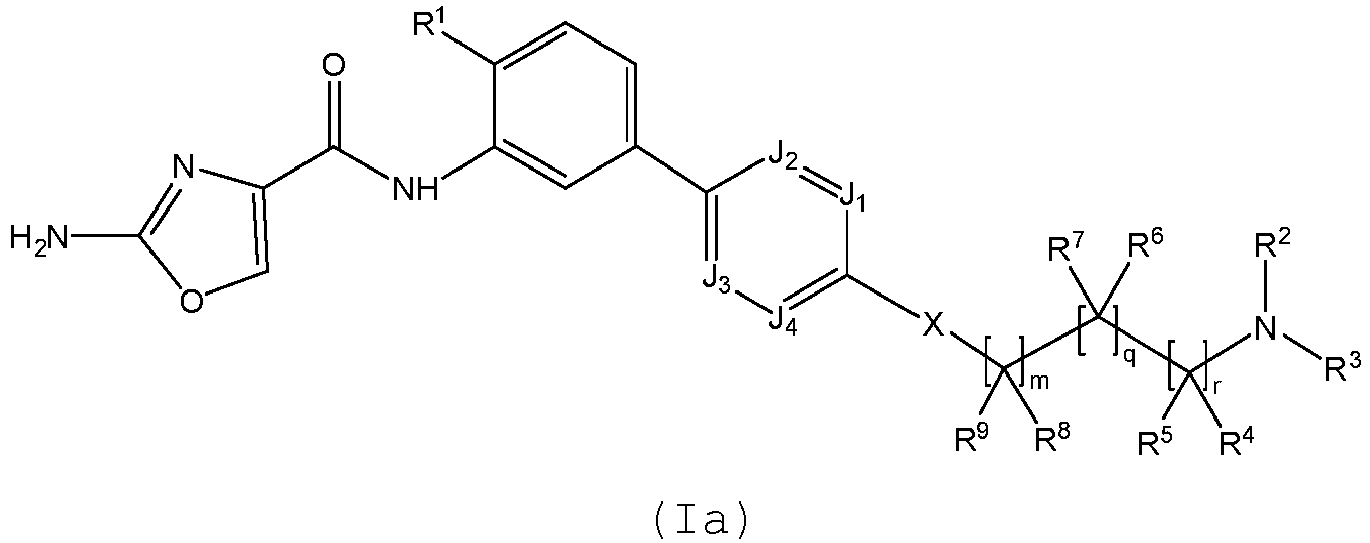
- Verbindung nach Anspruch 4, wobei:(a) J1 CH, CR10 oder =N ist, und J2, J3 und J4 alle CH oder CR10 sind;(b) J1, J2, J3 und J4 alle CH sind; oder(c) J1 =N ist, und J2, J3 und J4 alle CH sind.
- Verbindung nach einem der Ansprüche 1 bis 3, die die Formel (Ib) hat, oder ein pharmazeutisch annehmbares Salz oder ein pharmazeutisch annehmbarer Ester davon,
 (i) G1 S ist, G2 =C ist, eines von G3 und G4 =N ist und das andere CH oder CR10 ist; oder(ii) G3 S ist, G1 =N ist, G2 =C ist, und G4 CH oder CR10 ist;(iii) G1 und G4 jeweils ausgewählt sind aus CH und CR10, G2 N ist, und G3 =N ist; oder(iv) G3 und G4 jeweils ausgewählt sind aus CH und CR10, G2 N ist, und G1 =N ist;und X, R1-10, m, q und r wie oben definiert sind.
 - Verbindung nach einem der vorhergehenden Ansprüche, wobeia) R1 ausgewählt ist aus Cl und SMe;b) X O ist; und/oderc) R2 ausgewählt ist aus H, Methyl, Ethyl und Isopropyl; und R3 ausgewählt ist aus Methyl, Ethyl, Isopropyl und Piperidinyl, wobei die Piperidinylgruppe gegebenenfalls mit einem oder mehreren R15-Substituenten substituiert ist.
- Verbindung nach einem der Ansprüche 1 bis 6, wobei X (CR11R12)p ist, bevorzugter CH2.
- Verbindung nach einem der Ansprüche 1 bis 3, wobei R2 und R3 zusammen mit dem Stickstoff, an den sie gebunden sind, unter Bildung einer 5- oder 6-gliedrigen gesättigten heterocyclischen Gruppe verknüpft sind, die gegebenenfalls mit einer oder mehreren R16-Gruppen substituiert ist, wobei vorzugsweise R2 und R3 zusammen mit dem Stickstoff, an den sie gebunden sind, unter Bildung einer Pyrrolidinyl-, Piperidinyl- oder Piperazinylgruppe verknüpft sind, von denen jede gegebenenfalls mit einem oder mehreren Substituenten ausgewählt aus Alkyl und (CH2)sNR18R19 substituiert ist.
- Verbindung nach einem der Ansprüche 1 bis 8, wobei:m 1 ist;q 1 ist;r 1 ist;eines von R8 und R9 H oder Alkyl ist, und das andere mit R3 verknüpft ist, um eine gesättigte heterocyclische Gruppe zu bilden; undR4, R5, R6 und R7 jeweils unabhängig H oder Alkyl, bevorzugter H sind.
- Verbindung nach Anspruch 10, wobei eines von R8 und R9 H oder Alkyl ist und das andere mit R3 verknüpft ist, um eine Piperidinylgruppe zu bilden; und/oder wobei X (CR11R12)p ist und p 0 ist.
- Verbindung nach einem der vorhergehenden Ansprüche, die ausgewählt ist aus den folgenden:

37 
38 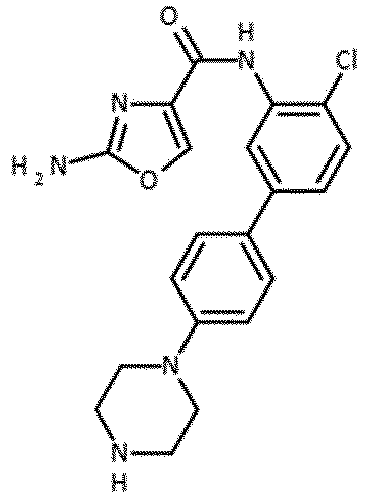
39 
40 
41 
42 
43 
44 
45 
47 
48 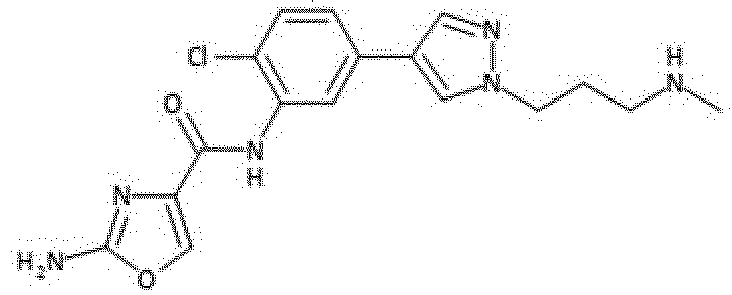
49 
50 
51 
52 
53 
54 
55 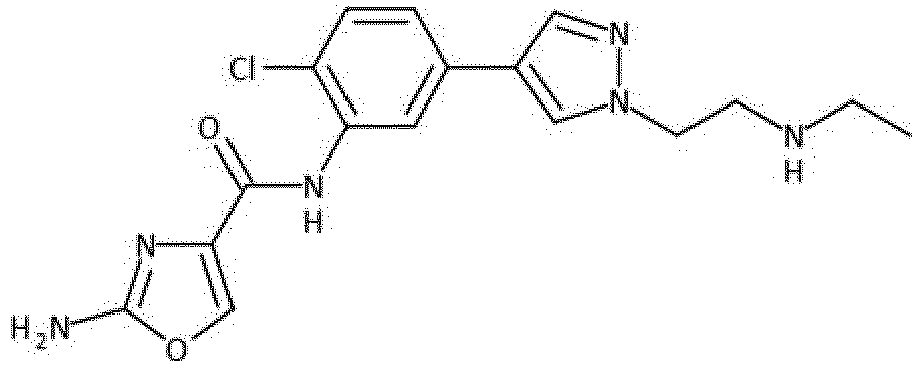
56 
57 
58 
59 
60 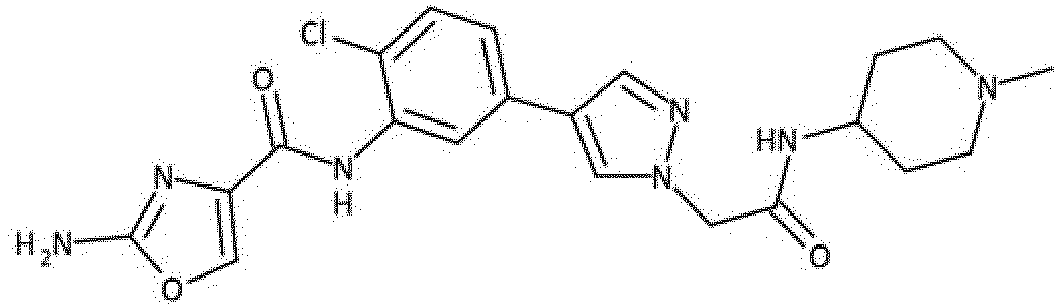
61 
62 
63 
64 
65 
66 
68 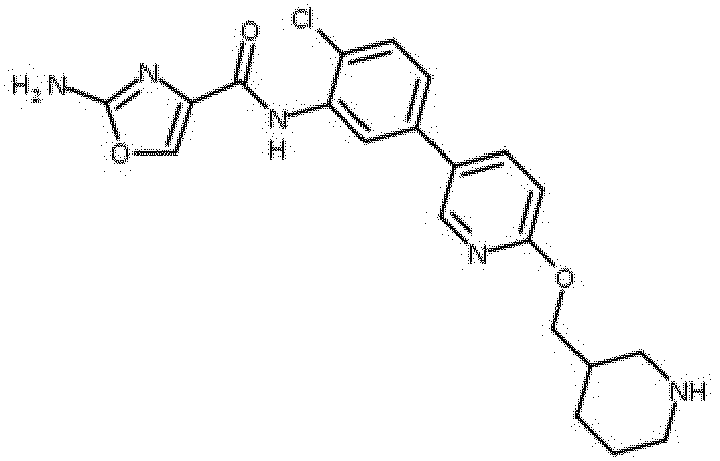
69 
70 
71 
72 
73 
74 
75 
76 
77 
78 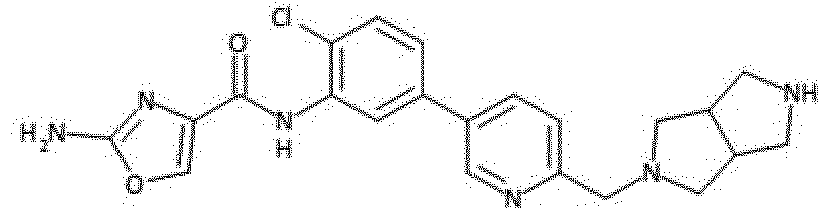
79 
80 
81 
82 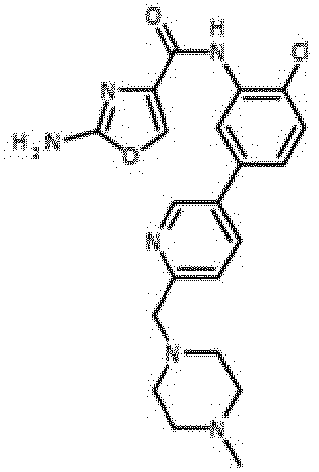
83 
84 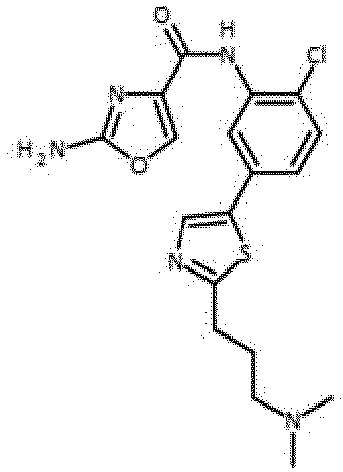
85 
86 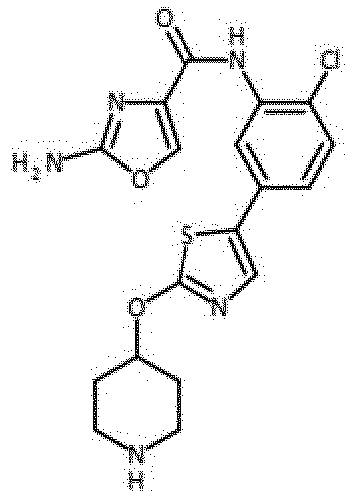
87 
88 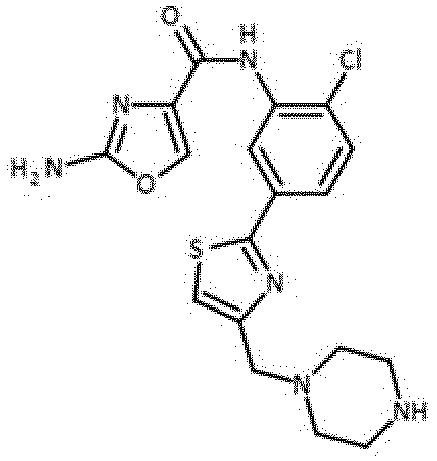
89 
90 
91 
92 
93 
94 
95 
96 
97 
98 
99 
100 
101 - Pharmazeutische Zusammensetzung, umfassend eine Verbindung nach einem der vorhergehenden Ansprüche und einen pharmazeutisch annehmbaren Träger, ein pharmazeutisch annehmbares Verdünnungsmittel oder einen pharmazeutisch annehmbaren Hilfsstoff.
- Pharmazeutische Zusammensetzung nach Anspruch 13, die des Weiteren ein zweites therapeutisches Mittel umfasst.
- Verbindung nach einem der Ansprüche 1 bis 12 zur Verwendung in der Medizin.
- Verbindung nach einem der Ansprüche 1 bis 12 zur Verwendung in der Behandlung einer proliferativen Erkrankung, vorzugsweise Krebs oder Leukämie, Metastasen oder einer Störung, die bewirkt wird durch, assoziiert ist mit oder begleitet wird von abnormaler PAICS-Aktivität und/oder abnormaler PAICS-Expression.
- Verwendung einer Verbindung nach einem der Ansprüche 1 bis 12 in einem Assay zum Identifizieren weiterer Kandidatenverbindungen, die in der Lage sind, PAICS zu inhibieren.
- Kombination, umfassend eine Verbindung nach einem der Ansprüche 1 bis 12 und ein weiteres therapeutisches Mittel.
- Verfahren zur Herstellung einer Verbindung der Formel (I) wie in Anspruch 1 definiert, wobei das Verfahren die Schritte umfasst:(i) Herstellen einer Zwischenstufe der Formel (II):

wobei R1 wie in Anspruch 1 definiert ist und Y ausgewählt ist aus Halogen (bevorzugter I), Boronsäure und einem Boronatester; und(ii) Konvertieren des Zwischenprodukts der Formel (II) in eine Verbindung der Formel (I).
Applications Claiming Priority (2)
| Application Number | Priority Date | Filing Date | Title |
|---|---|---|---|
| GBGB1622365.3A GB201622365D0 (en) | 2016-12-29 | 2016-12-29 | Compounds |
| PCT/GB2017/053822 WO2018122550A1 (en) | 2016-12-29 | 2017-12-19 | Oxazole derivatives for use in the treatment of cancer |
Publications (2)
| Publication Number | Publication Date |
|---|---|
| EP3562825A1 EP3562825A1 (de) | 2019-11-06 |
| EP3562825B1 true EP3562825B1 (de) | 2022-02-16 |
Family
ID=58412307
Family Applications (1)
| Application Number | Title | Priority Date | Filing Date |
|---|---|---|---|
| EP17818247.3A Not-in-force EP3562825B1 (de) | 2016-12-29 | 2017-12-19 | Oxazolderivate zur verwendung in der behandlung von krebs |
Country Status (9)
| Country | Link |
|---|---|
| US (1) | US10961234B2 (de) |
| EP (1) | EP3562825B1 (de) |
| JP (1) | JP2020509994A (de) |
| CN (1) | CN110114355A (de) |
| AU (1) | AU2017388132A1 (de) |
| CA (1) | CA3044143A1 (de) |
| GB (1) | GB201622365D0 (de) |
| RU (1) | RU2019123592A (de) |
| WO (1) | WO2018122550A1 (de) |
Families Citing this family (1)
| Publication number | Priority date | Publication date | Assignee | Title |
|---|---|---|---|---|
| GB201622365D0 (en) | 2016-12-29 | 2017-02-15 | Medical Res Council Tech | Compounds |
Family Cites Families (4)
| Publication number | Priority date | Publication date | Assignee | Title |
|---|---|---|---|---|
| NZ207394A (en) | 1983-03-08 | 1987-03-06 | Commw Serum Lab Commission | Detecting or determining sequence of amino acids |
| JP5182088B2 (ja) | 2006-04-19 | 2013-04-10 | アステラス製薬株式会社 | アゾールカルボキサミド誘導体 |
| UY35400A (es) * | 2013-03-15 | 2014-10-31 | Novartis Ag | Compuestos y composiciones para el tratamiento de enfermedades parasitarias |
| GB201622365D0 (en) | 2016-12-29 | 2017-02-15 | Medical Res Council Tech | Compounds |
-
2016
- 2016-12-29 GB GBGB1622365.3A patent/GB201622365D0/en not_active Ceased
-
2017
- 2017-12-19 WO PCT/GB2017/053822 patent/WO2018122550A1/en not_active Ceased
- 2017-12-19 EP EP17818247.3A patent/EP3562825B1/de not_active Not-in-force
- 2017-12-19 CN CN201780081535.8A patent/CN110114355A/zh active Pending
- 2017-12-19 CA CA3044143A patent/CA3044143A1/en not_active Abandoned
- 2017-12-19 AU AU2017388132A patent/AU2017388132A1/en not_active Abandoned
- 2017-12-19 JP JP2019533216A patent/JP2020509994A/ja active Pending
- 2017-12-19 RU RU2019123592A patent/RU2019123592A/ru not_active Application Discontinuation
- 2017-12-19 US US16/474,120 patent/US10961234B2/en not_active Expired - Fee Related
Non-Patent Citations (1)
| Title |
|---|
| None * |
Also Published As
| Publication number | Publication date |
|---|---|
| GB201622365D0 (en) | 2017-02-15 |
| CA3044143A1 (en) | 2018-07-05 |
| AU2017388132A1 (en) | 2019-06-20 |
| CN110114355A (zh) | 2019-08-09 |
| EP3562825A1 (de) | 2019-11-06 |
| RU2019123592A (ru) | 2021-02-01 |
| JP2020509994A (ja) | 2020-04-02 |
| WO2018122550A1 (en) | 2018-07-05 |
| US10961234B2 (en) | 2021-03-30 |
| US20190352296A1 (en) | 2019-11-21 |
Similar Documents
| Publication | Publication Date | Title |
|---|---|---|
| EP2651899B1 (de) | Substituierte 6,6- kondensierte stickstoffhaltigen heterocyclische verbindungen und anwendungen davon | |
| EP2684877B1 (de) | Pharmazeutisch unbedenkliches salz von (e)-n-[4-[[3-chlor-4-(2-pyridylmethoxy-)phenyl-]amino-]3-cyano-7-ethoxy-6-chinolyl-]3-[(2r-)1-methylpyrrolidin-2-yl-prop-2-enamid, herstellungsverfahren dafür und dessen medizinische verwendung | |
| EP4043459A1 (de) | Substituierte tricyclische verbindung als prmt5-inhibitor und verwendung davon | |
| EP3004112B1 (de) | Pyrazolo-pyrrolidin-4-on-derivate und ihre verwendung bei der behandlung von krankheiten | |
| CA2809557A1 (en) | Pyrazolopyridines as inhibitors of the kinase lrrk2 | |
| EP3434676A1 (de) | Substituierte pyrrolopyrimidin-cdk-hemmer, pharmazeutische zusammensetzung damit und verwendung davon | |
| JP2020529968A (ja) | 置換5員および6員複素環式化合物、その調製方法、薬剤の組み合わせおよびその使用 | |
| CN113825757B (zh) | 取代的稠合双环类衍生物、其制备方法及其在医药上的应用 | |
| TWI723480B (zh) | 用作fgfr4抑制劑的稠環衍生物 | |
| EP3792264B1 (de) | Pyrropyrimidine verbindungen als mnks inhibitoren | |
| EP3663285B1 (de) | Formylpyridinderivat mit fgfr4-hemmender wirkung, herstellungsverfahren dafür und verwendung davon | |
| EP3562824B1 (de) | Oxazolderivate zur verwendung in der behandlung von krebs | |
| EP3562825B1 (de) | Oxazolderivate zur verwendung in der behandlung von krebs | |
| EP4714948A1 (de) | Verbindung zum abbau von egfr-proteinen und verwendung davon | |
| CN118139846A (zh) | 一种egfr小分子抑制剂、含其的药物组合物及其用途 | |
| EP4384518B1 (de) | Tyrosinkinasehemmer | |
| CN120441546A (zh) | 一种cdk抑制剂化合物 | |
| EP4538269A1 (de) | Substituierte pyridazin-3-carboxamid-verbindung als tyk2-inhibitor | |
| HK40037886B (en) | Pyrropyrimidine compounds as mnks inhibitors | |
| HK1255833A1 (en) | Hpk1 inhibitors and methods of using same | |
| HK1255833B (en) | Hpk1 inhibitors and methods of using same | |
| HK1253576B (en) | Pyrropyrimidine compounds as mnks inhibitors |
Legal Events
| Date | Code | Title | Description |
|---|---|---|---|
| STAA | Information on the status of an ep patent application or granted ep patent |
Free format text: STATUS: UNKNOWN |
|
| STAA | Information on the status of an ep patent application or granted ep patent |
Free format text: STATUS: THE INTERNATIONAL PUBLICATION HAS BEEN MADE |
|
| PUAI | Public reference made under article 153(3) epc to a published international application that has entered the european phase |
Free format text: ORIGINAL CODE: 0009012 |
|
| STAA | Information on the status of an ep patent application or granted ep patent |
Free format text: STATUS: REQUEST FOR EXAMINATION WAS MADE |
|
| 17P | Request for examination filed |
Effective date: 20190716 |
|
| AK | Designated contracting states |
Kind code of ref document: A1 Designated state(s): AL AT BE BG CH CY CZ DE DK EE ES FI FR GB GR HR HU IE IS IT LI LT LU LV MC MK MT NL NO PL PT RO RS SE SI SK SM TR |
|
| AX | Request for extension of the european patent |
Extension state: BA ME |
|
| DAV | Request for validation of the european patent (deleted) | ||
| DAX | Request for extension of the european patent (deleted) | ||
| STAA | Information on the status of an ep patent application or granted ep patent |
Free format text: STATUS: EXAMINATION IS IN PROGRESS |
|
| 17Q | First examination report despatched |
Effective date: 20200528 |
|
| REG | Reference to a national code |
Ref country code: HK Ref legal event code: DE Ref document number: 40015947 Country of ref document: HK |
|
| GRAP | Despatch of communication of intention to grant a patent |
Free format text: ORIGINAL CODE: EPIDOSNIGR1 |
|
| STAA | Information on the status of an ep patent application or granted ep patent |
Free format text: STATUS: GRANT OF PATENT IS INTENDED |
|
| INTG | Intention to grant announced |
Effective date: 20210722 |
|
| GRAS | Grant fee paid |
Free format text: ORIGINAL CODE: EPIDOSNIGR3 |
|
| GRAA | (expected) grant |
Free format text: ORIGINAL CODE: 0009210 |
|
| STAA | Information on the status of an ep patent application or granted ep patent |
Free format text: STATUS: THE PATENT HAS BEEN GRANTED |
|
| AK | Designated contracting states |
Kind code of ref document: B1 Designated state(s): AL AT BE BG CH CY CZ DE DK EE ES FI FR GB GR HR HU IE IS IT LI LT LU LV MC MK MT NL NO PL PT RO RS SE SI SK SM TR |
|
| REG | Reference to a national code |
Ref country code: GB Ref legal event code: FG4D |
|
| REG | Reference to a national code |
Ref country code: CH Ref legal event code: EP |
|
| REG | Reference to a national code |
Ref country code: DE Ref legal event code: R096 Ref document number: 602017053499 Country of ref document: DE |
|
| REG | Reference to a national code |
Ref country code: AT Ref legal event code: REF Ref document number: 1468812 Country of ref document: AT Kind code of ref document: T Effective date: 20220315 |
|
| REG | Reference to a national code |
Ref country code: IE Ref legal event code: FG4D |
|
| REG | Reference to a national code |
Ref country code: LT Ref legal event code: MG9D |
|
| REG | Reference to a national code |
Ref country code: NL Ref legal event code: MP Effective date: 20220216 |
|
| REG | Reference to a national code |
Ref country code: AT Ref legal event code: MK05 Ref document number: 1468812 Country of ref document: AT Kind code of ref document: T Effective date: 20220216 |
|
| PG25 | Lapsed in a contracting state [announced via postgrant information from national office to epo] |
Ref country code: SE Free format text: LAPSE BECAUSE OF FAILURE TO SUBMIT A TRANSLATION OF THE DESCRIPTION OR TO PAY THE FEE WITHIN THE PRESCRIBED TIME-LIMIT Effective date: 20220216 Ref country code: RS Free format text: LAPSE BECAUSE OF FAILURE TO SUBMIT A TRANSLATION OF THE DESCRIPTION OR TO PAY THE FEE WITHIN THE PRESCRIBED TIME-LIMIT Effective date: 20220216 Ref country code: PT Free format text: LAPSE BECAUSE OF FAILURE TO SUBMIT A TRANSLATION OF THE DESCRIPTION OR TO PAY THE FEE WITHIN THE PRESCRIBED TIME-LIMIT Effective date: 20220616 Ref country code: NO Free format text: LAPSE BECAUSE OF FAILURE TO SUBMIT A TRANSLATION OF THE DESCRIPTION OR TO PAY THE FEE WITHIN THE PRESCRIBED TIME-LIMIT Effective date: 20220516 Ref country code: NL Free format text: LAPSE BECAUSE OF FAILURE TO SUBMIT A TRANSLATION OF THE DESCRIPTION OR TO PAY THE FEE WITHIN THE PRESCRIBED TIME-LIMIT Effective date: 20220216 Ref country code: LT Free format text: LAPSE BECAUSE OF FAILURE TO SUBMIT A TRANSLATION OF THE DESCRIPTION OR TO PAY THE FEE WITHIN THE PRESCRIBED TIME-LIMIT Effective date: 20220216 Ref country code: HR Free format text: LAPSE BECAUSE OF FAILURE TO SUBMIT A TRANSLATION OF THE DESCRIPTION OR TO PAY THE FEE WITHIN THE PRESCRIBED TIME-LIMIT Effective date: 20220216 Ref country code: ES Free format text: LAPSE BECAUSE OF FAILURE TO SUBMIT A TRANSLATION OF THE DESCRIPTION OR TO PAY THE FEE WITHIN THE PRESCRIBED TIME-LIMIT Effective date: 20220216 Ref country code: BG Free format text: LAPSE BECAUSE OF FAILURE TO SUBMIT A TRANSLATION OF THE DESCRIPTION OR TO PAY THE FEE WITHIN THE PRESCRIBED TIME-LIMIT Effective date: 20220516 |
|
| PG25 | Lapsed in a contracting state [announced via postgrant information from national office to epo] |
Ref country code: PL Free format text: LAPSE BECAUSE OF FAILURE TO SUBMIT A TRANSLATION OF THE DESCRIPTION OR TO PAY THE FEE WITHIN THE PRESCRIBED TIME-LIMIT Effective date: 20220216 Ref country code: LV Free format text: LAPSE BECAUSE OF FAILURE TO SUBMIT A TRANSLATION OF THE DESCRIPTION OR TO PAY THE FEE WITHIN THE PRESCRIBED TIME-LIMIT Effective date: 20220216 Ref country code: GR Free format text: LAPSE BECAUSE OF FAILURE TO SUBMIT A TRANSLATION OF THE DESCRIPTION OR TO PAY THE FEE WITHIN THE PRESCRIBED TIME-LIMIT Effective date: 20220517 Ref country code: FI Free format text: LAPSE BECAUSE OF FAILURE TO SUBMIT A TRANSLATION OF THE DESCRIPTION OR TO PAY THE FEE WITHIN THE PRESCRIBED TIME-LIMIT Effective date: 20220216 Ref country code: AT Free format text: LAPSE BECAUSE OF FAILURE TO SUBMIT A TRANSLATION OF THE DESCRIPTION OR TO PAY THE FEE WITHIN THE PRESCRIBED TIME-LIMIT Effective date: 20220216 |
|
| PG25 | Lapsed in a contracting state [announced via postgrant information from national office to epo] |
Ref country code: IS Free format text: LAPSE BECAUSE OF FAILURE TO SUBMIT A TRANSLATION OF THE DESCRIPTION OR TO PAY THE FEE WITHIN THE PRESCRIBED TIME-LIMIT Effective date: 20220617 |
|
| PG25 | Lapsed in a contracting state [announced via postgrant information from national office to epo] |
Ref country code: SM Free format text: LAPSE BECAUSE OF FAILURE TO SUBMIT A TRANSLATION OF THE DESCRIPTION OR TO PAY THE FEE WITHIN THE PRESCRIBED TIME-LIMIT Effective date: 20220216 Ref country code: SK Free format text: LAPSE BECAUSE OF FAILURE TO SUBMIT A TRANSLATION OF THE DESCRIPTION OR TO PAY THE FEE WITHIN THE PRESCRIBED TIME-LIMIT Effective date: 20220216 Ref country code: RO Free format text: LAPSE BECAUSE OF FAILURE TO SUBMIT A TRANSLATION OF THE DESCRIPTION OR TO PAY THE FEE WITHIN THE PRESCRIBED TIME-LIMIT Effective date: 20220216 Ref country code: EE Free format text: LAPSE BECAUSE OF FAILURE TO SUBMIT A TRANSLATION OF THE DESCRIPTION OR TO PAY THE FEE WITHIN THE PRESCRIBED TIME-LIMIT Effective date: 20220216 Ref country code: DK Free format text: LAPSE BECAUSE OF FAILURE TO SUBMIT A TRANSLATION OF THE DESCRIPTION OR TO PAY THE FEE WITHIN THE PRESCRIBED TIME-LIMIT Effective date: 20220216 Ref country code: CZ Free format text: LAPSE BECAUSE OF FAILURE TO SUBMIT A TRANSLATION OF THE DESCRIPTION OR TO PAY THE FEE WITHIN THE PRESCRIBED TIME-LIMIT Effective date: 20220216 |
|
| REG | Reference to a national code |
Ref country code: DE Ref legal event code: R097 Ref document number: 602017053499 Country of ref document: DE |
|
| PG25 | Lapsed in a contracting state [announced via postgrant information from national office to epo] |
Ref country code: AL Free format text: LAPSE BECAUSE OF FAILURE TO SUBMIT A TRANSLATION OF THE DESCRIPTION OR TO PAY THE FEE WITHIN THE PRESCRIBED TIME-LIMIT Effective date: 20220216 |
|
| PLBE | No opposition filed within time limit |
Free format text: ORIGINAL CODE: 0009261 |
|
| STAA | Information on the status of an ep patent application or granted ep patent |
Free format text: STATUS: NO OPPOSITION FILED WITHIN TIME LIMIT |
|
| 26N | No opposition filed |
Effective date: 20221117 |
|
| PG25 | Lapsed in a contracting state [announced via postgrant information from national office to epo] |
Ref country code: SI Free format text: LAPSE BECAUSE OF FAILURE TO SUBMIT A TRANSLATION OF THE DESCRIPTION OR TO PAY THE FEE WITHIN THE PRESCRIBED TIME-LIMIT Effective date: 20220216 |
|
| REG | Reference to a national code |
Ref country code: DE Ref legal event code: R119 Ref document number: 602017053499 Country of ref document: DE |
|
| PG25 | Lapsed in a contracting state [announced via postgrant information from national office to epo] |
Ref country code: IT Free format text: LAPSE BECAUSE OF FAILURE TO SUBMIT A TRANSLATION OF THE DESCRIPTION OR TO PAY THE FEE WITHIN THE PRESCRIBED TIME-LIMIT Effective date: 20220216 |
|
| REG | Reference to a national code |
Ref country code: CH Ref legal event code: PL |
|
| GBPC | Gb: european patent ceased through non-payment of renewal fee |
Effective date: 20221219 |
|
| REG | Reference to a national code |
Ref country code: BE Ref legal event code: MM Effective date: 20221231 |
|
| PG25 | Lapsed in a contracting state [announced via postgrant information from national office to epo] |
Ref country code: LU Free format text: LAPSE BECAUSE OF NON-PAYMENT OF DUE FEES Effective date: 20221219 |
|
| PG25 | Lapsed in a contracting state [announced via postgrant information from national office to epo] |
Ref country code: LI Free format text: LAPSE BECAUSE OF NON-PAYMENT OF DUE FEES Effective date: 20221231 Ref country code: IE Free format text: LAPSE BECAUSE OF NON-PAYMENT OF DUE FEES Effective date: 20221219 Ref country code: GB Free format text: LAPSE BECAUSE OF NON-PAYMENT OF DUE FEES Effective date: 20221219 Ref country code: DE Free format text: LAPSE BECAUSE OF NON-PAYMENT OF DUE FEES Effective date: 20230701 Ref country code: CH Free format text: LAPSE BECAUSE OF NON-PAYMENT OF DUE FEES Effective date: 20221231 |
|
| PG25 | Lapsed in a contracting state [announced via postgrant information from national office to epo] |
Ref country code: FR Free format text: LAPSE BECAUSE OF NON-PAYMENT OF DUE FEES Effective date: 20221231 Ref country code: BE Free format text: LAPSE BECAUSE OF NON-PAYMENT OF DUE FEES Effective date: 20221231 |
|
| PG25 | Lapsed in a contracting state [announced via postgrant information from national office to epo] |
Ref country code: HU Free format text: LAPSE BECAUSE OF FAILURE TO SUBMIT A TRANSLATION OF THE DESCRIPTION OR TO PAY THE FEE WITHIN THE PRESCRIBED TIME-LIMIT; INVALID AB INITIO Effective date: 20171219 |
|
| PG25 | Lapsed in a contracting state [announced via postgrant information from national office to epo] |
Ref country code: CY Free format text: LAPSE BECAUSE OF FAILURE TO SUBMIT A TRANSLATION OF THE DESCRIPTION OR TO PAY THE FEE WITHIN THE PRESCRIBED TIME-LIMIT Effective date: 20220216 |
|
| PG25 | Lapsed in a contracting state [announced via postgrant information from national office to epo] |
Ref country code: MK Free format text: LAPSE BECAUSE OF FAILURE TO SUBMIT A TRANSLATION OF THE DESCRIPTION OR TO PAY THE FEE WITHIN THE PRESCRIBED TIME-LIMIT Effective date: 20220216 |
|
| PG25 | Lapsed in a contracting state [announced via postgrant information from national office to epo] |
Ref country code: MC Free format text: LAPSE BECAUSE OF FAILURE TO SUBMIT A TRANSLATION OF THE DESCRIPTION OR TO PAY THE FEE WITHIN THE PRESCRIBED TIME-LIMIT Effective date: 20220216 |
|
| PG25 | Lapsed in a contracting state [announced via postgrant information from national office to epo] |
Ref country code: MC Free format text: LAPSE BECAUSE OF FAILURE TO SUBMIT A TRANSLATION OF THE DESCRIPTION OR TO PAY THE FEE WITHIN THE PRESCRIBED TIME-LIMIT Effective date: 20220216 |
|
| PG25 | Lapsed in a contracting state [announced via postgrant information from national office to epo] |
Ref country code: MT Free format text: LAPSE BECAUSE OF FAILURE TO SUBMIT A TRANSLATION OF THE DESCRIPTION OR TO PAY THE FEE WITHIN THE PRESCRIBED TIME-LIMIT Effective date: 20220216 |
|
| PG25 | Lapsed in a contracting state [announced via postgrant information from national office to epo] |
Ref country code: TR Free format text: LAPSE BECAUSE OF FAILURE TO SUBMIT A TRANSLATION OF THE DESCRIPTION OR TO PAY THE FEE WITHIN THE PRESCRIBED TIME-LIMIT Effective date: 20220216 |