EP3558954B1 - Improved process for the manufacture of r-6-hydroxy-8-[1-hydroxy-2-[2-(4-methoxyphenyl)-1,1-dimethylethylaminoethyl]-2h-1,4-benzoxazin-3(4h)-one hydrochloride - Google Patents
Improved process for the manufacture of r-6-hydroxy-8-[1-hydroxy-2-[2-(4-methoxyphenyl)-1,1-dimethylethylaminoethyl]-2h-1,4-benzoxazin-3(4h)-one hydrochloride Download PDFInfo
- Publication number
- EP3558954B1 EP3558954B1 EP17816861.3A EP17816861A EP3558954B1 EP 3558954 B1 EP3558954 B1 EP 3558954B1 EP 17816861 A EP17816861 A EP 17816861A EP 3558954 B1 EP3558954 B1 EP 3558954B1
- Authority
- EP
- European Patent Office
- Prior art keywords
- salt
- compound
- olodaterol
- formula
- methoxyphenyl
- Prior art date
- Legal status (The legal status is an assumption and is not a legal conclusion. Google has not performed a legal analysis and makes no representation as to the accuracy of the status listed.)
- Active
Links
- 0 *Oc(cc1[C@]2OC2)cc(N2)c1OCC2=O Chemical compound *Oc(cc1[C@]2OC2)cc(N2)c1OCC2=O 0.000 description 4
- DUMKDWRRTLFHTA-UHFFFAOYSA-N CC(C)(Cc(cc1)ccc1OC)N Chemical compound CC(C)(Cc(cc1)ccc1OC)N DUMKDWRRTLFHTA-UHFFFAOYSA-N 0.000 description 4
- DKLVIQDZNAPVFJ-VWLOTQADSA-N CC(C)(Cc(cc1)ccc1OC)NC[C@@H](c(cc(cc1N2)OCc3ccccc3)c1OCC2=O)O Chemical compound CC(C)(Cc(cc1)ccc1OC)NC[C@@H](c(cc(cc1N2)OCc3ccccc3)c1OCC2=O)O DKLVIQDZNAPVFJ-VWLOTQADSA-N 0.000 description 1
- COUYJEVMBVSIHV-SFHVURJKSA-N CC(C)(Cc(cc1)ccc1OC)NC[C@@H](c1cc(O)cc(N2)c1OCC2=O)O Chemical compound CC(C)(Cc(cc1)ccc1OC)NC[C@@H](c1cc(O)cc(N2)c1OCC2=O)O COUYJEVMBVSIHV-SFHVURJKSA-N 0.000 description 1
- HNIPLOQPYXWTJN-YJVHFNOHSA-N C[C@@H](C1)C(C)(C2)[C@@]2(CS(O)(=O)=O)C1=O Chemical compound C[C@@H](C1)C(C)(C2)[C@@]2(CS(O)(=O)=O)C1=O HNIPLOQPYXWTJN-YJVHFNOHSA-N 0.000 description 1
Images

Classifications
-
- C—CHEMISTRY; METALLURGY
- C07—ORGANIC CHEMISTRY
- C07D—HETEROCYCLIC COMPOUNDS
- C07D265/00—Heterocyclic compounds containing six-membered rings having one nitrogen atom and one oxygen atom as the only ring hetero atoms
- C07D265/28—1,4-Oxazines; Hydrogenated 1,4-oxazines
- C07D265/34—1,4-Oxazines; Hydrogenated 1,4-oxazines condensed with carbocyclic rings
- C07D265/36—1,4-Oxazines; Hydrogenated 1,4-oxazines condensed with carbocyclic rings condensed with one six-membered ring
-
- C—CHEMISTRY; METALLURGY
- C07—ORGANIC CHEMISTRY
- C07C—ACYCLIC OR CARBOCYCLIC COMPOUNDS
- C07C213/00—Preparation of compounds containing amino and hydroxy, amino and etherified hydroxy or amino and esterified hydroxy groups bound to the same carbon skeleton
- C07C213/02—Preparation of compounds containing amino and hydroxy, amino and etherified hydroxy or amino and esterified hydroxy groups bound to the same carbon skeleton by reactions involving the formation of amino groups from compounds containing hydroxy groups or etherified or esterified hydroxy groups
-
- C—CHEMISTRY; METALLURGY
- C07—ORGANIC CHEMISTRY
- C07C—ACYCLIC OR CARBOCYCLIC COMPOUNDS
- C07C217/00—Compounds containing amino and etherified hydroxy groups bound to the same carbon skeleton
- C07C217/54—Compounds containing amino and etherified hydroxy groups bound to the same carbon skeleton having etherified hydroxy groups bound to carbon atoms of at least one six-membered aromatic ring and amino groups bound to acyclic carbon atoms or to carbon atoms of rings other than six-membered aromatic rings of the same carbon skeleton
- C07C217/56—Compounds containing amino and etherified hydroxy groups bound to the same carbon skeleton having etherified hydroxy groups bound to carbon atoms of at least one six-membered aromatic ring and amino groups bound to acyclic carbon atoms or to carbon atoms of rings other than six-membered aromatic rings of the same carbon skeleton with amino groups linked to the six-membered aromatic ring, or to the condensed ring system containing that ring, by carbon chains not further substituted by singly-bound oxygen atoms
- C07C217/60—Compounds containing amino and etherified hydroxy groups bound to the same carbon skeleton having etherified hydroxy groups bound to carbon atoms of at least one six-membered aromatic ring and amino groups bound to acyclic carbon atoms or to carbon atoms of rings other than six-membered aromatic rings of the same carbon skeleton with amino groups linked to the six-membered aromatic ring, or to the condensed ring system containing that ring, by carbon chains not further substituted by singly-bound oxygen atoms linked by carbon chains having two carbon atoms between the amino groups and the six-membered aromatic ring or the condensed ring system containing that ring
-
- C—CHEMISTRY; METALLURGY
- C07—ORGANIC CHEMISTRY
- C07C—ACYCLIC OR CARBOCYCLIC COMPOUNDS
- C07C309/00—Sulfonic acids; Halides, esters, or anhydrides thereof
- C07C309/01—Sulfonic acids
- C07C309/02—Sulfonic acids having sulfo groups bound to acyclic carbon atoms
- C07C309/03—Sulfonic acids having sulfo groups bound to acyclic carbon atoms of an acyclic saturated carbon skeleton
- C07C309/07—Sulfonic acids having sulfo groups bound to acyclic carbon atoms of an acyclic saturated carbon skeleton containing oxygen atoms bound to the carbon skeleton
-
- C—CHEMISTRY; METALLURGY
- C07—ORGANIC CHEMISTRY
- C07C—ACYCLIC OR CARBOCYCLIC COMPOUNDS
- C07C59/00—Compounds having carboxyl groups bound to acyclic carbon atoms and containing any of the groups OH, O—metal, —CHO, keto, ether, groups, groups, or groups
- C07C59/235—Saturated compounds containing more than one carboxyl group
- C07C59/245—Saturated compounds containing more than one carboxyl group containing hydroxy or O-metal groups
- C07C59/255—Tartaric acid
-
- C—CHEMISTRY; METALLURGY
- C07—ORGANIC CHEMISTRY
- C07B—GENERAL METHODS OF ORGANIC CHEMISTRY; APPARATUS THEREFOR
- C07B2200/00—Indexing scheme relating to specific properties of organic compounds
- C07B2200/13—Crystalline forms, e.g. polymorphs
-
- C—CHEMISTRY; METALLURGY
- C07—ORGANIC CHEMISTRY
- C07C—ACYCLIC OR CARBOCYCLIC COMPOUNDS
- C07C2603/00—Systems containing at least three condensed rings
- C07C2603/56—Ring systems containing bridged rings
- C07C2603/58—Ring systems containing bridged rings containing three rings
- C07C2603/60—Ring systems containing bridged rings containing three rings containing at least one ring with less than six members
- C07C2603/66—Ring systems containing bridged rings containing three rings containing at least one ring with less than six members containing five-membered rings
Definitions
- the present invention provides an improved process for the manufacture of olodaterol or a pharmaceutically acceptable salt thereof, preferably the hydrochloride salt, in high chemical and enantiomeric purity and high yield, through the camphorsulfonate salt of intermediate (4).
- the invention also relates to said salts, to a process for preparing them and to their use for the manufacture of olodaterol or a pharmaceutically acceptable salt thereof.
- WO 2004/045618 A2 first discloses the preparation of racemic olodaterol via the reaction of a glyoxal hydrate intermediate with 1,1-dimethyl-2-(4-methoxyphenyl)ethyl amine in the presence of a hydride source. After hydrogenation, racemic olodaterol is recrystallized and the R -enantiomer is separated by chiral chromatography. This process is not feasible for industrial application since the preparation of the target R- enantiomer of olodaterol is carried out by means of chiral chromatographic methods, which are generally expensive, environmentally unfriendly and time consuming. In addition, the preparation and purity of 1,1-dimethyl-2-(4-methoxyphenyl)ethyl amine intermediate are not disclosed.
- WO 2005/111005 A1 discloses the preparation of R -enantiomer of olodaterol hydrochloride, compound of formula (1) ⁇ HCl, as shown in Scheme 1. Basically, ( R) -6-benzyloxy-8-oxiranyl-4H-benzo[1,4]oxazin-3-one (2) is reacted with 1,1-dimethyl-2-(4-methoxyphenyl)ethyl amine in isopropanol under microwave irradiation at 135 °C to provide advanced intermediate (4), which is purified by column chromatography and further recrystallized. The R -enantiomer of olodaterol hydrochloride is obtained after hydrogenation and further reaction with hydrochloric acid.
- Advanced intermediate (4) is obtained in only 63% yield and purity is not disclosed. This process implies various drawbacks. Not only is the microwave radiation technique not easily feasible for industrial application, but also the purification of advanced intermediate (4) by chromatographic methods. Moreover, the preparation and purity of 1,1-dimethyl-2-(4-methoxyphenyl)ethyl amine are not disclosed.
- WO 2007/020227 A1 discloses the preparation of R -enantiomer of olodaterol hydrochloride as shown in Scheme 2.
- ( R )-6-benzyloxy-8-oxiranyl-4H-benzo[1,4]oxazin-3-one (2) is reacted with 1,1-dimethyl-2-(4-methoxyphenyl)ethyl amine (3) in 1,4-dioxane at 97 °C, and then, treated with hydrochloric acid to provide the hydrochloride salt of advanced intermediate (4), which is further hydrogenated.
- Intermediate (4) ⁇ HCl is obtained in 89.5-99.5% purity.
- WO 2007/020227 A1 also discloses the preparation of 1,1-dimethyl-2-(4-methoxyphenyl)ethyl amine (3) from 4-methoxyphenylacetone (5), in three reaction steps as shown is Scheme 3, in 94-96% purity (HPLC method) in an overall yield of 34-43% (as calculated from the examples data provided in WO 2007/020227 A1 ).
- WO 2008/090193 A2 discloses the preparation of R -enantiomer of olodaterol hydrochloride as shown Scheme 4.
- R -6-benzyloxy-8-oxiranyl-4H-benzo[1,4]oxazin-3-one (2) is reacted with 1,1-dimethyl-2-(4-methoxyphenyl)ethyl amine (3) in toluene at reflux.
- treatment with hydrochloric acid to provide intermediate (4) ⁇ HCl in 95-99.5% purity, followed by a hydrogenation step provides the R -enantiomer of olodaterol hydrochloride.
- WO 2008/090193 A2 discloses the preparation of the hydrochloride salt of 1,1-dimethyl-2-(4-methoxyphenyl)ethyl amine from 4-methoxyphenylacetone, as in above Scheme 3, in >99.5% purity (HPLC method) in an overall yield of 41-54% (as calculated from the examples data provided in WO 2008/090193 A2 ).
- purifying intermediate (4), used in the process of preparation of olodaterol, by formation of the camphorsulfonate salt, in particular the ( R )-(-)-camphorsulfonate salt, provides an increase in the chemical and enantiomeric purity of final olodaterol or salt thereof, preferably the R -enantiomer of olodaterol hydrochloride.
- a first aspect of the present invention provides the camphorsulfonate salt of intermediate (4), wherein PG is C 1 -C 10 alkyl substituted by a C 6 -C 10 aryl group and to solid forms thereof.
- a second aspect of the present invention provides a process for preparing the camphorsulfonate salt of intermediate (4) as defined in the first aspect.
- a third aspect of the present invention relates to a process for the manufacture of olodaterol, preferably the R -enantiomer of olodaterol hydrochloride, which makes use of the camphorsulfonate salt of intermediate (4) as defined in the first aspect.
- camphorsulfonate salt of intermediate (4) as defined in the first and second aspects for preparing olodaterol or a pharmaceutically acceptable salt thereof, preferably the R -enantiomer of olodaterol hydrochloride.
- olodaterol refers to 6-hydroxy-8-[1-hydroxy-2-[2-(4-methoxyphenyl)-1,1-dimethylethylaminoethyl]-2H-1,4-benzoxazin-3(4H)-one.
- organic solvent refers to an organic molecule capable of dissolving another substance (i.e., the solute).
- Organic solvents may be liquids at room temperature.
- examples of organic solvents that may be used for the present invention include, but are not limited to: hydrocarbon solvents (e.g., n-pentane, n-hexane, n-heptane, n-octane, cyclohexane, methylcyclohexane, decahydronaphthalene, etc.) which also includes aromatic hydrocarbon solvents (e.g., benzene, toluene, o-xylene, m-xylene, and p-xylene), halogenated hydrocarbon solvents (e.g., carbon tetrachloride, 1,2-dichloroethane, dichloromethane, chloroform, etc.), ester solvents (e.g., ethyl formate, methyl acetate, e
- polar solvent as used herein means a solvent having a dielectric constant of at least 3, said dielectric constant being the ratio of the electrical capacity of a capacitor filled with the solvent to the electrical capacity of the evacuated capacitor at 20-25 °C.
- dielectric constant of solvents are disclosed in Vogel's Textbook of Practical Organic Chemistry 5 th Edition, Appendix 5.
- polar solvents examples include dichloromethane, tetrahydrofuran, ester solvents (e.g., ethyl formate, methyl acetate, ethyl acetate, ethyl malonate, etc.), ketone solvents (e.g., acetone, methyl ethyl ketone or 2-butanone, cyclohexanone, cyclopentanone, 3-pentanone, etc.), amine solvents (e.g., propyl amine, diethylamine, triethylamine, aniline, pyridine), alcohol solvents (e.g., methanol, ethanol, isopropanol, 1-propanol, 1-butanol, 1-octanol, benzyl alcohol, phenol, trifluoroethanol, glycerol, ethylene glycol, propylene glycol, m-cresol, etc.), acid solvents (e.g., acetic acid
- alcohol refers to a hydrocarbon derivative in which one or more hydrogen atoms have been replaced by an -OH group, known as hydroxyl group.
- Suitable alcohols for the present invention include linear, cyclic or branched C 1 -C 6 alkyl alcohols and any mixtures thereof. It also includes commercially available alcohols. Examples of alcohols are methanol, ethanol, isopropanol, 1-propanol, 1-butanol, 1-pentanol, 3-methyl-1-butanol, tert-butanol, 1-octanol, benzyl alcohol and phenol.
- room temperature in the context of the present invention means that the temperature is between 10 °C and 40 °C, preferably between 15 °C and 30 °C, more preferably between 20 °C and 25 °C.
- conventional purification techniques refers to the process wherein a product can be obtained in high purity, which can be carried out on an industrial scale such as solvent extraction, filtration, distillation, slurring, washing, phase separation, evaporation, centrifugation, isolation or crystallization.
- solvent extraction refers to the process of separating components of a mixture by using a solvent which possesses greater affinity for one component, and may therefore separate said one component from at least a second component which is less miscible than said one component with said solvent.
- filtration refers to the act of removing solid particles greater than a predetermined size from a feed comprising a mixture of solid particles and liquid.
- filtrate refers to the mixture less the solid particles removed by the filtration process. It will be appreciated that this mixture may contain solid particles smaller than the predetermined particle size.
- filter cake refers to residual solid material remaining on a feed side of a filtration element.
- the term slurring refers to any process which employs a solvent to wash or disperse a crude product.
- washing refers to the process of purifying a solid mass (e.g., crystals) by passing a liquid over and/or through the solid mass in order to remove soluble matter.
- the process includes passing a solvent, such as distilled water, over and/or through a precipitate obtained from filtering, decanting, or a combination thereof.
- washing includes contacting solids with solvent or solvent mixture, vigorously stirring (e.g., for two hours), and filtering.
- the solvent can be water, can be an aqueous solvent system, or can be an organic solvent system.
- the washing can be carried out with the solvent having any suitable temperature.
- the washing can be carried out with the solvent having a temperature between about 0 °C and about 100 °C.
- phase separation refers to a solution or mixture having at least two physically distinct regions.
- crystallization refers to any method known to a person skilled in the art such as crystallization from single solvent or combination of solvents by dissolving the compound optionally at elevated temperature and precipitating the compound by cooling the solution or removing solvent from the solution or both. It further includes methods such as solvent/antisolvent or precipitation.
- polymorphic form or polymorph refers to crystalline forms of the same pure compound in which the molecules have different arrangements and/or different conformation of the molecules.
- the polymorphic solids have different unit cells and hence display different physical properties, including those to packing, and various thermodynamic, spectroscopic, interfacial, and mechanical properties.
- solvate refers to solid molecular compounds that have incorporated the crystallizing solvent molecule in their lattice.
- the solvent incorporated in the solvate is water, the solvate is called hydrate. All solvates are formed with stoichiometric or non-nonstoichiometric proportions between the compound and the solvent of crystallization. Solvates can exhibit polymorphism, i.e they may exist in more than one polymorphic form.
- solid form includes all solid materials, polymorphs, solvates (including hydrates), amorphous solids, salts and co-crystals.
- purification and/or purifying refer to the process wherein a purified drug substance can be obtained, measured by HPLC preferably having a purity greater than 80%, more preferably greater than 85%, more preferably greater than 90%, more preferably greater than 95%, more preferably greater than 99%, more preferably greater than 99.5%, even more preferably greater than 99.9%.
- industrial purification refers to purifications, which can be carried out on an industrial scale such as solvent extraction, filtration, slurring, washing, phase separation, evaporation, centrifugation or crystallization.
- olodaterol or pharmaceutically acceptable salt thereof, preferably olodaterol hydrochloride, in high chemical purity refers to a purity obtained by HPLC of at least 99%, preferably of at least 99.5%, most preferably of at least 99.9%, even more preferably of at least 99.95%, even most preferably of 100%.
- olodaterol or pharmaceutically acceptable salt thereof, preferably olodaterol hydrochloride, in high enantiomeric purity refers to an enantiomeric purity of the R-enantiomer measured by chiral HPLC of at least 99.85%, more preferably of at least 99.90%, even more preferably of at least 99.95%, even more preferably of 100.00%.
- salts refers to a salt prepared from a base or their respective conjugated acids, which is acceptable for administration to a patient, such as a mammal.
- Such salts can be derived from pharmaceutically acceptable inorganic or organic acids, which include, but are not limited to hydrochloric, hydrobromic, sulfuric, phosphoric, nitric, methansulfonic, ethansulfonic, benzenesulfonic, p-toluenesulfonic, camphorsulfonic, 1,5 -naphthalene disulfonic, formic, acetic, benzoic, malonic, malic, citric, fumaric, gluconic, glycolic, glutamic, lactic, maleic, L-tartaric, oxalic, mandelic, mucic, pantothenic, succinic, xinafoic (1-hydroxy-2-naphthoic acid) and cinnamic
- ( R )-camphorsulfonic acid refers either to ( R )-(-)-camphorsulfonic acid or (1 R )-(-)-10-camphorsulfonic acid.
- ( S )-camphorsulfonic acid refers either to ( S )-(+)-camphorsulfonic acid or (1 S )-(+)-10-camphorsulfonic acid.
- IMP-1 dimer impurity
- IMP-2 dimer impurity
- IMP-2 another isomer
- the inventors have unexpectedly found that purifying intermediate (4), obtained from the epoxide opening reaction, by formation of the camphorsulfonate salt significantly decreases the content of these impurities in a reproducible manner, and thus providing final olodaterol or salt thereof, preferably the R -enantiomer of olodaterol hydrochloride, in high chemical and enantiomeric purity and in high yield.
- a first aspect of the present invention provides the camphorsulfonate salt of intermediate (4), compound of formula (4) ⁇ camphorsulfonic acid, and solid forms thereof, wherein PG is C 1 -C 10 alkyl substituted by a C 6 -C 10 aryl group, more preferably benzyl or p -methoxybenzyl, still more preferably benzyl.
- the camphorsulfonate salt of intermediate (4) is obtained in high chemical and enantiomeric purity and high yield, and has good stability.
- the camphorsulfonic acid forming the salt of the invention may be the ( R )-camphorsulfonic acid, the ( S )-camphorsulfonic acid or mixtures thereof.
- the salt is the ( R )-camphorsulfonate salt of intermediate (4).
- the salt is the ( S )-camphorsulfonate salt of intermediate (4).
- the salt is the ( R )-camphorsulfonate salt of intermediate (4), wherein PG is benzyl, whose structure is shown below.
- the molar ratio of intermediate (4) to the camphorsulfonic acid is 1:1.
- the camphorsulfonate salt of intermediate (4) is in solid form.
- the camphorsulfonate salt of intermediate (4) is in crystalline solid form.
- the camphorsulfonate salt of intermediate (4) is in non-crystalline (i.e. amorphous) solid form.
- the camphorsulfonate salt of intermediate (4) is the ( R )-camphorsulfonate salt, wherein PG is benzyl, in crystalline solid form.
- the ( R )-camphorsulfonate salt of intermediate (4), wherein PG is benzyl is an anhydrous solid form.
- the ( R )-camphorsulfonate salt of intermediate (4), wherein PG is benzyl encompasses solvates (including hydrates).
- a crystalline solid form of the camphorsulfonate salt of intermediate (4), wherein PG is benzyl is characterized by at least one of the following:
- the ( R )-camphorsulfonate salt of intermediate (4), wherein PG is benzyl is characterized by a DSC thermogram showing an endothermic peak with an onset at 163-166 °C.
- the ( R )-camphorsulfonate salt of intermediate (4), wherein PG is benzyl is characterized by an IR spectra showing the following bands at 2955, 1745, 1702, 1617, 1513, 1470, 1369, 1329, 1250, 1162, 1051, 1038, 852, 746, 700 cm -1 .
- the ( R )-camphorsulfonate salt of intermediate (4), wherein PG is benzyl is characterized in that it provides an IR spectrum substantially in accordance with Figure 4 .
- the salt is the ( S )-camphorsulfonate of intermediate (4), wherein PG is benzyl.
- a second aspect of the present invention provides a process for preparing the camphorsulfonate salt of intermediate (4) as defined in the first aspect, comprising the steps of:
- the molar ratio of camphorsulfonic acid to intermediate (4) used in step a) of the above mentioned process is preferably at least 1:1, preferably from 1:1 to 2:1, still more preferably from 1:1 to 1.1:1.
- Suitable solvents in step a) are organic solvents as previously defined.
- the solvent comprises an organic solvent, water or mixtures thereof.
- Suitable organic solvent is a polar solvent.
- the solvent comprises a mixture of two polar solvents.
- Suitable polar solvents are ether and ester solvents.
- Suitable ethers are diethyl ether, dipropyl ether, diphenyl ether, isopropyl ether, tert-butyl methyl ether, tetrahydrofuran and 1,4-dioxane and mixtures thereof.
- Suitable esters are ethyl formate, methyl acetate, ethyl acetate, ethyl malonate and mixtures thereof.
- the polar solvent comprises a mixture of an ether and ester. More preferably, the organic solvent is a mixture of ester (in particular ethyl acetate) and tetrahydrofuran, preferably, in a ratio from 15:1 to 1:15 (v/v). More preferably, the solvent comprises a mixture of an ester (in particular ethyl acetate) and tetrahydrofuran in a ratio from 15:1 to 1:1 (v/v). Also more preferably, an ester (in particular ethyl acetate) and tetrahydrofuran in a ratio from 15:1 to 10:1 (v/v) as the yield is increased.
- the organic solvent is a mixture of ester (in particular ethyl acetate) and tetrahydrofuran, preferably, in a ratio from 15:1 to 1:15 (v/v). More preferably, the solvent comprises a mixture of an ester (in particular ethyl acetate) and
- Step b), isolation of the salt obtained in step a), may be carried out by conventional means, such as by filtration optionally followed by washing.
- the washing is carried out with a mixture of ester (in particular ethyl acetate) and tetrahydrofuran, preferably in a ratio from 6:1 to 4:1 (v/v).
- the camphorsulfonate salt may be purified by means of conventional purification techniques. In a preferred embodiment, the camphorsulfonate salt may be purified by crystallization. In still more preferred embodiment, the ( R )-camphorsulfonate salt of intermediate (4), preferably wherein PG is benzyl, is purified by crystallization. In another preferred embodiment, the ( S )-camphorsulfonate salt of intermediate (4), preferably wherein PG is benzyl, is purified by crystallization.
- a third aspect of the present invention provides a process for the manufacture of olodaterol or a pharmaceutical salt thereof, preferably the R -enantiomer of olodaterol hydrochloride, comprising the steps of:
- the present invention also encompasses a process for the purification of olodaterol or salt thereof, preferably the R -enantiomer of olodaterol hydrochloride, said process comprising preparing the camphorsulfonate salt of intermediate (4) according to the first aspect of the invention, preferably the ( R )-camphorsulfonate salt, according to the process of the second aspect and converting it to olodaterol or salt thereof, preferably the R -enantiomer of olodaterol hydrochloride.
- impurities react as nucleophiles in a similar way as 1,1-dimethyl-2-(4-methoxyphenyl)ethyl amine (3) does in their epoxide-opening reaction with ( R )-6-benzyloxy-8-oxiranyl-4H-benzo[1,4]oxazin-3-one (2), to provide impurity compounds (8) and (9), which are difficult to separate from olodaterol intermediate (4) and from olodaterol final product, resulting in a noticeable decrease of yield of olodaterol.
- 1,1-dimethyl-2-(4-methoxyphenyl)ethyl amine L-tartrate salt (not encompassed by the invention) is not hygroscopic and stable over time which makes this intermediate ease to handle at industrial scale production.
- 1,1-dimethyl-2-(4-methoxyphenyl)ethyl amine L-tartrate salt is disclosed herein, compound of formula (3) ⁇ L-tartaric acid, wherein the molar ratio of 1,1-dimethyl-2-(4-methoxyphenyl)ethyl amine to L-tartaric acid is 1:1, not encompassed by the invention, is also disclosed herein.
- the molar ratio of 1,1-dimethyl-2-(4-methoxyphenyl)ethyl amine to L-tartaric acid is 2:1, not encompassed by the invention, is also disclosed herein.
- the 1,1-dimethyl-2-(4-methoxyphenyl)ethyl amine L-tartrate salt not encompassed by the invention is obtained in high chemical purity and high yield, and has good stability.
- the 1,1-dimethyl-2-(4-methoxyphenyl)ethyl amine L-tartrate salt not encompassed by the invention is useful for preparing olodaterol or pharmaceutically acceptable salt thereof, preferably olodaterol hydrochloride, in high purity and high yield in a reproducible manner, having low concentrations of undesired impurities of formula (8) and (9).
- the 1,1-dimethyl-2-(4-methoxyphenyl)ethyl amine L-tartrate salt is in a crystalline solid form. More preferably, the crystalline solid form of the L-tartrate salt, not encompassed by the invention, is in anhydrous form.
- 1,1-dimethyl-2-(4-methoxyphenyl)ethyl amine L-tartrate salt is in a non-crystalline (amorphous) solid form.
- 1,1-dimethyl-2-(4-methoxyphenyl)ethyl amine L-tartrate salt is in the form of a solvate (including hydrates).
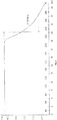
- 1,1-dimethyl-2-(4-methoxyphenyl)ethyl amine L-tartrate salt is characterized by a DSC thermogram showing an endothermic peak with an onset at 209-211 °C.
- 1,1-dimethyl-2-(4-methoxyphenyl)ethyl amine L-tartrate salt is characterized in that it provides a DSC thermogram substantially in accordance with Figure 1 .
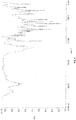
- 1,1-dimethyl-2-(4-methoxyphenyl)ethyl amine L-tartrate salt is characterized in that it provides a TG thermogram substantially in accordance with Figure 2 .
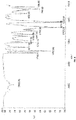
- the 1,1-dimethyl-2-(4-methoxyphenyl)ethyl amine L-tartrate salt is characterized by an IR spectra showing the following bands at 3386, 3283, 3207, 2995, 2956, 2908, 1648, 1507, 1252, 1121 and 823 cm -1 .
- 1,1-dimethyl-2-(4-methoxyphenyl)ethyl amine L-tartrate salt is characterized in that it provides an IR spectrum substantially in accordance with Figure 3 .
- 1,1-dimethyl-2-(4-methoxyphenyl)ethyl amine L-tartrate salt may be in pure form or when admixed with other materials, for example, other polymorphs, solvates or remaining reaction solvents or side products or byproducts.
- a process for preparing 1,1-dimethyl-2-(4-methoxyphenyl)ethyl amine L-tartrate salt as defined above, which is not encompassed by the invention, is disclosed herein, which comprises the steps of:
- the molar ratio of 1,1-dimethyl-2-(4-methoxyphenyl)ethyl amine to L-tartaric acid used in the above mentioned process is at least 1:1.
- the molar ratio of 1,1-dimethyl-2-(4-methoxyphenyl)ethyl amine to L-tartaric acid used in the above mentioned process is 2:1.
- Suitable solvents in step a) are organic solvents as defined above.
- the solvent comprises an organic solvent, water or mixtures thereof.
- Suitable organic solvent is a polar solvent.
- the solvent comprises a mixture of a polar solvent and water.
- Suitable polar solvents are alcohols, ester and ketone solvents. More preferably, the solvent comprises a mixture of an alcohol and water.
- Suitable alcohols are linear or branched C1-C6 alcohols, such as methanol, ethanol, 1-propanol, isopropanol and mixtures thereof.
- the solvent comprises a mixture of an alcohol and water in a ratio from 10:1 to 1:10 (v/v).
- the solvent comprises a mixture of an alcohol and water in a ratio from 10:1 to 1:1 (v/v). Also more preferably, the solvent comprises a mixture of an alcohol and water in a ratio from 7:1 to 3:1 (v/v) as the yield is increased.
- Step b), isolation of the salt obtained in step a), may be carried out by conventional means, such as by filtration optionally followed by washing.
- the L-tartrate salt may be purified by means of conventional purification techniques.
- the L-tartratre salt may be purified by crystallization.
- 1,1-dimethyl-2-(4-methoxyphenyl)ethyl amine of formula (3) may be prepared comprising the steps of:
- the 1,1-dimethyl-2-(4-methoxyphenyl)ethyl amine L-tartrate salt not encompassed by the invention obtainable through the process described above contains less than 0.1% (w/w) of impurity of formula (A) and/or less than 0.1% (w/w) of impurity of formula (B), relative to the amount of the 1,1-dimethyl-2-(4-methoxyphenyl)ethyl amine L-tartrate salt as measured by HPLC.
- the 1,1-dimethyl-2-(4-methoxyphenyl)ethyl amine L-tartrate salt not encompassed by the invention contains less than 0.05% (w/w) of impurity of formula (A) and/or less than 0.05% (w/w) of impurity of formula (B), relative to the amount of the 1,1-dimethyl-2-(4-methoxyphenyl)ethyl amine L-tartrate salt as measured by HPLC.
- the use of the hydrochloride salt in the synthesis of olodaterol entails several difficulties due to its hygroscopicity including the poor effect of purification of impurities, such as compounds of formula (A) and (B) depicted in Scheme 6 and also another impurity (C) whose chemical nature has not been established.
- impurities such as compounds of formula (A) and (B) depicted in Scheme 6 and also another impurity (C) whose chemical nature has not been established.
- the inventors have surprisingly found that the use of the 1,1-dimethyl-2-(4-methoxyphenyl)ethyl amine maleate salt, not encompassed by the invention, allows reducing or even eliminating the above-mentioned impurity.
- this salt is advantageous in the production of olodaterol or pharmaceutically acceptable salts thereof with very low content of impurities.
- 1,1-dimethyl-2-(4-methoxyphenyl)ethyl amine maleate salt, compound of formula (3) ⁇ maleic acid and solid forms thereof, not encompassed by the invention, are disclosed herein.
- the 1,1-dimethyl-2-(4-methoxyphenyl)ethyl amine maleate salt is obtained in high chemical purity and high yield, and has good stability.
- the molar ratio of 1,1-dimethyl-2-(4-methoxyphenyl)ethyl amine to maleic acid may be 2:1.
- the molar ratio of 1,1-dimethyl-2-(4-methoxyphenyl)ethyl amine to maleic acid may be 1:1.
- the 1,1-dimethyl-2-(4-methoxyphenyl)ethyl amine maleate salt may be in solid form.
- the 1,1-dimethyl-2-(4-methoxyphenyl)ethyl amine maleate salt, not encompassed by the invention is in a crystalline solid form.
- the 1,1-dimethyl-2-(4-methoxyphenyl)ethyl amine maleate salt, not encompassed by the invention is in a non-crystalline (i.e. amorphous) solid form.
- a process for preparing the maleate salt as defined above, which is not encompassed by the invention, is disclosed herein, the process comprises the steps of:
- the molar ratio of 1,1-dimethyl-2-(4-methoxyphenyl)ethyl amine to maleic acid used in step a) of the above mentioned process is preferably at least 1:1, more preferably from 1:1 to 2:1, still more preferably from 1:1 to 1.5:1, even more preferably from 1:1 to 1.1:1.
- Suitable solvents in step a) are organic solvents as previously defined.
- the solvent comprises an organic solvent, water or mixtures thereof.
- Suitable organic solvent is a polar solvent.
- the solvent comprises an organic solvent, water or mixtures thereof.
- Suitable polar solvents are alcohols, esters, ethers and solvents.
- polar solvents are esters and ethers. Suitable esters may be ethyl formate, methyl acetate, ethyl acetate, isopropyl acetate, butyl acetate, isobutyl acetate and ethyl malonate and mixtures thereof.
- Suitable ethers may be diethyl ether, dipropyl ether, diphenyl ether, isopropyl ether, tert-butyl methyl ether, tetrahydrofuran and 1,4-dioxane and mixtures thereof. More preferably, the solvent used in step a) is an ester solvent such as methyl acetate, ethyl acetate, isopropyl acetate and mixtures thereof as the yield is increased.
- Step b), isolation of the salt obtained in step a), may be carried out by conventional means, such as by filtration optionally followed by washing.
- the maleate salt may be purified by means of conventional purification techniques.
- the maleate salt may be purified by crystallization.
- 1,1-dimethyl-2-(4-methoxyphenyl)ethyl amine of formula (3) may be prepared comprising the steps of:
- a pharmaceutically acceptable salt of olodaterol comprising the 1,1-dimethyl-2-(4-methoxyphenyl)ethyl amine L-tartrate salt (not encompassed by the invention), the 1,1-dimethyl-2-(4-methoxyphenyl)ethyl amine maleate salt (not encompassed by the invention) and/or the camphorsulfonate salt of intermediate (4) according to the invention
- a process not encompassed by the invention may proceed through step a1), preferably through step a1) and wherein HX in step c) is hydrochloric acid.
- a process not encompassed by the invention may proceed through step a2), preferably through step a2) and wherein HX in step c) is hydrochloric acid.
- Suitable bases for step a1) and for step a2) may be inorganic bases selected from hydroxides, carbonates and bicarbonates of calcium, sodium, magnesium, potassium, lithium and caesium and mixtures thereof.
- the amount of base used may be at least in a molar ratio of 1:1 of base to the L-tartrate salt, preferably in a molar ratio of from 1:1 to 10:1, more preferably 1:1 to 5:1, still more preferably from 1:1 to 2.5:1.
- the amount of base used may be at least in a molar ratio of 1:1 of base to the maleate salt, in particular in a molar ratio of at least 2:1, preferably in a molar ratio of from 1:1 to 10:1, more preferably 1:1 to 5:1, still more preferably from 1:1 to 2.5:1.
- PG is a hydroxyl protecting group commonly known in the art for protecting phenol groups. As an example, their introduction and removal are discussed in T. W. Greene and G. M. Wuts, Protecting groups in Organic Synthesis, Third Edition, Wiley, New York, 1999 . Suitable hydroxyl protecting groups are those which are stable under alkaline conditions. More preferably, the hydroxyl protecting group can be deprotected by hydrogenation such as aralkyl groups and heteroaralkyl groups and the like. In the present invention PG is C 1 -C 10 alkyl substituted by a C 6 -C 10 aryl group.
- Alkyl means straight-chain or branched hydrocarbon chain radical containing no insaturation having from 1 to 10 carbon atoms, represented as C 1 -C 10 alkyl.
- Such alkyl groups may be selected from methyl, ethyl, n-propyl, isopropyl, n-butyl, isobutyl, sec-butyl, tert-butyl, straight- or branched-pentyl, straight- or branched-hexyl, straight- or branched-heptyl, straight- or branched-nonyl or straight- or branched-decyl.
- the alkyl group is C 1 -C 4 alkyl.
- Aryl means an aromatic hydrocarbon radical having 6 to 10 carbon atoms such as phenyl or naphthyl.
- the aryl radical may be optionally substituted by one or more substituents such as OH, SH, halo, alkyl, phenyl, alkoxy, haloalkyl, nitro, cyano, acyl as defined herein.
- Aralkyl means C 1 -C 10 alkyl as defined above substituted with C 6 -C 10 aryl as defined above.
- the aralkyl group is a C 1 -C 4 alkyl group, substituted by a C 6 -C 10 aryl group such as, phenyl, tolyl, xylyl and naphthyl.
- the C 6 -C 10 aryl groups may also be substituted by one or more substituents on the ring. Suitable substituents are selected from alkyl, alkoxy, halogen, as defined herein and nitro.
- the preferred substituents are alkyl and alkoxy groups.
- Preferred aralkyl groups are 4-methylbenzyl, 2-methylbenzyl, 4-methoxybenzyl or p -methoxybenzyl, 2-methoxybenzyl, 2,4-dimetoxybenzyl, 3,4-dimetoxybenzyl, 2,6-dimetoxybenzyl, 4-nitrobenzyl, 2-nitrobenzyl or o-nitrobenzyl, 2,4-dinitrobenzyl, 4-chlorobenzyl and 2-chlorobenzyl. More preferably, the aralkyl is benzyl or p-methoxybenzyl. Still more preferably, the aralkyl is benzyl.
- Heteroaralkyl means straight-chain or branched aralkyl as defined above, which may include one of the C 6 -C 10 aryl-C 1 -C 10 alkyl groups mentioned hereinbefore, substituted by one or more heterocyclic groups.
- the aralkyl group is C 6 -C 10 aryl-C 1 -C 4 alkyl substituted by one or more heterocyclic groups.
- the hydroxyl protecting group PG are those which can be deprotected by hydrogenation such as 4-methylbenzyl, 2-methylbenzyl, 4-methoxybenzyl, 2-methoxybenzyl, 2,4-dimethoxybenzyl, 3,4-dimethoxybenzyl, 2,6-dimethoxybenzyl, 4-nitrobenzyl, 2-nitrobenzyl, 2,4-dinitrobenzyl, 4-chlorobenzyl and 2-chlorobenzyl.
- the hydroxyl protecting group PG is benzyl and 4-methoxybenzyl. More preferably, the hydroxyl protecting group PG is benzyl.
- the organic solvent of step b) is as defined above.
- the organic solvent is selected from the group consisting of an ether solvent (e.g., diethyl ether, dipropyl ether, diphenyl ether, isopropyl ether, tert-butyl methyl ether, tetrahydrofuran, 2-methyltetrahydrofuran, 1,4-dioxane, methyl phenyl ether or anisole),
- an aromatic hydrocarbon solvent e.g., benzene, toluene, o-xylene, m-xylene, and p-xylene
- alcohol solvents e.g., methanol, ethanol, isopropanol, 1-propanol, 2-methyl-1-propanol, 1-butanol, 2-butanol, 1-pentanol, 3-methyl-1-butanol, tert-butanol, 1-octanol, benzyl alcohol,
- step b) may be conducted without the presence of an organic solvent.
- the pharmaceutically acceptable acid HX of step c) encompassed by the process of the invention is camphorsulfonic acid.
- the pharmaceutically acceptable salt of olodaterol is the hydrochloride salt, prepared by the process of the invention, which may be further purified. More preferably, the pharmaceutically acceptable salt of olodaterol, preferably olodaterol hydrochloride, may be purified by recrystallization.
- step c) is carried out and the HX acid is camphorsulfonic acid, providing the camphorsulfonate salt of intermediate (4) as defined in the first aspect.
- step c) further comprises converting the camphorsulfonate salt of intermediate (4) (i.e. HX is camphorsulfonic acid) into the hydrochloride salt of intermediate (4) (i.e. HX is hydrochloric acid).
- camphorsulfonate salt of compound (4), wherein PG is a hydroxyl protecting group as defined above with hydrochloric acid (which may be present either as gas or as an aqueous solution or generated in situ, for example from an alkylsilyl halogenide in the presence of a protic solvent (such as an alcohol; i.e. methanol, ethanol, isopropanol, 1-propanol and 1-butanol) in the presence of a suitable organic solvent or mixtures of solvents.
- Suitable organic solvents may be selected from alcohols, ethers, esters, chlorinated hydrocarbons and mixtures thereof or aqueous mixtures thereof.
- the organic solvent is selected from the group consisting of alcohols, ethers and esters.
- the camphorsulfonate salt of intermediate (4) is converted into the free base (i.e. compound of formula (4)), for example by treatment with a suitable base (which may be inorganic bases selected from hydroxides, carbonates and bicarbonates of calcium, sodium, magnesium, potassium, lithium and caesium and mixtures thereof), preferably in the presence of a suitable organic solvent as previously defined, preferably a polar solvent such as an ester, and ether or mixtures thereof.
- a suitable base which may be inorganic bases selected from hydroxides, carbonates and bicarbonates of calcium, sodium, magnesium, potassium, lithium and caesium and mixtures thereof.
- hydrochloric acid which may be present either as gas or as an aqueous solution or generated in situ, for example from an alkylsilyl halogenide in the presence of a protic solvent (such as an alcohol; i.e. methanol, ethanol, isopropanol, 1-propanol and 1-butanol) in the presence of an organic solvent as previously defined, to provide the corresponding salt of intermediate (4).
- a protic solvent such as an alcohol; i.e. methanol, ethanol, isopropanol, 1-propanol and 1-butanol
- an organic solvent as previously defined
- the hydrogenation step d) is conducted in the presence of a catalyst and an organic solvent.
- Suitable catalysts are selected from Pd, Pt, Rh, Ru, Ni, Fe, Zn and Ir catalyst.
- suitable catalyst are selected form palladium (0) (Pd(0)), palladium hydroxide (Pd(OH) 2 ), palladium on activated carbon (Pd/C), palladium on alumina, palladium on carbon powder, platinum, platinum on activated carbon and RaneyTM nickel.
- a combination of catalysts may also be used.
- the catalyst is palladium on activated carbon and palladium hydroxide (Pd(OH) 2 ).
- the amount of catalyst is not critical and may be equal or less than 10% by weight to the amount of compound of formula (4).
- the hydrogenation takes place at a hydrogen pressure range of from 0.5 to 10 atm. Most preferably, the hydrogen pressure is from 0.5 to 5 atm since fewer impurities are generated.
- the process for preparing the R-enantiomer of olodaterol hydrochloride comprises at least the steps of:
- the process proceeds through step a1). In an alternative embodiment, the process proceeds through step a2).
- a further embodiment of the third aspect of the present invention provides a process for preparing olodaterol or a pharmaceutically acceptable salt thereof, preferably the R-enantiomer of olodaterol hydrochloride, comprising at least the steps of:
- the camphorsulfonic acid preferably the ( R )-camphorsulfonic acid
- the camphorsulfonic acid is advantageous for the purification of advanced intermediate (4) from impurities IMP-1, IMP-2, IMP-3 and IMP-4, and thus, to provide final olodaterol or salt thereof, preferably the R -enantiomer of olodaterol hydrochloride, in high chemical and enantiomeric purity.
- the amine compound (3) may be obtained according to any one of the processes described above.
- PG is benzyl
- Step b) is preferably carried out as described in the second aspect of the present invention.
- Step c) is optional. Thus, in one embodiment step c) is carried out. In an alternative embodiment step c) is not carried out.
- This step involves treating the camphorsulfonate salt of compound (4), wherein PG is a hydroxyl protecting group as defined above, with hydrochloric acid (i.e. HX is hydrochloric acid).
- the camphorsulfonate salt of intermediate (4) is converted into the free base (i.e. compound (4)), for example by treatment with a suitable base such as aqueous sodium hydroxide, preferably in the presence of a suitable organic solvent as previously defined, such as an ester, preferably ethyl acetate.
- HX hydrochloric acid
- a suitable organic solvent such as an ester, preferably ethyl acetate.
- the hydrochloride salt is isolated, for example by filtration optionally followed by washing (such as washing with an ester, preferably ethyl acetate).
- Steps d) and e) may be carried out as previously described herein.
- the amine compound (3) may be obtained according to any one of the processes described above.
- PG is benzyl
- Steps a), b) c) and d) may be carried out as previously described herein.
- 1,1-dimethyl-2-(4-methoxyphenyl)ethyl amine L-tartrate salt as defined above for preparing olodaterol or a pharmaceutically acceptable salt thereof is disclosed herein, preferably the R -enantiomer of olodaterol hydrochloride.
- 1,1-dimethyl-2-(4-methoxyphenyl)ethyl amine maleate salt as defined above for preparing olodaterol or a pharmaceutically acceptable salt thereof is disclosed herein, preferably the R -enantiomer of olodaterol hydrochloride.
- a further aspect of the present invention relates to the use of the camphorsulfonate salt of intermediate (4) as defined in the first and second aspects for preparing olodaterol or a pharmaceutically acceptable salt thereof, preferably the R-enantiomer of olodaterol hydrochloride.
- DSC Differential Scanning Calorimetry
- TG Thermogravimetric analyses
- IR Infrared spectrometry
- Karl Fischer (KF) analyses were performed in a Metrohm 701 KF Titrino, equipped with an electrode Metrohm 6.0338.100 and 684/737 Coulometer (cell with diaphragm), using as reactive AQUAMETRIC Composite 5.
- toluene 150 mL was added and the phases were separated.
- the aqueous phase was extracted with toluene and the organic phases were joined and washed with water.
- the solvent of the organic phase was distilled off under reduced pressure at a maximum temperature of 45 °C.
- ethanol 150 mL was added and distilled off at a maximum temperature of 45 °C.
- the brown oil obtained was mixed with ethanol (400 mL) and hydrogenated at 15 atm of hydrogen pressure with Raney Ni (10.0 g) at 50 °C for 5 hours.
- the resulting mixture was filtered through a celite pad and washed with ethanol.
- the filtrate was distilled off under reduced pressure at a maximum temperature of 45 °C.
- ethyl acetate 250 mL was added and partially distilled off under atmospheric pressure. Then, the resulting mixture was cooled down to 70 °C and a solution 4 M of hydrochloric acid in ethyl acetate (71.5 mL) was added for 5 min. The resulting mixture was cooled down to room temperature for 2 hours and stirred further for 2 hours. The white solid obtained was filtered off and washed with ethyl acetate.
- the aqueous phase was extracted with toluene and the organic phases were joined and washed with water.
- the solvent of the organic phase was distilled off under reduced pressure at a maximum temperature of 45 °C.
- ethanol (30 mL) was added and distilled off at a maximum temperature of 45 °C.
- the brown oil obtained was mixed with ethanol (80 mL) and hydrogenated at 15 atm of hydrogen pressure with Raney Ni (2.0 g), at 50 °C and for 5 hours.
- the resulting suspension was filtered through a celite pad, washed with ethanol and distilled off under reduced pressure at a maximum temperature of 45 °C.
- 1,1-dimethyl-2-(4-methoxyphenyl)ethyl amine L-tartrate obtained in example 2 (1 g) was suspended in ethanol (5 mL) and heated at reflux temperature. Then, water (2 mL) was added dropwise maintaining the reflux temperature. The resulting solution was seeded, cooled to room temperature for 1 hour and further stirred for 1 hour and, finally, cooled down to 0-5 °C for 1 hour. The resulting suspension was filtered and washed with a cold mixture of ethanol and water (5:2; v/v) to give the 1,1-dimethyl-2-(4-methoxyphenyl)ethyl amine L-tartrate as an off-white solid.
- 1,1-dimethyl-2-(4-methoxyphenyl)ethyl amine L-tartrate salt (1.66 g, 5 mmol) obtained from example 3 was partitioned between toluene (10 mL) and an aqueous 1M solution of NaOH (11 mL, 2.2 equiv). The aqueous phase was extracted with toluene and the organic phases obtained were joined and washed with water. The solvent of the organic phase was distilled off under reduced pressure to give 1,1-dimethyl-2-(4-methoxyphenyl)ethyl amine as a brownish oil.
- the ( R )-(-)-10-camphorsulfonate salt (1.4 g, 1.97 mmol) obtained from example 6 was stirred with ethyl acetate (14 mL) and an aqueous 1M solution of sodium hydroxide (5 mL). The phases were separated and the aqueous phase was extracted with ethyl acetate. The organic phases were joined and washed with brine. An aqueous 4N solution of HCI in ethyl acetate was added until the pH is 1-2. The resulting suspension was stirred at room temperature for 30 min and at 0-5 °C for further 30 min, filtered, washed with cooled ethyl acetate and dried.
- the second half of the solution obtained in example 9 was hydrogenated at 15 atm of hydrogen pressure with Raney Ni (10.0 g) at 50 °C for 12 hours.
- the resulting mixture was filtered through a celite pad and a 1/2 of the solution was distilled off.
- the brownish oil obtained was mixed with maleic acid (7.4 g, 63.8 mmol, 0.5 equiv) and ethyl acetate (125 mL).
- the resulting suspension was heated to 50°C and stirred until solution was obtained, and cooled down room temperature for 2 hours.
- the solid obtained was filtered and washed with ethyl acetate.
- 1,1-dimethyl-2-(4-methoxyphenyl)ethyl amine L-tartrate salt (4.9 g, 14.9 mmol) was partitioned between toluene (50 mL) and an aqueous 1M solution of NaOH (50mL). The aqueous phase was extracted with toluene and the organic phases obtained were joined and washed with water and brine. The solvent of the organic phase was distilled off under reduced pressure to give 1,1-dimethyl-2-(4-methoxyphenyl)ethyl amine as a brownish oil.
Landscapes
- Chemical & Material Sciences (AREA)
- Organic Chemistry (AREA)
- Chemical Kinetics & Catalysis (AREA)
- Organic Low-Molecular-Weight Compounds And Preparation Thereof (AREA)
- Heterocyclic Carbon Compounds Containing A Hetero Ring Having Nitrogen And Oxygen As The Only Ring Hetero Atoms (AREA)
- Low-Molecular Organic Synthesis Reactions Using Catalysts (AREA)
- Pharmaceuticals Containing Other Organic And Inorganic Compounds (AREA)
Priority Applications (2)
| Application Number | Priority Date | Filing Date | Title |
|---|---|---|---|
| PL17816861T PL3558954T3 (pl) | 2016-12-20 | 2017-12-19 | Ulepszony sposób wytwarzania chlorowodorku r-6-hydroxy-8-[1-hydroksy-2-[2-(4-metoksyfenylo)-1,1-dimetyloetyloaminoetylo]-2h-1,4-benzoksazyno-3(4h)-onu |
| HRP20211915TT HRP20211915T1 (hr) | 2016-12-20 | 2017-12-19 | Poboljšani postupak dobivanja r-6-hidroksi-8-[1-hidroksi-2-[2-(4-metoksifenil)-1,1-dimetiletilaminoetil]-2h-1,4-benzoksazin-3(4h)-on-hidroklorida |
Applications Claiming Priority (3)
| Application Number | Priority Date | Filing Date | Title |
|---|---|---|---|
| EP16382628 | 2016-12-20 | ||
| EP17382449 | 2017-07-10 | ||
| PCT/EP2017/083444 WO2018114887A1 (en) | 2016-12-20 | 2017-12-19 | Improved process for the manufacture of r-6-hydroxy-8-[1-hydroxy-2-[2-(4-methoxyphenyl)-1,1-dimethylethylaminoethyl]-2h-1,4-benzoxazin-3(4h)-one hydrochloride |
Publications (2)
| Publication Number | Publication Date |
|---|---|
| EP3558954A1 EP3558954A1 (en) | 2019-10-30 |
| EP3558954B1 true EP3558954B1 (en) | 2021-11-03 |
Family
ID=60702800
Family Applications (1)
| Application Number | Title | Priority Date | Filing Date |
|---|---|---|---|
| EP17816861.3A Active EP3558954B1 (en) | 2016-12-20 | 2017-12-19 | Improved process for the manufacture of r-6-hydroxy-8-[1-hydroxy-2-[2-(4-methoxyphenyl)-1,1-dimethylethylaminoethyl]-2h-1,4-benzoxazin-3(4h)-one hydrochloride |
Country Status (9)
| Country | Link |
|---|---|
| US (1) | US10800748B2 (enExample) |
| EP (1) | EP3558954B1 (enExample) |
| JP (1) | JP7116060B2 (enExample) |
| CN (1) | CN110114346B (enExample) |
| DK (1) | DK3558954T3 (enExample) |
| ES (1) | ES2900283T3 (enExample) |
| HR (1) | HRP20211915T1 (enExample) |
| PL (1) | PL3558954T3 (enExample) |
| WO (1) | WO2018114887A1 (enExample) |
Families Citing this family (4)
| Publication number | Priority date | Publication date | Assignee | Title |
|---|---|---|---|---|
| CN108997248B (zh) * | 2018-08-06 | 2023-08-01 | 上海方予健康医药科技有限公司 | 盐酸奥达特罗晶型b及其制备方法 |
| CN108822054B (zh) * | 2018-08-06 | 2021-06-22 | 上海方予健康医药科技有限公司 | 盐酸奥达特罗晶型c及其制备方法 |
| CN109096218B (zh) * | 2018-08-06 | 2020-10-27 | 上海方予健康医药科技有限公司 | 盐酸奥达特罗晶型a及其制备方法 |
| CN114057590A (zh) * | 2021-11-12 | 2022-02-18 | 安徽有吉医药科技有限公司 | 一种奥达特罗关键中间体的合成方法 |
Family Cites Families (5)
| Publication number | Priority date | Publication date | Assignee | Title |
|---|---|---|---|---|
| DE10253282A1 (de) | 2002-11-15 | 2004-05-27 | Boehringer Ingelheim Pharma Gmbh & Co. Kg | Neue Arzneimittel zur Behandlung von chronisch obstruktiver Lungenerkrankung |
| DE102004024454A1 (de) | 2004-05-14 | 2005-12-08 | Boehringer Ingelheim Pharma Gmbh & Co. Kg | Neue Enantiomerenreine Betaagonisten, Verfahren zu deren Herstellung und deren Verwendung als Arzneimittel |
| MX2008001976A (es) * | 2005-08-15 | 2008-03-25 | Boehringer Ingelheim Int | Procedimiento para la preparacion de betamimeticos. |
| PL2125759T3 (pl) | 2007-01-25 | 2011-12-30 | Boehringer Ingelheim Int | Sposób wytwarzania związków betamimetycznych |
| US20100249550A1 (en) | 2009-03-25 | 2010-09-30 | Neilcor Puritan Bennett LLC | Method And Apparatus For Optical Filtering Of A Broadband Emitter In A Medical Sensor |
-
2017
- 2017-12-19 JP JP2019529170A patent/JP7116060B2/ja active Active
- 2017-12-19 PL PL17816861T patent/PL3558954T3/pl unknown
- 2017-12-19 DK DK17816861.3T patent/DK3558954T3/da active
- 2017-12-19 HR HRP20211915TT patent/HRP20211915T1/hr unknown
- 2017-12-19 ES ES17816861T patent/ES2900283T3/es active Active
- 2017-12-19 US US16/465,762 patent/US10800748B2/en active Active
- 2017-12-19 EP EP17816861.3A patent/EP3558954B1/en active Active
- 2017-12-19 CN CN201780078487.7A patent/CN110114346B/zh active Active
- 2017-12-19 WO PCT/EP2017/083444 patent/WO2018114887A1/en not_active Ceased
Non-Patent Citations (1)
| Title |
|---|
| None * |
Also Published As
| Publication number | Publication date |
|---|---|
| US10800748B2 (en) | 2020-10-13 |
| JP2020502077A (ja) | 2020-01-23 |
| CN110114346A (zh) | 2019-08-09 |
| JP7116060B2 (ja) | 2022-08-09 |
| HRP20211915T1 (hr) | 2022-03-18 |
| US20200062723A1 (en) | 2020-02-27 |
| DK3558954T3 (da) | 2021-12-06 |
| ES2900283T3 (es) | 2022-03-16 |
| CN110114346B (zh) | 2023-10-31 |
| EP3558954A1 (en) | 2019-10-30 |
| PL3558954T3 (pl) | 2022-01-31 |
| WO2018114887A1 (en) | 2018-06-28 |
Similar Documents
| Publication | Publication Date | Title |
|---|---|---|
| EP3558954B1 (en) | Improved process for the manufacture of r-6-hydroxy-8-[1-hydroxy-2-[2-(4-methoxyphenyl)-1,1-dimethylethylaminoethyl]-2h-1,4-benzoxazin-3(4h)-one hydrochloride | |
| EP2545043B1 (en) | Anhydrous lenalidomide form-i | |
| US8227429B2 (en) | Macrolide synthesis process and solid-state forms | |
| EP2077996B1 (en) | Purification process of montelukast and its amine salts | |
| JP2008239629A (ja) | 新規なベンラファクシン塩酸塩多型形状、ならびにその調製方法 | |
| WO2009007991A2 (en) | A new process for preparation of atovaquone and novel intermediates thereof | |
| EP2978745B1 (en) | Process for the manufacture of (r)-5-[2-(5,6-diethylindan-2-ylamino)-1-hydroxyethyl]-8-hydroxy-(1h)-quinolin-2-one | |
| CA2738089C (en) | Processes for the hydrogenation of opiate alkaloid derivatives | |
| AU2017208312A1 (en) | Methods of producing molindone and its salts | |
| EP3347345B1 (en) | Mixed solvate of (r)-5-[2-(5,6-diethylindan-2-ylamino)-1-hydroxyethyl]-8-hydroxy-1h-quinolin-2-one l-tartrate | |
| AU2016314129A1 (en) | Method for producing novel 4-benzazonine derivative | |
| EP2934502A1 (en) | Process for prepararing n-(2-(7-methoxy-1-naphthalenyl)ethyl) acetamide and solid forms thereof | |
| US20120253051A1 (en) | Process for the preparation of ropinirole and salts thereof | |
| EA040500B1 (ru) | Улучшенный способ получения гидрохлорида r-6-гидрокси-8-[1-гидрокси-2-[2-(4-метоксифенил)-1,1-диметилэтиламиноэтил]-2h-1,4-бензоксазин-3(4h)-она | |
| WO2014008639A1 (zh) | 制备茚达特罗的方法 | |
| WO2017108972A1 (en) | Compounds of r-(-)-(e)-[4-(2,4-dichlorophenyl)-1,3-dithiolan-2-ylidene]-1 -imidazolylacetonitrile-ha (luliconazole-ha) as antifungals | |
| EP3083551B1 (en) | Crystalline form of tapentadol intermediate | |
| CN100469759C (zh) | 托瑞米芬的结晶方法 | |
| JPH0764843B2 (ja) | 新規化合物,その製法及びそれを含む医薬組成物 | |
| US7145014B2 (en) | Process for the preparation of quinoline derivatives | |
| WO2024260959A1 (en) | Process for preparing optically active secondary amines and their use as intermediates | |
| US20120022292A1 (en) | Method for preparing eplivanserin hemifumarate |
Legal Events
| Date | Code | Title | Description |
|---|---|---|---|
| REG | Reference to a national code |
Ref country code: HR Ref legal event code: TUEP Ref document number: P20211915T Country of ref document: HR |
|
| STAA | Information on the status of an ep patent application or granted ep patent |
Free format text: STATUS: UNKNOWN |
|
| STAA | Information on the status of an ep patent application or granted ep patent |
Free format text: STATUS: THE INTERNATIONAL PUBLICATION HAS BEEN MADE |
|
| PUAI | Public reference made under article 153(3) epc to a published international application that has entered the european phase |
Free format text: ORIGINAL CODE: 0009012 |
|
| STAA | Information on the status of an ep patent application or granted ep patent |
Free format text: STATUS: REQUEST FOR EXAMINATION WAS MADE |
|
| 17P | Request for examination filed |
Effective date: 20190524 |
|
| AK | Designated contracting states |
Kind code of ref document: A1 Designated state(s): AL AT BE BG CH CY CZ DE DK EE ES FI FR GB GR HR HU IE IS IT LI LT LU LV MC MK MT NL NO PL PT RO RS SE SI SK SM TR |
|
| AX | Request for extension of the european patent |
Extension state: BA ME |
|
| DAV | Request for validation of the european patent (deleted) | ||
| DAX | Request for extension of the european patent (deleted) | ||
| STAA | Information on the status of an ep patent application or granted ep patent |
Free format text: STATUS: EXAMINATION IS IN PROGRESS |
|
| 17Q | First examination report despatched |
Effective date: 20200518 |
|
| GRAP | Despatch of communication of intention to grant a patent |
Free format text: ORIGINAL CODE: EPIDOSNIGR1 |
|
| STAA | Information on the status of an ep patent application or granted ep patent |
Free format text: STATUS: GRANT OF PATENT IS INTENDED |
|
| INTG | Intention to grant announced |
Effective date: 20210528 |
|
| GRAS | Grant fee paid |
Free format text: ORIGINAL CODE: EPIDOSNIGR3 |
|
| GRAA | (expected) grant |
Free format text: ORIGINAL CODE: 0009210 |
|
| STAA | Information on the status of an ep patent application or granted ep patent |
Free format text: STATUS: THE PATENT HAS BEEN GRANTED |
|
| AK | Designated contracting states |
Kind code of ref document: B1 Designated state(s): AL AT BE BG CH CY CZ DE DK EE ES FI FR GB GR HR HU IE IS IT LI LT LU LV MC MK MT NL NO PL PT RO RS SE SI SK SM TR |
|
| REG | Reference to a national code |
Ref country code: GB Ref legal event code: FG4D |
|
| REG | Reference to a national code |
Ref country code: AT Ref legal event code: REF Ref document number: 1443862 Country of ref document: AT Kind code of ref document: T Effective date: 20211115 Ref country code: CH Ref legal event code: EP |
|
| REG | Reference to a national code |
Ref country code: IE Ref legal event code: FG4D |
|
| REG | Reference to a national code |
Ref country code: DE Ref legal event code: R096 Ref document number: 602017048815 Country of ref document: DE |
|
| REG | Reference to a national code |
Ref country code: DK Ref legal event code: T3 Effective date: 20211203 |
|
| REG | Reference to a national code |
Ref country code: SE Ref legal event code: TRGR |
|
| REG | Reference to a national code |
Ref country code: LT Ref legal event code: MG9D |
|
| REG | Reference to a national code |
Ref country code: HR Ref legal event code: ODRP Ref document number: P20211915T Country of ref document: HR Payment date: 20211208 Year of fee payment: 5 |
|
| REG | Reference to a national code |
Ref country code: PT Ref legal event code: SC4A Ref document number: 3558954 Country of ref document: PT Date of ref document: 20220307 Kind code of ref document: T Free format text: AVAILABILITY OF NATIONAL TRANSLATION Effective date: 20220222 |
|
| REG | Reference to a national code |
Ref country code: NL Ref legal event code: MP Effective date: 20211103 |
|
| REG | Reference to a national code |
Ref country code: AT Ref legal event code: MK05 Ref document number: 1443862 Country of ref document: AT Kind code of ref document: T Effective date: 20211103 |
|
| REG | Reference to a national code |
Ref country code: ES Ref legal event code: FG2A Ref document number: 2900283 Country of ref document: ES Kind code of ref document: T3 Effective date: 20220316 |
|
| REG | Reference to a national code |
Ref country code: HR Ref legal event code: T1PR Ref document number: P20211915 Country of ref document: HR |
|
| PG25 | Lapsed in a contracting state [announced via postgrant information from national office to epo] |
Ref country code: RS Free format text: LAPSE BECAUSE OF FAILURE TO SUBMIT A TRANSLATION OF THE DESCRIPTION OR TO PAY THE FEE WITHIN THE PRESCRIBED TIME-LIMIT Effective date: 20211103 Ref country code: LT Free format text: LAPSE BECAUSE OF FAILURE TO SUBMIT A TRANSLATION OF THE DESCRIPTION OR TO PAY THE FEE WITHIN THE PRESCRIBED TIME-LIMIT Effective date: 20211103 Ref country code: FI Free format text: LAPSE BECAUSE OF FAILURE TO SUBMIT A TRANSLATION OF THE DESCRIPTION OR TO PAY THE FEE WITHIN THE PRESCRIBED TIME-LIMIT Effective date: 20211103 Ref country code: BG Free format text: LAPSE BECAUSE OF FAILURE TO SUBMIT A TRANSLATION OF THE DESCRIPTION OR TO PAY THE FEE WITHIN THE PRESCRIBED TIME-LIMIT Effective date: 20220203 Ref country code: AT Free format text: LAPSE BECAUSE OF FAILURE TO SUBMIT A TRANSLATION OF THE DESCRIPTION OR TO PAY THE FEE WITHIN THE PRESCRIBED TIME-LIMIT Effective date: 20211103 |
|
| PG25 | Lapsed in a contracting state [announced via postgrant information from national office to epo] |
Ref country code: IS Free format text: LAPSE BECAUSE OF FAILURE TO SUBMIT A TRANSLATION OF THE DESCRIPTION OR TO PAY THE FEE WITHIN THE PRESCRIBED TIME-LIMIT Effective date: 20220303 Ref country code: NO Free format text: LAPSE BECAUSE OF FAILURE TO SUBMIT A TRANSLATION OF THE DESCRIPTION OR TO PAY THE FEE WITHIN THE PRESCRIBED TIME-LIMIT Effective date: 20220203 Ref country code: NL Free format text: LAPSE BECAUSE OF FAILURE TO SUBMIT A TRANSLATION OF THE DESCRIPTION OR TO PAY THE FEE WITHIN THE PRESCRIBED TIME-LIMIT Effective date: 20211103 Ref country code: LV Free format text: LAPSE BECAUSE OF FAILURE TO SUBMIT A TRANSLATION OF THE DESCRIPTION OR TO PAY THE FEE WITHIN THE PRESCRIBED TIME-LIMIT Effective date: 20211103 Ref country code: GR Free format text: LAPSE BECAUSE OF FAILURE TO SUBMIT A TRANSLATION OF THE DESCRIPTION OR TO PAY THE FEE WITHIN THE PRESCRIBED TIME-LIMIT Effective date: 20220204 |
|
| PG25 | Lapsed in a contracting state [announced via postgrant information from national office to epo] |
Ref country code: SM Free format text: LAPSE BECAUSE OF FAILURE TO SUBMIT A TRANSLATION OF THE DESCRIPTION OR TO PAY THE FEE WITHIN THE PRESCRIBED TIME-LIMIT Effective date: 20211103 Ref country code: SK Free format text: LAPSE BECAUSE OF FAILURE TO SUBMIT A TRANSLATION OF THE DESCRIPTION OR TO PAY THE FEE WITHIN THE PRESCRIBED TIME-LIMIT Effective date: 20211103 Ref country code: RO Free format text: LAPSE BECAUSE OF FAILURE TO SUBMIT A TRANSLATION OF THE DESCRIPTION OR TO PAY THE FEE WITHIN THE PRESCRIBED TIME-LIMIT Effective date: 20211103 Ref country code: EE Free format text: LAPSE BECAUSE OF FAILURE TO SUBMIT A TRANSLATION OF THE DESCRIPTION OR TO PAY THE FEE WITHIN THE PRESCRIBED TIME-LIMIT Effective date: 20211103 Ref country code: CZ Free format text: LAPSE BECAUSE OF FAILURE TO SUBMIT A TRANSLATION OF THE DESCRIPTION OR TO PAY THE FEE WITHIN THE PRESCRIBED TIME-LIMIT Effective date: 20211103 |
|
| REG | Reference to a national code |
Ref country code: DE Ref legal event code: R097 Ref document number: 602017048815 Country of ref document: DE |
|
| PG25 | Lapsed in a contracting state [announced via postgrant information from national office to epo] |
Ref country code: MC Free format text: LAPSE BECAUSE OF FAILURE TO SUBMIT A TRANSLATION OF THE DESCRIPTION OR TO PAY THE FEE WITHIN THE PRESCRIBED TIME-LIMIT Effective date: 20211103 |
|
| PLBE | No opposition filed within time limit |
Free format text: ORIGINAL CODE: 0009261 |
|
| STAA | Information on the status of an ep patent application or granted ep patent |
Free format text: STATUS: NO OPPOSITION FILED WITHIN TIME LIMIT |
|
| REG | Reference to a national code |
Ref country code: BE Ref legal event code: MM Effective date: 20211231 |
|
| 26N | No opposition filed |
Effective date: 20220804 |
|
| PG25 | Lapsed in a contracting state [announced via postgrant information from national office to epo] |
Ref country code: LU Free format text: LAPSE BECAUSE OF NON-PAYMENT OF DUE FEES Effective date: 20211219 Ref country code: AL Free format text: LAPSE BECAUSE OF FAILURE TO SUBMIT A TRANSLATION OF THE DESCRIPTION OR TO PAY THE FEE WITHIN THE PRESCRIBED TIME-LIMIT Effective date: 20211103 |
|
| PG25 | Lapsed in a contracting state [announced via postgrant information from national office to epo] |
Ref country code: SI Free format text: LAPSE BECAUSE OF FAILURE TO SUBMIT A TRANSLATION OF THE DESCRIPTION OR TO PAY THE FEE WITHIN THE PRESCRIBED TIME-LIMIT Effective date: 20211103 Ref country code: BE Free format text: LAPSE BECAUSE OF NON-PAYMENT OF DUE FEES Effective date: 20211231 |
|
| REG | Reference to a national code |
Ref country code: HR Ref legal event code: ODRP Ref document number: P20211915 Country of ref document: HR Payment date: 20221207 Year of fee payment: 6 |
|
| P01 | Opt-out of the competence of the unified patent court (upc) registered |
Effective date: 20230517 |
|
| PG25 | Lapsed in a contracting state [announced via postgrant information from national office to epo] |
Ref country code: CY Free format text: LAPSE BECAUSE OF FAILURE TO SUBMIT A TRANSLATION OF THE DESCRIPTION OR TO PAY THE FEE WITHIN THE PRESCRIBED TIME-LIMIT Effective date: 20211103 |
|
| PG25 | Lapsed in a contracting state [announced via postgrant information from national office to epo] |
Ref country code: HU Free format text: LAPSE BECAUSE OF FAILURE TO SUBMIT A TRANSLATION OF THE DESCRIPTION OR TO PAY THE FEE WITHIN THE PRESCRIBED TIME-LIMIT; INVALID AB INITIO Effective date: 20171219 |
|
| REG | Reference to a national code |
Ref country code: HR Ref legal event code: ODRP Ref document number: P20211915 Country of ref document: HR Payment date: 20231206 Year of fee payment: 7 |
|
| PG25 | Lapsed in a contracting state [announced via postgrant information from national office to epo] |
Ref country code: MK Free format text: LAPSE BECAUSE OF FAILURE TO SUBMIT A TRANSLATION OF THE DESCRIPTION OR TO PAY THE FEE WITHIN THE PRESCRIBED TIME-LIMIT Effective date: 20211103 |
|
| PG25 | Lapsed in a contracting state [announced via postgrant information from national office to epo] |
Ref country code: MT Free format text: LAPSE BECAUSE OF FAILURE TO SUBMIT A TRANSLATION OF THE DESCRIPTION OR TO PAY THE FEE WITHIN THE PRESCRIBED TIME-LIMIT Effective date: 20211103 |
|
| PGFP | Annual fee paid to national office [announced via postgrant information from national office to epo] |
Ref country code: PT Payment date: 20241205 Year of fee payment: 8 |
|
| REG | Reference to a national code |
Ref country code: HR Ref legal event code: ODRP Ref document number: P20211915 Country of ref document: HR Payment date: 20241210 Year of fee payment: 8 |
|
| PGFP | Annual fee paid to national office [announced via postgrant information from national office to epo] |
Ref country code: DK Payment date: 20241226 Year of fee payment: 8 |
|
| PGFP | Annual fee paid to national office [announced via postgrant information from national office to epo] |
Ref country code: PL Payment date: 20241218 Year of fee payment: 8 |
|
| PGFP | Annual fee paid to national office [announced via postgrant information from national office to epo] |
Ref country code: GB Payment date: 20241227 Year of fee payment: 8 |
|
| PGFP | Annual fee paid to national office [announced via postgrant information from national office to epo] |
Ref country code: FR Payment date: 20241226 Year of fee payment: 8 |
|
| PGFP | Annual fee paid to national office [announced via postgrant information from national office to epo] |
Ref country code: IE Payment date: 20241227 Year of fee payment: 8 Ref country code: HR Payment date: 20241210 Year of fee payment: 8 |
|
| PGFP | Annual fee paid to national office [announced via postgrant information from national office to epo] |
Ref country code: IT Payment date: 20241218 Year of fee payment: 8 |
|
| PGFP | Annual fee paid to national office [announced via postgrant information from national office to epo] |
Ref country code: SE Payment date: 20241227 Year of fee payment: 8 |
|
| PGFP | Annual fee paid to national office [announced via postgrant information from national office to epo] |
Ref country code: DE Payment date: 20241227 Year of fee payment: 8 |
|
| PGFP | Annual fee paid to national office [announced via postgrant information from national office to epo] |
Ref country code: ES Payment date: 20250102 Year of fee payment: 8 |
|
| PGFP | Annual fee paid to national office [announced via postgrant information from national office to epo] |
Ref country code: CH Payment date: 20250108 Year of fee payment: 8 |
|
| PGFP | Annual fee paid to national office [announced via postgrant information from national office to epo] |
Ref country code: TR Payment date: 20241210 Year of fee payment: 8 |