EP3554935B1 - Getriebe für ein fahrrad - Google Patents
Getriebe für ein fahrrad Download PDFInfo
- Publication number
- EP3554935B1 EP3554935B1 EP17811505.1A EP17811505A EP3554935B1 EP 3554935 B1 EP3554935 B1 EP 3554935B1 EP 17811505 A EP17811505 A EP 17811505A EP 3554935 B1 EP3554935 B1 EP 3554935B1
- Authority
- EP
- European Patent Office
- Prior art keywords
- planetary
- transmission
- rotationally fixed
- fixed manner
- bottom bracket
- Prior art date
- Legal status (The legal status is an assumption and is not a legal conclusion. Google has not performed a legal analysis and makes no representation as to the accuracy of the status listed.)
- Active
Links
Images

Classifications
-
- B—PERFORMING OPERATIONS; TRANSPORTING
- B62—LAND VEHICLES FOR TRAVELLING OTHERWISE THAN ON RAILS
- B62M—RIDER PROPULSION OF WHEELED VEHICLES OR SLEDGES; POWERED PROPULSION OF SLEDGES OR SINGLE-TRACK CYCLES; TRANSMISSIONS SPECIALLY ADAPTED FOR SUCH VEHICLES
- B62M11/00—Transmissions characterised by the use of interengaging toothed wheels or frictionally-engaging wheels
- B62M11/04—Transmissions characterised by the use of interengaging toothed wheels or frictionally-engaging wheels of changeable ratio
- B62M11/14—Transmissions characterised by the use of interengaging toothed wheels or frictionally-engaging wheels of changeable ratio with planetary gears
- B62M11/18—Transmissions characterised by the use of interengaging toothed wheels or frictionally-engaging wheels of changeable ratio with planetary gears with a plurality of planetary gear units
-
- B—PERFORMING OPERATIONS; TRANSPORTING
- B62—LAND VEHICLES FOR TRAVELLING OTHERWISE THAN ON RAILS
- B62M—RIDER PROPULSION OF WHEELED VEHICLES OR SLEDGES; POWERED PROPULSION OF SLEDGES OR SINGLE-TRACK CYCLES; TRANSMISSIONS SPECIALLY ADAPTED FOR SUCH VEHICLES
- B62M11/00—Transmissions characterised by the use of interengaging toothed wheels or frictionally-engaging wheels
- B62M11/04—Transmissions characterised by the use of interengaging toothed wheels or frictionally-engaging wheels of changeable ratio
- B62M11/14—Transmissions characterised by the use of interengaging toothed wheels or frictionally-engaging wheels of changeable ratio with planetary gears
- B62M11/145—Transmissions characterised by the use of interengaging toothed wheels or frictionally-engaging wheels of changeable ratio with planetary gears built in, or adjacent to, the bottom bracket
-
- B—PERFORMING OPERATIONS; TRANSPORTING
- B62—LAND VEHICLES FOR TRAVELLING OTHERWISE THAN ON RAILS
- B62M—RIDER PROPULSION OF WHEELED VEHICLES OR SLEDGES; POWERED PROPULSION OF SLEDGES OR SINGLE-TRACK CYCLES; TRANSMISSIONS SPECIALLY ADAPTED FOR SUCH VEHICLES
- B62M6/00—Rider propulsion of wheeled vehicles with additional source of power, e.g. combustion engine or electric motor
- B62M6/40—Rider propelled cycles with auxiliary electric motor
- B62M6/60—Rider propelled cycles with auxiliary electric motor power-driven at axle parts
-
- F—MECHANICAL ENGINEERING; LIGHTING; HEATING; WEAPONS; BLASTING
- F16—ENGINEERING ELEMENTS AND UNITS; GENERAL MEASURES FOR PRODUCING AND MAINTAINING EFFECTIVE FUNCTIONING OF MACHINES OR INSTALLATIONS; THERMAL INSULATION IN GENERAL
- F16H—GEARING
- F16H3/00—Toothed gearings for conveying rotary motion with variable gear ratio or for reversing rotary motion
- F16H3/44—Toothed gearings for conveying rotary motion with variable gear ratio or for reversing rotary motion using gears having orbital motion
- F16H3/62—Gearings having three or more central gears
- F16H3/66—Gearings having three or more central gears composed of a number of gear trains without drive passing from one train to another
-
- F—MECHANICAL ENGINEERING; LIGHTING; HEATING; WEAPONS; BLASTING
- F16—ENGINEERING ELEMENTS AND UNITS; GENERAL MEASURES FOR PRODUCING AND MAINTAINING EFFECTIVE FUNCTIONING OF MACHINES OR INSTALLATIONS; THERMAL INSULATION IN GENERAL
- F16H—GEARING
- F16H2200/00—Transmissions for multiple ratios
- F16H2200/003—Transmissions for multiple ratios characterised by the number of forward speeds
- F16H2200/006—Transmissions for multiple ratios characterised by the number of forward speeds the gear ratios comprising eight forward speeds
-
- F—MECHANICAL ENGINEERING; LIGHTING; HEATING; WEAPONS; BLASTING
- F16—ENGINEERING ELEMENTS AND UNITS; GENERAL MEASURES FOR PRODUCING AND MAINTAINING EFFECTIVE FUNCTIONING OF MACHINES OR INSTALLATIONS; THERMAL INSULATION IN GENERAL
- F16H—GEARING
- F16H2200/00—Transmissions for multiple ratios
- F16H2200/003—Transmissions for multiple ratios characterised by the number of forward speeds
- F16H2200/0078—Transmissions for multiple ratios characterised by the number of forward speeds the gear ratio comprising twelve or more forward speeds
-
- F—MECHANICAL ENGINEERING; LIGHTING; HEATING; WEAPONS; BLASTING
- F16—ENGINEERING ELEMENTS AND UNITS; GENERAL MEASURES FOR PRODUCING AND MAINTAINING EFFECTIVE FUNCTIONING OF MACHINES OR INSTALLATIONS; THERMAL INSULATION IN GENERAL
- F16H—GEARING
- F16H2200/00—Transmissions for multiple ratios
- F16H2200/20—Transmissions using gears with orbital motion
- F16H2200/2002—Transmissions using gears with orbital motion characterised by the number of sets of orbital gears
- F16H2200/201—Transmissions using gears with orbital motion characterised by the number of sets of orbital gears with three sets of orbital gears
-
- F—MECHANICAL ENGINEERING; LIGHTING; HEATING; WEAPONS; BLASTING
- F16—ENGINEERING ELEMENTS AND UNITS; GENERAL MEASURES FOR PRODUCING AND MAINTAINING EFFECTIVE FUNCTIONING OF MACHINES OR INSTALLATIONS; THERMAL INSULATION IN GENERAL
- F16H—GEARING
- F16H2200/00—Transmissions for multiple ratios
- F16H2200/20—Transmissions using gears with orbital motion
- F16H2200/203—Transmissions using gears with orbital motion characterised by the engaging friction means not of the freewheel type, e.g. friction clutches or brakes
- F16H2200/2046—Transmissions using gears with orbital motion characterised by the engaging friction means not of the freewheel type, e.g. friction clutches or brakes with six engaging means
-
- F—MECHANICAL ENGINEERING; LIGHTING; HEATING; WEAPONS; BLASTING
- F16—ENGINEERING ELEMENTS AND UNITS; GENERAL MEASURES FOR PRODUCING AND MAINTAINING EFFECTIVE FUNCTIONING OF MACHINES OR INSTALLATIONS; THERMAL INSULATION IN GENERAL
- F16H—GEARING
- F16H2200/00—Transmissions for multiple ratios
- F16H2200/20—Transmissions using gears with orbital motion
- F16H2200/203—Transmissions using gears with orbital motion characterised by the engaging friction means not of the freewheel type, e.g. friction clutches or brakes
- F16H2200/2048—Transmissions using gears with orbital motion characterised by the engaging friction means not of the freewheel type, e.g. friction clutches or brakes with seven engaging means
-
- F—MECHANICAL ENGINEERING; LIGHTING; HEATING; WEAPONS; BLASTING
- F16—ENGINEERING ELEMENTS AND UNITS; GENERAL MEASURES FOR PRODUCING AND MAINTAINING EFFECTIVE FUNCTIONING OF MACHINES OR INSTALLATIONS; THERMAL INSULATION IN GENERAL
- F16H—GEARING
- F16H2200/00—Transmissions for multiple ratios
- F16H2200/20—Transmissions using gears with orbital motion
- F16H2200/203—Transmissions using gears with orbital motion characterised by the engaging friction means not of the freewheel type, e.g. friction clutches or brakes
- F16H2200/2051—Transmissions using gears with orbital motion characterised by the engaging friction means not of the freewheel type, e.g. friction clutches or brakes with eight engaging means
-
- F—MECHANICAL ENGINEERING; LIGHTING; HEATING; WEAPONS; BLASTING
- F16—ENGINEERING ELEMENTS AND UNITS; GENERAL MEASURES FOR PRODUCING AND MAINTAINING EFFECTIVE FUNCTIONING OF MACHINES OR INSTALLATIONS; THERMAL INSULATION IN GENERAL
- F16H—GEARING
- F16H3/00—Toothed gearings for conveying rotary motion with variable gear ratio or for reversing rotary motion
- F16H3/44—Toothed gearings for conveying rotary motion with variable gear ratio or for reversing rotary motion using gears having orbital motion
- F16H3/62—Gearings having three or more central gears
- F16H3/66—Gearings having three or more central gears composed of a number of gear trains without drive passing from one train to another
- F16H3/663—Gearings having three or more central gears composed of a number of gear trains without drive passing from one train to another with conveying rotary motion between axially spaced orbital gears, e.g. a stepped orbital gear or Ravigneaux
Definitions
- the invention relates to a transmission for a bicycle, with a transmission input shaft that can be connected to a bottom bracket crankshaft, a first planetary set, a second planetary set and a third planetary set, which are operatively connected to one another, one element of the first planetary set being connected to the transmission input shaft in a rotationally fixed manner and the first planetary gear set has a planet with a first planetary stage and a second planetary stage
- the invention also relates to a bottom bracket transmission with such a transmission.
- the invention also relates to a bicycle with the transmission or the bottom bracket transmission.
- DE102014101726A1 discloses a transmission with up to 142 forward gears with only two stepped planetary sets.
- the object of the invention is therefore to provide a transmission for a bicycle which is simple in design and in which the construction costs are low.
- a transmission of the type mentioned at the outset which is characterized in that a first ring gear which is in engagement with a toothing region of the first planetary stage can be connected to a transmission housing in a rotationally fixed manner by means of a first shifting element, and one is in engagement with a toothing region of the second planetary stage stationary second ring gear is rotatably connected to the transmission housing by means of a second shift element.
- the transmission according to the invention has the advantage that the planet is made small.
- the diameter of a module of 1 is less than 80mm.
- the other planetary gear sets can also be kept small in diameter, so that the transmission is compact.
- the transmission has the advantage that it has a simple structure, so that the construction costs for the transmission are low.
- the gear housing can be part of the bottom bracket housing, that is to say it can be designed in one piece with the bottom bracket housing.
- the gear housing can be a housing that is separate from the bottom bracket housing and that can be inserted into a cavity in the bottom bracket housing.
- the transmission housing can be designed and arranged in such a way that it does not rotate when the transmission is in operation, but is stationary.
- a shaft is not understood exclusively to mean a, for example, cylindrical, rotatably mounted machine element for the transmission of torques. Rather, this also includes general connecting elements that connect individual components to one another, in particular connecting elements that non-rotatably connect several components to one another.
- the planetary stages all have a toothed area that can be brought into engagement with at least one other element of the planetary gear set.
- the individual planetary stages differ from one another in terms of their diameter.
- the planet is carried by a web of the first planetary gear set.
- the first gear can have a gear ratio of 1 or slightly above 1. From the second gear onwards, there is a high speed ratio, i.e. the ratio has a value less than 1.
- the transmission according to the invention at least eight, in particular exactly eight, gears can be achieved. This is possible because two gears can be achieved with each of the planetary sets.
- the transmission according to the invention also has the advantage that it can be expanded in a very particularly simple manner by means of minor modifications.
- the transmission can change from an 8-speed transmission to a more closely graduated 12-speed transmission be expanded.
- This can be achieved by adding a third planetary stage to the planet of the first planetary set.
- a third ring gear that is in engagement with a toothing area of the third planetary stage can be connected to the transmission housing in a rotationally fixed manner by means of a third shift element.
- the transmission according to the invention can be expanded from an 8-speed transmission to a 12-speed transmission in a particularly simple manner.
- the element of the first planetary set is a bridge that carries the planet.
- the bridge can of course also carry several planets.
- a sun gear of the first planetary set can be connected in a rotationally fixed manner to a web of the second planetary set.
- the sun gear of the first planetary gear set in engagement with the first planetary stage can be connected in a rotationally fixed manner to the web of the second planetary gear set.
- a sun gear of the second planetary gear set can be connected to the transmission housing in a rotationally fixed manner by means of a fourth shift element.
- two elements of the second planetary set can be connected to one another in a rotationally fixed manner by means of a fifth shift element. Blocking of the second planetary gear set can thereby be achieved.
- the planetary gear set has a gear ratio of 1.
- the fifth shift element can be arranged in such a way that a ring gear of the second planetary gear set can be connected non-rotatably to the sun gear of the second planetary gear set.
- the fifth shift element can also be arranged differently, so that the ring gear of the second planetary gear set can be connected to one another in a rotationally fixed manner with the web of the second planetary gear set or the web of the second planetary gear set with the sun gear of the second planetary set.
- the ring gear of the second planetary set can also be connected in a rotationally fixed manner to a sun gear of the third planetary set.
- a ring gear of the third planetary set can be connected non-rotatably to the transmission housing by means of a sixth shift element.
- two elements of the third planetary gear set can be connected to one another in a rotationally fixed manner. Blocking of the third planetary gear set can thereby be achieved. It is particularly advantageous if the seventh shifting element is arranged in such a way that the ring gear of the third planetary gear set can be connected non-rotatably to the sun gear of the third planetary gear set. Of course, an arrangement of the seventh shifting element is also possible in which the ring gear of the third planetary gear set can be connected to one another in a rotationally fixed manner with the web of the third planetary gear set or the web of the third planetary gear set with the sun gear of the third planetary set.
- An element of the third planetary gear set can be connected to a transmission output shaft in a rotationally fixed manner.
- the web of the third planetary gear set can be connected to the transmission output shaft in a rotationally fixed manner.
- the transmission output shaft can be connected non-rotatably to a traction means carrier such as a chain wheel or belt wheel.
- the torque provided by the transmission can be transmitted to a rear wheel of the bicycle via the traction mechanism carrier and a traction mechanism such as a chain or a belt.
- a simply constructed transmission which can have exactly three planetary sets and by means of which a large number of gears can be implemented.
- the planet of the first planetary set can have exactly three planetary stages.
- the transmission has the advantage that the sixth shifting element is not heavily loaded and a low supporting torque is applied to the sun gear.
- the first and / or second and / or third planetary gear set can be designed as a minus planetary gear set.
- the first and / or second and / or third planetary gear set are designed as a plus planetary gear set.
- a minus planetary gear set corresponds to a planetary set with a web on which the planetary gears are rotatably mounted, a sun gear and a ring gear, the toothing of at least one of the planetary gears meshing with both the toothing of the sun gear and the toothing of the ring gear, whereby the Ring gear and the sun gear rotate in the opposite direction of rotation if the sun gear rotates with a stationary web.
- a plus planetary gear set differs from the minus planetary gear set in that the plus planetary gear set has inner and outer planetary gears which are rotatably mounted on the web.
- the toothing of the inner planetary gears meshes on the one hand with the toothing of the sun gear and on the other hand with the toothing of the outer planetary gears.
- the toothing of the outer planetary gears also meshes with the toothing of the ring gear.
- the planetary sets of the transmission are arranged in the order of the first planetary set, second planetary set and third planetary set.
- the first, second, third, fourth and sixth switching element can be designed as a brake.
- the fifth and seventh shifting element can be designed as a clutch.
- the transmission can have an electrical machine that is operatively connected or can be operatively connected to the transmission output shaft.
- the electrical machine can be connected downstream of the first and / or the second and / or the third planetary gear set in terms of drive technology. This offers the advantage that the torque provided by the electrical machine does not act on the planetary gear sets.
- the electric machine also has the advantage that it can support the cyclist while driving. This means that fine gear steps are not necessary, since muscle power is of little importance for the drive due to the electrical machine.
- the electric machine consists at least of a non-rotatable stator and a rotatably mounted rotor and is set up in a motor mode to convert electrical energy into mechanical energy in the form of speed and torque, and in a generator mode mechanical energy into electrical energy in the form of Convert current and voltage.
- the electric machine can be arranged offset, in particular in the radial direction, with respect to a central axis of the transmission and / or the bottom bracket crankshaft.
- a central axis of the electrical machine can run parallel to a central axis of the transmission. This offers the advantage that the electrical machine can be arranged in an area of the bottom bracket in which sufficient space is available to accommodate the electrical machine.
- an inside diameter of the electrical machine can be freely selected, since the bottom bracket crankshaft, which is not part of the transmission, does not run through the electrical machine.
- the electrical machine can be operatively connected to the transmission output shaft by means of a spur gear and / or a belt drive and / or a superposition gear or can be operatively connected by means of an eighth switching element.
- the eighth switching element can be a freewheel. This ensures that when driving without the electrical machine, no losses are caused by the co-rotating motor of the electrical machine.
- the transmission can be made modular. This means that the electrical machine and the planetary gear sets are integrated into the bottom bracket housing as a functional unit and / or can be introduced into or removed from the bottom bracket housing as a functional unit.
- a bottom bracket with the gearbox is particularly advantageous.
- the transmission input shaft can be connected to the bottom bracket crankshaft in a rotationally fixed manner.
- the bottom bracket can have a bottom bracket housing, with the transmission being able to be arranged within the bottom bracket housing, in particular in a cavity in the bottom bracket housing.
- a bicycle with a gearbox or a bottom bracket is particularly advantageous.
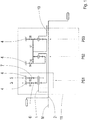
- the transmission shown is designed to be rotationally symmetrical to a central axis M of the transmission, only the upper half of the transmission being shown.
- the transmission has a transmission input shaft 1 which is connected in a rotationally fixed manner to a bottom bracket crankshaft 2.
- the bottom bracket crankshaft 2 has a pedal at each of its ends.
- the transmission has a first planetary gear set PS1, a second planetary gear set PS2 and a third planetary gear set PS3, which are operatively connected to one another.
- a web of the first planetary gear set PS1 is connected to the transmission input shaft in a rotationally fixed manner.
- the first planetary set PS1 has a planet with a first planetary stage 3 and a second planetary stage 5.
- a first ring gear 6 is in engagement with the first planetary stage 3 and can be connected non-rotatably to a transmission housing 4 by means of a first shift element S1.
- a second ring gear 7 is in engagement with the second planetary stage 5 and can be connected to the transmission housing 4 in a rotationally fixed manner by means of a second shift element S2.
- a sun gear of the first planetary set PS1, which meshes with the first planetary stage PS1, is connected in a rotationally fixed manner to a web of the second planetary set PS2.
- a sun gear of the second planetary gear set PS2 can be connected to the transmission housing 4 in a rotationally fixed manner by means of a fourth shift element S4.
- the sun gear of the second planetary set PS2 can be connected non-rotatably to a ring gear of the second planetary set PS2 by means of a fifth shift element S5.
- the ring gear of the second planetary gear set PS2 is also non-rotatably connected to a sun gear of the third planetary gear set PS3.
- a ring gear of the third planetary set PS3 can be connected to the transmission housing 4 in a rotationally fixed manner by means of a sixth shift element S6.
- the ring gear of the third planetary set PS3 can be connected in a rotationally fixed manner to the sun gear of the third planetary set PS3 by means of a seventh shifting element S7.
- a web of the third planetary gear set PS3 is connected to a transmission output shaft 10 in a rotationally fixed manner.
- the planetary sets are arranged coaxially to the central axis M of the transmission and / or bottom bracket crankshaft 2.
- the transmission output shaft 10 is arranged coaxially to the central axis M of the transmission and / or the bottom bracket crankshaft 2.
- the transmission is arranged in a cavity of a bottom bracket housing 11 of a bottom bracket of a bicycle, not shown.
- the transmission output shaft 10 is non-rotatably connected to a traction means carrier not shown in the figures.
- the traction means carrier can be, for example, a chain wheel or a belt wheel and is used to transfer the torque output by the transmission to a rear wheel, not shown.
- Fig. 2 shows the values for the stationary translation.
- PS1a denotes the stationary ratio for the first planetary gear set PS1 based on the first planetary stage 3 and PS1b the stationary translation for the first planetary set PS1 based on the second planetary stage 5.
- PS1b the stationary translation for the first planetary set PS1 based on the second planetary stage 5.
- the second and third planetary gear sets PS2, PS3 have the same stationary gear ratio on.
- Fig. 3 shows the switching matrix of the in Fig. 1 illustrated transmission.
- the table shows the ratio “i” for the individual gears between the transmission input shaft 1 and the transmission output shaft 10.
- the gear steps "phi” can be found in the table.
- the letter “x” indicates that the respective switching elements are closed.
- Out Fig. 3 it can be seen that the transmission has eight gears.
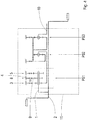
- the gear shown differs from the one in Fig. 1 transmission shown in that the planet of the first planetary set PS1 has a third planetary stage 8.
- a third ring gear 9 is in engagement with the third planetary stage 8 and can be connected non-rotatably to the gear housing 4 by means of a third shift element S3.
- the diameter of the third planetary stage 8 is larger than the diameter of the first planetary stage 3 and smaller than the diameter of the second planetary stage 5.
Landscapes
- Engineering & Computer Science (AREA)
- Mechanical Engineering (AREA)
- Chemical & Material Sciences (AREA)
- Combustion & Propulsion (AREA)
- Transportation (AREA)
- General Engineering & Computer Science (AREA)
- Structure Of Transmissions (AREA)
Description
- Die Erfindung betrifft ein Getriebe für ein Fahrrad, mit einer Getriebeeingangswelle, die mit einer Tretlagerkurbelwelle drehfest verbindbar ist, einem ersten Planetensatz, einem zweiten Planetensatz und einem dritten Planetensatz, die miteinander wirkverbunden sind, wobei ein Element des ersten Planetensatzes mit der Getriebeeingangswelle drehfest verbunden ist und der erste Planetensatz einen Planeten mit einer ersten Planetenstufe und einer zweiten Planetenstufe aufweist
Die Erfindung betrifft außerdem ein Tretlagergetriebe mit einem solchen Getriebe. Darüber hinaus betrifft die Erfindung ein Fahrrad mit dem Getriebe oder dem Tretlagergetriebe. - Aus dem Stand der Technik ist eine Vielzahl von Getrieben bekannt, die in Tretlagern von Fahrrädern eingesetzt werden. So ist aus der
US 2011 179 11 A1 , die die Merkmale des Oberbegriffes des Anspruchs 1 offenbart, ein Tretlagergetriebe bekannt, das drei hintereinander geschaltete Planetengetriebe aufweist. Die Planetengetriebe sind derart ausgebildet, dass eine Übersetzung ins Schnelle erfolgt. Bei dem Getriebe handelt es sich um ein 12-Gang-Tretlagergetriebe, das jedoch insgesamt sieben Planetenradebenen aufweist, worunter sich auch zahlreiche Stufenplaneten befinden. Somit ist der Bauaufwand für das Tretlagergetriebe hoch. -
DE102014101726A1 offenbart ein Getriebe mit bis zu 142 Vorwärtsgängen mit nur zwei Stufenplanetensätze. Die Aufgabe der Erfindung besteht daher darin ein Getriebe für ein Fahrrad anzugeben, das einfach ausgebildet ist und bei dem der Bauaufwand gering ist. - Diese Aufgabe wird durch ein Getriebe der eingangs genannten Art gelöst, das dadurch gekennzeichnet ist, dass ein mit einem Verzahnungsbereich der ersten Planetenstufe in Eingriff stehendes erstes Hohlrad mittels eines ersten Schaltelements mit einem Getriebegehäuse drehfest verbindbar ist und ein mit einem Verzahnungsbereich der zweiten Planetenstufe in Eingriff stehendes zweites Hohlrad mittels eines zweiten Schaltelements mit dem Getriebegehäuse drehfest verbindbar ist.
- Das erfindungsgemäße Getriebe weist den Vorteil auf, dass der Planet klein ausgebildet ist. So ist der Durchmesser bei einem Modul von 1 kleiner als 80mm. Darüber hinaus können die anderen Planetensätze im Durchmesser ebenfalls kleingehalten werden, so dass das Getriebe kompakt ausgebildet ist. Außerdem weist das Getriebe den Vorteil auf, dass es einfach aufgebaut ist, so dass der Bauaufwand für das Getriebe gering ist.
- Das Getriebegehäuse kann Bestandteil des Tretlagergehäuses sein, also einstückig mit dem Tretlagergehäuse ausgeführt sein. Alternativ kann das Getriebegehäuse ein von dem Tretlagergehäuse separates Gehäuse sein, das in einen Hohlraum des Tretlagergehäuses eingebracht werden kann. Das Getriebegehäuse kann derart ausgebildet und angeordnet sein, dass es sich im Betrieb des Getriebes nicht dreht, sondern ortsfest ist.
- Unter einer Welle wird nicht ausschließlich ein beispielsweise zylindrisches, drehbar gelagertes Maschinenelement zur Übertragung von Drehmomenten verstanden. Vielmehr sind hierunter auch allgemeine Verbindungselemente zu verstehen, die einzelne Bauteile miteinander verbinden, insbesondere Verbindungselemente, die mehrere Bauteile drehfest miteinander verbinden.
- Die Planetenstufen weisen alle einen Verzahnungsbereich auf, der mit wenigstens einem anderen Element des Planetensatzes in Eingriff gebracht werden kann. Dabei unterscheiden sich die einzelnen Planetenstufen in ihrem Durchmesser voneinander. Der Planet wird durch einen Steg des ersten Planetensatzes getragen.
- Bei dem erfindungsgemäßen Getriebe kann der erste Gang eine Übersetzung von 1 oder geringfügig über 1 aufweisen. Ab dem zweiten Gang erfolgt eine Übersetzung ins Schnelle, also weist die Übersetzung einen Wert kleiner als 1 auf. Mittels des erfindungsgemäßen Getriebes lassen sich wenigstens acht, insbesondere genau acht, Gänge realisieren. Dies ist möglich, da mit jedem der Planetensätze jeweils zwei Gänge realisierbar sind.
- Das erfindungsgemäße Getriebe weist auch den Vorteil auf, dass dieses durch geringfügige Umbauten ganz besonders einfach erweitert werden kann. Insbesondere kann das Getriebe von einem 8-Gang-Getriebe auf ein enger gestuftes 12-Gang-Getriebe erweitert werden. Dies kann dadurch realisiert werden, dass dem Planet des ersten Planetensatzes eine dritte Planetenstufe hinzugefügt wird. Ein mit einem Verzahnungsbereich der dritten Planetenstufe in Eingriff stehendes drittes Hohlrad kann mittels eines dritten Schaltelements mit dem Getriebegehäuse drehfest verbindbar sein. Auf diese Weise kann das erfindungsgemäße Getriebe von einem 8-Gang-Getriebe auf ein 12-Gang-Getriebe auf ganz besonders einfache Weise erweitert werden.
- Bei dem Element des ersten Planetensatzes handelt es sich um einen Steg, der den Planeten trägt. Dabei kann der Steg natürlich auch mehrere Planeten tragen. Ein Sonnenrad des ersten Planetensatzes kann mit einem Steg des zweiten Planetensatzes drehfest verbunden sein. Insbesondere kann das mit der ersten Planetenstufe in Eingriff stehende Sonnenrad des ersten Planetensatzes mit dem Steg des zweiten Planetensatzes drehfest verbunden sein.
- Ein Sonnenrad des zweiten Planetensatzes kann mittels eines vierten Schaltelements mit dem Getriebegehäuse drehfest verbindbar sein. Darüber hinaus können zwei Elemente des zweiten Planetensatzes mittels eines fünften Schaltelements drehfest miteinander verbindbar sein. Dadurch kann ein Verblocken des zweiten Planetensatzes erreicht werden. Bei einem Verblocken weist der Planetensatz eine Übersetzung von 1 auf. Insbesondere kann das fünfte Schaltelement derart angeordnet sein, dass ein Hohlrad des zweiten Planetensatzes mit dem Sonnenrad des zweiten Planetensatzes drehfest verbindbar sein. Natürlich kann das fünfte Schaltelement auch anders angeordnet sein, so dass das Hohlrad des zweiten Planetensatzes mit dem Steg des zweiten Planetensatzes oder der Steg des zweiten Planetensatzes mit dem Sonnenrad des zweiten Planetensatzes drehfest miteinander verbunden werden können.
- Das Hohlrad des zweiten Planetensatzes kann darüber hinaus mit einem Sonnenrad des dritten Planetensatzes drehfest verbunden sein. Ein Hohlrad des dritten Planetensatzes kann mittels eines sechsten Schaltelements mit dem Getriebegehäuse drehfest verbindbar sein.
- Darüber hinaus können zwei Elemente des dritten Planetensatzes drehfest miteinander verbindbar sein. Dadurch kann ein Verblocken des dritten Planetensatzes erreicht werden. Ganz besonders vorteilhaft ist, wenn das siebte Schaltelement derart angeordnet ist, dass das Hohlrad des dritten Planetensatzes mit dem Sonnenrad des dritten Planetensatzes drehfest verbindbar ist. Natürlich ist auch eine Anordnung des siebten Schaltelements möglich, bei der das Hohlrad des dritten Planetensatzes mit dem Steg des dritten Planetensatzes oder der Steg des dritten Planetensatzes mit dem Sonnenrad des dritten Planetensatzes drehfest miteinander verbunden werden können.
- Ein Element des dritten Planetensatzes kann mit einer Getriebeausgangswelle drehfest verbunden sein. Insbesondere kann der Steg des dritten Planetensatzes mit der Getriebeausgangswelle drehfest verbunden sein. Die Getriebeausgangswelle kann mit einem Zugmittelträger, wie beispielsweise einem Kettenrad oder Riemenrad drehfest verbunden sein. Das von dem Getriebe bereitgestellte Drehmoment kann über den Zugmittelträger und ein Zugmittel, wie beispielsweise eine Kette oder ein Riemen, auf ein Hinterrad des Fahrrads übertragen werden.
- Im Ergebnis wird ein einfach aufgebautes Getriebe bereitgestellt, das genau drei Planetensätze aufweisen kann und mittels dem sich eine Vielzahl von Gängen realisieren lassen. Darüber hinaus kann der Planet des ersten Planetensatzes genau drei Planetenstufen aufweisen. Insbesondere weist das Getriebe den Vorteil auf, dass das sechste Schaltelement nicht stark belastet wird und ein geringes Stützmoment an dem Sonnenrad anliegt.
- Der erste und/oder zweite und/oder dritte Planetensatz können als Minus-Planetensatz ausgeführt sein. Alternativ ist es vorstellbar, dass der erste und/oder zweite und/oder dritte Planetensatz als Plus-Planetensatz ausgeführt sind.
- Ein Minus-Planetensatz entspricht einem Planetensatz mit einem Steg, an dem die Planetenräder drehbar gelagert sind, einem Sonnenrad und einem Hohlrad, wobei die Verzahnung zumindest eines der Planetenräder sowohl mit der Verzahnung des Sonnenrades als auch mit der Verzahnung des Hohlrades kämmt, wodurch das Hohlrad und das Sonnenrad in entgegengesetzter Drehrichtung rotieren, wenn das Sonnenrad bei feststehendem Steg rotiert. Im Gegensatz dazu unterscheidet sich ein Plus-Planetensatz von dem Minus-Planetensatz dahingehend, dass der Plus-Planetensatz innere und äußere Planetenräder aufweist, welche drehbar an dem Steg gelagert sind. Die Verzahnung der inneren Planetenräder kämmt dabei einerseits mit der Verzahnung des Sonnenrads und andererseits mit der Verzahnung der äußeren Planetenräder. Die Verzahnung der äußeren Planetenräder kämmt darüber hinaus mit der Verzahnung des Hohlrads. Dies hat zur Folge, dass bei feststehendem Steg das Hohlrad und das Sonnenrad in die gleiche Drehrichtung rotieren.
- Im Zugbetrieb des Getriebes sind die Planetensätze des Getriebes in der Reihenfolge erster Planetensatz, zweiter Planetensatz und dritter Planetensatz angeordnet. Das erste, zweite, dritte, vierte und sechste Schaltelement können als Bremse ausgeführt sein. Das fünfte und siebte Schaltelement können als Kupplung ausgeführt sein.
- Bei einer ganz besonderen Ausführung kann das Getriebe eine elektrische Maschine aufweisen, die mit der Getriebeausgangswelle wirkverbunden oder wirkverbindbar ist. Die elektrische Maschine kann dem ersten und/oder dem zweiten und/oder dem dritten Planetensatz triebtechnisch nachgeschaltet sein. Dies bietet den Vorteil, dass das durch die elektrische Maschine bereitgestellte Drehmoment nicht auf die Planetensätze wirkt. Die elektrische Maschine weist zudem den Vorteil auf, dass sie den Fahrradfahrer im Fahrbetrieb unterstützen kann. Dadurch ist eine feine Gangabstufung nicht notwendig, da aufgrund der elektrischen Maschine die Muskelkraft eine geringe Bedeutung für den Antrieb hat.
- Die elektrische Maschine besteht zumindest aus einem drehfesten Stator und einem drehbar gelagerten Rotor und ist in einem motorischen Betrieb dazu eingerichtet, elektrische Energie in mechanische Energie in Form von Drehzahl und Drehmoment zu wandeln, sowie in einem generatorischen Betrieb mechanische Energie in elektrische Energie in Form von Strom und Spannung zu wandeln.
- Die elektrische Maschine kann, insbesondere in radialer Richtung, versetzt zu einer Mittelachse des Getriebes und/oder der Tretlagerkurbelwelle angeordnet sein. Insbesondere kann eine Mittelachse der elektrischen Maschine parallel zu einer Mittelachse des Getriebes verlaufen. Dies bietet den Vorteil, dass die elektrische Maschine in einem Bereich des Tretlagers angeordnet sein kann, bei dem ausreichend Platz zur Aufnahme der elektrischen Maschine zur Verfügung steht. Darüber hinaus kann ein Innendurchmesser der elektrischen Maschine frei gewählt werden, da die nicht zum Getriebe gehörende Tretlagerkurbelwelle nicht durch die elektrische Maschine hindurch verläuft.
- Die elektrische Maschine kann mittels eines Stirnradgetriebes und/oder eines Riementriebs und/oder eines Überlagerungsgetriebes mit der Getriebeausgangswelle wirkverbunden oder mittels eines achten Schaltelements wirkverbindbar sein. Dabei kann das achte Schaltelement ein Freilauf sein. Damit ist sichergestellt, dass bei einem Fahrbetrieb ohne die elektrische Maschine keine Verluste durch den mitdrehenden Motor der elektrischen Maschine verursacht werden.
- Das Getriebe kann modular ausgeführt sein. Dies bedeutet, dass die elektrische Maschine und die Planetensätze als eine Funktionseinheit in das Tretlagergehäuse integriert sind und/oder als eine Funktionseinheit in das Tretlagergehäuse eingebracht oder aus diesem ausgebaut werden können.
- Von besonderem Vorteil ist ein Tretlager mit dem Getriebe. Dabei kann die Getriebeeingangswelle mit der Tretlagerkurbelwelle drehfest verbunden sein. Insbesondere kann das Tretlager ein Tretlagergehäuse aufweisen, wobei das Getriebe innerhalb des Tretlagergehäuses, insbesondere in einem Hohlraum des Tretlagergehäuses, angeordnet sein kann. Von ganz besonderem Vorteil ist ein Fahrrad mit dem Getriebe oder dem Tretlager.
- In den Figuren ist der Erfindungsgegenstand schematisch dargestellt und wird anhand der Figuren nachfolgend beschrieben, wobei gleiche oder gleichwirkende Elemente zumeist mit denselben Bezugszeichen versehen sind. Dabei zeigt:
- Fig. 1
- eine schematische Darstellung des erfindungsgemäßen Getriebes gemäß einem ersten Ausführungsbeispiel,
- Fig. 2
- eine Tabelle mit Werten für die Standübersetzung,
- Fig. 3
- eine Schaltmatrix für das in
Fig. 2 dargestellte Getriebe. - Fig. 4
- eine schematische Darstellung des erfindungsgemäßen Getriebes gemäß einem zweiten Ausführungsbeispiel,
- Das in
Fig. 1 dargestellte Getriebe ist rotationssymmetrisch zu einer Mittelachse M des Getriebes ausgeführt, wobei nur die obere Hälfte des Getriebes dargestellt ist. Das Getriebe weist eine Getriebeeingangswelle 1 auf, die mit einer Tretlagerkurbelwelle 2 drehfest verbunden ist. Die Tretlagerkurbelwelle 2 weist an ihren Enden jeweils ein Pedal auf. Darüber hinaus weist das Getriebe einen ersten Planetensatz PS1, einen zweiten Planetensatz PS2 und einen dritten Planetensatz PS3 auf, die miteinander wirkverbunden sind. Dabei ist ein Steg des ersten Planetensatzes PS1 mit der Getriebeeingangswelle drehfest verbunden. Der erste Planetensatz PS1 weist einen Planeten mit einer ersten Planetenstufe 3 und einer zweiten Planetenstufe 5 auf. - Ein erstes Hohlrad 6 ist mit der ersten Planetenstufe 3 in Eingriff und ist mittels eines ersten Schaltelements S1 mit einem Getriebegehäuse 4 drehfest verbindbar. Ein zweites Hohlrad 7 ist mit der zweiten Planetenstufe 5 in Eingriff und ist mittels eines zweiten Schaltelements S2 mit dem Getriebegehäuse 4 drehfest verbindbar.
- Ein Sonnenrad des ersten Planetensatzes PS1, das in Eingriff mit der ersten Planetenstufe PS1 ist, ist mit einem Steg des zweiten Planetensatzes PS2 drehfest verbunden. Ein Sonnenrad des zweiten Planetensatzes PS2 ist mittels eines vierten Schaltelements S4 mit dem Getriebegehäuse 4 drehfest verbindbar. Zudem ist das Sonnenrad des zweiten Planetensatzes PS2 mittels eines fünften Schaltelements S5 mit einem Hohlrad des zweiten Planetensatzes PS2 drehfest verbindbar. Das Hohlrad des zweiten Planetensatzes PS2 ist darüber hinaus mit einem Sonnenrad des dritten Planetensatzes PS3 drehfest verbunden.
- Ein Hohlrad des dritten Planetensatzes PS3 ist mittels eines sechsten Schaltelements S6 mit dem Getriebegehäuse 4 drehfest verbindbar. Zudem ist das Hohlrad des dritten Planetensatzes PS3 mittels eines siebten Schaltelements S7 mit dem Sonnenrad des dritten Planetensatzes PS3 drehfest verbindbar. Ein Steg des dritten Planetensatzes PS3 ist mit einer Getriebeausgangswelle 10 drehfest verbunden.
- Die Planetensätze sind koaxial zur Mittelachse M des Getriebes und/oder Tretlagerkurbelwelle 2 angeordnet. Darüber hinaus ist die Getriebeausgangswelle 10 koaxial zu der Mittelachse M des Getriebes und/oder der Tretlagerkurbelwelle 2 angeordnet. Das Getriebe ist in einem Hohlraum eines Tretlagergehäuses 11 eines Tretlagers eines nicht dargestellten Fahrrads angeordnet.
- Die Getriebeausgangswelle 10 ist mit einem in den Figuren nicht dargestellten Zugmittelträger drehfest verbunden. Der Zugmittelträger kann beispielsweise ein Kettenrad oder ein Riemenrad sein und dient zum Übertragen des von dem Getriebe abgegebenen Drehmoments auf ein nicht dargestelltes Hinterrad.
-
Fig. 2 zeigt die Werte für die Standübersetzung. Dabei bezeichnet PS1a die Standübersetzung für den ersten Planetensatz PS1 bezogen auf die erste Planetenstufe 3 und PS1b die Standübersetzung für den ersten Planetensatz PS1 bezogen auf die zweite Planetenstufe 5. Wie aus der Tabelle ersichtlich ist, weisen der zweite und dritte Planetensatz PS2, PS3 dieselbe Standübersetzung auf. -
Fig. 3 zeigt die Schaltmatrix des inFig. 1 dargestellten Getriebes. Darüber hinaus ist aus der Tabelle die Übersetzung "i" für die einzelnen Gänge zwischen der Getriebeeingangswelle 1 und der Getriebeausgangswelle 10 zu entnehmen. Außerdem sind aus der Tabelle die Gangsprünge "phi" zu entnehmen. Der Buchstabe "x" kennzeichnet, dass die jeweiligen Schaltelemente geschlossen sind. AusFig. 3 ist ersichtlich, dass das Getriebe acht Gänge aufweist. - Das in
Fig. 4 dargestellte Getriebe unterscheidet sich von dem inFig. 1 dargestellten Getriebe darin, dass der Planet des ersten Planetensatzes PS1 eine dritte Planetenstufe 8 aufweist. Ein drittes Hohlrad 9 steht mit der dritten Planetenstufe 8 in Eingriff und kann mittels eines dritten Schaltelements S3 mit dem Getriebegehäuse 4 drehfest verbindbar sein. Der Durchmesser der dritten Planetenstufe 8 ist größer als der Durchmesser der ersten Planetenstufe 3 und kleiner als der Durchmesser der zweiten Planetenstufe 5. -
- 1
- Getriebeeingangswelle
- 2
- Tretlagerkurbelwelle
- 3
- erste Planetenstufe
- 4
- Getriebegehäuse
- 5
- zweite Planetenstufe
- 6
- erstes Hohlrad
- 7
- zweites Hohlrad
- 8
- dritte Planetenstufe
- 9
- drittes Hohlrad
- 10
- Getriebeausgangswelle
- 11
- Tretlagergehäuse
- M
- Mittelachse
- S1
- erstes Schaltelement
- S2
- zweites Schaltelement
- S3
- drittes Schaltelement
- S4
- viertes Schaltelement
- S5
- fünftes Schaltelement
- S6
- sechstes Schaltelement
- S7
- siebtes Schaltelement
- PS1
- erster Planetensatz
- PS2
- zweiter Planetensatz
- PS3
- dritter Planetensatz
Claims (15)
- Getriebe für ein Fahrrad, mit einer Getriebeeingangswelle (1), die mit einer Tretlagerkurbelwelle (2) drehfest verbindbar ist, einem ersten Planetensatz (PS1), einem zweiten Planetensatz (PS2) und einem dritten Planetensatz (PS3), die miteinander wirkverbunden sind, wobei ein Element des ersten Planetensatzes (PS1) mit der Getriebeeingangswelle (1) drehfest verbunden ist und der erste Planetensatz einen Planeten mit einer ersten Planetenstufe (3) und einer zweiten Planetenstufe (5) aufweist, dadurch gekennzeichnet, dass ein mit einem Verzahnungsbereich der ersten Planetenstufe (3) in Eingriff stehendes erstes Hohlrad (6) mittels eines ersten Schaltelements (S1) mit einem Getriebegehäuse (4) drehfest verbindbar ist und ein mit einem Verzahnungsbereich der zweiten Planetenstufe (5) in Eingriff stehendes zweites Hohlrad (7) mittels eines zweiten Schaltelements (S2) mit dem Getriebegehäuse (4) drehfest verbindbar ist.
- Getriebe nach Anspruch 1, dadurch gekennzeichnet, dassa. der Planet des ersten Planetensatzes (PS1) eine dritte Planetenstufe (8) aufweist oder dassb. der Planet des ersten Planetensatzes (PS1) eine dritte Planetenstufe (8) aufweist und ein mit einem Verzahnungsbereich der dritten Planetenstufe (8) in Eingriff stehendes drittes Hohlrad (9) mittels eines dritten Schaltelements (S3) mit dem Getriebegehäuse (4) drehfest verbindbar ist.
- Getriebe nach Anspruch 1 oder 2, dadurch gekennzeichnet, dass das Element des ersten Planetensatzes (PS1) ein Steg ist.
- Getriebe nach einem der Ansprüche 1 bis 3, dadurch gekennzeichnet, dassa. ein Sonnenrad des ersten Planetensatzes (PS1) mit einem Steg des zweiten Planetensatzes (PS2) drehfest verbunden ist und/oder dassb. ein mit der ersten Planetenstufe (3) in Eingriff stehendes Sonnenrad mit einem Steg des zweiten Planetensatzes (PS2) drehfest verbunden ist.
- Getriebe nach einem der Ansprüche 1 bis 4, dadurch gekennzeichnet, dass ein Sonnenrad des zweiten Planetensatzes (PS2) mittels eines vierten Schaltelements (S4) mit dem Getriebegehäuse (4) drehfest verbindbar ist.
- Getriebe nach einem der Ansprüche 1 bis 5, dadurch gekennzeichnet, dass zwei Elemente des zweiten Planetensatzes (PS2) mittels eines fünften Schaltelements (S5) drehfest miteinander verbindbar ist.
- Getriebe nach einem der Ansprüche 1 bis 6, dadurch gekennzeichnet, dass ein Hohlrad des zweiten Planetensatzes (PS2) mit einem Sonnenrad des dritten Planetensatzes (PS3) drehfest verbunden ist.
- Getriebe nach einem der Ansprüche 1 bis 7, dadurch gekennzeichnet, dass ein Hohlrad des dritten Planetensatzes (PS3) mittels eines sechsten Schaltelements (S6) mit dem Getriebegehäuse (4) drehfest verbindbar ist.
- Getriebe nach einem der Ansprüche 1 bis 8, dadurch gekennzeichnet, dass zwei Elemente des dritten Planetensatzes (PS3) mittels eines siebten Schaltelements (S7) drehfest miteinander verbindbar sind.
- Getriebe nach einem der Ansprüche 1 bis 9, dadurch gekennzeichnet, dass ein Element, insbesondere ein Steg, des dritten Planetensatz (PS3) mit einer Getriebeausgangswelle (10) drehfest verbunden ist.
- Getriebe nach Anspruch 10, dadurch gekennzeichnet, dass eine elektrische Maschine mit der Getriebeausgangswelle (10) wirkverbunden oder wirkverbindbar ist.
- Getriebe nach Anspruch 11, dadurch gekennzeichnet, dass die elektrische Maschine mittels eines Stirnradgetriebes und/oder eines Riementriebs und/oder eines Überlagerungsgetriebes mit der Getriebeausgangswelle wirkverbunden oder mittels eines achten Schaltelements wirkverbindbar ist.
- Tretlager mit einer Tretlagerkurbelwelle und einem Getriebe nach einem der Ansprüche 1 bis 12, dadurch gekennzeichnet, dass die Getriebeeingangswelle (1) mit der Tretlagerkurbelwelle (2) drehfest verbunden ist.
- Tretlager nach Anspruch 13, gekennzeichnet durch ein Tretlagergehäuse (11), wobei das Getriebe innerhalb eines Hohlraums des Tretlagergehäuses (11) angeordnet ist.
- Fahrrad mit einem Getriebe nach einem der Ansprüche 1 bis 12 oder einem Tretlager nach Anspruch 13 oder 14.
Applications Claiming Priority (2)
| Application Number | Priority Date | Filing Date | Title |
|---|---|---|---|
| DE102016225157.0A DE102016225157A1 (de) | 2016-12-15 | 2016-12-15 | Getriebe für ein Fahrrad |
| PCT/EP2017/080389 WO2018108488A1 (de) | 2016-12-15 | 2017-11-24 | Getriebe für ein fahrrad |
Publications (2)
| Publication Number | Publication Date |
|---|---|
| EP3554935A1 EP3554935A1 (de) | 2019-10-23 |
| EP3554935B1 true EP3554935B1 (de) | 2020-11-04 |
Family
ID=60629670
Family Applications (1)
| Application Number | Title | Priority Date | Filing Date |
|---|---|---|---|
| EP17811505.1A Active EP3554935B1 (de) | 2016-12-15 | 2017-11-24 | Getriebe für ein fahrrad |
Country Status (5)
| Country | Link |
|---|---|
| US (1) | US20200086950A1 (de) |
| EP (1) | EP3554935B1 (de) |
| CN (1) | CN110087984A (de) |
| DE (1) | DE102016225157A1 (de) |
| WO (1) | WO2018108488A1 (de) |
Families Citing this family (5)
| Publication number | Priority date | Publication date | Assignee | Title |
|---|---|---|---|---|
| DE102016225142B4 (de) * | 2016-12-15 | 2023-08-10 | Zf Friedrichshafen Ag | Getriebe für ein Fahrrad |
| DE102018208380A1 (de) * | 2018-05-28 | 2019-11-28 | Zf Friedrichshafen Ag | Mehrstufengetriebe in Planetenbauweise für ein Fahrrad oder Pedelec |
| DE102018208387B4 (de) * | 2018-05-28 | 2025-04-30 | Zf Friedrichshafen Ag | Mehrstufengetriebe in Planetenbauweise für ein Fahrrad oder ein Pedelec |
| DE102022209136B3 (de) | 2022-09-02 | 2023-12-07 | Zf Friedrichshafen Ag | Tretlagergetriebe in Planetenbauweise für ein Fahrrad oder ein Pedelec |
| DE102022209134B3 (de) | 2022-09-02 | 2023-12-07 | Zf Friedrichshafen Ag | Tretlagergetriebe in Planetenbauweise für ein Fahrrad oder ein Pedelec |
Family Cites Families (14)
| Publication number | Priority date | Publication date | Assignee | Title |
|---|---|---|---|---|
| JPH08282574A (ja) * | 1995-04-17 | 1996-10-29 | Seiko Epson Corp | 電動機付き自転車 |
| JPH09123977A (ja) * | 1995-10-31 | 1997-05-13 | Secoh Giken Inc | 伝動装置 |
| DE19745419A1 (de) * | 1996-10-16 | 1998-04-23 | Schievelbusch Ulrich Univ Prof | Mehrgang-Getriebenabe |
| CN100410562C (zh) * | 2005-06-02 | 2008-08-13 | 商春荣 | 齿轮传动无级自动变速器 |
| FR2948379B1 (fr) | 2009-07-21 | 2011-08-19 | Saint Gobain Cristaux Et Detecteurs | Scintillateur en halogenure de terre rare revetu d'un absorbeur ou reflecteur de lumiere |
| US20110177911A1 (en) | 2010-01-20 | 2011-07-21 | Alexander Serkh | Planetary gear mechanism for a bicycle |
| US8439792B2 (en) * | 2010-01-20 | 2013-05-14 | The Gates Corporation | Planetary gear mechanism for a bicycle |
| US8794651B2 (en) * | 2010-04-06 | 2014-08-05 | The Gates Corporation | Bicycle planetary gear transmission arrangement |
| NO334279B1 (no) * | 2011-03-10 | 2014-01-27 | Ca Tech Systems As | Girsystem |
| DE102013220299A1 (de) * | 2013-08-23 | 2015-02-26 | Robert Bosch Gmbh | Fahrzeug mit elektrischem Hilfsantrieb und stufenlos verstellbarem Planetengetriebe |
| DE102014101726B4 (de) * | 2014-02-12 | 2017-12-07 | Umut Özcan | Lastschaltbare Mehrgangplanetengetriebe |
| DE202014103469U1 (de) * | 2014-07-28 | 2015-10-29 | Brose Fahrzeugteile Gmbh & Co. Kommanditgesellschaft, Coburg | Antriebseinrichtung für ein Elektrorad |
| DE102014214962B4 (de) * | 2014-07-30 | 2020-11-26 | Schaeffler Technologies AG & Co. KG | Schaltgetriebe für ein Zweirad sowie Zweirad mit einem Schaltgetriebe |
| CN105134938B (zh) * | 2015-08-18 | 2017-09-22 | 李激初 | 一种智能变速器及使用的电机控制方法 |
-
2016
- 2016-12-15 DE DE102016225157.0A patent/DE102016225157A1/de not_active Withdrawn
-
2017
- 2017-11-24 EP EP17811505.1A patent/EP3554935B1/de active Active
- 2017-11-24 WO PCT/EP2017/080389 patent/WO2018108488A1/de not_active Ceased
- 2017-11-24 US US16/469,993 patent/US20200086950A1/en not_active Abandoned
- 2017-11-24 CN CN201780077629.8A patent/CN110087984A/zh active Pending
Non-Patent Citations (1)
| Title |
|---|
| None * |
Also Published As
| Publication number | Publication date |
|---|---|
| DE102016225157A1 (de) | 2018-06-21 |
| CN110087984A (zh) | 2019-08-02 |
| WO2018108488A1 (de) | 2018-06-21 |
| US20200086950A1 (en) | 2020-03-19 |
| EP3554935A1 (de) | 2019-10-23 |
Similar Documents
| Publication | Publication Date | Title |
|---|---|---|
| DE102016225165B4 (de) | Getriebe und Tretlager für ein Fahrrad | |
| DE102016202723B4 (de) | Hochübersetzendes Umlaufräderschaltgetriebe, insbesondere für ein elektrisch betriebenes Kraftfahrzeug | |
| DE102013202381B4 (de) | Antriebsvorrichtung für ein Fahrzeug sowie Fahrzeug mit der Antriebsvorrichtung | |
| WO2019228723A1 (de) | Tretlagergetriebe in planetenbauweise für ein fahrrad oder pedelec | |
| DE102016225145B4 (de) | Tretlagergetriebe für ein Fahrrad, Tretlager und Fahrrad | |
| EP3554934A1 (de) | Getriebe für ein fahrrad | |
| DE102016225144B4 (de) | Tretlagergetriebe für ein Fahrrad, Tretlager, und Fahrrad | |
| DE102019205750A1 (de) | Getriebe und Fahrzeug mit Getriebe | |
| DE102015211038B4 (de) | Getriebe für ein Kraftfahrzeug, sowie Antriebsstrang für ein Hybridfahrzeug mit einem solchen Getriebe | |
| DE102016225162B4 (de) | Tretlagergetriebe für ein Fahrrad, Hybridgetriebe, Tretlager sowie Fahrrad | |
| EP3554936A1 (de) | Getriebe für ein fahrrad | |
| DE102018217093B4 (de) | Antriebsanordnung für ein Pedelec und Pedelec | |
| DE102016225168B4 (de) | Getriebe für ein Fahrrad | |
| EP3554935A1 (de) | Getriebe für ein fahrrad | |
| DE102016225141B4 (de) | Tretlagergetriebe und Tretlager für ein Fahrrad sowie Fahrrad | |
| DE102018129175A1 (de) | Mehrgängiger Achsantrieb mit einem Planetengetriebe mit gestuften Planetenradsätzen und axial benachbart angeordnetem Hohlrad | |
| DE102016016003B3 (de) | Getriebe für ein Fahrrad | |
| DE102016225163B4 (de) | Getriebe für ein Fahrrad, Tretlager sowie Fahrrad | |
| DE102014214962A1 (de) | Schaltgetriebe für ein Zweirad sowie Zweirad mit dem Schaltgetriebe | |
| DE102019130901B4 (de) | Elektrische Antriebseinheit in Vorgelegebauweise mit koaxialer Anordnung von elektrischer Maschine und Differential | |
| DE102018215232A1 (de) | Getriebe für ein Kraftfahrzeug | |
| DE102016225158A1 (de) | Getriebe für ein Fahrrad | |
| DE102018128955A1 (de) | Antriebsvorrichtung mit Dreifachplanetenrädern | |
| DE102018200295B4 (de) | Getriebe für ein Kraftfahrzeug | |
| WO2020249271A1 (de) | Getriebe für ein kraftfahrzeug, kraftfahrzeugantriebsstrang damit und verfahren zum betreiben des getriebes |
Legal Events
| Date | Code | Title | Description |
|---|---|---|---|
| STAA | Information on the status of an ep patent application or granted ep patent |
Free format text: STATUS: UNKNOWN |
|
| STAA | Information on the status of an ep patent application or granted ep patent |
Free format text: STATUS: THE INTERNATIONAL PUBLICATION HAS BEEN MADE |
|
| PUAI | Public reference made under article 153(3) epc to a published international application that has entered the european phase |
Free format text: ORIGINAL CODE: 0009012 |
|
| STAA | Information on the status of an ep patent application or granted ep patent |
Free format text: STATUS: REQUEST FOR EXAMINATION WAS MADE |
|
| 17P | Request for examination filed |
Effective date: 20190605 |
|
| AK | Designated contracting states |
Kind code of ref document: A1 Designated state(s): AL AT BE BG CH CY CZ DE DK EE ES FI FR GB GR HR HU IE IS IT LI LT LU LV MC MK MT NL NO PL PT RO RS SE SI SK SM TR |
|
| AX | Request for extension of the european patent |
Extension state: BA ME |
|
| DAV | Request for validation of the european patent (deleted) | ||
| DAX | Request for extension of the european patent (deleted) | ||
| GRAP | Despatch of communication of intention to grant a patent |
Free format text: ORIGINAL CODE: EPIDOSNIGR1 |
|
| STAA | Information on the status of an ep patent application or granted ep patent |
Free format text: STATUS: GRANT OF PATENT IS INTENDED |
|
| INTG | Intention to grant announced |
Effective date: 20200618 |
|
| GRAS | Grant fee paid |
Free format text: ORIGINAL CODE: EPIDOSNIGR3 |
|
| GRAA | (expected) grant |
Free format text: ORIGINAL CODE: 0009210 |
|
| STAA | Information on the status of an ep patent application or granted ep patent |
Free format text: STATUS: THE PATENT HAS BEEN GRANTED |
|
| AK | Designated contracting states |
Kind code of ref document: B1 Designated state(s): AL AT BE BG CH CY CZ DE DK EE ES FI FR GB GR HR HU IE IS IT LI LT LU LV MC MK MT NL NO PL PT RO RS SE SI SK SM TR |
|
| REG | Reference to a national code |
Ref country code: GB Ref legal event code: FG4D Free format text: NOT ENGLISH |
|
| REG | Reference to a national code |
Ref country code: CH Ref legal event code: EP |
|
| REG | Reference to a national code |
Ref country code: AT Ref legal event code: REF Ref document number: 1330494 Country of ref document: AT Kind code of ref document: T Effective date: 20201115 |
|
| REG | Reference to a national code |
Ref country code: DE Ref legal event code: R096 Ref document number: 502017008097 Country of ref document: DE |
|
| REG | Reference to a national code |
Ref country code: IE Ref legal event code: FG4D Free format text: LANGUAGE OF EP DOCUMENT: GERMAN |
|
| REG | Reference to a national code |
Ref country code: NL Ref legal event code: MP Effective date: 20201104 |
|
| PG25 | Lapsed in a contracting state [announced via postgrant information from national office to epo] |
Ref country code: PT Free format text: LAPSE BECAUSE OF FAILURE TO SUBMIT A TRANSLATION OF THE DESCRIPTION OR TO PAY THE FEE WITHIN THE PRESCRIBED TIME-LIMIT Effective date: 20210304 Ref country code: RS Free format text: LAPSE BECAUSE OF FAILURE TO SUBMIT A TRANSLATION OF THE DESCRIPTION OR TO PAY THE FEE WITHIN THE PRESCRIBED TIME-LIMIT Effective date: 20201104 Ref country code: FI Free format text: LAPSE BECAUSE OF FAILURE TO SUBMIT A TRANSLATION OF THE DESCRIPTION OR TO PAY THE FEE WITHIN THE PRESCRIBED TIME-LIMIT Effective date: 20201104 Ref country code: GR Free format text: LAPSE BECAUSE OF FAILURE TO SUBMIT A TRANSLATION OF THE DESCRIPTION OR TO PAY THE FEE WITHIN THE PRESCRIBED TIME-LIMIT Effective date: 20210205 Ref country code: NO Free format text: LAPSE BECAUSE OF FAILURE TO SUBMIT A TRANSLATION OF THE DESCRIPTION OR TO PAY THE FEE WITHIN THE PRESCRIBED TIME-LIMIT Effective date: 20210204 |
|
| PG25 | Lapsed in a contracting state [announced via postgrant information from national office to epo] |
Ref country code: ES Free format text: LAPSE BECAUSE OF FAILURE TO SUBMIT A TRANSLATION OF THE DESCRIPTION OR TO PAY THE FEE WITHIN THE PRESCRIBED TIME-LIMIT Effective date: 20201104 Ref country code: BG Free format text: LAPSE BECAUSE OF FAILURE TO SUBMIT A TRANSLATION OF THE DESCRIPTION OR TO PAY THE FEE WITHIN THE PRESCRIBED TIME-LIMIT Effective date: 20210204 Ref country code: SE Free format text: LAPSE BECAUSE OF FAILURE TO SUBMIT A TRANSLATION OF THE DESCRIPTION OR TO PAY THE FEE WITHIN THE PRESCRIBED TIME-LIMIT Effective date: 20201104 Ref country code: IS Free format text: LAPSE BECAUSE OF FAILURE TO SUBMIT A TRANSLATION OF THE DESCRIPTION OR TO PAY THE FEE WITHIN THE PRESCRIBED TIME-LIMIT Effective date: 20210304 Ref country code: LV Free format text: LAPSE BECAUSE OF FAILURE TO SUBMIT A TRANSLATION OF THE DESCRIPTION OR TO PAY THE FEE WITHIN THE PRESCRIBED TIME-LIMIT Effective date: 20201104 Ref country code: PL Free format text: LAPSE BECAUSE OF FAILURE TO SUBMIT A TRANSLATION OF THE DESCRIPTION OR TO PAY THE FEE WITHIN THE PRESCRIBED TIME-LIMIT Effective date: 20201104 |
|
| REG | Reference to a national code |
Ref country code: LT Ref legal event code: MG9D |
|
| PG25 | Lapsed in a contracting state [announced via postgrant information from national office to epo] |
Ref country code: HR Free format text: LAPSE BECAUSE OF FAILURE TO SUBMIT A TRANSLATION OF THE DESCRIPTION OR TO PAY THE FEE WITHIN THE PRESCRIBED TIME-LIMIT Effective date: 20201104 |
|
| REG | Reference to a national code |
Ref country code: CH Ref legal event code: PL |
|
| PG25 | Lapsed in a contracting state [announced via postgrant information from national office to epo] |
Ref country code: SK Free format text: LAPSE BECAUSE OF FAILURE TO SUBMIT A TRANSLATION OF THE DESCRIPTION OR TO PAY THE FEE WITHIN THE PRESCRIBED TIME-LIMIT Effective date: 20201104 Ref country code: RO Free format text: LAPSE BECAUSE OF FAILURE TO SUBMIT A TRANSLATION OF THE DESCRIPTION OR TO PAY THE FEE WITHIN THE PRESCRIBED TIME-LIMIT Effective date: 20201104 Ref country code: SM Free format text: LAPSE BECAUSE OF FAILURE TO SUBMIT A TRANSLATION OF THE DESCRIPTION OR TO PAY THE FEE WITHIN THE PRESCRIBED TIME-LIMIT Effective date: 20201104 Ref country code: EE Free format text: LAPSE BECAUSE OF FAILURE TO SUBMIT A TRANSLATION OF THE DESCRIPTION OR TO PAY THE FEE WITHIN THE PRESCRIBED TIME-LIMIT Effective date: 20201104 Ref country code: CZ Free format text: LAPSE BECAUSE OF FAILURE TO SUBMIT A TRANSLATION OF THE DESCRIPTION OR TO PAY THE FEE WITHIN THE PRESCRIBED TIME-LIMIT Effective date: 20201104 Ref country code: LT Free format text: LAPSE BECAUSE OF FAILURE TO SUBMIT A TRANSLATION OF THE DESCRIPTION OR TO PAY THE FEE WITHIN THE PRESCRIBED TIME-LIMIT Effective date: 20201104 Ref country code: LU Free format text: LAPSE BECAUSE OF NON-PAYMENT OF DUE FEES Effective date: 20201124 |
|
| REG | Reference to a national code |
Ref country code: DE Ref legal event code: R097 Ref document number: 502017008097 Country of ref document: DE |
|
| REG | Reference to a national code |
Ref country code: BE Ref legal event code: MM Effective date: 20201130 |
|
| PG25 | Lapsed in a contracting state [announced via postgrant information from national office to epo] |
Ref country code: MC Free format text: LAPSE BECAUSE OF FAILURE TO SUBMIT A TRANSLATION OF THE DESCRIPTION OR TO PAY THE FEE WITHIN THE PRESCRIBED TIME-LIMIT Effective date: 20201104 Ref country code: CH Free format text: LAPSE BECAUSE OF NON-PAYMENT OF DUE FEES Effective date: 20201130 Ref country code: DK Free format text: LAPSE BECAUSE OF FAILURE TO SUBMIT A TRANSLATION OF THE DESCRIPTION OR TO PAY THE FEE WITHIN THE PRESCRIBED TIME-LIMIT Effective date: 20201104 Ref country code: LI Free format text: LAPSE BECAUSE OF NON-PAYMENT OF DUE FEES Effective date: 20201130 |
|
| PLBE | No opposition filed within time limit |
Free format text: ORIGINAL CODE: 0009261 |
|
| STAA | Information on the status of an ep patent application or granted ep patent |
Free format text: STATUS: NO OPPOSITION FILED WITHIN TIME LIMIT |
|
| 26N | No opposition filed |
Effective date: 20210805 |
|
| PG25 | Lapsed in a contracting state [announced via postgrant information from national office to epo] |
Ref country code: IT Free format text: LAPSE BECAUSE OF FAILURE TO SUBMIT A TRANSLATION OF THE DESCRIPTION OR TO PAY THE FEE WITHIN THE PRESCRIBED TIME-LIMIT Effective date: 20201104 Ref country code: NL Free format text: LAPSE BECAUSE OF FAILURE TO SUBMIT A TRANSLATION OF THE DESCRIPTION OR TO PAY THE FEE WITHIN THE PRESCRIBED TIME-LIMIT Effective date: 20201104 Ref country code: FR Free format text: LAPSE BECAUSE OF NON-PAYMENT OF DUE FEES Effective date: 20210104 Ref country code: IE Free format text: LAPSE BECAUSE OF NON-PAYMENT OF DUE FEES Effective date: 20201124 Ref country code: AL Free format text: LAPSE BECAUSE OF FAILURE TO SUBMIT A TRANSLATION OF THE DESCRIPTION OR TO PAY THE FEE WITHIN THE PRESCRIBED TIME-LIMIT Effective date: 20201104 |
|
| PG25 | Lapsed in a contracting state [announced via postgrant information from national office to epo] |
Ref country code: SI Free format text: LAPSE BECAUSE OF FAILURE TO SUBMIT A TRANSLATION OF THE DESCRIPTION OR TO PAY THE FEE WITHIN THE PRESCRIBED TIME-LIMIT Effective date: 20201104 |
|
| PG25 | Lapsed in a contracting state [announced via postgrant information from national office to epo] |
Ref country code: IS Free format text: LAPSE BECAUSE OF FAILURE TO SUBMIT A TRANSLATION OF THE DESCRIPTION OR TO PAY THE FEE WITHIN THE PRESCRIBED TIME-LIMIT Effective date: 20210304 Ref country code: TR Free format text: LAPSE BECAUSE OF FAILURE TO SUBMIT A TRANSLATION OF THE DESCRIPTION OR TO PAY THE FEE WITHIN THE PRESCRIBED TIME-LIMIT Effective date: 20201104 Ref country code: MT Free format text: LAPSE BECAUSE OF FAILURE TO SUBMIT A TRANSLATION OF THE DESCRIPTION OR TO PAY THE FEE WITHIN THE PRESCRIBED TIME-LIMIT Effective date: 20201104 Ref country code: CY Free format text: LAPSE BECAUSE OF FAILURE TO SUBMIT A TRANSLATION OF THE DESCRIPTION OR TO PAY THE FEE WITHIN THE PRESCRIBED TIME-LIMIT Effective date: 20201104 |
|
| PG25 | Lapsed in a contracting state [announced via postgrant information from national office to epo] |
Ref country code: MK Free format text: LAPSE BECAUSE OF FAILURE TO SUBMIT A TRANSLATION OF THE DESCRIPTION OR TO PAY THE FEE WITHIN THE PRESCRIBED TIME-LIMIT Effective date: 20201104 |
|
| GBPC | Gb: european patent ceased through non-payment of renewal fee |
Effective date: 20211124 |
|
| PG25 | Lapsed in a contracting state [announced via postgrant information from national office to epo] |
Ref country code: BE Free format text: LAPSE BECAUSE OF NON-PAYMENT OF DUE FEES Effective date: 20201130 |
|
| PG25 | Lapsed in a contracting state [announced via postgrant information from national office to epo] |
Ref country code: GB Free format text: LAPSE BECAUSE OF NON-PAYMENT OF DUE FEES Effective date: 20211124 |
|
| P01 | Opt-out of the competence of the unified patent court (upc) registered |
Effective date: 20230528 |
|
| REG | Reference to a national code |
Ref country code: AT Ref legal event code: MM01 Ref document number: 1330494 Country of ref document: AT Kind code of ref document: T Effective date: 20221124 |
|
| PG25 | Lapsed in a contracting state [announced via postgrant information from national office to epo] |
Ref country code: AT Free format text: LAPSE BECAUSE OF NON-PAYMENT OF DUE FEES Effective date: 20221124 |
|
| PGFP | Annual fee paid to national office [announced via postgrant information from national office to epo] |
Ref country code: DE Payment date: 20250930 Year of fee payment: 9 |