EP3554700B1 - Thermalisierender mikrofluidischer chip mit variablen temperaturzyklen, system mit solch einem chip und pcr-verfahren zum nachweis von dna-sequenzen - Google Patents
Thermalisierender mikrofluidischer chip mit variablen temperaturzyklen, system mit solch einem chip und pcr-verfahren zum nachweis von dna-sequenzen Download PDFInfo
- Publication number
- EP3554700B1 EP3554700B1 EP17822628.8A EP17822628A EP3554700B1 EP 3554700 B1 EP3554700 B1 EP 3554700B1 EP 17822628 A EP17822628 A EP 17822628A EP 3554700 B1 EP3554700 B1 EP 3554700B1
- Authority
- EP
- European Patent Office
- Prior art keywords
- cavity
- chip
- sample
- heat transfer
- channels
- Prior art date
- Legal status (The legal status is an assumption and is not a legal conclusion. Google has not performed a legal analysis and makes no representation as to the accuracy of the status listed.)
- Active
Links
Images


Classifications
-
- B—PERFORMING OPERATIONS; TRANSPORTING
- B01—PHYSICAL OR CHEMICAL PROCESSES OR APPARATUS IN GENERAL
- B01L—CHEMICAL OR PHYSICAL LABORATORY APPARATUS FOR GENERAL USE
- B01L3/00—Containers or dishes for laboratory use, e.g. laboratory glassware; Droppers
- B01L3/50—Containers for the purpose of retaining a material to be analysed, e.g. test tubes
- B01L3/502—Containers for the purpose of retaining a material to be analysed, e.g. test tubes with fluid transport, e.g. in multi-compartment structures
- B01L3/5027—Containers for the purpose of retaining a material to be analysed, e.g. test tubes with fluid transport, e.g. in multi-compartment structures by integrated microfluidic structures, i.e. dimensions of channels and chambers are such that surface tension forces are important, e.g. lab-on-a-chip
- B01L3/502707—Containers for the purpose of retaining a material to be analysed, e.g. test tubes with fluid transport, e.g. in multi-compartment structures by integrated microfluidic structures, i.e. dimensions of channels and chambers are such that surface tension forces are important, e.g. lab-on-a-chip characterised by the manufacture of the container or its components
-
- B—PERFORMING OPERATIONS; TRANSPORTING
- B01—PHYSICAL OR CHEMICAL PROCESSES OR APPARATUS IN GENERAL
- B01L—CHEMICAL OR PHYSICAL LABORATORY APPARATUS FOR GENERAL USE
- B01L7/00—Heating or cooling apparatus; Heat insulating devices
- B01L7/52—Heating or cooling apparatus; Heat insulating devices with provision for submitting samples to a predetermined sequence of different temperatures, e.g. for treating nucleic acid samples
-
- F—MECHANICAL ENGINEERING; LIGHTING; HEATING; WEAPONS; BLASTING
- F28—HEAT EXCHANGE IN GENERAL
- F28F—DETAILS OF HEAT-EXCHANGE AND HEAT-TRANSFER APPARATUS, OF GENERAL APPLICATION
- F28F3/00—Plate-like or laminated elements; Assemblies of plate-like or laminated elements
- F28F3/12—Elements constructed in the shape of a hollow panel, e.g. with channels
-
- B—PERFORMING OPERATIONS; TRANSPORTING
- B01—PHYSICAL OR CHEMICAL PROCESSES OR APPARATUS IN GENERAL
- B01L—CHEMICAL OR PHYSICAL LABORATORY APPARATUS FOR GENERAL USE
- B01L2300/00—Additional constructional details
- B01L2300/08—Geometry, shape and general structure
- B01L2300/0809—Geometry, shape and general structure rectangular shaped
- B01L2300/0816—Cards, e.g. flat sample carriers usually with flow in two horizontal directions
-
- B—PERFORMING OPERATIONS; TRANSPORTING
- B01—PHYSICAL OR CHEMICAL PROCESSES OR APPARATUS IN GENERAL
- B01L—CHEMICAL OR PHYSICAL LABORATORY APPARATUS FOR GENERAL USE
- B01L2300/00—Additional constructional details
- B01L2300/08—Geometry, shape and general structure
- B01L2300/0861—Configuration of multiple channels and/or chambers in a single devices
- B01L2300/0864—Configuration of multiple channels and/or chambers in a single devices comprising only one inlet and multiple receiving wells, e.g. for separation, splitting
-
- B—PERFORMING OPERATIONS; TRANSPORTING
- B01—PHYSICAL OR CHEMICAL PROCESSES OR APPARATUS IN GENERAL
- B01L—CHEMICAL OR PHYSICAL LABORATORY APPARATUS FOR GENERAL USE
- B01L2300/00—Additional constructional details
- B01L2300/18—Means for temperature control
- B01L2300/1838—Means for temperature control using fluid heat transfer medium
- B01L2300/185—Means for temperature control using fluid heat transfer medium using a liquid as fluid
-
- B—PERFORMING OPERATIONS; TRANSPORTING
- B01—PHYSICAL OR CHEMICAL PROCESSES OR APPARATUS IN GENERAL
- B01L—CHEMICAL OR PHYSICAL LABORATORY APPARATUS FOR GENERAL USE
- B01L2400/00—Moving or stopping fluids
- B01L2400/06—Valves, specific forms thereof
- B01L2400/0633—Valves, specific forms thereof with moving parts
- B01L2400/0655—Valves, specific forms thereof with moving parts pinch valves
-
- B—PERFORMING OPERATIONS; TRANSPORTING
- B01—PHYSICAL OR CHEMICAL PROCESSES OR APPARATUS IN GENERAL
- B01L—CHEMICAL OR PHYSICAL LABORATORY APPARATUS FOR GENERAL USE
- B01L3/00—Containers or dishes for laboratory use, e.g. laboratory glassware; Droppers
- B01L3/50—Containers for the purpose of retaining a material to be analysed, e.g. test tubes
- B01L3/502—Containers for the purpose of retaining a material to be analysed, e.g. test tubes with fluid transport, e.g. in multi-compartment structures
- B01L3/5027—Containers for the purpose of retaining a material to be analysed, e.g. test tubes with fluid transport, e.g. in multi-compartment structures by integrated microfluidic structures, i.e. dimensions of channels and chambers are such that surface tension forces are important, e.g. lab-on-a-chip
- B01L3/502715—Containers for the purpose of retaining a material to be analysed, e.g. test tubes with fluid transport, e.g. in multi-compartment structures by integrated microfluidic structures, i.e. dimensions of channels and chambers are such that surface tension forces are important, e.g. lab-on-a-chip characterised by interfacing components, e.g. fluidic, electrical, optical or mechanical interfaces
-
- F—MECHANICAL ENGINEERING; LIGHTING; HEATING; WEAPONS; BLASTING
- F28—HEAT EXCHANGE IN GENERAL
- F28F—DETAILS OF HEAT-EXCHANGE AND HEAT-TRANSFER APPARATUS, OF GENERAL APPLICATION
- F28F2260/00—Heat exchangers or heat exchange elements having special size, e.g. microstructures
- F28F2260/02—Heat exchangers or heat exchange elements having special size, e.g. microstructures having microchannels
Definitions
- the invention relates, according to a first aspect, to a microfluidic thermalization chip with variable temperature cycles consisting of a block of material in which there is a cavity capable of containing at least one fluid, this cavity comprising at least one orifice. inlet and at least one outlet orifice, the fluid inlet orifice being connected to at least two fluid injection channels.
- thermoization chip for the rapid change in heat exchange temperature with a sample containing DNA as well as a PCR method for the detection of DNA sequences in a sample.
- the invention also relates, according to a second aspect, to a microfluidic sample chip for testing biological samples, in particular for PCR and/or fluorescence type analysis, having the shape of a hollow block comprising at least one chamber delimited by an upper wall, a wall lower and at least one side wall, into which a sample to be tested can be introduced.
- a system for analyzing a PCR type sample contained in a chamber provided in a sample chip as well as a PCR method for the detection of DNA sequences using the chip and the system allowing a fluorescence measurement of the sample.
- cycling a detailed state of the art concerning the different methods and devices allowing the detection of DNA sequences in a liquid sample using a reaction requiring repeated temperature cycles (which will hereinafter be called “cycling”).
- thermal DNA samples for carrying out a “PCR” type reaction (“Polymerase chain reaction” in English) or more simply “thermal cycling”) is described for example in the request for patent WO2009/105499 .
- a heat transfer liquid which is circulated near the sample to control its temperature.
- the use of a heat transfer liquid makes it possible to obtain a very homogeneous thermalization temperature of the sample, because convection limits the appearance of temperature gradients in the liquid, unlike solutions based on local heating or local heat pumping with a thermoelectric element, which can locally create temperature gradients.
- the use of a heat transfer liquid also allows very efficient heat transfer to the sample because it only depends on the thermal proximity of the sample to the heat transfer liquid and the convection coefficient of the heat transfer liquid which can be very important. when this liquid is transported in small pipes (micro fluidic channels).
- EP-A-2415855 describes a PCR reaction by successively circulating two heat transfer liquids at different temperatures to thermalize a sample in a well made from a thin aluminum sheet making it possible to obtain, with a flattened shape of the wells, very rapid temperature changes (up to at 0.3 s).
- Liquid volumes used in this system remain significant, of the order of several tens of milliliters and the flow rate also (more than 60 mL/min) which still makes it a bulky and energy-consuming system.
- WO 2011/138748 describes a micro fluidic chip and a system for regulating the temperature of a sample comprising a plurality of micro fluidic channels arranged at the bottom of a cavity of generally parallelepiped shape and comprising a lower wall of low thermal conductivity to avoid thermal losses during of its use and an upper wall of high thermal conductivity on which a sample to be analyzed is deposited, allowing good thermal exchange between the heat transfer liquid circulating in the channels and the sample.
- the heat transfer liquid is injected through an inlet port into the micro fluidic channels and recovered through an outlet port at the other end of the micro fluidic channels.
- the temperature of the heat transfer liquid is regulated upstream of the inlet port externally and remotely from the chip.
- micro fluidic thermalization chip, the system and the method according to the first aspect of the invention make it possible to solve the problem thus posed.
- L will be less than or equal to 0.02 m, while each fluid injection channel will preferably be connected to at least one bypass channel.
- the chip will preferably include at least two microfluidic fluid injection channels.
- the chip will include the same number, preferably two, of injection channels and bypass channels, each bypass channel being connected to a single injection channel.
- the cavity will include a plurality of fluid circulation channels arranged in parallel to avoid the formation of bubbles.
- the chip is characterized in that the cavity further comprises an inlet homogenization zone located between the inlet orifice and the fluid inlet in the corresponding micro fluidic fluid circulation channels to the heat exchange zone so as to homogenize in particular the speed of the fluid before its injection into the fluid circulation channels.
- This inlet homogenization zone may for example include a homogenization shaft creating a plurality of flow paths for the fluid between the inlet orifice and the fluid inlet, these paths being substantially of the same length.
- the chip will be constituted by a block of parallelepiped material whose cavity is closed by an upper plate, integral with or independent of the side walls of the cavity, this plate having an upper face intended to be in contact with the sample and preferably having a thickness less than 0.002 m.
- the upper wafer is either integrated into the chip or independent and added to the chip during use.
- This upper plate could for example be made of glass and/or metal.
- the cavity may further comprise an outlet homogenization zone located between the fluid outlet of the micro fluidic channels and the fluid outlet orifice of the cavity, so as to homogenize in particular the temperature of the fluid before its injection into the fluid outlet orifice.
- the outlet homogenization zone will comprise a homogenization shaft creating a plurality of flow paths for the fluid between the fluid outlet of the micro fluidic channels and the fluid outlet orifice of the cavity, these paths being substantially of the same length.
- the thickness of the parallelepiped cavity will be less than 0.001 m, preferably less than or equal to 500 micrometers.
- the chip will include at least one valve arranged in at least one of its injection and/or bypass channels.
- a three-way distributor valve of type 3/2 is positioned at the inlet of the cavity making it possible to switch the source of the liquid entering the cavity between two liquid inlets at different temperatures, while two valves of type 2/2 located respectively on the two bypass channels make it possible to close these channels when the liquid in one channel is oriented towards the thermalization zone in the cavity.
- the common path (outlet) of the 3/2 valve is connected to the inlet of the cavity and the other two paths (inlets) are connected respectively to the fluid injection channels.
- a distributor valve having n positions (n greater than two) associated with n type 2/2 valves can be used following the same diagram to switch the source of liquid entering the cavity between the channels.
- each 3/2 type valve is connected to the corresponding liquid injection channel and the other 2 channels of these same valves are connected to the cavity on the one hand and to the corresponding bypass channel on the other hand.
- Another embodiment consists of positioning 2/2 valves on each of the bypass channels and portions of the channel located between the thermalization zone and the branches so as to be able to redirect the injected liquids either into the thermalization zone or into the bypass channels.
- valves are integrated into the chip.
- miniature base-mount type valves e.g. LVM09 series valves from manufacturer SMC
- pressure or solenoid operated valves can be integrated into the chip. so as to minimize the length of the fluid paths located between the thermalization zone and the branches with the bypass channels.
- the invention also relates to a microfluidic system comprising a chip as described above, preferably having a first thermally conductive film disposed above the cavity and closing the latter in a preferably watertight manner on which is fixed, preferably glued, a sample holder intended to receive the PCR reagent mixed with the DNA sample to be analyzed.
- the film of heat-conducting material could for example be placed at least partially on the flat surface of the chip and maintained, for example, under pressure thereon so as to ensure sealing at the level of the heat transfer liquid in contact with the chip. movie.
- the sample holder will include a second film of heat-conducting material in its lower part, intended to be in contact with the first film.
- the system according to the invention will also include means for circulating at least one heat transfer liquid under pressure in the channels.
- the system according to the invention will comprise means for circulating a plurality, preferably two heat transfer liquids at different temperatures in the injection channels and/or the bypass channels and alternately supplying the cavity with the one of these liquids while the other heat transfer liquids, preferably only one, will circulate in the injection channels to the branch then in the associated bypass channels.
- the alternative supply of the cavity with different heat transfer liquids will be carried out using valves placed in the different pipes.
- the invention also relates to a method for carrying out a PCR type reaction preferably using the chip described above, with or without the sample holder described above, in which a DNA sample is placed alternately in indirect thermal contact with at least a first and a second heat transfer liquids at different temperatures circulating in micro fluidic channels and alternately supplying a cavity allowing heat exchange with the sample, process in which when one of the liquids is sent to the cavity, the other liquid bypasses the cavity and vice versa, the two liquids entering alternately into the cavity via a supply pipe having a branch allowing the liquid to go either into the cavity or to bypass the cavity, the distance between the branch and the entrance to the cavity being less than 0.02 meters.
- this method will use a thermalization chip and/or a system as described in this application.
- the inlet and/or outlet of the cavity will include a pressure balancing network (homogenization tree) at the inlet (and/or outlet) of the thermalization zone (heat exchange with the sample), consisting of a succession divisions of the channel between the inlet and/or outlet orifices and the fluid inlets and/or outlets of the fluid circulation channels so that the path traveled by the fluid between the orifices and/or inlets/ fluid outlets, (therefore the resistance to the flow of the fluid) is substantially identical over the entire distance separating the fluid inlet and/or outlet orifices.
- a pressure balancing network homogenization tree
- This homogenization tree allows a substantially parallel flow of fluid of homogeneous speed over the entire surface S, which allows homogeneous convection over the entire exchange surface S allowing a speed, and more precisely a kinetics (curve of the evolution in time) of the spatially homogeneous temperature change.
- the material chosen to make the chip could be very varied since the necessary network of channels can be created by machining, molding, using a 3D printer, etc. Preferably it could be chosen in particular among polymers, such as PDMS or polycarbonate, ceramic, glass and/or a combination thereof.
- the block constituting the thermalization chip will comprise at least one cavity whose walls define a flat upper surface onto which open a plurality of channels preferably arranged substantially parallel between them and constituting the cavity, while, according to a variant embodiment, the flat surface will be surmounted by a thin plate or a film of material that is a good conductor of heat, preferably made of metal or glass, so as to close the cavity.
- This wafer and/or this film will either be attached to the side walls of the cavity or placed on the upper edges of these walls and held by pressure and/or gravity so as to be mobile and separable from the chip itself.
- the chip will include at least one valve arranged in at least one of its channels. Preferably, it will include one valve per liquid supply channel and one valve per bypass channel. Of course, these valves are not necessarily integrated into the chip and can be located outside the chip, in the fluid supply pipes or in the bypass pipes.
- the invention also relates to a micro fluidic system comprising a chip as described above, a first thermal conductive film placed on the cavity so as to close it and a sample holder placed on this film (or wafer) intended to receive the DNA sample to be analyzed.
- the cavity is alternately supplied with different heat transfer liquids by varying the respective pressures of the heat transfer liquids.
- the heat transfer liquid supply channels come together, before entering the cavity, it is the liquid with the highest pressure which will force passage towards this cavity, the other liquid(s) being stopped and diverted towards the corresponding branch (and the associated bypass channel when these channels exist) allowing their continuous circulation (with or without return to the heat transfer liquid supply tanks).
- the heat transfer liquid which enters the cavity will flow simultaneously in the bypass channel associated with it, when this exists.
- the heat transfer fluid will cease to circulate in this channel power supply.
- the alternative supply of the cavity with different heat transfer liquids will be carried out using valves arranged in the different pipes.
- each valve in each heat transfer liquid supply channel, downstream of each branch, but upstream of the branch between the different heat transfer liquid supply channels when these are connected. join before reaching the cavity.
- This valve could possibly be a 3/2 type valve located at the branch and allowing, for each supply channel, to direct the liquid either towards the bypass channel or towards the cavity.
- the system may also preferably include several sources of heat transfer liquids whose respective temperatures are controlled independently by means of controlling the temperature of the heat transfer liquid.
- the heat transfer liquid sources also include a liquid circulation means (pressure, pump, etc.), which can be placed upstream or downstream of the temperature control means.
- the system may also include transfer pipes making it possible to transport the heat transfer liquid from a source of heat transfer liquid to the injection inlets of the chip.
- the means for controlling the temperature of the heat transfer liquid may consist of a temperature-controlled liquid bath or an online temperature controller, both using a Joule effect heating system or a thermoelectric device to modify the temperature of the circulating liquid as well as a temperature sensor making it possible to control the temperature precisely in a closed loop using a controller (for example of the PID type).
- the liquid circulation means are arranged upstream of the chip so as to avoid a parasitic heat transfer between the circulation means and the heat transfer liquid, which could unpredictably modify the temperature of the liquid before it enters. in the exchange zone.
- These means of circulation can be common to all sources of heat transfer liquid. They can consist of a pressure source making it possible to push the heat transfer liquid into a tank or a pump, which advantageously allows the recirculation of the liquid.
- the system will also preferably include means for switching the path taken by the heat transfer liquid so that each heat transfer liquid passes either through the exchange zone or through the bypass channel.
- the invention finally also relates to a method for carrying out a PCR type reaction in which a chip and/or a system as described above is preferably used.
- the PCR reaction is generally carried out in a disposable container because at the end of the reaction, the large-scale amplification of the DNA target to be detected contaminates the surface of the container with the target to be amplified which prevents its reuse.
- the PCR reaction containers are therefore so-called consumable containers.
- PCR is real-time PCR where the amplification of the DNA is measured during the reaction by a fluorescence signal coming from a probe whose fluorescence depends on the progress of the amplification reaction.
- an important issue for rapid cycling technologies is the design of a consumable receiving the PCR reagent which allows good thermal transmission to the sample so that the temperature of the sample quickly equilibrates with the temperature of the thermal cycler.
- the PCR reagent is stored in standard microcentrifuge tubes or in specially designed multi-well plates consisting of receptacles for the reagent having a conical bottom which allows the liquid to collect at the bottom of the tube when centrifuged.
- This consumable is introduced into a thermalization block (temperature cycler) whose geometry is adapted to that of the consumable. In the particular case of real-time PCRs, the consumable must be able to measure the fluorescence of the reagent.
- the temperature is transmitted through the plastic wall which separates the sample from the thermalization block. Since plastic materials are poor thermal conductors, the rate of thermalization of the sample is then limited. Furthermore, the compact form of PCR volume at the bottom of the tube is not suitable for rapid temperature change because the ratio between the smallest dimension of the sample through which heat must be transmitted and the volume of the sample is high, therefore very unfavorable. Indeed, it sometimes takes several tens of seconds to achieve thermal equilibrium across the thickness of the sample. Furthermore, the presence of air above the aqueous reagent causes it to evaporate when it is heated, resulting in cooling of the sample and a variation in the concentration of the reagents which is harmful to the reaction. .
- conditioning methods find their speed limit in high performance devices such as the eco48 model from the company PCRMax which allows block temperature change speeds of 5.5 °C/s but does not allow a complete temperature change of the block. sample in less than 10 seconds.
- US-A-5958349 describes a thin plastic reaction chamber having thin plastic walls in contact on either side with thermalizing elements.
- the thickness of the sample to be thermalized is small and therefore particularly suited to rapid temperature changes.
- the flat and elongated configuration of the tube limits the contact surface between the sample and the air, including evaporation of the sample. But the thermal conductivity of plastic walls does not allow a rapid temperature change of less than 10 s.
- the speed of PCR systems is limited by 2 aspects: on the one hand the speed of temperature change of the thermoelectric elements which hardly allows temperature changes lasting less than 10 s and on the other hand, the low thermal conductivity plastic consumables which prevent rapid transfer ( ⁇ 10s) of temperature to the sample.
- EP2787067 describes a sample holder made of a thin sheet of aluminum into which cavities are stamped to receive the samples. These sample holders are directly in contact with a thermalization liquid whose temperature is modified using valves, which allows a much faster temperature change than those allowed by thermoelectric elements. This system allows temperature changes in less than 3 s, but the configuration used in which the sample holder is in direct contact with the thermalization liquid makes it impractical. use because it can in particular be a source of leaks of thermalization liquid into the environment. In addition, the open configuration of the sample holder does not limit liquid evaporation.
- This configuration has the advantage of being adapted in its format because the sample is not in contact with the thermalization liquid, but has the disadvantage of using as interface a thin plastic film which is fragile and little suitable for routine use by untrained personnel. Furthermore, the polyimide heating sheet must be electrically powered to serve as a heating element, which complicates the consumable and increases its production cost.
- PCR reactions are the so-called “digital” PCR where the amplification of each individual target DNA strand is carried out in a separate volume of small sizes so that they can be identified separately. The quantity of target is then measured by the number of distinct volumes exhibiting a positive reaction.
- This can be droplet PCR or ddPCR (droplet digital PCR in English) as carried out on the Naica platform marketed by the company Stilla technologies, or PCR carried out in microwells or micro-chambers as carried out on the EP1 platform marketed by the company Fluidigm.
- this type of PCR can also be carried out in real time, which makes it possible to discriminate between spurious amplifications or the presence of more than one target in the reaction volume.
- the fluorescence measurement it is necessary for the fluorescence measurement to have a good spatial resolution to make it possible to detect a large number of targets (i.e., a large number of drops or a large number of chambers) and thus obtain a dynamic high of the reaction, that is to say to make it possible to enumerate both a small number and a large number of target DNA.
- the PCR consumables of the prior art do not allow rapid ( ⁇ 5 s), precise, homogeneous and reproducible control of the temperature while allowing measurement of the fluorescence of the sample with spatial resolution and/or a heat exchange interface between the sample and the thermalization means that is simple to implement.
- the inventors noticed that observation with a resolution spatial has several advantages: on the one hand, on a PCR in homogeneous solution, it makes it possible to control the homogeneity of the reaction, on the other hand, it allows, by using a consumable containing several chambers, to carry out several reactions in parallel in the same temperature conditions in order to test several targets or several samples in parallel, finally it allows digital PCRs to be carried out which confer the advantage of allowing more precise quantification, obtaining lower sensitivity thresholds and lower sensitivity of the quantification of PCR inhibitors and PCR yield, real-time measurement of the reaction also allowing better discrimination of spurious amplifications.
- a PCR requires 30 to 40 temperature cycles, the minimum duration of which is around 8 s; each second saved in the temperature change time therefore makes it possible to reduce the reaction time by 60 to 80 s. Furthermore, the increasing complexity of molecular detection kits based on PCR, particularly for multiplex detection requires that the temperatures at the different phases of the cycle be controlled very precisely to function correctly.
- reaction volume on the order of 20 ⁇ L
- the instantaneous power required to thermalize the sample during the temperature change is so large. that it has proven to be generally incompatible with the use of other technologies.
- a system for controlling the temperature of a sample based on the exchange of heat transfer liquid which is rapid ( ⁇ 5 s), precise, homogeneous, reproducible combined with a measurement of fluorescence with spatial resolution is therefore of great interest. for many areas.
- the invention according to its second aspect makes it possible to resolve the various problems mentioned above.
- the invention relates to a micro fluidic sample chip for testing biological samples, in particular for PCR and/or fluorescence type analysis, having the shape of a hollow block comprising at least one chamber delimited by an upper wall, a lower wall and at least one side wall, into which a sample to be tested can be introduced, characterized in that the block is provided with at least a first face and a second face parallel to each other, the first face (or lower face) being arranged under the lower wall made of a material with high thermal conductivity, preferably greater than 1 Wm -1 .K -1, the second face (or upper face) being arranged on the upper wall made of 'a material with low thermal conductivity and in addition permeable at least at one of the chambers, to radiation of wavelength between 300 nm and 900 nm, preferably permeable to radiation in the visible spectrum between 400 and 700 nm, this block having at least two openings allowing the introduction of the sample into at least one of the chambers and the evacuation of the atmosphere present in the
- the sample chip is characterized in that at least one opening is arranged on the second face and passes through the upper wall to reach at least one of the chambers.
- the chip is characterized in that at least one opening is arranged on at least one side wall and passes through it to reach at least one of the chambers.
- the chip is characterized in that at least one opening is in communication with a micro fluidic circuit integrated in another part of the sample chip and comprising means for preprocessing the sample (for example filtering or retaining a manner known per se certain elements of the sample before treatment by PCR), post-treatment of the sample (adding an additive or other after treatment by PCR) or any other operations which may prove necessary or useful.
- the block has an external shape of a parallelepiped or a cylinder whose faces of the upper and lower walls are parallel to each other.
- the openings are sealed after introduction of the sample into at least one chamber, the different walls of the chip being made integral so as to withstand without damage an internal and/or external pressure greater than or equal to 500 mbar, preferably greater than or equal to 1 bar.
- the chip according to this second aspect of the invention is characterized in that its lower wall is made of a material with a thermal conductivity greater than or equal to 15 w.m-1.K-1, preferably greater than or equal to 100 w.m-1.K-1and on the other hand preferably which is not a PCR type reaction inhibitor such as in particular pure aluminum and/or its mixtures or derivatives and more particularly aluminum 6010 (defined by the international alloy designation system), having or not undergone an anti-corrosion treatment such as anodizing treatment.
- a PCR type reaction inhibitor such as in particular pure aluminum and/or its mixtures or derivatives and more particularly aluminum 6010 (defined by the international alloy designation system) having or not undergone an anti-corrosion treatment such as anodizing treatment.
- the chip is characterized in that the thermal conductivity of its upper wall is less than or equal to 1 wm-1.K-1, and in that its effusivity is preferably less than or equal to 1000 Jm- 2.K-1.s-0.5 and preferably withstanding a temperature greater than or equal to 95°C without deforming (i.e. a deflection temperature under load (ISO 75 standard), and transition vitreousness of the material > 95°C).
- the upper wall of the chip is made of a transparent plastic material chosen from polycarbonates and their derivatives and/or cyclic olefinic polymers or copolymers (commonly designated by the acronyms COC and COP) and their derivatives.
- a transparent plastic material chosen from polycarbonates and their derivatives and/or cyclic olefinic polymers or copolymers (commonly designated by the acronyms COC and COP) and their derivatives.
- the chip comprises from one to four chambers of parallelepiped shape, each connected to preferably at least two openings.
- the system according to this second aspect of the invention preferably comprises optical measuring means, preferably allowing optical observation of the samples with spatial resolution.
- the system comprises a heat-conducting part, preferably a metal part with a thickness less than or equal to 1 mm placed between the lower face of the sample chip and the thermalization means, preferably a metal film of 'aluminum.
- the system comprises rapid thermalization means capable of generating a change in sample temperature greater than or equal to 5°C/s.
- the system comprises means for maintaining a relative external pressure greater than 1 bar on at least part, preferably the entire upper face of the sample chip.
- the system comprises means for external pressurization consisting of a plate of transparent material, preferably glass, associated with a frame arranged at the periphery of the plate and elastic means such as springs applying pressure on said frame.
- the system comprises external pressurization means consisting of a housing with external dimensions identical to those of the chip allowing the introduction of the latter into the housing at ambient temperature, housing whose walls exert pressure on the upper and lower walls of the chip during a rise in temperature of a sample trapped in at least one chamber of said chip, due to the expansion of the chambers.
- the system includes means for injecting a sample into at least one of the chambers when this chip is already positioned in the system.
- the system also includes means for sealing the openings of the chip after filling at least one of the chambers.
- the invention also relates to an apparatus, a system and a method implementing the first and second aspects of the invention, that is to say comprising both a thermal cycling system with a thermalization chip according to the first aspect of the invention, combined with a sample chip of dimensions adapted to those of the complementary housing into which the sample chip is inserted which notably comprises a transparent upper wall according to the second aspect of the invention, as well as preferably a system optics for measuring fluorescence of the sample, the thermal cycling carried out alternately at different temperatures making it possible to multiply the DNA contained in the sample of the sample chip maintained under pressure throughout the thermal cycling.
- homogenization zone or homogenization tree is part of the length L (in other words, that the heat exchange or surface thermalization zone S does not include any possible homogenization zones)
- cavity designates a cavity of generally parallelepiped shape (knowing that it is always possible without departing from the scope of the invention to give it a cylindrical, frustoconical shape, etc... the shape (horizontal section) of the cavity being essentially dependent on the shape of the wafer (or chip) used to deposit the sample which must be subjected to thermal or other cycling)
- the optical sensor wafer usually being of rectangular shape
- the chamber or chambers containing the sample are advantageously rectangular, so that the horizontal section of the cavity will generally have the same dimensions as the rectangular wafer used, the term substantially indicating that these dimensions can vary (mainly for practical reasons) by more or less 10% compared to the dimensions of the plate intended to be used with the cavity in which it is housed.
- the sample holder plates used have dimensions of around 14 mm x 14 mm, containing for example a chamber of 10 mm x 10 mm.
- bypass channel designates a channel making it possible to divert from an injection channel at least part of the heat transfer liquid and prevent its passage into the cavity while making it possible to ensure a continuous circulation of heat transfer liquid in the injection pipe located upstream of the junction of these two channels.
- digital (or digital) PCR is defined and described in the article “ The digital MIQUE guidelines: minimum information for publication of quantitative digital PCR equipment” by JFHugget et al.-Clinical Chemistry- 2013 " as well as in US 6143496 by Brown JF et al.
- FIG. 1 is schematically represented a micro fluidic chip 1 for heat exchange between the heat transfer liquids when these are injected into the chip and the sample (DNA for example), not shown in this figure, in contact with the chip.
- the chip 1 consists of a block of material in the shape of a parallelepiped having an upper face, comprising a heat exchange zone 204 provided with a thermalization zone (heat exchange) 22 of surface S (surrounded by a line dotted in the figures) towards which injection channels 4, 5 of heat transfer liquid converge.
- the fluid injection zone 201 comprises a pipe 15 of a first heat transfer liquid connected to the chip 1 via a first connection port 2 while a second pipe 14 is connected to the chip 1 by the via a second connection port 3.
- the input ports 2 and 3 are respectively connected to the supply channels 4 and 5 extending respectively to the branches 8 and 9, to which the bypass channels are also respectively connected 6 and 7 which extend respectively to the outlet ports 16 and 17 allowing the evacuation of heat transfer liquid towards the bypass pipes 18 and 19 respectively. (feed channels can be bypass channels and vice versa).
- Each branch 8, 9 is extended by a portion of supply channel 20, 21 respectively which meet at their other ends at the inlet 10 of the cavity 202 to introduce the heat transfer liquid into the inlet homogenization zone 203 which includes a liquid homogenization shaft 29a (in order to give it good flow homogeneity at the entrance to the thermalization zone 22).
- the heat exchange zone 204 comprises the thermalization zone 22 itself, preferably consisting of a plurality of parallel channels 11, preferably regularly distributed over substantially the entire width of the chip, in the zone 22 intended for contact with the sample to be analyzed.
- the heat transfer liquid is recovered at the outlet 30 bis of the thermalization zone 22 (which is part of the heat exchange zone 204) then after passing into the outlet homogenization zone 205 comprising a homogenization shaft 29b preferably similar to that 29a disposed in the inlet homogenization zone 203, is recovered at the level of the fluid outlet zone 206 via the outlet 30 of the cavity 202 connected to the port of connection 12 of chip 1 in pipeline output 13 (pipes 13, 14, 15, 18 and 19 are not part of chip 1 in this example).
- an independent outlet is provided per liquid at different temperatures, for example using one or more valves after the connection port 12 making it possible to direct the liquid into different tanks in order to limit mixing between liquids of different temperatures).
- Each injection channel 4, 5 has a branch 8, 9 towards an outlet 16, 17 of additional liquid allowing the heat transfer liquid to circulate continuously in the pipe 18, 19 upstream of the chip 1 and thus stabilize the temperature of this liquid in order to avoid creating disturbances due to the change in heat transfer liquid temperature.
- the distance L between branches 8 and 9 and thermalization zone 22 depends on the thermal characteristics of the chip and must be such that: L ⁇ S / has
- S being the surface of the upper face of the cavity (202) expressed in m2, a being a correction coefficient equal to 0.005 m.
- this distance L between the branches 20 and 21 and the fluid inlet 10 bis of the zone of thermalization 22 will preferably be less than 2 cm.
- FIG. 2A represents a variant embodiment of the chip of the figure 1 , in which liquid switching valves 23, 24, 25 and 26 have been integrated allowing each liquid coming from the pipes 14 and 15 to pass either into the channels 11 or into the bypass channel 6, 7 provided for this purpose.
- the switching valve 23 is closed and the valve 24 is simultaneously opened, the liquid coming from the pipe 15 is then sent into the bypass pipe 18. Simultaneously (if desired) the liquid coming from the pipe 14, if we open the valve 25 and close the valve 26, will be able to penetrate into the chip and after homogenization, will penetrate into the channels 11 to carry out the thermalization of the DNA sample which will be placed in the contact of the chip.
- FIGS. 2B and 2C are respectively represented an enlarged detail of an exemplary embodiment of a pneumatically controlled valve integrated into the chip in the open position ( fig. 2B ) and closing ( fig.2C ) under the action of a control signal.
- a pressurized control gas fig. 2C
- FIG. 3A represents a top view of the chip of the figure 1 , on which some additional construction details have been shown, particularly at the level of the homogenization trees 29 a and b.
- Each shaft has a first branch near the inlet 10 or the outlet 30 dividing the fluid inlet or outlet channel into two lateral channels 31 and 32 which divide a second time at the level of the branches 34 and 35 this which allows the homogenization of the liquid flow along the large section of the inlet 10 bis and the outlet 30 bis of the thermalization zone 22.
- This homogenization results from the fact that each end of the branches of the trees formed by the channels side is equidistant from the liquid inlet or outlet which gives these different paths equivalent flow resistance.
- THE figures 3b and 3c represent sectional views along AA of chip 1 surmounted by a sample holder (not shown on the figure 3a )
- the chip 1 made in a parallelepiped block 40 of polymer material (here 5 mm high) such as polydimethylsiloxane (PDMS) in the upper part of which there are a plurality (seven in the figure) of parallel channels 11 (of rectangular section) opening onto the surface of the chip 1, with a depth of 100 microns in this embodiment, these channels having a width preferably between 1 and 2 mm, each channel 11 being separated from the neighboring channel by a distance preferably less than the distance from the surface of the chip to the sample (i.e. approximately 170 microns in this example, corresponding to the thickness of the glass slide 41).
- polymer material here 5 mm high
- PDMS polydimethylsiloxane
- the glass slide 41 (or any other material allowing good heat transfer between the heat transfer liquid which circulates in the channels 11 in use) supporting the sample is applied to the channels 11 in order to close them in a preferably watertight manner.
- the upper face of this blade 41 is treated locally using a treatment based on polyethylene glycol (PEG) making it possible to avoid the adsorption of DNA on the glass surface, for example more particularly using a polylysine-polyethylene glycol copolymer which has a good adsorption capacity on the glass.
- PEG polyethylene glycol
- a crown of silicone 43 forming a sample holder container 45, which after introduction of the sample is closed using a film 44, for example made of plastic material (here a film polypropylene 100 microns thick).
- a film 44 for example made of plastic material (here a film polypropylene 100 microns thick).
- the chip and sample holder assembly is preferably sealed, the assembly being thrown away after use.
- the film or the wall 44 can constitute only one part, according to a variant of the invention , for example molded, in transparent plastic material.
- the channels 11 are closed using an aluminum sheet 41 300 microns thick, on which rests the sample holder composed of a clamping part 48 in the shape of a crown to hold the film 41 on the channels in a sealed manner, at the bottom of which is placed an aluminum film 42 (in this example identical to the film 41) supporting a sample holder part 43 in polycarbonate provided with a cavity of height 200 microns whose bottom is constituted by the film 42 and filling ports 47 which are closed by a polyester/silicone adhesive film 46 in this example.
- the assembly 42, 43, 46, after filling and testing the sample can be thrown away, the rest can be reused.
- the separation films 41 and 42 between the heat transfer liquid and the sample are generally made of a heat-conducting material whose thermal conductivity/thickness ratio (lambda/e) is greater than 1000 Wm -2 K - 1 and whose thermal diffusivity to squared thickness ratio (D/e 2 ) is greater than 2 s -1 [For example, a 500 ⁇ m glass strip meets these criteria, which corresponds to the reasonable limit in terms of conductivity and diffusivity to obtain a temperature change in a few seconds].
- the flow rate of heat transfer liquid per unit of surface to be thermalized (surface of the exchange zone) necessary for the thermalization of the sample will preferably be less than 30 mL.min -1 .cm -2
- FIG. 4 describes two variants of use of the chip and its system described on the figures 1 to 3 , to carry out the thermal “cycling” necessary in a PCR type analysis thanks to heat transfer liquids of different temperatures successively circulated in the channels 11 of the chip, in thermal contact with the sample.
- the system of Figure 4 has means for switching the path followed by the heat transfer liquid so that for each heat transfer liquid, it passes either through the channels 11 of the thermalization zone 22, or through a bypass channel.
- pneumatic switching valves are used, for example integrated into the chip (as shown in the Figure 3 ), arranged upstream of the thermalization zone 22 with the sample and on the two circulation branches, making it possible to direct the liquid leaving the source 60 of heat transfer liquid, flowing into the channel 61, the thermalization means 62 of the heat transfer liquid (to bring the liquid to the right temperature), channel 63, either towards the exchange zone 67 via the open valve 64 (and the closed valve 65) and channel 66, or towards the bypass channel 68, via the open valve 65 (and the closed valve 64 connected to the branch 69 to the valve 65).
- valve 64 When a valve 64 is open allowing the heat transfer liquid of the branch to circulate, all the other valves 64 are closed (with exceptions) while the valve 65 (of the branch whose valve 64 is open) is closed, all the others valves 65 being open to allow the bypass of the chip 1.
- These pneumatic valves will close the micro fluidic channels concerned using a pressurized gas applied to a deformable membrane positioned above the channel (see the Figures 2B and 2C ) as is commonly used in microfluidic chips made from elastomers such as PDMS.
- the heat transfer liquid can be re-circulated for example independently for each source using pumps.
- This makes it possible to limit the energy consumption necessary for controlling the temperature of each source by reusing the previously thermalized heat transfer liquid.
- all the materials and equipment used in the context of the present invention are generally designed to be able to withstand (and operate at) temperatures of at least 100°Celsius when one wants to carry out type analyzes PCR.
- each circulation branch is preferably redirected towards the source of heat transfer liquid from which it comes and the outlet of the exchange zone can be distributed towards all of the sources.
- the output of the chip can also be redirected to its original source, but in this case it is necessary to add a valve to redirect the liquid back to the reservoir. (See Figure 6 ).
- a reservoir can also be inserted into the circuit upstream of the pump to ensure proper filling of the circuit with heat transfer liquid.
- the flow rates may not be balanced in the different channels of the circuit and some tanks may fill faster than others. It may then be advantageous to have the tanks communicate with each other via pipe 121 ( Figure 6 ) so that their levels balance, which also has the advantage of being able to fill all the tanks from a single opening.
- these reservoirs may have a volume of less than 20 ml, allowing a small footprint, a reduced thermal capacity and low thermal losses.
- a first pressurized gas generator 80 generates a compressed gas (air and/or inert gas such as nitrogen and/or argon.) which flows via line 84 into the gaseous sky 89a of the tank 87 of a first heat transfer liquid 89b.
- a second pressurized gas generator 81 generates a compressed gas (preferably the same as the first generator) which flows via line 85 into the gaseous sky 90a of the tank 88 of a second heat transfer liquid 90b.
- the two liquids 89b and 90b are injected respectively by the pressure exerted by the respective gaseous skies, in the pipes respectively 91 and 92 up to the respective inlet ports 93 and 94 of the chip 1, of the type described on the figures 1 to 3 .
- the pressure of one liquid is greater than that of the other (at least 40%, preferably at least 42%, but less than 55% so as not to create reflux of this liquid on the other channel.
- These minimum and maximum values are dependent on the geometry of the chip and the temperature of the liquid to be injected. They are determined experimentally by thermal imaging or modeling in order to obtain the desired flows as described below), this is what liquid which will enter the exchange zone as well as the bypass channel associated with it, while the other liquid continues to circulate in the bypass channel associated with it (96 for the first liquid 89b, 97 for the second liquid 90b).
- the liquids are directed towards the outlet port 100 and flow through the pipe 101 towards the recovery container 102 which contains a mixture of liquids 103b .
- the alternation of liquids in the exchange zone 95 and the temperature variations in this zone are controlled by the control system 83.
- Pipes 96 and 97 make it possible to circulate the liquids continuously. In this way, the distance between the branch 98 and the entrance to the chamber 95 can remain, according to the invention, less than the value defined above for L.
- the generators of gas whose pressure is controlled by computer are used as a means of circulation which pressurize the two tanks 87 and 88 controlled in temperature with a thermoelectric module.
- the pressures of the gases delivered are adjusted according to two configurations making it possible to obtain temperature control of the DNA sample (or other) according to two distinct temperatures.
- the pressure of the gas delivered by the second generator 81 is at least 1.5 times higher than the pressure of the gas delivered by the first generator 80 (determined experimentally by thermal imaging or modeling so as to obtain the desired flows as described below), so that the liquid 89b contained in the reservoir 87 at a first temperature is circulated only in the bypass channel 96 while the liquid 90b contained in the reservoir 88 at a second temperature is circulated in the bypass channel 97 and in the exchange zone 95.
- the sample is therefore very quickly brought to the second temperature by indirect heat exchange with the second heat transfer liquid 90b.
- the precise ratio between the pressures of each generator depends on the precise geometry of the chip, the temperatures of the heat transfer liquids which affect their viscosity and the lane selected to circulate in the interchange zone.
- the pressure of the gas delivered by the first generator 80 is higher (under the same conditions as explained above) than the pressure of the gas delivered by the second generator 81 so that the liquid 90b contained in the tank 88 at a second temperature is circulated only in the bypass channel 97 while the liquid 89b contained in the tank 87 at a first temperature is circulated in the bypass channel 96 and in the exchange zone 95.
- the sample is therefore very quickly brought to the first temperature by indirect heat exchange with the first heat transfer liquid 89b.
- heat transfer liquid circulates in the pipes in particular 91, 92, 96, 97, so that the change in temperature in the exchange zone is rapid (less than 5 seconds), reproducible and the temperature of the sample can be controlled precisely, even when low flow rates of heat transfer liquid are used, for example flow rates less than or equal to 10 ml/min.
- thermoelectric module makes it possible to control the temperature of the sample at temperatures below ambient temperature. This possibility can be useful for studying physical, chemical or biological phenomena such as the dynamics of microtubule polymerization within living cells, which requires thermalizing the cells at temperatures below 5°C.
- the injection channels 63 can join into a single channel before the branches 69 (see fig. 4 ) as is the case on the figure 5 .
- the height of the thermalization zone 22 will be less than a millimeter, preferably less than 400 ⁇ m, which allows a high convection coefficient and a low renewal time of the heat transfer liquid in the chip for low flow rates. injection into the chip.
- the micro fluidic temperature control chip 1 comprises a cavity of substantially parallelepiped shape whose upper face corresponding to the thermalization zone 22 has a surface S of 1 cm 2 and a height of 300 ⁇ m. It has 5 ports 2, 3, 16, 17, 12 (as on the figure 1 ) and makes it possible to switch two heat transfer liquids 112 and 114 at different temperatures between the heat exchange zone 22 and two circulation branches using four integrated valves 23, 24, 25 and 26 as shown on the figures 1 to 3 . It is made of PDMS by molding and glued to a 300 ⁇ m aluminum sheet thickness using a photo-activatable glue (for example the glue sold under the trade name “loctite 3922”) on which the sample holder is placed in thermal contact.
- a photo-activatable glue for example the glue sold under the trade name “loctite 3922”
- the chip is supplied by two reservoirs 110 and 111 of heat transfer liquid respectively 112 and 114 each connected to a volumetric pump 116, 117 providing a flow rate of 10 ml/min whatever the pressure in the circuit and an online thermalization device of the heat transfer liquid comprising an aluminum body allowing significant heat exchange between this body and the liquid, a ceramic Joule effect heating element in contact with the body (such as those marketed by the company Thorlabs), a miniature temperature probe ( as marketed by the company Radiospares under the name "PT100”) and an electronic temperature control card equipped with a PID control system making it possible to control the body temperature using the temperature probe.
- a volumetric pump 116, 117 providing a flow rate of 10 ml/min whatever the pressure in the circuit
- an online thermalization device of the heat transfer liquid comprising an aluminum body allowing significant heat exchange between this body and the liquid, a ceramic Joule effect heating element in contact with the body (such as those marketed by the company Thorlabs), a miniature temperature probe ( as marketed
- the two reservoirs 110 and 111 are arranged respectively upstream of the pumps 116, 117 so as to serve as a liquid reserve.
- the levels of the tanks can be adjusted between them by a system of communicating vessels.
- a “3/2” type valve 118 makes it possible to redirect the liquid leaving the chip via pipe 13 towards the reservoir 110 or 111 supplying the contents of the thermalization zone 22, under the control of a control system not shown in the figure, controlled by a computer ordering the different valves according to the liquid and the desired injection duration.
- a cartridge composed of a parallelepiped microfluidic chamber of 20 ⁇ l, having a surface area of 1 cm 2 and a height of 200 ⁇ m, for example molded in a glued polycarbonate part (at the level of the micro channels 11) on a 200 ⁇ m thick aluminum sheet: this chamber is filled with the PCR reactive mixture and the sample to be analyzed (see for more details concerning the procedure described in the article by Houssin et al. cited above -above). This cartridge is pressed against the aluminum foil of the thermalization chip to achieve good thermal contact.
- valve 26 positioned on the circulation branch of the source of heat transfer liquid at 65°C as well as the valve 23 for transmitting the liquid to the exchange zone coming from the source at 95°C are open .
- the valve 118 for redirecting the liquid leaving the exchange zone is positioned so as to redirect the liquid leaving the chamber towards the pipe 120 and the tank 110 located upstream of the thermalization system at 95°C.
- the micro fluidic chip 1 for temperature control comprises a cavity of the same geometry as the example 2. It has 4 ports 2, 3, 16, 17 and makes it possible to switch two heat transfer liquids 112 and 114 at different temperatures between the heat exchange zone 22 and two circulation branches using four integrated valves 23, 24 , 36 and 37. It is made in a polycarbonate part formed from a sandwich of 2 micromachined polycarbonate parts (by CNC), then glued by hot fusion or assisted by a solvent using well-known plastics processing methods, which allows channels to be created inside the polycarbonate part avoiding their contact with the aluminum layer, which limits parasitic thermal exchanges with the thermalization zone (22).
- this polycarbonate part on the cavity 202 is fixed (preferably glued) an aluminum sheet 41 500 ⁇ m thick by pressing which makes it possible to seal the cavity and ensure heat exchange with the sample.
- this aluminum sheet does not preferably cover the entire surface of the chip, but only the thermalization zone 22 (extending slightly therefrom) in order to limit thermal losses by conduction along the sheet.
- the valves 24, 26, 36, 37 used are miniature base-mount type valves fixed directly on the chip to avoid any channeling out of the chip.
- the chip is supplied by two reservoirs and two pumps following a diagram identical to that of example 2 with the difference that the valve 118 of example 2 is replaced by a valve 37 integrated into the chip and that the recirculation channels 119 and 120 are partially integrated into the chip, which has the advantage of being less bulky, less expensive to produce, of limiting heat loss and of increasing the reliability of the system by reducing the number of fluid connectors.
- a “3/2” type valve 36 which replaces the valves 23 and 25 of example 2 makes it possible to switch the source of liquid entering the chip via inlets 2 and 3 to the thermalization zone 22, this which makes it possible to minimize the distance L by the use of a single compact valve positioned as close as possible to the fluid inlet orifice 10.
- the assembly is controlled by a computer scheduling the different valves according to the liquid and the desired injection duration.
- a cartridge as described in Example 2 is preferably used.
- the sample is first thermalized at 95°C for 30 s by circulating the liquid heat transfer liquid thermalized at 95°C by the online temperature controller while the heat transfer liquid thermalized at 65°C is redirected to the circulation branch.
- the valve 36 positioned so as to circulate the liquid coming from the source of heat transfer liquid at 95°C entering via inlet 2, while the valve 24 is in the closed position so as to block the recirculation of the liquid at 95°C through its bypass route.
- valve 26 is open to allow the recirculation of the liquid at 65°C through its bypass route and the valve 37 is positioned so that the liquid leaving the thermalization zone 22 is redirected towards the pipeline 120 and the tank 110 located upstream of the thermalization system at 95°C.
- the system according to the invention is configured so as to continuously circulate the heat transfer liquid 114 at 65°C in the thermalization zone 22, then the temperature of the liquid 114 of the source is gradually increased (up to 85°C) in a linear manner over time in order to achieve what is commonly called by those familiar with this type of analysis, “a melting curve”, that is to say a curve establishing the correspondence between the temperature and fluorescence level of the sample.
- a melting curve that is to say a curve establishing the correspondence between the temperature and fluorescence level of the sample.
- This curve makes it possible to check the hybridization temperature of the amplified sequence, this information being used as quality control of the PCR reaction.
- the fluorescence signal obtained is represented on the figure 8b where we clearly see the progressive amplification over time of the fluorescence signal, followed by the melting curve.
- the thermalization means 1 can use a heat transfer liquid allowing rapid temperature transfer (less than or equal to 5 s.) as described in particular according to the first aspect of the invention.
- the means 213 for pressurizing the chip on the thermalization means 1 can be composed for example of a transparent piece of glass (293) which is pressed on the chip using springs resting on a frame ( 294, 295, 296) and allowing sufficient pressure to be applied to the chip (see Figure 10 ).
- a slide mechanism (not shown) is for example provided to lift the frame and thus provide access to the space provided for the chip in order to place it before carrying out the reaction or after its implementation.
- the means of pressurization can also be a frame maintaining pressure around the perimeter of the chip (if it is sufficiently rigid) to avoid its deformation under the effect of the pressure present in the reaction chambers.
- the sample chip may include a single chamber 45 ( figure 11a ): in this mode of implementation, the optical measurement using the means 210 and the light source 211 can be carried out with a simple sensor of the avalanche diode type on which the light emitted by the chamber 45 is refocused. configuration has the advantage of allowing measurement with equal sensitivity over the entire surface of the chamber, the signal generated by the sensor being proportional to the increase in fluorescence in the chamber, even if the distribution of fluorescence in the chamber is not, which may be the case when a low number of target DNA copies is present initially.
- a camera can also be used as a sensor, allowing the homogeneity of the fluorescence in the chamber to be measured for focusing purposes or to monitor the homogeneity of the reaction on the chamber surface.
- the sensor used will advantageously be of sCMOS technology, which makes it possible to obtain high sensitivity and a low signal-to-noise ratio for low exposure times, in order to be able to follow the fluorescence signal in real time if necessary.
- the introduction of the sample and the reagent into the reaction chamber 45 is carried out via the openings 47 here represented in the transparent upper wall 44: but at least one of these openings can be made through the side walls 43 of the sample chip which can be of rectangular, square or cylindrical parallelepiped shape.
- the openings 47 are preferably closed with a sealing adhesive.
- the sample chip of the figure 11b comprises four chambers (or more if necessary), each chamber being able to contain in particular a different PCR reagent, the different test conditions in the different chambers being able to be compared under the same temperature conditions. Detection can in this case be carried out with a matrix of sensors having the same spatial organization as the rooms and on which the image of the rooms is refocused (four sensors on the fig. 11b ) or on a camera sensor as described previously.
- FIG. 11c represents another mode of implementation with a single chamber to carry out a PCR on drops of sample to carry out a so-called “digital” PCR. A camera is then used to film the reaction in the drops.
- the means of controlling the temperature of the samples contained in the micro fluidic sample chip is a micro fluidic thermalization chip in which two heat transfer liquids having two different temperatures (typically 65°C and 95°C) are alternately circulated. ) as described above and in the manner shown on the figure 4a .
- the sample chip 289 comprises, for example, a single chamber 45 which can be filled using two openings (an entry port 290 for the sample and reagents and an air evacuation port 291 - or vice versa - see fig. 3b, 3c And 7d ) using for example a pipette. It is composed of a film made of aluminum 41 200 ⁇ m thick for its lower wall and its heat-conducting lower face and a transparent polycarbonate part 44 in which the ports 290 and 291 are drilled (47 on the fig. 3c ) allowing filling.
- the openings 290, 291 of the sample chip are sealed with a silicone/polyester adhesive in order to be able to maintain pressure within it.
- the sample chip is then installed ( fig. 10 ) in a housing delimited laterally by a wedging frame 48 above the thermalization interface 41 (metal film) arranged above the thermalization chip 1 according to the first aspect of the invention and as described with regard to there fig.3c .
- a lever system (not shown) allows for example to lower a frame 296 on which is fixed a glass part 293 mounted on 4 springs 294, 295 which will apply a controlled and uniformly distributed pressure of 20 N on the surface of the sample chip 289 once the system is armed (equivalent to 100,000 Pa (1 bar)).
- a thin layer 292 of transparent elastomer (called soft layer) is fixed under the glass part 293 in order to homogenize the pressure on the surface of the chip and to prevent the sealing adhesive from peeling off in openings 290 and 291.
- a data acquisition system (not shown in the figure) makes it possible to measure in real time the fluorescence signal delivered by the sensor 300.
- the system is implemented so as to carry out 40 temperature cycles with an alternation of 5 s . to amplify the DNA contained in the sample by the PCR reaction.
- a melting curve ( fig. 8 ), that is to say the correspondence between the temperature and the fluorescence level of the sample. This curve makes it possible to check the hybridization temperature of the amplified sequence, this information being used by those skilled in the art to control the quality of the PCR reaction.
- the fluorescence signal obtained is represented on the figure 8b .
- Example 4 This embodiment is identical in all respects to Example 4, the sample chip comprising four rooms while the sensor is replaced by a matrix of 2x2 sensors of the same type.
- the chip has a single chamber 45 and the sensor is a Hamamatsu C13770-50U sCMOS camera making it possible to observe the PCR chamber with high spatial resolution.
- the PCR is carried out in microdrops of 10 nL of reagents bathed in Fluorinert FC-40 oil (Sigma-aldrich) which are carried out with a suitable micro fluidic device (for example the Droplet Generator Pack from the Elveflow brand) and are injected into chamber 45.
- a suitable micro fluidic device for example the Droplet Generator Pack from the Elveflow brand
Landscapes
- Chemical & Material Sciences (AREA)
- Health & Medical Sciences (AREA)
- General Health & Medical Sciences (AREA)
- Clinical Laboratory Science (AREA)
- Chemical Kinetics & Catalysis (AREA)
- Engineering & Computer Science (AREA)
- Dispersion Chemistry (AREA)
- Analytical Chemistry (AREA)
- Hematology (AREA)
- Life Sciences & Earth Sciences (AREA)
- Molecular Biology (AREA)
- Physics & Mathematics (AREA)
- Thermal Sciences (AREA)
- Biochemistry (AREA)
- Mechanical Engineering (AREA)
- General Engineering & Computer Science (AREA)
- Apparatus Associated With Microorganisms And Enzymes (AREA)
- Automatic Analysis And Handling Materials Therefor (AREA)
Claims (19)
- Mikrofluidischer Chip für die Thermalisierung mit variablen Temperaturzyklen, wobei der Chip einen Materialblock umfasst, in dem nacheinander angeordnet sind:- eine Fluidinjektionszone (201), die mindestens zwei mikrofluidische Fluidinjektionskanäle (4, 5) umfasst,- einen quaderförmigen Hohlraum (202) mit einer Oberseite, die eine Wärmeaustauschzone (204) umfasst, die mit einer Thermalisierungszone (22) mit einer Fläche S an der Oberseite des Hohlraums (202) versehen ist, wobei die Thermalisierungszone (22) mindestens einen mikrofluidischen Kanal (11) für die Fluidzirkulation umfasst, wobei dieser Hohlraum (202) mit mindestens einer Fluideinlassöffnung (10) aus der Fluidinjektionszone (201) und mit mindestens einer Fluidauslassöffnung (30) versehen ist, zwischen welchen sich die Wärmeaustauschzone (204) erstreckt, vorzugsweise eine einzige Fluideinlassöffnung (10), vorzugsweise eine einzige Fluidauslassöffnung (30), dadurch gekennzeichnet, dass er weiterhin mindestens einen mikrofluidischen Kanal (6, 7) für die Umgehung des Hohlraums (202), der an einem ersten Ende mit mindestens einem der mikrofluidischen Fluidinjektionskanäle (4, 5) verbunden, umfasst, wobei die Verbindungsstelle (8, 9) des Umgehungskanals (6, 7) mit dem Fluidinjektionskanals (4, 5) in einem Abstand L von der Fluideinlassöffnung (10bis) der Thermalisierungszone (22) angeordnet ist, wobei der Abstand L zwischen jeder Verbindungsstelle (8, 9) und der Fluideinlassöffnung (10bis) die beziehung:erfüllt, wobei
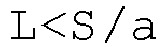 S die Fläche der Thermalisierungszone (22) der Oberseite des Hohlraums (202) in m2 ist,a ein Korrekturkoeffizient von 0,005m ist.
 - Mikrofluidischer Chip nach Anspruch 1, dadurch gekennzeichnet, dass L<0,02m.
- Chip nach einem der vorhergehenden Ansprüche, dadurch gekennzeichnet, dass jeder Fluidinjektionskanal (4, 5) mit mindestens einem Umgehungskanal (6, 7) verbunden ist.
- Chip nach einem der vorhergehenden Ansprüche, dadurch gekennzeichnet, dass er die gleiche Anzahl von mikrofluidischen Fluidinjektionskanälen (4, 5) und Umgehungskanälen (6, 7), vorzugsweise zwei, aufweist, wobei jeder Umgehungskanal mit einem einzelner Injektionskanal verbunden ist.
- Chip nach einem der vorhergehenden Ansprüche, dadurch gekennzeichnet, dass der Hohlraum außerdem eine Einlasshomogenisierungszone (203) zwischen der Einlassöffnung (10) des Hohlraums (202) und der Fluideinlassöffnung (10bis) der Thermalisierungszone (22) umfasst, um insbesondere die Temperatur des Fluids vor dessen Injektion in die Fluidzirkulationskanäle (11) zu homogenisieren.
- Chip nach einem der vorhergehenden Ansprüche, dadurch gekennzeichnet, dass der Chip aus einem quaderförmigem Materialblock besteht, dessen Hohlraum (202) durch eine obere Platte (41) verschlossen ist, die integral mit oder unabhängig von den Seitenwänden des Hohlraums (202) ist, wobei diese Platte (41) eine Oberseite für den Kontakt mit der Probe und vorzugsweise eine Dicke von weniger als 0,002m aufweist.
- Chip nach Anspruch 6, dadurch gekennzeichnet, dass die obere Platte (41) aus Glas und/oder Metall besteht.
- Chip nach einem der vorhergehenden Ansprüche, dadurch gekennzeichnet, dass der Hohlraum außerdem eine Auslasshomogenisierungszone (205) zwischen dem Fluidauslass (30bis) der mikrofluidischen Kanäle (11) und der Fluidauslassöffnung (30) des Hohlraums (202) umfasst, um insbesondere die Temperatur des Fluids vor dessen Injektion in die Fluidauslassöffnung (30) zu homogenisieren.
- Chip nach einem der vorhergehenden Ansprüche, dadurch gekennzeichnet, dass die Dicke des quaderförmigen Hohlraums (202) weniger als 0,001m, vorzugsweise weniger als oder gleich 500Mikrometer ist.
- Chip nach einem der vorhergehenden Ansprüche, dadurch gekennzeichnet, dass er mindestens ein Ventil in mindestens einem seiner Injektionskanäle (4, 5) und/oder Umgehungkanäle (6, 7) umfasst.
- Chip nach Anspruch 10, dadurch gekennzeichnet, dass mindestens ein Ventil pneumatisch gesteuert ist.
- Mikrofluidisches System, dadurch gekennzeichnet, dass es einen Chip nach einem der vorhergehenden Ansprüche, einen ersten wärmeleitenden Film über dem Hohlraum und einen Probenhalter zur Aufnahme der zu analysierenden DNA-Probe umfasst.
- System nach Anspruch 12, dadurch gekennzeichnet, dass es einen Film aus wärmeleitendem Material umfasst, der zumindest teilweise auf der flachen Oberfläche des Chips liegt und darauf gehalten wird, um eine Abdichtung an der in Kontakt mit dem Film stehenden Wärmeübertragungsflüssigkeit sicherzustellen.
- System nach einem der Ansprüche 12 oder 13, dadurch gekennzeichnet, dass der Probenhalter in seinem unteren Teil einen zweiten Film aus wärmeleitendem Material, der in Kontakt mit dem ersten Film steht, aufweist.
- System nach einem der Ansprüche 12 bis 14, dadurch gekennzeichnet, dass es außerdem Mittel zum Zirkulieren mindestens einer Wärmeübertragungsflüssigkeit unter Druck in den Kanälen umfasst.
- System nach Anspruch 15, dadurch gekennzeichnet, dass es aufweist Mittel zum Zirkulieren einer Mehrzahl von Wärmeträgerflüssigkeiten, vorzugsweise zwei, mit unterschiedlichen Temperaturen in den Injektionskanälen (4, 5) und den Umgehungskanälen (6, 7) und zum abwechselnden Zuführen einer dieser Flüssigkeiten zum Hohlraum, während die anderen Wärmeträgerflüssigkeiten, vorzugsweise nur eine, in den Injektionskanälen (6, 7) bis zur Verbindungsstelle (8, 9) und dann in den zugehörigen Umgehungskanälen (6, 7) zirkulieren.
- System nach Anspruch 16, dadurch gekennzeichnet, dass die alternative Zuführung der unterschiedlichen Wärmeträgerflüssigkeiten zum Hohlraum über Ventile in den unterschiedlichen Leitungen erfolgt.
- Verfahren zur Durchführung einer PCR-Typ-Reaktion, bei dem ein Chip und/oder ein System nach einem der Ansprüche 1 bis 17 verwendet wird und bei dem eine DNA-Probe abwechselnd in indirekten thermischen Kontakt mit mindestens einem ersten und/oder einer zweiten Wärmeübertragungsflüssigkeit mit unterschiedlichen Temperaturen gebracht wird, welche in mikrofluidischen Fluidinjektionskanälen (4, 5) zirkuliert und abwechselnd zu einem Hohlraum (202) zugeführt werden, wodurch ein Wärmeaustausch mit der Probe durchgeführt wird, dadurch gekennzeichnet, dass, wenn die erste Flüssigkeit in den Hohlraum (202) injiziert wird, die zweite Flüssigkeit den Hohlraum (202) über einen Umgehungskanal (6, 7) umgeht und umgekehrt, wobei die beiden Flüssigkeiten abwechselnd in den Hohlraum über einen mikrofluidischen Fluidinjektionskanal (4, 5), der über eine Verbindungsstelle (8, 9) entweder zum Zuführen der Flüssigkeit in den Hohlraum (202) oder zum Umgehen des Hohlraums (202) verfügt, eindringen wobei der Abstand zwischen der Verbindungsstelle (8, 9) und dem Einlass des Hohlraums weniger als 0,02 Meter ist.
- Verfahren nach Anspruch 18, dadurch gekennzeichnet, dass die alternative Zuführung der unterschiedlichen Wärmeträgerflüssigkeiten zum Hohlraum (202) durch Variation der jeweiligen Drücke der Wärmeträgerflüssigkeiten erfolgt.
Applications Claiming Priority (3)
| Application Number | Priority Date | Filing Date | Title |
|---|---|---|---|
| FR1601823A FR3060418B1 (fr) | 2016-12-19 | 2016-12-19 | Puce micro fluidique, systeme utilisant une telle puce et procede pcr pour la detection de sequences adn |
| FR1762058A FR3074810B1 (fr) | 2017-12-13 | 2017-12-13 | Puce echantillon micro-fluidique, systeme d'analyse utilisant une telle puce et procede pcr pour la detection de sequences adn |
| PCT/EP2017/082898 WO2018114620A1 (fr) | 2016-12-19 | 2017-12-14 | Puce micro fluidique de thermalisation à cycles de température variable, système utilisant une telle puce et procédé pcr pour la détection de séquences adn |
Publications (3)
| Publication Number | Publication Date |
|---|---|
| EP3554700A1 EP3554700A1 (de) | 2019-10-23 |
| EP3554700B1 true EP3554700B1 (de) | 2024-02-21 |
| EP3554700C0 EP3554700C0 (de) | 2024-02-21 |
Family
ID=60888397
Family Applications (2)
| Application Number | Title | Priority Date | Filing Date |
|---|---|---|---|
| EP17822629.6A Pending EP3554701A1 (de) | 2016-12-19 | 2017-12-14 | Mikrofluidische probenchip, testsystem mit verwendung solch eines chips und pcr-verfahren zur detektion von dna-sequenzen |
| EP17822628.8A Active EP3554700B1 (de) | 2016-12-19 | 2017-12-14 | Thermalisierender mikrofluidischer chip mit variablen temperaturzyklen, system mit solch einem chip und pcr-verfahren zum nachweis von dna-sequenzen |
Family Applications Before (1)
| Application Number | Title | Priority Date | Filing Date |
|---|---|---|---|
| EP17822629.6A Pending EP3554701A1 (de) | 2016-12-19 | 2017-12-14 | Mikrofluidische probenchip, testsystem mit verwendung solch eines chips und pcr-verfahren zur detektion von dna-sequenzen |
Country Status (4)
| Country | Link |
|---|---|
| US (3) | US20190388887A1 (de) |
| EP (2) | EP3554701A1 (de) |
| CN (2) | CN110191758B (de) |
| WO (2) | WO2018114620A1 (de) |
Families Citing this family (18)
| Publication number | Priority date | Publication date | Assignee | Title |
|---|---|---|---|---|
| WO2019144050A2 (en) * | 2018-01-22 | 2019-07-25 | University Of Washington | Methods of performing digital nucleic acid amplification using polybutene |
| IT201800006089A1 (it) * | 2018-06-06 | 2019-12-06 | Dispositivo microfluidico per la concentrazione di particelle | |
| CN110554651B (zh) * | 2019-09-19 | 2021-07-30 | 哈尔滨工业大学 | 微流控芯片温度测量及控制的私有物联网系统 |
| CN110756236B (zh) * | 2019-11-18 | 2021-12-17 | 江苏纳迪芯生命科技研究院有限公司 | 一种密封式微流控乳化芯片及其制作工艺和使用方法 |
| EP3831490A1 (de) * | 2019-12-03 | 2021-06-09 | Eppendorf AG | Thermoblock zur aufnahme und temperierung mindestens eines laborprobengefässes, herstellungsverfahren und simulationsverfahren |
| EP3838411A1 (de) * | 2019-12-18 | 2021-06-23 | TECAN Trading AG | Pipettiervorrichtung und -verfahren |
| CN111185248A (zh) * | 2020-01-19 | 2020-05-22 | 中国科学院上海微系统与信息技术研究所 | 一种含有气泡消除结构的聚合酶链式反应芯片及液滴乳液的处理方法 |
| WO2021242176A1 (en) * | 2020-05-28 | 2021-12-02 | National University Of Singapore | Microfluidic chip and system |
| WO2022010461A1 (en) | 2020-07-07 | 2022-01-13 | Hewlett-Packard Development Company, L.P. | Microfluidic sensing |
| FR3117045A1 (fr) | 2020-12-04 | 2022-06-10 | Bforcure | Puce de détection PCR, appareil de test associé et système d’analyse de mise en œuvre |
| CN114618599A (zh) * | 2020-12-14 | 2022-06-14 | 京东方科技集团股份有限公司 | 加热控温装置及微流控系统 |
| CN112684320B (zh) * | 2020-12-17 | 2023-01-31 | 海光信息技术股份有限公司 | 芯片低温测试环境仓及芯片测试机 |
| CN117916021A (zh) * | 2021-06-30 | 2024-04-19 | 康特姆斯集团有限公司 | 使用介电泳浓缩流体样本中的目标微粒的微流体设备 |
| CN113720834B (zh) * | 2021-08-25 | 2023-08-18 | 中国科学院南海海洋研究所 | 一种用于水体生化要素检测的微流控芯片、系统及方法 |
| FR3136386A1 (fr) | 2022-06-08 | 2023-12-15 | Bforcure | Puce de détection PCR, appareil de test associé et système d’analyse de mise en œuvre |
| CN114923354B (zh) * | 2022-06-09 | 2025-03-28 | 马虹霞 | 一种热传导转接模块及其应用 |
| CN115651824A (zh) * | 2022-06-27 | 2023-01-31 | 杭州聚致生物科技有限公司 | Pcr反应系统和方法 |
| CN121558710B (zh) * | 2025-12-25 | 2026-07-07 | 浙江大学 | 一种适用于超重力环境下的土体离子浓度传感器 |
Family Cites Families (18)
| Publication number | Priority date | Publication date | Assignee | Title |
|---|---|---|---|---|
| US5637469A (en) * | 1992-05-01 | 1997-06-10 | Trustees Of The University Of Pennsylvania | Methods and apparatus for the detection of an analyte utilizing mesoscale flow systems |
| US5508197A (en) | 1994-07-25 | 1996-04-16 | The Regents, University Of California | High-speed thermal cycling system and method of use |
| US5958349A (en) | 1997-02-28 | 1999-09-28 | Cepheid | Reaction vessel for heat-exchanging chemical processes |
| US6143496A (en) | 1997-04-17 | 2000-11-07 | Cytonix Corporation | Method of sampling, amplifying and quantifying segment of nucleic acid, polymerase chain reaction assembly having nanoliter-sized sample chambers, and method of filling assembly |
| CA2406707A1 (en) | 2000-04-06 | 2001-10-18 | Robert Nagle | Microfluidic devices and systems incorporating cover layers |
| US7440684B2 (en) | 2001-04-12 | 2008-10-21 | Spaid Michael A | Method and apparatus for improved temperature control in microfluidic devices |
| TWI273240B (en) * | 2004-09-27 | 2007-02-11 | Univ Nat Cheng Kung | Reverse transcription polymerase chain reaction chip |
| KR100773552B1 (ko) * | 2006-04-28 | 2007-11-07 | 삼성전자주식회사 | 미세유체 반응 용기, 이의 제조 방법 및, 이를 이용한미세유체 반응 방법 |
| WO2009029845A1 (en) | 2007-08-29 | 2009-03-05 | Plexera Bioscience Llc | Microfluidic apparatus for wide area microarrays |
| WO2009105499A1 (en) | 2008-02-20 | 2009-08-27 | Termaat Joel R | Thermocycler and sample vessel for rapid amplification of dna |
| JP5138093B2 (ja) | 2009-03-31 | 2013-02-06 | 財団法人神奈川科学技術アカデミー | 液体還流型高速遺伝子増幅装置 |
| FR2959678B1 (fr) | 2010-05-04 | 2012-09-28 | Centre Nat Rech Scient | Puce microfluidique, support, systeme et procede de mise en oeuvre pour une regulation thermique spatialement controlee et rapide d'un echantillon |
| WO2013072790A1 (en) * | 2011-11-16 | 2013-05-23 | International Business Machines Corporation | Microfluidic device with deformable valve |
| CN103988082B (zh) * | 2011-11-25 | 2016-09-07 | 凸版印刷株式会社 | 试样分析芯片和试样分析方法以及基因分析方法 |
| JP5912034B2 (ja) | 2011-11-28 | 2016-04-27 | 公益財団法人神奈川科学技術アカデミー | 液体還流型高速遺伝子増幅装置 |
| CN102994369B (zh) * | 2012-12-14 | 2014-12-31 | 张影频 | 用于pcr快速反应的芯片结构 |
| WO2015138343A1 (en) * | 2014-03-10 | 2015-09-17 | Click Diagnostics, Inc. | Cartridge-based thermocycler |
| US10632465B2 (en) | 2015-04-22 | 2020-04-28 | Stilla Technologies | Contact-less priming method for loading a solution in a microfluidic device and associated system |
-
2017
- 2017-12-14 CN CN201780082459.2A patent/CN110191758B/zh active Active
- 2017-12-14 CN CN201780082462.4A patent/CN110191759B/zh active Active
- 2017-12-14 US US16/471,500 patent/US20190388887A1/en not_active Abandoned
- 2017-12-14 US US16/471,517 patent/US11198120B2/en active Active
- 2017-12-14 EP EP17822629.6A patent/EP3554701A1/de active Pending
- 2017-12-14 WO PCT/EP2017/082898 patent/WO2018114620A1/fr not_active Ceased
- 2017-12-14 EP EP17822628.8A patent/EP3554700B1/de active Active
- 2017-12-14 WO PCT/EP2017/082908 patent/WO2018114625A1/fr not_active Ceased
-
2021
- 2021-12-12 US US17/548,591 patent/US11607684B2/en active Active
Also Published As
| Publication number | Publication date |
|---|---|
| CN110191758B (zh) | 2022-10-14 |
| CN110191759B (zh) | 2022-10-11 |
| US20190388887A1 (en) | 2019-12-26 |
| WO2018114620A1 (fr) | 2018-06-28 |
| US20220097049A1 (en) | 2022-03-31 |
| US20200016593A1 (en) | 2020-01-16 |
| CN110191758A (zh) | 2019-08-30 |
| US11607684B2 (en) | 2023-03-21 |
| US11198120B2 (en) | 2021-12-14 |
| CN110191759A (zh) | 2019-08-30 |
| EP3554701A1 (de) | 2019-10-23 |
| EP3554700A1 (de) | 2019-10-23 |
| EP3554700C0 (de) | 2024-02-21 |
| WO2018114625A1 (fr) | 2018-06-28 |
Similar Documents
| Publication | Publication Date | Title |
|---|---|---|
| EP3554701A1 (de) | Mikrofluidische probenchip, testsystem mit verwendung solch eines chips und pcr-verfahren zur detektion von dna-sequenzen | |
| CA2526205C (fr) | Dispositif microfluidique | |
| US20190091694A1 (en) | Rapid thermal cycling for sample analyses and processing | |
| WO2014056930A1 (fr) | Procédé microfluidique de traitement et d'analyse d'une solution contenant un matériel biologique, et circuit microfluidique correspondant | |
| WO2011107519A2 (fr) | Boite multi-reacteurs pour culture cellulaire dynamique | |
| WO2019122788A1 (fr) | Puce micro-fluidique, laboratoire sur puce micro-fluidique, procédé de fabrication d'une telle puce et procédé d'analyse | |
| EP3766580B1 (de) | Mikrofluidvorrichtung zur vorbereitung und analyse einer biologischen probe | |
| FR2950699A1 (fr) | Dispositif a usage unique pour la detection de particules d'interet, telles que des entites biologiques, systeme de detection comprenant ledit dispositif et procede de mise en oeuvre | |
| WO2011138748A1 (fr) | Support de puce microfluidique et systeme de regulation thermique d'un echantillon | |
| WO2004000449A1 (fr) | Dispositif fluidique permettant de maniere thermo-pneumatique l'isolement et eventuellement l'agitation du contenu d'une cavite operatoire | |
| FR3074810A1 (fr) | Puce echantillon micro-fluidique, systeme d'analyse utilisant une telle puce et procede pcr pour la detection de sequences adn | |
| EP3877744B1 (de) | Mikrofluidische probenvorbereitungsvorrichtung mit hoher wiederholbarkeit | |
| WO2016139409A1 (fr) | Dispositif de prélèvement d'un échantillon liquide par capillarité | |
| FR2831081A1 (fr) | Dispositif d'injection parallelisee et synchronisee pour injections sequentielles de reactifs differents | |
| FR2799139A1 (fr) | Dispositif d'analyse biochimique comprenant un substrat microfluidique notamment pour l'amplification ou l'analyse d'acides nucleiques. | |
| FR3060418A1 (fr) | Puce micro fluidique, systeme utilisant une telle puce et procede pcr pour la detection de sequences adn | |
| FR3109585A1 (fr) | Plaquette de test et système de test biologique automatisé | |
| WO2019238947A1 (fr) | Méthode de transfert de matière dans un dispositif microfluidique ou millifluidique | |
| EP3086879A1 (de) | Mikrofluidische vorrichtung zur handhabung unmischbarer flüssigkeiten | |
| FR3075823A1 (fr) | Procede d’analyse d’un echantillon cellulaire au moyen d’un laboratoire sur puce-micro-fluidique | |
| EP4713137A1 (de) | Mikrofluidische plattform und zugehörige einrichtung zur überwachung der alterung und/oder des abbaus eines bestimmten materials in einem simulierten medium | |
| FR3130650A1 (fr) | Procédé et dispositif de récupération et d'analyse de particules aéroportées. | |
| FR3117045A1 (fr) | Puce de détection PCR, appareil de test associé et système d’analyse de mise en œuvre | |
| FR3068027A1 (fr) | Dispositif microfluidique a plusieurs chambres en parallele |
Legal Events
| Date | Code | Title | Description |
|---|---|---|---|
| STAA | Information on the status of an ep patent application or granted ep patent |
Free format text: STATUS: UNKNOWN |
|
| STAA | Information on the status of an ep patent application or granted ep patent |
Free format text: STATUS: THE INTERNATIONAL PUBLICATION HAS BEEN MADE |
|
| PUAI | Public reference made under article 153(3) epc to a published international application that has entered the european phase |
Free format text: ORIGINAL CODE: 0009012 |
|
| STAA | Information on the status of an ep patent application or granted ep patent |
Free format text: STATUS: REQUEST FOR EXAMINATION WAS MADE |
|
| 17P | Request for examination filed |
Effective date: 20190612 |
|
| AK | Designated contracting states |
Kind code of ref document: A1 Designated state(s): AL AT BE BG CH CY CZ DE DK EE ES FI FR GB GR HR HU IE IS IT LI LT LU LV MC MK MT NL NO PL PT RO RS SE SI SK SM TR |
|
| AX | Request for extension of the european patent |
Extension state: BA ME |
|
| DAV | Request for validation of the european patent (deleted) | ||
| DAX | Request for extension of the european patent (deleted) | ||
| GRAP | Despatch of communication of intention to grant a patent |
Free format text: ORIGINAL CODE: EPIDOSNIGR1 |
|
| STAA | Information on the status of an ep patent application or granted ep patent |
Free format text: STATUS: GRANT OF PATENT IS INTENDED |
|
| INTG | Intention to grant announced |
Effective date: 20231102 |
|
| GRAS | Grant fee paid |
Free format text: ORIGINAL CODE: EPIDOSNIGR3 |
|
| GRAA | (expected) grant |
Free format text: ORIGINAL CODE: 0009210 |
|
| STAA | Information on the status of an ep patent application or granted ep patent |
Free format text: STATUS: THE PATENT HAS BEEN GRANTED |
|
| AK | Designated contracting states |
Kind code of ref document: B1 Designated state(s): AL AT BE BG CH CY CZ DE DK EE ES FI FR GB GR HR HU IE IS IT LI LT LU LV MC MK MT NL NO PL PT RO RS SE SI SK SM TR |
|
| REG | Reference to a national code |
Ref country code: GB Ref legal event code: FG4D Free format text: NOT ENGLISH |
|
| REG | Reference to a national code |
Ref country code: CH Ref legal event code: EP |
|
| REG | Reference to a national code |
Ref country code: IE Ref legal event code: FG4D Free format text: LANGUAGE OF EP DOCUMENT: FRENCH |
|
| REG | Reference to a national code |
Ref country code: DE Ref legal event code: R096 Ref document number: 602017079390 Country of ref document: DE |
|
| U01 | Request for unitary effect filed |
Effective date: 20240221 |
|
| U07 | Unitary effect registered |
Designated state(s): AT BE BG DE DK EE FI FR IT LT LU LV MT NL PT SE SI Effective date: 20240318 |
|
| PG25 | Lapsed in a contracting state [announced via postgrant information from national office to epo] |
Ref country code: IS Free format text: LAPSE BECAUSE OF FAILURE TO SUBMIT A TRANSLATION OF THE DESCRIPTION OR TO PAY THE FEE WITHIN THE PRESCRIBED TIME-LIMIT Effective date: 20240621 |
|
| PG25 | Lapsed in a contracting state [announced via postgrant information from national office to epo] |
Ref country code: GR Free format text: LAPSE BECAUSE OF FAILURE TO SUBMIT A TRANSLATION OF THE DESCRIPTION OR TO PAY THE FEE WITHIN THE PRESCRIBED TIME-LIMIT Effective date: 20240522 |
|
| PG25 | Lapsed in a contracting state [announced via postgrant information from national office to epo] |
Ref country code: RS Free format text: LAPSE BECAUSE OF FAILURE TO SUBMIT A TRANSLATION OF THE DESCRIPTION OR TO PAY THE FEE WITHIN THE PRESCRIBED TIME-LIMIT Effective date: 20240521 Ref country code: HR Free format text: LAPSE BECAUSE OF FAILURE TO SUBMIT A TRANSLATION OF THE DESCRIPTION OR TO PAY THE FEE WITHIN THE PRESCRIBED TIME-LIMIT Effective date: 20240221 |
|
| PG25 | Lapsed in a contracting state [announced via postgrant information from national office to epo] |
Ref country code: ES Free format text: LAPSE BECAUSE OF FAILURE TO SUBMIT A TRANSLATION OF THE DESCRIPTION OR TO PAY THE FEE WITHIN THE PRESCRIBED TIME-LIMIT Effective date: 20240221 |
|
| PG25 | Lapsed in a contracting state [announced via postgrant information from national office to epo] |
Ref country code: RS Free format text: LAPSE BECAUSE OF FAILURE TO SUBMIT A TRANSLATION OF THE DESCRIPTION OR TO PAY THE FEE WITHIN THE PRESCRIBED TIME-LIMIT Effective date: 20240521 Ref country code: NO Free format text: LAPSE BECAUSE OF FAILURE TO SUBMIT A TRANSLATION OF THE DESCRIPTION OR TO PAY THE FEE WITHIN THE PRESCRIBED TIME-LIMIT Effective date: 20240521 Ref country code: IS Free format text: LAPSE BECAUSE OF FAILURE TO SUBMIT A TRANSLATION OF THE DESCRIPTION OR TO PAY THE FEE WITHIN THE PRESCRIBED TIME-LIMIT Effective date: 20240621 Ref country code: HR Free format text: LAPSE BECAUSE OF FAILURE TO SUBMIT A TRANSLATION OF THE DESCRIPTION OR TO PAY THE FEE WITHIN THE PRESCRIBED TIME-LIMIT Effective date: 20240221 Ref country code: GR Free format text: LAPSE BECAUSE OF FAILURE TO SUBMIT A TRANSLATION OF THE DESCRIPTION OR TO PAY THE FEE WITHIN THE PRESCRIBED TIME-LIMIT Effective date: 20240522 Ref country code: ES Free format text: LAPSE BECAUSE OF FAILURE TO SUBMIT A TRANSLATION OF THE DESCRIPTION OR TO PAY THE FEE WITHIN THE PRESCRIBED TIME-LIMIT Effective date: 20240221 |
|
| PG25 | Lapsed in a contracting state [announced via postgrant information from national office to epo] |
Ref country code: PL Free format text: LAPSE BECAUSE OF FAILURE TO SUBMIT A TRANSLATION OF THE DESCRIPTION OR TO PAY THE FEE WITHIN THE PRESCRIBED TIME-LIMIT Effective date: 20240221 |
|
| PG25 | Lapsed in a contracting state [announced via postgrant information from national office to epo] |
Ref country code: PL Free format text: LAPSE BECAUSE OF FAILURE TO SUBMIT A TRANSLATION OF THE DESCRIPTION OR TO PAY THE FEE WITHIN THE PRESCRIBED TIME-LIMIT Effective date: 20240221 |
|
| PG25 | Lapsed in a contracting state [announced via postgrant information from national office to epo] |
Ref country code: SM Free format text: LAPSE BECAUSE OF FAILURE TO SUBMIT A TRANSLATION OF THE DESCRIPTION OR TO PAY THE FEE WITHIN THE PRESCRIBED TIME-LIMIT Effective date: 20240221 |
|
| PG25 | Lapsed in a contracting state [announced via postgrant information from national office to epo] |
Ref country code: CZ Free format text: LAPSE BECAUSE OF FAILURE TO SUBMIT A TRANSLATION OF THE DESCRIPTION OR TO PAY THE FEE WITHIN THE PRESCRIBED TIME-LIMIT Effective date: 20240221 |
|
| PG25 | Lapsed in a contracting state [announced via postgrant information from national office to epo] |
Ref country code: SK Free format text: LAPSE BECAUSE OF FAILURE TO SUBMIT A TRANSLATION OF THE DESCRIPTION OR TO PAY THE FEE WITHIN THE PRESCRIBED TIME-LIMIT Effective date: 20240221 |
|
| PG25 | Lapsed in a contracting state [announced via postgrant information from national office to epo] |
Ref country code: SM Free format text: LAPSE BECAUSE OF FAILURE TO SUBMIT A TRANSLATION OF THE DESCRIPTION OR TO PAY THE FEE WITHIN THE PRESCRIBED TIME-LIMIT Effective date: 20240221 Ref country code: SK Free format text: LAPSE BECAUSE OF FAILURE TO SUBMIT A TRANSLATION OF THE DESCRIPTION OR TO PAY THE FEE WITHIN THE PRESCRIBED TIME-LIMIT Effective date: 20240221 Ref country code: RO Free format text: LAPSE BECAUSE OF FAILURE TO SUBMIT A TRANSLATION OF THE DESCRIPTION OR TO PAY THE FEE WITHIN THE PRESCRIBED TIME-LIMIT Effective date: 20240221 Ref country code: CZ Free format text: LAPSE BECAUSE OF FAILURE TO SUBMIT A TRANSLATION OF THE DESCRIPTION OR TO PAY THE FEE WITHIN THE PRESCRIBED TIME-LIMIT Effective date: 20240221 |
|
| REG | Reference to a national code |
Ref country code: DE Ref legal event code: R097 Ref document number: 602017079390 Country of ref document: DE |
|
| PLBE | No opposition filed within time limit |
Free format text: ORIGINAL CODE: 0009261 |
|
| STAA | Information on the status of an ep patent application or granted ep patent |
Free format text: STATUS: NO OPPOSITION FILED WITHIN TIME LIMIT |
|
| U20 | Renewal fee for the european patent with unitary effect paid |
Year of fee payment: 8 Effective date: 20241127 |
|
| 26N | No opposition filed |
Effective date: 20241122 |
|
| PG25 | Lapsed in a contracting state [announced via postgrant information from national office to epo] |
Ref country code: MC Free format text: LAPSE BECAUSE OF FAILURE TO SUBMIT A TRANSLATION OF THE DESCRIPTION OR TO PAY THE FEE WITHIN THE PRESCRIBED TIME-LIMIT Effective date: 20240221 |
|
| REG | Reference to a national code |
Ref country code: CH Ref legal event code: PL |
|
| GBPC | Gb: european patent ceased through non-payment of renewal fee |
Effective date: 20241214 |
|
| PG25 | Lapsed in a contracting state [announced via postgrant information from national office to epo] |
Ref country code: GB Free format text: LAPSE BECAUSE OF NON-PAYMENT OF DUE FEES Effective date: 20241214 |
|
| PG25 | Lapsed in a contracting state [announced via postgrant information from national office to epo] |
Ref country code: CH Free format text: LAPSE BECAUSE OF NON-PAYMENT OF DUE FEES Effective date: 20241231 |
|
| PG25 | Lapsed in a contracting state [announced via postgrant information from national office to epo] |
Ref country code: IE Free format text: LAPSE BECAUSE OF NON-PAYMENT OF DUE FEES Effective date: 20241214 |
|
| U20 | Renewal fee for the european patent with unitary effect paid |
Year of fee payment: 9 Effective date: 20251127 |
|
| PG25 | Lapsed in a contracting state [announced via postgrant information from national office to epo] |
Ref country code: CY Free format text: LAPSE BECAUSE OF FAILURE TO SUBMIT A TRANSLATION OF THE DESCRIPTION OR TO PAY THE FEE WITHIN THE PRESCRIBED TIME-LIMIT Effective date: 20240221 |
|
| PG25 | Lapsed in a contracting state [announced via postgrant information from national office to epo] |
Ref country code: TR Free format text: LAPSE BECAUSE OF FAILURE TO SUBMIT A TRANSLATION OF THE DESCRIPTION OR TO PAY THE FEE WITHIN THE PRESCRIBED TIME-LIMIT Effective date: 20240221 |
|
| PG25 | Lapsed in a contracting state [announced via postgrant information from national office to epo] |
Ref country code: HU Free format text: LAPSE BECAUSE OF FAILURE TO SUBMIT A TRANSLATION OF THE DESCRIPTION OR TO PAY THE FEE WITHIN THE PRESCRIBED TIME-LIMIT; INVALID AB INITIO Effective date: 20171214 |