EP3552820B1 - Bande adhésive en tissu pouvant être déchirée à la main à résistance au frottement et à atténuation du bruit élevées et son procédé de fabrication - Google Patents
Bande adhésive en tissu pouvant être déchirée à la main à résistance au frottement et à atténuation du bruit élevées et son procédé de fabrication Download PDFInfo
- Publication number
- EP3552820B1 EP3552820B1 EP19175420.9A EP19175420A EP3552820B1 EP 3552820 B1 EP3552820 B1 EP 3552820B1 EP 19175420 A EP19175420 A EP 19175420A EP 3552820 B1 EP3552820 B1 EP 3552820B1
- Authority
- EP
- European Patent Office
- Prior art keywords
- adhesive tape
- adhesive
- range
- textile layer
- woven fabric
- Prior art date
- Legal status (The legal status is an assumption and is not a legal conclusion. Google has not performed a legal analysis and makes no representation as to the accuracy of the status listed.)
- Active
Links
Images


Classifications
-
- B—PERFORMING OPERATIONS; TRANSPORTING
- B32—LAYERED PRODUCTS
- B32B—LAYERED PRODUCTS, i.e. PRODUCTS BUILT-UP OF STRATA OF FLAT OR NON-FLAT, e.g. CELLULAR OR HONEYCOMB, FORM
- B32B7/00—Layered products characterised by the relation between layers; Layered products characterised by the relative orientation of features between layers, or by the relative values of a measurable parameter between layers, i.e. products comprising layers having different physical, chemical or physicochemical properties; Layered products characterised by the interconnection of layers
- B32B7/04—Interconnection of layers
- B32B7/12—Interconnection of layers using interposed adhesives or interposed materials with bonding properties
-
- B—PERFORMING OPERATIONS; TRANSPORTING
- B32—LAYERED PRODUCTS
- B32B—LAYERED PRODUCTS, i.e. PRODUCTS BUILT-UP OF STRATA OF FLAT OR NON-FLAT, e.g. CELLULAR OR HONEYCOMB, FORM
- B32B5/00—Layered products characterised by the non- homogeneity or physical structure, i.e. comprising a fibrous, filamentary, particulate or foam layer; Layered products characterised by having a layer differing constitutionally or physically in different parts
- B32B5/02—Layered products characterised by the non- homogeneity or physical structure, i.e. comprising a fibrous, filamentary, particulate or foam layer; Layered products characterised by having a layer differing constitutionally or physically in different parts characterised by structural features of a fibrous or filamentary layer
- B32B5/024—Woven fabric
-
- B—PERFORMING OPERATIONS; TRANSPORTING
- B32—LAYERED PRODUCTS
- B32B—LAYERED PRODUCTS, i.e. PRODUCTS BUILT-UP OF STRATA OF FLAT OR NON-FLAT, e.g. CELLULAR OR HONEYCOMB, FORM
- B32B5/00—Layered products characterised by the non- homogeneity or physical structure, i.e. comprising a fibrous, filamentary, particulate or foam layer; Layered products characterised by having a layer differing constitutionally or physically in different parts
- B32B5/22—Layered products characterised by the non- homogeneity or physical structure, i.e. comprising a fibrous, filamentary, particulate or foam layer; Layered products characterised by having a layer differing constitutionally or physically in different parts characterised by the presence of two or more layers which are next to each other and are fibrous, filamentary, formed of particles or foamed
- B32B5/24—Layered products characterised by the non- homogeneity or physical structure, i.e. comprising a fibrous, filamentary, particulate or foam layer; Layered products characterised by having a layer differing constitutionally or physically in different parts characterised by the presence of two or more layers which are next to each other and are fibrous, filamentary, formed of particles or foamed one layer being a fibrous or filamentary layer
- B32B5/26—Layered products characterised by the non- homogeneity or physical structure, i.e. comprising a fibrous, filamentary, particulate or foam layer; Layered products characterised by having a layer differing constitutionally or physically in different parts characterised by the presence of two or more layers which are next to each other and are fibrous, filamentary, formed of particles or foamed one layer being a fibrous or filamentary layer another layer next to it also being fibrous or filamentary
-
- C—CHEMISTRY; METALLURGY
- C09—DYES; PAINTS; POLISHES; NATURAL RESINS; ADHESIVES; COMPOSITIONS NOT OTHERWISE PROVIDED FOR; APPLICATIONS OF MATERIALS NOT OTHERWISE PROVIDED FOR
- C09J—ADHESIVES; NON-MECHANICAL ASPECTS OF ADHESIVE PROCESSES IN GENERAL; ADHESIVE PROCESSES NOT PROVIDED FOR ELSEWHERE; USE OF MATERIALS AS ADHESIVES
- C09J7/00—Adhesives in the form of films or foils
- C09J7/20—Adhesives in the form of films or foils characterised by their carriers
- C09J7/21—Paper; Textile fabrics
-
- C—CHEMISTRY; METALLURGY
- C09—DYES; PAINTS; POLISHES; NATURAL RESINS; ADHESIVES; COMPOSITIONS NOT OTHERWISE PROVIDED FOR; APPLICATIONS OF MATERIALS NOT OTHERWISE PROVIDED FOR
- C09J—ADHESIVES; NON-MECHANICAL ASPECTS OF ADHESIVE PROCESSES IN GENERAL; ADHESIVE PROCESSES NOT PROVIDED FOR ELSEWHERE; USE OF MATERIALS AS ADHESIVES
- C09J7/00—Adhesives in the form of films or foils
- C09J7/20—Adhesives in the form of films or foils characterised by their carriers
- C09J7/29—Laminated material
-
- C—CHEMISTRY; METALLURGY
- C09—DYES; PAINTS; POLISHES; NATURAL RESINS; ADHESIVES; COMPOSITIONS NOT OTHERWISE PROVIDED FOR; APPLICATIONS OF MATERIALS NOT OTHERWISE PROVIDED FOR
- C09J—ADHESIVES; NON-MECHANICAL ASPECTS OF ADHESIVE PROCESSES IN GENERAL; ADHESIVE PROCESSES NOT PROVIDED FOR ELSEWHERE; USE OF MATERIALS AS ADHESIVES
- C09J7/00—Adhesives in the form of films or foils
- C09J7/30—Adhesives in the form of films or foils characterised by the adhesive composition
- C09J7/38—Pressure-sensitive adhesives [PSA]
-
- B—PERFORMING OPERATIONS; TRANSPORTING
- B32—LAYERED PRODUCTS
- B32B—LAYERED PRODUCTS, i.e. PRODUCTS BUILT-UP OF STRATA OF FLAT OR NON-FLAT, e.g. CELLULAR OR HONEYCOMB, FORM
- B32B2255/00—Coating on the layer surface
- B32B2255/02—Coating on the layer surface on fibrous or filamentary layer
-
- B—PERFORMING OPERATIONS; TRANSPORTING
- B32—LAYERED PRODUCTS
- B32B—LAYERED PRODUCTS, i.e. PRODUCTS BUILT-UP OF STRATA OF FLAT OR NON-FLAT, e.g. CELLULAR OR HONEYCOMB, FORM
- B32B2255/00—Coating on the layer surface
- B32B2255/26—Polymeric coating
-
- B—PERFORMING OPERATIONS; TRANSPORTING
- B32—LAYERED PRODUCTS
- B32B—LAYERED PRODUCTS, i.e. PRODUCTS BUILT-UP OF STRATA OF FLAT OR NON-FLAT, e.g. CELLULAR OR HONEYCOMB, FORM
- B32B2262/00—Composition or structural features of fibres which form a fibrous or filamentary layer or are present as additives
- B32B2262/02—Synthetic macromolecular fibres
- B32B2262/0276—Polyester fibres
-
- B—PERFORMING OPERATIONS; TRANSPORTING
- B32—LAYERED PRODUCTS
- B32B—LAYERED PRODUCTS, i.e. PRODUCTS BUILT-UP OF STRATA OF FLAT OR NON-FLAT, e.g. CELLULAR OR HONEYCOMB, FORM
- B32B2307/00—Properties of the layers or laminate
- B32B2307/20—Properties of the layers or laminate having particular electrical or magnetic properties, e.g. piezoelectric
- B32B2307/202—Conductive
-
- B—PERFORMING OPERATIONS; TRANSPORTING
- B32—LAYERED PRODUCTS
- B32B—LAYERED PRODUCTS, i.e. PRODUCTS BUILT-UP OF STRATA OF FLAT OR NON-FLAT, e.g. CELLULAR OR HONEYCOMB, FORM
- B32B2307/00—Properties of the layers or laminate
- B32B2307/50—Properties of the layers or laminate having particular mechanical properties
- B32B2307/51—Elastic
-
- B—PERFORMING OPERATIONS; TRANSPORTING
- B32—LAYERED PRODUCTS
- B32B—LAYERED PRODUCTS, i.e. PRODUCTS BUILT-UP OF STRATA OF FLAT OR NON-FLAT, e.g. CELLULAR OR HONEYCOMB, FORM
- B32B2307/00—Properties of the layers or laminate
- B32B2307/50—Properties of the layers or laminate having particular mechanical properties
- B32B2307/554—Wear resistance
-
- B—PERFORMING OPERATIONS; TRANSPORTING
- B32—LAYERED PRODUCTS
- B32B—LAYERED PRODUCTS, i.e. PRODUCTS BUILT-UP OF STRATA OF FLAT OR NON-FLAT, e.g. CELLULAR OR HONEYCOMB, FORM
- B32B2307/00—Properties of the layers or laminate
- B32B2307/50—Properties of the layers or laminate having particular mechanical properties
- B32B2307/584—Scratch resistance
-
- B—PERFORMING OPERATIONS; TRANSPORTING
- B32—LAYERED PRODUCTS
- B32B—LAYERED PRODUCTS, i.e. PRODUCTS BUILT-UP OF STRATA OF FLAT OR NON-FLAT, e.g. CELLULAR OR HONEYCOMB, FORM
- B32B2605/00—Vehicles
-
- C—CHEMISTRY; METALLURGY
- C09—DYES; PAINTS; POLISHES; NATURAL RESINS; ADHESIVES; COMPOSITIONS NOT OTHERWISE PROVIDED FOR; APPLICATIONS OF MATERIALS NOT OTHERWISE PROVIDED FOR
- C09J—ADHESIVES; NON-MECHANICAL ASPECTS OF ADHESIVE PROCESSES IN GENERAL; ADHESIVE PROCESSES NOT PROVIDED FOR ELSEWHERE; USE OF MATERIALS AS ADHESIVES
- C09J2203/00—Applications of adhesives in processes or use of adhesives in the form of films or foils
- C09J2203/302—Applications of adhesives in processes or use of adhesives in the form of films or foils for bundling cables
-
- C—CHEMISTRY; METALLURGY
- C09—DYES; PAINTS; POLISHES; NATURAL RESINS; ADHESIVES; COMPOSITIONS NOT OTHERWISE PROVIDED FOR; APPLICATIONS OF MATERIALS NOT OTHERWISE PROVIDED FOR
- C09J—ADHESIVES; NON-MECHANICAL ASPECTS OF ADHESIVE PROCESSES IN GENERAL; ADHESIVE PROCESSES NOT PROVIDED FOR ELSEWHERE; USE OF MATERIALS AS ADHESIVES
- C09J2400/00—Presence of inorganic and organic materials
- C09J2400/20—Presence of organic materials
- C09J2400/26—Presence of textile or fabric
- C09J2400/263—Presence of textile or fabric in the substrate
Definitions
- the invention relates to a highly abrasion-resistant technical adhesive tape, in particular an adhesive tape that can be wound onto itself to form a roll of adhesive tape, preferably a cable winding tape, with a double-layer tape-shaped carrier which is provided on one side with a pressure-sensitive adhesive coating, the carrier being a first one made of a fabric comprises existing textile layer layer and a second textile layer layer, which are firmly connected to one another over the entire surface by an adhesive bonding layer.
- the invention also relates to a method for producing such an adhesive tape.
- the different requirements placed on adhesive tapes are partly related to certain basic sizes of the adhesive tape, such as e.g. B. the thickness, contrary to each other. So - provided other basic parameters, such as the carrier material, remain constant - with an adhesive tape with increasing thickness A higher abrasion resistance and noise damping, but also a reduced flexibility and a deterioration in hand tearability and flagging behavior can be expected.
- Adhesive tapes for cable harnesses in motor vehicles are summarized as a common test guideline of the companies Audi, BMW, DC and VW.
- the abrasion resistance according to LV 312 is determined based on DIN ISO 6722 by first sticking the adhesive tape onto a mandrel (metal rod) with a diameter of 5 or 10 mm. Using a scraping tool with a needle diameter of 0.45 mm, the number of strokes required to scrape through the adhesive tape is then determined under a weight of 7 N. With regard to abrasion resistance, LV 312 provides the classification given in Table 1 below.
- Table 1 Classification of abrasion classes according to LV 312 Abrasion class requirement A - no abrasion protection ⁇ 100 strokes B - low abrasion protection 100 - 499 strokes C - medium abrasion protection 500 - 999 strokes D - high abrasion protection 1000 - 4999 strokes E - very high abrasion protection 5000-14999 strokes F - extremely high abrasion protection 15000 - 29999 strokes G - Abrasion protection for special applications ⁇ 30000 strokes
- LV 312 provides for the classification given in Table 2 below.
- Table 2 Classification of the noise reduction classes according to LV 312 Noise reduction class requirement A - no noise reduction 0-2 dB (A) B - low noise attenuation > 2 - 5 dB (A) C - medium noise reduction > 5 - 10 dB (A) D - high noise attenuation > 10 - 15 dB (A) E - very high noise attenuation > 15 dB (A)
- the above-mentioned guideline also describes, for example, test methods for thermal resistance, the compatibility of adhesive tapes with electrical vehicle cables and for chemical resistance, fogging and flagging behavior.
- flagging is understood to mean a detachment, in particular helically wound around a set of cables, so that their ends protrude and, in order to avoid this, have to be fixed during use.
- an adhesive tape of the type mentioned at the outset which has a textile carrier made of at least one fabric layer and a sheet material layer connected to it, in particular formed from a velor or fleece and an adhesive coating applied to one or both sides of the carrier, the fabric layer being designed as a fine fabric layer with more than 25 threads / cm in the longitudinal and transverse directions.
- the known tape has disadvantageous properties that it cannot be processed by machine and shows flagging on the cable set, so that its ends have to be fixed during use. Likewise, the above-mentioned tapes cannot be torn by hand.
- a double-layer adhesive tape of the type mentioned is also from the WO 2005/085379 A1 known.
- This document describes, in particular, a highly abrasion-resistant and noise-damping adhesive tape for bandaging cable harnesses, in particular in automobiles, which comprises a carrier with a first cover layer.
- the first cover layer consists of a velor, scrim, woven or knitted fabric, in particular made of a PET filament fabric or a polyamide fabric.
- the first cover layer is firmly connected to a further layer, which consists of a porous flat structure, such as a textile with an open but stable three-dimensional structure, or such as a foam or a foamed film.
- This layer can in particular have a high weight per unit area of up to 500 g / m 2 , in particular a preferred weight per unit area in the range from 150 to 300 g / m 2 , in the sense of a high level of noise dampening desired.
- the further layer can be firmly connected on the other side over its entire surface on its open side with an optionally present, third layer, referred to as the second cover layer, which preferably - like the first cover layer - consists of a velor, scrim, woven or knitted fabric, in particular from a PET filament fabric or a polyamide fabric.
- the flat composite of the first cover layer, optionally the second cover layer, and the further layer connected to the first cover layer or optionally also to the second cover layer can be achieved by using a laminating adhesive or by mechanical bonding such as meshing, over-sewing, needling or hydroentanglement.
- a laminating adhesive or by mechanical bonding such as meshing, over-sewing, needling or hydroentanglement.
- abrasion resistances according to ISO 6722 at a weight load of 10 N of over 8,000 double strokes measured on the 10 mm mandrel This known tape is also disadvantageous in that it cannot be machined and is very thick. It is also disadvantageous that such adhesive tapes cannot be torn by hand.
- the present invention is based on the object of creating an adhesive tape of the type mentioned at the outset with a double-layer carrier which, with high abrasion resistance, in particular with an abrasion resistance according to class E according to LV 312, which is preferably determined on the 5 mm mandrel, both manually, and can be easily processed by machine and can be torn by hand.
- the adhesive tape according to the invention should preferably also be pliable and flexible in the presence of a rot-proof backing, show an improved flagging behavior compared to adhesive tapes according to the prior art mentioned above, have a high adhesive strength and at least meet the requirements of noise reduction class B according to LV 312 fulfill.
- the second textile layer layer consists of a fabric, the fabric of the first textile layer layer and the fabric of the second textile layer layer each having a weight per unit area in the range from 50 g / m 2 to 300 g / m 2
- the adhesive bonding layer has a basis weight in the range from 50 g / m 2 to 300 g / m 2
- the adhesive tape has a thickness (D) in the range from 0.55 mm to 1.0 mm and at least one tape edge in the form of one of one straight line deviating pattern is carried out, which by means of a separating process by a separating device, the micro-peaks with a tooth height (ZH) in the range of 0.1 mm to ⁇ 1.0 mm and macro-peaks with a tooth height (ZH) in the range of 1.0 mm to 3.0 mm, is structured in such a way that a tear strength in a test according to DIN EN 14410 is less than 125 N / cm, an
- dispensing with a sheet-like structure layer connected to the first textile layer consists of an open three-dimensional structure, such as a fleece or a foam, as well as dispensing with a straight cut edge with a given hand tearability Noise attenuation of at least class B as well as excellent values of abrasion resistance achieved.
- an abrasion resistance according to class E according to LV 312 is achieved.
- the abrasion resistance on the 5 mm mandrel is higher than on a 10 mm mandrel, since with a given abrasion resistance on such a mandrel, the abrasion limit value is reached sooner - i.e. even with a lower number of strokes on the 10 mm mandrel. It is possible that a fabric that achieves an abrasion resistance according to a certain class on the mandrel with a 10 mm diameter must be classified in a class lower according to the test on the 5 mm mandrel. However, this is not the case with an inventive adhesive tape: abrasion class E is achieved on both the 10 mm mandrel and the 5 mm mandrel.
- the adhesive tape of the invention is significantly more pliable than the known adhesive tapes described at the outset. Compared to these, it has a lower tendency to flagging. Manual and machine processing is available. The corresponding parameters are in a range that is also characteristic of single-ply adhesive tapes.
- the carrier consists of a rot-proof textile carrier such as a polyamide or polyester fabric, whereby the required tear resistance can be guaranteed in addition to the desired abrasion resistance. Because of these properties, the adhesive tape according to the invention is excellently suited for wrapping cable harnesses.
- the adhesive tape according to the invention can in particular have a thickness in the range from 0.55 mm to 0.75 mm.
- both band edges are designed as zigzag cut edges, which can be described by a tooth pattern with tooth tips, tooth flanks and tooth roots.
- the tooth height of the pattern can be in the range from 0.1 mm (0.1 mm to ⁇ 1.0 mm - micro-peaks) to 3.0 mm (1.0 mm to 3.0 mm - macro-peaks), with the Separation process in the vicinity of the belt edge lying outer warp threads are cut in the area of the tooth flanks or at least torn in the area of the tooth roots.
- the number of warp threads weakened in this way can be in the range from> 1 to 15, preferably in the range from 2 to 12, particularly preferably in the range from 6 to 11.
- the weft threads are shortened to different lengths by the cutting process.
- a serrated knife can be used, as it is from the DE 43 18 277 C1 for the use of polypropylene films is known.
- the production of such an adhesive tape comprises the following steps:
- thread constructions with 45 ⁇ 3 warp threads and 23 ⁇ 2 weft threads can preferably be used for polyester fabric carriers in particular, whereby the use of preferably dissimilar threads in warp and weft can also be regarded as beneficial in terms of increased abrasion resistance.
- the fineness of the warp threads can be below 100 dtex, in particular 56 dtex, and that of the weft threads over 400 dtex, in particular 557 dtex, with the The fineness of the warp threads to the fineness of the weft threads is in an optimal ratio of 1: 8-11, preferably 1:10.
- Warp threads and weft threads can preferably also be composed of a different number of filaments in each case. In general, a number in the range from 24 to 144 filaments per thread is possible, but with an increasing number of filaments, a reduction in abrasion resistance can be assumed.
- textured threads also has an advantageous effect on increasing the abrasion resistance.
- texturing is a process by which man-made fibers are permanently crimped. This finishing gives the smooth synthetic threads a natural fiber-like character and a textile feel. Texturing usually takes place under the influence of heat and pressure, whereby the thermoplasticity of the fibers is exploited. By crimping the fibers during texturing, fiber loops are created, which lead to an increase in volume, the elastic extensibility increasing while the thermal conductivity is reduced.
- Filament yarns in particular polyester yarns, are commercially available in denier ranges from in particular 33 dtex to 660 dtex as flat yarn in various forms, for example as FDY - Fully Drawn Yarn or FOY - Fully Oriented Yarn, or as POY - Partially Oriented Yarn; but also textured: DTY - Drawn Textured Yarn.
- filaments of the various yarn forms can advantageously be combined.
- weft threads can each consist of a combination of FDY and DTY filaments, whereby the thread cohesion is increased, which is particularly important in the case of thicker threads, i.e. threads of a higher fineness.
- the warp threads and / or the weft threads are intermingled in the fabric of the first textile layer layer and / or in the fabric of the second textile layer layer, in particular 50 to 150 intermingling points per meter.
- Interlacing - also known as interlacing - is an additional feature of the threads, in which the threads are interlaced at certain points by being swirled with air. The cohesion of the individual filaments is not achieved by twisting, but by entangling the filaments. Intermingling can be carried out with smooth threads, but it is also possible, and according to the invention preferred, to carry out intermingling directly after texturing the threads.
- the adhesive bonding layer can advantageously consist of a hotmelt adhesive, in particular a hotmelt adhesive which is predominantly composed of an ethyl acrylate copolymer, such as an ethyl butyl acrylate or an ethyl ethylene acrylate, or predominantly of an ethylene vinyl acetate -Copolymer (EVA), the respective copolymer preferably with UV-crosslinkable acrylate resins is modified and / or contains polymerized UV-C photoreactive groups, in particular in the side chain.
- a hotmelt adhesive which is predominantly composed of an ethyl acrylate copolymer, such as an ethyl butyl acrylate or an ethyl ethylene acrylate, or predominantly of an ethylene vinyl acetate -Copolymer (EVA)
- EVA ethylene vinyl acetate -Copolymer
- the adhesive contributes to the increase in abrasion; on the other hand, it enables nozzle coating of the carrier and production of the adhesive tape according to the invention by means of conventional hotmelt coaters, which are usually designed for dispersion and solvent-based adhesives.
- the adhesive can in particular be applied in a pressureless coating process, such as the so-called "curtain coating process". According to this method, a closed film of adhesive falls onto the substrate. This ensures that the adhesive layer has a uniform thickness and thus grammage. Only as much adhesive is applied as is absolutely necessary.
- the grammage of the adhesive bonding layer and the adhesive coating can be adjusted to the same size. In the case of alternative product structures, different adhesive applications of the adhesive bonding layer and the adhesive coating can also be set.
- a laminate adhesion force between the first textile layer layer and the second textile layer layer of the carrier which is considered to be optimal in accordance with DIN EN 1939 (status 2003), to a value that is greater than 10 N / cm.
- the bond by means of the hotmelt adhesive mentioned with increasing weight per unit area in the area claimed according to the invention, advantageously also has a disproportionately higher effect on the abrasion resistance.
- the lamination can be done inline or offline in a separate operation.
- the carrier material of the parent roll which consists of the laminate, is, depending on the material combination, hand-tearable to a limited extent or not hand-tearable.
- the production of the adhesive tape according to the invention comprises lamination of the fabric layers of the carrier to one another, application of the adhesive layer to at least one side of the laminate, with the fabric or the adhesive tape not yet being tearable transversely after the lamination with the adhesive layer Winding up into a large-width parent roll and - in a final production step - cutting the parent roll into commercially available narrow rolls that can be sold, the parent roll being separated by means of a winder.
- the adhesive tape is provided with the edge structure, in particular through the use of a zigzag knife, and can thus be torn transversely by hand.
- the hand tearability of the narrow roll is optimized through the use of a suitable manufacturing process, to the effect that the narrow roll has good to limited hand tearability after manufacturing. This is achieved, for example, by using a winder equipped with a zigzag circular knife.
- Such zigzag knives have an edge structure of different kinds.
- the use of different zigzag knives is described, including for single-layer fabrics.
- For an adhesive tape it is required that its carrier has a serrated incision which ends in a point, this being extended by a cut starting at the point and running in the medial direction.
- the tear resistance can be specifically reduced by the type of tape edge in the form of a pattern deviating from a straight line, which is structured by means of the separation process, whereby the tear resistance is up to 40% compared to an initial value, which according to DIN EN 14410 on a Material is measured without edge structuring, can be reduced.
- the zigzag edge trim also influences other adhesive tape properties, such as breaking strength, elongation at break and tear strength.
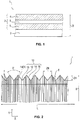
- Fig. 1 Illustrates, comprises an inventive, highly abrasion-resistant technical adhesive tape 1, in particular a cable winding tape 1 for automobile construction that can be wound on itself without an interliner, a tape-shaped, double-layer carrier 2, which is provided on at least one side with a self-adhesive coating 3 made of a pressure-sensitive adhesive consists.
- Pressure-sensitive adhesives can be used here, adhesives known per se, in particular UV-crosslinkable adhesives, whereby these do not require any further modification.
- the carrier 2 comprises a first textile layer layer 4 consisting of a fabric and a second textile layer layer 5, which are firmly connected to one another over the entire surface by an adhesive connection layer 6.
- both layer layers 4, 5, i.e. the first textile layer layer 4 and second textile layer layer 5, consist of a fabric, the fabric of the first textile layer layer 4 and the fabric of the second textile layer layer 5 each having a basis weight in the range of 50 g / m 2 to 300 g / m 2 , preferably 110 g / m 2 to 200 g / m 2 .
- Fig. 2 shows a top view of the surface 4a of the first textile layer 4 forming the back of the tape.
- the fabric of the second textile layer ply 5 can preferably be the same fabric as in the first textile layer ply 4, in particular a fabric that is made of 100 percent polyester fibers consisting of polyethylene terephthalate (PET).
- PET polyethylene terephthalate
- Such a fabric forms a rot-proof carrier 2 and can in particular have a weight per unit area in the range from 50 g / m 2 to 300 g / m 2 , preferably from 110 g / m 2 to 200 g / m 2 .
- the adhesive bonding layer 6 has a weight per unit area in the range from 50 g / m 2 to 300 g / m 2 , with values in the range from 55 g / m 2 to 150 g / m 2 being preferred, and values in the range from 80 g / m 2 being preferred. m 2 to 120 g / m 2 are particularly preferred.
- the adhesive bonding layer 6 can in particular consist of an acrylate or acetate adhesive, preferably of a hotmelt adhesive, as is also used for the Production of the adhesive coating 3 is used.
- a hotmelt adhesive can be produced on the basis of an ethyl-acrylate copolymer, such as an ethyl-butyl-acrylate or an ethyl-ethylene-acrylate, or on the basis of an ethylene-vinyl acetate, ie consist predominantly of these polymers, whereby the polymers can be modified with UV-crosslinkable acrylate resins and / or contain polymerized UV-C photoreactive groups, in particular in side chains.
- the adhesive coating 3 can also have a weight per unit area in the range from approximately 50 g / m 2 to 300 g / m 2 with the preferred ranges specified for the adhesive bonding layer 6.
- the application to the carrier 2 can take place in a technologically advantageous manner using the curtain coating process mentioned above.
- the basis weights of both the adhesive coating 3 and / or the adhesive bonding layer 6 and the two textile layers 4, 5 made of fabric are determined in the usual way according to the standard DIN EN ISO 2286-2 "Textiles coated with rubber or plastic - determination the roll characteristics - Part 2: Determination of the area-related total mass, the area-related mass of the coating and the area-related mass of the carrier ".
- the inventive adhesive tape 1 achieves an abrasion resistance according to LV 312 of at least class E, in particular an abrasion resistance in the range from 5500 to 10,000 strokes, determined on a 5 mm mandrel.
- the adhesive tape according to the invention can be processed manually and by machine and advantageously has a temperature stability of 125 ° C. and more in accordance with LV 312.
- a bond strength between the first textile layer layer 4 and the second textile layer layer 5 of the carrier 2 can be set which is sufficient that it is during processing, in particular when pulling off an adhesive tape roll, or even if necessary, when detaching again from a wrapped object, such as a cable harness, delamination of the layer layers 4, 5 does not occur.
- a laminate adhesive force determined according to DIN EN 1939 between the first textile layer layer 4 and the second textile layer layer 5 of the carrier 2 is greater than 10 N / cm and is preferably in the range from 12 N / cm to 15 N / cm, while that according to DIN
- the bond strength on the tape back 4a determined in accordance with EN 1939 is smaller than the laminate bond strength between the layers 4, 5 and in particular in the range from 4.0 N / cm to 15.0 N / cm, preferably from 5.5 N / cm to 8.0 N / cm.
- An unwinding force determined in accordance with DIN EN 1944 can be in the range from 2 N to 15 N, preferably in the range from 2 N to 9 N.
- the bond strength to steel can assume values in the range from 4.5 N / cm to 15.0 N / cm, preferably from 6.0 N / cm to 11.0 N / cm.
- Table 3 Typical preferred parameters of the fabric structure and the characteristics of the fiber materials for a preferred embodiment of an adhesive tape 1 according to the invention can be found in Table 3 below.
- Table 3 Fabric structure and fiber material description characteristic unit Property / measured value Material of the carrier 2 --- Polyester fabric Basis weight of 4.5 g / m 2 each 155 Fiber type --- 100% polyester (PET) Number of warp threads 7 1 cm 45 Type of yarn warp thread 7 --- Filament, intermingled / textured and solution-dyed Number of filaments per warp thread 7 piece 36 Fineness of the warp threads 7 dtex 56 Fineness of the warp threads in relation to width B 7 dtex / cm 2520 dtex / cm Number of weft threads 8 1 cm 23 Type of yarn weft 8 --- Filament, intermingled and interconnected / textured and spinneret-dyed Number of filaments per weft thread 8 piece Combination of 72 + 36 (total: 108 pieces) Fineness of the weft thread
- Table 4 Technical data of a PET fabric composite adhesive tape 1 according to the invention in comparison test unit invention comparison thickness mm 0.50-0.58 1.0-1.1 Elongation at break % 35-36 25-28 Tear resistance N / cm 90-140 250-290 Adhesive strength - steel N / cm 6.0-11.0 4.3-8.1 - back of the band 4a N / cm 2.0-6.0 3.0-6.9 Unwinding force N / 19mm 3 - 7 3 - 7 Flagging - 30 min mm 0 - 1 0 - 1 - 24 hours mm 0 - 1 0 - 1 Abrasion 5 mm mandrel Strokes 5500-8,200 5300-6200 Laminate Adhesion N / cm 12-15 6 - 8 Noise reduction Great B. E. Lateral tear resistance LV 312 Yes no
- the corresponding parameter values are compared with those of a commercially available adhesive tape with a two-layer carrier made of a PET fabric layer and a nonwoven layer.
- the tear strength is strongly dependent on how the material has been made up.
- Adhesive tapes that have been made up with a normal knife without crosslinking the edges have a tear strength of> 130 N / cm.
- these tapes are very difficult to tear transversely.
- the micro-serration has a tear strength of approx. 125 N / cm.
- the tear resistance can be described as good.
- the tear strength is approx. 100 N / cm and the transverse tearability can be described as very good.
- Table 4a shows how the elongation at break, the tear strength and the tear strength are influenced, ie can be adjusted, by the respective manufacturing process.
- Table 4a test unit Assembly attempt 1 straight knife Assembling experiment with 2 micro serrated knives Assembly attempt 3 macro-serrated knives Elongation at break % 35 30th 28 Tear resistance N / cm 130 125 100 Tearability LV 312 heavy easy very easy test unit Assembly attempt 1 straight knife Assembling experiment with 2 micro serrated knives Assembly attempt 3 macro-serrated knives Tear strength mN 10,000 - 12,000 8,000 - 10,000 5,000 - 8,000
- Table 5 DIN standards New name Date of the currently valid version EN ISO 2286-2 1998-07 Basis weight DIN 53830-3 1981-05 Determination of the fineness of yarn DIN EN 1049-2 1994-02 Determination of the number of threads per unit of length DIN EN 1942 2008-06 thickness DIN EN 14410 2003-06 Breaking strength / elongation DIN EN 1939 2003-12 Bond strength DIN EN 1944 1996-04 Unwinding force DIN EN 21974 DIN EN ISO 1974: 2012-09 2012-09 Tear strength DIN EN ISO 9237 1995-12 Air permeability DIN 53 362 2003-10 Flexural rigidity LV 312 LV 312-1 2009-10 Protection systems for wiring harnesses in motor vehicles, adhesive tapes; Test guideline LV 312 LV 312-1 2009-10 Flagging LV 312 LV 312-1 2009-10 Hand tearability
- the noise attenuation according to LV 312 of class B specified in table 4 means that there is noise attenuation in the range of 2 dB (A) to 5 dB (A) according to LV 312.
- the adhesive tape 1 according to the invention also has a high tear strength, which is expressed in values in the range from 90 N / cm to 200 N / cm, preferably from 100 N / cm to 120 N / cm a test according to DIN EN 14410. As indicated in Table 4, the elongation at break was in the range from 30 percent to 40 percent. It should preferably be greater than 20 percent.
- the comparatively greater laminate adhesive force can be achieved through stronger crosslinking of the adhesive in the adhesive bonding layer 6, for example through a higher radiation output from a UV source used for this purpose, through a temperature which is higher than room temperature up to in the range of 50 ° C. to 140 ° C. or can be achieved by a pressure increased by 0.05 bar to 6.0 bar compared to atmospheric pressure during the lamination process of the textile layers 4, 5, or by a recipe of the adhesive in the adhesive bonding layer 6 that differs from the adhesive recipe in the adhesive coating 3.
- BASF SE offers adhesives for UV crosslinking under the trademark acResin®.
- the polymer chains in these Acrylates contained in adhesives are made from the same acrylate monomers as can be found in dispersion- or solvent-based acrylate pressure-sensitive adhesive systems.
- UV-C light 250 - 260 nm
- polymerized UV-C reactive groups are stimulated to crosslinking reactions with neighboring acrylate chains.
- cross-linking takes place very quickly, but in a precisely controllable manner, and only takes place as long as the UV light acts.
- the polymerized-in photoreactive groups of the polymer particularly those located in side chains of the acResins®, react with any CH group of an adjacent chain.
- a typical size of the adhesive force of an adhesive coating 3, which can be adjusted in this way, is about 6 N / cm according to DIN 1939.
- At least one tape edge 10 of the adhesive tape 1 according to the invention is designed in the form of a pattern deviating from a straight line, which is structured by means of a separation process, as shown in FIG Fig. 2 is shown.
- the band edges 10 are designed as zigzag cut edges, which can be described by a tooth pattern with tooth tips 12, tooth flanks 14, 16 and tooth roots 18.
- a tooth height ZH between the tooth tips 12 and the tooth roots 18 of the pattern can be in the range from 0.1 mm to 3.0 mm, preferably in the range from 0.5 mm to 2.0 mm, being close by the cutting process the outer warp threads 7 lying on the band edge 10 are cut off in the area of the tooth flanks 14, 16 or at least torn in the area of the tooth roots 18.
- the number of warp threads 7 weakened in this way can be in the range from 3 to 12, preferably in the range from 5 to 7, at each edge 10.
- the weft threads 8 are only shortened to different lengths by the separating process.
- FIG. 6 illustrates this process step according to the invention in the production of the inventive adhesive tape 1.
- the inventive adhesive tape 1 has the above-described structure of its edges 10 and is thus easily torn transversely by hand.
- the disk-shaped zigzag knife 20 which can preferably be used in the production of the adhesive tape 1 according to the invention, can be placed on a shaft of a winder known per se as a cutting device 22, as shown in FIG Fig. 6 is shown schematically, and for this purpose has a central assembly opening 24 in its base body 25.
- the zigzag knife 20 has a circumferential zigzag cutting edge 26, the preferred geometry of which in particular Fig. 4 can be found.
- This geometry is formed during separation in the tape edges 10 of the adhesive tape 1 and causes the formation of the tooth pattern with the tooth tips 12, tooth flanks 14, 16 and tooth roots 18, as shown in FIG Fig. 2 shown is.
- the tooth height ZH is found between the tooth tips 12 and the tooth roots 18 of the pattern of the band edge 10 in the geometry of the cutting edge 26 of the zigzag knife 20 in FIG Fig. 4 again, which can then also be dimensioned with the same size.
- a tooth tip angle ⁇ of the cutting edge 26 of the zigzag knife 20 can be in the range from 42 ° to 70 °, and a tooth root width ZB can be in the same range as the tooth height ZH, ie in a preferred range of 0.5 mm up to 2.0 mm.
- At least one cutting device 22 for dividing the carrier material 2 provided with the adhesive coating 3 into strips that run in the longitudinal direction X of the tape is arranged. These strips form each the adhesive tapes 1.
- a stationary blade 27 dips at least on one side into the continuous carrier material 2 provided with the adhesive coating 3.
- At least one zigzag knife 20 is used in the cutting device 22 to produce the tape edges 10 of the adhesive tape 1, the zigzag knife (20) having teeth with a tooth height (ZH) in the range of 0.1 mm to 3.0 mm, micro-prongs with a tooth height (ZH) in the range from 0.1 mm to ⁇ 1.0 mm and macro-prongs with a tooth height (ZH) in the range from 1.0 mm to 3.0 mm are, whereby an elongation at break of at least 20 percent, a tear strength according to DIN EN 14410 in the range of less than 125 N / cm and a tear resistance according to the Elmendorftest of less than 10,000 mN is set in the adhesive tape (1).
- the strips can be separated with particular advantage in that the separate narrow rollers 32 are arranged alternately on different shafts 34, 36, the narrow rollers 32 being driven in the same direction by the shafts 34, 36 assigned to them. At least two narrow rollers 32, preferably a plurality of narrow rollers 32, are arranged on each shaft 34, 36, with the shafts 34, 36 being able to be driven in particular at the same speed, advantageously by a single drive, for example an electric motor.
- the adhesive tapes 1 thus produced and wound on narrow rolls 32 usually have widths B in the range from 9 mm to 50 mm and lengths in the range from 1 m to 100 m, preferably from 2 m to 50 m the individual adhesive tapes 1 are cut usually have widths in the range from 500 mm to 2000 mm and lengths in the range from 300 m to 10,000 m. Since the roll diameters are often subject to technical limitations, longer rolls 30 can be produced with thin carrier materials than with thick materials.
- the invention is not restricted to the exemplary embodiments described, but also includes all embodiments that have the same effect within the meaning of the invention.
- a wave-like pattern could also be selected, or a pattern with a Y-shape, or a knife with so-called T-recesses, which have a targeted edge damage in the millimeter range without departing from the scope of the invention.
- the cutting in narrow rolls can also take place, depending on the material and the thickness of the adhesive tape 1, in a crush cut, a scissors cut, using a laser, an ultrasonic knife or a water jet.
- the cutting device 22 is one in which a circular knife works against a roller.
- a circular knife plunges into a lower knife.
- z. B. in the embodiment according to Table 3 in the fabrics of the first textile layer 4 and / or in the fabrics of the second textile layer 5 each have the warp threads 7 and the weft threads 8 differently, which in the described combination has a positive effect on the advantageous according to the invention Combination of high abrasion resistance, noise dampening and hand tearability, but not necessarily so in every case.
- the carrier 2 from a spinneret-dyed yarn or thread material and to subject the carrier 2 to dispersion dyeing.
- Preferred color combinations produced by the use of suitable color pigments - preferably in polyester material - in the textile layers 4, 5 of an adhesive tape 1 according to the invention are black / black, black / white and white / white.
- the textile layers 4, 5 can therefore each have the same or different colors.
- calendering of the carrier 2 or the first textile layer 4 and / or the second textile layer 5 prior to lamination promotes a reduction in the permeability of the fabric for the adhesive in the adhesive layer 3 and / or in the adhesive bonding layer 6 to express that the air permeability of the fabric measured according to DIN EN ISO 9237 at a test pressure of 500 Pa can preferably be less than 200 l / m 2 s.
Landscapes
- Chemical & Material Sciences (AREA)
- Organic Chemistry (AREA)
- Engineering & Computer Science (AREA)
- Textile Engineering (AREA)
- Adhesive Tapes (AREA)
Claims (31)
- Bande adhésive technique hautement résistante aux frottements (1), notamment bande adhésive (1) enroulable sur elle-même en un rouleau de bande adhésive, de préférence bande d'enroulement de câble (1), comprenant un support double couche en forme de bande (2), qui est muni sur un côté d'un revêtement adhésif sensible à la pression (3), le support (2) comprenant une première couche textile constituée par un tissu (4) et une deuxième couche textile (5), qui sont reliées solidement l'une avec l'autre sur l'ensemble de la surface par une couche de liaison adhésive (6), la deuxième couche textile (5) étant constituée par un tissu, le tissu de la première couche textile (4) et le tissu de la deuxième couche textile (5) présentant chacun un poids superficiel dans la plage allant de 50 g/m2 à 300 g/m2, la couche de liaison adhésive (6) présentant un poids superficiel dans la plage allant de 50 g/m2 à 300 g/m2, et la bande adhésive (1) présentant une épaisseur (D) dans la plage allant de 0,55 mm à 1,0 mm, et au moins un bord de bande (10) étant configuré sous la forme d'un motif différent d'une ligne droite, qui est structuré par un procédé de séparation par un appareil de séparation (22), qui présente des micro-pics ayant une hauteur de dent (ZH) dans la plage allant de 0,1 mm à < 1,0 mm et des macropics ayant une hauteur de dent (ZH) dans la plage allant de 1,0 mm à 3,0 mm, de telle sorte qu'une résistance au déchirement lors d'un essai selon DIN EN 14410 est inférieure à 125 N/cm, un allongement au déchirement étant d'au moins 20 pour cent et une résistance à la propagation d'un déchirement selon le test Elmendorf étant inférieure à 10 000 mN.
- Bande adhésive (1) selon la revendication 1, caractérisée en ce que les deux bords de bande (10) sont configurés sous la forme de bords découpés en zigzag, qui sont décrits par un motif de dents comprenant des pointes de dents (12), des flancs de dents (14, 16) et des fonds de dents (18).
- Bande adhésive (1) selon la revendication 1 ou 2, caractérisée en ce qu'une hauteur de dent (ZH) entre les pointes de dents (12) et les fonds de dents (18) se situe dans la plage allant de 0,1 mm à 3,0 mm.
- Bande adhésive (1) selon l'une quelconque des revendications 1 à 3, caractérisée en ce que les fils de chaîne extérieurs (7) situés à proximité du bord de bande (10) sont découpés dans la zone des flancs de dents (14, 16) ou au moins entamés dans la zone des fonds de dents (18) par le procédé de séparation, le nombre de fils de chaîne (7) ainsi affaiblis sur chaque bord (10) se situant dans la plage allant de 1 à 15, de préférence dans la plage allant de 2 à 12, de manière particulièrement préférée dans la plage allant de 6 à 11.
- Bande adhésive (1) selon l'une quelconque des revendications 1 à 4, caractérisée en ce que le tissu de la deuxième couche textile (5) est le même tissu que le tissu de la première couche textile (4).
- Bande adhésive (1) selon l'une quelconque des revendications 1 à 5, caractérisée en ce que le tissu de la première couche textile (4) et/ou le tissu de la deuxième couche textile (5) présentent chacun un poids superficiel dans la plage allant de 110 g/m2 à 200 g/m2.
- Bande adhésive (1) selon l'une quelconque des revendications 1 à 6, caractérisée en ce que le tissu de la première couche textile (4) et/ou le tissu de la deuxième couche textile (5) sont chacun formés par des fibres de polyester, notamment constituées à 100 pour cent par du polytéréphtalate d'éthylène.
- Bande adhésive (1) selon l'une quelconque des revendications 1 à 7, caractérisée en ce que la couche de liaison adhésive (6) présente un poids superficiel dans la plage allant de 55 g/m2 à 150 g/m2.
- Bande adhésive (1) selon l'une quelconque des revendications 1 à 8, caractérisée en ce que la couche de liaison adhésive (6) est constituée par un adhésif thermofusible, notamment un adhésif thermofusible qui est principalement constitué par un copolymère d'acrylate d'éthyle, tel qu'un acrylate d'éthyl-butyle ou un acrylate d'éthyl-éthylène, ou principalement constitué par un copolymère d'éthylène-acétate de vinyle, le copolymère étant de préférence modifié avec des résines acrylates réticulables par UV et/ou contenant des groupes photoréactifs par UV-C copolymérisés, notamment dans des chaînes latérales.
- Bande adhésive (1) selon l'une quelconque des revendications 1 à 9, caractérisée en ce qu'une force d'adhésion du stratifié déterminée selon DIN EN 1939 entre la première couche textile (4) et la deuxième couche textile (5) du support (2) est supérieure à 10 N/cm, et se situe de préférence dans la plage allant de 12 N/cm à 15 N/cm.
- Bande adhésive (1) selon l'une quelconque des revendications 1 à 10, caractérisée en ce que le revêtement adhésif (3) est constitué par un adhésif acrylate ou acétate, notamment par le même adhésif thermofusible que la couche de liaison adhésive (6).
- Bande adhésive (1) selon l'une quelconque des revendications 1 à 11, caractérisée en ce que le revêtement adhésif (3) présente un poids superficiel dans la plage allant d'environ 50 g/m2 à 300 g/m2, de préférence de 55 g/m2 à 150 g/m2.
- Bande adhésive (1) selon l'une quelconque des revendications 1 à 12, caractérisée par une épaisseur (D) dans la plage allant de 0,55 mm à 0,75 mm.
- Bande adhésive (1) selon l'une quelconque des revendications 1 à 13, caractérisée par une force d'adhésion sur l'acier dans la plage allant de 4,5 N/cm à 15,0 N/cm, de préférence dans la plage allant de 6,0 N/cm à 11,0 N/cm, lors d'un essai selon DIN EN 1939.
- Bande adhésive (1) selon l'une quelconque des revendications 1 à 14, caractérisée par une force d'adhésion sur le dos de la bande (4a) dans la plage allant de 4,0 N/cm à 15,0 N/cm, de préférence dans la plage allant de 5,5 N/cm à 8,0 N/cm, lors d'un essai selon DIN EN 1939.
- Bande adhésive (1) selon l'une quelconque des revendications 1 à 15, caractérisée par une force de déroulement dans la plage allant de 2 N à 15 N, de préférence de 2 N à 9 N, lors d'un essai selon DIN EN 1944.
- Bande adhésive (1) selon l'une quelconque des revendications 1 à 16, caractérisée par une résistance au déchirement qui n'est pas inférieure à 50 N/cm, de préférence pas inférieure à 90 N/cm, lors d'un essai selon DIN EN 14410, l'aptitude à la propagation d'un déchirement selon le test Elmendorf n'étant de préférence pas inférieure à 5 000 mN.
- Bande adhésive (1) selon l'une quelconque des revendications 1 à 17, caractérisée par un allongement au déchirement qui se situe dans la plage allant de 20 pour cent à 50 pour cent, lors d'un essai selon DIN EN 14410.
- Bande adhésive (1) selon l'une quelconque des revendications 1 à 18, caractérisée par une résistance aux frottements selon LV 312 d'au moins la classe E, notamment par une résistance aux frottements dans la plage allant de 5 500 à 10 000 courses, déterminée sur une broche de 5 mm.
- Bande adhésive (1) selon l'une quelconque des revendications 1 à 19, caractérisée par un amortissement du bruit selon LV 312 d'au moins la classe B, de préférence un amortissement du bruit dans la plage allant de 2 dB (A) à 5 dB (A) selon LV 312.
- Bande adhésive (1) selon l'une quelconque des revendications 1 à 20, caractérisée en ce que, dans le tissu de la première couche textile (4) et/ou dans le tissu de la deuxième couche textile (5), les fils de chaîne (7) et les fils de trame (8) sont à chaque fois configurés différemment, le titre des fils de chaîne (7) et le titre des fils de trame (8) présentant notamment un rapport de 1:8 à 11, de préférence de 1:10.
- Bande adhésive (1) selon l'une quelconque des revendications 1 à 21, caractérisée en ce que, dans le tissu de la première couche textile (4) et/ou dans le tissu de la deuxième couche textile (5), les fils de chaîne (7) présentent à chaque fois un titre dans la plage allant de 30 dtex à 110 dtex, de préférence de 50 dtex à 76 dtex.
- Bande adhésive (1) selon l'une quelconque des revendications 1 à 22, caractérisée en ce que, dans le tissu de la première couche textile (4) et/ou dans le tissu de la deuxième couche textile (5), les fils de trame présentent à chaque fois un titre dans la plage allant de 110 dtex à 1 000 dtex, de préférence de 110 dtex à 550 dtex.
- Bande adhésive (1) selon l'une quelconque des revendications 1 à 23, caractérisée en ce que, dans le tissu de la première couche textile (4) et/ou dans le tissu de la deuxième couche textile (5), les fils de chaîne (7) et/ou les fils de trame (8) sont composés par un nombre dans la plage allant de 12 à 240 filaments, de préférence de 24 à 36 filaments dans les fils de chaîne (7) et de préférence de 36 à 144 filaments dans les fils de trame (8).
- Bande adhésive (1) selon l'une quelconque des revendications 1 à 24, caractérisée en ce que, dans le tissu de la première couche textile (4) et/ou dans le tissu de la deuxième couche textile (5), des constructions de fils contenant 45 ± 3 fils de chaîne (7) et 23 ± 2 fils de trame (8) sont présentes.
- Bande adhésive (1) selon l'une quelconque des revendications 1 à 25, caractérisée en ce que, dans le tissu de la première couche textile (4) et/ou dans le tissu de la deuxième couche textile (5), les fils de chaîne (7) et/ou les fils de trame (8) sont à chaque fois texturés et/ou entremêlés, 50 à 150 points d'entremêlement par mètre étant notamment présents.
- Bande adhésive (1) selon l'une quelconque des revendications 1 à 26, caractérisée en ce que, dans le tissu de la première couche textile (4) et/ou dans le tissu de la deuxième couche textile (5), les fils de trame (8) sont à chaque fois formés par une combinaison de filaments de différentes formes de fils (FDY, DTY).
- Procédé de fabrication d'une bande adhésive (1) selon l'une quelconque des revendications 1 à 27, comprenant les étapes de procédé suivantes :- la fabrication d'un support (2) par stratification d'un tissu d'une première couche textile (4) et d'un tissu d'une deuxième couche textile (5) au moyen d'une couche de liaison adhésive (6),- l'application d'un revêtement adhésif (3) sur au moins un côté du stratifié,- l'enroulement en un rouleau mère (30) de grande largeur (BM),- le conditionnement du rouleau mère (30) en petits rouleaux de largeur plus petite (B), le stratifié du rouleau mère (30) recouvert avec le revêtement adhésif (3) étant acheminé sur un dispositif de séparation (22), y étant séparé, et la bande adhésive (1) étant enroulée en les petits rouleaux (32), au moins une lame en zigzag (20) pour la fabrication de bords de bande (10) de la bande adhésive (1) étant utilisée dans le dispositif de séparation (22), la lame en zigzag (20) présentant des dents ayant une hauteur de dent (ZH) dans la plage allant de 0,1 mm à 3,0 mm, des micro-pics ayant une hauteur de dent (ZH) dans la plage allant de 0,1 mm à < 1,0 mm et des macropics ayant une hauteur de dent (ZH) dans la plage allant de 1,0 mm à 3,0 mm étant présents, un allongement au déchirement d'au moins 20 pour cent, une résistance au déchirement selon DIN EN 14410 dans la plage de moins de 125 N/cm et une aptitude à la propagation d'un déchirement selon le test Elmendorf inférieure à 10 000 mN étant ainsi ajustés dans la bande adhésive (1).
- Procédé selon la revendication 28, caractérisé en ce que l'adhésif dans la couche de liaison adhésive (6) et/ou dans le revêtement adhésif (3) est appliqué par un procédé de revêtement sans pression, selon lequel l'adhésif tombe sous la forme d'un film fermé respectivement sur la première couche textile (4) ou sur la deuxième couche textile (5).
- Procédé selon la revendication 28 ou 29, caractérisé en ce que, pour la fabrication du support (2), un tissu ayant les caractéristiques de la partie caractérisante d'une ou de plusieurs des revendications 5 à 7, 10, 19 et/ou 22 à 27 est utilisé en tant que tissu de la première couche textile (4) et/ou en tant que tissu de la deuxième couche textile (5).
- Procédé selon l'une quelconque des revendications 28 à 30, caractérisé en ce que le revêtement adhésif (3) et/ou la couche de liaison adhésive (6) présentent une ou plusieurs des caractéristiques de la partie caractérisante des revendications 8, 9, 11 et/ou 12.
Priority Applications (1)
| Application Number | Priority Date | Filing Date | Title |
|---|---|---|---|
| EP19175420.9A EP3552820B1 (fr) | 2014-04-22 | 2014-04-22 | Bande adhésive en tissu pouvant être déchirée à la main à résistance au frottement et à atténuation du bruit élevées et son procédé de fabrication |
Applications Claiming Priority (2)
| Application Number | Priority Date | Filing Date | Title |
|---|---|---|---|
| EP19175420.9A EP3552820B1 (fr) | 2014-04-22 | 2014-04-22 | Bande adhésive en tissu pouvant être déchirée à la main à résistance au frottement et à atténuation du bruit élevées et son procédé de fabrication |
| EP14165347.7A EP2937393B1 (fr) | 2014-04-22 | 2014-04-22 | Bande adhésive en tissu pouvant être déchirée à la main ayant une résistance au frottement et une atténuation du bruit élevées et son procédé de fabrication |
Related Parent Applications (2)
| Application Number | Title | Priority Date | Filing Date |
|---|---|---|---|
| EP14165347.7A Division-Into EP2937393B1 (fr) | 2014-04-22 | 2014-04-22 | Bande adhésive en tissu pouvant être déchirée à la main ayant une résistance au frottement et une atténuation du bruit élevées et son procédé de fabrication |
| EP14165347.7A Division EP2937393B1 (fr) | 2014-04-22 | 2014-04-22 | Bande adhésive en tissu pouvant être déchirée à la main ayant une résistance au frottement et une atténuation du bruit élevées et son procédé de fabrication |
Publications (2)
| Publication Number | Publication Date |
|---|---|
| EP3552820A1 EP3552820A1 (fr) | 2019-10-16 |
| EP3552820B1 true EP3552820B1 (fr) | 2021-10-13 |
Family
ID=50639264
Family Applications (2)
| Application Number | Title | Priority Date | Filing Date |
|---|---|---|---|
| EP19175420.9A Active EP3552820B1 (fr) | 2014-04-22 | 2014-04-22 | Bande adhésive en tissu pouvant être déchirée à la main à résistance au frottement et à atténuation du bruit élevées et son procédé de fabrication |
| EP14165347.7A Active EP2937393B1 (fr) | 2014-04-22 | 2014-04-22 | Bande adhésive en tissu pouvant être déchirée à la main ayant une résistance au frottement et une atténuation du bruit élevées et son procédé de fabrication |
Family Applications After (1)
| Application Number | Title | Priority Date | Filing Date |
|---|---|---|---|
| EP14165347.7A Active EP2937393B1 (fr) | 2014-04-22 | 2014-04-22 | Bande adhésive en tissu pouvant être déchirée à la main ayant une résistance au frottement et une atténuation du bruit élevées et son procédé de fabrication |
Country Status (1)
| Country | Link |
|---|---|
| EP (2) | EP3552820B1 (fr) |
Families Citing this family (5)
| Publication number | Priority date | Publication date | Assignee | Title |
|---|---|---|---|---|
| EP3552820B1 (fr) | 2014-04-22 | 2021-10-13 | Coroplast Fritz Müller GmbH & Co. KG | Bande adhésive en tissu pouvant être déchirée à la main à résistance au frottement et à atténuation du bruit élevées et son procédé de fabrication |
| DE202016102701U1 (de) * | 2016-05-20 | 2016-06-06 | Certoplast Technische Klebebänder Gmbh | Kabelwickelband |
| DE202018101435U1 (de) * | 2018-03-14 | 2018-03-21 | Certoplast Technische Klebebänder Gmbh | Klebeband insbesondere Wickelband |
| WO2022253985A1 (fr) * | 2021-06-04 | 2022-12-08 | Tesa Se | Ruban adhésif et procédé de recouvrement d'articles allongés, en particulier de lignes |
| DE202022101548U1 (de) | 2022-03-24 | 2022-04-06 | Certoplast Technische Klebebänder Gmbh | Klebeband insbesondere Wickelband zur Ummantelung von Kabeln in Automobilen |
Family Cites Families (8)
| Publication number | Priority date | Publication date | Assignee | Title |
|---|---|---|---|---|
| GB2191969A (en) * | 1986-06-27 | 1987-12-31 | Jin Jong Chou | Making adhesive tape |
| DE4318277C1 (de) | 1993-06-03 | 1994-09-01 | Beiersdorf Ag | Verwendung von Zackenschnittmessern |
| WO2005085379A1 (fr) | 2004-03-04 | 2005-09-15 | Tesa Ag | Bande tres resistante a l'usure utilisee pour former une armure sur des faisceaux de cables dans des automobiles |
| DE202005013009U1 (de) | 2005-08-16 | 2005-10-27 | Certoplast Vorwerk & Sohn Gmbh | Klebeband |
| JP5417922B2 (ja) * | 2009-03-19 | 2014-02-19 | 住友電装株式会社 | ワイヤハーネス |
| DE102012202635A1 (de) | 2012-02-21 | 2013-08-22 | Tesa Se | Klebeband mit einem Trägermaterial mit verbesserter Handeinreißbarkeit |
| DE202012103975U1 (de) * | 2012-10-17 | 2014-02-06 | Coroplast Fritz Müller Gmbh & Co. Kg | Hoch abriebfestes technisches Klebeband mit doppellagigem Träger |
| EP3552820B1 (fr) | 2014-04-22 | 2021-10-13 | Coroplast Fritz Müller GmbH & Co. KG | Bande adhésive en tissu pouvant être déchirée à la main à résistance au frottement et à atténuation du bruit élevées et son procédé de fabrication |
-
2014
- 2014-04-22 EP EP19175420.9A patent/EP3552820B1/fr active Active
- 2014-04-22 EP EP14165347.7A patent/EP2937393B1/fr active Active
Non-Patent Citations (1)
| Title |
|---|
| None * |
Also Published As
| Publication number | Publication date |
|---|---|
| EP2937393A1 (fr) | 2015-10-28 |
| EP2937393B1 (fr) | 2019-07-17 |
| EP3552820A1 (fr) | 2019-10-16 |
Similar Documents
| Publication | Publication Date | Title |
|---|---|---|
| DE102014105609A1 (de) | Handeinreißbares Gewebeklebeband mit hoher Abriebfestigkeit und Geräuschdämpfung und Verfahren zu seiner Herstellung | |
| EP2722374B1 (fr) | Bande adhésive technique très résistante à l'usure avec support à deux feuilles | |
| EP2157147B1 (fr) | Bande hautement résistante à l'usure, notamment pour le bandage de faisceaux de câbles dans des automobiles | |
| EP1990393B1 (fr) | Bande adhésive en tissu pouvant être déchirée à la main | |
| EP2011845B1 (fr) | Bande de collage et son utilisation en tant que bande de bandage pour câble | |
| DE102008028427A1 (de) | Klebeband mit textilem Träger für die Kabelbandagierung | |
| EP4092092B1 (fr) | Bande adhésive permettant d'envelopper une marchandise allongée telle que, en particulier les faisceaux de câbles et procédé d'enveloppement | |
| EP2067614A1 (fr) | Bande insonorisante et hautement résistant à l'usure, notamment pour le bandage de faisceaux de câbles dans des automobiles | |
| EP2937393B1 (fr) | Bande adhésive en tissu pouvant être déchirée à la main ayant une résistance au frottement et une atténuation du bruit élevées et son procédé de fabrication | |
| EP3613819B1 (fr) | Bande adhésive destinée à l'enveloppement d'une marchandise allongée comme notamment les faisceaux de câbles et procédé d'enveloppement | |
| EP1911824A1 (fr) | Bande d'enroulement de câble, en particulier pour l'espace du moteur d'une automobile | |
| DE102007021505A1 (de) | Hitzereflektierendes Klebeband mit hohem Abrasionsschutz | |
| DE202007008003U1 (de) | Gewebeklebeband | |
| EP1241240B1 (fr) | Matériau de support non-tissé pour ruban adhésif comprenant une déchirabilité améliorée | |
| DE102012202635A1 (de) | Klebeband mit einem Trägermaterial mit verbesserter Handeinreißbarkeit | |
| DE202014011328U1 (de) | Handeinreißbares Gewebeklebeband mit hoher Abriebfestigkeit und Geräuschdämpfung | |
| EP3658640B1 (fr) | Ruban adhésif muni d'une couche de base adhésive contenant notamment des nanoparticules | |
| EP4424496A1 (fr) | Procédé pour la confection de bandes textiles adhésives | |
| DE102022127834B4 (de) | Klebeband zum Umwickeln von langgestrecktem Gut, Verfahren zum Ummanteln, Verwendung und Langgestrecktes Gut | |
| EP1927639B1 (fr) | Bande de collage technique de voile de carde | |
| DE102008038471A1 (de) | Verwendung eines Klebebands zum Umwickeln von langgestrecktem Gut wie insbesondere Leitungen oder Kabelsätze | |
| EP3765577B1 (fr) | Bande adhésive, en particulier bande enveloppante | |
| EP4696754A1 (fr) | Bande adhésive pour envelopper des produits allongés, en particulier des faisceaux de câbles | |
| DE102024133240A1 (de) | Klebeband zum Ummanteln von langgestrecktem Gut wie insbesondere Kabelsätzen | |
| DE102018112504B4 (de) | "Von Hand quereinreißbares Klebeband mit einem Träger, der ein Gewebe und ein Nähvlies umfasst" |
Legal Events
| Date | Code | Title | Description |
|---|---|---|---|
| PUAI | Public reference made under article 153(3) epc to a published international application that has entered the european phase |
Free format text: ORIGINAL CODE: 0009012 |
|
| STAA | Information on the status of an ep patent application or granted ep patent |
Free format text: STATUS: THE APPLICATION HAS BEEN PUBLISHED |
|
| TPAC | Observations filed by third parties |
Free format text: ORIGINAL CODE: EPIDOSNTIPA |
|
| AC | Divisional application: reference to earlier application |
Ref document number: 2937393 Country of ref document: EP Kind code of ref document: P |
|
| AK | Designated contracting states |
Kind code of ref document: A1 Designated state(s): AL AT BE BG CH CY CZ DE DK EE ES FI FR GB GR HR HU IE IS IT LI LT LU LV MC MK MT NL NO PL PT RO RS SE SI SK SM TR |
|
| STAA | Information on the status of an ep patent application or granted ep patent |
Free format text: STATUS: REQUEST FOR EXAMINATION WAS MADE |
|
| 17P | Request for examination filed |
Effective date: 20200414 |
|
| RBV | Designated contracting states (corrected) |
Designated state(s): AL AT BE BG CH CY CZ DE DK EE ES FI FR GB GR HR HU IE IS IT LI LT LU LV MC MK MT NL NO PL PT RO RS SE SI SK SM TR |
|
| STAA | Information on the status of an ep patent application or granted ep patent |
Free format text: STATUS: EXAMINATION IS IN PROGRESS |
|
| 17Q | First examination report despatched |
Effective date: 20200728 |
|
| RIC1 | Information provided on ipc code assigned before grant |
Ipc: B32B 7/12 20060101AFI20210301BHEP Ipc: C09J 7/00 20180101ALN20210301BHEP |
|
| RIC1 | Information provided on ipc code assigned before grant |
Ipc: B32B 7/12 20060101AFI20210416BHEP Ipc: C09J 7/00 20180101ALN20210416BHEP |
|
| GRAP | Despatch of communication of intention to grant a patent |
Free format text: ORIGINAL CODE: EPIDOSNIGR1 |
|
| STAA | Information on the status of an ep patent application or granted ep patent |
Free format text: STATUS: GRANT OF PATENT IS INTENDED |
|
| INTG | Intention to grant announced |
Effective date: 20210604 |
|
| GRAS | Grant fee paid |
Free format text: ORIGINAL CODE: EPIDOSNIGR3 |
|
| GRAA | (expected) grant |
Free format text: ORIGINAL CODE: 0009210 |
|
| STAA | Information on the status of an ep patent application or granted ep patent |
Free format text: STATUS: THE PATENT HAS BEEN GRANTED |
|
| AC | Divisional application: reference to earlier application |
Ref document number: 2937393 Country of ref document: EP Kind code of ref document: P |
|
| AK | Designated contracting states |
Kind code of ref document: B1 Designated state(s): AL AT BE BG CH CY CZ DE DK EE ES FI FR GB GR HR HU IE IS IT LI LT LU LV MC MK MT NL NO PL PT RO RS SE SI SK SM TR |
|
| REG | Reference to a national code |
Ref country code: GB Ref legal event code: FG4D Free format text: NOT ENGLISH |
|
| REG | Reference to a national code |
Ref country code: CH Ref legal event code: EP |
|
| REG | Reference to a national code |
Ref country code: DE Ref legal event code: R096 Ref document number: 502014015939 Country of ref document: DE |
|
| REG | Reference to a national code |
Ref country code: IE Ref legal event code: FG4D Free format text: LANGUAGE OF EP DOCUMENT: GERMAN |
|
| REG | Reference to a national code |
Ref country code: AT Ref legal event code: REF Ref document number: 1437899 Country of ref document: AT Kind code of ref document: T Effective date: 20211115 |
|
| REG | Reference to a national code |
Ref country code: LT Ref legal event code: MG9D |
|
| REG | Reference to a national code |
Ref country code: NL Ref legal event code: MP Effective date: 20211013 |
|
| PG25 | Lapsed in a contracting state [announced via postgrant information from national office to epo] |
Ref country code: RS Free format text: LAPSE BECAUSE OF FAILURE TO SUBMIT A TRANSLATION OF THE DESCRIPTION OR TO PAY THE FEE WITHIN THE PRESCRIBED TIME-LIMIT Effective date: 20211013 Ref country code: LT Free format text: LAPSE BECAUSE OF FAILURE TO SUBMIT A TRANSLATION OF THE DESCRIPTION OR TO PAY THE FEE WITHIN THE PRESCRIBED TIME-LIMIT Effective date: 20211013 Ref country code: FI Free format text: LAPSE BECAUSE OF FAILURE TO SUBMIT A TRANSLATION OF THE DESCRIPTION OR TO PAY THE FEE WITHIN THE PRESCRIBED TIME-LIMIT Effective date: 20211013 Ref country code: BG Free format text: LAPSE BECAUSE OF FAILURE TO SUBMIT A TRANSLATION OF THE DESCRIPTION OR TO PAY THE FEE WITHIN THE PRESCRIBED TIME-LIMIT Effective date: 20220113 |
|
| PG25 | Lapsed in a contracting state [announced via postgrant information from national office to epo] |
Ref country code: IS Free format text: LAPSE BECAUSE OF FAILURE TO SUBMIT A TRANSLATION OF THE DESCRIPTION OR TO PAY THE FEE WITHIN THE PRESCRIBED TIME-LIMIT Effective date: 20220213 Ref country code: SE Free format text: LAPSE BECAUSE OF FAILURE TO SUBMIT A TRANSLATION OF THE DESCRIPTION OR TO PAY THE FEE WITHIN THE PRESCRIBED TIME-LIMIT Effective date: 20211013 Ref country code: PT Free format text: LAPSE BECAUSE OF FAILURE TO SUBMIT A TRANSLATION OF THE DESCRIPTION OR TO PAY THE FEE WITHIN THE PRESCRIBED TIME-LIMIT Effective date: 20220214 Ref country code: PL Free format text: LAPSE BECAUSE OF FAILURE TO SUBMIT A TRANSLATION OF THE DESCRIPTION OR TO PAY THE FEE WITHIN THE PRESCRIBED TIME-LIMIT Effective date: 20211013 Ref country code: NO Free format text: LAPSE BECAUSE OF FAILURE TO SUBMIT A TRANSLATION OF THE DESCRIPTION OR TO PAY THE FEE WITHIN THE PRESCRIBED TIME-LIMIT Effective date: 20220113 Ref country code: NL Free format text: LAPSE BECAUSE OF FAILURE TO SUBMIT A TRANSLATION OF THE DESCRIPTION OR TO PAY THE FEE WITHIN THE PRESCRIBED TIME-LIMIT Effective date: 20211013 Ref country code: LV Free format text: LAPSE BECAUSE OF FAILURE TO SUBMIT A TRANSLATION OF THE DESCRIPTION OR TO PAY THE FEE WITHIN THE PRESCRIBED TIME-LIMIT Effective date: 20211013 Ref country code: HR Free format text: LAPSE BECAUSE OF FAILURE TO SUBMIT A TRANSLATION OF THE DESCRIPTION OR TO PAY THE FEE WITHIN THE PRESCRIBED TIME-LIMIT Effective date: 20211013 Ref country code: GR Free format text: LAPSE BECAUSE OF FAILURE TO SUBMIT A TRANSLATION OF THE DESCRIPTION OR TO PAY THE FEE WITHIN THE PRESCRIBED TIME-LIMIT Effective date: 20220114 Ref country code: ES Free format text: LAPSE BECAUSE OF FAILURE TO SUBMIT A TRANSLATION OF THE DESCRIPTION OR TO PAY THE FEE WITHIN THE PRESCRIBED TIME-LIMIT Effective date: 20211013 |
|
| REG | Reference to a national code |
Ref country code: DE Ref legal event code: R097 Ref document number: 502014015939 Country of ref document: DE |
|
| PG25 | Lapsed in a contracting state [announced via postgrant information from national office to epo] |
Ref country code: SM Free format text: LAPSE BECAUSE OF FAILURE TO SUBMIT A TRANSLATION OF THE DESCRIPTION OR TO PAY THE FEE WITHIN THE PRESCRIBED TIME-LIMIT Effective date: 20211013 Ref country code: SK Free format text: LAPSE BECAUSE OF FAILURE TO SUBMIT A TRANSLATION OF THE DESCRIPTION OR TO PAY THE FEE WITHIN THE PRESCRIBED TIME-LIMIT Effective date: 20211013 Ref country code: RO Free format text: LAPSE BECAUSE OF FAILURE TO SUBMIT A TRANSLATION OF THE DESCRIPTION OR TO PAY THE FEE WITHIN THE PRESCRIBED TIME-LIMIT Effective date: 20211013 Ref country code: EE Free format text: LAPSE BECAUSE OF FAILURE TO SUBMIT A TRANSLATION OF THE DESCRIPTION OR TO PAY THE FEE WITHIN THE PRESCRIBED TIME-LIMIT Effective date: 20211013 Ref country code: DK Free format text: LAPSE BECAUSE OF FAILURE TO SUBMIT A TRANSLATION OF THE DESCRIPTION OR TO PAY THE FEE WITHIN THE PRESCRIBED TIME-LIMIT Effective date: 20211013 Ref country code: CZ Free format text: LAPSE BECAUSE OF FAILURE TO SUBMIT A TRANSLATION OF THE DESCRIPTION OR TO PAY THE FEE WITHIN THE PRESCRIBED TIME-LIMIT Effective date: 20211013 |
|
| PLBE | No opposition filed within time limit |
Free format text: ORIGINAL CODE: 0009261 |
|
| STAA | Information on the status of an ep patent application or granted ep patent |
Free format text: STATUS: NO OPPOSITION FILED WITHIN TIME LIMIT |
|
| 26N | No opposition filed |
Effective date: 20220714 |
|
| PG25 | Lapsed in a contracting state [announced via postgrant information from national office to epo] |
Ref country code: AL Free format text: LAPSE BECAUSE OF FAILURE TO SUBMIT A TRANSLATION OF THE DESCRIPTION OR TO PAY THE FEE WITHIN THE PRESCRIBED TIME-LIMIT Effective date: 20211013 |
|
| PG25 | Lapsed in a contracting state [announced via postgrant information from national office to epo] |
Ref country code: SI Free format text: LAPSE BECAUSE OF FAILURE TO SUBMIT A TRANSLATION OF THE DESCRIPTION OR TO PAY THE FEE WITHIN THE PRESCRIBED TIME-LIMIT Effective date: 20211013 |
|
| REG | Reference to a national code |
Ref country code: CH Ref legal event code: PL |
|
| REG | Reference to a national code |
Ref country code: BE Ref legal event code: MM Effective date: 20220430 |
|
| PG25 | Lapsed in a contracting state [announced via postgrant information from national office to epo] |
Ref country code: MC Free format text: LAPSE BECAUSE OF FAILURE TO SUBMIT A TRANSLATION OF THE DESCRIPTION OR TO PAY THE FEE WITHIN THE PRESCRIBED TIME-LIMIT Effective date: 20211013 Ref country code: LU Free format text: LAPSE BECAUSE OF NON-PAYMENT OF DUE FEES Effective date: 20220422 Ref country code: LI Free format text: LAPSE BECAUSE OF NON-PAYMENT OF DUE FEES Effective date: 20220430 Ref country code: CH Free format text: LAPSE BECAUSE OF NON-PAYMENT OF DUE FEES Effective date: 20220430 |
|
| PG25 | Lapsed in a contracting state [announced via postgrant information from national office to epo] |
Ref country code: BE Free format text: LAPSE BECAUSE OF NON-PAYMENT OF DUE FEES Effective date: 20220430 |
|
| PG25 | Lapsed in a contracting state [announced via postgrant information from national office to epo] |
Ref country code: IE Free format text: LAPSE BECAUSE OF NON-PAYMENT OF DUE FEES Effective date: 20220422 |
|
| PGFP | Annual fee paid to national office [announced via postgrant information from national office to epo] |
Ref country code: IT Payment date: 20230323 Year of fee payment: 10 |
|
| REG | Reference to a national code |
Ref country code: AT Ref legal event code: MM01 Ref document number: 1437899 Country of ref document: AT Kind code of ref document: T Effective date: 20220422 |
|
| P01 | Opt-out of the competence of the unified patent court (upc) registered |
Effective date: 20230524 |
|
| PG25 | Lapsed in a contracting state [announced via postgrant information from national office to epo] |
Ref country code: AT Free format text: LAPSE BECAUSE OF NON-PAYMENT OF DUE FEES Effective date: 20220422 |
|
| PGFP | Annual fee paid to national office [announced via postgrant information from national office to epo] |
Ref country code: GB Payment date: 20230404 Year of fee payment: 10 |
|
| PG25 | Lapsed in a contracting state [announced via postgrant information from national office to epo] |
Ref country code: HU Free format text: LAPSE BECAUSE OF FAILURE TO SUBMIT A TRANSLATION OF THE DESCRIPTION OR TO PAY THE FEE WITHIN THE PRESCRIBED TIME-LIMIT; INVALID AB INITIO Effective date: 20140422 |
|
| PG25 | Lapsed in a contracting state [announced via postgrant information from national office to epo] |
Ref country code: MK Free format text: LAPSE BECAUSE OF FAILURE TO SUBMIT A TRANSLATION OF THE DESCRIPTION OR TO PAY THE FEE WITHIN THE PRESCRIBED TIME-LIMIT Effective date: 20211013 Ref country code: CY Free format text: LAPSE BECAUSE OF FAILURE TO SUBMIT A TRANSLATION OF THE DESCRIPTION OR TO PAY THE FEE WITHIN THE PRESCRIBED TIME-LIMIT Effective date: 20211013 |
|
| PG25 | Lapsed in a contracting state [announced via postgrant information from national office to epo] |
Ref country code: MT Free format text: LAPSE BECAUSE OF FAILURE TO SUBMIT A TRANSLATION OF THE DESCRIPTION OR TO PAY THE FEE WITHIN THE PRESCRIBED TIME-LIMIT Effective date: 20211013 |
|
| GBPC | Gb: european patent ceased through non-payment of renewal fee |
Effective date: 20240422 |
|
| PG25 | Lapsed in a contracting state [announced via postgrant information from national office to epo] |
Ref country code: GB Free format text: LAPSE BECAUSE OF NON-PAYMENT OF DUE FEES Effective date: 20240422 |
|
| PG25 | Lapsed in a contracting state [announced via postgrant information from national office to epo] |
Ref country code: GB Free format text: LAPSE BECAUSE OF NON-PAYMENT OF DUE FEES Effective date: 20240422 |
|
| PG25 | Lapsed in a contracting state [announced via postgrant information from national office to epo] |
Ref country code: IT Free format text: LAPSE BECAUSE OF NON-PAYMENT OF DUE FEES Effective date: 20240422 |
|
| PGFP | Annual fee paid to national office [announced via postgrant information from national office to epo] |
Ref country code: DE Payment date: 20250623 Year of fee payment: 12 |
|
| PG25 | Lapsed in a contracting state [announced via postgrant information from national office to epo] |
Ref country code: TR Free format text: LAPSE BECAUSE OF FAILURE TO SUBMIT A TRANSLATION OF THE DESCRIPTION OR TO PAY THE FEE WITHIN THE PRESCRIBED TIME-LIMIT Effective date: 20211013 |
|
| PGFP | Annual fee paid to national office [announced via postgrant information from national office to epo] |
Ref country code: FR Payment date: 20260326 Year of fee payment: 13 |