EP3552434B1 - Konfliktbasierter direktzugriff mit empfangsstrahlformung in drahtlosen netzwerken - Google Patents
Konfliktbasierter direktzugriff mit empfangsstrahlformung in drahtlosen netzwerken Download PDFInfo
- Publication number
- EP3552434B1 EP3552434B1 EP18738536.4A EP18738536A EP3552434B1 EP 3552434 B1 EP3552434 B1 EP 3552434B1 EP 18738536 A EP18738536 A EP 18738536A EP 3552434 B1 EP3552434 B1 EP 3552434B1
- Authority
- EP
- European Patent Office
- Prior art keywords
- rxbf
- station
- beamforming
- access point
- contention
- Prior art date
- Legal status (The legal status is an assumption and is not a legal conclusion. Google has not performed a legal analysis and makes no representation as to the accuracy of the status listed.)
- Active
Links
Images





Classifications
-
- H—ELECTRICITY
- H04—ELECTRIC COMMUNICATION TECHNIQUE
- H04W—WIRELESS COMMUNICATION NETWORKS
- H04W74/00—Wireless channel access
- H04W74/08—Non-scheduled access, e.g. ALOHA
-
- H—ELECTRICITY
- H04—ELECTRIC COMMUNICATION TECHNIQUE
- H04B—TRANSMISSION
- H04B7/00—Radio transmission systems, i.e. using radiation field
- H04B7/02—Diversity systems; Multi-antenna system, i.e. transmission or reception using multiple antennas
- H04B7/04—Diversity systems; Multi-antenna system, i.e. transmission or reception using multiple antennas using two or more spaced independent antennas
- H04B7/08—Diversity systems; Multi-antenna system, i.e. transmission or reception using multiple antennas using two or more spaced independent antennas at the receiving station
- H04B7/0868—Hybrid systems, i.e. switching and combining
- H04B7/088—Hybrid systems, i.e. switching and combining using beam selection
-
- H—ELECTRICITY
- H04—ELECTRIC COMMUNICATION TECHNIQUE
- H04B—TRANSMISSION
- H04B7/00—Radio transmission systems, i.e. using radiation field
- H04B7/02—Diversity systems; Multi-antenna system, i.e. transmission or reception using multiple antennas
- H04B7/04—Diversity systems; Multi-antenna system, i.e. transmission or reception using multiple antennas using two or more spaced independent antennas
- H04B7/06—Diversity systems; Multi-antenna system, i.e. transmission or reception using multiple antennas using two or more spaced independent antennas at the transmitting station
- H04B7/0613—Diversity systems; Multi-antenna system, i.e. transmission or reception using multiple antennas using two or more spaced independent antennas at the transmitting station using simultaneous transmission
- H04B7/0615—Diversity systems; Multi-antenna system, i.e. transmission or reception using multiple antennas using two or more spaced independent antennas at the transmitting station using simultaneous transmission of weighted versions of same signal
- H04B7/0617—Diversity systems; Multi-antenna system, i.e. transmission or reception using multiple antennas using two or more spaced independent antennas at the transmitting station using simultaneous transmission of weighted versions of same signal for beam forming
-
- H—ELECTRICITY
- H04—ELECTRIC COMMUNICATION TECHNIQUE
- H04W—WIRELESS COMMUNICATION NETWORKS
- H04W16/00—Network planning, e.g. coverage or traffic planning tools; Network deployment, e.g. resource partitioning or cells structures
- H04W16/24—Cell structures
- H04W16/28—Cell structures using beam steering
-
- H—ELECTRICITY
- H04—ELECTRIC COMMUNICATION TECHNIQUE
- H04W—WIRELESS COMMUNICATION NETWORKS
- H04W72/00—Local resource management
- H04W72/04—Wireless resource allocation
- H04W72/044—Wireless resource allocation based on the type of the allocated resource
- H04W72/0446—Resources in time domain, e.g. slots or frames
-
- H—ELECTRICITY
- H04—ELECTRIC COMMUNICATION TECHNIQUE
- H04W—WIRELESS COMMUNICATION NETWORKS
- H04W74/00—Wireless channel access
- H04W74/02—Hybrid access
-
- H—ELECTRICITY
- H04—ELECTRIC COMMUNICATION TECHNIQUE
- H04W—WIRELESS COMMUNICATION NETWORKS
- H04W74/00—Wireless channel access
- H04W74/002—Transmission of channel access control information
- H04W74/006—Transmission of channel access control information in the downlink, i.e. towards the terminal
Definitions
- the technology of this disclosure pertains generally to directional wireless communications between stations, and more particularly to utilizing scheduled receiver beamforming in slotted communications between STAs and an AP.
- Millimeter wavelength (mm-wave or mmW) wireless networks are becoming increasingly important, despite their associated poor link budget. Yet, due to having a wavelength on the order of few millimeters, a large number of antennas can be implemented in a mmWave radio. These antenna systems can be made highly directive, in what is called beamforming. Beamforming communication takes advantage of the larger number of antennas to steer transmission towards desired radio directions, toward overcoming limitations in link budget.
- FIG. 1A and FIG. 1B illustrate an example of directional and less, or non-directional, antennas.
- FIG. 1A is seen an example set of directions, beams, which can be formed for mmW transmit and/or receive beamforming (BF).
- each beam can provide tens of dB gain in relation to received signal power for a (quasi)-omni antenna seen in FIG. 1B .
- the quasi-omni directional antenna is seen in the example, with basically two general directions, although the beam shapes vary significantly with different antennas.
- the distinction is that the directional antenna of FIG. 1A increases gain in the given direction, while reducing spurious transmissions.
- Beamforming (BF) training is a bidirectional sequence of BF training frame transmissions that uses sector sweep and provides the necessary signaling to allow each station (STA) in the network to determine appropriate antenna system settings for both transmission and reception.
- STA station
- the sector level sweep (SLS) is a mandatory phase.
- SLS a pair of STAs exchanges a series of sector sweep (SSW) frames over different antenna sectors to find the one providing the highest signal quality.
- the station that transmits first is called the initiator, while the second station is called the responder.
- TXSS transmit sector sweep
- SSW frames are transmitted on different sectors while the pairing node (the responder) receives with a quasi-omni directional pattern.
- the responder determines the antenna array sector from the initiator which provided the best SNR.
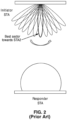
- FIG. 2 depicts directional transmission by an initiator STA for receipt by a responder STA.
- the responder determines that transmission sector directed toward itself is the one shown highlighted in the upper portion of FIG. 2 .
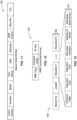
- FIG. 3 depict access periods in 802.1 1ad showing BF training and CBAP channel access in a typical scenario.
- a beacon header interval BHI
- BTI beacon transmission interval
- A-BFT association-beamforming training period
- Sector level sweep is seen during the BTI and A-BFT intervals, with communications taking place between an initiator TXSS and multiple responders.
- DTI data transmission interval
- CBAP contention-based access period
- the DTI may contain channel time other than CBAP.
- a DTI contains a single CBAP.
- the access point does not know which STAs will transmit at any given time so it remains in quasi-omni reception.
- Two general embodiments of CSMA based access can be utilized in CBAP. (1) In a first embodiment there is no RTS/CTS, and the STAs contend for access through channel sensing and random back-off. The AP remains in quasi-omni transmission unless a STA requests further BF training at the beginning of the TXOP it won access to. It will be recognized that data frames of the STAs may collide at the AP when multiple STAs attempt to transmit frame to the AP. It is preferable if communication protocol implements additional mean to reduce the probability of the collision.
- RTS/ Directional CTS is performed in which STAs contend for channel access through an RTS/CTS procedure.
- RTS frames may collide at the AP.
- AP may perform further BF training refinement and receive in directional mode.
- FIG. 4 depicts another form of mmW access being scheduled access using service periods (SPs) in 802.11ad.
- SPs service periods
- the ownership of channel time is granted by the AP to a single STA to communicate with the AP.
- the AP may grant channel time to two stations to communicate together in a P2P mode, as is seen in SP3 with STA 1 communicating with STA 3.
- SP allocation is communicated prior to the DTI.
- the figure shows a BHI containing BTI and A-BFT and following by a DTI which contains multiple SPs. Depicted below the interval diagram blocks are shown iconic representation of an AP communicating with STA 1 during SP1, AP communicating with STA 2 during SP2, STA 1 communicating with STA 3 during SP3, and AP communicating with STA 3 during SP4. Only a single STA is allowed to access the channel in any given time slot, with a dedicated scheduling message being exchanged between the AP and the stations.
- the disclosed communication protocol is configured for having the AP operate in receiver (RX) beamforming (BF) during the data transmission interval (DTI).
- the AP divides its Contention-Based Access Period (CBAP) in DTI into contention slots, and uses directional reception by beamforming, for receiving from a new antenna sector direction at each slot.
- CBAP Contention-Based Access Period
- the AP RX BF covers all receiving directions during a CBAP in DTl.
- the exact pattern of RX BF across the slots of the DTI is determined through mapping of BF training information.
- STAs stations on the network only need to know if RX BF mapping is applied or not, such as utilizing a one bit signal (RXBF Flag subfield) in the frame(s) transmitted in BTI, i.e., Beacon frame, and can determine which transmission time slot to use based on the best sector direction from the AP.
- RXBF Flag subfield a one bit signal
- FIG. 5A and FIG. 5B illustrate an example of frame transmissions in BHI.
- a frame exchange example is seen among AP, STA 1, and STA 2.
- BHI 11 is seen followed by DTI 15.
- BHI 11 is divided into BTI 12 and A-BFT 14, beneath which are seen the sector level sweep frames and the sector level sweep feedback frames 16.
- the AP transmits SSW frames 20 as beacon frames
- STA 1 transmits a set of SSW frames 22
- STA 2 is also seen transmitting frames 24, with the AP seen transmitting feedback frames 26.
- STAs receive beamformed Beacon signals, which are transmitted in sector sweep fashion in BTI.
- the STA compares the signal quality of each signal, and determines which sector is the best for itself.
- the STA responds back with SSW frame transmission in A-BFT, letting AP determine which sector is best for the AP, and the STA receives SSW Feedback from AP containing the STA's best sector toward AP.
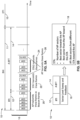
- FIG. 5B illustrates an example embodiment 10 of beacon header interval (BHI) showing BTI 12, A-BFT 14, as was shown in the FIG. 5A , sector level sweep and feedback are performed during BHI.
- BHI beacon header interval
- Each STA and the AP obtain information listed in box 18 through this sector level sweep.
- Each station determines the number of AP sectors from which it receives transmission, the best of those sectors from the AP, and the best sector from the STA to the AP.
- the AP determines the best sectors from different STAs toward the AP.
- the AP and the different STAs acquire information about BF best sectors as well as antenna capabilities of the AP. This information is then utilized to perform mapping into: (a) scheduled RX BF in the DTI, and (2) attempting channel access by the STAs (during their period in the DTI).
- mapping into: (a) scheduled RX BF in the DTI, and (2) attempting channel access by the STAs (during their period in the DTI).
- the STA picks a time period that the AP is performing RX BF of which the beam gives best SNR. It should be appreciated that this disclosed solution does not require explicit signaling of which STAs will access the channel at each slot, thus overhead is significantly reduced.
- the programming of the AP is configured for performing slotted contention with RXBF according to the following steps.
- the AP divides the contention based time by the number of sectors at the AP to obtain each slot interval Ts.
- All embodiments of the present disclosure can support any granularity (quantum) of antenna directionality, while beam patterns, such as seen in FIG. 1A , are provided by way of example and not limitation.
- these directions can arise from using a single communication circuit coupled to multiple antennas, or from multiple communications circuits each coupled to multiple antennas, such as having antenna arrays in each desired directional axis.
- the best sector number toward every STA is obtained and recorded from the feedback received from the STA.
- the feedback is received within SSW frames transmitted in the A-BFT by the STA.
- one antenna sector is the best sector towards numerous (too many) of the STAs, the system can fall back to using conventional CBAP, which is indicated by setting an RXBF flag to that condition. Otherwise, the RXBF flag is set to indicate slotted contention access with RXBF which is then utilized.
- embodiments of the present disclosure can also be implemented to record other workable antenna directions, in addition to the best sector, and use these in certain circumstances, for example as an aid in separating STA communications to be across different slots instead of the same slot.
- Scheduled Rx BF at the AP can be generally expressed as follows.
- the AP is configured for transmitting the RXBF flag in a Beacon frame transmitted in the BHI according to the value obtained from the previous step.
- the AP applies Rx BF corresponding to each sector antenna pattern for a period of Ts.
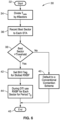
- FIG. 6 illustrates an example embodiment 30 of contention based RxBF as performed at the AP.
- the process starts 32 and determines the number of slots by dividing 34 the time of DTI by the number of antenna sectors which are the best sectors for communicating between the AP and one of the STAs in the network to arrive at the length of a time slot. At least the best sector is recorded 36 to each STA from the AP. A check is performed 38 to determine if the number of best sectors is above a selected threshold (e.g., are there enough best sectors to the STAs to warrant using contention based RXBF).
- a selected threshold e.g., are there enough best sectors to the STAs to warrant using contention based RXBF.
- the programming is configured for defaulting to performing 40 any desired conventional contention scheme (with slotted RXBF flag being clear in BHI), before ending 46 the process. If there are a sufficient number of best sector directions identified, then block 42 is reached which sets the slotted RXBF flag. Then in block 44 AP communication is performed during DTI by using receiver beamforming for each of the identified time slots. After all time slots have been so processed then the communication frame and process ends 46.
- each slot is considered to be the same time length.
- time slots may be of different lengths arising from using something other than simply dividing the DTI time by the number of best sectors.
- CBAP can be divided by the number of stations to obtain a length, and STAs which share a common antenna direction then would receive a time slot having a length which is a multiple of that determined length, thus providing them with more time for handling contention issues within that extended time slot.
- the present invention can use various mechanisms for assigning slots in a scheduled manner between AP and STAs.
- Each station is configured for communication utilizing AP scheduled contention based RXBF according to the following steps.
- (1) Divide the contention based time by the number of sectors at the AP to obtain each slot interval Ts.
- the number of sectors at the AP is signaled to the STA through BF Slot subfield in the BF Control field contained in the Beacon frame transmitted by the AP.
- (2) Record the best sector from the AP.
- (3) Map the sector number to a corresponding slot number. It will be noted that steps 1-3 above provide the same results as determined in the same process performed at the AP, wherein the AP and STAs are consonant (equivalent) in terms of how they are using the slot assignments.
- the RXBF slotted scheduling is performed if indicated by the channel access flag (e.g., bit), otherwise execution falls back on using some form of conventional contention access which matches that utilized by the AP. If using the disclosed RXBF slotted scheduling, then the STA applies transmitter beamforming (TX BF) towards the AP according to outcome from BF training, and attempts to transmit to the AP based on sector-to-slot mapping of step 3, followed by applying contention random access rules for channel sensing and the use of random back-off values. This can be expressed as follows.
- TX BF transmitter beamforming
- FIG. 7 illustrates an example embodiment 50 of scheduled RxBF at the STA.
- the process starts 52 and determines the number of slots by dividing 54 the time of DTI by the number of antenna sectors which are the best sectors for communicating between the AP and one of the STAs in the network to arrive at the length of a time slot. At least the best sector is recorded 56 to each STA from the AP.
- the STA maps the antenna sector numbers to the time slots and arrives at the same determination for itself as was determined at the AP for that STA.
- the header information is received 60 and checked 62 for scheduled RXBF being selected. If the flag is not set, then the programming defaults execution 64 to the same conventional contention scheme as utilized at the AP and after DTI ends 68 the process. Otherwise, if slotted RXBF is selected, then the STA uses TXBF during the determined slot to communicate with the AP before ending 68.
- FIG. 8A illustrates an example embodiment 70 showing antenna sectors 72a, 72b, 72c, and 72d from the AP to different STAs or groups of STAs.
- Table 1 shows a mapping of AP sectors to time slots and stations that will contend (e.g., STA2 and STA3) for channel access with each slot.
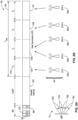
- FIG. 8B illustrates an example embodiment 90 of communication periods 92 utilizing information from BF training to perform slotted channel access with scheduled Rx BF and selective contention.
- the header interval is shown with BTI 98 and A-BFT 100.
- Beacon frames 102 are transmitted in the form of sector sweep.
- the Beacon frame contains an RX BF flag subfield indicating if RXBF is operated in the corresponding CBAP.
- the Beacon frame also contains BF Slot subfield indicating how many slots the CBAP is divided into.
- the data interval (DTI) 93, of length T data is in this example shown divided into four intervals 104, 106, 108 and 110, each of length T s 103.
- STA 1 96a communicates during period 104 as STA1 has chosen the first sector of AP as the best sector
- STA 2 96b and STA 3 96c communicate during period 106 as STA2 and STA3 has chosen the 2 nd sector of AP as the best sector
- STA 4 96d communicates during period 108 as STA4 has chosen the 3 rd sector of AP as the best sector
- STA 5 96e communicates during period 110 as STA5 has chosen the 4 th sector of AP as the best sector.
- the AP may change the setting of the RXBF flag depending on the responses received from the STAs. After the AP changes the value of the RXBF Flag, the AP may transmit its SSW frames to STAs using the last slot of the A-BFT in order to instantly notify the change of the RXBF Flag.
- FIG. 9 illustrates an example embodiment 130, which extends what was shown in FIG. 5A .
- the AP updating RXBF flag 132 which are transmitted in frames 134..
- FIG. 10 illustrates an example embodiment 150 showing a number of beacon intervals (Bls) 152a, 152b, 152c.
- the AP may change the setting of the RXBF flag based on the history of STA behaviors that are communicating with the AP.
- BI Beacon Interval
- AP sets RXBF Flag to 1 in BHI 154, to notify that RX beamforming is applied per slot in CBAP in the DTI 156.
- the AP again transmitted RXBF flag set to 1 in BHI 160.
- the AP received new responses 158 from STAs indicating they have chosen the same sector of the AP as the best sector.
- the AP decides to switch back to a conventional contention scheme.
- the AP notifies STAs in BHI 164 that it will not apply RXBF in the CBAP, by clearing RXBF Flag subfield in the RXBF Control field in the Beacon frames, prior to DTI 166.
- FIG. 11 illustrates an example embodiment 170 of a beacon frame format having the following fields and information elements.
- Frame Control specifies type of the frame, etc., as defined in 802.11 specification.
- Duration specifies time to the end of BTI, such as defined in 802.11 specification.
- BSSID is the ID of the network, such as defined in 802.11 specification.
- TimeStamp is a network timer value maintained by the transmitter of the frame, such as defined in 802.11 specification.
- SSW sector sweep information, such as defined in 802.11 specification.
- Schedule contains timing information when in the DTI STA can access to the media, such as defined in 802.11 specification.
- RXBF Control specifies how the transmitter of the frame operate RXBF. Miscellaneous Info: other broadcasting information on the network attribute can be provided, such as defined in 802.11 specification.
- FIG. 12 illustrates an example embodiment 190 of an RXBF control field format, including the following fields.
- RXBF Flag indicates whether to use schedule RXBF or conventional contention, in this example embodiment it is set to 1 when RXBF is operated in contention period in DTI.
- Schedule index specifies in which contention period the RXBF is operated.
- RXBF is operated in a CBAP of which the same Schedule Index is assigned in the Schedule element.
- BF Slot indicates the number of slots for BF operation within the contention period (in the example in the previous page, 4 slots).
- FIG. 13 illustrates an example embodiment 190 of a Schedule element format, including the following fields 192.
- Element ID specifies type of the information element (indicates that this information block is for scheduling).
- Length specifies length of the information element.
- Allocation contains channel time schedule information. It should be appreciated that the AP may set multiple allocations in a DTI.
- the allocation field above contains the following subfields 194.
- Schedule Index an index of this particular allocation, which is used as an ID of the schedule instance.
- Allocation type this specifies the type of schedule instance: (0) contention access, or (1) non-contention access.
- Allocation Start this specifies the time when the schedule instance will be enabled.
- Allocation duration this subfield specifies the time duration of the schedule instance.
- Number of Blocks is a subfield which specifies how many schedule blocks occur in the DTI.
- Allocation Block Period this subfield specifies intervals between the schedule block.
- wireless transmitters, receivers and transceivers can be readily implemented within various wireless (e.g., mmWave) transmitters, receivers and transceivers.
- modern wireless transmitters, receivers and transceivers are preferably implemented to include one or more computer processor devices (e.g., CPU, microprocessor, microcontroller, computer enabled ASIC, etc.) and associated memory storing instructions (e.g., RAM, DRAM, NVRAM, FLASH, computer readable media, etc.) whereby programming (instructions) stored in the memory are executed on the processor to perform the steps of the various process methods described herein.
- the computer readable media (memory storing instructions) in these computational systems is "non-transitory", which comprises any and all forms of computer-readable media, with the sole exception being a transitory, propagating signal.
- the disclosed technology may comprise any form of computer-readable media, including those which are random access (e.g., RAM), require periodic refreshing (e.g., DRAM), those that degrade over time (e.g., EEPROMS, disk media), or that store data for only short periods of time and/or only in the presence of power, with the only limitation being that the term "computer readable media” is not applicable to an electronic signal which is transitory.
- Embodiments of the present technology may be described herein with reference to flowchart illustrations of methods and systems according to embodiments of the technology, and/or procedures, algorithms, steps, operations, formulae, or other computational depictions, which may also be implemented as computer program products.
- each block or step of a flowchart, and combinations of blocks (and/or steps) in a flowchart, as well as any procedure, algorithm, step, operation, formula, or computational depiction can be implemented by various means, such as hardware, firmware, and/or software including one or more computer program instructions embodied in computer-readable program code.
- any such computer program instructions may be executed by one or more computer processors, including without limitation a general purpose computer or special purpose computer, or other programmable processing apparatus to produce a machine, such that the computer program instructions which execute on the computer processor(s) or other programmable processing apparatus create means for implementing the function(s) specified.
- blocks of the flowcharts, and procedures, algorithms, steps, operations, formulae, or computational depictions described herein support combinations of means for performing the specified function(s), combinations of steps for performing the specified function(s), and computer program instructions, such as embodied in computer-readable program code logic means, for performing the specified function(s).
- each block of the flowchart illustrations, as well as any procedures, algorithms, steps, operations, formulae, or computational depictions and combinations thereof described herein can be implemented by special purpose hardware-based computer systems which perform the specified function(s) or step(s), or combinations of special purpose hardware and computer-readable program code.
- these computer program instructions may also be stored in one or more computer-readable memory or memory devices that can direct a computer processor or other programmable processing apparatus to function in a particular manner, such that the instructions stored in the computer-readable memory or memory devices produce an article of manufacture including instruction means which implement the function specified in the block(s) of the flowchart(s).
- the computer program instructions may also be executed by a computer processor or other programmable processing apparatus to cause a series of operational steps to be performed on the computer processor or other programmable processing apparatus to produce a computer-implemented process such that the instructions which execute on the computer processor or other programmable processing apparatus provide steps for implementing the functions specified in the block(s) of the flowchart(s), procedure (s) algorithm(s), step(s), operation(s), formula(e), or computational depiction(s).
- programming or “program executable” as used herein refer to one or more instructions that can be executed by one or more computer processors to perform one or more functions as described herein.
- the instructions can be embodied in software, in firmware, or in a combination of software and firmware.
- the instructions can be stored local to the device in non-transitory media, or can be stored remotely such as on a server, or all or a portion of the instructions can be stored locally and remotely. Instructions stored remotely can be downloaded (pushed) to the device by user initiation, or automatically based on one or more factors.
- processor hardware processor, computer processor, central processing unit (CPU), and computer are used synonymously to denote a device capable of executing the instructions and communicating with input/output interfaces and/or peripheral devices, and that the terms processor, hardware processor, computer processor, CPU, and computer are intended to encompass single or multiple devices, single core and multicore devices, and variations thereof.
- a set refers to a collection of one or more objects.
- a set of objects can include a single object or multiple objects.
- the terms “substantially” and “about” are used to describe and account for small variations.
- the terms can refer to instances in which the event or circumstance occurs precisely as well as instances in which the event or circumstance occurs to a close approximation.
- the terms can refer to a range of variation of less than or equal to ⁇ 10% of that numerical value, such as less than or equal to ⁇ 5%, less than or equal to ⁇ 4%, less than or equal to ⁇ 3%, less than or equal to ⁇ 2%, less than or equal to ⁇ 1 %, less than or equal to ⁇ 0.5%, less than or equal to ⁇ 0.1 %, or less than or equal to ⁇ 0.05%.
- substantially aligned can refer to a range of angular variation of less than or equal to ⁇ 10°, such as less than or equal to ⁇ 5°, less than or equal to ⁇ 4°, less than or equal to ⁇ 3°, less than or equal to ⁇ 2°, less than or equal to ⁇ 1°, less than or equal to ⁇ 0.5°, less than or equal to ⁇ 0.1°, or less than or equal to ⁇ 0.05°.
- range format is used for convenience and brevity and should be understood flexibly to include numerical values explicitly specified as limits of a range, but also to include all individual numerical values or sub-ranges encompassed within that range as if each numerical value and sub-range is explicitly specified.
- a ratio in the range of about 1 to about 200 should be understood to include the explicitly recited limits of about 1 and about 200, but also to include individual ratios such as about 2, about 3, and about 4, and sub-ranges such as about 10 to about 50, about 20 to about 100, and so forth.
Landscapes
- Engineering & Computer Science (AREA)
- Computer Networks & Wireless Communication (AREA)
- Signal Processing (AREA)
- Mobile Radio Communication Systems (AREA)
Claims (11)
- Vorrichtung auf einer Zugangspunktseite zur Kommunikation in einem drahtlosen Netzwerk, wobei die Vorrichtung Folgendes umfasst:(a) eine drahtlose Kommunikationsschaltung, die zum drahtlosen Kommunizieren mit anderen drahtlosen Kommunikationsstationen in einem drahtlosen Netzwerk konfiguriert ist, das eine gerichtete drahtlose Kommunikation über eine Vielzahl von Antennenmustersektoren verwendet, die jeweils eine unterschiedliche Übertragungsrichtung aufweisen;(b) einen Prozessor, der mit der drahtlosen Kommunikationsschaltung innerhalb einer Station gekoppelt ist, die zum Betrieb in dem drahtlosen Netzwerk konfiguriert ist; und(c) einen nichtflüchtigen Speicher, der Anweisungen speichert, die durch den Prozessor ausführbar sind;(d) wobei die Anweisungen, wenn sie durch den Prozessor ausgeführt werden, bewirken, dass die Vorrichtung Schritte durchführt, die Folgendes umfassen:(i) Aufteilen (34) einer Konkurrenzzugriffsperiode in einem Datenübertragungsintervall, DTI, durch eine Anzahl von besten Antennensektorrichtungen von einer Zugangspunkt-Station, AP-Station, zu einer Vielzahl von Stationen (STAs) in dem drahtlosen Netzwerk, um eine Vielzahl von Zeitschlitzen zu erhalten, so dass jeder Station, STA, ein STA-Zeitschlitz gegeben wird, entweder zur alleinigen Verwendung durch die Station oder zur gemeinsamen Nutzung mit einer oder mehreren anderen Stationen;(ii) Setzen (42) eines Flags für die Empfängerstrahlformung, RXBF, innerhalb eines von dem Zugangspunkt, AP, übertragenen Verwaltungsrahmens, wenn bestimmt wird, dass geplante Empfängerstrahlformung verwendet werden soll, wobei bestimmt wird, dass geplante Empfängerstrahlformung verwendet werden soll, wenn die Anzahl der besten Antennensektorrichtungen über einem vorbestimmten Schwellenwert liegt, und Standardeinstellung auf einen konventionellen Konkurrenzzugriffsmechanismus ohne Empfängerstrahlformung an dem Zugangspunkt, AP, wenn von dem Zugangspunkt AP bestimmt wird (38), dass die Anzahl der besten Antennensektorrichtungen nicht über dem vorbestimmten Schwellenwert liegt; und wenn bestimmt wird, dass die geplante Empfängerstrahlformung verwendet werden soll,(iii) Verwenden von Empfänger(44)-Strahlformen an der Zugangspunkt-Station, AP-Station, um den gerichteten Empfang von Daten über jede Antennensektorrichtung in jedem STA-Zeitschlitz über eine entsprechende Antennensektorrichtung zu steuern.
- Vorrichtung nach Anspruch 1, wobei die Konkurrenzzugriffsperiode im Datenübertragungsintervall, DTI, eine konkurrenzbasierte Zugriffsperiode, CBAP, während der Zeitperiode innerhalb des Datenübertragungsintervalls (DTI) eines direktionalen Multi-Gigabit-Basisdienstsatzes, DMG-BSS, umfasst, bei dem der konkurrenzbasierte erweiterte verteilte Kanalzugriff, EDCA, verwendet wird.
- Vorrichtung nach Anspruch 1, wobei die Anweisungen, wenn sie von dem Prozessor ausgeführt werden, die Vorrichtung veranlassen, ferner Schritte zum Aufteilen der konkurrierenden Zugriffsperiode in dem Datenübertragungsintervall, DTI, in die Vielzahl von Zeitschlitzen in einem spezifischen Muster von RXBF über Stationszeitschlitze des DTI durch Abbilden von Strahlformungs-Trainingsinformationen, BF-Trainingsinformationen, durchzuführen.
- Vorrichtung nach Anspruch 1, wobei die Anweisungen, wenn sie von dem Prozessor ausgeführt werden, die Vorrichtung veranlassen, ferner Schritte zum Setzen des Flags für die Empfängerstrahlformung, RXBF, innerhalb des Verwaltungsrahmens durchzuführen, indem Bakenrahmen gesendet werden, die ein Empfängersteuerfeld enthalten, das das Flag für die Empfängerstrahlformung, RXBF, enthält.
- Vorrichtung nach Anspruch 4, wobei die Anweisungen, wenn sie vom Prozessor ausgeführt werden, die Vorrichtung veranlassen, weitere Schritte zum Setzen eines Empfängersteuerfeldes durchzuführen, das das Flag für die Empfängerstrahlformung, RXBF, enthält und auch einen Zeitplanindex umfasst, der angibt, in welcher Konkurrenzperiode der RXBF betrieben wird.
- Vorrichtung nach Anspruch 4, wobei die Anweisungen, wenn sie von dem Prozessor ausgeführt werden, die Vorrichtung veranlassen, weiterhin Schritte zum Setzen eines Empfängersteuerfeldes durchzuführen, das das Flag für die Empfängerstrahlformung, RXBF, enthält und auch einen Strahlformungsschlitz, BF-Schlitz, umfasst, der eine Anzahl von Schlitzen für den Strahlformungsbetrieb innerhalb der Konkurrenzperiode angibt.
- Vorrichtung nach Anspruch 1, wobei die Anweisungen, wenn sie von dem Prozessor ausgeführt werden, die Vorrichtung veranlassen, ferner Schritte zum Setzen des Flags für die Empfängerstrahlformung, RXBF, als ein binäres Bit durchzuführen, das angibt, ob Empfängerstrahlformung, RXBF, oder ein herkömmliches Konkurrenzzugriffsverfahren
- Vorrichtung nach Anspruch 1, wobei die gerichtete drahtlose Kommunikation so konfiguriert ist, dass sie mit einer Vielzahl von Strahlrichtungen von mehreren Antennen arbeitet, die mit mindestens einer Kommunikationsschaltung gekoppelt sind.
- System, umfassend eine Vorrichtung auf einer Zugangspunktseite nach Anspruch 1 und eine Vorrichtung auf einer Stationsseite zur Kommunikation in einem drahtlosen Netzwerk, wobei die Vorrichtung auf der Stationsseite Folgendes umfasst:(a) eine drahtlose Kommunikationsschaltung, die zum drahtlosen Kommunizieren mit anderen drahtlosen Kommunikationsstationen in einem drahtlosen Netzwerk konfiguriert ist, das eine gerichtete drahtlose Kommunikation über eine Vielzahl von Antennenmustersektoren verwendet, die jeweils eine unterschiedliche Übertragungsrichtung aufweisen;(b) einen Prozessor, der mit der drahtlosen Kommunikationsschaltung innerhalb einer Station gekoppelt ist, die zum Betrieb in dem drahtlosen Netzwerk konfiguriert ist; und(c) einen nichtflüchtigen Speicher, der Anweisungen speichert, die durch den Prozessor ausführbar sind;(d) wobei die Anweisungen, wenn sie durch den Prozessor ausgeführt werden, bewirken, dass die Vorrichtung auf der Stationsseite ferner Schritte durchführt, die Folgendes umfassen:(i) Aufteilen (52) einer Konkurrenzzugriffsperiode in einem Datenübertragungsintervall, DTI, durch eine Anzahl von besten Antennensektorrichtungen von einer Zugangspunkt-Station, AP-Station, zu einer Vielzahl von Stationen (STAs) in dem drahtlosen Netzwerk, um eine Vielzahl von Zeitschlitzen zu erhalten, so dass jede Station, STA, einen STA-Zeitschlitz aufweist, entweder zur alleinigen Verwendung durch die Station oder zur gemeinsamen Nutzung mit einer oder mehreren anderen Stationen;(ii) Empfangen (60) eines Flags für die Empfängerstrahlformung, RXBF, innerhalb eines Verwaltungsrahmens, der an der Station, STA, von der Zugangspunkt-Station, AP-Station, empfangen wurde; und(iii) Übertragen (66) von Rahmen an die Zugangspunkt-Station, AP-Station, unter Verwendung von Senderstrahlformung, TXBF, während eines STA-Zeitschlitzes, der einer besten Antennensektorrichtung von dem Zugangspunkt zu der Station entspricht, zum Empfang durch die Zugangspunkt-Station, AP-Station, der für die Verwendung von Empfängerstrahlformung, RXBF, zum Empfangen von Daten über jede Antennensektorrichtung konfiguriert ist; und Standardisieren (64) auf einen konventionellen Konkurrenzzugriffsmechanismus ohne Empfängerstrahlformung an dem Zugriffspunkt, AP, wenn das von dem Zugriffspunkt, AP, empfangene Flag für die Empfängerstrahlformung, RXBF, gesetzt ist, um die Durchführung des konventionellen Konkurrenzugriffsmechanismus (62) anzugeben.
- System nach Anspruch 9, wobei die Anweisungen, wenn sie von dem Prozessor der Vorrichtung auf der Stationsseite ausgeführt werden, die Vorrichtung auf der Stationsseite veranlassen, weiterhin Schritte zum Empfangen des Flags für die Empfängerstrahlformung, RXBF, innerhalb des Verwaltungsrahmens durchzuführen, wie er von dem Zugangspunkt, AP, gesendet wird, der Bakenrahmen umfasst, die ein Empfängersteuerfeld enthalten, das das Flag für die Empfängerstrahlformung, RXBF, enthält.
- System nach Anspruch 10, wobei die Anweisungen, wenn sie von dem Prozessor auf der Stationsseite ausgeführt werden, die Vorrichtung auf der Stationsseite veranlassen, weiterhin Schritte zum Empfangen eines Empfängersteuerfeldes durchzuführen, das das Flag für die Empfängerstrahlformung, RXBF, enthält, wie es von dem Zugangspunkt, AP, gesendet wird, und das auch einen Zeitplanindex umfasst, der angibt, in welcher Konkurrenzperiode der RXBF von dem Zugangspunkt, AP, betrieben werden soll.
Applications Claiming Priority (3)
| Application Number | Priority Date | Filing Date | Title |
|---|---|---|---|
| US201762445786P | 2017-01-13 | 2017-01-13 | |
| US15/851,541 US10568132B2 (en) | 2017-01-13 | 2017-12-21 | Contention-based random access with receive beamforming in wireless networks |
| PCT/US2018/013276 WO2018132542A1 (en) | 2017-01-13 | 2018-01-11 | Contention-based random access with receive beamforming in wireless networks |
Publications (3)
| Publication Number | Publication Date |
|---|---|
| EP3552434A1 EP3552434A1 (de) | 2019-10-16 |
| EP3552434A4 EP3552434A4 (de) | 2020-07-29 |
| EP3552434B1 true EP3552434B1 (de) | 2024-02-28 |
Family
ID=62839615
Family Applications (1)
| Application Number | Title | Priority Date | Filing Date |
|---|---|---|---|
| EP18738536.4A Active EP3552434B1 (de) | 2017-01-13 | 2018-01-11 | Konfliktbasierter direktzugriff mit empfangsstrahlformung in drahtlosen netzwerken |
Country Status (6)
| Country | Link |
|---|---|
| US (2) | US10568132B2 (de) |
| EP (1) | EP3552434B1 (de) |
| JP (1) | JP6774043B2 (de) |
| KR (1) | KR102202996B1 (de) |
| CN (1) | CN110121900B (de) |
| WO (1) | WO2018132542A1 (de) |
Families Citing this family (11)
| Publication number | Priority date | Publication date | Assignee | Title |
|---|---|---|---|---|
| US10045197B1 (en) | 2017-06-29 | 2018-08-07 | Sony Corporation | Discovery of neighbor nodes in wireless mesh networks with directional transmissions |
| US10524266B2 (en) | 2017-10-20 | 2019-12-31 | Google Llc | Switching transmission technologies within a spectrum based on network load |
| US11006413B2 (en) | 2017-12-06 | 2021-05-11 | Google Llc | Narrow-band communication |
| US10608721B2 (en) | 2017-12-14 | 2020-03-31 | Google Llc | Opportunistic beamforming |
| US11246143B2 (en) * | 2017-12-15 | 2022-02-08 | Google Llc | Beamforming enhancement via strategic resource utilization |
| US11251847B2 (en) | 2018-03-28 | 2022-02-15 | Google Llc | User device beamforming |
| US10743356B2 (en) | 2018-08-20 | 2020-08-11 | Sony Corporation | Unassigned slots announcement in TDD SP channel access WLAN networks |
| WO2020055602A1 (en) | 2018-09-10 | 2020-03-19 | Google Llc | Fast beam tracking |
| JP7256425B2 (ja) * | 2019-12-17 | 2023-04-12 | 日本電信電話株式会社 | 基地局装置、通信方法及び集約局装置 |
| WO2021167122A1 (ko) * | 2020-02-18 | 2021-08-26 | 엘지전자 주식회사 | 사이드링크를 지원하는 무선통신시스템에서 단말이 빔 관리 id를 할당받는 방법 및 이를 위한 장치 |
| CN116847394A (zh) * | 2022-03-21 | 2023-10-03 | 华为技术有限公司 | 感知方法及装置 |
Family Cites Families (38)
| Publication number | Priority date | Publication date | Assignee | Title |
|---|---|---|---|---|
| US8135413B2 (en) | 1998-11-24 | 2012-03-13 | Tracbeam Llc | Platform and applications for wireless location and other complex services |
| US10641861B2 (en) | 2000-06-02 | 2020-05-05 | Dennis J. Dupray | Services and applications for a communications network |
| US10684350B2 (en) | 2000-06-02 | 2020-06-16 | Tracbeam Llc | Services and applications for a communications network |
| US20060209876A1 (en) | 2005-02-10 | 2006-09-21 | Interdigital Technology Corporation | Access point using directional antennas for uplink transmission in a WLAN |
| US20080002733A1 (en) * | 2006-06-30 | 2008-01-03 | Ilan Sutskover | Method and apparatus for scheduling transmissions in multiple access wireless networks |
| KR100917888B1 (ko) * | 2007-02-09 | 2009-09-16 | 삼성전자주식회사 | 무선 네트워크 시스템 및 상기 무선 네트워크상에서데이터를 송수신하는 방법 |
| US8917675B2 (en) | 2007-08-20 | 2014-12-23 | Samsung Electronics Co., Ltd. | System and method for multiple contention access periods |
| US8280445B2 (en) * | 2008-02-13 | 2012-10-02 | Samsung Electronics Co., Ltd. | System and method for antenna training of beamforming vectors by selective use of beam level training |
| US8553659B2 (en) | 2008-03-12 | 2013-10-08 | Broadcom Corporation | Method and system for optimal beamforming in wireless networks |
| EP2294440B1 (de) | 2008-06-03 | 2019-02-20 | Hisep Technology Ltd. | Richtungsfindungsverfahren und -vorrichtung |
| JP5153944B2 (ja) * | 2008-08-26 | 2013-02-27 | マーベル ワールド トレード リミテッド | 物理層データユニットフォーマット |
| JP2012506177A (ja) | 2008-10-24 | 2012-03-08 | メディアテック インコーポレイテッド | Mimoofdm/ofdmaシステム中のコンテンションベースのアクセスチャネル設計方法 |
| WO2010068405A2 (en) * | 2008-12-10 | 2010-06-17 | Marvell World Trade Ltd. | Efficient formats of beacon, announcement, and beamforming training frames |
| US8422961B2 (en) * | 2009-02-23 | 2013-04-16 | Nokia Corporation | Beamforming training for functionally-limited apparatuses |
| CN102396164B (zh) * | 2009-04-17 | 2015-11-25 | 马维尔国际贸易有限公司 | 在通信网络中分段波束成形的方法及装置 |
| US8331265B2 (en) * | 2009-04-20 | 2012-12-11 | Samsung Electronics Co., Ltd. | System and method for adaptive beamforming training using fixed time window for heterogeneous antenna systems |
| US20110143665A1 (en) * | 2009-12-15 | 2011-06-16 | Carlos Cordeiro | Method and apparatus for multiple access for directional wireless networks |
| US9961701B2 (en) * | 2010-02-02 | 2018-05-01 | Qualcomm Incorporated | Methods and apparatuses for transmitting an allocation of time in a wireless system |
| WO2011114330A1 (en) | 2010-03-17 | 2011-09-22 | Hisep Technology Ltd. | Direction finding system device and method |
| US8437333B2 (en) | 2010-07-06 | 2013-05-07 | Stmicroelectronics, Inc. | Contention based period beamforming |
| US8780803B2 (en) * | 2010-10-04 | 2014-07-15 | Electronics And Telecommunications Research Institute | Method and apparatus for contention-based channel access with directional antenna over wideband high frequency wireless system |
| US20130044695A1 (en) | 2011-08-17 | 2013-02-21 | Broadcom Corporation | Fast link establishment for wireless stations operating in millimeter-wave band |
| US8923252B2 (en) * | 2012-01-11 | 2014-12-30 | Intel Corporation | Device, system and method of communicating during a contention based access period |
| KR101957698B1 (ko) | 2012-02-06 | 2019-03-14 | 삼성전자주식회사 | 빔포밍 기반 무선통신 시스템에서 상향링크 자원 할당 방법 및 장치 |
| MX352930B (es) | 2012-10-02 | 2017-12-14 | Rearden Llc | Sistemas y métodos para acarreo inalámbrico en sistemas inalámbricos de entrada distribuida-salida distribuida. |
| EP2920890A1 (de) * | 2012-11-09 | 2015-09-23 | Interdigital Patent Holdings, Inc. | Strahlformungsverfahren und verfahren zur verwendung von strahlen |
| US9621249B2 (en) * | 2012-12-21 | 2017-04-11 | Intel Corporation | Techniques for variable channel bandwidth support |
| US9930512B2 (en) * | 2013-06-14 | 2018-03-27 | Panasonic Corporation | Wireless communications device, wireless communications method, and wireless communications control program |
| JP6273361B2 (ja) * | 2013-09-08 | 2018-01-31 | インテル コーポレイション | 無線通信ビームフォーミングの装置、システム、及び方法 |
| US9258046B2 (en) * | 2013-10-14 | 2016-02-09 | Broadcom Corporation | Efficient beacon transmission and reception |
| CN105981310A (zh) * | 2013-11-11 | 2016-09-28 | 英迪股份有限公司 | 站点及其无线链路设置方法 |
| KR102303117B1 (ko) * | 2014-04-08 | 2021-09-23 | 한국전자통신연구원 | 중첩된 bss 환경에서 ap간 협력 통신을 위한 프로토콜 |
| US9602174B2 (en) | 2014-04-08 | 2017-03-21 | Electronics And Telecommunications Research Institute | Protocol for cooperation communication between access points in overlapped basic service set (OBSS) environment |
| GB2527837A (en) * | 2014-07-03 | 2016-01-06 | Dublin Inst Of Technology | A WLAN bandwidth controller |
| US9681309B2 (en) | 2014-08-05 | 2017-06-13 | Qualcomm Incorporated | Methods exploiting asymmetric capabilities for contention-based random access in mm-wave access systems |
| US10411780B2 (en) | 2014-12-31 | 2019-09-10 | Samsung Electronics Co., Ltd. | Fast association in millimeter wave wireless local area network systems |
| US10142005B2 (en) * | 2015-11-02 | 2018-11-27 | Lg Electronics Inc. | Beamforming training |
| US10250312B2 (en) * | 2016-11-23 | 2019-04-02 | Huawei Technologies Canada Co., Ltd. | Methods and systems for multi-user beamforming |
-
2017
- 2017-12-21 US US15/851,541 patent/US10568132B2/en active Active
-
2018
- 2018-01-11 EP EP18738536.4A patent/EP3552434B1/de active Active
- 2018-01-11 CN CN201880005728.XA patent/CN110121900B/zh active Active
- 2018-01-11 WO PCT/US2018/013276 patent/WO2018132542A1/en not_active Ceased
- 2018-01-11 KR KR1020197019388A patent/KR102202996B1/ko active Active
- 2018-01-11 JP JP2019538255A patent/JP6774043B2/ja active Active
-
2020
- 2020-01-31 US US16/778,308 patent/US11134515B2/en active Active
Also Published As
| Publication number | Publication date |
|---|---|
| EP3552434A1 (de) | 2019-10-16 |
| JP2020505834A (ja) | 2020-02-20 |
| US20200170037A1 (en) | 2020-05-28 |
| US11134515B2 (en) | 2021-09-28 |
| WO2018132542A1 (en) | 2018-07-19 |
| JP6774043B2 (ja) | 2020-10-21 |
| US20180206268A1 (en) | 2018-07-19 |
| CN110121900B (zh) | 2023-05-16 |
| CN110121900A (zh) | 2019-08-13 |
| KR102202996B1 (ko) | 2021-01-13 |
| EP3552434A4 (de) | 2020-07-29 |
| US10568132B2 (en) | 2020-02-18 |
| KR20190091505A (ko) | 2019-08-06 |
Similar Documents
| Publication | Publication Date | Title |
|---|---|---|
| US11134515B2 (en) | Contention-based random access with receive beamforming in wireless networks | |
| US12476692B2 (en) | Communication devices and methods with beamforming training | |
| CA3025342C (en) | Method and system for p2p communications and decentralized spatial sharing in wireless networks with directional transmissions | |
| KR102175694B1 (ko) | 무선 통신에서의 방향성 송신을 위한 트레이닝 방법 및 시스템 | |
| US8553659B2 (en) | Method and system for optimal beamforming in wireless networks | |
| CN107257585B (zh) | 无线通信系统中用于发送对时间的分配的方法和装置 | |
| KR102274088B1 (ko) | 작동 채널 지시자를 전송하는 방법 및 시스템 | |
| EP3821664B1 (de) | Zuweisung und gerichtete informationsverteilung in millimeterwellen-wlan-netzwerken | |
| US20100182987A1 (en) | Method and apparatus for transmitting/receiving data in wireless communication network | |
| CN112534950B (zh) | Tdd sp信道接入wlan网络中的未指派时隙通告 | |
| US11405061B2 (en) | Interference mitigation in a communications network | |
| CN109923797B (zh) | 具有波束成形训练的通信装置和方法 | |
| JP7488343B2 (ja) | 無線通信ネットワークにおけるヌリングのための方法およびシステム |
Legal Events
| Date | Code | Title | Description |
|---|---|---|---|
| STAA | Information on the status of an ep patent application or granted ep patent |
Free format text: STATUS: THE INTERNATIONAL PUBLICATION HAS BEEN MADE |
|
| PUAI | Public reference made under article 153(3) epc to a published international application that has entered the european phase |
Free format text: ORIGINAL CODE: 0009012 |
|
| STAA | Information on the status of an ep patent application or granted ep patent |
Free format text: STATUS: REQUEST FOR EXAMINATION WAS MADE |
|
| 17P | Request for examination filed |
Effective date: 20190708 |
|
| AK | Designated contracting states |
Kind code of ref document: A1 Designated state(s): AL AT BE BG CH CY CZ DE DK EE ES FI FR GB GR HR HU IE IS IT LI LT LU LV MC MK MT NL NO PL PT RO RS SE SI SK SM TR |
|
| AX | Request for extension of the european patent |
Extension state: BA ME |
|
| RIN1 | Information on inventor provided before grant (corrected) |
Inventor name: ABDALLAH, RAMY Inventor name: SAKODA, KAZUYUKI |
|
| DAV | Request for validation of the european patent (deleted) | ||
| DAX | Request for extension of the european patent (deleted) | ||
| REG | Reference to a national code |
Ref country code: DE Ref legal event code: R079 Ref document number: 602018065852 Country of ref document: DE Free format text: PREVIOUS MAIN CLASS: H04W0040120000 Ipc: H04B0007080000 Ref country code: DE Ref legal event code: R079 Free format text: PREVIOUS MAIN CLASS: H04W0040120000 Ipc: H04B0007080000 |
|
| A4 | Supplementary search report drawn up and despatched |
Effective date: 20200629 |
|
| RIC1 | Information provided on ipc code assigned before grant |
Ipc: H04W 74/02 20090101ALI20200623BHEP Ipc: H04B 7/08 20060101AFI20200623BHEP Ipc: H04Q 3/64 20060101ALI20200623BHEP Ipc: H04W 40/12 20090101ALI20200623BHEP |
|
| RAP3 | Party data changed (applicant data changed or rights of an application transferred) |
Owner name: SONY GROUP CORPORATION |
|
| STAA | Information on the status of an ep patent application or granted ep patent |
Free format text: STATUS: EXAMINATION IS IN PROGRESS |
|
| 17Q | First examination report despatched |
Effective date: 20210930 |
|
| GRAP | Despatch of communication of intention to grant a patent |
Free format text: ORIGINAL CODE: EPIDOSNIGR1 |
|
| STAA | Information on the status of an ep patent application or granted ep patent |
Free format text: STATUS: GRANT OF PATENT IS INTENDED |
|
| INTG | Intention to grant announced |
Effective date: 20230925 |
|
| GRAS | Grant fee paid |
Free format text: ORIGINAL CODE: EPIDOSNIGR3 |
|
| GRAA | (expected) grant |
Free format text: ORIGINAL CODE: 0009210 |
|
| STAA | Information on the status of an ep patent application or granted ep patent |
Free format text: STATUS: THE PATENT HAS BEEN GRANTED |
|
| P01 | Opt-out of the competence of the unified patent court (upc) registered |
Effective date: 20240110 |
|
| AK | Designated contracting states |
Kind code of ref document: B1 Designated state(s): AL AT BE BG CH CY CZ DE DK EE ES FI FR GB GR HR HU IE IS IT LI LT LU LV MC MK MT NL NO PL PT RO RS SE SI SK SM TR |
|
| REG | Reference to a national code |
Ref country code: GB Ref legal event code: FG4D |
|
| REG | Reference to a national code |
Ref country code: CH Ref legal event code: EP |
|
| REG | Reference to a national code |
Ref country code: DE Ref legal event code: R096 Ref document number: 602018065852 Country of ref document: DE |
|
| REG | Reference to a national code |
Ref country code: IE Ref legal event code: FG4D Ref country code: NL Ref legal event code: FP |
|
| REG | Reference to a national code |
Ref country code: LT Ref legal event code: MG9D |
|
| PG25 | Lapsed in a contracting state [announced via postgrant information from national office to epo] |
Ref country code: IS Free format text: LAPSE BECAUSE OF FAILURE TO SUBMIT A TRANSLATION OF THE DESCRIPTION OR TO PAY THE FEE WITHIN THE PRESCRIBED TIME-LIMIT Effective date: 20240628 |
|
| PG25 | Lapsed in a contracting state [announced via postgrant information from national office to epo] |
Ref country code: LT Free format text: LAPSE BECAUSE OF FAILURE TO SUBMIT A TRANSLATION OF THE DESCRIPTION OR TO PAY THE FEE WITHIN THE PRESCRIBED TIME-LIMIT Effective date: 20240228 |
|
| PG25 | Lapsed in a contracting state [announced via postgrant information from national office to epo] |
Ref country code: GR Free format text: LAPSE BECAUSE OF FAILURE TO SUBMIT A TRANSLATION OF THE DESCRIPTION OR TO PAY THE FEE WITHIN THE PRESCRIBED TIME-LIMIT Effective date: 20240529 |
|
| PG25 | Lapsed in a contracting state [announced via postgrant information from national office to epo] |
Ref country code: RS Free format text: LAPSE BECAUSE OF FAILURE TO SUBMIT A TRANSLATION OF THE DESCRIPTION OR TO PAY THE FEE WITHIN THE PRESCRIBED TIME-LIMIT Effective date: 20240528 Ref country code: HR Free format text: LAPSE BECAUSE OF FAILURE TO SUBMIT A TRANSLATION OF THE DESCRIPTION OR TO PAY THE FEE WITHIN THE PRESCRIBED TIME-LIMIT Effective date: 20240228 |
|
| PG25 | Lapsed in a contracting state [announced via postgrant information from national office to epo] |
Ref country code: ES Free format text: LAPSE BECAUSE OF FAILURE TO SUBMIT A TRANSLATION OF THE DESCRIPTION OR TO PAY THE FEE WITHIN THE PRESCRIBED TIME-LIMIT Effective date: 20240228 |
|
| PG25 | Lapsed in a contracting state [announced via postgrant information from national office to epo] |
Ref country code: RS Free format text: LAPSE BECAUSE OF FAILURE TO SUBMIT A TRANSLATION OF THE DESCRIPTION OR TO PAY THE FEE WITHIN THE PRESCRIBED TIME-LIMIT Effective date: 20240528 Ref country code: NO Free format text: LAPSE BECAUSE OF FAILURE TO SUBMIT A TRANSLATION OF THE DESCRIPTION OR TO PAY THE FEE WITHIN THE PRESCRIBED TIME-LIMIT Effective date: 20240528 Ref country code: LT Free format text: LAPSE BECAUSE OF FAILURE TO SUBMIT A TRANSLATION OF THE DESCRIPTION OR TO PAY THE FEE WITHIN THE PRESCRIBED TIME-LIMIT Effective date: 20240228 Ref country code: IS Free format text: LAPSE BECAUSE OF FAILURE TO SUBMIT A TRANSLATION OF THE DESCRIPTION OR TO PAY THE FEE WITHIN THE PRESCRIBED TIME-LIMIT Effective date: 20240628 Ref country code: HR Free format text: LAPSE BECAUSE OF FAILURE TO SUBMIT A TRANSLATION OF THE DESCRIPTION OR TO PAY THE FEE WITHIN THE PRESCRIBED TIME-LIMIT Effective date: 20240228 Ref country code: GR Free format text: LAPSE BECAUSE OF FAILURE TO SUBMIT A TRANSLATION OF THE DESCRIPTION OR TO PAY THE FEE WITHIN THE PRESCRIBED TIME-LIMIT Effective date: 20240529 Ref country code: FI Free format text: LAPSE BECAUSE OF FAILURE TO SUBMIT A TRANSLATION OF THE DESCRIPTION OR TO PAY THE FEE WITHIN THE PRESCRIBED TIME-LIMIT Effective date: 20240228 Ref country code: ES Free format text: LAPSE BECAUSE OF FAILURE TO SUBMIT A TRANSLATION OF THE DESCRIPTION OR TO PAY THE FEE WITHIN THE PRESCRIBED TIME-LIMIT Effective date: 20240228 Ref country code: BG Free format text: LAPSE BECAUSE OF FAILURE TO SUBMIT A TRANSLATION OF THE DESCRIPTION OR TO PAY THE FEE WITHIN THE PRESCRIBED TIME-LIMIT Effective date: 20240228 |
|
| PG25 | Lapsed in a contracting state [announced via postgrant information from national office to epo] |
Ref country code: PL Free format text: LAPSE BECAUSE OF FAILURE TO SUBMIT A TRANSLATION OF THE DESCRIPTION OR TO PAY THE FEE WITHIN THE PRESCRIBED TIME-LIMIT Effective date: 20240228 Ref country code: PT Free format text: LAPSE BECAUSE OF FAILURE TO SUBMIT A TRANSLATION OF THE DESCRIPTION OR TO PAY THE FEE WITHIN THE PRESCRIBED TIME-LIMIT Effective date: 20240628 |
|
| REG | Reference to a national code |
Ref country code: AT Ref legal event code: MK05 Ref document number: 1662209 Country of ref document: AT Kind code of ref document: T Effective date: 20240228 |
|
| PG25 | Lapsed in a contracting state [announced via postgrant information from national office to epo] |
Ref country code: SE Free format text: LAPSE BECAUSE OF FAILURE TO SUBMIT A TRANSLATION OF THE DESCRIPTION OR TO PAY THE FEE WITHIN THE PRESCRIBED TIME-LIMIT Effective date: 20240228 Ref country code: PT Free format text: LAPSE BECAUSE OF FAILURE TO SUBMIT A TRANSLATION OF THE DESCRIPTION OR TO PAY THE FEE WITHIN THE PRESCRIBED TIME-LIMIT Effective date: 20240628 Ref country code: PL Free format text: LAPSE BECAUSE OF FAILURE TO SUBMIT A TRANSLATION OF THE DESCRIPTION OR TO PAY THE FEE WITHIN THE PRESCRIBED TIME-LIMIT Effective date: 20240228 Ref country code: LV Free format text: LAPSE BECAUSE OF FAILURE TO SUBMIT A TRANSLATION OF THE DESCRIPTION OR TO PAY THE FEE WITHIN THE PRESCRIBED TIME-LIMIT Effective date: 20240228 |
|
| PG25 | Lapsed in a contracting state [announced via postgrant information from national office to epo] |
Ref country code: DK Free format text: LAPSE BECAUSE OF FAILURE TO SUBMIT A TRANSLATION OF THE DESCRIPTION OR TO PAY THE FEE WITHIN THE PRESCRIBED TIME-LIMIT Effective date: 20240228 |
|
| PG25 | Lapsed in a contracting state [announced via postgrant information from national office to epo] |
Ref country code: SM Free format text: LAPSE BECAUSE OF FAILURE TO SUBMIT A TRANSLATION OF THE DESCRIPTION OR TO PAY THE FEE WITHIN THE PRESCRIBED TIME-LIMIT Effective date: 20240228 |
|
| PG25 | Lapsed in a contracting state [announced via postgrant information from national office to epo] |
Ref country code: EE Free format text: LAPSE BECAUSE OF FAILURE TO SUBMIT A TRANSLATION OF THE DESCRIPTION OR TO PAY THE FEE WITHIN THE PRESCRIBED TIME-LIMIT Effective date: 20240228 Ref country code: CZ Free format text: LAPSE BECAUSE OF FAILURE TO SUBMIT A TRANSLATION OF THE DESCRIPTION OR TO PAY THE FEE WITHIN THE PRESCRIBED TIME-LIMIT Effective date: 20240228 |
|
| PG25 | Lapsed in a contracting state [announced via postgrant information from national office to epo] |
Ref country code: AT Free format text: LAPSE BECAUSE OF FAILURE TO SUBMIT A TRANSLATION OF THE DESCRIPTION OR TO PAY THE FEE WITHIN THE PRESCRIBED TIME-LIMIT Effective date: 20240228 |
|
| PG25 | Lapsed in a contracting state [announced via postgrant information from national office to epo] |
Ref country code: SK Free format text: LAPSE BECAUSE OF FAILURE TO SUBMIT A TRANSLATION OF THE DESCRIPTION OR TO PAY THE FEE WITHIN THE PRESCRIBED TIME-LIMIT Effective date: 20240228 |
|
| PG25 | Lapsed in a contracting state [announced via postgrant information from national office to epo] |
Ref country code: SM Free format text: LAPSE BECAUSE OF FAILURE TO SUBMIT A TRANSLATION OF THE DESCRIPTION OR TO PAY THE FEE WITHIN THE PRESCRIBED TIME-LIMIT Effective date: 20240228 Ref country code: SK Free format text: LAPSE BECAUSE OF FAILURE TO SUBMIT A TRANSLATION OF THE DESCRIPTION OR TO PAY THE FEE WITHIN THE PRESCRIBED TIME-LIMIT Effective date: 20240228 Ref country code: RO Free format text: LAPSE BECAUSE OF FAILURE TO SUBMIT A TRANSLATION OF THE DESCRIPTION OR TO PAY THE FEE WITHIN THE PRESCRIBED TIME-LIMIT Effective date: 20240228 Ref country code: EE Free format text: LAPSE BECAUSE OF FAILURE TO SUBMIT A TRANSLATION OF THE DESCRIPTION OR TO PAY THE FEE WITHIN THE PRESCRIBED TIME-LIMIT Effective date: 20240228 Ref country code: DK Free format text: LAPSE BECAUSE OF FAILURE TO SUBMIT A TRANSLATION OF THE DESCRIPTION OR TO PAY THE FEE WITHIN THE PRESCRIBED TIME-LIMIT Effective date: 20240228 Ref country code: CZ Free format text: LAPSE BECAUSE OF FAILURE TO SUBMIT A TRANSLATION OF THE DESCRIPTION OR TO PAY THE FEE WITHIN THE PRESCRIBED TIME-LIMIT Effective date: 20240228 Ref country code: AT Free format text: LAPSE BECAUSE OF FAILURE TO SUBMIT A TRANSLATION OF THE DESCRIPTION OR TO PAY THE FEE WITHIN THE PRESCRIBED TIME-LIMIT Effective date: 20240228 |
|
| REG | Reference to a national code |
Ref country code: DE Ref legal event code: R097 Ref document number: 602018065852 Country of ref document: DE |
|
| PG25 | Lapsed in a contracting state [announced via postgrant information from national office to epo] |
Ref country code: IT Free format text: LAPSE BECAUSE OF FAILURE TO SUBMIT A TRANSLATION OF THE DESCRIPTION OR TO PAY THE FEE WITHIN THE PRESCRIBED TIME-LIMIT Effective date: 20240228 |
|
| PG25 | Lapsed in a contracting state [announced via postgrant information from national office to epo] |
Ref country code: IT Free format text: LAPSE BECAUSE OF FAILURE TO SUBMIT A TRANSLATION OF THE DESCRIPTION OR TO PAY THE FEE WITHIN THE PRESCRIBED TIME-LIMIT Effective date: 20240228 |
|
| PLBE | No opposition filed within time limit |
Free format text: ORIGINAL CODE: 0009261 |
|
| STAA | Information on the status of an ep patent application or granted ep patent |
Free format text: STATUS: NO OPPOSITION FILED WITHIN TIME LIMIT |
|
| 26N | No opposition filed |
Effective date: 20241129 |
|
| PG25 | Lapsed in a contracting state [announced via postgrant information from national office to epo] |
Ref country code: SI Free format text: LAPSE BECAUSE OF FAILURE TO SUBMIT A TRANSLATION OF THE DESCRIPTION OR TO PAY THE FEE WITHIN THE PRESCRIBED TIME-LIMIT Effective date: 20240228 |
|
| REG | Reference to a national code |
Ref country code: CH Ref legal event code: PL |
|
| PG25 | Lapsed in a contracting state [announced via postgrant information from national office to epo] |
Ref country code: LU Free format text: LAPSE BECAUSE OF NON-PAYMENT OF DUE FEES Effective date: 20250111 Ref country code: MC Free format text: LAPSE BECAUSE OF FAILURE TO SUBMIT A TRANSLATION OF THE DESCRIPTION OR TO PAY THE FEE WITHIN THE PRESCRIBED TIME-LIMIT Effective date: 20240228 |
|
| PG25 | Lapsed in a contracting state [announced via postgrant information from national office to epo] |
Ref country code: BE Free format text: LAPSE BECAUSE OF NON-PAYMENT OF DUE FEES Effective date: 20250131 |
|
| PG25 | Lapsed in a contracting state [announced via postgrant information from national office to epo] |
Ref country code: CH Free format text: LAPSE BECAUSE OF NON-PAYMENT OF DUE FEES Effective date: 20250131 |
|
| REG | Reference to a national code |
Ref country code: BE Ref legal event code: MM Effective date: 20250131 |
|
| PGFP | Annual fee paid to national office [announced via postgrant information from national office to epo] |
Ref country code: GB Payment date: 20251219 Year of fee payment: 9 |
|
| PGFP | Annual fee paid to national office [announced via postgrant information from national office to epo] |
Ref country code: FR Payment date: 20251217 Year of fee payment: 9 Ref country code: NL Payment date: 20251217 Year of fee payment: 9 |
|
| PG25 | Lapsed in a contracting state [announced via postgrant information from national office to epo] |
Ref country code: IE Free format text: LAPSE BECAUSE OF NON-PAYMENT OF DUE FEES Effective date: 20250111 |
|
| PGFP | Annual fee paid to national office [announced via postgrant information from national office to epo] |
Ref country code: DE Payment date: 20251217 Year of fee payment: 9 |