EP3551006B1 - An apparatus and method for pulling a strand of hair - Google Patents
An apparatus and method for pulling a strand of hair Download PDFInfo
- Publication number
- EP3551006B1 EP3551006B1 EP17825686.3A EP17825686A EP3551006B1 EP 3551006 B1 EP3551006 B1 EP 3551006B1 EP 17825686 A EP17825686 A EP 17825686A EP 3551006 B1 EP3551006 B1 EP 3551006B1
- Authority
- EP
- European Patent Office
- Prior art keywords
- hair
- pulling
- strand
- pull
- force
- Prior art date
- Legal status (The legal status is an assumption and is not a legal conclusion. Google has not performed a legal analysis and makes no representation as to the accuracy of the status listed.)
- Active
Links
Images


Classifications
-
- A—HUMAN NECESSITIES
- A45—HAND OR TRAVELLING ARTICLES
- A45D—HAIRDRESSING OR SHAVING EQUIPMENT; EQUIPMENT FOR COSMETICS OR COSMETIC TREATMENTS, e.g. FOR MANICURING OR PEDICURING
- A45D26/00—Hair-singeing apparatus; Apparatus for removing superfluous hair, e.g. tweezers
- A45D26/0066—Tweezers
- A45D26/0071—Tweezers the hair being extracted automatically, i.e. without manual traction by the user
- A45D26/0076—Tweezers the hair being extracted automatically, i.e. without manual traction by the user power-driven
-
- A—HUMAN NECESSITIES
- A45—HAND OR TRAVELLING ARTICLES
- A45D—HAIRDRESSING OR SHAVING EQUIPMENT; EQUIPMENT FOR COSMETICS OR COSMETIC TREATMENTS, e.g. FOR MANICURING OR PEDICURING
- A45D44/00—Other cosmetic or toiletry articles, e.g. for hairdressers' rooms
-
- A—HUMAN NECESSITIES
- A61—MEDICAL OR VETERINARY SCIENCE; HYGIENE
- A61B—DIAGNOSIS; SURGERY; IDENTIFICATION
- A61B5/00—Measuring for diagnostic purposes; Identification of persons
- A61B5/0048—Detecting, measuring or recording by applying mechanical forces or stimuli
-
- A—HUMAN NECESSITIES
- A61—MEDICAL OR VETERINARY SCIENCE; HYGIENE
- A61B—DIAGNOSIS; SURGERY; IDENTIFICATION
- A61B5/00—Measuring for diagnostic purposes; Identification of persons
- A61B5/44—Detecting, measuring or recording for evaluating the integumentary system, e.g. skin, hair or nails
- A61B5/448—Hair evaluation, e.g. for hair disorder diagnosis
-
- A—HUMAN NECESSITIES
- A45—HAND OR TRAVELLING ARTICLES
- A45D—HAIRDRESSING OR SHAVING EQUIPMENT; EQUIPMENT FOR COSMETICS OR COSMETIC TREATMENTS, e.g. FOR MANICURING OR PEDICURING
- A45D44/00—Other cosmetic or toiletry articles, e.g. for hairdressers' rooms
- A45D2044/007—Devices for determining the condition of hair or skin or for selecting the appropriate cosmetic or hair treatment
-
- A—HUMAN NECESSITIES
- A61—MEDICAL OR VETERINARY SCIENCE; HYGIENE
- A61B—DIAGNOSIS; SURGERY; IDENTIFICATION
- A61B5/00—Measuring for diagnostic purposes; Identification of persons
- A61B5/44—Detecting, measuring or recording for evaluating the integumentary system, e.g. skin, hair or nails
- A61B5/441—Skin evaluation, e.g. for skin disorder diagnosis
- A61B5/442—Evaluating skin mechanical properties, e.g. elasticity, hardness, texture, wrinkle assessment
Definitions
- the consumer products industry is continually releasing a variety of new and improved consumer products. As such, the consumer products industry is continually looking for methods to improve consumer products and test such products. As such, there is a need for improved devices and methods to test consumer products, the effectiveness of such products, and/or hair and skin properties.
- Document JP S58165035 discloses an apparatus for measuring the tensile strength of hair.
- a method of testing hair or skin properties includes adjusting a movable leg relative to a frame of a hair plucking device; gripping, by a gripper, a strand of hair of a subject; activating a control system comprising a plurality of pulling profile instructions stored in memory, wherein upon activation of the control system, the control system executes a selected one of a plurality of pulling profile instructions, and wherein a non-selected one of the plurality of pulling profile instructions differs from the selected one of the plurality of pulling profile instructions in at least any one of the following: threshold pull force, pull distance, pull time, pull force over time, pull velocity, pull frequency, amount of time between pulls, or whether a static or constant pull force is maintained during the breaks between pulls with increasing pull force; retracting, by the control system, a linear actuator in accordance with the selected one of the plurality of pulling profile instructions to apply a pulling force to the strand of hair; and measuring, by a load cell coupled to the linear actuator, the pulling force.
- the device 10 may be coupled to a computer and/or a network via hardwired or wireless connections.
- the device may measure a variety of parameters such as, for example, strain forces, stress forces, etc., and transmit such measurement data to the computer and/or network over the hardwired and/or wireless connections.
- the computer and/or network may store, manipulate, and/or compare the measurement data.
- the device 10 includes longitudinal axis A 1 , a frame 12, one or more legs extending away from the frame, a control system 80, a linear actuator 60 coupled to the frame 12 and coupled to the control system, a gripper 56 coupled to the linear actuator, and a load cell 70 coupled to the linear actuator.
- "Couple” and “coupled”, as used herein, means a physical connection or coupling and/or an operative connection or coupling (e.g., electrical connection or coupling or wireless connection or coupling).
- the frame 12 may include any variety of shapes, sizes, configurations, and components. It may comprise multiple components releaseably or fixedly coupled to each other or a single, integral unit. In the embodiment shown, the frame 12 includes a substantially U-shaped configuration.
- the device 10 may include a first plate 18 and a second plate 20 coupled o the frame 12.
- the first plate 18 may include a first opening 22 disposed therein.
- the second plate 20 may include a second opening 24 and an aperture 26 disposed therein.
- the first plate 18 and/or the second plate 20 may include a leg extension indicator 40.
- the leg extension indicator 40 may include indicia 42 marked along the aperture 26, identifying a distance one of the legs of the device 10 has been extended or retracted as will be described more fully herein below.
- the frame 12 includes a first leg 14, a second leg 16, and a third leg 30 coupled to and extending from the frame 12.
- the legs may be spaced-apart from each other.
- the first, second, and third legs 14, 16, and 30, respectively, may be integrally coupled to the frame 12, releaseably coupled to the frame 12, or some combination thereof.
- the first, second, and third legs 14, 16, and 30, respectively are spaced-apart approximately 60 degrees from each other about the longitudinal axis A 1 such that the legs form a tripod configuration.
- one or more of the legs may be movable relative to the frame 12.
- the first leg 14, second leg 16, and/or third leg 30 may be movable relative to the frame. Referring back to the embodiment illustrated in FIGS. 1-4 , the first and second legs 14 and 16, respectively, are integral to the frame 12.
- the third leg 30 is movably coupled to the frame 12. As configured, the third leg 30 moves linearly substantially parallel to the longitudinal axis A 1 in two opposite directions relative to the frame 12 as indicated by arrow (A). In other words, the leg 30 may protract (extend) from the frame 12 or retract (draw in) toward the frame 12.
- the third leg 30 comprises a rod 32 having external threads 34 and an end 39 distal to the frame 12.
- the device 10 includes a knob 36 rotatably coupled to the frame 12.
- the knob 36 may be accessible through the first opening 22.
- the knob 36 includes internal threads (not shown) that are configured to receive the rod 32 and engage the external threads 34 of the rod.
- the knob 36 may be rotated in the counterclockwise direction to protract (extend) the distal end 39 of the third leg 30 away from the frame 12 (e.g., downward) and in the clockwise direction to retract (draw in) the distal end 39 of the leg 30 toward the frame 12 (e.g., upward) or vice versa.
- the third leg 30 has an adjustable length relative the first and second legs 14 and 16, respectively, and also relative to the frame 12. This permits the three legs to be positioned upon a curved surface such as, for example, a subject's head, and still maintain the device 10 and thus the linear actuator 60 substantially normal (e.g., perpendicular) to the surface (e.g., head, scalp, etc.) or to enable the device 10 to be positioned upon a surface (e.g., a flat surface) and orient the device relative to that surface and/or a hair follicle to obtain a desired pull angle relative to the surface and/or hair follicle.
- This adjustability enables the device to be oriented to pull a strand of hair at different angles relative to the surface the device is placed upon and/or the hair follicle that the strand of hair is extending from.
- the device 10 may include any number of legs such as, for example, five (5) legs, positioned in any number of configurations such as, for example, pentagonal-shaped.
- the device 10 may include one fixed leg and one movable or adjustable leg. It is also understood that any number of the legs may be movably coupled to the frame 12 similar to leg 30 above or by other mechanisms and methods as conventionally known or yet-to-be developed.
- the device 10 includes a control system 80.
- the control system 80 may be integrated into and positioned within the frame 12 or remote from the frame 12.
- a conventional signal and data cable 72 may connect the control system 80 to the linear actuator 60.
- the control system 80 may be embodied as any type of computing device or server or capable of processing, communicating, storing, maintaining, and transferring data.
- control system 80 may be embodied as a server, a microcomputer, a minicomputer, a mainframe, a desktop computer, a laptop computer, a mobile computing device, a handheld computer, a smart phone, a tablet computer, a personal digital assistant, a telephony device, a custom chip, an embedded processing device, linear actuator control board, or other computing device and/or suitable programmable device.
- control system 80 can be embodied as a computing device integrated with other systems or subsystems.
- the control system 80 includes a linear actuator control board such as, for example, those commercially available from Firgelli automation.
- the control system 80 includes a processor 82. It can also comprise a system bus 84, a memory 86, a data storage 88, and communication circuitry 90. In certain embodiments, the control system 80 may further include one or more peripheral devices. Of course, the control system 80 may include other or additional components, such as those commonly found in a server and/or computer (e.g., various input/output devices), in other embodiments. Additionally, in certain embodiments, one or more of the illustrative components may be incorporated in, or otherwise from a portion of, another component. For example, the memory 86, or portions thereof, can be incorporated in the processor 82 in some embodiments.
- control system 80 may include other components, subcomponents, and devices commonly found in a computer and/or computing device, which are not illustrated in FIG. 5 for clarity of the description. Also, it should be appreciated that any one of the illustrative components of the control system 80 set forth above may be eliminated from the system.
- the processor 82 can be embodied as any type of processor capable of performing the functions described herein.
- the processor 82 can be embodied as a single or multicore processor, a digital signal processor, microcontroller, a general purpose central processing unit (CPU), a reduced instruction set computer (RISC) processor, a processor having a pipeline, a complex instruction set computer (CISC) processor, an application specific integrated circuit (ASIC), a programmable logic device (PLD), a field programmable gate array (FPGA), or other processor or processing/controlling circuit or controller.
- CPU central processing unit
- RISC reduced instruction set computer
- CISC complex instruction set computer
- ASIC application specific integrated circuit
- PLD programmable logic device
- FPGA field programmable gate array
- the control system 80 includes a system bus 84 for interconnecting the various components of the control system 80.
- the system bus 84 may be embodied as, or otherwise include, memory controller hubs, input/output control hubs, firmware devices, communication links (i.e., point-to-point links, bus links, wires, cables, light guides, printed circuit board traces, etc.) and/or other components and subsystems to facilitate the input/output operations with the processor 82, the memory 86, and other components of the control system 80.
- the control system 80 may be integrated into one or more chips such as a programmable logic device or an application specific integrated circuit (ASIC).
- the system bus 84 can form a portion of a system-on-a-chip (SoC) and be incorporated, along with the processor 82, the memory 86, and other components of the control system 80, on a single integrated circuit chip.
- SoC system-on-a-chip
- the memory 86 may be embodied as any type of volatile or non-volatile memory or data storage capable of performing the functions described herein.
- the memory 86 may be embodied as read only memory (ROM), random access memory (RAM), cache memory associated with the processor 82, or other memories such as dynamic RAM (DRAM), static ram (SRAM), programmable ROM (PROM), electrically erasable PROM (EEPROM), flash memory, a removable memory card or disk, a solid state drive, and so forth.
- the memory 86 may store various data and software used during operation of the control system 80 such as operating systems, applications, programs, libraries, drivers, and a plurality of pulling profiles as will be described below herein.
- the data storage 88 may be embodied as any type of device or devices configured for short-term or long-term storage of data such as, for example, memory devices and circuits, memory cards, hard disk drives, solid-state drives, or other data storage devices.
- the data storage 88 includes storage media such as a storage device that can be configured to have multiple modules, such as magnetic disk drives, floppy drives, tape drives, hard drives, optical drives and media, magneto-optical drives and media, compact disc drives, Compact Disc Read Only Memory (CD-ROM), Compact Disc Recordable (CD-R), Compact Disc Rewriteable (CD-RW), a suitable type of Digital Versatile Disc (DVD) or Blu-Ray disc, and so forth.
- CD-ROM Compact Disc Read Only Memory
- CD-R Compact Disc Recordable
- CD-RW Compact Disc Rewriteable
- DVD Digital Versatile Disc
- Blu-Ray disc and so forth.
- Storage media such as flash drives, solid state hard drives, redundant array of individual disks (RAID), virtual drives, networked drives and other memory means including storage media on the processor 82, or the memory 86 are also contemplated as storage devices. It should be appreciated that such memory may be internal or external with respect to operation of the disclosed embodiments. It should also be appreciated that certain portions of the processes described herein can be performed using instructions (including a plurality of pulling profiles) stored on a computer-readable medium or media that direct or otherwise instruct a computer system to perform the process steps.
- Non-transitory computer-readable media comprises all computer-readable media except for transitory, propagating signals.
- the data storage device 88 may be configured to store a plurality of pulling profiles of the control system 80.
- the communication circuitry 90 of the control system 80 may be embodied as any type of communication circuit, device, interface, or collection thereof, capable of enabling communications between the control system 80 and the linear actuator 60 of the device 10, a remote computer 110, and/or any other computing device communicatively coupled thereto.
- the communication circuitry 90 may be embodied as one or more network interface controllers (NICs), in certain embodiments.
- NICs network interface controllers
- the communication circuitry 112 may be configured to use any one or more communication technologies (e.g., wireless or wired communications) and associated protocols (e.g., Ethernet, Wi-Fi®, WiMAX, etc.) to effect such communication.
- control system 80, remote computer 110, and/or any other computing devices can communicate with each other over one or more networks.
- the network(s) may be embodied as any number of various wired and/or wireless communication networks.
- the network(s) may be embodied as or otherwise include a local area network (LAN), a wide area network (WAN), a cellular network, or a publicly-accessible, global network such as the Internet.
- the network(s) may include any number of additional devices to facilitate communication between the computing devices of the system 100.
- some or all of the control system 80 and remote computer 110 are installed and operate local to a computing device.
- the control system 80 comprises a linear actuator control board constructed to control a linear actuator. Additionally, in certain embodiments, the control system 80 may further include one or more peripheral devices. Such peripheral devices may include any type of peripheral device commonly found in a computing device such as additional data storage, memory, a hardware keyboard, a keypad, a gesture or graphical input device, a motion input device, a touchscreen interface, one or more displays, an audio unit, a voice recognition unit, a vibratory device, a computer mouse, a peripheral communication device, and any other suitable user interface, input/output device, and/or other peripheral device.
- peripheral devices may include any type of peripheral device commonly found in a computing device such as additional data storage, memory, a hardware keyboard, a keypad, a gesture or graphical input device, a motion input device, a touchscreen interface, one or more displays, an audio unit, a voice recognition unit, a vibratory device, a computer mouse, a peripheral communication device, and any other suitable user interface, input/output device, and/or other peripheral device.
- the memory 86 includes a plurality of pulling profiles.
- a pulling profile includes a set of instructions for execution by the processor 82 in controlling the linear actuator 60 while pulling one or more strands of hair.
- the pulling profile may define the magnitude of pull force, threshold pull force, pull velocity, pull distance, pull time, pull force over time, pull frequency, amount of time between pulls, whether a static or constant pull force is maintained during the breaks between pulls with increasing pull force, any combination thereof, and/or any other characteristics or properties.
- the memory 86 may include a plurality of pulling profiles, wherein a second one of the plurality of pulling profiles differs from a first one of the plurality of pulling profiles in at least any one of the following: threshold pull force, pull distance, pull time, pull force over time, pull velocity, pull frequency, amount of time between pulls, or whether a static or constant pull force is maintained during the breaks between pulls with increasing pull force.
- the plurality of pulling profiles stored in memory of the control system 80 may include one or more of the following pulling profile instructions set forth below. In certain embodiments, the plurality of profiles stored in memory of the control system 80 may include at least any two of the pulling profile instructions set forth below.
- One example of a pulling profile instruction may be stored in memory and executed by the processor may include a pulling profile instruction to cause a gripped strand of hair to be pulled toward the frame at a constant force and speed until the gripped a strand of hair either breaks or releases from a follicle.
- a pulling profile instruction may include a pulling profile instruction to cause a gripped strand of hair to be pulled toward the frame with an increasing force at a constant speed for at least a first distance (X 1 ), then hold the gripped a strand of hair under a constant pull force for a first time period (T 1 ) at that distance (X 1 ), then cause the linear actuator to repeat the previous steps n number of times or until the gripped a strand of hair either breaks or releases from a follicle.
- a pulling profile instruction may include a pulling profile instruction to cause a gripped strand of hair to be pulled toward the frame with an increasing force at a constant speed for at least a first distance (X 1 ), then remove the pulling force from the gripped strand of hair for a first time period (T 1 ), then cause the linear actuator to repeat the previous steps n number of times or until the gripped a strand of hair either breaks or releases from a follicle.
- a pulling profile instruction may include a pulling profile instruction to cause a gripped strand of hair to be pulled toward the frame with an increasing force at a constant speed for at least a first distance (X 1 ), then hold the gripped strand of hair under a constant pull force for a first time period (T 1 ) at that distance (X 1 ), then remove the pulling force from the strand of hair for a second time period (T 2 ), then cause the linear actuator to repeat the previous steps n number of times or until the gripped strand of hair either breaks or releases from a follicle.
- a pulling profile instruction may include a pulling profile instruction to cause a gripped strand of hair to be pulled toward the frame with an increasing force at a constant speed until a predetermined pulling force is reached (e.g., a threshold pulling force), then remove the pulling force from the strand of hair for a first time period (T 1 ), then cause the linear actuator to repeat the previous steps n number of times or until the gripped strand of hair either breaks or releases from a follicle.
- a predetermined pulling force e.g., a threshold pulling force
- a pulling profile instruction may include a pulling profile instruction to cause a gripped strand of hair to be pulled toward the frame with an increasing force at a constant speed until a threshold pulling force is reached, then hold the gripped strand of hair under a constant pull force for a first time period (T 1 ) at that threshold pulling force, then remove the pulling force from the strand of hair for a second time period (T 2 ), then cause the linear actuator to repeat the previous steps n number of times or until the gripped strand of hair either breaks or releases from a follicle.
- the linear actuator 60 includes a proximal end 62 and a distal end 64.
- the linear actuator 60 may include a clip bracket 66 coupled at the distal end 64.
- the clip bracket 66 may be constructed to releaseably receive and/or engage the gripper 56.
- the clip bracket 66 may include a receiver 68 constructed to releaseably engage an end of the gripper 56.
- the linear actuator 60 in certain embodiments, may be coaxially aligned with the longitudinal axis A 1 .
- the linear actuator may include an electrical linear actuator such as, for example, linear actuators commercially available from Firgelli Automations, L16-P.
- the linear actuator may be sized in accordance with the length of stroke and force required for the desired task.
- the linear actuator may be powered by an AC or DC power source 80 (e.g., one or more batteries). It should be understood that other actuators may be used such as, for example, pneumatic and hydraulic actuators.
- the device 10 includes a gripper 56 coupled to the distal end 64 of the linear actuator.
- the gripper 56 may include a flanged end 58 that is constructed to releaseably insert into and/or engage the receiver 68 of the clip bracket 66.
- the gripper 56 may include a micro-grabber such as, for example, a micro-grabber commercially available from DigiKey, Pamona-4233 micro-grabber.
- the gripper may include, but not be limited to, alligator clips, robotic grippers, spring clips, manual vice grips, combinations thereof, etc.
- the gripper may be manually operated to open and close to grip and/or release one or more strands of hair.
- the gripper may be coupled to the control system 80 which may send control signals to the gripper, causing it to open and close in order to grip and/or release one or more strands of hair.
- the device includes the load cell 70 coupled to the linear actuator 60.
- the load cell 70 is positioned between an upper portion and a lower portion of the actuator.
- the opposed forces i.e., the force created by the retracting linear actuator and the opposite force created by the strand of hair connected within the follicle
- the load cell 70 may include a strain gauge such as, for example, LCL-005, commercially available by Omega®.
- the load cell has an excitation of 5 Vdc, 12V max., rated output of 2 mV/V +/- 20%, zero balance of 0.3 mV/V, combined error of 0.25% FS, operating temperature of -54 to 93° C (-65 to 200° F), compensated temperature of -7 to 49° C (20 to 120° F), temperature effects of (zero balance of 0.02% FS/°F and output of 0.02%/°F), resistance (input and output) of 1200 +/- 300 ⁇ , insulation resistance of 1000 ⁇ @ 50 Vdc, seal of urethane coated, safe overload of 150% FS, full scale deflection of 0.25 to 1.27 mm (0.010 to 0.050 in.), lead wire of 9 in. shielded PVC 4-conductor 30AWG, and material of >816 gf (2lb): 301 SS; ⁇ 816 gf (2lb) beryllium copper.
- the load cell 70 may be coupled to a remote computer 110 and/or the control system 80.
- the remote computer 110 may include one or more networks (e.g., LAN, WAN, Internet, etc.) such that the load cell 70 may send strain and/or force data measured by it to the remote computer 110, control system 80, and/or other networks to store, manipulate, analyze, compare, transfer to other computers or networks, and/or the like.
- the remote computer 110 may include any and/or all of the components that the control system 80 may include and perform the same or similar functions as set forth above.
- the load cell 70 may be connected to the remote computer 110, the control system 80, and/or other networks (e.g., a WAN, Internet, etc.) via wired (e.g., signal and/or data cable 74) or wireless connections such as, those set forth above and/or conventionally known.
- the load cell 70 and/or the device 10 are coupled to the remote computer 110 via a USB wired connection.
- the device 10 may further include a strain gauge to USB converter coupled between the load cell 70 and the USB wired connection.
- the load cell 70, control system 80, remote computer 110, and/or other sensors coupled to the device may be configured to measure, calculate, and/or store a variety of pulling data.
- Pulling data may include, but not be limited to, pulling force (e.g., strain), pulling force over-time (e.g., strain over-time), pulling velocity (e.g., velocity of the linear actuator), pulling time, and/or other similar measurement data.
- Pulling time may include, but not be limited to the period of time from the point in time wherein the linear actuator begins pulling a strand of hair to the point in time that either the linear actuator stops pulling the strand of hair or the strand of hair releases from its follicle.
- Pulling time may also include the cumulative amount of time for multiple pulls with such as, defined in one or more of the pulling profile instructions set forth herein.
- the pulling time may be calculated manually, macros, or via software by dividing the pulling velocity by the total distance traveled.
- the velocity may be measured via a sensor coupled to the device and/or control system 80.
- the device 10 may measure the pulling force every 10 ms and the distance traveled by the linear actuator. From this data, software on the control system 80 may calculate pull velocity (mm/ms).
- the device 10 may include a potentiometer to determine pulling velocity. The information from the potentiometer is conditioned and/or translated into the data used by the control system to determine and/or calculate velocity.
- the power source 100 may be coupled to the device 10 and/or the control system 80 to provide power to any of the individual components and/or the device as a whole.
- the power source 100 may be an A/C and/or DC.
- the A/C source may be a conventional 120 volt A/C outlet.
- the DC source may include one or more batteries.
- the device 10 may be used in a variety of ways and methods in a variety of environments, including, but not limited to in a laboratory, testing facility, at home, in a retail store, and/or other locations. Referring to FIG. 6 , one example of a method that the device 10 may be used in includes a method of testing hair or skin properties.
- the method includes setting a first leg and second leg of a hair plucking device upon a surface; orienting the hair plucking device relative to the surface to provide a desired pull angle; gripping, by a gripper, a strand of hair of a subject; activating a control system comprising a plurality of pulling profile instructions stored in memory, wherein upon activation of the control system, the control system executes a selected one of a plurality of pulling profile instructions, and wherein a non-selected one of the plurality of pulling profile instructions differs from the selected one of the plurality of pulling profile instructions in at least any one of the following: threshold pull force, pull distance, pull time, pull force over time, threshold pull force, pull distance, pull velocity, pull frequency, amount of time between pulls, or whether a static or constant pull force is maintained during the breaks between pulls with increasing pull force, pull frequency, amount of time between pulls, or whether a static or constant pull force is maintained during the breaks between pulls with increasing pull force, pull frequency, amount of time between pulls,
- the plurality of pulling profile instructions may include at least two of the following pulling profile instructions: a first pulling profile instruction to cause a gripped strand of hair to be pulled toward the frame at a constant force and speed until the gripped a strand of hair either breaks or releases from a follicle; a second pulling profile instruction to cause a gripped strand of hair to be pulled toward the frame with an increasing force at a constant speed for at least a first distance (X1), then hold the gripped a strand of hair under a constant pull force for a first time period (T1) at that distance (X1), then cause the linear actuator to repeat the previous steps n number of times or until the gripped a strand of hair either breaks or releases from a follicle; a third pulling profile instruction to cause a gripped strand of hair to be pulled toward the frame with an increasing force at a constant speed for at least a first distance (X1), then remove the pulling force from the gripped strand of hair for a first time period (T1)
- the step of orienting the hair plucking device to provide the desired pull angle may include adjusting the length of at least one of the first and second legs.
- the method may include communicating wirelessly between the control system and the linear actuator.
- the method may further include orienting a hair plucking device relative to a surface to provide a desired pull angle of a strand of hair of the subject post application of a consumer product to the subjects hair or scalp; gripping, by a gripper, the strand of hair of the subject; activating a control system, wherein upon activation of the control system, the control system executes another selected one of a plurality of pulling profile instruction stored in memory, wherein a non-selected one of the plurality of pulling profile instructions differs from the another selected one of the plurality of pulling profile instructions in at least any one of the following: threshold pull force, pull distance, pull time, pull force over time, pull velocity, pull frequency, amount of time between pulls, or whether a static or constant pull force is maintained during the
- each step and/or method may be repeated multiple times for several strands of hair from a single subject and/or may be repeated multiple times to pull a single strand of hair from each of multiple subjects or several strands of hair from each of multiple subjects.
- the method may further include compiling pulling data for one or more strands of hair prior to application of a consumer product to the one or more strands of hair or a scalp of one or more subjects. In certain embodiments, the method may further include compiling pulling data for one or more strands of hair post application of the consumer product to the one or more strands of hair or the scalp of the one or more subjects. In certain embodiments, the method may further include supporting a product claim for the consumer product with this compiled data.
- the device 10 may be used at a retail store or point of sale to perform a hair pluck test, demonstration, and/or one or more of the methods shown and described herein.
Landscapes
- Health & Medical Sciences (AREA)
- Life Sciences & Earth Sciences (AREA)
- Medical Informatics (AREA)
- Biophysics (AREA)
- Pathology (AREA)
- Engineering & Computer Science (AREA)
- Biomedical Technology (AREA)
- Heart & Thoracic Surgery (AREA)
- Physics & Mathematics (AREA)
- Molecular Biology (AREA)
- Surgery (AREA)
- Animal Behavior & Ethology (AREA)
- General Health & Medical Sciences (AREA)
- Public Health (AREA)
- Veterinary Medicine (AREA)
- Dermatology (AREA)
- Cosmetics (AREA)
- Surgical Instruments (AREA)
- Orthopedics, Nursing, And Contraception (AREA)
Description
- The consumer products industry is continually releasing a variety of new and improved consumer products. As such, the consumer products industry is continually looking for methods to improve consumer products and test such products. As such, there is a need for improved devices and methods to test consumer products, the effectiveness of such products, and/or hair and skin properties.
- Document
JP S58165035 - The above mentioned needs are met by providing an apparatus according to
claim 1 and a method according to claim 5. - A method of testing hair or skin properties includes adjusting a movable leg relative to a frame of a hair plucking device; gripping, by a gripper, a strand of hair of a subject; activating a control system comprising a plurality of pulling profile instructions stored in memory, wherein upon activation of the control system, the control system executes a selected one of a plurality of pulling profile instructions, and wherein a non-selected one of the plurality of pulling profile instructions differs from the selected one of the plurality of pulling profile instructions in at least any one of the following: threshold pull force, pull distance, pull time, pull force over time, pull velocity, pull frequency, amount of time between pulls, or whether a static or constant pull force is maintained during the breaks between pulls with increasing pull force; retracting, by the control system, a linear actuator in accordance with the selected one of the plurality of pulling profile instructions to apply a pulling force to the strand of hair; and measuring, by a load cell coupled to the linear actuator, the pulling force.
-
-
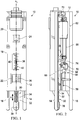
FIG. 1 is an isometric view of a hair pluck device according to one or more embodiments; -
FIG. 2 is a rear isometric view of the hair pluck device ofFIG. 1 ; -
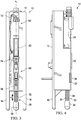
FIG. 3 is a rear view of the hair pluck device ofFIG. 1 ; -
FIG. 4 is a side elevational view of the hair pluck device ofFIG. 1 ; -
FIG. 5 is a schematic of a hair pluck device according to one or more embodiments; and -
FIG. 6 is a schematic of a method of testing a hair or skin properties according to one or more embodiments. - Referring to
FIGS. 1-4 , an embodiment of adevice 10 constructed to pull and/or pluck one or more strands of hair from a subject is shown. Thedevice 10 may be coupled to a computer and/or a network via hardwired or wireless connections. The device may measure a variety of parameters such as, for example, strain forces, stress forces, etc., and transmit such measurement data to the computer and/or network over the hardwired and/or wireless connections. The computer and/or network may store, manipulate, and/or compare the measurement data. Thedevice 10 includes longitudinal axis A1, aframe 12, one or more legs extending away from the frame, acontrol system 80, alinear actuator 60 coupled to theframe 12 and coupled to the control system, agripper 56 coupled to the linear actuator, and aload cell 70 coupled to the linear actuator. "Couple" and "coupled", as used herein, means a physical connection or coupling and/or an operative connection or coupling (e.g., electrical connection or coupling or wireless connection or coupling). - The
frame 12 may include any variety of shapes, sizes, configurations, and components. It may comprise multiple components releaseably or fixedly coupled to each other or a single, integral unit. In the embodiment shown, theframe 12 includes a substantially U-shaped configuration. Thedevice 10 may include afirst plate 18 and asecond plate 20 coupled o theframe 12. Thefirst plate 18 may include afirst opening 22 disposed therein. Thesecond plate 20 may include asecond opening 24 and an aperture 26 disposed therein. Thefirst plate 18 and/or thesecond plate 20 may include aleg extension indicator 40. Theleg extension indicator 40 may includeindicia 42 marked along the aperture 26, identifying a distance one of the legs of thedevice 10 has been extended or retracted as will be described more fully herein below. - The
frame 12 includes afirst leg 14, asecond leg 16, and athird leg 30 coupled to and extending from theframe 12. The legs may be spaced-apart from each other. The first, second, andthird legs frame 12, releaseably coupled to theframe 12, or some combination thereof. As shown, in this embodiment, the first, second, andthird legs - In certain embodiments, one or more of the legs may be movable relative to the
frame 12. In certain embodiments, thefirst leg 14,second leg 16, and/orthird leg 30 may be movable relative to the frame. Referring back to the embodiment illustrated inFIGS. 1-4 , the first andsecond legs frame 12. In this embodiment, thethird leg 30 is movably coupled to theframe 12. As configured, thethird leg 30 moves linearly substantially parallel to the longitudinal axis A1 in two opposite directions relative to theframe 12 as indicated by arrow (A). In other words, theleg 30 may protract (extend) from theframe 12 or retract (draw in) toward theframe 12. - As shown, the
third leg 30 comprises arod 32 havingexternal threads 34 and anend 39 distal to theframe 12. Thedevice 10 includes aknob 36 rotatably coupled to theframe 12. In certain embodiments, theknob 36 may be accessible through thefirst opening 22. Theknob 36 includes internal threads (not shown) that are configured to receive therod 32 and engage theexternal threads 34 of the rod. In certain embodiments, theknob 36 may be rotated in the counterclockwise direction to protract (extend) thedistal end 39 of thethird leg 30 away from the frame 12 (e.g., downward) and in the clockwise direction to retract (draw in) thedistal end 39 of theleg 30 toward the frame 12 (e.g., upward) or vice versa. In such embodiments, thethird leg 30 has an adjustable length relative the first andsecond legs frame 12. This permits the three legs to be positioned upon a curved surface such as, for example, a subject's head, and still maintain thedevice 10 and thus thelinear actuator 60 substantially normal (e.g., perpendicular) to the surface (e.g., head, scalp, etc.) or to enable thedevice 10 to be positioned upon a surface (e.g., a flat surface) and orient the device relative to that surface and/or a hair follicle to obtain a desired pull angle relative to the surface and/or hair follicle. This adjustability enables the device to be oriented to pull a strand of hair at different angles relative to the surface the device is placed upon and/or the hair follicle that the strand of hair is extending from. - It should be understood that in certain embodiments, the
device 10 may include any number of legs such as, for example, five (5) legs, positioned in any number of configurations such as, for example, pentagonal-shaped. In certain embodiments, thedevice 10 may include one fixed leg and one movable or adjustable leg. It is also understood that any number of the legs may be movably coupled to theframe 12 similar toleg 30 above or by other mechanisms and methods as conventionally known or yet-to-be developed. - As set forth above, the
device 10 includes acontrol system 80. Thecontrol system 80 may be integrated into and positioned within theframe 12 or remote from theframe 12. In the embodiment shown in theFIGS. 1-4 , a conventional signal anddata cable 72 may connect thecontrol system 80 to thelinear actuator 60. It should be understood that any variety of wired and/or wireless connections as set forth herein and/or conventionally known may be used to connect thecontrol system 80 to thelinear actuator 60. Thecontrol system 80 may be embodied as any type of computing device or server or capable of processing, communicating, storing, maintaining, and transferring data. For example, thecontrol system 80 may be embodied as a server, a microcomputer, a minicomputer, a mainframe, a desktop computer, a laptop computer, a mobile computing device, a handheld computer, a smart phone, a tablet computer, a personal digital assistant, a telephony device, a custom chip, an embedded processing device, linear actuator control board, or other computing device and/or suitable programmable device. In certain embodiments, thecontrol system 80 can be embodied as a computing device integrated with other systems or subsystems. Thecontrol system 80 includes a linear actuator control board such as, for example, those commercially available from Firgelli automation. - In the illustrative embodiment of
FIG. 5 , thecontrol system 80 includes aprocessor 82. It can also comprise asystem bus 84, amemory 86, adata storage 88, andcommunication circuitry 90. In certain embodiments, thecontrol system 80 may further include one or more peripheral devices. Of course, thecontrol system 80 may include other or additional components, such as those commonly found in a server and/or computer (e.g., various input/output devices), in other embodiments. Additionally, in certain embodiments, one or more of the illustrative components may be incorporated in, or otherwise from a portion of, another component. For example, thememory 86, or portions thereof, can be incorporated in theprocessor 82 in some embodiments. Furthermore, it should be appreciated that thecontrol system 80 may include other components, subcomponents, and devices commonly found in a computer and/or computing device, which are not illustrated inFIG. 5 for clarity of the description. Also, it should be appreciated that any one of the illustrative components of thecontrol system 80 set forth above may be eliminated from the system. - The
processor 82 can be embodied as any type of processor capable of performing the functions described herein. For example, theprocessor 82 can be embodied as a single or multicore processor, a digital signal processor, microcontroller, a general purpose central processing unit (CPU), a reduced instruction set computer (RISC) processor, a processor having a pipeline, a complex instruction set computer (CISC) processor, an application specific integrated circuit (ASIC), a programmable logic device (PLD), a field programmable gate array (FPGA), or other processor or processing/controlling circuit or controller. - In various configurations, the
control system 80 includes asystem bus 84 for interconnecting the various components of thecontrol system 80. Thesystem bus 84 may be embodied as, or otherwise include, memory controller hubs, input/output control hubs, firmware devices, communication links (i.e., point-to-point links, bus links, wires, cables, light guides, printed circuit board traces, etc.) and/or other components and subsystems to facilitate the input/output operations with theprocessor 82, thememory 86, and other components of thecontrol system 80. In certain embodiments, thecontrol system 80 may be integrated into one or more chips such as a programmable logic device or an application specific integrated circuit (ASIC). In such embodiments, thesystem bus 84 can form a portion of a system-on-a-chip (SoC) and be incorporated, along with theprocessor 82, thememory 86, and other components of thecontrol system 80, on a single integrated circuit chip. - The
memory 86 may be embodied as any type of volatile or non-volatile memory or data storage capable of performing the functions described herein. For example, thememory 86 may be embodied as read only memory (ROM), random access memory (RAM), cache memory associated with theprocessor 82, or other memories such as dynamic RAM (DRAM), static ram (SRAM), programmable ROM (PROM), electrically erasable PROM (EEPROM), flash memory, a removable memory card or disk, a solid state drive, and so forth. In operation, thememory 86 may store various data and software used during operation of thecontrol system 80 such as operating systems, applications, programs, libraries, drivers, and a plurality of pulling profiles as will be described below herein. - The
data storage 88 may be embodied as any type of device or devices configured for short-term or long-term storage of data such as, for example, memory devices and circuits, memory cards, hard disk drives, solid-state drives, or other data storage devices. For example, in certain embodiments, thedata storage 88 includes storage media such as a storage device that can be configured to have multiple modules, such as magnetic disk drives, floppy drives, tape drives, hard drives, optical drives and media, magneto-optical drives and media, compact disc drives, Compact Disc Read Only Memory (CD-ROM), Compact Disc Recordable (CD-R), Compact Disc Rewriteable (CD-RW), a suitable type of Digital Versatile Disc (DVD) or Blu-Ray disc, and so forth. Storage media such as flash drives, solid state hard drives, redundant array of individual disks (RAID), virtual drives, networked drives and other memory means including storage media on theprocessor 82, or thememory 86 are also contemplated as storage devices. It should be appreciated that such memory may be internal or external with respect to operation of the disclosed embodiments. It should also be appreciated that certain portions of the processes described herein can be performed using instructions (including a plurality of pulling profiles) stored on a computer-readable medium or media that direct or otherwise instruct a computer system to perform the process steps. Non-transitory computer-readable media, as used herein, comprises all computer-readable media except for transitory, propagating signals. In certain embodiments, thedata storage device 88 may be configured to store a plurality of pulling profiles of thecontrol system 80. - The
communication circuitry 90 of thecontrol system 80 may be embodied as any type of communication circuit, device, interface, or collection thereof, capable of enabling communications between thecontrol system 80 and thelinear actuator 60 of thedevice 10, aremote computer 110, and/or any other computing device communicatively coupled thereto. For example, thecommunication circuitry 90 may be embodied as one or more network interface controllers (NICs), in certain embodiments. The communication circuitry 112 may be configured to use any one or more communication technologies (e.g., wireless or wired communications) and associated protocols (e.g., Ethernet, Wi-Fi®, WiMAX, etc.) to effect such communication. - In certain embodiments, the
control system 80,remote computer 110, and/or any other computing devices can communicate with each other over one or more networks. The network(s) may be embodied as any number of various wired and/or wireless communication networks. For example, the network(s) may be embodied as or otherwise include a local area network (LAN), a wide area network (WAN), a cellular network, or a publicly-accessible, global network such as the Internet. Additionally, the network(s) may include any number of additional devices to facilitate communication between the computing devices of thesystem 100. In other embodiments, some or all of thecontrol system 80 andremote computer 110 are installed and operate local to a computing device. - The
control system 80 comprises a linear actuator control board constructed to control a linear actuator. Additionally, in certain embodiments, thecontrol system 80 may further include one or more peripheral devices. Such peripheral devices may include any type of peripheral device commonly found in a computing device such as additional data storage, memory, a hardware keyboard, a keypad, a gesture or graphical input device, a motion input device, a touchscreen interface, one or more displays, an audio unit, a voice recognition unit, a vibratory device, a computer mouse, a peripheral communication device, and any other suitable user interface, input/output device, and/or other peripheral device. - As set forth above, the
memory 86 includes a plurality of pulling profiles. A pulling profile, as used herein, includes a set of instructions for execution by theprocessor 82 in controlling thelinear actuator 60 while pulling one or more strands of hair. The pulling profile may define the magnitude of pull force, threshold pull force, pull velocity, pull distance, pull time, pull force over time, pull frequency, amount of time between pulls, whether a static or constant pull force is maintained during the breaks between pulls with increasing pull force, any combination thereof, and/or any other characteristics or properties. In certain embodiments, thememory 86 may include a plurality of pulling profiles, wherein a second one of the plurality of pulling profiles differs from a first one of the plurality of pulling profiles in at least any one of the following: threshold pull force, pull distance, pull time, pull force over time, pull velocity, pull frequency, amount of time between pulls, or whether a static or constant pull force is maintained during the breaks between pulls with increasing pull force. - In certain embodiments, the plurality of pulling profiles stored in memory of the
control system 80 may include one or more of the following pulling profile instructions set forth below. In certain embodiments, the plurality of profiles stored in memory of thecontrol system 80 may include at least any two of the pulling profile instructions set forth below. - One example of a pulling profile instruction that may be stored in memory and executed by the processor may include a pulling profile instruction to cause a gripped strand of hair to be pulled toward the frame at a constant force and speed until the gripped a strand of hair either breaks or releases from a follicle.
- Another example, of a pulling profile instruction that may be stored in memory and executed by the processor may include a pulling profile instruction to cause a gripped strand of hair to be pulled toward the frame with an increasing force at a constant speed for at least a first distance (X1), then hold the gripped a strand of hair under a constant pull force for a first time period (T1) at that distance (X1), then cause the linear actuator to repeat the previous steps n number of times or until the gripped a strand of hair either breaks or releases from a follicle.
- Another example, of a pulling profile instruction that may be stored in memory and executed by the processor may include a pulling profile instruction to cause a gripped strand of hair to be pulled toward the frame with an increasing force at a constant speed for at least a first distance (X1), then remove the pulling force from the gripped strand of hair for a first time period (T1), then cause the linear actuator to repeat the previous steps n number of times or until the gripped a strand of hair either breaks or releases from a follicle.
- Another example, of a pulling profile instruction that may be stored in memory and executed by the processor may include a pulling profile instruction to cause a gripped strand of hair to be pulled toward the frame with an increasing force at a constant speed for at least a first distance (X1), then hold the gripped strand of hair under a constant pull force for a first time period (T1) at that distance (X1), then remove the pulling force from the strand of hair for a second time period (T2), then cause the linear actuator to repeat the previous steps n number of times or until the gripped strand of hair either breaks or releases from a follicle.
- Another example, of a pulling profile instruction that may be stored in memory and executed by the processor may include a pulling profile instruction to cause a gripped strand of hair to be pulled toward the frame with an increasing force at a constant speed until a predetermined pulling force is reached (e.g., a threshold pulling force), then remove the pulling force from the strand of hair for a first time period (T1), then cause the linear actuator to repeat the previous steps n number of times or until the gripped strand of hair either breaks or releases from a follicle.
- Another example, of a pulling profile instruction that may be stored in memory and executed by the processor may include a pulling profile instruction to cause a gripped strand of hair to be pulled toward the frame with an increasing force at a constant speed until a threshold pulling force is reached, then hold the gripped strand of hair under a constant pull force for a first time period (T1) at that threshold pulling force, then remove the pulling force from the strand of hair for a second time period (T2), then cause the linear actuator to repeat the previous steps n number of times or until the gripped strand of hair either breaks or releases from a follicle.
- As shown, the
linear actuator 60 includes aproximal end 62 and adistal end 64. In certain embodiments, thelinear actuator 60 may include aclip bracket 66 coupled at thedistal end 64. Theclip bracket 66 may be constructed to releaseably receive and/or engage thegripper 56. In certain embodiments, theclip bracket 66 may include areceiver 68 constructed to releaseably engage an end of thegripper 56. Thelinear actuator 60, in certain embodiments, may be coaxially aligned with the longitudinal axis A1. The linear actuator may include an electrical linear actuator such as, for example, linear actuators commercially available from Firgelli Automations, L16-P. The linear actuator may be sized in accordance with the length of stroke and force required for the desired task. The linear actuator may be powered by an AC or DC power source 80 (e.g., one or more batteries). It should be understood that other actuators may be used such as, for example, pneumatic and hydraulic actuators. - The
device 10 includes agripper 56 coupled to thedistal end 64 of the linear actuator. In certain embodiments, thegripper 56 may include a flanged end 58 that is constructed to releaseably insert into and/or engage thereceiver 68 of theclip bracket 66. In certain embodiments, thegripper 56 may include a micro-grabber such as, for example, a micro-grabber commercially available from DigiKey, Pamona-4233 micro-grabber. In other examples of the gripper may include, but not be limited to, alligator clips, robotic grippers, spring clips, manual vice grips, combinations thereof, etc. In certain embodiment, the gripper may be manually operated to open and close to grip and/or release one or more strands of hair. In certain other embodiments, the gripper may be coupled to thecontrol system 80 which may send control signals to the gripper, causing it to open and close in order to grip and/or release one or more strands of hair. - As set forth above, the device includes the
load cell 70 coupled to thelinear actuator 60. Theload cell 70 is positioned between an upper portion and a lower portion of the actuator. In such a configuration, when a strand of hair is gripped by thegripper 56 and thelinear actuator 60 is caused to retract, thus placing a pulling force on the strand of hair, the opposed forces (i.e., the force created by the retracting linear actuator and the opposite force created by the strand of hair connected within the follicle) create a strain within the load cell that is measured. In certain embodiments, theload cell 70 may include a strain gauge such as, for example, LCL-005, commercially available by Omega®. In this example, the load cell has an excitation of 5 Vdc, 12V max., rated output of 2 mV/V +/- 20%, zero balance of 0.3 mV/V, combined error of 0.25% FS, operating temperature of -54 to 93° C (-65 to 200° F), compensated temperature of -7 to 49° C (20 to 120° F), temperature effects of (zero balance of 0.02% FS/°F and output of 0.02%/°F), resistance (input and output) of 1200 +/- 300 Ω, insulation resistance of 1000 Ω @ 50 Vdc, seal of urethane coated, safe overload of 150% FS, full scale deflection of 0.25 to 1.27 mm (0.010 to 0.050 in.), lead wire of 9 in. shielded PVC 4-conductor 30AWG, and material of >816 gf (2lb): 301 SS; ≤ 816 gf (2lb) beryllium copper. - The
load cell 70 may be coupled to aremote computer 110 and/or thecontrol system 80. Theremote computer 110 may include one or more networks (e.g., LAN, WAN, Internet, etc.) such that theload cell 70 may send strain and/or force data measured by it to theremote computer 110,control system 80, and/or other networks to store, manipulate, analyze, compare, transfer to other computers or networks, and/or the like. Theremote computer 110 may include any and/or all of the components that thecontrol system 80 may include and perform the same or similar functions as set forth above. Theload cell 70 may be connected to theremote computer 110, thecontrol system 80, and/or other networks (e.g., a WAN, Internet, etc.) via wired (e.g., signal and/or data cable 74) or wireless connections such as, those set forth above and/or conventionally known. In certain embodiments, theload cell 70 and/or thedevice 10 are coupled to theremote computer 110 via a USB wired connection. In such an embodiment, thedevice 10 may further include a strain gauge to USB converter coupled between theload cell 70 and the USB wired connection. - The
load cell 70,control system 80,remote computer 110, and/or other sensors coupled to the device may be configured to measure, calculate, and/or store a variety of pulling data. Pulling data may include, but not be limited to, pulling force (e.g., strain), pulling force over-time (e.g., strain over-time), pulling velocity (e.g., velocity of the linear actuator), pulling time, and/or other similar measurement data. Pulling time may include, but not be limited to the period of time from the point in time wherein the linear actuator begins pulling a strand of hair to the point in time that either the linear actuator stops pulling the strand of hair or the strand of hair releases from its follicle. Pulling time may also include the cumulative amount of time for multiple pulls with such as, defined in one or more of the pulling profile instructions set forth herein. In certain embodiments, the pulling time may be calculated manually, macros, or via software by dividing the pulling velocity by the total distance traveled. In certain embodiments, the velocity may be measured via a sensor coupled to the device and/orcontrol system 80. In certain embodiments, thedevice 10 may measure the pulling force every 10 ms and the distance traveled by the linear actuator. From this data, software on thecontrol system 80 may calculate pull velocity (mm/ms). In certain embodiments, thedevice 10 may include a potentiometer to determine pulling velocity. The information from the potentiometer is conditioned and/or translated into the data used by the control system to determine and/or calculate velocity. - The
power source 100 may be coupled to thedevice 10 and/or thecontrol system 80 to provide power to any of the individual components and/or the device as a whole. Thepower source 100 may be an A/C and/or DC. The A/C source may be a conventional 120 volt A/C outlet. The DC source may include one or more batteries. - The
device 10 may be used in a variety of ways and methods in a variety of environments, including, but not limited to in a laboratory, testing facility, at home, in a retail store, and/or other locations. Referring toFIG. 6 , one example of a method that thedevice 10 may be used in includes a method of testing hair or skin properties. In this example, the method includes setting a first leg and second leg of a hair plucking device upon a surface; orienting the hair plucking device relative to the surface to provide a desired pull angle; gripping, by a gripper, a strand of hair of a subject; activating a control system comprising a plurality of pulling profile instructions stored in memory, wherein upon activation of the control system, the control system executes a selected one of a plurality of pulling profile instructions, and wherein a non-selected one of the plurality of pulling profile instructions differs from the selected one of the plurality of pulling profile instructions in at least any one of the following: threshold pull force, pull distance, pull time, pull force over time, threshold pull force, pull distance, pull velocity, pull frequency, amount of time between pulls, or whether a static or constant pull force is maintained during the breaks between pulls with increasing pull force, pull frequency, amount of time between pulls, or whether a static or constant pull force is maintained during the breaks between pulls with increasing pull force; retracting, by the control system, a linear actuator in accordance with the selected one of the plurality of pulling profile instructions to apply a pulling force to the strand of hair; and measuring, by a load cell coupled to the linear actuator, the pulling force. - In certain embodiments of this method, the plurality of pulling profile instructions may include at least two of the following pulling profile instructions: a first pulling profile instruction to cause a gripped strand of hair to be pulled toward the frame at a constant force and speed until the gripped a strand of hair either breaks or releases from a follicle; a second pulling profile instruction to cause a gripped strand of hair to be pulled toward the frame with an increasing force at a constant speed for at least a first distance (X1), then hold the gripped a strand of hair under a constant pull force for a first time period (T1) at that distance (X1), then cause the linear actuator to repeat the previous steps n number of times or until the gripped a strand of hair either breaks or releases from a follicle; a third pulling profile instruction to cause a gripped strand of hair to be pulled toward the frame with an increasing force at a constant speed for at least a first distance (X1), then remove the pulling force from the gripped strand of hair for a first time period (T1), then cause the linear actuator to repeat the previous steps n number of times or until the gripped a strand of hair either breaks or releases from a follicle; a fourth pulling profile instruction to cause a gripped strand of hair to be pulled toward the frame with an increasing force at a constant speed for at least a first distance (X1), then hold the gripped strand of hair under a constant pull force for a first time period (T1) at that distance (X1), then remove the pulling force from the strand of hair for a second time period (T2), then cause the linear actuator to repeat the previous steps n number of times or until the gripped strand of hair either breaks or releases from a follicle; a fifth pulling profile instruction to cause a gripped strand of hair to be pulled toward the frame with an increasing force at a constant speed until a predetermined pulling force is reached (e.g., a threshold pulling force), then remove the pulling force from the strand of hair for a first time period (T1), then cause the linear actuator to repeat the previous steps n number of times or until the gripped strand of hair either breaks or releases from a follicle; or a sixth pulling profile instruction to cause a gripped strand of hair to be pulled toward the frame with an increasing force at a constant speed until a threshold pulling force is reached, then hold the gripped strand of hair under a constant pull force for a first time period (T1) at that threshold pulling force, then remove the pulling force from the strand of hair for a second time period (T2), then cause the linear actuator to repeat the previous steps n number of times or until the gripped strand of hair either breaks or releases from a follicle.
- In certain embodiments, the step of orienting the hair plucking device to provide the desired pull angle may include adjusting the length of at least one of the first and second legs. In certain embodiments, the method may include communicating wirelessly between the control system and the linear actuator. In certain embodiments, the method may further include orienting a hair plucking device relative to a surface to provide a desired pull angle of a strand of hair of the subject post application of a consumer product to the subjects hair or scalp; gripping, by a gripper, the strand of hair of the subject; activating a control system, wherein upon activation of the control system, the control system executes another selected one of a plurality of pulling profile instruction stored in memory, wherein a non-selected one of the plurality of pulling profile instructions differs from the another selected one of the plurality of pulling profile instructions in at least any one of the following: threshold pull force, pull distance, pull time, pull force over time, pull velocity, pull frequency, amount of time between pulls, or whether a static or constant pull force is maintained during the breaks between pulls with increasing pull force; retracting, by the control system, a linear actuator in accordance with the another selected one of the plurality of pulling profile instructions to apply a pulling force to the strand of hair; measuring, by a load cell coupled to the linear actuator, the pulling force; and comparing the measured pulling force applied to the strand of hair prior to application of the consumer product to hair of scalp of a subject to the pulling force applied to the strand of hair post application of the consumer product to hair or scalp of the subject. It should be understood that although the examples and/or methods disclosed herein describe a strand of hair of a subject, each step and/or method may be repeated multiple times for several strands of hair from a single subject and/or may be repeated multiple times to pull a single strand of hair from each of multiple subjects or several strands of hair from each of multiple subjects.
- In certain embodiments, the method may further include compiling pulling data for one or more strands of hair prior to application of a consumer product to the one or more strands of hair or a scalp of one or more subjects. In certain embodiments, the method may further include compiling pulling data for one or more strands of hair post application of the consumer product to the one or more strands of hair or the scalp of the one or more subjects. In certain embodiments, the method may further include supporting a product claim for the consumer product with this compiled data.
- In certain embodiments, the
device 10 may be used at a retail store or point of sale to perform a hair pluck test, demonstration, and/or one or more of the methods shown and described herein. - The dimensions and values disclosed herein are not to be understood as being strictly limited to the exact numerical values recited. Instead, unless otherwise specified, each such dimension is intended to mean both the recited value and a functionally equivalent range surrounding that value. For example, a dimension disclosed as "40 mm" is intended to mean "about 40 mm."
- While particular embodiments of the present disclosure have been illustrated and described, it would be obvious to those skilled in the art that various other changes and modifications can be made, as long as they fall within the appended claims
Claims (9)
- An apparatus (10) constructed to pull a strand of hair, the apparatus (10) comprising:a frame (12) having a longitudinal axis (A1) and a first end;a first leg (14), a second leg (16), and a third leg (30) extending from the first end of the frame (12) the third leg spaced apart from the first and second legs;wherein the first, second, and third legs (14, 16, and 30), respectively, are integrally coupled to the frame (12), or releasably coupled to the frame (12), or some combination thereof;wherein the third leg (30) is movable linearly relative to the frame (12);wherein the third leg (30) comprises a rod (32) having external threads (34) and an end (39) distal to the frame (12), wherein the apparatus (10) includes a knob (36) rotatably coupled to the frame (12), wherein the knob (36) includes internal threads that are configured to receive the rod (32) and engage the external threads (34) of the rod (32);a control system (80) comprising a processor (82) to execute a plurality of pulling profile instructions stored in a memory (86);a linear actuator (60) operatively coupled to the control system (80) and constructed to move linearly along the longitudinal axis (A1) relative to the frame (12), the linear actuator (60) having a distal end (64);a load cell (70) coupled to the linear actuator (60), wherein the load cell (70) is positioned between an upper portion and a lower portion of the actuator (60); anda gripper (56) coupled to the distal end (64) of the linear actuator (60), the gripper (56) constructed to grip a strand of hair;wherein when one or more of the plurality of pulling profile instructions stored in memory (86) are executed by the processor (82), the control system (80) causes the linear actuator (60) to retract along the longitudinal axis (A1), applying a pulling force to a strand of hair gripped by the gripper (56); andwherein the load cell (70) is configured to measure the pulling force.
- The apparatus (10) according to claim 1, further comprising a power source (100) coupled to the linear actuator (60), wherein the power source (100) is selected from the group consisting of the following: electric, hydraulic, and pneumatic.
- The apparatus (10) according to any the preceding claims, wherein the load cell (70) is a strain gauge.
- The apparatus (10) according to any the preceding claims, wherein the plurality of pulling profile instructions stored in memory (86) include a first pulling profile instruction and a second pulling profile instruction, wherein the second pulling profile instruction differs from the first pulling profile instruction in at least any one of the following: threshold pull force, pull distance, pull time, pull force over time, pull velocity, pull frequency, amount of time between pulls, or whether a static or constant pull force is maintained during the breaks between pulls with increasing pull force.
- A method of testing hair or skin properties, wherein the apparatus (10) according to claims 1-3 is used in the steps::setting a first leg (14) and second leg (16) of a hair plucking device upon a subject's head surface,
and a third leg (30) coupled to and extending from the frame (12) and are spaced-apart from each other; wherein the first, second, and third legs (14, 16, and 30), respectively, are integrally coupled to the frame (12), or releasably coupled to the frame (12), or some combination thereof;wherein the third leg (30) is movable linearly relative to the frame (12);wherein the third leg (30) comprises a rod (32) having external threads (34) and an end (39) distal to the frame (12), wherein the apparatus (10) includes a knob (36) rotatably coupled to the frame (12), wherein the knob (36) includes internal threads that are configured to receive the rod (32) and engage the external threads (34) of the rod (32);orienting the hair plucking device relative to the subject's head surface to provide a desired pull angle;gripping, by a gripper (56), a strand of hair of a subject; andactivating a control system (80) comprising a plurality of pulling profile instructions stored in memory (86), wherein upon activation of the control system (80), the control system (80) executes a selected one of a plurality of pulling profile instructions, and wherein a non-selected one of the plurality of pulling profile instructions differs from the selected one of the plurality of pulling profile instructions in at least any one of the following: threshold pull force, pull distance, pull time, pull force over time, pull velocity, pull frequency, amount of time between pulls, or whether a static or constant pull force is maintained during the breaks between pulls with increasing pull force;retracting, by the control system (80), a linear actuator (60) in accordance with the selected one of the plurality of pulling profile instructions to apply a pulling force to the strand of hair; andmeasuring, by a load cell (70) coupled to the linear actuator (60), the pulling force. - The method according to claim 5, wherein the plurality of pulling profile instructions includes at least two of the following pulling profile instructions:a first pulling profile instruction to cause a gripped strand of hair to be pulled toward the frame (12) at a constant force and speed until the gripped a strand of hair either breaks or releases from a follicle;a second pulling profile instruction to cause a gripped strand of hair to be pulled toward the frame (12) with an increasing force at a constant speed for at least a first distance (X1), then hold the gripped a strand of hair under a constant pull force for a first time period (T1) at that distance (X1), then cause the linear actuator (60) to repeat the previous steps n number of times or until the gripped a strand of hair either breaks or releases from a follicle;a third pulling profile instruction to cause a gripped strand of hair to be pulled toward the frame (12) with an increasing force at a constant speed for at least a first distance (X1), then remove the pulling force from the gripped strand of hair for a first time period (T1), then cause the linear actuator (60) to repeat the previous steps n number of times or until the gripped a strand of hair either breaks or releases from a follicle;a fourth pulling profile instruction to cause a gripped strand of hair to be pulled toward the frame (12) with an increasing force at a constant speed for at least a first distance (X1), then hold the gripped strand of hair under a constant pull force for a first time period (T1) at that distance (X1), then remove the pulling force from the strand of hair for a second time period (T2), then cause the linear actuator (60) to repeat the previous steps n number of times or until the gripped strand of hair either breaks or releases from a follicle;a fifth pulling profile instruction to cause a gripped strand of hair to be pulled toward the frame (12) with an increasing force at a constant speed until a predetermined pulling force is reached (e.g., a threshold pulling force), then remove the pulling force from the strand of hair for a first time period (T1), then cause the linear actuator (60) to repeat the previous steps n number of times or until the gripped strand of hair either breaks or releases from a follicle; ora sixth pulling profile instruction to cause a gripped strand of hair to be pulled toward the frame (12) with an increasing force at a constant speed until a threshold pulling force is reached, then hold the gripped strand of hair under a constant pull force for a first time period (T1) at that threshold pulling force, then remove the pulling force from the strand of hair for a second time period (T2), then cause the linear actuator (60) to repeat the previous steps n number of times or until the gripped strand of hair either breaks or releases from a follicle.
- The method according to claims 5-6, wherein the orienting the hair plucking device to provide the desired pull angle comprises adjusting the length of at least one of the first and second legs (14, 16).
- The method according to claims 5-7, further comprising:orienting a hair plucking device relative to a subject's head surface to provide a desired pull angle of a strand of hair of the subject post application of a consumer product to the subject's hair or scalp;gripping, by a gripper (56), the strand of hair of the subject;activating a control system (80), wherein upon activation of the control system (80), the control system (80) executes another selected one of a plurality of pulling profile instruction stored in memory (86), wherein a non-selected one of the plurality of pulling profile instructions differs from the another selected one of the plurality of pulling profile instructions in at least any one of the following: threshold pull force, pull distance, pull time, pull force over time, pull velocity, pull frequency, amount of time between pulls, or whether a static or constant pull force is maintained during the breaks between pulls with increasing pull force;retracting, by the control system (80), a linear actuator (60) in accordance with the another selected one of the plurality of pulling profile instructions to apply a pulling force to the strand of hair; andmeasuring, by a load cell (70) coupled to the linear actuator (60), the pulling force.
- The method according to claim 8, further comprising compiling pulling data for a strand of hair prior to application of a consumer product to hair or scalp of a subject; compiling pulling data for a strand of hair post application of the consumer product to hair or the scalp of the subject; and supporting a product claim for the consumer product with this compiled data.
Applications Claiming Priority (2)
| Application Number | Priority Date | Filing Date | Title |
|---|---|---|---|
| US201662432845P | 2016-12-12 | 2016-12-12 | |
| PCT/US2017/065541 WO2018111748A1 (en) | 2016-12-12 | 2017-12-11 | An apparatus and method for pulling a strand of hair |
Publications (2)
| Publication Number | Publication Date |
|---|---|
| EP3551006A1 EP3551006A1 (en) | 2019-10-16 |
| EP3551006B1 true EP3551006B1 (en) | 2020-09-16 |
Family
ID=60935972
Family Applications (1)
| Application Number | Title | Priority Date | Filing Date |
|---|---|---|---|
| EP17825686.3A Active EP3551006B1 (en) | 2016-12-12 | 2017-12-11 | An apparatus and method for pulling a strand of hair |
Country Status (4)
| Country | Link |
|---|---|
| US (1) | US10736398B2 (en) |
| EP (1) | EP3551006B1 (en) |
| CN (1) | CN110072409B (en) |
| WO (1) | WO2018111748A1 (en) |
Family Cites Families (31)
| Publication number | Priority date | Publication date | Assignee | Title |
|---|---|---|---|---|
| CH353846A (en) | 1957-03-28 | 1961-04-30 | Noeel Miles Henri | Hair breakage point indicator device |
| US4185106A (en) | 1972-07-11 | 1980-01-22 | Hoechst Aktiengesellschaft | Pyridones as antidandruff agents |
| JPS5655857A (en) | 1979-10-15 | 1981-05-16 | Sharp Corp | Diagnosing device for quality of hair |
| JPS5810630A (en) | 1981-07-11 | 1983-01-21 | Toyo Seiki Seisakusho:Kk | Method and apparatus for measuring mechanical property of biological substance such as skin and hair |
| JPS58165035A (en) | 1982-03-25 | 1983-09-30 | Sharp Corp | Apparatus for testing hair strength |
| LU86944A1 (en) | 1987-07-17 | 1989-03-08 | Oreal | COMPOSITION BASED ON HYDROXYPYRIDONE DERIVATIVES FOR REDUCING HAIR LOSS |
| JPH03152439A (en) | 1989-11-08 | 1991-06-28 | Hiroyoshi Nagamitsu | Measuring device for hair |
| US5424435A (en) | 1993-10-18 | 1995-06-13 | Olin Corporation | 1-hydroxy-6-substituted-2-pyridones |
| GB9607568D0 (en) | 1996-04-12 | 1996-06-12 | Unilever Plc | Antimicrobial hair treatment composition |
| US5792961A (en) * | 1997-04-10 | 1998-08-11 | Giebner Enterprises, Inc. | Portable motorized fastener tester |
| JP2001172159A (en) | 1999-12-20 | 2001-06-26 | Lion Corp | Hypoallergenic antibacterial cosmetic |
| CN2517292Y (en) * | 2001-11-08 | 2002-10-23 | 方明杭 | Plait shaper |
| US7131208B2 (en) * | 2004-04-16 | 2006-11-07 | Bernard Cohen Technology, Llc | Method, device and cartridge for measuring fluctuations in the cross-sectional area of hair in a pre-determined scalp area |
| JP2008007476A (en) | 2006-06-30 | 2008-01-17 | Lion Corp | Hair restorer composition |
| JP4356783B2 (en) * | 2007-03-01 | 2009-11-04 | ソニー株式会社 | Method for extracting biological material from hair and hair collection device used in the method |
| CN101317712A (en) * | 2007-06-09 | 2008-12-10 | 超人集团有限公司 | Dynamo-electric plucker |
| JP2009096777A (en) | 2007-10-19 | 2009-05-07 | Lion Corp | Hair restorer composition |
| JP2009137889A (en) | 2007-12-06 | 2009-06-25 | Lion Corp | Hair restorer, hair restorer composition, and hair restorer method |
| EP2245956B1 (en) * | 2009-04-27 | 2012-06-20 | Braun GmbH | Hybrid epilator device |
| EP2429530B1 (en) | 2009-05-14 | 2018-11-07 | The General Hospital Corporation | (s)-meclizine for treating ischaemia-reperfusion injury |
| FR2949052B1 (en) | 2009-08-13 | 2015-03-27 | Oreal | PROCESS FOR COSMETIC TREATMENT OF SCALP. |
| IL201884A0 (en) | 2009-11-02 | 2010-06-30 | Cupron Corp | Hair care compositions and materials |
| US20120003300A1 (en) | 2010-06-30 | 2012-01-05 | Pangaea Laboratories Ltd | Composition Comprising Vascular Endothelial Growth Factor (VEGF) for the Treatment of Hair Loss |
| EP2627309A2 (en) | 2010-10-15 | 2013-08-21 | The Procter and Gamble Company | Use of monoamine oxidase inhibitors to improve epithelial biology |
| US8980876B2 (en) | 2010-10-28 | 2015-03-17 | The Procter & Gamble Company | Inhibition of microbial growth by aconitase inhibition |
| US20130109664A1 (en) | 2011-10-28 | 2013-05-02 | James Robert Schwartz | Personal Care Compositions Comprising a Pyrithione and an Iron Chelator |
| NZ705751A (en) | 2012-08-16 | 2018-04-27 | Gencor Armats Biotek Pvt Ltd | Herbal preparation for stimulation of hair growth, control of hair fall, dandruff and infections thereof using ageratum spp. |
| CN104640476A (en) * | 2012-09-17 | 2015-05-20 | 皇家飞利浦有限公司 | Epilating device |
| WO2014095289A2 (en) | 2012-12-20 | 2014-06-26 | Unilever Plc | Method of treating hair ageing |
| WO2017189946A1 (en) | 2016-04-29 | 2017-11-02 | The Procter & Gamble Company | Method of treating a hair disorder with n-hydroxypyridinones |
| CN106108344B (en) * | 2016-08-22 | 2018-10-26 | 吴让攀 | Hair remover |
-
2017
- 2017-12-08 US US15/836,377 patent/US10736398B2/en not_active Expired - Fee Related
- 2017-12-11 CN CN201780076849.9A patent/CN110072409B/en not_active Expired - Fee Related
- 2017-12-11 EP EP17825686.3A patent/EP3551006B1/en active Active
- 2017-12-11 WO PCT/US2017/065541 patent/WO2018111748A1/en not_active Ceased
Non-Patent Citations (1)
| Title |
|---|
| None * |
Also Published As
| Publication number | Publication date |
|---|---|
| US20180160788A1 (en) | 2018-06-14 |
| WO2018111748A1 (en) | 2018-06-21 |
| CN110072409A (en) | 2019-07-30 |
| CN110072409B (en) | 2022-02-01 |
| US10736398B2 (en) | 2020-08-11 |
| EP3551006A1 (en) | 2019-10-16 |
Similar Documents
| Publication | Publication Date | Title |
|---|---|---|
| CN107969120B (en) | Control and regulation of the robot's actuators considering ambient contact | |
| CN105956315A (en) | Method capable of carrying out fatigue crack propagation rate estimation and life prediction | |
| US11119015B2 (en) | Determination of dynamic parameters for adaptive actuator control | |
| Dagalakis et al. | Human-robot collaboration dynamic impact testing and calibration instrument for disposable robot safety artifacts | |
| EP3551006B1 (en) | An apparatus and method for pulling a strand of hair | |
| CN111168569B (en) | Grinding material removal amount prediction method, device, equipment and storage medium | |
| Rezazadeh et al. | Workspace analysis of multibody cable-driven mechanisms | |
| CN104483214A (en) | Distributive sensing optical cable fatigue property test device | |
| US9983116B2 (en) | Testing a peel force of an adhesive medium | |
| Pott | On the limitations on the lower and upper tensions for cable-driven parallel robots | |
| CN203643264U (en) | Maximum force elongation measuring device for steel strands | |
| CN205691426U (en) | A kind of system for detecting end part of composite insulator gold utensil crimp quality | |
| CN116294954A (en) | Conductor strain evaluation method and device and cable life prediction method | |
| CN211235337U (en) | Cable repeated bending tester | |
| CN104483219A (en) | Material fatigue process integrated test system | |
| CN104077444A (en) | Analysis method of indentation data | |
| Zhao et al. | A cable-driven grasper with decoupled motion and forces | |
| US11493414B2 (en) | Testing system for flexible sample in electronics having a retractable holder configured to conform a sample by a mandrel | |
| CN205234565U (en) | Blood vessel presss from both sides simple and easy survey device of difference degree of opening one's mouth department power of pressing from both sides | |
| Nassar et al. | Bigsid: bionic grasping with edge-ai slip detection | |
| Dal Santo et al. | Cold forming by stretching of aeronautic sheet metal parts | |
| ES2985681T3 (en) | Methods and apparatus for controlling the preparation of test specimens | |
| CN202420974U (en) | Microcomputer-controlled electronic tensile machine | |
| KR102890070B1 (en) | Device and method for object classification based on thermal conductivity | |
| Kowalewski et al. | Experimental and numerical investigations of the effects associated to complex loading combinations |
Legal Events
| Date | Code | Title | Description |
|---|---|---|---|
| STAA | Information on the status of an ep patent application or granted ep patent |
Free format text: STATUS: UNKNOWN |
|
| STAA | Information on the status of an ep patent application or granted ep patent |
Free format text: STATUS: THE INTERNATIONAL PUBLICATION HAS BEEN MADE |
|
| PUAI | Public reference made under article 153(3) epc to a published international application that has entered the european phase |
Free format text: ORIGINAL CODE: 0009012 |
|
| STAA | Information on the status of an ep patent application or granted ep patent |
Free format text: STATUS: REQUEST FOR EXAMINATION WAS MADE |
|
| 17P | Request for examination filed |
Effective date: 20190604 |
|
| AK | Designated contracting states |
Kind code of ref document: A1 Designated state(s): AL AT BE BG CH CY CZ DE DK EE ES FI FR GB GR HR HU IE IS IT LI LT LU LV MC MK MT NL NO PL PT RO RS SE SI SK SM TR |
|
| AX | Request for extension of the european patent |
Extension state: BA ME |
|
| DAV | Request for validation of the european patent (deleted) | ||
| DAX | Request for extension of the european patent (deleted) | ||
| GRAJ | Information related to disapproval of communication of intention to grant by the applicant or resumption of examination proceedings by the epo deleted |
Free format text: ORIGINAL CODE: EPIDOSDIGR1 |
|
| STAA | Information on the status of an ep patent application or granted ep patent |
Free format text: STATUS: GRANT OF PATENT IS INTENDED |
|
| GRAP | Despatch of communication of intention to grant a patent |
Free format text: ORIGINAL CODE: EPIDOSNIGR1 |
|
| INTG | Intention to grant announced |
Effective date: 20200414 |
|
| GRAS | Grant fee paid |
Free format text: ORIGINAL CODE: EPIDOSNIGR3 |
|
| GRAA | (expected) grant |
Free format text: ORIGINAL CODE: 0009210 |
|
| STAA | Information on the status of an ep patent application or granted ep patent |
Free format text: STATUS: THE PATENT HAS BEEN GRANTED |
|
| AK | Designated contracting states |
Kind code of ref document: B1 Designated state(s): AL AT BE BG CH CY CZ DE DK EE ES FI FR GB GR HR HU IE IS IT LI LT LU LV MC MK MT NL NO PL PT RO RS SE SI SK SM TR |
|
| REG | Reference to a national code |
Ref country code: GB Ref legal event code: FG4D |
|
| REG | Reference to a national code |
Ref country code: CH Ref legal event code: EP |
|
| REG | Reference to a national code |
Ref country code: DE Ref legal event code: R096 Ref document number: 602017023901 Country of ref document: DE |
|
| REG | Reference to a national code |
Ref country code: IE Ref legal event code: FG4D |
|
| REG | Reference to a national code |
Ref country code: AT Ref legal event code: REF Ref document number: 1313318 Country of ref document: AT Kind code of ref document: T Effective date: 20201015 |
|
| PG25 | Lapsed in a contracting state [announced via postgrant information from national office to epo] |
Ref country code: HR Free format text: LAPSE BECAUSE OF FAILURE TO SUBMIT A TRANSLATION OF THE DESCRIPTION OR TO PAY THE FEE WITHIN THE PRESCRIBED TIME-LIMIT Effective date: 20200916 Ref country code: BG Free format text: LAPSE BECAUSE OF FAILURE TO SUBMIT A TRANSLATION OF THE DESCRIPTION OR TO PAY THE FEE WITHIN THE PRESCRIBED TIME-LIMIT Effective date: 20201216 Ref country code: GR Free format text: LAPSE BECAUSE OF FAILURE TO SUBMIT A TRANSLATION OF THE DESCRIPTION OR TO PAY THE FEE WITHIN THE PRESCRIBED TIME-LIMIT Effective date: 20201217 Ref country code: NO Free format text: LAPSE BECAUSE OF FAILURE TO SUBMIT A TRANSLATION OF THE DESCRIPTION OR TO PAY THE FEE WITHIN THE PRESCRIBED TIME-LIMIT Effective date: 20201216 Ref country code: FI Free format text: LAPSE BECAUSE OF FAILURE TO SUBMIT A TRANSLATION OF THE DESCRIPTION OR TO PAY THE FEE WITHIN THE PRESCRIBED TIME-LIMIT Effective date: 20200916 Ref country code: SE Free format text: LAPSE BECAUSE OF FAILURE TO SUBMIT A TRANSLATION OF THE DESCRIPTION OR TO PAY THE FEE WITHIN THE PRESCRIBED TIME-LIMIT Effective date: 20200916 |
|
| REG | Reference to a national code |
Ref country code: AT Ref legal event code: MK05 Ref document number: 1313318 Country of ref document: AT Kind code of ref document: T Effective date: 20200916 |
|
| REG | Reference to a national code |
Ref country code: NL Ref legal event code: MP Effective date: 20200916 |
|
| PG25 | Lapsed in a contracting state [announced via postgrant information from national office to epo] |
Ref country code: LV Free format text: LAPSE BECAUSE OF FAILURE TO SUBMIT A TRANSLATION OF THE DESCRIPTION OR TO PAY THE FEE WITHIN THE PRESCRIBED TIME-LIMIT Effective date: 20200916 Ref country code: RS Free format text: LAPSE BECAUSE OF FAILURE TO SUBMIT A TRANSLATION OF THE DESCRIPTION OR TO PAY THE FEE WITHIN THE PRESCRIBED TIME-LIMIT Effective date: 20200916 |
|
| REG | Reference to a national code |
Ref country code: LT Ref legal event code: MG4D |
|
| PG25 | Lapsed in a contracting state [announced via postgrant information from national office to epo] |
Ref country code: SM Free format text: LAPSE BECAUSE OF FAILURE TO SUBMIT A TRANSLATION OF THE DESCRIPTION OR TO PAY THE FEE WITHIN THE PRESCRIBED TIME-LIMIT Effective date: 20200916 Ref country code: LT Free format text: LAPSE BECAUSE OF FAILURE TO SUBMIT A TRANSLATION OF THE DESCRIPTION OR TO PAY THE FEE WITHIN THE PRESCRIBED TIME-LIMIT Effective date: 20200916 Ref country code: CZ Free format text: LAPSE BECAUSE OF FAILURE TO SUBMIT A TRANSLATION OF THE DESCRIPTION OR TO PAY THE FEE WITHIN THE PRESCRIBED TIME-LIMIT Effective date: 20200916 Ref country code: RO Free format text: LAPSE BECAUSE OF FAILURE TO SUBMIT A TRANSLATION OF THE DESCRIPTION OR TO PAY THE FEE WITHIN THE PRESCRIBED TIME-LIMIT Effective date: 20200916 Ref country code: PT Free format text: LAPSE BECAUSE OF FAILURE TO SUBMIT A TRANSLATION OF THE DESCRIPTION OR TO PAY THE FEE WITHIN THE PRESCRIBED TIME-LIMIT Effective date: 20210118 Ref country code: EE Free format text: LAPSE BECAUSE OF FAILURE TO SUBMIT A TRANSLATION OF THE DESCRIPTION OR TO PAY THE FEE WITHIN THE PRESCRIBED TIME-LIMIT Effective date: 20200916 |
|
| PG25 | Lapsed in a contracting state [announced via postgrant information from national office to epo] |
Ref country code: PL Free format text: LAPSE BECAUSE OF FAILURE TO SUBMIT A TRANSLATION OF THE DESCRIPTION OR TO PAY THE FEE WITHIN THE PRESCRIBED TIME-LIMIT Effective date: 20200916 Ref country code: IS Free format text: LAPSE BECAUSE OF FAILURE TO SUBMIT A TRANSLATION OF THE DESCRIPTION OR TO PAY THE FEE WITHIN THE PRESCRIBED TIME-LIMIT Effective date: 20210116 Ref country code: AL Free format text: LAPSE BECAUSE OF FAILURE TO SUBMIT A TRANSLATION OF THE DESCRIPTION OR TO PAY THE FEE WITHIN THE PRESCRIBED TIME-LIMIT Effective date: 20200916 Ref country code: AT Free format text: LAPSE BECAUSE OF FAILURE TO SUBMIT A TRANSLATION OF THE DESCRIPTION OR TO PAY THE FEE WITHIN THE PRESCRIBED TIME-LIMIT Effective date: 20200916 Ref country code: ES Free format text: LAPSE BECAUSE OF FAILURE TO SUBMIT A TRANSLATION OF THE DESCRIPTION OR TO PAY THE FEE WITHIN THE PRESCRIBED TIME-LIMIT Effective date: 20200916 |
|
| REG | Reference to a national code |
Ref country code: DE Ref legal event code: R097 Ref document number: 602017023901 Country of ref document: DE |
|
| PG25 | Lapsed in a contracting state [announced via postgrant information from national office to epo] |
Ref country code: SK Free format text: LAPSE BECAUSE OF FAILURE TO SUBMIT A TRANSLATION OF THE DESCRIPTION OR TO PAY THE FEE WITHIN THE PRESCRIBED TIME-LIMIT Effective date: 20200916 |
|
| PLBE | No opposition filed within time limit |
Free format text: ORIGINAL CODE: 0009261 |
|
| STAA | Information on the status of an ep patent application or granted ep patent |
Free format text: STATUS: NO OPPOSITION FILED WITHIN TIME LIMIT |
|
| REG | Reference to a national code |
Ref country code: CH Ref legal event code: PL |
|
| 26N | No opposition filed |
Effective date: 20210617 |
|
| PG25 | Lapsed in a contracting state [announced via postgrant information from national office to epo] |
Ref country code: SI Free format text: LAPSE BECAUSE OF FAILURE TO SUBMIT A TRANSLATION OF THE DESCRIPTION OR TO PAY THE FEE WITHIN THE PRESCRIBED TIME-LIMIT Effective date: 20200916 Ref country code: DK Free format text: LAPSE BECAUSE OF FAILURE TO SUBMIT A TRANSLATION OF THE DESCRIPTION OR TO PAY THE FEE WITHIN THE PRESCRIBED TIME-LIMIT Effective date: 20200916 Ref country code: MC Free format text: LAPSE BECAUSE OF FAILURE TO SUBMIT A TRANSLATION OF THE DESCRIPTION OR TO PAY THE FEE WITHIN THE PRESCRIBED TIME-LIMIT Effective date: 20200916 |
|
| REG | Reference to a national code |
Ref country code: BE Ref legal event code: MM Effective date: 20201231 |
|
| PG25 | Lapsed in a contracting state [announced via postgrant information from national office to epo] |
Ref country code: IE Free format text: LAPSE BECAUSE OF NON-PAYMENT OF DUE FEES Effective date: 20201211 Ref country code: FR Free format text: LAPSE BECAUSE OF NON-PAYMENT OF DUE FEES Effective date: 20201231 Ref country code: IT Free format text: LAPSE BECAUSE OF FAILURE TO SUBMIT A TRANSLATION OF THE DESCRIPTION OR TO PAY THE FEE WITHIN THE PRESCRIBED TIME-LIMIT Effective date: 20200916 Ref country code: LU Free format text: LAPSE BECAUSE OF NON-PAYMENT OF DUE FEES Effective date: 20201211 |
|
| PG25 | Lapsed in a contracting state [announced via postgrant information from national office to epo] |
Ref country code: CH Free format text: LAPSE BECAUSE OF NON-PAYMENT OF DUE FEES Effective date: 20201231 Ref country code: LI Free format text: LAPSE BECAUSE OF NON-PAYMENT OF DUE FEES Effective date: 20201231 |
|
| PGFP | Annual fee paid to national office [announced via postgrant information from national office to epo] |
Ref country code: GB Payment date: 20211104 Year of fee payment: 5 Ref country code: DE Payment date: 20211102 Year of fee payment: 5 |
|
| PG25 | Lapsed in a contracting state [announced via postgrant information from national office to epo] |
Ref country code: TR Free format text: LAPSE BECAUSE OF FAILURE TO SUBMIT A TRANSLATION OF THE DESCRIPTION OR TO PAY THE FEE WITHIN THE PRESCRIBED TIME-LIMIT Effective date: 20200916 Ref country code: MT Free format text: LAPSE BECAUSE OF FAILURE TO SUBMIT A TRANSLATION OF THE DESCRIPTION OR TO PAY THE FEE WITHIN THE PRESCRIBED TIME-LIMIT Effective date: 20200916 Ref country code: CY Free format text: LAPSE BECAUSE OF FAILURE TO SUBMIT A TRANSLATION OF THE DESCRIPTION OR TO PAY THE FEE WITHIN THE PRESCRIBED TIME-LIMIT Effective date: 20200916 |
|
| PG25 | Lapsed in a contracting state [announced via postgrant information from national office to epo] |
Ref country code: MK Free format text: LAPSE BECAUSE OF FAILURE TO SUBMIT A TRANSLATION OF THE DESCRIPTION OR TO PAY THE FEE WITHIN THE PRESCRIBED TIME-LIMIT Effective date: 20200916 |
|
| PG25 | Lapsed in a contracting state [announced via postgrant information from national office to epo] |
Ref country code: BE Free format text: LAPSE BECAUSE OF NON-PAYMENT OF DUE FEES Effective date: 20201231 |
|
| PG25 | Lapsed in a contracting state [announced via postgrant information from national office to epo] |
Ref country code: NL Free format text: LAPSE BECAUSE OF NON-PAYMENT OF DUE FEES Effective date: 20200923 |
|
| REG | Reference to a national code |
Ref country code: DE Ref legal event code: R119 Ref document number: 602017023901 Country of ref document: DE |
|
| GBPC | Gb: european patent ceased through non-payment of renewal fee |
Effective date: 20221211 |
|
| PG25 | Lapsed in a contracting state [announced via postgrant information from national office to epo] |
Ref country code: GB Free format text: LAPSE BECAUSE OF NON-PAYMENT OF DUE FEES Effective date: 20221211 Ref country code: DE Free format text: LAPSE BECAUSE OF NON-PAYMENT OF DUE FEES Effective date: 20230701 |