EP3547641A1 - Kommunikationssystem - Google Patents
Kommunikationssystem Download PDFInfo
- Publication number
- EP3547641A1 EP3547641A1 EP19165005.0A EP19165005A EP3547641A1 EP 3547641 A1 EP3547641 A1 EP 3547641A1 EP 19165005 A EP19165005 A EP 19165005A EP 3547641 A1 EP3547641 A1 EP 3547641A1
- Authority
- EP
- European Patent Office
- Prior art keywords
- command
- mediation apparatus
- response
- information
- program
- Prior art date
- Legal status (The legal status is an assumption and is not a legal conclusion. Google has not performed a legal analysis and makes no representation as to the accuracy of the status listed.)
- Granted
Links
Images




Classifications
-
- H—ELECTRICITY
- H04—ELECTRIC COMMUNICATION TECHNIQUE
- H04L—TRANSMISSION OF DIGITAL INFORMATION, e.g. TELEGRAPHIC COMMUNICATION
- H04L63/00—Network architectures or network communication protocols for network security
- H04L63/02—Network architectures or network communication protocols for network security for separating internal from external traffic, e.g. firewalls
-
- H—ELECTRICITY
- H04—ELECTRIC COMMUNICATION TECHNIQUE
- H04L—TRANSMISSION OF DIGITAL INFORMATION, e.g. TELEGRAPHIC COMMUNICATION
- H04L63/00—Network architectures or network communication protocols for network security
- H04L63/02—Network architectures or network communication protocols for network security for separating internal from external traffic, e.g. firewalls
- H04L63/029—Firewall traversal, e.g. tunnelling or, creating pinholes
-
- G—PHYSICS
- G06—COMPUTING OR CALCULATING; COUNTING
- G06F—ELECTRIC DIGITAL DATA PROCESSING
- G06F16/00—Information retrieval; Database structures therefor; File system structures therefor
- G06F16/20—Information retrieval; Database structures therefor; File system structures therefor of structured data, e.g. relational data
- G06F16/22—Indexing; Data structures therefor; Storage structures
-
- G—PHYSICS
- G06—COMPUTING OR CALCULATING; COUNTING
- G06F—ELECTRIC DIGITAL DATA PROCESSING
- G06F3/00—Input arrangements for transferring data to be processed into a form capable of being handled by the computer; Output arrangements for transferring data from processing unit to output unit, e.g. interface arrangements
- G06F3/12—Digital output to print unit, e.g. line printer, chain printer
- G06F3/1201—Dedicated interfaces to print systems
- G06F3/1202—Dedicated interfaces to print systems specifically adapted to achieve a particular effect
- G06F3/1203—Improving or facilitating administration, e.g. print management
-
- G—PHYSICS
- G06—COMPUTING OR CALCULATING; COUNTING
- G06F—ELECTRIC DIGITAL DATA PROCESSING
- G06F3/00—Input arrangements for transferring data to be processed into a form capable of being handled by the computer; Output arrangements for transferring data from processing unit to output unit, e.g. interface arrangements
- G06F3/12—Digital output to print unit, e.g. line printer, chain printer
- G06F3/1201—Dedicated interfaces to print systems
- G06F3/1223—Dedicated interfaces to print systems specifically adapted to use a particular technique
- G06F3/1229—Printer resources management or printer maintenance, e.g. device status, power levels
- G06F3/1231—Device related settings, e.g. IP address, Name, Identification
-
- G—PHYSICS
- G06—COMPUTING OR CALCULATING; COUNTING
- G06F—ELECTRIC DIGITAL DATA PROCESSING
- G06F3/00—Input arrangements for transferring data to be processed into a form capable of being handled by the computer; Output arrangements for transferring data from processing unit to output unit, e.g. interface arrangements
- G06F3/12—Digital output to print unit, e.g. line printer, chain printer
- G06F3/1201—Dedicated interfaces to print systems
- G06F3/1223—Dedicated interfaces to print systems specifically adapted to use a particular technique
- G06F3/1236—Connection management
-
- G—PHYSICS
- G06—COMPUTING OR CALCULATING; COUNTING
- G06F—ELECTRIC DIGITAL DATA PROCESSING
- G06F3/00—Input arrangements for transferring data to be processed into a form capable of being handled by the computer; Output arrangements for transferring data from processing unit to output unit, e.g. interface arrangements
- G06F3/12—Digital output to print unit, e.g. line printer, chain printer
- G06F3/1201—Dedicated interfaces to print systems
- G06F3/1278—Dedicated interfaces to print systems specifically adapted to adopt a particular infrastructure
- G06F3/1285—Remote printer device, e.g. being remote from client or server
- G06F3/1288—Remote printer device, e.g. being remote from client or server in client-server-printer device configuration
-
- H—ELECTRICITY
- H04—ELECTRIC COMMUNICATION TECHNIQUE
- H04L—TRANSMISSION OF DIGITAL INFORMATION, e.g. TELEGRAPHIC COMMUNICATION
- H04L61/00—Network arrangements, protocols or services for addressing or naming
- H04L61/09—Mapping addresses
- H04L61/25—Mapping addresses of the same type
- H04L61/2503—Translation of Internet protocol [IP] addresses
- H04L61/256—NAT traversal
- H04L61/2589—NAT traversal over a relay server, e.g. traversal using relay for network address translation [TURN]
-
- H—ELECTRICITY
- H04—ELECTRIC COMMUNICATION TECHNIQUE
- H04L—TRANSMISSION OF DIGITAL INFORMATION, e.g. TELEGRAPHIC COMMUNICATION
- H04L67/00—Network arrangements or protocols for supporting network services or applications
- H04L67/50—Network services
- H04L67/56—Provisioning of proxy services
- H04L67/564—Enhancement of application control based on intercepted application data
-
- G—PHYSICS
- G06—COMPUTING OR CALCULATING; COUNTING
- G06F—ELECTRIC DIGITAL DATA PROCESSING
- G06F3/00—Input arrangements for transferring data to be processed into a form capable of being handled by the computer; Output arrangements for transferring data from processing unit to output unit, e.g. interface arrangements
- G06F3/12—Digital output to print unit, e.g. line printer, chain printer
- G06F3/1201—Dedicated interfaces to print systems
- G06F3/1278—Dedicated interfaces to print systems specifically adapted to adopt a particular infrastructure
- G06F3/1285—Remote printer device, e.g. being remote from client or server
-
- G—PHYSICS
- G06—COMPUTING OR CALCULATING; COUNTING
- G06F—ELECTRIC DIGITAL DATA PROCESSING
- G06F3/00—Input arrangements for transferring data to be processed into a form capable of being handled by the computer; Output arrangements for transferring data from processing unit to output unit, e.g. interface arrangements
- G06F3/12—Digital output to print unit, e.g. line printer, chain printer
- G06F3/1201—Dedicated interfaces to print systems
- G06F3/1278—Dedicated interfaces to print systems specifically adapted to adopt a particular infrastructure
- G06F3/1285—Remote printer device, e.g. being remote from client or server
- G06F3/1287—Remote printer device, e.g. being remote from client or server via internet
-
- H—ELECTRICITY
- H04—ELECTRIC COMMUNICATION TECHNIQUE
- H04L—TRANSMISSION OF DIGITAL INFORMATION, e.g. TELEGRAPHIC COMMUNICATION
- H04L61/00—Network arrangements, protocols or services for addressing or naming
- H04L61/09—Mapping addresses
- H04L61/10—Mapping addresses of different types
- H04L61/103—Mapping addresses of different types across network layers, e.g. resolution of network layer into physical layer addresses or address resolution protocol [ARP]
-
- H—ELECTRICITY
- H04—ELECTRIC COMMUNICATION TECHNIQUE
- H04L—TRANSMISSION OF DIGITAL INFORMATION, e.g. TELEGRAPHIC COMMUNICATION
- H04L67/00—Network arrangements or protocols for supporting network services or applications
- H04L67/01—Protocols
- H04L67/02—Protocols based on web technology, e.g. hypertext transfer protocol [HTTP]
Definitions
- the second program instructions further include receiving, from the device via the local network, status information of the device identified by matching the first device ID which is correlated, in the database, with the mediation apparatus ID identifying the second mediation apparatus currently executing the second program instructions, the status information of the device indicating status of the device,
- the first instruction information is for requesting status information of the device identified by the second device ID.
- the second instruction information is for requesting status information of the device identified by the third device ID.
- Each of the first response and the second response includes device ID matching the third device ID and the received status information of the device identified by the third device ID.
- the first program instructions further include: receiving the first error information from the second mediation apparatus through the firewall; and in a case where the receiving the first error information receives the first error information, transmitting third error information including the second device ID matching the third device ID and information indicating that the device identified by the second device ID does not execute an instruction based on the first instruction information.
- the first program instructions do not have any instruction for transmitting the second error information to the management server.
- the second program instructions further include: broadcasting, to devices in the local network, a broadcast request for requesting a response including a device ID identifying a device which receives the broadcast request; receiving the response to the broadcast request from a device in the local network, the response including a device ID identifying the device transmitting the response; and transmitting, to the first mediation apparatus through the firewall, the mediation ID and the device ID which is included in the received response.
- the first control device is configured to further perform: receiving the first error information from the second mediation apparatus through the firewall; and in a case where the receiving the first error information receives the first error information, transmitting third error information including the second device ID matching the third device ID and information indicating that the device identified by the second device ID does not execute an instruction based on the first instruction information.
- the first control device does not perform transmitting the second error information to the management server.
- the second control device is configured to further perform: broadcasting, to devices in the local network, a broadcast request for requesting a response including a device ID identifying a device which receives the broadcast request; receiving the response to the broadcast request from a device in the local network, the response including a device ID identifying the device transmitting the response; and transmitting, to the first mediation apparatus through the firewall, the mediation ID and the device ID which is included in the received response.
- Each local area network 16 has a relay device (not shown) such as a router.
- the relay device has a global IP address and is connected to the Internet 15.
- the inside mediation apparatus 13 connected to each local area network 16 communicates with the outside mediation apparatus 12 via the relay device.
- the inside mediation apparatus 13 and the outside mediation apparatus 12 communicate with each other through a firewall configured by the relay device. So, the outside mediation apparatus 12 is a mediation apparatus located outside the firewall and the inside mediation apparatus 13 is a mediation apparatus located inside the firewall.
- the outside mediation apparatus 12 is provided with a CPU 21, a memory 22, a communication interface 25, a user interface 26, and a communication bus 27.
- the CPU 21, the memory 22, the communication interface 25, and the user interface 26 are connected to the communication bus 27.
- the CPU 21 is an example of the first computer.
- the CPU 21 and the memory 22 are an example of the first control device.
- the OS 23 is a basic program of the outside mediation apparatus 12.
- the OS 23 is any operating system such as Mac OS (registered trademark), Windows (registered trademark), Linux (registered trademark), or Android (registered trademark).
- the first program 24 controls communications with the management server 11 and the inside mediation apparatuses 13 via the communication interface 25 in cooperation with the OS 23.
- the first program 24 may be a single program or an aggregate of programs. The process executed by the first program 24 will be described later.
- the data storage area 29 stores data required for executing programs.
- the data storage area 29 also stores a correlation database DB shown in Fig. 2 .
- the item "GUID” specifies a globally unique identifier (GUID) assigned to the inside mediation apparatus 13 or the second program 34. That is, the item “GUID” specifies the inside mediation apparatus 13 to which the printer 14 identified by the device ID belongs. "The inside mediation apparatus 13 to which the printer 14 belongs” denotes the inside mediation apparatus 13 that is connected to the same local area network 16 to which the printer 14 is connected. Note that a single second program 34 is installed for each inside mediation apparatus 13. Therefore, the GUID may be assigned to the inside mediation apparatus 13 or the second program 34 for identifying thereof.
- the GUID is an example of the mediation device ID. Here, numbers, letters, or any other characters or the like capable of identifying the inside mediation apparatus 13 may be used as the GUID. The same is true for the device ID.
- the item "Location Information” specifies the local area network 16 to which the inside mediation apparatus 13 designated by the item “GUID” belongs.
- the item “Location Information” may be a branch name, for example.
- the item “Settings Information” is subdivided into a plurality of items including "Font,” “Font Size,” and “Density.”
- the item “Font” indicates the font for characters printed by the printer 14.
- the item “Font Size” indicates the size of characters printed by the printer 14.
- the item “Density” indicates the density of ink that the printer 14 uses to print text and graphics.
- the item “Settings Information” may include other items, such as an item specifying whether the automatic power-off function is enabled or disabled, an item specifying the printing speed, and an item specifying communication parameters.
- the communication interface 25 of the outside mediation apparatus 12 shown in Fig. 1 can communicate with the management server 11 and the inside mediation apparatus 13.
- the communication interface 25 is a LAN interface or a wireless LAN interface.
- the outside mediation apparatus 12 communicates with the inside mediation apparatus 13 via the communication interface 25, the Internet 15, the firewall (relay device), the local area network 16, and a communication interface 35 of the inside mediation apparatus 13 described later.
- the user interface 26 includes a keyboard, mouse, and the like.
- the user interface 26 accepts input from the administrator of the outside mediation apparatus 12.
- the memory 32 has a program storage area 38, and a data storage area 39.
- the program storage area 38 stores programs such as an OS 33, and a second program 34.
- the data storage area 39 stores data required for executing the programs.
- the inside mediation apparatus 13 stores a GUID identifying itself in the data storage area 39.
- the OS 33 is a basic program for the inside mediation apparatus 13.
- the second program 34 controls communications with the outside mediation apparatus 12 and the printers 14 via the communication interface 35 in cooperation with the OS 33.
- the second program 34 may be a single program or an aggregate of programs. The process executed by the second program 34 will be described later.
- the communication interface 35 can communicate with the outside mediation apparatus 12 and the printers 14.
- the communication interface 35 is a LAN interface or a wireless LAN interface.
- the memory 42 has a program storage area 48, and a data storage area 49.
- the program storage area 48 stores programs such as an OS 43, and a control program 44.
- the data storage area 49 stores data required for executing the programs.
- the printer 41 stores a device ID identifying itself in the data storage area 49.
- the device ID may be the MAC address, the private IP address, or the serial number of the printer 14, for example.
- the communication interface 45 can communicate with the inside mediation apparatus 13.
- the communication interface 45 receives commands from the inside mediation apparatus 13 and transmits responses to these commands to the inside mediation apparatus 13.
- the battery 50 is a rechargeable battery, for example.
- the battery 50 When the printer 14 is connected to a commercial power supply, the battery 50 is charged by the commercial power supply.
- the battery 50 discharges to supply a drive power to the printing engine 51 and the CPU 41.
- sequence diagrams in this specification depict steps performed by the CPUs 21, 31. and 41 according to instructions described in programs.
- actions such as “determine,” “extract,” “select,” “calculate,” “decide,” “identify,” “acquire”, “receive”, “control,” and, “set” the like in the following description represent steps performed by the CPUs 21, 31, and 41.
- Steps performed by the CPU include processes that control hardware through the OS.
- "Acquiring” is used as a concept which does not necessarily require a request. That is, a concept represented by "the CPU acquires data” includes a process in which the CPU acquires data without requesting thereof. Further, “data” in this specification represents bit strings that a computer can read.
- steps performed by the CPU according to instructions described in a program may be described in abbreviated terms, such as “the CPU 21 executes” or “the first program 24 executes” or “the outside mediation apparatus 12 executes.” The same holds true for the CPUs 31 and 41.
- the input and output of information performed by a program via a communication interface or user interface may be described in abbreviated terms, such as “the CPU 21 receives,” “the first program 24 transmits,” or "the outside mediation apparatus 12 acquires.”
- a process performed by the CPU to determine whether information A indicates circumstance B may be described conceptually as "determining whether circumstance B based on information A.”
- a process in which the CPU determines whether information A indicates circumstance B or circumstance C may be described conceptually as "determining whether circumstance B or circumstance C based on information A.”
- data may be temporarily treated as information, while information may be temporarily treated as data.
- certain bits or bit strings may be treated as data on one device and information on another.
- information may be extracted from data, and data may be extracted from information.
- the phrase "in response to" in this specification indicates that the process specified is to be executed when the condition specified after the phrase has been met. Note that the timing at which the process is executed should be after the condition has been met, but need not be immediately after the condition is met.
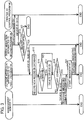
- the second program 34 of the inside mediation apparatus 13 broadcasts a command over the local area network 16 requesting printers 14 to return (or transmit) their device IDs.
- the second program 34 executes an initial setup.
- the operator of the inside mediation apparatus 13 may issue a registration command to register printers 14 to be managed on the management system 10.
- the registration command may be received from the first program 24 of the outside mediation apparatus 12.
- the second program 34 of the inside mediation apparatus 13 broadcasts the command for printers 14 to return (or transmit) their device IDs.
- the registration command may be a command to add one or more printers 14 to a management system 10 already in existence, i.e., to register one or more printers 14 in the management system 10.
- the "operator” is a person that manages the printers 14 at the corresponding branch office, for example, and not the administrator that operates the outside mediation apparatus 12.
- the operator is a person that manages devices in the local area network 16 such as the printers and the inside mediation apparatus 13 and the administrator is a person that manages devices outside the firewall such as the outside mediation apparatus 12.
- the process of S11 is an example of the searching steps (or means).
- the outside mediation apparatus 12 transmits an HTTP response that includes information such as a command to the inside mediation apparatus 13 in response to an HTTP request received from the inside mediation apparatus 13.
- each device ID may be transmitted individually to the outside mediation apparatus 12 or all of the collected device IDs may be transmitted together to the outside mediation apparatus 12.
- the HTTP request transmitted in S14 may be one of the HTTP requests that the inside mediation apparatus 13 transmits periodically to the outside mediation apparatus 12 or may be a separate HTTP request from the periodically transmitted requests.
- the first program 24 of the outside mediation apparatus 12 may also transmit the HTTP response to the inside mediation apparatus 13 in S22 as a response to the HTTP request received in S14, In this case, steps S16 and S17 may be omitted to avoid the occurrence of a timeout.
- the first command includes, as a content, instruction information for instructing the outside mediation apparatus 12 to modify settings in the printer 14 for one of the items "Font,” “Font Size,” or “Density” under the settings information (see Fig. 2 ), instruction information for instructing to update the firmware version for the control program 44 of the printer 14 (see Fig. 2 ), or instruction information for requesting a printer 14 to return (transmit) its current status information, for example.
- the status information of the printer 14 may indicate status or settings of the printer 14 and may include values set to the printer 14 (for example, values corresponding to the item Settings Information in the correlation database DB).
- the content specified by the first command is not limited to that described above.
- the content in the first command is an example of the instruction information.
- the first command requesting status information is an example of the first request command.
- the first program 24 of the outside mediation apparatus 12 transmits a notification to the management server 11 indicating that the first command was received.
- the first command includes instruction information for instructing to transmit a file to the printer 14
- the first program 24 of the outside mediation apparatus 12 requests the management server 11 to transmit the file.
- the management server 11 transmits the file to the outside mediation apparatus 12.
- the first program 24 receives the file and stores the file in the memory 22.
- Some examples of files to be transmitted to the printer 14 are a file containing text instructing a setting modification on the printer 14, and a program file for a new version of the control program 44.
- the first program 24 In a case where the file is received from the management server 11, in S34 the first program 24 generates a second command having instruction information for instructing the second program 34 of the inside mediation apparatus 13 to download the file.
- the first program 24 After generating the second command, the first program 24 waits until an HTTP request has been received from the inside mediation apparatus 13.
- the second program 34 of the inside mediation apparatus 13 determines whether a transmission timing has arrived and repeatedly performs this determination while the transmission timing has not arrived (S35: NO).
- the transmission timing is indicated by data stored in the memory 32.
- the transmission timing is set to an interval of a few seconds to a few tens of seconds, such as a 10-second, 15-second, or 20-second interval.
- the transmission timing is an example of the first prescribed interval.
- the second program 34 of the inside mediation apparatus 13 determines that the transmission timing has arrived (S35: YES), in S36 the second program 34 transmits an HTTP request including its own GUID to the outside mediation apparatus 12.
- the outside mediation apparatus 12 can transmit the second command to the inside mediation apparatus 13 through the firewall by including the second command in an HTTP response which is a response to an HTTP request received from the inside mediation apparatus 13.
- the firewall blocks transmissions from the outside mediation apparatus 12 to the inside mediation apparatus 13 other than HTTP responses which are responses to HTTP requests received from the inside mediation apparatus 13. For this reason, the inside mediation apparatus 13 transmits an HTTP request to the outside mediation apparatus 12 periodically.
- the process of S35 and S36 for periodically transmitting HTTP requests is an example of the setting up means or step and the setup process.
- the first program 24 of the outside mediation apparatus 12 receives the HTTP request from the inside mediation apparatus 13.
- the first program 24 determines whether the GUID included in the HTTP request matches the GUID identified in S33. In other words, the first program 24 determines whether the inside mediation apparatus 13 that transmitted the HTTP request is the inside mediation apparatus 13 to which the second command generated in S34 is to be transmitted.
- the first program 24 determines that the GUID included in the HTTP request received in S36 matches the GUID identified in S33 (S37: YES)
- the first program 24 transmits to the second program 34 an HTTP response that includes the second command.
- the process in S39 for transmitting an HTTP response that includes the second command is an example of the second transmitting means or steps and the second transmission process.
- the second command requesting status information of the printer 14 is an example of the second request command.
- the second program 34 determines that the HTTP response includes a second command (S40: YES)
- the second program 34 transmits an HTTP request to the outside mediation apparatus 12 that includes a notification specifying that the second command was received (hereinafter called a "reception notification").
- the second program 34 notifies the outside mediation apparatus 12 that the second command was received.
- the first program 24 of the outside mediation apparatus 12 returns (transmits) the second command as an HTTP response to an HTTP request received from the inside mediation apparatus 13.
- the first program 24 of the outside mediation apparatus 12 cannot determine whether the inside mediation apparatus 13 was able to receive the second command until the first program 24 receives a response corresponding to the second command in S55 or S62 described later.
- the time required for the outside mediation apparatus 12 to receive a response corresponding to the second command would exceed the prescribed time which is set as the time interval to wait until re-sending the second command, resulting in the outside mediation apparatus 12 re-sending the second command even if the inside mediation apparatus 13 has already received the second command.
- the first program 24 of the outside mediation apparatus 12 receives the HTTP request that includes the reception notification. While not shown in the sequence diagram, if the first program 24 determines that an HTTP request including a reception notification has not been received within the prescribed time, the first program 24 re-sends the second command to the inside mediation apparatus 13 as an HTTP response to an HTTP request transmitted periodically from the inside mediation apparatus 13. In response to receiving the HTTP request including the reception notification, the first program 24 returns (transmit) an HTTP response to the inside mediation apparatus 13 indicating that the reception notification was received.
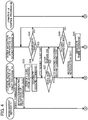
- the second program 34 of the inside mediation apparatus 13 After completing the process of S41, in S42 the second program 34 of the inside mediation apparatus 13 generates a third command to be transmitted to the printer 14.
- the third command is a command that can be inputted into (or interpreted by) the printer 14 and includes, as a content, instruction information corresponding to the instruction information in the second command.
- the data storage area 39 in the memory 32 of the inside mediation apparatus 13 stores a second command list specifying correlations between second commands and third commands.
- the second program 34 of the inside mediation apparatus 13 generates the third command by referencing the second command list and extracting from the second command list the third command associated with the second command received in S39.
- the process of S42 for generating the third command is an example of the second generating means or step.
- the third command is an example of the device command.
- the second command list is an example of the command list.
- the second program 34 of the inside mediation apparatus 13 transmits an HTTP request that includes a file transmission request to the outside mediation apparatus 12 when the second command (specifically, the instruction information of the second command) received in S39 instructs the downloading of a file.
- the first program 24 of the outside mediation apparatus 12 transmits an HTTP response including the file to the inside mediation apparatus 13 according to the transmission request included in the HTTP request.
- the second program 34 of the inside mediation apparatus 13 receives the file included in this HTTP response.
- the second program 34 generates a third command that includes the settings or programs in the received file.
- the file may be included in the second command, and the second command having the file may be transmitted from the first program 24 to the second program 34. In this case, the second program 34 need not transmit a file transmission request to the first program 24.
- the second program 34 of the inside mediation apparatus 13 After the second program 34 of the inside mediation apparatus 13 has generated the third command, in S51 of Fig. 5 the second program 34 transmits the third command to the printer 14 specified by the device ID included in the second command.
- the process of S51 for transmitting the third command to the printer 14 is an example of the third transmitting means or step and the third transmission process.
- the third command for requesting status information is an example of the third request command.
- the printer 14 receives the third command from the inside mediation apparatus 13.
- the control program 44 of the printer 14 executes the instruction specified by the third command (specifically, the instruction information of the third command). For example, if the third command specifies an instruction to modify a setting in the printer 14 for each of the items in the settings information, including "Font,” “Font Size,” and “Density” (see Fig. 2 ), the control program 44 modifies the setting for each of "Font,” “Font Size,” and “Density” to a value included in the third command. If the third command is an instruction to update the firmware version, the control program 44 updates itself using the program included in the third command.
- the third command is an instruction to update the firmware version
- the control program 44 returns (transmits) the status information of the printer 14 as a response to the third command.
- the process of S53 in which the printer 14 transmits a response to the inside mediation apparatus 13 is an example of the device responding means or step.
- the response transmitted in S53 is an example of the device response.
- the second program 34 of the inside mediation apparatus 13 receives the response from the printer 14.
- the second program 34 determines whether the printer 14 executed the instruction specified by the third command (the instruction information of the third command).
- the process of S53 for receiving the response from the printer 14 is an example of the device response receiving means or step.
- the second program 34 of the inside mediation apparatus 13 skips the process of S53 for receiving a response from the printer 14 and executes the process in S54 in the event that communications by TCP could not be established.
- communications between the inside mediation apparatus 13 and the printer 14 may not be established if power to the printer 14 is off or if the printer 14 was removed from the branch office and is not connected to the local area network 16.
- the second program 34 determines that the printer 14 executed the instruction specified by (the instruction information of) the third command (S54: YES) in a case where a response indicating that the instruction specified by (the instruction information of) the third command was executed is received in S53.
- the second program 34 determines that the printer 14 did not execute the instruction specified by (the instruction information of) the third command (S54: NO) in a case where an error code was received in S53.
- the second program 34 may determine that the printer 14 did not execute the instruction specified by (the instruction information of) the third command (S54: NO) in a case where it is determined that communications with the printer 14 is not be established.
- the second program 34 of the inside mediation apparatus 13 determines that the printer 14 did not execute the instruction specified by (the instruction information of) the third command (S54: NO)
- the second program 34 transmits, as a response to the second command, an HTTP request including first error information to the outside mediation apparatus 12.
- the HTTP request transmitted in S55 may be one of the HTTP requests that the inside mediation apparatus 13 transmits periodically to the outside mediation apparatus 12 or may be a separate HTTP request from the periodically transmitted HTTP requests.
- the first error information includes a first error code.
- the first error code may include the error code received as a response from the printer 14 in S53, an error code specifying that communications with the printer 14 could not be established, or the like.
- the data storage area 39 of the inside mediation apparatus 13 stores a first error correlation list specifying correlations between first error codes and error contents.
- the second program 34 may extract the first error code associated with the error content from the first error correlation list, generate first error information that includes the extracted first error code and the device ID of the printer 14, and transmit an HTTP request including the first error information.
- the outside mediation apparatus 12 receives the first error information.
- the first program 24 of the outside mediation apparatus 12 generates second error information based on the first error information received from the inside mediation apparatus 13.
- the second error information includes a second error code in a format that the management server 11 can recognize.
- the data storage area 29 of the outside mediation apparatus 12 stores a second error correlation list specifying correlations between first error codes and second error codes.
- the first program 24 extracts the second error code from the second error correlation list that is correlated with the first error code in the first error information and generates second error information including the extracted second error code and the device ID that was included in the first error information.
- the control program 44 of the printer 14 In response to receiving the command in S59 requesting the return of status information, in S60 the control program 44 of the printer 14 returns (transmits) its status information. In S60 the second program 34 of the inside mediation apparatus 13 receives the status information from the printer 14.
- the status information transmitted by the printer 14 is information indicating the status of the printer 14 after the control program 44 of the printer 14 executed the content of the third command in S52 (hereinafter, this status information is referred to as the status information modified after the modification in S52).
- the second program 34 of the inside mediation apparatus 13 waits until the transmission timing for periodically transmitting the HTTP request has arrived (S61: NO).
- the second program 34 determines that the transmission timing has arrived (S61: YES)
- the second program 34 transmits an HTTP request to the outside mediation apparatus 12 as a response to the second command received in S39.
- the HTTP request includes the device ID which is accompanied with the second command and the received status information of the printer 14 after the modification in S52.
- the HTTP request that includes status information is an example of the second response.
- the process of S62 for transmitting an HTTP request including status information is an example of the second responding means or step and the second response process.
- Including the status information in one of the HTTP requests transmitted periodically to the outside mediation apparatus 12 can reduce the number of communications between the inside mediation apparatus 13 and the outside mediation apparatus 12 compared to when the status information is transmitted in an HTTP request separate from the periodic HTTP requests.
- the second program 34 may include the modified status information in a separate HTTP request from the periodic HTTP requests and transmit this HTTP request to the outside mediation apparatus 12.
- the status information can be sent more quickly to the outside mediation apparatus 12 than when the status information is included in one of the periodically transmitted HTTP requests.
- the step S61 may be skipped, and the step S62 may be executed immediately after the step S60.
- the first program 24 of the outside mediation apparatus 12 receives the modified status information as a response to the second command. After receiving the status information, in S63 the first program 24 overwrites a record having the device ID in the HTTP request received in S62 in the correlation database DB (see Fig. 2 ) so that settings information, firmware version, and the like are updated to values in the newly received status information.
- the process of S62 in which the outside mediation apparatus 12 receives status information is an example of the second response receiving means or step.
- the first program 24 transmits an HTTP response to this request to the inside mediation apparatus 13 indicating that the HTTP request was received.
- the first program 24 of the outside mediation apparatus 12 may also transmit the status information received in S62 to the management server 11 separately from the setting completion information. In other words, information indicating that settings were performed and status information obtained after the settings were performed may be transmitted separately to the management server 11.
- control program 44 of the printer 14 receives the command from the inside mediation apparatus 13.
- control program 44 returns (transmits) the status information as a response to the command.
- the second program 34 of the inside mediation apparatus 13 receives the status information from the printer 14.
- the second program 34 may not receive status information from the printer 14 if the power to the printer 14 is off or if the printer 14 has been taken out of the branch office and is no longer connected to the local area network 16, for example.
- the second program 34 While not shown in the sequence diagram, the second program 34 generates third error information indicating that status information was not received in a case where status information is not received or where communications with the printer 14 cannot be established.
- the process of S73 in which the inside mediation apparatus 13 receives status information is an example of the status receiving means or step.
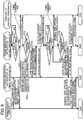
- the second program 34 of the inside mediation apparatus 13 determines whether a transmission timing for transmitting an HTTP request to the outside mediation apparatus 12 has arrived. If the second program 34 determines that the transmission timing has not arrived (S74: NO), the second program 34 returns to S72 to repeat the processes in S72 and S73. However, if the second program 34 determines that the transmission timing has arrived (S74: YES), in S75 the second program 34 determines whether status information was received in S73.
- the second program 34 When determining that status information was not received (S75: NO), in S76 the second program 34 transmits an HTTP request including the third error information to the outside mediation apparatus 12.
- the third error information may be included in a separate HTTP request from the periodically transmitted HTTP requests. That is, when status information was not received, the second program 34 may transmit an HTTP request that includes the third error information to the outside mediation apparatus 12 without waiting for the transmission timing to arrive.
- the first program 24 receives an HTTP request that includes the third error information in S76
- the first program 24 transmits a response to the inside mediation apparatus 13 indicating that the HTTP request was received.
- the first program 24 of the outside mediation apparatus 12 may record the latest date that the status information was received in the correlation database DB under the item "Modified Date” (see Fig. 2 ) and transmit the item "Modified Date” to the management server 11. This process will be described next in greater detail.
- the second program 34 of the inside mediation apparatus 13 determines that status information was received (S75: YES)
- the second program 34 transmits an HTTP request that includes the status information received in S73 to the outside mediation apparatus 12.
- the status information may be included in a separate HTTP request from the periodically transmitted HTTP requests.
- the second program 34 may transmit an HTTP request including the status information to the outside mediation apparatus 12 without waiting for the transmission timing to arrive.
- the item “Modified Date” may be updated to the date at which the second program 34 of the inside mediation apparatus 13 received status information from the printer 14 in S73.
- the HTTP request that the inside mediation apparatus 13 transmits in S79 will include the date that the inside mediation apparatus 13 received the status information in addition to the status information.
- the correlation database DB may include the item "Modified Date and Time” to indicate the date and time as described above instead of the item "Modified Date”.
- the management server 11 receives the delete command from the outside mediation apparatus 12.
- the management server 11 deletes the device ID matching the device ID included in the delete command from the memory of the management server 11, and also deletes data associated with the device ID.
- the management server 11 transmits a response to the outside mediation apparatus 12 indicating that the device ID included in the delete command was deleted from the memory of the management server 11, thereby completing the process.
- the first program 24 of the outside mediation apparatus 12 receives the response from the management server 11 and subsequently ends the process.
- the status acquisition timing at which status information is acquired is set to a longer interval than that set for the transmission timing for transmitting HTTP requests. This approach can suppress the load on the printer 14, e.g., can suppress depletion of the battery 50.
- the inside mediation apparatus 13 includes the status information in one of the HTTP requests that is transmitted periodically (S62), thereby requiring fewer communications between the inside mediation apparatus 13 and the outside mediation apparatus 12 than when transmitting the status information separately from the periodically transmitted HTTP requests.
- the outside mediation apparatus 12 transmits the second error information to the management server 11 indicating that the printer 14 did not execute the instruction in the first command (S57), but does not transmit the third error information to the management server 11 indicating that status information could not be acquired when periodic attempts to acquire the status information are made (S77). In other words, the outside mediation apparatus 12 does not transmit the third error information frequently generated due to the power to the printer 14 being off or the printer 14 being taken out of the branch office, thereby avoiding the frequent transmission of error information to the management server 11.
- the second program 34 of the inside mediation apparatus 13 searches for printers 14 connected to the local area network 16 through the broadcast and acquires the device IDs of the printers 14 discovered in this search (S12).
- the second program 34 transmits the acquired device IDs to the outside mediation apparatus 12, and the outside mediation apparatus 12 records the device IDs in the correlation database DB stored in the memory 22. This process can save the administrator the trouble of having to register device IDs in the correlation database DB.
- the second program 34 of the inside mediation apparatus 13 generates the third command that can be inputted into (or interpreted by) the printer 14. Therefore, the first program 24 can be used universally for all printers 14. To explain this in greater detail, if the printers 14 used at Company A have different specifications from the printers 14 used at Company B, the type of command that can be inputted into (or interpreted by) the printers 14 will differ. However, since the second program 34 of the inside mediation apparatus 13 provided at each company generates the third command to be inputted into (or interpreted by) the corresponding printers 14, the first program 24 can be incorporated in both the management system 10 used by Company A and the management system 10 used by Company B.
- the embodiment describes an example in which the second program 34 of the inside mediation apparatus 13 generates the third command capable of being inputted into (or interpreted by) the printer 14.
- the first variation will describe an example in which the first program 24 of the outside mediation apparatus 12 generates a third command capable of being inputted into (or interpreted by) the printer 14.
- the data storage area 29 in the memory 22 of the outside mediation apparatus 12 stores a third command list in addition to the first command list described above.
- the third command list specifies correlations between first commands and third commands.
- the first program 24 of the outside mediation apparatus 12 receives a first command from the management server 11, in S34 the first program 24 generates a second command.
- the first program 24 references the third command list to find the third command associated with the first command received in S31.
- the first program 24 accompanies the second command with the third command extracted from the third command list and the device ID of the printer 14 as accompanying information and in S39 transmits this second command to the inside mediation apparatus 13.
- the second command in this variation is for instructing the second program 34 to extract the third command from the accompanied information when generating the third command in S42.
- the process of S34 for generating a second command with a third command and device ID as accompanying information is an example of the first generating means or step.
- the third command is an example of the device command.
- the third command list is an example of the command list.
- the second program 34 of the inside mediation apparatus 13 transmits the third command attached to the second command to the printer 14 having the device ID attached to the second command.
- the second program 34 can be used universally for all printers 14 regardless of their specifications. In other words, the second program 34 can be used commonly for both the management system 10 used by Company A and the management system 10 used by Company B, even though the specifications of printers 14 used at Company A differ from the specifications for printers 14 used at Company B.
- the first program 24 generates the third commands that are inputted into (or interpreted by) the printers 14. If the specifications of printers 14 are modified or if printers 14 with new specifications are added, the first program 24 can manage printers 14 with new specifications without requiring modifications to the plurality of second programs 34, in a case where that the first program 24 can generate third commands that can be inputted into (or interpreted by) the printers 14 having new specifications. In other words, the management server 11 can manage printers 14 with new specifications simply by updating or modifying the first program 24.
- the embodiment describes an example in which in S64 the first program 24 of the outside mediation apparatus 12 generates the setting completion information that can be inputted into (or interpreted by) the management server 11.
- the second variation will describe an example in which the second program 34 of the inside mediation apparatus 13 generates the setting completion information that can be inputted into (or interpreted by) the management server 11. This example will be described with reference to Fig. 5 .
- the second program 34 of the inside mediation apparatus 13 After receiving status information from the printer 14 in S60, in S62 the second program 34 of the inside mediation apparatus 13 generates setting completion information that can be inputted into (or interpreted by) the management server 11 and transmits an HTTP request including this setting completion information to the outside mediation apparatus 12.
- the setting completion information is generated in the same manner described in the embodiment, for example.
- the process of S62 for generating setting completion information is an example of the second converting means or step.
- the instruction transmitted to the printer 14 based on the first command received from the management server 11 is an instruction requesting the printer 14 to return (transmit) status information
- the first program 24 of the outside mediation apparatus 12 transmits status information, which is acquired periodically from the printer 14, to the management server 11 as a response to the first command.
- the second program 34 of the inside mediation apparatus 13 transmits an HTTP request to the outside mediation apparatus 12 that includes a notification indicating that the second command was received.
- the step shifts to S71 after the step S41 instead of shifting to the step S42.
- the second program 34 waits until the periodic status acquisition timing has arrived (S71: NO in Fig. 6 ).
- the second program 34 determines that the periodic status acquisition timing has arrived (S71: YES)
- the second program 34 transmits to the printer 14 a command requesting the return of status information and in S73 receives the status information from the printer 14.
- the first program 24 transmits an HTTP request including this status information to the outside mediation apparatus 12 as a response to the second command.
- the embodiment describes an example in which the second program 34 of the inside mediation apparatus 13 transmits status information periodically acquired from the printer 14 to the outside mediation apparatus 12.
- the second program 34 stores status information periodically acquired from the printer 14 in the memory 32 and transmits the status information stored in the memory 32 to the outside mediation apparatus 12 as a response to the second command.
- An example of the fourth variation will be described with reference to Figs. 4-6 .
- the second program 34 of the inside mediation apparatus 13 stores this status information in the memory 32.
- the process shown in Fig. 6 shifts to S74 and S75. If YES determination is made in S75, the process returns to S71 instead of shifting to S79. Further, after S78, the process mar return to S71.
- the process shown in Fig. 4 begins separately from the process shown in Fig. 6 , and in S31 the management server 11 transmits the first command requesting the return of the status information.
- the steps S32-S38 are executed similarly to the embodiment.
- the management server 11 transmits the first command to the outside mediation apparatus 12 requesting the status information
- in the fourth variation status information stored in the memory 32 of the inside mediation apparatus 13 is returned (transmitted) to the management server 11 as a response to this first command. Accordingly, recent status information can be returned to the management server 11 even when the power to the printer 14 is off or the printer 14 has been taken out of the branch office.
- a third program 30 is installed on the inside mediation apparatus 13 in addition to the second program 34.
- An example of the fifth variation will be described with reference to Fig. 7(B) .
- the third program 30 is used to manage newly added printers 14.
- the third program 30 can be used to manage the new printers 14 without requiring operations of the second program 34 to be halted in order to update the second program 34.
- a printer 14 having different specifications indicates that the type of command inputted into (or interpreted by) the printer 14 differs from the type of command inputted to (or interpreted by) a printer 14 currently under management.
- the second program 34 generates the third commands that are inputted into (or interpreted by) the printers 14.
- the second program 34 of the inside mediation apparatus 13 receives a second command from the first program 24 of the outside mediation apparatus 12 in S39, in S121 the second program 34 determines whether it is possible to generate a third command that can be inputted into (or interpreted by) the printer 14 specified by the device ID that is attached to this second command. If the second program 34 determines that the third command can be generated (S121: YES), in S42 the second program 34 generates the third command as described in the embodiment and in S51 transmits this third command to the printer 14. In this case, the process may proceeds to the step S52 shown in Fig. 5 .
- the third program 30 generates the third command by referencing the fourth command list and extracting the third command that is associated with the second command and device ID included in the instruction to generate the third command.
- the third program 30 transfers this third command to the second program 34. Note that the instruction to generate a third command in S122 and the transfer of the third command in S124 are both performed via the OS 33 of the inside mediation apparatus 13.
- the second program 34 transmits the third command received from the third program 30 to the printer 14.
- the second program 34 may also be updated during times of periodic maintenance or holidays in order to be able to generate third commands that can be inputted into (or interpreted by) newly added printers 14.
- the management server 11 can manage newly added printers 14 with different specifications without having to halt operations of the second program 34, i.e., without halting management of the printers 14.
- a sixth variation an example for temporarily adding a type of status information that the inside mediation apparatus 13 acquires periodically will be described with reference to Fig. 8 . Note that steps in this process that are identical to those in the embodiment are designated with the same step numbers to avoid duplicating description.
- the first program 24 of the outside mediation apparatus 12 receives the first command from the management server 11.
- the first command includes the instruction information for requesting, in addition to normal status information that the second program 34 of the inside mediation apparatus 13 periodically acquires from the printer 14, special status information not included in the normal status information.
- the first program 24 executes steps S32-S39 as described in the embodiment.
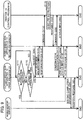
- the second program 34 of the inside mediation apparatus 13 executes the processes in S39 and S41 as described in the embodiment. Further, when the second program 34 determines that the second command received in S39 is a command for requesting normal status information and special status information, in S101 the second program 34 generates a status addition command and a third command and transmits the status addition command to the printer 14.
- the status addition command is for instructing the printer 14 to modify a setting so that the printer 14 returns (transmits) both normal status information and special status information.
- the third command is the same command described in the embodiment for requesting the return of status information. As with the third command, the status addition command is generated based on the command list stored in the memory 32.
- control program 44 of the printer 14 receives the status addition command from the inside mediation apparatus 13.
- the printer 14 modifies the setting in the printer 14 to return (transmit) both normal status information and special status information in accordance with the status addition command and in S102 transmits a confirmation response to the inside mediation apparatus 13 indicating that the modification was made.
- control program 44 of the printer 14 receives the third command from the inside mediation apparatus 13.
- control program 44 transmits the normal status information and the special status information to the inside mediation apparatus 13 as a response to the third command.
- the second program 34 of the inside mediation apparatus 13 determines whether the periodic transmission timing has arrived. If the periodic transmission timing has arrived (S74: YES), in S104 the second program 34 transmits an HTTP request that includes the normal status information and the special status information to the outside mediation apparatus 12.
- the second program 34 may also include the normal status information and the special status information in a separate HTTP request from the HTTP requests periodically transmitted and may transmit this HTTP request to the outside mediation apparatus 12 after receiving the normal status information and special status information in S103, without waiting for the transmission timing to arrive.
- the first program 24 of the outside mediation apparatus 12 receives the normal status information and the special status information from the inside mediation apparatus 13.
- the first program 24 transmits an HTTP response to the inside mediation apparatus 13 indicating that the normal status information and the special status information were received.
- the first program 24 transmits the normal status information and the special status information to the management server 11 as a response to the first command received in S31.
- the management server 11 receives the normal status information and the special status information from the outside mediation apparatus 12 via the Internet 15. In response to receiving the normal status information and the special status information, in S65 the management server 11 transmits a response to the outside mediation apparatus 12 via the Internet 15 indicating that the normal status information and the special status information were received.
- the second program 34 of the inside mediation apparatus 13 receives the HTTP response from the outside mediation apparatus 12 indicating that the normal status information and the special status information were received.
- the second program 34 In response to the HTTP response, in S107 the second program 34 generates a status deletion command and transmits this command to the printer 14.
- the status deletion command is a command for instructing to modify the setting of the printer 14 so that the printer 14 does not return (transmit) the special status information. Note that, as with the status addition command, the status deletion command is generated based on the command list stored in the memory 32.
- the first program 24 of the outside mediation apparatus 12 may generate a command instructing the second program 34 to generate the status deletion command and to input this command into the printer 14, may include this command in the HTTP response, and may transmit this HTTP response to the inside mediation apparatus 13.
- control program 44 of the printer 14 receives the status deletion command from the inside mediation apparatus 13.
- the control program 44 modifies the setting of the printer 14 to return (transmit) only the normal status in accordance with the status deletion command and in S108 transmits a response to the inside mediation apparatus 13 indicating that the setting was modified.
- the special status information can be acquired from the printer 14 and returned (transmitted) to the management server 11 in response to the instruction received from the management server 11.
- the periodic status information can be transmitted at a shorter interval than normal.
- the status deletion command can be used to shift the printer 14 to its original state of returning only its normal status, thereby preventing the printer 14 from continuing to return both its normal status information and special status information. Performing this process can avoid imposing an excessive load on the printer 14, which can deplete the battery 50, for example.
- Fig. 9 shows steps following S41 in the embodiment and the sixth variation. Steps that are identical to those in the embodiment are designated with the same step numbers to avoid duplicating description.
- the first program 24 waits to receive a periodic HTTP request from the inside mediation apparatus 13.
- the HTTP request is received in S36
- the first program 24 transmits an HTTP response including a command to the inside mediation apparatus 13.
- the command is a predetermined command that is not associated with the first command. More specifically, the command instructs a setting modification that in essence does not modify any settings on the printer 14, for example. In other words, by transmitting a command that essentially does not modify any setting on the printer 14, the first program 24 of the outside mediation apparatus 12 enables the second program 34 of the inside mediation apparatus 13 to acquire status information from the printer 14 without modifying any settings for the printer 14.
- the second program 34 of the inside mediation apparatus 13 receives the HTTP response including the command in S113
- the second program 34 transmits a reception notification to the outside mediation apparatus 12 indicating that the command was received.
- the second program 34 transmits a command corresponding to the command received in S113 to the printer 14.
- control program 44 of the printer 14 In response to receiving the command in S115, in S116 the control program 44 of the printer 14 formally modifies the setting in accordance with the command. As described above, the control program 44 essentially does not modify any setting for the printer 14 in S116. After completing the process in S116, in S53 the control program 44 transmits a response to the inside mediation apparatus 13 indicating that the setting was modified.
- the second program 34 of the inside mediation apparatus 13 receives the status information from the printer 14. In the meantime, after transmitting the command to the printer 14 in S59, in S117 the second program 34 transmits a confirmation notification to the outside mediation apparatus 12 indicating that the printer 14 executed the process of S 116.
- the second program 34 After receiving status information in S60, in S118 the second program 34 transmits an HTTP request including this status information to the outside mediation apparatus 12.
- the HTTP request including status information may be an HTTP request that the second program 34 transmits periodically to the outside mediation apparatus 12 or an HTTP request that is separate from the periodically transmitted HTTP requests.
- the first program 24 of the outside mediation apparatus 12 After receiving the status information, in S119 the first program 24 of the outside mediation apparatus 12 transmits an HTTP response to the inside mediation apparatus 13 indicating that the status information was received. While not shown in the sequence diagram, the first program 24 executes the process of S63 as described in the embodiment (see Fig. 5 ) after performing the process in S119, and subsequently executes the processes in S64 and S65.
- status information on the printer 14 can be transmitted to the management server 11 more quicldy than in the embodiment.
- the date on which the status information was acquired is recorded under the item "Modified Date" in the correlation database DB.
- the modified date may be added to a correlation database DB and also stored in the memory 32 of the inside mediation apparatus 13. The operator of the inside mediation apparatus 13 can then confirm an interval of no communications with the printer 14 by displaying the modified date stored in the memory 32 on the display of the inside mediation apparatus 13.
Landscapes
- Engineering & Computer Science (AREA)
- Theoretical Computer Science (AREA)
- General Engineering & Computer Science (AREA)
- Physics & Mathematics (AREA)
- General Physics & Mathematics (AREA)
- Human Computer Interaction (AREA)
- Signal Processing (AREA)
- Computer Networks & Wireless Communication (AREA)
- Computing Systems (AREA)
- Computer Security & Cryptography (AREA)
- Computer Hardware Design (AREA)
- Software Systems (AREA)
- Data Mining & Analysis (AREA)
- Databases & Information Systems (AREA)
- Computer And Data Communications (AREA)
- Accessory Devices And Overall Control Thereof (AREA)
- Data Exchanges In Wide-Area Networks (AREA)
Applications Claiming Priority (1)
| Application Number | Priority Date | Filing Date | Title |
|---|---|---|---|
| JP2018068991A JP7081273B2 (ja) | 2018-03-30 | 2018-03-30 | プログラム及び通信システム |
Publications (2)
| Publication Number | Publication Date |
|---|---|
| EP3547641A1 true EP3547641A1 (de) | 2019-10-02 |
| EP3547641B1 EP3547641B1 (de) | 2020-12-30 |
Family
ID=66000955
Family Applications (1)
| Application Number | Title | Priority Date | Filing Date |
|---|---|---|---|
| EP19165005.0A Active EP3547641B1 (de) | 2018-03-30 | 2019-03-25 | Kommunikationssystem |
Country Status (3)
| Country | Link |
|---|---|
| US (1) | US11652788B2 (de) |
| EP (1) | EP3547641B1 (de) |
| JP (1) | JP7081273B2 (de) |
Families Citing this family (6)
| Publication number | Priority date | Publication date | Assignee | Title |
|---|---|---|---|---|
| US20210042398A1 (en) * | 2019-08-08 | 2021-02-11 | Pulsepoint, Inc. | Validation of Properties of a User Device in a Network |
| JP2021109355A (ja) | 2020-01-08 | 2021-08-02 | ブラザー工業株式会社 | 印刷装置 |
| JP2021109354A (ja) | 2020-01-08 | 2021-08-02 | ブラザー工業株式会社 | 印刷装置及び通信処理プログラム |
| JP2021109356A (ja) | 2020-01-08 | 2021-08-02 | ブラザー工業株式会社 | 印刷装置及び通信処理プログラム |
| US11681669B2 (en) * | 2020-06-22 | 2023-06-20 | HCL Technologies Italy S.p.A. | Method and system for correlating multiple device entries within domain |
| JP7574672B2 (ja) | 2021-01-29 | 2024-10-29 | ブラザー工業株式会社 | 管理システム、管理方法および管理用プログラム |
Citations (3)
| Publication number | Priority date | Publication date | Assignee | Title |
|---|---|---|---|---|
| US20150153980A1 (en) * | 2013-12-04 | 2015-06-04 | Konica Minolta; Inc. | Relay device, image forming apparatus, relay method, and non-transitory computer-readable recording medium encoded with relay program |
| US20150242177A1 (en) * | 2014-02-27 | 2015-08-27 | Konica Minolta, Inc. | Image forming system, relay server, communication controlling method and non-transitory computer readable recording medium |
| US9769139B2 (en) * | 2014-02-07 | 2017-09-19 | Oracle International Corporation | On-premises agent for mobile cloud service |
Family Cites Families (5)
| Publication number | Priority date | Publication date | Assignee | Title |
|---|---|---|---|---|
| JP2004005418A (ja) | 2002-02-26 | 2004-01-08 | Ricoh Co Ltd | 仲介装置、画像形成装置管理システム、画像形成装置管理方法、画像形成装置管理プログラム及び記録媒体 |
| JP2004139586A (ja) | 2002-09-24 | 2004-05-13 | Ricoh Co Ltd | 仲介装置、通信システム、仲介装置の制御方法、プログラム及び記録媒体 |
| JP4340848B2 (ja) | 2003-03-25 | 2009-10-07 | 日本電気株式会社 | リモートアクセスシステムおよびリモートアクセス方法 |
| JP5966406B2 (ja) | 2012-02-15 | 2016-08-10 | 株式会社リコー | データ中継システム、装置及びプログラム |
| US9729542B2 (en) | 2014-09-24 | 2017-08-08 | Oracle International Corporation | Compartmentalizing application distribution for disparate electronic devices |
-
2018
- 2018-03-30 JP JP2018068991A patent/JP7081273B2/ja active Active
-
2019
- 2019-03-22 US US16/361,795 patent/US11652788B2/en active Active
- 2019-03-25 EP EP19165005.0A patent/EP3547641B1/de active Active
Patent Citations (3)
| Publication number | Priority date | Publication date | Assignee | Title |
|---|---|---|---|---|
| US20150153980A1 (en) * | 2013-12-04 | 2015-06-04 | Konica Minolta; Inc. | Relay device, image forming apparatus, relay method, and non-transitory computer-readable recording medium encoded with relay program |
| US9769139B2 (en) * | 2014-02-07 | 2017-09-19 | Oracle International Corporation | On-premises agent for mobile cloud service |
| US20150242177A1 (en) * | 2014-02-27 | 2015-08-27 | Konica Minolta, Inc. | Image forming system, relay server, communication controlling method and non-transitory computer readable recording medium |
Also Published As
| Publication number | Publication date |
|---|---|
| US11652788B2 (en) | 2023-05-16 |
| JP7081273B2 (ja) | 2022-06-07 |
| JP2019179446A (ja) | 2019-10-17 |
| EP3547641B1 (de) | 2020-12-30 |
| US20190306115A1 (en) | 2019-10-03 |
Similar Documents
| Publication | Publication Date | Title |
|---|---|---|
| EP3547641B1 (de) | Kommunikationssystem | |
| US9811294B2 (en) | Relay device, image forming apparatus, relay method, and non-transitory computer-readable recording medium encoded with relay program | |
| US8810819B2 (en) | Image forming system, image forming device, image forming method, and non-transitory computer readable medium | |
| JP6137149B2 (ja) | 情報処理システム、クラウドサーバー、装置制御方法および装置制御プログラム | |
| JP2015106798A (ja) | 通信装置、通信システム、通信装置の制御方法及びプログラム | |
| US11509632B2 (en) | Communication system performing communications concerning requests for requesting commands | |
| JP2015219587A (ja) | 画像形成装置、画像形成方法、及び画像形成プログラム。 | |
| US20240045624A1 (en) | Server and non-transitory computer-readable storage medium | |
| US10735332B2 (en) | Communication system including information processing apparatus and mediation apparatus capable of transmitting command to device in appropriate order | |
| US8332494B2 (en) | Device management system, servers, method for managing device, and computer readable medium | |
| JP7131045B2 (ja) | プログラム及び通信システム | |
| EP2947559A1 (de) | Informationsverarbeitungssystem, informationsverarbeitungsvorrichtung und informationsverarbeitungsverfahren | |
| US20170150003A1 (en) | Image forming apparatus, method and storage medium for sharing setting information | |
| JP2016116112A (ja) | 情報処理システム、中継装置、中継方法および中継プログラム | |
| EP3544234B1 (de) | Informationsverarbeitungsvorrichtung und vorrichtungsverwaltungseinrichtung | |
| JP2021120197A (ja) | 印刷装置及び通信処理プログラム | |
| JP2021109356A (ja) | 印刷装置及び通信処理プログラム | |
| JP2021109354A (ja) | 印刷装置及び通信処理プログラム | |
| JP2001312432A (ja) | ネットワークサーバ及びその制御方法 | |
| US9456096B2 (en) | Recording medium | |
| JP6089825B2 (ja) | 情報処理システム及びデータ投入方法 | |
| US20240143312A1 (en) | Relay device and non-transitory computer-readable storage medium | |
| JP2015121887A (ja) | 情報処理装置及びその制御方法、およびプログラム | |
| JP2021109355A (ja) | 印刷装置 | |
| JP2019067035A (ja) | 情報処理装置、その制御方法、及びプログラム、並びに、情報処理システム、その制御方法、及びプログラム |
Legal Events
| Date | Code | Title | Description |
|---|---|---|---|
| PUAI | Public reference made under article 153(3) epc to a published international application that has entered the european phase |
Free format text: ORIGINAL CODE: 0009012 |
|
| STAA | Information on the status of an ep patent application or granted ep patent |
Free format text: STATUS: THE APPLICATION HAS BEEN PUBLISHED |
|
| AK | Designated contracting states |
Kind code of ref document: A1 Designated state(s): AL AT BE BG CH CY CZ DE DK EE ES FI FR GB GR HR HU IE IS IT LI LT LU LV MC MK MT NL NO PL PT RO RS SE SI SK SM TR |
|
| AX | Request for extension of the european patent |
Extension state: BA ME |
|
| STAA | Information on the status of an ep patent application or granted ep patent |
Free format text: STATUS: REQUEST FOR EXAMINATION WAS MADE |
|
| 17P | Request for examination filed |
Effective date: 20200401 |
|
| RBV | Designated contracting states (corrected) |
Designated state(s): AL AT BE BG CH CY CZ DE DK EE ES FI FR GB GR HR HU IE IS IT LI LT LU LV MC MK MT NL NO PL PT RO RS SE SI SK SM TR |
|
| GRAP | Despatch of communication of intention to grant a patent |
Free format text: ORIGINAL CODE: EPIDOSNIGR1 |
|
| STAA | Information on the status of an ep patent application or granted ep patent |
Free format text: STATUS: GRANT OF PATENT IS INTENDED |
|
| RIC1 | Information provided on ipc code assigned before grant |
Ipc: H04L 29/12 20060101ALI20200622BHEP Ipc: H04L 29/08 20060101ALN20200622BHEP Ipc: H04L 29/06 20060101AFI20200622BHEP Ipc: G06F 3/12 20060101ALN20200622BHEP |
|
| INTG | Intention to grant announced |
Effective date: 20200727 |
|
| GRAS | Grant fee paid |
Free format text: ORIGINAL CODE: EPIDOSNIGR3 |
|
| GRAA | (expected) grant |
Free format text: ORIGINAL CODE: 0009210 |
|
| STAA | Information on the status of an ep patent application or granted ep patent |
Free format text: STATUS: THE PATENT HAS BEEN GRANTED |
|
| AK | Designated contracting states |
Kind code of ref document: B1 Designated state(s): AL AT BE BG CH CY CZ DE DK EE ES FI FR GB GR HR HU IE IS IT LI LT LU LV MC MK MT NL NO PL PT RO RS SE SI SK SM TR |
|
| REG | Reference to a national code |
Ref country code: GB Ref legal event code: FG4D |
|
| REG | Reference to a national code |
Ref country code: AT Ref legal event code: REF Ref document number: 1351072 Country of ref document: AT Kind code of ref document: T Effective date: 20210115 |
|
| REG | Reference to a national code |
Ref country code: DE Ref legal event code: R096 Ref document number: 602019001930 Country of ref document: DE |
|
| REG | Reference to a national code |
Ref country code: IE Ref legal event code: FG4D |
|
| PG25 | Lapsed in a contracting state [announced via postgrant information from national office to epo] |
Ref country code: NO Free format text: LAPSE BECAUSE OF FAILURE TO SUBMIT A TRANSLATION OF THE DESCRIPTION OR TO PAY THE FEE WITHIN THE PRESCRIBED TIME-LIMIT Effective date: 20210330 Ref country code: GR Free format text: LAPSE BECAUSE OF FAILURE TO SUBMIT A TRANSLATION OF THE DESCRIPTION OR TO PAY THE FEE WITHIN THE PRESCRIBED TIME-LIMIT Effective date: 20210331 Ref country code: RS Free format text: LAPSE BECAUSE OF FAILURE TO SUBMIT A TRANSLATION OF THE DESCRIPTION OR TO PAY THE FEE WITHIN THE PRESCRIBED TIME-LIMIT Effective date: 20201230 Ref country code: FI Free format text: LAPSE BECAUSE OF FAILURE TO SUBMIT A TRANSLATION OF THE DESCRIPTION OR TO PAY THE FEE WITHIN THE PRESCRIBED TIME-LIMIT Effective date: 20201230 |
|
| REG | Reference to a national code |
Ref country code: AT Ref legal event code: MK05 Ref document number: 1351072 Country of ref document: AT Kind code of ref document: T Effective date: 20201230 |
|
| PG25 | Lapsed in a contracting state [announced via postgrant information from national office to epo] |
Ref country code: LV Free format text: LAPSE BECAUSE OF FAILURE TO SUBMIT A TRANSLATION OF THE DESCRIPTION OR TO PAY THE FEE WITHIN THE PRESCRIBED TIME-LIMIT Effective date: 20201230 Ref country code: SE Free format text: LAPSE BECAUSE OF FAILURE TO SUBMIT A TRANSLATION OF THE DESCRIPTION OR TO PAY THE FEE WITHIN THE PRESCRIBED TIME-LIMIT Effective date: 20201230 Ref country code: BG Free format text: LAPSE BECAUSE OF FAILURE TO SUBMIT A TRANSLATION OF THE DESCRIPTION OR TO PAY THE FEE WITHIN THE PRESCRIBED TIME-LIMIT Effective date: 20210330 |
|
| REG | Reference to a national code |
Ref country code: NL Ref legal event code: MP Effective date: 20201230 |
|
| PG25 | Lapsed in a contracting state [announced via postgrant information from national office to epo] |
Ref country code: HR Free format text: LAPSE BECAUSE OF FAILURE TO SUBMIT A TRANSLATION OF THE DESCRIPTION OR TO PAY THE FEE WITHIN THE PRESCRIBED TIME-LIMIT Effective date: 20201230 |
|
| REG | Reference to a national code |
Ref country code: LT Ref legal event code: MG9D |
|
| PG25 | Lapsed in a contracting state [announced via postgrant information from national office to epo] |
Ref country code: LT Free format text: LAPSE BECAUSE OF FAILURE TO SUBMIT A TRANSLATION OF THE DESCRIPTION OR TO PAY THE FEE WITHIN THE PRESCRIBED TIME-LIMIT Effective date: 20201230 Ref country code: RO Free format text: LAPSE BECAUSE OF FAILURE TO SUBMIT A TRANSLATION OF THE DESCRIPTION OR TO PAY THE FEE WITHIN THE PRESCRIBED TIME-LIMIT Effective date: 20201230 Ref country code: PT Free format text: LAPSE BECAUSE OF FAILURE TO SUBMIT A TRANSLATION OF THE DESCRIPTION OR TO PAY THE FEE WITHIN THE PRESCRIBED TIME-LIMIT Effective date: 20210430 Ref country code: EE Free format text: LAPSE BECAUSE OF FAILURE TO SUBMIT A TRANSLATION OF THE DESCRIPTION OR TO PAY THE FEE WITHIN THE PRESCRIBED TIME-LIMIT Effective date: 20201230 Ref country code: SK Free format text: LAPSE BECAUSE OF FAILURE TO SUBMIT A TRANSLATION OF THE DESCRIPTION OR TO PAY THE FEE WITHIN THE PRESCRIBED TIME-LIMIT Effective date: 20201230 Ref country code: CZ Free format text: LAPSE BECAUSE OF FAILURE TO SUBMIT A TRANSLATION OF THE DESCRIPTION OR TO PAY THE FEE WITHIN THE PRESCRIBED TIME-LIMIT Effective date: 20201230 |
|
| PG25 | Lapsed in a contracting state [announced via postgrant information from national office to epo] |
Ref country code: PL Free format text: LAPSE BECAUSE OF FAILURE TO SUBMIT A TRANSLATION OF THE DESCRIPTION OR TO PAY THE FEE WITHIN THE PRESCRIBED TIME-LIMIT Effective date: 20201230 Ref country code: AT Free format text: LAPSE BECAUSE OF FAILURE TO SUBMIT A TRANSLATION OF THE DESCRIPTION OR TO PAY THE FEE WITHIN THE PRESCRIBED TIME-LIMIT Effective date: 20201230 |
|
| PG25 | Lapsed in a contracting state [announced via postgrant information from national office to epo] |
Ref country code: IS Free format text: LAPSE BECAUSE OF FAILURE TO SUBMIT A TRANSLATION OF THE DESCRIPTION OR TO PAY THE FEE WITHIN THE PRESCRIBED TIME-LIMIT Effective date: 20210430 |
|
| REG | Reference to a national code |
Ref country code: DE Ref legal event code: R097 Ref document number: 602019001930 Country of ref document: DE |
|
| PG25 | Lapsed in a contracting state [announced via postgrant information from national office to epo] |
Ref country code: MC Free format text: LAPSE BECAUSE OF FAILURE TO SUBMIT A TRANSLATION OF THE DESCRIPTION OR TO PAY THE FEE WITHIN THE PRESCRIBED TIME-LIMIT Effective date: 20201230 Ref country code: IT Free format text: LAPSE BECAUSE OF FAILURE TO SUBMIT A TRANSLATION OF THE DESCRIPTION OR TO PAY THE FEE WITHIN THE PRESCRIBED TIME-LIMIT Effective date: 20201230 Ref country code: AL Free format text: LAPSE BECAUSE OF FAILURE TO SUBMIT A TRANSLATION OF THE DESCRIPTION OR TO PAY THE FEE WITHIN THE PRESCRIBED TIME-LIMIT Effective date: 20201230 |
|
| PLBE | No opposition filed within time limit |
Free format text: ORIGINAL CODE: 0009261 |
|
| STAA | Information on the status of an ep patent application or granted ep patent |
Free format text: STATUS: NO OPPOSITION FILED WITHIN TIME LIMIT |
|
| REG | Reference to a national code |
Ref country code: DE Ref legal event code: R079 Ref document number: 602019001930 Country of ref document: DE Free format text: PREVIOUS MAIN CLASS: H04L0029060000 Ipc: H04L0065000000 |
|
| PG25 | Lapsed in a contracting state [announced via postgrant information from national office to epo] |
Ref country code: DK Free format text: LAPSE BECAUSE OF FAILURE TO SUBMIT A TRANSLATION OF THE DESCRIPTION OR TO PAY THE FEE WITHIN THE PRESCRIBED TIME-LIMIT Effective date: 20201230 |
|
| 26N | No opposition filed |
Effective date: 20211001 |
|
| REG | Reference to a national code |
Ref country code: BE Ref legal event code: MM Effective date: 20210331 |
|
| PG25 | Lapsed in a contracting state [announced via postgrant information from national office to epo] |
Ref country code: LU Free format text: LAPSE BECAUSE OF NON-PAYMENT OF DUE FEES Effective date: 20210325 Ref country code: IE Free format text: LAPSE BECAUSE OF NON-PAYMENT OF DUE FEES Effective date: 20210325 Ref country code: ES Free format text: LAPSE BECAUSE OF FAILURE TO SUBMIT A TRANSLATION OF THE DESCRIPTION OR TO PAY THE FEE WITHIN THE PRESCRIBED TIME-LIMIT Effective date: 20201230 |
|
| PG25 | Lapsed in a contracting state [announced via postgrant information from national office to epo] |
Ref country code: SI Free format text: LAPSE BECAUSE OF FAILURE TO SUBMIT A TRANSLATION OF THE DESCRIPTION OR TO PAY THE FEE WITHIN THE PRESCRIBED TIME-LIMIT Effective date: 20201230 |
|
| PG25 | Lapsed in a contracting state [announced via postgrant information from national office to epo] |
Ref country code: IS Free format text: LAPSE BECAUSE OF FAILURE TO SUBMIT A TRANSLATION OF THE DESCRIPTION OR TO PAY THE FEE WITHIN THE PRESCRIBED TIME-LIMIT Effective date: 20210430 |
|
| PG25 | Lapsed in a contracting state [announced via postgrant information from national office to epo] |
Ref country code: BE Free format text: LAPSE BECAUSE OF NON-PAYMENT OF DUE FEES Effective date: 20210331 |
|
| REG | Reference to a national code |
Ref country code: CH Ref legal event code: PL |
|
| PG25 | Lapsed in a contracting state [announced via postgrant information from national office to epo] |
Ref country code: LI Free format text: LAPSE BECAUSE OF NON-PAYMENT OF DUE FEES Effective date: 20220331 Ref country code: CH Free format text: LAPSE BECAUSE OF NON-PAYMENT OF DUE FEES Effective date: 20220331 |
|
| PG25 | Lapsed in a contracting state [announced via postgrant information from national office to epo] |
Ref country code: NL Free format text: LAPSE BECAUSE OF NON-PAYMENT OF DUE FEES Effective date: 20201230 Ref country code: CY Free format text: LAPSE BECAUSE OF FAILURE TO SUBMIT A TRANSLATION OF THE DESCRIPTION OR TO PAY THE FEE WITHIN THE PRESCRIBED TIME-LIMIT Effective date: 20201230 |
|
| P01 | Opt-out of the competence of the unified patent court (upc) registered |
Effective date: 20230529 |
|
| PG25 | Lapsed in a contracting state [announced via postgrant information from national office to epo] |
Ref country code: SM Free format text: LAPSE BECAUSE OF FAILURE TO SUBMIT A TRANSLATION OF THE DESCRIPTION OR TO PAY THE FEE WITHIN THE PRESCRIBED TIME-LIMIT Effective date: 20201230 Ref country code: HU Free format text: LAPSE BECAUSE OF FAILURE TO SUBMIT A TRANSLATION OF THE DESCRIPTION OR TO PAY THE FEE WITHIN THE PRESCRIBED TIME-LIMIT; INVALID AB INITIO Effective date: 20190325 |
|
| PG25 | Lapsed in a contracting state [announced via postgrant information from national office to epo] |
Ref country code: MK Free format text: LAPSE BECAUSE OF FAILURE TO SUBMIT A TRANSLATION OF THE DESCRIPTION OR TO PAY THE FEE WITHIN THE PRESCRIBED TIME-LIMIT Effective date: 20201230 |
|
| PG25 | Lapsed in a contracting state [announced via postgrant information from national office to epo] |
Ref country code: TR Free format text: LAPSE BECAUSE OF FAILURE TO SUBMIT A TRANSLATION OF THE DESCRIPTION OR TO PAY THE FEE WITHIN THE PRESCRIBED TIME-LIMIT Effective date: 20201230 |
|
| PG25 | Lapsed in a contracting state [announced via postgrant information from national office to epo] |
Ref country code: MT Free format text: LAPSE BECAUSE OF FAILURE TO SUBMIT A TRANSLATION OF THE DESCRIPTION OR TO PAY THE FEE WITHIN THE PRESCRIBED TIME-LIMIT Effective date: 20201230 |
|
| PGFP | Annual fee paid to national office [announced via postgrant information from national office to epo] |
Ref country code: DE Payment date: 20250210 Year of fee payment: 7 |
|
| PGFP | Annual fee paid to national office [announced via postgrant information from national office to epo] |
Ref country code: FR Payment date: 20250210 Year of fee payment: 7 |
|
| PGFP | Annual fee paid to national office [announced via postgrant information from national office to epo] |
Ref country code: GB Payment date: 20250213 Year of fee payment: 7 |