EP3545245B1 - Verfahren und system zur überwachung eines kühlsystems - Google Patents
Verfahren und system zur überwachung eines kühlsystems Download PDFInfo
- Publication number
- EP3545245B1 EP3545245B1 EP17812180.2A EP17812180A EP3545245B1 EP 3545245 B1 EP3545245 B1 EP 3545245B1 EP 17812180 A EP17812180 A EP 17812180A EP 3545245 B1 EP3545245 B1 EP 3545245B1
- Authority
- EP
- European Patent Office
- Prior art keywords
- value
- defrost
- time
- steady state
- real
- Prior art date
- Legal status (The legal status is an assumption and is not a legal conclusion. Google has not performed a legal analysis and makes no representation as to the accuracy of the status listed.)
- Active
Links
Images



Classifications
-
- F—MECHANICAL ENGINEERING; LIGHTING; HEATING; WEAPONS; BLASTING
- F25—REFRIGERATION OR COOLING; COMBINED HEATING AND REFRIGERATION SYSTEMS; HEAT PUMP SYSTEMS; MANUFACTURE OR STORAGE OF ICE; LIQUEFACTION SOLIDIFICATION OF GASES
- F25B—REFRIGERATION MACHINES, PLANTS OR SYSTEMS; COMBINED HEATING AND REFRIGERATION SYSTEMS; HEAT PUMP SYSTEMS
- F25B49/00—Arrangement or mounting of control or safety devices
- F25B49/005—Arrangement or mounting of control or safety devices of safety devices
-
- F—MECHANICAL ENGINEERING; LIGHTING; HEATING; WEAPONS; BLASTING
- F25—REFRIGERATION OR COOLING; COMBINED HEATING AND REFRIGERATION SYSTEMS; HEAT PUMP SYSTEMS; MANUFACTURE OR STORAGE OF ICE; LIQUEFACTION SOLIDIFICATION OF GASES
- F25D—REFRIGERATORS; COLD ROOMS; ICE-BOXES; COOLING OR FREEZING APPARATUS NOT OTHERWISE PROVIDED FOR
- F25D21/00—Defrosting; Preventing frosting; Removing condensed or defrost water
- F25D21/002—Defroster control
- F25D21/006—Defroster control with electronic control circuits
-
- F—MECHANICAL ENGINEERING; LIGHTING; HEATING; WEAPONS; BLASTING
- F25—REFRIGERATION OR COOLING; COMBINED HEATING AND REFRIGERATION SYSTEMS; HEAT PUMP SYSTEMS; MANUFACTURE OR STORAGE OF ICE; LIQUEFACTION SOLIDIFICATION OF GASES
- F25D—REFRIGERATORS; COLD ROOMS; ICE-BOXES; COOLING OR FREEZING APPARATUS NOT OTHERWISE PROVIDED FOR
- F25D21/00—Defrosting; Preventing frosting; Removing condensed or defrost water
- F25D21/06—Removing frost
- F25D21/08—Removing frost by electric heating
-
- G—PHYSICS
- G05—CONTROLLING; REGULATING
- G05B—CONTROL OR REGULATING SYSTEMS IN GENERAL; FUNCTIONAL ELEMENTS OF SUCH SYSTEMS; MONITORING OR TESTING ARRANGEMENTS FOR SUCH SYSTEMS OR ELEMENTS
- G05B19/00—Program-control systems
- G05B19/02—Program-control systems electric
- G05B19/04—Program control other than numerical control, i.e. in sequence controllers or logic controllers
- G05B19/048—Monitoring; Safety
-
- G—PHYSICS
- G05—CONTROLLING; REGULATING
- G05B—CONTROL OR REGULATING SYSTEMS IN GENERAL; FUNCTIONAL ELEMENTS OF SUCH SYSTEMS; MONITORING OR TESTING ARRANGEMENTS FOR SUCH SYSTEMS OR ELEMENTS
- G05B23/00—Testing or monitoring of control systems or parts thereof
- G05B23/02—Electric testing or monitoring
- G05B23/0205—Electric testing or monitoring by means of a monitoring system capable of detecting and responding to faults
- G05B23/0259—Electric testing or monitoring by means of a monitoring system capable of detecting and responding to faults characterized by the response to fault detection
- G05B23/0267—Fault communication, e.g. human machine interface [HMI]
- G05B23/027—Alarm generation, e.g. communication protocol; Forms of alarm
-
- F—MECHANICAL ENGINEERING; LIGHTING; HEATING; WEAPONS; BLASTING
- F25—REFRIGERATION OR COOLING; COMBINED HEATING AND REFRIGERATION SYSTEMS; HEAT PUMP SYSTEMS; MANUFACTURE OR STORAGE OF ICE; LIQUEFACTION SOLIDIFICATION OF GASES
- F25B—REFRIGERATION MACHINES, PLANTS OR SYSTEMS; COMBINED HEATING AND REFRIGERATION SYSTEMS; HEAT PUMP SYSTEMS
- F25B2500/00—Problems to be solved
- F25B2500/19—Calculation of parameters
-
- F—MECHANICAL ENGINEERING; LIGHTING; HEATING; WEAPONS; BLASTING
- F25—REFRIGERATION OR COOLING; COMBINED HEATING AND REFRIGERATION SYSTEMS; HEAT PUMP SYSTEMS; MANUFACTURE OR STORAGE OF ICE; LIQUEFACTION SOLIDIFICATION OF GASES
- F25B—REFRIGERATION MACHINES, PLANTS OR SYSTEMS; COMBINED HEATING AND REFRIGERATION SYSTEMS; HEAT PUMP SYSTEMS
- F25B2600/00—Control issues
- F25B2600/01—Timing
-
- F—MECHANICAL ENGINEERING; LIGHTING; HEATING; WEAPONS; BLASTING
- F25—REFRIGERATION OR COOLING; COMBINED HEATING AND REFRIGERATION SYSTEMS; HEAT PUMP SYSTEMS; MANUFACTURE OR STORAGE OF ICE; LIQUEFACTION SOLIDIFICATION OF GASES
- F25B—REFRIGERATION MACHINES, PLANTS OR SYSTEMS; COMBINED HEATING AND REFRIGERATION SYSTEMS; HEAT PUMP SYSTEMS
- F25B2700/00—Sensing or detecting of parameters; Sensors therefor
- F25B2700/21—Temperatures
-
- F—MECHANICAL ENGINEERING; LIGHTING; HEATING; WEAPONS; BLASTING
- F25—REFRIGERATION OR COOLING; COMBINED HEATING AND REFRIGERATION SYSTEMS; HEAT PUMP SYSTEMS; MANUFACTURE OR STORAGE OF ICE; LIQUEFACTION SOLIDIFICATION OF GASES
- F25D—REFRIGERATORS; COLD ROOMS; ICE-BOXES; COOLING OR FREEZING APPARATUS NOT OTHERWISE PROVIDED FOR
- F25D21/00—Defrosting; Preventing frosting; Removing condensed or defrost water
- F25D21/002—Defroster control
- F25D21/008—Defroster control by timer
-
- F—MECHANICAL ENGINEERING; LIGHTING; HEATING; WEAPONS; BLASTING
- F25—REFRIGERATION OR COOLING; COMBINED HEATING AND REFRIGERATION SYSTEMS; HEAT PUMP SYSTEMS; MANUFACTURE OR STORAGE OF ICE; LIQUEFACTION SOLIDIFICATION OF GASES
- F25D—REFRIGERATORS; COLD ROOMS; ICE-BOXES; COOLING OR FREEZING APPARATUS NOT OTHERWISE PROVIDED FOR
- F25D2700/00—Means for sensing or measuring; Sensors therefor
- F25D2700/12—Sensors measuring the inside temperature
-
- F—MECHANICAL ENGINEERING; LIGHTING; HEATING; WEAPONS; BLASTING
- F25—REFRIGERATION OR COOLING; COMBINED HEATING AND REFRIGERATION SYSTEMS; HEAT PUMP SYSTEMS; MANUFACTURE OR STORAGE OF ICE; LIQUEFACTION SOLIDIFICATION OF GASES
- F25D—REFRIGERATORS; COLD ROOMS; ICE-BOXES; COOLING OR FREEZING APPARATUS NOT OTHERWISE PROVIDED FOR
- F25D29/00—Arrangement or mounting of control or safety devices
- F25D29/008—Alarm devices
-
- G—PHYSICS
- G05—CONTROLLING; REGULATING
- G05B—CONTROL OR REGULATING SYSTEMS IN GENERAL; FUNCTIONAL ELEMENTS OF SUCH SYSTEMS; MONITORING OR TESTING ARRANGEMENTS FOR SUCH SYSTEMS OR ELEMENTS
- G05B2219/00—Program-control systems
- G05B2219/20—Pc systems
- G05B2219/26—Pc applications
- G05B2219/2654—Fridge, refrigerator
Definitions
- the present subject matter is related, in general to refrigeration systems, and more particularly, but not exclusively to a method and a system for monitoring health of refrigeration systems.
- Refrigeration system plays a key role in controlling the quality and safety of the food product.
- Walk-in Freezers are critical asset for restaurants as they have an impact on taste, texture as well as the food safety.
- the non-availability or downtime of these units can also cause business disruption at the site resulting in loss in sales and food turning into nonedible, finally disposing the food, where temperature limits have been breached.
- any breakdown in the refrigeration system or variation in performance of the refrigeration system can cause food quality and safety issues.
- it is important to monitor and maintain the equipment of the refrigeration system to ensure its operation at expected levels.
- US 2013/118195 discloses a refrigerating apparatus including a diagnosis process executer and a performance determinator.
- US 6467282 discloses apparatus and methods for controlling frost/defrosting of refrigeration systems.
- US 4993233 discloses a demand defrost controller for determining a need to defrost a refrigerated display case.
- the present invention provides a method of monitoring a refrigeration system as claimed in claim 1.
- the present invention also provides a system for monitoring a refrigeration system as claimed in claim 7.
- the present disclosure relates to a method and a system for monitoring health of a refrigeration system.
- Monitoring the refrigeration system such as Walk-In Freezer (WIF) during operation allows prediction of WIF failure in advance.
- the performance of the WIF is monitored based on data that is collected in logs during the operation.
- the present disclosure also relates to an Internet Of Things (IOT) enabled method and system for monitoring health of the WIF based on performance parameters like defrost cycle related parameters, defrost cycle duration, schedule and frequency.
- IOT Internet Of Things
- the method receives a plurality of real-time temperature data collected by a temperature sensor and determines a steady state value based on the received real-time temperature data.
- the method computes a plurality of defrost cycle parameter values and generates alarm signals based on deviations of the computed defrost cycle parameters from the respective threshold values. Also, the method generates reports indicating patterns of defrost duration and defrost distribution over a time and provides recommendations to support maintenance of the refrigeration system in response to the deviations.
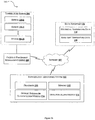
- Figure la illustrates an architecture diagram of an exemplary system for monitoring health of a refrigeration system in accordance with some embodiments of the present disclosure.
- the exemplary system 100 comprises one or more components configured for monitoring a refrigeration system.
- the exemplary system 100 comprises a refrigeration monitoring system (hereinafter referred to as RMS) 102, one or more temperature sensors 104-1, 104-2, ... 104-N (hereinafter collectively referred to as temperature sensor 104) and a data repository 106 connected via a communication network 108.
- RMS refrigeration monitoring system
- temperature sensor 104 one or more temperature sensors 104-1, 104-2, ... 104-N
- data repository 106 connected via a communication network 108.
- FIG. 1b illustrates another exemplary system 101 implemented as an Internet Of Things (IOT) enabled system comprising one or more components communicatively connected via the Internet 107 as shown in Figure 1b .
- the IOT system 101 comprise a gateway for energy management (GEM) 109 communicatively coupled with the RMS 102 via the Internet 107.
- the GEM 107 comprises a plurality of interfaces for transmitting data associated with operating conditions of the refrigeration system to the RMS 102.
- the plurality of interfaces may be for example, Wireless Zig Bee interface, Global System for Mobile communication (GSM)/ General Packet Radio Service (GPRS) interface, Wireless Internet for Frequent Interface (WIFI), and Ethernet interface.
- GSM Global System for Mobile communication
- GPRS General Packet Radio Service
- WIFI Wireless Internet for Frequent Interface
- the GEM 109 may also comprise an Analog-to-Digital Converter (ADC) (not shown in Figure lb), and an analog interface (not shown in Figure lb) coupled with the ADC and the temperature sensor 104.
- ADC Analog-to-Digital Converter
- the analog interface receives real-time temperature data from the temperature sensor 104 in the form of analog signal.
- the ADC converts the received analog signal into a corresponding digital signal for further processing by RMS 102.
- the system 100,101 may be communicatively coupled to a data receiver module (not shown in Figures la, lb) and a depacketizer module (not shown in Figures la, lb) integrated within the RMS 102.
- the data receiver module and the depacketizer module may be externally coupled with the RMS 102.
- the data receiver module is configured to receive data from the GEM 109 via the Internet 107.
- the data receiver module is configured to receive data from the temperature sensor 104 via the communication network 108 and forward the received data to the depacketizer module.
- the depacketizer module is configured to decode the received data for further processing by RMS 102 and update the data repository 106 with the received data.
- the data repository 106 stores historical temperature data 118 i.e. a plurality of temperature data recorded for at least a week in the past obtained by the temperature sensor 104.
- the data repository 106 also stores a plurality of real-time temperature data 120 received in real-time from the temperature sensor 104 and the depacketizer module.
- the historical temperature data 118 and the real-time temperature data 120 may be encoded using known encoding techniques before storing in the data repository 106.
- the data repository 106 may be integrated within the RMS 102. In another embodiment, the data repository 106 may be implemented as standalone device disposed external to the RMS 102.
- the RMS 102 comprises at least a processor 110 and a memory 112 coupled with the processor 110.
- the RMS 102 further comprises a defrost parameter determination module (DPDM) 114, and a deviation alarm module (hereinafter referred to as alarm module) 116.
- the temperature sensor 104 may be coupled with the processor 110 and configured to track the changes in temperature of the refrigeration system.
- the temperature sensor 104 may be a condition sensor capable of tracking the changes in the state and operating conditions of the refrigeration system.
- the RMS 102 may be a typical RMS as illustrated in Figure 2 .
- the RMS 102 comprises the processor 110, the memory 112, and an I/O interface 202.
- the I/O interface 202 is coupled with the processor 110 and an I/O device.
- the I/O device is configured to receive inputs via the I/O interface 202 and transmit outputs for displaying in the I/O device via the I/O interface 202.
- the RMS 102 further comprises data 204 and modules 206.
- the data 204 and the modules 206 may be stored within the memory 112.
- the data 204 may include a plurality of temperature data 208, a plurality of defrost cycle parameter values 210, one or more derived defrost parameter values 212, report data 214 and other data 216.
- the data 204 may be stored in the memory 112 in the form of various data structures.
- the aforementioned data can be organized using data models, such as relational or hierarchical data models.
- the other data 216 may be also referred to as reference repository for storing recommended implementation approaches as reference data.
- the other data 216 may also store data, including temporary data, temporary files and predetermined threshold values of the defrost cycle parameters and derived defrost parameters, generated by the modules 206 for performing the various functions of the RMS 102.
- the modules 206 may include, for example, the DPDM 114, the alarm module 116, and a report generation module 218.
- the modules 206 may also comprise other modules 220 to perform various miscellaneous functionalities of the RMS 102. It will be appreciated that such aforementioned modules may be represented as a single module or a combination of different modules.
- the modules 206 may be implemented in the form of software, hardware and/or firmware.
- the RMS 102 monitors the health of a refrigeration system such as Walk-In Freezer (WIF).
- WIF Walk-In Freezer
- the RMS 102 enables tracking of state and operational changes of the refrigeration system and provide efficiency measures required for improving the operational performance.
- the RMS 102 monitors the performance of the refrigeration system based on one or more performance parameters determined based on temperature profile of the refrigeration system.
- the RMS 102 receives the plurality of real-time temperature data 208 from the temperature sensor 104.
- the temperature sensor 208 determines the temperature of the WIF in real-time and provide a signal to the RMS 102 indicative of the plurality of temperature data 208.
- the temperature sensor 104 may be configured to provide a signal indicating the status of operating conditions of the WIF.
- the processor 110 receives the plurality of real-time temperature data 208 from the temperature sensor 104 and processes the received plurality of temperature data 208 to determine performance of the defrost operations. In one embodiment, the processor 110 receives the plurality of real-time temperature data 208 along with the respective time stamp indicating the time of recording the plurality of real-time temperature data 208 by the temperature sensor 104. In one example, the plurality of real-time temperature data 208 may be received as analog signals from the temperature sensor 104 as indicated in Figure 1a . The processor 110 converts the received analog signals into corresponding digital form for further processing. In another example, the plurality of real-time temperature data 208 may be received in analog form by the GEM 109 and converted into corresponding digital form by the ADC of the GEM 109.
- the processor 110 pre- processes the plurality of real-time temperature data 208 received in digital form by employing various data sampling and parsing techniques. Upon pre-processing, the processor 110 enables determination of the defrost cycle parameter values 210 based on the pre-processed plurality of real-time temperature data 208.
- the processor 110 determines at least a first steady state value and a second steady state value based on the plurality of pre-processed real-time temperature data 208.
- the steady state value refers to a steady state temperature determined from the historic data of previous week or set with a reference value of - 18degree Celsius and updated periodically.
- the processor 110 determines the first steady state value by comparing each of the received plurality of the real-time temperature data 208 with a predetermined percentile temperature value.
- the predetermined percentile temperature value is set to a 75 th percentile of the temperature recorded in a previous day.
- the processor 110 performs comparison of each of the plurality of real-time temperature data 208 with the 75 th percentile of temperature and determines one real-time temperature data that exceeds the 75 th percentile temperature value as the first steady state value based on the comparison.
- the processor 110 further determines the second steady state value as the one real-time temperature data that exceeds the 75 th percentile temperature value during the defrost operation. Based on the first steady state value and the second steady state value, the RMS 102 determines the plurality of defrost cycle parameter values 210.
- the DPDM 114 determines the plurality of defrost cycle parameter values 210 such as for example, defrost start time value, peak temperature value, defrost end time value, heater ON duration value, heater OFF time value, and defrost cycle duration value.
- the DPDM 114 obtains the time stamp of the first steady state value as the defrost start time value.
- the DPDM 114 further determines one of the real-time temperature data having highest temperature value as the peak temperature value. Based on the time stamp of the peak temperature value, the DPDM 114 determines the heater OFF time value. Further, the DPDM 114 calculates the heater ON duration based on the defrost Start time value and the heater OFF time value as indicated below in equation (1).
- Heater ON duration Heater OFF time ⁇ Defrost Start time value
- the DPDM 114 determines the time stamp of the second steady state value as the defrost End time value and computes the defrost cycle duration value based on the defrost Start time value and the defrost End time value as indicated below in equation (2).
- Defrost Duration Defrost End time value ⁇ Defrost Start time value
- the RMS 102 determines the derived defrost parameter values 212 to determine deviations of the performance of the refrigeration system.
- the alarm module 116 determines the one or more derived defrost parameter values 212 such as count of defrost cycles in a predetermined time, defrost schedule, longer heater operation period and so on.
- the alarm module 116 determines the frequency or count of defrost cycles occurring in a predetermined time and performs comparison of the count of defrost cycles with a predetermined threshold count value. The alarm module 116 generates a first alarm signal if the count of defrost cycles is determined to exceed the predetermined threshold count value. Further, the alarm module 116 determines probability of occurrence of the one or more defrost cycles as per a predetermined schedule and generates a second alarm signal based on the determination. In one example, if the alarm module 116 determines low probability or lack of adherence of the defrost cycle operation as per the predetermined schedule, the alarm module 116 generates the second alarm signal.
- the alarm module 116 Based on the determination of compressor inefficiency detection value, the alarm module 116 generates a fourth alarm signal indicating flag for maintenance if the compressor inefficiency detection value is determined to exceed a predetermined inefficiency threshold value. Further, the alarm module 116 provides one or more recommendations to support maintenance of the refrigeration system in response to determination of deviations of at least one of the defrost cycle parameters 210.
- the RMS 102 generates one or more reports indicating patterns of defrost duration and defrost duration distribution over a time.
- the report generation module 218 generates one or more report data 214 comprising visualization data of patterns of defrost duration and defrost duration distribution over a time, patterns of door opening to detect unusual door opening from the peak temperature value.
- the RMS 102 may be communicatively coupled to a display unit (not shown in Figure 1a and 1b ) for displaying the visualization reports and recommendations or suggestions in the form of alarm signals.
- the report generation module 218 enables displaying the visualization reports and recommendations or suggestions in the form of visualization reports or graphs or charts or alarm signals.
- the RMS 102 also updates the repository 106 with the plurality of real-time temperature data 208 along with the timestamp, the plurality of defrost cycle parameters 210, the one or more deviations of the at least one defrost cycle parameters 210 and one or more recommendations to support maintenance of the refrigeration system.
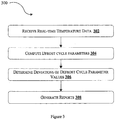
- the order in which the method 300 is described is not intended to be construed as a limitation, and any number of the described method blocks can be combined in any order to implement the method 300. Additionally, individual blocks may be deleted from the method 300 without departing from the scope of the subject matter described herein. Furthermore, the method 300 can be implemented in any suitable hardware, software, firmware, or combination thereof.
- the RMS 102 monitors the performance of the refrigeration system based on one or more performance parameters determined based on temperature profile of the refrigeration system.
- the RMS 102 receives the plurality of real-time temperature data 208 from the temperature sensor 104.
- the temperature sensor 208 determine the temperature of the WIF in real-time and provide a signal to the RMS 102 indicative of the plurality of temperature data 208.
- the temperature sensor 104 may be configured to provide a signal indicating the status of operating conditions of the WIF.
- the processor 110 receives the plurality of real-time temperature data 208 along with the respective time stamp indicating the time of recording the plurality of real-time temperature data 208 by the temperature sensor 104.
- the plurality of realtime temperature data 208 may be received as analog signals from the temperature sensor 104 as indicated in Figure la.
- the processor 110 converts the received analog signals into corresponding digital form for further processing.
- the plurality of real-time temperature data 208 may be received in analog form by the GEM 109 and converted into corresponding digital form by the ADC of the GEM 109.
- the processor 110 pre-processes the plurality of real-time temperature data 208 received in digital form by employing various data sampling and parsing techniques. Upon pre-processing, the processor 110 enables determination of the defrost cycle parameter values 210 based on the pre-processed plurality of real-time temperature data 208.
- the processor 110 determines at least a first steady state value and a second steady state value based on the plurality of pre-processed real-time temperature data 208. In one embodiment, the processor 110 determines the first steady state value by comparing each of the received plurality of the real-time temperature data 208 with a 75 th percentile temperature value. The processor 110 further determines the second steady state value as the one real-time temperature data that exceeds the 75 th percentile temperature value during the defrost operation. Based on the first steady state value and the second steady state value, the RMS 102 determines the plurality of defrost cycle parameter values 210.
- the DPDM 114 determines the plurality of defrost cycle parameter values 210 such as for example, defrost start time value, peak temperature value, defrost end time value, heater ON duration value, heater OFF time value, and defrost cycle duration value.
- the DPDM 114 obtains the time stamp of the first steady state value as the defrost start time value.
- the DPDM 114 further determines one of the real-time temperature data having highest temperature value as the peak temperature value. Based on the time stamp of the peak temperature value, the DPDM 114 determines the heater OFF time value. Further, the DPDM 114 calculates the heater ON duration based on the defrost Start time value and the heater OFF time value.
- the DPDM 114 determines the time stamp of the second steady state value as the defrost End time value and computes the defrost cycle duration value based on the defrost Start time value and the defrost End time value. Based on the determined defrost cycle parameter values 210, the RMS 102 determines the derived defrost parameter values 212 to determine deviations of the performance of the refrigeration system.
- the alarm module 116 determines the one or more derived defrost parameter values 212 such as count of defrost cycles in a predetermined time, defrost schedule, longer heater operation period and so on.
- the alarm module 116 determines the frequency or count of defrost cycles occurring in a predetermined time such as 24 hours i.e. a day or a week, and performs comparison of the count of defrost cycles with a predetermined threshold count value.
- the alarm module 116 generates a first alarm signal if the count of defrost cycles is determined to exceed the predetermined threshold count value.
- the alarm module 116 determines probability of occurrence of the one or more defrost cycles as per a predetermined schedule and generates a second alarm signal based on the determination. In one example, if the alarm module 116 determines low probability or lack of adherence of the defrost cycle operation as per the predetermined schedule, the alarm module 116 generates the second alarm signal.
- the alarm module 116 determines longer heater operation period by performing comparison of the heater ON duration value with a predetermined heater operation period. If the heater ON duration value is determined to exceed the predetermined heater operation period, then the alarm module 116 generates a third alarm signal indicating the longer heater operation period. Also, the alarm module 116 determines a compressor inefficiency detection value based on the first steady state value and the plurality of real-time temperature data 208 obtained through the temperature sensor 104.
- the alarm module 116 Based on the determination of compressor inefficiency detection value, the alarm module 116 generates a fourth alarm signal indicating flag for maintenance if the compressor inefficiency detection value is determined to exceed a predetermined inefficiency threshold value. Further, the alarm module 116 provides one or more recommendations to support maintenance of the refrigeration system in response to determination of deviations of at least one of the defrost cycle parameters 210.
- the RMS 102 generates one or more reports indicating patterns of defrost duration and defrost duration distribution over a time.
- the report generation module 218 generates one or more report data 214 comprising visualization data of patterns of defrost duration and defrost duration distribution over a time, patterns of door opening to detect unusual door opening from the peak temperature value.
- the report generation module 218 also enables displaying the visualization reports and recommendations or suggestions in a display unit in the form of alarm signals or positions in the visualization reports or graphs or charts.
- the RMS 102 also updates the repository 106 with the plurality of real-time temperature data 208 along with the timestamp, the plurality of defrost cycle parameters 210, the one or more deviations of the at least one defrost cycle parameters 210 and one or more recommendations to support maintenance of the refrigeration system.
- the system enables monitoring the status or health of the refrigeration and predicting the possibility of maintenance required by leveraging the time stamped temperature data & statistical means.
- the system also enables the enterprise view of the asset health system to the needs of the customer, reducing the operational cost, wastage of food & maintain the food safety norms as per the standard.
- Computer system 401 may be used for implementing all the computing systems that may be utilized to implement the features of the present disclosure.
- Computer system 401 may comprise a central processing unit (“CPU” or "processor") 402.
- the processor 402 may comprise at least one data processor for executing program components for executing user- or system-generated requests.
- the processor 402 may include specialized processing units such as integrated system (bus) controllers, memory management control units, floating point units, graphics processing units, digital signal processing units, etc.
- the processor 402 may include a microprocessor, such as AMD Athlon, Duron or Opteron, ARM's application, embedded or secure processors, IBM PowerPC, Intel's Core, Itanium, Xeon, Celeron or other line of processors, etc.
- the processor 402 may be implemented using mainframe, distributed processor, multi-core, parallel, grid, or other architectures. Some embodiments may utilize embedded technologies like application-specific integrated circuits (ASICs), digital signal processors (DSPs), Field Programmable Gate Arrays (FPGAs), etc.
- ASICs application-specific integrated circuits
- DSPs digital signal processors
- FPGAs Field Programmable Gate Arrays
- I/O Processor 402 may be disposed in communication with one or more input/output (I/O) devices via I/O interface 403.
- the I/O interface 403 may employ communication protocols/methods such as, without limitation, audio, analog, digital, monoaural, RCA, stereo, IEEE-1394, serial bus, universal serial bus (USB), infrared, PS/2, BNC, coaxial, component, composite, digital visual interface (DVI), high-definition multimedia interface (HDMI), RF antennas, S-Video, VGA, IEEE 802.n /b/g/n/x, Bluetooth, cellular (e.g., code-division multiple access (CDMA), high-speed packet access (HSPA+), global system for mobile communications (GSM), long-term evolution (LTE), WiMax, or the like), etc.
- CDMA code-division multiple access
- HSPA+ high-speed packet access
- GSM global system for mobile communications
- LTE long-term evolution
- WiMax wireless wide area network
- the computer system 401 may communicate with one or more I/O devices.
- the input device 404 may be an antenna, keyboard, mouse, joystick, (infrared) remote control, camera, card reader, fax machine, dongle, biometric reader, microphone, touch screen, touchpad, trackball, sensor (e.g., accelerometer, light sensor, GPS, gyroscope, proximity sensor, or the like), stylus, scanner, storage device, transceiver, video device/source, visors, etc.
- Output device 405 may be a printer, fax machine, video display (e.g., cathode ray tube (CRT), liquid crystal display (LCD), light-emitting diode (LED), plasma, or the like), audio speaker, etc.
- video display e.g., cathode ray tube (CRT), liquid crystal display (LCD), light-emitting diode (LED), plasma, or the like
- audio speaker etc.
- a transceiver 406 may be disposed in connection with the processor 402. The transceiver 406 may facilitate various types of wireless transmission or reception.
- the transceiver may include an antenna operatively connected to a transceiver chip (e.g., Texas Instruments WiLink WL1283, Broadcom BCM4750IUB8, Infineon Technologies X-Gold 618-PMB9800, or the like), providing IEEE 802.11a/b/g/n, Bluetooth, FM, global positioning system (GPS), 2G/3G HSDPA/HSUPA communications, etc.
- a transceiver chip e.g., Texas Instruments WiLink WL1283, Broadcom BCM4750IUB8, Infineon Technologies X-Gold 618-PMB9800, or the like
- IEEE 802.11a/b/g/n e.g., Texas Instruments WiLink WL1283, Broadcom BCM4750IUB8, Infineon Technologies X-Gold 618-PMB9800, or the like
- IEEE 802.11a/b/g/n e.g., Bluetooth, FM, global positioning system (GPS), 2G/3G HSDPA/HS
- the processor 402 may be disposed in communication with a communication network 408 via a network interface 407.
- the network interface 407 may communicate with the communication network 408.
- the network interface 407 may employ connection protocols including, without limitation, direct connect, Ethernet (e.g., twisted pair 10/40/400 Base T), transmission control protocol/internet protocol (TCP/IP), token ring, IEEE 802.11a/b/g/n/x, etc.
- the communication network 408 may include, without limitation, a direct interconnection, local area network (LAN), wide area network (WAN), wireless network (e.g., using Wireless Application Protocol), the Internet, etc.
- the computer system 401 may communicate with devices 409, 410, and 411.
- These devices 409, 410 and 411 may include, without limitation, personal computers), server(s), fax machines, printers, scanners, various mobile devices such as cellular telephones, smartphones (e.g., Apple iPhone, Blackberry, Android-based phones, etc.), tablet computers, eBook readers (Amazon Kindle, Nook, etc.), laptop computers, notebooks, gaming consoles (Microsoft Xbox, Nintendo DS, Sony PlayStation, etc.), or the like.
- the computer system 401 may itself embody one or more of these devices.
- the processor 402 may be disposed in communication with one or more memory devices (e.g., RAM 413, ROM 414, etc.) via a storage interface 412.
- the storage interface 412 may connect to memory devices including, without limitation, memory drives, removable disc drives, etc., employing connection protocols such as serial advanced technology attachment (SATA), integrated drive electronics (IDE), IEEE-1394, universal serial bus (USB), fiber channel, small computer systems interface (SCSI), etc.
- the memory drives may further include a drum, magnetic disc drive, magneto-optical drive, optical drive, redundant array of independent discs (RAID), solid-state memory devices, solid-state drives, etc.
- the memory 415 may store a collection of program or database components, including, without limitation, an operating system 416, a user interface application 417, a web browser 418, a mail server 419, a mail client 420, user/application data 421 (e.g., any data variables or data records discussed in this disclosure), etc.
- the operating system 416 may facilitate resource management and operation of the computer system 401.
- Examples of the operating system 416 include, without limitation, Apple Macintosh OS X, UNIX, Unix-like system distributions (e.g., Berkeley Software Distribution (BSD), FreeBSD, NetBSD, OpenBSD, etc.), Linux distributions (e.g., Red Hat, Ubuntu, Kubuntu, etc.), IBM OS/2, Microsoft Windows (XP, Vista/7/8, etc.), Apple iOS, Google Android, Blackberry OS, or the like.
- the user interface application 417 may facilitate display, execution, interaction, manipulation, or operation of program components through textual or graphical facilities.
- user interfaces may provide computer interaction interface elements on a display system operatively connected to the computer system 401, such as cursors, icons, check boxes, menus, scrollers, windows, widgets, etc.
- GUIs Graphical user interfaces
- GUIs may be employed, including, without limitation, Apple Macintosh operating systems' Aqua, IBM OS/2, Microsoft Windows (e.g., Aero, Metro, etc.), Unix X-Windows, web interface libraries (e.g., ActiveX, Java, Javascript, AJAX, HTML, Adobe Flash, etc.), or the like.
- the computer system 401 may implement a web browser 418 stored program component.
- the web browser 418 may be a hypertext viewing application, such as Microsoft Internet Explorer, Google Chrome, Mozilla Firefox, Apple Safari, etc. Secure web browsing may be provided using HTTPS (secure hypertext transport protocol), secure sockets layer (SSL), Transport Layer Security (TLS), etc.
- the web browser 418 may utilize facilities such as AJAX, DHTML, Adobe Flash, JavaScript, Java, application programming interfaces (APIs), etc.
- the computer system 401 may implement a mail server 419 stored program component.
- the mail server 419 may be an Internet mail server such as Microsoft Exchange, or the like.
- the mail server 419 may utilize facilities such as ASP, ActiveX, ANSI C++/C#, Microsoft .NET, CGI scripts, Java, JavaScript, PERL, PHP, Python, WebObjects, etc.
- the mail server 419 may utilize communication protocols such as internet message access protocol (IMAP), messaging application programming interface (MAPI), Microsoft Exchange, post office protocol (POP), simple mail transfer protocol (SMTP), or the like.
- IMAP internet message access protocol
- MAPI messaging application programming interface
- PMP post office protocol
- SMTP simple mail transfer protocol
- the computer system 401 may implement a mail client 420 stored program component.
- the mail client 420 may be a mail viewing application, such as Apple Mail, Microsoft Entourage, Microsoft Outlook, Mozilla Thunderbird, etc.
- computer system 401 may store user/application data 421, such as the data, variables, records, etc. as described in this disclosure.
- databases may be implemented as fault-tolerant, relational, scalable, secure databases such as Oracle or Sybase.
- databases may be implemented using standardized data structures, such as an array, hash, linked list, struct, structured text file (e.g., XML), table, or as object-oriented databases (e.g., using ObjectStore, Poet, Zope, etc.).
- object-oriented databases e.g., using ObjectStore, Poet, Zope, etc.
- Such databases may be consolidated or distributed, sometimes among the various computer systems discussed above in this disclosure. It is to be understood that the structure and operation of the any computer or database component may be combined, consolidated, or distributed in any working combination.
- a computer-readable storage medium refers to any type of physical memory on which information or data readable by a processor may be stored.
- a computer-readable storage medium may store instructions for execution by one or more processors, including instructions for causing the processor(s) to perform steps or stages consistent with the embodiments described herein.
- the term "computer-readable medium” should be understood to include tangible items and exclude carrier waves and transient signals, i.e., are non-transitory. Examples include random access memory (RAM), read-only memory (ROM), volatile memory, nonvolatile memory, hard drives, CD ROMs, DVDs, flash drives, disks, and any other known physical storage media.
- the present disclosure provides a method for monitoring the status or health of the refrigeration and predict the chance for maintenance by leveraging the time stamped temperature data & statistical means.
- the monitoring system of the present disclosure enables enterprise view of the asset health system to the needs of the customer, reducing the operational cost, wastage of food & maintain the Food safety norms as per the standard.
Landscapes
- Engineering & Computer Science (AREA)
- Physics & Mathematics (AREA)
- Mechanical Engineering (AREA)
- Thermal Sciences (AREA)
- General Engineering & Computer Science (AREA)
- Chemical & Material Sciences (AREA)
- Combustion & Propulsion (AREA)
- General Physics & Mathematics (AREA)
- Automation & Control Theory (AREA)
- Human Computer Interaction (AREA)
- Devices That Are Associated With Refrigeration Equipment (AREA)
- Cold Air Circulating Systems And Constructional Details In Refrigerators (AREA)
Claims (12)
- Verfahren zum Überwachen eines Kühlsystems, das Verfahren umfassend:Empfangen, durch ein Kühlungsüberwachungssystem (102), einer Vielzahl von Echtzeittemperaturdaten (208) von mindestens einem Temperatursensor (104), der mit dem Kühlsystem gekoppelt ist;Bestimmen, durch das Kühlungsüberwachungssystem (102), mindestens eines ersten Beharrungszustandswerts und eines zweiten Beharrungszustandswerts basierend auf der Vielzahl von Echtzeittemperaturdaten;Berechnen, durch das Kühlungsüberwachungssystem (102), einer Vielzahl von Enteisungszyklusparameterwerten (210), die mindestens Enteisungsstartzeitwert, Enteisungsbeendigungszeitwert, Spitzentemperaturwert, Heizeinrichtungsausschaltungszeitwert und Heizeinrichtungseinschaltungszeitwert beinhalten, basierend auf mindestens dem ersten Beharrungszustandswert und den zweiten Beharrungszustandswerten; undErzeugen, durch das Kühlungsüberwachungssystem (102), eines oder mehrere Alarmsignale basierend auf Bestimmung von Abweichungen von mindestens einem der Enteisungszyklusparameterwerte von entsprechenden vorbestimmten Schwellenwerten;dadurch gekennzeichnet, dass:
Bestimmen des ersten Beharrungszustandswerts umfasst:Vergleichen jeder der Vielzahl der Echtzeittemperaturdaten (208) mit einem vorbestimmten Perzentil-Temperaturwert; undBestimmen einer der Vielzahl der Echtzeittemperaturdaten, die den vorbestimmten Perzentil-Temperaturwert übersteigt, als den ersten Beharrungszustandswert. - Verfahren nach Anspruch 1, wobei das Berechnen der Vielzahl von Enteisungszyklusparametern (210) umfasst:Erhalten eines Zeitstempels des ersten Beharrungszustandswerts als den Enteisungsstartzeitwert;Bestimmen einer der Vielzahl der Echtzeittemperaturdaten mit höchstem Temperaturwert als den Spitzentemperaturwert;Bestimmen des Zeitstempels des Spitzentemperaturwerts als den Heizeinrichtungsausschaltungszeitwert;Berechnen des Heizeinrichtungseinschaltungszeitwerts basierend auf dem Enteisungsstartzeitwert und dem Heizeinrichtungsausschaltungszeitwert;Bestimmen des Zeitstempels des zweiten Beharrungszustandswerts als den Enteisungsbeendigungszeitwert, wobei der zweite Beharrungszustandswert die Echtzeittemperaturdaten sind, die den vorbestimmten Perzentil-Temperaturwert während Enteisungsbetriebs übersteigen; undBerechnen des Enteisungszyklusdauerwerts basierend auf dem Enteisungsstartzeitwert und dem Enteisungsbeendigungszeitwert.
- Verfahren nach Anspruch 1, wobei das Erzeugen des einen oder der mehreren Alarmsignale umfasst:Bestimmen einer Zahl von Enteisungszyklen, die in einer vorbestimmten Zeit auftreten, und Durchführen eines ersten Vergleichs der Zahl von Enteisungszyklen mit einem vorbestimmten Zählwert;Erzeugen eines ersten Alarmsignals basierend auf dem ersten Vergleich;Bestimmen des Auftretens der Enteisungszyklen als pro einem vorbestimmten Zeitplan;Erzeugen eines zweiten Alarmsignals basierend auf der Bestimmung;Durchführen eines zweiten Vergleichs des Heizeinrichtungseinschaltungszeitwerts mit einer vorbestimmten Heizeinrichtungsbetriebsperiode; undErzeugen eines dritten Alarmsignals basierend auf dem zweiten Vergleich.
- Verfahren nach Anspruch 3, wobei das Erzeugen des einen oder der mehreren Alarmsignale weiter umfasst:Bestimmen eines Kompressorineffizienzdetektionswerts basierend auf dem ersten Beharrungszustandswert und der Vielzahl von Echtzeittemperaturdaten, die durch den mindestens einen Temperatursensor erhalten werden; undErzeugen einer vierten Alarmsignalanzeigemarkierung für Wartung basierend auf der Bestimmung.
- Verfahren nach Anspruch 1, weiter umfassend Erzeugen eines oder mehrerer Visualisierungsberichte in Verknüpfung mit Mustern von Enteisungsdauer und Enteisungsdauerverteilung über eine Zeit und Bereitstellen einer oder mehrerer Empfehlungen, um Wartung des Kühlsystems zu unterstützen, in Antwort auf Bestimmung von Abweichungen von mindestens einem der Enteisungszyklusparameter.
- Verfahren nach Anspruch 1, weiter umfassend Aktualisieren eines Datenverzeichnisses (106) mit einer Vielzahl von Echtzeittemperaturdaten (208) gemeinsam mit dem Zeitstempel, der Vielzahl von Enteisungszyklusparametern (210), der einen oder den mehreren Abweichungen des mindestens einen Enteisungszyklusparameter und einer oder mehreren Empfehlungen, um Wartung des Kühlsystems zu unterstützen.
- System zum Überwachen eines Kühlsystems, das System umfassend:einen Prozessor (110);mindestens einen Temperatursensor (104), der mit dem Prozessor (110) gekoppelt ist; undeinen Speicher (112), der kommunikativ an den Prozessor (110) gekoppelt ist, wobei der Speicher (112) prozessorausführbare Anweisungen speichert, die, bei Ausführung, den Prozessor veranlassen zum:Empfangen einer Vielzahl von Echtzeittemperaturdaten (208) von dem mindestens einem Temperatursensor (104);Bestimmen mindestens eines ersten Beharrungszustandswerts und eines zweiten Beharrungszustandswerts basierend auf der Vielzahl von derart empfangenen Echtzeittemperaturdaten (208);Berechnen einer Vielzahl von Enteisungszyklusparameterwerten (210), die mindestens Enteisungsstartzeitwert, Enteisungsbeendigungszeitwert, Spitzentemperaturwert, Heizeinrichtungsausschaltungszeitwert und Heizeinrichtungseinschaltungszeitwert beinhalten, basierend auf mindestens dem ersten Beharrungszustandswert und zweiten Beharrungszustandswert; undErzeugen eines oder mehrere Alarmsignale basierend auf Bestimmung von Abweichungen von mindestens einem der Enteisungszyklusparameterwerte von entsprechenden vorbestimmten Schwellenwerten;dadurch gekennzeichnet, dass:
der Prozessor (110) konfiguriert ist, den ersten Beharrungszustandswert zu bestimmen durch:Vergleichen jeder der Vielzahl der Echtzeittemperaturdaten (208) mit einem vorbestimmten Perzentil-Temperaturwert; undBestimmen einer der Vielzahl der Echtzeittemperaturdaten, die den vorbestimmten Perzentil-Temperaturwert übersteigt, als den ersten Beharrungszustandswert. - System nach Anspruch 7, wobei der Prozessor (110) konfiguriert ist, die Vielzahl von Enteisungszyklusparametern zu berechnen durch:Erhalten eines Zeitstempels des ersten Beharrungszustandswerts als den Enteisungsstartzeitwert;Bestimmen einer der Vielzahl der Echtzeittemperaturdaten mit höchstem Temperaturwert als den Spitzentemperaturwert;Bestimmen des Zeitstempels des Spitzentemperaturwerts als den Heizeinrichtungsausschaltungszeitwert;Berechnen des Heizeinrichtungseinschaltungszeitwerts basierend auf dem Enteisungsstartzeitwert und dem Heizeinrichtungsausschaltungszeitwert;Bestimmen des Zeitstempels des zweiten Beharrungszustandswerts als den Enteisungsbeendigungszeitwert, wobei der zweite Beharrungszustandswert die Echtzeittemperaturdaten sind, die den vorbestimmten Perzentil-Temperaturwert während Enteisungsbetriebs übersteigen; undBerechnen des Enteisungszyklusdauerwerts basierend auf dem Enteisungsstartzeitwert und dem Enteisungsbeendigungszeitwert.
- System nach Anspruch 7, wobei der Prozessor (110) konfiguriert ist, das eine oder die mehreren Alarmsignale zu erzeugen durch:Bestimmen einer Zahl von Enteisungszyklen, die in einer vorbestimmten Zeit auftreten, und Durchführen eines ersten Vergleichs der Zahl von Enteisungszyklen mit einem vorbestimmten Zählwert;Erzeugen eines ersten Alarmsignals basierend auf dem ersten Vergleich;Bestimmen des Auftretens der Enteisungszyklen als pro einem vorbestimmten Zeitplan;Erzeugen eines zweiten Alarmsignals basierend auf der Bestimmung;Durchführen eines zweiten Vergleichs des Heizeinrichtungseinschaltungszeitwerts mit einer vorbestimmten Heizeinrichtungsbetriebsperiode; undErzeugen eines dritten Alarmsignals basierend auf dem zweiten Vergleich.
- System nach Anspruch 9, wobei der Prozessor (110) weiter konfiguriert ist zum:Bestimmen eines Kompressorineffizienzdetektionswerts basierend auf dem ersten Beharrungszustandswert und dem zweiten Beharrungszustandswert und der Vielzahl von Echtzeittemperaturdaten, die durch die Vielzahl von Temperatursensoren erhalten werden; undErzeugen einer vierten Alarmsignalanzeigemarkierung für Wartung basierend auf der Bestimmung.
- System nach Anspruch 7, wobei der Prozessor (110) weiter konfiguriert ist, einen oder mehrere Visualisierungsberichte in Verknüpfung mit Mustern von Enteisungsdauer und Enteisungsdauerverteilung über eine Zeit zu erzeugen und eine oder mehrere Empfehlungen, um Wartung des Kühlsystems zu unterstützen, in Antwort auf Bestimmung von Abweichungen von mindestens einem der Enteisungszyklusparameter (210) bereitzustellen.
- System nach Anspruch 7, weiter umfassend ein Datenverzeichnis (106), das mit dem Prozessor (110) gekoppelt ist und konfiguriert ist, die Vielzahl von Echtzeittemperaturdaten (208) gemeinsam mit dem Zeitstempel, der Vielzahl von Enteisungszyklusparametern (210), der einen oder den mehreren Abweichungen des mindestens einen Enteisungszyklusparameter (210) und einer oder mehreren Empfehlungen zu aktualisieren, um Wartung des Kühlsystems zu unterstützen.
Applications Claiming Priority (2)
| Application Number | Priority Date | Filing Date | Title |
|---|---|---|---|
| IN201641040012 | 2016-11-23 | ||
| PCT/US2017/063077 WO2018098327A1 (en) | 2016-11-23 | 2017-11-22 | Method and system for monitoring a refrigeration system |
Publications (2)
| Publication Number | Publication Date |
|---|---|
| EP3545245A1 EP3545245A1 (de) | 2019-10-02 |
| EP3545245B1 true EP3545245B1 (de) | 2021-03-31 |
Family
ID=60655122
Family Applications (1)
| Application Number | Title | Priority Date | Filing Date |
|---|---|---|---|
| EP17812180.2A Active EP3545245B1 (de) | 2016-11-23 | 2017-11-22 | Verfahren und system zur überwachung eines kühlsystems |
Country Status (5)
| Country | Link |
|---|---|
| US (1) | US10465960B2 (de) |
| EP (1) | EP3545245B1 (de) |
| CN (1) | CN108709364B (de) |
| ES (1) | ES2865432T3 (de) |
| WO (1) | WO2018098327A1 (de) |
Families Citing this family (21)
| Publication number | Priority date | Publication date | Assignee | Title |
|---|---|---|---|---|
| US10941980B2 (en) * | 2017-09-06 | 2021-03-09 | International Business Machines Corporation | Predictive maintenance of refrigeration cases |
| US11493260B1 (en) | 2018-05-31 | 2022-11-08 | Thermo Fisher Scientific (Asheville) Llc | Freezers and operating methods using adaptive defrost |
| JP7070339B2 (ja) * | 2018-10-31 | 2022-05-18 | オムロン株式会社 | 温度閾値決定装置、温度異常判定システム、温度閾値決定方法、およびプログラム |
| US11175083B2 (en) | 2018-11-07 | 2021-11-16 | International Business Machines Corporation | Intelligent refrigeration compressor runtime schedule extraction |
| CN110081665A (zh) * | 2019-04-30 | 2019-08-02 | 杭州领顺实业有限公司 | 一种冷库机组控制系统和方法 |
| US12180056B2 (en) | 2020-02-21 | 2024-12-31 | Bartrack, Inc. | Monitoring equilibrium and dispensement of a fluid dispensement system to improve quality and efficiency |
| CN111351308B (zh) * | 2020-03-11 | 2021-10-15 | 合肥美的电冰箱有限公司 | 制冷设备及对其除霜的控制方法和控制装置、存储介质 |
| US11989042B1 (en) * | 2020-04-03 | 2024-05-21 | Oneevent Technologies, Inc. | Systems and methods for smart temperature control devices |
| EP3910432A1 (de) * | 2020-05-15 | 2021-11-17 | Caterpillar Inc. | System und verfahren zur echtzeitgesundheitsüberwachung einer maschinenkomponente |
| CN112378160B (zh) * | 2020-11-12 | 2022-07-05 | 合肥美菱物联科技有限公司 | 一种冰箱化霜参数的优化系统及方法 |
| US12613504B2 (en) | 2021-02-02 | 2026-04-28 | True Manufacturing Co., Inc. | Systems and methods for managing leased appliances |
| US11936489B2 (en) | 2021-02-02 | 2024-03-19 | True Manufacturing Co., Inc. | Systems, methods, and appliances that enable regional control of refrigeration appliances |
| US12428282B2 (en) | 2022-02-17 | 2025-09-30 | Bartrack, Inc. | Beverage mixing system |
| US12379144B2 (en) | 2022-03-10 | 2025-08-05 | True Manufacturing Co., Inc. | Ice maker and system and method for monitoring water filter of the ice maker |
| WO2023220788A1 (en) * | 2022-05-20 | 2023-11-23 | Hussmann Australia Pty Ltd | Refrigeration network monitoring system and device |
| CN119487349A (zh) * | 2022-07-12 | 2025-02-18 | 三星电子株式会社 | 电子设备以及电子设备的控制方法 |
| CN119585578A (zh) | 2022-07-28 | 2025-03-07 | 真实制造有限公司 | 用于制冷设备的资产管理和物联网装置 |
| CN115717807B (zh) * | 2022-11-24 | 2024-06-25 | 珠海格力电器股份有限公司 | 一种冷库设备的控制方法、控制器、空调及冷库 |
| US20240210094A1 (en) * | 2022-12-21 | 2024-06-27 | Carrier Corporation | System and method for self-regulated defrost operation inrefrigeration units |
| KR20250062312A (ko) * | 2023-10-30 | 2025-05-08 | 삼성전자주식회사 | 상태 진단이 가능한 냉장고 및 서버 장치와 그 방법들 |
| CN119510008B (zh) * | 2024-11-19 | 2026-04-17 | 长虹美菱股份有限公司 | 冰箱阀故障检测方法及系统 |
Family Cites Families (27)
| Publication number | Priority date | Publication date | Assignee | Title |
|---|---|---|---|---|
| US4234926A (en) * | 1978-12-05 | 1980-11-18 | Sealand Service Inc. | System & method for monitoring & diagnosing faults in environmentally controlled containers, such system and method being especially adapted for remote computer controlled monitoring of numerous transportable containers over existing on-site power wiring |
| US4993233A (en) | 1989-07-26 | 1991-02-19 | Power Kinetics, Inc. | Demand defrost controller for refrigerated display cases |
| JP2702879B2 (ja) | 1993-09-22 | 1998-01-26 | 松下冷機株式会社 | 自動販売機の制御装置 |
| JP4030237B2 (ja) | 1999-09-27 | 2008-01-09 | 三洋電機株式会社 | ケース冷却系の故障原因推定装置 |
| US6453687B2 (en) * | 2000-01-07 | 2002-09-24 | Robertshaw Controls Company | Refrigeration monitor unit |
| US6467282B1 (en) | 2000-09-27 | 2002-10-22 | Patrick D. French | Frost sensor for use in defrost controls for refrigeration |
| US6782706B2 (en) * | 2000-12-22 | 2004-08-31 | General Electric Company | Refrigerator—electronics architecture |
| US6892546B2 (en) * | 2001-05-03 | 2005-05-17 | Emerson Retail Services, Inc. | System for remote refrigeration monitoring and diagnostics |
| WO2003004950A1 (en) * | 2001-07-06 | 2003-01-16 | Hussmann Corporation | Frosting cooler |
| US6601396B2 (en) * | 2001-12-03 | 2003-08-05 | Kendro Laboratory Products, Lp | Freezer defrost method and apparatus |
| US6851270B2 (en) * | 2003-06-09 | 2005-02-08 | Texas Instruments Incorporated | Integrated refrigeration control |
| JP4356379B2 (ja) | 2003-07-16 | 2009-11-04 | 三菱電機株式会社 | 冷蔵庫、冷蔵庫の運転方法 |
| US7412842B2 (en) | 2004-04-27 | 2008-08-19 | Emerson Climate Technologies, Inc. | Compressor diagnostic and protection system |
| US7275377B2 (en) | 2004-08-11 | 2007-10-02 | Lawrence Kates | Method and apparatus for monitoring refrigerant-cycle systems |
| JP4759406B2 (ja) | 2006-02-27 | 2011-08-31 | ホシザキ電機株式会社 | 冷却貯蔵庫 |
| US7716936B2 (en) * | 2006-06-26 | 2010-05-18 | Heatcraft Refrigeration Products, L.L.C. | Method and apparatus for affecting defrost operations for a refrigeration system |
| US20080092569A1 (en) * | 2006-10-20 | 2008-04-24 | Doberstein Andrew J | Cooling unit with multi-parameter defrost control |
| JP5625582B2 (ja) * | 2010-07-26 | 2014-11-19 | ダイキン工業株式会社 | 冷凍装置 |
| US20120186274A1 (en) * | 2011-01-26 | 2012-07-26 | Mckesson Corporation | Methods, apparatuses, and computer program products for monitoring functionality of a refrigeration system |
| EP2681497A4 (de) * | 2011-02-28 | 2017-05-31 | Emerson Electric Co. | Hvac-überwachung und diagnose für haushaltsanwendungen |
| EP2732224A2 (de) * | 2011-07-15 | 2014-05-21 | Danfoss A/S | Verfahren zur steuerung des entfrostungsbetriebs eines kühlsystems |
| WO2013130799A1 (en) * | 2012-02-28 | 2013-09-06 | Emerson Climate Technologies, Inc. | Hvac system remote monitoring and diagnosis |
| JP5912848B2 (ja) | 2012-05-21 | 2016-04-27 | 中野冷機株式会社 | ショーケースの制御装置 |
| WO2014144446A1 (en) * | 2013-03-15 | 2014-09-18 | Emerson Electric Co. | Hvac system remote monitoring and diagnosis |
| CA2813285A1 (en) * | 2013-04-18 | 2014-10-18 | Bluenica Corporation | Sensing device and method to monitor perishable goods |
| WO2015101401A1 (en) | 2013-12-30 | 2015-07-09 | Arcelik Anonim Sirketi | Refrigeration appliance having a relocation mode and method for controlling the same |
| CN104930645B (zh) | 2015-05-29 | 2017-06-30 | 广东美的制冷设备有限公司 | 用于控制空调除霜的方法以及空调 |
-
2017
- 2017-02-27 US US15/443,256 patent/US10465960B2/en active Active
- 2017-11-22 CN CN201711179958.1A patent/CN108709364B/zh active Active
- 2017-11-22 ES ES17812180T patent/ES2865432T3/es active Active
- 2017-11-22 WO PCT/US2017/063077 patent/WO2018098327A1/en not_active Ceased
- 2017-11-22 EP EP17812180.2A patent/EP3545245B1/de active Active
Non-Patent Citations (1)
| Title |
|---|
| None * |
Also Published As
| Publication number | Publication date |
|---|---|
| US10465960B2 (en) | 2019-11-05 |
| US20180142929A1 (en) | 2018-05-24 |
| WO2018098327A1 (en) | 2018-05-31 |
| EP3545245A1 (de) | 2019-10-02 |
| CN108709364A (zh) | 2018-10-26 |
| CN108709364B (zh) | 2021-12-28 |
| ES2865432T3 (es) | 2021-10-15 |
Similar Documents
| Publication | Publication Date | Title |
|---|---|---|
| EP3545245B1 (de) | Verfahren und system zur überwachung eines kühlsystems | |
| US20200240875A1 (en) | Method and system for predicting failures in diverse set of asset types in an enterprise | |
| US11321624B2 (en) | Method and system for analyzing internet of things (IoT) data in real-time and providing predictions | |
| EP3316198A1 (de) | Verfahren und system zur verwaltung von leistungsindikatoren zur angabe von zielen des betriebsmanagements | |
| US9467934B1 (en) | Methods and systems for locating nearest bluetooth beacons | |
| EP3182341B1 (de) | Verfahren und system zum bestimmen des qualitätsniveaus von leistungsdaten in zusammenhang mit einer einheitsgruppe | |
| US10996861B2 (en) | Method, device and computer product for predicting disk failure | |
| US10163062B2 (en) | Methods and systems for predicting erroneous behavior of an energy asset using fourier based clustering technique | |
| US20150277976A1 (en) | System and method for data quality assessment in multi-stage multi-input batch processing scenario | |
| US20170185931A1 (en) | System and method for predicting estimation of project factors in software development environment | |
| US20210375115A1 (en) | Method and system for performing real-time monitoring of a container containing a non-gaseous fluid substance | |
| US20160345612A1 (en) | Method and system for monitoring state of food | |
| US10249106B2 (en) | Method and system for performing vehicle inspection | |
| US20160232082A1 (en) | System and method for steady state performance testing of a multiple output software system | |
| CN108509321A (zh) | 生成数据立方体的监控方法和系统 | |
| US20170006063A1 (en) | Systems and Methods for Managing Performance of Identity Management Services | |
| US20170061767A1 (en) | Method and System for Real-Time Monitoring of Operating Condition at an Infrastructure | |
| US10309874B2 (en) | Method for determining performance of an intermittently used refrigerator using a performance measuring device | |
| US20180225390A1 (en) | System and method for performing descriptive analysis in data mining | |
| US20170060572A1 (en) | Method and system for managing real-time risks associated with application lifecycle management platforms | |
| US20220101010A1 (en) | Method and system for manufacturing operations workflow monitoring using structural similarity index based activity detection | |
| US11340138B1 (en) | Tooling audit platform | |
| EP3136076A1 (de) | Verfahren und system für die echtzeitüberwachung von betriebsbedingungen in einer infrastruktur | |
| US20250139557A1 (en) | Method and system for predicting order delay | |
| EP3206172A1 (de) | Verfahren zur bestimmung der leistung eines zeitweise verwendeten kühlschranks mit einer leistungsmessvorrichtung |
Legal Events
| Date | Code | Title | Description |
|---|---|---|---|
| STAA | Information on the status of an ep patent application or granted ep patent |
Free format text: STATUS: UNKNOWN |
|
| STAA | Information on the status of an ep patent application or granted ep patent |
Free format text: STATUS: THE INTERNATIONAL PUBLICATION HAS BEEN MADE |
|
| PUAI | Public reference made under article 153(3) epc to a published international application that has entered the european phase |
Free format text: ORIGINAL CODE: 0009012 |
|
| STAA | Information on the status of an ep patent application or granted ep patent |
Free format text: STATUS: REQUEST FOR EXAMINATION WAS MADE |
|
| 17P | Request for examination filed |
Effective date: 20190523 |
|
| AK | Designated contracting states |
Kind code of ref document: A1 Designated state(s): AL AT BE BG CH CY CZ DE DK EE ES FI FR GB GR HR HU IE IS IT LI LT LU LV MC MK MT NL NO PL PT RO RS SE SI SK SM TR |
|
| AX | Request for extension of the european patent |
Extension state: BA ME |
|
| DAV | Request for validation of the european patent (deleted) | ||
| DAX | Request for extension of the european patent (deleted) | ||
| GRAP | Despatch of communication of intention to grant a patent |
Free format text: ORIGINAL CODE: EPIDOSNIGR1 |
|
| STAA | Information on the status of an ep patent application or granted ep patent |
Free format text: STATUS: GRANT OF PATENT IS INTENDED |
|
| INTG | Intention to grant announced |
Effective date: 20201007 |
|
| GRAS | Grant fee paid |
Free format text: ORIGINAL CODE: EPIDOSNIGR3 |
|
| GRAA | (expected) grant |
Free format text: ORIGINAL CODE: 0009210 |
|
| STAA | Information on the status of an ep patent application or granted ep patent |
Free format text: STATUS: THE PATENT HAS BEEN GRANTED |
|
| AK | Designated contracting states |
Kind code of ref document: B1 Designated state(s): AL AT BE BG CH CY CZ DE DK EE ES FI FR GB GR HR HU IE IS IT LI LT LU LV MC MK MT NL NO PL PT RO RS SE SI SK SM TR |
|
| REG | Reference to a national code |
Ref country code: GB Ref legal event code: FG4D Ref country code: CH Ref legal event code: EP |
|
| REG | Reference to a national code |
Ref country code: DE Ref legal event code: R096 Ref document number: 602017035870 Country of ref document: DE Ref country code: AT Ref legal event code: REF Ref document number: 1377380 Country of ref document: AT Kind code of ref document: T Effective date: 20210415 |
|
| REG | Reference to a national code |
Ref country code: IE Ref legal event code: FG4D |
|
| REG | Reference to a national code |
Ref country code: LT Ref legal event code: MG9D |
|
| PG25 | Lapsed in a contracting state [announced via postgrant information from national office to epo] |
Ref country code: NO Free format text: LAPSE BECAUSE OF FAILURE TO SUBMIT A TRANSLATION OF THE DESCRIPTION OR TO PAY THE FEE WITHIN THE PRESCRIBED TIME-LIMIT Effective date: 20210630 Ref country code: HR Free format text: LAPSE BECAUSE OF FAILURE TO SUBMIT A TRANSLATION OF THE DESCRIPTION OR TO PAY THE FEE WITHIN THE PRESCRIBED TIME-LIMIT Effective date: 20210331 Ref country code: FI Free format text: LAPSE BECAUSE OF FAILURE TO SUBMIT A TRANSLATION OF THE DESCRIPTION OR TO PAY THE FEE WITHIN THE PRESCRIBED TIME-LIMIT Effective date: 20210331 Ref country code: BG Free format text: LAPSE BECAUSE OF FAILURE TO SUBMIT A TRANSLATION OF THE DESCRIPTION OR TO PAY THE FEE WITHIN THE PRESCRIBED TIME-LIMIT Effective date: 20210630 |
|
| PG25 | Lapsed in a contracting state [announced via postgrant information from national office to epo] |
Ref country code: SE Free format text: LAPSE BECAUSE OF FAILURE TO SUBMIT A TRANSLATION OF THE DESCRIPTION OR TO PAY THE FEE WITHIN THE PRESCRIBED TIME-LIMIT Effective date: 20210331 Ref country code: LV Free format text: LAPSE BECAUSE OF FAILURE TO SUBMIT A TRANSLATION OF THE DESCRIPTION OR TO PAY THE FEE WITHIN THE PRESCRIBED TIME-LIMIT Effective date: 20210331 Ref country code: RS Free format text: LAPSE BECAUSE OF FAILURE TO SUBMIT A TRANSLATION OF THE DESCRIPTION OR TO PAY THE FEE WITHIN THE PRESCRIBED TIME-LIMIT Effective date: 20210331 |
|
| REG | Reference to a national code |
Ref country code: NL Ref legal event code: MP Effective date: 20210331 |
|
| REG | Reference to a national code |
Ref country code: AT Ref legal event code: MK05 Ref document number: 1377380 Country of ref document: AT Kind code of ref document: T Effective date: 20210331 |
|
| REG | Reference to a national code |
Ref country code: ES Ref legal event code: FG2A Ref document number: 2865432 Country of ref document: ES Kind code of ref document: T3 Effective date: 20211015 |
|
| PG25 | Lapsed in a contracting state [announced via postgrant information from national office to epo] |
Ref country code: CZ Free format text: LAPSE BECAUSE OF FAILURE TO SUBMIT A TRANSLATION OF THE DESCRIPTION OR TO PAY THE FEE WITHIN THE PRESCRIBED TIME-LIMIT Effective date: 20210331 Ref country code: EE Free format text: LAPSE BECAUSE OF FAILURE TO SUBMIT A TRANSLATION OF THE DESCRIPTION OR TO PAY THE FEE WITHIN THE PRESCRIBED TIME-LIMIT Effective date: 20210331 Ref country code: LT Free format text: LAPSE BECAUSE OF FAILURE TO SUBMIT A TRANSLATION OF THE DESCRIPTION OR TO PAY THE FEE WITHIN THE PRESCRIBED TIME-LIMIT Effective date: 20210331 Ref country code: NL Free format text: LAPSE BECAUSE OF FAILURE TO SUBMIT A TRANSLATION OF THE DESCRIPTION OR TO PAY THE FEE WITHIN THE PRESCRIBED TIME-LIMIT Effective date: 20210331 Ref country code: SM Free format text: LAPSE BECAUSE OF FAILURE TO SUBMIT A TRANSLATION OF THE DESCRIPTION OR TO PAY THE FEE WITHIN THE PRESCRIBED TIME-LIMIT Effective date: 20210331 Ref country code: AT Free format text: LAPSE BECAUSE OF FAILURE TO SUBMIT A TRANSLATION OF THE DESCRIPTION OR TO PAY THE FEE WITHIN THE PRESCRIBED TIME-LIMIT Effective date: 20210331 |
|
| PG25 | Lapsed in a contracting state [announced via postgrant information from national office to epo] |
Ref country code: IS Free format text: LAPSE BECAUSE OF FAILURE TO SUBMIT A TRANSLATION OF THE DESCRIPTION OR TO PAY THE FEE WITHIN THE PRESCRIBED TIME-LIMIT Effective date: 20210731 Ref country code: SK Free format text: LAPSE BECAUSE OF FAILURE TO SUBMIT A TRANSLATION OF THE DESCRIPTION OR TO PAY THE FEE WITHIN THE PRESCRIBED TIME-LIMIT Effective date: 20210331 Ref country code: RO Free format text: LAPSE BECAUSE OF FAILURE TO SUBMIT A TRANSLATION OF THE DESCRIPTION OR TO PAY THE FEE WITHIN THE PRESCRIBED TIME-LIMIT Effective date: 20210331 Ref country code: PL Free format text: LAPSE BECAUSE OF FAILURE TO SUBMIT A TRANSLATION OF THE DESCRIPTION OR TO PAY THE FEE WITHIN THE PRESCRIBED TIME-LIMIT Effective date: 20210331 Ref country code: PT Free format text: LAPSE BECAUSE OF FAILURE TO SUBMIT A TRANSLATION OF THE DESCRIPTION OR TO PAY THE FEE WITHIN THE PRESCRIBED TIME-LIMIT Effective date: 20210802 |
|
| REG | Reference to a national code |
Ref country code: DE Ref legal event code: R097 Ref document number: 602017035870 Country of ref document: DE |
|
| PG25 | Lapsed in a contracting state [announced via postgrant information from national office to epo] |
Ref country code: AL Free format text: LAPSE BECAUSE OF FAILURE TO SUBMIT A TRANSLATION OF THE DESCRIPTION OR TO PAY THE FEE WITHIN THE PRESCRIBED TIME-LIMIT Effective date: 20210331 Ref country code: DK Free format text: LAPSE BECAUSE OF FAILURE TO SUBMIT A TRANSLATION OF THE DESCRIPTION OR TO PAY THE FEE WITHIN THE PRESCRIBED TIME-LIMIT Effective date: 20210331 |
|
| PLBE | No opposition filed within time limit |
Free format text: ORIGINAL CODE: 0009261 |
|
| STAA | Information on the status of an ep patent application or granted ep patent |
Free format text: STATUS: NO OPPOSITION FILED WITHIN TIME LIMIT |
|
| 26N | No opposition filed |
Effective date: 20220104 |
|
| PG25 | Lapsed in a contracting state [announced via postgrant information from national office to epo] |
Ref country code: IS Free format text: LAPSE BECAUSE OF FAILURE TO SUBMIT A TRANSLATION OF THE DESCRIPTION OR TO PAY THE FEE WITHIN THE PRESCRIBED TIME-LIMIT Effective date: 20210731 |
|
| PG25 | Lapsed in a contracting state [announced via postgrant information from national office to epo] |
Ref country code: MC Free format text: LAPSE BECAUSE OF FAILURE TO SUBMIT A TRANSLATION OF THE DESCRIPTION OR TO PAY THE FEE WITHIN THE PRESCRIBED TIME-LIMIT Effective date: 20210331 |
|
| REG | Reference to a national code |
Ref country code: CH Ref legal event code: PL |
|
| PG25 | Lapsed in a contracting state [announced via postgrant information from national office to epo] |
Ref country code: LU Free format text: LAPSE BECAUSE OF NON-PAYMENT OF DUE FEES Effective date: 20211122 Ref country code: IT Free format text: LAPSE BECAUSE OF FAILURE TO SUBMIT A TRANSLATION OF THE DESCRIPTION OR TO PAY THE FEE WITHIN THE PRESCRIBED TIME-LIMIT Effective date: 20210331 Ref country code: BE Free format text: LAPSE BECAUSE OF NON-PAYMENT OF DUE FEES Effective date: 20211130 |
|
| REG | Reference to a national code |
Ref country code: BE Ref legal event code: MM Effective date: 20211130 |
|
| PG25 | Lapsed in a contracting state [announced via postgrant information from national office to epo] |
Ref country code: LI Free format text: LAPSE BECAUSE OF NON-PAYMENT OF DUE FEES Effective date: 20211130 Ref country code: CH Free format text: LAPSE BECAUSE OF NON-PAYMENT OF DUE FEES Effective date: 20211130 |
|
| PG25 | Lapsed in a contracting state [announced via postgrant information from national office to epo] |
Ref country code: IE Free format text: LAPSE BECAUSE OF NON-PAYMENT OF DUE FEES Effective date: 20211122 |
|
| PG25 | Lapsed in a contracting state [announced via postgrant information from national office to epo] |
Ref country code: CY Free format text: LAPSE BECAUSE OF FAILURE TO SUBMIT A TRANSLATION OF THE DESCRIPTION OR TO PAY THE FEE WITHIN THE PRESCRIBED TIME-LIMIT Effective date: 20210331 |
|
| PG25 | Lapsed in a contracting state [announced via postgrant information from national office to epo] |
Ref country code: HU Free format text: LAPSE BECAUSE OF FAILURE TO SUBMIT A TRANSLATION OF THE DESCRIPTION OR TO PAY THE FEE WITHIN THE PRESCRIBED TIME-LIMIT; INVALID AB INITIO Effective date: 20171122 Ref country code: GR Free format text: LAPSE BECAUSE OF FAILURE TO SUBMIT A TRANSLATION OF THE DESCRIPTION OR TO PAY THE FEE WITHIN THE PRESCRIBED TIME-LIMIT Effective date: 20210331 |
|
| PG25 | Lapsed in a contracting state [announced via postgrant information from national office to epo] |
Ref country code: MK Free format text: LAPSE BECAUSE OF FAILURE TO SUBMIT A TRANSLATION OF THE DESCRIPTION OR TO PAY THE FEE WITHIN THE PRESCRIBED TIME-LIMIT Effective date: 20210331 |
|
| PG25 | Lapsed in a contracting state [announced via postgrant information from national office to epo] |
Ref country code: MT Free format text: LAPSE BECAUSE OF FAILURE TO SUBMIT A TRANSLATION OF THE DESCRIPTION OR TO PAY THE FEE WITHIN THE PRESCRIBED TIME-LIMIT Effective date: 20210331 |
|
| PGFP | Annual fee paid to national office [announced via postgrant information from national office to epo] |
Ref country code: ES Payment date: 20241202 Year of fee payment: 8 |
|
| PG25 | Lapsed in a contracting state [announced via postgrant information from national office to epo] |
Ref country code: TR Free format text: LAPSE BECAUSE OF FAILURE TO SUBMIT A TRANSLATION OF THE DESCRIPTION OR TO PAY THE FEE WITHIN THE PRESCRIBED TIME-LIMIT Effective date: 20210331 |
|
| PGFP | Annual fee paid to national office [announced via postgrant information from national office to epo] |
Ref country code: DE Payment date: 20251022 Year of fee payment: 9 |
|
| PGFP | Annual fee paid to national office [announced via postgrant information from national office to epo] |
Ref country code: GB Payment date: 20251023 Year of fee payment: 9 |
|
| PGFP | Annual fee paid to national office [announced via postgrant information from national office to epo] |
Ref country code: FR Payment date: 20251023 Year of fee payment: 9 |