EP3544763B1 - Verfahren zum fügen und/oder reparieren von substraten aus titanaluminidlegierungen - Google Patents
Verfahren zum fügen und/oder reparieren von substraten aus titanaluminidlegierungen Download PDFInfo
- Publication number
- EP3544763B1 EP3544763B1 EP17801063.3A EP17801063A EP3544763B1 EP 3544763 B1 EP3544763 B1 EP 3544763B1 EP 17801063 A EP17801063 A EP 17801063A EP 3544763 B1 EP3544763 B1 EP 3544763B1
- Authority
- EP
- European Patent Office
- Prior art keywords
- titanium
- substrate
- alloy
- braze
- bonding
- Prior art date
- Legal status (The legal status is an assumption and is not a legal conclusion. Google has not performed a legal analysis and makes no representation as to the accuracy of the status listed.)
- Active
Links
Images

Classifications
-
- B—PERFORMING OPERATIONS; TRANSPORTING
- B23—MACHINE TOOLS; METAL-WORKING NOT OTHERWISE PROVIDED FOR
- B23K—SOLDERING OR UNSOLDERING; WELDING; CLADDING OR PLATING BY SOLDERING OR WELDING; CUTTING BY APPLYING HEAT LOCALLY, e.g. FLAME CUTTING; WORKING BY LASER BEAM
- B23K35/00—Rods, electrodes, materials, or media, for use in soldering, welding, or cutting
- B23K35/22—Rods, electrodes, materials, or media, for use in soldering, welding, or cutting characterised by the composition or nature of the material
- B23K35/24—Selection of soldering or welding materials proper
- B23K35/32—Selection of soldering or welding materials proper with the principal constituent melting at more than 1550°C
- B23K35/325—Ti as the principal constituent
-
- B—PERFORMING OPERATIONS; TRANSPORTING
- B23—MACHINE TOOLS; METAL-WORKING NOT OTHERWISE PROVIDED FOR
- B23K—SOLDERING OR UNSOLDERING; WELDING; CLADDING OR PLATING BY SOLDERING OR WELDING; CUTTING BY APPLYING HEAT LOCALLY, e.g. FLAME CUTTING; WORKING BY LASER BEAM
- B23K1/00—Soldering, e.g. brazing, or unsoldering
- B23K1/19—Soldering, e.g. brazing, or unsoldering taking account of the properties of the materials to be soldered
-
- B—PERFORMING OPERATIONS; TRANSPORTING
- B23—MACHINE TOOLS; METAL-WORKING NOT OTHERWISE PROVIDED FOR
- B23K—SOLDERING OR UNSOLDERING; WELDING; CLADDING OR PLATING BY SOLDERING OR WELDING; CUTTING BY APPLYING HEAT LOCALLY, e.g. FLAME CUTTING; WORKING BY LASER BEAM
- B23K35/00—Rods, electrodes, materials, or media, for use in soldering, welding, or cutting
- B23K35/02—Rods, electrodes, materials, or media, for use in soldering, welding, or cutting characterised by mechanical features, e.g. shape
- B23K35/0222—Rods, electrodes, materials, or media, for use in soldering, welding, or cutting characterised by mechanical features, e.g. shape for use in soldering or brazing
- B23K35/0233—Sheets or foils
-
- B—PERFORMING OPERATIONS; TRANSPORTING
- B23—MACHINE TOOLS; METAL-WORKING NOT OTHERWISE PROVIDED FOR
- B23K—SOLDERING OR UNSOLDERING; WELDING; CLADDING OR PLATING BY SOLDERING OR WELDING; CUTTING BY APPLYING HEAT LOCALLY, e.g. FLAME CUTTING; WORKING BY LASER BEAM
- B23K35/00—Rods, electrodes, materials, or media, for use in soldering, welding, or cutting
- B23K35/02—Rods, electrodes, materials, or media, for use in soldering, welding, or cutting characterised by mechanical features, e.g. shape
- B23K35/0222—Rods, electrodes, materials, or media, for use in soldering, welding, or cutting characterised by mechanical features, e.g. shape for use in soldering or brazing
- B23K35/0244—Powders, particles or spheres; Preforms made therefrom
-
- B—PERFORMING OPERATIONS; TRANSPORTING
- B23—MACHINE TOOLS; METAL-WORKING NOT OTHERWISE PROVIDED FOR
- B23K—SOLDERING OR UNSOLDERING; WELDING; CLADDING OR PLATING BY SOLDERING OR WELDING; CUTTING BY APPLYING HEAT LOCALLY, e.g. FLAME CUTTING; WORKING BY LASER BEAM
- B23K35/00—Rods, electrodes, materials, or media, for use in soldering, welding, or cutting
- B23K35/22—Rods, electrodes, materials, or media, for use in soldering, welding, or cutting characterised by the composition or nature of the material
- B23K35/36—Selection of non-metallic compositions, e.g. coatings or fluxes; Selection of soldering or welding materials, conjoint with selection of non-metallic compositions, both selections being of interest
- B23K35/362—Selection of compositions of fluxes
-
- C—CHEMISTRY; METALLURGY
- C22—METALLURGY; FERROUS OR NON-FERROUS ALLOYS; TREATMENT OF ALLOYS OR NON-FERROUS METALS
- C22C—ALLOYS
- C22C14/00—Alloys based on titanium
-
- B—PERFORMING OPERATIONS; TRANSPORTING
- B23—MACHINE TOOLS; METAL-WORKING NOT OTHERWISE PROVIDED FOR
- B23K—SOLDERING OR UNSOLDERING; WELDING; CLADDING OR PLATING BY SOLDERING OR WELDING; CUTTING BY APPLYING HEAT LOCALLY, e.g. FLAME CUTTING; WORKING BY LASER BEAM
- B23K2103/00—Materials to be soldered, welded or cut
- B23K2103/08—Non-ferrous metals or alloys
- B23K2103/14—Titanium or alloys thereof
Definitions
- the present invention relates to a method for joining or repairing substrates of ⁇ -titanium aluminide alloys ( ⁇ -TiAl alloys) using transient liquid phase (TLP) bonding, and to a braze alloy useful for performing said joining or repairing.
- ⁇ -TiAl alloys ⁇ -titanium aluminide alloys
- TLP transient liquid phase
- Titanium aluminide-base intermetallic alloys have received much attention as a material for various applications in aerospace, automotive and power generation industries. This is in particular true for ⁇ -TiAl alloys.
- ⁇ -TiAl alloys are those TiAl alloys which contain an intermetallic ⁇ -TiAl phase, preferably as the main phase.
- ⁇ -TiAl alloy has a L1 0 -structure (space group: P4/mmm, Pearson Symbol: tP2). This structure can be visualized as a tetragonally distorted face centered cubic lattice. Alternate (002) planes are occupied by the two different species, Ti and Al, respectively.
- the structure of ⁇ -TiAl is reviewed in detail in J. Braun et al. "Experimental investigations of the structure and stability of the TiAl phase", Zeitschrift für Metallischen , 86(12), 870-876 (1995 ).
- the intermetallic TiAl-base alloys of great engineering interest follow the chemical compositions in the range Ti-(42-49)Al-(0.1-10)X (at.%), where X represents elements selected from Zr, V, Nb, Ta, Cr, Mo, W, Mn, Si, B, C or combinations thereof. They possess interesting thermo-physical properties including a high melting point, low density of 3.9-4.2 g ⁇ cm -3 , high Young's modulus, low diffusion coefficient, good oxidation and corrosion resistance and high ignition resistance. The main drawbacks of these alloys are, however, their poor ductility and inherent brittleness (see F.
- Titanium aluminide alloys cannot sustain increasing load after crack initiation, especially at room temperature.
- TLP transient liquid phase
- TLP transient liquid phase
- a thin interlayer material such as a braze foil comprising one or more melting point depressants
- a braze foil comprising one or more melting point depressants
- the substrates and braze foil are brought to an elevated temperature above the melting point of the braze foil but below the melting point of the substrates to be joined. Bonding results as melting point depressants diffuse into the substrate which results in isothermal solidification.
- the eutectic liquid of brazing solidifies gradually with decreasing temperature.
- the braze alloy melts and the composition equalization with the substrate raises the melting temperature in the brazing zone and results in isothermal solidification.
- TLP bonding is capable of producing nearly invisible joints which have strengths and other properties similar to the base metal.
- TLP Transient Liquid Phase
- TLP bonding using Ti foils combined with Cu, Ni or Fe foils still requires the high machining precision encountered in diffusion bonding and leads to visible joining layers. Further, the method is not suitable for repairing cracks in substrates of titanium aluminides.
- Patent US6758388 discloses different titanium aluminide (Ti-Al) honeycomb panel structures formed from a gamma-based Ti-Al or orthorhombic Ti-Al honeycomb core brazed to a gamma-Ti-Al or orthorhombic-Ti-Al facing sheet(s), where a metal braze filler foil containing copper and one or more other metals is used to join the faying surface of the honeycomb core and the faying surface of the facing sheet(s) .
- the joints produced by the methods according to the prior art are not satisfactory in providing joints which have strengths and other properties of sufficient similarity to the base titanium aluminide alloy. Accordingly it is an object of the present invention to provide a method for joining substrates of titanium aluminide-base alloys, especially ⁇ -TiAl alloys, using transient liquid phase (TLP) bonding providing joints which have improved strength and ductility in view of those produced by the prior art, and to a braze material useful for performing said bonding.
- TLP transient liquid phase
- the method or methods should be applicable for joining two ⁇ -TiAl-base alloy substrates as well as for repairing cracks in ⁇ -TiAl-base alloy substrates.
- this object is also achieved by a method of bonding at a faying surface two substrates of ⁇ -titanium aluminide alloy which has a ⁇ -single phase region at elevated temperatures, according to claim 1.
- this object is also achieved by a method for repairing a crack at a crack interface in a substrate of ⁇ -titanium aluminide alloy having a ⁇ -single phase region at elevated temperatures, according to claim 2.
- Phase diagrams of ⁇ -titanium aluminide alloys contain certain phase transition temperatures.
- the ⁇ -solvus temperature is the temperature at which the ⁇ -structure of the titanium aluminide alloy is dissolved. It depends from the alloying contents and is determined using differential thermal analysis (DTA).
- the ⁇ -Ti phase has a BCC-A2-structure (space group: Im3m, Pearson Symbol: cI2).
- the ⁇ -transition temperature is likewise determined using differential thermal analysis (DTA).
- Fig. 1 depicts a Ti-Al-Nb phase diagram for a fixed Al concentration of 45 at.% as calculated by a thermodynamic calculation. Such Al concentrations with varying Nb contents between 5 and 10 at.% and optionally further additions of up to 0.5 wt.% of B and/or C are present in TNB-type TiAl alloys.
- the elevated bonding temperature is chosen between 1400°C and 1475°C, but in any case in the ⁇ -single phase region of the substrate.
- the time sufficient to cause the substrates to be joined by transient liquid phase bonding, i.e. to cause isothermal solidification to occur, will depend on the alloy, the braze material and the braze material thickness used.
- the time may e.g. be chosen starting from 0.5h, preferably between 1h and 48h, preferably between 3h and 36h, more preferably between 6h and 30h, such as 12h, 18h, 24h or 30h.
- the heating and cooling rates can be varied.
- the heating and cooling rates may be kept at a constant rate of about 20 K min -1 . It is also possible to integrate heat treatments into the last phase of the bonding process, whereby the substrate is subjected to elevated temperatures again.
- the ⁇ -titanium aluminide alloy of the substrate has a composition within the range of Ti-(42-49)Al-(0.1-10)X (at.%), where X represents elements selected from Zr, V, Nb, Ta, Cr, Mo, W, Mn, Si, B, C or combinations thereof.
- the titanium aluminide alloy of the substrate has a composition within the range of Ti-(42-49)Al-(3-9)Nb(0.1-3)Y (at.%), where Y represents elements selected from Zr, V, Ta, Cr, Mo, W, Mn, Si, B, C or combinations thereof.
- TNB-type alloys which have a composition Ti-45Al-(5-10)Nb(0-0.5)B(0-0.5)C (at.%), such as those as described in DE 197 35 841 A1 , or TNMTM alloys with compositions in the range Ti-43.5Al-4Nb-1Mo-0.1B to Ti-44Al-4Nb-0.7Mo-0.1B(at.%), which are all commercially available from AMG Titanium Alloys and Coatings GfE Deutschen für Elektrometallurgie mbH,sky, Germany.
- the braze material is a titanium alloy of the general composition Ti-(10-35)Al-(0-10)X-(5-30)Z (at.%), where X represents one or more elements selected from the group of Zr, V, Nb, Ta, Cr, Mo, W, Mn, Si, B, C, and Z represents one or more elements selected from the group of Fe and Ni.
- the braze material is selected from titanium alloys of the composition Ti-20Al-20Fe (at.%), Ti-25Al-20Fe (at.%), Ti-20Al-20Ni (at.%) and Ti-30Al-18Ni (at.%).
- the braze material is preferably a braze foil or a braze powder. However, it may be also applied by other methods, e.g. deposited by methods like electroplating or vacuum deposition procedures.
- the braze powder may be admixed with an organic welding flux material before application, especially when the braze powder is applied by means of a syringe onto the crack surface of the substrate.
- the organic welding flux is advantageously selected from viscous organic materials which are sprayable or extrudable at temperatures between room temperature and about 50°C to 60°C, and is preferably selected from the group consisting of beeswax, paraffin wax, palm oil, olive oil, oleic acid and mixtures thereof.
- the amounts of metal in the alloys are given in atomic% (at.%), titanium making up the remainder of the alloy to 100 at.%.
- the titanium aluminide alloy from which the substrates are formed is a titanium aluminide alloy of the general composition Ti-(42-49)Al-(0.1-10)X (at.%), where X represents one or more elements selected from the group of Zr, V, Nb, Ta, Cr, Mo, W, Mn, Si, B, C.
- Preferred alloys are e.g. commercially available alloys such as TNB-V5 with a composition of Ti-45Al-5Nb-0.2B-0.2C (at.%), TNB-V2 with a composition of Ti-45Al-8Nb-0.2C (at.%), or TNMTM with a composition of Ti-43.5Al-4Nb-1Mo-0.1B (at.%) .
- the braze material useful for being applied in a method according to the present invention is a titanium aluminide alloy of the general composition Ti-(0-35)Al-(0-10)X-(5-30)Z (at.%), where X represents one or more elements selected from the group of Zr, V, Nb, Ta, Cr, Mo, W, Mn, Si, B, C, and Z represents one or more elements selected from the group of Fe and Ni.
- Preferred braze materials are of the general composition Ti-(10-35)Al-(0-9.5)X-(5-30)Z (at.%) or Ti-(0-35)Al-(0.1-10)X-(5-30)Z (at.%), such as Ti-(10-35)Al-(0.1-9.5)X-(10-25)Z (at.%), where X and Z are as defined above.
- Exemplary alloys are Ti-20Al-20Fe (at.%), Ti-25Al-20Fe (at.%), Ti-20Al-20Ni (at.%) and Ti-30Al-18Ni (at.%).
- the braze alloy comprises the same elements as the alloy of the substrate.
- the contents of elements Al and X are advantageously either selected slightly below or equal to their content in the substrate.
- the contents of elements Al and/or X are selected slightly above their content in the substrate. In the former case no or nearly no diffusion based equilibration of these elements between braze zone and substrate is necessary. In the latter case especially by carefully selecting type and content of element X the presence of unordered phases in the braze zone, which allow faster diffusion, can be promoted.
- the elevated temperature (bonding temperature), to which the substrate(s) and braze alloy are subjected, is chosen to a temperature within to an elevated temperature in the ⁇ -single phase region of the substrate alloy.
- the bonding temperature is chosen within the range between 1400°C and 1475°C, provided the temperature is in the ⁇ -single phase region of the ⁇ -titanium aluminide alloy.
- the braze foil has a thickness of 5 ⁇ m or more, preferably from 5 ⁇ m to 500 ⁇ m, more preferably from 10 ⁇ m to 300 ⁇ m, such as about 50 ⁇ m, 100 ⁇ m, 200 ⁇ m or 300 ⁇ m.
- the joining is preferably performed in vacuum.
- the background vacuum can be chosen in a wide variety of pressures such as from 1x10 -3 Pa to 1Pa, e.g. about 3x10 -3 Pa.
- the joining can also be performed at ambient pressure under a protective gas atmosphere.
- Preferred protective gases are selected among nitrogen and argon.
- the present invention relates to a method of bonding two substrates of titanium aluminide-base alloy of the TNB or TNMTM type, comprising the steps of applying a braze foil or a braze powder of a titanium alloy of the general composition Ti-(10-35 at.%) Al-(0-10 at.%) X-(5-30 at.%) Y, where X represents one or more elements selected from the group of Zr, V, Nb, Ta, Cr, Mo, W, Mn, Si, B, C, and Z represents one or more elements selected from the group of Fe and Ni, at the faying surface of the substrates, and subjecting the substrates and braze foil or braze powder to an elevated temperature in the ⁇ -single phase region of the titanium aluminide-base alloy, and joining the substrates by transient liquid phase bonding.
- the present invention relates to a method of repairing a crack at a crack interface in a substrate of titanium aluminide-base alloy of the TNB or TNMTM type, comprising the steps of applying a braze foil or a braze powder of a titanium alloy of the general composition Ti-(10-35 at.%) Al-(0-10 at.%) X-(5-30 at.%)Z, where X represents one or more elements selected from the group of Zr, V, Nb, Ta, Cr, Mo, W, Mn, Si, B, C, and Z represents one or more elements selected from the group of Fe and Ni, into the crack interface, and subjecting the substrates and braze foil or braze powder to an elevated temperature in the ⁇ -single phase region of the titanium aluminide-base alloy, and joining the substrates by transient liquid phase bonding.
- the titanium aluminide-base alloy is selected from the group consisting of TNB-V5 (Ti-45Al-5Nb-0.2B-0.2C) and TNB-V2 (Ti-45Al-8Nb-0.2C). More preferably, the titanium aluminide alloy is a TNMTM type alloy (Ti-43.5Al-4Nb-1Mo-0.1B).
- the braze foil preferably has a thickness of 5 ⁇ m or more, preferably from 5 ⁇ m to 500 ⁇ m, more preferably from 10 ⁇ m to 300 ⁇ m, such as about 50 ⁇ m, 100 ⁇ m, 200 ⁇ m or 300 ⁇ m.
- the joining is preferably performed in vacuum.
- the background vacuum can be chosen in a wide variety of pressures such as from 1x10 -3 Pa to 1Pa, e.g. about 3x10 -3 Pa.
- the joining can also be performed at ambient pressure under a protective gas atmosphere. Preferred protective gases are selected among nitrogen and argon.
- the heating and cooling rates may be kept at a constant rate of about 20 K min -1 .
- the substrate may be subjected to an elevated temperature towards the end of the bonding process.
- the present invention also relates to a braze alloy useful for transient liquid phase (TLP) bonding of a substrate of ⁇ -titanium aluminide alloy, the braze alloy having the general composition Ti-(10-35)Al-(0.1-10)X-(5-30)Z (at.%), where X represents one or more elements selected from the group of Zr, V, Nb, Ta, Cr, Mo, W, Mn, Si, B, C, and Z represents one or more elements selected from the group of Fe and Ni.
- the braze alloy may braze alloy be present in form of a foil or a powder, and if in the form of a powder, it may be present in admixture with an organic welding flux.
- the organic welding flux may be selected from the group consisting of beeswax, paraffin wax, palm oil, olive oil, oleic acid and mixtures thereof.
- Two substrates of TNM were joined using a method according to the present invention, where a braze foil of a titanium alloy of the composition Ti-15Fe was applied at the faying surface of the substrates, and thereafter the substrates and braze foil were subjected to an elevated temperature of 1450°C (i.e. in the ⁇ -phase region) for 2 hours under vacuum, thereby joining the substrates by transient liquid phase bonding. Subsequently, the brazed specimen was cooled with a cooling rate of 20 K/min.
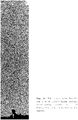
- the microstructure of the produced joint is shown in Fig. 2 . Surprisingly no visible difference in microstructure between the substrate material and the joint zone is visible in Fig. 2 .
- the joint is marked by the arrows.
Landscapes
- Engineering & Computer Science (AREA)
- Mechanical Engineering (AREA)
- Chemical & Material Sciences (AREA)
- Materials Engineering (AREA)
- Metallurgy (AREA)
- Organic Chemistry (AREA)
- Pressure Welding/Diffusion-Bonding (AREA)
Claims (9)
- Verfahren zum Verbinden von zwei Substraten einer γ-Titanaluminidlegierung mit einer Zusammensetzung im Bereich von Ti-(42-49)Al-(0,1-10)X, in At.%, an einer Stoßfläche, wobei X Elemente darstellt, die ausgewählt sind aus Zr, V, Nb, Ta, Cr, Mo, W, Mn, Si, B, C oder Kombinationen davon, und die bei erhöhten Temperaturen eine β-Einzelphasenregion aufweist, bei dem in Schritten auf die Stoßfläche der Substrate ein Lötmaterial einer Titan-Legierung der allgemeinen Zusammensetzung Ti-(10-35)Al-(0-10)X-(5-30)Z, in At.%, wobei X ein oder mehrere Elemente darstellt, die aus der Gruppe von Zr, V, Nb, Ta, Cr, Mo, W, Mn, Si, B, C ausgewählt sind und Z ein oder mehrere Elemente darstellt, die aus der Gruppe von Fe und Ni ausgewählt sind, und wobei jene Legierungselemente, die in dem Substratmaterial mit Ausnahme von Titan und Aluminium vorhanden sind, in Mengen, in At.%, bis zu ihrem Gehalt im Substratmaterial vorhanden sind, aufgebracht wird und die Substrate und das Lötmaterial einer erhöhten Temperatur in der β-Einzelphasenregion ausgesetzt werden und die Substrate mittels Transient-Liquid-Phase-Löten verbunden werden.
- Verfahren zur Reparatur eines Risses an einer Rissgrenzfläche in einem Substrat aus einer γ-Titanaluminidlegierung mit einer Zusammensetzung im Bereich von Ti-(42-49)Al-(0,1-10)X, At.%, wobei X Elemente darstellt, die ausgewählt sind aus Zr, V, Nb, Ta, Cr, Mo, W, Mn, Si, B, C oder Kombinationen davon, und die bei erhöhten Temperaturen eine β-Einzelphasenregion aufweist, bei dem in Schritten ein Lötmaterial einer Titan-Legierung der allgemeinen Zusammensetzung Ti-(10-35)Al-(0-10)X-(5-30)Z, in At.%, wobei X ein oder mehrere Elemente darstellt, die aus der Gruppe von Zr, V, Nb, Ta, Cr, Mo, W, Mn, Si, B, C ausgewählt sind und Z ein oder mehrere Elemente darstellt, die aus der Gruppe von Fe und Ni ausgewählt sind, und wobei jene Legierungselemente, die in dem Substratmaterial mit Ausnahme von Titan und Aluminium vorhanden sind, in Mengen, in At.%, bis zu ihrem Gehalt im Substratmaterial vorhanden sind, aufgebracht wird und das Substrat und das Lötmaterial einer erhöhten Temperatur in der β-Einzelphasenregion ausgesetzt werden und das Substrat mittels Transient-Liquid-Phase-Löten an der Rissgrenzfläche verbunden wird.
- Verfahren nach einem der Ansprüche 1 oder 2, wobei die erhöhte Bindungstemperatur zwischen 1400°C und 1475°C gewählt wird, vorausgesetzt, dass die Temperatur in der β-Einzelphasenregion der γ-Titanaluminidlegierung liegt.
- Verfahren nach Anspruch 1, wobei das Lötmaterial ausgewählt ist aus Titanlegierungen der Zusammensetzung Ti-20Al-20Fe, in At.%, Ti-25Al-20Fe, in At.%, Ti-20Al-20Ni, in At.%, und Ti-30Al-18Ni, in At.%.
- Verfahren nach einem der Ansprüche 1 bis 4, wobei die Titanaluminidlegierung des Substrats eine Legierung der Zusammensetzung Ti-45Al-(5-10)Nb(0-0,5)B(0-0,5)C, in At.%, ist.
- Verfahren nach einem der Ansprüche 1 bis 5, wobei die Titanaluminidlegierung des Substrats ausgewählt ist aus der Gruppe bestehend aus Ti-45Al-5Nb-0,2B-0,2C, Ti-45Al-8Nb-0,2C und Ti-43,5Al-4Nb-1Mo-0,1B.
- Verfahren nach einem der vorhergehenden Ansprüche, wobei das Lötmaterial eine Lötfolie oder ein Lötpulver ist.
- Verfahren nach Anspruch 7, wobei das Lötmaterial in Form eines Pulvers in Beimischung zu einem organischen Lötflussmittel vorliegt.
- Verfahren nach Anspruch 8, wobei das organische Lötflussmittel ausgewählt ist aus der Gruppe bestehend aus Bienenwachs, Paraffinwachs, Palmöl, Olivenöl, Ölsäure und Gemischen davon.
Applications Claiming Priority (2)
| Application Number | Priority Date | Filing Date | Title |
|---|---|---|---|
| EP16200819.7A EP3326746A1 (de) | 2016-11-25 | 2016-11-25 | Verfahren zum fügen und/oder reparieren von substraten aus titanaluminidlegierungen |
| PCT/EP2017/080277 WO2018096068A1 (en) | 2016-11-25 | 2017-11-23 | Method for joining and/or repairing substrates of titanium aluminide alloys |
Publications (2)
| Publication Number | Publication Date |
|---|---|
| EP3544763A1 EP3544763A1 (de) | 2019-10-02 |
| EP3544763B1 true EP3544763B1 (de) | 2020-07-22 |
Family
ID=57538998
Family Applications (3)
| Application Number | Title | Priority Date | Filing Date |
|---|---|---|---|
| EP16200819.7A Withdrawn EP3326746A1 (de) | 2016-11-25 | 2016-11-25 | Verfahren zum fügen und/oder reparieren von substraten aus titanaluminidlegierungen |
| EP17801064.1A Active EP3544764B1 (de) | 2016-11-25 | 2017-11-23 | Verfahren zum fügen und/oder reparieren von substraten aus titanaluminidlegierungen |
| EP17801063.3A Active EP3544763B1 (de) | 2016-11-25 | 2017-11-23 | Verfahren zum fügen und/oder reparieren von substraten aus titanaluminidlegierungen |
Family Applications Before (2)
| Application Number | Title | Priority Date | Filing Date |
|---|---|---|---|
| EP16200819.7A Withdrawn EP3326746A1 (de) | 2016-11-25 | 2016-11-25 | Verfahren zum fügen und/oder reparieren von substraten aus titanaluminidlegierungen |
| EP17801064.1A Active EP3544764B1 (de) | 2016-11-25 | 2017-11-23 | Verfahren zum fügen und/oder reparieren von substraten aus titanaluminidlegierungen |
Country Status (3)
| Country | Link |
|---|---|
| US (2) | US20190351513A1 (de) |
| EP (3) | EP3326746A1 (de) |
| WO (2) | WO2018096069A1 (de) |
Families Citing this family (6)
| Publication number | Priority date | Publication date | Assignee | Title |
|---|---|---|---|---|
| CN110899645A (zh) * | 2019-11-09 | 2020-03-24 | 上海航天设备制造总厂有限公司 | 一种tlp扩散焊中间层材料制备方法、焊接方法与表征方法 |
| US20220388090A1 (en) * | 2021-06-04 | 2022-12-08 | The Boeing Company | Fabrication of thick stock via diffusion bonding of titanium alloys |
| CN113878259B (zh) * | 2021-09-27 | 2023-05-23 | 中国航发北京航空材料研究院 | 适用于全层片组织钛铝合金的焊料的设计方法、焊料及焊接工艺 |
| CN114654128B (zh) * | 2022-03-21 | 2022-10-28 | 哈尔滨焊接研究院有限公司 | 一种tc4钛合金金属粉芯药芯焊带及其制备方法 |
| CN118162802A (zh) * | 2024-04-26 | 2024-06-11 | 中国航发北京航空材料研究院 | 一种Ti-Mn-Fe-Ni-Co-Cr中熵合金钎料及其在钎焊连接的应用 |
| CN119973332A (zh) * | 2025-02-24 | 2025-05-13 | 大连理工大学 | 一种用于钛铝系异种合金扩散焊的钛基中间层及其制备方法与应用 |
Family Cites Families (39)
| Publication number | Priority date | Publication date | Assignee | Title |
|---|---|---|---|---|
| US3527625A (en) * | 1967-12-05 | 1970-09-08 | Gilman B Mollring | Soldering paste |
| US3925112A (en) * | 1974-02-19 | 1975-12-09 | Hercules Chemical Co Inc | Solder fluxes |
| US5318214A (en) * | 1987-11-18 | 1994-06-07 | The United States Of America As Represented By The Secretary Of The Air Force | Activated brazing system for joining titanium aluminide |
| US4780374A (en) * | 1988-04-04 | 1988-10-25 | Gte Products Corporation | Composite brazing alloy foil |
| US5147063A (en) * | 1991-02-04 | 1992-09-15 | Rockwell International Corporation | Titanium aluminide structure |
| JPH04362147A (ja) * | 1991-03-07 | 1992-12-15 | Rockwell Internatl Corp | 遷移液相強化によって金属マトリックス複合物を形成する方法 |
| JPH0716764A (ja) * | 1993-07-02 | 1995-01-20 | Toyo Alum Kk | 接合用部材及びそれを用いた接合体 |
| US5785775A (en) * | 1997-01-22 | 1998-07-28 | General Electric Company | Welding of gamma titanium aluminide alloys |
| US5873703A (en) * | 1997-01-22 | 1999-02-23 | General Electric Company | Repair of gamma titanium aluminide articles |
| DE19735841A1 (de) | 1997-08-19 | 1999-02-25 | Geesthacht Gkss Forschung | Legierung auf der Basis von Titanaluminiden |
| FR2768357B1 (fr) * | 1997-09-18 | 1999-11-05 | Snecma | Procede d'assemblage ou de rechargement par brasage-diffusion de pieces en aluminiure de titane |
| US6758388B1 (en) * | 2001-02-27 | 2004-07-06 | Rohr, Inc. | Titanium aluminide honeycomb panel structures and fabrication method for the same |
| JP3976599B2 (ja) * | 2002-03-27 | 2007-09-19 | 独立行政法人科学技術振興機構 | 耐高温腐食性、耐酸化性に優れた耐熱性Ti合金材料およびその製造方法 |
| US6796482B2 (en) * | 2002-10-31 | 2004-09-28 | Freescale Semiconductor, Inc. | Phase separated system for fluxing |
| FR2857892B1 (fr) * | 2003-07-25 | 2005-10-21 | Onera (Off Nat Aerospatiale) | Procede de brasage d'un alliage ti-al |
| US7160635B2 (en) * | 2004-11-09 | 2007-01-09 | Sheffield Hallam University | Protective Ti-Al-Cr-based nitrided coatings |
| DE102004056582B4 (de) * | 2004-11-23 | 2008-06-26 | Gkss-Forschungszentrum Geesthacht Gmbh | Legierung auf der Basis von Titanaluminiden |
| US20080003453A1 (en) * | 2006-07-03 | 2008-01-03 | John Ogren | Brazing process and composition made by the process |
| DE102007048789A1 (de) * | 2007-10-10 | 2009-05-20 | Access E.V. | Füge- und Materialauftragsverfahren für ein Werkstück mit einem Werkstückbereich aus einer Titanaluminid-Legierung |
| DE102007051499A1 (de) * | 2007-10-27 | 2009-04-30 | Mtu Aero Engines Gmbh | Werkstoff für ein Gasturbinenbauteil, Verfahren zur Herstellung eines Gasturbinenbauteils sowie Gasturbinenbauteil |
| US8771439B2 (en) * | 2009-04-01 | 2014-07-08 | Ut-Battelle, Llc | Titanium aluminide intermetallic alloys with improved wear resistance |
| EP2272664A1 (de) * | 2009-07-08 | 2011-01-12 | Brandenburgische Technische Universität | Verfahren zur Herstellung von Folien, Blechen und Formteilen aus einer Legierung mit den Hauptbestandteilen Aluminium und Titan. |
| US8876992B2 (en) * | 2010-08-30 | 2014-11-04 | United Technologies Corporation | Process and system for fabricating gamma TiAl turbine engine components |
| DE102011086524A1 (de) * | 2011-11-17 | 2013-05-23 | Mtu Aero Engines Gmbh | Panzerung von Dichtfins von TiAl-Schaufeln durch induktives Auftragslöten von Hartstoffpartikeln |
| DE102012201082B4 (de) * | 2012-01-25 | 2017-01-26 | MTU Aero Engines AG | Verfahren zur Herstellung geschmiedeter Bauteile aus einer TiAl-Legierung und entsprechend hergestelltes Bauteil |
| FR2988736B1 (fr) * | 2012-04-02 | 2014-03-07 | Onera (Off Nat Aerospatiale) | Procede d'obtention d'un revetement d'aluminiure de nickel sur un substrat metallique, et piece munie d'un tel revetement |
| JP6275411B2 (ja) * | 2013-08-09 | 2018-02-07 | 三菱重工業株式会社 | ろう付方法 |
| JP6173829B2 (ja) * | 2013-08-12 | 2017-08-02 | 三菱重工業株式会社 | TiAl接合体及びTiAl接合体の製造方法 |
| EP3012410B1 (de) * | 2014-09-29 | 2023-05-10 | Raytheon Technologies Corporation | Erweiterte gamma-tial-komponenten |
| EP3000980A3 (de) * | 2014-09-29 | 2016-04-13 | United Technologies Corporation | Hybridgegenstand mit gamma tial legierung |
| JP6944874B2 (ja) * | 2014-10-09 | 2021-10-06 | 南京理工大学Nanjing University Of Science And Technology | TiAl金属間化合物の単結晶材料及びその製造方法 |
| DE102015211718B4 (de) * | 2015-06-24 | 2020-12-03 | MTU Aero Engines AG | Verfahren und Vorrichtung zur Herstellung von TiAl-Schmiedebauteilen |
| DE102015213162A1 (de) * | 2015-07-14 | 2017-01-19 | MTU Aero Engines AG | Verfahren zum galvanischen Beschichten von TiAl-Legierungen |
| CN108431290B (zh) * | 2015-11-10 | 2021-03-23 | 欧瑞康表面处理解决方案股份公司普费菲孔 | 涡轮间隙控制涂层和方法 |
| DE102016203785A1 (de) * | 2016-03-08 | 2017-09-14 | MTU Aero Engines AG | Verfahren zum Herstellen einer Schaufel für eine Strömungsmaschine |
| US20180010213A1 (en) * | 2016-07-07 | 2018-01-11 | United Technologies Corporation | Enhance ductility of gamma titanium aluminum alloys by reducing interstitial contents |
| EP3269838B1 (de) * | 2016-07-12 | 2021-09-01 | MTU Aero Engines AG | Hochwarmfeste tial-legierung, herstellungsverfahren eines bauteils aus einer entsprechenden tial-legierung und bauteil aus einer entsprechenden tial-legierung |
| JP6687118B2 (ja) * | 2016-09-02 | 2020-04-22 | 株式会社Ihi | TiAl合金及びその製造方法 |
| US11168566B2 (en) * | 2016-12-05 | 2021-11-09 | MTU Aero Engines AG | Turbine blade comprising a cavity with wall surface discontinuities and process for the production thereof |
-
2016
- 2016-11-25 EP EP16200819.7A patent/EP3326746A1/de not_active Withdrawn
-
2017
- 2017-11-23 US US16/347,886 patent/US20190351513A1/en not_active Abandoned
- 2017-11-23 EP EP17801064.1A patent/EP3544764B1/de active Active
- 2017-11-23 WO PCT/EP2017/080278 patent/WO2018096069A1/en not_active Ceased
- 2017-11-23 WO PCT/EP2017/080277 patent/WO2018096068A1/en not_active Ceased
- 2017-11-23 US US16/347,887 patent/US20190351514A1/en not_active Abandoned
- 2017-11-23 EP EP17801063.3A patent/EP3544763B1/de active Active
Non-Patent Citations (1)
| Title |
|---|
| None * |
Also Published As
| Publication number | Publication date |
|---|---|
| EP3544764B1 (de) | 2020-07-22 |
| EP3326746A1 (de) | 2018-05-30 |
| US20190351513A1 (en) | 2019-11-21 |
| WO2018096069A1 (en) | 2018-05-31 |
| EP3544764A1 (de) | 2019-10-02 |
| WO2018096068A1 (en) | 2018-05-31 |
| EP3544763A1 (de) | 2019-10-02 |
| US20190351514A1 (en) | 2019-11-21 |
Similar Documents
| Publication | Publication Date | Title |
|---|---|---|
| EP3544764B1 (de) | Verfahren zum fügen und/oder reparieren von substraten aus titanaluminidlegierungen | |
| Shiue et al. | Infrared brazing of Ti50Al50 and Ti–6Al–4V using two Ti-based filler metals | |
| Hailat et al. | Laser micro-welding of aluminum and copper with and without tin foil alloy | |
| Özdemir et al. | Interfacial properties of diffusion bonded Ti-6Al-4V to AISI 304 stainless steel by inserting a Cu interlayer | |
| Shiue et al. | Infrared brazing of TiAl intermetallic using pure silver | |
| JP2011502786A (ja) | チタンアルミニウム合金からなるワークピース領域を有するワークピースの接合方法および材料溶着方法 | |
| Dong et al. | Vacuum brazing of TiAl-based alloy and GH536 superalloy with a low-melting point amorphous Ti35Zr25Be30Co10 filler | |
| Shapiro et al. | Brazing of titanium at temperatures below 800^ oC: review and prospective applications | |
| US7527187B2 (en) | Titanium braze foil | |
| Benoit et al. | Liquid film migration in warm formed aluminum brazing sheet | |
| Chan et al. | Microstructural evolution of brazing Ti–6Al–4V and TZM using silver-based braze alloy | |
| Elrefaey et al. | Vacuum brazing titanium using thin nickel layer deposited by PVD technique | |
| US5284290A (en) | Fusion welding with self-generated filler metal | |
| Kokabi et al. | Factors affecting strength of dissimilar TiAl/Ni–Si–B/Ni-based superalloy brazed joint | |
| Elrefaey | High-temperature brazing in aerospace engineering | |
| Yi | Microstructure and mechanical properties of CuAgZn/GH909 diffusion bonded joint fabricated by hot isostatic pressing | |
| Szwed et al. | Structural changes during the formation of diffusion bonded joints between titanium and stainless steel | |
| Muhammed et al. | Martensitic stainless steel brazing by using Ag-Cu-Ti as active filler metal alloys | |
| CN111151864B (zh) | 连接钨基粉末合金与低膨胀高温合金的焊接材料和工艺 | |
| Lee et al. | Infrared brazing zirconium using two silver based foils | |
| CN117484009A (zh) | 镍基活性钎焊材料 | |
| Vatnalmath et al. | Microstructural Evolution in Nonvacuum Solid‐State Diffusion Bonded Joints of AA2219 | |
| Jamadon et al. | Effect of isothermal aging on mechanical properties of Sn-3.0 Ag-0.5 Cu solder alloy with porous Cu interlayer addition | |
| Kumar et al. | Study on microstructure and mechanical property of Ti-6Al-4V brazed joint with low temperature filler metal. | |
| Peng | Brazing of nickel, ferrite and titanium–aluminum intermetallics |
Legal Events
| Date | Code | Title | Description |
|---|---|---|---|
| STAA | Information on the status of an ep patent application or granted ep patent |
Free format text: STATUS: UNKNOWN |
|
| STAA | Information on the status of an ep patent application or granted ep patent |
Free format text: STATUS: THE INTERNATIONAL PUBLICATION HAS BEEN MADE |
|
| PUAI | Public reference made under article 153(3) epc to a published international application that has entered the european phase |
Free format text: ORIGINAL CODE: 0009012 |
|
| STAA | Information on the status of an ep patent application or granted ep patent |
Free format text: STATUS: REQUEST FOR EXAMINATION WAS MADE |
|
| 17P | Request for examination filed |
Effective date: 20190513 |
|
| AK | Designated contracting states |
Kind code of ref document: A1 Designated state(s): AL AT BE BG CH CY CZ DE DK EE ES FI FR GB GR HR HU IE IS IT LI LT LU LV MC MK MT NL NO PL PT RO RS SE SI SK SM TR |
|
| AX | Request for extension of the european patent |
Extension state: BA ME |
|
| REG | Reference to a national code |
Ref country code: DE Ref legal event code: R079 Ref document number: 602017020324 Country of ref document: DE Free format text: PREVIOUS MAIN CLASS: B23K0035320000 Ipc: B23K0001190000 |
|
| DAV | Request for validation of the european patent (deleted) | ||
| DAX | Request for extension of the european patent (deleted) | ||
| GRAP | Despatch of communication of intention to grant a patent |
Free format text: ORIGINAL CODE: EPIDOSNIGR1 |
|
| STAA | Information on the status of an ep patent application or granted ep patent |
Free format text: STATUS: GRANT OF PATENT IS INTENDED |
|
| RIC1 | Information provided on ipc code assigned before grant |
Ipc: B23K 103/14 20060101ALI20200303BHEP Ipc: B23K 35/02 20060101ALI20200303BHEP Ipc: C22C 14/00 20060101ALI20200303BHEP Ipc: B23K 35/362 20060101ALI20200303BHEP Ipc: B23K 1/19 20060101AFI20200303BHEP Ipc: B23K 35/32 20060101ALI20200303BHEP |
|
| INTG | Intention to grant announced |
Effective date: 20200325 |
|
| GRAS | Grant fee paid |
Free format text: ORIGINAL CODE: EPIDOSNIGR3 |
|
| GRAA | (expected) grant |
Free format text: ORIGINAL CODE: 0009210 |
|
| STAA | Information on the status of an ep patent application or granted ep patent |
Free format text: STATUS: THE PATENT HAS BEEN GRANTED |
|
| AK | Designated contracting states |
Kind code of ref document: B1 Designated state(s): AL AT BE BG CH CY CZ DE DK EE ES FI FR GB GR HR HU IE IS IT LI LT LU LV MC MK MT NL NO PL PT RO RS SE SI SK SM TR |
|
| REG | Reference to a national code |
Ref country code: GB Ref legal event code: FG4D |
|
| RIN1 | Information on inventor provided before grant (corrected) |
Inventor name: OEHRING, MICHAEL Inventor name: HAUSCHILDT, KATJA Inventor name: LORENZ, UWE Inventor name: PYCZAK, FLORIAN |
|
| REG | Reference to a national code |
Ref country code: CH Ref legal event code: EP |
|
| REG | Reference to a national code |
Ref country code: DE Ref legal event code: R096 Ref document number: 602017020324 Country of ref document: DE |
|
| REG | Reference to a national code |
Ref country code: AT Ref legal event code: REF Ref document number: 1292949 Country of ref document: AT Kind code of ref document: T Effective date: 20200815 |
|
| REG | Reference to a national code |
Ref country code: IE Ref legal event code: FG4D |
|
| REG | Reference to a national code |
Ref country code: LT Ref legal event code: MG4D |
|
| REG | Reference to a national code |
Ref country code: AT Ref legal event code: MK05 Ref document number: 1292949 Country of ref document: AT Kind code of ref document: T Effective date: 20200722 |
|
| PG25 | Lapsed in a contracting state [announced via postgrant information from national office to epo] |
Ref country code: GR Free format text: LAPSE BECAUSE OF FAILURE TO SUBMIT A TRANSLATION OF THE DESCRIPTION OR TO PAY THE FEE WITHIN THE PRESCRIBED TIME-LIMIT Effective date: 20201023 Ref country code: NO Free format text: LAPSE BECAUSE OF FAILURE TO SUBMIT A TRANSLATION OF THE DESCRIPTION OR TO PAY THE FEE WITHIN THE PRESCRIBED TIME-LIMIT Effective date: 20201022 Ref country code: BG Free format text: LAPSE BECAUSE OF FAILURE TO SUBMIT A TRANSLATION OF THE DESCRIPTION OR TO PAY THE FEE WITHIN THE PRESCRIBED TIME-LIMIT Effective date: 20201022 Ref country code: SE Free format text: LAPSE BECAUSE OF FAILURE TO SUBMIT A TRANSLATION OF THE DESCRIPTION OR TO PAY THE FEE WITHIN THE PRESCRIBED TIME-LIMIT Effective date: 20200722 Ref country code: AT Free format text: LAPSE BECAUSE OF FAILURE TO SUBMIT A TRANSLATION OF THE DESCRIPTION OR TO PAY THE FEE WITHIN THE PRESCRIBED TIME-LIMIT Effective date: 20200722 Ref country code: HR Free format text: LAPSE BECAUSE OF FAILURE TO SUBMIT A TRANSLATION OF THE DESCRIPTION OR TO PAY THE FEE WITHIN THE PRESCRIBED TIME-LIMIT Effective date: 20200722 Ref country code: LT Free format text: LAPSE BECAUSE OF FAILURE TO SUBMIT A TRANSLATION OF THE DESCRIPTION OR TO PAY THE FEE WITHIN THE PRESCRIBED TIME-LIMIT Effective date: 20200722 Ref country code: ES Free format text: LAPSE BECAUSE OF FAILURE TO SUBMIT A TRANSLATION OF THE DESCRIPTION OR TO PAY THE FEE WITHIN THE PRESCRIBED TIME-LIMIT Effective date: 20200722 Ref country code: PT Free format text: LAPSE BECAUSE OF FAILURE TO SUBMIT A TRANSLATION OF THE DESCRIPTION OR TO PAY THE FEE WITHIN THE PRESCRIBED TIME-LIMIT Effective date: 20201123 Ref country code: FI Free format text: LAPSE BECAUSE OF FAILURE TO SUBMIT A TRANSLATION OF THE DESCRIPTION OR TO PAY THE FEE WITHIN THE PRESCRIBED TIME-LIMIT Effective date: 20200722 |
|
| PG25 | Lapsed in a contracting state [announced via postgrant information from national office to epo] |
Ref country code: LV Free format text: LAPSE BECAUSE OF FAILURE TO SUBMIT A TRANSLATION OF THE DESCRIPTION OR TO PAY THE FEE WITHIN THE PRESCRIBED TIME-LIMIT Effective date: 20200722 Ref country code: RS Free format text: LAPSE BECAUSE OF FAILURE TO SUBMIT A TRANSLATION OF THE DESCRIPTION OR TO PAY THE FEE WITHIN THE PRESCRIBED TIME-LIMIT Effective date: 20200722 Ref country code: PL Free format text: LAPSE BECAUSE OF FAILURE TO SUBMIT A TRANSLATION OF THE DESCRIPTION OR TO PAY THE FEE WITHIN THE PRESCRIBED TIME-LIMIT Effective date: 20200722 Ref country code: IS Free format text: LAPSE BECAUSE OF FAILURE TO SUBMIT A TRANSLATION OF THE DESCRIPTION OR TO PAY THE FEE WITHIN THE PRESCRIBED TIME-LIMIT Effective date: 20201122 |
|
| PG25 | Lapsed in a contracting state [announced via postgrant information from national office to epo] |
Ref country code: NL Free format text: LAPSE BECAUSE OF FAILURE TO SUBMIT A TRANSLATION OF THE DESCRIPTION OR TO PAY THE FEE WITHIN THE PRESCRIBED TIME-LIMIT Effective date: 20200722 |
|
| REG | Reference to a national code |
Ref country code: DE Ref legal event code: R097 Ref document number: 602017020324 Country of ref document: DE |
|
| PG25 | Lapsed in a contracting state [announced via postgrant information from national office to epo] |
Ref country code: DK Free format text: LAPSE BECAUSE OF FAILURE TO SUBMIT A TRANSLATION OF THE DESCRIPTION OR TO PAY THE FEE WITHIN THE PRESCRIBED TIME-LIMIT Effective date: 20200722 Ref country code: CZ Free format text: LAPSE BECAUSE OF FAILURE TO SUBMIT A TRANSLATION OF THE DESCRIPTION OR TO PAY THE FEE WITHIN THE PRESCRIBED TIME-LIMIT Effective date: 20200722 Ref country code: RO Free format text: LAPSE BECAUSE OF FAILURE TO SUBMIT A TRANSLATION OF THE DESCRIPTION OR TO PAY THE FEE WITHIN THE PRESCRIBED TIME-LIMIT Effective date: 20200722 Ref country code: EE Free format text: LAPSE BECAUSE OF FAILURE TO SUBMIT A TRANSLATION OF THE DESCRIPTION OR TO PAY THE FEE WITHIN THE PRESCRIBED TIME-LIMIT Effective date: 20200722 Ref country code: SM Free format text: LAPSE BECAUSE OF FAILURE TO SUBMIT A TRANSLATION OF THE DESCRIPTION OR TO PAY THE FEE WITHIN THE PRESCRIBED TIME-LIMIT Effective date: 20200722 Ref country code: IT Free format text: LAPSE BECAUSE OF FAILURE TO SUBMIT A TRANSLATION OF THE DESCRIPTION OR TO PAY THE FEE WITHIN THE PRESCRIBED TIME-LIMIT Effective date: 20200722 |
|
| PLBE | No opposition filed within time limit |
Free format text: ORIGINAL CODE: 0009261 |
|
| STAA | Information on the status of an ep patent application or granted ep patent |
Free format text: STATUS: NO OPPOSITION FILED WITHIN TIME LIMIT |
|
| PG25 | Lapsed in a contracting state [announced via postgrant information from national office to epo] |
Ref country code: AL Free format text: LAPSE BECAUSE OF FAILURE TO SUBMIT A TRANSLATION OF THE DESCRIPTION OR TO PAY THE FEE WITHIN THE PRESCRIBED TIME-LIMIT Effective date: 20200722 |
|
| 26N | No opposition filed |
Effective date: 20210423 |
|
| PG25 | Lapsed in a contracting state [announced via postgrant information from national office to epo] |
Ref country code: MC Free format text: LAPSE BECAUSE OF FAILURE TO SUBMIT A TRANSLATION OF THE DESCRIPTION OR TO PAY THE FEE WITHIN THE PRESCRIBED TIME-LIMIT Effective date: 20200722 Ref country code: SK Free format text: LAPSE BECAUSE OF FAILURE TO SUBMIT A TRANSLATION OF THE DESCRIPTION OR TO PAY THE FEE WITHIN THE PRESCRIBED TIME-LIMIT Effective date: 20200722 |
|
| REG | Reference to a national code |
Ref country code: CH Ref legal event code: PL |
|
| PG25 | Lapsed in a contracting state [announced via postgrant information from national office to epo] |
Ref country code: LU Free format text: LAPSE BECAUSE OF NON-PAYMENT OF DUE FEES Effective date: 20201123 |
|
| REG | Reference to a national code |
Ref country code: BE Ref legal event code: MM Effective date: 20201130 |
|
| PG25 | Lapsed in a contracting state [announced via postgrant information from national office to epo] |
Ref country code: LI Free format text: LAPSE BECAUSE OF NON-PAYMENT OF DUE FEES Effective date: 20201130 Ref country code: SI Free format text: LAPSE BECAUSE OF FAILURE TO SUBMIT A TRANSLATION OF THE DESCRIPTION OR TO PAY THE FEE WITHIN THE PRESCRIBED TIME-LIMIT Effective date: 20200722 Ref country code: CH Free format text: LAPSE BECAUSE OF NON-PAYMENT OF DUE FEES Effective date: 20201130 |
|
| REG | Reference to a national code |
Ref country code: NL Ref legal event code: MP Effective date: 20200722 |
|
| PG25 | Lapsed in a contracting state [announced via postgrant information from national office to epo] |
Ref country code: IE Free format text: LAPSE BECAUSE OF NON-PAYMENT OF DUE FEES Effective date: 20201123 |
|
| PG25 | Lapsed in a contracting state [announced via postgrant information from national office to epo] |
Ref country code: TR Free format text: LAPSE BECAUSE OF FAILURE TO SUBMIT A TRANSLATION OF THE DESCRIPTION OR TO PAY THE FEE WITHIN THE PRESCRIBED TIME-LIMIT Effective date: 20200722 Ref country code: MT Free format text: LAPSE BECAUSE OF FAILURE TO SUBMIT A TRANSLATION OF THE DESCRIPTION OR TO PAY THE FEE WITHIN THE PRESCRIBED TIME-LIMIT Effective date: 20200722 Ref country code: CY Free format text: LAPSE BECAUSE OF FAILURE TO SUBMIT A TRANSLATION OF THE DESCRIPTION OR TO PAY THE FEE WITHIN THE PRESCRIBED TIME-LIMIT Effective date: 20200722 |
|
| PG25 | Lapsed in a contracting state [announced via postgrant information from national office to epo] |
Ref country code: MK Free format text: LAPSE BECAUSE OF FAILURE TO SUBMIT A TRANSLATION OF THE DESCRIPTION OR TO PAY THE FEE WITHIN THE PRESCRIBED TIME-LIMIT Effective date: 20200722 |
|
| PG25 | Lapsed in a contracting state [announced via postgrant information from national office to epo] |
Ref country code: BE Free format text: LAPSE BECAUSE OF NON-PAYMENT OF DUE FEES Effective date: 20201130 |
|
| PGFP | Annual fee paid to national office [announced via postgrant information from national office to epo] |
Ref country code: DE Payment date: 20251118 Year of fee payment: 9 |
|
| PGFP | Annual fee paid to national office [announced via postgrant information from national office to epo] |
Ref country code: GB Payment date: 20251120 Year of fee payment: 9 |
|
| PGFP | Annual fee paid to national office [announced via postgrant information from national office to epo] |
Ref country code: FR Payment date: 20251120 Year of fee payment: 9 |