EP3543710B1 - Energieeffiziente heizungssteuerung eines luftdatensensors - Google Patents
Energieeffiziente heizungssteuerung eines luftdatensensors Download PDFInfo
- Publication number
- EP3543710B1 EP3543710B1 EP19164158.8A EP19164158A EP3543710B1 EP 3543710 B1 EP3543710 B1 EP 3543710B1 EP 19164158 A EP19164158 A EP 19164158A EP 3543710 B1 EP3543710 B1 EP 3543710B1
- Authority
- EP
- European Patent Office
- Prior art keywords
- heating element
- temperature
- probe
- heater control
- control system
- Prior art date
- Legal status (The legal status is an assumption and is not a legal conclusion. Google has not performed a legal analysis and makes no representation as to the accuracy of the status listed.)
- Active
Links
Images




Classifications
-
- H—ELECTRICITY
- H05—ELECTRIC TECHNIQUES NOT OTHERWISE PROVIDED FOR
- H05B—ELECTRIC HEATING; ELECTRIC LIGHT SOURCES NOT OTHERWISE PROVIDED FOR; CIRCUIT ARRANGEMENTS FOR ELECTRIC LIGHT SOURCES, IN GENERAL
- H05B1/00—Details of electric heating devices
- H05B1/02—Automatic switching arrangements specially adapted to apparatus ; Control of heating devices
- H05B1/0227—Applications
- H05B1/023—Industrial applications
- H05B1/0236—Industrial applications for vehicles
-
- G—PHYSICS
- G01—MEASURING; TESTING
- G01P—MEASURING LINEAR OR ANGULAR SPEED, ACCELERATION, DECELERATION, OR SHOCK; INDICATING PRESENCE, ABSENCE, OR DIRECTION, OF MOVEMENT
- G01P5/00—Measuring speed of fluids, e.g. of air stream; Measuring speed of bodies relative to fluids, e.g. of ship, of aircraft
- G01P5/14—Measuring speed of fluids, e.g. of air stream; Measuring speed of bodies relative to fluids, e.g. of ship, of aircraft by measuring differences of pressure in the fluid
- G01P5/16—Measuring speed of fluids, e.g. of air stream; Measuring speed of bodies relative to fluids, e.g. of ship, of aircraft by measuring differences of pressure in the fluid using Pitot tubes, e.g. Machmeter
- G01P5/165—Arrangements or constructions of Pitot tubes
-
- G—PHYSICS
- G01—MEASURING; TESTING
- G01P—MEASURING LINEAR OR ANGULAR SPEED, ACCELERATION, DECELERATION, OR SHOCK; INDICATING PRESENCE, ABSENCE, OR DIRECTION, OF MOVEMENT
- G01P13/00—Indicating or recording presence, absence, or direction, of movement
- G01P13/02—Indicating direction only, e.g. by weather vane
- G01P13/025—Indicating direction only, e.g. by weather vane indicating air data, i.e. flight variables of an aircraft, e.g. angle of attack, side slip, shear, yaw
-
- G—PHYSICS
- G01—MEASURING; TESTING
- G01P—MEASURING LINEAR OR ANGULAR SPEED, ACCELERATION, DECELERATION, OR SHOCK; INDICATING PRESENCE, ABSENCE, OR DIRECTION, OF MOVEMENT
- G01P21/00—Testing or calibrating of apparatus or devices covered by the preceding groups
- G01P21/02—Testing or calibrating of apparatus or devices covered by the preceding groups of speedometers
- G01P21/025—Testing or calibrating of apparatus or devices covered by the preceding groups of speedometers for measuring speed of fluids; for measuring speed of bodies relative to fluids
-
- G—PHYSICS
- G05—CONTROLLING; REGULATING
- G05D—SYSTEMS FOR CONTROLLING OR REGULATING NON-ELECTRIC VARIABLES
- G05D23/00—Control of temperature
- G05D23/19—Control of temperature characterised by the use of electric means
- G05D23/27—Control of temperature characterised by the use of electric means with sensing element responsive to radiation
Definitions
- Exemplary embodiments pertain generally to the art of aircraft systems, and more particularly, to aircraft pressure measurement systems.
- Aircraft pressure measurement systems include an air data sensor to determine airspeed, altitude and angle of attack. These air data sensors are typically constructed as a Pitot static probe and transducer. The probe utilizes small openings or apertures on the front and sides of the probe body to direct air pressure to the transducer, which in turn facilitates air pressure measurements.
- Commercial and military aircraft commonly fly in environmental conditions where ice can form on the Pitot static probe surface and openings. This ice formation has the potential to disturb the pressure measurement reading or completely block the probe openings. The result is incorrect or erroneous pressure measurement data being sent to the aircraft flight control systems or pilot.
- Various systems for aircraft pressure measurement or for monitoring the temperature of objects are known, for example, from US2015344137 , US5313202 , EP2848945 , WO0034839 and DE102008063408 .
- US2015344137 discloses an air data sensor with an embedded heating element and a controller arranged to control the power supply to the heating element based on a detected temperature of the sensor; the temperature is measured using an embedded temperature sensor.
- DE102008063408 concerns a heating system for a structural component such as the wing of an aircraft; a temperature sensor is placed within the hollow space of the structural component and arranged to detect heat/infrared radiation, allowing to determine the temperature on the inner surface of the component. The measured temperature may be used to control the heater such that a target temperature of the monitored component may be held.
- a heater control system for an aircraft according to claim 1.
- an aircraft pressure measurement system that includes an air data sensor.
- the air data sensor is constructed as a Pitot probe and a transducer.
- a heating element is disposed within the probe and emits heat in response to a supplied electrical current. The heat from the heating element aims to prevent ice from forming on the probe, or to melt ice that has already formed on the probe during low temperature conditions.
- the heat emitted from the heating element heats the probe and probe surface without heating the transducer.
- the pressure measurement system further includes a power efficient heater control system in signal communication with the transducer and the heating element.
- the heater control system implements an optics system capable detecting infrared (IR) heat emitted by the heating element.
- the heater control system utilizes the detected IR heat to dynamically or actively energize the heating element. Accordingly, the heater control system can determine more precisely when to energize the heating element and the amount of heat that should be produced by the heating element at given environmental conditions and temperatures. In this manner, heating efficiency and optimizing power consumption of the heating element is improved.
- the heater control system also provides diagnostics operations capable of determining the onset of a degrading heating element. In this manner, the heater control system can more accurately identify a faulty heating element, while also avoiding preemptive replacement and/or of the heating element.
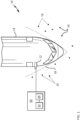
- An aircraft 10 including an air data sensor 12 is illustrated according to a non-limiting embodiment.
- An electronic controller assembly 50 is in signal communication with the air data sensor 12.
- the electronic controller 50 includes a processor 52 and a memory unit 54.
- the memory unit 54 can store various algorithms, and data such as, threshold values, look-up tables, thermal models, etc.
- the processor 52 can execute the algorithms that may utilize the stored data to operate the control system and/or perform various diagnostic operations described herein.
- the air data sensor 12 can be constructed as a Pitot probe 13 coupled to a transducer 15.
- the probe 13 can be mounted to the body 14 of the aircraft 10, and can include one or more small openings or apertures 17 on the front and sides of the probe body to direct air pressure to the transducer 15.
- the transducer 15, in turn, can provide air pressure measurements to the controller 50.
- the air data sensor 12 is described going forward, it should be appreciated that other types of air data sensors configured to measure air data such as temperature, pressure, moisture, etc. may be implemented without departing from the scope of the invention.
- the probe 13 is not limited to any particular location.
- the aircraft 10 may be located in a high-altitude environment, which may contain High Altitude Ice Crystals and/or super cooled liquid water droplets.
- the probe 13 may encounter High Altitude Ice Crystals 16 and other types of ice while the aircraft 10 travels through the air 18.
- other examples may include coupling the controller 50 to more than one probe 13 installed on the aircraft 10, or other types of sensors installed on same aircraft 10 such as, for example, altitude sensors, speed sensors, etc.
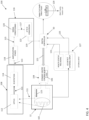
- the aircraft 10 comprises an air data sensor 12 which can includes a probe 13 such as a Pitot probe, coupled to a transducer 15.
- a heating element 102 is coupled to probe 13 and is configured to emit heat that heats the probe 13 and probe surfaces.
- the heating element 102 is constructed as a heating element 102 embedded within the probe 13.
- the heating element 102 can be constructed, for example, as an electrically resistive coil, which emits the heat in response to an electrical current that flows therethrough.
- the heating element 102 is in signal communication with a current drive circuit 104.
- the current drive circuit 104 includes a pulse-width modulation (PWM) circuit 106 that generates a pulsed control signal, which induces current flow through the heating element 102.
- PWM pulse-width modulation
- the duty cycle of the pulsed control signal determines the level of the current. That is, as the duty cycle increases the current increases, and vice versa.
- the heater control system 100 includes a thermal sensor system 108, a signal processing unit 116, and an electronic hardware controller 50.
- the thermal sensor system 108 is located remotely from the heating element 102, but without contacting the probe 13. In at least one embodiment, the thermal sensor system 108 is located away from the probe 13 at a distance (d) ranging, for example, from about 12 centimeters (cm) (or about 5 inches) to about 38 cm (or about 15 inches).
- the thermal sensor system 108 is constructed as a pyrometer 108, which includes an optical unit 112 and a thermal detector 114.
- the optical unit 112 is configured to direct and focus thermal radiation (also referred to as IR radiation flux) 111 of heat released from the probe surface to the thermal detector 114.
- the thermal detector 114 is configured to output a temperature signal 113 indicative of a temperature of the heating element 102 based on the thermal radiation 111.
- the thermal detector 114 includes an infrared (IR) sensor configured to measure the IR radiation flux of the emitted heat.
- the output temperature signal generated by the thermal detector 114 is related to the thermal radiation or irradiance (Ee) of the heating element 102 through the Stefan-Boltzmann law, the constant of proportionality, also referred to as the Stefan-Boltzmann constant ( ⁇ ), and the emissivity ( ⁇ ) of the heating element 102.
- the thermal transfer function of the heat released from the surface of the probe 13 can indicate the heat emitted by the heating element 102.
- the signal processing unit 116 is configured to process the temperature signal 113 and convert the temperature signal 113 into a digital temperature signal 119 indicating the temperature of the heating element 102.
- the signal processing unit 116 includes an amplification stage 118, a signal conditioning stage 120, and an analog-to-digital (A/D) converter 122.
- the amplification stage 118 includes one or more amplifier circuits configured to amplify the temperature signal 113, thereby generating an amplified temperature signal 115.
- the signal conditioning stage 120 includes one or more filter circuits configured to remove electrical noise from the amplified temperature signal 115 to generate a filtered analog temperature signal 117.
- the A/D converter 122 is configured to convert the filtered analog temperature signal 117 into the digital temperature signal 119.
- the controller 50 is in signal communication with the thermal sensing unit 108 via the signal processing unit 116 and is in signal communication with the heating element 02 via the current drive circuit 104.
- the controller 50 is configured to selectively output a control signal 121 based on the digital temperature signal 119 so as to actively vary the temperature of the heating element based on the emitted heat from the heating element.
- actively varying the temperate of the heating element includes selectively activating and deactivating the pulse width modulating (PWM) circuit 106, thereby actively generating the electrical current 123 necessary to energize the heating element 102.
- the parameters of the PWM control signal output form the PWM circuit 106 can be varied so as to adjust the level of current delivered to the heating element 102.
- the controller 50 can actively heat the air data sensor as the temperature of the heating element 102 actively changes (i.e., increases and decreases).
- the controller 50 outputs the control signal 121 based a comparison between the digital temperature signal 119 and a target temperature value.
- the controller 50 outputs the control signal 121 when a temperature difference ( ⁇ T), i.e., "error", between the heating element temperature (e.g., as indicated by the digital temperature signal 119) and a target temperature value (i.e., desired temperature) exceeds a temperature error threshold value.
- ⁇ T temperature difference
- the controller 50 disconnects the control signal 121 when the temperature difference equals or falling below the temperature error threshold value.
- the controller 50 can also receive a secondary ice detection signal 125.
- the controller outputs the control signal 121 to activate the heating element 102 in response to receiving the secondary ice detection signal 125.
- the secondary ice detection signal 125 can be output from the probe 13 in response to detecting ice crystals in the air or ice buildup on the probe 13, from external input 127, or from another signal source.
- secondary ice detection signal 125 can serve as a secondary means of activating the heating element 102, and that the heater control system 100 can activate or deactivate the heating element 102 independently from the secondary ice detection signal 125.
- the heater control system 100 can actively operate the heating element 102 as described above prior to the formation of ice in the air and/or on the probe 13.
- the heater control system 100 is not only capable of actively controlling the heating element 102, but is also capable of diagnosing the operation and health of the heating element 102.
- the controller 50 is configured to initiate a heater diagnostic test in response to receiving a health status request signal 131.
- the health status request signal 131 is illustrated as being generated by an external input 127, it should be appreciated that the heater diagnostic test can be initiated by an internal signal generated by the controller 50 according to a predetermined schedule and/or another condition.
- the heater diagnostic test diagnoses the health of the heating element 102 based on the emitted heat detected by the thermal sensing unit 108.
- the health of the heating element 102 can be viewed as a deterioration of the heating element's ability to sufficiently emit heat.
- the controller 50 determines a rate at which the heating element's temperature changes starting from a first time period and ending at a second time period.
- the first time period is set when the heating element 102 is first activated and the second time period is set when the temperature of the heating element 102 (i.e., as indicated by the digital temperature signal 119) reaches a target temperature.
- the target temperature is actively determined based on a current environmental temperature measured by a temperature sensor and/or a current altitude of the aircraft 10.
- the temperature sensor can include a Total Air Temperature (TAT) probe and/or an Outside Air Temperature (OAT) probe.
- TAT Total Air Temperature
- OAT Outside Air Temperature
- the controller 50 compares the temperature change rate to a target temperature change rate to determine a temperature change rate differential, and diagnoses the health of the heating element 102 based on a difference between the temperature change rate differential and a differential threshold. In this manner, the controller 50 determines that the heating element 102 is faulty when the difference falls outside the differential threshold. In response to detecting a faulty heating element 102, the controller 50 can increase the duty cycle of the control signal generated by the PWM circuit 106, thereby increasing the current flowing through the heating element 102 so as to compensate for the heating element's reduced capability to emit heat. The controller 50 can also generate an alert signal 129 that activates an alert (e.g., an alarm, light indicator, dashboard icon, etc.) indicating a faulty or degraded heating element 102 is due for maintenance and/or replacement.
- an alert e.g., an alarm, light indicator, dashboard icon, etc.
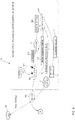
- FIG. 6 a method of controlling a heating control system to heat an air data sensor installed on an aircraft is illustrated according to a non-limiting embodiment.
- the method begins at operation 400, and proceeds to an idle mode 402 after initial power on reset of the air data sensor.
- the method determines whether to invoke a heater control algorithm 404 or a heater diagnostic algorithm 500 (see FIG. 7 ).
- the method proceeds to operation 406 and initializes the heater control system.
- the heater control system remains in an idle state 408 (e.g., for a 2-5 milliseconds) before proceeding so as to reduce false positive measurements that can be detected upon start-up.
- a control signal for activating the heater i.e., heating element
- the heater is activated at operation 412.
- thermal radiation or IR flux is directed from an optical system to a thermal detector, which generates a temperature signal indicating the temperature of the heating element.
- the temperature of the heating element is compared to a target temperature at operation 416.
- the method increases the temperature of the heating element at operation 418, and continues regulating the heater at operation 420 by maintaining activation of the heater control system at operation 406.
- the measurement at operation 416 indicates that ( ⁇ T) satisfies the temperature threshold at operation 422
- the control signal is disconnected at operation 424 and the heater is deactivated at operation 426. Accordingly, the method exits the heater control algorithm 404 to return to the idle mode 402.
- FIG. 7 a method of diagnosing an air data sensor installed on an aircraft is illustrated according to a non-limiting embodiment.
- the method begins in a similar manner as described above with reference to FIG. 6 .
- the method begins at operation 400, and proceeds to an idle mode 402 after initial power on reset of the air data sensor.
- the method determines whether to invoke the heater diagnostic algorithm 500 or the heater control algorithm 404 (see FIG. 6 ).
- the method proceeds to operation 502 and initializes the heater diagnostic algorithm at operation 502, and activates the heater (i.e., the heating element) at operation 504 by generating a control signal for activating the heater (i.e., heating element) so as to emit heat from the heating element at operation 506.
- thermal radiation or IR flux of the emitted heat is directed from an optical system to a thermal detector.
- a temperature change rate of the heating element is determined. The temperature change rate can be determined by monitoring the rate in temperature change of the emitted heat starting from a first time period at which the heat element is initially activated to a second time period at which the temperature signal reaches a target temperature at operation 512.
- the temperature change rate is compared to a target temperature change rate to determine a temperature change rate differential.
- the heating element is determined to be healthy and operating normally as expected at operation 516.
- the temperature change rate differential fails to satisfy the differential threshold, the heating element is determined to faulty at operation 518.
- the method generates an alert at operation 520 and/or increases the current flowing through the heating element at operation 522 so as to compensate for a reduced capability of the heating element to emit heat.
- a heater control system which utilizes the detected IR heat of the heat emitted from a heating element coupled to probe to dynamically or actively control the operation of the heating element. Accordingly, the heater control system can determine more precisely when to energize heating element and how much heat should be emitted by the heating element at given environmental conditions and temperature to improve heating efficiency and optimizing power consumption.
- the heater control system also provides diagnostics operations capable of determining the onset of a degrading heating element. In this manner, the heater control system can more accurately identify a faulty heating element, while also avoiding preemptive maintenance and/or replacement of the heating element.
Landscapes
- Physics & Mathematics (AREA)
- General Physics & Mathematics (AREA)
- Engineering & Computer Science (AREA)
- Aviation & Aerospace Engineering (AREA)
- Automation & Control Theory (AREA)
- Radiation Pyrometers (AREA)
- Arrangements For Transmission Of Measured Signals (AREA)
- Investigating Or Analyzing Materials Using Thermal Means (AREA)
- Testing Or Calibration Of Command Recording Devices (AREA)
Claims (9)
- Heizungssteuerungssystem (100) für ein Luftfahrzeug, wobei das Heizungssteuerungssystem (100) Folgendes umfasst:einen Luftdatensensor (12), der eine Sonde (13) und einen Wandler (15), der mit der Sonde (13) gekoppelt ist, beinhaltet; ein Heizelement (102), das innerhalb der Sonde (13) angeordnet und dazu konfiguriert ist, Wärme abzugeben, die die Sonde (13) erwärmt;ein Thermosensorsystem (108) in betriebsfähiger Verbindung mit dem Luftdatensensor (12); undeine Steuerung (50) in betriebsfähiger Verbindung mit dem Thermosensorsystem (102) und dem Heizelement (102);dadurch gekennzeichnet, dass das Thermosensorsystem dazu konfiguriert ist, eine Temperatur des Heizelements (102) basierend auf einer thermischen Wärmestrahlung, die von einer Oberfläche der Sonde (13) abgegeben wird, zu bestimmen,wobei die Steuerung (50) dazu konfiguriert ist, die Leistung, die dem Heizelement (102) zugeführt wird, zu steuern, um die abgegebene Wärme basierend auf der thermischen Strahlung zu variieren,wobei das Thermosensorsystem (108) Folgendes umfasst:eine optische Einheit (112), die dazu konfiguriert ist, einen Infrarotstrahlungsfluss der Wärme, die von der Oberfläche der Sonde (13) freigesetzt wird, zu lenken und zu fokussieren; und einen Thermodetektor (114), der dazu konfiguriert ist, den Infrarotstrahlungsfluss von der optischen Einheit (112) zu empfangen und ein Temperatursignal auszugeben, das die Temperatur des Heizelements (102) basierend auf dem Infrarotstrahlungsfluss angibt,wobei das Heizungssteuerungssystem (100) dazu ausgelegt ist, dass es den Infrarotstrahlungsfluss, der von dem Detektor (114) detektiert wird, verwendet, um das Heizelement (102) dynamisch oder aktiv mit Energie zu versorgen.
- Heizungssteuerungssystem (100) nach Anspruch 1, wobei das Heizelement (102) in die Sonde (13) eingebettet und dazu konfiguriert ist, die Wärme als Reaktion auf einen elektrischen Strom, der durch das Heizelement (102) fließt, abzugeben.
- Heizungssteuerungssystem (100) nach Anspruch 1 oder Anspruch 2, wobei die Steuerung (50) dazu konfiguriert ist, das Heizelement (102) als Reaktion darauf zu aktivieren, dass eine Temperaturdifferenz (ΔT) zwischen dem Temperatursignal und einem Zieltemperaturwert einen Temperaturfehlerschwellenwert überschreitet, und das Heizelement (102) als Reaktion darauf zu deaktivieren, dass die Temperaturdifferenz gleich oder kleiner als der Temperaturfehlerschwellenwert ist.
- Heizungssteuerungssystem (100) nach Anspruch 3, wobei die Steuerung (50) dazu ausgelegt ist, ein sekundäres Eisdetektionssignal (125) unabhängig von dem Temperatursignal zu empfangen, und das Heizelement (102) als Reaktion auf das Empfangen des sekundären Eisdetektionssignal zu aktivieren.
- Diagnosesystem für ein Luftfahrzeug, wobei das Diagnosesystem Folgendes umfasst:das Heizungssteuerungssystem (100) nach einem der Ansprüche 1 bis 4, wobei das Thermosensorsystem (108) dazu konfiguriert ist, ein Temperatursignal (113), das eine Temperatur des Heizelements (102) angibt, zu bestimmen und auszugeben; undwobei die Steuerung (50) dazu konfiguriert ist, die Temperatur des Heizelements (102) basierend auf dem Temperatursignal (113) zu bestimmen und einen Heizungsdiagnosetest einzuleiten, der einen Zustand des Heizelements (102) basierend auf der Temperatur des Heizelements (102) diagnostiziert.
- Diagnosesystem nach Anspruch 5, wobei das System ferner dazu konfiguriert ist, eine Temperaturänderungsrate des Heizelements (102) zu bestimmen und wobei der Heizungsdiagnosetest auf der Temperaturänderungsrate basiert.
- Diagnosesystem nach Anspruch 6, wobei der Heizungsdiagnosetest dazu konfiguriert ist, die Schritte eines Bestimmens der Temperaturänderungsrate des Heizelements von einem ersten Zeitraum, in dem das Heizelement anfänglich aktiviert wird, bis zu einem zweiten Zeitraum, in dem das Temperatursignal eine Zieltemperatur erreicht, eines Vergleichens der Temperaturänderungsrate mit einer Zieltemperaturänderungsrate, um eine Temperaturänderungsratendifferenz zu bestimmen, und eines Diagnostizierens des Zustands des Heizelements (102) basierend auf einer Differenz zwischen der Temperaturänderungsratendifferenz und einer Differenzschwelle umfasst.
- Diagnosesystem nach Anspruch 7, wobei die Steuerung (50) dazu konfiguriert ist, als Reaktion darauf, dass die Differenz außerhalb der Differenzschwelle liegt, zu bestimmen, dass das Heizelement (102) fehlerhaft ist.
- Diagnosesystem nach Anspruch 8, das dazu konfiguriert ist, die Zieltemperatur aktiv basierend auf mindestens einer von einer aktuellen Umgebungstemperatur und einer aktuellen Flughöhe des Luftfahrzeugs zu bestimmen.
Applications Claiming Priority (1)
| Application Number | Priority Date | Filing Date | Title |
|---|---|---|---|
| IN201811010827 | 2018-03-23 |
Publications (3)
| Publication Number | Publication Date |
|---|---|
| EP3543710A2 EP3543710A2 (de) | 2019-09-25 |
| EP3543710A3 EP3543710A3 (de) | 2020-01-15 |
| EP3543710B1 true EP3543710B1 (de) | 2023-03-15 |
Family
ID=65894895
Family Applications (1)
| Application Number | Title | Priority Date | Filing Date |
|---|---|---|---|
| EP19164158.8A Active EP3543710B1 (de) | 2018-03-23 | 2019-03-20 | Energieeffiziente heizungssteuerung eines luftdatensensors |
Country Status (2)
| Country | Link |
|---|---|
| US (1) | US10716171B2 (de) |
| EP (1) | EP3543710B1 (de) |
Families Citing this family (12)
| Publication number | Priority date | Publication date | Assignee | Title |
|---|---|---|---|---|
| US10914777B2 (en) | 2017-03-24 | 2021-02-09 | Rosemount Aerospace Inc. | Probe heater remaining useful life determination |
| US11060992B2 (en) | 2017-03-24 | 2021-07-13 | Rosemount Aerospace Inc. | Probe heater remaining useful life determination |
| US10895592B2 (en) | 2017-03-24 | 2021-01-19 | Rosemount Aerospace Inc. | Probe heater remaining useful life determination |
| US11061080B2 (en) * | 2018-12-14 | 2021-07-13 | Rosemount Aerospace Inc. | Real time operational leakage current measurement for probe heater PHM and prediction of remaining useful life |
| US10962580B2 (en) | 2018-12-14 | 2021-03-30 | Rosemount Aerospace Inc. | Electric arc detection for probe heater PHM and prediction of remaining useful life |
| JP7044692B2 (ja) * | 2018-12-20 | 2022-03-30 | 本田技研工業株式会社 | 移動体用撮影システム |
| US11639954B2 (en) | 2019-05-29 | 2023-05-02 | Rosemount Aerospace Inc. | Differential leakage current measurement for heater health monitoring |
| US11459112B2 (en) * | 2019-07-19 | 2022-10-04 | Rosemount Aerospace Inc. | Active aircraft probe heat monitor and method of use |
| US11930563B2 (en) | 2019-09-16 | 2024-03-12 | Rosemount Aerospace Inc. | Monitoring and extending heater life through power supply polarity switching |
| BR112022016815A2 (pt) | 2020-02-25 | 2022-10-11 | Rosemount Aerospace Inc | Sensor de ângulo de ataque |
| US11630140B2 (en) | 2020-04-22 | 2023-04-18 | Rosemount Aerospace Inc. | Prognostic health monitoring for heater |
| US11913977B2 (en) | 2021-05-17 | 2024-02-27 | Rosemount Aerospace Inc. | Positive temperature coefficient resistor heater assembly health monitoring |
Family Cites Families (18)
| Publication number | Priority date | Publication date | Assignee | Title |
|---|---|---|---|---|
| US5313202A (en) | 1991-01-04 | 1994-05-17 | Massachusetts Institute Of Technology | Method of and apparatus for detection of ice accretion |
| US5464965A (en) * | 1993-04-20 | 1995-11-07 | Honeywell Inc. | Apparatus for controlling temperature of an element having a temperature variable resistance |
| US6070475A (en) | 1997-10-15 | 2000-06-06 | Rosemont Aerospace Inc. | Air data probe with heater means within wall |
| SG86341A1 (en) | 1998-12-08 | 2002-02-19 | Koninkl Philips Electronics Nv | Electric thermal appliance with remotely mounted temperature sensor |
| US6430996B1 (en) | 1999-11-09 | 2002-08-13 | Mark Anderson | Probe and integrated ice detection and air data system |
| US6414282B1 (en) * | 2000-11-01 | 2002-07-02 | Rosemount Aerospace Inc. | Active heater control circuit and method used for aerospace probes |
| US6941805B2 (en) | 2003-06-26 | 2005-09-13 | Rosemount Aerospace Inc. | Multi-function air data sensing probe having an angle of attack vane |
| US7784739B2 (en) | 2004-05-26 | 2010-08-31 | The Boeing Company | Detection system and method for ice and other debris |
| ATE534023T1 (de) | 2006-12-19 | 2011-12-15 | Rosemount Aerospace Inc | Integrierte gesamtlufttemperatursonde und elektronik |
| US7597018B2 (en) | 2007-04-11 | 2009-10-06 | Rosemount Aerospace Inc. | Pneumatic line isolation and heating for air data probes |
| DE102008063408B4 (de) | 2008-12-31 | 2011-05-05 | Airbus France Sas | Vorrichtung und Verfahren zur Kontrolle einer Enteisungsvorrichtung an einem Strukturbauteil eines Flugzeugs |
| WO2010049063A2 (de) | 2008-10-14 | 2010-05-06 | Airbus Operations Gmbh | Heizsystem mit zumindest einer elektrothermischen heizschicht, ein strukturbauteil mit einer solchen heizschicht, ein heizverfahren sowie ein verfahren zur herstellung eines bauteil-halbzeuges oder eines bauteils mit einer heizvorrichtung |
| US8060334B1 (en) * | 2010-09-03 | 2011-11-15 | Philip Onni Jarvinen | Aircraft pitot-static tube with ice detection |
| US9512580B2 (en) * | 2013-03-13 | 2016-12-06 | Elwha Llc | Systems and methods for deicing |
| IL228493B (en) | 2013-09-17 | 2019-02-28 | Israel Aerospace Ind Ltd | Pitot tube |
| DE102013223568A1 (de) | 2013-11-19 | 2015-05-21 | Wobben Properties Gmbh | Verfahren und Anordnung zur Eiserkennung bei einer Windenergieanlage |
| US9884685B2 (en) | 2014-05-28 | 2018-02-06 | The Boeing Company | External case heater for an angle of attack sensor |
| CA2967988C (en) * | 2016-05-19 | 2024-01-09 | Kidde Technologies, Inc. | Optical health monitoring for aircraft overheat and fire detection systems |
-
2018
- 2018-07-17 US US16/037,121 patent/US10716171B2/en active Active
-
2019
- 2019-03-20 EP EP19164158.8A patent/EP3543710B1/de active Active
Also Published As
| Publication number | Publication date |
|---|---|
| US20190297675A1 (en) | 2019-09-26 |
| US10716171B2 (en) | 2020-07-14 |
| EP3543710A3 (de) | 2020-01-15 |
| EP3543710A2 (de) | 2019-09-25 |
Similar Documents
| Publication | Publication Date | Title |
|---|---|---|
| EP3543710B1 (de) | Energieeffiziente heizungssteuerung eines luftdatensensors | |
| US7845221B2 (en) | Detecting ice particles | |
| US9528868B2 (en) | Dual sensor head configuration in a fluid flow or liquid level switch | |
| EP2163475A2 (de) | Propellerenteisungssystem | |
| US20170023956A1 (en) | Motor driving device and detection method for detecting malfunction in heat radiation performance of heatsink | |
| CN114270698B (zh) | 电驱动单元、操作电驱动单元的方法和计算温度的方法 | |
| KR20180042693A (ko) | 센싱 정보에 기반한 무인기 자동 비행 제어장치 및 그 방법 | |
| JP2005134230A (ja) | 液位検知装置 | |
| EP3478025B1 (de) | Selbstregelnde heizerkompensation | |
| JP2021116060A (ja) | 航空機表面の氷検出システム、および氷検出システムの動作方法 | |
| WO2020090261A1 (ja) | 温度異常検知システム、温度異常検知方法、およびプログラム | |
| RU2011143707A (ru) | Способ обеспечения безопасности электронагревательных приборов и предохранительное приспособление для осуществления этого способа | |
| EP4096349B1 (de) | Überwachung des zustands von widerstandsheizungen mit positivem temperaturkoeffizienten | |
| US20130156902A1 (en) | Cooking medium level monitoring systems, methods, and fryer apparatus | |
| CN109890664A (zh) | 用于运行机动车的安全系统的方法和设备、用于机动车的安全系统 | |
| JP2004205376A (ja) | 熱式質量流量センサおよびガス燃焼装置 | |
| EP3282337B2 (de) | Wärmetauschersystem und verfahren zur detektion einer verlagerung eines temperatursensors in einem wärmetauschersystem | |
| CN107076594B (zh) | 空气流检测设备 | |
| JP6338499B2 (ja) | 異物付着検知装置及び異物付着検知方法 | |
| KR20140026768A (ko) | 차량의 쿨링팬 제어 장치 | |
| SE537114C2 (sv) | Metod för testning av temperaturgivare, och en testanordning | |
| US20160113067A1 (en) | Detection and Correction of Window Moisture Condensation | |
| CN100404343C (zh) | 用于时相恒定的红外能量差源的方法和装置 | |
| JPS5849811B2 (ja) | 熱検出警報装置 | |
| JP2000170665A (ja) | 自動給水装置における少水量検出方法及び装置 |
Legal Events
| Date | Code | Title | Description |
|---|---|---|---|
| PUAI | Public reference made under article 153(3) epc to a published international application that has entered the european phase |
Free format text: ORIGINAL CODE: 0009012 |
|
| STAA | Information on the status of an ep patent application or granted ep patent |
Free format text: STATUS: THE APPLICATION HAS BEEN PUBLISHED |
|
| AK | Designated contracting states |
Kind code of ref document: A2 Designated state(s): AL AT BE BG CH CY CZ DE DK EE ES FI FR GB GR HR HU IE IS IT LI LT LU LV MC MK MT NL NO PL PT RO RS SE SI SK SM TR |
|
| AX | Request for extension of the european patent |
Extension state: BA ME |
|
| PUAL | Search report despatched |
Free format text: ORIGINAL CODE: 0009013 |
|
| AK | Designated contracting states |
Kind code of ref document: A3 Designated state(s): AL AT BE BG CH CY CZ DE DK EE ES FI FR GB GR HR HU IE IS IT LI LT LU LV MC MK MT NL NO PL PT RO RS SE SI SK SM TR |
|
| AX | Request for extension of the european patent |
Extension state: BA ME |
|
| RIC1 | Information provided on ipc code assigned before grant |
Ipc: G01P 13/00 20060101ALI20191211BHEP Ipc: G01P 5/165 20060101AFI20191211BHEP Ipc: G05D 23/27 20060101ALI20191211BHEP Ipc: G01P 21/02 20060101ALI20191211BHEP Ipc: G01P 13/02 20060101ALI20191211BHEP |
|
| STAA | Information on the status of an ep patent application or granted ep patent |
Free format text: STATUS: REQUEST FOR EXAMINATION WAS MADE |
|
| 17P | Request for examination filed |
Effective date: 20200714 |
|
| RBV | Designated contracting states (corrected) |
Designated state(s): AL AT BE BG CH CY CZ DE DK EE ES FI FR GB GR HR HU IE IS IT LI LT LU LV MC MK MT NL NO PL PT RO RS SE SI SK SM TR |
|
| STAA | Information on the status of an ep patent application or granted ep patent |
Free format text: STATUS: EXAMINATION IS IN PROGRESS |
|
| 17Q | First examination report despatched |
Effective date: 20210401 |
|
| GRAP | Despatch of communication of intention to grant a patent |
Free format text: ORIGINAL CODE: EPIDOSNIGR1 |
|
| STAA | Information on the status of an ep patent application or granted ep patent |
Free format text: STATUS: GRANT OF PATENT IS INTENDED |
|
| INTG | Intention to grant announced |
Effective date: 20221006 |
|
| GRAS | Grant fee paid |
Free format text: ORIGINAL CODE: EPIDOSNIGR3 |
|
| GRAA | (expected) grant |
Free format text: ORIGINAL CODE: 0009210 |
|
| STAA | Information on the status of an ep patent application or granted ep patent |
Free format text: STATUS: THE PATENT HAS BEEN GRANTED |
|
| AK | Designated contracting states |
Kind code of ref document: B1 Designated state(s): AL AT BE BG CH CY CZ DE DK EE ES FI FR GB GR HR HU IE IS IT LI LT LU LV MC MK MT NL NO PL PT RO RS SE SI SK SM TR |
|
| REG | Reference to a national code |
Ref country code: CH Ref legal event code: EP Ref country code: GB Ref legal event code: FG4D |
|
| REG | Reference to a national code |
Ref country code: DE Ref legal event code: R096 Ref document number: 602019026320 Country of ref document: DE |
|
| REG | Reference to a national code |
Ref country code: IE Ref legal event code: FG4D |
|
| REG | Reference to a national code |
Ref country code: AT Ref legal event code: REF Ref document number: 1554297 Country of ref document: AT Kind code of ref document: T Effective date: 20230415 |
|
| REG | Reference to a national code |
Ref country code: LT Ref legal event code: MG9D |
|
| REG | Reference to a national code |
Ref country code: NL Ref legal event code: MP Effective date: 20230315 |
|
| PG25 | Lapsed in a contracting state [announced via postgrant information from national office to epo] |
Ref country code: RS Free format text: LAPSE BECAUSE OF FAILURE TO SUBMIT A TRANSLATION OF THE DESCRIPTION OR TO PAY THE FEE WITHIN THE PRESCRIBED TIME-LIMIT Effective date: 20230315 Ref country code: NO Free format text: LAPSE BECAUSE OF FAILURE TO SUBMIT A TRANSLATION OF THE DESCRIPTION OR TO PAY THE FEE WITHIN THE PRESCRIBED TIME-LIMIT Effective date: 20230615 Ref country code: LV Free format text: LAPSE BECAUSE OF FAILURE TO SUBMIT A TRANSLATION OF THE DESCRIPTION OR TO PAY THE FEE WITHIN THE PRESCRIBED TIME-LIMIT Effective date: 20230315 Ref country code: LT Free format text: LAPSE BECAUSE OF FAILURE TO SUBMIT A TRANSLATION OF THE DESCRIPTION OR TO PAY THE FEE WITHIN THE PRESCRIBED TIME-LIMIT Effective date: 20230315 Ref country code: HR Free format text: LAPSE BECAUSE OF FAILURE TO SUBMIT A TRANSLATION OF THE DESCRIPTION OR TO PAY THE FEE WITHIN THE PRESCRIBED TIME-LIMIT Effective date: 20230315 |
|
| REG | Reference to a national code |
Ref country code: AT Ref legal event code: MK05 Ref document number: 1554297 Country of ref document: AT Kind code of ref document: T Effective date: 20230315 |
|
| PG25 | Lapsed in a contracting state [announced via postgrant information from national office to epo] |
Ref country code: SE Free format text: LAPSE BECAUSE OF FAILURE TO SUBMIT A TRANSLATION OF THE DESCRIPTION OR TO PAY THE FEE WITHIN THE PRESCRIBED TIME-LIMIT Effective date: 20230315 Ref country code: NL Free format text: LAPSE BECAUSE OF FAILURE TO SUBMIT A TRANSLATION OF THE DESCRIPTION OR TO PAY THE FEE WITHIN THE PRESCRIBED TIME-LIMIT Effective date: 20230315 Ref country code: GR Free format text: LAPSE BECAUSE OF FAILURE TO SUBMIT A TRANSLATION OF THE DESCRIPTION OR TO PAY THE FEE WITHIN THE PRESCRIBED TIME-LIMIT Effective date: 20230616 Ref country code: FI Free format text: LAPSE BECAUSE OF FAILURE TO SUBMIT A TRANSLATION OF THE DESCRIPTION OR TO PAY THE FEE WITHIN THE PRESCRIBED TIME-LIMIT Effective date: 20230315 |
|
| PG25 | Lapsed in a contracting state [announced via postgrant information from national office to epo] |
Ref country code: SM Free format text: LAPSE BECAUSE OF FAILURE TO SUBMIT A TRANSLATION OF THE DESCRIPTION OR TO PAY THE FEE WITHIN THE PRESCRIBED TIME-LIMIT Effective date: 20230315 Ref country code: RO Free format text: LAPSE BECAUSE OF FAILURE TO SUBMIT A TRANSLATION OF THE DESCRIPTION OR TO PAY THE FEE WITHIN THE PRESCRIBED TIME-LIMIT Effective date: 20230315 Ref country code: PT Free format text: LAPSE BECAUSE OF FAILURE TO SUBMIT A TRANSLATION OF THE DESCRIPTION OR TO PAY THE FEE WITHIN THE PRESCRIBED TIME-LIMIT Effective date: 20230717 Ref country code: ES Free format text: LAPSE BECAUSE OF FAILURE TO SUBMIT A TRANSLATION OF THE DESCRIPTION OR TO PAY THE FEE WITHIN THE PRESCRIBED TIME-LIMIT Effective date: 20230315 Ref country code: EE Free format text: LAPSE BECAUSE OF FAILURE TO SUBMIT A TRANSLATION OF THE DESCRIPTION OR TO PAY THE FEE WITHIN THE PRESCRIBED TIME-LIMIT Effective date: 20230315 Ref country code: CZ Free format text: LAPSE BECAUSE OF FAILURE TO SUBMIT A TRANSLATION OF THE DESCRIPTION OR TO PAY THE FEE WITHIN THE PRESCRIBED TIME-LIMIT Effective date: 20230315 Ref country code: AT Free format text: LAPSE BECAUSE OF FAILURE TO SUBMIT A TRANSLATION OF THE DESCRIPTION OR TO PAY THE FEE WITHIN THE PRESCRIBED TIME-LIMIT Effective date: 20230315 |
|
| REG | Reference to a national code |
Ref country code: CH Ref legal event code: PL |
|
| PG25 | Lapsed in a contracting state [announced via postgrant information from national office to epo] |
Ref country code: SK Free format text: LAPSE BECAUSE OF FAILURE TO SUBMIT A TRANSLATION OF THE DESCRIPTION OR TO PAY THE FEE WITHIN THE PRESCRIBED TIME-LIMIT Effective date: 20230315 Ref country code: PL Free format text: LAPSE BECAUSE OF FAILURE TO SUBMIT A TRANSLATION OF THE DESCRIPTION OR TO PAY THE FEE WITHIN THE PRESCRIBED TIME-LIMIT Effective date: 20230315 Ref country code: IS Free format text: LAPSE BECAUSE OF FAILURE TO SUBMIT A TRANSLATION OF THE DESCRIPTION OR TO PAY THE FEE WITHIN THE PRESCRIBED TIME-LIMIT Effective date: 20230715 |
|
| REG | Reference to a national code |
Ref country code: BE Ref legal event code: MM Effective date: 20230331 |
|
| REG | Reference to a national code |
Ref country code: DE Ref legal event code: R097 Ref document number: 602019026320 Country of ref document: DE |
|
| PG25 | Lapsed in a contracting state [announced via postgrant information from national office to epo] |
Ref country code: LU Free format text: LAPSE BECAUSE OF NON-PAYMENT OF DUE FEES Effective date: 20230320 |
|
| PG25 | Lapsed in a contracting state [announced via postgrant information from national office to epo] |
Ref country code: MC Free format text: LAPSE BECAUSE OF FAILURE TO SUBMIT A TRANSLATION OF THE DESCRIPTION OR TO PAY THE FEE WITHIN THE PRESCRIBED TIME-LIMIT Effective date: 20230315 |
|
| REG | Reference to a national code |
Ref country code: IE Ref legal event code: MM4A |
|
| PLBE | No opposition filed within time limit |
Free format text: ORIGINAL CODE: 0009261 |
|
| STAA | Information on the status of an ep patent application or granted ep patent |
Free format text: STATUS: NO OPPOSITION FILED WITHIN TIME LIMIT |
|
| PG25 | Lapsed in a contracting state [announced via postgrant information from national office to epo] |
Ref country code: SI Free format text: LAPSE BECAUSE OF FAILURE TO SUBMIT A TRANSLATION OF THE DESCRIPTION OR TO PAY THE FEE WITHIN THE PRESCRIBED TIME-LIMIT Effective date: 20230315 Ref country code: MC Free format text: LAPSE BECAUSE OF FAILURE TO SUBMIT A TRANSLATION OF THE DESCRIPTION OR TO PAY THE FEE WITHIN THE PRESCRIBED TIME-LIMIT Effective date: 20230315 Ref country code: LI Free format text: LAPSE BECAUSE OF NON-PAYMENT OF DUE FEES Effective date: 20230331 Ref country code: IE Free format text: LAPSE BECAUSE OF NON-PAYMENT OF DUE FEES Effective date: 20230320 Ref country code: DK Free format text: LAPSE BECAUSE OF FAILURE TO SUBMIT A TRANSLATION OF THE DESCRIPTION OR TO PAY THE FEE WITHIN THE PRESCRIBED TIME-LIMIT Effective date: 20230315 Ref country code: CH Free format text: LAPSE BECAUSE OF NON-PAYMENT OF DUE FEES Effective date: 20230331 |
|
| 26N | No opposition filed |
Effective date: 20231218 |
|
| PG25 | Lapsed in a contracting state [announced via postgrant information from national office to epo] |
Ref country code: BE Free format text: LAPSE BECAUSE OF NON-PAYMENT OF DUE FEES Effective date: 20230331 |
|
| PG25 | Lapsed in a contracting state [announced via postgrant information from national office to epo] |
Ref country code: IT Free format text: LAPSE BECAUSE OF FAILURE TO SUBMIT A TRANSLATION OF THE DESCRIPTION OR TO PAY THE FEE WITHIN THE PRESCRIBED TIME-LIMIT Effective date: 20230315 |
|
| PG25 | Lapsed in a contracting state [announced via postgrant information from national office to epo] |
Ref country code: BG Free format text: LAPSE BECAUSE OF FAILURE TO SUBMIT A TRANSLATION OF THE DESCRIPTION OR TO PAY THE FEE WITHIN THE PRESCRIBED TIME-LIMIT Effective date: 20230315 |
|
| PG25 | Lapsed in a contracting state [announced via postgrant information from national office to epo] |
Ref country code: BG Free format text: LAPSE BECAUSE OF FAILURE TO SUBMIT A TRANSLATION OF THE DESCRIPTION OR TO PAY THE FEE WITHIN THE PRESCRIBED TIME-LIMIT Effective date: 20230315 |
|
| PGFP | Annual fee paid to national office [announced via postgrant information from national office to epo] |
Ref country code: DE Payment date: 20250218 Year of fee payment: 7 |
|
| PGFP | Annual fee paid to national office [announced via postgrant information from national office to epo] |
Ref country code: FR Payment date: 20250218 Year of fee payment: 7 |
|
| PGFP | Annual fee paid to national office [announced via postgrant information from national office to epo] |
Ref country code: GB Payment date: 20250221 Year of fee payment: 7 |
|
| PG25 | Lapsed in a contracting state [announced via postgrant information from national office to epo] |
Ref country code: CY Free format text: LAPSE BECAUSE OF FAILURE TO SUBMIT A TRANSLATION OF THE DESCRIPTION OR TO PAY THE FEE WITHIN THE PRESCRIBED TIME-LIMIT; INVALID AB INITIO Effective date: 20190320 |
|
| PG25 | Lapsed in a contracting state [announced via postgrant information from national office to epo] |
Ref country code: HU Free format text: LAPSE BECAUSE OF FAILURE TO SUBMIT A TRANSLATION OF THE DESCRIPTION OR TO PAY THE FEE WITHIN THE PRESCRIBED TIME-LIMIT; INVALID AB INITIO Effective date: 20190320 |
|
| PG25 | Lapsed in a contracting state [announced via postgrant information from national office to epo] |
Ref country code: TR Free format text: LAPSE BECAUSE OF FAILURE TO SUBMIT A TRANSLATION OF THE DESCRIPTION OR TO PAY THE FEE WITHIN THE PRESCRIBED TIME-LIMIT Effective date: 20230315 |
|
| P01 | Opt-out of the competence of the unified patent court (upc) registered |
Free format text: CASE NUMBER: UPC_APP_0018004_3543710/2025 Effective date: 20251217 |