EP3532637B1 - Method for isolation of eukaryotic nucleic acids from stool samples - Google Patents
Method for isolation of eukaryotic nucleic acids from stool samples Download PDFInfo
- Publication number
- EP3532637B1 EP3532637B1 EP17863995.1A EP17863995A EP3532637B1 EP 3532637 B1 EP3532637 B1 EP 3532637B1 EP 17863995 A EP17863995 A EP 17863995A EP 3532637 B1 EP3532637 B1 EP 3532637B1
- Authority
- EP
- European Patent Office
- Prior art keywords
- rna
- nucleic acid
- eukaryotic
- nucleic acids
- sample
- Prior art date
- Legal status (The legal status is an assumption and is not a legal conclusion. Google has not performed a legal analysis and makes no representation as to the accuracy of the status listed.)
- Active
Links
Images





Classifications
-
- C—CHEMISTRY; METALLURGY
- C12—BIOCHEMISTRY; BEER; SPIRITS; WINE; VINEGAR; MICROBIOLOGY; ENZYMOLOGY; MUTATION OR GENETIC ENGINEERING
- C12N—MICROORGANISMS OR ENZYMES; COMPOSITIONS THEREOF; PROPAGATING, PRESERVING, OR MAINTAINING MICROORGANISMS; MUTATION OR GENETIC ENGINEERING; CULTURE MEDIA
- C12N15/00—Mutation or genetic engineering; DNA or RNA concerning genetic engineering, vectors, e.g. plasmids, or their isolation, preparation or purification; Use of hosts therefor
- C12N15/09—Recombinant DNA-technology
- C12N15/10—Processes for the isolation, preparation or purification of DNA or RNA
- C12N15/1003—Extracting or separating nucleic acids from biological samples, e.g. pure separation or isolation methods; Conditions, buffers or apparatuses therefor
-
- C—CHEMISTRY; METALLURGY
- C12—BIOCHEMISTRY; BEER; SPIRITS; WINE; VINEGAR; MICROBIOLOGY; ENZYMOLOGY; MUTATION OR GENETIC ENGINEERING
- C12N—MICROORGANISMS OR ENZYMES; COMPOSITIONS THEREOF; PROPAGATING, PRESERVING, OR MAINTAINING MICROORGANISMS; MUTATION OR GENETIC ENGINEERING; CULTURE MEDIA
- C12N15/00—Mutation or genetic engineering; DNA or RNA concerning genetic engineering, vectors, e.g. plasmids, or their isolation, preparation or purification; Use of hosts therefor
- C12N15/09—Recombinant DNA-technology
- C12N15/10—Processes for the isolation, preparation or purification of DNA or RNA
- C12N15/1003—Extracting or separating nucleic acids from biological samples, e.g. pure separation or isolation methods; Conditions, buffers or apparatuses therefor
- C12N15/1006—Extracting or separating nucleic acids from biological samples, e.g. pure separation or isolation methods; Conditions, buffers or apparatuses therefor by means of a solid support carrier, e.g. particles, polymers
- C12N15/1013—Extracting or separating nucleic acids from biological samples, e.g. pure separation or isolation methods; Conditions, buffers or apparatuses therefor by means of a solid support carrier, e.g. particles, polymers by using magnetic beads
-
- C—CHEMISTRY; METALLURGY
- C12—BIOCHEMISTRY; BEER; SPIRITS; WINE; VINEGAR; MICROBIOLOGY; ENZYMOLOGY; MUTATION OR GENETIC ENGINEERING
- C12N—MICROORGANISMS OR ENZYMES; COMPOSITIONS THEREOF; PROPAGATING, PRESERVING, OR MAINTAINING MICROORGANISMS; MUTATION OR GENETIC ENGINEERING; CULTURE MEDIA
- C12N15/00—Mutation or genetic engineering; DNA or RNA concerning genetic engineering, vectors, e.g. plasmids, or their isolation, preparation or purification; Use of hosts therefor
- C12N15/09—Recombinant DNA-technology
- C12N15/10—Processes for the isolation, preparation or purification of DNA or RNA
- C12N15/1003—Extracting or separating nucleic acids from biological samples, e.g. pure separation or isolation methods; Conditions, buffers or apparatuses therefor
- C12N15/1017—Extracting or separating nucleic acids from biological samples, e.g. pure separation or isolation methods; Conditions, buffers or apparatuses therefor by filtration, e.g. using filters, frits, membranes
-
- C—CHEMISTRY; METALLURGY
- C12—BIOCHEMISTRY; BEER; SPIRITS; WINE; VINEGAR; MICROBIOLOGY; ENZYMOLOGY; MUTATION OR GENETIC ENGINEERING
- C12Q—MEASURING OR TESTING PROCESSES INVOLVING ENZYMES, NUCLEIC ACIDS OR MICROORGANISMS; COMPOSITIONS OR TEST PAPERS THEREFOR; PROCESSES OF PREPARING SUCH COMPOSITIONS; CONDITION-RESPONSIVE CONTROL IN MICROBIOLOGICAL OR ENZYMOLOGICAL PROCESSES
- C12Q1/00—Measuring or testing processes involving enzymes, nucleic acids or microorganisms; Compositions therefor; Processes of preparing such compositions
- C12Q1/68—Measuring or testing processes involving enzymes, nucleic acids or microorganisms; Compositions therefor; Processes of preparing such compositions involving nucleic acids
-
- C—CHEMISTRY; METALLURGY
- C12—BIOCHEMISTRY; BEER; SPIRITS; WINE; VINEGAR; MICROBIOLOGY; ENZYMOLOGY; MUTATION OR GENETIC ENGINEERING
- C12Q—MEASURING OR TESTING PROCESSES INVOLVING ENZYMES, NUCLEIC ACIDS OR MICROORGANISMS; COMPOSITIONS OR TEST PAPERS THEREFOR; PROCESSES OF PREPARING SUCH COMPOSITIONS; CONDITION-RESPONSIVE CONTROL IN MICROBIOLOGICAL OR ENZYMOLOGICAL PROCESSES
- C12Q1/00—Measuring or testing processes involving enzymes, nucleic acids or microorganisms; Compositions therefor; Processes of preparing such compositions
- C12Q1/68—Measuring or testing processes involving enzymes, nucleic acids or microorganisms; Compositions therefor; Processes of preparing such compositions involving nucleic acids
- C12Q1/6876—Nucleic acid products used in the analysis of nucleic acids, e.g. primers or probes
- C12Q1/6883—Nucleic acid products used in the analysis of nucleic acids, e.g. primers or probes for diseases caused by alterations of genetic material
- C12Q1/6886—Nucleic acid products used in the analysis of nucleic acids, e.g. primers or probes for diseases caused by alterations of genetic material for cancer
-
- G—PHYSICS
- G01—MEASURING; TESTING
- G01N—INVESTIGATING OR ANALYSING MATERIALS BY DETERMINING THEIR CHEMICAL OR PHYSICAL PROPERTIES
- G01N33/00—Investigating or analysing materials by specific methods not covered by groups G01N1/00 - G01N31/00
- G01N33/48—Biological material, e.g. blood, urine; Haemocytometers
- G01N33/50—Chemical analysis of biological material, e.g. blood, urine; Testing involving biospecific ligand binding methods; Immunological testing
- G01N33/5005—Chemical analysis of biological material, e.g. blood, urine; Testing involving biospecific ligand binding methods; Immunological testing involving human or animal cells
- G01N33/5008—Chemical analysis of biological material, e.g. blood, urine; Testing involving biospecific ligand binding methods; Immunological testing involving human or animal cells for testing or evaluating the effect of chemical or biological compounds, e.g. drugs, cosmetics
- G01N33/5044—Chemical analysis of biological material, e.g. blood, urine; Testing involving biospecific ligand binding methods; Immunological testing involving human or animal cells for testing or evaluating the effect of chemical or biological compounds, e.g. drugs, cosmetics involving specific cell types
-
- G—PHYSICS
- G01—MEASURING; TESTING
- G01N—INVESTIGATING OR ANALYSING MATERIALS BY DETERMINING THEIR CHEMICAL OR PHYSICAL PROPERTIES
- G01N33/00—Investigating or analysing materials by specific methods not covered by groups G01N1/00 - G01N31/00
- G01N33/48—Biological material, e.g. blood, urine; Haemocytometers
- G01N33/50—Chemical analysis of biological material, e.g. blood, urine; Testing involving biospecific ligand binding methods; Immunological testing
- G01N33/53—Immunoassay; Biospecific binding assay; Materials therefor
- G01N33/574—Immunoassay; Biospecific binding assay; Materials therefor for cancer
- G01N33/57407—Specifically defined cancers
- G01N33/57419—Specifically defined cancers of colon
-
- G—PHYSICS
- G01—MEASURING; TESTING
- G01N—INVESTIGATING OR ANALYSING MATERIALS BY DETERMINING THEIR CHEMICAL OR PHYSICAL PROPERTIES
- G01N33/00—Investigating or analysing materials by specific methods not covered by groups G01N1/00 - G01N31/00
- G01N33/48—Biological material, e.g. blood, urine; Haemocytometers
- G01N33/50—Chemical analysis of biological material, e.g. blood, urine; Testing involving biospecific ligand binding methods; Immunological testing
- G01N33/53—Immunoassay; Biospecific binding assay; Materials therefor
- G01N33/574—Immunoassay; Biospecific binding assay; Materials therefor for cancer
- G01N33/57407—Specifically defined cancers
- G01N33/57446—Specifically defined cancers of stomach or intestine
-
- C—CHEMISTRY; METALLURGY
- C12—BIOCHEMISTRY; BEER; SPIRITS; WINE; VINEGAR; MICROBIOLOGY; ENZYMOLOGY; MUTATION OR GENETIC ENGINEERING
- C12Q—MEASURING OR TESTING PROCESSES INVOLVING ENZYMES, NUCLEIC ACIDS OR MICROORGANISMS; COMPOSITIONS OR TEST PAPERS THEREFOR; PROCESSES OF PREPARING SUCH COMPOSITIONS; CONDITION-RESPONSIVE CONTROL IN MICROBIOLOGICAL OR ENZYMOLOGICAL PROCESSES
- C12Q2600/00—Oligonucleotides characterized by their use
- C12Q2600/136—Screening for pharmacological compounds
-
- C—CHEMISTRY; METALLURGY
- C12—BIOCHEMISTRY; BEER; SPIRITS; WINE; VINEGAR; MICROBIOLOGY; ENZYMOLOGY; MUTATION OR GENETIC ENGINEERING
- C12Q—MEASURING OR TESTING PROCESSES INVOLVING ENZYMES, NUCLEIC ACIDS OR MICROORGANISMS; COMPOSITIONS OR TEST PAPERS THEREFOR; PROCESSES OF PREPARING SUCH COMPOSITIONS; CONDITION-RESPONSIVE CONTROL IN MICROBIOLOGICAL OR ENZYMOLOGICAL PROCESSES
- C12Q2600/00—Oligonucleotides characterized by their use
- C12Q2600/156—Polymorphic or mutational markers
-
- C—CHEMISTRY; METALLURGY
- C12—BIOCHEMISTRY; BEER; SPIRITS; WINE; VINEGAR; MICROBIOLOGY; ENZYMOLOGY; MUTATION OR GENETIC ENGINEERING
- C12Q—MEASURING OR TESTING PROCESSES INVOLVING ENZYMES, NUCLEIC ACIDS OR MICROORGANISMS; COMPOSITIONS OR TEST PAPERS THEREFOR; PROCESSES OF PREPARING SUCH COMPOSITIONS; CONDITION-RESPONSIVE CONTROL IN MICROBIOLOGICAL OR ENZYMOLOGICAL PROCESSES
- C12Q2600/00—Oligonucleotides characterized by their use
- C12Q2600/158—Expression markers
-
- G—PHYSICS
- G01—MEASURING; TESTING
- G01N—INVESTIGATING OR ANALYSING MATERIALS BY DETERMINING THEIR CHEMICAL OR PHYSICAL PROPERTIES
- G01N2800/00—Detection or diagnosis of diseases
- G01N2800/06—Gastro-intestinal diseases
- G01N2800/065—Bowel diseases, e.g. Crohn, ulcerative colitis, IBS
Definitions
- Gastrointestinal disorders for example gastrointestinal cancer and other digestive diseases such as inflammatory bowel disease, irritable bowel syndrome, and Crohn's disease are widespread.
- gastrointestinal disorders are estimated to affect 60 to 70 million people annually.
- standard methods of diagnosis such as colonoscopy, are invasive, time-consuming, and are associated with relatively high costs.
- Gastrointestinal disorders can also affect animals, for example, animals kept as pets, such as cats and dogs.
- the invention is defined by the scope of the appended claims.
- the method includes the steps of mixing the sample with a buffer, a surfactant and a ribonuclease inhibitor to form a suspension; separating the suspension into a portion enriched for eukaryotic cells and a portion enriched for bacterial cells and retaining the portion enriched for eukaryotic cells; adding a chaotropic agent and optionally a surfactant to the portion enriched for eukaryotic cells to form a lysate; fractioning the lysate into a cell debris layer, a layer comprising eukaryotic nucleic acids and a lipid layer; and collecting the layer comprising eukaryotic nucleic acids and optionally the lipid layer.
- the stool sample can be a human or non-human animal stool sample.
- the nonhuman animal stool sample can be a sample obtained from a dog or a cat.
- the method can further include extracting the eukaryotic nucleic acids from the collected layer comprising eukaryotic nucleic acids.
- the nucleic acid can include DNA, RNA, total RNA, mRNA, tRNA, rRNA, ncRNA, smRNA, or sno RNA, or a combination of any of DNA, RNA, total RNA, mRNA, tRNA, rRNA, ncRNA, smRNA, or sno RNA.
- the method can include the steps of analyzing the extracted nucleic acid by microarray sequencing, molecular barcoding, probe capture, polymerase chain reaction (PCR), ddPCR, RT-PCR, RT-qPCR, or nucleic acid sequencing.
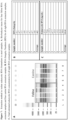
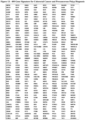
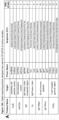
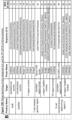
- the eukaryotic biomarker is selected from the biomarkers listed in Figure 6 (Panel A) or Figure 13 (Panel B).
- the eukaryotic biomarker can be a B cell marker, a T cell marker, or an immunoglobulin.
- Methods for determining whether a subject is at risk for colorectal cancer can include the steps of measuring the level of expression of two or more colorectal neoplasm biomarker genes selected from any of the colorectal neoplasm biomarker genes listed in Figure 6 (Panel A) or Figure 13 (Panel B) in a biological sample from the subject; comparing the measured expression level of the two or more colorectal neoplasm biomarker genes in the sample with the measured expression level of the two or more colorectal neoplasm biomarker genes in a control, wherein a difference in the measured expression level of the two or more genes in the biological sample relative to the measured expression level of the two or more genes in the control indicates that the subject is at risk for colorectal cancer.
- Methods for determining whether a nonhuman animal is at risk for a gastrointestinal disorder can include the steps of measuring the level of expression of one or more B cell, T cell, or immunoglobulin genes in a biological sample from the subject; comparing the measured expression level of the one or more B cell, T cell, or immunoglobulin genes in the sample with the measured expression level of one or more B cell, T cell, or immunoglobulin genes in a control, wherein a difference in the measured expression level of the one or more genes in the biological sample relative to the measured expression level of the one or more genes in the control indicates that the subject is at risk for a gastrointestinal disorder.
- the gastrointestinal disorder can be gastrointestinal lymphoma or inflammatory bowel disease.
- the non-human animal can be a cat or a dog.
- the biological sample can be a stool sample.
- methods of detection of disease can include measuring the relative expression level proportion, for example, the relative ratios, of one, two, or more biomarkers in a subject's stool sample and comparing the relative proportion of these biomarkers to the relative expression level proportion of one, two, or more biomarkers in a control.
- a difference in the measured relative expression level proportion of one, two, or more biomarkers in a subject's sample relative to a control is an indication that the subject has a gastrointestinal disease.
- a difference in the measured expression level proportion of the one, two, or more biomarkers in a subject's sample relative to the measured expression level proportion of the one, two, or more biomarkers in a control is an indication that the subject is at risk for a gastrointestinal disorder.
- the colorectal neoplasm biomarker genes listed in Figure 6 (Panel A) and Figure 13 (Panel B) can also include subsets of colorectal neoplasm biomarker genes.
- the compositions can include gene arrays and probe sets configured for the specific detection of the panels of markers disclosed herein.
- the compositions described herein can also include kits comprising gene arrays and probe sets configured for the specific detection of the panels of markers disclosed herein.
- biomarkers from eukaryotic cells can include: a) a sequence of deoxyribonucleic acid (DNA), b) a sequence of ribonucleic acid (RNA), c) a predicted sequence of amino acids, which comprise the backbone of protein, d) expression levels of ribonucleic acid biomarkers, e) a predicted expression level of an amino acid sequence or f) any combination of the above.
- the biomarker can be T cell marker or B cell marker.
- the biomarker can be a biomarker that is useful for the detection of clonal expansion of T cells or B cells.
- the nucleic acid can be extracted onto a functionalized bead.
- the functionalized bead can further comprise a magnetic core ("magnetic bead").
- the functionalized bead can include a surface functionalized with a charged moiety. The charged moiety can be selected from: amine, carboxylic acid, carboxylate, quaternary amine, sulfate, sulfonate, or phosphate.
- the temperature at which the disruption and separation steps are carried out can vary, for example, from about 4°C to about 20°C, from about 4°C to about 15°C, from about 4°C to about 10°C, from about 4°C to about 6°C.
- the lysate is fractionated into a portion enriched for eukaryotic nucleic acid.
- the fractionation can be carried out, for example by centrifugation, filtration, targeted probes that specifically bind eukaryotic nucleic acid, antibodies, column-based filtration, bead-based filtration, or chromatographic methods. Fractionation by centrifugation can result in the formation of a bottom layer (a pellet), comprising cell debris, a hydrophilic middle layer comprising eukaryotic nucleic acids, and a hydrophobic top layer comprising lipids and membrane fractions.
- the middle layer can be collected. In some embodiments, the middle layer and the top layer can be collected together.
- the middle layer can be collected through a narrow bore orifice.
- the method can include obtaining an experimental sample and a control, for example, a stool sample.
- the stool sample contains sloughed off eukaryotic cells that can be evaluated for biomarkers.
- the eukaryotic cells can be enterocytes, lymphocytes, enterochromiffin-like cells, entero-endocrine cells, neuro-endocrine cells, pancreatic cells, hepatic cells, gastric cells, or others.
- the method provides a way whereby the eukaryotic cells in the stool sample can be evaluated for eukaryotic biomarkers.
- nucleic acid and “polynucleotide” interchangeably to refer to both RNA and DNA, including cDNA, genomic DNA, synthetic DNA, and DNA (or RNA) containing nucleic acid analogs, any of which may encode a polypeptide of the invention and all of which are encompassed by the invention.
- Polynucleotides can have essentially any three-dimensional structure.
- a nucleic acid can be double-stranded or single-stranded ( i.e. , a sense strand or an antisense strand).
- An isolated nucleic acid also refers to a DNA molecule that is incorporated into a vector, an autonomously replicating plasmid, a virus, or into the genomic DNA of a prokaryote or eukaryote.
- an isolated nucleic acid can include an engineered nucleic acid such as a DNA molecule that is part of a hybrid or fusion nucleic acid.
- the 3' nucleotide of the primer should generally be identical to the target sequence at a corresponding nucleotide position for optimal extension and/or amplification.
- Primers can take many forms, including for example, peptide nucleic acid primers, locked nucleic acid primers, unlocked nucleic acid primers, and/or phosphorothioate modified primers.
- a forward primer can be a primer that is complementary to the anti-sense strand of dsDNA and a reverse primer can be a primer that is complementary to the sense-strand of dsDNA.
- primer pairs may also refer to primer pairs.
- a 5' target primer pair can be a primer pair that includes at least one forward primer and at least one reverse primer that amplifies the 5' region of a target nucleotide sequence.
- a 3' target primer pair can be a primer pair at least one forward primer and at least one reverse primer that amplifies the 3' region of a target nucleotide sequence.
- the primer can include a detectable label, as discussed below. In some embodiments, the detectable label can be a quantifiable label.
- the probe length can vary depending upon the nucleotide base sequence and composition of the particular nucleic acid sequence of the probe and the specific method for which the probe is used. In general, useful probe lengths can be about 8, 9, 10, 11, 12, 13, 14, 15, 16, 17, 18, 19, 20, 21, 22, 23, 24, 25, 26, 27, 28, 29, 30, 35, 40, 50, 55, 60, 65, 70, 75, 80, 85, 90, 100, 110, 120, 140, 150, 175, or 200 nucleotide bases.
- the fluorescent dyes used in the conjugated label probes may typically be divided into families, such as fluorescein and its derivatives; rhodamine and its derivatives; cyanine and its derivatives; coumarin and its derivatives; Cascade Blue TM and its derivatives; Lucifer Yellow and its derivatives; BODIPY and its derivatives; and the like.
- Methods for determining gene expression at the mRNA level include, for example, microarray analysis, serial analysis of gene expression (SAGE), RT-PCR, blotting, hybridization based on digital barcode quantification assays, multiplex RT-PCR, digital drop PCR (ddPCR), NanoDrop spectrophotometers, qRT-PCR, qPCR, UV spectroscopy, RNA sequencing, next-generation sequencing, lysate based hybridization assays utilizing branched DNA signal amplification such as the QuantiGene 2.0 Single Plex, and branched DNA analysis methods.
- Digital barcode quantification assays can include the BeadArray (Illumina), the xMAP systems (Luminex), the nCounter (Nanostring), the High Throughput Genomics (HTG) molecular, BioMark (Fluidigm), or the Wafergen microarray.
- Assays can include DASL (Illumina), RNA-Seq (Illumina), TruSeq (Illumina), SureSelect (Agilent), Bioanalyzer (Agilent) and TaqMan (ThermoFisher).
- Levels of the eukaryotic biomarkers can also be analyzed by DNA sequencing.
- DNA sequencing can be performed by sequencing methods such as targeted sequencing, whole genome sequencing or exome sequencing. Sequencing methods can include: Sanger sequencing or high-throughput sequencing. High throughput sequencing can involve sequencing-by-synthesis, pyrosequencing, sequencing-by-ligation, real-time sequencing, nanopore sequencing, and Sanger sequencing.
- isolated RNA can be used to generate a corresponding cDNA and the cDNA can be sequenced.
- Sequencing methods can be carried out in multiplex formats such that multiple different target nucleic acids are manipulated simultaneously.
- different target nucleic acids can be treated in a common reaction vessel or on a surface of a particular substrate, enabling convenient delivery of sequencing reagents, removal of unreacted reagents and detection of incorporation events in a multiplex manner.
- the target nucleic acids may be in an array format. In an array format, the target nucleic acids may be typically coupled to a surface in a spatially distinguishable manner.
- a normalization step can be used to control for nucleic acid recovery and variability between samples.
- a defined amount of exogenous control nucleic acids can be added ("spiked in") to the extracted eukaryotic nucleic acids.
- the exogenous control nucleic acid can be a nucleic acid having a sequence corresponding to one or more eukaryotic sequences.
- the exogenous control nucleic acid can have a sequence corresponding to the sequence found in another species, for example a bacterial sequence such as a Bacilis subtilis sequence.
- the methods can include determining the levels of one or more housekeeping genes.
- the methods can include normalizing the expression levels of biomarkers to the levels of the housekeeping genes.
- the methods are generally useful for diagnosis and treatment of colorectal cancer.
- the level of two or more colorectal neoplasm biomarker genes is measured in a biological sample, that is a sample from a subject.
- the subject can be a patient having one or more of the symptoms described above that would indicate the patient is at risk for colorectal cancer.
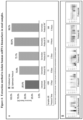
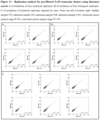
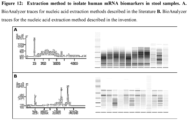
- the electrophoresis file was read by comparing the bands for each sample to the bands represented by the size markers in the RNA ladder (shown in the first lane of the electropherogram) and identifying the 18S and 28S eukaryotic ribosomal RNA bands. Qualitatively, adequate banding and darker band intensities indicated that ample intact nucleic acid was available for further analysis such as microarray sequencing, polymerase chain reaction (PCR), nucleic acid sequencing, molecular barcoding, or probe-capture. The sample quality was also analyzed qualitatively using the RNA Integrity Number. Figure 7B shows the RNA integrity value for each of the same 8 samples that were run using Agilent RNA 6000 Nano Kits. The sample mass was also analyzed quantitatively.
- Figure 7C shows the estimated eukaryotic RNA concentration (ug/uL) from the same 8 samples that were run using Agilent RNA 6000 Nano Kits.
- the eukaryotic RNA concentration was estimated using the area under the curve of the BioAnalyzer traces.
- the average RIN for all samples was 4.2 and the average eukaryotic mass for all samples was 61.4ng/ ⁇ L.
- the quantitative and qualitative measurements indicated that all samples were eligible for biomarker expression analysis (n 8).
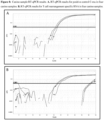
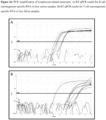
- the solution was amplified using an Applied Biosystems QuantStudio5 qPCR machine.
- the thermocycler protocol was as follows: 25 minutes at 55°C to reverse transcribe the RNA into DNA, reverse transcriptase inactivation at 95°C for 1 minute, 60 cycles of 10 seconds at 95°C and then 45 seconds at 60°C for amplification and signal collection.
- Each reaction contained 10uL 2X Master Mix (New England Biolabs), 1 uL 20X Enzyme Mix (New England BioLabs), 0.8uL of 10uM forward primer (Eurofins Genomics), 0.8uL of 10uM reverse primer (Eurofins Genomics), 1uL 20X SYBR Green I, 2uL RNA, and 4.4uL molecular biology grade H 2 O (Thermo Scientific).
- the solution was amplified using an Applied Biosystems QuantStudio5 qPCR machine.
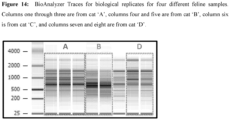
- Sample Types Stool samples were all obtained from healthy animals of varying ages, breeds and genders. 8 samples were collected from 4 different cats. For some cats, up to three biological replicates were collected. We refer to a biological replicate as a stool sample from the same cat collected from separate bowel movements. One cat had recently been diagnosed with ringworm, but all other animals were asymptomatic and had not exhibited any signs of gastrointestinal distress within the last 30 days.
- HBSS Hanks Balanced Salt Solution
- Tween-20 Sigma-Aldrich
- RNAse Inhibitor Sigma-Aldrich
- the nucleic acids which were bound to the beads, were eluted into a buffer solution using the Specific A Protocol according to the manufacturer's directions.
- the volume of the eluted nucleic acids was 70 uL.
- This nucleic acid solution was pipetted into the original 1.5mL tube that already contained first 70 uL eluate and the combined solution was placed on ice.
- the eukaryotic concentration was estimated based on the area under the 18S and 28S eukaryotic ribosomal RNA bands of the BioAnalyzer traces.
- Figure 14 shows biological replicates for 4 individual cats. There was similar banding between biological replicates and distinct banding for individual cats ( Figure 14 ).
- Each reaction contained 10 uL 2X Master Mix (New England BioLabs), 1 uL 20X Enzyme Mix (New England BioLabs), 0.8 uL of 10 uM forward primer (Eurofins Genomics), 0.8 uL of 10 uM reverse primer (Eurofins Genomics), 1uL 20X SYBR Green I, 2uL RNA, and 4.4 uL molecular biology grade H 2 O (Thermo Scientific).
- the solution was amplified using an Applied Biosystems QuantStudio5 qPCR machine.
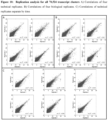
- RNA extraction method To further analyze genes associated with human colorectal cancer and precancerous adenomas, an additional 70 human samples were subjected to the RNA extraction method described above. The extracted RNA was analyzed using the NanoString nCounter Analysis System, which utilizes a digital color-coded barcode technology that is based on direct multiplexed measurement of gene expression. Of the 70 samples, 48 were analyzed using the nCounter ® PanCancer Pathways Panel, which includes 770 genes from 13 cancer-associated canonical pathways including: MAPK, STAT, PI3K, RAS, Cell Cycle, Apoptosis, Hedgehog, Wnt, DNA Damage Control, Transcriptional Regulation, Chromatin Modification, and TGF- ⁇ .
Landscapes
- Health & Medical Sciences (AREA)
- Chemical & Material Sciences (AREA)
- Life Sciences & Earth Sciences (AREA)
- Engineering & Computer Science (AREA)
- Biomedical Technology (AREA)
- Genetics & Genomics (AREA)
- Organic Chemistry (AREA)
- Biotechnology (AREA)
- Wood Science & Technology (AREA)
- Zoology (AREA)
- Immunology (AREA)
- Molecular Biology (AREA)
- Bioinformatics & Cheminformatics (AREA)
- Analytical Chemistry (AREA)
- General Engineering & Computer Science (AREA)
- Microbiology (AREA)
- Physics & Mathematics (AREA)
- Biochemistry (AREA)
- General Health & Medical Sciences (AREA)
- Proteomics, Peptides & Aminoacids (AREA)
- Biophysics (AREA)
- Pathology (AREA)
- Urology & Nephrology (AREA)
- Hematology (AREA)
- Crystallography & Structural Chemistry (AREA)
- Plant Pathology (AREA)
- Cell Biology (AREA)
- Hospice & Palliative Care (AREA)
- Oncology (AREA)
- Food Science & Technology (AREA)
- Medicinal Chemistry (AREA)
- General Physics & Mathematics (AREA)
- Toxicology (AREA)
- Tropical Medicine & Parasitology (AREA)
- Measuring Or Testing Involving Enzymes Or Micro-Organisms (AREA)
Applications Claiming Priority (4)
| Application Number | Priority Date | Filing Date | Title |
|---|---|---|---|
| US201662413708P | 2016-10-27 | 2016-10-27 | |
| US201762523511P | 2017-06-22 | 2017-06-22 | |
| US201762547046P | 2017-08-17 | 2017-08-17 | |
| PCT/US2017/058789 WO2018081580A1 (en) | 2016-10-27 | 2017-10-27 | Detection method |
Publications (3)
| Publication Number | Publication Date |
|---|---|
| EP3532637A1 EP3532637A1 (en) | 2019-09-04 |
| EP3532637A4 EP3532637A4 (en) | 2020-10-14 |
| EP3532637B1 true EP3532637B1 (en) | 2024-07-10 |
Family
ID=62024023
Family Applications (1)
| Application Number | Title | Priority Date | Filing Date |
|---|---|---|---|
| EP17863995.1A Active EP3532637B1 (en) | 2016-10-27 | 2017-10-27 | Method for isolation of eukaryotic nucleic acids from stool samples |
Country Status (8)
| Country | Link |
|---|---|
| US (2) | US11479820B2 (enExample) |
| EP (1) | EP3532637B1 (enExample) |
| JP (1) | JP7109462B2 (enExample) |
| CN (1) | CN110291197B (enExample) |
| AU (1) | AU2017348369B2 (enExample) |
| CA (1) | CA3077798A1 (enExample) |
| ES (1) | ES2986412T3 (enExample) |
| WO (1) | WO2018081580A1 (enExample) |
Families Citing this family (4)
| Publication number | Priority date | Publication date | Assignee | Title |
|---|---|---|---|---|
| WO2018081580A1 (en) | 2016-10-27 | 2018-05-03 | Geneoscopy, Llc | Detection method |
| CA3136405A1 (en) | 2018-06-01 | 2019-12-05 | Geneoscopy, Inc. | Detection method for cancer using rna biomarkers |
| KR102775904B1 (ko) * | 2018-12-06 | 2025-03-05 | 주식회사 씨젠 | 핵산이 결합된 입자로부터 핵산을 용출하는 방법 |
| AU2023386217A1 (en) * | 2022-11-25 | 2025-06-05 | Yaarob KHAMAS | Colorectal cancer risk assessment |
Family Cites Families (21)
| Publication number | Priority date | Publication date | Assignee | Title |
|---|---|---|---|---|
| ES2287134T3 (es) | 2000-06-02 | 2007-12-16 | Bayer Corporation | Procedimiento para la deteccion y localizacion de genes in situ usando hibridacion de adn ramificado. |
| JP4033820B2 (ja) * | 2003-07-29 | 2008-01-16 | 株式会社日立製作所 | 細胞回収方法 |
| JP2007175021A (ja) | 2005-12-28 | 2007-07-12 | Sysmex Corp | 大腸がんのリンパ節転移マーカー |
| EP1862803A1 (en) | 2006-06-02 | 2007-12-05 | Atlas Antibodies AB | Use of protein SATB2 as a marker for colorectal cancer |
| US20120196827A1 (en) | 2006-06-12 | 2012-08-02 | Oncomethylome Sciences S.A. | Methylation markers for early detection and prognosis of colon cancers |
| US20100196889A1 (en) | 2006-11-13 | 2010-08-05 | Bankaitis-Davis Danute M | Gene Expression Profiling for Identification, Monitoring and Treatment of Colorectal Cancer |
| JPWO2008093530A1 (ja) * | 2007-01-30 | 2010-05-20 | 国立大学法人浜松医科大学 | 大腸癌病期検出方法 |
| WO2009042676A1 (en) | 2007-09-24 | 2009-04-02 | University Of South Florida | Method for early detection of cancers |
| JP5616786B2 (ja) | 2008-05-12 | 2014-10-29 | オリンパス株式会社 | 糞便処理容器 |
| CN102105583A (zh) * | 2008-07-23 | 2011-06-22 | 奥林巴斯株式会社 | 从粪便试样中回收核酸的方法、核酸分析方法以及粪便试样处理装置 |
| EP2347256A4 (en) * | 2008-10-09 | 2012-02-08 | Alfagene Bioscience Inc | USE AND IDENTIFICATION OF BIOMARKERS FOR GASTROINTESTINAL DISEASES |
| US20100112713A1 (en) | 2008-11-05 | 2010-05-06 | The Texas A&M University System | Methods For Detecting Colorectal Diseases And Disorders |
| WO2010134246A1 (ja) | 2009-05-20 | 2010-11-25 | オリンパス株式会社 | 核酸含有試料の調製方法 |
| WO2010134245A1 (ja) | 2009-05-20 | 2010-11-25 | オリンパス株式会社 | 哺乳細胞由来核酸の回収方法、核酸解析方法、及び採便用キット |
| US10036070B2 (en) | 2010-12-23 | 2018-07-31 | Agendia N.V. | Methods and means for molecular classification of colorectal cancers |
| KR20140057354A (ko) | 2011-08-31 | 2014-05-12 | 온코사이트 코포레이션 | 결장직장암의 치료 및 진단을 위한 방법 및 조성물 |
| EP3495814A3 (en) | 2013-03-27 | 2019-07-17 | F. Hoffmann-La Roche AG | Use of biomarkers for assessing treatment of gastrointestinal inflammatory disorders with beta7 integrin antagonists |
| WO2015017537A2 (en) | 2013-07-30 | 2015-02-05 | H. Lee Moffitt Cancer Center And Research Institute, Inc. | Colorectal cancer recurrence gene expression signature |
| WO2016176446A2 (en) | 2015-04-29 | 2016-11-03 | Geneoscopy, Llc | Colorectal cancer screening method and device |
| WO2018081580A1 (en) | 2016-10-27 | 2018-05-03 | Geneoscopy, Llc | Detection method |
| CA3136405A1 (en) | 2018-06-01 | 2019-12-05 | Geneoscopy, Inc. | Detection method for cancer using rna biomarkers |
-
2017
- 2017-10-27 WO PCT/US2017/058789 patent/WO2018081580A1/en not_active Ceased
- 2017-10-27 ES ES17863995T patent/ES2986412T3/es active Active
- 2017-10-27 US US16/345,437 patent/US11479820B2/en active Active
- 2017-10-27 JP JP2019544790A patent/JP7109462B2/ja active Active
- 2017-10-27 CA CA3077798A patent/CA3077798A1/en active Pending
- 2017-10-27 AU AU2017348369A patent/AU2017348369B2/en active Active
- 2017-10-27 CN CN201780080634.4A patent/CN110291197B/zh active Active
- 2017-10-27 EP EP17863995.1A patent/EP3532637B1/en active Active
-
2022
- 2022-08-15 US US17/887,752 patent/US20230203591A1/en active Pending
Also Published As
| Publication number | Publication date |
|---|---|
| AU2017348369B2 (en) | 2023-09-28 |
| WO2018081580A1 (en) | 2018-05-03 |
| JP7109462B2 (ja) | 2022-07-29 |
| US20230203591A1 (en) | 2023-06-29 |
| EP3532637A4 (en) | 2020-10-14 |
| JP2020500551A (ja) | 2020-01-16 |
| US20190271046A1 (en) | 2019-09-05 |
| CA3077798A1 (en) | 2018-05-03 |
| CN110291197B (zh) | 2024-01-12 |
| ES2986412T3 (es) | 2024-11-11 |
| AU2017348369A1 (en) | 2019-06-13 |
| CN110291197A (zh) | 2019-09-27 |
| US11479820B2 (en) | 2022-10-25 |
| EP3532637A1 (en) | 2019-09-04 |
Similar Documents
| Publication | Publication Date | Title |
|---|---|---|
| US20230203591A1 (en) | Detection method using eukaryotic cells | |
| US20250146084A1 (en) | Colorectal cancer screening method and device | |
| US20240093312A1 (en) | Detection method | |
| US20220364185A1 (en) | Digital Analysis of Blood Samples to Determine Efficacy of Cancer Therapies for Specific Cancers | |
| EP3122905B1 (en) | Circulating micrornas as biomarkers for endometriosis | |
| EP2800820A1 (en) | Methods and kits for detecting subjects at risk of having cancer | |
| US20190316207A1 (en) | Mir-320e and colorectal cancer | |
| WO2016160882A1 (en) | Methods for diagnosing and treating colorectal cancer using mirna549a | |
| US20250129428A1 (en) | Methods and materials for predicting the progression of prostate cancer and treating same | |
| AU2024243779A1 (en) | Arrays targeting differentially accessible chromatin regions using quantitative polymerase chain reaction | |
| HK40049419A (en) | Circulating micrornas as biomarkers for endometriosis | |
| Georgiades | Circulating biomarkers as prognostic and predictive markers in rectal cancer | |
| HK1238306A1 (en) | Method and systems for lung cancer diagnosis |
Legal Events
| Date | Code | Title | Description |
|---|---|---|---|
| STAA | Information on the status of an ep patent application or granted ep patent |
Free format text: STATUS: THE INTERNATIONAL PUBLICATION HAS BEEN MADE |
|
| PUAI | Public reference made under article 153(3) epc to a published international application that has entered the european phase |
Free format text: ORIGINAL CODE: 0009012 |
|
| STAA | Information on the status of an ep patent application or granted ep patent |
Free format text: STATUS: REQUEST FOR EXAMINATION WAS MADE |
|
| 17P | Request for examination filed |
Effective date: 20190524 |
|
| AK | Designated contracting states |
Kind code of ref document: A1 Designated state(s): AL AT BE BG CH CY CZ DE DK EE ES FI FR GB GR HR HU IE IS IT LI LT LU LV MC MK MT NL NO PL PT RO RS SE SI SK SM TR |
|
| AX | Request for extension of the european patent |
Extension state: BA ME |
|
| DAV | Request for validation of the european patent (deleted) | ||
| DAX | Request for extension of the european patent (deleted) | ||
| RIC1 | Information provided on ipc code assigned before grant |
Ipc: C12N 15/10 20060101AFI20200520BHEP Ipc: C12Q 1/6886 20180101ALI20200520BHEP |
|
| REG | Reference to a national code |
Ref country code: DE Ref legal event code: R079 Free format text: PREVIOUS MAIN CLASS: C12Q0001680000 Ipc: C12N0015100000 Ref country code: DE Ref legal event code: R079 Ref document number: 602017083254 Country of ref document: DE Free format text: PREVIOUS MAIN CLASS: C12Q0001680000 Ipc: C12N0015100000 |
|
| A4 | Supplementary search report drawn up and despatched |
Effective date: 20200910 |
|
| RIC1 | Information provided on ipc code assigned before grant |
Ipc: C12Q 1/6886 20180101ALI20200904BHEP Ipc: C12N 15/10 20060101AFI20200904BHEP |
|
| STAA | Information on the status of an ep patent application or granted ep patent |
Free format text: STATUS: EXAMINATION IS IN PROGRESS |
|
| 17Q | First examination report despatched |
Effective date: 20210922 |
|
| RAP1 | Party data changed (applicant data changed or rights of an application transferred) |
Owner name: GENEOSCOPY, INC. |
|
| GRAP | Despatch of communication of intention to grant a patent |
Free format text: ORIGINAL CODE: EPIDOSNIGR1 |
|
| STAA | Information on the status of an ep patent application or granted ep patent |
Free format text: STATUS: GRANT OF PATENT IS INTENDED |
|
| INTG | Intention to grant announced |
Effective date: 20231025 |
|
| GRAJ | Information related to disapproval of communication of intention to grant by the applicant or resumption of examination proceedings by the epo deleted |
Free format text: ORIGINAL CODE: EPIDOSDIGR1 |
|
| STAA | Information on the status of an ep patent application or granted ep patent |
Free format text: STATUS: EXAMINATION IS IN PROGRESS |
|
| INTC | Intention to grant announced (deleted) | ||
| GRAP | Despatch of communication of intention to grant a patent |
Free format text: ORIGINAL CODE: EPIDOSNIGR1 |
|
| STAA | Information on the status of an ep patent application or granted ep patent |
Free format text: STATUS: GRANT OF PATENT IS INTENDED |
|
| INTG | Intention to grant announced |
Effective date: 20240215 |
|
| RAP3 | Party data changed (applicant data changed or rights of an application transferred) |
Owner name: GENEOSCOPY, INC. |
|
| GRAS | Grant fee paid |
Free format text: ORIGINAL CODE: EPIDOSNIGR3 |
|
| GRAA | (expected) grant |
Free format text: ORIGINAL CODE: 0009210 |
|
| STAA | Information on the status of an ep patent application or granted ep patent |
Free format text: STATUS: THE PATENT HAS BEEN GRANTED |
|
| AK | Designated contracting states |
Kind code of ref document: B1 Designated state(s): AL AT BE BG CH CY CZ DE DK EE ES FI FR GB GR HR HU IE IS IT LI LT LU LV MC MK MT NL NO PL PT RO RS SE SI SK SM TR |
|
| REG | Reference to a national code |
Ref country code: CH Ref legal event code: EP |
|
| REG | Reference to a national code |
Ref country code: DE Ref legal event code: R096 Ref document number: 602017083254 Country of ref document: DE |
|
| P01 | Opt-out of the competence of the unified patent court (upc) registered |
Free format text: CASE NUMBER: APP_43021/2024 Effective date: 20240722 |
|
| REG | Reference to a national code |
Ref country code: LT Ref legal event code: MG9D Ref country code: ES Ref legal event code: FG2A Ref document number: 2986412 Country of ref document: ES Kind code of ref document: T3 Effective date: 20241111 |
|
| REG | Reference to a national code |
Ref country code: NL Ref legal event code: MP Effective date: 20240710 |
|
| PG25 | Lapsed in a contracting state [announced via postgrant information from national office to epo] |
Ref country code: PT Free format text: LAPSE BECAUSE OF FAILURE TO SUBMIT A TRANSLATION OF THE DESCRIPTION OR TO PAY THE FEE WITHIN THE PRESCRIBED TIME-LIMIT Effective date: 20241111 |
|
| REG | Reference to a national code |
Ref country code: AT Ref legal event code: MK05 Ref document number: 1702079 Country of ref document: AT Kind code of ref document: T Effective date: 20240710 |
|
| PG25 | Lapsed in a contracting state [announced via postgrant information from national office to epo] |
Ref country code: NL Free format text: LAPSE BECAUSE OF FAILURE TO SUBMIT A TRANSLATION OF THE DESCRIPTION OR TO PAY THE FEE WITHIN THE PRESCRIBED TIME-LIMIT Effective date: 20240710 |
|
| PG25 | Lapsed in a contracting state [announced via postgrant information from national office to epo] |
Ref country code: PT Free format text: LAPSE BECAUSE OF FAILURE TO SUBMIT A TRANSLATION OF THE DESCRIPTION OR TO PAY THE FEE WITHIN THE PRESCRIBED TIME-LIMIT Effective date: 20241111 Ref country code: NL Free format text: LAPSE BECAUSE OF FAILURE TO SUBMIT A TRANSLATION OF THE DESCRIPTION OR TO PAY THE FEE WITHIN THE PRESCRIBED TIME-LIMIT Effective date: 20240710 |
|
| PGFP | Annual fee paid to national office [announced via postgrant information from national office to epo] |
Ref country code: DE Payment date: 20241029 Year of fee payment: 8 |
|
| PG25 | Lapsed in a contracting state [announced via postgrant information from national office to epo] |
Ref country code: NO Free format text: LAPSE BECAUSE OF FAILURE TO SUBMIT A TRANSLATION OF THE DESCRIPTION OR TO PAY THE FEE WITHIN THE PRESCRIBED TIME-LIMIT Effective date: 20241010 |
|
| PG25 | Lapsed in a contracting state [announced via postgrant information from national office to epo] |
Ref country code: FI Free format text: LAPSE BECAUSE OF FAILURE TO SUBMIT A TRANSLATION OF THE DESCRIPTION OR TO PAY THE FEE WITHIN THE PRESCRIBED TIME-LIMIT Effective date: 20240710 Ref country code: GR Free format text: LAPSE BECAUSE OF FAILURE TO SUBMIT A TRANSLATION OF THE DESCRIPTION OR TO PAY THE FEE WITHIN THE PRESCRIBED TIME-LIMIT Effective date: 20241011 Ref country code: PL Free format text: LAPSE BECAUSE OF FAILURE TO SUBMIT A TRANSLATION OF THE DESCRIPTION OR TO PAY THE FEE WITHIN THE PRESCRIBED TIME-LIMIT Effective date: 20240710 |
|
| PGFP | Annual fee paid to national office [announced via postgrant information from national office to epo] |
Ref country code: GB Payment date: 20241028 Year of fee payment: 8 |
|
| PG25 | Lapsed in a contracting state [announced via postgrant information from national office to epo] |
Ref country code: BG Free format text: LAPSE BECAUSE OF FAILURE TO SUBMIT A TRANSLATION OF THE DESCRIPTION OR TO PAY THE FEE WITHIN THE PRESCRIBED TIME-LIMIT Effective date: 20240710 |
|
| PG25 | Lapsed in a contracting state [announced via postgrant information from national office to epo] |
Ref country code: LV Free format text: LAPSE BECAUSE OF FAILURE TO SUBMIT A TRANSLATION OF THE DESCRIPTION OR TO PAY THE FEE WITHIN THE PRESCRIBED TIME-LIMIT Effective date: 20240710 |
|
| PG25 | Lapsed in a contracting state [announced via postgrant information from national office to epo] |
Ref country code: IS Free format text: LAPSE BECAUSE OF FAILURE TO SUBMIT A TRANSLATION OF THE DESCRIPTION OR TO PAY THE FEE WITHIN THE PRESCRIBED TIME-LIMIT Effective date: 20241110 Ref country code: AT Free format text: LAPSE BECAUSE OF FAILURE TO SUBMIT A TRANSLATION OF THE DESCRIPTION OR TO PAY THE FEE WITHIN THE PRESCRIBED TIME-LIMIT Effective date: 20240710 |
|
| PGFP | Annual fee paid to national office [announced via postgrant information from national office to epo] |
Ref country code: FR Payment date: 20241025 Year of fee payment: 8 |
|
| PG25 | Lapsed in a contracting state [announced via postgrant information from national office to epo] |
Ref country code: HR Free format text: LAPSE BECAUSE OF FAILURE TO SUBMIT A TRANSLATION OF THE DESCRIPTION OR TO PAY THE FEE WITHIN THE PRESCRIBED TIME-LIMIT Effective date: 20240710 |
|
| PGFP | Annual fee paid to national office [announced via postgrant information from national office to epo] |
Ref country code: IE Payment date: 20241028 Year of fee payment: 8 |
|
| PG25 | Lapsed in a contracting state [announced via postgrant information from national office to epo] |
Ref country code: RS Free format text: LAPSE BECAUSE OF FAILURE TO SUBMIT A TRANSLATION OF THE DESCRIPTION OR TO PAY THE FEE WITHIN THE PRESCRIBED TIME-LIMIT Effective date: 20241010 |
|
| PGFP | Annual fee paid to national office [announced via postgrant information from national office to epo] |
Ref country code: IT Payment date: 20241021 Year of fee payment: 8 Ref country code: ES Payment date: 20241104 Year of fee payment: 8 |
|
| PG25 | Lapsed in a contracting state [announced via postgrant information from national office to epo] |
Ref country code: RS Free format text: LAPSE BECAUSE OF FAILURE TO SUBMIT A TRANSLATION OF THE DESCRIPTION OR TO PAY THE FEE WITHIN THE PRESCRIBED TIME-LIMIT Effective date: 20241010 Ref country code: PL Free format text: LAPSE BECAUSE OF FAILURE TO SUBMIT A TRANSLATION OF THE DESCRIPTION OR TO PAY THE FEE WITHIN THE PRESCRIBED TIME-LIMIT Effective date: 20240710 Ref country code: NO Free format text: LAPSE BECAUSE OF FAILURE TO SUBMIT A TRANSLATION OF THE DESCRIPTION OR TO PAY THE FEE WITHIN THE PRESCRIBED TIME-LIMIT Effective date: 20241010 Ref country code: LV Free format text: LAPSE BECAUSE OF FAILURE TO SUBMIT A TRANSLATION OF THE DESCRIPTION OR TO PAY THE FEE WITHIN THE PRESCRIBED TIME-LIMIT Effective date: 20240710 Ref country code: IS Free format text: LAPSE BECAUSE OF FAILURE TO SUBMIT A TRANSLATION OF THE DESCRIPTION OR TO PAY THE FEE WITHIN THE PRESCRIBED TIME-LIMIT Effective date: 20241110 Ref country code: HR Free format text: LAPSE BECAUSE OF FAILURE TO SUBMIT A TRANSLATION OF THE DESCRIPTION OR TO PAY THE FEE WITHIN THE PRESCRIBED TIME-LIMIT Effective date: 20240710 Ref country code: GR Free format text: LAPSE BECAUSE OF FAILURE TO SUBMIT A TRANSLATION OF THE DESCRIPTION OR TO PAY THE FEE WITHIN THE PRESCRIBED TIME-LIMIT Effective date: 20241011 Ref country code: FI Free format text: LAPSE BECAUSE OF FAILURE TO SUBMIT A TRANSLATION OF THE DESCRIPTION OR TO PAY THE FEE WITHIN THE PRESCRIBED TIME-LIMIT Effective date: 20240710 Ref country code: BG Free format text: LAPSE BECAUSE OF FAILURE TO SUBMIT A TRANSLATION OF THE DESCRIPTION OR TO PAY THE FEE WITHIN THE PRESCRIBED TIME-LIMIT Effective date: 20240710 Ref country code: AT Free format text: LAPSE BECAUSE OF FAILURE TO SUBMIT A TRANSLATION OF THE DESCRIPTION OR TO PAY THE FEE WITHIN THE PRESCRIBED TIME-LIMIT Effective date: 20240710 |
|
| REG | Reference to a national code |
Ref country code: DE Ref legal event code: R097 Ref document number: 602017083254 Country of ref document: DE |
|
| PG25 | Lapsed in a contracting state [announced via postgrant information from national office to epo] |
Ref country code: RO Free format text: LAPSE BECAUSE OF FAILURE TO SUBMIT A TRANSLATION OF THE DESCRIPTION OR TO PAY THE FEE WITHIN THE PRESCRIBED TIME-LIMIT Effective date: 20240710 Ref country code: DK Free format text: LAPSE BECAUSE OF FAILURE TO SUBMIT A TRANSLATION OF THE DESCRIPTION OR TO PAY THE FEE WITHIN THE PRESCRIBED TIME-LIMIT Effective date: 20240710 Ref country code: SM Free format text: LAPSE BECAUSE OF FAILURE TO SUBMIT A TRANSLATION OF THE DESCRIPTION OR TO PAY THE FEE WITHIN THE PRESCRIBED TIME-LIMIT Effective date: 20240710 |
|
| PG25 | Lapsed in a contracting state [announced via postgrant information from national office to epo] |
Ref country code: EE Free format text: LAPSE BECAUSE OF FAILURE TO SUBMIT A TRANSLATION OF THE DESCRIPTION OR TO PAY THE FEE WITHIN THE PRESCRIBED TIME-LIMIT Effective date: 20240710 |
|
| PG25 | Lapsed in a contracting state [announced via postgrant information from national office to epo] |
Ref country code: CZ Free format text: LAPSE BECAUSE OF FAILURE TO SUBMIT A TRANSLATION OF THE DESCRIPTION OR TO PAY THE FEE WITHIN THE PRESCRIBED TIME-LIMIT Effective date: 20240710 |
|
| PG25 | Lapsed in a contracting state [announced via postgrant information from national office to epo] |
Ref country code: SK Free format text: LAPSE BECAUSE OF FAILURE TO SUBMIT A TRANSLATION OF THE DESCRIPTION OR TO PAY THE FEE WITHIN THE PRESCRIBED TIME-LIMIT Effective date: 20240710 |
|
| PLBE | No opposition filed within time limit |
Free format text: ORIGINAL CODE: 0009261 |
|
| STAA | Information on the status of an ep patent application or granted ep patent |
Free format text: STATUS: NO OPPOSITION FILED WITHIN TIME LIMIT |
|
| REG | Reference to a national code |
Ref country code: CH Ref legal event code: PL |
|
| 26N | No opposition filed |
Effective date: 20250411 |
|
| PG25 | Lapsed in a contracting state [announced via postgrant information from national office to epo] |
Ref country code: MC Free format text: LAPSE BECAUSE OF FAILURE TO SUBMIT A TRANSLATION OF THE DESCRIPTION OR TO PAY THE FEE WITHIN THE PRESCRIBED TIME-LIMIT Effective date: 20240710 |
|
| PG25 | Lapsed in a contracting state [announced via postgrant information from national office to epo] |
Ref country code: LU Free format text: LAPSE BECAUSE OF NON-PAYMENT OF DUE FEES Effective date: 20241027 Ref country code: BE Free format text: LAPSE BECAUSE OF NON-PAYMENT OF DUE FEES Effective date: 20241031 |
|
| PG25 | Lapsed in a contracting state [announced via postgrant information from national office to epo] |
Ref country code: CH Free format text: LAPSE BECAUSE OF NON-PAYMENT OF DUE FEES Effective date: 20241031 |
|
| REG | Reference to a national code |
Ref country code: BE Ref legal event code: MM Effective date: 20241031 |
|
| PG25 | Lapsed in a contracting state [announced via postgrant information from national office to epo] |
Ref country code: SE Free format text: LAPSE BECAUSE OF FAILURE TO SUBMIT A TRANSLATION OF THE DESCRIPTION OR TO PAY THE FEE WITHIN THE PRESCRIBED TIME-LIMIT Effective date: 20240710 |