EP3527709A1 - Bauteil für ein gerät zum behandeln von wäsche oder geschirr sowie verfahren zum herstellen eines solchen bauteils - Google Patents
Bauteil für ein gerät zum behandeln von wäsche oder geschirr sowie verfahren zum herstellen eines solchen bauteils Download PDFInfo
- Publication number
- EP3527709A1 EP3527709A1 EP19154803.1A EP19154803A EP3527709A1 EP 3527709 A1 EP3527709 A1 EP 3527709A1 EP 19154803 A EP19154803 A EP 19154803A EP 3527709 A1 EP3527709 A1 EP 3527709A1
- Authority
- EP
- European Patent Office
- Prior art keywords
- component
- composite material
- dishes
- polytetrafluoroethylene
- treating laundry
- Prior art date
- Legal status (The legal status is an assumption and is not a legal conclusion. Google has not performed a legal analysis and makes no representation as to the accuracy of the status listed.)
- Granted
Links
Images
Classifications
-
- B—PERFORMING OPERATIONS; TRANSPORTING
- B32—LAYERED PRODUCTS
- B32B—LAYERED PRODUCTS, i.e. PRODUCTS BUILT-UP OF STRATA OF FLAT OR NON-FLAT, e.g. CELLULAR OR HONEYCOMB, FORM
- B32B27/00—Layered products comprising a layer of synthetic resin
- B32B27/06—Layered products comprising a layer of synthetic resin as the main or only constituent of a layer, which is next to another layer of the same or of a different material
- B32B27/08—Layered products comprising a layer of synthetic resin as the main or only constituent of a layer, which is next to another layer of the same or of a different material of synthetic resin
-
- A—HUMAN NECESSITIES
- A47—FURNITURE; DOMESTIC ARTICLES OR APPLIANCES; COFFEE MILLS; SPICE MILLS; SUCTION CLEANERS IN GENERAL
- A47L—DOMESTIC WASHING OR CLEANING; SUCTION CLEANERS IN GENERAL
- A47L15/00—Washing or rinsing machines for crockery or tableware
- A47L15/42—Details
-
- A—HUMAN NECESSITIES
- A47—FURNITURE; DOMESTIC ARTICLES OR APPLIANCES; COFFEE MILLS; SPICE MILLS; SUCTION CLEANERS IN GENERAL
- A47L—DOMESTIC WASHING OR CLEANING; SUCTION CLEANERS IN GENERAL
- A47L15/00—Washing or rinsing machines for crockery or tableware
- A47L15/42—Details
- A47L15/4246—Details of the tub
-
- B—PERFORMING OPERATIONS; TRANSPORTING
- B32—LAYERED PRODUCTS
- B32B—LAYERED PRODUCTS, i.e. PRODUCTS BUILT-UP OF STRATA OF FLAT OR NON-FLAT, e.g. CELLULAR OR HONEYCOMB, FORM
- B32B27/00—Layered products comprising a layer of synthetic resin
- B32B27/18—Layered products comprising a layer of synthetic resin characterised by the use of special additives
- B32B27/20—Layered products comprising a layer of synthetic resin characterised by the use of special additives using fillers, pigments, thixotroping agents
-
- B—PERFORMING OPERATIONS; TRANSPORTING
- B32—LAYERED PRODUCTS
- B32B—LAYERED PRODUCTS, i.e. PRODUCTS BUILT-UP OF STRATA OF FLAT OR NON-FLAT, e.g. CELLULAR OR HONEYCOMB, FORM
- B32B27/00—Layered products comprising a layer of synthetic resin
- B32B27/32—Layered products comprising a layer of synthetic resin comprising polyolefins
-
- B—PERFORMING OPERATIONS; TRANSPORTING
- B32—LAYERED PRODUCTS
- B32B—LAYERED PRODUCTS, i.e. PRODUCTS BUILT-UP OF STRATA OF FLAT OR NON-FLAT, e.g. CELLULAR OR HONEYCOMB, FORM
- B32B27/00—Layered products comprising a layer of synthetic resin
- B32B27/32—Layered products comprising a layer of synthetic resin comprising polyolefins
- B32B27/322—Layered products comprising a layer of synthetic resin comprising polyolefins comprising halogenated polyolefins, e.g. PTFE
-
- C—CHEMISTRY; METALLURGY
- C08—ORGANIC MACROMOLECULAR COMPOUNDS; THEIR PREPARATION OR CHEMICAL WORKING-UP; COMPOSITIONS BASED THEREON
- C08J—WORKING-UP; GENERAL PROCESSES OF COMPOUNDING; AFTER-TREATMENT NOT COVERED BY SUBCLASSES C08B, C08C, C08F, C08G or C08H
- C08J5/00—Manufacture of articles or shaped materials containing macromolecular substances
-
- C—CHEMISTRY; METALLURGY
- C08—ORGANIC MACROMOLECULAR COMPOUNDS; THEIR PREPARATION OR CHEMICAL WORKING-UP; COMPOSITIONS BASED THEREON
- C08L—COMPOSITIONS OF MACROMOLECULAR COMPOUNDS
- C08L23/00—Compositions of homopolymers or copolymers of unsaturated aliphatic hydrocarbons having only one carbon-to-carbon double bond; Compositions of derivatives of such polymers
- C08L23/02—Compositions of homopolymers or copolymers of unsaturated aliphatic hydrocarbons having only one carbon-to-carbon double bond; Compositions of derivatives of such polymers not modified by chemical after-treatment
- C08L23/10—Homopolymers or copolymers of propene
- C08L23/12—Polypropene
-
- C—CHEMISTRY; METALLURGY
- C08—ORGANIC MACROMOLECULAR COMPOUNDS; THEIR PREPARATION OR CHEMICAL WORKING-UP; COMPOSITIONS BASED THEREON
- C08L—COMPOSITIONS OF MACROMOLECULAR COMPOUNDS
- C08L27/00—Compositions of homopolymers or copolymers of compounds having one or more unsaturated aliphatic radicals, each having only one carbon-to-carbon double bond, and at least one being terminated by a halogen; Compositions of derivatives of such polymers
- C08L27/02—Compositions of homopolymers or copolymers of compounds having one or more unsaturated aliphatic radicals, each having only one carbon-to-carbon double bond, and at least one being terminated by a halogen; Compositions of derivatives of such polymers not modified by chemical after-treatment
- C08L27/12—Compositions of homopolymers or copolymers of compounds having one or more unsaturated aliphatic radicals, each having only one carbon-to-carbon double bond, and at least one being terminated by a halogen; Compositions of derivatives of such polymers not modified by chemical after-treatment containing fluorine atoms
- C08L27/18—Homopolymers or copolymers or tetrafluoroethene
-
- D—TEXTILES; PAPER
- D06—TREATMENT OF TEXTILES OR THE LIKE; LAUNDERING; FLEXIBLE MATERIALS NOT OTHERWISE PROVIDED FOR
- D06F—LAUNDERING, DRYING, IRONING, PRESSING OR FOLDING TEXTILE ARTICLES
- D06F35/00—Washing machines, apparatus, or methods not otherwise provided for
- D06F35/005—Methods for washing, rinsing or spin-drying
- D06F35/008—Methods for washing, rinsing or spin-drying for disinfecting the tub or the drum
-
- B—PERFORMING OPERATIONS; TRANSPORTING
- B29—WORKING OF PLASTICS; WORKING OF SUBSTANCES IN A PLASTIC STATE IN GENERAL
- B29C—SHAPING OR JOINING OF PLASTICS; SHAPING OF MATERIAL IN A PLASTIC STATE, NOT OTHERWISE PROVIDED FOR; AFTER-TREATMENT OF THE SHAPED PRODUCTS, e.g. REPAIRING
- B29C45/00—Injection moulding, i.e. forcing the required volume of moulding material through a nozzle into a closed mould; Apparatus therefor
- B29C45/16—Making multilayered or multicoloured articles
-
- B—PERFORMING OPERATIONS; TRANSPORTING
- B29—WORKING OF PLASTICS; WORKING OF SUBSTANCES IN A PLASTIC STATE IN GENERAL
- B29C—SHAPING OR JOINING OF PLASTICS; SHAPING OF MATERIAL IN A PLASTIC STATE, NOT OTHERWISE PROVIDED FOR; AFTER-TREATMENT OF THE SHAPED PRODUCTS, e.g. REPAIRING
- B29C48/00—Extrusion moulding, i.e. expressing the moulding material through a die or nozzle which imparts the desired form; Apparatus therefor
- B29C48/16—Articles comprising two or more components, e.g. co-extruded layers
- B29C48/18—Articles comprising two or more components, e.g. co-extruded layers the components being layers
-
- B—PERFORMING OPERATIONS; TRANSPORTING
- B29—WORKING OF PLASTICS; WORKING OF SUBSTANCES IN A PLASTIC STATE IN GENERAL
- B29K—INDEXING SCHEME ASSOCIATED WITH SUBCLASSES B29B, B29C OR B29D, RELATING TO MOULDING MATERIALS OR TO MATERIALS FOR MOULDS, REINFORCEMENTS, FILLERS OR PREFORMED PARTS, e.g. INSERTS
- B29K2023/00—Use of polyalkenes or derivatives thereof as moulding material
- B29K2023/10—Polymers of propylene
- B29K2023/12—PP, i.e. polypropylene
-
- B—PERFORMING OPERATIONS; TRANSPORTING
- B29—WORKING OF PLASTICS; WORKING OF SUBSTANCES IN A PLASTIC STATE IN GENERAL
- B29K—INDEXING SCHEME ASSOCIATED WITH SUBCLASSES B29B, B29C OR B29D, RELATING TO MOULDING MATERIALS OR TO MATERIALS FOR MOULDS, REINFORCEMENTS, FILLERS OR PREFORMED PARTS, e.g. INSERTS
- B29K2027/00—Use of polyvinylhalogenides or derivatives thereof as moulding material
- B29K2027/12—Use of polyvinylhalogenides or derivatives thereof as moulding material containing fluorine
- B29K2027/18—PTFE, i.e. polytetrafluoroethylene, e.g. ePTFE, i.e. expanded polytetrafluoroethylene
-
- B—PERFORMING OPERATIONS; TRANSPORTING
- B32—LAYERED PRODUCTS
- B32B—LAYERED PRODUCTS, i.e. PRODUCTS BUILT-UP OF STRATA OF FLAT OR NON-FLAT, e.g. CELLULAR OR HONEYCOMB, FORM
- B32B2250/00—Layers arrangement
- B32B2250/02—2 layers
-
- B—PERFORMING OPERATIONS; TRANSPORTING
- B32—LAYERED PRODUCTS
- B32B—LAYERED PRODUCTS, i.e. PRODUCTS BUILT-UP OF STRATA OF FLAT OR NON-FLAT, e.g. CELLULAR OR HONEYCOMB, FORM
- B32B2250/00—Layers arrangement
- B32B2250/24—All layers being polymeric
- B32B2250/242—All polymers belonging to those covered by group B32B27/32
-
- B—PERFORMING OPERATIONS; TRANSPORTING
- B32—LAYERED PRODUCTS
- B32B—LAYERED PRODUCTS, i.e. PRODUCTS BUILT-UP OF STRATA OF FLAT OR NON-FLAT, e.g. CELLULAR OR HONEYCOMB, FORM
- B32B2264/00—Composition or properties of particles which form a particulate layer or are present as additives
- B32B2264/10—Inorganic particles
- B32B2264/102—Oxide or hydroxide
-
- B—PERFORMING OPERATIONS; TRANSPORTING
- B32—LAYERED PRODUCTS
- B32B—LAYERED PRODUCTS, i.e. PRODUCTS BUILT-UP OF STRATA OF FLAT OR NON-FLAT, e.g. CELLULAR OR HONEYCOMB, FORM
- B32B2307/00—Properties of the layers or laminate
- B32B2307/50—Properties of the layers or laminate having particular mechanical properties
- B32B2307/554—Wear resistance
-
- B—PERFORMING OPERATIONS; TRANSPORTING
- B32—LAYERED PRODUCTS
- B32B—LAYERED PRODUCTS, i.e. PRODUCTS BUILT-UP OF STRATA OF FLAT OR NON-FLAT, e.g. CELLULAR OR HONEYCOMB, FORM
- B32B2307/00—Properties of the layers or laminate
- B32B2307/50—Properties of the layers or laminate having particular mechanical properties
- B32B2307/582—Tearability
- B32B2307/5825—Tear resistant
-
- B—PERFORMING OPERATIONS; TRANSPORTING
- B32—LAYERED PRODUCTS
- B32B—LAYERED PRODUCTS, i.e. PRODUCTS BUILT-UP OF STRATA OF FLAT OR NON-FLAT, e.g. CELLULAR OR HONEYCOMB, FORM
- B32B2307/00—Properties of the layers or laminate
- B32B2307/70—Other properties
- B32B2307/726—Permeability to liquids, absorption
-
- B—PERFORMING OPERATIONS; TRANSPORTING
- B32—LAYERED PRODUCTS
- B32B—LAYERED PRODUCTS, i.e. PRODUCTS BUILT-UP OF STRATA OF FLAT OR NON-FLAT, e.g. CELLULAR OR HONEYCOMB, FORM
- B32B2307/00—Properties of the layers or laminate
- B32B2307/70—Other properties
- B32B2307/732—Dimensional properties
-
- B—PERFORMING OPERATIONS; TRANSPORTING
- B32—LAYERED PRODUCTS
- B32B—LAYERED PRODUCTS, i.e. PRODUCTS BUILT-UP OF STRATA OF FLAT OR NON-FLAT, e.g. CELLULAR OR HONEYCOMB, FORM
- B32B2432/00—Cleaning articles, e.g. mops or wipes
-
- B—PERFORMING OPERATIONS; TRANSPORTING
- B32—LAYERED PRODUCTS
- B32B—LAYERED PRODUCTS, i.e. PRODUCTS BUILT-UP OF STRATA OF FLAT OR NON-FLAT, e.g. CELLULAR OR HONEYCOMB, FORM
- B32B2597/00—Tubular articles, e.g. hoses, pipes
-
- D—TEXTILES; PAPER
- D06—TREATMENT OF TEXTILES OR THE LIKE; LAUNDERING; FLEXIBLE MATERIALS NOT OTHERWISE PROVIDED FOR
- D06F—LAUNDERING, DRYING, IRONING, PRESSING OR FOLDING TEXTILE ARTICLES
- D06F37/00—Details specific to washing machines covered by groups D06F21/00 - D06F25/00
- D06F37/26—Casings; Tubs
-
- D—TEXTILES; PAPER
- D06—TREATMENT OF TEXTILES OR THE LIKE; LAUNDERING; FLEXIBLE MATERIALS NOT OTHERWISE PROVIDED FOR
- D06F—LAUNDERING, DRYING, IRONING, PRESSING OR FOLDING TEXTILE ARTICLES
- D06F39/00—Details of washing machines not specific to a single type of machines covered by groups D06F9/00 - D06F27/00
- D06F39/02—Devices for adding soap or other washing agents
Definitions
- the invention relates to a component for a device for treating laundry or dishes, wherein the component is subjected to an operation of the device with moisture. Moreover, the invention relates to a method for producing a component for a device for treating laundry or dishes, wherein the component is subjected to moisture in an operation of the device.
- Equipment for treating laundry or dishes are known in a variety of configurations. These devices have in common that some components of the devices are subjected to moisture during operation of the devices. As a result, deposits on wet or moist and poorly ventilated surface areas of the components may arise, especially where, for example, residues of washing or washing-up liquid or other organic soiling are deposited and adhere to the components. Such documents can form, for example, a so-called biofilm. Evidence, adhering dirt or biofilms should be avoided as far as possible.
- polytetrafluoroethylene as a surface coating of components used in household appliances.
- PTFE polytetrafluoroethylene
- a disadvantage of such coatings is that these coatings can be damaged by the surface cleaning or even removed.
- the effectiveness of the surface coating depends strongly on the type and frequency of cleaning. This applies in particular to water-bearing household appliances, such as a laundry treatment machine or a dishwasher, in which the surfaces to be cleaned are wetted by operation with regular water or cleaning liquid.
- An object of the invention is to greatly reduce the adhesion of detergent residues or other organic soils to a component of an appliance for treating laundry or dishes.
- the reduced Attachment of contamination over a long life of the component can be provided and maintain the effectiveness over a long time.
- At least one surface of the component is at least partially made of a composite material, wherein the composite material contains polypropylene and polytetrafluoroethylene.
- the composite material according to the invention has a significantly lower surface tension than a conventional material which contains no polytetrafluoroethylene.
- the adhesive forces between the surface of the component according to the invention on the one hand and washing or detergent residues or other organic contaminants on the other hand are greatly reduced.
- the washing or washing agent residues or other organic contaminants adhering to the surface of the component can be more easily rinsed off the surface, for example automatically during the running or subsequent operation of the appliance. Due to the elimination of deposits of washing or detergent residues or other organic contaminants on the surface of the component biofilm formation or other evidence on the surface can be largely suppressed or completely prevented.
- the component consists of a composite material in which, in contrast to a surface coating, the polytetrafluoroethylene is incorporated in the material.
- the polytetrafluoroethylene is incorporated in the material.
- the entire surface of the component which is exposed to moisture or moisture during operation of the device is made of the composite material.
- two or more surfaces of the component may be made of the composite material.
- the component may be made partially or completely of the composite material.
- the component is only partially made of the composite material
- at least the composite material is provided in a layer forming the surface of the component, which preferably has a layer thickness which withstands slight damage or operational wear, i. the layer of the composite material has a thickness which is greater than the depth of the scratches or traces of use which are usually produced on the component as a result of operational use.
- the thickness of the layer is greater than or equal to 1 mm.
- a component according to the invention can be used at various points in the device at which deposits or the formation of a biofilm can be expected due to deposits of washing or flushing agent residues or other organic soiling on the surface of a conventional component.
- the component may be designed as a dispenser shell of a washing machine or a washer-dryer, since it is known from conventional dispenser shell that can form evidence in the shower area of the dispenser shell housing.
- the component may only form a portion of the dispenser shell.
- the component may be formed as an axial rear wall of a tub of a washing machine, a washer-dryer or a tumble dryer, since it is known that there can form in a conventional axial back wall slips or biofilm.
- the component may be formed as a section of a floor group of a washer-dryer, a tumble dryer or a drying cabinet in the region of a condensate collection tray, since it is known that there can form in a conventional floor group documents or biofilm.
- the component can at least as an internal part of a pump, a hose, a liquid container or the like of a washing machine, a washer-dryer, a tumble dryer, a drying cabinet or a dishwasher, since it is known that there may conventionally form a coating or a biofilm.
- a proportion of the polytetrafluoroethylene in the composite material is greater than or equal to 15%.
- the surface tension of the surface of the component produced from the composite material is reduced in such a way that adhesion of washing or flushing agent residues or other organic soiling to the surface is largely prevented and rinsing off of corresponding deposits on the surface is greatly facilitated.
- the composite material contains at least one filler.
- the filler may also have a reinforcing function.
- the filler may be, for example, talc.
- a proportion of the filler may be about 20%.
- the proportions of the filler and the polytetrafluoroethylene are selected such that in the production of the component about the same Schwindungshong are given, as in a conventional component, so that the same production tools can be used to produce the component according to the present application. As a result, the manufacturing costs are not unnecessarily increased.
- the material may also be formed exclusively from the polypropylene, the filler and the polytetrafluoroethylene.
- a proportion of the polypropylene in the composite material is greater than or equal to 50%. This also makes it possible to ensure that the same shrinkage values are given in the production of the component as in a conventional component, so that the same production tools can be used to produce the component according to the present application. As a result, the manufacturing costs are not unnecessarily increased.
- the component is completely made of the composite material. This makes it possible, for example, to easily manufacture the component using an injection molding method or an extrusion method.
- An apparatus according to the invention for treating laundry or dishes has at least one component according to one of the aforementioned embodiments or an arbitrary combination of at least two of these configurations with one another.
- the device for treating laundry can be, for example, a washing machine, a washer-dryer, a tumble dryer or a drying oven.
- the appliance for treating dishes may be, for example, a dishwasher.
- At least one surface of the component is at least partially made of a composite material, wherein the composite material contains polypropylene and polytetrafluoroethylene.
- the advantages mentioned above with respect to the component are connected accordingly.
- the component according to one of the abovementioned embodiments or any combination of at least two of these embodiments can be produced with one another by means of the method according to the invention.
- the composite may additionally contain a filler.
- the component is produced using a multi-component injection molding method, wherein the composite material is used as an injection molding component, so that the surface of the component is at least partially made of the composite material.
- a further injection molding component used during the multi-component injection molding process can be at least partially encapsulated with the composite material given as an injection molding component in order to form the surface of the component according to the invention.
- the component is produced using a multi-component extrusion method, wherein the composite material is used as an extrusion component, so that the surface of the component is at least partially made of the composite material.
- a further extrusion component used during the multi-component extrusion process may be at least partially provided with a layer of the composite material used as the extrusion component in order to form the surface of the component according to the invention.
- a hose or a liquid container can be produced, the entire inner surface is formed as a surface according to the invention.
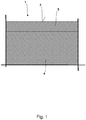
- Fig. 1 shows a schematic representation of a portion of an embodiment of an inventive component 1 for a device, not shown, for the treatment of laundry or dishes.
- the component 1 is exposed to moisture in an operation of the device.
- the component 1 has at least one surface 2, which is at least partially made of a composite material 3, wherein the composite material contains polypropylene and polytetrafluoroethylene. A proportion of the polytetrafluoroethylene in the composite may be greater than or equal to 15%. In addition, the composite material 3 may contain at least one filler, for example talc. A proportion of the polypropylene in the composite material 3 may be greater than or equal to 50%.
- the composite material 3 is arranged as an outer layer on a base material 4 and integrally connected thereto. Alternatively, the component 1 can be made entirely of the composite material 3.
- the component 1 may be manufactured using a multi-component injection molding process, wherein the composite material 3 is used as an injection molding component, so that the surface 2 of the component 1 is at least partially made of the composite material 3.
- the component 1 may be manufactured using a multi-component extrusion process, wherein the composite material 3 is used as an extrusion component, so that the surface 2 of the component 1 is at least partially made of the composite material 3.
- the thickness of the layer of the composite material 3 is 1 mm in this embodiment. Depending on the conditions of use of the component, a greater layer thickness can also be selected in order to withstand the normal wear and tear.
Landscapes
- Chemical & Material Sciences (AREA)
- Engineering & Computer Science (AREA)
- Chemical Kinetics & Catalysis (AREA)
- Medicinal Chemistry (AREA)
- Polymers & Plastics (AREA)
- Organic Chemistry (AREA)
- Health & Medical Sciences (AREA)
- Textile Engineering (AREA)
- Manufacturing & Machinery (AREA)
- Materials Engineering (AREA)
- Compositions Of Macromolecular Compounds (AREA)
- Laminated Bodies (AREA)
- Main Body Construction Of Washing Machines And Laundry Dryers (AREA)
- Table Devices Or Equipment (AREA)
Abstract
Description
- Die Erfindung betrifft ein Bauteil für ein Gerät zum Behandeln von Wäsche oder Geschirr, wobei das Bauteil in einem Betrieb des Geräts mit Feuchtigkeit beaufschlagt wird. Zudem betrifft die Erfindung ein Verfahren zum Herstellen eines Bauteils für ein Gerät zum Behandeln von Wäsche oder Geschirr, wobei das Bauteil in einem Betrieb des Geräts mit Feuchtigkeit beaufschlagt wird.
- Geräte zum Behandeln von Wäsche oder Geschirr sind in vielfältigen Ausgestaltungen bekannt. Diesen Geräten ist gemeinsam, dass manche Bauteile der Geräte während eines Betriebs der Geräte mit Feuchtigkeit beaufschlagt werden. Dadurch können Beläge an nassen bzw. feuchten und wenig belüfteten Oberflächenbereichen der Bauteile entstehen, insbesondere dort, wo sich beispielsweise Wasch- oder Spülmittelreste oder andere organische Verschmutzungen an den Bauteilen ablagern und anhaften. Solche Belege können beispielsweise einen sogenannten Biofilm ausbilden. Belege, anhaftende Verschmutzungen oder Biofilme gilt es weitestgehend zu vermeiden.
- Grundsätzlich ist es bekannt, Polytetrafluorethylen als Oberflächenbeschichtung von Bauteilen, die in Haushaltsgeräten eingesetzt werden, zu nutzen. Beispielsweise ist aus
DE 10 2012 222 710 A1 bekannt, Oberflächen von Kühlschränken mit Polytetrafluorethylen (PTFE) zu beschichten, um eine hydrophobe Oberfläche zu schaffen, an der Wassertropfen leicht abperlen und Verschmutzungen sehr leicht weggespült werden können. Nachteilig an solchen Beschichtungen ist es, dass diese Beschichtungen durch die Oberflächenreinigung beschädigt oder gar abgetragen werden können. Somit hängt die Wirksamkeit der Oberflächenbeschichtung von der Reinigungsart und -häufigkeit stark ab. Dies gilt insbesondere für wasserführende Haushaltsgeräte, wie eine Wäschebehandlungsmaschine oder eine Geschirrspülmaschine, bei der die zu reinigenden Oberflächen betriebsbedingt mit regelmäßig mit Wasser oder Reinigungsflüssigkeit benetzt werden. - Eine Aufgabe der Erfindung ist es, eine Anhaftung von Wasch- oder Spülmittelresten oder anderen organischen Verschmutzungen an einem Bauteil eines Geräts zum Behandeln von Wäsche oder Geschirr weitestgehend zu reduzieren. Darüber hinaus soll die reduzierte Anhaftung von Verschmutzungen über eine lange Lebensdauer des Bauteils bereitgestellt werden und die Wirksamkeit über eine lange Zeit vorhalten.
- Diese Aufgabe wird durch die unabhängigen Patentansprüche gelöst. Vorteilhafte Ausgestaltungen sind in der nachfolgenden Beschreibung, den abhängigen Patentansprüchen und der Figur wiedergegeben, wobei diese Ausgestaltungen jeweils für sich genommen oder in verschiedener Kombination von wenigstens zwei dieser Ausgestaltungen miteinander einen weiterbildenden, insbesondere auch bevorzugten oder vorteilhaften, Aspekt der Erfindung darstellen können. Ausgestaltungen des Bauteils können dabei Ausgestaltungen des Geräts bzw. des Verfahrens entsprechen, und umgekehrt, selbst wenn im Folgenden hierauf im Einzelfall nicht explizit hingewiesen wird.
- Bei einem erfindungsgemäßen Bauteil für ein Gerät zum Behandeln von Wäsche oder Geschirr, das in einem Betrieb des Geräts mit Feuchtigkeit beaufschlagt wird, ist wenigstens eine Oberfläche des Bauteils zumindest teilweise aus einem Verbundwerkstoff hergestellt, wobei der Verbundwerkstoff Polypropylen und Polytetrafluorethylen enthält.
- Der erfindungsgemäße Verbundwerkstoff weist aufgrund des darin enthaltenen Polytetrafluorethylens eine deutlich geringere Oberflächenspannung als ein herkömmlicher Werkstoff auf, der kein Polytetrafluorethylen enthält. Hierdurch werden die Haftkräfte zwischen der erfindungsgemäßen Oberfläche des Bauteils einerseits und Wasch- oder Spülmittelresten oder anderen organischen Verschmutzungen andererseits stark reduziert. Dadurch können die an der Oberfläche des Bauteils anhaftenden Wasch- oder Spülmittelreste oder die anderen organischen Verschmutzungen leichter von der Oberfläche abgespült werden, beispielsweise automatisch während des laufenden oder des nachfolgenden Betriebs des Geräts. Aufgrund der Beseitigung von Ablagerungen aus Wasch- oder Spülmittelresten oder anderen organischen Verschmutzungen an der Oberfläche des Bauteils kann eine Biofilmbildung oder sonstige Belege an der Oberfläche weitestgehend unterdrückt bzw. vollständig unterbunden werden. Besonders von Vorteil ist, dass das Bauteil aus einem Verbundwerkstoff besteht, bei dem im Gegensatz zu einer Oberflächenbeschichtung das Polytetrafluorethylen in dem Werkstoff eingelagert ist. Somit ist auch bei einer Beschädigung einem Abtrag der Oberfläche des Bauteils sichergestellt, dass die beschädigte oder verbliebene Oberfläche Polytetrafluorethylen aufweist und nicht wie bei einer Beschichtung entfernt worden ist. Durch den Polytetrafluorethylen enthaltenden Verbundwerkstoff kann die Anhaftungen von Verschmutzungen über einen langen Zeitraum bzw. über die gesamte Bauteillebensdauer sichergestellt werden.
- Vorzugsweise ist die gesamte im Betrieb des Geräts mit Feuchtigkeit bzw. Nässe beaufschlagte Oberfläche des Bauteils aus dem Verbundwerkstoff hergestellt. Es können auch zwei oder mehrere Oberflächen des Bauteils aus dem Verbundwerkstoff hergestellt sein. Das Bauteil kann teilweise oder vollständig aus dem Verbundwerkstoff hergestellt sein.
- Für den Fall, dass das Bauteil nur teilweise aus dem Verbundwerkstoff hergestellt ist, so ist zumindest der Verbundwerkstoff in einer die Oberfläche des Bauteils bildende Schicht vorgesehen, welche bevorzugt eine Schichtdicke hat, die leichten Beschädigungen oder betriebsbedingen Abnutzungen standhalten, d.h. die Schicht des Verbundwerkstoffs hat eine Dicke die größer ist als Tiefe der üblicherweise an dem Bauteil durch den betriebsbedingten Gebrauch entstehenden Kratz- oder Gebrauchsspuren. Bevorzugt ist die Dicke der Schicht größer gleich 1 mm.
- Ein erfindungsgemäßes Bauteil kann an verschiedenen Stellen in dem Gerät eingesetzt werden, an denen aufgrund von Ablagerungen von Wasch- oder Spülmittelresten oder anderen organischen Verschmutzungen an der Oberfläche eines herkömmlichen Bauteils mit einer Belagbildung oder der Bildung eines Biofilms zu rechnen ist. Beispielsweise kann das Bauteil als Einspülschalengehäuse einer Waschmaschine oder eines Waschtrockners ausgebildet sein, da es von herkömmlichen Einspülschalengehäusen bekannt ist, dass sich im Bereich einer Dusche an dem Einspülschalengehäuse Belege ausbilden können. Alternativ kann das Bauteil lediglich einen Abschnitt des Einspülschalengehäuses bilden. Alternativ kann das Bauteil als axiale Rückwand eines Laugenbehälters einer Waschmaschine, eines Waschtrockners oder eines Wäschetrockners ausgebildet sein, da es bekannt ist, dass sich dort bei einer herkömmlichen axialen Rückwand Belege oder Biofilm bilden können. Alternativ kann das Bauteil als Abschnitt einer Bodengruppe eines Waschtrockners, eines Wäschetrockners oder eines Trockenschranks im Bereich einer Kondensatsammelwanne ausgebildet sein, da es bekannt ist, dass sich dort bei einer herkömmlichen Bodengruppe Belege oder Biofilm bilden können. Alternativ kann das Bauteil zumindest als innenliegendes Teil einer Pumpe, eines Schlauchs, eines Flüssigkeitsbehälters oder dergleichen einer Waschmaschine, eines Waschtrockners, eines Wäschetrockners, eines Trockenschranks oder eines Geschirrspülers ausgebildet sein, da es bekannt ist, dass sich dort herkömmlich ein Belag oder ein Biofilm bilden kann.
- Gemäß einer vorteilhaften Ausgestaltung ist ein Anteil des Polytetrafluorethylens in dem Verbundwerkstoff größer als oder gleich 15 %. In diesem Bereich ist die Oberflächenspannung der aus dem Verbundwerkstoff hergestellten Oberfläche des Bauteils derart reduziert, dass ein Anhaften von Wasch- oder Spülmittelresten oder anderen organischen Verschmutzungen an der Oberfläche weitestgehend verhindert und ein Abspülen von entsprechenden Ablagerungen an der Oberfläche stark erleichtert wird.
- Eine weitere vorteilhafte Ausgestaltung sieht vor, dass der Verbundwerkstoff wenigstens einen Füllstoff enthält. Der Füllstoff kann zudem eine Verstärkungsfunktion aufweisen. Der Füllstoff kann beispielsweise Talkum sein. Ein Anteil des Füllstoffs kann beispielsweise etwa 20 % betragen. Vorzugsweise sind die Anteile des Füllstoffs und des Polytetrafluorethylens derart gewählt, dass bei der Herstellung des Bauteils etwa dieselben Schwindungswerte gegeben sind, wie bei einem herkömmlichen Bauteil, so dass zur Herstellung des Bauteils gemäß der vorliegenden Anmeldung dieselben Herstellungswerkzeuge eingesetzt werden können. Dadurch werden die Herstellungskosten nicht unnötig erhöht. Der Werkstoff kann auch ausschließlich aus dem Polypropylen, dem Füllstoff und dem Polytetrafluorethylen gebildet sein.
- Nach einer weiteren vorteilhaften Ausgestaltung ist ein Anteil des Polypropylens in dem Verbundwerkstoff größer als oder gleich 50 %. Auch hierdurch kann gewährleistet werden, dass bei der Herstellung des Bauteils etwa dieselben Schwindungswerte gegeben sind, wie bei einem herkömmlichen Bauteil, so dass zur Herstellung des Bauteils gemäß der vorliegenden Anmeldung dieselben Herstellungswerkzeuge eingesetzt werden können. Dadurch werden die Herstellungskosten nicht unnötig erhöht.
- Gemäß einer weiteren vorteilhaften Ausgestaltung ist das Bauteil vollständig aus dem Verbundwerkstoff hergestellt. Dies macht beispielsweise eine einfache Herstellung des Bauteils unter Verwendung eines Spritzgießverfahrens oder eines Extrusionsverfahrens möglich.
- Ein erfindungsgemäßes Gerät zum Behandeln von Wäsche oder Geschirr weist wenigstens ein Bauteil nach einer der vorgenannten Ausgestaltungen oder einer beliebigen Kombination von wenigstens zwei dieser Ausgestaltungen miteinander auf.
- Mit dem Gerät sind die oben mit Bezug auf das Bauteil genannten Vorteile entsprechend verbunden. Das Gerät zum Behandeln von Wäsche kann beispielsweise eine Waschmaschine, ein Waschtrockner, ein Wäschetrockner oder ein Trockenschrank sein. Das Gerät zum Behandeln von Geschirr kann beispielsweise ein Geschirrspüler sein.
- Nach einem erfindungsgemäßen Verfahren zum Herstellen eines Bauteils für ein Gerät zum Behandeln von Wäsche oder Geschirr, das in einem Betrieb des Geräts mit Feuchtigkeit beaufschlagt wird, wird wenigstens eine Oberfläche des Bauteils zumindest teilweise aus einem Verbundwerkstoff hergestellt, wobei der Verbundwerkstoff Polypropylen und Polytetrafluorethylen enthält.
- Mit dem Verfahren sind die oben mit Bezug auf das Bauteil genannten Vorteile entsprechend verbunden. Insbesondere kann das Bauteil gemäß einer der oben genannten Ausgestaltungen oder einer beliebigen Kombination von wenigstens zwei dieser Ausgestaltungen miteinander mittels des erfindungsgemäßen Verfahrens hergestellt werden. Der Verbundwerkstoff kann zusätzlich einen Füllstoff enthalten.
- Gemäß einer vorteilhaften Ausgestaltung wird das Bauteil unter Verwendung eines Mehrkomponenten-Spritzgießverfahrens hergestellt, wobei der Verbundwerkstoff als eine Spritzgießkomponente verwendet wird, so dass die Oberfläche des Bauteils zumindest teilweise aus dem Verbundwerkstoff hergestellt wird. Eine während des Mehrkomponenten-Spritzgießverfahrens eingesetzte weitere Spritzgießkomponente kann zumindest teilweise mit dem als Spritzgießkomponente gegebenen Verbundwerkstoff umspritzt werden, um die erfindungsgemäße Oberfläche des Bauteils auszubilden. Durch das Mehrkomponenten-Spritzgießverfahren wird vorteilhaft erreicht, dass eine dauerhafte Verbindung zwischen den einzelnen Spritzgießkomponenten bereitgestellt wird. Somit kann die den Verbundwerkstoff enthaltende Oberfläche des Bauteils länger Beschädigungen standhalten, wodurch die reduzierte Anhaftung von Verschmutzungen über einen noch längeren Zeitraum ermöglicht wird. Darüber hinaus können bei einem solchen Mehrkomponenten-Spritzgießverfahrens Bauteile mit einer äußeren Schichtdicke hergestellt werden, die leichten Beschädigungen Standhalten können.
- Nach einer weiteren vorteilhaften Ausgestaltung wird das Bauteil unter Verwendung eines Mehrkomponenten-Extrusionsverfahrens hergestellt, wobei der Verbundwerkstoff als eine Extrusionskomponente verwendet wird, so dass die Oberfläche des Bauteils zumindest teilweise aus dem Verbundwerkstoff hergestellt wird. Eine während des Mehrkomponenten-Extrusionsverfahrens eingesetzte weitere Extrusionskomponente kann zumindest teilweise mit einer Schicht aus dem als Extrusionskomponente gegebenen Verbundwerkstoff versehen werden, um die erfindungsgemäße Oberfläche des Bauteils auszubilden. Hierbei kann beispielsweise ein Schlauch oder ein Flüssigkeitsbehälter hergestellt werden, dessen gesamte Innenfläche als erfindungsgemäße Oberfläche ausgebildet ist.
- Im Folgenden wird die Erfindung unter Bezugnahme auf die anliegende Figur anhand einer bevorzugten Ausführungsform exemplarisch erläutert. Es zeigt:
- Fig. 1
- eine schematische Darstellung eines Abschnitts eines Ausführungsbeispiels für ein erfindungsgemäßes Bauteil.
-
Fig. 1 zeigt eine schematische Darstellung eines Abschnitts eines Ausführungsbeispiels für ein erfindungsgemäßes Bauteil 1 für ein nicht gezeigtes Gerät zum Behandeln von Wäsche oder Geschirr. Das Bauteil 1 wird in einem Betrieb des Geräts mit Feuchtigkeit beaufschlagt. - Das Bauteil 1 weist wenigstens eine Oberfläche 2 auf, die zumindest teilweise aus einem Verbundwerkstoff 3 hergestellt ist, wobei der Verbundwerkstoff Polypropylen und Polytetrafluorethylen enthält. Ein Anteil des Polytetrafluorethylens in dem Verbundwerkstoff kann größer als oder gleich 15 % sein. Zudem kann der Verbundwerkstoff 3 wenigstens einen Füllstoff enthalten, beispielsweise Talkum. Ein Anteil des Polypropylens in dem Verbundwerkstoff 3 kann größer als oder gleich 50 % sein. Der Verbundwerkstoff 3 ist als äußere Schicht an einem Grundwerkstoff 4 angeordnet und stoffschlüssig mit diesem verbunden. Alternativ kann das Bauteil 1 vollständig aus dem Verbundwerkstoff 3 hergestellt sein.
- Das Bauteil 1 kann unter Verwendung eines Mehrkomponenten-Spritzgießverfahrens hergestellt sein, wobei der Verbundwerkstoff 3 als eine Spritzgießkomponente verwendet wird, so dass die Oberfläche 2 des Bauteils 1 zumindest teilweise aus dem Verbundwerkstoff 3 hergestellt wird. Alternativ kann das Bauteil 1 unter Verwendung eines Mehrkomponenten-Extrusionsverfahrens hergestellt sein, wobei der Verbundwerkstoff 3 als eine Extrusionskomponente verwendet wird, so dass die Oberfläche 2 des Bauteils 1 zumindest teilweise aus dem Verbundwerkstoff 3 hergestellt wird. Die Dicke der Schicht des Verbundwerkstoffs 3 ist in diesem Ausführungsbeispiel 1 mm. Abhängig von den Einsatzbedingungen des Bauteils kann auch eine größere Schichtdicke gewählt werden, um den betriebsüblichen Abnutzungen standzuhalten.
-
- 1
- Bauteil
- 2
- Oberfläche
- 3
- Verbundwerkstoff
- 4
- Grundwerkstoff
Claims (11)
- Bauteil (1) für ein Gerät zum Behandeln von Wäsche oder Geschirr, wobei das Bauteil (1) in einem Betrieb des Geräts mit Feuchtigkeit beaufschlagt wird, dadurch gekennzeichnet, dass wenigstens eine Oberfläche (2) des Bauteils (1) zumindest teilweise aus einem Verbundwerkstoff (3) hergestellt ist, wobei der Verbundwerkstoff (3) Polypropylen und Polytetrafluorethylen enthält.
- Bauteil (1) nach Anspruch 1, dadurch gekennzeichnet, dass ein Anteil des Polytetrafluorethylens in dem Verbundwerkstoff (3) größer als oder gleich 15 % ist.
- Bauteil (1) nach Anspruch 1 oder 2, dadurch gekennzeichnet, dass der Verbundwerkstoff (3) wenigstens einen Füllstoff enthält.
- Bauteil (1) nach einem der Ansprüche 1 bis 3, dadurch gekennzeichnet, dass ein Anteil des Polypropylens in dem Verbundwerkstoff (3) größer als oder gleich 50 % ist.
- Bauteil (1) nach einem der Ansprüche 1 bis 4, dadurch gekennzeichnet, dass das Bauteil (1) vollständig aus dem Verbundwerkstoff (3) hergestellt ist.
- Bauteil (1) nach einem der Ansprüche 1 bis 4, dadurch gekennzeichnet, dass das Bauteil (1) teilweise aus dem Verbundwerkstoff (3) hergestellt ist und dass der Verbundwerkstoff (3) in einer die Oberfläche (2) des Bauteils (1) bildende Schicht ausgebildet ist.
- Bauteil (1) nach Anspruch 6, dadurch gekennzeichnet, dass die Schicht des Verbundwerkstoffs (3) eine Dicke größer gleich 1 mm hat.
- Gerät zum Behandeln von Wäsche oder Geschirr, gekennzeichnet durch wenigstens ein Bauteil (1) nach einem der Ansprüche 1 bis 7.
- Verfahren zum Herstellen eines Bauteils (1) für ein Gerät zum Behandeln von Wäsche oder Geschirr, wobei das Bauteil (1) in einem Betrieb des Geräts mit Feuchtigkeit beaufschlagt wird, dadurch gekennzeichnet, dass wenigstens eine Oberfläche (2) des Bauteils (1) zumindest teilweise aus einem Verbundwerkstoff (3) hergestellt wird, wobei der Verbundwerkstoff (3) Polypropylen und Polytetrafluorethylen enthält.
- Verfahren nach Anspruch 9, dadurch gekennzeichnet, dass das Bauteil (1) unter Verwendung eines Mehrkomponenten-Spritzgießverfahrens hergestellt wird, wobei der Verbundwerkstoff (3) als eine Spritzgießkomponente verwendet wird, so dass die Oberfläche (2) des Bauteils (1) zumindest teilweise aus dem Verbundwerkstoff (3) hergestellt wird.
- Verfahren nach Anspruch 9, dadurch gekennzeichnet, dass das Bauteil (1) unter Verwendung eines Mehrkomponenten-Extrusionsverfahrens hergestellt wird, wobei der Verbundwerkstoff (3) als eine Extrusionskomponente verwendet wird, so dass die Oberfläche (2) des Bauteils (1) zumindest teilweise aus dem Verbundwerkstoff (3) hergestellt wird.
Priority Applications (1)
| Application Number | Priority Date | Filing Date | Title |
|---|---|---|---|
| PL19154803T PL3527709T3 (pl) | 2018-02-20 | 2019-01-31 | Element do urządzenia do przetwarzania prania lub naczyń i sposób wytwarzania takiego elementu |
Applications Claiming Priority (1)
| Application Number | Priority Date | Filing Date | Title |
|---|---|---|---|
| DE102018202534.7A DE102018202534A1 (de) | 2018-02-20 | 2018-02-20 | Bauteil für ein Gerät zum Behandeln von Wäsche oder Geschirr sowie Verfahren zum Herstellen eines solchen Bauteils |
Publications (2)
| Publication Number | Publication Date |
|---|---|
| EP3527709A1 true EP3527709A1 (de) | 2019-08-21 |
| EP3527709B1 EP3527709B1 (de) | 2021-01-27 |
Family
ID=65276020
Family Applications (1)
| Application Number | Title | Priority Date | Filing Date |
|---|---|---|---|
| EP19154803.1A Active EP3527709B1 (de) | 2018-02-20 | 2019-01-31 | Bauteil für ein gerät zum behandeln von wäsche oder geschirr sowie verfahren zum herstellen eines solchen bauteils |
Country Status (4)
| Country | Link |
|---|---|
| EP (1) | EP3527709B1 (de) |
| CN (1) | CN110172803A (de) |
| DE (2) | DE102018202534A1 (de) |
| PL (1) | PL3527709T3 (de) |
Citations (4)
| Publication number | Priority date | Publication date | Assignee | Title |
|---|---|---|---|---|
| JPH02215499A (ja) * | 1989-02-15 | 1990-08-28 | Sanyo Electric Co Ltd | 電気機器 |
| CN101629375A (zh) * | 2008-07-15 | 2010-01-20 | 苏州三星电子有限公司 | 具有自清洁功能的洗衣机 |
| WO2010010114A2 (en) * | 2008-07-22 | 2010-01-28 | BSH Bosch und Siemens Hausgeräte GmbH | Method of manufacturing a tub section for a washing machine |
| DE102012222710A1 (de) | 2012-12-11 | 2014-06-12 | BSH Bosch und Siemens Hausgeräte GmbH | Hausgerät |
Family Cites Families (8)
| Publication number | Priority date | Publication date | Assignee | Title |
|---|---|---|---|---|
| US4416791A (en) * | 1981-11-11 | 1983-11-22 | Lever Brothers Company | Packaging film and packaging of detergent compositions therewith |
| DE10216517A1 (de) * | 2002-04-15 | 2003-09-11 | Ticona Gmbh | Laugenbottich für Waschmaschinen, Geschirrspülmaschinen oder dergleichen und Verfahren zu seiner Herstellung |
| GB0321410D0 (en) * | 2003-09-12 | 2003-10-15 | Reckitt Benckiser Nv | Improvements in or relating to compositions |
| EP1948860B1 (de) * | 2005-11-15 | 2016-07-06 | LG Electronics Inc. | Vorrichtung zum zu- und ableiten einer flüssigkeit |
| EP2241667B1 (de) * | 2009-04-14 | 2016-03-23 | Electrolux Home Products Corporation N.V. | Behälter zur Ausgabe eines Reinigers für eine Haushaltsanwendung sowie Verfahren zur Herstellung des Behälters |
| JP5748952B2 (ja) * | 2009-11-27 | 2015-07-15 | 日東電工株式会社 | 塗膜保護シート |
| DE102010016315A1 (de) * | 2010-04-01 | 2011-10-06 | Paul Hettich Gmbh & Co. Kg | Beschlag und Haushaltsgerät |
| DE102015206312A1 (de) * | 2015-04-09 | 2016-10-13 | BSH Hausgeräte GmbH | Wäschepflegegerät mit einer Abführleitung |
-
2018
- 2018-02-20 DE DE102018202534.7A patent/DE102018202534A1/de not_active Withdrawn
-
2019
- 2019-01-31 PL PL19154803T patent/PL3527709T3/pl unknown
- 2019-01-31 EP EP19154803.1A patent/EP3527709B1/de active Active
- 2019-02-15 DE DE202019000748.2U patent/DE202019000748U1/de active Active
- 2019-02-18 CN CN201910119356.XA patent/CN110172803A/zh active Pending
Patent Citations (4)
| Publication number | Priority date | Publication date | Assignee | Title |
|---|---|---|---|---|
| JPH02215499A (ja) * | 1989-02-15 | 1990-08-28 | Sanyo Electric Co Ltd | 電気機器 |
| CN101629375A (zh) * | 2008-07-15 | 2010-01-20 | 苏州三星电子有限公司 | 具有自清洁功能的洗衣机 |
| WO2010010114A2 (en) * | 2008-07-22 | 2010-01-28 | BSH Bosch und Siemens Hausgeräte GmbH | Method of manufacturing a tub section for a washing machine |
| DE102012222710A1 (de) | 2012-12-11 | 2014-06-12 | BSH Bosch und Siemens Hausgeräte GmbH | Hausgerät |
Also Published As
| Publication number | Publication date |
|---|---|
| DE202019000748U1 (de) | 2019-03-04 |
| CN110172803A (zh) | 2019-08-27 |
| EP3527709B1 (de) | 2021-01-27 |
| PL3527709T3 (pl) | 2021-07-05 |
| DE102018202534A1 (de) | 2019-08-22 |
Similar Documents
| Publication | Publication Date | Title |
|---|---|---|
| DE4227957C2 (de) | Haushaltgerät, insbesondere geräusch- und/oder wärmeisolierte Geschirrspülmaschine oder Waschmaschine | |
| EP1536726B1 (de) | Siebvorrichtung | |
| EP2025798A2 (de) | Einspülvorrichtung für eine Waschmaschine und Waschmaschine | |
| DE102009029115A1 (de) | Geschirrspülmaschine sowie Verfahren zum Betrieb einer Geschirrspülmaschine | |
| DE102011089114A1 (de) | Bauteil eines Haushaltsgerätes | |
| WO2019068528A1 (de) | Wasserführendes haushaltsgerät und verfahren zum betreiben eines wasserführenden haushaltsgeräts | |
| EP2022884B1 (de) | Einspülvorrichtung für eine Waschmaschine und Waschmaschine | |
| WO2007020226A1 (de) | Plattform für eine geschirrspülmaschine | |
| EP3527709B1 (de) | Bauteil für ein gerät zum behandeln von wäsche oder geschirr sowie verfahren zum herstellen eines solchen bauteils | |
| DE102010041158B4 (de) | Geschirrspülmaschine | |
| DE3722648A1 (de) | Vorrichtung zur aufnahme von spuelmaschinenreinigern in form von pulverpresslingen in haushaltsgeschirrspuelmaschinen | |
| WO2007020241A2 (de) | Plattform für eine geschirrspülmaschine | |
| DE102013215585B4 (de) | Großküchenkessel mit Waschsystem | |
| EP3866663A2 (de) | Haushalts-geschirrspülmaschine mit einem selbstreinigenden filtersystem | |
| DE19917151A1 (de) | Verfahren zur Kunststoffbeschichtung eines Drahtkorbes, insbesondere eines Geschirrkorbes oder dgl. für Geschirrspülmaschinen | |
| DE102004022954B4 (de) | Bandreinigung und -behandlung | |
| DE102017202783A1 (de) | Geschirrspülmaschine mit Hydraulikanordnung zum Reinigen einer Filtereinrichtung und Verfahren | |
| DE102017208562A1 (de) | Geschirrspülmaschine und Verfahren zum Betreiben einer Geschirrspülmaschine | |
| DE102017223311A1 (de) | Waschmaschine mit interner Reinigungsvorrichtung für Behälterwände sowie Verfahren zu seinem Betrieb | |
| EP1260629A1 (de) | Verfahren zur Reinhaltung von Wäschereimaschinen und Vorrichtungen zum Entwässern, Nassbehandeln und Glätten von Wäschestücken | |
| EP1935312A2 (de) | Geschirrspülmaschine, insbesondere Haushalts-Geschirrspülmaschine, mit einer Einrichtung zum verbesserten Schmutzabtrag | |
| DE102017107227B3 (de) | Wasserführendes elektrisches Gerät und Verfahren zur Herstellung eines wasserführenden Bauteils für ein wasserführendes elektrisches Gerät | |
| DE102015216753B3 (de) | Haushaltsgerät mit einer Gerätetür sowie Verfahren zum Herstellen einer Gerätetür | |
| DE102020134335A1 (de) | Reinigungs- und/oder Desinfektionselement | |
| DE102007030074A1 (de) | Innenbehälter für eine Geschirrspülmaschine |
Legal Events
| Date | Code | Title | Description |
|---|---|---|---|
| PUAI | Public reference made under article 153(3) epc to a published international application that has entered the european phase |
Free format text: ORIGINAL CODE: 0009012 |
|
| STAA | Information on the status of an ep patent application or granted ep patent |
Free format text: STATUS: THE APPLICATION HAS BEEN PUBLISHED |
|
| AK | Designated contracting states |
Kind code of ref document: A1 Designated state(s): AL AT BE BG CH CY CZ DE DK EE ES FI FR GB GR HR HU IE IS IT LI LT LU LV MC MK MT NL NO PL PT RO RS SE SI SK SM TR |
|
| AX | Request for extension of the european patent |
Extension state: BA ME |
|
| STAA | Information on the status of an ep patent application or granted ep patent |
Free format text: STATUS: REQUEST FOR EXAMINATION WAS MADE |
|
| 17P | Request for examination filed |
Effective date: 20200221 |
|
| RBV | Designated contracting states (corrected) |
Designated state(s): AL AT BE BG CH CY CZ DE DK EE ES FI FR GB GR HR HU IE IS IT LI LT LU LV MC MK MT NL NO PL PT RO RS SE SI SK SM TR |
|
| RIC1 | Information provided on ipc code assigned before grant |
Ipc: B32B 27/32 20060101ALI20200604BHEP Ipc: C08L 23/12 20060101ALI20200604BHEP Ipc: B29C 48/18 20190101ALN20200604BHEP Ipc: A47L 15/42 20060101ALN20200604BHEP Ipc: D06F 39/02 20060101ALN20200604BHEP Ipc: B29C 45/16 20060101ALN20200604BHEP Ipc: C08J 5/00 20060101ALI20200604BHEP Ipc: D06F 35/00 20060101AFI20200604BHEP Ipc: D06F 37/26 20060101ALN20200604BHEP |
|
| REG | Reference to a national code |
Ref country code: DE Ref legal event code: R079 Ref document number: 502019000746 Country of ref document: DE Free format text: PREVIOUS MAIN CLASS: D06F0037260000 Ipc: D06F0035000000 |
|
| RIC1 | Information provided on ipc code assigned before grant |
Ipc: A47L 15/42 20060101ALN20200722BHEP Ipc: C08J 5/00 20060101ALI20200722BHEP Ipc: B29C 45/16 20060101ALN20200722BHEP Ipc: C08L 23/12 20060101ALI20200722BHEP Ipc: B29C 48/18 20190101ALN20200722BHEP Ipc: B32B 27/32 20060101ALI20200722BHEP Ipc: D06F 39/02 20060101ALN20200722BHEP Ipc: D06F 37/26 20060101ALN20200722BHEP Ipc: D06F 35/00 20060101AFI20200722BHEP |
|
| GRAP | Despatch of communication of intention to grant a patent |
Free format text: ORIGINAL CODE: EPIDOSNIGR1 |
|
| STAA | Information on the status of an ep patent application or granted ep patent |
Free format text: STATUS: GRANT OF PATENT IS INTENDED |
|
| INTG | Intention to grant announced |
Effective date: 20200915 |
|
| GRAS | Grant fee paid |
Free format text: ORIGINAL CODE: EPIDOSNIGR3 |
|
| GRAA | (expected) grant |
Free format text: ORIGINAL CODE: 0009210 |
|
| STAA | Information on the status of an ep patent application or granted ep patent |
Free format text: STATUS: THE PATENT HAS BEEN GRANTED |
|
| AK | Designated contracting states |
Kind code of ref document: B1 Designated state(s): AL AT BE BG CH CY CZ DE DK EE ES FI FR GB GR HR HU IE IS IT LI LT LU LV MC MK MT NL NO PL PT RO RS SE SI SK SM TR |
|
| REG | Reference to a national code |
Ref country code: GB Ref legal event code: FG4D Free format text: NOT ENGLISH |
|
| REG | Reference to a national code |
Ref country code: CH Ref legal event code: EP |
|
| REG | Reference to a national code |
Ref country code: AT Ref legal event code: REF Ref document number: 1358436 Country of ref document: AT Kind code of ref document: T Effective date: 20210215 |
|
| REG | Reference to a national code |
Ref country code: IE Ref legal event code: FG4D Free format text: LANGUAGE OF EP DOCUMENT: GERMAN |
|
| REG | Reference to a national code |
Ref country code: DE Ref legal event code: R096 Ref document number: 502019000746 Country of ref document: DE |
|
| REG | Reference to a national code |
Ref country code: NL Ref legal event code: MP Effective date: 20210127 |
|
| REG | Reference to a national code |
Ref country code: LT Ref legal event code: MG9D |
|
| PG25 | Lapsed in a contracting state [announced via postgrant information from national office to epo] |
Ref country code: LT Free format text: LAPSE BECAUSE OF FAILURE TO SUBMIT A TRANSLATION OF THE DESCRIPTION OR TO PAY THE FEE WITHIN THE PRESCRIBED TIME-LIMIT Effective date: 20210127 Ref country code: PT Free format text: LAPSE BECAUSE OF FAILURE TO SUBMIT A TRANSLATION OF THE DESCRIPTION OR TO PAY THE FEE WITHIN THE PRESCRIBED TIME-LIMIT Effective date: 20210527 Ref country code: NO Free format text: LAPSE BECAUSE OF FAILURE TO SUBMIT A TRANSLATION OF THE DESCRIPTION OR TO PAY THE FEE WITHIN THE PRESCRIBED TIME-LIMIT Effective date: 20210427 Ref country code: FI Free format text: LAPSE BECAUSE OF FAILURE TO SUBMIT A TRANSLATION OF THE DESCRIPTION OR TO PAY THE FEE WITHIN THE PRESCRIBED TIME-LIMIT Effective date: 20210127 Ref country code: GR Free format text: LAPSE BECAUSE OF FAILURE TO SUBMIT A TRANSLATION OF THE DESCRIPTION OR TO PAY THE FEE WITHIN THE PRESCRIBED TIME-LIMIT Effective date: 20210428 Ref country code: HR Free format text: LAPSE BECAUSE OF FAILURE TO SUBMIT A TRANSLATION OF THE DESCRIPTION OR TO PAY THE FEE WITHIN THE PRESCRIBED TIME-LIMIT Effective date: 20210127 Ref country code: BG Free format text: LAPSE BECAUSE OF FAILURE TO SUBMIT A TRANSLATION OF THE DESCRIPTION OR TO PAY THE FEE WITHIN THE PRESCRIBED TIME-LIMIT Effective date: 20210427 |
|
| PG25 | Lapsed in a contracting state [announced via postgrant information from national office to epo] |
Ref country code: SE Free format text: LAPSE BECAUSE OF FAILURE TO SUBMIT A TRANSLATION OF THE DESCRIPTION OR TO PAY THE FEE WITHIN THE PRESCRIBED TIME-LIMIT Effective date: 20210127 Ref country code: LV Free format text: LAPSE BECAUSE OF FAILURE TO SUBMIT A TRANSLATION OF THE DESCRIPTION OR TO PAY THE FEE WITHIN THE PRESCRIBED TIME-LIMIT Effective date: 20210127 Ref country code: RS Free format text: LAPSE BECAUSE OF FAILURE TO SUBMIT A TRANSLATION OF THE DESCRIPTION OR TO PAY THE FEE WITHIN THE PRESCRIBED TIME-LIMIT Effective date: 20210127 |
|
| PG25 | Lapsed in a contracting state [announced via postgrant information from national office to epo] |
Ref country code: LU Free format text: LAPSE BECAUSE OF NON-PAYMENT OF DUE FEES Effective date: 20210131 Ref country code: IS Free format text: LAPSE BECAUSE OF FAILURE TO SUBMIT A TRANSLATION OF THE DESCRIPTION OR TO PAY THE FEE WITHIN THE PRESCRIBED TIME-LIMIT Effective date: 20210527 |
|
| REG | Reference to a national code |
Ref country code: BE Ref legal event code: MM Effective date: 20210131 |
|
| REG | Reference to a national code |
Ref country code: DE Ref legal event code: R097 Ref document number: 502019000746 Country of ref document: DE |
|
| PG25 | Lapsed in a contracting state [announced via postgrant information from national office to epo] |
Ref country code: CZ Free format text: LAPSE BECAUSE OF FAILURE TO SUBMIT A TRANSLATION OF THE DESCRIPTION OR TO PAY THE FEE WITHIN THE PRESCRIBED TIME-LIMIT Effective date: 20210127 Ref country code: EE Free format text: LAPSE BECAUSE OF FAILURE TO SUBMIT A TRANSLATION OF THE DESCRIPTION OR TO PAY THE FEE WITHIN THE PRESCRIBED TIME-LIMIT Effective date: 20210127 Ref country code: MC Free format text: LAPSE BECAUSE OF FAILURE TO SUBMIT A TRANSLATION OF THE DESCRIPTION OR TO PAY THE FEE WITHIN THE PRESCRIBED TIME-LIMIT Effective date: 20210127 Ref country code: SM Free format text: LAPSE BECAUSE OF FAILURE TO SUBMIT A TRANSLATION OF THE DESCRIPTION OR TO PAY THE FEE WITHIN THE PRESCRIBED TIME-LIMIT Effective date: 20210127 |
|
| PG25 | Lapsed in a contracting state [announced via postgrant information from national office to epo] |
Ref country code: DK Free format text: LAPSE BECAUSE OF FAILURE TO SUBMIT A TRANSLATION OF THE DESCRIPTION OR TO PAY THE FEE WITHIN THE PRESCRIBED TIME-LIMIT Effective date: 20210127 Ref country code: RO Free format text: LAPSE BECAUSE OF FAILURE TO SUBMIT A TRANSLATION OF THE DESCRIPTION OR TO PAY THE FEE WITHIN THE PRESCRIBED TIME-LIMIT Effective date: 20210127 Ref country code: SK Free format text: LAPSE BECAUSE OF FAILURE TO SUBMIT A TRANSLATION OF THE DESCRIPTION OR TO PAY THE FEE WITHIN THE PRESCRIBED TIME-LIMIT Effective date: 20210127 |
|
| PLBE | No opposition filed within time limit |
Free format text: ORIGINAL CODE: 0009261 |
|
| STAA | Information on the status of an ep patent application or granted ep patent |
Free format text: STATUS: NO OPPOSITION FILED WITHIN TIME LIMIT |
|
| 26N | No opposition filed |
Effective date: 20211028 |
|
| PG25 | Lapsed in a contracting state [announced via postgrant information from national office to epo] |
Ref country code: ES Free format text: LAPSE BECAUSE OF FAILURE TO SUBMIT A TRANSLATION OF THE DESCRIPTION OR TO PAY THE FEE WITHIN THE PRESCRIBED TIME-LIMIT Effective date: 20210127 Ref country code: FR Free format text: LAPSE BECAUSE OF NON-PAYMENT OF DUE FEES Effective date: 20210327 Ref country code: AL Free format text: LAPSE BECAUSE OF FAILURE TO SUBMIT A TRANSLATION OF THE DESCRIPTION OR TO PAY THE FEE WITHIN THE PRESCRIBED TIME-LIMIT Effective date: 20210127 Ref country code: IE Free format text: LAPSE BECAUSE OF NON-PAYMENT OF DUE FEES Effective date: 20210131 |
|
| PG25 | Lapsed in a contracting state [announced via postgrant information from national office to epo] |
Ref country code: SI Free format text: LAPSE BECAUSE OF FAILURE TO SUBMIT A TRANSLATION OF THE DESCRIPTION OR TO PAY THE FEE WITHIN THE PRESCRIBED TIME-LIMIT Effective date: 20210127 |
|
| PG25 | Lapsed in a contracting state [announced via postgrant information from national office to epo] |
Ref country code: IT Free format text: LAPSE BECAUSE OF FAILURE TO SUBMIT A TRANSLATION OF THE DESCRIPTION OR TO PAY THE FEE WITHIN THE PRESCRIBED TIME-LIMIT Effective date: 20210127 |
|
| PG25 | Lapsed in a contracting state [announced via postgrant information from national office to epo] |
Ref country code: IS Free format text: LAPSE BECAUSE OF FAILURE TO SUBMIT A TRANSLATION OF THE DESCRIPTION OR TO PAY THE FEE WITHIN THE PRESCRIBED TIME-LIMIT Effective date: 20210527 |
|
| PG25 | Lapsed in a contracting state [announced via postgrant information from national office to epo] |
Ref country code: BE Free format text: LAPSE BECAUSE OF NON-PAYMENT OF DUE FEES Effective date: 20210131 |
|
| REG | Reference to a national code |
Ref country code: CH Ref legal event code: PL |
|
| PG25 | Lapsed in a contracting state [announced via postgrant information from national office to epo] |
Ref country code: LI Free format text: LAPSE BECAUSE OF NON-PAYMENT OF DUE FEES Effective date: 20220131 Ref country code: CH Free format text: LAPSE BECAUSE OF NON-PAYMENT OF DUE FEES Effective date: 20220131 |
|
| REG | Reference to a national code |
Ref country code: DE Ref legal event code: R084 Ref document number: 502019000746 Country of ref document: DE |
|
| PGFP | Annual fee paid to national office [announced via postgrant information from national office to epo] |
Ref country code: TR Payment date: 20230131 Year of fee payment: 5 Ref country code: PL Payment date: 20230127 Year of fee payment: 5 Ref country code: DE Payment date: 20230131 Year of fee payment: 5 |
|
| REG | Reference to a national code |
Ref country code: DE Ref legal event code: R085 Ref document number: 502019000746 Country of ref document: DE |
|
| PG25 | Lapsed in a contracting state [announced via postgrant information from national office to epo] |
Ref country code: NL Free format text: LAPSE BECAUSE OF NON-PAYMENT OF DUE FEES Effective date: 20210127 Ref country code: CY Free format text: LAPSE BECAUSE OF FAILURE TO SUBMIT A TRANSLATION OF THE DESCRIPTION OR TO PAY THE FEE WITHIN THE PRESCRIBED TIME-LIMIT Effective date: 20210127 |
|
| PG25 | Lapsed in a contracting state [announced via postgrant information from national office to epo] |
Ref country code: HU Free format text: LAPSE BECAUSE OF FAILURE TO SUBMIT A TRANSLATION OF THE DESCRIPTION OR TO PAY THE FEE WITHIN THE PRESCRIBED TIME-LIMIT; INVALID AB INITIO Effective date: 20190131 |
|
| GBPC | Gb: european patent ceased through non-payment of renewal fee |
Effective date: 20230131 |
|
| PG25 | Lapsed in a contracting state [announced via postgrant information from national office to epo] |
Ref country code: GB Free format text: LAPSE BECAUSE OF NON-PAYMENT OF DUE FEES Effective date: 20230131 |
|
| PG25 | Lapsed in a contracting state [announced via postgrant information from national office to epo] |
Ref country code: MK Free format text: LAPSE BECAUSE OF FAILURE TO SUBMIT A TRANSLATION OF THE DESCRIPTION OR TO PAY THE FEE WITHIN THE PRESCRIBED TIME-LIMIT Effective date: 20210127 |
|
| REG | Reference to a national code |
Ref country code: DE Ref legal event code: R119 Ref document number: 502019000746 Country of ref document: DE |
|
| PG25 | Lapsed in a contracting state [announced via postgrant information from national office to epo] |
Ref country code: MT Free format text: LAPSE BECAUSE OF FAILURE TO SUBMIT A TRANSLATION OF THE DESCRIPTION OR TO PAY THE FEE WITHIN THE PRESCRIBED TIME-LIMIT Effective date: 20210127 |
|
| PG25 | Lapsed in a contracting state [announced via postgrant information from national office to epo] |
Ref country code: DE Free format text: LAPSE BECAUSE OF NON-PAYMENT OF DUE FEES Effective date: 20240801 |
|
| PG25 | Lapsed in a contracting state [announced via postgrant information from national office to epo] |
Ref country code: DE Free format text: LAPSE BECAUSE OF NON-PAYMENT OF DUE FEES Effective date: 20240801 |
|
| REG | Reference to a national code |
Ref country code: AT Ref legal event code: MM01 Ref document number: 1358436 Country of ref document: AT Kind code of ref document: T Effective date: 20240131 |
|
| PG25 | Lapsed in a contracting state [announced via postgrant information from national office to epo] |
Ref country code: AT Free format text: LAPSE BECAUSE OF NON-PAYMENT OF DUE FEES Effective date: 20240131 |
|
| PG25 | Lapsed in a contracting state [announced via postgrant information from national office to epo] |
Ref country code: PL Free format text: LAPSE BECAUSE OF NON-PAYMENT OF DUE FEES Effective date: 20240131 |
|
| PGFP | Annual fee paid to national office [announced via postgrant information from national office to epo] |
Ref country code: AT Payment date: 20260410 Year of fee payment: 5 |