EP3520065B1 - System und verfahren für umgekehrte auktionen mit verschlossenen angeboten - Google Patents
System und verfahren für umgekehrte auktionen mit verschlossenen angeboten Download PDFInfo
- Publication number
- EP3520065B1 EP3520065B1 EP17858915.6A EP17858915A EP3520065B1 EP 3520065 B1 EP3520065 B1 EP 3520065B1 EP 17858915 A EP17858915 A EP 17858915A EP 3520065 B1 EP3520065 B1 EP 3520065B1
- Authority
- EP
- European Patent Office
- Prior art keywords
- bid
- bidder
- amount
- auction
- price
- Prior art date
- Legal status (The legal status is an assumption and is not a legal conclusion. Google has not performed a legal analysis and makes no representation as to the accuracy of the status listed.)
- Active
Links
Images





Classifications
-
- G—PHYSICS
- G06—COMPUTING OR CALCULATING; COUNTING
- G06Q—INFORMATION AND COMMUNICATION TECHNOLOGY [ICT] SPECIALLY ADAPTED FOR ADMINISTRATIVE, COMMERCIAL, FINANCIAL, MANAGERIAL OR SUPERVISORY PURPOSES; SYSTEMS OR METHODS SPECIALLY ADAPTED FOR ADMINISTRATIVE, COMMERCIAL, FINANCIAL, MANAGERIAL OR SUPERVISORY PURPOSES, NOT OTHERWISE PROVIDED FOR
- G06Q30/00—Commerce
- G06Q30/06—Buying, selling or leasing transactions
- G06Q30/08—Auctions
-
- G—PHYSICS
- G06—COMPUTING OR CALCULATING; COUNTING
- G06Q—INFORMATION AND COMMUNICATION TECHNOLOGY [ICT] SPECIALLY ADAPTED FOR ADMINISTRATIVE, COMMERCIAL, FINANCIAL, MANAGERIAL OR SUPERVISORY PURPOSES; SYSTEMS OR METHODS SPECIALLY ADAPTED FOR ADMINISTRATIVE, COMMERCIAL, FINANCIAL, MANAGERIAL OR SUPERVISORY PURPOSES, NOT OTHERWISE PROVIDED FOR
- G06Q30/00—Commerce
- G06Q30/06—Buying, selling or leasing transactions
- G06Q30/0601—Electronic shopping [e-shopping]
- G06Q30/0607—Regulating the sale of restricted items, e.g. alcohol
-
- G—PHYSICS
- G06—COMPUTING OR CALCULATING; COUNTING
- G06Q—INFORMATION AND COMMUNICATION TECHNOLOGY [ICT] SPECIALLY ADAPTED FOR ADMINISTRATIVE, COMMERCIAL, FINANCIAL, MANAGERIAL OR SUPERVISORY PURPOSES; SYSTEMS OR METHODS SPECIALLY ADAPTED FOR ADMINISTRATIVE, COMMERCIAL, FINANCIAL, MANAGERIAL OR SUPERVISORY PURPOSES, NOT OTHERWISE PROVIDED FOR
- G06Q30/00—Commerce
- G06Q30/06—Buying, selling or leasing transactions
- G06Q30/0601—Electronic shopping [e-shopping]
- G06Q30/0613—Electronic shopping [e-shopping] using intermediate agents
- G06Q30/0619—Neutral agent
-
- G—PHYSICS
- G06—COMPUTING OR CALCULATING; COUNTING
- G06Q—INFORMATION AND COMMUNICATION TECHNOLOGY [ICT] SPECIALLY ADAPTED FOR ADMINISTRATIVE, COMMERCIAL, FINANCIAL, MANAGERIAL OR SUPERVISORY PURPOSES; SYSTEMS OR METHODS SPECIALLY ADAPTED FOR ADMINISTRATIVE, COMMERCIAL, FINANCIAL, MANAGERIAL OR SUPERVISORY PURPOSES, NOT OTHERWISE PROVIDED FOR
- G06Q30/00—Commerce
- G06Q30/06—Buying, selling or leasing transactions
- G06Q30/0601—Electronic shopping [e-shopping]
- G06Q30/0633—Managing shopping lists, e.g. compiling or processing purchase lists
- G06Q30/0635—Managing shopping lists, e.g. compiling or processing purchase lists replenishment orders; recurring orders
Definitions
- the present disclosure relates generally to online auctions, and more particularly, to a system and method for sealed bid reverse online auctions for tangible or intangible goods and/or services that include anything of value (e.g., goods, services, space, financial resources, etc.).
- Reverse auctions are auctions in which the roles of buyer and seller are reversed. That is, in traditional auctions, buyers compete to obtain goods/services from a seller by offering increasingly higher prices. In a reverse auction, sellers compete to obtain business from a buyer (i.e., offering to provide the good/service sought by the buyer), and prices typically decrease as the sellers underbid each other.
- An objective of a reverse auction is to enable a buyer to solicit goods/services from a plurality of seller-bidders in order to minimize the cost of the buyer for the goods/services desired. In other words, the bidder-sellers compete with one another for the buyer's business by offering increasingly lower prices at which they will provide the goods/services. For the buyers, such reverse auctions facilitate access to new suppliers of goods/services.
- sealed bid reverse auctions the sellers and buyer are not privy to the values of any bids until the auction closes, which helps avoid various problems associated with open reverse auctions, most notably, indecent bidding activities.
- open reverse auctions i.e., where two or three sellers may be sufficient to keep lowering the price of the auctioned subject as they try to underbid one another
- sealed bid reverse auctions the sellers are unaware of what all other sellers are bidding. Therefore, the sellers will strategically submit bids they feel would be an appropriate amount for providing the desired goods/services without the benefit of knowing what any of the other sellers are bidding for the same goods/services.
- a number of deficiencies are present with existing sealed bid reverse online auctions.
- the uncertainty associated with existing sealed bid reverse auctions may dissuade many sellers from even participating in these types of auctions, since they will not know how their bids compare to the bids of other sellers.
- existing sealed bid reverse auctions have a problem with attracting a sufficient number of bidders to ensure a buyer's likelihood of obtaining the lowest reasonable price for the requested good/service. Because the bids are sealed, the bidder-sellers have no incentive to resubmit lower bids based on other bids.
- Another deficiency with existing sealed bid reverse auctions is a fear of the sellers that they may significantly under-bid, then win the reverse auction, and be obligated to provide the auctioned good/service for too low a price.
- a low number of bids raises the question of whether or not the bids are a reasonable and fair price for the goods/services.
- Buyers desire a larger number of bidder-sellers, which are likely needed, to increase the probability of obtaining a sufficiently low, fair and reasonable bid.
- a buyer wants to obtain the auctioned subject at a low price, but also generally desires good quality of service. Therefore, a buyer does not want a winning seller who experiences "winner's remorse" for fear that the quality of the goods/services, and/or the safe delivery or provision thereof, will be inadequate if the winning seller realizes that he/she bid significantly below market value. While all auctions provide inherent risk, these practical realities can diminish participation in existing sealed bid reverse auction, and by extension, their likelihood of success.
- bidders are able to view other bid amounts, they may engage in illegitimate or unfair bidding practices. For example, once a buyer submits an on-line reverse auction request for an auctioned subject with the expectation of obtaining the auction subject for a lower price, two or more colluding bidders may unfairly or illegally preserve a high bid.
- a live reverse auction on-site does not allow a bidder to withdraw a bid
- an open online reverse auction may allow bidders to withdraw bids at any time as a general or routine practice.
- two colluding people who place lower bids withdraw, allowing a third colluding bidder to win the reverse auction at a higher price, forcing the buyer to pay the artificially elevated price.
- Current on-line reverse auctions offer no effective solutions for this specific on-line or internet-centric auction problem.
- the present invention overcomes these deficiencies by offering an online reverse sealed bid auction platform that offers a fair bidding process.
- Such an improved system and method encourages more present and future participation in sealed bid reverse online auctions, and provides consumers with the ability to obtain goods and/or services at the most desirable possible prices through a fair and reasonable process.
- US 2016/098788 describes a computer system for sealed bidding in online actions, and addresses inherent flaws of the sealed-bid second-price scheme.
- US 2014/172613 describes a computer implementation of a hybrid auction combining elements of a clock auction and a sealed-bid auction.
- the present invention relates generally to methods and systems for conducting a sealed bid online reverse auction for goods and/or services and utilizes alternate classifications for bidders such that at least one category of bidder commits to pay a fee to participate in the auction, where the fee may be allocated in various ways.
- the system and method also preferably uses the values of particular bids (e.g., the winning bid and a designated bid) to compute a final recalculated winning bid amount for the auctioned goods/services.
- the methods and systems for remotely conducting a sealed bid online reverse auction in accordance with the invention have at least the following objectives:
- bidder-sellers with the option to select a bidding category with an associated commitment to pay a price-protection fee related to the bidder-seller's bid, and, if the bidder-seller's bid is a winning bid, to potentially receive an upward adjustment of the winning bid.
- a recalculated winning bid amount i.e., recalculated price, recalculated amount, recalculated final price, final recalculated amount, etc.
- a formula based on the value of the winning bid, a price-protection fee associated therewith, a value of a designated bid, and a predetermined percentage of the difference between the value of winning bid and the value of the designated bid e.g., next-lowest, second lowest, third lowest, fourth lowest, etc.
- a third-party or by default, corresponding to which of a plurality of sealed bids received will be selected as the winning bid.
- a computer-implemented system for conducting a sealed bid online reverse auction which includes a computing system having one or more processors configured to provide an online platform for remotely conducting a sealed bid online reverse auction, a buyer computing device, and at least one bidder computing device.
- the buyer computing device and the at least one bidder computing device are configured to communicate with the computing system over a network.
- the system further includes one or more non-transitory computer readable program storage medium capable of storing instructions to instruct the processors to perform the auction in accordance with a set of predetermined rules.
- the one or more processors are configured to receive, from the buyer computing device, an auction request for an auction subject in the auction, and receive, from the bidder computing device, one or more sealed bids each specifying a bid amount for the auction subject. At least one of the sealed bids is a bid associated with a commitment to pay a price-protection fee.
- the processors are further configured to assign an anonymous identifier to each of the sealed bids automatically, and to transmit, during the auction, to one or more bidder computing devices, a first representation of the auction including one or more of the anonymous identifiers.
- the first representation does not include the bid amount, and the bidder computing device displays at least a portion of information related to the first representation.
- the processors are also configured to determine a winning bid from the received sealed bids, and, upon the winning bid being associated with the commitment to pay the price-protection fee: apply the set of predetermined rules to an amount of the winning bid to calculate the price-protection fee; determine a designated bid relative to the winning bid; compute a difference between the amount of the winning bid and an amount of the designated bid; apply the set of predetermined rules to the difference to calculate an adjustment amount; compute, based on a closing of the auction and the winning bid being associated with the commitment, a recalculated winning bid amount based on a formula applying at least one of the adjustment amount or the price-protection fee to the amount of the winning bid; transmit, after the closing of the auction, to at least one bidder computing device, a second representation of the auction, wherein the second representation includes at least the recalculated winning bid amount associated with the winning bid corresponding to at least one of the anonymous identifiers, wherein the bidder computing device displays at least a portion of information related to the second representation;
- a computer-implemented method for conducting a sealed bid online reverse auction includes receiving, from a remote buyer computing device, an auction request for an auction subject in a sealed bid online reverse auction; and receiving, from at least one remote bidder computing device, one or more sealed bids specifying a bid amount for the auction subject. At least one of the sealed bids is a bid associated with a commitment to pay a price-protection fee percentage of the bid amount in accordance with a set of predetermined rules.
- the remote buyer computing device and the remote bidder computing device is configured to communicate over a network with a computing system having one or more processors.
- the method further includes assigning an anonymous identifier to each of the sealed bids automatically; transmitting, during the auction, to one or more of the remote bidder computing device, a first representation of the auction including one or more of the anonymous identifiers, but not including the bid amount.
- the bidder computing device displays at least a portion of information related to the first representation.
- the method also includes determining, by the processors, a winning bid from the sealed bids, the winning bid having a winning bid amount according to the set of predetermined rules, wherein upon the winning bid being associated with the commitment to pay the price-protection fee percentage: applying the set of predetermined rules to the winning bid amount to compute a price-protection fee amount; determining a designated bid relative to the winning bid according to the set of predetermined rules; computing a difference between the winning bid amount and an amount of the designated bid; applying the set of predetermined rules to the difference to compute an adjustment amount; computing a final winning bid amount based on a formula applying at least one of the adjustment amount or the price-protection fee amount to the winning bid amount; and transmitting, after the closing of the auction, a second representation including the final winning bid amount associated with the winning bid corresponding to at least one of the anonymous identifiers to at least one remote bidder computing device for display of at least a portion of information related to the second representation.
- Exemplary embodiments of the invention provide a sealed bid, buyer-held reverse online auction for a buyer and one or more bidders (i.e., sellers, bidder-sellers, etc.) in which the bidders compete for the buyer's business using a sustainably balanced system and method by which the buyer can acquire goods/services at a fair rate while allowing bidder-sellers to collect fair compensation for their goods/services.
- a buyer may include any individual, customer, entity or group thereof seeking to obtain goods/services temporarily or permanently.
- the potential for a winning bidder to collect more than his/her bid price results from a recalculation governed by preset rules which use the value of and difference between the winning bid and a designated bid (e.g., a next-lowest bid, third lowest, fourth lowest, etc.), and helps mitigate problems otherwise associated with "winner's remorse" or "winner's curse.”
- a designated bid e.g., a next-lowest bid, third lowest, fourth lowest, etc.
- the bidder who commits to pay the fee may potentially enjoy the benefits associated therewith (i.e., an increase of their bid by a percentage of the difference between their bid and the next-lowest bid, a return of all or a portion of the fee, etc.).
- the invention can mitigate risk and help balance buyer/bidder interests.
- the system can be configured to help optimize the buyer or bidder interests.
- server 102 is in communication with at least one of a plurality of buyers at remote buyer computing device 108/114 and at least one of a plurality of registered bidders at remote bidder computing device 106/110/112 through a communication network (e.g., Internet 100).
- Server 102 is preferably configured to receive a reverse auction request for an auctioned subject from buyer computing devices 108/114 and store it in one or more databases 104, which may include a unified database, a remote data center, a cloud-based data storage medium, a portable database, a relational database, or the like.
- Sealed bid data record 210 may contain at least auction ID or auction subject ID 200, random bidder ID 202, actual bidder ID 204, timestamp 206, bid amount 208, and other pertinent information 209 relating to the bidder.
- a system computing device in operative communication with server 102, at least one of a plurality of registered buyers, and at least one of a plurality of registered bidder-sellers through server 102 via a communication network (e.g., Internet 100) preferably determines the winning bid at the end of the auction (i.e., at the close of the auction) in accordance with data record 210 received for each of sealed bids 200.
- the buyers and bidders discussed herein who use the buyer and bidding computing devices can include various types of users, such as, for example, individuals, business entities, not-for-profit organizations, or government agents.
- the systems disclosed herein integrate a means for maintaining one or more of database 104 to store buyer and bidder information without disclosing real identifications or information about auctioned tangible and/or intangible auctioned subjects.
- FIG. 1 For example, as shown in FIG.
- Database 104 through, for example, a communication network and/or server-side computing device may be connected to and queried by buyers from remote buyer computing devices 108/114 and by bidders from remote bidder computing devices 106/110/112 to obtain relevant information such as references about historical transactions and prices of goods and services relating to the auctioned subjects.
- Historical transactions within database 104 may provide, for example, a price reference relating to at least one of the plurality of registered bidders or the plurality of registered buyers about at least one previously auctioned subject of value in case the bidders lack sufficient knowledge and experience about the services or products they intend to offer for sale as the auction subject.
- bidder computing devices 106/110/112 or buyer computing devices 108/114 may be a user's smartphone or other "smart" handheld user device 300, and may have internal clock mechanism providing time and/or date information 302 that automatically identifies and communicates to server 102 timestamp data 206 for each sealed bid to determine and record the sequence of the submitted bids.
- Each user device 300 may also have display 304, and may be any computing device known in the art. By way of example, a smartphone, tablet, personal computer or any other computing device may be utilized.
- each bidder computing devices 106/110/112 or buyer computing devices 108/114 may be user device 400 such as a personal computer having display 402.
- User device 400 may be any computing device known in the art, such as, for example, a personal desktop computer, a laptop, a tablet, a smart TV, a gaming system, in-vehicle computer or navigation system, or any other computing device.
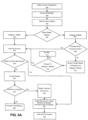
- FIG. 5A shown is a flowchart depicting a bidding process from the bidder's side, in accordance with an exemplary embodiment of the invention.
- bidders initially register an account with the system (Step 500) that is verified (Step 502) before being permitted to submit bids for a reverse auction.
- Registering bidders may be required to sign or otherwise agree to one or more user agreements outlining relevant rules preset for both buyers and bidders prior to the start of the reverse auction.
- the systems disclosed herein can require that a user provide personally identifiable information and valid financial information, including, for example, name, address, email, phone number, bank information, etc.
- User accounts can be verified by the system through email, text, and/or phone by the system administrator.
- the systems disclosed herein may allow users to only register one account by email, text, and/or phone with a username for bidding or for listing a request for an auctioned subject/service.
- An account may be used to either bid on or list a reverse auction.
- registered bidders must select an auction subject (Step 503) to bid on, and choose a bidding category (Step 504).
- the bidder is prompted to select a bidding category (e.g., Category 1 or Category 2) based on experience, preference, in consideration of a particular reverse auction strategy, or simply at random.
- a Category 1 winning bidder is required to offer the auction subject (i.e., the good/service) for a submitted sealed Category 1 bid amount, and is not associated with any commitment to pay a protection fee.
- a bidder who opts to be a Category 2 bidder (Step 506) is prompted to commit to paying a fee to purchase the price-protection policy should his/her bid be deemed the winning bid or pay a fee as a deposit from the bid account but then commit to pay the amount, which is sealed and kept confidential along with the deposit (Step 508). If such Category 2 bidder were to submit a winning bid, then he/she would have a chance of increasing the final winning bid amount to which he/she is entitled (e.g., to provide the auction subject to the buyer for a recalculated winning bid amount which is potentially higher than the winning bid amount submitted by the Category 2 bidder), and to potentially recover something simply for participating in the auction.
- the price-protection policy can correspond to a certain percentage, set by the buyer, the system or a third-party, of the submitted bid amount (e.g., 3%, 5%, etc.).
- the bidder agrees to pay this price-protection percentage fee should he/she be the winning bidder in exchange for being allowed to participate as a Category 2 bidder. Alternatively, the bidder may be required to pay this fee regardless of whether or not he/she wins the auction.
- the system will advise and/or notify the bidder that he/she will be rejected as a Category 2 bidder (Step 510), and/or provide the bidder with the option to be a Category 1 bidder (Step 512). If the bidder chooses to be a Category 1 bidder, then the bidder may begin to bid as a Category 1 bidder on the reverse auction by entering a bid amount to submit to the system (Step 518). If the bidder does not agree to be a Category 1 bidder, then the bidder is not permitted to bid in the reverse auction (Step 514).
- the system can be configured to choose the category for the bidder and/or to only allow a single category of bidders (e.g., Category 2 bidders).
- winning bid amount is an amount of the final bid submitted by a winning bidder of the auction.
- recalculated winning bid amount i.e., "recalculated price”, “recalculated final price”, “recalculated amount”, “final recalculated amount”, etc.
- the specific names assigned to these two bidding categories are for reference only and may alternatively be referred to as, for example, bidding categories A and B or "experienced” and "inexperienced” bidding categories.
- the systems and methods disclosed herein can enable bidders to change the categories they belong to when bidding in the same or in different reverse auctions.
- a bidder who confirms he/she wants to be a Category 1 bidder when bidding for one auctioned subject may identify himself/herself as a Category 2 bidder during the reverse auction or when bidding for another auctioned subject in another reverse auction.
- a bidder submits a new bid or otherwise re-submits a bid, then any previously submitted bids by that bidder are replaced. In this way, each bidder may only have one pending valid bid for an auction subject.
- the system may determine only the most recent bidto be the valid bid, or may alternatively select the lowest bid to be the valid bid, depending on the predetermined rules for the auction. If the bidder does not change the bid again, then the system will determine the re-entered submitted bid to be the only valid bid by that bidder.
- the system may be configured to allow a bidder to change his/her bid by raising, lowering, re-submitting a bid, change a bidding category, and/or change a bid amount before the close of the reverse auction.
- Bidders may also be allowed to withdraw their bids before the reverse auction closes. Withdrawn and/or changed bids may still remain sealed so others will not be aware of them.
- the system can prevent bidders from using withdrawn and/or changed bids as reference points, and can eliminate or reduce misrepresentation or fraud.
- the system determines a winning bid amount based on predetermined rules for the auction (Step 550), and the bid amounts may be disclosed to the participants of the reverse auction. The bid amounts may alternatively not be disclosed except for the winning bid amount to the buyer.
- the system next determines whether and which bidder wins the reverse auction (Step 552). If the bidder wins the reverse auction and is a Category 1 bidder (Yes, Category 1, Step 552), then the winning bidder will be obligated to and agrees to provide the auction subject to the buyer for the bid amount submitted (Step 556).
- the system can also be configured using computer-executable instructions, such as program modules, to transmit a second representation of the anonymous, sealed bid online reverse auction, either at a later point in the auction or once all bids are received and the auction ends, to one or more of the bidder computing devices 106/110/112.
- the second representation can include at least a winning bid amount associated with a winning bidding Category 2 bidder corresponding to an assigned identifier. Receipt of the second representation by the remote computing devices can trigger or cause at least one of the remote computing devices to display at least a portion of the information related to this second representation.
- the second representation may additionally or alternatively include one or more of the different identifiers relating to a second (e.g., later or end) status of the reverse auction, the randomly assigned ID numbers assigned to the bids/bidders, the number thereof, the timing thereof, etc.
- the information or image data relating to the first or second representations may be displayed using bitmap representation, or any other known technique for displaying image data.
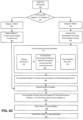
- the price-protection formula subtracts the price-protection fee from the sum of the winning bid and a predetermined percentage of the difference between the winning bid and the next-lowest bid (Step 568) to compute a final recalculated winning bid amount, as discussed with respect to FIG. 6C .
- any other designated bid based on buyer presets, default system settings, or a third-party may be used in calculating the difference (e.g., not just the next-lowest bid, the third, fourth, fifth, etc. lowest bid with respect to the winning bid).
- the price-protection formula does not include subtracting the price-protection fee, and comprises the sum of the winning bid and the predetermined percentage of the difference between the winning bid and the next-lowest bid.
- the price-protection fee is generally a predetermined percentage of the winning bid amount, and once the winning bid has been selected and the final recalculated price calculated, the system then determines the recipients of the price-protection fee paid by the winning Category 2 bidder (Step 570).
- the system, the buyer, or a third-party may establish one or more sets of predetermined rules for allocating the price-protection fee submitted by a winning bidder.
- the buyer or the system can pre-set whatever rule he/she wishes with respect to allocation and distribution of the price-protection fee(s), including but not limited to, any one of the auction participants.
- rules may be established dictating that the entire price-protection fee may be allocated entirely to the buyer (Step 572), entirely to the next-lowest bidder or bidders (Step 574), among all Category 2 bidders except the winning bidder (Step 575), the buyer and bidder(s) (Step 582), the system, the buyer, the winning bidder, and the losing bidders, whether they be Category 1 or Category 2 bidders.
- the buyer may decide that he/she does not want to allocate any of the price-protection fee to the highest bidder, and wishes to allocate all of it to, for example, the second or third lowest bidder.
- the system can also determine the number of next-lowest bidders to whom the price-protection fee should be paid. If there is only one next-lowest bidder (Yes, Step 576), then the entire amount of the price-protection fee may be allocated to the sole next-lowest bidder (Step 578). If there are several next-lowest bidders (e.g., if two or more Category 2 bidders bid an equal amount and the equal amount is the next-lowest amount relative to the winning bid) (No, Step 576), then the entire amount of the price-protection fee can be split among all of the next-lowest bidders with identical bids, by an allocation percentage which may be predetermined by the buyer, the system or a third-party (Step 580).
- the price-protection fee paid by the winning bidder may be split, such as equally, in whole or in part, among all Category 2 bidders who did not win the reverse auction (Step 575).
- the price-protection fee may be entirely or partially allocated to the system or a third-party where the system may be the entity who developed, hosted, or otherwise provided a software application for the online reverse auction.
- the third-party may include the managing company or agent of the system, or may further include a representative of a buyer, representative of a seller, website manager, auction housing company, outside investors of the auction site, or others having vested interests in the auction.
- the system or third-party may collect all or a portion of the price-protection fee from a given auction.
- the buyer may keep all of the price-protection fee paid by the single bidder, or may give back part or all of it to the single bidder. If there are multiple next lowest bidders with identical bids, then the price-protection fee can be split among all of the next lowest bidders (Step 594), or may be split among all of the remaining bidders who did not win.
- the allocation of the price-protection fee may be customizable by the buyer, the system, or a third-party based on predetermined rules.
- the price-protection fee may be a required payment by every Category 2 bidder, regardless of whether or not he/she is a winning bidder, and the total price-protection fees collected can be split based on one or more predetermined rules.
- Such embodiments contemplate the price-protection fee as consideration for the right to be a Category 2 bidder, and thus the potential to increase the price he/she is entitled to receive (e.g., above the amount of his/her winning bid) from the buyer in exchange for providing the auction subject.
- Such a "pay to play” embodiment can potentially increase total revenue to the buyer, the system, or a third-party by virtue of requiring payment from all Category 2 bidders. These payments may be required prior to, during, or after the close of the reverse auction, and it will be appreciated that regardless of whether the reverse auction rules offer Category 2 as “pay to play” or “get paid to play” with respect to the price-protection fee, then allocate the price-protection fee based on predetermined rules.
- the buyer may choose to keep the entire amount of the price-protection fee paid.
- the buyer may decide to award the entire price-protection fee to the next-lowest bidder(s) or to all or a portion of the participating bidders. If only one bidder has placed a bid for the auctioned subject and the bidder identifies himself/herself as a Category 2 bidder, and a reserve price of the buyer can be considered as the next-lowest bid amount for purposes of recalculation if the sole bid is a Category 2 one and under the reserve price.
- the distribution/allocation rules may be pre-set by the buyer, the system by default or by a third-party, for example, in accordance with a predetermined scale, correlation, or corresponding array of percentages, or may be decided by the buyer after the reverse auction ends.
- the allocation amounts of the price-protection fee may be based on the rankings of bidders relative to the winning bidder (e.g., second lowest, third lowest, fourth lowest, etc.), with the second lowest bidder receiving the highest percentage of the price-protection fee, the third lowest bidder receiving a smaller percentage of the price-protection fee, the fourth lowest bidder receiving a smaller percentage of the price-protection fee, etc.).
- the winning bidder may be entitled to all or a portion of the price-protection fee.
- the winning bidder receives a "kick back" of what he/she has already paid to the system. If only the winning bidder pays the price-protection fee, then the amount of the price-protection fee owed by the winning bidder once the reverse auction ends may be reduced depending on the allocation rules pre-set by the buyer.
- the predetermined rules of an auction may allow for allocation of at least a portion of the price-protection fee in a particular auction (e.g., a portion of the price-protection fee paid by a winning Category 2 bidder or by all Category 2 bidders in the particular auction) by any user of or registrant to the system, including non-participant users (e.g., users of the system who did not participate in the particular auction).
- the individual non-participant user's percentage of the available portion he/she can collect from a particular auction can be based on, for example, a user's aggregate ranking by the system.
- the user's aggregate ranking can be based on, for example, the total number of auctions the user has previously participated in through the system (as a buyer or bidder), the total number of auctions in which the user has previously paid a price-protection fee (e.g., as a winning Category 2 bidder or as a losing Category 2 bidder in certain "pay to play" auctions where all Category 2 bidders were required to pay the price-protection fee), the total amount of price-protection fees the non-participant user previously paid, the total number of bids previously submitted, the total number of actions the user has taken through the system (e.g., total time spent online and interacting with the system), the total amount of money the non-participant user has paid for goods or services as a buyer in reverse auctions conducted through the system, and/or the user's rating by other users of the system over time (e.g., Step 562).
- the total number of auctions the user has previously participated in through the system (as a buyer or bidder
- One or more of these factors can be assigned a particular weighting in calculating the user's aggregate ranking.
- the system can use additional criteria to in determine priority, such as the first of the tied users to request payment. Alternatively, the system may simply split a portion of the fee between tied users.
- Such data can be stored in database 104, and dynamically updated as users participate in one or more auctions.
- the system requires a user to verify that he/she is not a computer by periodically prompting input of randomly assigned characters displayed onscreen for verification.
- non-participant users logged into the system may be given a notification (e.g., by text, e-mail, or popup onscreen) that one or more other reverse auctions in which they did not participate have ended, and that a portion of one or more price-protection fees are "up for grabs" on a first come, first serve basis.
- Indicators may be displayed to users as symbols on-screen to convey this information.
- the non-participant users may be given a fixed period of time to collect their portion of the price-protection fee by simply clicking on the particular reverse auction and an on-screen collection button, or by any other means of notification to the system.
- Non-participant users with the highest ranking who are logged into the system may be given first priority to collect any available portion of the price-protection fee allocated by the specific predetermined rules of the particular auction, which may indicate, for example, that the first number of non-participant users to select payment within a certain time period will receive it.
- any remaining portion which was available to non-participant high ranking users may then be then made available to lower ranking non-participant users, or simply "returned" to the particular reverse auction and allocated in accordance with additional predetermined allocation rules for the participants therein (e.g., the buyer, bidder(s), system administrator, etc.), or to all Category 2 bidders (for the particular reverse auction or generally).
- a portion of the price-protection fee in a particular auction may be allocated to new registered users of the system, or only to new registered users who participate or have participated in a reverse auction as a Category 2 bidder.
- Category 2 bidders of the particular auction may be given priority to receive their individual portion of the price-protection fee, but not a guarantee unless they notify the system within a specific time frame they wish to collect.
- the beneficiary of all or at least a portion of the price-protection fee for a particular reverse auction may be a charity or other third-party. If such third-party charity is a beneficiary, then such payments by bidders may be tax deductible depending on applicable national and local tax laws.
- the price-protection fee may be fixed regardless of the amount of the winning Category 2 bidder's bid, and/or regardless of each Category 2 bidder's bid amount (in particular pay to play reverse auctions where each Category 2 bidder is required to pay a price-protection fee).
- Each Category 2 bidder may simply be required to pay, for example, $5, $10, $20, or $50 regardless of their bid amounts.
- the fixed amount of the price protection fee may be set by the buyer or the system, and may or may not be correlated with the buyer's, the system's or the bidders' perceived market value of the auction subject.
- the price-protection fee may be a combination of a fixed amount and a percentage of the Category 2 bidder's bid (e.g., the fixed amount may be added or subtracted from the amount of the fee determined from the percentage of the bid).
- the price protection fee may be ($10)+[10%*(Amount of Winning Bid)] or [10%*(Amount of Winning Bid)] - $10. If this amount calculates to less then zero, then the price protection fee can simply be set to zero.
- the system may individualize and modify the fixed amount of the price protection fee set by a particular reverse auction based on the bidder's ranking as discussed herein, prior price protection fee payments, etc.
- the system and/or the buyer can allocate additional funds to Category 2 and/or Category 1 bidders to attract more bidders to the system and/or retain existing users.
- the source of such additional funds may be, for example, system registration fees of all users, buyer fees for listing an auction subject, out of pocket expenses, etc.
- a buyer who is a user of the system, or a third-party who wants to utilize the system to conduct a reverse auction, may conduct a promotion in order to attract additional bidders to bid on an auction subject through the reverse auction processes described herein.
- the buyer or third-party may allocate funds for distribution during or at the end of the reverse auction (e.g., in addition to the price protection fee, if any), and the allocation of funds may or may not be based on the price protection fee rules, depending on pre-set system configurations and the predetermined rule(s) of the particular reverse auction.
- the third-party may be, for example, an administrator or representative of the system, or an advertiser or advertising company that wants to utilize reverse auctions through the system for providing goods and/or services.
- the net amount paid by the buyer to the winning bidder for the auction subject may be different from the net amount the winning bidder ultimately receives by using the reverse auction because the winning bidder pays the price-protection fee in full, and the buyer may receive some, none, or all of this price-protection fee.
- the recalculated amount of a winning Category 2 bidder is $10, and this recalculated amount includes a $2 price-protection fee, then if the $2 goes to the remaining bidders, the buyer pays $10 to the winning bidder for the auction subject (the recalculated amount), and the buyer receives no portion of the $2. The buyer thus pays a net of $10 for the auction subject.
- the winning bidder however only receives a net amount of $8 (i.e., the $10 from the buyer minus the $2 price-protection fee paid to one or more other bidders). If the buyer receives 50% of the price-protection fee, then the buyer pays $10 for the auction subject (the recalculated amount) and receives $1 of the price-protection fee. In this scenario, the buyer pays a net $9, while the seller still nets $8. If the buyer receives 100% of the price-protection fee, then the buyer pays $10 for the auction subject (the recalculated amount) and receives $2 of the price-protection fee. Here, the buyer pays a net $8 and seller still nets $8.
- the above transactions of payment can be one transaction or separate transactions.
- the allocation of the price-protection fee may be based on whether or not the resulting net amount the buyer pays is less than or equal to the reserve price. If the recalculated amount is more than the reserve price, the buyer may be entitled to receive as a kickback a percentage of the price-protection fee that enables him/her to pay a net amount equal to not more than the reserve price. The buyer does not pay a net amount greater than the reserve price, and the winning bidder still receives the recalculated amount from the buyer.
- the price-protection fee may also be allocated in accordance with a dynamic formula that dynamically changes a price of the recalculated winning bid amount over time to be equal to or less than the reserve price set by the buyer.
- the Predetermined Percentage i.e., the percentage applied to the difference between the amount of the winning bid and an amount of the next-lowest bid hereafter "the Predetermined Percentage”
- the Price-Protection Fee Percentage i.e., the percentage applied to the winning bid amount
- the Predetermined Percentage and the Price-Protection Fee Percentage can each be predetermined and preset in the system by the buyer prior to the start of the reverse auction, and for any amounts the buyer chooses.
- the auction house, the system, or a third-party may establish these percentages by default. Either way, all reverse auction rules are preferably laid out at the beginning of the reverse auction (e.g., at least before the first bid is submitted).
- the Predetermined Percentage and the Price-Protection Fee Percentage may be correlated.
- Exemplary correlations between the Price-Protection Fee Percentage and the Predetermined Percentage can include either direct or indirect relationships, linear or non-linear relationships, and the like.
- an increase in the price-protection fee percentage is associated with an increase in the predetermined percentage. The more a bidder is willing to pay in the price-protection fee should he/she win, the more he/she may want in potential upward adjustment (e.g., a greater percentage of the difference between his/her bid and the next lowest bid).
- the percentages may be inversely correlated (e.g., the predetermined percentage may decrease as the price-protection fee increases).
- the system automatically assigns the appropriate correlated Price-Protection Fee Percentage, which may be one-tenth (or some other correlation factor, e.g., one-fourth, one-fifth, etc.) of the Predetermined Percentage chosen by the bidder.
- the bidder-seller chooses a particular Price-Protection Fee Percentage
- the system automatically assigns a Predetermined Percentage, which may be ten times (or some other correlation factor, e.g., four times, five times, etc.) the Price-Protection Fee Percentage chosen by the bidder.
- a higher price-protection fee percentage will correspond to a higher predetermined percentage, but it will be appreciated that the inverse relationship may be used as well or there may be no correlation between the two.
- the Predetermined Percentage which may range, for example, from 5% to 50%, may be set to increase by 5% for each incremental increase in the Price-Protection Fee Percentage, which ranges from 1% to 13.5%.
- the initial values of 1%, 2.5%, and 3% of the Price-Protection Fee Percentage correspond to 5%, 10%, and 15% respectively, of the Predetermined Percentage.
- each incremental increase of 1.5% in the Price-Protection Fee Percentage corresponds to an increase in the Predetermined Percentage up to values of 13.5% and 50% respectively. It will be appreciated that other correlations and/or pre-set correlated values may be utilized in accordance with the invention.
- the preset rules may define the Predetermined Percentage to which the winning bidder is entitled as a function of the difference between the value of the winning bid and the value of the next lowest bid.
- the predetermined percentage may increase (or decrease) linearly in proportion to or be correlated in some other way with the spread (or difference) between the winning bid and the next lowest bid. In this manner, large bid spreads will not force a buyer to pay an exorbitantly inflated price for the auction subject.
- These rules may be preset by the buyer in advance of the auction or may be set by the system as default settings.
- a sealed bid reverse online auction utilizing correlated Predetermined Percentage and Price-Protection Fee Percentage values discloses the applicable percentages to all bidders before bidding takes place. It will be appreciated that utilizing such correlated percentages may encourage participation by more bidders in a sealed bid reverse online auction, provide incentives for bidders to submit lower bids, and allow for greater potential reward to the bidder in exchange for an obligation to pay back a percentage of the winning bid.
- the Category 2 Price-Protection Formula encourages bidders in a reverse auction to offer lower bids because they can win the reverse auction and potentially be entitled to a higher final price for providing the auction subject than their actual final bid amount.
- the Winning Bid can automatically default to the lowest bid in the reverse auction.
- the system can alternatively be configured to allow the buyer (or preset by default) to choose or designate which bid based on a set of predetermined rules to be the Winning Bid, and to adjust the percentages used in the formulas accordingly.
- purchasing a price-protection policy will not always raise the winning bid amount the bidder is entitled to from the buyer. For example, if there is a large difference between the winning bid amount and the next-lowest bid amount, then a bidding Category 2 bidder buying the policy will likely have his/her bid amount substantially increased. However, if there is a small or nominal difference between the winning bid amount and the next-lowest bid amount, then a Category 2 bidder buying the policy may end up being entitled to less money for the auctioned subject because the recalculated price the winning bidder will be entitled to may be lower than the originally submitted amount of the winning Category 2 bid.
- Example 1 shows a reverse auction conducted with three (3) bidders submitting respective bids of $10, $100 and $101, where the buyer chose, prior to submission of any bids or at the beginning of the auction, to have the Lowest Bid be the Winning Bid.
- the buyer also chose the Predetermined Percentage ( P PCT ) for the auction to be 20%, and chose the Price-Protection Fee Percentage ( P PP ) to be 10%.
- the Recalculated Price here is $27, so even though the winning bid was only $10, the buyer must pay the winning bidder $27 for the goods and/or services instead of the $10 actually bid. Had the winning bidder not selected to be a Category 2 bidder, then he would have only received the $10 actual bid amount for the auctions good/service.
- Example 2 shows a reverse auction conducted with three (3) bidders submitting respective bids of $30, $50, and $75, where the buyer chose, prior to submission of any bids, to have the Lowest Bid be the Winning Bid. The buyer also chose the Predetermined Percentage to be 15%, and the Price-Protection Fee Percentage to be 10%.
- the Recalculated Price here is $30, which is the same as the actual bid submitted, thereby demonstrating that it is possible for the Winning Bidder, as a Category 2 bidder, to receive a final Recalculated Price identical to the actual submitted bid.
- Example 3 shows a reverse auction conducted with three (3) bidders submitting respective bids of $30, $50, and $75, where the buyer chose, prior to submission of any bids, to have the Lowest Bid be the Winning Bid.
- the buyer in this example chose the Predetermined Percentage and the Price-Protection Fee Percentage to be 10%.
- the Recalculated Price here is $29, which is less than the $30 actual bid. In this instance, the Winning Bidder would actually receive $1 less than the actual bid submitted. Therefore, it will be appreciated that there is a level of risk in choosing to be a Category 2 bidder.
- Example 4 shows a reverse auction conducted with three (3) bidders submitting respective bids of $5, $10, and $100.
- the buyer chose, prior to submission of any bids, to have the Second Lowest Bid be the Winning Bid.
- the buyer here chose a Predetermined Percentage ( P PCT ) of 20% and Price-Protection Fee Percentage ( P PP ) of 10%.
- the Recalculated Price here is $27, so even though the winning bid was only $10, the buyer must pay the winning bidder $27 for the goods and/or services instead of the $10 actually bid.
- Example 5 shows a reverse auction where an open maximum reserve price is set by the buyer.
- the reverse auction is conducted with three (3) bidders submitting respective bids of $10, $100, and $101.
- the buyer chose to disclose an open maximum reserve price of $125, and chose the Lowest Bid to be the Winning Bid.
- the buyer also set the Predetermined Percentage as 10%, and the Price-Protection Fee Percentage as 10%. Since the maximum reserve price is open to all bidders, the bids received for the auction subject will be under the reserve price. Any bidding price or amount above the open reserve price will be deemed invalid and will be rejected.
- the Recalculated Price here is $18, which the buyer is obligated to pay. It will be appreciated that an auction having an open reserve price may decrease the likelihood of the auction failing for lack of a valid bid.
- a bid received which is above the maximum reserve price, but is the next lowest received bid relative to the winning bid may be used for the recalculation.
- the Recalculated Price, R P is $18, which is above the reserve price of $15.
- the Recalculated Price here is $95, which is less than the $100 actual bid, and therefore the Winning Bidder would be the Category 2 $100 bidder, since the Recalculated Price of $95 is now the lowest amount and the Category 1 bidder who bid $100 would lose.
- the system can determine the Winning Bid to be the first submitted bid from the group of equal bids.
- Example 8 shows a reverse auction conducted with three (3) Category 2 bidders submitting respective bids of $100, $100, and $150.
- the buyer chose, prior to submission of any bids, to have the Lowest Bid be the Winning Bid, and decided that the Predetermined Percentage and Price-Protection Fee Percentage would be correlated and could be selected individually by each Category 2 bidders individually prior to submitting their respective bids.
- the first Category 2 Bidder who submitted a $100 bid, B 2-1 selected a 5% Price-Protection fee, correlating to a 20% Predetermined Percentage in accordance with predetermined rules set by the buyer.
- the second Category 2 Bidder who submitted a $100 bid, B 2-2 selected a 10% Price-Protection Fee, correlating to a 40% Predetermined Percentage in accordance with the predetermined rules. Since there are two lowest bids that are Category 2 bids, according to a preferred embodiment, a Recalculated Price can be determined for each of the lowest Category 2 bid to decide which is the Winning Bid.
- the Recalculated Price for B 2-1 here is $105.
- the Recalculated Price for B 2 - 2 here is $110.
- the Winning Bidder would be the first Category 2 bidder, B 2-1 , who bid $100, who would be entitled to $105 for the auction subject.
- a Category 2 bidder is the winning bidder, and the percentages for both the Predetermined Percentage and the Price-Protection Fee Percentage are preset by the buyer.
- a bidder may be able to select his/her own percentages, or the system may be configured to automatically preset one or both of these percentages.
- the Predetermined Percentage and Price-Protection Fee Percentage may be correlated in accordance with predetermined rules such that setting one automatically sets the other as illustrated above.
- the buyer, bidder, the system or a third-party may set the Predetermined Percentage ( P PCT ) to 62%, and the Price-Protection Fee Percentage (P PF ) to 8%.
- P PCT Predetermined Percentage
- P PF Price-Protection Fee Percentage
- the Predetermined Percentage can follow a pattern or one or more predetermined correlations relative to the Price-Protection Fee Percentage, or vice versa (i.e., such that the P PF increases as the P PCT increases, or the P PF increases as the P PCT decreases, or the P PF decreases as the P PCT increases, or the P PF decreases as the P PCT decreases).
- the P PCT can follow a pattern or correlations relative to the difference (D) between the winning bid and the next lowest bid (i.e., such that the P PCT decreases as the D increases, or the P PCT decreases as the D decreases, or the P PCT increases as the D decreases, or the P PCT increases as the D increases).
- the buyer, bidder, or the system may set a fixed number for the Price-Protection Fee Percentage which directly corresponds (e.g., by a factor of 10) to the Predetermined Percentage. For example, if the buyer sets the Price-Protection Fee Percentage to 1%, then the Predetermined Percentage may automatically be set to 10%.
- the Predetermined Percentage may automatically be set to 20%, and so forth.
- the Predetermined Percentage may be correlated to increase as a function of the increase of the Price-Protection Fee Percentage. In this manner, as the bidder-seller agrees to pay out a higher percentage of his/her bid should he/she win, he/she can increase the potential return by getting a higher percentage of the difference between the Winning Bid and the Next Lowest Bid.
- a Category 2 buyer's price-protection plan works in a manner such that the price-protection fee is a separate transaction from the recalculation according to the price-protection formula. That is, after the close of the reverse auction an alternative formula may be used to calculate the final Recalculated Price the buyer has to pay for the good/service auctioned when a Category 2 bidder wins the reverse auction.
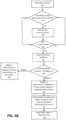
- FIG. 6A illustrated is a flowchart depicting a bidding process from the buyer's side in accordance with an exemplary embodiment of the invention.
- buyers may register an account with the system (Step 600).
- account verification (Step 602), which may include background check, credit history check, review of auction history, reference check, double confirmation that he/she can and will make proper payment upon receipt of the goods/services desired, etc.
- the buyer may post a reverse auction request (Step 604).
- the buyer may be prompted to input a description/introduction of the auction subject with a written description, photos, videos, etc., explaining the (good(s) and/or service(s) sought), the desired time frame for the reverse auction (e.g., from start to end), whether there are any pre-approved bidders, etc. (Step 606).
- This description/introduction may include any requirements, preferences, and/or conditions precedent to service the buyer has regarding the auction subject, such as, for example, the time frame needed for delivery and/or completion of the good(s) and/or service(s), the total number of products or services requested, the quality needed (e.g., specifying any applicable standards or reference materials in a particular industry pertaining to quality, referring to exemplary photographs, dimensions, etc).
- the buyer may also indicate any requirements of the bidders themselves and who is qualified to bid.
- Such requirements may include, for example, fluency in a particular language, prior experience level, equipment requirements, licenses, skill level, citizenship, geographic location, etc.
- the system may be configured to enable questions and answers between a buyer and bidders before the reverse auction starts, and may make such questions and answers public to all auction participants via the computing devices.
- the buyer should provide any auction subject details needed to clarify or avoid confusion as to the requirements of the auction subject.
- the system can allow the buyer to preset the timeframe for the reverse auction and track the reverse auction until the end or close thereof.
- the buyer can then establish predetermined rules for the auction, such as, for example, the price-protection fee, the predetermined percentage, setting a reserve price, deciding who will receive the price-protection fee, etc. (Step 608).
- the buyer can also specify whether the reverse auction will involve a good/service that will involve one or more transfers of ownership (Step 610). If the reverse auction will involve a transfer of ownership (Yes, Step 610), then the buyer intends to buy rather than share possession rights of the auctioned subject (Step 612). If the reverse auction does not involve a transfer of ownership (No, Step 610), then the buyer intends to share possession rights for the auctioned subject for a specified period of time (Step 614).
- the buyer may be prompted to set up a reserve price (Step 616).
- the reserve price is preferably the maximum amount that the buyer is willing to pay for the auction subject.
- the reserve price is preset by the buyer and is not disclosed to any potential or actual bidders.
- the reserve price may be disclosed to bidders before, during, or after the end of the reverse auction.
- the reserve price is set by the buyer at his/her discretion. In preferred embodiments, if the final amount of the winning bid.
- the bidders are not aware of the maximum amount a buyer is willing to pay for the auction subject.
- Such embodiments can offer a bottom up bidding approach in that they encourage bidders to bid up from a start auction price irrespective of the hidden reserve price meaning that the bidding amount can be higher or lower than the reserve price.
- the reserve price may be conditionally hidden at the buyer's discretion.
- a conditional hidden reserve price auction as contemplated herein is one in which the system allows the buyer to optionally terminate the reverse auction early as soon as at least one bid is at or below the reserve price. The system can alternatively allow the bids to be accepted by a buyer even if the they are not equal to or below the conditional hidden reserve price set by the buyer.
- a buyer may choose to use an open reserve price, which is a reserve price that is visible to the bidders during the reverse auction.
- the bidders are aware of the maximum amount a buyer is willing to pay for the auction subject and offers a top down bidding approach in that it requires the bidders to bid down from the known reserve price, or to not participate in the auction at all.
- Such an open reserve auction may benefit savvy bidders in situations where a less savvy buyer sets a reserve price much higher than a market value for a particular good/service. Therefore, it will be appreciated that having an open versus hidden reserve auction has both pros and cons to the buyer and bidders.
- an open reserve auction While having an open reserve auction will likely ensure that an auction does not fail even if there is only one bidder, it leaves open the possibility for savvy bidders to take advantage of less savvy buyers.
- an open reserve auction it enables them to offer bids that they know will be at an amount that the buyer may accept. It is also contemplated that the system may allow the bids to be accepted even if the they are above the hidden reserve price set by the buyer.
- the reserve price is not used for recalculation, even if only a single bid is received below it. For example, if the winning bid is below the reserve price and the next lowest bid is above the reserve price, then the recalculation is preferably still based on the winning bid and the next lowest bid. However, the reserve price may be used as the next lowest bid for recalculation purposes if the winning bid is below it and no other bids are received which are greater than the winning bid.
- the buyer may also be prompted to input a start price for the auction.
- the start price is a pre-set amount which serves as a means for getting the reverse auction bidding started. It is open to (or visible by) the bidder-sellers, and may represent a maximum amount the buyer is willing to pay for the auctioned subject.
- a nominal price may be used as the start price to begin the bidding at an auction. As the buyer desires a low price, the start price might not have any relationship at all to the buyer's actual perceived value of the auction subject, and the winning bid may be above, below, or equal to the start price.
- Step 616 If the buyer chooses not to set up a reserve price (No, Step 616), then he/she may be prompted to set up the time frame for the reverse auction, including the start time and the end time and any other parameters for the auction (Step 618).
- the system can record a timestamp for the reverse auction listing with the unique index number to identify different listings. Once the time frame begins, the system then accepts bids (Step 658) until the timeframe ends and the reverse auction closes (Step 660). The system then records timestamps for bids received during the auction time frame (Step 629). Once the reverse auction closes, the system processes all of the accepted bids, the auction ends (Step 660), and the system determines the winning bid (Step 662).
- Step 616 If the buyer does set up a reserve price (Yes, Step 616), then the buyer may be prompted to input a reserve price that is stored in the database (Step 620), which, in preferred embodiments, the reserve amount is not disclosed to bidders even though the bidders are made aware of the existence of a hidden reserve price at the beginning of the auction in order to avoid any confusion (Step 622).
- the system then begins the reverse auction with a set time frame and records a time stamp for the auction beginning (Step 623), starts accepting bids from bidders (Step 628), and records timestamps for bids received during the auction time frame (Step 629).
- the system can issue an index number for each listed reverse auction request or auctioned subject, and can issue or record a timestamp corresponding to the start time of the reverse auction. If at the close of the auction the reserve price is exceeded by all of the bids, then the reverse auction is subject to potential termination depending on terms preset by the buyer. The system continues to accept bids from bidders until the reverse auction closes or ends (Step 660). Once the reverse auction closes, the system processes all of the bids received to select or determine the winning bid (Step 662), and checks to see if the winning bids exceed the reserve price.
- the system selects or determines the winning bid (Step 662).
- the winning bid selected will preferably be the lowest bid received, but can be preset by the buyer in advance of the auction in the form of a ranking (e.g., the winning bid may be set as the second lowest bid, or the third lowest bid, and so on).
- the system, buyer, or a third-party may establish, before a start of the auction and based on a set of predetermined rules, a ranking corresponding to which bid of the sealed bids will be selected as the winning bid (i.e., the winning bid will correspond to the lowest bid, the second lowest bid, the third lowest bid, the fourth lowest bid, the fifth lowest bid, or any other designated ranking).
- the buyer may want a bid other than the lowest bid to win, and can indicate this in the auction request he/she submits to the system.
- the winning bid is subject to change depending on whether it is a Category 1 bid or a Category 2 bid. Therefore, the system determines whether the winning bid is a Category 1 or Category 2 bid (Step 664).
- the winning bid is a Category 1 bid (Step 666)
- the bidder-seller is entitled to provide the auction subject to the buyer for the winning bid amount (Step 668) and the reverse auction is completed (Step 684).
- the ranking corresponding to which bid of the one or more sealed bids selected as the winning bid can be established by the system by default.
- the system computes the final recalculated price using the price-protection formula (Step 672).
- the price-protection formula calculation is performed by subtracting the price-protection fee (Step 676) from the sum of (i) the lowest bid amount (the Winning Bid) (Step 678) and (ii) a predetermined percentage of the difference between the winning bid amount and the next-lowest bid amount (Step 680).
- the price-protection fee in a preferred embodiment is a percentage of the winning bid amount.
- the winning Category 2 bidder-seller will be entitled to provide the auction subject for an amount equal to the sum of his/her lowest winning bid and a percentage of the difference between his/her lowest winning bid and the next lowest bid, less a percentage of his/her lowest winning bid (Step 682).
- the winning Category 2 bidder provides the auction subject for the final recalculated amount plus applicable additional costs, if any (Step 686).
- the buyer then pays for the auctioned subject (Step 688), which can be done before or after the bidder-seller provides the auction subject.
- both parties can then rate one another (Step 690) and the overall transaction ends.
- Step 700 the system identifies the lowest bid amount (Step 700), and determines whether there are more than one identical bids at this lowest bid amount (Step 702). If there are no identical lowest bid amounts (No, Step 702), then the system chooses the lowest bid as the winning bid (Step 704).
- the buyer desires a different ranking to be the winning bid in advance of the reverse auction (e.g., second lowest, third lowest, etc.), then he/she can input this setting in advance of the reverse auction, and the system can select the appropriate winning bid.
- a different ranking to be the winning bid in advance of the reverse auction e.g., second lowest, third lowest, etc.
- the process can repeat itself until it determines a lowest re-submitted bid.
- the system may determine a maximum number of re-submissions allowed before canceling the auction or determining the first bidder to have submitted the initial bid to be the winning bid.
- Step 712 the bidder who was first to submit the original bid in the previous round first wins. If the bids for identical amounts are in different categories (No, Step 706), then the system can calculate a final recalculated price (Step 716) for the Category 2 bid(s). In this embodiment, the bidder whose bid is the lowest following all final recalculations wins the reverse auction (Step 718). In an alternative embodiment, a comparison between a final recalculated price of a potential winning Category 2 bid and a lowest one of the Category 1 bids may be made to determine a final winning bid.
- the winning bidder can provide the auction subject to the buyer, and the buyer is obligated to pay the winning bidder the final amount of the winning bid (Step 720).
- the Category 1 bids do not undergo recalculation.
- a winning Category 2 bidder is required to pay the Price-Protection Fee Percentage or allocate and split the price-protection fee based on predetermined rules, such as allocating at least a portion to the buyer, one or more bidders, the system, or a third-party.
- predetermined rules such as allocating at least a portion to the buyer, one or more bidders, the system, or a third-party.
- all Category 2 bidders may be required to pay the Price-Protection Fee Percentage. As discussed above with respect to FIG.
- the buyer may be given the option of splitting the amount of the Price-Protection Fee received from the Winning Bidder among one or more of the losing Category 2 bidders, or keeping all or a portion of it to himself/herself or giving all of it to the next lowest bidder, among other scenarios.
- all bidders are informed of how the Price-Protection Fee will be split prior to the start of the reverse auction. It will be appreciated that this fee can be used to encourage bidder participation, especially in embodiments in which the fee is distributed among all or some of the losing bidders.
- the buyer gives at least a portion of the fee to one or more participating bidders, or split all of the fee with at least one participating bidder, or split all of the fee with multiple or all participating bidders.
- Such embodiments constitute a "get paid to play" model whereby losing bidders will always collect something, such as a portion of the price-protection fee, from the winning bidder.
- the Winning Bidder may get back all of the fee.
- the bidders are being enticed to submit the lowest possible bid they can, while also being encouraged to buy as much price-protection as possible.
- the systems and methods described herein may be executed on a computing device and/or computer system, generally comprised of a central processing unit (CPU) that is operatively connected to a memory device, data input and output circuitry (IO) and computer data network communication circuitry.
- Computer code executed by the CPU can take data received by the data communication circuitry and store it in the memory device.
- the CPU can take data from the I/O circuitry and store it in the memory device.
- the CPU can take data from a memory device and output it through the IO circuitry or the data communication circuitry.
- the data stored in memory may be further recalled from the memory device, further processed or modified by the CPU in the manner described herein and restored in the same memory device or a different memory device operatively connected to the CPU, including by means of the data network circuitry.
- the memory device can be any kind of data storage circuit or magnetic storage or optical device, including a hard disk, optical disk or solid-state memory.
- Examples of well-known computing systems, environments, and/or configurations that may be suitable for use with the invention include, but are not limited to, personal computers, server computers, hand-held, laptop or mobile computer or communications devices such as cell phones and PDA's, multiprocessor systems, microprocessor-based systems, set top boxes, programmable consumer electronics, network PCs, minicomputers, mainframe computers, distributed computing environments that include any of the above systems or devices, and the like.
- Source code may include a series of computer program instructions implemented in any of various programming languages (e.g., an object code, an assembly language, or a high-level language such as FORTRAN, C, C++, JAVA, or HTML) for use with various operating systems or operating environments.
- the source code may define and use various data structures and communication messages and may be in computer executable form (e.g., via an interpreter), or may be converted (e.g., via a translator, assembler, or compiler) into computer executable form.
- the server can execute a program that receives the transmitted packet and interpret the transmitted data packets in order to extract database query information.
- the server can then execute the remaining steps of the invention by means of accessing the mass storage devices to derive the desired result of the query.
- the server can transmit the query information to another computer that is connected to the mass storage devices, and that computer can execute the invention to derive the desired result.
- the result can then be transmitted back to the user's computer by means of another stream of one or more data packets appropriately addressed to the user's computer.
- a user In order for users to participate in the online reverse auctions, they must register for an account with the system. As mentioned above, before registration is completed, a user can be presented with a user agreement with the relevant rules preset for all sellers and buyers prior to a reverse auction.
- Personal information collected may include, but is not limited to, name address, email, phone number, and financial information required to complete the registration process.
- a valid email and/or a valid phone number may be used for verification purposes by the system administrator.
- Exemplary embodiments of the system will allow each user to register only one account associated with one username by a valid email and/or phone number.
- An account may be used to either bid on or list a reverse auction. By only allowing one account per user, the system can help prevent fraud.
- the system can also require a genuine name, a genuine address and genuine financial information to fully register a user.
- Financial information required may include, but is not limited to, a debit card, a credit card, third-party payment systems, bank routing numbers, etc.
- Notifications may be sent by the system through the server to both buyer-computing devices and/or bidder-computing devices through emails, instant messages, voice messages, etc. when necessary to alert them of different occurrences, including but not limited to successfully submitted bids, relevant auction time frames, rejected bids, reverse auction wins, auction results, etc.
- the systems described herein are used to provide a platform to facilitate at least one or multi-sided matching reverse auction markets, where bidders may simultaneously bid on reverse auctions from one or multiple buyers and buyers may solicit to one or multiple bidders. Each transaction may be facilitated against a fee or commission.
- the system or the platform may charge a predetermined percentage of service fees for providing auction services.
Landscapes
- Business, Economics & Management (AREA)
- Accounting & Taxation (AREA)
- Finance (AREA)
- Development Economics (AREA)
- Economics (AREA)
- Marketing (AREA)
- Strategic Management (AREA)
- Physics & Mathematics (AREA)
- General Business, Economics & Management (AREA)
- General Physics & Mathematics (AREA)
- Engineering & Computer Science (AREA)
- Theoretical Computer Science (AREA)
- Entrepreneurship & Innovation (AREA)
- Management, Administration, Business Operations System, And Electronic Commerce (AREA)
Claims (13)
- Ein computerimplementiertes System zur Durchführung einer verdeckten Online-Auktion mit umgekehrtem Gebot, umfassend:- einen Server (102), der mit mindestens einem von mehreren Käufern an einem entfernten Käufercomputersystem (108, 114) und mindestens einem von mehreren registrierten Bietern an entfernten Bietercomputersystemen (106, 110, 112) über ein Kommunikationsnetzwerk (100) kommuniziert, wobei
das System enthält ein oder mehrere nicht-übertragbare computerlesbare Programmspeichermedien umfasst, die einen Prozessor anweisen, die Auktion basierend auf einem Satz vorbestimmter Regeln durchzuführen, wobei der Prozessor angewiesen wird:von mindestens einem der Bietercomputersysteme (106, 110, 112) ein oder mehrere verdeckte Gebote zu empfangen, die einen Gebotsbetrag (208) für ein Auktionsobjekt spezifizieren, wobei mindestens eines der verdeckten Gebote mit einer Verpflichtung zur Zahlung einer Preisschutzgebühr verbunden ist;eine Aufwärtsanpassung des Gewinngebotsbetrags zu empfangen, wenn das Gebot des Bieter-Verkäufers das Gewinngebot ist;den Gebotsbetrag (208) zu speichern, der von dem Server (102) zufällig jedem der versiegelten Gebote zugewiesen wurde, die über die Computergeräte (106, 110, 112) der Fernbieter und den Datensatz (210) für jedes der versiegelten Gebote während der Auktion empfangen wurden;jedem der verdeckten Gebote eine anonyme Kennung zuzuweisen und während der Auktion eine erste Darstellung der Auktion, die eine oder mehrere der anonymen Kennungen umfasst, an ein oder mehrere Bietercomputersysteme zu übertragen, wobei die erste Darstellung den Gebotsbetrag nicht enthält und die Bietercomputersysteme mindestens einen Teil der Informationen im Zusammenhang mit der ersten Darstellung anzeigen;bestimmen eines siegreichen Gebots aus dem empfangenen einen oder mehreren versiegelten Geboten, wobei das siegreiche Gebot mit der Verpflichtung zur Zahlung der Preisschutzgebühr verbunden ist;den Satz vorbestimmter Regeln auf den Betrag des Gewinngebots anzuwenden, um die Preisschutzgebühr zu berechnen;ein bestimmtes Gebot des empfangenen einen oder der mehreren versiegelten Gebote im Verhältnis zum siegreichen Gebot zu bestimmen; eine Differenz zwischen dem Betrag des siegreichen Gebots und einem Betrag des bestimmten Gebots zu berechnen;Anwendung des genannten Satzes vorbestimmter Regeln auf die genannte Differenz, um einen Anpassungsbetrag zu berechnen;basierend auf dem Abschluss der Auktion einen neu berechneten Gewinngebotsbetrag basierend auf einer Formel zu berechnen, die mindestens einen der Anpassungsbeträge oder die Preisschutzgebühr auf den Betrag des Gewinngebots anwendet;nach dem Ende der Auktion an eine oder mehrere der mindestens einen Bieter-Rechenvorrichtungen (106, 110, 112) eine zweite Darstellung der Auktion übertragen, wobei die zweite Darstellung mindestens den neu berechneten Betrag des siegreichen Gebots enthält, der dem siegreichen Gebot zugeordnet ist, das mindestens einem der anonymen Identifizierer entspricht, wobei die mindestens eine Bieter-Rechenvorrichtung (106, 110, 112) mindestens einen Teil der Informationen anzeigt, die sich auf die zweite Darstellung beziehen; undwobei der neu berechnete Betrag des erfolgreichen Gebots ist:
höher als der Betrag des erfolgreichen Gebots, wenn der Bieter den Betrag des erfolgreichen Gebots abgegeben hat; odergeringer ist als der ursprünglich abgegebene Betrag des erfolgreichen Gebots, wenn es eine Differenz zwischen dem Betrag des erfolgreichen Gebots und dem nächstniedrigeren Gebotsbetrag gibt, dann hat der Bieter Anspruch auf Geld für den versteigerten Gegenstand. - Das System nach Anspruch 1, wobei der Gewinngebotsbetrag basierend auf einer Summe des Gewinngebotsbetrags und einem Prozentsatz einer Differenz zwischen dem Gewinngebotsbetrag und einem zweiten Gebotsbetrag berechnet wird.
- Das System nach Anspruch 2, wobei der Gewinngebotsbetrag zusätzlich durch Subtraktion eines jeweiligen Verpflichtungsbetrags von der Summe berechnet wird.
- Das System nach Anspruch 1, wobei der Prozessor wird außerdem angewiesen:indestens einem Bieter die Möglichkeit zu geben, eine Bieterkategorie aus einer Kategorie eins oder einer Kategorie zwei auszuwählen,wobei ein Bieter der Kategorie eins ein Bieter ist, der ein Gebot der Kategorie eins abgibt, und nach dem Gewinn der Online-Auktion mit verdeckten Geboten einen Gewinnbetrag erhält, der dem Gebotsbetrag des Gebots der Kategorie eins entspricht, undwobei ein Bieter der Kategorie zwei ein Bieter ist, der ein Gebot der Kategorie zwei abgibt, das mit einem entsprechenden Satz von Verpflichtungsdaten verknüpft ist, und der, wenn er die Online-Auktion für verdeckte Gebote gewinnt, den Betrag des erfolgreichen Gebots ausgezahlt bekommt.
- Das System nach Anspruch 1, wobei eine erste vorbestimmte Rangfolge einem der niedrigsten Gebotsbeträge, dem zweitniedrigsten Gebotsbetrag, dem drittniedrigsten Gebotsbetrag, dem vierthöchsten Gebotsbetrag oder einer anderen Rangfolge eines Gebotsbetrags gemäß den einen oder mehreren Sätzen vorbestimmter Regeln entspricht.
- Das System nach Anspruch 1, wobei der Prozessor wird außerdem angewiesen: mindestens einem Käufer, einem Bieter, dem System standardmäßig oder einem Dritten zu ermöglichen, die einen oder mehreren Sätze vorbestimmter Regeln zur Zuweisung mindestens eines Teils des jeweiligen Verpflichtungsbetrags festzulegen.
- Das System nach Anspruch 1, wobei mindestens ein zweiter Teil des jeweiligen Verpflichtungsbetrags mindestens einem der folgenden zugewiesen wird:(i) einem Käufer;(ii) dem Computersystem;(iii) dem Gewinnerbieter;(iv) mindestens einem Bieter, der nicht der Gewinnerbieter ist;(v) einem Dritten; oder(vi) einem im System registrierten Benutzer.
- Das System nach Anspruch 7, wobei der Prozessor weiterhin angewiesen wird: dem Käufer, dem Computersystem oder dem Dritten zu ermöglichen, eine zusätzliche Gebühr für die Zuweisung beizutragen.
- Das System nach Anspruch 1, wobei die einen oder mehreren Sätze vorbestimmter Regeln einen ersten vorbestimmten Prozentsatz umfassen, der mit einem zweiten vorbestimmten Prozentsatz korreliert, und wobei der erste vorbestimmte Prozentsatz ein Prozentsatz ist, der auf den Gewinngebotsbetrag angewendet wird, um den jeweiligen Verpflichtungsbetrag zu berechnen, und der zweite vorbestimmte Prozentsatz ein Prozentsatz ist, der auf eine Differenz zwischen dem Gewinngebotsbetrag und dem zweiten Gebotsbetrag angewendet wird, um die Anpassung des Gewinngebotsbetrags zu berechnen.
- Das System nach Anspruch 9, wobei mindestens einer der folgenden: ein Käufer, das System standardmäßig, ein Dritter oder mindestens ein Bieter, vor der Abgabe eines Gebots auf das Auktionsobjekt, den ersten vorbestimmten Prozentsatz oder den zweiten vorbestimmten Prozentsatz festlegt.
- Das System nach Anspruch 1, wobei der Prozessor weiterhin angewiesen wird: die Rücknahme eines oder mehrerer verdeckter Gebote aus der Rückwärtsauktion innerhalb eines vorbestimmten Zeitraums vor dem Abschluss der Rückwärtsauktion zu verhindern, oder die Abgabe eines oder mehrerer neuer verdeckter Gebote in der Rückwärtsauktion innerhalb eines vorbestimmten Zeitraums vor dem Abschluss der Rückwärtsauktion zu verhindern.
- Das System nach Anspruch 1, wobei der jeweilige Verpflichtungsbetrag mindestens einen festen Betrag oder einen vorbestimmten Prozentsatz des Gewinngebotsbetrags umfasst.
- Ein computerimplementiertes Verfahren für einer verdeckten Online-Auktion mit umgekehrtem Gebot, umfassend:
die Kommunikation eines Servers (102) mit mindestens einem von mehreren Käufern an einem entfernten Käufercomputersystem (108, 114) und mindestens einem von mehreren registrierten Bietern an entfernten Bietercomputersystemen (106, 110, 112) über ein Kommunikationsnetzwerk (100), wobei das System ein oder mehrere nicht-flüchtige computerlesbare Programmspeichermedien umfasst, die einen Prozessor anweisen, die Auktion basierend auf einem Satz vorbestimmter Regeln durchzuführen, wobei der Prozessor angewiesen wird:von mindestens einem der Bietercomputersysteme (106, 110, 112) ein oder mehrere verdeckte Gebote zu empfangen, die einen Gebotsbetrag (208) für ein Auktionsobjekt spezifizieren, wobei mindestens eines der verdeckten Gebote mit einer Verpflichtung zur Zahlung einer Preisschutzgebühr verbunden ist;eine Aufwärtsanpassung des Gewinngebotsbetrags zu empfangen, wenn das Gebot des Bieter-Verkäufers das Gewinngebot ist; den Gebotsbetrag (208), der vom Server (102) jedem der verdeckten Gebote zugewiesen wurde, die über die entfernten Bietercomputersysteme (106, 110, 112) empfangen wurden, während der Auktion zu speichern;jedem der verdeckten Gebote eine anonyme Kennung zuzuweisen und während der Auktion eine erste Darstellung der Auktion, die eine oder mehrere der anonymen Kennungen umfasst, an ein oder mehrere Bietercomputersysteme zu übertragen, wobei die erste Darstellung den Gebotsbetrag nicht enthält und die Bietercomputersysteme mindestens einen Teil der Informationen im Zusammenhang mit der ersten Darstellung anzeigen;einen Gewinngebotsbetrag aus den empfangenen verdeckten Geboten zu bestimmen, wobei das Gewinngebot mit der Verpflichtung zur Zahlung der Preisschutzgebühr verbunden ist; den Satz vorbestimmter Regeln auf den Betrag des Gewinngebots anzuwenden, um die Preisschutzgebühr zu berechnen;ein bestimmtes Gebot aus den empfangenen verdeckten Geboten relativ zum Gewinngebot zu bestimmen; eine Differenz zwischen dem Betrag des Gewinngebots und dem Betrag des bestimmten Gebots zu berechnen; den Satz vorbestimmter Regeln auf die Differenz anzuwenden, um einen Anpassungsbetrag zu berechnen;basierend auf dem Abschluss der Auktion einen neu berechneten Gewinngebotsbetrag basierend auf einer Formel zu berechnen, die mindestens einen der Anpassungsbeträge oder die Preisschutzgebühr auf den Betrag des Gewinngebots anwendet;nach dem Abschluss der Auktion eine zweite Darstellung der Auktion, die mindestens den neu berechneten Gewinngebotsbetrag umfasst, der mit dem Gewinngebot korrespondiert und mindestens eine anonyme Kennung umfasst, an ein oder mehrere der Bietercomputersysteme (106, 110, 112) zu übertragen, wobei die Bietercomputersysteme mindestens einen Teil der Informationen im Zusammenhang mit der zweiten Darstellung anzeigen; wobeider neu berechnete Gewinngebotsbetrag höher ist als der Gewinngebotsbetrag, wenn der Bieter das Gewinngebot abgegeben hat;oder niedriger als der ursprünglich abgegebene Betrag des Gewinngebots, wenn es eine Differenz zwischen dem Gewinngebotsbetrag und dem nächstniedrigeren Gebotsbetrag gibt, dann ist der Bieter berechtigt, Geld für das versteigerte Objekt zu erhalten.
Priority Applications (1)
| Application Number | Priority Date | Filing Date | Title |
|---|---|---|---|
| EP25170800.4A EP4672125A3 (de) | 2016-10-03 | 2017-09-27 | System und verfahren für auktionen mit umgekehrten versiegelten angeboten |
Applications Claiming Priority (2)
| Application Number | Priority Date | Filing Date | Title |
|---|---|---|---|
| US201662403546P | 2016-10-03 | 2016-10-03 | |
| PCT/US2017/053772 WO2018067360A1 (en) | 2016-10-03 | 2017-09-27 | System and method for reverse sealed bid auctions |
Related Child Applications (1)
| Application Number | Title | Priority Date | Filing Date |
|---|---|---|---|
| EP25170800.4A Division EP4672125A3 (de) | 2016-10-03 | 2017-09-27 | System und verfahren für auktionen mit umgekehrten versiegelten angeboten |
Publications (4)
| Publication Number | Publication Date |
|---|---|
| EP3520065A1 EP3520065A1 (de) | 2019-08-07 |
| EP3520065A4 EP3520065A4 (de) | 2020-05-27 |
| EP3520065C0 EP3520065C0 (de) | 2025-04-16 |
| EP3520065B1 true EP3520065B1 (de) | 2025-04-16 |
Family
ID=61831208
Family Applications (2)
| Application Number | Title | Priority Date | Filing Date |
|---|---|---|---|
| EP25170800.4A Pending EP4672125A3 (de) | 2016-10-03 | 2017-09-27 | System und verfahren für auktionen mit umgekehrten versiegelten angeboten |
| EP17858915.6A Active EP3520065B1 (de) | 2016-10-03 | 2017-09-27 | System und verfahren für umgekehrte auktionen mit verschlossenen angeboten |
Family Applications Before (1)
| Application Number | Title | Priority Date | Filing Date |
|---|---|---|---|
| EP25170800.4A Pending EP4672125A3 (de) | 2016-10-03 | 2017-09-27 | System und verfahren für auktionen mit umgekehrten versiegelten angeboten |
Country Status (14)
| Country | Link |
|---|---|
| EP (2) | EP4672125A3 (de) |
| JP (2) | JP6979711B2 (de) |
| KR (1) | KR20190061054A (de) |
| CN (1) | CN110326017A (de) |
| AU (1) | AU2017339721A1 (de) |
| BR (1) | BR112019006811A8 (de) |
| CA (1) | CA3039318A1 (de) |
| IL (1) | IL265787A (de) |
| MX (1) | MX2019003857A (de) |
| MY (1) | MY206452A (de) |
| PH (1) | PH12019500724A1 (de) |
| RU (1) | RU2019113455A (de) |
| WO (1) | WO2018067360A1 (de) |
| ZA (1) | ZA201902766B (de) |
Families Citing this family (11)
| Publication number | Priority date | Publication date | Assignee | Title |
|---|---|---|---|---|
| JP7180904B2 (ja) * | 2017-09-27 | 2022-11-30 | バインフォー・インコーポレイテッド | オンラインオークションのための方法およびシステム |
| US11961135B2 (en) * | 2019-10-21 | 2024-04-16 | Ecube Labs Co., Ltd. | Bidding process and price calculation formula in method of requesting waste collection services |
| KR102271346B1 (ko) | 2020-09-14 | 2021-06-29 | 주식회사 데일리펀딩 | 비정형데이터를 활용한 상호소통형 신용대출 플랫폼 및 그 운영방법 |
| AU2021375504A1 (en) * | 2020-11-09 | 2023-07-06 | QMO IP Pty Ltd. | System and methods for dynamically automating reverse auctions |
| WO2022107219A1 (ja) * | 2020-11-17 | 2022-05-27 | 株式会社日立物流 | 物流マッチングシステム、物流マッチング方法、及びプログラム |
| CN113077327A (zh) * | 2021-04-09 | 2021-07-06 | 东华大学 | 一种去中心化群智感知系统中的分布式最优拍卖方法 |
| KR102383771B1 (ko) | 2021-06-18 | 2022-04-08 | 주식회사 데일리펀딩 | 비정형데이터를 활용한 투자연계 대출서비스 운영방법 및 시스템 |
| CN114418710A (zh) * | 2021-12-24 | 2022-04-29 | 珠海大横琴科技发展有限公司 | 一种保证金处理的方法和装置 |
| KR102554344B1 (ko) | 2022-01-19 | 2023-07-10 | 주식회사 데일리펀딩 | 리스크 관리가 가능한 투자연계 대출서비스 운영방법 및 시스템 |
| KR102806240B1 (ko) | 2022-12-07 | 2025-05-13 | 주식회사 데일리펀딩 | 비정형 데이터를 활용한 위치기반 투자연계 대출서비스 운영방법 및 시스템 |
| US12572863B2 (en) | 2023-09-13 | 2026-03-10 | Shipt, Inc. | Work distribution platform with dynamic order-worker matching systems |
Citations (2)
| Publication number | Priority date | Publication date | Assignee | Title |
|---|---|---|---|---|
| US20140172613A1 (en) * | 2012-12-17 | 2014-06-19 | Lawrence M. Ausubel | System and method for a hybrid clock and proxy auction |
| US20160098788A1 (en) * | 2015-10-27 | 2016-04-07 | Kevin Sunlin Wang | Method and system for sealed bid auctions |
Family Cites Families (8)
| Publication number | Priority date | Publication date | Assignee | Title |
|---|---|---|---|---|
| US20040186805A1 (en) * | 2000-07-01 | 2004-09-23 | Gologorsky Steven Phillip | Sealed-bid auction comprising staged bid publication |
| KR100494302B1 (ko) * | 2003-03-27 | 2005-06-10 | 송승준 | 온라인 경매시스템 및 그 방법 |
| JP4018661B2 (ja) * | 2004-04-20 | 2007-12-05 | ディーコープ株式会社 | ネットワーク逆オークションの制御方法、制御プログラムおよびサーバ装置 |
| US7895087B1 (en) * | 2004-04-26 | 2011-02-22 | The Jellyvision Lab, Inc. | Method and system for providing an on-line auction |
| JP2006059211A (ja) * | 2004-08-23 | 2006-03-02 | Dee Corp | 逆オークションの制御方法、プログラム及びサーバ装置 |
| US20140324619A1 (en) * | 2013-03-16 | 2014-10-30 | Daniel M. Chambers | Reverse auctions for trade items |
| CN103824211B (zh) * | 2014-02-25 | 2017-04-05 | 清华大学 | 报价计算系统和双向拍卖的竞价方法 |
| WO2017141074A1 (en) * | 2016-02-19 | 2017-08-24 | Wang Kevin Sunlin | Method and system for sealed bid auctions |
-
2017
- 2017-09-27 EP EP25170800.4A patent/EP4672125A3/de active Pending
- 2017-09-27 WO PCT/US2017/053772 patent/WO2018067360A1/en not_active Ceased
- 2017-09-27 AU AU2017339721A patent/AU2017339721A1/en not_active Abandoned
- 2017-09-27 CA CA3039318A patent/CA3039318A1/en not_active Abandoned
- 2017-09-27 RU RU2019113455A patent/RU2019113455A/ru unknown
- 2017-09-27 EP EP17858915.6A patent/EP3520065B1/de active Active
- 2017-09-27 CN CN201780074690.7A patent/CN110326017A/zh active Pending
- 2017-09-27 KR KR1020197012789A patent/KR20190061054A/ko not_active Ceased
- 2017-09-27 MX MX2019003857A patent/MX2019003857A/es unknown
- 2017-09-27 BR BR112019006811A patent/BR112019006811A8/pt not_active Application Discontinuation
- 2017-09-27 JP JP2019517829A patent/JP6979711B2/ja not_active Expired - Fee Related
- 2017-09-27 MY MYPI2019001821A patent/MY206452A/en unknown
-
2019
- 2019-04-02 IL IL265787A patent/IL265787A/en unknown
- 2019-04-03 PH PH12019500724A patent/PH12019500724A1/en unknown
- 2019-05-02 ZA ZA201902766A patent/ZA201902766B/en unknown
-
2021
- 2021-11-09 JP JP2021182738A patent/JP7233767B2/ja active Active
Patent Citations (2)
| Publication number | Priority date | Publication date | Assignee | Title |
|---|---|---|---|---|
| US20140172613A1 (en) * | 2012-12-17 | 2014-06-19 | Lawrence M. Ausubel | System and method for a hybrid clock and proxy auction |
| US20160098788A1 (en) * | 2015-10-27 | 2016-04-07 | Kevin Sunlin Wang | Method and system for sealed bid auctions |
Also Published As
| Publication number | Publication date |
|---|---|
| MY206452A (en) | 2024-12-17 |
| CA3039318A1 (en) | 2018-04-12 |
| ZA201902766B (en) | 2019-11-27 |
| JP7233767B2 (ja) | 2023-03-07 |
| WO2018067360A1 (en) | 2018-04-12 |
| PH12019500724A1 (en) | 2019-08-05 |
| BR112019006811A8 (pt) | 2023-04-25 |
| IL265787A (en) | 2019-06-30 |
| EP4672125A2 (de) | 2025-12-31 |
| EP3520065A1 (de) | 2019-08-07 |
| JP6979711B2 (ja) | 2021-12-15 |
| CN110326017A (zh) | 2019-10-11 |
| EP3520065C0 (de) | 2025-04-16 |
| AU2017339721A1 (en) | 2019-05-23 |
| JP2019535080A (ja) | 2019-12-05 |
| EP3520065A4 (de) | 2020-05-27 |
| KR20190061054A (ko) | 2019-06-04 |
| JP2022017537A (ja) | 2022-01-25 |
| EP4672125A3 (de) | 2026-03-04 |
| MX2019003857A (es) | 2019-09-18 |
| RU2019113455A (ru) | 2020-11-06 |
| BR112019006811A2 (pt) | 2019-07-09 |
Similar Documents
| Publication | Publication Date | Title |
|---|---|---|
| EP3520065B1 (de) | System und verfahren für umgekehrte auktionen mit verschlossenen angeboten | |
| US20240303723A1 (en) | Method and system for sealed bid auctions | |
| US20190080394A1 (en) | Method and system for online auctions | |
| JP7180904B2 (ja) | オンラインオークションのための方法およびシステム | |
| US20230368283A1 (en) | Method and system for online auctions | |
| JP6839185B2 (ja) | 封印入札競売の方法とシステム | |
| US20180018732A1 (en) | System and method for reverse sealed bid auctions | |
| CA3219664A1 (en) | Method and system for a bid management platform for facilitating property transactions | |
| US20240394789A1 (en) | Auction system and platform | |
| KR101689391B1 (ko) | 인터넷을 이용한 경매방법 및 경매시스템 | |
| US20240303724A1 (en) | System and method for reverse sealed bid auctions | |
| US20220391971A1 (en) | System, method, and computer program product for improved electronic auction platform performance | |
| WO2016094912A1 (en) | Computer implemented systems and methods for asset transfer | |
| US20170178228A1 (en) | Computer-implemented system and method for listing and exchanging goods and services | |
| HK40013420A (zh) | 反向密封投标拍卖的系统和方法 | |
| AU2014246653A1 (en) | Property auction method and apparatus | |
| KR101727393B1 (ko) | 모바일 앱을 이용한 부동산 경매 대출 중개 서비스 시스템 | |
| JP2020191118A (ja) | 封印入札競売の方法とシステム | |
| KR20170041675A (ko) | 모바일 앱을 이용한 부동산 경매 대출 중개 서비스 시스템 및 방법 |
Legal Events
| Date | Code | Title | Description |
|---|---|---|---|
| STAA | Information on the status of an ep patent application or granted ep patent |
Free format text: STATUS: THE INTERNATIONAL PUBLICATION HAS BEEN MADE |
|
| PUAI | Public reference made under article 153(3) epc to a published international application that has entered the european phase |
Free format text: ORIGINAL CODE: 0009012 |
|
| STAA | Information on the status of an ep patent application or granted ep patent |
Free format text: STATUS: REQUEST FOR EXAMINATION WAS MADE |
|
| 17P | Request for examination filed |
Effective date: 20190502 |
|
| AK | Designated contracting states |
Kind code of ref document: A1 Designated state(s): AL AT BE BG CH CY CZ DE DK EE ES FI FR GB GR HR HU IE IS IT LI LT LU LV MC MK MT NL NO PL PT RO RS SE SI SK SM TR |
|
| AX | Request for extension of the european patent |
Extension state: BA ME |
|
| DAV | Request for validation of the european patent (deleted) | ||
| DAX | Request for extension of the european patent (deleted) | ||
| A4 | Supplementary search report drawn up and despatched |
Effective date: 20200423 |
|
| RIC1 | Information provided on ipc code assigned before grant |
Ipc: G06Q 30/08 20120101AFI20200417BHEP Ipc: G06Q 40/06 20120101ALI20200417BHEP Ipc: G06Q 40/04 20120101ALI20200417BHEP |
|
| STAA | Information on the status of an ep patent application or granted ep patent |
Free format text: STATUS: EXAMINATION IS IN PROGRESS |
|
| 17Q | First examination report despatched |
Effective date: 20211013 |
|
| GRAP | Despatch of communication of intention to grant a patent |
Free format text: ORIGINAL CODE: EPIDOSNIGR1 |
|
| STAA | Information on the status of an ep patent application or granted ep patent |
Free format text: STATUS: GRANT OF PATENT IS INTENDED |
|
| INTG | Intention to grant announced |
Effective date: 20241115 |
|
| GRAS | Grant fee paid |
Free format text: ORIGINAL CODE: EPIDOSNIGR3 |
|
| GRAA | (expected) grant |
Free format text: ORIGINAL CODE: 0009210 |
|
| STAA | Information on the status of an ep patent application or granted ep patent |
Free format text: STATUS: THE PATENT HAS BEEN GRANTED |
|
| AK | Designated contracting states |
Kind code of ref document: B1 Designated state(s): AL AT BE BG CH CY CZ DE DK EE ES FI FR GB GR HR HU IE IS IT LI LT LU LV MC MK MT NL NO PL PT RO RS SE SI SK SM TR |
|
| REG | Reference to a national code |
Ref country code: GB Ref legal event code: FG4D |
|
| REG | Reference to a national code |
Ref country code: CH Ref legal event code: EP Ref country code: DE Ref legal event code: R096 Ref document number: 602017088983 Country of ref document: DE |
|
| REG | Reference to a national code |
Ref country code: IE Ref legal event code: FG4D |
|
| U01 | Request for unitary effect filed |
Effective date: 20250512 |
|
| U07 | Unitary effect registered |
Designated state(s): AT BE BG DE DK EE FI FR IT LT LU LV MT NL PT RO SE SI Effective date: 20250516 |
|
| PG25 | Lapsed in a contracting state [announced via postgrant information from national office to epo] |
Ref country code: ES Free format text: LAPSE BECAUSE OF FAILURE TO SUBMIT A TRANSLATION OF THE DESCRIPTION OR TO PAY THE FEE WITHIN THE PRESCRIBED TIME-LIMIT Effective date: 20250416 |
|
| PG25 | Lapsed in a contracting state [announced via postgrant information from national office to epo] |
Ref country code: GR Free format text: LAPSE BECAUSE OF FAILURE TO SUBMIT A TRANSLATION OF THE DESCRIPTION OR TO PAY THE FEE WITHIN THE PRESCRIBED TIME-LIMIT Effective date: 20250717 Ref country code: NO Free format text: LAPSE BECAUSE OF FAILURE TO SUBMIT A TRANSLATION OF THE DESCRIPTION OR TO PAY THE FEE WITHIN THE PRESCRIBED TIME-LIMIT Effective date: 20250716 |
|
| PG25 | Lapsed in a contracting state [announced via postgrant information from national office to epo] |
Ref country code: PL Free format text: LAPSE BECAUSE OF FAILURE TO SUBMIT A TRANSLATION OF THE DESCRIPTION OR TO PAY THE FEE WITHIN THE PRESCRIBED TIME-LIMIT Effective date: 20250416 |
|
| PG25 | Lapsed in a contracting state [announced via postgrant information from national office to epo] |
Ref country code: HR Free format text: LAPSE BECAUSE OF FAILURE TO SUBMIT A TRANSLATION OF THE DESCRIPTION OR TO PAY THE FEE WITHIN THE PRESCRIBED TIME-LIMIT Effective date: 20250416 |
|
| PG25 | Lapsed in a contracting state [announced via postgrant information from national office to epo] |
Ref country code: RS Free format text: LAPSE BECAUSE OF FAILURE TO SUBMIT A TRANSLATION OF THE DESCRIPTION OR TO PAY THE FEE WITHIN THE PRESCRIBED TIME-LIMIT Effective date: 20250716 |
|
| PG25 | Lapsed in a contracting state [announced via postgrant information from national office to epo] |
Ref country code: IS Free format text: LAPSE BECAUSE OF FAILURE TO SUBMIT A TRANSLATION OF THE DESCRIPTION OR TO PAY THE FEE WITHIN THE PRESCRIBED TIME-LIMIT Effective date: 20250816 |
|
| U20 | Renewal fee for the european patent with unitary effect paid |
Year of fee payment: 9 Effective date: 20250929 |
|
| PG25 | Lapsed in a contracting state [announced via postgrant information from national office to epo] |
Ref country code: SM Free format text: LAPSE BECAUSE OF FAILURE TO SUBMIT A TRANSLATION OF THE DESCRIPTION OR TO PAY THE FEE WITHIN THE PRESCRIBED TIME-LIMIT Effective date: 20250416 |
|
| PG25 | Lapsed in a contracting state [announced via postgrant information from national office to epo] |
Ref country code: CZ Free format text: LAPSE BECAUSE OF FAILURE TO SUBMIT A TRANSLATION OF THE DESCRIPTION OR TO PAY THE FEE WITHIN THE PRESCRIBED TIME-LIMIT Effective date: 20250416 |
|
| PG25 | Lapsed in a contracting state [announced via postgrant information from national office to epo] |
Ref country code: SK Free format text: LAPSE BECAUSE OF FAILURE TO SUBMIT A TRANSLATION OF THE DESCRIPTION OR TO PAY THE FEE WITHIN THE PRESCRIBED TIME-LIMIT Effective date: 20250416 |
|
| PLBE | No opposition filed within time limit |
Free format text: ORIGINAL CODE: 0009261 |
|
| STAA | Information on the status of an ep patent application or granted ep patent |
Free format text: STATUS: NO OPPOSITION FILED WITHIN TIME LIMIT |
|
| REG | Reference to a national code |
Ref country code: CH Ref legal event code: L10 Free format text: ST27 STATUS EVENT CODE: U-0-0-L10-L00 (AS PROVIDED BY THE NATIONAL OFFICE) Effective date: 20260225 |
|
| 26N | No opposition filed |
Effective date: 20260119 |