EP3515209B1 - Essbare karamellfärbungszusammensetzung - Google Patents
Essbare karamellfärbungszusammensetzung Download PDFInfo
- Publication number
- EP3515209B1 EP3515209B1 EP17853789.0A EP17853789A EP3515209B1 EP 3515209 B1 EP3515209 B1 EP 3515209B1 EP 17853789 A EP17853789 A EP 17853789A EP 3515209 B1 EP3515209 B1 EP 3515209B1
- Authority
- EP
- European Patent Office
- Prior art keywords
- caramel color
- caramel
- color composition
- class
- edible
- Prior art date
- Legal status (The legal status is an assumption and is not a legal conclusion. Google has not performed a legal analysis and makes no representation as to the accuracy of the status listed.)
- Active
Links
Images
Classifications
-
- A—HUMAN NECESSITIES
- A23—FOODS OR FOODSTUFFS; TREATMENT THEREOF, NOT COVERED BY OTHER CLASSES
- A23G—COCOA; COCOA PRODUCTS, e.g. CHOCOLATE; SUBSTITUTES FOR COCOA OR COCOA PRODUCTS; CONFECTIONERY; CHEWING GUM; ICE-CREAM; PREPARATION THEREOF
- A23G3/00—Sweetmeats; Confectionery; Marzipan; Coated or filled products
- A23G3/32—Processes for preparing caramel or sugar colours
-
- A—HUMAN NECESSITIES
- A23—FOODS OR FOODSTUFFS; TREATMENT THEREOF, NOT COVERED BY OTHER CLASSES
- A23L—FOODS, FOODSTUFFS OR NON-ALCOHOLIC BEVERAGES, NOT OTHERWISE PROVIDED FOR; PREPARATION OR TREATMENT THEREOF
- A23L5/00—Preparation or treatment of foods or foodstuffs, in general; Food or foodstuffs obtained thereby; Materials therefor
- A23L5/40—Colouring or decolouring of foods
- A23L5/42—Addition of dyes or pigments, e.g. in combination with optical brighteners
-
- A—HUMAN NECESSITIES
- A23—FOODS OR FOODSTUFFS; TREATMENT THEREOF, NOT COVERED BY OTHER CLASSES
- A23L—FOODS, FOODSTUFFS OR NON-ALCOHOLIC BEVERAGES, NOT OTHERWISE PROVIDED FOR; PREPARATION OR TREATMENT THEREOF
- A23L5/00—Preparation or treatment of foods or foodstuffs, in general; Food or foodstuffs obtained thereby; Materials therefor
- A23L5/40—Colouring or decolouring of foods
- A23L5/42—Addition of dyes or pigments, e.g. in combination with optical brighteners
- A23L5/47—Addition of dyes or pigments, e.g. in combination with optical brighteners using synthetic organic dyes or pigments not covered by groups A23L5/43 - A23L5/46
- A23L5/48—Compounds of unspecified constitution characterised by the chemical process for their preparation
-
- A—HUMAN NECESSITIES
- A23—FOODS OR FOODSTUFFS; TREATMENT THEREOF, NOT COVERED BY OTHER CLASSES
- A23G—COCOA; COCOA PRODUCTS, e.g. CHOCOLATE; SUBSTITUTES FOR COCOA OR COCOA PRODUCTS; CONFECTIONERY; CHEWING GUM; ICE-CREAM; PREPARATION THEREOF
- A23G3/00—Sweetmeats; Confectionery; Marzipan; Coated or filled products
- A23G3/34—Sweetmeats, confectionery or marzipan; Processes for the preparation thereof
- A23G3/343—Products for covering, coating, finishing, decorating
-
- A—HUMAN NECESSITIES
- A23—FOODS OR FOODSTUFFS; TREATMENT THEREOF, NOT COVERED BY OTHER CLASSES
- A23G—COCOA; COCOA PRODUCTS, e.g. CHOCOLATE; SUBSTITUTES FOR COCOA OR COCOA PRODUCTS; CONFECTIONERY; CHEWING GUM; ICE-CREAM; PREPARATION THEREOF
- A23G3/00—Sweetmeats; Confectionery; Marzipan; Coated or filled products
- A23G3/34—Sweetmeats, confectionery or marzipan; Processes for the preparation thereof
- A23G3/36—Sweetmeats, confectionery or marzipan; Processes for the preparation thereof characterised by the composition containing organic or inorganic compounds
- A23G3/362—Sweetmeats, confectionery or marzipan; Processes for the preparation thereof characterised by the composition containing organic or inorganic compounds containing inorganic compounds
-
- A—HUMAN NECESSITIES
- A23—FOODS OR FOODSTUFFS; TREATMENT THEREOF, NOT COVERED BY OTHER CLASSES
- A23G—COCOA; COCOA PRODUCTS, e.g. CHOCOLATE; SUBSTITUTES FOR COCOA OR COCOA PRODUCTS; CONFECTIONERY; CHEWING GUM; ICE-CREAM; PREPARATION THEREOF
- A23G3/00—Sweetmeats; Confectionery; Marzipan; Coated or filled products
- A23G3/34—Sweetmeats, confectionery or marzipan; Processes for the preparation thereof
- A23G3/36—Sweetmeats, confectionery or marzipan; Processes for the preparation thereof characterised by the composition containing organic or inorganic compounds
- A23G3/42—Sweetmeats, confectionery or marzipan; Processes for the preparation thereof characterised by the composition containing organic or inorganic compounds characterised by the carbohydrates used, e.g. polysaccharides
-
- A—HUMAN NECESSITIES
- A23—FOODS OR FOODSTUFFS; TREATMENT THEREOF, NOT COVERED BY OTHER CLASSES
- A23L—FOODS, FOODSTUFFS OR NON-ALCOHOLIC BEVERAGES, NOT OTHERWISE PROVIDED FOR; PREPARATION OR TREATMENT THEREOF
- A23L2/00—Non-alcoholic beverages; Dry compositions or concentrates therefor; Preparation or treatment thereof
- A23L2/52—Adding ingredients
- A23L2/58—Colouring agents
-
- A—HUMAN NECESSITIES
- A23—FOODS OR FOODSTUFFS; TREATMENT THEREOF, NOT COVERED BY OTHER CLASSES
- A23L—FOODS, FOODSTUFFS OR NON-ALCOHOLIC BEVERAGES, NOT OTHERWISE PROVIDED FOR; PREPARATION OR TREATMENT THEREOF
- A23L5/00—Preparation or treatment of foods or foodstuffs, in general; Food or foodstuffs obtained thereby; Materials therefor
- A23L5/40—Colouring or decolouring of foods
-
- A—HUMAN NECESSITIES
- A23—FOODS OR FOODSTUFFS; TREATMENT THEREOF, NOT COVERED BY OTHER CLASSES
- A23V—INDEXING SCHEME RELATING TO FOODS, FOODSTUFFS OR NON-ALCOHOLIC BEVERAGES AND LACTIC OR PROPIONIC ACID BACTERIA USED IN FOODSTUFFS OR FOOD PREPARATION
- A23V2002/00—Food compositions, function of food ingredients or processes for food or foodstuffs
-
- A—HUMAN NECESSITIES
- A23—FOODS OR FOODSTUFFS; TREATMENT THEREOF, NOT COVERED BY OTHER CLASSES
- A23V—INDEXING SCHEME RELATING TO FOODS, FOODSTUFFS OR NON-ALCOHOLIC BEVERAGES AND LACTIC OR PROPIONIC ACID BACTERIA USED IN FOODSTUFFS OR FOOD PREPARATION
- A23V2200/00—Function of food ingredients
- A23V2200/06—Function of food ingredients pH modification agent
-
- A—HUMAN NECESSITIES
- A23—FOODS OR FOODSTUFFS; TREATMENT THEREOF, NOT COVERED BY OTHER CLASSES
- A23V—INDEXING SCHEME RELATING TO FOODS, FOODSTUFFS OR NON-ALCOHOLIC BEVERAGES AND LACTIC OR PROPIONIC ACID BACTERIA USED IN FOODSTUFFS OR FOOD PREPARATION
- A23V2300/00—Processes
- A23V2300/24—Heat, thermal treatment
Definitions
- This disclosure relates generally to methods of making edible caramel color compositions.
- Caramel color compositions are widely used to impart a desired color to food and beverage products. These compositions typically contain complex mixtures of compounds and are generally produced by heating carbohydrates either alone or in the presence of other ingredients.
- the caramel colors produced using these processes can have colors ranging from red to red-brown to dark brown or even black.
- caramel color compositions Although a wide range of color hues can be attained with caramel color compositions, not all compositions can be used across all food and beverage products. For example, some caramel color compositions are suitable for use in low pH food and beverage products, such as carbonated soft drink beverages, whereas other caramel color compositions require higher pH food and beverage products for stability. The cost of producing certain types or caramel color compositions is also an important consideration for many products. Therefore, there remain substantial challenges for producing cost effective caramel color compositions that are suitable in certain foods and beverage products.
- CN 105 925 011 discloses taking carbohydrates as raw materials, sulfite and acid or sulfite and alkali being added in batches under pressurization conditions to generate a caramelisation reaction which results in a caramel color.
- US 3618588 relates to the manufacture of caramel color from fruit.
- US 2767108 relates to the manufacture of caramel color from corn starch hydrolysates .
- US 2016/128352 discloses a process of making a caramel color comprising a) mixing a carbohydrate with an ammonia compound and a sulfite compound at a pH from just greater than about 4.0 to about 6.0; and b) heating the mixture from step a) in a sealed vessel to a temperature of from about 120 °C to about 137 °C and maintaining a temperature in said range for at least about 2 hours, said time and temperature being sufficient to yield a product having a color level of at least about double strength and a level of 4-MeI of less than about 20 ppm.
- This disclosure provides methods of making an edible class II caramel color composition suitable for use in low pH food and beverage products, such as soft drink beverages.
- this disclosure provides a method of making an edible caramel color composition comprising the steps of:
- This disclosure also provides the further steps of optionally
- edible caramel color compositions are manufactured by heating carbohydrates consisting of commercially available food-grade nutritive sweeteners either alone or in the presence of food-grade acids, alkalis or salts.
- the acids, alkali, and/or salts are used as catalysts which give the caramel specific color and functional properties.
- Edible caramel color compositions made without acids, alkali, and/or salts are generally labeled as "burned sugar", and are used as a flavor with incidental color, rather than as strictly coloring agents.
- These edible caramel compositions are divided into four general classes, described below.
- Class I also referred to as plain caramel or caustic caramel, is prepared by heating carbohydrates with acids or alkalis, but without the use of any ammonium or sulfite compounds.
- Class II also referred to as caustic sulfite caramel, is prepared by heating carbohydrates with acids or alkalis in the presence of sulfite compounds, but without the use of ammonium compounds.
- class II caramel compounds are synthesized using a carbohydrate and a sulfurous acid salt (i.e., sulfite salts of potassium or sodium). The reaction of these chemicals is catalyzed by the addition of a caustic material, such as sodium hydroxide or potassium hydroxide.
- class II caramels have a reddish hue and are stable in acid above pHs of about 2.5-3.
- Class III also referred to as ammonia caramel, ammonia process caramel, closed-pan ammonia process caramel, open-pan ammonia process caramel, bakers' caramel, confectioners' caramel, or beer caramel, is prepared by heating carbohydrates with acids or alkalis in the presence of ammonium compounds, but without the use of sulfite compounds.
- Class IV also referred to as sulfite ammonia caramel, is prepared by heating carbohydrates with acids or alkalis in the presence of both sulfite and ammonium compounds.
- class IV caramels have a brown or black hue and are generally stable in acid above pHs of about 1.5.
- Carbonated soft drink beverages such as cola-type beverages where caramel color compositions are used typically have a pH of about 1.5 to about 2.5. Because of the low pH of these beverages, at which class II caramel color compositions are typically unstable, class II caramel color compositions have generally been unsuitable for use in carbonated soft drink beverages. Rather, class IV caramel color compositions, which are stable at low pHs, are typically used in carbonated soft drinks and other acidic beverages. Moreover, typical class II caramel color compositions have a reddish hue compared to class IV caramel color compositions, with color hues ranging from about 4.9-7.0 for class II caramel color compositions and from about 3.0-4.5 for class IV caramel color compositions. This reddish hue makes typical class II caramel colors generally unsuitable for use in many carbonated soft drink beverages, such as colas, and other foodstuffs where darker (blacker) color is required and class IV caramel color compositions cannot be used.
- class IV caramel color compositions would seem ideal for low pH foods and beverages, class IV caramel color compositions are more costly and time-consuming to produce than commercially-available class II caramel color compositions.
- class IV caramel color compositions require additional reagents, including ammonia, and often may require additional reaction steps and equipment.
- class II caramel color composition which is stable at low pHs and has a color hue similar to that of commercially-available class IV caramel color compositions.
- Embodiments of the present disclosure relate to methods of making an edible, class II caramel color composition with a color hue similar to that of commercially-available class IV caramel color compositions.
- the edible, class II caramel color composition may be stable in pHs above about 1.0, for example in pHs from about 1.0 to about 2.5.
- the edible class II caramel color composition may be stable in pHs of from about 1.0 to about 2.5, for example about 1.0, about 1.1, about 1.2, about 1.3, about 1.4, about 1.5, about 1.6, about 1.7, about 1.8, about 1.9, about 2.0, about 2.1, about 2.2, about 2.3, about 2.4, about 2.5, or any ranges therebetween.
- the edible, class II caramel color composition with a color hue similar to that of commercially available class IV caramel color compositions may be stable in pHs above about 0.1, for example in pHs from about 0.1 to about 2.5.
- the edible class II caramel color composition may be stable in pHs of from about 0.1 to about 2.5, for example about 0.1, about 0.2, about 0.3, about 0.4, about 0.5, about 0.6, about 0.7, about 0.8, about 0.9, about 1.0, about 1.1, about 1.2, about 1.3, about 1.4, about 1.5, about 1.6, about 1.7, about 1.8, about 1.9, about 2.0, about 2.1, about 2.2, about 2.3, about 2.4, about 2.5, or any ranges therebetween.
- the present invention relates to a method of making an edible caramel color composition including the steps of: heating a reaction mixture under pressure to form a caramel color composition wherein the reaction mixture comprises a carbohydrate and a sulfite compound in the absence of a caustic compound and in the absence of an ammonium compound, for a sufficient time to form a caramel color composition, wherein the edible caramel color composition has a color hue from about 3.8 to about 4.5.
- the edible caramel color composition may have a color hue of about 3.8, about 3.9, about 4.0, about 4.1, about 4.2, about 4.3, about 4.4, about 4.5, or any ranges therebetween.
- the step of heating a reaction mixture under pressure to form a caramel color composition further comprises heating a reaction mixture at a pressure of from about 50 psi (345 kPa) to about 150 psi (1034 kPa) for a time period of from about 1 to about 10 hours.
- the step of heating a reaction mixture under pressure to form a caramel color composition further comprises heating a reaction mixture under pressure to a temperature of from about 100°C to 200°C.
- the caramel color composition has a pH of from about 0.1 to about 3.
- the method of making an edible caramel color composition further comprises the steps of cooling the caramel color and adjusting the pH of the caramel color.
- An edible caramel color composition can be prepared by a process that comprises the steps set out immediately above.
- the resulting caramel color composition is stable at low pH ranges, has a color hue similar to that of commercially-available "class IV" caramel color compositions, and therefore is particularly useful for use in carbonated beverages and other low pH food and beverage products.
- the present invention relates to a method of producing an edible caramel color composition.
- a sulfite solution can be added to a solution of carbohydrate to produce a reaction mixture having a pH of from about 1 to about 2, for example, a pH of about 1, a pH of about 1.1, a pH of about 1.2, a pH of about 1.3, a pH of about 1.4, a pH of about 1.5, a pH of about 1.6, a pH of about 1.7, a pH of about 1.8, a pH of about 1.9 or a pH of about 2.0 and any ranges therebetween.
- the sulfite solution may be a liquid or gaseous solution of any suitable sulfur-containing compound, such as sulfur dioxide, potassium sulfites, sodium sulfites and hydrogen sulfites.
- any suitable sulfur-containing compound such as sulfur dioxide, potassium sulfites, sodium sulfites and hydrogen sulfites.
- sulfurous acid an aqueous solution of sulfur dioxide is generally referred to as sulfurous acid, and may contain numerous sulfur oxide species.
- the solution of carbohydrate may be any suitable carbohydrate which would be known to one of skill in the art, such as fructose, glucose, invert sugar, molasses, lactose, malt syrup, or combinations thereof, typically having a density from about 80 Brix to about 90 Brix, for example about 80 Brix, about 82 Brix, about 84 Brix, about 86 Brix, about 88 Brix, about 90 Brix, and any ranges therebetween.
- the sulfite solution may be a sulfurous acid solution, and the sulfurous acid solution may be between about 1% and about 20% sulfur dioxide by weight, for example about 1%, about 5%, about 10%, about 15%, about 20%, or any ranges therebetween.
- the sulfurous acid solution may be a commercially-available solution which is about 6% sulfur dioxide by weight.
- the sulfite solution may be a sulfurous acid solution, and the amount of sulfur dioxide added to the reaction mixture in the form of sulfurous acid solution may range from about 1% to about 25% by weight of carbohydrate, for example about 1%, about 5%, about 10%, about 15%, about 20%, about 25%, and any ranges therebetween.
- the sulfurous acid solution is added to the solution of carbohydrate in a closed reactor under pressure, for example from about 50 (340 kPa) to about 120 psi (830 kPa), for example about 50 psi (340 kPa), about 60 psi (410 kPa), about 70 psi (480 kPa), about 80 psi (550 kPa), about 90 psi (620 kPa), about 100 psi (690 kPa), about 110 psi (760 kPa), about 120 psi (830 kPa), and any ranges therebetween.
- pressure for example from about 50 (340 kPa) to about 120 psi (830 kPa), for example about 50 psi (340 kPa), about 60 psi (410 kPa), about 70 psi (480 kPa), about 80 psi (550 kPa), about 90 psi (620 k
- the sulfurous acid can be added in at least two portions, at least two time intervals during the reaction, for example half of the sulfurous acid solution may be added to the reaction mixture at the beginning of the reaction, and half of the sulfurous acid solution may be added to the reaction mixture one hour after beginning the reaction.
- the sulfurous acid solution may be added to the reaction mixture via high pressure pump.
- the resulting reaction mixture can have a pH from about 1.0 to about 2.0, for example about 1.0, about 1.2, about 1.4, about 1.6, about 1.8, about 2.0, or any ranges therebetween.
- the reaction mixture is then heated for a time and temperature necessary to form the desired caramel color.
- higher temperatures and longer times provide darker and more intense caramel color compositions, and therefore the heating time and temperature can be varied according to the desired properties of the caramel color end product.
- the resulting reaction mixture can be heated between about 120°C and about 160°C, for example about 120°C, about 130°C, about 140°C, about 150°C, about 160°C, and any ranges therebetween.
- the resulting reaction mixture is maintained under pressure and heated for about 2 to about 6 hours, for example about 2 hours, about 2.5 hours, about 3 hours, about 3.5 hours, about 4 hours, about 4.5 hours, about 5 hours, about 5.5 hours, about 6 hours, and any ranges therebetween.
- the reaction mixture is heated to 140°C for 1 hour, 4 hours, or 4.5 hours under pressures from about 70 psi (480 kPa) to about 100 psi (690 kPa).
- reactor vents are opened to release any residual sulfur dioxide.
- the reaction mixture is generally allowed to cool to about room temperature, and the pH may be adjusted with a caustic agent, such as potassium hydroxide or sodium hydroxide.
- the pH is adjusted to about pH 2-4, for example to about pH 2, to about pH 2.5, to about pH 3, to about pH 3.5, to about pH 4, and any ranges therebetween.
- the resulting edible caramel color composition may then be filtered, such as through membrane filtration, and spray dried.
- the resulting edible caramel color composition is a class II caramel color composition, but may be stable at low pHs, such as from pH 1.5 to pH 2, and may have a color hue similar to that of commercially available class IV caramel color compositions.
- the color hue is from about 3.8 to 4.5.
- the color hue may be 3.8, 3.85, 3.9, 3.95, 4.0, 4.05, 4.1, 4.15, 4.2, 4.25, 4.3, 4.35, 4.4, 4.45, 4.5, and all ranges therebetween.
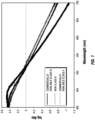
- FIG. 1 is graph showing the visible absorption spectra of an edible caramel color composition according to an embodiment of the invention compared to commercially available class II and class IV caramel colors.
- the line marked “Class IV” represents the measured visible absorption spectra for a commercially available class IV caramel color composition.
- the line marked “Commercially-Available Class II” represents the measured visible absorption spectra for a commercially available class II caramel color composition.
- the line marked “New Class II” represents the measured visible absorption spectra for an edible caramel color composition according to an embodiment of the present disclosure.
- the visible absorption of the edible caramel color composition according to an embodiment of the present disclosure closely resembles the visible absorption spectra of the commercially available class IV caramel color composition, particularly in the wavelengths of about 620 to about 700 nanometers, which are red light.
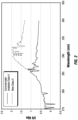
- FIG. 2 is a graph showing the UV absorption spectra of an edible caramel color composition according to an embodiment of the invention compared to a commercially-available class II caramel color.
- the line marked "Commercially-Available Class II” represents the measured UV absorption spectra for a commercially available class II caramel color composition.
- the line marked “New Class II” represents the measured UV absorption spectra for an edible caramel color composition according to an embodiment of the present disclosure.
- the UV absorption of the edible caramel color composition according to an embodiment of the present disclosure differs substantially from the commercially-available class II caramel color composition, particular at wavelengths of greater than 285 nm.
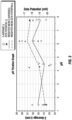
- FIG. 3 is a graph showing the z-average particle size and zeta potential of an edible caramel color composition according to an embodiment of the disclosure at various pH values.
- both the z-average particle size and zeta potential of the edible caramel color composition according to an embodiment of the disclosure are relatively stable across pH values from about 1.5 to about 8, with all measured values falling between a range of 7 nm and 5 mV, respectively.
- this stability at low pH values enables this edible caramel composition to be used in low pHs, such as in carbonated soft drink beverages.
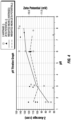
- FIG. 4 is a graph showing the z-average particle size and zeta potential of a commercially-available class II caramel color at various pH values.
- the z-average particle size decreases precipitously at pHs less than 2, to a z-average particle size about half of the particle size at a pH of 8.
- this instability at low pH values prohibits this commercially-available class II caramel color from being useable in low pHs, such as in carbonated soft drink beverages.
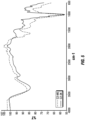
- FIG. 5 is a graph showing the IR spectra of an edible caramel color composition according to an embodiment of the invention compared to a commercially-available class II caramel color.
- the line marked "C2-ME” represents the measured UV absorption spectra for a commercially available class II caramel color composition.
- the line marked “C2-JK” represents the measured UV absorption spectra for an edible caramel color composition according to an embodiment of the present disclosure.
- the chemical structures of the commercially-available class II caramel color composition differs significantly from the chemical structure of the edible caramel color composition according to an embodiment of the present disclosure.
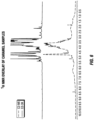
- FIG. 6 presents a 1 H NMR spectra of an edible caramel color composition according to an embodiment of the invention compared to a commercially-available class II caramel color.
- the spectrum marked "C2-ME” represents the measured 1 H NMR spectra spectra for a commercially available class II caramel color composition.
- the spectrum marked “C2-3K” represents the measured 1 H NMR spectra for an edible caramel color composition according to an embodiment of the present disclosure.
- the composition of the edible caramel color composition according to an embodiment of the invention is distinct from that of the commercially-available class II caramel color.
- the 1 H NMR spectra for an edible caramel color composition according to an embodiment of the present disclosure shows more discrete, distinct peaks than the 1 H NMR spectra for a commercially-available edible caramel color composition, suggesting that the edible caramel color composition according to an embodiment of the present disclosure is a simpler structure with fewer byproduct moieties than the commercially-available edible caramel color composition.
- a solution of sulfurous acid (2500 grams) which was 6% SO 2 by weight was added via a high-pressure pump to 3000 grams of a solution of glucose syrup with a density of 84.2 Brix in a closed reactor.
- the resultant reaction mixture had a pH of 1.5.
- the reaction mixture was then heated to 140°C at a pressure of 100 psi (690 kPa) for 4 hours before heat was removed from the reaction. Once heat was removed from the reaction, the vents were opened to remove residual SO 2 .
- the pH of the caramel color composition was then measured, and found to be 0.5.
- the caramel color composition was then allowed to cool to room temperature, and the pH was adjusted to 2.9 with a solution of 50% KOH.
- the resulting caramel color composition was filtered through a membrane with a pore size having a molecular weight cutoff (MWCO) of 270 Daltons, and spray dried.
- MWCO molecular weight cutoff
- the color hue of the caramel color composition was measured to be 4.41. Notably, this color hue is about the same as commercially-available class IV caramel colors, and about 1.5-2 units lower than commercially-available class II caramel colors.
- a solution of sulfurous acid (1250 grams) which was 6% SO 2 by weight was added via a high-pressure pump to 3000 grams of a solution of glucose syrup with a density of 84.2 Brix in a closed reactor.
- the resultant reaction mixture had a pH of 1.5.
- the reaction mixture was heated to 140°C at a pressure of 70 psi (480 kPa) for 1 hour.
- 1250 grams of a solution of sulfurous acid which was 6% SO 2 by weight was added via a high pressure pump at a flow rate of 8 ml/min for 150 minutes, while the reaction was at 140°C, and pressure was maintained at 70 psi (480 kPa).
- the pH of the caramel color composition was then measured, and found to be 0.9.
- the caramel color composition was then allowed to cool to room temperature, and the pH was adjusted to 2.8 with a solution of 50% KOH.
- the resulting caramel color composition was filtered through a membrane with a pore size having a molecular weight cutoff (MWCO) of 270 Daltons, and spray dried.
- MWCO molecular weight cutoff
- the color hue of the caramel color composition was measured to be 4.45. Notably, this color hue is about the same as commercially-available class IV caramel colors, and about 1.5-2 units lower than commercially-available class II caramel colors.
- a solution of 3000 grams of glucose syrup with a density of 84.2 Brix was mixed with 1000 grams of water. This glucose solution was placed in a closed reactor, and 200 grams of SO 2 gas was added to the closed reactor. The pH of the resultant reaction mixture was 1.4. This reaction mixture was heated to 140°C at a pressure of 70 psi (480 kPa) for 1 hour. Then, heat was removed from the reaction, and the vents were opened to remove residual SO 2 . The pH of the caramel color composition was then measured, and found to be 0.7.
- the caramel color composition was then allowed to cool to room temperature, and the pH was adjusted to 2.9 with a solution of 50% KOH.
- the resulting caramel color composition was filtered through a membrane with a pore size having a molecular weight cutoff (MWCO) of 270 Daltons, and spray dried.
- MWCO molecular weight cutoff
- the color hue of the caramel color composition was measured to be 4.35. Notably, this color hue is about the same as commercially-available class IV caramel colors, and about 1.5-2 units lower than commercially-available class II caramel colors.
- sulfite compound refers to a molecular (nonionic) compound or precursor that contains, or is a source for, an oxide of sulfur(IV) (oxidation state +4), such as, for example, sulfur dioxide and hydrogen sulfite.
- oxide of sulfur(IV) oxide state +4
- ionic sulfite and bisulfite salts are not encompassed by this definition.
- sulfurous acid refers generally to the aqueous solutions of SO 2 and does not require any specific sulfur oxide species be present. While not intending to be bound by theory, aqueous solutions of SO 2 are thought to undergo some oxidation to form some S(VI) species such as HSO 4 - and SO 4 2- .
- transitional term “comprising”, which is synonymous with “including,” “containing,” or “characterized by,” is inclusive or open-ended and does not exclude additional, unrecited elements or method steps.
- the transitional phrase “consisting of” excludes any element, step, or ingredient not specified in the claim.
- the transitional phrase “consisting essentially of” limits the scope of a claim to the specified materials or steps and those that do not materially affect the basic and novel characteristic(s) of the claimed invention.
- a “consisting essentially of” claim occupies a middle ground between closed claims that are written in a “consisting of” format and fully open claims that are drafted in a “comprising” format.
- a feedstock consisting essentially of a material A can include impurities typically present in a commercially produced or commercially available sample of the recited compound or composition.
- transitional terms comprising, consisting essentially of, and consisting of, apply only to feature class to which is utilized and it is possible to have different transitional terms or phrases utilized with different features within a claim.
- a method can comprise several recited steps (and other non-recited steps) but utilize a catalyst system preparation consisting of specific steps but utilize a catalyst system comprising recited components and other non-recited components.
- compositions and methods are described in terms of “comprising” various components or steps, the compositions and methods can also "consist essentially of” or “consist of” the various components or steps.
- Values or ranges may be expressed herein as “about”, from “about” one particular value, and/or to “about” another particular value. When such values or ranges are expressed, other embodiments disclosed include the specific value recited, from the one particular value, and/or to the other particular value. Similarly, when values are expressed as approximations, by use of the antecedent “about,” it will be understood that the particular value forms another embodiment. It will be further understood that there are a number of values disclosed herein, and that each value is also herein disclosed as “about” that particular value in addition to the value itself. In aspects, "about” can be used to mean within 10% of the recited value, within 5% of the recited value, within 2% of the recited value, or within 1% of the recited value.
Landscapes
- Chemical & Material Sciences (AREA)
- Life Sciences & Earth Sciences (AREA)
- Polymers & Plastics (AREA)
- Engineering & Computer Science (AREA)
- Food Science & Technology (AREA)
- Health & Medical Sciences (AREA)
- Nutrition Science (AREA)
- Inorganic Chemistry (AREA)
- Molecular Biology (AREA)
- Chemical Kinetics & Catalysis (AREA)
- General Chemical & Material Sciences (AREA)
- Coloring Foods And Improving Nutritive Qualities (AREA)
- Confectionery (AREA)
- Non-Alcoholic Beverages (AREA)
Claims (7)
- Verfahren zur Herstellung einer essbaren Karamellfarbenzusammensetzung, das folgenden Schritt umfasst:Erhitzen einer Reaktionsmischung unter Druck zur Bildung einer Karamellfarbenzusammensetzung, wobei die Reaktionsmischungein Kohlenhydrat undeine Sulfitverbindungumfasst, in Abwesenheit einer kaustischen Verbindung und in Abwesenheit einer Ammoniumverbindung, wobeidie essbare Karamellfarbenzusammensetzung einen Farbton von 3,8 bis 4,5 aufweist.
- Verfahren nach Anspruch 1, wobei die Sulfitverbindung aus Schwefeldioxid und schwefliger Säure ausgewählt wird.
- Verfahren nach Anspruch 1, wobei das Kohlenhydrat aus Glucose, Fructose, Invertzucker, Melasse, Lactose oder Malzsirup ausgewählt wird.
- Verfahren nach Anspruch 1, wobei der Schritt des Erhitzens einer Reaktionsmischung unter Druck zur Bildung einer essbaren Karamellfarbenzusammensetzung ferner Folgendes umfasst:
Erhitzen einer Reaktionsmischung bei einem Druck von 50 psi (345 kPa) bis 150 psi (1034 kPa) über einen Zeitraum von 1 bis 10 Stunden. - Verfahren nach Anspruch 1, wobei der Schritt des Erhitzens einer Reaktionsmischung unter Druck zur Bildung einer Karamellfarbenzusammensetzung ferner Folgendes umfasst:
Erhitzen einer Reaktionsmischung unter Druck auf eine Temperatur von 100 °C bis 200 °C. - Verfahren nach Anspruch 1, wobei die Karamellfarbenzusammensetzung einen pH-Wert von 0,1 bis etwa 3 aufweist.
- Verfahren nach Anspruch 1, das ferner folgende Schritte umfasst:Abkühlen der Karamellfarbe undEinstellen des pH-Werts der Karamellfarbe.
Applications Claiming Priority (2)
| Application Number | Priority Date | Filing Date | Title |
|---|---|---|---|
| US201662396994P | 2016-09-20 | 2016-09-20 | |
| PCT/US2017/052444 WO2018057587A1 (en) | 2016-09-20 | 2017-09-20 | Edible caramel color composition |
Publications (3)
| Publication Number | Publication Date |
|---|---|
| EP3515209A1 EP3515209A1 (de) | 2019-07-31 |
| EP3515209A4 EP3515209A4 (de) | 2020-05-13 |
| EP3515209B1 true EP3515209B1 (de) | 2024-06-12 |
Family
ID=61690664
Family Applications (1)
| Application Number | Title | Priority Date | Filing Date |
|---|---|---|---|
| EP17853789.0A Active EP3515209B1 (de) | 2016-09-20 | 2017-09-20 | Essbare karamellfärbungszusammensetzung |
Country Status (7)
| Country | Link |
|---|---|
| US (1) | US11291217B2 (de) |
| EP (1) | EP3515209B1 (de) |
| JP (1) | JP7554555B2 (de) |
| KR (1) | KR102566245B1 (de) |
| CN (1) | CN109788788B (de) |
| BR (1) | BR112019005473B1 (de) |
| WO (1) | WO2018057587A1 (de) |
Families Citing this family (2)
| Publication number | Priority date | Publication date | Assignee | Title |
|---|---|---|---|---|
| CN109907212A (zh) * | 2019-02-14 | 2019-06-21 | 上海爱普食品工业有限公司 | 一种降低焦糖色中二氧化硫残留的方法 |
| CN113811190A (zh) * | 2019-03-15 | 2021-12-17 | 威廉姆森集团有限公司 | 深褐色焦糖色素 |
Citations (3)
| Publication number | Priority date | Publication date | Assignee | Title |
|---|---|---|---|---|
| WO2003038014A2 (en) * | 2000-11-18 | 2003-05-08 | Fey Warren O | Fuel for energetic compositions comprising caramel color bodies |
| US20040016482A1 (en) * | 2001-11-19 | 2004-01-29 | Fey Warren O | Fuel for energetic compositions comprising caramel color bodies |
| US20160236981A1 (en) * | 2013-10-25 | 2016-08-18 | Sika Technology Ag | Caramelized sugar as liquefier for mineral binding agent compositions |
Family Cites Families (8)
| Publication number | Priority date | Publication date | Assignee | Title |
|---|---|---|---|---|
| US2767108A (en) * | 1955-01-19 | 1956-10-16 | Standard Brands Inc | Caramel color manufacture from starch hydrolysates |
| US3618588A (en) * | 1969-01-14 | 1971-11-09 | Pepsico Inc | Caramel color manufacture |
| JPS5910178B2 (ja) * | 1976-06-04 | 1984-03-07 | ダイセル化学工業株式会社 | カラメルの精製法 |
| KR101169416B1 (ko) * | 2003-09-29 | 2012-07-30 | 하이네켄 서플라이 체인 비.브이. | 광유발성 풍미 변화에 내성을 갖는 음료 및 식품, 이들의제조 방법 및 이러한 내성을 부여하기 위한 조성물 |
| JP4514756B2 (ja) * | 2003-09-29 | 2010-07-28 | ハイネケン・サプライ・チェイン ビー.ブイ. | 光誘導性の風味の変化に耐性の飲料および食料品およびその製造方法 |
| US9565866B2 (en) * | 2008-07-03 | 2017-02-14 | D.D. Williamson & Co., Inc. | Method of preparing acid stable caramel |
| US11058127B2 (en) * | 2014-11-07 | 2021-07-13 | Corn Products Development, Inc. | Low 4-methylimidazole caramel color class IV production |
| CN105925011B (zh) * | 2016-05-19 | 2017-10-31 | 千禾味业食品股份有限公司 | 一种苛性亚硫酸盐法焦糖色生产工艺 |
-
2017
- 2017-09-20 US US16/334,649 patent/US11291217B2/en active Active
- 2017-09-20 KR KR1020197010578A patent/KR102566245B1/ko active Active
- 2017-09-20 EP EP17853789.0A patent/EP3515209B1/de active Active
- 2017-09-20 BR BR112019005473-1A patent/BR112019005473B1/pt active IP Right Grant
- 2017-09-20 WO PCT/US2017/052444 patent/WO2018057587A1/en not_active Ceased
- 2017-09-20 CN CN201780060996.7A patent/CN109788788B/zh active Active
- 2017-09-20 JP JP2019515493A patent/JP7554555B2/ja active Active
Patent Citations (3)
| Publication number | Priority date | Publication date | Assignee | Title |
|---|---|---|---|---|
| WO2003038014A2 (en) * | 2000-11-18 | 2003-05-08 | Fey Warren O | Fuel for energetic compositions comprising caramel color bodies |
| US20040016482A1 (en) * | 2001-11-19 | 2004-01-29 | Fey Warren O | Fuel for energetic compositions comprising caramel color bodies |
| US20160236981A1 (en) * | 2013-10-25 | 2016-08-18 | Sika Technology Ag | Caramelized sugar as liquefier for mineral binding agent compositions |
Non-Patent Citations (1)
| Title |
|---|
| ANONYMOUS: "Whisky Science: Caramel E150", WHISKY SCIENCE, 17 April 2011 (2011-04-17), XP093048818, Retrieved from the Internet <URL:http://whiskyscience.blogspot.com/2011/04/caramel-e150.html> [retrieved on 20230523] * |
Also Published As
| Publication number | Publication date |
|---|---|
| BR112019005473A2 (pt) | 2019-06-04 |
| KR102566245B1 (ko) | 2023-08-11 |
| JP7554555B2 (ja) | 2024-09-20 |
| EP3515209A4 (de) | 2020-05-13 |
| CN109788788A (zh) | 2019-05-21 |
| CN109788788B (zh) | 2023-06-23 |
| KR20190045359A (ko) | 2019-05-02 |
| WO2018057587A1 (en) | 2018-03-29 |
| US20210282427A1 (en) | 2021-09-16 |
| US11291217B2 (en) | 2022-04-05 |
| EP3515209A1 (de) | 2019-07-31 |
| JP2019528744A (ja) | 2019-10-17 |
| BR112019005473B1 (pt) | 2023-04-25 |
Similar Documents
| Publication | Publication Date | Title |
|---|---|---|
| EP3515209B1 (de) | Essbare karamellfärbungszusammensetzung | |
| CN108813457A (zh) | 一种马六甲椰糖糖浆的配方及生产工艺 | |
| US20050181101A1 (en) | Anthocyanin pigments with improved heat-resistance | |
| KR101426802B1 (ko) | 4-메틸이미다졸 함량이 저감된 카라멜 색소의 제조방법 | |
| CN107668492A (zh) | 一种液体焦糖色素的生产方法 | |
| US11980206B2 (en) | Method for reducing low molecular weight species in caramel | |
| EP3897193A1 (de) | Farbzusatz | |
| WO2024160172A1 (zh) | 一种低聚合度聚葡萄糖及其制备方法 | |
| JP7691217B2 (ja) | アルコール飲料、赤色のアルコール飲料の製造方法及びアルコール飲料の色を変化させる方法 | |
| US20230220502A1 (en) | Allulose syrup | |
| CN115812897B (zh) | 一种焦糖色及其制备方法和应用 | |
| WO2006107238A1 (en) | Process for producing a substrate for making alcoholic structural-viscous goods and the substrate obtained thereby (variants) | |
| US11168152B2 (en) | Hydrogenated glucose polymer composition containing dietary fibres | |
| EP1960338B1 (de) | Verfahren zur herstellung von alkali- und hitzestabilen polyolen | |
| CN117534968A (zh) | 一种降低焦糖色中乙酰丙酸含量的方法和应用 | |
| HK1234283A1 (en) | Method for reducing low molecular weight species in caramel | |
| JPS623741A (ja) | 菓子類を赤ないし赤紫色に着色する方法 | |
| CN121022132A (zh) | 一种焦糖色及其制备方法和包含其的调味品 | |
| JPS6310990B2 (de) | ||
| CN121045279A (zh) | 一种低聚阿洛酮糖及其制备方法 | |
| US20200397014A1 (en) | Gummy confectionery composition | |
| KR20180085325A (ko) | 동결농축을 이용한 쌀 시럽 제조방법 및 그 시럽 |
Legal Events
| Date | Code | Title | Description |
|---|---|---|---|
| STAA | Information on the status of an ep patent application or granted ep patent |
Free format text: STATUS: THE INTERNATIONAL PUBLICATION HAS BEEN MADE |
|
| PUAI | Public reference made under article 153(3) epc to a published international application that has entered the european phase |
Free format text: ORIGINAL CODE: 0009012 |
|
| STAA | Information on the status of an ep patent application or granted ep patent |
Free format text: STATUS: REQUEST FOR EXAMINATION WAS MADE |
|
| 17P | Request for examination filed |
Effective date: 20190327 |
|
| AK | Designated contracting states |
Kind code of ref document: A1 Designated state(s): AL AT BE BG CH CY CZ DE DK EE ES FI FR GB GR HR HU IE IS IT LI LT LU LV MC MK MT NL NO PL PT RO RS SE SI SK SM TR |
|
| AX | Request for extension of the european patent |
Extension state: BA ME |
|
| DAV | Request for validation of the european patent (deleted) | ||
| DAX | Request for extension of the european patent (deleted) | ||
| A4 | Supplementary search report drawn up and despatched |
Effective date: 20200414 |
|
| RIC1 | Information provided on ipc code assigned before grant |
Ipc: A23L 5/40 20160101ALI20200406BHEP Ipc: A23L 5/42 20160101AFI20200406BHEP Ipc: A23G 3/32 20060101ALI20200406BHEP Ipc: A23L 2/58 20060101ALI20200406BHEP Ipc: A23L 5/48 20160101ALI20200406BHEP |
|
| STAA | Information on the status of an ep patent application or granted ep patent |
Free format text: STATUS: EXAMINATION IS IN PROGRESS |
|
| 17Q | First examination report despatched |
Effective date: 20230530 |
|
| GRAP | Despatch of communication of intention to grant a patent |
Free format text: ORIGINAL CODE: EPIDOSNIGR1 |
|
| STAA | Information on the status of an ep patent application or granted ep patent |
Free format text: STATUS: GRANT OF PATENT IS INTENDED |
|
| INTG | Intention to grant announced |
Effective date: 20240108 |
|
| GRAS | Grant fee paid |
Free format text: ORIGINAL CODE: EPIDOSNIGR3 |
|
| GRAA | (expected) grant |
Free format text: ORIGINAL CODE: 0009210 |
|
| STAA | Information on the status of an ep patent application or granted ep patent |
Free format text: STATUS: THE PATENT HAS BEEN GRANTED |
|
| AK | Designated contracting states |
Kind code of ref document: B1 Designated state(s): AL AT BE BG CH CY CZ DE DK EE ES FI FR GB GR HR HU IE IS IT LI LT LU LV MC MK MT NL NO PL PT RO RS SE SI SK SM TR |
|
| REG | Reference to a national code |
Ref country code: GB Ref legal event code: FG4D |
|
| REG | Reference to a national code |
Ref country code: CH Ref legal event code: EP |
|
| REG | Reference to a national code |
Ref country code: DE Ref legal event code: R096 Ref document number: 602017082589 Country of ref document: DE |
|
| REG | Reference to a national code |
Ref country code: IE Ref legal event code: FG4D |
|
| PG25 | Lapsed in a contracting state [announced via postgrant information from national office to epo] |
Ref country code: BG Free format text: LAPSE BECAUSE OF FAILURE TO SUBMIT A TRANSLATION OF THE DESCRIPTION OR TO PAY THE FEE WITHIN THE PRESCRIBED TIME-LIMIT Effective date: 20240612 |
|
| PG25 | Lapsed in a contracting state [announced via postgrant information from national office to epo] |
Ref country code: FI Free format text: LAPSE BECAUSE OF FAILURE TO SUBMIT A TRANSLATION OF THE DESCRIPTION OR TO PAY THE FEE WITHIN THE PRESCRIBED TIME-LIMIT Effective date: 20240612 Ref country code: HR Free format text: LAPSE BECAUSE OF FAILURE TO SUBMIT A TRANSLATION OF THE DESCRIPTION OR TO PAY THE FEE WITHIN THE PRESCRIBED TIME-LIMIT Effective date: 20240612 |
|
| REG | Reference to a national code |
Ref country code: LT Ref legal event code: MG9D |
|
| PG25 | Lapsed in a contracting state [announced via postgrant information from national office to epo] |
Ref country code: GR Free format text: LAPSE BECAUSE OF FAILURE TO SUBMIT A TRANSLATION OF THE DESCRIPTION OR TO PAY THE FEE WITHIN THE PRESCRIBED TIME-LIMIT Effective date: 20240913 |
|
| REG | Reference to a national code |
Ref country code: NL Ref legal event code: MP Effective date: 20240612 |
|
| PG25 | Lapsed in a contracting state [announced via postgrant information from national office to epo] |
Ref country code: ES Free format text: LAPSE BECAUSE OF FAILURE TO SUBMIT A TRANSLATION OF THE DESCRIPTION OR TO PAY THE FEE WITHIN THE PRESCRIBED TIME-LIMIT Effective date: 20240612 |
|
| PG25 | Lapsed in a contracting state [announced via postgrant information from national office to epo] |
Ref country code: LV Free format text: LAPSE BECAUSE OF FAILURE TO SUBMIT A TRANSLATION OF THE DESCRIPTION OR TO PAY THE FEE WITHIN THE PRESCRIBED TIME-LIMIT Effective date: 20240612 |
|
| PG25 | Lapsed in a contracting state [announced via postgrant information from national office to epo] |
Ref country code: NO Free format text: LAPSE BECAUSE OF FAILURE TO SUBMIT A TRANSLATION OF THE DESCRIPTION OR TO PAY THE FEE WITHIN THE PRESCRIBED TIME-LIMIT Effective date: 20240912 Ref country code: LV Free format text: LAPSE BECAUSE OF FAILURE TO SUBMIT A TRANSLATION OF THE DESCRIPTION OR TO PAY THE FEE WITHIN THE PRESCRIBED TIME-LIMIT Effective date: 20240612 Ref country code: HR Free format text: LAPSE BECAUSE OF FAILURE TO SUBMIT A TRANSLATION OF THE DESCRIPTION OR TO PAY THE FEE WITHIN THE PRESCRIBED TIME-LIMIT Effective date: 20240612 Ref country code: GR Free format text: LAPSE BECAUSE OF FAILURE TO SUBMIT A TRANSLATION OF THE DESCRIPTION OR TO PAY THE FEE WITHIN THE PRESCRIBED TIME-LIMIT Effective date: 20240913 Ref country code: FI Free format text: LAPSE BECAUSE OF FAILURE TO SUBMIT A TRANSLATION OF THE DESCRIPTION OR TO PAY THE FEE WITHIN THE PRESCRIBED TIME-LIMIT Effective date: 20240612 Ref country code: ES Free format text: LAPSE BECAUSE OF FAILURE TO SUBMIT A TRANSLATION OF THE DESCRIPTION OR TO PAY THE FEE WITHIN THE PRESCRIBED TIME-LIMIT Effective date: 20240612 Ref country code: BG Free format text: LAPSE BECAUSE OF FAILURE TO SUBMIT A TRANSLATION OF THE DESCRIPTION OR TO PAY THE FEE WITHIN THE PRESCRIBED TIME-LIMIT Effective date: 20240612 Ref country code: RS Free format text: LAPSE BECAUSE OF FAILURE TO SUBMIT A TRANSLATION OF THE DESCRIPTION OR TO PAY THE FEE WITHIN THE PRESCRIBED TIME-LIMIT Effective date: 20240912 |
|
| PG25 | Lapsed in a contracting state [announced via postgrant information from national office to epo] |
Ref country code: NL Free format text: LAPSE BECAUSE OF FAILURE TO SUBMIT A TRANSLATION OF THE DESCRIPTION OR TO PAY THE FEE WITHIN THE PRESCRIBED TIME-LIMIT Effective date: 20240612 |
|
| REG | Reference to a national code |
Ref country code: AT Ref legal event code: MK05 Ref document number: 1693425 Country of ref document: AT Kind code of ref document: T Effective date: 20240612 |
|
| PG25 | Lapsed in a contracting state [announced via postgrant information from national office to epo] |
Ref country code: NL Free format text: LAPSE BECAUSE OF FAILURE TO SUBMIT A TRANSLATION OF THE DESCRIPTION OR TO PAY THE FEE WITHIN THE PRESCRIBED TIME-LIMIT Effective date: 20240612 |
|
| PG25 | Lapsed in a contracting state [announced via postgrant information from national office to epo] |
Ref country code: PT Free format text: LAPSE BECAUSE OF FAILURE TO SUBMIT A TRANSLATION OF THE DESCRIPTION OR TO PAY THE FEE WITHIN THE PRESCRIBED TIME-LIMIT Effective date: 20241014 |
|
| PG25 | Lapsed in a contracting state [announced via postgrant information from national office to epo] |
Ref country code: PT Free format text: LAPSE BECAUSE OF FAILURE TO SUBMIT A TRANSLATION OF THE DESCRIPTION OR TO PAY THE FEE WITHIN THE PRESCRIBED TIME-LIMIT Effective date: 20241014 |
|
| PG25 | Lapsed in a contracting state [announced via postgrant information from national office to epo] |
Ref country code: PL Free format text: LAPSE BECAUSE OF FAILURE TO SUBMIT A TRANSLATION OF THE DESCRIPTION OR TO PAY THE FEE WITHIN THE PRESCRIBED TIME-LIMIT Effective date: 20240612 |
|
| PG25 | Lapsed in a contracting state [announced via postgrant information from national office to epo] |
Ref country code: EE Free format text: LAPSE BECAUSE OF FAILURE TO SUBMIT A TRANSLATION OF THE DESCRIPTION OR TO PAY THE FEE WITHIN THE PRESCRIBED TIME-LIMIT Effective date: 20240612 |
|
| PG25 | Lapsed in a contracting state [announced via postgrant information from national office to epo] |
Ref country code: AT Free format text: LAPSE BECAUSE OF FAILURE TO SUBMIT A TRANSLATION OF THE DESCRIPTION OR TO PAY THE FEE WITHIN THE PRESCRIBED TIME-LIMIT Effective date: 20240612 Ref country code: IS Free format text: LAPSE BECAUSE OF FAILURE TO SUBMIT A TRANSLATION OF THE DESCRIPTION OR TO PAY THE FEE WITHIN THE PRESCRIBED TIME-LIMIT Effective date: 20241012 |
|
| PG25 | Lapsed in a contracting state [announced via postgrant information from national office to epo] |
Ref country code: CZ Free format text: LAPSE BECAUSE OF FAILURE TO SUBMIT A TRANSLATION OF THE DESCRIPTION OR TO PAY THE FEE WITHIN THE PRESCRIBED TIME-LIMIT Effective date: 20240612 |
|
| PG25 | Lapsed in a contracting state [announced via postgrant information from national office to epo] |
Ref country code: RO Free format text: LAPSE BECAUSE OF FAILURE TO SUBMIT A TRANSLATION OF THE DESCRIPTION OR TO PAY THE FEE WITHIN THE PRESCRIBED TIME-LIMIT Effective date: 20240612 Ref country code: SK Free format text: LAPSE BECAUSE OF FAILURE TO SUBMIT A TRANSLATION OF THE DESCRIPTION OR TO PAY THE FEE WITHIN THE PRESCRIBED TIME-LIMIT Effective date: 20240612 |
|
| PG25 | Lapsed in a contracting state [announced via postgrant information from national office to epo] |
Ref country code: SM Free format text: LAPSE BECAUSE OF FAILURE TO SUBMIT A TRANSLATION OF THE DESCRIPTION OR TO PAY THE FEE WITHIN THE PRESCRIBED TIME-LIMIT Effective date: 20240612 |
|
| PG25 | Lapsed in a contracting state [announced via postgrant information from national office to epo] |
Ref country code: SM Free format text: LAPSE BECAUSE OF FAILURE TO SUBMIT A TRANSLATION OF THE DESCRIPTION OR TO PAY THE FEE WITHIN THE PRESCRIBED TIME-LIMIT Effective date: 20240612 Ref country code: SK Free format text: LAPSE BECAUSE OF FAILURE TO SUBMIT A TRANSLATION OF THE DESCRIPTION OR TO PAY THE FEE WITHIN THE PRESCRIBED TIME-LIMIT Effective date: 20240612 Ref country code: RO Free format text: LAPSE BECAUSE OF FAILURE TO SUBMIT A TRANSLATION OF THE DESCRIPTION OR TO PAY THE FEE WITHIN THE PRESCRIBED TIME-LIMIT Effective date: 20240612 Ref country code: PL Free format text: LAPSE BECAUSE OF FAILURE TO SUBMIT A TRANSLATION OF THE DESCRIPTION OR TO PAY THE FEE WITHIN THE PRESCRIBED TIME-LIMIT Effective date: 20240612 Ref country code: IS Free format text: LAPSE BECAUSE OF FAILURE TO SUBMIT A TRANSLATION OF THE DESCRIPTION OR TO PAY THE FEE WITHIN THE PRESCRIBED TIME-LIMIT Effective date: 20241012 Ref country code: EE Free format text: LAPSE BECAUSE OF FAILURE TO SUBMIT A TRANSLATION OF THE DESCRIPTION OR TO PAY THE FEE WITHIN THE PRESCRIBED TIME-LIMIT Effective date: 20240612 Ref country code: CZ Free format text: LAPSE BECAUSE OF FAILURE TO SUBMIT A TRANSLATION OF THE DESCRIPTION OR TO PAY THE FEE WITHIN THE PRESCRIBED TIME-LIMIT Effective date: 20240612 Ref country code: AT Free format text: LAPSE BECAUSE OF FAILURE TO SUBMIT A TRANSLATION OF THE DESCRIPTION OR TO PAY THE FEE WITHIN THE PRESCRIBED TIME-LIMIT Effective date: 20240612 |
|
| PG25 | Lapsed in a contracting state [announced via postgrant information from national office to epo] |
Ref country code: IT Free format text: LAPSE BECAUSE OF FAILURE TO SUBMIT A TRANSLATION OF THE DESCRIPTION OR TO PAY THE FEE WITHIN THE PRESCRIBED TIME-LIMIT Effective date: 20240612 |
|
| REG | Reference to a national code |
Ref country code: DE Ref legal event code: R097 Ref document number: 602017082589 Country of ref document: DE |
|
| PG25 | Lapsed in a contracting state [announced via postgrant information from national office to epo] |
Ref country code: DK Free format text: LAPSE BECAUSE OF FAILURE TO SUBMIT A TRANSLATION OF THE DESCRIPTION OR TO PAY THE FEE WITHIN THE PRESCRIBED TIME-LIMIT Effective date: 20240612 |
|
| PLBE | No opposition filed within time limit |
Free format text: ORIGINAL CODE: 0009261 |
|
| STAA | Information on the status of an ep patent application or granted ep patent |
Free format text: STATUS: NO OPPOSITION FILED WITHIN TIME LIMIT |
|
| PG25 | Lapsed in a contracting state [announced via postgrant information from national office to epo] |
Ref country code: MC Free format text: LAPSE BECAUSE OF FAILURE TO SUBMIT A TRANSLATION OF THE DESCRIPTION OR TO PAY THE FEE WITHIN THE PRESCRIBED TIME-LIMIT Effective date: 20240612 |
|
| REG | Reference to a national code |
Ref country code: CH Ref legal event code: PL |
|
| PG25 | Lapsed in a contracting state [announced via postgrant information from national office to epo] |
Ref country code: LU Free format text: LAPSE BECAUSE OF NON-PAYMENT OF DUE FEES Effective date: 20240920 |
|
| 26N | No opposition filed |
Effective date: 20250313 |
|
| REG | Reference to a national code |
Ref country code: BE Ref legal event code: MM Effective date: 20240930 |
|
| PG25 | Lapsed in a contracting state [announced via postgrant information from national office to epo] |
Ref country code: BE Free format text: LAPSE BECAUSE OF NON-PAYMENT OF DUE FEES Effective date: 20240930 |
|
| PG25 | Lapsed in a contracting state [announced via postgrant information from national office to epo] |
Ref country code: CH Free format text: LAPSE BECAUSE OF NON-PAYMENT OF DUE FEES Effective date: 20240930 |
|
| PG25 | Lapsed in a contracting state [announced via postgrant information from national office to epo] |
Ref country code: IE Free format text: LAPSE BECAUSE OF NON-PAYMENT OF DUE FEES Effective date: 20240920 |
|
| PG25 | Lapsed in a contracting state [announced via postgrant information from national office to epo] |
Ref country code: SE Free format text: LAPSE BECAUSE OF FAILURE TO SUBMIT A TRANSLATION OF THE DESCRIPTION OR TO PAY THE FEE WITHIN THE PRESCRIBED TIME-LIMIT Effective date: 20240612 |
|
| PGFP | Annual fee paid to national office [announced via postgrant information from national office to epo] |
Ref country code: DE Payment date: 20250820 Year of fee payment: 9 |
|
| PGFP | Annual fee paid to national office [announced via postgrant information from national office to epo] |
Ref country code: GB Payment date: 20250820 Year of fee payment: 9 |
|
| PGFP | Annual fee paid to national office [announced via postgrant information from national office to epo] |
Ref country code: FR Payment date: 20250820 Year of fee payment: 9 |