EP3512557B1 - Kombinationen mit abx196 zur behandlung von krebs - Google Patents
Kombinationen mit abx196 zur behandlung von krebs Download PDFInfo
- Publication number
- EP3512557B1 EP3512557B1 EP17771393.0A EP17771393A EP3512557B1 EP 3512557 B1 EP3512557 B1 EP 3512557B1 EP 17771393 A EP17771393 A EP 17771393A EP 3512557 B1 EP3512557 B1 EP 3512557B1
- Authority
- EP
- European Patent Office
- Prior art keywords
- abx196
- tumor
- cancer
- doxorubicin
- antibody
- Prior art date
- Legal status (The legal status is an assumption and is not a legal conclusion. Google has not performed a legal analysis and makes no representation as to the accuracy of the status listed.)
- Active
Links
Images


Classifications
-
- A—HUMAN NECESSITIES
- A61—MEDICAL OR VETERINARY SCIENCE; HYGIENE
- A61K—PREPARATIONS FOR MEDICAL, DENTAL OR TOILETRY PURPOSES
- A61K31/00—Medicinal preparations containing organic active ingredients
- A61K31/13—Amines
- A61K31/135—Amines having aromatic rings, e.g. ketamine, nortriptyline
- A61K31/136—Amines having aromatic rings, e.g. ketamine, nortriptyline having the amino group directly attached to the aromatic ring, e.g. benzeneamine
-
- A—HUMAN NECESSITIES
- A61—MEDICAL OR VETERINARY SCIENCE; HYGIENE
- A61K—PREPARATIONS FOR MEDICAL, DENTAL OR TOILETRY PURPOSES
- A61K31/00—Medicinal preparations containing organic active ingredients
- A61K31/33—Heterocyclic compounds
- A61K31/395—Heterocyclic compounds having nitrogen as a ring hetero atom, e.g. guanethidine or rifamycins
- A61K31/435—Heterocyclic compounds having nitrogen as a ring hetero atom, e.g. guanethidine or rifamycins having six-membered rings with one nitrogen as the only ring hetero atom
- A61K31/44—Non condensed pyridines; Hydrogenated derivatives thereof
-
- A—HUMAN NECESSITIES
- A61—MEDICAL OR VETERINARY SCIENCE; HYGIENE
- A61K—PREPARATIONS FOR MEDICAL, DENTAL OR TOILETRY PURPOSES
- A61K31/00—Medicinal preparations containing organic active ingredients
- A61K31/33—Heterocyclic compounds
- A61K31/395—Heterocyclic compounds having nitrogen as a ring hetero atom, e.g. guanethidine or rifamycins
- A61K31/55—Heterocyclic compounds having nitrogen as a ring hetero atom, e.g. guanethidine or rifamycins having seven-membered rings, e.g. azelastine, pentylenetetrazole
- A61K31/553—Heterocyclic compounds having nitrogen as a ring hetero atom, e.g. guanethidine or rifamycins having seven-membered rings, e.g. azelastine, pentylenetetrazole having at least one nitrogen and one oxygen as ring hetero atoms, e.g. loxapine, staurosporine
-
- A—HUMAN NECESSITIES
- A61—MEDICAL OR VETERINARY SCIENCE; HYGIENE
- A61K—PREPARATIONS FOR MEDICAL, DENTAL OR TOILETRY PURPOSES
- A61K31/00—Medicinal preparations containing organic active ingredients
- A61K31/33—Heterocyclic compounds
- A61K31/555—Heterocyclic compounds containing heavy metals, e.g. hemin, hematin, melarsoprol
-
- A—HUMAN NECESSITIES
- A61—MEDICAL OR VETERINARY SCIENCE; HYGIENE
- A61K—PREPARATIONS FOR MEDICAL, DENTAL OR TOILETRY PURPOSES
- A61K31/00—Medicinal preparations containing organic active ingredients
- A61K31/66—Phosphorus compounds
- A61K31/675—Phosphorus compounds having nitrogen as a ring hetero atom, e.g. pyridoxal phosphate
-
- A—HUMAN NECESSITIES
- A61—MEDICAL OR VETERINARY SCIENCE; HYGIENE
- A61K—PREPARATIONS FOR MEDICAL, DENTAL OR TOILETRY PURPOSES
- A61K31/00—Medicinal preparations containing organic active ingredients
- A61K31/70—Carbohydrates; Sugars; Derivatives thereof
- A61K31/7028—Compounds having saccharide radicals attached to non-saccharide compounds by glycosidic linkages
- A61K31/7032—Compounds having saccharide radicals attached to non-saccharide compounds by glycosidic linkages attached to a polyol, i.e. compounds having two or more free or esterified hydroxy groups, including the hydroxy group involved in the glycosidic linkage, e.g. monoglucosyldiacylglycerides, lactobionic acid, gangliosides
-
- A—HUMAN NECESSITIES
- A61—MEDICAL OR VETERINARY SCIENCE; HYGIENE
- A61K—PREPARATIONS FOR MEDICAL, DENTAL OR TOILETRY PURPOSES
- A61K31/00—Medicinal preparations containing organic active ingredients
- A61K31/70—Carbohydrates; Sugars; Derivatives thereof
- A61K31/7028—Compounds having saccharide radicals attached to non-saccharide compounds by glycosidic linkages
- A61K31/7034—Compounds having saccharide radicals attached to non-saccharide compounds by glycosidic linkages attached to a carbocyclic compound, e.g. phloridzin
- A61K31/704—Compounds having saccharide radicals attached to non-saccharide compounds by glycosidic linkages attached to a carbocyclic compound, e.g. phloridzin attached to a condensed carbocyclic ring system, e.g. sennosides, thiocolchicosides, escin, daunorubicin
-
- A—HUMAN NECESSITIES
- A61—MEDICAL OR VETERINARY SCIENCE; HYGIENE
- A61K—PREPARATIONS FOR MEDICAL, DENTAL OR TOILETRY PURPOSES
- A61K35/00—Medicinal preparations containing materials or reaction products thereof with undetermined constitution
-
- A—HUMAN NECESSITIES
- A61—MEDICAL OR VETERINARY SCIENCE; HYGIENE
- A61K—PREPARATIONS FOR MEDICAL, DENTAL OR TOILETRY PURPOSES
- A61K39/00—Medicinal preparations containing antigens or antibodies
- A61K39/0005—Vertebrate antigens
- A61K39/0011—Cancer antigens
-
- A—HUMAN NECESSITIES
- A61—MEDICAL OR VETERINARY SCIENCE; HYGIENE
- A61K—PREPARATIONS FOR MEDICAL, DENTAL OR TOILETRY PURPOSES
- A61K39/00—Medicinal preparations containing antigens or antibodies
- A61K39/0005—Vertebrate antigens
- A61K39/0011—Cancer antigens
- A61K39/001102—Receptors, cell surface antigens or cell surface determinants
- A61K39/001103—Receptors for growth factors
- A61K39/001104—Epidermal growth factor receptors [EGFR]
-
- A—HUMAN NECESSITIES
- A61—MEDICAL OR VETERINARY SCIENCE; HYGIENE
- A61K—PREPARATIONS FOR MEDICAL, DENTAL OR TOILETRY PURPOSES
- A61K39/00—Medicinal preparations containing antigens or antibodies
- A61K39/0005—Vertebrate antigens
- A61K39/0011—Cancer antigens
- A61K39/001102—Receptors, cell surface antigens or cell surface determinants
- A61K39/001103—Receptors for growth factors
- A61K39/001106—Her-2/neu/ErbB2, Her-3/ErbB3 or Her 4/ErbB4
-
- A—HUMAN NECESSITIES
- A61—MEDICAL OR VETERINARY SCIENCE; HYGIENE
- A61K—PREPARATIONS FOR MEDICAL, DENTAL OR TOILETRY PURPOSES
- A61K39/00—Medicinal preparations containing antigens or antibodies
- A61K39/0005—Vertebrate antigens
- A61K39/0011—Cancer antigens
- A61K39/001102—Receptors, cell surface antigens or cell surface determinants
- A61K39/001124—CD20
-
- A—HUMAN NECESSITIES
- A61—MEDICAL OR VETERINARY SCIENCE; HYGIENE
- A61K—PREPARATIONS FOR MEDICAL, DENTAL OR TOILETRY PURPOSES
- A61K39/00—Medicinal preparations containing antigens or antibodies
- A61K39/0005—Vertebrate antigens
- A61K39/0011—Cancer antigens
- A61K39/001102—Receptors, cell surface antigens or cell surface determinants
- A61K39/001129—Molecules with a "CD" designation not provided for elsewhere
-
- A—HUMAN NECESSITIES
- A61—MEDICAL OR VETERINARY SCIENCE; HYGIENE
- A61K—PREPARATIONS FOR MEDICAL, DENTAL OR TOILETRY PURPOSES
- A61K39/00—Medicinal preparations containing antigens or antibodies
- A61K39/0005—Vertebrate antigens
- A61K39/0011—Cancer antigens
- A61K39/00113—Growth factors
- A61K39/001135—Vascular endothelial growth factor [VEGF]
-
- A—HUMAN NECESSITIES
- A61—MEDICAL OR VETERINARY SCIENCE; HYGIENE
- A61K—PREPARATIONS FOR MEDICAL, DENTAL OR TOILETRY PURPOSES
- A61K39/00—Medicinal preparations containing antigens or antibodies
- A61K39/0005—Vertebrate antigens
- A61K39/0011—Cancer antigens
- A61K39/001174—Proteoglycans, e.g. glypican, brevican or CSPG4
-
- A—HUMAN NECESSITIES
- A61—MEDICAL OR VETERINARY SCIENCE; HYGIENE
- A61K—PREPARATIONS FOR MEDICAL, DENTAL OR TOILETRY PURPOSES
- A61K39/00—Medicinal preparations containing antigens or antibodies
- A61K39/39—Medicinal preparations containing antigens or antibodies characterised by the immunostimulating additives, e.g. chemical adjuvants
-
- A—HUMAN NECESSITIES
- A61—MEDICAL OR VETERINARY SCIENCE; HYGIENE
- A61K—PREPARATIONS FOR MEDICAL, DENTAL OR TOILETRY PURPOSES
- A61K39/00—Medicinal preparations containing antigens or antibodies
- A61K39/395—Antibodies; Immunoglobulins; Immune serum, e.g. antilymphocytic serum
-
- A—HUMAN NECESSITIES
- A61—MEDICAL OR VETERINARY SCIENCE; HYGIENE
- A61K—PREPARATIONS FOR MEDICAL, DENTAL OR TOILETRY PURPOSES
- A61K39/00—Medicinal preparations containing antigens or antibodies
- A61K39/395—Antibodies; Immunoglobulins; Immune serum, e.g. antilymphocytic serum
- A61K39/39533—Antibodies; Immunoglobulins; Immune serum, e.g. antilymphocytic serum against materials from animals
- A61K39/3955—Antibodies; Immunoglobulins; Immune serum, e.g. antilymphocytic serum against materials from animals against proteinaceous materials, e.g. enzymes, hormones, lymphokines
-
- A—HUMAN NECESSITIES
- A61—MEDICAL OR VETERINARY SCIENCE; HYGIENE
- A61K—PREPARATIONS FOR MEDICAL, DENTAL OR TOILETRY PURPOSES
- A61K39/00—Medicinal preparations containing antigens or antibodies
- A61K39/395—Antibodies; Immunoglobulins; Immune serum, e.g. antilymphocytic serum
- A61K39/39533—Antibodies; Immunoglobulins; Immune serum, e.g. antilymphocytic serum against materials from animals
- A61K39/39558—Antibodies; Immunoglobulins; Immune serum, e.g. antilymphocytic serum against materials from animals against tumor tissues, cells, antigens
-
- A—HUMAN NECESSITIES
- A61—MEDICAL OR VETERINARY SCIENCE; HYGIENE
- A61P—SPECIFIC THERAPEUTIC ACTIVITY OF CHEMICAL COMPOUNDS OR MEDICINAL PREPARATIONS
- A61P31/00—Antiinfectives, i.e. antibiotics, antiseptics, chemotherapeutics
-
- A—HUMAN NECESSITIES
- A61—MEDICAL OR VETERINARY SCIENCE; HYGIENE
- A61P—SPECIFIC THERAPEUTIC ACTIVITY OF CHEMICAL COMPOUNDS OR MEDICINAL PREPARATIONS
- A61P35/00—Antineoplastic agents
-
- A—HUMAN NECESSITIES
- A61—MEDICAL OR VETERINARY SCIENCE; HYGIENE
- A61P—SPECIFIC THERAPEUTIC ACTIVITY OF CHEMICAL COMPOUNDS OR MEDICINAL PREPARATIONS
- A61P35/00—Antineoplastic agents
- A61P35/04—Antineoplastic agents specific for metastasis
-
- C—CHEMISTRY; METALLURGY
- C07—ORGANIC CHEMISTRY
- C07K—PEPTIDES
- C07K16/00—Immunoglobulins [IG], e.g. monoclonal or polyclonal antibodies
- C07K16/18—Immunoglobulins [IG], e.g. monoclonal or polyclonal antibodies against material from animals or humans
- C07K16/28—Immunoglobulins [IG], e.g. monoclonal or polyclonal antibodies against material from animals or humans against receptors, cell surface antigens or cell surface determinants
- C07K16/2803—Immunoglobulins [IG], e.g. monoclonal or polyclonal antibodies against material from animals or humans against receptors, cell surface antigens or cell surface determinants against the immunoglobulin superfamily
- C07K16/2818—Immunoglobulins [IG], e.g. monoclonal or polyclonal antibodies against material from animals or humans against receptors, cell surface antigens or cell surface determinants against the immunoglobulin superfamily against CD28 or CD152
-
- A—HUMAN NECESSITIES
- A61—MEDICAL OR VETERINARY SCIENCE; HYGIENE
- A61K—PREPARATIONS FOR MEDICAL, DENTAL OR TOILETRY PURPOSES
- A61K39/00—Medicinal preparations containing antigens or antibodies
- A61K2039/505—Medicinal preparations containing antigens or antibodies comprising antibodies
-
- A—HUMAN NECESSITIES
- A61—MEDICAL OR VETERINARY SCIENCE; HYGIENE
- A61K—PREPARATIONS FOR MEDICAL, DENTAL OR TOILETRY PURPOSES
- A61K39/00—Medicinal preparations containing antigens or antibodies
- A61K2039/545—Medicinal preparations containing antigens or antibodies characterised by the dose, timing or administration schedule
-
- A—HUMAN NECESSITIES
- A61—MEDICAL OR VETERINARY SCIENCE; HYGIENE
- A61K—PREPARATIONS FOR MEDICAL, DENTAL OR TOILETRY PURPOSES
- A61K39/00—Medicinal preparations containing antigens or antibodies
- A61K2039/555—Medicinal preparations containing antigens or antibodies characterised by a specific combination antigen/adjuvant
- A61K2039/55511—Organic adjuvants
- A61K2039/55516—Proteins; Peptides
-
- A—HUMAN NECESSITIES
- A61—MEDICAL OR VETERINARY SCIENCE; HYGIENE
- A61K—PREPARATIONS FOR MEDICAL, DENTAL OR TOILETRY PURPOSES
- A61K39/00—Medicinal preparations containing antigens or antibodies
- A61K2039/555—Medicinal preparations containing antigens or antibodies characterised by a specific combination antigen/adjuvant
- A61K2039/55511—Organic adjuvants
- A61K2039/55572—Lipopolysaccharides; Lipid A; Monophosphoryl lipid A
-
- A—HUMAN NECESSITIES
- A61—MEDICAL OR VETERINARY SCIENCE; HYGIENE
- A61K—PREPARATIONS FOR MEDICAL, DENTAL OR TOILETRY PURPOSES
- A61K2121/00—Preparations for use in therapy
-
- A—HUMAN NECESSITIES
- A61—MEDICAL OR VETERINARY SCIENCE; HYGIENE
- A61K—PREPARATIONS FOR MEDICAL, DENTAL OR TOILETRY PURPOSES
- A61K2300/00—Mixtures or combinations of active ingredients, wherein at least one active ingredient is fully defined in groups A61K31/00 - A61K41/00
-
- A—HUMAN NECESSITIES
- A61—MEDICAL OR VETERINARY SCIENCE; HYGIENE
- A61K—PREPARATIONS FOR MEDICAL, DENTAL OR TOILETRY PURPOSES
- A61K45/00—Medicinal preparations containing active ingredients not provided for in groups A61K31/00 - A61K41/00
- A61K45/06—Mixtures of active ingredients without chemical characterisation, e.g. antiphlogistics and cardiaca
-
- C—CHEMISTRY; METALLURGY
- C07—ORGANIC CHEMISTRY
- C07K—PEPTIDES
- C07K2317/00—Immunoglobulins specific features
- C07K2317/70—Immunoglobulins specific features characterized by effect upon binding to a cell or to an antigen
- C07K2317/73—Inducing cell death, e.g. apoptosis, necrosis or inhibition of cell proliferation
Definitions
- the present invention concerns new therapies for the treatment of cancers.
- Cancer is a leading cause of mortality, despite years of research and treatment advances.
- the present invention arises from the unexpected finding by the inventors that the use of a specific NKT agonist, namely the ⁇ -galactosylceramide derivative ABX196 of formula (I) in combination with other known anticancerous treatments, in particular with chemotherapy and/or immunotherapy, enables significantly improving the efficacy of these known treatments, in particular against aggressive cancers.
- a vaccine composition comprising a compound ABX196 of formula (I) and a tumor antigen, in combination with other known anticancerous treatments, in particular with chemotherapy and/or immunotherapy, enables significantly improving the efficacy of these known treatments, in particular against aggressive cancers.
- the inventors indeed demonstrated that the use of a vaccine composition comprising ABX196 and the tumor antigen Trp2, in combination with doxorubicin or anti-PD-1 monoclonal antibodies, improved the anti-tumor effects of these compounds in a melanoma mouse model.
- ABX196 in combination with doxorubicin, sorafenib or anti-PD-1 monoclonal antibodies improved the anti-tumor effects of these compounds in a melanoma, colorectal cancer, bladder cancer and hepatocarcinoma mouse models, and further improved the survival of the mouse models.
- the present invention thus concerns an antitumor pharmaceutical combination comprising:
- said antitumor pharmaceutical combination further comprises a tumor antigen.
- the compound ABX196 of formula (I) is comprised in a vaccine composition (iii) further comprising a tumor antigen.
- Another object of the invention concerns a vaccine composition
- a vaccine composition comprising a compound ABX196 of formula (I)
- the invention further concerns a compound ABX196 of formula (I)
- Another object of the invention concerns a combined preparation comprising:
- the compound ABX196 of formula is comprised in a vaccine further comprising a tumor antigen.
- the compound ABX196 as defined above when the compound ABX196 as defined above is comprised in a vaccine composition according to the above objects of the invention, it is used as an adjuvant in said vaccine composition.
- the percent treated/control (T/C (%)) index obtained for the combination of ABX196 with at least one chemotherapeutic agent and/or at least one immunotherapeutic agent is lower than the T/C (%) index obtained for the at least one chemotherapeutic agent alone and/or the at least one immunotherapeutic agent alone.
- the T/C (%) of the combination of the invention is inferior or equal to 42%.
- the percent treated/control (T/C (%)) index may be calculated by dividing the median treated tumor volume by the median control tumor volume and multiplying it by 100.
- the median treated tumor volume is obtained following the administration of the combination of ABX196 with at least one chemotherapeutic agent and/or at least one immunotherapeutic agent according to the invention, and the median control tumor volume is obtained following the administration of the vehicle of said combination, said tumor volumes being assessed at the same time.
- the compound ABX196, of formula (I) used according to the invention is an ⁇ -galactosylderivative which is known to stimulate NKT (Natural Killer T) cells.
- the compound ABX196 also refers to its pharmaceutically acceptable salts.
- pharmaceutically acceptable salt refers to salts which retain the biological effectiveness and properties of ABX196 and which are not biologically or otherwise undesirable. For a review of pharmaceutically acceptable salts see Berge, et al. ((1977) J. Pharm. Sd, vol. 66, 1 ).
- the term “combination”, “therapeutic combination” or “pharmaceutical combination” defines either a fixed combination in one dosage unit form or a kit of parts for the combined administration.
- the compound ABX196 or the vaccine composition as defined below and the at least one chemotherapeutic agent and/or the at least one immunotherapeutic agent as defined below may be administered independently at the same time or separately within time intervals that allow that the combination partners show a synergistic effect.
- the compound ABX196 or the vaccine composition when used in combination with a chemotherapeutic agent, they may be administered independently at the same time or separately within time intervals.
- the compound ABX196 or the vaccine composition when used in combination with an immunotherapeutic agent, they may be administered independently at the same time or separately within time intervals.
- each of the components of the combination may be administered independently at the same time or separately within time intervals, or some of the components of the combination may be administered independently at the same time while the other components of the combination may administered separately within intervals.
- each of the components of the combination may be administered independently at the same time or separately within time intervals, or some of the components of the combination may be administered independently at the same time while the other components of the combination may administered separately within intervals.
- each of the components of the combination may be administered independently at the same time or separately within time intervals, or some of the components of the combination may be administered independently at the same time while the other components of the combination may administered separately within intervals.
- the constituents of which the combination is composed may be administered simultaneously, semi-simultaneously, separately, or spaced out over a period of time so as to obtain the maximum efficacy of the combination; it being possible for each administration to vary in its duration from a rapid administration to a continuous perfusion.
- the compounds of the combination of the invention can thus be formulated in two, three or more separate pharmaceutical compositions.
- the timing between at least one administration of the compound ABX196 or of the vaccine composition as defined in the section " Vaccine composition” above and at least one administration of the at least one chemotherapeutic agent as defined in the section "Chemotherapeutic agent " above is preferably about 4 days.
- the at least one chemotherapeutic agent as defined in the section "Chemotherapeutic agent” above is administered 4 days after the administration of the compound ABX196 or of the vaccine composition as defined in the section " Vaccine composition” above.
- the at least one chemotherapeutic agent as defined in the section " Chemotherapeutic agent “ above is administered 4 days before the administration of the compound ABX196 or of the vaccine composition as defined in the section " Vaccine composition” above.
- the timing between at least one administration of the compound ABX196 or of the vaccine composition as defined in the section " Vaccine composition” above and at least one administration of the least one immunotherapeutic agent as defined in the section " Immunotherapeutic agent " above is preferably about 7 days.
- the at least one immunotherapeutic agent as defined in the section " Immunotherapeutic agent “ above is administered 7 days after the administration of the compound ABX196 or of the vaccine composition as defined in the section " Vaccine composition” above.
- the at least one immunotherapeutic agent as defined in the section “Immunotherapeutic agent “ above is administered 7 days before the administration of the compound ABX196 or of the vaccine composition as defined in the section " Vaccine composition” above.
- compositions used in the context of the invention are preferably compositions which can be administered intravenously. However, these compositions may be administered orally, subcutaneously or intraperitoneally in the case of localized regional therapies. In one embodiment, these compositions are administered intratumorally.
- a combined preparation is defined herein to refer to especially a "kit of parts" in the sense that the combination partners (i) and (ii), as defined above, can be dosed independently or by use of different fixed combinations with distinguished amounts of the combination partners, i.e., simultaneously or at different time points (this also applying for the different components of the partner (ii) when both a chemotherapeutic agent and an immunotherapeutic agent, or when several chemotherapeutic agents and/or several immunotherapeutic agents are used).
- the parts of the kit of parts can then e.g., be administered simultaneously or chronologically staggered, that is at different time points and with equal or different time intervals for any part of the kit of parts.
- the combination partners of the combined preparation of the invention are preferably formulated in a dosage unit form.
- dosage unit refers to physically discrete units suitable as unitary dosages for human subjects and other mammals, each unit containing a predetermined quantity of active material(s) calculated to produce the desired therapeutic effect, optionally in association with a suitable pharmaceutical excipient.
- the ratio of the total amounts of the combination partner (i) to the combination partner (ii) (or if applicable to the different components of the combination partner (ii)) to be administered in the combined preparation can be varied, e.g., in order to cope with the needs of a patient sub-population to be treated or the needs of the single patient.
- the vaccine composition used in the context of the invention comprises the compound ABX196 of formula (I) and a tumor antigen.
- tumor antigen an antigen expressed exclusively on, associated with, or over-expressed in tumor tissue.
- exemplary tumor antigens include, but are not limited to, 5- ⁇ -reductase, ⁇ -fetoprotein (AFP), AM-1, APC, APRIL, B melanoma antigen gene (BAGE), ⁇ -catenin, Bcl12, Bcr-Abl, Brachyury, CA-125, caspase-8 (CASP-8, also known as FLICE), Cathepsin S, CD19, CD20, CD21/complement receptor 2 (CR2), CD22/BL-CAM, CD23/Fc ⁇ RII, CD33, CD35/complement receptor 1 (CRT), CD44/PGP-1, CD45/leucocyte common antigen (LCA), CD46/membrane cofactor protein (MCP), CD52/CAMPATH-1, CD55/decay accelerating factor (DAF), CD59/protectin, CDC27, CDK4, carcino
- said tumor antigen is TRP-2.
- the sequence of said tumor antigen is selected from the group consisting of SEQ ID n°1, SEQ ID n°3 and SEQ ID n°4, preferably SEQ ID n°3.
- the tumor antigen is selected according to the specific cancer to be treated.
- the skilled person indeed knows which tumor antigen is specifically associated with a particular cancer.
- the TRP-2 tumor antigen is expressed by melanoma cancer cells.
- the tumor antigen is TRP-2 and the cancer to be treated is melanoma.
- the vaccine composition used in the context of the invention may comprise additional adjuvants.
- Additional adjuvants other than ABX196, are well-known from the skilled person and include aluminium salts, oil-in-water emulsions such as Freund's incomplete adjuvant or MF59 ® , PRR ligands, TLR3 and RLR ligands such poly(I:C), TLR4 ligands such as LPS or monophosphoryl lipid A (MPLA), TLR5 ligands such as flagellin, TLR7/8 ligands such as imidazoquinolines, TLR9 ligands such as CpG oligodeoxynucleotides and NOD2 ligands such muramyl dipeptide (MDP).
- aluminium salts such as Freund's incomplete adjuvant or MF59 ®
- PRR ligands such as Freund's incomplete adjuvant or MF59 ®
- TLR3 and RLR ligands such poly(I:C
- the vaccine composition only comprises the compound ABX196 as adjuvant.
- the compound ABX196 is used as an adjuvant is said vaccine composition according to the invention.
- chemotherapeutic agent for use as part of the invention is as defined in the claims.
- chemotherapeutic agent refers to any cell growth inhibitory compound or cytotoxic compound used in anticancerous chemotherapy. It is understood that such a compound is not an antigen.
- chemotherapeutic agents are well-known from the skilled person and include:
- chemotherapeutic agents may be used, depending on the type of cancer.
- the at least one chemotherapeutic agent is selected from the group consisting of doxorubicin, cyclophosphamide, epirubicin, idarubicin, mitoxantrone and oxaliplatin.
- the at least one chemotherapeutic agent is doxorubicin or a kinase inhibitor such as sorafenib.
- the at least one chemotherapeutic agent is doxorubicin or sorafenib, more preferably doxorubicin.
- the at least one chemotherapeutic agent used in the context of the invention may be formulated in a pharmaceutical composition, which may further comprise pharmaceutically acceptable excipients, as defined below.
- these chemotherapeutic agents may be formulated in a single pharmaceutical composition or in separate pharmaceutical compositions.
- the at least one chemotherapeutic agent used in the context of the invention may be administered by any suitable route well-known from the skilled person.
- the pharmaceutical composition(s) comprising the chemotherapeutic agent(s) can be suitably formulated to be compatible with the intended route(s) of administration.
- suitable routes of administration include parenteral, e.g., intravenous, intradermal, subcutaneous, intramuscular, intraperitoneal, oral (e.g., buccal, inhalation, nasal and pulmonary spray), intradermal, transdermal (topical), transmucosal, intraocular and rectal administration.
- the at least one chemotherapeutic agent used in the context of the invention is administered intravenously.
- the dosage regimen of the chemotherapeutic agent used in the context of the invention will depend on the specific agent used. Such dosage regimens are well-known from the skilled person. They typically combine a particular concentration of the administered chemotherapeutic agent and a particular administration scheme.
- doroxuribicin is preferably administered, by intravenous infusion of 3-5 min, at a dose of 40 to 75 mg/m 2 per cycle, each cycle being separated from the previous one by an interval of 3 to 4 weeks and the cycles being preferably repeated until achieving a maximal total dose of 550 mg/m 2 .
- the at least one chemotherapeutic agent is administered at a dosage regimen lower than the standard dosage regimen recommended for this chemotherapeutic agent, in particular used alone or in combination with another chemotherapeutic agent and/or immunotherapeutic agent.
- the immunotherapeutic agent for use as part of the invention is as defined in the claims.
- immunotherapeutic agent refers to an anticancerous agent, which mediates antineoplastic effects by initiating a novel or boosting an existing immune response against cancerous cells, such as antibodies or lymphocytes targeting a tumor antigen.
- the immunotherapeutic agent may be classified as “active” or “passive” based on its ability to (re-)activate the host immune system against malignant cells.
- Said immunotherapeutic agent is not an antigen.
- the immunotherapeutic agent is an antibody specific of a tumor antigen, as defined in the section "Vaccine composition" above.
- an “antibody” may be a natural or conventional antibody in which two heavy chains are linked to each other by disulfide bonds and each heavy chain is linked to a light chain by a disulfide bond.
- antibody denotes conventional antibodies and fragments thereof, as well as single domain antibodies and fragments thereof, in particular variable heavy chain of single domain antibodies, and chimeric, humanized, bispecific or multispecific antibodies.
- antibodies also include "single domain antibodies” which are antibodies whose complementary determining regions are part of a single domain polypeptide.
- single domain antibodies include heavy chain antibodies, antibodies naturally devoid of light chains, single domain antibodies derived from conventional four-chain antibodies, engineered single domain antibodies.
- Single domain antibodies may be derived from any species including, but not limited to mouse, human, camel, llama, goat, rabbit and bovine.
- Single domain antibodies may be naturally occurring single domain antibodies known as heavy chain antibody devoid of light chains, such as those produced by Camelidae species, for example camel, dromedary, llama, alpaca and guanaco.
- VHH variable heavy chain of these single domain antibodies devoid of light chains
- VHHs Similar to conventional VH domains, VHHs contain four FRs and three CDRs.
- Nanobodies have the advantage of being about ten times smaller than IgG molecules, and as a consequence properly folded functional nanobodies can be produced by in vitro expression while achieving high yield. Furthermore, nanobodies are very stable, and resistant to the action of proteases.
- mAb monoclonal antibody
- mAb monoclonal antibody
- a monoclonal antibody may be produced by a single clone of B cells or hybridoma, but may also be recombinant, i.e. produced by protein engineering.
- chimeric antibody refers to an engineered antibody which contains one or more region(s) from one antibody and one or more regions from one or more other antibody(ies).
- a chimeric antibody comprises a VH domain and a VL domain of an antibody derived from a non-human animal, in association with a CH domain and a CL domain of another antibody, in particular a human antibody.
- the non-human animal any animal such as mouse, rat, hamster, rabbit or the like can be used.
- a chimeric antibody may also denote a multispecific antibody having specificity for at least two different antigens.
- a chimeric antibody has variable domains of mouse origin and constant domains of human origin.
- humanized antibody refers to an antibody which is initially wholly or partially of non-human origin and which has been modified to replace certain amino acids, in particular in the framework regions of the heavy and light chains, in order to avoid or minimize an immune response in humans.
- the constant domains of a humanized antibody are most of the time human CH and CL domains.
- a humanized antibody has constant domains of human origin.
- “Fragments” of (conventional) antibodies comprise a portion of an intact antibody, in particular the antigen binding region or variable region of the intact antibody.
- antibody fragments include Fv, Fab, F(ab') 2 , Fab', dsFv, (dsFv) 2 , scFv, sc(Fv) 2 , diabodies, bispecific and multispecific antibodies formed from antibody fragments.
- a fragment of a conventional antibody may also be a single domain antibody, such as a heavy chain antibody or VHH.
- Fab denotes an antibody fragment having a molecular weight of about 50,000 Da and antigen binding activity, in which about a half of the N-terminal side of H chain and the entire L chain, among fragments obtained by treating IgG with a protease, papaine, are bound together through a disulfide bond.
- F(ab') 2 refers to an antibody fragment having a molecular weight of about 100,000 Da and antigen binding activity, which is slightly larger than the Fab bound via a disulfide bond of the hinge region, among fragments obtained by treating IgG with a protease, pepsin.
- Fab′′′ refers to an antibody fragment having a molecular weight of about 50,000 Da and antigen binding activity, which is obtained by cutting a disulfide bond of the hinge region of the F(ab') 2 fragment.
- a single chain Fv (“scFv”) polypeptide is a covalently linked VH::VL heterodimer which is usually expressed from a gene fusion including VH and VL encoding genes linked by a peptide-encoding linker.
- the human scFv fragment includes CDRs that are held in appropriate conformation, in particular by using gene recombination techniques.
- Divalent and multivalent antibody fragments can form either spontaneously by association of monovalent scFvs, or can be generated by coupling monovalent scFvs by a peptide linker, such as divalent sc(Fv) 2 .
- dsFv is a VH::VL heterodimer stabilised by a disulphide bond.
- (dsFv) 2 denotes two dsFv coupled by a peptide linker.
- bispecific antibody denotes an antibody which combines the antigen-binding sites of two antibodies within a single molecule. Thus, BsAbs are able to bind two different antigens simultaneously.
- multispecific antibody denotes an antibody which combines the antigen-binding sites of two or more antibodies within a single molecule.
- diabodies refers to small antibody fragments with two antigen-binding sites, which fragments comprise a heavy-chain variable domain (VH) connected to a light-chain variable domain (VL) in the same polypeptide chain (VH-VL).
- VH heavy-chain variable domain
- VL light-chain variable domain
- linker that is too short to allow pairing between the two domains on the same chain, the domains are forced to pair with the complementary domains of another chain and create two antigen-binding sites.
- the immunotherapeutic agent used in the context of the invention is a monoclonal antibody or a fragment thereof, in particular a fragment selected from the group consisting of Fv, Fab, F(ab') 2 , Fab', dsFv, (dsFv) 2 , scFv, sc(Fv) 2 , diabodies and VHH.
- the immunotherapeutic agent used in the context of the invention is a monoclonal antibody.
- the immunotherapeutic agent used as disclosed herein is an antibody, in particular a monoclonal antibody, specific of a tumor antigen selected from the group consisting of Her2/neu, EGFR, VEGF, CD20, CD52, CD33, TACE, cathepsin S, uPA, uPAR, PD-1, Glypican-3, claudin-3, claudin-4, BMCA and CTLA4.
- the immunotherapeutic agent used in the context of the invention is an antibody, in particular a monoclonal antibody, specific of PD-1.
- the immunotherapeutic agent used as disclosed herein is an antibody selected from the group consisting of: anti-PD-1, anti-CTLA-4, anti-PD-L1, anti-GITR, anti-CD38, anti-4-1BB, anti-OX40, anti-LAG3 and anti-TIM-3.
- the immunotherapeutic agent is a monoclonal anti-PD1 antibody.
- monoclonal antibodies specific of the above tumor antigens are well-known from the skilled person and include rituximab, trastuzumab (Herceptin), alemtuzumab, cetuximab, panitumumab, bevacizumab, ipilimumab, nivolumab (also known as MBS-936558, MDX-1106 or ONO-4538 anti-PD-1 antibody), pembrolizumab (also known as MK-3475 anti-PD-1 antibody), pidilizumab (also known as CT-011 anti-PD-1 antibody), BMS-936559 anti-PD-L1 antibody, MPDL3280A anti-PD-L1 antibody, MEDI4736 anti-PD-L1 antibody, MSB0010718C anti-PD-L1 antibody, D1(A12) anti-TACE antibody, A9 anti-TACE antibody, Fsn0503h anti-cathepsin S antibody, ATN-658 anti-uPAR antibody,
- the immunotherapeutic agent used in the context of the invention is selected from the group consisting of nivolumab, pembrolizumab and pidilizumab.
- the immunotherapeutic agent used as disclosed herein may also be a conjugate comprising a monoclonal antibody as defined above and a chemotherapeutic agent as defined in the section "Chemotherapeutic agent " above.
- the immunotherapeutic agent used in the context of the invention is an adoptively transferred T cell.
- the term “adoptive cell transfer” refers to a variant of cell-based anticancer immunotherapy that generally involves (1) the collection of circulating or tumor-infiltrating lymphocytes, (2) their selection/modification/expansion/activation ex vivo and (3) their (re-)administration to patients, most often after lymphodepleting pre-conditioning and in combination with immunostimulatory agents.
- the at least one immunotherapeutic agent used in the context of the invention may be formulated in a pharmaceutical composition, which may further comprise pharmaceutically acceptable excipients, as defined below.
- these immunotherapeutic agents may be formulated in a single pharmaceutical composition or in separate pharmaceutical compositions.
- the at least one immunotherapeutic agent used in the context of the invention may be administered by any suitable route well-known from the skilled person.
- the pharmaceutical composition(s) comprising the immunotherapeutic agent(s) can be suitably formulated to be compatible with the intended route(s) of administration.
- suitable routes of administration include parenteral, e.g., intravenous, intradermal, subcutaneous, intramuscular, intraperitoneal, oral (e.g., buccal, inhalation, nasal and pulmonary spray), intradermal, transdermal (topical), transmucosal, intraocular and rectal administration.
- the at least one immunotherapeutic agent used in the context of the invention is administered intravenously or intratumorally.
- the at least one immunotherapeutic agent used in the context of the invention is administered intravenously.
- the dosage regimen of the immunotherapeutic agent used in the context of the invention will depend on the specific agent used. Such dosage regimens are well-known from the skilled person. They typically combine a particular concentration of the administered immunotherapeutic agent and a particular administration scheme.
- nivolumab is preferably administered, by intravenous infusion of 60 min at a dose of 3 mg/kg of body weight every two weeks.
- the immunotherapeutic agent used in the context of the invention is preferably administered over a cycle including multiple administrations, each administration being preferably separated of a time interval of 3 to 4 days.
- the at least one immunotherapeutic agent is administered at a dosage regimen lower than the standard dosage regimen recommended for this immunotherapeutic agent, in particular used alone or in combination with another immunotherapeutic agent and/or chemotherapeutic agent.
- the pharmaceutical combination and/or the vaccine composition used in the context of the invention may further comprise pharmaceutically acceptable excipients.
- “Pharmaceutically” or “pharmaceutically acceptable” refer to molecular entities and compositions that do not produce an adverse, allergic or other untoward reaction when administered to a mammal, especially a human, as appropriate.
- a pharmaceutically acceptable carrier or excipient refers to a non-toxic solid, semi-solid or liquid filler, diluent, encapsulating material or formulation auxiliary of any type.
- the pharmaceutical combination and/or the vaccine composition used in the context of the invention may be administered by any suitable route well-known from the skilled person.
- the pharmaceutical combination and/or the vaccine composition can be suitably formulated to be compatible with the intended route of administration.
- suitable routes of administration include parenteral, e.g., intravenous, intradermal, subcutaneous, intramuscular, intraperitoneal, oral (e.g., buccal, inhalation, nasal and pulmonary spray), intradermal, transdermal (topical), transmucosal, intraocular and rectal administration.
- the pharmaceutical combination and/or the vaccine composition used in the context of the invention is administered intravenously, intramuscularly, subcutaneously, intranasally or intratumorally, more preferably intravenously.
- the pharmaceutical combination and/or the vaccine composition used in the context of the invention is administered intravenously or intratumorally.
- the pharmaceutical combination and/or the vaccine composition used in the context of the invention may be administered once to a patient in need thereof, or several times (including for example a prime dose followed by one or several booster dose(s)).
- the vaccine composition used in the context of the invention is administered only once (and thus does not need any administration of any booster dose).
- the pharmaceutical combination and/or the vaccine composition used in the context of the invention may be delivered in doses of compound ABX196 of at least 0.2 ⁇ g/patient.
- the pharmaceutical combination and/or the vaccine composition used in the context of the invention may be delivered in doses of compound ABX196 of at least 3 ng/kg, for example between 3ng/kg and 5ng/kg. Effective doses will also vary depending on route of administration, as well as the possibility of co-usage with other agents.
- the present application further discloses a combination for use in a method of treating cancer, comprising the administration, in a patient in need thereof, of a therapeutically effective amount of an antitumor pharmaceutical combination, as defined in the section " Antitumor pharmaceutical combination " above, comprising:
- the present application also discloses compounds and compositions for use in a method for treating cancer, comprising the administration, in particular the co-administration, in a patient in need thereof, of a therapeutically effective amount of a compound ABX196 of formula (I) in combination with a therapeutically effective amount of at least one chemotherapeutic agent, as defined in the section " Chemotherapeutic agent " above and/or a therapeutically effective amount of at least one immunotherapeutic agent as defined in the section " Immunotherapeutic agent " above.
- said ABX196 compound is comprised in a vaccine composition further comprising a tumor antigen, as defined in the section "Vaccine composition” above.
- the present application also discloses the use of a compound ABX196 of formula (I) and a tumor antigen, as defined in the section "Vaccine composition” above, for the manufacture of a vaccine composition intended for the treatment of cancer in combination with at least one chemotherapeutic agent, as defined in the section " Chemotherapeutic agent " above and/or at least one immunotherapeutic agent as defined in the section " Immunotherapeutic agent " above.
- the present application also discloses a method for treating cancer, comprising the administration, in particular the co-administration, in a patient in need thereof, of a therapeutically effective amount of a compound ABX196 of formula (I) in combination with (a) a therapeutically effective amount of a tumor antigen, as defined in the section " Vaccine composition” above, and (b) a therapeutically effective amount of at least one chemotherapeutic agent, as defined in the section " Chemotherapeutic agent " above and/or a therapeutically effective amount of at least one immunotherapeutic agent as defined in the section " Immunotherapeutic agent " above.
- the present application also discloses the use of a compound ABX196 of formula (I) for the manufacture of a medicament intended for the treatment of cancer in combination with (a) a tumor antigen, as defined in the section " Vaccine composition” above, and (b) at least one chemotherapeutic agent, as defined in the section " Chemotherapeutic agent " above and/or at least one immunotherapeutic agent as defined in the section " Immunotherapeutic agent " above.
- the compound ABX196 when comprised in the vaccine composition may be used as an adjuvant.
- co-administration or “combined administration” as used herein is defined to encompass the administration of the selected therapeutic agents to a single patient, and are intended to include treatment regimens in which the agents are not necessarily administered by the same route of administration or at the same time.
- the term "subject” or “subject in need thereof” is intended for a human or non-human mammal affected or likely to be affected with a cancer.
- treating means reversing, alleviating, inhibiting the progress of, or preventing the disorder or condition to which such term applies, or one or more symptoms of such disorder or condition.
- a “therapeutically effective amount” of a compound of the invention is meant a sufficient amount of the compound to treat a cancer, (for example, to limit growth or to slow or block tumor metastasis) at a reasonable benefit/risk ratio applicable to any medical treatment. It will be understood, however, that the total daily usage of the compounds of the present invention will be decided by the attending physician within the scope of sound medical judgment.
- the specific therapeutically effective dose level for any particular subject will depend upon a variety of factors including the disorder being treating and the severity of the disorder, activity of the specific compounds employed, the specific combinations employed, the age, body weight, general health, sex and diet of the subject, the time of administration, route of administration and rate of excretion of the specific compounds employed, the duration of the treatment, drugs used in combination or coincidental with the specific compounds employed, and like factors well known in the medical arts. For example, it is well within the skill of the art to start doses of the compounds at levels lower than those required to achieve the desired therapeutic effect and to gradually increase the dosage until the desired effect is achieved.
- the antitumor pharmaceutical combination according to the invention is particularly useful to treat cancers.
- the antitumor pharmaceutical combination of the invention can be used to treat a perceptible cancerous tumor in any phase of its development, including a cancer in its advanced phase of evolution.
- the antitumor pharmaceutical combination of the invention can used to treat very aggressive cancers.
- treatment of a cancer includes at least one of the following features: alleviation of the symptoms associated with the cancer, a reduction in the extent of the cancerous tumor (e.g. a reduction in tumor growth), a stabilization of the state of the cancerous tumor (e.g. an inhibition of tumor growth), a prevention of further spread of the cancer (e.g. a metastasis), a prevention of the occurrence or recurrence of a cancer, a delaying or retardation of the progression of the cancer (e.g. a reduction in tumor growth) or an improvement in the state of the cancer (e.g. a reduction in tumor size).
- cancer or "cancerous tumor” refers to a disorder in which a population of cells has become, in varying degrees, unresponsive to the control mechanisms that normally govern proliferation and differentiation. Cancer refers to various types of malignant neoplasms and tumors, including primary tumors, and tumor metastasis.
- Non-limiting examples of cancers which can be treated by the combinations of the present invention are lymphoproliferative disorders, breast cancer, ovarian cancer, prostate cancer, cervical cancer, endometrial cancer, bone cancer, liver cancer, stomach cancer, colon cancer, pancreatic cancer, cancer of the thyroid, head and neck cancer, cancer of the central nervous system, cancer of the peripheral nervous system, skin cancer, kidney cancer, hepatocellular carcinoma, hepatoma, hepatoblastoma, rhabdomyosarcoma, esophageal carcinoma, thyroid carcinoma, ganglioblastoma, fibrosarcoma, myxosarcoma, liposarcoma, chondrosarcoma, osteogenic sarcoma, chordoma, angiosarcoma, endotheliosarcoma, Ewing's tumor, leimyosarcoma, rhabdotheliosarcoma, invasive ductal carcinoma, papillary adenocarcinoma,
- the cancer to be treated in the context of the present invention is selected from the group consisting of melanoma, kidney cancer, hepatocarcinoma, pancreatic cancer and lung cancer.
- the cancer to be treated in the context of the present invention is selected from the group consisting of melanoma, hepatocarcinoma, bladder cancer and colorectal cancer.
- the cancer to be treated in the context of the present invention is melanoma.
- the combination therapy can provide a therapeutic advantage in view of the differential toxicity associated with the individual treatments.
- treatment with one chemotherapeutic agent or with one immunotherapeutic agent can lead to a particular toxicity that is not seen with ABX196 or with the vaccine composition of the invention.
- this differential toxicity can permit each treatment to be administered at a dose at which the toxicities do not exist or are minimal, such that together the combination therapy provides a therapeutic dose while avoiding the toxicities of each of the constituents of the combination agents.
- the doses of each of the agents can be reduced even further, thus lowering the associated toxicities to an even greater extent.
- the method of treatment of cancer disclosed herein comprises one administration, preferably intravenously, of the the compound ABX196 or of the vaccine composition of the invention, as defined in the section " Vaccine composition” above, followed, 4 days later, by one administration, preferably by intravenous infusion, of a chemotherapeutic agent, as defined in the section " Chemotherapeutic agent " above, in particular of doxorubicin.
- the method of treatment of cancer disclosed herein comprises one administration, preferably intravenously, of the compound ABX196 or of the vaccine composition of the invention, as defined in the section "Vaccine composition” above, followed, 7 days later, by a first administration, preferably by intravenous infusion, of an immunotherapeutic agent as defined in the section " Immunotherapeutic agent " above, in particular of nivolumab, preferably followed, 4 days later, by a second administration, preferably by intravenous infusion, of said immunotherapeutic agent, preferably further followed, 3 days later, by a third administration, preferably by intravenous infusion, of said immunotherapeutic agent, further preferably followed, 4 days later, by a fourth administration, preferably by intravenous infusion, of said immunotherapeutic agent.
- a vaccine composition comprising the compound ABX196 and a tumor antigen increases the anticancerous effects of chemotherapeutic agents such as doxorubicin or immunotherapeutic agents such as anti-PD-1 antibodies.
- the vaccine composition used comprises the peptide CI II-TRP2 180-188 and the ABX196 adjuvant.
- the adjuvant ABX196 has the property to activate NKT cells.
- doxorubicin DOXO CELL, Cell Pharm
- the immunotherapeutic agent used was anti-PD-1 antibody (ref.: BE0146, BioXcell; clone: RMP1-14, reactivity: mouse; isotype: Rat IgG2a; storage conditions: +4°C).
- Doxorubicin was diluted in NaCl 0.9%.
- Anti-PD-1 antibody was prepared in phosphate buffered saline (PBS) or other suitable vehicle according to manufacturer's recommendation.
- PBS phosphate buffered saline
- the Cl II-TRP2 peptide (5 mg/tube) was resuspended in DMSO at a concentration of 50 mg/mL.
- the adjuvant ABX196 was provided as a solution at 250 ug/mL
- the final formulation of the vaccine containing CI II-TRP2 peptide and ABX196 were prepared in phosphate buffered saline (PBS).
- the vehicle solution used in group 1 at day 3 contained DMSO diluted in phosphate buffered saline (PBS) at the same final concentration as for the CL II-TRP2/ABX196 vaccine.
- PBS phosphate buffered saline
- the peptide Cl II-TRP2 was administered at the dose of 50 ⁇ g per mouse together with 1 ⁇ g of adjuvant ABX196.
- the anti-PD-1 antibody was administered at the dose 10 mg/kg.
- Doxorubicin was administered at the dose of 12 mg/kg.
- the vaccine composition was injected by the intra-venous route in the caudal vein of mice (IV, bolus ).
- Anti-PD-1 antibody was injected into the peritoneal cavity of mice (Intraperitoneally, IP).
- Doxorubicin was injected intravenously in the caudal vein of mice (IV, bolus ).
- the vaccine composition was administered at a dose volume of 10 mL/kg/adm (i.e. for one mouse weighing 20 g, 200 ⁇ L of vaccine composition was administered) according to the most recent body weight of mice.
- Table 1 Cell lines used Cell line Type Specie Origin B16-F10 Melanoma mouse ATCC a a American Type Culture Collection, Manassas, Virginia, USA
- the B16-F10 cell line was established from a lung metastasis arising from a spontaneously occurring melanoma in a C57BL/6J mouse.
- Cells were grown as monolayer at 37°C in a humidified atmosphere (5% CO 2 , 95% air) in their respective culture medium (see table below).
- the culture medium was DMEM containing 2 mM L-glutamine (ref: BE12-702F, Lonza, Verviers, Belgium) supplemented with 10% fetal bovine serum (ref: 3302, Lonza).
- Tumor cells are adherent to plastic flasks.
- tumor cells were detached from the culture flask by a 5-minute treatment with trypsin-versene (ref: BE17-161E, Lonza), in Hanks' medium without calcium or magnesium (ref: BE10-543F, Lonza) and neutralized by addition of complete culture medium. The cells were counted in a hemocytometer and their viability was assessed by 0.25% trypan blue exclusion assay.
- C57BL/6 mice 6-7 weeks old mice were obtained from JANVIER LABS (Le Genest-Saint-Isle, France). Animals were maintained in SPF health status according to the FELASA guidelines.
- Animal enclosures were provided sterile and adequate space with bedding material, food and water, environmental and social enrichment (group housing) as described:
- Tumor was induced by subcutaneous injection of 1 ⁇ 10 6 of B16-F10 cells in 200 ⁇ L of PBS buffer into the right flank of 95 C57BL/6 female animals. The day of tumor cell injection in the right flank was considered as D0.
- a statistical test (analysis of variance, ANOVA) was performed to test for homogeneity between groups using the Vivo Manager ® software (Biosystemes, Couternon, France).
- Table 2 Treatment schedules Group No. Animals Treatment Dose Route Treatment Schedule 1 15 Vehicle - IV/IP D3-IV/TWx2 IP 2 15 CL II-TRP2/ABX196 50 ⁇ g / 1 ⁇ g IV Q1Dx1 on D3 3 15 Anti-PD-1 Ab 10 mg/kg IP TWx2 on D10/D14/D17/D21 4 15 CL II-TRP2/ABX196 50 ⁇ g / 1 ⁇ g IV Q1Dx1 on D3 Anti-PD-1 Ab 10 mg/kg IP TWx2 on D10/D14/D17/D21 5 15 Doxorubicin 12 mg / kg IV Q1Dx1 on D7 6 15 CL II-TRP2/ABX196 50 ⁇ g / 1 ⁇ g IV Q1Dx1 on D3 Doxorubicin 12 mg / kg IV Q1Dx1 on D7 TOTAL 90 The monitoring of animals was performed as described in section 2.2.
- Tumor volume width 2 ⁇ length 2
- Necropsy (macroscopic examination) was performed on all terminated animals in the study, and, if possible, on all euthanized moribund or found dead animals.
- Isoflurane gas anesthesia was used for tumor inoculation and i.v. injections.
- Euthanasia of animals was performed by gas anesthesia over-dosage (Isoflurane) followed by cervical dislocation or exsanguination.
- the treatment efficacy was assessed in terms of the effects of the vaccine composition on the tumor volumes of treated animals relative to control animals.
- the following evaluation criteria of antitumor efficacy was determined using Vivo Manager ® software (Biosystemes, Couternon, France):
- mice The mean body weight curves were determined, and the effects of treatments on mice individual body weight were studied.
- mice treated with a combination of TRP2-ABX196 and doxorubicin in which body weight was stabilized during the treatment period, the weight evolution was similar in all the other treatment groups.
- Table 3 A summary of median survival times in days is presented in Table 3 below.
- Table 3 Median survival (days) per experimental groups. Treatment group Median Survival (days) Vehicle 17 TRP2-ABX196 21 Anti-PD-1 Ab 17 TRP2-ABX196 + Anti-PD-1 Ab 28 Doxorubicin 21 TRP2-ABX196 + Doxorubicin 26
- Table 4 The statistical analysis of tumor volume at D17 are shown in Table 4 below.
- Table 4 Statistical analysis of tumor growth between treatments at D17. Global comparison of all treatments at D17: P value ⁇ 0.0001 (Kruskal-Wallis test). Pairwise comparisons between treatments: P value according to the Dunn's multiple comparison test. Treatment groups Vehic. TRP2-ABX196 ⁇ -PD-1 TRP2-ABX196 + ⁇ -PD-1 Doxo. TRP2-ABX196 + Doxo. Vehic.
- Table 5 The statistical analysis of tumor volume at D19 are shown in Table 5 below.
- Table 5 Statistical analysis of tumor growth between treatments at D19.
- Global comparison of all treatments at D19 P value ⁇ 0.0001 (Kruskal-Wallis test). Pairwise comparisons between treatments: P value according to the Dunn's multiple comparison test.
- Table 6 The statistical analysis of tumor volume at D17 and D19 in three subgroups are shown in Table 6 below.
- Table 6 Statistical analysis of tumor growth between three subgroups at D17 and D19.
- Table 6 Statistical analysis of three groups with TRP2-ABX196 as the reference group: D17 D19 P value - Kruskal-Wallis test a 0.0228 0.0121 TRP2-ABX196 + Anti-PD-1 Ab b * ns TRP2-ABX196 + Doxorubicin b * ** a : three groups (TRP2-ABX196, TRP2-ABX196 + Anti-PD-1 Ab and TRP2-ABX196 + Doxorubicin are considered)
- b Dunn's multiple comparison test with TRP2-ABX196 as the reference group *: P ⁇ 0.05; **: P ⁇ 0.01; ***: P ⁇ 0.001; ****: P ⁇ 0.0001
- mice survival The statistical analysis of mice survival are shown in Table 7 below.
- Table 7 Statistical analysis of mice survival between treatments.
- Global comparison of all survival curves P* ⁇ 0.0001 Summary of pairwise comparisons: Treatment Groups TRP2-ABX196 ⁇ -PD-1 TRP2-ABX196 + ⁇ -PD-1 Doxo.
- mice bearing B16-F10 tumors were treated at D3 with TRP2-ABX196 vaccine, anti-PD-1 Ab at D10, D14, D17 and D21 or a combination of both.
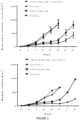
- the kinetics of tumor growth is shown in Figure 1 .
- mice treatment with TRP2-ABX196 resulted in a slower growth of B16-F10 tumors in comparison to that of the vehicle-treated group.
- T/C and TGI values reflect the anti tumor activity of TRP2/ABX196 activity (Table 8; T/C ⁇ 42% and TGI > 50%).
- TRP2/ABX196 The antitumor activity of TRP2/ABX196 is further improved in combination with anti-PD-1 antibody, with a complete stabilization of tumor growth up to day 14 in the latter group; as also indicated by T/C and TGI values (Table 8) which are below 15% and higher than 90%, respectively. Those values indicate a highly active treatment because following NCI guidelines, a T/C below 15% demonstrates the high potency of the treatment.
- mice bearing B16-F10 tumors were treated at D3 with TRP2-ABX196 vaccine, doxorubicin at D7 or a combination of both.
- the kinetics of tumor growth is shown in Figure 3 .
- mice survival is illustrated in Figure 4 . Survival of mice treated with TRP2-ABX196 combined with doxorubicin was significantly improved in comparison to that of the vehicle-treated group ( Table 7 ) while the survival increase did not reach significance in comparison to each treatment modality alone.
- the purpose of this example was to combine the TRP2-ABX196 vaccine with either an anti-PD-1 antibody or the chemotherapeutic agent doxorubicin, known to induce immunogenic cell death.
- mice treated with TRP2-ABX196 vaccine were significantly improved in comparison to the vehicle-treated group.
- TRP2/ABX196 and Doxorubicin treatments present an anti-tumor effect
- those treatments are improved by the combination of the invention (ABX196 plus anti-PD-1 or plus Doxorubicin) as reflected by T/C ratio, which is lower than 16% when mice are treated with the combinations (see Table 8).
- T/C ratio which is lower than 16% when mice are treated with the combinations (see Table 8).
- TGI tumor growth inhibition
- This example describes the specific effect obtained with the vaccine composition of the invention comprising ABX196 as adjuvant, compared to other vaccine compositions comprising other ⁇ -galactosylceramide derivatives as adjuvant.
- mice were administered with 5 ⁇ 10 5 B16-F10 cells.
- the other ⁇ -galactosylceramide derivative used was ⁇ -GalCer of the following formula: -
- the treatment schedule of the first experiment was as follows: Group No Animals Treatment Dose Route Treatment schedule 1 15 Vehicle - IV Q1Dx1 on D7/D10 2 15 ABX196 100 ng IV Q1Dx1 on D10 3 15 ⁇ -GalCer 100 ng IV Q1Dx1 on D10 4 15 Doxorobucin 12 mg/kg IV Q1Dx1 on D7 5 15 Doxorobucin 12 mg/kg IV Q1Dx1 on D7 ABX196 100 ng IV Q1Dx1 on D10 6 15 Doxorobucin 12 mg/kg IV Q1Dx1 on D7 ⁇ -GalCer 100 ng IV Q1Dx1 on D10 TOTAL 90 -
- the treatment schedule of the second experiment was as follows: Group No Animals Treatment Dose Route Treatment schedule 1 15 Vehicle - IV Q1Dx1 on D7/D10
- the ABX196 and ⁇ -Gal-Cer compounds were administered at the dose of 10 or 100 ng per mouse.
- Doxorubicin was administered at the dose of 12 mg/kg.
- Test substance was injected by the intra-venous route in the caudal vein of mice (IV, bolus ) .
- Doxorubicin was injected intravenously in the caudal vein of mice (IV, bolus )
- test substances (ABX196 and ⁇ -Gal-Cer) were administered at a dose volume of 5 mL/kg/adm (i.e. for one mouse weighing 20 g, 100 ⁇ L of test substance was administered) according to the most recent body weight of mice.
- Doxorubicin was administered at a dose volume of 10 mUkg/adm.
- Tumor was induced by subcutaneous injection of 5 ⁇ 10 5 B16-F10 cells in 200 ⁇ L of PBS buffer into the right flank of one hundred and ninety-five (195) C57BL/6 female animals. The day of tumor cell injection in the right flank was considered as D0.
- the treatment schedule is summarized in the table below: Group No. Animals Treatment Dose Route Treatment Schedule 1 15 Vehicle - IV Q1Dx1 on D7/D10 2 15 ABX196 10 ng IV Q1Dx1 on D10 3 15 ⁇ -Gal-Cer 10 ng IV Q1Dx1 on D10 4 15 ABX196 100 ng IV Q1Dx1 on D10 5 15 ⁇ -Gal-Cer 100 ng IV Q1Dx1 on D10 6 15 Doxorubicin 12 mg / kg IV Q1Dx1 on D7 7 15 Doxorubicin 12 mg / kg IV Q1Dx1 on D7 ABX196 10 ng IV Q1Dx1 on D10 8 15 Doxorubicin 12 mg / kg IV Q1Dx1 on D7 ABX196 100 ng IV Q1Dx1 on D10 9 15 Doxorubicin 12 mg / kg IV Q1Dx1 on D7 ⁇ -Gal-Cer 10 ng IV Q1
- Part 1 of the experiment is the same as for example 1, except for the following.
- Anti-PD-1 antibody was prepared in phosphate buffered saline (PBS) or other suitable vehicle according to manufacturer's recommendation.
- PBS phosphate buffered saline
- the CI II-TRP2 peptide (5 mg/tube) was resuspended in DMSO at a concentration of 50 mg/mL.
- the vehicle solution used in group 1 at day 3 contained DMSO diluted in phosphate buffered saline (PBS) at the same final concentration as for the CL II-TRP2/ABX196 vaccine.
- PBS phosphate buffered saline
- the peptide CI II-TRP2 was administered at the dose of 50 ⁇ g per mouse together with 100 ng of adjuvants ABX196 or ⁇ -Gal-Cer.
- the anti-PD-1 antibody was administered at the dose of 10 mg/kg.
- Test substance was injected by the intra-venous route in the caudal vein of mice (IV, bolus ).
- Anti-PD-1 antibody was injected into the peritoneal cavity of mice (Intraperitoneally, IP)
- test substances were administered at a dose volume of 5 mL/kg/adm (i.e. for one mouse weighing 20 g, 100 ⁇ L of test substance was administered) according to the most recent body weight of mice.
- Anti-PD-1 antibody was administered at a dose volume of 10 mL/kg/adm.
- Tumor was induced by subcutaneous injection of 5 ⁇ 10 5 of B16-F10 cells in 200 ⁇ L of PBS buffer into the right flank of one hundred and fifty-six (156) C57BL/6 female animals. The day of tumor cell injection in the right flank was considered as D0.
- the treatment schedule is summarized in the table below: Group No. Animals Treatment Dose Route Treatment Schedule 1 15 Vehicle - IV/IP D3-IV/TWx2 IP 2 15 CL II-TRP2/ABX196 50 ⁇ g / 100 ng IV Q1Dx1 on D3 3 15 Anti-PD-1 Ab 10 mg/kg IP TWx2 on D10/D14/D17/D21 4 15 CL II-TRP2/ABX196 50 ⁇ g / 100 ng IV Q1Dx1 on D3 Anti-PD-1 Ab 10 mg/kg IP TWx2 on D10/D14/D17/D21 5 15 CL II-TRP2- ⁇ -Gal-Cer 50 ⁇ g / 100 ng IV Q1Dx1 on D3 6 15 CL II-TRP2- ⁇ -Gal-Cer 50 ⁇ g / 100 ng IV Q1Dx1 on D3 Anti-PD-1 Ab 10 mg/kg IP TWx2 on D10/D14/D17/D21 TOTAL 90
- the treatment schedule is summarized in the table below: Group No. Animals Treatment Dose Route Treatment Schedule 1 10 Vehicle - IV/IP D3-IV/TWx2 IP 2 10 CL II-TRP2/ABX196 50 ⁇ g / 100 ng IV Q1Dx1 on D3 3 10 CL II-TRP2/ABX196 50 ⁇ g / 100 ng IV Q1Dx1 on D3 Anti-PD-1 Ab 10 mg/kg IP Q1Dx2 on D10/D14
- Immune T cell infiltrates in the tumor were evaluated on D13 and D17. At the time of termination, tumors from 5 mice of each group were collected. For group 2 and 3, balanced proportion between responding and non-responding mice was collected at each day of collection, i.e. D13 and D17.
- each tumor was weighted and transferred to tubes with RPMI culture medium.
- the tumor was mechanically disrupted in small pieces of a few mm size with a scalpel and finally crushed with a 1 mL syringe plunger on a 70 ⁇ m sieve (Ref. 352350, FALCON).
- Cells were next counted after trypan blue staining and one million of cells were centrifuged and resuspended in staining buffer (PBS (ref: 17-516F, Lonza), 0.2% BSA (ref: A7030, Sigma, Saint-Quentin-Fallavier, France), 0.02% NaN 3 (ref: S2002, Sigma)).
- the antibodies directed against the chosen markers were added to the tumor cell suspension, according to the conditions described by the supplier for each antibody.
- the markers CD45, CD3, CD4, CD8 were detected on the cell surface.
- the markers FoxP3, TNFalpha, Perforin, Granzyme were detected intracellularly, after cell permeabilization. Isotype control antibodies was used in each case as negative control.
- the panel of antibodies used to measure the two following populations are listed in the table below: • Treg cell population: CD45+/CD3+/CD4+/CD8-/FoxP3+ • T Cytotoxic populations : CD45+/CD3+/CD8+/TNFa/Perforin/Granzyme Specificity Reference fluorochrome Provider Reference of isotype Isotype fluorochrome Provider FoxP3 130-093-014 PE Miltenyi Biotec A07796 IgG1 PE Beckman Coulter CD8a 553036 PerCP BD Biosciences 553933 IgG2a PerCP BD Biosciences CD3 561389 V450 BD Biosciences 560457 IgG2 V450 BD Biosciences CD4 130-102-444 VioGreen Miltenyi Biotec 130-102-659 IgG2b VioGreen Miltenyi Biotec CD45 557659 APC-Cy7 BD Biosciences 552773 IgG2b APC-Cy7 BD Biosciences
- the mixture of cells and antibodies was incubated for 20 to 30 minutes at room temperature in the dark, washed, and resuspended in 200 ⁇ L staining buffer. All samples were stored on ice and protected from light until Flow Cytometry analysis.
- the stained cells were analyzed with a CyFlow ® space flow cytometer (LSR II, BD Biosciences) equipped with 3 excitation lasers at wavelengths 405, 488 and 633 nm. Flow cytometry data were acquired until either 10,000 mCD45+ events are recorded for each sample, or for a maximum duration of 2 minutes.
- CyFlow ® space flow cytometer LSR II, BD Biosciences
- EXAMPLE 5 Study of ABX196 administered intravenously or intratumorally in combination with anti-PD-1 antibodies.
- B16F10 tumor cells were subcutaneously inoculated in immuno-competent C57BU6 mice.
- Melanoma B16F10 tumor cells were subcutaneously inoculated at day 0 by injecting cells in the flank of 8-10 weeks-old female C57BU6 mice, and animals were then randomly assigned into control (vehicle PBS-treated) and treatments groups.
- mice were intraperitoneally (IP) injected with anti-PD-1 antibodies at Day 6, 9, 12, 15 and 21. Furthermore, ABX196 was administered at 1 dose, intravenously or intratumorally, with one administration at Day 10 when mean of tumor size reached 100mm 3 .
- mice were used between 8 and 10 weeks. 6 weeks-old mice were placed in acclimatization for about 14 days (B16F10 tumor cells implantation at 8 weeks old). 90 animals were used for this study.
- Ventilation and air treatment was performed through frequent turnover (8-20 volumes / hour depending on the density of animals housed) and temperature controlled between 22 and 25°C. Humidity was maintained between 40 and 70%. Artificial lighting was maintained 12 hours a day. Quantity and access to food (pellets) and drink (tap water) was checked daily. Mice were housed in collective cages, with 10 animals per cage (820cm2 cage). Cages were renewed once a week by animal care taker.
- Tumor volume and body weight of the animals were measured and recorded three times per week. A tumor volume exceeding 2000mm3 or a weight loss greater than 15% relative to the initial weight of the animal were considered as endpoints.
- Ketamine 0.33mg/ml
- Xylazine 33.6 ⁇ g/ml
- Melanoma B16F10 cells were cultured in vitro according to provider's specifications, RPMI 1640 supplemented with FBS at the final concentration of 10%. Before implantation in mice, cell viability was assessed using Trypan Blue exclusion and a cell suspension was prepared according to the viable cell count.
- B16F10 cells were implanted subcutaneously in the right flank of C57BL/6 immunocompetent mice (8 week-old female).
- the implantation procedure was as follows (all steps were carried out under sterile laminar flow conditions): Mice (body weight around 20g) were anesthetized with an intraperitoneal injection of 90 ⁇ L of anesthetic (ie 1.5mg/Kg Ketamine and Xylazine 150 ⁇ g/Kg).
- the cells to be implanted were resuspended in sterile PBS and the volume needed to implant was loaded in 1 ml syringe with a 25G needle (1 000,000 cells/100 ⁇ L).
- Anti-PD-1 monoclonal antibodies (a-PD-1) treatment schedule was applied, at 100 ⁇ g by i.p. injection. Treatment was repeated 4 times, at Days 6, 9, 12, 15 and 18. 27G gauge needle was used for i.p. injections.
- Dulbecco's PBS was used to dissolve anti-PD-1 Ab at a concentration of 1,0 mg/mL (volume of 100uL). The stock solution was then aliquoted (amount for 1 day treatment) and stored at -20°C.
- ABX196 was administered at Day 10 either:
- ABX196 was provided as a solution at 250 ⁇ g/mL in PBS. An ABX196 solution at 1 ⁇ g/mL was prepared and stored at 4°C. At Day 10, 100 ⁇ L of the 1 ⁇ g/mL ABX196 solution was injected in the tail vein of the mice from Groups 3 & 4.
- ABX196 was provided as a solution at 250 ⁇ g/mL in PBS. An ABX196 solution at 0,4 ⁇ g/mL was prepared and stored at 4°C. At Day 10, animals from Groups 5 & 6 was anesthetized and 25 ⁇ L of the 0,4 ⁇ g/mL ABX196 solution were injected in the tumor.
- B16F10 Vehicle 20 C57BL/6 PBS Days 6, 9, 12, 15 and 18 i.p 2
- B16F10 Anti-PD-1 mAb 20 C57BL/6 100 ⁇ g Days 6, 9, 12, 15 and 18 i.p 3
- B16F10 ABX196 20 C57BL/6 100ng Day 10 i.v 4
- B16F10 Anti-PD-1 mAb +ABX196 20 C57BL/6 100 ⁇ g Anti-PD-1 mAb Days 6, 9, 12, 15 and 18 i.p 100ng ABX196 Day 10 i.v 5
- B16F10 ABX196 20 C57BL/6 10ng Day 10 i.t 6
- B16F10 Anti-PD-1 mAb +ABX196 20 C57BL/6 100ng Anti-PD-1 mAb Days 6, 9, 12, 15 and 18 i.p 10ng ABX196 Day 10 i.t
- Anti-tumor activity index calculation was the same as for example 1 for the T/C (%) index and the TGI (%).
- the results show that the combination of Anti-PD-1 Ab with ABX196 according to the invention is more effective in decreasing the tumor volume than ABX196 alone or Anti-PD-1 Ab alone, administered either i.v. or i.t.
- the results show that the combination of Anti-PD-1 Ab with ABX196 according to the invention lead to a higher percentage of survival than ABX196 alone or than Anti-PD-1 Ab alone, administered either i.v. or i.t.
- Example 6 Determination of the anti-tumoral activity of ABX196 administered systemically alone or combined with anti-PD-1 antibody in colon and bladder cancers.
- Anti-PD-1 antibody (ref.: BE0146, BioXcell; clone: RMP1-14, reactivity: mouse; isotype: Rat IgG2a; storage conditions: +4°C).
- Anti-PD-1 antibody were prepared in phosphate buffered saline (PBS) or other suitable vehicle according to manufacturer's recommendation.
- PBS phosphate buffered saline
- ABX196 was provided as a solution at 250 ⁇ g/mL.
- ABX196 was administered at the dose of 100 ng per mouse.
- the anti-PD-1 antibody was administered at the dose of 10 mg/kg.
- Test substance was injected by the intravenous route in the caudal vein of mice (IV, bolus).
- Anti-PD-1 antibody was injected into the peritoneal cavity of mice (Intraperitoneally, IP)
- ABX196 was administered at a fixed dose volume of 100 ⁇ L (i.e. approximately 5 mL/kg/adm.for one mouse weighing 20 g).
- Anti-PD-1 antibody was administered at a dose volume of 10 mL/kg/adm.
- Tumor cells were grown as monolayer at 37°C in a humidified atmosphere (5% CO2, 95% air).
- the culture medium was RPMI 1640 containing 2 mM L-glutamine (ref: BE12-702F, Lonza, Verviers, Belgium) supplemented with 10% fetal bovine serum (ref: 3302, Lonza).
- Tumor cells were adherent to plastic flasks.
- tumor cells were detached from the culture flask by a 5-minute treatment with trypsin-versene (ref: BE02-007E, Lonza), in Hanks' medium without calcium or magnesium (ref: BE10-543F, Lonza) and neutralized by addition of complete culture medium.
- the cells were counted and their viability were assessed by 0.25% trypan blue exclusion assay.
- mice Sixty-three (63) healthy female BALB/c mice, 6-7 weeks old, were obtained from CHARLES RIVER (L'Arbresles) for each models syngeneic to this strain of mice (i.e. CT-26) and 68 (sixty-eight) healthy female C3H/HeJ (C3H/HeOuJ) mice, 6-7 weeks old, were obtained from The Jackson Laboratory (Bar Harbor, Maine) for the MBT-2 model.
- CHARLES RIVER L'Arbresles
- Tumors were induced by subcutaneous injection of 1 ⁇ 10 6 of CT-26 cells in 200 ⁇ L of RPMI 1640 into the right flank of 63 female BALB/C mice.
- MBT-2 tumors were induced by subcutaneous injection of 1 ⁇ 10 6 cells in 200 ⁇ L of RPMI 1640 into the right flank of sixty-eight (68) female animals.
- the treatment started when the tumors reached a mean volume of 80-120 mm 3 .
- Forty-eight animals (48) out of sixty-three (63) for CT-26 model or sixty-eight (68) for the MBT-2 model were randomized according to their individual tumor volume into 4 groups each of 12 animals using Vivo Manager@ software (Biosystemes, Couternon, France).
- a statistical test analysis of variance, ANOVA was performed to test for homogeneity between groups.
- the treatment schedule was as follows:
- the treatment schedule is summarized in the table below: Group No animals Treatment Dose (mg/kg/adm) Adm.
- Route Treatment schedule 1 12 Vehicle ABX196 - IV Vehicle Anti-PD-1 Ab - IP TWx2 2 12 ABX196 100 ng IV Q1Dx1 3 12 Anti-PD-1 Ab 10 IP TWx2 4 12 ABX196 100 ng IV Q1Dx1 Anti-PD-1 Ab* 10 IP TWx2 - * : IP injection of anti-PD-1 Ab initiated after the first IV administration of ABX196 (Concomittant administration) without any delay.
- Tumor volume width 2 ⁇ length 2
- Anti-tumor activity index calculation was the same as for example 1 for the T/C (%) index and the TGI (%).
- the humane endpoints were the same as for example 1.
- Necropsy (macroscopic examination) was performed on all terminated animals in the study, and, if possible, on all euthanized moribund or found dead animals.
- Isoflurane gas anesthesia was used for all procedures: tumor inoculation and i.v. injections.
- Non-pharmacological care was provided for all painful procedures. Additionally, pharmacological care not interfering with studies (topic treatment) could be provided at the recommendation of the attending veterinarian.
- Euthanasia of animals was performed by gas anesthesia over-dosage (Isoflurane) followed by cervical dislocation or exsanguination.
- antitumor activity indexes are given in the Table below: ABX196 Anti-PD-1 ABX196 + Anti-PD-1 T/C 51 58 40 TGI 72 42 80
- antitumor activity indexes are given in the Table below: ABX196 Anti-PD-1 ABX196+Anti-PD-1 T/C 57 78 36 TGI 43 22 64
- mice survival between treatments Statistical analysis of mice survival between treatments.
- Treatment Vehicle ABX196 Anti-PD-1 ABX196 + Anti-PD-1 Vehicle *0,02 * 0,02 ⁇ 0,0001 **** ABX196 * 0 02 NS *** 0,0002 Anti-PD-1 * 0,02 NS 0,01 * ABX1 96 + Anti-PD-1 ⁇ 0,0001 **** *** 0,0002 0,01 * Global comparison of all survival curves: p value 0,0045 (***)(Log-Rank (Mantel-cox) test) Summary of pairwise comparisons
- mice treated with ABX196 plus anti-PD-1 are significantly improved compared to vehicle-treated group (see Figure 9 ).
- the T/C and TGI ratio clearly demonstrate the synergistic effect between ABX196 and anti-PD-1 antibodies. Only the group with ABX196+Anti-PD-1 treatment presents a T/C ⁇ 42%.
- Combination of ABX196+anti-PD-1 antibodies reduces significantly the tumor growth (see Figure 10 ).
- the T/C and TGI ratio clearly demonstrate the synergy between between ABX196 and anti-PD-1 antibodies.
- the survival of mice treated with ABX196 + anti-PD-1 is significantly improved in comparison to the vehicle-treated group (see Figure 11 ).
- the anti-tumoral activity is further improved when compared to ABX196 alone or anti-PD-1 alone with a median survival of 27 or 28 days that increases to 34 days, when combined with anti-PD-1 antibody.
- Example 7 Evaluation of the anti-tumoral activity of ABX196 in combination with doxorubicin or sorafenib or anti-PD-1 antibody in the orthotopic Hepa 1-6 hepatocarcinoma model.
- Sorafenib (Nexavar ® , Bayer Pharma, 200 mg/pill).
- Anti-PD-1 antibody (ref.: BE0146, BioXcell; clone: RMP1-14, reactivity: mouse; isotype: Rat IgG2a; storage conditions: +4°C).
- Doxorubicin was diluted in NaCl 0.9%
- Anti-PD-1 antibody was prepared in phosphate buffered saline (PBS) or other suitable vehicle according to manufacturer's recommendation.
- PBS phosphate buffered saline
- the ABX196 was provided as a solution at 250 ⁇ g/mL. Dilution of ABX196 was performed in PBS buffer.
- the vehicle solution used in group 1 at day 5 contained DMSO diluted in phosphate buffered saline (PBS) at the same final concentration as the ABX196 test item.
- PBS phosphate buffered saline
- the ABX196 was administered at the dose of 100 ng per mouse.
- Doxorubicin was administered at the dose of 12 mg/kg.
- the anti-PD-1 antibody was administered at the dose of 10 mg/kg.
- Sorafenib was administered at the dose of 100 mg/kg.
- ABX 196 was injected by the intra-venous route in the caudal vein of mice (IV, bolus).
- Doxorubicin was administered intravenously in the caudal vein of mice (IV, bolus)
- Anti-PD-1 antibody was injected into the peritoneal cavity of mice (Intraperitoneally, IP)
- Sorafenib was administered by oral gavage (per os, PO) via a cannula.
- ABX196 was administered at a fixed dose volume of 100 ⁇ L (approximately 5 mL/kg/adm for a mouse weighing 20 g).
- Doxorubicin, anti PD-1 antibody and Sorafenib were administered at a dose volume of 10 mL/kg/adm. according to the most recent body weight of mice.
- Cell line Type Origin Hepa 1-6 Hepatocellular carcinoma ATCCa a American Type Culture Collection, Manassas, Virginia, USA
- the Hepa 1-6 cell line is a derivative of the BW7756 mouse hepatoma that arose in a C57/L mouse.
- Tumor cells were grown as monolayer at 37°C in a humidified atmosphere (5% CO2, 95% air).
- the culture medium was DMEM containing 4 mM L-glutamine (ref: BE12-604F, Lonza, Verviers, Belgium), 4.5 g/l glucose and 1 mM NaPyr supplemented with 10% fetal bovine serum (ref: 3302, Lonza).
- the cells were adherent to plastic flasks.
- tumor cells were detached from the culture flask by a 5-minute treatment with trypsin-versene (ref: BE17-161E, Lonza), in Hanks' medium without calcium or magnesium (ref: BE10-543F, Lonza) and neutralized by addition of complete culture medium. The cells were counted in a hemocytometer and their viability was assessed by 0.25% trypan blue exclusion assay.
- C57BU6J mice One hundred (100) healthy female C57BU6 (C57BLI6J) mice, 5-6 weeks old, were obtained from JANVIER LABS (Le Genest-Saint-Isle).
- mice were positioned prone in a dedicated mouse body cradle which was slidded in a volume coil (38 mm internal diameter) within the Pharmascan.
- mice were continuously anesthetized using isoflurane (Minerve, Bondoufle, France) in a mixture of air via a nose piece.
- the mouse's breathing rate was continuously monitored using a pressure sensor taped on its abdomen.
- Physiological signals were monitored via a laptop placed next to the MRI workstation and connected to the sensors by fiber optic cables (SA Instruments, USA).
- Type TE/TR Matrix size FOV (mm) No of slices Slice thickness / spacing (mm) No averages FLASH 6/100 128 ⁇ 128 60 ⁇ 60 NA 1 / NA 1
- TE is the time to echo
- TR is the repetition time
- FOV is the field of view.
- the FOV size and the sequence parameters were adapted to provide the best imaging results.
- One million (1x10⁶) of tumor cells in 50 ⁇ L of RPMI 1640 medium were transplanted via intra-splenic injection into 100 C57BL/6 mice. Briefly, a small left subcostal flank incision was made. Spleen was exteriorized. The spleen was exposed on the sterile gauze pad, and injected under visual control with the cell suspension with a 27-gauge needle. After the cell inoculation, the spleen was excised. The day of tumor cell injection was considered as D0.
- the treatment started at D5.
- Ninety-nine animals (99) out of one hundred (100) were randomized according to their individual body weight into 3 groups of 13 animals and 5 groups of 12 animals using Vivo Manager@ software (Biosystemes, Couternon, France).
- a statistical test analysis of variance, ANOVA was performed to test for homogeneity between groups.
- the treatment schedule was as follows:
- the treatment schedule is summarized in the table below: Group No animals Treatment Dose (mg/kg/adm) Adm.
- Route Treatment schedule 1 13 Vehicle NA IV Q1Dx1 on D5 2 13 Sorafenib 100 PO Q1Dx21 start on D5 3 12 ABX196 100 ng IV Q1Dx1 on D5 Sorafenib 100 PO Q1Dx21 start on D5 4 12 Doxorubicin 12 IV Q1Dx1 on D5 5 12 ABX196 100 ng IV Q1Dx1 on D5 Doxorubicin 12 IV Q1Dx1 on D5 6 12 Anti-PD-1 10 IP TWx2 on D7/D10/D14/D17 7 12 ABX196 100 ng IV Q1Dx1 on D5 Anti-PD-1 10 IP TWx2 on D7/D10/D14/D17
- mice per group from group 1 to 8 were imaged (40 animals per day). A semi-quantitative analysis was then performed.
- liver was weighted. The number of metastases was evaluated macroscopically and the localization, the appearance (shape, colour, consistency) and the size of each of them was recorded. Macroscopic photography of the liver was taken.
- Livers/tumors from all animals were cut into slices 4 mm tick and fixed in 4% neutral buffered formalin for 24h to 48h, and then embedded in paraffin (Histosec ® , Merck, Darmstadt, Germany).
- Necropsy (macroscopic examination) was performed on all terminated animals in the study, and, if possible, on all euthanized moribund or found dead animals.
- Isoflurane gas anesthesia was used for all procedures: surgery and blood collection.
- Multimodal carprofen/buprenorphine or xylocaine/buprenorphine analgesia protocol was adapted to the severity of the surgical procedure. Non-pharmacological care was provided for all painful procedures. Additionally, pharmacological care no interfering with studies (topic treatment) could be provided at the recommendation of the attending veterinarian.
- Euthanasia of animals was performed by gas anesthesia over-dosage (Isoflurane) followed by cervical dislocation or exsanguination.
- the treatment efficacy was assessed in terms of the effects of the test substance on the tumor volumes of treated animals relative to control animals.
- the following evaluation criteria of antitumor efficacy were determined:
- combinations treatments including ABX196 present less tumor invasion.
- the tumor invasion reduction is transduced into better survival.
Landscapes
- Health & Medical Sciences (AREA)
- Life Sciences & Earth Sciences (AREA)
- Chemical & Material Sciences (AREA)
- Medicinal Chemistry (AREA)
- General Health & Medical Sciences (AREA)
- Veterinary Medicine (AREA)
- Public Health (AREA)
- Animal Behavior & Ethology (AREA)
- Pharmacology & Pharmacy (AREA)
- Epidemiology (AREA)
- Immunology (AREA)
- Mycology (AREA)
- Microbiology (AREA)
- Oncology (AREA)
- Cell Biology (AREA)
- Organic Chemistry (AREA)
- Engineering & Computer Science (AREA)
- Molecular Biology (AREA)
- Chemical Kinetics & Catalysis (AREA)
- General Chemical & Material Sciences (AREA)
- Nuclear Medicine, Radiotherapy & Molecular Imaging (AREA)
- Bioinformatics & Cheminformatics (AREA)
- Biomedical Technology (AREA)
- Vascular Medicine (AREA)
- Dermatology (AREA)
- Biophysics (AREA)
- Genetics & Genomics (AREA)
- Biochemistry (AREA)
- Proteomics, Peptides & Aminoacids (AREA)
- Communicable Diseases (AREA)
- Endocrinology (AREA)
- Medicines That Contain Protein Lipid Enzymes And Other Medicines (AREA)
- Medicines Containing Antibodies Or Antigens For Use As Internal Diagnostic Agents (AREA)
- Pharmaceuticals Containing Other Organic And Inorganic Compounds (AREA)
- Acyclic And Carbocyclic Compounds In Medicinal Compositions (AREA)
- Medicines Containing Material From Animals Or Micro-Organisms (AREA)
Claims (13)
- Antitumorale pharmazeutische Kombination, die umfasst:(i) eine Verbindung ABX196 der Formel (I)
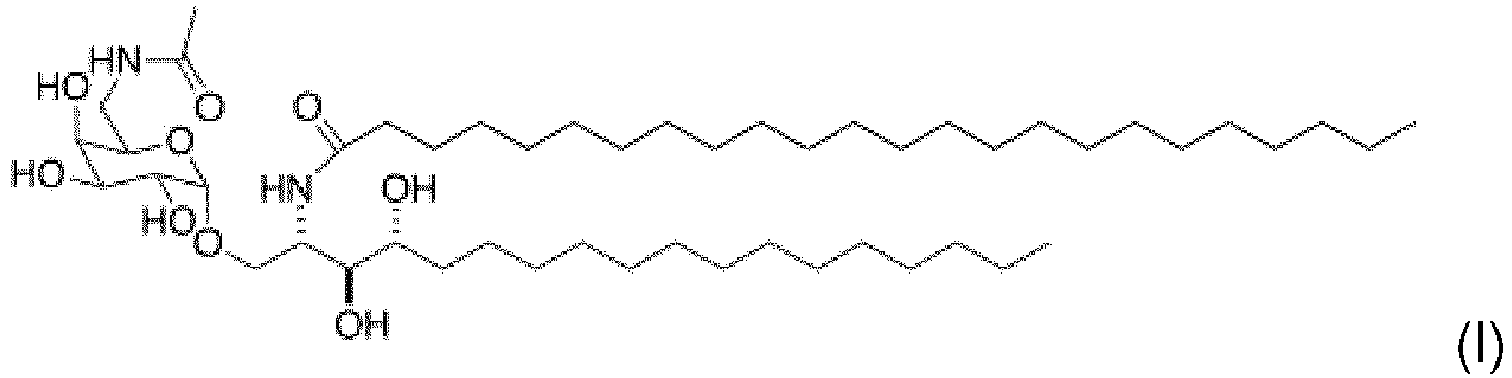 (ii) zumindest ein chemotherapeutisches Mittel und/oder zumindest ein immuntherapeutisches Mittel,zur Verwendung bei der Behandlung von Krebs,wobei das zumindest eine immuntherapeutische Mittel kein Antigen ist,wobei das zumindest eine immuntherapeutische Mittel ein für PD-1 spezifischer Antikörper ist,wobei das zumindest eine chemotherapeutische Mittel aus der Gruppe ausgewählt ist, die aus Doxorubicin, Idarubicin, Epirubicin und Sorafenib besteht, undmit der Maßgabe, dass, wenn das chemotherapeutische Mittel aus der Gruppe ausgewählt ist, die aus Doxorubicin, Idarubicin und Epirubicin besteht, der Krebs ein Melanom ist.
 - Antitumorale pharmazeutische Kombination zu ihrer Verwendung nach Anspruch 1, wobei die Verbindung ABX196 der Formel (I)

- Antitumorale pharmazeutische Kombination zu ihrer Verwendung nach Anspruch 1 oder 2, wobei die Verbindung ABX196 der Formel (I) (i)

die Impfstoffzusammensetzung (iii) und das zumindest eine chemotherapeutische Mittel und/oder das zumindest eine immuntherapeutische Mittel (ii) getrennt verabreicht werden. - Antitumorale pharmazeutische Kombination zu ihrer Verwendung nach Anspruch 1 oder 2, wobei die Verbindung ABX196 der Formel (I) (i)
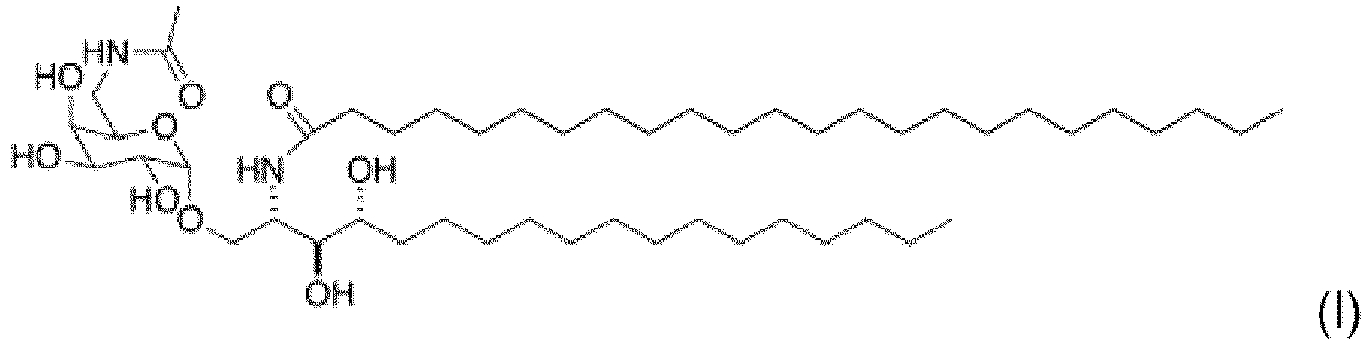
die Impfstoffzusammensetzung (iii) und das zumindest eine chemotherapeutische Mittel und/oder das zumindest eine immuntherapeutische Mittel (ii) semigleichzeitig verabreicht werden. - Antitumorale pharmazeutische Kombination zu ihrer Verwendung nach Anspruch 1 oder 2, wobei die Verabreichungen der Verbindung ABX196 der Formel (I) (i)

der Impfstoffzusammensetzung (iii) und des zumindest einen chemotherapeutischen Mittels und/oder des zumindest einen immuntherapeutischen Mittels (ii) über einen Zeitraum verteilt sind, um die maximale Wirksamkeit der Kombination zu erzielen. - Impfstoffzusammensetzung, die eine Verbindung ABX196 der Formel (I)
 und ein Tumorantigen umfasst, zur Verwendung in Kombination mit zumindest einem chemotherapeutischen Mittel und/oder zumindest einem immuntherapeutischen Mittel bei der Behandlung von Krebs,wobei das zumindest eine immuntherapeutische Mittel kein Antigen ist,wobei das zumindest eine Immuntherapeutikum ein für PD-1 spezifischer Antikörper ist,wobei das zumindest eine chemotherapeutische Mittel aus der Gruppe ausgewählt ist, die aus Doxorubicin, Idarubicin, Epirubicin und Sorafenib besteht, undmit der Maßgabe, dass, wenn das chemotherapeutische Mittel aus der Gruppe ausgewählt ist, die aus Doxorubicin, Idarubicin und Epirubicin besteht, der Krebs ein Melanom ist.
 - Verbindung ABX196 der Formel (I)
 zur Verwendung in Kombination mit zumindest einem chemotherapeutischen Mittel und/oder zumindest einem immuntherapeutischen Mittel bei der Behandlung von Krebs, wobei das zumindest eine immuntherapeutische Mittel kein Antigen ist,wobei das zumindest eine Immuntherapeutikum ein für PD-1 spezifischer Antikörper ist,wobei das zumindest eine chemotherapeutische Mittel aus der Gruppe ausgewählt ist, die aus Doxorubicin, Idarubicin, Epirubicin und Sorafenib besteht, undmit der Maßgabe, dass, wenn das chemotherapeutische Mittel aus der Gruppe ausgewählt ist, die aus Doxorubicin, Idarubicin und Epirubicin besteht, der Krebs ein Melanom ist.
 - Verbindung ABX196 der Formel (I)

- Kombinationspräparat, das umfasst:(i) eine oder mehrere Dosierungseinheiten einer Verbindung ABX196 der Formel (I)
 (ii) eine oder mehrere Dosierungseinheiten zumindest eines chemotherapeutischen Mittels und/oder eines oder mehrerer Darreichungseinheiten eines immuntherapeutischen Mittels,zur Verwendung bei der Behandlung von Krebs,wobei das zumindest eine immuntherapeutische Mittel kein Antigen ist,wobei das zumindest eine Immuntherapeutikum ein für PD-1 spezifischer Antikörper ist,wobei das zumindest eine chemotherapeutische Mittel aus der Gruppe ausgewählt ist, die aus Doxorubicin, Idarubicin, Epirubicin und Sorafenib besteht, undmit der Maßgabe, dass, wenn das chemotherapeutische Mittel aus der Gruppe ausgewählt ist, die aus Doxorubicin, Idarubicin und Epirubicin besteht, der Krebs ein Melanom ist.
 - Kombinationspräparat zu seiner Verwendung nach Anspruch 9, wobei die Verbindung ABX196 der Formel (I)

- Antitumorale pharmazeutische Kombination zu ihrer Verwendung nach einem der Ansprüche 1 bis 5, Impfstoffzusammensetzung zu ihrer Verwendung nach Anspruch 6, Verbindung ABX196 zu ihrer Verwendung nach Anspruch 7 oder 8 oder Kombinationspräparat zu seiner Verwendung nach Anspruch 9 oder 10, wobei das chemotherapeutische Mittel Doxorubicin oder Sorafenib ist.
- Antitumorale pharmazeutische Kombination zu ihrer Verwendung nach einem der Ansprüche 1 bis 5, Impfstoffzusammensetzung zu ihrer Verwendung nach Anspruch 6, Verbindung ABX196 zu ihrer Verwendung nach Anspruch 7 oder 8 oder Kombinationspräparat zu seiner Verwendung nach Anspruch 9 oder 10, wobei das immuntherapeutische Mittel ein monoklonaler Anti-PD1-Antikörper ist.
- Antitumorale pharmazeutische Kombination zu ihrer Verwendung nach einem der Ansprüche 1 bis 5, Impfstoffzusammensetzung zu ihrer Verwendung nach Anspruch 6, Verbindung ABX196 zu ihrer Verwendung nach Anspruch 7 oder 8 oder Kombinationspräparat zu seiner Verwendung nach Anspruch 9 oder 10, wobei der Krebs aus der Gruppe ausgewählt ist, die aus Melanom, Hepatokarzinom, Kolorektalkrebs und Blasenkrebs besteht.
Applications Claiming Priority (2)
| Application Number | Priority Date | Filing Date | Title |
|---|---|---|---|
| EP16306169 | 2016-09-14 | ||
| PCT/EP2017/073202 WO2018050782A1 (en) | 2016-09-14 | 2017-09-14 | Combinations including abx196 for the treatment of cancer |
Publications (2)
| Publication Number | Publication Date |
|---|---|
| EP3512557A1 EP3512557A1 (de) | 2019-07-24 |
| EP3512557B1 true EP3512557B1 (de) | 2024-09-25 |
Family
ID=56990396
Family Applications (1)
| Application Number | Title | Priority Date | Filing Date |
|---|---|---|---|
| EP17771393.0A Active EP3512557B1 (de) | 2016-09-14 | 2017-09-14 | Kombinationen mit abx196 zur behandlung von krebs |
Country Status (14)
| Country | Link |
|---|---|
| US (2) | US11278552B2 (de) |
| EP (1) | EP3512557B1 (de) |
| JP (1) | JP6982078B2 (de) |
| KR (1) | KR102606179B1 (de) |
| CN (1) | CN110831629B (de) |
| AU (1) | AU2017326569B2 (de) |
| BR (1) | BR112019004906A2 (de) |
| CU (1) | CU24650B1 (de) |
| ES (1) | ES2999021T3 (de) |
| IL (1) | IL265268B (de) |
| MX (1) | MX2019002947A (de) |
| RU (1) | RU2770432C2 (de) |
| WO (1) | WO2018050782A1 (de) |
| ZA (1) | ZA201901578B (de) |
Families Citing this family (4)
| Publication number | Priority date | Publication date | Assignee | Title |
|---|---|---|---|---|
| ES2893549T3 (es) | 2017-09-13 | 2022-02-09 | Abivax | ABX196 para su utilización en el tratamiento de cáncer de vejiga |
| US20220160659A1 (en) * | 2019-03-04 | 2022-05-26 | National University Corporation Hokkaido University | PHARMACEUTICAL COMPOSITION COMPRISING a-GALACTOSYLCERAMIDE AND/OR DENDRITIC CELLS PULSED WITH a-GALACTOSYLCERAMIDE |
| EP4000618A1 (de) * | 2020-11-13 | 2022-05-25 | Manfred Motz | Kombination wenigstens eines hemmstoffes des xc-transporters mit wenigstens einem hemmstoff der membranständigen katalase zur hemmung und/oder inaktivierung von tumorzellen |
| MX2023010240A (es) | 2021-03-01 | 2023-11-24 | Deciduous Therapeutics Inc | Compuestos para activar células t asesinas naturales invariantes y métodos de uso en la eliminación de células senescentes inflamatorias. |
Family Cites Families (8)
| Publication number | Priority date | Publication date | Assignee | Title |
|---|---|---|---|---|
| KR100764678B1 (ko) * | 2005-07-13 | 2007-10-09 | 재단법인서울대학교산학협력재단 | 알파-갈락토실세라마이드를 아쥬반트로 포함하는 비강투여용 백신 조성물 |
| PT2056842E (pt) * | 2006-04-07 | 2013-01-24 | Univ Chicago | Galactosil-ceramidas modificadas para coloração e estimulação de células t assassinas naturais |
| EP1938836A1 (de) * | 2006-12-28 | 2008-07-02 | Universite Rene Descartes (Paris V) | Verbindungen mit Shigatoxin-B-Untereinheit und Mittel zur Stimulation von NKT-Zellen |
| CA2708246C (en) | 2007-12-05 | 2016-05-24 | Wittycell | Compositions for and methods of enhancing the immune response to antigens |
| KR101050829B1 (ko) | 2008-10-02 | 2011-07-20 | 서울대학교산학협력단 | 항 pd-1 항체 또는 항 pd-l1 항체를 포함하는 항암제 |
| CN102215864A (zh) * | 2008-10-08 | 2011-10-12 | 威蒂赛尔公司 | 用于抗流感的疫苗组合物 |
| CA2792754C (en) * | 2010-03-12 | 2019-11-12 | The United States Of America, As Represented By The Secretary, Department Of Health And Human Services | .beta.-mannosylceramide and stimulation of nkt cell anti-tumor immunity |
| PT2897620T (pt) * | 2012-09-21 | 2020-09-03 | Intensity Therapeutics Inc | Método de tratamento de cancro |
-
2017
- 2017-09-14 WO PCT/EP2017/073202 patent/WO2018050782A1/en not_active Ceased
- 2017-09-14 MX MX2019002947A patent/MX2019002947A/es unknown
- 2017-09-14 AU AU2017326569A patent/AU2017326569B2/en not_active Ceased
- 2017-09-14 CN CN201780063261.XA patent/CN110831629B/zh active Active
- 2017-09-14 EP EP17771393.0A patent/EP3512557B1/de active Active
- 2017-09-14 BR BR112019004906A patent/BR112019004906A2/pt not_active Application Discontinuation
- 2017-09-14 KR KR1020197007554A patent/KR102606179B1/ko active Active
- 2017-09-14 ES ES17771393T patent/ES2999021T3/es active Active
- 2017-09-14 CU CU2019000019A patent/CU24650B1/es unknown
- 2017-09-14 RU RU2019107115A patent/RU2770432C2/ru active
- 2017-09-14 US US16/333,531 patent/US11278552B2/en not_active Expired - Fee Related
- 2017-09-14 IL IL265268A patent/IL265268B/en unknown
- 2017-09-14 JP JP2019535980A patent/JP6982078B2/ja active Active
-
2019
- 2019-03-13 ZA ZA2019/01578A patent/ZA201901578B/en unknown
-
2021
- 2021-12-06 US US17/543,247 patent/US11826372B2/en active Active
Also Published As
| Publication number | Publication date |
|---|---|
| MX2019002947A (es) | 2019-07-22 |
| RU2019107115A3 (de) | 2021-02-04 |
| ES2999021T3 (en) | 2025-02-24 |
| US20190328747A1 (en) | 2019-10-31 |
| CU20190019A7 (es) | 2019-11-04 |
| AU2017326569A1 (en) | 2019-04-04 |
| RU2019107115A (ru) | 2020-09-14 |
| CA3036598A1 (en) | 2018-03-22 |
| EP3512557A1 (de) | 2019-07-24 |
| WO2018050782A1 (en) | 2018-03-22 |
| IL265268B (en) | 2022-09-01 |
| US11826372B2 (en) | 2023-11-28 |
| KR102606179B1 (ko) | 2023-11-28 |
| JP2019531343A (ja) | 2019-10-31 |
| ZA201901578B (en) | 2022-04-28 |
| RU2770432C2 (ru) | 2022-04-18 |
| AU2017326569A2 (en) | 2019-05-30 |
| CU24650B1 (es) | 2023-02-13 |
| CN110831629A (zh) | 2020-02-21 |
| CN110831629B (zh) | 2022-08-23 |
| AU2017326569B2 (en) | 2023-02-09 |
| US11278552B2 (en) | 2022-03-22 |
| US20220193089A1 (en) | 2022-06-23 |
| KR20190051983A (ko) | 2019-05-15 |
| JP6982078B2 (ja) | 2021-12-17 |
| IL265268A (en) | 2019-05-30 |
| BR112019004906A2 (pt) | 2019-06-25 |
Similar Documents
| Publication | Publication Date | Title |
|---|---|---|
| US11826372B2 (en) | Combinations including ABX196 for the treatment of cancer | |
| US11000548B2 (en) | Combination immune therapy and cytokine control therapy for cancer treatment | |
| US20220133799A1 (en) | Combination immune therapy and cytokine control therapy for cancer treatment | |
| MD3455259T2 (ro) | Combinație de anticorpi anti-PD-1 și radiație pentru tratarea cancerului | |
| CA3036598C (en) | Combinations including abx196 for the treatment of cancer | |
| HK40011701B (en) | Combinations including abx196 for the treatment of cancer | |
| HK40011701A (en) | Combinations including abx196 for the treatment of cancer | |
| AU2018332046B2 (en) | ABX196 for use in the treatment of bladder cancer | |
| RU2778812C2 (ru) | Abx196 для применения при лечении рака мочевого пузыря | |
| US20240010726A1 (en) | Lfa-1 signalling mediator for use in cancer therapy | |
| EP4536712A1 (de) | Verfahren und zusammensetzungen zur verbesserten antigenpräsentation in der tumormikroumgebung | |
| EP4615472A1 (de) | Zusammensetzungen und systeme für kombinatorische therapien mit fucosylierten zellen und immuncheckpoint-inhibitoren sowie verfahren zur herstellung und verwendung davon |
Legal Events
| Date | Code | Title | Description |
|---|---|---|---|
| STAA | Information on the status of an ep patent application or granted ep patent |
Free format text: STATUS: UNKNOWN |
|
| STAA | Information on the status of an ep patent application or granted ep patent |
Free format text: STATUS: THE INTERNATIONAL PUBLICATION HAS BEEN MADE |
|
| PUAI | Public reference made under article 153(3) epc to a published international application that has entered the european phase |
Free format text: ORIGINAL CODE: 0009012 |
|
| STAA | Information on the status of an ep patent application or granted ep patent |
Free format text: STATUS: REQUEST FOR EXAMINATION WAS MADE |
|
| 17P | Request for examination filed |
Effective date: 20190312 |
|
| AK | Designated contracting states |
Kind code of ref document: A1 Designated state(s): AL AT BE BG CH CY CZ DE DK EE ES FI FR GB GR HR HU IE IS IT LI LT LU LV MC MK MT NL NO PL PT RO RS SE SI SK SM TR |
|
| AX | Request for extension of the european patent |
Extension state: BA ME |
|
| DAV | Request for validation of the european patent (deleted) | ||
| DAX | Request for extension of the european patent (deleted) | ||
| STAA | Information on the status of an ep patent application or granted ep patent |
Free format text: STATUS: EXAMINATION IS IN PROGRESS |
|
| 17Q | First examination report despatched |
Effective date: 20200608 |
|
| REG | Reference to a national code |
Ref country code: HK Ref legal event code: DE Ref document number: 40011701 Country of ref document: HK |
|
| P01 | Opt-out of the competence of the unified patent court (upc) registered |
Effective date: 20230515 |
|
| REG | Reference to a national code |
Ref country code: DE Ref legal event code: R079 Free format text: PREVIOUS MAIN CLASS: A61K0045060000 Ipc: A61K0031704000 Ref country code: DE Ref legal event code: R079 Ref document number: 602017085069 Country of ref document: DE Free format text: PREVIOUS MAIN CLASS: A61K0045060000 Ipc: A61K0031704000 |
|
| GRAP | Despatch of communication of intention to grant a patent |
Free format text: ORIGINAL CODE: EPIDOSNIGR1 |
|
| STAA | Information on the status of an ep patent application or granted ep patent |
Free format text: STATUS: GRANT OF PATENT IS INTENDED |
|
| RIC1 | Information provided on ipc code assigned before grant |
Ipc: A61K 31/675 20060101ALI20231114BHEP Ipc: A61K 31/555 20060101ALI20231114BHEP Ipc: A61K 31/7032 20060101ALI20231114BHEP Ipc: A61K 39/395 20060101ALI20231114BHEP Ipc: A61K 39/00 20060101ALI20231114BHEP Ipc: A61P 35/00 20060101ALI20231114BHEP Ipc: A61K 45/06 20060101ALI20231114BHEP Ipc: A61K 31/44 20060101ALI20231114BHEP Ipc: A61K 31/136 20060101ALI20231114BHEP Ipc: A61K 31/704 20060101AFI20231114BHEP |
|
| INTG | Intention to grant announced |
Effective date: 20231201 |
|
| GRAJ | Information related to disapproval of communication of intention to grant by the applicant or resumption of examination proceedings by the epo deleted |
Free format text: ORIGINAL CODE: EPIDOSDIGR1 |
|
| STAA | Information on the status of an ep patent application or granted ep patent |
Free format text: STATUS: EXAMINATION IS IN PROGRESS |
|
| GRAP | Despatch of communication of intention to grant a patent |
Free format text: ORIGINAL CODE: EPIDOSNIGR1 |
|
| STAA | Information on the status of an ep patent application or granted ep patent |
Free format text: STATUS: GRANT OF PATENT IS INTENDED |
|
| INTC | Intention to grant announced (deleted) | ||
| INTG | Intention to grant announced |
Effective date: 20240429 |
|
| GRAS | Grant fee paid |
Free format text: ORIGINAL CODE: EPIDOSNIGR3 |
|
| GRAA | (expected) grant |
Free format text: ORIGINAL CODE: 0009210 |
|
| STAA | Information on the status of an ep patent application or granted ep patent |
Free format text: STATUS: THE PATENT HAS BEEN GRANTED |
|
| AK | Designated contracting states |
Kind code of ref document: B1 Designated state(s): AL AT BE BG CH CY CZ DE DK EE ES FI FR GB GR HR HU IE IS IT LI LT LU LV MC MK MT NL NO PL PT RO RS SE SI SK SM TR |
|
| REG | Reference to a national code |
Ref country code: GB Ref legal event code: FG4D |
|
| REG | Reference to a national code |
Ref country code: CH Ref legal event code: EP |
|
| REG | Reference to a national code |
Ref country code: DE Ref legal event code: R096 Ref document number: 602017085069 Country of ref document: DE |
|
| REG | Reference to a national code |
Ref country code: IE Ref legal event code: FG4D |
|
| REG | Reference to a national code |
Ref country code: NL Ref legal event code: FP |
|
| REG | Reference to a national code |
Ref country code: LT Ref legal event code: MG9D |
|
| PG25 | Lapsed in a contracting state [announced via postgrant information from national office to epo] |
Ref country code: NO Free format text: LAPSE BECAUSE OF FAILURE TO SUBMIT A TRANSLATION OF THE DESCRIPTION OR TO PAY THE FEE WITHIN THE PRESCRIBED TIME-LIMIT Effective date: 20241225 |
|
| PG25 | Lapsed in a contracting state [announced via postgrant information from national office to epo] |
Ref country code: GR Free format text: LAPSE BECAUSE OF FAILURE TO SUBMIT A TRANSLATION OF THE DESCRIPTION OR TO PAY THE FEE WITHIN THE PRESCRIBED TIME-LIMIT Effective date: 20241226 Ref country code: FI Free format text: LAPSE BECAUSE OF FAILURE TO SUBMIT A TRANSLATION OF THE DESCRIPTION OR TO PAY THE FEE WITHIN THE PRESCRIBED TIME-LIMIT Effective date: 20240925 |
|
| PG25 | Lapsed in a contracting state [announced via postgrant information from national office to epo] |
Ref country code: BG Free format text: LAPSE BECAUSE OF FAILURE TO SUBMIT A TRANSLATION OF THE DESCRIPTION OR TO PAY THE FEE WITHIN THE PRESCRIBED TIME-LIMIT Effective date: 20240925 |
|
| PG25 | Lapsed in a contracting state [announced via postgrant information from national office to epo] |
Ref country code: LV Free format text: LAPSE BECAUSE OF FAILURE TO SUBMIT A TRANSLATION OF THE DESCRIPTION OR TO PAY THE FEE WITHIN THE PRESCRIBED TIME-LIMIT Effective date: 20240925 |
|
| PG25 | Lapsed in a contracting state [announced via postgrant information from national office to epo] |
Ref country code: RS Free format text: LAPSE BECAUSE OF FAILURE TO SUBMIT A TRANSLATION OF THE DESCRIPTION OR TO PAY THE FEE WITHIN THE PRESCRIBED TIME-LIMIT Effective date: 20241225 |
|
| PG25 | Lapsed in a contracting state [announced via postgrant information from national office to epo] |
Ref country code: RS Free format text: LAPSE BECAUSE OF FAILURE TO SUBMIT A TRANSLATION OF THE DESCRIPTION OR TO PAY THE FEE WITHIN THE PRESCRIBED TIME-LIMIT Effective date: 20241225 Ref country code: NO Free format text: LAPSE BECAUSE OF FAILURE TO SUBMIT A TRANSLATION OF THE DESCRIPTION OR TO PAY THE FEE WITHIN THE PRESCRIBED TIME-LIMIT Effective date: 20241225 Ref country code: LV Free format text: LAPSE BECAUSE OF FAILURE TO SUBMIT A TRANSLATION OF THE DESCRIPTION OR TO PAY THE FEE WITHIN THE PRESCRIBED TIME-LIMIT Effective date: 20240925 Ref country code: GR Free format text: LAPSE BECAUSE OF FAILURE TO SUBMIT A TRANSLATION OF THE DESCRIPTION OR TO PAY THE FEE WITHIN THE PRESCRIBED TIME-LIMIT Effective date: 20241226 Ref country code: FI Free format text: LAPSE BECAUSE OF FAILURE TO SUBMIT A TRANSLATION OF THE DESCRIPTION OR TO PAY THE FEE WITHIN THE PRESCRIBED TIME-LIMIT Effective date: 20240925 Ref country code: BG Free format text: LAPSE BECAUSE OF FAILURE TO SUBMIT A TRANSLATION OF THE DESCRIPTION OR TO PAY THE FEE WITHIN THE PRESCRIBED TIME-LIMIT Effective date: 20240925 |
|
| REG | Reference to a national code |
Ref country code: AT Ref legal event code: MK05 Ref document number: 1726115 Country of ref document: AT Kind code of ref document: T Effective date: 20240925 |
|
| REG | Reference to a national code |
Ref country code: ES Ref legal event code: FG2A Ref document number: 2999021 Country of ref document: ES Kind code of ref document: T3 Effective date: 20250224 |
|
| PG25 | Lapsed in a contracting state [announced via postgrant information from national office to epo] |
Ref country code: IS Free format text: LAPSE BECAUSE OF FAILURE TO SUBMIT A TRANSLATION OF THE DESCRIPTION OR TO PAY THE FEE WITHIN THE PRESCRIBED TIME-LIMIT Effective date: 20250125 Ref country code: PT Free format text: LAPSE BECAUSE OF FAILURE TO SUBMIT A TRANSLATION OF THE DESCRIPTION OR TO PAY THE FEE WITHIN THE PRESCRIBED TIME-LIMIT Effective date: 20250127 |
|
| PG25 | Lapsed in a contracting state [announced via postgrant information from national office to epo] |
Ref country code: SM Free format text: LAPSE BECAUSE OF FAILURE TO SUBMIT A TRANSLATION OF THE DESCRIPTION OR TO PAY THE FEE WITHIN THE PRESCRIBED TIME-LIMIT Effective date: 20240925 Ref country code: RO Free format text: LAPSE BECAUSE OF FAILURE TO SUBMIT A TRANSLATION OF THE DESCRIPTION OR TO PAY THE FEE WITHIN THE PRESCRIBED TIME-LIMIT Effective date: 20240925 |
|
| PG25 | Lapsed in a contracting state [announced via postgrant information from national office to epo] |
Ref country code: EE Free format text: LAPSE BECAUSE OF FAILURE TO SUBMIT A TRANSLATION OF THE DESCRIPTION OR TO PAY THE FEE WITHIN THE PRESCRIBED TIME-LIMIT Effective date: 20240925 Ref country code: AT Free format text: LAPSE BECAUSE OF FAILURE TO SUBMIT A TRANSLATION OF THE DESCRIPTION OR TO PAY THE FEE WITHIN THE PRESCRIBED TIME-LIMIT Effective date: 20240925 |
|
| PG25 | Lapsed in a contracting state [announced via postgrant information from national office to epo] |
Ref country code: CZ Free format text: LAPSE BECAUSE OF FAILURE TO SUBMIT A TRANSLATION OF THE DESCRIPTION OR TO PAY THE FEE WITHIN THE PRESCRIBED TIME-LIMIT Effective date: 20240925 Ref country code: PL Free format text: LAPSE BECAUSE OF FAILURE TO SUBMIT A TRANSLATION OF THE DESCRIPTION OR TO PAY THE FEE WITHIN THE PRESCRIBED TIME-LIMIT Effective date: 20240925 |
|
| PG25 | Lapsed in a contracting state [announced via postgrant information from national office to epo] |
Ref country code: SK Free format text: LAPSE BECAUSE OF FAILURE TO SUBMIT A TRANSLATION OF THE DESCRIPTION OR TO PAY THE FEE WITHIN THE PRESCRIBED TIME-LIMIT Effective date: 20240925 |
|
| REG | Reference to a national code |
Ref country code: DE Ref legal event code: R097 Ref document number: 602017085069 Country of ref document: DE |
|
| PG25 | Lapsed in a contracting state [announced via postgrant information from national office to epo] |
Ref country code: DK Free format text: LAPSE BECAUSE OF FAILURE TO SUBMIT A TRANSLATION OF THE DESCRIPTION OR TO PAY THE FEE WITHIN THE PRESCRIBED TIME-LIMIT Effective date: 20240925 |
|
| PLBE | No opposition filed within time limit |
Free format text: ORIGINAL CODE: 0009261 |
|
| STAA | Information on the status of an ep patent application or granted ep patent |
Free format text: STATUS: NO OPPOSITION FILED WITHIN TIME LIMIT |
|
| 26N | No opposition filed |
Effective date: 20250626 |
|
| PG25 | Lapsed in a contracting state [announced via postgrant information from national office to epo] |
Ref country code: SE Free format text: LAPSE BECAUSE OF FAILURE TO SUBMIT A TRANSLATION OF THE DESCRIPTION OR TO PAY THE FEE WITHIN THE PRESCRIBED TIME-LIMIT Effective date: 20240925 |
|
| REG | Reference to a national code |
Ref country code: CH Ref legal event code: R18 Free format text: ST27 STATUS EVENT CODE: U-0-0-R10-R18 (AS PROVIDED BY THE NATIONAL OFFICE) Effective date: 20260106 |
|
| PG25 | Lapsed in a contracting state [announced via postgrant information from national office to epo] |
Ref country code: HR Free format text: LAPSE BECAUSE OF FAILURE TO SUBMIT A TRANSLATION OF THE DESCRIPTION OR TO PAY THE FEE WITHIN THE PRESCRIBED TIME-LIMIT Effective date: 20240925 |
|
| REG | Reference to a national code |
Ref country code: CH Ref legal event code: H13 Free format text: ST27 STATUS EVENT CODE: U-0-0-H10-H13 (AS PROVIDED BY THE NATIONAL OFFICE) Effective date: 20260504 |
|
| REG | Reference to a national code |
Ref country code: NL Ref legal event code: MM Effective date: 20251001 |