EP3500586B1 - Kontinuierliches verfahren zur reduzierung der heterogenität von therapeutischem protein - Google Patents
Kontinuierliches verfahren zur reduzierung der heterogenität von therapeutischem protein Download PDFInfo
- Publication number
- EP3500586B1 EP3500586B1 EP17804655.3A EP17804655A EP3500586B1 EP 3500586 B1 EP3500586 B1 EP 3500586B1 EP 17804655 A EP17804655 A EP 17804655A EP 3500586 B1 EP3500586 B1 EP 3500586B1
- Authority
- EP
- European Patent Office
- Prior art keywords
- column
- therapeutic protein
- protein
- chromatography
- cpb
- Prior art date
- Legal status (The legal status is an assumption and is not a legal conclusion. Google has not performed a legal analysis and makes no representation as to the accuracy of the status listed.)
- Active
Links
Images




Classifications
-
- C—CHEMISTRY; METALLURGY
- C07—ORGANIC CHEMISTRY
- C07K—PEPTIDES
- C07K1/00—General methods for the preparation of peptides, i.e. processes for the organic chemical preparation of peptides or proteins of any length
- C07K1/14—Extraction; Separation; Purification
- C07K1/16—Extraction; Separation; Purification by chromatography
-
- C—CHEMISTRY; METALLURGY
- C07—ORGANIC CHEMISTRY
- C07K—PEPTIDES
- C07K1/00—General methods for the preparation of peptides, i.e. processes for the organic chemical preparation of peptides or proteins of any length
- C07K1/12—General methods for the preparation of peptides, i.e. processes for the organic chemical preparation of peptides or proteins of any length by hydrolysis, i.e. solvolysis in general
-
- C—CHEMISTRY; METALLURGY
- C07—ORGANIC CHEMISTRY
- C07K—PEPTIDES
- C07K1/00—General methods for the preparation of peptides, i.e. processes for the organic chemical preparation of peptides or proteins of any length
- C07K1/14—Extraction; Separation; Purification
- C07K1/16—Extraction; Separation; Purification by chromatography
- C07K1/22—Affinity chromatography or related techniques based upon selective absorption processes
-
- C—CHEMISTRY; METALLURGY
- C07—ORGANIC CHEMISTRY
- C07K—PEPTIDES
- C07K16/00—Immunoglobulins [IG], e.g. monoclonal or polyclonal antibodies
Definitions
- the present disclosure relates to technical field of bio-manufacturing of therapeutic proteins.
- the present disclosure relates to continuous process for manufacturing therapeutic proteins with reduced heterogeneity.
- Carboxypeptidase enzyme is commonly used for preparation of homogenous form of therapeutic protein such as monoclonal antibody as it catalyses the hydrolysis of the C-terminal peptide bond.
- Carboxypeptidase B is a carboxypeptidase that preferentially acts upon basic amino acids, such as arginine and lysine.
- US5126250 discloses method of reducing the heterogeneity of secreted antibodies from antibody-producing cells by conversion of most heterogeneous antibodies into one substantially homogeneous form before purification.
- WO20120147053 discloses method of reducing heterogeneity in antibodies obtained by cell culturing.
- US9062337 discloses utilization of peptidylglycine alpha amidating monooxigenase enzyme for truncating C-terminal residue of peptide.
- US9657056 discloses integrated and continuous processes for manufacturing a therapeutic protein drug substance wherein the liquid culture medium from perfusion bioreactor is transferred on MCCS1 for capture on first three columns out of four columns, and eluate from these is loaded and incubated on fourth column for viral inactivation.
- the eluate of the MCCS1 containing the recombinant therapeutic protein is continuously fed into a second multi-column chromatography system (MCCS2); and purifying and polishing the recombinant therapeutic protein using the MCCS2.
- MCCS2 multi-column chromatography system
- the present invention satisfies the existing needs, as well as others, and generally overcomes the deficiencies found in the prior art.
- the present invention is directed to providing a process that enables continuous production of a therapeutic protein with reduced heterogeneity.
- the present invention is directed to providing a continuous purification process which includes a step of reducing basic isoforms of proteins.
- aspects of the present disclosure relate to a bio-manufacturing process that enables continuous production of a therapeutic protein with reduced heterogeneity.
- the bio-manufacturing process disclosed herein utilizes a multi column chromatography system that performs the unit operations of reducing heterogeneity in a therapeutic protein, capturing the therapeutic protein and inactivating viruses, purifying the therapeutic protein, and polishing the purified therapeutic protein.
- the present disclosure provides a continuous purification process for reducing heterogeneity of a therapeutic protein, the process including a step of reducing one or more basic isoforms of the therapeutic protein in a single multi-column chromatography system comprising at least two or more chromatography columns and/or chromatographic membranes each performing different unit operation , in which the single multi-column chromatography system can include a column comprising carboxypeptidase B immobilized on sepharose.
- the present disclosure provides a continuous process for reducing heterogeneity of a therapeutic protein, the process can include the steps of:
- an eluate comprising a therapeutic protein from the second column can be collected and held in a reservoir at a low pH for viral inactivation. After viral inactivation, the eluate from the second column can be subjected to pH and conductivity adjustments before it is fed into the third column.
- a flow-through comprising a therapeutic protein from the third column can be subjected to pH and conductivity adjustments before the said flow-through is fed into the fourth column.
- first, second, third and fourth columns of the multi-column chromatography system can be connected in sequential order in series or in parallel.
- the first column reduces heterogeneity of a therapeutic protein by reducing a proportion of basic isoforms of the therapeutic protein.
- the second column can be an affinity chromatography column.
- each of the third column and fourth column can be selected from the group consisting of anion exchange chromatography column, cation exchange chromatography column, hydrophobic interaction chromatography column, and multimodal chromatography column.
- therapeutic proteins that can be prepared by / used in the process of the present disclosure can include, an antibody, an antibody fragment, a monoclonal antibody, an enzyme, an engineered protein, an immunogenic protein, a protein fragment, an immunoglobulin and any combination thereof.
- a therapeutic protein treated by / resulting from the process of the present disclosure can be formulated into a pharmaceutical composition without any further purification and/or decontamination step.
- the multi-column chromatography system used in the present process can be operated in a continuous mode and at steady state.
- the numbers expressing quantities of ingredients, properties such as concentration, process conditions, and so forth, used to describe and claim certain embodiments of the invention are to be understood as being modified in some instances by the term "about.” Accordingly, in some embodiments, the numerical parameters set forth in the written description are approximations that can vary depending upon the desired properties sought to be obtained by a particular embodiment. In some embodiments, the numerical parameters should be construed in light of the number of reported significant digits and by applying ordinary rounding techniques. Notwithstanding that the numerical ranges and parameters setting forth the broad scope of some embodiments of the invention are approximations, the numerical values set forth in the specific examples are reported as precisely as practicable.
- continuous process refers to any process having two or more processing steps in a series, wherein the output from an upstream step (unit operation) is transferred to a downstream step (unit operation) continuously till the final chromatography step and wherein it is not necessary for the upstream processing step to run to completion before the next processing step is started.
- some portion of the target product is always moving through the processing system.
- a continuous process is regulated so that, to the greatest extent possible, every step or unit operation of the continuous process is running at the same time and at substantially the same production rate. In this way, compression of the cycle time is maximized and the shortest possible completion time is achieved.
- continuous transfer refers to a product stream moving from an upstream unit operation to a downstream unit operation, means that the connections or links between the two unit operations are such that the upstream unit operation transfers a product stream (directly or through other components) to the second (downstream) unit operation, and that the downstream unit operation begins before the upstream unit operation runs to completion (that is, the two successive unit operations are processing the product streams flowing into them simultaneously for at least part of the overall process run of which the two unit operations comprise a part).
- perfusion cell culture process refers to perfusion cultivation which is carried out by continuously feeding fresh medium to the bioreactor and constantly removing the cell-free spent medium while retaining the cells in the reactor; thus, a higher cell density can be obtained in perfusion cultures compared to continuous cultures, as cells are retained within the reactor via a cell retention device.
- the perfusion rate depends on the demand of cell line, the concentration of nutrients in the feed and the level of toxification
- cell culture medium refers to all kinds of media which are used in the context of culturing cells.
- a cell culture medium comprises amino acids, at least one carbohydrate as an energy source, trace elements, vitamins, salts and possibly additional components (e.g. in order to influence cell growth and/or productivity and/or product quality
- therapeutic protein means a recombinant protein that has been sufficiently purified or isolated from contaminating proteins, lipids, and nucleic acids present in a liquid culture medium or from a host cell (e.g., from a mammalian, yeast, or bacterial host cell) and biological contaminants (e.g., viral and bacterial contaminants), and can be formulated into a pharmaceutical product.
- a host cell e.g., from a mammalian, yeast, or bacterial host cell
- biological contaminants e.g., viral and bacterial contaminants
- therapeutic protein include, an antibody, an antibody fragment, a monoclonal antibody, an enzyme, an engineered protein, an immunogenic protein, protein fragment, and an immunoglobulin.
- antibody refers to functional component of serum and is often referred to either as a collection of molecules (antibodies or immunoglobulins, fragments, etc) or as a molecule.
- An antibody molecule is capable of binding to or reacting with a specific antigenic determinant, which in turn may lead to specific immunological effect or mechanisms.
- monoclonal antibody refers to an antibody produced by a single clone of cells or cell line and consisting of identical antibody molecules.
- isoform refers to any of two or more functionally similar proteins that have a similar but not identical amino acid sequence and are either encoded by different genes or by RNA transcripts from the same gene which have had different exons removed.
- heterogeneity refers to a phenomenon wherein secreted antibodies have various discrete biochemical forms, such as, an extra amino acid or acids on the carboxy terminus of one or both of the antibody heavy chains.
- reducing the heterogeneity refers to process for conversion of heterogeneous forms of monoclonal antibody to substantially pure, homogenous form.
- retention time refers to the time in which halve of the quantity of a solute is eluted from the chromatographic system. It is determined by the length of the column and the migration velocity of the solute; which can be in the range of 1-30 minutes.
- multicolumn chromatography system means a system of a total of two or more interconnected or switching chromatography columns and/or chromatographic membranes.
- a non-limiting example of a multi-column chromatography system includes a periodic counter current chromatography system (PCC) containing a total of two or more interconnected or switching chromatography columns and/or chromatographic membranes.
- PCC periodic counter current chromatography system
- eluate/filtrate is a term of art and means a fluid that is emitted from a chromatography column or chromatographic membrane that contains a detectable amount of a recombinant therapeutic protein.
- Embodiments of the present disclosure relate to a bio-manufacturing process that enables continuous production of a therapeutic protein with reduced heterogeneity.
- the bio-manufacturing process disclosed herein utilizes a multi column chromatography system that performs the unit operations of reducing heterogeneity in a therapeutic protein, capturing the therapeutic protein and inactivating viruses, purifying the therapeutic protein, and polishing the purified therapeutic protein.
- the present disclosure provides a continuous process for reducing heterogeneity of a therapeutic protein, the process including reducing one or more basic isoforms of the therapeutic protein in a single multi-column chromatography system comprising at least two or more chromatography columns and/or chromatographic membranes each performing different unit operation , in which the multi-column chromatography system can include a column comprising carboxypeptidase B immobilized on sepharose.
- the present disclosure provides a continuous process for reducing heterogeneity of a therapeutic protein, the process can include the steps of:
- first, second, third and fourth columns of the multi-column chromatography system can be connected in sequential order in series or in parallel.
- the first column reduces heterogeneity of a therapeutic protein by reducing a proportion of basic isoforms of the therapeutic protein.
- the second column can be an affinity chromatography column.
- each of the third column and fourth column can be selected from the group consisting of anion exchange chromatography column, cation exchange chromatography column, hydrophobic interaction chromatography column, and multimodal chromatography column.
- the multi-column chromatography system used in the present process can be operated in a continuous mode and at steady state.
- a flow-through from the first column comprising a recombinant protein with reduced heterogeneity is either collected or continuously loaded on the second column.
- An eluate from the second column is collected such that the pH for the same is in the range of that required for the low pH viral inactivation, and holding the same in a reservoir for required incubation time.
- the pH of the eluate from the second column of the multi column chromatography system is adjusted to the pH and conductivity required for loading on third column by in-line buffer/ solution addition.
- the eluate from second column is loaded on a pre-equilibrated third column for intermediate purification step for removal of other impurities, such as for example, HCP, HcDNA and virus.
- the third column can be operated in flow through or bind and elute mode.
- a flow-through from the third column is collected in a reservoir and then adjusted for pH and conductivity inline on system prior to loading on fourth column. It can also be directly loaded on fourth column if the sample conditions are same as that of the continuous process for the respective therapeutic proteins.
- the therapeutic protein can then be eluted from fourth column if operated in bind and elute mode or the flow-through can be collected if operated in flow through mode. So, entire continuous process for manufacturing therapeutic recombinant protein can be completed on single unit operation of multi column chromatography system.
- the therapeutic protein obtained from the process is pure, high volumetric productivity, streamlined process flow, low cycle time and reduced capital cost.
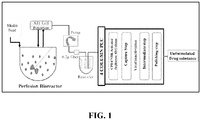
- An exemplary process flow for continuous processing of therapeutic protein on four columns is shown in FIG. 1 .
- the first column of the multicolumn chromatography system performs the unit operation of reducing heterogeneity in a therapeutic protein by removing basic charge isoforms of the therapeutic protein.
- the process of heterogeneity removal can be performed using any chromatography system on which multiple columns can be connected comprising AKTA Avant 150, AKTA pcc 2 columns, AKTA pcc 3 columns, AKTA pcc 4 columns and BioSMB PALL.
- the intermediate purification and polishing steps can be performed in continuous manner using different chromatography methods such as anion exchange chromatography, cation exchange chromatography, hydrophobic interaction chromatography or multimodal chromatography. Suitable chromatography can be selected based on process parameters, desired quality, purity, recovery and productivity.
- therapeutic proteins that can be prepared by / used in the process of the present disclosure can include, an antibody, an antibody fragment, a monoclonal antibody, an enzyme, an engineered protein, an immunogenic protein, a protein fragment, an immunoglobulin and any combination thereof.
- monoclonal antibody is selected from a naturally occurring antibody or a recombinant antibody selected from monoclonal antibody, modified antibody, derivative of antibody and fragment of antibody or any combination thereof.
- the therapeutic protein can be selected frompanitumumab, omalizumab, abagovomab, abciximab, actoxumab, adalimumab, adecatumumab, afelimomab, afutuzumab, alacizumab, alacizumab, alemtuzumab, alirocumab, altumomab, amatuximab, amatuximab, anatumomab, anrukinzumab, apolizumab, arcitumomab, atinumab, tocilizumab, basilizimab, bectumomab, belimumab, bevacizumab, besilesomab, bezlotoxumab, biciromab, blinatumomab, canakinumab, certolizumab, cetuximab,
- a culture medium of therapeutic protein can be derived from any source.
- a recombinant cell culture e.g., a recombinant bacterial, yeast, or mammalian cell culture.
- the culture medium can be obtained from a fed-batch cell culture, a fed-batch bioreactor containing a culture of cells that secrete the recombinant therapeutic protein or a perfusion cell culture.
- the liquid culture medium can also be a clarified liquid culture medium from a culture of bacterial or yeast cells that secrete the recombinant therapeutic protein.
- C-terminal lysine residues on heavy chain of monoclonal antibodies can be truncated in a continuous process by passing a harvest recovered from perfusion cell culture on a column which has carboxypeptidase B enzyme immobilized on sepharose. The homogenous harvest produced from the said reaction is further transferred in a continuous manner to affinity chromatography column for further purification of monoclonal antibody.
- the continuous process disclosed herein can reduce the amount of enzyme needed for reduction of C-terminal residues of monoclonal antibodies.
- a harvested cell culture fluid continuously coming from a bioreactor through alternative tangential filtration can be loaded on to carboxypeptidase B immobilized column at a pH and then it can be continuously loaded on affinity columns connected in tandem in continuous chromatography system or in series or parallel on MCCS.
- protein concentration in cells cultured is in a concentration range of 50-2500 mg/L of harvested cell culture fluid.
- the basic isoforms of monoclonal antibody can be reduced in the range of 50-100 percent.
- a therapeutic protein treated by / resulting from the process of the present disclosure can be formulated into a pharmaceutical composition without any further purification and/or decontamination step.
- the process disclosed herein forms a continuous biological manufacturing system for therapeutic protein.
- the present disclosure also provides process of preparation of resin for carboxypeptidase-coupled sepharose column and stability of resin used for processing of therapeutic protein.
- the resin was prepared by following process:
- This resin was found stable for more than one year with many numbers of cycles, still viable when stored at 2-8 deg C. This resin can be used for continuous processing at room temperature for continuous processing without decrease in performance.
- Example 2 Process for reducing antibody variants
- FIG. 2 shows chromatogram for two columns connected continuously in one purification system.
- FIG. 3 shows Chromatogram Profile of CPB-CNBR-activated Sepharose TM 4B column followed by Protein A column run for mAb A in continuous mode at approx. 25 min RT.
- the process was carried out on AKTA Avant 150 Process Chromatography System, GE Healthcare, with Therapeutic protein (mAb A) clarified cell culture fluid (approx. 40mg) at flowrate of 0.5ml/min maintaining residence time of 20 min on Column 1 and 2min on Column 2 respectively.
- AKTA Avant system can be replaced with AKTA PCC system.
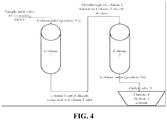
- FIG. 4 shows continuous processing setup of Column 1 and Column 2 when operating at same flow rates.
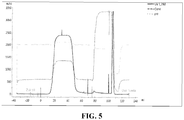
- the neutralized sample (CPB-PA Elute) was submitted for WCEX analysis along with the control (only Protein A elute without CPB) ( FIG. 5 ).
- FIG. 5 shows chromatogram profile of CPB-CNBR-activated Sepharose TM 4B column followed by Protein A column run for mAb A in continuous mode at 20 min RT.
- the CPB-PA elute shown digestion/ removal of basic variants in mAb A as compared to the control as shown in the WCEX analysis comparative data ( FIG. 6 ).
- FIG. 6 shows WCEX Analysis data overlay for Control and CPB-PA Elute. This experiment concluded that the CPB on column shown the activity or cleavage/ digestion of basic variant at 20 min RT.
- FIG. 7 shows continuous processing setup of Column 1 and Column 2 when operating at different flow rates.
- the neutralized sample (CPB-PA Elute at 2min RT) was submitted for WCEX analysis along with the control (only Protein A elute without CPB) and with that of CPB-PA Elute at 20 min RT. ( FIG. 8 ).
- FIG. 8 shows Chromatogram Profile of CPB-CNBR-activated SepharoseTM 4B column followed by Protein A column run for mAb A in continuous mode at 2min Rt.
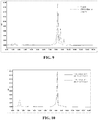
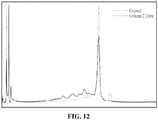
- FIG. 9 shows WCEX Analysis data overlay for Control and CPB-PA Elute at 2min RT.
- FIG. 10 shows WCEX Analysis data overlay CPB-PA Elute at 20 min RT and 2 min RT respectively on Column 1 for mAb A.
- the chromatography runs can be successively operated at 2min residence time as well. The residence time lower than 2 min can also be evaluated.
- Example 4 Process for reducing basic isoforms on mAb B
- the resin can be used for removal of charged isoforms belonging to any class of IgGs or monoclonal antibodies.
- the removal of such charged isoforms in first step itself in continuous mode can yield a product with high quality, purity with high recovery.
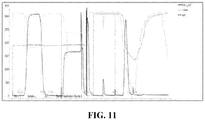
- Another mAb model evaluated for the removal of charged isoforms/ basic variants using the CPB-CNBR-activated SepharoseTM 4B column followed by Protein A column in continuous mode at 2min RT was mAb B ( FIG. 11 ).
- FIG. 11 shows Chromatogram Profile of CPB-CNBR-activated SepharoseTM 4B column followed by Protein A column run for mAb B in continuous mode at 2min RT.
- Example 5 Process for reducing basic isoforms on mAb A at different loading density on three columns:
- CPB-CNBR-activated Sepharose TM 4B column To evaluate the maximum loading capacity on CPB-CNBR-activated Sepharose TM 4B column, different loading densities were evaluated in continuous mode using mAb A clarified cell culture fluid as mentioned in Table No. 1. The chromatographic runs were performed using in house CPB-CNBR-activated SepharoseTM 4B column (Column 1) followed by Protein A (MabSelect SuRe LX) column (column 2) (CPB-PA in series) in continuous mode.
- Column 1 CPB-CNBR-activated SepharoseTM 4B column
- CPB-PA Protein A
- a control run was performed using only protein A column for WCEX analysis comparison as mentioned in Table 1.
- the chromatography run as per conditions mentioned Sr. No. 3, 4, 5 and 6 wherein the loading density on Column 1 were 10mg/ml, 20mg/ml, 40mg/ml and 80mg/ml respectively was carried out continuously.
- one CPB-CNBR-activated SepharoseTM 4B column Cold 1
- two Protein A columns Cold 2
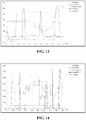
- Column 1 and column 2 were run in series ( FIG. 13 and FIG. 14 for chromatogram profile).
- the neutralized samples were given for WCEX analysis for comparison with control.
- FIG. 13 shows Chromatogram Profile of Protein A column run for mAb A as control on AKTA pcc (3C pcc).
- FIG. 14 shows Chromatogram Profile for loading density of 10mg/ml, 20mg/ml and 40mg/ml respectivey on CPB-CNBR-activated SepharoseTM 4B column (Column 1) followed by Protein A column run for mAb A in continous mode on AKTA pcc (3C pcc).
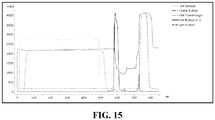
- FIG. 15 shows Chromatogram Profile for loading density of 80mg/ml on CPB-CNBR-activated SepharoseTM 4B column (Column 1) followed by Protein A column run for mAb A in continous mode on AKTA pcc (3C pcc).
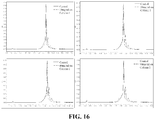
- FIG. 16 shows WCEX Analysis data overlays of neutralized CPB-PA Elute for individual loading density with the Control.
- the resin was showing activity or decrease in basic charges isoforms when compared to control. So, this resin may also work beyond 80mg/ml of loading density on column 1, wherein, if column volume of Protein A resin also remains same as CPB-CNBR-activated SepharoseTM 4B column, then, 2 column of Protein A in parallel will be required to suffice the quantity of output from that of one column 1.
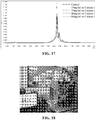
- FIG. 17 shows WCEX Analysis data overlays CPB-PA Elute along with control at different loading densities on Column 1 for mAb A.
- the probable reason may be the total protein loaded on column 1 when moves forward (flow-through mode) on column 2, there may be a gradual increase in acidic variants with time and quantity of protein loaded, and gets accumulated on Column 2 (bind and elute mode), the total protein eluted contains the increase acidic forms.
- the column 1 is regenerated with buffers of pH not less than pH 3.0 comprising 50mM Sodium acetate, pH 5.0, or other similar buffers, between the runs where we get the required quality as well as quantity.
- Example 6 Continuous Process for reducing heterogeneity of therapeutic protein (mAb A) on 4 columns in one-unit operation:
- FIG. 18 shows AKTA pcc (4C PCC) setup for Continuous Processing for mAb A.
- the Column 1 was loaded with the loading density of 60mg/ml on 8.5ml CV column and flow through was continuously passed on Column 2 for capture of mAb A.
- the bound protein was eluted with 100mM acetic acid with CV volume such that the pH of elute is equivalent to the pH required for viral inactivation. Viral inactivation was carried out at pH ⁇ 3.6, holding for 1 hr and then neutralization of Protein A elute was done by inline addition of required volume of 2M Tris Base.
- the pH and conductivity of the neutralized protein A elute was equivalent to that required for loading on column 3 which claims HCP, HcDNA and virus removal thereof, pH 7.0 ⁇ 0.2 and conductivity was lesser than 10mS/cm, and was found to be approximately 4.5 ⁇ 1.0 mS/cm.
- This neutralized protein A elute was passed on pre equilibrated column 3, operated in flow-through mode and the flow-through of the same was collected.
- column 4 was to be operated in bind and elute mode at pH 5.0 and conductivity ⁇ 6.0 mS/cm (but not bound to these conditions only), again in line addition of required quantity of acid, in this case 100mM acetic acid was performed as load preparation step for column 4 loading.
- the pH of load was found to be 5.0 ⁇ 0.2 and conductivity was ⁇ 3.5 mS/cm and was loaded on column 4, and the bound protein was eluted with 50mM Sodium acetate, 150mM NaCl pH 5.0 Conductivity 15.0 ⁇ 1.0 mS/cm and samples were submitted for WCEX analysis for comparison in removal of charge isoforms. The regeneration of all the columns and preparation for next run was done. The chromatogram profile and analytical data are shown in FIGs. 18 and 19 respectively.
- FIG. 19 shows Chromatogram profile for Continuous Processing for mAb A on AKTA pcc (4C PCC). If removal of other product related impurities is required, then column 4 process condition can be modified for linear or step gradient or other mode of interactions. This process parameters can be modified depending on factors like nature of therapeutic protein, Isoelectric point, quality, purity and productivity, cost efficiency, ease of operation.
- FIG. 20 shows WCEX Analysis data overlays control with Column 2 Elute and Column 4 Elute from continuous processing.
- the Column 2 and Column 4 shows same WCEX profile and shows removal of basic isoforms, wherein there is no increase in the acidic variants at this loading density (60mg/ml) that was observed at loading density of 80 mg/ml. Therefore, the optimum operating conditions for this in house CPB-CNBR-activated SepharoseTM 4B column may comprise of loading density of ⁇ 80mg/ml, for loading time of approximately 1-2h for mAb A, and RT of ⁇ 1.7min, after which regeneration may be incorporated between the runs in order to get consistent results.
Landscapes
- Chemical & Material Sciences (AREA)
- Organic Chemistry (AREA)
- Health & Medical Sciences (AREA)
- Medicinal Chemistry (AREA)
- Proteomics, Peptides & Aminoacids (AREA)
- Biophysics (AREA)
- General Health & Medical Sciences (AREA)
- Genetics & Genomics (AREA)
- Life Sciences & Earth Sciences (AREA)
- Molecular Biology (AREA)
- Biochemistry (AREA)
- Analytical Chemistry (AREA)
- Immunology (AREA)
- Peptides Or Proteins (AREA)
- Enzymes And Modification Thereof (AREA)
- Preparation Of Compounds By Using Micro-Organisms (AREA)
- Medicines That Contain Protein Lipid Enzymes And Other Medicines (AREA)
- Medicines Containing Material From Animals Or Micro-Organisms (AREA)
Claims (13)
- Kontinuierliches Verfahren zum Reduzieren der Heterogenität eines therapeutischen Proteins, wobei das Verfahren eine oder mehrere basische Isoformen des therapeutischen Proteins in einem einzelnen Mehrsäulen-Chromatografiesystem umfasst, wobei das einzelne Mehrsäulen-Chromatografiesystem mindestens zwei oder mehr miteinander verbundene oder umschaltende Chromatografiesäulen und/oder chromatografische Membranen, die jeweils eine andere Grundoperation durchführen, umfasst, wobei das einzelne Mehrsäulen-Chromatografiesystem eine Säule umfasst, die auf Sepharose immobilisierte Carboxypeptidase B umfasst.
- Kontinuierliches Verfahren zum Reduzieren der Heterogenität eines therapeutischen Proteins, wobei das Verfahren die folgenden Schritte umfasst:a) Bereitstellen eines Mehrsäulen-Chromatografiesystems, umfassend eine erste Säule, eine zweite Säule, eine dritte Säule und eine vierte Säule;b) Leiten einer Zellkulturernte, umfassend ein therapeutisches Protein, in die erste Säule, wodurch die Heterogenität des therapeutischen Proteins reduziert wird; wobei die erste Säule auf Sepharose immobilisierte Carboxypeptidase B umfasst;c) Leiten eines Durchflusses von der ersten Säule in die zweite Säule, wodurch das therapeutische Protein in dem Durchfluss der ersten Säule eingefangen wird;d) Leiten eines Eluats, umfassend das therapeutische Protein, von der zweiten Säule in die dritte Säule, um das therapeutische Protein zu reinigen; unde) Leiten eines Durchflusses, umfassend das therapeutische Protein, von der dritten Säule in die vierte Säule, um das therapeutische Protein zu polieren.
- Verfahren nach Anspruch 2, weiter umfassend das Sammeln des Eluats, umfassend das therapeutische Protein, aus der zweiten Säule und Halten des Eluats, umfassend das therapeutische Protein, bei einem niedrigen pH-Wert zur viralen Inaktivierung.
- Verfahren nach Anspruch 2, weiter umfassend das Unterziehen des Eluats, umfassend das therapeutische Protein, aus der zweiten Säule gegenüber pH-Wert- und Leitfähigkeitsanpassungen vor dem Leiten in die dritte Säule.
- Verfahren nach Anspruch 2, weiter umfassend das Unterziehen des Durchflusses, umfassend das therapeutische Protein, aus der dritten Säule gegenüber pH-Wert- und Leitfähigkeitsanpassungen vor dem Leiten in die vierte Säule.
- Verfahren nach Anspruch 2, wobei die erste, zweite, dritte und vierte Säule in sequenzieller Reihenfolge in Reihe oder parallel geschaltet sind.
- Verfahren nach einem der vorstehenden Ansprüche, wobei die erste Säule die Heterogenität des therapeutischen Proteins durch Reduzieren eines Anteils basischer Isoformen des therapeutischen Proteins reduziert.
- Verfahren nach Anspruch 2, wobei die zweite Säule eine Affinitätschromatografiesäule ist.
- Verfahren nach Anspruch 2, wobei jede der dritten Säule und der vierten Säule ausgewählt ist aus der Gruppe, bestehend aus Anionenaustauschchromatografiesäule, Kationenaustauschchromatografiesäule, hydrophober Interaktionschromatografiesäule und multimodaler Chromatografiesäule.
- Verfahren nach einem der vorstehenden Ansprüche, wobei das therapeutische Protein ausgewählt ist aus der Gruppe, bestehend aus einem Antikörper, einem Antikörperfragment, einem monoklonalen Antikörper, einem Enzym, einem gentechnisch herstellten Protein, einem immunogenen Protein, einem Proteinfragment, einem Immunglobulin oder einer beliebigen Kombination davon.
- Verfahren nach einem der vorstehenden Ansprüche, wobei das therapeutische Protein ausgewählt ist aus der Gruppe, bestehend aus: Panitumumab, Omalizumab, Abagovomab, Abciximab, Actoxumab, Adalimumab, Adecatumumab, Afelimomab, Afutuzumab, Alacizumab, Alacizumab, Alemtuzumab, Alirocumab, Altumomab, Amatuximab, Amatuximab, Anatumomab, Anrukinzumab, Apolizumab, Arcitumomab, Atinumab, Tocilizumab, Basilizimab, Bectumomab, Belimumab, Bevacizumab, Besilesomab, Bezlotoxumab, Biciromab, Blinatumomab, Canakinumab, Certolizumab, Cetuximab, Cixutumumab, Daclizumab, Denosumab, Eculizumab, Edrecolomab, Efalizumab, Efungumab, Epratuzumab, Ertumaxomab, Etaracizumab, Figitumumab, Golimumab, Ibritumomab-Tiuxetan, Igovomab, Imgatuzumab, Infliximab, Inolimomab, Inotuzumab, Labetuzumab, Lebrikizumab, Moxetumomab, Natalitzumab, Nivolumab, Obinutuzumab, Oregovomab, Palivizumab, Panitumumab, Pertuzumab, Ramucirumab, Ranibizumab, Rituximab, Secukinumab, Tocilizumab, Tositumomab, Tralokinumab, Tucotuzumab, Trastuzumab, Ustekinumab, Vedolizumab, Veltuzumab, Zalutumumab, Zatuximab, Enzymen, Proteinen, immunogenen oder antigenen Proteinen oder Proteinfragmenten, Alglucosidase alfa, Laronidase, Abatacept, Galsulfase, Lutropin alfa, antihämophilem Faktor, Agalsidase beta, Interferon beta-1a, Darbepoetin alfa, Tenecteplase, Etanercept, Koagulationsfaktor IX, follikelstimulierendem Hormon, Interferon beta-1a, Imiglucerase, Dornase alfa, Epotein alfa, Insulin oder Insulinanalogen, Mecasermin, Faktor VIII, Faktor Vlla, Antithrombin III, Protein C, Humanalbumin, Erythropoetin, Granulozyten-Kolonie-stimulierendem Faktor, Granulozyten-Makrophagen-Kolonie-stimulierendem Faktor, Interleukin-11, Laronidase, Idursuphase, Galsulphase, α-1-Proteinase-Inhibitor, Lactase, Adenosindeaminase, Gewebeplasminogenaktivator, Thyrotropin alfa, Säure-β-galactosidase, β-Galactosidase, Neuraminidase, Hexosaminidase A und Hexosaminidase B.
- Verfahren nach Anspruch 2, weiter umfassend das Formulieren des polierten therapeutischen Proteins zu einer pharmazeutischen Zusammensetzung.
- Verfahren nach Anspruch 2, wobei das Mehrsäulen-Chromatografiesystem in einem kontinuierlichen Modus betrieben wird.
Priority Applications (2)
| Application Number | Priority Date | Filing Date | Title |
|---|---|---|---|
| HRP20210830TT HRP20210830T1 (hr) | 2016-10-17 | 2017-10-16 | Kontinuirani proces smanjenja heterogenosti terapijskog proteina |
| PL17804655T PL3500586T3 (pl) | 2016-10-17 | 2017-10-16 | Sposób ciągły zmniejszania heterogeniczności białka terapeutycznego |
Applications Claiming Priority (2)
| Application Number | Priority Date | Filing Date | Title |
|---|---|---|---|
| IN201621035458 | 2016-10-17 | ||
| PCT/IB2017/056395 WO2018073717A1 (en) | 2016-10-17 | 2017-10-16 | Continuous process for reducing heterogeneity of therapeutic protein |
Publications (2)
| Publication Number | Publication Date |
|---|---|
| EP3500586A1 EP3500586A1 (de) | 2019-06-26 |
| EP3500586B1 true EP3500586B1 (de) | 2021-02-24 |
Family
ID=60473571
Family Applications (1)
| Application Number | Title | Priority Date | Filing Date |
|---|---|---|---|
| EP17804655.3A Active EP3500586B1 (de) | 2016-10-17 | 2017-10-16 | Kontinuierliches verfahren zur reduzierung der heterogenität von therapeutischem protein |
Country Status (14)
| Country | Link |
|---|---|
| US (1) | US11618768B2 (de) |
| EP (1) | EP3500586B1 (de) |
| JP (1) | JP6976343B2 (de) |
| KR (1) | KR102543033B1 (de) |
| CN (1) | CN109843904A (de) |
| AU (1) | AU2017345387B2 (de) |
| DK (1) | DK3500586T3 (de) |
| EA (1) | EA201990593A1 (de) |
| ES (1) | ES2876416T3 (de) |
| HR (1) | HRP20210830T1 (de) |
| HU (1) | HUE054420T2 (de) |
| PL (1) | PL3500586T3 (de) |
| PT (1) | PT3500586T (de) |
| WO (1) | WO2018073717A1 (de) |
Families Citing this family (6)
| Publication number | Priority date | Publication date | Assignee | Title |
|---|---|---|---|---|
| TWI919355B (zh) * | 2018-07-02 | 2026-03-21 | 美商里珍納龍藥品有限公司 | 自混合物製備多肽之系統及方法 |
| MX2021008983A (es) * | 2019-01-30 | 2021-09-08 | Amgen Inc | Atributos de aflibercept y metodos de caracterizacion y modificacion de los mismos. |
| KR20260058863A (ko) * | 2019-09-24 | 2026-04-29 | 리제너론 파아마슈티컬스, 인크. | 크로마토그래피의 사용 및 재생을 위한 시스템 및 방법 |
| WO2021139720A1 (zh) * | 2020-01-08 | 2021-07-15 | 信达生物制药(苏州)有限公司 | 阿达木单抗纯化方法及其稳定组合物 |
| CN116194570A (zh) | 2020-09-22 | 2023-05-30 | 百时美施贵宝公司 | 用于产生治疗性蛋白的方法 |
| CN115475258A (zh) * | 2022-09-06 | 2022-12-16 | 江苏丰华生物制药有限公司 | 一种注射用替奈普酶纯化工艺 |
Citations (1)
| Publication number | Priority date | Publication date | Assignee | Title |
|---|---|---|---|---|
| WO2013086448A2 (en) * | 2011-12-07 | 2013-06-13 | Amgen Inc | IgG2 DISULFIDE ISOFORM SEPARATION |
Family Cites Families (9)
| Publication number | Priority date | Publication date | Assignee | Title |
|---|---|---|---|---|
| US5126250A (en) | 1988-09-28 | 1992-06-30 | Eli Lilly And Company | Method for the reduction of heterogeneity of monoclonal antibodies |
| BG60017B2 (bg) * | 1988-09-28 | 1993-06-30 | Eli Lilly And Company | Метод за намаляване хетерогенността на моноклонални антитела |
| ES2570937T3 (es) * | 2008-08-07 | 2016-05-23 | Biocon Ltd | Un proceso para la preparación de compuestos de insulina |
| EP2450375A1 (de) | 2010-11-09 | 2012-05-09 | Sandoz Gmbh | Zellkulturmedium und Verfahren zur Proteinexpression, besagtes Medium und Verfahren mit einem PAM-Inhibitor |
| US9631216B2 (en) | 2011-04-29 | 2017-04-25 | Biocon Research Limited | Method for reducing heterogeneity of antibodies and a process of producing the antibodies thereof |
| US9181572B2 (en) * | 2012-04-20 | 2015-11-10 | Abbvie, Inc. | Methods to modulate lysine variant distribution |
| US20150267237A1 (en) * | 2012-04-24 | 2015-09-24 | Genentech, Inc. | Cell culture compositions and methods for polypeptide production |
| AU2014226126B2 (en) | 2013-03-08 | 2019-02-14 | Genzyme Corporation | Continuous purification of therapeutic proteins |
| CN105483193B (zh) * | 2015-11-24 | 2019-03-29 | 上海联合赛尔生物工程有限公司 | 从含酶切位点的融合蛋白中纯化蛋白的方法及试剂盒 |
-
2017
- 2017-10-16 EP EP17804655.3A patent/EP3500586B1/de active Active
- 2017-10-16 PT PT178046553T patent/PT3500586T/pt unknown
- 2017-10-16 PL PL17804655T patent/PL3500586T3/pl unknown
- 2017-10-16 HU HUE17804655A patent/HUE054420T2/hu unknown
- 2017-10-16 CN CN201780063678.6A patent/CN109843904A/zh active Pending
- 2017-10-16 WO PCT/IB2017/056395 patent/WO2018073717A1/en not_active Ceased
- 2017-10-16 JP JP2019541899A patent/JP6976343B2/ja active Active
- 2017-10-16 US US16/340,822 patent/US11618768B2/en active Active
- 2017-10-16 KR KR1020197010561A patent/KR102543033B1/ko active Active
- 2017-10-16 AU AU2017345387A patent/AU2017345387B2/en active Active
- 2017-10-16 ES ES17804655T patent/ES2876416T3/es active Active
- 2017-10-16 EA EA201990593A patent/EA201990593A1/ru unknown
- 2017-10-16 HR HRP20210830TT patent/HRP20210830T1/hr unknown
- 2017-10-16 DK DK17804655.3T patent/DK3500586T3/da active
Patent Citations (1)
| Publication number | Priority date | Publication date | Assignee | Title |
|---|---|---|---|---|
| WO2013086448A2 (en) * | 2011-12-07 | 2013-06-13 | Amgen Inc | IgG2 DISULFIDE ISOFORM SEPARATION |
Non-Patent Citations (5)
| Title |
|---|
| POLLOCK JAMES ET AL: "Optimising the design and operation of semi-continuous affinity chromatography for clinical and commercial manufacture", JOURNAL OF CHROMATOGRAPHY A, ELSEVIER, AMSTERDAM, NL, vol. 1284, 25 January 2013 (2013-01-25), pages 17 - 27, XP029000701, ISSN: 0021-9673, DOI: 10.1016/J.CHROMA.2013.01.082 * |
| RAHUL GODAWAT ET AL: "Periodic counter-current chromatography - design and operational considerations for integrated and continuous purification of proteins", BIOTECHNOLOGY JOURNAL, vol. 7, no. 12, 9 December 2012 (2012-12-09), pages 1496 - 1508, XP055144691, ISSN: 1860-6768, DOI: 10.1002/biot.201200068 * |
| T. MÜLLER-SPÄTH ET AL: "Two step capture and purification of IgG2 using multicolumn countercurrent solvent gradient purification (MCSGP)", BIOTECHNOLOGY AND BIOENGINEERING, vol. 107, no. 6, 15 December 2010 (2010-12-15), pages 974 - 984, XP055005554, ISSN: 0006-3592, DOI: 10.1002/bit.22887 * |
| THOMAS MÜLLER-SPÄTH ET AL: "Chromatographic separation of three monoclonal antibody variants using multicolumn countercurrent solvent gradient purification (MCSGP)", BIOTECHNOLOGY AND BIOENGINEERING, vol. 100, no. 6, 15 August 2008 (2008-08-15), pages 1166 - 1177, XP055005551, ISSN: 0006-3592, DOI: 10.1002/bit.21843 * |
| WEI ZHANG ET AL: "Analysis of isoaspartate in a recombinant monoclonal antibody and its charge isoforms", JOURNAL OF PHARMACEUTICAL AND BIOMEDICAL ANALYSIS, vol. 30, no. 5, 1 January 2003 (2003-01-01), pages 1479 - 1490, XP055014080, ISSN: 0731-7085, DOI: 10.1016/S0731-7085(02)00479-X * |
Also Published As
| Publication number | Publication date |
|---|---|
| PT3500586T (pt) | 2021-06-17 |
| DK3500586T3 (da) | 2021-05-31 |
| EP3500586A1 (de) | 2019-06-26 |
| US11618768B2 (en) | 2023-04-04 |
| KR102543033B1 (ko) | 2023-06-12 |
| WO2018073717A1 (en) | 2018-04-26 |
| US20190263855A1 (en) | 2019-08-29 |
| JP6976343B2 (ja) | 2021-12-08 |
| HUE054420T2 (hu) | 2021-09-28 |
| ES2876416T3 (es) | 2021-11-12 |
| CN109843904A (zh) | 2019-06-04 |
| KR20190064591A (ko) | 2019-06-10 |
| HRP20210830T1 (hr) | 2021-08-20 |
| AU2017345387A1 (en) | 2019-04-11 |
| JP2019533724A (ja) | 2019-11-21 |
| PL3500586T3 (pl) | 2021-09-27 |
| AU2017345387B2 (en) | 2024-09-19 |
| EA201990593A1 (ru) | 2019-10-31 |
Similar Documents
| Publication | Publication Date | Title |
|---|---|---|
| AU2017345387B2 (en) | Continuous process for reducing heterogeneity of therapeutic protein | |
| AU2021200474B2 (en) | Continuous purification of therapeutic proteins | |
| US11884703B2 (en) | Methods of processing a fluid including a recombinant therapeutic protein and use thereof | |
| US6620918B2 (en) | Separation of polypeptide monomers | |
| EP3301115B1 (de) | Kontinuierliches, mehrstufiges Verfahren zur Aufreinigung von Antikörpern | |
| EA047061B1 (ru) | Непрерывный способ для снижения гетерогенности терапевтического белка | |
| HK40068758A (en) | Methods of processing a fluid including a recombinant therapeutic protein and use thereof | |
| WO2022245306A1 (en) | Protein purification by affinity chromatography | |
| HK1037879B (en) | Separation of antibody monomers from its multimers by use of ion-exchange chromatography |
Legal Events
| Date | Code | Title | Description |
|---|---|---|---|
| STAA | Information on the status of an ep patent application or granted ep patent |
Free format text: STATUS: UNKNOWN |
|
| STAA | Information on the status of an ep patent application or granted ep patent |
Free format text: STATUS: THE INTERNATIONAL PUBLICATION HAS BEEN MADE |
|
| PUAI | Public reference made under article 153(3) epc to a published international application that has entered the european phase |
Free format text: ORIGINAL CODE: 0009012 |
|
| STAA | Information on the status of an ep patent application or granted ep patent |
Free format text: STATUS: REQUEST FOR EXAMINATION WAS MADE |
|
| 17P | Request for examination filed |
Effective date: 20190319 |
|
| AK | Designated contracting states |
Kind code of ref document: A1 Designated state(s): AL AT BE BG CH CY CZ DE DK EE ES FI FR GB GR HR HU IE IS IT LI LT LU LV MC MK MT NL NO PL PT RO RS SE SI SK SM TR |
|
| AX | Request for extension of the european patent |
Extension state: BA ME |
|
| DAV | Request for validation of the european patent (deleted) | ||
| DAX | Request for extension of the european patent (deleted) | ||
| STAA | Information on the status of an ep patent application or granted ep patent |
Free format text: STATUS: EXAMINATION IS IN PROGRESS |
|
| 17Q | First examination report despatched |
Effective date: 20200130 |
|
| GRAP | Despatch of communication of intention to grant a patent |
Free format text: ORIGINAL CODE: EPIDOSNIGR1 |
|
| STAA | Information on the status of an ep patent application or granted ep patent |
Free format text: STATUS: GRANT OF PATENT IS INTENDED |
|
| INTG | Intention to grant announced |
Effective date: 20200924 |
|
| GRAS | Grant fee paid |
Free format text: ORIGINAL CODE: EPIDOSNIGR3 |
|
| GRAA | (expected) grant |
Free format text: ORIGINAL CODE: 0009210 |
|
| STAA | Information on the status of an ep patent application or granted ep patent |
Free format text: STATUS: THE PATENT HAS BEEN GRANTED |
|
| AK | Designated contracting states |
Kind code of ref document: B1 Designated state(s): AL AT BE BG CH CY CZ DE DK EE ES FI FR GB GR HR HU IE IS IT LI LT LU LV MC MK MT NL NO PL PT RO RS SE SI SK SM TR |
|
| REG | Reference to a national code |
Ref country code: CH Ref legal event code: EP |
|
| REG | Reference to a national code |
Ref country code: AT Ref legal event code: REF Ref document number: 1364315 Country of ref document: AT Kind code of ref document: T Effective date: 20210315 |
|
| REG | Reference to a national code |
Ref country code: IE Ref legal event code: FG4D |
|
| REG | Reference to a national code |
Ref country code: DE Ref legal event code: R096 Ref document number: 602017033420 Country of ref document: DE |
|
| REG | Reference to a national code |
Ref country code: HR Ref legal event code: TUEP Ref document number: P20210830T Country of ref document: HR |
|
| REG | Reference to a national code |
Ref country code: DK Ref legal event code: T3 Effective date: 20210525 |
|
| REG | Reference to a national code |
Ref country code: NL Ref legal event code: FP |
|
| REG | Reference to a national code |
Ref country code: PT Ref legal event code: SC4A Ref document number: 3500586 Country of ref document: PT Date of ref document: 20210617 Kind code of ref document: T Free format text: AVAILABILITY OF NATIONAL TRANSLATION Effective date: 20210611 |
|
| REG | Reference to a national code |
Ref country code: SE Ref legal event code: TRGR |
|
| REG | Reference to a national code |
Ref country code: LT Ref legal event code: MG9D |
|
| REG | Reference to a national code |
Ref country code: GR Ref legal event code: EP Ref document number: 20210401370 Country of ref document: GR Effective date: 20210709 |
|
| PG25 | Lapsed in a contracting state [announced via postgrant information from national office to epo] |
Ref country code: FI Free format text: LAPSE BECAUSE OF FAILURE TO SUBMIT A TRANSLATION OF THE DESCRIPTION OR TO PAY THE FEE WITHIN THE PRESCRIBED TIME-LIMIT Effective date: 20210224 Ref country code: NO Free format text: LAPSE BECAUSE OF FAILURE TO SUBMIT A TRANSLATION OF THE DESCRIPTION OR TO PAY THE FEE WITHIN THE PRESCRIBED TIME-LIMIT Effective date: 20210524 Ref country code: LT Free format text: LAPSE BECAUSE OF FAILURE TO SUBMIT A TRANSLATION OF THE DESCRIPTION OR TO PAY THE FEE WITHIN THE PRESCRIBED TIME-LIMIT Effective date: 20210224 |
|
| REG | Reference to a national code |
Ref country code: HR Ref legal event code: T1PR Ref document number: P20210830 Country of ref document: HR |
|
| PG25 | Lapsed in a contracting state [announced via postgrant information from national office to epo] |
Ref country code: LV Free format text: LAPSE BECAUSE OF FAILURE TO SUBMIT A TRANSLATION OF THE DESCRIPTION OR TO PAY THE FEE WITHIN THE PRESCRIBED TIME-LIMIT Effective date: 20210224 Ref country code: RS Free format text: LAPSE BECAUSE OF FAILURE TO SUBMIT A TRANSLATION OF THE DESCRIPTION OR TO PAY THE FEE WITHIN THE PRESCRIBED TIME-LIMIT Effective date: 20210224 |
|
| REG | Reference to a national code |
Ref country code: HU Ref legal event code: AG4A Ref document number: E054420 Country of ref document: HU |
|
| PG25 | Lapsed in a contracting state [announced via postgrant information from national office to epo] |
Ref country code: IS Free format text: LAPSE BECAUSE OF FAILURE TO SUBMIT A TRANSLATION OF THE DESCRIPTION OR TO PAY THE FEE WITHIN THE PRESCRIBED TIME-LIMIT Effective date: 20210624 |
|
| PG25 | Lapsed in a contracting state [announced via postgrant information from national office to epo] |
Ref country code: EE Free format text: LAPSE BECAUSE OF FAILURE TO SUBMIT A TRANSLATION OF THE DESCRIPTION OR TO PAY THE FEE WITHIN THE PRESCRIBED TIME-LIMIT Effective date: 20210224 Ref country code: SM Free format text: LAPSE BECAUSE OF FAILURE TO SUBMIT A TRANSLATION OF THE DESCRIPTION OR TO PAY THE FEE WITHIN THE PRESCRIBED TIME-LIMIT Effective date: 20210224 |
|
| REG | Reference to a national code |
Ref country code: HR Ref legal event code: ODRP Ref document number: P20210830 Country of ref document: HR Payment date: 20211011 Year of fee payment: 5 |
|
| REG | Reference to a national code |
Ref country code: ES Ref legal event code: FG2A Ref document number: 2876416 Country of ref document: ES Kind code of ref document: T3 Effective date: 20211112 |
|
| REG | Reference to a national code |
Ref country code: DE Ref legal event code: R097 Ref document number: 602017033420 Country of ref document: DE |
|
| PG25 | Lapsed in a contracting state [announced via postgrant information from national office to epo] |
Ref country code: RO Free format text: LAPSE BECAUSE OF FAILURE TO SUBMIT A TRANSLATION OF THE DESCRIPTION OR TO PAY THE FEE WITHIN THE PRESCRIBED TIME-LIMIT Effective date: 20210224 Ref country code: SK Free format text: LAPSE BECAUSE OF FAILURE TO SUBMIT A TRANSLATION OF THE DESCRIPTION OR TO PAY THE FEE WITHIN THE PRESCRIBED TIME-LIMIT Effective date: 20210224 |
|
| PLBE | No opposition filed within time limit |
Free format text: ORIGINAL CODE: 0009261 |
|
| STAA | Information on the status of an ep patent application or granted ep patent |
Free format text: STATUS: NO OPPOSITION FILED WITHIN TIME LIMIT |
|
| PG25 | Lapsed in a contracting state [announced via postgrant information from national office to epo] |
Ref country code: AL Free format text: LAPSE BECAUSE OF FAILURE TO SUBMIT A TRANSLATION OF THE DESCRIPTION OR TO PAY THE FEE WITHIN THE PRESCRIBED TIME-LIMIT Effective date: 20210224 |
|
| 26N | No opposition filed |
Effective date: 20211125 |
|
| PG25 | Lapsed in a contracting state [announced via postgrant information from national office to epo] |
Ref country code: SI Free format text: LAPSE BECAUSE OF FAILURE TO SUBMIT A TRANSLATION OF THE DESCRIPTION OR TO PAY THE FEE WITHIN THE PRESCRIBED TIME-LIMIT Effective date: 20210224 |
|
| PG25 | Lapsed in a contracting state [announced via postgrant information from national office to epo] |
Ref country code: IS Free format text: LAPSE BECAUSE OF FAILURE TO SUBMIT A TRANSLATION OF THE DESCRIPTION OR TO PAY THE FEE WITHIN THE PRESCRIBED TIME-LIMIT Effective date: 20210624 |
|
| PG25 | Lapsed in a contracting state [announced via postgrant information from national office to epo] |
Ref country code: MC Free format text: LAPSE BECAUSE OF FAILURE TO SUBMIT A TRANSLATION OF THE DESCRIPTION OR TO PAY THE FEE WITHIN THE PRESCRIBED TIME-LIMIT Effective date: 20210224 |
|
| REG | Reference to a national code |
Ref country code: HR Ref legal event code: ODRP Ref document number: P20210830 Country of ref document: HR Payment date: 20221011 Year of fee payment: 6 |
|
| PG25 | Lapsed in a contracting state [announced via postgrant information from national office to epo] |
Ref country code: CY Free format text: LAPSE BECAUSE OF FAILURE TO SUBMIT A TRANSLATION OF THE DESCRIPTION OR TO PAY THE FEE WITHIN THE PRESCRIBED TIME-LIMIT Effective date: 20210224 |
|
| REG | Reference to a national code |
Ref country code: HR Ref legal event code: ODRP Ref document number: P20210830 Country of ref document: HR Payment date: 20231010 Year of fee payment: 7 |
|
| PG25 | Lapsed in a contracting state [announced via postgrant information from national office to epo] |
Ref country code: MK Free format text: LAPSE BECAUSE OF FAILURE TO SUBMIT A TRANSLATION OF THE DESCRIPTION OR TO PAY THE FEE WITHIN THE PRESCRIBED TIME-LIMIT Effective date: 20210224 |
|
| REG | Reference to a national code |
Ref country code: AT Ref legal event code: UEP Ref document number: 1364315 Country of ref document: AT Kind code of ref document: T Effective date: 20210224 |
|
| REG | Reference to a national code |
Ref country code: HR Ref legal event code: ODRP Ref document number: P20210830 Country of ref document: HR Payment date: 20241007 Year of fee payment: 8 |
|
| PGFP | Annual fee paid to national office [announced via postgrant information from national office to epo] |
Ref country code: GR Payment date: 20250930 Year of fee payment: 9 |
|
| PGFP | Annual fee paid to national office [announced via postgrant information from national office to epo] |
Ref country code: PL Payment date: 20250929 Year of fee payment: 9 Ref country code: TR Payment date: 20250930 Year of fee payment: 9 |
|
| PGFP | Annual fee paid to national office [announced via postgrant information from national office to epo] |
Ref country code: BG Payment date: 20250926 Year of fee payment: 9 |
|
| PGFP | Annual fee paid to national office [announced via postgrant information from national office to epo] |
Ref country code: MT Payment date: 20250925 Year of fee payment: 9 |
|
| PGFP | Annual fee paid to national office [announced via postgrant information from national office to epo] |
Ref country code: CZ Payment date: 20250926 Year of fee payment: 9 |
|
| REG | Reference to a national code |
Ref country code: HR Ref legal event code: ODRP Ref document number: P20210830 Country of ref document: HR Payment date: 20250930 Year of fee payment: 9 |
|
| REG | Reference to a national code |
Ref country code: CH Ref legal event code: U11 Free format text: ST27 STATUS EVENT CODE: U-0-0-U10-U11 (AS PROVIDED BY THE NATIONAL OFFICE) Effective date: 20251101 |
|
| PGFP | Annual fee paid to national office [announced via postgrant information from national office to epo] |
Ref country code: HU Payment date: 20251003 Year of fee payment: 9 |
|
| PGFP | Annual fee paid to national office [announced via postgrant information from national office to epo] |
Ref country code: LU Payment date: 20251023 Year of fee payment: 9 Ref country code: NL Payment date: 20251023 Year of fee payment: 9 |
|
| PGFP | Annual fee paid to national office [announced via postgrant information from national office to epo] |
Ref country code: PT Payment date: 20251006 Year of fee payment: 9 |
|
| PGFP | Annual fee paid to national office [announced via postgrant information from national office to epo] |
Ref country code: DE Payment date: 20251024 Year of fee payment: 9 |
|
| PGFP | Annual fee paid to national office [announced via postgrant information from national office to epo] |
Ref country code: GB Payment date: 20251003 Year of fee payment: 9 |
|
| PGFP | Annual fee paid to national office [announced via postgrant information from national office to epo] |
Ref country code: AT Payment date: 20251021 Year of fee payment: 9 |
|
| PGFP | Annual fee paid to national office [announced via postgrant information from national office to epo] |
Ref country code: IT Payment date: 20251014 Year of fee payment: 9 Ref country code: DK Payment date: 20251010 Year of fee payment: 9 |
|
| PGFP | Annual fee paid to national office [announced via postgrant information from national office to epo] |
Ref country code: HR Payment date: 20251001 Year of fee payment: 9 Ref country code: FR Payment date: 20251003 Year of fee payment: 9 |
|
| PGFP | Annual fee paid to national office [announced via postgrant information from national office to epo] |
Ref country code: BE Payment date: 20251001 Year of fee payment: 9 |
|
| PGFP | Annual fee paid to national office [announced via postgrant information from national office to epo] |
Ref country code: CH Payment date: 20251101 Year of fee payment: 9 Ref country code: SE Payment date: 20251003 Year of fee payment: 9 |
|
| PGFP | Annual fee paid to national office [announced via postgrant information from national office to epo] |
Ref country code: IE Payment date: 20251003 Year of fee payment: 9 |
|
| PGFP | Annual fee paid to national office [announced via postgrant information from national office to epo] |
Ref country code: ES Payment date: 20251104 Year of fee payment: 9 |