EP3494971B1 - Salts of erk inhibitors - Google Patents
Salts of erk inhibitors Download PDFInfo
- Publication number
- EP3494971B1 EP3494971B1 EP19152874.4A EP19152874A EP3494971B1 EP 3494971 B1 EP3494971 B1 EP 3494971B1 EP 19152874 A EP19152874 A EP 19152874A EP 3494971 B1 EP3494971 B1 EP 3494971B1
- Authority
- EP
- European Patent Office
- Prior art keywords
- chloro
- methyl
- fluorophenyl
- pyrazol
- pyridin
- Prior art date
- Legal status (The legal status is an assumption and is not a legal conclusion. Google has not performed a legal analysis and makes no representation as to the accuracy of the status listed.)
- Active
Links
Images






Classifications
-
- C—CHEMISTRY; METALLURGY
- C07—ORGANIC CHEMISTRY
- C07D—HETEROCYCLIC COMPOUNDS
- C07D401/00—Heterocyclic compounds containing two or more hetero rings, having nitrogen atoms as the only ring hetero atoms, at least one ring being a six-membered ring with only one nitrogen atom
- C07D401/14—Heterocyclic compounds containing two or more hetero rings, having nitrogen atoms as the only ring hetero atoms, at least one ring being a six-membered ring with only one nitrogen atom containing three or more hetero rings
-
- A—HUMAN NECESSITIES
- A61—MEDICAL OR VETERINARY SCIENCE; HYGIENE
- A61K—PREPARATIONS FOR MEDICAL, DENTAL OR TOILETRY PURPOSES
- A61K31/00—Medicinal preparations containing organic active ingredients
- A61K31/33—Heterocyclic compounds
- A61K31/395—Heterocyclic compounds having nitrogen as a ring hetero atom, e.g. guanethidine or rifamycins
- A61K31/495—Heterocyclic compounds having nitrogen as a ring hetero atom, e.g. guanethidine or rifamycins having six-membered rings with two or more nitrogen atoms as the only ring heteroatoms, e.g. piperazine or tetrazines
- A61K31/505—Pyrimidines; Hydrogenated pyrimidines, e.g. trimethoprim
- A61K31/506—Pyrimidines; Hydrogenated pyrimidines, e.g. trimethoprim not condensed and containing further heterocyclic rings
-
- A—HUMAN NECESSITIES
- A61—MEDICAL OR VETERINARY SCIENCE; HYGIENE
- A61P—SPECIFIC THERAPEUTIC ACTIVITY OF CHEMICAL COMPOUNDS OR MEDICINAL PREPARATIONS
- A61P25/00—Drugs for disorders of the nervous system
-
- A—HUMAN NECESSITIES
- A61—MEDICAL OR VETERINARY SCIENCE; HYGIENE
- A61P—SPECIFIC THERAPEUTIC ACTIVITY OF CHEMICAL COMPOUNDS OR MEDICINAL PREPARATIONS
- A61P29/00—Non-central analgesic, antipyretic or antiinflammatory agents, e.g. antirheumatic agents; Non-steroidal antiinflammatory drugs [NSAID]
-
- A—HUMAN NECESSITIES
- A61—MEDICAL OR VETERINARY SCIENCE; HYGIENE
- A61P—SPECIFIC THERAPEUTIC ACTIVITY OF CHEMICAL COMPOUNDS OR MEDICINAL PREPARATIONS
- A61P35/00—Antineoplastic agents
-
- C—CHEMISTRY; METALLURGY
- C07—ORGANIC CHEMISTRY
- C07D—HETEROCYCLIC COMPOUNDS
- C07D401/00—Heterocyclic compounds containing two or more hetero rings, having nitrogen atoms as the only ring hetero atoms, at least one ring being a six-membered ring with only one nitrogen atom
- C07D401/02—Heterocyclic compounds containing two or more hetero rings, having nitrogen atoms as the only ring hetero atoms, at least one ring being a six-membered ring with only one nitrogen atom containing two hetero rings
- C07D401/04—Heterocyclic compounds containing two or more hetero rings, having nitrogen atoms as the only ring hetero atoms, at least one ring being a six-membered ring with only one nitrogen atom containing two hetero rings directly linked by a ring-member-to-ring-member bond
-
- C—CHEMISTRY; METALLURGY
- C12—BIOCHEMISTRY; BEER; SPIRITS; WINE; VINEGAR; MICROBIOLOGY; ENZYMOLOGY; MUTATION OR GENETIC ENGINEERING
- C12P—FERMENTATION OR ENZYME-USING PROCESSES TO SYNTHESISE A DESIRED CHEMICAL COMPOUND OR COMPOSITION OR TO SEPARATE OPTICAL ISOMERS FROM A RACEMIC MIXTURE
- C12P17/00—Preparation of heterocyclic carbon compounds with only O, N, S, Se or Te as ring hetero atoms
- C12P17/16—Preparation of heterocyclic carbon compounds with only O, N, S, Se or Te as ring hetero atoms containing two or more hetero rings
- C12P17/165—Heterorings having nitrogen atoms as the only ring heteroatoms
-
- C—CHEMISTRY; METALLURGY
- C07—ORGANIC CHEMISTRY
- C07B—GENERAL METHODS OF ORGANIC CHEMISTRY; APPARATUS THEREFOR
- C07B2200/00—Indexing scheme relating to specific properties of organic compounds
- C07B2200/13—Crystalline forms, e.g. polymorphs
Definitions
- the processes involved in tumor growth progression and metastasis are mediated by signaling pathways that are activated in cancer cells.
- the ERK pathway plays a central role in regulating mammalian cell growth by relaying extracellular signals from ligand-bound cell surface receptor tyrosine kinase ("RTK's"), such as ErbB family, PDGF, FGF, and VEGF receptor tyrosine kinases.
- RTK's ligand-bound cell surface receptor tyrosine kinase
- Activation of an RTK induces a cascade of phosphorylation events that begins with activation of Ras.
- Activation of Ras leads to the recruitment and activation of Raf, a serine-threonine kinase.
- Raf Activated Raf then phosphorylates and activates MEK1/2, which then phosphorylates and activates ERK1/2.
- ERK1/2 phosphorylates several downstream targets involved in a multitude of cellular events, including cytoskeletal changes and transcriptional activation.
- the ERK/MAPK pathway is one of the most important for cell proliferation, and it is believed that the ERK/MAPK pathway is frequently activated in many tumors.
- Ras genes which are upstream of ERK1/2, are mutated in several cancers, including colorectal, melanoma, breast and pancreatic tumors. The high Ras activity is accompanied by elevated ERK activity in many human tumors.
- BRAF a serine-threonine kinase of the Raf family
- ERK1/2 signaling pathway is an attractive pathway for anti-cancer therapies in a broad spectrum of human tumors ( M. Hohno and J. Pouyssegur, Prog. in Cell Cycle Res. 2003 5:219 ).
- the ERK pathway has also been cited as a promising therapeutic target for the treatment of pain and inflammation ( Ma, Weiya and Remi, Quirion. "The ERK/MAPK Pathway, as a Target For The Treatment Of Neuropathic Pain” Expert Opin. Ther. Targets.2005 9(4):699-713 , and Sommer, Stephan and Frank Birklein “Resolvins and Inflammatory Pain” F1000 Medicine Reports 2011 3:19 ).
- small-molecular inhibitors of ERK activity i.e., ERK1 and/or ERK2 activity
- ERK1 and/or ERK2 activity would be useful for treating a broad spectrum of cancers, such as, for example, melanoma, pancreatic cancer, thyroid cancer, colorectal cancer, lung cancer, breast cancer, and ovarian cancer, as well as a treatment for pain and inflammation, such as arthritis, low back pain, inflammatory bowel disease, and rheumatism.
- the present invention provides the compound (S)-1-(1-(4-chloro-3-fluorophenyl)-2-hydroxyethyl)-4-(2-((1-methyl-1H-pyrazol-5-yl)amino)pyrimidin-4-yl)pyridin-2(1H)-one benzenesulfonate.
- the present invention provides pharmaceutical compositions comprising (S)-1-(1-(4-chloro-3-fluorophenyl)-2-hydroxyethyl)-4-(2-((1-methyl-1H-pyrazol-5-yl)amino)pyrimidin-4-yl)pyridin-2(1H)-one benzenesulfonate and a pharmaceutically acceptable excipient.
- the present invention provides crystalline (S)-1-(1-(4-chloro-3-fluorophenyl)-2-hydroxyethyl)-4-(2-((1-methyl-1H-pyrazol-5-yl)amino)pyrimidin-4-yl)pyridin-2(1H)-one benzenesulfonate.
- the present invention provides the crystalline (S)-1-(1-(4-chloro-3-fluorophenyl)-2-hydroxyethyl)-4-(2-((1-methyl-1H-pyrazol-5-yl)amino)pyrimidin-4-yl)pyridin-2(1H)-one benzenesulfonate which is selected from:
- the present invention provides pharmaceutical compositions comprising crystalline (S)-1-(1-(4-chloro-3-fluorophenyl)-2-hydroxyethyl)-4-(2-((1-methyl-1H-pyrazol-5-yl)amino)pyrimidin-4-yl)pyridin-2(1H)-one benzenesulfonate in accordance with any one of embodiments 3 or 4 and a pharmaceutically acceptable excipient.
- the present invention provides pharmaceutical compositions comprising amorphous (S)-1-(1-(4-chloro-3-fluorophenyl)-2-hydroxyethyl)-4-(2-((1-methyl-1H-pyrazol-5-yl)amino)pyrimidin-4-yl)pyridin-2(1H)-one benzenesulfonate in accordance with embodiment 6 and a pharmaceutically acceptable excipient.
- Compound VIII is an ERK inhibitor and a useful medicament for treating hyperproliferative disorders.
- the process provides an efficient route to VIII and to the useful intermediates VI and VII. Alkylation of VII with VI affords I, which ultimately is condensed with 1-methyl-1H-pyrazol-5-amine ( XIV ). (SCHEME A)
- the terms “comprise(s)” and “comprising” are to be interpreted as having an open-ended meaning. That is, the terms are to be interpreted synonymously with the phrases “having at least” or “including at least”.
- the term “comprising” means that the process includes at least the recited steps, but may include additional steps.
- the term “comprising” means that the compound or composition includes at least the recited features or components, but may also include additional features or components.
- chiral refers to molecules which have the property of non-superimposability of the mirror image partner, while the term “achiral” refers to molecules which are superimposable on their mirror image partner.
- stereoisomers refers to compounds which have identical chemical constitution, but differ with regard to the arrangement of the atoms or groups in space.
- Diastereomer refers to a stereoisomer with two or more centers of chirality and whose molecules are not mirror images of one another. Diastereomers have different physical properties, e.g., melting points, boiling points, spectral properties, and reactivities. Mixtures of diastereomers may be separated under high resolution analytical procedures such as electrophoresis and chromatography.
- enantiomers refer to two stereoisomers of a compound which are non-superimposable mirror images of one another.
- d and 1 or (+) and (-) are employed to designate the sign of rotation of plane-polarized light by the compound, with (-) or 1 meaning that the compound is levorotatory.
- a compound prefixed with (+) or d is dextrorotatory.
- these stereoisomers are identical except that they are mirror images of one another.
- a specific stereoisomer may also be referred to as an enantiomer, and a mixture of such isomers is often called an enantiomeric mixture.
- a 50:50 mixture of enantiomers is referred to as a racemic mixture or a racemate, which may occur where there has been no stereoselection or stereospecificity in a chemical reaction or process.
- racemic mixture and racemate refer to an equimolar mixture of two enantiomeric species, devoid of optical activity.
- the present process as described herein also can be used to prepare isotopically-labeled compounds of the present invention which are identical to those recited herein, but for the fact that one or more atoms are replaced by an atom having an atomic mass or mass number different from the atomic mass or mass number usually found in nature. All isotopes of any particular atom or element as specified are contemplated within the scope of the compounds of the invention and their uses.
- Exemplary isotopes that can be incorporated into compounds of the invention include isotopes of hydrogen, carbon, nitrogen, oxygen, phosphorus, sulfur, fluorine, chlorine and iodine, such as 2 H, 3 H, 11 C, 13 C, 14 C, 13 N, 15 N, 15 O, 17 O, 18 O, 32 P, 33 P, 35 S, 18 F, 36 Cl, 123 I or 125 I.
- Certain isotopically-labeled compounds of the present invention e.g., those labeled with 3 H and 14 C
- Tritiated ( 3 H) and carbon-14 ( 14 C) isotopes are useful for their ease of preparation and detectability.
- isotopically labeled compounds of the present invention can generally be prepared by following procedures analogous to those disclosed in the Examples herein below, by substituting an isotopically labeled reagent for a non-isotopically labeled reagent.
- tautomer or “tautomeric form” refers to structural isomers of different energies which are interconvertible via a low energy barrier.
- proton tautomers also known as prototropic tautomers
- Valence tautomers include interconversions by reorganization of some of the bonding electrons.
- aprotic (or nonpolar) solvent means organic solvents such as diethyl ether, ligroin, pentane, hexane, cyclohexane, heptane, chloroform, benzene, toluene, dioxane, tetrahydrofuran, dichloromethane or ethyl acetate.
- polar aprotic solvent refers to organic solvents such as formamide, N,N-dimethylformamide, dimethylsulfoxide, N-methylpyrrolidone or hexamthylphosphoramide.
- polar protic solvent refers to organic solvents such as lower alkanols, formic acid or acetic acid.
- ethereal solvent refers to solvents such as tetrahydofuran, dimethoxyethane, dioxane, or dialkyl ethers such as diethyl ether and methyl tertbutyl ether.
- derivative of a compound as used herein means a compound obtainable from the original compound by a simple chemical process.
- protecting group refers to a chemical group that (a) preserves a reactive group from participating in an undesirable chemical reaction; and (b) can be easily removed after protection of the reactive group is no longer required.
- the benzyl group is a protecting group for a primary hydroxyl function.
- hydroxyl protecting group or "alcohol protecting group” means a protecting group that preserves a hydroxy group that otherwise would be modified by certain chemical reactions.
- a hydroxyl protecting group can be an ether, an ester, or silane that can be removed easily after completion of all other reaction steps, such as a lower acyl group (e.g., the acetyl or propionyl group or a dimethyl-t-butylsilyl group), or an aralkyl group (e.g., the benzyl group, optionally substituted at the phenyl ring).
- sil chloride as used herein refers to ( R a ) 3 SiCl wherein R a is independently in each occurrence C 1-6 alkyl or phenyl.
- deprotecting reagent refers to reagents contacted with a protected chemical moiety to remove the protecting groups. Reagents and protocols for deprotection are well known and can be found in Greene and Wuts or in Harrison and Harrison ( infra ) . One skilled in the chemical arts will appreciate that on occasion protocols must be optimized for a particular molecule and such optimization is well with the ability of one skilled in these arts.
- aryl group optionally mono- or di-substituted with an alkyl group means that the alkyl may but need not be present, and the description includes situations where the aryl group is mono- or disubstituted with an alkyl group and situations where the aryl group is not substituted with the alkyl group.
- the term "treating,” “contacting” or “reacting” when referring to a chemical reaction means to add or mix two or more reagents under appropriate conditions to produce the indicated and/or the desired product. It should be appreciated that the reaction which produces the indicated and/or the desired product may not necessarily result directly from the combination of two reagents that were initially added, i.e., there may be one or more intermediates which are produced in the mixture which ultimately leads to the formation of the indicated and/or the desired product.
- leaving group has the meaning conventionally associated with it in synthetic organic chemistry, i.e. , an atom or a group capable of being displaced by a nucleophile and includes halo (such as chloro, bromo, and iodo), alkanesulfonyloxy, arenesulfonyloxy, alkylcarbonyloxy ( e.g ., acetoxy), arylcarbonyloxy, mesyloxy, tosyloxy, trifluoromethanesulfonyloxy, aryloxy ( e.g ., 2,4-dinitrophenoxy), methoxy, N,O-dimethylhydroxylamino, and the like.
- halo such as chloro, bromo, and iodo
- alkanesulfonyloxy arenesulfonyloxy
- alkylcarbonyloxy e.g ., acetoxy
- arylcarbonyloxy mesyl
- sulfonyl chloride refers to a compound R b S(O) 2 Cl wherein R b is selected from C 1-4 alkyl or phenyl, optionally substituted with 1 to 3 groups independently selected from C 1-3 alkyl, halogen, nitro, cyano, C 1-3 alkoxy.
- a Wittig reagent can be used to form an alkene from an aldehyde.
- the Wittig reagent is usually prepared from a phosphonium salt, which is in turn made by the reaction of triphenylphosphine with an alkyl halide.
- the phosphonium salt is suspended in a solvent such as diethyl ether or THF and treated with a strong base such as phenyllithium or n -butyllithium.
- the Sharpless dihydroxylation or bishydroxylation is used in the enantioselective preparation of 1,2-diols from prochiral olefins.
- This procedure is performed with an osmium catalyst and a stoichiometric oxidant [e.g. K 3 Fe(CN) 6 or N -methylmorpholine oxide (NMO)]; it is carried out in a buffered solution to ensure a stable pH, since the reaction proceeds more rapidly under slightly basic conditions.
- Enantioselectivity is achieved through the addition of enantiomerically-enriched chiral ligands [(DHQD) 2 PHAL, (DHQ) 2 PHAL or their derivatives].
- the present procedures can use the Karl Fischer method for determining trace amounts of water in a sample. This method can be abbreviated "KF.”
- reaction products from one another and/or from starting materials.
- the desired products of each step or series of steps are separated and/or purified (hereinafter separated) to the desired degree of homogeneity by techniques common in the art.
- separations involve multiphase extraction, crystallization from a solvent or solvent mixture, distillation, sublimation, or chromatography.
- Chromatography can involve any number of methods including, for example: reverse-phase and normal phase; size exclusion; ion exchange; high, medium and low pressure liquid chromatography methods and apparatus; small scale analytical; simulated moving bed (SMB) and preparative thin or thick layer chromatography, as well as techniques of small scale thin layer and flash chromatography.
- SMB simulated moving bed
- reagents selected to bind to or render otherwise separable a desired product, unreacted starting material, reaction by product, or the like.
- reagents include adsorbents or absorbents such as activated carbon, molecular sieves, ion exchange media, or the like.
- the reagents can be acids in the case of a basic material, bases in the case of an acidic material, binding reagents such as antibodies, binding proteins, selective chelators such as crown ethers, liquid/liquid ion extraction reagents (LIX), or the like.
- arylsulfonic acid refers to a benzene sulfonic acid or a naphthalene mono- or disulfonic acid in which the aryl ring is optionally substituted with methyl or halogen.
- intermediate I by first treating 4-(2-(methylthio)pyrimidin-4-yl)pyridin-2(1H)-one ( VII ) with strong base and alkylating the resulting compound with ( R )-2-(( tert -butyldimethylsilyl)oxy)-1-(4-chloro-3-fluorophenyl)ethyl methanesulfonate ( VI ).
- N-Alkylation of amides can be carried out under a variety of basic conditions well known to someone skilled in the art.
- the reaction is typically carried out in aprotic solvents such as THF, DMF, DMSO, NMP or mixtures thereof at temperatures between -78°C and 100°C.
- bases are Grignard reagents, sodium hydride, potassium hydride, sodium methoxide, potassium tert -butoxide, lithium hexamethyldisilazide, sodium hexamethyldisilazide, or potassium hexamethyldisilazide.
- Treating VII with potassium hexamethyldisilazide in diglyme at RT allow formation of the lithium salt of VII after which the mesylate VI was introduced and the reaction heated at 90° for 4 h.
- Oxidation of a thioether to a sulfoxide or sulfone is typically facile and numerous reagents are known that are capable of carrying out this transformation.
- Sulfur oxidations are commonly carried out with aqueous solution of hydrogen peroxide, NaIO 4 , tert -butylhypochlorite, acyl nitrites, sodium perborate potassium hydrogen persulfate or peracids such as peracetic acid and meta -chloroperbenzoic acid.
- aqueous solution of hydrogen peroxide NaIO 4
- tert -butylhypochlorite acyl nitrites
- sodium perborate potassium hydrogen persulfate or peracids such as peracetic acid and meta -chloroperbenzoic acid.
- the sulfoxide can be isolated. Exposure to two or more equivalents results in oxidation to the sulfone.
- the mesylate VI was prepared in five steps starting from 1-bromo-4-chloro-3-fluorobenzene, which was converted to the Grignard reagent and contacted with 2-chloro-N-methoxy-N-methylacetamide to afford the ketone II. Condensation of organolithium and organomagnesium compounds with N,O-dimethylhydroxyamides affords the corresponding ketones. ( S. Nahm and D.M. Weinreb, S.M. Tetrahedron Lett. 1981, 22, 3815 ). The Grignard reagent was formed by treating 1-bromo-4-chloro-3-fluorobenzene with isopropyl magnesium chloride in the presence of LiCl.
- the oxidized cofactor is as a rule continuously regenerated with a secondary alcohol as cosubstrate.
- Typical cosubstrates can be selected from 2-propanol, 2-butanol, pentan-1,4-diol, 2-pentanol, 4-methyl-2-pentanol, 2-heptanol, hexan-1,5-diol, 2-heptanol or 2-octanol, preferably 2-propanol.
- the cofactor is regenerated by means of the cosubstrate at the same enzyme also catalyzing the target reaction.
- the acetone formed when 2-propanol is used as cosubstrate is in a further preferred embodiment continuously removed from the reaction mixture.
- the cofactor can be regenerated by incorporating an additional enzyme oxidizing its natural substrate and providing the reduced cofactor.
- an additional enzyme oxidizing its natural substrate and providing the reduced cofactor.
- secondary alcohol dehydrogenase/alcohol glucose dehydrogenase/glucose, formate dehydrogenase/formic acid, glucose-6-phosphate dehydrogenase/glucose-6-phosphate, phosphite dehydrogenase/phosphite or hydrogenase/molecular hydrogen and the like.
- electrochemical regeneration methods are known as well as chemical cofactor regeneration methods comprising a metal catalyst and a reducing agent are suitable.
- the preferred catalyst/cofactor/cosubstrate systems may vary with different ketones.
- the enzymatic reduction is performed in an aqueous medium in the presence of an organic cosolvent which can be selected, for example, from glycerol, 2-propanol, diethylether, tert -butylmethylether, diisopropylether, dibutylether, ethylacetate, butylacetate, heptane, hexane or cyclohexene or mixtures thereof.
- an organic cosolvent is particularly advantageous as a homogenous suspension can be formed which allows simple separation of the desired alcohol of formula IV.
- the reaction temperature for enzymatic reductions is usually kept in a range between 1°C and 50°C, preferably between 20°C and 40°C.
- the final steps include the selective protection of the primary alcohol with tert -butyldimethylsilyl chloride, 4-dimethylaminopyridine (DMAP) and triethylamine (TEA) in DCM and subsequent formation of the methansulfonate ester with methansulfonyl chloride DMAP and TEA in DCM, which may be carried out sequentially in a single reaction vessel to afford ( R )-2-(( tert- butyldimethylsilyl)oxy)-1-(4-chloro-3-fluorophenyl)ethyl methanesulfonate ( VI ).
- DMAP 4-dimethylaminopyridine
- TEA triethylamine
- the Grignard reagent was prepared by transmetallation with i -PrMgCl in the presence of LiCl (Krasovskiy, supra ) and treating the resulting heteroaryl Grignard with XIII in the presence of PEPPSI (i-Pr) ([1,3- bis (2,6-diisopropylphenyl)imidazol-2-ylidene](3-chloropyridyl)palladium(II) dichloride, CASRN 905459-27-0).
- a 2,4-disubstituted pyrimidine derivative such as 2,4-dichloro-pyrimidine or 4-chloro-2-methylthiopyrimidine
- a 2,4-disubstituted pyrimidine derivative is coupled with 2-fluoropyridin-4-ylboronic acid (Pd(dppf)Cl 2 , K 3 PO4, dioxane) to afford 2-chloro-4-(2-fluoropyridin-4-yl)pyrimidine, which is condensed with 1-methyl-1H-pyrazol-5-amine (LiHMDS, THF) and hydrolyzed to afford 4-(2-(1-methyl-1H-pyrazol-5-ylamino)pyrimidin-4-yl)pyridin-2(1H)-one which can be alkylated as described previously using two equivalents of base.
- 2-fluoropyridin-4-ylboronic acid Pd(dppf)Cl 2 , K 3 PO4, dioxane
- pyridone intermediate VII was synthesized through a Suzuki cross coupling between XIII and 6-2 , followed by a hydrolysis with aqueous HCl solution. A purification of VII by a Soxhlet extraction with EtOAc over 3 days was required to ensure a good purity of 6 and a reasonable conversion in the subsequent reaction. Sn2 displacement of VI and VII was able to afford intermediate XI in 50% yield over 2 steps from intermediate V. An oxidation with m-CPBA afforded sulfone intermediate I that underwent a SnAr displacement with commercially available aminopyrazole, 2-methylpyrazole-3-amine, to generate intermediate IX in 60% yield.
- Step 1 4-bromo-1-chloro-2-fluorobenzene (64 kg) and dry toluene (170kg) were charged to the 2000 L steel reaction vessel under nitrogen.
- the reactor was evacuated and backfilled with N 2 for three times, and cooled to between -10 and 5 °C under nitrogen atmosphere.
- To the solution was added dropwise i -PrMgCl•LiCl (280kg, 1.3M in THF) at between -10 and 10 °C.
- the reaction was stirred for a further 15 to 30min at between -10 and 10 °C and then warmed to about 20 to 25 °C over 1h.
- the reaction mixture was stirred for another 6 h stir to complete the exchange.
- Step 2 The solution of II (51.7kg) in toluene was concentrated and solvent exchanged to EtOH to afford a suspension of II in EtOH (326kg).
- the solid was filtered and the filter cake washed with water (400 kg) to remove the residual HCOONa and HCOOH.
- the 1-(4-chloro-3-fluorophenyl)-2-hydroxyethanone obtained was suspended in EtOAc (41kg) and n-heptane (64kg), then warmed to between 45 and 50 °C, stirred for 2h, then cooled to between -2 and 5 °C for over 2h and stirred at this temperature for 2h.
- the solids were filtered and dried in vacuo at between 40 and 50 °C for 12 h to afford the product as white solid (40.0kg, 99.3% purity, 84.5% yield).
- Step 3 A 500 L reactor under nitrogen was charged with purified water (150 kg), 4-morpholineethanesulfonic acid (0.90kg), anhydrous MgCl 2 (0.030kg), n -heptane (37kg), 1-(4-chloro-3-fluorophenyl)-2-hydroxyethanone (30kg), D-(+)-glucose monohydrate (34.8kg) and PEG 6000 (30.0kg).
- the pH of the solution was adjusted to between 6.5 and 7.0 with 1N aq. NaOH at between 28 and 32 °C.
- the cofactor recycling enzyme glucose dehydrogenase GDH-105 (0.300kg)( Codexis Inc., Redwood City, CA, USA),the cofactor nicotinamide adenine dinucleotide NAD(0.300kg)(Roche) and the oxidoreductase KRED-NADH-112 (0.300kg) (Codexis Inc., Redwood City, CA, USA) were added.
- the resulting suspension was stirred at between 29 and 31 °C for 10 to 12 h while adjusting the pH to maintain the reaction mixture pH between 6.5 and 7.0 by addition of 1N aq. NaOH (160kg).
- the pH of the reaction mixture was adjusted to between 1 and 2 by addition of 49% H 2 SO 4 (20kg) to quench the reaction.
- Step 4 A 1000 L reactor under nitrogen was charged with ( R )-1-(4-chloro-3-fluorophenyl)ethane-1,2-diol (29.5kg) and dry DCM (390kg). The solution was cooled to between -5 and 0 °C. tert- Butylchlorodimethylsilane (25.1 kg) was added in portions while maintaining the temperature between -5 and 2 °C. A solution of DMAP (0.95kg) and TEA (41.0kg) in dry DCM (122kg ) was added dropwise to above solution at between -5 and 2 °C. The reaction solution was stirred for 1 h, then warmed to between 20 and 25 °C and stirred for 16 h.
- Step 1 A 1000 L reactor was charged with 2-fluoro-4-iodopyridine (82.2kg) and dry THF (205 kg). The reactor was evacuated and backfilled with N 2 three times then cooled to between -30 and -20 °C. To the solution was added dropwise i -PrMgCl•LiCl (319 kg, 1.3M in THF). The reaction was warmed to between -20 and -10°C and stirred for 1.5 h to complete the transmetallation.
- a 2000 L reactor was charged with 4-chloro-2-methylthiopyrimidine (45.6kg), dry THF (205kg) and [1,3- bis (2,6-diisopropylphenyl) imidazol-2-ylidene] (3-chloropyridyl) palladium(II) dichloride (PEPPSI TM -IPr, 1.850kg).
- the 2000 L reactor was evacuated and backfilled with N 2 three times and heated to between 55 and 57 °C.
- To the reactor was added over 0.5 to 1 h, the solution of (2-fluoropyridin-4-yl)magnesium chloride while maintaining the temperature between 50 and 62°C.
- Step 2 The solution of 4-(2-fluoropyridin-4-yl)-2-(methylthio)pyrimidine (38.2kg) in THF was concentrated and co-evaporated with THF to remove residual water. The suspension was filtered through a pad of diatomaceous earth to remove inorganic salts. To the resulting solution in THF (510kg) was added tert -BuOK(39.7kg) in portions while maintaining the temperature between 15 and 25 °C. The mixture was warmed to between 20 and 25 °C and stirred for 5h. NaHCO 3 (14.9kg) added charged and then a citric acid solution (5kg) in THF (15kg) was added to adjust the pH to between 8 and 9. Water (230kg) was added.
- the combined 2-MeTHF extracts were washed with water (300kg) and concentrated to about 100L.
- MTBE (230kg) was added and stirred at 20-30 °C for 0.5h.
- the solid was filtered and slurried in a mixture solvent of 2-MeTHF (68kg) and MTBE (230kg).
- the suspension was stirred at 35-50 °C for 3h, and then cooled to 0 to 10 °C and stirred at a further 2h.
- Step 1 The THF was co-evaporated from the THF solution of 4-(2-(methylthio)pyrimidin-4-yl)pyridin-2(1H)-one (25.5kg) to remove residual water. Dry bis -(2-methoxyethyl)ether (75kg) was added. A solution of KHMDS (131kg, 1M in THF) was added dropwise while maintaining the temperature between 25 and 40 °C. The mixture was heated to between 75 and 80°C and stirred for 30 to 40 min. The resulting mixture was cooled to between 20 and 30°C under nitrogen atmosphere.
- KHMDS 131kg, 1M in THF
- Step 2 To a solution of ( S )-1-(2-(( tert -butyldimethylsilyl)oxy)-1-(4-chloro-3-fluorophenyl)ethyl)-4-(2-(methylthio)pyrimidin-4-yl)pyridin-2(1H)-one (44.6kg) in EtOAc (401kg, 10vol) cooled to between 5 and 10 °C was added in portions MCPBA (58kg). The reaction mixture was added to a solution of NaHCO 3 (48.7kg) in water (304kg) at a temperature between10 and -20°C. A solution of Na 2 S 2 O 3 (15kg) in water (150 kg) was added dropwise to consume residual MCBPA.
- Step 1 A clean 100 L cylindrical reaction vessel was charged with THF (13 kg) then ( S )-1-(2-(( tert- butyldimethylsilyl)oxy)-1-(4-chloro-3-fluorophenyl)ethyl)-4-(2-(methylsulfonyl)pyrimidin-4-yl)pyridin-2(1H)-one ( I , 5 kg) and 1-methyl-1H-pyrazol-5-amine (1.1 kg) were added sequentially with medium agitation followed by THF (18 kg).
- the reaction was diluted with EtOAc (18 kg) and the phases separated, the organic layer was washed with H 3 PO 4 solution (1.1 kg of 85% H 3 PO 4 and 12 kg of water)followed by a second H 3 PO 4 wash (0.55 kg of 85% H 3 PO 4 and 12 kg of water). If 1-methyl-1H-pyrazol-5-remained, the organic layer was washed again with H 3 PO 4 solution (0.55 kg of 85% H 3 PO 4 and 12 kg of water). Finally the organic layer was washed sequentially with water (20 kg) and a NaCl and NaHCO 3 solution (2 kg of NaCl, 0.35 kg of NaHCO 3 and 10 kg of water).
- Step 2 To the methanolic ( S )-1-(2-(( tert -butyldimethylsilyl)oxy)-1-(4-chloro-3-fluorophenyl)ethyl)-4-(2-((1-methyl-1H-pyrazol-5-yl)amino)pyrimidin-4-yl)pyridin-2(1H)-one ( IX ) solution in MeOH was added HCl (10.7 kg, 1.25 M in MeOH) at RT. It was slightly exothermic. After the addition was completed, the reaction was heated to 45 °C.
- aqueous NaHCO 3 (1.2 kg of NaHCO 3 and 20 kg of water) was added slowly with a medium agitation and followed by EtOAc (40 kg). The organic layer was washed with water (2 ⁇ 10 kg) then concentrated to 20-30 L under a vacuum below 50 °C. The solvent was then switched to MEK using 35 kg of MEK. The residue MeOH was monitored by Headspace GC and the solvent swap continued until the MeOH was ⁇ 0.3%.
- Step 3 The solution of VIII in MEK was transferred to a second 100 L cylindrical reaction vessel through a 1 ⁇ m line filter.
- benezenesulfonic acid solution 1.3 kg of benzenesulfonic acid, 1.4 kg of water and 4.4 kg of MEK.
- the filtered VIII solution was heated to 75 °C and to the resulting solution was added 0.7 kg of the benzene sulfonic acid solution through a 1 ⁇ m line filter.
- the clear solution was seeded with crystalline benzenesulfonic acid salt of VIII (0.425 kg)as a slurry in MEK (0.025 kg of VIIIb crystalline seed and 0.4 kg of MEK) which produced a thin slurry.
- the remaining benzenesulfonic acid solution was then added through a 1 ⁇ m line filter in 2 h.
- the slurry was heated at 75 °C for additional 1 h and then cooled to 18 °C in a minimum of 3 h.
- the resulting thick slurry was agitated at 20 °C for 14 to 16 h.
- the solid was filtered using an Aurora dryer.
- the mother liquor was assayed by HPLC ( about .3% loss).
- the solid was then washed with 1 ⁇ m line filtered 15.8 kg of MEK and water solution (0.8 kg of water and 15 kg of MEK) and followed by 1 ⁇ m line filtered 30 kg of MEK. Washes were assayed by HPLC ( ⁇ 1% loss).
- the wet cake was dried under a vacuum and a nitrogen sweep at a jacket temperature of 45 °C for a minimum 12 h to afford the benzenesulfonic acid salt of VIII, which is labeled VIIIb.
- the reaction was quenched at the same temperature with 19.4 kg of H 3 PO 4 solution (4.4 kg of 85% H 3 PO 4 and 15 kg of water) slowly and the internal temperature was remained below 30 °C.
- the reaction was diluted with 18 kg of EtOAc.
- the organic layer was washed with 13.1 kg of H 3 PO 4 solution (1.1 kg of 85% H 3 PO 4 and 12 kg of water) and then with 12.6 kg of H 3 PO 4 solution (0.55 kg of 85% H 3 PO 4 and 12 kg of water).
- the organic layer was assayed for the 1-methyl-1H-pyrazol-5-amine level by HPLC.
- the organic layer needed an additional wash with 12.6 kg of H 3 PO 4 solution (0.55 kg of 85% H 3 PO 4 and 12 kg of water). Otherwise, the organic layer was washed with 20 kg of water. The organic layer was assayed again for the 1-methyl-1H-pyrazol-5-amine level. If the HPLC result indicated ⁇ 2 ⁇ g/mL of 1-methyl-1H-pyrazol-5-amine, the organic layer needed an additional wash with 20 kg of water. Otherwise, the organic layer was washed with 12.4 kg of NaCl and NaHCO 3 solution (2 kg of NaCl, 0.35 kg of NaHCO 3 and 10 kg of water).
- the solvent was then switched to EtOAc using 40 kg of EtOAc.
- the solvent ratio was monitored by Headspace GC. If the ratio of MeOH/EtOAc was greater than 1/5, the solvent swap should be continued. Otherwise, the solution was concentrated to 20 to 30 L under a vacuum below 50 °C.
- 21.2 kg of NaHCO 3 solution 1.2 kg of NaHCO 3 and 20 kg of water
- the organic layer was washed with 2 ⁇ 10 kg of water.
- the organic layer was concentrated to 20 to 30 L under a vacuum below 50 °C.
- the solvent was then switched to MEK using 35 kg of MEK.
- the residue MeOH was monitored by Headspace GC. If the level of MeOH was ⁇ 0.3%, the solvent swap should be continued. Otherwise, the solution was concentrated to 20 to 30 L under a vacuum below 50 °C for the next step.
- the VIII solution in MEK from the last step was transferred to a second 100 L cylindrical reaction vessel through a 3 ⁇ m line filter.
- a separated container was prepared 7.1 kg of benzenesulfonic acid solution (1.3 kg of benzenesulfonic acid, 1.4 kg of water and 4.4 kg of MEK).
- the filtered G02584994 solution was heated to 75 °C and to the resulting solution was charged 0.7 kg of benzene sulfonic acid solution (10%) through a 3 ⁇ m line filter.
- To the clear solution was charged 0.425 kg of VIIIb crystalline seed slurry in MEK (0.025 kg of VIIIb crystalline seed and 0.4 kg of MEK). This resulted in a thin slurry.
- the thick slurry was concentrated to 20 to 30 L at 60 °C under a vacuum and then cooled 20 °C in 3 h. The resulting slurry was agitated at 20 °C for 14 to 16 h. Solid was filtered using a filter dryer. The mother liquor was assayed by HPLC (about 10% loss). Solid was then washed with 3 ⁇ m line filtered 11.1 kg of EtOH and water solution (0.56 kg of water and 11 kg of EtOH) and followed by 3 ⁇ m line filtered 21 kg of MEK. Washes were assayed by HPLC (3% loss). The wet cake was dried under a vacuum and the nitrogen sweep at a jacket temperature of 45 °C for a minimum 12 h.
- the reaction was quenched at the same temperature with 16.7 kg of H 3 PO 4 solution (3.7 kg of 85% H 3 PO 4 and 13 kg of water) slowly and the internal temperature was remained below 30 °C.
- the reaction was diluted with 17 kg of EtOAc.
- the organic layer was washed with 13.1 kg of H 3 PO 4 solution (1.1 kg of 85% H 3 PO 4 and 12 kg of water) and then with 10.5 kg of H 3 PO 4 solution (0.46 kg of 85% H 3 PO 4 and 10 kg of water).
- the organic layer was assayed for the 1-methyl-1H-pyrazol-5-amine level by HPLC.
- the HPLC result indicated 2 ⁇ g/mL of 1-methyl-1H-pyrazol-5-amine.
- the organic layer was washed with 15.8 kg of NaCl solution (0.3 kg of NaCl and 15.5 kg of water). The organic layer was assayed again for the G02586778 level.
- the HPLC result indicated 0.5 ⁇ g/mL of 1-methyl-1H-pyrazol-5-amine.
- the organic layer was washed with 10.3 kg of NaCl and NaHCO 3 solution (1.7 kg of NaCl, 0.6 kg of NaHCO 3 and 8 kg of water).
- residue water in organic solution was removed through an azeotropic distillation with EtOAc to ⁇ 0.5% (by KF) and then the solution was concentrated to 20 to 30 L under a vacuum below 50 °C.
- the solvent was then swapped to MeOH using 30 kg of MeOH and then concentrated to 20 to 30 L for the next step.
- the solution was concentrated to 20 L under a vacuum below 50 °C.
- 18 kg of NaHCO 3 solution (1 kg of NaHCO 3 and 17 kg of water) was charged slowly with a medium agitation and followed by 34 kg of EtOAc.
- the organic layer was washed with 2 ⁇ 8 kg of water.
- the organic layer was concentrated to 20 L under a vacuum below 50 °C.
- the solvent was then switched to MEK using 35 kg of MEK.
- the residue MeOH was monitored by Headspace GC. If the level of MeOH was ⁇ 0.3%, the solvent swap should be continued. Otherwise, the solution was concentrated to 20 L under a vacuum below 50 °C for the next step.
- the VIII solution in MEK from the last step was transferred to a second 100 L cylindrical reaction vessel through a 1 ⁇ m polish filter.
- a separated container was prepared 6.0 kg of benzenesulfonic acid solution (1.1 kg of benzenesulfonic acid, 1.2 kg of water and 3.7 kg of MEK).
- the filtered solution was heated to 75 °C and to the resulting solution was charged 0.6 kg of benzenesulfonic acid solution (10%) through a 1 ⁇ m line filter.
- To the clear solution was charged 0.36 kg of VIIIb crystalline seed slurry in MEK (0.021 kg of VIIIb crystalline seed and 0.34 kg of MEK). This resulted in a thin slurry.
- the resulting slurry was agitated at 18 °C for 14-16 h.
- Solid was filtered using a filter dryer. Solid was then washed with 1 ⁇ m line filtered 8.6 kg of EtOH and water solution (0.4 kg of water and 8.2 kg of EtOH). The solution was introduced in two equal portions. The solid was then washed by 1 ⁇ m line filtered 6.7 kg of MEK. The wet cake was dried under a vacuum and the nitrogen sweep at a jacket temperature of 35-40 °C for a minimum 12 h.
- Cell constants and an orientation matrix for data collection were obtained from least-squares refinement using the setting angles of 24479 reflections in the range 3° ⁇ ⁇ ⁇ 63°.
- the refined mosaicity from DENZO/SCALEPACK was 0.59°, indicating moderate crystal quality [ Otwinowski, Z.; Minor, W. Methods Enzymol. 1997, 276, 307 ].
- the space group was determined by the program XPREP [ Bruker, XPREP in SHELXTL v. 6.12., Bruker AXS Inc., Madison, WI, USA, 2002 ]. There were no systematic absences, and the space group was determined to be P 1 (no. 1).
- the data were collected to a maximum 2 ⁇ value of 126.9°, at a temperature of 293 ⁇ 1 K.
- the structure was solved by direct methods using SHELXT [ Burla, M.C., Caliandro, R., Camalli, M,. Carrozzini, B., Cascarano, G.L., De Caro, L., Giacovazzo, C., Polidori, G., and Spagna, R., J. Appl. Cryst. 2005, 38, 381 ].
- SHELXT Burla, M.C., Caliandro, R., Camalli, M,. Carrozzini, B., Cascarano, G.L., De Caro, L., Giacovazzo, C., Polidori, G., and Spagna, R., J. Appl. Cryst. 2005, 38, 381 ].
- the remaining atoms were located in succeeding difference Fourier syntheses. They hydrogen atoms residing on nitrogen atoms were refined independently. All other hydrogen atoms were included in the refinement but restrained to ride on the atom to which they
- the standard deviation of an observation of unit weight (goodness of fit) was 1.385.
- the highest peak in the final difference Fourier had a height of 0.85 e/ ⁇ 3 . This is rather high and indicative of the poor quality of the structure refinement.
- the minimum negative peak had a height of-0.28 e/ ⁇ 3 .
- the Flack factor for the determination of the absolute structure [ Flack, H. D. Acta Cryst. 1983, A39, 876 ] refined to -0.01(4).
- One of the hydroxyl groups of one of the molecules in the asymmetric unit was refined using disorder. This leads to the splitting of the O22 and H22 atoms into the O22A, H22A and O22B, H22B pairs of atomic coordinates.
- the initial freezing of the compound was done under a vacuum at -70°C for 1.5 hours at 500 mTorr pressure. This ensures that the entire solution is completely frozen before primary drying is started.
- Primary drying is done to remove the bulk solvent via sublimation. From -70 °C, the temperature is raised to -35°C and the pressure is lowered to 100 mTorr for 1 hour. After drying at -35°C for 1 hour, the temperature is raised to 5°C and dried for an additional 28 hours at the same pressure. Primary drying ends with the last step at 15°C which is held for 16 hours.
- the lyophilization pressure is lowered to 50 mTorr and the temperature is raised to 35°C for 16 hours. Secondary drying continues with the temperature lowering to 30°C and pressure lowering to 10 mTorr for 6 hours.
- the final step of the lyophilization cycle has the temperature lowered to 25°C and the pressure raised back to 2500 mTorr for 1 hour.
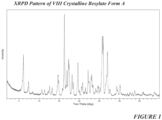
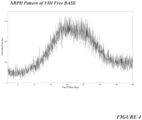
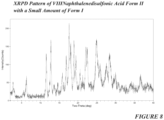
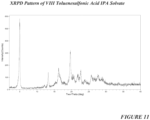
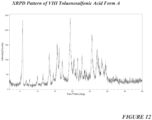
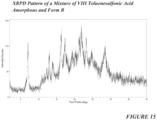
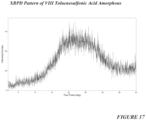
- Powder X-ray diffraction patterns of samples were obtained using the Rigaku MiniFlexII powder X-ray diffractometer using reflection geometry.
- the copper radiation source was operated at the voltage of 30 kV and the current 15 mA.
- Each sample was placed in the cavity of an aluminum sample holder fitted with a zero background quartz insert and flattened with a glass slide to present a good surface texture and inserted into the sample holder. All samples were measured in the 2 ⁇ angle range between 2° and 40° with a scan rate of 2°/min and a step size of 0.02°.
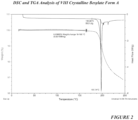
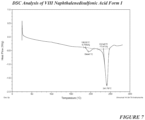
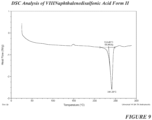
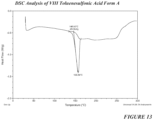
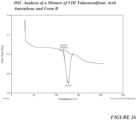
- a TA Instruments differential scanning calorimeter (Model Q100 or Model Q2000) with a mechanical cooler and a standard cell (configured the same as the sample pan) was used to measure the thermal properties of the powder samples.
- Each sample was loaded into a closed aluminium pan with a non-crimped lid containing zero to one pin hole and placed into the differential scanning calorimtery (DSC) cell.
- the cell has a nitrogen purge flowing at approximately 50 cm 3 /min.
- the cell and sample were equilibrated at 20°C.
- the cell was then heated to 209°C or 250-350°C at 10.00°C/min while monitoring the heat flow difference between the empty reference pan and the sample pan.
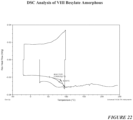
- Modulated DSC was used to analyze (S)-1-(1-(4-chloro-3-fluorophenyl)-2-hydroxyethyl)-4-(2-((1-methyl-1H-pyrazol-5-yl)amino)pyrimidin-4-yl)pyridin-2(1H)-one amorphous free base.
- a TA Instruments differential scanning calorimeter (Model Q2000) with a mechanical cooler and a standard cell (configured the same as the sample pan) was used to measure the thermal properties of the powder samples. Each sample was loaded into a closed aluminium pan with a non-crimped lid containing zero to one pin hole and placed into the differential scanning calorimtery (DSC) cell.
- the cell has a nitrogen purge flowing at approximately 50 cm 3 /min.
- the cell and sample were equilibrated at 25°C, the temperature was modulated at ⁇ 1°C every 60 seconds, and held isothermally for 5 minutes. Data storage was turned on and the sample ramped at 3°C to 100°C. The sample was then ramped to 25°C at 3 0 C/minute. The sample was then heated at 3°C/minute to 200°C. The reversing signal is shown.
- the crystalline material obtained was determined to be ⁇ 1-(1-(4-chloro-3-fluorophenyl)-2-hydroxyethyl)-4-(2-((1-methyl-1H-pyrazol-5-yl)amino)pyrimidin-4-yl)pyridin-2(1H)-one.
- a salt screen was conducted to determine if a suitable salt form could be discovered.
- the pK a of the free base was determined to be less than 2, which limited the range of possible salt coformers.
- salts derived from (S)-1-(1-(4-chloro-3-fluorophenyl)-2-hydroxyethyl)-4-(2-((1-methyl-1H-pyrazol-5-yl)amino)pyrimidin-4-yl)pyridin-2(1H)-one free base would have a pH max less than 2 and would be expected to disproportionate in water.
- a crystalline salt could be prepared or that any salt would have acceptable exposure in vivo (an aqueous environment).
- the peaks may be shifted up or down depending on the conditions under which the XRPD analysis was conducted. In general, the peaks may shift by +/- 0.2. In another aspect, the peaks may be shifted by +/- 0.1.
- Whether a pharmaceutical product contains a particular crystalline form of a substance, typically in a tablet or capsule, may be determined, for example, using X-ray diffraction, Raman spectroscopy and/or solid state NMR techniques.
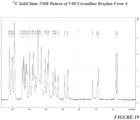
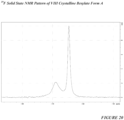
- the solid state 13 C and 19 F NMR spectra of (S)-1-(1-(4-chloro-3-fluorophenyl)-2-hydroxyethyl)-4-(2-((1-methyl-1H-pyrazol-5-yl)amino)pyrimidin-4-yl)pyridin-2(1H)-one, benzene sulfonate salt crystalline Form A is set forth in Figures 19 and 20 , respectively.
- the procedure for obtaining the NMR spectra is set forth below.
- the pulse sequence for 13 C acquisition employed ramped cross polarization (CP), 1-3 5- ⁇ total sideband suppression (TOSS), 4 and high power 1 H decoupling with a SPINAL64 5 scheme and field strength of 90 kHz.
- Magic-angle spinning (MAS) was performed at 8000 ⁇ 3 Hz.
- the 1 H 90° pulse width was 2.79 ⁇ s and the TOSS sequence employed 13 C 180° pulses of 6.50 ⁇ s.
- the CP contact time was 3 ms
- the recycle delay was 18 s
- a total of 3888 scans were averaged to generate the spectrum.
- Chemicals shifts were externally referenced by setting the methyl peak of 3-methylglutaric acid to 18.84 ppm relative to tetramethylsilane. 6
- the pulse sequence for 19 F acquisition employed ramped CP 1-3 and high power 1 H decoupling with a SPINAL64 5 scheme and field strength of 71 kHz.
- Magic-angle spinning (MAS) was performed at 14000 ⁇ 5 Hz.
- the 1 H 90° pulse width was 3.54 ⁇ s
- the CP contact time was 3 ms
- the recycle delay was 18 s
- a total of 16 scans were averaged to generate the spectrum.
- Chemicals shifts were externally referenced by setting the fluorine peak of polytetrafluoroethylene (PTFE) to -122.38 ppm relative to CFCl 3 (determined experimentally by spiking CFCl 3 into a PTFE sample).
- PTFE polytetrafluoroethylene
- the crystalline besylate salt of VIII is a highly crystalline material with a melting point that is acceptable for pharmaceutical dosage form development.
- the besylate salt form is preferred over the reference tosylate and 1,5-naphthalenesulfonic acid salt forms based on its simple solid state landscape (only one crystalline form identified).
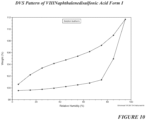
- the lower hygroscopicity of the besylate salt compared to the reference tosylate and 1,5-naphthalenedisulfonic acid salt forms is highly desired.
- the free base of VIII has a low pKa, less than 1.8, and therefore, any salts identified were expected to be unstable in the presence of water due to disproportionation to free base and acid. Therefore, the non-hygroscopicity of the besylate salt was unexpected and led to enhanced stability compared to the reference tosylate and naphthalenesulfonic acid salt forms.
- the present invention provides pharmaceutical compositions comprising a compound of the present invention or a salt or crystalline form of the salt and a pharmaceutically acceptable excipient, such as a carrier, adjuvant, or vehicle.
- a pharmaceutically acceptable excipient such as a carrier, adjuvant, or vehicle.
- the composition is formulated for administration to a patient in need thereof.
- patient refers to an animal, such as a mammal, such as a human. In one embodiment, patient or individual refers to a human.
- pharmaceutically acceptable means that the compound or composition referred to is compatible chemically and/or toxicologically with the other ingredients (such as excipients) comprising a formulation and/or the patient being treated, particularly humans.
- compositions of this invention refers to a non-toxic carrier, adjuvant, or vehicle that does not destroy the pharmacological activity of the compound with which it is formulated.
- Pharmaceutically acceptable carriers, adjuvants or vehicles that may be used in the compositions of this invention include, but are not limited to, ion exchangers, alumina, aluminum stearate, lecithin, serum proteins, such as human serum albumin, buffer substances such as phosphates, glycine, sorbic acid, potassium sorbate, partial glyceride mixtures of saturated vegetable fatty acids, water, salts or electrolytes, such as protamine sulfate, disodium hydrogen phosphate, potassium hydrogen phosphate, sodium chloride, zinc salts, colloidal silica, magnesium trisilicate, polyvinyl pyrrolidone, cellulose-based substances, polyethylene glycol, sodium carboxymethylcellulose, polyacrylates, waxes, polyethylene-polyoxypropylene-block
- compositions comprising a compound of the present invention may be administered orally, parenterally, by inhalation spray, topically, transdermally, rectally, nasally, buccally, sublingually, vaginally, intraperitoneal, intrapulmonary, intradermal, epidural or via an implanted reservoir.
- parenteral as used herein includes subcutaneous, intravenous, intramuscular, intra-articular, intra-synovial, intrasternal, intrathecal, intrahepatic, intralesional and intracranial injection or infusion techniques.
- the composition comprising a compound of the present invention is formulated as a solid dosage form for oral administration.
- Solid dosage forms for oral administration include capsules, tablets, pills, powders, and granules.
- the solid oral dosage form comprising a compound of formula (I) or a salt thereof further comprises one or more of (i) an inert, pharmaceutically acceptable excipient or carrier, such as sodium citrate or dicalcium phosphate, and (ii) filler or extender such as starches, lactose, sucrose, glucose, mannitol, or silicic acid, (iii) binders such as carboxymethylcellulose, alginates, gelatin, polyvinylpyrrolidinone, sucrose or acacia, (iv) humectants such as glycerol, (v) disintegrating agent such as agar, calcium carbonate, potato or tapioca starch, alginic acid, certain silicates or sodium carbonate, (vi) solution retarding agents
- the solid oral dosage form is formulated as capsules, tablets or pills.
- the solid oral dosage form further comprises buffering agents.
- such compositions for solid oral dosage forms may be formulated as fillers in soft and hard-filled gelatin capsules comprising one or more excipients such as lactose or milk sugar, polyethylene glycols and the like.
- tablets, dragees, capsules, pills and granules of the compositions comprising a compound of formula I or salt thereof optionally comprise coatings or shells such as enteric coatings. They may optionally comprise opacifying agents and can also be of a composition that they release the active ingredient(s) only, or preferentially, in a certain part of the intestinal tract, optionally, in a delayed manner.
- coatings or shells such as enteric coatings.
- opacifying agents can also be of a composition that they release the active ingredient(s) only, or preferentially, in a certain part of the intestinal tract, optionally, in a delayed manner.
- embedding compositions include polymeric substances and waxes, which may also be employed as fillers in soft and hard-filled gelatin capsules using such excipients as lactose or milk sugar as well as high molecular weight polethylene glycols and the like.
- a composition comprises micro-encapsulated compound of the present invention, and optionally, further comprises one or more excipients.
- compositions comprise liquid dosage formulations comprising a compound of formula I or salt thereof for oral administration and optionally further comprise one or more of pharmaceutically acceptable emulsions, microemulsions, solutions, suspensions, syrups and elixirs.
- the liquid dosage form optionally, further comprise one or more of an inert diluent such as water or other solvent, a solubilizing agent, and an emulsifier such as ethyl alcohol, isopropyl alcohol, ethyl carbonate, ethyl acetate, benzyl alcohol, benzyl benzoate, propylene glycol, 1,3-butylene glycol, dimethylformamide, oils (in particular, cottonseed, groundnut, corn, germ, olive, castor, and sesame oils), glycerol, tetrahydrofurfuryl alcohol, polyethylene glycols or fatty acid esters of sorbitan, and mixtures thereof.
- liquid oral compositions optionally further comprise one or more adjuvant, such as a wetting agent, a suspending agent, a sweetening agent, a flavoring agent and a perfuming agent.
- sterile injectable aqueous or oleaginous suspensions may be formulated according to the known art using suitable dispersing or wetting agents and suspending agents.
- the sterile injectable preparation may also be a sterile injectable solution, suspension or emulsion in a nontoxic parenterally acceptable diluent or solvent, for example, as a solution in 1,3-butanediol.
- acceptable vehicles and solvents that may be employed are water, Ringer's solution, U.S.P. and isotonic sodium chloride solution.
- sterile, fixed oils are conventionally employed as a solvent or suspending medium.
- any bland fixed oil can be employed including synthetic mono- or diglycerides.
- fatty acids such as oleic acid are used in the preparation of injectables.
- Injectable formulations can be sterilized, for example, by filtration through a bacterial-retaining filter, or by incorporating sterilizing agents in the form of sterile solid compositions which can be dissolved or dispersed in sterile water or other sterile injectable medium prior to use.
- the rate of compound release can be controlled.
- biodegradable polymers include poly(orthoesters) and poly(anhydrides).
- Depot injectable formulations are also prepared by entrapping the compound in liposomes or microemulsions that are compatible with body tissues.
- the composition for rectal or vaginal administration are formulated as suppositories which can be prepared by mixing a compound of the present invention with suitable non-irritating excipients or carriers such as cocoa butter, polyethylene glycol or a suppository wax, for example those which are solid at ambient temperature but liquid at body temperature and therefore melt in the rectum or vaginal cavity and release the compound of the present invention.
- suitable non-irritating excipients or carriers such as cocoa butter, polyethylene glycol or a suppository wax, for example those which are solid at ambient temperature but liquid at body temperature and therefore melt in the rectum or vaginal cavity and release the compound of the present invention.
- Example dosage forms for topical or transdermal administration of a compound of the present invention include ointments, pastes, creams, lotions, gels, powders, solutions, sprays, inhalants or patches.
- the compound of the present invention is admixed under sterile conditions with a pharmaceutically acceptable carrier, and optionally preservatives or buffers. Additional formulation examples include an ophthalmic formulation, ear drops, eye drops or transdermal patches.
- Transdermal dosage forms can be made by dissolving or dispensing the compound of the present invention in medium, for example ethanol or dimethylsulfoxide.
- Absorption enhancers can also be used to increase the flux of the compound across the skin. The rate can be controlled by either providing a rate controlling membrane or by dispersing the compound in a polymer matrix or gel.
- Nasal aerosol or inhalation formulations of a compound of the present invention may be prepared as solutions in saline, employing benzyl alcohol or other suitable preservatives, absorption promoters to enhance bioavailability, fluorocarbons, and/or other conventional solubilizing or dispersing agents.
- compositions may be administered with or without food. In certain embodiments, pharmaceutically acceptable compositions are administered without food. In certain embodiments, pharmaceutically acceptable compositions of this invention are administered with food.
- Specific dosage and treatment regimen for any particular patient will depend upon a variety of factors, including age, body weight, general health, sex, diet, time of administration, rate of excretion, drug combination, the judgment of the treating physician, and the severity of the particular disease being treated.
- the amount of a provided compound of the present invention in the composition will also depend upon the particular compound in the composition.
- the therapeutically effective amount of the compound of the invention administered parenterally per dose will be in the range of about 0.01-100 mg/kg, alternatively about 0.1 to 20 mg/kg of patient body weight per day, with the typical initial range of compound used being 0.3 to 15 mg/kg/day.
- oral unit dosage forms such as tablets and capsules, contain from about 5 to about 100 mg of the compound of the invention.
- An example tablet oral dosage form comprises about 2 mg, 5 mg, 25mg, 50mg, 100mg, 250mg or 500mg of a compound of formula (I) or salt thereof, and further comprises about 5-30 mg anhydrous lactose, about 5-40 mg sodium croscarmellose, about 5-30mg polyvinylpyrrolidone (PVP) K30 and about 1-10 mg magnesium stearate.
- the process of formulating the tablet comprises mixing the powdered ingredients together and further mixing with a solution of the PVP.
- the resulting composition can be dried, granulated, mixed with the magnesium stearate and compressed to tablet form using conventional equipment.
- An example of an aerosol formulation can be prepared by dissolving about 2-500 mg of a compound of formula I or salt thereof, in a suitable buffer solution, e.g. a phosphate buffer, and adding a tonicifier, e.g. a salt such sodium chloride, if desired.
- a suitable buffer solution e.g. a phosphate buffer
- a tonicifier e.g. a salt such sodium chloride
- the solution may be filtered, e.g. using a 0.2 micron filter, to remove impurities and contaminants.
Landscapes
- Chemical & Material Sciences (AREA)
- Organic Chemistry (AREA)
- Health & Medical Sciences (AREA)
- Life Sciences & Earth Sciences (AREA)
- General Health & Medical Sciences (AREA)
- General Chemical & Material Sciences (AREA)
- Chemical Kinetics & Catalysis (AREA)
- Veterinary Medicine (AREA)
- Medicinal Chemistry (AREA)
- Pharmacology & Pharmacy (AREA)
- Public Health (AREA)
- Animal Behavior & Ethology (AREA)
- Nuclear Medicine, Radiotherapy & Molecular Imaging (AREA)
- Engineering & Computer Science (AREA)
- Wood Science & Technology (AREA)
- Zoology (AREA)
- Bioinformatics & Cheminformatics (AREA)
- Genetics & Genomics (AREA)
- General Engineering & Computer Science (AREA)
- Biochemistry (AREA)
- Biotechnology (AREA)
- Microbiology (AREA)
- Epidemiology (AREA)
- Neurosurgery (AREA)
- Neurology (AREA)
- Biomedical Technology (AREA)
- Rheumatology (AREA)
- Pain & Pain Management (AREA)
- Pharmaceuticals Containing Other Organic And Inorganic Compounds (AREA)
- Plural Heterocyclic Compounds (AREA)
- Acyclic And Carbocyclic Compounds In Medicinal Compositions (AREA)
- Organic Low-Molecular-Weight Compounds And Preparation Thereof (AREA)
- Medicines Containing Material From Animals Or Micro-Organisms (AREA)
- Nitrogen And Oxygen Or Sulfur-Condensed Heterocyclic Ring Systems (AREA)
- Nitrogen Condensed Heterocyclic Rings (AREA)
- Pyridine Compounds (AREA)
Applications Claiming Priority (3)
| Application Number | Priority Date | Filing Date | Title |
|---|---|---|---|
| CN2014075011 | 2014-04-09 | ||
| PCT/CN2015/076083 WO2015154674A1 (en) | 2014-04-09 | 2015-04-08 | Process for the manufacturing of medicaments |
| EP15776904.3A EP3129025B1 (en) | 2014-04-09 | 2015-04-08 | Process for the manufacturing of medicaments |
Related Parent Applications (2)
| Application Number | Title | Priority Date | Filing Date |
|---|---|---|---|
| EP15776904.3A Division-Into EP3129025B1 (en) | 2014-04-09 | 2015-04-08 | Process for the manufacturing of medicaments |
| EP15776904.3A Division EP3129025B1 (en) | 2014-04-09 | 2015-04-08 | Process for the manufacturing of medicaments |
Publications (3)
| Publication Number | Publication Date |
|---|---|
| EP3494971A1 EP3494971A1 (en) | 2019-06-12 |
| EP3494971C0 EP3494971C0 (en) | 2024-07-24 |
| EP3494971B1 true EP3494971B1 (en) | 2024-07-24 |
Family
ID=54287327
Family Applications (2)
| Application Number | Title | Priority Date | Filing Date |
|---|---|---|---|
| EP19152874.4A Active EP3494971B1 (en) | 2014-04-09 | 2015-04-08 | Salts of erk inhibitors |
| EP15776904.3A Active EP3129025B1 (en) | 2014-04-09 | 2015-04-08 | Process for the manufacturing of medicaments |
Family Applications After (1)
| Application Number | Title | Priority Date | Filing Date |
|---|---|---|---|
| EP15776904.3A Active EP3129025B1 (en) | 2014-04-09 | 2015-04-08 | Process for the manufacturing of medicaments |
Country Status (22)
| Country | Link |
|---|---|
| US (4) | US20170022183A1 (OSRAM) |
| EP (2) | EP3494971B1 (OSRAM) |
| JP (3) | JP6723926B2 (OSRAM) |
| KR (3) | KR20200038553A (OSRAM) |
| CN (3) | CN106659721B (OSRAM) |
| AR (1) | AR099989A1 (OSRAM) |
| AU (2) | AU2015245743B2 (OSRAM) |
| BR (2) | BR122020014933B8 (OSRAM) |
| CA (2) | CA2945098C (OSRAM) |
| ES (1) | ES2733495T3 (OSRAM) |
| HR (1) | HRP20191306T1 (OSRAM) |
| IL (2) | IL248205B (OSRAM) |
| MX (2) | MX392460B (OSRAM) |
| MY (3) | MY188526A (OSRAM) |
| NZ (1) | NZ725450A (OSRAM) |
| PL (1) | PL3129025T3 (OSRAM) |
| RU (1) | RU2684102C2 (OSRAM) |
| SG (1) | SG11201608421XA (OSRAM) |
| SI (1) | SI3129025T1 (OSRAM) |
| TW (2) | TWI678366B (OSRAM) |
| WO (1) | WO2015154674A1 (OSRAM) |
| ZA (1) | ZA201607066B (OSRAM) |
Families Citing this family (11)
| Publication number | Priority date | Publication date | Assignee | Title |
|---|---|---|---|---|
| DK3321262T3 (da) * | 2012-03-01 | 2021-01-25 | Array Biopharma Inc | Serin-/threoninkinasehæmmere |
| US9532987B2 (en) | 2013-09-05 | 2017-01-03 | Genentech, Inc. | Use of a combination of a MEK inhibitor and an ERK inhibitor for treatment of hyperproliferative diseases |
| WO2015085007A1 (en) | 2013-12-06 | 2015-06-11 | Genentech, Inc. | Serine/threonine kinase inhibitors |
| MY188526A (en) | 2014-04-09 | 2021-12-18 | Genentech Inc | Process for the manufacturing of medicaments |
| HRP20200342T1 (hr) | 2015-11-09 | 2020-06-12 | Astrazeneca Ab | Derivati dihidroimidazopirazinona korisni u liječenju raka |
| AU2017249229A1 (en) | 2016-04-15 | 2018-10-04 | Genentech, Inc. | Diagnostic and therapeutic methods for cancer |
| WO2019051296A1 (en) | 2017-09-08 | 2019-03-14 | Genentech, Inc. | DIAGNOSTIC AND THERAPEUTIC METHODS OF CANCER |
| WO2019158579A1 (en) | 2018-02-13 | 2019-08-22 | Vib Vzw | Targeting minimal residual disease in cancer with rxr antagonists |
| EP3546447A1 (en) * | 2018-03-29 | 2019-10-02 | Heidelberg Pharma GmbH | Synthesis of (2s,3r,4r)-4,5-dihydroxyisoleucine and derivatives |
| IL293382A (en) * | 2019-12-05 | 2022-07-01 | Astrazeneca Ab | Process and intermediates for the production of formula (i) |
| CN115710158A (zh) * | 2021-08-23 | 2023-02-24 | 凯特立斯(深圳)科技有限公司 | 一种不对称催化制备替格瑞洛中间体的方法 |
Family Cites Families (7)
| Publication number | Priority date | Publication date | Assignee | Title |
|---|---|---|---|---|
| MY130778A (en) * | 2001-02-09 | 2007-07-31 | Vertex Pharma | Heterocyclic inhibitiors of erk2 and uses thereof |
| US6869966B2 (en) * | 2002-09-30 | 2005-03-22 | Banyu Pharmaceutical Co., Ltd. | N-substituted-2-oxodihydropyridine derivatives |
| MX2008012413A (es) * | 2006-03-29 | 2008-10-07 | Hoffmann La Roche | Derivados de piridina y pirimidina como antagonistas del receptor metabotropico de glutamato 2 (mglur2). |
| EP2205086B1 (en) * | 2007-11-06 | 2013-08-14 | E. I. du Pont de Nemours and Company | Fungicidal heterocyclic amines |
| DK3321262T3 (da) * | 2012-03-01 | 2021-01-25 | Array Biopharma Inc | Serin-/threoninkinasehæmmere |
| US9867667B2 (en) * | 2014-02-27 | 2018-01-16 | Canon Usa Inc. | Placement apparatus |
| MY188526A (en) * | 2014-04-09 | 2021-12-18 | Genentech Inc | Process for the manufacturing of medicaments |
-
2015
- 2015-04-08 MY MYPI2016001816A patent/MY188526A/en unknown
- 2015-04-08 MX MX2020010384A patent/MX392460B/es unknown
- 2015-04-08 KR KR1020207009606A patent/KR20200038553A/ko not_active Ceased
- 2015-04-08 JP JP2016561841A patent/JP6723926B2/ja active Active
- 2015-04-08 AU AU2015245743A patent/AU2015245743B2/en not_active Ceased
- 2015-04-08 CN CN201580029835.2A patent/CN106659721B/zh active Active
- 2015-04-08 CN CN202010547624.0A patent/CN111777594B/zh active Active
- 2015-04-08 HR HRP20191306TT patent/HRP20191306T1/hr unknown
- 2015-04-08 TW TW104111317A patent/TWI678366B/zh not_active IP Right Cessation
- 2015-04-08 SI SI201530799T patent/SI3129025T1/sl unknown
- 2015-04-08 CN CN202011466648.XA patent/CN112645927A/zh active Pending
- 2015-04-08 BR BR122020014933A patent/BR122020014933B8/pt active IP Right Grant
- 2015-04-08 NZ NZ725450A patent/NZ725450A/en not_active IP Right Cessation
- 2015-04-08 RU RU2016139286A patent/RU2684102C2/ru active
- 2015-04-08 KR KR1020227045548A patent/KR20230006043A/ko not_active Abandoned
- 2015-04-08 MY MYPI2021005412A patent/MY196320A/en unknown
- 2015-04-08 KR KR1020167030901A patent/KR102490955B1/ko active Active
- 2015-04-08 MY MYPI2021005416A patent/MY198371A/en unknown
- 2015-04-08 BR BR112016023391-3A patent/BR112016023391B1/pt not_active IP Right Cessation
- 2015-04-08 AR ARP150101063A patent/AR099989A1/es unknown
- 2015-04-08 CA CA2945098A patent/CA2945098C/en active Active
- 2015-04-08 MX MX2016013162A patent/MX375638B/es active IP Right Grant
- 2015-04-08 SG SG11201608421XA patent/SG11201608421XA/en unknown
- 2015-04-08 CA CA3167641A patent/CA3167641A1/en active Pending
- 2015-04-08 PL PL15776904T patent/PL3129025T3/pl unknown
- 2015-04-08 EP EP19152874.4A patent/EP3494971B1/en active Active
- 2015-04-08 WO PCT/CN2015/076083 patent/WO2015154674A1/en not_active Ceased
- 2015-04-08 TW TW108130327A patent/TWI762806B/zh not_active IP Right Cessation
- 2015-04-08 EP EP15776904.3A patent/EP3129025B1/en active Active
- 2015-04-08 ES ES15776904T patent/ES2733495T3/es active Active
-
2016
- 2016-10-05 US US15/285,781 patent/US20170022183A1/en not_active Abandoned
- 2016-10-06 IL IL248205A patent/IL248205B/en active IP Right Grant
- 2016-10-13 ZA ZA2016/07066A patent/ZA201607066B/en unknown
-
2018
- 2018-01-10 US US15/866,899 patent/US10611753B2/en active Active
-
2019
- 2019-08-08 US US16/535,752 patent/US11098028B2/en active Active
- 2019-08-13 IL IL26869019A patent/IL268690A/en unknown
- 2019-12-18 US US16/718,602 patent/US11066389B2/en active Active
-
2020
- 2020-03-02 JP JP2020035010A patent/JP6974524B2/ja active Active
- 2020-08-21 AU AU2020220208A patent/AU2020220208B2/en not_active Ceased
-
2021
- 2021-06-22 JP JP2021102810A patent/JP2021167321A/ja active Pending
Also Published As
Similar Documents
| Publication | Publication Date | Title |
|---|---|---|
| EP3494971B1 (en) | Salts of erk inhibitors | |
| HK40007970B (en) | Salts of erk inhibitors | |
| HK40007970A (en) | Salts of erk inhibitors | |
| HK1233931B (en) | Process for the manufacturing of medicaments | |
| HK1233931A1 (en) | Process for the manufacturing of medicaments | |
| NZ761260A (en) | Crystalline salts of erk inhibitors | |
| HK40039714A (en) | Process for the manufacturing of medicaments | |
| HK40039714B (zh) | 用於制备药物的方法 | |
| CN117945945A (zh) | 一种gpr139受体激动剂、其制备方法及其应用 | |
| AU2023225437A1 (en) | Indazole compound and pharmaceutical use thereof |
Legal Events
| Date | Code | Title | Description |
|---|---|---|---|
| PUAI | Public reference made under article 153(3) epc to a published international application that has entered the european phase |
Free format text: ORIGINAL CODE: 0009012 |
|
| STAA | Information on the status of an ep patent application or granted ep patent |
Free format text: STATUS: REQUEST FOR EXAMINATION WAS MADE |
|
| 17P | Request for examination filed |
Effective date: 20190121 |
|
| AC | Divisional application: reference to earlier application |
Ref document number: 3129025 Country of ref document: EP Kind code of ref document: P |
|
| AK | Designated contracting states |
Kind code of ref document: A1 Designated state(s): AL AT BE BG CH CY CZ DE DK EE ES FI FR GB GR HR HU IE IS IT LI LT LU LV MC MK MT NL NO PL PT RO RS SE SI SK SM TR |
|
| AX | Request for extension of the european patent |
Extension state: BA ME |
|
| RIN1 | Information on inventor provided before grant (corrected) |
Inventor name: CHESTAKOVA, ALEXANDRA Inventor name: SHA, CHUNBO Inventor name: GU, WEI Inventor name: IDING, HANS Inventor name: ZHANG, HAIMING Inventor name: LINGHU, XIN Inventor name: ZHANG, TAO Inventor name: LI, JING Inventor name: STULTS, JEFFREY Inventor name: WANG, YOUCHU Inventor name: ZHANG, JIANQIAN Inventor name: LIN, JINGUANG Inventor name: MEIER, PATRIK |
|
| REG | Reference to a national code |
Ref country code: HK Ref legal event code: DE Ref document number: 40007970 Country of ref document: HK |
|
| STAA | Information on the status of an ep patent application or granted ep patent |
Free format text: STATUS: EXAMINATION IS IN PROGRESS |
|
| 17Q | First examination report despatched |
Effective date: 20210217 |
|
| GRAP | Despatch of communication of intention to grant a patent |
Free format text: ORIGINAL CODE: EPIDOSNIGR1 |
|
| STAA | Information on the status of an ep patent application or granted ep patent |
Free format text: STATUS: GRANT OF PATENT IS INTENDED |
|
| RIC1 | Information provided on ipc code assigned before grant |
Ipc: C07D 401/04 20060101ALI20240319BHEP Ipc: C07D 401/14 20060101ALI20240319BHEP Ipc: C07D 401/12 20060101ALI20240319BHEP Ipc: A61P 35/00 20060101ALI20240319BHEP Ipc: A61P 29/00 20060101ALI20240319BHEP Ipc: A61P 25/00 20060101ALI20240319BHEP Ipc: A61K 31/506 20060101AFI20240319BHEP |
|
| INTG | Intention to grant announced |
Effective date: 20240404 |
|
| GRAS | Grant fee paid |
Free format text: ORIGINAL CODE: EPIDOSNIGR3 |
|
| GRAA | (expected) grant |
Free format text: ORIGINAL CODE: 0009210 |
|
| STAA | Information on the status of an ep patent application or granted ep patent |
Free format text: STATUS: THE PATENT HAS BEEN GRANTED |
|
| AC | Divisional application: reference to earlier application |
Ref document number: 3129025 Country of ref document: EP Kind code of ref document: P |
|
| AK | Designated contracting states |
Kind code of ref document: B1 Designated state(s): AL AT BE BG CH CY CZ DE DK EE ES FI FR GB GR HR HU IE IS IT LI LT LU LV MC MK MT NL NO PL PT RO RS SE SI SK SM TR |
|
| REG | Reference to a national code |
Ref country code: GB Ref legal event code: FG4D |
|
| REG | Reference to a national code |
Ref country code: CH Ref legal event code: EP |
|
| REG | Reference to a national code |
Ref country code: IE Ref legal event code: FG4D Ref country code: DE Ref legal event code: R096 Ref document number: 602015089344 Country of ref document: DE |
|
| U01 | Request for unitary effect filed |
Effective date: 20240809 |
|
| U07 | Unitary effect registered |
Designated state(s): AT BE BG DE DK EE FI FR IT LT LU LV MT NL PT SE SI Effective date: 20240827 |
|
| U08 | Date and/or purport of decision on request for unitary effect for the european patent changed [decision is positive] |
Designated state(s): AT BE BG DE DK EE FI FR IT LT LU LV MT NL PT RO SE SI Effective date: 20240909 |
|
| U15 | Date of registration of unitary effect changed |
Effective date: 20240909 |
|
| PG25 | Lapsed in a contracting state [announced via postgrant information from national office to epo] |
Ref country code: NO Free format text: LAPSE BECAUSE OF FAILURE TO SUBMIT A TRANSLATION OF THE DESCRIPTION OR TO PAY THE FEE WITHIN THE PRESCRIBED TIME-LIMIT Effective date: 20241024 |
|
| PG25 | Lapsed in a contracting state [announced via postgrant information from national office to epo] |
Ref country code: GR Free format text: LAPSE BECAUSE OF FAILURE TO SUBMIT A TRANSLATION OF THE DESCRIPTION OR TO PAY THE FEE WITHIN THE PRESCRIBED TIME-LIMIT Effective date: 20241025 Ref country code: PL Free format text: LAPSE BECAUSE OF FAILURE TO SUBMIT A TRANSLATION OF THE DESCRIPTION OR TO PAY THE FEE WITHIN THE PRESCRIBED TIME-LIMIT Effective date: 20240724 |
|
| PG25 | Lapsed in a contracting state [announced via postgrant information from national office to epo] |
Ref country code: IS Free format text: LAPSE BECAUSE OF FAILURE TO SUBMIT A TRANSLATION OF THE DESCRIPTION OR TO PAY THE FEE WITHIN THE PRESCRIBED TIME-LIMIT Effective date: 20241124 |
|
| PG25 | Lapsed in a contracting state [announced via postgrant information from national office to epo] |
Ref country code: HR Free format text: LAPSE BECAUSE OF FAILURE TO SUBMIT A TRANSLATION OF THE DESCRIPTION OR TO PAY THE FEE WITHIN THE PRESCRIBED TIME-LIMIT Effective date: 20240724 |
|
| PG25 | Lapsed in a contracting state [announced via postgrant information from national office to epo] |
Ref country code: RS Free format text: LAPSE BECAUSE OF FAILURE TO SUBMIT A TRANSLATION OF THE DESCRIPTION OR TO PAY THE FEE WITHIN THE PRESCRIBED TIME-LIMIT Effective date: 20241024 Ref country code: ES Free format text: LAPSE BECAUSE OF FAILURE TO SUBMIT A TRANSLATION OF THE DESCRIPTION OR TO PAY THE FEE WITHIN THE PRESCRIBED TIME-LIMIT Effective date: 20240724 |
|
| PG25 | Lapsed in a contracting state [announced via postgrant information from national office to epo] |
Ref country code: RS Free format text: LAPSE BECAUSE OF FAILURE TO SUBMIT A TRANSLATION OF THE DESCRIPTION OR TO PAY THE FEE WITHIN THE PRESCRIBED TIME-LIMIT Effective date: 20241024 Ref country code: PL Free format text: LAPSE BECAUSE OF FAILURE TO SUBMIT A TRANSLATION OF THE DESCRIPTION OR TO PAY THE FEE WITHIN THE PRESCRIBED TIME-LIMIT Effective date: 20240724 Ref country code: NO Free format text: LAPSE BECAUSE OF FAILURE TO SUBMIT A TRANSLATION OF THE DESCRIPTION OR TO PAY THE FEE WITHIN THE PRESCRIBED TIME-LIMIT Effective date: 20241024 Ref country code: IS Free format text: LAPSE BECAUSE OF FAILURE TO SUBMIT A TRANSLATION OF THE DESCRIPTION OR TO PAY THE FEE WITHIN THE PRESCRIBED TIME-LIMIT Effective date: 20241124 Ref country code: HR Free format text: LAPSE BECAUSE OF FAILURE TO SUBMIT A TRANSLATION OF THE DESCRIPTION OR TO PAY THE FEE WITHIN THE PRESCRIBED TIME-LIMIT Effective date: 20240724 Ref country code: GR Free format text: LAPSE BECAUSE OF FAILURE TO SUBMIT A TRANSLATION OF THE DESCRIPTION OR TO PAY THE FEE WITHIN THE PRESCRIBED TIME-LIMIT Effective date: 20241025 Ref country code: ES Free format text: LAPSE BECAUSE OF FAILURE TO SUBMIT A TRANSLATION OF THE DESCRIPTION OR TO PAY THE FEE WITHIN THE PRESCRIBED TIME-LIMIT Effective date: 20240724 |
|
| PG25 | Lapsed in a contracting state [announced via postgrant information from national office to epo] |
Ref country code: SM Free format text: LAPSE BECAUSE OF FAILURE TO SUBMIT A TRANSLATION OF THE DESCRIPTION OR TO PAY THE FEE WITHIN THE PRESCRIBED TIME-LIMIT Effective date: 20240724 |
|
| U20 | Renewal fee for the european patent with unitary effect paid |
Year of fee payment: 11 Effective date: 20250319 |
|
| PG25 | Lapsed in a contracting state [announced via postgrant information from national office to epo] |
Ref country code: CZ Free format text: LAPSE BECAUSE OF FAILURE TO SUBMIT A TRANSLATION OF THE DESCRIPTION OR TO PAY THE FEE WITHIN THE PRESCRIBED TIME-LIMIT Effective date: 20240724 |
|
| PG25 | Lapsed in a contracting state [announced via postgrant information from national office to epo] |
Ref country code: SK Free format text: LAPSE BECAUSE OF FAILURE TO SUBMIT A TRANSLATION OF THE DESCRIPTION OR TO PAY THE FEE WITHIN THE PRESCRIBED TIME-LIMIT Effective date: 20240724 |
|
| PGFP | Annual fee paid to national office [announced via postgrant information from national office to epo] |
Ref country code: GB Payment date: 20250319 Year of fee payment: 11 |
|
| PLBE | No opposition filed within time limit |
Free format text: ORIGINAL CODE: 0009261 |
|
| STAA | Information on the status of an ep patent application or granted ep patent |
Free format text: STATUS: NO OPPOSITION FILED WITHIN TIME LIMIT |
|
| 26N | No opposition filed |
Effective date: 20250425 |
|
| PGFP | Annual fee paid to national office [announced via postgrant information from national office to epo] |
Ref country code: CH Payment date: 20250501 Year of fee payment: 11 |
|
| PG25 | Lapsed in a contracting state [announced via postgrant information from national office to epo] |
Ref country code: MC Free format text: LAPSE BECAUSE OF FAILURE TO SUBMIT A TRANSLATION OF THE DESCRIPTION OR TO PAY THE FEE WITHIN THE PRESCRIBED TIME-LIMIT Effective date: 20240724 |