EP3493846B1 - Treating metastatic cancer and model systems for metastatic disease - Google Patents
Treating metastatic cancer and model systems for metastatic disease Download PDFInfo
- Publication number
- EP3493846B1 EP3493846B1 EP17837622.4A EP17837622A EP3493846B1 EP 3493846 B1 EP3493846 B1 EP 3493846B1 EP 17837622 A EP17837622 A EP 17837622A EP 3493846 B1 EP3493846 B1 EP 3493846B1
- Authority
- EP
- European Patent Office
- Prior art keywords
- l1cam
- cancer
- cells
- inhibitor
- metastasis
- Prior art date
- Legal status (The legal status is an assumption and is not a legal conclusion. Google has not performed a legal analysis and makes no representation as to the accuracy of the status listed.)
- Active
Links
Images























Classifications
-
- C—CHEMISTRY; METALLURGY
- C07—ORGANIC CHEMISTRY
- C07K—PEPTIDES
- C07K16/00—Immunoglobulins [IG], e.g. monoclonal or polyclonal antibodies
- C07K16/18—Immunoglobulins [IG], e.g. monoclonal or polyclonal antibodies against material from animals or humans
- C07K16/28—Immunoglobulins [IG], e.g. monoclonal or polyclonal antibodies against material from animals or humans against receptors, cell surface antigens or cell surface determinants
- C07K16/2803—Immunoglobulins [IG], e.g. monoclonal or polyclonal antibodies against material from animals or humans against receptors, cell surface antigens or cell surface determinants against the immunoglobulin superfamily
-
- A—HUMAN NECESSITIES
- A61—MEDICAL OR VETERINARY SCIENCE; HYGIENE
- A61K—PREPARATIONS FOR MEDICAL, DENTAL OR TOILETRY PURPOSES
- A61K48/00—Medicinal preparations containing genetic material which is inserted into cells of the living body to treat genetic diseases; Gene therapy
- A61K48/005—Medicinal preparations containing genetic material which is inserted into cells of the living body to treat genetic diseases; Gene therapy characterised by an aspect of the 'active' part of the composition delivered, i.e. the nucleic acid delivered
- A61K48/0066—Manipulation of the nucleic acid to modify its expression pattern, e.g. enhance its duration of expression, achieved by the presence of particular introns in the delivered nucleic acid
-
- A—HUMAN NECESSITIES
- A61—MEDICAL OR VETERINARY SCIENCE; HYGIENE
- A61K—PREPARATIONS FOR MEDICAL, DENTAL OR TOILETRY PURPOSES
- A61K31/00—Medicinal preparations containing organic active ingredients
- A61K31/33—Heterocyclic compounds
- A61K31/335—Heterocyclic compounds having oxygen as the only ring hetero atom, e.g. fungichromin
- A61K31/337—Heterocyclic compounds having oxygen as the only ring hetero atom, e.g. fungichromin having four-membered rings, e.g. taxol
-
- A—HUMAN NECESSITIES
- A61—MEDICAL OR VETERINARY SCIENCE; HYGIENE
- A61K—PREPARATIONS FOR MEDICAL, DENTAL OR TOILETRY PURPOSES
- A61K31/00—Medicinal preparations containing organic active ingredients
- A61K31/33—Heterocyclic compounds
- A61K31/395—Heterocyclic compounds having nitrogen as a ring hetero atom, e.g. guanethidine or rifamycins
- A61K31/495—Heterocyclic compounds having nitrogen as a ring hetero atom, e.g. guanethidine or rifamycins having six-membered rings with two or more nitrogen atoms as the only ring heteroatoms, e.g. piperazine or tetrazines
- A61K31/505—Pyrimidines; Hydrogenated pyrimidines, e.g. trimethoprim
- A61K31/519—Pyrimidines; Hydrogenated pyrimidines, e.g. trimethoprim ortho- or peri-condensed with heterocyclic rings
-
- A—HUMAN NECESSITIES
- A61—MEDICAL OR VETERINARY SCIENCE; HYGIENE
- A61K—PREPARATIONS FOR MEDICAL, DENTAL OR TOILETRY PURPOSES
- A61K31/00—Medicinal preparations containing organic active ingredients
- A61K31/70—Carbohydrates; Sugars; Derivatives thereof
- A61K31/7088—Compounds having three or more nucleosides or nucleotides
-
- A—HUMAN NECESSITIES
- A61—MEDICAL OR VETERINARY SCIENCE; HYGIENE
- A61K—PREPARATIONS FOR MEDICAL, DENTAL OR TOILETRY PURPOSES
- A61K48/00—Medicinal preparations containing genetic material which is inserted into cells of the living body to treat genetic diseases; Gene therapy
-
- A—HUMAN NECESSITIES
- A61—MEDICAL OR VETERINARY SCIENCE; HYGIENE
- A61K—PREPARATIONS FOR MEDICAL, DENTAL OR TOILETRY PURPOSES
- A61K48/00—Medicinal preparations containing genetic material which is inserted into cells of the living body to treat genetic diseases; Gene therapy
- A61K48/0008—Medicinal preparations containing genetic material which is inserted into cells of the living body to treat genetic diseases; Gene therapy characterised by an aspect of the 'non-active' part of the composition delivered, e.g. wherein such 'non-active' part is not delivered simultaneously with the 'active' part of the composition
- A61K48/0016—Medicinal preparations containing genetic material which is inserted into cells of the living body to treat genetic diseases; Gene therapy characterised by an aspect of the 'non-active' part of the composition delivered, e.g. wherein such 'non-active' part is not delivered simultaneously with the 'active' part of the composition wherein the nucleic acid is delivered as a 'naked' nucleic acid, i.e. not combined with an entity such as a cationic lipid
-
- A—HUMAN NECESSITIES
- A61—MEDICAL OR VETERINARY SCIENCE; HYGIENE
- A61K—PREPARATIONS FOR MEDICAL, DENTAL OR TOILETRY PURPOSES
- A61K48/00—Medicinal preparations containing genetic material which is inserted into cells of the living body to treat genetic diseases; Gene therapy
- A61K48/0083—Medicinal preparations containing genetic material which is inserted into cells of the living body to treat genetic diseases; Gene therapy characterised by an aspect of the administration regime
-
- A—HUMAN NECESSITIES
- A61—MEDICAL OR VETERINARY SCIENCE; HYGIENE
- A61K—PREPARATIONS FOR MEDICAL, DENTAL OR TOILETRY PURPOSES
- A61K48/00—Medicinal preparations containing genetic material which is inserted into cells of the living body to treat genetic diseases; Gene therapy
- A61K48/0091—Purification or manufacturing processes for gene therapy compositions
-
- A—HUMAN NECESSITIES
- A61—MEDICAL OR VETERINARY SCIENCE; HYGIENE
- A61P—SPECIFIC THERAPEUTIC ACTIVITY OF CHEMICAL COMPOUNDS OR MEDICINAL PREPARATIONS
- A61P35/00—Antineoplastic agents
- A61P35/04—Antineoplastic agents specific for metastasis
-
- C—CHEMISTRY; METALLURGY
- C07—ORGANIC CHEMISTRY
- C07K—PEPTIDES
- C07K16/00—Immunoglobulins [IG], e.g. monoclonal or polyclonal antibodies
- C07K16/18—Immunoglobulins [IG], e.g. monoclonal or polyclonal antibodies against material from animals or humans
- C07K16/28—Immunoglobulins [IG], e.g. monoclonal or polyclonal antibodies against material from animals or humans against receptors, cell surface antigens or cell surface determinants
- C07K16/2884—Immunoglobulins [IG], e.g. monoclonal or polyclonal antibodies against material from animals or humans against receptors, cell surface antigens or cell surface determinants against CD44
-
- C—CHEMISTRY; METALLURGY
- C07—ORGANIC CHEMISTRY
- C07K—PEPTIDES
- C07K16/00—Immunoglobulins [IG], e.g. monoclonal or polyclonal antibodies
- C07K16/18—Immunoglobulins [IG], e.g. monoclonal or polyclonal antibodies against material from animals or humans
- C07K16/28—Immunoglobulins [IG], e.g. monoclonal or polyclonal antibodies against material from animals or humans against receptors, cell surface antigens or cell surface determinants
- C07K16/2896—Immunoglobulins [IG], e.g. monoclonal or polyclonal antibodies against material from animals or humans against receptors, cell surface antigens or cell surface determinants against molecules with a "CD"-designation, not provided for elsewhere
-
- C—CHEMISTRY; METALLURGY
- C12—BIOCHEMISTRY; BEER; SPIRITS; WINE; VINEGAR; MICROBIOLOGY; ENZYMOLOGY; MUTATION OR GENETIC ENGINEERING
- C12N—MICROORGANISMS OR ENZYMES; COMPOSITIONS THEREOF; PROPAGATING, PRESERVING, OR MAINTAINING MICROORGANISMS; MUTATION OR GENETIC ENGINEERING; CULTURE MEDIA
- C12N15/00—Mutation or genetic engineering; DNA or RNA concerning genetic engineering, vectors, e.g. plasmids, or their isolation, preparation or purification; Use of hosts therefor
- C12N15/09—Recombinant DNA-technology
- C12N15/11—DNA or RNA fragments; Modified forms thereof; Non-coding nucleic acids having a biological activity
- C12N15/113—Non-coding nucleic acids modulating the expression of genes, e.g. antisense oligonucleotides; Antisense DNA or RNA; Triplex- forming oligonucleotides; Catalytic nucleic acids, e.g. ribozymes; Nucleic acids used in co-suppression or gene silencing
-
- C—CHEMISTRY; METALLURGY
- C12—BIOCHEMISTRY; BEER; SPIRITS; WINE; VINEGAR; MICROBIOLOGY; ENZYMOLOGY; MUTATION OR GENETIC ENGINEERING
- C12Q—MEASURING OR TESTING PROCESSES INVOLVING ENZYMES, NUCLEIC ACIDS OR MICROORGANISMS; COMPOSITIONS OR TEST PAPERS THEREFOR; PROCESSES OF PREPARING SUCH COMPOSITIONS; CONDITION-RESPONSIVE CONTROL IN MICROBIOLOGICAL OR ENZYMOLOGICAL PROCESSES
- C12Q1/00—Measuring or testing processes involving enzymes, nucleic acids or microorganisms; Compositions therefor; Processes of preparing such compositions
- C12Q1/02—Measuring or testing processes involving enzymes, nucleic acids or microorganisms; Compositions therefor; Processes of preparing such compositions involving viable microorganisms
- C12Q1/025—Measuring or testing processes involving enzymes, nucleic acids or microorganisms; Compositions therefor; Processes of preparing such compositions involving viable microorganisms for testing or evaluating the effect of chemical or biological compounds, e.g. drugs, cosmetics
-
- G—PHYSICS
- G01—MEASURING; TESTING
- G01N—INVESTIGATING OR ANALYSING MATERIALS BY DETERMINING THEIR CHEMICAL OR PHYSICAL PROPERTIES
- G01N33/00—Investigating or analysing materials by specific methods not covered by groups G01N1/00 - G01N31/00
- G01N33/48—Biological material, e.g. blood, urine; Haemocytometers
- G01N33/50—Chemical analysis of biological material, e.g. blood, urine; Testing involving biospecific ligand binding methods; Immunological testing
- G01N33/5005—Chemical analysis of biological material, e.g. blood, urine; Testing involving biospecific ligand binding methods; Immunological testing involving human or animal cells
- G01N33/5008—Chemical analysis of biological material, e.g. blood, urine; Testing involving biospecific ligand binding methods; Immunological testing involving human or animal cells for testing or evaluating the effect of chemical or biological compounds, e.g. drugs, cosmetics
- G01N33/5011—Chemical analysis of biological material, e.g. blood, urine; Testing involving biospecific ligand binding methods; Immunological testing involving human or animal cells for testing or evaluating the effect of chemical or biological compounds, e.g. drugs, cosmetics for testing antineoplastic activity
-
- A—HUMAN NECESSITIES
- A61—MEDICAL OR VETERINARY SCIENCE; HYGIENE
- A61K—PREPARATIONS FOR MEDICAL, DENTAL OR TOILETRY PURPOSES
- A61K39/00—Medicinal preparations containing antigens or antibodies
- A61K2039/505—Medicinal preparations containing antigens or antibodies comprising antibodies
-
- A—HUMAN NECESSITIES
- A61—MEDICAL OR VETERINARY SCIENCE; HYGIENE
- A61K—PREPARATIONS FOR MEDICAL, DENTAL OR TOILETRY PURPOSES
- A61K39/00—Medicinal preparations containing antigens or antibodies
- A61K2039/545—Medicinal preparations containing antigens or antibodies characterised by the dose, timing or administration schedule
-
- A—HUMAN NECESSITIES
- A61—MEDICAL OR VETERINARY SCIENCE; HYGIENE
- A61K—PREPARATIONS FOR MEDICAL, DENTAL OR TOILETRY PURPOSES
- A61K45/00—Medicinal preparations containing active ingredients not provided for in groups A61K31/00 - A61K41/00
- A61K45/06—Mixtures of active ingredients without chemical characterisation, e.g. antiphlogistics and cardiaca
-
- C—CHEMISTRY; METALLURGY
- C07—ORGANIC CHEMISTRY
- C07K—PEPTIDES
- C07K2317/00—Immunoglobulins specific features
- C07K2317/30—Immunoglobulins specific features characterized by aspects of specificity or valency
- C07K2317/31—Immunoglobulins specific features characterized by aspects of specificity or valency multispecific
-
- C—CHEMISTRY; METALLURGY
- C12—BIOCHEMISTRY; BEER; SPIRITS; WINE; VINEGAR; MICROBIOLOGY; ENZYMOLOGY; MUTATION OR GENETIC ENGINEERING
- C12N—MICROORGANISMS OR ENZYMES; COMPOSITIONS THEREOF; PROPAGATING, PRESERVING, OR MAINTAINING MICROORGANISMS; MUTATION OR GENETIC ENGINEERING; CULTURE MEDIA
- C12N2310/00—Structure or type of the nucleic acid
- C12N2310/10—Type of nucleic acid
- C12N2310/11—Antisense
-
- C—CHEMISTRY; METALLURGY
- C12—BIOCHEMISTRY; BEER; SPIRITS; WINE; VINEGAR; MICROBIOLOGY; ENZYMOLOGY; MUTATION OR GENETIC ENGINEERING
- C12N—MICROORGANISMS OR ENZYMES; COMPOSITIONS THEREOF; PROPAGATING, PRESERVING, OR MAINTAINING MICROORGANISMS; MUTATION OR GENETIC ENGINEERING; CULTURE MEDIA
- C12N2310/00—Structure or type of the nucleic acid
- C12N2310/10—Type of nucleic acid
- C12N2310/14—Type of nucleic acid interfering nucleic acids [NA]
Definitions
- the present invention relates to a L1CAM inhibitor for use in inhibiting progression of established metastatic disease in a subject who has received treatment for a primary cancer
- the L1CAM inhibitor is an antibody or antibody fragment or single chain antibody that specifically binds to L1CAM, or a nucleic acid, such as, a short hairpin, interfering, antisense, or ribozyme nucleic acid comprising a region of homology to an L1CAM mRNA, such as a nucleic acid having a size between about 15 and 50 or between about 15 and 30 or between about 20 and 30 nucleotides long, and capable of hybridizing to L1CAM under physiologic conditions, and wherein the L1CAM inhibitor is administered at least one month after a course of chemotherapy, targeted therapy, immunotherapy and/or radiotherapy of the primary cancer is completed.
- said L1CAM inhibitor in a regimen that targets slow-growing metastatic cancer stem-like cells (“MetCSCs”) as exist in post-chemotherapy residual disease.
- MetalCSCs slow-growing metastatic cancer stem-like cells
- MetCSCs metastatic cancer stem-like cells
- Targeting MetCSCs may offer an important approach for treating metastatic cancer and micrometastatic residual disease in the adjuvant setting.
- L1CAM was originally identified as a neuronal adhesion molecule (Rathjen et al., 1984; Maness and Schachner, 2007). L1CAM is a large, multidomain protein ectopically expressed at the invasion fronts of many solid tumors and universally associated with metastasis and poor prognosis (e.g., Altevogt et al., 2015). Metastatic lung and breast cancer single cells invading the brain use L1CAM to intimately stretch along blood vessels, in a process termed vascular co-option (Valiente et al., 2014; PCT/US2014/056379 ). RNAi-mediated L1CAM knockdown inhibits vascular co-option and prevents the outgrowth of brain macrometastases ( PCT/US2014/056379 ).
- US2016194639 relates to methods and compositions for determining whether a cancer patient is at increased risk for developing metastatic spread of the cancer and, if the patient is at increased risk, for treating the patient by antagonizing L1CAM, such that the risk of metastasis is reduced.
- WO2012005550 relates to an antibody, siRNA, shRNA or an antisense oligonucleotide which recognizes an L1CAM protein on the surface of the gallbladder carcinoma cells and specifically binds to the gallbladder carcinoma tissue, and a pharmaceutical composition containing the same can inhibit the growth, infiltration and metastasis of gallbladder carcinoma.
- WO2008/046529 relates to the use of Ll interfering molecules, especially anti-Ll antibodies, in tumor treatment.
- WO2008/046529 relates to the use of said Ll interfering molecules in sensitizing tumor cells for the treatment with chemotherapeutic drugs of with radiotherapy and to the combined administration of Ll interfering molecules with chemotherapeutic drugs or with radiotherapy.
- the present invention relates to a L1CAM inhibitor for use in inhibiting progression of established metastatic disease in a subject who has received treatment for a primary cancer
- the L1CAM inhibitor is an antibody or antibody fragment or single chain antibody that specifically binds to L1CAM, or a nucleic acid, such as, a short hairpin, interfering, antisense, or ribozyme nucleic acid comprising a region of homology to an L1CAM mRNA, such as a nucleic acid having a size between about 15 and 50 or between about 15 and 30 or between about 20 and 30 nucleotides long, and capable of hybridizing to L1CAM under physiologic conditions, and wherein the L1CAM inhibitor is administered at least one month after a course of chemotherapy, targeted therapy, immunotherapy and/or radiotherapy of the primary cancer is completed.
- L1CAM is a marker of MetCSCs, and is expressed on these quiescent, very slowly dividing cells that can therefore escape standard chemotherapy and later re-initiate tumor growth. It is further based on the discovery that L1CAM-depletion inhibits the initiation of metastasis not only in the brain, but also in the lungs, liver and bone from breast, lung, colon and renal cancer xenografts, demonstrating the importance of L1CAM in the initiation of multi-organ metastasis. In particular, inducible L1CAM knockdown in advanced macrometastatic xenografts was observed to inhibit the progression of metastases, highlighting the clinical relevance of L1CAM inhibition in established metastatic disease.
- L1CAM inhibition inhibited the growth of chemoresistant lung cancer xenografts, supporting a distinct mechanism of action from cytotoxic agents, and that inhibition of L1CAM was observed to render chemoresistant tumor cells sensitive to chemotherapy.
- the present invention is set out in the appended set of claims.
- the present invention provides a L1CAM inhibitor for use in inhibiting progression of established metastatic disease in a subject who has received treatment for a primary cancer, wherein the L1CAM inhibitor is an antibody or antibody fragment or single chain antibody that specifically binds to L1CAM, or a nucleic acid, such as, a short hairpin, interfering, antisense, or ribozyme nucleic acid comprising a region of homology to an L1CAM mRNA, such as a nucleic acid having a size between about 15 and 50 or between about 15 and 30 or between about 20 and 30 nucleotides long, and capable of hybridizing to L1CAM under physiologic conditions, and wherein the L1CAM inhibitor is administered at least one month after a course of chemotherapy, targeted therapy, immunotherapy and/or radiotherapy of the primary cancer is completed.
- the L1CAM inhibitor is for administration at least one month after a course of chemotherapy, targeted therapy, and/or immunotherapy of the primary cancer has been completed. In certain non-limiting embodiments the L1CAM inhibitor is for administration at least one month after a course of a radiotherapy regimen of the primary cancer has been completed. In certain non-limiting embodiments the L1CAM inhibitor is for administration at least one month after a course of an complete (no cancer in the margins) surgical excision of the primary cancer has been completed.
- the L1CAM inhibitor is for administration in a maintenance regimen (e.g., administered at regular intervals (e.g., at least once a week, at least once a month, at least once every two months, at least once every three months, at least once every six months)) for a period of time after of the completion of chemotherapy, targeted therapy, and/or immunotherapy of the primary cancer.
- the period of time for maintenance therapy may be at least about three months or at least about 6 months or at least about one year or at least about 2 years.
- the L1CAM inhibitor is for administration after the subject has achieved remission of the primary cancer.
- the L1CAM inhibitor is for administration in a maintenance regimen (e.g., administered at regular intervals (e.g., at least once a week, at least once a month, at least once every two months, at least once every three months, at least once every six months)) for a period of time after achieving remission of the primary cancer.
- the period of time for maintenance therapy may be at least about three months or at least about 6 months or at least about one year or at least about 2 years.
- a metastasis is a population of cancer cells at a location that is not physically contiguous with the original location of the cancer.
- “Inhibiting metastatic spread of a primary cancer” means one or more of: reducing the number, location(s), and/or size, of metastasis/es, and/or increasing the period of time to occurrence of metastasis/es, and/or prolonging survival, relative to a comparable control subject not treated with an L1CAM inhibitor.
- “Inhibiting progression of metastatic disease” means one or more of the following: decreasing the size of existing metastasis/es, reducing the rate of growth of existing metastasis/es, reducing the incidence of newly detectable metastasis/es, improving quality of life, and/or increasing time to recurrence, and/or prolonging survival, relative to a comparable control subject not treated with an L1CAM inhibitor.
- the subject is a human or a non-human animal, for example a dog, a cat, a horse, a rodent, a mouse, a rat, a hamster, a non-human primate, a rabbit, a sheep, a cow, a cetacean, etc..
- the L1CAM inhibitor may be at least one month after a course of chemotherapy, targeted therapy, immunotherapy and/or radiotherapy of the primary cancer is completed and concurrently with a chemotherapy and/or targeted therapy and/or immunotherapy and/or radiotherapy regimen.
- An L1CAM inhibitor is an agent that reduces the ability of L1CAM to co-opt blood vessels and /or reduces the ability of L1CAM to reinitiate or promote tumor growth or spread (e.g., the inhibitor reduces tumor cell invasiveness) and can be used to eliminate quiescent cells within tumors.
- An L1CAM inhibitor may act, for example and not by way of limitation, by reducing expression of L1CAM in the cancer cell or removing L1CAM from the cancer cell surface or binding to L1CAM such that its ability to bind to an endothelial cell or other cancer cells or normal tissue is reduced, for example by reducing the amount of L1CAM available for cell binding, by physical inhibition or by labeling L1CAM-expressing cells and thus marking them for destruction by the immune system.
- L1CAM to be inhibited is human L1CAM having an amino acid sequence as set forth in UniProtKB Accession No. P32004 and/or NCBI Accession Nos. NM_000425 version NM_000425.4 and/or NM_001278116 version NM _001278116.1.
- the L1CAM inhibitor may be an an antibody or antibody fragment or single chain antibody that specifically binds to L1CAM.
- Non-limiting examples of such antibodies are disclosed in United States Patent No. 8,138,313 , International Patent Application Publication No. WO 2007114550 , and International Patent Application Publication No. WO 2008151819 .
- an anti-L1CAM antibody or antibody fragment may be used to prepare a human, humanized, or otherwise chimeric antibody that is specific for L1CAM for use according to the invention.
- the L1CAM antibody, antibody fragment, or single chain antibody may inhibit binding of L1CAM to an endothelial cell or a blood capillary, to L1CAM or other molecules on neighboring cancer or stromal cells, or to other components of the extracellular matrix under physiologic conditions, for example in vitro or in vivo
- t L1CAM inhibitor which is a nucleic acid may be provided in a L1CAM-expressing cancer cell via a vector, for example a lentivirus, which may be selectively targeted to said cancer cell and/or wherein expression of the L1CAM inhibitor nucleic acid may be directed by a promoter which is selectively active in tumor cells.
- a vector for example a lentivirus
- expression of the L1CAM inhibitor nucleic acid may be directed by a promoter which is selectively active in tumor cells.
- nucleic acid sequence of an L1CAM mRNA include the sequence set forth in NCBI
- the L1CAM inhibitor is RNAi TRCN0000063916 (The RNAi Consortium, Public TRC Portal), having a hairpin sequence and a target sequence ACGGGCAACAACAGCAACTTT (SEQ ID NO:2); or the hairpin sequence and a target sequence CCACTTGTTTAAGGAGAGGAT (SEQ ID NO:4); or the hairpin sequence and a target sequence GCCAATGCCTACATCTACGTT (SEQ ID NO:6)
- the L1CAM inhibitor may be an antibody directed against a mutated L1CAM protein that is expressed on the surface of a MetCSC at high level.
- mutated L1CAM proteins are set forth in Vos, Y.J., and Hofstra, R.M. (2010) and in Faltas et al., 2016, Nat. Genet. 48(12):1490-1499 .
- Metastasis is a highly inefficient process, in that primary tumor cells must first undergo epitheial-mesenchymal transition and escape from the primary tumor. After dissemination in the bloodstream, the vast majority of tumor cells die, leaving only a tiny fraction capable of surviving in a hostile foreign organ. These remaining few tumor cells may lie dormant for months or years, and then, when conditions are right, start to proliferate and reinitiate tumor growth. Once this so-called macrometastatic growth has been initiated, it is usually still possible to kill the bulk of tumor cells with chemotherapy, radiation, targeted therapy and/or immunotherapy - sometimes even to the point of no measurable disease - but a true cure is rarely possible.
- MetCSCs are resistant to chemotherapy, radiation, targeted therapy and/or immunotherapy, as they must survive these therapies applied to treat, first, the primary tumor and, later, its metastases.
- MetCSCs are able to undergo long-term self-renewal, have the ability to generate heterogeneous progeny (recapitulating tumor heterogeneity) and are capable of entering and exiting a dormant state, in which they can, potentially, exist for years (even decades, as seen in the case of ER/PR positive breast cancer).
- L1CAM is a molecule associated with various cancers. Aberrant L1CAM expression has been demonstrated at the leading edge of primary tumors, and is associated with invasion, metastasis and poor prognosis in many human cancers including lung, breast and colon carcinomas (Voura et al., 2001; Ben et al., 2010; Tsutsumi et al., 2011; Schroder et al, 2009; Tischler et al., 2011; Boo et al., 2007; Chen et al., 2013; Fogel et al., 2003a; Doberstein et al., 2011; Fogel et al., 2003b; Kim et al., 2009; Maness et al., 2007 ).
- L1CAM expression is normally restricted to neurons where it mediates axonal guidance through interactions of the growth cone with surrounding components (Castellani et al., 2002; Wiencken-Barger et al., 2004).
- a number of immunohistologic studies were performed to further study the expression of L1CAM during the metastatic process.
- L1CAM was found to be expressed at the primary tumor invasion front ( FIGURE 5A ) where the cells remain quiescent (low Ki67; FIGURE 5B ).
- L1CAM being a marker - and functionally relevant molecule - of MetCSCs.
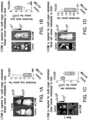
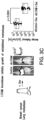
- Experiments were performed to determine whether inhibition of L1CAM could impact metastasis. Cancer cells which either were transfected with sh L1CAM (to knock down L1CAM expression) or control cancer cells were introduced into athymic mice (by intracardiac injection to assess brain or bone metastasis and by tail vein injection to assess lung metastasis) and the amount of metastases determined after several weeks using bioluminescence imaging. As shown in FIGURE 1A-D , the extent of metastatic disease was dramatically reduced in mice that had received L1CAM-depleted cancer cells.
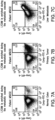
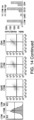
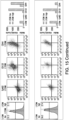
- the L1CAM high fraction was found to show increased cell surface expression of established colorectal cancer stem cell markers CD133, CD44 and EphB2 relative to L1CAM low cells ( FIGURE 13 ).
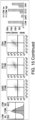
- Results of FACS analysis for markers L1CAM, EphB22, CD133, and CD44 are shown in FIGURES 14 and 15 .
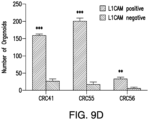
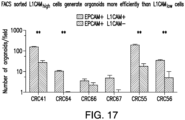
- tumor L1CAM expression was associated with organoid-initiating capability ( FIGURES 16 and 17 ). Residual tumors expressing high levels of cell-surface L1CAM could more frequently be cultured as organoids than tumors with low L1CAM levels ( FIGURES 9A-C ). FACS sorted L1CAM high cells from freshly resected residual CRC liver metastases had greater organoid generating-capacity that L1CAMlow cells from the same tumors ( FIGURE 9D ).
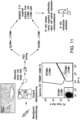
- L1CAM high cells were found to give rise to both L1CAM high and L1CAM low progeny ( FIGURE 18 ).
- L1CAM+ cells that are Ki67 low in vivo are more capable of organoid-initiation than L1CAM- cells (Ki67 high in vivo ) ( FIGURE 19 ), suggesting that L1CAM+ cells within patient tumors are slow-cycling reserve cells that can re-enter the cell cycle, reinitiate tumor growth and repopulate heterogenous tumors consisting of both L1CAM + and L1CAM - cells under permissive conditions.
- FIGURE 22 shows that nascent small organoids are comprised of universally L1CAM+ cells, but as the organoids grow, the cells divide to generate mostly L1CAM- differentiated progeny that populate the bulk of the organoid.
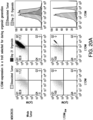
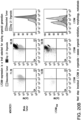
- FIGURES 20A and 20B The results from dissociated tumor collected from two different patients are shown in FIGURES 20A and 20B .
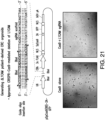
- L1CAM was deleted using CRISPR-Cas-9, fewer organoids resulted ( FIGURE 21 ), suggesting that L1CAM is required for the survival and/or regrowth of organoid-initiating MetCSCs.
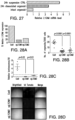
- dissociation of intact organoids into single cells markedly upregulated L1CAM expression ( FIGURE 27 ).
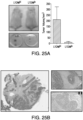
- FIGURE 25A Patient metastasis-derived organoids were expanded in vitro, FACS sorted into L1CAM high and L1CAM low populations and implanted as subcutaneous xenografts into NSG mice, whereupon the L1CAM high cells displayed greater in vivo tumor re-initiation capacity ( FIGURE 25A ).
- the subcutaneous tumors displayed well-differentiated glandular epithelial morphology and intestinal mucin secretion ( FIGURE 25B ).
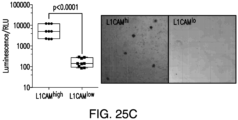
- FACS sorting of subcutaneous tumor-derived cells based on cell-surface L1CAM expression revealed that L1CAM high cells retained their organoid-reinitiating capacity ( FIGURE 25C ).
- liver metastatic organoids not only formed larger liver metastases more rapidly than their parental organoids, but also expressed higher levels of L1CAM ( FIGURE 26A-D ).
- L1CAM high cells in therapy-resistant residual metastatic patient tumors are organoid and metastasis-reinitiating stem cells (MetSCs)
- Kras-mutant lung cancer cells that were resistant to carboplatin and methotrexate were transfected with shCONTROL or shL1CAM operably linked to a doxycycline-inducible promoter.
- shCONTROL or shL1CAM containing cancer cells were then injected, intracardially, into athymic mice (day 0).
- the cancer cells expressing L1CAM inhibitor were more sensitive to carboplatin or methotrexate than the control cells. This indicates that L1CAM inhibition can render chemoresistant cells more sensitive to chemotherapy.
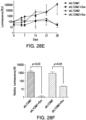
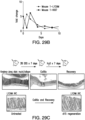
- L1CAM-knockout significantly inhibited the ability of organoid-derived single cells to regenerate new organoids ( FIGURE 28A-D ).
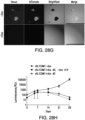
- doxycycline inducible knockdown of L1CAM inhibited organoid regeneration ( FIGURE 28E-G ).
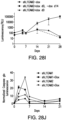
- L1CAM-deficient metastatic CRC progenitors require L1CAM not only to drive organoid regrowth but also to survive when detached from epithelial structures ( FIGURE 28H-I ).
- L1CAM-deficient cells displayed increased caspase activity in the first week following dissociation ( FIGURE 28J ).
- L1CAM-deficient cells demonstrate detachment-induced, caspase-mediated cell death, a.k.a. anoikis. L1CAM knockdown did not alter the expression of genes associated with pluripotency, ISC, wnt-response or differentiation.
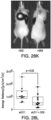
- L1CAM knockdown abrogated subcutaneous tumor growth in NSG mice ( FIGURE 28K-L ).
- L1CAM does not drive the phenotypic progenitor cell identity of MetSCs, but is required for their survival and regrowth upon epithelial detachment, crucial requirements for successful tumor propagation and metastasis.
- YAP activity is induced by loss of epithelial interaction and contact with stiff basement membrane in multiple contexts ( Zhao B, Wei X, Li W, Udan RS, Yang Q, Kim J, Xie J, Ikenoue T, Yu J, Li L, Zheng P, Ye K, Chinnaiyan A, Halder G, Lai ZC, Guan KL.
- Inactivation of YAP oncoprotein by the Hippo pathway is involved in cell contact inhibition and tissue growth control.
- a mechanical checkpoint controls multicellular growth through YAP/TAZ regulation by actin-processing factors.
- Mechanical strain induces E-cadherin-dependent Yap1 and ⁇ -catenin activation to drive cell cycle entry. Science. 2015 May 29;348(6238):1024-7 .
- L1CAM is required for survival, regrowth and restoration of tissue architecture by transformed epithelial cells, we investigated whether it might also be required in non-transformed epithelia when epithelial integrity is disrupted.
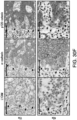
- normal mouse colon epithelia did not express significant amounts on L1CAM ( FIGURE 29A ).
- non-transformed colon epithelial cells induced L1CAM expression ( FIGURE 29A ).
- normal mouse colon organoids dynamically upregulated L1CAM immediately upon organoid dissociation, with total organoid L1CAM declining over time as the organoids grew larger ( FIGURE 29B ).
- L1CAM L1CAM was expressed during epithelial injury in vivo.
- DSS dextran sodium sulfate
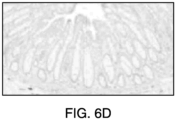
- L1CAM fl/fl mice were crossed with the intestinal stem cell-specific Lgr5-GFP-IRES-Cre-ERT2 mice. Cre recombinase expression was induced by treating the mice with IP tamoxifen for three doses concurrent with DSS or water treatment. When given water, tamoxifen-treated mice displayed no alterations in weight ( FIGURE 29E ), behavior or bowel habit. When treated with DSS, tamoxifen-treated Lgr5-GFP-IRES-Cre-ERT2/L1CAM fl/y demonstrated sustained weight loss and reduced survival in comparison to controls. Autopsy revealed significantly shortened colons, with histopathology showing diffuse inflammation with areas of mucosal denudation ( FIGURE 29F ).
- the transcriptional repressor NSRF/REST normally prevents the expression of L1CAM and other neuronal genes.
- REST has been identified as a tumor suppressor and metastatic colorectal cancers frequently acquire loss-of-function mutations or deletions in the REST gene.
- REST knockdown in human CRC organoids strongly induced L1CAM expression, suggesting that REST is active in repressing L1CAM expression ( FIGURE 30D ).
- CHIP-PCR specifically pulled down REST bound to an intronic enhancer in the first intron of the L1CAM locus in CRC organoids ( FIGURE 30E ).
Landscapes
- Health & Medical Sciences (AREA)
- Life Sciences & Earth Sciences (AREA)
- Chemical & Material Sciences (AREA)
- Engineering & Computer Science (AREA)
- General Health & Medical Sciences (AREA)
- Genetics & Genomics (AREA)
- Molecular Biology (AREA)
- Medicinal Chemistry (AREA)
- Organic Chemistry (AREA)
- Biomedical Technology (AREA)
- Biotechnology (AREA)
- Immunology (AREA)
- Pharmacology & Pharmacy (AREA)
- Animal Behavior & Ethology (AREA)
- Public Health (AREA)
- Veterinary Medicine (AREA)
- Biochemistry (AREA)
- Epidemiology (AREA)
- Bioinformatics & Cheminformatics (AREA)
- Zoology (AREA)
- Wood Science & Technology (AREA)
- General Engineering & Computer Science (AREA)
- Biophysics (AREA)
- Physics & Mathematics (AREA)
- Microbiology (AREA)
- Proteomics, Peptides & Aminoacids (AREA)
- Hematology (AREA)
- Urology & Nephrology (AREA)
- Analytical Chemistry (AREA)
- Toxicology (AREA)
- Oncology (AREA)
- Nuclear Medicine, Radiotherapy & Molecular Imaging (AREA)
- General Chemical & Material Sciences (AREA)
- Chemical Kinetics & Catalysis (AREA)
- Plant Pathology (AREA)
- Pathology (AREA)
- Food Science & Technology (AREA)
- Cell Biology (AREA)
- General Physics & Mathematics (AREA)
- Tropical Medicine & Parasitology (AREA)
Priority Applications (1)
| Application Number | Priority Date | Filing Date | Title |
|---|---|---|---|
| EP25174512.1A EP4623998A3 (en) | 2016-08-02 | 2017-08-02 | Treating metastatic cancer and model systems for metastatic disease |
Applications Claiming Priority (2)
| Application Number | Priority Date | Filing Date | Title |
|---|---|---|---|
| US201662370108P | 2016-08-02 | 2016-08-02 | |
| PCT/US2017/045145 WO2018026947A1 (en) | 2016-08-02 | 2017-08-02 | Treating metastatic cancer and model systems for metastatic disease |
Related Child Applications (1)
| Application Number | Title | Priority Date | Filing Date |
|---|---|---|---|
| EP25174512.1A Division EP4623998A3 (en) | 2016-08-02 | 2017-08-02 | Treating metastatic cancer and model systems for metastatic disease |
Publications (4)
| Publication Number | Publication Date |
|---|---|
| EP3493846A1 EP3493846A1 (en) | 2019-06-12 |
| EP3493846A4 EP3493846A4 (en) | 2020-07-22 |
| EP3493846C0 EP3493846C0 (en) | 2025-05-07 |
| EP3493846B1 true EP3493846B1 (en) | 2025-05-07 |
Family
ID=61073928
Family Applications (2)
| Application Number | Title | Priority Date | Filing Date |
|---|---|---|---|
| EP17837622.4A Active EP3493846B1 (en) | 2016-08-02 | 2017-08-02 | Treating metastatic cancer and model systems for metastatic disease |
| EP25174512.1A Pending EP4623998A3 (en) | 2016-08-02 | 2017-08-02 | Treating metastatic cancer and model systems for metastatic disease |
Family Applications After (1)
| Application Number | Title | Priority Date | Filing Date |
|---|---|---|---|
| EP25174512.1A Pending EP4623998A3 (en) | 2016-08-02 | 2017-08-02 | Treating metastatic cancer and model systems for metastatic disease |
Country Status (9)
| Country | Link |
|---|---|
| US (3) | US11464874B2 (https=) |
| EP (2) | EP3493846B1 (https=) |
| JP (3) | JP7751372B2 (https=) |
| KR (2) | KR20190036553A (https=) |
| AU (2) | AU2017306426B2 (https=) |
| CA (1) | CA3029653A1 (https=) |
| ES (1) | ES3037528T3 (https=) |
| IL (1) | IL264024A (https=) |
| WO (1) | WO2018026947A1 (https=) |
Families Citing this family (17)
| Publication number | Priority date | Publication date | Assignee | Title |
|---|---|---|---|---|
| US9719068B2 (en) | 2010-05-06 | 2017-08-01 | Children's Hospital Medical Center | Methods and systems for converting precursor cells into intestinal tissues through directed differentiation |
| SG10201801654RA (en) | 2014-05-28 | 2018-04-27 | Childrens Hospital Med Ct | Methods and systems for converting precursor cells into gastric tissues through directed differentiation |
| AU2015331848B2 (en) | 2014-10-17 | 2022-03-03 | Children's Hospital Medical Center, D/B/A Cincinnati Children's Hospital Medical Center | In vivo model of human small intestine using pluripotent stem cells and methods of making and using same |
| CN109415685B (zh) | 2016-05-05 | 2023-07-04 | 儿童医院医疗中心 | 用于体外制造胃底组织的方法和与其相关的组合物 |
| EP4553082A3 (en) | 2016-11-04 | 2025-08-20 | Children's Hospital Medical Center | Liver organoid compositions and methods of making and using same |
| EP3548507A4 (en) | 2016-12-05 | 2020-07-15 | Children's Hospital Medical Center | COLON ORGANOIDS AND PROCESSES FOR THE PREPARATION AND USE THEREOF |
| JP7248586B2 (ja) | 2017-04-14 | 2023-03-29 | チルドレンズ ホスピタル メディカル センター | 複数ドナー幹細胞組成物およびそれを作製する方法 |
| EP3694603B1 (en) | 2017-10-10 | 2026-04-08 | Children's Hospital Medical Center | Esophageal tissue and/or organoid compositions and methods of making same |
| EP3727394A4 (en) | 2017-12-21 | 2021-09-08 | Children's Hospital Medical Center | DIGITALIZED HUMAN ORGANOIDS AND METHOD OF USING THEREOF |
| WO2020003210A1 (en) | 2018-06-29 | 2020-01-02 | Kangwon National University University-Industry Cooperation Foundation | Anti-l1cam antibodies and uses thereof |
| EP4678727A3 (en) | 2018-07-26 | 2026-03-11 | Children's Hospital Medical Center | Hepato-biliary-pancreatic tissues and methods of making same |
| CA3112026A1 (en) | 2018-09-12 | 2020-03-19 | Children's Hospital Medical Center | Organoid compositions for the production of hematopoietic stem cells and derivatives thereof |
| US12600943B2 (en) | 2019-02-01 | 2026-04-14 | The University Of Hong Kong | Innervated organoid compositions and methods of making same |
| AU2020283048A1 (en) | 2019-05-31 | 2021-12-23 | Children's Hospital Medical Center | Shaped organoid compositions and methods of making same |
| US12497597B2 (en) | 2019-05-31 | 2025-12-16 | Children's Hospital Medical Center | Methods of generating and expanding hematopoietic stem cells |
| WO2023102120A1 (en) * | 2021-12-01 | 2023-06-08 | Memorial Sloan-Kettering Cancer Center | Organoid co-cultures and methods of use thereof |
| CN115078738A (zh) * | 2022-06-30 | 2022-09-20 | 复旦大学 | 一种l1cam蛋白n979位点特异性核心岩藻糖基化的抑制剂的应用 |
Citations (1)
| Publication number | Priority date | Publication date | Assignee | Title |
|---|---|---|---|---|
| WO2012005550A2 (ko) * | 2010-07-08 | 2012-01-12 | 강원대학교산학협력단 | 담낭암 치료용 약제학적 조성물 및 이를 이용한 담낭암의 성장, 전이 억제 및 치료 방법 |
Family Cites Families (13)
| Publication number | Priority date | Publication date | Assignee | Title |
|---|---|---|---|---|
| WO2007114550A1 (en) | 2006-04-03 | 2007-10-11 | Korea Research Institute Of Bioscience And Biotechnology | A novel monoclonal antibody specific to the l1cam, a hybridoma producing the same and a method producing the same |
| CA2661669C (en) * | 2006-08-23 | 2017-02-14 | Korea Research Institute Of Bioscience And Biotechnology | A pharmaceutical composition for treating cholangiocarcinoma, a method for inhibiting growth or invasion of cholangiocarcinoma and a method for treating cholangniocarcinoma |
| WO2008046459A1 (en) * | 2006-10-16 | 2008-04-24 | Deutsches Krebsforschungszentrum Stiftung des öffentlichen Rechts | Treatment of chemotherapy- or radiotherapy-resistant tumors using an l1 interfering molecule |
| AU2007221863A1 (en) * | 2006-10-16 | 2008-05-01 | Deutsches Krebsforschungszentrum Stiftung Des Offenftlichen Rechts | Treatment of chemotherapy -or radiothereapy-resistant tumors |
| LT2631248T (lt) | 2007-06-15 | 2018-04-25 | Medigene Ag | Navikų gydymas, naudojant specifinį anti-l1 antikūną |
| AU2008201871A1 (en) * | 2008-04-16 | 2009-11-26 | Deutsches Krebsforschungszentrum Stiftung Des Oeffentlichen Rechts | Inhibition of angiogenesis and tumor metastasis |
| KR20100060351A (ko) * | 2008-11-27 | 2010-06-07 | 한국생명공학연구원 | L1cam의 활성 또는 발현을 억제하는 물질 및 항암제를포함하는 항암용 조성물 |
| WO2011146382A1 (en) * | 2010-05-17 | 2011-11-24 | Bristol-Myers Squibb Company | Improved immunotherapeutic dosing regimens and combinations thereof |
| EP2931899A1 (en) | 2012-12-12 | 2015-10-21 | The Broad Institute, Inc. | Functional genomics using crispr-cas systems, compositions, methods, knock out libraries and applications thereof |
| EP4286517A3 (en) | 2013-04-04 | 2024-03-13 | President and Fellows of Harvard College | Therapeutic uses of genome editing with crispr/cas systems |
| EP3047039B1 (en) * | 2013-09-18 | 2019-07-31 | Memorial Sloan-Kettering Cancer Center | Inhibiting cancer metastasis |
| WO2015048577A2 (en) * | 2013-09-27 | 2015-04-02 | Editas Medicine, Inc. | Crispr-related methods and compositions |
| CN104829730A (zh) * | 2015-04-14 | 2015-08-12 | 苏静 | 一种能联合免疫细胞增强肿瘤杀伤能力的双特异性抗体及其制备方法和应用 |
-
2017
- 2017-08-02 KR KR1020197006250A patent/KR20190036553A/ko not_active Ceased
- 2017-08-02 CA CA3029653A patent/CA3029653A1/en active Pending
- 2017-08-02 ES ES17837622T patent/ES3037528T3/es active Active
- 2017-08-02 EP EP17837622.4A patent/EP3493846B1/en active Active
- 2017-08-02 EP EP25174512.1A patent/EP4623998A3/en active Pending
- 2017-08-02 WO PCT/US2017/045145 patent/WO2018026947A1/en not_active Ceased
- 2017-08-02 KR KR1020237042034A patent/KR20230170142A/ko active Pending
- 2017-08-02 JP JP2019505179A patent/JP7751372B2/ja active Active
- 2017-08-02 AU AU2017306426A patent/AU2017306426B2/en active Active
-
2018
- 2018-12-30 IL IL264024A patent/IL264024A/en unknown
-
2019
- 2019-01-31 US US16/263,677 patent/US11464874B2/en active Active
-
2022
- 2022-06-08 JP JP2022092913A patent/JP2022118058A/ja active Pending
- 2022-10-10 US US18/045,357 patent/US12059480B2/en active Active
-
2024
- 2024-08-12 US US18/800,616 patent/US20250213731A1/en active Pending
- 2024-12-31 AU AU2024287267A patent/AU2024287267A1/en active Pending
-
2025
- 2025-02-27 JP JP2025030120A patent/JP2025078664A/ja active Pending
Patent Citations (1)
| Publication number | Priority date | Publication date | Assignee | Title |
|---|---|---|---|---|
| WO2012005550A2 (ko) * | 2010-07-08 | 2012-01-12 | 강원대학교산학협력단 | 담낭암 치료용 약제학적 조성물 및 이를 이용한 담낭암의 성장, 전이 억제 및 치료 방법 |
Also Published As
| Publication number | Publication date |
|---|---|
| JP7751372B2 (ja) | 2025-10-08 |
| KR20190036553A (ko) | 2019-04-04 |
| US20250213731A1 (en) | 2025-07-03 |
| AU2017306426B2 (en) | 2024-09-26 |
| US20190167817A1 (en) | 2019-06-06 |
| WO2018026947A1 (en) | 2018-02-08 |
| JP2019524768A (ja) | 2019-09-05 |
| US12059480B2 (en) | 2024-08-13 |
| EP4623998A2 (en) | 2025-10-01 |
| EP4623998A3 (en) | 2026-02-11 |
| EP3493846A4 (en) | 2020-07-22 |
| AU2017306426A1 (en) | 2019-01-24 |
| EP3493846C0 (en) | 2025-05-07 |
| US11464874B2 (en) | 2022-10-11 |
| CA3029653A1 (en) | 2018-02-08 |
| ES3037528T3 (en) | 2025-10-02 |
| JP2025078664A (ja) | 2025-05-20 |
| EP3493846A1 (en) | 2019-06-12 |
| IL264024A (en) | 2019-01-31 |
| KR20230170142A (ko) | 2023-12-18 |
| JP2022118058A (ja) | 2022-08-12 |
| US20230190963A1 (en) | 2023-06-22 |
| AU2024287267A1 (en) | 2025-01-23 |
Similar Documents
| Publication | Publication Date | Title |
|---|---|---|
| EP3493846B1 (en) | Treating metastatic cancer and model systems for metastatic disease | |
| Taylor et al. | Treg depletion potentiates checkpoint inhibition in claudin-low breast cancer | |
| Alipoor et al. | The potential biomarkers and immunological effects of tumor-derived exosomes in lung cancer | |
| Srivatsa et al. | EGFR in tumor-associated myeloid cells promotes development of colorectal cancer in mice and associates with outcomes of patients | |
| Raveh et al. | L1 cell adhesion molecule (L1CAM) in invasive tumors | |
| Magenheim et al. | Blood vessels restrain pancreas branching, differentiation and growth | |
| Wohlfeil et al. | Hepatic endothelial notch activation protects against liver metastasis by regulating endothelial-tumor cell adhesion independent of angiocrine signaling | |
| JP7053559B2 (ja) | 血管新生障害の処置 | |
| CN109715653A (zh) | 肿瘤浸润调节性t细胞中被选择性地去调节的标志物 | |
| Bernier-Latmani et al. | Apelin-driven endothelial cell migration sustains intestinal progenitor cells and tumor growth | |
| Kiang et al. | Loss of cytoskeleton protein ADD3 promotes tumor growth and angiogenesis in glioblastoma multiforme | |
| Perrone et al. | ATF3 reprograms the bone marrow niche in response to early breast cancer transformation | |
| Bonan et al. | Membrane-bound ICAM-1 contributes to the onset of proinvasive tumor stroma by controlling acto-myosin contractility in carcinoma-associated fibroblasts | |
| Hirai et al. | Sema6D forward signaling impairs T cell activation and proliferation in head and neck cancer | |
| Rossi et al. | Gastroesophageal circulating tumor cell crosstalk with peripheral immune system guides CTC survival and proliferation | |
| US20160194639A1 (en) | Inhibiting cancer metastasis | |
| Guo et al. | Selection of brain metastasis-initiating breast cancer cells determined by growth on hard agar | |
| He et al. | STYK1 mediates NK cell anti-tumor response through regulating CCR2 and trafficking | |
| Schenten et al. | M17, a gene specific for germinal center (GC) B cells and a prognostic marker for GC B-cell lymphomas, is dispensable for the GC reaction in mice | |
| Her et al. | Potential Perturbations of Critical Cancer-regulatory Genes in Triple-Negative Breast Cancer Cells Within the Humanized Microenvironment of Patient-derived Xenograft Models | |
| Tang et al. | Development of CAR-T cell therapy for NF1/SWN-related nerve sheath tumor treatment | |
| Attard et al. | A novel, spontaneously immortalized, human prostate cancer cell line, Bob, offers a unique model for pre‐clinical prostate cancer studies | |
| US20120195834A1 (en) | Method of testing a drug for anti-cancer activity | |
| EP4497821A1 (en) | Method for producing immune cells for immunotherapy | |
| JP2025090043A (ja) | 部分的内皮間葉移行マーカーとしての遺伝子の発現産物の使用 |
Legal Events
| Date | Code | Title | Description |
|---|---|---|---|
| STAA | Information on the status of an ep patent application or granted ep patent |
Free format text: STATUS: THE INTERNATIONAL PUBLICATION HAS BEEN MADE |
|
| PUAI | Public reference made under article 153(3) epc to a published international application that has entered the european phase |
Free format text: ORIGINAL CODE: 0009012 |
|
| STAA | Information on the status of an ep patent application or granted ep patent |
Free format text: STATUS: REQUEST FOR EXAMINATION WAS MADE |
|
| 17P | Request for examination filed |
Effective date: 20190123 |
|
| AK | Designated contracting states |
Kind code of ref document: A1 Designated state(s): AL AT BE BG CH CY CZ DE DK EE ES FI FR GB GR HR HU IE IS IT LI LT LU LV MC MK MT NL NO PL PT RO RS SE SI SK SM TR |
|
| AX | Request for extension of the european patent |
Extension state: BA ME |
|
| DAV | Request for validation of the european patent (deleted) | ||
| DAX | Request for extension of the european patent (deleted) | ||
| RIC1 | Information provided on ipc code assigned before grant |
Ipc: C12N 15/113 20100101ALI20200311BHEP Ipc: A61K 39/395 20060101AFI20200311BHEP Ipc: A61P 35/04 20060101ALI20200311BHEP |
|
| A4 | Supplementary search report drawn up and despatched |
Effective date: 20200624 |
|
| RIC1 | Information provided on ipc code assigned before grant |
Ipc: A61P 35/04 20060101ALI20200618BHEP Ipc: A61K 39/395 20060101AFI20200618BHEP Ipc: C12N 15/113 20100101ALI20200618BHEP |
|
| STAA | Information on the status of an ep patent application or granted ep patent |
Free format text: STATUS: EXAMINATION IS IN PROGRESS |
|
| 17Q | First examination report despatched |
Effective date: 20230125 |
|
| GRAP | Despatch of communication of intention to grant a patent |
Free format text: ORIGINAL CODE: EPIDOSNIGR1 |
|
| STAA | Information on the status of an ep patent application or granted ep patent |
Free format text: STATUS: GRANT OF PATENT IS INTENDED |
|
| INTG | Intention to grant announced |
Effective date: 20241129 |
|
| GRAS | Grant fee paid |
Free format text: ORIGINAL CODE: EPIDOSNIGR3 |
|
| GRAA | (expected) grant |
Free format text: ORIGINAL CODE: 0009210 |
|
| STAA | Information on the status of an ep patent application or granted ep patent |
Free format text: STATUS: THE PATENT HAS BEEN GRANTED |
|
| AK | Designated contracting states |
Kind code of ref document: B1 Designated state(s): AL AT BE BG CH CY CZ DE DK EE ES FI FR GB GR HR HU IE IS IT LI LT LU LV MC MK MT NL NO PL PT RO RS SE SI SK SM TR |
|
| REG | Reference to a national code |
Ref country code: GB Ref legal event code: FG4D |
|
| REG | Reference to a national code |
Ref country code: CH Ref legal event code: EP |
|
| REG | Reference to a national code |
Ref country code: DE Ref legal event code: R096 Ref document number: 602017089371 Country of ref document: DE |
|
| REG | Reference to a national code |
Ref country code: IE Ref legal event code: FG4D |
|
| U01 | Request for unitary effect filed |
Effective date: 20250609 |
|
| U07 | Unitary effect registered |
Designated state(s): AT BE BG DE DK EE FI FR IT LT LU LV MT NL PT RO SE SI Effective date: 20250721 |
|
| REG | Reference to a national code |
Ref country code: ES Ref legal event code: FG2A Ref document number: 3037528 Country of ref document: ES Kind code of ref document: T3 Effective date: 20251002 |
|
| PGFP | Annual fee paid to national office [announced via postgrant information from national office to epo] |
Ref country code: ES Payment date: 20250905 Year of fee payment: 9 |
|
| PG25 | Lapsed in a contracting state [announced via postgrant information from national office to epo] |
Ref country code: GR Free format text: LAPSE BECAUSE OF FAILURE TO SUBMIT A TRANSLATION OF THE DESCRIPTION OR TO PAY THE FEE WITHIN THE PRESCRIBED TIME-LIMIT Effective date: 20250808 |
|
| PGFP | Annual fee paid to national office [announced via postgrant information from national office to epo] |
Ref country code: NO Payment date: 20250827 Year of fee payment: 9 |
|
| PG25 | Lapsed in a contracting state [announced via postgrant information from national office to epo] |
Ref country code: PL Free format text: LAPSE BECAUSE OF FAILURE TO SUBMIT A TRANSLATION OF THE DESCRIPTION OR TO PAY THE FEE WITHIN THE PRESCRIBED TIME-LIMIT Effective date: 20250507 |
|
| PGFP | Annual fee paid to national office [announced via postgrant information from national office to epo] |
Ref country code: GB Payment date: 20250814 Year of fee payment: 9 |
|
| PG25 | Lapsed in a contracting state [announced via postgrant information from national office to epo] |
Ref country code: HR Free format text: LAPSE BECAUSE OF FAILURE TO SUBMIT A TRANSLATION OF THE DESCRIPTION OR TO PAY THE FEE WITHIN THE PRESCRIBED TIME-LIMIT Effective date: 20250507 |
|
| PGFP | Annual fee paid to national office [announced via postgrant information from national office to epo] |
Ref country code: CH Payment date: 20250901 Year of fee payment: 9 |
|
| PG25 | Lapsed in a contracting state [announced via postgrant information from national office to epo] |
Ref country code: RS Free format text: LAPSE BECAUSE OF FAILURE TO SUBMIT A TRANSLATION OF THE DESCRIPTION OR TO PAY THE FEE WITHIN THE PRESCRIBED TIME-LIMIT Effective date: 20250807 |
|
| PGFP | Annual fee paid to national office [announced via postgrant information from national office to epo] |
Ref country code: IE Payment date: 20250827 Year of fee payment: 9 |
|
| PG25 | Lapsed in a contracting state [announced via postgrant information from national office to epo] |
Ref country code: IS Free format text: LAPSE BECAUSE OF FAILURE TO SUBMIT A TRANSLATION OF THE DESCRIPTION OR TO PAY THE FEE WITHIN THE PRESCRIBED TIME-LIMIT Effective date: 20250907 |
|
| PG25 | Lapsed in a contracting state [announced via postgrant information from national office to epo] |
Ref country code: SM Free format text: LAPSE BECAUSE OF FAILURE TO SUBMIT A TRANSLATION OF THE DESCRIPTION OR TO PAY THE FEE WITHIN THE PRESCRIBED TIME-LIMIT Effective date: 20250507 |
|
| PG25 | Lapsed in a contracting state [announced via postgrant information from national office to epo] |
Ref country code: CZ Free format text: LAPSE BECAUSE OF FAILURE TO SUBMIT A TRANSLATION OF THE DESCRIPTION OR TO PAY THE FEE WITHIN THE PRESCRIBED TIME-LIMIT Effective date: 20250507 |
|
| PG25 | Lapsed in a contracting state [announced via postgrant information from national office to epo] |
Ref country code: SK Free format text: LAPSE BECAUSE OF FAILURE TO SUBMIT A TRANSLATION OF THE DESCRIPTION OR TO PAY THE FEE WITHIN THE PRESCRIBED TIME-LIMIT Effective date: 20250507 |
|
| PLBE | No opposition filed within time limit |
Free format text: ORIGINAL CODE: 0009261 |
|
| STAA | Information on the status of an ep patent application or granted ep patent |
Free format text: STATUS: NO OPPOSITION FILED WITHIN TIME LIMIT |
|
| REG | Reference to a national code |
Ref country code: CH Ref legal event code: L10 Free format text: ST27 STATUS EVENT CODE: U-0-0-L10-L00 (AS PROVIDED BY THE NATIONAL OFFICE) Effective date: 20260318 |
|
| PG25 | Lapsed in a contracting state [announced via postgrant information from national office to epo] |
Ref country code: MC Free format text: LAPSE BECAUSE OF FAILURE TO SUBMIT A TRANSLATION OF THE DESCRIPTION OR TO PAY THE FEE WITHIN THE PRESCRIBED TIME-LIMIT Effective date: 20250507 |
|
| 26N | No opposition filed |
Effective date: 20260210 |
|
| U90 | Renewal fees not paid: noting of loss of rights |
Free format text: RENEWAL FEE NOT PAID FOR YEAR 09 Effective date: 20260323 |