EP3492096A1 - Pharmaceutical composition for treating ocular diseases, containing cas9 protein and guide rna - Google Patents
Pharmaceutical composition for treating ocular diseases, containing cas9 protein and guide rna Download PDFInfo
- Publication number
- EP3492096A1 EP3492096A1 EP17834796.9A EP17834796A EP3492096A1 EP 3492096 A1 EP3492096 A1 EP 3492096A1 EP 17834796 A EP17834796 A EP 17834796A EP 3492096 A1 EP3492096 A1 EP 3492096A1
- Authority
- EP
- European Patent Office
- Prior art keywords
- gene
- vegfa
- vegf
- cas9
- guide rna
- Prior art date
- Legal status (The legal status is an assumption and is not a legal conclusion. Google has not performed a legal analysis and makes no representation as to the accuracy of the status listed.)
- Pending
Links
Images


Classifications
-
- A—HUMAN NECESSITIES
- A61—MEDICAL OR VETERINARY SCIENCE; HYGIENE
- A61K—PREPARATIONS FOR MEDICAL, DENTAL OR TOILETRY PURPOSES
- A61K38/00—Medicinal preparations containing peptides
- A61K38/16—Peptides having more than 20 amino acids; Gastrins; Somatostatins; Melanotropins; Derivatives thereof
- A61K38/43—Enzymes; Proenzymes; Derivatives thereof
- A61K38/46—Hydrolases (3)
- A61K38/465—Hydrolases (3) acting on ester bonds (3.1), e.g. lipases, ribonucleases
-
- A—HUMAN NECESSITIES
- A61—MEDICAL OR VETERINARY SCIENCE; HYGIENE
- A61K—PREPARATIONS FOR MEDICAL, DENTAL OR TOILETRY PURPOSES
- A61K48/00—Medicinal preparations containing genetic material which is inserted into cells of the living body to treat genetic diseases; Gene therapy
-
- A—HUMAN NECESSITIES
- A61—MEDICAL OR VETERINARY SCIENCE; HYGIENE
- A61K—PREPARATIONS FOR MEDICAL, DENTAL OR TOILETRY PURPOSES
- A61K48/00—Medicinal preparations containing genetic material which is inserted into cells of the living body to treat genetic diseases; Gene therapy
- A61K48/005—Medicinal preparations containing genetic material which is inserted into cells of the living body to treat genetic diseases; Gene therapy characterised by an aspect of the 'active' part of the composition delivered, i.e. the nucleic acid delivered
-
- A—HUMAN NECESSITIES
- A61—MEDICAL OR VETERINARY SCIENCE; HYGIENE
- A61P—SPECIFIC THERAPEUTIC ACTIVITY OF CHEMICAL COMPOUNDS OR MEDICINAL PREPARATIONS
- A61P27/00—Drugs for disorders of the senses
- A61P27/02—Ophthalmic agents
-
- C—CHEMISTRY; METALLURGY
- C12—BIOCHEMISTRY; BEER; SPIRITS; WINE; VINEGAR; MICROBIOLOGY; ENZYMOLOGY; MUTATION OR GENETIC ENGINEERING
- C12N—MICROORGANISMS OR ENZYMES; COMPOSITIONS THEREOF; PROPAGATING, PRESERVING, OR MAINTAINING MICROORGANISMS; MUTATION OR GENETIC ENGINEERING; CULTURE MEDIA
- C12N15/00—Mutation or genetic engineering; DNA or RNA concerning genetic engineering, vectors, e.g. plasmids, or their isolation, preparation or purification; Use of hosts therefor
- C12N15/09—Recombinant DNA-technology
- C12N15/10—Processes for the isolation, preparation or purification of DNA or RNA
- C12N15/102—Mutagenizing nucleic acids
-
- C—CHEMISTRY; METALLURGY
- C12—BIOCHEMISTRY; BEER; SPIRITS; WINE; VINEGAR; MICROBIOLOGY; ENZYMOLOGY; MUTATION OR GENETIC ENGINEERING
- C12N—MICROORGANISMS OR ENZYMES; COMPOSITIONS THEREOF; PROPAGATING, PRESERVING, OR MAINTAINING MICROORGANISMS; MUTATION OR GENETIC ENGINEERING; CULTURE MEDIA
- C12N15/00—Mutation or genetic engineering; DNA or RNA concerning genetic engineering, vectors, e.g. plasmids, or their isolation, preparation or purification; Use of hosts therefor
- C12N15/09—Recombinant DNA-technology
- C12N15/11—DNA or RNA fragments; Modified forms thereof; Non-coding nucleic acids having a biological activity
-
- C—CHEMISTRY; METALLURGY
- C12—BIOCHEMISTRY; BEER; SPIRITS; WINE; VINEGAR; MICROBIOLOGY; ENZYMOLOGY; MUTATION OR GENETIC ENGINEERING
- C12N—MICROORGANISMS OR ENZYMES; COMPOSITIONS THEREOF; PROPAGATING, PRESERVING, OR MAINTAINING MICROORGANISMS; MUTATION OR GENETIC ENGINEERING; CULTURE MEDIA
- C12N15/00—Mutation or genetic engineering; DNA or RNA concerning genetic engineering, vectors, e.g. plasmids, or their isolation, preparation or purification; Use of hosts therefor
- C12N15/09—Recombinant DNA-technology
- C12N15/11—DNA or RNA fragments; Modified forms thereof; Non-coding nucleic acids having a biological activity
- C12N15/113—Non-coding nucleic acids modulating the expression of genes, e.g. antisense oligonucleotides; Antisense DNA or RNA; Triplex- forming oligonucleotides; Catalytic nucleic acids, e.g. ribozymes; Nucleic acids used in co-suppression or gene silencing
- C12N15/1136—Non-coding nucleic acids modulating the expression of genes, e.g. antisense oligonucleotides; Antisense DNA or RNA; Triplex- forming oligonucleotides; Catalytic nucleic acids, e.g. ribozymes; Nucleic acids used in co-suppression or gene silencing against growth factors, growth regulators, cytokines, lymphokines or hormones
-
- C—CHEMISTRY; METALLURGY
- C12—BIOCHEMISTRY; BEER; SPIRITS; WINE; VINEGAR; MICROBIOLOGY; ENZYMOLOGY; MUTATION OR GENETIC ENGINEERING
- C12N—MICROORGANISMS OR ENZYMES; COMPOSITIONS THEREOF; PROPAGATING, PRESERVING, OR MAINTAINING MICROORGANISMS; MUTATION OR GENETIC ENGINEERING; CULTURE MEDIA
- C12N9/00—Enzymes; Proenzymes; Compositions thereof; Processes for preparing, activating, inhibiting, separating or purifying enzymes
- C12N9/14—Hydrolases (3)
- C12N9/16—Hydrolases (3) acting on ester bonds (3.1)
- C12N9/22—Ribonucleases [RNase]; Deoxyribonucleases [DNase]
-
- C—CHEMISTRY; METALLURGY
- C12—BIOCHEMISTRY; BEER; SPIRITS; WINE; VINEGAR; MICROBIOLOGY; ENZYMOLOGY; MUTATION OR GENETIC ENGINEERING
- C12N—MICROORGANISMS OR ENZYMES; COMPOSITIONS THEREOF; PROPAGATING, PRESERVING, OR MAINTAINING MICROORGANISMS; MUTATION OR GENETIC ENGINEERING; CULTURE MEDIA
- C12N9/00—Enzymes; Proenzymes; Compositions thereof; Processes for preparing, activating, inhibiting, separating or purifying enzymes
- C12N9/14—Hydrolases (3)
- C12N9/16—Hydrolases (3) acting on ester bonds (3.1)
- C12N9/22—Ribonucleases [RNase]; Deoxyribonucleases [DNase]
- C12N9/222—Clustered regularly interspaced short palindromic repeats [CRISPR]-associated [CAS] enzymes
- C12N9/224—Class 1 CAS enzyme complex, e.g. multi-enzyme
-
- C—CHEMISTRY; METALLURGY
- C12—BIOCHEMISTRY; BEER; SPIRITS; WINE; VINEGAR; MICROBIOLOGY; ENZYMOLOGY; MUTATION OR GENETIC ENGINEERING
- C12N—MICROORGANISMS OR ENZYMES; COMPOSITIONS THEREOF; PROPAGATING, PRESERVING, OR MAINTAINING MICROORGANISMS; MUTATION OR GENETIC ENGINEERING; CULTURE MEDIA
- C12N2310/00—Structure or type of the nucleic acid
- C12N2310/10—Type of nucleic acid
- C12N2310/20—Type of nucleic acid involving clustered regularly interspaced short palindromic repeats [CRISPR]
Definitions
- a pharmaceutical composition for treating or preventing eye disease comprising a Cas9 protein and a guide RNA targeting VEGF-A, and a ribonucloprotein comprising a Cas9 protein and a guide RNA targeting VEGF-A.
- RNA-guided genome surgery or RNA-guided genome editing using CRISPR-Cas9 nuclease is expected to be helpful for the therapy of various genetic diseases, but little is known about the therapeutic effects of CRISPR-Cas9 nuclease on non-genetic diseases.
- AMD aged-related macular degeneration
- AMD is a major cause of blindness in the elderly population in advanced countries.
- Choroidal neovascularization (CNV) is a main pathological feature in neovascular AMD, and is principally caused by angiogenic cytokines such as vascular endothelial growth factor A (VEGF A).
- VEGF A vascular endothelial growth factor A
- anti- VEGF-A are problematic in that they must be administered seven times or more a year as VEGF-A is continually expressed and secreted in retinal cells.
- the present specification proposes a technique that allows for the long-lasting or permanent therapy of eye diseases through the fundamental inactivation of VEGF-A or by lowering the level of VEGF-A to less than a pathologic threshold.
- An aspect provides a pharmaceutical composition for prevention and/or treatment of an eye disease, including a VEGF-A gene-inactivating agent.
- the VEGF-A gene-inactivating agent may be at least one selected from the group consisting of proteins, nucleic acid molecules (DNA and/or RNA), and chemical drugs, all capable of inactivating a VEGF-A gene.
- the VEGF-A gene-inactivating agent may comprise a Cas9 protein and a guide RNA targeting a VEGF-A gene.
- Another aspect provides a method of preventing and/or treating an eye disease, comprising a step of inactivating a VEGF-A gene.
- the step of inactivating a VEGF-A gene may be carried out by a step of administering a VEGF-A gene-inactivating agent to a subject in need of prevention and/or treatment of an eye disease.
- the VEGF-A gene inactivation may be performed by RNA-guided genome surgery or RNA-guided genome editing.
- the step of inactivating a VEGF-A gene is carried out by a step of administering a Cas9 protein and a guide RNA targeting a VEGF-A gene to a subject in need of prevention and/or treatment of an eye disease.
- Another aspect provides the use of a VEGF-A gene-inactivating agent in prevention and/or treatment of an eye disease or in preparation of a therapeutic agent for an eye disease.
- Another aspect provides a guide DNA for targeting a specific target site or target region of a VEGFA gene.
- VEGFA gene-specific ribonucleoprotein including a Cas9 protein and a guide RNA having a VEGFA gene-specific targeting sequence.
- Another aspect provides a pharmaceutical composition including the guide RNA or the VEGFA gene-specific RNP.
- Another aspect provides a method for treatment or prevention of an eye disease, including a step of administering the VEGFA gene-specific RNP to a subject in need of treatment and/or prevention of the eye disease.
- the present invention provides a technique for treating an eye disease, for example, an eye disease associated with the overexpression of VEGF-A, using a gene editing method.
- An aspect provides a composition for the prevention and/or treatment of an eye disease, including a VEGF-A gene-inactivating agent.
- the VEGF-A gene-inactivating agent may be at least one selected from the group consisting of proteins, nucleic acid molecules (DNA and/or RNA), and chemical drugs all of which can inactivate a VEGF-A gene.
- the VEGF-A gene-inactivating agent may include a Cas9 protein and a guide RNA targeting a VEGF-A gene.
- Another aspect provides a method of preventing and/or treating an eye disease, comprising a step of in activating a VEGF-A gene.
- the step of inactivating a VEGF-A gene may be carried out by a step of administering a VEGF-A gene-inactivating agent to a subject in need of prevention and/or treatment of an eye disease.
- the VEGF-A gene inactivation may be performed by RNA-guided genome surgery or RNA-guided genome editing.
- the step of inactivating a VEGF-A gene may be carried out by administering a Cas9 protein and a guide RNA targeting a VEGF-A gene to a subject in need of prevention and/or treatment of an eye disease.
- the method may further include a step of identifying the subject in need of prevention and/or treatment of an eye disease, prior to the administering step.
- the VEGF-A gene-inactivating agent may be administered in a pharmaceutically effective amount.
- the VEGF-A gene-inactivating agent may be administered via various routes, for example, by local administration to ocular lesions or by subretinal injection.
- Another aspect provides the use of a VEGF-A gene-inactivating agent in prevention and/or treatment of an eye disease or in preparation of a therapeutic agent for an eye disease.
- the VEGF-A gene to be targeted for inactivation may be located in an eye, for example, an eye having a neovascular eye disease , particularly, in a lesion site of a neovascular eye disease.
- the VEGF-A gene inactivation may be at least one selected from the group consisting of:
- the VEGF-A gene-inactivating agent may be at least one selected from the group consisting of proteins, nucleic acid molecules (DNA and/or RNA), and chemical drugs, all of which can inactivate a VEGF-A gene.
- the VEGF-A gene-inactivating agent may include a Cas9 protein and a guide RNA targeting a VEGF-A gene.
- the VEGF-A gene inactivation may be performed by RNA-guided genome surgery or RNA-guided genome editing.
- the VEGF-A gene inactivation may be at least one selected from the group consisting of:
- the VEGF-A gene-inactivating agent may include a Cas protein or a coding gene thereof (DNA or mRNA); and a VEGF-A gene-specific guide RNA comprising a targeting sequence that binds specifically to a target size of a VEGF-A gene, or a coding DNA thereof.
- the Cas9 protein and the VEGF-A gene-specific guide RNA may be in the form of:
- the RNA mixture may be included in a typical RNA carrier for delivery into cells or a body.
- the VEGF-A gene-inactivating agent may include:
- the administration of the VEGF-A gene-inactivating agent may be implemented by administering a recombinant vector carrying a gene (DNA) coding for a Cas9 protein and a recombinant vector carrying a DNA coding for a VEGF-A gene-specific guide RNA; an RNA (mRNA) coding for Cas9 protein, and a VEGF-A gene-specific guide RNA; or a recombinant carrying a gene (DNA) coding for a Cas9 protein, and a VEGF-A gene-specific guide RNA, simultaneously or sequentially irrespective of order.
- a recombinant vector carrying a gene (DNA) coding for a Cas9 protein and a recombinant vector carrying a DNA coding for a VEGF-A gene-specific guide RNA an RNA (mRNA) coding for Cas9 protein, and a VEGF-A gene-specific guide RNA
- the guide RNA may include a targeting sequence hybridizable with (i.e., a target sequence having a nucleic acid sequence complementary to) a nucleic acid sequence on one strand (e.g., a strand complementary to a strand on which a PAM sequence) of a predetermined target region in a VEGFA gene.
- a targeting sequence hybridizable with i.e., a target sequence having a nucleic acid sequence complementary to
- a nucleic acid sequence on one strand e.g., a strand complementary to a strand on which a PAM sequence
- VEGFA gene-specific ribonucleoprotein including a Cas9 protein and a guide RNA having a VEGFA gene-specific targeting sequence.
- the pharmaceutical composition may be used for treating and/or preventing an eye disease such as macular degeneration (e.g., age-related macular degeneration (AMD)), retinopathy (e.g., diabetic retinopathy), etc.
- macular degeneration e.g., age-related macular degeneration (AMD)
- retinopathy e.g., diabetic retinopathy
- Another aspect provides a method of treating or preventing an eye disease, including a step of administering the VEGFA gene-specific ribonucleoprotein (RNP) to a subject in need of treatment and/or prevention of the eye disease.
- the VEGFA gene-specific ribonucleoprotein (RNP) may be administered in a pharmaceutically effective amount, for example, via a topical route to an ocular lesion or by subretinal injection.
- the eye disease may be an eye disease associated with the overexpression of a vascular endothelial growth factor (VEGF), for example, VEGF-A, as exemplified by a neovascular eye disease).
- VEGF vascular endothelial growth factor
- the neovascular eye disease may be any eye disease that is caused by ocular neovascularization, for example, choroidal neovascularization (CNV) and may be selected from the group consisting of macular degeneration (e.g., age-related macular degeneration (AMD), myopic choroidal neovascularization, retinopathy (e.g., diabetic retinopathy), ischemic retinopathy, branch retinal vein occlusion, central retinal vein occlusion, and retinopathy of prematurity.
- macular degeneration e.g., age-related macular degeneration (AMD), myopic choroidal neovascularization, retinopathy (e
- VEGF-A vascular endothelial growth factor A
- mammals including primates such as humans, apes, and the like, and rodents such as rats, mice, etc.
- rodents such as rats, mice, etc.
- it may be human VEGF-A (e.g., NCBI Accession No.
- the Cas9 protein may be derived (isolated) from, for example, Streptococcus pyogenes.
- target gene refers to a gene to be targeted for gene editing (VEGF-A gene);
- target site or “target region” refers to a gene site in a target gene ( VEGF-A gene) in which Cas9 performs gene editing (cleavage, and deletion, addition and/or substitution of nucleotides), specifying a gene site with a maximum length of about 50 bp or 40 bp, adjacent to the 5' and/or 3' terminus of a PAM sequence recognized by Cas9 protein within the target gene ( VEGF-A gene);
- target sequence refers to a gene site of the target gene ( VEGF-A gene), which can hybridize with a guide RNA, specifying a 17-23 bp, for example 20 bp-long nucleic acid sequence adjacent to the 5' or 3' end of a PAM sequence recognizable by Cas9 protein in the target gene; and the term “targeting sequence” is a guide RNA region hybridiz
- the target sequence is represented by a nucleic acid sequence on the PAM sequence-retaining strand of the two DNA strands in a relevant gene region of the target gene ( VEGF-A gene).
- the targeting sequence in the guide RNA has the same nucleic acid sequence as the target sequence in the target gene ( VEGF-A gene) except that T is changed into U in consideration of the RNA characteristic. Therefore, herein, a sequencing sequence of the guide RNA and a target sequence of the target gene ( VEGF-A gene) are represented by the same nucleic acid sequence with the exception that T and U are interchanged.
- the PAM sequence is 5'-NGG-3' (wherein N is A, T, G, or C), and the target region is a gene region adjacent to the 5' terminus and/or 3' terminus of the 5'-NGG-3' sequence in the target gene ( VEGF-A gene), and may be, for example, a gene region about 50 bp or about 40 bp long.
- VEGF-A gene inactivation may be induced in a VEGF-A gene by:
- the guide RNA may be at least one selected from the group consisting of a CRISPR RNA (crRNA), a trans -activating crRNA (tracrRNA), and a single guide RNA (sgRNA).
- the guide DNA may be a dual crRNA:tracrRNA complex in which a crRNA and a tracrRNA are combined with each other, or a single guide RNA (sgRNA) in which a crRNA or a part thereof is connected to a tracrRNA or a part thereof via an oligonucleotide linker.
- the concrete sequence of the guide RNA may be suitably selected depending on kinds of Cas9 protein (that is, microorganisms from which the guide RNA is derived), and is a matter that a person skilled in the art could easily establish.
- the crRNA may be represented by the following general formula 1: 5'-(N cas9 ) l -(GUUUUAGAGCUA)-(X cas9 ) m -3' (General Formula 1) wherein,
- X cas9 may include, but is not limited to, UGCUGUUUUG (SEQ ID NO: 360).
- tracrRNA may be represented by the following general formula 2: wherein,
- the sgRNA may be in a form of a hairpin (stem-loop structure) in which a crRNA moiety including the targeting sequence and the indispensable part of the crRNA and a tracrRNA moiety including the indispensable part (60 nucleotides) of the tracrRNA is connected via an oligonucleotide linker (in this regard, the oligonucleotide linker accounts for the loop structure).
- the sgRNA has a hairpin structure in which a crRNA moiety including the targeting sequence and indispensable part of the crRNA and a tracrRNA moiety including the indispensable part of the tracrRNA are combined each other, with connection between the 3' terminus of the crRNA moiety and the 5' terminus of the tracrRNA moiety via an oligonucleotide linker.
- the sgRNA may be represented by the following general formula 3: wherein (N cas9 ) l is a target sequence as defined above in General Formula 1.
- the oligonucleotide linker included in the sgRNA may be a sequence consisting of three to five, for example, four nucleotides which may be the same or different and each be independently selected from the group consisting of A, U, C, and G.
- the crRNA or the sgRNA may further include one to three guanines (G) at the 5' terminus (that is, the 5' terminus of the targeting sequence in the crRNA).
- G guanines
- the tracrRNA or the sgRNA may further include a terminal region including five to seven uracil residues at the 3' terminus of the indispensable part (60 nt) of the tracrRNA.
- the target sequence in the target gene may be selected from the group consisting of:
- target sequences are well conserved among species and exist in, for example, both humans and rodents (e.g., mice).
- the target sequence may include the nucleotide sequence of SEQ ID NO: 1 or SEQ ID NO: 2.
- the target sequences are well conserved among mammals, for example, between human VEGF-A genes and mouse VEGF-A genes, and exhibit highly outstanding gene editing efficiency (e.g., indel frequency (%)) for on-target sites, and have 3 or less, 2 or less, 1, or no mismatching nucleotides in sites (off-target sites) other than the on-target sites.
- gene editing efficiency e.g., indel frequency (%)
- an aspect of the present invention provides a composition for editing a VEGF-A gene, including the guide RNA or a DNA coding for the guide RNA, and a Cas9 protein or a gene (DNA or mRNA) coding for the Cas9 protein.
- the composition for editing a VEGF-A gene may include a ribonucleoprotein which contains the guide RNA and the Cas9 protein.
- the ribonucleoprotein may be assembled prior to administration to a body or cells.
- the targeting sequence of guide RNA hybridizable with the target region of the target gene means a nucleotide sequence having a sequence complementarity of 50 % or higher, 60 % or higher, 70 % or higher, 80 % or higher, 90 % or higher, 95 % or higher, 99 % or higher, or 100 % to a nucleotide sequence on a strand complementary to a DNA strand on which a target sequence is located (that is, a DNA strand on which a PAM sequence exists), and thus can complementarily bind to the nucleotide sequence on the complementary strand.
- the targeting sequence (N cas9 ) l of crRNA or sgRNA may have the same sequence as one of the target sequences of SEQ ID NOS: 1 to 4 (provided that T is changed with U).
- This is, (N cas9 ) l in crRNA or sgRNA may include a targeting sequence selected from among the sequences of SEQ ID NOS: 9 to 16:
- the crRNA or the sgRNA may include SEQ ID NO: 9 or 10 as a targeting sequence.
- a modified RNA may be employed in order to solve the problem of lowering cell viability upon RNA delivery to bodies or cells.
- an RNA which is modified so as to retain no phosphate-phosphate bonds at the 5 terminus thereof e.g., no 5'-terminal triphosphate or diphosphate
- sgRNA e.g., chemically synthesized sgRNA
- the modification may be expressed as phosphorothioate or may include a modification at the 2' position of the ribose moiety (e.g., 2'-acetylation, 2'-methylation, etc.).
- the modified sgRNA may include methylation (methyl group addition) at the 2'-O position of the ribose moiety on three nucleotides at each of the 5'-terminus and 3'-terminus and/or a phosphorothioate backbone modification.
- Another aspect provides a guide RNA including a target sequence selected from among the sequences of SEQ ID NOS: 1 to 4.
- the transduction of the guide RNA and the Cas9 protein into cells may be performed by directly introducing a pre-assembled complex (ribonucleoprotein) of the guide RNA and the Cas9 protein into cells with the aid of a conventional technique (e.g., electroporation, lipofection, etc.) into immune cells or one vector (e.g., plasmid, viral vector, etc.) carrying both a guide RNA-encoding DNA molecule and a Cas9 protein-encoding gene (DNA or mRNA) (or a gene having a sequence homology of 80 % or greater, 85 % or greater, 90 % or greater, 96 % or greater, 97 % or greater, 98 % or greater, or 99 % or greater thereto) or respective vectors carrying the DNA molecule or the gene into cells or through mRNA delivery.
- a conventional technique e.g., electroporation, lipofection, etc.
- a conventional technique e.g., electroporation, lipo
- the vector may be a viral vector.
- the viral vector may be selected from the group consisting of negative-sense single-stranded viruses (e.g., influenza virus) such as retrovirus, adenovirus, parvovirus (e.g., adeno-associated virus (AAV)), corona virus, and orthomyxovirus; positive-sense single-stranded RNA viruses such as rhabdovirus (e.g., rabies virus and vesicular stomatitis virus), paramyxovirus (e.g., measles virus and sendai virus), alphavirus, and picornavirus; and double-stranded DNA viruses such as herpes virus (e.g., herpes simplex virus type 1 and 2, Epstein-Barr virus, cytomegalovirus), and adenovirus; poxvirus (e.g., vaccinia); fowlpox; and canarypox.
- viruses e.g., influenza virus
- a vector carrying the Cas9 protein, the guide RNA, a ribonucleoprotein containing both of them, or at least one thereof may be delivered into a body or cells, using a suitable one of well-known techniques such as electroporation, lipofection, viral vector, nanoparticles, and PTD (protein translocation domain) fusion protein.
- the Cas9 protein and/or guide RNA may further include a typically useful nuclear localization signal (NLS) for the intranuclear translocation of the Cas9 protein, the guide RNA, or the ribonucleoprotein containing both of them.
- NLS nuclear localization signal
- the Cas9 protein may be isolated from microorganisms, or non-naturally occurring in a recombinant or chemically synthetic manner while the guide RNA may be produced in a recombinant manner or chemically.
- a VEGF-A gene-inactivating agent or VEGF-A gene-specific ribonucleoprotein including a Cas9 protein and a gene (DNA or mRNA) encoding the protein, and a gene-specific guide RNA containing a targeting sequence specifically binding to a target region of a VEGF-A gene or a DNA encoding the RNA may be administered into a body via various routes including, but not limited to, a topical route and a subretinal route to a lesion of an eye disease (associated with VEGF-A gene overexpression).
- Examples of a subject to be administered with the VEGF-A gene-inactivating agent or the VEGF-A gene-specific ribonucleoprotein include all animals, selected from mammals, for example, primates such as humans, apes, etc., and rodents such as mice, rats, etc., which suffer from or are at the risk of a VEGF-A gene overexpression-associated eye disease, cells (e.g., retinal pigment epithelial cells (RPE), RPE/choroid/scleral complex, etc.,) and tissues (eye tissues) isolated from the animals, and a culture of the cells or tissues.
- RPE retinal pigment epithelial cells
- the VEGF-A gene-inactivating agent or the VEGF-A gene-specific ribonucleoprotein may be administered in a "pharmaceutically effective amount” or contained in a “pharmaceutically effective amount” in a pharmaceutical composition.
- pharmaceutically effective amount refers to an amount that can elicit a desirable effect, that is, a VEGF-A gene editing effect in an application region, and may be determined depending on various factors including the age, body weight, sex, and health state of the patient, the time and route of administration, excretion rate, and sensitivity to a drug.
- the VEGF-A gene editing technology suggested herein can perform gene editing effectively and safely whereby a VEGF-A protein level can be reduced to less than a pathological threshold, with the consequent long or permanent therapy of a VEGF-A overexpression-associated eye disease.
- a purified Cas9 protein was purchased from ToolGen Inc., South Korea.
- sgRNAs were produced by in vitro transcription using a T7 polymerase (New England Biolabs) according to the manufacturer's protocol.
- templates for the sgRNAs were prepared by annealing and extending sets of two complementary oligonucleotides (see Table 1).
- Each of the prepared sgRNA templates was added, together with a T7 RNA polymerase, to a reaction buffer (40 mM Tris-HCl, 20 mM MgCl 2 , 2 mM spermidine, 1 mM DTT, pH7.9) including NTPs (Jena bioscience) and an RNase inhibitor (New England Biolabs), and incubated at 37°C for 16 hours for transcription.
- the sgRNA transcripts were incubated at 37°C for 30 min with DNase I (New England Biolabs).
- the sgRNAs were purified using RNeasy MinElute Cleanup Kit (Qiagen) and quantified using Nano drop (Thermo Fisher Scientific).
- the purified sgRNAs (65 ⁇ g) were incubated, together with CIP (Calf intestinal; 1000 units; Alkaline Phosphatase, New England Biolabs), at 37°C for 1 hour to remove the 3-phosphoric acid group.
- CIP Calf intestinal; 1000 units; Alkaline Phosphatase, New England Biolabs
- the resulting sgRNAs were again purified using RNeasy MinElute Cleanup Kit (Qiagen) and quantified using Nano drop (Thermo Fisher Scientific).
- a pET28-NLS-Cas9 vector ( FIG. 8 ; Cas9: Streptococcus pyogenes derived (SEQ ID NO: 358)) was transformed into the E . coli strain BL21 (DE3) which was then treated at 18°C for 12 hours with 0.5 mM isopropyl ⁇ -D-1-thiogalactopyranoside (IPTG) to induce the expression of the Cas9 protein.
- the E. coli cells were lysed by ultrasonication and centrifuged at 20,000g for 30 min.
- the soluble lysate thus obtained was mixed with Ni-NTA beads (Qiagen) and added with Cy3 dye (GE Healthcare) at a ratio of 1:10 (Cas9 protein: Cy3 dye molecule). The mixture was incubated overnight (12 hours or longer) at 4°C in a dark condition. Cy3-labeled Cas9 was eluted with elution buffer (50 mM Tris-HCl [pH 7.6], 150-500 mM NaCl, 10-25%(w/v) glycerol, 0.2 M imidazole), and dialyzed against dialyzing buffer (20 mM HEPES pH 7.5, 150 mM KCI, 1 mM DTT, 10%(w/v) glycerol).
- elution buffer 50 mM Tris-HCl [pH 7.6], 150-500 mM NaCl, 10-25%(w/v) glycerol, 0.2 M imidazole
- dialyzed against dialyzing buffer
- the purified Cy3-labeled Cas9 protein was concentrated using an Ultracel 100K cellulose column (Millipore).
- the Cy3-labeled Cas9 protein was measured for purity by SDS-PAGE. Cy3 labeling efficiency was determined by comparing absorption spectra of the Cas9 protein (280 nm) and the conjugated Cy3 dye molecule.
- NIH3T3 and ARPE-19 human retinal pigment endothelial cell; ATCC® CRL-2302TM cell lines were cultured in Dulbecco's Modified Eagle Medium (DMEM) supplemented with 10%(v/v) BCS or FBS at 37°C under a humidified 5% CO 2 atmosphere (NIH3T3 and ARPE-19 cells had not been authenticated or tested for mycoplasma contamination).
- DMEM Dulbecco's Modified Eagle Medium
- BCS 10%(v/v) BCS or FBS
- FBS FBS
- One day before transfection NIH3T3 and ARPE-19 cells were seeded into 24-well plates at a cell density of 2x10 4 cells/well, with each well containing 250 ⁇ l of an antibiotic-free growth medium.
- the cells in the 24-well plates were transfected with a Cas9 (1 ⁇ g; Streptococcus pyogenes derived; coding sequence (4107bp): SEQ ID NO: 358) expression plasmid (pET vector (Addgene) used) and an sgRNA (1 ⁇ g; Example 1) expression plasmid (pRG2 vector (see FIG. 9 ) used), using Lipofectamine 2000 (Thermo Fisher Scientific) according to the manufacturer's protocol.
- Cas9 protein (4 ⁇ g; Example 2) was incubated with sgRNA (2.25 ⁇ g; Example 1) at room temperature for 5 min, followed by adding 50 ⁇ l of Opti-MEM (Thermo Fisher Scientific) and 1 ⁇ l of Lipofectamine 2000 (Thermo Fisher Scientific). After 10 minutes, the RNP mixture was added to the 24-well plates and transfected into the cells. The cells were harvested 48 hours after transfection and subjected to T7E1 assay, targeted deep sequencing, and qPCR.
- VEGF-A expression in confluent RPE human retinal pigment epithelial
- the prepared ARPE-19 cells were grown to confluency and then maintained in a 1% (v/v) FBS-supplemented DMEM/F12 to allow the formation of a polarized epithelial layer for experiments.
- ARPE-19 cells were added to 12-well plates and transfected with 8 ⁇ g of Cas9 protein, 4.5 ⁇ g of sgRNA, and 3 ⁇ l of Lipofectamine 2000. Two days after transfection, the transfection growth medium (DMEM + 1% (v/v) FBS) was replaced with 0. 5 ml of fresh serum-free medium. After 16 hours, cells and media were harvested and analyzed using targeted deep sequencing, qPCR, and ELISA.
- Genomic DNA was isolated from cells and tissues using a DNeasy Tissue Kit (Qiagen) according to the manufacturer's protocol. After target sites were amplified using PCR, the products were denatured and annealed using a thermal cycler. The primers used are summarized in Table 2, below. Table 2 List of primers used for the T7E1 assay. 1 st PCR 2 nd PCR Target Forward (5' to 3') Reverse (5' to 3') Forward (5' to 3') Reverse (5' to 3') Vegfa -1 (mouse) Vegfa-1 (human )
- Annealed PCR products were incubated with T7 endonuclease I (ToolGen, Inc.) at 37°C for 25 min and analyzed by agarose gel electrophoresis.
- T7 endonuclease I ToolGen, Inc.
- Indels around a site 3 bp upstream of the PAM sequence were considered to be mutations resulting from Cas9 RNP activity.
- Vegfa -specific Cas9 RNP-treated confluent ARPE-19 cells were incubated in a serum-free medium for 16 hours after which serum-free supernatants were collected from the cell culture.
- Secreted VEGFA protein levels were measured using a human VEGF Quantikine ELISA Kit (DVE00, R & D systems) according to the manufacturer's instructions.
- Genomic DNA was isolated from ARPE-19 cells (ATCC) using a DNeasy Tissue Kit (Qiagen). In vitro cleavage of genomic DNA for Digenome sequencing was performed as described below. In brief, genomic DNA (20 ⁇ g) was incubated with Cas9 protein (16.7 ⁇ g) and sgRNA (12.5 ⁇ g) in reaction buffer (100 mM NaCl, 50 mM Tris-HCl, 10 mM MgCl 2 , 100 ⁇ g/mL BAS, pH 7.9) for 3 hours at 37°C to induce the cleavage of genomic DNA by Cas9.
- reaction buffer 100 mM NaCl, 50 mM Tris-HCl, 10 mM MgCl 2 , 100 ⁇ g/mL BAS, pH 7.9
- Cleaved genomic DNA was treated with RNase A (50 ⁇ g/mL, Sigma Aldrich) for 30 min at 37°C and purified with a DNeasy Tissue Kit (Qiagen).
- RNase A 50 ⁇ g/mL, Sigma Aldrich
- DNeasy Tissue Kit Qiagen
- Whole-genome and Digenome sequencing were performed as described previously ( Kim, D., Kim, S., Kim, S., Park, J. & Kim, J. S. Genome-wide target specificities of CRISPR-Cas9 nucleases revealed by multiplex Digenome-seq. Genome research 26, 406-415 (2016 )).
- RNPs composed of Cas9 protein (8 ⁇ g), sgRNA (4.5 ⁇ g), and Lipofectamine 2000 (20% v/v) were mixed in 2 ⁇ L or 3 ⁇ L of injection volume.
- RNPs (2 or 3 ⁇ L) were injected into the subretinal space using a Nanofil syringe with a 33G blunt needle (World Precision Instruments, Inc.) under an operating microscope (Leica Microsystems, Ltd.). Subjects with retinal hemorrhage were excluded from the study.
- mice were anesthetized by intraperitoneally injecting at a dose of 2.25 mg/kg (body weight) a mixture containing tiletamine and zolazepam at a weight ratio of 1:1. Pupils were dilated with an eye drop containing phenylephrine (0.5% (w/v)) and tropicamide (0.5% (w/v)).
- Laser photocoagulation was performed using an indirect head set delivery system (Iridex) and laser system (Ilooda). The laser wavelength was 810 nm. Laser parameters were as follows: spot size: 200 ⁇ m; power: 1W; and exposure time: 100 ms.
- Laser burn was induced at the 12 (right eye) or 6 (left eye) o'clock positions around the optic disc with a modification. Only burns that produced a bubble without vitreous hemorrhage were included in the experiments. Subretinal RNP injections were performed in the quadrant of laser burn. Cas9 RNPs (sg Rosa26 (containing a Rosa26 targeting sgRNA) or sg Vegfa (containing a Vegfa targeting sgRNA)) were randomly allocated to the left or right eye in each mouse. Subretinal injection of Cas9 RNPs produced a bleb. It was confirmed that the bleb overlapped with the laser-burn site. Subjects in which the bleb overlapped the laser-burn site were used in further studies.
- RPE retina pigment epithelium
- RPE/choroid/sclera retina pigment epithelium complexes
- isolectin-B4 Thermo Fisher Scientific, catalog no. 121413, 1:100
- the stained RPE complexes were flat-mounted and viewed with a fluorescence microscope (Eclipse 90i, Nikon) at a magnification of x40.
- the CNV area was measured using ImageJ software (1.47v, NIH) by blind observers.
- Genomic DNA was isolated from RPE complexed at day 3 after RNP injection, and measured for CNV area. At day 7 after RNP injection, genomic DNA was isolated from CNV samples. Genomic DNA isolation was performed using a NucleoSpin Tissue Kit (Macherey-Nagel). In order to evaluate RNP efficacy, each RPE complex was divided into quadrants and the RNP-injected quadrant was treated to isolate genomic DNA. To assess indel frequencies in CNV areas of RPE complexes, RPE flat-mounts were imaged and washed with PBS. Genomic DNA was isolated from the following regions: (i) a quadrant including an RNP-injected area of CNV (representative of injected areas); and (ii) an opposite quadrant (representative of non-injected areas).
- mice VEGF-A ELISA For mouse VEGF-A ELISA, a total of 30 laser burns were induced in the eye, followed by injecting RNPs (3 ⁇ L) into the subretinal space. At day 3 post-injection, whole RPE complexes were isolated from the retina and frozen for further analysis. Cells were lysed with RIPA buffer (50 mM Tris-HCl(pH 8.0), 150 mM NaCl, 1% Igepal CA-630, 0.5% Na.deoxycholate, 0.1% SDS), and VEGFA levels were measured using a mouse VEGF Quantikine ELISA Kit (MMV00, R&D systems) according to the manufacturer's instructions.
- RIPA buffer 50 mM Tris-HCl(pH 8.0), 150 mM NaCl, 1% Igepal CA-630, 0.5% Na.deoxycholate, 0.1% SDS
- VEGFA levels were measured using a mouse VEGF Quantikine ELISA Kit (MMV00
- EXAMPLE 1 Target Mutation of Vegfa/VEGFA Gene through Cas9 Ribonucleoproteins (RNPs)
- sgRNAs single-chain guide RNAs
- Vegfa-1, 2, 3, and 4 single-chain guide RNAs
- the four sgRNAs (Vegfa-1, 2, 3, and 4) were constructed with reference to Reference Example 1.
- sgRNA for CRISPR-Cas9 target sequences in the VEGFA / Vefga gene and numbers of homologous sites in the human and mouse genomes are summarized in Table 6, below:
- Table 6 Target sgRNA with PAM (5' to 3') Position Direction Number of mismatches at homologous sites* 0 1 2 Vegfa -1 human Exon 3 - 1 0 1 mouse 1 0 1 Vegfa- 2 human Exon 4 - 1 0 1 mouse 1 0 3 Vegfa- 3 human Exon 3 + 1 0 0 mouse 1 0 1 Vegfa- 4 human Exon 3 - 1 0 1 mouse 1 0 0 (* Determined using Cas-OFFinder (http://www.rgenome.net/cas-offinder/); underlined: PAM sequence)
- the sgRNA-containing Vegfa -specific Cas9 RNP prepared above were transfected into mouse NIH3T3 and human ARPE-19 cells and used in the following experiments.
- the delivery of RNP into cells, as described in Reference Example 3, was carried out with the aid of a plasmid that was introduced into cells and allowed nucleic acid molecules to express sgRNA and Cas9 protein in the cells (expressed as plasmid in figures) or in such a manner that a complex (or mixture) of the sgRNA and the recombinant Cas9 protein was delivered into cells using cationic lipid (Lipofectamine) (expressed as RNP in figures).
- Lipofectamine cationic lipid
- the target sequence in the Vegfa / VEGFA locus of mouse NIH3T3 and human ARPE-19 cells are depicted in FIG. 1a (PAM sequence in red; sgRNA target sequence in blue).
- Indel frequencies induced by the delivery of either Vegfa -specific Cas9 RNP containing Vegfa-1 sgRNA or a plasmid carrying an encoding sequence thereof in NIH3T3 and ARPE-19 cells were measured using targeted deep sequencing (see Reference Example 6) at day 2 post-transfection.
- FIG. 1d Representative mutant DNA sequences induced by Vegfa-specific Cas9 RNP (containing Vegfa-1 sgRNA) at the Vegfa / VEGFA locus in NIH3T3 and ARPE-19 cells are shown in FIG. 1d (underlined: target sequence targeted by sgRNA, blue: inserted nucleotides, -: deleted region, WT: wild type; triangle: cleavage position; column on the right: number of inserted or deleted nucleotides).
- Mutation (indel) frequencies induced by the delivery of Vegfa -specific Cas9 RNP containing Vegfa-1 sgRNA in confluent ARPE-19 cells were detected by targeted deep sequencing at 64 hours post-transfection, and the results are given in FIG. 1e .
- Relative VEGFA mRNA levels measured in the cells by quantitative PCR (qPCR) are depicted in FIG. 1f
- FIG. 1h the highest indel efficiency was obtained in NIH3T3 cells when Vegfa-1 sgRNA among the four sgRNAs was complexed with Cas9 and delivered in the RNP form into the cells.
- FIGS. 1b and 1c show that Vegfa-1 sgRNA with the highest indel efficiency induced mutations in NIH3T3 and ARPE-19 cells and when delivered in an RNP form, was observed to induce small insertions and deletions (indels) at the target site with a frequency of 82 ⁇ 5 % (NIH3T3 cells) or 57 ⁇ 3 % (ARPE-19 cells).
- the RNP delivery of sgRNA and Cas9 allowed higher indel efficiency than plasmid transfection ( FIG. 1c ).
- FIGS. 1f and 1g show that Vegfa-specific Cas9 RNP reduced the VEGFA mRNA level by 24 ⁇ 4% and the VEGFA protein level by 52 ⁇ 9% in confluent ARPE-19 cells under post-mitotic conditions.
- Cy3-conjugated Cas9 protein (Reference Example 4).
- Cy3-Cas9 combined with or without the Vegfa- 1 sgRNA was mixed with cationic lipids and delivered into NIH3T3 cells.
- the Vegfa-specific, Cy3-labeled or -unlabeled Cas9 RNP was delivered into an adult mouse eye via subretinal injection for the following experiments.
- NIH3T3 cells were transfected with Cy3-labeled Cas9 RNP (a complex of Cy3-labeled Cas9 and Vegfa-1 sgRNA) or Cy3-labeled Cas9 alone (as a control) and observed under a confocal microscope at 24 hours post-transfection to visualize Cy3 signals in the cells (see Reference Example 4).
- the images thus obtained are given FIG. 2a .
- the white arrow indicates nuclear co-localization of Cy3 dye.
- the z-axis image on the right shows that Cy3-Cas9 is localized inside the nucleus.
- FIG. 2h depicts a representative cross-section of the RPE/choroid/scleral complex.
- DAPI-positive RPE cells and other cells were counted in a high-power field area (100 ⁇ m x 100 ⁇ m).
- Mutant DNA sequences induced by Vegfa-specific Cas9 RNPs (containing Vegfa-1 sgRNA) in vivo are depicted in FIG. 5 : (a) Representative mutant DNA sequences induced by the Vegfa-specific Cas9 RNP in RPE at day 3 post-injection; and (b) Mutant DNA sequences in RPE containing laser-induced choroidal neovascularization (CNV) at day 7 post-injection.
- the PAM sequence is shown in red. WT denotes wild-type.
- the column on the right indicates the number and frequency of inserted or deleted nucleotides.
- FIGS. 2a to 2d show in vitro results. Cy3-Cas9 RNP was detected in many nuclei, as shown in FIGS. 2a and 2b , and was observed to induce indels at the target site, as shown in FIGS. 2c and 2d .
- FIGS. 2e to 2i show in vivo results. Cy3 dye was observed in the nuclei of the RPE in vivo 3 days after the injection of Cy3-Cas9 RNP (in vivo, FIG. 2e ). Because RPE is a major target of the RNP delivery by retinal injection, RPE alone allows for the ideal analysis of mutation frequencies. Actually, however, it is not easy to classify RPE for use in targeted deep sequencing from the RPE/choroid/scleral complex. Instead, DAPI-positive nuclei were counted to calculate the proportion of RPE, which accounted for 11 ⁇ 3% of the RPE/choroid/scleral complex ( FIG. 2h ).
- mice with laser-induced CNV were treated by subretinal injection of the Vegfa-specific Cas9 RNP (containing Vegfa-1 sgRNA) or Rosa26-specific Cas9 RNP (Rosa26-RNP; containing Rosa26 sgRNA). Since retinal injection itself increases the size of CNV, the Rosa26- RNP was used as a negative control.
- mice with laser-induced CNV were administered with the preassembled Vegfa-specific Cas9 RNP by retinal injection.
- the CNV area was analyzed at day 7 post-injection.
- Genomic DNA isolated from the Cas9 RNP-injected area or from the opposite non-injected area (RNP-free area) was analyzed by deep sequencing.
- Vegfa ELISA was performed at day 3 post-injection. This procedure is schematically shown in FIG. 3a .
- the laser-induced CNV structure in a cross-section sample was visualized by hematoxylin & eosin staining and is shown in FIG. 3g .
- the yellow line indicates a CNV boundary and white triangles indicate a retinal pigment epithelium (RPE) layer in the RPE/choroid/scleral complex.
- RPE retinal pigment epithelium
- Most RPE cells were observed to be injured in the CNV area (Ch: choroid, R: retina, S: sclera).
- FIG. 3h A representative CNV sample for use in mutation analysis through targeted deep sequencing is shown in FIG. 3h .
- the red line indicates a boundary of the RPE/choroid/scleral complex for mutation analysis.
- RPE cells predominantly existed outside the CNV area limited by the yellow line.
- FIG. 3i Laser-induced CNV at day 7 after laser treatment is depicted in FIG. 3i .
- Epithelial cells co-stained with IB4 marker and DAPI were collected into the CNV areal (middle).
- indel frequencies in RNP target sites in the Vegfa-specific Cas9 RNP-treated CNV and the Rosa26-RNP-treated CNV were detected to be 3.5 ⁇ 0.3% (Vegfa indel) and 3.3 ⁇ 1.0% (Rosa26 indel), respectively, whereas indels were not detected in the negative control at all. This result suggests that subretinal injection of the Vegfa-specific Cas9 RNP can lead to local treatment even in the eye.
- FIG. 3g shows that most RPE cells in CNV were killed by laser treatment.
- Gene editing by Cas9 RNP was not effected in dead cells, but only in viable RPE cells ( FIG. 3h ).
- lower indel frequencies were detected in viable RPE cells than in cells in CNV-free areas.
- epithelial cells gathered in the CNV area to form new vessels ( FIG. 3i ).
- Indel frequencies further decreased I the CNV area as the cells were not be gene edited.
- no Cas9-induced indels were detected with a frequency greater than 0.1 %, demonstrating that no off-target mutations were induced above sequencing error rates (sequencing error rate; average 0.1%). That is, the Vegfa-specific Cas9 RNP used in the present disclosure was found to exhibit no off-target effects in RPE.
- EXAMPLE 4 Assay for Genome-Wide Target Specificity of Vegfa-Specific Cas9 RNP in Human Genome
- FIG. 4a is a genome-wide Circos plot showing in vitro cleavage sites. Human genomic DNA is shown in red, and RGEN-digested genomic DNA is shown in blue.
- the particular target sequence of the Vegfa -specific Cas9 RNP shown in FIGS. 4a and 4b is well conserved in the human VEGFA gene.
- the human genome-wide specificity was assessed using Digenome-seq ( Kim et al., Nature Methods 12, 237-243 (2015 )) in which cell-free human genomic DNA was treated in vitro using the Vegfa -specific Cas9 RNP and then subjected to whole-genome sequencing. Uniform, rather than random, alignments of sequence reads at in vitro cleavage sites are computationally identified to provide a list of potential off-target sites.
- Digenome-seq using the Vegfa -specific Cas9 RNP revealed 42 in vitro cleavage sites including the on-target site and the sites are summarized in Table 8, below.
- Vegfa gene for the treatment of AMD or diabetic retinopathy is the trophic role of Vegfa in the eye.
- Cone dysfunction is the most significant change upon Vegfa mutating, and is observed 3 days after conditional deletion of the Vegfa gene in mouse RPE.
- FIG. 7a shows fluorescent cross-sectional images of the respective retinas obtained 7 days after injection of the Vegfa -specific Cas9 RNP from a normal mouse injected with the Vegfa-specific Cas9 RNP (only RNP injection without laser treatment) and a normal control mouse without injection of the Vegfa -specific Cas9 RNP. Opsin appears in green and DAPI is shown in blue.
- mice injected with the Vegfa -specific Cas9 RNP provided by the present disclosure did not differ in the option positive area of cone cells from the non-injected normal control, even at day 7 after treatment, suggesting that no cone dysfunction had occurred.
- the Vegfa-specific Cas9 RNP specifically mutates only target sequences of the Vegfa genes, without incurring significant side effects.
- the use of Vegfa -specific Cas9 RNP did not generate side effects even 7 days after treatment whereas side effects were observed 3 days after treatment in conventional Vegfa -target therapies.
Landscapes
- Health & Medical Sciences (AREA)
- Life Sciences & Earth Sciences (AREA)
- Engineering & Computer Science (AREA)
- Genetics & Genomics (AREA)
- Chemical & Material Sciences (AREA)
- Bioinformatics & Cheminformatics (AREA)
- Molecular Biology (AREA)
- Biotechnology (AREA)
- Biomedical Technology (AREA)
- Organic Chemistry (AREA)
- Zoology (AREA)
- Wood Science & Technology (AREA)
- General Health & Medical Sciences (AREA)
- General Engineering & Computer Science (AREA)
- Medicinal Chemistry (AREA)
- Microbiology (AREA)
- Biochemistry (AREA)
- Public Health (AREA)
- Veterinary Medicine (AREA)
- Animal Behavior & Ethology (AREA)
- Pharmacology & Pharmacy (AREA)
- Epidemiology (AREA)
- Plant Pathology (AREA)
- Biophysics (AREA)
- Physics & Mathematics (AREA)
- Endocrinology (AREA)
- Proteomics, Peptides & Aminoacids (AREA)
- Gastroenterology & Hepatology (AREA)
- Immunology (AREA)
- Crystallography & Structural Chemistry (AREA)
- Ophthalmology & Optometry (AREA)
- Chemical Kinetics & Catalysis (AREA)
- General Chemical & Material Sciences (AREA)
- Nuclear Medicine, Radiotherapy & Molecular Imaging (AREA)
- Medicines That Contain Protein Lipid Enzymes And Other Medicines (AREA)
- Pharmaceuticals Containing Other Organic And Inorganic Compounds (AREA)
- Enzymes And Modification Thereof (AREA)
- Medicinal Preparation (AREA)
Abstract
Description
- Provided are a pharmaceutical composition for treating or preventing eye disease, comprising a Cas9 protein and a guide RNA targeting VEGF-A, and a ribonucloprotein comprising a Cas9 protein and a guide RNA targeting VEGF-A.
- RNA-guided genome surgery or RNA-guided genome editing using CRISPR-Cas9 nuclease is expected to be helpful for the therapy of various genetic diseases, but little is known about the therapeutic effects of CRISPR-Cas9 nuclease on non-genetic diseases.
- One example representative of non-genetic diseases is macular degeneration (e.g., aged-related macular degeneration (AMD)). AMD is a major cause of blindness in the elderly population in advanced countries. Choroidal neovascularization (CNV) is a main pathological feature in neovascular AMD, and is principally caused by angiogenic cytokines such as vascular endothelial growth factor A (VEGF A). So far, development has mostly been made of monoclonal antibodies or aptamers targeting VEGF-A, as therapeutic agents for AMD. However, such anti-VEGF-A are problematic in that they must be administered seven times or more a year as VEGF-A is continually expressed and secreted in retinal cells.
- Therefore, there is a need for the development of a more fundamental and long-lasting therapeutic technique for eye diseases.
- Korean Patent No.
10-2015-0101446 A (issued on September 03, 2015 - The present specification proposes a technique that allows for the long-lasting or permanent therapy of eye diseases through the fundamental inactivation of VEGF-A or by lowering the level of VEGF-A to less than a pathologic threshold.
- An aspect provides a pharmaceutical composition for prevention and/or treatment of an eye disease, including a VEGF-A gene-inactivating agent.
- The VEGF-A gene-inactivating agent may be at least one selected from the group consisting of proteins, nucleic acid molecules (DNA and/or RNA), and chemical drugs, all capable of inactivating a VEGF-A gene. In one embodiment, the VEGF-A gene-inactivating agent may comprise a Cas9 protein and a guide RNA targeting a VEGF-A gene.
- Another aspect provides a method of preventing and/or treating an eye disease, comprising a step of inactivating a VEGF-A gene. The step of inactivating a VEGF-A gene may be carried out by a step of administering a VEGF-A gene-inactivating agent to a subject in need of prevention and/or treatment of an eye disease. The VEGF-A gene inactivation may be performed by RNA-guided genome surgery or RNA-guided genome editing. In this regard, the step of inactivating a VEGF-A gene is carried out by a step of administering a Cas9 protein and a guide RNA targeting a VEGF-A gene to a subject in need of prevention and/or treatment of an eye disease.
- Another aspect provides the use of a VEGF-A gene-inactivating agent in prevention and/or treatment of an eye disease or in preparation of a therapeutic agent for an eye disease.
- Another aspect provides a guide DNA for targeting a specific target site or target region of a VEGFA gene.
- Another aspect provides a VEGFA gene-specific ribonucleoprotein (RNP) including a Cas9 protein and a guide RNA having a VEGFA gene-specific targeting sequence.
- Another aspect provides a pharmaceutical composition including the guide RNA or the VEGFA gene-specific RNP.
- Another aspect provides a method for treatment or prevention of an eye disease, including a step of administering the VEGFA gene-specific RNP to a subject in need of treatment and/or prevention of the eye disease.
- The present invention provides a technique for treating an eye disease, for example, an eye disease associated with the overexpression of VEGF-A, using a gene editing method.
- An aspect provides a composition for the prevention and/or treatment of an eye disease, including a VEGF-A gene-inactivating agent. The VEGF-A gene-inactivating agent may be at least one selected from the group consisting of proteins, nucleic acid molecules (DNA and/or RNA), and chemical drugs all of which can inactivate a VEGF-A gene. In one embodiment, the VEGF-A gene-inactivating agent may include a Cas9 protein and a guide RNA targeting a VEGF-A gene.
- Another aspect provides a method of preventing and/or treating an eye disease, comprising a step of in activating a VEGF-A gene. The step of inactivating a VEGF-A gene may be carried out by a step of administering a VEGF-A gene-inactivating agent to a subject in need of prevention and/or treatment of an eye disease. The VEGF-A gene inactivation may be performed by RNA-guided genome surgery or RNA-guided genome editing. In this regard, the step of inactivating a VEGF-A gene may be carried out by administering a Cas9 protein and a guide RNA targeting a VEGF-A gene to a subject in need of prevention and/or treatment of an eye disease. The method may further include a step of identifying the subject in need of prevention and/or treatment of an eye disease, prior to the administering step. The VEGF-A gene-inactivating agent may be administered in a pharmaceutically effective amount. The VEGF-A gene-inactivating agent may be administered via various routes, for example, by local administration to ocular lesions or by subretinal injection.
- Another aspect provides the use of a VEGF-A gene-inactivating agent in prevention and/or treatment of an eye disease or in preparation of a therapeutic agent for an eye disease.
- The VEGF-A gene to be targeted for inactivation may be located in an eye, for example, an eye having a neovascular eye disease , particularly, in a lesion site of a neovascular eye disease.
- The VEGF-A gene inactivation may be at least one selected from the group consisting of:
- (1) deletion of an entire sequence or a 1-50 bp or 1-40 bp long consecutive or inconsecutive partial sequence of the VEGF-A gene;
- (2) substitution of 1-20, 1-15, or 1-10 consecutive or inconsecutive nucleotides in the VEGF-A gene with nucleotides different from those in a wild-type VEGF-A gene;
- (3) insertion (addition) of 1-20, 1-15, or 1-10 nucleotides into the VEGF-A gene, the nucleotides to be inserted each being independently selected from among A, T, C, and G; and
- (4) a combination thereof.
- The VEGF-A gene-inactivating agent may be at least one selected from the group consisting of proteins, nucleic acid molecules (DNA and/or RNA), and chemical drugs, all of which can inactivate a VEGF-A gene. In accordance with one embodiment, the VEGF-A gene-inactivating agent may include a Cas9 protein and a guide RNA targeting a VEGF-A gene. In this regard, the VEGF-A gene inactivation may be performed by RNA-guided genome surgery or RNA-guided genome editing.
- When carried out using a Cas9 protein, the VEGF-A gene inactivation may be at least one selected from the group consisting of:
- (1) deletion of at least one nucleotide positioned in a 1-50 bp- or 1-40 bp-long consecutive or inconsecutive region, adjacent to a proto-spacer-adjacent motif (PAM) sequence for a Cas9 protein, in the VEGF-A gene;
- (2) substitution of 1-20, 1-15, or 1-10 consecutive or inconsecutive nucleotides positioned in 1-50 bp- or 1-40 bp-long consecutive or inconsecutive region, adjacent to a PAM sequence for a Cas9 protein, in the VEGF-A gene with nucleotides different from those in a wild-type VEGF-A gene;
- (3) insertion (addition) of 1-20, 1-15, or 1-10 nucleotides into a 1-50 bp- or 1-40 bp-long consecutive or inconsecutive region, adjacent to a PAM sequence for a Cas9 protein, in the VEGF-A gene, the nucleotides to be inserted each being independently selected from among A, T, C, and G; and
- (4) a combination thereof.
- The VEGF-A gene-inactivating agent may include a Cas protein or a coding gene thereof (DNA or mRNA); and a VEGF-A gene-specific guide RNA comprising a targeting sequence that binds specifically to a target size of a VEGF-A gene, or a coding DNA thereof.
- The Cas9 protein and the VEGF-A gene-specific guide RNA may be in the form of:
- (a) a complex in which the Cas9 protein is associated with the VEGF-A gene-specific guide RNA prior to administration to a body (or lesion) or cells (i.e., already assembled before administration), that is, in the form of ribonucleoprotein (RNP) (in this regard, transported in the form of RNP across cell membranes into cells or a body);
- (b) a complex in which the Cas9 protein is associated with the VEGF-A gene-specific guide RNA following administration (delivery) into cells or a body by means of respective vectors carrying DNAs which respectively encode the Cas9 protein and the VEGF-A gene-specific guide RNA or one vector carrying both of the DNAs;
- (c) a RNA mixture including an RNA (mRNA) coding for the Cas9 protein, and the VEGF-A gene-specific guide RNA; or
- (d) a mixture of a recombinant vector carrying a gene (DNA) coding for the Cas9 protein and the VEGF-A gene-specific guide RNA (e.g., obtained by in vitro transcription).
- In one embodiment, the RNA mixture may be included in a typical RNA carrier for delivery into cells or a body.
- Therefore, the VEGF-A gene-inactivating agent may include:
- (a) a complex in which the Cas9 protein is associated with the VEGF-A gene-specific guide RNA prior to administration to a body (or lesion) or cells (i.e., already assembled before administration), that is, ribonucleoprotein (RNP) (in this regard, transported in the form of RNP across cell membranes into cells or a body);
- (b) a recombinant vector carrying together genes (DNA) coding respectively for a Cas protein and a VEGF-A gene-specific guide RNA, or separate recombinant vectors respectively carrying the genes (that is, a recombinant vector carrying a gene coding for a Cas protein and a recombinant vector carrying a DNA coding for a VEGF-A gene-specific guide RNA), or a recombinant cell anchoring the recombinant(s) thereat;
- (c) an RNA mixture including an RNA (mRNA) coding for a Cas9 protein and a VEGF-A gene-specific guide RNA;
- (d) a mixture of a recombinant vector carrying a gene (DNA) coding for a Cas9 protein, and a VEGF-A gene-specific guide RNA (i.e., obtained by in vitro transcription); or
- (e) a combination thereof.
- The administration of the VEGF-A gene-inactivating agent may be implemented by administering a recombinant vector carrying a gene (DNA) coding for a Cas9 protein and a recombinant vector carrying a DNA coding for a VEGF-A gene-specific guide RNA; an RNA (mRNA) coding for Cas9 protein, and a VEGF-A gene-specific guide RNA; or a recombinant carrying a gene (DNA) coding for a Cas9 protein, and a VEGF-A gene-specific guide RNA, simultaneously or sequentially irrespective of order.
- Another aspect provides a guide RNA for targeting a predetermined target site or region. In one embodiment, the guide RNA may include a targeting sequence hybridizable with (i.e., a target sequence having a nucleic acid sequence complementary to) a nucleic acid sequence on one strand (e.g., a strand complementary to a strand on which a PAM sequence) of a predetermined target region in a VEGFA gene.
- Another aspect provides a VEGFA gene-specific ribonucleoprotein (RNP) including a Cas9 protein and a guide RNA having a VEGFA gene-specific targeting sequence.
- Another aspect provides a pharmaceutical composition including the guide RNA or the VEGFA gene-specific ribonucleoprotein (RNP). The pharmaceutical composition may be used for treating and/or preventing an eye disease such as macular degeneration (e.g., age-related macular degeneration (AMD)), retinopathy (e.g., diabetic retinopathy), etc.
- Another aspect provides a method of treating or preventing an eye disease, including a step of administering the VEGFA gene-specific ribonucleoprotein (RNP) to a subject in need of treatment and/or prevention of the eye disease. The VEGFA gene-specific ribonucleoprotein (RNP) may be administered in a pharmaceutically effective amount, for example, via a topical route to an ocular lesion or by subretinal injection.
- The eye disease may be an eye disease associated with the overexpression of a vascular endothelial growth factor (VEGF), for example, VEGF-A, as exemplified by a neovascular eye disease). The neovascular eye disease may be any eye disease that is caused by ocular neovascularization, for example, choroidal neovascularization (CNV) and may be selected from the group consisting of macular degeneration (e.g., age-related macular degeneration (AMD), myopic choroidal neovascularization, retinopathy (e.g., diabetic retinopathy), ischemic retinopathy, branch retinal vein occlusion, central retinal vein occlusion, and retinopathy of prematurity.
- VEGF-A (vascular endothelial growth factor A) may be derived from mammals including primates such as humans, apes, and the like, and rodents such as rats, mice, etc. For example, it may be human VEGF-A (e.g., NCBI Accession No. NP_001020537, NP_001020538, NP_001020539, NP_001020540, NP_001020541, NP_001028928, NP_001165093, NP_001165094, NP_001165095, NP_001165096, NP_001165097, NP_001165098, NP_001165099, NP_001165100, NP_001165101, NP_001191313, NP_001191314, NP_001273973, NP_001303939, NP_003367, etc.), Mouse VEGF-A (NCBI Accession No. NP_001020421, NP_001020428, NP_001103736, NP_001103737, NP_001103738, NP_001273985, NP_001273986, NP_001273987, NP_001303970, NP_033531, etc.).
- The Cas9 protein may be derived (isolated) from, for example, Streptococcus pyogenes.
- As used herein,
the term "target gene" refers to a gene to be targeted for gene editing (VEGF-A gene);
the term "target site" or "target region" refers to a gene site in a target gene (VEGF-A gene) in which Cas9 performs gene editing (cleavage, and deletion, addition and/or substitution of nucleotides), specifying a gene site with a maximum length of about 50 bp or 40 bp, adjacent to the 5' and/or 3' terminus of a PAM sequence recognized by Cas9 protein within the target gene (VEGF-A gene);
the term "target sequence" refers to a gene site of the target gene (VEGF-A gene), which can hybridize with a guide RNA, specifying a 17-23 bp, for example 20 bp-long nucleic acid sequence adjacent to the 5' or 3' end of a PAM sequence recognizable by Cas9 protein in the target gene; and
the term "targeting sequence" is a guide RNA region hybridizable with the target sequence in the target gene and may be a guide RNA region including 17-23, for example, 20 nucleotides. - In the present specification, the target sequence is represented by a nucleic acid sequence on the PAM sequence-retaining strand of the two DNA strands in a relevant gene region of the target gene (VEGF-A gene). Indeed, because the DNA strand to which the guide RNA binds is a complementary strand to the strand on which the PAM sequence is positioned, the targeting sequence in the guide RNA has the same nucleic acid sequence as the target sequence in the target gene (VEGF-A gene) except that T is changed into U in consideration of the RNA characteristic. Therefore, herein, a sequencing sequence of the guide RNA and a target sequence of the target gene (VEGF-A gene) are represented by the same nucleic acid sequence with the exception that T and U are interchanged.
- When the Cas9 protein is derived from Streptococcus pyogenes, the PAM sequence is 5'-NGG-3' (wherein N is A, T, G, or C), and the target region is a gene region adjacent to the 5' terminus and/or 3' terminus of the 5'-NGG-3' sequence in the target gene (VEGF-A gene), and may be, for example, a gene region about 50 bp or about 40 bp long.
- In this regard, the VEGF-A gene inactivation may be induced in a VEGF-A gene by:
- a) deletion of at least one nucleotide from a nucleic acid sequence (target region) that is up to 50 bp or up to 40 bp in length and which is adjacent to the 5' and/or 3' terminus of a 5'-NGG-3' sequence (wherein N is A, T, C, or G),
- b) substitution of at least one nucleotide (e.g., 1-20, 1-5, or 1-10 nucleotides) in a nucleic acid sequence (target site) which is up to 50 bp or up to 40 bp long and adjacent to the 5' and/or 3' terminus of a 5'-NGG-3' sequence, with a nucleotide different from a corresponding one in a wild-type gene,
- c) insertion of at least one nucleotide (for example, 1-20, 1-5, or 1-10 nucleotides) into a nucleic acid sequence (target site) which is up to 50 bp or up to 40 bp long and adjacent to the 5' and/or 3' terminus of a 5'-NGG-3' sequence (for this, nucleotides to be inserted are each independently selected from among A, T, C, and G), or
- d) a combination of two or more of a) to c).
- The guide RNA may be at least one selected from the group consisting of a CRISPR RNA (crRNA), a trans-activating crRNA (tracrRNA), and a single guide RNA (sgRNA). In detail, the guide DNA may be a dual crRNA:tracrRNA complex in which a crRNA and a tracrRNA are combined with each other, or a single guide RNA (sgRNA) in which a crRNA or a part thereof is connected to a tracrRNA or a part thereof via an oligonucleotide linker.
- The concrete sequence of the guide RNA may be suitably selected depending on kinds of Cas9 protein (that is, microorganisms from which the guide RNA is derived), and is a matter that a person skilled in the art could easily establish.
- When a Streptococcus pyogenes-derived Cas9 protein is used, the crRNA may be represented by the following general formula 1:
5'-(Ncas9)l-(GUUUUAGAGCUA)-(Xcas9)m-3' (General Formula 1)
wherein, - Ncas9 is a targeting sequence which is determined depending on a target sequence in a target gene (VEGF-A gene), I represents a number of nucleotides contained in the targeting sequence and may be an integer of 17 to 23, or 18 to 22, for example, 20;
- a region including the 12 consecutive nucleotides (GUUUUAGAGCUA) (SEQ ID NO: 359) adjacent to the 3' terminus of the target sequence is an indispensable part of the crRNA,
- Xcas9 is a region including m nucleotides positioned at the 3' terminus of the crRNA (that is, adjacent to the 3' terminal of the indispensable part of the crRNA), and m may be an integer of 8 to 12, for example 11, and the m nucleotides, which may be the same or different, may each be independently selected from the group consisting of A, U, C, and G.
- In one embodiment, Xcas9 may include, but is not limited to, UGCUGUUUUG (SEQ ID NO: 360).
- Further, the tracrRNA may be represented by the following general formula 2:wherein,

- a region consisting of 60 nucleotides (UAGCAAGUUAAAAUAAGGCUAGUCCGUUAUCAACUUGAAAAAGUGGCACCG AGUCGGUGC) (SEQ ID NO: 361) is an indispensable part of the tracrRNA,
- Ycas9 is a region including p nucleotides adjacent to the 5' terminus of the indispensable part of the tracrRNA, p may be an integer of 6 to 20, for example, 8 to 19, and the p nucleotides, which may be the same or different, may each be independently selected from the group consisting of A, U, C, and G.
- The sgRNA may be in a form of a hairpin (stem-loop structure) in which a crRNA moiety including the targeting sequence and the indispensable part of the crRNA and a tracrRNA moiety including the indispensable part (60 nucleotides) of the tracrRNA is connected via an oligonucleotide linker (in this regard, the oligonucleotide linker accounts for the loop structure). In greater detail, the sgRNA has a hairpin structure in which a crRNA moiety including the targeting sequence and indispensable part of the crRNA and a tracrRNA moiety including the indispensable part of the tracrRNA are combined each other, with connection between the 3' terminus of the crRNA moiety and the 5' terminus of the tracrRNA moiety via an oligonucleotide linker.
- In one embodiment, the sgRNA may be represented by the following general formula 3:wherein (Ncas9)l is a target sequence as defined above in

General Formula 1. - The oligonucleotide linker included in the sgRNA may be a sequence consisting of three to five, for example, four nucleotides which may be the same or different and each be independently selected from the group consisting of A, U, C, and G.
- The crRNA or the sgRNA may further include one to three guanines (G) at the 5' terminus (that is, the 5' terminus of the targeting sequence in the crRNA).
- The tracrRNA or the sgRNA may further include a terminal region including five to seven uracil residues at the 3' terminus of the indispensable part (60 nt) of the tracrRNA.
- In one embodiment, the target sequence in the target gene (VEGF-A gene) may be selected from the group consisting of:
- Vegfa-1: 5'-CTCCTGGAAGATGTCCACCA-3' (SEQ ID NO: 1) (PAM sequence: GGG);
- Vegfa-2: 5'-AGCTCATCTCTCCTATGTGC-3' (SEQ ID NO: 2) (PAM sequence: TGG);
- Vegfa-3: 5'-GACCCTGGTGGACATCTTCC-3' (SEQ ID NO: 3) (PAM sequence: AGG);
- Vegfa-4: 5'-ACTCCTGGAAGATGTCCACC-3' (SEQ ID NO: 4) (PAM sequence: AGG);
- Vegfa-5: 5'- CGCTTACCTTGGCATGGTGG-3' (SEQ ID NO: 5) (PAM sequence: AGG);
- Vegfa-6: 5'- GACCGCTTACCTTGGCATGG-3' (SEQ ID NO: 6) (PAM sequence: TGG);
- Vegfa-7: 5'- CACGACCGCTTACCTTGGCA-3' (SEQ ID NO: 7) (PAM sequence: TGG); and
- Vegfa-8: 5'- GGTGCAGCCTGGGACCACTG-3' (SEQ ID NO: 8) (PAM sequence: AGG).
- These target sequences are well conserved among species and exist in, for example, both humans and rodents (e.g., mice). By way of example, the target sequence may include the nucleotide sequence of SEQ ID NO: 1 or SEQ ID NO: 2.
- The target sequences are well conserved among mammals, for example, between human VEGF-A genes and mouse VEGF-A genes, and exhibit highly outstanding gene editing efficiency (e.g., indel frequency (%)) for on-target sites, and have 3 or less, 2 or less, 1, or no mismatching nucleotides in sites (off-target sites) other than the on-target sites. Thus, there is little or no probability of gene editing in sites other than the on-target sites, and the target sequences are of excellent safety (very low or almost no off-target effects)
- On the basis of the outstanding editing efficiency and low off-target effect, an aspect of the present invention provides a composition for editing a VEGF-A gene, including the guide RNA or a DNA coding for the guide RNA, and a Cas9 protein or a gene (DNA or mRNA) coding for the Cas9 protein. The composition for editing a VEGF-A gene may include a ribonucleoprotein which contains the guide RNA and the Cas9 protein. In this regard, the ribonucleoprotein may be assembled prior to administration to a body or cells.
- Herein, the targeting sequence of guide RNA hybridizable with the target region of the target gene means a nucleotide sequence having a sequence complementarity of 50 % or higher, 60 % or higher, 70 % or higher, 80 % or higher, 90 % or higher, 95 % or higher, 99 % or higher, or 100 % to a nucleotide sequence on a strand complementary to a DNA strand on which a target sequence is located (that is, a DNA strand on which a PAM sequence exists), and thus can complementarily bind to the nucleotide sequence on the complementary strand.
- For example, the targeting sequence (Ncas9)l of crRNA or sgRNA may have the same sequence as one of the target sequences of SEQ ID NOS: 1 to 4 (provided that T is changed with U). This is, (Ncas9)l in crRNA or sgRNA may include a targeting sequence selected from among the sequences of SEQ ID NOS: 9 to 16:
- Vegfa-1: 5'-CUCCUGGAAGAUGUCCACCA-3' (SEQ ID NO: 9);
- Vegfa-2: 5'-AGCUCAUCUCUCCUAUGUGC-3' (SEQ ID NO: 10);
- Vegfa-3: 5'-GACCCUGGUGGACAUCUUCC-3' (SEQ ID NO: 11);
- Vegfa-4: 5'-ACUCCUGGAAGAUGUCCACC-3' (SEQ ID NO: 12);
- Vegfa-5: 5'- CGCUUACCUUGGCAUGGUGG-3' (SEQ ID NO: 13);
- Vegfa-6: 5'- GACCGCUUACCUUGGCAUGG-3' (SEQ ID NO: 14);
- Vegfa-7: 5'- CACGACCGCUUACCUUGGCA-3' (SEQ ID NO: 15); and
- Vegfa-8: 5'- GGUGCAGCCUGGGACCACUG-3' (SEQ ID NO: 16).
- For example, the crRNA or the sgRNA may include SEQ ID NO: 9 or 10 as a targeting sequence.
- In one embodiment, a modified RNA may be employed in order to solve the problem of lowering cell viability upon RNA delivery to bodies or cells. By way of example, an RNA which is modified so as to retain no phosphate-phosphate bonds at the 5 terminus thereof (e.g., no 5'-terminal triphosphate or diphosphate) may be used as a guide RNA. Another example is an sgRNA (e.g., chemically synthesized sgRNA) which contains one or more (e.g., one to five, or two to four) modified ribonucleic acids at the 5' and/or 3' terminus thereof. In this regard, the modification may be expressed as phosphorothioate or may include a modification at the 2' position of the ribose moiety (e.g., 2'-acetylation, 2'-methylation, etc.). In one embodiment, the modified sgRNA may include methylation (methyl group addition) at the 2'-O position of the ribose moiety on three nucleotides at each of the 5'-terminus and 3'-terminus and/or a phosphorothioate backbone modification.
- Another aspect provides a guide RNA including a target sequence selected from among the sequences of SEQ ID NOS: 1 to 4.
- In the method, the transduction of the guide RNA and the Cas9 protein into cells may be performed by directly introducing a pre-assembled complex (ribonucleoprotein) of the guide RNA and the Cas9 protein into cells with the aid of a conventional technique (e.g., electroporation, lipofection, etc.) into immune cells or one vector (e.g., plasmid, viral vector, etc.) carrying both a guide RNA-encoding DNA molecule and a Cas9 protein-encoding gene (DNA or mRNA) (or a gene having a sequence homology of 80 % or greater, 85 % or greater, 90 % or greater, 96 % or greater, 97 % or greater, 98 % or greater, or 99 % or greater thereto) or respective vectors carrying the DNA molecule or the gene into cells or through mRNA delivery.
- In one embodiment, the vector may be a viral vector. The viral vector may be selected from the group consisting of negative-sense single-stranded viruses (e.g., influenza virus) such as retrovirus, adenovirus, parvovirus (e.g., adeno-associated virus (AAV)), corona virus, and orthomyxovirus; positive-sense single-stranded RNA viruses such as rhabdovirus (e.g., rabies virus and vesicular stomatitis virus), paramyxovirus (e.g., measles virus and sendai virus), alphavirus, and picornavirus; and double-stranded DNA viruses such as herpes virus (e.g., herpes
simplex virus type - A vector carrying the Cas9 protein, the guide RNA, a ribonucleoprotein containing both of them, or at least one thereof may be delivered into a body or cells, using a suitable one of well-known techniques such as electroporation, lipofection, viral vector, nanoparticles, and PTD (protein translocation domain) fusion protein.
- The Cas9 protein and/or guide RNA may further include a typically useful nuclear localization signal (NLS) for the intranuclear translocation of the Cas9 protein, the guide RNA, or the ribonucleoprotein containing both of them.
- In the VEGF-A gene-specific ribonucleoprotein, the Cas9 protein may be isolated from microorganisms, or non-naturally occurring in a recombinant or chemically synthetic manner while the guide RNA may be produced in a recombinant manner or chemically.
- A VEGF-A gene-inactivating agent or VEGF-A gene-specific ribonucleoprotein including a Cas9 protein and a gene (DNA or mRNA) encoding the protein, and a gene-specific guide RNA containing a targeting sequence specifically binding to a target region of a VEGF-A gene or a DNA encoding the RNA may be administered into a body via various routes including, but not limited to, a topical route and a subretinal route to a lesion of an eye disease (associated with VEGF-A gene overexpression).
- Examples of a subject to be administered with the VEGF-A gene-inactivating agent or the VEGF-A gene-specific ribonucleoprotein include all animals, selected from mammals, for example, primates such as humans, apes, etc., and rodents such as mice, rats, etc., which suffer from or are at the risk of a VEGF-A gene overexpression-associated eye disease, cells (e.g., retinal pigment epithelial cells (RPE), RPE/choroid/scleral complex, etc.,) and tissues (eye tissues) isolated from the animals, and a culture of the cells or tissues.
- The VEGF-A gene-inactivating agent or the VEGF-A gene-specific ribonucleoprotein may be administered in a "pharmaceutically effective amount" or contained in a "pharmaceutically effective amount" in a pharmaceutical composition. As used herein, the term "pharmaceutically effective amount" refers to an amount that can elicit a desirable effect, that is, a VEGF-A gene editing effect in an application region, and may be determined depending on various factors including the age, body weight, sex, and health state of the patient, the time and route of administration, excretion rate, and sensitivity to a drug.
- Ensuring not only high gene editing efficiency, but also very low off-target effects, the VEGF-A gene editing technology suggested herein can perform gene editing effectively and safely whereby a VEGF-A protein level can be reduced to less than a pathological threshold, with the consequent long or permanent therapy of a VEGF-A overexpression-associated eye disease.
- The above and other aspects, features and advantages of the present invention will be more apparent from the following detailed description taken in conjunction with the accompanying drawings, in which:
-
FIG. 1a shows target sequences in the Vegfa/VEGFA locus of mouse NIH3T3 and human ARPE-19 cells wherein PAM and sgRNA target sequences are shown in red and blue, respectively; -
FIG. 1b shows mutations induced by the delivery of either Vegfa-specific Cas9 RNP containing Vegfa-1 sgRNA or a plasmid carrying an encoding sequence thereof in NIH3T3, as detected by the T7 endonuclease I (T7E1) assay; -
FIG. 1c shows graphs of indel frequencies induced by the delivery of either the Vegfa-specific Cas9 RNP containing the Vegfa-1 sgRNA or a plasmid carrying an encoding sequence thereof in NIH3T3 and ARPE-19 cells; -
FIG. 1d shows mutant DNA sequences induced by the Vegfa-specific Cas9 RNP containing the Vegfa-1 sgRNA at the Vegfa/VEGFA locus in NIH3T3 and ARPE-19 cells; -
FIG. 1e is a graph showing indel frequencies induced by the delivery of the Vegfa-specific Cas9 RNP containing the Vegfa-1 sgRNA in confluent ARPE-19 cells; -
FIG. 1f is a graph showing VEGFA mRNA levels in confluent ARPE-19 cells transfected with the Vegfa-specific Cas9 RNP containing the Vegfa-1 sgRNA; -
FIG. 1g is a graph showing VEGFA protein levels in confluent ARPE-19 cells transfected with the Vegfa-specific Cas9 RNP containing the Vegfa-1 sgRNA; -
FIG. 1h is a graph showing indel frequencies induced by the delivery of either Vegfa-specific Cas9 RNPs containing four sgRNAs (Vegfa-1 sgRNA, Vegfa-2 sgRNA, Vegfa-3 sgRNA, and Vegfa-4 sgRNA) or plasmids carrying encoding sequences thereof; -
FIG. 2a shows confocal microscophic images ofNIH3T3 cells 24 hours after transinfection with Cy3-labeled Cas9 RNP (a complex of Cy3-labeled Cas9 and Vegfa-1 sgRNA) or Cy3-labeled Cas9 alone (as a control); -
FIG. 2b is a graph showing the proportion of Cy3 positive nuclei in total DAPI positive nuclei (100*[number of Cy3-positive nuclei]/[total number of DAPI-positive nuclei]) at 24 hours after transfection with Cy3-labeled Cas9 or Cy3-labeled Cas9 alone; -
FIG. 2c shows mutations induced inNIH3T3 cells 24 hours post-transfection, as detected by T7 endonuclease 1 (T7E1) assay; -
FIG. 2d is a graph showing indel frequencies induced inNIH3T3 cells 24 hours post-transfection; -
FIG. 2e is a fluorescent image of an RPE flat-mount atday 3 after the injection of the Cy3-labeled Cas9 RNP into mouse eye, as observed under a fluorescence microscope; -
FIG. 2f is a graph showing in vivo indel frequencies induced in genomic DNAs DNA isolated from the retinal pigment epithelium (RPE)/choroid/scleral complexes atday 3 after injection of the Cy3-labeled Cas9 RNP; -
FIG. 2g shows Cas9 protein levels in RPE/choroid/scleral complexes -
FIG. 2h is a fluorescent image showing the distribution of retinal pigment epithelium (RPE) in the RPE/choroid/scleral complex, as observed under a fluorescence microscope; -
FIG. 2i shows Cas9 protein levels in RPE/choroid/scleral complexes -
FIG. 3a is a schematic diagram illustrating the experimental procedure of Example 3; -
FIG. 3b shows images visualizing laser-induced CNV stained with isolectin B4 (IB4) in C57BL/6J mice injected with the Rosa26-specific Cas9 RNP (as a control) or the Vegfa-specific Cas9 RNP atday 7 post-injection; -
FIG. 3c is a graph showing the comparison of CNV areas in C57BL/6J mice injected with the Vegfa-specific Cas9 RNP and a control injection with the Rosa26-specific Cas9 RNP; -
FIG. 3d is a graph showing Vegfa protein levels in CNV areas; -
FIG. 3e is a graph of indel frequencies (%) at Vegfa target sites in the RPE complexes; -
FIG. 3f is a graph of indel frequencies (%) at Rosa26 target sites in the RPE complexes; -
FIG. 3g is an image of a laser-induced CNV structure in a cross-section sample, as visualized by hematoxylin & eosin staining; -
FIG. 3h shows a CNV sample for use in mutation analysis through targeted deep sequencing; -
FIG. 3i shows images of laser-induced CNV atday 7 after laser treatment; -
FIG. 4a is a genome-wide Circos plot showing in vitro cleavage sites; -
FIG. 4b shows sequence logos obtained using 42 sequences including 41 Digenome-capture sites and one On-target sequence; -
FIG. 4c shows off-target sites and indel frequencies validated in human ARPE-19 cells; -
FIG. 5 shows mutant DNA sequences induced by Vegfa-specific Cas9 RNPs (containing Vegfa-1 sgRNA) in mouse RPE, including (a) representative mutant sequences induced by the Vegfa-specific Cas9 RNP in RPE atday 3 post-injection; and (b) mutant DNA sequences in RPE containing laser-induced choroidal neovascularization (CNV) atday 7 post-injection; -
FIG. 6 shows indel frequencies (%) in 20 potential off-target sites of mouse RPE; -
FIG. 7a shows fluorescent cross-sectional images of the respective retinas obtained 7 days after injection of the Vegfa-specific Cas9 RNP from a normal mouse injected with the Vegfa-specific Cas9 RNP and a normal control mouse without injection of the Vegfa-specific Cas9 RNP; -
FIG. 7b is a graph showing opsin positive areas (%); -
FIG. 8 is a cleavage map of a pET28-NLS-Cas9 vector; and -
FIG. 9 is a cleavage map of a pRG2 vector. - Hereafter, the present invention will be described in detail by examples.
- The following examples are intended merely to illustrate the invention and are not construed to restrict the invention.
- A purified Cas9 protein was purchased from ToolGen Inc., South Korea. sgRNAs were produced by in vitro transcription using a T7 polymerase (New England Biolabs) according to the manufacturer's protocol. In brief, templates for the sgRNAs were prepared by annealing and extending sets of two complementary oligonucleotides (see Table 1).
Table 1 In vitro transcription templates encoding sgRNAs sgRN A name RGEN Target (5' to 3') Vegfa -1 (Forw ard) 
Vegfa -2 (Forw ard) 
Vegfa -3 (Forw ard) 
Vegfa -4 (Forw ard) 
Rosa 26 (Forw ard) 
Unive rsal (Reve rse) 
- Each of the prepared sgRNA templates was added, together with a T7 RNA polymerase, to a reaction buffer (40 mM Tris-HCl, 20 mM MgCl2, 2 mM spermidine, 1 mM DTT, pH7.9) including NTPs (Jena bioscience) and an RNase inhibitor (New England Biolabs), and incubated at 37°C for 16 hours for transcription. The sgRNA transcripts were incubated at 37°C for 30 min with DNase I (New England Biolabs). The sgRNAs were purified using RNeasy MinElute Cleanup Kit (Qiagen) and quantified using Nano drop (Thermo Fisher Scientific). The purified sgRNAs (65 µg) were incubated, together with CIP (Calf intestinal; 1000 units; Alkaline Phosphatase, New England Biolabs), at 37°C for 1 hour to remove the 3-phosphoric acid group. The resulting sgRNAs were again purified using RNeasy MinElute Cleanup Kit (Qiagen) and quantified using Nano drop (Thermo Fisher Scientific).
- All the Cas9 proteins and the sgRNA stocks were assayed for cell viability and gene editing (indel) efficiency. Based on the assay, selection was made of Cas9 proteins and sgRNA stocks that exhibited high efficiency for use in in vivo eye injection.
- A pET28-NLS-Cas9 vector (
FIG. 8 ; Cas9: Streptococcus pyogenes derived (SEQ ID NO: 358)) was transformed into the E. coli strain BL21 (DE3) which was then treated at 18°C for 12 hours with 0.5 mM isopropyl β-D-1-thiogalactopyranoside (IPTG) to induce the expression of the Cas9 protein. The E. coli cells were lysed by ultrasonication and centrifuged at 20,000g for 30 min. The soluble lysate thus obtained was mixed with Ni-NTA beads (Qiagen) and added with Cy3 dye (GE Healthcare) at a ratio of 1:10 (Cas9 protein: Cy3 dye molecule). The mixture was incubated overnight (12 hours or longer) at 4°C in a dark condition. Cy3-labeled Cas9 was eluted with elution buffer (50 mM Tris-HCl [pH 7.6], 150-500 mM NaCl, 10-25%(w/v) glycerol, 0.2 M imidazole), and dialyzed against dialyzing buffer (20 mM HEPES pH 7.5, 150 mM KCI, 1 mM DTT, 10%(w/v) glycerol). The purified Cy3-labeled Cas9 protein was concentrated using an Ultracel 100K cellulose column (Millipore). The Cy3-labeled Cas9 protein was measured for purity by SDS-PAGE. Cy3 labeling efficiency was determined by comparing absorption spectra of the Cas9 protein (280 nm) and the conjugated Cy3 dye molecule. - Mouse NIH3T3 (ATCC® CRL-1658™) and ARPE-19 (human retinal pigment endothelial cell; ATCC® CRL-2302™) cell lines were cultured in Dulbecco's Modified Eagle Medium (DMEM) supplemented with 10%(v/v) BCS or FBS at 37°C under a humidified 5% CO2 atmosphere (NIH3T3 and ARPE-19 cells had not been authenticated or tested for mycoplasma contamination). One day before transfection, NIH3T3 and ARPE-19 cells were seeded into 24-well plates at a cell density of 2x10⁴ cells/well, with each well containing 250 µl of an antibiotic-free growth medium.
- For plasmid delivery, the cells in the 24-well plates were transfected with a Cas9 (1 µg; Streptococcus pyogenes derived; coding sequence (4107bp): SEQ ID NO: 358) expression plasmid (pET vector (Addgene) used) and an sgRNA (1 µg; Example 1) expression plasmid (pRG2 vector (see
FIG. 9 ) used), using Lipofectamine 2000 (Thermo Fisher Scientific) according to the manufacturer's protocol. - For RNP delivery, Cas9 protein (4 µg; Example 2) was incubated with sgRNA (2.25 µg; Example 1) at room temperature for 5 min, followed by adding 50 µl of Opti-MEM (Thermo Fisher Scientific) and 1 µl of Lipofectamine 2000 (Thermo Fisher Scientific). After 10 minutes, the RNP mixture was added to the 24-well plates and transfected into the cells. The cells were harvested 48 hours after transfection and subjected to T7E1 assay, targeted deep sequencing, and qPCR.
- For VEGF-A expression in confluent RPE (human retinal pigment epithelial) cells, the prepared ARPE-19 cells were grown to confluency and then maintained in a 1% (v/v) FBS-supplemented DMEM/F12 to allow the formation of a polarized epithelial layer for experiments. ARPE-19 cells were added to 12-well plates and transfected with 8 µg of Cas9 protein, 4.5 µg of sgRNA, and 3 µl of
Lipofectamine 2000. Two days after transfection, the transfection growth medium (DMEM + 1% (v/v) FBS) was replaced with 0. 5 ml of fresh serum-free medium. After 16 hours, cells and media were harvested and analyzed using targeted deep sequencing, qPCR, and ELISA. - One day after transfection, cells were fixed in 4 % (w/v) PFA (paraformaldehyde) for 10 min at room temperature and then stained with 4', 6-diamidino-2-phenylindole (DAPI, 1 µg/ml, Sigma Aldrich) for 15 min at room temperature. The cells were visualized with a confocal microscope (LSM510, Carl Zeiss) at a magnification of x630. The scanning parameters were as follows: scaling (x = 0.14 µm/pixel, y = 0.14 µm/pixel, z = 1 µm/pixel), dimensions (x=1024, y=1024, z=6, channels: 3, 12-bit) (with objective C-Apochromat 63x/1.20W Korr UV-VIS-IR). Cy3 positive nuclei were counted using
ZEN 2 software (black edition, Ver 10.0, Carl Zeiss). In order to quantify the frequency of Cy3 positive nuclei, a total number of cells and a number of cells with Cy staining in the nucleus were counted in a field of view at a magnification of x630 and an average percentage of Cy3 positive nuclei over four fields of view were calculated (n = 3). - Genomic DNA was isolated from cells and tissues using a DNeasy Tissue Kit (Qiagen) according to the manufacturer's protocol. After target sites were amplified using PCR, the products were denatured and annealed using a thermal cycler. The primers used are summarized in Table 2, below.
Table 2 List of primers used for the T7E1 assay. 1st PCR 2nd PCR Target Forward (5' to 3') Reverse (5' to 3') Forward (5' to 3') Reverse (5' to 3') Vegfa-1 (mouse) 
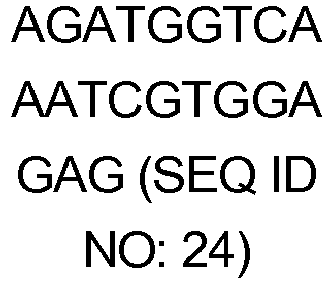


Vegfa-1 (human ) 


- Annealed PCR products were incubated with T7 endonuclease I (ToolGen, Inc.) at 37°C for 25 min and analyzed by agarose gel electrophoresis.
- Using Phusion polymerase (Thermo Fisher Scientific), on-target and potential off-target regions were amplified from genomic DNA. The PCR amplicons were subjected to paired-end sequencing using Illumina MiSeq (LAS Inc. Korea). The primers used are listed in Tables 3 to 5:
Table 3 List of primers used for targeted deep sequencing 1st PCR 2nd PCR Target Forward (5' to 3') Reverse (5' to 3') Forward (5' to 3') Reverse (5' to 3') Vegfa-1 (mouse) 


Vegfa-2 (mouse) 


Vegfa-3 (mouse) 

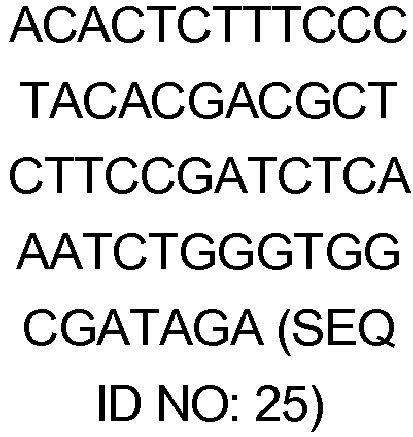

Vegfa-4 (mouse) 


Vegfa-1 (human) 


Rosa26 (mouse) 


Table 4 List of primers used for targeted deep sequencing at potential off- target sites 1st PCR 2nd PCR No. Forward (5' to 3') Reverse (5' to 3') Forward (5' to 3') Reverse (5' to 3') OT1 


OT2 


OT3 


OT4 


OT5 


OT6 


OT7 


OT8 


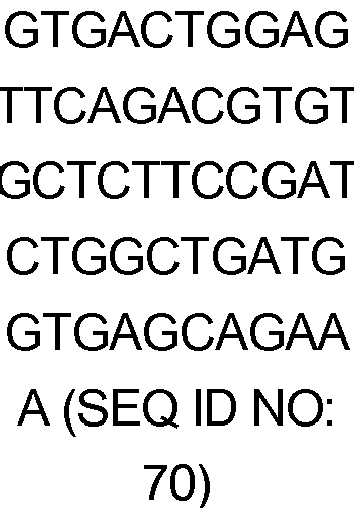
OT9 


OT10 


OT11 


OT12 


OT13 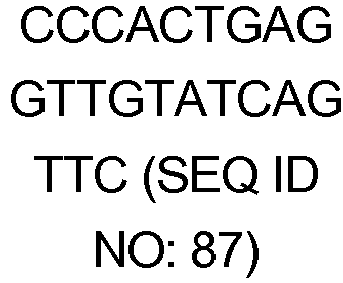


OT14 


OT15 


OT16 


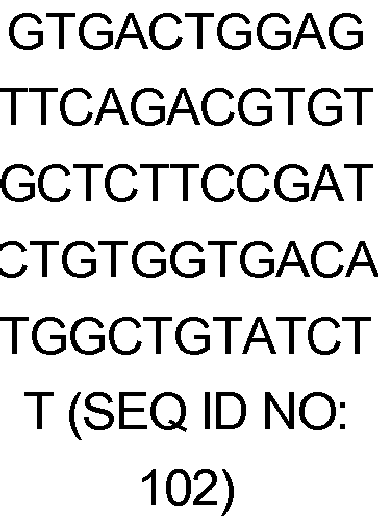
OT17 


OT18 


OT19 

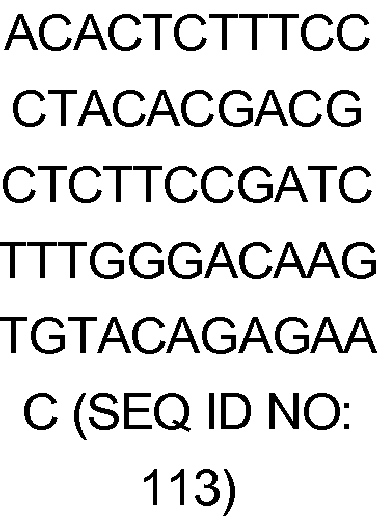

OT20 


Table 5 List of primers used for targeted deep sequencing at potential off-target sites captured by Digenome- seq 1st PCR 2nd PCR No. Forward Reverse Forward Reverse (5' to 3') (5' to 3') (5' to 3') (5' to 3') OT1 


OT2 

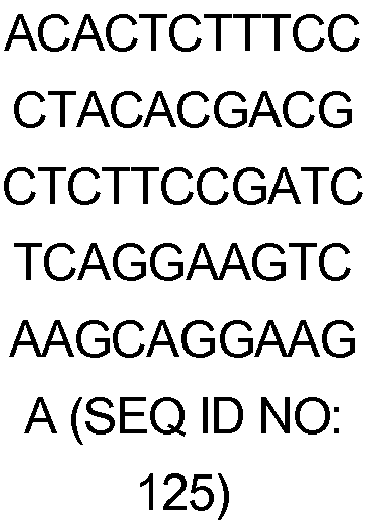

OT3 


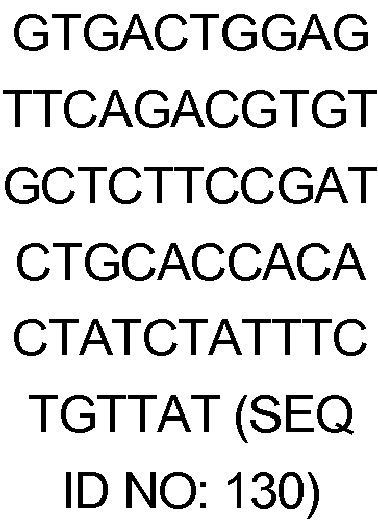
OT4 


OT5 


OT6 


OT7 


OT8 


OT9 
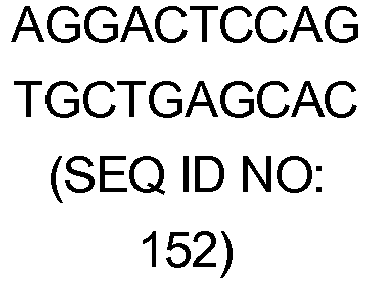


OT10 


OT11 


OT12 


OT13 


OT14 


OT15 

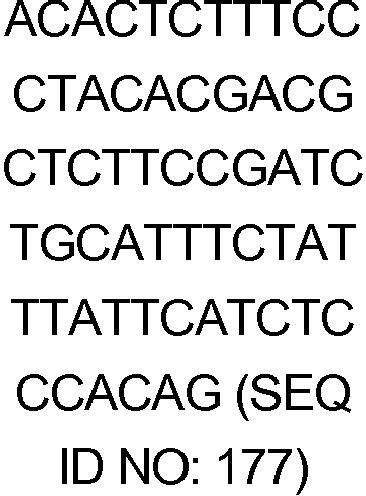

OT16 


OT17 


OT18 


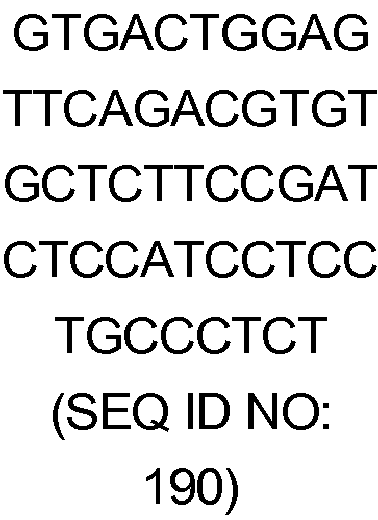
OT19 


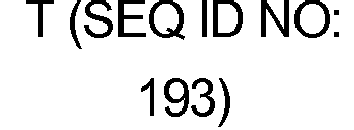

OT20 


OT21 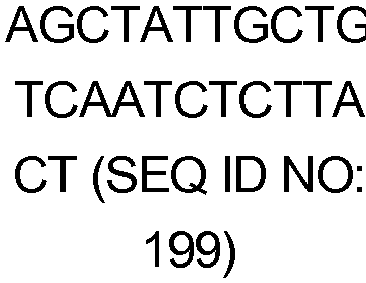


OT22 


OT23 

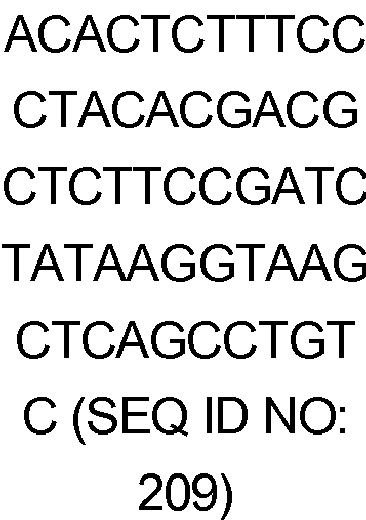

OT24 


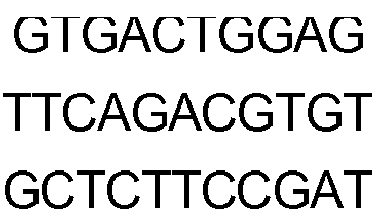


OT25 


OT26 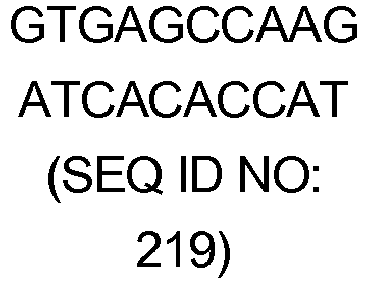


OT27 


OT28 


OT29 


OT30 


OT31 


OT32 


OT33 


OT34 


OT35 


OT36 


OT37 


OT38 


OT39 

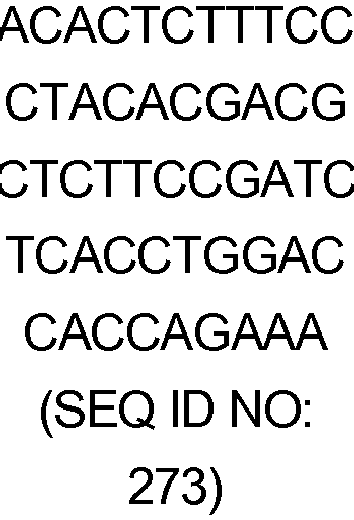

OT40 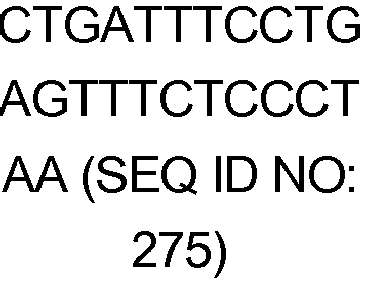
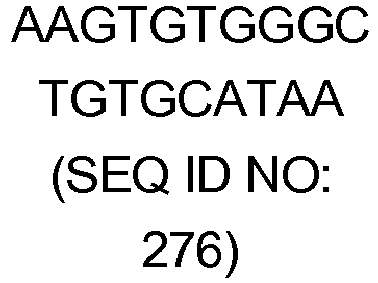


OT41 


- Indels around a
site 3 bp upstream of the PAM sequence were considered to be mutations resulting from Cas9 RNP activity. - Total RNA was isolated from NIH3T3 and ARPE-19 cells using an easy-spinTM Total RNA extraction Kit (iNtRON, Korea) according to the manufacturer's protocol. Then, 250 ng of RNA was reverse transcribed using SuperScript II (Enzynomics). Quantitative PCR (qPCR) was performed using SYBR Green (KAPA) with the following primers:
- Mouse Vegfa: 5'-ACGTCAGAGAGCAACATCAC-3' (forward; SEQ ID NO: 283), 5'-CTGTCTTTCTTTGGTCTGCATTC-3' (reverse; SEQ ID NO: 284);
- Mouse Gapdh: 5'-GCTGAGTATGTCGTGGAGTCTA-3' (forward; SEQ ID NO: 285), 5'-GTGGTTCACACCCATCACAA-3' (reverse; SEQ ID NO: 286);
- Human VEGFA-1: 5'-CGAGTACATCTTCAAGCCATCC-3' (forward; SEQ ID NO: 287), 5'-GGTGAGGTTTGATCCGCATAAT-3' (reverse; SEQ ID NO: 288);
- Human VEGFA-2: 5'-AGAAGGAGGAGGGCAGAAT-3' (forward; SEQ ID NO: 289), 5'-CACAGGATGGCTTGAAGATGTA-3' (reverse; SEQ ID NO: 290);
- Human GAPDH: 5'-CAATGACCCCTTCATTGACC-3' (forward; SEQ ID NO: 291), 5'-TTGATTTTGGAGGGATCTCG-3' (reverse; SEQ ID NO: 292).
- For human VEGFA ELISA, Vegfa-specific Cas9 RNP-treated confluent ARPE-19 cells were incubated in a serum-free medium for 16 hours after which serum-free supernatants were collected from the cell culture. Secreted VEGFA protein levels were measured using a human VEGF Quantikine ELISA Kit (DVE00, R & D systems) according to the manufacturer's instructions.
- Genomic DNA was isolated from ARPE-19 cells (ATCC) using a DNeasy Tissue Kit (Qiagen). In vitro cleavage of genomic DNA for Digenome sequencing was performed as described below. In brief, genomic DNA (20 µg) was incubated with Cas9 protein (16.7 µg) and sgRNA (12.5 µg) in reaction buffer (100 mM NaCl, 50 mM Tris-HCl, 10 mM MgCl2, 100 µg/mL BAS, pH 7.9) for 3 hours at 37°C to induce the cleavage of genomic DNA by Cas9. Cleaved genomic DNA was treated with RNase A (50 µg/mL, Sigma Aldrich) for 30 min at 37°C and purified with a DNeasy Tissue Kit (Qiagen). Whole-genome and Digenome sequencing were performed as described previously (Kim, D., Kim, S., Kim, S., Park, J. & Kim, J. S. Genome-wide target specificities of CRISPR-Cas9 nucleases revealed by multiplex Digenome-seq. Genome research 26, 406-415 (2016)).
- The care, use, and treatment of all animals in this study were in strict agreement with the guidelines established by the Seoul National University Institutional Animal Care and Use Committee and "the ARVO Statement for the Use of Animals in Ophthalmic and Vision Research". Adult (6 weeks old) male SPF C57BL/6J mice were used in the study. Mice were maintained under a 12 hours dark-light cycle.
- Subretinal injection of RNP was performed on the prepared mice as follows. First, RNPs composed of Cas9 protein (8 µg), sgRNA (4.5 µg), and Lipofectamine 2000 (20% v/v) were mixed in 2 µL or 3 µL of injection volume. RNPs (2 or 3 µL) were injected into the subretinal space using a Nanofil syringe with a 33G blunt needle (World Precision Instruments, Inc.) under an operating microscope (Leica Microsystems, Ltd.). Subjects with retinal hemorrhage were excluded from the study.
- Mice were anesthetized by intraperitoneally injecting at a dose of 2.25 mg/kg (body weight) a mixture containing tiletamine and zolazepam at a weight ratio of 1:1. Pupils were dilated with an eye drop containing phenylephrine (0.5% (w/v)) and tropicamide (0.5% (w/v)). Laser photocoagulation was performed using an indirect head set delivery system (Iridex) and laser system (Ilooda). The laser wavelength was 810 nm. Laser parameters were as follows: spot size: 200 µm; power: 1W; and exposure time: 100 ms. Laser burn was induced at the 12 (right eye) or 6 (left eye) o'clock positions around the optic disc with a modification. Only burns that produced a bubble without vitreous hemorrhage were included in the experiments. Subretinal RNP injections were performed in the quadrant of laser burn. Cas9 RNPs (sgRosa26 (containing a Rosa26 targeting sgRNA) or sg Vegfa (containing a Vegfa targeting sgRNA)) were randomly allocated to the left or right eye in each mouse. Subretinal injection of Cas9 RNPs produced a bleb. It was confirmed that the bleb overlapped with the laser-burn site. Subjects in which the bleb overlapped the laser-burn site were used in further studies. Seven days after laser treatment, the eyes were fixed in 4% PFA for 1 hour at room temperature. RPE (retinal pigment epithelium) complexes (RPE/choroid/sclera) were treated overnight at 4°C with isolectin-B4 (Thermo Fisher Scientific, catalog no. 121413, 1:100) for immunostaining. The stained RPE complexes were flat-mounted and viewed with a fluorescence microscope (Eclipse 90i, Nikon) at a magnification of x40. The CNV area was measured using ImageJ software (1.47v, NIH) by blind observers.
- The number of RPE cells in the RPE complex was calculated by counting DAPI-stained nuclei in paraffin embedded cross-section samples (4 µm) in a high power field area (100 µm × 100 µm, n = 8). Cross-section samples obtained at
day 7 post-injection (n = 4) were immunostained with an anti-opsin antibody (Millipore, AB5405, 1:1000) and an Alexa Fluor 488 antibody (Thermo Fisher Scientific, 1:500). The opsin positive area was measured using ImageJ software (1.47v, NIH) by blind observers. The intracellular distribution of the Cy3-Cas9 protein in the RPE flat-mounts was imaged using a confocal microscope (LSM 710, Carl Zeiss). The scanning parameters were as follows: scaling (x = 0.042 µm/pixel, y = 0.042 µm/pixel, z = 0.603 µm/pixel), dimensions (x = 1024, y = 1024, z = 12, channels: 2, 8-bit), and zoom (5.0) with objective C-Apochromat 40×/1.20W Korr M27.ZEN 2 software was used to process the images. - Genomic DNA was isolated from RPE complexed at
day 3 after RNP injection, and measured for CNV area. Atday 7 after RNP injection, genomic DNA was isolated from CNV samples. Genomic DNA isolation was performed using a NucleoSpin Tissue Kit (Macherey-Nagel). In order to evaluate RNP efficacy, each RPE complex was divided into quadrants and the RNP-injected quadrant was treated to isolate genomic DNA. To assess indel frequencies in CNV areas of RPE complexes, RPE flat-mounts were imaged and washed with PBS. Genomic DNA was isolated from the following regions: (i) a quadrant including an RNP-injected area of CNV (representative of injected areas); and (ii) an opposite quadrant (representative of non-injected areas). - For mouse VEGF-A ELISA, a total of 30 laser burns were induced in the eye, followed by injecting RNPs (3 µL) into the subretinal space. At
day 3 post-injection, whole RPE complexes were isolated from the retina and frozen for further analysis. Cells were lysed with RIPA buffer (50 mM Tris-HCl(pH 8.0), 150 mM NaCl, 1% Igepal CA-630, 0.5% Na.deoxycholate, 0.1% SDS), and VEGFA levels were measured using a mouse VEGF Quantikine ELISA Kit (MMV00, R&D systems) according to the manufacturer's instructions. - To analyze RNP levels over time after in vivo RNP delivery, Western blotting of RPE complexes, obtained at 1 and 3 days post-injection, was performed. Samples, each containing an equal amount of protein (20 µg), were analyzed; Cas9 and beta-actin were detected with an anti-HA high affinity antibody (Roche, 3F10, 1:1000) and an anti-beta-actin antibody (Sigma Aldrich, A2066, 1:1000), respectively. ImageQuant LAS4000 (GE healthcare) was used for digital imaging.
- Data were analyzed with SPSS software version 18.0 (SPSS, Inc.). P-values were determined by an unpaired, two-sided Student's t-tests or one-way ANOVA and Tukey post-hoc tests (for multiple groups). Data are expressed as mean with s.e.m (standard error of the mean).
- A test was made of four single-chain guide RNAs (sgRNAs) (labeled as Vegfa-1, 2, 3, and 4) targeting target sites in
exons VEGF receptors - The targeting sequences of sgRNA for CRISPR-Cas9 target sequences in the VEGFA/Vefga gene and numbers of homologous sites in the human and mouse genomes are summarized in Table 6, below:
Table 6 Target sgRNA with PAM (5' to 3') Position Direction Number of mismatches at homologous sites* 0 1 2 Vegfa-1 human 
Exon 3 - 1 0 1 mouse 1 0 1 Vegfa-2 human 
Exon 4 - 1 0 1 mouse 1 0 3 Vegfa-3 human 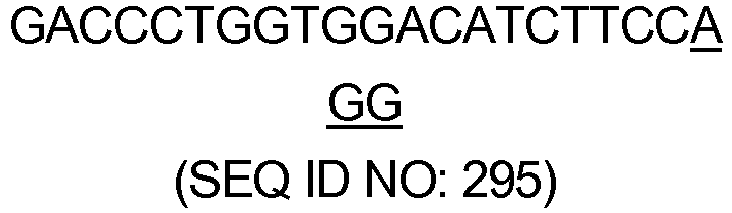
Exon 3 + 1 0 0 mouse 1 0 1 Vegfa-4 human 
Exon 3 - 1 0 1 mouse 1 0 0 (* Determined using Cas-OFFinder (http://www.rgenome.net/cas-offinder/); underlined: PAM sequence) - The sgRNA-containing Vegfa-specific Cas9 RNP prepared above were transfected into mouse NIH3T3 and human ARPE-19 cells and used in the following experiments. The delivery of RNP into cells, as described in Reference Example 3, was carried out with the aid of a plasmid that was introduced into cells and allowed nucleic acid molecules to express sgRNA and Cas9 protein in the cells (expressed as plasmid in figures) or in such a manner that a complex (or mixture) of the sgRNA and the recombinant Cas9 protein was delivered into cells using cationic lipid (Lipofectamine) (expressed as RNP in figures).
- The target sequence in the Vegfa/VEGFA locus of mouse NIH3T3 and human ARPE-19 cells are depicted in
FIG. 1a (PAM sequence in red; sgRNA target sequence in blue). - Mutation frequencies induced by the delivery of either Vegfa-specific Cas9 RNPs containing the four sgRNAs (Vegfa-1 sgRNA, Vegfa-2 sgRNA, Vegfa-3 sgRNA, and Vegfa-4 sgRNA) or plasmids carrying encoding sequences thereof were measured using deep sequencing (see Reference Example 2) at
day 2 post-transfection. The results are shown inFIG. 1h (Error bars indicate s.e.m. (n=3), One-way ANOVA and Tukey post-hoc tests, *** P < 0.001). - In addition, mutations induced by the delivery of either Vegfa-specific Cas9 RNP containing Vegfa-1 sgRNA or a plasmid carrying an encoding sequence thereof in NIH3T3 and ARPE-19 cells were detected by the T7 endonuclease I (T7E1) assay and are shown in
FIG. 1b . InFIG. 1b , arrows indicate the expected positions of DNA bands cleaved by T7E1. - Indel frequencies induced by the delivery of either Vegfa-specific Cas9 RNP containing Vegfa-1 sgRNA or a plasmid carrying an encoding sequence thereof in NIH3T3 and ARPE-19 cells were measured using targeted deep sequencing (see Reference Example 6) at
day 2 post-transfection. The results are shown inFIG. 1c (error bar: s.e.m (n=3); One-way ANOVA and Tukey post-hoc tests, * P < 0.05, ** P < 0.01, *** P < 0.001). - Representative mutant DNA sequences induced by Vegfa-specific Cas9 RNP (containing Vegfa-1 sgRNA) at the Vegfa/VEGFA locus in NIH3T3 and ARPE-19 cells are shown in
FIG. 1d (underlined: target sequence targeted by sgRNA, blue: inserted nucleotides, -: deleted region, WT: wild type; triangle: cleavage position; column on the right: number of inserted or deleted nucleotides). - Mutation (indel) frequencies induced by the delivery of Vegfa-specific Cas9 RNP containing Vegfa-1 sgRNA in confluent ARPE-19 cells were detected by targeted deep sequencing at 64 hours post-transfection, and the results are given in
FIG. 1e . Relative VEGFA mRNA levels measured in the cells by quantitative PCR (qPCR) are depicted inFIG. 1f , and VEGFA protein levels measured in the cells by VEGFA ELISA as in Reference Example 8 are shown inFIG. 1g (Error bar: s.e.m. (n = 5), Student's t-test, ** P < 0.01, *** P < 0.001). - As shown in
FIG. 1h , the highest indel efficiency was obtained in NIH3T3 cells when Vegfa-1 sgRNA among the four sgRNAs was complexed with Cas9 and delivered in the RNP form into the cells. In addition,FIGS. 1b and1c show that Vegfa-1 sgRNA with the highest indel efficiency induced mutations in NIH3T3 and ARPE-19 cells and when delivered in an RNP form, was observed to induce small insertions and deletions (indels) at the target site with a frequency of 82±5 % (NIH3T3 cells) or 57±3 % (ARPE-19 cells). The RNP delivery of sgRNA and Cas9 allowed higher indel efficiency than plasmid transfection (FIG. 1c ). - As shown in
FIG 1e , indels were detected at a frequency of 40 ± 8% in ARPE-19 cells treated with Vegfa-specific Cas9 RNP, andFIGS. 1f and1g show that Vegfa-specific Cas9 RNP reduced the VEGFA mRNA level by 24 ± 4% and the VEGFA protein level by 52 ± 9% in confluent ARPE-19 cells under post-mitotic conditions. - To monitor the localization of Cas9 RNPs in vitro and in vivo, Cy3-conjugated Cas9 protein (Reference Example 4). Thus, Cy3-Cas9 combined with or without the Vegfa-1 sgRNA was mixed with cationic lipids and delivered into NIH3T3 cells. Alternatively, the Vegfa-specific, Cy3-labeled or -unlabeled Cas9 RNP was delivered into an adult mouse eye via subretinal injection for the following experiments.
- NIH3T3 cells were transfected with Cy3-labeled Cas9 RNP (a complex of Cy3-labeled Cas9 and Vegfa-1 sgRNA) or Cy3-labeled Cas9 alone (as a control) and observed under a confocal microscope at 24 hours post-transfection to visualize Cy3 signals in the cells (see Reference Example 4). The images thus obtained are given
FIG. 2a . InFIG. 2a , the white arrow indicates nuclear co-localization of Cy3 dye. The z-axis image on the right shows that Cy3-Cas9 is localized inside the nucleus. - In addition, measurement was made of the proportion of Cy3 positive nuclei in total DAPI positive nuclei (100*[number of Cy3-positive nuclei]/[total number of DAPI-positive nuclei]) at 24 hours post-transfection, and the results are depicted in
FIG. 2b (Error bars indicate SEM (n = 3). Student's t-test: *** P < 0.001). - Mutations mediated by Vegfa-specific Cas9 RNP containing the Vegfa-1 sgRNA in NIH3T3 cells were detected by the T7 endonuclease 1 (T7E1) assay (see Reference Example 5) and are shown in
FIG. 2c . InFIG. 2c , the arrow indicates the expected position of DNA bands cleaved by T7E1. - Mutation frequencies driven by the Vegfa-specific Cas9 RNP containing the Vegfa-1 sgRNA in NIH3T3 cells were measured using targeted deep sequencing (see Reference Example 6) at 24 hours post-transfection and are shown in
FIG. 2d (error bar: s.e.m (n=3); One-way ANOVA and Tukey post-hoc tests, *** P < 0.001). - Representative RPE flat-mount at
day 3 after the injection of Cy3-labeled Cas9 RNP into mouse eye was observed under a fluorescence microscope (see Reference Examples 11 and 12) and the results are given inFIG. 2e . In this figure, white arrows indicate nuclear colocalization of Cy3 dye. - Distribution of retinal pigment epithelium (RPE) in the RPE/choroid/scleral complex was observed under a fluorescence microscope (see Reference Examples 11 and 12), and the results are shown in
FIG. 2h. FIG. 2h depicts a representative cross-section of the RPE/choroid/scleral complex. DAPI-positive RPE cells and other cells were counted in a high-power field area (100 µm x 100 µm). InFIG. 2h , the yellow line indicates a boundary between RPE and choroid and white arrows indicate RPE nuclei in the RPE/choroid/scleral complex (10.5±2.8%, n=8). - Indel frequencies induced in vivo were determined using genomic DNA isolated from the retinal pigment epithelium (RPE)/choroid/scleral complexes, with reference to Reference Example 13. Indels were analyzed by deep sequencing (see Reference Example 6) at
day 3 post-injection. The results are depicted inFIG. 2f (Error bars are s.e.m. (n=6), Student's t-test, ** P < 0.01). - Mutant DNA sequences induced by Vegfa-specific Cas9 RNPs (containing Vegfa-1 sgRNA) in vivo are depicted in
FIG. 5 : (a) Representative mutant DNA sequences induced by the Vegfa-specific Cas9 RNP in RPE atday 3 post-injection; and (b) Mutant DNA sequences in RPE containing laser-induced choroidal neovascularization (CNV) atday 7 post-injection. The PAM sequence is shown in red. WT denotes wild-type. The column on the right indicates the number and frequency of inserted or deleted nucleotides. - Western blot analysis was performed to measure the level of Cas9 protein in the RPE/choroid/
scleral complex FIGS. 2g and2i . -
FIGS. 2a to 2d show in vitro results. Cy3-Cas9 RNP was detected in many nuclei, as shown inFIGS. 2a and2b , and was observed to induce indels at the target site, as shown inFIGS. 2c and2d . - The proportion of Cy3 positive nuclei (42 ± 6%) (
FIG. 2b ) upon treatment with Cy3-Cas9 RNP was almost equal to the frequency of indels (40 ± 3%) (FIG. 2d ) at the target site, suggesting that target sites were almost completely cleaved in cells by nucleus-localized Cas9 and that the rate-limiting factor in genome editing was nuclear localization of Cas9. When delivered alone without sgRNA, Cy3-Cas9 was rarely detected in nuclei and did not induce indels (FIGS. 2a and2d ). Cas9 is a positively charged protein with a pl value of 9.12 and cannot form a complex with cationic lipids in the absence of negatively charged sgRNAs. However, the Cy3-Cas9 RNP was less active than the unlabeled Cas9 RNP, which induced target-specific mutations at a frequency of 80% (FIG. 2d ). -
FIGS. 2e to 2i show in vivo results. Cy3 dye was observed in the nuclei of the RPE invivo 3 days after the injection of Cy3-Cas9 RNP (in vivo,FIG. 2e ). Because RPE is a major target of the RNP delivery by retinal injection, RPE alone allows for the ideal analysis of mutation frequencies. Actually, however, it is not easy to classify RPE for use in targeted deep sequencing from the RPE/choroid/scleral complex. Instead, DAPI-positive nuclei were counted to calculate the proportion of RPE, which accounted for 11±3% of the RPE/choroid/scleral complex (FIG. 2h ). - Notably, the subretinal injection of the Cy3-unlabeled Cas9 RNP gave rise to indels with a frequency of 16±2% at
day 3 post-injection, with the consequent editing in most target sites of the Vegfa gene in RPE in vivo (n=6,FIGS. 2f and5a ). Through Western blot analysis, it was also found that the Cas9 protein was degraded completely atday 3 post-injection (FIGS. 2g and2i ), indicating that Cas9 was rapidly turned over in vivo. - In order to investigate whether the Cas9 RNP could be used for the treatment of CNV in AMD mouse models, mice with laser-induced CNV were treated by subretinal injection of the Vegfa-specific Cas9 RNP (containing Vegfa-1 sgRNA) or Rosa26-specific Cas9 RNP (Rosa26-RNP; containing Rosa26 sgRNA). Since retinal injection itself increases the size of CNV, the Rosa26-RNP was used as a negative control.
- Mice with laser-induced CNV were administered with the preassembled Vegfa-specific Cas9 RNP by retinal injection. After the retinal pigment epithelium (RPE) complex in the eye was flat-mounted, the CNV area was analyzed at
day 7 post-injection. Genomic DNA isolated from the Cas9 RNP-injected area or from the opposite non-injected area (RNP-free area) was analyzed by deep sequencing. Vegfa ELISA was performed atday 3 post-injection. This procedure is schematically shown inFIG. 3a . - Laser-induced CNV stained with isolectin B4 (IB4) in C57BL/6J mice injected with the Rosa26-specific Cas9 RNP (as a control) or the Vegfa-RNP at
day 7 post-injection was visualized (see Reference Example 11). Representative images are shown inFIG. 3b . The yellow line demarcates the area of CNV. - At
day 3 post-injection, a therapeutic effect was evaluated by assessing the CNV area. CNV areas were measured in C57BL/6J mice injected with the Vegfa-specific Cas9 RNP with reference to Reference Example 11 and are depicted as relative values (%) to the CNV area (100 %) of the control injected with the Rosa26-specific Cas9 RNP inFIG. 3c (Error bars indicate s.e.m. (n=15), Student's t-test, *** P < 0.001). - Vegfa levels (pg/ml) in CNV areas were measured by ELISA (see Reference Example 14), and the results are shown in
FIG. 3d (Error bars indicate s.e.m. (n=10), Student's t-test, ** P < 0.01). - Indel frequencies (%) at the Vegfa target site in the RPE complex are shown in
FIG. 3e (Error bars indicate s.e.m. (n=7), One-way ANOVA and Tukey post-hoc tests, *** P < 0.001). - Indel frequencies (%) at the Rosa26 target site in the RPE complex are shown in
FIG. 3f (Error bars indicate s.e.m. (n=7), Student's t-test, * P < 0.05). - The laser-induced CNV structure in a cross-section sample was visualized by hematoxylin & eosin staining and is shown in
FIG. 3g . InFIG. 3g , the yellow line indicates a CNV boundary and white triangles indicate a retinal pigment epithelium (RPE) layer in the RPE/choroid/scleral complex. Most RPE cells were observed to be injured in the CNV area (Ch: choroid, R: retina, S: sclera). - A representative CNV sample for use in mutation analysis through targeted deep sequencing is shown in
FIG. 3h . InFIG. 3h , the red line indicates a boundary of the RPE/choroid/scleral complex for mutation analysis. RPE cells predominantly existed outside the CNV area limited by the yellow line. - Laser-induced CNV at
day 7 after laser treatment is depicted inFIG. 3i . Epithelial cells co-stained with IB4 marker and DAPI were collected into the CNV areal (middle). - As shown in
FIGS. 3b and 3c , a significant reduction of CNV area was found in the Vegfa-RNP-injected mice, compared to the Rosa26-RNP-injected mice (58±4% relative to Rosa26-RNP-injected mice, n = 15, P <0.001, Student's t-test). - In addition, as shown in
FIG. 3d , the injection of Vegfa-specific Cas9 RNP effectively reduced the concentration of the Vegfa protein (300±20pg/ml, n=10)) in the CNV area, compared to the injection of Rosa26-RNP (440±30pg/ml, n=10). - As understood from
FIGS. 3e and3f , indel frequencies in RNP target sites in the Vegfa-specific Cas9 RNP-treated CNV and the Rosa26-RNP-treated CNV (seeFIG. 5b ) were detected to be 3.5±0.3% (Vegfa indel) and 3.3±1.0% (Rosa26 indel), respectively, whereas indels were not detected in the negative control at all. This result suggests that subretinal injection of the Vegfa-specific Cas9 RNP can lead to local treatment even in the eye. -
FIG. 3g shows that most RPE cells in CNV were killed by laser treatment. Gene editing by Cas9 RNP was not effected in dead cells, but only in viable RPE cells (FIG. 3h ). As a result, lower indel frequencies were detected in viable RPE cells than in cells in CNV-free areas. Atday 3 after laser treatment, epithelial cells gathered in the CNV area to form new vessels (FIG. 3i ). Indel frequencies further decreased I the CNV area as the cells were not be gene edited. These results suggest that that targeted inactivation of Vegfa in the eye using Cas9 RNPs enables therapeutic genome surgery for the local treatment of AMD. - A critical issue in therapeutic genome therapy is the target specificity of CRISPR-Cas9. It was examined whether the Vegfa-specific Cas9 RNP used in this experiment caused any off-target mutations in the mouse eye or in human cells. First, 20 potential off-target sites in the mouse genome that are the most homologous to the target sequence of Vegfa-sgRNA of the Cas9 RNP were identified using Cas-OFFinder and are summarized in Table 7, below.
Table 7 Potential off-target sites of the Vegfa-1 sgRNA (with PAM) in the mouse genome No. Gene Sequence Chromoso me Position Directi on On Vegfa Exon 
chr17 4602548 7 - OT1 Intergenic region - 
chr2 1230234 49 - OT2 Arhgef7 Intron 
chr8 1173535 8 - OT3 Gsc Exon 
chr12 1044720 64 + 
OT4 Ptpm2 Exon 
chr12 1168426 12 + OT5 Gpr139 Intron 
chr7 1191784 56 OT6 Kank4 Intron 
chr4 9881668 9 + OT7 Stk32b Intron 
chr5 3767582 2 - OT8 Ptpn11 Intron 
chr5 1211462 30 + OT9 Acad12 Intron 
chr5 1216062 39 + OT1 0Intergenic region - 
chr5 1388241 86 + OT1 1Intergenic region - 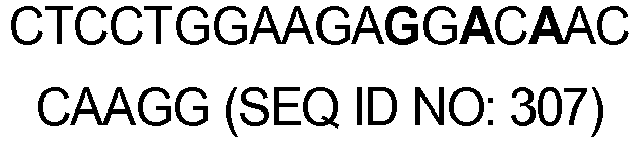
chr13 4451008 0 - OT1 2Fibp Exon 
chr19 5462580 - OT1 3Intergenic region - 
chr15 8736050 2 - OT1 4Intergenic region - 
chr17 3779341 1 + OT1 5Intergenic region - 
chr10 2436558 5 - OT1 6 Intergenic region - 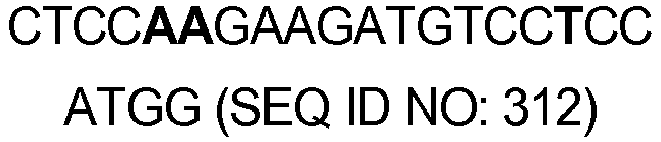
chr10 5586909 8 - OT1 7Fam180a Exon 
chr6 3532590 1 - OT1 8Rasgrf1 Exon 
chr9 8997037 6 - OT1 9 Abca13 Intron 
chr11 9509771 + OT2 0C130046K22 Rik Intron 
chr11 1037133 36 + - Genomic DNA isolated from the CNV-free RPC complex of the Cas9 RNP-treated mouse eye was subjected to targeted deep sequencing to indel frequencies (%) in the 20 potential off-target sites. The results are depicted in
FIG. 6 (Error bars indicate s.e.m. (n=3 for Cas9 Mock, n=5 for Cas9 RNP, respectively). Mismatched nucleotides and PAM sequences are shown in red and blue, respectively. At the 20 potential off-target sites treated with the Cas9 RNP, no Cas9-induced indels were detected with a frequency greater than 0.1 %, demonstrating that no off-target mutations were induced above sequencing error rates (sequencing error rate; average 0.1%). That is, the Vegfa-specific Cas9 RNP used in the present disclosure was found to exhibit no off-target effects in RPE. - Genome-wide target specificity of the Vegfa-specific Cas9 RNP in the human genome was revealed by Digenome-seq (see Reference Examples 6 and 9).
-
FIG. 4a is a genome-wide Circos plot showing in vitro cleavage sites. Human genomic DNA is shown in red, and RGEN-digested genomic DNA is shown in blue. - Sequence logos obtained using 42 sequences including 41 Digenome-capture sites and one On-target sequence are given in
FIG. 4b . - Off-target sites and indel frequencies validated in human ARPE-19 cells by targeted deep sequencing are shown in
FIG. 4c . Mismatched nucleotides are shown in red, and PAM sequences are shown in blue. - The particular target sequence of the Vegfa-specific Cas9 RNP shown in
FIGS. 4a and4b is well conserved in the human VEGFA gene. - The human genome-wide specificity was assessed using Digenome-seq (Kim et al., )) in which cell-free human genomic DNA was treated in vitro using the Vegfa-specific Cas9 RNP and then subjected to whole-genome sequencing. Uniform, rather than random, alignments of sequence reads at in vitro cleavage sites are computationally identified to provide a list of potential off-target sites. Digenome-seq using the Vegfa-specific Cas9 RNP revealed 42 in vitro cleavage sites including the on-target site and the sites are summarized in Table 8, below.
Table 8 In vitro cleavage sites in the human genome identified by Digenome-seq using the VEGFA sgRNA No. Gene Sequence Chromoso me Position Directi on On VEGFA Exon 
chr6 43745263 - OT1 NAALAD L2 Intron 
chr3 174605831 - OT2 Intergenic region - 
chr12 28147929 - OT3 CPNE4 Intron 
chr3 131485198 - OT4 ABTB2 Intron 
chr11 34241888 - OT5 ARFGEF 3 Intron 
chr6 138531951 - OT6 Intergenic region - 
chr5 21242334 + OT7 BAIAP2-AS1 Exon 
chr17 79006487 - OT8 HOMER1 Intron 
chr5 78719511 - OT9 ABCA3 Exon 
chr16 2327650 - OT1 0 Intergenic region - 
chr2 129298046 - OT1 1 Intergenic region - 
chr4 16957810 + OT1 2 Intergenic region - 
chr8 70150186 - OT1 3 DSCAM Intron 
chr21 42029091 - OT1 4 CLIP2 Intron 
chr7 73770600 + OT1 5 Intergenic region - 
chr14 103748791 + OT1 6 ACSS2 Intron 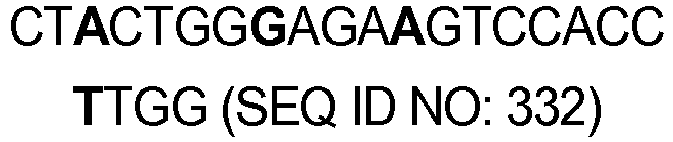
chr20 33506330 + OT1 7 Intergenic region - 
chr4 74527941 + OT1 8 Intergenic region - 
chr14 106089679 + OT1 9 ITIH4, RP5-966M1.6 Intron 
chr3 52863033 + OT2 0 Intergenic region - 
chr6 157061270 + OT2 1 LINC011 70 Exon 
chr5 123650052 + OT2 2 Intergenic region - 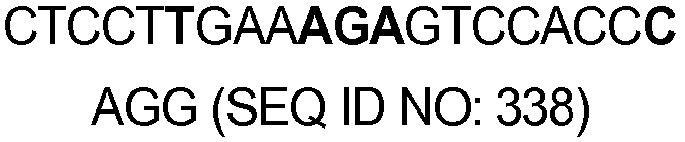
chr2 236108683 + OT2 3 Intergenic region - 
chr2 120420942 - OT2 4 Intergenic region - 
chr2 122905021 + OT2 5 MGAT5 Intron 
chr2 134952386 - OT2 6 U91319.1 Intron 
chr16 13592695 + OT2 7 Intergenic region - 
chr16 84252079 + OT2 8 Intergenic region - 
chr1 59037909 + OT2 9 Intergenic region - 
chr5 72463793 + OT3 0 SLC9A9 Intron 
chr3 143166935 - OT3 1 PTPRS Exon 
chr19 5207995 + OT3 2 Intergenic region - 
chr10 131177201 - OT3 3 Intergenic region - 
chr22 25944921 + OT3 4 ERC2 Intron 
chr3 55563577 + OT3 5 CTD-2130013 .1 Intron 
chr18 44830053 - OT3 6 Intergenic region - 
chr9 28979308 + OT3 7 Intergenic region - 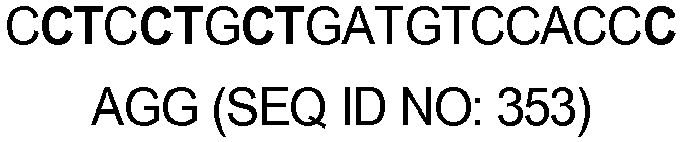
chr16 1065437 + OT3 8 Intergenic region - 
chr10 130753819 + OT3 9 BRD1 Intron 
chr22 50174426 + OT4 0 CACNG3 Intron 
chr16 24310237 + OT4 1 RP11-57C13.6, RP11-57C13.3 Intron 
chr10 89404735 - - To examine the validity of the sites listed in Table 8, targeted deep sequencing was performed using genomic DNA isolated from Vegfa-specific RNP-transfected ARPE-19 cells (see
FIG. 4c ). Although these sites were cleaved efficiently in vitro, off-target indels were not detected at these 41 cleavage sites above sequencing error rates (average 0.1 %). - Modified gRNAs with improved specificity (Fu, Y., Sander, J. D., Reyon, D., Cascio, V. M. & Joung, J. K. Improving CRISPR-Cas nuclease specificity using truncated guide RNAs. Nature biotechnology 32, 279-284 (2014); Cho, S. W. et al. Analysis of off-target effects of CRISPR/Cas-derived RNA-guided endonucleases and nickases. )) or Cas9 variants (Kleinstiver, B. P. et al. High-fidelity CRISPR-Cas9 nucleases with no detectable genome-wide off-target effects. Nature 529, 490-495 (2016); Slaymaker, I. M. et al. Rationally engineered Cas9 nucleases with improved specificity. Science 351, 84-88 (2016)) may be used, if necessary, to further reduce or avoid the off-target effect that exists although slight.
- Taken together, these results show that the Vegfa-specific RNP containing the sgRNA that has the Vegfa targeting sequence provided in the present disclosure is highly specific in both mouse and human cells (in vivo and in vitro).
- Another major concern for mutating the Vegfa gene for the treatment of AMD or diabetic retinopathy is the trophic role of Vegfa in the eye. Cone dysfunction is the most significant change upon Vegfa mutating, and is observed 3 days after conditional deletion of the Vegfa gene in mouse RPE.
- To examine whether the Vegfa-specific Cas9 RNP provided by the present disclosure caused cone dysfunction, opsin-positive areas were observed using a fluorescence microscope and calculated. The results are depicted in
FIGS. 7a (fluorescent image) and 7b (opsin positive area (%)). -
FIG. 7a shows fluorescent cross-sectional images of the respective retinas obtained 7 days after injection of the Vegfa-specific Cas9 RNP from a normal mouse injected with the Vegfa-specific Cas9 RNP (only RNP injection without laser treatment) and a normal control mouse without injection of the Vegfa-specific Cas9 RNP. Opsin appears in green and DAPI is shown in blue.FIG. 7b is a graph showing opsin positive areas (%), with no significant difference between the normal control (3.0±0.5%) and the Vegfa-specific Cas9 RNP-injected mice (3.1±0.5%) (Error bars indicate s.e.m. (n=4); #, P > 0.05 (Student's t-test)). - As understood from
FIGS. 7a and 7b , the mice injected with the Vegfa-specific Cas9 RNP provided by the present disclosure did not differ in the option positive area of cone cells from the non-injected normal control, even atday 7 after treatment, suggesting that no cone dysfunction had occurred. These results imply that the Vegfa-specific Cas9 RNP specifically mutates only target sequences of the Vegfa genes, without incurring significant side effects. In addition, the use of Vegfa-specific Cas9 RNP did not generate side effects even 7 days after treatment whereas side effects were observed 3 days after treatment in conventional Vegfa-target therapies. - Herein, some exemplary embodiments of the present invention have been described herein. However, it should be understood by those skilled in the art that these embodiment are provided for illustrative purpose only and should not be construed in any way as limiting the present invention. Rather, it should be understood that various modifications, changes, alterations, and equivalent embodiments can be made without departing from the spirit and scope of the present invention, as defined only by the following claims and equivalents thereof.


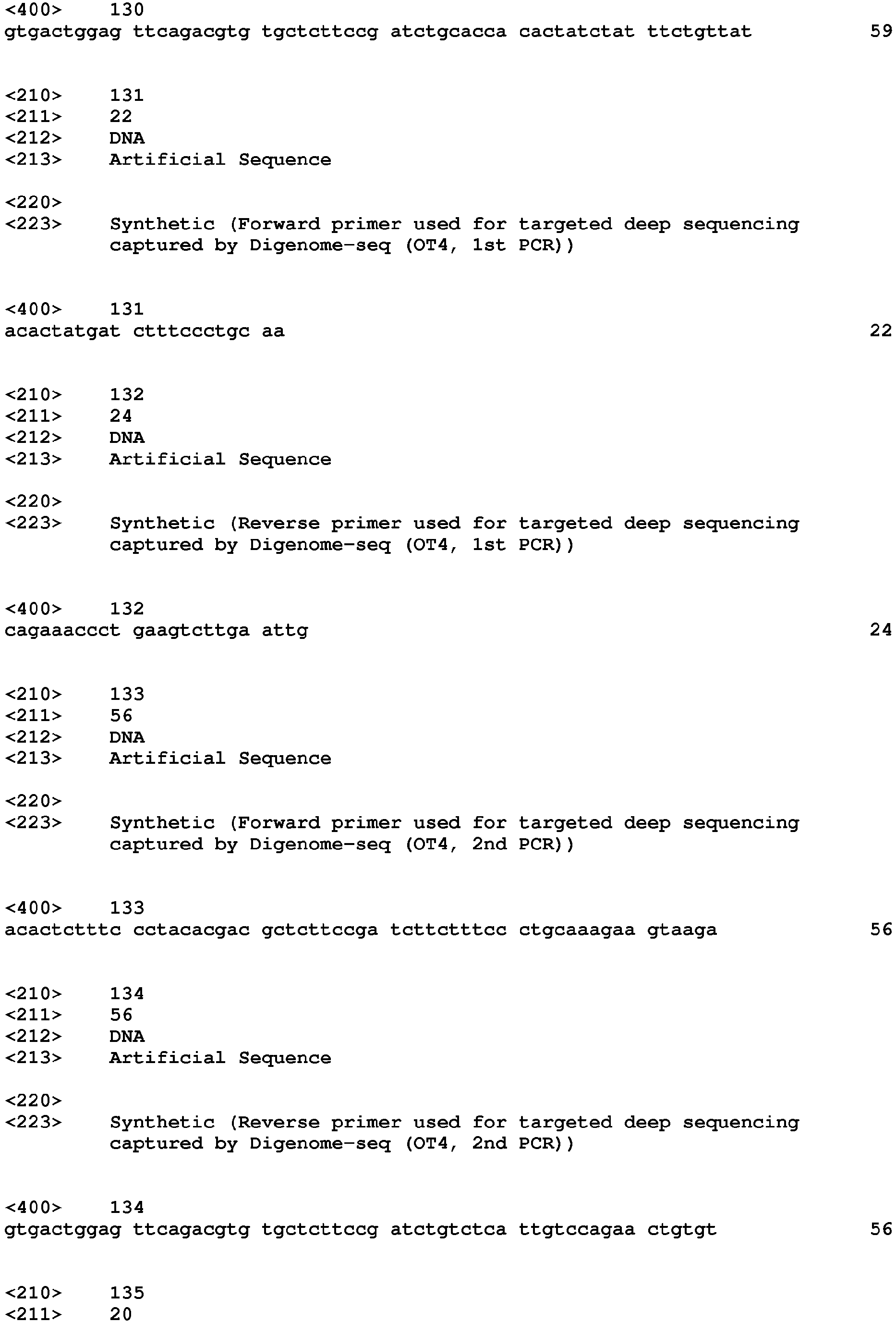


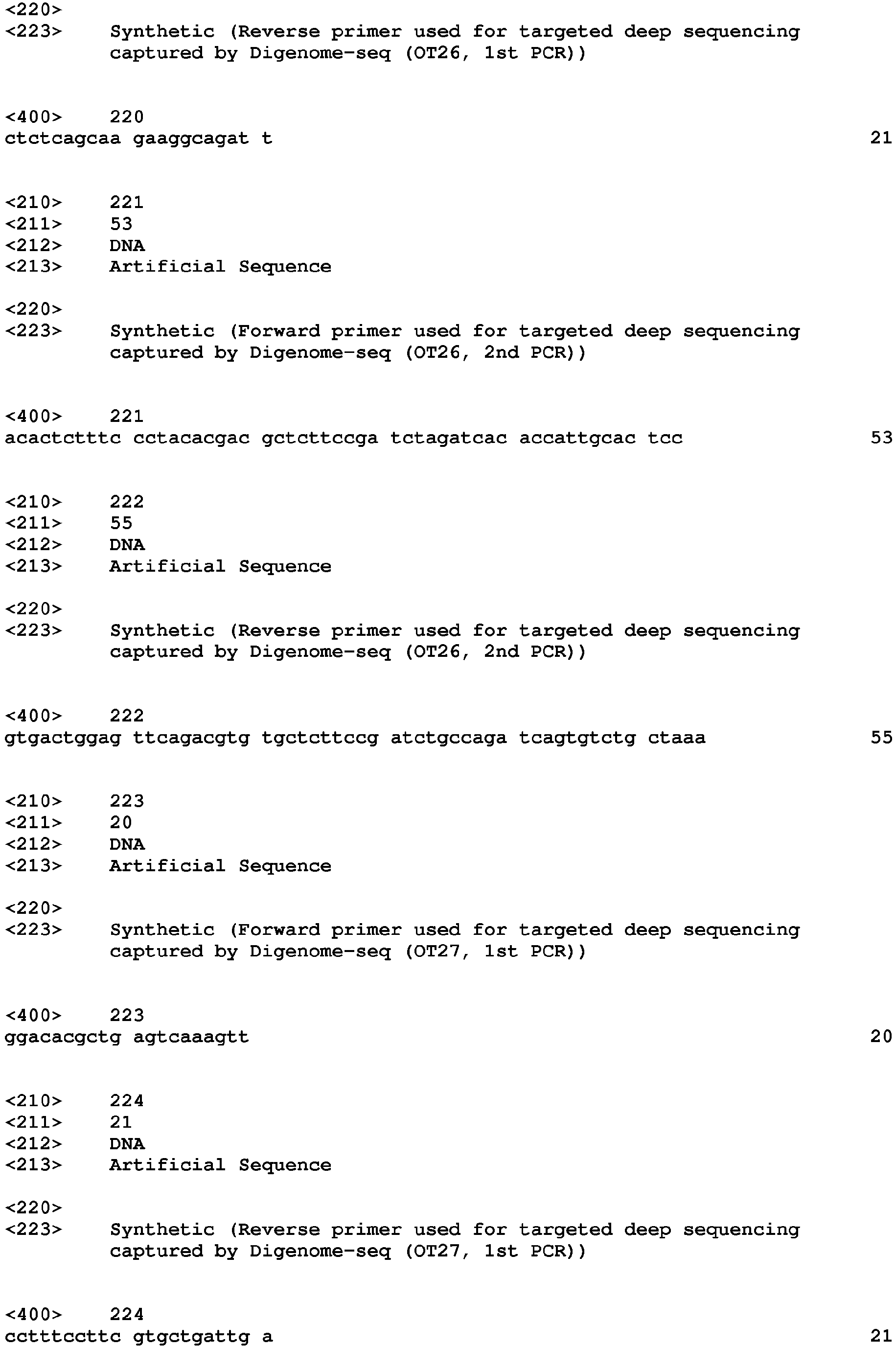


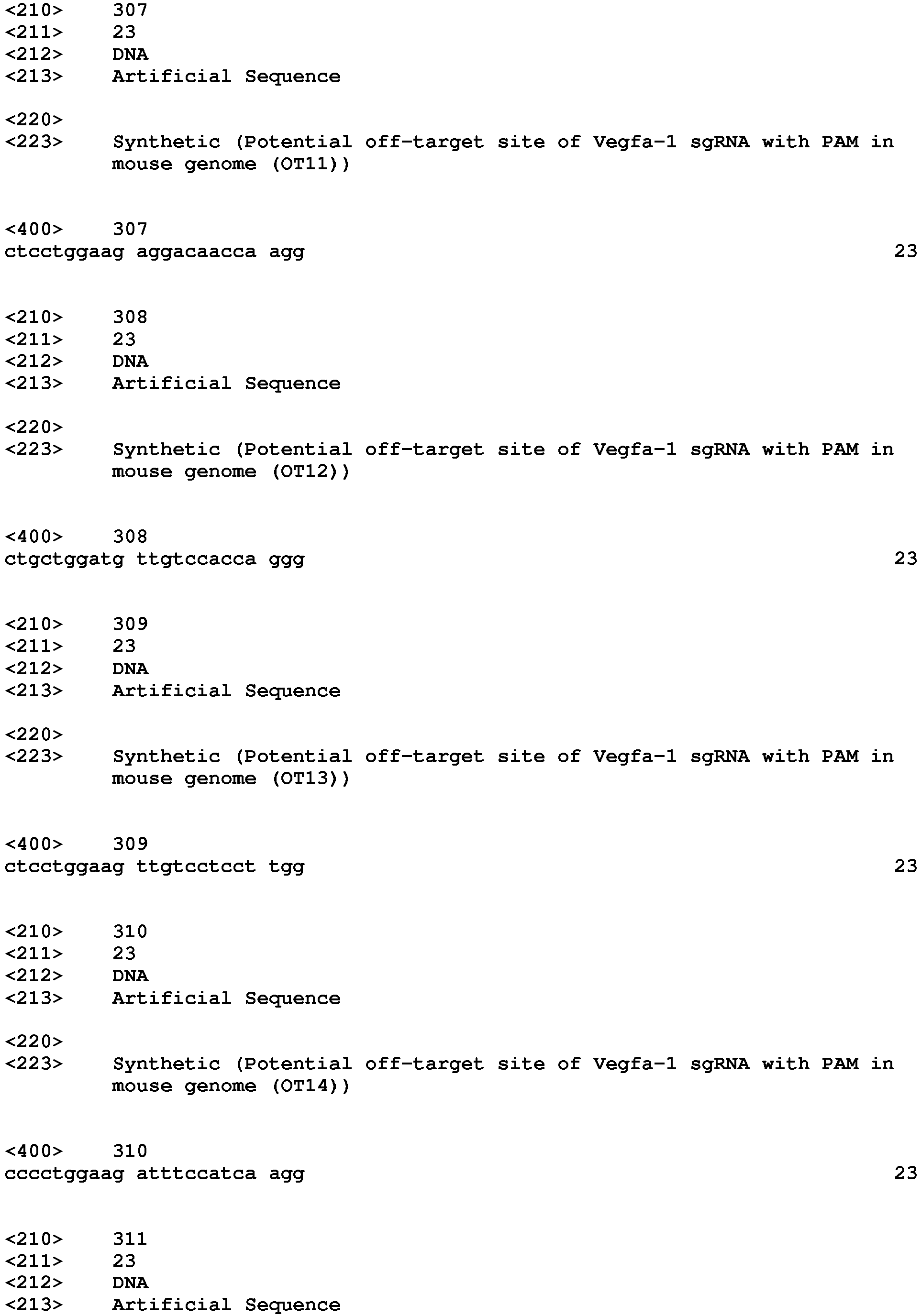


Claims (14)
- A composition for preventing or treating an eye disease associated with VEGF-A overexpression, comprising:a Cas9 protein or a gene (DNA or mRNA) encoding the Cas9 protein, anda VEGF-A gene-specific guide RNA containing a targeting sequence binding specifically to a target site of a VEGF-A gene, or a DNA encoding the VEGF-A gene-specific guide RNA.
- The composition for preventing or treating an eye disease according to claim 1, wherein the composition comprises a ribonucleoprotein comprising the Cas9 protein and the guide RNA.
- The composition for preventing or treating an eye disease according to claim 1 or claim 2, wherein the guide RNA is hybridizable with a nucleic acid sequence selected from the group consisting of SEQ ID NOS: 1 to 8 in a VEGF-A gene.
- The composition for preventing or treating an eye disease according to claim 3, wherein the guide RNA comprises a nucleic acid sequence selected from the group consisting of SEQ ID NOS: 9 to 16.
- The composition for preventing or treating an eye disease according to claim 1 or claim 2, wherein the eye disease associated with VEGF-A overexpression is macular degeneration or retinopathy.
- A ribonucleoprotein, comprising a Cas9 protein, and a VEGF-A gene-specific guide RNA comprising a targeting sequence specifically binding to a target site of a VEGF-A gene.
- The ribonucleoprotein of claim 6, wherein the guide RNA is hybridizable with a target site comprising a nucleic acid sequence selected from the group consisting of SEQ ID NOS: 1 to 8 in a VEGF-A gene.
- The ribonucleoprotein of claim 7, wherein the guide RNA comprises a nucleic acid sequence selected from the group consisting of SEQ ID NOS: 9 to 16.
- A guide RNA, comprising a nucleic acid sequence selected from the group consisting of SEQ ID NOS: 9 to 16.
- A pharmaceutical composition for use in preventing or treating an eye disease associated with VEGF-A overexpression, wherein the composition comprises:a Cas9 protein or a gene (DNA or mRNA) encoding the Cas9 protein, anda VEGF-A gene-specific guide RNA containing a targeting sequence binding specifically to a target site of a VEGF-A gene, or a DNA encoding the VEGF-A gene-specific guide RNA.
- The pharmaceutical composition for the use of claim 10, wherein the composition comprises a ribonucleoprotein comprising the Cas9 protein and the guide RNA.
- The pharmaceutical composition for the use of claim 10 or claim 11, wherein the guide RNA is hybridizable with a nucleic acid sequence selected from the group consisting of SEQ ID NOS: 1 to 8 in a VEGF-A gene.
- The pharmaceutical composition for the use of claim 12, wherein the guide RNA comprises a nucleic acid sequence selected from the group consisting of SEQ ID NOS: 9 to 16.
- The pharmaceutical composition for the use of any one of claim 10 to claim 13, wherein the eye disease associated with VEGF-A overexpression is macular degeneration or retinopathy.
Applications Claiming Priority (2)
| Application Number | Priority Date | Filing Date | Title |
|---|---|---|---|
| US201662367674P | 2016-07-28 | 2016-07-28 | |
| PCT/KR2017/008122 WO2018021855A1 (en) | 2016-07-28 | 2017-07-27 | Pharmaceutical composition for treating ocular diseases, containing cas9 protein and guide rna |
Publications (2)
| Publication Number | Publication Date |
|---|---|
| EP3492096A1 true EP3492096A1 (en) | 2019-06-05 |
| EP3492096A4 EP3492096A4 (en) | 2020-04-15 |
Family
ID=61016342
Family Applications (1)
| Application Number | Title | Priority Date | Filing Date |
|---|---|---|---|
| EP17834796.9A Pending EP3492096A4 (en) | 2016-07-28 | 2017-07-27 | PHARMACEUTICAL COMPOSITION FOR THE TREATMENT OF EYE DISEASES, CONTAINING CAS9 PROTEIN AND GUIDED RNA |
Country Status (6)
| Country | Link |
|---|---|
| US (1) | US11123409B2 (en) |
| EP (1) | EP3492096A4 (en) |
| JP (1) | JP6875500B2 (en) |
| KR (1) | KR101961332B1 (en) |
| CN (1) | CN109789185A (en) |
| WO (1) | WO2018021855A1 (en) |
Cited By (1)
| Publication number | Priority date | Publication date | Assignee | Title |
|---|---|---|---|---|
| EP4012032A1 (en) * | 2016-08-19 | 2022-06-15 | Toolgen Incorporated | Artificially engineered angiogenesis regulatory system |
Families Citing this family (8)
| Publication number | Priority date | Publication date | Assignee | Title |
|---|---|---|---|---|
| CN112143701A (en) * | 2019-06-26 | 2020-12-29 | 中国科学院脑科学与智能技术卓越创新中心 | Method and reagent for inhibiting choroidal neovascularization based on RNA (ribonucleic acid) site-specific editing |
| WO2021043278A1 (en) * | 2019-09-04 | 2021-03-11 | 博雅辑因(北京)生物科技有限公司 | Method for evaluating gene editing therapy based on off-target assessment |
| WO2021243105A1 (en) * | 2020-05-28 | 2021-12-02 | University Of Southern California | Composition and method for treating retinal vascular disease with vegf gene disruption |
| KR102253939B1 (en) | 2020-06-25 | 2021-05-20 | 제주대학교 산학협력단 | Guide RNA for editing tyrosinase gene and use thereof |
| CN112662674B (en) * | 2021-01-12 | 2023-04-11 | 广州瑞风生物科技有限公司 | gRNA for targeted editing of VEGFA gene exon region and application thereof |
| KR20230016751A (en) * | 2021-07-26 | 2023-02-03 | 서울대학교산학협력단 | Nucleobase editor and its use |
| KR20240000814A (en) * | 2022-06-24 | 2024-01-03 | 연세대학교 산학협력단 | Pharmaceutical composition for the treatment of retinal diseases comprising the CRISPR/Cas complex that specifically works on the retinal pigment epithelium as an active ingredient |
| WO2024213138A1 (en) * | 2023-04-12 | 2024-10-17 | Huidagene Therapeutics Co., Ltd. | Guide nucleic acids targeting vegfa and uses thereof |
Family Cites Families (11)
| Publication number | Priority date | Publication date | Assignee | Title |
|---|---|---|---|---|
| ES2423060T3 (en) * | 2004-03-12 | 2013-09-17 | Alnylam Pharmaceuticals, Inc. | IRNA agents that target VEGF |
| AU2009221775B2 (en) | 2008-03-05 | 2015-05-07 | Alnylam Pharmaceuticals, Inc. | Compositions and methods for inhibiting expression of Eg5 and VEGF genes |
| PL4397760T3 (en) | 2012-10-23 | 2026-03-30 | Toolgen Incorporated | A COMPOSITION FOR CLEFULNING A TARGET DNA COMPRISING A GUIDE RNA SPECIFIC FOR A TARGET DNA AND A NUCLEIC ACID ENCODING A CAS PROTEIN OR A CAS PROTEIN, AND USE THEREOF |
| IL239317B (en) * | 2012-12-12 | 2022-07-01 | Broad Inst Inc | Delivery, engineering and optimization of systems, methods and compositions for sequence manipulation and therapeutic applications |
| US10378027B2 (en) * | 2013-03-15 | 2019-08-13 | The General Hospital Corporation | RNA-guided targeting of genetic and epigenomic regulatory proteins to specific genomic loci |
| JP6738729B2 (en) * | 2013-06-17 | 2020-08-12 | ザ・ブロード・インスティテュート・インコーポレイテッド | Delivery, engineering and optimization of systems, methods and compositions for targeting and modeling postmitotic cell diseases and disorders |
| US9526784B2 (en) * | 2013-09-06 | 2016-12-27 | President And Fellows Of Harvard College | Delivery system for functional nucleases |
| CN111206032B (en) | 2013-12-12 | 2024-07-19 | 布罗德研究所有限公司 | Delivery, use and therapeutic applications of CRISPR-CAS systems and compositions for genome editing |
| US20150376587A1 (en) * | 2014-06-25 | 2015-12-31 | Caribou Biosciences, Inc. | RNA Modification to Engineer Cas9 Activity |
| JP6597248B2 (en) * | 2015-12-04 | 2019-10-30 | ヤマハ株式会社 | System and control method |
| WO2017099494A1 (en) * | 2015-12-08 | 2017-06-15 | 기초과학연구원 | Genome editing composition comprising cpf1, and use thereof |
-
2017
- 2017-07-27 EP EP17834796.9A patent/EP3492096A4/en active Pending
- 2017-07-27 JP JP2019504798A patent/JP6875500B2/en active Active
- 2017-07-27 US US15/661,300 patent/US11123409B2/en active Active
- 2017-07-27 WO PCT/KR2017/008122 patent/WO2018021855A1/en not_active Ceased
- 2017-07-27 CN CN201780058793.4A patent/CN109789185A/en active Pending
- 2017-07-27 KR KR1020170095685A patent/KR101961332B1/en active Active
Cited By (2)
| Publication number | Priority date | Publication date | Assignee | Title |
|---|---|---|---|---|
| EP4012032A1 (en) * | 2016-08-19 | 2022-06-15 | Toolgen Incorporated | Artificially engineered angiogenesis regulatory system |
| US11999952B2 (en) | 2016-08-19 | 2024-06-04 | Toolgen Incorporated | Artificially-manipulated neovascularization regulatory system |
Also Published As
| Publication number | Publication date |
|---|---|
| KR20180013780A (en) | 2018-02-07 |
| JP2019522034A (en) | 2019-08-08 |
| JP6875500B2 (en) | 2021-05-26 |
| CN109789185A (en) | 2019-05-21 |
| KR101961332B1 (en) | 2019-03-22 |
| EP3492096A4 (en) | 2020-04-15 |
| US11123409B2 (en) | 2021-09-21 |
| WO2018021855A1 (en) | 2018-02-01 |
| US20180078620A1 (en) | 2018-03-22 |
Similar Documents
| Publication | Publication Date | Title |
|---|---|---|
| US11123409B2 (en) | Method of treating or preventing eye disease using Cas9 protein and guide RNA | |
| JP2022068156A (en) | CRISPR / CAS-related methods and compositions for treating herpes simplex virus | |
| US11840690B2 (en) | Allele selective inhibition of mutant C9orf72 foci expression by duplex RNAs targeting the expanded hexanucleotide repeat | |
| US10583201B2 (en) | Efficient delivery of therapeutic molecules in vitro and in vivo | |
| JP2024515035A (en) | Mucosal expression of antibody structures and isotypes by mRNA | |
| EP3362104A2 (en) | Methods and compositions utilizing cpf1 for rna-guided gene editing | |
| TW201945388A (en) | Optimized engineered meganucleases having specificity for a recognition sequence in the hepatitis B virus genome | |
| JP2019515914A (en) | Compositions and methods for the treatment of diseases associated with trinucleotide repeats in transcription factor 4 | |
| US20250099554A1 (en) | Compositions and methods of fas inhibition | |
| TW202342064A (en) | Circular polyribonucleotides encoding antifusogenic polypeptides | |
| EP3672579A2 (en) | Compositions and methods for treating age-related macular degeneration and geographic atrophy | |
| TW202444910A (en) | Messenger rna encoding casx | |
| JP6946297B2 (en) | SiRNAs for inhibiting the expression of the NRARP gene, and their use in methods and compositions for that purpose. | |
| CN103221540B (en) | Application of highly conserved region sequences in viral genomes as templates for designing therapeutic sliRNAs | |
| CN118043461A (en) | Method of | |
| JP2022552378A (en) | mRNA encoding granulocyte-macrophage colony-stimulating factor for treating Parkinson's disease | |
| KR20240150772A (en) | Therapeutic factors for the treatment of polyQ disease | |
| JP2025535495A (en) | Gene editing systems and their applications | |
| Lopes et al. | Gene Editing for ATXN3 Inactivation in Machado-Joseph disease: CRISPR-Cas9 as a Therapeutic Alternative to TALEN-Induced Toxicity | |
| JP2017521094A (en) | Short interfering RNA (siRNA) for autosomal dominant osteomyelitis type 2 (ADO2) therapy caused by CLCN7 (ADO2 CLCN7 dependent) gene mutation | |
| CA3238451A1 (en) | Materials and methods for treatment of macular degeneration | |
| WO2025210011A1 (en) | Antisense oligonucleotides for the treatment of liver disease | |
| WO2024175707A1 (en) | A synthetic oligonucleotide for treating nidovirales infections | |
| WO2023183820A2 (en) | Respiratory tract infection therapeutics against covid-19 | |
| IT202100002573A1 (en) | SMALL INTERFERING RNA (SIRNA) FOR THE THERAPY OF MEGACYSTI-MICROCOLON-INTESTINAL HYPERYSTALSIS SYNDROME (MMIHS) CAUSED BY MUTATION OF THE ACTG2 GENE |
Legal Events
| Date | Code | Title | Description |
|---|---|---|---|
| STAA | Information on the status of an ep patent application or granted ep patent |
Free format text: STATUS: THE INTERNATIONAL PUBLICATION HAS BEEN MADE |
|
| PUAI | Public reference made under article 153(3) epc to a published international application that has entered the european phase |
Free format text: ORIGINAL CODE: 0009012 |
|
| STAA | Information on the status of an ep patent application or granted ep patent |
Free format text: STATUS: REQUEST FOR EXAMINATION WAS MADE |
|
| 17P | Request for examination filed |
Effective date: 20190227 |
|
| AK | Designated contracting states |
Kind code of ref document: A1 Designated state(s): AL AT BE BG CH CY CZ DE DK EE ES FI FR GB GR HR HU IE IS IT LI LT LU LV MC MK MT NL NO PL PT RO RS SE SI SK SM TR |
|
| AX | Request for extension of the european patent |
Extension state: BA ME |
|
| DAV | Request for validation of the european patent (deleted) | ||
| DAX | Request for extension of the european patent (deleted) | ||
| REG | Reference to a national code |
Ref country code: DE Ref legal event code: R079 Free format text: PREVIOUS MAIN CLASS: A61K0038170000 Ipc: A61K0038460000 |
|
| A4 | Supplementary search report drawn up and despatched |
Effective date: 20200318 |
|
| RIC1 | Information provided on ipc code assigned before grant |
Ipc: A61K 48/00 20060101ALI20200312BHEP Ipc: A61P 27/02 20060101ALI20200312BHEP Ipc: C12N 15/10 20060101ALI20200312BHEP Ipc: A61K 38/46 20060101AFI20200312BHEP Ipc: C12N 15/113 20100101ALI20200312BHEP Ipc: C12N 9/22 20060101ALI20200312BHEP |
|
| STAA | Information on the status of an ep patent application or granted ep patent |
Free format text: STATUS: EXAMINATION IS IN PROGRESS |
|
| 17Q | First examination report despatched |
Effective date: 20220307 |