EP3489616B1 - Underwater object destruction system and underwater object destruction method - Google Patents
Underwater object destruction system and underwater object destruction method Download PDFInfo
- Publication number
- EP3489616B1 EP3489616B1 EP17869406.3A EP17869406A EP3489616B1 EP 3489616 B1 EP3489616 B1 EP 3489616B1 EP 17869406 A EP17869406 A EP 17869406A EP 3489616 B1 EP3489616 B1 EP 3489616B1
- Authority
- EP
- European Patent Office
- Prior art keywords
- laser beam
- underwater
- underwater object
- continuous
- object destruction
- Prior art date
- Legal status (The legal status is an assumption and is not a legal conclusion. Google has not performed a legal analysis and makes no representation as to the accuracy of the status listed.)
- Active
Links
Images








Classifications
-
- F—MECHANICAL ENGINEERING; LIGHTING; HEATING; WEAPONS; BLASTING
- F41—WEAPONS
- F41H—ARMOUR; ARMOURED TURRETS; ARMOURED OR ARMED VEHICLES; MEANS OF ATTACK OR DEFENCE, e.g. CAMOUFLAGE, IN GENERAL
- F41H13/00—Means of attack or defence not otherwise provided for
- F41H13/0043—Directed energy weapons, i.e. devices that direct a beam of high energy content toward a target for incapacitating or destroying the target
- F41H13/005—Directed energy weapons, i.e. devices that direct a beam of high energy content toward a target for incapacitating or destroying the target the high-energy beam being a laser beam
-
- F—MECHANICAL ENGINEERING; LIGHTING; HEATING; WEAPONS; BLASTING
- F41—WEAPONS
- F41H—ARMOUR; ARMOURED TURRETS; ARMOURED OR ARMED VEHICLES; MEANS OF ATTACK OR DEFENCE, e.g. CAMOUFLAGE, IN GENERAL
- F41H13/00—Means of attack or defence not otherwise provided for
- F41H13/0043—Directed energy weapons, i.e. devices that direct a beam of high energy content toward a target for incapacitating or destroying the target
- F41H13/005—Directed energy weapons, i.e. devices that direct a beam of high energy content toward a target for incapacitating or destroying the target the high-energy beam being a laser beam
- F41H13/0062—Directed energy weapons, i.e. devices that direct a beam of high energy content toward a target for incapacitating or destroying the target the high-energy beam being a laser beam causing structural damage to the target
-
- B—PERFORMING OPERATIONS; TRANSPORTING
- B63—SHIPS OR OTHER WATERBORNE VESSELS; RELATED EQUIPMENT
- B63G—OFFENSIVE OR DEFENSIVE ARRANGEMENTS ON VESSELS; MINE-LAYING; MINE-SWEEPING; SUBMARINES; AIRCRAFT CARRIERS
- B63G13/00—Other offensive or defensive arrangements on vessels; Vessels characterised thereby
-
- B—PERFORMING OPERATIONS; TRANSPORTING
- B63—SHIPS OR OTHER WATERBORNE VESSELS; RELATED EQUIPMENT
- B63G—OFFENSIVE OR DEFENSIVE ARRANGEMENTS ON VESSELS; MINE-LAYING; MINE-SWEEPING; SUBMARINES; AIRCRAFT CARRIERS
- B63G9/00—Other offensive or defensive arrangements on vessels against submarines, torpedoes, or mines
- B63G9/02—Means for protecting vessels against torpedo attack
-
- F—MECHANICAL ENGINEERING; LIGHTING; HEATING; WEAPONS; BLASTING
- F41—WEAPONS
- F41H—ARMOUR; ARMOURED TURRETS; ARMOURED OR ARMED VEHICLES; MEANS OF ATTACK OR DEFENCE, e.g. CAMOUFLAGE, IN GENERAL
- F41H11/00—Defence installations; Defence devices
- F41H11/02—Anti-aircraft or anti-guided missile or anti-torpedo defence installations or systems
-
- F—MECHANICAL ENGINEERING; LIGHTING; HEATING; WEAPONS; BLASTING
- F42—AMMUNITION; BLASTING
- F42D—BLASTING
- F42D5/00—Safety arrangements
- F42D5/04—Rendering explosive charges harmless, e.g. destroying ammunition; Rendering detonation of explosive charges harmless
-
- G—PHYSICS
- G02—OPTICS
- G02B—OPTICAL ELEMENTS, SYSTEMS OR APPARATUS
- G02B19/00—Condensers, e.g. light collectors or similar non-imaging optics
- G02B19/0033—Condensers, e.g. light collectors or similar non-imaging optics characterised by the use
- G02B19/0047—Condensers, e.g. light collectors or similar non-imaging optics characterised by the use for use with a light source
-
- H—ELECTRICITY
- H01—ELECTRIC ELEMENTS
- H01S—DEVICES USING THE PROCESS OF LIGHT AMPLIFICATION BY STIMULATED EMISSION OF RADIATION [LASER] TO AMPLIFY OR GENERATE LIGHT; DEVICES USING STIMULATED EMISSION OF ELECTROMAGNETIC RADIATION IN WAVE RANGES OTHER THAN OPTICAL
- H01S3/00—Lasers, i.e. devices using stimulated emission of electromagnetic radiation in the infrared, visible or ultraviolet wave range
-
- H—ELECTRICITY
- H01—ELECTRIC ELEMENTS
- H01S—DEVICES USING THE PROCESS OF LIGHT AMPLIFICATION BY STIMULATED EMISSION OF RADIATION [LASER] TO AMPLIFY OR GENERATE LIGHT; DEVICES USING STIMULATED EMISSION OF ELECTROMAGNETIC RADIATION IN WAVE RANGES OTHER THAN OPTICAL
- H01S3/00—Lasers, i.e. devices using stimulated emission of electromagnetic radiation in the infrared, visible or ultraviolet wave range
- H01S3/10—Controlling the intensity, frequency, phase, polarisation or direction of the emitted radiation, e.g. switching, gating, modulating or demodulating
Definitions
- the present invention relates to an underwater object destruction system and an underwater object destruction method, and to the underwater object destruction system and the underwater object destruction method, which use a laser beam.
- a torpedo As main attack means in underwater, a torpedo is known.
- the torpedo destroys a ship by a shock wave and a bubble jet generated through explosion of explosives. These powers become large and cause a great threat to a surface ship in addition to a submarine.
- Patent Literature 1 US 2003/0127558 A1 discloses a system which detects a threat by a laser beam and an underwater vehicle and is used in an underwater object opposing them.
- This system includes a laser beam detection section, a laser beam warning receiver and a signal processor.
- the laser beam detection section detects a laser beam emitted from the surface of the underwater vehicle.
- the laser beam warning receiver and the signal processor are connected with the laser beam detection section and control the laser beam detection section.
- Patent Literature 1 the laser beam usually attenuates greatly in the underwater. Therefore, it is difficult to irradiate a laser beam directly for a torpedo in the underwater and to destroy this, like Patent Literature 1.
- Patent Literature 2 US 2003/0233931 A1 discloses a synchronized photo-pulse detonation (SPD).
- SPD uses two synchronized laser pulses to create a Laser Supported Detonation Wave (LSDW) in a mixture of target vapors and atmospheric air.
- the first pulse creates an ignition plasma spark (in a mixture of air and target vapors), while the second (higher powered) pulse serves to create and support a shock wave from the heated plasma.
- This shock wave heats the surrounding air layer (mixture of air and target vapors) so that it begins to absorb the laser beam and to create from itself the next plasma layer with the formation of a new shock wave.
- 'air bubble' is to be understood as 'water vapor bubble'.
- an underwater object destruction system as set out in independent claim 1
- an underwater object destruction method as set out in independent claim 10.
- the laser beam is condensed in a target position determined in relation to the underwater target object to generate the air bubble or the plasma, and the target object can be efficiently destroyed by the shock by the air bubble or the plasma.
- FIG. 1A is a diagram showing a first stage of the destruction method using a bubble jet 204 by a torpedo 40.
- a gas bubble 201 is generated in underwater.
- FIG. 1B is a diagram showing a second stage of the destruction method using the bubble jet 204 by the torpedo 40.
- the gas bubble 201 repeats expansion and shrinkage due to the interaction of atmospheric pressure inside the gas bubble and water pressure outside the bubble. This phenomenon is called a bubble pulse.
- FIG. 1C is a diagram showing a third stage of the destruction method using the bubble jet 204 by the torpedo 40. If the structure such as the bottom of a ship 100 exists near the gas bubble 201 when the gas bubble 201 shrinks, a pressure difference is caused between a surface of the gas bubble 201 on the side of the structure and a surface on the side opposite to the previously mentioned surface. As a result, the gas bubble 201 hollows for the structure-side surface from the opposite-side surface so that a water flow 203 is generated.
- FIG. 1D is a diagram showing a fourth stage of the destruction method using the bubble jet 204 by the torpedo 40.
- This water flow 203 becomes a bubble jet 204, and shows a great power which destroys the structure such as the ship 100.
- the power of this bubble jet 204 is stronger than a shock wave 202 due to the explosion of the explosives in many cases.
- FIG. 2 is a diagram showing an example of method of avoiding an attack of the torpedo 40.
- the torpedo 40 which is fired from a submarine 30 and so on detects a sound of a target in case of moving for the target such as a ship 20 and moves for the detected sound.
- the ship 20 as the target deceives the submarine 30 and the torpedo 40 by generating sounds in a position apart from the ship.
- the sounds may be sent from a towed decoy 21 and a self-propelled decoy 22.
- the torpedo 40 moves for the decoy so that the ship 20 as the target can avoid the threat of the torpedo 40.
- FIG. 3 is a diagram showing a configuration example of the high-power laser irradiation apparatus 300.
- the high-power laser beam 303 is irradiated to a target 400 from the high-power laser irradiation apparatus 300.
- the high-power laser irradiation apparatus 300 generates the high-power laser beam 303 by using a high-power laser oscillator 301, and sets an irradiation direction of the high-power laser beam 303 for the target 400 by using an irradiation optical system 302.
- a part of the target 400 where the high-power laser beam 303 is irradiated is called an irradiated part 401 for convenience.
- the target 400 is destroyed in part or all.
- Such a high-power laser beam 303 attenuates in strength according to the distance to be propagated.
- the high-power laser irradiation apparatus 300 can destroy the target 400 from a position apart from the target 400 by about several kilometers when the high-power laser beam 303 propagates through the air.
- the high-power laser beam 303 attenuates more than the case of propagating through the air. Therefore, in the embodiments which will be described below, the laser beam is condensed in the underwater and locally boils the water to generate the air bubble.
- the bubble jet is generated by generating the air bubble in a target position determined in relation to the underwater object such as the torpedo 40, and the underwater object is destroyed with this bubble jet.
- the laser beam is condensed into the underwater to generate plasma, and the underwater object is destroyed by a shock wave which accompanies the generation of plasma by generating this plasma in the target position determined in relation to the underwater object such as the torpedo 40, that is, based on the underwater object.
- the air bubble or plasma can be generated even after propagating through the underwater while attenuating in an area within, for example, 20 meters from the side of irradiation, or a further distant place.
- FIG. 4 is a block circuit diagram showing a configuration example of the underwater object destruction system 1 according to a first embodiment.
- the components of the underwater object destruction system 1 shown in FIG. 4 will be described.
- the underwater object destruction system 1 of FIG. 4 includes an external system 12, a control device 13, and a pulse laser oscillator 14A and an irradiation optical system 18A.
- the external system 12 is, for example, a ship control system provided for the ship 20, and is desirable to have sonar to detect the existence of the underwater object such as the torpedo 40.
- the control device 13 may be a computer which includes an I/O interface to carry out the transmission and reception of a signal, a memory to store a program and data, and a CPU (Central Processing Unit) to execute a program on the memory to generate signals.
- I/O interface to carry out the transmission and reception of a signal
- a memory to store a program and data
- a CPU Central Processing Unit
- the irradiation optical system 18A is desirable to include optical devices such as a lens and a reflector and a drive unit to adjust a position of the lens and an angle of the reflector, for the purpose of adjusting an irradiation direction and a focal length.
- the external system 12, the control device 13, the pulse laser oscillator 14A and the irradiation optical system 18A may be all provided in the ship 20 (not shown) and a part of them may be provided in the ship 20 and the remaining part may be provided in another place such as a decoy and an aircraft.
- connection relation of components of FIG. 4 will be described. Paying attention to the electric connection relation, the control device 13 is connected to an output side of the external system 12, and the pulse laser oscillator 14A and the irradiation optical system 18A are connected with an output side of the control device.
- the electric connection relation may be realized in wire or radio.
- the irradiation optical system 18A is arranged on the output side of the pulse laser oscillator 14A.
- the optical connection relation may be realized by using optical parts such as a mirror, a lens, a beam splitter (not shown).
- FIG. 5 is a flow chart showing an example of the underwater object destruction method in the first embodiment.
- the flow chart of FIG. 5 contains 6 steps from a 0 th step S100 to a fifth step S105.
- the flow chart of FIG. 5 begins from the 0 th step S100. After the 0 th step S100, a first step S101 is executed.
- the underwater object destruction system 1 detects the target object 40. More specifically, the external system 12 detects all kinds of sounds such as a firing sound 31 when the target object 40 is fired, a sailing sound when the target object 40 sails through the underwater, and other sounds, to detect a position, a moving direction and a moving speed of the torpedo as the underwater target object 40.
- FIG. 6A is a diagram showing an example of state that the underwater object destruction system 1 in the first embodiment detects the target object 40 such as the torpedo.
- s second step S102 is executed after the first step S101.
- the underwater object destruction system 1 irradiates a pulse laser beam 51 such that the pulse laser beam 51 is condensed in a target position determined based on the speed and direction of the target object 40 and so on. More specifically, the external system 12 generates a detection signal 121 showing a detection result of the target object 40. The external system 12 transmits the detection signal 121 to the control device 13. The control device 13 receives the detection signal 121.
- the control device 13 generates the oscillation control signal 131A to control the oscillation of the pulse laser in response to the detection signal 121.
- the control device 13 transmits the oscillation control signal 131A to the pulse laser oscillator 14A.
- the pulse laser oscillator 14A receives the oscillation control signal 131A.
- the pulse laser oscillator 14A oscillates a pulse laser in response to the oscillation control signal 131A, and irradiates the pulse laser beam 51.
- the irradiation optical system 18A receives the pulse laser beam 51 from the pulse laser oscillator 14A.
- the control device 13 generates an irradiation direction control signal 134A in response to the detection signal 121 to control an irradiation direction of the pulse laser beam 51 and a position where the pulse laser beam 51 is condensed.
- the control device 13 transmits the irradiation direction control signal 134A to the irradiation optical system 18A.
- the irradiation optical system 18A receives the irradiation direction control signal 134A.
- the irradiation optical system 18A In response to the irradiation direction control signal 134A, the irradiation optical system 18A adjusts the irradiation direction of the pulse laser beam 51 and adjusts a focal length of the pulse laser beam 51. The irradiation optical system 18A irradiates the pulse laser beam 51 to the adjusted direction to condense in the adjusted focal length. After the second step S102, a third step S103 is executed.
- the air bubble 70 or plasma 60 is generated in the underwater by the irradiated laser beam. More specifically, the irradiated pulse laser beam 51 is condensed in the adjusted position. Water around the condensing position boils up by the condensed pulse laser beam 51, and the air bubble 70 is generated. Or, the water around the condensing position is plasmatized by the condensed pulse laser beam 51 and the plasma 60 is generated.
- FIG. 6B is a diagram showing an example of state that the underwater object destruction system 1 in the first embodiment irradiates the laser beam.
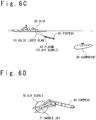
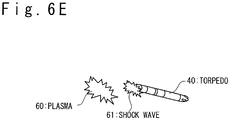
- the target object 40 is destroyed by the shock wave 61 generated due to the plasma 60 or by the bubble jet 71 generated with the air bubble 70. More specifically, an air bubble 70 is generated in the underwater by the pulse laser beam 51. When there is the target object 40 in the close position to the air bubble 70 or the target object 40 approaches the air bubble 70, the bubble jet 71 is generated which destroys the target object 40. Or, the plasma 60 is generated in the underwater with the pulse laser beam 51. When there is the target object 40 in the close position to the plasma 60 or the target object 40 approaches the plasma 60, the shock wave 61 generated by the plasma 60 destroys the target object 40. FIG.
- FIG. 6C is a diagram showing an example of state that the target object 40 approaches a close position to the plasma 60 or air bubble 70 generated by the underwater object destruction system 1 in the first embodiment by use of the laser beam.
- FIG. 6D is a diagram showing an example of state that the target object 40 is destroyed with the bubble jet 71 due to the air bubble 70 by the underwater object destruction system 1 in the first embodiment.
- FIG. 6E is a diagram showing an example of state that the underwater object destruction system 1 in the first embodiment destroys the target object 40 by use of the shock wave 61 due to the plasma 60.
- the underwater object destruction system 1 in the present embodiment may include a plurality of pulse laser oscillators 14A.
- the underwater object destruction system 1 is possible to irradiate a plurality of pulse laser beams 51 at once and make the pulse laser beams 51 be condensed at different positions to generate a plurality of air bubbles 70 or plasmas 60 at once.
- the underwater object destruction system 1 is possible to make the pulse laser beam 51 be intermittently irradiated in a short interval from a single pulse laser oscillator 14A and make the laser beam 51 be condensed at different positions to generate a plurality of air bubbles 70 or plasmas 60 continuously.
- FIG. 7A is a diagram showing an example of state that the underwater object destruction system 1 in the first embodiment irradiate a plurality of laser beams.
- FIG. 7B is a diagram showing an example of state that the underwater object destruction system 1 in the first embodiment irradiates the plurality of laser beams to generate the plurality of air bubbles 70 or the plurality of plasmas 60.
- FIG. 8A is a diagram showing a configuration example that the submarine 23 irradiates the laser beam from the underwater, in the underwater object destruction system 1 in the first embodiment.
- the underwater object destruction system 1 in the present embodiment can be loaded into a ship 20.
- the pulse laser beam 51 can be irradiated from the underwater and from the atmosphere.
- FIG. 8B is a diagram showing a configuration example when the ship 20 irradiates the laser beam from the underwater in the underwater object destruction system 1 according to the first embodiment.
- FIG. 8C is a diagram showing a configuration example when the ship 20 irradiates the laser beam from the air, in the underwater object destruction system 1 of the first embodiment.
- the attenuation of the laser beam is few in case of propagating through the air than a case of propagating through the underwater. Therefore, the pulse laser beam 51 or a continuous-wave laser beam 52 can be condensed in a more distant place when being irradiated from the air.
- FIG. 8D is a diagram showing a configuration example when an aircraft 24 irradiates a laser beam from the air, in the underwater object destruction system 1 in the first embodiment.
- the avoidance from a threat is possible by destroying the target object such as the torpedo 40.
- the target object such as the torpedo 40.
- an instantaneous output is large in the pulse laser beam, a time lag from the irradiation of the pulse laser beam to the generation of the air bubble 70 or plasma 60 is suppressed in a nanosecond order.
- the time average of output is short in the pulse laser beam, the power necessary to destroy the target object can be suppressed small.
- FIG. 9 is a block circuit diagram showing a configuration example of the underwater object destruction system 1 according to a second embodiment.
- the underwater object destruction system 1 in the present embodiment shown in FIG. 9 has the following different points from the underwater object destruction system 1 according to the first embodiment shown in FIG. 4 . That is, in the present embodiment, the continuous-wave laser beam 52 is used in place of the pulse laser beam 51 used in the first embodiment.
- the pulse laser oscillator 14A and the irradiation optical system 18A in the first embodiment are replaced by the continuous-wave laser oscillator 14B and the irradiation optical system 18B which are shown in FIG. 9 . Because the remaining configuration of the underwater object destruction system 1 in the present embodiment is same as in the first embodiment, further detailed description is omitted.
- the continuous-wave laser beam 52 used in the present embodiment is possible to generate the air bubble 70 by condensing in the underwater, like the pulse laser beam 51 in the first embodiment. Moreover, the continuous-wave laser beam 52 can be irradiated without interruption. Therefore, it is possible to generate the air bubble 70 continuously. Here, by moving a condensing position while generating the laser beam continuously, the continuous-wave laser beam 52 is possible to generate a long air bubble 70.
- FIG. 10 is a flow chart showing an example of the underwater object destruction method in the second embodiment.
- the flow chart shown in FIG. 10 contains 7 steps from a 0 th step S200 to a sixth step S206.
- the flow chart of FIG. 10 begins from the 0 th step S200. After the 0 th step S200, a first step S201 is executed.
- the underwater object destruction system 1 detects the target object 40. Since the first step S201 in the present embodiment is same as the first step S101 in the first embodiment, further detailed description is omitted. After the first step S201, a second step S202 is executed.
- the underwater object destruction system 1 irradiates the laser beam to a target position determined in relation to the target object 40 so as to be condensed. More specifically, the external system 12 generates the detection signal 121 showing a detection result of the target object 40. The external system 12 transmits the detection signal 121 to the control device 13. The control device 13 receives the detection signal 121.
- the control device 13 generates an oscillation control signal 131B in response to the detection signal 121 to control the oscillation of continuous-wave laser beam 52.
- the control device 13 transmits the oscillation control signal 131B to the continuous-wave laser oscillator 14B.
- the continuous-wave laser oscillator 14B receives the oscillation control signal 131B.
- the continuous-wave laser oscillator 14B oscillates the continuous-wave laser beam 52 in response to the oscillation control signal 131B.
- the continuous-wave laser oscillator 14B outputs the continuous-wave laser beam 52 to the irradiation optical system 18B.
- the irradiation optical system 18B receives the continuous-wave laser beam 52.
- the control device 13 generates an irradiation direction control signal 134B in response to the detection signal 121 to control the irradiation direction of the continuous-wave laser beam 52 and to control the condensing position of the continuous-wave laser beam 52.
- the control device 13 transmits the irradiation direction control signal 134B to the irradiation optical system 18B.
- the irradiation optical system 18B receives the irradiation directional control signal 134B.
- the irradiation optical system 18B adjusts an irradiation direction of the continuous-wave laser beam 52 and a focal length of the continuous-wave laser beam 52 in response to the irradiation directional control signal 134B.
- the irradiation optical system 18B irradiates the continuous-wave laser beam 52 to an adjusted direction and to be condensed in the adjusted focal length.
- the air bubble 70 is generated in the underwater through the irradiation of the continuous-wave laser beam 52. More specifically, the irradiated continuous-wave laser beam 52 is condensed in the adjusted position. The water around the condensing position boils up by the condensed continuous-wave laser beam 52 so as to generate the air bubble 70.
- the continuous-wave laser beam 52 continues to be continuously irradiated and the air bubble 70 continues to be continuously generated.
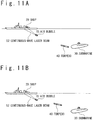
- FIG. 11A is a diagram showing an example of state that the underwater object destruction system 1 in the second embodiment irradiates the continuous-wave laser beam 52.
- FIG. 11B is a diagram showing a state that the target object 40 approaches while the underwater object destruction system 1 in the second embodiment continues to irradiate the continuous-wave laser beam 52.
- a fifth step S205 is executed.
- the target object 40 is destroyed with the bubble jet 71 generated due to the air bubble 70. More specifically, the air bubble 70 is generated in the underwater by the continuous-wave laser beam 52. When the target object 40 approaches the air bubble 70, the bubble jet 71 is generated and the bubble jet 71 destroys the target object 40.
- FIG. 11C is a diagram showing an example of state that the target object 40 is destroyed by the air bubble 70 generated by the continuous-wave laser beam 52 when the underwater object destruction system 1 in the second embodiment irradiates continuously.
- the sixth step S206 is executed after the fifth step S205 and the flow chart of FIG. 10 ends.
- a plurality of air bubbles 70 can be generated with the continuous-wave laser beam 52 by continuously irradiating while changes the condensing position.
- This configuration example is same as in the first embodiment shown in FIG. 7A . Therefore, further detailed description is omitted.
- the continuous-wave laser oscillator 14B and the irradiation optical system 18B may be loaded into the submarine 23, the ship 20, the aircraft 24 and so on, like the first embodiment shown in FIG. 8A to FIG. 8D . Also, in these cases, the continuous-wave laser beam 52 can be irradiated from the underwater or the air.
- the continuous-wave laser beam 52 is lower in an instantaneous output than the pulse laser beam 51. Therefore, a time lug from the irradiation to the generation of the air bubble 70 is caused in an order of tens of milliseconds to hundreds of milliseconds.
- the destruction of the target object 40 can be realized in a higher probability, even when the moving direction of the target object 40 such as the torpedo can be precisely detected but the moving velocity cannot be precisely detected.
- the merit of the first embodiment and that of the second embodiment are both established by using the pulse laser beam 51 used in the first embodiment and the continuous-wave laser beam 52 used in the second embodiment.
- the pulse laser beam 51 and the continuous-wave laser beam 52 may be irradiated by a switching operation and may be both irradiated at the same time.
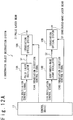
- FIG. 12A is a block circuit diagram showing the first configuration example of the underwater object destruction system 1 in a third embodiment.
- the underwater object destruction system 1 shown in FIG. 12A includes the control device 13, the pulse laser oscillator 14A, the continuous-wave laser oscillator 14B, the irradiation optical system 18A for pulse laser, and the irradiation optical system 18B for continuous-wave laser.
- the first configuration example of the third embodiment shown in FIG. 12A is different in the following points from the first embodiment shown in FIG. 4 . That is, the continuous-wave laser oscillator 14B and the irradiation optical system 18B for the continuous-wave laser beam are added. Also, the first configuration example of the third embodiment shown in FIG. 12A is different in the following points from the second embodiment shown in FIG. 9 . That is, the pulse laser oscillator 14A and the irradiation optical system 18A for the pulse laser beam are added.
- the configuration and connection relation of the control device 13, the pulse laser oscillator 14A and the irradiation optical system 18A for the pulse laser beam are same as those of the first embodiment. Therefore, further detailed description is omitted.
- the configuration and connection relation of the control device 13, the continuous-wave laser oscillator 14B and the irradiation optical system 18B for the continuous-wave laser beam are same as those of the second embodiment. Therefore, further detailed description is omitted. It is desirable that the control device 13 generates and outputs the oscillation control signal 131A to control the oscillation of pulse laser beam 51 and the oscillation control signal 131B to control the oscillation of continuous-wave laser beam 52 in response to the detection signal 121 received from the external system 12 (not shown) at an appropriate timing.
- the other operation of the underwater object destruction system 1 according to the first configuration example of the present embodiment is same as that of the first embodiment or the second embodiment. Therefore, further detailed description is omitted.
- FIG. 12B is a block circuit diagram showing the second configuration example of the underwater object destruction system 1 in the third embodiment.
- the underwater object destruction system 1 shown in FIG. 12B is different in the following points from the first embodiment shown in FIG. 4 . That is, the continuous-wave laser oscillator 14B and the switching device 16 are added.
- the switching device 16 includes two light reception ports, one light emitting port, and a reflector different from the reflector 15, and a drive unit to adjust the position or angle of this reflector.
- control device 13 and the pulse laser oscillator 14A are same as in the first embodiment. Therefore, further detailed description is omitted.
- configuration and connection relation of the control device 13 and the continuous-wave laser oscillator 14B are same as in the second embodiment. Therefore, further detailed description is omitted.
- the switching device 16 and an irradiation optical system 18C are connected with the control device 13. Also, when paying attention to an optical connection relation, the switching device 16 is arranged in the subsequent stage of the pulse laser oscillator 14A, and the irradiation optical system 18C is arranged in the subsequent stage of the switching device 16. Moreover, the switching device 16 is arranged in the subsequent stage of the continuous-wave laser oscillator 14B through the reflector 15. Note that the reflector 15 may be arranged between the pulse laser oscillator 14A and the switching device 16.
- a series of operations from the generation of the oscillation control signal 131A by the control device 13 to the oscillation of the pulse laser beam 51 by the pulse laser oscillator 14A are same as those of the first embodiment.
- a series of operations from the generation of the oscillation control signal 131B by the control device 13 to the oscillation of the continuous-wave laser beam 52 by the continuous-wave laser oscillator 14B are same as those of the second embodiment.
- the switching device 16 receives the pulse laser beam 51 in the first light reception port and receives the continuous-wave laser beam 52 in the second light reception port through the reflector 15.
- the reflector 15 leads the continuous-wave laser beam 52 to the second light reception port of the switching device 16 from the emitting port of the continuous-wave laser oscillator 14B.
- the control device 13 generates a switching control signal 132 to control the switching operation of the pulse laser beam 51 and the continuous-wave laser beam 52.
- the control device 13 transmits the switching control signal 132 to the switching device 16.
- the switching device 16 receives the switching control signal 132.
- the switching device 16 adjusts the position and angle of the reflector by the drive unit in response to the switching control signal 132.
- the switching device 16 can switch a first state and a second state under the control of the control device 13. That is, the switching device 16 in the first state selectively emits the pulse laser beam 51 received in the first light reception port from the emitting port. Also, the switching device 16 in the second state selectively emits the continuous-wave laser beam 52 received in the second light reception port from the emitting port.
- the irradiation optical system 18C receives the pulse laser beam 51 or the continuous-wave laser beam 52 which has been emitted selectively.
- the control device 13 generates an irradiation direction control signal 134C to control the irradiation direction of a laser beam by the irradiation optical system 18C and to control the condensing position of the laser beam.
- the control device 13 transmits an irradiation direction control signal 134C to an irradiation optical system 18C.
- the irradiation optical system 18C receives the irradiation direction control signal 134C.
- the irradiation optical system 18C adjusts the irradiation direction and the focal length in response to the irradiation directional control signal 134C.
- the irradiation optical system 18C irradiates the pulse laser beam 51 or the continuous-wave laser beam 52 in the adjusted irradiation direction so as to be condensed in the adjusted focal length.
- control device 13 generates and outputs the oscillation control signal 131A, the oscillation control signal 131B, and the switching control signal 132 at appropriate timings in response to the detection signal 121 received from the external system 12 (not shown).
- the other operations of the underwater object destruction system 1 in the second configuration example of the present embodiment are same as those of the first embodiment and the second embodiment. Therefore, further detailed description is omitted.
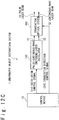
- FIG. 12C is a block circuit diagram showing the third configuration example of the underwater object destruction system 1 in the third embodiment.
- the underwater object destruction system 1 shown in FIG. 12C includes the control device 13, a pulse/continuous-wave switching laser oscillator 14C and the irradiation optical system 18C.
- the pulse/continuous-wave switching laser oscillator 14C is switched between the first state and the second state under the control of the control device 13. That is, the pulse/continuous-wave switching laser oscillator 14C outputs the pulse laser beam 51 in the first state and outputs the continuous-wave laser beam 52 in the second state.
- pulsed devices such as so-called "Q switch” and a method of using it are thought of. That is, the pulsed device is optically connected to the pulse/continuous-wave switching laser oscillator 14C in the first state to oscillate the pulse laser beam 51. The pulsed device is optically removed and the pulse/continuous-wave switching laser oscillator 14C in the second state oscillates the continuous-wave laser beam 52.
- connection relation of components shown in FIG. 12C will be described.
- the pulse/continuous-wave switching laser oscillator 14C and the irradiation optical system 18C are connected with the control device 13.
- the irradiation optical system 18C is arranged in the subsequent stage of the pulse/continuous-wave switching laser oscillator 14C.
- the control device 13 generates an oscillations control signal 131C to control the oscillation of the pulse laser beam 51 and the continuous-wave laser beam 52 and the switching between them.
- the control device 13 transmits the oscillation control signal 131C to the pulse/continuous-wave switching laser oscillator 14C.
- the pulse/continuous-wave switching laser oscillator 14C receives the oscillation control signal 131C.
- the pulse/continuous-wave switching laser oscillator 14C selectively oscillates the pulse laser beam 51 or the continuous-wave laser beam 52 in response to the oscillation control signal 131C.
- the pulse/continuous-wave switching laser oscillator 14C outputs the pulse laser beam 51 or the continuous-wave laser beam 52 to the irradiation optical system 18C.
- the operation from the generation of the irradiation direction control signal 134C by the control device 13 to the irradiation of the pulse laser beam 51 or the continuous-wave laser beam 52 from the irradiation optical system 18C is same as that of the second configuration example of the third embodiment shown in FIG. 12B . Therefore, further detailed description is omitted.
- the pulse laser beam 51 and the continuous-wave laser beam 52 may be oscillated from the different oscillators and irradiated from the different irradiation optical systems, respectively, as the fourth configuration example of the underwater object destruction system 1 in the present embodiment.
- the block circuit diagram showing the fourth configuration example of the underwater object destruction system 1 in the third embodiment is identical to FIG. 12A showing the first configuration example in the third embodiment. Therefore, the further description thereof is omitted.
- the underwater object destruction system 1 of this configuration example can irradiate the pulse laser beam 51 and the continuous-wave laser beam 52 at the same time. Therefore, in this configuration example, the control device 13 may transmit the oscillation control signal 131A and the oscillation control signal 131B to the pulse laser oscillator 14A and the continuous-wave laser oscillator 14B at the same time, respectively.
- FIG. 12D is a block circuit diagram showing the fifth configuration example of the underwater object destruction system 1 in the third embodiment.
- the underwater object destruction system 1 shown in FIG. 12D is different from the second configuration example of the present embodiment shown in FIG. 12B in the following points. That is, the switching device 16 is replaced with a coaxialization device 17. It is desirable that the coaxialization device 17 has two light reception ports and one emitting port. The coaxialization device 17 coaxializes two laser beams received in two light reception ports and irradiates from the emitting port.
- control device 13 and the pulse laser oscillator 14A are same as those of the first embodiment. Therefore, further detailed description is omitted.
- configuration and connection relation of the control device 13 and the continuous-wave laser oscillator 14B are same as those of the second embodiment. Therefore, further detailed description is omitted.
- connection relation of components in the coaxialization device 17 will be described.
- the coaxialization device 17 is connected with the control device 13.
- the first light reception port of the coaxialization device 17 is arranged in the subsequent stage of the pulse laser oscillator 14A.
- the second light reception port of the coaxialization device 17 is arranged through the reflector 15 in the subsequent stage of the continuous-wave laser oscillator 14B.
- the irradiation optical system 18C is arranged in the subsequent stage of the ecoaxialization device 17.
- a series of operations from the generation of the oscillation control signal 131A by the control device 13 to the oscillation of the pulse laser beam 51 by the pulse laser oscillator 14A are same as those of the first embodiment.
- the pulse laser oscillator 14A emits the pulse laser beam 51 for the first light reception port of the coaxialization device 17.
- the coaxialization device 17 receives the pulse laser beam 51 in the first light reception port.
- a series of operations from the generation of the oscillation control signal 131B by the control device 13 to the oscillation of the continuous-wave laser beam 52 by the continuous-wave laser oscillator 14B are same as those of the second embodiment. Therefore, the continuous-wave laser oscillator 14B emits the continuous-wave laser beam 52 for the second light reception port of the coaxialization device 17.
- the control device 13 generates a coaxialization control signal 133 to control the coaxialization of the pulse laser beam 51 and the continuous-wave laser beam 52.
- the control device 13 transmits the coaxialization control signal 133 to the coaxialization device 17.
- the coaxialization device 17 receives the coaxialization control signal 133.
- the coaxialization device 17 adjusts the direction of optical axis of the first light reception port which receives the pulse laser beam 51, the direction of optical axis of the second light reception port which receives the continuous-wave laser beam 52, and the direction of optical axis of the emitting port from which the coaxialized pulse laser beam 51 and continuous-wave laser beam 52 are emitted, in response to the coaxialization control signal 133.
- the coaxialization device 17 receives the pulse laser beam 51 in the first light reception port in which the direction of optical axis has been adjusted.
- the coaxialization device 17 receives the continuous-wave laser beam 52 in the second light reception port in which the direction of optical axis has been adjusted.
- the coaxialization device 17 coaxializes the pulse laser beam 51 and the continuous-wave laser beam 52 to irradiate from the emitting port in which the direction of optical axis.
- the control device 13 generates and outputs the oscillation control signal 131A, the oscillation control signal 131B and the coaxialization control signal 133 in response to the detection signal 121 received from the external system 12 (not shown).
- the other operations of the underwater object destruction system 1 in the fifth configuration example of the third embodiment are same as those of the first embodiment or the second embodiment. Therefore, further detailed description is omitted.
- the underwater object destruction system 1 and the underwater object destruction method in the third embodiment makes it possible to establish the advantages of both of the first embodiment and the second embodiment, by irradiating the pulse laser beam 51 and the continuous-wave laser beam 52 through switching or at the same time.
- a feedback control is applied to the first to third embodiments. That is, a sound showing the generation of the air bubble 70 or plasma 60 through the irradiation of the laser beam, and a silent state showing failure of the sound generation oppositely are observed by an observation device such as a sonar, and the observation result is fed back so as to adjust an irradiation optical system.
- FIG. 13 is a block circuit diagram showing a configuration example of the underwater object destruction system 1 in the fourth embodiment.
- sonar 11 is added to the third configuration example of the third embodiment shown in FIG. 12C .
- the sonar 11 is electrically connected with the control device 13. Note that this sonar 11 may be a part of the external system 12 (not shown).
- FIG. 14 is a flow chart showing an example of the underwater object destruction method in the fourth embodiment.
- the flow chart of FIG. 14 contains 8 steps from a 0 th step S300 to a seventh step S307.
- the flow chart of FIG. 14 begins from the 0 th step S300. After the 0 th step S300, a first step S301 is executed.
- the underwater object destruction system 1 detects the target object 40.
- the first step S301 in the present embodiment is same as the first step S101 in the first embodiment. Therefore, further detailed description is omitted.
- a second step S302 is executed.
- FIG. 15A is a diagram showing an example of state that the underwater object destruction system 1 in the fourth embodiment irradiates the laser beam.
- the underwater object destruction system 1 observes the result, that is, observes a sound in the periphery by the sonar 11 to determine whether the air bubble 70 or plasma 60 has been generated through the irradiation of the laser beam and whether the target object 40 has been destroyed when the air bubble 70 or plasma 60 has been generated.
- the sonar 11 electrically converts the observed sound 111 to generate an observation signal 112 and transmits the observation signal 112 to the control device 13.
- the control device 13 receives the observation signal 112 and carries out the above-mentioned determination.
- FIG. 15B is a diagram showing an example of state that the laser beam irradiated from the underwater object destruction system 1 in the fourth embodiment has been condensed in a closer distance to the expected position.
- the pulse laser beam 51 is irradiated after an irradiation condition and a condensing condition are adjusted such that the laser beam is condensed at a position 100 meters from the irradiation optical system 18C, and as a result, it is detected through the observation of the shock wave by the sonar 11 that the laser beam is actually condensed at a position 90 meters from the irradiation optical system 18C.
- FIG. 15C is a diagram showing an example of state when it is detected that the laser beam irradiated from the underwater object destruction system 1 in the fourth embodiment is not condensed so that the shock wave is not generated.
- the pulse laser beam 51 is irradiated after an irradiation condition is adjusted to be condensed 100 meters from the irradiation optical system 18C but the shock wave cannot be observed by the sonar 11 in a constant time.
- the attenuation during propagation of the laser beam is larger than prediction so that the enough energy does not reach the light condensing position or that the laser beam could not be condensed sufficiently by the influence of tide and so on.
- a sixth step S306 is executed after the fourth step S304.
- the underwater object destruction system 1 determines whether or not the target object 40 has been destroyed. When the target object 40 has been destroyed, a sound showing such a state is generated. Therefore, the sonar 11 can detect this sound.
- a seventh step S307 is executed after the fifth step S305, and the flow chart of FIG. 14 ends. Oppositely, there is a case where the air bubble 70 or plasma 60 was generated but the the sound showing destruction of the target object 40 could not be observed. In such a case, as shown in FIG. 15B , it is considered that the laser beam has been condensed in a different position. In this case (NO), the sixth step S306 is executed after the fifth step S305.
- the underwater object destruction system 1 feeds back the observation result and re-adjusts the irradiation condition of the laser beam.
- the irradiation condition adjusted in this case may contain the selection of pulse laser beam 51 or continuous-wave laser beam 52, the output power of the laser beam, the irradiation direction of the laser beam, the condensing position of the laser beam and so on.
- the first step S301 is executed.
- FIG. 15D is a diagram showing an example of state that the underwater object destruction system 1 in the fourth embodiment irradiates the laser beam once again by using the feedback control.
- the laser beam can be condensed more precisely.
- FIG. 16 is a diagram showing a configuration example of the underwater object destruction system 1 in the fifth embodiment. In the configuration example shown in FIG. 16 , the towed decoy 21 and the self-propelled decoy 22 are separated from the ship 20.
- the towed decoy 21 loads an irradiation optical system and irradiates the pulse laser beam 51, to destroy the target object 40 by the shock wave 61 generated as the result.
- the ship 20 having been separated from the towed decoy 21 can avoid the threat of the other target object 40.
- the towed decoy 21 may destroy the target object 40 by use of the pulse laser beam or the continuous-wave laser beam 52.
- the laser oscillator may be loaded into the towed decoy 21, but because the towed decoy 21 and the ship 20 are physically connected by a tow cable and so on, the laser oscillator may be loaded into the ship 20. That is, in such a case, the laser oscillator and the irradiation optical system are optically connected by using an optical system such as an optical fiber to allow the laser beam emitted from the laser oscillator of the ship 20 to be led to and irradiated from the irradiation optical system of the towed decoy 21.
- an optical system such as an optical fiber
- the self-propelled decoy 22 can irradiate the pulse laser beam 51 to destroy the target object 40 by the shock wave 61 generated as the result of irradiation, as well as the towed decoy 21.
- the self-propelled decoy 22 loads with the laser oscillator.
- the self-propelled decoy 22 may destroy the target object 40 by use of the pulse laser beam and may irradiate the continuous-wave laser beam 52.
- the present embodiments by irradiating the laser beam from the towed decoy 21 and the self-propelled decoy 22 which are separated from the ship 20, it becomes possible to generate the bubble jet 71 and the shock wave 61 in a distant place from the ship 20. Therefore, the influence on the ship 20 as a defense object by the destruction of the target object 40 such as the torpedo can be reduced.
Landscapes
- Engineering & Computer Science (AREA)
- Physics & Mathematics (AREA)
- Optics & Photonics (AREA)
- General Engineering & Computer Science (AREA)
- Aviation & Aerospace Engineering (AREA)
- Electromagnetism (AREA)
- Radar, Positioning & Navigation (AREA)
- Remote Sensing (AREA)
- Plasma & Fusion (AREA)
- General Physics & Mathematics (AREA)
- Lasers (AREA)
- Aiming, Guidance, Guns With A Light Source, Armor, Camouflage, And Targets (AREA)
- Laser Beam Processing (AREA)
- Optical Radar Systems And Details Thereof (AREA)
Applications Claiming Priority (2)
| Application Number | Priority Date | Filing Date | Title |
|---|---|---|---|
| JP2016218229A JP6774305B2 (ja) | 2016-11-08 | 2016-11-08 | 水中物体破壊システムおよび水中物体破壊方法 |
| PCT/JP2017/005219 WO2018087939A1 (ja) | 2016-11-08 | 2017-02-14 | 水中物体破壊システムおよび水中物体破壊方法 |
Publications (3)
| Publication Number | Publication Date |
|---|---|
| EP3489616A1 EP3489616A1 (en) | 2019-05-29 |
| EP3489616A4 EP3489616A4 (en) | 2019-08-07 |
| EP3489616B1 true EP3489616B1 (en) | 2021-06-16 |
Family
ID=62109650
Family Applications (1)
| Application Number | Title | Priority Date | Filing Date |
|---|---|---|---|
| EP17869406.3A Active EP3489616B1 (en) | 2016-11-08 | 2017-02-14 | Underwater object destruction system and underwater object destruction method |
Country Status (4)
| Country | Link |
|---|---|
| US (1) | US11181347B2 (https=) |
| EP (1) | EP3489616B1 (https=) |
| JP (1) | JP6774305B2 (https=) |
| WO (1) | WO2018087939A1 (https=) |
Families Citing this family (3)
| Publication number | Priority date | Publication date | Assignee | Title |
|---|---|---|---|---|
| EP3657208A4 (en) * | 2018-02-14 | 2020-08-12 | Mitsubishi Heavy Industries, Ltd. | UNDERWATER ACOUSTIC LURRING SYSTEM AND UNDERWATER ACOUSTIC LURRING PROCESS |
| JP7336921B2 (ja) * | 2019-09-03 | 2023-09-01 | 三菱電機株式会社 | レーザ照射装置およびレーザ照射システム |
| US12399263B2 (en) * | 2021-11-15 | 2025-08-26 | The United States Of America, As Represented By The Secretary Of The Navy | Target jamming |
Family Cites Families (6)
| Publication number | Priority date | Publication date | Assignee | Title |
|---|---|---|---|---|
| GB8828680D0 (en) * | 1988-12-08 | 2000-10-04 | British Aerospace | Underwater detection system |
| DE10151597C1 (de) | 2001-10-18 | 2003-05-15 | Howaldtswerke Deutsche Werft | System und Verfahren zur Erkennung und Abwehr von Laserbedrohungen und Unterwasserobjekten für Unterwasserfahrzeuge |
| US20030233931A1 (en) * | 2002-06-14 | 2003-12-25 | Nemtsev Igor Z. | Synchronized photo-pulse detonation (SPD) |
| US20160097616A1 (en) * | 2011-11-25 | 2016-04-07 | Dr. Adam Mark Weigold | Laser Guided and Laser Powered Energy Discharge Device |
| US9088123B2 (en) * | 2011-12-13 | 2015-07-21 | The United States Of America, As Represented By The Secretary Of The Navy | Two-laser generation of extended underwater plasma |
| JP6376408B2 (ja) * | 2015-06-30 | 2018-08-22 | 三菱重工業株式会社 | 電磁パルス防護方法及び電磁パルス防護システム |
-
2016
- 2016-11-08 JP JP2016218229A patent/JP6774305B2/ja active Active
-
2017
- 2017-02-14 EP EP17869406.3A patent/EP3489616B1/en active Active
- 2017-02-14 US US16/325,083 patent/US11181347B2/en active Active
- 2017-02-14 WO PCT/JP2017/005219 patent/WO2018087939A1/ja not_active Ceased
Non-Patent Citations (1)
| Title |
|---|
| None * |
Also Published As
| Publication number | Publication date |
|---|---|
| JP6774305B2 (ja) | 2020-10-21 |
| WO2018087939A1 (ja) | 2018-05-17 |
| US11181347B2 (en) | 2021-11-23 |
| JP2018076992A (ja) | 2018-05-17 |
| US20210285745A1 (en) | 2021-09-16 |
| EP3489616A1 (en) | 2019-05-29 |
| EP3489616A4 (en) | 2019-08-07 |
Similar Documents
| Publication | Publication Date | Title |
|---|---|---|
| US10342111B2 (en) | Electromagnetic pulse protection method and electromagnetic pulse protection system | |
| US10801817B2 (en) | Method of irradiating electromagnetic pulse and electromagnetic pulse irradiating system | |
| EP3489616B1 (en) | Underwater object destruction system and underwater object destruction method | |
| US11225310B2 (en) | Underwater acoustic deception system and underwater acoustic deception method | |
| US9753134B2 (en) | Neutralization of a target with an acoustic wave | |
| ES2657973T3 (es) | Sistema de armas láser aerotransportado | |
| RU91421U1 (ru) | Комплекс оптико-электронной защиты-коэз | |
| KR101538731B1 (ko) | 타겟용 광학계의 레이저광 광학 차단 장치 | |
| US20080117718A1 (en) | Missile defense system | |
| US6664915B1 (en) | Identification friend or foe system including short range UV shield | |
| KR102214671B1 (ko) | 수중 무기를 제어하는 시스템 및 방법 | |
| KR101948572B1 (ko) | 절개형 전면 감지 장치를 이용한 전면 대응 장치 및 그 방법 | |
| WO2014204348A1 (ru) | Система защиты воздушных судов от ракет переносных зенитных ракетных комплексов | |
| RU135405U1 (ru) | Система защиты воздушных судов от ракет переносных зенитных ракетных комплексов | |
| KR102685469B1 (ko) | 자기장 신호 기반의 수중 운동체 기만 제어 방법 및 그를 위한 장치 | |
| RU2518389C1 (ru) | Самоходная огневая установка обнаружения, сопровождения и подсвета целей, наведения и пуска ракет зенитного ракетного комплекса средней дальности | |
| KR102145443B1 (ko) | 고에너지 광섬유 레이저용 빔 성형장치 및 이를 이용한 고에너지 광섬유 레이저의 빔 성형방법 | |
| WO2004024559A2 (en) | Infrared counter measure for large aircraft | |
| JP2738465B2 (ja) | 近接信管制御装置 | |
| JP2999065B2 (ja) | 近接信管制御装置 | |
| JP3231078B2 (ja) | 近接信管制御装置 | |
| JP2000121298A (ja) | おとり装置 | |
| JP2008304253A (ja) | 疑似電波発生レーダシステム | |
| JPH01148988A (ja) | 近接信管 | |
| UA53893A (uk) | Спосіб та пристрій протидії оптико-електронним засобам наведення |
Legal Events
| Date | Code | Title | Description |
|---|---|---|---|
| STAA | Information on the status of an ep patent application or granted ep patent |
Free format text: STATUS: THE INTERNATIONAL PUBLICATION HAS BEEN MADE |
|
| PUAI | Public reference made under article 153(3) epc to a published international application that has entered the european phase |
Free format text: ORIGINAL CODE: 0009012 |
|
| STAA | Information on the status of an ep patent application or granted ep patent |
Free format text: STATUS: REQUEST FOR EXAMINATION WAS MADE |
|
| 17P | Request for examination filed |
Effective date: 20190222 |
|
| AK | Designated contracting states |
Kind code of ref document: A1 Designated state(s): AL AT BE BG CH CY CZ DE DK EE ES FI FR GB GR HR HU IE IS IT LI LT LU LV MC MK MT NL NO PL PT RO RS SE SI SK SM TR |
|
| AX | Request for extension of the european patent |
Extension state: BA ME |
|
| RIN1 | Information on inventor provided before grant (corrected) |
Inventor name: IKEBUCHI, HIROSHI Inventor name: HAMAMOTO, KOICHI Inventor name: HATA, YUKITO Inventor name: OCHIAI, ATSUSHI Inventor name: NISHIKATA, SHINGO Inventor name: ARAKI, YUICHI Inventor name: MORIOKA, TOMOYA |
|
| A4 | Supplementary search report drawn up and despatched |
Effective date: 20190710 |
|
| RIC1 | Information provided on ipc code assigned before grant |
Ipc: F42D 5/04 20060101ALI20190704BHEP Ipc: F41H 13/00 20060101AFI20190704BHEP Ipc: H01S 3/10 20060101ALN20190704BHEP Ipc: B63G 9/02 20060101ALI20190704BHEP |
|
| DAV | Request for validation of the european patent (deleted) | ||
| DAX | Request for extension of the european patent (deleted) | ||
| RIC1 | Information provided on ipc code assigned before grant |
Ipc: B63G 9/02 20060101ALI20201127BHEP Ipc: F42D 5/04 20060101ALI20201127BHEP Ipc: F41H 13/00 20060101AFI20201127BHEP Ipc: B63G 13/00 20060101ALN20201127BHEP |
|
| GRAP | Despatch of communication of intention to grant a patent |
Free format text: ORIGINAL CODE: EPIDOSNIGR1 |
|
| STAA | Information on the status of an ep patent application or granted ep patent |
Free format text: STATUS: GRANT OF PATENT IS INTENDED |
|
| INTG | Intention to grant announced |
Effective date: 20210114 |
|
| RAP1 | Party data changed (applicant data changed or rights of an application transferred) |
Owner name: MITSUBISHI HEAVY INDUSTRIES, LTD. |
|
| GRAS | Grant fee paid |
Free format text: ORIGINAL CODE: EPIDOSNIGR3 |
|
| GRAA | (expected) grant |
Free format text: ORIGINAL CODE: 0009210 |
|
| STAA | Information on the status of an ep patent application or granted ep patent |
Free format text: STATUS: THE PATENT HAS BEEN GRANTED |
|
| AK | Designated contracting states |
Kind code of ref document: B1 Designated state(s): AL AT BE BG CH CY CZ DE DK EE ES FI FR GB GR HR HU IE IS IT LI LT LU LV MC MK MT NL NO PL PT RO RS SE SI SK SM TR |
|
| REG | Reference to a national code |
Ref country code: GB Ref legal event code: FG4D |
|
| REG | Reference to a national code |
Ref country code: CH Ref legal event code: EP |
|
| REG | Reference to a national code |
Ref country code: DE Ref legal event code: R096 Ref document number: 602017040567 Country of ref document: DE |
|
| REG | Reference to a national code |
Ref country code: AT Ref legal event code: REF Ref document number: 1402689 Country of ref document: AT Kind code of ref document: T Effective date: 20210715 |
|
| REG | Reference to a national code |
Ref country code: IE Ref legal event code: FG4D |
|
| REG | Reference to a national code |
Ref country code: LT Ref legal event code: MG9D |
|
| PG25 | Lapsed in a contracting state [announced via postgrant information from national office to epo] |
Ref country code: FI Free format text: LAPSE BECAUSE OF FAILURE TO SUBMIT A TRANSLATION OF THE DESCRIPTION OR TO PAY THE FEE WITHIN THE PRESCRIBED TIME-LIMIT Effective date: 20210616 Ref country code: LT Free format text: LAPSE BECAUSE OF FAILURE TO SUBMIT A TRANSLATION OF THE DESCRIPTION OR TO PAY THE FEE WITHIN THE PRESCRIBED TIME-LIMIT Effective date: 20210616 Ref country code: BG Free format text: LAPSE BECAUSE OF FAILURE TO SUBMIT A TRANSLATION OF THE DESCRIPTION OR TO PAY THE FEE WITHIN THE PRESCRIBED TIME-LIMIT Effective date: 20210916 Ref country code: HR Free format text: LAPSE BECAUSE OF FAILURE TO SUBMIT A TRANSLATION OF THE DESCRIPTION OR TO PAY THE FEE WITHIN THE PRESCRIBED TIME-LIMIT Effective date: 20210616 |
|
| REG | Reference to a national code |
Ref country code: AT Ref legal event code: MK05 Ref document number: 1402689 Country of ref document: AT Kind code of ref document: T Effective date: 20210616 |
|
| REG | Reference to a national code |
Ref country code: NL Ref legal event code: MP Effective date: 20210616 |
|
| PG25 | Lapsed in a contracting state [announced via postgrant information from national office to epo] |
Ref country code: SE Free format text: LAPSE BECAUSE OF FAILURE TO SUBMIT A TRANSLATION OF THE DESCRIPTION OR TO PAY THE FEE WITHIN THE PRESCRIBED TIME-LIMIT Effective date: 20210616 Ref country code: RS Free format text: LAPSE BECAUSE OF FAILURE TO SUBMIT A TRANSLATION OF THE DESCRIPTION OR TO PAY THE FEE WITHIN THE PRESCRIBED TIME-LIMIT Effective date: 20210616 Ref country code: LV Free format text: LAPSE BECAUSE OF FAILURE TO SUBMIT A TRANSLATION OF THE DESCRIPTION OR TO PAY THE FEE WITHIN THE PRESCRIBED TIME-LIMIT Effective date: 20210616 Ref country code: NO Free format text: LAPSE BECAUSE OF FAILURE TO SUBMIT A TRANSLATION OF THE DESCRIPTION OR TO PAY THE FEE WITHIN THE PRESCRIBED TIME-LIMIT Effective date: 20210916 Ref country code: GR Free format text: LAPSE BECAUSE OF FAILURE TO SUBMIT A TRANSLATION OF THE DESCRIPTION OR TO PAY THE FEE WITHIN THE PRESCRIBED TIME-LIMIT Effective date: 20210917 |
|
| PG25 | Lapsed in a contracting state [announced via postgrant information from national office to epo] |
Ref country code: SM Free format text: LAPSE BECAUSE OF FAILURE TO SUBMIT A TRANSLATION OF THE DESCRIPTION OR TO PAY THE FEE WITHIN THE PRESCRIBED TIME-LIMIT Effective date: 20210616 Ref country code: SK Free format text: LAPSE BECAUSE OF FAILURE TO SUBMIT A TRANSLATION OF THE DESCRIPTION OR TO PAY THE FEE WITHIN THE PRESCRIBED TIME-LIMIT Effective date: 20210616 Ref country code: ES Free format text: LAPSE BECAUSE OF FAILURE TO SUBMIT A TRANSLATION OF THE DESCRIPTION OR TO PAY THE FEE WITHIN THE PRESCRIBED TIME-LIMIT Effective date: 20210616 Ref country code: EE Free format text: LAPSE BECAUSE OF FAILURE TO SUBMIT A TRANSLATION OF THE DESCRIPTION OR TO PAY THE FEE WITHIN THE PRESCRIBED TIME-LIMIT Effective date: 20210616 Ref country code: RO Free format text: LAPSE BECAUSE OF FAILURE TO SUBMIT A TRANSLATION OF THE DESCRIPTION OR TO PAY THE FEE WITHIN THE PRESCRIBED TIME-LIMIT Effective date: 20210616 Ref country code: PT Free format text: LAPSE BECAUSE OF FAILURE TO SUBMIT A TRANSLATION OF THE DESCRIPTION OR TO PAY THE FEE WITHIN THE PRESCRIBED TIME-LIMIT Effective date: 20211018 Ref country code: NL Free format text: LAPSE BECAUSE OF FAILURE TO SUBMIT A TRANSLATION OF THE DESCRIPTION OR TO PAY THE FEE WITHIN THE PRESCRIBED TIME-LIMIT Effective date: 20210616 Ref country code: CZ Free format text: LAPSE BECAUSE OF FAILURE TO SUBMIT A TRANSLATION OF THE DESCRIPTION OR TO PAY THE FEE WITHIN THE PRESCRIBED TIME-LIMIT Effective date: 20210616 Ref country code: AT Free format text: LAPSE BECAUSE OF FAILURE TO SUBMIT A TRANSLATION OF THE DESCRIPTION OR TO PAY THE FEE WITHIN THE PRESCRIBED TIME-LIMIT Effective date: 20210616 |
|
| PG25 | Lapsed in a contracting state [announced via postgrant information from national office to epo] |
Ref country code: PL Free format text: LAPSE BECAUSE OF FAILURE TO SUBMIT A TRANSLATION OF THE DESCRIPTION OR TO PAY THE FEE WITHIN THE PRESCRIBED TIME-LIMIT Effective date: 20210616 |
|
| REG | Reference to a national code |
Ref country code: DE Ref legal event code: R097 Ref document number: 602017040567 Country of ref document: DE |
|
| PLBE | No opposition filed within time limit |
Free format text: ORIGINAL CODE: 0009261 |
|
| STAA | Information on the status of an ep patent application or granted ep patent |
Free format text: STATUS: NO OPPOSITION FILED WITHIN TIME LIMIT |
|
| PG25 | Lapsed in a contracting state [announced via postgrant information from national office to epo] |
Ref country code: DK Free format text: LAPSE BECAUSE OF FAILURE TO SUBMIT A TRANSLATION OF THE DESCRIPTION OR TO PAY THE FEE WITHIN THE PRESCRIBED TIME-LIMIT Effective date: 20210616 |
|
| 26N | No opposition filed |
Effective date: 20220317 |
|
| PG25 | Lapsed in a contracting state [announced via postgrant information from national office to epo] |
Ref country code: AL Free format text: LAPSE BECAUSE OF FAILURE TO SUBMIT A TRANSLATION OF THE DESCRIPTION OR TO PAY THE FEE WITHIN THE PRESCRIBED TIME-LIMIT Effective date: 20210616 |
|
| PG25 | Lapsed in a contracting state [announced via postgrant information from national office to epo] |
Ref country code: IT Free format text: LAPSE BECAUSE OF FAILURE TO SUBMIT A TRANSLATION OF THE DESCRIPTION OR TO PAY THE FEE WITHIN THE PRESCRIBED TIME-LIMIT Effective date: 20210616 |
|
| PG25 | Lapsed in a contracting state [announced via postgrant information from national office to epo] |
Ref country code: MC Free format text: LAPSE BECAUSE OF FAILURE TO SUBMIT A TRANSLATION OF THE DESCRIPTION OR TO PAY THE FEE WITHIN THE PRESCRIBED TIME-LIMIT Effective date: 20210616 |
|
| REG | Reference to a national code |
Ref country code: CH Ref legal event code: PL |
|
| REG | Reference to a national code |
Ref country code: BE Ref legal event code: MM Effective date: 20220228 |
|
| PG25 | Lapsed in a contracting state [announced via postgrant information from national office to epo] |
Ref country code: LU Free format text: LAPSE BECAUSE OF NON-PAYMENT OF DUE FEES Effective date: 20220214 |
|
| PG25 | Lapsed in a contracting state [announced via postgrant information from national office to epo] |
Ref country code: LI Free format text: LAPSE BECAUSE OF NON-PAYMENT OF DUE FEES Effective date: 20220228 Ref country code: IE Free format text: LAPSE BECAUSE OF NON-PAYMENT OF DUE FEES Effective date: 20220214 Ref country code: CH Free format text: LAPSE BECAUSE OF NON-PAYMENT OF DUE FEES Effective date: 20220228 |
|
| PG25 | Lapsed in a contracting state [announced via postgrant information from national office to epo] |
Ref country code: BE Free format text: LAPSE BECAUSE OF NON-PAYMENT OF DUE FEES Effective date: 20220228 |
|
| PG25 | Lapsed in a contracting state [announced via postgrant information from national office to epo] |
Ref country code: HU Free format text: LAPSE BECAUSE OF FAILURE TO SUBMIT A TRANSLATION OF THE DESCRIPTION OR TO PAY THE FEE WITHIN THE PRESCRIBED TIME-LIMIT; INVALID AB INITIO Effective date: 20170214 |
|
| PG25 | Lapsed in a contracting state [announced via postgrant information from national office to epo] |
Ref country code: MK Free format text: LAPSE BECAUSE OF FAILURE TO SUBMIT A TRANSLATION OF THE DESCRIPTION OR TO PAY THE FEE WITHIN THE PRESCRIBED TIME-LIMIT Effective date: 20210616 Ref country code: CY Free format text: LAPSE BECAUSE OF FAILURE TO SUBMIT A TRANSLATION OF THE DESCRIPTION OR TO PAY THE FEE WITHIN THE PRESCRIBED TIME-LIMIT Effective date: 20210616 |
|
| PG25 | Lapsed in a contracting state [announced via postgrant information from national office to epo] |
Ref country code: MT Free format text: LAPSE BECAUSE OF FAILURE TO SUBMIT A TRANSLATION OF THE DESCRIPTION OR TO PAY THE FEE WITHIN THE PRESCRIBED TIME-LIMIT Effective date: 20210616 |
|
| PG25 | Lapsed in a contracting state [announced via postgrant information from national office to epo] |
Ref country code: TR Free format text: LAPSE BECAUSE OF FAILURE TO SUBMIT A TRANSLATION OF THE DESCRIPTION OR TO PAY THE FEE WITHIN THE PRESCRIBED TIME-LIMIT Effective date: 20210616 |
|
| PGFP | Annual fee paid to national office [announced via postgrant information from national office to epo] |
Ref country code: FR Payment date: 20251231 Year of fee payment: 10 |
|
| PGFP | Annual fee paid to national office [announced via postgrant information from national office to epo] |
Ref country code: GB Payment date: 20260106 Year of fee payment: 10 |
|
| PGFP | Annual fee paid to national office [announced via postgrant information from national office to epo] |
Ref country code: DE Payment date: 20251230 Year of fee payment: 10 |