EP3466986B1 - Method to produce transparent polymer aerogels using chain transfer agents - Google Patents
Method to produce transparent polymer aerogels using chain transfer agents Download PDFInfo
- Publication number
- EP3466986B1 EP3466986B1 EP18198980.7A EP18198980A EP3466986B1 EP 3466986 B1 EP3466986 B1 EP 3466986B1 EP 18198980 A EP18198980 A EP 18198980A EP 3466986 B1 EP3466986 B1 EP 3466986B1
- Authority
- EP
- European Patent Office
- Prior art keywords
- solvent
- radical
- chain transfer
- aerogels
- gel
- Prior art date
- Legal status (The legal status is an assumption and is not a legal conclusion. Google has not performed a legal analysis and makes no representation as to the accuracy of the status listed.)
- Active
Links
Images



Classifications
-
- C—CHEMISTRY; METALLURGY
- C01—INORGANIC CHEMISTRY
- C01B—NON-METALLIC ELEMENTS; COMPOUNDS THEREOF; METALLOIDS OR COMPOUNDS THEREOF NOT COVERED BY SUBCLASS C01C
- C01B33/00—Silicon; Compounds thereof
- C01B33/113—Silicon oxides; Hydrates thereof
- C01B33/12—Silica; Hydrates thereof, e.g. lepidoic silicic acid
- C01B33/14—Colloidal silica, e.g. dispersions, gels, sols
- C01B33/157—After-treatment of gels
- C01B33/158—Purification; Drying; Dehydrating
- C01B33/1585—Dehydration into aerogels
-
- C—CHEMISTRY; METALLURGY
- C08—ORGANIC MACROMOLECULAR COMPOUNDS; THEIR PREPARATION OR CHEMICAL WORKING-UP; COMPOSITIONS BASED THEREON
- C08F—MACROMOLECULAR COMPOUNDS OBTAINED BY REACTIONS ONLY INVOLVING CARBON-TO-CARBON UNSATURATED BONDS
- C08F2/00—Processes of polymerisation
- C08F2/38—Polymerisation using regulators, e.g. chain terminating agents, e.g. telomerisation
-
- C—CHEMISTRY; METALLURGY
- C08—ORGANIC MACROMOLECULAR COMPOUNDS; THEIR PREPARATION OR CHEMICAL WORKING-UP; COMPOSITIONS BASED THEREON
- C08F—MACROMOLECULAR COMPOUNDS OBTAINED BY REACTIONS ONLY INVOLVING CARBON-TO-CARBON UNSATURATED BONDS
- C08F2/00—Processes of polymerisation
- C08F2/46—Polymerisation initiated by wave energy or particle radiation
- C08F2/48—Polymerisation initiated by wave energy or particle radiation by ultraviolet or visible light
-
- C—CHEMISTRY; METALLURGY
- C08—ORGANIC MACROMOLECULAR COMPOUNDS; THEIR PREPARATION OR CHEMICAL WORKING-UP; COMPOSITIONS BASED THEREON
- C08F—MACROMOLECULAR COMPOUNDS OBTAINED BY REACTIONS ONLY INVOLVING CARBON-TO-CARBON UNSATURATED BONDS
- C08F220/00—Copolymers of compounds having one or more unsaturated aliphatic radicals, each having only one carbon-to-carbon double bond, and only one being terminated by only one carboxyl radical or a salt, anhydride ester, amide, imide or nitrile thereof
- C08F220/02—Monocarboxylic acids having less than ten carbon atoms; Derivatives thereof
- C08F220/10—Esters
- C08F220/12—Esters of monohydric alcohols or phenols
- C08F220/14—Methyl esters, e.g. methyl (meth)acrylate
-
- C—CHEMISTRY; METALLURGY
- C08—ORGANIC MACROMOLECULAR COMPOUNDS; THEIR PREPARATION OR CHEMICAL WORKING-UP; COMPOSITIONS BASED THEREON
- C08G—MACROMOLECULAR COMPOUNDS OBTAINED OTHERWISE THAN BY REACTIONS ONLY INVOLVING UNSATURATED CARBON-TO-CARBON BONDS
- C08G77/00—Macromolecular compounds obtained by reactions forming a linkage containing silicon with or without sulfur, nitrogen, oxygen or carbon in the main chain of the macromolecule
- C08G77/42—Block-or graft-polymers containing polysiloxane sequences
- C08G77/442—Block-or graft-polymers containing polysiloxane sequences containing vinyl polymer sequences
-
- C—CHEMISTRY; METALLURGY
- C08—ORGANIC MACROMOLECULAR COMPOUNDS; THEIR PREPARATION OR CHEMICAL WORKING-UP; COMPOSITIONS BASED THEREON
- C08J—WORKING-UP; GENERAL PROCESSES OF COMPOUNDING; AFTER-TREATMENT NOT COVERED BY SUBCLASSES C08B, C08C, C08F, C08G or C08H
- C08J11/00—Recovery or working-up of waste materials
- C08J11/04—Recovery or working-up of waste materials of polymers
- C08J11/10—Recovery or working-up of waste materials of polymers by chemically breaking down the molecular chains of polymers or breaking of crosslinks, e.g. devulcanisation
- C08J11/18—Recovery or working-up of waste materials of polymers by chemically breaking down the molecular chains of polymers or breaking of crosslinks, e.g. devulcanisation by treatment with organic material
- C08J11/22—Recovery or working-up of waste materials of polymers by chemically breaking down the molecular chains of polymers or breaking of crosslinks, e.g. devulcanisation by treatment with organic material by treatment with organic oxygen-containing compounds
-
- C—CHEMISTRY; METALLURGY
- C08—ORGANIC MACROMOLECULAR COMPOUNDS; THEIR PREPARATION OR CHEMICAL WORKING-UP; COMPOSITIONS BASED THEREON
- C08J—WORKING-UP; GENERAL PROCESSES OF COMPOUNDING; AFTER-TREATMENT NOT COVERED BY SUBCLASSES C08B, C08C, C08F, C08G or C08H
- C08J3/00—Processes of treating or compounding macromolecular substances
- C08J3/02—Making solutions, dispersions, lattices or gels by other methods than by solution, emulsion or suspension polymerisation techniques
- C08J3/03—Making solutions, dispersions, lattices or gels by other methods than by solution, emulsion or suspension polymerisation techniques in aqueous media
- C08J3/075—Macromolecular gels
-
- C—CHEMISTRY; METALLURGY
- C08—ORGANIC MACROMOLECULAR COMPOUNDS; THEIR PREPARATION OR CHEMICAL WORKING-UP; COMPOSITIONS BASED THEREON
- C08J—WORKING-UP; GENERAL PROCESSES OF COMPOUNDING; AFTER-TREATMENT NOT COVERED BY SUBCLASSES C08B, C08C, C08F, C08G or C08H
- C08J3/00—Processes of treating or compounding macromolecular substances
- C08J3/24—Crosslinking, e.g. vulcanising, of macromolecules
- C08J3/246—Intercrosslinking of at least two polymers
-
- C—CHEMISTRY; METALLURGY
- C08—ORGANIC MACROMOLECULAR COMPOUNDS; THEIR PREPARATION OR CHEMICAL WORKING-UP; COMPOSITIONS BASED THEREON
- C08J—WORKING-UP; GENERAL PROCESSES OF COMPOUNDING; AFTER-TREATMENT NOT COVERED BY SUBCLASSES C08B, C08C, C08F, C08G or C08H
- C08J9/00—Working-up of macromolecular substances to porous or cellular articles or materials; After-treatment thereof
- C08J9/28—Working-up of macromolecular substances to porous or cellular articles or materials; After-treatment thereof by elimination of a liquid phase from a macromolecular composition or article, e.g. drying of coagulum
-
- C—CHEMISTRY; METALLURGY
- C08—ORGANIC MACROMOLECULAR COMPOUNDS; THEIR PREPARATION OR CHEMICAL WORKING-UP; COMPOSITIONS BASED THEREON
- C08K—Use of inorganic or non-macromolecular organic substances as compounding ingredients
- C08K5/00—Use of organic ingredients
- C08K5/36—Sulfur-, selenium-, or tellurium-containing compounds
- C08K5/37—Thiols
-
- C—CHEMISTRY; METALLURGY
- C08—ORGANIC MACROMOLECULAR COMPOUNDS; THEIR PREPARATION OR CHEMICAL WORKING-UP; COMPOSITIONS BASED THEREON
- C08L—COMPOSITIONS OF MACROMOLECULAR COMPOUNDS
- C08L33/00—Compositions of homopolymers or copolymers of compounds having one or more unsaturated aliphatic radicals, each having only one carbon-to-carbon double bond, and only one being terminated by only one carboxyl radical, or of salts, anhydrides, esters, amides, imides or nitriles thereof; Compositions of derivatives of such polymers
- C08L33/04—Homopolymers or copolymers of esters
- C08L33/06—Homopolymers or copolymers of esters of esters containing only carbon, hydrogen and oxygen, which oxygen atoms are present only as part of the carboxyl radical
- C08L33/08—Homopolymers or copolymers of acrylic acid esters
-
- C—CHEMISTRY; METALLURGY
- C08—ORGANIC MACROMOLECULAR COMPOUNDS; THEIR PREPARATION OR CHEMICAL WORKING-UP; COMPOSITIONS BASED THEREON
- C08L—COMPOSITIONS OF MACROMOLECULAR COMPOUNDS
- C08L33/00—Compositions of homopolymers or copolymers of compounds having one or more unsaturated aliphatic radicals, each having only one carbon-to-carbon double bond, and only one being terminated by only one carboxyl radical, or of salts, anhydrides, esters, amides, imides or nitriles thereof; Compositions of derivatives of such polymers
- C08L33/04—Homopolymers or copolymers of esters
- C08L33/06—Homopolymers or copolymers of esters of esters containing only carbon, hydrogen and oxygen, which oxygen atoms are present only as part of the carboxyl radical
- C08L33/10—Homopolymers or copolymers of methacrylic acid esters
-
- C—CHEMISTRY; METALLURGY
- C08—ORGANIC MACROMOLECULAR COMPOUNDS; THEIR PREPARATION OR CHEMICAL WORKING-UP; COMPOSITIONS BASED THEREON
- C08F—MACROMOLECULAR COMPOUNDS OBTAINED BY REACTIONS ONLY INVOLVING CARBON-TO-CARBON UNSATURATED BONDS
- C08F212/00—Copolymers of compounds having one or more unsaturated aliphatic radicals, each having only one carbon-to-carbon double bond, and at least one being terminated by an aromatic carbocyclic ring
- C08F212/34—Monomers containing two or more unsaturated aliphatic radicals
- C08F212/36—Divinylbenzene
-
- C—CHEMISTRY; METALLURGY
- C08—ORGANIC MACROMOLECULAR COMPOUNDS; THEIR PREPARATION OR CHEMICAL WORKING-UP; COMPOSITIONS BASED THEREON
- C08F—MACROMOLECULAR COMPOUNDS OBTAINED BY REACTIONS ONLY INVOLVING CARBON-TO-CARBON UNSATURATED BONDS
- C08F222/00—Copolymers of compounds having one or more unsaturated aliphatic radicals, each having only one carbon-to-carbon double bond, and at least one being terminated by a carboxyl radical and containing at least one other carboxyl radical in the molecule; Salts, anhydrides, esters, amides, imides, or nitriles thereof
- C08F222/10—Esters
- C08F222/1006—Esters of polyhydric alcohols or polyhydric phenols
- C08F222/102—Esters of polyhydric alcohols or polyhydric phenols of dialcohols, e.g. ethylene glycol di(meth)acrylate or 1,4-butanediol dimethacrylate
-
- C—CHEMISTRY; METALLURGY
- C08—ORGANIC MACROMOLECULAR COMPOUNDS; THEIR PREPARATION OR CHEMICAL WORKING-UP; COMPOSITIONS BASED THEREON
- C08F—MACROMOLECULAR COMPOUNDS OBTAINED BY REACTIONS ONLY INVOLVING CARBON-TO-CARBON UNSATURATED BONDS
- C08F222/00—Copolymers of compounds having one or more unsaturated aliphatic radicals, each having only one carbon-to-carbon double bond, and at least one being terminated by a carboxyl radical and containing at least one other carboxyl radical in the molecule; Salts, anhydrides, esters, amides, imides, or nitriles thereof
- C08F222/10—Esters
- C08F222/1006—Esters of polyhydric alcohols or polyhydric phenols
- C08F222/103—Esters of polyhydric alcohols or polyhydric phenols of trialcohols, e.g. trimethylolpropane tri(meth)acrylate
-
- C—CHEMISTRY; METALLURGY
- C08—ORGANIC MACROMOLECULAR COMPOUNDS; THEIR PREPARATION OR CHEMICAL WORKING-UP; COMPOSITIONS BASED THEREON
- C08F—MACROMOLECULAR COMPOUNDS OBTAINED BY REACTIONS ONLY INVOLVING CARBON-TO-CARBON UNSATURATED BONDS
- C08F222/00—Copolymers of compounds having one or more unsaturated aliphatic radicals, each having only one carbon-to-carbon double bond, and at least one being terminated by a carboxyl radical and containing at least one other carboxyl radical in the molecule; Salts, anhydrides, esters, amides, imides, or nitriles thereof
- C08F222/10—Esters
- C08F222/1006—Esters of polyhydric alcohols or polyhydric phenols
- C08F222/104—Esters of polyhydric alcohols or polyhydric phenols of tetraalcohols, e.g. pentaerythritol tetra(meth)acrylate
-
- C—CHEMISTRY; METALLURGY
- C08—ORGANIC MACROMOLECULAR COMPOUNDS; THEIR PREPARATION OR CHEMICAL WORKING-UP; COMPOSITIONS BASED THEREON
- C08J—WORKING-UP; GENERAL PROCESSES OF COMPOUNDING; AFTER-TREATMENT NOT COVERED BY SUBCLASSES C08B, C08C, C08F, C08G or C08H
- C08J2201/00—Foams characterised by the foaming process
- C08J2201/04—Foams characterised by the foaming process characterised by the elimination of a liquid or solid component, e.g. precipitation, leaching out, evaporation
- C08J2201/05—Elimination by evaporation or heat degradation of a liquid phase
- C08J2201/0502—Elimination by evaporation or heat degradation of a liquid phase the liquid phase being organic
-
- C—CHEMISTRY; METALLURGY
- C08—ORGANIC MACROMOLECULAR COMPOUNDS; THEIR PREPARATION OR CHEMICAL WORKING-UP; COMPOSITIONS BASED THEREON
- C08J—WORKING-UP; GENERAL PROCESSES OF COMPOUNDING; AFTER-TREATMENT NOT COVERED BY SUBCLASSES C08B, C08C, C08F, C08G or C08H
- C08J2205/00—Foams characterised by their properties
- C08J2205/02—Foams characterised by their properties the finished foam itself being a gel or a gel being temporarily formed when processing the foamable composition
- C08J2205/026—Aerogel, i.e. a supercritically dried gel
-
- C—CHEMISTRY; METALLURGY
- C08—ORGANIC MACROMOLECULAR COMPOUNDS; THEIR PREPARATION OR CHEMICAL WORKING-UP; COMPOSITIONS BASED THEREON
- C08J—WORKING-UP; GENERAL PROCESSES OF COMPOUNDING; AFTER-TREATMENT NOT COVERED BY SUBCLASSES C08B, C08C, C08F, C08G or C08H
- C08J2333/00—Characterised by the use of homopolymers or copolymers of compounds having one or more unsaturated aliphatic radicals, each having only one carbon-to-carbon double bond, and only one being terminated by only one carboxyl radical, or of salts, anhydrides, esters, amides, imides, or nitriles thereof; Derivatives of such polymers
- C08J2333/04—Characterised by the use of homopolymers or copolymers of compounds having one or more unsaturated aliphatic radicals, each having only one carbon-to-carbon double bond, and only one being terminated by only one carboxyl radical, or of salts, anhydrides, esters, amides, imides, or nitriles thereof; Derivatives of such polymers esters
-
- C—CHEMISTRY; METALLURGY
- C08—ORGANIC MACROMOLECULAR COMPOUNDS; THEIR PREPARATION OR CHEMICAL WORKING-UP; COMPOSITIONS BASED THEREON
- C08J—WORKING-UP; GENERAL PROCESSES OF COMPOUNDING; AFTER-TREATMENT NOT COVERED BY SUBCLASSES C08B, C08C, C08F, C08G or C08H
- C08J2347/00—Characterised by the use of homopolymers or copolymers of compounds having one or more unsaturated aliphatic radicals, at least one having two or more carbon-to-carbon double bonds; Derivatives of such polymers
Definitions
- This disclosure relates to a method of producing transparent polymer aerogels, and more particularly to producing transparent polymer aerogels using chain transfer agents.
- Windows are important and high-cost components of the exterior of a building. By reducing heat loss through single pane windows, domestic energy consumption in the United States can be reduced by an estimated 1.3%. Heat loss in windows can be decreased by increasing the thermal insulation of a window, which is commonly described by the U-factor (i.e., BTU ft -2 h -1 °F -1 ).
- IGUs double-paned insulated glass units
- IGUs can incorporate inert gas insulation and/or low-emissivity coatings. While IGUs are generally effective at reducing heat loss, they are prohibitively expensive for retrofitting existing single pane windows (e.g., $50-100/ft 2 ) because IGU installation requires the replacement of the window framing and sash, in addition to the pane.
- IGUs are significantly heavier than single pane windows and they change the appearance of the window, both of which are factors that prevent their adoption for single pane window retrofits.
- Optical transparency and low haze are generally of primary importance for window materials.
- High-thermal insulation and high-transparency are difficult to achieve simultaneously in a material.
- High porosity increases thermal insulation by reducing the amount of solid, high-thermal conductivity material, and disrupting convective heat transfer; however, pores that are above ⁇ 10 nanometers scatter visible light, thus increasing the haze and decreasing the transparency of the material.
- ambient drying generally refers to any process that results in direct solvent evaporation of the solvent, starting from a liquid in the gel into a vapor, and note that the applied air pressure and temperature may be different from that of the ambient air.
- Other alternatives to supercritical drying and ambient drying such as freeze drying also result in higher costs compared to ambient drying.
- a challenge is that commercial ambient air dried PI aerogels have a much lower surface area, typically BET ⁇ 100 m2/g. This is due to shrinking of the polymer network as a result of the capillary pressure arising during solvent exchange and/or drying in ambient conditions.
- achieving very low thermal conductivity requires high BET areas because high BET areas are generally due to high porosity and small pore sizes. This decreases the fraction of thermal conductivity transport through the aerogel skeleton, and pores smaller than the mean free path of the ambient gas (e.g. air) leading to the Knudsen effect, where the thermal conductivity can decrease below that of the ambient gas (e.g., air at 0.025 W/m K in typical conditions).
- PI aerogels are colored deep yellow and are opaque. High porosity increases thermal insulation by reducing the solid/air ratio, since the solid has higher thermal conductivity, suppressing convective heat transfer for pores smaller than ⁇ 1 mm, and further decreasing thermal conductivity by the Knudsen effect when the pores are smaller than the mean free path of air ( ⁇ 80 nm in typical conditions). However, pores that are larger than 20 nm scatter visible light, which increases the haze and decreases the transparency of the material. For aerogels to be transparent, the pore size must be controlled. Transparency and low haze require small pores ( ⁇ 20 nm) and narrow pore size distribution.
- the polymer forming the aerogel structure must be transparent and colorless.
- Vinyl polymers are some of the most transparent polymer materials known today. For example, poly-methylmethacrylates and other acrylate derivatives have been used for fabrication of acrylic windows, for highly transparent optical adhesives, and for interlayers in laminated glazings. Therefore, they would be the ideal candidates for producing transparent aerogels. In addition to transparency they also are amenable to processes that enable ⁇ 20 nm and narrow pore size distribution.
- the use of common acrylic monomers resulted in aerogels with poor porosity as indicated by BET area ⁇ 50 m2/g. The capillary pressure induced aerogel shrinking becomes larger as the pore size of the aerogel decreases.
- transparent all-polymer aerogels would be useful as transparent insulation that could for example be used for highly insulating windows.
- Various windowpanes could be fabricated, including windowpanes that have dimensions identical to single pane windows, which would enable a new retrofit or replacement of single pane windows.
- IGUs insulated glass units
- Transparent aerogels in the present disclosure are fabricated by radical polymerization of monomers and crosslinkers, in solvents, radical initiators and in the presence of chain transfer agents (CTA) and as defined in the appended claim 1.
- monomers and cross-linker molecules contain reactive, i.e. polymerizable functional groups that form polymer chains by chain-growth polymerization in the presence of radical initiators.
- the difference between monomers and cross-linkers consists in the number of polymerizable groups.
- monomers contain one or two polymerizing groups while cross-linkers possess three or more polymerizing groups.
- Suitable monomers include monomers containing polymerizable double bonds including acrylates, methacrylates or vinyl monomers.
- the chain transfer agent is added to produce aerogels with small size pores.
- aerogels produced by conventional radical polymerization of monomers and crosslinkers have a large range of pore sizes, including some that are very large. Gelation occurs early in the reaction, creating a barrier for reactant diffusion and resulting in a large pore size distribution. This results in hazy and often white, opaque gels, i.e. with very limited or no transparency.
- the CTA limits the chain growth and initiate new chain formation within crosslinked structure, which results in mechanically robust gels with small pores, low-haze, and high optical transparency.
- the CTA also slows the gelation and precipitation of the growing polymer, resulting in materials with more uniform pore structure.
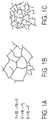
- Smaller pore size can be achieved by decreasing the length of the polymer chains in the crosslinked aerogel structure, as illustrated by FIGURES 1A-C .
- Using a chain transfer agent (CTA) in the radical polymerization is critical for producing polymer gels with low haze and small pore size.
- chain transfer agents generally refers to molecules that have at least one weak chemical bond. They generally react with the free-radical site of a growing polymer chain and interrupt chain growth. In the process of chain transfer, the radical is temporarily transferred to the regulating agent, which reinitiates growth by transferring the radical to another polymer or monomer. An example of this is illustrated by FIGURE 1A .
- the CTA generally controls the chain length during synthesis, delays gelation, and also gives more uniform gels.
- FIGURE 1A illustrates an exemplary mechanism of chain transfer.
- a growing polymer chain, P ⁇ reacts with a chain transfer agent, RX, to form a terminated chain, PX, and a new initiating radical, R ⁇ , which activates either a monomer or a polymer chain.
- RX chain transfer agent
- R ⁇ new initiating radical
- the polymerization produces a crosslinked gel structure wherein the individual polymer chain segments are smaller when compared with polymer chains that may be obtained in the absence of the CTA.
- FIGURE 1B illustrates an example of obtaining large pores by radical polymerization.
- FIGURE 1C illustrates an example of obtaining small pores by adding chain transfer agents (CTAs).
- CTAs chain transfer agents
- Certain implementations of the disclosed technology include synthesizing polymer gels in solvent from chain transfer agents, mono- or di-functional monomers, and multifunctional cross-linkers, where the functional groups of the monomers and cross-linkers can undergo radical polymerization.
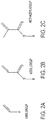
- Such functional groups include vinyl, acrylate, and methacrylate groups, as illustrated respectively by FIGURES 2A-C .
- Suitable acrylates and methacrylates include (a) monofunctional acrylates and methacrylates such as methyl acrylate, ethyl acrylate, methyl methacrylate, ethyl methacrylate, benzyl methacrylate, lauryl methacrylate, isobornyl methacrylate (b) difunctional acrylates and methacrylates such as 1,3-Butanediol diacrylate, 1,6-hexanediol diacrylate, bisphenol A ethoxylate diacrylate, ethylene glycol diacrylate, poly(ethylene glycol) diacrylate.
- monofunctional acrylates and methacrylates such as methyl acrylate, ethyl acrylate, methyl methacrylate, ethyl methacrylate, benzyl methacrylate, lauryl methacrylate, isobornyl methacrylate
- difunctional acrylates and methacrylates such as 1,3-Butanediol
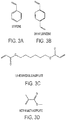
- Suitable vinyl monomers include styrene, divinylbenzene and liquid ethylene derivatives such as, vinyl stearate, vinyl laurate, vinyl benzoate, vinyl acetate, ethyl vinyl ether, vinyl chloride, 1-Vinyl-2-pyrrolidone. Chemical formulas for some of these monomers are provided in FIGURES 3A-D . More particularly, FIGURES 3A-D illustrate examples of styrene, divinylbenzene, 1,6-hexanediol diacrylate, and methyl methacrylate, respectively.
- Suitable cross-linkers include tri, tetra, penta or hexa-acrylates and methacrylates such as trimethylolpropane triacrylate, trimethylolpropane ethoxylate triacrylate, di(trimethylolpropane) tetraacrylate, dipentaerythritol penta-/hexa-acrylate and the like.
- FIGURES 4A-D illustrate examples of 1,3,5-trimethacryloyloxy adamantane, dipenterithritol pentacrylate, trimethylolpropane trimethacrylate, and polyoligosilsequioxane-octamethacrylate, respectively.
- FIGURES 5A-F illustrate various examples of radical chain transfer agents that contain a bond that can undergo homolytic cleavage, such as organic molecules containing halogen or thiol groups. More particularly, FIGURES 5A-F illustrate examples of carbon tetrachloride, dodecanethiol, Isooctyl 3-mercaptopropionate, tert-nonyl mercaptan, 4-methylbenzenethiol, and pentaphenylethane, respectively.
- gel precursors may be dissolved in a solvent which acts as a template to create the solvent-filled voids in the gel structure during polymerization, that become pores after solvent removal
- Suitable solvents provide good solubility to the reactive monomers.
- Particularly suitable are polar aprotic organic solvents such as dimethylformamide, methyl ethyl ketone, toluene, tetrahydrofuran, diethyl ether, diglyme (diethylene glycol dimethyl ether), 1,2-dimethoxy- ethane, ethyl acetate, xylene and others.
- Particularly suitable are high boiling solvents such as acetophenone or n-methylpyrrolidone.
- Suitable radical initiators include thermal initiators - activated by heat - and photoinitiators which are activated by light, typically Ultra Violet in a range of about 200 nm to 400 nm wavelength.
- thermal initiators includes (a) peroxides such as benzoyl peroxide, diacetylperoxide, di t-butylperoxide, cumyl peroxide; or azo compounds such as AIBN and Phenylazotriphenylmethane.
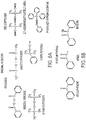
- Non-limiting examples of photoinitiators include benzophenone, benzyl, benzoin and the like. Chemical formulas for some of these examples of initiators are provided in FIGURE 6A-B .
- FIGURE 9 illustrates an example of a method 900 of forming transparent polymer aerogels using chain transfer agents (CTAs) in accordance with implementations of the disclosed technology.
- CTAs chain transfer agents
- gel precursors are dissolved, e.g., in a high boiling point solvent, and then deoxygenated, e.g., with dry N 2 .
- the deoxygenated solution is placed in a mold and is polymerized by activating radical initiators either by heating or by UV light.
- the gels are removed from the mold.
- solvent exchange is performed.
- the gels may be solvent exchanged in a solvent to extract any oligomers, and then exchanged into a solvent with low solvent-polymer interaction strength.
- the solvent exchanged gels are dried using ambient or supercritical CO 2 drying, for example.
- a typical gel precursor formulation consists of a chain transfer agent, dodecanethiol, a thermal radical initiator, azobisisobutyronitrile (AIBN), a monomer, divinylbenzene, and a crosslinker, trimethacryladamantane.
- AIBN azobisisobutyronitrile
- the composition of polymerizable material as compared to solvent may range from about 5% to about 70% by mass.
- the ratio of chain transfer agent to radical initiator varies within a range comprised from 0.1:1 to about 10:1 by mass.
- the initiator concentration is comprised in a range from about 10 -6 mol to about 10 - mol per gram of polymerizable precursors.
- the degassed solution was cast into a mold and polymerized at a temperature comprised in a range from about 50 °C to about 150 °C for approximately 1-20 hours.
- AIBN is used as initiator
- the preferred polymerizing temperature was 90 °C.
- Other initiators may require higher or lower reaction temperature.
- gels in solution that contained CTA appear less hazy than those that do not contain CTA.
- the time required for gelation to occur is generally longer for gels synthesized with CTA. This delayed gelation may contribute to the improved optical properties because, for example, the pore size is more uniform due to the growing polymer chains remaining in solution longer.
- the gels may be removed from the mold and solvent exchanged before subsequent drying steps.
- the gels may be first solvent exchanged into a good solvent, such as the polymerization solvent (e.g. acetophenone, n-methylpyrrolidone or dimethylformamide and other) or other good solvents such as tetrahydrofuran (THF), e.g., to extract any oligomers, and then exchanged into a solvent with low solvent-polymer interaction strength, such as acetone or heptanes, before drying.
- a good solvent such as the polymerization solvent (e.g. acetophenone, n-methylpyrrolidone or dimethylformamide and other) or other good solvents such as tetrahydrofuran (THF), e.g., to extract any oligomers, and then exchanged into a solvent with low solvent-polymer interaction strength, such as acetone or heptanes, before drying.
- the polymerization solvent e.g
- static or flow solvent exchange can be used.
- static solvent exchange process the wet gel is placed in the selected solvent for 1 day or more and two exchanges may be performed for each type of solvent.
- Solvent may be introduced directly, or gradually.
- a gel solvated by THF can be directly immersed into acetone, or first immersed in a 50/50 mixture of THF/acetone for 1 day, and then immersed in 100% acetone.
- flow solvent exchange a fixed amount of solvent may be pumped across the wet gel for 6 to 72 hours, for example.
- the duration of solvent exchange step needs to be increased, to ensure complete solvent exchange, since smaller pores make it more difficult for the solvents to diffuse through the pore network.
- Aerogels may be produced by drying the solvent exchanged gels.
- Ambient, supercritical CO 2 drying, or freeze-drying can be used, for example.
- a gel immersed in a non-solvent such as heptane may be slowly dried, e.g., over 2-3 days, in a covered container and then dried under a vacuum at a temperature comprised in a range from the room temperature up to an elevated temperature, e.g., 90°C.
- gels in a non-solvent such as acetone, or an alcohol may be solvent exchanged with liquid CO 2 and subsequently supercritically dried.
- freeze drying the solvated gel is frozen, and the solidified solvent (ie. water, benzene or cyclohexanol) is sublimated at suitable temperatures and pressures (eg.-50 °C, under vacuum for water). The highest porosities may be generally achieved with supercritical CO 2 drying.
- CTA advantageously enables the synthesis of aerogels with smaller pore size and narrower pore size distribution, characteristics that improve the optical transparency and haze for window applications.
- transparent and reduced haze aerogels have a very small fraction of pores (typically below 5%) of a size larger than 30 nm. This feature is essential for transparent aerogels.
- An aerogel with CTA is synthesized by dissolving in 1.4 g n-methyl pyrrolidone: 0.54 g divinyl benzene monomer, 0.06 g trimethacryladamantane crosslinker, 0.01 g azobisisobutyronitrile (AIBN) radical initiator, and 0.02 g dodecanethiol CTA.
- the solution is sparged with dry N 2 gas for 15 min, and then reacted at 90 °C for 1 hour.
- the wet gel is then demolded and solvent exchanged, twice in THF, and twice in heptanes. For each solvent exchange step, the gel is soaked in a 10 mL bath of solvent for 24 hr.
- Aerogels are produced by drying the wet gels slowly, under ambient conditions. The wet gels are placed in ajar with a small hole in the lid, and solvent is evaporated over 4 days. After 4 days, the lid is removed, and the aerogel is vacuum dried for 12 hr at 90 °C to remove any residual solvent.
- Example 2 Counter example: Fabrication of an aerogel without a CTA
- the aerogel without CTA is fabricated as above, except that the precursors dissolved in 1.4 g of n-methylpyrrolidone are: 0.54 g divinyl benzene monomer, 0.06 g trimethacryladamantane crosslinker, and 0.01 g azobisisobutyronitrile (AIBN) radical initiator.
- AIBN azobisisobutyronitrile
- the pore properties e.g., pore size and porosity characterization, measured by N 2 adsorption porosimetry of an exemplary aerogel that was synthesized with and without CTA are summarized in Table 1 below.
- the width of the pore size distribution is described by the full width at half maximum, or FWHM.
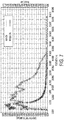
- FIGURE 6 is a graphical example illustrating the pore size distribution for the samples in Table 1. As can be seen from the illustrated example, the width of the distribution (FWHM) and the average pore size are both lower for the sample that was synthesized with CTA. In particular a very small fraction of pores has a pore size > 30 nm.
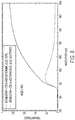
- FIGURE 7 is a graphical example illustrating the optical properties of an aerogel that is synthesized with CTA. Such optical properties may be measured by UV-vis spectrometry. Samples synthesized without CTA arc generally too opaque to measure significant optical light transmission (e.g., transmission ⁇ 0).
- Implementations of the disclosed technology advantageously enables the production of materials having low thermal conductivity, high transparency in the visible spectrum, and low haze, thus making them suitable for single pane window insulation.
- Aerogel formulations containing CTA in accordance with embodiments of the disclosed technology generally have greatly improved optical transparency compared to those without.
- Aerogel formulations with CTA in accordance with embodiments of the disclosed technology generally have smaller pore size and narrower pore size distribution compared to those without, thus making the aerogel transparent.
- CTA advantageously enables the production of polymer-based transparent aerogels, which are more hydrophobic than conventional silica aerogels and do not require post-processing.
- a high BET surface area may be obtained in transparent materials in accordance with the disclosed technology.
- Implementations of the disclosed technology advantageously provide the ability to produce an insulation material that is suitable for a single pane window retrofit.
- the overall BET surface areas and total cumulative pore volume as measured by nitrogen gas sorption is generally very low and show significant shrinking, i.e. aerogel polymer network collapsing during solvent evaporation.
- the Young Modulus is typically used as a measure of the stiffness of a polymer material.
- Certain implementations include an aerogel that is the result of radical polymerization of organic vinyl monomers (molecules including one or two vinyl groups) and vinyl crosslinkers (molecules with three or more vinyl groups) in a solvent, wherein at least one of the monomers or crosslinkers is present in a concentration > 80% (of total monomers & cross-linker materials) and is selected according to the following criterion: the corresponding homopolymer resulted from the polymerization of the monomer or cross-linker has a Young modulus 3.5 GPa.
- Aerogels made from monomers that produce corresponding homo-polymers with a Young modulus ⁇ 3.5 GPa possess high surface area > 700 m 2 /g.
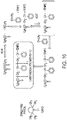
- FIGURE 10 illustrates an exemplary mechanism of the Stable Free Radical Polymerization (SFRP) process for fabrication of polymers with narrow polydispersity (e.g., PD ⁇ 1.2) in accordance with certain implementations of the disclosed technology.
- an enabler is the addition of a stable free radical (i.e., TEMPO) which reversibly caps the growing radical polymer chain. This slows down the overall polymerization rate, prevents undesired fast polymerization in hot spots, and enables uniform growth of all the polymer chains at the same rate.
- TEMPO stable free radical
- the SFRP process has been shown to produce linear polymers with polymer size distribution PD ⁇ 1.2.
- uncontrolled polymerization typically produces polymers with PD > 2.5.
- a key feature of this example is the adaptation of the process to (a) aerogel fabrication, (b) multifunctional monomers and cross-linkers, i.e. fabrication of cross-linked polymer structures instead of just linear polymer chains as demonstrated previously, and (c) multifunctional monomers and cross-linkers that produce high stiffness polymers.
- a stable free nitroxide (TEMPO) was added at a concentration of about 10 -4 mol TEMPO per gram of polymerizable precursors.
- AIBN was added at a ratio of AIBN:TEMPO of around 1:1 by mass.
- Polymerization was carried out at 125 degrees C for 16-24 hr.
- a reducing agent such as hydroxyacetone may be added to speed the kinetics.
- the molar equivalent of reducing agent to TEMPO is between 1:10 and 10:1.
- Certain implementations include a transparent polymer aerogel through SFRP with a BET area comparable with that achieved by conventional radical polymerization.
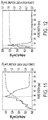
- the pore size distribution and appearance of the two samples are compared via FIGURES 11 and 12 .
- the sample produced with SFRP has an average pore size smaller than 10 nm and a narrower pore size distribution compared with the same formulation produced by conventional radical polymerization. This difference leads to higher transparency of the sample.
- Certain implementations of the disclosed technology advantageously enable the production of polymer aerogels with a high BET (e.g., > 100 m2/g) by ambient drying instead of supercritical CO 2 drying. These implementations have a lower cost than the supercritical drying process. Certain implementations include the use of methods for controlled radical polymerization processes (e.g., SFRP, CTA and other) to produce a high BET surface area (e.g., approaching 900 m2/g).
- controlled radical polymerization processes e.g., SFRP, CTA and other
- Certain implementations advantageously enable both large pore (e.g., opaque) aerogels as well as transparent and/or translucent aerogels by ambient drying.
- Certain implementations include the use of monomers and cross-linkers that produce stiff polymer chains (e.g., as characterized by the Young modulus 3.5 GPa of the corresponding polymers).
- Certain implementations may include a method of producing a transparent polymer aerogel, the method including: dissolving gel precursors consisting of radical polymerizable monomers and crosslinkers, radical initiators, and a chain transfer agent (CTA) in a reaction solvent; placing the gel precursors into a substrate; polymerizing the gel in the substrate; and drying the gel.
- Such methods may further include applying the dried gel to a transparent substrate, such as glass.
- such methods may include the monomer being divinyl benzene or 1,6-hexanediol diacrylate, the crosslinker being 1,3,5-trimethacryloyloxy adamantane or dipentaerythritol pentaacrylate, the solvent being acetophenone or n-methylpyrrolidone, the thermal radical initiator being benzoyl peroxide or 2,2'-azobis(2-methylpropionitrile), the chain transfer agent being dodecanethiol, the polymerization being performed by heating at a temperature in a range from 80-120 °C, at least one solvent exchange being performed with tetrahydrofuran and with heptane, e.g., in this order, and wherein the gel is air dried.
- the monomer being divinyl benzene or 1,6-hexanediol diacrylate
- the crosslinker being 1,3,5-trimethacryloyloxy adamantane or dipenta
- Certain implementations may include a transparent polymer aerogel produced by a method disclosed herein.
- Such an aerogel may have a BET surface area higher than 100 m 2 /g and/or a visible transmittance higher than 30 % and a haze lower than 30 % for a sample 3 mm thick or greater, or transmittance higher than 10% per mm of sample, or haze lower than 10% per mm of sample for samples thinner than 3mm.
- Such an aerogel may have less than 5% pores of a size larger than 30 nm.
- Such an aerogel may have a thermal conductivity lower than 150 mW/mK.
- Certain implementations may include a window having: at least one pane; and a high-transparency polymer gel applied to the at least one pane, the gel having been synthesized by radical polymerization of crosslinkers and monomers in the presence of a chain transfer agent (CTA).
- CTA chain transfer agent
- Certain implementations may include a method of fabricating a transparent or translucent aerogel, the method comprising: performing radical polymerization of organic vinyl monomers and vinyl cross-linkers in a solvent, wherein at least one of the vinyl monomers and/or cross-linkers is present in a concentration greater than 80% of total vinyl monomers & vinyl cross-linkers and is selected based on a corresponding homo-polymer resulting from the polymerization of the monomer and/or cross-linker having a Young modulus of at least 3.5 GPa.
- Such methods may further include synthesizing by controlled radical polymerization processes to produce small and narrow size distribution pores.
- the radical polymerization processes may be selected from a group consisting of the following: stable free radical polymerization (SFRP), atom radical transfer polymerization (ATRP), and using a Chain transfer agent (CTA).
- SFRP stable free radical polymerization
- ATRP atom radical transfer polymerization
- CTA Chain transfer agent
- Such an aerogel may have visible transmittance higher than 30 % and a haze lower than 30 % for a sample 3 mm thick or greater, or transmittance higher than 10% per mm of sample, or haze lower than 10% per mm of sample for samples thinner than 3mm.
- Such aerogels may have a BET greater than 100 m 2 /g, and/or an average pore size lower than 20 nm and a narrow pore size distribution, and/or a full width at half maximum (FWHM) pore size distribution less than 10 nm.
- FWHM full width at half maximum
- Certain implementations may include a window having: at least one pane; and a high-transparency polymer gel applied to the at least one pane, the gel having been synthesized by radical polymerization of organic vinyl monomers and vinyl cross-linkers in a solvent.
Landscapes
- Chemical & Material Sciences (AREA)
- Organic Chemistry (AREA)
- Health & Medical Sciences (AREA)
- Chemical Kinetics & Catalysis (AREA)
- Medicinal Chemistry (AREA)
- Polymers & Plastics (AREA)
- Dispersion Chemistry (AREA)
- Engineering & Computer Science (AREA)
- Materials Engineering (AREA)
- Inorganic Chemistry (AREA)
- Sustainable Development (AREA)
- Life Sciences & Earth Sciences (AREA)
- Polymerisation Methods In General (AREA)
- Addition Polymer Or Copolymer, Post-Treatments, Or Chemical Modifications (AREA)
- Processes Of Treating Macromolecular Substances (AREA)
- Manufacture Of Porous Articles, And Recovery And Treatment Of Waste Products (AREA)
Applications Claiming Priority (1)
| Application Number | Priority Date | Filing Date | Title |
|---|---|---|---|
| US15/728,385 US10626224B2 (en) | 2017-10-09 | 2017-10-09 | Method to produce transparent polymer aerogels using chain transfer agents |
Publications (2)
| Publication Number | Publication Date |
|---|---|
| EP3466986A1 EP3466986A1 (en) | 2019-04-10 |
| EP3466986B1 true EP3466986B1 (en) | 2021-08-04 |
Family
ID=64017253
Family Applications (1)
| Application Number | Title | Priority Date | Filing Date |
|---|---|---|---|
| EP18198980.7A Active EP3466986B1 (en) | 2017-10-09 | 2018-10-05 | Method to produce transparent polymer aerogels using chain transfer agents |
Country Status (3)
| Country | Link |
|---|---|
| US (2) | US10626224B2 (enExample) |
| EP (1) | EP3466986B1 (enExample) |
| JP (1) | JP7101089B2 (enExample) |
Families Citing this family (13)
| Publication number | Priority date | Publication date | Assignee | Title |
|---|---|---|---|---|
| US10960224B2 (en) | 2017-01-12 | 2021-03-30 | Janssen Pharmaceutica Nv | Trans-orbital infrared light therapy |
| US10836855B2 (en) * | 2018-07-26 | 2020-11-17 | Palo Alto Research Center Incorporated | Method to produce colorless, high porosity, transparent polymer aerogels |
| US10995191B2 (en) | 2018-12-20 | 2021-05-04 | Palo Alto Research Center Incoporated | High optical transparency polymer aerogels using low refractive index monomers |
| US11614409B2 (en) | 2018-12-20 | 2023-03-28 | Palo Alto Research Center Incorporated | Printed sensor with vibrant colorimetric particles |
| US10926102B2 (en) | 2019-04-15 | 2021-02-23 | Janssen Pharmaceutica Nv | Transorbital NIR LIGHT THERAPY DEVICES |
| US10874874B2 (en) | 2019-04-15 | 2020-12-29 | Janssen Pharmaceutica Nv | Transorbital NIR light therapy device |
| CN110437496B (zh) * | 2019-07-19 | 2020-10-27 | 淮阴工学院 | 一种用于高效水蒸发的聚硅氧烷气凝胶复合材料及其制备方法和应用 |
| US11493451B2 (en) | 2019-12-23 | 2022-11-08 | Palo Alto Research Center Incorporated | Colorimetric drug test strip using porous support material |
| JP7720089B2 (ja) * | 2019-12-23 | 2025-08-07 | 国立研究開発法人理化学研究所 | エアロゲル及びその製造方法 |
| US11612852B2 (en) | 2020-05-28 | 2023-03-28 | Palo Alto Research Center Incorporated | Tunable, rapid uptake, aminopolymer aerogel sorbent for direct air capture of CO2 |
| US12491494B2 (en) | 2021-04-02 | 2025-12-09 | Genesee Valley Innovations, LLC | Moisture swing CO2 sorbents with enhanced capacity and kinetics |
| US20230286810A1 (en) | 2022-03-09 | 2023-09-14 | Cardinal Cg Company | Silica wet gel and aerogel |
| US20240024852A1 (en) * | 2022-07-22 | 2024-01-25 | Palo Alto Research Center Incorporated | Adsorbent aerogel membrane sheets for direct air capture of co2 |
Family Cites Families (15)
| Publication number | Priority date | Publication date | Assignee | Title |
|---|---|---|---|---|
| FR2736342B1 (fr) | 1995-07-07 | 1999-01-29 | Univ Claude Bernard Lyon | Procede pour la fabrication d'aerogels de silice monolithiques et aerogels de silice ainsi obtenus |
| JP3296153B2 (ja) | 1995-09-06 | 2002-06-24 | 住友化学工業株式会社 | スチレン系重合体の製造方法、スチレン系樹脂組成物及びその成形品 |
| EP1062248B1 (en) | 1998-03-12 | 2004-07-21 | Lucite International UK Limited | Polymer composition |
| JP4081083B2 (ja) * | 2002-06-28 | 2008-04-23 | 三菱レイヨン株式会社 | アクリル系架橋樹脂多孔質体の製造方法 |
| WO2005098553A2 (en) * | 2004-01-06 | 2005-10-20 | Aspen Aerogels, Inc. | Ormosil aerogels containing silicon bonded polymethacrylate |
| US7732496B1 (en) * | 2004-11-03 | 2010-06-08 | Ohio Aerospace Institute | Highly porous and mechanically strong ceramic oxide aerogels |
| US8110258B2 (en) | 2005-11-25 | 2012-02-07 | Advanced Glazing Technologies Limited (Agtl) | Glazing unit with transparent filler |
| US7981988B2 (en) * | 2006-05-25 | 2011-07-19 | 3M Innovative Properties Company | Ultraviolet radiation-polymerizable compositions |
| US8663742B2 (en) * | 2008-06-30 | 2014-03-04 | Stc.Unm | Durable polymer-aerogel based superhydrophobic coatings, a composite material |
| WO2010080238A2 (en) | 2008-12-18 | 2010-07-15 | 3M Innovative Properties Company | Telechelic hybrid aerogels |
| US8691883B2 (en) * | 2009-02-11 | 2014-04-08 | Samsung Electronics Co., Ltd. | Aerogel-foam composites |
| US8808811B2 (en) * | 2009-04-15 | 2014-08-19 | 3M Innovative Properties Company | Process and apparatus for a nanovoided article |
| WO2012154602A1 (en) * | 2011-05-06 | 2012-11-15 | Showers Robert James | Aerogel window film system |
| US10414894B2 (en) * | 2014-07-31 | 2019-09-17 | Virginia Commonwealth University | Method for one-step synthesis, cross-linking and drying of aerogels |
| US10421253B2 (en) * | 2016-10-05 | 2019-09-24 | Palo Alto Research Center Incorporated | Polymer aerogel for window glazings |
-
2017
- 2017-10-09 US US15/728,385 patent/US10626224B2/en active Active
-
2018
- 2018-09-12 JP JP2018170736A patent/JP7101089B2/ja active Active
- 2018-10-05 EP EP18198980.7A patent/EP3466986B1/en active Active
- 2018-12-26 US US16/232,688 patent/US10717824B2/en active Active
Non-Patent Citations (1)
| Title |
|---|
| None * |
Also Published As
| Publication number | Publication date |
|---|---|
| US10717824B2 (en) | 2020-07-21 |
| US20190135984A1 (en) | 2019-05-09 |
| US20190106543A1 (en) | 2019-04-11 |
| JP2019070111A (ja) | 2019-05-09 |
| EP3466986A1 (en) | 2019-04-10 |
| JP7101089B2 (ja) | 2022-07-14 |
| US10626224B2 (en) | 2020-04-21 |
Similar Documents
| Publication | Publication Date | Title |
|---|---|---|
| EP3466986B1 (en) | Method to produce transparent polymer aerogels using chain transfer agents | |
| US10421253B2 (en) | Polymer aerogel for window glazings | |
| EP3599258B1 (en) | Method to produce colorless, high porosity, transparent polymer aerogels | |
| Uemura et al. | Radical polymerization of vinyl monomers in porous coordination polymers: nanochannel size effects on reactivity, molecular weight, and stereostructure | |
| JP7285200B2 (ja) | 低屈折率モノマーを使用する高光透過性ポリマーエアロゲル | |
| Nagelsdiek et al. | Synthesis of polymers containing cross-linkable groups by atom transfer radical polymerization: poly (allyl methacrylate) and copolymers of allyl methacrylate and styrene | |
| JP2018519379A (ja) | 中性層組成物 | |
| JP6856539B2 (ja) | 架橋剤、調整剤および発泡剤の使用下でのpmma発泡材の製造 | |
| Huang et al. | Synthesis of monodisperse micron-sized poly (divinylbenzene) microspheres by solvothermal precipitation polymerization | |
| CN113788908A (zh) | 一种利用空间调整策略提高光固化离子凝胶电导率和灵敏度的方法 | |
| JP2014221868A (ja) | ブロック共重合体の製法及びそのブロック共重合体を用いたフォトニック材料 | |
| Zhang et al. | Graft polymerization from pore wall of three-dimensionally ordered macroporous cross-linked polystyrene via atom transfer radical polymerization | |
| JP4081083B2 (ja) | アクリル系架橋樹脂多孔質体の製造方法 | |
| JP5194648B2 (ja) | 熱可塑性樹脂組成物、その製造方法及び光アクチュエータ材料 | |
| JP2010241859A (ja) | 有機無機複合ゲル | |
| JP7239490B2 (ja) | アクリル系ブロック共重合体及びそれを含む防曇膜 | |
| Huang et al. | Synthesis of Photoisomerizable Block Copolymers by Atom Transfer Radical Polymerization | |
| KR102484627B1 (ko) | 피닝층 조성물 | |
| KR102484629B1 (ko) | 중성층 조성물 | |
| KR102522251B1 (ko) | 중성층 조성물 | |
| KR102498631B1 (ko) | 패턴화 기판의 제조 방법 | |
| KR102534530B1 (ko) | 패턴화 기판의 제조 방법 | |
| Dai et al. | Influence of helical cellulose Tris (3, 5-dimethylphenylcarbamate) s on the radical polymerization of methyl Methacrylate: Efficient control on molecular weight and polymerization kinetics | |
| CN120098170A (zh) | 甲基丙烯酸类树脂的制造方法和甲基丙烯酸类树脂、树脂组合物、以及树脂薄膜 | |
| KR20210022909A (ko) | 고무 조성물 |
Legal Events
| Date | Code | Title | Description |
|---|---|---|---|
| PUAI | Public reference made under article 153(3) epc to a published international application that has entered the european phase |
Free format text: ORIGINAL CODE: 0009012 |
|
| STAA | Information on the status of an ep patent application or granted ep patent |
Free format text: STATUS: THE APPLICATION HAS BEEN PUBLISHED |
|
| AK | Designated contracting states |
Kind code of ref document: A1 Designated state(s): AL AT BE BG CH CY CZ DE DK EE ES FI FR GB GR HR HU IE IS IT LI LT LU LV MC MK MT NL NO PL PT RO RS SE SI SK SM TR |
|
| AX | Request for extension of the european patent |
Extension state: BA ME |
|
| STAA | Information on the status of an ep patent application or granted ep patent |
Free format text: STATUS: REQUEST FOR EXAMINATION WAS MADE |
|
| 17P | Request for examination filed |
Effective date: 20191010 |
|
| RBV | Designated contracting states (corrected) |
Designated state(s): AL AT BE BG CH CY CZ DE DK EE ES FI FR GB GR HR HU IE IS IT LI LT LU LV MC MK MT NL NO PL PT RO RS SE SI SK SM TR |
|
| STAA | Information on the status of an ep patent application or granted ep patent |
Free format text: STATUS: EXAMINATION IS IN PROGRESS |
|
| 17Q | First examination report despatched |
Effective date: 20191211 |
|
| GRAP | Despatch of communication of intention to grant a patent |
Free format text: ORIGINAL CODE: EPIDOSNIGR1 |
|
| STAA | Information on the status of an ep patent application or granted ep patent |
Free format text: STATUS: GRANT OF PATENT IS INTENDED |
|
| INTG | Intention to grant announced |
Effective date: 20210226 |
|
| RIN1 | Information on inventor provided before grant (corrected) |
Inventor name: KEOSHKERIAN, BARKEV Inventor name: OVERMEERE, QUENTIN VAN Inventor name: CHINTAPALLI, MAHATI Inventor name: IFTIME, GABRIEL |
|
| GRAS | Grant fee paid |
Free format text: ORIGINAL CODE: EPIDOSNIGR3 |
|
| GRAA | (expected) grant |
Free format text: ORIGINAL CODE: 0009210 |
|
| STAA | Information on the status of an ep patent application or granted ep patent |
Free format text: STATUS: THE PATENT HAS BEEN GRANTED |
|
| AK | Designated contracting states |
Kind code of ref document: B1 Designated state(s): AL AT BE BG CH CY CZ DE DK EE ES FI FR GB GR HR HU IE IS IT LI LT LU LV MC MK MT NL NO PL PT RO RS SE SI SK SM TR |
|
| REG | Reference to a national code |
Ref country code: GB Ref legal event code: FG4D |
|
| REG | Reference to a national code |
Ref country code: AT Ref legal event code: REF Ref document number: 1416931 Country of ref document: AT Kind code of ref document: T Effective date: 20210815 |
|
| REG | Reference to a national code |
Ref country code: CH Ref legal event code: EP |
|
| REG | Reference to a national code |
Ref country code: DE Ref legal event code: R096 Ref document number: 602018021117 Country of ref document: DE |
|
| REG | Reference to a national code |
Ref country code: IE Ref legal event code: FG4D |
|
| REG | Reference to a national code |
Ref country code: LT Ref legal event code: MG9D |
|
| REG | Reference to a national code |
Ref country code: NL Ref legal event code: MP Effective date: 20210804 |
|
| REG | Reference to a national code |
Ref country code: AT Ref legal event code: MK05 Ref document number: 1416931 Country of ref document: AT Kind code of ref document: T Effective date: 20210804 |
|
| PG25 | Lapsed in a contracting state [announced via postgrant information from national office to epo] |
Ref country code: NO Free format text: LAPSE BECAUSE OF FAILURE TO SUBMIT A TRANSLATION OF THE DESCRIPTION OR TO PAY THE FEE WITHIN THE PRESCRIBED TIME-LIMIT Effective date: 20211104 Ref country code: PT Free format text: LAPSE BECAUSE OF FAILURE TO SUBMIT A TRANSLATION OF THE DESCRIPTION OR TO PAY THE FEE WITHIN THE PRESCRIBED TIME-LIMIT Effective date: 20211206 Ref country code: BG Free format text: LAPSE BECAUSE OF FAILURE TO SUBMIT A TRANSLATION OF THE DESCRIPTION OR TO PAY THE FEE WITHIN THE PRESCRIBED TIME-LIMIT Effective date: 20211104 Ref country code: AT Free format text: LAPSE BECAUSE OF FAILURE TO SUBMIT A TRANSLATION OF THE DESCRIPTION OR TO PAY THE FEE WITHIN THE PRESCRIBED TIME-LIMIT Effective date: 20210804 Ref country code: LT Free format text: LAPSE BECAUSE OF FAILURE TO SUBMIT A TRANSLATION OF THE DESCRIPTION OR TO PAY THE FEE WITHIN THE PRESCRIBED TIME-LIMIT Effective date: 20210804 Ref country code: RS Free format text: LAPSE BECAUSE OF FAILURE TO SUBMIT A TRANSLATION OF THE DESCRIPTION OR TO PAY THE FEE WITHIN THE PRESCRIBED TIME-LIMIT Effective date: 20210804 Ref country code: SE Free format text: LAPSE BECAUSE OF FAILURE TO SUBMIT A TRANSLATION OF THE DESCRIPTION OR TO PAY THE FEE WITHIN THE PRESCRIBED TIME-LIMIT Effective date: 20210804 Ref country code: HR Free format text: LAPSE BECAUSE OF FAILURE TO SUBMIT A TRANSLATION OF THE DESCRIPTION OR TO PAY THE FEE WITHIN THE PRESCRIBED TIME-LIMIT Effective date: 20210804 Ref country code: FI Free format text: LAPSE BECAUSE OF FAILURE TO SUBMIT A TRANSLATION OF THE DESCRIPTION OR TO PAY THE FEE WITHIN THE PRESCRIBED TIME-LIMIT Effective date: 20210804 Ref country code: ES Free format text: LAPSE BECAUSE OF FAILURE TO SUBMIT A TRANSLATION OF THE DESCRIPTION OR TO PAY THE FEE WITHIN THE PRESCRIBED TIME-LIMIT Effective date: 20210804 |
|
| PG25 | Lapsed in a contracting state [announced via postgrant information from national office to epo] |
Ref country code: PL Free format text: LAPSE BECAUSE OF FAILURE TO SUBMIT A TRANSLATION OF THE DESCRIPTION OR TO PAY THE FEE WITHIN THE PRESCRIBED TIME-LIMIT Effective date: 20210804 Ref country code: LV Free format text: LAPSE BECAUSE OF FAILURE TO SUBMIT A TRANSLATION OF THE DESCRIPTION OR TO PAY THE FEE WITHIN THE PRESCRIBED TIME-LIMIT Effective date: 20210804 Ref country code: GR Free format text: LAPSE BECAUSE OF FAILURE TO SUBMIT A TRANSLATION OF THE DESCRIPTION OR TO PAY THE FEE WITHIN THE PRESCRIBED TIME-LIMIT Effective date: 20211105 |
|
| PG25 | Lapsed in a contracting state [announced via postgrant information from national office to epo] |
Ref country code: NL Free format text: LAPSE BECAUSE OF FAILURE TO SUBMIT A TRANSLATION OF THE DESCRIPTION OR TO PAY THE FEE WITHIN THE PRESCRIBED TIME-LIMIT Effective date: 20210804 |
|
| PG25 | Lapsed in a contracting state [announced via postgrant information from national office to epo] |
Ref country code: DK Free format text: LAPSE BECAUSE OF FAILURE TO SUBMIT A TRANSLATION OF THE DESCRIPTION OR TO PAY THE FEE WITHIN THE PRESCRIBED TIME-LIMIT Effective date: 20210804 |
|
| REG | Reference to a national code |
Ref country code: DE Ref legal event code: R097 Ref document number: 602018021117 Country of ref document: DE |
|
| REG | Reference to a national code |
Ref country code: CH Ref legal event code: PL |
|
| PG25 | Lapsed in a contracting state [announced via postgrant information from national office to epo] |
Ref country code: SM Free format text: LAPSE BECAUSE OF FAILURE TO SUBMIT A TRANSLATION OF THE DESCRIPTION OR TO PAY THE FEE WITHIN THE PRESCRIBED TIME-LIMIT Effective date: 20210804 Ref country code: SK Free format text: LAPSE BECAUSE OF FAILURE TO SUBMIT A TRANSLATION OF THE DESCRIPTION OR TO PAY THE FEE WITHIN THE PRESCRIBED TIME-LIMIT Effective date: 20210804 Ref country code: RO Free format text: LAPSE BECAUSE OF FAILURE TO SUBMIT A TRANSLATION OF THE DESCRIPTION OR TO PAY THE FEE WITHIN THE PRESCRIBED TIME-LIMIT Effective date: 20210804 Ref country code: EE Free format text: LAPSE BECAUSE OF FAILURE TO SUBMIT A TRANSLATION OF THE DESCRIPTION OR TO PAY THE FEE WITHIN THE PRESCRIBED TIME-LIMIT Effective date: 20210804 Ref country code: CZ Free format text: LAPSE BECAUSE OF FAILURE TO SUBMIT A TRANSLATION OF THE DESCRIPTION OR TO PAY THE FEE WITHIN THE PRESCRIBED TIME-LIMIT Effective date: 20210804 Ref country code: AL Free format text: LAPSE BECAUSE OF FAILURE TO SUBMIT A TRANSLATION OF THE DESCRIPTION OR TO PAY THE FEE WITHIN THE PRESCRIBED TIME-LIMIT Effective date: 20210804 |
|
| PLBE | No opposition filed within time limit |
Free format text: ORIGINAL CODE: 0009261 |
|
| STAA | Information on the status of an ep patent application or granted ep patent |
Free format text: STATUS: NO OPPOSITION FILED WITHIN TIME LIMIT |
|
| REG | Reference to a national code |
Ref country code: BE Ref legal event code: MM Effective date: 20211031 |
|
| PG25 | Lapsed in a contracting state [announced via postgrant information from national office to epo] |
Ref country code: MC Free format text: LAPSE BECAUSE OF FAILURE TO SUBMIT A TRANSLATION OF THE DESCRIPTION OR TO PAY THE FEE WITHIN THE PRESCRIBED TIME-LIMIT Effective date: 20210804 |
|
| 26N | No opposition filed |
Effective date: 20220506 |
|
| PG25 | Lapsed in a contracting state [announced via postgrant information from national office to epo] |
Ref country code: LU Free format text: LAPSE BECAUSE OF NON-PAYMENT OF DUE FEES Effective date: 20211005 Ref country code: IT Free format text: LAPSE BECAUSE OF FAILURE TO SUBMIT A TRANSLATION OF THE DESCRIPTION OR TO PAY THE FEE WITHIN THE PRESCRIBED TIME-LIMIT Effective date: 20210804 Ref country code: BE Free format text: LAPSE BECAUSE OF NON-PAYMENT OF DUE FEES Effective date: 20211031 |
|
| PG25 | Lapsed in a contracting state [announced via postgrant information from national office to epo] |
Ref country code: SI Free format text: LAPSE BECAUSE OF FAILURE TO SUBMIT A TRANSLATION OF THE DESCRIPTION OR TO PAY THE FEE WITHIN THE PRESCRIBED TIME-LIMIT Effective date: 20210804 Ref country code: LI Free format text: LAPSE BECAUSE OF NON-PAYMENT OF DUE FEES Effective date: 20211031 Ref country code: CH Free format text: LAPSE BECAUSE OF NON-PAYMENT OF DUE FEES Effective date: 20211031 |
|
| PG25 | Lapsed in a contracting state [announced via postgrant information from national office to epo] |
Ref country code: IE Free format text: LAPSE BECAUSE OF NON-PAYMENT OF DUE FEES Effective date: 20211005 |
|
| PG25 | Lapsed in a contracting state [announced via postgrant information from national office to epo] |
Ref country code: CY Free format text: LAPSE BECAUSE OF FAILURE TO SUBMIT A TRANSLATION OF THE DESCRIPTION OR TO PAY THE FEE WITHIN THE PRESCRIBED TIME-LIMIT Effective date: 20210804 |
|
| PG25 | Lapsed in a contracting state [announced via postgrant information from national office to epo] |
Ref country code: HU Free format text: LAPSE BECAUSE OF FAILURE TO SUBMIT A TRANSLATION OF THE DESCRIPTION OR TO PAY THE FEE WITHIN THE PRESCRIBED TIME-LIMIT; INVALID AB INITIO Effective date: 20181005 |
|
| PG25 | Lapsed in a contracting state [announced via postgrant information from national office to epo] |
Ref country code: MK Free format text: LAPSE BECAUSE OF FAILURE TO SUBMIT A TRANSLATION OF THE DESCRIPTION OR TO PAY THE FEE WITHIN THE PRESCRIBED TIME-LIMIT Effective date: 20210804 |
|
| PG25 | Lapsed in a contracting state [announced via postgrant information from national office to epo] |
Ref country code: TR Free format text: LAPSE BECAUSE OF FAILURE TO SUBMIT A TRANSLATION OF THE DESCRIPTION OR TO PAY THE FEE WITHIN THE PRESCRIBED TIME-LIMIT Effective date: 20210804 |
|
| PG25 | Lapsed in a contracting state [announced via postgrant information from national office to epo] |
Ref country code: MT Free format text: LAPSE BECAUSE OF FAILURE TO SUBMIT A TRANSLATION OF THE DESCRIPTION OR TO PAY THE FEE WITHIN THE PRESCRIBED TIME-LIMIT Effective date: 20210804 |
|
| PGFP | Annual fee paid to national office [announced via postgrant information from national office to epo] |
Ref country code: DE Payment date: 20240919 Year of fee payment: 7 |
|
| PGFP | Annual fee paid to national office [announced via postgrant information from national office to epo] |
Ref country code: GB Payment date: 20250923 Year of fee payment: 8 |
|
| PGFP | Annual fee paid to national office [announced via postgrant information from national office to epo] |
Ref country code: FR Payment date: 20250925 Year of fee payment: 8 |