EP3458991B1 - Videoinhaltanalysesystem und -verfahren für transportsystem - Google Patents
Videoinhaltanalysesystem und -verfahren für transportsystem Download PDFInfo
- Publication number
- EP3458991B1 EP3458991B1 EP17800046.9A EP17800046A EP3458991B1 EP 3458991 B1 EP3458991 B1 EP 3458991B1 EP 17800046 A EP17800046 A EP 17800046A EP 3458991 B1 EP3458991 B1 EP 3458991B1
- Authority
- EP
- European Patent Office
- Prior art keywords
- data
- component
- mobile asset
- recorder
- information
- Prior art date
- Legal status (The legal status is an assumption and is not a legal conclusion. Google has not performed a legal analysis and makes no representation as to the accuracy of the status listed.)
- Active
Links
Images


Classifications
-
- G—PHYSICS
- G05—CONTROLLING; REGULATING
- G05D—SYSTEMS FOR CONTROLLING OR REGULATING NON-ELECTRIC VARIABLES
- G05D1/00—Control of position, course, altitude or attitude of land, water, air or space vehicles, e.g. using automatic pilots
- G05D1/40—Control within particular dimensions
- G05D1/43—Control of position or course in two dimensions [2D]
-
- B—PERFORMING OPERATIONS; TRANSPORTING
- B61—RAILWAYS
- B61L—GUIDING RAILWAY TRAFFIC; ENSURING THE SAFETY OF RAILWAY TRAFFIC
- B61L15/00—Indicators provided on the vehicle or train for signalling purposes
- B61L15/0018—Communication with or on the vehicle or train
- B61L15/0027—Radio-based, e.g. using GSM-R
-
- B—PERFORMING OPERATIONS; TRANSPORTING
- B61—RAILWAYS
- B61L—GUIDING RAILWAY TRAFFIC; ENSURING THE SAFETY OF RAILWAY TRAFFIC
- B61L15/00—Indicators provided on the vehicle or train for signalling purposes
- B61L15/0072—On-board train data handling
-
- B—PERFORMING OPERATIONS; TRANSPORTING
- B61—RAILWAYS
- B61L—GUIDING RAILWAY TRAFFIC; ENSURING THE SAFETY OF RAILWAY TRAFFIC
- B61L15/00—Indicators provided on the vehicle or train for signalling purposes
- B61L15/0081—On-board diagnosis or maintenance
-
- B—PERFORMING OPERATIONS; TRANSPORTING
- B61—RAILWAYS
- B61L—GUIDING RAILWAY TRAFFIC; ENSURING THE SAFETY OF RAILWAY TRAFFIC
- B61L15/00—Indicators provided on the vehicle or train for signalling purposes
- B61L15/0094—Recorders on the vehicle
-
- B—PERFORMING OPERATIONS; TRANSPORTING
- B61—RAILWAYS
- B61L—GUIDING RAILWAY TRAFFIC; ENSURING THE SAFETY OF RAILWAY TRAFFIC
- B61L23/00—Control, warning or like safety means along the route or between vehicles or trains
- B61L23/04—Control, warning or like safety means along the route or between vehicles or trains for monitoring the mechanical state of the route
- B61L23/041—Obstacle detection
-
- B—PERFORMING OPERATIONS; TRANSPORTING
- B61—RAILWAYS
- B61L—GUIDING RAILWAY TRAFFIC; ENSURING THE SAFETY OF RAILWAY TRAFFIC
- B61L23/00—Control, warning or like safety means along the route or between vehicles or trains
- B61L23/04—Control, warning or like safety means along the route or between vehicles or trains for monitoring the mechanical state of the route
- B61L23/042—Track changes detection
- B61L23/047—Track or rail movements
-
- B—PERFORMING OPERATIONS; TRANSPORTING
- B61—RAILWAYS
- B61L—GUIDING RAILWAY TRAFFIC; ENSURING THE SAFETY OF RAILWAY TRAFFIC
- B61L27/00—Central railway traffic control systems; Trackside control; Communication systems specially adapted therefor
- B61L27/40—Handling position reports or trackside vehicle data
-
- B—PERFORMING OPERATIONS; TRANSPORTING
- B61—RAILWAYS
- B61L—GUIDING RAILWAY TRAFFIC; ENSURING THE SAFETY OF RAILWAY TRAFFIC
- B61L27/00—Central railway traffic control systems; Trackside control; Communication systems specially adapted therefor
- B61L27/50—Trackside diagnosis or maintenance, e.g. software upgrades
- B61L27/57—Trackside diagnosis or maintenance, e.g. software upgrades for vehicles or trains, e.g. trackside supervision of train conditions
-
- G—PHYSICS
- G05—CONTROLLING; REGULATING
- G05D—SYSTEMS FOR CONTROLLING OR REGULATING NON-ELECTRIC VARIABLES
- G05D1/00—Control of position, course, altitude or attitude of land, water, air or space vehicles, e.g. using automatic pilots
- G05D1/20—Control system inputs
- G05D1/24—Arrangements for determining position or orientation
- G05D1/247—Arrangements for determining position or orientation using signals provided by artificial sources external to the vehicle, e.g. navigation beacons
- G05D1/248—Arrangements for determining position or orientation using signals provided by artificial sources external to the vehicle, e.g. navigation beacons generated by satellites, e.g. GPS
-
- G—PHYSICS
- G06—COMPUTING OR CALCULATING; COUNTING
- G06F—ELECTRIC DIGITAL DATA PROCESSING
- G06F16/00—Information retrieval; Database structures therefor; File system structures therefor
- G06F16/70—Information retrieval; Database structures therefor; File system structures therefor of video data
- G06F16/78—Retrieval characterised by using metadata, e.g. metadata not derived from the content or metadata generated manually
- G06F16/783—Retrieval characterised by using metadata, e.g. metadata not derived from the content or metadata generated manually using metadata automatically derived from the content
- G06F16/7847—Retrieval characterised by using metadata, e.g. metadata not derived from the content or metadata generated manually using metadata automatically derived from the content using low-level visual features of the video content
- G06F16/786—Retrieval characterised by using metadata, e.g. metadata not derived from the content or metadata generated manually using metadata automatically derived from the content using low-level visual features of the video content using motion, e.g. object motion or camera motion
-
- G—PHYSICS
- G06—COMPUTING OR CALCULATING; COUNTING
- G06T—IMAGE DATA PROCESSING OR GENERATION, IN GENERAL
- G06T7/00—Image analysis
- G06T7/20—Analysis of motion
-
- G—PHYSICS
- G06—COMPUTING OR CALCULATING; COUNTING
- G06V—IMAGE OR VIDEO RECOGNITION OR UNDERSTANDING
- G06V20/00—Scenes; Scene-specific elements
- G06V20/50—Context or environment of the image
- G06V20/52—Surveillance or monitoring of activities, e.g. for recognising suspicious objects
-
- G—PHYSICS
- G06—COMPUTING OR CALCULATING; COUNTING
- G06V—IMAGE OR VIDEO RECOGNITION OR UNDERSTANDING
- G06V20/00—Scenes; Scene-specific elements
- G06V20/50—Context or environment of the image
- G06V20/56—Context or environment of the image exterior to a vehicle by using sensors mounted on the vehicle
-
- G—PHYSICS
- G07—CHECKING-DEVICES
- G07C—TIME OR ATTENDANCE REGISTERS; REGISTERING OR INDICATING THE WORKING OF MACHINES; GENERATING RANDOM NUMBERS; VOTING OR LOTTERY APPARATUS; ARRANGEMENTS, SYSTEMS OR APPARATUS FOR CHECKING NOT PROVIDED FOR ELSEWHERE
- G07C5/00—Registering or indicating the working of vehicles
- G07C5/008—Registering or indicating the working of vehicles communicating information to a remotely located station
-
- G—PHYSICS
- G07—CHECKING-DEVICES
- G07C—TIME OR ATTENDANCE REGISTERS; REGISTERING OR INDICATING THE WORKING OF MACHINES; GENERATING RANDOM NUMBERS; VOTING OR LOTTERY APPARATUS; ARRANGEMENTS, SYSTEMS OR APPARATUS FOR CHECKING NOT PROVIDED FOR ELSEWHERE
- G07C5/00—Registering or indicating the working of vehicles
- G07C5/08—Registering or indicating performance data other than driving, working, idle, or waiting time, with or without registering driving, working, idle or waiting time
- G07C5/0841—Registering performance data
-
- G—PHYSICS
- G08—SIGNALLING
- G08B—SIGNALLING SYSTEMS, e.g. PERSONAL CALLING SYSTEMS; ORDER TELEGRAPHS; ALARM SYSTEMS
- G08B13/00—Burglar, theft or intruder alarms
- G08B13/18—Actuation by interference with heat, light, or radiation of shorter wavelength; Actuation by intruding sources of heat, light, or radiation of shorter wavelength
- G08B13/189—Actuation by interference with heat, light, or radiation of shorter wavelength; Actuation by intruding sources of heat, light, or radiation of shorter wavelength using passive radiation detection systems
- G08B13/194—Actuation by interference with heat, light, or radiation of shorter wavelength; Actuation by intruding sources of heat, light, or radiation of shorter wavelength using passive radiation detection systems using image scanning and comparing systems
- G08B13/196—Actuation by interference with heat, light, or radiation of shorter wavelength; Actuation by intruding sources of heat, light, or radiation of shorter wavelength using passive radiation detection systems using image scanning and comparing systems using television cameras
- G08B13/19602—Image analysis to detect motion of the intruder, e.g. by frame subtraction
- G08B13/19608—Tracking movement of a target, e.g. by detecting an object predefined as a target, using target direction and or velocity to predict its new position
-
- H—ELECTRICITY
- H04—ELECTRIC COMMUNICATION TECHNIQUE
- H04N—PICTORIAL COMMUNICATION, e.g. TELEVISION
- H04N23/00—Cameras or camera modules comprising electronic image sensors; Control thereof
- H04N23/60—Control of cameras or camera modules
- H04N23/617—Upgrading or updating of programs or applications for camera control
-
- H—ELECTRICITY
- H04—ELECTRIC COMMUNICATION TECHNIQUE
- H04N—PICTORIAL COMMUNICATION, e.g. TELEVISION
- H04N23/00—Cameras or camera modules comprising electronic image sensors; Control thereof
- H04N23/60—Control of cameras or camera modules
- H04N23/698—Control of cameras or camera modules for achieving an enlarged field of view, e.g. panoramic image capture
-
- H—ELECTRICITY
- H04—ELECTRIC COMMUNICATION TECHNIQUE
- H04N—PICTORIAL COMMUNICATION, e.g. TELEVISION
- H04N7/00—Television systems
- H04N7/18—Closed-circuit television [CCTV] systems, i.e. systems in which the video signal is not broadcast
-
- G—PHYSICS
- G05—CONTROLLING; REGULATING
- G05D—SYSTEMS FOR CONTROLLING OR REGULATING NON-ELECTRIC VARIABLES
- G05D2111/00—Details of signals used for control of position, course, altitude or attitude of land, water, air or space vehicles
- G05D2111/10—Optical signals
-
- G—PHYSICS
- G05—CONTROLLING; REGULATING
- G05D—SYSTEMS FOR CONTROLLING OR REGULATING NON-ELECTRIC VARIABLES
- G05D2111/00—Details of signals used for control of position, course, altitude or attitude of land, water, air or space vehicles
- G05D2111/50—Internal signals, i.e. from sensors located in the vehicle, e.g. from compasses or angular sensors
- G05D2111/52—Internal signals, i.e. from sensors located in the vehicle, e.g. from compasses or angular sensors generated by inertial navigation means, e.g. gyroscopes or accelerometers
Definitions
- This disclosure relates to equipment used in high value assets and particularly, to real-time data acquisition and recording systems used in high value assets.
- High value mobile assets such as locomotives, aircrafts, mass transit systems, mining equipment, transportable medical equipment, cargo, marine vessels, and military vessels typically employ onboard data acquisition and recording "black box” systems and/or "event recorder” systems.
- data acquisition and recording systems such as event data recorders or flight data recorders, log a variety of system parameters used for incident investigation, crew performance evaluation, fuel efficiency analysis, maintenance planning, and predictive diagnostics.
- a typical data acquisition and recording system comprises digital and analog inputs, as well as pressure switches and pressure transducers, which record data from various onboard sensor devices. Recorded data may include such parameters as speed, distance traveled, location, fuel level, engine revolution per minute (RPM), fluid levels, operator controls, pressures, and ambient conditions.
- RPM revolution per minute
- video and audio event/data recording capabilities are also deployed on many of these same mobile assets.
- data is extracted from data recorders, after an incident has occurred with an asset and investigation is required, once the data recorder has been recovered. Certain situations may arise where the data recorder cannot be recovered or the data is otherwise unavailable. In these situations, the data, such as event and operational data, video data, and audio data, acquired by the data acquisition and recording system is needed promptly regardless of whether physical access to the data acquisition and recording system or the data is unavailable.
- KR20150096203 describes a vehicle control system comprising a black box device installed in a vehicle that operates with the user's smartphone. Video recordings are taken in several directions and stored to a memory for the purpose of providing evidential material of a traffic accident.
- US2011/077819 describes a data management device for recording vehicle operation and event data on a removable memory card installed in an onboard drive recorder mounted in each of several vehicles. At the end of a period of use of the vehicle, the memory card is removed from the drive recorder and the data on the memory card is latched into a data management device located at the office of fleet management. The data from the memory card is read, converted into a predetermined format, and a nonvolatile storage device collects and stores the data.
- US2003/152145 describes a crash data recorder that has an Ethernet input/output port and detachable cable from which all historically video recorded data can be downloaded by maintenance personnel for viewing on PC.
- US5627508 describes a remotely controlled self-propelled pilot vehicle for railroad tracks for monitoring hazardous conditions and obstacles on the tracks.
- This disclosure relates generally to real-time data acquisition and recording systems used in high value assets.
- the teachings herein can provide real-time, or near real-time, access to video data and video content analysis related to a high value mobile asset.
- the invention is defined in the attached independent claims to which reference should now be made. Further, optional features may be found in the sub-claims appended thereto.
- a real-time data acquisition and recording system and video analytics system described herein provides real-time, or near real-time, access to a wide range of data, such as event and operational data, video data, and audio data, of a high value asset to remotely located users.
- the data acquisition and recording system records data relating to the asset and streams the data to a remote data repository and remotely located users prior to, during, and after an incident has occurred.
- the data is streamed to the remote data repository in real-time, or near real-time, making information available at least up to the time of an incident or emergency situation, thereby virtually eliminating the need to locate and download the "black box" in order to investigate an incident involving the asset by streaming information to the remote data repository in real-time and making information available at least up to the time of a catastrophic event.
- DARS performs video analysis of video data recorded of the mobile asset to determine, for example, cab occupancy and track detection.
- the remotely located user may use a common web browser to navigate to and view desired data relating to a selected asset and is not required to interact with the data acquisition and recording system on the asset to request a download of specific data, to locate or transfer files, and to use a custom application to view the data.
- DARS provides remotely located users access to video data and video analysis performed by a video analytics system by streaming the data to the remote data repository and to the remotely located user prior to, during, and after an incident, thereby eliminating the need for a user to manually download, extract, and playback video to review the video data to determine cab occupancy, whether a crew member or unauthorized personal was present during an incident, track detection, investigation or at any other time of interest.
- the video analytics system provides cab occupancy status determination, track detection, lead and trail unit determination by processing image and video data in real-time, thereby ensuring that the correct data is always available to the user.
- the real-time image processing ensures that a locomotive designated as the trail locomotive is not in lead service to enhance railroad safety.
- Prior systems provided a locomotive position within the train by using the train make-up functionality in dispatch systems. At times, the dispatch system information can be obsolete as the information is not updated in real-time and crew personnel can change the locomotive if deemed necessary.
- inspection crews and/or asset personnel had to manually inspect track conditions, manually check if the vehicle is in the lead or trail position, manually survey the locations of each individual object of interest, manually create a database of geographic locations of all objects of interest, periodically performs manual field surveys of each object of interest to verify their location and identify any changes in geographic location that differs from the original survey, manually update the database when objects of interest change location due to repair or additional infrastructure development since the time when the original database was created, select and download desired data from a digital video recorder and/or data recorder and inspect the downloaded data and/or video offline and check tracks for any obstructions, and the vehicle operator had to physically check for any obstructions and/or switch changes.
- the system of the present disclosure has eliminated the need for users to perform these steps, only requiring the user to use a common web browser to navigate to the desired data.
- Asset owners and operators can automate and improve the efficiency and safety of mobile assets in real-time and can actively monitor the track conditions and can get warning information in real-time.
- the system of the present disclosure eliminates the need for asset owners and operators to download data from the data recorder in order to monitor track conditions and investigate incidents.
- DARS can aid the operator to check for any obstructions, send alerts in real-time and/or save the information offline, and send alert information for remote monitoring and storage. Both current and past track detection information can be stored in the remote data repository in real-time to aid the user in viewing the information when required.
- the remotely located user may access a common web browser to navigate to desired data relating to a selected asset to view and analyze the operational efficiency and safety of assets in real-time or near real-time.
- the system of the present disclosure can be used to continuously monitor objects of interest and identify in real-time when they have been moved or damaged, become obstructed by foliage, and/or are in disrepair and in need of maintenance.
- DARS utilizes video, image, and/or audio information to detect and identify various infrastructure objects, such as rail tracks, in the videos, has the ability to follow the tracks as the mobile asset progresses, and has the ability to create, audit against and periodically update a database of objects of interest with the geographical location.
- DARS can automatically inspect track conditions, such as counting the number of tracks present, identifying the current track the mobile asset is traveling on, and detecting any obstructions or defects present, such as ballast washed out, broken tracks, tracks out of gauge, misaligned switches, switch run-overs, flooding in the tracks, snow accumulations, etc., and plan for any preventive maintenance so as to avoid any catastrophic events.
- DARS can also detect rail track switches and follow track changes. DARS can further detect the change in the location of data including whether an object is missing, obstructed and/or not present at the expected location.
- Track detection, infrastructure diagnosing information, and/or infrastructure monitoring information can be displayed to a user through the use of any standard web client, such as a web browser, thereby eliminating the need to download files from the data recorder and use proprietary application software or other external applications to view the information as prior systems required.
- This process can be extended to automatically create, audit, and/or update a database with geographic locations of objects of interest and to ensure compliance with Federal Regulations.
- cameras previously installed to comply with Federal Regulations are utilized to perform various tasks that previously required human interaction, specialized vehicles, and/or alternate equipment.
- DARS allows these tasks to be performed automatically as the mobile asset travels throughout the territory as part of normal revenue service and daily operation.
- DARS can be used to save countless person-hours of manual work by utilizing normal operations of vehicles and previously installed cameras to accomplish tasks which previously required manual effort. DARS can also perform tasks which previously have been performed using specialized vehicles, preventing closure of segments of track to inspect and locate track and objects of interest which often resulted in loss of revenue service and expensive equipment to purchase and maintain. DARS further reduces the amount of time humans are required to be located within the near vicinity of rail tracks, resulting in less overall accidents and potential loss of life.
- Data may include, but is not limited to, measured analog and frequency parameters such as speed, pressure, temperature, current, voltage and acceleration that originates from the mobile assets and/or nearby mobile assets; measured Boolean data such as switch positions, actuator positions, warning light illumination, and actuator commands; position, speed and altitude information from a global positioning system (GPS) and additional data from a geographic information system (GIS) such as the latitude and longitude of various objects of interest; internally generated information such as the regulatory speed limit for the mobile asset given its current position; train control status and operational data generated by systems such as positive train control (PTC); vehicle and inertial parameters such as speed, acceleration, and location such as those received from the GPS; GIS data such as the latitude and longitude of various objects of interest; video and image information from at least one camera located at various locations in, on, or in the vicinity of the mobile asset; audio information from at least one microphone located at various locations in, on, or in the vicinity of the mobile asset; information about the operational plan for the mobile asset that is sent to the mobile asset from a data center
- Track may include, but is not limited to, the rails and ties of the railroads used for locomotive and/or train transportation.
- Objects of interest may include, but are not limited to, various objects of infrastructure installed and maintained within the nearby vicinity of railroad tracks which may be identified with the use of reinforcement learning of asset camera images and video. Reinforcement learning utilizes previously labeled data sets defined as "training" data to allow remote and autonomous identification of objects within view of the camera in, on, or in the vicinity of the mobile asset.
- DARS may or may not require human interaction at any stage of implementation including, but not limited to, labeling training data sets required for reinforcement learning.
- Objects of interest include, but is not limited to tracks, track centerline points, milepost signs, signals, crossing gates, switches, crossings, and text based signs.
- Video analytics refers to any intelligible information gathered by analyzing videos and/or images recorded from the at least one camera in, on, or in the vicinity of the mobile asset, such as, but not limited to, objects of interest, geographic locations of objects, trach obstructions, distances between objects of interest and the mobile asset, track misalignment, etc.
- the video analytics system can also be used in any mobile asset, dwelling area, space, or room containing a surveillance camera to enhance video surveillance. In mobile assets, the video analytics system provides autonomous cab occupied event detection to remotely located users economically and efficiently.
- FIG. 1 illustrates a field implementation of a first embodiment of an exemplary real-time data acquisition and recording system (DARS) 100 in which aspects of the disclosure can be implemented.
- DARS 100 is a system that delivers real time information, video information, and audio information from a data recorder 102 on a mobile asset 164 to remotely located end users 168 via a data center 166.
- the data recorder 102 is installed on the vehicle or mobile asset 164 and communicates with any number of various information sources through any combination of wired and/or wireless data links 142, such as a wireless gateway/router (not shown).
- Data recorder 102 gathers video data, audio data, and other data or information from a wide variety of sources, which can vary based on the asset's configuration, through onboard data links 142.
- the data recorder 102 comprises a local memory component, such as a crash hardened memory module 104, an onboard data manager 106, and a data encoder 108 in the asset 164.
- the data recorder 102 can also include a non-crash hardened removable storage device (not shown).
- An exemplary hardened memory module 104 can be, for example, a crashworthy event recorder memory module that complies with the Code of Federal Regulations and the Federal Rail Administration regulations, a crash survivable memory unit that complies with the Code of Federal Regulations and the Federal Aviation Association regulations, a crash hardened memory module in compliance with any applicable Code of Federal Regulations, or any other suitable hardened memory device as is known in the art.
- the wired and/or wireless data links can include any one of or combination of discrete signal inputs, standard or proprietary Ethernet, serial connections, and wireless connections.
- DARS 100 further comprises a video analytics system 110 that includes a track detection and infrastructure monitoring component 114.
- the track detection and infrastructure monitoring component 114 comprises a reinforcement learning component 124, or other neural network or artificial intelligence component, an object detection and location component 126, and obstruction detection component 128.
- live video data is captured by at least one camera 140 mounted in the cab of the asset 164, on the asset 164, or in the vicinity of the asset 164.
- the cameras 140 are placed at an appropriate height and angle to capture video data in and around the asset 164 and obtain a sufficient amount of the view for further processing.
- the live video data and image data is captured in front of and/or around the asset 164 by the cameras 140 and is fed to the track detection and infrastructure monitoring component 114 for analysis.
- the track detection and infrastructure monitoring component 114 of the video analytics system 110 processes the live video and image data frame by frame to detect the presence of the rail tracks and any objects of interest.
- Camera position parameters such as height, angle, shift, focal length, and field of view can either be fed to the track detection and infrastructure monitoring component 114 or the cameras 140 can be configured to allow the video analytics system 110 to detect and determine the camera position and parameters.
- the video analytics system 110 uses the reinforcement learning component 124, and/or other artificial intelligence and learning algorithms to evaluate, for example, video data from cameras 140, asset data 134 such as speed, GPS data, and inertial sensor data, weather component 136 data, and route/crew, manifest, and GIS component data 138.
- asset data 134 such as speed, GPS data, and inertial sensor data
- weather component 136 data and route/crew, manifest, and GIS component data 138.
- GIS component data 138 GIS component data
- Reinforcement learning, using the reinforcement learning component 124, of the tracks is performed by making use of various information obtained from consecutive frames of video and/or images and also using additional information received from the data center 166 and a vehicle data component 134 that includes inertial sensor data and GPS data to determine learned data.
- the object detection and location component 126 utilizes the learned data received from the reinforcement learning component 124 and specific information about the mobile asset 164 and railroad such as track width and curvatures, ties positioning, and vehicle speed to differentiate the rail tracks, signs, signals, etc. from other objects to determine object detection data.
- the obstruction detection component 128 utilizes the object detection data received from the object detection and location component 126 and additional information from a weather component 136, a route/crew manifest data and GIS data component 138, and the vehicle data component 134 that includes inertial sensor data and GPS data to enhance accuracy and determine obstruction detection data.
- Mobile asset data from the vehicle data component 134 includes, but is not limited to, speed, location, acceleration, yaw/pitch rate, and rail crossings.
- Any additional information received and utilized from the data center 166 includes, but is not limited to, day and night details and geographic position of the mobile asset 164.
- Infrastructure objects of interest, information processed by the track detection and infrastructure monitoring component 114, and diagnosis and monitoring information is sent to the data encoder 108 of the data recorder 102 via onboard data links 142 to encode the data.
- the data recorder 102 stores the encoded data in the crash hardened memory module 104, and optionally in the optional non-crash hardened removable storage device, and sends the encoded information to a remote data manager 146 in the data center 166 via a wireless data link 144.
- the remote data manager 146 stores the encoded data in a remote data repository 148 in the data center 166.
- the vehicle analytics system 110 uses the reinforcement learning component 124, or other artificial intelligence, object detection and location component 126, and obstruction detection component 128, and other image processing algorithms to process and evaluate camera images and video data from cameras 140 in real-time.
- the track detection and infrastructure monitoring component 114 uses the processed video data along with asset component 134 data that can include speed, GPS data, and inertial sensor data, weather component 136 data, and route/crew, manifest, and GIS component 138 data, to determine the external status determinations, such as lead and trail mobile assets, in real-time.
- the video analytics system 110 When processing image and video data for track detection, for example, the video analytics system 110 automatically configures cameras 140 parameters needed for track detection, detects run through switches, counts the number of tracks, detects any additional tracks along the side of the asset 164, determines the track on which the asset 164 is currently running, detects the track geometry defects, detects track washout scenarios such as detecting water near the track within defined limits of the tracks, and detects missing slope or track scenarios.
- Object detection accuracy depends on the existing lighting condition in and around the asset 164. DARS 100 will handle the different lighting conditions with the aid of additional data collected from onboard the asset 164 and the data center 166.
- DARS 100 is enhanced to work in various lighting conditions, to work in various weather conditions, to detect more objects of interest, to integrate with existing database systems to create, audit, and update data automatically, to detect multiple tracks, to work consistently with curved tracks, to detect any obstructions, to detect any track defect that could possible cause safety issues, and to work in low cost embedded systems.
- the internal and/or external status determination from the video analytics system 110 such as cab occupancy, object detection and location, such as track detection, and obstruction detection is provided to the data recorder 102, along with any data from a vehicle management system (VMS) or digital video recorder component 132, via onboard data links 142.
- the data recorder 102 stores the internal and/or external status determination, the object detection and location component 126 data, and the obstruction detection component 128 data in the crash hardened memory module 104, and optionally in the non-crash hardened removable storage device of the second embodiment, and the remote data repository 148 via the remote data manager 146 located in the data center 166.
- a web server 158 provides the internal and/or external status determination, the object detection and location component 126 information, and the obstruction detection component 128 information to a remotely located user 168 via a web client 162 upon request.
- the data encoder 108 encodes at least a minimum set of data that is typically defined by a regulatory agency.
- the data encoder 108 receives video, image and audio data from any of the cameras 140, the video analytics system 110, and the video management system 132 and compresses or encodes and time synchronizes the data in order to facilitate efficient real-time transmission and replication to the remote data repository 148.
- the data encoder 108 transmits the encoded data to the onboard data manager 106 which then sends the encoded video, image, and audio data to the remote data repository 148 via the remote data manager 146 located in the data center 166 in response to an on-demand request by the user 168 or in response to certain operating conditions being observed onboard the asset 164.
- the onboard data manager 106 and the remote data manager 146 work in unison to manage the data replication process.
- the remote data manager 146 in the data center 166 can manage the replication of data from a plurality of assets 164.
- the onboard data manager 108 determines if the event detected, the internal and/or external status determination, object detection and location, and/or obstruction detection, should be queued or sent off immediately based on prioritization of the event detected. For example, in a normal operating situation, detecting an obstruction on the track is much more urgent than detecting whether someone is in the cab of the asset 164.
- the onboard data manager 108 also sends data to the queuing repository (not shown). In near real-time mode, the onboard data manager stores the encoded data received from the data encoder 108 and any event information in the crash hardened memory module 104 and in the queueing repository.
- the onboard data manager 106 After five minutes of encoded data has accumulated in the queuing repository, the onboard data manager 106 stores the five minutes of encoded data to a remote data repository 148 via the remote data manager 146 in the data center 166 over the wireless data link 144. In real-time mode, the onboard data manager 108 stores the encoded data received from the data encoder 108 and any event information to the crash hardened memory module 104 and to the remote data repository 148 via the remote data manager 146 in the data center 166 over the wireless data link 144.
- the onboard data manager 106 sends the video data, audio data, internal and/or external status determination, object detection and location information, obstruction detection information, and any other data or event information to the remote data repository 148 via the remote data manager 146 in the data center 166 through the wireless data link 144.
- Wireless data link 144 can be, for example, a wireless local area network (WLAN), wireless metropolitan area network (WMAN), wireless wide area network (WWAN), wireless virtual private network (WVPN), a cellular telephone network or any other means of transferring data from the data recorder 102 to, in this example, the remote data manager 146.
- the process of retrieving the data remotely from the asset 164 requires a wireless connection between the asset 164 and the data center 166. When a wireless data connection is not available, the data is stored and queued until wireless connectivity is restored.
- the data recorder 102 continuously and autonomously replicates data to the remote data repository 148.
- the replication process has two modes, a real-time mode and a near real-time mode.
- real-time mode the data is replicated to the remote data repository 10 every second.
- near real-time mode the data is replicated to the remote data repository 15 every five minutes.
- the rate used for near real-time mode is configurable and the rate used for real-time mode can be adjusted to support high resolution data by replicating data to the remote data repository 15 every 0.10 seconds.
- Near real-time mode is used during normal operation, under most conditions, in order to improve the efficiency of the data replication process.
- Real-time mode can be initiated based on events occurring onboard the asset 164 or by a request initiated from the data center 166.
- a typical data center 166 initiated request for real-time mode is initiated when the remotely located user 168 has requested real-time information from the web client 162.
- a typical reason for real-time mode to originate onboard the asset 164 is the detection of an event or incident involving the asset 164 such as an operator initiating an emergency stop request, emergency braking activity, rapid acceleration or deceleration in any axis, or loss of input power to the data recorder 102.
- all data not yet replicated to the remote data repository 148 is replicated and stored in the remote data repository 148 and then live replication is initiated.
- the transition between near real-time mode and real-time mode typically occurs in less than five seconds. After a predetermined amount of time has passed since the event or incident, predetermined amount of time of inactivity, or when the user 168 no longer desires real-time information from the asset 164, the data recorder 102 reverts to near real-time mode.
- the predetermined amount of time required to initiate the transition is configurable and is typically set to ten minutes.
- the onboard data manager 106 attempts to continuously empty its queue to the remote data manager 146, storing the data to the crash hardened memory module 140, and optionally to the optional non-crash hardened removable storage device of the second embodiment, and sending the data to the remote data manager 146 simultaneously.
- the remote data manager 146 Upon receiving video data, audio data, internal and/or external status determination, object detection and location information, obstruction detection information, and any other data or information to be replicated from the data recorder 102, the remote data manager 146 stores the data it receives from the onboard data manager 106, such as encoded data and detected event data, to the remote data repository 148 in the data center 166.
- the remote data repository 148 can be, for example, cloud-based data storage or any other suitable remote data storage.
- the track/object detection/location information component 150 include an object/obstruction detection component for determining internal and/or external status determinations, object detection and location information, and obstruction detection information, in this implementation. Upon detecting internal and/or external information, object detection and location information, and/or obstruction detection information, the track/object detection/location information component 150 stores the information in the remote data repository 148.
- the remotely located user 168 can access video data, audio data, internal and/or external status determination, object detection and location information, obstruction detection information, and any other information stored in the remote data repository 148, including track information, asset information, and cab occupancy information, relating to the specific asset 164, or a plurality of assets, using the standard web client 162, such as a web browser, or a virtual reality device (not shown) which, in this implementation, can display thumbnail images of selected cameras.
- the web client 162 communicates the user's 168 request for information to a web server 158 through a network 160 using common web standards, protocols, and techniques.
- Network 160 can be, for example, the Internet.
- Network 160 can also be a local area network (LAN), metropolitan area network (MAN), wide area network (WAN), virtual private network (VPN), a cellular telephone network or any other means of transferring data from the web server 158 to, in this example, the web client 162.
- the web server 158 requests the desired data from the remote data repository 148 and the data decoder 154 obtains the requested data relating to the specific asset 164 from the remote data repository 148 upon request from the web server 158.
- the data decoder 154 decodes the requested data and sends the decoded data to a localizer 156.
- the localizer 156 identifies the profile settings set by user 168 by accessing the web client 162 and uses the profile settings to prepare the information being sent to the web client 162 for presentation to the user 168, as the raw encoded data and detected track/object detection/location information is saved to the remote data repository 148 using coordinated universal time (UTC) and international system of units (SI units).
- the localizer 156 converts the decoded data into a format desired by the user 168, such as the user's 168 preferred unit of measure and language.
- the localizer 156 sends the localized data in the user's 168 preferred format to the web server 158 as requested.
- the web server 158 then sends the localized data to the web client 162 for viewing and analysis, providing playback and real-time display of standard video and 360 degree video, along with the internal and/or external status determination, object detection and location information, and obstruction detection information, such as the track images and information shown in FIGS. 2A, 2B, and 2C .
- the web client 162 is enhanced with a software application that provides the playback of 360 degree video in a variety of different modes.
- the user 168 can elect the mode in which the software application presents the video playback such as, for example, fisheye view, dewarped view, panorama view, double panorama view, and quad view.
- FIG. 3 is a flow diagram showing a process 300 for determining an internal status of the asset 164 in accordance with an implementation of this disclosure.
- the video analytics system 110 receives data signals from various input components 302, such as cameras 140 on, in or in vicinity of the asset 164, vehicle data component 134, weather component 136, and route/manifest and GIS component 138.
- the video analytics system 110 processes the data signals using reinforcement learning component 304 and determines an internal status 306 such as cab occupancy.
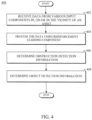
- FIG. 4 is a flow diagram showing a process 400 for determining object detection/location and obstruction detection occurring externally to the asset 164 in accordance with an implementation of this disclosure.
- the video analytics system 110 receives data signals from various input components 402, such as cameras 140 on, in or in vicinity of the asset 164, vehicle data component 134, weather component 136, and route/manifest and GIS component 138.
- the video analytics system 110 processes the data signals using the reinforcement learning component 124, the object detection/location component 126, and the obstruction detection component 128 404 and determines obstruction detection 406 and object detection and location 408 such as track presence.
- process 300 and process 400 are depicted and described as a series of steps. However, steps in accordance with this disclosure can occur in various orders and/or concurrently. Additionally, steps in accordance with this disclosure may occur with other steps not presented and described herein. Furthermore, not all illustrated steps may be required to implement a method in accordance with the disclosed subject matter.
Landscapes
- Engineering & Computer Science (AREA)
- Mechanical Engineering (AREA)
- Multimedia (AREA)
- Physics & Mathematics (AREA)
- General Physics & Mathematics (AREA)
- Theoretical Computer Science (AREA)
- Signal Processing (AREA)
- Health & Medical Sciences (AREA)
- Biomedical Technology (AREA)
- General Health & Medical Sciences (AREA)
- Computer Vision & Pattern Recognition (AREA)
- Library & Information Science (AREA)
- Software Systems (AREA)
- Remote Sensing (AREA)
- Radar, Positioning & Navigation (AREA)
- Aviation & Aerospace Engineering (AREA)
- Automation & Control Theory (AREA)
- General Engineering & Computer Science (AREA)
- Databases & Information Systems (AREA)
- Data Mining & Analysis (AREA)
- Television Signal Processing For Recording (AREA)
- Alarm Systems (AREA)
- Closed-Circuit Television Systems (AREA)
- Time Recorders, Dirve Recorders, Access Control (AREA)
- Train Traffic Observation, Control, And Security (AREA)
- Electromagnetism (AREA)
- Traffic Control Systems (AREA)
Claims (11)
- Verfahren zum Verarbeiten von Daten von einer mobilen Anlage, das Folgendes umfasst:
Empfangen, unter Verwendung eines Videoanalysesystems an Bord der mobilen Anlage, von Daten basierend auf mindestens einem Datensignal von mindestens einem von Folgendem:mindestens eine Datenquelle an Bord der mobilen Anlage, wobei die bordeigene Datenquelle mindestens eines von Folgendem umfasst: eine Datenkomponente der mobilen Anlage, mindestens ein Mikrofon, mindestens eine feste Kamera und mindestens eine 360-Grad-Kamera; undmindestens eine Datenquelle, die von der mobilen Anlage entfernt ist, einschließlich mindestens einer Wetterkomponente und einer Routenmanifest- und Geografie-Informationssystemkomponente;wobei das Verfahren ferner Folgendes umfasst:Verarbeiten, unter Verwendung einer Komponente künstlicher Intelligenz des Videoanalysesystems, der Daten in verarbeitete Daten, der verarbeiteten Daten, die sich auf eine interne Statusbestimmung und/oder eine externe Statusbestimmung beziehen, die die mobile Anlage involviert, wobei die interne und/oder externe Statusbestimmung Objektdetektionsdaten und/oder Objektpositionsdaten und/oder Hindernisdetektionsdaten und/oder Kabinenbelegungsdaten beinhaltet;Senden, unter Verwendung des Videoanalysesystems, der Daten und/oder der verarbeiteten Daten an einen Datenaufzeichner an Bord der mobilen Anlage;Codieren, unter Verwendung eines Datencodierers des Datenaufzeichners, einer ersten Aufzeichnung, die einen Bitstrom umfasst, basierend auf den verarbeiteten Daten; undSpeichern, unter Verwendung eines bordeigenen Datenmanagers des Datenaufzeichners, der Daten und/oder der verarbeiteten Daten und/oder der ersten Aufzeichnung mit einer konfigurierbaren ersten vorbestimmten Rate in mindestens einer lokalen Speicherkomponente des Datenaufzeichners und Replizieren, unter Verwendung eines entfernten Datenmanagers, mindestens eines der Datensätze, der verarbeiteten Daten und des ersten Datensatzes mit einer konfigurierbaren zweiten vorbestimmten Rate in einem entfernten Datenspeicher, wobei die konfigurierbare erste und zweite vorbestimmte Rate größer als null Sekunden und bis zu fünf Minuten sind. - Verfahren nach Anspruch 1, wobei die Daten, die von der Datenkomponente der mobilen Anlage empfangen werden, globale Positionierungssystemdaten und Trägheitssensordaten beinhalten, oder wobei die Daten Videoinformationen, die von der mindestens einen festen Kamera und/oder der mindestens einen 360-Grad-Kamera empfangen werden, und/oder Audioinformationen, die von dem mindestens einen Mikrofon empfangen werden, umfassen.
- Verfahren nach Anspruch 1, das ferner Folgendes umfasst:Bestimmen, unter Verwendung einer Objektdetektions- und -Standortkomponente des Videoanalysesystems, von ersten Objektdetektionsdaten und/oder ersten Objektpositionsdaten eines ersten Objekts in der Nähe einer Spur, entlang der die mobile Anlage zu fahren konfiguriert ist, basierend auf den verarbeiteten Daten; undIdentifizieren, unter Verwendung der Objektdetektions- und Standortkomponente, der internen Statusbestimmung, die die mobile Anlage beinhaltet, basierend auf den ersten Objektdetektionsdaten und/oder den ersten Objektpositionsdaten.
- Verfahren nach Anspruch 3, das ferner Folgendes umfasst:Bestimmen, unter Verwendung einer Hindernisdetektionskomponente des Videoanalysesystems, von Hindernisdetektionsdaten basierend auf den verarbeiteten Daten und/oder den ersten Objektdetektionsdaten und/oder den ersten Objektpositionsdaten; undIdentifizieren, unter Verwendung der Hindernisdetektionskomponente, der externen Statusbestimmung, die die mobile Anlage involviert, basierend auf den Hindernisdetektionsdaten.
- Verfahren nach Anspruch 4, wobei die Hindernisdetektionsdaten auf einer Bedingung basieren, dass die ersten Objektpositionsdaten und/oder die ersten Objektdetektionsdaten einem zweiten Objektpositionsdatensatz und einem zweiten Objektdetektionsdatensatz eines zweiten Objekts ähnlich sind,
oder wobei das Verfahren ferner Folgendes umfasst:Empfangen, unter Verwendung des Datenaufzeichners, der externen Statusbestimmung und/oder der Hindernisdetektionsdaten;Codieren, unter Verwendung des Datencodierers des Datenaufzeichners, einer zweiten Aufzeichnung, die einen Bitstrom umfasst, basierend auf der externen Statusbestimmung und/oder den Hindernisdetektionsdaten; undSpeichern, unter Verwendung des bordeigenen Datenmanagers des Datenaufzeichners, der externen Statusbestimmung und/oder der Hindernisdetektionsdaten und/oder des zweiten Datensatzes mit der konfigurierbaren ersten vorbestimmten Rate in dem entfernten Datenspeicher. - Verfahren nach Anspruch 3, wobei die interne Statusbestimmung eine Kabinenbelegung der mobilen Anlage umfasst und die externe Statusbestimmung eine Spurdetektion umfasst,
oder wobei das Verfahren ferner Folgendes umfasst:Empfangen, unter Verwendung des Datenaufzeichners, der internen Statusbestimmung und/oder der ersten Objektdetektionsdaten und/oder der ersten Objektpositionsdaten;Codieren, unter Verwendung des Datencodierers des Datenaufzeichners, einer zweiten Aufzeichnung, die einen Bitstrom umfasst, basierend auf der internen Statusbestimmung und/oder den ersten Objektdetektionsdaten und/oder den ersten Objektpositionsdaten; undSpeichern, unter Verwendung des bordeigenen Datenmanagers des Datenaufzeichners, der internen Statusbestimmung und/oder der ersten Objektdetektionsdaten und/oder der ersten Objektpositionsdaten und/oder der zweiten Aufzeichnung mit der konfigurierbaren ersten vorbestimmten Rate in der mindestens einen lokalen Speicherkomponente. - Verfahren nach Anspruch 1, das ferner Folgendes umfasst:
Empfangen, unter Verwendung eines digitalen Videorecorders an Bord der mobilen Anlage, von Multimediadaten basierend auf mindestens einem Datensignal von mindestens einem von Folgendem:der mindestens einen 360-Grad-Kamera;der mindestens einen festen Kamera; unddem mindestens einen Mikrofon;Empfangen, unter Verwendung des Datenaufzeichners, der Multimediadaten;Codieren, unter Verwendung des Datencodierers des Datenaufzeichners, eines zweiten Datensatzes, der einen Bitstrom umfasst, basierend auf den Multimediadaten; undSpeichern, unter Verwendung des bordeigenen Datenmanagers des Datenaufzeichners, der Multimediadaten und/oder des zweiten Datensatzes mit der konfigurierbaren ersten vorbestimmten Rate in der mindestens einen lokalen Speicherkomponente. - System zum Analysieren von Videoinhalt, das Folgendes umfasst:mindestens eine 360-Grad-Kamera, mindestens eine feste Kamera und mindestens ein Mikrofon;Videoanalysesystem an Bord einer mobilen Anlage, wobei das Videoanalysesystem eine Komponente künstlicher Intelligenz umfasst, wobei das Videoanalysesystem dazu ausgebildet ist, Daten basierend auf mindestens einem Datensignal von der mindestens einen der mindestens einen 360-Grad-Kamera, der mindestens einen festen Kamera, dem mindestens einen Mikrofon, und von mindestens einer Datenquelle entfernt von der mobilen Anlage, einschließlich mindestens einer Wetterkomponente und einer Routenmanifest- und geografischen Informationssystemkomponente;wobei die Komponente künstlicher Intelligenz dazu ausgelegt ist, die Daten zu verarbeiteten Daten zu verarbeiten, wobei sich die verarbeiteten Daten auf eine interne Statusbestimmung und/oder eine externe Statusbestimmung beziehen, die die mobile Anlage involviert, wobei die interne und/oder externe Statusbestimmung Objektdetektionsdaten, Objektpositionsdaten, Hindernisdetektionsdaten und/oder Kabinenbelegungsdaten beinhaltet;einen digitalen Videorecorder an Bord der mobilen Anlage, der dazu ausgebildet ist, Daten basierend auf mindestens einem Datensignal von der mindestens einen der mindestens einen 360-Grad-Kamera, der mindestens einen festen Kamera und dem mindestens einen Mikrofon zu empfangen; undeinen Datenaufzeichner an Bord der mobilen Anlage, der einen Datencodierer und einen bordeigenen Datenmanager umfasst, wobei der Datenaufzeichner dazu ausgelegt ist, die Daten und/oder die verarbeiteten Daten mit einer konfigurierbaren ersten vorbestimmten Rate in mindestens einer lokalen Speicherkomponente des Datenaufzeichners zu speichern, und einen Ferndatenmanager, der dazu ausgelegt ist, die Daten und/oder die verarbeiteten Daten mit einer konfigurierbaren zweiten vorbestimmten Rate in einem Ferndatenspeicher zu replizieren, wobei die konfigurierbare erste vorbestimmte Rate und die konfigurierbare zweite vorbestimmte Rate größer als null Sekunden und bis zu fünf Minuten sind.
- System nach Anspruch 8, das ferner Folgendes umfasst:eine Fahrzeugdatenkomponente an Bord der mobilen Anlage, die dazu ausgelegt ist, Daten des globalen Positionierungssystems und/oder Trägheitssensordaten an das Videoanalysesystem zu senden; wobeidie Wetterkomponente dazu ausgebildet ist, die aktuellen Wetterinformationen und/oder die prognostizierten Wetterinformationen an das Videoanalysesystem zu senden;die Routenmanifest- und Geografie-Informationssystem-(GIS)-Komponente dazu ausgebildet ist, Routeninformationen und/oder Besatzungsinformationen und/oder Manifestinformationen und/oder GIS-Informationen an das Videoanalysesystem zu senden; undwobei die Komponente künstlicher Intelligenz dazu ausgelegt ist, die globalen Positionierungssystemdaten und/oder die Trägheitssensordaten und/oder die aktuellen Wetterinformationen und/oder die vorhergesagten Wetterinformationen und/oder die Routeninformationen und/oder die Besatzungsinformationen und/oder die Manifestinformationen und/oder die GIS-Informationen zu verwenden, um die Daten zu verarbeiteten Daten zu verarbeiten.
- System nach Anspruch 8, das ferner Folgendes umfasst:wobei der Datenaufzeichner dazu ausgebildet ist, die verarbeiteten Daten und/oder die Objektdetektionsdaten und/oder die Objektpositionsdaten und/oder die Hindernisdaten von dem Videoanalysesystem zu empfangen;wobei der Datencodierer dazu ausgelegt ist, einen Datensatz zu codieren, der einen Bitstrom umfasst, basierend auf den verarbeiteten Daten und/oder den Objektdetektionsdaten und/oder den Objektpositionsdaten und/oder den Hindernisdaten; undwobei der bordeigene Datenmanager dazu ausgelegt ist, den Datensatz und/oder die verarbeiteten Daten und/oder die Objektdetektionsdaten und/oder die Objektpositionsdaten und/oder die Hindernisdaten mit der konfigurierbaren ersten vorbestimmten Rate in der mindestens einen lokalen Speicherkomponente zu speichern.
- System nach Anspruch 10, das ferner Folgendes umfasst:einen Datendecodierer, der von der mobilen Anlage entfernt ist, wobei der Datendecodierer dazu ausgebildet ist, den Datensatz von dem entfernten Datenspeicher zu empfangen und den Datensatz zu decodieren; undeine externe Überwachungskomponente entfernt von der mobilen Anlage, wobei die externe Überwachungskomponente dazu ausgelegt ist, die Objektdetektionsdaten und/oder die Objektpositionsdaten und/oder die Hindernisdaten zu identifizieren;oder ferner Folgendes umfassend:einen Web-Client, der eine Anzeigevorrichtung umfasst;einen Web-Server in drahtloser Kommunikation mit dem Web-Client, wobei der Web-Server dazu ausgebildet ist, eine Anfrage zu empfangen, die spezifizierte Daten bezüglich der mobilen Anlage und eines spezifizierten Ansichtsmodus umfasst;eine Lokalisierungskomponente in drahtloser Kommunikation mit dem Web-Server, wobei die Lokalisierungskomponente dazu ausgebildet ist, die spezifizierten Daten von dem Datendecodierer zu empfangen und die spezifizierten Daten basierend auf einer Zeiteinstellung und einer Maßeinheit-Einstellung, die durch einen entfernten Benutzer spezifiziert werden, zu modifizieren, wobei die spezifizierten Daten auf dem Datensatz und/oder den verarbeiteten Daten und/oder den Objektdetektionsdaten und/oder den Objektpositionsdaten und/oder den Hindernisdaten basieren;wobei der Web-Server ausgebildet ist, um die angegebenen Daten zu empfangen; unddie Anzeigevorrichtung ausgebildet ist, um die angegebenen Daten in der angegebenen Ansicht anzuzeigen.
Applications Claiming Priority (7)
| Application Number | Priority Date | Filing Date | Title |
|---|---|---|---|
| US201662337228P | 2016-05-16 | 2016-05-16 | |
| US201662337225P | 2016-05-16 | 2016-05-16 | |
| US201662337227P | 2016-05-16 | 2016-05-16 | |
| US15/595,712 US10392038B2 (en) | 2016-05-16 | 2017-05-15 | Video content analysis system and method for transportation system |
| US15/595,650 US9934623B2 (en) | 2016-05-16 | 2017-05-15 | Real-time data acquisition and recording system |
| US15/595,689 US10410441B2 (en) | 2016-05-16 | 2017-05-15 | Real-time data acquisition and recording system viewer |
| PCT/US2017/032971 WO2017201095A1 (en) | 2016-05-16 | 2017-05-16 | Video content analysis system and method for transportation system |
Publications (4)
| Publication Number | Publication Date |
|---|---|
| EP3458991A1 EP3458991A1 (de) | 2019-03-27 |
| EP3458991A4 EP3458991A4 (de) | 2020-01-22 |
| EP3458991B1 true EP3458991B1 (de) | 2025-02-12 |
| EP3458991C0 EP3458991C0 (de) | 2025-02-12 |
Family
ID=60297449
Family Applications (1)
| Application Number | Title | Priority Date | Filing Date |
|---|---|---|---|
| EP17800046.9A Active EP3458991B1 (de) | 2016-05-16 | 2017-05-16 | Videoinhaltanalysesystem und -verfahren für transportsystem |
Country Status (15)
| Country | Link |
|---|---|
| US (1) | US10392038B2 (de) |
| EP (1) | EP3458991B1 (de) |
| JP (2) | JP2019527390A (de) |
| KR (1) | KR102437322B1 (de) |
| CN (1) | CN109476329B (de) |
| AU (2) | AU2017268276A1 (de) |
| BR (1) | BR112018073638A8 (de) |
| CA (1) | CA3024354C (de) |
| CL (1) | CL2018003237A1 (de) |
| ES (1) | ES3013111T3 (de) |
| HU (1) | HUE070910T2 (de) |
| MX (1) | MX389612B (de) |
| PL (1) | PL3458991T3 (de) |
| WO (1) | WO2017201095A1 (de) |
| ZA (1) | ZA201807686B (de) |
Families Citing this family (23)
| Publication number | Priority date | Publication date | Assignee | Title |
|---|---|---|---|---|
| US20170313332A1 (en) * | 2002-06-04 | 2017-11-02 | General Electric Company | Autonomous vehicle system and method |
| US10410441B2 (en) * | 2016-05-16 | 2019-09-10 | Wi-Tronix, Llc | Real-time data acquisition and recording system viewer |
| US10606767B2 (en) * | 2017-05-19 | 2020-03-31 | Samsung Electronics Co., Ltd. | Ethernet-attached SSD for automotive applications |
| CN107886461A (zh) | 2017-08-11 | 2018-04-06 | 比亚迪股份有限公司 | 区域限速值的获得方法、装置和终端设备 |
| US11688077B2 (en) * | 2017-12-15 | 2023-06-27 | Google Llc | Adaptive object tracking policy |
| CN108214554B (zh) * | 2018-02-05 | 2020-11-24 | 刘春梅 | 一种用于轨道交通智能巡检机器人的自检系统 |
| US11106211B2 (en) * | 2018-04-02 | 2021-08-31 | Sony Group Corporation | Vision-based sample-efficient reinforcement learning framework for autonomous driving |
| DE102018205917A1 (de) * | 2018-04-18 | 2019-10-24 | Siemens Mobility GmbH | Vorrichtung zur Vervielfältigung und Sicherung von Daten eines Fahrtenregistriersystems im Schienenverkehr |
| KR102169211B1 (ko) * | 2018-11-15 | 2020-10-22 | 한국철도공사 | 전차 선로의 조류 둥지 자동 검출 장치 및 방법 |
| CN109802964B (zh) * | 2019-01-23 | 2021-09-28 | 西北大学 | 一种基于dqn的http自适应流控制能耗优化方法 |
| US11731672B2 (en) * | 2019-03-29 | 2023-08-22 | Wi-Tronix, Llc | Automated signal compliance monitoring and alerting system |
| CN110450823B (zh) * | 2019-07-22 | 2021-07-30 | 北京交大微联科技有限公司 | 调整列车计划占用的股道的方法、装置及电子设备 |
| CN110609474B (zh) * | 2019-09-09 | 2020-10-02 | 创新奇智(南京)科技有限公司 | 一种基于强化学习的数据中心能效优化方法 |
| JP2022548009A (ja) | 2019-09-12 | 2022-11-16 | コモンウェルス サイエンティフィック アンド インダストリアル リサーチ オーガナイゼーション | 物体移動システム |
| US11834082B2 (en) * | 2019-09-18 | 2023-12-05 | Progress Rail Services Corporation | Rail buckle detection and risk prediction |
| CN113256924A (zh) * | 2020-02-12 | 2021-08-13 | 中车唐山机车车辆有限公司 | 一种轨道列车的监控系统,监控方法及监控装置 |
| US20220044183A1 (en) | 2020-08-05 | 2022-02-10 | Wi-Tronix, Llc | Engineer recertification assistant |
| US12118833B2 (en) | 2020-11-06 | 2024-10-15 | Wi-Tronix, Llc | Connected diagnostic system and method |
| CN115841650B (zh) * | 2022-12-05 | 2023-08-01 | 北京数原数字化城市研究中心 | 视觉定位方法、视觉定位装置、电子设备及可读存储介质 |
| EP4671083A1 (de) | 2024-06-28 | 2025-12-31 | Siemens Mobility GmbH | Verfahren zum orten eines spurgeführten fahrzeugs |
| EP4671084A1 (de) | 2024-06-28 | 2025-12-31 | Siemens Mobility GmbH | Verfahren zur geschwindigkeitsbestimmung eines auf einer strecke fahrenden spurgeführten fahrzeugs |
| EP4696583A1 (de) | 2024-08-16 | 2026-02-18 | Siemens Mobility GmbH | Verfahren zur geschwindigkeitsbestimmung eines auf einer strecke fahrenden spurgeführten fahrzeugs |
| CN119810676A (zh) * | 2025-03-12 | 2025-04-11 | 广东启越建筑工程有限公司 | 一种基于ai的动态资产识别方法、系统和介质 |
Family Cites Families (73)
| Publication number | Priority date | Publication date | Assignee | Title |
|---|---|---|---|---|
| US5065321A (en) | 1989-06-15 | 1991-11-12 | Pulse Electronics, Inc. | Solid state event recorder |
| JP2785220B2 (ja) | 1992-09-22 | 1998-08-13 | ソニー株式会社 | データ符号化装置および方法、並びにデータ復号化装置および方法 |
| US5440336A (en) | 1993-07-23 | 1995-08-08 | Electronic Data Systems Corporation | System and method for storing and forwarding audio and/or visual information on demand |
| US5377497A (en) | 1993-12-17 | 1995-01-03 | Lennox Industries Inc. | Timed-off control apparatus and method |
| US5638299A (en) | 1995-06-22 | 1997-06-10 | Miller; Keith | Light weight, self-contained programmable data-acquisition system |
| US5627508A (en) * | 1996-05-10 | 1997-05-06 | The United States Of America As Represented By The Secretary Of The Navy | Pilot vehicle which is useful for monitoring hazardous conditions on railroad tracks |
| CA2234897A1 (en) | 1997-04-17 | 1998-10-17 | Donald E. Graham | Locomotive cab heating system |
| US6263268B1 (en) | 1997-08-26 | 2001-07-17 | Transcontech Corporation | System and method for providing mobile automotive telemetry |
| JP3327255B2 (ja) * | 1998-08-21 | 2002-09-24 | 住友電気工業株式会社 | 安全運転支援システム |
| US7640083B2 (en) | 2002-11-22 | 2009-12-29 | Monroe David A | Record and playback system for aircraft |
| US7131136B2 (en) | 2002-07-10 | 2006-10-31 | E-Watch, Inc. | Comprehensive multi-media surveillance and response system for aircraft, operations centers, airports and other commercial transports, centers and terminals |
| US6392692B1 (en) * | 1999-02-25 | 2002-05-21 | David A. Monroe | Network communication techniques for security surveillance and safety system |
| US20020026321A1 (en) | 1999-02-26 | 2002-02-28 | Sadeg M. Faris | Internet-based system and method for fairly and securely enabling timed-constrained competition using globally time-sychronized client subsystems and information servers having microsecond client-event resolution |
| US6154636A (en) | 1999-05-14 | 2000-11-28 | Harris Corporation | System and method of providing OOOI times of an aircraft |
| GB9918248D0 (en) | 1999-08-04 | 1999-10-06 | Matra Bae Dynamics Uk Ltd | Improvements in and relating to surveillance systems |
| US6611755B1 (en) | 1999-12-19 | 2003-08-26 | Trimble Navigation Ltd. | Vehicle tracking, communication and fleet management system |
| US6496777B2 (en) | 2000-02-23 | 2002-12-17 | Nexterna, Inc. | Collecting and reporting information concerning mobile assets |
| US20030152145A1 (en) * | 2001-11-15 | 2003-08-14 | Kevin Kawakita | Crash prevention recorder (CPR)/video-flight data recorder (V-FDR)/cockpit-cabin voice recorder for light aircraft with an add-on option for large commercial jets |
| US6892167B2 (en) | 2001-11-28 | 2005-05-10 | Sypris Data Systems, Inc. | Real-time data acquisition and storage network |
| US20040027255A1 (en) | 2002-03-01 | 2004-02-12 | Greenbaum Myron H. | Wideband avionics data retrieval system |
| AU2003209654A1 (en) | 2002-03-07 | 2003-09-16 | Nice Systems Ltd. | Method and apparatus for internal and external monitoring of a transportation vehicle |
| US7359821B1 (en) | 2002-06-11 | 2008-04-15 | Injury Sciences Llc | Methods and apparatus for using black box data to analyze vehicular accidents |
| RU2381629C2 (ru) | 2002-08-26 | 2010-02-10 | Джозеф Дж. МАДЗИЛЛИ | Система автомобильной видеокамеры с обзором в 360° |
| ITBO20020724A1 (it) | 2002-11-15 | 2004-05-16 | L E A T S R L | Metodo e sistema per l'acquisizione e la registrazione di dati relativi allo spostamento di un veicolo |
| US7012520B2 (en) | 2003-06-17 | 2006-03-14 | Infraegis, Inc. | Global intelligent remote detection system |
| CA2848301A1 (en) | 2004-01-09 | 2005-07-28 | United Parcel Service Of America, Inc. | System, method and apparatus for capturing telematics data with an active rfid tag |
| JP4624000B2 (ja) | 2004-05-07 | 2011-02-02 | 有限会社パワーサプライ | 複合人工知能装置 |
| US7620374B2 (en) | 2004-09-16 | 2009-11-17 | Harris Corporation | System and method of transmitting data from an aircraft |
| US9576404B2 (en) | 2004-09-16 | 2017-02-21 | Harris Corporation | System and method of transmitting data from an aircraft |
| WO2006044476A2 (en) | 2004-10-12 | 2006-04-27 | Robert Vernon Vanman | Method of and system for mobile surveillance and event recording |
| US8369264B2 (en) | 2005-10-28 | 2013-02-05 | Skyhook Wireless, Inc. | Method and system for selecting and providing a relevant subset of Wi-Fi location information to a mobile client device so the client device may estimate its position with efficient utilization of resources |
| WO2006128124A2 (en) | 2005-05-27 | 2006-11-30 | Panoptic Systems, Inc. | Total awareness surveillance system |
| US7302323B2 (en) | 2005-06-01 | 2007-11-27 | Polar Industries, Inc. | Transportation data recording system |
| US20060276943A1 (en) | 2005-06-01 | 2006-12-07 | Polar Industries, Inc. | Systems and methods for data processing and control in a transportation system |
| PT1922822T (pt) | 2005-08-11 | 2018-05-08 | Wi Tronix Llc | Sistema de gravação de dados/evento universal |
| US8942426B2 (en) | 2006-03-02 | 2015-01-27 | Michael Bar-Am | On-train rail track monitoring system |
| US7440848B2 (en) | 2006-05-30 | 2008-10-21 | Horizon Marine | Methods and systems for integrating environmental data with mobile asset tracking |
| US7843335B2 (en) | 2007-03-13 | 2010-11-30 | Blackbird Technologies, Inc. | Mobile asset tracking unit, system and method |
| US8798148B2 (en) | 2007-06-15 | 2014-08-05 | Physical Optics Corporation | Apparatus and method employing pre-ATR-based real-time compression and video frame segmentation |
| WO2009088946A1 (en) | 2008-01-03 | 2009-07-16 | Iwapi, Inc. | Integrated rail efficiency and safety support system |
| US8228364B2 (en) * | 2008-01-29 | 2012-07-24 | Enforcement Video, Llc | Omnidirectional camera for use in police car event recording |
| FR2932447B1 (fr) * | 2008-06-12 | 2016-09-30 | Alstom Transport Sa | Systeme informatique embarque de gestion d'un train |
| CA2728105C (en) | 2008-06-17 | 2013-06-18 | Weir-Jones Engineering Consultants Ltd. | System and method for detecting rock fall |
| US20100023201A1 (en) | 2008-07-24 | 2010-01-28 | David Scott Kinney | Method and apparatus for obtaining vehicle data |
| JP5530146B2 (ja) | 2009-09-30 | 2014-06-25 | 富士通テン株式会社 | データ管理装置、データ読取方法及びプログラム |
| US9235765B2 (en) | 2010-08-26 | 2016-01-12 | Blast Motion Inc. | Video and motion event integration system |
| CN102123274B (zh) | 2011-03-11 | 2013-03-13 | 广州国联通信有限公司 | 一种具有分散存储功能的车载视频监控系统 |
| US8625878B2 (en) | 2011-04-15 | 2014-01-07 | International Business Machines Corporation | Method and system of rail component detection using vision technology |
| US8768534B2 (en) | 2011-11-14 | 2014-07-01 | Arinc Incorporated | Method and apparatus for using electronic flight bag (EFB) to enable flight operations quality assurance (FOQA) |
| US9049433B1 (en) | 2012-01-06 | 2015-06-02 | John H. Prince | High-speed railroad inspection using coordinated 3D cameras |
| WO2013121344A2 (en) * | 2012-02-17 | 2013-08-22 | Balaji Venkatraman | Real time railway disaster vulnerability assessment and rescue guidance system using multi-layered video computational analytics |
| IN2012DE00720A (de) | 2012-03-13 | 2015-08-21 | Ge Aviat Systems Llc | |
| ES2970318T3 (es) | 2012-04-13 | 2024-05-28 | Wi Tronix Llc | Registro de datos de activo móvil para la compensación de combustible |
| US9050984B2 (en) | 2012-04-20 | 2015-06-09 | International Business Machines Corporation | Anomalous railway component detection |
| US20130307693A1 (en) | 2012-05-20 | 2013-11-21 | Transportation Security Enterprises, Inc. (Tse) | System and method for real time data analysis |
| US9260122B2 (en) | 2012-06-06 | 2016-02-16 | International Business Machines Corporation | Multisensor evidence integration and optimization in object inspection |
| US9003052B2 (en) | 2012-07-09 | 2015-04-07 | The Boeing Company | System and method for air-to-ground data streaming |
| US20140052315A1 (en) | 2012-08-17 | 2014-02-20 | Siemens Industry, Inc. | Railway train data recorder with parallel remote online incident data storage |
| JP2014106685A (ja) * | 2012-11-27 | 2014-06-09 | Osaka Univ | 車両周辺監視装置 |
| US20140285337A1 (en) | 2013-03-21 | 2014-09-25 | Mark Anthony Gebhardt | Automobile Alert System for Recording and Communicating Incidents to Remote Monitoring Devices |
| US9346476B2 (en) | 2013-09-27 | 2016-05-24 | Herzog Technologies, Inc. | Track-data verification |
| US20150221141A1 (en) | 2014-02-05 | 2015-08-06 | Alfredo Oscar NEGRITTO | Flight data recorder with web access in real time |
| KR101559893B1 (ko) * | 2014-02-14 | 2015-10-14 | 주식회사 시스토 | 스마트폰을 이용한 차량용 블랙박스 제어 시스템 및 그 방법 |
| US9260199B2 (en) | 2014-02-25 | 2016-02-16 | Honeywell International Inc. | Aircraft data processing and transmission system |
| FR3019414B1 (fr) | 2014-03-31 | 2017-09-08 | Sagem Defense Securite | Procede de transmission en vol de donnees de type boite noire |
| US9460566B2 (en) | 2014-05-20 | 2016-10-04 | Wabtec Holding Corp. | Data recorder system and unit for a vehicle |
| US9434397B2 (en) | 2014-08-05 | 2016-09-06 | Panasec Corporation | Positive train control system and apparatus therefor |
| US9872250B2 (en) | 2014-09-04 | 2018-01-16 | The Boeing Company | Data acquisition node and method of operating same |
| US10553120B2 (en) | 2014-09-15 | 2020-02-04 | L3 Technologies, Inc. | Fail safe aircraft monitoring and tracking |
| CN204231421U (zh) * | 2014-12-01 | 2015-03-25 | 徐绍衡 | 一种船舶、海洋设备、飞行器的离岸工作一体实时数据库信息平台 |
| CN104742936A (zh) * | 2015-04-16 | 2015-07-01 | 济南轨道交通装备有限责任公司 | 一种智能化铁路货车 |
| US20150225002A1 (en) | 2015-04-22 | 2015-08-13 | Electro-Motive Diesel, Inc. | Railway inspection system |
| US10370102B2 (en) * | 2016-05-09 | 2019-08-06 | Coban Technologies, Inc. | Systems, apparatuses and methods for unmanned aerial vehicle |
-
2017
- 2017-05-15 US US15/595,712 patent/US10392038B2/en active Active
- 2017-05-16 PL PL17800046.9T patent/PL3458991T3/pl unknown
- 2017-05-16 WO PCT/US2017/032971 patent/WO2017201095A1/en not_active Ceased
- 2017-05-16 KR KR1020187036626A patent/KR102437322B1/ko active Active
- 2017-05-16 AU AU2017268276A patent/AU2017268276A1/en not_active Abandoned
- 2017-05-16 JP JP2018560975A patent/JP2019527390A/ja active Pending
- 2017-05-16 MX MX2018014071A patent/MX389612B/es unknown
- 2017-05-16 CN CN201780039755.4A patent/CN109476329B/zh active Active
- 2017-05-16 EP EP17800046.9A patent/EP3458991B1/de active Active
- 2017-05-16 CA CA3024354A patent/CA3024354C/en active Active
- 2017-05-16 HU HUE17800046A patent/HUE070910T2/hu unknown
- 2017-05-16 BR BR112018073638A patent/BR112018073638A8/pt not_active Application Discontinuation
- 2017-05-16 ES ES17800046T patent/ES3013111T3/es active Active
-
2018
- 2018-11-14 CL CL2018003237A patent/CL2018003237A1/es unknown
- 2018-11-15 ZA ZA2018/07686A patent/ZA201807686B/en unknown
-
2021
- 2021-12-09 JP JP2021200307A patent/JP7718975B2/ja active Active
-
2022
- 2022-09-07 AU AU2022228123A patent/AU2022228123C1/en active Active
Also Published As
| Publication number | Publication date |
|---|---|
| EP3458991A1 (de) | 2019-03-27 |
| CN109476329B (zh) | 2021-10-29 |
| EP3458991A4 (de) | 2020-01-22 |
| ZA201807686B (en) | 2019-08-28 |
| MX2018014071A (es) | 2019-09-16 |
| HUE070910T2 (hu) | 2025-07-28 |
| AU2022228123C1 (en) | 2025-01-23 |
| CA3024354A1 (en) | 2017-11-23 |
| CA3024354C (en) | 2023-09-12 |
| BR112018073638A8 (pt) | 2023-01-24 |
| MX389612B (es) | 2025-03-20 |
| ES3013111T3 (en) | 2025-04-11 |
| BR112018073638A2 (pt) | 2019-02-26 |
| EP3458991C0 (de) | 2025-02-12 |
| KR102437322B1 (ko) | 2022-08-29 |
| RU2018144311A3 (de) | 2021-05-21 |
| JP2022033946A (ja) | 2022-03-02 |
| RU2018144311A (ru) | 2020-06-17 |
| JP7718975B2 (ja) | 2025-08-05 |
| CL2018003237A1 (es) | 2019-03-29 |
| AU2017268276A1 (en) | 2018-12-06 |
| US20170327138A1 (en) | 2017-11-16 |
| AU2022228123A1 (en) | 2022-09-29 |
| AU2022228123B2 (en) | 2024-09-19 |
| JP2019527390A (ja) | 2019-09-26 |
| CN109476329A (zh) | 2019-03-15 |
| US10392038B2 (en) | 2019-08-27 |
| WO2017201095A1 (en) | 2017-11-23 |
| KR20190013843A (ko) | 2019-02-11 |
| PL3458991T3 (pl) | 2025-06-02 |
Similar Documents
| Publication | Publication Date | Title |
|---|---|---|
| AU2022228123C1 (en) | Video content analysis system and method for transportation system | |
| US11731672B2 (en) | Automated signal compliance monitoring and alerting system | |
| AU2019280705B2 (en) | Real-time data acquisition and recording data sharing system | |
| EP3803607B1 (de) | Echtzeitdatenerfassungs- und aufzeichnungssystem mit gemeinsamer datennutzung | |
| RU2784892C2 (ru) | Способ и система анализа видеоконтента для транспортной системы | |
| RU2786372C2 (ru) | Система совместного использования данных для получения и записи данных в реальном времени | |
| HK40059403A (en) | Automated signal compliance monitoring and alerting system | |
| HK40059403B (zh) | 自动信号符合监测与警报系统 | |
| HK40037627A (en) | Real-time data acquisition and recording data sharing system | |
| HK40004401A (en) | Video content analysis system and method for transportation system | |
| HK40037627B (zh) | 实时数据获取和记录数据共享系统 | |
| HK40004401B (zh) | 用於运输系统的视频内容分析系统及方法 |
Legal Events
| Date | Code | Title | Description |
|---|---|---|---|
| STAA | Information on the status of an ep patent application or granted ep patent |
Free format text: STATUS: THE INTERNATIONAL PUBLICATION HAS BEEN MADE |
|
| PUAI | Public reference made under article 153(3) epc to a published international application that has entered the european phase |
Free format text: ORIGINAL CODE: 0009012 |
|
| STAA | Information on the status of an ep patent application or granted ep patent |
Free format text: STATUS: REQUEST FOR EXAMINATION WAS MADE |
|
| 17P | Request for examination filed |
Effective date: 20181210 |
|
| AK | Designated contracting states |
Kind code of ref document: A1 Designated state(s): AL AT BE BG CH CY CZ DE DK EE ES FI FR GB GR HR HU IE IS IT LI LT LU LV MC MK MT NL NO PL PT RO RS SE SI SK SM TR |
|
| AX | Request for extension of the european patent |
Extension state: BA ME |
|
| DAV | Request for validation of the european patent (deleted) | ||
| DAX | Request for extension of the european patent (deleted) | ||
| A4 | Supplementary search report drawn up and despatched |
Effective date: 20200107 |
|
| RIC1 | Information provided on ipc code assigned before grant |
Ipc: G07C 5/00 20060101AFI20191219BHEP Ipc: G16Z 99/00 20190101ALI20191219BHEP Ipc: H04N 7/18 20060101ALI20191219BHEP Ipc: H04Q 9/00 20060101ALI20191219BHEP |
|
| STAA | Information on the status of an ep patent application or granted ep patent |
Free format text: STATUS: EXAMINATION IS IN PROGRESS |
|
| 17Q | First examination report despatched |
Effective date: 20221006 |
|
| REG | Reference to a national code |
Ref country code: DE Ref legal event code: R079 Free format text: PREVIOUS MAIN CLASS: G06F0019000000 Ipc: G07C0005000000 Ref country code: DE Ref legal event code: R079 Ref document number: 602017087724 Country of ref document: DE Free format text: PREVIOUS MAIN CLASS: G06F0019000000 Ipc: G07C0005000000 |
|
| RIC1 | Information provided on ipc code assigned before grant |
Ipc: G07C 5/08 20060101ALI20230302BHEP Ipc: G07C 5/00 20060101AFI20230302BHEP |
|
| GRAP | Despatch of communication of intention to grant a patent |
Free format text: ORIGINAL CODE: EPIDOSNIGR1 |
|
| STAA | Information on the status of an ep patent application or granted ep patent |
Free format text: STATUS: GRANT OF PATENT IS INTENDED |
|
| INTG | Intention to grant announced |
Effective date: 20240905 |
|
| GRAS | Grant fee paid |
Free format text: ORIGINAL CODE: EPIDOSNIGR3 |
|
| GRAA | (expected) grant |
Free format text: ORIGINAL CODE: 0009210 |
|
| STAA | Information on the status of an ep patent application or granted ep patent |
Free format text: STATUS: THE PATENT HAS BEEN GRANTED |
|
| AK | Designated contracting states |
Kind code of ref document: B1 Designated state(s): AL AT BE BG CH CY CZ DE DK EE ES FI FR GB GR HR HU IE IS IT LI LT LU LV MC MK MT NL NO PL PT RO RS SE SI SK SM TR |
|
| REG | Reference to a national code |
Ref country code: GB Ref legal event code: FG4D |
|
| REG | Reference to a national code |
Ref country code: CH Ref legal event code: EP |
|
| REG | Reference to a national code |
Ref country code: DE Ref legal event code: R096 Ref document number: 602017087724 Country of ref document: DE |
|
| REG | Reference to a national code |
Ref country code: IE Ref legal event code: FG4D |
|
| U01 | Request for unitary effect filed |
Effective date: 20250305 |
|
| REG | Reference to a national code |
Ref country code: ES Ref legal event code: FG2A Ref document number: 3013111 Country of ref document: ES Kind code of ref document: T3 Effective date: 20250411 |
|
| U07 | Unitary effect registered |
Designated state(s): AT BE BG DE DK EE FI FR IT LT LU LV MT NL PT RO SE SI Effective date: 20250312 |
|
| REG | Reference to a national code |
Ref country code: GR Ref legal event code: EP Ref document number: 20250400800 Country of ref document: GR Effective date: 20250514 |
|
| U20 | Renewal fee for the european patent with unitary effect paid |
Year of fee payment: 9 Effective date: 20250519 |
|
| PG25 | Lapsed in a contracting state [announced via postgrant information from national office to epo] |
Ref country code: RS Free format text: LAPSE BECAUSE OF FAILURE TO SUBMIT A TRANSLATION OF THE DESCRIPTION OR TO PAY THE FEE WITHIN THE PRESCRIBED TIME-LIMIT Effective date: 20250512 |
|
| PGFP | Annual fee paid to national office [announced via postgrant information from national office to epo] |
Ref country code: PL Payment date: 20250505 Year of fee payment: 9 |
|
| PGFP | Annual fee paid to national office [announced via postgrant information from national office to epo] |
Ref country code: ES Payment date: 20250605 Year of fee payment: 9 |
|
| PG25 | Lapsed in a contracting state [announced via postgrant information from national office to epo] |
Ref country code: IS Free format text: LAPSE BECAUSE OF FAILURE TO SUBMIT A TRANSLATION OF THE DESCRIPTION OR TO PAY THE FEE WITHIN THE PRESCRIBED TIME-LIMIT Effective date: 20250612 Ref country code: NO Free format text: LAPSE BECAUSE OF FAILURE TO SUBMIT A TRANSLATION OF THE DESCRIPTION OR TO PAY THE FEE WITHIN THE PRESCRIBED TIME-LIMIT Effective date: 20250512 |
|
| PG25 | Lapsed in a contracting state [announced via postgrant information from national office to epo] |
Ref country code: HR Free format text: LAPSE BECAUSE OF FAILURE TO SUBMIT A TRANSLATION OF THE DESCRIPTION OR TO PAY THE FEE WITHIN THE PRESCRIBED TIME-LIMIT Effective date: 20250212 |
|
| PGFP | Annual fee paid to national office [announced via postgrant information from national office to epo] |
Ref country code: GR Payment date: 20250422 Year of fee payment: 9 |
|
| PGFP | Annual fee paid to national office [announced via postgrant information from national office to epo] |
Ref country code: CH Payment date: 20250601 Year of fee payment: 9 |
|
| PGFP | Annual fee paid to national office [announced via postgrant information from national office to epo] |
Ref country code: TR Payment date: 20250514 Year of fee payment: 9 |
|
| PGFP | Annual fee paid to national office [announced via postgrant information from national office to epo] |
Ref country code: CZ Payment date: 20250506 Year of fee payment: 9 |
|
| REG | Reference to a national code |
Ref country code: HU Ref legal event code: AG4A Ref document number: E070910 Country of ref document: HU |
|
| PGFP | Annual fee paid to national office [announced via postgrant information from national office to epo] |
Ref country code: HU Payment date: 20250508 Year of fee payment: 9 |
|
| PG25 | Lapsed in a contracting state [announced via postgrant information from national office to epo] |
Ref country code: SM Free format text: LAPSE BECAUSE OF FAILURE TO SUBMIT A TRANSLATION OF THE DESCRIPTION OR TO PAY THE FEE WITHIN THE PRESCRIBED TIME-LIMIT Effective date: 20250212 |
|
| PG25 | Lapsed in a contracting state [announced via postgrant information from national office to epo] |
Ref country code: SK Free format text: LAPSE BECAUSE OF FAILURE TO SUBMIT A TRANSLATION OF THE DESCRIPTION OR TO PAY THE FEE WITHIN THE PRESCRIBED TIME-LIMIT Effective date: 20250212 |
|
| PLBE | No opposition filed within time limit |
Free format text: ORIGINAL CODE: 0009261 |
|
| STAA | Information on the status of an ep patent application or granted ep patent |
Free format text: STATUS: NO OPPOSITION FILED WITHIN TIME LIMIT |
|
| 26N | No opposition filed |
Effective date: 20251113 |
|
| PG25 | Lapsed in a contracting state [announced via postgrant information from national office to epo] |
Ref country code: MC Free format text: LAPSE BECAUSE OF FAILURE TO SUBMIT A TRANSLATION OF THE DESCRIPTION OR TO PAY THE FEE WITHIN THE PRESCRIBED TIME-LIMIT Effective date: 20250212 |
|
| PGFP | Annual fee paid to national office [announced via postgrant information from national office to epo] |
Ref country code: GB Payment date: 20260330 Year of fee payment: 10 |
|
| PG25 | Lapsed in a contracting state [announced via postgrant information from national office to epo] |
Ref country code: IE Free format text: LAPSE BECAUSE OF NON-PAYMENT OF DUE FEES Effective date: 20250516 |