EP3458606B1 - Methods for identification of samples - Google Patents
Methods for identification of samples Download PDFInfo
- Publication number
- EP3458606B1 EP3458606B1 EP17727124.4A EP17727124A EP3458606B1 EP 3458606 B1 EP3458606 B1 EP 3458606B1 EP 17727124 A EP17727124 A EP 17727124A EP 3458606 B1 EP3458606 B1 EP 3458606B1
- Authority
- EP
- European Patent Office
- Prior art keywords
- barcode
- sequences
- nucleotide
- sequence
- barcodes
- Prior art date
- Legal status (The legal status is an assumption and is not a legal conclusion. Google has not performed a legal analysis and makes no representation as to the accuracy of the status listed.)
- Active
Links
Images






Classifications
-
- C—CHEMISTRY; METALLURGY
- C12—BIOCHEMISTRY; BEER; SPIRITS; WINE; VINEGAR; MICROBIOLOGY; ENZYMOLOGY; MUTATION OR GENETIC ENGINEERING
- C12Q—MEASURING OR TESTING PROCESSES INVOLVING ENZYMES, NUCLEIC ACIDS OR MICROORGANISMS; COMPOSITIONS OR TEST PAPERS THEREFOR; PROCESSES OF PREPARING SUCH COMPOSITIONS; CONDITION-RESPONSIVE CONTROL IN MICROBIOLOGICAL OR ENZYMOLOGICAL PROCESSES
- C12Q1/00—Measuring or testing processes involving enzymes, nucleic acids or microorganisms; Compositions therefor; Processes of preparing such compositions
- C12Q1/68—Measuring or testing processes involving enzymes, nucleic acids or microorganisms; Compositions therefor; Processes of preparing such compositions involving nucleic acids
- C12Q1/6869—Methods for sequencing
-
- B—PERFORMING OPERATIONS; TRANSPORTING
- B01—PHYSICAL OR CHEMICAL PROCESSES OR APPARATUS IN GENERAL
- B01L—CHEMICAL OR PHYSICAL LABORATORY APPARATUS FOR GENERAL USE
- B01L3/00—Containers or dishes for laboratory use, e.g. laboratory glassware; Droppers
- B01L3/54—Labware with identification means
- B01L3/545—Labware with identification means for laboratory containers
-
- B—PERFORMING OPERATIONS; TRANSPORTING
- B01—PHYSICAL OR CHEMICAL PROCESSES OR APPARATUS IN GENERAL
- B01L—CHEMICAL OR PHYSICAL LABORATORY APPARATUS FOR GENERAL USE
- B01L2300/00—Additional constructional details
- B01L2300/02—Identification, exchange or storage of information
- B01L2300/021—Identification, e.g. bar codes
-
- C—CHEMISTRY; METALLURGY
- C12—BIOCHEMISTRY; BEER; SPIRITS; WINE; VINEGAR; MICROBIOLOGY; ENZYMOLOGY; MUTATION OR GENETIC ENGINEERING
- C12Q—MEASURING OR TESTING PROCESSES INVOLVING ENZYMES, NUCLEIC ACIDS OR MICROORGANISMS; COMPOSITIONS OR TEST PAPERS THEREFOR; PROCESSES OF PREPARING SUCH COMPOSITIONS; CONDITION-RESPONSIVE CONTROL IN MICROBIOLOGICAL OR ENZYMOLOGICAL PROCESSES
- C12Q2525/00—Reactions involving modified oligonucleotides, nucleic acids, or nucleotides
- C12Q2525/10—Modifications characterised by
- C12Q2525/179—Modifications characterised by incorporating arbitrary or random nucleotide sequences
-
- C—CHEMISTRY; METALLURGY
- C12—BIOCHEMISTRY; BEER; SPIRITS; WINE; VINEGAR; MICROBIOLOGY; ENZYMOLOGY; MUTATION OR GENETIC ENGINEERING
- C12Q—MEASURING OR TESTING PROCESSES INVOLVING ENZYMES, NUCLEIC ACIDS OR MICROORGANISMS; COMPOSITIONS OR TEST PAPERS THEREFOR; PROCESSES OF PREPARING SUCH COMPOSITIONS; CONDITION-RESPONSIVE CONTROL IN MICROBIOLOGICAL OR ENZYMOLOGICAL PROCESSES
- C12Q2535/00—Reactions characterised by the assay type for determining the identity of a nucleotide base or a sequence of oligonucleotides
- C12Q2535/122—Massive parallel sequencing
-
- C—CHEMISTRY; METALLURGY
- C12—BIOCHEMISTRY; BEER; SPIRITS; WINE; VINEGAR; MICROBIOLOGY; ENZYMOLOGY; MUTATION OR GENETIC ENGINEERING
- C12Q—MEASURING OR TESTING PROCESSES INVOLVING ENZYMES, NUCLEIC ACIDS OR MICROORGANISMS; COMPOSITIONS OR TEST PAPERS THEREFOR; PROCESSES OF PREPARING SUCH COMPOSITIONS; CONDITION-RESPONSIVE CONTROL IN MICROBIOLOGICAL OR ENZYMOLOGICAL PROCESSES
- C12Q2545/00—Reactions characterised by their quantitative nature
- C12Q2545/10—Reactions characterised by their quantitative nature the purpose being quantitative analysis
- C12Q2545/101—Reactions characterised by their quantitative nature the purpose being quantitative analysis with an internal standard/control
-
- C—CHEMISTRY; METALLURGY
- C12—BIOCHEMISTRY; BEER; SPIRITS; WINE; VINEGAR; MICROBIOLOGY; ENZYMOLOGY; MUTATION OR GENETIC ENGINEERING
- C12Q—MEASURING OR TESTING PROCESSES INVOLVING ENZYMES, NUCLEIC ACIDS OR MICROORGANISMS; COMPOSITIONS OR TEST PAPERS THEREFOR; PROCESSES OF PREPARING SUCH COMPOSITIONS; CONDITION-RESPONSIVE CONTROL IN MICROBIOLOGICAL OR ENZYMOLOGICAL PROCESSES
- C12Q2563/00—Nucleic acid detection characterized by the use of physical, structural and functional properties
- C12Q2563/179—Nucleic acid detection characterized by the use of physical, structural and functional properties the label being a nucleic acid
-
- C—CHEMISTRY; METALLURGY
- C12—BIOCHEMISTRY; BEER; SPIRITS; WINE; VINEGAR; MICROBIOLOGY; ENZYMOLOGY; MUTATION OR GENETIC ENGINEERING
- C12Q—MEASURING OR TESTING PROCESSES INVOLVING ENZYMES, NUCLEIC ACIDS OR MICROORGANISMS; COMPOSITIONS OR TEST PAPERS THEREFOR; PROCESSES OF PREPARING SUCH COMPOSITIONS; CONDITION-RESPONSIVE CONTROL IN MICROBIOLOGICAL OR ENZYMOLOGICAL PROCESSES
- C12Q2563/00—Nucleic acid detection characterized by the use of physical, structural and functional properties
- C12Q2563/185—Nucleic acid dedicated to use as a hidden marker/bar code, e.g. inclusion of nucleic acids to mark art objects or animals
Definitions
- the invention relates to methods for generating a large number of unique transferable molecular identification barcodes and their use in the identification of items, such as in biological samples, and/or their processing.
- the invention relates to ways of monitoring problems, such as sample switching and crosscontamination of samples, traceability of a sample, providing internal controls for processes.
- US5776737 recognizes the power of using mixes of DNA molecules to obtain unique DNA codes in an economical way.
- the Pharmacia ALF automatic sequencer is used which is based on Sanger sequencing.
- US6030657 describes a labeling/marking technique which utilizes encapsulated DNA as biomarker, further labeled with infrared (IR) markers, to label products for countering product diversion and product counterfeiting.
- IR infrared
- EP1488039 recognizes the use of a plurality of different single stranded DNA sequences.
- DNA barcodes are used as security markers for cash transport boxes.
- the different single stranded types of DNA sequences are not mixed from the onset on during production. Only one type of DNA oligonucleotide is selected from the available different types of oligonucleotides and inserted into the ink reservoir of only one cassette.
- US20120115154 discloses a method wherein reference markers comprising one or more oligonucleotides which are not known to be present in a genome are added to biological samples.
- the reference marker that is added is a single sequence or a mix of different sequences.
- the purpose of using mixes of different sequences is, however, for providing an even higher level of specificity and/or security, and thus not for producing a high number of unique reference markers in an economical way.
- US6312911 uses DNA fragments to encrypt secret messages where every three DNA bases represent either a letter or a symbol.
- the secret DNA is then concealed in a mixture of concealing DNA. Since the secret DNA code is flanked by primer sequences, it can be specifically called from the complex concealing mixture by amplification and sequencing.
- the encoded message is then decoded by sequencing the DNA fragment in the security marker and the use of an encryption reference table for decoding.
- US8785130 describes the use of nucleotide sequence based codes to monitor methods of detection and identification of genetic material. They make use of different DNA sequences, but they are all positioned on a single larger DNA molecule. That method thus does not have the benefit of using a mixture of DNA sequences for economical production of DNA codes.
- EP2201143 recognizes the power of using a mixture of different DNA molecules, rather than single DNA molecules, as the basis of transferable molecular identification barcodes.
- both the exterior and the content of an item is labelled with barcodes.
- the exterior part of the item is labelled with a physical macroscopic barcode label (e.g. optical barcode paper or RFID), while the content of the item is labelled with a transferable molecular identification barcode label.
- Both the physical and transferable molecular identification barcode labels are unique and have a one to one relation. When either one of the barcode labels is known, the other barcode is also known based on this one to one association. When either one of the barcode labels (e.g. the physical barcode label) is associated with even a third barcode label, the other barcode (in this example the transferable molecular identification barcode label) is also associated with this third barcode label.
- the transferable molecular identification barcode label is transferred to the complete downstream processing chain of the content of an item and can be read at the end of the processing and again associated with all other associated barcode labels.
- a sample, or processed sample derivatives thereof can be contaminated with another biological sample or processed sample derivatives thereof, which can again result in a wrong test result.
- a given sample that is homozygous for a given mutation at a given locus becomes contaminated with a sample that is homozygous, or even heterozygous, for the wild type allele at that given locus, a heterozygous state for the mutation at that given locus could be wrongly concluded and reported.
- the fetal fraction is at least 4%-10%, and it is in this fraction that a DNA anomaly has to be detected against the total DNA background.
- Marking and/or tracing items in the fields of commerce and security is also of high interest. For example, many products are marked with a tag that allows the identity or source of the product to be determined. In other circumstances, products are marked with a tag as a means to allow tracking of the product. Such marking and tracing systems may also be used to trace the path and/or timing of an object as it moves from one location to another.
- the collection of carriers is suitable for the application of a biological sample, such as a DNA containing sample, on or in said carrier.
- each carrier contains at least 3 of said nucleic acids.
- the oligonucleotide sequence for enriching the nucleotide barcode sequence is for a method selected from the group consisting of 1-step PCR such as primer extension followed by ligation or a 2-step PCR such as primer extension followed by PCR, circularisation based amplification and nanopore sequencing.
- nucleotide barcode sequence is flanked by primer binding sequences for PCR primers allowing the amplification and sequencing of said barcode.
- nucleotide barcode sequence is flanked by primer binding sequences for sequencing said barcode.
- a second collection of nucleic acids is made prior to step b), by defining multiples of nucleic acids with different nucleotide barcode sequences, and wherein in step b) a unique combination of at least 3 multiples of nucleic acids is added to each carrier.
- the second collection is prepared by adding the nucleic acids of a multiple together.
- the multiple is a pair of two nucleic acids.
- Another aspect of the invention relates to methods of preparing a collection of hosts with a vector comprising a transferable molecular identification barcode, comprising the steps of:
- Another aspect of the invention relates to methods of preparing a collection of carriers comprising transferable molecular identification barcodes, the method comprising steps of:
- step c) the vectors are fragmented by a restriction enzyme.
- labelling in step d) and storing in step e) is performed such that a subsequent user of the carrier can not deduce the relation between the label and transferable molecular identification barcode until the different nucleotide barcode sequences have been determined.
- step c) a further collection of vectors is prepared from the collection of step b) by defining multiples of isolated nucleic acid vectors wherein in the multiple each vector has a different nucleotide barcode sequence.
- variable incorporates by reference the broad definition of the variable as well as preferred, more preferred and most preferred definitions, if any.
- nucleic acid refers to a polymer composed of nucleotides, e.g. deoxyribonucleotides or ribonucleotides. It also includes compounds produced synthetically, but which have a variant sugar-phosphate backbone (polyamide (e.g. peptide nucleic acids (PNAs), linked nucleic acids (LNAs), polymorpholino polymers), and/or a variant of one or more bases, but which can still hybridize with naturally occurring nucleic acids in a sequence specific manner analogous to that of the two naturally occurring nucleic acids, i.e.
- PNAs peptide nucleic acids
- LNAs linked nucleic acids
- polymorpholino polymers polymorpholino polymers
- nucleic acid may be a specified nucleic acid or a nucleic acid comprising a nucleotide sequence which is the complement of the nucleic acid, a nucleic acid comprising a nucleotide sequence with greater than 50%, 55%, 60%, 65%, 70%, 75%, 80%, 85%, 90% or 95% sequence identity to the specified nucleic acid, or a nucleic acid comprising a nucleotide sequence with greater than 50%, 55%, 60%, 65%, 70%, 75%, 80%, 85%, 90% or 95% sequence identity to the complement of the specified nucleic acid.
- the nucleic acid may be a naturally occurring nucleic acid, a nucleic acid of genomic origin, a mitochondrial nucleic acid, a nucleic acid of cDNA origin (derived from a mRNA), a nucleic acid derived from a bacterium, a virus, a fungus, a nucleic acid of synthetic origin, a non-naturally occurring nucleic acid, an analogue of DNA and/or RNA, and/or a derivative, and/or combination of any of the aforementioned.
- Nucleic acid modifications can include the addition of chemical groups that incorporate additional charge, polarizability, hydrogen bonding, electrostatic interaction, and functionality to the individual nucleic acid bases or to the nucleic acid as a whole.
- Such modifications may include a blocking group at the 5' and/or 3' ends, e.g. to improve stability, base modifications such as 2'-position sugar modifications, 5-position pyrimidine modifications, 8-position purine modifications, modifications at cytosine exocyclic amines, substitutions of 5-bromo-uracil, backbone modifications, unusual base pairing combinations such as the isobases isocytidine and isoguanidine, methylation, and the like.
- base modifications such as 2'-position sugar modifications, 5-position pyrimidine modifications, 8-position purine modifications, modifications at cytosine exocyclic amines, substitutions of 5-bromo-uracil, backbone modifications, unusual base pairing combinations such as the isobases isocytidine and isoguanidine, methylation, and the like.
- base modifications such as 2'-position sugar modifications, 5-position pyrimidine modifications, 8-position purine modifications, modifications at cytosine exocyclic amines, substitutions of 5-brom
- the nucleic acid(s) can be derived from a completely chemical synthesis process, such as a solid phase-mediated chemical synthesis, from a biological source, such as through isolation from any species that produces nucleic acid, or from processes that involve the manipulation of nucleic acids by molecular biology tools (such as DNA replication, ligation, PCR amplification, reverse transcription, or from a combination of those processes), or a combination thereof.
- a completely chemical synthesis process such as a solid phase-mediated chemical synthesis
- a biological source such as through isolation from any species that produces nucleic acid, or from processes that involve the manipulation of nucleic acids by molecular biology tools (such as DNA replication, ligation, PCR amplification, reverse transcription, or from a combination of those processes), or a combination thereof.
- Nucleic acid modifications may facilitate isolation and/or detection, either directly or indirectly, by another molecule, to which in turn other molecules may be bound. Such modifications could be one or more biotin groups, which can interact with streptavidin. Other interacting molecules for such purposes could be biotin/avidin, biotin/biotin-binding-molecule (e.g.
- NEUTRAVIDINT modified avidin Pierce Chemicals Rockford, IL
- glutathione S-transferase(GST)/glutathione glutathione S-transferase(GST)/glutathione
- antibody/antigen antibody/antibody-binding-molecule
- dioxigenin/antidioxigenin DNP(2,4-dinitrophenyl)/anti-DNP antibodies
- maltose-binding-protein/maltose chelation (e.g. (Co2+, Ni2+)/polyhistidine, pluronic coupling technologies.
- deoxyribonucleic acid and "DNA” as used herein mean a polymer composed of deoxyribonucleotides.
- ribonucleic acid and "RNA” as used herein mean a polymer composed of ribonucleotides.
- oligonucleotide refers to a nucleic acid that is relatively short, generally shorter than 200 nucleotides, more particularly, shorter than 100 nucleotides, most particularly, shorter than 50 nucleotides, but generally greater than 5 nucleotides in length.
- oligonucleotides are single-stranded DNA molecules.
- Such oligonucleotides may carry modifications, such as, for example being biotinylated, 5' phosphorylated.
- a synonymous term of a 'oligonucleotide' is 'oligo'.
- target nucleic acid is a nucleic acid or (a) part(s) thereof, or nucleic acid(s) or parts thereof, present in an item, such as a biological sample, that will be characterized. In most instances this part, or parts, of nucleic acid(s) are the target of a characterization process.
- target nucleotide sequence refers to a molecule that includes the nucleotide sequence of a target nucleic acid, such as, for example, the amplification product obtained by amplifying a target nucleic acid, the sequencing product obtained by sequencing a target nucleic acid, the cDNA produced upon reverse transcription of an RNA target nucleic acid.
- nucleotide barcode refers to a target nucleic acid having a particular sequence, or part thereof, that is used as barcode or means of identification. Different nucleotide barcodes have different barcode sequences, which are termed as different types of nucleotide barcodes. If the nucleotide barcode is built up of DNA it is termed as a “DNA-type nucleotide barcode”, if the nucleotide barcode is built up of RNA it is termed as a "RNA-type nucleotide barcode”.
- minimal nucleotide barcode might be flanked by constant sequences which are identical in a given type of nucleotide barcodes. These flanking constant sequences are not encoded in any naturally occurring genome, bacterial or viral DNA (and thus not found in cloning vectors, or more specifically cloning vector backbones), or have a sequence that is less than 1%, less than 2%, less than 3%, less than 4%, less than 5%, less than 10%, less than 15%, less than 20%, less than 25%, less than 30%, less than 40%, less than 50% homologous to a sequence encoded in any naturally occurring genome, viral, bacterial DNA.
- 'transferable molecular identification barcode' also refers to one or more nucleotide barcodes that are in an insoluble phase at a given moment, but that become (again) soluble during the processing. If the transferable molecular identification barcode is built up of DNA it is termed as a "DNA-type transferable molecular identification barcode”, if the transferable molecular identification barcode is built up of RNA it is termed as a "RNA-type transferable molecular identification barcode”.
- variants of the sequences [SEQ ID NO:1] to [SEQ ID NO:20] have alternative restriction site recognition sequences, depending on the cloning site in a vector.
- [SEQ ID NO:1] to [SEQ ID NO:10] are downstream constant flanking sequences
- [SEQ ID NO:11] to [SEQ ID NO:20] are upstream constant flanking sequences.
- upstream and/or downstream constant flanking sequences comprise or consist of a fragment of the sequences [SEQ ID NO:1] to [SEQ ID NO:20], namely a fragment of at least 200 nucleotides, of at least 300 nucleotides, of at least350 nucleotides, of at least 375 nucleotides, or of at least 390 nucleotides.
- double stranded DNA molecules may be also further cloned in plasmids or in other replicative constructs.
- Adapters that harbor recognition sites for restriction enzymes in the constant flanking sequences of these double stranded DNA molecules may facilitate cloning of these double stranded DNA molecules in plasmids.
- both constant flanking sequences might harbor a recognition site for the same restriction enzyme, or for two different restriction enzymes.
- Recognition sites for two different restriction enzymes in each flanking site, which produce sticky DNA ends after digestion, are preferred since they would allow efficient directional cloning of the double stranded DNA molecules in plasmids.
- transferable molecular identification barcodes have the advantage that complete lots of many transferable molecular identification barcodes can start from only one single oligonucleotide or one synthetic DNA fragment. Indeed, when single oligonucleotides having a given unique nucleotide barcode sequence, or oligonucleotides that are used for the construction of double stranded nucleotide barcode molecules having a given nucleotide barcode sequence, are flanked by the same constant sequences, one needs to synthesize these different oligonucleotides one by one.
- the length of the actual minimal nucleotide barcode can be any suitable length, depending on the application.
- 4 10 (1,048,576) different nucleotide barcode sequences can be synthesized in a single oligonucleotide synthesis reaction.
- 4 25 (1,125,899,906,842,620) different nucleotide barcode sequences can be synthesized in a single oligonucleotide synthesis reaction (Table 1).
- the actual minimal barcode sequences can be about 2 to about 500 nucleotides in length, about 2 to about 100 nucleotides in length, about 2 to about 50 nucleotides in length, about 2 to about 25 nucleotides in length, about 6 to about 25 nucleotides in length, or about 4 to 25 nucleotides in length.
- a minimal barcode sequence is greater than about 10, 20, 100, 500, 750, 1000, 5000 or 10000 nucleotides in length.
- Identical adapters located in the constant flanking sequence regions to the minimal barcode N x sequence of such a mixture of single stranded oligonucleotides allow their conversion to double stranded DNA molecules in a limited number of reactions, or even a single reaction, as described above.
- plasmid libraries can be prepared as described above containing all these possible minimal barcode N x sequences.
- Such a plasmid library carrying containing all these possible minimal barcode N x sequences can then be used for the transformation of bacterial cells so that a bacterial library is obtained which carry these different plasmids with all these possible minimal barcode N x sequences.
- glycerol stocks can be generated for future use.
- the oligonucleotides with any possible minimal barcode N x sequence, double stranded DNA molecules thereof, plasmids thereof, bacterial cultures thereof are obtained in a single tube for lifetime use, with straightforward methods as known to a person skilled in the art and described in: Molecular Cloning: A Laboratory Manual, by Sambrook and Russel, 3rd Edition, Cold Spring Harbor Laboratory Press, 2001 .
- Each of the nucleotide barcode composition formats can be used for the generation of transferable molecular identification barcodes.
- bacterial cells carrying nucleotide barcodes can be used to produce transferable molecular identification barcodes and used as such in applications.
- Bacteria transformed with plasmids are here described, but any replicative construct and host for a replicative construct can be used.
- the nucleotide bar sequences have to be characterized and identified in the end.
- Highly parallel sequencing could be a method for characterization of these sequences.
- the minimal barcode sequence will be identifiable by its location between the constant flanking sequences. Typical sequence read lengths obtained by the current mostly used commercial highly parallel sequencing technologies are 100-150 nucleotides, or even more, long.
- at least some part of the flanking sequences of the minimal barcode sequence region should be sequenced in order to identify and process nucleotide barcode sequences, especially if they are present in a mixture that contains other target nucleic acids for sequencing. Possibly also pooling barcode sequences should be sequenced.
- nucleotide barcode sequence identifier sequence that is located in one or both constant flanking sequences
- the actual minimal barcode sequence may be needed to be identified, such as for qualification (identity) and/or quantification (number) purposes.
- identity identity
- number quantification
- the minimal nucleotide barcode sequence can be identified by its location in/between extracting sequences located in both constant flanking sequences, or starting from, or ending at an extracting sequence located in one constant flanking sequences.
- any sequence in the constant flanking sequences could be used, however the most efficient ones are the nucleotides directly flanking the minimal nucleotide barcode sequence.
- the minimal barcode sequence is 25 nucleotide sequences long
- the preceding 7 nucleotides can be used as a first extracting sequence
- the following 7 nucleotides can be used as a second extracting sequence. More specifically, all sequence reads are verified for the two extracting sequences separated by 25 nucleotides, after which the sequence of 25 nucleotides is extracted and is determined as the minimal barcode sequence.
- some of the other target nucleotide sequences derived from the mixed target nucleic acids might fulfill these criteria so that a wrong minimal barcode sequence is extracted.
- the target nucleotide sequences derived from the nucleotide barcode sequence can be first isolated through a nucleotide barcode sequence identifier sequence (might be identical to the extracting sequence), and in a second phase characterize/process the actual minimal barcode sequences in the isolated nucleotide barcode sequences only. In this way one might even prevent the extraction of false minimal barcode sequences, in case when smaller extracting sequences are used.
- the extraction of a minimal barcode sequence may be based on the exact sequence of the extracting sequence(s), DNA synthesis, amplification and sequencing errors introduced in the constant flanking sequencing, more specifically in the extracting sequence region, will result in no exact match so that the minimal barcode sequence can therefore be not extracted.
- the shorter the length of the extracting sequence the lower the chance that amplification and/or sequencing errors will occur in the region of the extracting sequence.
- the quality of the sequenced bases in a sequence decreases to the end of a fragment, so that at the end of a sequenced fragment nucleotides with a low signal will be trimmed away.
- nucleotide barcodes added to a sample will be fragmented for preparation of a sequencing library (e.g. through ligation of adapters), the relative start and end of a sequencing fragment derived from a nucleotide barcode sequence varies.
- the minimal barcode sequence is not completely sequenced and therefore can even not be determined.
- the end of a sequence is located only a few nucleotides after the minimal barcode sequence, only a small part of the constant flanking sequence will be determined.
- the minimal nucleotide barcode sequence although completely sequenced, one can also not determine the minimal barcode sequence since the extracting sequence is not recognized. This also means that the extracting sequences are best located immediately next to the minimal barcode sequences, i.e. immediate in preceding and following the minimal barcode sequence.
- a too long extracting sequence might miss the identification of minimal barcode sequences because of amplification and sequencing errors, and/or bad quality of sequenced nucleotides.
- a too short extracting sequence might result in the finding of false positive minimal barcode sequences.
- a balance has to be found between both pitfalls, and thus in the length of extracting nucleotide sequence to be used.
- the place at which linearization is performed might also a means, even when the same amount/concentration of transferable molecular identification barcodes is used, of recovering more minimal nucleotide barcode sequences in a given sequencing experiment. For example, the ends of DNA fragments are less prone to fragmentation by sonication then internal fragments.
- target sequencing templates are prepared by capturing, and the capturing oligo is located internal to the fragments, the read depth at the nucleotides to which the capturing oligo was directed, and its flanking sequences, will have a Gaussian distribution.
- target sequencing templates are prepared by capturing, and the capturing oligo is located at the end of such fragments (e.g.
- the read depth at the nucleotides to which the capturing oligo was directed, and its flanking sequences, will have no Gaussian distribution. A much higher read depth will thus be obtained starting from the linearization point, and if the minimal nucleotide barcode sequences are located close to this starting point, a higher number om minimal nucleotide sequences will be obtained for the same amount of nucleotide barcodes, and thus for the same amount of transferable molecular identification barcode.
- the different minimal nucleotide barcode sequences in transferable molecular identification barcode have the same length (e.g. 25 nucleotides long).
- all minimal nucleotide barcode sequences have the same length, their downstream (bio)-informatic processing is more simple.
- the minimal nucleotide barcode sequences in transferable molecular identification barcode may have, however, different lengths, allowing more complex applications, but also more complex downstream processing.
- transferable molecular identification barcodes contain minimal nucleotide barcodes sequences with a different length, but if the smallest of them is still sufficient long to allow the generation of an unlimited number of different minimal molecular identification of barcodes, less complex (bio-)informatic processing might still be used by ignoring the nucleotides in the longer minimal molecular barcodes.
- transferable molecular identification barcodes contain minimal nucleotide barcodes of 25nt and 30nt long, one might analyze 25 nucleotides only (thus all nucleotides in the 25nt minimal nucleotide barcode sequences and only the first 25 nucleotides in the 30nt minimal nucleotide barcode sequences).
- nucleotide barcodes having minimal nucleotide barcode sequences of the same and different lengths are used, in which the length of the longer minimal nucleotide barcode sequences are trimmed away by (bio-)informatic means; from the moment that at least 2 of the minimal nucleotide barcode sequences have the same length only (parallel) sequencing can be used to discriminate and identify the minimal nucleotide barcode sequences having the same length.
- nucleotide barcodes in which for example two minimal nucleotide barcode sequences only differ for a nucleotide at one nucleotide position, then one of these nucleotide barcode sequences can be erroneously typed as the other nucleotide barcode sequence because of a sequencing error at the nucleotide position for which the two minimal nucleotide barcode sequences differ so that the sequence of the other minimal nucleotide barcode sequence is wrongly concluded.
- nucleotide barcodes that are used for the generation of a given lot of transferable molecular identification barcodes therefore need to be sufficient different in their minimal nucleotide barcode sequences, so that it is very unlikely that one nucleotide barcode sequence is converted to another nucleotide barcode sequence because of amplification and/or sequencing errors. If single stranded oligonucleotides, or double stranded constructs thereof, are used as described above as such, such distantly unrelated sequences should be designed right from the beginning before the actual synthesis of each oligonucleotide.
- nucleotide barcode plasmids When for example nucleotide barcode plasmids are used, nucleotide barcode plasmids that have sufficiently distantly unrelated sequences should be selected from the library of plasmids that carry all possible nucleotide barcode sequences.
- a phylogenetic tree is a branching diagram or tree showing the inferred relationship among a set of sequences based upon similarities and differences in their physical or genetic characteristics. From such phylogenetic trees, the sequences having the most genetic change or having the highest genetic distance can be selected.
- sequences could be selected in which errors from amplification and/or sequencing errors can be corrected. This can be achieved through the use of error correcting algorithms and codes.
- error correcting algorithms and codes Two popular sets of error-correcting codes are Hamming codes (Hamady et al., 2008) and Levenshtein codes (Buschmann and Bystrykh, 2013).
- Nucleotide barcode sequences can thus be identified by highly parallel sequencing. If a transferable molecular identification barcode is built up of 6 nucleotide barcode sequences, sequencing should reveal those 6 nucleotide barcode sequences, as well as other sequences which deviate from these 6 nucleotide barcode sequences because of amplification and/or sequencing errors. When the number of times that each sequence is found is determined (e.g. in a histogram), the true 6 nucleotide barcode sequences will be found at a much higher frequency than the sequences with sequencing errors. A threshold level for frequency can be set for retaining or discarding nucleotide barcode sequences.
- sequences with sequencing errors will be found at a lower frequency below the threshold level, so that they are neglected and discarded for further analysis for determining the nucleotide barcodes, and therefore transferable molecular identification barcodes, that are actually present, will be only concluded.
- sequences with sequencing errors can be possibly corrected by error-correcting algorithms, so that there is only a small loss of sequences because of amplification and/or sequencing errors.
- sequences with amplification and/or sequencing errors can still be recovered in the analysis. For example, if a sequence is observed at a low count, but has a neighboring sequence at a high count, it is most likely that the low count sequences have arisen through amplification and/or sequencing errors of a sequence with a high count based on the estimated mutation rate, then the count of the less abundant sequence can be attributed, converted and counted to the higher abundant neighboring sequence (Akmaev and Wang, 2004).
- Nucleotide barcode plasmids that are used to produce a given lot of transferable molecular identification barcodes are optionally linearized after production and used in linearized form in practical applications. In this way, accidental replication of plasmids is prevented. Moreover, the use of transferable molecular identification barcodes build of linear nucleotide barcode sequences may be more efficient in applications of samples barcodes over circularized, possibly supercoiled, nucleotide barcode sequences. It is more economical to linearize the limited number of nucleotide barcode plasmids before mixing them to transferable molecular identification barcodes, rather than to linearize the huge number of transferable molecular identification barcodes that consist of nucleotide barcode mixes produced afterwards.
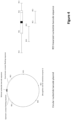
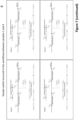
- Linearization of nucleotide barcode plasmids can be obtained by digestion with one or more restriction enzymes that cut at one or more sites in the plasmid, but outside the minimal nucleotide barcode sequence and its (partly) flanking nucleotides ( Figure 4 ). If plasmids would be only cut with one restriction enzyme that cuts at only one site in a plasmid, traces of plasmids that failed to be cut remain circular and present. This is prevented by using one or more restriction enzymes so that more than one site is cut in the plasmid. The chance that all sites fail to be cut in a single plasmid is then highly unlikely. Preferentially the restriction enzyme(s) is heat-inactivated after digestion.
- nucleotide barcode plasmids are cut at more than one site, different linear fragments will be obtained, of which only one fragment contains the actual minimal nucleotide barcode sequence. All digestion fragments of nucleotide barcode plasmids can be used as such in applications. Alternatively, only the digested fragment containing the minimal nucleotide barcode sequence might be isolated and used in applications.
- the DNA concentration of the nucleotide barcodes molecules is determined, either before or after digestion, so that the nucleotide barcodes can be normalized to the same concentration so that transferable molecular identification barcodes are produced in which the different nucleotide barcodes are found at more equimolar levels.
- Restriction enzymes can be chosen so that the actual minimal nucleotide barcode is located in a large, medium or small sized fragment after digestion of the nucleotide barcode plasmid. For example, when transferable molecular identification barcodes will be used for labelling blood samples from which genomic DNA will be isolated to be used in genetic tests, the actual minimal nucleotide barcode sequence may be preferably located in a larger DNA fragment.
- the genome of such a biological sample will be represented in larger genomic DNA fragments which might be more efficiently extracted with genomic DNA extraction kits. Smaller fragments might not be retained efficiently with such genomic DNA extraction kits since shorter fragments are considered as fragmented DNA that are eliminated in the DNA extraction protocol.
- highly parallel sequencing technologies are used that generate longer sequence reads, such as by Real-Time SMRT ® DNA sequencing and nanopore sequencing, the minimal barcode sequence is preferentially also located in a longer linearized fragment so that it is more compatible with these respective DNA sequence template preparations.
- transferable molecular identification barcodes are used for labelling blood samples obtained from pregnant mothers for non-invasive prenatal testing (NIPT), for example for trisomy 21, fetal circulating DNA will be isolated.
- the minimal nucleotide barcode sequence may be preferentially located on a small digestion product so that they can be extracted together with the fetal DNA.
- DNA obtained from formalin fixed paraffin embedded tissue (FFPE) contains rather small amplifiable sized DNA fragments, so that in this application the minimal nucleotide barcode sequence may be also preferentially located on a small digestion product so that they can be extracted together with FFPE DNA.
- Nucleotide barcode plasmids used to produce transferable molecular identification barcodes may thus be differentially digested on the basis of the application, so that a given lot of transferable molecular identification barcode is produced for a given set of applications, even one given application only.
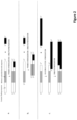
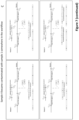
- Figures 5 show examples how molecular nucleotide sequences are prepared as templates for NGS sequencing.
- Transferable molecular identification barcodes are thus the labelling of biological samples on which genetic tests will be performed.
- Samples may come from or be in the initial form of one or more biological matter, e.g. blood, plasma, serum, urine, saliva, sputum, feces, mucosal excretions, tears, synovial fluid, cerebrospinal fluid, peritoneal fluid or other fluid.
- Samples may include cells, or may be free of cells.
- Transferable molecular identification barcodes allow absolute quality assurance of the genetic tests to prevent sample switching and contaminations. More specifically, sample switches and contaminations are not prevented, but transferable molecular identification barcodes enable them to be detected if they do occur.
- a transferable molecular identification barcode is added to the genetic test process as early as possible.
- the transferable molecular identification barcode sequences should be found at the end of the complete process, and this guarantees quality assurance. In this way the whole process is quality assured from the moment the transferable molecular identification barcode is added. The earliest possible moment would be when the specimen for analysis is collected, e.g. the transferable molecular identification barcode is already present in the collector tube (e.g. collecting tube for a blood sample). Apart from the quality-assurance, such transferable molecular identification barcodes allow automation of the laboratory and reporting protocols.
- the sequencing apparatus not only reads a mutation in the target nucleotide acids under investigation, but also the name of the patient that carries this mutation to the added and associated transferable molecular identification barcodes to the sample, when the physical barcode on the item containing the transferable molecular identification barcode is linked to the LIMS system in which all information of a sample is stored.
- the method may include a step of transporting the sample while it is contacted with transferable molecular identification barcodes from a site where the biological sample was taken to a clinical laboratory (e.g., one located at least 100 meters, 1000 meters, 10,000 meters, 100,000 meters from the site where the biological sample was taken) at which a sample analysis will occur.
- a clinical laboratory e.g., one located at least 100 meters, 1000 meters, 10,000 meters, 100,000 meters from the site where the biological sample was taken
- nucleotide barcode sequences When a customer receives the sequencing data of such a centralized lab, the customer knows which nucleotide barcode sequences should be present in the sequencing data of that sample, so that the customer is sure that he/she receives the data from his/her sample that were sent to the outsourced or centralized lab. The finding of any other nucleotide barcode sequences will conclude that the sequencing data are not from his/her sample, and/or that the sequencing data are contaminated with sequences from another sample.
- DNA extractions are often performed in automated systems, such as the Chemagic TM instrument (PerkinElmer), the QIAcube instrument (Qiagen). During DNA extraction, sample and/or processing tubes are open at certain moments or even open in such DNA extraction systems throughout the complete process.
- Transferable molecular identification barcodes that are used in quality control or assurance applications require that the transferable molecular identification barcodes themselves are produced under the best quality assured conditions. Given the fact that only a small number of nucleotide barcode sequences are needed to produce up to 1 million, or more, unique transferable molecular identification barcodes, only a small number of tubes and/or plates containing these nucleotide barcode molecules need to be handled. Moreover, they can be easily labeled with a macroscopic paper 1D or 2D barcode label during production which can be identified by scanning during production.
- the preparation of tubes, or any recipient containers, with transferable molecular identification barcodes prepared from this small number of tubes and/or plates containing the nucleotide barcodes can be performed with a rather basic robotic system.
- this complete production process is also connected to a LIMS system, the different recipient tubes or containers of transferable molecular identification barcodes can be produced with a very low risk of error.
- transferable molecular identification barcode tubes or recipient containers will not be produced in one time but in smaller number, e.g. 10.000 tubes per production round.
- a given number of transferable molecular identification barcodes containers will therefore likely be tested from each production round, so that the total number of tested transferable molecular identification barcodes for all production rounds combined will in practice exceed the number of 60, thereby further increasing redundancy and therefore better quality control testing of the produced transferable molecular identification barcodes.
- a set of 60 nucleotide barcodes thus allows the generation of 1 million transferable molecular identification barcodes that each are built up of 6 nucleotide barcodes. This also implies that each of the 60 nucleotide barcodes will be found in 100 transferable molecular identification barcodes. This also implies that any combination of 5 given nucleotide barcodes will be found in 100 transferable molecular identification barcodes, but each of the latter 100 transferable molecular identification barcodes will differ for the 6 th nucleotide barcode.
- a given nucleotide barcode in a transferable molecular identification barcode might not be amplified so that the corresponding target nucleotide sequence (amplicon) derived from that nucleotide barcode will not be found; a phenomenon which is known as amplicon dropout. If in the above example the 6 th nucleotide barcode fails to be amplified and/or sequenced, so that only 5 nucleotide barcode sequences can be characterized, one might not be able to determine which one of the possible 100 transferable molecular identification barcodes was present.
- nucleotide barcode pairs per transferable molecular identification barcode (a) Number of nucleotide barcode pairs needed Number of different transferable molecular identification barcodes 2 40 100 3 60 1000 4 80 10000 5 100 100000 6 120 1000000 7 140 10000000 8 160 100000000 9 180 1000000000 10 200 10000000000 15 300 1000000000000000 20 400 100000000000000000000 25 500 1000000000000000000000 0 (a) Sets of 10 pairs of nucleotide barcodes are used; for each nucleotide barcode pair, one can choose between 10 nucleotide barcode pairs
- An additional advantage of using pairs of nucleotide barcode sequences is that a contamination can be concluded with much higher, to even complete, certainty. Indeed, when very low contaminations are present and found, the finding of both minimal nucleotide barcode sequences of nucleotide barcode sequence pairs confirm each other in detecting the contamination.
- informatic pipelines could be programmed so that the nucleotide barcodes found at a high proportion are analyzed in a 'non-pair mode' so that amplicon dropouts can be detected, while nucleotide barcodes found at a low proportion are analyzed in a pair-mode so that both minimal nucleotide barcode sequence of a nucleotide barcode pair need to be detected to conclude a contamination.
- nucleotide barcodes Rather than working with pairs of nucleotide barcodes, one might even use triple, quadruple combinations, or more, of nucleotide barcodes sequences, in order to make the system even more redundant and robust.
- nucleotide barcode plasmid preps When nucleotide barcode plasmid preps are used from a N x random library, the nucleotide barcodes need to be first sequenced in order to identify the minimal nucleotide barcode sequences.
- the amplification and sequencing step of individual nucleotide barcodes will in fact already be a first selection step for obtaining suitable nucleotide barcodes for the production of transferable molecular identification barcodes, over nucleotide barcodes that might be difficult to amplify and/or sequenced and which could result in amplicon dropouts when the transferable molecular identification barcodes are characterized in applications.
- nucleotide barcodes that pass this selection criterion, even further selection criteria could be used.
- nucleotide barcode sequences that are picked up and characterized as having a high GC and/or AT content might not be included for further production of transferable molecular identification barcodes. Indeed, it is known that such sequences are difficult, or fail, to be amplified and may result in amplicon dropout and/or fail to be sequenced.
- nucleotide barcode While a given nucleotide barcode already might have passed an amplification and/or sequencing control step during the first criterion described above, it might have only done so because it was present in a homogeneous DNA prep containing only one nucleotide barcode at a high concentration, which is not the case anymore when practically used in applications where it is combined with other nucleotide barcodes and/or used at lower concentrations. In its latter true environment of the applications, a given nucleotide barcode might still fail to be amplified and/or sequenced.
- This format will not only allow more sensitive contamination detection in NGS assays that use primer pools for target enrichment, but allow discrimination between a switch of one or more pools in a split testing process between different samples only from an overall contamination in the total DNA sample.
- transferable molecular identification barcodes are used that are built up of 6 pairs of nucleotide barcodes they should be practically present at 6N in order to be equimolar to the target nucleic acids. If a blood sample is taken in a 10ml Vacutainer ® tube, the volume of blood that is taken is not always 10ml. More importantly, the number of white blood cells, which is the source of DNA in blood samples, varies between individuals when measured in cells per ml. So even when exactly the same volume of blood is taken between individuals, the amount of available DNA and extracted DNA in the end can vary to great extent between samples. One fixed amount of transferable molecular identification barcodes will thus not be the most optimal amount for all samples.
- the amount of circulating DNA in plasma of a blood sample is much lower than the amount of DNA in white blood cells from that blood sample.
- a lower amount of transferable molecular identification barcode is thus added to carriers used for collection of cfDNA than to carriers used for collection of genomic DNA.
- nucleotide barcode targets In case that, for example capturing oligonucleotides are present at a lower concentration than their nucleotide barcode targets, once that all these oligonucleotides have found a nucleotide barcode, the unreacted nucleotide barcodes are not captured and washed away. In this way an excess of nucleotide barcode sequences relative to the other target nucleic acids can be removed.
- limiting amounts of primers for amplifying nucleotide barcode sequences in an amplification enrichment protocol relative to the primers directed against amplification of the other target nucleic acids will result in the fact that not all, i.e.
- target nucleotide barcodes will find their primer and will not participate in amplification. In this way, a fixed concentration of oligonucleotides directed against nucleotide barcodes will skim of an excess of nucleotide barcodes.
- the concentration of the oligonucleotides is already much higher than the concentration of the targets they need to capture or amplify. Indeed, the oligonucleotides and their respective DNA targets are not present in a one to one molecule relation.
- the concentration of oligonucleotides directed against these nucleotide barcodes sequences for capturing or amplification are then reduced relative to the concentration of the oligonucleotides directed against the other target nucleotide acids.
- Relative equalization of nucleotide barcode sequences versus other target nucleotide sequences is then not achieved through limiting the number of target nucleotide barcodes participating in the enrichment but by making the finding of a nucleotide barcode sequences kinetically less favorable.
- nucleotide barcodes sequences are present at a lower concentration than the other target nucleotide sequences, with the risk that not sufficient nucleotide barcode sequences will be obtained after sequencing in order to deduce the transferable molecular identification barcode that is present, an optimal nucleotide barcode sequence versus target nucleic acid ratio can be obtained by relative increasing the concentration of oligonucleotides (capturing oligonucleotides or amplification primers) used for enrichment of the nucleotide barcode sequences.
- oligonucleotides are added for enrichment by capturing or amplification.
- a capturing oligonucleotide directed against the nucleotide barcode sequences can be used to skim off possibly excess nucleotide barcode sequences versus the whole genome sequences.
- Pooled samples/libraries should therefore be equalized. This can be done through determination of the concentration, and therefore the number of DNA molecules, when the molecular weight of the DNA fragments to be sequenced is taken into consideration, or estimated for each library. In case that different libraries have different target nucleic acids (and therefore very likely different sizes of the DNA fragments that will be sequenced) the number of molecules needs to be corrected for the target size. These concentration measurements, calculations and subsequent dilution experiments of each library, and subsequently mixing of the libraries accordingly, is very time consuming.
- Equalizing different sequencing libraries to be pooled can also be achieved by a(n) equalizing oligonucleotide(s). This is a simple and seamless bead-based solution replacing the need for library quantification and library dilutions for library normalization as required for any next generation sequencing workflow and which minimizes library-to-library variability.
- An equalizing oligonucleotide can bind to all target nucleotide sequences.
- equalization of target nucleotide sequences derived from transferable molecular identification barcodes alone can be achieved by an equalizing oligonucleotide directed in the constant flanking sequence of the nucleotide barcodes.
- a combination of equalizing oligonucleotides, the first equalization oligonucleotide directed to a constant sequence in the nucleotide barcode sequences, and the second equalization oligonucleotide directed to a sequence incorporated during amplification by a primer or during a ligation by a ligation adapter, may allow to further fine-tune the relative proportion of target nucleotide sequences derived from nucleotide barcode sequences versus other target nucleotide sequences from other target nucleic acids under investigation.
- Read Until sequencing in real time would be another way to obtain the most optimal ratio of sequence reads of the nucleotide barcodes sequences versus the other target nucleotide sequences.
- Read Until sequencing it is monitored what is being sequenced in each pore, which gives users the option whether to continue and finish sequencing. Since each nanopore channel is individually addressable, the sequencing reaction in each pore can simply be stopped so that a new DNA strand can access that pore for sequencing.
- the Read Until sequencing can monitor the presence or absence of the constant adaptor sequence of a nucleotide barcode sequence to keep track of the number of nucleotide barcode sequences that are sequenced.
- Transferable molecular identification barcodes might thus prepared and used at different amounts, depending on the contamination level that needs to be detected. Indeed, the smaller the contamination level that one wants to detect, the deeper NGS sequencing that is needed, and therefore also the higher the amount of nucleotide barcodes that should have been added to an item or sample.
- transferable molecular identification barcodes detect a contamination in a genetic test
- the contamination can originate from any substance used in the test. Indeed, besides contaminations between biological samples (blood samples, DNA samples, or processed products thereof in a test process), the contamination could also originate from any product used in that test (DNA extraction, NGS template preparation and/or sequencing reaction).
- the contamination could also originate from any product used in that test (DNA extraction, NGS template preparation and/or sequencing reaction).
- pooling barcodes could be also contaminated between each other. Pooling barcodes can be incorporated in sequencing templates through the use of oligonucleotide primers.
- pooling barcode primer 2 became contaminated with pooling barcode primer 1.
- a capturing oligonucleotide for nucleotide barcode sequences will be very likely also needed in protocols in which DNA extraction is not performed on total biological samples.
- any DNA being it genomic DNA present in the cells of the biological sample as well as added DNA nucleotide barcodes will be analyzed.
- miniaturizing assays such as on (microfluidic) systems
- DNA isolation might not be performed on the total biological sample.
- DNA extraction may be performed on isolated cells, pathogens (bacteria, viruses) only.
- transferable molecular identification barcodes are present in such biological samples, they might not be retained at the step of the cell isolation.
- a capturing oligonucleotide directed against, and therefore for capturing, nucleotide barcodes can be bound to a pathogen- or cell-sized bead(-structure) so that the nucleotide barcodes will be also retained.
- these beads can be easily mixed with magnetic beads to which capturing oligonucleotides directed to nucleotide barcodes are bound so that the protocol or assay hardly needs to be modified in order to allow the use of transferable molecular identification barcodes in such assays.
- DNA-type transferable molecular identification barcodes can also be used in RNA tests from the moment that RNA has been converted to cDNA. Indeed, many RNA extraction protocols from biological samples destroy (residual) DNA, e.g. with DNase, so that DNA-type transferable molecular identification barcodes, when present in a biological sample, would be destroyed, so that they can be only added when the RNA has been converted to cDNA. In order to quality assure the upstream processing steps preceding the conversion of RNA to cDNA in RNA tests, RNA-type transferable molecular identification barcodes built up of a mix of RNA-type nucleotide barcodes, should be used.
- RNA-type nucleotide barcodes can even be made from DNA-type nucleotide barcodes if the upstream constant flanking sequence to the minimal nucleotide barcode region in the DNA-type nucleotide barcodes contains a promoter for priming RNA synthesis.
- a promoter for priming RNA synthesis Such an adapter could be, for example a T7 promoter.
- the downstream constant flanking sequence to the minimal nucleotide barcode region in RNA-type nucleotide barcodes also contain a stretch of A-residues (e.g.
- the RNA-type nucleotide barcodes of RNA-type transferable molecular identification barcodes can be also processed in RNA tests that require an mRNA isolation so that the RNA-type nucleotide barcodes are also isolated with mRNA in the mRNA isolation step.
- transferable molecular identification barcodes might be also used in research tests.
- biological samples e.g. cell lines
- flanking constant sequences should not be encoded in bacterial or viral DNA (and thus not found in cloning vectors, or more specifically cloning vector backbones), or have a sequence that is less than 1%, less than 2%, less than 3%, less than 4%, less than 5%, less than 10%, less than 15%, less than 20%, less than 25%, less than 30%, less than 40%, less than 50% homologous to a sequence encoded in any naturally occurring genome, bacterial or viral DNA.
- transferable molecular identification barcodes may also find an application in tests of any species.
- An example are tests that determine the quality and composition of food, even the complete production chain, regarding to their meat, plant, bacteria, fungi content. This would, for instance, allow the detection of fraud in which meat of another animal is present, are mixed with, the meat of a given animal that is indicated on the food product.
- This can be done at the molecular level through sequence analysis of genomic and/or mitochondrial DNA regions that are highly divergent among species and therefore allow the discrimination among, and therefore detection of a, species.
- food sample switching and/or contamination between food samples can be analogously prevented/monitored by the use (addition) of transferable molecular identification barcodes.
- Transferable molecular identification barcodes may be also used for the labelling industrial products, works of art, antiquities, securities and environmental pollutants, quality control of industrial production processes, and so on. Transferable molecular identification barcodes used at higher concentrations would even eliminate the need for amplification, so that the transferable molecular identification barcodes could be directly sequenced on single molecule sequencing devices so that there is hardly any need for sequencing template preparation. This format may become very attractive in portable and handheld single molecule sequencing devices. Such transferable molecular identification barcodes might have additional properties to facilitate easy isolation and/or purification, such as an attachment of a biotin group so that transferable molecular identification barcodes can be easily isolated from (complex) mixtures.
- DNA barcodes could be also used in protein assays when aptamer(s) are available that detect the protein(s) under investigation.
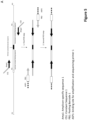
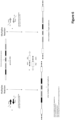
- Figures 7 shows how the use of transferable molecular identification barcodes in an NGS assay using a 2-step PCR protocol for enrichment of the target regions of nucleic acids under investigation will detect a sample switch or contamination.
- a transferable molecular identification barcode was added to patient samples, of which two target nucleic acid regions A and B are of interest.
- the two target nucleic acid regions and the minimal nucleotide barcode and its flanking sequences of the transferable molecular identification barcode are amplified.
- amplicon-specific primers directed to primer binding sites flanking all 3 target nucleic acids regions are amplified.
- All the amplicon-specific primers carry a 5' universal adapter sequence (one type of universal adapter sequence for the forward primers and another type of universal adapter sequence for the reverse primers).
- a pooling barcode is incorporated in all amplicons obtained in the first PCR step.
- the pooling barcode primers have a primer binding site in the universal adapter sequences that were incorporated in the 3 types of amplicons after the first PCR step, an index sequence, and 5' adapter sequences needed for further processing of the samples for NGS sequencing.
- a different pooling barcode is used for each sample.
- the same index is incorporated in a given sample.
- all different samples are mixed and sequenced in order to make full economical use of a sequencing chip and reagents. After sequencing, all sequenced sequences are obtained in one or a few large files.
- (bio-)informatic means all sequenced sequences are separated in different files according to the pooling barcode sequence. All sequences with the same pooling barcode sequence, specific for each patient sample, are thus grouped and saved in separate files and individually processed further. For each index/patient file, the minimal nucleotide barcode sequences will be characterized if order to see if there was no sample switch are contamination. If no sample switch and/or contamination is found, the genetic test, i.e. mutations found in the two target nucleotide sequences in that sample, is valid.
- Figure 8 shows a workflow in a genetic test, starting from a blood collector tube that contains transferable molecular identification barcode to a final valid genetic test report.
- a blood collector tube contains a unique transferable molecular identification barcode and a one to one linked optical macroscopic barcode label.
- the unique molecular identification barcode and optical barcodes, and their one to one link, are stored in a database, which is accessible through the cloud.
- From a patient blood is collected in this blood collector tube.
- another (second) optical barcode paper label from the patient e.g. generated by the hospital is attached so that the blood collector tube now has two optical barcode paper labels attached.
- the information of the first optical barcode label becomes also connected to the LIMS, and given its one to one link with a transferable molecular identification barcode, also the transferable molecular identification barcode.
- the minimal barcode sequence in the transferable molecular identification barcode thus is a transferable alias for the name of the patient.
- This sample is then processed for sequencing, more specifically a DNA extraction is performed, the target nucleic acid regions of interest (DNA regions of genome under investigation and nucleotide barcode sequences) are enriched, the enriched sequences are prepared as sequencing templates. When whole genome sequencing or circular DNA sequencing is performed, no enrichment is performed.
- sequence reads derived from the transferable molecular identification barcodes can be identified through the presence of the nucleotide barcode sequence identifier sequence. These sequence reads can be subgrouped and the minimal nucleotide barcode sequences can be characterized, e.g. through their 'extracting' sequences. The other sequences derived from the target nucleic acids under investigation will be characterized for mutations, through mapping and variant calling, so that a genetic test result is obtained.
- the cloud database is then contacted by presenting the original first optical barcode label paper code, after which the cloud server sends the associated minimal nucleotide barcode sequences to the customer lab. These sent minimal nucleotide barcode sequences will be verified with the obtained minimal barcode sequences from the sequence reads. If the expected minimal barcode sequences are found in the sequence reads, and no additional minimal barcode sequences are found, no sample switch or contamination did occur during processing of the sample, so that the genetic test results are valid. It should be noted that no patient information, even not the hospital generated patient optical paper label code, is transferred outside the lab/hospital, only the optical barcode paper label code that was attached to the original blood collector tube in which blood of the patient was collected.
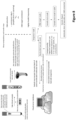
- Figure 9 shows a workflow in a genetic test, starting from a microtube that contains a transferable molecular identification barcode to a final valid genetic test report.
- a microtube tube contains a unique transferable molecular identification barcode and a one to one linked optical macroscopic barcode label.
- a blood sample is taken in a standard Vacutainer. Immediately afterwards, or when the Vacutainer arrives at a genetic lab, the transferable molecular identification barcode solution of the microtube, and the associated macroscopic barcode label are transferred to the Vacutainer with the blood sample. An alternative is that the associated macroscopic barcode label is not transferred but immediately scanned. The test then proceeds analogous as described in Figure 8 .
- Figure 10 shows an analogous workflow as described in Figure 8 , but in which the processing of the sequenced sequences differs. Sequenced sequences derived from the nucleotide barcodes and sequenced sequences of the target sample nucleic acids are not analyzed in parallel as described in Figures 8 and 9 . Only the sequenced sequences of the nucleotide barcodes are analyzed, moreover completely on the cloud, and only if no sample switch is detected, the bioinformatic analysis of the sequenced sequences of the target sample nucleic acids is initiated. Also when a contamination is detected, the bioinformatic analysis of the sequenced sequences of the target sample nucleic acids is initiated and the results are detected and analyzed, but interpreted in the context of the contamination level detected.
- bio-informatic pipelines can be ordered in different serial and/or parallel steps (algorithms), and can be either partly or completely performed on the cloud of the institution providing the minimal nucleotide barcode sequences, or at the client site (e.g. hospital).
- Figure 11 shows two samples that are labelled with transferable molecular identification barcodes when the blood is taken.
- Blood sample 1 is labeled with transferable molecular identification barcode 1
- blood sample 2 is labeled with transferable molecular identification barcode 2
- the DNA of both samples is extracted in a DNA extraction facility. Then, the extracted DNA samples are again labelled with transferable molecular identification barcodes.
- DNA sample 1 is labeled with transferable molecular identification barcode A
- DNA sample 2 is labeled with transferable molecular identification barcode B.
- the DNA samples are then sent to a next generation sequencing facility.
- the transferable molecular identification barcodes respectively used for labelling blood or DNA are built up of nucleotide barcodes that have respectively different nucleotide barcode sequence identifier sequences through which they can be discriminated. If a sample switch, and/or contamination, did occur, the subprocess (and lab) were the sample switch and/or contamination occurred can now be traced.
- sample 1 When sample 1 was contaminated with sample 2 during DNA extraction, minimal nucleotide barcode sequences 1, 2 and A will be found in sample 1,
- sample 1 When sample 1 was contaminated with sample 2 during NGS template preparation and sequencing, minimal nucleotide barcode sequences 1, 2, A and B will be found in sample 1.
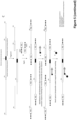
- the example shows embodiments of isolated upstream and downstream constant sequences as described in the present application and depicted for example in figures 3 and 4 .
- the upstream constant "Sequence 1" [SEQ ID: 1], depicted below, with reference to figure 4 , shows a sequence located from restriction site RE1 (underlined) till the minimal barcode sequence indicated in black.
Landscapes
- Chemical & Material Sciences (AREA)
- Life Sciences & Earth Sciences (AREA)
- Organic Chemistry (AREA)
- Proteomics, Peptides & Aminoacids (AREA)
- Health & Medical Sciences (AREA)
- Engineering & Computer Science (AREA)
- Zoology (AREA)
- Wood Science & Technology (AREA)
- Analytical Chemistry (AREA)
- Molecular Biology (AREA)
- Biochemistry (AREA)
- General Engineering & Computer Science (AREA)
- Genetics & Genomics (AREA)
- Immunology (AREA)
- Biotechnology (AREA)
- General Health & Medical Sciences (AREA)
- Bioinformatics & Cheminformatics (AREA)
- Microbiology (AREA)
- Biophysics (AREA)
- Physics & Mathematics (AREA)
- Chemical Kinetics & Catalysis (AREA)
- Clinical Laboratory Science (AREA)
- Measuring Or Testing Involving Enzymes Or Micro-Organisms (AREA)
- Apparatus Associated With Microorganisms And Enzymes (AREA)
- Micro-Organisms Or Cultivation Processes Thereof (AREA)
- Investigating Or Analysing Biological Materials (AREA)
Applications Claiming Priority (3)
| Application Number | Priority Date | Filing Date | Title |
|---|---|---|---|
| EP16169997.0A EP3246412A1 (en) | 2016-05-17 | 2016-05-17 | Methods for identification of samples |
| GBGB1701908.4A GB201701908D0 (en) | 2017-02-06 | 2017-02-06 | Methods for identification of samples |
| PCT/EP2017/061902 WO2017198742A1 (en) | 2016-05-17 | 2017-05-17 | Methods for identification of samples |
Publications (3)
| Publication Number | Publication Date |
|---|---|
| EP3458606A1 EP3458606A1 (en) | 2019-03-27 |
| EP3458606B1 true EP3458606B1 (en) | 2025-04-02 |
| EP3458606C0 EP3458606C0 (en) | 2025-04-02 |
Family
ID=58992806
Family Applications (1)
| Application Number | Title | Priority Date | Filing Date |
|---|---|---|---|
| EP17727124.4A Active EP3458606B1 (en) | 2016-05-17 | 2017-05-17 | Methods for identification of samples |
Country Status (9)
| Country | Link |
|---|---|
| US (1) | US12297495B2 (enExample) |
| EP (1) | EP3458606B1 (enExample) |
| JP (1) | JP7071341B2 (enExample) |
| KR (2) | KR102806552B1 (enExample) |
| CN (1) | CN109477141B (enExample) |
| AU (2) | AU2017266299A1 (enExample) |
| CA (1) | CA3024355A1 (enExample) |
| ES (1) | ES3030501T3 (enExample) |
| WO (1) | WO2017198742A1 (enExample) |
Families Citing this family (16)
| Publication number | Priority date | Publication date | Assignee | Title |
|---|---|---|---|---|
| IT201600103909A1 (it) * | 2016-10-17 | 2018-04-17 | Marco Flavio Michele Vismara | Sistema e metodo di acquisizione, trasmissione ed elaborazione di dati ematochimici |
| US11702653B2 (en) | 2018-05-21 | 2023-07-18 | Battelle Memorial Institute | Control compositions and methods for sequencing |
| EP3894553B1 (en) | 2018-12-13 | 2025-10-08 | Battelle Memorial Institute | Methods for a quantitative polymerase chain reaction |
| IL298245A (en) | 2020-05-18 | 2023-01-01 | Truvian Sciences Inc | An optical assembly for continuous scanning and a method for using it |
| CN116075596A (zh) * | 2020-08-07 | 2023-05-05 | 牛津纳米孔科技公开有限公司 | 鉴定核酸条形码的方法 |
| US12636859B2 (en) | 2020-09-22 | 2026-05-26 | Truvian Sciences, Inc. | Methods for bonding plastics and components made by the same |
| EP4226379A4 (en) * | 2020-10-06 | 2024-10-30 | Nucleotrace Pty. Ltd. | Oligonucleotides representing digital data |
| AU2021374567A1 (en) * | 2020-11-06 | 2023-01-05 | Illumina, Inc. | Detecting materials in a mixture using oligonucleotides |
| KR102924534B1 (ko) * | 2021-02-26 | 2026-02-06 | 지니너스 주식회사 | 분자 바코딩 효율을 향상시키기 위한 조성물 및 이의 용도 |
| WO2022192603A1 (en) * | 2021-03-10 | 2022-09-15 | Factorial Diagnostics, Inc. | Cell barcoding compositions and methods |
| GB202108684D0 (en) * | 2021-06-17 | 2021-08-04 | Salmotrace As | Method of tagging fish and other animals |
| US12637722B2 (en) | 2022-01-10 | 2026-05-26 | Natural Trace Pte. Ltd. | Method for confirming the identity of a product by means of a microbial DNA tag |
| USD1116151S1 (en) | 2023-05-03 | 2026-03-03 | Truvian Sciences, Inc. | Monolayer |
| DE102023205182A1 (de) * | 2023-06-02 | 2024-12-05 | Labor Berlin - Charité Vivantes GmbH | Verfahren zur identitätsverifizierung von patientenproben |
| US12287321B2 (en) * | 2023-09-08 | 2025-04-29 | Truvian Sciences, Inc. | Optical multianalyte detection |
| FR3170768A1 (fr) * | 2024-12-19 | 2026-06-26 | Genaro | Procédé de chiffrement de données génétiques d’un sujet |
Family Cites Families (32)
| Publication number | Priority date | Publication date | Assignee | Title |
|---|---|---|---|---|
| US5459073A (en) | 1991-05-08 | 1995-10-17 | Streck Laboratories, Inc. | Method and composition for preserving antigens and process for utilizing cytological material produced by same |
| US6030657A (en) | 1994-11-01 | 2000-02-29 | Dna Technologies, Inc. | Labeling technique for countering product diversion and product counterfeiting |
| US5776737A (en) | 1994-12-22 | 1998-07-07 | Visible Genetics Inc. | Method and composition for internal identification of samples |
| AU4703300A (en) | 1999-05-06 | 2000-11-21 | Mount Sinai School Of Medicine Of The City University Of New York, The | Dna-based steganography |
| US20020129251A1 (en) | 2001-03-01 | 2002-09-12 | Yukio Itakura | Method and system for individual authentication and digital signature utilizing article having DNA based ID information mark |
| WO2003052101A1 (en) * | 2001-12-14 | 2003-06-26 | Rosetta Inpharmatics, Inc. | Sample tracking using molecular barcodes |
| GB2390055B (en) | 2002-03-22 | 2005-09-07 | Cypher Science Internat Ltd | A marking apparatus |
| US20040157220A1 (en) | 2003-02-10 | 2004-08-12 | Purnima Kurnool | Methods and apparatus for sample tracking |
| US20100285985A1 (en) | 2003-04-15 | 2010-11-11 | Applied Dna Sciences, Inc. | Methods and Systems for the Generation of Plurality of Security Markers and the Detection Therof |
| US8927213B2 (en) | 2004-12-23 | 2015-01-06 | Greg Hampikian | Reference markers for biological samples |
| WO2005093641A1 (en) * | 2004-03-26 | 2005-10-06 | Universite Libre De Bruxelles | Biological samples localisation, identification and tracking, system and method using electronic tag |
| US20150141264A1 (en) | 2005-05-20 | 2015-05-21 | Apdn (B.V.I.) Inc. | In-field dna extraction, detection and authentication methods and systems therefor |
| US8785130B2 (en) | 2005-07-07 | 2014-07-22 | Bio-Id Diagnostic Inc. | Use of markers including nucleotide sequence based codes to monitor methods of detection and identification of genetic material |
| DK1924704T3 (da) | 2005-08-02 | 2011-09-05 | Rubicon Genomics Inc | Sammensætninger og fremgangsmåder til bearbejdning og mangfoldiggørelse af DNA, herunder ved anvendelse af flere enzymer i en enkelt reaktion |
| EP2016539A4 (en) * | 2006-05-11 | 2010-06-09 | Singular Id Pte Ltd | OBJECT IDENTIFICATION METHOD, IDENTIFICATION LABEL, OBJECT ADAPTED TO BE IDENTIFIED, AND DEVICE AND SYSTEM RELATED THERETO |
| US20080101666A1 (en) * | 2006-10-30 | 2008-05-01 | Cytyc Corporation | Automated imaging system with slide marking |
| CA2697640C (en) | 2007-09-21 | 2016-06-21 | Katholieke Universiteit Leuven | Tools and methods for genetic tests using next generation sequencing |
| AU2007254626A1 (en) * | 2007-12-21 | 2009-07-09 | Canon Kabushiki Kaisha | Data encoding and decoding using circular configurations of marks |
| GB2472371B (en) | 2009-04-24 | 2011-10-26 | Selectamark Security Systems Plc | Synthetic nucleotide containing compositions for use in security marking of property and/or for marking a thief or attacker |
| WO2012019765A1 (en) * | 2010-08-10 | 2012-02-16 | European Molecular Biology Laboratory (Embl) | Methods and systems for tracking samples and sample combinations |
| GB201100152D0 (en) * | 2011-01-06 | 2011-02-23 | Epistem Ltd | Genedrive RFID |
| CN103703143B (zh) * | 2011-01-31 | 2016-12-14 | 爱普瑞斯生物公司 | 鉴定细胞中的多个表位的方法 |
| WO2012168803A2 (en) * | 2011-06-07 | 2012-12-13 | Koninklijke Philips Electronics N.V. | Providing nucleotide sequence data |
| CA2872017A1 (en) | 2012-05-09 | 2013-11-14 | Apdn (B.V.I.) Inc. | Verification of physical encryption taggants using digital representatives and authentications thereof |
| EP4026912A1 (en) * | 2012-05-10 | 2022-07-13 | The General Hospital Corporation | Methods for determining a nucleotide sequence |
| WO2013177220A1 (en) * | 2012-05-21 | 2013-11-28 | The Scripps Research Institute | Methods of sample preparation |
| US20150167054A1 (en) | 2012-07-06 | 2015-06-18 | Geneworks Technologies Pty Ltd a corporation | Method of identification using nucleic acid tags |
| US20150322508A1 (en) | 2012-12-28 | 2015-11-12 | Fleury S.A. | Method for complete tracking of a set of biological samples containing dna or rna through molecular barcode identification during laboratorial workflow and kit for collecting biological samples containing dna or rna |
| WO2014152775A2 (en) | 2013-03-14 | 2014-09-25 | Certirx Corporation | Nucleic acid-based authentication and identification codes |
| US20150141257A1 (en) | 2013-08-02 | 2015-05-21 | Roche Nimblegen, Inc. | Sequence capture method using specialized capture probes (heatseq) |
| CN105200530A (zh) * | 2015-10-13 | 2015-12-30 | 北京百迈客生物科技有限公司 | 一种适用于高通量全基因组测序的多样品混合文库的构建方法 |
| WO2017087873A1 (en) * | 2015-11-18 | 2017-05-26 | Wafergen, Inc. | Systems and methods for pooling samples from multi-well devices |
-
2017
- 2017-05-17 JP JP2019513484A patent/JP7071341B2/ja active Active
- 2017-05-17 CN CN201780040677.XA patent/CN109477141B/zh active Active
- 2017-05-17 KR KR1020237014184A patent/KR102806552B1/ko active Active
- 2017-05-17 AU AU2017266299A patent/AU2017266299A1/en not_active Abandoned
- 2017-05-17 CA CA3024355A patent/CA3024355A1/en active Pending
- 2017-05-17 US US16/302,345 patent/US12297495B2/en active Active
- 2017-05-17 KR KR1020187036548A patent/KR20190037203A/ko not_active Ceased
- 2017-05-17 EP EP17727124.4A patent/EP3458606B1/en active Active
- 2017-05-17 WO PCT/EP2017/061902 patent/WO2017198742A1/en not_active Ceased
- 2017-05-17 ES ES17727124T patent/ES3030501T3/es active Active
-
2023
- 2023-09-14 AU AU2023229558A patent/AU2023229558B2/en active Active
Also Published As
| Publication number | Publication date |
|---|---|
| AU2023229558B2 (en) | 2025-07-31 |
| AU2023229558A1 (en) | 2023-09-28 |
| KR20190037203A (ko) | 2019-04-05 |
| CN109477141B (zh) | 2022-07-12 |
| CN109477141A (zh) | 2019-03-15 |
| KR20230065357A (ko) | 2023-05-11 |
| JP7071341B2 (ja) | 2022-05-18 |
| KR102806552B1 (ko) | 2025-05-13 |
| WO2017198742A1 (en) | 2017-11-23 |
| EP3458606C0 (en) | 2025-04-02 |
| ES3030501T3 (en) | 2025-06-30 |
| JP2019523652A (ja) | 2019-08-29 |
| AU2017266299A1 (en) | 2018-12-20 |
| US12297495B2 (en) | 2025-05-13 |
| US20190300948A1 (en) | 2019-10-03 |
| CA3024355A1 (en) | 2017-11-23 |
| EP3458606A1 (en) | 2019-03-27 |
Similar Documents
| Publication | Publication Date | Title |
|---|---|---|
| US12297495B2 (en) | Methods for identification of samples | |
| US20210380974A1 (en) | Combinatorial sets of nucleic acid barcodes for analysis of nucleic acids associated with single cells | |
| EP3246412A1 (en) | Methods for identification of samples | |
| US20200354773A1 (en) | High multiplex pcr with molecular barcoding | |
| US11857940B2 (en) | High-level multiplex amplification | |
| Duhaime et al. | Towards quantitative metagenomics of wild viruses and other ultra‐low concentration DNA samples: a rigorous assessment and optimization of the linker amplification method | |
| JP6803327B2 (ja) | 標的化されたシークエンシングからのデジタル測定値 | |
| RU2565550C2 (ru) | Прямой захват, амплификация и секвенирование днк-мишени с использованием иммобилизированных праймеров | |
| US10385387B2 (en) | Methods for selectively amplifying and tagging nucleic acids | |
| US20060263789A1 (en) | Unique identifiers for indicating properties associated with entities to which they are attached, and methods for using | |
| CA3065172A1 (en) | A method of amplifying single cell transcriptome | |
| CN110191961A (zh) | 制备经不对称标签化的测序文库的方法 | |
| EP3699289A1 (en) | Sample preparation for nucleic acid amplification | |
| EP4180539A1 (en) | Single end duplex dna sequencing | |
| AU2016331058B2 (en) | Methods for subtyping diffuse large b-cell lymphoma (dlbcl) | |
| US20180223350A1 (en) | Duplex adapters and duplex sequencing | |
| JP2020505045A (ja) | ロングレンジ配列決定のためのバーコードを付けられたdna | |
| KR20240069835A (ko) | 대규모 병렬 서열분석을 위한 dna 라이브러리를 생성하기 위한 개선된 방법 및 키트 | |
| EP3880845B1 (en) | Directional targeted sequencing | |
| US10927405B2 (en) | Molecular tag attachment and transfer | |
| HK40069209A (en) | Sample preparation for nucleic acid amplification |
Legal Events
| Date | Code | Title | Description |
|---|---|---|---|
| STAA | Information on the status of an ep patent application or granted ep patent |
Free format text: STATUS: UNKNOWN |
|
| STAA | Information on the status of an ep patent application or granted ep patent |
Free format text: STATUS: THE INTERNATIONAL PUBLICATION HAS BEEN MADE |
|
| PUAI | Public reference made under article 153(3) epc to a published international application that has entered the european phase |
Free format text: ORIGINAL CODE: 0009012 |
|
| STAA | Information on the status of an ep patent application or granted ep patent |
Free format text: STATUS: REQUEST FOR EXAMINATION WAS MADE |
|
| 17P | Request for examination filed |
Effective date: 20181213 |
|
| AK | Designated contracting states |
Kind code of ref document: A1 Designated state(s): AL AT BE BG CH CY CZ DE DK EE ES FI FR GB GR HR HU IE IS IT LI LT LU LV MC MK MT NL NO PL PT RO RS SE SI SK SM TR |
|
| AX | Request for extension of the european patent |
Extension state: BA ME |
|
| DAV | Request for validation of the european patent (deleted) | ||
| DAX | Request for extension of the european patent (deleted) | ||
| STAA | Information on the status of an ep patent application or granted ep patent |
Free format text: STATUS: EXAMINATION IS IN PROGRESS |
|
| 17Q | First examination report despatched |
Effective date: 20210128 |
|
| REG | Reference to a national code |
Ref country code: DE Ref legal event code: R079 Free format text: PREVIOUS MAIN CLASS: C12Q0001680000 Ipc: C12Q0001686900 Ref country code: DE Ref legal event code: R079 Ref document number: 602017088672 Country of ref document: DE Free format text: PREVIOUS MAIN CLASS: C12Q0001680000 Ipc: C12Q0001686900 |
|
| GRAP | Despatch of communication of intention to grant a patent |
Free format text: ORIGINAL CODE: EPIDOSNIGR1 |
|
| STAA | Information on the status of an ep patent application or granted ep patent |
Free format text: STATUS: GRANT OF PATENT IS INTENDED |
|
| RIC1 | Information provided on ipc code assigned before grant |
Ipc: B01L 3/00 20060101ALI20241016BHEP Ipc: C12Q 1/6869 20180101AFI20241016BHEP |
|
| INTG | Intention to grant announced |
Effective date: 20241024 |
|
| GRAS | Grant fee paid |
Free format text: ORIGINAL CODE: EPIDOSNIGR3 |
|
| GRAA | (expected) grant |
Free format text: ORIGINAL CODE: 0009210 |
|
| STAA | Information on the status of an ep patent application or granted ep patent |
Free format text: STATUS: THE PATENT HAS BEEN GRANTED |
|
| AK | Designated contracting states |
Kind code of ref document: B1 Designated state(s): AL AT BE BG CH CY CZ DE DK EE ES FI FR GB GR HR HU IE IS IT LI LT LU LV MC MK MT NL NO PL PT RO RS SE SI SK SM TR |
|
| REG | Reference to a national code |
Ref country code: GB Ref legal event code: FG4D |
|
| REG | Reference to a national code |
Ref country code: CH Ref legal event code: PK Free format text: BERICHTIGUNGEN Ref country code: CH Ref legal event code: EP |
|
| REG | Reference to a national code |
Ref country code: IE Ref legal event code: FG4D |
|
| REG | Reference to a national code |
Ref country code: DE Ref legal event code: R096 Ref document number: 602017088672 Country of ref document: DE |
|
| RIN2 | Information on inventor provided after grant (corrected) |
Inventor name: CUPPENS, HARRY |
|
| RIN2 | Information on inventor provided after grant (corrected) |
Inventor name: CUPPENS, HARRY |
|
| U01 | Request for unitary effect filed |
Effective date: 20250429 |
|
| U07 | Unitary effect registered |
Designated state(s): AT BE BG DE DK EE FI FR IT LT LU LV MT NL PT RO SE SI Effective date: 20250507 |
|
| REG | Reference to a national code |
Ref country code: ES Ref legal event code: FG2A Ref document number: 3030501 Country of ref document: ES Kind code of ref document: T3 Effective date: 20250630 |
|
| U20 | Renewal fee for the european patent with unitary effect paid |
Year of fee payment: 9 Effective date: 20250527 |
|
| PG25 | Lapsed in a contracting state [announced via postgrant information from national office to epo] |
Ref country code: NO Free format text: LAPSE BECAUSE OF FAILURE TO SUBMIT A TRANSLATION OF THE DESCRIPTION OR TO PAY THE FEE WITHIN THE PRESCRIBED TIME-LIMIT Effective date: 20250702 Ref country code: GR Free format text: LAPSE BECAUSE OF FAILURE TO SUBMIT A TRANSLATION OF THE DESCRIPTION OR TO PAY THE FEE WITHIN THE PRESCRIBED TIME-LIMIT Effective date: 20250703 |
|
| PG25 | Lapsed in a contracting state [announced via postgrant information from national office to epo] |
Ref country code: PL Free format text: LAPSE BECAUSE OF FAILURE TO SUBMIT A TRANSLATION OF THE DESCRIPTION OR TO PAY THE FEE WITHIN THE PRESCRIBED TIME-LIMIT Effective date: 20250402 |
|
| PG25 | Lapsed in a contracting state [announced via postgrant information from national office to epo] |
Ref country code: HR Free format text: LAPSE BECAUSE OF FAILURE TO SUBMIT A TRANSLATION OF THE DESCRIPTION OR TO PAY THE FEE WITHIN THE PRESCRIBED TIME-LIMIT Effective date: 20250402 |
|
| PG25 | Lapsed in a contracting state [announced via postgrant information from national office to epo] |
Ref country code: RS Free format text: LAPSE BECAUSE OF FAILURE TO SUBMIT A TRANSLATION OF THE DESCRIPTION OR TO PAY THE FEE WITHIN THE PRESCRIBED TIME-LIMIT Effective date: 20250702 |
|
| PG25 | Lapsed in a contracting state [announced via postgrant information from national office to epo] |
Ref country code: IS Free format text: LAPSE BECAUSE OF FAILURE TO SUBMIT A TRANSLATION OF THE DESCRIPTION OR TO PAY THE FEE WITHIN THE PRESCRIBED TIME-LIMIT Effective date: 20250802 |
|
| PG25 | Lapsed in a contracting state [announced via postgrant information from national office to epo] |
Ref country code: SM Free format text: LAPSE BECAUSE OF FAILURE TO SUBMIT A TRANSLATION OF THE DESCRIPTION OR TO PAY THE FEE WITHIN THE PRESCRIBED TIME-LIMIT Effective date: 20250402 |
|
| PG25 | Lapsed in a contracting state [announced via postgrant information from national office to epo] |
Ref country code: CZ Free format text: LAPSE BECAUSE OF FAILURE TO SUBMIT A TRANSLATION OF THE DESCRIPTION OR TO PAY THE FEE WITHIN THE PRESCRIBED TIME-LIMIT Effective date: 20250402 |
|
| PG25 | Lapsed in a contracting state [announced via postgrant information from national office to epo] |
Ref country code: SK Free format text: LAPSE BECAUSE OF FAILURE TO SUBMIT A TRANSLATION OF THE DESCRIPTION OR TO PAY THE FEE WITHIN THE PRESCRIBED TIME-LIMIT Effective date: 20250402 |
|
| PG25 | Lapsed in a contracting state [announced via postgrant information from national office to epo] |
Ref country code: MC Free format text: LAPSE BECAUSE OF FAILURE TO SUBMIT A TRANSLATION OF THE DESCRIPTION OR TO PAY THE FEE WITHIN THE PRESCRIBED TIME-LIMIT Effective date: 20250402 |
|
| PLBE | No opposition filed within time limit |
Free format text: ORIGINAL CODE: 0009261 |
|
| STAA | Information on the status of an ep patent application or granted ep patent |
Free format text: STATUS: NO OPPOSITION FILED WITHIN TIME LIMIT |
|
| REG | Reference to a national code |
Ref country code: CH Ref legal event code: L10 Free format text: ST27 STATUS EVENT CODE: U-0-0-L10-L00 (AS PROVIDED BY THE NATIONAL OFFICE) Effective date: 20260211 |
|
| 26N | No opposition filed |
Effective date: 20260105 |
|
| REG | Reference to a national code |
Ref country code: CH Ref legal event code: U11 Free format text: ST27 STATUS EVENT CODE: U-0-0-U10-U11 (AS PROVIDED BY THE NATIONAL OFFICE) Effective date: 20260601 |
|
| U20 | Renewal fee for the european patent with unitary effect paid |
Year of fee payment: 10 Effective date: 20260527 |
|
| PGFP | Annual fee paid to national office [announced via postgrant information from national office to epo] |
Ref country code: ES Payment date: 20260601 Year of fee payment: 10 |
|
| PGFP | Annual fee paid to national office [announced via postgrant information from national office to epo] |
Ref country code: GB Payment date: 20260527 Year of fee payment: 10 |
|
| PGFP | Annual fee paid to national office [announced via postgrant information from national office to epo] |
Ref country code: CH Payment date: 20260601 Year of fee payment: 10 Ref country code: IE Payment date: 20260527 Year of fee payment: 10 |
|
| PGFP | Annual fee paid to national office [announced via postgrant information from national office to epo] |
Ref country code: TR Payment date: 20260511 Year of fee payment: 10 |
|
| PG25 | Lapsed in a contracting state [announced via postgrant information from national office to epo] |
Ref country code: CY Free format text: LAPSE BECAUSE OF FAILURE TO SUBMIT A TRANSLATION OF THE DESCRIPTION OR TO PAY THE FEE WITHIN THE PRESCRIBED TIME-LIMIT Effective date: 20250402 |