EP3455403B1 - Fraktalähnliche polymerteilchen und deren verwendung in verschiedenen anwendungen - Google Patents
Fraktalähnliche polymerteilchen und deren verwendung in verschiedenen anwendungen Download PDFInfo
- Publication number
- EP3455403B1 EP3455403B1 EP17796700.7A EP17796700A EP3455403B1 EP 3455403 B1 EP3455403 B1 EP 3455403B1 EP 17796700 A EP17796700 A EP 17796700A EP 3455403 B1 EP3455403 B1 EP 3455403B1
- Authority
- EP
- European Patent Office
- Prior art keywords
- particles
- polymer
- fractal
- particle
- solvent
- Prior art date
- Legal status (The legal status is an assumption and is not a legal conclusion. Google has not performed a legal analysis and makes no representation as to the accuracy of the status listed.)
- Active
Links
Images














Classifications
-
- D—TEXTILES; PAPER
- D01—NATURAL OR MAN-MADE THREADS OR FIBRES; SPINNING
- D01D—MECHANICAL METHODS OR APPARATUS IN THE MANUFACTURE OF ARTIFICIAL FILAMENTS, THREADS, FIBRES, BRISTLES OR RIBBONS
- D01D1/00—Treatment of filament-forming or like material
- D01D1/02—Preparation of spinning solutions
-
- C—CHEMISTRY; METALLURGY
- C09—DYES; PAINTS; POLISHES; NATURAL RESINS; ADHESIVES; COMPOSITIONS NOT OTHERWISE PROVIDED FOR; APPLICATIONS OF MATERIALS NOT OTHERWISE PROVIDED FOR
- C09D—COATING COMPOSITIONS, e.g. PAINTS, VARNISHES OR LACQUERS; FILLING PASTES; CHEMICAL PAINT OR INK REMOVERS; INKS; CORRECTING FLUIDS; WOODSTAINS; PASTES OR SOLIDS FOR COLOURING OR PRINTING; USE OF MATERIALS THEREFOR
- C09D7/00—Features of coating compositions, not provided for in group C09D5/00; Processes for incorporating ingredients in coating compositions
- C09D7/40—Additives
- C09D7/70—Additives characterised by shape, e.g. fibres, flakes or microspheres
-
- C—CHEMISTRY; METALLURGY
- C08—ORGANIC MACROMOLECULAR COMPOUNDS; THEIR PREPARATION OR CHEMICAL WORKING-UP; COMPOSITIONS BASED THEREON
- C08K—Use of inorganic or non-macromolecular organic substances as compounding ingredients
- C08K7/00—Use of ingredients characterised by shape
- C08K7/02—Fibres or whiskers
-
- C—CHEMISTRY; METALLURGY
- C09—DYES; PAINTS; POLISHES; NATURAL RESINS; ADHESIVES; COMPOSITIONS NOT OTHERWISE PROVIDED FOR; APPLICATIONS OF MATERIALS NOT OTHERWISE PROVIDED FOR
- C09D—COATING COMPOSITIONS, e.g. PAINTS, VARNISHES OR LACQUERS; FILLING PASTES; CHEMICAL PAINT OR INK REMOVERS; INKS; CORRECTING FLUIDS; WOODSTAINS; PASTES OR SOLIDS FOR COLOURING OR PRINTING; USE OF MATERIALS THEREFOR
- C09D101/00—Coating compositions based on cellulose, modified cellulose, or cellulose derivatives
- C09D101/08—Cellulose derivatives
- C09D101/10—Esters of organic acids
- C09D101/12—Cellulose acetate
-
- C—CHEMISTRY; METALLURGY
- C09—DYES; PAINTS; POLISHES; NATURAL RESINS; ADHESIVES; COMPOSITIONS NOT OTHERWISE PROVIDED FOR; APPLICATIONS OF MATERIALS NOT OTHERWISE PROVIDED FOR
- C09D—COATING COMPOSITIONS, e.g. PAINTS, VARNISHES OR LACQUERS; FILLING PASTES; CHEMICAL PAINT OR INK REMOVERS; INKS; CORRECTING FLUIDS; WOODSTAINS; PASTES OR SOLIDS FOR COLOURING OR PRINTING; USE OF MATERIALS THEREFOR
- C09D101/00—Coating compositions based on cellulose, modified cellulose, or cellulose derivatives
- C09D101/08—Cellulose derivatives
- C09D101/26—Cellulose ethers
- C09D101/28—Alkyl ethers
-
- C—CHEMISTRY; METALLURGY
- C09—DYES; PAINTS; POLISHES; NATURAL RESINS; ADHESIVES; COMPOSITIONS NOT OTHERWISE PROVIDED FOR; APPLICATIONS OF MATERIALS NOT OTHERWISE PROVIDED FOR
- C09D—COATING COMPOSITIONS, e.g. PAINTS, VARNISHES OR LACQUERS; FILLING PASTES; CHEMICAL PAINT OR INK REMOVERS; INKS; CORRECTING FLUIDS; WOODSTAINS; PASTES OR SOLIDS FOR COLOURING OR PRINTING; USE OF MATERIALS THEREFOR
- C09D125/00—Coating compositions based on homopolymers or copolymers of compounds having one or more unsaturated aliphatic radicals, each having only one carbon-to-carbon double bond, and at least one being terminated by an aromatic carbocyclic ring; Coating compositions based on derivatives of such polymers
- C09D125/02—Homopolymers or copolymers of hydrocarbons
- C09D125/04—Homopolymers or copolymers of styrene
- C09D125/06—Polystyrene
-
- C—CHEMISTRY; METALLURGY
- C09—DYES; PAINTS; POLISHES; NATURAL RESINS; ADHESIVES; COMPOSITIONS NOT OTHERWISE PROVIDED FOR; APPLICATIONS OF MATERIALS NOT OTHERWISE PROVIDED FOR
- C09D—COATING COMPOSITIONS, e.g. PAINTS, VARNISHES OR LACQUERS; FILLING PASTES; CHEMICAL PAINT OR INK REMOVERS; INKS; CORRECTING FLUIDS; WOODSTAINS; PASTES OR SOLIDS FOR COLOURING OR PRINTING; USE OF MATERIALS THEREFOR
- C09D129/00—Coating compositions based on homopolymers or copolymers of compounds having one or more unsaturated aliphatic radicals, each having only one carbon-to-carbon double bond, and at least one being terminated by an alcohol, ether, aldehydo, ketonic, acetal, or ketal radical; Coating compositions based on hydrolysed polymers of esters of unsaturated alcohols with saturated carboxylic acids; Coating compositions based on derivatives of such polymers
- C09D129/02—Homopolymers or copolymers of unsaturated alcohols
- C09D129/04—Polyvinyl alcohol; Partially hydrolysed homopolymers or copolymers of esters of unsaturated alcohols with saturated carboxylic acids
-
- C—CHEMISTRY; METALLURGY
- C09—DYES; PAINTS; POLISHES; NATURAL RESINS; ADHESIVES; COMPOSITIONS NOT OTHERWISE PROVIDED FOR; APPLICATIONS OF MATERIALS NOT OTHERWISE PROVIDED FOR
- C09D—COATING COMPOSITIONS, e.g. PAINTS, VARNISHES OR LACQUERS; FILLING PASTES; CHEMICAL PAINT OR INK REMOVERS; INKS; CORRECTING FLUIDS; WOODSTAINS; PASTES OR SOLIDS FOR COLOURING OR PRINTING; USE OF MATERIALS THEREFOR
- C09D181/00—Coating compositions based on macromolecular compounds obtained by reactions forming in the main chain of the macromolecule a linkage containing sulfur, with or without nitrogen, oxygen, or carbon only; Coating compositions based on polysulfones; Coating compositions based on derivatives of such polymers
- C09D181/06—Polysulfones; Polyethersulfones
-
- C—CHEMISTRY; METALLURGY
- C09—DYES; PAINTS; POLISHES; NATURAL RESINS; ADHESIVES; COMPOSITIONS NOT OTHERWISE PROVIDED FOR; APPLICATIONS OF MATERIALS NOT OTHERWISE PROVIDED FOR
- C09D—COATING COMPOSITIONS, e.g. PAINTS, VARNISHES OR LACQUERS; FILLING PASTES; CHEMICAL PAINT OR INK REMOVERS; INKS; CORRECTING FLUIDS; WOODSTAINS; PASTES OR SOLIDS FOR COLOURING OR PRINTING; USE OF MATERIALS THEREFOR
- C09D5/00—Coating compositions, e.g. paints, varnishes or lacquers, characterised by their physical nature or the effects produced; Filling pastes
-
- C—CHEMISTRY; METALLURGY
- C09—DYES; PAINTS; POLISHES; NATURAL RESINS; ADHESIVES; COMPOSITIONS NOT OTHERWISE PROVIDED FOR; APPLICATIONS OF MATERIALS NOT OTHERWISE PROVIDED FOR
- C09D—COATING COMPOSITIONS, e.g. PAINTS, VARNISHES OR LACQUERS; FILLING PASTES; CHEMICAL PAINT OR INK REMOVERS; INKS; CORRECTING FLUIDS; WOODSTAINS; PASTES OR SOLIDS FOR COLOURING OR PRINTING; USE OF MATERIALS THEREFOR
- C09D7/00—Features of coating compositions, not provided for in group C09D5/00; Processes for incorporating ingredients in coating compositions
- C09D7/40—Additives
- C09D7/43—Thickening agents
-
- C—CHEMISTRY; METALLURGY
- C09—DYES; PAINTS; POLISHES; NATURAL RESINS; ADHESIVES; COMPOSITIONS NOT OTHERWISE PROVIDED FOR; APPLICATIONS OF MATERIALS NOT OTHERWISE PROVIDED FOR
- C09D—COATING COMPOSITIONS, e.g. PAINTS, VARNISHES OR LACQUERS; FILLING PASTES; CHEMICAL PAINT OR INK REMOVERS; INKS; CORRECTING FLUIDS; WOODSTAINS; PASTES OR SOLIDS FOR COLOURING OR PRINTING; USE OF MATERIALS THEREFOR
- C09D7/00—Features of coating compositions, not provided for in group C09D5/00; Processes for incorporating ingredients in coating compositions
- C09D7/40—Additives
- C09D7/65—Additives macromolecular
-
- D—TEXTILES; PAPER
- D01—NATURAL OR MAN-MADE THREADS OR FIBRES; SPINNING
- D01D—MECHANICAL METHODS OR APPARATUS IN THE MANUFACTURE OF ARTIFICIAL FILAMENTS, THREADS, FIBRES, BRISTLES OR RIBBONS
- D01D5/00—Formation of filaments, threads, or the like
- D01D5/40—Formation of filaments, threads, or the like by applying a shearing force to a dispersion or solution of filament formable polymers, e.g. by stirring
-
- D—TEXTILES; PAPER
- D21—PAPER-MAKING; PRODUCTION OF CELLULOSE
- D21H—PULP COMPOSITIONS; PREPARATION THEREOF NOT COVERED BY SUBCLASSES D21C OR D21D; IMPREGNATING OR COATING OF PAPER; TREATMENT OF FINISHED PAPER NOT COVERED BY CLASS B31 OR SUBCLASS D21G; PAPER NOT OTHERWISE PROVIDED FOR
- D21H11/00—Pulp or paper, comprising cellulose or lignocellulose fibres of natural origin only
- D21H11/16—Pulp or paper, comprising cellulose or lignocellulose fibres of natural origin only modified by a particular after-treatment
-
- D—TEXTILES; PAPER
- D21—PAPER-MAKING; PRODUCTION OF CELLULOSE
- D21H—PULP COMPOSITIONS; PREPARATION THEREOF NOT COVERED BY SUBCLASSES D21C OR D21D; IMPREGNATING OR COATING OF PAPER; TREATMENT OF FINISHED PAPER NOT COVERED BY CLASS B31 OR SUBCLASS D21G; PAPER NOT OTHERWISE PROVIDED FOR
- D21H11/00—Pulp or paper, comprising cellulose or lignocellulose fibres of natural origin only
- D21H11/16—Pulp or paper, comprising cellulose or lignocellulose fibres of natural origin only modified by a particular after-treatment
- D21H11/18—Highly hydrated, swollen or fibrillatable fibres
-
- D—TEXTILES; PAPER
- D21—PAPER-MAKING; PRODUCTION OF CELLULOSE
- D21H—PULP COMPOSITIONS; PREPARATION THEREOF NOT COVERED BY SUBCLASSES D21C OR D21D; IMPREGNATING OR COATING OF PAPER; TREATMENT OF FINISHED PAPER NOT COVERED BY CLASS B31 OR SUBCLASS D21G; PAPER NOT OTHERWISE PROVIDED FOR
- D21H21/00—Non-fibrous material added to the pulp, characterised by its function, form or properties; Paper-impregnating or coating material, characterised by its function, form or properties
- D21H21/14—Non-fibrous material added to the pulp, characterised by its function, form or properties; Paper-impregnating or coating material, characterised by its function, form or properties characterised by function or properties in or on the paper
- D21H21/16—Sizing or water-repelling agents
-
- D—TEXTILES; PAPER
- D21—PAPER-MAKING; PRODUCTION OF CELLULOSE
- D21H—PULP COMPOSITIONS; PREPARATION THEREOF NOT COVERED BY SUBCLASSES D21C OR D21D; IMPREGNATING OR COATING OF PAPER; TREATMENT OF FINISHED PAPER NOT COVERED BY CLASS B31 OR SUBCLASS D21G; PAPER NOT OTHERWISE PROVIDED FOR
- D21H21/00—Non-fibrous material added to the pulp, characterised by its function, form or properties; Paper-impregnating or coating material, characterised by its function, form or properties
- D21H21/50—Non-fibrous material added to the pulp, characterised by its function, form or properties; Paper-impregnating or coating material, characterised by its function, form or properties characterised by form
- D21H21/52—Additives of definite length or shape
-
- C—CHEMISTRY; METALLURGY
- C09—DYES; PAINTS; POLISHES; NATURAL RESINS; ADHESIVES; COMPOSITIONS NOT OTHERWISE PROVIDED FOR; APPLICATIONS OF MATERIALS NOT OTHERWISE PROVIDED FOR
- C09K—MATERIALS FOR MISCELLANEOUS APPLICATIONS, NOT PROVIDED FOR ELSEWHERE
- C09K3/00—Materials not provided for elsewhere
Definitions
- the present disclosure relates generally to fractal-like polymeric particles having a hierarchical structure of branched fibers, where their thinnest portion extending on the outside can be on the nanoscale.
- the present disclosure relates generally to methods of making the particles and uses of the particles.
- Fractal is a mathematical concept which is directed to self-similarity on multiple scales, and the use of the "fractal" concept has contributed to the development of various functional materials, since fractal-like surfaces have a very large surface area with high roughness and porosity. Fractal-like structured materials may be effectively applicable as thickening agents and superhydrophobic surfaces. For instance, the addition of a small amount of fumed silica, which has a fractal-like structure, can make suspensions notably thick. This is due to the effective phase volume fraction of the fractal silica being much higher than their actual volume, because porous silica clusters occupy a very large volume of space. Additionally, fractal-like structures with low surface energy may be used to fabricate superhydrophobic surfaces.
- Microscale fractal-like structures may be formed via "bottom-up" processes, by which small particles or supramolecules are aggregated or assembled into branched structures.
- fumed silica is assembled by hydrogen bonding among the particles.
- molecularly branched dendrimeric polymer molecules are known within the art.
- fractal-like supra-molecular structures driven by a top-down polymer liquid precipitation approach has not been reported.
- fractal-like polymer particles provided by liquid precipitation, in a "top-approach” may have unique advantages and properties in numerous applications compared to "bottom-up” (e.g., fumed silica) approaches.
- the present disclosure provides particles comprising an aggregate of polymer molecules, and having a branched fibrous structure that includes at least a first portion, a second portion and a third portion, each portion individually having a plurality of fibers wherein the first portion comprises a first plurality of fibers having diameters of from about 10 times to about 100 times larger than the fiber diameters of the third portion, wherein the surface area of the first portion constitutes from about 10% to about 40% of the surface area of the particle; the second portion comprises a second plurality of fibers extending from the first portion having diameters of from about 5 times to about 10 times larger than the fiber diameters of the third portion, wherein the surface area of the second portion constitutes from about 20% to about 50% of the surface area of the particle; and the third portion comprises a third plurality of fibers extending from the second portion having diameters of from about 20 nm to about 500 nm, wherein the surface area of the third portion constitutes from about 10% to about 70% of the surface area of the particle, wherein the diameter of the fibers is measured by
- the present disclosure provides particles comprising an aggregate of polymer molecules, and having a branched fibrous structure that includes at least a first portion, a second portion and a third portion, each portion individually having a plurality of fibers wherein the first portion comprises a first plurality of fibers having diameters from about 2 ⁇ m to about 10 ⁇ m, wherein the surface area of the first portion constitutes from about 10% to about 40% of the surface area of the particle; the second portion comprises a second plurality of fibers extending from the first portion and having diameters from about 0.5 ⁇ m to about 2 ⁇ m, wherein the surface area of the second portion constitutes from about 20% to about 50% of the surface area of the particle; and the third portion comprises a third plurality of fibers extending from the second portion and having diameters less than about 0.5 ⁇ m, wherein the surface area of the third portion constitutes from about 10% to about 70% of the surface area of the particle.
- the method comprises: flowing a dispersion medium through a high shear mixer; introducing a precursor solution into the dispersion medium to form a dispersion system comprising the dispersion medium and a plurality of dispersed-phase components of the precursor solution, wherein the precursor solution comprises a polymer dissolved in a polymer solvent at a concentration of from about 3% to about 10% by weight, and the dispersion medium comprises an anti-solvent; and shearing the dispersed- phase components by flowing the dispersion system through the high shear mixer, wherein the dispersion system has a Reynolds number of about 3,000 or higher, whereupon the particle is formed in the dispersion medium.
- the present disclosure provides uses of the particles.
- the conjunctive term "or" includes any and all combinations of one or more listed elements associated by the conjunctive term.
- the phrase "an apparatus comprising A or B” may refer to an apparatus including A where B is not present, an apparatus including B where A is not present, or an apparatus where both A and B are present.
- the phrases "at least one of A, B, ... and N" or "at least one of A, B, ... N, or combinations thereof' are defined in the broadest sense to mean one or more elements selected from the group comprising A, B, ... and N, that is to say, any combination of one or more of the elements A, B, ... or N including any one element alone or in combination with one or more of the other elements which may also include, in combination, additional elements not listed.
- the modifier "about” used in connection with a quantity is inclusive of the stated value and has the meaning dictated by the context (for example, it includes at least the degree of error associated with the measurement of the particular quantity).
- the modifier “about” should also be considered as disclosing the range defined by the absolute values of the two endpoints. For example, the expression “from about 2 to about 4" also discloses the range “from 2 to 4.”
- the term “about” may refer to plus or minus 10% of the indicated number. For example, “about 10%” may indicate a range of 9% to 11%, and “about 1" may mean from 0.9-1.1. Other meanings of "about” may be apparent from the context, such as rounding off, so, for example "about 1” may also mean from 0.5 to 1.4.
- particles comprising an aggregate of polymer molecules, and having a branched fibrous structure that includes at least a first portion, a second portion and a third portion.
- the particles have a hierarchical structure of the branched fibers, as at each branch point extending outwards the diameters of the fibers decrease in size.
- the particle comprises an aggregate of polymer molecules.
- the polymer may be branched or unbranched.
- the polymer may be any naturally-occurring or synthetic polymer capable of being fabricated into fractal-like particles.
- Non-limiting examples of polymers include many high molecular weight (MW) solution-processable polymers such as polyethylene (more generally, various polyolefins), polyvinyl alcohol, polystyrene, cellulose-based polymers, ethyl cellulose, cellulose acetate, poly(L-lactic acid) or PLA, polyacrylonitrile, polyvinylidene difluoride, conjugated organic semiconducting and conducting polymers, biopolymers such as polynucleotides (DNA) and polypeptides, etc.
- the polymer has a molecular weight average of between about 15,000 g/mol and about 1,000,000 g/mol.
- suitable polymers may include vinyl polymers such as, but not limited to, polyethylene, polypropylene, poly(vinyl chloride), polystyrene, polytetrafluoroethylene, poly( ⁇ -methylstyrene), poly(acrylic acid), poly(isobutylene), poly(acrylonitrile), poly(methacrylic acid), poly(methyl methacrylate), poly(1-pentene), poly(1,3-butadiene), poly(vinyl acetate), poly(2-vinyl pyridine), 1,4-polyisoprene, and 3,4-polychloroprene.
- vinyl polymers such as, but not limited to, polyethylene, polypropylene, poly(vinyl chloride), polystyrene, polytetrafluoroethylene, poly( ⁇ -methylstyrene), poly(acrylic acid), poly(isobutylene), poly(acrylonitrile), poly(methacrylic acid), poly(methyl methacrylate), poly(1-pen
- nonvinyl polymers such as, but not limited to, poly(ethylene oxide), polyformaldehyde, polyacetaldehyde, poly(3-propionate), poly(10-decanoate), poly(ethylene terephthalate), polycaprolactam, poly(11-undecanoamide), poly(hexamethylene sebacamide), poly(m-phenylene terephthalate), poly(tetramethylene-m-benzenesulfonamide).
- nonvinyl polymers such as, but not limited to, poly(ethylene oxide), polyformaldehyde, polyacetaldehyde, poly(3-propionate), poly(10-decanoate), poly(ethylene terephthalate), polycaprolactam, poly(11-undecanoamide), poly(hexamethylene sebacamide), poly(m-phenylene terephthalate), poly(tetramethylene-m-benzenesulfonamide).
- Additional polymers include those falling within one of the following polymer classes: polyolefin, polyether (including all epoxy resins, polyacetal, polyetheretherketone, polyetherimide, and poly(phenylene oxide)), polyamide (including polyureas), polyamideimide, polyarylate, polybenzimidazole, polyester (including polycarbonates), polyurethane, polyimide, polyhydrazide, phenolic resins, polysilane, polysiloxane, polycarbodiimide, polyimine, azo polymers, polysulfide, and polysulfone.
- polyolefin polyether (including all epoxy resins, polyacetal, polyetheretherketone, polyetherimide, and poly(phenylene oxide))
- polyamide including polyureas
- polyamideimide polyarylate
- polybenzimidazole polyester (including polycarbonates)
- polyester including polycarbonates
- polyurethane polyimide
- polyhydrazide phenolic resins
- the polymer can be synthetic or naturally-occurring.
- natural polymers include, but are not limited to, polysaccharides and derivatives thereof such as cellulosic polymers (e.g., cellulose and derivatives thereof as well as cellulose production byproducts such as lignin), and food grade polymers (e.g., sodium alginate, agarose, gelatin) and starch polymers (as well as other branched or non-linear polymers, either naturally occurring or synthetic).
- Exemplary derivatives of starch and cellulose include various esters, ethers, and graft copolymers.
- the polymer may be crosslinkable in the presence of a multifunctional crosslinking agent or crosslinkable upon exposure to actinic radiation or other type of radiation.
- the polymer may be homopolymers of any of the foregoing polymers, random copolymers, block copolymers, alternating copolymers, random tripolymers, block tripolymers, alternating tripolymers, derivatives thereof (e.g., graft copolymers, esters, or ethers thereof), and the like.
- the polymer comprises cellulose-based polymers, polystyrene, polyvinyl alcohol, polyvinyl acetate, polysulfone, polyacrylate, polyacrylamide, polyester, polycarbonate, polyvinylidene fluoride, polyaniline, polyurethane, polylactic acid, polylactic-co-glycolic acid, sodium alginate, agarose, polyester, gelatin or combinations thereof.
- the polymer is selected from the group consisting of cellulose-based polymers, polystyrene, polyvinyl alcohol, polyvinyl acetate, polysulfone, polyacrylate, polyacrylamide, polyester, polycarbonate, polyvinylidene fluoride, polyaniline, polyurethane, polylactic acid, polylactic-co-glycolic acid, sodium alginate, agarose, polyester, gelatin and combinations thereof.
- the polymer comprises cellulose acetate, ethyl cellulose, polystyrene, polyvinyl alcohol, polysulfone, or combinations thereof. In some embodiments, the polymer is selected from the group consisting of cellulose acetate, ethyl cellulose, polystyrene, polyvinyl alcohol, polysulfone, and combinations thereof
- the particles disclosed herein may include at least a first portion, a second portion and a third portion.
- the particle includes more than three portions.
- the portions each may include a plurality of fibers, wherein the diameter of the fiber varies in a hierarchical manner.
- the fiber diameters of the first portion may be greater than the fiber diameters of the second and third portions
- the fiber diameters of the second portion may be greater than the fiber diameters of the third portion. Accordingly, the fiber diameters within a portion may become smaller as the portion extends outward.
- the particle may include a first portion that comprises a first plurality of fibers.
- the first plurality of fibers may have diameters of from about 10 times to about 100 times larger than the fiber diameters of the third portion, such as from about 20 times to about 90 times larger than the fiber diameters of the third portion, or from about 30 times to about 100 times larger than the fiber diameters of the third portion.
- the first plurality of fibers may have diameters from about 1 ⁇ m to about 20 ⁇ m, such as from about 2 ⁇ m to about 15 ⁇ m, or from about 2 ⁇ m to about 10 ⁇ m.
- the first plurality of fibers may have a surface area constituting from about 10% to about 50% of the surface area of the particle, such as from about 10% to about 40% of the surface area of the particle, or from about 15% to about 40% of the surface area of the particle.
- the particle may include a second portion that comprises a second plurality of fibers.
- the second plurality of fibers may extend from the first portion and may have diameters of from about 5 times to about 10 times larger than the fiber diameters of the third portion, such as from about 5 times to about 9 times larger than the fiber diameters of the third portion, or from about 6 times to about 10 times larger than the fiber diameters of the third portion.
- the second plurality of fibers may have diameters from about 0.5 ⁇ m to about 3 ⁇ m, such as from about 0.5 ⁇ m to about 2.5 ⁇ m, or from about 0.5 ⁇ m to about 2 ⁇ m.
- the second plurality of fibers may have a surface area constituting from about 10% to about 60% of the surface area of the particle, such as from about 10% to about 50% of the surface area of the particle, or from about 20% to about 50% of the surface area of the particle.
- the particle may include a third portion that comprises a third plurality of fibers.
- the third plurality of fibers may have diameters of less than about 1 ⁇ m, such as less than about 0.75 ⁇ m or less than about 0.5 ⁇ m.
- the third plurality of fibers may have diameters of from about 20 nm to about 500 nm, such as from about 25 nm to about 450 nm or from about 30 nm to about 500 nm.
- the third plurality of fibers may have a surface area constituting from about 10% to about 70% of the surface area of the particle, such as from about 10% to about 60% of the surface area of the particle, or from about 20% to about 50% of the surface area of the particle.
- an efficient and scalable method for processing polymer solutions into fractal-like particles which combines phase separation and shear forces.
- the methods may comprise a bulk process of anti-solvent-induced precipitation under shear stress in a dispersion medium.
- the methods are scalable and can be tailored to produce particles comprising a wide variety of polymers and having varying properties.
- the particles may be produced at a very low cost attributed to the present method.
- the methods comprise the use of shear stresses in a liquid- liquid dispersion system to form fractal-like particles.
- a precursor solution comprising a polymer solution is introduced into a dispersion medium. Any suitable means for introducing the precursor solution may be employed (e.g., syringe, tube, etc.).
- the precursor solution may include a polymer dispersed in any solvent ("polymer solvent") capable of dissolving the polymer and forming a stable solution.
- the precursor solution also may include one or more additives for various purposes such as, for example, to impart or enhance a certain function or property of the particles being formed, to facilitate the process by which the particles are formed, etc.
- the precursor solution may be a polymer solution.
- the precursor solution consists of a polymer solution.
- the dispersion medium may comprise a component that behaves as an anti-solvent for the polymer of the precursor solution.
- the anti-solvent may be sufficiently miscible with the polymer solvent as to enable the particle formation in the manner described herein.
- the polymer solution may reside in the dispersion medium in the form of droplets dispersed throughout the volume of the dispersion medium. Depending on the nature of the polymer solution and the manner in which it is introduced, the polymer solution may enter the dispersion medium already in droplet form or may enter in a continuous stream and break up into droplets upon encountering the dispersion medium.
- the dispersion medium (now containing a plurality of dispersed-phase components of the precursor solution) may be sheared. Any means or device may be utilized to impart a shearing action to the dispersion medium in a batch or continuous process. Other applicable processes, specifically ones using a continuous flow conduit, are disclosed in U.S. Patent Nos. 9,217,210 and 8,551,378 .
- the dispersion medium may be flown through a high shear mixer as the precursor solution is introduced.
- the precursor solution may be introduced into the dispersion medium in a direction of the same direction as the flow of the dispersion medium, a direction opposite to the flow of the dispersion medium, or a direction orthogonal to the flow of the dispersion medium. In some embodiments not of the invention, the precursor solution may be introduced at a volumetric flow rate ratio of at least about 1/10 relative to the dispersion medium.
- a dispersion system may be formed. Shearing of the dispersed-phase components via a high shear mixer may be done under turbulent flow. For example, the dispersion system may have a Reynolds number of about 3,000 or higher whereupon the particle is formed in the dispersion medium that is being sheared in a turbulent flow.
- a high shear mixer may be operating at least at 5,000 rpm upon the dispersion medium being introduced.
- the high shear turbulent flow is created via continuous high-rate flow in a pipe or a conduit.
- one or more surfaces confining the volume of the dispersion medium may be moved (e.g., rotated, translated, twisted, etc.) relative to one or more stationary surfaces or other moving surfaces.
- the turbulent shearing of the dispersion medium may deform the polymer solution droplets into particles having a branched, hierarchical structure.
- the polymer solvent being miscible with the dispersion medium, may diffuse out from the droplets/particles and into the dispersion medium.
- insoluble fractal-like particles composed of polymer molecules may be formed.
- the duration of time required to form the particles in a batch process may be on the order of seconds to minutes.
- the production rate may scale with the volume of the apparatus.
- the particles may be formed at a concentration of 5 g/L.
- the particles may be removed from the apparatus and subjected to any desired post-fabrication procedures. For instance, the as-formed particles may be subsequently washed with a low-viscosity anti- solvent, collected, and dried. The particles may be utilized to produce nonwoven webs for various applications. The anti-solvent may be recycled and re-circulated to the apparatus after the polymeric particles are separated from the suspension. Additionally, the particles may be processed, separated or utilized as needed to fabricate any desired end-product.
- a notable advantage of the method not of the invention is that it is not limited to the use of any particular polymer or class of polymers.
- Non-limiting examples of polymers that may be used in the present methods are listed above.
- the polymer solvent may be any solvent capable of dissolving the polymer being processed, and which is completely or partially miscible with the anti-solvent dispersion medium to a degree sufficient for forming particles in accordance with the present disclosure.
- Complete or full miscibility generally means that two (or more) liquids are miscible with each other in all proportions.
- Partial miscibility generally means that the degree to which the two (or more) liquids are miscible with each other is not necessarily the same.
- partially miscible solvents have a solubility in each other of at least 5 g/L at 25° C.
- miscible as used herein encompasses partial miscibility as well as full miscibility, consistent with the foregoing statements.
- Non-limiting examples of polymer solvents may include chloroform (CHCl3), acetone, toluene and other polar and non-polar organic solvents, water, water with varied pH values, water with varied salt concentrations, dissolved and supercritical carbon dioxide, mixtures of two or more of the foregoing, and mixtures of one or more of the foregoing with other solvents.
- the polymer solvent may be capable of being miscible with the anti-solvent
- This threshold of miscibility is defined here on the basis of the Hildebrand solubility parameter ( ⁇ ).
- the Hildebrand solubility parameter provides a quantitative evaluation of the degree of interaction between solutions. It is known within the art that the interaction energy between solvent and anti-solvent can be calculated from the difference between Hildebrand solubility of solvent ( ⁇ 2) and nonsolvent ( ⁇ 3): ( ⁇ 2- ⁇ 3) 2 . Relatively small differences between solubility parameters means high mutual affinity and high difference means low affinity.
- the particles of the present disclosure may be formed with solvent-anti-solvent pairs having a high solubility parameter difference.
- Particles disclosed herein may be fabricated when the difference of solubility parameter is greater than 500 MPa, but particle fabrication is not limited to this value.
- particle formation can generally be achieved by factors that can delay the precipitation of the polymer solution.
- Factors that can delay the precipitation rate include, but are not limited to, a high solubility parameter value between solvent-anti-solvent (as listed above), and having a small difference in pH or electrolyte concentration in water.
- the solvent-anti-solvent should be miscible.
- Non-limiting examples of solvent-anti-solvent pairings of which the solubility parameter distance is not greater than 500 MPa, but can still be used to provide the disclosed particles are listed in Table 1.
- Table 1 Example of Polymer Solvent Anti-solvent Pairs for FLP Polymer Solvent Antisolvent Sodium alginate Water Water (pH ⁇ 7) Sodium alginate Water Water + ⁇ 0.01 wt.% calcium chloride (CaCl 2 ) Polyvinylidene fluoride DMSO (dimethyl sulfoxide) Isopropyl alcohol, ethanol, methanol Polyester Chloroform Isopropyl alcohol, ethanol, methanol Polyvinyl alcohol Water Isopropyl alcohol, ethanol, methanol
- the particles may be formed when the polymer is dissolved in tetrahydrofuran, which is miscible but has a low affinity with water (anti-solvent).
- Table 2 below lists the solubility parameters of solvents that may be used, but is not limited to, in the disclosed methods.
- Table 2 Solubility Parameters Solvents ⁇ [MPa 1/2 ] Ethyl acetate 18.6 Tetrahydrofuran 18.6 Acetone 20.3 Acetic acid 20.7 Pyridine 21.9 Dimethylacetamide 22.1 Dimethylformamide 25.2 Dimethyl sulfoxide 29.7 Glycerol 33.8 Water 47.9
- the precursor solution comprises polymer dissolved in a polymer solvent at a concentration of from about 3% to about 10% by weight, such as from about 3% to about 9% by weight or from about 4% to about 10% by weight.
- the dispersion medium may include any component or components that serve as an anti-solvent for the polymer being processed, but which is miscible with the polymer solvent being utilized.
- the anti-solvent may be any liquid or solution in which the polymer does not dissolve.
- Non-limiting examples of dispersion media may include various alcohols, such as ethanol, methanol, isopropanol, glycerol or the like, and combinations of two or more alcohols such as glycerol/ethanol, as well as water.
- glycerol may be included to control the viscosity of the dispersion medium, with ethanol or water also included for its miscibility with the polymer solvent to provide a pathway for the polymer solvent to leave the particles whereby the particles can be stably formed.
- Various biopolymers, biomacromolecules, conditioners and thickeners may also be used to adjust the media viscosity.
- the viscosity of the dispersion medium ranges from about 0.5 cP or greater. In other embodiments not of the invention, the viscosity of the dispersion medium ranges from about 1 cP to 1500 cP (or higher).
- the insolubility of the polymer in the dispersion medium may be characterized as the polymer having a solubility in the anti-solvent of (or comprising) the dispersion medium of less than about 2 g/L at 25° C, such as less than about 1 g/L at 25° C, less than about 0.5 g/L at 25° C, or less than about 0.1 g/L at 25° C.
- the concentration and/or volume of the anti-solvent medium may depend on the polymer-anti- solvent interactions as well as the polymer-solvent interactions. For a system where the polymer is barely soluble in the solvent, small amounts of anti-solvent may be sufficient for the formation of particles.
- additives may be added to the polymer solution or the dispersion medium for various purposes.
- additives include, but are not limited to, adhesive, colorants (e. g., fluorescent dyes and pigments), odorants, deodorants, plasticizers, impact modifiers, fillers, nucleating agents, lubricants, surfactants, wetting agents, flame retardants, ultraviolet light stabilizers, antioxidants, biocides, thickening agents, heat stabilizers, defoaming agents, blowing agents, emulsifiers, crosslinking agents, waxes, particulates, flow promoters, battery electrodes, battery separators and other materials added to enhance processability or end-use properties of the polymeric components.
- additives may be used in conventional amounts.
- additives may be added before, during or after formation of the polymer dispersion and/or formation of the polymer particles.
- a surfactant such as a nonionic or anionic surfactant, may be added to a solution comprising the particles in order to enhance dispersion of the particles in the solution, particularly where the particles are in an aqueous solution.
- particles as defined in the claims may be useful in a variety of different applications.
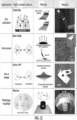
- particles may be used in diverse industrial areas (see
- Fig. 32 such as viscosity modifiers, gelation-inducing agents, food and cosmetic additives, dry adhesives for all kinds of substrates, textile or nonwoven finishing materials.
- the particles may be used in various materials such as nonwoven sheets, bioscaffolds, water filtration membranes, 3D porous materials such as aerogel and sponges.
- the particles and materials may be produced at very low costs, and may be applied to many inexpensive commercial polymers.
- the particles may be used as part of a coating composition, for example a coating film.
- the coating may be a functional coating for flat or textured surfaces, and the particles may instill certain characteristics to the coating, such as superhydrophobicity, superoleophobicity, superhydrophilicity, icephobicity, absorbing light of specific wavelength range, self-decontamination, degradation of warfare and/or lethal agents, self-cleaning, coloring, heat insulation, sound absorbency, desired tribology, wear resistance and antimicrobial properties, flame retardancy, high surface area to volume ratio and related properties.
- the coating may be infused with a liquid layer that can act as a slippery surface to various liquids.
- the coating may be super hydrophobic having a contact angle measurement for water of greater than 150°, the coating may be hydrophilic, or the coating may be icephobic.
- the coating may be repellent to liquids, such as, but not limited to, hydrocarbon oil, alcohol, ester, fatty acids, vegetable oil, milk oil, animal oil or combinations thereof.
- the coating may be part of a coating composition where one side is hydrophobic and the opposing side is hydrophilic, e.g., a Janus coating composition.
- Coating compositions comprising the disclosed particles may exhibit superior adhesion properties compared to alternative coating formulations, e.g., polymers not in particle form or particles not having a hierarchical structure (e.g., spherical particles).
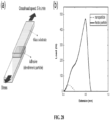
- fractal-like particle coatings have an adhesion strength of at least about 1 ⁇ 10 5 Pa as measured by a lap shear test (see Fig. 28 ).
- the substrate for the FLP coating may be a surface with various topology such as flat surfaces, rough surfaces, and/or porous surfaces.
- a non-limiting example of a flat surface are windows.
- Examples of rough surfaces include, but are not limited to, a wall, and/or a building interior.
- Examples of porous surfaces include, but are not limited to, nonwovens, wovens, papers and/or membranes.
- the substrate for the FLP coating may also be a microsized objects such as microfibers, microparticles (e.g., of spherical or low aspect ratio), and agricultural seeds.
- FLPs can engulf a single fiber to change the physical properties of the fiber.
- the physical properties include surface structure, hydrophobicity, surface area, and mechanical modulus.
- FLPs can bind more than two fiber. Accordingly, the FLP coating may be used to provide superhydropobic fibers.
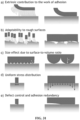
- the nanofibers of the corona of the fractal-like particles allow coatings/nonwovens to have enhanced adhesion strength.
- the particles may also be the basis of a number of other useful applications due to the unusually high "stickiness” and/or adhesiveness of the disclosed fractal-like particles.
- the Van der Waals interactions between the particle and substrate can enable the particle to stick to almost any type of surface. This may mean that the adhesion is universal, regardless of substrate (similar to the so-called "gecko legs").
- Polystyrene (PS), tetradydrofuran (THF), and deionized water were used as solvents and media.
- THF used as solvent and ethanol (+99%) used as dispersion medium were purchased from VWR (USA).
- Deionized water was used as an anti-solvent, which induced polymer precipitation.
- Hydrophilic fumed silica and sunflower oil, which are commonly used thickening agents, were purchased from Sigma-Aldrich (USA).
- the polymer solution in THF was injected through the nozzle with ⁇ 1 mL/s of volumetric flow rate after reaching the set rotor rate.
- precipitated polymer particles floated on the water since these particles were adsorbed around bubbles formed by the high shear mixer.
- the particles floating on the water were collected into 50 mL centrifuge tube (Genesse Scientific, USA). The collected polymer particles were then dispersed in ethanol and dried in an oven at 60 °C.
- Optical microscopy (Olympus BX-61 microscope with a DP-70 digital CCD camera, Olympus, Japan) was utilized for morphological analysis.
- the polystyrene fractal-like particles collected from the high shear mixer were then diluted in ethanol and well dispersed with a magnetic stirrer.
- the diluted polymer dispersion was then directly analyzed with the optical microscope.
- Field-Emission Scanning Electron Microscope FE-SEM, Verios, FEI, USA
- Each sample was coated by Pt/Pd film with a thickness of ⁇ 7 nm.
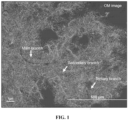
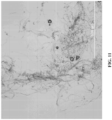
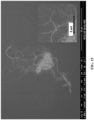
- Optical and scanning electron microscope images of fractal-like particles prepared from high sheared liquid-liquid dispersions are shown in Fig. 1 and 2 .
- the polymer particle precipitates have self-similar structure in multiple dimensions, which is analogous to the typical fractal structures in nature. While not being bound to any particular theory, the formation of these fractal-like particles may be attributed to two simultaneous processes: 1) polymer solution phase separation upon solvent and anti-solvent exchange and 2) vigorous random stretching of polymer droplet with eddies of turbulent flow.
- the used anti-solvent medium was miscible with the polymer solution but immiscible with the polymer itself. This made the interfacial tension between polymer solution phase and anti-solvent medium very low.
- the fractal-like structure was originally fabricated from an extremely high shear mixer, which generated turbulence into the anti-solvent medium.
- the solution phase was stretched in random directions, while anti-solvent and solvent were exchanged at the polymer solution boundary.
- polymer solution droplets were separated into polymer-rich and polymer-lean phases because single phase was thermodynamically unstable.
- microscopic polymer lean phases were coagulated into larger droplets, which was more thermodynamically favored within the boundary of the polymer domain.
- the schematic describing the hypothesized formation of fractal-like structures is shown in Fig. 3 .
- the disclosed method was used to provide fractal-like particles from other polymers, including polysulfone, ethyl cellulose, cellulose acetate and polyvinyl alcohol.
- Fig. 3(a) shows PS/THF/Water ternary phase diagram, where the phase boundary between one-phase and two-phase regions is presented as a bold black line.
- the circles, triangles, and squares correspond to the initial polymer concentrations turned into fragmented fiber, fractal, and sheet-like structures.
- sheet-like structures tended to form.
- fragmented fractal-like structures were produced.
- the fractal-like structures were formed from concentration ranges corresponding to intermediate regions between sheet-like structure forming region (squares in Fig. 3(a)) and fiber structure forming region (circles in Fig.
- the effects of the hydrodynamic pressure and the anti-solvent type on the polymer structure were investigated by Poiseuille flow device.
- the shear medium was flown in a tube, while the polymer solution was injected from the side and sheared at different flow rates.
- Fig. 4 summarizes the various types of polymer structures observed as result of gradually changing the shear at rates corresponding to flow transition from laminar to turbulent.
- the polymer precipitants had spherical, fiber-like, and fractal-like structures.
- the transition from sphere-like to fiber-like structure can be correlated to the capillary number (Ca) accounting for the viscous force over interfacial tension (equation 1).
- Ca ⁇ V ⁇ where ⁇ is interfacial tension, ⁇ is the viscosity of anti-solvent medium and V is the characteristic velocity.
- a high capillary number was needed to stretch polymer solution droplets by overcoming their interfacial tension to make fiber structure in laminar flow regime. At lower shear rates, when the interfacial tension between polymer solution and anti-solvent medium governed the viscous flow of anti-solvent, spherical particles were formed.
- spherical particles have porous structure caused by anti-solvent-induced phase separation.
- Polymer fibers similar to those reported in Smoukov et al. ( Smoukov, S. K. et al. Scalable Liquid Shear-Driven Fabrication of Polymer Nanofibers. Adv. Mater. 1-6 (2015 ), which is herein incorporated by reference in its entirety) formed at higher laminar flow rates. As the shear stress increased further, the flow became turbulent, and the spherical PS particles started to evolve into fractal-like particles. In the turbulent flow, vortex stretching is exerted in numerous flow directions.
- the fractal-like polymer particles have multiple fibrous side branches ranging in size from ⁇ 20 nm to 10 ⁇ m.
- the surface area and diameters were calculated via analysis of images of fractal-like particles as disclosed in Fig. 25 .
- the technique to make said particles utilized anti-solvent induced phase separation and flow shear in a pipe. It was discovered that such particles are formed in a turbulent flow regime and that the shapes of precipitated polymer particles could be controlled by the shear rate and flow rate of the anti-solvent medium. Spherical, fiber-like and fractal-like particles have been observed at increasing flow rates.
- the concentration of polymer solution was also a factor in producing fractal-like particles. Higher concentration of polymer solution precipitated nanometer-thick polymer skin on the surface, which peeled off to form sheet-like particles. Lower concentrations resulted in fractal-like structure.
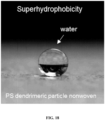
- fractal-like particles having water contact angles higher than 150°.
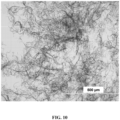
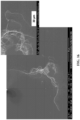
- Superhydrophobic surfaces were generated by an evaporation process of a fractal-like particle suspension ( Fig. 9 ). Approximately 2 wt.% fractal-like particles were dispersed in ethanol using a magnetic stir bar. The solution was poured into a PS disposable Petri dish and placed in an oven at 65 °C. After evaporation, approximately 40 ⁇ L of water was deposited on top of the coating and its contact angle was measured with a goniometer (each set of tests were repeated 2 times on the different spots of the sample). Fig.
- FIG. 9 (b) and (c) shows optical microscopic images of the fractal-like particle coated surfaces.
- fractal-like particles were entangled with each other forming porous structures.
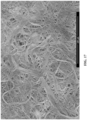
- Fig. 17 and Fig. 18 show an SEM image and a demonstration of the resultant hydrophobicity, respectively, of a PS nonwoven.
- Nonwoven particle coatings made from varying polymers are demonstrated in Fig. 19 and 20 .
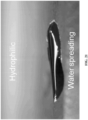
- the nonwoven made from polyvinyl alcohol fractal-like particles demonstrated a hydrophilic surface ( Fig. 21 ).
- a coating composition comprising both a hydrophobic side and a hydrophilic side is demonstrated in Fig. 22 . This type of coating is a Janus-type coating.
- Fractal-like particles could also be easily dried on top of a fluorinated surface and peeled off to form strong free-standing nonwoven films with multiscale fibrous structure.
- These nonwoven films from FLPs can be made from a broad range of polymers. These nonwovens may be highly cohesive and have superior mechanical properties, e.g., cohesiveness, adhesivity, surface/volume ratio, and filtration efficiency.
- An example of folded nonwoven made of cellulose acetate FLPs can be seen in Fig. 23 .
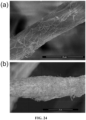
- Cellulose acetate FLPs wrapped around a single cotton fiber are shown in Fig. 24 .
- the FLPs adhere and wrap around the cotton fiber cores ( Fig. 24 (a) ). They can also form porous "nanosheaths" around the fibers ( Fig. 24 (b) ).
- the FLPs thus make strongly adhesive coatings which dramatically modify the textile wetting, wicking, mechanical and tribological properties. These results prove that the FLPs could form the basis of highly efficient textile treatments with unique capabilities.
- Coatings comprising fractal-like particles were analyzed for coating adhesion via the ASTM D3359 Type A test ( Fig. 27 ), which is a standardized industrial adhesion test known within the art. It was found that the adhesion of fractal-like polymer particle films is significantly stronger than continuous cellulose acetate (CA) polymer film deposited by solution casting. Fractal-like CA particle coatings remained intact, while continuous films from the same polymer peeled off ( Fig. 26 ). This is a surprising result demonstrating very unusual and potentially useful properties. In another round of experiments, it was found that the cellulose acetate fractal-like particle films exhibit very strong adhesion to PDMS substrates, which have very low surface energy (19 mJ/m 2 ).
- the strong adhesion of the disclosed coatings comes from a contact splitting effect (e.g., "Gecko skin adhesion") of the particles via the nanofiber branches that extend the furthest out from the particle.
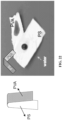
- the quantitative evaluation of dendrimeric particles as part of a coating was further analyzed through a lap shear test (similar to ASTM D1002, which is an adhesion test known within the art).
- the test measures shear force when two partially-glued plates are separated at a specified rate ( Fig. 28(a) ).
- the experiment was performed with two glass plates glued via a coating of the dendrimeric particles.
- the adhesion coating was made by applying 500 ⁇ l of dendrimeric particles in an ethanol suspension (1 wt.%) and then applied on a glass substrate. The other substrate was then brought into contact and the liquid medium was evaporated. As illustrated in Fig. 28(b) , 1 ⁇ 10 6 Pa is needed to detach the two substrates.
- This value corresponds to the coating area of 1cm ⁇ 1cm can withstand approximately 10 kg of an object.
- the same test was also performed with spherical cellulose acetate particles. When the glass substrates were adhered by spherical particles, they were easily detached at a low shear stress. The result shows that the unique morphology of the dendrimeric particle contributes to their strong adhesion when applied as a coating, or as a potential adhesive.
- the quantitative evaluation of the origins of the adhesion of the dendrimeric particles as part of a coating was further performed by changing the hydrophobicity of the glass substrates.
- the hydrophobization of glass substrates was achieved by modifying the surface with hydrophobic silane coupling agents, dichlorodimethylsilane (methylsilane) and 1H,1H,2H,2H-perfluorooctyltriethoxysilane (fluorosilane).
- hydrophobization the apparent changes in the contact angles of water on the slide glasses went from 34.4° to 61.4° (methylsilane) and to 105.4° (fluorosilane).
- the CA FLPs were applied between the glass slides and the lap shear strength were measured (see Fig.
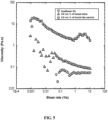
- the rheological properties of fractal-like particles in suspension were shown to be unique. The apparent volume of these fractal clusters is much higher than the actual content of fumed silica.
- the rheological behaviors of fractal-like particles and fumed silica suspensions were characterized using AR 2000 rheometer (TA instruments, USA) with cone and plate geometry (40 mm diameter and 55 ⁇ m gap size). They were compared to fumed silica, a common product that is effective as thickening and thixotropic agent in a low molecular weight solvent, and frequently used for commercial purposes.
- the fumed silica aggregates are flocculated by hydrogen bonding into fractal-like structures.
- the fractal-structure can hold large amounts of stagnant liquid phase in their structure showing much higher apparent volume than their actual volume.
- the fractal-like particle suspensions showed approximately 10 times higher viscosity than that of fumed silica at the same volume fraction and shear rate. The results prove that fractal-like particles can be much more effective thickening agents than fumed silica.
- fractal-like particle was also assessed in mineral oil as a function of wt. % of the particles, as demonstrated in Fig. 7 .
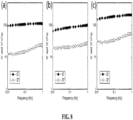
- Fig. 8 shows the G' and G' of 0.5 vol.% cellulose acetate (CA) FLP in (a) mineral oil, (b) ethylene glycol, and (c) glycerol by varying the frequency in the rheometer.
- CA FLP 0.5 vol.% cellulose acetate
- the G' and G' of CA FLP does not have strong dependency on type of dispersion medium. This indicates that the fractal particles are effective as gelation agents for almost any medium.
Landscapes
- Chemical & Material Sciences (AREA)
- Engineering & Computer Science (AREA)
- Organic Chemistry (AREA)
- Life Sciences & Earth Sciences (AREA)
- Materials Engineering (AREA)
- Wood Science & Technology (AREA)
- Chemical Kinetics & Catalysis (AREA)
- Health & Medical Sciences (AREA)
- Medicinal Chemistry (AREA)
- Polymers & Plastics (AREA)
- Mechanical Engineering (AREA)
- Textile Engineering (AREA)
- Dispersion Chemistry (AREA)
- Compositions Of Macromolecular Compounds (AREA)
- Processes Of Treating Macromolecular Substances (AREA)
Claims (7)
- Teilchen, das ein Aggregat aus Polymermolekülen umfasst, und das eine verzweigte faserige Struktur aufweist, die mindestens einen ersten Anteil, einen zweiten Anteil und einen dritten Anteil einschließt, wobei jeder Anteil individuell eine Vielzahl von Fasern aufweist, wobei:- der erste Anteil eine erste Vielzahl von Fasern mit Durchmessern umfasst, die 10 bis 100 Mal größer als die Faserdurchmesser des dritten Anteils sind, wobei der Flächeninhalt des ersten Anteils etwa 10 % bis etwa 40 % des Flächeninhalts des Teilchens stellt;- der zweite Anteil eine zweite Vielzahl von Fasern umfasst, die sich aus dem ersten Anteil erstrecken und Durchmesser aufweisen, die 5 bis 10 Mal größer als die Faserdurchmesser des dritten Anteils sind, wobei der Flächeninhalt des zweiten Anteils etwa 20 % bis etwa 50 % des Flächeninhalts des Teilchens stellt; und- der dritte Anteil eine dritte Vielzahl von Fasern umfasst, die sich aus dem zweiten Anteil erstrecken und Durchmesser aufweisen, die etwa 20 nm bis etwa 500 nm betragen, wobei der Flächeninhalt des dritten Anteils etwa 10 % bis etwa 70 % des Flächeninhalts des Teilchens stellt, wobei der Durchmesser und der Flächeninhalt der Fasern durch Rasterelektronenmikroskopie gemessen werden.
- Teilchen nach Anspruch 1, wobei:- die erste Vielzahl der Fasern Durchmesser von 2 µm bis 10 µm aufweist; und- die zweite Vielzahl der Fasern Durchmesser von 0,5 µm bis 2 µm aufweist.
- Teilchen nach Anspruch 1 oder Anspruch 2, wobei das Polymer:- ausgewählt ist aus der Gruppe bestehend aus Polymeren auf Cellulosebasis, Polystyrol, Polyvinylalkohol, Polyvinylacetat, Polysulfon, Polyacrylat, Polyacrylamid, Polyester, Polycarbonat, Polyvinylidenfluorid, Polyanilin, Polyurethan, Polymilchsäure, Polymilchsäure-coglykolsäure, Natriumalginat, Agarose, Polyester, Gelatine und Kombinationen davon; und/oder- ausgewählt ist aus der Gruppe bestehend aus Celluloseacetat, Ethylcellulose, Polystyrol, Polyvinylalkohol, Polysulfon und Kombinationen davon; und/oder- ein Molekulargewicht von 15.000 g/mol bis 1.000.000 g/mol hat.
- Viskositätsmodifizierungsmittel, umfassend das Teilchen nach einem der Ansprüche 1 bis 3.
- Beschichtungszusammensetzung, umfassend das Teilchen nach einem der Ansprüche 1 bis 3.
- Faser, umfassend die Beschichtungszusammensetzung nach Anspruch 5.
- Vliesmaterial, umfassend das Teilchen nach einem der Ansprüche 1 bis 3.
Priority Applications (1)
| Application Number | Priority Date | Filing Date | Title |
|---|---|---|---|
| EP21185173.8A EP3940032A1 (de) | 2016-05-09 | 2017-05-09 | Fraktalähnliche polymerteilchen und deren verwendung in verschiedenen anwendungen |
Applications Claiming Priority (2)
| Application Number | Priority Date | Filing Date | Title |
|---|---|---|---|
| US201662333618P | 2016-05-09 | 2016-05-09 | |
| PCT/US2017/031786 WO2017196864A1 (en) | 2016-05-09 | 2017-05-09 | Fractal-like polymeric particles and their use in diverse applications |
Related Child Applications (2)
| Application Number | Title | Priority Date | Filing Date |
|---|---|---|---|
| EP21185173.8A Division EP3940032A1 (de) | 2016-05-09 | 2017-05-09 | Fraktalähnliche polymerteilchen und deren verwendung in verschiedenen anwendungen |
| EP21185173.8A Division-Into EP3940032A1 (de) | 2016-05-09 | 2017-05-09 | Fraktalähnliche polymerteilchen und deren verwendung in verschiedenen anwendungen |
Publications (4)
| Publication Number | Publication Date |
|---|---|
| EP3455403A1 EP3455403A1 (de) | 2019-03-20 |
| EP3455403A4 EP3455403A4 (de) | 2020-12-23 |
| EP3455403C0 EP3455403C0 (de) | 2024-11-13 |
| EP3455403B1 true EP3455403B1 (de) | 2024-11-13 |
Family
ID=60267348
Family Applications (2)
| Application Number | Title | Priority Date | Filing Date |
|---|---|---|---|
| EP21185173.8A Pending EP3940032A1 (de) | 2016-05-09 | 2017-05-09 | Fraktalähnliche polymerteilchen und deren verwendung in verschiedenen anwendungen |
| EP17796700.7A Active EP3455403B1 (de) | 2016-05-09 | 2017-05-09 | Fraktalähnliche polymerteilchen und deren verwendung in verschiedenen anwendungen |
Family Applications Before (1)
| Application Number | Title | Priority Date | Filing Date |
|---|---|---|---|
| EP21185173.8A Pending EP3940032A1 (de) | 2016-05-09 | 2017-05-09 | Fraktalähnliche polymerteilchen und deren verwendung in verschiedenen anwendungen |
Country Status (3)
| Country | Link |
|---|---|
| US (2) | US11306214B2 (de) |
| EP (2) | EP3940032A1 (de) |
| WO (1) | WO2017196864A1 (de) |
Families Citing this family (4)
| Publication number | Priority date | Publication date | Assignee | Title |
|---|---|---|---|---|
| US11306214B2 (en) * | 2016-05-09 | 2022-04-19 | North Carolina State University | Fractal-like polymeric particles and their use in diverse applications |
| EP3485215B1 (de) | 2016-07-12 | 2023-06-07 | Alexander Poltorak | System und verfahren zur bewahrung der effizienz eines kühlkörpers |
| CN112083044B (zh) * | 2019-06-14 | 2022-03-04 | 南京工业大学 | 一种多重氢键有机超分子纳米棒/氧化石墨烯复合物及其制备方法和应用 |
| EP4194418A1 (de) * | 2021-12-10 | 2023-06-14 | KAZAK s.r.o. | Füllstoff für baumischungen und produkte und verfahren zur herstellung eines solchen füllstoffs |
Family Cites Families (35)
| Publication number | Priority date | Publication date | Assignee | Title |
|---|---|---|---|---|
| US2342387A (en) | 1939-10-24 | 1944-02-22 | Du Pont | Process for preparing coating compositions |
| US2810646A (en) | 1953-09-17 | 1957-10-22 | American Cyanamid Co | Water-laid webs comprising water-fibrillated, wet-spun filaments of an acrylonitrile polymer and method of producing them |
| NL246230A (de) | 1958-12-09 | |||
| US2988782A (en) | 1958-12-09 | 1961-06-20 | Du Pont | Process for producing fibrids by precipitation and violent agitation |
| US3018091A (en) | 1959-04-10 | 1962-01-23 | Du Pont | Precipitation apparatus |
| US3114672A (en) | 1961-08-09 | 1963-12-17 | Du Pont | Sheet forming binder particles composed of thermoplastic polymer dispersed in a polysaccharide matrix |
| US3342921A (en) | 1966-03-16 | 1967-09-19 | West Virginia Pulp & Paper Co | Process for producing fibrous filler having high wet end retention |
| US3431242A (en) | 1967-02-27 | 1969-03-04 | Grace W R & Co | Process for producing fibrids by violent agitation |
| US3743272A (en) | 1971-04-12 | 1973-07-03 | Crown Zellerbach Corp | Process of forming polyolefin fibers |
| US4013751A (en) | 1971-10-29 | 1977-03-22 | Gulf Research & Development Company | Fibrils and processes for the manufacture thereof |
| US3997648A (en) | 1972-01-03 | 1976-12-14 | Gulf Research & Development Company | Fibril formation process |
| US3902957A (en) | 1973-04-05 | 1975-09-02 | Crown Zellerbach Corp | Process of making fibers |
| DE2516561C3 (de) | 1975-04-16 | 1979-10-11 | Basf Ag, 6700 Ludwigshafen | Verfahren zur Herstellung von Fibrillen aus Polymerisaten |
| DE2543824C3 (de) | 1975-10-01 | 1980-05-14 | Basf Ag, 6700 Ludwigshafen | Verfahren zur Herstellung von Fibrillen aus Poly(amid-imid)-harzen und die Fibrillen aus diesen Harzen |
| DE2646332B2 (de) | 1976-10-14 | 1979-04-12 | Basf Ag, 6700 Ludwigshafen | Verfahren zur Herstellung von Fibrillen aus fluorhaltigen Polymerisaten |
| JPS54106900A (en) | 1978-02-09 | 1979-08-22 | Mitsubishi Paper Mills Ltd | Thin paper for electrical insulation |
| US4374788A (en) | 1979-02-28 | 1983-02-22 | Gulf Oil Corporation | Process for treatment of olefin polymer fibrils |
| US5209877A (en) | 1991-07-02 | 1993-05-11 | E. I. Du Pont De Nemours And Company | Method of making fibrids |
| DE4441801C1 (de) | 1994-11-24 | 1996-06-05 | Messer Griesheim Gmbh | Polyesterfibride |
| US6143211A (en) | 1995-07-21 | 2000-11-07 | Brown University Foundation | Process for preparing microparticles through phase inversion phenomena |
| US6184373B1 (en) * | 1999-09-03 | 2001-02-06 | Eastman Chemical Company | Method for preparing cellulose acetate fibers |
| WO2006007393A1 (en) | 2004-06-16 | 2006-01-19 | North Carolina State University | A process for preparing microrods using liquid-liquid dispersion |
| US20060225162A1 (en) | 2005-03-30 | 2006-10-05 | Sungsoo Yi | Method of making a substrate structure with enhanced surface area |
| JP2008002037A (ja) * | 2006-06-26 | 2008-01-10 | Kuraray Co Ltd | エチレン−ビニルアルコール系共重合体ナノ繊維を含む繊維状構造物 |
| US8940362B2 (en) | 2007-10-11 | 2015-01-27 | Eastman Kodak Company | Method for manufacturing porous particles with non-porous shell |
| EP2229138B1 (de) * | 2007-12-19 | 2019-08-28 | Avon Products, Inc. | Topische zusammensetzungen mit nicht-proteogenen aminosäuren und hautbehandlungsverfahren |
| US20100028604A1 (en) * | 2008-08-01 | 2010-02-04 | The Ohio State University | Hierarchical structures for superhydrophobic surfaces and methods of making |
| US8398909B1 (en) | 2008-09-18 | 2013-03-19 | Carnegie Mellon University | Dry adhesives and methods of making dry adhesives |
| US9217211B2 (en) * | 2009-03-24 | 2015-12-22 | North Carolina State University | Method for fabricating nanofibers |
| US8551378B2 (en) | 2009-03-24 | 2013-10-08 | North Carolina State University | Nanospinning of polymer fibers from sheared solutions |
| US9217210B2 (en) | 2009-03-24 | 2015-12-22 | North Carolina State University | Process of making composite inorganic/polymer nanofibers |
| US8877072B2 (en) | 2011-10-10 | 2014-11-04 | Ranjana Sahai | Three-dimensional fractal graduated-branching hierarchical structures and fabrication method thereof |
| WO2015112894A1 (en) * | 2014-01-24 | 2015-07-30 | Xanofi, Inc. | Sheared polymeric nanofibers of short cut lengths for liquid dispersions |
| WO2016059617A1 (en) * | 2014-10-17 | 2016-04-21 | Sabic Global Technologies B.V. | Method of making shear spun fibers and fibers made therefrom |
| US11306214B2 (en) * | 2016-05-09 | 2022-04-19 | North Carolina State University | Fractal-like polymeric particles and their use in diverse applications |
-
2017
- 2017-05-09 US US16/099,670 patent/US11306214B2/en active Active
- 2017-05-09 EP EP21185173.8A patent/EP3940032A1/de active Pending
- 2017-05-09 EP EP17796700.7A patent/EP3455403B1/de active Active
- 2017-05-09 WO PCT/US2017/031786 patent/WO2017196864A1/en not_active Ceased
-
2022
- 2022-03-18 US US17/699,006 patent/US12209203B2/en active Active
Also Published As
| Publication number | Publication date |
|---|---|
| EP3455403A1 (de) | 2019-03-20 |
| WO2017196864A1 (en) | 2017-11-16 |
| EP3455403C0 (de) | 2024-11-13 |
| EP3940032A1 (de) | 2022-01-19 |
| US11306214B2 (en) | 2022-04-19 |
| EP3455403A4 (de) | 2020-12-23 |
| US20190153247A1 (en) | 2019-05-23 |
| US20240076509A1 (en) | 2024-03-07 |
| US12209203B2 (en) | 2025-01-28 |
Similar Documents
| Publication | Publication Date | Title |
|---|---|---|
| US12209203B2 (en) | Fractal-like polymeric particles and their use in diverse applications | |
| Kedzior et al. | Nanocellulose in emulsions and heterogeneous water‐based polymer systems: A review | |
| Dodero et al. | Sodium alginate solutions: Correlation between rheological properties and spinnability | |
| Tan et al. | Fabrication of starch-based nanospheres to stabilize pickering emulsion | |
| Kriegel et al. | Electrospinning of chitosan–poly (ethylene oxide) blend nanofibers in the presence of micellar surfactant solutions | |
| Azzam et al. | Preparation by grafting onto, characterization, and properties of thermally responsive polymer-decorated cellulose nanocrystals | |
| Li et al. | A highly stretchable and biodegradable superamphiphobic fluorinated polycaprolactone nanofibrous membrane for antifouling | |
| US8629187B2 (en) | Cellulose fine particles, and liquid or solid dispersion thereof | |
| Yang et al. | Viscosity study of interactions between sodium alginate and CTAB in dilute solutions at different pH values | |
| CN108124456B (zh) | 聚α-1,3-葡聚糖沉析纤维及其用途,以及制备聚α-1,3-葡聚糖沉析纤维的方法 | |
| Kriegel et al. | Influence of surfactant type and concentration on electrospinning of chitosan–poly (ethylene oxide) blend nanofibers | |
| Zhou et al. | Tailoring the surface chemistry and morphology of glass fiber membranes for robust oil/water separation using poly (dimethylsiloxanes) as hydrophobic molecular binders | |
| Morota et al. | Poly (ethylene oxide) thin films produced by electrospray deposition: morphology control and additive effects of alcohols on nanostructure | |
| JP5918496B2 (ja) | ゲル状体及びその製造方法 | |
| Miao et al. | Alkenylation of cellulose nanocrystals (CNC) and their applications | |
| WO2006007393A1 (en) | A process for preparing microrods using liquid-liquid dispersion | |
| Sousa et al. | Improving agar electrospinnability with choline-based deep eutectic solvents | |
| KR20110137288A (ko) | 중합체 쉘 | |
| CN102099412A (zh) | 无羧甲基纤维素组分的含细菌纤维素配方 | |
| Garcia et al. | Effect of solvent and additives on the electrospinnability of BSA solutions | |
| Antoniw et al. | Colloidal stability window for carboxylated cellulose nanocrystals: considerations for handling, characterization, and formulation | |
| Carvalho et al. | Polystyrene/cellulose nanofibril composites: fiber dispersion driven by nanoemulsion flocculation | |
| Yuan et al. | Liquefied Polysaccharides‐Based Polymer with Tunable Condensed State Structure for Antimicrobial Shield by Multiple Processing Methods | |
| Andrade et al. | Wettability tuning of natural rubber/polyvinylpyrrolidone electrospun nonwoven mats | |
| Chen et al. | Blend membranes prepared from cellulose and soy protein isolate in NaOH/thiourea aqueous solution |
Legal Events
| Date | Code | Title | Description |
|---|---|---|---|
| STAA | Information on the status of an ep patent application or granted ep patent |
Free format text: STATUS: THE INTERNATIONAL PUBLICATION HAS BEEN MADE |
|
| PUAI | Public reference made under article 153(3) epc to a published international application that has entered the european phase |
Free format text: ORIGINAL CODE: 0009012 |
|
| STAA | Information on the status of an ep patent application or granted ep patent |
Free format text: STATUS: REQUEST FOR EXAMINATION WAS MADE |
|
| 17P | Request for examination filed |
Effective date: 20181025 |
|
| AK | Designated contracting states |
Kind code of ref document: A1 Designated state(s): AL AT BE BG CH CY CZ DE DK EE ES FI FR GB GR HR HU IE IS IT LI LT LU LV MC MK MT NL NO PL PT RO RS SE SI SK SM TR |
|
| AX | Request for extension of the european patent |
Extension state: BA ME |
|
| RIN1 | Information on inventor provided before grant (corrected) |
Inventor name: VELEV, ORLIN, D. Inventor name: ROH, SANGCHUL |
|
| DAV | Request for validation of the european patent (deleted) | ||
| DAX | Request for extension of the european patent (deleted) | ||
| RIC1 | Information provided on ipc code assigned before grant |
Ipc: D21H 21/52 20060101ALI20191217BHEP Ipc: C09D 5/00 20060101ALI20191217BHEP Ipc: C09D 7/43 20180101AFI20191217BHEP Ipc: C09K 3/10 20060101ALN20191217BHEP Ipc: D21H 11/16 20060101ALI20191217BHEP Ipc: D21H 21/16 20060101ALI20191217BHEP Ipc: D01F 6/00 20060101ALI20191217BHEP Ipc: D21H 11/18 20060101ALI20191217BHEP Ipc: D01D 5/40 20060101ALI20191217BHEP Ipc: C08K 7/02 20060101ALI20191217BHEP Ipc: C09K 3/00 20060101ALI20191217BHEP |
|
| A4 | Supplementary search report drawn up and despatched |
Effective date: 20201120 |
|
| RIC1 | Information provided on ipc code assigned before grant |
Ipc: D01F 6/00 20060101ALI20201116BHEP Ipc: C09D 5/00 20060101ALI20201116BHEP Ipc: D21H 11/18 20060101ALI20201116BHEP Ipc: D01F 2/28 20060101ALI20201116BHEP Ipc: C08K 7/02 20060101ALI20201116BHEP Ipc: D01D 5/40 20060101ALI20201116BHEP Ipc: C09K 3/00 20060101ALI20201116BHEP Ipc: C09K 3/10 20060101ALN20201116BHEP Ipc: C09D 7/43 20180101AFI20201116BHEP Ipc: D21H 11/16 20060101ALI20201116BHEP Ipc: D21H 21/52 20060101ALI20201116BHEP Ipc: D21H 21/16 20060101ALI20201116BHEP |
|
| STAA | Information on the status of an ep patent application or granted ep patent |
Free format text: STATUS: EXAMINATION IS IN PROGRESS |
|
| 17Q | First examination report despatched |
Effective date: 20230104 |
|
| REG | Reference to a national code |
Ipc: C09D0007430000 Ref country code: DE Ref legal event code: R079 Ref document number: 602017086120 Country of ref document: DE Free format text: PREVIOUS MAIN CLASS: D21F0011000000 |
|
| GRAP | Despatch of communication of intention to grant a patent |
Free format text: ORIGINAL CODE: EPIDOSNIGR1 |
|
| STAA | Information on the status of an ep patent application or granted ep patent |
Free format text: STATUS: GRANT OF PATENT IS INTENDED |
|
| RIC1 | Information provided on ipc code assigned before grant |
Ipc: C09K 3/10 20060101ALN20240521BHEP Ipc: D01D 1/02 20060101ALI20240521BHEP Ipc: D01F 2/28 20060101ALI20240521BHEP Ipc: C09K 3/00 20060101ALI20240521BHEP Ipc: D01F 6/00 20060101ALI20240521BHEP Ipc: D01D 5/40 20060101ALI20240521BHEP Ipc: D21H 21/52 20060101ALI20240521BHEP Ipc: D21H 21/16 20060101ALI20240521BHEP Ipc: D21H 11/18 20060101ALI20240521BHEP Ipc: D21H 11/16 20060101ALI20240521BHEP Ipc: C08K 7/02 20060101ALI20240521BHEP Ipc: C09D 5/00 20060101ALI20240521BHEP Ipc: C09D 7/43 20180101AFI20240521BHEP |
|
| INTG | Intention to grant announced |
Effective date: 20240606 |
|
| GRAS | Grant fee paid |
Free format text: ORIGINAL CODE: EPIDOSNIGR3 |
|
| GRAA | (expected) grant |
Free format text: ORIGINAL CODE: 0009210 |
|
| STAA | Information on the status of an ep patent application or granted ep patent |
Free format text: STATUS: THE PATENT HAS BEEN GRANTED |
|
| AK | Designated contracting states |
Kind code of ref document: B1 Designated state(s): AL AT BE BG CH CY CZ DE DK EE ES FI FR GB GR HR HU IE IS IT LI LT LU LV MC MK MT NL NO PL PT RO RS SE SI SK SM TR |
|
| REG | Reference to a national code |
Ref country code: GB Ref legal event code: FG4D |
|
| REG | Reference to a national code |
Ref country code: CH Ref legal event code: EP |
|
| REG | Reference to a national code |
Ref country code: IE Ref legal event code: FG4D |
|
| REG | Reference to a national code |
Ref country code: DE Ref legal event code: R096 Ref document number: 602017086120 Country of ref document: DE |
|
| U01 | Request for unitary effect filed |
Effective date: 20241125 |
|
| U07 | Unitary effect registered |
Designated state(s): AT BE BG DE DK EE FI FR IT LT LU LV MT NL PT RO SE SI Effective date: 20241202 |
|
| PG25 | Lapsed in a contracting state [announced via postgrant information from national office to epo] |
Ref country code: HR Free format text: LAPSE BECAUSE OF FAILURE TO SUBMIT A TRANSLATION OF THE DESCRIPTION OR TO PAY THE FEE WITHIN THE PRESCRIBED TIME-LIMIT Effective date: 20241113 Ref country code: IS Free format text: LAPSE BECAUSE OF FAILURE TO SUBMIT A TRANSLATION OF THE DESCRIPTION OR TO PAY THE FEE WITHIN THE PRESCRIBED TIME-LIMIT Effective date: 20250313 |
|
| PG25 | Lapsed in a contracting state [announced via postgrant information from national office to epo] |
Ref country code: ES Free format text: LAPSE BECAUSE OF FAILURE TO SUBMIT A TRANSLATION OF THE DESCRIPTION OR TO PAY THE FEE WITHIN THE PRESCRIBED TIME-LIMIT Effective date: 20241113 |
|
| PG25 | Lapsed in a contracting state [announced via postgrant information from national office to epo] |
Ref country code: NO Free format text: LAPSE BECAUSE OF FAILURE TO SUBMIT A TRANSLATION OF THE DESCRIPTION OR TO PAY THE FEE WITHIN THE PRESCRIBED TIME-LIMIT Effective date: 20250213 |
|
| PG25 | Lapsed in a contracting state [announced via postgrant information from national office to epo] |
Ref country code: GR Free format text: LAPSE BECAUSE OF FAILURE TO SUBMIT A TRANSLATION OF THE DESCRIPTION OR TO PAY THE FEE WITHIN THE PRESCRIBED TIME-LIMIT Effective date: 20250214 |
|
| PG25 | Lapsed in a contracting state [announced via postgrant information from national office to epo] |
Ref country code: PL Free format text: LAPSE BECAUSE OF FAILURE TO SUBMIT A TRANSLATION OF THE DESCRIPTION OR TO PAY THE FEE WITHIN THE PRESCRIBED TIME-LIMIT Effective date: 20241113 |
|
| PG25 | Lapsed in a contracting state [announced via postgrant information from national office to epo] |
Ref country code: RS Free format text: LAPSE BECAUSE OF FAILURE TO SUBMIT A TRANSLATION OF THE DESCRIPTION OR TO PAY THE FEE WITHIN THE PRESCRIBED TIME-LIMIT Effective date: 20250213 |
|
| U20 | Renewal fee for the european patent with unitary effect paid |
Year of fee payment: 9 Effective date: 20250529 |
|
| PG25 | Lapsed in a contracting state [announced via postgrant information from national office to epo] |
Ref country code: SM Free format text: LAPSE BECAUSE OF FAILURE TO SUBMIT A TRANSLATION OF THE DESCRIPTION OR TO PAY THE FEE WITHIN THE PRESCRIBED TIME-LIMIT Effective date: 20241113 |
|
| PG25 | Lapsed in a contracting state [announced via postgrant information from national office to epo] |
Ref country code: SK Free format text: LAPSE BECAUSE OF FAILURE TO SUBMIT A TRANSLATION OF THE DESCRIPTION OR TO PAY THE FEE WITHIN THE PRESCRIBED TIME-LIMIT Effective date: 20241113 |
|
| PG25 | Lapsed in a contracting state [announced via postgrant information from national office to epo] |
Ref country code: CZ Free format text: LAPSE BECAUSE OF FAILURE TO SUBMIT A TRANSLATION OF THE DESCRIPTION OR TO PAY THE FEE WITHIN THE PRESCRIBED TIME-LIMIT Effective date: 20241113 |
|
| PLBE | No opposition filed within time limit |
Free format text: ORIGINAL CODE: 0009261 |
|
| STAA | Information on the status of an ep patent application or granted ep patent |
Free format text: STATUS: NO OPPOSITION FILED WITHIN TIME LIMIT |
|
| 26N | No opposition filed |
Effective date: 20250814 |
|
| REG | Reference to a national code |
Ref country code: CH Ref legal event code: H13 Free format text: ST27 STATUS EVENT CODE: U-0-0-H10-H13 (AS PROVIDED BY THE NATIONAL OFFICE) Effective date: 20251223 |
|
| PG25 | Lapsed in a contracting state [announced via postgrant information from national office to epo] |
Ref country code: CH Free format text: LAPSE BECAUSE OF NON-PAYMENT OF DUE FEES Effective date: 20250531 |
|
| GBPC | Gb: european patent ceased through non-payment of renewal fee |
Effective date: 20250509 |
|
| PG25 | Lapsed in a contracting state [announced via postgrant information from national office to epo] |
Ref country code: MC Free format text: LAPSE BECAUSE OF FAILURE TO SUBMIT A TRANSLATION OF THE DESCRIPTION OR TO PAY THE FEE WITHIN THE PRESCRIBED TIME-LIMIT Effective date: 20241113 |