EP3454739B1 - Bestimmung eines atemwegsflussbegrenzungswertes - Google Patents
Bestimmung eines atemwegsflussbegrenzungswertes Download PDFInfo
- Publication number
- EP3454739B1 EP3454739B1 EP17722740.2A EP17722740A EP3454739B1 EP 3454739 B1 EP3454739 B1 EP 3454739B1 EP 17722740 A EP17722740 A EP 17722740A EP 3454739 B1 EP3454739 B1 EP 3454739B1
- Authority
- EP
- European Patent Office
- Prior art keywords
- airway
- patient
- airway flow
- flow limitation
- information
- Prior art date
- Legal status (The legal status is an assumption and is not a legal conclusion. Google has not performed a legal analysis and makes no representation as to the accuracy of the status listed.)
- Active
Links
Images



Classifications
-
- A—HUMAN NECESSITIES
- A61—MEDICAL OR VETERINARY SCIENCE; HYGIENE
- A61B—DIAGNOSIS; SURGERY; IDENTIFICATION
- A61B5/00—Measuring for diagnostic purposes; Identification of persons
- A61B5/08—Measuring devices for evaluating the respiratory organs
- A61B5/087—Measuring breath flow
-
- A—HUMAN NECESSITIES
- A61—MEDICAL OR VETERINARY SCIENCE; HYGIENE
- A61B—DIAGNOSIS; SURGERY; IDENTIFICATION
- A61B5/00—Measuring for diagnostic purposes; Identification of persons
- A61B5/48—Other medical applications
- A61B5/4836—Diagnosis combined with treatment in closed-loop systems or methods
-
- A—HUMAN NECESSITIES
- A61—MEDICAL OR VETERINARY SCIENCE; HYGIENE
- A61B—DIAGNOSIS; SURGERY; IDENTIFICATION
- A61B5/00—Measuring for diagnostic purposes; Identification of persons
- A61B5/72—Signal processing specially adapted for physiological signals or for diagnostic purposes
- A61B5/7225—Details of analogue processing, e.g. isolation amplifier, gain or sensitivity adjustment, filtering, baseline or drift compensation
-
- A—HUMAN NECESSITIES
- A61—MEDICAL OR VETERINARY SCIENCE; HYGIENE
- A61B—DIAGNOSIS; SURGERY; IDENTIFICATION
- A61B5/00—Measuring for diagnostic purposes; Identification of persons
- A61B5/72—Signal processing specially adapted for physiological signals or for diagnostic purposes
- A61B5/7235—Details of waveform analysis
- A61B5/7246—Details of waveform analysis using correlation, e.g. template matching or determination of similarity
-
- A—HUMAN NECESSITIES
- A61—MEDICAL OR VETERINARY SCIENCE; HYGIENE
- A61B—DIAGNOSIS; SURGERY; IDENTIFICATION
- A61B5/00—Measuring for diagnostic purposes; Identification of persons
- A61B5/74—Details of notification to user or communication with user or patient; User input means
- A61B5/746—Alarms related to a physiological condition, e.g. details of setting alarm thresholds or avoiding false alarms
-
- A—HUMAN NECESSITIES
- A61—MEDICAL OR VETERINARY SCIENCE; HYGIENE
- A61M—DEVICES FOR INTRODUCING MEDIA INTO, OR ONTO, THE BODY; DEVICES FOR TRANSDUCING BODY MEDIA OR FOR TAKING MEDIA FROM THE BODY; DEVICES FOR PRODUCING OR ENDING SLEEP OR STUPOR
- A61M16/00—Devices for influencing the respiratory system of patients by gas treatment, e.g. ventilators; Tracheal tubes
- A61M16/021—Devices for influencing the respiratory system of patients by gas treatment, e.g. ventilators; Tracheal tubes operated by electrical means
- A61M16/022—Control means therefor
- A61M16/024—Control means therefor including calculation means, e.g. using a processor
-
- A—HUMAN NECESSITIES
- A61—MEDICAL OR VETERINARY SCIENCE; HYGIENE
- A61M—DEVICES FOR INTRODUCING MEDIA INTO, OR ONTO, THE BODY; DEVICES FOR TRANSDUCING BODY MEDIA OR FOR TAKING MEDIA FROM THE BODY; DEVICES FOR PRODUCING OR ENDING SLEEP OR STUPOR
- A61M16/00—Devices for influencing the respiratory system of patients by gas treatment, e.g. ventilators; Tracheal tubes
- A61M16/10—Preparation of respiratory gases or vapours
-
- A—HUMAN NECESSITIES
- A61—MEDICAL OR VETERINARY SCIENCE; HYGIENE
- A61M—DEVICES FOR INTRODUCING MEDIA INTO, OR ONTO, THE BODY; DEVICES FOR TRANSDUCING BODY MEDIA OR FOR TAKING MEDIA FROM THE BODY; DEVICES FOR PRODUCING OR ENDING SLEEP OR STUPOR
- A61M16/00—Devices for influencing the respiratory system of patients by gas treatment, e.g. ventilators; Tracheal tubes
- A61M16/0003—Accessories therefor, e.g. sensors, vibrators, negative pressure
- A61M2016/0027—Accessories therefor, e.g. sensors, vibrators, negative pressure pressure meter
-
- A—HUMAN NECESSITIES
- A61—MEDICAL OR VETERINARY SCIENCE; HYGIENE
- A61M—DEVICES FOR INTRODUCING MEDIA INTO, OR ONTO, THE BODY; DEVICES FOR TRANSDUCING BODY MEDIA OR FOR TAKING MEDIA FROM THE BODY; DEVICES FOR PRODUCING OR ENDING SLEEP OR STUPOR
- A61M16/00—Devices for influencing the respiratory system of patients by gas treatment, e.g. ventilators; Tracheal tubes
- A61M16/0003—Accessories therefor, e.g. sensors, vibrators, negative pressure
- A61M2016/003—Accessories therefor, e.g. sensors, vibrators, negative pressure with a flowmeter
-
- A—HUMAN NECESSITIES
- A61—MEDICAL OR VETERINARY SCIENCE; HYGIENE
- A61M—DEVICES FOR INTRODUCING MEDIA INTO, OR ONTO, THE BODY; DEVICES FOR TRANSDUCING BODY MEDIA OR FOR TAKING MEDIA FROM THE BODY; DEVICES FOR PRODUCING OR ENDING SLEEP OR STUPOR
- A61M2205/00—General characteristics of the apparatus
- A61M2205/35—Communication
- A61M2205/3546—Range
- A61M2205/3553—Range remote, e.g. between patient's home and doctor's office
-
- A—HUMAN NECESSITIES
- A61—MEDICAL OR VETERINARY SCIENCE; HYGIENE
- A61M—DEVICES FOR INTRODUCING MEDIA INTO, OR ONTO, THE BODY; DEVICES FOR TRANSDUCING BODY MEDIA OR FOR TAKING MEDIA FROM THE BODY; DEVICES FOR PRODUCING OR ENDING SLEEP OR STUPOR
- A61M2205/00—General characteristics of the apparatus
- A61M2205/35—Communication
- A61M2205/3576—Communication with non implanted data transmission devices, e.g. using external transmitter or receiver
- A61M2205/3592—Communication with non implanted data transmission devices, e.g. using external transmitter or receiver using telemetric means, e.g. radio or optical transmission
-
- A—HUMAN NECESSITIES
- A61—MEDICAL OR VETERINARY SCIENCE; HYGIENE
- A61M—DEVICES FOR INTRODUCING MEDIA INTO, OR ONTO, THE BODY; DEVICES FOR TRANSDUCING BODY MEDIA OR FOR TAKING MEDIA FROM THE BODY; DEVICES FOR PRODUCING OR ENDING SLEEP OR STUPOR
- A61M2205/00—General characteristics of the apparatus
- A61M2205/50—General characteristics of the apparatus with microprocessors or computers
- A61M2205/502—User interfaces, e.g. screens or keyboards
-
- A—HUMAN NECESSITIES
- A61—MEDICAL OR VETERINARY SCIENCE; HYGIENE
- A61M—DEVICES FOR INTRODUCING MEDIA INTO, OR ONTO, THE BODY; DEVICES FOR TRANSDUCING BODY MEDIA OR FOR TAKING MEDIA FROM THE BODY; DEVICES FOR PRODUCING OR ENDING SLEEP OR STUPOR
- A61M2205/00—General characteristics of the apparatus
- A61M2205/50—General characteristics of the apparatus with microprocessors or computers
- A61M2205/52—General characteristics of the apparatus with microprocessors or computers with memories providing a history of measured variating parameters of apparatus or patient
Definitions
- the present disclosure pertains to a method and an apparatus for facilitating treatment of a patient and, more particularly, determining an airway flow limitation value for a patient and/or controlling, based thereon, a health device facilitating treatment of the patient.
- Airway flow limitation is a physiological condition where a person's airways partially collapse due to a loss of their elastic recoil due to parenchymal destruction or to some other form of airway obstruction.
- US 2010/147305 discloses a system for the automatic detection of the expiratory flow limitation of a subject.
- the system comprises determining the respiratory impedance of the subject comprising an imaginary component and, of a real part or, at least, by applying a forcing signal with one or more spectral components to the airway opening of a subject combined with measuring time courses of pressure and flow at the airway opening; determining at least one index linked to respiratory impedance or pressure and flow time courses; indicating the positioning of at least one index in relation to a preset threshold value.
- US 2012/010519 discloses a system for diagnosis and treatment of breathing disorders in a patient, comprises a flow generator supplying an air flow to an airway of a patient via a flow path, a venting arrangement moveable between (i) a closed position in which the flow path is substantially sealed between the flow generator and the patient's airway and (ii) an open position in which the flow path is open to an ambient atmosphere, a sensor detecting data corresponding to flow through the patient's airway, and a processing arrangement controlling operation of the venting arrangement and the flow generator, wherein, in a diagnostic mode, the processing arrangement maintains the venting arrangement in the open position and in a therapeutic mode, the processing arrangement maintains the venting arrangement in the closed position and controls the flow generator to supply to the patient's airway via the flow path a calculated therapeutic pressure.
- US 2015/130717 discloses methods for characterizing obstructive sleep apnea (OSA) patients in the treatment of OSA.
- the methods comprise measuring polysomnography of said patients; analyzing polysomnography, and determining a characteristic of the polysomnography and of the polysomnography and selections of suitable treatments based on the patterns
- US 2008/097234 discloses a system for detecting respiratory events during respiration therapy.
- US 6,814,074 relates to an apparatus for supplying air to an airway of a patient.
- the system comprises a computer system that comprises one or more physical processors programmed with computer program instructions which, when executed cause the computer system to: obtain, from one or more health monitoring devices, airway pressure information of the patient and airway flow information of the patient; determine an airway flow limitation index from the airway pressure information of the patient and the airway flow information of the patient; and determine the airway flow limitation value for the patient by comparing the determined airway flow limitation index with an airway flow limitation threshold value.
- the airway flow limitation value indicates a number of breaths of the patient that are flow limited in a given time period.
- the method is implemented by a computer system that comprises one or more physical processors executing computer program instructions which, when executed, perform the method.
- the method comprises obtaining, from one or more health monitoring devices, airway pressure information of the patient and airway flow information of the patient; determining, by the computer system, an airway flow limitation index from the airway pressure information of the patient and the airway flow information of the patient; and determining, by the computer system, the airway flow limitation value for the patient by comparing the determined airway flow limitation index with an airway flow limitation threshold value.
- the airway flow limitation value indicates a number of breaths of the patient that are flow limited in a given time period.
- the word "unitary” means a component is created as a single piece or unit. That is, a component that includes pieces that are created separately and then coupled together as a unit is not a “unitary” component or body.
- the statement that two or more parts or components "engage” one another shall mean that the parts exert a force against one another either directly or through one or more intermediate parts or components.
- the term “number” shall mean one or an integer greater than one (i.e., a plurality).
- ssystem 100 includes a computer system 102 that has one or more physical processors programmed with computer program instructions which, when executed cause computer system 102 to obtain, from one or more health monitoring devices 106 (e.g., 106a..106n), airway pressure information of the patient and airway flow information of the patient; determine an airway flow limitation index from the airway pressure information of the patient and the airway flow information of the patient; and determine the airway flow limitation value for the patient by comparing the determined airway flow limitation index with an airway flow limitation threshold value.
- the airway flow limitation value indicates a number of breaths of the patient that are flow limited in a given time period.
- system 100 is configured for describing the effectiveness of a pressure therapy/treatment given to a patient by determining and displaying the airway flow limitation value.
- the airway flow limitation value is a number or a percentage of a patient's breaths that have airway flow limitation. For example, the higher the number or percentage of airflow limited breaths, the greater the ineffectiveness of the pressure therapy/treatment. If the percent of flow limited breaths is at or near 0%, the pressure therapy/treatment is optimally effective. Whereas, if the percentage of flow limited breaths is closer to 100%, the pressure therapy/treatment is ineffective or minimally effective.
- System 100 is also configured for controlling or adjusting (e.g., pressure) the effectiveness of a pressure therapy/treatment given to a patient based on the determined airway flow limitation value.
- the positive expiratory pressure PEP
- PEP positive expiratory pressure
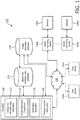
- FIG. 1 shows system 100 for determining an airway flow limitation value in a patient, in accordance with one or more embodiments.
- system 100 may comprise server 102 (or multiple servers 102).
- Server 102 may comprise airway flow limitation value subsystem 112, health information subsystem 114, notification subsystem 116, pressure control subsystem 126 or other components or subsystems.
- the patient is on a telemedicine, telehealth or telecare service.
- the telehealth service is configured to facilitate a medical encounter or an interaction between the patient at a patient site and a provider at a provider site remotely located from the patient.
- System 100 may include user device 104 (or multiple user devices 104a-104n).
- User device 104 may comprise any type of mobile terminal, fixed terminal, or other device.
- user device 104 may comprise a desktop computer, a notebook computer, a tablet computer, a smartphone, a wearable device, or other user device.
- Patients may, for instance, utilize one or more user devices 104 to interact with server 102 or other components of system 100.
- server 102 While one or more operations are described herein as being performed by components of server 102, those operations may, in some embodiments, be performed by components of user device 104 or other components of system 100.
- user device(s) 104 are optional.
- health information subsystem 114 may obtain health information associated with a patient. Upon obtainment, the health information may be stored (e.g., health information database 134, or other storage if not already stored therein). In some embodiments, the health information may include airway flow information, airway pressure information, airway volume information, or any other airway related information.
- the health information may be obtained from one or more health monitoring devices (e.g., airway flow monitoring device, airway pressure monitoring device, airway volume monitoring device or other health monitoring devices).
- These health monitoring devices may include one or more sensors, such as pressure sensors, pressure transducers, flow rate sensors, volume sensors, or other sensors.
- the sensors may, for instance, be configured to obtain health information of the patient (e.g., airway pressure, airway flow, airway volume, or any other airway parameters) or other health information related to the patient.
- a health monitoring device may obtain health information (e.g., based on information from one or more sensors), and provide health information to a computer system (e.g., comprising server 102) over a network (e.g., network 150) for processing.
- a computer system e.g., comprising server 102
- a network e.g., network 150
- the health monitoring device may process the obtained health information, and provide processed health information to the computer system over a network (e.g., network 150).
- the health monitoring device may automatically provide health information (e.g., obtained or processed) to the computer system (e.g., comprising server 102).
- the health monitoring device may store the health information and provide the health information to the computer system when the health monitoring device comes online (e.g., when the online status is detected by an application of the user device).
- health information subsystem 114 may continuously obtain subsequent health information associated with the multiple patients.
- the subsequent health information may comprise additional health information corresponding to a subsequent time (after a time corresponding to health information that was used to determine the airway flow limitation value for the patient).
- the subsequent health information may be obtained from one or more health monitoring devices.
- the subsequent health information may be utilized to further update or modify the airway flow limitation threshold value (e.g., new health information may be used to dynamically update or modify the airway flow limitation threshold value), etc.
- airway flow limitation subsystem 112 determines an airway flow limitation value for the patient.
- the airway flow limitation value indicates a number or a percentage of breaths of the patient that are flow limited in a given time period.
- the airway flow limitation value is an expiratory airway flow limitation value.
- system 100 is configured to provide the number or percentage of a patient's breaths that is indicative of limited airway flow breaths during expiration.
- the airway flow limitation value is an inspiratory airway flow limitation value.
- system 100 is configured to provide the number or percentage of a patient's breaths that is indicative of limited airway flow breaths during inspiration.
- system 100 is configured to determine whether a normal breathing/respiration pattern is detected and whether a stable mask interface is detected.
- airway flow limitation subsystem 112 determines the airway flow limitation value for the patient, when a normal breathing/respiration pattern of a patient is detected and a stable mask interface on the patient is detected.
- system 100 may include sensors for sensing the breathing/respiration pattern of a patient.
- System 100 may also be configured to compare the breathing/respiration pattern signals from the sensors to a predetermined breathing/respiration pattern to determine whether the sensed breathing/respiration pattern is normal.
- system 100 may include sensors for sensing whether a stable mask interface is provided for a patient.
- airway flow limitation subsystem 112 is configured to obtain, from one or more health monitoring devices 106a.. 106n, airway pressure information of the patient, airway flow information of the patient, respiratory or airway volume information of the patient, or other information related to the patient.
- the airway flow information of the patient may include information about flow at the airway opening of the patient (e.g., information specifying resistance to airflow at the airway opening during inspiration or expiration, information specifying flow rate at the airway opening during inspiration or expiration, or other information).
- the airway pressure information of the patient may include information about pressure at the airway opening of the patient (e.g., information specifying airway pressure at the airway opening during inspiration or expiration or other information).
- the airway pressure information of the patient may include information about esophageal pressure (e.g., information specifying airway pressure in the esophagus during inspiration or expiration or other information).
- one or more health monitoring devices 106a..106n may comprise airway pressure monitoring device, airway volume monitoring device, airway flow monitoring device, or other airway monitoring devices. In some embodiments, one or more health monitoring devices 106a.. 106n may be configured to monitor respiratory or airway volume. In some embodiments, one or more health monitoring devices 106 may be configured to monitor flow at the airway opening. In some embodiments, one or more health monitoring devices 106a..106n may be configured to monitor pressure at the airway opening. In some embodiments, one or more health monitoring devices 106a..106n may be configured to monitor esophageal pressure.
- airway flow limitation subsystem 112 is configured to determine an airway flow limitation index from the obtained airway pressure information of the patient, the obtained airway flow information of the patient, or other airway or airway flow related information. That is, airway flow limitation subsystem 112 is configured to analyze information/data from a device's flow and pressure sensors and calculate an airflow limitation index based on the sensor data/information. For example, the airflow limitation index is a measurement that represents the degree of a patient's pulmonary airways' flow limitation. The airflow limitation index may then be used to determine the airway flow limitation value for the patient. As explained in detail below, the determined airflow limitation value for the patient is displayed as a single term generically labelled and referenced as "Percent Flow Limited Breaths". In some embodiments, this term, or terms similar, may be used to describe either the number or percentage of 'expiratory flow limited breaths' or 'inspiratory flow limited breaths.'
- the airway flow limitation index, AFLI or ⁇ Xrs may be determined as the mean difference between mean value of respiratory system reactance during inspiration, Mean-Xrs mSp and mean value of respiratory system reactance during expiration, Mean-Xrs exp as shown in Equation (1) below.
- the airway flow limitation index, ⁇ Xrs that is calculated using the Equation (1) below has high sensitivity and high specificity around a threshold value.
- ⁇ Xrs Mean-Xrs insp ⁇ Mean-Xrs exp
- respiratory system impedance is a ratio of the Fourier transforms of the obtained airway pressure information and obtained airway flow information.
- the real and imaginary parts of the respiratory system impedance are the resistance of the respiratory system and reactance of the respiratory system.
- respiratory system reactance may be determined using the obtained airway pressure information and obtained airway flow information.
- the airway flow limitation index may be determined using mean value of respiratory system reactance during expiration, Mean-Xrs exp . In some embodiments, the airway flow limitation index may be determined using minimum value of respiratory system reactance during expiration, Min-Xrs exp .
- the airway flow limitation index, AFLI may be determined as the difference between maximum value of respiratory system reactance during inspiration, Max-Xrs insp and minimum value of respiratory system reactance during expiration, Min-Xrs exp as shown in Equation (2) below.
- AFLI Max-Xrs insp ⁇ Min-Xrs exp
- airway flow limitation value subsystem 112 is configured to determine the airway flow limitation value for the patient by comparing the determined airway flow limitation index with the airway flow limitation threshold value.
- the airway flow limitation threshold value may be a value above which a breath is to be considered "flow limited.” In some embodiments, the airway flow limitation threshold value may be 2.7 cm H 2 0/sec/L. In some embodiments, the airway flow limitation threshold value may be obtained by clinical testing. In some embodiments, the airway flow limitation threshold value may be obtained using data analytics. In some embodiments, the airway flow limitation threshold value may be obtained from research publications.
- an index is used to determine the airway flow limitation threshold value.
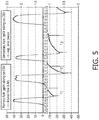
- a time constant between two time periods that could occur anywhere along a direct or derived signal in this case, airway flow in (Liters/min, L/min or L/m)
- the time constants ⁇ 1 , ⁇ 2 and ⁇ 3 can be processed to determine the airway flow limitation threshold value.
- the airway flow limitation threshold value is set a certain percentage above the threshold value used by system 102, with the intention of filtering out normal variances that would oscillate around a single threshold value.
- airway flow limitation value subsystem 112 is configured to determine the airway flow limitation threshold value using previously obtained airway pressure information from a plurality of patients and previously obtained airway flow information from the plurality of patients. In some embodiments, airway flow limitation value subsystem 112 is also configured to continuously obtain subsequent airway pressure information of the plurality of patients and subsequent airway flow information of the plurality of patients. In some embodiments, airway flow limitation value subsystem 112 is configured to then continuously modify or update the airway flow limitation threshold value based on the subsequent airway pressure information, the subsequent airway flow information, or other subsequent information.
- the determined airway flow limitation threshold value may be saved into a database (e.g., airway flow limitation value database 132) and retrieved from the database as needed.
- airway flow limitation value subsystem 112 may continuously update/modify different airway flow limitation threshold values. For example, in some embodiments, patients having severe symptoms may have a different airway flow limitation threshold value than the patients having mild symptoms.
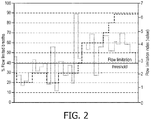
- FIG. 2 shows a graphical illustration of a response of the airway flow limitation value (i.e., percent flow limited breaths) to the airway flow limitation index when the airway flow limitation index is either above or below the airway flow limitation threshold value.
- the graph in FIG. 2 illustrates the airway flow limitation value (i.e., percent flow limited breaths) and the airway flow limitation index on its vertical Y-axis and the breath count on its horizontal X-axis.
- the airway flow limitation value for the patient is determined based on a percentage or a number of valid breaths within a given number of total breaths (or a period of time) that are above airway flow limitation threshold value.
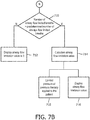
- FIGS. 7A and 7B show a method 700 (and flow chart) for determining the airflow limitation value in the patient in accordance an embodiment of the present patent application.
- a comparison between the determined airway flow limitation index and the airway flow limitation threshold value is performed at procedure 702 of method 700 in FIGS. 7A and 7B .
- system 102 is configured to maintain a history of the flow limited breaths.
- the flow limited breaths history is maintained as a 32-bit bitmask, where each bit represents a sample breath in the history.
- each bit may be turned “OFF" (bit is "0") when the sample/breath is determined not to have an airway flow limitation and turned “ON” (bit is "1") when the sample/breath is determined to have an airway flow limitation.
- the number of bits in the bitmask may vary.
- airway flow limitation value subsystem 112 is configured to use an airway flow limited breath history wrap mask to limit the history to a predetermined number of samples/breaths.
- the airway flow limited breath history wrap mask is used to limit the history to 20 samples/breaths.
- the number of samples/breaths in the history buffer may vary.
- airway flow limitation value subsystem 112 is configured to add history buffer entry showing airway flow limitation is present in the patient's breath (e.g., at procedure 704 of method 700). In some embodiments, airway flow limitation value subsystem 112 is configured to turn a bit "ON" (bit is "1"), when it is determined that the airway flow limitation index is greater than or equal to the airway flow limitation threshold value.
- airway flow limitation value subsystem 112 is configured to add history buffer entry showing airway flow limitation is not present in the patient's breath (e.g., at procedure 706 of method 700). In some embodiments, airway flow limitation value subsystem 112 is configured to turn a bit "OFF" (bit is "0"), when it is determined that the airway flow limitation index is less than the airway flow limitation threshold value.
- airway flow limitation value subsystem 112 is configured to determine if the oldest sample/breath in the history buffer represents an airway flow limited breath.
- System 102 is configured to maintain a history of the last certain number of breaths so that each breath represents a percentage of the history.
- airway flow limitation value subsystem 112 is configured to count the number of history buffer entries indicating the patient is experiencing airway flow limitation.
- the airway flow limitation value subsystem 112 is configured to count the bits that are turned “ON” or "1" in the predetermined number of desired samples/breaths in the history buffer.
- airway flow limitation value subsystem 112 is configured to compare the number of history buffer entries indicating the patient is experiencing airway flow limitation with a predetermined number of airway flow limited breaths. In some embodiments, the predetermined number of airway flow limited breaths is 10.
- airway flow limitation value subsystem 112 is configured to display the airway flow limitation value as zero at procedure 712 of method 700. If the number of history buffer entries indicating the patient is experiencing airway flow limitation is greater than the predetermined number of airway flow limited breaths, airway flow limitation value subsystem 112 is configured to determine the airway flow limitation value at procedure 714 of method 700.
- the airway flow limitation value, AFLV is determined using Equations (3) and (4) below.
- AFLV ′ number of airway flow limited breaths ⁇ 100 / number of sample breaths in the history buffer
- AFLV AFLV ′ - Ideal percentage ⁇ 2
- airway flow limitation value subsystem 112 is configured to display the determined or calculated airway flow limitation value, AFLV to a clinician or a physician.
- notification subsystem 116 is configured to display the determined or calculated airway flow limitation value, AFLV to a clinician or a physician.
- airway flow limitation value subsystem 112 is configured to use the determined or calculated airway flow limitation value, AFLV to automatically titrate a patient's pressure therapy that is being delivered by a ventilator device, for instance.
- pressure control subsystem 126 is configured to use the determined or calculated airway flow limitation value, AFLV to automatically titrate a patient's pressure therapy that is being delivered by a ventilator device, for instance.
- the determined or calculated airway flow limitation value, AFLV can subsequently be used to guide a physician or a clinician to manually or automatically adjust a patient's pressure therapy that is being delivered by a ventilator device, for instance.
- the positive expiratory pressure (PEP) can then be increased until the percentage of flow limited breaths is at its nadir.
- airway flow limitation value subsystem 112 is configured to display the determined airway flow limitation value (percentage or number) such that a) if the airway flow limited breaths (that are greater than the airway flow limitation threshold value) are between 0 to 50%, the determined airway flow limitation value is displayed as 0%; and b) if the airway flow limited breaths (that are greater than the airway flow limitation threshold value) are between 50 to 100%, the airway flow limitation value, AFLV is determined using Equations (5) and (6) below.
- AFLV ′ number of airway flow limited breaths ⁇ 100 / 20
- AFLV AFLV ′ - 50 ⁇ 2
- the ideal percentage value is 50% (i.e., the predetermined number of breaths is 10) and the number of samples in the history buffer is 20.
- the number of airway flow limited breaths obtained at procedure 708 of method 700 is 11.
- notification subsystem 116 is configured to display the determined or calculated airway flow limitation value, AFLV as 10% to a clinician or a physician.
- pressure control subsystem 126 is configured to use the determined or calculated airway flow limitation value, AFLV of 10% to automatically titrate a patient's pressure therapy that is being delivered by a ventilator device, for instance.
- the determined or calculated airway flow limitation value, AFLV of 10% can subsequently be used to guide a physician or a clinician to manually or automatically adjust a patient's pressure therapy that is being delivered by a ventilator device, for instance.
- the ideal percentage value is 25%. In such an embodiment, the predetermined number of breaths is 5 (e.g., when the history buffer is limited to 20 samples). In some embodiments, the ideal percentage value is 75%. In such an embodiment, the predetermined number of breaths is 15 (e.g., when the history buffer is limited to 20 samples). In some embodiments, the ideal percentage value may range between 25% and 75%. In such an embodiment, the predetermined number of breaths range between 5 and 15 (e.g., when the history buffer is limited to 20 samples). As noted above, the number of sample breaths in the history buffer may vary.
- notification subsystem 116 may provide a notification regarding the determined airway flow limitation value to one or more other components of system 100.
- one or more health monitoring devices 106a..106n having one or more sensors 108a..108n may obtain health information associated with the patient (e.g., measurements of the airway flow pressure of the patient, measurements of airway flow rate of the patient, measurements of the airway volume of the patient or other health information) and provide the health information to health information subsystem 114.
- notification subsystem 116 may provide a notification regarding the airway flow limitation value to at least one of a physician or other staff (e.g., a nurse, technician, etc.) who are currently providing primary care via the telehealth services to the patient, and the patient's caretaker, the patient's family member, etc.
- a physician or other staff e.g., a nurse, technician, etc.
- notification subsystem 116 may provide a notification regarding the airway flow limitation value via one or more output devices of the health monitoring device) via one or more wired or wireless connections.
- notification subsystem 116 may provide a notification regarding the airway flow limitation value to one or more user devices, such as a desktop computer, a notebook computer, a tablet, a smartphone.
- notification subsystem 116 is configured to display or otherwise inform a clinician of a patient's pulmonary status based on flow limitation indices.
- the determined airflow limitation value is intended to guide a physician's treatment plan or prescription whenever a pressure therapy is applied to a person's airway. It is generally understood that the percentage of airflow limited breaths and the effectiveness of the pressure therapy/treatment are related. For example, the higher the percentage of airflow limited breaths, the greater the ineffectiveness of the pressure therapy/treatment. If the percent of flow limited breaths is at or near 0%, the pressure therapy/treatment is optimally effective. Whereas, if the percentage of flow limited breaths is closer to 100%, the pressure therapy/treatment is ineffective or minimally effective.
- knowledge of the determined airflow limitation value can subsequently be used to guide a physician who chooses to titrate a patient's pressure therapy that is being delivered by a ventilator device, for instance.
- the determined airflow limitation value informs the physicians in real time of the effectiveness of a ventilator's pressure setting that has been selected (either manually or automatically) to treat a patient's airway flow limitation, for example, in the positive expiratory pressure setting.
- a quantifiable index allows for individualized patient treatment, instead of choosing a therapy that is a "one size fits all" option.
- notification subsystem 116 is configured to display or otherwise inform a clinician of a patient's pulmonary status in a number of ways or formats.
- FIG. 3 shows an exemplary numerical representation of the determined airway flow limitation value
- FIG. 4 is an exemplary graphical representation of the determined airway flow limitation value in accordance an embodiment of the present patent application.
- Such a display of the determined airway flow limitation value for the patient allows the clinician to easily evaluate the efficacy of the positive expiratory pressure (PEP) treatment or therapy.
- PEP positive expiratory pressure
- airway flow limitation values are visually provided on a telehealth clinical dashboard or display.
- the determined airway flow limitation value for the patient is displayed as a numerical or a percentage value as shown in FIG. 3 .
- determined airway flow limitation value for the patient is displayed as 70%.
- the determined airway flow limitation value for the patient may be displayed as a graphical bar such as shown in FIG. 4 .
- determined airway flow limitation value for the patient is displayed on the graphical bar as 80%.
- the graphical bar in FIG. 4 for example, has a range of 0%-100% in increments of 10% for the graphical readout.
- a use case scenario for determining an airway flow limitation value in a patient is described below.
- the health information airway flow information, airway pressure information, etc.
- the output of system 100 e.g., an airway flow limitation value
- system 100 may flag an alert as a result of the determined airway flow limitation value.
- the patient's physician e.g., general practitioner, medical specialist, etc.
- system 100 may be useful in personal emergency response systems in which a call center agent/personnel needs to decide on an intervention for a subscriber or patient on the basis of the airway flow limitation value.
- system 100 may be used in hospital to home programs; clinical programs in ambulatory care, and/or readmission prevention programs.
- system 100 may also be used in home monitoring programs; personal emergency response systems, etc.
- the various computers and subsystems illustrated in FIG. 1 may comprise one or more computing devices that are programmed to perform the functions described herein.
- the computing devices may include one or more electronic storages (e.g., airway flow limitation value database 132, health information database 134, or other electronic storages), one or more physical processors programmed with one or more computer program instructions, and/or other components.
- the computing devices may include communication lines or ports to enable the exchange of information with a network (e.g., network 150) or other computing platforms via wired or wireless techniques (e.g., Ethernet, fiber optics, coaxial cable, WiFi, Bluetooth, near field communication, or other communication technologies).
- the computing devices may include a plurality of hardware, software, and/or firmware components operating together to provide the functionality attributed herein to the servers.
- the computing devices may be implemented by a cloud of computing platforms operating together as the computing devices.
- the electronic storages may comprise non-transitory storage media that electronically stores information.
- the electronic storage media of the electronic storages may include one or both of system storage that is provided integrally (e.g., substantially non-removable) with the servers or removable storage that is removably connectable to the servers via, for example, a port (e.g., a USB port, a firewire port, etc.) or a drive (e.g., a disk drive, etc.).
- a port e.g., a USB port, a firewire port, etc.
- a drive e.g., a disk drive, etc.
- the electronic storages may include one or more of optically readable storage media (e.g., optical disks, etc.), magnetically readable storage media (e.g., magnetic tape, magnetic hard drive, floppy drive, etc.), electrical charge-based storage media (e.g., EEPROM, RAM, etc.), solid-state storage media (e.g., flash drive, etc.), and/or other electronically readable storage media.
- the electronic storages may include one or more virtual storage resources (e.g., cloud storage, a virtual private network, and/or other virtual storage resources).
- the electronic storages may store software algorithms, information determined by the processors, information received from the servers, information received from client computing platforms, or other information that enables the servers to function as described herein.
- the processors may be programmed to provide information processing capabilities in the servers.
- the processors may include one or more of a digital processor, an analog processor, or a digital circuit designed to process information, an analog circuit designed to process information, a state machine, and/or other mechanisms for electronically processing information.
- the processors may include a plurality of processing units. These processing units may be physically located within the same device, or the processors may represent processing functionality of a plurality of devices operating in coordination.
- the processors may be programmed to execute computer program instructions to perform functions described herein of subsystems 112, 114, 116, and 126 or other subsystems.
- the processors may be programmed to execute computer program instructions by software; hardware; firmware; some combination of software, hardware, or firmware; and/or other mechanisms for configuring processing capabilities on the processors.
- subsystems 112, 114, 116, and 126 may provide more or less functionality than is described.
- one or more of subsystems 112, 114, 116, and 126 may be eliminated, and some or all of its functionality may be provided by other ones of subsystems 112, 114, 116, and 126.
- additional subsystems may be programmed to perform some or all of the functionality attributed herein to one of subsystems 112, 114, 116, and 126.
- FIG. 6 is a flow chart for determining an airflow limitation value in the patient in accordance an embodiment of the present patent application.
- a method 600 for determining an airway flow limitation value in a patient is provided.
- Method 600 is implemented by computer system 102 that comprises one or more physical processors executing computer program instructions which, when executed, perform method 600.
- Method 600 comprises: obtaining, from one or more health monitoring devices 106 (106a..
- airway pressure information of the patient and airway flow information of the patient at procedure 602 determining, by the computer system, an airway flow limitation index from the airway pressure information of the patient and the airway flow information of the patient at procedure 604; and determining, by the computer system, the airway flow limitation value for the patient by comparing the determined airway flow limitation index with an airway flow limitation threshold value at procedure 606.
- the airway flow limitation value indicates a number of breaths of the patient that are flow limited in a given time period.
- the present patent application provides a method for computing or determining a patient's airway flow limitation value and for conveying this airway flow limitation value.
- the airway flow limitation value is based on the percentage or number of valid breaths within a given number of total breaths (or period of time) that are above the airway flow limitation threshold value that is based on the airway flow limitation index.
- any reference signs placed between parentheses shall not be construed as limiting the claim.
- the word “comprising” or “including” does not exclude the presence of elements or steps other than those listed in a claim.
- several of these means may be embodied by one and the same item of hardware.
- the word “a” or “an” preceding an element does not exclude the presence of a plurality of such elements.
- any device claim enumerating several means several of these means may be embodied by one and the same item of hardware.
- the mere fact that certain elements are recited in mutually different dependent claims does not indicate that these elements cannot be used in combination.
Landscapes
- Health & Medical Sciences (AREA)
- Life Sciences & Earth Sciences (AREA)
- Engineering & Computer Science (AREA)
- Molecular Biology (AREA)
- Animal Behavior & Ethology (AREA)
- Pathology (AREA)
- Physics & Mathematics (AREA)
- Biomedical Technology (AREA)
- Heart & Thoracic Surgery (AREA)
- Medical Informatics (AREA)
- Veterinary Medicine (AREA)
- Surgery (AREA)
- Biophysics (AREA)
- General Health & Medical Sciences (AREA)
- Public Health (AREA)
- Physiology (AREA)
- Signal Processing (AREA)
- Artificial Intelligence (AREA)
- Computer Vision & Pattern Recognition (AREA)
- Psychiatry (AREA)
- Pulmonology (AREA)
- Power Engineering (AREA)
- Measurement Of The Respiration, Hearing Ability, Form, And Blood Characteristics Of Living Organisms (AREA)
Claims (10)
- Ein System (100) zum Ermitteln eines Grenzwerts für den Atemwegsfluss eines Patienten, wobei das System Folgendes umfasst:
ein Computersystem (102) mit mindestens einem physischen Prozessor, der mit ersten ComputerprogrammAnweisungen programmiert wurde, die beim Ausführen das Computersystem zu folgenden Schritten veranlassen:Abrufen der Atemwegsdruckdaten des Patienten sowie der Atemwegsflussdaten des Patienten von mindestens einem Gesundheitsüberwachungsgerät (106a..106n);Ermitteln eines Atemwegsfluss-Begrenzungsindex anhand der Atemwegsdruck- und Atemwegsflussdaten für den Patienten für jeden Atemzug des Patienten;das sich dadurch auszeichnet, dass das Computersystem zudem zu folgenden Schritten veranlasst wird:beruhend auf einem Vergleich des Atemwegsflussindex des Atemzugs mit dem Atemwegsflussgrenzwert für jeden Atemzug Ermitteln, ob der Atemzug einer Flussbegrenzung unterliegt, sowie Speichern der jeweiligen Ergebnisse in einem Verlaufspuffer; undErmitteln des Atemwegsflussgrenzwerts für den Patienten anhand der im Verlaufspuffer gespeicherten Ergebnisse für eine definierte Anzahl vorheriger Atemzüge, wobei der Atemwegsflussgrenzwert den Prozentsatz der Atemzüge des Patienten im Puffer angibt, die einer Flussbegrenzung unterliegen. - Das System gemäß Anspruch 1, wobei das Computersystem den Atemwegsflussgrenzwert anhand eines vordefinierten idealen Prozentsatzes der einer Flussbegrenzung unterliegenden Atemzüge ermittelt,
wobei- wenn der ermittelte Prozentsatz der einer Flussbegrenzung unterliegenden Atemzüge im Verlaufspuffer zwischen 0 % und dem vordefinierten idealen Prozentsatz liegt, der Atemwegsflussgrenzwert als 0 % ermittelt wird; und- wenn der ermittelte Prozentsatz der einer Flussbegrenzung unterliegenden Atemzüge im Verlaufspuffer zwischen dem vordefinierten idealen Prozentsatz und 100 % liegt, der Atemwegsflussgrenzwert, AFGW, mithilfe folgender Gleichungen ermittelt wird:

- Das System gemäß Anspruch 1, wobei jedes der Gesundheitsüberwachungsgeräte Folgendes umfasst:mindestens einen Sensor (108a..108n) zum Abrufen der Atemwegsdruckdaten des Patienten sowie der Atemwegsflussdaten des Patienten, undmindestens einen zweiten physischen Prozessor, der mit zweiten Computerprogrammanweisungen programmiert ist, die beim Ausführen das mindestens eine Gesundheitsüberwachungsgerät zu folgenden Schritten veranlasst:Abrufen mithilfe des mindestens einen Sensors der Atemwegsdruckdaten des Patienten sowie der Atemwegsflussdaten des Patienten; undBereitstellen der Atemwegsdruckdaten des Patienten sowie der Atemwegsflussdaten des Patienten für das Computersystem, wobei das Computersystem den Atemwegsflussbegrenzungsindex für den Patienten durch Abrufen der Atemwegsdruck- und Atemwegsflussdaten des Patienten ermittelt.
- Das System gemäß Anspruch 1, wobei das Computersystem den Atemwegsflussgrenzwert für den Patienten ermittelt, indem es folgende Schritte durchführt:Ermitteln des Schwellenwerts für die Begrenzung des Atemwegsflusses anhand der zuvor abgerufenen Atemwegsdruck- und Atemwegsflussdaten mehrerer Patienten;Fortlaufendes Abrufen der folgenden Atemwegsdruck- und Atemwegsflussdaten mehrerer Patienten; undfortlaufendes Modifizieren des Schwellenwerts für die Atemwegsflussbegrenzung anhand der folgenden Atemwegsdruck- und Atemwegsflussdaten.
- Das System gemäß Anspruch 1, wobei das Computersystem den Atemwegsflussgrenzwert anzeigt.
- Das System gemäß Anspruch 1, wobei das Computersystem den im Rahmen einer Drucktherapie auf die Atemwege eines Patienten angewendeten Druck anhand des Atemwegsflussgrenzwerts anpasst.
- Eine Methode (600) zum Ermitteln eines Grenzwerts für den Atemwegsfluss eines Patienten, wobei die Methode von ein Computersystem (102) mit mindestens einem physischen Prozessor ausgeführt wird, der Computerprogramm-Anweisungen umsetzt, die beim Ausführen die Methode durchführen, wobei die Methode folgende Schritte umfasst:Abrufen der Atemwegsdruckdaten des Patienten sowie der Atemwegsflussdaten des Patienten von mindestens einem Gesundheitsüberwachungsgerät;Ermitteln eines Atemwegsfluss-Begrenzungsindex anhand der Atemwegsdruck- und Atemwegsflussdaten für den Patienten für jeden Atemzug des Patienten mithilfe des Computersystems;und die sich dadurch auszeichnet, dass die Methode zudem folgende Schritte umfasst:beruhend auf einem Vergleich des Atemwegsflussindex des Atemzugs mit dem Atemwegsflussgrenzwert für jeden Atemzug Ermitteln, ob der Atemzug einer Flussbegrenzung unterliegt, sowie Speichern der jeweiligen Ergebnisse in einem Verlaufspuffer; undErmitteln des Atemwegsflussgrenzwerts für den Patienten anhand der im Verlaufspuffer gespeicherten Ergebnisse für eine definierte Anzahl vorheriger Atemzüge mithilfe des Computersystems, wobei der Atemwegsflussgrenzwert den Prozentsatz der Atemzüge des Patienten im Puffer angibt, die einer Flussbegrenzung unterliegen.
- Die Methode gemäß Anspruch 7, wobei der Atemwegsflussbegrenzungsindex für den Patienten mithilfe folgender Schritte ermittelt wird:Abrufen mithilfe des Computersystems der Atemwegsdruckdaten des Patienten sowie der Atemwegsflussdaten des Patienten von mindestens einem Gesundheitsüberwachungsgerät mit mindestens einem Sensor; undErmitteln des Atemwegsflussbegrenzungsindex für den Patienten mithilfe des Computersystems anhand der Atemwegsdruck- und Atemwegsflussdaten des Patienten.
- Die Methode gemäß Anspruch 7, wobei der Atemwegsflussgrenzwert für den Patienten mithilfe folgender Schritte ermittelt wird:Ermitteln des Schwellenwerts für die Begrenzung des Atemwegsflusses mithilfe des Computersystems anhand der zuvor abgerufenen Atemwegsdruck- und Atemwegsflussdaten mehrerer Patienten;Fortlaufendes Abrufen der folgenden Atemwegsdruck- und Atemwegsflussdaten mehrerer Patienten mithilfe des Computersystems; undfortlaufendes Modifizieren des Schwellenwerts für die Atemwegsflussbegrenzung anhand der folgenden Atemwegsdruck- und Atemwegsflussdaten mithilfe des Computersystems.
- Die Methode gemäß Anspruch 7, die zudem folgenden Schritt umfasst: Anzeigen des Atemwegsflussgrenzwerts mithilfe des Computersystems.
Applications Claiming Priority (2)
| Application Number | Priority Date | Filing Date | Title |
|---|---|---|---|
| US201662334066P | 2016-05-10 | 2016-05-10 | |
| PCT/EP2017/060978 WO2017194495A1 (en) | 2016-05-10 | 2017-05-09 | Determining an airway flow limitation value |
Publications (2)
| Publication Number | Publication Date |
|---|---|
| EP3454739A1 EP3454739A1 (de) | 2019-03-20 |
| EP3454739B1 true EP3454739B1 (de) | 2021-07-07 |
Family
ID=58699115
Family Applications (1)
| Application Number | Title | Priority Date | Filing Date |
|---|---|---|---|
| EP17722740.2A Active EP3454739B1 (de) | 2016-05-10 | 2017-05-09 | Bestimmung eines atemwegsflussbegrenzungswertes |
Country Status (5)
| Country | Link |
|---|---|
| US (1) | US11471068B2 (de) |
| EP (1) | EP3454739B1 (de) |
| JP (1) | JP6978435B2 (de) |
| CN (1) | CN109069062B (de) |
| WO (1) | WO2017194495A1 (de) |
Families Citing this family (2)
| Publication number | Priority date | Publication date | Assignee | Title |
|---|---|---|---|---|
| US11433202B2 (en) * | 2017-12-18 | 2022-09-06 | Koninklijke Philips N.V. | Interactive guidance related to a subject's expiratory flow limitation results |
| CN115297916A (zh) * | 2020-03-23 | 2022-11-04 | 深圳迈瑞生物医疗电子股份有限公司 | 一种呼吸监测装置及方法 |
Citations (3)
| Publication number | Priority date | Publication date | Assignee | Title |
|---|---|---|---|---|
| US20100147305A1 (en) * | 2002-06-11 | 2010-06-17 | Politecnico Di Milano | System and Method for the Automatic Detection of the Expiratory Flow Limitation |
| US20120010519A1 (en) * | 2010-07-09 | 2012-01-12 | New York University | System and Method for Diagnosis and Treatment of Obstructive Sleep Apnea |
| WO2015130717A2 (en) * | 2014-02-25 | 2015-09-03 | Somnics, Inc. | Methods and applications for detection of breath flow and the system thereof |
Family Cites Families (17)
| Publication number | Priority date | Publication date | Assignee | Title |
|---|---|---|---|---|
| US4289142A (en) * | 1978-11-24 | 1981-09-15 | Kearns Kenneth L | Physiological occurrence, such as apnea, monitor and X-ray triggering device |
| US6588422B1 (en) | 1999-01-15 | 2003-07-08 | Resmed Ltd. | Method and apparatus to counterbalance intrinsic positive end expiratory pressure |
| FR2789593B1 (fr) * | 1999-05-21 | 2008-08-22 | Mallinckrodt Dev France | Appareil de fourniture de pression d'air a un patient souffrant de troubles du sommeil et ses procedes de commande |
| WO2004064705A2 (en) * | 2003-01-17 | 2004-08-05 | Schering Corporation | Training device for medicament inhalers |
| US7524279B2 (en) * | 2003-12-31 | 2009-04-28 | Raphael Auphan | Sleep and environment control method and system |
| US9289566B2 (en) * | 2004-06-04 | 2016-03-22 | New York University | System and method for automated titration of continuous positive airway pressure using an obstruction index |
| JP5231256B2 (ja) * | 2006-03-06 | 2013-07-10 | レスメド・リミテッド | Cpap治療中の無呼吸/低呼吸の決定 |
| US8844527B2 (en) * | 2008-04-15 | 2014-09-30 | Resmed Limited | Methods, systems and apparatus for paced breathing |
| FR2906450B3 (fr) * | 2006-09-29 | 2009-04-24 | Nellcor Puritan Bennett Incorp | Systeme et procede de detection d'evenements respiratoires |
| IL186768A0 (en) * | 2007-10-18 | 2008-02-09 | Shaked Rahamim | Infant apnea detector and system |
| JP2011522583A (ja) * | 2008-05-28 | 2011-08-04 | オリディオン メディカル 1987 リミテッド | Co2をモニタリングする方法、装置および系 |
| WO2010113075A1 (en) | 2009-03-31 | 2010-10-07 | Koninklijke Philips Electronics N. V. | Energy efficient cascade of sensors for automatic presence detection |
| US8985106B2 (en) * | 2009-06-05 | 2015-03-24 | Resmed Limited | Methods and devices for the detection of hypopnoea |
| US8707952B2 (en) * | 2010-02-10 | 2014-04-29 | Covidien Lp | Leak determination in a breathing assistance system |
| EP2931340B1 (de) * | 2012-12-13 | 2020-08-12 | Koninklijke Philips N.V. | Tragbares druckunterstützungssystem zur behandlung von hyperinflation |
| US10194834B2 (en) * | 2013-01-16 | 2019-02-05 | Vital Connect, Inc. | Detection of sleep apnea using respiratory signals |
| US20170188886A1 (en) | 2014-05-28 | 2017-07-06 | Children's Hospital Los Angeles | Method, system and software for assessing extubation failure |
-
2017
- 2017-05-09 EP EP17722740.2A patent/EP3454739B1/de active Active
- 2017-05-09 JP JP2018558412A patent/JP6978435B2/ja active Active
- 2017-05-09 US US16/098,598 patent/US11471068B2/en active Active
- 2017-05-09 WO PCT/EP2017/060978 patent/WO2017194495A1/en not_active Ceased
- 2017-05-09 CN CN201780028463.0A patent/CN109069062B/zh active Active
Patent Citations (3)
| Publication number | Priority date | Publication date | Assignee | Title |
|---|---|---|---|---|
| US20100147305A1 (en) * | 2002-06-11 | 2010-06-17 | Politecnico Di Milano | System and Method for the Automatic Detection of the Expiratory Flow Limitation |
| US20120010519A1 (en) * | 2010-07-09 | 2012-01-12 | New York University | System and Method for Diagnosis and Treatment of Obstructive Sleep Apnea |
| WO2015130717A2 (en) * | 2014-02-25 | 2015-09-03 | Somnics, Inc. | Methods and applications for detection of breath flow and the system thereof |
Non-Patent Citations (1)
| Title |
|---|
| KAREN REES ET AL: "Frequency and Significance of Increased Upper Airway Resistance during Sleep", AMERICAN JOURNAL OF RESPIRATORY AND CRITICAL CARE MEDICINE., vol. 162, no. 4, 1 October 2000 (2000-10-01), US, pages 1210 - 1214, XP055632441, ISSN: 1073-449X, DOI: 10.1164/ajrccm.162.4.9908052 * |
Also Published As
| Publication number | Publication date |
|---|---|
| JP6978435B2 (ja) | 2021-12-08 |
| EP3454739A1 (de) | 2019-03-20 |
| WO2017194495A1 (en) | 2017-11-16 |
| US11471068B2 (en) | 2022-10-18 |
| CN109069062B (zh) | 2022-08-02 |
| US20190142301A1 (en) | 2019-05-16 |
| CN109069062A (zh) | 2018-12-21 |
| JP2019520871A (ja) | 2019-07-25 |
Similar Documents
| Publication | Publication Date | Title |
|---|---|---|
| US10194873B2 (en) | Personalized patient alarm management | |
| EP3551061B1 (de) | System zur überwachung von unter atemwegserkrankung leidenden patienten mit einer tragbaren medizinischen vorrichtung | |
| CN108245131B (zh) | 检测早期呼气中的口呼吸 | |
| JP6960913B2 (ja) | 呼吸力学パラメータ推定のための異常検出装置及び方法 | |
| US10327711B2 (en) | Post-hospital-discharge COPD-patient monitoring using a dynamic baseline of symptoms/measurement | |
| JP2009018174A (ja) | 脳卒中患者治療用装置 | |
| JP7762702B2 (ja) | 呼吸補助に関する改善 | |
| US12220209B2 (en) | Method and device for verification of intra-luminal placement and patency for vascular access devices | |
| US20130340751A1 (en) | Measuring continuity of therapy associated with a respiratory treatment device | |
| EP3454739B1 (de) | Bestimmung eines atemwegsflussbegrenzungswertes | |
| KR102036087B1 (ko) | 수면 무호흡 중증도를 측정하는 장치 및 방법 | |
| EP3402389B1 (de) | System zur überwachung der schlafqualität und des apnoe-/hypopnoeindex | |
| US20220361753A1 (en) | Vital parameter measurements for low care patients | |
| CN119136736B (zh) | 测量设备及患者情况监测方法 | |
| EP3094238B1 (de) | Systeme zur bestimmung der wirksamkeit von beatmung bei personen | |
| US12507905B2 (en) | Device and method for real time assessment and monitoring of thoracic fluid, air trapping and ventilation | |
| US20230190133A1 (en) | Generating an indicator of chronic obstructive pulmonary disease | |
| US20250049379A1 (en) | Myotrace continuous monitoring scenarios | |
| KR20140080047A (ko) | 의료진단 시스템 | |
| JP7313352B2 (ja) | 被験者の呼気気流制限の結果に関するインタラクティブなガイダンス | |
| US20200306469A1 (en) | Respiratory monitor in a noninvasive ventilator | |
| RU2798162C2 (ru) | Система контроля пациентов, страдающих респираторным заболеванием, содержащая портативное медицинское устройство, и способ на основе использования такой системы | |
| KR20190032577A (ko) | 개선된 호흡 모니터 및 시스템 | |
| JP2024506439A (ja) | 心電図信号と呼吸信号を出力する装置および方法 |
Legal Events
| Date | Code | Title | Description |
|---|---|---|---|
| STAA | Information on the status of an ep patent application or granted ep patent |
Free format text: STATUS: UNKNOWN |
|
| STAA | Information on the status of an ep patent application or granted ep patent |
Free format text: STATUS: THE INTERNATIONAL PUBLICATION HAS BEEN MADE |
|
| PUAI | Public reference made under article 153(3) epc to a published international application that has entered the european phase |
Free format text: ORIGINAL CODE: 0009012 |
|
| STAA | Information on the status of an ep patent application or granted ep patent |
Free format text: STATUS: REQUEST FOR EXAMINATION WAS MADE |
|
| 17P | Request for examination filed |
Effective date: 20181210 |
|
| AK | Designated contracting states |
Kind code of ref document: A1 Designated state(s): AL AT BE BG CH CY CZ DE DK EE ES FI FR GB GR HR HU IE IS IT LI LT LU LV MC MK MT NL NO PL PT RO RS SE SI SK SM TR |
|
| AX | Request for extension of the european patent |
Extension state: BA ME |
|
| DAV | Request for validation of the european patent (deleted) | ||
| DAX | Request for extension of the european patent (deleted) | ||
| STAA | Information on the status of an ep patent application or granted ep patent |
Free format text: STATUS: EXAMINATION IS IN PROGRESS |
|
| 17Q | First examination report despatched |
Effective date: 20191025 |
|
| RAP1 | Party data changed (applicant data changed or rights of an application transferred) |
Owner name: KONINKLIJKE PHILIPS N.V. |
|
| GRAP | Despatch of communication of intention to grant a patent |
Free format text: ORIGINAL CODE: EPIDOSNIGR1 |
|
| STAA | Information on the status of an ep patent application or granted ep patent |
Free format text: STATUS: GRANT OF PATENT IS INTENDED |
|
| INTG | Intention to grant announced |
Effective date: 20201210 |
|
| GRAS | Grant fee paid |
Free format text: ORIGINAL CODE: EPIDOSNIGR3 |
|
| GRAA | (expected) grant |
Free format text: ORIGINAL CODE: 0009210 |
|
| STAA | Information on the status of an ep patent application or granted ep patent |
Free format text: STATUS: THE PATENT HAS BEEN GRANTED |
|
| AK | Designated contracting states |
Kind code of ref document: B1 Designated state(s): AL AT BE BG CH CY CZ DE DK EE ES FI FR GB GR HR HU IE IS IT LI LT LU LV MC MK MT NL NO PL PT RO RS SE SI SK SM TR |
|
| REG | Reference to a national code |
Ref country code: GB Ref legal event code: FG4D |
|
| REG | Reference to a national code |
Ref country code: AT Ref legal event code: REF Ref document number: 1407773 Country of ref document: AT Kind code of ref document: T Effective date: 20210715 |
|
| REG | Reference to a national code |
Ref country code: DE Ref legal event code: R096 Ref document number: 602017041619 Country of ref document: DE |
|
| REG | Reference to a national code |
Ref country code: IE Ref legal event code: FG4D |
|
| REG | Reference to a national code |
Ref country code: LT Ref legal event code: MG9D |
|
| REG | Reference to a national code |
Ref country code: NL Ref legal event code: MP Effective date: 20210707 |
|
| REG | Reference to a national code |
Ref country code: AT Ref legal event code: MK05 Ref document number: 1407773 Country of ref document: AT Kind code of ref document: T Effective date: 20210707 |
|
| PG25 | Lapsed in a contracting state [announced via postgrant information from national office to epo] |
Ref country code: ES Free format text: LAPSE BECAUSE OF FAILURE TO SUBMIT A TRANSLATION OF THE DESCRIPTION OR TO PAY THE FEE WITHIN THE PRESCRIBED TIME-LIMIT Effective date: 20210707 Ref country code: FI Free format text: LAPSE BECAUSE OF FAILURE TO SUBMIT A TRANSLATION OF THE DESCRIPTION OR TO PAY THE FEE WITHIN THE PRESCRIBED TIME-LIMIT Effective date: 20210707 Ref country code: NO Free format text: LAPSE BECAUSE OF FAILURE TO SUBMIT A TRANSLATION OF THE DESCRIPTION OR TO PAY THE FEE WITHIN THE PRESCRIBED TIME-LIMIT Effective date: 20211007 Ref country code: PT Free format text: LAPSE BECAUSE OF FAILURE TO SUBMIT A TRANSLATION OF THE DESCRIPTION OR TO PAY THE FEE WITHIN THE PRESCRIBED TIME-LIMIT Effective date: 20211108 Ref country code: NL Free format text: LAPSE BECAUSE OF FAILURE TO SUBMIT A TRANSLATION OF THE DESCRIPTION OR TO PAY THE FEE WITHIN THE PRESCRIBED TIME-LIMIT Effective date: 20210707 Ref country code: LT Free format text: LAPSE BECAUSE OF FAILURE TO SUBMIT A TRANSLATION OF THE DESCRIPTION OR TO PAY THE FEE WITHIN THE PRESCRIBED TIME-LIMIT Effective date: 20210707 Ref country code: AT Free format text: LAPSE BECAUSE OF FAILURE TO SUBMIT A TRANSLATION OF THE DESCRIPTION OR TO PAY THE FEE WITHIN THE PRESCRIBED TIME-LIMIT Effective date: 20210707 Ref country code: BG Free format text: LAPSE BECAUSE OF FAILURE TO SUBMIT A TRANSLATION OF THE DESCRIPTION OR TO PAY THE FEE WITHIN THE PRESCRIBED TIME-LIMIT Effective date: 20211007 Ref country code: HR Free format text: LAPSE BECAUSE OF FAILURE TO SUBMIT A TRANSLATION OF THE DESCRIPTION OR TO PAY THE FEE WITHIN THE PRESCRIBED TIME-LIMIT Effective date: 20210707 Ref country code: RS Free format text: LAPSE BECAUSE OF FAILURE TO SUBMIT A TRANSLATION OF THE DESCRIPTION OR TO PAY THE FEE WITHIN THE PRESCRIBED TIME-LIMIT Effective date: 20210707 Ref country code: SE Free format text: LAPSE BECAUSE OF FAILURE TO SUBMIT A TRANSLATION OF THE DESCRIPTION OR TO PAY THE FEE WITHIN THE PRESCRIBED TIME-LIMIT Effective date: 20210707 |
|
| PG25 | Lapsed in a contracting state [announced via postgrant information from national office to epo] |
Ref country code: PL Free format text: LAPSE BECAUSE OF FAILURE TO SUBMIT A TRANSLATION OF THE DESCRIPTION OR TO PAY THE FEE WITHIN THE PRESCRIBED TIME-LIMIT Effective date: 20210707 Ref country code: LV Free format text: LAPSE BECAUSE OF FAILURE TO SUBMIT A TRANSLATION OF THE DESCRIPTION OR TO PAY THE FEE WITHIN THE PRESCRIBED TIME-LIMIT Effective date: 20210707 Ref country code: GR Free format text: LAPSE BECAUSE OF FAILURE TO SUBMIT A TRANSLATION OF THE DESCRIPTION OR TO PAY THE FEE WITHIN THE PRESCRIBED TIME-LIMIT Effective date: 20211008 |
|
| REG | Reference to a national code |
Ref country code: DE Ref legal event code: R097 Ref document number: 602017041619 Country of ref document: DE |
|
| PG25 | Lapsed in a contracting state [announced via postgrant information from national office to epo] |
Ref country code: DK Free format text: LAPSE BECAUSE OF FAILURE TO SUBMIT A TRANSLATION OF THE DESCRIPTION OR TO PAY THE FEE WITHIN THE PRESCRIBED TIME-LIMIT Effective date: 20210707 |
|
| PLBE | No opposition filed within time limit |
Free format text: ORIGINAL CODE: 0009261 |
|
| STAA | Information on the status of an ep patent application or granted ep patent |
Free format text: STATUS: NO OPPOSITION FILED WITHIN TIME LIMIT |
|
| PG25 | Lapsed in a contracting state [announced via postgrant information from national office to epo] |
Ref country code: SM Free format text: LAPSE BECAUSE OF FAILURE TO SUBMIT A TRANSLATION OF THE DESCRIPTION OR TO PAY THE FEE WITHIN THE PRESCRIBED TIME-LIMIT Effective date: 20210707 Ref country code: SK Free format text: LAPSE BECAUSE OF FAILURE TO SUBMIT A TRANSLATION OF THE DESCRIPTION OR TO PAY THE FEE WITHIN THE PRESCRIBED TIME-LIMIT Effective date: 20210707 Ref country code: RO Free format text: LAPSE BECAUSE OF FAILURE TO SUBMIT A TRANSLATION OF THE DESCRIPTION OR TO PAY THE FEE WITHIN THE PRESCRIBED TIME-LIMIT Effective date: 20210707 Ref country code: EE Free format text: LAPSE BECAUSE OF FAILURE TO SUBMIT A TRANSLATION OF THE DESCRIPTION OR TO PAY THE FEE WITHIN THE PRESCRIBED TIME-LIMIT Effective date: 20210707 Ref country code: CZ Free format text: LAPSE BECAUSE OF FAILURE TO SUBMIT A TRANSLATION OF THE DESCRIPTION OR TO PAY THE FEE WITHIN THE PRESCRIBED TIME-LIMIT Effective date: 20210707 Ref country code: AL Free format text: LAPSE BECAUSE OF FAILURE TO SUBMIT A TRANSLATION OF THE DESCRIPTION OR TO PAY THE FEE WITHIN THE PRESCRIBED TIME-LIMIT Effective date: 20210707 |
|
| 26N | No opposition filed |
Effective date: 20220408 |
|
| PG25 | Lapsed in a contracting state [announced via postgrant information from national office to epo] |
Ref country code: IT Free format text: LAPSE BECAUSE OF FAILURE TO SUBMIT A TRANSLATION OF THE DESCRIPTION OR TO PAY THE FEE WITHIN THE PRESCRIBED TIME-LIMIT Effective date: 20210707 |
|
| REG | Reference to a national code |
Ref country code: CH Ref legal event code: PL |
|
| REG | Reference to a national code |
Ref country code: BE Ref legal event code: MM Effective date: 20220531 |
|
| GBPC | Gb: european patent ceased through non-payment of renewal fee |
Effective date: 20220509 |
|
| PG25 | Lapsed in a contracting state [announced via postgrant information from national office to epo] |
Ref country code: MC Free format text: LAPSE BECAUSE OF FAILURE TO SUBMIT A TRANSLATION OF THE DESCRIPTION OR TO PAY THE FEE WITHIN THE PRESCRIBED TIME-LIMIT Effective date: 20210707 Ref country code: LU Free format text: LAPSE BECAUSE OF NON-PAYMENT OF DUE FEES Effective date: 20220509 Ref country code: LI Free format text: LAPSE BECAUSE OF NON-PAYMENT OF DUE FEES Effective date: 20220531 Ref country code: CH Free format text: LAPSE BECAUSE OF NON-PAYMENT OF DUE FEES Effective date: 20220531 |
|
| PG25 | Lapsed in a contracting state [announced via postgrant information from national office to epo] |
Ref country code: IE Free format text: LAPSE BECAUSE OF NON-PAYMENT OF DUE FEES Effective date: 20220509 Ref country code: FR Free format text: LAPSE BECAUSE OF NON-PAYMENT OF DUE FEES Effective date: 20220531 |
|
| PG25 | Lapsed in a contracting state [announced via postgrant information from national office to epo] |
Ref country code: GB Free format text: LAPSE BECAUSE OF NON-PAYMENT OF DUE FEES Effective date: 20220509 Ref country code: BE Free format text: LAPSE BECAUSE OF NON-PAYMENT OF DUE FEES Effective date: 20220531 |
|
| PG25 | Lapsed in a contracting state [announced via postgrant information from national office to epo] |
Ref country code: HU Free format text: LAPSE BECAUSE OF FAILURE TO SUBMIT A TRANSLATION OF THE DESCRIPTION OR TO PAY THE FEE WITHIN THE PRESCRIBED TIME-LIMIT; INVALID AB INITIO Effective date: 20170509 |
|
| PG25 | Lapsed in a contracting state [announced via postgrant information from national office to epo] |
Ref country code: MK Free format text: LAPSE BECAUSE OF FAILURE TO SUBMIT A TRANSLATION OF THE DESCRIPTION OR TO PAY THE FEE WITHIN THE PRESCRIBED TIME-LIMIT Effective date: 20210707 Ref country code: CY Free format text: LAPSE BECAUSE OF FAILURE TO SUBMIT A TRANSLATION OF THE DESCRIPTION OR TO PAY THE FEE WITHIN THE PRESCRIBED TIME-LIMIT Effective date: 20210707 |
|
| PG25 | Lapsed in a contracting state [announced via postgrant information from national office to epo] |
Ref country code: MT Free format text: LAPSE BECAUSE OF FAILURE TO SUBMIT A TRANSLATION OF THE DESCRIPTION OR TO PAY THE FEE WITHIN THE PRESCRIBED TIME-LIMIT Effective date: 20210707 |
|
| PGFP | Annual fee paid to national office [announced via postgrant information from national office to epo] |
Ref country code: DE Payment date: 20250528 Year of fee payment: 9 |
|
| PG25 | Lapsed in a contracting state [announced via postgrant information from national office to epo] |
Ref country code: TR Free format text: LAPSE BECAUSE OF FAILURE TO SUBMIT A TRANSLATION OF THE DESCRIPTION OR TO PAY THE FEE WITHIN THE PRESCRIBED TIME-LIMIT Effective date: 20210707 |