EP3448166B2 - Gefriergetrockneter kaffeepulver und ein verfahren für die herstellung davon - Google Patents
Gefriergetrockneter kaffeepulver und ein verfahren für die herstellung davon Download PDFInfo
- Publication number
- EP3448166B2 EP3448166B2 EP17720121.7A EP17720121A EP3448166B2 EP 3448166 B2 EP3448166 B2 EP 3448166B2 EP 17720121 A EP17720121 A EP 17720121A EP 3448166 B2 EP3448166 B2 EP 3448166B2
- Authority
- EP
- European Patent Office
- Prior art keywords
- coffee
- extract
- coffee extract
- gas
- cooling
- Prior art date
- Legal status (The legal status is an assumption and is not a legal conclusion. Google has not performed a legal analysis and makes no representation as to the accuracy of the status listed.)
- Active
Links
Images



Classifications
-
- A—HUMAN NECESSITIES
- A23—FOODS OR FOODSTUFFS; TREATMENT THEREOF, NOT COVERED BY OTHER CLASSES
- A23F—COFFEE; TEA; THEIR SUBSTITUTES; MANUFACTURE, PREPARATION, OR INFUSION THEREOF
- A23F5/00—Coffee; Coffee substitutes; Preparations thereof
- A23F5/24—Extraction of coffee; Coffee extracts; Making instant coffee
- A23F5/28—Drying or concentrating coffee extract
-
- A—HUMAN NECESSITIES
- A23—FOODS OR FOODSTUFFS; TREATMENT THEREOF, NOT COVERED BY OTHER CLASSES
- A23F—COFFEE; TEA; THEIR SUBSTITUTES; MANUFACTURE, PREPARATION, OR INFUSION THEREOF
- A23F5/00—Coffee; Coffee substitutes; Preparations thereof
- A23F5/08—Methods of grinding coffee
-
- A—HUMAN NECESSITIES
- A23—FOODS OR FOODSTUFFS; TREATMENT THEREOF, NOT COVERED BY OTHER CLASSES
- A23F—COFFEE; TEA; THEIR SUBSTITUTES; MANUFACTURE, PREPARATION, OR INFUSION THEREOF
- A23F5/00—Coffee; Coffee substitutes; Preparations thereof
- A23F5/24—Extraction of coffee; Coffee extracts; Making instant coffee
- A23F5/26—Extraction of water soluble constituents
-
- A—HUMAN NECESSITIES
- A23—FOODS OR FOODSTUFFS; TREATMENT THEREOF, NOT COVERED BY OTHER CLASSES
- A23F—COFFEE; TEA; THEIR SUBSTITUTES; MANUFACTURE, PREPARATION, OR INFUSION THEREOF
- A23F5/00—Coffee; Coffee substitutes; Preparations thereof
- A23F5/24—Extraction of coffee; Coffee extracts; Making instant coffee
- A23F5/28—Drying or concentrating coffee extract
- A23F5/32—Drying or concentrating coffee extract by lyophilisation
-
- A—HUMAN NECESSITIES
- A23—FOODS OR FOODSTUFFS; TREATMENT THEREOF, NOT COVERED BY OTHER CLASSES
- A23F—COFFEE; TEA; THEIR SUBSTITUTES; MANUFACTURE, PREPARATION, OR INFUSION THEREOF
- A23F5/00—Coffee; Coffee substitutes; Preparations thereof
- A23F5/24—Extraction of coffee; Coffee extracts; Making instant coffee
- A23F5/36—Further treatment of dried coffee extract; Preparations produced thereby, e.g. instant coffee
-
- A—HUMAN NECESSITIES
- A23—FOODS OR FOODSTUFFS; TREATMENT THEREOF, NOT COVERED BY OTHER CLASSES
- A23V—INDEXING SCHEME RELATING TO FOODS, FOODSTUFFS OR NON-ALCOHOLIC BEVERAGES AND LACTIC OR PROPIONIC ACID BACTERIA USED IN FOODSTUFFS OR FOOD PREPARATION
- A23V2002/00—Food compositions, function of food ingredients or processes for food or foodstuffs
-
- A—HUMAN NECESSITIES
- A23—FOODS OR FOODSTUFFS; TREATMENT THEREOF, NOT COVERED BY OTHER CLASSES
- A23V—INDEXING SCHEME RELATING TO FOODS, FOODSTUFFS OR NON-ALCOHOLIC BEVERAGES AND LACTIC OR PROPIONIC ACID BACTERIA USED IN FOODSTUFFS OR FOOD PREPARATION
- A23V2300/00—Processes
- A23V2300/10—Drying, dehydrating
-
- A—HUMAN NECESSITIES
- A23—FOODS OR FOODSTUFFS; TREATMENT THEREOF, NOT COVERED BY OTHER CLASSES
- A23V—INDEXING SCHEME RELATING TO FOODS, FOODSTUFFS OR NON-ALCOHOLIC BEVERAGES AND LACTIC OR PROPIONIC ACID BACTERIA USED IN FOODSTUFFS OR FOOD PREPARATION
- A23V2300/00—Processes
- A23V2300/14—Extraction
-
- A—HUMAN NECESSITIES
- A23—FOODS OR FOODSTUFFS; TREATMENT THEREOF, NOT COVERED BY OTHER CLASSES
- A23V—INDEXING SCHEME RELATING TO FOODS, FOODSTUFFS OR NON-ALCOHOLIC BEVERAGES AND LACTIC OR PROPIONIC ACID BACTERIA USED IN FOODSTUFFS OR FOOD PREPARATION
- A23V2300/00—Processes
- A23V2300/20—Freezing
Definitions
- This disclosure relates to a freeze-dried coffee powder which provides a crema on reconstitution and a method for making the same.
- the disclosure provides a method for producing a freeze-dried powder which can produce a crema of more than 0.25ml/g, preferably more than 0.75ml/g.
- Instant or soluble coffee powders are well known for expedient production of coffee beverages in the home.
- instant coffee is the dried water-extract of roasted, ground coffee.
- the beans used to make instant coffee are blended, roasted and ground as they are in the making of regular coffee.
- the roasted, ground coffee is then charged into columns called percolators through which hot water is pumped, resulting in a concentrated coffee extract.
- the extract is then dried to produce the final coffee composition which is sold to the consumer.
- soluble coffee powders fall short of producing the rich coffee products which are produced in cafes and coffee shops from roast and ground coffee beans.
- Such cafe-made coffee products have a rich full-bodied flavour and a small foam crema on the surface from the vigorous extraction of the coffee beans.
- the crema layer is desirable for the consumer as they perceive the beverage to be of improved quality compared to soluble coffee beverages.
- Soluble coffee powders can generally be divided into spray-dried and freeze-dried powders, depending on how they have been produced. Both drying techniques are well known in the art. Spray-dried coffee powders are often considered to be of inferior quality to freeze-dried powders because the high temperature processing leads to a loss of coffee volatiles. In contrast, freeze-drying relies on low temperatures and sublimation, so it is possible to retain more of the volatile coffee aroma profile. However, conventional commercial soluble coffee powders produced with either drying technique do not generally produce a satisfying crema.
- EP839457 describes a process for the production of self-foaming spray-dried porous coffee powder. Upon dissolution, the powder is said to form a distinct crema layer.
- the particles In contrast, due to the sublimation drying of freeze-drying, the particles have open pores. These are caused by the loss of moisture leaving the particles by sublimation.
- WO2010112359 describes a process whereby a porous base powder is sintered to form a porous slab. This slab is then texturised to form a granulated product. Upon dissolution, the porous base powder causes the generation of a foam layer. This product is a freeze-dried look-a-like product, but could not be called freeze-dried in the market.
- WO2010115697 describes a process whereby a porous base powder is produced through spray-freezing. This powder is then cold-sintered and freeze-dried to form a granulate structure that forms a crema layer upon dissolution.
- WO2015096972 describes a process whereby a partially melted frozen product has porous powder stuck to the surface, the product is then re-frozen and freeze-dried.
- the porous powder provides a foam layer on dissolution. This process would be quite expensive and the foam layer is not comparable to a spray-dried product.
- EP2100514 describes a process whereby a porous coffee powder is chilled and then blended with a partially frozen coffee extract. The mixture is then frozen before the porous powder dissolves. The frozen mixture is then freeze-dried. Upon dissolution the product forms a crema layer.
- US2013230628 and US2010215818 relate to methods for the production of instant beverage granules which, upon reconstitution with water, form a foamy upper surface.
- EP1627568 relates to a process for preparing an instant beverage is provided which includes heating a dried soluble coffee under sufficient pressure thereby forcing gas into internal voids of the dried coffee.
- US3309779 relates to a method of dehydrating solids-bearing liquids.
- GB1102587 and GB1367616 relate to coffee extract powders produced by foaming an aqueous coffee extract with an inert gas before freeze-drying.
- GB1288758 relates to a similar method with fines recycling.
- GB1199564 relates to an alternative freeze-drying method.
- US4565706 relates to freeze dried soluble coffee prepared from concentrated coffee extract by foaming the extract with inert gas, freezing the foam and freeze drying the frozen foam.
- EP2659785 relates to coffee products and processes for forming coffee products.
- EP2100514 relates to a foaming instant coffee composition.
- GB2496265 relates to processes for forming freeze-dried and spray-dried soluble coffee products.
- a freeze-dried coffee powder comprising:
- the method requires the provision of a coffee extract having from 40wt% to 55wt% solids.
- the coffee extract has from 45 to 53% solids and most preferably from 48 to 51wt% solids.
- solids it is meant the amount of material that remains if the extract is fully dehydrated as a percentage by weight of the original extract.
- a 50wt% solids extract is 50wt% water.
- the solids are dissolved coffee solids.
- the solids may also contain roast and ground coffee particles and/or cocoa powder in an amount of up to 20wt% of the extract, more preferably less than 15wt% and most preferably less than 10wt%.
- the solids consist of dissolved coffee solids.
- the freeze-drying process is energy intensive due to the amount of water vapour that needs to be removed.
- the level of solids is high, there may be insufficient water in the extract to form the necessary ice-crystal void structure required to form the foaming freeze-dried coffee powder.
- the coffee extract used as starting material in the process may be prepared by any desired extraction technique.
- the aqueous extract may be prepared by counter-current percolator extraction of coffee.
- Such extracts may need to be concentrated in order to achieve the desired level of soluble coffee solids.
- an extract containing 10 to 20% by weight of soluble coffee solids is then concentrated, for example by evaporation or freezing, until a concentration of 40 to 55% solid matter is reached.
- concentration is effected by evaporation, it may be preferable first to strip the volatile aromatics from the dilute extract.
- the aromatics thus recovered may optionally be combined with all or a part of the aromatics stripped from the ground coffee before extraction and may then be added to the concentrated extract before drying or be plated onto the powdered product.
- gas is added to the coffee extract to provide a gas-containing coffee extract at above atmospheric pressure.
- the gas is typically injected under pressure into already-pressurised extract.
- the pressure of the gas is slightly above that of the extract to prevent back-pressure in the gas addition line.
- the extract is at a pressure of at least 5 Bar, preferably from 5 to 250 Bar, more preferably from 10 to 150 Bar and most preferably from 50 to 100 Bar.
- the gas is added at these high pressures it is typically added in the high pressure pipes leading directly to the spraying nozzle(s) discussed below (i.e. in-line gas injection).
- the gas is selected from nitrogen, air, argon, nitrous oxide and carbon dioxide or a mixture of two or more thereof.
- the inert gases of nitrogen and carbon dioxide are preferred to avoid degradation of the coffee flavours during storage of the final powder.
- Nitrogen is further preferred due to its tendency to form smaller, more stable gas bubbles.
- the gas is added in an amount of from 1NL/kg to 5NL/kg of coffee extract, more preferably in an amount of from 3 to 4.5NL/kg of coffee extract. That amount of gas added can be readily determined with metered addition of the gas to the coffee extract. The amount of gas added determines the gas bubble structure and gas bubble void amount within the final structure. Gas addition methods can have different levels of gas loses and accordingly, the above range represents the desired gas addition levels with a process with only minimal loses. For a process with higher loses, more gas may be required. The gas is measured in normalised litres per kilogram, as determined at 1 atmosphere and 20°C, since this allows for an absolute measure of the gas used regardless of the pressure of gas addition.
- Suitable mixers include high-shear mixers such as a Mondo mixer. This addition can be performed at a lower pressure, with the gas-containing extract being subsequently pressurised, such as with a pump. Nonetheless, the mixer will be under some pressure to prevent gas being lost.
- the extract is mixed with a gas, preferably of a type and amount as described above, in a mixer operating at a pressure of from 1.25 to 5 Bar, preferably 1.5 to 3 Bar.
- the gas-containing extract is then pressurised after mixing with a pump to a pressure of at least 5 Bar, preferably from 5 to 250 Bar, more preferably from 10 to 150 Bar and most preferably from 50 to 100 Bar.
- the gas-containing coffee extract is de-pressurised to form a foamed coffee extract. That is, the pressure applied to the gas-containing coffee extract is at least partially released such that the added gas expands to form a plurality of fine gas bubbles in the extract.
- the step of depressurising involves a drop in pressure, typically an abrupt drop in pressure, from the above-discussed pressures down to a lower pressure.
- the pressure is dropped to less than 5 Bar and preferably is dropped to atmospheric pressure.
- atmospheric pressure it is meant that the foam is not subjected to any additional pressure and is in an open container.
- the coffee extract is at a pressure of at least 5 Bar, such as 5 to 250Bar, preferably 10 to 150Bar, more preferably 50 to 100 Bar. It is most preferred that the coffee extract has at least a 10-fold pressure drop (e.g. from 50 to 5 Bar), preferably at least 50 fold (e.g. from 50 Bar to atmospheric pressure). The inventors found that the larger the drop, the more stable the resultant foam.
- Depressurising the gas-containing coffee extract can be by use of an orifice, or a nozzle, such as a spraying nozzle. Spraying techniques are well known in the art and any spraying nozzle, such as a spray-drying nozzle, can be used.
- the gas-containing extract may be further pressurised before spraying. Preferably gas-containing coffee extract is sprayed through a nozzle at a pressure of from 30 to 150 Bar to form the foamed coffee extract.
- the foamed coffee extract is at atmospheric pressure then, due to the amount of gas added, the extract will typically have a density of from 500 to 800g/l.
- the foamed coffee extract has a density of from 650 to 750g/l.
- the aeration step consists of pressurisation and de-pressurisation steps as discussed above, preferably with gas injection into pressurised extract.
- This is particularly advantageous as it provides a stable foam with a proliferation of small bubbles.
- the problem solved is to create a stable foam at temperatures that prevent ice crystal formation.
- a high shear mixer is used to create a stable foam with gas bubbles of average size of around 5 microns, such as that described in EP839457 .
- Such a high shear mixer would typically operate under a pressure of up to 5 Barg, preferably from 2 to 4 Barg, more preferably from 3 to 4 Barg.
- the final foam levels achieved by the final product of this foam preparation method may be less than those produced by higher levels of pre-pressurisation associated with in-line injection.
- the foamed coffee extract is cooled to below -40°C to form a frozen coffee extract.
- the coffee extract before this step will generally be at a temperature of from 10 to 50°C for ease of handling, such as spraying, and any elevated temperature above room temperature will typically be the result of preceding processing steps.
- the foamed extract is desirably passed directly to a cooling vessel or cooling belt in order to minimise any loss of foam.
- the step of cooling to below -40°C to form a frozen coffee extract is a conventional step in freeze-drying.
- the cooling may reach a final temperature of -45°C or below, such as -50°C or -60°C.
- this step is performed without applying high shear to the foamed coffee extract.
- the cooling is carried out without applying shear.
- low shear may be applied to improve heat transfer, such as by slow mixing or such as that experienced by passing the extract through a simple heat exchanger (i.e. without baffles).
- the foamed coffee extract is not vigorously mixed, stirred, agitated or shaken during the cooling step, especially during the cooling step wherein the ice crystals are formed. It is thought that agitation leads to the breakdown of large ice crystals, preventing the desirable larger ice crystal growth and also appears to encourage the ice-crystals to penetrate the gas bubbles to result in greater interconnectivity.
- the level of shear is zero. However, in certain embodiments, a low level of shear is acceptable.
- Methods of measuring or calculating shear are well known in the art: for example, " CFD analysis of the flow pattern and local shear rate in a scraped surface heat exchanger" Chemical Engineering and Processing, Yataghene et al. 47 (2008) 1550-1561 discusses sheer in a SSHE. It is considered that low levels of shear which are permissible are less than 50s -1 , preferably less than 25 s -1 , more preferably less than 15 s -1 preferably less than 5 s -1 . In contrast, levels of shear in typical processing apparatus, such as SSHE will be at least 200 s -1 .
- the step of cooling the foamed coffee extract to below -40°C is typically a continuous process which may be performed in various ways.
- the foamed coffee extract may be sprayed into trays and moved, such as on a conveyor or manually, between cool rooms or zones held at different temperatures to control the cooling rate.
- the foamed extract may be held in a cooling vessel where the vessel and contents are cooled at a controlled cooling rate.
- the foamed extract may be passed through a heat exchanger such that the cooling rates can be controlled.
- one or more of the cooling steps (i), (ii) and (iii) are conducted as a continuous process using a conveyor.
- one or more of the cooling steps (i), (ii) and (iii) are conducted in a holding vessel or within a pumped cooling system.
- the steps (i) and (iii) may be conducted with a conveyor, while the slow cooling in step (ii) may rely on a cooling vessel, such as a cooling drum, for best cooling control.
- all of the cooling steps (i), (ii) and (iii) are conducted as a continuous process using a conveyor.
- a preferred cooling vessel is a gently agitated vessel with a cooling jacket, the cooling jacket containing fluid between -10 and -16°C.
- the agitator speed, in order to minimise shear is less than about 15 rpm, preferably less than 12 rpm.
- the residence time in the cooling vessel should at least comprise of the required cooling time as defined by step (ii).
- the step of cooling the foamed coffee extract to below -40°C is carried out such that there is a slow controlled cooling of the foamed coffee extract as it is cooled at least in the region of the freezing point of the coffee extract. This ensures controlled crystal growth.
- the rate of cooling down to the freezing point and once the extract is frozen is not particularly important, except that fast cooling is more useful for industrial process volumes.
- freeze point is intended to be synonymous with the melting point of the equivalent frozen coffee extract.
- the precise temperature at which the entirety of an extract freezes may not always equate exactly with the melting temperature, depending on the rate of cooling.
- the melting point of a specific extract can be measured more readily.
- the aim of the method described herein is that the extract.
- the step of cooling the foamed coffee extract may be considered as three separate steps. These include a first step in which the extract is cooled to a first temperature which is 1°C above a freezing point of the foamed coffee extract; a second controlled cooling step which cools the foamed coffee extract from the first temperature to a second temperature, lower than the first temperature, which is 3°C below the freezing point; and a third step of then cooling the foamed coffee extract from the second temperature to below - 40°C.
- the controlled second cooling step has a duration of from 20 to 90 minutes, preferably 20 to 60 minutes, and most preferably 20 to 30 minutes. If the cooling is too fast, then the ice crystals are of insufficient size.
- Step (ii) duration refers to the residence time of the aerated extract in the vessel at the described temperatures.
- the rate of cooling in the first and third steps of cooling will be at least -5°C per minute, preferably at least -10°C per minute.
- This step could be achieved in a heat exchanger or on a freezing belt, providing no ice crystals are formed in the cooling step (i).
- the cooling in the first and third steps may also be slow controlled cooling at temperatures abutting the second cooling step.
- the freezing point of a coffee extract varies depending on the level of soluble coffee solids contained in the extract.
- the freezing point can be determined by DSC and is well documented in literature documents.
- the freezing point is from -5 to -7°C.
- the freezing point is from 45 to 50wt% dissolved coffee solids.
- the freezing point is from -7 to -8°C.
- the freezing point is from -8 to -10°C.
- a slow rate of cooling is performed to encourage the growth of a small number of larger crystals. Faster cooling would risk the formation of a lot of smaller crystals.
- the slow cooling is achieved with a low degree of supercooling which is the driving force for the desirable crystal growth.
- Supercooling reflects the extent to which the extract reaches a temperature below its freezing point before freezing. Low levels of supercooling are achieved by the use of a coolant which is not much colder than the extract during cooling. Preferably the temperature of the extract does not reach more than 1°C below the freezing point before freezing is complete.
- FIG. 8 An example of a cooling profile showing supercooling is shown in Figure 8 ; the temperature initially falls below the freezing point, causing a degree of super-cooling to exist within the system, this provides the driving force required for spontaneous nucleation of ice-crystals, as the ice crystals begin to form and grow the temperature of the extract rises due to the enthalpy of fusion.
- the slow cooling can preferably be achieved using a coolant during step (ii), such as with a heat exchanger.
- a coolant such as with a heat exchanger.
- the wall temperature experienced by the product stream will not be equal to the coolant temperature and will depend on the wall thickness of the heat exchanger, the thermal conductivity of the material of construction, as well as the flow regime of the coolant.
- the coolant preferably has a temperature of no colder than -16°C, and is preferably less than 7°C cooler than the freezing point, more preferably less than 5°C cooler than the freezing point. Obviously the coolant cannot be above the freezing point during step (ii), otherwise crystal growth would not be achieved.
- the use of a coolant at a temperature so close to the freezing point helps to encourage ice crystal growth without supercooling at the interface between the coolant and the extract (such as at a heat exchanger or crystalliser interface).
- the coolant may take the form of a cooled gas flow; in such a case the heat transfer, which is a function of the air temperature and velocity, can be calculated to avoid supercooling.
- the frozen coffee extract is ground and dried using conventional methods to form a freeze-dried coffee powder.
- the extract may be obtained as a continuous rigid sheet which may then be broken up into fragments suitable for grinding. These fragments may, for example, be ground to a particle size which is preferably within the range 0. 5 to 3.5 mm. Grinding techniques are well known in the art.
- the ground frozen powder is dried by sublimation.
- this may be in conventional cabinets, on trays which are loaded to a layer thickness of, for example, 25 mm.
- the sublimation of the ice crystals is effected under a high vacuum, of ⁇ 1 mbar, and generally lasts up to 7 hours. Thereafter, the product may be packed as desired.
- the inventors have found that the addition of gas into the extract under pressure results in solubilisation of gas and an altered bubble structure. This along with the new freezing process with low, or preferably no, shear creates a new ice crystal structure. The combination leads to an unexpected improved foam performance.
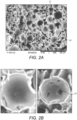
- the aeration and cooling method ensures no premature nucleation of ice. Furthermore the new cooling method prevents a high degree of super-cooling during the step (ii) freezing process. A high degree of super-cooling leads to a high driving force for ice crystal nucleation, a fast rate of nucleation and a small average crystal size. Therefore, by controlling this super-cooling step, the new freezing method allows the growth of large ice crystals during the slow freezing step. This altered ice crystal structure combines with the new gas structure formed from the solubilisation of gas to provide a new micro-structure. This structure reduces the interconnection of the ice crystal pores and the gas bubbles (see figures 1B and 2B ).
- the present method creates a true freeze-dried product that, through the manipulation of the internal particle structure, allows it to deliver a crema layer. This is achieved through altering how the granule dissolves, by manipulating the gas bubble and ice-crystal micro-structure. Surprisingly it has been found that the particles provide a desirable crema layer, even with a 'foaming porosity' of less than 15% (i.e. less than 15v% closed pores, see Table 4) or less than 10%. This is contradictory to the approach adopted in the prior art.
- SSHE scraped surface heat exchanger
- aerated by sparging in gas and applying a shearing motion to disperse the gas SSHE achieve high levels of cooling in a short residence time, such as less than 5 minutes.
- Using a SSHE requires a low coolant temperature to effect the required cooling in the available residence time, due to heat transfer limitations. The effect of this is to cause a high degree of super-cooling at the heat exchange surface, causing the nucleation of many small ice crystals at the heat exchange surface.
- the surface scraper removes these crystals from the surface and mixes them into the bulk of the coffee extract.
- the high shear rotor inside the SSHE for dispersing the gas also leads to the breakdown of ice crystals, further reducing the average size and mixing them throughout the liquor.
- the SSHE therefore disrupts the structure of the gas bubbles, leading to more interconnectivity. It hypothesised that this shearing motion leads to the ice crystals penetrating the bubbles in the high viscosity partially frozen foamed extract.
- the new freezing approach removes this nucleation and mixing process and appears to promote the growth of ice crystals around the gas bubbles, rather than allowing the ice crystals to intersect the gas bubbles, as seen in the prior art product (see figures 1B and 2B ).
- WO2013064893A1 describes a process for forming a pre-frozen intermediate coffee extract that is subsequently blended with roast and ground coffee. This patent mentions holding between -6 and -10°C in a crystalliser tank to allow for ice-crystal growth in the frozen extract.
- US3443963 describes a process where ice crystal seeding and agitation are used to prevent super cooling which causes small ice crystals, the coffee extract is cooled rapidly below the ice-point and held for 10 minutes between -3.9 to -12°C to produce dark colour finished product.
- US3373042 describes a process where coffee extract is frozen to -6.7 to -9.4°C to generate ice content to generate a dark colour finished product. The frozen extract is then extruded onto a freezing belt.
- US3438784 describes a process where coffee extract is foamed and then frozen slowly to generate a dark colour product, specifically with irregular, disordered ice crystal morphology. This is in an un-aerated system, but it is mentioned that aeration can be used to control density.
- US4565706 describes a process where coffee extract is cooled to below 0°C, then gas is added, then the gas is mixed with the extract. The frozen aerated extract is then frozen further on a belt.
- Aeration of coffee extracts is also well known. Normally air, CO 2 or N 2 is mixed with the coffee extract prior to spray or freeze drying to control density. In freeze-drying, the gas is usually injected at the same time as freezing, or just after, this is to generate a stable foam prior to the secondary belt freezing step.
- the gas bubble structure is usually created through the use of shear, normally inside a SSHE.
- EP2194795 describes a method of aerating coffee extract prior to spray drying.
- the extract is pressurised to between 50 and 400 bar, gas is injected and solubilised, and lastly the pressure is released through a nozzle to form a fine bubble structure inside coffee droplets.
- US3749378 describes a method for producing a foamed coffee extract.
- a novel gas mixing device is used to improve gas mixing prior to spray-drying or freeze-drying.
- EP839457 describes an alternative method to aerate coffee extract prior to spray drying.
- the method involves adding gas to a coffee extract and then using a high shear mixer to reduce the bubble size down to below 5 microns.
- the aerated extract is then sent to a high pressure pump before spray drying.
- US3682650 describes a process whereby nitrogen gas is injected into a SSHE to control density. The gas subsequently coalesces to form large bubbles in the frozen extract, with the objective of forming a dark coloured product
- the method described herein includes the following steps:
- FIG. 8 An example of this preferred embodiment is shown in Figure 8 , in which the boxes correspond as follows:
- a freeze-dried coffee powder for providing a coffee beverage with a crema of at least 0.5 to 1.5ml/g on reconstitution in water, preferably at least 0.75ml/g, the coffee powder consisting of particles having open gas bubbles and ice-crystal voids and having a closed porosity of less than 5%, wherein the open gas bubbles and ice-crystal voids have low interconnectivity such that less than 92% intrusion is achieved under a pressure of 6.2x10 5 Pa (90psia) Hg when measured by Hg porosimetry where intrusion into the particles is considered to start at 1.4 x 10 4 Pa(2psia).
- the powder displays less than 90% intrusion under a pressure of 6.2x10 5 Pa (90psia) Hg when measured by Hg porosimetry where intrusion into the particles is considered to start at 1.4 x 10 4 Pa (2psia).
- this intrusion is from 70 to 92% and more desirably from 80 to 90%.
- the low intrusion compared to the prior art represents the low interconnectivity which leads to a slower dissolution and increased foam production.
- the pressure required to achieve 80% intrusion when measured by Hg porosimetry where intrusion into the particles is considered to start at 1.4 x 10 4 Pa (2psia), is at least 3.1 x 10 5 Pa (45 psia), more preferably at least 3.4 x 10 5 Pa (50 psia).
- the intrusion span is defined as: the pressure required for 90 % intrusion ⁇ the pressure required for 10 % intrusion the pressure required for 50 % intrusion when measured by Hg porosimetry where the intrusion into the particles is considered to start at 1.4 x 10 4 Pa (2 psia).
- the span is at least 2, more preferably from 2 to 10 and most preferably from about 3 to about 8.
- the particles have an open porosity of at least 50%, preferably from 60 to 80% and most preferably from 60 to 70%.
- the low interconnectivity can also be assessed such that less than 80% intrusion is achieved under a pressure of 2.8x10 5 Pa (40psia) Hg when measured by Hg porosimetry where intrusion into the particles is considered to start at 2x10 3 (0.3 psia).
- Preferably less than 80% intrusion is achieved under a pressure of 3.1x10 5 Pa (45psia) Hg.
- Preferably less than 80% intrusion is achieved under a pressure of 3.275x10 5 Pa (47.5psia) Hg.
- freeze-dried coffee powder is well known in the art.
- the term has further commercial restrictions such that a product can only be labelled as freeze-dried if it has been produced by such a technique.
- the method disclosed herein is such a technique as the final powder is entirely freeze-dried.
- the particles are manufactured according to the method described herein.
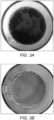
- Gas bubbles and ice-crystal voids can be readily determined by inspection of SEM images. Gas bubbles typically have rounded smooth surfaces, whereas the ice-crystal voids have sharp angles and often have a dendritic form. It is believed that the freeze-dried coffee powder described herein has a reduced pore interconnectivity compared to conventional freeze-dried powders. That is, although the ice-crystals which form do pierce and interconnect the gas bubbles in the powder, there are fewer connections within the particles. This means that the final product produces a desirable crema. The inventors have found that it is possible to identify a freeze-dried powder which can achieve this desirable level of crema by using mercury porosimetry.
- the coffee powder consists of soluble coffee solids and, optionally, less than 20wt% of roast and ground coffee particles and/or cocoa powder. More preferably the coffee powder consists of particles of soluble coffee solids only. Accordingly, there is no inclusion of other materials such as creamers or sugar.
- the particles comprise open pores with substantially all of the open pores having a mean diameter of at least 5 microns.
- the pore size can be determined by inspection of SEM images.
- the particles have a particle size distribution with a D10 of at least 300 microns.
- Particle size distributions are measured by laser diffractometry, such as with a Helos dry system, or through dry sieving. Such measurement techniques are well known in the art.
- the open pores comprise a plurality of ice-crystal pores and a plurality of gas bubbles, wherein the ice crystal pores have a mean pore diameter of from 6 to 10 microns and/or wherein the gas bubbles have a mean pore size from 10-60 microns.
- These sizes can be measured by observation of representative SEM images taken of a sample of the product.
- the level of crema was measured as the total foam formed when 4g of coffee is reconstituted in the vessel with 200ml of 85°C de-ionised water. This provides a coffee concentration of 2%.
- FIG. 7 An apparatus for facilitating foam volume measurements is shown in Figure 7 .
- 4g of coffee is reconstituted in the vessel with 200ml of 85°C de-ionised water.
- the measuring cylinder is placed on the gasket, on top of the reconstitution vessel and clamped in place.
- the valve between the reservoir and the vessel is opened gradually to force the crema layer up into the measuring cylinder.
- the reservoir contains preferably water of room temperature or below. All measurements carried out in triplicate and averaged to 1 d.p.
- the crema produced by the freeze-dried coffee powder of the invention is in an amount of at least 0.5ml/g, to 1.5ml/g.
- Foam coverage can be estimated using photo-editing software. Using this technique, photos of the beverage surface are converted into black and white and the relative peak heights for white and black can be read to provide a percentile of foam coverage. In order to determine coverage over time, three photos are taken at intervals of 0, 2 and 5 minutes. Crema coverage levels should be measured using the coffee powder alone, i.e. in the absence of milk, as this affects the accuracy of the method.
- the percentage coverage can be determined by inspection using a regular grid of at least 10x10 to approximate the surface to squares of coverage and non-coverage.
- the particles of the freeze-dried coffee powder of the invention have a closed porosity of less 5% and most preferably substantially no closed porosity.
- Closed pore volume can be measured by the following method.
- Skeletal density is a measure of density that includes the volume of any voids present in the particles that are sealed to the atmosphere and excludes the interstitial volume between particles and the volume of any voids present in the particles that are open to the atmosphere.
- the volume of sealed voids is derived from also measuring the skeletal density of the powder or granules after grinding with mortar and pestle to remove or open all internal voids to the atmosphere.
- This type of skeletal density referred to herein as true density (g/cm 3 ) is the actual density of only the solid matter comprising the powder or granules.
- Closed pore volume, V c (cm 3 /g) is determined by subtracting the reciprocal true density (cm 3 /g) from the reciprocal skeletal density (cm 3 /g).
- the particles have an open porosity of at least 50%, preferably from 60 to 80% and most preferably from 60 to 70%.
- freeze-dried powder discussed herein has a foaming porosity of less than 25%, more preferably less than 20%.
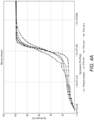
- Mercury porosimetry involves the analysis of intrusion of mercury into a sample under increasing pressure. Once the pores of a sample are entirely filled, an increase in pressure gives no further reduction in volume. The inventors have found that the low interconnectivity can be quantified by examining the amount of mercury intrusion into the pores. Once a mercury porosimetry plot has been obtained it is possible to measure the extent of intrusion at different values of pressure and to determine the pressure required for different levels of intrusion.
- the inventors have found that the intrusion is characteristic of the pore structure and have considered intrusion at a pressure of 2.76x10 5 Pa (40psia) and 6.2x10 5 Pa (90sia) Hg, as well as the intrusion span discussed below. While typical freeze-dried powders are virtually fully penetrated by Hg at 2.76x10 5 Pa (40psia), the powders described herein have only achieved less than 80% penetration. This demonstrates the difficulty that the Hg has in penetrating the low-interconnectivity of the particles. It must be noted that this is not the result of closed porosity which is separately assessed.
- mercury porosimetry can also be used to evaluate the micro-structure.
- the samples described herein were analysed using a MicroActive AutoPore V 9620 Version (Micromeritics Inc. Norcrose, GA, USA).
- the machine uses mercury of 99.999 % purity and applying a mercury contact angle of 140 degrees and surface tension of 480 dynes/cm 2 for both advancing and receding conditions.
- the operation pressure for Hg intrusion was from 2x10 3 Pa (0.3 psia) to 4.14x10 8 Pa (60,000 psia).
- the pore diameter which can be measured under this pressure ranged from 1000 to 0.00356 ⁇ m.
- the intrusion into the particles is considered to start at 1.4x10 4 Pa (2psia) (as in Table 2).
- the intrusion is considered to start at 2x10 4 Pa (0.3 psia) (as in Table 3).
- the values for either baseline can be calculated from the same mercury porosimetry plot.
- the samples having a nominal sample mass of 0.15g, were degassed before testing under vacuum for 10 hours at room temperature.
- 0.1 to 0.4 g of samples were precisely weighed and packed in a penetrometer (volume 3.5 ml, neck or capillary stem diameter 0.3 mm and stem volume of 0.5 ml).
- the sample was evacuated at 1.1 psia/min, and then switched to a medium rate at 3.4x10 3 Pa (0.5 psia) and a fast rate at 900 ⁇ m Hg.
- the Evacuating target is 60 ⁇ m Hg. After reaching the target, the evacuation was continued for 5 min before Hg was filled in.
- the measurement was conducted in set-time equilibration. That, is, the pressure points at which data are to be taken and the elapsed time at that pressure in the set-time equilibration (10 sec) mode. Roughly 140 data points were collected at the pressure ranges.
- the intrusion graph can be used to judge the internal structure of the coffee particle.
- Mercury Porosimetry covers a wide range of pore sizes, from about 1000 microns down to the sub-micron range. It is known from SEM images that pores in the coffee powder are less than 100 microns in diameter.
- the intrusion occurring above 1.4x10 4 Pa (2 psia) appears to correlate to a pore size of 100 microns.
- Figure 4 shows the whole intrusion graph (% total intrusion) for the present invention and 3 prior art products. It is clear that greater pressures are required to fill the internal structure of the present invention when compared to the pressure required to fill the internal structure of the prior art products. Without wishing to be bound by theory, it is hypothesized that this is due to the reduced interlinking of pores in the present invention. i.e. in the prior art products there are many routes to fill the internal pores, whereas in the present invention there are comparatively few routes to fill the internal pores, therefore in the present invention the mercury is required to travel through pores of ever decreasing size to fill all of the pore space, requiring increased pressures.
- Example 1 is described in more detail below as a fully worked example.
- Examples 6-9 were made in accordance with the method in Example 5, below, with the following additional changes.
- the temperature of the aerated extract transferred to the crystalliser vessel was +5°C (i.e. relatively warm).
- Example 7 the coolant temperature in the jacket of the crystalliser was -10°C.
- Example 8 the speed of the agitator in the crystalliser vessel was 12 rpm.
- Example 9 the N 2 was added before the extract was fed into the high pressure pump, using a 'Mondo' mixer, and the foam density prior to the freezing step was 780 g/l.
- Table 3 shows the results when considering 0% intrusion to be the value at 2x10 3 Pa (0.3psia) (i.e. 2x10 3 Pa (0.3 psia) baseline).
- Table 3 Sample Pa (Psia) at 80% intrusion (2x10 3 Pa (0.3psia) baseline) % of total intrusion volume at 6.2x10 5 Pa (90 Psi) (2x10 3 Pa (0.3psia) baseline)
- Table 4 Sample Closed Pore Volume (%) Open Pore Volume (%) Open Pores ⁇ 2microns diameter volume (%) Foaming porosity (%): Sum of closed pores and open pores ⁇ 2 microns Example 1 3.09 67.29 4.80 7.89 Prior Art i 6.44 64.73
- Pore area data should be regarded with caution and should not be confused with a BET surface area value which is more reliable for comparison purposes. N 2 adsorption has been used to give an idea of the average pore size. Higher surface areas indicate smaller internal pores.
- Table 5 Sample BET surface area (m 2 /g) Present Invention (Example 1) 0.4257 Prior Art i 0.3511 Prior Art ii 0.4003 Prior Art iii 0.3787
- the BET surface area gives an idea of average pore size.
- the present invention exhibits a higher internal surface area than the prior art.
- SEM images have shown that the ice crystal pores are larger in the present invention than in the prior art. Therefore, it is reasonable to assume that the average gas bubble size in the present invention is smaller than in the prior art. This is caused by the new aeration method and therefore it is deemed that the aeration method is a key part of the invention.
- a Micromeritics TriStar II Plus (3020) is used for the collection of nitrogen adsorption data by a volumetric method. Samples of 1g are degassed prior to analysis, typically for at least 10 hours under vacuum at room temperature.
- Samples are weighed into a sample tube such that sufficient sample is provided for analysis. Free space is measured automatically as part of the analytical procedure using helium (N5 grade). Analysis is conducted at cryogenic temperature: liquid nitrogen at 77K.Nitrogen adsorption data is collected at relative pressures within the BET range (approximately 0.05 to 0.30).
- the relative pressure range applied to BET surface area reports is selected by inspection of the adsorption isotherm and BET transform plot. Collected data points are included so that the BET transform plot is linear within the BET range (where the sample type permits) and the C-Value is positive. Where possible, a correlation coefficient of the transform plot of 0.999 or better is sought.
- the Nominal BET Range Applied for the above samples was 0.05 - 0.20.
- a Robusta coffee extract produced on a conventional counter current percolation set was concentrated to 50% solids by mass.
- the extract was heated to 35°C and fed into a high pressure pump.
- the pressure of the extract was increased to 50 bar.
- N 2 was injected into the extract under pressure in an amount of 4.5 NL/Kg.
- the pressurised gasified extract was passed through a static mixer to reduce the size of the gas bubbles ensuring that the N 2 gas would be substantially dissolved in the extract.
- the extract with dissolved gas was passed through a spraying system SK series spray nozzle (67/20) to effect a pressure drop to atmospheric pressure.
- the resulting foamed extract had a density of 710 g/l.
- the foamed extract was placed into a tray and cold air, with a temperature of -35°C was blown onto the surface of the foamed extract to rapidly cool the foamed extract to -5°C.
- -5°C was reached the fans were turned off and the extract was allowed to cool slowly to -11°C over a period of 35 minutes.
- the freezing point of the coffee extract at 50% solids by mass is approx. -7.5°C.
- the temperature of extract was between 1°C above the freezing point and 3°C below the freezing point for a period of about 25 minutes.
- the fans were again turned on and the temperature of the foamed extract was reduced to -35°C in a further 10 minutes.
- the tray was further cooled to -50°C.
- the frozen foamed extract was subsequently ground and sieved before being freeze-dried.
- the resultant product was tested using the foam volume apparatus.
- the freeze-dried granules produced a foam volume of 3.5 ml (0.875 ml
- a Robusta coffee extract produced on a conventional counter current percolation set was concentrated to 50% solids by mass.
- the extract was heated to 35°C and fed into a high pressure pump.
- the pressure of the extract was increased to 50 bar.
- N 2 was injected into the extract under pressure in an amount of 4.2 NL/Kg.
- the extract with dissolved gas was passed through a spraying system SK series spray nozzle (67/20) to effect a pressure drop to atmospheric pressure.
- the resulting foamed extract had a density of 640 g/l.
- the foamed extract was placed into a tray and placed into a controlled temperature freezer.
- the ambient freezer temperature was set to be -35°C to rapidly cool to the -5°C, once the coffee temperature reached -5°C the ambient room temperature was set to -12°C and after 30 minutes, the coffee temperature was recorded as -10.5°C, subsequently the temperature of the freezer was set to -35°C to further freeze the aerated coffee extract. Finally, the tray of aerated frozen coffee extract was transferred to a -50°C cold room.
- the freezing point of the coffee extract at 50% solids by mass is approx. -7.5°C.
- the temperature of the extract was between 1°C above the freezing point (Approx. -6.5°C) and 3°C below the freezing point (Approx. -10.5°C) for a period of 28 minutes.
- the tray was transferred to a cold room and further cooled to -50°C to complete freezing.
- the frozen foamed extract was subsequently ground and sieved before being freeze-dried.
- the resultant product was tested using the foam volume apparatus.
- the freeze-dried granules produced a foam volume of 4.2 ml (0.775 ml/g).
- a Robusta coffee extract produced on a conventional counter current percolation set was concentrated to 50% solids by mass.
- the extract was heated to 35°C and fed into a high pressure pump.
- the pressure of the extract was increased to 50 bar.
- N 2 was injected into the extract under pressure in an amount of 4.3 NL/Kg.
- the pressurised gasified extract was passed through a static mixer to reduce the size of the gas bubbles ensuring that the N 2 gas would be substantially dissolved in the extract.
- the extract with dissolved gas was passed through a spraying system SK series spray nozzle (67/20) to effect a pressure drop to atmospheric pressure.
- the resulting foamed extract had a density of 715 g/l.
- the foamed extract was placed into a tray and placed in a cold room of ambient temperature of -50°C to rapidly cool the foamed extract. This was left until the product reached a temperature of around -45°C.
- the freezing point of the coffee extract at 50% solids by mass is approx. - 7.5°C.
- the temperature of the extract was between 1°C above the freezing point (Approx. - 6.5°C) and 3°C below the freezing point (Approx. -10.5°C) for a period of 4.5 minutes.
- the frozen foamed extract was subsequently ground and sieved before being freeze-dried. The resultant product was tested using the foam volume apparatus.
- the freeze-dried granules produced a foam volume of 0.5 ml (0.125 ml/g).
- a Robusta coffee extract produced on a conventional counter current percolation set was concentrated to 50% solids by mass.
- the extract was held at 35°C and fed into a 'Haas Mini Mondomix'.
- N 2 gas was injected into the mixer and the overrun was set to 87% with the mixing head speed at 1200 rpm.
- the pressure inside the Mini Mondo was 2.8 bar.
- the temperature of the foamed extract exiting the Mini Mondomix was 38°C.
- the resulting foamed extract had a density of 640 g/l.
- the foamed extract was placed into a tray under atmospheric pressure and then into a controlled temperature cabinet freezer where it was cooled rapidly to a temperature of -5°C.
- the ambient temperature of the freezer was then set to -12°C to allow the extract to cool slowly through the point of ice formation and after 30 minutes, the coffee temperature was recorded as -11°C, subsequently the temperature of the freezer was set to -35°C to further freeze the aerated coffee extract. Finally, the tray of aerated frozen coffee extract was transferred to a -50°C cold room.
- the freezing point of the coffee extract at 50% solids by mass is approx. -7.5°C.
- the temperature of the extract was between 1°C above the freezing point (Approx. -6.5°C) and 3°C below the freezing point (Approx. -10.5°C) for a period of 25 minutes.
- the frozen foamed extract was subsequently ground and sieved before being freeze-dried. The resultant product was tested using the foam volume apparatus.
- the freeze-dried granules produced a foam volume of 2.35 ml (0.59 ml/g).
- a Robusta and Arabica coffee extract blend produced on a conventional counter current percolation set was concentrated to 48% solids by mass.
- the extract was heated to 35°C and fed into a high pressure pump.
- the pressure of the extract was increased to 50 bar.
- 1.05% N 2 by mass was injected into the extract under pressure.
- the pressurised, gasified extract was passed through a spraying systems SK series spray nozzle (67/20) to atmospheric pressure.
- the resulting foamed extract had a density of 640g/l and a temperature of 34°C.
- the foamed extract was pumped through a heat exchanger with a glycol temperature of -5°C to rapidly cool the extract to 0°C.
- the extract When the extract had been rapidly cooled it was then transferred to a crystallizer vessel, consisting of a glycol jacketed tank and internal scraper.
- the glycol temperature was set at -12°C and the surface scraper at a speed of 10rpm.
- the foamed extract was slowly cooled to a temperature of -7.5°C in the crystallizer over a period of 90 minutes.
- the extract was removed from the vessel and placed onto a tray.
- the extract in the tray was blast frozen down to -50°C.
- the temperature of the extract was between 1°C above the freezing point (Approx. -6.5°C) and 3°C below the freezing point (Approx.
- the frozen foamed extract was subsequently ground and sieved before being freeze-dried.
- the resultant product was tested using the foam volume apparatus previously described.
- the freeze-dried granules produced a foam volume of 3.8ml (0.95ml/g) and a coverage of 100% at makeup, 100% at 2 minutes and 66.4% after 5 minutes.
Landscapes
- Life Sciences & Earth Sciences (AREA)
- Chemical & Material Sciences (AREA)
- Engineering & Computer Science (AREA)
- Food Science & Technology (AREA)
- Polymers & Plastics (AREA)
- Tea And Coffee (AREA)
Claims (15)
- Verfahren zur Herstellung eines gefriergetrockneten Kaffeepulvers, wobei das Verfahren Folgendes umfasst:Bereitstellen eines Kaffee-Extrakts mit zu 40 Gew.-% bis 55 Gew.-% Feststoffen;Zugeben von Gas zu dem Kaffee-Extrakt in einer Menge von 1 bis 5 normierten l/kg des Kaffee-Extrakts, um einen gashaltigen Kaffee-Extrakt bei mehr als Atmosphärendruck bereitzustellen;Druckentlasten des gashaltigen Kaffee-Extrakts, um einen geschäumten Kaffee-Extrakt zu bilden;Abkühlen des geschäumten Kaffee-Extrakts auf unter -40 °C ohne Scherung oder mit geringer Scherung, um einen gefrorenen Kaffee-Extrakt zu bilden,Mahlen des gefrorenen Kaffee-Extrakts zu einem Pulver undTrocknen des Pulvers,wobei der Schritt des Abkühlens des geschäumten Kaffee-Extrakts auf unter -40 °C Folgendes umfasst:(i) Abkühlen des geschäumten Kaffee-Extrakts auf eine erste Temperatur,(ii) Abkühlen des geschäumten Kaffee-Extrakts von der ersten Temperatur auf eine zweite Temperatur, die niedriger als die erste Temperatur ist; und(iii) Abkühlen des geschäumten Kaffee-Extrakts von der zweiten Temperatur auf unter -40 °C,wobei die erste Temperatur 1 °C über einem Gefrierpunkt des geschäumten Kaffee-Extrakts liegt und wobei die zweite Temperatur 3 °C unter dem Gefrierpunkt liegt,wobei Schritt (ii) eine Dauer von 20 bis 90 Minuten aufweist.
- Verfahren nach Anspruch 1, wobei der Kaffee-Extrakt:(a) zu 40 bis 45 Gew.-% Feststoffe aufweist und wobei der Gefrierpunkt -5 bis -7 °C beträgt oder(b) zu 45 bis 50 Gew.-% Feststoffe aufweist und wobei der Gefrierpunkt -7 bis -8 °C beträgt oder(c) zu 50 bis 55 Gew.-% Feststoffe aufweist und wobei der Gefrierpunkt -8 bis -10 °C beträgt.
- Verfahren nach Anspruch 1 oder Anspruch 2, wobei der Kaffee-Extrakt zu 48 bis 51 Gew.-% Feststoffe aufweist.
- Verfahren nach einem der vorstehenden Ansprüche, wobei die geringe Scherung weniger als 50s-1 beträgt.
- Verfahren nach einem der vorstehenden Ansprüche, wobei das Gas ausgewählt ist aus Stickstoff, Luft, Argon, Distickstoffoxid und Kohlendioxid oder einem Gemisch aus zwei oder mehr von diesen.
- Verfahren nach einem der vorstehenden Ansprüche, wobei der Kaffee-Extrakt einen Druck von mindestens 2 bar aufweist, bevor das Gas zu dem Kaffee-Extrakt zugegeben wird, mehr bevorzugt mindestens 5 bar und am meisten bevorzugt einen Druck von 10 bis 250 bar aufweist.
- Verfahren nach einem der vorstehenden Ansprüche, wobei das Druckentlasten des gashaltigen Kaffee-Extrakts das Reduzieren des Drucks des Kaffee-Extrakts auf 5 bar oder weniger, vorzugsweise auf Atmosphärendruck, und/oder das Sprühen des gashaltigen Kaffee-Extrakts beinhaltet.
- Verfahren nach einem der vorstehenden Ansprüche, wobei der geschäumte Kaffee-Extrakt vor dem Schritt des Abkühlens Atmosphärendruck aufweist und eine Dichte von 500 bis 800 g/l aufweist.
- Verfahren nach einem der vorstehenden Ansprüche, wobei die mittlere Abkühlrate in jedem der Schritte (i) und (iii) mindestens -5 °C pro Minute beträgt.
- Verfahren nach einem der vorstehenden Ansprüche, wobei einer oder mehrere der Abkühlschritte (i), (ii) und (iii) als kontinuierliches Verfahren unter Verwendung eines Förderers durchgeführt werden und/oder in einem Aufnahmegefäß oder innerhalb eines gepumpten Kühlsystems durchgeführt werden.
- Gefriergetrocknetes Kaffeepulver zum Bereitstellen eines Kaffeegetränks mit einer Crema von mindestens 0,5 bis 1,5 ml/g bei Rekonstitution in Wasser, wobei das Kaffeepulver aus Teilchen mit offenen Gasblasen und Eiskristallhohlräumen und mit einer geschlossenen Porosität von weniger als 5 % besteht, wobei die offenen Gasblasen und Eiskristallhohlräume eine geringe Interkonnektivität aufweisen, so dass weniger als 92 % intrusion unter einem Druck von 6,2×10⁵ Pa (90 psia) Hg erreicht wird, wenn mit Hg-Porosimetrie gemessen wird, wobei angenommen wird, dass die intrusion in die Teilchen bei 1,4×10⁴ Pa (2 psia) beginnt.
- Gefriergetrocknetes Kaffeepulver nach Anspruch 11, wobei die Intrusionsspanne der Teilchen mindestens 2 beträgt, wobei die Intrusionsspanne definiert ist als:

- Gefriergetrocknetes Kaffeepulver nach Anspruch 11 oder Anspruch 12, wobei das gefriergetrocknete Kaffeepulver aus löslichen Kaffeefeststoffen und optional zu weniger als 20 Gew.-% gerösteten und gemahlenen Kaffeeteilchen und/oder Kakaopulver besteht.
- Gefriergetrocknetes Kaffeepulver nach einem der Ansprüche 11 bis 13, wobei die Teilchen eine Teilchengrößenverteilung mit einer D10 von mindestens 300 Mikrometern aufweisen.
- Gefriergetrocknetes Kaffeepulver nach einem der Ansprüche 11 bis 14, wobei die Eiskristallporen einen mittleren Porendurchmesser von 6 bis 10 Mikrometern aufweisen und/oder wobei die Gasblasen einen mittleren Porendurchmesser von 10-60 Mikrometern aufweisen.
Priority Applications (1)
| Application Number | Priority Date | Filing Date | Title |
|---|---|---|---|
| PL17720121.7T PL3448166T5 (pl) | 2016-04-27 | 2017-04-27 | Liofilizowana kawa w proszku i sposób jej wytwarzania |
Applications Claiming Priority (2)
| Application Number | Priority Date | Filing Date | Title |
|---|---|---|---|
| GB1607346.2A GB2554037B (en) | 2016-04-27 | 2016-04-27 | Method for the manufacture of a freeze-dried coffee powder |
| PCT/EP2017/060121 WO2017186876A1 (en) | 2016-04-27 | 2017-04-27 | Freeze-dried coffee powder and a method for the manufacture thereof |
Publications (3)
| Publication Number | Publication Date |
|---|---|
| EP3448166A1 EP3448166A1 (de) | 2019-03-06 |
| EP3448166B1 EP3448166B1 (de) | 2021-09-22 |
| EP3448166B2 true EP3448166B2 (de) | 2025-01-01 |
Family
ID=58640889
Family Applications (1)
| Application Number | Title | Priority Date | Filing Date |
|---|---|---|---|
| EP17720121.7A Active EP3448166B2 (de) | 2016-04-27 | 2017-04-27 | Gefriergetrockneter kaffeepulver und ein verfahren für die herstellung davon |
Country Status (17)
| Country | Link |
|---|---|
| US (3) | US11229221B2 (de) |
| EP (1) | EP3448166B2 (de) |
| JP (1) | JP6721712B2 (de) |
| KR (1) | KR102179327B1 (de) |
| CN (1) | CN109068677B (de) |
| AU (1) | AU2017256754B2 (de) |
| BR (1) | BR112018071813B1 (de) |
| CA (1) | CA3021253C (de) |
| ES (1) | ES2891774T5 (de) |
| GB (1) | GB2554037B (de) |
| MX (1) | MX388184B (de) |
| NL (1) | NL2018809B1 (de) |
| PL (1) | PL3448166T5 (de) |
| RU (1) | RU2730862C2 (de) |
| SG (1) | SG11201808926VA (de) |
| UA (1) | UA123450C2 (de) |
| WO (1) | WO2017186876A1 (de) |
Families Citing this family (12)
| Publication number | Priority date | Publication date | Assignee | Title |
|---|---|---|---|---|
| GB2554037B (en) | 2016-04-27 | 2019-01-09 | Douwe Egberts Bv | Method for the manufacture of a freeze-dried coffee powder |
| MY206595A (en) * | 2019-02-05 | 2024-12-25 | Socit Des Produits Nestl S A | Soluble coffee powder |
| US20220295815A1 (en) * | 2019-06-05 | 2022-09-22 | Societe Des Produits Nestle S.A. | Instant coffee powder |
| FR3098090B1 (fr) * | 2019-07-05 | 2021-06-04 | Genialis | Cafe lyophilise de qualite superieure et son procede de preparation |
| WO2021033011A1 (en) * | 2019-08-18 | 2021-02-25 | Stalmakhou Yury | Method of producing coffee tablets |
| CN110934312A (zh) * | 2019-11-22 | 2020-03-31 | 江苏博莱客冷冻科技发展有限公司 | 固体速溶饮品的制备装置 |
| CN110934313A (zh) * | 2019-11-22 | 2020-03-31 | 江苏博莱客冷冻科技发展有限公司 | 固体速溶饮品的制备方法 |
| PH12022551789A1 (en) * | 2020-03-10 | 2023-09-18 | SociaTa Des Produits Nestla S A | Soluble coffee powder |
| GB2615726B (en) * | 2021-06-18 | 2024-02-21 | Douwe Egberts Bv | A method for the manufacture of a foaming coffee powder |
| CN117750884A (zh) * | 2021-06-21 | 2024-03-22 | 雀巢产品有限公司 | 可溶咖啡粉末 |
| CN115104660A (zh) * | 2021-09-02 | 2022-09-27 | 周睿 | 一种提高健身效率的冷萃冻干咖啡营养粉及其制备方法 |
| CN115067411B (zh) * | 2022-07-22 | 2022-11-08 | 北京林业大学 | 立体冻干咖啡块产品及其制作方法、应用 |
Family Cites Families (24)
| Publication number | Priority date | Publication date | Assignee | Title |
|---|---|---|---|---|
| DE1692269C3 (de) | 1965-04-02 | 1979-09-06 | Societe Des Produits Nestle S.A., Vevey (Schweiz) | Verfahren zur Herstellung von pulverförmigen Kaffee-Extrakten |
| CH434947A (fr) * | 1965-04-02 | 1967-04-30 | Nestle Sa | Procédé de fabrication d'extraits en poudre de café |
| US3309779A (en) * | 1966-02-02 | 1967-03-21 | Fmc Corp | Dehydration of solids-bearing liquids |
| GB1199564A (en) * | 1967-07-10 | 1970-07-22 | Struthers Scientific Int Corp | Freeze Dried Coffee. |
| US3438784A (en) | 1968-02-09 | 1969-04-15 | Gen Foods Corp | Freeze-drying of granular coffee extract |
| GB1288758A (de) * | 1968-09-24 | 1972-09-13 | ||
| US3682650A (en) | 1970-05-22 | 1972-08-08 | Gen Foods Corp | Process for preparing frozen coffee and product produced therefrom |
| US3820250A (en) * | 1970-09-28 | 1974-06-28 | Assitance Tech Pour Prod Nestl | Freeze drying process |
| CA984216A (en) | 1973-04-24 | 1976-02-24 | General Foods | Process for producing a foamed coffee extract |
| JPS5126501A (de) * | 1974-08-29 | 1976-03-04 | Victor Company Of Japan | |
| US5882717A (en) | 1996-10-30 | 1999-03-16 | Kraft Foods, Inc. | Soluble espresso coffee |
| US7713565B2 (en) * | 2004-08-17 | 2010-05-11 | Kraft Foods Holdings, Inc. | Method of preparing a foaming soluble coffee powder |
| BRPI0817677B1 (pt) * | 2007-09-28 | 2017-05-02 | Nestec Sa | pó para café instantâneo ou mistura café/chicória compreendendo partículas de pó porosas, seu uso e seu método de fabricação |
| ES2430847T3 (es) * | 2007-11-08 | 2013-11-22 | Nestec S.A. | Producto para bebida instantánea |
| US20100278995A1 (en) | 2007-12-20 | 2010-11-04 | Nestec S.A. | Instant beverage product |
| JP5126501B2 (ja) | 2007-12-27 | 2013-01-23 | 大日本印刷株式会社 | 早期発信者特定システム |
| GB2458450B (en) * | 2008-03-12 | 2012-08-29 | Krafts Food R & D Inc | Foaming coffee composition |
| JP2012522496A (ja) | 2009-04-01 | 2012-09-27 | ネステク ソシエテ アノニム | インスタント飲料製品 |
| ES2543458T3 (es) | 2009-04-01 | 2015-08-19 | Nestec S.A. | Producto de bebida instantánea |
| DE102009003751B4 (de) | 2009-04-06 | 2012-11-29 | Dr. Collin Gmbh | Vorrichtung zum mono-oder biaxialen Recken von Folienabschitten |
| GB2482032B (en) * | 2010-07-16 | 2013-04-10 | Kraft Foods R & D Inc | Coffee products and related processes |
| GB2496265B (en) * | 2010-07-16 | 2014-01-15 | Kraft Foods R & D Inc | Coffee products and related processes |
| PL3086656T3 (pl) | 2013-12-23 | 2020-07-13 | Société des Produits Nestlé S.A. | Sposób wytwarzania rozpuszczalnego proszku kawowego |
| GB2554037B (en) | 2016-04-27 | 2019-01-09 | Douwe Egberts Bv | Method for the manufacture of a freeze-dried coffee powder |
-
2016
- 2016-04-27 GB GB1607346.2A patent/GB2554037B/en active Active
-
2017
- 2017-04-27 US US16/096,639 patent/US11229221B2/en active Active
- 2017-04-27 UA UAA201810129A patent/UA123450C2/uk unknown
- 2017-04-27 CA CA3021253A patent/CA3021253C/en active Active
- 2017-04-27 WO PCT/EP2017/060121 patent/WO2017186876A1/en not_active Ceased
- 2017-04-27 PL PL17720121.7T patent/PL3448166T5/pl unknown
- 2017-04-27 JP JP2018556363A patent/JP6721712B2/ja active Active
- 2017-04-27 KR KR1020187031058A patent/KR102179327B1/ko active Active
- 2017-04-27 MX MX2018013156A patent/MX388184B/es unknown
- 2017-04-27 BR BR112018071813-0A patent/BR112018071813B1/pt active IP Right Grant
- 2017-04-27 EP EP17720121.7A patent/EP3448166B2/de active Active
- 2017-04-27 AU AU2017256754A patent/AU2017256754B2/en active Active
- 2017-04-27 RU RU2018137694A patent/RU2730862C2/ru active
- 2017-04-27 SG SG11201808926VA patent/SG11201808926VA/en unknown
- 2017-04-27 CN CN201780026274.XA patent/CN109068677B/zh active Active
- 2017-04-27 ES ES17720121T patent/ES2891774T5/es active Active
- 2017-04-28 NL NL2018809A patent/NL2018809B1/en active
-
2021
- 2021-09-17 US US17/478,677 patent/US11744261B2/en active Active
-
2023
- 2023-07-07 US US18/219,612 patent/US12048311B2/en active Active
Also Published As
Similar Documents
| Publication | Publication Date | Title |
|---|---|---|
| US20230345962A1 (en) | Freeze-dried coffee powder and a method for the manufacture thereof | |
| JP5579075B2 (ja) | インスタント飲料製品 | |
| EP2413707B1 (de) | Instantgetränkprodukt | |
| RU2625009C1 (ru) | Кофейный продукт | |
| GB2563983A (en) | Freeze-dried coffee powder and a method for the manufacture thereof | |
| RU2837414C2 (ru) | Способ получения вспенивающегося порошкообразного кофе | |
| US20240277002A1 (en) | A method for the manufacture of a foaming coffee powder and coffee powder resulting therefrom | |
| RU2834408C2 (ru) | Быстрорастворимый порошкообразный кофе | |
| GB2626440A (en) | A method for the manufacture of a foaming coffee powder | |
| CA3217410A1 (en) | Soluble coffee powder |
Legal Events
| Date | Code | Title | Description |
|---|---|---|---|
| STAA | Information on the status of an ep patent application or granted ep patent |
Free format text: STATUS: UNKNOWN |
|
| STAA | Information on the status of an ep patent application or granted ep patent |
Free format text: STATUS: THE INTERNATIONAL PUBLICATION HAS BEEN MADE |
|
| PUAI | Public reference made under article 153(3) epc to a published international application that has entered the european phase |
Free format text: ORIGINAL CODE: 0009012 |
|
| STAA | Information on the status of an ep patent application or granted ep patent |
Free format text: STATUS: REQUEST FOR EXAMINATION WAS MADE |
|
| 17P | Request for examination filed |
Effective date: 20181025 |
|
| AK | Designated contracting states |
Kind code of ref document: A1 Designated state(s): AL AT BE BG CH CY CZ DE DK EE ES FI FR GB GR HR HU IE IS IT LI LT LU LV MC MK MT NL NO PL PT RO RS SE SI SK SM TR |
|
| AX | Request for extension of the european patent |
Extension state: BA ME |
|
| DAV | Request for validation of the european patent (deleted) | ||
| DAX | Request for extension of the european patent (deleted) | ||
| STAA | Information on the status of an ep patent application or granted ep patent |
Free format text: STATUS: EXAMINATION IS IN PROGRESS |
|
| 17Q | First examination report despatched |
Effective date: 20200818 |
|
| GRAP | Despatch of communication of intention to grant a patent |
Free format text: ORIGINAL CODE: EPIDOSNIGR1 |
|
| STAA | Information on the status of an ep patent application or granted ep patent |
Free format text: STATUS: GRANT OF PATENT IS INTENDED |
|
| INTG | Intention to grant announced |
Effective date: 20210422 |
|
| GRAS | Grant fee paid |
Free format text: ORIGINAL CODE: EPIDOSNIGR3 |
|
| GRAA | (expected) grant |
Free format text: ORIGINAL CODE: 0009210 |
|
| STAA | Information on the status of an ep patent application or granted ep patent |
Free format text: STATUS: THE PATENT HAS BEEN GRANTED |
|
| AK | Designated contracting states |
Kind code of ref document: B1 Designated state(s): AL AT BE BG CH CY CZ DE DK EE ES FI FR GB GR HR HU IE IS IT LI LT LU LV MC MK MT NL NO PL PT RO RS SE SI SK SM TR |
|
| REG | Reference to a national code |
Ref country code: GB Ref legal event code: FG4D |
|
| REG | Reference to a national code |
Ref country code: IE Ref legal event code: FG4D Ref country code: NL Ref legal event code: FP |
|
| REG | Reference to a national code |
Ref country code: DE Ref legal event code: R096 Ref document number: 602017046358 Country of ref document: DE |
|
| REG | Reference to a national code |
Ref country code: CH Ref legal event code: EP Ref country code: AT Ref legal event code: REF Ref document number: 1431605 Country of ref document: AT Kind code of ref document: T Effective date: 20211015 |
|
| REG | Reference to a national code |
Ref country code: LT Ref legal event code: MG9D |
|
| PG25 | Lapsed in a contracting state [announced via postgrant information from national office to epo] |
Ref country code: NO Free format text: LAPSE BECAUSE OF FAILURE TO SUBMIT A TRANSLATION OF THE DESCRIPTION OR TO PAY THE FEE WITHIN THE PRESCRIBED TIME-LIMIT Effective date: 20211222 Ref country code: FI Free format text: LAPSE BECAUSE OF FAILURE TO SUBMIT A TRANSLATION OF THE DESCRIPTION OR TO PAY THE FEE WITHIN THE PRESCRIBED TIME-LIMIT Effective date: 20210922 Ref country code: BG Free format text: LAPSE BECAUSE OF FAILURE TO SUBMIT A TRANSLATION OF THE DESCRIPTION OR TO PAY THE FEE WITHIN THE PRESCRIBED TIME-LIMIT Effective date: 20211222 Ref country code: LT Free format text: LAPSE BECAUSE OF FAILURE TO SUBMIT A TRANSLATION OF THE DESCRIPTION OR TO PAY THE FEE WITHIN THE PRESCRIBED TIME-LIMIT Effective date: 20210922 Ref country code: RS Free format text: LAPSE BECAUSE OF FAILURE TO SUBMIT A TRANSLATION OF THE DESCRIPTION OR TO PAY THE FEE WITHIN THE PRESCRIBED TIME-LIMIT Effective date: 20210922 Ref country code: SE Free format text: LAPSE BECAUSE OF FAILURE TO SUBMIT A TRANSLATION OF THE DESCRIPTION OR TO PAY THE FEE WITHIN THE PRESCRIBED TIME-LIMIT Effective date: 20210922 Ref country code: HR Free format text: LAPSE BECAUSE OF FAILURE TO SUBMIT A TRANSLATION OF THE DESCRIPTION OR TO PAY THE FEE WITHIN THE PRESCRIBED TIME-LIMIT Effective date: 20210922 |
|
| REG | Reference to a national code |
Ref country code: ES Ref legal event code: FG2A Ref document number: 2891774 Country of ref document: ES Kind code of ref document: T3 Effective date: 20220131 |
|
| REG | Reference to a national code |
Ref country code: AT Ref legal event code: MK05 Ref document number: 1431605 Country of ref document: AT Kind code of ref document: T Effective date: 20210922 |
|
| PG25 | Lapsed in a contracting state [announced via postgrant information from national office to epo] |
Ref country code: LV Free format text: LAPSE BECAUSE OF FAILURE TO SUBMIT A TRANSLATION OF THE DESCRIPTION OR TO PAY THE FEE WITHIN THE PRESCRIBED TIME-LIMIT Effective date: 20210922 Ref country code: GR Free format text: LAPSE BECAUSE OF FAILURE TO SUBMIT A TRANSLATION OF THE DESCRIPTION OR TO PAY THE FEE WITHIN THE PRESCRIBED TIME-LIMIT Effective date: 20211223 |
|
| PG25 | Lapsed in a contracting state [announced via postgrant information from national office to epo] |
Ref country code: AT Free format text: LAPSE BECAUSE OF FAILURE TO SUBMIT A TRANSLATION OF THE DESCRIPTION OR TO PAY THE FEE WITHIN THE PRESCRIBED TIME-LIMIT Effective date: 20210922 |
|
| PG25 | Lapsed in a contracting state [announced via postgrant information from national office to epo] |
Ref country code: IS Free format text: LAPSE BECAUSE OF FAILURE TO SUBMIT A TRANSLATION OF THE DESCRIPTION OR TO PAY THE FEE WITHIN THE PRESCRIBED TIME-LIMIT Effective date: 20220122 Ref country code: SK Free format text: LAPSE BECAUSE OF FAILURE TO SUBMIT A TRANSLATION OF THE DESCRIPTION OR TO PAY THE FEE WITHIN THE PRESCRIBED TIME-LIMIT Effective date: 20210922 Ref country code: RO Free format text: LAPSE BECAUSE OF FAILURE TO SUBMIT A TRANSLATION OF THE DESCRIPTION OR TO PAY THE FEE WITHIN THE PRESCRIBED TIME-LIMIT Effective date: 20210922 Ref country code: PT Free format text: LAPSE BECAUSE OF FAILURE TO SUBMIT A TRANSLATION OF THE DESCRIPTION OR TO PAY THE FEE WITHIN THE PRESCRIBED TIME-LIMIT Effective date: 20220124 Ref country code: EE Free format text: LAPSE BECAUSE OF FAILURE TO SUBMIT A TRANSLATION OF THE DESCRIPTION OR TO PAY THE FEE WITHIN THE PRESCRIBED TIME-LIMIT Effective date: 20210922 Ref country code: CZ Free format text: LAPSE BECAUSE OF FAILURE TO SUBMIT A TRANSLATION OF THE DESCRIPTION OR TO PAY THE FEE WITHIN THE PRESCRIBED TIME-LIMIT Effective date: 20210922 Ref country code: AL Free format text: LAPSE BECAUSE OF FAILURE TO SUBMIT A TRANSLATION OF THE DESCRIPTION OR TO PAY THE FEE WITHIN THE PRESCRIBED TIME-LIMIT Effective date: 20210922 |
|
| REG | Reference to a national code |
Ref country code: DE Ref legal event code: R026 Ref document number: 602017046358 Country of ref document: DE |
|
| PLBI | Opposition filed |
Free format text: ORIGINAL CODE: 0009260 |
|
| PLAX | Notice of opposition and request to file observation + time limit sent |
Free format text: ORIGINAL CODE: EPIDOSNOBS2 |
|
| 26 | Opposition filed |
Opponent name: SOCIETE DES PRODUITS NESTLE S.A. Effective date: 20220617 |
|
| PG25 | Lapsed in a contracting state [announced via postgrant information from national office to epo] |
Ref country code: DK Free format text: LAPSE BECAUSE OF FAILURE TO SUBMIT A TRANSLATION OF THE DESCRIPTION OR TO PAY THE FEE WITHIN THE PRESCRIBED TIME-LIMIT Effective date: 20210922 |
|
| PLBB | Reply of patent proprietor to notice(s) of opposition received |
Free format text: ORIGINAL CODE: EPIDOSNOBS3 |
|
| PG25 | Lapsed in a contracting state [announced via postgrant information from national office to epo] |
Ref country code: SI Free format text: LAPSE BECAUSE OF FAILURE TO SUBMIT A TRANSLATION OF THE DESCRIPTION OR TO PAY THE FEE WITHIN THE PRESCRIBED TIME-LIMIT Effective date: 20210922 |
|
| REG | Reference to a national code |
Ref country code: BE Ref legal event code: MM Effective date: 20220430 |
|
| PG25 | Lapsed in a contracting state [announced via postgrant information from national office to epo] |
Ref country code: MC Free format text: LAPSE BECAUSE OF FAILURE TO SUBMIT A TRANSLATION OF THE DESCRIPTION OR TO PAY THE FEE WITHIN THE PRESCRIBED TIME-LIMIT Effective date: 20210922 Ref country code: LU Free format text: LAPSE BECAUSE OF NON-PAYMENT OF DUE FEES Effective date: 20220427 Ref country code: IT Free format text: LAPSE BECAUSE OF FAILURE TO SUBMIT A TRANSLATION OF THE DESCRIPTION OR TO PAY THE FEE WITHIN THE PRESCRIBED TIME-LIMIT Effective date: 20210922 |
|
| PG25 | Lapsed in a contracting state [announced via postgrant information from national office to epo] |
Ref country code: BE Free format text: LAPSE BECAUSE OF NON-PAYMENT OF DUE FEES Effective date: 20220430 |
|
| PG25 | Lapsed in a contracting state [announced via postgrant information from national office to epo] |
Ref country code: IE Free format text: LAPSE BECAUSE OF NON-PAYMENT OF DUE FEES Effective date: 20220427 |
|
| P01 | Opt-out of the competence of the unified patent court (upc) registered |
Effective date: 20230505 |
|
| PG25 | Lapsed in a contracting state [announced via postgrant information from national office to epo] |
Ref country code: HU Free format text: LAPSE BECAUSE OF FAILURE TO SUBMIT A TRANSLATION OF THE DESCRIPTION OR TO PAY THE FEE WITHIN THE PRESCRIBED TIME-LIMIT; INVALID AB INITIO Effective date: 20170427 |
|
| PLAB | Opposition data, opponent's data or that of the opponent's representative modified |
Free format text: ORIGINAL CODE: 0009299OPPO |
|
| PG25 | Lapsed in a contracting state [announced via postgrant information from national office to epo] |
Ref country code: SM Free format text: LAPSE BECAUSE OF FAILURE TO SUBMIT A TRANSLATION OF THE DESCRIPTION OR TO PAY THE FEE WITHIN THE PRESCRIBED TIME-LIMIT Effective date: 20210922 Ref country code: MK Free format text: LAPSE BECAUSE OF FAILURE TO SUBMIT A TRANSLATION OF THE DESCRIPTION OR TO PAY THE FEE WITHIN THE PRESCRIBED TIME-LIMIT Effective date: 20210922 Ref country code: CY Free format text: LAPSE BECAUSE OF FAILURE TO SUBMIT A TRANSLATION OF THE DESCRIPTION OR TO PAY THE FEE WITHIN THE PRESCRIBED TIME-LIMIT Effective date: 20210922 |
|
| R26 | Opposition filed (corrected) |
Opponent name: SOCIETE DES PRODUITS NESTLE S.A. Effective date: 20220617 |
|
| PG25 | Lapsed in a contracting state [announced via postgrant information from national office to epo] |
Ref country code: MT Free format text: LAPSE BECAUSE OF FAILURE TO SUBMIT A TRANSLATION OF THE DESCRIPTION OR TO PAY THE FEE WITHIN THE PRESCRIBED TIME-LIMIT Effective date: 20210922 |
|
| PUAH | Patent maintained in amended form |
Free format text: ORIGINAL CODE: 0009272 |
|
| STAA | Information on the status of an ep patent application or granted ep patent |
Free format text: STATUS: PATENT MAINTAINED AS AMENDED |
|
| 27A | Patent maintained in amended form |
Effective date: 20250101 |
|
| AK | Designated contracting states |
Kind code of ref document: B2 Designated state(s): AL AT BE BG CH CY CZ DE DK EE ES FI FR GB GR HR HU IE IS IT LI LT LU LV MC MK MT NL NO PL PT RO RS SE SI SK SM TR |
|
| REG | Reference to a national code |
Ref country code: DE Ref legal event code: R102 Ref document number: 602017046358 Country of ref document: DE |
|
| REG | Reference to a national code |
Ref country code: NL Ref legal event code: FP |
|
| REG | Reference to a national code |
Ref country code: ES Ref legal event code: DC2A Ref document number: 2891774 Country of ref document: ES Kind code of ref document: T5 Effective date: 20250326 |
|
| PGFP | Annual fee paid to national office [announced via postgrant information from national office to epo] |
Ref country code: NL Payment date: 20250427 Year of fee payment: 9 |
|
| PGFP | Annual fee paid to national office [announced via postgrant information from national office to epo] |
Ref country code: DE Payment date: 20250429 Year of fee payment: 9 |
|
| PGFP | Annual fee paid to national office [announced via postgrant information from national office to epo] |
Ref country code: GB Payment date: 20250428 Year of fee payment: 9 Ref country code: ES Payment date: 20250505 Year of fee payment: 9 |
|
| PGFP | Annual fee paid to national office [announced via postgrant information from national office to epo] |
Ref country code: FR Payment date: 20250425 Year of fee payment: 9 |
|
| PGFP | Annual fee paid to national office [announced via postgrant information from national office to epo] |
Ref country code: CH Payment date: 20250501 Year of fee payment: 9 |
|
| PG25 | Lapsed in a contracting state [announced via postgrant information from national office to epo] |
Ref country code: TR Free format text: LAPSE BECAUSE OF FAILURE TO SUBMIT A TRANSLATION OF THE DESCRIPTION OR TO PAY THE FEE WITHIN THE PRESCRIBED TIME-LIMIT Effective date: 20210922 |
|
| PGFP | Annual fee paid to national office [announced via postgrant information from national office to epo] |
Ref country code: PL Payment date: 20260331 Year of fee payment: 10 |
|
| REG | Reference to a national code |
Ref country code: CH Ref legal event code: U11 Free format text: ST27 STATUS EVENT CODE: U-0-0-U10-U11 (AS PROVIDED BY THE NATIONAL OFFICE) Effective date: 20260501 |