EP3436040B1 - Compositions containing tannic acids and uses thereof for treating disorders of the central nervous system - Google Patents
Compositions containing tannic acids and uses thereof for treating disorders of the central nervous system Download PDFInfo
- Publication number
- EP3436040B1 EP3436040B1 EP17773198.1A EP17773198A EP3436040B1 EP 3436040 B1 EP3436040 B1 EP 3436040B1 EP 17773198 A EP17773198 A EP 17773198A EP 3436040 B1 EP3436040 B1 EP 3436040B1
- Authority
- EP
- European Patent Office
- Prior art keywords
- composition
- tannic
- disorder
- tannic acid
- acids
- Prior art date
- Legal status (The legal status is an assumption and is not a legal conclusion. Google has not performed a legal analysis and makes no representation as to the accuracy of the status listed.)
- Active
Links
Images









Classifications
-
- A—HUMAN NECESSITIES
- A23—FOODS OR FOODSTUFFS; TREATMENT THEREOF, NOT COVERED BY OTHER CLASSES
- A23L—FOODS, FOODSTUFFS OR NON-ALCOHOLIC BEVERAGES, NOT OTHERWISE PROVIDED FOR; PREPARATION OR TREATMENT THEREOF
- A23L33/00—Modifying nutritive qualities of foods; Dietetic products; Preparation or treatment thereof
- A23L33/10—Modifying nutritive qualities of foods; Dietetic products; Preparation or treatment thereof using additives
-
- A—HUMAN NECESSITIES
- A23—FOODS OR FOODSTUFFS; TREATMENT THEREOF, NOT COVERED BY OTHER CLASSES
- A23L—FOODS, FOODSTUFFS OR NON-ALCOHOLIC BEVERAGES, NOT OTHERWISE PROVIDED FOR; PREPARATION OR TREATMENT THEREOF
- A23L33/00—Modifying nutritive qualities of foods; Dietetic products; Preparation or treatment thereof
- A23L33/10—Modifying nutritive qualities of foods; Dietetic products; Preparation or treatment thereof using additives
- A23L33/105—Plant extracts, their artificial duplicates or their derivatives
-
- A—HUMAN NECESSITIES
- A23—FOODS OR FOODSTUFFS; TREATMENT THEREOF, NOT COVERED BY OTHER CLASSES
- A23L—FOODS, FOODSTUFFS OR NON-ALCOHOLIC BEVERAGES, NOT OTHERWISE PROVIDED FOR; PREPARATION OR TREATMENT THEREOF
- A23L33/00—Modifying nutritive qualities of foods; Dietetic products; Preparation or treatment thereof
- A23L33/30—Dietetic or nutritional methods, e.g. for losing weight
-
- A—HUMAN NECESSITIES
- A61—MEDICAL OR VETERINARY SCIENCE; HYGIENE
- A61K—PREPARATIONS FOR MEDICAL, DENTAL OR TOILETRY PURPOSES
- A61K31/00—Medicinal preparations containing organic active ingredients
-
- A—HUMAN NECESSITIES
- A61—MEDICAL OR VETERINARY SCIENCE; HYGIENE
- A61K—PREPARATIONS FOR MEDICAL, DENTAL OR TOILETRY PURPOSES
- A61K31/00—Medicinal preparations containing organic active ingredients
- A61K31/70—Carbohydrates; Sugars; Derivatives thereof
- A61K31/7024—Esters of saccharides
-
- A—HUMAN NECESSITIES
- A61—MEDICAL OR VETERINARY SCIENCE; HYGIENE
- A61K—PREPARATIONS FOR MEDICAL, DENTAL OR TOILETRY PURPOSES
- A61K31/00—Medicinal preparations containing organic active ingredients
- A61K31/70—Carbohydrates; Sugars; Derivatives thereof
- A61K31/7028—Compounds having saccharide radicals attached to non-saccharide compounds by glycosidic linkages
- A61K31/7034—Compounds having saccharide radicals attached to non-saccharide compounds by glycosidic linkages attached to a carbocyclic compound, e.g. phloridzin
-
- A—HUMAN NECESSITIES
- A61—MEDICAL OR VETERINARY SCIENCE; HYGIENE
- A61K—PREPARATIONS FOR MEDICAL, DENTAL OR TOILETRY PURPOSES
- A61K35/00—Medicinal preparations containing materials or reaction products thereof with undetermined constitution
- A61K35/56—Materials from animals other than mammals
- A61K35/63—Arthropods
- A61K35/64—Insects, e.g. bees, wasps or fleas
-
- A—HUMAN NECESSITIES
- A61—MEDICAL OR VETERINARY SCIENCE; HYGIENE
- A61K—PREPARATIONS FOR MEDICAL, DENTAL OR TOILETRY PURPOSES
- A61K36/00—Medicinal preparations of undetermined constitution containing material from algae, lichens, fungi or plants, or derivatives thereof, e.g. traditional herbal medicines
- A61K36/18—Magnoliophyta (angiosperms)
- A61K36/185—Magnoliopsida (dicotyledons)
-
- A—HUMAN NECESSITIES
- A61—MEDICAL OR VETERINARY SCIENCE; HYGIENE
- A61K—PREPARATIONS FOR MEDICAL, DENTAL OR TOILETRY PURPOSES
- A61K36/00—Medicinal preparations of undetermined constitution containing material from algae, lichens, fungi or plants, or derivatives thereof, e.g. traditional herbal medicines
- A61K36/18—Magnoliophyta (angiosperms)
- A61K36/185—Magnoliopsida (dicotyledons)
- A61K36/22—Anacardiaceae (Sumac family), e.g. smoketree, sumac or poison oak
-
- A—HUMAN NECESSITIES
- A61—MEDICAL OR VETERINARY SCIENCE; HYGIENE
- A61K—PREPARATIONS FOR MEDICAL, DENTAL OR TOILETRY PURPOSES
- A61K36/00—Medicinal preparations of undetermined constitution containing material from algae, lichens, fungi or plants, or derivatives thereof, e.g. traditional herbal medicines
- A61K36/18—Magnoliophyta (angiosperms)
- A61K36/185—Magnoliopsida (dicotyledons)
- A61K36/48—Fabaceae or Leguminosae (Pea or Legume family); Caesalpiniaceae; Mimosaceae; Papilionaceae
-
- A—HUMAN NECESSITIES
- A61—MEDICAL OR VETERINARY SCIENCE; HYGIENE
- A61K—PREPARATIONS FOR MEDICAL, DENTAL OR TOILETRY PURPOSES
- A61K36/00—Medicinal preparations of undetermined constitution containing material from algae, lichens, fungi or plants, or derivatives thereof, e.g. traditional herbal medicines
- A61K36/18—Magnoliophyta (angiosperms)
- A61K36/185—Magnoliopsida (dicotyledons)
- A61K36/49—Fagaceae (Beech family), e.g. oak or chestnut
-
- A—HUMAN NECESSITIES
- A61—MEDICAL OR VETERINARY SCIENCE; HYGIENE
- A61K—PREPARATIONS FOR MEDICAL, DENTAL OR TOILETRY PURPOSES
- A61K36/00—Medicinal preparations of undetermined constitution containing material from algae, lichens, fungi or plants, or derivatives thereof, e.g. traditional herbal medicines
- A61K36/18—Magnoliophyta (angiosperms)
- A61K36/185—Magnoliopsida (dicotyledons)
- A61K36/82—Theaceae (Tea family), e.g. camellia
-
- A—HUMAN NECESSITIES
- A61—MEDICAL OR VETERINARY SCIENCE; HYGIENE
- A61K—PREPARATIONS FOR MEDICAL, DENTAL OR TOILETRY PURPOSES
- A61K36/00—Medicinal preparations of undetermined constitution containing material from algae, lichens, fungi or plants, or derivatives thereof, e.g. traditional herbal medicines
- A61K36/18—Magnoliophyta (angiosperms)
- A61K36/185—Magnoliopsida (dicotyledons)
- A61K36/87—Vitaceae or Ampelidaceae (Vine or Grape family), e.g. wine grapes, muscadine or peppervine
-
- A—HUMAN NECESSITIES
- A61—MEDICAL OR VETERINARY SCIENCE; HYGIENE
- A61K—PREPARATIONS FOR MEDICAL, DENTAL OR TOILETRY PURPOSES
- A61K38/00—Medicinal preparations containing peptides
- A61K38/16—Peptides having more than 20 amino acids; Gastrins; Somatostatins; Melanotropins; Derivatives thereof
- A61K38/17—Peptides having more than 20 amino acids; Gastrins; Somatostatins; Melanotropins; Derivatives thereof from animals; from humans
- A61K38/22—Hormones
- A61K38/26—Glucagons
-
- A—HUMAN NECESSITIES
- A61—MEDICAL OR VETERINARY SCIENCE; HYGIENE
- A61K—PREPARATIONS FOR MEDICAL, DENTAL OR TOILETRY PURPOSES
- A61K45/00—Medicinal preparations containing active ingredients not provided for in groups A61K31/00 - A61K41/00
- A61K45/06—Mixtures of active ingredients without chemical characterisation, e.g. antiphlogistics and cardiaca
-
- A—HUMAN NECESSITIES
- A61—MEDICAL OR VETERINARY SCIENCE; HYGIENE
- A61P—SPECIFIC THERAPEUTIC ACTIVITY OF CHEMICAL COMPOUNDS OR MEDICINAL PREPARATIONS
- A61P1/00—Drugs for disorders of the alimentary tract or the digestive system
- A61P1/16—Drugs for disorders of the alimentary tract or the digestive system for liver or gallbladder disorders, e.g. hepatoprotective agents, cholagogues, litholytics
-
- A—HUMAN NECESSITIES
- A61—MEDICAL OR VETERINARY SCIENCE; HYGIENE
- A61P—SPECIFIC THERAPEUTIC ACTIVITY OF CHEMICAL COMPOUNDS OR MEDICINAL PREPARATIONS
- A61P11/00—Drugs for disorders of the respiratory system
-
- A—HUMAN NECESSITIES
- A61—MEDICAL OR VETERINARY SCIENCE; HYGIENE
- A61P—SPECIFIC THERAPEUTIC ACTIVITY OF CHEMICAL COMPOUNDS OR MEDICINAL PREPARATIONS
- A61P11/00—Drugs for disorders of the respiratory system
- A61P11/06—Antiasthmatics
-
- A—HUMAN NECESSITIES
- A61—MEDICAL OR VETERINARY SCIENCE; HYGIENE
- A61P—SPECIFIC THERAPEUTIC ACTIVITY OF CHEMICAL COMPOUNDS OR MEDICINAL PREPARATIONS
- A61P25/00—Drugs for disorders of the nervous system
-
- A—HUMAN NECESSITIES
- A61—MEDICAL OR VETERINARY SCIENCE; HYGIENE
- A61P—SPECIFIC THERAPEUTIC ACTIVITY OF CHEMICAL COMPOUNDS OR MEDICINAL PREPARATIONS
- A61P25/00—Drugs for disorders of the nervous system
- A61P25/04—Centrally acting analgesics, e.g. opioids
-
- A—HUMAN NECESSITIES
- A61—MEDICAL OR VETERINARY SCIENCE; HYGIENE
- A61P—SPECIFIC THERAPEUTIC ACTIVITY OF CHEMICAL COMPOUNDS OR MEDICINAL PREPARATIONS
- A61P25/00—Drugs for disorders of the nervous system
- A61P25/14—Drugs for disorders of the nervous system for treating abnormal movements, e.g. chorea, dyskinesia
- A61P25/16—Anti-Parkinson drugs
-
- A—HUMAN NECESSITIES
- A61—MEDICAL OR VETERINARY SCIENCE; HYGIENE
- A61P—SPECIFIC THERAPEUTIC ACTIVITY OF CHEMICAL COMPOUNDS OR MEDICINAL PREPARATIONS
- A61P25/00—Drugs for disorders of the nervous system
- A61P25/18—Antipsychotics, i.e. neuroleptics; Drugs for mania or schizophrenia
-
- A—HUMAN NECESSITIES
- A61—MEDICAL OR VETERINARY SCIENCE; HYGIENE
- A61P—SPECIFIC THERAPEUTIC ACTIVITY OF CHEMICAL COMPOUNDS OR MEDICINAL PREPARATIONS
- A61P25/00—Drugs for disorders of the nervous system
- A61P25/22—Anxiolytics
-
- A—HUMAN NECESSITIES
- A61—MEDICAL OR VETERINARY SCIENCE; HYGIENE
- A61P—SPECIFIC THERAPEUTIC ACTIVITY OF CHEMICAL COMPOUNDS OR MEDICINAL PREPARATIONS
- A61P25/00—Drugs for disorders of the nervous system
- A61P25/24—Antidepressants
-
- A—HUMAN NECESSITIES
- A61—MEDICAL OR VETERINARY SCIENCE; HYGIENE
- A61P—SPECIFIC THERAPEUTIC ACTIVITY OF CHEMICAL COMPOUNDS OR MEDICINAL PREPARATIONS
- A61P25/00—Drugs for disorders of the nervous system
- A61P25/28—Drugs for disorders of the nervous system for treating neurodegenerative disorders of the central nervous system, e.g. nootropic agents, cognition enhancers, drugs for treating Alzheimer's disease or other forms of dementia
-
- A—HUMAN NECESSITIES
- A61—MEDICAL OR VETERINARY SCIENCE; HYGIENE
- A61P—SPECIFIC THERAPEUTIC ACTIVITY OF CHEMICAL COMPOUNDS OR MEDICINAL PREPARATIONS
- A61P25/00—Drugs for disorders of the nervous system
- A61P25/30—Drugs for disorders of the nervous system for treating abuse or dependence
-
- A—HUMAN NECESSITIES
- A61—MEDICAL OR VETERINARY SCIENCE; HYGIENE
- A61P—SPECIFIC THERAPEUTIC ACTIVITY OF CHEMICAL COMPOUNDS OR MEDICINAL PREPARATIONS
- A61P3/00—Drugs for disorders of the metabolism
- A61P3/04—Anorexiants; Antiobesity agents
-
- A—HUMAN NECESSITIES
- A61—MEDICAL OR VETERINARY SCIENCE; HYGIENE
- A61P—SPECIFIC THERAPEUTIC ACTIVITY OF CHEMICAL COMPOUNDS OR MEDICINAL PREPARATIONS
- A61P3/00—Drugs for disorders of the metabolism
- A61P3/06—Antihyperlipidemics
-
- A—HUMAN NECESSITIES
- A61—MEDICAL OR VETERINARY SCIENCE; HYGIENE
- A61P—SPECIFIC THERAPEUTIC ACTIVITY OF CHEMICAL COMPOUNDS OR MEDICINAL PREPARATIONS
- A61P3/00—Drugs for disorders of the metabolism
- A61P3/08—Drugs for disorders of the metabolism for glucose homeostasis
- A61P3/10—Drugs for disorders of the metabolism for glucose homeostasis for hyperglycaemia, e.g. antidiabetics
-
- A—HUMAN NECESSITIES
- A61—MEDICAL OR VETERINARY SCIENCE; HYGIENE
- A61P—SPECIFIC THERAPEUTIC ACTIVITY OF CHEMICAL COMPOUNDS OR MEDICINAL PREPARATIONS
- A61P5/00—Drugs for disorders of the endocrine system
- A61P5/48—Drugs for disorders of the endocrine system of the pancreatic hormones
- A61P5/50—Drugs for disorders of the endocrine system of the pancreatic hormones for increasing or potentiating the activity of insulin
-
- A—HUMAN NECESSITIES
- A61—MEDICAL OR VETERINARY SCIENCE; HYGIENE
- A61P—SPECIFIC THERAPEUTIC ACTIVITY OF CHEMICAL COMPOUNDS OR MEDICINAL PREPARATIONS
- A61P9/00—Drugs for disorders of the cardiovascular system
-
- C—CHEMISTRY; METALLURGY
- C07—ORGANIC CHEMISTRY
- C07H—SUGARS; DERIVATIVES THEREOF; NUCLEOSIDES; NUCLEOTIDES; NUCLEIC ACIDS
- C07H1/00—Processes for the preparation of sugar derivatives
- C07H1/06—Separation; Purification
- C07H1/08—Separation; Purification from natural products
-
- C—CHEMISTRY; METALLURGY
- C07—ORGANIC CHEMISTRY
- C07H—SUGARS; DERIVATIVES THEREOF; NUCLEOSIDES; NUCLEOTIDES; NUCLEIC ACIDS
- C07H13/00—Compounds containing saccharide radicals esterified by carbonic acid or derivatives thereof, or by organic acids, e.g. phosphonic acids
- C07H13/02—Compounds containing saccharide radicals esterified by carbonic acid or derivatives thereof, or by organic acids, e.g. phosphonic acids by carboxylic acids
- C07H13/08—Compounds containing saccharide radicals esterified by carbonic acid or derivatives thereof, or by organic acids, e.g. phosphonic acids by carboxylic acids having the esterifying carboxyl radicals directly attached to carbocyclic rings
-
- A—HUMAN NECESSITIES
- A23—FOODS OR FOODSTUFFS; TREATMENT THEREOF, NOT COVERED BY OTHER CLASSES
- A23V—INDEXING SCHEME RELATING TO FOODS, FOODSTUFFS OR NON-ALCOHOLIC BEVERAGES AND LACTIC OR PROPIONIC ACID BACTERIA USED IN FOODSTUFFS OR FOOD PREPARATION
- A23V2002/00—Food compositions, function of food ingredients or processes for food or foodstuffs
-
- Y—GENERAL TAGGING OF NEW TECHNOLOGICAL DEVELOPMENTS; GENERAL TAGGING OF CROSS-SECTIONAL TECHNOLOGIES SPANNING OVER SEVERAL SECTIONS OF THE IPC; TECHNICAL SUBJECTS COVERED BY FORMER USPC CROSS-REFERENCE ART COLLECTIONS [XRACs] AND DIGESTS
- Y02—TECHNOLOGIES OR APPLICATIONS FOR MITIGATION OR ADAPTATION AGAINST CLIMATE CHANGE
- Y02A—TECHNOLOGIES FOR ADAPTATION TO CLIMATE CHANGE
- Y02A50/00—TECHNOLOGIES FOR ADAPTATION TO CLIMATE CHANGE in human health protection, e.g. against extreme weather
- Y02A50/30—Against vector-borne diseases, e.g. mosquito-borne, fly-borne, tick-borne or waterborne diseases whose impact is exacerbated by climate change
Definitions
- Tannins are a group of naturally occurring compounds that exist in various plants, for example, Rhus chinensis , Rhusjavanica , Rhus semialata , Rhus coriaria , Rhus potaninii , Rhus punjabensis var. sinica (Diels) Rehder & E.H.
- Wilson Camellia sinensis , Berry , Bixa orellana , Vitis vinifera , Punica granatum , Quercus infectoria , Quercus cerris , Acacia mearnsii , Pseudotsuga menziesii , Caesalpinia spinosa , Fagus hayata Palib. ex Hayata, or Machilus thunbergii Sieb. & Zucc. etc..
- tannins There are three major classes of tannins, including hydrolysable tannins (also known as tannic acids), condensed tannins, and phlorotannins, which contain gallic acid, flavone, and phloroglucinol, respectively, as the base unit. Tannins are widely used as a type of industrial particleboard adhesive and for production of anticorrosive primer or resins. It was also suggested that tannins may have various effects on human health. Huijin Fan et al. studied the inhibitory effect of tannic acid on the fatty acid synthase and on the differentiation of 3T3-L1 cells into adipocytes, highlighting a potential use for tannic acid in the prevention of obesity.
- D-amino acid oxidase is a peroxisomal enzyme that oxidizes D-amino acids to the corresponding imino acids. It has been reported that DAAO is involved in the metabolism of brain D-amino acids, including D-serine, and the regulation of the glutamatergic neurotransmission. As such, DAAO is a target for treating central nervous system (CNS) disorders that are associated with D-serine and/or glutamatergic neurotransmission.
- CNS central nervous system
- compositions containing such tannic acids would benefit treatment of diseases and disorders associated with DAAO and/or glutamatergic neurotransmission, such as CNS disorders.
- the Invention is as defined in the appended claims.
- compositions for use in treating a central nervous system (CNS) disorder
- the composition comprises (i) a mixture of tannic acids or an acceptable salt thereof, and (ii) a carrier, wherein the composition contains no more than 8% of tannic acids having three or less galloyl moieties, wherein no more than 20% of the tannic acids in the mixture have 1-5 galloyl moieties, and wherein at least 50% of the tannic acids in the mixture have 6-12 galloyl moieties
- the CNS disorder is selected from the group consisting of ADHD, learning disorder, schizophrenia, pain, depression, suicidal ideation and/or behavior, bipolar disorder, tic disorder, post-traumatic stress disorder, anxiety, social anxiety disorder, panic disorder, autism, Asperger's disorder, obsessive-compulsive disorder (OCD), Tourette's syndrome
- the mixture of tannic acids in the composition comprises tannic acids having 4-10 galloyl moieties (e.g., 5-10 galloyl moieties, 5-12 galloyl moieties, or 8-12 galloyl moieties).
- the mixture of tannic acids constitutes at least 95% by weight of the total tannic acid content in the composition.
- the tannic acids described herein are the only tannic acid content in the composition.
- composition for use described herein may comprise no more than 20% (e.g., ⁇ 15%, ⁇ 10% or ⁇ 5%) of tannic acids having 1-5 galloyl moieties.
- the composition for use may comprise at least 50% (e.g., >60%, >70%, or >80%) tannic acids having 6-12 galloyl moieties (e.g., 8-12 galloyl moieties).
- the tannic acid described herein is from at least a plant source, including but not limited to, Rhus chinensis , Rhus javanica , Rhus semialata , Rhus coriaria , Rhus potaninii , Rhus punjabensis var. sinica (Diels) Rehder & E.H.
- Wilson Camellia sinensis , Berry , Bixa orellana , Vitis vinifera , Punica granatum , Quercus infectoria , Quercus cerris , Acacia mearnsii , Pseudotsuga menziesii , Caesalpinia spinosa , Fagus hayata Palib. ex Hayata, or Machilus thunbergii Sieb. & Zucc..
- the tannic acid described herein is from at least a plant source, which can be Rhus chinensis , Rhus javanica , Rhus semialata , Rhus coriaria , Rhus potaninii , Rhus punjabensis var. sinica (Diels) Rehder & E.H. Wilson.
- a plant source which can be Rhus chinensis , Rhus javanica , Rhus semialata , Rhus coriaria , Rhus potaninii , Rhus punjabensis var. sinica (Diels) Rehder & E.H. Wilson.
- the tannic acid described herein is from at least a plant source requiring a nesting insect including but not limited to Andricus kollari , Andricusfecundatrix , Andricus quercuscalicis , Andricus quercuscalicis , Biorhiza pallida , Neuroterus quercusbaccarum , Neuroterus albipes , Neuroterus numismalis , Cynips quercusfolii , Melaphis chinensis (Bell), Melaphispeitan Tsai et Tang, Nurudea sinica Tsai et Tang, Nurudea shiraii matsumura, Nurudea rosea Matsumura, Meitanaphis elongallis Tsai et Tang, Macrorhinarium ensigallis Tsai et Tang, Macrorhinarium ovagallis Tsai et Tang
- the tannic acid described herein is from at least a plant source requiring a nesting insect including but not limited to Melaphis chinensis (Bell), Melaphis peitan Tsai et Tang, Nurudea sinica Tsai et Tang, Nurudea shiraii matsumura, Nurudea rosea Matsumura, Meitanaphis elongallis Tsai et Tang, Macrorhinarium ensigallis Tsai et Tang, Macrorhinarium ovagallis Tsai et Tang, Floraphis meitanensis Tsai et Tang, Meitanaphis flavogallis Tang, Kaburagia rhusicola Takagi, Kaburagia ovatihuicola Xiang, Kaburagia ensigallis Tsai et Tang, Kaburagia ovogallis, Kaburagia thusicola Tak
- the tannic acid described herein is from the gallnuts selected from Chinese belly-shaped gallnuts, horned gallnuts, hard ensiform gallnuts, egg-hard ensiform gallnuts, and inflorescence gallnuts of at least a plant source requiring nesting insect. Also provided herein are methods for preparing the tannic acid composition as described herein.
- Such a method comprises (i) providing gallnuts of a plant (e.g., any of the plant sources as described herein); (ii) grinding the gallnuts to form gallnut power; (iii) extracting the gallnut power with a first solvent to produce a first tannic acid extract; and (iv) contacting the tannic acid extract with charcoal, CaSO 4 , MgSO 4 , or a combination thereof to remove substances absorbed to the charcoal or precipitated by the CaSO 4 , or MgSO 4 , thereby producing a first tannic acid composition.
- a plant e.g., any of the plant sources as described herein
- the method may further comprise (v) dissolving the first tannic acid composition in a second solvent to form a solution, (vi) adding methylene chloride (CH 2 Cl 2 ) or dichloroethane to the solution, and (vii) collecting solid substances thus formed, thereby producing a second tannic acid composition.
- the first solvent for use in step (iii) include, but are not limited to, acetone, methyl ethyl ketone, ethyl acetate, ethanol, isopropanol, tetrahydrofuran, 1,4-dioxane, hexane, or a combination thereof.
- the second solvent for use in step (v) examples include, but are not limited to, acetone, acetonitrile, ethyl acetate, methyl ethyl ketone, or a combination thereof.
- the preparation methods as described herein further comprise a step of removing tannic acids having 2-5 galloyl moieties to form an enriched tannic acid extract.
- the removing step is performed by mixing a first tannic acid extract with a solvent, which is a combination of (i) any one of acetone, acetonitrile, methyl ethyl ketone, or ethyl acetate, and (ii) any one of pentane, hexane, or heptane, to form two organic layers and collect the oiler layer to produce the enriched tannic acid extract.
- the solvent comprises methyl ethyl ketone/hexane, or ethyl acetate/hexane.
- the removing step is performed after step (iii) and before step (iv).
- any of the preparation methods as described herein may further comprise, prior to step (iii) and after step (ii), passing the gallnut power through a sieve of 20-60-mesh.
- any of the compositions described herein is a pharmaceutical composition, which comprises a pharmaceutically acceptable carrier.
- a pharmaceutical composition may further comprise a second therapeutic agent.
- the second therapeutic agent is an anti-obesity agent, which includes, but is not limited to, orlistat, lorcaserin, sibutramine, rimonabant, metformin, exenatide, pralintide, phentermine, fenfluramine, dexfenfluramine topiramate, dinitrophenol, bupropion, and zonisamide.
- an anti-obesity agent which includes, but is not limited to, orlistat, lorcaserin, sibutramine, rimonabant, metformin, exenatide, pralintide, phentermine, fenfluramine, dexfenfluramine topiramate, dinitrophenol, bupropion, and zonisamide.
- the second therapeutic agent is an agent for treating a central nervous system (CNS) disorder.
- CNS central nervous system
- Such an agent can be an antidepressant, an antipsychotic, a psychostimulant, a mood stabilizer, an anxiolytic, an agent for treating attention deficit hyperactivity disorder (ADHD) or an agent for treating Alzheimer's disease (AD).
- AD attention deficit hyperactivity disorder
- antipsychotic drugs include, but are not limited to, butyrophenone, phenothiazine, fluphenazine, perphenazine, prochlorperazine, thioridazine, trifluoperazine, mesoridazine, promazine, triflupromazine, levomepromazine, promethazine, thioxanthene, chlorprothixene, flupenthixol, thiothixene, zuclopenthixol, clozapine, olanzapine, risperidone, quetiapine, ziprasidone, amisulpride, asenapine, paliperidone, aripiprazole, lamotrigine, memantine, cannabidiol, LY2140023, droperidol, pimozide, butaperazine, carphenazine, remoxipride, piperacetazine, sulpiride, s
- the antidepressants can be monoamine oxidase inhibitors (MAOIs), tricyclic antidepressants (TCAs), tetracyclic antidepressants (TeCAs), selective serotonin reuptake inhibitors (SSRIs), noradrenergic and specific serotonergic antidepressants (NASSAs), norepinephrine (noradrenaline) reuptake inhibitors, norepinephrine-dopamine reuptake inhibitors, or serotonin-norepinephrine reuptake inhibitors (SNRIs).
- MAOIs monoamine oxidase inhibitors
- TCAs tricyclic antidepressants
- TeCAs tetracyclic antidepressants
- SSRIs selective serotonin reuptake inhibitors
- NASSAs noradrenaline reuptake inhibitors
- norepinephrine (noradrenaline) reuptake inhibitors norepin
- Examples include, but are not limited to, fluoxetine, paroxetine, escitalopram, citalopram, sertraline, fluvoxamine, venlafaxine, milnacipram, duloxetine, mirtazapine, mianserin, reboxetine, bupropion, amitriptyline, nortriptiline, protriptyline, desipramine, trimipramine, amoxapine, bupropion, clomipramine, desipramine, doxepin, isocarboxazid, tranylcypromine, trazodone, nefazodone, phenelzine, lamatrogine, lithium, topiramate, gabapentin, carbamazepine, oxacarbazepine, valporate, maprotiline, brofaromine, gepirone, moclobemide, isoniazid, and iproniazid.
- compositions described herein may be formulated for oral administration or for parenteral administration.
- the composition is a health food product (e.g., a nutraceutical composition) or a medical food product, which may comprise an edible carrier.
- a health food product e.g., a nutraceutical composition
- a medical food product which may comprise an edible carrier.
- Such compositions may be formulated as a tablet, a capsule, a soft chew, or a gel.
- composition for use in the treatment method described herein can be any of the pharmaceutical compositions, health food products, and/or medical food products described herein.
- the subject in need of the treatment is a human patient having or suspected of having the CNS disorder.
- the subject is a human patient who has been subjected to or is on a treatment for treating the CNS disorder.
- Tannic acids are a subfamily of tannins existing in various plants. Tannic acids extracted from plants are a mixture of polygalloyl glucoses or polygalloyl quinic acid esters containing 2-12 galloyl moieties. Provided below is the structure of an exemplary tannic acid molecule that contains 10 galloyl moieties linked to a glucose moiety. Historically, tannic acids have been used as an antidote to soak up poisons, and for treating short-term conditions, such as bleeding, rashes and other conditions of soreness.
- tannic acids having four or more galloyl moieties showed strong inhibitory activity against DAAO, which is known to be involved in various diseases and disorders, such as obesity, hyperlipidemia, diabetes, and CNS disorders.
- the present studies also showed that tannic acids successfully reduced body weight and improved basic behavioral functioning, hyperactivity, anxiety, depression, sensorimotor gating, pain threshold, memory and cognitive behaviors in a mouse model.
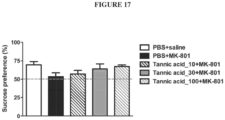
- tannic acids showed rescue and protective effects on mice treated with MK801, an antagonist of the N-methyl-D-aspartate receptor (the NMDA receptor).
- MK801 an antagonist of the N-methyl-D-aspartate receptor
- NMDA receptor is a glutamate receptor and ion channel protein expressed on nerve cells and plays an important role in controlling synaptic plasticity, repair, neurodevelopment, learning and memory function.
- the present disclosure provides tannic acid-containing compositions for use in treating CNS disorders and methods for preparing a tannic acid composition.
- compositions for example, pharmaceutical compositions, health food product such as nutraceutical compositions, and medical food that comprise one or more tannic acids and a carrier, e.g., a pharmaceutically acceptable carrier and/or an edible carrier.
- a carrier e.g., a pharmaceutically acceptable carrier and/or an edible carrier.
- Such carriers may confer various benefits to the tannic acids in the composition, for example, improving in vitro and/or in vivo stability of the tannic acids, enhancing bioavailability of the tannic acids, increasing bioactivity of the tannic acids, and/or reducing side effects.
- Suitable carriers include, but are not limited to, diluents, fillers, salts, buffers, stabilizers, solubilizers, buffering agents, preservatives, or a combination thereof.
- the carrier may comprise benzoate such as sodium benzoate.
- compositions described herein comprise one or more tannic acids or pharmaceutically acceptable salts thereof.
- pharmaceutically-acceptable salts refers to the relatively non-toxic, inorganic or organic base addition salts of tannic acids. These salts can be prepared in situ in the administration vehicle or the dosage form manufacturing process, or by separately reacting the one or more tannic acids with a suitable organic or inorganic base, and isolating the salt thus formed during subsequent purification.
- Suitable inorganic bases include, but are not limited to, sodium hydroxide, barium hydroxide, iron (ii) hydroxide, iron(III) hydroxide, magnesium hydroxide, calcium hydroxide, aluminium hydroxide, ammonium hydroxide, potassium hydroxide, caesium hydroxide, or lithium hydroxide.
- Suitable organic bases include, but are not limited to, pyridine, methyl amine, imidazole, benzimidazole, histidine, phosphazene bases, or a hydroxide of an organic cation such as quaternary ammonium hydroxide and phosphonium hydroxide. See, for example, Berge et al. (1977) J. Pharm. Sci. 66:1-19 .
- the tannic acids contained in the compositions disclosed herein are a mixture of tannic acids having various numbers of galloyl moieties, e.g ., 2-12, 4-12, 4-10, 5-10, 5-12, 6-12, or 8-12, or pharmaceutically acceptable salts thereof.
- the mixture of tannic acids contains tannic acids having at least 4 galloyl moieties ( e . g ., 4-12, 4-10, 4-9, or 4-7 galloyl moieties) or pharmaceutically acceptable salts thereof.
- the tannic acids in the composition may be substantially free of tannic acids having 3 or less galloyl moieties.
- substantially free of tannic acids having 3 or less galloyl moieties means that the total amount of such tannic acids in the composition is no more than 10% by weight. In some examples, the total amount of tannic acids having 3 or less galloyl moieties in the compositions described herein may be less than 8%, 5%, 2%, 1%, or less. In some examples, the composition is completely free of any tannic acid having 3 or less galloyl moieties.
- compositions described herein may contain no more than 20% (e.g ., no more than 18%, 15%, 12%, 10%, 5%, or less) tannic acids with 1-5 galloyl moieties.
- the composition may contain no less than 50% (e.g ., 60%, 70%, 75%, 80%, 85%, 90%, or more) of tannic acids with 6-12 galloyl moieties or with 8-12 galloyl moieties.
- the composition contains no more than 18% of tannic acid having 1-5 galloyl moieties and no less than 60% tannic acids having 6-12 galloyl moieties.
- the composition contains no more than 15% of tannic acids with 1-5 galloyl moieties and no less than 70% of tannic acids with 6-12 galloyl moieties. In yet another example, the composition contains no more than 12% of tannic acids with 1-5 galloyl moieties and no less than 80% of tannic acids with 6-12 galloyl moieties. Alternatively, the composition contains no more than 10% of tannic acids having with 1-5 galloyl moieties and no less than 90% of tannic acids with 6-12 galloyl moieties.
- the tannic acid or tannic acid mixture for use in making the compositions disclosed herein may be prepared by conventional methods.
- a mixture of tannic acids may be extracted or isolated from at least a suitable plant source, including but not limited to Rhus chinensis, Rhus javanica, Rhus semialata, Rhus coriaria, Rhus potaninii, Rhus punjabensis var. sinica (Diels) Rehder & E.H.
- Wilson Camellia sinensis , Berry , Bixa orellana , Vitis vinifera , Punica granatum , Quercus infectoria , Quercus cerris , Acacia mearnsii , Pseudotsuga menziesii , Caesalpinia spinosa , Fagus hayata Palib. ex Hayata, or Machilus thunbergii Sieb. & Zucc..
- the tannic acid or tannic acid mixture contained in the composition herein are extracted from Rhus chinensis , Rhus javanica , Rhus semialata , Rhus coriaria , Rhus potaninii , or Rhus punjabensis var. sinica (Diels) Rehder & E.H. Wilson.
- the plant source described herein may require a nesting insect including but not limited to Andricus kollari , Andricus fecundatrix , Andricus quercuscalicis , Andricus quercuscalicis , Biorhiza pallida , Neuroterus quercusbaccarum , Neuroterus albipes , Neuroterus numismalis , Cynips quercusfolii , Melaphis chinensis (Bell), Melaphis peitan Tsai et Tang, Nurudea sinica Tsai et Tang, Nurudea shiraii Matsumura, Nurudea rosea Matsumura, Meitanaphis elongallis Tsai et Tang, Macrorhinarium ensigallis Tsai et Tang, Macrorhinarium ovagallis Tsai et Tang, Floraphis meitanensis Tsa
- the tannic acid or tannic acid mixture is extracted from the gallnuts including but not limited to Chinese belly-shaped gallnuts, horned gallnuts, hard ensiform gallnuts, egg-hard ensiform gallnuts, and inflorescence gallnuts of at least a plant source and requiring nesting insect described herein.
- the tannic acids contained in the compositions described herein are a substantially homogeneous population.
- a tannic acid population may contain a tannic acid having a defined number of galloyl moieties, for example, any number between 3 and 12 (including 3 and 12), or a pharmaceutically acceptable salt thereof.
- substantially homogenous means that the tannic acid having the defined number of galloyl moieties constitutes at least 85% by weight (e.g., 90%, 95%, 97%, 98%, 99%, or above) of the total tannic acid content in the composition.
- the substantially homogenous tannic acid population contains tannic acids having 4, 5, 6, 7, 8, 9, 10, 11 or 12 galloyl moieties.
- Such substantially homogeneous tannic acid populations may be isolated from a mixture of tannic acids having varied numbers of gallolyl moieties (e.g., those described herein) via a conventional method, for example, chromatography.
- the tannic acid extract may be subjected to one or more purification procedures, for example, gel filtration, fractionation, partition, re-crystallization, and chromatography (e.g ., HPLC) or a combination thereof. See, e.g ., Examples below.
- the tannic acid or tannic acid mixture may be prepared by chemical synthesis following routine methodology.
- a tannic acid composition as described herein can be prepared as follows.
- Gallnuts from a suitable plant source e.g ., those described herein, can be obtained via routine methods.
- the gallnuts can be grinded to form gallnut powers.
- the gallnut power can be passed through a sieve having a suitable size (e.g ., 20-mesh, 30-mesh, 40-mesh, 50-mesh, or 60-mesh) to form fine gallnut powers.
- solvent refers to a liquid capable of dissolving one or more solutes.
- a solvent may comprise a pure population of a substance that dissolves a solute of interest.
- a solvent as used herein may be a mixture of multiple substances for dissolving the solute.
- a suitable solvent for extracting tannic acids comprise acetone, acetonitrile, methyl ethyl ketone, ethyl acetate, ethanol, isopropanol, tetrahydrofuran, 1,4-dioxane, pentane, hexane, heptane, or a combination thereof.
- the gallnut powers can be placed into a suitable volume of the solvent.
- the mixture thus formed can be stirred at a suitable temperature (e.g ., room temperature) for a suitable period ( e.g ., 6-18 hours, 6-12 hours, 12-18 hours, 18-24 hours).
- the resultant solution can then be filtered and concentrated by routine practice ( e.g ., by vacuum evaporation).
- the concentrated composition, containing tannic acids is then mixed with charcoal, CaSO 4 , MgSO 4 , or a combination thereof to remove undesired substances (e.g ., substances that can be absorbed to the charcoal or precipitated by CaSO 4 and/or MgSO 4 ).
- any of the tannic acid-containing compositions obtained from preceding steps can be mixed with charcoal first for a suitable period of time (e.g ., stirred at room temperature for 1-24 hours).
- CaSO 4 and/or MgSO 4 can then be added to the mixture, which can be stirred under a suitable temperature (e.g ., room temperature) for a suitable period ( e.g., 30 minutes to 6 hours).
- the mixture can then be filtered through, e.g., a bed of Celite, washed with a suitable solvent (e.g ., acetone, acetonitrile, methyl ethyl ketone, ethyl acetate, ethanol, or a combination thereof), and concentrated by a routine method to produce a tannic acid composition.
- a suitable solvent e.g ., acetone, acetonitrile, methyl ethyl ketone, ethyl acetate, ethanol, or a combination thereof
- any of the tannic acid-containing compositions obtained from preceding steps can be mixed with charcoal first for a suitable period of time (e . g ., stirred at room temperature for 1-24 hours, for example, 6-12 hours or 12-18 hours). The charcoal can then be removed from the mixture to form a solution.
- CaSO 4 and/or MgSO 4 can then added to the solution, which can be stirred under a suitable temperature (e.g ., room temperature) for a suitable period ( e.g ., 30 minutes to 6 hours, for example, 30 minutes to 2 hours or to 1 hour).
- the mixture can then be filtered through, e.g ., a bed of Celite, washed with a suitable solvent (e.g ., acetone, acetonitrile, methyl ethyl ketone, ethyl acetate, ethanol, or a combination thereof), and concentrated by a routine method to produce a tannic acid composition.
- a suitable solvent e.g ., acetone, acetonitrile, methyl ethyl ketone, ethyl acetate, ethanol, or a combination thereof
- a method for preparing the tannic acid composition as described herein further comprises a step of reducing or removing tannic acids having 2-5 galloyl moieties (2-5G), and may comprise a step of enriching tannic acids having 6-12 galloyl moieties (6-12G).
- a crude tannic acid composition is mixed with a suitable solvent to form a mixture, which can be incubated (e.g ., stirred) for a suitable period ( e.g. , 6-18 hours) under a suitable temperature (e.g ., room temperature) to allow for formation of two organic layers. Tannic acids having less than 5G would be dissolved in the upper layer. Tannic acids having greater than 5G would stay in the oiler layer (lower layer) as solid substances. The oiler layer, enriched with tannic acids having large numbers of galloyl moieties, can be collected. If needed, the oiler layer can be concentrated and the solids thus obtained can be dissolved in a suitable solvent.
- Suitable solvents for removing tannic acids having less than 5G include a mixture of any one of the group (i) solvent and any one of the group (ii) solvent listed below:
- a tannic acid-containing composition can be first dissolved in a suitable solvent such as acetone, acetonitrile, methyl ethyl ketone, or ethyl acetate.
- a suitable solvent such as acetone, acetonitrile, methyl ethyl ketone, or ethyl acetate.
- CH 2 Cl 2 or dichloroethane can be added to the solution slowly dropwise to allow for precipitation of the desired tannic acids.
- the solids can then be collected by routine practice ( e.g ., filtration and/or drying) to produce an enriched tannic acid composition.
- the one or more tannic acids described herein can be mixed with a pharmaceutically acceptable carrier (excipient) to form a pharmaceutical composition, which can be used for treating any of the target diseases as described herein.
- a pharmaceutically acceptable carrier excipient
- the tannic acid population in the composition is substantially free of condensed tannins and/or phlorotannins.
- "Acceptable" means that the carrier must be compatible with the active ingredient of the composition (and preferably, capable of stabilizing the active ingredient) and not deleterious to the subject to be treated.
- compositions including buffers, which are well known in the art. See, e.g ., Remington: The Science and Practice of Pharmacy 20th Ed. (2000) Lippincott Williams and Wilkins, Ed. K. E. Hoover .
- Pharmaceutically acceptable carriers include diluents, fillers, salts, buffers, stabilizers, solubilizers and other material which are well-known in the art. Exemplary pharmaceutically acceptable carriers for tannic acids or salts thereof in particular are described in U.S. Patent No. 5,211,657 . Such preparations may routinely contain salt, buffering agents, preservatives, compatible carriers, and optionally other therapeutic agents. When used in medicine, the salts should be pharmaceutically acceptable, but non-pharmaceutically acceptable salts may conveniently be used to prepare pharmaceutically-acceptable salts thereof and are not excluded from the scope of the invention.
- Such pharmacologically and pharmaceutically-acceptable salts include, but are not limited to, those prepared from a suitable inorganic base, (e.g. , sodium hydroxide, barium hydroxide, iron (ii) hydroxide, iron(III) hydroxide, magnesium hydroxide, calcium hydroxide, aluminium hydroxide, ammonium hydroxide, potassium hydroxide, caesium hydroxide, or lithium hydroxide) or a suitable organic base (e.g. , pyridine, methyl amine, imidazole, benzimidazole, histidine, phosphazene bases, or a hydroxide of an organic cation such as quaternary ammonium hydroxide and phosphonium hydroxide).
- pharmaceutically-acceptable salts can be prepared as alkaline metal or alkaline earth salts, such as lithium, sodium, potassium or calcium salts.
- tannic acid-containing pharmaceutical compositions as described herein can comprise pharmaceutically acceptable carriers, excipients, or stabilizers in the form of lyophilized formulations or aqueous solutions.
- Remington The Science and Practice of Pharmacy 20th Ed. (2000) Lippincott Williams and Wilkins, Ed. K. E. Hoover .
- Acceptable carriers, excipients, or stabilizers are nontoxic to recipients at the dosages and concentrations used, and may comprise buffers such as phosphate, citrate, and other organic acids; antioxidants including ascorbic acid and methionine; preservatives (such as octadecyldimethylbenzyl ammonium chloride; hexamethonium chloride; benzalkonium chloride, benzethonium chloride; phenol, butyl or benzyl alcohol; alkyl parabens such as methyl or propyl paraben; catechol; resorcinol; cyclohexanol; 3-pentanol; benzoates, sorbate and m-cresol); low molecular weight (less than about 10 residues) polypeptides; proteins, such as serum albumin, gelatin, or immunoglobulins; hydrophilic polymers such as polyvinylpyrrolidone; amino acids such as glycine, glutamine, aspara
- sustained-release preparations include semipermeable matrices of solid hydrophobic polymers containing tannic acids, which matrices are in the form of shaped articles, e.g., films, or microcapsules.
- sustained-release matrices include polyesters, hydrogels (for example, poly(2-hydroxyethylmethacrylate), or poly(vinylalcohol)), polylactides ( U.S. Pat. No.
- copolymers of L-glutamic acid and 7 ethyl-L-glutamate copolymers of L-glutamic acid and 7 ethyl-L-glutamate, non-degradable ethylene-vinyl acetate, degradable lactic acid-glycolic acid copolymers such as the LUPRON DEPOT TM (injectable microspheres composed of lactic acid-glycolic acid copolymer and leuprolide acetate), sucrose acetate isobutyrate, and poly-D-(-)-3-hydroxybutyric acid.
- LUPRON DEPOT TM injectable microspheres composed of lactic acid-glycolic acid copolymer and leuprolide acetate
- sucrose acetate isobutyrate sucrose acetate isobutyrate
- poly-D-(-)-3-hydroxybutyric acid poly-D-(-)-3-hydroxybutyric acid.
- compositions to be used for in vivo administration must be sterile. This is readily accomplished by, for example, filtration through sterile filtration membranes.
- Therapeutic compositions are generally placed into a container having a sterile access port, for example, an intravenous solution bag or vial having a stopper pierceable by a hypodermic injection needle.
- compositions described herein can be in unit dosage forms such as tablets, pills, capsules, powders, granules, solutions or suspensions, or suppositories, for oral, parenteral or rectal administration, or administration by inhalation or insufflation, or jntrathecal or intracerebral routes.
- the principal active ingredient can be mixed with a pharmaceutical carrier, e.g., conventional tableting ingredients such as corn starch, lactose, sucrose, sorbitol, talc, stearic acid, magnesium stearate, dicalcium phosphate or gums, and other pharmaceutical diluents, e.g., water, to form a solid preformulation composition containing a homogeneous mixture of a compound of the present invention, or a non-toxic pharmaceutically acceptable salt thereof.
- a pharmaceutical carrier e.g., conventional tableting ingredients such as corn starch, lactose, sucrose, sorbitol, talc, stearic acid, magnesium stearate, dicalcium phosphate or gums, and other pharmaceutical diluents, e.g., water, to form a solid preformulation composition containing a homogeneous mixture of a compound of the present invention, or a non-toxic pharmaceutically acceptable salt thereof.
- preformulation compositions as homogeneous, it is meant that the active ingredient is dispersed evenly throughout the composition so that the composition may be readily subdivided into equally effective unit dosage forms such as tablets, pills and capsules.
- This solid preformulation composition is then subdivided into unit dosage forms of the type described above containing from 0.1 to about 500 mg of the active ingredient of the present invention.
- the tablets or pills of the novel composition can be coated or otherwise compounded to provide a dosage form affording the advantage of prolonged action.
- the tablet or pill can comprise an inner dosage and an outer dosage component, the latter being in the form of an envelope over the former.
- the two components can be separated by an enteric layer that serves to resist disintegration in the stomach and permits the inner component to pass intact into the duodenum or to be delayed in release.
- enteric layers or coatings such materials including a number of polymeric acids and mixtures of polymeric acids with such materials as shellac, cetyl alcohol, and cellulose acetate.
- Suitable surface-active agents include, in particular, non-ionic agents, such as polyoxyethylenesorbitans (e.g ., Tween TM 20, 40, 60, 80 or 85) and other sorbitans (e.g ., Span TM 20, 40, 60, 80 or 85).
- Compositions with a surface-active agent will conveniently comprise between 0.05 and 5% surface-active agent, and can be between 0.1 and 2.5%. It will be appreciated that other ingredients may be added, for example mannitol or other pharmaceutically acceptable vehicles, if necessary.
- Suitable emulsions may be prepared using commercially available fat emulsions, such as Intralipid TM , Liposyn TM , Infonutrol TM , Lipofundin TM and Lipiphysan TM .
- the active ingredient may be either dissolved in a pre-mixed emulsion composition or alternatively it may be dissolved in an oil (e.g., soybean oil, safflower oil, cottonseed oil, sesame oil, corn oil or almond oil) and an emulsion formed upon mixing with a phospholipid (e.g., egg phospholipids, soybean phospholipids or soybean lecithin) and water.
- a phospholipid e.g., egg phospholipids, soybean phospholipids or soybean lecithin
- Suitable emulsions will typically contain up to 20% oil, for example, between 5 and 20%.
- compositions for inhalation or insufflation include solutions and suspensions in pharmaceutically acceptable, aqueous or organic solvents, or mixtures thereof, and powders.
- the liquid or solid compositions may contain suitable pharmaceutically acceptable excipients as set out above.
- the compositions are administered by the oral or nasal respiratory route for local or systemic effect.
- compositions in preferably sterile pharmaceutically acceptable solvents may be nebulized by use of gases. Nebulized solutions may be breathed directly from the nebulizing device or the nebulizing device may be attached to a face mask, tent or intermittent positive pressure breathing machine. Solution, suspension or powder compositions may be administered, preferably orally or nasally, from devices which deliver the formulation in an appropriate manner.
- any of the tannic acid-containing pharmaceutical compositions may further comprise a second therapeutic agent based on the intended therapeutic uses of the composition.
- the second therapeutic agent is an anti-obesity agent, including, but not limited to, orlistat, lorcaserin, sibutramine, rimonabant, metformin, exenatide, pralintide, phentermine, fenfluramine, dexfenfluramine topiramate, dinitrophenol, bupropion, and zonisamide.
- an anti-obesity agent including, but not limited to, orlistat, lorcaserin, sibutramine, rimonabant, metformin, exenatide, pralintide, phentermine, fenfluramine, dexfenfluramine topiramate, dinitrophenol, bupropion, and zonisamide.
- the second therapeutic agent is an agent for treating a CNS disease/disorder.
- a therapeutic agent may be an antipsychotic drug.
- antipsychotic drugs include, but are not limited to, butyrophenone (e . g ., haloperidol (HALDOL TM ), phenothiazine ( e .
- chlorpromazine THORAZINE TM
- fluphenazine PROLIXIN TM
- perphenazine TRILAFON TM
- prochlorperazine COMPAZINE TM
- thioridazine MELLARIL TM
- trifluoperazine STLAZINE TM
- mesoridazine promazine, triflupromazine (VESPRIN TM ), levomepromazine (NOZINAN TM ), promethazine (PHENERGAN TM ), thioxanthene ( e .
- chlorprothixene flupenthixol
- flupenthixol (DEPIXOL TM , FLUANXOL TM ), thiothixene (NAVANE TM ), zuclopenthixol (CLOPIXOL TM , ACUPHASE TM ), clozapine (CLOZARIL TM ), olanzapine (ZYPREXA TM ), risperidone (RISPERDAL TM , RISPERDAL CONSTA TM ), quetiapine (SEROQUEL TM ), ziprasidone (GEODON TM ), amisulpride (SOLIAN TM ), asenapine, paliperidone (INVEGA ® ), aripiprazole (ABILITY TM ), dopamine partial agonists (BIFEPRUNOX TM , NORCLOZAPINE TM (ACP-104)), lamotrigine (LAMICTAL TM ), t
- the second therapeutic agent can be an antidepressant and/or mood stabilizer.
- the antidepressant comprises a monoamine oxidase inhibitor (MAOI), a tricyclic antidepressant (TCA), a tetracyclic antidepressant (TeCA), a selective serotonin reuptake inhibitor (SSRI), a noradrenergic and specific serotonergic antidepressant (NASSA), a norepinephrine (noradrenaline) reuptake inhibitor, a norepinephrine-dopamine reuptake inhibitor, and/or a serotonin-norepinephrine reuptake inhibitor (SNRI).
- MAOI monoamine oxidase inhibitor
- TCA tricyclic antidepressant
- TeCA tetracyclic antidepressant
- SSRI selective serotonin reuptake inhibitor
- NASSA noradrenaline reuptake inhibitor
- SNRI seroton
- Exemplary SSRIs include fluoxetine (PROZAC TM ), paroxetine (PAXIL TM , SEROXAT TM ), escitalopram (LEXAPRO TM , ESIPRAM TM ), citalopram (CELEXA TM ), sertraline (ZOLOFT TM ), fluvoxamine (LUVOX TM )).
- Exemplary SNRIs include venlafaxine (EFFEXOR TM ), milnacipram and duloxetine (CYMBALTA TM ).
- Additional antidepressant include a noradrenergic and specific serotonergic antidepressant (NASSA) (e.g., mirtazapine (AVANZA TM , ZISPIN TM , REMERON TM ), or mianserin, a norepinephrine (noradrenaline) reuptake inhibitor (NRI) (e.g., reboxetine (EDRONAX TM )), a norepinephrine-dopamine reuptake inhibitors (e.g., bupropion (WELLBUTRIN TM , ZYBAN TM )), amitriptyline, nortriptiline, protriptyline, desipramine, imipramine, trimipramine, amoxapine, bupropion, bupropion SR, clomipramine, doxepin, isocarboxazid, venlafaxine XR, tranylcypromine, trazodone
- the second therapeutic agent can be an agent for the treatment of ADD and/or ADHD.
- Suitable ADHD medications include, but are not limited to amphetamine, modafinil, desoxyn, methamphetamine, cocaine, arecoline, dexmethylphenidate (focalin, focalin XR), dextroamphetamine (dexedrine, dexedrine spansules, dextroamphetamine ER, dextrostat), methylphenidate (concerta, daytrana, metadate CD, metadate ER, methylin, methylin ER, ritalin, ritalin-LA, ritalin-SR), lisdexamfetamine dimesylate (Vyvanse), mixed salts amphetamine (Adderall, Adderall XR), atomoxetine (Strattera), clonidine hydrochloride (Catapres), guanfacine hydrochloride (Tenex), are
- the second therapeutic agent may be an agent for use in treating a cognitive disorder, and/or a condition characterized by neurodegeneration (e.g., Alzheimer's disease, or Parkinson's disease).
- Such therapeutic agents include, but are not limited to tacrine, rivastigmine, memantine (AXURA TM , AKATINOL TM , NAMENDA TM , EBIXA TM , ABIXA TM ), donepezil (Aricept TM ), physostigmine, nicotine, arecoline, huperzine alpha, selegiline, rilutek TM (riluzole), vitamine c, vitamine e, carotenoids, ginkgo biloba, and the like.
- the tannic acid-containing compositions described herein can be a health food product, which can be any kinds of liquid and solid/semi-solid materials that are used for nourishing humans and animals, for improving basic behavioral functioning, hyperactivity, anxiety, depression, suicidal ideation and/or behavior, sensorimotor gating, pain threshold, memory and/or cognitive functioning, or for facilitating treatment of any of the target diseases noted herein (e.g ., a CNS disorder, including those described herein).
- a CNS disorder e.g ., including those described herein.
- the health food product may be a food product (e.g ., tea-based beverages, juice, soft drinks, coffee, milk, jelly, cookies, cereals, chocolates, snack bars, herbal extracts, dairy products (e.g., ice cream, and yogurt)), a food/dietary supplement, or a nutraceutical formulation.
- a food product e.g ., tea-based beverages, juice, soft drinks, coffee, milk, jelly, cookies, cereals, chocolates, snack bars, herbal extracts, dairy products (e.g., ice cream, and yogurt)
- a food/dietary supplement e.g., ice cream, and yogurt
- the health food product described herein containing one or more tannic acids (e.g., the tannic acid mixture described herein or the substantially homogenous population of a tannic acid having a defined number of galloyl moieties as also described herein), may comprise one or more edible carriers, which confer one or more of the benefits to the tannic acids in the product as described herein.
- edible carriers include starch, cyclodextrin, maltodextrin, methylcellulose, carbonmethoxy cellulose, xanthan gum, and aqueous solutions thereof.
- the healthy food products described herein may further include neuroprotective foods, such as fish oil, flax seed oil, and/or benzoate.
- the healthy food product is a nutraceutical composition, which refers to compositions containing components from food sources and conferring extra health benefits in addition to the basic nutritional value found in foods.
- a nutraceutical composition as described herein comprises the tannic acid content described herein (e.g ., the tannic acid mixture or the substantially homogenous tannic acid population as described herein) and additional ingredients and supplements that promote good health and/or enhance stability and bioactivity of the tannic acids.
- nutraceutical compositions may be fast or/and short-term or may help achieve long-term health objectives as those described herein, e.g ., improving basic behavioral functioning, hyperactivity, anxiety, depression, sensorimotor gating, pain threshold, memory and/or cognitive functioning in, e.g., human subjects who have or are at risk for diseases associated with DAAO such as CNS disorders.
- the nutraceutical compositions may be contained in an edible material, for example, as a dietary supplement or a pharmaceutical formulation. As a dietary supplement, additional nutrients, such as vitamins, minerals or amino acids may be included.
- the composition can also be a drink or a food product, e.g ., tea, soft drink, juice, milk, coffee, cookie, cereal, chocolate, and snack bar.
- the composition can be sweetened by adding a sweetener such as sorbitol, maltitol, hydrogenated glucose syrup and hydrogenated starch hydrolyzate, high fructose corn syrup, cane sugar, beet sugar, pectin, or sucralose.
- a sweetener such as sorbitol, maltitol, hydrogenated glucose syrup and hydrogenated starch hydrolyzate, high fructose corn syrup, cane sugar, beet sugar, pectin, or sucralose.
- the nutraceutical composition disclosed herein can be in the form of a solution.
- the nutraceutical formulation can be provided in a medium, such as a buffer, a solvent, a diluent, an inert carrier, an oil, or a creme.
- the formulation is present in an aqueous solution that optionally contains a non-aqueous co-solvent, such as an alcohol.
- the nutraceutical composition can also be in the form of powder, paste, jelly, capsule, or tablet. Lactose and corn starch are commonly used as diluents for capsules and as carriers for tablets. Lubricating agents, such as magnesium stearate, are typically added to form tablets.
- the health food products may be formulated for a suitable administration route, for example, oral administration.
- the composition can take the form of, for example, tablets or capsules, prepared by conventional means with acceptable excipients such as binding agents (for example, pregelatinised maize starch, polyvinylpyrrolidone or hydroxypropyl methylcellulose); fillers (for example, lactose, microcrystalline cellulose or calcium hydrogen phosphate); lubricants (for example, magnesium stearate, talc or silica); disintegrants (for example, potato starch or sodium starch glycolate); or wetting agents (for example, sodium lauryl sulphate).
- binding agents for example, pregelatinised maize starch, polyvinylpyrrolidone or hydroxypropyl methylcellulose
- fillers for example, lactose, microcrystalline cellulose or calcium hydrogen phosphate
- lubricants for example, magnesium stearate, talc or silica
- disintegrants for example, potato starch or sodium
- the health food product can be in a liquid form and the one or more edible carriers can be a solvent or dispersion medium comprising but not limited to, ethanol, polyol (e.g. , glycerol, propylene glycol, liquid polyethylene glycol), lipids (e.g ., triglycerides, vegetable oils, liposomes) or combinations thereof.
- the proper fluidity can be maintained, for example, by the use of a coating, such as lecithin; by the maintenance of the required particle size by dispersion in carriers such as, for example liquid polyol or lipids; by the use of surfactants such as, for example hydroxypropylcellulose; or combinations thereof.
- an isotonic agent such as, for example, sugars, sodium chloride or combinations thereof.
- Liquid preparations for oral administration can take the form of, for example, solutions, syrups or suspensions, or they can be presented as a dry product for constitution with water or other suitable vehicle before use.
- the liquid preparations can be formulated for administration with fruit juice.
- Such liquid preparations can be prepared by conventional means with pharmaceutically acceptable additives such as suspending agents (for example, sorbitol syrup, cellulose derivatives or hydrogenated edible fats); emulsifying agents (for example, lecithin or acacia); non-aqueous vehicles (for example, almond oil, oily esters, ethyl alcohol or fractionated vegetable oils); and preservatives (for example, methyl or propyl-p-hydroxybenzoates, benzoate or sorbate).
- suspending agents for example, sorbitol syrup, cellulose derivatives or hydrogenated edible fats
- emulsifying agents for example, lecithin or acacia
- non-aqueous vehicles for example, almond oil, oily esters, e
- the health food products described herein may further comprise one or more second therapeutic agents, including those described herein.
- the present disclosure also provides compositions of medical food products, use in improving basic behavioral functioning, hyperactivity, anxiety, depression, sensorimotor gating, pain threshold, memory and/or cognitive functioning, and/or for treating a target disease as described herein (e.g ., a CNS disorder).
- a medical food product is a food product formulated to be consumed or administered enterally. Such a food product is usually used under the supervision of a physician for the specific dietary management of a target disease, such as those described herein.
- such a medical food composition is specially formulated and processed (as opposed to a naturally occurring foodstuff used in a natural state) for a patient in need of the treatment (e.g ., human patients who suffer from illness or who requires use of the product as a major active agent for alleviating a disease or condition via specific dietary management.)
- a medical food composition described herein is not one of those that would be simply recommended by a physician as part of an overall diet to manage the symptoms or reduce the risk of a disease or condition.
- any of the medical food compositions described herein comprising one or more tannic acid molecules or salts thereof and at least one carrier (e.g ., those described herein), can be in the form of a liquid solution; powder, bar, wafer, a suspension in an appropriate liquid or in a suitable emulsion, as detailed below.
- the at least one carrier which can be either naturally-occurring or synthetic (non-naturally occurring), would confer one or more benefits to the tannic acid content in the composition, for example, stability, bioavailability, and/or bioactivity. Any of the carriers described herein may be used for making the medical food composition.
- the medical food composition may further comprise one or more additional ingredients selected from the group including, but not limited to natural flavors, artificial flavors, major trace and ultra-trace minerals, minerals, vitamins, oats, nuts, spices, milk, egg, salt, flour, lecithin, xanthan gum and/or sweetening agents.
- the medical food composition may be placed in a suitable container, which may further comprise at least an additional therapeutic agent such as those described herein.
- compositions described herein may be used to improve basic behavioral functioning, hyperactivity, anxiety, depression, suicidal ideation and/or behavior, sensorimotor gating, pain threshold, memory, and/or cognitive functioning in a subject in need of the treatment.
- Such compositions may also be used to treating diseases or disorders associated with DAAO such as a central nervous disorder (e.g., those described herein).
- treating refers to the application or administration of a composition including one or more active agents to a subject, who is in need of the treatment, for example, having a target disease or disorder, a symptom of the disease/disorder, or a predisposition toward the disease/disorder, with the purpose to cure, heal, alleviate, relieve, alter, remedy, ameliorate, improve, or affect the disorder, the symptom of the disease, or the predisposition toward the disease or disorder.
- Alleviating a target disease/disorder includes delaying the development or progression of the disease, or reducing disease severity. Alleviating the disease does not necessarily require curative results.
- "delaying" the development of a target disease or disorder means to defer, hinder, slow, retard, stabilize, and/or postpone progression of the disease. This delay can be of varying lengths of time, depending on the history of the disease and/or individuals being treated.
- a method that "delays" or alleviates the development of a disease, or delays the onset of the disease is a method that reduces probability of developing one or more symptoms of the disease in a given time frame and/or reduces extent of the symptoms in a given time frame, when compared to not using the method. Such comparisons are typically based on clinical studies, using a number of subjects sufficient to give a statistically significant result.
- “Development” or “progression” of a disease means initial manifestations and/or ensuing progression of the disease. Development of the disease can be detectable and assessed using standard clinical techniques as well known in the art. However, development also refers to progression that may be undetectable. For purpose of this disclosure, development or progression refers to the biological course of the symptoms. “Development” includes occurrence, recurrence, and onset. As used herein "onset” or “occurrence” of a target disease or disorder includes initial onset and/or recurrence.
- an effective amount of a tannic acid-containing composition may be administered to a subject in need of the treatment via a suitable route.
- subject refers to a mammal being assessed for treatment and/or being treated.
- Subjects may be human, but also include other mammals, particularly those mammals useful as laboratory models for human disease, e.g. mouse, rat, rabbit, dog, etc.
- a human subject who needs the treatment may be a human patient having, at risk for, or suspected of having a target disease/disorder, such as a CNS disorder.
- a subject having a target disease or disorder can be identified by routine medical examination, e.g., laboratory tests, organ functional tests, and/or behavior tests.
- a subject suspected of having any of such target disease/disorder might show one or more symptoms of the disease/disorder.
- a subject at risk for the disease/disorder can be a subject having one or more of the risk factors for that disease/disorder, for example, a genetic factor.
- the human subject is a child who has, is suspected of having, or is at risk for a CNS disorder associated with children, for example, attention deficit/hyperactivity disorder (ADHD), autism, Asperger's disorder, obsessive compulsive disorder, depression, psychosis, chronic pain, and learning disorder.
- ADHD attention deficit/hyperactivity disorder
- autism Asperger's disorder
- obsessive compulsive disorder depression
- psychosis chronic pain
- chronic pain and learning disorder.
- CNS disorders that can be treated by the methods and compositions described herein include attention deficit/hyperactivity disorder (ADHD), schizophrenia, pain, depression, suicidal ideation and/or behavior, bipolar disorder, tic disorder, post-traumatic stress disorder, anxiety, social anxiety disorder, panic disorder, autism, Asperger's disorder, obsessive-compulsive disorder, learning disorder, Tourette's syndrome, mild cognitive impairment, dementia, vascular dementia, a neurodegenerative disorder (e.g., Alzheimer's disorder or Parkinson's disease, frontotemporal dementia, Huntington's disease), nocturnal enuresis, blepharospasm, non-epileptic seizure and cerebral malaria.
- ADHD attention deficit/hyperactivity disorder
- schizophrenia pain, depression, suicidal ideation and/or behavior
- bipolar disorder tic disorder
- post-traumatic stress disorder anxiety
- social anxiety disorder panic disorder
- autism Asperger's disorder
- obsessive-compulsive disorder learning disorder
- Tourette's syndrome mild
- an effective amount refers to the amount of each active agent (e.g., the tannic acid mixture or the substantially homogenous population of tannic acids as described herein) required to confer therapeutic effect on the subject, either alone or in combination with one or more other active agents, such as one or more of the second therapeutic agents described herein.
- the therapeutic effect is to inhibit the activity of DAAO (e.g. , by at least 20%, 30%, 40%, 50%, 60%, 70%, 80%, 90%, 95%, or higher) in the subject.
- the therapeutic effect is improvement of basic behavioral functioning, hyperactivity, anxiety, depression, sensorimotor gating, pain threshold, memory, and/or improvement of cognitive functioning.
- the therapeutic effect is alleviating one or more symptoms associated with any of the CNS disorders described herein.
- Empirical considerations such as the half-life, generally will contribute to the determination of the dosage.
- Frequency of administration may be determined and adjusted over the course of therapy, and is generally, but not necessarily, based on treatment and/or suppression and/or amelioration and/or delay of a target disease/disorder.
- sustained continuous release formulations of a composition as described herein may be appropriate.
- Various formulations and devices for achieving sustained release are known in the art.
- an exemplary daily dosage might range from about any of 0.1 ⁇ g/kg to 3 ⁇ g/kg to 30 ⁇ g/kg to 300 ⁇ g/kg to 3 mg/kg, to 30 mg/kg to 100 mg/kg or more, depending on the factors mentioned above.
- the treatment is sustained until a desired suppression of symptoms occurs or until sufficient therapeutic levels are achieved to alleviate a target disease or disorder, or a symptom thereof.
- An exemplary dosing regimen comprises administering one or more initial doses at a suitable interval over a suitable period. If necessary, multiple maintenance doses can be given to the subject at a suitable interval over a suitable period of time.
- dosage regimens may be useful, depending on the pattern of pharmacokinetic decay that the practitioner wishes to achieve. For example, dosing from one to four times a day or a week is contemplated. In some embodiments, dosing ranging from about 3 ⁇ g/mg to about 2 mg/kg (such as about 3 ⁇ g/mg, about 10 ⁇ g/mg, about 30 ⁇ g/mg, about 100 ⁇ g/mg, about 300 ⁇ g/mg, about 1 mg/kg, and about 2 mg/kg) may be used.
- dosing frequency can be three times a day, twice a day, once a day, once every other day, once every week, once every 2 weeks, once every 4 weeks, once every 2 months, or once every 3 months.
- the dosing regimen can vary over time.
- doses ranging from about 0.3 to 50.00 mg/kg/day (e.g. , 0.5 to 40 mg/kg/day, 1-30 mg/kg/day, 5-30 mg/kg/day, or 10-20 mg/kg/day) may be administered.
- the particular dosage regimen i.e. , dose, timing and repetition, will depend on the particular individual and that individual's medical history, as well as the properties of the individual agents (such as the half-life of the agent, and other considerations well known in the art).
- the appropriate dosage of a tannic acid-composition as described herein will depend on the specific tannic acid or tannic acid mixture, and/or other active ingredient employed, the type and severity of the disease/disorder, whether the composition is administered for preventive or therapeutic purposes, previous therapy, the patient's clinical history and response to the DAAO inhibitor, and the discretion of the attending physician. Typically the clinician will administer a composition, until a dosage is reached that achieves the desired result.
- compositions e.g ., a pharmaceutical composition, a health food composition, a nutraceutical composition or a medical food composition
- This composition can also be administered via other conventional routes, e.g., administered orally, parenterally, by inhalation spray, topically, rectally, nasally, buccally, vaginally or via an implanted reservoir.
- parenteral includes subcutaneous, intracutaneous, intravenous, intramuscular, intraarticular, intraarterial, intrasynovial, intrasternal, intrathecal, intralesional, and intracranial injection or infusion techniques.
- it can be administered to the subject via injectable depot routes of administration such as using 1-week, half (or two week)-, 1-, 3-, or 6-month depot injectable or biodegradable materials and methods.
- the pharmaceutical composition is administered intraocularlly or intravitreally.
- Injectable compositions may contain various carriers such as vegetable oils, dimethylactamide, dimethyformamide, ethyl lactate, ethyl carbonate, isopropyl myristate, ethanol, and polyols (glycerol, propylene glycol, liquid polyethylene glycol, and the like).
- water-soluble antibodies can be administered by the drip method, whereby a pharmaceutical formulation containing tannic acids and a physiologically acceptable excipient is infused.
- Physiologically acceptable excipients may include, for example, 5% dextrose, 0.9% saline, Ringer's solution or other suitable excipients.
- Intramuscular preparations e . g ., a sterile formulation of a suitable soluble salt form of tannic acids, can be dissolved and administered in a pharmaceutical excipient such as Water-for-Injection, 0.9% saline, or 5% glucose solution.
- a tannic acid-containing composition is administered via a site-specific or targeted local delivery technique.
- site-specific or targeted local delivery techniques include various implantable depot sources of the tannic acid-containing compositions or local delivery catheters, such as infusion catheters, an indwelling catheter, or a needle catheter, synthetic grafts, adventitial wraps, shunts and stents or other implantable devices, site specific carriers, direct injection, or direct application. See, e.g ., PCT Publication No. WO 00/53211 and U.S. Pat. No. 5,981,568 .
- Treatment efficacy for a target disease/disorder can be assessed by methods well-known in the art.
- combination therapy embraces administration of these agents (e.g., a tannic acid-containing composition and an anti-CNS disorder agent) in a sequential manner, that is, wherein each therapeutic agent is administered at a different time, as well as administration of these therapeutic agents, or at least two of the agents, in a substantially simultaneous manner.
- Sequential or substantially simultaneous administration of each agent can be affected by any appropriate route including, but not limited to, oral routes, intravenous routes, intramuscular, subcutaneous routes, and direct absorption through mucous membrane tissues.
- the agents can be administered by the same route or by different routes.
- a first agent e.g ., a tannic acid-containing composition
- a second agent e.g ., an anti-CNS disorder agent
- the term “sequential” means, unless otherwise specified, characterized by a regular sequence or order, e.g ., if a dosage regimen includes the administration of a tannic acid-containing composition and an anti-CNS disorder agent, a sequential dosage regimen could include administration of the tannic acid-containing composition before, simultaneously, substantially simultaneously, or after administration of the anti-CNS disorder agent, but both agents will be administered in a regular sequence or order.
- the term “separate” means, unless otherwise specified, to keep apart one from the other.
- the term “simultaneously” means, unless otherwise specified, happening or done at the same time, i.e. , the agents of the invention are administered at the same time.
- substantially simultaneously means that the agents are administered within minutes of each other (e.g ., within 10 minutes of each other) and intends to embrace joint administration as well as consecutive administration, but if the administration is consecutive it is separated in time for only a short period (e.g ., the time it would take a medical practitioner to administer two compounds separately).
- concurrent administration and substantially simultaneous administration are used interchangeably.
- Sequential administration refers to temporally separated administration of the agents described herein.
- Combination therapy can also embrace the administration of the agents described herein (e.g ., a tannic acid-containing composition and an anti-CNS disorder agent) in further combination with other biologically active ingredients (e.g ., a different anti-CNS disorder agent) and non-drug therapies (e.g ., surgery).
- agents described herein e.g ., a tannic acid-containing composition and an anti-CNS disorder agent
- other biologically active ingredients e.g ., a different anti-CNS disorder agent
- non-drug therapies e.g ., surgery.
- any combination of a tannic acid-containing composition and a second therapeutic agent may be used in any sequence for treating a target disease.
- the combinations described herein may be selected on the basis of a number of factors, which include but are not limited to the effectiveness of inhibiting DAAO, improving basic behavioral functioning, hyperactivity, anxiety, depression, sensorimotor gating, pain threshold, memory or enhancing cognitive functioning, and/or alleviating at least one symptom associated with the target disease, or the effectiveness for mitigating the side effects of another agent of the combination.
- a combined therapy described herein may reduce any of the side effects associated with each individual members of the combination, for example, a side effect associated with the second therapeutic agent.
- DAAO D-amino acid oxidase
- the activity of DAAO was determined in vitro by measuring the inhibition of the catabolism of known substrate, D-proline.
- the cofactor FAD 40 fM was added to the DAAO stock solution first.
- potential inhibitors of tannic acid(s) were mixed with reaction mixture containing phosphate buffered saline (137 mM NaCl, 3 mM KCl, 10 mM Na 2 HPO 4 , 2 mM NaH 2 PO 4 , pH 7.4), horseradish peroxidase (5 U/ml), o-phenylendiamine (OPD, 0.03%), and 0.6 g human-(or porcine-) DAAO, and incubated for about 5 min.
- phosphate buffered saline 137 mM NaCl, 3 mM KCl, 10 mM Na 2 HPO 4 , 2 mM NaH 2 PO 4 , pH 7.4
- horseradish peroxidase 5 U/ml
- DAP 2,3-diaminophenazine
- tannic acids as a group showed a strong D-amino acid oxidase (DAAO) inhibitory activity with an IC 50 value of 5.47 ⁇ M.
- DAAO D-amino acid oxidase
- the DAAO inhibitory activities of subgroups of tannic acids were determined as follows. Tannic acid fractions having different numbers of galloyl moieties were separated by a reversed-phase column (LiChroprep ® RP-18) with a mobile phase of acetonitrile and distilled water in gradient elution. The DAAO inhibitory activity of each tannic acid fraction at 80 ⁇ M (Table 1) and 300 nM ( Figure 2 , Table 2) was analyzed by the method described above, using distilled water and 10% DMSO aqueous solution as blank controls and sodium benzoate as a positive control. Table 1.
- Table 1 shows the anti-DAAO activities of tannic acids with different numbers of galloyl moieties. Tannic acids with four or more 4 galloyl moieties showed much higher activity in inhibiting DAAO as compared with tannic acids with less than 4 galloyl moieties. All DAAO assays were done with 80 ⁇ M of tannic acids. Table 2. DAAO-inhibitory Activities of Individual Tannic Acids Sample (300 nM) Relative activity (%) SD Control 100.00 4.74 3G 99.25 5.01 4G 83.67 4.55 5G 60.41 3.62 6G 54.19 1.81 7G 44.60 1.39 8G 48.23 1.17 9G 27.92 1.36 10G 19.25 5.13
- Table 2 shows the anti-DAAO activities of tannic acids with different numbers of galloyl moieties at 300 nM. 3 galloyl moieties showed weak activity, while the higher numbers of galloyl moieties showed significantly higher inhibition of DAAO activities.
- Table 3 shows the IC50 ( ⁇ M) of anti-DAAO activities of tannic acids with different numbers of galloyl moieties.
- the IC 50 were determined for each tannic acid with different numbers of galloyl moieties, which indicating potent tannic acids with more than 3 galloyl moieties.
- the objective of this study was to verify the effects of multiple doses of tannic acids on basic metabolism, behavioral functioning, and cognitive behaviors.
- the body weight, spontaneous locomotion activity, anxiety-like behaviors, spatial learning and memory, depressive-like behaviors and sensorimotor gating function of each mouse were examined following the repeated injections or oral administrations of tannic acids. These activities are known to be mediated by the NMDA receptor.
- mice C57BL/6J male mice were group housed (3-5 mice per cage) with food and water available ad libitum in polysulfone ventilated cages (Alternative Design, AR, USA) in the animal rooms. The colony was maintained on a 12/12-h light/dark cycle at the temperature of 22 ⁇ 2 °C and all behavioral studies were performed during the dark cycle. All animals used in this study were adult mice (at least 2.5 months of age).
- Tannic acids were purchased from Sigma (Sigma-Aldrich, USA). The adult mice were randomly assigned to three groups: (1) control, (2) tannic acid (10 mg/kg), and (3) tannic acid (30 mg/kg), which were treated, respectively, by a vehicle control (PBS), tannic acid at 10 mg/kg, and tannic acid at 30 mg/kg. Two weeks prior to the behavioral tests, all mice were injected intraperitoneally (i.p.) with either the vehicle control or tannic acid every other day. The body weight of each mouse, which served as an index of its physical development and metabolism, was recorded on the day of injection.
- mice treated with either the vehicle control or the tannic acids as described above were tested sequentially by 5 tasks: (1) open field task for spontaneous locomotion test, (2) anxiety-like behaviors test by elevated plus maze, (3) spatial learning and memory test by Barnes maze, (4) depressive-like behaviors test by tail suspension, and (5) sensorimotor function test by prepulse inhibition. At least a 1-week interval was made between different tasks. In order to minimize carryover effects, the tasks were arranged in the sequence to ensure that the more stressful task did not occur prior to a less stressful one. The procedures are described in Current protocol in Neuroscience (Developmental Editor: Eric Prager, Online ISBN: 9780471142300, DOI: 10.1002/0471142301 ).
- the body weight of the tannic acid (10 mg/kg) group were increased at a level lower than that of the control group, while the body weight of the tannic acid (30 mg/kg) was much lighter than the controls. See Figure 4 .
- mice were placed in a PLEXIGLAS ® cage (37.5 cm ⁇ 21.5 cm ⁇ 18 cm) under 50-65 lux light intensity. Their spontaneous locomotor activities were measured for 60 minutes using the EthoVision video tracking system (Noldus Information Technology, the Netherlands). The travel distance of each mouse was measured as an index of locomotion activity. As shown in Figure 5 , tannic acids reduced the travel distances of the treated mice in a dose-dependent manner.
- mice were administered orally at 10 mg/kg, 30 mg/kg, 100 mg/kg, 300 mg/kg, and 600 mg/kg for a single dose and their locomotion activities were measured for 30 minutes, 60 minutes, 90 minutes, and 120 minutes. Tannic acids at all tested doses reduced the locomotion of the treated mice as compared with the mice treated with the vehicle control. The results are illustrated in Figure 6 .
- the maze was elevated 50 cm from the floor with two open arms (each 50 cm long ⁇ 10 cm wide), two closed arms plus 45 cm high walls without a roof (each 50 cm long ⁇ 10 cm wide), and a square shaped central platform (10 ⁇ 10 cm). Each mouse was placed in the central platform and faced toward one of the closed arms for observation under 50-65 lux light intensity for 5 minutes. The time spent on each part of the maze and travel distance on each part of maze were recorded by the EthoVision tracking system (Noldus Information Technology, the Netherlands).
- the aversive duration ratio of each group was shown in Figure 7 , Panel A.
- the tannic acid (30 mg/kg) group displayed marginal higher aversive duration ratios whereas the tannic acid (10 mg/kg) group did not.
- the aversive distance ratio of each group was shown in Figure 7 , Panel B.
- the tannic acid (30 mg/kg) group displayed significant higher aversive distance ratios as compared with the control group.
- the number of risk assessments of each group is displayed in Figure 7 Panel C. As compared to the control group, both tannic acid groups displayed significant lower risk assessments (all p ⁇ 0.05).
- mice were tested in the Barnes maze to examine their spatial learning and memory as described previously ( Barnes, J Comp Physiol Psychol, 93(1):74-104 [1979 ]).
- the testing apparatus was an elevated (50 cm above the floor) circular PLEXIGLAS ® plate (100 cm in diameter) with 20 holes (7 cm in diameter, 7 cm between holes) evenly spaced around the perimeter.
- the mice were trained on the plate to identify an escape box (25 ⁇ 8 ⁇ 6 cm) hidden behind the target hole, which was designated as an analog to the hidden platform in the Morris water maze task. The location of the target hole was selected for each mouse but randomized across mice.
- mice were initially placed at the center of the plate covered by an opaque cylinder, and the cylinder was removed 10 seconds after the beginning of the trial with both an aversive tone (440 Hz, 85 dB) and the lights (100 lux) switched on.
- the mice were trained to locate the target hole according to surrounding visual cues and escape from the aversive tone for three training trials per day over 3 consecutive days.
- the spatial memory was measured by the "probe test”. All of the training trials and the probe trials were videotaped for 3 minutes. Then, the escape latency for the training trials and the percentage of time in different quadrants (target, left, right, and opposite) during the probe test were analyzed.
- the tannic acid (30 mg/kg) group displayed a significant preference to the target zone whereas the other groups did not, as illustrated in Figure 8 .
- mice treated with tannic acids with multiple injections at various doses were studied in the experiments described in Example 2. In summary, three main findings were noted.
- mice in the tannic acid (30 mg/kg) group decreased. This group of mice also displayed lower spontaneous locomotion in the open field.
- the open field tasks were used to test novelty-induced locomotor activity and general motor functions ( Powell et al., Biol Psychiatry, 59(12):1198-1207 [2006 ]; van den Buuse, Schizophr Bull, 36(2):246-270 [2010 ]).
- the decreased locomotion activity in mice with repeated tannic acid injections may be resulted from the faster habituation to the novel environment.
- mice treated with tannic acid were decreased in the elevated plus maze.
- the elevated plus maze task is a mouse model for putative anxiolytic or anxiogenic compounds screening ( Rodgers et al., Braz J Med Biol Res, 30(3):289-304 [1997 ]; Steimer, Dialogues Clin Neurosci, 13(4):495-506 [2011 ]).
- the increase in the proportion of time spent in open arms represents lower anxiety in the plus maze.
- mice with repeated injections displayed not only higher proportion of time spent in open arms but also higher proportion of travel distance in open arms and lower risk assessment.
- mice with repeated tannic acid injections displayed the enhancement of spatial memory retrieval in the Barnes maze.
- the Barnes maze is a task to evaluate the cognitive function in mice, especially the spatial learning and memory ( Rosenfeld et al., J Vis Exp, (84):e51194 [2014 ]).
- Rosenfeld et al., J Vis Exp, (84):e51194 [2014 ] Based on the advancement of the understanding of specific cognitive functional domains, an increasing amount of clinical research emphasizes the impact of cognitive deficits in many mental illnesses including schizophrenia, dementia, Alzheimer's disease, depression, and obsessive compulsive disorder (OCD) etc.
- tannic acids would be effective in weight reduction and improving basic behavioral functioning, hyperactivity, anxiety, memory and/or cognitive behavior. For example, a large percentage of children with ADHD have co-morbid learning disorder that can also be improved by tannic acid, given its effects on learning and memory.
- the objective of this experiment was to assess the potential mechanisms of action of tannic acids in treating CNS disorders, using MK801, a well-known NMDA receptor antagonist. Tannic acids and MK801 were administrated in mice by intraperitoneal (i.p.) injections before the behavioral tests ( i.e. , open field and prepulse inhibition), respectively.
- MK801 also known as dizocilpine, is an antagonist of NMDA receptor ( Kovacic et al., Oxid Med Cell Longev, 3(1): 13-22 [2010 ]).
- mice C57BL/6J male mice were group housed (3-5 mice per cage) with food and water available ad libitum in polysulfone ventilated cages (Alternative Design, AR, USA) in the animal rooms. The colony was maintained on a 12/12-h light/dark cycle at the temperature of 22 ⁇ 2 °C and all behavioral studies will be performed during the dark cycle. All animals used in this study were adult mice (at least 2.5 months of age).
- mice were randomly assigned into six groups:
- Each mouse in Groups 2-6 received an acute administration of MK-801 (Sigma-Aldrich, USA) dissolved in normal saline, 0.1 mg/kg, i.p.) 20 minutes prior to the behavioral tests.
- Each mouse in Groups 3-6 received an acute administration of tannic acids (Sigma-Aldrich, USA; dissolved in PBS, 10, 15, 20 or 30 mg/kg, i.p.) 20 minutes prior to the MK801 administration.
- mice in this study were tested with open field task and prepulse inhibition task with at least 1-week interval between two tasks.
- An additional cohort of mice was used to test the effect of different sources of tannic acid on prepulse inhibition.
- the MK801 group (Group 2) displayed a hyper-locomotion activity.
- the tannic acid 10, 20, and 30 groups (Groups 3, 5, and 6) displayed a lower locomotion activity than the control group as illustrated in Figure 10 .
- all tannic acid groups displayed lower locomotion activity, as shown in Figure 10 .
- Pre-attentive processes tend to be automatic and rapid, and to operate outside of conscious awareness, whereas deliberate attention processes have limited resources, require more efforts, and operate more slowly.
- a common measure of pre-attentive process is prepulse inhibition. This paradigm has been commonly examined in mouse models of several mental illnesses (e.g., schizophrenia, Alzheimer's disease) because the deficit manifests in a similar manner to the human symptom. ( Arguello et al., Neuron, 52(1): 179-196 [2006 ]; Lai et al., Curr Pharm Des, 20(32):5139-5150 [2014 ]; McCool et al., Brain Res, 994(1):99-106 [2003 ])
- Prepulse inhibition was used as an index of sensorimotor gating function using SR-LAB startle apparatus (San Diego Instruments, San Diego, CA, USA). Under 72 dB background noise, each session was composed of 5 minutes accumulation period followed by 64 trials in four blocks.
- the pulse alone (PA) trial was a 40 ms, 120 dB white noise burst.
- a 20 ms white noise prepulse stimuli of 78 dB (pp6), 82 dB (pp10), and 90 dB (pp18) were presented 100 ms before a 40 ms 120 dB pulse.
- the non-stimulus (NS) trials presented the background noise only.
- the initial and the last blocks were composed of six PA trials, respectively.
- Two middle blocks consisted of PA, pp + pulse, and NS trials. These trials were presented pseudo-randomly and separated by intertribal intervals of 15 seconds on average (varying between 10 to 20 s).
- the tannic acid (15 mg/kg), tannic acid (20 mg/kg) and tannic acid (30 mg/kg) groups displayed significantly higher percentages of prepulse inhibition as compared with the control group, while no such results was observed in the MK801 and tannic acid (10 mg/kg) groups, as depicted in Figure 11 .
- Tannic acids purchased from Sigma-Aldrich (source A) and from Spectrum, USA (source B) at 15 mg/kg were used in this study.
- psychosis symptoms are challenging to observe and measure in animal models, the psychosis-related behaviors can be tested include psychomotor agitation, excitement symptoms, sensory gating and sensitivity to psychotomimetic drugs, such as MK801 ( Arguello et al., Neuron, 52(1): 179-196 [2006 ]; Lai et al., Curr Pharm Des, 20(32):5139-5150 [2014 ]).
- mice parameters related to hyper-locomotion activity and alteration of novelty-induced locomotion activity (either impairment of habituation to novelty or increased exploration) in an open field task can be used to measure the psychomotor agitation and excitement symptoms, respectively ( Lai et al., Curr Pharm Des, 20(32):5139-5150 [2014 ]; Powell et al., Biol Psychiatry, 59(12):1198-1207 [2006 ]; Vardigan et al., Pharmacol Biochem Behav, 95(2):223-229 [2010 ]).
- the administration of tannic acid both by i.p.
- tannic acids are a potential therapeutic agent for treating psychosis symptoms (e.g., delusions and hallucinations).
- tannic acids are a promising therapeutic agent for various CNS disorders. Further, tannic acids reduce both spontaneous and MK-801 induced hyperlocomotion, indicating that tannic acids Tannic acid can serve as a therapeutic agent to improve symptoms of ADHD and its related disorders.
- tannic acids could reduce body weights in mice treated thereby, indicating that tannic acids would be effective in control body weight and/or treating obesity and its related disorders.
- the objective of this experiment was to assess the potential mechanisms of action of tannic acids in treating CNS disorders, using MK801, a well-known NMDA receptor antagonist.
- Tannic acids and MK801 were administrated in mice by oral gavage (p.o.) and intraperitoneal (i.p.) injections respectively before the behavioral tests (i.e., open field, prepulse inhibition, Barnes maze and sucrose preference), respectively.
- MK801 also known as dizocilpine, is an antagonist of NMDA receptor ( Kovacic et al., Oxid Med Cell Longev, 3(1): 13-22 [2010 ]).
- mice C57BL/6J male mice were group housed (3-5 mice per cage) with food and water available ad libitum in polysulfone ventilated cages (Alternative Design, AR, USA) in the animal rooms. The colony was maintained on a 12/12-h light/dark cycle at the temperature of 22 ⁇ 2 °C and all behavioral studies will be performed during the dark cycle. All animals used in this study were adult mice (at least 2.5 months of age).
- mice were randomly assigned into five groups:
- Each mouse in Groups 2-5 received an acute administration of MK-801 (Sigma-Aldrich, USA) dissolved in normal saline, 0.1 mg/kg for open field and Barnes maze tasks, and 0.2 mg/kg for prepulse inhibition and sucrose preference tasks by i.p. injection) 20 minutes prior to the behavioral tests.
- Each mouse in Groups 3-6 received an acute oral administration of tannic acids (Merck Millipore, Germany; dissolved in PBS, 10, 30, or 100 mg/kg, p.o.) 20 minutes prior to the MK801 administration.
- mice in this study were tested with open field task, prepulse inhibition task, Barnes maze and sucrose preference with at least 1-week interval between tasks.
- mice in MK801 group did not show the preference toward the sucrose solution (2%).
- mice with tannic acid 30 mg/kg and 100 mg/kg displayed rescue/protective effects on MK801 induced depressive-like behavior (anhedonia) as shown in Figure 17 .
- Tannic acids were administrated in mice by intraperitoneal (i.p.) injections before the behavioral tests (i.e., von Frey test).
- mice C57BL/6J male mice were group housed (5 mice per cage) with food and water available ad libitum in polysulfone ventilated cages (Alternative Design, AR, USA) in the animal rooms. The colony was maintained on a 12/12-h light/dark cycle at the temperature of 22 ⁇ 2 °C and all behavioral studies will be performed during the dark cycle. All animals used in this study were adult mice (at least 8 weeks of age).
- mice were randomly assigned into two groups:
- Each mouse in Groups 1 received an acute administration of PBS as a vehicle control by i.p. injection.
- Each mouse in Groups 2 received an acute administration of tannic acids (Merck Millipore, Germany; dissolved in PBS 15 mg/kg, i.p.).
- compositions and inhibitory activities against D-amino acid oxidase (DAAO) of 3 commercial tannic acids from different suppliers were compared.
- compositions of 3 commercial tannic acids were determined by HPLC and the inhibitory activities against D-AAO were determined by the method illustrated in Example 1.
- compositions are Compositions:
- Tannic acids extracted from Rhus chinensis have much higher percentage of 6-12G and much lower 2-5G percentage than tannic acids from Quercus infectoria.
- Tannic acids were extracted from gallnuts of different plant sources as indicated and their inhibitory activity against D-amino acid oxidase (DAAO) was investigated.
- DAAO D-amino acid oxidase
- Tannic acid producing gallnuts from a suitable plant source (see Table 6 below) were milled by a mechanical grinder and passed through a 40-mesh sieve to produce fine gallnut powder.
- the fine gallnut powder (20.0 g) was placed in 200.0 mL of a suitable solvent (e.g., acetone, acetonitrile, methyl ethyl ketone (MEK), ethyl acetate (EtOAc), ethanol (EtOH), isopropanol, tetrahydrofuran, or 1,4-dioxane).
- a suitable solvent e.g., acetone, acetonitrile, methyl ethyl ketone (MEK), ethyl acetate (EtOAc), ethanol (EtOH), isopropanol, tetrahydrofuran, or 1,4-dioxane.
- either gallnuts from Rhus chinensis or Rhus potaninii have lower IC 50 's against DAAO (stronger inhibition) than those from Quercus infectoria.
- smaller gallnuts from Rhus chinensis (diameters of 3-4 cm) and Rhus potaninii (diameters of 4-5 cm) have lower IC 50 's as compared to the larger (diameters of 6-7 cm) gallnuts from the same plant sources.
- Tannic acids extracted from gallnuts of each plant source noted herein were enriched as described below. Their inhibitory activities against DAAO were investigated.
- the fine gallnut powder (20.0 g) was placed in 200.0 mL of a suitable solvent (acetone, methyl ethyl ketone, ethyl acetate, or ethanol) and the mixture thus formed was stirred at either RT or 40°C for 12 hr.
- the resultant solution was filtered, and the filtrate was concentrated in vacuum to form a composition containing tannic acids.
- the composition was mixed with 50.0 mL of 50 or 30% methyl ethyl ketone/hexane solution (50% or 30% methyl ethyl ketone in hexane). The mixture thus formed was further stirred at RT for 12 hr, and the resulting two organic layers were separated.
- the oilier layer (the lower layer) was concentrated in vacuum to produce a crude solid.
- the solid was dissolved in 50.0 mL of a suitable solvent (acetone, methyl ethyl ketone, ethyl acetate, or ethanol), and the resulting solution was mixed with charcoal (1.6 g).
- the resulting mixture was stirred at RT for 12 hr and CaSO 4 or MgSO 4 (2.5 g) was added into the mixture.
- the mixture thus formed was further stirred at RT for 30 min and filtered through a bed of Celite, washed with a suitable solvent (acetone, methyl ethyl ketone, ethyl acetate, or ethanol) (100 mLx2), and concentrated in vacuum.
- the resultant solid (containing tannic acids) was dissolved in acetone or ethyl acetate (12.0 mL), and then the solution thus formed was stirred and mixed with CH 2 Cl 2 (72.0 mL) dropwise. The solid thus formed was collected by filtration and dried under vacuum at 40°C for 2 hr to produce an enriched tannic acid solid.
- the fine gallnut power (20.0 g) was placed in 200.0 mL of a suitable solvent (acetone, methyl ethyl ketone, ethyl acetate, ethanol) was stirred at RT for 12 hr.
- a suitable solvent acetone, methyl ethyl ketone, ethyl acetate, ethanol
- the solution thus formed was filtered, and the filtrate collected was mixed with 200.0 mL of hexane.
- the mixture was stirred at RT for 12 hr, and the resulting two organic layers were separated.
- the oiler layer (lower layer) was concentrated in vacuum and the solid thus obtained was dissolved in 50.0 mL of a suitable solvent (acetone, methyl ethyl ketone, ethyl acetate, ethanol, etc.).
- the resulting solution was mixed with charcoal (1.6 g) and further stirred at RT for 12 hr.
- the mixture thus obtained was further mixed with CaSO 4 or MgSO 4 (2.5 g) and stirred at RT for 30 min.
- the mixture was filtered through a bed of Celite, washed with (acetone, methyl ethyl ketone, ethyl acetate, ethanol, etc.) (100 mL ⁇ 2), and concentrated in vacuum.
- the crude residues thus obtained were dissolved in acetone or ethyl acetate (12.0 mL), and the solution thus formed was stirred and mixed with CH 2 Cl 2 (72.0 mL) slowly.
- the solid thus formed was collected by filtration and dried under vacuum at 40°C for 2 hr to produce an enriched tannic acid composition.
- the fine gallnut power (20.0 g) was placed in 200.0 mL of solvent (acetone, methyl ethyl ketone, ethyl acetate, or ethanol) was stirred at RT for 12 hr.
- solvent acetone, methyl ethyl ketone, ethyl acetate, or ethanol
- the resultant solution was filtered, and the filtrate was collected.
- the filtrate was then added into 200.0 mL hexane.
- the mixture thus formed was stirred at RT for 12 hr, and the resulting two organic layers were separated.
- the oilier layer (lower layer) was collected and mixed with 40.0 mL of solvent (acetone, methyl ethyl ketone, ethyl acetate, or ethanol) and charcoal (1.6 g) and the resulting mixture was stirred at RT for 12 hr.
- the mixture was further mixed with CaSO 4 or MgSO 4 (2.5 g) and stirred at RT for 30 min, filtered through a bed of Celite, and washed with solvent (acetone, methyl ethyl ketone, ethyl acetate, or ethanol) (100 mLx2).
- solvent acetone, methyl ethyl ketone, ethyl acetate, or ethanol
- the filtrate thus collected was concentrated in vacuum and the resultant solid substances were dissolved in acetone or ethyl acetate (12.0 mL).
- the solution thus formed was stirred and mixed with CH 2 Cl 2 (72.0 mL) dropwise.
- the solid thus formed was collected by filtration and dried under vacuum at 40°C for 2 hr to form an enriched tannic acid composition.
- the fine gallnut power (20.0 g) was placed in 200.0 mL of solvent (acetone, methyl ethyl ketone, ethyl acetate, or ethanol) to form a mixture, which was stirred at RT for 12 hr.
- the mixture was mixed with charcoal (1.6 g) and stirred at RT for 12 hr.
- the resultant mixture was further mixed with CaSO 4 or MgSO 4 (2.5 g) and stirred at RT for 30 min, filtered through a bed of Celite, washed with solvent (acetone, methyl ethyl ketone, ethyl acetate, or ethanol) (100 mL ⁇ 2).
- the fine gallnut power (20.0 g) was placed in 200.0 mL of solvent (acetone, methyl ethyl ketone, ethyl acetate, or ethanol) and the mixture thus formed was stirred RT for 12 hr.
- the mixture was mixed with charcoal (1.6 g) and stirred at RT for 12 hr.
- the mixture was further mixed with CaSO 4 or MgSO 4 (2.5 g) and stirred at RT for 30 min.
- the mixture was filtered through a bed of Celite, and washed with solvent (acetone, methyl ethyl ketone, ethyl acetate, or ethanol) (100 mL ⁇ 2).
- the filtrate was concentrated down to about 10-15 mL and the resulting solution was mixed with CH 2 Cl 2 (60 ⁇ 90 mL) dropwise.
- the solid thus formed was collected by filtration and dried under vacuum at 40°C for 2 hr to form an enriched tannic acid composition.
- the fine gallnut power (20.0 g) was placed in 200.0 mL of solvent (acetone, methyl ethyl ketone, ethyl acetate, or ethanol) and the solution thus formed was stirred at RT for 12 hr, and then filtered. The filtrate was collected and mixed with charcoal (1.6 g) and stirred at RT for 12 hr. The mixture was further mixed with CaSO 4 or MgSO 4 (2.5 g) and stirred at RT for 30 min.
- solvent acetone, methyl ethyl ketone, ethyl acetate, or ethanol
- the resulting mixture was then filtered through a bed Celite, washed with solvent (acetone, methyl ethyl ketone, ethyl acetate, or ethanol) (100 mL ⁇ 2), and the combined filtrates were concentrated by vacuum evaporation.
- solvent acetone, methyl ethyl ketone, ethyl acetate, or ethanol
- the crude solid thus formed was dissolved in acetone or ethyl acetate (12.0 mL), and the solution was stirred and mixed with CH 2 Cl 2 (72.0 mL) slowly.
- the solid thus formed was collected by filtration and dried under vacuum at 40°C for 2 hr to give an enriched tannic acid composition.
- the fine gallnut power (20.0 g) was placed in 50.0 mL of 50% or 30% methyl ethyl ketone/hexane and was stirred at RT for 12 hr.
- the resultant mixture was filtered and solids were collected.
- the solids were then mixed with 200.0 mL solvent (acetone, methyl ethyl ketone, ethyl acetate, or ethanol).
- the mixture thus formed was stirred at RT for 12 hr, filtered and the filtrate was collected.
- the filtrate was then mixed with charcoal (1.6 g) and stirred at RT for 12 hr.
- the resulting mixture was further mixed with CaSO 4 or MgSO 4 (2.5 g) and stirred at RT for 30 min, filtered through a bed of Celite, washed with solvent (acetone, methyl ethyl ketone, ethyl acetate, or ethanol) (100 mL ⁇ 2), and the filtrate was concentrated by vacuum evaporation.
- solvent acetone, methyl ethyl ketone, ethyl acetate, or ethanol
- the residue thus obtained was dissolved in acetone or ethyl acetate (12 mL), and then the solution was stirred and mixed with CH 2 Cl 2 (72.0 mL) dropwise.
- the solid thus formed was collected by filtration and dried under vacuum at 40°C for 2 hr to produce an enriched tannic acid composition.
- the fine gallnut power (20.0 g) was placed in 50 mL of 50 or 30% methyl ethyl ketone/hexane and was stirred at RT for 12 hr.
- the solution was filtered and the solid collected was mixed with 200.0 mL of solvent (acetone, methyl ethyl ketone, ethyl acetate, or ethanol).
- the mixture was stirred at RT for 12 hr and filtered, and the filtrate collected was mixed with charcoal (1.6 g) and stirred at RT for 12 hr.
- the resulting mixture was further mixed with CaSO 4 or MgSO 4 (2.5 g) and stirred at RT for 30 min.
- the mixture was then filtered through a bed of Celite, washed with solvent (acetone, methyl ethyl ketone, ethyl acetate, or ethanol) (100 mL ⁇ 2), and the filtrate was concentrated down about 10 ⁇ 15 mL.
- the residual solution was mixed with CH 2 Cl 2 (60 ⁇ 90 mL) slowly and the solid thus formed was collected by filtration and dried under vacuum at 40°C for 2 hr to produce an enriched tannic acid composition.
- the fine gallnut power (20.0 g) was placed in 200.0 mL of solvent (acetone, methyl ethyl ketone, ethyl acetate, or ethanol) and was stirred at 40 ⁇ 45°C for 12 hr.
- the solution was filtered and the filtrate collected was placed in 200.0 mL of hexane.
- the mixture thus formed was stirred at RT for 12 hr, and the two resulting organic layers were separated.
- the oiler layer (lower layer) was collected and mixed with 40.0 mL of solvent (acetone, methyl ethyl ketone, ethyl acetate, or ethanol), and the solution thus formed was mixed with charcoal (1.6 g) and stirred at RT for 12 hr.
- the mixture was further mixed with CaSO 4 or MgSO 4 (2.5 g) and stirred at RT for 30 min.
- the mixture was then filtered through a bed of Celite, washed with solvent (acetone, methyl ethyl ketone, ethyl acetate, or ethanol) (100 mL ⁇ 2), and the filtrate was concentrated under vacuum.
- the residue thus formed was dissolved in acetone or ethyl acetate (12 mL), and then the solution was stirred and mixed with CH 2 Cl 2 (72.0 mL) dropwise.
- the solid thus formed was collected by filtration and dried under vacuum at 40 ⁇ 45°C for 2 hrs to produce an enriched tannic acid composition.
- a reference to "A and/or B", when used in conjunction with open-ended language such as “comprising” can refer, in one embodiment, to A only (optionally including elements other than B); in another embodiment, to B only (optionally including elements other than A); in yet another embodiment, to both A and B (optionally including other elements); etc.
- the phrase "at least one,” in reference to a list of one or more elements, should be understood to mean at least one element selected from any one or more of the elements in the list of elements, but not necessarily including at least one of each and every element specifically listed within the list of elements and not excluding any combinations of elements in the list of elements.
- This definition also allows that elements may optionally be present other than the elements specifically identified within the list of elements to which the phrase "at least one" refers, whether related or unrelated to those elements specifically identified.
- At least one of A and B can refer, in one embodiment, to at least one, optionally including more than one, A, with no B present (and optionally including elements other than B); in another embodiment, to at least one, optionally including more than one, B, with no A present (and optionally including elements other than A); in yet another embodiment, to at least one, optionally including more than one, A, and at least one, optionally including more than one, B (and optionally including other elements); etc.
Landscapes
- Health & Medical Sciences (AREA)
- Life Sciences & Earth Sciences (AREA)
- Chemical & Material Sciences (AREA)
- Engineering & Computer Science (AREA)
- General Health & Medical Sciences (AREA)
- Public Health (AREA)
- Animal Behavior & Ethology (AREA)
- Veterinary Medicine (AREA)
- Pharmacology & Pharmacy (AREA)
- Medicinal Chemistry (AREA)
- Natural Medicines & Medicinal Plants (AREA)
- Organic Chemistry (AREA)
- Bioinformatics & Cheminformatics (AREA)
- General Chemical & Material Sciences (AREA)
- Nuclear Medicine, Radiotherapy & Molecular Imaging (AREA)
- Chemical Kinetics & Catalysis (AREA)
- Epidemiology (AREA)
- Biomedical Technology (AREA)
- Neurology (AREA)
- Neurosurgery (AREA)
- Mycology (AREA)
- Biotechnology (AREA)
- Botany (AREA)
- Medical Informatics (AREA)
- Microbiology (AREA)
- Alternative & Traditional Medicine (AREA)
- Diabetes (AREA)
- Psychiatry (AREA)
- Molecular Biology (AREA)
- Food Science & Technology (AREA)
- Polymers & Plastics (AREA)
- Nutrition Science (AREA)
- Pulmonology (AREA)
- Biochemistry (AREA)
- Genetics & Genomics (AREA)
- Endocrinology (AREA)
- Obesity (AREA)
- Hematology (AREA)
- Gastroenterology & Hepatology (AREA)
- Pain & Pain Management (AREA)
Applications Claiming Priority (3)
| Application Number | Priority Date | Filing Date | Title |
|---|---|---|---|
| US201662313946P | 2016-03-28 | 2016-03-28 | |
| US201762458216P | 2017-02-13 | 2017-02-13 | |
| PCT/CN2017/078361 WO2017167168A1 (en) | 2016-03-28 | 2017-03-28 | Compositions containing tannic acids and uses thereof |
Publications (3)
| Publication Number | Publication Date |
|---|---|
| EP3436040A1 EP3436040A1 (en) | 2019-02-06 |
| EP3436040A4 EP3436040A4 (en) | 2019-12-11 |
| EP3436040B1 true EP3436040B1 (en) | 2024-11-06 |
Family
ID=59963410
Family Applications (1)
| Application Number | Title | Priority Date | Filing Date |
|---|---|---|---|
| EP17773198.1A Active EP3436040B1 (en) | 2016-03-28 | 2017-03-28 | Compositions containing tannic acids and uses thereof for treating disorders of the central nervous system |
Country Status (11)
| Country | Link |
|---|---|
| US (4) | US10105378B2 (https=) |
| EP (1) | EP3436040B1 (https=) |
| JP (2) | JP7066627B2 (https=) |
| KR (1) | KR102476644B1 (https=) |
| CN (1) | CN108348557A (https=) |
| CA (1) | CA3018893A1 (https=) |
| HK (1) | HK1256040A1 (https=) |
| IL (1) | IL261887B2 (https=) |
| MX (1) | MX2018011767A (https=) |
| RU (1) | RU2715703C1 (https=) |
| WO (1) | WO2017167168A1 (https=) |
Families Citing this family (16)
| Publication number | Priority date | Publication date | Assignee | Title |
|---|---|---|---|---|
| CA3018893A1 (en) | 2016-03-28 | 2017-10-05 | Syneurx International (Taiwan) Corp. | Compositions containing tannic acids and uses thereof |
| JP2021505577A (ja) * | 2017-12-07 | 2021-02-18 | シニュークス インターナショナル(タイワン)コーポレイション | タンニン酸組成物を調製するための改良された濃縮法 |
| US10927138B2 (en) * | 2018-05-29 | 2021-02-23 | Syneurx International (Taiwan) Corp. | Inhibitors of D-amino acid oxidase (DAAO) and uses thereof |
| CN109200272B (zh) * | 2018-09-12 | 2021-11-26 | 中山大学 | 一种口服艾塞那肽纳米颗粒制剂及其制备方法和应用 |
| WO2020130172A1 (ko) * | 2018-12-18 | 2020-06-25 | 박 제임스 씨. | 오배자 추출물 및 프락신을 유효성분으로 포함하는 인지력 개선, 치매 및 과잉행동장애 예방 또는 치료용 조성물 |
| US11154531B2 (en) | 2020-02-08 | 2021-10-26 | Syneurx International (Taiwan) Corp. | Compounds and pharmaceutical uses thereof |
| KR20230005130A (ko) * | 2020-03-20 | 2023-01-09 | 노벨 콘셉츠 메디컬 리미티드 | 비-악성 호흡기 질환을 치료 및 예방하기 위한 조성물 및 방법 |
| AU2021260663A1 (en) | 2020-04-23 | 2022-11-10 | Syneurx International (Taiwan) Corp. | Compounds and pharmaceutical uses thereof |
| WO2021224830A1 (en) | 2020-05-05 | 2021-11-11 | Syneurx International (Taiwan) Corp. | Salts of neuroceuticals and uses thereof |
| KR102224178B1 (ko) * | 2020-07-24 | 2021-03-08 | 재단법인 전남바이오산업진흥원 | 붉가시나무(Quercus acuta Thunb.) 열매 또는 잎 추출물을 포함하는 인지능력 또는 기억력개선용 조성물 |
| CN116057185A (zh) * | 2020-08-15 | 2023-05-02 | 雷杰纳荣制药公司 | 治疗具有编码降钙素受体(calcr)的变体核酸分子的受试者的肥胖症 |
| CN112353795A (zh) * | 2020-12-14 | 2021-02-12 | 中山万汉制药有限公司 | 奥利司他及其组合物的抗疟疾用途 |
| KR102897404B1 (ko) | 2021-10-25 | 2025-12-16 | 서울대학교산학협력단 | 신규한 락토바실러스 플란타럼 d2-3 균주 및 이의 용도 |
| TW202423407A (zh) * | 2022-07-26 | 2024-06-16 | 心悅生醫股份有限公司 | 治療流感病毒之組合物及方法 |
| CN116115731A (zh) * | 2023-01-20 | 2023-05-16 | 安徽泰格生物科技有限公司 | 一种降血糖的组合物、制剂及其应用 |
| CN119499263B (zh) * | 2024-12-10 | 2026-01-23 | 阜外华中心血管病医院 | 五没食子酰葡萄糖在制备抗阿霉素心脏毒性药物中的应用 |
Family Cites Families (23)
| Publication number | Priority date | Publication date | Assignee | Title |
|---|---|---|---|---|
| US3773919A (en) | 1969-10-23 | 1973-11-20 | Du Pont | Polylactide-drug mixtures |
| JPH0751507B2 (ja) * | 1988-02-23 | 1995-06-05 | 株式会社日本ハイポックス | タンニン酸の渋味及び苦味低減方法 |
| US5211657A (en) | 1988-11-07 | 1993-05-18 | The United States Government As Represented By The Secretary Of The Department Of Health And Human Services | Laminin a chain deduced amino acid sequence, expression vectors and active synthetic peptides |
| US5981568A (en) | 1993-01-28 | 1999-11-09 | Neorx Corporation | Therapeutic inhibitor of vascular smooth muscle cells |
| US5571551A (en) | 1993-05-27 | 1996-11-05 | Kraft Foods, Inc. | High molecular weight gallotannins as a stain-inhibiting agent for food dyes |
| DE69819593T2 (de) | 1997-05-09 | 2004-09-16 | Rohm And Haas Co. | Detergensformulierungen |
| KR20000019718A (ko) | 1998-09-15 | 2000-04-15 | 박호군 | 탄닌 또는 탄닌 유래 페놀성 화합물을 포함하는 동맥경화증, 고지혈증 및 간질환의 예방 및 치료용 조성물 |
| WO2000053211A2 (en) | 1999-03-09 | 2000-09-14 | University Of Southern California | Method of promoting myocyte proliferation and myocardial tissue repair |
| CN1276926C (zh) | 2002-09-10 | 2006-09-27 | 北京富邦博尔生物科技有限公司 | 一种单宁酸的纯化方法 |
| CN1193763C (zh) * | 2003-04-10 | 2005-03-23 | 四川倍达尔新技术开发有限公司 | 红景天总鞣质提取物及其在制备治疗老年性痴呆病药物中的应用 |
| CN1313475C (zh) * | 2003-04-22 | 2007-05-02 | 上海大学 | 虎杖提取物虎杖鞣酸在制备降血糖、治疗糖尿病药物中的应用 |
| CN1560077A (zh) | 2004-03-05 | 2005-01-05 | 山东大学 | 一种环丙沙星免疫原及其制备方法 |
| US20090118202A1 (en) | 2007-10-31 | 2009-05-07 | Texas Tech University | Compositions and methods of treating hypertension with tannin complexes |
| KR20090084159A (ko) * | 2008-01-31 | 2009-08-05 | 경북대학교 산학협력단 | 감 추출물 또는 탄닌을 유효성분으로 함유하는면역관련질환 치료용 조성물 |
| GB2480159A (en) * | 2008-11-14 | 2011-11-09 | Parkinson S Inst | Compositions and methods for the treatment of altered a-synuclein function |
| CN101618066B (zh) * | 2009-08-04 | 2011-09-28 | 天津科技大学 | 核桃青皮总单宁的制备及其应用 |
| US20110287109A1 (en) * | 2010-05-24 | 2011-11-24 | Max International, Llc | Compositions And Beverages Comprising Nutrients, Vitamins, Sugars, Cysteine, And/Or Sugar-Cysteine Products |
| JP2012116791A (ja) * | 2010-12-01 | 2012-06-21 | Kao Corp | オートインデューサー−2阻害剤 |
| CN102127125B (zh) | 2011-01-05 | 2015-10-14 | 中国林业科学研究院林产化学工业研究所 | 系列精制单宁酸多元组合化纯化制备工艺及其产品的组合化制备 |
| CN102180917A (zh) * | 2011-03-20 | 2011-09-14 | 竹山林产化工实业有限公司 | 一种药用单宁酸的制备方法 |
| CN102250159A (zh) * | 2011-04-28 | 2011-11-23 | 贵阳单宁科技有限公司 | 从含单宁的植物原料中提取和制备高纯度单宁酸的方法 |
| CN102743419A (zh) * | 2012-05-31 | 2012-10-24 | 兰州理工大学 | 路路通总鞣质提取物的制备方法及其用途 |
| CA3018893A1 (en) | 2016-03-28 | 2017-10-05 | Syneurx International (Taiwan) Corp. | Compositions containing tannic acids and uses thereof |
-
2017
- 2017-03-28 CA CA3018893A patent/CA3018893A1/en active Pending
- 2017-03-28 WO PCT/CN2017/078361 patent/WO2017167168A1/en not_active Ceased
- 2017-03-28 MX MX2018011767A patent/MX2018011767A/es unknown
- 2017-03-28 CN CN201780003658.XA patent/CN108348557A/zh active Pending
- 2017-03-28 KR KR1020187031083A patent/KR102476644B1/ko active Active
- 2017-03-28 JP JP2018551820A patent/JP7066627B2/ja active Active
- 2017-03-28 RU RU2018137805A patent/RU2715703C1/ru active
- 2017-03-28 HK HK18115092.5A patent/HK1256040A1/zh unknown
- 2017-03-28 EP EP17773198.1A patent/EP3436040B1/en active Active
- 2017-12-07 US US15/834,387 patent/US10105378B2/en active Active
- 2017-12-07 US US15/834,428 patent/US10265336B2/en active Active
-
2018
- 2018-09-20 IL IL261887A patent/IL261887B2/en unknown
-
2019
- 2019-03-11 US US16/298,804 patent/US20190201427A1/en not_active Abandoned
-
2020
- 2020-05-26 US US16/883,815 patent/US11202791B2/en active Active
-
2022
- 2022-02-21 JP JP2022024942A patent/JP2022075675A/ja active Pending
Non-Patent Citations (3)
| Title |
|---|
| FAN HUIJIN ET AL: "Inhibitory effects of tannic acid on fatty acid synthase and 3T3-L1 preadipocyte", BIOCHIMICA ET BIOPHYSICA ACTA (BBA) - MOLECULAR AND CELL BIOLOGY OF LIPIDS, vol. 1831, no. 7, 1 July 2013 (2013-07-01), AMSTERDAM, NL, pages 1260 - 1266, XP055780996, ISSN: 1388-1981, DOI: 10.1016/j.bbalip.2013.04.003 * |
| LIU XUEQING ET AL: "Biochemical and Molecular Actions of Nutrients Tannic Acid Stimulates Glucose Transport and Inhibits Adipocyte Differentiation in 3T3-L1 Cells 1", 1 January 2005 (2005-01-01), XP055781010, Retrieved from the Internet <URL:https://watermark.silverchair.com/z4w00205000165.pdf?token=AQECAHi208BE49Ooan9kkhW_Ercy7Dm3ZL_9Cf3qfKAc485ysgAAArkwggK1BgkqhkiG9w0BBwagggKmMIICogIBADCCApsGCSqGSIb3DQEHATAeBglghkgBZQMEAS4wEQQMIso0E1L_g1YUzlSyAgEQgIICbCKU0h1Akg2REh-il0xwxOVX_y_wROaSto1QJn33TYEmOKRcNJQ3etVBaw3xbCwWYzIY0Lxc62ngKD4_BNKfB> [retrieved on 20210302] * |
| ONO K ET AL: "Anti-amyloidogenic activity of tannic acid and its activity to destabilize Alzheimer's @b-amyloid fibrils in vitro", BIOCHIMICA ET BIOPHYSICA ACTA. MOLECULAR BASIS OF DISEASE, AMSTERDAM, NL, vol. 1690, no. 3, 5 November 2004 (2004-11-05), pages 193 - 202, XP004614701, ISSN: 0925-4439, DOI: 10.1016/J.BBADIS.2004.06.008 * |
Also Published As
| Publication number | Publication date |
|---|---|
| US10105378B2 (en) | 2018-10-23 |
| HK1256040A1 (zh) | 2019-09-13 |
| CN108348557A (zh) | 2018-07-31 |
| US20180133237A1 (en) | 2018-05-17 |
| JP2019515891A (ja) | 2019-06-13 |
| IL261887A (en) | 2018-10-31 |
| US10265336B2 (en) | 2019-04-23 |
| US20200390791A1 (en) | 2020-12-17 |
| EP3436040A1 (en) | 2019-02-06 |
| EP3436040A4 (en) | 2019-12-11 |
| IL261887B1 (en) | 2023-04-01 |
| IL261887B2 (en) | 2023-08-01 |
| US11202791B2 (en) | 2021-12-21 |
| CA3018893A1 (en) | 2017-10-05 |
| US20190201427A1 (en) | 2019-07-04 |
| WO2017167168A1 (en) | 2017-10-05 |
| JP7066627B2 (ja) | 2022-05-13 |
| MX2018011767A (es) | 2019-03-28 |
| RU2715703C1 (ru) | 2020-03-03 |
| KR20190005157A (ko) | 2019-01-15 |
| JP2022075675A (ja) | 2022-05-18 |
| US20180092935A1 (en) | 2018-04-05 |
| KR102476644B1 (ko) | 2022-12-09 |
Similar Documents
| Publication | Publication Date | Title |
|---|---|---|
| EP3436040B1 (en) | Compositions containing tannic acids and uses thereof for treating disorders of the central nervous system | |
| WO2019109300A1 (en) | Improved enrichment methods for preparing tannic acid compositions | |
| US10617660B2 (en) | Compositions containing benzoate compound and tannic acid for treating central nervous system disorders | |
| TWI686192B (zh) | 含有鞣酸的組合物及其用途 | |
| Farooqui | Beneficial effects of ginkgo biloba in neurological disorders | |
| TWI717576B (zh) | 用以製備鞣酸組成物之改良精製純化方法 | |
| US20250367153A1 (en) | Composition and application thereof | |
| TW202612712A (zh) | 組合物及其應用 | |
| EA019268B1 (ru) | Комбинированное средство, обладающее гепатопротекторным действием |
Legal Events
| Date | Code | Title | Description |
|---|---|---|---|
| STAA | Information on the status of an ep patent application or granted ep patent |
Free format text: STATUS: THE INTERNATIONAL PUBLICATION HAS BEEN MADE |
|
| PUAI | Public reference made under article 153(3) epc to a published international application that has entered the european phase |
Free format text: ORIGINAL CODE: 0009012 |
|
| STAA | Information on the status of an ep patent application or granted ep patent |
Free format text: STATUS: REQUEST FOR EXAMINATION WAS MADE |
|
| 17P | Request for examination filed |
Effective date: 20181026 |
|
| AK | Designated contracting states |
Kind code of ref document: A1 Designated state(s): AL AT BE BG CH CY CZ DE DK EE ES FI FR GB GR HR HU IE IS IT LI LT LU LV MC MK MT NL NO PL PT RO RS SE SI SK SM TR |
|
| AX | Request for extension of the european patent |
Extension state: BA ME |
|
| DAV | Request for validation of the european patent (deleted) | ||
| DAX | Request for extension of the european patent (deleted) | ||
| A4 | Supplementary search report drawn up and despatched |
Effective date: 20191113 |
|
| STAA | Information on the status of an ep patent application or granted ep patent |
Free format text: STATUS: EXAMINATION IS IN PROGRESS |
|
| 17Q | First examination report despatched |
Effective date: 20210311 |
|
| REG | Reference to a national code |
Ipc: A61K0031702400 Ref country code: DE Ref legal event code: R079 Ref document number: 602017085941 Country of ref document: DE Free format text: PREVIOUS MAIN CLASS: A61K0035640000 |
|
| GRAP | Despatch of communication of intention to grant a patent |
Free format text: ORIGINAL CODE: EPIDOSNIGR1 |
|
| STAA | Information on the status of an ep patent application or granted ep patent |
Free format text: STATUS: GRANT OF PATENT IS INTENDED |
|
| RIC1 | Information provided on ipc code assigned before grant |
Ipc: A61K 31/7034 20060101ALI20240516BHEP Ipc: A61P 11/06 20060101ALI20240516BHEP Ipc: A61K 38/26 20060101ALI20240516BHEP Ipc: A61K 31/00 20060101ALI20240516BHEP Ipc: A61P 11/00 20060101ALI20240516BHEP Ipc: A61P 9/00 20060101ALI20240516BHEP Ipc: A61P 5/50 20060101ALI20240516BHEP Ipc: A61P 1/16 20060101ALI20240516BHEP Ipc: A61K 36/26 20060101ALI20240516BHEP Ipc: A61K 36/87 20060101ALI20240516BHEP Ipc: A61K 36/82 20060101ALI20240516BHEP Ipc: A61K 36/49 20060101ALI20240516BHEP Ipc: A61K 36/48 20060101ALI20240516BHEP Ipc: A61K 36/22 20060101ALI20240516BHEP Ipc: A61K 36/185 20060101ALI20240516BHEP Ipc: A61P 3/06 20060101ALI20240516BHEP Ipc: A61P 3/10 20060101ALI20240516BHEP Ipc: A61P 25/00 20060101ALI20240516BHEP Ipc: A61K 35/64 20150101ALI20240516BHEP Ipc: A61K 31/7024 20060101AFI20240516BHEP |
|
| INTG | Intention to grant announced |
Effective date: 20240606 |
|
| GRAS | Grant fee paid |
Free format text: ORIGINAL CODE: EPIDOSNIGR3 |
|
| GRAA | (expected) grant |
Free format text: ORIGINAL CODE: 0009210 |
|
| STAA | Information on the status of an ep patent application or granted ep patent |
Free format text: STATUS: THE PATENT HAS BEEN GRANTED |
|
| AK | Designated contracting states |
Kind code of ref document: B1 Designated state(s): AL AT BE BG CH CY CZ DE DK EE ES FI FR GB GR HR HU IE IS IT LI LT LU LV MC MK MT NL NO PL PT RO RS SE SI SK SM TR |
|
| REG | Reference to a national code |
Ref country code: GB Ref legal event code: FG4D |
|
| REG | Reference to a national code |
Ref country code: CH Ref legal event code: EP |
|
| REG | Reference to a national code |
Ref country code: DE Ref legal event code: R096 Ref document number: 602017085941 Country of ref document: DE |
|
| REG | Reference to a national code |
Ref country code: IE Ref legal event code: FG4D |
|
| P01 | Opt-out of the competence of the unified patent court (upc) registered |
Free format text: CASE NUMBER: APP_65480/2024 Effective date: 20241211 |
|
| REG | Reference to a national code |
Ref country code: LT Ref legal event code: MG9D |
|
| REG | Reference to a national code |
Ref country code: NL Ref legal event code: MP Effective date: 20241106 |
|
| PG25 | Lapsed in a contracting state [announced via postgrant information from national office to epo] |
Ref country code: IS Free format text: LAPSE BECAUSE OF FAILURE TO SUBMIT A TRANSLATION OF THE DESCRIPTION OR TO PAY THE FEE WITHIN THE PRESCRIBED TIME-LIMIT Effective date: 20250306 Ref country code: PT Free format text: LAPSE BECAUSE OF FAILURE TO SUBMIT A TRANSLATION OF THE DESCRIPTION OR TO PAY THE FEE WITHIN THE PRESCRIBED TIME-LIMIT Effective date: 20250306 Ref country code: HR Free format text: LAPSE BECAUSE OF FAILURE TO SUBMIT A TRANSLATION OF THE DESCRIPTION OR TO PAY THE FEE WITHIN THE PRESCRIBED TIME-LIMIT Effective date: 20241106 |
|
| PGFP | Annual fee paid to national office [announced via postgrant information from national office to epo] |
Ref country code: DE Payment date: 20250320 Year of fee payment: 9 |
|
| PG25 | Lapsed in a contracting state [announced via postgrant information from national office to epo] |
Ref country code: NL Free format text: LAPSE BECAUSE OF FAILURE TO SUBMIT A TRANSLATION OF THE DESCRIPTION OR TO PAY THE FEE WITHIN THE PRESCRIBED TIME-LIMIT Effective date: 20241106 Ref country code: FI Free format text: LAPSE BECAUSE OF FAILURE TO SUBMIT A TRANSLATION OF THE DESCRIPTION OR TO PAY THE FEE WITHIN THE PRESCRIBED TIME-LIMIT Effective date: 20241106 |
|
| REG | Reference to a national code |
Ref country code: AT Ref legal event code: MK05 Ref document number: 1738634 Country of ref document: AT Kind code of ref document: T Effective date: 20241106 |
|
| PG25 | Lapsed in a contracting state [announced via postgrant information from national office to epo] |
Ref country code: BG Free format text: LAPSE BECAUSE OF FAILURE TO SUBMIT A TRANSLATION OF THE DESCRIPTION OR TO PAY THE FEE WITHIN THE PRESCRIBED TIME-LIMIT Effective date: 20241106 |
|
| PG25 | Lapsed in a contracting state [announced via postgrant information from national office to epo] |
Ref country code: ES Free format text: LAPSE BECAUSE OF FAILURE TO SUBMIT A TRANSLATION OF THE DESCRIPTION OR TO PAY THE FEE WITHIN THE PRESCRIBED TIME-LIMIT Effective date: 20241106 |
|
| PG25 | Lapsed in a contracting state [announced via postgrant information from national office to epo] |
Ref country code: NO Free format text: LAPSE BECAUSE OF FAILURE TO SUBMIT A TRANSLATION OF THE DESCRIPTION OR TO PAY THE FEE WITHIN THE PRESCRIBED TIME-LIMIT Effective date: 20250206 |
|
| PG25 | Lapsed in a contracting state [announced via postgrant information from national office to epo] |
Ref country code: AT Free format text: LAPSE BECAUSE OF FAILURE TO SUBMIT A TRANSLATION OF THE DESCRIPTION OR TO PAY THE FEE WITHIN THE PRESCRIBED TIME-LIMIT Effective date: 20241106 Ref country code: LV Free format text: LAPSE BECAUSE OF FAILURE TO SUBMIT A TRANSLATION OF THE DESCRIPTION OR TO PAY THE FEE WITHIN THE PRESCRIBED TIME-LIMIT Effective date: 20241106 Ref country code: GR Free format text: LAPSE BECAUSE OF FAILURE TO SUBMIT A TRANSLATION OF THE DESCRIPTION OR TO PAY THE FEE WITHIN THE PRESCRIBED TIME-LIMIT Effective date: 20250207 |
|
| PG25 | Lapsed in a contracting state [announced via postgrant information from national office to epo] |
Ref country code: PL Free format text: LAPSE BECAUSE OF FAILURE TO SUBMIT A TRANSLATION OF THE DESCRIPTION OR TO PAY THE FEE WITHIN THE PRESCRIBED TIME-LIMIT Effective date: 20241106 |
|
| PGFP | Annual fee paid to national office [announced via postgrant information from national office to epo] |
Ref country code: FR Payment date: 20250321 Year of fee payment: 9 |
|
| PGFP | Annual fee paid to national office [announced via postgrant information from national office to epo] |
Ref country code: GB Payment date: 20250321 Year of fee payment: 9 |
|
| PG25 | Lapsed in a contracting state [announced via postgrant information from national office to epo] |
Ref country code: RS Free format text: LAPSE BECAUSE OF FAILURE TO SUBMIT A TRANSLATION OF THE DESCRIPTION OR TO PAY THE FEE WITHIN THE PRESCRIBED TIME-LIMIT Effective date: 20250206 |
|
| PG25 | Lapsed in a contracting state [announced via postgrant information from national office to epo] |
Ref country code: SM Free format text: LAPSE BECAUSE OF FAILURE TO SUBMIT A TRANSLATION OF THE DESCRIPTION OR TO PAY THE FEE WITHIN THE PRESCRIBED TIME-LIMIT Effective date: 20241106 |
|
| PG25 | Lapsed in a contracting state [announced via postgrant information from national office to epo] |
Ref country code: DK Free format text: LAPSE BECAUSE OF FAILURE TO SUBMIT A TRANSLATION OF THE DESCRIPTION OR TO PAY THE FEE WITHIN THE PRESCRIBED TIME-LIMIT Effective date: 20241106 |
|
| PG25 | Lapsed in a contracting state [announced via postgrant information from national office to epo] |
Ref country code: EE Free format text: LAPSE BECAUSE OF FAILURE TO SUBMIT A TRANSLATION OF THE DESCRIPTION OR TO PAY THE FEE WITHIN THE PRESCRIBED TIME-LIMIT Effective date: 20241106 |
|
| PG25 | Lapsed in a contracting state [announced via postgrant information from national office to epo] |
Ref country code: RO Free format text: LAPSE BECAUSE OF FAILURE TO SUBMIT A TRANSLATION OF THE DESCRIPTION OR TO PAY THE FEE WITHIN THE PRESCRIBED TIME-LIMIT Effective date: 20241106 |
|
| PG25 | Lapsed in a contracting state [announced via postgrant information from national office to epo] |
Ref country code: SK Free format text: LAPSE BECAUSE OF FAILURE TO SUBMIT A TRANSLATION OF THE DESCRIPTION OR TO PAY THE FEE WITHIN THE PRESCRIBED TIME-LIMIT Effective date: 20241106 |
|
| PG25 | Lapsed in a contracting state [announced via postgrant information from national office to epo] |
Ref country code: CZ Free format text: LAPSE BECAUSE OF FAILURE TO SUBMIT A TRANSLATION OF THE DESCRIPTION OR TO PAY THE FEE WITHIN THE PRESCRIBED TIME-LIMIT Effective date: 20241106 |
|
| PG25 | Lapsed in a contracting state [announced via postgrant information from national office to epo] |
Ref country code: IT Free format text: LAPSE BECAUSE OF FAILURE TO SUBMIT A TRANSLATION OF THE DESCRIPTION OR TO PAY THE FEE WITHIN THE PRESCRIBED TIME-LIMIT Effective date: 20241106 |
|
| REG | Reference to a national code |
Ref country code: DE Ref legal event code: R097 Ref document number: 602017085941 Country of ref document: DE |
|
| PG25 | Lapsed in a contracting state [announced via postgrant information from national office to epo] |
Ref country code: SE Free format text: LAPSE BECAUSE OF FAILURE TO SUBMIT A TRANSLATION OF THE DESCRIPTION OR TO PAY THE FEE WITHIN THE PRESCRIBED TIME-LIMIT Effective date: 20241106 |
|
| PLBE | No opposition filed within time limit |
Free format text: ORIGINAL CODE: 0009261 |
|
| STAA | Information on the status of an ep patent application or granted ep patent |
Free format text: STATUS: NO OPPOSITION FILED WITHIN TIME LIMIT |
|
| PG25 | Lapsed in a contracting state [announced via postgrant information from national office to epo] |
Ref country code: MC Free format text: LAPSE BECAUSE OF FAILURE TO SUBMIT A TRANSLATION OF THE DESCRIPTION OR TO PAY THE FEE WITHIN THE PRESCRIBED TIME-LIMIT Effective date: 20241106 |
|
| 26N | No opposition filed |
Effective date: 20250807 |
|
| REG | Reference to a national code |
Ref country code: CH Ref legal event code: H13 Free format text: ST27 STATUS EVENT CODE: U-0-0-H10-H13 (AS PROVIDED BY THE NATIONAL OFFICE) Effective date: 20251023 |
|
| PG25 | Lapsed in a contracting state [announced via postgrant information from national office to epo] |
Ref country code: LU Free format text: LAPSE BECAUSE OF NON-PAYMENT OF DUE FEES Effective date: 20250328 |
|
| REG | Reference to a national code |
Ref country code: BE Ref legal event code: MM Effective date: 20250331 |
|
| PG25 | Lapsed in a contracting state [announced via postgrant information from national office to epo] |
Ref country code: BE Free format text: LAPSE BECAUSE OF NON-PAYMENT OF DUE FEES Effective date: 20250331 |
|
| PG25 | Lapsed in a contracting state [announced via postgrant information from national office to epo] |
Ref country code: CH Free format text: LAPSE BECAUSE OF NON-PAYMENT OF DUE FEES Effective date: 20250331 |
|
| PG25 | Lapsed in a contracting state [announced via postgrant information from national office to epo] |
Ref country code: IE Free format text: LAPSE BECAUSE OF NON-PAYMENT OF DUE FEES Effective date: 20250328 |