EP3425834B1 - Verfahren zur unterdrückung von interferenz und rauschsignal zwischen unterträgern und orthogonal-frequency-division-multiplexing-empfänger zur ausführung davon - Google Patents
Verfahren zur unterdrückung von interferenz und rauschsignal zwischen unterträgern und orthogonal-frequency-division-multiplexing-empfänger zur ausführung davon Download PDFInfo
- Publication number
- EP3425834B1 EP3425834B1 EP17760236.4A EP17760236A EP3425834B1 EP 3425834 B1 EP3425834 B1 EP 3425834B1 EP 17760236 A EP17760236 A EP 17760236A EP 3425834 B1 EP3425834 B1 EP 3425834B1
- Authority
- EP
- European Patent Office
- Prior art keywords
- snr
- symbol interference
- interference free
- interval
- symbol
- Prior art date
- Legal status (The legal status is an assumption and is not a legal conclusion. Google has not performed a legal analysis and makes no representation as to the accuracy of the status listed.)
- Active
Links
Images





Classifications
-
- H—ELECTRICITY
- H04—ELECTRIC COMMUNICATION TECHNIQUE
- H04J—MULTIPLEX COMMUNICATION
- H04J11/00—Orthogonal multiplex systems, e.g. using WALSH codes
- H04J11/0023—Interference mitigation or co-ordination
- H04J11/005—Interference mitigation or co-ordination of intercell interference
- H04J11/0056—Inter-base station aspects
-
- H—ELECTRICITY
- H04—ELECTRIC COMMUNICATION TECHNIQUE
- H04L—TRANSMISSION OF DIGITAL INFORMATION, e.g. TELEGRAPHIC COMMUNICATION
- H04L25/00—Baseband systems
- H04L25/02—Details ; arrangements for supplying electrical power along data transmission lines
- H04L25/03—Shaping networks in transmitter or receiver, e.g. adaptive shaping networks
- H04L25/03006—Arrangements for removing intersymbol interference
- H04L25/03821—Inter-carrier interference cancellation [ICI]
-
- G—PHYSICS
- G06—COMPUTING OR CALCULATING; COUNTING
- G06F—ELECTRIC DIGITAL DATA PROCESSING
- G06F17/00—Digital computing or data processing equipment or methods, specially adapted for specific functions
- G06F17/10—Complex mathematical operations
- G06F17/14—Fourier, Walsh or analogous domain transformations, e.g. Laplace, Hilbert, Karhunen-Loeve, transforms
-
- H—ELECTRICITY
- H04—ELECTRIC COMMUNICATION TECHNIQUE
- H04J—MULTIPLEX COMMUNICATION
- H04J11/00—Orthogonal multiplex systems, e.g. using WALSH codes
- H04J11/0023—Interference mitigation or co-ordination
- H04J11/0026—Interference mitigation or co-ordination of multi-user interference
- H04J11/0036—Interference mitigation or co-ordination of multi-user interference at the receiver
- H04J11/0046—Interference mitigation or co-ordination of multi-user interference at the receiver using joint detection algorithms
-
- H—ELECTRICITY
- H04—ELECTRIC COMMUNICATION TECHNIQUE
- H04J—MULTIPLEX COMMUNICATION
- H04J11/00—Orthogonal multiplex systems, e.g. using WALSH codes
- H04J11/0023—Interference mitigation or co-ordination
- H04J11/005—Interference mitigation or co-ordination of intercell interference
- H04J11/0059—Out-of-cell user aspects
-
- H—ELECTRICITY
- H04—ELECTRIC COMMUNICATION TECHNIQUE
- H04L—TRANSMISSION OF DIGITAL INFORMATION, e.g. TELEGRAPHIC COMMUNICATION
- H04L27/00—Modulated-carrier systems
- H04L27/26—Systems using multi-frequency codes
- H04L27/2601—Multicarrier modulation systems
- H04L27/2602—Signal structure
- H04L27/2605—Symbol extensions, e.g. Zero Tail, Unique Word [UW]
- H04L27/2607—Cyclic extensions
-
- H—ELECTRICITY
- H04—ELECTRIC COMMUNICATION TECHNIQUE
- H04L—TRANSMISSION OF DIGITAL INFORMATION, e.g. TELEGRAPHIC COMMUNICATION
- H04L27/00—Modulated-carrier systems
- H04L27/26—Systems using multi-frequency codes
- H04L27/2601—Multicarrier modulation systems
- H04L27/2626—Arrangements specific to the transmitter only
- H04L27/2646—Arrangements specific to the transmitter only using feedback from receiver for adjusting OFDM transmission parameters, e.g. transmission timing or guard interval length
-
- H—ELECTRICITY
- H04—ELECTRIC COMMUNICATION TECHNIQUE
- H04L—TRANSMISSION OF DIGITAL INFORMATION, e.g. TELEGRAPHIC COMMUNICATION
- H04L27/00—Modulated-carrier systems
- H04L27/26—Systems using multi-frequency codes
- H04L27/2601—Multicarrier modulation systems
- H04L27/2647—Arrangements specific to the receiver only
-
- H—ELECTRICITY
- H04—ELECTRIC COMMUNICATION TECHNIQUE
- H04L—TRANSMISSION OF DIGITAL INFORMATION, e.g. TELEGRAPHIC COMMUNICATION
- H04L27/00—Modulated-carrier systems
- H04L27/26—Systems using multi-frequency codes
- H04L27/2601—Multicarrier modulation systems
- H04L27/2647—Arrangements specific to the receiver only
- H04L27/2655—Synchronisation arrangements
- H04L27/2662—Symbol synchronisation
- H04L27/2665—Fine synchronisation, e.g. by positioning the FFT window
-
- H—ELECTRICITY
- H04—ELECTRIC COMMUNICATION TECHNIQUE
- H04L—TRANSMISSION OF DIGITAL INFORMATION, e.g. TELEGRAPHIC COMMUNICATION
- H04L5/00—Arrangements affording multiple use of the transmission path
-
- H—ELECTRICITY
- H04—ELECTRIC COMMUNICATION TECHNIQUE
- H04L—TRANSMISSION OF DIGITAL INFORMATION, e.g. TELEGRAPHIC COMMUNICATION
- H04L5/00—Arrangements affording multiple use of the transmission path
- H04L5/003—Arrangements for allocating sub-channels of the transmission path
- H04L5/0058—Allocation criteria
- H04L5/006—Quality of the received signal, e.g. BER, SNR, water filling
-
- H—ELECTRICITY
- H04—ELECTRIC COMMUNICATION TECHNIQUE
- H04L—TRANSMISSION OF DIGITAL INFORMATION, e.g. TELEGRAPHIC COMMUNICATION
- H04L25/00—Baseband systems
- H04L25/02—Details ; arrangements for supplying electrical power along data transmission lines
- H04L25/03—Shaping networks in transmitter or receiver, e.g. adaptive shaping networks
- H04L25/03006—Arrangements for removing intersymbol interference
Definitions
- the present invention relates to a method for suppressing an inter-carrier interference and noise signal and an orthogonal frequency division multiplex (referred to as OFDM hereinafter) receiver for performing the same. More particularly, the present invention relates to a skill for an OFDM receiver to suppress an inter-carrier interference and noise signal.
- OFDM orthogonal frequency division multiplex
- the OFDM uses limited frequencies efficiently to be used for a broadcasting system such as a digital video broadcasting-terrestrial and handheld (DVB-T/H) and a digital multimedia broadcasting (DMB), and it is an influential candidate for fourth-generation communication and next generation broadcasting.
- a broadcasting system such as a digital video broadcasting-terrestrial and handheld (DVB-T/H) and a digital multimedia broadcasting (DMB)
- DMB digital multimedia broadcasting
- a transmitting end of a communication system using the OFDM scheme modulates serial data symbols, demultiplexes the same into parallel data, and performs an inverse fast Fourier transform (IFFT) on the same.
- the transmitting end allocates a plurality of subcarriers to the demultiplexed parallel data, and then transmits resultant data to a receiving end.
- the receiving end performs a fast Fourier transform (referred to as FFT hereinafter) on the received signal to separate a subcarrier from the received signal, multiplexes the parallel data from which the subcarrier is separated into serial data, and demodulates the multiplexed serial data to detect a desired data symbol.
- FFT fast Fourier transform
- FFT output data from the OFDM transmitting end generates inter-carrier interference (referred to as ICI hereinafter) according to a radio channel characteristic.
- ICI inter-carrier interference
- the OFDM receiver may suppress inter-carrier interference and reduce a noise component by using an area where there is no OFDM inter-symbol interference (referred to as ISI hereinafter).
- sample data of the symbol interference free interval and the sample data of the effective symbol interval are summed and in the case of a Frank window, they may be added by using a ratio of the FFT side vs. the symbol interference free interval.
- a method for taking an average by setting respective weight values that correspond to 0.5 can be used. That is, the weight value of 0.5 is respectively provided to the sample data of the symbol interference free interval and the sample data of the effective symbol interval, and the average thereof is calculated.
- This method is similar to equal gain combining (referred to as EGC hereinafter).
- EGC signifies phase-coherent combining of different channels with a substantially equivalent weight value.
- a signal-to-noise ratio (referred to as SNR hereinafter) of the symbol interference free interval may be higher or lower than an SNR of the effective symbol interval.
- FIG. 1 shows a conventional OFDM symbol.
- a change width of channel power of a guard interval and an effective symbol interval is large.
- an OFDM (orthogonal frequency-division multiplexing) receiver circuit can include a GI (Guard Interval) combiner circuit that is configured to adaptively combine data in the GI of an OFDM formatted signal with data included in a predetermined section of an active OFDM symbol.
- GI Guard Interval
- the paper Recovering Signal Energy From the Cyclic Frefix in OFDM by Bottomley et al. discloses that in orthogonal frequency-division multiplexing (OFDM) systems, a cyclic prefix (CP) is often added at the transmitter and discarded at the receiver. When the length of the CP exceeds the delay spread of the channel, a portion of the CP can be used to recover additional signal energy.
- Nyquist windowing techniques have been proposed to recover signal energy, thereby improving performance.
- linear maximum-likelihood (ML) and minimum-mean-square-error (MMSE) approaches are developed, which further improve performance, particularly when the signal-to-noise ratio (SNR) is low.
- Simpler two-valued windowing (TVW) solutions are also provided, which generally employ one or two non-Nyquist windows.
- the present invention has been made in an effort to provide a method for suppressing an inter-carrier interference and noise signal by performing a weighting operation between sample data included in a symbol interference free interval and sample data of an effective symbol interval in a time domain in consideration of a channel change, and an OFDM receiver for performing the same.
- the maximum ratio combining (referred to as MRC hereinafter) diversity effect may be obtained by performing a weighting operation in consideration of the SNR when the FFT input data are generated by using the sample data of the symbol interference free interval and the sample data of the effective symbol interval.
- FIG. 2 shows an example of an OFDM symbol for indicating a guard interval without inter-symbol interference according to an exemplary embodiment of the present invention.
- a random OFDM symbol (referred to as a symbol hereinafter), that is, a (b)-th symbol, includes a guard interval and an effective symbol interval at a front end.
- the effective symbol interval includes a symbol data interval and a guard interval at a rear end.
- a configuration of an OFDM receiver for suppressing ICI and additive white Gaussian noise (referred to as AWGN hereinafter) by using the symbol interference free interval before performance of an FFT operation will now be described according to two exemplary embodiments.
- FIG. 3 shows a block diagram for indicating a configuration of an OFDM receiver according to an exemplary embodiment of the present invention
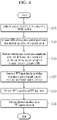
- FIG. 4 shows a flowchart of a method for suppressing an inter-carrier interference and noise signal according to an exemplary embodiment of the present invention
- FIG. 5 shows a drawing for finding correlation energy for estimating a symbol interference free interval according to an exemplary embodiment of the present invention
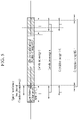
- FIG. 6 shows an example for configuring FFT input data according to an exemplary embodiment of the present invention.
- the OFDM receiver 100 includes a symbol interference free interval estimator 101, an SNR measurer 103, a weighting operator 105, an FFT sampling data controller 107, an FFT operator 109, and an equalizer 111.
- the symbol interference free interval estimator 101 estimates a symbol interference free interval and a number (-) of samples of the symbol interference free interval by using received data S101.
- the symbol interference free interval estimator 101 may use a method using a correlation of the guard interval of the OFDM symbol as shown in FIG. 5 .
- the symbol interference free interval estimator 101 finds correlation energy between the guard interval and the effective symbol interval to find a symbol interference free interval.
- the symbol interference free interval estimator 101 transmits the estimated symbol interference free interval and the number ( ⁇ ) of samples of the symbol interference free interval to the FFT sampling data controller 107.
- the guard interval is a cyclic prefix (CP) of the effective symbol interval, so transmission data of the guard interval are equivalent to transmission data provided in a final area of the effective symbol interval.
- CP cyclic prefix
- the SNR measurer 103 measures each SNR of the symbol interference free interval and the effective symbol interval (S103). For example, the SNR may be calculated by measuring channel power, but the SNR measuring method may be measured by using a method or a device known to the field of the communication industry, which will not be specifically written and no description thereof will be provided.
- the weighting operator 105 performs a weighting operation using the SNRs of the respective intervals between the sample data P1 of the symbol interference free interval and the sample data P3 provided on a rear portion of the corresponding effective symbol interval by using a CP data characteristic (S 105).
- a weighting operation using the SNRs of the respective intervals between the sample data P1 of the symbol interference free interval and the sample data P3 provided on a rear portion of the corresponding effective symbol interval by using a CP data characteristic (S 105).
- n is a time index
- N is an effective symbol interval length
- N G is a guard interval length
- ⁇ is a number of samples on the symbol interference free interval
- y(n) is an output signal of an analog-digital converter (ADC) at an n-th time.
- ADC analog-digital converter
- SNR GI signifies the SNR of the symbol interference free interval
- SNR EFF means the SNR of the effective symbol interval corresponding to the symbol interference free interval
- the weighting operation method may obtain an MRC gain.
- hardware (HW) bit precision for expressing this is increased and a hardware (HW) operation amount may be increased.
- HW hardware bit precision
- a size of the output of the weighting operator 105 may be biased.
- ⁇ signifies a range setting value of the hardware bit precision.
- the FFT sampling data controller 107 configures FFT input data by providing sample data P5 that are weighting-operated between the sample data P1 of the symbol interference free interval and the sample data P3 provided on a rear side of the corresponding effective symbol interval by the weighting operator 105 to a rear side of the effective symbol interval (S107).
- the FFT sampling data controller 107 outputs the FFT input data generated by arranging the weighting-operated sample data P5 to the FFT operator 109.
- FFT IN n ⁇ y n + N G , 0 ⁇ n ⁇ N ⁇ ⁇ out n , N ⁇ ⁇ ⁇ n ⁇ N
- Equation 4 when the FFT input data are expressed as received data, SNR GI and SNR EFF , they are as follows.
- FFT IN n ⁇ y n + N G , 0 ⁇ n ⁇ N ⁇ ⁇ 1 SNR GI + SNR EFF SNR GI ⁇ y n ⁇ N + N G + SNR EFF ⁇ y n + N G , N ⁇ ⁇ ⁇ n ⁇ N
- the FFT operator 109 performs an FFT operation on the FFT input data output by the FFT sampling data controller 120 (S109).
- the equalizer 111 performs channel equalization on a signal output by the FFT operator 109 (Sill).
- a gain that is similar to the MRC diversity may be acquired by using the SNRs of the symbol interference free interval and the effective symbol interval and performing a weighting operation on the respective sample data in an environment in which the change of channel is large.
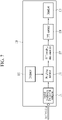
- FIG. 7 shows a block diagram for indicating a configuration of an OFDM receiver according to another exemplary embodiment of the present invention
- FIG. 8 shows a flowchart of a method for suppressing an inter-carrier interference and noise signal according to another exemplary embodiment of the present invention
- FIG. 9 shows a flowchart of a method for estimating an SNR according to an exemplary embodiment of the present invention
- FIG. 10 shows an example for configuring FFT input data according to another exemplary embodiment of the present invention.
- the OFDM receiver 100' includes a symbol interference free interval estimator 101, a weighting operator 105, an FFT sampling data controller 107, an FFT operator 109, an equalizer 111, and an estimator 113.
- the symbol interference free interval estimator 101 estimates a symbol interference free interval from an OFDM symbol of received data (S201).
- the stage S201 corresponds to the stage S101 of FIG. 4 .
- the estimator 113 estimates an SNR of the symbol interference free interval and an SNR of the effective symbol interval (S203).
- the weighting operator 105 performs a weighting operation between the sample data of the symbol interference free interval and the sample data of the effective symbol interval by using the SNR estimated by the estimator 113 (S205).
- the stage S205 corresponds to the stage S105 of FIG. 4 .
- the FFT sampling data controller 107 provides the weighting-operated sample data P5 to the rear side of the effective symbol interval to configure FFT input data (S207).
- the stage S207 corresponds to the stage S107 of FIG. 4 .
- a calculation of a weight value used to the weighting operation is performed by the estimator 113, which will be described in a latter portion of the present specification.
- the FFT operator 109 performs an FFT operation on the FFT input data generated by arranging the weighting-operated sample data P5 (S209).
- the stage S209 corresponds to the stage S109 of FIG. 4 .
- the equalizer 111 performs channel equalization on the FFT operation result (S211).
- the stage S211 corresponds to the stage S111 of FIG. 4 .
- the estimator 113 estimates an SNR in the time domain. Noise with respect to time does not change much, so it may be assumed that the sample data of the symbol interference free interval and the sample data of the corresponding effective symbol interval may have similar noise. Therefore, power of the time domain data may correspond to the SNR.
- the estimator 113 may indirectly estimate SNR GI and SNR EFF as follows.
- a size component not power
- the size component signifies a summation of absolute values.
- a summation of signal squaring components is performed in the case of using power, but the squaring operation is not performed in the case of using the size component, so it is possible to use a lesser number of hardware bits compared to the use of power, and no process for a squaring operation is needed.
- an average may be taken with the number (-) of samples of the symbol interference free interval or a random scale reduction may be performed.
- the estimator 113 estimates an SNR in a frequency domain.
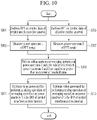
- a carrier-to-noise ratio (referred to as CNR hereinafter) on the frequency basis between the sample data of the symbol interference free interval and the sample data of the effective symbol interval is inconsistent. Therefore, when a method for indirectly estimating the SNR on the frequency is applied, it is expressed as shown in FIG. 10 .
- the estimator 113 performs an FFT corresponding to the length of the guard interval (GI) on the sample data of the symbol interference free interval and the sample data of the effective symbol interval, respectively (S301) and (S303).
- GI guard interval
- Power spectrum 1 of the FFT result on the sample data of the symbol interference free interval and power spectrum 2 of the FFT result on the sample data of the effective symbol interval are found (S305) and (S307).
- the estimator 113 performs an adding operation (addition) or an averaging operation on the respective power spectrums of subcarriers of which the power spectrums of the FFT result on the sample data of the symbol interference free interval and the FFT result on the sample data of the effective symbol interval are equal to or greater than a predetermined threshold value (S309).
- Values of the adding-operated or averaging-operated power spectrums are estimated to be SNR GI and SNR EFF (S311).
- the estimator 113 estimates the value generated by performing an adding operation or an averaging operation on the power spectrum 1 to be SNR GI , and the value generated by performing an adding operation or an averaging operation on the power spectrum 2 to be SNR EFF for the respective subcarriers of which the power spectrums 1 and 2 are equal to or greater than a threshold value.
- the subcarrier of which the power spectrum is equal to or less than a predetermined threshold value is a subcarrier with a low CNR, it has low reliability, so the subcarrier with a high CNR is used.
- the weighting operator 105 performs a weighting operation in a like manner of Equation 4 or Equation 5 by using the SNR GI and the SNR EFF estimated by the estimator 113.
- the above-described embodiments can be realized through a program for realizing functions corresponding to the configuration of the embodiments or a recording medium for recording the program in addition to through the above-described device and/or method.
Landscapes
- Engineering & Computer Science (AREA)
- Signal Processing (AREA)
- Computer Networks & Wireless Communication (AREA)
- Physics & Mathematics (AREA)
- General Physics & Mathematics (AREA)
- Mathematical Physics (AREA)
- Pure & Applied Mathematics (AREA)
- Data Mining & Analysis (AREA)
- Mathematical Optimization (AREA)
- Computational Mathematics (AREA)
- Theoretical Computer Science (AREA)
- Mathematical Analysis (AREA)
- Databases & Information Systems (AREA)
- Algebra (AREA)
- Software Systems (AREA)
- General Engineering & Computer Science (AREA)
- Power Engineering (AREA)
- Quality & Reliability (AREA)
- Noise Elimination (AREA)
- Discrete Mathematics (AREA)
Claims (6)
- Verfahren für einen OFDM-Empfänger (Orthogonal Frequency Division Multiplex) zum Unterdrücken einer Interferenz zwischen Unterträgern und eines Rauschsignals in am Empfänger empfangenen Daten durch Verwenden eines symbolinterferenzfreien Intervalls ohne Intersymbolinterferenz (ISI) in einem Schutzintervall (GI, Guard Interval) eines empfangenen OFDM-Symbols, umfassend:Durchführen (S301, S303) einer FFT entsprechend einer Länge des GI an Abtastdaten des symbolinterferenzfreien Intervalls und Abtastdaten eines hinteren Abschnitts (P3), die dem symbolinterferenzfreien Intervall eines entsprechenden effektiven Symbolintervalls des empfangenen OFDM-Symbols entsprechen;
Messen (S305) eines ersten Leistungsspektrums des FFT-Ergebnisses an den Abtastdaten des symbolinterferenzfreien Intervalls und Messen (S307) eines zweiten Leistungsspektrums des FFT-Ergebnisses des hinteren Abschnitts;Schätzen (S311) eines Werts, der durch Ausführen (S309) einer Additionsoperation oder einer Mittelungsoperation an dem ersten Leistungsspektrum erzeugt wird, als ein Signal-Rausch-Verhältnis (SNR, Signal-to-Noise Ratio) des symbolinterferenzfreien Intervalls, und Schätzen (S313) eines Werts, der durch Ausführen (S309) einer Additionsoperation oder einer Mittelungsoperation an dem zweiten Leistungsspektrum erzeugt wird, als ein SNR des hinteren Abschnitts, für mindestens einen Unterträger, dessen erstes Leistungsspektrum und zweites Leistungsspektrum gleich oder größer als ein vorbestimmter Schwellenwert sind;Durchführen (S105) einer Gewichtungsoperation zwischen den Abtastdaten des symbolinterferenzfreien Intervalls (S301) und den Abtastdaten des hinteren Abschnitts (S303) unter Verwendung des geschätzten SNR des symbolinterferenzfreien Intervalls und des geschätzten SNR des hinteren Abschnitts; undErzeugen (S107) von FFT-Eingangsdaten aus den empfangenen Daten durch Einschließen der gewichteten Abtastdaten in das effektive Symbolintervall der empfangenen Daten;Durchführen (S109) einer FFT an den FFT-Eingangsdaten. - Verfahren nach Anspruch 1, wobeidas Durchführen einer Gewichtungsoperation das Verwenden eines ersten Operationswerts, der durch Anwenden eines Gewichtungskoeffizienten auf das als das symbolinterferenzfreie Intervall modellierte Signal erzeugt wird, eines zweiten Operationswerts, der durch Anwenden eines Gewichtungskoeffizienten auf das Signal erzeugt wird, das als der hintere Abschnitt modelliert wird, der dem symbolinterferenzfreien Intervall entspricht, und eines Werts, der durch Summieren des SNR des symbolinterferenzfreien Intervalls und des SNR des hinteren Abschnitts erzeugt wird, umfasst,wobei der Gewichtungskoeffizient des ersten Operationswerts das SNR des symbolinterferenzfreien Intervalls ist, undwobei der Gewichtungskoeffizient des zweiten Operationswerts das SNR des hinteren Abschnitts ist.
- Verfahren nach Anspruch 2, wobei
die Gewichtungsoperation das Einstellen eines Bereichseinstellwerts (a) im Fall einer begrenzten Hardware-Bitpräzision und das Anwenden des Bereichseinstellwerts (a) auf jeden Gewichtungskoeffizienten der Gewichtungsoperation umfasst, die das SNR des symbolinterferenzfreien Intervalls und das SNR des hinteren Abschnitts verwendet. - OFDM-Empfänger (Orthogonal Frequency Division Multiplex) (100), wobei der OFDM-Empfänger zu Folgendem konfiguriert ist:Durchführen einer FFT entsprechend einer Länge des GI an Abtastdaten des symbolinterferenzfreien Intervalls und Abtastdaten eines hinteren Abschnitts, die dem symbolinterferenzfreien Intervall eines entsprechenden effektiven Symbolintervalls des empfangenen OFDM-Symbol entsprechen; undMessen eines ersten Leistungsspektrums des FFT-Ergebnisses an den Abtastdaten des symbolinterferenzfreien Intervalls und Messen eines zweiten Leistungsspektrums des FFT-Ergebnisses an den Abtastdaten des hinteren Abschnitts des entsprechenden effektiven Symbolintervalls,wobei der OFDM-Empfänger Folgendes umfasst:
eine Schätzeinrichtung (113), die konfiguriert ist zum Schätzen eines Werts, der durch Ausführen einer Additionsoperation oder einer Mittelungsoperation an dem ersten Leistungsspektrum erzeugt wird, als ein Signal-Rausch-Verhältnis (SNR, signal-to-noise ratio) des symbolinterferenzfreien Intervalls, und zum Schätzen eines Werts, der durch Ausführen einer Additionsoperation oder einer Mittelungsoperation an dem zweiten Leistungsspektrum erzeugt wird, als ein SNR eines hinteren Abschnitts, der dem symbolinterferenzfreien Intervall des entsprechenden effektiven Symbolintervalls entspricht, für einen Unterträger, dessen erstes Leistungsspektrum und zweites Leistungsspektrum gleich oder größer als ein Schwellenwert sind;einen Gewichtungsoperator (105), der konfiguriert ist, um eine Gewichtungsoperation zwischen den Abtastdaten des symbolinterferenzfreien Intervalls ohne Intersymbolinterferenz (ISI) in einem Schutzintervall (GI, Guard Interval) eines OFDM-Symbols und den Abtastdaten des hinteren Abschnitts, die dem symbolinterferenzfreien Intervall entsprechen, unter Verwendung des geschätzten SNR des symbolinterferenzfreien Intervalls ohne ISI und des geschätzten SNR des hinteren Abschnitts;eine FFT-Abtastdatensteuerung (107), die so konfiguriert ist, dass sie die Erzeugung von FFT-Eingangsdaten aus den empfangenen Daten durch Einschließen der gewichteten Abtastdaten in das effektive Symbolintervall durchführt; undeinen FFT-Operator (109), der so konfiguriert ist, dass er eine FFT-Operation an den FFT-Eingangsdaten durchführt. - OFDM-Empfänger nach Anspruch 4, wobeider Gewichtungsoperator (105) konfiguriert ist, um die Gewichtungsoperation durchzuführen unter Verwendung eines ersten Operationswerts, der durch Anwenden eines Gewichtungskoeffizienten auf das als das symbolinterferenzfreie Intervall modellierte Signal erzeugt wird, eines zweiten Operationswerts, der durch Anwenden eines Gewichtungskoeffizienten auf das Signal erzeugt wird, das als der hintere Abschnitt modelliert wird, der dem symbolinterferenzfreien Intervall entspricht, und eines Werts, der durch Summieren des SNR des symbolinterferenzfreien Intervalls und des SNR des hinteren Abschnitts erzeugt wird,wobei der Gewichtungskoeffizient des ersten Operationswerts das SNR des symbolinterferenzfreien Intervalls ist, undwobei der Gewichtungskoeffizient des zweiten Operationswerts das SNR des hinteren Abschnitts ist.
- OFDM-Empfänger nach Anspruch 5, wobei
der Gewichtungsoperator (105) konfiguriert ist, um einen Bereichseinstellwert (a) im Fall einer begrenzten Hardware-Bitpräzision zu berechnen und den Bereichseinstellwert (a) auf jeden Gewichtungskoeffizienten der Gewichtungsoperation anzuwenden, der das SNR des symbolinterferenzfreien Intervalls und das SNR des hinteren Abschnitts verwendet.
Applications Claiming Priority (2)
| Application Number | Priority Date | Filing Date | Title |
|---|---|---|---|
| KR1020160025906A KR101794987B1 (ko) | 2016-03-03 | 2016-03-03 | 부반송파간의 간섭 및 잡음 신호를 억제하는 방법 및 이를 수행하는 직교 주파수 분할 다중 수신기 |
| PCT/KR2017/001776 WO2017150832A1 (ko) | 2016-03-03 | 2017-02-17 | 부반송파간의 간섭 및 잡음 신호를 억제하는 방법 및 이를 수행하는 직교 주파수 분할 다중 수신기 |
Publications (3)
| Publication Number | Publication Date |
|---|---|
| EP3425834A1 EP3425834A1 (de) | 2019-01-09 |
| EP3425834A4 EP3425834A4 (de) | 2019-09-25 |
| EP3425834B1 true EP3425834B1 (de) | 2022-08-03 |
Family
ID=59744149
Family Applications (1)
| Application Number | Title | Priority Date | Filing Date |
|---|---|---|---|
| EP17760236.4A Active EP3425834B1 (de) | 2016-03-03 | 2017-02-17 | Verfahren zur unterdrückung von interferenz und rauschsignal zwischen unterträgern und orthogonal-frequency-division-multiplexing-empfänger zur ausführung davon |
Country Status (5)
| Country | Link |
|---|---|
| US (1) | US10348433B2 (de) |
| EP (1) | EP3425834B1 (de) |
| JP (1) | JP6664521B2 (de) |
| KR (1) | KR101794987B1 (de) |
| WO (1) | WO2017150832A1 (de) |
Families Citing this family (2)
| Publication number | Priority date | Publication date | Assignee | Title |
|---|---|---|---|---|
| CN113098815B (zh) * | 2021-03-05 | 2022-04-01 | 华中科技大学 | 一种水声ofdm载波间干扰的频域抑制方法与系统 |
| US12438630B2 (en) | 2023-02-14 | 2025-10-07 | Cisco Technology, Inc. | Signal to interference and noise ratio estimation |
Family Cites Families (8)
| Publication number | Priority date | Publication date | Assignee | Title |
|---|---|---|---|---|
| KR100234329B1 (ko) * | 1997-09-30 | 1999-12-15 | 윤종용 | Ofdm 시스템 수신기의 fft 윈도우 위치 복원장치 및 그 방법_ |
| US7769094B2 (en) * | 2006-11-10 | 2010-08-03 | Telefonaktiebolaget L M Ericsson (Publ) | Arrangement and method for reducing the impact of interfering signals in a communication system |
| US7773683B2 (en) | 2007-08-31 | 2010-08-10 | Industrial Technology Research Institute | Method and apparatus for ICI cancellation in communication systems |
| US8000417B1 (en) * | 2007-11-27 | 2011-08-16 | Samsung Electronics Co., Ltd. | Methods and OFDM receivers providing inter-carrier interference cancellation with guard interval reuse scheme |
| KR20100039467A (ko) | 2008-10-08 | 2010-04-16 | 주식회사 텔레칩스 | Ofdm 수신기에서 부반송파간의 간섭 신호 억제 장치 및방법 |
| KR100992327B1 (ko) * | 2009-02-18 | 2010-11-05 | 성균관대학교산학협력단 | Ofdm 시스템에서의 주파수 동기 장치 |
| KR101232132B1 (ko) * | 2011-05-31 | 2013-02-12 | 주식회사 텔레칩스 | 직교주파수분할다중접속 시스템을 위한 안테나 다이버시티 획득 장치 및 방법 |
| KR101239655B1 (ko) | 2012-01-13 | 2013-03-05 | (주)에프씨아이 | 오에프디엠 시스템에서의 에프에프티 윈도우 조절방법 |
-
2016
- 2016-03-03 KR KR1020160025906A patent/KR101794987B1/ko active Active
-
2017
- 2017-02-17 US US16/081,968 patent/US10348433B2/en active Active
- 2017-02-17 WO PCT/KR2017/001776 patent/WO2017150832A1/ko not_active Ceased
- 2017-02-17 JP JP2018566177A patent/JP6664521B2/ja active Active
- 2017-02-17 EP EP17760236.4A patent/EP3425834B1/de active Active
Non-Patent Citations (1)
| Title |
|---|
| CERNA MICHAEL ET AL: "Application Note 041 The Fundamentals of FFT-Based Signal Analysis and Measurement", 1 July 2000 (2000-07-01), pages 1 - 20, XP055816240, Retrieved from the Internet <URL:https://www.sjsu.edu/people/burford.furman/docs/me120/FFT_tutorial_NI.pdf> [retrieved on 20210621] * |
Also Published As
| Publication number | Publication date |
|---|---|
| KR20170103304A (ko) | 2017-09-13 |
| US20190123844A1 (en) | 2019-04-25 |
| KR101794987B1 (ko) | 2017-11-07 |
| JP6664521B2 (ja) | 2020-03-13 |
| US10348433B2 (en) | 2019-07-09 |
| JP2019511180A (ja) | 2019-04-18 |
| EP3425834A4 (de) | 2019-09-25 |
| WO2017150832A1 (ko) | 2017-09-08 |
| EP3425834A1 (de) | 2019-01-09 |
Similar Documents
| Publication | Publication Date | Title |
|---|---|---|
| KR100996535B1 (ko) | 다중입출력 안테나 직교주파수 분할 다중화 시스템의 셀간 간섭 완화를 위한 공간 공분산 행렬 추정 기법을 이용한 셀간 간섭 완화 방법 및 이를 이용한 셀간 간섭 완화 수신 장치 | |
| CN101557378B (zh) | Ofdm系统中导频发送、信道估计和噪声功率估计方法 | |
| JP4421416B2 (ja) | Ofdm方式の受信装置 | |
| US8223862B2 (en) | OFDM inter-carrier interference cancellation method | |
| CN105337906B (zh) | 信道估计方法及装置 | |
| JP2007228592A (ja) | 無線接続システムにおけるデータ復調のためのチャネル推定装置及び方法 | |
| EP2291967B1 (de) | Vorrichtung und verfahren zur kanalschätzung in einem mobilen kommunikationssystem | |
| CN102158459A (zh) | 基于时频二维训练信息的ofdm块传输方法 | |
| EP2409450B1 (de) | Signalverarbeiter, empfänger und signalverarbeitungsverfahren | |
| US8477865B2 (en) | MIMO receiving apparatus and method | |
| CN107483373A (zh) | 一种抗多径迭代加权的lmmse信道估计方法及装置 | |
| CN104836770B (zh) | 一种基于相关平均与加窗的定时估计方法 | |
| KR20090064738A (ko) | 단일 반송파 주파수 분할 다중 접속 시스템을 위한 수신장치 및 방법 | |
| KR101390317B1 (ko) | 직교 주파수 분할 다중화 시스템에서 채널 임펄스 응답의추정 오류를 보상하기 위한 장치 및 방법 | |
| EP2311232A1 (de) | Vereinfachtes entzerrungsschema zur verteilten betriebsmittelvergabe in mehrträgersystemen | |
| WO2012092642A1 (en) | Doppler-assisted channel estimation | |
| US20080181341A1 (en) | Receiver Apparatus | |
| US20180013598A1 (en) | Receiving apparatus and receiving method | |
| EP3425834A1 (de) | Verfahren zur unterdrückung von interferenz und rauschsignal zwischen unterträgern und orthogonal-frequency-division-multiplexing-empfänger zur ausführung davon | |
| CN102801662B (zh) | 一种多带超宽带系统隐藏导频的信道估计方法及装置 | |
| US7551548B2 (en) | OFDM demodulation apparatus, method and computer readable medium | |
| Suárez-Casal et al. | Experimental assessment of WiMAX transmissions under highly time-varying channels | |
| JP2009141740A (ja) | Ici量推定装置、推定方法、およびこれを用いた受信装置 | |
| US20150207588A1 (en) | Receiving device and receiving method, and computer program | |
| KR20100070478A (ko) | 무선 통신 시스템의 채널 및 간섭 추정 방법 및 장치 |
Legal Events
| Date | Code | Title | Description |
|---|---|---|---|
| STAA | Information on the status of an ep patent application or granted ep patent |
Free format text: STATUS: THE INTERNATIONAL PUBLICATION HAS BEEN MADE |
|
| PUAI | Public reference made under article 153(3) epc to a published international application that has entered the european phase |
Free format text: ORIGINAL CODE: 0009012 |
|
| STAA | Information on the status of an ep patent application or granted ep patent |
Free format text: STATUS: REQUEST FOR EXAMINATION WAS MADE |
|
| 17P | Request for examination filed |
Effective date: 20180831 |
|
| AK | Designated contracting states |
Kind code of ref document: A1 Designated state(s): AL AT BE BG CH CY CZ DE DK EE ES FI FR GB GR HR HU IE IS IT LI LT LU LV MC MK MT NL NO PL PT RO RS SE SI SK SM TR |
|
| AX | Request for extension of the european patent |
Extension state: BA ME |
|
| DAV | Request for validation of the european patent (deleted) | ||
| DAX | Request for extension of the european patent (deleted) | ||
| RIN1 | Information on inventor provided before grant (corrected) |
Inventor name: YUN, YOUNG HO Inventor name: YOON, SUKHYUN |
|
| REG | Reference to a national code |
Ref country code: DE Ref legal event code: R079 Ref document number: 602017060212 Country of ref document: DE Free format text: PREVIOUS MAIN CLASS: H04L0005000000 Ipc: H04L0025030000 |
|
| A4 | Supplementary search report drawn up and despatched |
Effective date: 20190823 |
|
| RIC1 | Information provided on ipc code assigned before grant |
Ipc: H04L 27/26 20060101ALI20190819BHEP Ipc: H04L 25/03 20060101AFI20190819BHEP |
|
| STAA | Information on the status of an ep patent application or granted ep patent |
Free format text: STATUS: EXAMINATION IS IN PROGRESS |
|
| 17Q | First examination report despatched |
Effective date: 20200827 |
|
| GRAP | Despatch of communication of intention to grant a patent |
Free format text: ORIGINAL CODE: EPIDOSNIGR1 |
|
| STAA | Information on the status of an ep patent application or granted ep patent |
Free format text: STATUS: GRANT OF PATENT IS INTENDED |
|
| INTG | Intention to grant announced |
Effective date: 20220223 |
|
| GRAS | Grant fee paid |
Free format text: ORIGINAL CODE: EPIDOSNIGR3 |
|
| GRAA | (expected) grant |
Free format text: ORIGINAL CODE: 0009210 |
|
| STAA | Information on the status of an ep patent application or granted ep patent |
Free format text: STATUS: THE PATENT HAS BEEN GRANTED |
|
| AK | Designated contracting states |
Kind code of ref document: B1 Designated state(s): AL AT BE BG CH CY CZ DE DK EE ES FI FR GB GR HR HU IE IS IT LI LT LU LV MC MK MT NL NO PL PT RO RS SE SI SK SM TR |
|
| REG | Reference to a national code |
Ref country code: AT Ref legal event code: REF Ref document number: 1509652 Country of ref document: AT Kind code of ref document: T Effective date: 20220815 Ref country code: CH Ref legal event code: EP |
|
| REG | Reference to a national code |
Ref country code: DE Ref legal event code: R096 Ref document number: 602017060212 Country of ref document: DE |
|
| REG | Reference to a national code |
Ref country code: IE Ref legal event code: FG4D |
|
| REG | Reference to a national code |
Ref country code: LT Ref legal event code: MG9D |
|
| REG | Reference to a national code |
Ref country code: NL Ref legal event code: MP Effective date: 20220803 |
|
| PG25 | Lapsed in a contracting state [announced via postgrant information from national office to epo] |
Ref country code: SE Free format text: LAPSE BECAUSE OF FAILURE TO SUBMIT A TRANSLATION OF THE DESCRIPTION OR TO PAY THE FEE WITHIN THE PRESCRIBED TIME-LIMIT Effective date: 20220803 Ref country code: RS Free format text: LAPSE BECAUSE OF FAILURE TO SUBMIT A TRANSLATION OF THE DESCRIPTION OR TO PAY THE FEE WITHIN THE PRESCRIBED TIME-LIMIT Effective date: 20220803 Ref country code: PT Free format text: LAPSE BECAUSE OF FAILURE TO SUBMIT A TRANSLATION OF THE DESCRIPTION OR TO PAY THE FEE WITHIN THE PRESCRIBED TIME-LIMIT Effective date: 20221205 Ref country code: NO Free format text: LAPSE BECAUSE OF FAILURE TO SUBMIT A TRANSLATION OF THE DESCRIPTION OR TO PAY THE FEE WITHIN THE PRESCRIBED TIME-LIMIT Effective date: 20221103 Ref country code: NL Free format text: LAPSE BECAUSE OF FAILURE TO SUBMIT A TRANSLATION OF THE DESCRIPTION OR TO PAY THE FEE WITHIN THE PRESCRIBED TIME-LIMIT Effective date: 20220803 Ref country code: LV Free format text: LAPSE BECAUSE OF FAILURE TO SUBMIT A TRANSLATION OF THE DESCRIPTION OR TO PAY THE FEE WITHIN THE PRESCRIBED TIME-LIMIT Effective date: 20220803 Ref country code: LT Free format text: LAPSE BECAUSE OF FAILURE TO SUBMIT A TRANSLATION OF THE DESCRIPTION OR TO PAY THE FEE WITHIN THE PRESCRIBED TIME-LIMIT Effective date: 20220803 Ref country code: FI Free format text: LAPSE BECAUSE OF FAILURE TO SUBMIT A TRANSLATION OF THE DESCRIPTION OR TO PAY THE FEE WITHIN THE PRESCRIBED TIME-LIMIT Effective date: 20220803 Ref country code: ES Free format text: LAPSE BECAUSE OF FAILURE TO SUBMIT A TRANSLATION OF THE DESCRIPTION OR TO PAY THE FEE WITHIN THE PRESCRIBED TIME-LIMIT Effective date: 20220803 |
|
| REG | Reference to a national code |
Ref country code: AT Ref legal event code: MK05 Ref document number: 1509652 Country of ref document: AT Kind code of ref document: T Effective date: 20220803 |
|
| PG25 | Lapsed in a contracting state [announced via postgrant information from national office to epo] |
Ref country code: PL Free format text: LAPSE BECAUSE OF FAILURE TO SUBMIT A TRANSLATION OF THE DESCRIPTION OR TO PAY THE FEE WITHIN THE PRESCRIBED TIME-LIMIT Effective date: 20220803 Ref country code: IS Free format text: LAPSE BECAUSE OF FAILURE TO SUBMIT A TRANSLATION OF THE DESCRIPTION OR TO PAY THE FEE WITHIN THE PRESCRIBED TIME-LIMIT Effective date: 20221203 Ref country code: HR Free format text: LAPSE BECAUSE OF FAILURE TO SUBMIT A TRANSLATION OF THE DESCRIPTION OR TO PAY THE FEE WITHIN THE PRESCRIBED TIME-LIMIT Effective date: 20220803 Ref country code: GR Free format text: LAPSE BECAUSE OF FAILURE TO SUBMIT A TRANSLATION OF THE DESCRIPTION OR TO PAY THE FEE WITHIN THE PRESCRIBED TIME-LIMIT Effective date: 20221104 |
|
| PG25 | Lapsed in a contracting state [announced via postgrant information from national office to epo] |
Ref country code: SM Free format text: LAPSE BECAUSE OF FAILURE TO SUBMIT A TRANSLATION OF THE DESCRIPTION OR TO PAY THE FEE WITHIN THE PRESCRIBED TIME-LIMIT Effective date: 20220803 Ref country code: RO Free format text: LAPSE BECAUSE OF FAILURE TO SUBMIT A TRANSLATION OF THE DESCRIPTION OR TO PAY THE FEE WITHIN THE PRESCRIBED TIME-LIMIT Effective date: 20220803 Ref country code: DK Free format text: LAPSE BECAUSE OF FAILURE TO SUBMIT A TRANSLATION OF THE DESCRIPTION OR TO PAY THE FEE WITHIN THE PRESCRIBED TIME-LIMIT Effective date: 20220803 Ref country code: CZ Free format text: LAPSE BECAUSE OF FAILURE TO SUBMIT A TRANSLATION OF THE DESCRIPTION OR TO PAY THE FEE WITHIN THE PRESCRIBED TIME-LIMIT Effective date: 20220803 Ref country code: AT Free format text: LAPSE BECAUSE OF FAILURE TO SUBMIT A TRANSLATION OF THE DESCRIPTION OR TO PAY THE FEE WITHIN THE PRESCRIBED TIME-LIMIT Effective date: 20220803 |
|
| REG | Reference to a national code |
Ref country code: DE Ref legal event code: R097 Ref document number: 602017060212 Country of ref document: DE |
|
| PG25 | Lapsed in a contracting state [announced via postgrant information from national office to epo] |
Ref country code: SK Free format text: LAPSE BECAUSE OF FAILURE TO SUBMIT A TRANSLATION OF THE DESCRIPTION OR TO PAY THE FEE WITHIN THE PRESCRIBED TIME-LIMIT Effective date: 20220803 Ref country code: EE Free format text: LAPSE BECAUSE OF FAILURE TO SUBMIT A TRANSLATION OF THE DESCRIPTION OR TO PAY THE FEE WITHIN THE PRESCRIBED TIME-LIMIT Effective date: 20220803 |
|
| PLBE | No opposition filed within time limit |
Free format text: ORIGINAL CODE: 0009261 |
|
| STAA | Information on the status of an ep patent application or granted ep patent |
Free format text: STATUS: NO OPPOSITION FILED WITHIN TIME LIMIT |
|
| PG25 | Lapsed in a contracting state [announced via postgrant information from national office to epo] |
Ref country code: AL Free format text: LAPSE BECAUSE OF FAILURE TO SUBMIT A TRANSLATION OF THE DESCRIPTION OR TO PAY THE FEE WITHIN THE PRESCRIBED TIME-LIMIT Effective date: 20220803 |
|
| 26N | No opposition filed |
Effective date: 20230504 |
|
| PG25 | Lapsed in a contracting state [announced via postgrant information from national office to epo] |
Ref country code: SI Free format text: LAPSE BECAUSE OF FAILURE TO SUBMIT A TRANSLATION OF THE DESCRIPTION OR TO PAY THE FEE WITHIN THE PRESCRIBED TIME-LIMIT Effective date: 20220803 |
|
| PG25 | Lapsed in a contracting state [announced via postgrant information from national office to epo] |
Ref country code: MC Free format text: LAPSE BECAUSE OF FAILURE TO SUBMIT A TRANSLATION OF THE DESCRIPTION OR TO PAY THE FEE WITHIN THE PRESCRIBED TIME-LIMIT Effective date: 20220803 |
|
| REG | Reference to a national code |
Ref country code: CH Ref legal event code: PL |
|
| REG | Reference to a national code |
Ref country code: BE Ref legal event code: MM Effective date: 20230228 |
|
| GBPC | Gb: european patent ceased through non-payment of renewal fee |
Effective date: 20230217 |
|
| PG25 | Lapsed in a contracting state [announced via postgrant information from national office to epo] |
Ref country code: LU Free format text: LAPSE BECAUSE OF NON-PAYMENT OF DUE FEES Effective date: 20230217 Ref country code: LI Free format text: LAPSE BECAUSE OF NON-PAYMENT OF DUE FEES Effective date: 20230228 Ref country code: CH Free format text: LAPSE BECAUSE OF NON-PAYMENT OF DUE FEES Effective date: 20230228 |
|
| REG | Reference to a national code |
Ref country code: IE Ref legal event code: MM4A |
|
| PG25 | Lapsed in a contracting state [announced via postgrant information from national office to epo] |
Ref country code: GB Free format text: LAPSE BECAUSE OF NON-PAYMENT OF DUE FEES Effective date: 20230217 |
|
| PG25 | Lapsed in a contracting state [announced via postgrant information from national office to epo] |
Ref country code: IE Free format text: LAPSE BECAUSE OF NON-PAYMENT OF DUE FEES Effective date: 20230217 Ref country code: GB Free format text: LAPSE BECAUSE OF NON-PAYMENT OF DUE FEES Effective date: 20230217 Ref country code: FR Free format text: LAPSE BECAUSE OF NON-PAYMENT OF DUE FEES Effective date: 20230228 |
|
| PG25 | Lapsed in a contracting state [announced via postgrant information from national office to epo] |
Ref country code: BE Free format text: LAPSE BECAUSE OF NON-PAYMENT OF DUE FEES Effective date: 20230228 |
|
| PG25 | Lapsed in a contracting state [announced via postgrant information from national office to epo] |
Ref country code: IT Free format text: LAPSE BECAUSE OF FAILURE TO SUBMIT A TRANSLATION OF THE DESCRIPTION OR TO PAY THE FEE WITHIN THE PRESCRIBED TIME-LIMIT Effective date: 20220803 |
|
| PG25 | Lapsed in a contracting state [announced via postgrant information from national office to epo] |
Ref country code: BG Free format text: LAPSE BECAUSE OF FAILURE TO SUBMIT A TRANSLATION OF THE DESCRIPTION OR TO PAY THE FEE WITHIN THE PRESCRIBED TIME-LIMIT Effective date: 20220803 |
|
| PG25 | Lapsed in a contracting state [announced via postgrant information from national office to epo] |
Ref country code: BG Free format text: LAPSE BECAUSE OF FAILURE TO SUBMIT A TRANSLATION OF THE DESCRIPTION OR TO PAY THE FEE WITHIN THE PRESCRIBED TIME-LIMIT Effective date: 20220803 |
|
| PG25 | Lapsed in a contracting state [announced via postgrant information from national office to epo] |
Ref country code: CY Free format text: LAPSE BECAUSE OF FAILURE TO SUBMIT A TRANSLATION OF THE DESCRIPTION OR TO PAY THE FEE WITHIN THE PRESCRIBED TIME-LIMIT; INVALID AB INITIO Effective date: 20170217 |
|
| PG25 | Lapsed in a contracting state [announced via postgrant information from national office to epo] |
Ref country code: HU Free format text: LAPSE BECAUSE OF FAILURE TO SUBMIT A TRANSLATION OF THE DESCRIPTION OR TO PAY THE FEE WITHIN THE PRESCRIBED TIME-LIMIT; INVALID AB INITIO Effective date: 20170217 |
|
| PG25 | Lapsed in a contracting state [announced via postgrant information from national office to epo] |
Ref country code: TR Free format text: LAPSE BECAUSE OF FAILURE TO SUBMIT A TRANSLATION OF THE DESCRIPTION OR TO PAY THE FEE WITHIN THE PRESCRIBED TIME-LIMIT Effective date: 20220803 |
|
| PGFP | Annual fee paid to national office [announced via postgrant information from national office to epo] |
Ref country code: DE Payment date: 20251224 Year of fee payment: 10 |