EP3423582B1 - Aav vectors for treatment of dominant retinitis pigmentosa - Google Patents
Aav vectors for treatment of dominant retinitis pigmentosa Download PDFInfo
- Publication number
- EP3423582B1 EP3423582B1 EP17760752.0A EP17760752A EP3423582B1 EP 3423582 B1 EP3423582 B1 EP 3423582B1 EP 17760752 A EP17760752 A EP 17760752A EP 3423582 B1 EP3423582 B1 EP 3423582B1
- Authority
- EP
- European Patent Office
- Prior art keywords
- rna
- rho
- sequence
- vector
- options
- Prior art date
- Legal status (The legal status is an assumption and is not a legal conclusion. Google has not performed a legal analysis and makes no representation as to the accuracy of the status listed.)
- Active
Links
Images






Classifications
-
- C—CHEMISTRY; METALLURGY
- C12—BIOCHEMISTRY; BEER; SPIRITS; WINE; VINEGAR; MICROBIOLOGY; ENZYMOLOGY; MUTATION OR GENETIC ENGINEERING
- C12N—MICROORGANISMS OR ENZYMES; COMPOSITIONS THEREOF; PROPAGATING, PRESERVING, OR MAINTAINING MICROORGANISMS; MUTATION OR GENETIC ENGINEERING; CULTURE MEDIA
- C12N15/00—Mutation or genetic engineering; DNA or RNA concerning genetic engineering, vectors, e.g. plasmids, or their isolation, preparation or purification; Use of hosts therefor
- C12N15/09—Recombinant DNA-technology
- C12N15/11—DNA or RNA fragments; Modified forms thereof; Non-coding nucleic acids having a biological activity
- C12N15/113—Non-coding nucleic acids modulating the expression of genes, e.g. antisense oligonucleotides; Antisense DNA or RNA; Triplex- forming oligonucleotides; Catalytic nucleic acids, e.g. ribozymes; Nucleic acids used in co-suppression or gene silencing
- C12N15/1138—Non-coding nucleic acids modulating the expression of genes, e.g. antisense oligonucleotides; Antisense DNA or RNA; Triplex- forming oligonucleotides; Catalytic nucleic acids, e.g. ribozymes; Nucleic acids used in co-suppression or gene silencing against receptors or cell surface proteins
-
- C—CHEMISTRY; METALLURGY
- C12—BIOCHEMISTRY; BEER; SPIRITS; WINE; VINEGAR; MICROBIOLOGY; ENZYMOLOGY; MUTATION OR GENETIC ENGINEERING
- C12N—MICROORGANISMS OR ENZYMES; COMPOSITIONS THEREOF; PROPAGATING, PRESERVING, OR MAINTAINING MICROORGANISMS; MUTATION OR GENETIC ENGINEERING; CULTURE MEDIA
- C12N15/00—Mutation or genetic engineering; DNA or RNA concerning genetic engineering, vectors, e.g. plasmids, or their isolation, preparation or purification; Use of hosts therefor
- C12N15/09—Recombinant DNA-technology
- C12N15/11—DNA or RNA fragments; Modified forms thereof; Non-coding nucleic acids having a biological activity
- C12N15/113—Non-coding nucleic acids modulating the expression of genes, e.g. antisense oligonucleotides; Antisense DNA or RNA; Triplex- forming oligonucleotides; Catalytic nucleic acids, e.g. ribozymes; Nucleic acids used in co-suppression or gene silencing
-
- A—HUMAN NECESSITIES
- A61—MEDICAL OR VETERINARY SCIENCE; HYGIENE
- A61P—SPECIFIC THERAPEUTIC ACTIVITY OF CHEMICAL COMPOUNDS OR MEDICINAL PREPARATIONS
- A61P27/00—Drugs for disorders of the senses
- A61P27/02—Ophthalmic agents
-
- C—CHEMISTRY; METALLURGY
- C12—BIOCHEMISTRY; BEER; SPIRITS; WINE; VINEGAR; MICROBIOLOGY; ENZYMOLOGY; MUTATION OR GENETIC ENGINEERING
- C12N—MICROORGANISMS OR ENZYMES; COMPOSITIONS THEREOF; PROPAGATING, PRESERVING, OR MAINTAINING MICROORGANISMS; MUTATION OR GENETIC ENGINEERING; CULTURE MEDIA
- C12N15/00—Mutation or genetic engineering; DNA or RNA concerning genetic engineering, vectors, e.g. plasmids, or their isolation, preparation or purification; Use of hosts therefor
- C12N15/09—Recombinant DNA-technology
- C12N15/63—Introduction of foreign genetic material using vectors; Vectors; Use of hosts therefor; Regulation of expression
- C12N15/79—Vectors or expression systems specially adapted for eukaryotic hosts
- C12N15/85—Vectors or expression systems specially adapted for eukaryotic hosts for animal cells
- C12N15/86—Viral vectors
-
- C—CHEMISTRY; METALLURGY
- C12—BIOCHEMISTRY; BEER; SPIRITS; WINE; VINEGAR; MICROBIOLOGY; ENZYMOLOGY; MUTATION OR GENETIC ENGINEERING
- C12N—MICROORGANISMS OR ENZYMES; COMPOSITIONS THEREOF; PROPAGATING, PRESERVING, OR MAINTAINING MICROORGANISMS; MUTATION OR GENETIC ENGINEERING; CULTURE MEDIA
- C12N7/00—Viruses; Bacteriophages; Compositions thereof; Preparation or purification thereof
-
- C—CHEMISTRY; METALLURGY
- C12—BIOCHEMISTRY; BEER; SPIRITS; WINE; VINEGAR; MICROBIOLOGY; ENZYMOLOGY; MUTATION OR GENETIC ENGINEERING
- C12N—MICROORGANISMS OR ENZYMES; COMPOSITIONS THEREOF; PROPAGATING, PRESERVING, OR MAINTAINING MICROORGANISMS; MUTATION OR GENETIC ENGINEERING; CULTURE MEDIA
- C12N2310/00—Structure or type of the nucleic acid
- C12N2310/10—Type of nucleic acid
- C12N2310/12—Type of nucleic acid catalytic nucleic acids, e.g. ribozymes
- C12N2310/122—Hairpin
-
- C—CHEMISTRY; METALLURGY
- C12—BIOCHEMISTRY; BEER; SPIRITS; WINE; VINEGAR; MICROBIOLOGY; ENZYMOLOGY; MUTATION OR GENETIC ENGINEERING
- C12N—MICROORGANISMS OR ENZYMES; COMPOSITIONS THEREOF; PROPAGATING, PRESERVING, OR MAINTAINING MICROORGANISMS; MUTATION OR GENETIC ENGINEERING; CULTURE MEDIA
- C12N2310/00—Structure or type of the nucleic acid
- C12N2310/10—Type of nucleic acid
- C12N2310/14—Type of nucleic acid interfering nucleic acids [NA]
-
- C—CHEMISTRY; METALLURGY
- C12—BIOCHEMISTRY; BEER; SPIRITS; WINE; VINEGAR; MICROBIOLOGY; ENZYMOLOGY; MUTATION OR GENETIC ENGINEERING
- C12N—MICROORGANISMS OR ENZYMES; COMPOSITIONS THEREOF; PROPAGATING, PRESERVING, OR MAINTAINING MICROORGANISMS; MUTATION OR GENETIC ENGINEERING; CULTURE MEDIA
- C12N2310/00—Structure or type of the nucleic acid
- C12N2310/10—Type of nucleic acid
- C12N2310/14—Type of nucleic acid interfering nucleic acids [NA]
- C12N2310/141—MicroRNAs, miRNAs
-
- C—CHEMISTRY; METALLURGY
- C12—BIOCHEMISTRY; BEER; SPIRITS; WINE; VINEGAR; MICROBIOLOGY; ENZYMOLOGY; MUTATION OR GENETIC ENGINEERING
- C12N—MICROORGANISMS OR ENZYMES; COMPOSITIONS THEREOF; PROPAGATING, PRESERVING, OR MAINTAINING MICROORGANISMS; MUTATION OR GENETIC ENGINEERING; CULTURE MEDIA
- C12N2310/00—Structure or type of the nucleic acid
- C12N2310/50—Physical structure
- C12N2310/53—Physical structure partially self-complementary or closed
- C12N2310/531—Stem-loop; Hairpin
-
- C—CHEMISTRY; METALLURGY
- C12—BIOCHEMISTRY; BEER; SPIRITS; WINE; VINEGAR; MICROBIOLOGY; ENZYMOLOGY; MUTATION OR GENETIC ENGINEERING
- C12N—MICROORGANISMS OR ENZYMES; COMPOSITIONS THEREOF; PROPAGATING, PRESERVING, OR MAINTAINING MICROORGANISMS; MUTATION OR GENETIC ENGINEERING; CULTURE MEDIA
- C12N2330/00—Production
- C12N2330/50—Biochemical production, i.e. in a transformed host cell
- C12N2330/51—Specially adapted vectors
-
- C—CHEMISTRY; METALLURGY
- C12—BIOCHEMISTRY; BEER; SPIRITS; WINE; VINEGAR; MICROBIOLOGY; ENZYMOLOGY; MUTATION OR GENETIC ENGINEERING
- C12N—MICROORGANISMS OR ENZYMES; COMPOSITIONS THEREOF; PROPAGATING, PRESERVING, OR MAINTAINING MICROORGANISMS; MUTATION OR GENETIC ENGINEERING; CULTURE MEDIA
- C12N2750/00—MICROORGANISMS OR ENZYMES; COMPOSITIONS THEREOF; PROPAGATING, PRESERVING, OR MAINTAINING MICROORGANISMS; MUTATION OR GENETIC ENGINEERING; CULTURE MEDIA ssDNA viruses
- C12N2750/00011—Details
- C12N2750/14011—Parvoviridae
- C12N2750/14111—Dependovirus, e.g. adenoassociated viruses
- C12N2750/14141—Use of virus, viral particle or viral elements as a vector
- C12N2750/14143—Use of virus, viral particle or viral elements as a vector viral genome or elements thereof as genetic vector
Definitions
- adRP Autosomal dominant retinitis pigmentosa
- rho the gene for rhodopsin, the light harvesting pigment protein of the photoreceptor cells in the retina.
- the disease is dominant because inheritance of the mutated gene from either parent leads to retinal degeneration and eventual blindness. Over 100 different mutations identified in rho lead to blindness.
- Any references to methods for treatment of the human or animal body by surgery or therapy and diagnostic methods practised on the human or animal body are to be reformulated in accordance with Article 54(4) or (5) EPC.
- the invention is defined in the accompanying claims and relates to a synthetic RNA, a composition comprising a synthetic RNA, a vector encoding an shRNA, a vector encoding an artificial miRNA, vectors or compositions of the invention for use in decreasing RHO expression in a subject, and vectors or compositions of the invention for use in treating retinitis pigmentosa in a subject.
- a synthetic RNA a composition comprising a synthetic RNA, a vector encoding an shRNA, a vector encoding an artificial miRNA, vectors or compositions of the invention for use in decreasing RHO expression in a subject
- vectors or compositions of the invention for use in treating retinitis pigmentosa in a subject.
- compositions and methods for treating retinitis pigmentosa relate to compositions and methods for treating retinitis pigmentosa (e.g., dominant retinitis pigmentosa) in a subject (e.g., in a human).
- retinitis pigmentosa e.g., dominant retinitis pigmentosa
- one or both alleles of the rhodopsin gene ( rho gene) of a subject are silenced by administering an interfering RNA molecule to a subject (e.g., to a subject having retinitis pigmentosa, for example to a human having dominant retinitis pigmentosa).
- a replacement rho gene also is administered to the subject to provide a functional RHO protein to restore photoreceptor function to the subject.
- the replacement rho gene has one or more nucleotide substitutions relative to the endogenous gene allele(s) that render the replacement gene resistant to the effects of the interfering RNA.
- the replacement rho gene is a human rho gene (e.g., a wild-type human rho gene) that includes one or more (e.g., 1, 2, 3, 4, 5, or more) substitutions to render the gene resistant (also referred to as "hardened") to degradation mediated by the interfering RNA molecule.
- the one or more nucleotide substitutions are in the coding sequence of the rho gene.
- the one or more nucleotide substitutions are silent (e.g., they do not alter the amino acid sequence of the RHO protein). In some options, the one or more substitutions introduce an amino acid change, but the resulting RHO protein is still sufficiently functional to be therapeutically effective (to restore or maintain at least partial sight, or normal sight).
- an interfering RNA and/or a replacement gene can be delivered to a subject using any suitable technique.
- an interfering RNA is provided to a subject in the form of a gene that encodes the interfering RNA.
- the gene that encodes the interfering RNA is provided to the subject in a recombinant adeno-associated virus (rAAV).
- the replacement gene is provided to the subject in an rAAV.
- the gene that encodes the interfering RNA and the replacement gene are provided in the same rAAV (for example they are both encoded on the same recombinant genome flanked by AAV inverted terminal repeats (ITRs)).
- both genes are under control of the same promoter.
- the genes are under the control of two different promoters.
- the gene that encodes the interfering RNA and the replacement gene are provided in different rAAVs.
- the interfering RNA is a synthetic ribonucleic acid (RNA) molecule comprising:
- the synthetic RNA molecule is a small interfering RNA (siRNA).
- the interfering RNA is a small hairpin RNA (shRNA).
- the shRNA comprises a loop having an RNA of sequence UCAAGAG (SEQ ID NO: 9) or RNA of sequence UGUGCUU (SEQ ID NO: 10).
- the synthetic RNA molecule is an artificial micro RNA (miRNA).
- the artificial miRNA has an RNA sequence of: UGCUGUUGACAGUGAGCGA(X)nUAGUGAAGCCACAGAUGUA(Y)nCUGCCUACUGC CUCGGA (SEQ ID NO: 19), wherein:
- a synthetic RNA described above or elsewhere in this application further comprises an unpaired overhang sequence at the 5' and/or 3' end.
- the unpaired overhang sequence comprises a sequence of repeating bases.
- the sequence of repeating bases comprises repeating uracil (U) bases.
- the unpaired overhang sequence is UU.
- a composition (e.g., a composition for administration to a subject) comprises one or more (e.g., 2, 3, or 4) of the interfering RNAs (e.g., synthetic RNA molecules) described above or elsewhere in this application.
- a composition (e.g., a composition for administration to a subject) comprises a nucleic acid (e.g., a DNA) that encodes one or more (e.g., 2, 3, or 4) of the interfering RNAs (e.g., synthetic RNA molecules) described above or elsewhere in this application.
- composition also includes one or more physiologically acceptable carriers and/or one or more physiologically acceptable adjuvants.
- a vector encodes one or more (1, 2, 3, or 4, or more) shRNAs and/or artificial miRNAs (e.g., described above or elsewhere herein).
- the shRNAs have a sequence of one or more of SEQ ID NOs: 11-18.
- a vector encodes a replacement rho gene.
- a vector encodes a replacement rho gene and/or one or more shRNAs and/or artificial miRNAs (e.g., described above or elsewhere herein).
- the vector is an expression plasmid. In some options, the vector is a recombinant viral genome (e.g., an rAAV genome). In some options, the vector is a viral vector. In some options, the viral vector comprises an rAAV genome.
- a method of decreasing RHO expression in a subject includes administering to the subject a composition including one or more interfering RNAs and/or one or more vectors each encoding (e.g., capable of expressing) one or more interfering RNAs described above or elsewhere herein.
- a method of treating retinitis pigmentosa (RP) in a subject includes administering to the subject both a composition comprising an interfering RNA or a vector expressing an interfering RNA and a composition comprising a recombinant rho gene (for example a vector encoding the recombinant rho gene), wherein the rho gene is resistant to targeting by the interfering RNA.
- RP retinitis pigmentosa
- the recombinant rho gene is delivered using an rAAV. In some options, the interfering RNA and the recombinant rho gene are delivered using the same rAAV. In some options, the interfering RNA and the recombinant rho gene are both under expression control of a single promoter sequence. In some options, the interfering RNA and the recombinant rho gene are each under expression control of independent promoter sequences (e.g., either constitutive or inducible promoters).
- the interfering RNA and/or modified rho gene are under expression control of (e.g., operatively connected to) a human promoter or a promoter of a different species (e.g., a viral promoter, a prokaryotic promoter, or a eukaryotic promoter, for example, a promoter from a non-human primate, a rodent, a dog, a cat, a pig, or other species).
- a promoter is an RNA polymerase III promoter (e.g., H1 RNA polymerase III promoter) or an RNA polymerase II promoter, or an RNA polymerase I promoter.
- the interfering RNA is shRNA, and the shRNA is under expression control of an RNA polymerase III promoter (e.g., H1 RNA polymerase III promoter).
- the interfering RNA is an artificial miRNA, and the artificial miRNA is under expression control of an RNA polymerase II promoter.
- the recombinant rho gene is under expression control of a constitutive or inducible promoter (e.g., a human promoter, an eye-specific promoter).
- the constitutive or inducible promoter is a mouse promoter (e.g., a mouse opsin (MOPS) promoter).
- the subject is a mammal.
- the mammal is a rodent or a dog.
- the mammal is a human (e.g., a human having or known to have, for example diagnosed as having, retinitis pigmentosa, for example dominant retinitis pigmentosa).
- aspects of the application provide methods and compositions that are useful for treating retinitis pigmentosa in a subject (e.g., in a subject having dominant retinitis pigmentosa).
- the expression of endogenous rhodopsin (e.g., mutant and normal) is reduced or suppressed using RNA interference, and the missing protein is replaced by delivering a gene for the normal protein that is engineered to remove the target site for the RNA inhibitor.
- a single adeno-associated virus (AAV) vector is used to deliver both the RNA agent (e.g., small hairpin RNA or artificial microRNA) and the recombinant RHO gene.
- AAV adeno-associated virus
- small hairpin RNAs can be designed to degrade rhodopsin mRNA by targeting sequences that are common in mouse, human, and dog.
- a-miRs artificial microRNAs
- ribozymes RNA enzymes
- Such molecules can be useful to test inhibition in cell culture, in mice, and/or in dogs, to develop inhibitors that can work in human patients.
- small interfering nucleic acids e.g., RNAs
- RNAs small interfering nucleic acids
- four small interfering RNAs that digest human and canine rhodopsin (RHO) mRNA are provided for the purpose of depleting endogenously made rhodopsin in humans and animals.
- these interfering RNAs target rhodopsin expression in subjects having a dominant inherited form of retinitis pigmentosa caused by mutations in RHO. Some of these mutations lead to a toxic form of the protein, the synthesis of which must be silenced to prevent degeneration of the retina.
- an interfering nucleic acid e.g., RNA
- RNA is designed to target a sequence that is specific for a mutant rho gene (e.g., it is complementary to a sequence that is present in the mutant rho gene and not present in a wild-type rho gene).
- an interfering nucleic acid is designed to target a wild-type sequence in a mutant endogenous rho gene (e.g., having one or more mutations at other positions not targeted by the interfering nucleic acid).
- a functional (e.g., wild-type) rho gene that is resistant to the interfering nucleic acid is provided to restore RHO activity in the subject and thereby treat one or more symptoms of a disease or disorder associated with the mutant endogenous rho allele(s) that is/are targeted by the interfering nucleic acid.
- one or more of the interfering RNAs can be delivered using an adeno-associated virus (AAV) vector either as short hairpin RNAs (shRNAs) driven by a promoter (e.g., an RNA polymerase III promoter or other suitable constitutive or inducible promoter) or as artificial microRNAs (miRNAs) driven by a promoter (e.g., using an RNA polymerase II promoter or other suitable constitutive or inducible promoter).
- AAV adeno-associated virus
- the same vector expresses a gene (cDNA) that encodes normal rhodopsin but is resistant to the action of the siRNA expressed by the virus.
- cDNA a gene that encodes normal rhodopsin but is resistant to the action of the siRNA expressed by the virus.
- Non-limiting examples of interfering RNAs are provided in Tables 1-4.
- Table 1 Small interfering RNA (siRNA) SEQ ID NO: Name RNA sequence 1 RHO131-S CUGCCUACAUGUUUCUGCU 2 RHO131-A AGCAGAAACAUGUAGGCAG 3 RHO134-S CCUACAUGUUUCUGCUGAU 4 RHO134-A AUCAGCAGAAACAUGUAGG 5 RHO765-S GCAUGGUCAUCAUCAUGGU 6 RHO765-A ACCAUGAUGAUGACCAUGC 7 RHO820-S GUGGCAUUCUACAUCUUCA 8 RHO820-A UGAAGAUGUAGAAUGCCAC
- Table 2 Hairpin loop RNA SEQ ID NO: RNA sequence 9 UCAAGAG 10 UGUGCUU Table 3: Small hairpin RNA (shRNA) SEQ ID NO: Name RNA sequence 11 RHO131-9 CUGCCUACAUGUUUCUGCUUCAAGAGAGCAGAAACAUGUAGGC
- a normal (e.g., wild-type) rhodopsin ( rho ) gene that is hardened can have a sequence based on the human rho gene (e.g., having a sequence shown in Accession No.
- NG_009115.1 also shown in SEQ ID NO: 41
- the mRNA or a protein coding portion thereof e.g., an mRNA that is encoded by nucleotides 5001-5456 joined to 7238-7406 joined to 8613-8778 joined to 8895-9134 joined to 9970-11706 of SEQ ID NO: 41 or a protein coding portion thereof, for example the coding sequence that consists of nucleotides 5096-5456 joined to 7238-7406 joined to 8613-8778 joined to 8895-9134 joined to 9970-10080 of SEQ ID NO: 41).
- sequence of a normal rho gene is modified to include one or more (e.g., 2, 3, 4, 5, 6, 7, 8, 9, 10 or more) mutations that render the replacement rho gene resistant to one or more interfering RNAs that are being used as knockdown agent(s) to reduce expression of the mutant endogenous rho gene in a subject being treated.
- one or more e.g., 2, 3, 4, 5, 6, 7, 8, 9, 10 or more
- a recombinant rho gene that has a normal (e.g., wild-type) sequence that is not modified can be used if it has a different sequence than the endogenous rho gene or allele(s) that is/are targeted in the subject being treated, and if the knockdown agents being used are designed to target the endogenous rho gene or allele(s) and not the recombinant rho gene being provided.
- a rho gene from a different species than the subject being treated can be used.
- a the rho gene (e.g., a modified rho gene) can be from the same species as the subject being treated.
- the one or more modifications in the recombinant rho gene alter the nucleic acid sequence of the coding sequence, but do not alter the encoded protein (e.g., they are silent mutations, for example, at the third position of a codon that can include one of two or more different nucleotides without changing the encoded amino acid).
- a recombinant rho gene does not include the intron sequences of a wild-type rho gene.
- a recombinant rho gene encodes an mRNA (or a protein coding portion thereof) of a rho gene that has been modified to be resistant to an interfering RNA.
- a recombinant rho gene includes a wild-type coding sequence that has been modified to be resistant to an interfering RNA.
- the modified wild-type coding sequence is provided along with upstream and/or downstream mRNA sequences that are not derived from the wild-type rho mRNA.
- the recombinant replacement rho gene comprises SEQ ID NO: 42.
- SEQ ID NO: 42 (shown below) encodes a portion of an mRNA sequence that is resistant to an example of an interfering RNA referred to as 820 (e.g., siRNA820 or shRNA820 as described herein).
- SEQ ID NO: 42 includes four substitutions (underlined and in bold below, that correspond to positions 9014, 9017, 9020 and 9023 of SEQ ID NO: 41) that render it resistant to targeting by an 820 interfering RNA.
- the coding sequence in SEQ ID NO: 42 starts at position 88 of SEQ ID NO: 42.
- the recombinant rho gene being delivered can include the coding sequence of SEQ ID NO: 42 (e.g., starting at position 88 of SEQ ID NO: 42) but with a different upstream mRNA sequence.
- a recombinant rho gene can have one or more other sequence modifications (either in addition to or as alternatives) to make it resistant to additional or alternative interfering RNAs (e.g., other interfering RNAs for which sequences are provided herein).
- interfering RNAs e.g., other interfering RNAs for which sequences are provided herein.
- one or more interfering RNAs that target different regions of the endogenous rho coding sequence in a subject can be used.
- SEQ ID NO: 42 (non-limiting example of a modified "hardened” recombinant human rho gene):
- compositions herein can be administered to a subject in need of treatment.
- the subject has or is suspected of having one or more conditions, diseases, or disorders of the brain and/or eye.
- the subject has or is suspected of having one or more of the conditions, diseases, and disorders disclosed herein.
- the subject has one or more endogenous mutant rho alleles (e.g., associated with or that cause a disease or disorder of the eye or retina).
- the subject has at least one dominant mutant rho allele (e.g., that causes dominant retinitis pigmentosa).
- the subject is a human.
- the subject is a non-human primate.
- Non-limiting examples of non-human primate subjects include macaques (e.g., cynomolgus or rhesus macaques), marmosets, tamarins, spider monkeys, owl monkeys, vervet monkeys, squirrel monkeys, baboons, gorillas, chimpanzees, and orangutans.
- Other exemplary subjects include domesticated animals such as dogs and cats; livestock such as horses, cattle, pigs, sheep, goats, and chickens; and other animals such as mice, rats, guinea pigs, and hamsters.
- the dose of rAAV particles administered to a cell or a subject may be on the order ranging from 10 6 to 10 14 particles/mL or 10 3 to 10 15 particles/mL, or any values therebetween for either range, such as for example, about 10 6 , 10 7 , 10 8 , 10 9 , 10 10 , 10 11 , 10 12 , 10 13 , or 10 14 particles/mL. In one option, rAAV particles of higher than 10 13 particles/mL are be administered.
- the dose of rAAV particles administered to a subject may be on the order ranging from 10 6 to 10 14 vector genomes(vgs)/mL or 10 3 to 10 15 vgs/mL, or any values therebetween for either range, such as for example, about 10 6 , 10 7 , 10 8 , 10 9 , 10 10 , 10 11 , 10 12 , 10 13 , or 10 14 vgs/mL.
- rAAV particles of higher than 10 13 vgs/mL are be administered.
- the rAAV particles can be administered as a single dose, or divided into two or more administrations as may be required to achieve therapy of the particular disease or disorder being treated.
- 0.0001 mL to 10 mLs are delivered to a subject in a dose.
- rAAV viral titers range from 1 ⁇ 10 10 -5 ⁇ 10 13 vg/ml. In some options, rAAV viral titers can be 1 ⁇ 10 10 , 2.5 ⁇ 10 10 , 5 ⁇ 10 10 , 1 ⁇ 10 11 , 2.5 ⁇ 10 11 , 5 ⁇ 10 11 , 1 ⁇ 10 12 , 2.5 ⁇ 10 12 ,5 ⁇ 10 12 , 1 ⁇ 10 13 , 2.5 ⁇ 10 13 , or 5 ⁇ 10 13 vg/mL. In some options, viral titers are less than 1 ⁇ 10 10 vg/mL. In some options, rAAV viral titers are greater than 1 ⁇ 10 15 vg/mL.
- rAAV particles are greater than 5 ⁇ 10 13 vgs/mL.
- rAAV viral titers are administered via methods further described herein ( e.g. , subretinally or intravitreally).
- the rAAV particles can be administered as a single dose, or divided into two or more administrations as may be required to achieve therapy of the particular disease or disorder being treated.
- from 1 to 500 microliters of a composition described in this application is administered to one or both eyes of a subject.
- about 1, about 10, about 50, about 100, about 200, about 300, about 400, or about 500 microliters can be administered to each eye.
- smaller or larger volumes could be administered in some options.
- the disclosure provides formulations of one or more rAAV-based compositions disclosed herein in pharmaceutically acceptable solutions for administration to a cell or an animal, either alone or in combination with one or more other modalities of therapy, and in particular, for therapy of human cells, tissues, and diseases affecting man.
- rAAV particle or nucleic acid vectors may be administered in combination with other agents as well, such as, e.g., proteins or polypeptides or various pharmaceutically-active agents, including one or more systemic or topical administrations of therapeutic polypeptides, biologically active fragments, or variants thereof.
- agents such as, e.g., proteins or polypeptides or various pharmaceutically-active agents, including one or more systemic or topical administrations of therapeutic polypeptides, biologically active fragments, or variants thereof.
- agents e.g., proteins or polypeptides or various pharmaceutically-active agents, including one or more systemic or topical administrations of therapeutic polypeptides, biologically active fragments, or variants thereof.
- agents e.g., proteins or polypeptides or various pharmaceutically-active agents, including one or more systemic or topical administrations of therapeutic polypeptides, biologically active fragments, or variants thereof.
- the rAAV particles may thus be delivered along with various other agents as required in
- Formulation of pharmaceutically-acceptable excipients and carrier solutions is well-known to those of skill in the art, as is the development of suitable dosing and treatment regimens for using the particular compositions described herein in a variety of treatment regimens, including e.g., oral, parenteral, intravenous, intranasal, intra-articular, and intramuscular administration and formulation.
- these formulations may contain at least about 0.1% of the therapeutic agent (e.g., rAAV particle or host cell) or more, although the percentage of the active ingredient(s) may, of course, be varied and may conveniently be between about 1 or 2% and about 70% or 80% or more of the weight or volume of the total formulation.
- the amount of therapeutic agent(s) (e.g., rAAV particle) in each therapeutically-useful composition may be prepared in such a way that a suitable dosage will be obtained in any given unit dose of the compound.
- an rAAV particle or host cell in suitably formulated pharmaceutical compositions disclosed herein either subcutaneously, intraocularly, intravitreally, parenterally, subcutaneously, intravenously, intracerebro-ventricularly, intramuscularly, intrathecally, orally, intraperitoneally, by oral or nasal inhalation, or by direct injection to one or more cells, tissues, or organs by direct injection.
- the pharmaceutical forms of the rAAV particle or host cell compositions suitable for injectable use include sterile aqueous solutions or dispersions.
- the form is sterile and fluid to the extent that easy syringability exists.
- the form is stable under the conditions of manufacture and storage and is preserved against the contaminating action of microorganisms, such as bacteria and fungi.
- the carrier can be a solvent or dispersion medium containing, for example, water, saline, ethanol, polyol (e.g., glycerol, propylene glycol, and liquid polyethylene glycol, and the like), suitable mixtures thereof, and/or vegetable oils.
- Proper fluidity may be maintained, for example, by the use of a coating, such as lecithin, by the maintenance of the required particle size in the case of dispersion and by the use of surfactants.
- carrier refers to a diluent, adjuvant, excipient, or vehicle with which the rAAV particle or host cell is administered.
- Such pharmaceutical carriers can be sterile liquids, such as water and oils, including those of petroleum oil such as mineral oil, vegetable oil such as peanut oil, soybean oil, and sesame oil, animal oil, or oil of synthetic origin. Saline solutions and aqueous dextrose and glycerol solutions can also be employed as liquid carriers.
- compositions of the present disclosure can be administered to the subject being treated by standard routes including, but not limited to, pulmonary, intranasal, oral, inhalation, parenteral such as intravenous, topical, transdermal, intradermal, transmucosal, intraperitoneal, intramuscular, intracapsular, intraorbital, intravitreal, intracardiac, transtracheal, subcutaneous, subcuticular, intraarticular, subcapsular, subarachnoid, intraspinal, epidural and intrasternal injection.
- parenteral such as intravenous, topical, transdermal, intradermal, transmucosal, intraperitoneal, intramuscular, intracapsular, intraorbital, intravitreal, intracardiac, transtracheal, subcutaneous, subcuticular, intraarticular, subcapsular, subarachnoid, intraspinal, epidural and intrasternal injection.
- compositions of the present disclosure can be delivered to the eye through a variety of routes. They may be delivered intraocularly, by topical application to the eye or by intraocular injection into, for example the vitreous (intravitreal injection) or subretinal (subretinal injection) inter-photoreceptor space. In some options, they are delivered to rod photoreceptor cells. Alternatively, they may be delivered locally by insertion or injection into the tissue surrounding the eye. They may be delivered systemically through an oral route or by subcutaneous, intravenous or intramuscular injection.
- they may be delivered by means of a catheter or by means of an implant, wherein such an implant is made of a porous, non-porous or gelatinous material, including membranes such as silastic membranes or fibers, biodegradable polymers, or proteinaceous material. They can be administered prior to the onset of the condition, to prevent its occurrence, for example, during surgery on the eye, or immediately after the onset of the pathological condition or during the occurrence of an acute or protracted condition.
- an implant is made of a porous, non-porous or gelatinous material, including membranes such as silastic membranes or fibers, biodegradable polymers, or proteinaceous material.
- the solution may be suitably buffered, if necessary, and the liquid diluent first rendered isotonic with sufficient saline or glucose.
- aqueous solutions are especially suitable for intravenous, intramuscular, intravitreal, subcutaneous and intraperitoneal administration.
- a sterile aqueous medium that can be employed will be known to those of skill in the art in light of the present disclosure.
- one dosage may be dissolved in 1 ml of isotonic NaCl solution and either added to 1000 ml of hypodermoclysis fluid or injected at the proposed site of infusion, (see for example, " Remington's Pharmaceutical Sciences” 15th Edition, pages 1035-1038 and 1570-1580 ).
- Some variation in dosage will necessarily occur depending on the condition of the subject being treated.
- the person responsible for administration will, in any event, determine the appropriate dose for the individual subject.
- preparations should meet sterility, pyrogenicity, and the general safety and purity standards as required by, e.g., FDA Office of Biologics standards.
- Sterile injectable solutions are prepared by incorporating the rAAV particles or host cells in the required amount in the appropriate solvent with several of the other ingredients enumerated above, as required, followed by filtered sterilization.
- dispersions are prepared by incorporating the various sterilized active ingredients into a sterile vehicle which contains the basic dispersion medium and the required other ingredients from those enumerated above.
- the preferred methods of preparation are vacuum-drying and freeze-drying techniques which yield a powder of the active ingredient plus any additional desired ingredient from a previously sterile-filtered solution thereof.
- rAAV particle, nucleic acid vector, or host cell compositions and time of administration of such compositions will be within the purview of the skilled artisan having benefit of the present teachings. It is likely, however, that the administration of therapeutically-effective amounts of the disclosed compositions may be achieved by a single administration, such as for example, a single injection of sufficient numbers of infectious particles to provide therapeutic benefit to the patient undergoing such treatment. Alternatively, in some circumstances, it may be desirable to provide multiple, or successive administrations of the rAAV particle or host cell compositions, either over a relatively short, or a relatively prolonged period of time, as may be determined by the medical practitioner overseeing the administration of such compositions.
- rod cells remain structurally intact and/or viable upon silencing of cellular rhodopsin gene expression.
- rods cells in which cellular rhodopsin gene expression is silenced have shortened outer segments which would normally contain rhodopsin.
- the length of the outer segments can be maintained or restored (e.g., partially or completely) using the exogenously added (hardened) rhodopsin gene, the expression of which is resistant to silencing using the compositions described in this application.
- the composition may include rAAV particles or host cells, either alone, or in combination with one or more additional active ingredients, which may be obtained from natural or recombinant sources or chemically synthesized.
- rAAV particles are administered in combination, either in the same composition or administered as part of the same treatment regimen, with a proteasome inhibitor, such as Bortezomib, or hydroxyurea.
- compositions described above are typically administered to a subject in an effective amount, that is, an amount capable of producing a desirable result.
- the desirable result will depend upon the active agent being administered.
- an effective amount of a rAAV particle may be an amount of the particle that is capable of transferring a heterologous nucleic acid to a host organ, tissue, or cell.
- Toxicity and efficacy of the compositions utilized in methods of the disclosure can be determined by standard pharmaceutical procedures, using either cells in culture or experimental animals to determine the LD50 (the dose lethal to 50% of the population).
- the dose ratio between toxicity and efficacy the therapeutic index and it can be expressed as the ratio LD50/ED50.
- Those compositions that exhibit large therapeutic indices are preferred. While those that exhibit toxic side effects may be used, care should be taken to design a delivery system that minimizes the potential damage of such side effects.
- the dosage of compositions as described herein lies generally within a range that includes an ED50 with little or no toxicity. The dosage may vary within this range depending upon the dosage form employed and the route of administration utilized.
- rAAV particles for delivery of one or more nucleic acid vectors comprising a gene of interest into various tissues, organs, and/or cells.
- the rAAV particles comprise an rAAV capsid protein as described herein, e.g., comprising one or more amino acid substitutions.
- the gene of interest encodes a polypeptide or protein of interest (e.g., a therapeutic polypeptide or protein).
- the gene of interest encodes an RNA of interest (e.g., a therapeutic mRNA, siRNA, shRNA, microRNA, antisense RNA, tRNA, rRNA, or a ribozyme).
- a gene of interest is a replacement gene (e.g., an eye-specific gene, a functional gene, a functional RHO gene).
- a gene of interest comprises or encodes an RNA of interest (e.g., microRNA, siRNA, shRNA) and a replacement gene of interest (e.g., an eye-specific gene, a functional gene, a functional RHO gene).
- a functional RHO gene comprises an RHO gene comprising silent nucleotide substitutions that render it incapable of being degraded by an RNA of interest (e.g., microRNA, siRNA, shRNA).
- an RNA of interest and a replacement gene of interest are under the control of the same promoter.
- an RNA of interest and a replacement gene of interest are under the control of separate promoters.
- Any suitable promoters can be used, for example, but not limited to a viral promoter (e.g., a CMV or other viral promoter), a microbial (e.g., a yeast or bacterial), or a eukaryotic (e.g., a mammalian) promoter.
- Recombinant AAV (rAAV) particles may comprise at a minimum (a) one or more heterologous nucleic acid regions comprising a sequence encoding a gene of interest (e.g., an RNA of interest and/or a replacement gene of interest) and (b) one or more regions comprising inverted terminal repeat (ITR) sequences (e.g., wild-type ITR sequences or engineered ITR sequences) flanking the one or more heterologous nucleic acid regions.
- ITR inverted terminal repeat
- the nucleic acid vector is between 4kb and 5kb in size (e.g., 4.2 to 4.7 kb in size).
- This nucleic acid vector may be encapsidated by a viral capsid, such as an AAV1, AAV2, AAV3, AAV4, or AAV5 capsid, which may comprise a modified capsid protein as described herein.
- the nucleic acid vector is circular.
- the nucleic acid vector is single-stranded.
- the nucleic acid vector is double-stranded.
- a double-stranded nucleic acid vector may be, for example, a self-complementary vector that contains a region of the nucleic acid vector that is complementary to another region of the nucleic acid vector, initiating the formation of the double-strandedness of the nucleic acid vector.
- the rAAV particle may be of any AAV serotype, including any derivative or pseudotype (e.g., 1, 2, 3, 4, 5, 6, 7, 8, 9, 10, 2/1, 2/5, 2/8, or 2/9).
- the serotype of an rAAV viral vector refers to the serotype of the capsid proteins of the recombinant virus.
- the rAAV particle is not AAV2.
- the rAAV particle is AAV2.
- the rAAV particle is AAV6.
- the rAAV particle is an AAV6 serotype comprising an rAAV capsid protein as described herein.
- Non-limiting examples of derivatives and pseudotypes include rAAV2/1, rAAV2/5, rAAV2/8, rAAV2/9, AAV2-AAV3 hybrid, AAVrh.10,AAVhu.14, AAV3a/3b, AAVrh32.33, AAV-HSC15, AAV-HSC17, AAVhu.37, AAVrh.8, CHt-P6, AAV2.5, AAV6.2, AAV2i8, AAV-HSC15/17, AAVM41, AAV9.45, AAV6(Y445F/Y731F), AAV2.5T, AAV-HAE1/2, AAV clone 32/83, AAVShH10, AAV2 (Y->F), AAV8 (Y733F), AAV2.15, AAV2.4, AAVM41, and AAVr3.45.
- the rAAV particle is a pseudotyped rAAV particle, which comprises (a) a nucleic acid vector comprising ITRs from one serotype (e.g., AAV2) and (b) a capsid comprised of capsid proteins derived from another serotype (e.g., AAV1, AAV3, AAV4, AAV5, AAV6, AAV7, AAV8, AAV9, or AAV10).
- a pseudotyped rAAV particle which comprises (a) a nucleic acid vector comprising ITRs from one serotype (e.g., AAV2) and (b) a capsid comprised of capsid proteins derived from another serotype (e.g., AAV1, AAV3, AAV4, AAV5, AAV6, AAV7, AAV8, AAV9, or AAV10).
- rAAV particles and nucleic acid vectors are also known in the art and commercially available (see, e.g., Zolotukhin et al. Production and purification of serotype 1, 2, and 5 recombinant adeno-associated viral vectors. Methods 28 (2002) 158-167 ; and U.S. Patent Publication Numbers US20070015238 and US20120322861 ; and plasmids and kits available from ATCC and Cell Biolabs, Inc.).
- a plasmid containing the nucleic acid vector may be combined with one or more helper plasmids, e.g., that contain a rep gene (e.g., encoding Rep78, Rep68, Rep52 and Rep40) and a cap gene (e.g., encoding VP1, VP2, and VP3, including a modified VP3 region as described herein), and transfected into a producer cell line such that the rAAV particle can be packaged and subsequently purified.
- helper plasmids e.g., that contain a rep gene (e.g., encoding Rep78, Rep68, Rep52 and Rep40) and a cap gene (e.g., encoding VP1, VP2, and VP3, including a modified VP3 region as described herein), and transfected into a producer cell line such that the rAAV particle can be packaged and subsequently purified.
- helper plasmids e.g., that contain a rep gene (
- the one or more helper plasmids include a first helper plasmid comprising a rep gene and a cap gene (e.g., encoding a rAAV capsid protein as described herein) and a second helper plasmid comprising a E1a gene, a E1b gene, a E4 gene, a E2a gene, and a VA gene.
- the rep gene is a rep gene derived from AAV2 or AAV6 and the cap gene is derived from AAV2 or AAV6 and may include modifications to the gene in order to produce the modified capsid protein described herein.
- Helper plasmids, and methods of making such plasmids are known in the art and commercially available (see, e.g., pDM, pDG, pDP1rs, pDP2rs, pDP3rs, pDP4rs, pDP5rs, pDP6rs, pDG(R484E/R585E), and pDP8.ape plasmids from PlasmidFactory, Bielefeld, Germany; other products and services available from Vector Biolabs, Philadelphia, PA; Cellbiolabs, San Diego, CA; Agilent Technologies, Santa Clara, Ca; and Addgene, Cambridge, MA; pxx6; Grimm et al.
- helper plasmids are produced or obtained, which comprise rep and cap ORFs for the desired AAV serotype and the adenoviral VA, E2A (DBP), and E4 genes under the transcriptional control of their native promoters.
- the cap ORF may also comprise one or more modifications to produce a modified capsid protein as described herein.
- HEK293 cells available from ATCC ® ) are transfected via CaPO4-mediated transfection, lipids or polymeric molecules such as Polyethylenimine (PEI) with the helper plasmid(s) and a plasmid containing a nucleic acid vector described herein.
- PEI Polyethylenimine
- HEK293 cells are then incubated for at least 60 hours to allow for rAAV particle production.
- Sf9-based producer stable cell lines are infected with a single recombinant baculovirus containing the nucleic acid vector.
- HEK293 or BHK cell lines are infected with a HSV containing the nucleic acid vector and optionally one or more helper HSVs containing rep and cap ORFs as described herein and the adenoviral VA, E2A (DBP), and E4 genes under the transcriptional control of their native promoters.
- the HEK293, BHK, or Sf9 cells are then incubated for at least 60 hours to allow for rAAV particle production.
- the rAAV particles can then be purified using any method known the art or described herein, e.g., by iodixanol step gradient, CsCl gradient, chromatography, or polyethylene glycol (PEG) precipitation.
- the disclosure also contemplates host cells that comprise at least one of the disclosed rAAV particles or nucleic acid vectors.
- host cells include mammalian host cells, with human host cells being preferred, and may be either isolated, in cell or tissue culture.
- the transformed host cells may be comprised within the body of a non-human animal itself.
- the host cell is a cell of erythroid lineage, such as a CD36 + burst-forming units-erythroid (BFU-E) cell or a colony-forming unit-erythroid (CFUE-E) progenitor cell.
- BFU-E burst-forming units-erythroid
- CFUE-E colony-forming unit-erythroid
- compositions described herein are formulated in a nanoparticle.
- compositions described herein e.g ., siRNA, shRNA, and/or replacement genes of interest
- a lipid nanoparticle e.g ., siRNA, shRNA, and/or replacement genes of interest
- compositions described herein are formulated in a lipid-poly cation complex, referred to as a cationic lipid nanoparticle.
- the formation of the lipid nanoparticle may be accomplished by methods known in the art and/or as described in U.S. Pub. No. 20120178702 .
- the poly cation may include a cationic peptide or a polypeptide such as, but not limited to, polylysine, polyornithine and/or polyarginine and the cationic peptides described in International Pub. No. WO2012013326 or US Patent Pub. No. US20130142818 .
- compositions described herein e.g ., siRNA, shRNA, and/or replacement genes of interest
- a lipid nanoparticle that includes a non-cationic lipid such as, but not limited to, cholesterol or dioleoyl phosphatidylethanolamine (DOPE).
- DOPE dioleoyl phosphatidylethanolamine
- siRNA short interfering RNA
- siRNAs would be effective as small hairpin RNAs expressed from an RNA polymerase III promoter and delivered by AAV
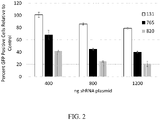
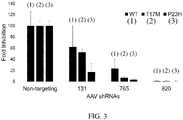
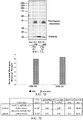
- the DNA sequences for shRNAs were cloned expressing three of the siRNAs ( FIG. 2 ).
- the relative knockdown of RHO using siRNA did not exactly predict relative suppression of RHO using shRNA, since siRNA 131 (SEQ ID NO: 1) was the most effective siRNA, but the least effective of the shRNAs that were tested.
- Simple transfection of siRNAs as RNA may not exactly predict the effectiveness of shRNA designed to produce the same siRNAs by transcription and processing.
- Table 5 lists RNA sequences corresponding to shRNA sequences identified as capable of cleaving RHO, including the sense strand, loop, antisense strand, and overhang. Each sequence is depicted with two alternative loop sequences that are bolded and underlined for emphasis, with overhangs italicized and underlined for emphasis.
- RNA sequence (Sense Strand - Loop - Antisense Strand - Overhang ) 20 RHO131-9 CUGCCUACAUGUUUCUGCU UCAAGAG AGCAGAAACAUGUAGGCAG UU 21 RHO131-10 CUGCCUACAUGUUUCUGCU UGUGCUU AGCAGAAACAUGUAGGCAG UU 22 RHO134-9 CCUACAUGUUUCUGCUGAU UCAAGA GAUCAGCAGAAACAUGUAGG UU 23 RHO134-10 CCUACAUGUUUCUGCUGAUUG UGCUU AUCAGCAGAAACAUGUAGG UU 24 RHO765-9 GCAUGGUCAUCAUCAUGGU UCAAGAG ACCAUGAUGAUGACCAUGC UU 25 RHO765-10 GCAUGGUCAUCAUCAUGGU UCAAGAG ACCAUGAUGAUGACCAUGC UU 25 RHO765-10 GCAUGGUCAUCAUCAUGGU UGUGCUU ACCAUGAUGAUGACCAUGC UU 26 RHO820-9
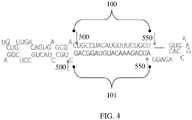
- siRNAs can also be delivered as artificial microRNAs 7 of a structure like that in FIG. 4 .
- the exemplary microRNA of FIG. 4 comprises sense (100) and antisense (101) strands of RHO131 (SEQ ID NOs: 1 and 2, respectively).
- the advantage of this mode of expression is that production of the siRNA can be made cell type specific through the use of a specific promoter sequence. In this case the proximal promoter of the human rhodopsin gene or the human rhodopsin kinase promoter would be used to restrict expression to photoreceptor cells.
- Dog 2190 received subretinal injections of AAV2/5-sc-H1-shRNA-Rho131 at the concentrations listed in Table 6. The dog was terminated 8 weeks post injection. Several 3 mm neuroretinal biopsy punches were collected from each eye from both bleb and non-bleb regions.
- Table 6 Dog 2190 Dog Genotype Sex DOB Age at injection Right Eye (OD) Left Eye (OS) 2190 rcd1 carrier M 8/11/14 1 year AAV2/5-sc-H1-shRNA-Rho131 ⁇ 4063 5E+12 vg/ml 150 ⁇ l SR AAV2/5-sc-H1-shRNA-Rho131 ⁇ 4063 1E+12 vg/ml 150 ⁇ l SR
- AAV2/5-sc-H1-shRNA constructs described herein can also be referred to as AAV2/5-sc-MOP500 rGFP-shRNA constructs.
- the AAV2/5 indicates that the nucleic acid encoding the shRNA is flanked by AAV2 ITRs and provided in an rAAV particle comprising AAV5 capsid proteins.
- any interfering RNA described herein and any recombinant RHO gene described herein can be provided on the same AAV nucleic acid (e.g., flanked by AAV2 ITRs) in an rAAV particle (e.g., comprising AAV5 capsid proteins).
- any interfering RNA described herein and any recombinant RHO gene described herein can be provided on different AAV nucleic acids (e.g., each flanked by AAV2 ITRs, or each flanked by ITRs from different AAV serotypes) encapsidated in different rAAV particles (e.g., each comprising AAV5 capsid proteins, or each having capsid proteins from different AAV serotypes).
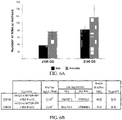
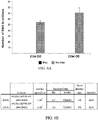
- Absolute Quantitation of Canine Rhodopsin RNA in Canine Retina In order to determine the absolute amounts of rhodopsin RNA present in the retina after ribozyme-treatment, absolute quantitation was performed using Q-PCR Standard Curve method. Dilution series of known quantities of canine RHO cDNA was used to construct a standard curve. Total amount of canine RHO RNA in each sample was calculated based on this standard curve ( FIG. 6A ).
- Dog 2194 (rcd1 carrier) received subretinal injections of AAV2/5-sc-H1-shRNA-Rho820 at the concentrations listed in Table 7. The dog was terminated 8 weeks post injection. Several 3 mm neuroretinal biopsy punches were collected from each eye from both bleb and non-bleb regions.
- Table 7 Dog 2194 Dog Genotype Sex DOB Age at injection Right Eye (OD) Left Eye (OS) 2194 rcdl carrier F 8/11/14 1 year AAV2/5-sc-H1-shRNA-Rho820 ⁇ 4064 5E+12 vg/ml 150 ⁇ l SR 50 ⁇ l intravitr AAV2/5-sc-H1-shRNA-Rho820 ⁇ 4064 1E+12 vg/ml Small bleb 50 ⁇ l SR 250 ⁇ l intravitr
- Absolute Quantitation of Canine Rhodopsin RNA in Canine Retina In order to determine the absolute amounts of rhodopsin RNA present in the retina after ribozyme-treatment, absolute quantitation was performed using Q-PCR Standard Curve method. Dilution series of known quantities of canine RHO cDNA was used to construct a standard curve. Total amount of canine RHO RNA in each sample was calculated based on this standard curve ( FIG. 8A ).
- an mRNA for a replacement gene can be modified at one or more positions to "harden” it ( i.e., to make it resistant to degradation by siRNA).
- one or more silent nucleotide substitutions can be included in the replacement gene relative to the siRNA that is provided to knockdown the endogenous gene (e.g., RHO gene).
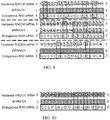
- FIGs. 9 and 10 provide non-limiting examples of nucleotide substitutions that can be introduced into the replacement RHO mRNA. It should be appreciated that a replacement RHO gene can include one or more of these substitutions.
- FIG. 9 depicts a representation of base pairing that occurs between each shRNA and the target sequence of endogenous human or hardened RHO mRNA. All shRNAs base-pair perfectly with the target sequence of RHO mRNA of dog.
- White box mismatch between shRNA and endogenous dog as well as hardened RHO mRNA.
- Dark gray box a weak wobble base pairing that occurs in RNA between guanosine and uracil.
- Light gray box mismatch between shRNA and hardened RHO mRNA only.
- FIG. 10 depicts a representation of base pairing that occurs between shRNA134 and the target sequence of endogenous human or hardened RHO131 mRNA.
- the proximity of the target sequences of shRNAs 131 and 134 enables the same hardened RHO131 to be employed.
- Dark gray box a weak wobble base pairing that occurs in RNA between guanosine and uracil.
- Light gray box mismatch between shRNA and hardened RHO mRNA only.
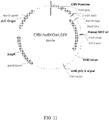
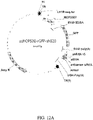
- FIGs. 12A-B depict non-limiting examples of siRNA (e.g., shRNA) encoded in a DNA vector.
- the DNA vector can further encode inverted terminal repeat (ITR) sequences flanking the siRNA (e.g., shRNA).
- ITR inverted terminal repeat
- a DNA vector encoding siRNA flanked by ITR sequences can be used in the production of recombinant AAV particles comprising the siRNA.
- FIG. 12C depicts a non-limiting example of a replacement RHO mRNA (e.g., Human RHO) encoded in a DNA vector.
- the DNA vector can further encode ITR sequences flanking the replacement RHO mRNA (e.g., Human RHO).
- a DNA vector encoding replacement RHO mRNA flanked by ITR sequences can be used in the production of recombinant AAV particles comprising the Human rho.
- a similar DNA vector may be provided that includes both the replacement rho gene and one or more sequences encoding one or more interfering RNAs flanked by ITR sequences.
- the interfering RNAs and/or replacement rho genes are operatively coupled to a promoter (e.g., an RNA polymerase III promoter, or H1 RNA polymerase III promoter, or other promoter as described in this application).
- the interfering RNAs and/or replacement rho genes represented in FIGs. 12A-C are under the control of an H1 RNA polymerase III promoter.
- MOP500-rGFP a -385/+86 portion of the mouse rod opsin promoter (MOP500) upstream of the reversed sequence of GFP (rGFP) that is therefore not expressed
- MOP500 a -385/+86 portion of the mouse rod opsin promoter upstream of the reversed sequence of GFP (rGFP) that is therefore not expressed
- a plasmid or rAAV nucleic acid can encode an interfering RNA and/or a modified rho gene as described herein, each under the control of the same or a different promoter (e.g., an H1 promoter) without a mouse opsin promoter and/or without any GFP coding sequence (in either orientation).
- a different promoter e.g., an H1 promoter
- a mouse opsin promoter e.g., without a mouse opsin promoter and/or without any GFP coding sequence (in either orientation).
- Example 6 includes the identification of viral titers of AAV2/5 carrying the shRNA820 knockdown reagent that efficiently silence rhodopsin expression after subretinal injection in WT dogs, evidence by in vivo retinal imaging in WT dogs of the preservation of the layer (ONL) that contains the photoreceptors, but reduction of the layers that contain rhodopsin following subretinal injection with AAV215-sc-H1- shRNA820 , identification of viral titers of AAV2/5 carrying the shRNA820 knockdown reagent that efficiently silence rhodopsin expression after subretinal injection in the mutant RHO T4R/+ dog, a naturally-occurring model of RHO-ADRP, identification of viral titers of AAV215-sc-H1- shRNA820 that confer protection to photoreceptors from light-induced retinal degeneration in the mutant RHO T4R/+ dogs, evidence that efficient knockdown of rhodopsin expression leads to
- Table 8 RHO KD with shRNA820 in WT RHO +/+ dogs Dog Genotype Sex DOB Age at injection Right Eye (OD) Left Eye (OS) 2194 rcd1 carrier F 8/11/14 1 year AAV2/5-SC-H1-shRNA-Rho820 ⁇ 4064 5E+12 vg/ml 150 ul SR AAV2/5-SC-H1-shRNA-Rho820 ⁇ 4064 1E+12 vg/ml Small bleb 50 ul SR BR442 RPE65 carrier F 12/15/13 1Y+11M AAV2/5-SC-H1-shRNA820 ⁇ 4064 1E+12 vg/ml 150 ul SR AAV2/5-SC-H1-shRNA820 ⁇ 4064 1E+12 vg/ml 150 ul SR GSR2 CNGB3 carrier rcd1 carrier M 8/19/2014 64 wks AAV2/5-SC-H1
- Absolute Quantitation of Canine Rhodopsin RNA in Canine Retina In order to determine the absolute amounts of Rhodopsin RNA present in the retina after shRNA820-treatment, absolute quantitation was performed using Q-PCR Standard Curve method. Dilution series of known quantities of canine RHO cDNA was used to construct a standard curve. 0.1 nanogram of total cDNA was used for quantitation. Total amount of canine RHO RNA in each sample was calculated based on this standard curve.
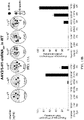
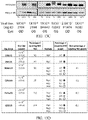
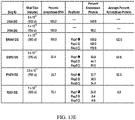
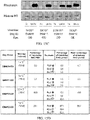
- FIGs. 13A-13E show RNA and protein analysis of rhodopsin knockdown with different viral titers of AAV2/5-sc-H1-shRNA820 injected subretinally in WT RHO +/+ dogs.
- FIG. 13A shows retinal maps showing position of biopsy punches used for western blot analysis and RNA quantitation.
- FIG. 13B shows a bar graph showing remaining canine Rhodopsin RNA in the treated area as a percentage of levels measured in the untreated area of the same retina.
- FIG. 13C shows immunoblot showing the amount of Rhodopsin in biopsy punches taken from treated (Tx) and untreated (UnTx) areas of canine retina. Histone H3 was used for normalization. Bar graphs show remaining canine Rhodopsin protein as a percentage of levels measured in the untreated area of the same retina.
- FIGs. 13D-13E show tables showing numerical values from each experiment (reported as a percentage of RNA or protein remaining, and alternatively as a percent knockdown of RNA or protein, respectively).
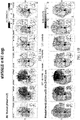
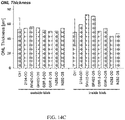
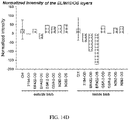
- FIGs. 14A-D show the assessment of ONL and ELM/IS/OS integrity following subretinal injection of different titers of AAV2/5-sc-H1-shRNA820 in WT dogs.
- FIG. 14A shows ONL thickness maps;
- FIG. 14B shows ELM/IS/OS maps of normalized intensity;
- FIG. 14C shows ONL thickness values;
- FIG. 14D shows values of normalized intensity of the ELM/IS/OS layers.
- cSLO/OCT was performed at 8 weeks post injection and light exposure (1 min at 1mW/cm 2 ) was performed on OS eye in all dogs to trigger light-induced retinal degeneration. cSLO/OCT was performed again on all dogs 2 weeks post light exposure to assess any rescue effect conferred by the treatment. Dogs were terminated and several 3mm neuroretinal biopsy punches were collected from OD eye from both bleb/treated and non-bleb/untreated regions to measure the level of expression of canine Rhodopsin by western blot and RHO RNA by qPCR analysis. The OS eye was fixed, embedded in optimal cutting temperature media and processed for histology and immunohistochemistry staining.
- Absolute Quantitation of Canine Rhodopsin RNA in Canine Retina In order to determine the absolute amounts of Rhodopsin RNA present in the retina after shRNA820-treatment, absolute quantitation was performed using Q-PCR Standard Curve method. Dilution series of known quantities of canine RHO cDNA was used to construct a standard curve. 0.1 nanogram of total cDNA was used for quantitation. Total amount of canine RHO RNA in each sample was calculated based on this standard curve.
- the surrounding non bleb/untreated regions were used as an internal control for each eye.
- Two weeks post light-exposure retinas were re-imaged, and showed good preservation of ONL thickness in the bleb/treated area of eyes injected with 1 ⁇ 10 12 and 5 ⁇ 10 11 vg/ml titers.
- Very mild rescue was seen at 2.5 ⁇ 10 11 vg/ml and none with 1 ⁇ 10 11 vg/ml titers.
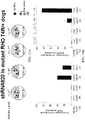
- FIGs. 15A-15E show RNA and protein analysis of rhodopsin knockdown with different viral titers of AAV2/5-sc-H1-shRNA820 injected subretinally in mutant RHO T4R/+ dogs.
- FIG. 15A shows retinal maps showing position of biopsy punches used for western blot analysis and RNA quantitation. Paired dark gray, gray and dotted circles indicate the position of biopsy punches in the bleb and non-bleb region for each replication of western blot, whereas the black circles indicate the position of biopsy punches for RNA quantitation.
- FIG. 15B is a bar graph showing the amount of remaining canine Rhodopsin RNA as a percentage of levels measured in the untreated area of the same retina.
- FIG. 15C is an immunoblot showing the amount of canine Rhodopsin in biopsy punches taken from treated (Tx) and untreated (UnTx) areas of canine retina. Histone H3 was used for normalization. Bar graphs show the amount of remaining canine Rhodopsin protein as a percentage of levels measured in the untreated area of the same retina.
- FIGs. 15D-15E are tables showing numerical values from each experiment (reported as a percentage of RNA or protein remaining, and alternatively as a percent knockdown of RNA or protein, respectively).
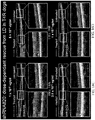
- FIGs. 16A-16D show OCT B scans encompassing the treated (with different viral titers of AAV2/5-sc-H1-shRNA820) and untreated retinal areas of RHO T4R/+ dogs 2 weeks following exposure to a brief dose of light that causes acute retinal degeneration in mutant RHO T4R/+ dogs.
- FIG. 16A OCT scan of a dog treated with 1 ⁇ 10 12 vg/ml.
- FIG. 16B OCT scan of a dog treated with 5 ⁇ 10 11 vg/ml.
- FIG. 16C OCT scan of a dog treated with 2.5 ⁇ 10 11 vg/ml.
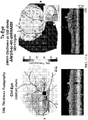
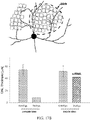
- FIGs. 17A-17B show topographic map ONL thickness from a RHO T4R/+ treated with AAV2/5-sc-shRNA820 showing protection from light-induced retinal degeneration.
- FIG. 17A ONL thickness map of an untreated WT control dog (left panel), and ONL thickness map of EM411-OS treated with AAV2/5-sc-shRNA820 at 5E+11 vg/ml and showing preserved ONL thickness in the treated/bleb region weeks after light-induced damage. Black and white curve shows the limits of the bleb as seen immediately after the subretinal injection. Panels below show OCT B scans with ONL colored in darker gray (middle band) for visualization purposes.
- FIG. 17B Loci outside and inside the bleb were selected for ONL thickness measurements.
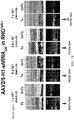
- FIG. 18 shows histology (H&E stained) and immunohistochemistry (Rhodopsin was stained in green and appears as the lighter staining in the lower panels of FIG. 18 ; human cone arrestin was stained in red and appears as the gray staining in the lower panels of FIG. 18 ) in the treated (Tx) and Untreated (UnTx) areas of mutant RHO T4R/+ retinas injected subretinally with different viral titers AAV2/5-sc-H1-shRNA820.
- cSLO/OCT In vivo retinal imaging (cSLO/OCT) was performed at 11 weeks post injection and light exposure (1 min at 1mW/cm 2 ) was performed on OS eye in both dogs to trigger light-induced retinal degeneration. cSLO/OCT was performed again on all dogs 2 weeks post light exposure to assess any rescue effect conferred by the treatment. Dogs were terminated and several 3mm neuroretinal biopsy punches were collected from OD eye from both bleb/treated and non-bleb/untreated regions to measure the level of expression of Rhodopsin by western blot and canine and human RHO RNA by qPCR analysis. The OS eye was fixed, embedded in optimal cutting temperature media and processed for histology and immunohistochemistry staining.
- mutant T4R rhodopsin can be differentiated from WT (canine or human) RHO protein as it has a lower MW that can be detected on immunoblots.
- RHO immunoblots from heterozygous mutant RHO T4R/+ thus show two bands corresponding to WT (high MW), and mutant T4R (low MW) RHO proteins.
- Anti-histone H3 antibody (Abcam ab1791, diluted 1:3000) was used as a loading control and to normalize the signals.
- Absolute Quantitation of Canine and Human Rhodopsin RNA in Canine Retina In order to determine the absolute amounts of both endogenous canine Rhodopsin RNA and human RHO820 RNA present in the retina after treatment with AAV2/5-sc-HOP-RHO820-H1-shRNA820, absolute quantitation was performed using Q-PCR Standard Curve method. Dilution series of known quantities of canine and human RHO cDNA were used to construct a standard curve. 0.1 nanogram of total cDNA was used for quantitation. Total amount of canine RHO and human RHO820 RNA in each sample was calculated based on this standard curve.
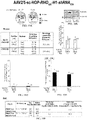
- FIGs. 19A-19F show RNA and protein analysis of rhodopsin knockdown and replacement with AAV2/5-sc-HOP-RHO820-H1-shRNA820 injected subretinally in mutant RHO T4R/+ dogs at 5 ⁇ 10 11 vg/ml titer.
- FIG. 19A shows retinal maps showing position of biopsy punches used for western blot analysis and RNA quantitation. Paired dark gray, gray and dotted circles indicate the position of biopsy punches in the treated (Tx) and untreated (UnTx) regions for each replication of western blot, whereas the black circles indicate the position of biopsy punches for RNA quantitation.
- FIG. 19A shows retinal maps showing position of biopsy punches used for western blot analysis and RNA quantitation. Paired dark gray, gray and dotted circles indicate the position of biopsy punches in the treated (Tx) and untreated (UnTx) regions for each replication of western blot, whereas the black
- FIG. 19B shows immunoblot showing the amount of total rhodopsin (canine + human RHO820) in biopsy punches taken from treated (Tx) and untreated (UnTx) areas of canine retina. Histone H3 was used for normalization. Bar graphs show the percentage of remaining rhodopsin protein in the Treated and untreated areas. Note the loss of the lower MW band (corresponding to mutant T4R RHO protein) in the treated areas of EM424-OD and EM425-OD.
- FIG. 19C is a table showing numerical values for each pair of punches used for protein quantification.
- FIG. 19D is a bar graph showing remaining canine Rhodopsin RNA in the treated areas as a percentage of canine RHO RNA levels measured in untreated areas.
- FIG. 19E is a bar graph showing levels of human RHO820 in the treated areas as a percentage of canine RHO RNA levels measured in untreated areas.
- FIG. 19F is a table showing numerical values for each pair of punches used for RNA quantification.
- the surrounding non bleb/untreated regions were used as an internal control for each eye. Two weeks post light-exposure there was complete preservation of ONL thickness in the bleb/treated area in both injected eyes.
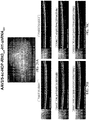
- FIGs. 20A-20C show in vivo retinal imaging showing protection from light-induced retinal degeneration in the region of a mutant RHO T4R/+ retina treated with AAV2/5-sc-HOP-RHO820-H1-shRNA820 at 5 ⁇ 10 11 /vg/ml titer.
- FIG. 20A shows en face cSLO composite showing 2 weeks post light exposure the retinal region (border demarcated by white arrows) that was protected from degeneration.
- Light gray arrow indicates the location within the treated area of the OCT B scans shown in FIG. 20B
- dark gray arrow indicates the location within the untreated area of the OCT B scans shown in FIG. 20C.
- FIG. 20A shows en face cSLO composite showing 2 weeks post light exposure the retinal region (border demarcated by white arrows) that was protected from degeneration.
- Light gray arrow indicates the location within the treated area of the OCT B scans shown in FIG. 20B
- FIG. 20B shows OCT B scans within the treated area before injection, 11 weeks post injection, and 13 weeks post injection / 2 weeks post light exposure. ONL thickness is preserved throughout the treated area at both time-points following the injection of the viral vector.
- FIG. 20C shows OCT B scans within the untreated area before injection, 11 weeks post injection, and 13 weeks post injection / 2 weeks post light exposure. ONL is preserved up to 11 weeks post injection but is completely lost 2 weeks after light exposure.
- FIG. 21 shows topographic maps of ONL thickness from a two RHO T4R/+ treated with AAV2/5-sc-HOP-RHO820-H1-shRNA820 at 5 ⁇ 10 11 /vg/ml titer showing protection from light-induced retinal degeneration.
- Immunohistochemistry was used to assess the level of protection conferred by AAV2/5-sc-HOP-RHO820-H1-shRNA820 in the treated/bleb area.
- the surrounding non bleb/untreated regions were used as an internal control for each eye.
- Antibodies directed against rhodopsin (RHO), and human cone arrestin (hCA) were used to assess the integrity of rod outer segments and cone morphology.
- RHO rhodopsin
- hCA human cone arrestin
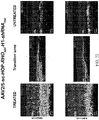
- FIG. 22 shows immunohistochemistry (Rhodopsin was stained in green and appears as the lighter staining in the panels of FIG. 22 ; human cone arrestin was stained in red appears as the gray staining in the panels of FIG. 22 ) in the treated, transition zone and untreated areas of mutant RHO T4R/+ retinas subretinally injected with AAV2/5-sc-HOP-RHO820-H1-shRNA820 at 5 x 10 11 /vg/ml titer.
- ONL outer nuclear layer
- OS rod outer segments
- a reference to "A and/or B", when used in conjunction with open-ended language such as “comprising” can refer, in one option, to A only (optionally including elements other than B); in another option, to B only (optionally including elements other than A); in yet another option, to both A and B (optionally including other elements); etc.
- the phrase "at least one,” in reference to a list of one or more elements, should be understood to mean at least one element selected from any one or more of the elements in the list of elements, but not necessarily including at least one of each and every element specifically listed within the list of elements and not excluding any combinations of elements in the list of elements.
- This definition also allows that elements may optionally be present other than the elements specifically identified within the list of elements to which the phrase "at least one" refers, whether related or unrelated to those elements specifically identified.
- At least one of A and B can refer, in one embodiment, to at least one, optionally including more than one, A, with no B present (and optionally including elements other than B); in another embodiment, to at least one, optionally including more than one, B, with no A present (and optionally including elements other than A); in yet another embodiment, to at least one, optionally including more than one, A, and at least one, optionally including more than one, B (and optionally including other elements); etc.
Landscapes
- Health & Medical Sciences (AREA)
- Life Sciences & Earth Sciences (AREA)
- Engineering & Computer Science (AREA)
- Genetics & Genomics (AREA)
- Chemical & Material Sciences (AREA)
- Biomedical Technology (AREA)
- Bioinformatics & Cheminformatics (AREA)
- Organic Chemistry (AREA)
- Zoology (AREA)
- Wood Science & Technology (AREA)
- General Engineering & Computer Science (AREA)
- Biotechnology (AREA)
- Molecular Biology (AREA)
- General Health & Medical Sciences (AREA)
- Microbiology (AREA)
- Biochemistry (AREA)
- Plant Pathology (AREA)
- Biophysics (AREA)
- Physics & Mathematics (AREA)
- Medicinal Chemistry (AREA)
- Virology (AREA)
- Veterinary Medicine (AREA)
- Chemical Kinetics & Catalysis (AREA)
- Nuclear Medicine, Radiotherapy & Molecular Imaging (AREA)
- Pharmacology & Pharmacy (AREA)
- Animal Behavior & Ethology (AREA)
- Public Health (AREA)
- Ophthalmology & Optometry (AREA)
- General Chemical & Material Sciences (AREA)
- Immunology (AREA)
- Medicines That Contain Protein Lipid Enzymes And Other Medicines (AREA)
- Pharmaceuticals Containing Other Organic And Inorganic Compounds (AREA)
- Medicines Containing Material From Animals Or Micro-Organisms (AREA)
- Pigments, Carbon Blacks, Or Wood Stains (AREA)
- Inorganic Compounds Of Heavy Metals (AREA)
- Medicinal Preparation (AREA)
- Micro-Organisms Or Cultivation Processes Thereof (AREA)
- Paper (AREA)
Priority Applications (1)
| Application Number | Priority Date | Filing Date | Title |
|---|---|---|---|
| EP22170988.4A EP4119668A1 (en) | 2016-03-01 | 2017-03-01 | Aav vectors for treatment of dominant retinitis pigmentosa |
Applications Claiming Priority (3)
| Application Number | Priority Date | Filing Date | Title |
|---|---|---|---|
| US201662302122P | 2016-03-01 | 2016-03-01 | |
| US201662398451P | 2016-09-22 | 2016-09-22 | |
| PCT/US2017/020289 WO2017151823A1 (en) | 2016-03-01 | 2017-03-01 | Aav vectors for treatment of dominant retinitis pigmentosa |
Related Child Applications (1)
| Application Number | Title | Priority Date | Filing Date |
|---|---|---|---|
| EP22170988.4A Division EP4119668A1 (en) | 2016-03-01 | 2017-03-01 | Aav vectors for treatment of dominant retinitis pigmentosa |
Publications (3)
| Publication Number | Publication Date |
|---|---|
| EP3423582A1 EP3423582A1 (en) | 2019-01-09 |
| EP3423582A4 EP3423582A4 (en) | 2019-11-13 |
| EP3423582B1 true EP3423582B1 (en) | 2022-05-04 |
Family
ID=59743213
Family Applications (2)
| Application Number | Title | Priority Date | Filing Date |
|---|---|---|---|
| EP17760752.0A Active EP3423582B1 (en) | 2016-03-01 | 2017-03-01 | Aav vectors for treatment of dominant retinitis pigmentosa |
| EP22170988.4A Pending EP4119668A1 (en) | 2016-03-01 | 2017-03-01 | Aav vectors for treatment of dominant retinitis pigmentosa |
Family Applications After (1)
| Application Number | Title | Priority Date | Filing Date |
|---|---|---|---|
| EP22170988.4A Pending EP4119668A1 (en) | 2016-03-01 | 2017-03-01 | Aav vectors for treatment of dominant retinitis pigmentosa |
Country Status (9)
| Country | Link |
|---|---|
| US (2) | US11118185B2 (enExample) |
| EP (2) | EP3423582B1 (enExample) |
| JP (3) | JP7272795B2 (enExample) |
| CN (2) | CN115896106A (enExample) |
| AU (2) | AU2017227776C1 (enExample) |
| CA (1) | CA3014671A1 (enExample) |
| ES (1) | ES2923877T3 (enExample) |
| IL (2) | IL302455A (enExample) |
| WO (1) | WO2017151823A1 (enExample) |
Families Citing this family (12)
| Publication number | Priority date | Publication date | Assignee | Title |
|---|---|---|---|---|
| IL302455A (en) | 2016-03-01 | 2023-06-01 | Univ Florida | Adeno-associated virus vectors for the treatment of dominant retinitis pigmentosa |
| JP7385282B2 (ja) * | 2017-11-07 | 2023-11-22 | ザ・ユニヴァーシティ・オヴ・ノース・キャロライナ・アト・チャペル・ヒル | 環状rna分子のための方法及び組成物 |
| JP2021522836A (ja) * | 2018-05-15 | 2021-09-02 | ユニバーシティ オブ ワシントンUniversity of Washington | スプライスオパシーの軽減、及びrnaドミナンス障害の治療のための組成物及び方法 |
| EP3802836A4 (en) * | 2018-06-01 | 2022-10-19 | University of Florida Research Foundation, Incorporated | COMPOSITIONS AND METHODS FOR THE TREATMENT OF DOMINANT RETINITIS PIGMENTOSA |
| GB201817469D0 (en) | 2018-10-26 | 2018-12-12 | Univ Oxford Innovation Ltd | Gene therapy for retinal disease |
| CN111518813B (zh) * | 2019-02-03 | 2023-04-28 | 武汉纽福斯生物科技有限公司 | 视紫红质的编码序列、其表达载体构建及其应用 |
| WO2021030745A1 (en) * | 2019-08-15 | 2021-02-18 | The Children's Hospital Of Philadelphia | Combined transgene and intron-derived mirna therapy for treatment of sca1 |
| CN113038971B (zh) * | 2020-04-21 | 2022-06-24 | 北京中因科技有限公司 | RHO-adRP基于基因编辑的方法和组合物 |
| CN111926044B (zh) * | 2020-10-12 | 2021-01-22 | 北京大学第三医院(北京大学第三临床医学院) | 结合突变rho基因的核酸分子和试剂盒 |
| MX2023008826A (es) | 2021-02-01 | 2023-09-15 | Regenxbio Inc | Terapia génica para lipofuscinosis neuronal ceroidea. |
| WO2025231487A1 (en) * | 2024-05-03 | 2025-11-06 | The Trustees Of The University Of Pennsylvania | Photoreceptor specific promotors for use in gene therapies for treatment of retinal degeneration |
| WO2026087373A1 (en) * | 2024-10-21 | 2026-04-30 | MeiraGTx Ocular UK Limited | Promoters for driving gene expression in rod photoreceptors and uses thereof |
Family Cites Families (29)
| Publication number | Priority date | Publication date | Assignee | Title |
|---|---|---|---|---|
| US5795587A (en) | 1995-01-23 | 1998-08-18 | University Of Pittsburgh | Stable lipid-comprising drug delivery complexes and methods for their production |
| US8551970B2 (en) | 1996-04-02 | 2013-10-08 | Optigen Patents Limited | Genetic suppression and replacement |
| GB9606961D0 (en) | 1996-04-02 | 1996-06-05 | Farrar Gwyneth J | Genetic strategy III |
| US20040234999A1 (en) | 1996-04-02 | 2004-11-25 | Farrar Gwenyth Jane | Genetic suppression and replacement |
| AU2003274397A1 (en) | 2002-06-05 | 2003-12-22 | University Of Florida | Production of pseudotyped recombinant aav virions |
| AU2004233043A1 (en) * | 2003-04-18 | 2004-11-04 | The Trustees Of The University Of Pennsylvania | Compositions and methods for siRNA inhibition of angiopoietin 1 and 2 and their receptor Tie2 |
| US20070009899A1 (en) * | 2003-10-02 | 2007-01-11 | Mounts William M | Nucleic acid arrays for detecting gene expression in animal models of inflammatory diseases |
| GB0403600D0 (en) * | 2004-02-18 | 2004-03-24 | Trinity College Dublin | Methods and reagents for treating disease |
| CN1977044A (zh) * | 2004-03-24 | 2007-06-06 | 肿瘤疗法科学股份有限公司 | 治疗胰腺癌的组合物和方法 |
| US20080221057A1 (en) | 2007-02-16 | 2008-09-11 | Wyeth | Secreted protein ccdc80 regulates adipocyte differentiation |
| US20120322861A1 (en) | 2007-02-23 | 2012-12-20 | Barry John Byrne | Compositions and Methods for Treating Diseases |
| US8257969B2 (en) * | 2007-04-12 | 2012-09-04 | The Provost Fellows And Scholars Of The College Of The Holy And Undivided Trinity Of Queen Elizabeth | Genetic suppression and replacement |
| US20110129825A1 (en) * | 2007-08-03 | 2011-06-02 | Melba Stinnett Ketchum | Compositions, methods and systems for the simultaneous determination of parentage, identity, sex, genotype and/or phenotype and breed determination in animals |
| US8450473B2 (en) * | 2009-04-30 | 2013-05-28 | The Research Foundation Of State University Of New York | Compositions and methods for therapy of macular degeneration |
| HUE041571T2 (hu) * | 2010-04-23 | 2019-05-28 | Univ Florida | RAAV-guanilát-cikláz-készítmények és ejárások 1-es típusú Leber-féle veleszületett vakság (LCA1) kezelésére |
| EP2449113B8 (en) | 2010-07-30 | 2015-11-25 | CureVac AG | Complexation of nucleic acids with disulfide-crosslinked cationic components for transfection and immunostimulation |
| CN102061308B (zh) | 2010-10-29 | 2013-05-08 | 北京未名凯拓作物设计中心有限公司 | 一种用百草枯筛选转基因植物的方法 |
| CN102061305B (zh) * | 2010-12-15 | 2012-07-18 | 深圳市百恩维生物科技有限公司 | 一种多ShRNA高效协同沉默基因方法及载体 |
| US20130064815A1 (en) | 2011-09-12 | 2013-03-14 | The Trustees Of Princeton University | Inducing apoptosis in quiescent cells |
| WO2013134766A2 (en) * | 2012-03-09 | 2013-09-12 | The Johns Hopkins University | Identification of molecular pathways and methods of use thereof for treating retinal neurodegeneration and other neurodegenerative disorders |
| US9163259B2 (en) * | 2012-05-04 | 2015-10-20 | Novartis Ag | Viral vectors for the treatment of retinal dystrophy |
| EP2855684A1 (en) * | 2012-05-25 | 2015-04-08 | Commissariat à l'Énergie Atomique et aux Énergies Alternatives | Vector for the selective silencing of a gene in astrocytes |
| US20140289881A1 (en) | 2013-03-14 | 2014-09-25 | Commonwealth Scientific And Industrial Research Organisation | Double-stranded rna |
| PT3628334T (pt) * | 2014-03-21 | 2023-09-26 | Genzyme Corp | Terapia genética para retinopatia pigmentar |
| MX391217B (es) | 2015-02-26 | 2025-03-21 | Ionis Pharmaceuticals Inc | Moduladores de rodopsina p23h con especificidad de alelo. |
| EP3289080B1 (en) | 2015-04-30 | 2021-08-25 | The Trustees of Columbia University in the City of New York | Gene therapy for autosomal dominant diseases |
| US11096955B2 (en) | 2016-02-09 | 2021-08-24 | Fondazione Telethon | Synthetic promoters and uses thereof |
| US20170348387A1 (en) | 2016-02-29 | 2017-12-07 | The Trustees Of The University Of Pennsylvania | Aav-mediated gene therapy for nphp5 lca-ciliopathy |
| IL302455A (en) | 2016-03-01 | 2023-06-01 | Univ Florida | Adeno-associated virus vectors for the treatment of dominant retinitis pigmentosa |
-
2017
- 2017-03-01 IL IL302455A patent/IL302455A/en unknown
- 2017-03-01 ES ES17760752T patent/ES2923877T3/es active Active
- 2017-03-01 AU AU2017227776A patent/AU2017227776C1/en active Active
- 2017-03-01 WO PCT/US2017/020289 patent/WO2017151823A1/en not_active Ceased
- 2017-03-01 EP EP17760752.0A patent/EP3423582B1/en active Active
- 2017-03-01 US US16/081,307 patent/US11118185B2/en active Active
- 2017-03-01 IL IL261014A patent/IL261014B2/en unknown
- 2017-03-01 JP JP2018545818A patent/JP7272795B2/ja active Active
- 2017-03-01 CN CN202210934990.0A patent/CN115896106A/zh active Pending
- 2017-03-01 EP EP22170988.4A patent/EP4119668A1/en active Pending
- 2017-03-01 CN CN201780014309.8A patent/CN109154002B/zh active Active
- 2017-03-01 CA CA3014671A patent/CA3014671A1/en active Pending
-
2021
- 2021-05-21 US US17/327,609 patent/US20210324387A1/en active Pending
-
2022
- 2022-09-29 JP JP2022156496A patent/JP7642211B2/ja active Active
-
2023
- 2023-09-27 AU AU2023237106A patent/AU2023237106B2/en active Active
-
2024
- 2024-09-27 JP JP2024168632A patent/JP7872961B2/ja active Active
Also Published As
| Publication number | Publication date |
|---|---|
| CA3014671A1 (en) | 2017-09-08 |
| IL261014B2 (en) | 2023-10-01 |
| EP4119668A1 (en) | 2023-01-18 |
| JP2025016451A (ja) | 2025-02-04 |
| AU2017227776B2 (en) | 2023-07-06 |
| EP3423582A1 (en) | 2019-01-09 |
| JP7872961B2 (ja) | 2026-06-11 |
| US20190093111A1 (en) | 2019-03-28 |
| ES2923877T3 (es) | 2022-10-03 |
| JP2022185052A (ja) | 2022-12-13 |
| IL261014B1 (en) | 2023-06-01 |
| IL302455A (en) | 2023-06-01 |
| AU2023237106B2 (en) | 2025-08-28 |
| AU2017227776C1 (en) | 2024-01-25 |
| CN109154002B (zh) | 2022-08-30 |
| AU2023237106A1 (en) | 2023-10-19 |
| US20210324387A1 (en) | 2021-10-21 |
| CN109154002A (zh) | 2019-01-04 |
| AU2017227776A1 (en) | 2018-08-23 |
| JP7642211B2 (ja) | 2025-03-10 |
| EP3423582A4 (en) | 2019-11-13 |
| JP2019511216A (ja) | 2019-04-25 |
| WO2017151823A1 (en) | 2017-09-08 |
| US11118185B2 (en) | 2021-09-14 |
| IL261014A (en) | 2018-10-31 |
| JP7272795B2 (ja) | 2023-05-12 |
| CN115896106A (zh) | 2023-04-04 |
Similar Documents
| Publication | Publication Date | Title |
|---|---|---|
| JP7642211B2 (ja) | 優性網膜色素変性の治療のためのaavベクター | |
| ES2856403T3 (es) | Composiciones a base de rAAV y procedimientos para el tratamiento de la esclerosis lateral amiotrofica | |
| JP2023011865A (ja) | MeCP2発現カセット | |
| US20250215437A1 (en) | Compositions and methods for treatment of dominant retinitis pigmentosa | |
| US20250049949A1 (en) | Gene therapy for lamin a-associated deficiencies | |
| US20240425882A1 (en) | Compositions useful in treatment of cdkl5 deficiency disorder (cdd) | |
| US11806408B2 (en) | Methods and compositions for treating cone-rod retinal dystrophy | |
| WO2025090575A9 (en) | Gene therapy for treatment of retinal degeneration | |
| HK40088240A (en) | Aav vectors for treatment of dominant retinitis pigmentosa | |
| HK40002351A (en) | Aav vectors for treatment of dominant retinitis pigmentosa | |
| HK40002351B (en) | Aav vectors for treatment of dominant retinitis pigmentosa | |
| WO2025217543A1 (en) | Therapeutic adeno-associated virus using codon optimized nucleic acid encoding lamp2b | |
| WO2025231487A1 (en) | Photoreceptor specific promotors for use in gene therapies for treatment of retinal degeneration | |
| WO2023240177A1 (en) | Products and methods for treating diseases or conditions associated with mutant or pathogenic kcnq3 expression | |
| KR20250096825A (ko) | 목적 유전자용 발현 카세트 및 이의 용도 |
Legal Events
| Date | Code | Title | Description |
|---|---|---|---|
| STAA | Information on the status of an ep patent application or granted ep patent |
Free format text: STATUS: THE INTERNATIONAL PUBLICATION HAS BEEN MADE |
|
| PUAI | Public reference made under article 153(3) epc to a published international application that has entered the european phase |
Free format text: ORIGINAL CODE: 0009012 |
|
| STAA | Information on the status of an ep patent application or granted ep patent |
Free format text: STATUS: REQUEST FOR EXAMINATION WAS MADE |
|
| 17P | Request for examination filed |
Effective date: 20180928 |
|
| AK | Designated contracting states |
Kind code of ref document: A1 Designated state(s): AL AT BE BG CH CY CZ DE DK EE ES FI FR GB GR HR HU IE IS IT LI LT LU LV MC MK MT NL NO PL PT RO RS SE SI SK SM TR |
|
| AX | Request for extension of the european patent |
Extension state: BA ME |
|
| DAV | Request for validation of the european patent (deleted) | ||
| DAX | Request for extension of the european patent (deleted) | ||
| RIC1 | Information provided on ipc code assigned before grant |
Ipc: C07H 21/02 20060101ALI20190701BHEP Ipc: C12N 15/79 20060101AFI20190701BHEP Ipc: C12N 15/86 20060101ALI20190701BHEP Ipc: C12N 15/10 20060101ALI20190701BHEP Ipc: C12N 15/85 20060101ALI20190701BHEP Ipc: C12N 15/113 20100101ALI20190701BHEP Ipc: C12N 15/11 20060101ALI20190701BHEP |
|
| A4 | Supplementary search report drawn up and despatched |
Effective date: 20191015 |
|
| RIC1 | Information provided on ipc code assigned before grant |
Ipc: C07H 21/02 20060101ALI20191009BHEP Ipc: C12N 15/113 20100101ALI20191009BHEP Ipc: C12N 15/11 20060101ALI20191009BHEP Ipc: C12N 15/79 20060101AFI20191009BHEP Ipc: C12N 15/86 20060101ALI20191009BHEP Ipc: C12N 15/10 20060101ALI20191009BHEP Ipc: C12N 15/85 20060101ALI20191009BHEP |
|
| REG | Reference to a national code |
Ref country code: HK Ref legal event code: DE Ref document number: 40002351 Country of ref document: HK |
|
| STAA | Information on the status of an ep patent application or granted ep patent |
Free format text: STATUS: EXAMINATION IS IN PROGRESS |
|
| 17Q | First examination report despatched |
Effective date: 20200827 |
|
| GRAP | Despatch of communication of intention to grant a patent |
Free format text: ORIGINAL CODE: EPIDOSNIGR1 |
|
| STAA | Information on the status of an ep patent application or granted ep patent |
Free format text: STATUS: GRANT OF PATENT IS INTENDED |
|
| INTG | Intention to grant announced |
Effective date: 20210412 |
|
| GRAJ | Information related to disapproval of communication of intention to grant by the applicant or resumption of examination proceedings by the epo deleted |
Free format text: ORIGINAL CODE: EPIDOSDIGR1 |
|
| STAA | Information on the status of an ep patent application or granted ep patent |
Free format text: STATUS: EXAMINATION IS IN PROGRESS |
|
| INTC | Intention to grant announced (deleted) | ||
| GRAP | Despatch of communication of intention to grant a patent |
Free format text: ORIGINAL CODE: EPIDOSNIGR1 |
|
| STAA | Information on the status of an ep patent application or granted ep patent |
Free format text: STATUS: GRANT OF PATENT IS INTENDED |
|
| INTG | Intention to grant announced |
Effective date: 20210928 |
|
| GRAS | Grant fee paid |
Free format text: ORIGINAL CODE: EPIDOSNIGR3 |
|
| GRAA | (expected) grant |
Free format text: ORIGINAL CODE: 0009210 |
|
| STAA | Information on the status of an ep patent application or granted ep patent |
Free format text: STATUS: THE PATENT HAS BEEN GRANTED |
|
| AK | Designated contracting states |
Kind code of ref document: B1 Designated state(s): AL AT BE BG CH CY CZ DE DK EE ES FI FR GB GR HR HU IE IS IT LI LT LU LV MC MK MT NL NO PL PT RO RS SE SI SK SM TR |
|
| REG | Reference to a national code |
Ref country code: GB Ref legal event code: FG4D |
|
| REG | Reference to a national code |
Ref country code: CH Ref legal event code: EP |
|
| REG | Reference to a national code |
Ref country code: AT Ref legal event code: REF Ref document number: 1489103 Country of ref document: AT Kind code of ref document: T Effective date: 20220515 |
|
| REG | Reference to a national code |
Ref country code: DE Ref legal event code: R096 Ref document number: 602017056924 Country of ref document: DE |
|
| REG | Reference to a national code |
Ref country code: IE Ref legal event code: FG4D |
|
| REG | Reference to a national code |
Ref country code: LT Ref legal event code: MG9D |
|
| REG | Reference to a national code |
Ref country code: NL Ref legal event code: MP Effective date: 20220504 |
|
| REG | Reference to a national code |
Ref country code: ES Ref legal event code: FG2A Ref document number: 2923877 Country of ref document: ES Kind code of ref document: T3 Effective date: 20221003 |
|
| REG | Reference to a national code |
Ref country code: AT Ref legal event code: MK05 Ref document number: 1489103 Country of ref document: AT Kind code of ref document: T Effective date: 20220504 |
|
| PG25 | Lapsed in a contracting state [announced via postgrant information from national office to epo] |
Ref country code: SE Free format text: LAPSE BECAUSE OF FAILURE TO SUBMIT A TRANSLATION OF THE DESCRIPTION OR TO PAY THE FEE WITHIN THE PRESCRIBED TIME-LIMIT Effective date: 20220504 Ref country code: PT Free format text: LAPSE BECAUSE OF FAILURE TO SUBMIT A TRANSLATION OF THE DESCRIPTION OR TO PAY THE FEE WITHIN THE PRESCRIBED TIME-LIMIT Effective date: 20220905 Ref country code: NO Free format text: LAPSE BECAUSE OF FAILURE TO SUBMIT A TRANSLATION OF THE DESCRIPTION OR TO PAY THE FEE WITHIN THE PRESCRIBED TIME-LIMIT Effective date: 20220804 Ref country code: NL Free format text: LAPSE BECAUSE OF FAILURE TO SUBMIT A TRANSLATION OF THE DESCRIPTION OR TO PAY THE FEE WITHIN THE PRESCRIBED TIME-LIMIT Effective date: 20220504 Ref country code: LT Free format text: LAPSE BECAUSE OF FAILURE TO SUBMIT A TRANSLATION OF THE DESCRIPTION OR TO PAY THE FEE WITHIN THE PRESCRIBED TIME-LIMIT Effective date: 20220504 Ref country code: HR Free format text: LAPSE BECAUSE OF FAILURE TO SUBMIT A TRANSLATION OF THE DESCRIPTION OR TO PAY THE FEE WITHIN THE PRESCRIBED TIME-LIMIT Effective date: 20220504 Ref country code: GR Free format text: LAPSE BECAUSE OF FAILURE TO SUBMIT A TRANSLATION OF THE DESCRIPTION OR TO PAY THE FEE WITHIN THE PRESCRIBED TIME-LIMIT Effective date: 20220805 Ref country code: FI Free format text: LAPSE BECAUSE OF FAILURE TO SUBMIT A TRANSLATION OF THE DESCRIPTION OR TO PAY THE FEE WITHIN THE PRESCRIBED TIME-LIMIT Effective date: 20220504 Ref country code: BG Free format text: LAPSE BECAUSE OF FAILURE TO SUBMIT A TRANSLATION OF THE DESCRIPTION OR TO PAY THE FEE WITHIN THE PRESCRIBED TIME-LIMIT Effective date: 20220804 Ref country code: AT Free format text: LAPSE BECAUSE OF FAILURE TO SUBMIT A TRANSLATION OF THE DESCRIPTION OR TO PAY THE FEE WITHIN THE PRESCRIBED TIME-LIMIT Effective date: 20220504 |
|
| PG25 | Lapsed in a contracting state [announced via postgrant information from national office to epo] |
Ref country code: RS Free format text: LAPSE BECAUSE OF FAILURE TO SUBMIT A TRANSLATION OF THE DESCRIPTION OR TO PAY THE FEE WITHIN THE PRESCRIBED TIME-LIMIT Effective date: 20220504 Ref country code: PL Free format text: LAPSE BECAUSE OF FAILURE TO SUBMIT A TRANSLATION OF THE DESCRIPTION OR TO PAY THE FEE WITHIN THE PRESCRIBED TIME-LIMIT Effective date: 20220504 Ref country code: LV Free format text: LAPSE BECAUSE OF FAILURE TO SUBMIT A TRANSLATION OF THE DESCRIPTION OR TO PAY THE FEE WITHIN THE PRESCRIBED TIME-LIMIT Effective date: 20220504 Ref country code: IS Free format text: LAPSE BECAUSE OF FAILURE TO SUBMIT A TRANSLATION OF THE DESCRIPTION OR TO PAY THE FEE WITHIN THE PRESCRIBED TIME-LIMIT Effective date: 20220904 |
|
| PG25 | Lapsed in a contracting state [announced via postgrant information from national office to epo] |
Ref country code: SM Free format text: LAPSE BECAUSE OF FAILURE TO SUBMIT A TRANSLATION OF THE DESCRIPTION OR TO PAY THE FEE WITHIN THE PRESCRIBED TIME-LIMIT Effective date: 20220504 Ref country code: SK Free format text: LAPSE BECAUSE OF FAILURE TO SUBMIT A TRANSLATION OF THE DESCRIPTION OR TO PAY THE FEE WITHIN THE PRESCRIBED TIME-LIMIT Effective date: 20220504 Ref country code: RO Free format text: LAPSE BECAUSE OF FAILURE TO SUBMIT A TRANSLATION OF THE DESCRIPTION OR TO PAY THE FEE WITHIN THE PRESCRIBED TIME-LIMIT Effective date: 20220504 Ref country code: EE Free format text: LAPSE BECAUSE OF FAILURE TO SUBMIT A TRANSLATION OF THE DESCRIPTION OR TO PAY THE FEE WITHIN THE PRESCRIBED TIME-LIMIT Effective date: 20220504 Ref country code: DK Free format text: LAPSE BECAUSE OF FAILURE TO SUBMIT A TRANSLATION OF THE DESCRIPTION OR TO PAY THE FEE WITHIN THE PRESCRIBED TIME-LIMIT Effective date: 20220504 Ref country code: CZ Free format text: LAPSE BECAUSE OF FAILURE TO SUBMIT A TRANSLATION OF THE DESCRIPTION OR TO PAY THE FEE WITHIN THE PRESCRIBED TIME-LIMIT Effective date: 20220504 |
|
| REG | Reference to a national code |
Ref country code: DE Ref legal event code: R097 Ref document number: 602017056924 Country of ref document: DE |
|
| PLBE | No opposition filed within time limit |
Free format text: ORIGINAL CODE: 0009261 |
|
| STAA | Information on the status of an ep patent application or granted ep patent |
Free format text: STATUS: NO OPPOSITION FILED WITHIN TIME LIMIT |
|
| PG25 | Lapsed in a contracting state [announced via postgrant information from national office to epo] |
Ref country code: AL Free format text: LAPSE BECAUSE OF FAILURE TO SUBMIT A TRANSLATION OF THE DESCRIPTION OR TO PAY THE FEE WITHIN THE PRESCRIBED TIME-LIMIT Effective date: 20220504 |
|
| 26N | No opposition filed |
Effective date: 20230207 |
|
| PG25 | Lapsed in a contracting state [announced via postgrant information from national office to epo] |
Ref country code: SI Free format text: LAPSE BECAUSE OF FAILURE TO SUBMIT A TRANSLATION OF THE DESCRIPTION OR TO PAY THE FEE WITHIN THE PRESCRIBED TIME-LIMIT Effective date: 20220504 |
|
| P01 | Opt-out of the competence of the unified patent court (upc) registered |
Effective date: 20230523 |
|
| PG25 | Lapsed in a contracting state [announced via postgrant information from national office to epo] |
Ref country code: MC Free format text: LAPSE BECAUSE OF FAILURE TO SUBMIT A TRANSLATION OF THE DESCRIPTION OR TO PAY THE FEE WITHIN THE PRESCRIBED TIME-LIMIT Effective date: 20220504 |
|
| REG | Reference to a national code |
Ref country code: CH Ref legal event code: PL |
|
| REG | Reference to a national code |
Ref country code: BE Ref legal event code: MM Effective date: 20230331 |
|
| PG25 | Lapsed in a contracting state [announced via postgrant information from national office to epo] |
Ref country code: LU Free format text: LAPSE BECAUSE OF NON-PAYMENT OF DUE FEES Effective date: 20230301 |
|
| REG | Reference to a national code |
Ref country code: IE Ref legal event code: MM4A |
|
| PG25 | Lapsed in a contracting state [announced via postgrant information from national office to epo] |
Ref country code: LI Free format text: LAPSE BECAUSE OF NON-PAYMENT OF DUE FEES Effective date: 20230331 Ref country code: IE Free format text: LAPSE BECAUSE OF NON-PAYMENT OF DUE FEES Effective date: 20230301 Ref country code: CH Free format text: LAPSE BECAUSE OF NON-PAYMENT OF DUE FEES Effective date: 20230331 |
|
| PG25 | Lapsed in a contracting state [announced via postgrant information from national office to epo] |
Ref country code: BE Free format text: LAPSE BECAUSE OF NON-PAYMENT OF DUE FEES Effective date: 20230331 |
|
| PG25 | Lapsed in a contracting state [announced via postgrant information from national office to epo] |
Ref country code: BG Free format text: LAPSE BECAUSE OF FAILURE TO SUBMIT A TRANSLATION OF THE DESCRIPTION OR TO PAY THE FEE WITHIN THE PRESCRIBED TIME-LIMIT Effective date: 20220504 |
|
| PG25 | Lapsed in a contracting state [announced via postgrant information from national office to epo] |
Ref country code: BG Free format text: LAPSE BECAUSE OF FAILURE TO SUBMIT A TRANSLATION OF THE DESCRIPTION OR TO PAY THE FEE WITHIN THE PRESCRIBED TIME-LIMIT Effective date: 20220504 |
|
| PG25 | Lapsed in a contracting state [announced via postgrant information from national office to epo] |
Ref country code: CY Free format text: LAPSE BECAUSE OF FAILURE TO SUBMIT A TRANSLATION OF THE DESCRIPTION OR TO PAY THE FEE WITHIN THE PRESCRIBED TIME-LIMIT; INVALID AB INITIO Effective date: 20170301 |
|
| PG25 | Lapsed in a contracting state [announced via postgrant information from national office to epo] |
Ref country code: HU Free format text: LAPSE BECAUSE OF FAILURE TO SUBMIT A TRANSLATION OF THE DESCRIPTION OR TO PAY THE FEE WITHIN THE PRESCRIBED TIME-LIMIT; INVALID AB INITIO Effective date: 20170301 |
|
| PG25 | Lapsed in a contracting state [announced via postgrant information from national office to epo] |
Ref country code: TR Free format text: LAPSE BECAUSE OF FAILURE TO SUBMIT A TRANSLATION OF THE DESCRIPTION OR TO PAY THE FEE WITHIN THE PRESCRIBED TIME-LIMIT Effective date: 20220504 |
|
| PGFP | Annual fee paid to national office [announced via postgrant information from national office to epo] |
Ref country code: GB Payment date: 20260327 Year of fee payment: 10 |
|
| PGFP | Annual fee paid to national office [announced via postgrant information from national office to epo] |
Ref country code: DE Payment date: 20260327 Year of fee payment: 10 |
|
| PGFP | Annual fee paid to national office [announced via postgrant information from national office to epo] |
Ref country code: IT Payment date: 20260319 Year of fee payment: 10 |
|
| PGFP | Annual fee paid to national office [announced via postgrant information from national office to epo] |
Ref country code: FR Payment date: 20260325 Year of fee payment: 10 |
|
| PGFP | Annual fee paid to national office [announced via postgrant information from national office to epo] |
Ref country code: ES Payment date: 20260401 Year of fee payment: 10 |