EP3404745B1 - Verfahren zur herstellung einer sekundärbatterieelektrode mit vorschlitzverfahren - Google Patents
Verfahren zur herstellung einer sekundärbatterieelektrode mit vorschlitzverfahren Download PDFInfo
- Publication number
- EP3404745B1 EP3404745B1 EP17858601.2A EP17858601A EP3404745B1 EP 3404745 B1 EP3404745 B1 EP 3404745B1 EP 17858601 A EP17858601 A EP 17858601A EP 3404745 B1 EP3404745 B1 EP 3404745B1
- Authority
- EP
- European Patent Office
- Prior art keywords
- electrode
- forming
- secondary battery
- manufacturing
- coated
- Prior art date
- Legal status (The legal status is an assumption and is not a legal conclusion. Google has not performed a legal analysis and makes no representation as to the accuracy of the status listed.)
- Active
Links
Images



Classifications
-
- H—ELECTRICITY
- H01—ELECTRIC ELEMENTS
- H01M—PROCESSES OR MEANS, e.g. BATTERIES, FOR THE DIRECT CONVERSION OF CHEMICAL ENERGY INTO ELECTRICAL ENERGY
- H01M4/00—Electrodes
- H01M4/02—Electrodes composed of, or comprising, active material
- H01M4/13—Electrodes for accumulators with non-aqueous electrolyte, e.g. for lithium-accumulators; Processes of manufacture thereof
- H01M4/139—Processes of manufacture
-
- B—PERFORMING OPERATIONS; TRANSPORTING
- B26—HAND CUTTING TOOLS; CUTTING; SEVERING
- B26F—PERFORATING; PUNCHING; CUTTING-OUT; STAMPING-OUT; SEVERING BY MEANS OTHER THAN CUTTING
- B26F1/00—Perforating; Punching; Cutting-out; Stamping-out; Apparatus therefor
- B26F1/02—Perforating by punching, e.g. with relatively-reciprocating punch and bed
- B26F1/12—Perforating by punching, e.g. with relatively-reciprocating punch and bed to notch margins of work
-
- H—ELECTRICITY
- H01—ELECTRIC ELEMENTS
- H01M—PROCESSES OR MEANS, e.g. BATTERIES, FOR THE DIRECT CONVERSION OF CHEMICAL ENERGY INTO ELECTRICAL ENERGY
- H01M4/00—Electrodes
- H01M4/02—Electrodes composed of, or comprising, active material
- H01M4/04—Processes of manufacture in general
-
- H—ELECTRICITY
- H01—ELECTRIC ELEMENTS
- H01M—PROCESSES OR MEANS, e.g. BATTERIES, FOR THE DIRECT CONVERSION OF CHEMICAL ENERGY INTO ELECTRICAL ENERGY
- H01M4/00—Electrodes
- H01M4/02—Electrodes composed of, or comprising, active material
- H01M4/04—Processes of manufacture in general
- H01M4/0402—Methods of deposition of the material
- H01M4/0404—Methods of deposition of the material by coating on electrode collectors
-
- H—ELECTRICITY
- H01—ELECTRIC ELEMENTS
- H01M—PROCESSES OR MEANS, e.g. BATTERIES, FOR THE DIRECT CONVERSION OF CHEMICAL ENERGY INTO ELECTRICAL ENERGY
- H01M4/00—Electrodes
- H01M4/02—Electrodes composed of, or comprising, active material
- H01M4/04—Processes of manufacture in general
- H01M4/0402—Methods of deposition of the material
- H01M4/0409—Methods of deposition of the material by a doctor blade method, slip-casting or roller coating
-
- H—ELECTRICITY
- H01—ELECTRIC ELEMENTS
- H01M—PROCESSES OR MEANS, e.g. BATTERIES, FOR THE DIRECT CONVERSION OF CHEMICAL ENERGY INTO ELECTRICAL ENERGY
- H01M4/00—Electrodes
- H01M4/02—Electrodes composed of, or comprising, active material
- H01M4/04—Processes of manufacture in general
- H01M4/0402—Methods of deposition of the material
- H01M4/0416—Methods of deposition of the material involving impregnation with a solution, dispersion, paste or dry powder
-
- H—ELECTRICITY
- H01—ELECTRIC ELEMENTS
- H01M—PROCESSES OR MEANS, e.g. BATTERIES, FOR THE DIRECT CONVERSION OF CHEMICAL ENERGY INTO ELECTRICAL ENERGY
- H01M4/00—Electrodes
- H01M4/02—Electrodes composed of, or comprising, active material
- H01M4/04—Processes of manufacture in general
- H01M4/043—Processes of manufacture in general involving compressing or compaction
- H01M4/0435—Rolling or calendering
-
- H—ELECTRICITY
- H01—ELECTRIC ELEMENTS
- H01M—PROCESSES OR MEANS, e.g. BATTERIES, FOR THE DIRECT CONVERSION OF CHEMICAL ENERGY INTO ELECTRICAL ENERGY
- H01M4/00—Electrodes
- H01M4/02—Electrodes composed of, or comprising, active material
- H01M4/04—Processes of manufacture in general
- H01M4/0471—Processes of manufacture in general involving thermal treatment, e.g. firing, sintering, backing particulate active material, thermal decomposition, pyrolysis
-
- H—ELECTRICITY
- H01—ELECTRIC ELEMENTS
- H01M—PROCESSES OR MEANS, e.g. BATTERIES, FOR THE DIRECT CONVERSION OF CHEMICAL ENERGY INTO ELECTRICAL ENERGY
- H01M4/00—Electrodes
- H01M4/02—Electrodes composed of, or comprising, active material
- H01M4/13—Electrodes for accumulators with non-aqueous electrolyte, e.g. for lithium-accumulators; Processes of manufacture thereof
-
- H—ELECTRICITY
- H01—ELECTRIC ELEMENTS
- H01M—PROCESSES OR MEANS, e.g. BATTERIES, FOR THE DIRECT CONVERSION OF CHEMICAL ENERGY INTO ELECTRICAL ENERGY
- H01M4/00—Electrodes
- H01M4/02—Electrodes composed of, or comprising, active material
- H01M4/64—Carriers or collectors
- H01M4/66—Selection of materials
-
- H—ELECTRICITY
- H01—ELECTRIC ELEMENTS
- H01M—PROCESSES OR MEANS, e.g. BATTERIES, FOR THE DIRECT CONVERSION OF CHEMICAL ENERGY INTO ELECTRICAL ENERGY
- H01M4/00—Electrodes
- H01M4/02—Electrodes composed of, or comprising, active material
- H01M4/64—Carriers or collectors
- H01M4/66—Selection of materials
- H01M4/661—Metal or alloys, e.g. alloy coatings
-
- H—ELECTRICITY
- H01—ELECTRIC ELEMENTS
- H01M—PROCESSES OR MEANS, e.g. BATTERIES, FOR THE DIRECT CONVERSION OF CHEMICAL ENERGY INTO ELECTRICAL ENERGY
- H01M50/00—Constructional details or processes of manufacture of the non-active parts of electrochemical cells other than fuel cells, e.g. hybrid cells
- H01M50/50—Current conducting connections for cells or batteries
- H01M50/531—Electrode connections inside a battery casing
-
- H—ELECTRICITY
- H01—ELECTRIC ELEMENTS
- H01M—PROCESSES OR MEANS, e.g. BATTERIES, FOR THE DIRECT CONVERSION OF CHEMICAL ENERGY INTO ELECTRICAL ENERGY
- H01M4/00—Electrodes
- H01M4/02—Electrodes composed of, or comprising, active material
- H01M4/24—Electrodes for alkaline accumulators
- H01M4/26—Processes of manufacture
-
- Y—GENERAL TAGGING OF NEW TECHNOLOGICAL DEVELOPMENTS; GENERAL TAGGING OF CROSS-SECTIONAL TECHNOLOGIES SPANNING OVER SEVERAL SECTIONS OF THE IPC; TECHNICAL SUBJECTS COVERED BY FORMER USPC CROSS-REFERENCE ART COLLECTIONS [XRACs] AND DIGESTS
- Y02—TECHNOLOGIES OR APPLICATIONS FOR MITIGATION OR ADAPTATION AGAINST CLIMATE CHANGE
- Y02E—REDUCTION OF GREENHOUSE GAS [GHG] EMISSIONS, RELATED TO ENERGY GENERATION, TRANSMISSION OR DISTRIBUTION
- Y02E60/00—Enabling technologies; Technologies with a potential or indirect contribution to GHG emissions mitigation
- Y02E60/10—Energy storage using batteries
-
- Y—GENERAL TAGGING OF NEW TECHNOLOGICAL DEVELOPMENTS; GENERAL TAGGING OF CROSS-SECTIONAL TECHNOLOGIES SPANNING OVER SEVERAL SECTIONS OF THE IPC; TECHNICAL SUBJECTS COVERED BY FORMER USPC CROSS-REFERENCE ART COLLECTIONS [XRACs] AND DIGESTS
- Y02—TECHNOLOGIES OR APPLICATIONS FOR MITIGATION OR ADAPTATION AGAINST CLIMATE CHANGE
- Y02P—CLIMATE CHANGE MITIGATION TECHNOLOGIES IN THE PRODUCTION OR PROCESSING OF GOODS
- Y02P70/00—Climate change mitigation technologies in the production process for final industrial or consumer products
- Y02P70/50—Manufacturing or production processes characterised by the final manufactured product
Definitions
- the present disclosure relates to a method of manufacturing an electrode for a secondary battery including a pre-slitting process.
- Recent trends in the development of the electronic industry can be summarized as wireless functions of a device, a mobile trend, and a transition from analog to digital.
- the rapid dissemination of wireless phones (so-called mobile phones) and notebook computers, and the transition from analog cameras to digital cameras may be referred to as representative examples of such trends.
- the lithium secondary battery has a structure in which an electrode assembly of a positive electrode/a separator/a negative electrode is embedded in a sealed container together with an electrolyte.
- an electrode generate current via the exchanges of ions
- a positive electrode and a negative electrode constituting the electrode have a structure in which an electrode active material is applied to an electrode current collector made of metal.
- the negative electrode has a structure in which a carbon-based active material is applied to an electrode plate made of copper, aluminum, and the like
- the positive electrode has a structure in which an active material made of LiCoO 2 , LiMnO 2 , LiNiO 2 and the like is coated on an electrode plate made of aluminum and the like.
- an electrode mixture including an electrode active material is applied to an electrode current collector made of a metal sheet which is elongated in one direction.
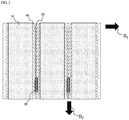
- FIG. 1 is a schematic plan view in which a roll press process is performed on an electrode-processed body to which an electrode mixture of the related art is applied.
- heated rollers 30 and 31 are placed on upper and lower surfaces of an electrode-processed body 10 on which an electrode slurry 14 including an electrode active material is applied, and the heated rollers 30 and 31 press the electrode slurry 14 in a direction of the electrode-processed body 10.
- a solvent remaining in the electrode slurry is evaporated, and the electrode slurry is compressed and cured on the electrode to form an electrode mixture layer having improved energy density.
- a process for processing an outer shape of a set electrode is performed.
- FIG. 2 is a schematic plan view illustrating a process of slitting an electrode-processed body of the related art.
- an electrode current collector coated with the electrode mixture 14, made of a metal sheet which is elongated in one direction D 2 is slit using a cutter 20, and the electrode current collector is divided into electrode strips.
- a first direction D 1 is a transverse direction of a metal foil
- the second direction D 2 is a longitudinal direction of the metal foil
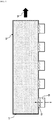
- FIG. 3 is a schematic perspective view illustrating a process of forming an electrode tab in an electrode-processed body of the related art.
- electrode-processed bodies 10 and 11 manufactured through a slitting process are subjected to a notching process for processing shapes of electrode tabs 18 and 19 using a metal mold or a laser.
- the electrode-processed body 10 is cut by metal molds 20, 21, 22, and 23 to process the shapes of the electrode tab 18 and a coated part 17 coated with an electrode mixture.
- an electrode having the shape of the electrode tab is subjected to a process of laminating a separator and a negative electrode and/or a positive electrode, and then laminating the result thereof to manufacture a unit cell. Then, unit cells thus manufactured are placed on, for example, a long separation film, and a folding process is performed to manufacture an electrode assembly.
- the roll-to-roll process refers to a process capable of performing processes such as coating and printing while moving a plurality of bendable metal foils and the like between rollers.
- a roll on which a thin flexible sheet-like material is wound is unwound to supply the material, coating or printing is performed on the supplied material, and the processed material is rewound on another roll.
- FIG. 4 is a schematic plan view of an electrode-processed body having an electrode tab formed by a notching process.
- the non-coated part is folded by a wrinkle or wave pattern formed during the roll-to-roll process, or the wave pattern 15 is formed in some parts of the electrode tab 18 formed on the non-coated part 15 after the notching process of the electrode.
- the electrode tab is easily folded due to wrinkles formed on the electrode tab, resulting failure.
- the present disclosure is provided to solve the above technical problems of the related art.
- the inventors of the present disclosure have conducted intensive researches and various experiments and have found that, as will be described later, in a method of manufacturing an electrode for a secondary battery, before a process of forming electrode strips by slitting a non-coated part in a second direction, when a process of forming non-continuous linear slits in the non-coated part of a metal foil in the second direction is further included, it is possible to prevent wrinkles or wave patterns from being generated and intensified, and also possible to reduce defects due to the folding of the non-coated part or an electrode tab, thereby completing the present disclosure.
- the present disclosure provides a method according to claim 1, of manufacturing an electrode for a secondary battery.
- the method of manufacturing an electrode for a secondary battery can prevent wrinkles or wave patterns generated when a shear force is applied to the non-coated part by a cutter during the slitting process from being further lengthened and intensified by previously performing the process of forming the non-continuous linear slits in the non-coated part of the metal foil in the second direction before continuously forming the slurry coated parts, while continuously forming the slurry coated parts, or between continuously forming the slurry coated parts and forming the mixture coated parts, thereby reducing the folding of the non-coated part or the electrode tab due to the wrinkles or wave patterns.
- the metal foil may be made of one or more selected from the group consisting of stainless steel, aluminum, copper, nickel, titanium, and aluminum alloy.
- the process of forming the non-continuous linear slits may be performed before continuously forming the slurry coated parts. That is, before the electrode slurry including the electrode active material is coated on the metal foil, the non-continuous linear slits may be formed on the non-coated part of the metal foil in the second direction.
- the process of forming the non-continuous linear slits may be performed while continuously forming the slurry coated parts. That is, while the electrode slurry including the electrode active material is being coated on the metal foil, the non-continuous linear slits may be formed on the non-coated part of the metal foil in the second direction.
- the process of forming the non-continuous linear slits may be performed between continuously forming the slurry coated parts and forming the mixture coated parts. That is, after coating the metal foil with the electrode slurry including the electrode active material and before performing the roll press process of drying the slurry coated parts and rolling by a roller, the non-continuous linear slits may be formed on the non-coated part of the metal foil in the second direction.
- the non-continuous linear slits are formed perpendicular to the first direction, in particular, the non-continuous linear slits are formed in a direction coinciding with a direction of slitting in the process of forming the electrode strips.
- a length of each of the non-continuous linear slits is in a range of about 1 to 200mm, in particular, when the length is less than 1mm, it may be difficult to exhibit an effect required by the present disclosure, when the length is more than 200mm, the non-coated part of the metal foil may be separated during transportation, which may make handling difficult.
- an interval between the non-continuous linear slits is in a range of about 1 to 1000mm.
- the interval between the linear slits may be so small that the non-coated part of the metal foil may be separated during transportation, which may make handling difficult, and when the interval is more than 1000mm, it may be difficult to exhibit an effect required by the present disclosure.
- the slitting of the non-coated part may be performed by cutting between the non-continuous linear slits, and more specifically, a cutter for slitting may move in the second direction which is the longitudinal direction of the metal foil, thereby cutting between the linear slits.
- a notching process of forming the electrode tab by partially cutting the slit non-coated part of the electrode strip may be further included.
- a cutting process of forming a unit electrode by cutting the electrode strip uniformly in the first direction may be further included.
- the present disclosure also provides an electrode for a secondary battery manufactured according to the method of manufacturing the electrode for a secondary battery.
- the present disclosure also provides a lithium secondary battery including the electrode for a secondary battery.
- the lithium secondary battery may have a structure in which an electrode assembly including a negative electrode, a positive electrode and a separator interposed between the negative electrode and the positive electrode are embedded together with a nonaqueous electrolyte solution in a pouch-shaped battery case.
- the pouch-shaped battery case may be made of a laminated sheet including an outer resin layer made of a polymer resin having weather resistance, a metal layer having gas and liquid barrier properties, and an inner resin layer made of a polymer resin having thermal fusion properties, and the battery cell may be plate-shaped with a rectangular parallelepiped structure of a small thickness with respect to the width.
- the positive electrode may be manufactured, for example, by coating a mixture of a positive electrode active material, a conductive material and a binder on a positive electrode current collector and drying. If necessary, a filler may be further added to the mixture.
- the positive electrode active material may be a material capable of causing an electrochemical reaction, and may be a lithium transition metal oxide and may include two or more transition metals.
- Examples of the positive electrode active material may include layered compounds such as lithium cobalt oxide (LiCoO 2 ) substituted with one or more transition metals, lithium nickel oxide (LiNiO 2 ); lithium manganese oxides substituted with one or more transition metals; lithium nickel-based oxides having formula LiNi 1-y M y O 2 (wherein, M includes one or more elements selected from the group consisting of Co, Mn, Al, Cu, Fe, Mg, B, Cr, Zn or Ga, and 0.01 ⁇ x ⁇ 0.7); lithium nickel cobalt manganese composite oxides having formula Li 1+z Ni b Mn c Co 1-(b+c+d) M d O (2-e) A e such as Li 1+z Ni 1/3 CO 1/3 Mn 1/3 O 2 and Li 1+z Ni 0.4 Mn 0.4 CO 0.2 O 2 (wherein
- the conductive material may be generally added in an amount of 1 to 20wt% based on the total weight of a mixture including a positive electrode active material.
- the conductive material there is no particular limit as to the conductive material, so long as it does not cause chemical changes in the fabricated battery and has conductivity.
- graphite such as natural or artificial graphite
- carbon black such as carbon black, acetylene black, ketjen black, channel black, furnace black, lamp black, and thermal black
- conductive fibers such as carbon fiber and metallic fiber
- metallic powders such as carbon fluoride powder, aluminum powder, and nickel powder
- conductive whiskers such as zinc oxide whiskers and potassium titanate whiskers
- conductive metal oxides such as titanium oxide
- conductive materials such as polyphenylene derivatives; and etc.
- the filler may be optionally used as a component to inhibit positive electrode expansion.
- the filler is not particularly limited so long as it is a fibrous material that does not cause chemical changes in the fabricated battery.
- examples of the filler include olefin-based polymers such as polyethylene and polypropylene; and fibrous materials such as glass fiber and carbon fiber.
- the negative electrode may be manufactured by coating and drying a mixture of a negative electrode active material, a conductive material a binder on a negative electrode current collector. As desired, a filler may be further added to the mixture.
- the negative electrode active material may be one or more selected from the group consisting of graphite carbon, coke-based carbon and hard carbon.
- the present disclosure also provides a battery pack including the lithium secondary battery as a unit cell.
- the present disclosure also provides a device including the battery pack.
- Examples of the device include mobile phones, portable computers, wearable electronic devices, tablet PCs, smart pads, netbooks, LEV (Light Electronic Vehicle), electric vehicles, hybrid electric vehicles and power storage devices, but are not limited thereto.
- LEV Light Electronic Vehicle
- the method of manufacturing the electrode for a secondary battery according to the present disclosure can prevent wrinkles or wave patterns generated when a shear force is applied to the non-coated part by a cutter during the slitting process from being longer and deeper by previously performing the process of forming non-continuous linear slits in the non-coated part of the metal foil in the second direction before continuously forming the slurry coated parts, while continuously forming the slurry coated parts, or between continuously forming the slurry coated parts and forming the mixture coated parts, thereby reducing defects due to the folding of the non-coated part or the electrode tab.
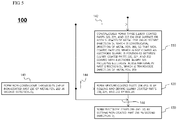
- FIG. 5 is a flowchart illustrating a process of manufacturing an electrode for a secondary battery according to an exemplary embodiment of the present disclosure
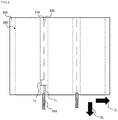
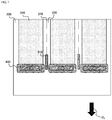
- FIG. 6 is a schematic plan view of a metal foil before a process 110 is performed in a method of manufacturing an electrode for a secondary battery according to an exemplary embodiment of the present disclosure
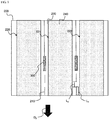
- FIG. 7 is a schematic plan view of a metal foil while the process 110 is performed in a method of manufacturing an electrode for a secondary battery according to another exemplary embodiment of the present disclosure.
- a method 100 of manufacturing an electrode for a secondary battery may include a process 110 of continuously forming three slurry coated parts 220, 221, and 222 on one surface or both surfaces of a metal foil 200 in a second direction D 2 , which is a longitudinal direction of the metal foil 200, so that a non-coated part 230, which is not coated with an electrode slurry, is positioned between the slurry coated parts 220, 221, and 222 coated with an electrode slurry 225 including an electrode active material in a first direction D 1 , which is a transverse direction of the metal foil 200, a process 120 of forming mixture coated parts 204 ( FIG.
- the metal foil 200 may be made of aluminum when a positive electrode current collector is manufactured, and copper may be used as the metal foil 200 when a negative electrode current collector is manufactured.
- a process 140 of forming non-continuous linear slits 210 in the non-coated part 230 of the metal foil 200 in the second direction D 2 by a cutter member 310 may be performed before the process 110 of coating the metal foil 200 with the electrode slurry (not shown) including the electrode active material.
- non-continuous linear slits 210 may be formed perpendicular to the first direction D 1 , and the non-continuous linear slits 210 may also be formed in a direction coinciding with the second direction D 2 of slitting in the process 130.
- a length L 1 of each of the non-continuous linear slits 210 may be in a range of about 1 to 200 mm, and an interval L 2 between the non-continuous linear slits 210 may be in a range of about 1 to 1,000 mm.
- the process 140 of forming non-continuous linear slits 210 in the non-coated part 230 of the metal foil 200 in the second direction D 2 by a cutter member 310 may be performed during the process 110 of coating the metal foil 200 with the electrode slurry 225 including the electrode active material by a discharge member 400.
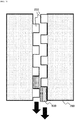
- FIG. 8 is a schematic plan view of a metal foil between the process 110 and the process 120 in a method of manufacturing an electrode for a secondary battery according to still another exemplary embodiment of the present disclosure.
- the process 140 of forming the non-continuous linear slits 210 in the non-coated part 230 of the metal foil 200 in the second direction D 2 may be performed between the process 110 of coating the metal foil 200 with the electrode slurry 225 including the electrode active material and the process 120 of performing a roll press process of rolling and drying the slurry coated parts 220, 221 and 222 by rollers 501 and 502.
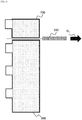
- FIG. 9 is a schematic plan view illustrating the process 130 in a method of manufacturing an electrode for a secondary battery according to an exemplary embodiment of the present disclosure.
- the slitting of the non-coated part 230 may be performed by cutting between the non-continuous linear slits 210 by a cutter 300 for slitting moving in the second direction D 2 , which is the longitudinal direction of the metal foil 200.
- FIG. 10 is a schematic plan view illustrating a notching process of forming an electrode tab in a method of manufacturing an electrode for a secondary battery according to an exemplary embodiment of the present disclosure.
- a notching process of forming electrode tabs 232 by partially cutting the slit non-coated part 230 of the electrode strip 260 using a metal mold 600 is further performed.
- FIG. 11 is a schematic plan view illustrating a cutting process of forming a unit electrode in a method of manufacturing an electrode for a secondary battery according to an exemplary embodiment of the present disclosure.
- a cutting process of forming a unit electrode 700 by cutting the electrode strip 260 uniformly in the first direction D 1 using a cutter 330 is further performed after the notching process of FIG. 10 .
- the method of manufacturing an electrode for a secondary battery according to the present disclosure can prevent wrinkles or wave patterns, which are generated when a shear force is applied to a non-coated part by a cutter during a slitting process, from being further lengthened or deepened by performing a process of forming non-continuous linear slits in the non-coated part of a metal foil in a second direction before a process of continuously forming slurry coated parts, during a process of continuously forming the slurry coated parts, or between the processes of continuously forming the slurry coated parts and forming the slurry coated parts, thereby reducing defects due to folding of the non-coated part or an electrode tab by the wrinkles or wave patterns.
Landscapes
- Chemical & Material Sciences (AREA)
- Engineering & Computer Science (AREA)
- General Chemical & Material Sciences (AREA)
- Chemical Kinetics & Catalysis (AREA)
- Electrochemistry (AREA)
- Manufacturing & Machinery (AREA)
- Materials Engineering (AREA)
- Dispersion Chemistry (AREA)
- Life Sciences & Earth Sciences (AREA)
- Forests & Forestry (AREA)
- Mechanical Engineering (AREA)
- Battery Electrode And Active Subsutance (AREA)
- Cell Electrode Carriers And Collectors (AREA)
Claims (8)
- Verfahren eines Herstellens einer Elektrode für eine Sekundärbatterie, wobei das Verfahren umfasst:einen Prozess eines kontinuierlichen Bildens von zwei oder mehr mit Schlicker beschichteten Teilen an einer Fläche oder beiden Flächen einer Metallfolie in einer zweiten Richtung, welche eine longitudinale Richtung der Metallfolie ist, so dass ein nicht-beschichteter Teil, an welchem ein Elektroden-Schlicker nicht beschichtet ist, zwischen den mit Schlicker beschichteten Teilen positioniert ist, welche mit dem Elektronen-Schlicker beschichtet sind, umfassend ein aktives Elektrodenmaterial in einer ersten Richtung, welche eine transversale Richtung der Metallfolie ist;einen Prozess eines Bildens von mit einem Gemisch beschichteten Teilen durch Trocknen der mit Schlicker beschichteten Teile und Rollen durch eine Rolle; undeinen Prozess eines Bildens von Elektrodenstreifen durch Schlitzen des nicht-beschichteten Teils in der zweiten Richtung,wobei vor einem kontinuierlichen Bilden der mit Schlicker beschichteten Teile, während einem kontinuierlichen Bilden der mit Schlicker beschichteten Teile, oder zwischen einem kontinuierlichen Bilden der mit Schlicker beschichteten Teile und einem Bilden der mit Gemisch beschichteten Teile, das Verfahren ferner einen Prozess eines Bildens eines nicht-kontinuierlichen linearen Schlitzes in dem nicht-beschichteten Teil der Metallfolie in der zweiten Richtung umfasst,wobei die nicht-kontinuierlichen linearen Schlitze rechtwinklig zu der ersten Richtung gebildet werden,wobei eine Länge von jedem der nicht-kontinuierlichen linearen Schlitze in einem Bereich von etwa 1 bis 200 mm ist, undwobei ein Intervall zwischen den nicht-kontinuierlichen linearen Schlitzen in einem Bereich von etwa 1 bis 1000 mm ist.
- Verfahren eines Herstellens einer Elektrode für eine Sekundärbatterie nach Anspruch 1, wobei die Metallfolie aus einem oder mehreren hergestellt ist, ausgewählt aus der Gruppe, bestehend aus Edelstahl, Aluminium, Kupfer, Nickel, Titan und einer Aluminiumlegierung.
- Verfahren eines Herstellens einer Elektrode für eine Sekundärbatterie nach Anspruch 1, wobei der Prozess eines Bildens der nicht-kontinuierlichen linearen Schlitze vor einem kontinuierlichen Bilden der mit Schlicker beschichteten Teile durchgeführt wird.
- Verfahren eines Herstellens einer Elektrode für eine Sekundärbatterie nach Anspruch 1, wobei der Prozess eines Bildens der nicht-kontinuierlichen linearen Schlitze während einem kontinuierlichen Bilden der mit Schlicker beschichteten Teile durchgeführt wird.
- Verfahren eines Herstellens einer Elektrode für eine Sekundärbatterie nach Anspruch 1, wobei der Prozess eines Bildens der nicht-kontinuierlichen linearen Schlitze zwischen einem kontinuierlichen Bilden der mit Schlicker beschichteten Teile und einem Bilden der mit Gemisch beschichteten Teile durchgeführt wird.
- Verfahren eines Herstellens einer Elektrode für eine Sekundärbatterie nach Anspruch 1, wobei, in dem Prozess eines Bildens der Elektrodenstreifen, das Schlitzen des nicht-beschichteten Teils durch Schneiden zwischen den nicht-kontinuierlichen linearen Schlitzen durchgeführt wird.
- Verfahren eines Herstellens einer Elektrode für eine Sekundärbatterie nach Anspruch 1, wobei, nach dem Prozess eines Bildens der Elektrodenstreifen, ein Kerbung-Prozess eines Bildens der Elektroden-Lasche durch teilweises Schneiden des geschlitzten nicht-beschichteten Teils des Elektrodenstreifens ferner umfasst ist.
- Verfahren eines Herstellens einer Elektrode für eine Sekundärbatterie nach Anspruch 7, wobei, nach dem Kerbung-Prozess, ein Schneide-Prozess eines Bildens einer Einheit-Elektrode durch Schneiden des Elektrodenstreifens gleichmäßig in der zweiten Richtung ferner umfasst ist.
Applications Claiming Priority (2)
| Application Number | Priority Date | Filing Date | Title |
|---|---|---|---|
| KR1020160130087A KR102162773B1 (ko) | 2016-10-07 | 2016-10-07 | 프리-슬리팅 공정을 포함하는 이차전지용 전극의 제조 방법 |
| PCT/KR2017/008719 WO2018066806A1 (ko) | 2016-10-07 | 2017-08-11 | 프리-슬리팅 공정을 포함하는 이차전지용 전극의 제조 방법 |
Publications (3)
| Publication Number | Publication Date |
|---|---|
| EP3404745A1 EP3404745A1 (de) | 2018-11-21 |
| EP3404745A4 EP3404745A4 (de) | 2019-05-08 |
| EP3404745B1 true EP3404745B1 (de) | 2020-09-30 |
Family
ID=61831443
Family Applications (1)
| Application Number | Title | Priority Date | Filing Date |
|---|---|---|---|
| EP17858601.2A Active EP3404745B1 (de) | 2016-10-07 | 2017-08-11 | Verfahren zur herstellung einer sekundärbatterieelektrode mit vorschlitzverfahren |
Country Status (5)
| Country | Link |
|---|---|
| US (1) | US11329272B2 (de) |
| EP (1) | EP3404745B1 (de) |
| KR (1) | KR102162773B1 (de) |
| CN (1) | CN108604669B (de) |
| WO (1) | WO2018066806A1 (de) |
Families Citing this family (20)
| Publication number | Priority date | Publication date | Assignee | Title |
|---|---|---|---|---|
| KR102306546B1 (ko) * | 2018-05-23 | 2021-09-30 | 주식회사 엘지에너지솔루션 | 이차전지용 노칭장치 및 노칭방법 |
| DE102019100476A1 (de) * | 2019-01-10 | 2020-07-16 | Bayerische Motoren Werke Aktiengesellschaft | Kollektorfolie sowie Verfahren zum Herstellen einer Kollektorfolie |
| KR102757189B1 (ko) * | 2019-03-28 | 2025-01-21 | 주식회사 엘지에너지솔루션 | 이차전지용 전극 제조장치와, 이를 통해 제조된 이차전지용 전극 및 이차전지 |
| KR102549528B1 (ko) * | 2019-05-09 | 2023-06-30 | 주식회사 엘지에너지솔루션 | 전극 및 그의 제조 방법 |
| CN110165145A (zh) * | 2019-05-13 | 2019-08-23 | 无锡先导智能装备股份有限公司 | 极片基材前处理方法及极片基材 |
| KR102446291B1 (ko) * | 2019-10-31 | 2022-09-22 | 삼성에스디아이 주식회사 | 전극판 제조 방법 및 이를 통해 제조된 전극판 |
| CN113394366B (zh) * | 2021-06-11 | 2022-06-28 | 四川无量智慧道桥科技有限公司 | 一种高精度锂电池极片的生产工艺及系统 |
| KR102667004B1 (ko) * | 2021-10-14 | 2024-05-17 | 유일에너테크(주) | 2차 전지용 전극 생산 시스템 |
| KR20230063105A (ko) * | 2021-11-01 | 2023-05-09 | 주식회사 엘지에너지솔루션 | 이차전지 생산을 위한 시뮬레이션 방법 및 장치 |
| KR20230074973A (ko) * | 2021-11-22 | 2023-05-31 | 주식회사 엘지에너지솔루션 | 이차전지 생산을 위한 코터 시뮬레이션 방법 및 장치 |
| KR20230074969A (ko) * | 2021-11-22 | 2023-05-31 | 주식회사 엘지에너지솔루션 | 이차전지 생산을 위한 코터 시뮬레이션 테스트 방법 및 장치 |
| KR20230122932A (ko) * | 2022-02-15 | 2023-08-22 | 주식회사 엘지에너지솔루션 | 이차전지 제조장치 및 이를 이용하는 이차전지 제조방법 |
| CN116799324A (zh) * | 2022-03-18 | 2023-09-22 | 宁德时代新能源科技股份有限公司 | 卷绕设备和方法 |
| IT202200018948A1 (it) * | 2022-09-15 | 2024-03-15 | P I T S R L | Metodo e apparecchiatura per il taglio sagomato di materiale in nastro |
| IT202200018960A1 (it) | 2022-09-15 | 2024-03-15 | P I T S R L | Metodo e apparecchiatura per il taglio sagomato di materiale in nastro |
| CN115332542B (zh) * | 2022-10-12 | 2023-04-07 | 楚能新能源股份有限公司 | 一种电芯极片基材及极片生产设备 |
| WO2025053570A1 (ko) * | 2023-09-05 | 2025-03-13 | 주식회사 엘지에너지솔루션 | 양극의 제조방법, 양극 및 이를 포함하는 리튬 이차전지 |
| US12494471B2 (en) | 2023-12-08 | 2025-12-09 | Enovix Corporation | Mechanical stripping of sacrificial layer |
| KR102817647B1 (ko) * | 2024-05-23 | 2025-06-10 | 주식회사 피엔티머티리얼즈 | 전극 조립체, 전극 극판, 이차 전지, 이차 전지용 전극 극판 제조방법 |
| US20260031318A1 (en) | 2024-07-25 | 2026-01-29 | GM Global Technology Operations LLC | High throughput staggered electrode tab manufacturing process |
Family Cites Families (20)
| Publication number | Priority date | Publication date | Assignee | Title |
|---|---|---|---|---|
| US5411592A (en) * | 1994-06-06 | 1995-05-02 | Ovonic Battery Company, Inc. | Apparatus for deposition of thin-film, solid state batteries |
| KR100450178B1 (ko) | 1997-08-06 | 2004-11-26 | 삼성에스디아이 주식회사 | 리튬폴리머계열전지의제조방법 |
| JP2000208129A (ja) | 1999-01-13 | 2000-07-28 | Ngk Insulators Ltd | リチウム二次電池 |
| JP2002237292A (ja) * | 2001-02-09 | 2002-08-23 | Japan Storage Battery Co Ltd | 非水電解質二次電池 |
| JP2008066050A (ja) * | 2006-09-06 | 2008-03-21 | Matsushita Electric Ind Co Ltd | リチウム二次電池用極板の製造方法 |
| KR20080058772A (ko) | 2006-12-22 | 2008-06-26 | 에스케이에너지 주식회사 | 전지용 전극의 제조 방법 |
| KR101192056B1 (ko) * | 2008-02-05 | 2012-10-17 | 에스케이이노베이션 주식회사 | 파우치 타입 리튬 이차 전지 및 이의 제조 방법 |
| KR101420476B1 (ko) * | 2008-09-02 | 2014-07-16 | 도요타지도샤가부시키가이샤 | 전극 시트의 제조 방법 및 그 장치 |
| JP2010244748A (ja) | 2009-04-02 | 2010-10-28 | Toyota Motor Corp | 電極板の製造方法 |
| KR101199125B1 (ko) * | 2010-09-02 | 2012-11-09 | 삼성에스디아이 주식회사 | 벤딩영역을 갖는 전극조립체 및 이를 포함하는 이차전지 |
| US20130230641A1 (en) * | 2010-11-02 | 2013-09-05 | Shigeru Suzuki | Coating method and coating apparatus |
| JP5609839B2 (ja) | 2011-10-04 | 2014-10-22 | トヨタ自動車株式会社 | リチウムイオン二次電池用電極板の製造方法 |
| JP5228133B1 (ja) | 2012-10-01 | 2013-07-03 | 株式会社日立エンジニアリング・アンド・サービス | 電極材料用ロールプレス設備及び電極シートの製造方法 |
| KR101590217B1 (ko) * | 2012-11-23 | 2016-01-29 | 주식회사 엘지화학 | 전극조립체의 제조 방법 및 이를 이용하여 제조된 전극조립체 |
| JP2014179217A (ja) | 2013-03-14 | 2014-09-25 | Mitsubishi Heavy Ind Ltd | 二次電池の製造方法及び二次電池 |
| CN105453329B (zh) * | 2013-08-09 | 2019-05-28 | Nec能源元器件株式会社 | 二次电池及其制造方法 |
| JP2016001575A (ja) * | 2014-06-12 | 2016-01-07 | 株式会社デンソー | 電極の製造方法 |
| CN105990564B (zh) * | 2015-02-11 | 2018-10-26 | 宁德新能源科技有限公司 | 基片成型方法 |
| KR102016509B1 (ko) | 2015-07-17 | 2019-09-02 | 주식회사 엘지화학 | 이차전지 전극 제조 방법 |
| CN110462883B (zh) * | 2017-03-29 | 2022-10-11 | 株式会社村田制作所 | 二次电池的制造方法及制造装置 |
-
2016
- 2016-10-07 KR KR1020160130087A patent/KR102162773B1/ko active Active
-
2017
- 2017-08-11 CN CN201780009331.3A patent/CN108604669B/zh active Active
- 2017-08-11 EP EP17858601.2A patent/EP3404745B1/de active Active
- 2017-08-11 WO PCT/KR2017/008719 patent/WO2018066806A1/ko not_active Ceased
- 2017-08-11 US US16/071,379 patent/US11329272B2/en active Active
Non-Patent Citations (1)
| Title |
|---|
| None * |
Also Published As
| Publication number | Publication date |
|---|---|
| EP3404745A1 (de) | 2018-11-21 |
| CN108604669B (zh) | 2021-05-04 |
| EP3404745A4 (de) | 2019-05-08 |
| KR20180038888A (ko) | 2018-04-17 |
| CN108604669A (zh) | 2018-09-28 |
| US11329272B2 (en) | 2022-05-10 |
| WO2018066806A1 (ko) | 2018-04-12 |
| US20200203712A1 (en) | 2020-06-25 |
| KR102162773B1 (ko) | 2020-10-07 |
Similar Documents
| Publication | Publication Date | Title |
|---|---|---|
| EP3404745B1 (de) | Verfahren zur herstellung einer sekundärbatterieelektrode mit vorschlitzverfahren | |
| CN103959539B (zh) | 电极组件、所述电极组件的制造方法和含有所述电极组件的电化学电池 | |
| CN103069633B (zh) | 具有新型结构的电极组件和用于该电极组件的制造方法 | |
| US20140082931A1 (en) | Method for producing all solid state battery | |
| EP2806492A1 (de) | Herstellungsverfahren für eine sekundärbatterie mit wasserfreiem elektrolyt | |
| CN110140238A (zh) | 用于制造二次电池电极的方法以及由此制造的二次电池电极 | |
| KR102695825B1 (ko) | 파우치형 전지셀의 파우치 사이드 가공 장치 및 가공 방법 | |
| KR20220025321A (ko) | 전리튬화 방법 및 이를 포함하는 이차전지 제조방법 | |
| KR102124822B1 (ko) | 널링부가 형성된 전극 탭을 포함하는 전극 가공물 및 이를 제조하기 위한 장치 | |
| US20200203776A1 (en) | Wound battery and manufacturing method of wound battery | |
| KR20230148664A (ko) | 라미네이션 장치, 단위 셀의 제조방법 및 단위 셀 | |
| KR20210055186A (ko) | 폴딩형 전극조립체 및 그 제조 방법 | |
| JP2022552358A (ja) | 電極組立体およびその製造方法 | |
| CN114868280A (zh) | 集电体一体型二次电池用负极及锂二次电池 | |
| KR102549528B1 (ko) | 전극 및 그의 제조 방법 | |
| KR20160047693A (ko) | 단위전극의 제조 방법 | |
| JPWO2019077664A1 (ja) | 電解質シート、二次電池用電池部材及び二次電池、並びにこれらの製造方法 | |
| KR20230068552A (ko) | 양극 집전체의 내절도 향상 방법 | |
| JP2008226555A (ja) | 非水電解質電池 | |
| KR102839269B1 (ko) | 표면 처리된 분리막을 포함하는 전극 조립체, 이를 포함하는 이차전지 및 전극 조립체의 제조방법 | |
| US20240356034A1 (en) | Electrode Assembly Including Coating Layer Formed On Other Surface Of Single-Sided Positive Electrode And A Secondary Battery Comprising The Same | |
| KR102799576B1 (ko) | 전고체 전지 및 그 제조방법 | |
| EP4418393A1 (de) | Festelektrolytmembran und feststoffbatterie damit | |
| EP4593103A1 (de) | Kathode für lithiumsekundärbatterie und lithiumsekundärbatterie damit | |
| EP4398371A1 (de) | Festkörperbatterie und herstellungsverfahren dafür |
Legal Events
| Date | Code | Title | Description |
|---|---|---|---|
| STAA | Information on the status of an ep patent application or granted ep patent |
Free format text: STATUS: THE INTERNATIONAL PUBLICATION HAS BEEN MADE |
|
| PUAI | Public reference made under article 153(3) epc to a published international application that has entered the european phase |
Free format text: ORIGINAL CODE: 0009012 |
|
| STAA | Information on the status of an ep patent application or granted ep patent |
Free format text: STATUS: REQUEST FOR EXAMINATION WAS MADE |
|
| 17P | Request for examination filed |
Effective date: 20180817 |
|
| AK | Designated contracting states |
Kind code of ref document: A1 Designated state(s): AL AT BE BG CH CY CZ DE DK EE ES FI FR GB GR HR HU IE IS IT LI LT LU LV MC MK MT NL NO PL PT RO RS SE SI SK SM TR |
|
| AX | Request for extension of the european patent |
Extension state: BA ME |
|
| A4 | Supplementary search report drawn up and despatched |
Effective date: 20190408 |
|
| RIC1 | Information provided on ipc code assigned before grant |
Ipc: H01M 2/26 20060101ALI20190329BHEP Ipc: H01M 4/04 20060101ALI20190329BHEP Ipc: H01M 4/139 20100101AFI20190329BHEP Ipc: H01M 4/13 20100101ALI20190329BHEP |
|
| DAV | Request for validation of the european patent (deleted) | ||
| DAX | Request for extension of the european patent (deleted) | ||
| GRAP | Despatch of communication of intention to grant a patent |
Free format text: ORIGINAL CODE: EPIDOSNIGR1 |
|
| STAA | Information on the status of an ep patent application or granted ep patent |
Free format text: STATUS: GRANT OF PATENT IS INTENDED |
|
| INTG | Intention to grant announced |
Effective date: 20200507 |
|
| GRAS | Grant fee paid |
Free format text: ORIGINAL CODE: EPIDOSNIGR3 |
|
| GRAA | (expected) grant |
Free format text: ORIGINAL CODE: 0009210 |
|
| STAA | Information on the status of an ep patent application or granted ep patent |
Free format text: STATUS: THE PATENT HAS BEEN GRANTED |
|
| AK | Designated contracting states |
Kind code of ref document: B1 Designated state(s): AL AT BE BG CH CY CZ DE DK EE ES FI FR GB GR HR HU IE IS IT LI LT LU LV MC MK MT NL NO PL PT RO RS SE SI SK SM TR |
|
| REG | Reference to a national code |
Ref country code: CH Ref legal event code: EP Ref country code: GB Ref legal event code: FG4D |
|
| REG | Reference to a national code |
Ref country code: DE Ref legal event code: R096 Ref document number: 602017024804 Country of ref document: DE Ref country code: AT Ref legal event code: REF Ref document number: 1319720 Country of ref document: AT Kind code of ref document: T Effective date: 20201015 |
|
| REG | Reference to a national code |
Ref country code: IE Ref legal event code: FG4D |
|
| REG | Reference to a national code |
Ref country code: DE Ref legal event code: R081 Ref document number: 602017024804 Country of ref document: DE Owner name: LG ENERGY SOLUTION, LTD., KR Free format text: FORMER OWNER: LG CHEM. LTD., SEOUL, KR |
|
| PG25 | Lapsed in a contracting state [announced via postgrant information from national office to epo] |
Ref country code: HR Free format text: LAPSE BECAUSE OF FAILURE TO SUBMIT A TRANSLATION OF THE DESCRIPTION OR TO PAY THE FEE WITHIN THE PRESCRIBED TIME-LIMIT Effective date: 20200930 Ref country code: BG Free format text: LAPSE BECAUSE OF FAILURE TO SUBMIT A TRANSLATION OF THE DESCRIPTION OR TO PAY THE FEE WITHIN THE PRESCRIBED TIME-LIMIT Effective date: 20201230 Ref country code: SE Free format text: LAPSE BECAUSE OF FAILURE TO SUBMIT A TRANSLATION OF THE DESCRIPTION OR TO PAY THE FEE WITHIN THE PRESCRIBED TIME-LIMIT Effective date: 20200930 Ref country code: FI Free format text: LAPSE BECAUSE OF FAILURE TO SUBMIT A TRANSLATION OF THE DESCRIPTION OR TO PAY THE FEE WITHIN THE PRESCRIBED TIME-LIMIT Effective date: 20200930 Ref country code: GR Free format text: LAPSE BECAUSE OF FAILURE TO SUBMIT A TRANSLATION OF THE DESCRIPTION OR TO PAY THE FEE WITHIN THE PRESCRIBED TIME-LIMIT Effective date: 20201231 Ref country code: NO Free format text: LAPSE BECAUSE OF FAILURE TO SUBMIT A TRANSLATION OF THE DESCRIPTION OR TO PAY THE FEE WITHIN THE PRESCRIBED TIME-LIMIT Effective date: 20201230 |
|
| REG | Reference to a national code |
Ref country code: AT Ref legal event code: MK05 Ref document number: 1319720 Country of ref document: AT Kind code of ref document: T Effective date: 20200930 |
|
| PG25 | Lapsed in a contracting state [announced via postgrant information from national office to epo] |
Ref country code: RS Free format text: LAPSE BECAUSE OF FAILURE TO SUBMIT A TRANSLATION OF THE DESCRIPTION OR TO PAY THE FEE WITHIN THE PRESCRIBED TIME-LIMIT Effective date: 20200930 Ref country code: LV Free format text: LAPSE BECAUSE OF FAILURE TO SUBMIT A TRANSLATION OF THE DESCRIPTION OR TO PAY THE FEE WITHIN THE PRESCRIBED TIME-LIMIT Effective date: 20200930 |
|
| REG | Reference to a national code |
Ref country code: NL Ref legal event code: MP Effective date: 20200930 |
|
| REG | Reference to a national code |
Ref country code: LT Ref legal event code: MG4D |
|
| PG25 | Lapsed in a contracting state [announced via postgrant information from national office to epo] |
Ref country code: CZ Free format text: LAPSE BECAUSE OF FAILURE TO SUBMIT A TRANSLATION OF THE DESCRIPTION OR TO PAY THE FEE WITHIN THE PRESCRIBED TIME-LIMIT Effective date: 20200930 Ref country code: PT Free format text: LAPSE BECAUSE OF FAILURE TO SUBMIT A TRANSLATION OF THE DESCRIPTION OR TO PAY THE FEE WITHIN THE PRESCRIBED TIME-LIMIT Effective date: 20210201 Ref country code: RO Free format text: LAPSE BECAUSE OF FAILURE TO SUBMIT A TRANSLATION OF THE DESCRIPTION OR TO PAY THE FEE WITHIN THE PRESCRIBED TIME-LIMIT Effective date: 20200930 Ref country code: EE Free format text: LAPSE BECAUSE OF FAILURE TO SUBMIT A TRANSLATION OF THE DESCRIPTION OR TO PAY THE FEE WITHIN THE PRESCRIBED TIME-LIMIT Effective date: 20200930 Ref country code: LT Free format text: LAPSE BECAUSE OF FAILURE TO SUBMIT A TRANSLATION OF THE DESCRIPTION OR TO PAY THE FEE WITHIN THE PRESCRIBED TIME-LIMIT Effective date: 20200930 Ref country code: SM Free format text: LAPSE BECAUSE OF FAILURE TO SUBMIT A TRANSLATION OF THE DESCRIPTION OR TO PAY THE FEE WITHIN THE PRESCRIBED TIME-LIMIT Effective date: 20200930 |
|
| PG25 | Lapsed in a contracting state [announced via postgrant information from national office to epo] |
Ref country code: AT Free format text: LAPSE BECAUSE OF FAILURE TO SUBMIT A TRANSLATION OF THE DESCRIPTION OR TO PAY THE FEE WITHIN THE PRESCRIBED TIME-LIMIT Effective date: 20200930 Ref country code: AL Free format text: LAPSE BECAUSE OF FAILURE TO SUBMIT A TRANSLATION OF THE DESCRIPTION OR TO PAY THE FEE WITHIN THE PRESCRIBED TIME-LIMIT Effective date: 20200930 Ref country code: ES Free format text: LAPSE BECAUSE OF FAILURE TO SUBMIT A TRANSLATION OF THE DESCRIPTION OR TO PAY THE FEE WITHIN THE PRESCRIBED TIME-LIMIT Effective date: 20200930 Ref country code: IS Free format text: LAPSE BECAUSE OF FAILURE TO SUBMIT A TRANSLATION OF THE DESCRIPTION OR TO PAY THE FEE WITHIN THE PRESCRIBED TIME-LIMIT Effective date: 20210130 Ref country code: PL Free format text: LAPSE BECAUSE OF FAILURE TO SUBMIT A TRANSLATION OF THE DESCRIPTION OR TO PAY THE FEE WITHIN THE PRESCRIBED TIME-LIMIT Effective date: 20200930 |
|
| PG25 | Lapsed in a contracting state [announced via postgrant information from national office to epo] |
Ref country code: NL Free format text: LAPSE BECAUSE OF FAILURE TO SUBMIT A TRANSLATION OF THE DESCRIPTION OR TO PAY THE FEE WITHIN THE PRESCRIBED TIME-LIMIT Effective date: 20200930 Ref country code: SK Free format text: LAPSE BECAUSE OF FAILURE TO SUBMIT A TRANSLATION OF THE DESCRIPTION OR TO PAY THE FEE WITHIN THE PRESCRIBED TIME-LIMIT Effective date: 20200930 |
|
| REG | Reference to a national code |
Ref country code: DE Ref legal event code: R097 Ref document number: 602017024804 Country of ref document: DE |
|
| PLBE | No opposition filed within time limit |
Free format text: ORIGINAL CODE: 0009261 |
|
| STAA | Information on the status of an ep patent application or granted ep patent |
Free format text: STATUS: NO OPPOSITION FILED WITHIN TIME LIMIT |
|
| PG25 | Lapsed in a contracting state [announced via postgrant information from national office to epo] |
Ref country code: DK Free format text: LAPSE BECAUSE OF FAILURE TO SUBMIT A TRANSLATION OF THE DESCRIPTION OR TO PAY THE FEE WITHIN THE PRESCRIBED TIME-LIMIT Effective date: 20200930 |
|
| 26N | No opposition filed |
Effective date: 20210701 |
|
| PG25 | Lapsed in a contracting state [announced via postgrant information from national office to epo] |
Ref country code: IT Free format text: LAPSE BECAUSE OF FAILURE TO SUBMIT A TRANSLATION OF THE DESCRIPTION OR TO PAY THE FEE WITHIN THE PRESCRIBED TIME-LIMIT Effective date: 20200930 |
|
| PG25 | Lapsed in a contracting state [announced via postgrant information from national office to epo] |
Ref country code: SI Free format text: LAPSE BECAUSE OF FAILURE TO SUBMIT A TRANSLATION OF THE DESCRIPTION OR TO PAY THE FEE WITHIN THE PRESCRIBED TIME-LIMIT Effective date: 20200930 |
|
| REG | Reference to a national code |
Ref country code: CH Ref legal event code: PL |
|
| PG25 | Lapsed in a contracting state [announced via postgrant information from national office to epo] |
Ref country code: MC Free format text: LAPSE BECAUSE OF FAILURE TO SUBMIT A TRANSLATION OF THE DESCRIPTION OR TO PAY THE FEE WITHIN THE PRESCRIBED TIME-LIMIT Effective date: 20200930 |
|
| REG | Reference to a national code |
Ref country code: BE Ref legal event code: MM Effective date: 20210831 |
|
| PG25 | Lapsed in a contracting state [announced via postgrant information from national office to epo] |
Ref country code: LI Free format text: LAPSE BECAUSE OF NON-PAYMENT OF DUE FEES Effective date: 20210831 Ref country code: CH Free format text: LAPSE BECAUSE OF NON-PAYMENT OF DUE FEES Effective date: 20210831 |
|
| PG25 | Lapsed in a contracting state [announced via postgrant information from national office to epo] |
Ref country code: IS Free format text: LAPSE BECAUSE OF FAILURE TO SUBMIT A TRANSLATION OF THE DESCRIPTION OR TO PAY THE FEE WITHIN THE PRESCRIBED TIME-LIMIT Effective date: 20210130 Ref country code: LU Free format text: LAPSE BECAUSE OF NON-PAYMENT OF DUE FEES Effective date: 20210811 |
|
| PG25 | Lapsed in a contracting state [announced via postgrant information from national office to epo] |
Ref country code: IE Free format text: LAPSE BECAUSE OF NON-PAYMENT OF DUE FEES Effective date: 20210811 Ref country code: BE Free format text: LAPSE BECAUSE OF NON-PAYMENT OF DUE FEES Effective date: 20210831 |
|
| P01 | Opt-out of the competence of the unified patent court (upc) registered |
Effective date: 20230512 |
|
| PG25 | Lapsed in a contracting state [announced via postgrant information from national office to epo] |
Ref country code: CY Free format text: LAPSE BECAUSE OF FAILURE TO SUBMIT A TRANSLATION OF THE DESCRIPTION OR TO PAY THE FEE WITHIN THE PRESCRIBED TIME-LIMIT Effective date: 20200930 |
|
| PG25 | Lapsed in a contracting state [announced via postgrant information from national office to epo] |
Ref country code: HU Free format text: LAPSE BECAUSE OF FAILURE TO SUBMIT A TRANSLATION OF THE DESCRIPTION OR TO PAY THE FEE WITHIN THE PRESCRIBED TIME-LIMIT; INVALID AB INITIO Effective date: 20170811 |
|
| REG | Reference to a national code |
Ref country code: GB Ref legal event code: 732E Free format text: REGISTERED BETWEEN 20230824 AND 20230831 |
|
| REG | Reference to a national code |
Ref country code: DE Ref legal event code: R081 Ref document number: 602017024804 Country of ref document: DE Owner name: LG ENERGY SOLUTION, LTD., KR Free format text: FORMER OWNER: LG CHEM, LTD., SEOUL, KR |
|
| PG25 | Lapsed in a contracting state [announced via postgrant information from national office to epo] |
Ref country code: MK Free format text: LAPSE BECAUSE OF FAILURE TO SUBMIT A TRANSLATION OF THE DESCRIPTION OR TO PAY THE FEE WITHIN THE PRESCRIBED TIME-LIMIT Effective date: 20200930 |
|
| PG25 | Lapsed in a contracting state [announced via postgrant information from national office to epo] |
Ref country code: TR Free format text: LAPSE BECAUSE OF FAILURE TO SUBMIT A TRANSLATION OF THE DESCRIPTION OR TO PAY THE FEE WITHIN THE PRESCRIBED TIME-LIMIT Effective date: 20200930 |
|
| PG25 | Lapsed in a contracting state [announced via postgrant information from national office to epo] |
Ref country code: MT Free format text: LAPSE BECAUSE OF FAILURE TO SUBMIT A TRANSLATION OF THE DESCRIPTION OR TO PAY THE FEE WITHIN THE PRESCRIBED TIME-LIMIT Effective date: 20200930 |
|
| PGFP | Annual fee paid to national office [announced via postgrant information from national office to epo] |
Ref country code: DE Payment date: 20250721 Year of fee payment: 9 |
|
| PGFP | Annual fee paid to national office [announced via postgrant information from national office to epo] |
Ref country code: GB Payment date: 20250722 Year of fee payment: 9 |
|
| PGFP | Annual fee paid to national office [announced via postgrant information from national office to epo] |
Ref country code: FR Payment date: 20250725 Year of fee payment: 9 |