EP3404495B1 - Elektronische uhr, vorrichtung, verfahren und programm zur steuerung eines verfahrens zur gewinnung von datums-/zeitinformationen - Google Patents
Elektronische uhr, vorrichtung, verfahren und programm zur steuerung eines verfahrens zur gewinnung von datums-/zeitinformationen Download PDFInfo
- Publication number
- EP3404495B1 EP3404495B1 EP18172872.6A EP18172872A EP3404495B1 EP 3404495 B1 EP3404495 B1 EP 3404495B1 EP 18172872 A EP18172872 A EP 18172872A EP 3404495 B1 EP3404495 B1 EP 3404495B1
- Authority
- EP
- European Patent Office
- Prior art keywords
- time
- date
- radio wave
- code sequence
- satellite radio
- Prior art date
- Legal status (The legal status is an assumption and is not a legal conclusion. Google has not performed a legal analysis and makes no representation as to the accuracy of the status listed.)
- Active
Links
Images

Classifications
-
- G—PHYSICS
- G04—HOROLOGY
- G04G—ELECTRONIC TIME-PIECES
- G04G7/00—Synchronisation
- G04G7/02—Synchronisation by radio
-
- G—PHYSICS
- G04—HOROLOGY
- G04R—RADIO-CONTROLLED TIME-PIECES
- G04R20/00—Setting the time according to the time information carried or implied by the radio signal
- G04R20/02—Setting the time according to the time information carried or implied by the radio signal the radio signal being sent by a satellite, e.g. GPS
-
- G—PHYSICS
- G04—HOROLOGY
- G04R—RADIO-CONTROLLED TIME-PIECES
- G04R20/00—Setting the time according to the time information carried or implied by the radio signal
- G04R20/02—Setting the time according to the time information carried or implied by the radio signal the radio signal being sent by a satellite, e.g. GPS
- G04R20/04—Tuning or receiving; Circuits therefor
-
- G—PHYSICS
- G04—HOROLOGY
- G04R—RADIO-CONTROLLED TIME-PIECES
- G04R20/00—Setting the time according to the time information carried or implied by the radio signal
- G04R20/02—Setting the time according to the time information carried or implied by the radio signal the radio signal being sent by a satellite, e.g. GPS
- G04R20/06—Decoding time data; Circuits therefor
Definitions
- the present invention relates to an electronic timepiece, method and program for controlling method for obtaining date/time information.
- an electronic timepiece which receives present date/time information from external devices to accurately calculate the date and the time and which is able to maintain display.
- Standard time radio waves using radio waves at a low frequency band and navigation messages included in radio waves transmitted from a positioning satellite are widely used as external information sources which provide the present date/time information.
- radio wave reception environment may drastically change when the user moves, and it is preferable that necessary information is received and obtained immediately.
- US 2016/187858 A1 discloses a radio-controlled timepiece, including: a radio wave reception unit that receives satellite waves and extracts an incoming code sequence formatted in a prescribed format from the received satellite waves; and a processor that generates in advance an expected code sequence that is expected to be part of the incoming code sequence and detects the expected code sequence within the incoming code sequence by sequentially comparing the expected code sequence with the incoming code sequence, the processor determining a present date/time, as indicated by the satellite waves, in accordance with a timing at which the detected code sequence occurs within the incoming code sequence as measured by time kept by the timepiece, wherein the expected code sequence includes codes that change with a transmission period during which time-related information that includes satellite date/time contained in the satellite waves, which is formatted in the prescribed format, is transmitted.
- FIG. 1 is a block diagram showing a functional configuration of an electronic timepiece 1 according to the present embodiment.
- the electronic timepiece 1 includes a microcomputer 40, a satellite radio wave reception processor 50 and an antenna A1, an operation receiver 61, a display 62, a low frequency band receiver 63 and an antenna A2, a transmitting and receiving circuit 64 and an antenna A3, a light amount sensor 65, a ROM (Read Only Memory) 66, and an electric power supply 70.
- the microcomputer 40 collectively controls the entire operation of the electronic timepiece 1.
- the microcomputer 40 includes a Central Processing Unit (CPU) 41 (selecting unit), a Random Access Memory (RAM) 43, an oscillating circuit 46, a frequency dividing circuit 47, and a clock circuit 48 (time-calculating unit).
- Control operations include, in addition to various control operations regarding normal date/time display operation, obtaining present date/time information and correcting the date and time calculated by the clock circuit 48, and operations according to various functions included in the electronic timepiece 1. Examples of such functions include, an alarm notifying function, a timer function and a stopwatch function.
- the microcomputer 40 is able to limit some functions such as limiting contents displayed and brightness in a display screen 621 so as to reduce the amount of consumed electric power and to switch the mode to the sleep mode according to the remaining amount of a battery 71 of the electric power supply 70 and the state that the electric timepiece 1 is not used at night.
- the CPU 41 is a processor which performs various computing processes and which performs control operation.
- the RAM 43 provides a memory space for jobs to the CPU 41 and stores temporary data.
- a local time setting 433 is stored in the RAM 43.
- the local time setting 433 includes time zone setting and summer time setting when the present date and time in a region set from anywhere around the world such as the present position (that is, local time) is displayed and used. That is, the local time setting 433 is time difference information from the UTC date/time and information regarding the position (for example, city).
- the local time setting 433 includes information regarding whether there is a receivable standard time radio wave in the position (for example, city) and type of standard time radio wave.
- the RAM 43 stores date/time information obtaining history information 431, reception setting 432, and pairing setting 434.
- the date/time information obtaining history information 431 includes source of present date/time information obtained from external sources in the past and the date and time when the information was obtained. The information of the source and the date and time is stored in the date/time information obtaining history information 431 for at least one recent occasion, but the information can be stored for a plurality of occasions.
- the date/time information obtaining history information 431 may include information for an occasion when an attempt to obtain information was made but the attempt failed.
- the reception setting 432 is setting information when a method that the satellite radio wave reception processor 50 uses to receive date and time for the next occasion is set in advance according to the recent date/time information obtaining operation. As described later, the reception setting 432 includes partial data reception setting, entire data reception setting and no setting which is neither of the above.
- the pairing setting 434 stores identification information showing the external devices with which the transmitting and receiving circuit 64 is able to communicate using short-range wireless communication. When short-range wireless communication is performed, a request for connection is transmitted to the external devices based on the identification information of the pairing setting 434.
- the oscillating circuit 46 generates and outputs a signal with a predetermined frequency.
- a crystal oscillator is used to generate signals.
- Such crystal oscillator can be attached outside the microcomputer 40.
- the frequency dividing circuit 47 outputs a frequency dividing signal dividing a frequency signal input from the oscillating circuit 46 at a set frequency dividing ratio.
- the setting of the frequency dividing ratio can be changed with the CPU 41.
- the clock circuit 48 calculates the present date and time (the time and date) by calculating the frequency dividing signal input from the frequency dividing circuit 47 at a predetermined frequency and stores the present date and time.
- the accuracy of the date and time calculated by the clock circuit 48 changes depending on the external environment, mainly surrounding temperatures. Normally, there is a deviation of about 0.5 seconds a day in the accuracy, but as the deviation from standard temperatures (for example, about 20°C) becomes larger, the accuracy decreases. For example, in extreme environments such as inside a car on a sunny day or outside during a severe winter, larger deviation in accuracy (for example, 3 seconds per day) may occur.
- the CPU 41 may correct the calculated date and time based on the present date and time obtained according to the standard time radio wave obtained by the satellite radio wave reception processor 50 and the transmitting and receiving circuit 64 or received by the low frequency band receiver 63.
- the satellite radio wave reception processor 50 receives and processes the transmitting radio wave from the positioning satellite regarding the satellite positioning system (GNSS; Global Navigation Satellite System) such as the GPS (Global Positioning System) of the United States, obtains the information such as the present date/time and present position, and outputs the information requested from the CPU 41 to the CPU 41 in a predetermined format.
- the satellite radio wave reception processor 50 includes a satellite radio wave receiver 51 (satellite radio wave receiving unit), a processor 52, and a storage 53.
- the satellite radio wave receiver 51 performs the capturing process which receives and detects the transmitting radio wave from the positioning satellite as the reception target, and identifies the positioning satellite and phase of the transmitting signal.
- the satellite radio wave receiver 51 tracks the transmitted radio wave from the positioning satellite based on the identification information and phase of the captured positioning satellite and continuously demodulates and obtains the transmitting signal (navigation message).
- the processor 52 includes a CPU and performs various types of control on the operations performed in the satellite radio wave reception processor 50.
- the processor 52 controls the satellite radio wave receiver 51 so that the radio waves from the positioning satellites are received at a suitable timing according to the instruction from the micro-computer 40, performs the process according to a plurality of types of later-described methods of obtaining the present date and time and obtains the necessary information, and identifies the present date and time and calculates the present position (that is, positioning).
- the CPU 41 and the processor 52 compose the processor and the date/time correcting unit in the electronic timepiece 1 of the present embodiment.
- the storage 53 stores reception control information 531 such as various setting data and reception information, leap second correction value 532, and programs regarding control performed by the processor 52 in the satellite radio wave reception processor 50.
- Setting data includes data such as format data of the navigation message of each positioning satellite, reference data to determine reception level, and later-described WN cycle setting data.
- the reception information includes an obtained almanac of each positioning satellite.
- the leap second correction value 532 stores a value to correct the deviation caused by the leap second between the date and time transmitted from the positioning satellite of the GPS (hereinafter referred to as GPS satellite) and the UTC date and time (coordinated universal time).
- GPS satellite here includes GPS and positioning satellites in a complementary satellite positioning system such as Quasi-Zenith Satellite System (QZSS) which transmits a navigation message using the same format with the same transmitting frequency.
- QZSS Quasi-Zenith Satellite System
- the operation receiver 61 receives input from outside such as user operation.
- the operation receiver 61 is provided with a press button switch or a stem, and outputs to the CPU 41 operation signals according to pressing operation on the press button switch or operations such as pulling, rotating, and pushing of the stem.
- the display 62 displays various information based on control by the CPU 41.
- the display 62 includes a display driver 622 and a display screen 621.
- the display screen 621 performs digital display on a Liquid Crystal Display (LCD) screen by a segment method, a dot-matrix method or a combination of the above.
- the display 62 may be a display including hands and a stepping motor to rotate the hands.
- the display driver 622 outputs the driving signal to the display screen 621 based on the control signal from the microcomputer 40 so that the display screen 621 performs suitable display.
- the low frequency band receiver 63 receives and demodulates the standard time radio wave which transmits a signal (time code) including present date/time information (including time information and date information) at a low frequency band through the antenna A2.
- a signal time code
- present date/time information including time information and date information
- the date/time data showing a certain minute is encoded and transmitted at a one minute cycle.
- the electronic timepiece 1 confirms matching of a plurality of reception results (date and time obtained from the received code sequence) such as three receptions, and obtains the accurate present date and time. Therefore, when the reception situation is good, the reception operation time is about 3 to 4 minutes for each reception.
- JJY registered trademark of Japan
- WWVB of the United States
- MSF of Great Britain and DCF77 of Germany
- the standard time radio wave which is to be the reception target is determined according to the above-described local time setting 433, or the standard time radio wave is not set as the reception target when all of the standard time radio waves are outside the reception area.
- the transmitting and receiving circuit 64 performs various operation for short-range wireless communication with external electronic devices (external devices) using the antenna A3 based on control by the CPU 41, specifically communication by Bluetooth (registered trademark) (mainly version 4.0 which is low in energy consumption).
- the transmitting and receiving circuit 64 performs control operation based on the determined communication standards.
- the transmitting and receiving circuit 64 demodulates and obtains communication data for the electronic timepiece 1, outputs the data to the CPU 41, and demodulates the communication data for the external devices with which communication is established to output the data as communication radio waves.
- the identification information of the external device with which communication is established is stored in the above pairing setting 434, and usually, the transmitting and receiving circuit 64 transmits the request for communication to the external device shown in the identification information.
- the present date/time information can be obtained from the external device.
- the communication between the external device and the electronic timepiece 1 is a request for present date/time information and a signal as a response. Therefore, the communication time is one second or shorter, and the amount of communication is very small.
- the external device which is to be the target of short-range wireless communication is not limited, mainly portable terminals including smartphones and cellular phones are used.
- the identification information (pairing setting 434) of such external devices is stored in advance, communication is established when the request for communication is made from the electronic device 1 using the identification information if the external device is operating within a communicable range.
- the light amount sensor 65 is provided aligned with the display screen of the display 62, and the light amount irradiated from outside is measured.
- a photodiode is used as the light amount sensor 65.
- the light amount sensor 65 outputs an electric signal (voltage signal and current signal) according to the incident light amount.
- the electric signal is digitally sampled in an analog/digital convertor (ADC) (not shown) and input in the CPU 41.
- ADC analog/digital convertor
- the ROM 66 stores a program 661 used for control operations performed by the CPU 41 and initial setting data.
- the ROM 66 may be a nonvolatile memory such as a flash memory in which data is rewritable in addition to or instead of a mask ROM.
- the program 661 includes a control program to obtain the present date and time.
- the initial setting data includes time zone setting in each region of the world, time difference information from the UTC date/time such as summer time setting, information regarding the position (for example, city), and information of existence and type of receivable standard time radio wave in the position (for example, city).
- the setting data of the position (for example, city) belonging to the present position is stored in the RAM 43 and used.
- the ROM 66 is attached externally to the microcomputer 40 but may be formed as one with the microcomputer 40.
- the electric power supply 70 supplies to the units in the electronic timepiece 1 the power necessary to operate the units.
- the electronic power supply 70 supplies the power output from the battery 71 at an operation voltage for each unit.
- the electric power supply 70 uses the regulator to convert the voltage and outputs the voltage.
- the battery 71 may include a solar panel which generates electricity according to the incident light or a secondary battery which accumulates the charged power. Alternatively, a dry battery or a rechargeable battery can be attached detachably as the battery 71.
- the date and time calculated by the clock circuit 48 of the electronic timepiece 1 may deviate at a maximum of about 0.5 seconds per day in normal conditions. When the temperature conditions are severe, the deviation may be a maximum of about 3 seconds per day.
- the electronic timepiece 1 obtains the accurate present date and time from external devices periodically or in response to a predetermined instruction by a user, and the clock circuit 48 corrects the calculated date and time. With this, the deviation in the date and time calculated by the clock circuit 48 is maintained to be slight.
- the electronic timepiece 1 obtains present date/time information from three sources as described below, present date/time obtained by the satellite radio wave reception processor 50, present date/time information obtained from the standard time radio wave received by the low frequency band receiver 63, and present date/time information obtained from the external device by Bluetooth communication through the transmitting and receiving circuit 64.
- the date and time based on the standard time radio wave received by the low frequency band receiver 63 is normally obtained at a sufficient accuracy (about 10 msec).
- Examples of the present date/time information obtained from the external devices through the transmitting and receiving circuit 64 include obtaining the date and time calculated by the external device and obtaining the date and time based on the result of the date and time obtained by the satellite radio wave reception processor provided in the external device.
- the present date/time information is obtained from the base station of the portable telephone communication.
- the external device includes an internet connection function
- the present date/time information obtained from the time server on the internet is obtained indirectly through the external device.
- the date and time obtained from the satellite radio wave reception processor 50 normally has sufficient accuracy (for example, deviation of 10 to 100 msec or less).
- a separate leap second correction value 532 is necessary.
- the GPS satellite transmits the date and time not considering the leap second. Therefore, the satellite radio wave reception processor 50 converts the date and time to UTC date/time based on the leap second correction value 532 showing the amount of time of deviation from the UTC date/time which considers the leap second and outputs the UTC date/time.
- the leap second correction value 532 can be obtained from the GPS satellite but the frequency of obtaining the value is low (once every 12.5 minutes). Therefore, the value can be received to match the timing of transmitting from the GPS satellite or the value can be obtained from external devices through the transmitting and receiving circuit 64.
- the leap second may be added or subtracted once every 6 months.
- the leap second is added or subtracted for a predetermined number of seconds (at present, only 1 second) at the above timing. Therefore, if there is no prior notice information before the leap second can be added or subtracted, that is, when information regarding whether the leap second will be added or subtracted or when prior notice information of the amount of time of deviation after the timing that adding or subtracting the leap second is possible is not obtained, the date and time obtained from the satellite radio wave reception processor 50 may be deviated for 1 second until the information of the deviation time is obtained after the timing that the leap second can be added or subtracted.
- JJY and WWVB transmit at a predetermined term before the timing that the leap second can be added or subtracted prior notice information of whether the leap second will be added or subtracted. Therefore, the deviation time can be corrected at the timing that the leap second can be added or subtracted based on the prior notice information.
- the electronic timepiece 1 selects the method of obtaining the present date/time information from the above.
- the present date/time information is obtained through the transmitting and receiving circuit 64 at fixed intervals a plurality of number of times a day (for example, 2 to 4 times) and when communication is performed for the purpose of transmitting and receiving information other than the date and time.
- the standard time radio wave is received by the low frequency band receiver 63 at a predetermined timing once a day when in the reception area of the standard radio wave.
- the date and time are obtained by receiving the radio wave from the positioning satellite (for example, GPS satellite) using the satellite radio wave reception processor 50 at a timing that predetermined conditions are satisfied once a day and on a basis of predetermined input operation by the user.
- the positioning satellite for example, GPS satellite
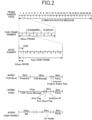
- FIG. 2 is a diagram describing the format of the navigation message transmitted by radio waves from the GPS satellite.
- Each GPS satellite transmits a total of 25 pages of frame data in a unit of 30 seconds and all data (sequence of data) is output at a cycle of 12. 5 minutes.
- a unique C/A code is used for each GPS satellite, and 1023 codes (chips) are arranged at 1.023 MHz and repeated at a cycle of 1 msec. The top of the chip is synchronized with the internal clock of the GPS satellite.
- Each frame data includes 5 sub-frames (6 seconds each). Further, each sub-frame includes 10 words (code block, 0.6 seconds each, WORD 1 to WORD 10). Each word is 30 bit long (that is, 30 binary codes).
- WORD 1 and WORD 2 The data format of WORD 1 and WORD 2 is the same in all sub-frames. That is, the contents of WORD 1 and WORD 2 can be obtained from any sub-frame every 6 seconds.
- WORD 1 transmits a telemetry word (TLM Word).
- TLM Word telemetry word
- a telemetry message (TLM message) of 14 bits is included, and after this a 1 bit Integrity Status Flag, a 1 bit extra bit, and a parity code sequence (parity check code) of 6 bits follow.
- WORD 2 transmits a handover word (Handover Word; HOW).
- the Alert Flag and the Anti-Spoof Flag are each shown with 1 bit.
- the sub-frame ID showing the sub-frame number (cycle number) is shown with 3 bits, and then 2 bits for matching the parity code sequence and the parity code sequence of 6 bits are arranged.
- the contents from WORD 3 and after are different depending on the sub-frame.
- a WN (Week Number) of 10 bits are included at the top in the WORD 3 of the sub-frame 1.
- the sub-frames 2 and 3 include the ephemeris. That is, such information is obtained in the frame for 30 seconds each time.
- the almanac of the positioning satellite included in each determined page is transmitted.
- the above-described leap second correction value is transmitted once every 12.5 minutes in only frame 4 of the 18th page.
- the fixed code sequence (preamble) included at the top of each sub-frame needs to be identified.
- the date and time shown by TOW-Count in each sub-frame is the date and time in the top timing of the next sub-frame.
- the information necessary for the satellite radio wave reception processor 50 to obtain the present date and time is different depending on the degree of the deviation that may be included in the date and time calculated by the clock circuit 48. If there is not a large deviation in the date and time calculated by the clock circuit 48 (that is, equal to or smaller than a predetermined range) (for example, the date or week is not different), only a portion of the data (for example, TOW-Count) is obtained from any of the sub-frames (necessary amount of time is about 2 to 6 seconds), and by combining with the date and time calculated by the clock circuit 48, the accurate date and time are obtained (obtaining by partial data reception).
- a predetermined range for example, the date or week is not different
- WN included in WORD 3 of sub-frame 1 can be received.
- the WN of the sub-frame 1 is also received, that is, the entire data regarding the date and time is obtained from the navigation message (about 3 to 30 seconds) and the date and time are obtained by the information obtained from the GPS satellite without considering the date and time calculated by the clock circuit 48 (obtaining by entire data reception).
- the "entire data regarding date and time” does not include the correction information regarding the correction value of the leap second described below.
- the contents of the received navigation message that is, the fixed code sequence of 8 bits at the top of each sub-frame (preamble), the TOW-Count of 17 bits and the sub-frame ID of 3 bits in HOW can be assumed in advance.
- the extra bit included in the telemetry word and HOW, Integrity Status Flag, Alert Flag, and Anti-Spoof Flag which are 1 bit codes not set in the normal transmitting state can be assumed in a reset state.
- expected reception which obtains the present date and time based on the date and time shown by the expected code sequence generated by the code assumed in advance and the timing that the code sequence matching the expected code sequence is received.
- expected reception there is no need to decipher (decode) the code sequence again when the code sequence is received and there is only the need to determine the match with the expected code sequence.
- the navigation message transmitted from the positioning satellite may be inverted for each word (30 bits), and the inverted code sequence may also be generated to determine the match.
- the code sequence which completely matches with the expected code sequence may be handled the same as the code sequence which completely does not match with the expected code sequence to detect the expected code sequence.
- the electronic timepiece 1 estimates the degree of deviation which may be included in the date and time calculated by the clock circuit 48 based on the obtaining situation and timing of the recent present date/time information, that is, the elapsed time since the date and time are corrected. Then, based on the degree of the deviation, the method of obtaining the date and time is selected and specified from the above-described obtaining by entire data reception, partial data reception, and expected reception, and the present date and time are obtained by the satellite radio wave reception processor 50.
- Such selection operation is performed by the CPU 41, and in addition to the date/time obtaining instruction, the information of the selected obtaining method and the necessary information such as the date and time calculated by the clock circuit 48 are transmitted and output to the satellite radio wave reception processor 50. With this, the satellite radio wave reception processor 50 obtains the present date and time.
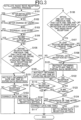
- FIG. 3 is a flowchart showing a control process performed in the CPU 41 in the satellite radio wave reception control process performed in the electronic timepiece 1 according to the present embodiment.
- the satellite radio wave reception control process which is the date/time obtaining control method according to the present embodiment is started at the timing when the condition for obtaining the present date and time by satellite radio wave reception is satisfied or when the instruction by the user to obtain the present date and time by the satellite radio wave reception is obtained.
- the satellite as the reception target is described as the GPS satellite.
- the CPU 41 determines whether the present obtaining operation of the date and time is after the initializing operation such as after the battery runs out (step S101). When it is determined that it is after the initializing operation ("YES" in step S101), the process of the CPU 41 advances to step S151.
- step S101 determines whether the date/time setting is performed manually by the user.
- step S102 determines whether the date/time setting is performed manually.
- step S102 determines whether the date/time setting is not performed manually ("NO” in step S102).
- the CPU 41 determines whether the present date and time calculated by the clock circuit 48 is between 22 hours 0 minutes and 23 hours 59 minutes on Thursday (step S103).
- the above term is the term when the code sequence of TOW-Count is similar to the code sequence of the preamble, and the process in step S103 is to avoid misidentification of the date and time by mixing the above.
- the process of the CPU 41 advances to step S151.
- step S103 determines whether “entire data reception setting" is set in the previous reception of the satellite radio wave and the setting is turned off or not (step S104).
- step S104 determines whether the "entire data reception setting" is set.
- step S104 the CPU 41 determines whether it is within 30 days from the last occasion that the date and time was obtained by entire data reception, standard radio wave reception or short-range wireless communication (step S105). When it is determined that it is not within 30 days ("NO" in step S105), the process of the CPU 41 advances to step S151. When it is determined that it is within 30 days (“YES" in step S105), the process of the CPU 41 advances to step S106.
- step S151 the CPU 41 outputs an obtaining (obtaining by entire data reception) instruction of the present date/time information by the obtaining by entire data reception to the satellite radio wave reception processor 50 (processor 52) (step S151).
- the CPU 41 waits for input of the signal from the satellite radio wave reception processor 50 and determines whether the reception of the satellite radio wave and the obtaining of the date and time succeeded on the basis of the result of the obtaining by entire data reception input from the satellite radio wave reception process (step S152).
- step S152 the CPU 41 corrects the date and time calculated by the clock circuit 48 (step S153) and ends the satellite radio wave reception control process.
- the CPU 41 ends the satellite radio wave reception control process.
- step S105 the CPU 41 determines whether it is within one day of obtaining the date and time from the previous obtaining by entire data reception or standard time reception (here, short-range wireless communication is not included) (step S106). When it is determined that it is not within one day ("NO" in step S106), the process of the CPU 41 advances to step S121.
- step S106 the CPU 41 determines whether the leap second information for the present period, that is, 6 months (first half or second half of the year) including the present date and time is held (holds the information regarding the amount of time of the deviation according to the leap second as the leap second correction value 532) (step S107).
- step S107 the process of the CPU 41 advances to step S121.
- step S107 the CPU 41 determines whether "partial data reception setting" is set in the previous satellite radio wave reception control process and whether the setting is turned off or not (step S108). When it is determined that the "partial data reception setting" is set ("YES” in step S108), the process of the CPU 41 advances to step S121. When it is determined that the "partial data reception setting" is not set ("NO” in step S108), the process of the CPU 41 advances to step S109.
- the CPU 41 When the process advances to step S121 in any of the determining processes of steps S106 to S108, the CPU 41 outputs the obtaining instruction of the present date/time information by partial data reception to the satellite radio wave reception processor 50 (processor 52) (step S121).
- the CPU 41 waits for the input of the signal from the satellite radio wave reception processor 50 and determines whether the reception of the satellite radio wave or the obtaining of the date and time succeeded based on the result of the obtaining by partial data reception input from the satellite radio wave reception processor 50 (step S122). When it is determined that the process did not succeed (failed) ("NO" in step S122), the CPU 41 performs the "partial data reception setting" (step S141) and ends the satellite radio wave reception control process.
- step S122 determines whether the process succeeded ("YES” in step S122).
- the CPU 41 determines whether the WN is obtained in the reception (step S123).
- the process of the CPU 41 advances to step 5111.
- the CPU 41 determines whether the difference between the present date and time calculated by the clock circuit 48 and the obtained present date and time is within a predetermined reference time used for determining consistency with the obtained present date and time, here, within 30 seconds (step S124).
- step S124 determines whether the difference between the present date and time calculated by the clock circuit 48 and the obtained present date and time is within a predetermined reference time used for determining consistency with the obtained present date and time, here, within 30 seconds (step S124).
- the process of the CPU 41 advances to step S111.
- the CPU 41 performs "entire data reception setting" (step S131) and ends the satellite radio wave reception control process.
- step S108 when it is determined that the "partial data reception setting" is not set ("NO” in step S108), the CPU 41 outputs the date/time obtaining instruction by expected reception to the satellite radio wave reception processor 50 (processor 52) (step S109).
- the CPU 41 waits for input of the signal from the satellite radio wave reception processor 50 and determines whether the reception succeeded and the date and time are obtained based on the result of expected reception input from the satellite radio wave reception processor 50 (step S110).
- step S110 determines whether the reception succeeded and the date and time are obtained based on the result of expected reception input from the satellite radio wave reception processor 50.
- the CPU 41 modifies the date and time calculated by the clock circuit 48 based on the obtained date and time (step S111).
- the CPU 41 ends the satellite radio wave reception controlling process.
- steps S101 to S109, S121, S151 compose the obtaining method selection step in the date/time obtaining control method according to the present embodiment (obtaining method selection process performed by the device, obtaining method selecting unit).
- the electronic timepiece 1 includes a clock circuit 48 which calculates the date and time, a satellite radio wave receiver 51 in a satellite radio wave reception processor 50 which receives the radio wave from the positioning satellite, and a CPU 41 and a processor 52 which performs the control operation regarding obtaining the present date/time information and which corrects the date and time calculated by the clock circuit 48 based on the obtained present date/time information.
- the CPU 41 controls the radio wave reception of the satellite radio wave receiver 51 of the satellite radio wave reception processor 50 to obtain the present date and time
- the CPU 41 selects any of the plurality of types of obtaining methods of the present date and time based on the elapsed time from the last occasion that the date and time calculated by the clock circuit 48 was corrected, and the CPU 41 outputs the instruction to perform the obtaining operation of the present date and time according to the obtaining method selected by the processor 52.
- the obtaining by expected reception is included in the plurality of types of obtaining methods of the present date and time.
- the obtaining by expected reception is a method in which an expected code sequence assumed to be received by the satellite radio wave reception processor 50 is generated according to the date and time calculated by the clock circuit 48 and the present date and time based on the timing that the expected code sequence is received is obtained.
- the maximum deviation amount of the calculated date and time is estimated based on the elapsed time from the recent date and time correction.
- the present date and time are determined immediately at the point when the code sequence matching with the expected code sequence is detected. Therefore, the secure and accurate date and time can be obtained within a short amount of time in the electronic timepiece 1.
- the process of generating the expected code sequence is easy, and since the post process such as decoding is not necessary, the possibility of misidentification does not rise. With this, secure and accurate identification of the date and time is possible while shortening the amount of time necessary for obtaining the date and time.
- the plurality of types of obtaining methods include, obtaining by partial data reception in which the satellite radio wave reception processor 50 obtains partial data from a sequence of data transmitted from the positioning satellite, the partial data which can be combined with the date and time calculated by the clock circuit 48 to obtain the present date and time, and obtaining by entire data reception which obtains all of the data regarding the present date and time included in the sequence of data.
- the CPU 41 controls the satellite radio wave receiver 51 to receive the radio wave from the GPS satellite to obtain the present date and time
- the CPU 41 determines whether the leap second correction value 532 for the present deviation time according to the leap second of the date and time calculated by the GPS satellite is held.
- the obtaining by expected reception is not selected. That is, the CPU 41 outputs to the processor 52 of the satellite radio wave reception processor 50 the instruction to obtain the present date and time by an obtaining method other than the obtaining by expected reception.
- the electronic timepiece 1 includes a transmitting and receiving circuit 64 which performs short-range wireless communication such as Bluetooth, and the CPU 41 is able to obtain the present date/time information from the external devices through the transmitting and receiving circuit 64.
- the CPU 41 recently obtained the present date/time information through the transmitting and receiving circuit 64, the CPU 41 does not select the obtaining by expected reception.
- the obtained present date and time depend on the accuracy of the calculation by the external device.
- the electronic devices which are able to perform short-range wireless communication lately such as smartphones and cellular phones which are assumed to be mainly used as the external device perform positioning themselves or synchronize with the date and time of the base station of the cellular phone or the time server of the network. Therefore, the possibility that the date and time are calculated with a large deviation amount is low.
- the above is not definite, and in such cases, the secure date and time can be obtained instead of raising risks of not obtaining the accurate date and time.
- the CPU 41 does not select obtaining by expected reception the next time the present date and time are obtained by receiving the radio wave from the positioning satellite.
- the CPU 41 does not attempt the obtaining by expected reception twice consecutively. With this, the risk decreases, and the date and time can be obtained more securely.
- the device configured to obtain the date/time information provided with one or a plurality of processors (here, CPU 41 and processor 52) selects the method of obtaining the present date and time among the plurality of types of methods based on the elapsed time from the last occasion that date and time calculated by the clock circuit 48 was corrected when the satellite radio wave receiver 51 receives the radio wave to obtain the present date and time.
- the plurality of types of obtaining methods include the obtaining by expected reception in which the expected code sequence assumed to be received by the satellite radio wave receiver 51 is generated according to the date and time calculated by the clock circuit 48 and the present date and time are obtained based on the timing that the expected code sequence is received.
- the date and time is obtained with options that can be selected as the method of obtaining the date and time, and more secure and accurate present date and time can be obtained efficiently within a short amount of time. That is, the device may output the reception instruction to the external satellite radio wave receiver 51 to obtain the date and time.
- the date/time obtaining control method of the present embodiment includes the obtaining method selection step.
- the obtaining method of the present date and time is selected from the plurality of types of obtaining methods based on the elapsed time from the last occasion that the date and time calculated by the clock circuit 48 was corrected, and the instruction to obtain the present date and time according to the selected obtaining method is output to the processor 52.
- the plurality of types of obtaining methods include the obtaining by expected reception in which the expected code sequence assumed to be received by the satellite radio wave receiver 51 is generated according to date and time calculated by the clock circuit 48 and the present date and time are obtained on the basis of the timing that the expected code sequence is received.
- the program 661 allows the computer (for example, microcomputer 40, processor 52) of the electronic timepiece 1 to function as the obtaining method selection unit.
- the satellite radio wave receiver 51 receives the radio wave from the positioning satellite and obtains the present date and time
- the obtaining method of the present date and time are selected from the plurality of types of obtaining methods based on the elapsed time from the last occasion that the date and time calculated by the clock circuit 48 were corrected, and the instruction to obtain the present date and time according to the selected obtaining method is output to the processor 52.
- the plurality of types of obtaining methods include the obtaining by expected reception in which the expected code sequence assumed to be received by the satellite radio wave processor 50 is generated according to the date and time calculated by the clock circuit 48 and the present date and time are obtained on the basis of the timing that the expected code sequence is received.
- the computer Since such program is installed in the processor (for example, CPU 41) and performed, the computer is able to easily perform a process to efficiently obtain the secure and accurate present date and time within a short amount of time.
- both the method of receiving the standard time radio wave to obtain the date and time and information to obtain the date and time from external devices using Bluetooth are used.
- one or both of the above functions are not necessary and other configurations to obtain the date and time may be included.
- other methods of short-range wireless communication include wireless LAN.
- the WN when the partial data is received, the WN is received by receiving up to WORD 3. Alternatively, the reception can be immediately cut at the timing of identifying TOW-Count in WORD 2. According to the electronic timepiece of the present embodiment, the maximum deviation amount of the date and time is estimated. The necessity to obtain WN is not high when the possibility that the deviation equal to or more than the estimated amount is very low. By increasing the number of cases of being able to obtain WN by slightly increasing the amount of time of reception, specifically 0.6 seconds for one WORD, the accuracy of the obtained date and time is enhanced.
- the type of obtaining method is selected by estimating the maximum deviation amount of the date and time calculated by the clock circuit 48 only from the elapsed time from the latest date and time correction, but other estimates are possible.
- the temperature conditions can be considered to change the deviation amount assumed for each unit of a predetermined amount of time, and this can be added to estimate the maximum deviation amount.
- the radio wave is received from the GPS satellite, but the radio wave can be received from other positioning satellites such as the GLONASS satellite and the date and time can be obtained.
- the date and time included in the navigation message transmitted from the GLONASS satellite includes the leap second. Therefore, there is no need to consider whether the leap second correction value is stored.
- the CPU 41 outputs the information necessary for the satellite radio wave reception processor 50 (processor 52) to generate the expected code sequence, but alternatively, the CPU 41 can generate the expected code sequence and output the expected code sequence to the satellite radio wave reception processor 50.
- the CPU 41 and the processor 52 are provided separately, alternatively, the various controlling operations can be performed with one processor.
- nonvolatile memory such as a flash memory and the ROM 66 including the mask ROM are described.
- the computer readable medium is not limited to the above, and HDD (Hard Disk Drive), and portable recording mediums such as CD-ROM and DVD disk can be applied.
Landscapes
- Physics & Mathematics (AREA)
- General Physics & Mathematics (AREA)
- Engineering & Computer Science (AREA)
- Radar, Positioning & Navigation (AREA)
- Remote Sensing (AREA)
- Electric Clocks (AREA)
- Electromechanical Clocks (AREA)
- Position Fixing By Use Of Radio Waves (AREA)
Claims (6)
- Elektronischer Zeitmesser (1), umfassend:einen Satellitenfunkwellenempfangsprozessor (50), der einen Satellitenfunkwellenempfänger (51) umfasst, der konfiguriert ist, um eine Codesequenz in einer Satellitenfunkwelle zu empfangen,eine Antenne (A1), undeinen oder mehrere Prozessoren, die konfiguriert sind zum:Bestimmen einer verstrichenen Zeit seit einer Korrektur eines berechneten Datums und einer Zeit, die von einer Zeitberechnungsschaltung (48) berechnet wurden;Schätzen eines Grads der Abweichung, der in das berechnete Datum und die Zeit eingeschlossenen ist, basierend auf der verstrichenen Zeit; undals Reaktion auf das Schätzen, dass der Grad der Abweichung gleich oder kleiner als ein erster vorbestimmter Bereich ist, der gemäß einer Temperaturbedingung definiert ist, Ausführen eines ersten Verfahrens aus einer Vielzahl von Verfahren, um das berechnete Datum und die Zeit zu korrigieren, durch das der eine oder die mehreren Prozessoren konfiguriert sind zum:Erzeugen einer erwarteten Codesequenz der Codesequenz in der von einem Satelliten zu empfangenden Satellitenfunkwelle, um eine erste aktuelle Datums- und Zeitinformation zu erhalten;Steuern des Satellitenfunkwellenempfängers (51), um die Codesequenz in der Satellitenfunkwelle zu empfangen;Bestimmen, ob es eine Übereinstimmung zwischen der erwarteten Codesequenz und der Codesequenz der Satellitenfunkwelle gibt;als Reaktion auf das Bestimmen, dass es eine Übereinstimmung gibt, Erhalten der ersten aktuellen Datums- und Zeitinformation, die durch die erwartete Codesequenz repräsentiert wird; undKorrigieren des berechneten Datum und der Zeit, basierend auf der ersten aktuellen Datums- und Zeitinformation, die erhalten wurde,dadurch gekennzeichnet, dass
der eine oder die mehreren Prozessoren konfiguriert sind zum:als Reaktion auf das Schätzen, dass der Grad der Abweichung größer als der erste vorbestimmte Bereich und gleich oder kleiner als ein zweiter vorbestimmter Bereich ist, Ausführen eines zweiten Verfahrens aus der Vielzahl von Verfahren, um das berechnete Datum und die Zeit zu korrigieren, durch das der eine oder die mehreren Prozessoren konfiguriert sind, um:Steuern des Satellitenfunkwellenempfängers, um einen ersten Abschnitt der Codesequenz zu empfangen;Erhalten einer zweiten aktuellen Datums- und Zeitinformation, die durch den ersten Abschnitt der Codesequenz repräsentiert wird; undKorrigieren des berechneten Datums und der Zeit, basierend auf der zweiten aktuellen Datums- und Zeitinformation, die erhalten wurde, undals Reaktion auf das Schätzen, dass der Grad der Abweichung größer als der zweite vorbestimmte Bereich ist, Ausführen eines dritten Verfahrens aus der Vielzahl von Verfahren, um das berechnete Datum und die Zeit zu korrigieren, durch das der eine oder die mehreren Prozessoren konfiguriert sind zum:Steuern des Satellitenfunkwellenempfängers, um einen zweiten Abschnitt der Codesequenz zu empfangen;Erhalten einer dritten aktuellen Datums- und Zeitinformation, die durch den zweiten Abschnitt der Codesequenz repräsentiert wird, wobei die dritte aktuelle Datums- und Zeitinformation zusätzliche Informationen als die zweite aktuelle Datums- und Zeitinformation einschließt; undKorrigieren des berechneten Datums und der Zeit, basierend auf der dritten aktuellen Datums- und Zeitinformation, die erhalten wurde. - Elektronischer Zeitmesser nach Anspruch 1,
wobei der eine oder die mehreren Prozessoren konfiguriert sind zum:Bestimmen, ob Informationen über einen Schaltsekundenkorrekturwert in einem Speicher vorgehalten werden;als Reaktion auf das Bestimmen, dass die Information über den Schaltsekundenkorrekturwert in dem Speicher vorgehalten wird, und als Reaktion auf das Schätzen, dass der Grad der Abweichung gleich oder kleiner als der erste vorbestimmte Bereich ist, Ausführen des ersten Verfahrens, um das berechnete Datum und die Zeit zu korrigieren; undals Reaktion auf das Bestimmen, dass die Information über den Schaltsekundenkorrekturwert nicht im Speicher vorgehalten wird, Ausführen eines anderen Verfahrens als das erste Verfahren aus der Vielzahl von Verfahren, um das berechnete Datum und die Zeit zu korrigieren. - Elektronischer Zeitmesser nach Anspruch 1 oder 2,
wobei der eine oder die mehreren Prozessoren konfiguriert sind zum:Steuern einer drahtlosen Kurzstreckenübertragungs- und Empfangsschaltung, um ein drahtloses Kurzstreckensignal zu empfangen;Erhalten einer durch das drahtlose Kurzstreckensignal repräsentierte aktuellen Datums- und Zeitinformation einer externen Vorrichtung;Korrigieren des berechneten Datums und der Zeit, basierend auf der aktuellen Datums- und Zeitinformation einer externen Vorrichtung, die erhalten wurde; und Bestimmen der verstrichenen Zeit seit der Korrektur des berechneten Datums und der Zeit, basierend auf der aktuellen Datums- und Zeitinformation einer externen Vorrichtung. - Elektronischer Zeitmesser nach einem der Ansprüche 1 bis 3,wobei der eine oder die mehreren Prozessoren konfiguriert sind zum:
beim Ausführen des ersten Verfahrens zum Korrigieren des berechneten Datums und der Zeit,Bestimmen, ob der Satellitenfunkwellenempfänger die Codesequenz in der Satellitenfunkwelle empfangen hat; undals Reaktion auf das Bestimmen, dass der Satellitenfunkwellenempfänger die Codesequenz in der Satellitenfunkwelle empfangen hat, Bestimmen, ob eine Übereinstimmung zwischen der erwarteten Codesequenz und der Codesequenz der Satellitenfunkwelle besteht; undals Reaktion auf das Bestimmen, dass der Satellitenfunkwellenempfänger die Codesequenz in der Satellitenfunkwelle nicht empfangen hat, Auswählen, nicht zu bestimmen, ob eine Übereinstimmung zwischen der erwarteten Codesequenz und der Codesequenz der Satellitenfunkwelle besteht, und stattdessen ein anderes Verfahren aus der Vielzahl von Verfahren auszuführen, um das berechnete Datum und die Zeit zu korrigieren. - Verfahren zum Erhalten von Datums- und Zeitinformationen eines elektronischen Zeitmessers (1), der einen Satellitenfunkwellenempfangsprozessor (50) umfasst, wobei der Satellitenfunkwellenempfangsprozessor (50) einen Satellitenfunkwellenempfänger (51) umfasst, der konfiguriert ist, um eine Codesequenz in einer Satellitenfunkwelle zu empfangen, eine Antenne (A1) und einen oder mehrere Prozessoren, umfassend:Bestimmen einer verstrichenen Zeit seit einer Korrektur eines berechneten Datums und einer Zeit, die von einer Zeitberechnungsschaltung (48) berechnet wurden;Schätzen eines Grades der Abweichung, der in dem berechneten Datum und der Zeit eingeschlossenen ist, basierend auf der verstrichenen Zeit; undals Reaktion auf das Schätzen, dass der Grad der Abweichung gleich oder kleiner als ein erster vorbestimmter Bereich ist, der entsprechend der Temperaturbedingung definiert ist, Ausführen eines ersten Verfahrens aus einer Vielzahl von Verfahren zum Korrigieren des berechneten Datums und der Zeit, wobei das erste Verfahren Folgendes umfasst:Erzeugen einer erwarteten Codesequenz der Codesequenz in der von einem Satelliten zu empfangenden Satellitenfunkwelle, um eine erste aktuelle Datums- und Zeitinformation zu erhalten;Steuern des Satellitenfunkwellenempfängers (51), um die Codesequenz in der Satellitenfunkwelle zu empfangen;Bestimmen, ob es eine Übereinstimmung zwischen der erwarteten Codesequenz und der Codesequenz der Satellitenfunkwelle gibt;als Reaktion auf das Bestimmen, dass es eine Übereinstimmung gibt, Erhalten der ersten aktuellen Datums- und Zeitinformation, die durch die erwartete Codesequenz repräsentiert wird; undKorrigieren des berechneten Datums und der Zeit, basierend auf der ersten aktuellen Datums- und Zeitinformation, die erhalten wurde,dadurch gekennzeichnet, dassals Reaktion auf das Schätzen, dass der Grad der Abweichung größer als der erste vorbestimmte Bereich und gleich oder kleiner als ein zweiter vorbestimmter Bereich ist, das Ausführen eines zweiten Verfahrens aus der Vielzahl von Verfahren, um das berechnete Datum und die Zeit zu korrigieren, wobei das zweite Verfahren Folgendes umfasst:Steuern des Satellitenfunkwellenempfängers, um einen ersten Abschnitt der Codesequenz zu empfangen;Erhalten einer zweiten aktuellen Datums- und Zeitinformation, die durch den ersten Abschnitt der Codesequenz repräsentiert wird; undKorrigieren des berechneten Datums und der Zeit, basierend auf der zweiten aktuellen Datums- und Zeitinformation, die erhalten wurde, undals Reaktion auf das Bestimmen, dass der Grad der Abweichung größer als der zweite vorbestimmte Bereich ist, Ausführen eines dritten Verfahrens aus der Vielzahl von Verfahren, um das berechnete Datum und die Zeit zu korrigieren, wobei das dritte Verfahren Folgendes umfasst:Steuern des Satellitenfunkwellenempfängers, um einen zweiten Abschnitt der Codesequenz zu empfangen;Erhalten einer dritten aktuellen Datums- und Zeitinformation, die durch den zweiten Abschnitt der Codesequenz repräsentiert wird, wobei die dritte aktuelle Datums- und Zeitinformation zusätzliche Informationen als die zweite aktuelle Datums- und Zeitinformation einschließt; undKorrigieren des berechneten Datums und der Zeit, basierend auf der dritten aktuellen Datums- und Zeitinformation, die erhalten wurde.
- Programm zum Erhalten von Datums- und Zeitinformationen eines elektronischen Zeitmessers (1), der einen Satellitenfunkwellenempfangsprozessor (50) umfasst, wobei der Satellitenfunkwellenempfangsprozessor (50) einen Satellitenfunkwellenempfänger (51) umfasst, der konfiguriert ist, um eine Codesequenz in einer Satellitenfunkwelle zu empfangen, eine Antenne (A1) und einen oder mehrere Prozessoren, wobei das Programm, das den einen oder die mehreren Computer veranlasst, mindestens:Bestimmen einer verstrichenen Zeit seit einer Korrektur eines berechneten Datums und einer Zeit, die von einer Zeitberechnungsschaltung (48) berechnet wurden;Schätzen eines Grades der Abweichung, der in dem berechneten Datum und der Zeit eingeschlossen ist, basierend auf der verstrichenen Zeit; undals Reaktion auf das Schätzen, dass der Grad der Abweichung gleich oder kleiner als ein erster vorbestimmter Bereich ist, der gemäß der Temperaturbedingung definiert ist, Ausführen eines ersten Verfahrens aus einer Vielzahl von Verfahren, um das berechnete Datum und die Zeit zu korrigieren, wobei das erste Verfahren Folgendes umfasst:Erzeugen einer erwarteten Codesequenz der Codesequenz in der von einem Satelliten zu empfangenden Satellitenfunkwelle, um eine erste aktuelle Datums- und Zeitinformation zu erhalten;Steuern des Satellitenfunkwellenempfängers (51), um die Codesequenz in der Satellitenfunkwelle zu empfangen;Bestimmen, ob es eine Übereinstimmung zwischen der erwarteten Codesequenz und der Codesequenz der Satellitenfunkwelle gibt;als Reaktion auf das Bestimmen, dass es eine Übereinstimmung gibt, Erhalten der ersten aktuellen Datums- und Zeitinformation, die durch die erwartete Codesequenz repräsentiert wird; undKorrigieren des berechneten Datums und der Zeit, basierend auf der ersten aktuellen Datums- und Zeitinformation, die erhalten wurde,dadurch gekennzeichnet, dassals Reaktion auf das Schätzen, dass der Grad der Abweichung größer als der erste vorbestimmte Bereich und gleich oder kleiner als ein zweiter vorbestimmter Bereich ist, Ausführen eines zweiten Verfahrens aus der Vielzahl von Verfahren, um das berechnete Datum und die Zeit zu korrigieren, wobei das zweite Verfahren Folgendes umfasst:Steuern des Satellitenfunkwellenempfängers, um einen ersten Abschnitt der Codesequenz zu empfangen;Erhalten einer zweiten aktuellen Datums- und Zeitinformation, die durch den ersten Abschnitt der Codesequenz repräsentiert wird; undKorrigieren des berechneten Datums und der Zeit, basierend auf der zweiten aktuellen Datums- und Zeitinformation, die erhalten wurde, undals Reaktion auf das Schätzen, dass der Grad der Abweichung größer als der zweite vorbestimmte Bereich ist, Ausführen eines dritten Verfahrens aus der Vielzahl von Verfahren, um das berechnete Datum und die Zeit zu korrigieren, wobei das dritte Verfahren Folgendes umfasst:Steuern des Satellitenfunkwellenempfängers, um einen zweiten Abschnitt der Codesequenz zu empfangen;Erhalten einer dritten aktuellen Datums- und Zeitinformation, die durch den zweiten Abschnitt der Codesequenz repräsentiert wird, wobei die dritte aktuelle Datums- und Zeitinformation zusätzliche Informationen als die zweite aktuelle Datums- und Zeitinformation einschließt; undKorrigieren des berechneten Datums und der Zeit, basierend auf der dritten aktuellen Datums- und Zeitinformation, die erhalten wurde.
Applications Claiming Priority (1)
| Application Number | Priority Date | Filing Date | Title |
|---|---|---|---|
| JP2017097832A JP6866760B2 (ja) | 2017-05-17 | 2017-05-17 | 電子時計、日時取得制御方法及びプログラム |
Publications (2)
| Publication Number | Publication Date |
|---|---|
| EP3404495A1 EP3404495A1 (de) | 2018-11-21 |
| EP3404495B1 true EP3404495B1 (de) | 2024-07-24 |
Family
ID=62196459
Family Applications (1)
| Application Number | Title | Priority Date | Filing Date |
|---|---|---|---|
| EP18172872.6A Active EP3404495B1 (de) | 2017-05-17 | 2018-05-17 | Elektronische uhr, vorrichtung, verfahren und programm zur steuerung eines verfahrens zur gewinnung von datums-/zeitinformationen |
Country Status (4)
| Country | Link |
|---|---|
| US (1) | US10915071B2 (de) |
| EP (1) | EP3404495B1 (de) |
| JP (1) | JP6866760B2 (de) |
| CN (1) | CN108958017B (de) |
Families Citing this family (3)
| Publication number | Priority date | Publication date | Assignee | Title |
|---|---|---|---|---|
| CN110597047A (zh) * | 2019-09-20 | 2019-12-20 | 邢台北斗国信网络科技有限公司 | 一种标准化时间自同步显示终端 |
| EP4057589A1 (de) * | 2021-03-11 | 2022-09-14 | Siemens Aktiengesellschaft | Verfahren zum übertragen von daten mittels zumindest zwei bewegter komponenten, computerprogrammprodukt, sender und empfänger |
| CN116165868B (zh) * | 2023-03-20 | 2023-12-15 | 苏州东剑智能科技有限公司 | 一种数据采集仪表的时间校准方法及装置 |
Family Cites Families (12)
| Publication number | Priority date | Publication date | Assignee | Title |
|---|---|---|---|---|
| KR100912808B1 (ko) * | 2007-07-11 | 2009-08-18 | 한국전자통신연구원 | 위성항법수신기를 이용한 차량용 시각동기 |
| US9170567B2 (en) * | 2012-07-11 | 2015-10-27 | Citizen Holdings Co., Ltd. | Satellite radio-controlled wristwatch |
| EP2874028B1 (de) * | 2012-07-11 | 2018-02-28 | Citizen Watch Co., Ltd. | Satellitenfunkwellenarmbanduhr |
| JP6435762B2 (ja) * | 2013-12-26 | 2018-12-12 | カシオ計算機株式会社 | 電子機器、プログラム、及び、日時情報の取得方法 |
| US9483029B2 (en) * | 2014-03-06 | 2016-11-01 | Seiko Epson Corporation | Timepiece and electronic timepiece |
| JP6394008B2 (ja) * | 2014-03-12 | 2018-09-26 | カシオ計算機株式会社 | 電子時計及び日時データの修正方法 |
| JP6405795B2 (ja) * | 2014-08-29 | 2018-10-17 | カシオ計算機株式会社 | 電波受信装置及び電子時計 |
| JP6679844B2 (ja) * | 2014-12-24 | 2020-04-15 | カシオ計算機株式会社 | 電波時計、日時情報取得方法及びプログラム |
| US9563179B2 (en) | 2014-12-24 | 2017-02-07 | Casio Computer Co., Ltd. | Radio-controlled timepiece, method of obtaining date/time information, and recording medium |
| JP6327183B2 (ja) * | 2015-03-18 | 2018-05-23 | カシオ計算機株式会社 | 電波受信装置、電波時計、信号取得方法及びプログラム |
| JP6115589B2 (ja) * | 2015-06-18 | 2017-04-19 | カシオ計算機株式会社 | 衛星電波受信装置、電子時計、日時情報取得方法及びプログラム |
| JP6323440B2 (ja) * | 2015-12-18 | 2018-05-16 | カシオ計算機株式会社 | 時刻表示装置、時刻表示方法およびプログラム |
-
2017
- 2017-05-17 JP JP2017097832A patent/JP6866760B2/ja active Active
-
2018
- 2018-05-16 CN CN201810469210.3A patent/CN108958017B/zh active Active
- 2018-05-17 EP EP18172872.6A patent/EP3404495B1/de active Active
- 2018-05-17 US US15/982,013 patent/US10915071B2/en active Active
Also Published As
| Publication number | Publication date |
|---|---|
| US10915071B2 (en) | 2021-02-09 |
| EP3404495A1 (de) | 2018-11-21 |
| US20180335757A1 (en) | 2018-11-22 |
| CN108958017B (zh) | 2022-01-25 |
| CN108958017A (zh) | 2018-12-07 |
| JP2018194410A (ja) | 2018-12-06 |
| JP6866760B2 (ja) | 2021-04-28 |
Similar Documents
| Publication | Publication Date | Title |
|---|---|---|
| US7649812B2 (en) | Time adjustment device, timepiece with a time adjustment device, and a time adjustment method | |
| CN101441440B (zh) | 时刻校正装置、计时装置以及时刻校正方法 | |
| US9261861B2 (en) | Radio-controlled timepiece | |
| US9869977B2 (en) | Radio-controlled timepiece | |
| JP6508184B2 (ja) | 電子時計、時刻取得制御方法及びプログラム | |
| JP6508096B2 (ja) | 衛星電波受信装置、電波時計、日時情報出力方法、及びプログラム | |
| CN104471493A (zh) | 卫星电波手表 | |
| JP6508103B2 (ja) | 電波時計、うるう秒補正情報取得方法、及びプログラム | |
| JP6679844B2 (ja) | 電波時計、日時情報取得方法及びプログラム | |
| EP3404495B1 (de) | Elektronische uhr, vorrichtung, verfahren und programm zur steuerung eines verfahrens zur gewinnung von datums-/zeitinformationen | |
| EP3418819B1 (de) | Elektronische vorrichtung, steuerungsverfahren der datum-und-zeit-erfassung und aufzeichnungsmedium | |
| JP6264175B2 (ja) | 電波時計 | |
| JP6485148B2 (ja) | 電波時計 | |
| JP6390209B2 (ja) | 電波時計及び電波受信時の表示方法 | |
| JP6702246B2 (ja) | 衛星電波受信装置、電子時計、日時取得方法及びプログラム | |
| JP2019132852A (ja) | 電子時計、時刻取得制御方法及びプログラム | |
| JP6562067B2 (ja) | 電波時計 | |
| JP2019090833A (ja) | 電波時計 | |
| JP2019045506A (ja) | 電子機器、プログラム、及び、日時情報の取得方法 |
Legal Events
| Date | Code | Title | Description |
|---|---|---|---|
| PUAI | Public reference made under article 153(3) epc to a published international application that has entered the european phase |
Free format text: ORIGINAL CODE: 0009012 |
|
| STAA | Information on the status of an ep patent application or granted ep patent |
Free format text: STATUS: REQUEST FOR EXAMINATION WAS MADE |
|
| 17P | Request for examination filed |
Effective date: 20180517 |
|
| AK | Designated contracting states |
Kind code of ref document: A1 Designated state(s): AL AT BE BG CH CY CZ DE DK EE ES FI FR GB GR HR HU IE IS IT LI LT LU LV MC MK MT NL NO PL PT RO RS SE SI SK SM TR |
|
| AX | Request for extension of the european patent |
Extension state: BA ME |
|
| STAA | Information on the status of an ep patent application or granted ep patent |
Free format text: STATUS: EXAMINATION IS IN PROGRESS |
|
| 17Q | First examination report despatched |
Effective date: 20210409 |
|
| GRAP | Despatch of communication of intention to grant a patent |
Free format text: ORIGINAL CODE: EPIDOSNIGR1 |
|
| STAA | Information on the status of an ep patent application or granted ep patent |
Free format text: STATUS: GRANT OF PATENT IS INTENDED |
|
| INTG | Intention to grant announced |
Effective date: 20231024 |
|
| GRAJ | Information related to disapproval of communication of intention to grant by the applicant or resumption of examination proceedings by the epo deleted |
Free format text: ORIGINAL CODE: EPIDOSDIGR1 |
|
| STAA | Information on the status of an ep patent application or granted ep patent |
Free format text: STATUS: EXAMINATION IS IN PROGRESS |
|
| GRAP | Despatch of communication of intention to grant a patent |
Free format text: ORIGINAL CODE: EPIDOSNIGR1 |
|
| STAA | Information on the status of an ep patent application or granted ep patent |
Free format text: STATUS: GRANT OF PATENT IS INTENDED |
|
| INTC | Intention to grant announced (deleted) | ||
| INTG | Intention to grant announced |
Effective date: 20240301 |
|
| GRAS | Grant fee paid |
Free format text: ORIGINAL CODE: EPIDOSNIGR3 |
|
| GRAA | (expected) grant |
Free format text: ORIGINAL CODE: 0009210 |
|
| STAA | Information on the status of an ep patent application or granted ep patent |
Free format text: STATUS: THE PATENT HAS BEEN GRANTED |
|
| AK | Designated contracting states |
Kind code of ref document: B1 Designated state(s): AL AT BE BG CH CY CZ DE DK EE ES FI FR GB GR HR HU IE IS IT LI LT LU LV MC MK MT NL NO PL PT RO RS SE SI SK SM TR |
|
| REG | Reference to a national code |
Ref country code: GB Ref legal event code: FG4D |
|
| REG | Reference to a national code |
Ref country code: CH Ref legal event code: EP |
|
| REG | Reference to a national code |
Ref country code: IE Ref legal event code: FG4D Ref country code: DE Ref legal event code: R096 Ref document number: 602018072084 Country of ref document: DE |
|
| REG | Reference to a national code |
Ref country code: LT Ref legal event code: MG9D |
|
| REG | Reference to a national code |
Ref country code: NL Ref legal event code: MP Effective date: 20240724 |
|
| PG25 | Lapsed in a contracting state [announced via postgrant information from national office to epo] |
Ref country code: PT Free format text: LAPSE BECAUSE OF FAILURE TO SUBMIT A TRANSLATION OF THE DESCRIPTION OR TO PAY THE FEE WITHIN THE PRESCRIBED TIME-LIMIT Effective date: 20241125 |
|
| REG | Reference to a national code |
Ref country code: AT Ref legal event code: MK05 Ref document number: 1706866 Country of ref document: AT Kind code of ref document: T Effective date: 20240724 |
|
| PG25 | Lapsed in a contracting state [announced via postgrant information from national office to epo] |
Ref country code: NL Free format text: LAPSE BECAUSE OF FAILURE TO SUBMIT A TRANSLATION OF THE DESCRIPTION OR TO PAY THE FEE WITHIN THE PRESCRIBED TIME-LIMIT Effective date: 20240724 |
|
| PG25 | Lapsed in a contracting state [announced via postgrant information from national office to epo] |
Ref country code: PT Free format text: LAPSE BECAUSE OF FAILURE TO SUBMIT A TRANSLATION OF THE DESCRIPTION OR TO PAY THE FEE WITHIN THE PRESCRIBED TIME-LIMIT Effective date: 20241125 Ref country code: NL Free format text: LAPSE BECAUSE OF FAILURE TO SUBMIT A TRANSLATION OF THE DESCRIPTION OR TO PAY THE FEE WITHIN THE PRESCRIBED TIME-LIMIT Effective date: 20240724 |
|
| PG25 | Lapsed in a contracting state [announced via postgrant information from national office to epo] |
Ref country code: NO Free format text: LAPSE BECAUSE OF FAILURE TO SUBMIT A TRANSLATION OF THE DESCRIPTION OR TO PAY THE FEE WITHIN THE PRESCRIBED TIME-LIMIT Effective date: 20241024 |
|
| PG25 | Lapsed in a contracting state [announced via postgrant information from national office to epo] |
Ref country code: FI Free format text: LAPSE BECAUSE OF FAILURE TO SUBMIT A TRANSLATION OF THE DESCRIPTION OR TO PAY THE FEE WITHIN THE PRESCRIBED TIME-LIMIT Effective date: 20240724 Ref country code: GR Free format text: LAPSE BECAUSE OF FAILURE TO SUBMIT A TRANSLATION OF THE DESCRIPTION OR TO PAY THE FEE WITHIN THE PRESCRIBED TIME-LIMIT Effective date: 20241025 Ref country code: PL Free format text: LAPSE BECAUSE OF FAILURE TO SUBMIT A TRANSLATION OF THE DESCRIPTION OR TO PAY THE FEE WITHIN THE PRESCRIBED TIME-LIMIT Effective date: 20240724 |
|
| PG25 | Lapsed in a contracting state [announced via postgrant information from national office to epo] |
Ref country code: BG Free format text: LAPSE BECAUSE OF FAILURE TO SUBMIT A TRANSLATION OF THE DESCRIPTION OR TO PAY THE FEE WITHIN THE PRESCRIBED TIME-LIMIT Effective date: 20240724 |
|
| PG25 | Lapsed in a contracting state [announced via postgrant information from national office to epo] |
Ref country code: LV Free format text: LAPSE BECAUSE OF FAILURE TO SUBMIT A TRANSLATION OF THE DESCRIPTION OR TO PAY THE FEE WITHIN THE PRESCRIBED TIME-LIMIT Effective date: 20240724 |
|
| PG25 | Lapsed in a contracting state [announced via postgrant information from national office to epo] |
Ref country code: IS Free format text: LAPSE BECAUSE OF FAILURE TO SUBMIT A TRANSLATION OF THE DESCRIPTION OR TO PAY THE FEE WITHIN THE PRESCRIBED TIME-LIMIT Effective date: 20241124 Ref country code: AT Free format text: LAPSE BECAUSE OF FAILURE TO SUBMIT A TRANSLATION OF THE DESCRIPTION OR TO PAY THE FEE WITHIN THE PRESCRIBED TIME-LIMIT Effective date: 20240724 |
|
| PG25 | Lapsed in a contracting state [announced via postgrant information from national office to epo] |
Ref country code: HR Free format text: LAPSE BECAUSE OF FAILURE TO SUBMIT A TRANSLATION OF THE DESCRIPTION OR TO PAY THE FEE WITHIN THE PRESCRIBED TIME-LIMIT Effective date: 20240724 |
|
| PG25 | Lapsed in a contracting state [announced via postgrant information from national office to epo] |
Ref country code: RS Free format text: LAPSE BECAUSE OF FAILURE TO SUBMIT A TRANSLATION OF THE DESCRIPTION OR TO PAY THE FEE WITHIN THE PRESCRIBED TIME-LIMIT Effective date: 20241024 Ref country code: ES Free format text: LAPSE BECAUSE OF FAILURE TO SUBMIT A TRANSLATION OF THE DESCRIPTION OR TO PAY THE FEE WITHIN THE PRESCRIBED TIME-LIMIT Effective date: 20240724 |
|
| PG25 | Lapsed in a contracting state [announced via postgrant information from national office to epo] |
Ref country code: RS Free format text: LAPSE BECAUSE OF FAILURE TO SUBMIT A TRANSLATION OF THE DESCRIPTION OR TO PAY THE FEE WITHIN THE PRESCRIBED TIME-LIMIT Effective date: 20241024 Ref country code: PL Free format text: LAPSE BECAUSE OF FAILURE TO SUBMIT A TRANSLATION OF THE DESCRIPTION OR TO PAY THE FEE WITHIN THE PRESCRIBED TIME-LIMIT Effective date: 20240724 Ref country code: NO Free format text: LAPSE BECAUSE OF FAILURE TO SUBMIT A TRANSLATION OF THE DESCRIPTION OR TO PAY THE FEE WITHIN THE PRESCRIBED TIME-LIMIT Effective date: 20241024 Ref country code: LV Free format text: LAPSE BECAUSE OF FAILURE TO SUBMIT A TRANSLATION OF THE DESCRIPTION OR TO PAY THE FEE WITHIN THE PRESCRIBED TIME-LIMIT Effective date: 20240724 Ref country code: IS Free format text: LAPSE BECAUSE OF FAILURE TO SUBMIT A TRANSLATION OF THE DESCRIPTION OR TO PAY THE FEE WITHIN THE PRESCRIBED TIME-LIMIT Effective date: 20241124 Ref country code: HR Free format text: LAPSE BECAUSE OF FAILURE TO SUBMIT A TRANSLATION OF THE DESCRIPTION OR TO PAY THE FEE WITHIN THE PRESCRIBED TIME-LIMIT Effective date: 20240724 Ref country code: GR Free format text: LAPSE BECAUSE OF FAILURE TO SUBMIT A TRANSLATION OF THE DESCRIPTION OR TO PAY THE FEE WITHIN THE PRESCRIBED TIME-LIMIT Effective date: 20241025 Ref country code: FI Free format text: LAPSE BECAUSE OF FAILURE TO SUBMIT A TRANSLATION OF THE DESCRIPTION OR TO PAY THE FEE WITHIN THE PRESCRIBED TIME-LIMIT Effective date: 20240724 Ref country code: ES Free format text: LAPSE BECAUSE OF FAILURE TO SUBMIT A TRANSLATION OF THE DESCRIPTION OR TO PAY THE FEE WITHIN THE PRESCRIBED TIME-LIMIT Effective date: 20240724 Ref country code: BG Free format text: LAPSE BECAUSE OF FAILURE TO SUBMIT A TRANSLATION OF THE DESCRIPTION OR TO PAY THE FEE WITHIN THE PRESCRIBED TIME-LIMIT Effective date: 20240724 Ref country code: AT Free format text: LAPSE BECAUSE OF FAILURE TO SUBMIT A TRANSLATION OF THE DESCRIPTION OR TO PAY THE FEE WITHIN THE PRESCRIBED TIME-LIMIT Effective date: 20240724 |
|
| PG25 | Lapsed in a contracting state [announced via postgrant information from national office to epo] |
Ref country code: SM Free format text: LAPSE BECAUSE OF FAILURE TO SUBMIT A TRANSLATION OF THE DESCRIPTION OR TO PAY THE FEE WITHIN THE PRESCRIBED TIME-LIMIT Effective date: 20240724 Ref country code: DK Free format text: LAPSE BECAUSE OF FAILURE TO SUBMIT A TRANSLATION OF THE DESCRIPTION OR TO PAY THE FEE WITHIN THE PRESCRIBED TIME-LIMIT Effective date: 20240724 Ref country code: RO Free format text: LAPSE BECAUSE OF FAILURE TO SUBMIT A TRANSLATION OF THE DESCRIPTION OR TO PAY THE FEE WITHIN THE PRESCRIBED TIME-LIMIT Effective date: 20240724 |
|
| PG25 | Lapsed in a contracting state [announced via postgrant information from national office to epo] |
Ref country code: EE Free format text: LAPSE BECAUSE OF FAILURE TO SUBMIT A TRANSLATION OF THE DESCRIPTION OR TO PAY THE FEE WITHIN THE PRESCRIBED TIME-LIMIT Effective date: 20240724 |
|
| PG25 | Lapsed in a contracting state [announced via postgrant information from national office to epo] |
Ref country code: CZ Free format text: LAPSE BECAUSE OF FAILURE TO SUBMIT A TRANSLATION OF THE DESCRIPTION OR TO PAY THE FEE WITHIN THE PRESCRIBED TIME-LIMIT Effective date: 20240724 |
|
| REG | Reference to a national code |
Ref country code: DE Ref legal event code: R097 Ref document number: 602018072084 Country of ref document: DE |
|
| PG25 | Lapsed in a contracting state [announced via postgrant information from national office to epo] |
Ref country code: SK Free format text: LAPSE BECAUSE OF FAILURE TO SUBMIT A TRANSLATION OF THE DESCRIPTION OR TO PAY THE FEE WITHIN THE PRESCRIBED TIME-LIMIT Effective date: 20240724 Ref country code: IT Free format text: LAPSE BECAUSE OF FAILURE TO SUBMIT A TRANSLATION OF THE DESCRIPTION OR TO PAY THE FEE WITHIN THE PRESCRIBED TIME-LIMIT Effective date: 20240724 |
|
| PLBE | No opposition filed within time limit |
Free format text: ORIGINAL CODE: 0009261 |
|
| STAA | Information on the status of an ep patent application or granted ep patent |
Free format text: STATUS: NO OPPOSITION FILED WITHIN TIME LIMIT |
|
| 26N | No opposition filed |
Effective date: 20250425 |
|
| PGFP | Annual fee paid to national office [announced via postgrant information from national office to epo] |
Ref country code: DE Payment date: 20250402 Year of fee payment: 8 |
|
| PGFP | Annual fee paid to national office [announced via postgrant information from national office to epo] |
Ref country code: FR Payment date: 20250401 Year of fee payment: 8 |
|
| PG25 | Lapsed in a contracting state [announced via postgrant information from national office to epo] |
Ref country code: SE Free format text: LAPSE BECAUSE OF FAILURE TO SUBMIT A TRANSLATION OF THE DESCRIPTION OR TO PAY THE FEE WITHIN THE PRESCRIBED TIME-LIMIT Effective date: 20240724 |
|
| REG | Reference to a national code |
Ref country code: CH Ref legal event code: H13 Free format text: ST27 STATUS EVENT CODE: U-0-0-H10-H13 (AS PROVIDED BY THE NATIONAL OFFICE) Effective date: 20251223 |
|
| PG25 | Lapsed in a contracting state [announced via postgrant information from national office to epo] |
Ref country code: LU Free format text: LAPSE BECAUSE OF NON-PAYMENT OF DUE FEES Effective date: 20250517 |
|
| PG25 | Lapsed in a contracting state [announced via postgrant information from national office to epo] |
Ref country code: CH Free format text: LAPSE BECAUSE OF NON-PAYMENT OF DUE FEES Effective date: 20250531 |
|
| REG | Reference to a national code |
Ref country code: BE Ref legal event code: MM Effective date: 20250531 |
|
| PG25 | Lapsed in a contracting state [announced via postgrant information from national office to epo] |
Ref country code: MC Free format text: LAPSE BECAUSE OF FAILURE TO SUBMIT A TRANSLATION OF THE DESCRIPTION OR TO PAY THE FEE WITHIN THE PRESCRIBED TIME-LIMIT Effective date: 20240724 |
|
| PGFP | Annual fee paid to national office [announced via postgrant information from national office to epo] |
Ref country code: GB Payment date: 20260317 Year of fee payment: 9 |
|
| PG25 | Lapsed in a contracting state [announced via postgrant information from national office to epo] |
Ref country code: IE Free format text: LAPSE BECAUSE OF NON-PAYMENT OF DUE FEES Effective date: 20250517 |
|
| PG25 | Lapsed in a contracting state [announced via postgrant information from national office to epo] |
Ref country code: BE Free format text: LAPSE BECAUSE OF NON-PAYMENT OF DUE FEES Effective date: 20250531 |