EP3402462B1 - A nanobiocomposite formulation for wound healing and a process for the preparation thereof - Google Patents
A nanobiocomposite formulation for wound healing and a process for the preparation thereof Download PDFInfo
- Publication number
- EP3402462B1 EP3402462B1 EP17715287.3A EP17715287A EP3402462B1 EP 3402462 B1 EP3402462 B1 EP 3402462B1 EP 17715287 A EP17715287 A EP 17715287A EP 3402462 B1 EP3402462 B1 EP 3402462B1
- Authority
- EP
- European Patent Office
- Prior art keywords
- cncs
- wound
- ncs
- ointment
- nanobiocomposite
- Prior art date
- Legal status (The legal status is an assumption and is not a legal conclusion. Google has not performed a legal analysis and makes no representation as to the accuracy of the status listed.)
- Active
Links
Images





Classifications
-
- A—HUMAN NECESSITIES
- A61—MEDICAL OR VETERINARY SCIENCE; HYGIENE
- A61K—PREPARATIONS FOR MEDICAL, DENTAL OR TOILETRY PURPOSES
- A61K36/00—Medicinal preparations of undetermined constitution containing material from algae, lichens, fungi or plants, or derivatives thereof, e.g. traditional herbal medicines
- A61K36/18—Magnoliophyta (angiosperms)
- A61K36/185—Magnoliopsida (dicotyledons)
- A61K36/61—Myrtaceae (Myrtle family), e.g. teatree or eucalyptus
-
- A—HUMAN NECESSITIES
- A61—MEDICAL OR VETERINARY SCIENCE; HYGIENE
- A61K—PREPARATIONS FOR MEDICAL, DENTAL OR TOILETRY PURPOSES
- A61K33/00—Medicinal preparations containing inorganic active ingredients
- A61K33/24—Heavy metals; Compounds thereof
- A61K33/38—Silver; Compounds thereof
-
- A—HUMAN NECESSITIES
- A61—MEDICAL OR VETERINARY SCIENCE; HYGIENE
- A61K—PREPARATIONS FOR MEDICAL, DENTAL OR TOILETRY PURPOSES
- A61K47/00—Medicinal preparations characterised by the non-active ingredients used, e.g. carriers or inert additives; Targeting or modifying agents chemically bound to the active ingredient
- A61K47/30—Macromolecular organic or inorganic compounds, e.g. inorganic polyphosphates
- A61K47/36—Polysaccharides; Derivatives thereof, e.g. gums, starch, alginate, dextrin, hyaluronic acid, chitosan, inulin, agar or pectin
- A61K47/38—Cellulose; Derivatives thereof
-
- A—HUMAN NECESSITIES
- A61—MEDICAL OR VETERINARY SCIENCE; HYGIENE
- A61K—PREPARATIONS FOR MEDICAL, DENTAL OR TOILETRY PURPOSES
- A61K9/00—Medicinal preparations characterised by special physical form
- A61K9/0012—Galenical forms characterised by the site of application
- A61K9/0014—Skin, i.e. galenical aspects of topical compositions
-
- A—HUMAN NECESSITIES
- A61—MEDICAL OR VETERINARY SCIENCE; HYGIENE
- A61K—PREPARATIONS FOR MEDICAL, DENTAL OR TOILETRY PURPOSES
- A61K9/00—Medicinal preparations characterised by special physical form
- A61K9/06—Ointments; Bases therefor; Other semi-solid forms, e.g. creams, sticks, gels
-
- A—HUMAN NECESSITIES
- A61—MEDICAL OR VETERINARY SCIENCE; HYGIENE
- A61K—PREPARATIONS FOR MEDICAL, DENTAL OR TOILETRY PURPOSES
- A61K9/00—Medicinal preparations characterised by special physical form
- A61K9/48—Preparations in capsules, e.g. of gelatin, of chocolate
- A61K9/50—Microcapsules having a gas, liquid or semi-solid filling; Solid microparticles or pellets surrounded by a distinct coating layer, e.g. coated microspheres, coated drug crystals
- A61K9/51—Nanocapsules; Nanoparticles
- A61K9/5107—Excipients; Inactive ingredients
- A61K9/513—Organic macromolecular compounds; Dendrimers
- A61K9/5161—Polysaccharides, e.g. alginate, chitosan, cellulose derivatives; Cyclodextrin
-
- A—HUMAN NECESSITIES
- A61—MEDICAL OR VETERINARY SCIENCE; HYGIENE
- A61L—METHODS OR APPARATUS FOR STERILISING MATERIALS OR OBJECTS IN GENERAL; DISINFECTION, STERILISATION OR DEODORISATION OF AIR; CHEMICAL ASPECTS OF BANDAGES, DRESSINGS, ABSORBENT PADS OR SURGICAL ARTICLES; MATERIALS FOR BANDAGES, DRESSINGS, ABSORBENT PADS OR SURGICAL ARTICLES
- A61L15/00—Chemical aspects of, or use of materials for, bandages, dressings or absorbent pads
- A61L15/16—Bandages, dressings or absorbent pads for physiological fluids such as urine or blood, e.g. sanitary towels, tampons
- A61L15/18—Bandages, dressings or absorbent pads for physiological fluids such as urine or blood, e.g. sanitary towels, tampons containing inorganic materials
-
- A—HUMAN NECESSITIES
- A61—MEDICAL OR VETERINARY SCIENCE; HYGIENE
- A61L—METHODS OR APPARATUS FOR STERILISING MATERIALS OR OBJECTS IN GENERAL; DISINFECTION, STERILISATION OR DEODORISATION OF AIR; CHEMICAL ASPECTS OF BANDAGES, DRESSINGS, ABSORBENT PADS OR SURGICAL ARTICLES; MATERIALS FOR BANDAGES, DRESSINGS, ABSORBENT PADS OR SURGICAL ARTICLES
- A61L15/00—Chemical aspects of, or use of materials for, bandages, dressings or absorbent pads
- A61L15/16—Bandages, dressings or absorbent pads for physiological fluids such as urine or blood, e.g. sanitary towels, tampons
- A61L15/22—Bandages, dressings or absorbent pads for physiological fluids such as urine or blood, e.g. sanitary towels, tampons containing macromolecular materials
- A61L15/28—Polysaccharides or their derivatives
-
- A—HUMAN NECESSITIES
- A61—MEDICAL OR VETERINARY SCIENCE; HYGIENE
- A61L—METHODS OR APPARATUS FOR STERILISING MATERIALS OR OBJECTS IN GENERAL; DISINFECTION, STERILISATION OR DEODORISATION OF AIR; CHEMICAL ASPECTS OF BANDAGES, DRESSINGS, ABSORBENT PADS OR SURGICAL ARTICLES; MATERIALS FOR BANDAGES, DRESSINGS, ABSORBENT PADS OR SURGICAL ARTICLES
- A61L15/00—Chemical aspects of, or use of materials for, bandages, dressings or absorbent pads
- A61L15/16—Bandages, dressings or absorbent pads for physiological fluids such as urine or blood, e.g. sanitary towels, tampons
- A61L15/42—Use of materials characterised by their function or physical properties
- A61L15/44—Medicaments
-
- A—HUMAN NECESSITIES
- A61—MEDICAL OR VETERINARY SCIENCE; HYGIENE
- A61L—METHODS OR APPARATUS FOR STERILISING MATERIALS OR OBJECTS IN GENERAL; DISINFECTION, STERILISATION OR DEODORISATION OF AIR; CHEMICAL ASPECTS OF BANDAGES, DRESSINGS, ABSORBENT PADS OR SURGICAL ARTICLES; MATERIALS FOR BANDAGES, DRESSINGS, ABSORBENT PADS OR SURGICAL ARTICLES
- A61L15/00—Chemical aspects of, or use of materials for, bandages, dressings or absorbent pads
- A61L15/16—Bandages, dressings or absorbent pads for physiological fluids such as urine or blood, e.g. sanitary towels, tampons
- A61L15/42—Use of materials characterised by their function or physical properties
- A61L15/46—Deodorants or malodour counteractants, e.g. to inhibit the formation of ammonia or bacteria
-
- A—HUMAN NECESSITIES
- A61—MEDICAL OR VETERINARY SCIENCE; HYGIENE
- A61L—METHODS OR APPARATUS FOR STERILISING MATERIALS OR OBJECTS IN GENERAL; DISINFECTION, STERILISATION OR DEODORISATION OF AIR; CHEMICAL ASPECTS OF BANDAGES, DRESSINGS, ABSORBENT PADS OR SURGICAL ARTICLES; MATERIALS FOR BANDAGES, DRESSINGS, ABSORBENT PADS OR SURGICAL ARTICLES
- A61L15/00—Chemical aspects of, or use of materials for, bandages, dressings or absorbent pads
- A61L15/16—Bandages, dressings or absorbent pads for physiological fluids such as urine or blood, e.g. sanitary towels, tampons
- A61L15/42—Use of materials characterised by their function or physical properties
- A61L15/60—Liquid-swellable gel-forming materials, e.g. super-absorbents
-
- A—HUMAN NECESSITIES
- A61—MEDICAL OR VETERINARY SCIENCE; HYGIENE
- A61L—METHODS OR APPARATUS FOR STERILISING MATERIALS OR OBJECTS IN GENERAL; DISINFECTION, STERILISATION OR DEODORISATION OF AIR; CHEMICAL ASPECTS OF BANDAGES, DRESSINGS, ABSORBENT PADS OR SURGICAL ARTICLES; MATERIALS FOR BANDAGES, DRESSINGS, ABSORBENT PADS OR SURGICAL ARTICLES
- A61L15/00—Chemical aspects of, or use of materials for, bandages, dressings or absorbent pads
- A61L15/16—Bandages, dressings or absorbent pads for physiological fluids such as urine or blood, e.g. sanitary towels, tampons
- A61L15/42—Use of materials characterised by their function or physical properties
- A61L15/64—Use of materials characterised by their function or physical properties specially adapted to be resorbable inside the body
-
- A—HUMAN NECESSITIES
- A61—MEDICAL OR VETERINARY SCIENCE; HYGIENE
- A61P—SPECIFIC THERAPEUTIC ACTIVITY OF CHEMICAL COMPOUNDS OR MEDICINAL PREPARATIONS
- A61P17/00—Drugs for dermatological disorders
- A61P17/02—Drugs for dermatological disorders for treating wounds, ulcers, burns, scars, keloids, or the like
-
- A—HUMAN NECESSITIES
- A61—MEDICAL OR VETERINARY SCIENCE; HYGIENE
- A61P—SPECIFIC THERAPEUTIC ACTIVITY OF CHEMICAL COMPOUNDS OR MEDICINAL PREPARATIONS
- A61P31/00—Antiinfectives, i.e. antibiotics, antiseptics, chemotherapeutics
- A61P31/04—Antibacterial agents
-
- A—HUMAN NECESSITIES
- A61—MEDICAL OR VETERINARY SCIENCE; HYGIENE
- A61K—PREPARATIONS FOR MEDICAL, DENTAL OR TOILETRY PURPOSES
- A61K2236/00—Isolation or extraction methods of medicinal preparations of undetermined constitution containing material from algae, lichens, fungi or plants, or derivatives thereof, e.g. traditional herbal medicine
- A61K2236/10—Preparation or pretreatment of starting material
- A61K2236/13—Preparation or pretreatment of starting material involving cleaning, e.g. washing or peeling
-
- A—HUMAN NECESSITIES
- A61—MEDICAL OR VETERINARY SCIENCE; HYGIENE
- A61K—PREPARATIONS FOR MEDICAL, DENTAL OR TOILETRY PURPOSES
- A61K2236/00—Isolation or extraction methods of medicinal preparations of undetermined constitution containing material from algae, lichens, fungi or plants, or derivatives thereof, e.g. traditional herbal medicine
- A61K2236/30—Extraction of the material
- A61K2236/39—Complex extraction schemes, e.g. fractionation or repeated extraction steps
-
- A—HUMAN NECESSITIES
- A61—MEDICAL OR VETERINARY SCIENCE; HYGIENE
- A61K—PREPARATIONS FOR MEDICAL, DENTAL OR TOILETRY PURPOSES
- A61K2236/00—Isolation or extraction methods of medicinal preparations of undetermined constitution containing material from algae, lichens, fungi or plants, or derivatives thereof, e.g. traditional herbal medicine
- A61K2236/50—Methods involving additional extraction steps
- A61K2236/51—Concentration or drying of the extract, e.g. Lyophilisation, freeze-drying or spray-drying
-
- A—HUMAN NECESSITIES
- A61—MEDICAL OR VETERINARY SCIENCE; HYGIENE
- A61K—PREPARATIONS FOR MEDICAL, DENTAL OR TOILETRY PURPOSES
- A61K2236/00—Isolation or extraction methods of medicinal preparations of undetermined constitution containing material from algae, lichens, fungi or plants, or derivatives thereof, e.g. traditional herbal medicine
- A61K2236/50—Methods involving additional extraction steps
- A61K2236/53—Liquid-solid separation, e.g. centrifugation, sedimentation or crystallization
-
- A—HUMAN NECESSITIES
- A61—MEDICAL OR VETERINARY SCIENCE; HYGIENE
- A61L—METHODS OR APPARATUS FOR STERILISING MATERIALS OR OBJECTS IN GENERAL; DISINFECTION, STERILISATION OR DEODORISATION OF AIR; CHEMICAL ASPECTS OF BANDAGES, DRESSINGS, ABSORBENT PADS OR SURGICAL ARTICLES; MATERIALS FOR BANDAGES, DRESSINGS, ABSORBENT PADS OR SURGICAL ARTICLES
- A61L2300/00—Biologically active materials used in bandages, wound dressings, absorbent pads or medical devices
- A61L2300/10—Biologically active materials used in bandages, wound dressings, absorbent pads or medical devices containing or releasing inorganic materials
- A61L2300/102—Metals or metal compounds, e.g. salts such as bicarbonates, carbonates, oxides, zeolites, silicates
- A61L2300/104—Silver, e.g. silver sulfadiazine
-
- A—HUMAN NECESSITIES
- A61—MEDICAL OR VETERINARY SCIENCE; HYGIENE
- A61L—METHODS OR APPARATUS FOR STERILISING MATERIALS OR OBJECTS IN GENERAL; DISINFECTION, STERILISATION OR DEODORISATION OF AIR; CHEMICAL ASPECTS OF BANDAGES, DRESSINGS, ABSORBENT PADS OR SURGICAL ARTICLES; MATERIALS FOR BANDAGES, DRESSINGS, ABSORBENT PADS OR SURGICAL ARTICLES
- A61L2300/00—Biologically active materials used in bandages, wound dressings, absorbent pads or medical devices
- A61L2300/40—Biologically active materials used in bandages, wound dressings, absorbent pads or medical devices characterised by a specific therapeutic activity or mode of action
- A61L2300/404—Biocides, antimicrobial agents, antiseptic agents
-
- A—HUMAN NECESSITIES
- A61—MEDICAL OR VETERINARY SCIENCE; HYGIENE
- A61L—METHODS OR APPARATUS FOR STERILISING MATERIALS OR OBJECTS IN GENERAL; DISINFECTION, STERILISATION OR DEODORISATION OF AIR; CHEMICAL ASPECTS OF BANDAGES, DRESSINGS, ABSORBENT PADS OR SURGICAL ARTICLES; MATERIALS FOR BANDAGES, DRESSINGS, ABSORBENT PADS OR SURGICAL ARTICLES
- A61L2300/00—Biologically active materials used in bandages, wound dressings, absorbent pads or medical devices
- A61L2300/40—Biologically active materials used in bandages, wound dressings, absorbent pads or medical devices characterised by a specific therapeutic activity or mode of action
- A61L2300/412—Tissue-regenerating or healing or proliferative agents
-
- A—HUMAN NECESSITIES
- A61—MEDICAL OR VETERINARY SCIENCE; HYGIENE
- A61L—METHODS OR APPARATUS FOR STERILISING MATERIALS OR OBJECTS IN GENERAL; DISINFECTION, STERILISATION OR DEODORISATION OF AIR; CHEMICAL ASPECTS OF BANDAGES, DRESSINGS, ABSORBENT PADS OR SURGICAL ARTICLES; MATERIALS FOR BANDAGES, DRESSINGS, ABSORBENT PADS OR SURGICAL ARTICLES
- A61L2400/00—Materials characterised by their function or physical properties
- A61L2400/12—Nanosized materials, e.g. nanofibres, nanoparticles, nanowires, nanotubes; Nanostructured surfaces
-
- A—HUMAN NECESSITIES
- A61—MEDICAL OR VETERINARY SCIENCE; HYGIENE
- A61L—METHODS OR APPARATUS FOR STERILISING MATERIALS OR OBJECTS IN GENERAL; DISINFECTION, STERILISATION OR DEODORISATION OF AIR; CHEMICAL ASPECTS OF BANDAGES, DRESSINGS, ABSORBENT PADS OR SURGICAL ARTICLES; MATERIALS FOR BANDAGES, DRESSINGS, ABSORBENT PADS OR SURGICAL ARTICLES
- A61L2430/00—Materials or treatment for tissue regeneration
- A61L2430/34—Materials or treatment for tissue regeneration for soft tissue reconstruction
Definitions
- the present invention relates to a nanobiocomposite formulation for wound healing.
- the present invention relates to a chemo-mechanical synthesis of cellulose nanocrystals (CNCs) from the biological plant material i.e. leaves of Syzygium cumini (Jamun) and a process for the preparation of environmental benign nanobiocomposites (NCs).
- NCs cellulose nanocrystals
- Two different forms of NCs i.e. strip and ointments have been documented.
- the present invention relates to the development and use of NCs of plant nanocellulose impregnated with nanosilver as antibacterial wound care products.
- the invention relates to nanobiocomposite in the form of an ointment and a production process thereof.
- Wound healing is a complex event consisting of joint activities of many cell and tissue lineages proceeding through various biological pathways, depends upon numerous factors which are still under investigation. Wounds have been classified into various types: open and closed wound; acute and chronic wound; incision and excision wound.
- Initial phase of wound healing involves blood clot formation and inflammation. Inflammation is greatly enhanced if the wound of subject becomes a target of bacterial infection. Treatment of wounds such as, but not limited to, cuts, second and third degree bums, pressure ulcers, diabetic ulcers, surgical wounds, and various skin abrasions becomes difficult because of microbial infections.
- the proliferation phase starts where the fibroblasts enter the wound site leading to formation of collagen fibrils responsible for wound closure and tissue regeneration.
- An ideal dressing material is not only meant to accelerate wound healing but also reduce loss of fluid from the wound, help to minimize pain and infection, provide protection to fragile skin, and should be non-adherent to wound.
- a variety of wound dressing materials are available in the global market to meet the needs and provide a better life to the patient.
- a wide variety of materials are available for the fabrication of wound dressings whose applicability depends upon the nature of wound to be treated.
- U.S. Patent No. 6140257 describes the use of an absorbent, composite fiber as wound dressing comprising a matrix of 10% to less than 50% water insoluble alginate having dispersed therein at least 40% of another polysaccharide.
- a variety of other water absorbing active ingredients used in wound care products mentioned in prior art are chemically modified cellulose fibers, pectin fibers, alginate fibers, collagen fibers, chitosan fibers, hyaluronic acid fibers or other polysaccharide fibers.
- Silver has been known as an antiseptic for ages. Silver, copper, zinc are used in the field from a long past. Even the nanocrystalline silver has been impregnated into gauze, alginate, hydrocolloids and foams for designing wound care products. These dressings are used for treatment of a particular type of wound depending upon their advantages. Gauzes used as dressing material adhere to the wound surface causing a pain and damage to neo-epithelium during removal of gauze. Some reports describe that alginate used in wound care products may cause long term foreign body type reaction. Hydrocolloids used in wound care have not been indicated for heavily exuding wounds and produce malodor. The foams may also produce excessive malodorous drainage which necessitates the frequent change of dressing. U.S. Patent No.
- 20120282348 A1 reports the use of silver hydrogels for the treatment of burn wounds by receiving or donating moisture.
- U.S. Patent No. 5514657 A mentions about the topical antibacterial application of silver sulfadiazine and collagen for wound healing especially burn wounds. In-spite of their advantages, the products are generally expensive and exhibit less exudates absorption.
- Synthetic polymers such as polyurethanes, polyvinylpyrolidone (PVP), polyethyleneoxide (PEO) and polyvinyl alcohol (PVA) can be used in combination with other synthetic or natural polymers to achieve great properties optimal for healing e.g. moisture retention, re-swelling capability, and absorption of wound exudates.
- Natural polymers like collagen and alginates have been exploited for wound dressing. Even though these possess good water absorption/ donation capacity but biocompatibility and cost are the issues related to their use.
- CNCs Cellulose nanocrystals
- nanofibers are developed as a new class of nano-materials having wide range of utilities as a reinforcing agent in nanocomposites, and in biomedical field.
- the natural sources like plants, agricultural wastes, bacteria, tunicates have been considered as raw material for cellulose.
- the plant sources earlier used for isolation of CNCs include wheat straw, husk, soy hulls, banana, bamboo, agricultural wastes, wood or culm of some plants.
- EP 2513149 A1 describes the isolation of CNCs from vegetative biomass such as flex and hemp using ammonium persulphate.
- U.S. Patent No. 2008/0108772 describes a process for producing cellulose nano whiskers by treating microcrystalline cellulose with HCI, as well as a new extrusion method to produce a reinforced organic polymeric material.
- HCI hydrolysis required pure cellulosic materials (e.g. MCC) and the resulting cellulose nano whiskers had a large size distribution.
- a number of ways are known to isolate CNCs such as chemical, mechanical, enzymatic, and chemical combined with mechanical method.
- 20130211308 A1 describes the use of nanosilver coated bacterial cellulose for wound healing due to its water uptake potential.
- U.S. Patent No. 7390499 B2 describes the use of a mixture of cellulose and microbiocide as a wound healing agent.
- the chemical composition of bacterial cellulose is almost similar to plant cellulose.
- the problem existing with the use of microbial cellulose is that it is difficult and expensive to manufacture.
- the bacterial strains lose their ability to synthesize cellulose during their growth in culture and they fail to maintain their integrity during application.
- manufacturing, processing and use of microbial cellulose fail to provide a continuous source of wound dressing used in different types of wounds.
- Bacterial cellulose having high water retaining capacity may also enhance the chances of bacterial infection due to excessive moisture around the wound site. There is a need to put efforts to isolate plant CNCs. Plant cellulose is easy to extract, environmentally benign, abundant in nature, renewable, biocompatible, cost effective, and have good water absorption capacity.
- US2010/233245 A1 discloses a nanoparticle composition comprising cellulose nanofibers embedded with nanosized material, e.g. silver.
- the composition can be used as wound covering, dressing, bandage, etc.
- the prior art has failed to provide a wound dressing material which have the collective potential of optimum wound healing, ability of moisture management, antimicrobial activity, anti-inflammatory activity, and adequate biocompatibility.
- attempts have been made to isolate CNCs from Syzygium cumini plant leaves.
- designing of nanobiocomposite containing plant CNCs and nanocrystalline silver (AgNPs) is described to meet the criteria of ideal wound dressing as it has a synergistic role of water management and antimicrobial action suitable for promotion of wound healing.
- the biocompatible and cost effective wound dressing of present invention in the form of thin strip and ointment assist in wound healing by decreasing the rate of inflammation, promoting proliferation and granulation, decreasing scar formation, allowing epithelial migration, early collagen formation, increasing rate of wound closure and ultimately enhancing re-epithelization.
- Nanosilver particles incorporated in nanocellulose have anti-microbial, anti-inflammatory action and also help to minimize scarring. AgNPs help in conversion of fibroblasts into myofibroblasts which have an impact on wound closure.
- wound dressing of present invention neither degrade nor leave any residue at the wound site. The wound dressing does not adhere to the wounded skin while removal and does not cause any pain.
- the main object of the present invention is to provide isolate cellulose nanocrystals (CNCs) from the leaves of Syzygium cumini by chemo-mechanical method and their characterization.
- Another object of the present invention is to provide the adoption of green approach to develop nanobiocomposites (NCs) comprising in situ impregnation of silver nanoparticles AgNPs on CNCs matrix. Preparation of an ointment of NCs as wound care product.
- NCs nanobiocomposites
- Yet another object of the present invention is to provide evaluation of developed NCs for antibacterial and in vivo acute wound healing potential.
- the present invention relates to a nanobiocomposite formulation (NCs) comprising silver nanoparticles (AgNPs) and cellulose nanocrystals (CNCs) wherein the ratio of AgNPs and CNCs is in the range of 0.067% -0.4% w/w (AgNPs) : 7-8% w/w (CNCs) in ointment form.
- NCs nanobiocomposite formulation
- AgNPs silver nanoparticles
- CNCs cellulose nanocrystals
- NCs comprised of S. cumini isolated CNCs matrix impregnated with AgNPs synthesized using leaf extract of S. cumini for use as anti-bacterial acute wound healing agents.
- the acid used is selected from a group of sulphuric acid, nitric acid, hydrochloric acid or a mixture thereof.
- the base used is selected from a group of potassium hydroxide, sodium hydroxide.
- the NC formulation is used for wound healing in the form of strip or ointment.
- the present invention provides the process for the preparation of the nanobiocomposite formulation, wherein the NCs pellet is directly mixed with Vaseline base in the ratio of 1:1 to obtain ointment.
- the present invention relates to a nanobiocomposite formulation for wound healing and a process for the preparation thereof.
- the present invention describes a process for the isolation of cellulose nanocrystals from the plant leaves of Syzygium cumini by controlled and optimized chemomechanical treatment which has been found to be easy and inexpensive to manufacture.
- the invention encompasses the isolation and characterization of CNCs from the leaves of Syzygium cumini, formation of NCs comprised of CNCs as well as AgNPs.
- NCs antimicrobial and wound healing activities is also mentioned. Histopathology and serum biochemical assays were performed to study the effect of NCs on different phases of wound healing i.e. inflammation, proliferation and re-epithelization.
- the isolation of CNCs from the leaves of Syzygium cumini is done using chemical method in combination with mechanical treatment.
- the use of Syzygium cumini leaves is preferred for the isolation of CNCs as the plant is large, evergreen, and perennial, widely distributed throughout and possesses medicinal values.
- Syzygium cumini leaves were collected from the plants grown in campus of CSIR-Institute of Himalayan Bioresource Technology (Council of Scientific & Industrial Research) Post Box No. 6, Palampur (H.P.) 176061-INDIA whose geographical origin is 32° 6' 39.0960" N, 76° 32' 10.5108" E and height above sea level is 1300 m.
- the examples of other plant biomass used for isolation of CNCs include, but not limited to, agricultural wastes of wheat, rice, soy-hulls, hemp, bamboo, banana, ramie etc.
- the chemical treatment with bleaching and alkali agents is followed by acid hydrolysis for the isolation purpose.
- appropriate bleaching agents include, but are not limited to, sodium chlorite, ammonium persulfate, and hydrogen peroxide.
- the preferred bleaching agent used in this invention is acidified sodium chlorite solution to remove the lignin present in plant leaf. Lignin is a chromophore present in the leaf.
- the alkali treatment involves the use of potassium hydroxide (KOH) to solubilize the pectins, hemicellulose present in the plant leaf.
- KOH potassium hydroxide
- alkali agent like sodium hydroxide (NaOH) may be used.
- NaOH sodium hydroxide
- the removal of lignin, pectin and hemicelluloses present in plant is necessary to obtain the pure cellulosic fibers. All these treatments were given at high temperature of 80°C for rapid solubilization of non-cellulosic impurities from the plant leaf. The high temperature range of 60-120°C may be used. Time duration and concentration of chemical agents used also effect on the removal of non-cellulosic impurities.
- Alkali treatment was followed by acid hydrolysis. The type of acid used, concentration of acid used, reaction temperature and time duration of acid treatment affect the aspect ratio (length/diameter) of CNCs.
- sulfuric acid H 2SO4
- hydrochloric acid nitric acid and a mixture thereof
- sulfuric acid H 2SO4
- hydrochloric acid nitric acid and a mixture thereof
- the chemical treatment is followed by mechanical treatment of probe ultra-sonication to further individualize and reduce the size of the isolated CNCs. Time of sonication also affect the size of CNCs. CNCs after acid hydrolysis were sonicated for 4, 8, 12, 20 and 30 minutes to analyze its effect on size of CNCs. Further, 12 mM of sonication is preferred in this study to isolate CNCs of a particular length and diameter.
- Untreated leaf fibers, chemically pre-treated fibers and finally obtained CNCs are characterized by zeta potential measurements, SEM, TEM, FTIR, XRD and UV-Vis spectroscopy to estimate the size, shape, surface charge and other structural attributes.
- the second aspect of the invention considers the preparation of plant based NCs composed of S cumini CNCs and AgNPs formed by the reduction of silver nitrate solution (1 mM, 5 mM and 10 mM).
- Silver iodide, silver bromide, silver citrate, silver acetate and silver chloride may also be used as silver salts.
- silver nitrate is used as a precursor and water as a solvent.
- S. cumini LE has been used as a biological reducing agent as well as stabilizer rather than the use of chemical reducing agents and chemical stabilizers to reduce silver nitrate solution.
- a number of chemical reducing agents like sodium citrate, ascorbate, sodium borohydride, ethylene glycol etc. can be used for the reduction of silver salt solution.
- the chemical stabilizers used to prevent AgNPs from aggregation include polyvinylpyrrolidone (PVP), polyethylene glycol (PEG), sodium dodecyl sulphate (SDS), starch, glucose and many more.
- PVP polyvinylpyrrolidone
- PEG polyethylene glycol
- SDS sodium dodecyl sulphate
- starch glucose and many more.
- the chemical reducing agents are costly and cause great harm to environment, and living beings.
- the reason behind the use of biological S. cumini LE as a reducing agent as well as stabilizing agent in this invention is their environmental friendly nature, non-toxic to civilization and animals, cost effectiveness.
- S. cumini LE possesses some medicinal properties like antioxidant, anti-inflammatory and antimicrobial which may provide an advantageous benefit to developed NCs for wound healing.
- the invention provides a novel nanobiocomposite NC material that includes AgNPs in metallic form bound to plant nanocellulose, CNCs.
- NCs have been prepared using in situ approach where S. cumini LE was added drop wise to the mixture of CNCs and silver nitrate solution.
- S. cumini LE contains some phytochemicals which are responsible for the green reduction of silver nitrate solution into AgNPs.
- the LE also acts as a co-stabilizer to provide stability to AgNPs.
- the hydroxyl groups present on the surface of CNCs also assist in reducing silver nitrate solution.
- CNCs matrix itself acts as a biotemplate to limit the distribution of formed AgNPs.
- the present invention also describes that NCs have been prepared in two forms of wound dressing that include strip and ointment form.
- the composition of plant based nanocellulose present in the dressing can vary depending upon the method of preparation and the ultimate use of the wound dressing.
- NCs to be shaped into any desirable form gives the applicability of an added technology advantage.
- an inert base to NCs so to make it easy to apply on the body surface.
- a variety of inert and non-toxic bases are available in the pharmaceutical market like PEG, sorbitol, glycerin, petrolatum, chitosan and a mixture thereof
- the present invention preferably deals with the use of Vaseline (petrolatum) as a cheap, inert and non-toxic ointment base to be added to NCs.
- NCs in the form of strip were prepared by casting the aqueous suspension of NCs in a mold of desirable size and shape, allowed it to dry at temperature range of 25-40°C, preferably 35°C.
- the plant cellulose fibers could be dried or never dried even after the incorporation of metallic silver NPs.
- NCs of plant nanocellulose functionalized with nanosilver exhibit a long lasting and broad spectrum antibacterial activity against a gram negative bacterium, Escherichia coli and gram positive bacterium, Bacillus subtilis selected from a group of bacteria. As these two bacteria are commonly found around and may cause an infection to wound.
- the bacterial growth inhibition around NCs is attributed to the diffusion of AgNPs from NCs material to the surroundings leading to the dampening of bacterial growth.
- the antimicrobial activity is derived from the component of metallic silver analogous to ionic silver.
- the use of nanocrystalline silver is advantageous over the use of conventional antibiotics due to the reason that silver as an antibacterial does not induce resistance in the microorganisms.
- the disclosure relates to the topical use of all the three different formulations of plant based NCs in both the forms of strip as well as ointment, for acute wound healing in swiss albino mice model.
- the wound dressing product can also be used in disinfecting and treating patients with bums and scald related skin infection, incision cuts, wounds related to skin infection, surgery cut infections, vaginitis, chronic wounds, and diabetic ulcers.
- the wound dressing has moisture absorption capacity and can regulate the wound exudates. This means that a wound which is exudating can be topically treated by application of nanobiocomposite wound dressing of the present invention which will absorb excess fluid from the wound.
- the incorporated AgNPs inside CNCs matrix manifest antibacterial activity which is responsible for bacterial growth inhibition around the wound site. The duration of healing is variable and depends upon several factors that include the type of wound (closed or open, acute or chronic, incision or excision), cause and size of wound, age and nutritional status of patient. NCs of present invention are found to be safe, non-toxic and suitable for topical use in wound healing.
- the wound dressing materials in both the ointment as well as strip forms showed healing of wound in swiss albino mice model in a shortest possible time as compared to control untreated mice groups.
- the wound care product of present invention achieved wound healing by reducing inflammation, increasing angiogenesis, increasing proliferation, minimizing scarring, rapid and early collagen development, enhanced rate of wound closure and ultimately faster and more re-epithelization as observed from histopathology and biochemical serum estimations of treated mice.
- the wound dressing is biodegradable, biocompatible, and easily removed from wound site without any damage and pain to wounded skin.
- NCs Since plant based CNCs possess water uptake capacity, these can be used as efficient wound dressing material. The presence of moisture helps in activation of certain growth factors required for wound healing. There is a chance of minimal risk associated with bacterial infection due to moisture at wound site. To overcome the risk and provide the antibacterial activity, green AgNPs have been incorporated into CNCs matrix.
- the NCs prepared in this invention behave as suitable candidate for wound healing because they have the dual property of water uptake as well as antibacterial.
- the NCs can be molded in any desirable shape (ointment and strip) according to its applicability.
- NCs strip as well as ointment
- the three different formulations of NCs have been prepared which will also help to further study the effect of concentration of silver nitrate solution used on the size of AgNPs formed and further effect on the antibacterial activity and wound healing potential.
- the efficacy of same NCs material in two forms of strip and ointment for wound healing potential in closed and open wound has also been described.
- the developed NCs show strong antimicrobial activity against both the gram negative and gram positive bacteria. NCs as wound dressing accelerate the wound healing by balancing the moisture content surrounding the wound site.
- the material was then put into each of 3% KOH and 5% KOH for 2 h each at 80°C under stirring. Again the fibrous material was treated with 3% sodium chlorite solution for 1 h at 80°C. Filtration and washing procedure was repeated after every treatment.
- the fiber at this stage was designated as chemically treated fiber.
- the fiber at this stage was characterized for size and shape by SEM imaging.
- the chemical functional groups present in the untreated fiber were determined by FT-1R spectroscopy.
- FTIR spectra of chemically treated fibers showed that the peaks corresponding to lignin, pectin and hemicelluloses were removed during chemical treatment whereas these peaks were present in FTIR spectra of untreated leaf fibers.
- the chemically pre-treated fiber was treated with 65% (v/v) sulfuric acid (1: 9) for 1 h at 45°C under constant stirring.
- the material was centrifuged and dialyzed against tap water to remove the acid content until neutral.
- the fibers at this stage were regarded as cellulose nanocrystals, CNCs.
- CNCs were given mechanical treatment using ultra probe sonication for 4, 8, 12, 20 and 30 min to individualize the fibers and to study the effect of sonication on the length of fibers. CNCs obtained were characterized and freeze dried to obtain white solid CNCs.
- CNCs were observed for shape and size estimation using TEM.
- the sample was mounted on copper grid, stained with uranyl acetate (3 wt%) and then washed with distilled water.
- the grid containing sample was allowed to air dry. Then the images were captured at desired magnification.
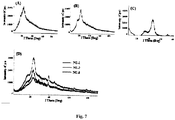
- X- ray diffraction analysis was carried out to calculate the crystallinity index of nanocellulose.
- FT-1R analysis was done by forming the sample pellet with dry K13r. The spectrum was recorded at transmission of 4000-400 cm -1 to assure the presence of chemical functional groups that define the structure of cellulose.
- NCs containing CNCs and incorporated AgNPs were prepared by the adoption of in situ approach. For this purpose, 100 mg freeze dried CNCs (1 wt %) were added to 10 ml each of 1 mM, 5 mM and 10 mM silver nitrate solution and sonicated for 2 min. Then 1 ml (10% v/v) of S. cumini LE was added drop wise to each of the mixture and kept under stirring conditions for 6 h at room temperature. S. cumini LE caused the reduction of silver nitrate solution into AgNPs and stabilized them. Even the hydroxyl groups present on the surface of CNCs act to reduce the silver nitrate and control the size distribution of AgNPs. After that, the mixture was centrifuged, supernatant was discarded.
- NCs nanobiocomposite
- the pellet of each of the three formulations of NCs was dissolved in distilled water and referred as NC-1, NC-2 and NC-3 prepared by the initial use of 1 mM, 5 mM and 10 mM silver nitrate solution, respectively.
- NCs pellet of each of the mixture was dissolved separately in distilled water, and vortexed properly.
- the aqueous suspension of each of NC-1, NC-2 and NC-3 was casted into a mold and allowed to oven dry in the form of NCs strip.
- the pellet of each of NC-1, NC-2 and NC-3 was directly mixed with Vaseline (petroleum jelly) used as an inert and non-toxic base in the ratio of 1:1.
- the six final products obtained were designated as NC-I-strip, NC-2-strip, NC-3-strip, NC-I-ointment, NC-2-ointment, and NC-3-ointment.
- UV-Vis spectrum was recorded for various forms of NCs at wavelength around 300-800 nm. 1 ml of diluted aqueous suspension was put into quartz cuvette and spectrum was recorded. The distilled water was taken as blank. The aqueous suspension of CNCs was taken as a reference.
- Zeta potential was recorded to know the surface charge on each sample surface. For this, 1 ml of aqueous suspension of sample was put in the disposable zeta potential cuvette and then recorded the surface charge.
- the aqueous suspension of each of the three NCs was characterized for shape and size using TEM.
- the sample was mounted on copper grid, washed with distilled water. The grid containing sample was allowed to air dry. Then the images were captured by TEM at desired magnification. XRD was done to confirm the presence of AgNPs incorporated in CNCs matrix for each of NC-1, NC-2 and NC-3.
- FT-1R was done by forming the sample pellet with dry KBr. The spectrum was recorded at transmission of 4000-400 cm -1 .
- the initial weight of CNCs membrane was recorded.
- the pre-dried CNCs film was immersed in a vessel containing distilled water. Then the film was removed from the water at different time intervals to calculate the water uptake capacity until the constant weight was obtained. Final weight of the film was noted down.
- NCs, NC-1-strip, NC-2-strip and NC-3-strip were evaluated for antimicrobial activity against E. coli BL-21 strain and B. subtilis using disc diffusion method.
- the circular disc of NCs strip was placed on the microbial culture seeded agar plates (10 8 CFU/ml) and incubated for 24 h in an incubator at 37°C.
- the other three forms of NC-1-ointment, NC-2-ointment and NC-3-ointment were evaluated for antimicrobial activity by well diffusion method against E. coli BL-21 strain and B. subtilis.
- the growth inhibition zone was measured around the samples to investigate the antibacterial activity of NCs. CNCs were used as control in all cases.
- the mice were anaesthetized using an intraperitoneal injection of a mixture of xylazine and ketamine.
- the dorsal surface of mice was sterilized using 5% povidone/iodine solution.
- the circular full thickness skin wound of diameter 8 mm was created on the dorsal surface.
- the mice groups were given topical treatment of NCs strips as well as ointment accordingly.
- Group 1 Vaseline treated open wound (control)
- Group 2 NC-1-ointment
- Group 3 NC-2-ointment
- Group 4 NC-3-ointment
- Group 5 Untreated closed wound (control)
- Group 6 NC-1-strip
- Group 7 NC-2-strip
- Group 8 NC-3-strip.
- the wound of mice was treated topically with each of ointment sample daily (50 mg/day/wound). The NCs strips were covered around the wound using adhesive tape. The dressing was changed every third day.
- the control open wound of mice was treated with sterilized vaseline daily whereas the wound of untreated closed group was wrapped with surgical gauze only.
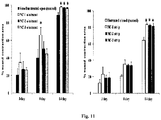
- the % wound contraction area of wounded skin of each group of mice was measured on day 3, 8 and 14. Then mice of each group were euthanized on day 3, 8 and 14 to analyze the wound healing events occurring in skin tissue.
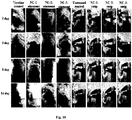
- the skin tissues of mice were taken for histopathology analysis.
- the skin tissues were dehydrated and cut sections of thickness 5 pm were stained with Haematoxylin and Eosin (H&E) staining protocol.
- the stained skin tissue sections (5 p.m) of mice of each treatment group at day 3, 8 and 14 were analyzed under bright field microscope for the histopathological observations.
- the cut skin tissue sections (5 pm) of each group of mice were also stained using Masson's Trichome procedure to analyze the collagen formation during wound healing at day 8 and 14.
- the serum separated from the blood of each treated group of mice at day 3, 8 and 14 post wound was estimated for hydroxyproline, IL-6 and VEGF content through ELISA assay.
- the absorbance was noted at a particular wavelength to calculate the amount at these time intervals to study the effect of treatment of NCs as compared to control mice groups.
- the efficacy of the present invention can be compared as mentioned in table 1 Table 1.
Landscapes
- Health & Medical Sciences (AREA)
- Chemical & Material Sciences (AREA)
- Life Sciences & Earth Sciences (AREA)
- Animal Behavior & Ethology (AREA)
- General Health & Medical Sciences (AREA)
- Public Health (AREA)
- Veterinary Medicine (AREA)
- Epidemiology (AREA)
- Engineering & Computer Science (AREA)
- Medicinal Chemistry (AREA)
- Pharmacology & Pharmacy (AREA)
- Materials Engineering (AREA)
- Hematology (AREA)
- Natural Medicines & Medicinal Plants (AREA)
- Inorganic Chemistry (AREA)
- Bioinformatics & Cheminformatics (AREA)
- Organic Chemistry (AREA)
- Dermatology (AREA)
- General Chemical & Material Sciences (AREA)
- Nuclear Medicine, Radiotherapy & Molecular Imaging (AREA)
- Chemical Kinetics & Catalysis (AREA)
- Communicable Diseases (AREA)
- Oncology (AREA)
- Medical Informatics (AREA)
- Physics & Mathematics (AREA)
- Biotechnology (AREA)
- Botany (AREA)
- Dispersion Chemistry (AREA)
- Microbiology (AREA)
- Mycology (AREA)
- Alternative & Traditional Medicine (AREA)
- Biomedical Technology (AREA)
- Nanotechnology (AREA)
- Optics & Photonics (AREA)
- Pharmaceuticals Containing Other Organic And Inorganic Compounds (AREA)
- Medicinal Preparation (AREA)
- Materials For Medical Uses (AREA)
Applications Claiming Priority (2)
| Application Number | Priority Date | Filing Date | Title |
|---|---|---|---|
| IN201611001043 | 2016-01-12 | ||
| PCT/IN2017/050018 WO2017122224A1 (en) | 2016-01-12 | 2017-01-12 | A nanobiocomposite formulation for wound healing and a process for the preparation thereof |
Publications (2)
| Publication Number | Publication Date |
|---|---|
| EP3402462A1 EP3402462A1 (en) | 2018-11-21 |
| EP3402462B1 true EP3402462B1 (en) | 2020-03-11 |
Family
ID=58464616
Family Applications (1)
| Application Number | Title | Priority Date | Filing Date |
|---|---|---|---|
| EP17715287.3A Active EP3402462B1 (en) | 2016-01-12 | 2017-01-12 | A nanobiocomposite formulation for wound healing and a process for the preparation thereof |
Country Status (4)
| Country | Link |
|---|---|
| US (1) | US10426809B2 (https=) |
| EP (1) | EP3402462B1 (https=) |
| JP (1) | JP6895991B2 (https=) |
| WO (1) | WO2017122224A1 (https=) |
Families Citing this family (28)
| Publication number | Priority date | Publication date | Assignee | Title |
|---|---|---|---|---|
| GB0808376D0 (en) | 2008-05-08 | 2008-06-18 | Bristol Myers Squibb Co | Wound dressing |
| GB0817796D0 (en) | 2008-09-29 | 2008-11-05 | Convatec Inc | wound dressing |
| GB201020236D0 (en) | 2010-11-30 | 2011-01-12 | Convatec Technologies Inc | A composition for detecting biofilms on viable tissues |
| JP6151186B2 (ja) | 2010-12-08 | 2017-06-21 | コンバテック・テクノロジーズ・インコーポレイテッドConvatec Technologies Inc | 創傷滲出液システム付属装置 |
| JP5833134B2 (ja) | 2010-12-08 | 2015-12-16 | コンバテック・テクノロジーズ・インコーポレイテッドConvatec Technologies Inc | 創傷部位から滲出液を除去するための方法およびシステム |
| CN103347561B (zh) | 2010-12-08 | 2016-09-07 | 康沃特克科技公司 | 用于评估伤口分泌液的集成系统 |
| GB201115182D0 (en) | 2011-09-02 | 2011-10-19 | Trio Healthcare Ltd | Skin contact material |
| GB2497406A (en) | 2011-11-29 | 2013-06-12 | Webtec Converting Llc | Dressing with a perforated binder layer |
| WO2014096843A2 (en) | 2012-12-20 | 2014-06-26 | Convatec Technologies Inc. | Processing of chemically modified cellulosic fibres |
| GB2543544A (en) | 2015-10-21 | 2017-04-26 | Brightwake Ltd | Wound dressing |
| CA3019436A1 (en) | 2016-03-30 | 2017-10-05 | Qualizyme Diagnostics Gmbh & Co Kg | Detecting microbial infection in wounds |
| SG11201808488XA (en) | 2016-03-30 | 2018-10-30 | Convatec Technologies Inc | Detecting microbial infections in wounds |
| GB201608099D0 (en) | 2016-05-09 | 2016-06-22 | Convatec Technologies Inc | Negative pressure wound dressing |
| EP3871645B1 (en) | 2016-07-08 | 2022-05-04 | ConvaTec Technologies Inc. | Flexible negative pressure system |
| JP2019525799A (ja) | 2016-07-08 | 2019-09-12 | コンバテック・テクノロジーズ・インコーポレイテッドConvatec Technologies Inc | 流体収集装置 |
| ES2912094T3 (es) | 2016-07-08 | 2022-05-24 | Convatec Technologies Inc | Detección de flujo de fluidos |
| EP4360666A3 (en) | 2017-11-16 | 2024-05-08 | ConvaTec Limited | Fluid collection apparatus |
| CN108912232B (zh) * | 2018-05-25 | 2020-12-15 | 天津科技大学 | 一种制备纳米微晶纤维素cnc的方法 |
| CN110128554A (zh) * | 2019-05-22 | 2019-08-16 | 江西农业大学 | 一种利用毛竹制备纳米微晶纤维素的方法 |
| SG11202112292QA (en) | 2019-06-03 | 2021-12-30 | Convatec Ltd | Methods and devices to disrupt and contain pathogens |
| US11331221B2 (en) | 2019-12-27 | 2022-05-17 | Convatec Limited | Negative pressure wound dressing |
| US11771819B2 (en) | 2019-12-27 | 2023-10-03 | Convatec Limited | Low profile filter devices suitable for use in negative pressure wound therapy systems |
| CN111363050B (zh) * | 2020-04-27 | 2022-08-12 | 青岛科技大学 | 一种ⅰ晶型生物质纳米纤维素及其超快速制备方法 |
| CN113069590B (zh) * | 2021-03-02 | 2022-07-01 | 西北师范大学 | 一种再生细菌纤维素复合水凝胶敷料的制备方法 |
| ES3060390T3 (en) | 2021-12-30 | 2026-03-26 | Hartmann Paul Ag | Wound dressing for antimicrobial wound treatment |
| PL4205808T3 (pl) | 2021-12-30 | 2026-04-13 | Paul Hartmann Ag | Urządzenie do przeciwdrobnoustrojowego leczenia ran |
| CN115998941A (zh) * | 2022-12-09 | 2023-04-25 | 陕西科技大学 | 一种基于CNCs-COL的医用敷料及其制备与应用方法 |
| WO2025239352A1 (ja) * | 2024-05-14 | 2025-11-20 | テイカ製薬株式会社 | 創傷治療用ドレッシング材 |
Family Cites Families (14)
| Publication number | Priority date | Publication date | Assignee | Title |
|---|---|---|---|---|
| IL107578A (en) | 1993-11-11 | 1998-07-15 | Yissum Res Dev Co | Topical antibacterial preparation comprising silver sulfadiazine and collagen |
| AU711723B2 (en) | 1996-04-12 | 1999-10-21 | Convatec Technologies Inc. | Composite fibres, wound dressings incorporating such fibres and a method for making same |
| US7704523B2 (en) | 2002-04-26 | 2010-04-27 | Lohmann & Rauscher Gmbh | Microbial cellulose wound dressing for treating chronic wounds |
| US7390499B2 (en) | 2002-04-26 | 2008-06-24 | Lohmann & Rauscher Gmbh | Microbial cellulose wound dressing for treating chronic wounds |
| DE10342258A1 (de) | 2003-09-11 | 2005-04-07 | Josef Peter Prof. Dr.med. Guggenbichler | Antimikrobiell wirkendes Präparat zur äußerlichen Anwendung |
| WO2007140573A1 (en) | 2006-04-24 | 2007-12-13 | Axcelon Biopolymers Corporation | Nanosilver coated bacterial cellulose |
| US20080014278A1 (en) * | 2006-06-30 | 2008-01-17 | Nucryst Pharmaceuticals | Metal-containing formulations and methods of use |
| NO20065147L (no) | 2006-11-08 | 2008-05-09 | Ntnu Tech Transfer As | Nanokompositter basert på cellulosewhiskers og celluloseplast |
| US8834917B2 (en) | 2007-11-13 | 2014-09-16 | Jawaharlal Nehru Centre For Advanced Scientific Research | Nanoparticle composition and process thereof |
| GB0916031D0 (en) * | 2009-09-14 | 2009-10-28 | Univ Nottingham | Cellulose nanoparticle aerogels,hydrogels and organogels |
| CA2782471C (en) | 2009-12-15 | 2017-02-28 | National Research Council Of Canada | Cellulose nanocrystals from renewable biomass |
| US9327029B2 (en) | 2011-05-05 | 2016-05-03 | Celacare Technologies, Llc | Antimicrobial silver hydrogel composition for the treatment of burns and wounds |
| US20130330417A1 (en) | 2012-06-08 | 2013-12-12 | U.S. Army Research Laboratory Attn: Rdrl-Loc-I | Nanocellulose foam containing active ingredients |
| CN104153120A (zh) * | 2014-06-26 | 2014-11-19 | 浙江理工大学 | 一种负载纳米银-纤维素纳米晶杂化材料的抗菌医用敷料膜及其制备方法 |
-
2017
- 2017-01-12 WO PCT/IN2017/050018 patent/WO2017122224A1/en not_active Ceased
- 2017-01-12 JP JP2018555317A patent/JP6895991B2/ja not_active Expired - Fee Related
- 2017-01-12 US US16/069,672 patent/US10426809B2/en active Active
- 2017-01-12 EP EP17715287.3A patent/EP3402462B1/en active Active
Non-Patent Citations (1)
| Title |
|---|
| None * |
Also Published As
| Publication number | Publication date |
|---|---|
| EP3402462A1 (en) | 2018-11-21 |
| JP2019502526A (ja) | 2019-01-31 |
| JP6895991B2 (ja) | 2021-06-30 |
| WO2017122224A4 (en) | 2017-10-12 |
| US20190015468A1 (en) | 2019-01-17 |
| WO2017122224A1 (en) | 2017-07-20 |
| US10426809B2 (en) | 2019-10-01 |
Similar Documents
| Publication | Publication Date | Title |
|---|---|---|
| EP3402462B1 (en) | A nanobiocomposite formulation for wound healing and a process for the preparation thereof | |
| Alavi et al. | An overview on antimicrobial and wound healing properties of ZnO nanobiofilms, hydrogels, and bionanocomposites based on cellulose, chitosan, and alginate polymers | |
| Hasanin et al. | Novel design of bandages using cotton pads, doped with chitosan, glycogen and ZnO nanoparticles, having enhanced antimicrobial and wounds healing effects | |
| Ribeiro et al. | Chitosan/nanocellulose electrospun fibers with enhanced antibacterial and antifungal activity for wound dressing applications | |
| Sulastri et al. | Development and characterization of ulvan polysaccharides-based hydrogel films for potential wound dressing applications | |
| US9200086B2 (en) | Nanosilver coated bacterial cellulose | |
| Ahamed et al. | Evaluation of biomaterial containing regenerated cellulose and chitosan incorporated with silver nanoparticles | |
| Arockianathan et al. | Preparation, characterization and evaluation of biocomposite films containing chitosan and sago starch impregnated with silver nanoparticles | |
| Aramwit et al. | The characteristics of bacterial nanocellulose gel releasing silk sericin for facial treatment | |
| Govindasamy et al. | Phytochemicals, biodegradation, cytocompatibility and wound healing profiles of chitosan film embedded green synthesized antibacterial ZnO/CuO nanocomposite | |
| Fan et al. | A one-nano MOF-two-functions strategy toward self-healing, anti-inflammatory, and antibacterial hydrogels for infected wound repair | |
| Rashki et al. | Cellulose-based nanofibril composite materials as a new approach to fight bacterial infections | |
| Mandal et al. | Fabrication of collagen scaffolds impregnated with sago starch capped silver nanoparticles suitable for biomedical applications and their physicochemical studies | |
| CN105664225A (zh) | 一种纳米银、壳聚糖和蚕丝蛋白复合生物敷料及其制备方法 | |
| Sanjarnia et al. | Nanocomposite chitosan dressing incorporating polydopamine‑copper Janus nanoparticle | |
| CN119371683B (zh) | 一种具有抗菌、抗炎和促进糖尿病伤口愈合的多功能可自愈水凝胶材料的制备方法及应用 | |
| Rao et al. | Xanthan gum and chitosan polyelectrolyte hydrogels with self-reinforcement of Zn+ 2 for wound dressing applications | |
| Abdullah et al. | Development and evaluation of ciprofloxacin-bacterial cellulose composites produced through in situ incorporation method | |
| Chandraprabha et al. | Biogenic collagen-nano zno composite membrane as potential wound dressing material: structural characterization, antibacterial studies and in vivo wound healing studies | |
| Mousavi et al. | Preparation of sodium alginate and xanthan gum bionanocomposite films reinforced with hybrid halloysite nanotubes containing ZnO and licorice root extract for wound dressing applications | |
| Mamouri et al. | Physicochemical and thermal characterization, and evaluation of a bacterial cellulose/Barhang gum-based dressing for wound healing | |
| CN109331037A (zh) | 外用抑瘢凝胶组合物 | |
| Gupta et al. | Aloe vera loaded poly (vinyl alcohol)–poly (ethylene oxide)-carboxymethyl cellulose-polyester nonwoven membranes | |
| Iswarya et al. | Green synthesis and formation of sodium alginate/silver nanocomposite as electroconductive films with enhanced antibacterial effects for biomedical applications | |
| Tahmasebi et al. | Engineering of 3D galactomannan-based hydrogel scaffolds doped with HKUST-1 MOF for enhanced antibacterial and antioxidant activities in wound healing |
Legal Events
| Date | Code | Title | Description |
|---|---|---|---|
| STAA | Information on the status of an ep patent application or granted ep patent |
Free format text: STATUS: UNKNOWN |
|
| STAA | Information on the status of an ep patent application or granted ep patent |
Free format text: STATUS: THE INTERNATIONAL PUBLICATION HAS BEEN MADE |
|
| PUAI | Public reference made under article 153(3) epc to a published international application that has entered the european phase |
Free format text: ORIGINAL CODE: 0009012 |
|
| STAA | Information on the status of an ep patent application or granted ep patent |
Free format text: STATUS: REQUEST FOR EXAMINATION WAS MADE |
|
| 17P | Request for examination filed |
Effective date: 20180802 |
|
| AK | Designated contracting states |
Kind code of ref document: A1 Designated state(s): AL AT BE BG CH CY CZ DE DK EE ES FI FR GB GR HR HU IE IS IT LI LT LU LV MC MK MT NL NO PL PT RO RS SE SI SK SM TR |
|
| AX | Request for extension of the european patent |
Extension state: BA ME |
|
| DAV | Request for validation of the european patent (deleted) | ||
| DAX | Request for extension of the european patent (deleted) | ||
| GRAP | Despatch of communication of intention to grant a patent |
Free format text: ORIGINAL CODE: EPIDOSNIGR1 |
|
| STAA | Information on the status of an ep patent application or granted ep patent |
Free format text: STATUS: GRANT OF PATENT IS INTENDED |
|
| INTG | Intention to grant announced |
Effective date: 20191029 |
|
| GRAS | Grant fee paid |
Free format text: ORIGINAL CODE: EPIDOSNIGR3 |
|
| GRAA | (expected) grant |
Free format text: ORIGINAL CODE: 0009210 |
|
| STAA | Information on the status of an ep patent application or granted ep patent |
Free format text: STATUS: THE PATENT HAS BEEN GRANTED |
|
| AK | Designated contracting states |
Kind code of ref document: B1 Designated state(s): AL AT BE BG CH CY CZ DE DK EE ES FI FR GB GR HR HU IE IS IT LI LT LU LV MC MK MT NL NO PL PT RO RS SE SI SK SM TR |
|
| REG | Reference to a national code |
Ref country code: GB Ref legal event code: FG4D |
|
| REG | Reference to a national code |
Ref country code: CH Ref legal event code: EP |
|
| REG | Reference to a national code |
Ref country code: AT Ref legal event code: REF Ref document number: 1242269 Country of ref document: AT Kind code of ref document: T Effective date: 20200315 |
|
| REG | Reference to a national code |
Ref country code: DE Ref legal event code: R096 Ref document number: 602017012960 Country of ref document: DE |
|
| REG | Reference to a national code |
Ref country code: IE Ref legal event code: FG4D |
|
| PG25 | Lapsed in a contracting state [announced via postgrant information from national office to epo] |
Ref country code: NO Free format text: LAPSE BECAUSE OF FAILURE TO SUBMIT A TRANSLATION OF THE DESCRIPTION OR TO PAY THE FEE WITHIN THE PRESCRIBED TIME-LIMIT Effective date: 20200611 Ref country code: RS Free format text: LAPSE BECAUSE OF FAILURE TO SUBMIT A TRANSLATION OF THE DESCRIPTION OR TO PAY THE FEE WITHIN THE PRESCRIBED TIME-LIMIT Effective date: 20200311 Ref country code: FI Free format text: LAPSE BECAUSE OF FAILURE TO SUBMIT A TRANSLATION OF THE DESCRIPTION OR TO PAY THE FEE WITHIN THE PRESCRIBED TIME-LIMIT Effective date: 20200311 |
|
| REG | Reference to a national code |
Ref country code: NL Ref legal event code: MP Effective date: 20200311 |
|
| PG25 | Lapsed in a contracting state [announced via postgrant information from national office to epo] |
Ref country code: GR Free format text: LAPSE BECAUSE OF FAILURE TO SUBMIT A TRANSLATION OF THE DESCRIPTION OR TO PAY THE FEE WITHIN THE PRESCRIBED TIME-LIMIT Effective date: 20200612 Ref country code: SE Free format text: LAPSE BECAUSE OF FAILURE TO SUBMIT A TRANSLATION OF THE DESCRIPTION OR TO PAY THE FEE WITHIN THE PRESCRIBED TIME-LIMIT Effective date: 20200311 Ref country code: LV Free format text: LAPSE BECAUSE OF FAILURE TO SUBMIT A TRANSLATION OF THE DESCRIPTION OR TO PAY THE FEE WITHIN THE PRESCRIBED TIME-LIMIT Effective date: 20200311 Ref country code: HR Free format text: LAPSE BECAUSE OF FAILURE TO SUBMIT A TRANSLATION OF THE DESCRIPTION OR TO PAY THE FEE WITHIN THE PRESCRIBED TIME-LIMIT Effective date: 20200311 Ref country code: BG Free format text: LAPSE BECAUSE OF FAILURE TO SUBMIT A TRANSLATION OF THE DESCRIPTION OR TO PAY THE FEE WITHIN THE PRESCRIBED TIME-LIMIT Effective date: 20200611 |
|
| REG | Reference to a national code |
Ref country code: LT Ref legal event code: MG4D |
|
| PG25 | Lapsed in a contracting state [announced via postgrant information from national office to epo] |
Ref country code: NL Free format text: LAPSE BECAUSE OF FAILURE TO SUBMIT A TRANSLATION OF THE DESCRIPTION OR TO PAY THE FEE WITHIN THE PRESCRIBED TIME-LIMIT Effective date: 20200311 |
|
| PG25 | Lapsed in a contracting state [announced via postgrant information from national office to epo] |
Ref country code: EE Free format text: LAPSE BECAUSE OF FAILURE TO SUBMIT A TRANSLATION OF THE DESCRIPTION OR TO PAY THE FEE WITHIN THE PRESCRIBED TIME-LIMIT Effective date: 20200311 Ref country code: SM Free format text: LAPSE BECAUSE OF FAILURE TO SUBMIT A TRANSLATION OF THE DESCRIPTION OR TO PAY THE FEE WITHIN THE PRESCRIBED TIME-LIMIT Effective date: 20200311 Ref country code: CZ Free format text: LAPSE BECAUSE OF FAILURE TO SUBMIT A TRANSLATION OF THE DESCRIPTION OR TO PAY THE FEE WITHIN THE PRESCRIBED TIME-LIMIT Effective date: 20200311 Ref country code: RO Free format text: LAPSE BECAUSE OF FAILURE TO SUBMIT A TRANSLATION OF THE DESCRIPTION OR TO PAY THE FEE WITHIN THE PRESCRIBED TIME-LIMIT Effective date: 20200311 Ref country code: IS Free format text: LAPSE BECAUSE OF FAILURE TO SUBMIT A TRANSLATION OF THE DESCRIPTION OR TO PAY THE FEE WITHIN THE PRESCRIBED TIME-LIMIT Effective date: 20200711 Ref country code: PT Free format text: LAPSE BECAUSE OF FAILURE TO SUBMIT A TRANSLATION OF THE DESCRIPTION OR TO PAY THE FEE WITHIN THE PRESCRIBED TIME-LIMIT Effective date: 20200805 Ref country code: SK Free format text: LAPSE BECAUSE OF FAILURE TO SUBMIT A TRANSLATION OF THE DESCRIPTION OR TO PAY THE FEE WITHIN THE PRESCRIBED TIME-LIMIT Effective date: 20200311 Ref country code: LT Free format text: LAPSE BECAUSE OF FAILURE TO SUBMIT A TRANSLATION OF THE DESCRIPTION OR TO PAY THE FEE WITHIN THE PRESCRIBED TIME-LIMIT Effective date: 20200311 |
|
| REG | Reference to a national code |
Ref country code: AT Ref legal event code: MK05 Ref document number: 1242269 Country of ref document: AT Kind code of ref document: T Effective date: 20200311 |
|
| REG | Reference to a national code |
Ref country code: DE Ref legal event code: R097 Ref document number: 602017012960 Country of ref document: DE |
|
| PLBE | No opposition filed within time limit |
Free format text: ORIGINAL CODE: 0009261 |
|
| STAA | Information on the status of an ep patent application or granted ep patent |
Free format text: STATUS: NO OPPOSITION FILED WITHIN TIME LIMIT |
|
| PG25 | Lapsed in a contracting state [announced via postgrant information from national office to epo] |
Ref country code: ES Free format text: LAPSE BECAUSE OF FAILURE TO SUBMIT A TRANSLATION OF THE DESCRIPTION OR TO PAY THE FEE WITHIN THE PRESCRIBED TIME-LIMIT Effective date: 20200311 Ref country code: AT Free format text: LAPSE BECAUSE OF FAILURE TO SUBMIT A TRANSLATION OF THE DESCRIPTION OR TO PAY THE FEE WITHIN THE PRESCRIBED TIME-LIMIT Effective date: 20200311 Ref country code: DK Free format text: LAPSE BECAUSE OF FAILURE TO SUBMIT A TRANSLATION OF THE DESCRIPTION OR TO PAY THE FEE WITHIN THE PRESCRIBED TIME-LIMIT Effective date: 20200311 |
|
| 26N | No opposition filed |
Effective date: 20201214 |
|
| PG25 | Lapsed in a contracting state [announced via postgrant information from national office to epo] |
Ref country code: SI Free format text: LAPSE BECAUSE OF FAILURE TO SUBMIT A TRANSLATION OF THE DESCRIPTION OR TO PAY THE FEE WITHIN THE PRESCRIBED TIME-LIMIT Effective date: 20200311 Ref country code: PL Free format text: LAPSE BECAUSE OF FAILURE TO SUBMIT A TRANSLATION OF THE DESCRIPTION OR TO PAY THE FEE WITHIN THE PRESCRIBED TIME-LIMIT Effective date: 20200311 |
|
| REG | Reference to a national code |
Ref country code: DE Ref legal event code: R119 Ref document number: 602017012960 Country of ref document: DE |
|
| PG25 | Lapsed in a contracting state [announced via postgrant information from national office to epo] |
Ref country code: MC Free format text: LAPSE BECAUSE OF FAILURE TO SUBMIT A TRANSLATION OF THE DESCRIPTION OR TO PAY THE FEE WITHIN THE PRESCRIBED TIME-LIMIT Effective date: 20200311 |
|
| REG | Reference to a national code |
Ref country code: CH Ref legal event code: PL |
|
| GBPC | Gb: european patent ceased through non-payment of renewal fee |
Effective date: 20210112 |
|
| PG25 | Lapsed in a contracting state [announced via postgrant information from national office to epo] |
Ref country code: LU Free format text: LAPSE BECAUSE OF NON-PAYMENT OF DUE FEES Effective date: 20210112 |
|
| REG | Reference to a national code |
Ref country code: BE Ref legal event code: MM Effective date: 20210131 |
|
| PG25 | Lapsed in a contracting state [announced via postgrant information from national office to epo] |
Ref country code: LI Free format text: LAPSE BECAUSE OF NON-PAYMENT OF DUE FEES Effective date: 20210131 Ref country code: GB Free format text: LAPSE BECAUSE OF NON-PAYMENT OF DUE FEES Effective date: 20210112 Ref country code: CH Free format text: LAPSE BECAUSE OF NON-PAYMENT OF DUE FEES Effective date: 20210131 Ref country code: DE Free format text: LAPSE BECAUSE OF NON-PAYMENT OF DUE FEES Effective date: 20210803 |
|
| PG25 | Lapsed in a contracting state [announced via postgrant information from national office to epo] |
Ref country code: IE Free format text: LAPSE BECAUSE OF NON-PAYMENT OF DUE FEES Effective date: 20210112 |
|
| PG25 | Lapsed in a contracting state [announced via postgrant information from national office to epo] |
Ref country code: BE Free format text: LAPSE BECAUSE OF NON-PAYMENT OF DUE FEES Effective date: 20210131 |
|
| PGFP | Annual fee paid to national office [announced via postgrant information from national office to epo] |
Ref country code: IT Payment date: 20230130 Year of fee payment: 7 |
|
| PG25 | Lapsed in a contracting state [announced via postgrant information from national office to epo] |
Ref country code: CY Free format text: LAPSE BECAUSE OF FAILURE TO SUBMIT A TRANSLATION OF THE DESCRIPTION OR TO PAY THE FEE WITHIN THE PRESCRIBED TIME-LIMIT Effective date: 20200311 |
|
| P01 | Opt-out of the competence of the unified patent court (upc) registered |
Effective date: 20230529 |
|
| PG25 | Lapsed in a contracting state [announced via postgrant information from national office to epo] |
Ref country code: HU Free format text: LAPSE BECAUSE OF FAILURE TO SUBMIT A TRANSLATION OF THE DESCRIPTION OR TO PAY THE FEE WITHIN THE PRESCRIBED TIME-LIMIT; INVALID AB INITIO Effective date: 20170112 |
|
| PG25 | Lapsed in a contracting state [announced via postgrant information from national office to epo] |
Ref country code: MK Free format text: LAPSE BECAUSE OF FAILURE TO SUBMIT A TRANSLATION OF THE DESCRIPTION OR TO PAY THE FEE WITHIN THE PRESCRIBED TIME-LIMIT Effective date: 20200311 |
|
| PG25 | Lapsed in a contracting state [announced via postgrant information from national office to epo] |
Ref country code: TR Free format text: LAPSE BECAUSE OF FAILURE TO SUBMIT A TRANSLATION OF THE DESCRIPTION OR TO PAY THE FEE WITHIN THE PRESCRIBED TIME-LIMIT Effective date: 20200311 |
|
| PG25 | Lapsed in a contracting state [announced via postgrant information from national office to epo] |
Ref country code: MT Free format text: LAPSE BECAUSE OF FAILURE TO SUBMIT A TRANSLATION OF THE DESCRIPTION OR TO PAY THE FEE WITHIN THE PRESCRIBED TIME-LIMIT Effective date: 20200311 |
|
| PG25 | Lapsed in a contracting state [announced via postgrant information from national office to epo] |
Ref country code: IT Free format text: LAPSE BECAUSE OF NON-PAYMENT OF DUE FEES Effective date: 20240112 |
|
| PGFP | Annual fee paid to national office [announced via postgrant information from national office to epo] |
Ref country code: FR Payment date: 20260128 Year of fee payment: 10 |