EP3385386B3 - Carrimycin biosynthetic gene cluster - Google Patents
Carrimycin biosynthetic gene cluster Download PDFInfo
- Publication number
- EP3385386B3 EP3385386B3 EP16880824.4A EP16880824A EP3385386B3 EP 3385386 B3 EP3385386 B3 EP 3385386B3 EP 16880824 A EP16880824 A EP 16880824A EP 3385386 B3 EP3385386 B3 EP 3385386B3
- Authority
- EP
- European Patent Office
- Prior art keywords
- seq
- residues
- amino acid
- genes
- gene
- Prior art date
- Legal status (The legal status is an assumption and is not a legal conclusion. Google has not performed a legal analysis and makes no representation as to the accuracy of the status listed.)
- Active
Links
- 0 CC(C*)*C(CC([C@](*C(CC(C)[C@](C=CC=*)OC(CCC1C*)OC1C(C)=C)CC=O)OC)O*)=O Chemical compound CC(C*)*C(CC([C@](*C(CC(C)[C@](C=CC=*)OC(CCC1C*)OC1C(C)=C)CC=O)OC)O*)=O 0.000 description 1
Images
Classifications
-
- C—CHEMISTRY; METALLURGY
- C12—BIOCHEMISTRY; BEER; SPIRITS; WINE; VINEGAR; MICROBIOLOGY; ENZYMOLOGY; MUTATION OR GENETIC ENGINEERING
- C12N—MICROORGANISMS OR ENZYMES; COMPOSITIONS THEREOF; PROPAGATING, PRESERVING, OR MAINTAINING MICROORGANISMS; MUTATION OR GENETIC ENGINEERING; CULTURE MEDIA
- C12N15/00—Mutation or genetic engineering; DNA or RNA concerning genetic engineering, vectors, e.g. plasmids, or their isolation, preparation or purification; Use of hosts therefor
- C12N15/09—Recombinant DNA-technology
- C12N15/11—DNA or RNA fragments; Modified forms thereof; Non-coding nucleic acids having a biological activity
- C12N15/52—Genes encoding for enzymes or proenzymes
-
- C—CHEMISTRY; METALLURGY
- C12—BIOCHEMISTRY; BEER; SPIRITS; WINE; VINEGAR; MICROBIOLOGY; ENZYMOLOGY; MUTATION OR GENETIC ENGINEERING
- C12N—MICROORGANISMS OR ENZYMES; COMPOSITIONS THEREOF; PROPAGATING, PRESERVING, OR MAINTAINING MICROORGANISMS; MUTATION OR GENETIC ENGINEERING; CULTURE MEDIA
- C12N9/00—Enzymes; Proenzymes; Compositions thereof; Processes for preparing, activating, inhibiting, separating or purifying enzymes
-
- C—CHEMISTRY; METALLURGY
- C12—BIOCHEMISTRY; BEER; SPIRITS; WINE; VINEGAR; MICROBIOLOGY; ENZYMOLOGY; MUTATION OR GENETIC ENGINEERING
- C12N—MICROORGANISMS OR ENZYMES; COMPOSITIONS THEREOF; PROPAGATING, PRESERVING, OR MAINTAINING MICROORGANISMS; MUTATION OR GENETIC ENGINEERING; CULTURE MEDIA
- C12N9/00—Enzymes; Proenzymes; Compositions thereof; Processes for preparing, activating, inhibiting, separating or purifying enzymes
- C12N9/0004—Oxidoreductases (1.)
- C12N9/0006—Oxidoreductases (1.) acting on CH-OH groups as donors (1.1)
-
- C—CHEMISTRY; METALLURGY
- C12—BIOCHEMISTRY; BEER; SPIRITS; WINE; VINEGAR; MICROBIOLOGY; ENZYMOLOGY; MUTATION OR GENETIC ENGINEERING
- C12N—MICROORGANISMS OR ENZYMES; COMPOSITIONS THEREOF; PROPAGATING, PRESERVING, OR MAINTAINING MICROORGANISMS; MUTATION OR GENETIC ENGINEERING; CULTURE MEDIA
- C12N9/00—Enzymes; Proenzymes; Compositions thereof; Processes for preparing, activating, inhibiting, separating or purifying enzymes
- C12N9/0004—Oxidoreductases (1.)
- C12N9/001—Oxidoreductases (1.) acting on the CH-CH group of donors (1.3)
-
- C—CHEMISTRY; METALLURGY
- C12—BIOCHEMISTRY; BEER; SPIRITS; WINE; VINEGAR; MICROBIOLOGY; ENZYMOLOGY; MUTATION OR GENETIC ENGINEERING
- C12N—MICROORGANISMS OR ENZYMES; COMPOSITIONS THEREOF; PROPAGATING, PRESERVING, OR MAINTAINING MICROORGANISMS; MUTATION OR GENETIC ENGINEERING; CULTURE MEDIA
- C12N9/00—Enzymes; Proenzymes; Compositions thereof; Processes for preparing, activating, inhibiting, separating or purifying enzymes
- C12N9/10—Transferases (2.)
- C12N9/1025—Acyltransferases (2.3)
- C12N9/1029—Acyltransferases (2.3) transferring groups other than amino-acyl groups (2.3.1)
-
- C—CHEMISTRY; METALLURGY
- C12—BIOCHEMISTRY; BEER; SPIRITS; WINE; VINEGAR; MICROBIOLOGY; ENZYMOLOGY; MUTATION OR GENETIC ENGINEERING
- C12N—MICROORGANISMS OR ENZYMES; COMPOSITIONS THEREOF; PROPAGATING, PRESERVING, OR MAINTAINING MICROORGANISMS; MUTATION OR GENETIC ENGINEERING; CULTURE MEDIA
- C12N9/00—Enzymes; Proenzymes; Compositions thereof; Processes for preparing, activating, inhibiting, separating or purifying enzymes
- C12N9/14—Hydrolases (3)
- C12N9/16—Hydrolases (3) acting on ester bonds (3.1)
-
- C—CHEMISTRY; METALLURGY
- C12—BIOCHEMISTRY; BEER; SPIRITS; WINE; VINEGAR; MICROBIOLOGY; ENZYMOLOGY; MUTATION OR GENETIC ENGINEERING
- C12N—MICROORGANISMS OR ENZYMES; COMPOSITIONS THEREOF; PROPAGATING, PRESERVING, OR MAINTAINING MICROORGANISMS; MUTATION OR GENETIC ENGINEERING; CULTURE MEDIA
- C12N9/00—Enzymes; Proenzymes; Compositions thereof; Processes for preparing, activating, inhibiting, separating or purifying enzymes
- C12N9/14—Hydrolases (3)
- C12N9/78—Hydrolases (3) acting on carbon to nitrogen bonds other than peptide bonds (3.5)
- C12N9/86—Hydrolases (3) acting on carbon to nitrogen bonds other than peptide bonds (3.5) acting on amide bonds in cyclic amides, e.g. penicillinase (3.5.2)
-
- C—CHEMISTRY; METALLURGY
- C12—BIOCHEMISTRY; BEER; SPIRITS; WINE; VINEGAR; MICROBIOLOGY; ENZYMOLOGY; MUTATION OR GENETIC ENGINEERING
- C12P—FERMENTATION OR ENZYME-USING PROCESSES TO SYNTHESISE A DESIRED CHEMICAL COMPOUND OR COMPOSITION OR TO SEPARATE OPTICAL ISOMERS FROM A RACEMIC MIXTURE
- C12P19/00—Preparation of compounds containing saccharide radicals
- C12P19/44—Preparation of O-glycosides, e.g. glucosides
- C12P19/60—Preparation of O-glycosides, e.g. glucosides having an oxygen of the saccharide radical directly bound to a non-saccharide heterocyclic ring or a condensed ring system containing a non-saccharide heterocyclic ring, e.g. coumermycin, novobiocin
- C12P19/62—Preparation of O-glycosides, e.g. glucosides having an oxygen of the saccharide radical directly bound to a non-saccharide heterocyclic ring or a condensed ring system containing a non-saccharide heterocyclic ring, e.g. coumermycin, novobiocin the hetero ring having eight or more ring members and only oxygen as ring hetero atoms, e.g. erythromycin, spiramycin, nystatin
-
- C—CHEMISTRY; METALLURGY
- C12—BIOCHEMISTRY; BEER; SPIRITS; WINE; VINEGAR; MICROBIOLOGY; ENZYMOLOGY; MUTATION OR GENETIC ENGINEERING
- C12Y—ENZYMES
- C12Y101/00—Oxidoreductases acting on the CH-OH group of donors (1.1)
- C12Y101/01—Oxidoreductases acting on the CH-OH group of donors (1.1) with NAD+ or NADP+ as acceptor (1.1.1)
- C12Y101/01064—Testosterone 17-beta-dehydrogenase (NADP+) (1.1.1.64)
-
- C—CHEMISTRY; METALLURGY
- C12—BIOCHEMISTRY; BEER; SPIRITS; WINE; VINEGAR; MICROBIOLOGY; ENZYMOLOGY; MUTATION OR GENETIC ENGINEERING
- C12Y—ENZYMES
- C12Y101/00—Oxidoreductases acting on the CH-OH group of donors (1.1)
- C12Y101/01—Oxidoreductases acting on the CH-OH group of donors (1.1) with NAD+ or NADP+ as acceptor (1.1.1)
- C12Y101/01188—Prostaglandin-F synthase (1.1.1.188)
-
- C—CHEMISTRY; METALLURGY
- C12—BIOCHEMISTRY; BEER; SPIRITS; WINE; VINEGAR; MICROBIOLOGY; ENZYMOLOGY; MUTATION OR GENETIC ENGINEERING
- C12Y—ENZYMES
- C12Y103/00—Oxidoreductases acting on the CH-CH group of donors (1.3)
- C12Y103/01—Oxidoreductases acting on the CH-CH group of donors (1.3) with NAD+ or NADP+ as acceptor (1.3.1)
- C12Y103/01008—Acyl-CoA dehydrogenase (NADP+) (1.3.1.8)
-
- C—CHEMISTRY; METALLURGY
- C12—BIOCHEMISTRY; BEER; SPIRITS; WINE; VINEGAR; MICROBIOLOGY; ENZYMOLOGY; MUTATION OR GENETIC ENGINEERING
- C12Y—ENZYMES
- C12Y203/00—Acyltransferases (2.3)
- C12Y203/01—Acyltransferases (2.3) transferring groups other than amino-acyl groups (2.3.1)
- C12Y203/01013—Glycine N-acyltransferase (2.3.1.13)
-
- C—CHEMISTRY; METALLURGY
- C12—BIOCHEMISTRY; BEER; SPIRITS; WINE; VINEGAR; MICROBIOLOGY; ENZYMOLOGY; MUTATION OR GENETIC ENGINEERING
- C12Y—ENZYMES
- C12Y301/00—Hydrolases acting on ester bonds (3.1)
- C12Y301/02—Thioester hydrolases (3.1.2)
- C12Y301/02007—Glutathione thiolesterase (3.1.2.7)
-
- C—CHEMISTRY; METALLURGY
- C12—BIOCHEMISTRY; BEER; SPIRITS; WINE; VINEGAR; MICROBIOLOGY; ENZYMOLOGY; MUTATION OR GENETIC ENGINEERING
- C12Y—ENZYMES
- C12Y305/00—Hydrolases acting on carbon-nitrogen bonds, other than peptide bonds (3.5)
- C12Y305/02—Hydrolases acting on carbon-nitrogen bonds, other than peptide bonds (3.5) in cyclic amides (3.5.2)
- C12Y305/02003—Dihydroorotase (3.5.2.3)
Definitions
- the present disclosure belongs to the fields of microbial gene resources and gene engineering, specifically relates to clone, analysis and function research of antibiotic biosynthetic gene clusters in gene engineering and an application of the antibiotic biosynthetic gene clusters.
- Carrimycin has used names, i.e., shengjimycin and biotechspiramycin, is a 16-membered macrolide antibiotic developed by using a synthetic biology technology [described in patentswithnumberZL971044406 and ZL021487715].
- Carrimycin is a spiramycin with multi-acylated 4"-hydroxyl, which takes 4"-isovaleryl spiramycin III, II and I as main ingredients, wherein the ingredient III accounts for about 30% or more, the ingredient II accounts for about 25%, and the content of ingredient I does not exceed 10%.
- Carrimycin has relatively high activity to Gram-positive bacteria and has antibacterial activity to erythromycin, beta-lactam antibiotic-resistant bacteria, bacillus influenzae, gonococcus, legionella, bacteroidesfragilis and clostridium perfringens. Particularly, carrimycin has relatively high activity to mycoplasma pneumoniae, chlamydia trachomatis and chlamydia pneumoniae [ Yu, Lanxiang, et al., Sichuan Journal of Physiological Sciences; 1998, 20 (3 ), patent number: 2003101224209 ] and has better post-antibiotic effects and antibiotic sub-MIC effects. Carrimycin is free of complete drug cross resistance with similar drugs.
- carrimycin has higher lipophicity and is high in intracellular antibacterial activity, high in oral administration absorption speed, high in absolute bioavailability, high in tissue penetrability, wide in tissue distribution, long in elimination half-life and long in in-vivo retention time, and tissue concentration of the carrimycinis higher than blood plasma concentration
- Carrimycin is used for treating respiratory tract infections, is definite in treatment effect and low in adverse reaction rate, particularly has little injury to livers and is good in safety [ Lin, Futian, et al., Eighth nationwide antibiotic academic conference paper compilation 1997, p.167 ; Zhao, Chunyan, et al.,Chinese Journal of Antibiotics, 1998, 23 (4): 306 ; Sun, Tao, et al.,Chinese Journal of Antibiotics, 2001, 26 (1): 49-51 ].
- Carrimycin is a direct fermented product of gene engineering bacterium obtained by using gene recombination technology.
- the preparation process is simple and convenient, and it can effectively avoid chemical contamination and save energy source.
- Oral preparations of carrimycin are convenient to take and only required to be taken once per day, which is helpful to improve the compliance of patients with medications, and is also convenient to enter the basic medical insurance drug series.
- Carrimycin is a fermented product of gene engineering bacteria (Streptomyces spiramyceticus WSJ-1), which is obtained through subjecting 4"-isovaleryl transferase genes of carbomycin producing bacteria to clone expression in spiramycin producing bacteria (Streptomyces spiramyceticus F21).
- the spiramycin producing bacteria was isolated from soil in Yongchang County, Gansu City, China in 1982 by our laboratory.
- the morphological characteristics, physiologic biochemical characteristics, cell wall chemical composition, 16S rRNA gene sequence and 5 housekeeping gene protein levels of the bacteria in phylogenetic tree analysis has nothing in common with abroad-reported spiramycin producing bacteria Streptomyces ambofaciens ATCC23877 and reported streptomycete.Thus, the spiramycin producing bacteria (Streptomyces spiramyceticus F21) is extremely possibly a new streptomycete species [ Dai, Jianlu, et al.,Journal of Microbiology, 2012, 39 (4): 503-514 ].
- Biosynthetic gene clusters of macrolide antibiotics have the full length of about 50-80kb and have the common characteristics of being composed of polyketide synthase (PKS) for encoding a biosynthetic modular structure of a 16-membered macrolide ring, polyketone synthesis extension unit related enzymes, enzymes responsible for modification of different radical groups of a lactone ring, genes of glycosyl synthesis and transfer related enzymes and resistance and regulation and control function related genes, etc.
- PKS polyketide synthase
- Macrolides are formed through carrying out a continuous condensation reaction to catalyze some simple carboxylic acid molecules by PKS composed of modular structures in a manner similar to biosynthesis of fatty acids.
- Each module is only responsible for one-step condensation reaction in a polyketone chain forming process, and the module at least contains a beta-ketoacylsynthetase (KS) structural domain, an acyltransferase (AT) structural domain and an acyl carrier protein (ACP) structural domain.
- the module further possibly contains a beta-ketoacylreductase (KR) structural domain, a dehydrase (DH) structural domain and an ester acyl reductase (ER) structural domain, and the structural domains decide a reduction step of added extension units.
- KR beta-ketoacylreductase
- DH dehydrase
- ER ester acyl reductase
- the structural domains decide a reduction step of added extension units.
- the action of a thioesterase (TE) structural domain is also required to catalyze the cyclization and release of polyketone chains.
- modification steps such as hydroxylation, methylation, methoxylation and acylation are also required to be carried out to form various structures of macrolide antibiotics.
- macrolides are connected with glycosyl groups (or glycosylamino) of different quantities, for example, carrimycin contains three glycosyl groups, i.e., forosamine, mycaminose and mycarose.
- the glycosyl groups are undertaken by glycosyl synthesis and transfer related enzymes.
- Resistant genes endow the producing bacteria with capability for resisting antibiotic produced by itself and are generally related to ABC transport protein. Regulation and control function related genes participate in regulation and control of self-biosynthetic antibiotics.
- the genetic manipulations can be further performed on producing bacteria to obtain novel and more effective antibiotics.
- new macrolide antibiotics are created through changing PKS synthesis modular structures of macrolide antibiotics by genetic manipulation, changing lactone ring after-modification and replacing or modifying glycosyl groups.
- the yield of the antibiotics can be increased through carrying out genetic operation on resistant genes or regulatory genes.
- the present disclosure provides a biosynthetic linkage gene cluster of carrimycin.
- the gene cluster has 44 gene open reading frames (orf) in all, the full length of nucleotide sequences is 89315bp (Seq.1).
- the gene cluster contains 5 orfs encoding polyketide synthase (orf 10-14), comprising 8 modules and 37 structural domains, 9 orfs related to polyketone synthesis extension unit and modification (1, 4-6, 15 and 36-39), 16 orfs related to glycosyl synthesis (9, 16-22, 24, 26, 28, 29, 33-35 and 41) and 6 orfs related to glycosyl transfer (7, 8, 30-32 and 40).
- the gene cluster further comprises 2 orfs related to resistance (3 and 25) and 4 orfs possibly-related to regulation and control (2, 23, 27 and 42).
- the nucleotide sequences are separately selected from a group consisting of orfl(1-645), orf2(1 810-1208), orf3(3133-2285), orf4(3614-4840), orf5(4846-5511), orf6(7150-5801), orf7(8444-7179), orf8(9729-8482), orf9(10543-9830), orf10(16215-10543), orf11(21076-16328), orf12(32511-21124), orfl3(38599-32585), orf14(52259-38643), orf15(53099-54310), orf16(54495-54845), orf17(54842-56041), orfl8(56038-56946), orf19(56930-57967), orf20(57937
- the present disclosure further provides an amino acid sequence of 4'-phosphopantetheinyl transferase (PPT), the amino acid sequence consists of 214 amino acids in Seq. 3 and is called as IA-W1, and nucleotide sequence of an encoding gene is selected from 1-645 bases in Seq. 1.
- PPT 4'-phosphopantetheinyl transferase
- the present disclosure further provides an amino acid sequence of a TetR family transcription regulation and control factor, the amino acid sequence consists of 200 amino acids in Seq. 4 and is called as IA-W2, and nucleotide sequence of an encoding gene is selected from 1810-1208 bases in Seq. 1.
- the present disclosure further provides an amino acid sequence of 23S rRNAmethyltransferase, the amino acid sequence consists of 282 amino acids in Seq. 5 and is called as IA-W3, and nucleotide sequence of an encoding gene is selected from 3133-2285 bases in Seq. 1.
- the present disclosure further provides an amino acid sequence of 3-O-acyltransferase, the amino acid sequence consists of 408 amino acids in Seq. 6 and is called as IA-W4, and nucleotide sequence of an encoding gene is selected from 3614-4840 bases in Seq. 1.
- the present disclosure further provides an amino acid sequence of O-methyltransferase, the amino acid sequence consists of 221 amino acids in Seq. 7 and is called as IA-W5, and nucleotide sequence of an encoding gene is selected from 4846-5511 bases in Seq. 1.
- the present disclosure further provides an amino acid sequence of crotonyl coenzyme A reductase, the amino acid sequence consists of 449 amino acids in Seq. 8 and is called as IA-W6, and nucleotide sequence of an encoding gene is selected from 7150-5801 bases in Seq. 1.
- the present disclosure further provides an amino acid sequence of glycosyltransferase, the amino acid sequence consists of 421 amino acids in Seq. 9 and is called as IA-W7, and nucleotide sequence of an encoding gene is selected from 8444-7179 bases in Seq. 1.
- the present disclosure further provides an amino acid sequence of glycosyltransferase accessory protein, the amino acid sequence consists of 415 amino acids in Seq. 10 and is called as IA-W8, and nucleotide sequence of an encoding gene is selected from 9729-8482 bases in Seq. 1.
- the present disclosure further provides an amino acid sequence of NDP-aminohexose N-dimethyltransferase, the amino acid sequence consists of 237 amino acids in Seq. 11 and is called as IA-W9, and nucleotide sequence of an encoding gene is selected from 10543-9830 bases in Seq. 1.
- the present disclosure further provides an amino acid sequence comprising a polyketidesynthase structural domain of ketosynthase (KS) 8 -acyltransferase (AT) 8 -ketoreductase (KR) 8 -acyl carrier protein (ACP) 8 -chain-release thioesterase (TE), the amino acid sequence consists of 1890 amino acids in Seq. 12 and is called as IA-W10, and nucleotide sequence of an encoding gene is selected from 16215-10543 bases in Seq. 1.
- the present disclosure further provides an amino acid sequence comprising a polyketide synthase structural domain of KS 7 -AT 7 -KR 7 -ACP 7 , the amino acid sequence consists of 1582 amino acids in Seq. 13 and is called as IA-W11, and nucleotide sequence of an encoding gene is selected from 21076-16328 bases in Seq. 1.
- the present disclosure further provides an amino acid sequence comprising a polyketide synthase structural domain of KS 5 -AT 5 -KR 5 -ACP 5 -KS 6 -AT 6 -DH 6 (dehydrase)-ER 6 (enoylreductase)-KR 6 -ACP 6 , the amino acid sequence consists of 3795 amino acids in Seq. 14 and is called as IA-W12, and nucleotide sequence of an encoding gene is selected from 32511-21124 bases in Seq. 1.
- the present disclosure further provides an amino acid sequence comprising a polyketide synthase structural domain of KS 4 -AT 4 -DH 4 -KR 4 -ACP 4 , the amino acid sequence consists of 2004 amino acids in Seq. 15 and is called as IA-W13, and nucleotide sequence of an encoding gene is selected from 38599-32585 bases in Seq. 1.
- the present disclosure further provides an amino acid sequence comprising a polyketide synthase structural domain of KS 1 -AT 1 -ACP 1 -KS 2 -AT 2 -KR 2 -ACP 2 -KS 3 -AT 3 -DH 3 -KR 3 -ACP 3 , the amino acid sequence consists of 4538 amino acids in Seq. 16 and is called as IA-W14, and nucleotide sequence of an encoding gene is selected from 52259-38643 bases in Seq. 1.
- the present disclosure further provides an amino acid sequence of cytochrome P-450 oxidase, the amino acid sequence consists of 403 amino acids in Seq. 17 and is called as IA-W15, and nucleotide sequence of an encoding gene is selected from 53099-54310 bases in Seq. 1.
- the present disclosure further provides an amino acid sequence of NDP-hexoseisomerase, the amino acid sequence consists of 116 amino acids in Seq. 18 and is called as IA-W16, and nucleotide sequence of an encoding gene is selected from 54495-54845 bases in Seq. 1.
- the present disclosure further provides an amino acid sequence of NDP-hexoseaminotransferase, the amino acid sequence consists of 399 amino acids in Seq. 19 and is called as IA-W17, and nucleotide sequence of an encoding gene is selected from 54842-56041 bases in Seq. 1.
- the present disclosure further provides an amino acid sequence of NDP-glucosesynthase, the amino acid sequence consists of 302 amino acids in Seq. 20 and is called as IA-W18, and nucleotide sequence of an encoding gene is selected from 56038-56946 bases in Seq. 1.
- the present disclosure further provides an amino acid sequence of NDP-glucose-4,6-dehydrase, the amino acid sequence consists of 345 amino acids in Seq. 21 and is called as IA-W19, and nucleotide sequence of an encoding gene is selected from 56930-57967 bases in Seq. 1.
- the present disclosure further provides an amino acid sequence of NDP-hexose-2,3-dehydrase/thioesterase, the amino acid sequence consists of 745 amino acids in Seq. 22 and is called as IA-W20, and nucleotide sequence of an encoding gene is selected from 57937-60174 bases in Seq. 1.
- the present disclosure further provides an amino acid sequence of NDP-hexoseaminotransferase, the amino acid sequence consists of 382 amino acids in Seq. 23 and is called as IA-W21, and nucleotide sequence of an encoding gene is selected from 60836-61984 bases in Seq. 1.
- the present disclosure further provides an amino acid sequence of NDP-aminohexoseN-dimethyltransferase, the amino acid sequence consists of 239 amino acids in Seq. 24 and is called as IA-W22, and nucleotide sequence of an encoding gene is selected from 62796-62077 bases in Seq. 1.
- the present disclosure further provides an amino acid sequence of a transcription regulation and control factor, the amino acid sequence consists of 670 amino acids in Seq. 25 and is called as IA-W23, and nucleotide sequence of an encoding gene is selected from 63633-65645 bases in Seq. 1.
- the present disclosure further provides an amino acid sequence of NDP-aminohexoseisomerase, the amino acid sequence consists of 354 amino acids in Seq. 26 and is called as IA-W24, and nucleotide sequence of an encoding gene is selected from 67379-66318 bases in Seq. 1.
- the present disclosure further provides an amino acid sequence of ABC transport protein, the amino acid sequence consists of 550 amino acids in Seq. 27 and is called as IA-W25, and nucleotide sequence of an encoding gene is selected from 69004-67352 bases in Seq. 1.
- the present disclosure further provides an amino acid sequence of NDP-hexosedehydrase, the amino acid sequence consists of 433 amino acids in Seq. 28 and is called as IA-W26, and nucleotide sequence of an encoding gene is selected from 69349-70650 bases in Seq. 1.
- the present disclosure further provides an amino acid sequence of similar GTP enzyme, the amino acid sequence consists of 482 amino acids in Seq. 29 and is called as IA-W27, and nucleotide sequence of an encoding gene is selected from 72156-70708 bases in Seq. 1.
- the present disclosure further provides an amino acid sequence of NDP-hexoseisomerase, the amino acid sequence consists of 346 amino acids in Seq. 30 and is called as IA-W28, and nucleotide sequence of an encoding gene is selected from 72422-73462 bases in Seq. 1.
- the present disclosure further provides an amino acid sequence of NDP-hexoseketoreductase, the amino acid sequence consists of 346 amino acids in Seq. 31 and is called as IA-W29, and nucleotide sequence of an encoding gene is selected from 74601-73561 bases in Seq. 1.
- the present disclosure further provides an amino acid sequence of glycosyltransferase accessory protein, the amino acid sequence consists of 415 amino acids in Seq. 32 and is called as IA-W30, and nucleotide sequence of an encoding gene is selected from 74913-76160 bases in Seq. 1.
- the present disclosure further provides an amino acid sequence of glycosyltransferase, the amino acid sequence consists of 422 amino acids in Seq. 33 and is called as IA-W31, and nucleotide sequence of an encoding gene is selected from 76218-77486 bases in Seq. 1.
- the present disclosure further provides an amino acid sequence of glycosyltransferase, the amino acid sequence consists of 391 amino acids in Seq. 34 and is called as IA-W32, and nucleotide sequence of an encoding gene is selected from 77606-78781 bases in Seq. 1.
- the present disclosure further provides an amino acid sequence of NDP-hexoseketoreductase, the amino acid sequence consists of 330 amino acids in Seq. 35and is called as IA-W33, and nucleotide sequence of an encoding gene is selected from 78783-79775 bases in Seq. 1.
- the present disclosure further provides an amino acid sequence of NDP-hexose reductase, the amino acid sequence consists of 335 amino acids in Seq. 36 and is called as IA-W34, and nucleotide sequence of an encoding gene is selected from 79772-80779 bases in Seq. 1.
- the present disclosure further provides an amino acid sequence of NDP-hexose methyltransferase, the amino acid sequence consists of 410 amino acids in Seq. 37 and is called as IA-W35, and nucleotide sequence of an encoding gene is selected from 82055-80823 bases in Seq. 1.
- the present disclosure further provides an amino acid sequence of methoxymalonylsynthetase, the amino acid sequence consists of 370 amino acids in Seq. 38 and is called as IA-W36, and nucleotide sequence of an encoding gene is selected from 83164-82052 bases in Seq. 1.
- the present disclosure further provides an amino acid sequence of dehydrogenase, the amino acid sequence consists of 373 amino acids in Seq. 39 and is called as IA-W37, and nucleotide sequence of an encoding gene is selected from 84400-83279 bases in Seq. 1.
- the present disclosure further provides an amino acid sequence of acyl carrying protein, the amino acid sequence consists of 106 amino acids in Seq. 40 and is called as IA-W38, and nucleotide sequence of an encoding gene is selected from 84713-84393 bases in Seq. 1.
- the present disclosure further provides an amino acid sequence of methoxymalonyl dehydrogenase, the amino acid sequence consists of 288 amino acids in Seq. 41 and is called as IA-W39, and nucleotide sequence of an encoding gene is selected from 85576-84710 bases in Seq. 1.
- the present disclosure further provides an amino acid sequence of glycosyltransferase, the amino acid sequence consists of 405 amino acids in Seq. 42 and is called as IA-W40, and nucleotide sequence of an encoding gene is selected from 85825-87042 bases in Seq. 1.
- the present disclosure further provides an amino acid sequence of NDP-hexose isomerase, the amino acid sequence consists of 202 amino acids in Seq. 43 and is called as IA-W41, and nucleotide sequence of an encoding gene is selected from 87094-87702 bases in Seq. 1.
- the present disclosure further provides an amino acid sequence of a transcription regulation and control factor protein, the amino acid sequence consists of 390 amino acids in Seq. 44 and is called as IA-W42, and nucleotide sequence of an encoding gene is selected from 89315-88143 bases in Seq. 1.
- the present disclosure further provides an amino acid sequence of an exogenous 23S rRNAmethylase (Thiostrepton and tsr resistance marker related), the amino acid sequence consists of 269 amino acids in Seq. 45 and is called as IA-W43, and nucleotide sequence of an encoding gene is selected from 866-57 bases in Seq. 2.
- an amino acid sequence of an exogenous 23S rRNAmethylase Thiostrepton and tsr resistance marker related
- the amino acid sequence consists of 269 amino acids in Seq. 45 and is called as IA-W43
- nucleotide sequence of an encoding gene is selected from 866-57 bases in Seq. 2.
- the present disclosure further provides an amino acid sequence of exogenous 4"-mycaroseglucosideisovaleryltransferase, the amino acid sequence consists of 388 amino acids in Seq. 46 and is called as IA-W44, and nucleotide sequence of an encoding gene is selected from 2337-1171 bases in Seq. 2.
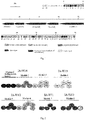
- the whole 44 genes of the biosynthetic gene cluster of carrimycin of the present disclosure are further described, and the gene cluster has a structure shown in Fig. 1 , specifically:
- the 5 polyketide synthase genes comprises8 modules and 37 structural domains shown in Fig. 2 .
- Orf14 comprises 3 modules: a loading structural domain 1, a module 2 and a module 3; in a loading module domain, KS 1 , AT 1 and ACP 1 are responsible for the initial synthesis of the lactone ring, and acetic acid is catalyzed as an initiation unit.
- the module 2 comprises structural domains KS 2 , AT 2 , KR 2 and ACP 2 ; and the module 3 comprises structural domains KS 3 , AT 3 , DH 3 , KR 3 and ACP 3 and is responsible for the introduction of additional 2 acetic acid extension units to finally form a C11-15 carbon-chain framework of carrimycin.
- the Orf13 comprises a module 4comprisingKS 4 , AT 4 , DH 4 , KR 4 and ACP 4 and is responsible for the extension of a third acetic acid unit to finally form a C9-10 carbon-chain framework of carrimycin.
- TheOrf12 comprises a module 5 and a module 6, and the module 5 comprises a structural domain KS 5 -AT 5 -KR 5 -ACP 5 and is responsible for the introduction of a propionic acid extension unit; and the module 6 comprises a structural domain KS 6 -AT 6 -DH 6 -KR 6 -ER 6 -KR 6 -ACP 6 and is responsible for the introduction of a butyric acid extension unit to finally form a C5-C8carbon-chain framework of carrimycin.
- the Orf11 comprises a module 7 containing a structural domain KS 7 -AT 7 -KR 7 -ACP 7 and is responsible for the introduction of a glycollic acid extension unit to finally form a C3-C4 carbon chain framework of carrimycin.
- the Orf10 comprises a module 8 containing a structural domain KS 8 -AT 8 -KR 8 -ACP 8 -TE and is responsible for the introduction of an acetic acid extension unit, and the cyclization and release of a carbon chain are completed under the participation of thioesterase (TE).
- TE thioesterase
- IA-W1 which encodes a PPT modified polyketide synthesized acyl carrier protein (ACP) to enable the protein to become an active protein
- IA-W4 which encodes 3-O-acyltransferase and is responsible for the acylation of 3-positionhydroxyl of carrimycin
- IA-W5 and IA-W6, which separately encode O-methylase and crotonoyl coenzyme A reductase and are responsible for the supply of polyketide extension units
- IA-W15 which encodes P450 cytochrome mono-oxidase and is responsible for the oxidation of a carbon chain of polyketide
- IA-W36-39 which separately encode methoxymalonylsynthetase, dehydrogenase, acyl carrying protein and me
- Table 1 All structural domains and amino acid positions thereof of polyketide synthase genes: Table 1.1 All structural domains and amino acid positions thereof of polyketide synthase gene IA-W14 Module Structural domain Amino acid position Loading module-module 1 KS 1 1-400 AT 1 511-814 ACP 1 918-989 Module 2 KS 2 1018-1444 AT 2 1551-1854 KR 2 2160-2338 ACP 2 2473-2546 Module 3 KS 3 2570-2995 AT 3 3109-3412 DH 3 3483-3653 KR 3 4068-4248 ACP 3 4369-4441 Table 1.2 All structural domains and amino acid positions thereof of polyketide synthase gene IA-W13 Module Structural domain Amino acid position Module 4 KS 4 36-461 AT 4 575-878 DH 4 945-1158 KR 4 1532-1711 ACP 4 1831-1904 Table 1.3 All structural domains and amino acid positions thereof of polyketide synthase gene IA-W12
- genes related to glycosyl synthesis of carrimycin is 12 in all, including orf9, 16-22, 24, 26, 28, 29, 33-35 and 41, wherein, orf18, 19 and 28 encode synthesis, dehydration and isomerization enzymes of basic glycosyl units of carrimycin; orf9, 20, 21, 24, 26 and 29 encode N-dimethylation, 2,3 dehydration, amination, isomerization, dehydration and keto reduction enzymes of NDP-hexosamine in forosamine synthesis; orf16, 17 and 22 encode isomerization, amination and N-dimethylation enzymes of NDP-hexosamine of mycaminose; and orf33, 34, 35 and 41 encode keto reduction, methylation and isomerization enzymes of NDP-hexosamine of mycarose.
- genes related to glycosyl transfer of carrimycin is 6 in all, including orf7, 8, 30-32 and 40, wherein orf7 encodes glycosylase of mycaminose; orf8 encodes a glycosylation accessory protein of mycaminose; orf31 and 32 encode glycosylase of forosamine; orf30 encodes a glycosylation accessory protein of forosamine; and orf40 encodes a glycosylation enzyme of mycarose.
- the quantity genes of carrimycin related to biosynthesis regulation and control is 4 in all, including orf2, 23, 27 and 42, wherein orf2 encodes a TetR family transcription regulation and control inhibiting factor and possibly participate in negative regulation and control on biosynthesis of carrimycin; orf23 and orf42 separately encode two positive-regulation-and-control transcription factors, and the latter positive-regulation-and-control transcription factor serves as a pathway special positive-regulation-and-control factor and is used for directly regulating and controlling the biosynthesis of carrimycin; and orf27 encodes a GTP enzyme and possibly regulate and control the biosynthesis of carrimycin through regulating and controlling functions of cells.
- Exogenous orf43 and orf44 are related to the biosynthesis of carrimycin, wherein the orf43 encodes a 23S rRNAmethylase gene related to thiostrepton resistance, the gene is linked to a mycarose 4"-O-hydroxyl isovaleryltransferase gene orf44, and resistance expression of the orf43 can provide an identifying marker for gene engineering bacteria of carrimycin.
- Complementary sequences of Seq. 1 and Seq. 2 of the present disclosure can be obtained anytime according to the principle of complementary base pairing.
- Nucleotide sequences or part of the nucleotide sequences of Seq. 1 and Seq. 2 can be obtained through a polymerase chain reaction (PCR), or enzyme digestion of corresponding DNA by using an appropriate restriction endonuclease or using other appropriate technologies.
- Genes similar to biosynthesis genes of carrimycin can be obtained from other organisms through the nucleotide sequences or part of the nucleotide sequences provided by the present disclosure by using a polymerase chain reaction (PCR) method or a method for carrying out Southern hybridization by using DNA containing the sequences of the present disclosure as a probe.
- PCR polymerase chain reaction
- the present disclosure further provides a way to obtain at least part of DNA sequence in Seq. 1 and Seq. 2 to construct a recombined vector which is not part of the invention.
- the present disclosure further provides a way to block biosynthesis genes of carrimycin, wherein at least one of the genes comprises nucleotide sequences in Seq. 1, which is not part of the invention. It is disclosed but not part of the invention, that new carrimycin derivatives can be obtained through blocking one or more steps of biosynthesis of carrimycin by using the clone genes or DNA fragments of nucleotide sequences or at least part of the nucleotide sequences provided by the present disclosure.
- the nucleotide sequences comprise the DNA fragments or genes and can be used for increasing the yield of carrimycin or derivatives thereof.
- Clone DNA of nucleotide sequences or at least part of the nucleotide sequences are disclosed but not part of the invention by the present disclosure can be used for locating more library plasmids from a genome library.
- These library plasmids at least comprise part of the sequences of the present disclosure and also contain DNA of regions, adjacent to the library plasmids, in a genome of carrimycin producing bacteria.
- nucleotide sequences provided by the present disclosure can be modified or mutated. Ways of modification or mutation comprise insertion or replacement, a polymerase chain reaction, a mistake-mediated polymerase chain reaction, site specific mutation, reconnection of different sequences and ultraviolet or chemical reagent caused mutation.
- nucleic acid sequences can be directly evolved (DNA shuffling) through different parts of the sequences or homologous sequences of other sources.
- Fragments or structural domains or modules or genes of nucleotide sequences or at least part of the nucleotide sequences provided by the present disclosure can be used for constructing a polyketide synthase library or a polyketide synthase derivative library or a package library.
- New polyketone compounds are produced through deleting or deactivating one or more polyketide synthase structural domains, modules or genes of the same or different polyketide synthase systems or increasing one or more polyketide synthase structural domains, modules or genes.
- Nucleotide sequences of biosynthesis modifier genes and glycosyl synthesis and glycosyltransferase genes of the present disclosure provide a way to obtain derivatives of carrimycin through deleting, replacing or reforming these glycosyl synthesis and transfer and modifier genes, all of which is not part of the invention.
- Fragments or structural domains or modules or genes of nucleotide sequences or at least part of the nucleotide sequences provided by the present disclosure can be used for increasing the yield of carrimycin or derivatives thereof through quantity doubling, , all of which is not part of the invention.
- Clone genes of nucleotide sequences or at least part of the nucleotide sequences provided by the present disclosure can be expressed in exogenous hosts through appropriate expression systems to obtain modified carrimycin or carrimycin with higher bioactivity or higher yield.
- exogenous hosts comprise Streptomyces, Escherichia coli, Bacillus, yeast, plants, animals, etc, , all of which is not part of the invention.
- Genes or gene clusters of nucleotide sequences or at least part of the nucleotide sequences provided by the present disclosure can be expressed in heterologous hosts, and functions of the genes or gene clusters in metabolism chains of the hosts are understood through a DNA chip technology.
- Polypeptides of amino acid sequences or at least part of the amino acid sequences provided by the present disclosure may still have bioactivity even new biological activity after one or some amino acids are removed or replaced, or the yield is increased, or dynamic characteristics or other striven properties of proteins are optimised, all of which is not part of the invention.
- New proteins or enzymes but not part of the invention can be obtained through connecting the amino acid sequences of the present disclosure by appropriate technology deletion, and then, new or associated products are produced.
- amino acid sequences provided by the present disclosure can be used for separating required proteins and can be applied to antibody preparation, all of which is not part of the invention.
- amino acid sequences provided by the present disclosure but not part of the invention provide possibility for predicting a three-dimensional structure of polyketide synthase.
- Genes provided by the present disclosure and proteins and antibodies thereof disclosed but not part of the invention can also be used for screening and developing compounds or proteins for medicines, industry and agriculture.
- mutant strains are obtained through gene blocking experiments; and it is proven by the experiments that carrimycin ingredient change of the mutant strains is caused by gene blocking, or carrimycin is not produced any more. And thus, it is prompted that obtained gene cluster information is related to biosynthesis of carrimycin.
- an exogenous thiostrepton resistance markergene (orf43) and a mycarose 4"-O-hydroxyl isovaleryltransferase gene (orf44) linked to the orf43 are integrated to chromosomes of the carrimycin producing bacteria through genic homologous recombination.
- Our laboratory has proven that the orf43 and the orf44 are essential to the biosynthesis of carrimycin through researches ( Chinese Journal of Biotechnology, volume 15, issue 2, 1999, 171-176 ).
- R 2 YE culture medium (g/100ml): Saccharose 10.3 Glucose 1.0 Yeast extract 0.4 Tryptone 0.2 Peptone 0.4 Casein hydrolyzate 0.1 K 2 SO 4 0.025 CaCl 2 0.216 KH 2 PO 4 0.005 MgCl 2 .6H 2 O 1.012 NaOH(1M) 0.5ml Tris-HCl(0.25mol/L pH7.2) 10ml
- S. spiramyceticus was inoculated into 25ml of R 2 YE culture medium, shaking-table culture was performed for 48h at a temperature of 28 DEG C. Thensub-cultivating was performed in 100ml R 2 YE culture medium, shaking-table culture was performed for 24h at a temperature of 28 DEG C.Then the thalli (about 10g) were collected after centrifuging for 10-15min at a rate of 5,000rpm. The operation was performed mainly according to product specification of UPTECH-TMlife science company. 50ml of 25mM EDTA solution was added into the thalli for washing under vibrating, and then the solution was centrifuged, and the supernatant was discarded.
- Themycelia were suspended with 25ml of lysozyme solution (10mg/ml, prepared from 10mM Tris-HCI with pH of 8.0, 2mM EDTA and 1.2% TritonX-100 through adding 0.5ml of 100mg/ml RNase), and cultured for about 1-2h at a temperature of 37 DEG C until cells were translucent. Then 2.5ml of protease K solution was added, and culturing was performed for 30min at a temperature of 55 DEG C. Then 20ml of 10% SDS solution was added, and culturing was performed for 10min at a temperature of 70 DEG C.
- Corresponding homologous gene fragments are separately obtained through PCR amplification, and recombinant plasmid containing homologous genes was obtained through adopting corresponding enzyme digestion sites, inserting screened marked resistant genes (Apramycin-Am) and connecting the genes to a temperature-sensitive vector pKC1139 [ Bierman M. et al., Gene, 1992;116(1): 43-9 ] or Escherichia coli/Streptomyces vector pGH112 [Youbao Biology Company]. Recombinant plasmid was transformed with protoplasts and transferred into the carrimycin producing bacteria. After cultivation, single colonies were isolated to obtain the homologous fragment double exchange gene blocking strain.
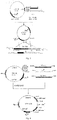
- FIG. 3 A schematic diagram of the construction of blocking recombinant plasmids of an IA-W4 3-O-acyltransferase gene and double exchange was shown in Fig. 3 .
- FIG. 4 A schematic diagram of construction of blocking recombinant plasmids of genes such as an IA-W42 transcription regulation and control gene were shown in Fig. 4 .
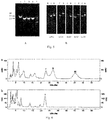
- Fig. 5A and Fig. 5B Total DNA of blocked strains and total DNA of original strains were subjected to PCR verification by separately adopting corresponding primers, as shown in Fig. 5A and Fig. 5B . Shown by a result of Fig. 5A , 613bp was deleted in the encoding gene orf4 of a mutant strain with IA-W4geneblocked. A PCR verification result is illustrated in Fig. 5B , compared with the original strains, length of PCR products increases as the screened marked resistant genes were inserted into mutant strain with related encoding genes blocked.
- IA-W4 blocked mutant strains do not produce 4"-isovaleryl spiramycin III and II any more and are dominated with 4"-isovaleryl spiramycin I as a major ingredient ( Fig. 6 ). It is proven that an IA-W4 3-O-acyltransferase gene in gene information in Seq. 1 provided by the present disclosure participates in the biosynthesis of carrimycin. Due to the blocking of the gene, mutant strains lose the function of acylating 3-positionhydroxyl of a lactone ring of carrimycin.
- Fresh slant spores of carrimycin producing bacteria was inoculated in R 2 YE liquid culture medium and shaken for 48h at a temperature of 28 DEG C at a rate of 220rpm.
- the culture fluid was inoculated at an inoculation rate of 10% in fresh R 2 YE liquid culture medium containing 0.5% glycine and shaken for 20h at a temperature of 28 DEG C.
- 10ml of bacterium solution was taken into a centrifuge tube, and centrifuged at a rate of 3,000rpm to collected mycelium. The mycelium was washed with P-buffer.
- 15-pound sterilization is performed for 30 min at a temperature of 121 DEG C.
- the mycelium was suspended with a proper volume of P-buffer, a P-buffer solution with lysozyme (final concentration is 2mg/ml) was added, mixed uniform, and incubated for 30-45min in a water bath at a temperature of 37 DEG C, and shaken once every 10-15min. Forming conditions of protoplast were observed with a 10 ⁇ 40 phase-difference microscope. Enzymolysis was stopped when microscopic examination shows that the majority of mycelia have formed protoplast. After filtering through absorbent cotton, the filter liquor was subjected to centrifugal washing twice with P-buffer. Finally, the protoplast was suspended with 1ml of P-buffer, and the suspension was separately loaded to EP tubes by 100 ⁇ l/tube, and preserved at a temperature of -70 DEG C for later use.
- P-buffer solution with lysozyme final concentration is 2mg/ml
- the transformants are picked into a culture medium containing 50 ⁇ g/ml of Tsr Soyabean cake powder 20 Glucose 10 Starch 30 CaCO 3 5.0 NaCl 4.0 agar 18
- Deionized water is used for preparing, and 15-pound sterilization is performed for 30min at a temperature of 121 DEG C at a natural pH value.
- slant culture medium g/L: Soyabean cake powder 20.0 Glucose 10.0 Starch 30.0 CaCO 3 5.0 NaCl 4.0 Agar 18.0
- Deionized water is used for preparing, and 15-pound sterilization was performed for 30min at a temperature of 121 DEG C at a natural pH value.
- strains were cultured in slant culture medium for 10-12d at a temperature of 28 DEG C. After strains were grown, the strains was inoculated by dicing into a 100mL triangular flask containing 30ml of fermentation culture medium, and shaken culture for 96-120h at a temperature of 28 DEG C.
- Fermentation culture medium g/L: Glucose 5.0 Sodium chloride 10 Starch 60 Magnesium sulfate 1.0 Calcium carbonate 5.0 Ammonium nitrate 6.0 Potassium dihydrogen phosphate 0.5 Yeast powder 5.0 Fish meal 20.0 natural pH value
- Deionized water is used for preparing, and 15-pound sterilization was performed for 30min at a temperature of 121 DEG C.
- Fermentation liquor was centrifuged, the supernatant was taken and diluted, and then, detection was performed by taking Bacillus subtilis as detection bacteria referring to an acetylspiramycin microbiological assay (II), 2005 ⁇ Pharmacopoeia of People's Republic of China>. Detection is performed by adopting a cylinder plate method with a standard curve method.
- Fermentation liquor was centrifuged for 15min at a rate of 3000rpm at room temperature, the pH of supernatant was adjusted to 8.5 with 1M NaOH. Then, the supernatant was extracted with 1/2 volume of ethyl acetate. An ethyl acetate phase was taken out, and was subjected to blow-drying in a flat dish, then the dried substance was dissolved in chromatographically-pure methanol, and then 10-20 ⁇ l of a sample was introduced after filtering.
- Chromatograph instruments a Shimadzu LC-10ATvp liquid chromatograph and a diode array detector; a chromatographic column: Kromasil C 18 (4.5mm ⁇ 150mm, 5 ⁇ m); flowing phase: CH 3 OH/1%NaH 2 PO 4 (55:45); detection wavelength: 231nm; flow velocity: 1ml/min; and column temperature: 25 DEG C. Fermentation products of mutant strains are identified by taking a carrimycin standard product as a control (purchased from National Institute for the Control of Pharmaceutical and Biological Products).
Landscapes
- Health & Medical Sciences (AREA)
- Life Sciences & Earth Sciences (AREA)
- Chemical & Material Sciences (AREA)
- Genetics & Genomics (AREA)
- Engineering & Computer Science (AREA)
- Organic Chemistry (AREA)
- Zoology (AREA)
- Wood Science & Technology (AREA)
- Bioinformatics & Cheminformatics (AREA)
- Biomedical Technology (AREA)
- General Engineering & Computer Science (AREA)
- Biotechnology (AREA)
- Molecular Biology (AREA)
- Microbiology (AREA)
- Biochemistry (AREA)
- General Health & Medical Sciences (AREA)
- Medicinal Chemistry (AREA)
- Plant Pathology (AREA)
- Physics & Mathematics (AREA)
- Biophysics (AREA)
- Chemical Kinetics & Catalysis (AREA)
- General Chemical & Material Sciences (AREA)
- Enzymes And Modification Thereof (AREA)
- Micro-Organisms Or Cultivation Processes Thereof (AREA)
- Preparation Of Compounds By Using Micro-Organisms (AREA)
- Saccharide Compounds (AREA)
- Organic Low-Molecular-Weight Compounds And Preparation Thereof (AREA)
Description
- The present disclosure belongs to the fields of microbial gene resources and gene engineering, specifically relates to clone, analysis and function research of antibiotic biosynthetic gene clusters in gene engineering and an application of the antibiotic biosynthetic gene clusters.
- Carrimycin has used names, i.e., shengjimycin and biotechspiramycin, is a 16-membered macrolide antibiotic developed by using a synthetic biology technology [described in patentswithnumberZL971044406 and ZL021487715]. Carrimycinis a spiramycin with multi-acylated 4"-hydroxyl, which takes 4"-isovaleryl spiramycin III, II and I as main ingredients, wherein the ingredient III accounts for about 30% or more, the ingredient II accounts for about 25%, and the content of ingredient I does not exceed 10%.

- Isovalerylspiramycin III: R=COCH2CH3 R'=COCH2CH(CH3)2
- Isovalerylspiramycin II: R=COCH3 R'=COCH2CH(CH3)2
- Isovalerylspiramycin I: R=H R'=COCH2CH(CH3)2
- Carrimycin has relatively high activity to Gram-positive bacteria and has antibacterial activity to erythromycin, beta-lactam antibiotic-resistant bacteria, bacillus influenzae, gonococcus, legionella, bacteroidesfragilis and clostridium perfringens. Particularly, carrimycin has relatively high activity to mycoplasma pneumoniae, chlamydia trachomatis and chlamydia pneumoniae [Yu, Lanxiang, et al., Sichuan Journal of Physiological Sciences; 1998, 20 (3), patent number:
2003101224209 - Carrimycin is a fermented product of gene engineering bacteria (Streptomyces spiramyceticus WSJ-1), which is obtained through subjecting 4"-isovaleryl transferase genes of carbomycin producing bacteria to clone expression in spiramycin producing bacteria (Streptomyces spiramyceticus F21). The spiramycin producing bacteria (Streptomyces spiramyceticus F21) was isolated from soil in Yongchang County, Gansu Province, China in 1982 by our laboratory. The morphological characteristics, physiologic biochemical characteristics, cell wall chemical composition, 16S rRNA gene sequence and 5 housekeeping gene protein levels of the bacteria in phylogenetic tree analysis has nothing in common with abroad-reported spiramycin producing bacteria Streptomyces ambofaciens ATCC23877 and reported streptomycete.Thus, the spiramycin producing bacteria (Streptomyces spiramyceticus F21) is extremely possibly a new streptomycete species [Dai, Jianlu, et al.,Journal of Microbiology, 2012, 39 (4): 503-514].
- Sequencing of gene clusters related to spiramycin biosynthesis in the spiramycin producing bacteria Streptomyces ambofaciens ATCC23877 has been completed [Karray F., Microbiology, 2007, 153: 4111-4122], as well as
EP0791656 and sequences of biosynthetic gene clusters of other macrolide antibiotics such as avermectin, canavaliamycin, erythromycin, chalcomycin, tylosin and medemycin have also been reported [Ikeda H.et al.,Nat.Biotechnol. 2003, 21(5): 526-531, Haydock et al., Microbiology, 2005, 151, 3161-3169; Oliynyk M. et al., Nat. Biotechnol. 2007, 25(4): 447-453; Wards L. et al.,Antimicrob. Agents & Chemotherapy, 2004, 48(12): 4703-4712; Cundiffe E. et al.,Antonie Van Leeuwenhoek, 2001, 79(3-4): 229-234;Midoh Naoki et al., US patent 7070980 ]. Biosynthetic gene clusters of macrolide antibiotics have the full length of about 50-80kb and have the common characteristics of being composed of polyketide synthase (PKS) for encoding a biosynthetic modular structure of a 16-membered macrolide ring, polyketone synthesis extension unit related enzymes, enzymes responsible for modification of different radical groups of a lactone ring, genes of glycosyl synthesis and transfer related enzymes and resistance and regulation and control function related genes, etc. Macrolides are formed through carrying out a continuous condensation reaction to catalyze some simple carboxylic acid molecules by PKS composed of modular structures in a manner similar to biosynthesis of fatty acids. Each module is only responsible for one-step condensation reaction in a polyketone chain forming process, and the module at least contains a beta-ketoacylsynthetase (KS) structural domain, an acyltransferase (AT) structural domain and an acyl carrier protein (ACP) structural domain. In addition, the module further possibly contains a beta-ketoacylreductase (KR) structural domain, a dehydrase (DH) structural domain and an ester acyl reductase (ER) structural domain, and the structural domains decide a reduction step of added extension units. Meanwhile, the action of a thioesterase (TE) structural domain is also required to catalyze the cyclization and release of polyketone chains. Finally, modification steps such as hydroxylation, methylation, methoxylation and acylation are also required to be carried out to form various structures of macrolide antibiotics. Generally, all the macrolides are connected with glycosyl groups (or glycosylamino) of different quantities, for example, carrimycin contains three glycosyl groups, i.e., forosamine, mycaminose and mycarose.The glycosyl groups are undertaken by glycosyl synthesis and transfer related enzymes. Resistant genes endow the producing bacteria with capability for resisting antibiotic produced by itself and are generally related to ABC transport protein. Regulation and control function related genes participate in regulation and control of self-biosynthetic antibiotics. - Through gene cluster sequence information and structural analysis, the genetic manipulations can be further performed on producing bacteria to obtain novel and more effective antibiotics. For example, new macrolide antibiotics are created through changing PKS synthesis modular structures of macrolide antibiotics by genetic manipulation, changing lactone ring after-modification and replacing or modifying glycosyl groups. And the yield of the antibiotics can be increased through carrying out genetic operation on resistant genes or regulatory genes. [Wilkinson B. et al.,Chem Biol. 2000, 7 (2): 111-117; Kalz L. et al., Med Res Rev. 1999, 19 (6): 543-58; Goodman CD et al., Antimicrobial Agents and Chemotherapy, 2013, 57(2): 907-913; Wang W et al.,ProcNatlAcadSci USA, 2014, 111(15): 5688-93; Stratigopoulos G et al.,MolMicrobiol. 2004, 54(5): 1326-34; Novakova R et al., Folia Microbiol. 2011, 56(3): 276-82].
- The present disclosure provides a biosynthetic linkage gene cluster of carrimycin. The gene cluster has 44 gene open reading frames (orf) in all, the full length of nucleotide sequences is 89315bp (Seq.1).The gene cluster contains 5 orfs encoding polyketide synthase (orf 10-14), comprising 8 modules and 37 structural domains, 9 orfs related to polyketone synthesis extension unit and modification (1, 4-6, 15 and 36-39), 16 orfs related to glycosyl synthesis (9, 16-22, 24, 26, 28, 29, 33-35 and 41) and 6 orfs related to glycosyl transfer (7, 8, 30-32 and 40). In addition, the gene cluster further comprises 2 orfs related to resistance (3 and 25) and 4 orfs possibly-related to regulation and control (2, 23, 27 and 42). The nucleotide sequences are separately selected from a group consisting of orfl(1-645), orf2(1 810-1208), orf3(3133-2285), orf4(3614-4840), orf5(4846-5511), orf6(7150-5801), orf7(8444-7179), orf8(9729-8482), orf9(10543-9830), orf10(16215-10543), orf11(21076-16328), orf12(32511-21124), orfl3(38599-32585), orf14(52259-38643), orf15(53099-54310), orf16(54495-54845), orf17(54842-56041), orfl8(56038-56946), orf19(56930-57967), orf20(57937-60174), orf21(60836-61984), orf22(62796-62077), orf23(63633-65645), orf24(67379-66318), orf25(69004-67352), orf26(69349-70650), orf27(72156-70708), orf28(72422-73462), orf29(74601-73561), orf30(74913-76160), orf31(76218-77486), orf32(77606-78781), orf33(78783-79775), orf34(79772-80779), orf35(82055-80823), orf36(83164-82052), orf37(84400-83279), orf38(84713-84393), orf39(85576-84710), orf40(85825-87042), orf41(87094-87702) and orf42(89315-88143) in Seq. 1. In addition, the gene cluster further comprises orf43 (866-60) and orf44 (2337-1174) in an exogenous gene Seq. 2 unlinked to Seq. 1with the full length of 2337bp.
- The present disclosure further provides an amino acid sequence of 4'-phosphopantetheinyl transferase (PPT), the amino acid sequence consists of 214 amino acids in Seq. 3 and is called as IA-W1, and nucleotide sequence of an encoding gene is selected from 1-645 bases in Seq. 1.
- The present disclosure further provides an amino acid sequence of a TetR family transcription regulation and control factor, the amino acid sequence consists of 200 amino acids in Seq. 4 and is called as IA-W2, and nucleotide sequence of an encoding gene is selected from 1810-1208 bases in Seq. 1.
- The present disclosure further provides an amino acid sequence of 23S rRNAmethyltransferase, the amino acid sequence consists of 282 amino acids in Seq. 5 and is called as IA-W3, and nucleotide sequence of an encoding gene is selected from 3133-2285 bases in Seq. 1.
- The present disclosure further provides an amino acid sequence of 3-O-acyltransferase, the amino acid sequence consists of 408 amino acids in Seq. 6 and is called as IA-W4, and nucleotide sequence of an encoding gene is selected from 3614-4840 bases in Seq. 1.
- The present disclosure further provides an amino acid sequence of O-methyltransferase, the amino acid sequence consists of 221 amino acids in Seq. 7 and is called as IA-W5, and nucleotide sequence of an encoding gene is selected from 4846-5511 bases in Seq. 1.
- The present disclosure further provides an amino acid sequence of crotonyl coenzyme A reductase, the amino acid sequence consists of 449 amino acids in Seq. 8 and is called as IA-W6, and nucleotide sequence of an encoding gene is selected from 7150-5801 bases in Seq. 1.
- The present disclosure further provides an amino acid sequence of glycosyltransferase, the amino acid sequence consists of 421 amino acids in Seq. 9 and is called as IA-W7, and nucleotide sequence of an encoding gene is selected from 8444-7179 bases in Seq. 1.
- The present disclosure further provides an amino acid sequence of glycosyltransferase accessory protein, the amino acid sequence consists of 415 amino acids in Seq. 10 and is called as IA-W8, and nucleotide sequence of an encoding gene is selected from 9729-8482 bases in Seq. 1.
- The present disclosure further provides an amino acid sequence of NDP-aminohexose N-dimethyltransferase, the amino acid sequence consists of 237 amino acids in Seq. 11 and is called as IA-W9, and nucleotide sequence of an encoding gene is selected from 10543-9830 bases in Seq. 1.
- The present disclosure further provides an amino acid sequence comprising a polyketidesynthase structural domain of ketosynthase (KS)8-acyltransferase (AT)8-ketoreductase (KR)8-acyl carrier protein (ACP)8-chain-release thioesterase (TE), the amino acid sequence consists of 1890 amino acids in Seq. 12 and is called as IA-W10, and nucleotide sequence of an encoding gene is selected from 16215-10543 bases in Seq. 1.
- The present disclosure further provides an amino acid sequence comprising a polyketide synthase structural domain of KS7-AT7-KR7-ACP7, the amino acid sequence consists of 1582 amino acids in Seq. 13 and is called as IA-W11, and nucleotide sequence of an encoding gene is selected from 21076-16328 bases in Seq. 1.
- The present disclosure further provides an amino acid sequence comprising a polyketide synthase structural domain of KS5-AT5-KR5-ACP5-KS6-AT6-DH6 (dehydrase)-ER6 (enoylreductase)-KR6-ACP6, the amino acid sequence consists of 3795 amino acids in Seq. 14 and is called as IA-W12, and nucleotide sequence of an encoding gene is selected from 32511-21124 bases in Seq. 1.
- The present disclosure further provides an amino acid sequence comprising a polyketide synthase structural domain of KS4-AT4-DH4-KR4-ACP4, the amino acid sequence consists of 2004 amino acids in Seq. 15 and is called as IA-W13, and nucleotide sequence of an encoding gene is selected from 38599-32585 bases in Seq. 1.
- The present disclosure further provides an amino acid sequence comprising a polyketide synthase structural domain of KS1-AT1-ACP1-KS2-AT2-KR2-ACP2-KS3-AT3-DH3-KR3-ACP3, the amino acid sequence consists of 4538 amino acids in Seq. 16 and is called as IA-W14, and nucleotide sequence of an encoding gene is selected from 52259-38643 bases in Seq. 1.
- The present disclosure further provides an amino acid sequence of cytochrome P-450 oxidase, the amino acid sequence consists of 403 amino acids in Seq. 17 and is called as IA-W15, and nucleotide sequence of an encoding gene is selected from 53099-54310 bases in Seq. 1.
- The present disclosure further provides an amino acid sequence of NDP-hexoseisomerase, the amino acid sequence consists of 116 amino acids in Seq. 18 and is called as IA-W16, and nucleotide sequence of an encoding gene is selected from 54495-54845 bases in Seq. 1.
- The present disclosure further provides an amino acid sequence of NDP-hexoseaminotransferase, the amino acid sequence consists of 399 amino acids in Seq. 19 and is called as IA-W17, and nucleotide sequence of an encoding gene is selected from 54842-56041 bases in Seq. 1.
- The present disclosure further provides an amino acid sequence of NDP-glucosesynthase, the amino acid sequence consists of 302 amino acids in Seq. 20 and is called as IA-W18, and nucleotide sequence of an encoding gene is selected from 56038-56946 bases in Seq. 1.
- The present disclosure further provides an amino acid sequence of NDP-glucose-4,6-dehydrase, the amino acid sequence consists of 345 amino acids in Seq. 21 and is called as IA-W19, and nucleotide sequence of an encoding gene is selected from 56930-57967 bases in Seq. 1.
- The present disclosure further provides an amino acid sequence of NDP-hexose-2,3-dehydrase/thioesterase, the amino acid sequence consists of 745 amino acids in Seq. 22 and is called as IA-W20, and nucleotide sequence of an encoding gene is selected from 57937-60174 bases in Seq. 1.
- The present disclosure further provides an amino acid sequence of NDP-hexoseaminotransferase, the amino acid sequence consists of 382 amino acids in Seq. 23 and is called as IA-W21, and nucleotide sequence of an encoding gene is selected from 60836-61984 bases in Seq. 1.
- The present disclosure further provides an amino acid sequence of NDP-aminohexoseN-dimethyltransferase, the amino acid sequence consists of 239 amino acids in Seq. 24 and is called as IA-W22, and nucleotide sequence of an encoding gene is selected from 62796-62077 bases in Seq. 1.
- The present disclosure further provides an amino acid sequence of a transcription regulation and control factor, the amino acid sequence consists of 670 amino acids in Seq. 25 and is called as IA-W23, and nucleotide sequence of an encoding gene is selected from 63633-65645 bases in Seq. 1.
- The present disclosure further provides an amino acid sequence of NDP-aminohexoseisomerase, the amino acid sequence consists of 354 amino acids in Seq. 26 and is called as IA-W24, and nucleotide sequence of an encoding gene is selected from 67379-66318 bases in Seq. 1.
- The present disclosure further provides an amino acid sequence of ABC transport protein, the amino acid sequence consists of 550 amino acids in Seq. 27 and is called as IA-W25, and nucleotide sequence of an encoding gene is selected from 69004-67352 bases in Seq. 1.
- The present disclosure further provides an amino acid sequence of NDP-hexosedehydrase, the amino acid sequence consists of 433 amino acids in Seq. 28 and is called as IA-W26, and nucleotide sequence of an encoding gene is selected from 69349-70650 bases in Seq. 1.
- The present disclosure further provides an amino acid sequence of similar GTP enzyme, the amino acid sequence consists of 482 amino acids in Seq. 29 and is called as IA-W27, and nucleotide sequence of an encoding gene is selected from 72156-70708 bases in Seq. 1.
- The present disclosure further provides an amino acid sequence of NDP-hexoseisomerase, the amino acid sequence consists of 346 amino acids in Seq. 30 and is called as IA-W28, and nucleotide sequence of an encoding gene is selected from 72422-73462 bases in Seq. 1.
- The present disclosure further provides an amino acid sequence of NDP-hexoseketoreductase, the amino acid sequence consists of 346 amino acids in Seq. 31 and is called as IA-W29, and nucleotide sequence of an encoding gene is selected from 74601-73561 bases in Seq. 1.
- The present disclosure further provides an amino acid sequence of glycosyltransferase accessory protein, the amino acid sequence consists of 415 amino acids in Seq. 32 and is called as IA-W30, and nucleotide sequence of an encoding gene is selected from 74913-76160 bases in Seq. 1.
- The present disclosure further provides an amino acid sequence of glycosyltransferase, the amino acid sequence consists of 422 amino acids in Seq. 33 and is called as IA-W31, and nucleotide sequence of an encoding gene is selected from 76218-77486 bases in Seq. 1.
- The present disclosure further provides an amino acid sequence of glycosyltransferase, the amino acid sequence consists of 391 amino acids in Seq. 34 and is called as IA-W32, and nucleotide sequence of an encoding gene is selected from 77606-78781 bases in Seq. 1.
- The present disclosure further provides an amino acid sequence of NDP-hexoseketoreductase, the amino acid sequence consists of 330 amino acids in Seq. 35and is called as IA-W33, and nucleotide sequence of an encoding gene is selected from 78783-79775 bases in Seq. 1.
- The present disclosure further provides an amino acid sequence of NDP-hexose reductase, the amino acid sequence consists of 335 amino acids in Seq. 36 and is called as IA-W34, and nucleotide sequence of an encoding gene is selected from 79772-80779 bases in Seq. 1.
- The present disclosure further provides an amino acid sequence of NDP-hexose methyltransferase, the amino acid sequence consists of 410 amino acids in Seq. 37 and is called as IA-W35, and nucleotide sequence of an encoding gene is selected from 82055-80823 bases in Seq. 1.
- The present disclosure further provides an amino acid sequence of methoxymalonylsynthetase, the amino acid sequence consists of 370 amino acids in Seq. 38 and is called as IA-W36, and nucleotide sequence of an encoding gene is selected from 83164-82052 bases in Seq. 1.
- The present disclosure further provides an amino acid sequence of dehydrogenase, the amino acid sequence consists of 373 amino acids in Seq. 39 and is called as IA-W37, and nucleotide sequence of an encoding gene is selected from 84400-83279 bases in Seq. 1.
- The present disclosure further provides an amino acid sequence of acyl carrying protein, the amino acid sequence consists of 106 amino acids in Seq. 40 and is called as IA-W38, and nucleotide sequence of an encoding gene is selected from 84713-84393 bases in Seq. 1.
- The present disclosure further provides an amino acid sequence of methoxymalonyl dehydrogenase, the amino acid sequence consists of 288 amino acids in Seq. 41 and is called as IA-W39, and nucleotide sequence of an encoding gene is selected from 85576-84710 bases in Seq. 1.
- The present disclosure further provides an amino acid sequence of glycosyltransferase, the amino acid sequence consists of 405 amino acids in Seq. 42 and is called as IA-W40, and nucleotide sequence of an encoding gene is selected from 85825-87042 bases in Seq. 1.
- The present disclosure further provides an amino acid sequence of NDP-hexose isomerase, the amino acid sequence consists of 202 amino acids in Seq. 43 and is called as IA-W41, and nucleotide sequence of an encoding gene is selected from 87094-87702 bases in Seq. 1.
- The present disclosure further provides an amino acid sequence of a transcription regulation and control factor protein, the amino acid sequence consists of 390 amino acids in Seq. 44 and is called as IA-W42, and nucleotide sequence of an encoding gene is selected from 89315-88143 bases in Seq. 1.
- The present disclosure further provides an amino acid sequence of an exogenous 23S rRNAmethylase (Thiostrepton and tsr resistance marker related), the amino acid sequence consists of 269 amino acids in Seq. 45 and is called as IA-W43, and nucleotide sequence of an encoding gene is selected from 866-57 bases in Seq. 2.
- The present disclosure further provides an amino acid sequence of exogenous 4"-mycaroseglucosideisovaleryltransferase, the amino acid sequence consists of 388 amino acids in Seq. 46 and is called as IA-W44, and nucleotide sequence of an encoding gene is selected from 2337-1171 bases in Seq. 2.
- On the basis of obtaining information of the biosynthetic gene cluster of carrimycin, and analyzing the possible functions of encoded proteins of each gene through gene blocking and homologous comparation, the whole 44 genes of the biosynthetic gene cluster of carrimycin of the present disclosure are further described, and the gene cluster has a structure shown in
Fig. 1 , specifically: - (1) five polyketide synthase genes, including orf10-14;
- (2) nine genes related topolyketone synthesis extension unit and modification related genes, including orf1, orf4-6, 15 and 36-39;
- (3) sixteen genes related toglycosyl synthesis, including orf9, 16-22, 24, 26, 28, 29, 33-35 and 41;
- (4) six genes related toglycosyl transfer,includingorf7, 8, 30-32 and 40;
- (5) two genes related to resistance, includingorf3 and 25;
- (6) 4 genes related to biosynthesis regulation and control in all, including orf2, 23, 27 and 42; and
- (7) two genes, including an exogenous gene engineering marker gene orf43 (thiostrepton and a tsr resistant gene) and a
mycarose 4"-O-isovaleryl transferase gene orf44 linked to the orf43. - Five polyketide synthase genes (orf10-14) in Seq. 1, complementary nucleotide sequences and amino acid sequences thereof are essential to synthesis of a lactone ring of carrimycin. The 5 polyketide synthase genes comprises8 modules and 37 structural domains shown in
Fig. 2 . Orf14 comprises 3 modules: a loadingstructural domain 1, amodule 2 and amodule 3; in a loading module domain, KS1, AT1 and ACP1 are responsible for the initial synthesis of the lactone ring, and acetic acid is catalyzed as an initiation unit. Themodule 2 comprises structural domains KS2, AT2, KR2 and ACP2; and themodule 3 comprises structural domains KS3, AT3, DH3, KR3 and ACP3 and is responsible for the introduction of additional 2 acetic acid extension units to finally form a C11-15 carbon-chain framework of carrimycin. The Orf13 comprises a module 4comprisingKS4, AT4, DH4, KR4 and ACP4 and is responsible for the extension of a third acetic acid unit to finally form a C9-10 carbon-chain framework of carrimycin. TheOrf12 comprises amodule 5 and amodule 6, and themodule 5 comprises a structural domain KS5-AT5-KR5-ACP5 and is responsible for the introduction of a propionic acid extension unit; and themodule 6 comprises a structural domain KS6-AT6-DH6-KR6-ER6-KR6-ACP6 and is responsible for the introduction of a butyric acid extension unit to finally form a C5-C8carbon-chain framework of carrimycin. The Orf11 comprises amodule 7 containing a structural domain KS7-AT7-KR7-ACP7 and is responsible for the introduction of a glycollic acid extension unit to finally form a C3-C4 carbon chain framework of carrimycin. The Orf10 comprises amodule 8 containing a structural domain KS8-AT8-KR8-ACP8-TE and is responsible for the introduction of an acetic acid extension unit, and the cyclization and release of a carbon chain are completed under the participation of thioesterase (TE). A structural schematic diagram of polyketide synthase genes of carrimycin is shown inFig. 2 . All structural domains and amino acid positions thereof of the polyketide synthase genes are shown in table 1. - Nucleotide sequences or complementary sequences and corresponding amino acid sequences thereof of the polyketone synthesis extension unit and modification related genes orf1, orf4-6, 15 and 36-39are:IA-W1 ,which encodes a PPT modified polyketide synthesized acyl carrier protein (ACP) to enable the protein to become an active protein; IA-W4, which encodes 3-O-acyltransferase and is responsible for the acylation of 3-positionhydroxyl of carrimycin; IA-W5 and IA-W6, which separately encode O-methylase and crotonoyl coenzyme A reductase and are responsible for the supply of polyketide extension units; IA-W15, which encodes P450 cytochrome mono-oxidase and is responsible for the oxidation of a carbon chain of polyketide; and IA-W36-39,which separately encode methoxymalonylsynthetase, dehydrogenase, acyl carrying protein and methoxymalonyl dehydrogenase. And all the genes participate in the synthesis and modification of the polyketide extension units.
- Table 1 All structural domains and amino acid positions thereof of polyketide synthase genes:
Table 1.1 All structural domains and amino acid positions thereof of polyketide synthase gene IA-W14 Module Structural domain Amino acid position Loading module-module 1 KS1 1-400 AT1 511-814 ACP1 918-989 Module 2 KS2 1018-1444 AT2 1551-1854 KR2 2160-2338 ACP2 2473-2546 Module 3 KS3 2570-2995 AT3 3109-3412 DH3 3483-3653 KR3 4068-4248 ACP3 4369-4441 Table 1.2 All structural domains and amino acid positions thereof of polyketide synthase gene IA-W13 Module Structural domain Amino acid position Module 4 KS4 36-461 AT4 575-878 DH4 945-1158 KR4 1532-1711 ACP4 1831-1904 Table 1.3 All structural domains and amino acid positions thereof of polyketide synthase gene IA-W12 Module Structural domain Amino acid position Module 5 KS5 37-463 AT5 662-957 KR5 1245-1413 ACP5 1519-1592 Module 6 KS6 1613-2039 AT6 2157-2458 DH6 2524-2686 ER6 3025-3329 KR6 3338-3518 ACP6 3632-3702 Table 1.4 All structural domains and amino acid positions thereof of polyketidesynthase gene IA-W11 Module Structural domain Amino acid position Module 7 KS7 35-460 AT7 566-864 KR7 1149-1328 ACP7 1433-1505 Table 1.5 All structural domains and amino acid positions thereof of polyketide synthase gene IA-W10 Module Structural domain Amino acid position Module 8 KS8 36-461 AT8 579-878 DH8 831-993 KR8 1232-1411 ACP8 1513-1584 TE8 1659-1872 - The quantity of genes related to glycosyl synthesis of carrimycin is 12 in all, including orf9, 16-22, 24, 26, 28, 29, 33-35 and 41, wherein, orf18, 19 and 28 encode synthesis, dehydration and isomerization enzymes of basic glycosyl units of carrimycin; orf9, 20, 21, 24, 26 and 29 encode N-dimethylation, 2,3 dehydration, amination, isomerization, dehydration and keto reduction enzymes of NDP-hexosamine in forosamine synthesis; orf16, 17 and 22 encode isomerization, amination and N-dimethylation enzymes of NDP-hexosamine of mycaminose; and orf33, 34, 35 and 41 encode keto reduction, methylation and isomerization enzymes of NDP-hexosamine of mycarose.
- The quantity of genes related to glycosyl transfer of carrimycin is 6 in all, including orf7, 8, 30-32 and 40, wherein orf7 encodes glycosylase of mycaminose; orf8 encodes a glycosylation accessory protein of mycaminose; orf31 and 32 encode glycosylase of forosamine; orf30 encodes a glycosylation accessory protein of forosamine; and orf40 encodes a glycosylation enzyme of mycarose.
- The quantity genes related to resistance of
carrimycinis 2 in all, including orf3 and 25, wherein orf3 encodes a 23S rRNAmethylase; and orf25 encodes an ABC transport protein, the orf3 and the orf25 endow carrimycin producing bacteria with self-antibiotic producing resistance through a methylation and pumping mechanism for ribosome RNA. - The quantity genes of carrimycin related to biosynthesis regulation and control is 4 in all, including orf2, 23, 27 and 42, wherein orf2 encodes a TetR family transcription regulation and control inhibiting factor and possibly participate in negative regulation and control on biosynthesis of carrimycin; orf23 and orf42 separately encode two positive-regulation-and-control transcription factors, and the latter positive-regulation-and-control transcription factor serves as a pathway special positive-regulation-and-control factor and is used for directly regulating and controlling the biosynthesis of carrimycin; and orf27 encodes a GTP enzyme and possibly regulate and control the biosynthesis of carrimycin through regulating and controlling functions of cells.
- Exogenous orf43 and orf44 are related to the biosynthesis of carrimycin, wherein the orf43 encodes a 23S rRNAmethylase gene related to thiostrepton resistance, the gene is linked to a
mycarose 4"-O-hydroxyl isovaleryltransferase gene orf44, and resistance expression of the orf43 can provide an identifying marker for gene engineering bacteria of carrimycin. - Complementary sequences of Seq. 1 and Seq. 2 of the present disclosure can be obtained anytime according to the principle of complementary base pairing. Nucleotide sequences or part of the nucleotide sequences of Seq. 1 and Seq. 2 can be obtained through a polymerase chain reaction (PCR), or enzyme digestion of corresponding DNA by using an appropriate restriction endonuclease or using other appropriate technologies. Genes similar to biosynthesis genes of carrimycin can be obtained from other organisms through the nucleotide sequences or part of the nucleotide sequences provided by the present disclosure by using a polymerase chain reaction (PCR) method or a method for carrying out Southern hybridization by using DNA containing the sequences of the present disclosure as a probe.
- The present disclosure further provides a way to obtain at least part of DNA sequence in Seq. 1 and Seq. 2 to construct a recombined vector which is not part of the invention.
- The present disclosure further provides a way to block biosynthesis genes of carrimycin, wherein at least one of the genes comprises nucleotide sequences in Seq. 1, which is not part of the invention. It is disclosed but not part of the invention, that new carrimycin derivatives can be obtained through blocking one or more steps of biosynthesis of carrimycin by using the clone genes or DNA fragments of nucleotide sequences or at least part of the nucleotide sequences provided by the present disclosure. The nucleotide sequences comprise the DNA fragments or genes and can be used for increasing the yield of carrimycin or derivatives thereof.
- Clone DNA of nucleotide sequences or at least part of the nucleotide sequences are disclosed but not part of the invention by the present disclosure can be used for locating more library plasmids from a genome library. These library plasmids at least comprise part of the sequences of the present disclosure and also contain DNA of regions, adjacent to the library plasmids, in a genome of carrimycin producing bacteria.
- The nucleotide sequences provided by the present disclosure can be modified or mutated. Ways of modification or mutation comprise insertion or replacement, a polymerase chain reaction, a mistake-mediated polymerase chain reaction, site specific mutation, reconnection of different sequences and ultraviolet or chemical reagent caused mutation.
- It is disclosed but not part of the invention that nucleic acid sequences can be directly evolved (DNA shuffling) through different parts of the sequences or homologous sequences of other sources.
- Fragments or structural domains or modules or genes of nucleotide sequences or at least part of the nucleotide sequences provided by the present disclosure can be used for constructing a polyketide synthase library or a polyketide synthase derivative library or a package library. New polyketone compounds are produced through deleting or deactivating one or more polyketide synthase structural domains, modules or genes of the same or different polyketide synthase systems or increasing one or more polyketide synthase structural domains, modules or genes.
- Nucleotide sequences of biosynthesis modifier genes and glycosyl synthesis and glycosyltransferase genes of the present disclosure provide a way to obtain derivatives of carrimycin through deleting, replacing or reforming these glycosyl synthesis and transfer and modifier genes, all of which is not part of the invention.
- Fragments or structural domains or modules or genes of nucleotide sequences or at least part of the nucleotide sequences provided by the present disclosure can be used for increasing the yield of carrimycin or derivatives thereof through quantity doubling, , all of which is not part of the invention.
- Clone genes of nucleotide sequences or at least part of the nucleotide sequences provided by the present disclosure can be expressed in exogenous hosts through appropriate expression systems to obtain modified carrimycin or carrimycin with higher bioactivity or higher yield. These exogenous hosts comprise Streptomyces, Escherichia coli, Bacillus, yeast, plants, animals, etc, , all of which is not part of the invention.
- Genes or gene clusters of nucleotide sequences or at least part of the nucleotide sequences provided by the present disclosure can be expressed in heterologous hosts, and functions of the genes or gene clusters in metabolism chains of the hosts are understood through a DNA chip technology.
- Polypeptides of amino acid sequences or at least part of the amino acid sequences provided by the present disclosure may still have bioactivity even new biological activity after one or some amino acids are removed or replaced, or the yield is increased, or dynamic characteristics or other striven properties of proteins are optimised, all of which is not part of the invention. New proteins or enzymes but not part of the invention can be obtained through connecting the amino acid sequences of the present disclosure by appropriate technology deletion, and then, new or associated products are produced.
- The amino acid sequences provided by the present disclosure can be used for separating required proteins and can be applied to antibody preparation, all of which is not part of the invention.
- The amino acid sequences provided by the present disclosure but not part of the invention provide possibility for predicting a three-dimensional structure of polyketide synthase.
- Genes provided by the present disclosure and proteins and antibodies thereof disclosed but not part of the invention can also be used for screening and developing compounds or proteins for medicines, industry and agriculture.
-
-
Fig. 1 : A structure of a biosynthetic gene cluster of carrimycin. -
Fig. 2 : A structure of a polyketide synthase gene of carrimycin. -
Fig. 3 : A schematic diagram of the construction of blocking recombinant plasmids of IA-W4, 3-O-acyltransferase gene and double exchange.by -
Fig. 4 : A schematic diagram of construction of blocking recombinant plasmids of IA-W42 transcription regulation and control gene and so on. -
Fig. 5A : Verification of blocking of an IA-W4 3-O-acyltransferase gene by PCR,
In which: 1: original strain; 2, 3, 4: gene blocked mutant; and 5: DNA markerlll. -
Fig. 5B : Verification of blocking of other genes by PCR,
In which: III: DNA markerlll; C: original strain; and M: gene blocked mutant. -
Fig. 6 : HPLC analysis of fermented products of an IA-W4 3-O-acyltransferase gene blocked mutants, In which: a: a carrimycin control; and b: fermented extract of gene blocked mutant, I, II and III are absorption peaks ofthree main ingredients, i.e., isovalerylspiramycin I, isovalerylspiramycin II and isovalerylspiramycin III ofcarrimycin, respectively. - According to the present disclosure but not part of the invention, mutant strains are obtained through gene blocking experiments; and it is proven by the experiments that carrimycin ingredient change of the mutant strains is caused by gene blocking, or carrimycin is not produced any more. And thus, it is prompted that obtained gene cluster information is related to biosynthesis of carrimycin. According to the present disclosure but not part of the invention an exogenous thiostrepton resistance markergene (orf43) and a
mycarose 4"-O-hydroxyl isovaleryltransferase gene (orf44) linked to the orf43 are integrated to chromosomes of the carrimycin producing bacteria through genic homologous recombination. Our laboratory has proven that the orf43 and the orf44 are essential to the biosynthesis of carrimycin through researches (Chinese Journal of Biotechnology, volume 15, ). - Embodiments provided below are only used for helping those skilled in the art to better comprehend the present disclosure, rather than limiting the present disclosure in any way.
- Formula of R2 YE culture medium (g/100ml):
Saccharose 10.3 Glucose 1.0 Yeast extract 0.4 Tryptone 0.2 Peptone 0.4 Casein hydrolyzate 0.1 K2SO4 0.025 CaCl2 0.216 KH2PO4 0.005 MgCl2.6H2O 1.012 NaOH(1M) 0.5ml Tris-HCl(0.25mol/L pH7.2) 10ml - 0.2ml of trace element solution is added, and distilled water is added until the volume is 100ml and the pH is 6.5
- Trace element solution (g/100ml):
ZnCl2 0.004 FeCl3.6H2O 0.02 CUCl2.2H2O 0.001 MnCl2.4H2O 0.001 Na2B4O7.10H2O 0.001 (NH4)6Mo7O2.4H2O 0.001 - 15-pound sterilization is performed for 20min at a temperature of 121 DEG C
- S. spiramyceticus was inoculated into 25ml of R2 YE culture medium, shaking-table culture was performed for 48h at a temperature of 28 DEG C. Thensub-cultivating was performed in 100ml R2 YE culture medium, shaking-table culture was performed for 24h at a temperature of 28 DEG C.Then the thalli (about 10g) were collected after centrifuging for 10-15min at a rate of 5,000rpm. The operation was performed mainly according to product specification of UPTECH-TMlife science company. 50ml of 25mM EDTA solution was added into the thalli for washing under vibrating, and then the solution was centrifuged, and the supernatant was discarded. Themycelia were suspended with 25ml of lysozyme solution (10mg/ml, prepared from 10mM Tris-HCI with pH of 8.0, 2mM EDTA and 1.2% TritonX-100 through adding 0.5ml of 100mg/ml RNase), and cultured for about 1-2h at a temperature of 37 DEG C until cells were translucent. Then 2.5ml of protease K solution was added, and culturing was performed for 30min at a temperature of 55 DEG C. Then 20ml of 10% SDS solution was added, and culturing was performed for 10min at a temperature of 70 DEG C. An equal volume of anhydrous ethanol was added, and full vibrating was performed.Then the solution was transferred to a DNA purification column, centrifuging for 1min at a rate of 12,000rpm.Then 50ml of protease-containing solution was added to wash the column, and centrifuging was performed for 1min at a rate of 12,000rpm at room temperature. Then, the column was washed twice with 50ml of rinsing solution, and centrifuging was performed for 1min at a rate of 12,000rpm at a time. Then 5-10ml of TE eluent was added, and was placed was for 2-5min at room temperature, and centrifuging was performed for 1min at a rate of 12,000rpm. The solution was collected, and the total DNA was saved at a temperature of -20 DEGC.
- It is carried out blocking genes such as IA-W1, IA-W42 at two ends of gene clusters, and IA-W4, 17, 21, 23 and 27 selected for to obtain mutant strains. It is proven by experiments, the capability of these blocked strains for producing carrimycin has changed carrimycin or is disappear. Thus, the obtained gene cluster information is essential to carrimycin production. Primers are designed according to the above-mentioned encoding genes and upstream and downstream sequences thereof and are inserted into appropriate enzyme digestion sites, and primer sequences are shown in table 2.
Table 2 Primer sequences designed for gene blocking experiment Gene Primer sequence Gene Primer sequence IA-W1 CCGGAATTCGCCCTTGAACGCTTGTCCG EcoRI IA-W42 CTAGTCTAGACCGCCGACCGCAAAC TCTC XbaI CGCGGATCCGCTCACTCGGCAGGATGGG BamHI AACTGCAGCGACGTTCTCCTCCTCA CCG PstI AACTGCAG TCCGTCTACAAGGCGTGGTT PstI CGGGGTACCCGACCTGTGGCTGACC GAC KpnI CTAGTCTAGACGTATCGGTTCGTCGAGG TCT XbaI CCGGAATTCGTGGACGACACCTGTA TGAAC EcoRI IA-W4 AGTGTCTAGACGGCGCGCGGCACGGGGT TGAACTC XbaI IA-W17 CCGGAATTCATCCCCTTCCTCGACGC AG EcoRI GACAAGCTTTGGATTCTCGCTCCTCTTTC GGGATGG Hind III AACTGCAGGGCGGTACGGGGTAGTG GAT PstI Hind III
CGCGGATCCGCAGAGCCTCAGCCTT CCC BamHI AGTGGAATTCCACCAGGGCAAGGTCGGC GTGCTCTGEcoRI CTAGTCTAGACCGTACTCCCTGGCG TTGTT XbaI IA-W21 CCGGAATTCGACCGCATCCGCTACGACG EcoRI IA-W23 CCGGAATTCTTACCTGGATTATGGTG AAG EcoRI CGCGGATCCGAGCCATTGGTCGTCGAAG A BamHI CGGCCGAGCGGCTGCAGA Pstl AACTGCAGACCGACGGCATCTACACCAC PstI CGGGGTACCGGAGTACAACGCCGG CTTC KpnI CTAGTCTAGACCAGGACCGCAAGGACTA CG XbaI CTAGTCTAGACCGAGCACGGTCCGG GAGG XbaI IA-W27 CCGGAATTCGCGTGCTCACCGACAACCT G EcoRI AACTGCAG TCGGGCCATCTTGTCGTTG PstI CGCGGATCCGGGAAGTCCTCACTGCTCA AC BamHI CTAGTCTAGACCTTCAGGGTGCCGTAGTC Xbal - Corresponding homologous gene fragments are separately obtained through PCR amplification, and recombinant plasmid containing homologous genes was obtained through adopting corresponding enzyme digestion sites, inserting screened marked resistant genes (Apramycin-Am) and connecting the genes to a temperature-sensitive vector pKC1139 [Bierman M. et al., Gene, 1992;116(1): 43-9] or Escherichia coli/Streptomyces vector pGH112 [Youbao Biology Company]. Recombinant plasmid was transformed with protoplasts and transferred into the carrimycin producing bacteria. After cultivation, single colonies were isolated to obtain the homologous fragment double exchange gene blocking strain. A schematic diagram of the construction of blocking recombinant plasmids of an IA-W4 3-O-acyltransferase gene and double exchange was shown in
Fig. 3 . A schematic diagram of construction of blocking recombinant plasmids of genes such as an IA-W42 transcription regulation and control gene were shown inFig. 4 . - Total DNA of blocked strains and total DNA of original strains were subjected to PCR verification by separately adopting corresponding primers, as shown in
Fig. 5A and Fig. 5B . Shown by a result ofFig. 5A , 613bp was deleted in the encoding gene orf4 of a mutant strain with IA-W4geneblocked. A PCR verification result is illustrated inFig. 5B , compared with the original strains, length of PCR products increases as the screened marked resistant genes were inserted into mutant strain with related encoding genes blocked. - Proven by fermentation experiments and HPLC detection of products, IA-W4 blocked mutant strains do not produce 4"-isovaleryl spiramycin III and II any more and are dominated with 4"-isovaleryl spiramycin I as a major ingredient (
Fig. 6 ). It is proven that an IA-W4 3-O-acyltransferase gene in gene information in Seq. 1 provided by the present disclosure participates in the biosynthesis of carrimycin. Due to the blocking of the gene, mutant strains lose the function of acylating 3-positionhydroxyl of a lactone ring of carrimycin. - Proven by fermentation experiments on othergene blocked strains and antibacterial activity and HPLC detection on products, the blocked strains do not produce activated carrimycin any more. It is proven that the gene cluster in Seq. 1 provided by the present disclosure participates in the biosynthesis of carrimycin.
- Fresh slant spores of carrimycin producing bacteria was inoculated in R2 YE liquid culture medium and shaken for 48h at a temperature of 28 DEG C at a rate of 220rpm.The culture fluid was inoculated at an inoculation rate of 10% in fresh R2 YE liquid culture medium containing 0.5% glycine and shaken for 20h at a temperature of 28 DEG C. 10ml of bacterium solution was taken into a centrifuge tube, and centrifuged at a rate of 3,000rpm to collected mycelium. The mycelium was washed with P-buffer.
Tris-HCI (pH8.0) 1mol/L 3.1ml CaCl2.2H2O 3.68 MgCl2·6H2O 2.04 Saccharose 103 Glucose 1.0 Trace element solution 2.0 ml PH 7.6 - 15-pound sterilization is performed for 30 min at a temperature of 121 DEG C.
- After washing twice, the mycelium was suspended with a proper volume of P-buffer, a P-buffer solution with lysozyme (final concentration is 2mg/ml) was added, mixed uniform, and incubated for 30-45min in a water bath at a temperature of 37 DEG C, and shaken once every 10-15min. Forming conditions of protoplast were observed with a 10×40 phase-difference microscope. Enzymolysis was stopped when microscopic examination shows that the majority of mycelia have formed protoplast. After filtering through absorbent cotton, the filter liquor was subjected to centrifugal washing twice with P-buffer. Finally, the protoplast was suspended with 1ml of P-buffer, and the suspension was separately loaded to EP tubes by 100µl/tube, and preserved at a temperature of -70 DEG C for later use.
- 100µl of protoplast was taken and added into 10µl of plasmid DNA solution, a tube wall was flipped to perform uniform mix. 400µl of P-buffer containing 25% PEG-1000 (a product of Britain Koch-light company) was rapidly added, blowing-suction and uniform mixing were performed, and placing for 5min at room temperature. A dehydrated R2 YE flat plate was coated with 200µl of mixture, cultured for 20h at a temperature of 28 DEG C, covered with 50µg/ml tsr sterile water, cultured for 5-7 days at a temperature of 28 DEG C, and transformants were picked up.
- The transformants are picked into a culture medium containing 50µg/ml of Tsr
Soyabean cake powder 20 Glucose 10 Starch 30 CaCO3 5.0 NaCl 4.0 agar 18 - Deionized water is used for preparing, and 15-pound sterilization is performed for 30min at a temperature of 121 DEG C at a natural pH value.
- Culturing was performed for 5-7 days at a temperature of 28 DEG C, 4-5 generation passing was carried out in an undosed culture medium. Monospores were separated. The monospores were separately and correspondingly screened in an Am-containing (Am 50µg/ml) culture medium to screen out gene blocked strains grown in Am and not grown in Tsr. Blocked strains with stable resistance marker expression were picked, the DNA of the blocked strains was extracted from genomes, PCR amplification was performed by adopting corresponding primers in the
embodiment 2, and the correctness of gene blocking was judged according to product sizes and DNA sequencing. - slant culture medium (g/L):
Soyabean cake powder 20.0 Glucose 10.0 Starch 30.0 CaCO3 5.0 NaCl 4.0 Agar 18.0 - Deionized water is used for preparing, and 15-pound sterilization was performed for 30min at a temperature of 121 DEG C at a natural pH value.
- Strains were cultured in slant culture medium for 10-12d at a temperature of 28 DEG C. After strains were grown, the strains was inoculated by dicing into a 100mL triangular flask containing 30ml of fermentation culture medium, and shaken culture for 96-120h at a temperature of 28 DEG C.
- Fermentation culture medium (g/L):
Glucose 5.0 Sodium chloride 10 Starch 60 Magnesium sulfate 1.0 Calcium carbonate 5.0 Ammonium nitrate 6.0 Potassium dihydrogen phosphate 0.5 Yeast powder 5.0 Fish meal 20.0 natural pH value - Deionized water is used for preparing, and 15-pound sterilization was performed for 30min at a temperature of 121 DEG C.
- Fermentation liquorwas centrifuged, the supernatant was taken and diluted, and then, detection was performed by taking Bacillus subtilis as detection bacteria referring to an acetylspiramycin microbiological assay (II), 2005 <Pharmacopoeia of People's Republic of China>. Detection is performed by adopting a cylinder plate method with a standard curve method.
- Fermentation liquorwas centrifuged for 15min at a rate of 3000rpm at room temperature, the pH of supernatant was adjusted to 8.5 with 1M NaOH. Then, the supernatant was extracted with 1/2 volume of ethyl acetate. An ethyl acetate phase was taken out, and was subjected to blow-drying in a flat dish, then the dried substance was dissolved in chromatographically-pure methanol, and then 10-20µl of a sample was introduced after filtering. Chromatograph instruments: a Shimadzu LC-10ATvp liquid chromatograph and a diode array detector; a chromatographic column: Kromasil C18(4.5mm×150mm, 5µm); flowing phase: CH3OH/1%NaH2PO4 (55:45); detection wavelength: 231nm; flow velocity: 1ml/min; and column temperature: 25 DEG C. Fermentation products of mutant strains are identified by taking a carrimycin standard product as a control (purchased from National Institute for the Control of Pharmaceutical and Biological Products).
- Genes and proteins involved in the present disclosure are shown in a sequence table.
-
- <110> Shenyang Tonglian Group Co., Ltd.
- <120> gene cluster for biosynthesizing carrimycin
- <160> 46
- <210> 1
<211> 89315
<212> DNA
<213> Streptomyces spiramyceticus WSJ-1 - <400> 1




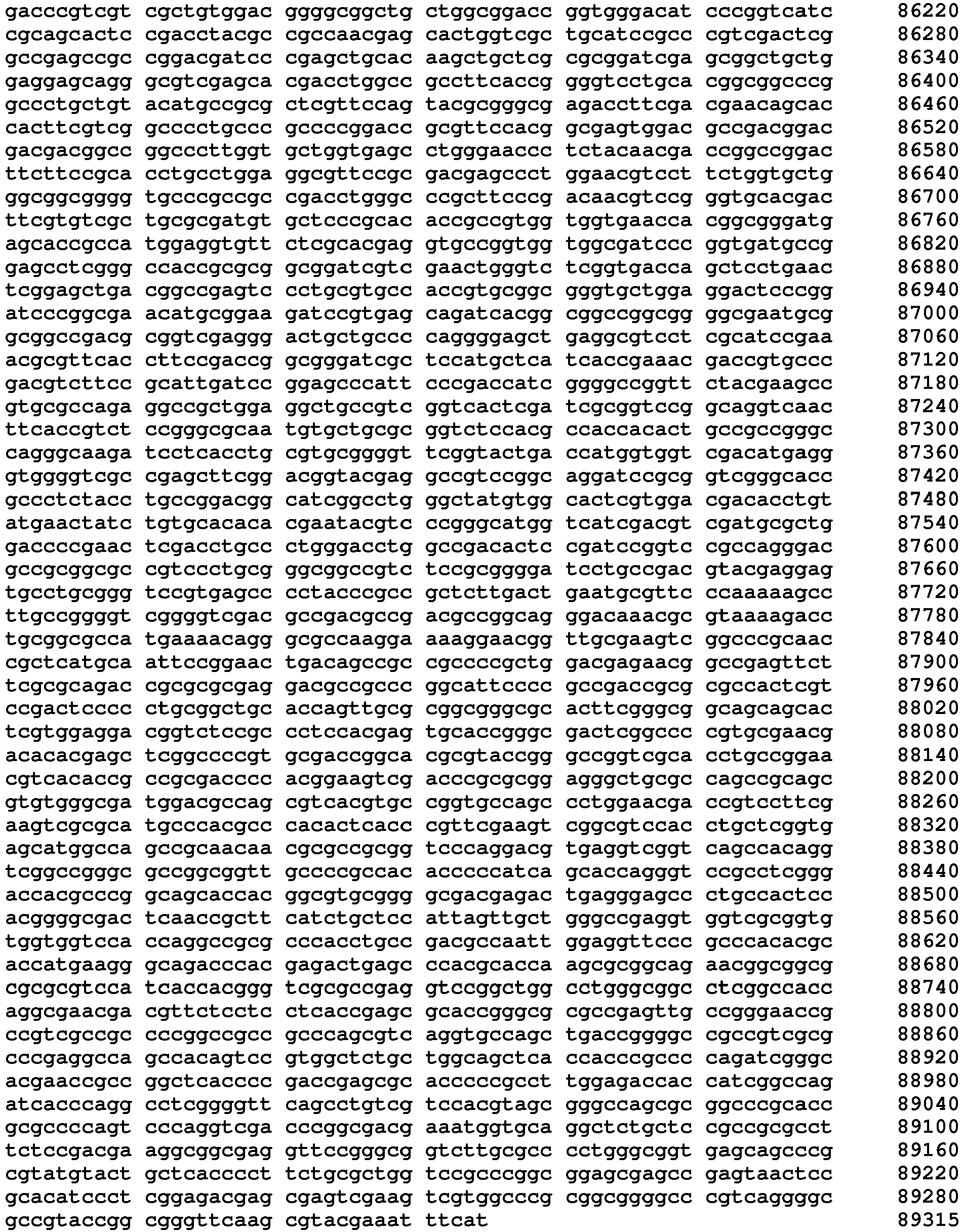
- <210> 2
<211> 2337
<212> DNA
<213> Streptomyces spiramyceticus WSJ-1 - <400> 2

- <210> 3
<211> 214
<212> PRT
<213> Streptomyces spiramyceticus WSJ-1 - <400> 3

- <210> 4
<211> 200
<212> PRT
<213> Streptomyces spiramyceticus WSJ-1 - <400> 4

- <210> 5
<211> 282
<212> PRT
<213> Streptomyces spiramyceticus WSJ-1 - <400> 5


- <210> 6
<211> 408
<212> PRT
<213> Streptomyces spiramyceticus WSJ-1 - <400> 6

- <210> 7
<211> 221
<212> PRT
<213> Streptomyces spiramyceticus WSJ-1 - <400> 7

- <210> 8
<211> 449
<212> PRT
<213> Streptomyces spiramyceticus WSJ-1 - <400> 8


- <210> 9
<211> 421
<212> PRT
<213> Streptomyces spiramyceticus WSJ-1 - <400> 9

- <210> 10
<211> 415
<212> PRT
<213> Streptomyces spiramyceticus WSJ-1 - <400> 10
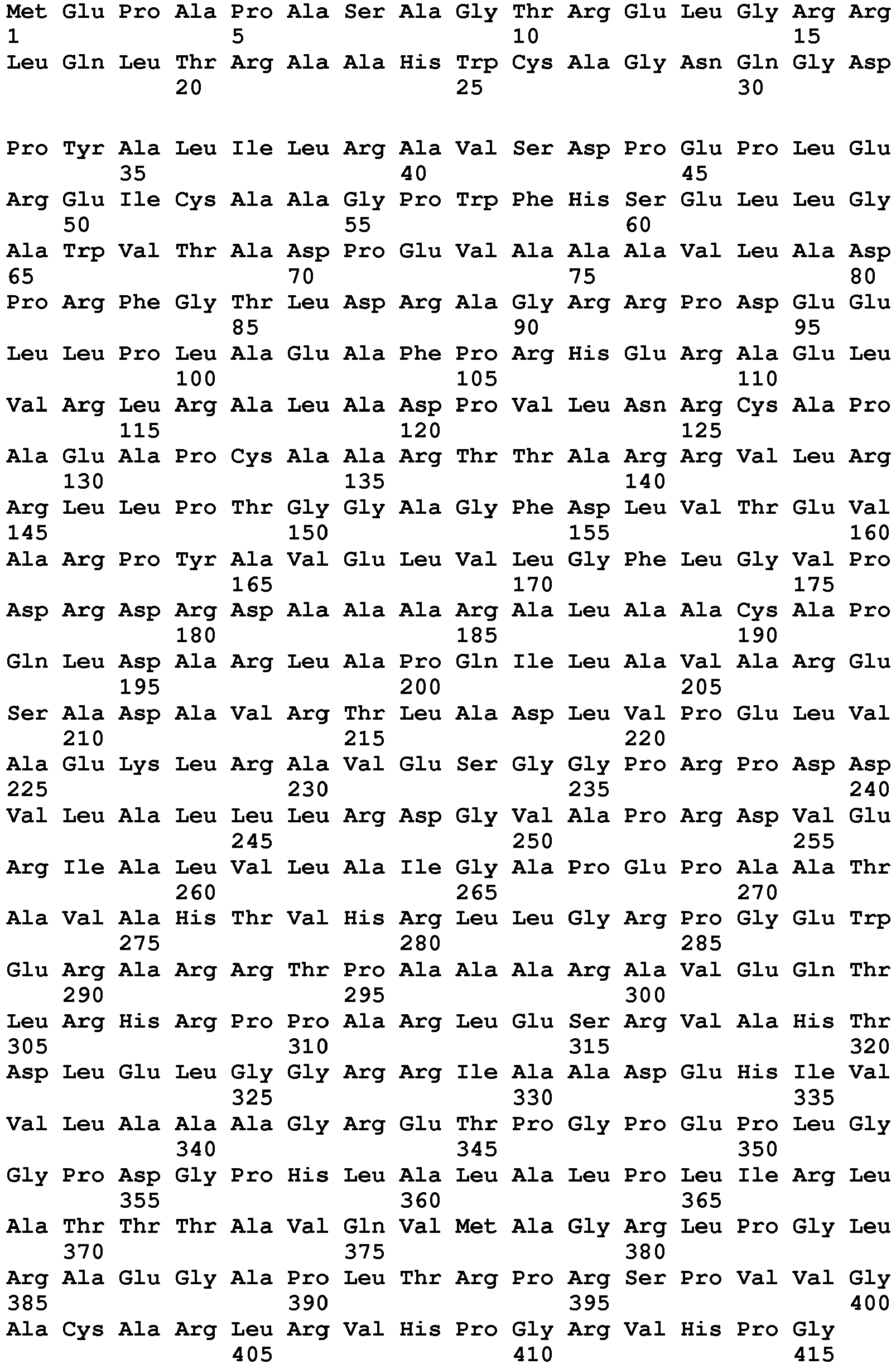
- <210> 11
<211> 237
<212> PRT
<213> Streptomyces spiramyceticus WSJ-1 - <400> 11

- <210> 12
<211> 1890
<212> PRT
<213> Streptomyces spiramyceticus WSJ-1 - <400> 12


- <210> 13
<211> 1582
<212> PRT
<213> Streptomyces spiramyceticus WSJ-1 - <400> 13


- <210> 14
<211> 3795
<212> PRT
<213> Streptomyces spiramyceticus WSJ-1 - <400> 14


- <210> 15
<211> 2004
<212> PRT
<213> Streptomyces spiramyceticus WSJ-1 - <400> 15


- <210> 16
<211> 4538
<212> PRT
<213> Streptomyces spiramyceticus WSJ-1 - <400> 16


- <210> 17
<211> 403
<212> PRT
<213> Streptomyces spiramyceticus WSJ-1 - <400> 17

- <210> 18
<211> 116
<212> PRT
<213> Streptomyces spiramyceticus WSJ-1 - <400> 18

- <210> 19
<211> 399
<212> PRT
<213> Streptomyces spiramyceticus WSJ-1 - <400> 19


- <210> 20
<211> 302
<212> PRT
<213> Streptomyces spiramyceticus WSJ-1 - <400> 20

- <210> 21
<211> 345
<212> PRT
<213> Streptomyces spiramyceticus WSJ-1 - <400> 21

- <210> 22
<211> 745
<212> PRT
<213> Streptomyces spiramyceticus WSJ-1 - <400> 22


- <210> 23
<211> 382
<212> PRT
<213> Streptomyces spiramyceticus WSJ-1 - <400> 23

- <210> 24
<211> 239
<212> PRT
<213> Streptomyces spiramyceticus WSJ-1 - <400> 24
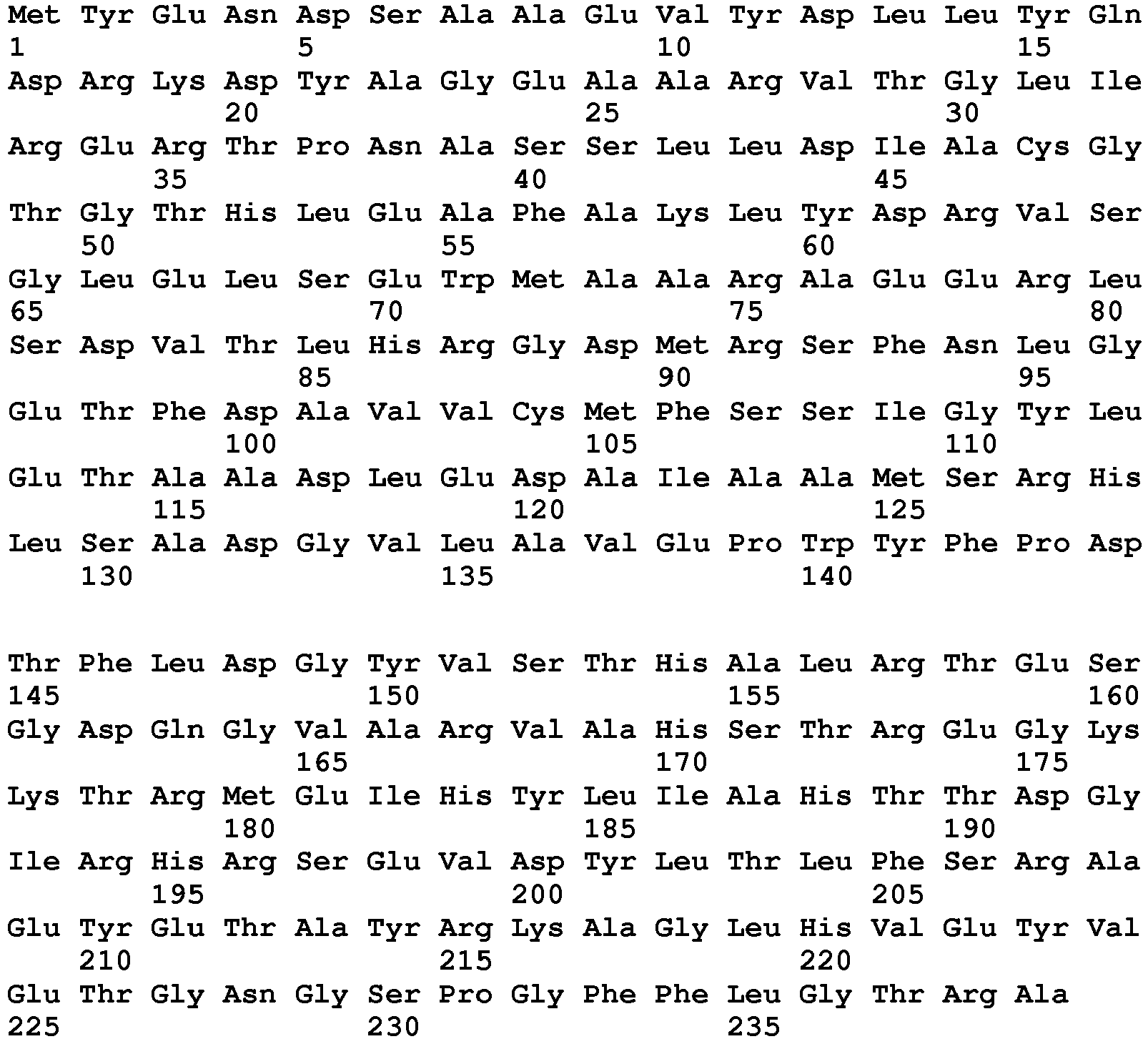
- <210> 25
<211> 670
<212> PRT
<213> Streptomyces spiramyceticus WSJ-1 - <400> 25


- <210> 26
<211> 354
<212> PRT
<213> Streptomyces spiramyceticus WSJ-1 - <400> 26

- <210> 27
<211> 550
<212> PRT
<213> Streptomyces spiramyceticus WSJ-1 - <400> 27


- <210> 28
<211> 433
<212> PRT
<213> Streptomyces spiramyceticus WSJ-1 - <400> 28

- <210> 29
<211> 482
<212> PRT
<213> Streptomyces spiramyceticus WSJ-1 - <400> 29


- <210> 30
<211> 346
<212> PRT
<213> Streptomyces spiramyceticus WSJ-1 - <400> 30

- <210> 31
<211> 346
<212> PRT
<213> Streptomyces spiramyceticus WSJ-1 - <400> 31

- <210> 32
<211> 415
<212> PRT
<213> Streptomyces spiramyceticus WSJ-1 - <400> 32

- <210> 33
<211> 422
<212> PRT
<213> Streptomyces spiramyceticus WSJ-1 - <400> 33

- <210> 34
<211> 391
<212> PRT
<213> Streptomyces spiramyceticus WSJ-1 - <400> 34

- <210> 35
<211> 330
<212> PRT
<213> Streptomyces spiramyceticus WSJ-1 - <400> 35

- <210> 36
<211> 335
<212> PRT
<213> Streptomyces spiramyceticus WSJ-1 - <400> 36

- <210> 37
<211> 410
<212> PRT
<213> Streptomyces spiramyceticus WSJ-1 - <400> 37


- <210> 38
<211> 370
<212> PRT
<213> Streptomyces spiramyceticus WSJ-1 - <400> 38

- <210> 39
<211> 373
<212> PRT
<213> Streptomyces spiramyceticus WSJ-1 - <400> 39
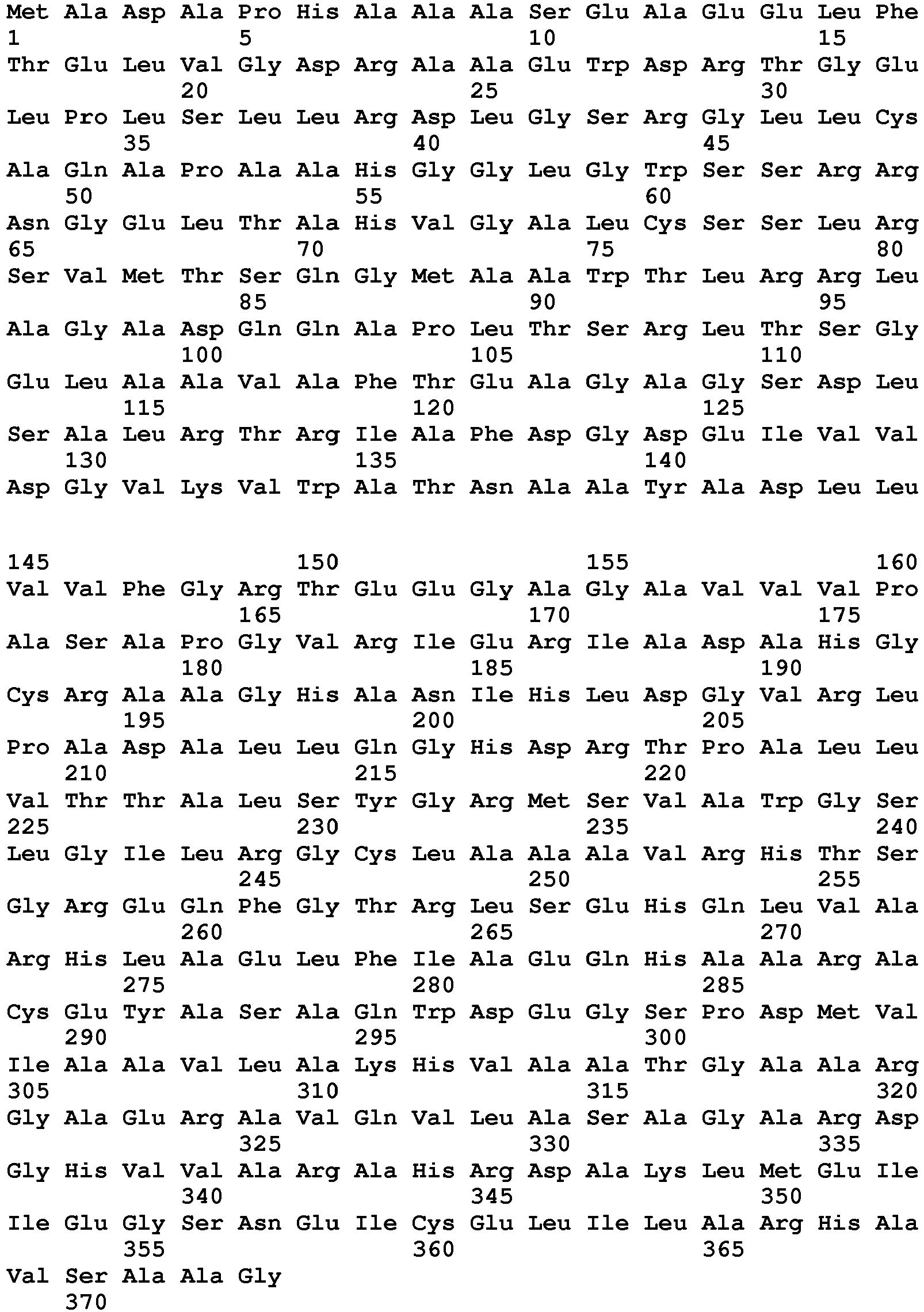
- <210> 40
<211> 106
<212> PRT
<213> Streptomyces spiramyceticus WSJ-1 - <400> 40

- <210> 41
<211> 288
<212> PRT
<213> Streptomyces spiramyceticus WSJ-1 - <400> 41

- <210> 42
<211> 405
<212> PRT
<213> Streptomyces spiramyceticus WSJ-1 - <400> 42

- <210> 43
<211> 202
<212> PRT
<213> Streptomyces spiramyceticus WSJ-1 - <400> 43

- <210> 44
<211> 390
<212> PRT
<213> Streptomyces spiramyceticus WSJ-1 - <400> 44

- <210> 45
<211> 269
<212> PRT
<213> Streptomyces spiramyceticus WSJ-1 - <400> 45

- <210> 46
<211> 388
<212> PRT
<213> Streptomyces spiramyceticus WSJ-1 - <400> 46

Claims (8)
- A biosynthetic gene cluster of carrimycin, consisting of 44 genes comprising:1) five polyketide synthase genes, including orf10 residues 16215-10543 of SEQ ID No. 1, orf11 residues 21076-16328 of SEQ ID No. 1, orf12 residues 32511-21124 of SEQ ID No. 1, orfl3 residues 38599-32585 of SEQ ID No. 1, orfl4 residues 52259-38643 of SEQ ID No. 1;2) nine genes related to polyketone synthesis extension unit and modification, including orf1 residues 1-645 of SEQ ID No. 1, orf4 residues 3614-4840 of SEQ ID No. 1, orf5 residues 4846-5511 of SEQ ID No. 1, orf 6 residues 7150-5801 of SEQ ID No. 1, orf15 residues 53099-54310 of SEQ ID No. 1, orf36 residues 83164-82052 of SEQ ID No. 1, orf37 residues 84400-83279 of SEQ ID No. 1, orf38 residues 84713-84393 of SEQ ID No. 1, orf39 residues 85576-84710 of SEQ ID No. 1;3) sixteen genes related to glycosyl synthesis, including orf9 residues 10543-9830 of SEQ ID No. 1, orf16 residues 54495-54845 of SEQ ID No. 1, orfl7 residues 54842-56041 of SEQ ID No. 1, orf18 residues 56038-56946 of SEQ ID No. 1, orf19 residues 56930-57967 of SEQ ID No. 1, orf20 residues 57937-60174 of SEQ ID No. 1, orf21 residues 60836-61984 of SEQ ID No. 1, orf22 residues 62796-62077 of SEQ ID No. 1, orf24 residues 67379-66318 of SEQ ID No. 1, orf26 residues 69349-70650 of SEQ ID No. 1, orf28 residues 72422-73462 of SEQ ID No. 1, orf29 residues 74601-73561 of SEQ ID No. 1, orf33 residues 78783-79775 of SEQ ID No. 1, orf34 residues 79772-80779 of SEQ ID No. 1, orf35 residues 82055-80823 of SEQ ID No. 1 and orf41 residues 87094-87702 of SEQ ID No. 1;4) six genes related to glycosyl transfer, including orf7 residues 8444-7179 of SEQ ID No. 1, orf8 residues 9729-8482 of SEQ ID No. 1, orf30 residues 74913-76160 of SEQ ID No. 1, orf31 residues 76218-77486 of SEQ ID No. 1, orf32 residues 77606-78781 of SEQ ID No. 1 and orf40 residues 85825-87042 of SEQ ID No. 1;5) two genes related to resistance, including orf3 residues 3133-2285 of SEQ ID No. 1 and orf25 residues 69004-67352 of SEQ ID No. 1;6) four genes related to biosynthesis regulation, including orf2 residues 1810-1208 of SEQ ID No. 1, orf23 residues 63633-65645 of SEQ ID No. 1, orf27 residues 72156-70708 of SEQ ID No. 1 and orf42 residues 89315-88143 of SEQ ID No. 1; and7) two genes, including an exogenous gene engineering marker gene orf43 residues 866-60 SEQ ID No. 2 and a mycarose 4"-O-hydroxyl isovaleryltransferase gene orf44 residues 2337-1174 of SEQ ID No. 2 linked to the orf43;the orf43 and the orf44 are unlinked to SEQ ID No. 1.
- The biosynthetic gene cluster according to claim 1, characterized in that the five polyketide synthase genes encode a polyketide biosynthesis enzyme, the polyketide biosynthesis enzyme catalyzes the synthesis of a 16-membered lactone ring of carrimycin, and
amino acid sequences corresponding to nucleotide sequences or complementary sequences of the 5 polyketide synthase genes orf10 residues 16215-10543 of SEQ ID No. 1, orf11 residues 21076-16328 of SEQ ID No. 1, orf12 residues 32511-21124 of SEQ ID No. 1, orf13 residues 38599-32585 of SEQ ID No. 1, orf14 residues 52259-38643 of SEQ ID No. 1 comprise IA-W10 defined in Seq. ID No. 12, IA-W11 defined in Seq. ID No. 13, IA-W12 defined in Seq. ID No. 14, IA-W13 defined in Seq. ID No. 15 and IA-W14 defined in Seq. ID No. 16. - The biosynthetic gene cluster according to claim 1, characterized in that amino acid sequences corresponding to nucleotide sequences or complementary sequences of the genes related topolyketone synthesis extension unit and modification including orf1, orf4-6, 15 and 36-39 comprise IA-W1 defined in Seq. ID No. 3, IA-W4 defined in Seq. ID No. 6, IA-W5 defined in Seq. ID No. 7, IA-W6 defined in Seq. ID No. 8, IA-W15 defined in Seq. ID No. 17, IA-W36 defined in Seq. ID No. 38, IA-W37 defined in Seq. ID No. 39, IA-W38 defined in Seq. ID No. 40 and IA-W39 defined in Seq. ID No. 41.
- The biosynthetic gene cluster according to claim 1, characterized in that amino acid sequences corresponding to nucleotide sequences or complementary sequences of the genes related toglycosyl synthesis including orf9, 16-22, 24, 26, 28, 29, 33-35 and 41 comprise IA-W9 defined in Seq. ID No. 11, IA-W16 defined in Seq. ID No. 18, IA-W17 defined in Seq. ID No. 19, IA-W18 defined in Seq. ID No. 20, IA-W19 defined in Seq. ID No. 21, IA-W20 defined in Seq. ID No. 22, IA-W21 defined in Seq. ID No. 23, IA-W22 defined in Seq. ID No. 24, IA-W24 defined in Seq. ID No. 26, IA-W26 defined in Seq. ID No. 28, IA-W28 defined in Seq. ID No. 30, IA-W29 defined in Seq. ID No. 31, IA-W33 defined in Seq. ID No. 35, IA-W34 defined in Seq. ID No. 36, IA-W35 defined in Seq. ID No. 37and IA-W41 defined in Seq. ID No. 43.
- The biosynthetic gene cluster according to claim 1, characterized in that amino acid sequences corresponding to nucleotide sequences or complementary sequences of the genes related toglycosyl transfer including orf7, 8, 30-32 and 40 comprise IA-W7 defined in Seq. ID No. 9, IA-W8 defined in Seq. ID No. 10, IA-W30 defined in Seq. ID No. 32, IA-W31 defined in Seq. ID No. 33, IA-W32 defined in Seq. ID No. 34 and IA-W40 defined in Seq. ID No. 42.
- The biosynthetic gene cluster according to claim 1, characterized in that amino acid sequences corresponding to nucleotide sequences or complementary sequences of the genes related to resistance including orf3 and 25 comprise IA-W3 defined in Seq. ID No. 5 and IA-W25 defined in Seq. ID No. 27.
- The biosynthetic gene cluster according to claim 1, characterized in that amino acid sequences corresponding to nucleotide sequences or complementary sequences of the genes related to biosynthesis regulation including orf2, 23, 27 and 42 comprise IA-W2 defined in Seq. ID No. 4, IA-W23 defined in Seq. ID No. 25, IA-W27 defined in Seq. ID No. 29 and IA-W42 defined in Seq. ID No. 44.
- The biosynthetic gene cluster according to claim 1, characterized in that amino acid sequences corresponding to nucleotide sequences or complementary sequences of the exogenous gene engineering marker gene orf43 and the orf44 linked to the orf43 comprise IA-W43 defined in Seq. ID No. 45 and IA-W44 defined in Seq. ID No. 46.
Priority Applications (1)
| Application Number | Priority Date | Filing Date | Title |
|---|---|---|---|
| PL16880824T PL3385386T6 (en) | 2015-12-31 | 2016-11-24 | Carrimycin biosynthetic gene cluster |
Applications Claiming Priority (2)
| Application Number | Priority Date | Filing Date | Title |
|---|---|---|---|
| CN201511028754.9A CN105505954B (en) | 2015-12-31 | 2015-12-31 | Crimycin biosynthesis gene cluster |
| PCT/CN2016/107039 WO2017114034A1 (en) | 2015-12-31 | 2016-11-24 | Carrimycin biosynthetic gene cluster |
Publications (4)
| Publication Number | Publication Date |
|---|---|
| EP3385386A1 EP3385386A1 (en) | 2018-10-10 |
| EP3385386A4 EP3385386A4 (en) | 2018-10-10 |
| EP3385386B1 EP3385386B1 (en) | 2020-05-27 |
| EP3385386B3 true EP3385386B3 (en) | 2020-11-18 |
Family
ID=55714247
Family Applications (1)
| Application Number | Title | Priority Date | Filing Date |
|---|---|---|---|
| EP16880824.4A Active EP3385386B3 (en) | 2015-12-31 | 2016-11-24 | Carrimycin biosynthetic gene cluster |
Country Status (20)
| Country | Link |
|---|---|
| US (1) | US10858659B2 (en) |
| EP (1) | EP3385386B3 (en) |
| JP (1) | JP6882330B2 (en) |
| KR (1) | KR102776146B1 (en) |
| CN (2) | CN107868789B (en) |
| AU (1) | AU2016383270A1 (en) |
| BR (1) | BR112018013309A2 (en) |
| CA (1) | CA3009706A1 (en) |
| CL (1) | CL2018001796A1 (en) |
| CO (1) | CO2018007130A2 (en) |
| DK (1) | DK3385386T6 (en) |
| ES (1) | ES2812256T7 (en) |
| MY (1) | MY193028A (en) |
| PE (1) | PE20190221A1 (en) |
| PH (1) | PH12018501393A1 (en) |
| PL (1) | PL3385386T6 (en) |
| RU (1) | RU2719189C2 (en) |
| UA (1) | UA124058C2 (en) |
| WO (1) | WO2017114034A1 (en) |
| ZA (1) | ZA201804397B (en) |
Families Citing this family (6)
| Publication number | Priority date | Publication date | Assignee | Title |
|---|---|---|---|---|
| CN106916835B (en) * | 2015-12-24 | 2022-08-12 | 武汉合生科技有限公司 | Biosynthetic gene cluster of compounds and application thereof |
| CN107868789B (en) * | 2015-12-31 | 2020-11-17 | 沈阳福洋医药科技有限公司 | Colimycin biosynthesis gene cluster |
| MX389391B (en) | 2017-04-06 | 2025-03-20 | Shenyang Fuyang Pharmaceutical Tech Co Ltd | USE OF CARRIMYCIN AND ITS PHARMACEUTICALLY ACCEPTABLE SALTS FOR THE PREPARATION OF MEDICINES FOR THE TREATMENT AND/OR PREVENTION OF TUMORS. |
| CN111349595A (en) * | 2018-12-20 | 2020-06-30 | 沈阳福洋医药科技有限公司 | Spiramycin-producing strain, rokitamycin-producing strain, construction method, application and method for improving product yield |
| CN111197019B (en) * | 2020-01-10 | 2022-04-15 | 安徽大学 | A kind of method of improving erythromycin yield through Saccharopolyspora SACE_1906 gene pathway |
| CN114517175B (en) * | 2020-11-20 | 2024-04-09 | 上海医药工业研究院 | Genetically engineered bacteria and their applications |
Family Cites Families (15)
| Publication number | Priority date | Publication date | Assignee | Title |
|---|---|---|---|---|
| US5068189A (en) | 1988-05-13 | 1991-11-26 | Eli Lilly And Company | Recombinant dna vectors encoding a 4"-o-isovaleryl acylase derived from a carbomycin biosynthetic gene, designated care, for use in streptomyces and other organisms |
| CA2197160C (en) * | 1996-02-22 | 2007-05-01 | Stanley Gene Burgett | Platenolide synthase gene |
| CN1058295C (en) | 1997-06-03 | 2000-11-08 | 中国医学科学院医药生物技术研究所 | Biomycin producing method utilizing gene engineering technology |
| US7109019B2 (en) * | 1999-01-06 | 2006-09-19 | The Regents Of The University Of California | Gene cluster for production of the enediyne antitumor antibiotic C-1027 |
| JP2004049100A (en) | 2002-07-19 | 2004-02-19 | Meiji Seika Kaisha Ltd | Biosynthesis gene for midecamycin |
| CA2394849A1 (en) | 2002-07-24 | 2004-01-24 | Ian Kerr | Improved prefabricated door frame and door |
| CA2501445C (en) * | 2002-10-08 | 2016-01-26 | Aventis Pharma S.A. | Polypeptides involved in spiramycin biosynthesis, nucleotide sequences encoding said polypeptides and uses thereof |
| CN1169947C (en) | 2002-11-19 | 2004-10-06 | 中国医学科学院医药生物技术研究所 | Spiramycin Streptomyces WSJ-195 |
| CN1237976C (en) | 2003-12-23 | 2006-01-25 | 沈阳同联集团有限公司 | Bite spiramycin and its use in anti inflammatory disease |
| CN101054553A (en) * | 2007-04-09 | 2007-10-17 | 中国医学科学院医药生物技术研究所 | Construction of isovalerylspiramycin I gene engineering strain |
| CN101649325B (en) * | 2009-07-03 | 2011-09-07 | 中国医学科学院医药生物技术研究所 | Gene series technology for increasing main component content of gene engineering isovaleryl selectomycin |
| CN101914482B (en) | 2010-07-23 | 2012-07-04 | 中国医学科学院医药生物技术研究所 | Isovalerylspiramycin I component high-content high-yield genetic engineering bacteria |
| CN102115757B (en) * | 2010-12-14 | 2015-10-28 | 中国科学院南海海洋研究所 | Platform hooks biological synthesis gene cluster and the application thereof of mycin |
| CN103820474A (en) * | 2012-11-16 | 2014-05-28 | 中国医药集团总公司四川抗菌素工业研究所 | Biosynthesis gene cluster of polyenoid and polyol macrolide compound |
| CN107868789B (en) | 2015-12-31 | 2020-11-17 | 沈阳福洋医药科技有限公司 | Colimycin biosynthesis gene cluster |
-
2015
- 2015-12-31 CN CN201711008720.2A patent/CN107868789B/en active Active
- 2015-12-31 CN CN201511028754.9A patent/CN105505954B/en active Active
-
2016
- 2016-11-24 RU RU2018125487A patent/RU2719189C2/en active
- 2016-11-24 US US16/067,392 patent/US10858659B2/en active Active
- 2016-11-24 WO PCT/CN2016/107039 patent/WO2017114034A1/en not_active Ceased
- 2016-11-24 UA UAA201808040A patent/UA124058C2/en unknown
- 2016-11-24 KR KR1020187022082A patent/KR102776146B1/en active Active
- 2016-11-24 ES ES16880824T patent/ES2812256T7/en active Active
- 2016-11-24 JP JP2018553280A patent/JP6882330B2/en active Active
- 2016-11-24 EP EP16880824.4A patent/EP3385386B3/en active Active
- 2016-11-24 PE PE2018001213A patent/PE20190221A1/en unknown
- 2016-11-24 MY MYPI2018001122A patent/MY193028A/en unknown
- 2016-11-24 DK DK16880824.4T patent/DK3385386T6/en active
- 2016-11-24 AU AU2016383270A patent/AU2016383270A1/en not_active Abandoned
- 2016-11-24 BR BR112018013309-4A patent/BR112018013309A2/en not_active IP Right Cessation
- 2016-11-24 PL PL16880824T patent/PL3385386T6/en unknown
- 2016-11-24 CA CA3009706A patent/CA3009706A1/en not_active Abandoned
-
2018
- 2018-06-28 PH PH12018501393A patent/PH12018501393A1/en unknown
- 2018-06-29 CL CL2018001796A patent/CL2018001796A1/en unknown
- 2018-06-29 ZA ZA2018/04397A patent/ZA201804397B/en unknown
- 2018-07-09 CO CONC2018/0007130A patent/CO2018007130A2/en unknown
Also Published As
Similar Documents
| Publication | Publication Date | Title |
|---|---|---|
| EP3385386B1 (en) | Carrimycin biosynthetic gene cluster | |
| EP2271666B1 (en) | Nrps-pks gene cluster and its manipulation and utility | |
| Huang et al. | Recent advances in the biochemistry of spinosyns | |
| KR101272454B1 (en) | New kanamycin compound, kanamycin-producing Streptomyces sp. and kanamycin producing method | |
| KR20010021933A (en) | Method to produce novel polyketides | |
| RU2553564C2 (en) | Genetically modified bacterial strain wsj-ia i, producing isovaleryl spiramycin with high content and high output | |
| CN101613711B (en) | Construction and application of multiple gene coexpression system containing angolosamine glycosylsynthetase and glycosyltransferase | |
| CN103820474A (en) | Biosynthesis gene cluster of polyenoid and polyol macrolide compound | |
| CN102719388A (en) | Method for improving yield of streptomyces antibiotics and plasmids thereof | |
| Desai et al. | Enhanced production of heterologous macrolide aglycones by fed-batch cultivation of Streptomyces coelicolor | |
| CN106916836B (en) | Biosynthetic gene cluster of compounds and application thereof | |
| CN116676353A (en) | Streptomyces coelicolor M145-chry and its application in fermentative production of aureomycin | |
| CN102911957A (en) | Biosynthesis gene cluster of griseoviridin and viridogrisein and application of biosynthesis gene cluster | |
| CN101260380A (en) | Genetically engineered strain FR-008-III for directional accumulation of single component of candicidin | |
| CA2354030A1 (en) | Micromonospora echinospora genes encoding for biosynthesis of calicheamicin and self-resistance thereto | |
| CN106916835B (en) | Biosynthetic gene cluster of compounds and application thereof | |
| CN106916834B (en) | Biosynthetic gene cluster of compounds and application thereof | |
| KR101327798B1 (en) | A Microorganism producing aglucovancomycin | |
| CN102741243A (en) | Novel compound amycolatopsis derivative, and production process and use of same | |
| CN121610433A (en) | Genetically engineered streptomycete, construction method and application thereof | |
| CN117946934A (en) | Saccharopolyspora spinosa strain and mutant strain thereof | |
| Dürr et al. | Volodymyr Novikov, 2 and Andreas Bechthold1,* antitumor activities, in particular against prostate can-cer cell lines [10]. It inhibits thymidine uptake in murine |
Legal Events
| Date | Code | Title | Description |
|---|---|---|---|
| STAA | Information on the status of an ep patent application or granted ep patent |
Free format text: STATUS: THE INTERNATIONAL PUBLICATION HAS BEEN MADE |
|
| PUAI | Public reference made under article 153(3) epc to a published international application that has entered the european phase |
Free format text: ORIGINAL CODE: 0009012 |
|
| STAA | Information on the status of an ep patent application or granted ep patent |
Free format text: STATUS: REQUEST FOR EXAMINATION WAS MADE |
|
| 17P | Request for examination filed |
Effective date: 20180702 |
|
| A4 | Supplementary search report drawn up and despatched |
Effective date: 20180806 |
|
| AK | Designated contracting states |
Kind code of ref document: A1 Designated state(s): AL AT BE BG CH CY CZ DE DK EE ES FI FR GB GR HR HU IE IS IT LI LT LU LV MC MK MT NL NO PL PT RO RS SE SI SK SM TR |
|
| AX | Request for extension of the european patent |
Extension state: BA ME |
|
| DAV | Request for validation of the european patent (deleted) | ||
| DAX | Request for extension of the european patent (deleted) | ||
| STAA | Information on the status of an ep patent application or granted ep patent |
Free format text: STATUS: EXAMINATION IS IN PROGRESS |
|
| 17Q | First examination report despatched |
Effective date: 20190425 |
|
| GRAP | Despatch of communication of intention to grant a patent |
Free format text: ORIGINAL CODE: EPIDOSNIGR1 |
|
| STAA | Information on the status of an ep patent application or granted ep patent |
Free format text: STATUS: GRANT OF PATENT IS INTENDED |
|
| INTG | Intention to grant announced |
Effective date: 20191218 |
|
| GRAS | Grant fee paid |
Free format text: ORIGINAL CODE: EPIDOSNIGR3 |
|
| GRAA | (expected) grant |
Free format text: ORIGINAL CODE: 0009210 |
|
| STAA | Information on the status of an ep patent application or granted ep patent |
Free format text: STATUS: THE PATENT HAS BEEN GRANTED |
|
| AK | Designated contracting states |
Kind code of ref document: B1 Designated state(s): AL AT BE BG CH CY CZ DE DK EE ES FI FR GB GR HR HU IE IS IT LI LT LU LV MC MK MT NL NO PL PT RO RS SE SI SK SM TR |
|
| REG | Reference to a national code |
Ref country code: GB Ref legal event code: FG4D |
|
| REG | Reference to a national code |
Ref country code: CH Ref legal event code: EP |
|
| REG | Reference to a national code |
Ref country code: DE Ref legal event code: R055 Ref document number: 602016037274 Country of ref document: DE |
|
| REG | Reference to a national code |
Ref country code: AT Ref legal event code: REF Ref document number: 1274592 Country of ref document: AT Kind code of ref document: T Effective date: 20200615 |
|
| PLCP | Request for limitation filed |
Free format text: ORIGINAL CODE: EPIDOSNLIM1 |
|
| REG | Reference to a national code |
Ref country code: DE Ref legal event code: R096 Ref document number: 602016037274 Country of ref document: DE |
|
| PLCQ | Request for limitation of patent found admissible |
Free format text: ORIGINAL CODE: 0009231 |
|
| REG | Reference to a national code |
Ref country code: CH Ref legal event code: NV Representative=s name: OFFICE ERNEST T. FREYLINGER S.A., CH Ref country code: DK Ref legal event code: T3 Effective date: 20200825 |
|
| LIM1 | Request for limitation found admissible |
Free format text: SEQUENCE NO: 1; FILED DURING OPPOSITION PERIOD Filing date: 20200611 Effective date: 20200611 |
|
| PLCR | Communication despatched that request for limitation of patent was allowed |
Free format text: ORIGINAL CODE: 0009245 |
|
| REG | Reference to a national code |
Ref country code: DE Ref legal event code: R056 Ref document number: 602016037274 Country of ref document: DE |
|
| PLCN | Payment of fee for limitation of patent |
Free format text: ORIGINAL CODE: EPIDOSNRAL3 |
|
| PUAM | (expected) publication of b3 document |
Free format text: ORIGINAL CODE: 0009410 |
|
| STAA | Information on the status of an ep patent application or granted ep patent |
Free format text: STATUS: THE PATENT HAS BEEN LIMITED |
|
| REG | Reference to a national code |
Ref country code: LT Ref legal event code: MG4D |
|
| PG25 | Lapsed in a contracting state [announced via postgrant information from national office to epo] |
Ref country code: LT Free format text: LAPSE BECAUSE OF FAILURE TO SUBMIT A TRANSLATION OF THE DESCRIPTION OR TO PAY THE FEE WITHIN THE PRESCRIBED TIME-LIMIT Effective date: 20200527 Ref country code: NO Free format text: LAPSE BECAUSE OF FAILURE TO SUBMIT A TRANSLATION OF THE DESCRIPTION OR TO PAY THE FEE WITHIN THE PRESCRIBED TIME-LIMIT Effective date: 20200827 Ref country code: FI Free format text: LAPSE BECAUSE OF FAILURE TO SUBMIT A TRANSLATION OF THE DESCRIPTION OR TO PAY THE FEE WITHIN THE PRESCRIBED TIME-LIMIT Effective date: 20200527 Ref country code: PT Free format text: LAPSE BECAUSE OF FAILURE TO SUBMIT A TRANSLATION OF THE DESCRIPTION OR TO PAY THE FEE WITHIN THE PRESCRIBED TIME-LIMIT Effective date: 20200928 Ref country code: SE Free format text: LAPSE BECAUSE OF FAILURE TO SUBMIT A TRANSLATION OF THE DESCRIPTION OR TO PAY THE FEE WITHIN THE PRESCRIBED TIME-LIMIT Effective date: 20200527 Ref country code: IS Free format text: LAPSE BECAUSE OF FAILURE TO SUBMIT A TRANSLATION OF THE DESCRIPTION OR TO PAY THE FEE WITHIN THE PRESCRIBED TIME-LIMIT Effective date: 20200927 Ref country code: GR Free format text: LAPSE BECAUSE OF FAILURE TO SUBMIT A TRANSLATION OF THE DESCRIPTION OR TO PAY THE FEE WITHIN THE PRESCRIBED TIME-LIMIT Effective date: 20200828 |
|
| REG | Reference to a national code |
Ref country code: CH Ref legal event code: AELM |
|
| REG | Reference to a national code |
Ref country code: NL Ref legal event code: MP Effective date: 20200527 |
|
| PG25 | Lapsed in a contracting state [announced via postgrant information from national office to epo] |
Ref country code: RS Free format text: LAPSE BECAUSE OF FAILURE TO SUBMIT A TRANSLATION OF THE DESCRIPTION OR TO PAY THE FEE WITHIN THE PRESCRIBED TIME-LIMIT Effective date: 20200527 Ref country code: BG Free format text: LAPSE BECAUSE OF FAILURE TO SUBMIT A TRANSLATION OF THE DESCRIPTION OR TO PAY THE FEE WITHIN THE PRESCRIBED TIME-LIMIT Effective date: 20200827 Ref country code: LV Free format text: LAPSE BECAUSE OF FAILURE TO SUBMIT A TRANSLATION OF THE DESCRIPTION OR TO PAY THE FEE WITHIN THE PRESCRIBED TIME-LIMIT Effective date: 20200527 Ref country code: HR Free format text: LAPSE BECAUSE OF FAILURE TO SUBMIT A TRANSLATION OF THE DESCRIPTION OR TO PAY THE FEE WITHIN THE PRESCRIBED TIME-LIMIT Effective date: 20200527 |
|
| REG | Reference to a national code |
Ref country code: AT Ref legal event code: MK05 Ref document number: 1274592 Country of ref document: AT Kind code of ref document: T Effective date: 20200527 |
|
| PG25 | Lapsed in a contracting state [announced via postgrant information from national office to epo] |
Ref country code: AL Free format text: LAPSE BECAUSE OF FAILURE TO SUBMIT A TRANSLATION OF THE DESCRIPTION OR TO PAY THE FEE WITHIN THE PRESCRIBED TIME-LIMIT Effective date: 20200527 Ref country code: NL Free format text: LAPSE BECAUSE OF FAILURE TO SUBMIT A TRANSLATION OF THE DESCRIPTION OR TO PAY THE FEE WITHIN THE PRESCRIBED TIME-LIMIT Effective date: 20200527 |
|
| PG25 | Lapsed in a contracting state [announced via postgrant information from national office to epo] |
Ref country code: CZ Free format text: LAPSE BECAUSE OF FAILURE TO SUBMIT A TRANSLATION OF THE DESCRIPTION OR TO PAY THE FEE WITHIN THE PRESCRIBED TIME-LIMIT Effective date: 20200527 Ref country code: AT Free format text: LAPSE BECAUSE OF FAILURE TO SUBMIT A TRANSLATION OF THE DESCRIPTION OR TO PAY THE FEE WITHIN THE PRESCRIBED TIME-LIMIT Effective date: 20200527 Ref country code: RO Free format text: LAPSE BECAUSE OF FAILURE TO SUBMIT A TRANSLATION OF THE DESCRIPTION OR TO PAY THE FEE WITHIN THE PRESCRIBED TIME-LIMIT Effective date: 20200527 Ref country code: SM Free format text: LAPSE BECAUSE OF FAILURE TO SUBMIT A TRANSLATION OF THE DESCRIPTION OR TO PAY THE FEE WITHIN THE PRESCRIBED TIME-LIMIT Effective date: 20200527 Ref country code: EE Free format text: LAPSE BECAUSE OF FAILURE TO SUBMIT A TRANSLATION OF THE DESCRIPTION OR TO PAY THE FEE WITHIN THE PRESCRIBED TIME-LIMIT Effective date: 20200527 |
|
| PG25 | Lapsed in a contracting state [announced via postgrant information from national office to epo] |
Ref country code: SK Free format text: LAPSE BECAUSE OF FAILURE TO SUBMIT A TRANSLATION OF THE DESCRIPTION OR TO PAY THE FEE WITHIN THE PRESCRIBED TIME-LIMIT Effective date: 20200527 |
|
| REG | Reference to a national code |
Ref country code: DE Ref legal event code: R097 Ref document number: 602016037274 Country of ref document: DE |
|
| REG | Reference to a national code |
Ref country code: ES Ref legal event code: FG2A Ref document number: 2812256 Country of ref document: ES Kind code of ref document: T3 Effective date: 20210316 |
|
| PLBE | No opposition filed within time limit |
Free format text: ORIGINAL CODE: 0009261 |
|
| 26N | No opposition filed |
Effective date: 20210302 |
|
| PG25 | Lapsed in a contracting state [announced via postgrant information from national office to epo] |
Ref country code: SI Free format text: LAPSE BECAUSE OF FAILURE TO SUBMIT A TRANSLATION OF THE DESCRIPTION OR TO PAY THE FEE WITHIN THE PRESCRIBED TIME-LIMIT Effective date: 20200527 |
|
| PG25 | Lapsed in a contracting state [announced via postgrant information from national office to epo] |
Ref country code: MC Free format text: LAPSE BECAUSE OF FAILURE TO SUBMIT A TRANSLATION OF THE DESCRIPTION OR TO PAY THE FEE WITHIN THE PRESCRIBED TIME-LIMIT Effective date: 20200527 |
|
| PG25 | Lapsed in a contracting state [announced via postgrant information from national office to epo] |
Ref country code: LU Free format text: LAPSE BECAUSE OF NON-PAYMENT OF DUE FEES Effective date: 20201124 |
|
| REG | Reference to a national code |
Ref country code: BE Ref legal event code: MM Effective date: 20201130 |
|
| PG25 | Lapsed in a contracting state [announced via postgrant information from national office to epo] |
Ref country code: IE Free format text: LAPSE BECAUSE OF NON-PAYMENT OF DUE FEES Effective date: 20201124 |
|
| PGFP | Annual fee paid to national office [announced via postgrant information from national office to epo] |
Ref country code: DK Payment date: 20211126 Year of fee payment: 6 |
|
| PGFP | Annual fee paid to national office [announced via postgrant information from national office to epo] |
Ref country code: IT Payment date: 20211129 Year of fee payment: 6 Ref country code: CH Payment date: 20211126 Year of fee payment: 6 |
|
| PGFP | Annual fee paid to national office [announced via postgrant information from national office to epo] |
Ref country code: PL Payment date: 20211124 Year of fee payment: 6 |
|
| PG25 | Lapsed in a contracting state [announced via postgrant information from national office to epo] |
Ref country code: TR Free format text: LAPSE BECAUSE OF FAILURE TO SUBMIT A TRANSLATION OF THE DESCRIPTION OR TO PAY THE FEE WITHIN THE PRESCRIBED TIME-LIMIT Effective date: 20200527 Ref country code: MT Free format text: LAPSE BECAUSE OF FAILURE TO SUBMIT A TRANSLATION OF THE DESCRIPTION OR TO PAY THE FEE WITHIN THE PRESCRIBED TIME-LIMIT Effective date: 20200527 Ref country code: CY Free format text: LAPSE BECAUSE OF FAILURE TO SUBMIT A TRANSLATION OF THE DESCRIPTION OR TO PAY THE FEE WITHIN THE PRESCRIBED TIME-LIMIT Effective date: 20200527 |
|
| PGFP | Annual fee paid to national office [announced via postgrant information from national office to epo] |
Ref country code: ES Payment date: 20220224 Year of fee payment: 6 |
|
| PG25 | Lapsed in a contracting state [announced via postgrant information from national office to epo] |
Ref country code: MK Free format text: LAPSE BECAUSE OF FAILURE TO SUBMIT A TRANSLATION OF THE DESCRIPTION OR TO PAY THE FEE WITHIN THE PRESCRIBED TIME-LIMIT Effective date: 20200527 |
|
| PG25 | Lapsed in a contracting state [announced via postgrant information from national office to epo] |
Ref country code: BE Free format text: LAPSE BECAUSE OF NON-PAYMENT OF DUE FEES Effective date: 20201130 |
|
| REG | Reference to a national code |
Ref country code: CH Ref legal event code: PL |
|
| PG25 | Lapsed in a contracting state [announced via postgrant information from national office to epo] |
Ref country code: LI Free format text: LAPSE BECAUSE OF NON-PAYMENT OF DUE FEES Effective date: 20221130 Ref country code: CH Free format text: LAPSE BECAUSE OF NON-PAYMENT OF DUE FEES Effective date: 20221130 |
|
| REG | Reference to a national code |
Ref country code: DK Ref legal event code: EBP Effective date: 20221130 |
|
| PG25 | Lapsed in a contracting state [announced via postgrant information from national office to epo] |
Ref country code: IT Free format text: LAPSE BECAUSE OF NON-PAYMENT OF DUE FEES Effective date: 20221124 Ref country code: DK Free format text: LAPSE BECAUSE OF NON-PAYMENT OF DUE FEES Effective date: 20221130 |
|
| REG | Reference to a national code |
Ref country code: ES Ref legal event code: FD2A Effective date: 20240102 |
|
| PG25 | Lapsed in a contracting state [announced via postgrant information from national office to epo] |
Ref country code: ES Free format text: LAPSE BECAUSE OF NON-PAYMENT OF DUE FEES Effective date: 20221125 |
|
| PG25 | Lapsed in a contracting state [announced via postgrant information from national office to epo] |
Ref country code: ES Free format text: LAPSE BECAUSE OF NON-PAYMENT OF DUE FEES Effective date: 20221125 |
|
| PG25 | Lapsed in a contracting state [announced via postgrant information from national office to epo] |
Ref country code: PL Free format text: LAPSE BECAUSE OF NON-PAYMENT OF DUE FEES Effective date: 20221124 |
|
| PGFP | Annual fee paid to national office [announced via postgrant information from national office to epo] |
Ref country code: DE Payment date: 20241129 Year of fee payment: 9 |
|
| PGFP | Annual fee paid to national office [announced via postgrant information from national office to epo] |
Ref country code: GB Payment date: 20241129 Year of fee payment: 9 |
|
| PGFP | Annual fee paid to national office [announced via postgrant information from national office to epo] |
Ref country code: FR Payment date: 20241127 Year of fee payment: 9 |