EP3376852B1 - Rice grain with thickened aleurone - Google Patents
Rice grain with thickened aleurone Download PDFInfo
- Publication number
- EP3376852B1 EP3376852B1 EP16865304.6A EP16865304A EP3376852B1 EP 3376852 B1 EP3376852 B1 EP 3376852B1 EP 16865304 A EP16865304 A EP 16865304A EP 3376852 B1 EP3376852 B1 EP 3376852B1
- Authority
- EP
- European Patent Office
- Prior art keywords
- grain
- ros1a
- polypeptide
- gene
- rice
- Prior art date
- Legal status (The legal status is an assumption and is not a legal conclusion. Google has not performed a legal analysis and makes no representation as to the accuracy of the status listed.)
- Active
Links
Images





Classifications
-
- A—HUMAN NECESSITIES
- A01—AGRICULTURE; FORESTRY; ANIMAL HUSBANDRY; HUNTING; TRAPPING; FISHING
- A01H—NEW PLANTS OR NON-TRANSGENIC PROCESSES FOR OBTAINING THEM; PLANT REPRODUCTION BY TISSUE CULTURE TECHNIQUES
- A01H1/00—Processes for modifying genotypes ; Plants characterised by associated natural traits
- A01H1/06—Processes for producing mutations, e.g. treatment with chemicals or with radiation
-
- A—HUMAN NECESSITIES
- A01—AGRICULTURE; FORESTRY; ANIMAL HUSBANDRY; HUNTING; TRAPPING; FISHING
- A01H—NEW PLANTS OR NON-TRANSGENIC PROCESSES FOR OBTAINING THEM; PLANT REPRODUCTION BY TISSUE CULTURE TECHNIQUES
- A01H1/00—Processes for modifying genotypes ; Plants characterised by associated natural traits
- A01H1/10—Processes for modifying non-agronomic quality output traits, e.g. for industrial processing; Value added, non-agronomic traits
- A01H1/101—Processes for modifying non-agronomic quality output traits, e.g. for industrial processing; Value added, non-agronomic traits involving biosynthetic or metabolic pathways, i.e. metabolic engineering, e.g. nicotine or caffeine
- A01H1/102—Processes for modifying non-agronomic quality output traits, e.g. for industrial processing; Value added, non-agronomic traits involving biosynthetic or metabolic pathways, i.e. metabolic engineering, e.g. nicotine or caffeine involving modified carbohydrate or sugar alcohol metabolism, e.g. starch biosynthesis
-
- A—HUMAN NECESSITIES
- A01—AGRICULTURE; FORESTRY; ANIMAL HUSBANDRY; HUNTING; TRAPPING; FISHING
- A01H—NEW PLANTS OR NON-TRANSGENIC PROCESSES FOR OBTAINING THEM; PLANT REPRODUCTION BY TISSUE CULTURE TECHNIQUES
- A01H1/00—Processes for modifying genotypes ; Plants characterised by associated natural traits
- A01H1/12—Processes for modifying agronomic input traits, e.g. crop yield
-
- A—HUMAN NECESSITIES
- A01—AGRICULTURE; FORESTRY; ANIMAL HUSBANDRY; HUNTING; TRAPPING; FISHING
- A01H—NEW PLANTS OR NON-TRANSGENIC PROCESSES FOR OBTAINING THEM; PLANT REPRODUCTION BY TISSUE CULTURE TECHNIQUES
- A01H1/00—Processes for modifying genotypes ; Plants characterised by associated natural traits
- A01H1/12—Processes for modifying agronomic input traits, e.g. crop yield
- A01H1/121—Plant growth habits
-
- A—HUMAN NECESSITIES
- A01—AGRICULTURE; FORESTRY; ANIMAL HUSBANDRY; HUNTING; TRAPPING; FISHING
- A01H—NEW PLANTS OR NON-TRANSGENIC PROCESSES FOR OBTAINING THEM; PLANT REPRODUCTION BY TISSUE CULTURE TECHNIQUES
- A01H5/00—Angiosperms, i.e. flowering plants, characterised by their plant parts; Angiosperms characterised otherwise than by their botanic taxonomy
- A01H5/10—Seeds
-
- A—HUMAN NECESSITIES
- A01—AGRICULTURE; FORESTRY; ANIMAL HUSBANDRY; HUNTING; TRAPPING; FISHING
- A01H—NEW PLANTS OR NON-TRANSGENIC PROCESSES FOR OBTAINING THEM; PLANT REPRODUCTION BY TISSUE CULTURE TECHNIQUES
- A01H6/00—Angiosperms, i.e. flowering plants, characterised by their botanic taxonomy
- A01H6/46—Gramineae or Poaceae, e.g. ryegrass, rice, wheat or maize
- A01H6/4636—Oryza sp. [rice]
-
- A—HUMAN NECESSITIES
- A23—FOODS OR FOODSTUFFS; TREATMENT THEREOF, NOT COVERED BY OTHER CLASSES
- A23K—FODDER
- A23K10/00—Animal feeding-stuffs
- A23K10/30—Animal feeding-stuffs from material of plant origin, e.g. roots, seeds or hay; from material of fungal origin, e.g. mushrooms
-
- A—HUMAN NECESSITIES
- A23—FOODS OR FOODSTUFFS; TREATMENT THEREOF, NOT COVERED BY OTHER CLASSES
- A23L—FOODS, FOODSTUFFS OR NON-ALCOHOLIC BEVERAGES, NOT OTHERWISE PROVIDED FOR; PREPARATION OR TREATMENT THEREOF
- A23L7/00—Cereal-derived products; Malt products; Preparation or treatment thereof
- A23L7/10—Cereal-derived products
- A23L7/115—Cereal fibre products, e.g. bran, husk
-
- C—CHEMISTRY; METALLURGY
- C12—BIOCHEMISTRY; BEER; SPIRITS; WINE; VINEGAR; MICROBIOLOGY; ENZYMOLOGY; MUTATION OR GENETIC ENGINEERING
- C12N—MICROORGANISMS OR ENZYMES; COMPOSITIONS THEREOF; PROPAGATING, PRESERVING, OR MAINTAINING MICROORGANISMS; MUTATION OR GENETIC ENGINEERING; CULTURE MEDIA
- C12N9/00—Enzymes; Proenzymes; Compositions thereof; Processes for preparing, activating, inhibiting, separating or purifying enzymes
- C12N9/14—Hydrolases (3)
- C12N9/24—Hydrolases (3) acting on glycosyl compounds (3.2)
- C12N9/2497—Hydrolases (3) acting on glycosyl compounds (3.2) hydrolysing N- glycosyl compounds (3.2.2)
-
- C—CHEMISTRY; METALLURGY
- C12—BIOCHEMISTRY; BEER; SPIRITS; WINE; VINEGAR; MICROBIOLOGY; ENZYMOLOGY; MUTATION OR GENETIC ENGINEERING
- C12Q—MEASURING OR TESTING PROCESSES INVOLVING ENZYMES, NUCLEIC ACIDS OR MICROORGANISMS; COMPOSITIONS OR TEST PAPERS THEREFOR; PROCESSES OF PREPARING SUCH COMPOSITIONS; CONDITION-RESPONSIVE CONTROL IN MICROBIOLOGICAL OR ENZYMOLOGICAL PROCESSES
- C12Q1/00—Measuring or testing processes involving enzymes, nucleic acids or microorganisms; Compositions therefor; Processes of preparing such compositions
- C12Q1/68—Measuring or testing processes involving enzymes, nucleic acids or microorganisms; Compositions therefor; Processes of preparing such compositions involving nucleic acids
- C12Q1/6876—Nucleic acid products used in the analysis of nucleic acids, e.g. primers or probes
- C12Q1/6888—Nucleic acid products used in the analysis of nucleic acids, e.g. primers or probes for detection or identification of organisms
- C12Q1/6895—Nucleic acid products used in the analysis of nucleic acids, e.g. primers or probes for detection or identification of organisms for plants, fungi or algae
-
- A—HUMAN NECESSITIES
- A23—FOODS OR FOODSTUFFS; TREATMENT THEREOF, NOT COVERED BY OTHER CLASSES
- A23V—INDEXING SCHEME RELATING TO FOODS, FOODSTUFFS OR NON-ALCOHOLIC BEVERAGES AND LACTIC OR PROPIONIC ACID BACTERIA USED IN FOODSTUFFS OR FOOD PREPARATION
- A23V2002/00—Food compositions, function of food ingredients or processes for food or foodstuffs
-
- C—CHEMISTRY; METALLURGY
- C12—BIOCHEMISTRY; BEER; SPIRITS; WINE; VINEGAR; MICROBIOLOGY; ENZYMOLOGY; MUTATION OR GENETIC ENGINEERING
- C12Q—MEASURING OR TESTING PROCESSES INVOLVING ENZYMES, NUCLEIC ACIDS OR MICROORGANISMS; COMPOSITIONS OR TEST PAPERS THEREFOR; PROCESSES OF PREPARING SUCH COMPOSITIONS; CONDITION-RESPONSIVE CONTROL IN MICROBIOLOGICAL OR ENZYMOLOGICAL PROCESSES
- C12Q2600/00—Oligonucleotides characterized by their use
- C12Q2600/13—Plant traits
-
- Y—GENERAL TAGGING OF NEW TECHNOLOGICAL DEVELOPMENTS; GENERAL TAGGING OF CROSS-SECTIONAL TECHNOLOGIES SPANNING OVER SEVERAL SECTIONS OF THE IPC; TECHNICAL SUBJECTS COVERED BY FORMER USPC CROSS-REFERENCE ART COLLECTIONS [XRACs] AND DIGESTS
- Y02—TECHNOLOGIES OR APPLICATIONS FOR MITIGATION OR ADAPTATION AGAINST CLIMATE CHANGE
- Y02P—CLIMATE CHANGE MITIGATION TECHNOLOGIES IN THE PRODUCTION OR PROCESSING OF GOODS
- Y02P60/00—Technologies relating to agriculture, livestock or agroalimentary industries
- Y02P60/80—Food processing, e.g. use of renewable energies or variable speed drives in handling, conveying or stacking
- Y02P60/87—Re-use of by-products of food processing for fodder production
Definitions
- the present invention relates to rice grain with thickened aleurone. Also provided is a rice plant comprising at least one genetic variation in at least one ROS1a gene in the plant. Grain of the invention, or aleurone therefrom, has improved nutritional properties, and hence is particularly useful for human and animal feed products.
- cereal grains such as wheat, rice, maize and to a lesser extent barley, oats and rye are the major source of human caloric intake from the starch content of the grain.
- Cereal grain is also important in supplying other nutritional components such as protein, vitamins, minerals and dietary fibre. Different parts of the grains contribute differently for these nutritional components.
- Starch is stored in the starchy endosperm of cereal grains, whereas the other nutritional components are more concentrated in the embryo and bran (Buri et al., 2004). However, the bran is often removed before use in food, particularly in rice which is then eaten as white rice.
- Cereal grain develops from double fertilisation events between maternal and paternal gametophytes.
- One of two sperm cells from the pollen tube fuses with an egg to produce a zygote that develops into an embryo, and the other sperm cell fuses with the diploid central cell of the megagametophyte to produce a primary endosperm nucleus, from which the genetically triploid endosperm develops.
- the endosperm including the aleurone is triploid, having two copies of the maternal haploid genome and one copy of the paternal haploid genome.
- dicotyledonous seeds the endosperm is consumed by the developing embryo whereas in monocotyledons such as rice the endosperm persists to make up the bulk of the mature grain.
- the mature endosperm of cereals has four cell types with distinct characteristics, namely the starchy endosperm which is characterised by its abundant contents of starch granules and storage proteins, the epidermal-like aleurone which is most often one cell layer in thickness surrounding most of the starchy endosperm, transfer cells at the base of the seed over the main maternal vasculature, and a layer of embryo-surrounding cells which form a lining for the embryo early in grain development but later may only surround the suspensor which connects the embryo and starchy endosperm (Becraft et al., 2001a). The embryo forms within a cavity within the starchy endosperm. Cereal aleurone tissue therefore comprises the outermost layer(s) of the endosperm in cereal grains, and surrounds the starchy endosperm and part of the embryo.
- Aleurone cells are distinguished from starchy endosperm cells by their morphology, biochemical composition and gene expression profiles (Becraft and Yi, 2011). Aleurone cells are generally oil and protein-rich and secrete enzymes allowing the mobilization of endosperm reserves during seed germination. Each aleurone cell is enclosed within a fibrous cell wall that is thicker than endosperm cell walls and that is composed mainly of arabinoxylans and beta glucans in various ratios and are highly autofluorescent. The aleurone layer is the only layer of the endosperm that in cereals is sometimes pigmented with anthocyanins.
- Cereal aleurone is only one cell layer in thickness in wheat and wild-type maize (Buttrose 1963; Walbot, 1994), mostly one but up to three cell layers in the dorsal region of the endosperm in rice (Hoshikawa, 1993), and three cell layers in wild-type barley (Jones, 1969). In normal endosperm, the aleurone is extremely regular and the patterns of cell division are highly organised. Wild-type mature aleurone cells are nearly cuboid in section with a dense cytoplasm including granules, small vacuoles and inclusion bodies made of protein, lipid and phytin or of protein plus carbohydrate.
- the aleurone In mature cereal grains, the aleurone is the only endosperm tissue that remains alive, although in a dormant, desiccated form. Upon imbibition, the embryo produces gibberellins which induce synthesis of amylases and other hydrolases by the aleurone which are released into the starchy endosperm to break down storage compounds to form sugars and amino acids for early growth of the embryo into a seedling.
- a maize extra cell layer (Xcl) gene mutant was identified by its effect on leaf morphology. It produced a double aleurone layer as well as multilayered leaf epidermis (Kessler et al., 2002).
- the Xcl mutation was a semi-dominant mutation that disrupted cell division and differentiation patterns in maize, producing thick and narrow leaves with an abnormal shiny appearance.
- elo2 mutants showed similarly disorganised cells and irregularities of the aleurone layers, resulting from aberrant periclinal cell division (Lewis et al., 2009).
- the plants also showed increased cell layers in the leaf epidermis, with bulging and distorted cells on the epidermis.
- the homozygous mutant plants were dwarfed, producing grain weight of less than 60% of wild-type, and were not useful for grain production.
- CG methylation is catalysed by enzymes in the Methyltransferase 1 (Met1) family
- CHG methylation is catalysed by methylases in the Chromomethylase family
- CHH methylation occurs through an RNA-mediated reaction catalysed by Domains Rear-ranged Methylases (DRM) using small RNAs as guide sequences (Law and Jacobsen, 2010).
- Cytosine methylation which occurs in only a small proportion of all cytosines, most often occurs in heterochromatic DNA and in regions rich in repetitive DNA and transposons, suppressing their activity. It also occurs in transcribed regions of the nuclear DNA, including in promoter regions of genes, and is thereby involved in the control of expression of many genes.
- Cytosine methylation of DNA is reversible through demethylation, which may happen passively through DNA replication or actively through the activity of demethylation enzymes.
- One pathway for active demethylation of DNA in plants is through a base excision repair (BER) pathway which uses DNA glycosylase enzymes. These enzymes remove 5-meC from the double-stranded DNA backbone and then cleave the DNA backbone (lyase activity) at the abasic site by successive ⁇ - and ⁇ -elimination reactions. The repair is completed by insertion of an unmethylated cytosine nucleotide by a DNA polymerase activity.
- DME Demeter-like 2
- DML3 Demeter-like 3
- ROS1 Repressor of Silencing
- the present invention provides grain of a rice plant, the grain comprising an aleurone, a starchy endosperm and a ROS1a gene encoding a ROS1a polypeptide, wherein the amino acid sequence of the ROS1a polypeptide is at least 95% identical to SEQ ID NO: 2, wherein the ROS1a gene comprises one or more genetic variations when compared to a corresponding wild-type rice plant whereby said aleurone is thickened compared to aleurone from a corresponding wild-type grain.
- the ROS1a polypeptide has DNA glycosylase activity. In an embodiment, the ROS1a polypeptide has a level of DNA glycosylase activity which is between 2% and about 60% of the level of DNA glycosylase activity of a corresponding wild-type ROS1a polypeptide and/or of ROS1a polypeptide whose amino acids have a sequence set forth in SEQ ID NO: 2.
- the ROS1a polypeptide is a variant of a corresponding wild-type ROS1a polypeptide in that their amino acid sequences are different.
- the rice grain comprises a ROS1a (Ta2) variant polypeptide which has an amino acid sequence provided as SEQ ID NO:1, the polypeptide being a variant of the wild-type ROS1a polypeptide whose amino acid sequence is provided as SEQ ID NO:2.
- the grain has a level of ROS1a polypeptide between 2% and about 60% of that present in the grain compared to the level of ROS1a polypeptide in the corresponding wild-type grain.
- the thickened aleurone comprises at least two, at least three, at least four or at least five layers of cells, about 3, about 4, about 5 or about 6 layers of cells, or 2-8, 2-7, 2-6 or 2-5 layers of cells.
- the grain is from a rice plant and the thickened aleurone comprises 5-8, 5-7, 5-6 or 2-5 layers of cells.
- the aleurone layer is increased in thickness compared to the aleurone of a wild-type rice grain by about 100%, or about 150% or about 200%, or about 250%.
- the genetic variation, preferably an introduced genetic variation, in the at least one ROS1a gene in the plant can be any type of genetic manipulation which reduces or impairs the production of wild-type levels of ROS1a polypeptide in the rice grain.
- Examples of such genetic variations include, but are not necessarily limited to,
- the rice grain comprises (i) an aleurone, (ii) a starchy endosperm, (iii) a ROS1a gene which comprises a genetic variation compared to a wild-type ROS1a gene, wherein said ROS1a gene which comprises the genetic variation encodes a variant ROS1a polypeptide having an amino acid sequence that is at least 95% identical to SEQ ID NO:2, whereby the aleurone is thickened compared to aleurone from a corresponding wild-type rice grain.
- the genetic variation in the ROS1a gene is an introduced genetic modification.
- the variant ROS1a polypeptide is different in amino acid sequence to the sequence provided as SEQ ID NO:2 at least by an insertion or deletion of one or more amino acids or an amino acid substitution relative to SEQ ID NO:2.
- the variant ROS1a polypeptide is different in amino acid sequence to the sequence provided as SEQ ID NO:2 by an insertion of one or more amino acids or by a single amino acid substitution relative to SEQ ID NO:2, such as, for example, one of the amino acid substitutions as listed in Table 3.
- the rice grain may have been treated so that it is no longer able to germinate such as, for example, having been cooked, or it may not have been so treated such that it is able to germinate and grow and thereby provide a rice plant of the invention.
- the aleurone of the rice grain is pigmented such as, for example, the rice grain is black rice as defined herein.
- the rice grain comprises (i) an aleurone, (ii) a starchy endosperm, (iii) a ROS1a gene which comprises a genetic variation compared to a wild-type ROS1a gene, wherein said ROS1a gene which comprises the genetic variation encodes a ROS1a polypeptide whose amino acid sequence is the same as a wild-type ROS1a polypeptide such as, for example, SEQ ID NO:2, wherein said ROS1a gene is expressed in a rice plant at a reduced level relative to a wild-type ROS1a gene, wherein the aleurone is thickened compared to aleurone from a corresponding wild-type rice grain.
- the genetic variation in the ROS1a gene is an introduced genetic modification which results in the ROS1a gene being expressed at the reduced level.
- the genetic variation is selected from the group consisting of (i) a splice-site mutation that results in a reduced level of expression of the ROS1a gene, relative to the wild-type ROS1a gene whose cDNA sequence is provided as SEQ ID NO:8, and (ii) a ROS1a gene promoter mutation which results in reduced expression of the ROS1a gene relative to the wild-type ROS1a gene.
- the rice grain may have been treated so that it is no longer able to germinate such as, for example, having been cooked, or it may not have been so treated such that it is able to germinate and grow and thereby give rise to a rice plant of the invention.
- the aleurone of the rice grain is pigmented such as, for example, the rice grain is black rice as defined herein.
- the rice plant has a level of DNA glycosylase activity in its developing grain which is between 2% and about 60% of the level of DNA glycosylase activity in a corresponding wild-type developing grain. In a preferred embodiment, the rice plant has a level of DNA glycosylase activity in its developing grain which is between 2% and 50%, or between 2% and 40%, or between 2% and 30%, or between 2% and 20% of the level of DNA glycosylase activity in a corresponding wild-type developing grain.
- the activity of at least one ROS1a gene in the rice plant is reduced in one or more or all of aleurone, pericarp, nucellar projection, ovary, testa and starchy endosperm of the developing grain.
- the activity of a ROS1a gene is reduced at least at a time point between the time of anthesis and 7 days post-anthesis and/or in the egg cell prior to anthesis.
- the rice plant is male and female fertile.
- the rice plant exhibits delayed grain maturation.
- the grain maturation is delayed by 2-10 days or 2-15 days relative to a wild-type rice plant.
- the grain comprises, when compared to a corresponding wild-type grain, one or more or all of the following, each on a weight basis,
- the grain comprises an embryo.
- the grain is whole grain or cracked grain.
- the grain has been processed so that it is no longer able to germinate, preferably by heat treatment.
- the grain has been cooked with water at 100°C for at least 5 minutes.
- the grain is cracked grain or milled grain.
- the grain has a germination rate which is between about 70% and about 100% relative to the germination rate of a corresponding wild-type grain. That is, a collection of at least 100 grains has an average germination rate of 70-100% relative to wild-type. When the grains germinate and grow, rice plants of the invention are produced.
- the grain comprises a ROS1a gene which encodes a ROS1a polypeptide which has DNA glycosylase activity, preferably in one or more of aleurone, testa and starchy endosperm of the grain, wherein the ROS1a polypeptide which has DNA glycosylase activity is preferably a mutant ROS1a polypeptide.
- the grain comprises a mutant ROS1a polypeptide having decreased DNA glycosylase activity when expressed in the rice plant compared to a corresponding wild-type ROS1a polypeptide, preferably wherein the mutant ROS1a polypeptide comprises one or more amino acid substitutions, deletions or insertions which reduces DNA glycosylase activity compared to the corresponding wild-type ROS1a polypeptide.
- the mutant ROS1a polypeptide may have no DNA glycosylase activity, provided the grain comprises another ROS1a polypeptide which has DNA glycosylase activity.
- the ROS1a gene may encode two ROS1a polypeptides thrugh alternative splicing, one of which has DNA glycosylase activity whereas the other does not.
- the mutant ROS1a polypeptide has an insertion of seven amino acids relative to the wild-type ROS1a polypeptide, such as for example the mutant ROS1a polypeptide whose amino acid sequence is provided as SEQ ID NO:1.
- the grain has a reduced total amount of ROS1a polypeptide compared to a corresponding wild-type grain, preferably reduced in one or more of aleurone, testa and starchy endosperm of the grain, provided that the grain comprises a ROS1a gene which encodes a ROS1a polypeptide which has DNA glycosylase activity.
- the total amount of ROS1a polypeptide may also be decreased in the pollen of the rice plant.
- the grain is pigmented in its outer layer(s), for example the grain is brown grain or black grain of the rice plant, the grain comprising (i) an aleurone having a thickness of at least 2 cell layers, or 2-7 cell layers, and (ii) a mutant ROS1a gene which encodes a ROS1a polypeptide which comprises one or more amino acid substitutions, insertions or deletions which reduces DNA glycosylase activity when compared to a corresponding wild-type rice ROS1a polypeptide, the reduced DNA glycosylase activity occurring in the rice plant at least at a time point between the time of anthesis and 7 days post-anthesis, provided that at least at a time point between the time of anthesis and 7 days post-anthesis the rice plant has between 2% and about 60% of the level of DNA glycosylase activity in developing grain compared to the wild-type rice plant.
- the ROS1a polypeptide comprises amino acids whose sequence is at least 95% identical to SEQ ID NO: 2, or the ROS1a polypeptide(s) comprises amino acids whose sequence is at least 95% identical.
- the ROS1a polypeptide comprises amino acids whose sequence is at least 97.5% identical, or at least 99% identical, to SEQ ID NO: 2 and which sequence is different to the amino acid sequence of the corresponding wild-type ROS1a polypeptide.
- the ROS1a polypeptide comprises one or more or all of the following motifs; DHGSIDLEWLR (SEQ ID NO: 44), GLGLKSVECVRLLTLHH (SEQ ID NO: 45), AFPVDTNVGRI (SEQ ID NO: 46), VRLGWVPLQPLPESLQLHLLE (SEQ ID NO: 47), ELHYQMITFGKVFCTKSKPNCN (SEQ ID NO: 48) and HFASAFASARLALP (SEQ ID NO: 49).
- the present invention also provides a population of rice grains, each of which comprises the same genetic variation(s), the same ROS1a gene, the same ROS1a polypeptide and/or has the same characteristics as described in the above embodiments. That is, the population is genetically and/or phenotypically uniform.
- the population of such rice grains may be obtained or derived from a single progenitor rice plant or grain, for example may be derived at least 2, at least 3 or at least 4 progeny generations from a progenitor plant or grain.
- the present inventors have identified variant ROS1a polypeptides with reduced DNA glycosylase activity.
- the cell is an aleurone, pericarp, nucellar projection, ovary, testa or starchy endosperm cell.
- the present invention provides a rice plant, or a population of rice plants, which produces grain of the invention, and/or which comprises a cell of the invention.
- the rice plants in the field are mostly (>50%), preferably all, rice plants of the invention.
- the at least 100, or at least 1,000, rice plants are genetically and/or phenotypically the same, for example comprising the same genetic variation.
- the cell of the invention may be produced by a method comprising a step of introducing an exogenous polynucleotide, or a nucleic acid construct and/or vector, into a cell, preferably a rice cell.
- a rice plant of the invention or transgenic grain therefrom may be produced by a method comprising the steps of
- the present invention provides a method of producing a rice plant of the invention or grain therefrom, the method comprising the steps of
- the method may further comprise the additional steps of
- the rice plant or grain comprises at least one ROS1a gene which encodes a ROS1a polypeptide which has DNA glycosylase activity.
- the present invention provides a method of selecting a rice plant or rice grain of the invention, the method comprising the steps of
- the method may comprise a step of producing one or more progeny plants or grain from the selected rice plant, or at least two generations of progeny plants, and/or harvesting grain from progeny plants.
- the progeny plants are homozygous for the genetic variation.
- a rice plant of the invention may be selected by a method comprising the steps of
- screening step i) or step ii) comprises one or more or all of:
- the genetic variation is an introduced genetic variation.
- step iii) comprises one or more or all of:
- the method further comprises
- an exogenous polynucleotide, or a nucleic acid construct and/or vector to produce a recombinant cell, a transgenic rice plant or transgenic grain of the invention.
- the present invention provides a method for identifying a rice plant which produces grain of the invention, the method comprising the steps of
- the genetic variation is a gene, or mRNA encoded thereby, which expresses a mutant ROS1a polypeptide with reduced ROS1a polypeptide activity.
- the presence of the genetic variation indicates that grain of the plant has a thickened aleurone when compared to a corresponding plant lacking the genetic variation(s).
- a rice plant which produces grain of the invention may be identified by a method comprising the steps of
- the method identifies a rice plant of the invention.
- a rice plant part preferably grain may be produced by a method comprising,
- rice flour, bran, wholemeal, malt, starch or oil obtained from grain may be produced by a method comprising;
- the present invention provides a product produced from grain of the invention, or a rice plant of the invention, or from a part of said grain or rice plant, wherein the product comprises one or more or all of the ROS1a gene, the genetic variation (preferably introduced genetic variation), and the thickened aleurone, and wherein the product is a food ingredient, beverage ingredient, food product or beverage product.
- the part is rice bran.
- the product is a food ingredient, beverage ingredient, food product or beverage product.
- examples of the product include, but are not limited to,
- the present invention provides a method of preparing a food or beverage ingredient of the invention, the method comprising
- a food or beverage product may be prepared by a method comprising mixing grain of the invention, or bran, flour, wholemeal, malt, starch or oil from the grain, with another food or beverage ingredient.
- the weight of the grain, bran, flour, wholemeal, malt, starch or oil that is used in the method is at least 10% on a weight basis relative to the food product.
- grain of the invention or part thereof, or a rice plant of the invention or part thereof as animal feed or food, or to produce feed for animal consumption or food for human consumption.
- composition of matter, group of steps or group of compositions of matter shall be taken to encompass one and a plurality (i.e. one or more) of those steps, compositions of matter, groups of steps or group of compositions of matter.
- the term “about” includes the exact designated value.
- the aleurone layer is the outermost layer of the endosperm of rice grain, distinct from the inner starchy endosperm, and surrounds the starchy endosperm and part of the embryo.
- the cells that make up the aleurone layer are therefore the outermost cells of the endosperm, the starchy component of the grain. While it is technically part of the endosperm, sometimes referred to as the peripheral endosperm, the aleurone is considered part of the bran from a practical standpoint as it is removed with the pericarp and testa layers of the bran. Unlike cells of the starchy endosperm, aleurone cells remain alive at grain maturity.
- the aleurone layer is an important part of the nutritional value of rice grain comprising minerals, vitamins such as vitamin A and B group vitamins, phytochemicals, and fiber.
- Embodiments of the invention relate to a range of number of "layers of cells", at least in part because at any one cross sectional point of grain of the invention, the layers of cells observed at any single point within the cross section, or between cross sections, may vary to some extent. More specifically, an aleurone with, for example, seven layers of cells may not have the seven layers surrounding the entire inner starchy endosperm but has seven layers surrounding at least half of the inner starchy endosperm.
- the term "thickened” when used in relation to aleurone of grain of the invention is a relative term used when comparing grain of the invention to a corresponding wild-type grain.
- Aleurone of grain of the invention has an increased number of cells and/or increased number of layers of cells when compared to aleurone of corresponding wild-type grain.
- the aleurone is thereby increased in thickness as measured in ⁇ m.
- the thickness is increased by at least 50%, preferably by at least 100%, and may be increased by as much as 500% or 600%, each percentage being relative to the thickness of the aleurone of a corresponding wild-type grain, and understanding each percentage to be the average increase over the ventral side of the grain and preferably over the whole grain.
- the thickness of the aleurone layer is determined across an entire cross section of the grain. In an embodiment, the thickness of the aleurone is determined by at least analysis on the ventral side of the grain. In another embodiment, thickened aleurone of grain of the invention comprises cells of varying size and irregular orientation compared to that of corresponding wild-type grain where the aleurone generally has regularly oriented rectangular cells.
- ROS1 polypeptide refers to a member of a protein family of DNA glycosylase related molecules which are related in amino acid sequence to SEQ ID NOs: 1 to 5 in that they are at least 95% identity to one or more of the amino acid sequences set forth in SEQ ID NOs: 1 to 5.
- ROS1 polypeptides include the ROS1a, ROS1b, ROS1c and ROS1d polypeptides of wild-type rice, including naturally occurring variants and mutant forms thereof.
- ROS1 polypeptides include such polypeptides found in wild-type rice plants as well as variants thereof produced either artificially or found in nature, such as found in either Indica and Japonica rice plants, and either have or do not have DNA glycosylase activity, including ROS1 polypeptides which have some DNA glycosylase activity but at a reduced level compared to a corresponding wild-type ROS1 polypeptide.
- ROS1 polypeptides of wild-type rice plants include those which have the amino acid sequence set forth in one of SEQ ID NOs: 2 to 5, as well as variant polypeptides which have an amino acid sequence which is at least 95%, at least 97%, or preferably at least 99% identical to one or more of the amino acid sequences set forth in SEQ ID NOs: 2 to 5 and which are found in nature.
- ROS1 polypeptides do not include Demeter (DME) polypeptides which are a related DNA glycosylase family which are much less than 95% identical in amino acid sequence to SEQ ID NOs:1 to 5.
- DME Demeter
- ROS1a polypeptide means a DNA glycosylase related molecule whose amino acid sequence is at least 95% identical to SEQ ID NO: 2, preferably at least 97% or more preferably at least 99% identical to SEQ ID NO:2.
- ROS1a polypeptides include the polypeptides found in wild-type rice plants as well as variants thereof produced either artificially or found in nature, and either have or do not have DNA glycosylase activity, provided they have the required level of amino acid sequence identity to SEQ ID NO:2.
- the ROS1a polypeptide whose sequence is provided as SEQ ID NO:1 is thought to have no DNA glycosylase activity, yet it is a ROS1a polypeptide as defined herein.
- the ROS1a polypeptide has some DNA glycosylase activity but at a reduced level compared to the wild-type ROS1a polypeptide whose amino acid sequence is provided as SEQ ID NO:2.
- Table 3 lists ROS1a mutant polypeptides which are thought to have reduced DNA glycosylase activity.
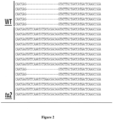
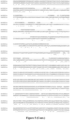
- a ROS1a polypeptide can therefore be identified as a ROS1a polypeptide based on structural features alone. For example, see Figures 4 and 5 herein.
- a ROS1a polypeptide of the invention may or may not have DNA glycosylase activity, or may have reduced DNA glycosylase activity when compared to a wild-type ROS1a polypeptide such as one with the amino acid sequence set forth in SEQ ID NO: 2.
- the term "which sequence is different to the amino acid sequence of the corresponding wild-type ROS1a polypeptide", or similar phrases, are comparative terms where the amino acid sequence of a ROS1a polypeptide of the invention is different to the amino acid sequence of the protein from which it is derived and/or most closely related that exists in nature.
- the amino acid sequence of the ROS1a polypeptide has one or more insertions, deletions or amino acid substitutions (or a combination of these) relative to the corresponding wild-type amino acid sequence.
- the ROS1a polypeptide may have 2, 3, 4, 5 or 6-10 amino acid substitutions relative to the corresponding wild-type ROS1a polypeptide.
- the ROS1a polypeptide has only a single insertion, single deletion or single amino acid substitution relative to the corresponding wild-type polypeptide.
- the "single insertion” and “single deletion” includes where multiple (e.g., 2, 3, 4, 5, 6, 7, 8, 9, 10 or more), contiguous amino acids are inserted or deleted, respectively and the "corresponding wild-type polypeptide” means the wild-type polypeptide from which the variant is derived and/or the natural polypeptide to which the variant is most closely related.
- the ROS1a polypeptide may be a truncated ROS1a polypeptide which may be encoded by, for example, a ROS1a gene which comprises a premature translational stop codon in the protein open reading frame relative to the wild-type ROS1a gene from which it is derived, or the ROS1a polypeptide may be full-length i.e. having the same number of amino acid residues as the corresponding wild-type ROS1a polypeptide.
- An example of a naturally occurring (wild-type) ROS1a polypeptide is one whose amino acid sequence is set forth as SEQ ID NO: 2, and examples of variant ROS1a polypeptides which have only a single insertion, deletion or amino acid substitution are given in SEQ ID NO:1 and Table 3.
- DNA glycosylase activity refers to an enzyme involved in base excision repair (classified under EC number EC 3.2.2). The enzyme typically also has DNA lyase activity, in which the DNA base is excised and the backbone DNA strand is cleaved.
- DNA glycosylase activity as used in the context of the present invention relates to active demethylation where 5-methylcytosine residues are excised and replaced with unmethylated cytosines.
- a ROS1a polypeptide of the invention with DNA glycosylase activity has at least five identifiable motifs.
- HhH helix-hairpin-helix
- GPD conserved aspartic acid
- cysteine residues amino acids 1582-1598 of SEQ ID NO:2 to hold a [4Fe-4S] cluster in place.
- lysine-rich domain for example, amino acids 87-139 in SEQ ID NO:2 or a homologous amino acid sequence.
- ROS1a polypeptide-family members contain two additional conserved domains (domains A and B) flanking the central glycosylase domain.
- domain A occurs at amino acids 859 to 965
- the glycosylase domain occurs at amino acids 1403 to 1616
- domain B occurs at amino acids 1659 to 1933.
- Domain A contains a repetitive mixed-charge cluster at amino acids 882-892.
- DNA glycosylase activity can be measured using standard techniques known in the art, such as described in Example 8.
- Highly conserved amino acid motifs within the glycosylase domain of the wild-type rice ROS1a polypeptide include DHGSIDLEWLR (SEQ ID NO: 44, amino acids 1467-1477 in SEQ ID NO:2), GLGLKSVECVRLLTLHH (SEQ ID NO: 45, amino acids 1493-1509 in SEQ ID NO:2), AFPVDTNVGRI (SEQ ID NO: 46, amino acids 1511-1521 in SEQ ID NO:2), VRLGWVPLQPLPESLQLHLLE (SEQ ID NO: 47, amino acids 1523-1543 in SEQ ID NO:2), ELHYQMITFGKVFCTKSKPNCN (SEQ ID NO: 48, amino acids 1569-1590 in SEQ ID NO:2) and HFASAFASARLALP (SEQ ID NO: 49, amino acids 1600-1613 in SEQ ID NO:2).
- One or two amino acid substitutions may occur in these motifs, or not.
- Other conserved amino acids can be readily identified by aligning the amino acid sequences for wild-type rice ROS1a (SEQ ID NO:2) with the DME polypeptide from Arabidopsis thaliana (SEQ ID NO:6) and/or the A. thaliana ROS1a polypeptide (see Figures 4 and 5 ). Further guidance regarding the identification of conserved amino acids can be obtained from Kapazoglou et al. (2012).
- the terms "which reduces DNA glycosylase activity compared to the corresponding wild-type ROS1a polypeptide", "which has reduced, preferably no, DNA glycosylase activity when compared to the corresponding wild-type ROS1a polypeptide", or similar phrases, are relative terms where the DNA glycosylase activity of a variant/mutant ROS1a polypeptide is lower than the protein from which it is derived and/or most closely related that exists in nature.
- the rice Ta2 mutant described herein (SEQ ID NO:1) has reduced DNA glycosylase activity when compared to the corresponding wild-type rice ROS1a polypeptide (SEQ ID NO:2).
- ROS1a polypeptides with reduced DNA glycosylase activity comprise mutations/variations corresponding to the amino acids described in Table 3 which confer a thickened aleurone phenotype such as substituting the serine at an amino acid position corresponding to amino acid number 156 of SEQ ID NO:2 with another amino acid such as a phenylalanine, substituting the serine at an amino acid position corresponding to amino acid number 214 of SEQ ID NO:2 with another amino acid such as a phenylalanine, substituting the serine at an amino acid position corresponding to amino acid number 1413 of SEQ ID NO:2 with another amino acid such as an asparagine, substituting the alanine at an amino acid position corresponding to amino acid number 441 of SEQ ID NO:2 with another amino acid such as a valine, substituting the serine at an amino acid position corresponding to amino acid number 1357 of SEQ ID NO:2 with another amino acid such as a phenylalanine, substituting the lysine at an amino acids described
- the grain has at least some DNA glycosylase activity, preferably some ROS1a DNA glycosylase activity, because evidence suggests that the absence of DNA glycosylase activity in the egg cell and early in seed development is lethal to rice plants.
- the grain has between about 30% and 98%, or between about 40% and 98%, or between about 40% and 90%, or between about 40% and 85%, or between about 40% and 80%, less DNA glycosylase activity when compared to grain from a corresponding isogenic plant lacking an genetic variation (preferably introduced genetic variation) which reduces DNA glycosylase activity in the grain.
- substantially purified polypeptide or “purified polypeptide” we mean a polypeptide that has generally been separated from the lipids, nucleic acids, other peptides, and other contaminating molecules with which it is associated in its native state.
- the substantially purified polypeptide is at least 90% free from other components with which it is naturally associated.
- the polypeptide of the invention has an amino acid sequence which is different to a naturally occurring ROS1a polypeptide i.e. is an amino acid sequence variant, as defined above.
- Grain, plants and host cells of the invention may comprise an exogenous polynucleotide encoding a polypeptide of the invention.
- the grain, plants and cells produce a recombinant polypeptide.
- the term "recombinant" in the context of a polypeptide refers to the polypeptide encoded by an exogenous polynucleotide when produced by a cell, which polynucleotide has been introduced into the cell or a progenitor cell by recombinant DNA or RNA techniques such as, for example, transformation.
- the cell comprises a non-endogenous gene that causes an altered amount of the polypeptide to be produced.
- a "recombinant polypeptide” is a polypeptide made by the expression of an exogenous (recombinant) polynucleotide in a plant cell.
- polypeptide and “protein” are generally used interchangeably.
- the query sequence is at least 1,000 amino acids in length, and the GAP analysis aligns the two sequences over a region of at least 1,000 amino acids. More preferably, the query sequence is at least 1,250 amino acids in length and the GAP analysis aligns the two sequences over a region of at least 1,250 amino acids. More preferably, the query sequence is at least 1,500 amino acids in length and the GAP analysis aligns the two sequences over a region of at least 1,500 amino acids. Even more preferably, the GAP analysis aligns two sequences over their entire length, which for a ROS1a polypeptide is about 1,800 to 2,100 amino acid residues.
- the polypeptide comprises an amino acid sequence which is at least 95%, more preferably at least 96%, more preferably at least 97%, more preferably at least 98%, more preferably at least 99%, more preferably at least 99.1%, more preferably at least 99.2%, more preferably at least 99.3%, more preferably at least 99.4%, more preferably at least 99.5%, more preferably at least 99.6%, more preferably at least 99.7%, more preferably at least 99.8%, and even more preferably at least 99.9% identical to the relevant nominated SEQ ID NO.
- a polypeptide of the invention may have deletional or substitutional mutation which alters the relative positioning of the amino acid when aligned against, for instance, SEQ ID NO: 2. Determining a corresponding amino acid position between two closely related proteins is well within the capability of the skilled person.
- Amino acid sequence mutants of the polypeptides of the present invention can be prepared by introducing appropriate nucleotide changes into a nucleic acid of the present invention, or by in vitro synthesis of the desired polypeptide.
- Such mutants include, for example, deletions, insertions or substitutions of residues within the amino acid sequence.
- a combination of deletion, insertion and substitution can be made to arrive at the final construct, provided that the final peptide product possesses the desired characteristics.
- Preferred amino acid sequence mutants have only one, two, three, four or less than 10 amino acid changes relative to the reference wildtype polypeptide.
- Mutant polypeptides of the invention have reduced "ROS1a polypeptide activity" when compared to a corresponding wild-type naturally occurring ROS1a polypeptide such as a polypeptide which comprises amino acids having a sequence set forth as SEQ ID NO: 2.
- Mutant (altered) polypeptides can be prepared using any technique known in the art, for example, using directed evolution or rational design strategies (see below). Products derived from mutated/altered DNA can readily be screened using techniques described herein to determine if they have reduced ROS1a polypeptide activity, such as reduced DNA glycosylase activity, when compared to one or more or all of a ROS1a polypeptide which comprises amino acids having a sequence provided as SEQ ID NO: 2. For instance, the method may comprise producing a transgenic plant expressing the mutated/altered DNA and determining i) the effect of the mutated/altered DNA on aleurone thickness and ii) whether a ROS1a gene has been mutated/altered.
- the location of the mutation site and the nature of the mutation will depend on characteristic(s) to be modified.
- the sites for mutation can be modified individually or in series, e.g., by (1) substituting with non-conservative amino acid choices, (2) deleting the target residue, or (3) inserting other residues adjacent to the located site.
- Amino acid sequence deletions generally range from about 1 to 15 residues, more preferably about 1 to 10 residues and typically about 1 to 5 contiguous residues.
- Substitution mutants have at least one amino acid residue in the polypeptide molecule removed and a different residue inserted in its place. Where it is not desirable to maintain a certain activity, or to reduce a certain activity, it is preferable to make non-conservative substitutions, particularly at amino acid positions which are highly conserved in the relevant protein family. Examples of conservative substitutions are shown in Table 1, and hence non-conservative substitutions will be those not shown in Table 1.
- a mutant/variant polypeptide has one or two or three or four amino acid changes when compared to a naturally occurring polypeptide.
- the changes are in one or more of the motifs which are highly conserved between the different ROS1a polypeptides provided herewith, particularly in known conserved structural domains. As the skilled person would be aware, such changes can reasonably be predicted to alter the activity of the polypeptide when expressed in a cell.
- the primary amino acid sequence of a polypeptide of the invention can be used to design variants/mutants thereof based on comparisons with closely related enzymes, particularly DNA glycosylases.
- closely related enzymes particularly DNA glycosylases.
- residues highly conserved amongst closely related proteins are more likely to be able to be altered, especially with non-conservative substitutions, and activity reduced than less conserved residues (see above). Table 1. Conservative substitutions.
- polypeptides may be differentially modified after synthesis, e.g., by post-translational modification in a cell, for example by phosphorylation, which may modulate its activity.
- a "polynucleotide” or “nucleic acid” or “nucleic acid molecule” means a polymer of nucleotides, which may be DNA or RNA, and includes genomic DNA, mRNA, cRNA, dsRNA, and cDNA. It may be DNA or RNA of cellular, genomic or synthetic origin, for example made on an automated synthesizer, and may be combined with carbohydrate, lipids, protein or other materials, labelled with fluorescent or other groups, or attached to a solid support to perform a particular activity defined herein, or comprise one or more modified nucleotides not found in nature, well known to those skilled in the art.
- the polymer may be single-stranded, essentially double-stranded or partly double-stranded.
- Basepairing refers to standard basepairing between nucleotides, including G:U basepairs.
- “Complementary” means two polynucleotides are capable of basepairing (hybridizing) along part of their lengths, or along the full length of one or both.
- a “hybridized polynucleotide” means the polynucleotide is actually basepaired to its complement.
- polynucleotide is used interchangeably herein with the term “nucleic acid”.
- isolated polynucleotide we mean a polynucleotide which has generally been separated from the polynucleotide sequences with which it is associated or linked in its native state, if the polynucleotide is found in nature.
- the isolated polynucleotide is at least 90% free from other components with which it is naturally associated, if it is found in nature.
- the polynucleotide is not naturally occurring, for example by covalently joining two shorter polynucleotide sequences in a manner not found in nature (chimeric polynucleotide).
- the present invention involves reduction of gene activity and the construction and use of chimeric genes.
- the term "gene” includes any deoxyribonucleotide sequence which includes a protein coding region or which is transcribed in a cell but not translated, as well as associated non-coding and regulatory regions. Such associated regions are typically located adjacent to the coding region or the transcribed region on both the 5' and 3' ends for a distance of about 2 kb on either side.
- the gene may include control signals such as promoters, enhancers, termination and/or polyadenylation signals that are naturally associated with a given gene, or heterologous control signals in which case the gene is referred to as a "chimeric gene".
- sequences which are located 5' of the coding region and which are present on the mRNA are referred to as 5' non-translated sequences.
- sequences which are located 3' or downstream of the coding region and which are present on the mRNA are referred to as 3' non-translated sequences.
- gene encompasses both cDNA and genomic forms of a gene.
- an “allele” refers to one specific form of a genetic sequence (such as a gene) within a cell, an individual plant or within a population, the specific form differing from other forms of the same gene in the sequence of at least one, and frequently more than one, variant sites within the sequence of the gene.
- the sequences at these variant sites that differ between different alleles are termed "variances", or “polymorphisms”.
- a “polymorphism” as used herein denotes a variation in the nucleotide sequence between alleles at a genetic locus of different species, cultivars, strains or individuals of a plant.
- a “polymorphic position” is a preselected nucleotide position within the sequence of the gene at which the sequence difference occurs.
- genetic polymorphisms cause an amino acid sequence variation within a polypeptide encoded by the gene, and thus a polymorphic position can result in the location of a polymorphism in the amino acid sequence at a predetermined position in the sequence of the polypeptide.
- the polymorphic region may be in a non-polypeptide encoding region of the gene, for example in the promoter region and may thereby influence expression levels of the gene.
- Typical polymorphisms are deletions, insertions or substitutions. These can involve a single nucleotide (single nucleotide polymorphism or SNP) or two or more nucleotides.
- a "mutation" is a polymorphism which produces a phenotypic change in the plant or a part thereof. As known in the art, some polymorphisms are silent, for example a single nucleotide change in a protein coding region which does not change the amino acid sequence of the encoded polypeptide due to the redundancy of the genetic code.
- a diploid plant will typically have one or two different alleles of a single gene, but only one if both copies of the gene are identical i.e. the plant is homozygous for the allele. Polyploid plants generally have more than one homoeolog of any particular gene.
- hexaploid wheat has three subgenomes (often referred to as “genomes") designated the A, B and D genomes, and therefore has three homoeologs of most of its genes, one in each of the A, B and D genomes.
- ROS1a gene encoding a ROS1a polypeptide or " ROS1a gene” as used herein refers to a nucleotide sequence which encodes a ROS1a polypeptide as defined herein.
- the ROS1a gene may be an endogenous naturally occurring gene, or comprise a genetic variation (preferably an introduced genetic variation) as defined herein.
- a ROS1a gene encoding a ROS1a polypeptide in grain of the invention may or may not have introns.
- the grain of the invention is from rice and at least one allele of an ROS1a gene encodes a ROS1a polypeptide with reduced DNA glycosylase activity when compared to a ROS1a polypeptide from a corresponding a wild type rice plant (such as which comprises a sequence of amino acids as provided in SEQ ID NO: 2).
- An example of such a ROS1a polypeptide with reduced DNA glycosylase activity is the rice Ta2 mutant (SEQ ID NO: 1).
- the phrase "or inactivation of a ROS1a gene” or “reduction of expression of a ROS1a gene” or variations thereof refers to any genetic variation which reduces (partially), or completely prevents, the expression of the gene encoding a functional ROS1a polypeptide.
- Such genetic variations include mutations in the promoter region of the gene which reduce transcription of the gene being transcribed, for example by using gene editing to delete or substitute nucleotides from the promoter of the ROS1a gene, or intron splicing mutations which alter the amount or position of splicing to form mRNA.
- a genomic form or clone of a gene containing the transcribed region may be interrupted with non-coding sequences termed “introns” or “intervening regions” or “intervening sequences”, which may be either homologous or heterologous with respect to the "exons" of the gene.
- An "intron” as used herein is a segment of a gene which is transcribed as part of a primary RNA transcript but is not present in the mature mRNA molecule. Introns are removed or "spliced out” from the nuclear or primary transcript; introns therefore are absent in the messenger RNA (mRNA).
- Exons refer to the DNA regions corresponding to the RNA sequences which are present in the mature mRNA or the mature RNA molecule in cases where the RNA molecule is not translated.
- An mRNA functions during translation to specify the sequence or order of amino acids in a nascent polypeptide.
- the term "gene” includes a synthetic or fusion molecule encoding all or part of the proteins described herein and a complementary nucleotide sequence to any one of the above.
- a gene may be introduced into an appropriate vector for extrachromosomal maintenance in a cell or, preferably, for integration into the host genome.
- a "chimeric gene” refers to any gene that comprises covalently joined sequences that are not found joined in nature.
- a chimeric gene comprises regulatory and transcribed or protein coding sequences that are not found together in nature.
- a chimeric gene may comprise regulatory sequences and coding sequences that are derived from different sources, or regulatory sequences and coding sequences derived from the same source, but arranged in a manner different than that found in nature.
- the protein coding region of an ROS1a gene is operably linked to a promoter or polyadenylation/terminator region which is heterologous to the ROS1a gene, thereby forming a chimeric gene.
- endogenous is used herein to refer to a substance that is normally present or produced in an unmodified plant at the same developmental stage as the plant under investigation.
- An “endogenous gene” refers to a native gene in its natural location in the genome of an organism.
- recombinant nucleic acid molecule refers to a nucleic acid molecule which has been constructed or modified by recombinant DNA technology.
- foreign polynucleotide or “exogenous polynucleotide” or “heterologous polynucleotide” and the like refer to any nucleic acid which is introduced into the genome of a cell by experimental manipulations.
- Foreign or exogenous genes may be genes that are inserted into a non-native organism, native genes introduced into a new location within the native host, or chimeric genes.
- a "transgene” is a gene that has been introduced into the genome by a transformation procedure.
- the term “genetically modified” includes introducing genes into cells by transformation or transduction, mutating genes in cells and altering or modulating the regulation of a gene in a cell or organisms to which these acts have been done or their progeny.
- exogenous in the context of a polynucleotide (nucleic acid) refers to the polynucleotide when present in a cell that does not naturally comprise the polynucleotide.
- the cell may be a cell which comprises a non-endogenous polynucleotide resulting in an altered amount of production of the encoded polypeptide, for example an exogenous polynucleotide which increases the expression of an endogenous polypeptide, or a cell which in its native state does not produce the polypeptide.
- Increased production of a polypeptide is also referred to herein as "over-expression".
- An exogenous polynucleotide includes polynucleotides which have not been separated from other components of the transgenic (recombinant) cell, or cell-free expression system, in which it is present, and polynucleotides produced in such cells or cell-free systems which are subsequently purified away from at least some other components.
- the exogenous polynucleotide (nucleic acid) can be a contiguous stretch of nucleotides existing in nature, or comprise two or more contiguous stretches of nucleotides from different sources (naturally occurring and/or synthetic) joined to form a single polynucleotide.
- chimeric polynucleotides comprise at least an open reading frame encoding a polypeptide of the invention operably linked to a promoter suitable of driving transcription of the open reading frame in a cell of interest.
- the query sequence is at least 3,000 nucleotides in length, and the GAP analysis aligns the two sequences over a region of at least 3,000 nucleotides. Even more preferably, the query sequence is at least 3,750 nucleotides in length and the GAP analysis aligns the two sequences over a region of at least 3,750 nucleotides. Even more preferably, the query sequence is at least 4,500 nucleotides in length and the GAP analysis aligns the two sequences over a region of at least 4,500 nucleotides. Even more preferably, the GAP analysis aligns two sequences over their entire length.
- the polynucleotide comprises a polynucleotide sequence which is at least 95%, more preferably at least 96%, more preferably at least 97%, more preferably at least 98%, more preferably at least 99%, more preferably at least 99.1%, more preferably at least 99.2%, more preferably at least 99.3%, more preferably at least 99.4%, more preferably at least 99.5%, more preferably at least 99.6%, more preferably at least 99.7%, more preferably at least 99.8%, and even more preferably at least 99.9% identical to the relevant nominated SEQ ID NO.
- the minimum size of such an oligonucleotide is the size required for the formation of a stable hybrid between the oligonucleotide and a complementary sequence on a target nucleic acid molecule.
- the oligonucleotides are at least 15 nucleotides, more preferably at least 18 nucleotides, more preferably at least 19 nucleotides, more preferably at least 20 nucleotides, even more preferably at least 25 nucleotides in length.
- Oligonucleotides used as a probe are typically conjugated with a label such as a radioisotope, an enzyme, biotin, a fluorescent molecule or a chemiluminescent molecule.
- Oligonucleotides can be used as, for example, probes to identify nucleic acid molecules, or primers to produce nucleic acid molecules. Probes and/or primers can be used to clone homologues of the polynucleotides of the invention from other species. Furthermore, hybridization techniques known in the art can also be used to screen genomic or cDNA libraries for such homologues.
- Such polynucleotides and oligonucleotides include those which hybridize under stringent conditions to one or more of the sequences provided as SEQ ID NO: 1 or 2.
- stringent conditions are those that (1) employ low ionic strength and high temperature for washing, for example, 0.015 M NaCl/0.0015 M sodium citrate/0.1% NaDodSO 4 at 50 0 C; (2) employ during hybridisation a denaturing agent such as formamide, for example, 50% (vol/vol) formamide with 0.1% bovine serum albumin, 0.1% Ficoll, 0.1% polyvinylpyrrolidone, 50 mM sodium phosphate buffer at pH 6.5 with 750 mM NaCl, 75 mM sodium citrate at 42°C; or (3) employ 50% formamide, 5 x SSC (0.75 M NaCl, 0.075 M sodium citrate), 50 mM sodium phosphate (pH 6.8), 0.1% sodium pyrophosphate, 5 x Denhardt's solution, sonicated salmon
- Polynucleotides may possess, when compared to naturally occurring molecules, one or more mutations which are deletions, insertions, or substitutions of nucleotide residues. Mutants can be either naturally occurring (that is to say, isolated from a natural source) or synthetic (for example, by performing site-directed mutagenesis on the nucleic acid).
- a variant of a polynucleotide or an oligonucleotide includes molecules of varying sizes of, and/or are capable of hybridising to, the rice genome close to that of the reference polynucleotide or oligonucleotide molecules defined herein, preferably the endogenous ROS1a gene.
- variants may comprise additional nucleotides (such as 1, 2, 3, 4, or more), or less nucleotides as long as they still hybridise to the target region.
- additional nucleotides such as 1, 2, 3, 4, or more
- a few nucleotides may be substituted without influencing the ability of the oligonucleotide to hybridise to the target region.
- variants may readily be designed which hybridise close to, for example to within 50 nucleotides, the region of the plant genome where the specific oligonucleotides defined herein hybridise.
- this includes polynucleotides which encode the same polypeptide or amino acid sequence but which vary in nucleotide sequence by redundancy of the genetic code.
- polynucleotide variant and “variant” also include naturally occurring allelic variants.
- the term "genetic variation” refers to one or more cells of the grain, preferably cells in at least one or more or all of aleurone, pericarp, nucellar projection, ovary, testa and starchy endosperm of the developing grain, or of a plant or part thereof of the invention which have a genetic modification which may be introduced by man, or may be naturally occurring in rice plant (for example, crossed to produce a plant of the invention).
- the term "one or more introduced genetic variations” refers to one or more cells of the grain, preferably cells in at least one or more or all of aleurone, pericarp, nucellar projection, ovary, testa and starchy endosperm of the developing grain, or of a plant or part thereof of the invention which have a genetic modification introduced by man.
- every cell in the grain or the plant or part thereof comprises the introduced genetic variation.
- nucleic construct encoding an exogenous polynucleotide which encodes a ROS1a polypeptide whose amino acid sequence is different to the amino acid sequence of a corresponding wild-type ROS1a polypeptide and which has reduced (preferably some but can be no) DNA glycosylase activity when compared to the corresponding wild-type ROS1a polypeptide, the genome manipulated by gene editing to reduce the activity of an endogenous ROS1a gene, and using TILLING to introduce mutations and select for plants producing grain with reduced ROS1a polypeptide DNA glycolyase activity.
- the term "reduce the activity of at least one ROS1a gene” as it relates to the "one or more genetic variations" or “one or more introduced genetic variations” refers to the genetic variation resulting in a reduction in the amount or activity of a ROS1a polypeptide expressed by the gene when compared to a corresponding wild-type rice plant.
- the grain comprises a ROS1a polypeptide with at least some DNA glycolyase activity.
- the genetic variation does not down-regulate the DNA glycolyase activity of a non-ROS1a polypeptide.
- the genetic variation does not reduce the DNA glycosylase activity of each of the ROS1b, ROS1c and ROS1d polypeptides by more than 10% or 30% in the rice plant of the invention.
- the genetic variation reduces the DNA glycosylase activity of at least one of the ROS1b, ROS1c and ROS1d polypeptides by at least 30%.
- RNA interference is particularly useful for specifically reducing the expression of a gene, which results in reduced production of a particular protein if the gene encodes a protein.
- dsRNA duplex RNA
- This technology relies on the presence of dsRNA molecules that contain a sequence that is essentially identical to the mRNA of the gene of interest or part thereof.
- the dsRNA can be produced from a single promoter in a recombinant vector or host cell, where the sense and anti-sense sequences are flanked by an unrelated sequence which enables the sense and anti-sense sequences to hybridize to form the dsRNA molecule with the unrelated sequence forming a loop structure.
- the design and production of suitable dsRNA molecules is well within the capacity of a person skilled in the art, particularly considering Waterhouse et al. (1998), Smith et al. (2000), WO 99/32619 , WO 99/53050 , WO 99/49029 and WO 01/34815 .
- Preferred small interfering RNA (“siRNA”) molecules comprise a nucleotide sequence that is identical to about 19-25 contiguous nucleotides of the target mRNA.
- the siRNA sequence commences with the dinucleotide AA, comprises a GC-content of about 30-70% (preferably, 30-60%, more preferably 40-60% and more preferably about 45%-55%), and does not have a high percentage identity to any nucleotide sequence other than the target in the genome of the organism in which it is to be introduced, for example, as determined by standard BLAST search.
- MicroRNAs are non-coding RNA molecules having a length generally 19-25 nucleotides (commonly about 20-24 nucleotides in plants) that are derived from larger precursors that form imperfect stem-loop structures.
- the miRNA is typically fully complementary to a region of a target mRNA whose expression is to be reduced, but need not be fully complementary.
- miRNAs bind to complementary sequences on target messenger RNA transcripts (mRNAs), usually resulting in translational repression or target degradation and gene silencing.
- mRNAs target messenger RNA transcripts
- Artificial miRNAs can be designed based on natural miRNAs for reducing the expression of any gene of interest, as well known in the art.
- miRNA precursor molecules are believed to be largely processed in the nucleus.
- the pri-miRNA (containing one or more local double-stranded or "hairpin” regions as well as the usual 5' “cap” and polyadenylated tail of an mRNA) is processed to a shorter miRNA precursor molecule that also includes a stem-loop or fold-back structure and is termed the "pre-miRNA".
- the pre-miRNAs are cleaved by distinct DICER-like (DCL) enzymes, yielding miRNA:miRNA* duplexes. Prior to transport out of the nucleus, these duplexes are methylated.
- DCL DICER-like
- RISC RNA-induced silencing complex
- the RISC- complexes contain a particular subset of Argonaute proteins that exert sequence-specific gene repression (see, for example, Millar and Waterhouse, 2005; Pasquinelli et al., 2005; Almeida and Allshire, 2005).
- homology-dependent gene silencing Genes can suppress the expression of related endogenous genes and/or transgenes already present in the genome, a phenomenon termed homology-dependent gene silencing. Most of the instances of homology dependent gene silencing fall into two classes - those that function at the level of transcription of the transgene, and those that operate post-transcriptionally.
- Post-transcriptional homology-dependent gene silencing i.e., cosuppression
- cosuppression describes the loss of expression of a transgene and related endogenous or viral genes in transgenic plants. Cosuppression often, but not always, occurs when transgene transcripts are abundant, and it is generally thought to be triggered at the level of mRNA processing, localization, and/or degradation. Severa1 models exist to explain how cosuppression works (see in Taylor, 1997).
- Cosuppression involves introducing an extra copy of a gene or a fragment thereof into a plant in the sense orientation with respect to a promoter for its expression.
- the size of the sense fragment, its correspondence to target gene regions, and its degree of sequence identity to the target gene can be determined by those skilled in the art.
- the additional copy of the gene sequence interferes with the expression of the target plant gene.
- WO 97/20936 and EP 0465572 for methods of implementing co-suppression approaches.
- antisense polynucletoide shall be taken to mean a DNA or RNA molecule that is complementary to at least a portion of a specific mRNA molecule encoding an endogenous polypeptide and capable of interfering with a post-transcriptional event such as mRNA translation.
- the use of antisense methods is well known in the art (see for example, G. Hartmann and S. Endres, Manual of Antisense Methodology, Kluwer (1999 )).
- the use of antisense techniques in plants has been reviewed by Bourque (1995) and Senior (1998). Bourque (1995) lists a large number of examples of how antisense sequences have been utilized in plant systems as a method of gene inactivation. Bourque also states that attaining 100% inhibition of any enzyme activity may not be necessary as partial inhibition will more than likely result in measurable change in the system.
- Senior (1998) states that antisense methods are now a very well established technique for manipulating gene expression.
- Antisense molecules may include sequences that correspond to the structural genes or for sequences that effect control over the gene expression or splicing event.
- the antisense sequence may correspond to the targeted coding region of endogenous gene, or the 5'-untranslated region (UTR) or the 3'-UTR or combination of these. It may be complementary in part to intron sequences, which may be spliced out during or after transcription, preferably only to exon sequences of the target gene. In view of the generally greater divergence of the UTRs, targeting these regions provides greater specificity of gene inhibition.
- the length of the antisense sequence should be at least 19 contiguous nucleotides, preferably at least 30 or at least 50 nucleotides, and more preferably at least 100, 200, 500 or 1000 nucleotides.
- the full-length sequence complementary to the entire gene transcript may be used. The length is most preferably 100-2000 nucleotides.
- the degree of identity of the antisense sequence to the targeted transcript should be at least 90% and more preferably 95-100%, typically 100% identical.
- the antisense RNA molecule may of course comprise unrelated sequences which may function to stabilize the molecule.
- Genome editing uses engineered nucleases composed of sequence specific DNA binding domains fused to a non-specific DNA cleavage module. These chimeric nucleases enable efficient and precise genetic modifications by inducing targeted DNA double stranded breaks that stimulate the cell's endogenous cellular DNA repair mechanisms to repair the induced break. Such mechanisms include, for example, error prone non-homologous end joining (NHEJ) and homology directed repair (HDR).
- NHEJ error prone non-homologous end joining
- HDR homology directed repair
- HDR can lead to the introduction of single or multiple transgenes to correct or replace existing genes.
- NHEJ-mediated repair yields small insertion or deletion mutations of the target that cause gene disruption.
- Engineered nucleases useful in the methods of the present invention include zinc finger nucleases (ZFNs), transcription activator-like (TAL) effector nucleases (TALEN) and CRISPR-Cas9 type site-specific nucleases.
- ZFNs zinc finger nucleases
- TALEN transcription activator-like effector nucleases
- CRISPR-Cas9 type site-specific nucleases include zinc finger nucleases (ZFNs), transcription activator-like (TAL) effector nucleases (TALEN) and CRISPR-Cas9 type site-specific nucleases.
- nuclease encoded genes are delivered into cells by plasmid DNA, viral vectors or in vitro transcribed mRNA.
- the use of fluorescent surrogate reporter vectors also allows for enrichment of ZFN-, TALEN- or CRISPR-modified cells.
- two 9 bp zinc finger DNA recognition sequences must be identified in the host DNA. These recognition sites will be in an inverted orientation with respect to one another and separated by about 6 bp of DNA. ZFNs are then generated by designing and producing zinc finger combinations that bind DNA specifically at the target locus, and then linking the zinc fingers to a DNA cleavage domain.
- a transcription activator-like (TAL) effector nuclease comprises a TAL effector DNA binding domain and an endonuclease domain.
- TAL effectors are proteins of plant pathogenic bacteria that are injected by the pathogen into the plant cell, where they travel to the nucleus and function as transcription factors to turn on specific plant genes.
- the primary amino acid sequence of a TAL effector dictates the nucleotide sequence to which it binds.
- target sites can be predicted for TAL effectors, and TAL effectors can be engineered and generated for the purpose of binding to particular nucleotide sequences.
- Fused to the TAL effector-encoding nucleic acid sequences are sequences encoding a nuclease or a portion of a nuclease, typically a nonspecific cleavage domain from a type II restriction endonuclease such as FokI (Kim et al., 1996).
- Other useful endonucleases may include, for example, Hha I , Hind III, Nod, Bbv CI , EcoRI, BglI, and Alw I .
- endonucleases e.g., Fok I
- Some endonucleases e.g., Fok I only function as dimers can be capitalized upon to enhance the target specificity of the TAL effector.
- each Fok I monomer can be fused to a TAL effector sequence that recognizes a different DNA target sequence, and only when the two recognition sites are in close proximity do the inactive monomers come together to create a functional enzyme.
- a highly site-specific restriction enzyme can be created.
- a sequence-specific TALEN can recognize a particular sequence within a preselected target nucleotide sequence present in a cell.
- a target nucleotide sequence can be scanned for nuclease recognition sites, and a particular nuclease can be selected based on the target sequence.
- a TALEN can be engineered to target a particular cellular sequence.
- operably connected or “operably linked” and the like refer to a linkage of polynucleotide elements in a functional relationship.
- operably connected nucleic acid sequences are contiguously linked and, where necessary to join two protein coding regions, contiguous and in reading frame.
- a coding sequence is "operably connected to" another coding sequence when RNA polymerase will transcribe the two coding sequences into a single RNA, which if translated is then translated into a single polypeptide having amino acids derived from both coding sequences.
- the coding sequences need not be contiguous to one another so long as the expressed sequences are ultimately processed to produce the desired protein.
- cis-acting sequence As used herein, the term "cis-acting sequence", “cis-acting element” or “cis-regulatory region” or “regulatory region” or similar term shall be taken to mean any sequence of nucleotides, which when positioned appropriately and connected relative to an expressible genetic sequence, is capable of regulating, at least in part, the expression of the genetic sequence.
- a cis-regulatory region may be capable of activating, silencing, enhancing, repressing or otherwise altering the level of expression and/or cell-type-specificity and/or developmental specificity of a gene sequence at the transcriptional or post-transcriptional level.
- "Operably connecting" a promoter or enhancer element to a transcribable polynucleotide means placing the transcribable polynucleotide (e.g., protein-encoding polynucleotide or other transcript) under the regulatory control of a promoter, which then controls the transcription of that polynucleotide.
- a promoter or variant thereof it is generally preferred to position a promoter or variant thereof at a distance from the transcription start site of the transcribable polynucleotide which is approximately the same as the distance between that promoter and the protein coding region it controls in its natural setting; i.e., the gene from which the promoter is derived.
- a regulatory sequence element e.g., an operator, enhancer etc
- a transcribable polynucleotide to be placed under its control is defined by the positioning of the element in its natural setting; i.e., the genes from which it is derived.
- Promoter refers to a region of a gene, generally upstream (5') of the RNA encoding region, which controls the initiation and level of transcription in the cell of interest.
- a “promoter” includes the transcriptional regulatory sequences of a classical genomic gene, such as a TATA box and CCAAT box sequences, as well as additional regulatory elements (i.e., upstream activating sequences, enhancers and silencers) that alter gene expression in response to developmental and/or environmental stimuli, or in a tissue-specific or cell-type-specific manner.
- a promoter is usually, but not necessarily (for example, some PolIII promoters), positioned upstream of a structural gene, the expression of which it regulates.
- the regulatory elements comprising a promoter are usually positioned within 2 kb of the start site of transcription of the gene. Promoters may contain additional specific regulatory elements, located more distal to the start site to further enhance expression in a cell, and/or to alter the timing or inducibility of expression of a structural gene to which it is operably connected.
- Constant promoter refers to a promoter that directs expression of an operably linked transcribed sequence in many or all tissues of an organism such as a plant.
- constitutive does not necessarily indicate that a gene is expressed at the same level in all cell types, but that the gene is expressed in a wide range of cell types, although some variation in level is often detectable.
- Selective expression refers to expression almost exclusively in specific organs of, for example, the plant, such as, for example, endosperm, embryo, leaves, fruit, tubers or root.
- a promoter is expressed selectively or preferentially in grain of a plant, preferably a rice plant. Selective expression may therefore be contrasted with constitutive expression, which refers to expression in many or all tissues of a plant under most or all of the conditions experienced by the plant.
- Selective expression may also result in compartmentation of the products of gene expression in specific plant tissues, organs or developmental stages. Compartmentation in specific subcellular locations such as the plastid, cytosol, vacuole, or apoplastic space may be achieved by the inclusion in the structure of the gene product of appropriate signals, eg. a signal peptide, for transport to the required cellular compartment, or in the case of the semi-autonomous organelles (plastids and mitochondria) by integration of the transgene with appropriate regulatory sequences directly into the organelle genome.
- appropriate signals eg. a signal peptide
- tissue-specific promoter or "organ-specific promoter” is a promoter that is preferentially expressed in one tissue or organ relative to many other tissues or organs, preferably most if not all other tissues or organs in, for example, a plant. Typically, the promoter is expressed at a level 10-fold higher in the specific tissue or organ than in other tissues or organs.
- Seed specific promoters for the invention which are suitable are the oilseed rape napin gene promoter ( US 5,608,152 ), the Vicia faba USP promoter (Baumlein et al., 1991), the Arabidopsis oleosin promoter ( WO 98/45461 ), the Phaseolus vulgaris phaseolin promoter ( US 5,504,200 ), the Brassica Bce4 promoter ( WO 91/13980 ) or the legumin B4 promoter (Baumlein et al., 1992), and promoters which lead to the seed-specific expression in rice and the like.
- Notable promoters which are suitable are the barley LPT2 or LPT1 gene promoters ( WO 95/15389 and WO 95/23230 ) or the promoters described in WO 99/16890 (promoters from the barley hordein gene). Other promoters include those described by Broun et al. (1998), Potenza et al. (2004), US 20070192902 and US 20030159173 .
- the seed specific promoter is preferentially expressed in defined parts of the seed such as the endosperm, preferably the developing aleurone.
- the seed specific promoter is not expressed, or is only expressed at a low level, after the seed germinates.
- the promoter is at least active at a time point between the time of anthesis and 7 days post-anthesis, or active entirely during this period.
- An example of such a promoter is a ROS1a gene promoter.
- the promoters contemplated by the present invention may be native to the host plant to be transformed or may be derived from an alternative source, where the region is functional in the host plant.
- Other sources include the Agrobacterium T-DNA genes, such as the promoters of genes for the biosynthesis of nopaline, octapine, mannopine, or other opine promoters, tissue specific promoters (see, e.g., US 5,459,252 and WO 91/13992 ); promoters from viruses (including host specific viruses), or partially or wholly synthetic promoters.
- promoters that are functional in mono- and dicotyledonous plants are well known in the art (see, for example, Greve, 1983; Salomon et al., 1984; Garfinkel et al., 1983; Barker et al., 1983); including various promoters isolated from plants and viruses such as the cauliflower mosaic virus promoter (CaMV 35S, 19S).
- Non-limiting methods for assessing promoter activity are disclosed by Medberry et al. (1992 and 1993), Sambrook et al. (1989, supra) and US 5,164,316 .
- the promoter may be an inducible promoter or a developmentally regulated promoter which is capable of driving expression of the introduced polynucleotide at an appropriate developmental stage of the, for example, plant.
- Other cis-acting sequences which may be employed include transcriptional and/or translational enhancers. Enhancer regions are well known to persons skilled in the art, and can include an ATG translational initiation codon and adjacent sequences. When included, the initiation codon should be in phase with the reading frame of the coding sequence relating to the foreign or exogenous polynucleotide to ensure translation of the entire sequence if it is to be translated.
- Translational initiation regions may be provided from the source of the transcriptional initiation region, or from a foreign or exogenous polynucleotide.
- the sequence can also be derived from the source of the promoter selected to drive transcription, and can be specifically modified so as to increase translation of the mRNA.
- the nucleic acid construct of the present invention may comprise a 3' non-translated sequence from about 50 to 1,000 nucleotide base pairs which may include a transcription termination sequence.
- a 3' non-translated sequence may contain a transcription termination signal which may or may not include a polyadenylation signal and any other regulatory signals capable of effecting mRNA processing.
- a polyadenylation signal functions for addition of polyadenylic acid tracts to the 3' end of a mRNA precursor. Polyadenylation signals are commonly recognized by the presence of homology to the canonical form 5' AATAAA-3' although variations are not uncommon.
- Transcription termination sequences which do not include a polyadenylation signal include terminators for PolI or PolIII RNA polymerase which comprise a run of four or more thymidines.
- suitable 3' non-translated sequences are the 3' transcribed non-translated regions containing a polyadenylation signal from an octopine synthase ( ocs ) gene or nopaline synthase ( nos ) gene of Agrobacterium tumefaciens (Bevan et al., 1983).
- Suitable 3' non-translated sequences may also be derived from plant genes such as the ribulose-1,5-bisphosphate carboxylase (ssRUBISCO) gene, although other 3' elements known to those of skill in the art can also be employed.
- leader sequences include those that comprise sequences selected to direct optimum expression of the foreign or endogenous DNA sequence.
- leader sequences include a preferred consensus sequence which can increase or maintain mRNA stability and prevent inappropriate initiation of translation as for example described by Joshi (1987).
- chimeric vector is meant a nucleic acid molecule, preferably a DNA molecule derived, for example, from a plasmid, bacteriophage, or plant virus, into which a nucleic acid sequence may be inserted or cloned.
- a vector preferably is double-stranded DNA and contains one or more unique restriction sites and may be capable of autonomous replication in a defined host cell including a target cell or tissue or a progenitor cell or tissue thereof, or capable of integration into the genome of the defined host such that the cloned sequence is reproducible.
- the vector may be an autonomously replicating vector, i.e., a vector that exists as an extrachromosomal entity, the replication of which is independent of chromosomal replication, e.g., a linear or closed circular plasmid, an extrachromosomal element, a minichromosome, or an artificial chromosome.
- the vector may contain any means for assuring self-replication.
- the vector may be one which, when introduced into a cell, is integrated into the genome of the recipient cell and replicated together with the chromosome(s) into which it has been integrated.
- a vector system may comprise a single vector or plasmid, two or more vectors or plasmids, which together contain the total DNA to be introduced into the genome of the host cell, or a transposon.
- the choice of the vector will typically depend on the compatibility of the vector with the cell into which the vector is to be introduced.
- the vector may also include a selection marker such as an antibiotic resistance gene, a herbicide resistance gene or other gene that can be used for selection of suitable transformants. Examples of such genes are well known to those of skill in the art.
- the nucleic acid construct of the invention can be introduced into a vector, such as a plasmid.
- Plasmid vectors typically include additional nucleic acid sequences that provide for easy selection, amplification, and transformation of the expression cassette in prokaryotic and eukaryotic cells, e.g., pUC-derived vectors, pSK-derived vectors, pGEM-derived vectors, pSP-derived vectors, pBS-derived vectors, or binary vectors containing one or more T-DNA regions.
- Additional nucleic acid sequences include origins of replication to provide for autonomous replication of the vector, selectable marker genes, preferably encoding antibiotic or herbicide resistance, unique multiple cloning sites providing for multiple sites to insert nucleic acid sequences or genes encoded in the nucleic acid construct, and sequences that enhance transformation of prokaryotic and eukaryotic (especially plant) cells.
- marker gene is meant a gene that imparts a distinct phenotype to cells expressing the marker gene and thus allows such transformed cells to be distinguished from cells that do not have the marker.
- a selectable marker gene confers a trait for which one can "select” based on resistance to a selective agent (e.g., a herbicide, antibiotic, radiation, heat, or other treatment damaging to untransformed cells).
- a screenable marker gene confers a trait that one can identify through observation or testing, i.e., by "screening” (e.g., ⁇ -glucuronidase, luciferase, GFP or other enzyme activity not present in untransformed cells). The marker gene and the nucleotide sequence of interest do not have to be linked.
- the nucleic acid construct desirably comprises a selectable or screenable marker gene as, or in addition to, the foreign or exogenous polynucleotide.
- a selectable or screenable marker gene as, or in addition to, the foreign or exogenous polynucleotide.
- the actual choice of a marker is not crucial as long as it is functional (i.e., selective) in combination with the plant cells of choice.
- the marker gene and the foreign or exogenous polynucleotide of interest do not have to be linked, since co-transformation of unlinked genes as, for example, described in US 4,399,216 is also an efficient process in plant transformation.
- bacterial selectable markers are markers that confer antibiotic resistance such as ampicillin, erythromycin, chloramphenicol or tetracycline resistance, preferably kanamycin resistance.
- exemplary selectable markers for selection of plant transformants include, but are not limited to, a hyg gene which encodes hygromycin B resistance; a neomycin phosphotransferase ( nptII ) gene conferring resistance to kanamycin, paromomycin, G418; a glutathione-S-transferase gene from rat liver conferring resistance to glutathione derived herbicides as, for example, described in EP 256223 ; a glutamine synthetase gene conferring, upon overexpression, resistance to glutamine synthetase inhibitors such as phosphinothricin as, for example, described in WO 87/05327 , an acetyltransferase gene from Streptomyces viridochromogenes confer
- a bar gene conferring resistance against bialaphos as, for example, described in WO91/02071 ; a nitrilase gene such as bxn from Klebsiella ozaenae which confers resistance to bromoxynil (Stalker et al., 1988); a dihydrofolate reductase (DHFR) gene conferring resistance to methotrexate (Thillet et al., 1988); a mutant acetolactate synthase gene (ALS), which confers resistance to imidazolinone, sulfonylurea or other ALS-inhibiting chemicals (EP 154,204); a mutated anthranilate synthase gene that confers resistance to 5-methyl tryptophan; or a dalapon dehalogenase gene that confers resistance to the herbicide.
- a nitrilase gene such as bxn from Klebsiella ozaenae which confers resistance to bromoxynil (S
- Preferred screenable markers include, but are not limited to, a uidA gene encoding a ⁇ -glucuronidase (GUS) enzyme for which various chromogenic substrates are known, a ⁇ -galactosidase gene encoding an enzyme for which chromogenic substrates are known, an aequorin gene (Prasher et al., 1985), which may be employed in calcium-sensitive bioluminescence detection; a green fluorescent protein gene (Niedz et al., 1995) or derivatives thereof; a luciferase ( luc ) gene (Ow et al., 1986), which allows for bioluminescence detection, and others known in the art.
- reporter molecule as used in the present specification is meant a molecule that, by its chemical nature, provides an analytically identifiable signal that facilitates determination of promoter activity by reference to protein product.
- the nucleic acid construct is stably incorporated into the genome of, for example, the plant or cell of the invention.
- the nucleic acid comprises appropriate elements which allow the molecule to be incorporated into the genome, or the construct is placed in an appropriate vector which can be incorporated into a chromosome of a plant cell.
- the present invention may involve the use of a recombinant vector, which includes at least one polynucleotide molecule, inserted into any vector capable of delivering the nucleic acid molecule into a host cell.
- a vector contains heterologous nucleic acid sequences, that is nucleic acid sequences that are not naturally found adjacent to nucleic acid molecules of the present invention and that preferably are derived from a species other than the species from which the nucleic acid molecule(s) are derived.
- the vector can be either RNA or DNA, either prokaryotic or eukaryotic, and typically is a virus or a plasmid.
- plant expression vectors include, for example, one or more cloned plant genes under the transcriptional control of 5' and 3' regulatory sequences and a dominant selectable marker.
- Such plant expression vectors also can contain a promoter regulatory region (e.g., a regulatory region controlling inducible or constitutive, environmentally- or developmentally-regulated, or cell- or tissue-specific expression), a transcription initiation start site, a ribosome binding site, an RNA processing signal, a transcription termination site, and/or a polyadenylation signal.
- a promoter regulatory region e.g., a regulatory region controlling inducible or constitutive, environmentally- or developmentally-regulated, or cell- or tissue-specific expression
- the level of a ROS1a polypeptide may be modulated by decreasing the level of expression of a gene encoding the protein in the rice plant, leading to increased aleurone thickness.
- the level of expression of a gene may be modulated by altering the copy number per cell, for example by introducing a synthetic genetic construct comprising the coding sequence and a transcriptional control element that is operably connected thereto and that is functional in the cell.
- a plurality of transformants may be selected and screened for those with a favourable level and/or specificity of transgene expression arising from influences of endogenous sequences in the vicinity of the transgene integration site.
- a favourable level and pattern of transgene expression is one which results in increased aleurone thickness.
- a population of mutagenized seed or a population of plants from a breeding program may be screened for individual lines with increased aleurone thickness.
- the present invention may involve a recombinant cell comprising a host cell transformed with one or more recombinant molecules, or progeny cells thereof. Transformation of a nucleic acid molecule into a cell can be accomplished by any method by which a nucleic acid molecule can be inserted into the cell. Transformation techniques include, but are not limited to, transfection, electroporation, microinjection, lipofection, adsorption, and protoplast fusion. A recombinant cell may remain unicellular or may grow into a tissue, organ or a multicellular organism.
- Transformed nucleic acid molecules can remain extrachromosomal or can integrate into one or more sites within a chromosome of the transformed (i.e., recombinant) cell in such a manner that their ability to be expressed is retained.
- Preferred host cells are plant cells, more preferably a rice cell.
- plant refers to whole plants and refers to any member of the Kingdom Plantae, but as used as an adjective refers to any substance which is present in, obtained from, derived from, or related to a plant, such as for example, plant organs (e.g. leaves, stems, roots, flowers), single cells (e.g. pollen), seeds, plant cells and the like. Plantlets and germinated seeds from which roots and shoots have emerged are also included within the meaning of "plant”.
- plant parts refers to one or more plant tissues or organs which are obtained from a plant and which comprises genomic DNA of the plant.
- Plant parts include vegetative structures (for example, leaves, stems), roots, floral organs/structures, seed (including embryo, cotyledons, and seed coat), plant tissue (for example, vascular tissue, ground tissue, and the like), cells and progeny of the same.
- plant cell refers to a cell obtained from a plant or in a plant and includes protoplasts or other cells derived from plants, gamete-producing cells, and cells which regenerate into whole plants. Plant cells may be cells in culture.
- plant tissue is meant differentiated tissue in a plant or obtained from a plant (“explant”) or undifferentiated tissue derived from immature or mature embryos, seeds, roots, shoots, fruits, tubers, pollen, tumor tissue, such as crown galls, and various forms of aggregations of plant cells in culture, such as calli.
- exemplary plant tissues in or from seeds are cotyledon, embryo and embryo axis. The invention accordingly includes plants and plant parts and products comprising these.
- breeding grain can refer to mature grain in the plant, developing grain in the plant, harvested grain or to grain after processing such as, for example, milling or polishing, where most of the grain stays intact, or after imbibition or germination, according to the context. Mature grain commonly has a moisture content of less than about 18-20%. In an embodiment, developing grain of the invention is at least about 10 days after pollination (DAP). In an embodiment, developing grain of the invention is at least includes grain between anthesis and 7 days post-anthesis.
- DAP days after pollination
- developing grain of the invention is at least includes grain between anthesis and 7 days post-anthesis.
- transgenic plant refers to a plant with one or more genetic variations as defined herein such contains a nucleic acid construct not found in a wild-type plant of the same species, variety or cultivar. That is, transgenic plants (transformed plants) contain genetic material (a transgene) that they did not contain prior to the transformation.
- the transgene may include genetic sequences obtained from or derived from a plant cell, or another plant cell, or a non-plant source, or a synthetic sequence.
- the transgene has been introduced into the plant by human manipulation such as, for example, by transformation but any method can be used as one of skill in the art recognizes.
- the genetic material is preferably stably integrated into the genome of the plant.
- the introduced genetic material may comprise sequences that naturally occur in the same species but in a rearranged order or in a different arrangement of elements, for example an antisense sequence. Plants containing such sequences are included herein in "transgenic plants”.
- non-transgenic plant is one which has not been genetically modified by the introduction of genetic material by recombinant DNA techniques.
- Wild-type refers to a cell, tissue, grain or plant that has not been modified according to the invention. Wild-type cells, tissue or plants may be used as controls to compare levels of expression of an exogenous nucleic acid or the extent and nature of trait modification with cells, tissue, grain or plants modified as described herein.
- corresponding wild-type rice plant or grain refers to a rice plant or grain which comprises at least 50%, more preferably at least 75%, more preferably at least 95%, more preferably at least 97%, more preferably at least 99%, and even more preferably 99.5% of the genotype of a rice plant or grain of the invention, but does not comprise the one or more genetic variations (such as introduced genetic variations) which each reduce the activity of a ROS1a gene in the plant or grain, and/or a thickened aleurone.
- a rice grain or plant of the invention is isogenic relative a wild-type rice grain or plant apart from the one or more genetic variations (such as introduced genetic variations).
- the corresponding wild-type plant or grain is of/from the same cultivar or variety as the progenitor of the plant/grain of the invention, or a sibling plant line which lacks the one or more genetic modifications and/or does not have a thickened aleurone, often termed a "segregant".
- the rice plant or grain of the invention has a genotype that is less than 50% identical to the genotype of rice cultivar Zhonghua 11 (ZH11). ZH11 has been commercially available since 1986.
- Transgenic plants as defined herein include progeny of the rice plants which have been genetically modified using recombinant techniques, wherein the progeny comprise the transgene of interest. Such progeny may be obtained by self-fertilisation of the primary transgenic plant or by crossing such plants with another rice plant. This would generally be to modulate the production of at least one protein defined herein in the desired plant or plant organ.
- Transgenic plant parts include all parts and cells of said plants comprising the transgene such as, for example, cultured tissues, callus and protoplasts.
- the term "rice” refers to any species of the Genus Oryza, including progenitors thereof, as well as progeny thereof produced by crosses with other species. It is preferred that the plant is of a Oryza species which is commercially cultivated such as, for example, a strain or cultivar or variety of Oryza sativa or suitable for commercial production of grain.
- brown rice means the whole grain of rice including the bran layer and embryo (germ) but not the hull which has been removed, usually during harvesting. That is, brown rice has not been polished to remove the aleurone and embryo. The “brown” refers to the presence of brown or yellow-brown pigments in the bran layer. Brown rice is considered a wholegrain.
- white rice milled rice
- rice grain from which the bran and germ have been removed i.e. essentially the starchy endosperm of the whole rice grain. Both of these classes of rice grain may come in short, medium or long grain forms. Compared with white rice, brown rice has a higher content of protein, minerals and vitamins and a higher lysine content in its protein content.
- pigments in the aleurone layer such as proanthocyanidins (tannins). Pigmented rice has a higher riboflavin content than non-pigmented rice, but similar thimine content.
- Black rice has a black or almost black coloured bran layer due to anthocyanins, and may turn a deep purple colour upon cooking.
- Purple rice (also known as “forbidden rice”) is a short grain variant of black rice and is included in black rice as defined here. It is purple in colour in the uncooked state and deep purple when cooked.
- Red rice contains a variety of anthocyanins that gives the bran a red/maroon colour, including cyanidin-3-glucoside (chrysanthemin) and peonidin-3-glucoside (oxycoccicy-anin).
- Each of these types of rice grain may be treated so as prevent germination, for example by cooking (boiling) or by dry heating.
- Brown and pigmented rice is typically cooked for 20-40 min, depending on the desired texture, whereas white rice is typically cooked for 12-18 min.
- Cooking or heating reduces the levels of antinutritional factors in rice grain such as trypsin inhibitor, oryzacystatin and haemagglutinins (lectins) by denaturation of these proteins, but not of the phytate content.
- Rice grain may also be soaked in water before cooking, or slow-cooked for longer times, as known in the art.
- Rice grain may also be cracked, parboiled, or heat-stabilised.
- Rice bran may be steam treated to stabilise it, for example for about 6 min at 100°C.
- grain of the invention has delayed grain maturation when compared to corresponding wild-type grain. Delayed maturation can be determined by using the seed setting rate (%) which entails calculating the percentage of florets in the plant that were filled by a seed by the mature grain stage.
- grain of the invention has a decreased germination capacity when compared corresponding wild-type grain.
- the grain has about 70% to about 80%, or about 75%, preferably 70% to 100%, of the germination capacity of corresponding wild-type grain when cultured at 28°C under 12h light/12h dark cycles without humidity control in a growth chamber.
- the term "germination” as used herein is defined as when the radicle had visibly emerged through the seed coat.
- plants of the invention have one or more or all of normal plant height, fertility (male and female), grain size and 1000 grain weight relative to the wild-type parental variety (such as an isogenic plant comprising a ROS1a polypeptide with a sequence of amino acids provided as SEQ ID NO: 2).
- grain of the invention is capable of producing a rice plant which has one or more or all of: normal plant height, fertility (male and female), grain size and 1000 grain weight relative to the wild-type parental variety.
- the term "normal" can be determined by measuring the same trait in the wild-type parental variety grown under the same conditions as a plant of the invention.
- a plant of the invention has +/- 10%, more preferably +/- 5%, more preferably +/- 2.5%, even more preferably +/- 1%, of the level/number etc of the defined feature when compared to the wild-type parental variety.
- Transgenic plants as defined herein include plants (as well as parts and cells of said plants) and their progeny which have been genetically modified using recombinant techniques to cause production of at least one polypeptide of the present invention in the desired plant or plant organ.
- Transgenic plants can be produced using techniques known in the art, such as those generally described in A. Slater et al., Plant Biotechnology - The Genetic Manipulation of Plants, Oxford University Press (2003 ), and P. Christou and H. Klee, Handbook of Plant Biotechnology, John Wiley and Sons (2004 ).
- the transgenic plants are homozygous for each and every gene or nucleic acid construct that has been introduced (transgene) so that their progeny do not segregate for the desired phenotype.
- the transgenic plants may also be heterozygous for the introduced transgene(s), such as, for example, in F1 progeny which have been grown from hybrid seed. Such plants may provide advantages such as hybrid vigour, well known in the art.
- a method of selecting a rice plant of the invention further comprises analysing a DNA sample from the plant for at least one "other genetic marker".
- the "other genetic marker” may be any molecules which are linked to a desired trait of a plant.
- markers are well known to those skilled in the art and include molecular markers linked to genes determining traits such disease resistance, yield, plant morphology, grain quality, dormancy traits, grain colour, gibberellic acid content in the seed, plant height, flour colour and the like. Examples of such genes are the Rht genes that determine a semi-dwarf growth habit and therefore lodging resistance.
- Acceleration methods include, for example, microprojectile bombardment and the like.
- microprojectile bombardment One example of a method for delivering transforming nucleic acid molecules to plant cells is microprojectile bombardment. This method has been reviewed by Yang et al., Particle Bombardment Technology for Gene Transfer, Oxford Press, Oxford, England (1994 ).
- Non-biological particles that may be coated with nucleic acids and delivered into cells by a propelling force.
- Exemplary particles include those comprised of tungsten, gold, platinum, and the like.
- a particle delivery system suitable for use with the present invention is the helium acceleration PDS-1000/He gun is available from Bio-Rad Laboratories.
- immature embryos or derived target cells such as scutella or calli from immature embryos may be arranged on solid culture medium.
- plastids can be stably transformed.
- Method disclosed for plastid transformation in higher plants include particle gun delivery of DNA containing a selectable marker and targeting of the DNA to the plastid genome through homologous recombination ( US 5, 451,513 , US 5,545,818 , US 5,877,402 , US 5,932479 , and WO 99/05265 .
- Agrobacterium -mediated transfer is a widely applicable system for introducing genes into plant cells because the DNA can be introduced into whole plant tissues, thereby bypassing the need for regeneration of an intact plant from a protoplast.
- the use of Agrobacterium -mediated plant integrating vectors to introduce DNA into plant cells is well known in the art (see, for example, US 5,177,010 , US 5,104,310 , US 5,004,863 , US 5,159,135 ). Further, the integration of the T-DNA is a relatively precise process resulting in few rearrangements.
- the region of DNA to be transferred is defined by the border sequences, and intervening DNA is usually inserted into the plant genome.
- a transgenic plant formed using Agrobacterium transformation methods typically contains a single genetic locus on one chromosome. Such transgenic plants can be referred to as being hemizygous for the added gene. More preferred is a transgenic plant that is homozygous for the added structural gene; i.e., a transgenic plant that contains two added genes, one gene at the same locus on each chromosome of a chromosome pair.
- a homozygous transgenic plant can be obtained by sexually mating (selfing) an independent segregant transgenic plant that contains a single added gene, germinating some of the seed produced and analyzing the resulting plants for the gene of interest.
- Other methods of cell transformation can also be used and include but are not limited to introduction of DNA into plants by direct DNA transfer into pollen, by direct injection of DNA into reproductive organs of a plant, or by direct injection of DNA into the cells of immature embryos followed by the rehydration of desiccated embryos.
- This regeneration and growth process typically includes the steps of selection of transformed cells, culturing those individualized cells through the usual stages of embryonic development through the rooted plantlet stage. Transgenic embryos and seeds are similarly regenerated. The resulting transgenic rooted shoots are thereafter planted in an appropriate plant growth medium such as soil.
- the development or regeneration of plants containing the foreign, exogenous gene is well known in the art.
- the regenerated plants are self-pollinated to provide homozygous transgenic plants. Otherwise, pollen obtained from the regenerated plants is crossed to seed-grown plants of agronomically important lines. Conversely, pollen from plants of these important lines is used to pollinate regenerated plants.
- a transgenic plant of the present invention containing a desired exogenous nucleic acid is cultivated using methods well known to one skilled in the art.
- PCR polymerase chain reaction
- Southern blot analysis can be performed using methods known to those skilled in the art.
- Expression products of the transgenes can be detected in any of a variety of ways, depending upon the nature of the product, and include Western blot and enzyme assay.
- One particularly useful way to quantitate protein expression and to detect replication in different plant tissues is to use a reporter gene, such as GUS.
- Marker assisted selection is a well recognised method of selecting for heterozygous plants required when backcrossing with a recurrent parent in a classical breeding program.
- the population of plants in each backcross generation will be heterozygous for the gene of interest normally present in a 1:1 ratio in a backcross population, and the molecular marker can be used to distinguish the two alleles of the gene.
- embryo rescue used in combination with DNA extraction at the three leaf stage and analysis of at least one genetic variation that alters ROS1a activity and that confers upon the plant increased aleurone thickness, allows rapid selection of plants carrying the desired trait, which may be nurtured to maturity in the greenhouse or field for subsequent further backcrossing to the recurrent parent.
- any molecular biological technique known in the art can be used in the methods of the present invention.
- Such methods include, but are not limited to, the use of nucleic acid amplification, nucleic acid sequencing, nucleic acid hybridization with suitably labeled probes, single-strand conformational analysis (SSCA), denaturing gradient gel electrophoresis (DGGE), heteroduplex analysis (HET), chemical cleavage analysis (CCM), catalytic nucleic acid cleavage or a combination thereof (see, for example, Lemieux, 2000; Langridge et al., 2001).
- SSCA single-strand conformational analysis
- DGGE denaturing gradient gel electrophoresis
- HET heteroduplex analysis
- CCM chemical cleavage analysis
- catalytic nucleic acid cleavage or a combination thereof see, for example, Lemieux, 2000; Langridge et al., 2001.
- the invention also includes the use of molecular marker techniques to detect polymorphisms linked to alleles of the (for example) ROS1a gene which alters ROS1a activity and that confers upon the plant increased aleurone thickness.
- molecular marker techniques include the detection or analysis of restriction fragment length polymorphisms (RFLP), RAPD, amplified fragment length polymorphisms (AFLP) and microsatellite (simple sequence repeat, SSR) polymorphisms.
- RFLP restriction fragment length polymorphisms
- RAPD amplified fragment length polymorphisms
- AFLP amplified fragment length polymorphisms
- microsatellite simple sequence repeat
- a linked loci for marker assisted selection is at least within 1cM, or 0.5cM, or 0.1cM, or 0.01cM from a gene encoding a polypeptide of the invention.
- PCR polymerase chain reaction
- PCR can be performed on cDNA obtained from reverse transcribing mRNA isolated from plant cells expressing a ROS1a gene or allele which upon the plant increased aleurone thickness. However, it will generally be easier if PCR is performed on genomic DNA isolated from a plant.
- a primer is an oligonucleotide sequence that is capable of hybridising in a sequence specific fashion to the target sequence and being extended during the PCR.
- Amplicons or PCR products or PCR fragments or amplification products are extension products that comprise the primer and the newly synthesized copies of the target sequences.
- Multiplex PCR systems contain multiple sets of primers that result in simultaneous production of more than one amplicon.
- Primers may be perfectly matched to the target sequence or they may contain internal mismatched bases that can result in the introduction of restriction enzyme or catalytic nucleic acid recognition/cleavage sites in specific target sequences. Primers may also contain additional sequences and/or contain modified or labelled nucleotides to facilitate capture or detection of amplicons.
- target or target sequence or template refer to nucleic acid sequences which are amplified.
- Plants of the invention can be produced using the process known as TILLING (Targeting Induced Local Lesions IN Genomes).
- TILLING Targeting Induced Local Lesions IN Genomes.
- introduced mutations such as novel single base pair changes are induced in a population of plants by treating seeds (or pollen) with a chemical mutagen, and then advancing plants to a generation where mutations will be stably inherited.
- DNA is extracted, and seeds are stored from all members of the population to create a resource that can be accessed repeatedly over time.
- PCR primers are designed to specifically amplify a single gene target of interest. Specificity is especially important if a target is a member of a gene family or part of a polyploid genome.
- dye-labeled primers can be used to amplify PCR products from pooled DNA of multiple individuals. These PCR products are denatured and reannealed to allow the formation of mismatched base pairs. Mismatches, or heteroduplexes, represent both naturally occurring single nucleotide polymorphisms (SNPs) (i.e., several plants from the population are likely to carry the same polymorphism) and induced SNPs (i.e., only rare individual plants are likely to display the mutation).
- SNPs single nucleotide polymorphisms
- induced SNPs i.e., only rare individual plants are likely to display the mutation.
- Genomic fragments being assayed can range in size anywhere from 0.3 to 1.6 kb.
- 1.4 kb fragments counting the ends of fragments where SNP detection is problematic due to noise
- 96 lanes per assay this combination allows up to a million base pairs of genomic DNA to be screened per single assay, making TILLING a high-throughput technique.
- TILLING is further described in Slade and Knauf (2005), and Henikoff et al. (2004).
- each SNP is recorded by its approximate position within a few nucleotides.
- each haplotype can be archived based on its mobility.
- Sequence data can be obtained with a relatively small incremental effort using aliquots of the same amplified DNA that is used for the mismatch-cleavage assay.
- the left or right sequencing primer for a single reaction is chosen by its proximity to the polymorphism.
- Sequencher software performs a multiple alignment and discovers the base change, which in each case confirmed the gel band.
- Ecotilling can be performed more cheaply than full sequencing, the method currently used for most SNP discovery. Plates containing arrayed ecotypic DNA can be screened rather than pools of DNA from mutagenized plants. Because detection is on gels with nearly base pair resolution and background patterns are uniform across lanes, bands that are of identical size can be matched, thus discovering and genotyping SNPs in a single step. In this way, ultimate sequencing of the SNP is simple and efficient, made more so by the fact that the aliquots of the same PCR products used for screening can be subjected to DNA sequencing.
- Isolated aleurone tissue should contain low levels of starch and pericarp, and represents a major portion of the grain's physiologically beneficial substances for human nutrition.
- grain of the invention and/or flour produced therefrom comprises, when compared to a corresponding wild-type grain and/or flour produced therefrom, one or more or all of the following, each on a weight basis,
- Each of these nutritional components of grain can be determined using routine techniques such as outlined in Examples 1 and 5.
- rice grain of the invention and/or flour produced therefrom comprises one or more or all of the following, each on a weight basis,
- the grain comprises an increased proportion of amylose in its total starch content compared to the corresponding wild-type grain.
- Methods of producing such grain are described in, for example, WO 2002/037955 , WO 2003/094600 , WO 2005/040381 , WO 2005/001098 , WO 2011/011833 and WO 2012/103594 .
- grain of the invention comprises an increased proportion of oleic acid and/or a decreased proportion of palmitic acid in its total fatty acid content compared to the corresponding wild-type grain.
- Methods of producing such grain are described in, for example, WO 2008/006171 and WO 2013/159149 .
- Grain/seed of the invention can be processed to produce a food ingredient, food or non-food product using any technique known in the art.
- other food or beverage ingredient refers to any substance suitable for consumption by an animal, preferably any substance suitable for consumption by a human, when provided as part of a food or beverage. Examples include, but are not limited to, grain from other plant species, sugar, etc, but excluding water.
- the product is whole grain flour such as, for example, an ultrafine-milled whole grain flour, or a flour made from about 100% of the grain.
- the whole grain flour includes a refined flour constituent (refined flour or refined flour) and a coarse fraction (an ultrafine-milled coarse fraction).
- Refined flour may be flour which is prepared, for example, by grinding and bolting cleaned grain.
- the particle size of refined flour is described as flour in which not less than 98% passes through a cloth having openings not larger than those of woven wire cloth designated "212 micrometers (U.S. Wire 70)".
- the coarse fraction includes at least one of: bran and germ.
- the germ is an embryonic plant found within the grain kernel.
- the germ includes lipids, fiber, vitamins, protein, minerals and phytonutrients, such as flavonoids.
- the bran includes several cell layers and has a significant amount of lipids, fiber, vitamins, protein, minerals and phytonutrients, such as flavonoids.
- the coarse fraction may include an aleurone layer which also includes lipids, fiber, vitamins, protein, minerals and phytonutrients, such as flavonoids.
- the aleurone layer while technically considered part of the endosperm, exhibits many of the same characteristics as the bran and therefore is typically removed with the bran and germ during the milling process.
- the aleurone layer contains proteins, vitamins and phytonutrients, such as ferulic acid.
- the coarse fraction may be blended with the refined flour constituent.
- the coarse fraction may be mixed with the refined flour constituent to form the whole grain flour, thus providing a whole grain flour with increased nutritional value, fiber content, and antioxidant capacity as compared to refined flour.
- the coarse fraction or whole grain flour may be used in various amounts to replace refined or whole grain flour in baked goods, snack products, and food products.
- the whole grain flour of the present invention i.e.-ultrafine-milled whole grain flour
- a granulation profile of the whole grain flour is such that 98% of particles by weight of the whole grain flour are less than 212 micrometers.
- enzymes found within the bran and germ of the whole grain flour and/or coarse fraction are inactivated in order to stabilize the whole grain flour and/or coarse fraction.
- Stabilization is a process that uses steam, heat, radiation, or other treatments to inactivate the enzymes found in the bran and germ layer.
- Flour that has been stabilized retains its cooking characteristics and has a longer shelf life.
- the whole grain flour, the coarse fraction, or the refined flour may be a component (ingredient) of a food product and may be used to product a food product.
- the food product may be a bagel, a biscuit, a bread, a bun, a croissant, a dumpling, an English muffin, a muffin, a pita bread, a quickbread, a refrigerated/frozen dough product, dough, baked beans, a burrito, chili, a taco, a tamale, a tortilla, a pot pie, a ready to eat cereal, a ready to eat meal, stuffing, a microwaveable meal, a brownie, a cake, a cheesecake, a coffee cake, a cookie, a dessert, a pastry, a sweet roll, a candy bar, a pie crust, pie filling, baby food, a baking mix, a batter, a breading, a gravy mix, a meat extender, a meat substitute, a seasoning
- the whole grain flour, refined flour, or coarse fraction may be a component of a nutritional supplement.
- the nutritional supplement may be a product that is added to the diet containing one or more additional ingredients, typically including: vitamins, minerals, herbs, amino acids, enzymes, antioxidants, herbs, spices, probiotics, extracts, prebiotics and fiber.
- the whole grain flour, refined flour or coarse fraction of the present invention includes vitamins, minerals, amino acids, enzymes, and fiber.
- the coarse fraction contains a concentrated amount of dietary fiber as well as other essential nutrients, such as B-vitamins, selenium, chromium, manganese, magnesium, and antioxidants, which are essential for a healthy diet.
- the nutritional supplement may include any known nutritional ingredients that will aid in the overall health of an individual, examples include but are not limited to vitamins, minerals, other fiber components, fatty acids, antioxidants, amino acids, peptides, proteins, lutein, ribose, omega-3 fatty acids, and/or other nutritional ingredients.
- the supplement may be delivered in, but is not limited to the following forms: instant beverage mixes, ready-to-drink beverages, nutritional bars, wafers, cookies, crackers, gel shots, capsules, chews, chewable tablets, and pills.
- One embodiment delivers the fiber supplement in the form of a flavored shake or malt type beverage, this embodiment may be particularly attractive as a fiber supplement for children.
- a milling process may be used to make a multi-grain flour or a multi-grain coarse fraction.
- bran and germ from one type of grain may be ground and blended with ground endosperm or whole grain cereal flour of another type of cereal.
- bran and germ of one type of grain may be ground and blended with ground endosperm or whole grain flour of another type of grain.
- the present invention encompasses mixing any combination of one or more of bran, germ, endosperm, and whole grain flour of one or more grains.
- This multi-grain approach may be used to make custom flour and capitalize on the qualities and nutritional contents of multiple types of cereal grains to make one flour.
- the whole grain flour, coarse fraction and/or grain products of the present invention may be produced by any milling process known in the art.
- An exemplary embodiment involves grinding grain in a single stream without separating endosperm, bran, and germ of the grain into separate streams. Clean and tempered grain is conveyed to a first passage grinder, such as a hammermill, roller mill, pin mill, impact mill, disc mill, air attrition mill, gap mill, or the like. After grinding, the grain is discharged and conveyed to a sifter.
- a first passage grinder such as a hammermill, roller mill, pin mill, impact mill, disc mill, air attrition mill, gap mill, or the like.
- the grain is discharged and conveyed to a sifter.
- the whole grain flour, coarse fraction and/or grain products of the present invention may be modified or enhanced by way of numerous other processes such as: fermentation, instantizing, extrusion, encapsulation, toasting, roasting, or the like.
- Stain solution was prepared by adding 1g of Sudan red IV to 50ml of polyethylene glycol solution (average molecular weight 400, Sigma, Cat. No. 202398), incubated at 90°C for one hour, and mixed with equal volume of 90% glycerol. After removing the fruit coat (palea and lemma) of each grain, mature rice grains were incubated in distilled water for five hours and then sectioned transversely or longitudinally using a razor blade. Sections were stained in Sudan red solution at room temperature for 24 to 72 hours. The sections were then counter-stained with Lugol staining solution at room temperature for 20min (Sigma, 32922) and observed under dissecting microscope (Sreenivasulu, 2010).
- Evans Blue stain solution was prepared by dissolving 0.1g of Evans blue (Sigma, E2129) in 100ml distilled water. After removing the fruit coat (palea and lemma) of each grain, mature rice grains were sectioned transversely using a razor blade. Sections were incubated in distilled water at room temperature for 30min, the stain added and left at room temperature for 2min. The stain solution was then discarded, the sections washed twice with distilled water and observed under a dissecting microscope.
- Rice grains were fixed in formalin-acetic acid-alcohol (FAA) solution (60% ethanol, 5% glacial acetic acid and 2% formaldehyde), degassed for one hour, dehydrated in a series of alcohol solutions containing 70%, 80%, 95% and then 100% ethanol, infiltrated by LR white resin (Electron Microscopy Sciences, 14380) and polymerized for 24 hours at 60°C.
- FAA formalin-acetic acid-alcohol
- LR white resin Electrodehyde
- Dehydration of the sections was achieved using a series of alcohol solutions having 30%, 50%, 60%, 75%, 85%, 95% to 100% ethanol for 2min each, followed by clearing of each slide in 50% xylene and 100% xylene solution (Sigma, 534056) for 2min each. Coverslips were then mounted with Eukitt ® quick hardening mounting medium (Fluka, 03989) and the sections observed under a light microscope.
- Two methods were used for DNA extraction from plant leaf samples - a rapid DNA extraction method to provide less pure DNA samples and a more extensive DNA extraction method for purer DNA, modified from Huang (2009).
- the first method four glass beads with diameter of 2mm (Sigma, 273627), 1 to 2mg of rice leaf tissue and 150 ⁇ l of extraction buffer (10mM Tris, pH9.5, 0.5mM EDTA, 100mM KCl) were added to each well of a 96-well PCR plate. The plate was sealed and mixtures homogenised using a Mini-Beadbeater-96 mixer (GlenMills, 1001) for 1min. After centrifugation at 3000 rpm for 5min, the extracted supernatants containing DNA were used in PCR reactions.
- DNA was recovered by centrifugation at 2400rpm at 4°C for 20min and the pellets washed twice with 75% ethanol. The pellets were air-dried at room temperature and each resuspended in 600 ⁇ l distilled water containing 10ng/ulRNAse (ThermoScientific, EN0201)) and used in PCR reactions.
- PCR reactions used 5 ⁇ l of 2xPCR buffer containing Taq Polymerase (ThermoScientific, K0171), 5' and 3' oligonucleotide primers and 1 ⁇ l of DNA sample in a total volume of 10 ⁇ l. Amplification was performed using 35 cycles of 94°C for 30sec, 55°C for 30sec and 72°C for 30sec. Amplification products were analysed by gel electrophoresis using 3% agarose gels. Control PCR reactions used DNA preparations from homozygous Zhonghua11 (ZH11) (wild-type japonica rice), homozygous NJ6 (wild type indica rice), and the mixture of ZH11 and NJ6.
- ZH11 homozygous Zhonghua11
- NJ6 wild type indica rice
- PCR amplifications for the genetic markers used the following primer pairs (5' to 3' sequences): INDEL 127 (position 6,343,260 on Chromosome 1), forward primer TGAGTAGTTGCGTTGTTCT (SEQ ID NO: 15), reverse primer TCTTAGTGAGCCGTTTCT (SEQ ID NO: 16); INDEL 129 (position 6,560,681 on Chromosome 1), forward primer CCTTCTGTGCTATGGGTT (SEQ ID NO: 17), reverse primer CATGCCAAGACACCACTT (SEQ ID NO: 18); INDEL 128 (position 6,470,027 on Chromosome 1), forward primer TGGCTTTGGAAACGGTAG (SEQ ID NO: 19), reverse primer TTTAGAGGGATGTGCGTCA (SEQ ID NO: 20); INDEL 149 (position 6,427,144 on Chromosome 1), forward primer AAACAACGATCCAGCAAA (SEQ ID NO: 21), reverse primer TTGGC
- the primers that were used in the TILLING assays had the nucleotide sequences:
- the PCR amplifications with ExTaq were performed with the following reaction conditions: 95°C for 2 min; 8 cycles of 94°C for 20 s, 68°C for 30 s (1°C decrease per cycle), and 72°C for 60 s for every 1 kb of amplicon length, followed by 35 cycles of 94°C for 20 s, 60°C for 30 s, and 72°C for 60 s for each 1 kb of amplicon length, and a final extension at 72°C for 5 min.
- PCR products from the wild-type and test samples were mixed and subjected to a complete denaturation-slow annealing program to form heteroduplexes under the following conditions: 99°C for 10 min for denaturation, followed by 70 cycles of decrements, starting at 70°C, 20 s each, with a 0.3°C decrease per cycle, and then holding at 15°C to reanneal the denatured PCR products to form heteroduplexes.
- CelI digestions of annealed PCR products were performed in 15 ⁇ L reaction mixtures containing CelI buffer (10 mM HEPES, pH 7.5, 10 mM KCl, 10 mM MgSO 4 , 0.002% Triton X-100, and 0.2 ⁇ g/mL bovine serum albumin (BSA), 4 ⁇ L of PCR product, and 1 unit CelI (10 units/ ⁇ L) if PCR products were polymerized by Ex Taq, or 20 units CelI if the PCR products were polymerized by KOD), at 45°C for 15min, followed by adding 3 ⁇ L of 0.5 M EDTA (pH 8.0) to stop the reaction.
- CelI buffer 10 mM HEPES, pH 7.5, 10 mM KCl, 10 mM MgSO 4 , 0.002% Triton X-100, and 0.2 ⁇ g/mL bovine serum albumin (BSA)
- BSA bovine serum albumin
- CelI 10 units/ ⁇ L
- the digestions were performed in 15- ⁇ L reaction mixtures containing 4 ⁇ L of PCR products and 2 units of mung bean nuclease (MBN, 10 units/ ⁇ L, Cat. No. M0250S; New England Biolabs, USA) in MBN buffer (20 mM Bis-Tris, pH 6.5, 10 mM MgSO4, 0.2 mM ZnSO 4 , 0.002 % Triton X-100, and 0.2 ⁇ g/mL BSA) at 60°C for 30 min, followed by adding 2 ⁇ L of 0.2 % SDS to stop the reaction.
- MBN buffer 20 mM Bis-Tris, pH 6.5, 10 mM MgSO4, 0.2 mM ZnSO 4 , 0.002 % Triton X-100, and 0.2 ⁇ g/mL BSA
- Cel I-digested PCR products in 96-well PCR plates were diluted to 100 ⁇ L with deionized water, and capillary electrophoresis was performed at 9 kV, 30 s for pre-run, 15 s for injection of 1 ng/ ⁇ L molecular weight marker 75 and 15 kb or 50 and 3 kb dsDNA (Fermentas, Canada), 45 s for sample injection, and 40 min for sample separations in an AdvanCE TM FS96 apparatus (Advanced Analytical Technologies, USA). Gel pictures were acquired and analysed using PROSize software (Advanced Analytical Technologies, USA) for capillary electrophoresis.
- DME DNA glycosylase
- Demeter is a bifunctional DNA glycosylase/lyase with activity on 5-methylcytosine substrates. Plants have 5-methylcytosine in the three sequence contexts: CpG, CpNpG, and CpNpN and DME has activity on 5-methylcytosine in each of these sequence contexts.
- the enzyme assay which is performed in vitro, the cleavage of the phosphodiester linkage on the 5' side of a methylated cytosine was detected, yielding ⁇ elimination products.
- Synthetic oligonucleotides which were to be used as substrates in the enzyme assays were synthesized as follows with nucleotide modifications denoted within parentheses as shown below:
- each oligonucleotide was end-labelled in a 50 ⁇ L reaction using 20 units of T4 polynucleotide kinase in the presence of 30 ⁇ Ci of ( ⁇ -32P)-ATP (6000 Ci/mmol, Perkin Elmer Life Sciences) at 37°C for 1 hr.
- Each labelled oligonucleotide was purified using a Qiaquick Nucleotide Removal Kit (Qiagen) as described by the manufacturer. Labelled oligonucleotides were annealed to the appropriate complementary oligonucleotides in 10 mMTris-HCl (pH 8.0), 1mM EDTA and 0.1 M NaCl.
- 5'-labeled oligonucleotide substrates (13.3 nM) were incubated with DME protein (250 nM) in a 15 ml reaction with 40mM HEPES-KOH (pH 8.0), 0.1M KCl, 0.1mM EDTA, 0.5mM dithiothreitol, and 200 mg/ml BSA at 37° for1 hr.
- the reaction was terminated with 15 ml of 95% formamide, 20 mM EDTA, 0.05% bromophenol blue, 0.05% xylene cyanol FF and boiled for 5 min.
- NaOH was added at a final concentration of 0.1 M and the reaction was boiled for 7 min.
- Products were fractionated on a 15% polyacrylamide gel containing 7.5 M urea and 1xTBE. Electrophoresis was done at 1000V for 4 hr with a Hoefer SQ3 gel apparatus. The gel was exposed to Kodak BioMax MR film at -80°C.
- Grain moisture content was measured according to (Association of Official Analytical Chemists) AOAC Method 925.10. Briefly, grain samples ( ⁇ 2 g) were dried to constant weight in an oven at 130°C for about 1 h.
- Ash content was measured according to AOAC Method 923.03. Samples used for moisture determination were ashed in a muffle furnace at 520°C for 15 h.
- Protein content was measured according to AOAC Method 992.23. Briefly, total nitrogen was analysed by the Dumas combustion method using an automated nitrogen analyser (Elementar Rapid N cube, Elementar Analysensysteme GmbH, Hanau, Germany). The protein content of grain or food samples (g/100 g) was estimated by multiplying nitrogen content by 6.25.
- Total starch content was measured according to AOAC Method 996.11 which uses the enzymatic method of McCleary et al. (1997).
- the amount of sugars was measured according to AOAC Method 982.14. Briefly, simple sugars were extracted with aqueous ethanol (80% ethanol) and then quantified by HPLC using a polyamine-bonded polymeric gel column, using acetonitrile:water (75:25 v/v) as the mobile phase and an evaporative light scattering detector.
- NSP total neutral non-starch polysaccharides
- Fructans (fructo-oligosaccharides) were analysed by the method detailed by AOAC Method 999.03. Briefly, the fructo-oligosaccharides were extracted into water followed by digestion with a sucrase/maltase/invertase mixture. The resultant free sugars were then reduced with sodium borohydride and digested to fructose/glucose with fructanose. The released fructose/glucose was measured using p-hydroxybenzioc acid hydrazine (PAHBAH).
- PAHBAH p-hydroxybenzioc acid hydrazine
- TDF Total Dietary Fibre
- SIF Soluble and Insoluble Fibre
- Lipid was extracted from milled flours into chloroform according to AOAC Method 983.23. A portion of the chloroform fraction containing the lipid was evaporated under a stream of nitrogen after addition of an aliquot of hepta-decanoic acid as an internal standard. The residue was suspended in 1% sulfuric acid in dry methanol and the mixture heated at 50°C for 16 h. The mixture was diluted with water and extracted twice with hexane. The combined hexane solution was loaded onto a small column of Florisil and the column washed with hexane and the fatty acid methyl esters then eluted with 10% ether in hexane.
- hydrophilic antioxidant activity was determined following the method of Huang (2002a and 2002b) with modification as described by Wolbang et al. (2010).
- the samples were extracted for lipophilic antioxidants followed by hydrophilic antioxidants as follows: 100 mg of sample weighed in triplicate into 2 mL microtubes. 1 mL hexane:dichloromethane (50:50) was then added and mixed vigorously for 2 min and centrifuged at 13,000 rpm for 2 min at 10°C. The supernatant was transferred to a glass vial and the pellet re-extracted with a further 2 mL of hexane:dichloromethane mix.
- Total phenolics content as well as phenolics in the free, conjugated and bound states were determined following extraction according to the method described by Li et al. (2008) with minor modifications. Briefly, the free phenolics were determined in 100 mg samples following extraction into 2 mL 80% methanol by sonication for 10 mins in a glass vial (8 ml capacity). The supernatant was transferred to a second glass vial and the extraction of the residue repeated. The combined supernatants were evaporated to dryness under nitrogen. 2 mL of acetic acid (2%) was added to adjust the pH to about 2 and then 3 mL ethyl acetate added to extract the phenolics with shaking for 2 mins.
- the vials were centrifuged at 2000 x g for 5 mins at 10°C. Supernatants were transferred to a clean glass vial and the extraction repeated twice more. Combined supernatants were evaporated under nitrogen at 37°C. Residues were dissolved in 2 mL 80% methanol and refrigerated.
- Phenolics were extracted using 3 x 3 mL aliquots of ethyl acetate as described for the free phenolics. The supernatants were combined and evaporated to dryness under nitrogen at 37°C and the residue was taken up in 2 mL 80% methanol and refrigerated.
- Bound phenolics were measured from the residues following methanolic extraction of the free phenolics.
- 2.5 mL (2M) sodium hydroxide and a magnetic bar were added to the residue before filling the vial with nitrogen and capping it tightly.
- the vials were mixed and heated at 110°C for 1 h with stirring. Samples were cooled on ice before extraction with 3 mL ethyl acetate by shaking for 2 mins.
- the vials were centrifuged at 2000 x g for 5 mins at 10°C. The supernatant was discarded and pH adjusted to about 2 with 12 M HCl.
- Phenolics were extracted with 3 x 3 mL aliquots of ethyl acetate as described for the free phenolics. The supernatants were combined and evaporated to dryness under nitrogen at 37°C and the residue was taken up in 2 mL 80% methanol and refrigerated.
- Total phenolics were determined using 100 mg of samples by adding 200 uL 80% methanol to wet the samples prior to hydrolysis. 2.5 mL (2M) sodium hydroxide and a magnetic bar were added before filling the vial with nitrogen and capping tightly. The vials were mixed and heated at 110°C for 1 hr with stirring. Samples were cooled on ice before extraction with 3 mL ethyl acetate by shaking for 2 mins. The vials were centrifuged at 2000 x g for 5 mins at 10°C. The supernatant was discarded and pH adjusted to about 2 with 12 M HCl.
- Phenolics were extracted with 3 x 3 mL aliquots of ethyl acetate as described for the free phenolics. The supernatants were combined and evaporated to dryness under nitrogen at 37°C and the residue was taken up in 4 mL 80% methanol and refrigerated.
- the amount of phenolics in the treated/extracted samples was measured using Folin Ciocalteu's assay for determination of phenolics.
- Gallic acid standards at 0, 1.56, 3.13, 6.25, 12.5, and 25 ⁇ g/mL were used to prepare a standard curve. 1 mL of standards were added to 4 mL glass tubes. For test samples, 100 ⁇ L aliquots of thoroughly mixed samples were added to 900 ⁇ L water in 4 mL glass tubes. 100 mL of Folin Ciocalteu's reagent was then added to each tube which was vortexed immediately. 700 ⁇ L sodium bicarbonate solution (1 M) was added after 2 min and then mixed by vortexing. Each solution was incubated at room temperature in the dark for 1 h and then absorbance read at 765 nm. Results were expressed in ⁇ g gallic acid equivalents/g sample.
- Determination of the phytate content of the flour samples was based on the method of Harland and Oberleas, as described in AOAC Official Methods of Analysis (1990). Briefly, a 0.5 g flour sample was weighed and extracted with 2.4% HCl using a rotating wheel (30 rpm) for 1 hour at room temperature. The mixture was then centrifuged at 2000 x g for 10 minutes and the supernatant extracted and diluted 20-fold with milli-Q water. An anion exchange column (500 mg Agilent Technologies) was placed on a vacuum manifold and conditioned for use following the manufacturer's instructions. The diluted supernatant was then loaded onto a column and nonphytate species removed by washing with 0.05 M HCl.
- Phytate was then eluted with 2 M HCl.
- the collected eluate was digested using a heating block.
- the sample was cooled and the volume made up to 10 mL with milli-Q water.
- Phosphorous levels were determined by spectrophotometer using the molybdate, sulphonic acid colouring method with absorbance readings at 640 nm.
- Total mineral content of samples was measured by ash assay using AOAC Methods 923.03 and 930.22. About 2g of flour was heated at 540°C for 15 hours and the mass of ash residue was then weighed. Wholemeal flour samples of 0.5g were digested using tube block digestion with 8M nitric acid at 140°C for eight hours. Zinc, iron, potassium, magnesium, phosphorus and sulphur contents were then analysed using inductively coupled plasma atomic emission spectrometry (ICP-AES) according to Zarcinas (1983a and 1983b).
- ICP-AES inductively coupled plasma atomic emission spectrometry
- ICP-OES Inductively Coupled Plasma - Optical Emission Spectroscopy
- CSIRO nitric acid solution
- DTS dilute nitric acid and hydrogen peroxide
- ICP-AES Inductively Coupled Plasma Atomic Emission Spectroscopy
- Vitamins B1 Naacin
- B3 Pyridoxine
- NMI National Measurement Institute
- Niacin was measured by AOAC Methods 13th Ed (1980) 43.045, according to Lahey, et al. (1999).
- Pyridoxine was measured according to Mann et al. (2001). The method incorporated a pre-column transformation of phosphorylated and free vitamin B6 forms into pyridoxine (pyridoxol). Acid phosphatase hydrolysis was used for dephosphorylation followed by de-amination with glyoxylic acid in the presence of Fe 2+ to convert pyridoxamine to pyridoxal. Pyridoxal was then reduced by sodium borohydride to pyridoxine.
- Folic acid was measured either according to VitaFast Folic acid kit using the manufacturer's instructions, or according to AOAC method 2004.05.
- M 0 grains (designated M 0 grains) from wild-type rice cultivar Zhonghua11 (ZH11) were mutagenized by treatment with 60mM ethyl methane sulfonate (EMS) using standard conditions. Mutagenised grains were sown in the field and the resultant plants cultivated to produce M 1 grains. M 1 grains were harvested and then sown in the field to produce M 1 plants. 8925 panicles were harvested from 1327 individual M 1 plants. From these plants 36,420 M 2 grains were screened, including at least 4 grains from each panicle.
- EMS ethyl methane sulfonate
- the half-grains having a thicker unstained region with Evans Blue were selected.
- 219 grains (0.60%) having differences in aleurone thickness were identified and selected. These had been obtained from 162 panicles from 140 individual M 1 plants, and therefore most represented independent mutants.
- One mutant grain in particular was identified and characterised further as described below, having a mutation designated thick-aleurone 2 ( ta2 ) .
- the corresponding wild-type gene was therefore designated Ta2 ; that designation is used herein.
- each corresponding embryonated half grain was germinated on medium containing half-strength MS salts medium (Murashige and Skoog, 1962) solidified with 1% Bacto agar (Bacto, 214030) and cultured at 25°C under light of intensity 1500 ⁇ 2000 Lux with 16h light/8h dark cycles.
- the plantlets were transferred to soil at the two to three leaflet stage and the resultant plants grown to maturity.
- 115 seeds 52.5% survival
- Candidate mutant plants which exhibited little or no defects in general agronomical traits such as those that were of normal plant height, fertility (male and female fertility), grain size and 1000 grain weight relative to the wild-type parental variety as well as showing stable inheritance of the thickened aleurone trait were identified, selected and further analysed. Among them, a mutant designated ta2 which showed a more extreme multi-aleurone phenotype of six to seven cell layers was selected and analysed in detail. The wild-type grains exhibited an aleurone of one cell layer, as expected.
- the ripening phase of rice grain can be said to have three stages: a milk grain stage, a dough grain stage and a mature grain stage.
- a milk grain stage the grains in wild-type panicles began to change in colour from green to yellow, following by a gradual destruction of vesicular tissue connecting the stalk and caryopsis.
- Grains in the ta2 panicles were delayed in the colour change.
- Microscopic examination of the transverse sections of the rice grains also showed an increase in the degree of chalkiness (opaqueness) in ta2 mutant grains.
- the wild-type and ta2 mutant grains (30 DAP) were further examined for histological differences by sectioning (1 ⁇ m), staining and light microscopy. After staining with 0.1% toluidine blue which stains nucleic acid blue and polysaccharide purple, a single layer of large, regularly oriented, rectangular cells was observed in wild-type aleurones. In contrast, sections of ta2 mutant grains had aleurone layers of six to eight cell layers, the cells also being of varying sizes and irregular orientation. These observations indicated that the thickened aleurones in the ta2 grains were mainly caused by the increase in the number of cell layers rather than the enlargement of individual aleurone cells.
- ta2 mutant plants were analysed for some agronomical traits.
- the ta2 mutant plants and grain were not significantly different, compared to wild-type plants and grain, in plant height, 1000 grain-weight, grain size (length, width and thickness) and caryopsis morphology (Table 2).
- wild-type plants showed a seed setting rate of 98.9% whereas ta2 mutant plants showed a decrease in seed setting rate at 73.4%.
- the seed setting rate was calculated as the percentage of florets in the plant that were filled by a seed by the mature grain stage. Moreover, the ta2 mutant grains showed a decrease in germination capacity of 75.1% in comparison with wild-type grain of 97.3% when cultured at 28°C under 12h light/12h dark cycles without humidity control in a growth chamber. Germination was defined as when the radicle had visibly emerged through the seed coat.
- F1 plants which were heterozygous Ta2 / ta2, obtained from a cross between homozygous Ta2 / Ta2 and homozygous ta2 / ta2 plants, were used in reciprocal crosses with either ta2 homozygous ( ta2 / ta2 ) or wild-type plants.
- ta2 inheritance can be proposed, according to a gametophytic maternal mode of inheritance.
- the endosperm phenotype is the mutant ta2 (thickened aleurone) and is independent of the paternal genotype.
- the thick aleurone phenotype was determined solely by the genotype of the maternal gametophyte during the development of the triploid starchy endosperm and aleurone, such that a maternal heterozygote resulted in 50% of progeny having a thick aleurone phenotype, independent of the paternal genotype, and a maternal ta2 / ta2 homozygote resulted in 100% of progeny having a thick aleurone phenotype.
- an F2 population of plants was produced from the genetic cross between a plant containing the ta2 mutation in the genetic background of ZH11 (a Japonica variety) and a plant of the Indica variety NJ6.
- ZH11 a Japonica variety
- NJ6 a plant of the Indica variety NJ6.
- a set of PCR experiments was performed on leaf DNA samples from homozygous ZH11 plants, homozygous NJ6 plants and a 1:1 mixture of the DNAs. Analysis of the PCR products by gel electrophoresis allowed comparison of the products from ZH11, NJ6 and the mixtures to identify polymorphic markers.
- Primer pairs were selected for the gene mapping only if the amplifications with separate ZH11 and NJ6 DNAs showed discrete and different amplified products and the mixed DNA showed the combination of both products. A total of 124 primer pairs were thereby selected including 54 insertion-deletion polymorphisms (INDEL) and 70 short sequence repeats (SSR) polymorphisms. These genetic markers were distributed at approximately 3-4Mbp intervals along the rice genome and gave good coverage for gene mapping.
- INDEL insertion-deletion polymorphisms
- SSR short sequence repeats
- the first was a single nucleotide G (wild-type) to A ( ta2 ) polymorphism at nucleotide position Chr1: 6451738, with reference to the rice genome sequence of the Japonica variety, located in intron 14 between exon 14 and exon 15 of the gene LOC_01g11900 in chromosome 1 (asterisk in Figure 1 ).
- the second polymorphism was a G (wild-type) to A ( ta2 ) substitution at position Chr1: 6452308, which was located in the intronic region (intron 15) between exons 15 and 16 of the gene LOC_01g11900 in chromosome 1.
- the mutation led to a change in the splicing pattern of the RNA transcript of the ta2 gene relative to the wild-type Ta2 gene, thereby causing the ta2 phenotype. From the ratio of the number of cDNAs having the 21 nucleotide insertion to the number of the cDNAs lacking the insertion, it was estimated that about 80% of the RNA transcripts from the ta2 (mutant) gene were spliced at the newly created splice site. Presuming that the mutant polypeptide having the 7 amino acid insertion was inactive, it was concluded that the mutant ta2 gene retained about 20% of the activity relative to the wild-type.
- the gene at position LOC_01g11900 in chromosome 1 of the rice genome has been annotated as the rice ROS1a gene ( OsROS1a ) , a homolog of the Arabidopsis thaliana Demeter gene ( AtDME ) which encodes a bifunctional DNA glycosylase/lyase.
- OsROS1a rice ROS1a gene
- AtDME Arabidopsis thaliana Demeter gene
- the Arabidopsis DME enzyme acts as a DNA demethylase, reducing methylation of C residues in DNA. Therefore the Ta2 gene is synonymous with OsROSIa gene and a homolog of the Arabidopsis DME gene.
- the nucleotide sequence of the rice ROS1a gene is shown in SEQ ID NO:9, including a promoter and 5-UTR (untranslated region) of 4726 nucleotides, a protein coding region from nucleotides 4727-15869 including 16 introns, and a 3'UTR of 615 nucleotides.
- the nucleotide positions of the 16 introns are provided in the legend to SEQ ID NO:9.
- SEQ ID NO:9 also includes at its 3' end a downstream region of 401 nucleotides which is not considered to be part of the OsROS1 gene.
- the nucleotide sequence of the cDNA corresponding to wild-type OsROS1 gene is provided in SEQ ID NO:8, and the encoded polypeptide of 1952 amino acids is provided as SEQ ID NO:2.
- Rice has four ROS1 genes which encode polypeptides designated OsROS1a, OsROS1b (LOC_Os02g29230), OsROS1c (LOC_Os05g3735) and OsROS1d (LOC_Os05g37410). Rice also has two other Demeter homologs which are thought to encode DNA glycosylases, namely Demeter-like-2 (DML2) and Demeter-like-3 (DML3).
- DML2 Demeter-like-2
- DML3 Demeter-like-3
- OsTA2 OsROS1
- HhH helix-hairpin-helix
- GPD conserved aspartic acid
- cysteine residues for example in the region of amino acids 1582-1598
- ROS1-family members contain two additional conserved domains (domains A and B) flanking the central glycosylase domain (Mok et al., 2010).
- domain A occurs at amino acids 859 to 965
- the glycosylase domain occurs at amino acids 1403 to 1616
- domain B occurs at amino acids 1659 to 1933.
- Domain A contains a repetitive mixed-charge cluster at amino acids 882-892.
- Example 5 Analysis of nutritional components in ta2 mutant grain
- ZH11 and ta2 plants were grown at the same time and under the same conditions in the field.
- Whole grain flour samples were prepared from grain harvested from the plants and used for the compositional analysis.
- the results (means of duplicate measurements) of the proximate analyses of the flours are given in Table 2.
- the starch content decreased by 8.6% in ta2 grain relative to wild-type.
- ICP-AES inductively coupled plasma
- AES atomic emission spectrometry
- Antioxidants are biomolecules capable of counteracting the negative effects of oxidation in animal tissues, thus protecting against oxidative stress-related diseases such as inflammation, cardiovascular disease, cancer and aging-related disorders (Huang, 2005).
- the antioxidant capacity in flours obtained from the ta mutant and wild-type rice grain was measured by an oxygen radical absorbance capacity (ORAC) assay as described in Example 1.
- ORAC oxygen radical absorbance capacity
- the antioxidant capacity is represented by the competition kinetics between endogenous radical scavenging biomolecules and the oxidisable molecular fluorescent probe fluorescein, against the synthetic free radicals generated by AAPH (2,2'-azobis(2-amidinopropane) dihydrochloride).
- the capacity was calculated by comparison of the area under the kinetic curve (AUC), representing the fluorescence degradation kinetics of the molecular probe fluorescein for the grains with the AUC generated by Trolox standards (Prior, 2005).
- FCR Folin-Ciocalteau reagent
- sucrose levels increased by 2.5-fold in the mutant grain, and monosaccharides (arabinose, xylose, galactose, glucose) were increased from 31% to 118% relative to the wild-type.
- the nutritional analyses showed that wholegrain flour produced from field-grown ta2 grain was significantly increased relative to wild-type in most of the aleurone-rich nutrients including the macro-nutrients such as lipid and fibre, micro-nutrients such as minerals (iron, zinc, potassium, magnesium, phosphorus, sulphur), B vitamins such as B3, B6 and B9, antioxidants, and aleurone-associated biomolecules such as phenolic compounds and phytate. There was also a substantial increase in free sucrose and monosaccharides. Concomitant with the increase in these nutrients and micronutrients was a small decrease in starch content in the ta2 mutant, as a relative percentage.
- the macro-nutrients such as lipid and fibre
- micro-nutrients such as minerals (iron, zinc, potassium, magnesium, phosphorus, sulphur)
- B vitamins such as B3, B6 and B9
- antioxidants antioxidants
- aleurone-associated biomolecules such as phenolic compounds and phytate.
- the mutagenised population of rice plants in the ZH11 genetic background (Example 2) were screened by TILLING assays as described in Example 1 to identify further polymorphisms in the Ta2 gene, so that they could be tested for a thickened aleurone phenotype.
- the method used heteroduplexing of labelled wild-type RNA and candidate mutant RNA with digestion by endonuclease Cel I essentially as described by Jiang et al. (2013).
- the 5' region of the TA2 gene was chosen for screening first of all, but any region of the gene could have been chosen.
- the aleurone in wild-type ZH11 grain showed one cell layer in thickness.
- the aleurones in the mutant grains comprising the V441A mutation were thickened in the dorsal side, comprising about 5-6 cell layers.
- the aleurones in mutant S1357F grains were about 4-5 cell layers in thickness and the grains were shrunken, whereas the aleurones of mutant R482K grains were 2-3 cell layers thick and the grains were not shrunken.
- the aleurones in mutant S214F grains contained 2-4 cell layers and the grains were shrunken, as were the grain from mutants S156F and S1413N.
- the aleurones of K501S grains had 2-3 cell layers and its grains were not shrunken.
- This fragment contained, in order, a 4726-bp upstream sequence which was considered to contain the promoter of the gene, the entire OsTA2 protein coding region including all of the introns, a 615 nucleotide 3'-UTR and a 401-bp downstream region. It was amplified from ZH11 genomic DNA using a series of oligonucleotide primers, assembled, and then digested with Kpn I and Sal I and ligated to the binary vector pCAMBIA1300. That vector also contained a hygromycin resistance gene as a selectable marker gene.
- the plasmid for transformation and a control plasmid were each introduced into Agrobacterium tumefaciens strain EHA105 and used to transform rice recipient cells using the method as described by Nishimura et al. (2006).
- a total of 32 T 0 transgenic plants were regenerated from the transformation with the wild-type Ta2 gene. These plants were transferred to soil and grown to maturity in a growth chamber.
- PCR was used to test for the presence of the hygromycin resistance gene, 20 transformant lines were identified and selected which carried the hygromycin gene. These were grown to maturity and grain (T1 seed) harvested from each plant. Each of these plants contained the T-DNA from the vector containing the wild-type Ta2 gene as demonstrated by PCR assays.
- the Ta2 gene is referred to hereinafter as the ROS1a gene; these terms are interchangeable.
- Example 8 In vitro enzyme activity assays of recombinantly expressed TA2 and ta2 proteins
- the Ta2 gene in rice was the same as the OsROS1a gene, which is homologous to the Arabidopsis thaliana DNA demethylase/glycosylase named as Demeter (DME; Gehring et al., 2006).
- DME breaks the phosphodiester linkage on the 3' side of a 5-methylcytosine residue in a hemi-methylated DNA substrate.
- the enzyme activity from recombinantly expressed rice Ta2 and ta2 proteins is therefore tested by measuring their activity on a hemi-methylated DNA substrate which has been labelled, to generate end-labelled DNAs that migrate on denaturing polyacrylamide gels at the predicted position for ⁇ elimination products, as described by Gehring et al. (2006).
- full-length ROS1a cDNAs from the wild-type and mutant ta2 plants are used as templates in a PCR reaction with oligonucleotides JH021 (5'-TTAATCTAGAATGCAGAGCATTATGGACTCG-3'; SEQ ID NO:42) and JH017 (5'-CGGTCGACTTAGGTTTTGTTGTTCTTCAATTTGC-3'; SEQ ID NO:43), which add Xba I and Sal I restriction sites, respectively, to the ends of the amplified DNA fragment.
- the PCR products are digested with Xba I and Sal I and cloned into the pMAL-c2x vector (NEB) to create c2x -ROS1a genetic constructs.
- the genetic constructs are transformed into E. coli Rosetta cells (Novagen).
- E. coli Rosetta cells Novagen
- transformed cells are grown at 28°C in LB supplemented with 0.2% glucose, 100 ⁇ g/mL of ampicillin and 50 ⁇ g/mL of chloramphenicol until an OD600 of 0.4 is reached.
- ROS1a -Mal fusion protein expression is induced with 10 ⁇ M of IPTG at 18°C for 1 hr.
- the cultures are centrifuged at 6,500 rpm for 15 min at 4°C and the pellet is resuspended in 30 mL of 4°C column buffer (20 mM Tris-HCl, pH 7.4, 200 mM NaCl, 1mM EDTA). Cells are sonicated for 2 min on ice using a Branson Sonifier 250 at output power setting of 4. The lysates are centrifuged at 9,000 rpm for 25 min at 4°C and the supernatants collected and subjected to gravity column purification. The ROS1a -Mal fusion proteins are purified through amylose resin following the manufacturer's protocol (New England Biolabs).
- Eluted proteins are dialyzed in the Slide-A-Lyzer dialysis cassette (10,000 MWCO; Pierce) against 50% glycerol at 4°C overnight. Protein concentrations are determined by the Bradford method using the Protein Assay kit (Bio-Rad Laboratories) and the proteins stored at - 20 °C until further use.
- ROS1a -Mal fusion proteins are assayed for DNA glycosylase activity against hemi-methylated double-stranded DNA substrates as described in Example 1 (Gehring et al., 2006).
- the plant genes that encode DNA glycosylases which mediate DNA demethylation have been characterised mainly in Arabidopsis thaliana (Chan et al., 2005; Law and Jacobsen, 2010; Zhu, 2009). They include the Demeter (DME, Choi et al., 2002; Gehring et al., 2006), ROS1 (Gong et al., 2002; Agius et al., 2006), Demeter-like 2 ( DML2 ) and Demeter-like 3 genes ( DML3, Choi et al., 2002; Ortega-Galisteo et al., 2008).
- DME The largest of these genes (and encoded polypeptides), DME, is expressed most strongly in the homodiploid central cell of the female gametophyte before fertilisation where it promotes maternal allele-specific global hypomethylation and expression of imprinted genes including in the endosperm.
- ROS1, DML2 and DML3 are expressed in vegetative tissues (Gong et al., 2002; Penterman et al., 2007).
- the level of expression of the DML2 and DML3 genes was low (Mathieu et al., 2007).
- OsROS1a Phylogenetic analysis revealed that the rice genome encodes 6 putative DNA glycosylases for cytosine demethylation, including four that appear to be ROS1 orthologs (OsROS1a, OsROS1b, OsROSIc, OsROS1d ) and two apparentDML3 orthologs (Zemach et al., 2010).
- a null mutation in OsROS1a was identified but was not transmitted from either male or female plants containing the mutation to progeny, presumably because ROS1a wild-type DNA glycosylase is indispensible in both male and female gametophytic development (Ono et al., 2012). The inventors are not aware of any published reports of partial mutations in OsROS1a.
- the three identified motifs in the DNA glycosylase domain namely the helix-hairpin-helix (HhH) motif, a glycine/proline-rich motif followed by a conserved aspartic acid (GPD), and the four conserved cysteine residues (Example 4) were present in each member of the Demeter family.
- the glycosylase domain structure was also found in human 8-oxoguanine DNA glycosylase (hOGG1), E. coli adenine DNA glycosylase (MutY), and endonuclease III (Endo III) (Bruner et al. 2000; Guan et al. 1998; Mok et al., 2010).
- DME-family members contained two additional conserved domains (domain A and domain B) flanking the central glycosylase domain (Mok et al., 2010).
- the nucleotide sequences of the protein coding regions for the homologous genes were aligned by ClustalW (www.ebi.ac.uk/Tools/msa/clustalw2/).
- ClustalW www.ebi.ac.uk/Tools/msa/clustalw2/.
- the extent of sequence identity of the rice ROS1a protein coding region to the corresponding region of the homologous genes in other species is shown in Table 4.
- TA2 mRNA was detected in rice tissue sections by in situ hybridisation as described by Brewer et al. (2006). Briefly, various rice tissues were fixed in FAA fixative for 8h at 4°C after vacuum infiltration, dehydrated using a graded ethanol series followed by a xylene series, and embedded in Paraplast Plus (Sigma-Aldrich). Microtome sections (8 ⁇ m) were mounted on Probe-On Plus microscope slides (Fisher).
- TA2 was expressed in the pericarp, testa and aleurone tissues and in the starchy endosperm of rice, but not in the vascular bundle.
- RT-PCR Realtime reverse transcription polymerase chain reaction
- ROS1a in the developing seed increased to 10 days post anthesis and then declined thereafter. Strong expression was observed in both the starchy endosperm and aleurone tissues. The expression pattern early in seed development was consistent with the formation of thickened aleurone, prior to cellularisation of the endosperm during seed development. The inventors concluded that reduced expression of ROS1a in the period from the day of anthesis to 7 days post anthesis (pollination) (0-7 DAP) was critical to formation of the thick alerone.
- Paired end (PE) adapters were synthesized which allowed each molecule to be sequenced from both ends, thus facilitating subsequent alignment to the genomic scaffold sequence.
- About 0.5-1 ⁇ g of genomic DNA was isolated from endosperms dissected from each of the wild-type and ta2 plants as well as from wild-type embryos. The isolated DNA preparations were sheared by sonication to fragments of 100-500 bp. The adapters were ligated to the sheared fragments following the Illumina protocol.
- the DNAs were then treated twice with sodium bisulfite, which converts unmethylated cytosines (C) to uridines (U), using the Qiagen EpiTect kit and amplified by 18 cycles of PCR using PfuTurboCx DNA polymerase (Stratagene), a proofreading enzyme that tolerates uridines in the template strand.
- This PCR amplification resulted in a library of DNA fragments with distinct adapters at each end, so that the 'forward' Illumina sequencing primer yielded a nucleotide sequence from the 'original' genomic DNA-derived strand (where a C corresponded to a methylated C, and a T corresponded to a non-methylated C where a C occurred in the genomic sequence), and the 'reverse' Illumina sequencing primer produced a nucleotide sequence from the complementary strand (where a G corresponded to a methylated C on the opposite strand, and an A corresponded to a non-methylated C where a C occurred in the genomic sequence).
- Total nitrogen analyses showed a significant change in the protein levels between the ta2 mutant and wild-type grains in China but not in Australia, which may have due to different nitrogen fertiliser regimes.
- the total fibre level increased by about 66% or 91% in ta2 grain.
- the starch content decreased by 9% in ta2 grain relative to wild-type.
Landscapes
- Life Sciences & Earth Sciences (AREA)
- Health & Medical Sciences (AREA)
- Chemical & Material Sciences (AREA)
- Genetics & Genomics (AREA)
- Botany (AREA)
- Engineering & Computer Science (AREA)
- Environmental Sciences (AREA)
- Developmental Biology & Embryology (AREA)
- General Health & Medical Sciences (AREA)
- Zoology (AREA)
- Organic Chemistry (AREA)
- Molecular Biology (AREA)
- Wood Science & Technology (AREA)
- Biotechnology (AREA)
- Physiology (AREA)
- Bioinformatics & Cheminformatics (AREA)
- General Engineering & Computer Science (AREA)
- Biochemistry (AREA)
- Microbiology (AREA)
- Biomedical Technology (AREA)
- Natural Medicines & Medicinal Plants (AREA)
- Medicinal Chemistry (AREA)
- Polymers & Plastics (AREA)
- Analytical Chemistry (AREA)
- Proteomics, Peptides & Aminoacids (AREA)
- Mycology (AREA)
- Food Science & Technology (AREA)
- Physics & Mathematics (AREA)
- Biophysics (AREA)
- Nutrition Science (AREA)
- Animal Husbandry (AREA)
- Immunology (AREA)
- Breeding Of Plants And Reproduction By Means Of Culturing (AREA)
- Coloring Foods And Improving Nutritive Qualities (AREA)
- Cereal-Derived Products (AREA)
- Micro-Organisms Or Cultivation Processes Thereof (AREA)
- Grain Derivatives (AREA)
- Noodles (AREA)
- Measuring Or Testing Involving Enzymes Or Micro-Organisms (AREA)
- Non-Alcoholic Beverages (AREA)
Applications Claiming Priority (2)
| Application Number | Priority Date | Filing Date | Title |
|---|---|---|---|
| AU2015904754A AU2015904754A0 (en) | 2015-11-18 | Rice grain with thickened aleurone | |
| PCT/AU2016/051106 WO2017083920A1 (en) | 2015-11-18 | 2016-11-17 | Rice grain with thickened aleurone |
Publications (4)
| Publication Number | Publication Date |
|---|---|
| EP3376852A1 EP3376852A1 (en) | 2018-09-26 |
| EP3376852A4 EP3376852A4 (en) | 2019-04-17 |
| EP3376852B1 true EP3376852B1 (en) | 2025-06-04 |
| EP3376852C0 EP3376852C0 (en) | 2025-06-04 |
Family
ID=58717093
Family Applications (1)
| Application Number | Title | Priority Date | Filing Date |
|---|---|---|---|
| EP16865304.6A Active EP3376852B1 (en) | 2015-11-18 | 2016-11-17 | Rice grain with thickened aleurone |
Country Status (16)
| Country | Link |
|---|---|
| US (3) | US11452272B2 (enExample) |
| EP (1) | EP3376852B1 (enExample) |
| JP (3) | JP7654350B2 (enExample) |
| KR (1) | KR20180109859A (enExample) |
| CN (1) | CN108882691B (enExample) |
| AU (1) | AU2016355920B2 (enExample) |
| BR (1) | BR112018010101A2 (enExample) |
| CA (1) | CA3005466A1 (enExample) |
| CO (1) | CO2018006215A2 (enExample) |
| ES (1) | ES3033939T3 (enExample) |
| MX (1) | MX2018006192A (enExample) |
| PH (1) | PH12018501071B1 (enExample) |
| SG (1) | SG11201804169QA (enExample) |
| TW (1) | TW201722264A (enExample) |
| WO (1) | WO2017083920A1 (enExample) |
| ZA (1) | ZA201803791B (enExample) |
Families Citing this family (6)
| Publication number | Priority date | Publication date | Assignee | Title |
|---|---|---|---|---|
| WO2017083920A1 (en) * | 2015-11-18 | 2017-05-26 | Commonwealth Scientific And Industrial Research Organisation | Rice grain with thickened aleurone |
| CN110270517A (zh) * | 2019-05-28 | 2019-09-24 | 江苏师范大学 | 一种基于荧光检测的水果分拣系统及其方法 |
| CN113151293B (zh) * | 2020-10-20 | 2023-03-10 | 中国农业科学院生物技术研究所 | 抗逆基因线路AcDwEm及其提高作物耐盐抗旱耐高温的应用 |
| CN115725531B (zh) * | 2020-11-02 | 2024-05-07 | 武汉大学 | 乙酰转移酶OsG2基因及其编码的蛋白质在调节水稻籽粒大小方面的应用 |
| EP4255173A4 (en) * | 2020-12-01 | 2025-01-08 | Commonwealth Scientific and Industrial Research Organisation | Cereal grain with thickened aleurone |
| CN114540325B (zh) * | 2022-01-17 | 2022-12-09 | 广州医科大学 | 靶向dna去甲基化的方法、融合蛋白及其应用 |
Family Cites Families (53)
| Publication number | Priority date | Publication date | Assignee | Title |
|---|---|---|---|---|
| US4399216A (en) | 1980-02-25 | 1983-08-16 | The Trustees Of Columbia University | Processes for inserting DNA into eucaryotic cells and for producing proteinaceous materials |
| US5504200A (en) | 1983-04-15 | 1996-04-02 | Mycogen Plant Science, Inc. | Plant gene expression |
| US4945050A (en) | 1984-11-13 | 1990-07-31 | Cornell Research Foundation, Inc. | Method for transporting substances into living cells and tissues and apparatus therefor |
| US5420034A (en) | 1986-07-31 | 1995-05-30 | Calgene, Inc. | Seed-specific transcriptional regulation |
| CA1338902C (en) | 1986-02-27 | 1997-02-11 | Howard M. Goodman | Plant cells resistant to herbicidal glutamine synthetase inhibitors |
| AU7360087A (en) | 1986-04-30 | 1987-11-24 | Boyce Thompson Institute For Plant Research Inc. | Electric field mediated dna transformation of plant cells and organelles |
| MA20977A1 (fr) | 1986-05-19 | 1987-12-31 | Ciba Geigy Ag | Plantes tolerant les herbicides contenant le gene de gluthathione S-Transferase |
| US5177010A (en) | 1986-06-30 | 1993-01-05 | University Of Toledo | Process for transforming corn and the products thereof |
| SE455438B (sv) | 1986-11-24 | 1988-07-11 | Aga Ab | Sett att senka en brennares flamtemperatur samt brennare med munstycken for oxygen resp brensle |
| US5004863B2 (en) | 1986-12-03 | 2000-10-17 | Agracetus | Genetic engineering of cotton plants and lines |
| US5164316A (en) | 1987-01-13 | 1992-11-17 | The University Of British Columbia | DNA construct for enhancing the efficiency of transcription |
| CN87100603A (zh) | 1987-01-21 | 1988-08-10 | 昂科公司 | 抗黑素瘤疫苗 |
| US5932479A (en) | 1988-09-26 | 1999-08-03 | Auburn University | Genetic engineering of plant chloroplasts |
| US5034323A (en) | 1989-03-30 | 1991-07-23 | Dna Plant Technology Corporation | Genetic engineering of novel plant phenotypes |
| US5141131A (en) | 1989-06-30 | 1992-08-25 | Dowelanco | Method and apparatus for the acceleration of a propellable matter |
| HU218465B (hu) | 1989-08-09 | 2000-09-28 | Dekalb Genetics Corporation | Eljárások és kompozíciók stabilan transzformált, termő egyszikű növények és sejtjeik előállítására |
| GB9005945D0 (en) | 1990-03-16 | 1990-05-09 | Cambridge Advanced Tech | Plant promoter |
| EP0472712B1 (en) | 1990-03-16 | 2001-09-12 | Calgene LLC | Novel sequences preferentially expressed in early seed development and methods related thereto |
| US5451513A (en) | 1990-05-01 | 1995-09-19 | The State University of New Jersey Rutgers | Method for stably transforming plastids of multicellular plants |
| US5877402A (en) | 1990-05-01 | 1999-03-02 | Rutgers, The State University Of New Jersey | DNA constructs and methods for stably transforming plastids of multicellular plants and expressing recombinant proteins therein |
| JP3234598B2 (ja) | 1990-11-23 | 2001-12-04 | プラント・ジエネテイツク・システムズ・エヌ・ベー | 単子葉植物の形質転換方法 |
| US5384253A (en) | 1990-12-28 | 1995-01-24 | Dekalb Genetics Corporation | Genetic transformation of maize cells by electroporation of cells pretreated with pectin degrading enzymes |
| US5459252A (en) | 1991-01-31 | 1995-10-17 | North Carolina State University | Root specific gene promoter |
| JPH07505531A (ja) | 1992-04-15 | 1995-06-22 | プラント・ジェネティック・システムズ・エヌ・ブイ | 単子葉植物細胞の形質転換法 |
| GB9324707D0 (en) | 1993-12-02 | 1994-01-19 | Olsen Odd Arne | Promoter |
| GB9403512D0 (en) | 1994-02-24 | 1994-04-13 | Olsen Odd Arne | Promoter |
| US5545818A (en) | 1994-03-11 | 1996-08-13 | Calgene Inc. | Expression of Bacillus thuringiensis cry proteins in plant plastids |
| GB9524938D0 (en) | 1995-12-06 | 1996-02-07 | Zeneca Ltd | Modification of starch synthesis in plants |
| US5977436A (en) | 1997-04-09 | 1999-11-02 | Rhone Poulenc Agrochimie | Oleosin 5' regulatory region for the modification of plant seed lipid composition |
| AU8583798A (en) | 1997-07-23 | 1999-02-16 | Centro De Investigacion Y De Estudios Avanzados Del I.P.N. | Improved plastid transformation of higher plants and production of trans genic plants with herbicide resistance |
| DE69836552T3 (de) | 1997-09-30 | 2014-10-09 | The Regents Of The University Of California | Herstellung von proteinen in pflanzensamen |
| US6506559B1 (en) | 1997-12-23 | 2003-01-14 | Carnegie Institute Of Washington | Genetic inhibition by double-stranded RNA |
| CN101818145A (zh) | 1998-03-20 | 2010-09-01 | 联邦科学和工业研究组织 | 控制基因表达 |
| DK1068311T3 (da) | 1998-04-08 | 2011-08-08 | Commw Scient Ind Res Org | Fremgangsmåder og midler til opnåelse af modificerede fænotyper |
| DE19950589A1 (de) | 1999-10-20 | 2001-05-23 | Gvs Ges Fuer Erwerb Und Verwer | Elongasepromotoren für gewebespezifische Expression von Transgenen in Pflanzen |
| US6326193B1 (en) | 1999-11-05 | 2001-12-04 | Cambria Biosciences, Llc | Insect control agent |
| US6476296B1 (en) * | 2000-04-21 | 2002-11-05 | The Regents Of The University Of California | Nucleic acids that control seed and fruit development in plants |
| PT1331845E (pt) | 2000-11-09 | 2012-04-12 | Commw Scient Ind Res Org | Cevada com reduzida atividade ssii e produtos contendo amido com um conteúdo de amilopectina reduzido |
| EP1423521B1 (en) | 2001-06-06 | 2008-08-13 | Bioriginal Food & Science Corp. | Flax (linum usitatissimum l.) seed-specific sequences |
| AU2002355746A1 (en) | 2001-08-02 | 2003-02-17 | Pioneer Hi-Bred International, Inc. | Methods for improving seed and grain characteristics |
| AUPS219802A0 (en) | 2002-05-09 | 2002-06-06 | Commonwealth Scientific And Industrial Research Organisation | Barley with altered branching enzyme activity and starch and starch containing products with a reduced amylopectin content |
| ATE517994T1 (de) | 2003-06-30 | 2011-08-15 | Commw Scient Ind Res Org | Weizen mit veränderter verzweigungsenzymaktivität sowie daraus erhaltene stärke und stärkehaltige produkte |
| US20050081261A1 (en) * | 2003-10-14 | 2005-04-14 | Pennell Roger I. | Methods and compositions for altering seed phenotypes |
| US7790955B2 (en) | 2003-10-27 | 2010-09-07 | The Commonwealth Of Australia Commonwealth Scientific And Industrial Research Organisation | Rice and products thereof having starch with an increased proportion of amylose |
| WO2008006171A1 (en) | 2006-07-14 | 2008-01-17 | Commonwealth Scientific And Industrial Research Organisation | Altering the fatty acid composition of rice |
| BR112012002114A2 (pt) | 2009-07-30 | 2015-09-15 | Australian Capital Ventures Ltd | cevadas e seu usos. |
| WO2012103594A1 (en) | 2011-02-03 | 2012-08-09 | Commonwealth Scientific And Industrial Research Organisation | Barley with modified ssiii |
| CN102177778A (zh) * | 2011-04-12 | 2011-09-14 | 中国科学院植物研究所 | 通过增厚糊粉层来提高水稻营养成分含量的方法 |
| EP2773744B1 (en) * | 2011-11-02 | 2018-12-19 | Texas Tech University System | Media compositions for promoting bacterial and fungal growth |
| HK1207938A1 (en) | 2012-04-25 | 2016-02-19 | Commonwealth Scientific And Industrial Research Organisation | High oleic acid oils |
| CA2970925A1 (en) * | 2014-12-15 | 2016-06-23 | Cargill, Incorporated | Process for enhancing muscle portions and products |
| WO2017083920A1 (en) | 2015-11-18 | 2017-05-26 | Commonwealth Scientific And Industrial Research Organisation | Rice grain with thickened aleurone |
| JP7071330B2 (ja) * | 2016-07-27 | 2022-05-18 | コリウム, インコーポレイテッド | 炭酸水素ナトリウムのin situ変換で促進されたアミン薬物の経皮送達 |
-
2016
- 2016-11-17 WO PCT/AU2016/051106 patent/WO2017083920A1/en not_active Ceased
- 2016-11-17 KR KR1020187017166A patent/KR20180109859A/ko active Pending
- 2016-11-17 JP JP2018526629A patent/JP7654350B2/ja active Active
- 2016-11-17 EP EP16865304.6A patent/EP3376852B1/en active Active
- 2016-11-17 BR BR112018010101-0A patent/BR112018010101A2/pt not_active Application Discontinuation
- 2016-11-17 CA CA3005466A patent/CA3005466A1/en active Pending
- 2016-11-17 US US15/777,059 patent/US11452272B2/en active Active
- 2016-11-17 PH PH1/2018/501071A patent/PH12018501071B1/en unknown
- 2016-11-17 SG SG11201804169QA patent/SG11201804169QA/en unknown
- 2016-11-17 AU AU2016355920A patent/AU2016355920B2/en active Active
- 2016-11-17 ES ES16865304T patent/ES3033939T3/es active Active
- 2016-11-17 MX MX2018006192A patent/MX2018006192A/es unknown
- 2016-11-17 CN CN201680072009.0A patent/CN108882691B/zh active Active
- 2016-11-18 TW TW105137863A patent/TW201722264A/zh unknown
-
2018
- 2018-06-07 ZA ZA2018/03791A patent/ZA201803791B/en unknown
- 2018-06-15 CO CONC2018/0006215A patent/CO2018006215A2/es unknown
-
2022
- 2022-06-17 US US17/842,998 patent/US12178174B2/en active Active
-
2023
- 2023-01-06 JP JP2023001127A patent/JP2023052252A/ja active Pending
-
2024
- 2024-03-12 JP JP2024038390A patent/JP2024073534A/ja active Pending
- 2024-06-11 US US18/739,870 patent/US20240334891A1/en active Pending
Also Published As
| Publication number | Publication date |
|---|---|
| US12178174B2 (en) | 2024-12-31 |
| KR20180109859A (ko) | 2018-10-08 |
| AU2016355920A1 (en) | 2018-06-21 |
| JP7654350B2 (ja) | 2025-04-01 |
| ZA201803791B (en) | 2020-05-27 |
| EP3376852A1 (en) | 2018-09-26 |
| PH12018501071B1 (en) | 2024-02-21 |
| US20240334891A1 (en) | 2024-10-10 |
| BR112018010101A2 (pt) | 2018-11-13 |
| JP2023052252A (ja) | 2023-04-11 |
| CO2018006215A2 (es) | 2018-08-31 |
| EP3376852C0 (en) | 2025-06-04 |
| ES3033939T3 (en) | 2025-08-11 |
| WO2017083920A1 (en) | 2017-05-26 |
| CA3005466A1 (en) | 2017-05-26 |
| AU2016355920B2 (en) | 2020-11-12 |
| US20230018861A1 (en) | 2023-01-19 |
| JP2024073534A (ja) | 2024-05-29 |
| US20180332812A1 (en) | 2018-11-22 |
| JP2018535680A (ja) | 2018-12-06 |
| MX2018006192A (es) | 2018-12-19 |
| CN108882691A (zh) | 2018-11-23 |
| US11452272B2 (en) | 2022-09-27 |
| NZ742693A (en) | 2023-11-24 |
| SG11201804169QA (en) | 2018-06-28 |
| CN108882691B (zh) | 2023-07-07 |
| EP3376852A4 (en) | 2019-04-17 |
| TW201722264A (zh) | 2017-07-01 |
| PH12018501071A1 (en) | 2019-01-28 |
Similar Documents
| Publication | Publication Date | Title |
|---|---|---|
| US12178174B2 (en) | Rice grain with reduced ROS1a activity | |
| US11026384B2 (en) | Barley and uses thereof | |
| US20160251670A1 (en) | Wheat having high levels of beta-glucan | |
| BR112016003671B1 (pt) | Célula recombinante, processo para determinar se um polipeptídeo confere resistência ou a suscetibilidade a um ou mais patógenos fúngicos biotróficos, vetor quimérico, método para produzir uma planta transgênica, método para identificar uma planta compreendendo um polinucleotídeo que codifica um polipeptídeo, método para produzir farinha, farinha integral, amido ou outro produto obtido de semente, produto e seu método de preparação, método para preparar malte e uso de uma planta | |
| WO2014194371A1 (en) | Wheat stem rust resistance gene | |
| US20240040982A1 (en) | Cereal grain with thickened aleurone |
Legal Events
| Date | Code | Title | Description |
|---|---|---|---|
| STAA | Information on the status of an ep patent application or granted ep patent |
Free format text: STATUS: THE INTERNATIONAL PUBLICATION HAS BEEN MADE |
|
| PUAI | Public reference made under article 153(3) epc to a published international application that has entered the european phase |
Free format text: ORIGINAL CODE: 0009012 |
|
| STAA | Information on the status of an ep patent application or granted ep patent |
Free format text: STATUS: REQUEST FOR EXAMINATION WAS MADE |
|
| 17P | Request for examination filed |
Effective date: 20180618 |
|
| AK | Designated contracting states |
Kind code of ref document: A1 Designated state(s): AL AT BE BG CH CY CZ DE DK EE ES FI FR GB GR HR HU IE IS IT LI LT LU LV MC MK MT NL NO PL PT RO RS SE SI SK SM TR |
|
| AX | Request for extension of the european patent |
Extension state: BA ME |
|
| DAV | Request for validation of the european patent (deleted) | ||
| DAX | Request for extension of the european patent (deleted) | ||
| A4 | Supplementary search report drawn up and despatched |
Effective date: 20190320 |
|
| RIC1 | Information provided on ipc code assigned before grant |
Ipc: C12N 9/24 20060101ALI20190314BHEP Ipc: A01H 5/10 20180101AFI20190314BHEP |
|
| REG | Reference to a national code |
Ref country code: HK Ref legal event code: DE Ref document number: 1261512 Country of ref document: HK |
|
| STAA | Information on the status of an ep patent application or granted ep patent |
Free format text: STATUS: EXAMINATION IS IN PROGRESS |
|
| 17Q | First examination report despatched |
Effective date: 20210624 |
|
| GRAP | Despatch of communication of intention to grant a patent |
Free format text: ORIGINAL CODE: EPIDOSNIGR1 |
|
| STAA | Information on the status of an ep patent application or granted ep patent |
Free format text: STATUS: GRANT OF PATENT IS INTENDED |
|
| INTG | Intention to grant announced |
Effective date: 20240717 |
|
| GRAJ | Information related to disapproval of communication of intention to grant by the applicant or resumption of examination proceedings by the epo deleted |
Free format text: ORIGINAL CODE: EPIDOSDIGR1 |
|
| STAA | Information on the status of an ep patent application or granted ep patent |
Free format text: STATUS: EXAMINATION IS IN PROGRESS |
|
| INTC | Intention to grant announced (deleted) | ||
| GRAP | Despatch of communication of intention to grant a patent |
Free format text: ORIGINAL CODE: EPIDOSNIGR1 |
|
| STAA | Information on the status of an ep patent application or granted ep patent |
Free format text: STATUS: GRANT OF PATENT IS INTENDED |
|
| INTG | Intention to grant announced |
Effective date: 20250113 |
|
| GRAS | Grant fee paid |
Free format text: ORIGINAL CODE: EPIDOSNIGR3 |
|
| GRAA | (expected) grant |
Free format text: ORIGINAL CODE: 0009210 |
|
| STAA | Information on the status of an ep patent application or granted ep patent |
Free format text: STATUS: THE PATENT HAS BEEN GRANTED |
|
| AK | Designated contracting states |
Kind code of ref document: B1 Designated state(s): AL AT BE BG CH CY CZ DE DK EE ES FI FR GB GR HR HU IE IS IT LI LT LU LV MC MK MT NL NO PL PT RO RS SE SI SK SM TR |
|
| REG | Reference to a national code |
Ref country code: GB Ref legal event code: FG4D |
|
| REG | Reference to a national code |
Ref country code: CH Ref legal event code: EP |
|
| REG | Reference to a national code |
Ref country code: DE Ref legal event code: R096 Ref document number: 602016092488 Country of ref document: DE |
|
| REG | Reference to a national code |
Ref country code: IE Ref legal event code: FG4D |
|
| U01 | Request for unitary effect filed |
Effective date: 20250619 |
|
| U07 | Unitary effect registered |
Designated state(s): AT BE BG DE DK EE FI FR IT LT LU LV MT NL PT RO SE SI Effective date: 20250630 |
|
| REG | Reference to a national code |
Ref country code: ES Ref legal event code: FG2A Ref document number: 3033939 Country of ref document: ES Kind code of ref document: T3 Effective date: 20250811 |
|
| PG25 | Lapsed in a contracting state [announced via postgrant information from national office to epo] |
Ref country code: GR Free format text: LAPSE BECAUSE OF FAILURE TO SUBMIT A TRANSLATION OF THE DESCRIPTION OR TO PAY THE FEE WITHIN THE PRESCRIBED TIME-LIMIT Effective date: 20250905 Ref country code: NO Free format text: LAPSE BECAUSE OF FAILURE TO SUBMIT A TRANSLATION OF THE DESCRIPTION OR TO PAY THE FEE WITHIN THE PRESCRIBED TIME-LIMIT Effective date: 20250904 |
|
| PG25 | Lapsed in a contracting state [announced via postgrant information from national office to epo] |
Ref country code: PL Free format text: LAPSE BECAUSE OF FAILURE TO SUBMIT A TRANSLATION OF THE DESCRIPTION OR TO PAY THE FEE WITHIN THE PRESCRIBED TIME-LIMIT Effective date: 20250604 |
|
| PG25 | Lapsed in a contracting state [announced via postgrant information from national office to epo] |
Ref country code: HR Free format text: LAPSE BECAUSE OF FAILURE TO SUBMIT A TRANSLATION OF THE DESCRIPTION OR TO PAY THE FEE WITHIN THE PRESCRIBED TIME-LIMIT Effective date: 20250604 |
|
| PG25 | Lapsed in a contracting state [announced via postgrant information from national office to epo] |
Ref country code: RS Free format text: LAPSE BECAUSE OF FAILURE TO SUBMIT A TRANSLATION OF THE DESCRIPTION OR TO PAY THE FEE WITHIN THE PRESCRIBED TIME-LIMIT Effective date: 20250904 |
|
| U20 | Renewal fee for the european patent with unitary effect paid |
Year of fee payment: 10 Effective date: 20251126 |
|
| PG25 | Lapsed in a contracting state [announced via postgrant information from national office to epo] |
Ref country code: IS Free format text: LAPSE BECAUSE OF FAILURE TO SUBMIT A TRANSLATION OF THE DESCRIPTION OR TO PAY THE FEE WITHIN THE PRESCRIBED TIME-LIMIT Effective date: 20251004 |
|
| PGFP | Annual fee paid to national office [announced via postgrant information from national office to epo] |
Ref country code: GB Payment date: 20251124 Year of fee payment: 10 |
|
| PG25 | Lapsed in a contracting state [announced via postgrant information from national office to epo] |
Ref country code: SM Free format text: LAPSE BECAUSE OF FAILURE TO SUBMIT A TRANSLATION OF THE DESCRIPTION OR TO PAY THE FEE WITHIN THE PRESCRIBED TIME-LIMIT Effective date: 20250604 |
|
| PG25 | Lapsed in a contracting state [announced via postgrant information from national office to epo] |
Ref country code: CZ Free format text: LAPSE BECAUSE OF FAILURE TO SUBMIT A TRANSLATION OF THE DESCRIPTION OR TO PAY THE FEE WITHIN THE PRESCRIBED TIME-LIMIT Effective date: 20250604 |
|
| PG25 | Lapsed in a contracting state [announced via postgrant information from national office to epo] |
Ref country code: SK Free format text: LAPSE BECAUSE OF FAILURE TO SUBMIT A TRANSLATION OF THE DESCRIPTION OR TO PAY THE FEE WITHIN THE PRESCRIBED TIME-LIMIT Effective date: 20250604 |
|
| PGFP | Annual fee paid to national office [announced via postgrant information from national office to epo] |
Ref country code: ES Payment date: 20251216 Year of fee payment: 10 |
|
| PLBE | No opposition filed within time limit |
Free format text: ORIGINAL CODE: 0009261 |
|
| STAA | Information on the status of an ep patent application or granted ep patent |
Free format text: STATUS: NO OPPOSITION FILED WITHIN TIME LIMIT |
|
| REG | Reference to a national code |
Ref country code: CH Ref legal event code: L10 Free format text: ST27 STATUS EVENT CODE: U-0-0-L10-L00 (AS PROVIDED BY THE NATIONAL OFFICE) Effective date: 20260416 |
|
| 26N | No opposition filed |
Effective date: 20260305 |
|
| REG | Reference to a national code |
Ref country code: CH Ref legal event code: H13 Free format text: ST27 STATUS EVENT CODE: U-0-0-H10-H13 (AS PROVIDED BY THE NATIONAL OFFICE) Effective date: 20260623 |
|
| PG25 | Lapsed in a contracting state [announced via postgrant information from national office to epo] |
Ref country code: MC Free format text: LAPSE BECAUSE OF FAILURE TO SUBMIT A TRANSLATION OF THE DESCRIPTION OR TO PAY THE FEE WITHIN THE PRESCRIBED TIME-LIMIT Effective date: 20250604 |
|
| PG25 | Lapsed in a contracting state [announced via postgrant information from national office to epo] |
Ref country code: CH Free format text: LAPSE BECAUSE OF NON-PAYMENT OF DUE FEES Effective date: 20251130 |