EP3376312B1 - Verarbeitungsvorrichtung, parametereinstellverfahren und parametereinstellprogramm - Google Patents
Verarbeitungsvorrichtung, parametereinstellverfahren und parametereinstellprogramm Download PDFInfo
- Publication number
- EP3376312B1 EP3376312B1 EP18152099.0A EP18152099A EP3376312B1 EP 3376312 B1 EP3376312 B1 EP 3376312B1 EP 18152099 A EP18152099 A EP 18152099A EP 3376312 B1 EP3376312 B1 EP 3376312B1
- Authority
- EP
- European Patent Office
- Prior art keywords
- control
- gain
- predetermined
- model
- common
- Prior art date
- Legal status (The legal status is an assumption and is not a legal conclusion. Google has not performed a legal analysis and makes no representation as to the accuracy of the status listed.)
- Active
Links
Images



Classifications
-
- B—PERFORMING OPERATIONS; TRANSPORTING
- B25—HAND TOOLS; PORTABLE POWER-DRIVEN TOOLS; MANIPULATORS
- B25J—MANIPULATORS; CHAMBERS PROVIDED WITH MANIPULATION DEVICES
- B25J9/00—Program-controlled manipulators
- B25J9/16—Program controls
- B25J9/1628—Program controls characterised by the control loop
- B25J9/1653—Program controls characterised by the control loop parameters identification, estimation, stiffness, accuracy, error analysis
-
- B—PERFORMING OPERATIONS; TRANSPORTING
- B25—HAND TOOLS; PORTABLE POWER-DRIVEN TOOLS; MANIPULATORS
- B25J—MANIPULATORS; CHAMBERS PROVIDED WITH MANIPULATION DEVICES
- B25J9/00—Program-controlled manipulators
- B25J9/16—Program controls
- B25J9/1628—Program controls characterised by the control loop
- B25J9/1633—Program controls characterised by the control loop compliant, force, torque control, e.g. combined with position control
-
- B—PERFORMING OPERATIONS; TRANSPORTING
- B25—HAND TOOLS; PORTABLE POWER-DRIVEN TOOLS; MANIPULATORS
- B25J—MANIPULATORS; CHAMBERS PROVIDED WITH MANIPULATION DEVICES
- B25J9/00—Program-controlled manipulators
- B25J9/16—Program controls
- B25J9/1656—Program controls characterised by programming, planning systems for manipulators
- B25J9/1664—Program controls characterised by programming, planning systems for manipulators characterised by motion, path, trajectory planning
-
- G—PHYSICS
- G05—CONTROLLING; REGULATING
- G05B—CONTROL OR REGULATING SYSTEMS IN GENERAL; FUNCTIONAL ELEMENTS OF SUCH SYSTEMS; MONITORING OR TESTING ARRANGEMENTS FOR SUCH SYSTEMS OR ELEMENTS
- G05B13/00—Adaptive control systems, i.e. systems automatically adjusting themselves to have a performance which is optimum according to some preassigned criterion
- G05B13/02—Adaptive control systems, i.e. systems automatically adjusting themselves to have a performance which is optimum according to some preassigned criterion electric
- G05B13/04—Adaptive control systems, i.e. systems automatically adjusting themselves to have a performance which is optimum according to some preassigned criterion electric involving the use of models or simulators
- G05B13/042—Adaptive control systems, i.e. systems automatically adjusting themselves to have a performance which is optimum according to some preassigned criterion electric involving the use of models or simulators in which a parameter or coefficient is automatically adjusted to optimise the performance
-
- G—PHYSICS
- G05—CONTROLLING; REGULATING
- G05B—CONTROL OR REGULATING SYSTEMS IN GENERAL; FUNCTIONAL ELEMENTS OF SUCH SYSTEMS; MONITORING OR TESTING ARRANGEMENTS FOR SUCH SYSTEMS OR ELEMENTS
- G05B19/00—Program-control systems
- G05B19/02—Program-control systems electric
- G05B19/18—Numerical control [NC], i.e. automatically operating machines, in particular machine tools, e.g. in a manufacturing environment, so as to execute positioning, movement or co-ordinated operations by means of program data in numerical form
- G05B19/19—Numerical control [NC], i.e. automatically operating machines, in particular machine tools, e.g. in a manufacturing environment, so as to execute positioning, movement or co-ordinated operations by means of program data in numerical form characterised by positioning or contouring control systems, e.g. to control position from one programmed point to another or to control movement along a programmed continuous path
- G05B19/21—Numerical control [NC], i.e. automatically operating machines, in particular machine tools, e.g. in a manufacturing environment, so as to execute positioning, movement or co-ordinated operations by means of program data in numerical form characterised by positioning or contouring control systems, e.g. to control position from one programmed point to another or to control movement along a programmed continuous path using an incremental digital measuring device
- G05B19/23—Numerical control [NC], i.e. automatically operating machines, in particular machine tools, e.g. in a manufacturing environment, so as to execute positioning, movement or co-ordinated operations by means of program data in numerical form characterised by positioning or contouring control systems, e.g. to control position from one programmed point to another or to control movement along a programmed continuous path using an incremental digital measuring device for point-to-point control
- G05B19/231—Numerical control [NC], i.e. automatically operating machines, in particular machine tools, e.g. in a manufacturing environment, so as to execute positioning, movement or co-ordinated operations by means of program data in numerical form characterised by positioning or contouring control systems, e.g. to control position from one programmed point to another or to control movement along a programmed continuous path using an incremental digital measuring device for point-to-point control the positional error is used to control continuously the servomotor according to its magnitude
-
- G—PHYSICS
- G05—CONTROLLING; REGULATING
- G05B—CONTROL OR REGULATING SYSTEMS IN GENERAL; FUNCTIONAL ELEMENTS OF SUCH SYSTEMS; MONITORING OR TESTING ARRANGEMENTS FOR SUCH SYSTEMS OR ELEMENTS
- G05B19/00—Program-control systems
- G05B19/02—Program-control systems electric
- G05B19/18—Numerical control [NC], i.e. automatically operating machines, in particular machine tools, e.g. in a manufacturing environment, so as to execute positioning, movement or co-ordinated operations by means of program data in numerical form
- G05B19/404—Numerical control [NC], i.e. automatically operating machines, in particular machine tools, e.g. in a manufacturing environment, so as to execute positioning, movement or co-ordinated operations by means of program data in numerical form characterised by control arrangements for compensation, e.g. for backlash, overshoot, tool offset, tool wear, temperature, machine construction errors, load, inertia
-
- G—PHYSICS
- G05—CONTROLLING; REGULATING
- G05B—CONTROL OR REGULATING SYSTEMS IN GENERAL; FUNCTIONAL ELEMENTS OF SUCH SYSTEMS; MONITORING OR TESTING ARRANGEMENTS FOR SUCH SYSTEMS OR ELEMENTS
- G05B19/00—Program-control systems
- G05B19/02—Program-control systems electric
- G05B19/18—Numerical control [NC], i.e. automatically operating machines, in particular machine tools, e.g. in a manufacturing environment, so as to execute positioning, movement or co-ordinated operations by means of program data in numerical form
- G05B19/406—Numerical control [NC], i.e. automatically operating machines, in particular machine tools, e.g. in a manufacturing environment, so as to execute positioning, movement or co-ordinated operations by means of program data in numerical form characterised by monitoring or safety
- G05B19/4062—Monitoring servoloop, e.g. overload of servomotor, loss of feedback or reference
-
- G—PHYSICS
- G05—CONTROLLING; REGULATING
- G05B—CONTROL OR REGULATING SYSTEMS IN GENERAL; FUNCTIONAL ELEMENTS OF SUCH SYSTEMS; MONITORING OR TESTING ARRANGEMENTS FOR SUCH SYSTEMS OR ELEMENTS
- G05B2219/00—Program-control systems
- G05B2219/30—Nc systems
- G05B2219/33—Director till display
- G05B2219/33119—Servo parameters in memory, configuration of control parameters
-
- G—PHYSICS
- G05—CONTROLLING; REGULATING
- G05B—CONTROL OR REGULATING SYSTEMS IN GENERAL; FUNCTIONAL ELEMENTS OF SUCH SYSTEMS; MONITORING OR TESTING ARRANGEMENTS FOR SUCH SYSTEMS OR ELEMENTS
- G05B2219/00—Program-control systems
- G05B2219/30—Nc systems
- G05B2219/34—Director, elements to supervisory
- G05B2219/34015—Axis controller
-
- G—PHYSICS
- G05—CONTROLLING; REGULATING
- G05B—CONTROL OR REGULATING SYSTEMS IN GENERAL; FUNCTIONAL ELEMENTS OF SUCH SYSTEMS; MONITORING OR TESTING ARRANGEMENTS FOR SUCH SYSTEMS OR ELEMENTS
- G05B2219/00—Program-control systems
- G05B2219/30—Nc systems
- G05B2219/42—Servomotor, servo controller kind till VSS
- G05B2219/42336—To synchronize axis, adapt gain of each axis as function of max, min, average gain
-
- G—PHYSICS
- G05—CONTROLLING; REGULATING
- G05B—CONTROL OR REGULATING SYSTEMS IN GENERAL; FUNCTIONAL ELEMENTS OF SUCH SYSTEMS; MONITORING OR TESTING ARRANGEMENTS FOR SUCH SYSTEMS OR ELEMENTS
- G05B2219/00—Program-control systems
- G05B2219/30—Nc systems
- G05B2219/42—Servomotor, servo controller kind till VSS
- G05B2219/42342—Path, trajectory tracking control
Definitions
- the disclosure relates to a processing device or the like that is electrically connected to a drive controller for driving a control object and performs a process of determining control parameters for drive control.
- feedback control is used to move a control object to follow a target trajectory.
- a servomotor of each joint axis is controlled by a controller of the robot to cause a position of a finger part of the robot to follow a previously set (instructed) target trajectory using feedback control.
- a delay in response invariably occurs at each servomotor, there is a problem that an actual trajectory of the robot deviates from the target trajectory.
- techniques for adopting feed forward control and controlling a position of a robot to always match a command position have been presented. For example, in a technique disclosed in Japanese Laid Open No.
- Patent Document 1 in control of an articulated robot arm driven by a plurality of motors, a future position is estimated from a current position using a predetermined position model, and a current position command is corrected by a difference between the estimated position and a target trajectory, namely by an error fraction of a direction perpendicular to the target trajectory, and thereby followability of the target trajectory is improved.
- a position command is corrected using information about a boundary point position of a shape of a target trajectory (a command path) and about a moving direction near the boundary point position, and thereby trajectory followability corresponding to a change in a trajectory characteristic is improved.
- a technique relevant to so-called model follow-up control may also be used in order to enhance servo control performance of a control object.
- a model part that models a feedback system including a control object and a controller is formed in a control device and an output from the model part is reflected in the feedback system, and thereby the servo control performance is improved.
- a harmonization control system performs a control for harmonizing movements of an extremely large number of shafts such as hundreds of shafts.
- the trajectory followability can be enhanced using the model follow-up control as in the related art, in the case of synchronous control in which a plurality of control shafts are synchronized and subjected to drive control, if followability of each control shaft differs, the trajectory caused by the synchronous control, namely the actual trajectory in which output of each control shaft subjected to the synchronous control is synthesized and formed, is likely to deviate from the target trajectory.
- the target trajectory of the synchronous control is a circular trajectory
- followability between the control shafts deviates, the actual trajectory is likely to become an elliptical trajectory as a result.
- the disclosure was made in view of this problem, and an object thereof is to provide a technique in which, when a plurality of control objects are subjected to synchronous control according to so-called model follow-up control, an actual trajectory according to the synchronous control is made to follow a target trajectory as much as possible.
- the disclosure is a processing device that is electrically connected to a drive controller for driving a control object.
- the drive controller includes: a predetermined control structure that includes a feedback system having one or a plurality of controllers to which a feedback signal relevant to a motion of the control object is input, and a control model part having control models realized by modeling the feedback system and the control object, and that is configured to enable model follow-up control according to the control models which the control model part has; and a calculating part that performs a calculating process of a predetermined signal for drive control of the control object in the predetermined control structure.
- the drive controller performs the drive control on a plurality of the control objects and has a plurality of predetermined the control structures corresponding to the control objects respectively.
- the processing device includes: a determination part of determining a common control gain to set a predetermined control gain in the control model part of each of the plurality of predetermined control structures corresponding to the plurality of control objects to the common control gain for all the control model parts when synchronous control of the plurality of the control objects is performed; and a setting instruction part configured to instruct the drive controller to set the predetermined control gain in the control model part corresponding to each of the plurality of predetermined control structures to the common control gain.
- the predetermined control gain is selected from at least one of a position proportional gain, a speed proportional gain and a speed integral gain.
- a standard calculating process is performed to calculate a predetermined control parameter of each of the control objects in the predetermined control structures, each of which includes the predetermined control gain, independently from the other control object based on predetermined properties of the control object may be performed, and the determination part may determine a gain with a lowest value among the predetermined gains calculated in the standard calculating process for the plurality of the control objects as the common control gain.
- the processing device of the disclosure is electrically connected to the drive controller, and thereby can access information which the drive controller has and provide predetermined information for the drive controller.
- This electrical connection may be wired connection or wireless connection.
- the process of calculating the predetermined signal for the drive control of the control objects is performed by the calculating part based on the predetermined control structure including the feedback system and the control model part.
- model follow-up control using model calculation according to the control model which the control model part has is realized.
- the drive controller can perform the drive control on the plurality of the control objects according to the model follow-up control respectively.
- the drive controller has a servocontrol structure for the model follow-up control corresponding to each of the control objects.
- an instruction relevant to parameter setting for the model follow-up control of the drive controller is output to the drive controller by the setting instruction part.
- the determining process is performed by the determination part, and making the predetermined control gains common, for instance, a position proportional gain, a speed proportional gain, a speed integral gain, etc., in the control model parts should be achieved between the control model parts such that the degrees of responsiveness at the time of the model calculation in the control model parts of the predetermined control structures corresponding to the control objects become substantially the same.
- the common control gain applied to the predetermined control gains of the control model parts corresponding to the plurality of control objects is determined so as to make the predetermined control gains common.
- a plurality of predetermined control gains for instance, when a position proportional gain, a speed proportional gain, and a speed integral gain are the predetermined gains, a plurality of gains are also equally adapted to be determined by the determination part as the common control gain.
- the common control gain determined by the determination part is intended to make the predetermined control gains in the control model parts corresponding to the control objects common, and is not necessarily relevant to a control gain in the feedback system corresponding to each of the control objects.
- the gain in the feedback system may be determined independently of the determining process of the determination part in light of mechanical and physical properties of the control objects.
- the setting instruction is provided to the drive controller by the setting instruction part.
- the common control gain in the control model parts corresponding to the control objects is set in the drive controller.
- the degrees of responsiveness at the time of the model calculation in the control model parts corresponding to the control objects become the same.
- followability deviation between the control objects when the plurality of control objects are subjected to the synchronous control is eliminated, and thus the actual trajectory according to the synchronous control can be made to follow the target trajectory as much as possible.
- the determination of the common control gain performed by the determination part may be performed according to various standards as long as the degree of responsiveness at the time of the model calculation in the control model parts is the same.
- the standard calculating process is a process of calculating the predetermined control parameter relevant to the feedback system or the control model part included in the predetermined control structure in consideration of predetermined properties of one of the control objects such as mechanical properties or physical properties without considering a correlation with the other control object. Accordingly, the predetermined control parameter calculated in the standard calculating process is set to the predetermined control structure so that a result of driving the one control object is favorable, and the parameter is not necessarily calculated to reflect a plurality of drive controls. As described above, the gain with the lowest value among predetermined gains calculated in the standard calculating process for the plurality of control objects is used as the common control gain. Thereby, making the predetermined control gains between the model parts common is achieved according to the control object having low responsiveness among the plurality of control objects, and stability of the synchronous control is also secured.
- the aforementioned processing device may further include a correcting instruction part configured to instruct the drive controller to correct a synchronous motion command signal, which is supplied from a host controller to the drive controller, based on a difference between an ideal output trajectory of the plurality of the control objects and an actual output trajectory.
- the ideal output trajectory is based on the synchronous motion command signal for the synchronous control of the plurality of the control objects and the actual output trajectory is a result of the synchronous control of the plurality of the control objects when the predetermined control gain in the control model part is set to the common control gain.
- the correcting instruction for the drive controller is provided by the correcting instruction part to correct the synchronous motion command signal in order to eliminate this deviation.
- An example of the correction may be correction in consideration of the low-pass filter approximation characteristic of the control model part.
- the aforementioned processing device may be a host controller that generates the synchronous motion command signal.
- the processing device may be a device that performs the standard calculating process.
- the parameter adjusting method is a parameter adjusting method for adjusting control parameters of a drive controller, in which the drive controller includes: a predetermined control structure that includes a feedback system having one or a plurality of controllers to which a feedback signal relevant to a motion of a control object is input, and a control model part having control models realized by modeling the feedback system and the control object, and that is configured to enable model follow-up control according to the control models which the control model part has; and a calculating part that performs a calculating process of a predetermined signal for drive control of the control object in the predetermined control structure.
- a predetermined control structure that includes a feedback system having one or a plurality of controllers to which a feedback signal relevant to a motion of a control object is input, and a control model part having control models realized by modeling the feedback system and the control object, and that is configured to enable model follow-up control according to the control models which the control model part has; and a calculating part that performs a calculating process of a predetermined signal
- the drive controller is configured to perform the drive control on a plurality of the control objects and to have a plurality of the predetermined control structures corresponding to the control objects respectively.
- the parameter adjusting method includes a determining process of determining a common control gain to set a predetermined control gain in the control model part of each of the plurality of predetermined control structures corresponding to the plurality of control objects to the common control gain for all the control model parts when synchronous control of the plurality of the control objects is performed.
- the parameter adjusting method includes instructing the drive controller to set the predetermined control gain in the control model part corresponding to each of the plurality of the predetermined control structures to the common control gain.
- the predetermined control gain is selected from at least one of a position proportional gain, a speed proportional gain and a speed integral gain.
- the parameter adjusting method may include, before the determining process, performing a standard calculating process of calculating a predetermined control parameter of each of the control objects in the predetermined control structures, each of which includes the predetermined control gain, independently from the other control object based on predetermined properties of the control object, and determining a gain with a lowest value among predetermined gains calculated in the standard calculating process for the plurality of control objects as the common control gain in the determining process.
- a standard calculating process of calculating a predetermined control parameter of each of the control objects in the predetermined control structures, each of which includes the predetermined control gain, independently from the other control object based on predetermined properties of the control object, and determining a gain with a lowest value among predetermined gains calculated in the standard calculating process for the plurality of control objects as the common control gain in the determining process.
- the disclosure can be understood from an aspect of a parameter adjusting program for enabling a processing device that is electrically connected to a drive controller to execute a predetermined parameter adjusting process.
- the parameter adjusting program enables the processing device to execute the following flow of processes.
- the processing device is electrically connected to a drive controller, in which the drive controller has: a predetermined control structure that includes a feedback system having one or a plurality of controllers to which a feedback signal relevant to a motion of a control object is input, and a control model part having control models realized by modeling the feedback system and the control object, and that is configured to enable model follow-up control according to the control models which the control model part has; and a calculating part that performs a calculating process of a predetermined signal for drive control of the control object in the predetermined control structure.
- the drive controller is configured to perform the drive control on a plurality of control objects and to have a plurality of predetermined control structures corresponding to the control objects respectively.
- the parameter adjusting program enables the processing device to execute a process of performing a determining process of determining a common control gain to set a predetermined control gain in the control model part of each of the plurality of predetermined control structures corresponding to the plurality of control objects to the common control gain for all the control model parts when synchronous control of the plurality of the control objects is performed; and a process of instructing the drive controller to set the predetermined control gain in the control model part corresponding to each of the plurality of predetermined control structures to the common control gain.
- the processing device can be also applied to the disclosure of the parameter adjusting program.
- the predetermined control gain is selected from at least one of a position proportional gain, a speed proportional gain and a speed integral gain.
- a standard calculating process is performed to calculate a predetermined control parameter of each of the control objects in the predetermined control structures, each of which includes the predetermined control gain, independently from the other control object based on predetermined properties of the control object.
- a gain with a lowest value among the predetermined gains calculated in the standard calculating process is determined for the plurality of the control objects as the common control gain.
- FIG. 1 is a diagram illustrating a schematic configuration of a control system to which a processing device 10 according to an embodiment of the disclosure is applied.
- the control system includes a network 1, a servo driver 4, and a standard programmable logic controller (PLC) 5.
- the control system is a system for the servo driver 4 performing drive control on a control object 6 to enable the control object 6 to follow an motion command signal pcmd generated by the standard PLC 5.
- the control system illustrated in FIG. 1 is configured such that motors 2X and 2Y corresponding to X and Y axes that are two control axes are connected to the servo driver 4, and synchronous control of both of the motors is possible.
- a device 60 on which the synchronous control of the control object 6 on both of the control axes is performed, can be configured by the load device 3X of the X axis and the load device 3Y of the Y axis.
- An example of the device 60 includes, for example, an XY table of a machine tool or a conveyance device, etc., or an arm, etc. of an industrial robot having a plurality of joint axes.
- the motor 2 is incorporated in the load device 3 as an actuator for driving the load device 3.
- the motor 2 is an AC servomotor.
- An encoder (not shown) is mounted on the motor 2, and a parameter signal relevant to a motion of the motor 2 is fed back to the servo driver 4 by the encoder.
- the fed back parameter signal (hereinafter referred to as a feedback signal) includes, for example, position information about a rotational position (angle) of a rotary shaft of the motor 2, information about a rotating speed of the rotary shaft, or the like.
- the standard PLC 5 generates a motion command signal relevant to the motion of the motor 2, and transmits the motion command signal to the servo driver 4.
- a motion command signal when the two control axes are synchronously controlled is referred to below as a synchronous motion command signal.
- the servo driver 4 receives the motion command signal pcmd (see FIG. 2 ) from the standard PLC 5 via the network 1, and the feedback signal output from the encoder connected to the motor 2.
- the servo driver 4 calculates a command value that relates to servocontrol relevant to driving of the motor 2, namely the motion of the motor 2, based on the motion command signal pcmd from the standard PLC 5 and the feedback signal from the encoder, and supplies a drive current to the motor 2 such that the motion of the motor 2 follows the command value.
- AC power sent from an AC source 7 to the servo driver 4 is used.
- the servo driver 4 is a type that receives a three-phase AC, but the servo driver 4 may also be a type that receives a single-phase AC.
- the servocontrol performed by the servo driver 4 is feedback control using a servocontrol structure 460 including a feedback system 400 and a control model part 450, and details thereof will be described below based on FIG. 2 .
- the servocontrol structures 460 are prepared for the control axes respectively. Specifically, a servocontrol structure 460X for the drive control of the X axis and a servocontrol structure 460Y for the drive control of the Y axis are formed.
- a feedback system 400X and a control model part 450X are included in the servocontrol structure 460X, and a feedback system 400Y and a control model part 450Y are included in the servocontrol structure 460Y.
- the processing device 10 is electrically connected to the servo driver 4.
- the electrical connection may be wired connection or wireless connection.
- the processing device 10 is for setting and adjusting control parameters for the servocontrol of the servo driver 4, and an adjusting program is included therein.
- the processing device 10 is a computer having an arithmetic unit and a memory, and so has an executable adjusting program.
- This adjusting program calculates, adjusts, and determines necessary control parameters depending on the purpose of the servocontrol performed by the servo driver 4. For example, a standard calculating process of calculating, adjusting, and determining control parameters suitable for mechanical properties, physical properties, etc. of the control object is performed on each of the control objects by the adjusting program.
- control parameter may be calculated, adjusted, and determined while the control object 6 is actually moved, or the control parameter may be calculated, adjusted, and determined by simulating a motion of the control object 6 using a physical model corresponding to the control object 6 without actually moving the control object 6.
- control parameter is determined only for one control object in consideration of responsiveness of the one control object, and the control parameter corresponding to the one control object is not determined in consideration of a correlation between the one control object and the other control object.
- the control parameter corresponding to the servocontrol structure 460X is calculated and determined such that the responsiveness or the like of the control object 6X of the X axis reaches a target state through a certain process, or the control parameter corresponding to the servocontrol structure 460Y is calculated and determined such that the responsiveness or the like of the control object 6Y of the Y axis reaches a target state through another process.
- the parameter adjusting process illustrated in FIG. 4 (to be described below) is also performed.
- the servocontrol structure 460 formed in the servo driver 4 will be described based on FIG. 2 .
- the servocontrol structures 460X and 460Y corresponding to the respective control axes are formed in the servo driver 4.
- both of the servocontrol structures have substantially the same basic structure in which values of the control parameters to be used are set to values corresponding to the respective control objects 6, and the representative basic structure of the servocontrol structure 460 is illustrated in FIG. 2 .
- the servocontrol structure 460 is configured so as to make it possible to perform so-called model follow-up control in the servo driver 4, and includes the feedback system 400 and the control model part 450.
- the feedback system 400 includes a position controller 41, a speed controller 42, and a current controller 43.
- the control model part 450 includes a model position control part 45, a model speed control part 46, and a real machine model part 47 that are configurations modeling these controllers and the control objects 6.
- the position controller 41 performs, for instance, proportional control (P control).
- P control proportional control
- a speed command vcmd is calculated by multiplying a position deviation, which is a deviation between a model position output psim1 of the control model part 450 and a detected position, by a predetermined position proportional gain.
- the speed controller 42 performs proportional-integral control (PI control). To be specific, an integral quantity of a speed deviation between a detected speed and the sum of the speed command vcmd calculated by the position controller 41 and speed output (a differential value of the model position output psim1) of the control model part 450 is multiplied by a predetermined speed integral gain, and the sum of a result of the calculation and the speed deviation is multiplied by a predetermined speed proportional gain, and thereby a torque command rcmd is calculated.
- the speed controller 42 may perform the P control instead of the PI control.
- the current controller 43 outputs a current command Ccmd based on the sum of a torque command rcmd calculated by the speed controller 42 and a model torque command ⁇ cmd1 calculated by the model speed control part 46 of the control model part 450, and thereby the motor 2 is subjected to the drive control.
- the current controller 43 includes a filter (a primary low-pass filter) or one or a plurality of notch filters that are relevant to the torque command, and has cutoff frequencies or the like relevant to performance of these filters as the control parameters.
- the model position control part 45 is realized by modeling the position controller 41 of the feedback system 400, and performs the P control like the position controller 41.
- a deviation between the motion command signal pcmd from the standard PLC 5 and the model position output psim1 of the control model part 450 is multiplied by a predetermined position proportional gain, and thereby a model speed command vcmd1 is calculated.
- the model speed control part 46 is realized by modeling the speed controller 42 of the feedback system 400, and performs the PI control like the speed controller 42. To be specific, an integral quantity of a deviation between the model speed command vcmd1 calculated by the model position control part 45 and the speed output (the differential value of the model position output psim1) of the control model part 450 is multiplied by a predetermined speed integral gain, and the sum of a result of the calculation and the speed deviation is multiplied by a predetermined speed proportional gain, and thereby a model torque command ⁇ cmd1 is calculated.
- the real machine model part 47 is realized by modeling the current controller 43 of the feedback system 400 and the control object 6, and outputs the model position output psim1 based on the model torque command ⁇ cmd1 calculated by the model speed control part 46.
- the control parameters in the servocontrol structure 460 including the feedback system 400 and the control model part 450 configured in this way are calculated and determined for each control object by the standard calculating process.
- a so-called model follow-up control structure is formed, in which the control drive of the control object 6 is simulated by the control model part 450 having a control structure to which the feedback system 400 and the control object 6 are modeled, and a result thereof is reflected on the feedback system 400.
- the servocontrol structure 460 having this characteristic is formed inside the servo driver 4 corresponding to the control axes X and Y.
- an actual output trajectory of the device 60 according to the synchronous control tends to deviate from an ideal output trajectory of the device 60 according to the synchronous motion command signal from the standard PLC 5 (see FIG. 5 which will be described below).
- control parameters set in the standard calculating process are the parameters only corresponding to each of the control objects 6 and are not set in consideration of the synchronous control, and thus the followabilities with respect to the synchronous motion command signals of the servocontrol structures 460 respectively corresponding to the control objects 6 are different from each other.
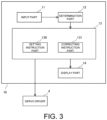
- FIG. 3 is a functional block diagram illustrated by visualizing various functions executed by the adjusting program executed in the processing device 10.
- the processing device 10 has an input part 11, a determination part 12, an instruction part 13, and a display part 14.
- the input part 11 is a functional part that receives the input of a notice announcing that the synchronous control of the control objects 6X and 6Y is performed by the servo driver 4.
- the input part 11 may be made up of a keyboard or a mouse.
- the input part 11 is made up of a touch panel that is common hardware along with the display part 14 (to be described below), and the input of the notice relevant to performing of the synchronous control is performed by an operation of a user.
- the determination part 12 is a functional part that performs a determining process of determining a common control gain between the two control model parts 450X and 450Y, which is set to a predetermined control gain included in the control model parts 450 of both of the servocontrol structures 460 when the synchronous control of the control objects 6X and 6Y is performed, for instance a control gain in the model position control parts 45 and a control gain in the model speed control parts 46.
- This common control gain is a control gain common for the model position control part 45 between the control model parts 450X and 450Y, and a control gain common for the model speed control parts 46 between the control model parts 450X and 450Y.
- the determining process performed by this determination part 12 will be described below based on FIG. 4 .
- the instruction part 13 is a functional part that instructs the servo driver 4 and the display part 14 to reflect a predetermined content on the servo driver 4 and the display part 14.
- the instruction part 13 has a setting instruction part 130 and a correcting instruction part 131.
- the setting instruction part 130 offers a setting instruction to the servo driver 4 such that the common control gain determined by the determination part 12 is set for the corresponding control model part 450.
- the correcting instruction part 131 instructs the servo driver 4 to correct the synchronous motion command signal based on the deviation (the difference) between the actual output trajectory of the device 60 and the ideal output trajectory of the device 60.
- the actual output trajectory is a result of the synchronous control of the control objects 6X and 6Y that is performed using the servocontrol structure 460 for which the common control gain is set according to the instruction of the setting instruction part 130, and the ideal output trajectory is based on the synchronous motion command signal from the standard PLC 5.
- the correcting instruction part 131 gives an instruction for displaying how to perform correction on the display part 14 such that a content of the correction can be grasped by a user.
- the display part 14 is a functional part that performs display relevant to the instruction content from the correcting instruction part 131.
- the display part 14 is not an essential configuration of the processing device 10, and may be provided outside the processing device 10. As described above, the display part 14 may be configured as a touch panel including the function of the input part 11.
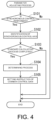
- the parameter adjusting process is different from the standard calculating process, and is performed in consideration of the synchronous control of the control objects 6X and 6Y.
- the parameter adjusting process calculates and determines the control parameter of the servocontrol structure 460, particularly the control gain in the control model part 450, and is repeatedly performed at predetermined time intervals.
- S101 it is determined in S101 whether the synchronous control is performed. If the input of the notice relating to performing of the synchronous control of the control objects 6X and 6Y is performed by the input part 11, the result in S101 is determined to be positive and the parameter adjusting process proceeds to S102, and is otherwise determined to be negative and the parameter adjusting process is terminated.
- S102 based on the synchronous control that is performed, synchronous control axes subjected to the synchronous control are identified. In the example illustrated in FIG. 1 , since only the control objects 6X and 6Y are connected to the servo driver 4, the synchronous control axes are the control objects 6X and 6Y.
- an inquiry is made to the standard PLC 5 from the processing device 10 via the servo driver 4 about the control objects subjected to the synchronous control, and the synchronous control axes are identified based on a reply from the standard PLC 5.
- the inquiry about the control objects subjected to the synchronous control may be made to a user. In that case, a content of the inquiry is displayed on the display part 14, and a reply from the user via the input part 11, namely identification of the control objects subjected to the synchronous control, is obtained.
- the process of S102 is terminated, the result proceeds to S103.
- S103 it is determined whether or not the above standard calculating process is completed in the servo driver 4. That is, it is determined whether or not the calculation and determination of the control parameter of the servocontrol structure 460 in consideration of predetermined properties for each of the control objects 6 are completed.
- the parameter adjusting process proceeds to S104.
- the parameter adjusting process is terminated.
- a determining process due to the determination part 12 is performed.
- the control gain of the control model part 450X set for the control object 6X and the control gain of the control model part 450Y set for the control object 6Y are compared by the standard calculating process, the control gain having a lowest value is determined as the common control gain.
- control gain of the control model part 450X (the control gains inside the model position control part 45 and the model speed control part 46 of the control model part 450X) is determined as the common control gain.
- an instruction to the servo driver 4 is performed by the setting instruction part 130 such that the common control gain determined in S104 is set for the control model parts 450X and 450Y of the control objects 6X and 6Y of the servo driver 4.
- the servo driver 4 sets the common control gain in the control model parts 450X and 450Y according to the setting instruction. Since the common control gain is the control gain on the side of the control object 6X as described above, the control gain in the control model part 450Y of the control object 6Y is adapted to be changed into the common control gain without substantially changing the control gain in the control model part 450X of the control object 6X.
- the output trajectory of the device 60 during the synchronous control when the common control gain is set by the parameter adjusting process of FIG. 4 will be described based on FIG. 5 .
- the synchronous control of the control objects 6X and 6Y is performed such that the ideal output trajectory of the device 60 becomes a circular trajectory.
- a broken line L1 illustrated in FIG. 5 indicates the output trajectory of the device 60 in a state that the common control gain determined by the determination part 12 is not set in common between the control model parts 450 (i.e., in a state that the control gain determined in the standard calculating process is directly set for each of the control model parts 450).
- a solid line L2 illustrated in FIG. 5 indicates the actual output trajectory of the device 60 in a state that the common control gain determined by the determination part 12 is set in common between the control model parts 450.
- the output trajectory of the device 60 becomes very close to the circular trajectory.
- the ideal output trajectory when the output trajectory of the device 60 indicated by this solid line L2 is obtained is indicated by a dot-and-dash line L3.
- the synchronous motion command signal is corrected such that the actual output trajectory indicated by the solid line L2 is matched with the ideal output trajectory indicated by the dot-and-dash line L3.
- the synchronous motion command signal is corrected based on a difference between the actual output trajectory indicated by the solid line L2 and the ideal output trajectory indicated by the dot-and-dash line L3 such that the actual output trajectory is amplified by cancelling the low-pass filter characteristic of the control model part 450.
- the output trajectory of the device 60 based on the corrected synchronous motion command signal becomes an output trajectory indicated by a two-dot chain line L3' .
- a correcting instruction is provided from the processing device 10 to the servo driver 4 by the correcting instruction part 131.
- the servo driver 4 receiving the correcting instruction performs a correcting process according to the correcting instruction on the synchronous motion command signal received from the standard PLC 5, and inputs the corrected synchronous motion command signal to the servocontrol structure 460.
- the actual output trajectory can be very close to the ideal output trajectory indicated by the dot-and-dash line L3.
- the correcting instruction part 131 may provide an instruction to display the corrected content to the display part 14.
- the actual output trajectory indicated by the solid line L2 and the ideal output trajectory indicated by the dot-and-dash line L3 are shown, and the output trajectory indicated by the two-dot chain line L3' indicating the corrected content based on the difference between both of the trajectories is displayed on the display part 14.
- the actual output trajectory displayed on the display part 14 may be an output trajectory obtained by response simulation of the servocontrol structure 460 on which the common control gain is reflected in the processing device 10.
- the functions of the input part 11, the determination part 12, the instruction part 13, and the display part 14 in the processing device 10 may be formed in the standard PLC 5 or the servo driver 4.
- the standard PLC or the servo driver 4 performs the parameter adjusting process illustrated in FIG. 4 .
- the common control gain is set for the respective control model parts 450X and 450Y of the control objects 6X and 6Y of the servo driver 4.
- the device 60 can be the XY table of the machine tool or the conveyance device, etc., or the arm, etc. of the industrial robot having plural joint axes, for example.
- each function of the processing device 10 is formed in a numerical value controller of the machine tool (which is a configuration equivalent to the standard PLC 5) in the former case, or a controller of the robot (which is a configuration equivalent to the standard PLC 5) in the latter case.
Landscapes
- Engineering & Computer Science (AREA)
- Physics & Mathematics (AREA)
- Automation & Control Theory (AREA)
- General Physics & Mathematics (AREA)
- Manufacturing & Machinery (AREA)
- Human Computer Interaction (AREA)
- Robotics (AREA)
- Mechanical Engineering (AREA)
- Software Systems (AREA)
- Medical Informatics (AREA)
- Evolutionary Computation (AREA)
- Computer Vision & Pattern Recognition (AREA)
- Artificial Intelligence (AREA)
- Health & Medical Sciences (AREA)
- Feedback Control In General (AREA)
- Numerical Control (AREA)
- Control Of Electric Motors In General (AREA)
Claims (6)
- Ein Steuerungssystem, umfassend eine Antriebssteuerung (4) und eine Verarbeitungseinrichtung (10), die Antriebssteuerung (4) ist zum Antrieb eines Steuerobjekts (6) ausgebildet, die Verarbeitungseinrichtung (10) ist mit der Antriebssteuerung (4) elektrisch verbunden, das Steuerungssystem ist dadurch gekennzeichnet, dassdie Antriebssteuerung (4) umfasst:eine vorgegebene Steuerstruktur (460), die ein Rückkopplungssystem (400) mit einem oder mehreren Reglern (41, 42, 43), in die ein für eine Bewegung des Steuerobjekts (6) relevantes Rückkopplungssignal eingegeben wird, und einen Steuermodellteil (450) enthält, der einen Modellpositionssteuerteil (45), einen Modellgeschwindigkeitssteuerteil (46) und einen realen Maschinenmodellteil (47) enthält, die Konfigurationen sind, die das Rückkopplungssystem (400) und das Steuerobjekt (6) modellieren, und der so konfiguriert ist, dass er eine Modellfolgesteuerung gemäß den Steuermodellen ermöglicht, die der Steuermodellteil (450) hat; undeinen Rechenteil, das so konfiguriert ist, dass es einen Berechnungsprozess eines vorbestimmten Signals zur Antriebssteuerung des Steuerobjekts (6) in der vorbestimmten Steuerstruktur (460) durchführt,die Antriebssteuerung (4) so konfiguriert ist, dass sie die Antriebssteuerung für eine Vielzahl der Steuerobjekte (6) durchführt, und eine Vielzahl der vorbestimmten Steuerstrukturen (460) aufweist, die jeweils den Steuerobjekten (6) entsprechen, unddie Verarbeitungsvorrichtung (10) umfasst:einen Bestimmungsteil (12), das so konfiguriert ist, dass es einen Bestimmungsprozess zum Bestimmen einer gemeinsamen Steuerverstärkung durchführt, um eine vorbestimmte Steuerverstärkung in dem Steuermodellteil (450) jeder der Vielzahl von vorbestimmten Steuerstrukturen (460), die der Vielzahl von Steuerobjekten (6) entsprechen, auf die gemeinsame Steuerverstärkung für alle Steuermodellteile (450) einzustellen, wenn eine synchrone Steuerung der Vielzahl der Steuerobjekte (6) durchgeführt wird; undeinen Einstellanweisungsteil (130), der so konfiguriert ist, dass er die Antriebssteuerung (4) anweist, die vorbestimmte Steuerverstärkung in dem Steuermodellteil (450), der jeder der Vielzahl der vorbestimmten Steuerstrukturen (460) entspricht, auf die gemeinsame Steuerverstärkung einzustellen,wobei die gemeinsame Steuerverstärkung eine gemeinsame Steuerverstärkung für den Modellpositionssteuerteil (45) zwischen den Steuermodellteilen und eine gemeinsame Steuerverstärkung für die Modellgeschwindigkeitssteuerteile (46) zwischen den Steuermodellteilen ist,vor dem Bestimmungsprozess ein Standardberechnungsprozess durchgeführt wird, um einen vorbestimmten Steuerparameter jedes der Steuerobjekte (6) in den vorbestimmten Steuerstrukturen (460), von denen jedes die vorbestimmte Steuerverstärkung enthält, unabhängig von dem anderen Steuerobjekt (6) auf der Grundlage von vorbestimmten Eigenschaften des Steuerobjekts (6) zu berechnen; unddas Bestimmungsteil (12) eine Verstärkung mit einem niedrigsten Wert unter den vorbestimmten Verstärkungen, die in dem Standardberechnungsprozess für die Mehrzahl der Steuerobjekte (6) berechnet wurden, als die gemeinsame Steuerverstärkung bestimmt.
- Das Steuerungssystem nach Anspruch 1, dadurch gekennzeichnet, dass es ferner einen Korrekturbefehlsteil (131) umfasst, der so konfiguriert ist, dass er die Antriebssteuerung (4) anweist, ein Synchronbewegungs-Befehlssignal, das von einer Host-Steuerung an die Antriebssteuerung (4) geliefert wird, auf der Grundlage eines Unterschieds zwischen einer idealen Ausgangstrajektorie der Vielzahl der Steuerobjekte (6) und einer tatsächlichen Ausgangstrajektorie zu korrigieren, unddie ideale Ausgangstrajektorie auf dem Synchronbewegungs-Befehlssignal für die synchrone Steuerung der Mehrzahl der Steuerobjekte (6) basiert unddie tatsächliche Ausgangstrajektorie ein Ergebnis der synchronen Steuerung der Mehrzahl der Steuerungsobjekte (6) ist, wenn die vorbestimmte Steuerungsverstärkung in dem Steuerungsmodellteil (450) auf die gemeinsame Steuerungsverstärkung eingestellt ist.
- Das Steuerungssystem nach einem der Ansprüche 1 bis 2, dadurch gekennzeichnet, dass die Verarbeitungseinrichtung (10) ein Host-Controller ist, der das synchrone Bewegungsbefehlssignal erzeugt.
- Das Steuerungssystem nach Anspruch 1, dadurch gekennzeichnet, dass die Verarbeitungseinrichtung (10) den Standardberechnungsprozess durchführt.
- Ein Verfahren zum Einstellen von Parametern, geeignet zum Einstellen von Regelparametern der Antriebssteuerung (4) des Regelsystems nach Anspruch 1,
das Verfahren zur Einstellung der Parameter dadurch gekennzeichnet ist, dass es umfasst:Durchführen eines Bestimmungsprozesses zum Bestimmen einer gemeinsamen Steuerverstärkung, um eine vorbestimmte Steuerverstärkung in dem Steuermodellteil (450) jeder der Vielzahl von vorbestimmten Steuerstrukturen (460), die der Vielzahl von Steuerobjekten (6) entsprechen, auf die gemeinsame Steuerverstärkung für alle Steuermodellteile (450) einzustellen, wenn eine synchrone Steuerung der Vielzahl der Steuerobjekte (6) durchgeführt wird; undAnweisen der Antriebssteuerung (4), die vorgegebene Regelverstärkung in dem Regelmodellteil (450), der jeder der mehreren vorgegebenen Regelstrukturen (460) entspricht, auf die gemeinsame Regelverstärkung einzustellen,wobei die gemeinsame Steuerverstärkung eine gemeinsame Steuerverstärkung für den Modellpositionssteuerteil (45) zwischen den Steuermodellteilen und eine gemeinsame Steuerverstärkung für die Modellgeschwindigkeitssteuerteile (46) zwischen den Steuermodellteilen ist,das Parametereinstellungsverfahren vor dem Bestimmungsprozess die Durchführung eines Standardberechnungsprozesses der Berechnung eines vorbestimmten Steuerparameters jedes der Steuerobjekte (6) in den vorbestimmten Steuerstrukturen (460), von denen jedes die vorbestimmte Steuerverstärkung enthält, unabhängig von dem anderen Steuerobjekt (6) auf der Grundlage vorbestimmter Eigenschaften des Steuerobjekts (6) umfasst; undBestimmen einer Verstärkung mit einem niedrigsten Wert unter den vorbestimmten Verstärkungen, die in dem Standardberechnungsprozess für die Mehrzahl der Steuerobjekte (6) berechnet wurden, als die gemeinsame Steuerverstärkung in dem Bestimmungsprozess. - Ein Programm zum Einstellen von Parametern, das geeignet ist, eine Verarbeitungsvorrichtung (10) in die Lage zu versetzen, Prozesse auszuführen, wobei die Verarbeitungsvorrichtung (10) elektrisch mit dem Antriebssteuerung (4) des Steuerungssystems nach Anspruch 1 verbunden ist,
werden die Prozesse unter anderem charakterisiert:ein Verfahren zum Durchführen eines Bestimmungsprozesses zum Bestimmen einer gemeinsamen Steuerverstärkung, um eine vorbestimmte Steuerverstärkung in dem Steuermodellteil (450) jeder der Mehrzahl von vorbestimmten Steuerstrukturen (460), die der Mehrzahl von Steuerobjekten (6) entsprechen, auf die gemeinsame Steuerverstärkung für alle Steuermodellteile (450) einzustellen, wenn eine synchrone Steuerung der Mehrzahl der Steuerobjekte (6) durchgeführt wird; undein Verfahren zum Anweisen der Antriebssteuerung (4), die vorbestimmte Steuerverstärkung in dem Steuermodellteil (450), der jeder der Vielzahl der vorbestimmten Steuerstrukturen (460) entspricht, auf die gemeinsame Steuerverstärkung einzustellen,wobei die gemeinsame Steuerverstärkung eine gemeinsame Steuerverstärkung für den Modellpositionssteuerteil (45) zwischen den Steuermodellteilen und eine gemeinsame Steuerverstärkung für die Modellgeschwindigkeitssteuerteile (46) zwischen den Steuermodellteilen ist,vor dem Bestimmungsprozess ein Standardberechnungsprozess durchgeführt wird, um einen vorbestimmten Steuerparameter jedes der Steuerobjekte (6) in den vorbestimmten Steuerstrukturen (460), von denen jedes die vorbestimmte Steuerverstärkung enthält, unabhängig von dem anderen Steuerobjekt (6) auf der Grundlage von vorbestimmten Eigenschaften des Steuerobjekts (6) zu berechnen; undeine Verstärkung mit einem niedrigsten Wert unter den vorbestimmten Verstärkungen, die in dem Standardberechnungsprozess berechnet werden, für die Mehrzahl der Steuerobjekte (6) als die gemeinsame Steuerverstärkung bestimmt wird.
Applications Claiming Priority (1)
| Application Number | Priority Date | Filing Date | Title |
|---|---|---|---|
| JP2017048013A JP6880853B2 (ja) | 2017-03-14 | 2017-03-14 | 処理装置、パラメータ調整方法、及びパラメータ調整プログラム |
Publications (2)
| Publication Number | Publication Date |
|---|---|
| EP3376312A1 EP3376312A1 (de) | 2018-09-19 |
| EP3376312B1 true EP3376312B1 (de) | 2024-06-26 |
Family
ID=61131922
Family Applications (1)
| Application Number | Title | Priority Date | Filing Date |
|---|---|---|---|
| EP18152099.0A Active EP3376312B1 (de) | 2017-03-14 | 2018-01-17 | Verarbeitungsvorrichtung, parametereinstellverfahren und parametereinstellprogramm |
Country Status (4)
| Country | Link |
|---|---|
| US (1) | US10384344B2 (de) |
| EP (1) | EP3376312B1 (de) |
| JP (1) | JP6880853B2 (de) |
| CN (1) | CN108572622A (de) |
Families Citing this family (6)
| Publication number | Priority date | Publication date | Assignee | Title |
|---|---|---|---|---|
| US11865723B2 (en) * | 2018-04-30 | 2024-01-09 | Vanderbilt University | Control method for a robotic system |
| JP6992719B2 (ja) * | 2018-09-27 | 2022-01-13 | オムロン株式会社 | 制御装置 |
| JP7024752B2 (ja) * | 2019-03-20 | 2022-02-24 | オムロン株式会社 | 制御システムおよび制御プログラム |
| JP7024751B2 (ja) * | 2019-03-20 | 2022-02-24 | オムロン株式会社 | 制御装置および制御プログラム |
| CN110253565B (zh) * | 2019-05-22 | 2021-07-20 | 深圳镁伽科技有限公司 | 运动控制部件、运动控制方法、机器人及运动控制系统 |
| JP7348036B2 (ja) * | 2019-11-19 | 2023-09-20 | ファナック株式会社 | プログラム解析装置 |
Family Cites Families (17)
| Publication number | Priority date | Publication date | Assignee | Title |
|---|---|---|---|---|
| JPS5340486B2 (de) | 1974-02-12 | 1978-10-27 | ||
| CA1080401A (fr) | 1976-08-12 | 1980-07-01 | Maurice Liesse | Machine a clouer, agrafer ou autre du type a percussion par explosion et ses elements |
| DE3207392C2 (de) * | 1982-03-02 | 1985-01-10 | Daimler-Benz Ag, 7000 Stuttgart | Vorrichtung zur selbstanpassenden Stellungsregelung eines Stellgliedes |
| DE3817218A1 (de) * | 1987-06-11 | 1988-12-22 | Mannesmann Ag | Hydraulisches steuersystem fuer einen hydraulikbagger |
| JP3010583B2 (ja) * | 1989-12-31 | 2000-02-21 | 株式会社エスジー | 複数軸の同調制御方式 |
| US6021418A (en) * | 1997-02-18 | 2000-02-01 | International Business Machines Corporation | Apparatus and method for displaying control-objects |
| US6961628B2 (en) * | 1999-04-16 | 2005-11-01 | Siemens Energy & Automation, Inc. | Method and apparatus for tuning compensation parameters |
| JP2006015431A (ja) | 2004-06-30 | 2006-01-19 | Denso Wave Inc | ロボットの制御装置及び制御方法 |
| US9144869B2 (en) * | 2008-12-09 | 2015-09-29 | Mitsubishi Electric Corporation | Machine motion trajectory measuring device, numerically controlled machine tool, and machine motion trajectory measuring method |
| CN101699361B (zh) * | 2009-10-26 | 2013-01-02 | 江俊逢 | 一种标准化控制机 |
| US8819952B2 (en) * | 2010-03-10 | 2014-09-02 | Kuroda Precision Industries Ltd. | Control device for a parallel slider device, control method and measuring device using same |
| US9098077B2 (en) * | 2010-08-25 | 2015-08-04 | Mitsubishi Electric Corporation | Trajectory control device |
| JP5566469B2 (ja) * | 2010-10-27 | 2014-08-06 | 株式会社牧野フライス製作所 | 数値制御方法 |
| JP5140138B2 (ja) * | 2010-11-04 | 2013-02-06 | 本田技研工業株式会社 | 制御装置 |
| JP7049754B2 (ja) * | 2015-02-13 | 2022-04-07 | 山洋電気株式会社 | モータ制御装置 |
| JP6493260B2 (ja) * | 2016-03-14 | 2019-04-03 | オムロン株式会社 | モータ制御装置、モータ制御方法、制御システム、情報処理プログラム、および記録媒体 |
| JP6515844B2 (ja) * | 2016-03-14 | 2019-05-22 | オムロン株式会社 | シミュレーション装置、シミュレーション方法、制御プログラム、および記録媒体 |
-
2017
- 2017-03-14 JP JP2017048013A patent/JP6880853B2/ja active Active
-
2018
- 2018-01-15 US US15/871,096 patent/US10384344B2/en active Active
- 2018-01-16 CN CN201810042291.9A patent/CN108572622A/zh active Pending
- 2018-01-17 EP EP18152099.0A patent/EP3376312B1/de active Active
Also Published As
| Publication number | Publication date |
|---|---|
| JP6880853B2 (ja) | 2021-06-02 |
| CN108572622A (zh) | 2018-09-25 |
| JP2018151889A (ja) | 2018-09-27 |
| EP3376312A1 (de) | 2018-09-19 |
| US10384344B2 (en) | 2019-08-20 |
| US20180264647A1 (en) | 2018-09-20 |
Similar Documents
| Publication | Publication Date | Title |
|---|---|---|
| EP3376312B1 (de) | Verarbeitungsvorrichtung, parametereinstellverfahren und parametereinstellprogramm | |
| CN107848112B (zh) | 机器人系统 | |
| US9149931B2 (en) | Robot system, robot control device and method for controlling robot | |
| JP2020128009A (ja) | ロボットを制御する方法 | |
| JP6988665B2 (ja) | 情報処理システム、情報処理方法、および情報処理プログラム | |
| US20090228138A1 (en) | Numerical controller controlling five-axis processing machine | |
| US20060149421A1 (en) | Robot controller | |
| CN109129413B (zh) | 显示速度的机器人系统 | |
| CN112748699A (zh) | 模拟装置、数值控制装置以及模拟方法 | |
| CN106233213A (zh) | 指令值生成装置 | |
| JP6497401B2 (ja) | シミュレーション装置、シミュレーション方法、及びシミュレーションプログラム | |
| CN107645979B (zh) | 用于使机器人手臂的运动同步的机器人系统 | |
| WO2016051555A1 (ja) | 数値制御装置 | |
| CN110337617B (zh) | 控制系统 | |
| CN111405966A (zh) | 用于控制机器人组的方法和控制装置 | |
| WO2022264338A1 (ja) | 制御装置、干渉チェック装置、及び制御システム | |
| CN119645137B (zh) | 一种多轴连续跟踪动态主轴同步到达的控制方法及装置 | |
| JP2002312006A (ja) | 制御装置および制御システム | |
| CN120882539A (zh) | 动作程序生成装置以及动作程序生成方法 | |
| US20240408753A1 (en) | Program creation device, control device, and machine system | |
| WO2026003936A1 (ja) | モータ駆動制御装置、及びコンピュータが読み取り可能な記憶媒体 | |
| JP2006099310A (ja) | ロボットシミュレーション装置および方法 | |
| CN118043750A (zh) | 控制装置以及记录有程序的计算机可读取的记录介质 | |
| JP6666234B2 (ja) | 数値制御装置 | |
| CN116512278A (zh) | 基于虚拟目标点的机械臂末端直线运动控制方法及系统 |
Legal Events
| Date | Code | Title | Description |
|---|---|---|---|
| PUAI | Public reference made under article 153(3) epc to a published international application that has entered the european phase |
Free format text: ORIGINAL CODE: 0009012 |
|
| STAA | Information on the status of an ep patent application or granted ep patent |
Free format text: STATUS: REQUEST FOR EXAMINATION WAS MADE |
|
| 17P | Request for examination filed |
Effective date: 20180425 |
|
| AK | Designated contracting states |
Kind code of ref document: A1 Designated state(s): AL AT BE BG CH CY CZ DE DK EE ES FI FR GB GR HR HU IE IS IT LI LT LU LV MC MK MT NL NO PL PT RO RS SE SI SK SM TR |
|
| AX | Request for extension of the european patent |
Extension state: BA ME |
|
| RBV | Designated contracting states (corrected) |
Designated state(s): AL AT BE BG CH CY CZ DE DK EE ES FI FR GB GR HR HU IE IS IT LI LT LU LV MC MK MT NL NO PL PT RO RS SE SI SK SM TR |
|
| STAA | Information on the status of an ep patent application or granted ep patent |
Free format text: STATUS: EXAMINATION IS IN PROGRESS |
|
| 17Q | First examination report despatched |
Effective date: 20210329 |
|
| GRAP | Despatch of communication of intention to grant a patent |
Free format text: ORIGINAL CODE: EPIDOSNIGR1 |
|
| STAA | Information on the status of an ep patent application or granted ep patent |
Free format text: STATUS: GRANT OF PATENT IS INTENDED |
|
| INTG | Intention to grant announced |
Effective date: 20240320 |
|
| RIN1 | Information on inventor provided before grant (corrected) |
Inventor name: EGI, MAMORU Inventor name: SATO, FUMIAKI |
|
| GRAS | Grant fee paid |
Free format text: ORIGINAL CODE: EPIDOSNIGR3 |
|
| GRAA | (expected) grant |
Free format text: ORIGINAL CODE: 0009210 |
|
| STAA | Information on the status of an ep patent application or granted ep patent |
Free format text: STATUS: THE PATENT HAS BEEN GRANTED |
|
| AK | Designated contracting states |
Kind code of ref document: B1 Designated state(s): AL AT BE BG CH CY CZ DE DK EE ES FI FR GB GR HR HU IE IS IT LI LT LU LV MC MK MT NL NO PL PT RO RS SE SI SK SM TR |
|
| REG | Reference to a national code |
Ref country code: GB Ref legal event code: FG4D |
|
| REG | Reference to a national code |
Ref country code: CH Ref legal event code: EP |
|
| REG | Reference to a national code |
Ref country code: DE Ref legal event code: R096 Ref document number: 602018070935 Country of ref document: DE |
|
| PG25 | Lapsed in a contracting state [announced via postgrant information from national office to epo] |
Ref country code: BG Free format text: LAPSE BECAUSE OF FAILURE TO SUBMIT A TRANSLATION OF THE DESCRIPTION OR TO PAY THE FEE WITHIN THE PRESCRIBED TIME-LIMIT Effective date: 20240626 |
|
| PG25 | Lapsed in a contracting state [announced via postgrant information from national office to epo] |
Ref country code: HR Free format text: LAPSE BECAUSE OF FAILURE TO SUBMIT A TRANSLATION OF THE DESCRIPTION OR TO PAY THE FEE WITHIN THE PRESCRIBED TIME-LIMIT Effective date: 20240626 Ref country code: FI Free format text: LAPSE BECAUSE OF FAILURE TO SUBMIT A TRANSLATION OF THE DESCRIPTION OR TO PAY THE FEE WITHIN THE PRESCRIBED TIME-LIMIT Effective date: 20240626 |
|
| REG | Reference to a national code |
Ref country code: LT Ref legal event code: MG9D |
|
| PG25 | Lapsed in a contracting state [announced via postgrant information from national office to epo] |
Ref country code: GR Free format text: LAPSE BECAUSE OF FAILURE TO SUBMIT A TRANSLATION OF THE DESCRIPTION OR TO PAY THE FEE WITHIN THE PRESCRIBED TIME-LIMIT Effective date: 20240927 |
|
| PG25 | Lapsed in a contracting state [announced via postgrant information from national office to epo] |
Ref country code: LV Free format text: LAPSE BECAUSE OF FAILURE TO SUBMIT A TRANSLATION OF THE DESCRIPTION OR TO PAY THE FEE WITHIN THE PRESCRIBED TIME-LIMIT Effective date: 20240626 |
|
| REG | Reference to a national code |
Ref country code: NL Ref legal event code: MP Effective date: 20240626 |
|
| PG25 | Lapsed in a contracting state [announced via postgrant information from national office to epo] |
Ref country code: NO Free format text: LAPSE BECAUSE OF FAILURE TO SUBMIT A TRANSLATION OF THE DESCRIPTION OR TO PAY THE FEE WITHIN THE PRESCRIBED TIME-LIMIT Effective date: 20240926 Ref country code: LV Free format text: LAPSE BECAUSE OF FAILURE TO SUBMIT A TRANSLATION OF THE DESCRIPTION OR TO PAY THE FEE WITHIN THE PRESCRIBED TIME-LIMIT Effective date: 20240626 Ref country code: HR Free format text: LAPSE BECAUSE OF FAILURE TO SUBMIT A TRANSLATION OF THE DESCRIPTION OR TO PAY THE FEE WITHIN THE PRESCRIBED TIME-LIMIT Effective date: 20240626 Ref country code: GR Free format text: LAPSE BECAUSE OF FAILURE TO SUBMIT A TRANSLATION OF THE DESCRIPTION OR TO PAY THE FEE WITHIN THE PRESCRIBED TIME-LIMIT Effective date: 20240927 Ref country code: FI Free format text: LAPSE BECAUSE OF FAILURE TO SUBMIT A TRANSLATION OF THE DESCRIPTION OR TO PAY THE FEE WITHIN THE PRESCRIBED TIME-LIMIT Effective date: 20240626 Ref country code: BG Free format text: LAPSE BECAUSE OF FAILURE TO SUBMIT A TRANSLATION OF THE DESCRIPTION OR TO PAY THE FEE WITHIN THE PRESCRIBED TIME-LIMIT Effective date: 20240626 Ref country code: RS Free format text: LAPSE BECAUSE OF FAILURE TO SUBMIT A TRANSLATION OF THE DESCRIPTION OR TO PAY THE FEE WITHIN THE PRESCRIBED TIME-LIMIT Effective date: 20240926 |
|
| PG25 | Lapsed in a contracting state [announced via postgrant information from national office to epo] |
Ref country code: NL Free format text: LAPSE BECAUSE OF FAILURE TO SUBMIT A TRANSLATION OF THE DESCRIPTION OR TO PAY THE FEE WITHIN THE PRESCRIBED TIME-LIMIT Effective date: 20240626 |
|
| REG | Reference to a national code |
Ref country code: AT Ref legal event code: MK05 Ref document number: 1698217 Country of ref document: AT Kind code of ref document: T Effective date: 20240626 |
|
| PG25 | Lapsed in a contracting state [announced via postgrant information from national office to epo] |
Ref country code: NL Free format text: LAPSE BECAUSE OF FAILURE TO SUBMIT A TRANSLATION OF THE DESCRIPTION OR TO PAY THE FEE WITHIN THE PRESCRIBED TIME-LIMIT Effective date: 20240626 |
|
| PG25 | Lapsed in a contracting state [announced via postgrant information from national office to epo] |
Ref country code: PT Free format text: LAPSE BECAUSE OF FAILURE TO SUBMIT A TRANSLATION OF THE DESCRIPTION OR TO PAY THE FEE WITHIN THE PRESCRIBED TIME-LIMIT Effective date: 20241028 |
|
| PG25 | Lapsed in a contracting state [announced via postgrant information from national office to epo] |
Ref country code: PT Free format text: LAPSE BECAUSE OF FAILURE TO SUBMIT A TRANSLATION OF THE DESCRIPTION OR TO PAY THE FEE WITHIN THE PRESCRIBED TIME-LIMIT Effective date: 20241028 |
|
| PG25 | Lapsed in a contracting state [announced via postgrant information from national office to epo] |
Ref country code: PL Free format text: LAPSE BECAUSE OF FAILURE TO SUBMIT A TRANSLATION OF THE DESCRIPTION OR TO PAY THE FEE WITHIN THE PRESCRIBED TIME-LIMIT Effective date: 20240626 |
|
| PG25 | Lapsed in a contracting state [announced via postgrant information from national office to epo] |
Ref country code: EE Free format text: LAPSE BECAUSE OF FAILURE TO SUBMIT A TRANSLATION OF THE DESCRIPTION OR TO PAY THE FEE WITHIN THE PRESCRIBED TIME-LIMIT Effective date: 20240626 |
|
| PG25 | Lapsed in a contracting state [announced via postgrant information from national office to epo] |
Ref country code: IS Free format text: LAPSE BECAUSE OF FAILURE TO SUBMIT A TRANSLATION OF THE DESCRIPTION OR TO PAY THE FEE WITHIN THE PRESCRIBED TIME-LIMIT Effective date: 20241026 Ref country code: AT Free format text: LAPSE BECAUSE OF FAILURE TO SUBMIT A TRANSLATION OF THE DESCRIPTION OR TO PAY THE FEE WITHIN THE PRESCRIBED TIME-LIMIT Effective date: 20240626 |
|
| PG25 | Lapsed in a contracting state [announced via postgrant information from national office to epo] |
Ref country code: CZ Free format text: LAPSE BECAUSE OF FAILURE TO SUBMIT A TRANSLATION OF THE DESCRIPTION OR TO PAY THE FEE WITHIN THE PRESCRIBED TIME-LIMIT Effective date: 20240626 |
|
| PG25 | Lapsed in a contracting state [announced via postgrant information from national office to epo] |
Ref country code: SK Free format text: LAPSE BECAUSE OF FAILURE TO SUBMIT A TRANSLATION OF THE DESCRIPTION OR TO PAY THE FEE WITHIN THE PRESCRIBED TIME-LIMIT Effective date: 20240626 Ref country code: RO Free format text: LAPSE BECAUSE OF FAILURE TO SUBMIT A TRANSLATION OF THE DESCRIPTION OR TO PAY THE FEE WITHIN THE PRESCRIBED TIME-LIMIT Effective date: 20240626 |
|
| PG25 | Lapsed in a contracting state [announced via postgrant information from national office to epo] |
Ref country code: ES Free format text: LAPSE BECAUSE OF FAILURE TO SUBMIT A TRANSLATION OF THE DESCRIPTION OR TO PAY THE FEE WITHIN THE PRESCRIBED TIME-LIMIT Effective date: 20240626 Ref country code: SM Free format text: LAPSE BECAUSE OF FAILURE TO SUBMIT A TRANSLATION OF THE DESCRIPTION OR TO PAY THE FEE WITHIN THE PRESCRIBED TIME-LIMIT Effective date: 20240626 |
|
| PG25 | Lapsed in a contracting state [announced via postgrant information from national office to epo] |
Ref country code: SM Free format text: LAPSE BECAUSE OF FAILURE TO SUBMIT A TRANSLATION OF THE DESCRIPTION OR TO PAY THE FEE WITHIN THE PRESCRIBED TIME-LIMIT Effective date: 20240626 Ref country code: SK Free format text: LAPSE BECAUSE OF FAILURE TO SUBMIT A TRANSLATION OF THE DESCRIPTION OR TO PAY THE FEE WITHIN THE PRESCRIBED TIME-LIMIT Effective date: 20240626 Ref country code: RO Free format text: LAPSE BECAUSE OF FAILURE TO SUBMIT A TRANSLATION OF THE DESCRIPTION OR TO PAY THE FEE WITHIN THE PRESCRIBED TIME-LIMIT Effective date: 20240626 Ref country code: PL Free format text: LAPSE BECAUSE OF FAILURE TO SUBMIT A TRANSLATION OF THE DESCRIPTION OR TO PAY THE FEE WITHIN THE PRESCRIBED TIME-LIMIT Effective date: 20240626 Ref country code: IS Free format text: LAPSE BECAUSE OF FAILURE TO SUBMIT A TRANSLATION OF THE DESCRIPTION OR TO PAY THE FEE WITHIN THE PRESCRIBED TIME-LIMIT Effective date: 20241026 Ref country code: ES Free format text: LAPSE BECAUSE OF FAILURE TO SUBMIT A TRANSLATION OF THE DESCRIPTION OR TO PAY THE FEE WITHIN THE PRESCRIBED TIME-LIMIT Effective date: 20240626 Ref country code: EE Free format text: LAPSE BECAUSE OF FAILURE TO SUBMIT A TRANSLATION OF THE DESCRIPTION OR TO PAY THE FEE WITHIN THE PRESCRIBED TIME-LIMIT Effective date: 20240626 Ref country code: CZ Free format text: LAPSE BECAUSE OF FAILURE TO SUBMIT A TRANSLATION OF THE DESCRIPTION OR TO PAY THE FEE WITHIN THE PRESCRIBED TIME-LIMIT Effective date: 20240626 Ref country code: AT Free format text: LAPSE BECAUSE OF FAILURE TO SUBMIT A TRANSLATION OF THE DESCRIPTION OR TO PAY THE FEE WITHIN THE PRESCRIBED TIME-LIMIT Effective date: 20240626 |
|
| PG25 | Lapsed in a contracting state [announced via postgrant information from national office to epo] |
Ref country code: IT Free format text: LAPSE BECAUSE OF FAILURE TO SUBMIT A TRANSLATION OF THE DESCRIPTION OR TO PAY THE FEE WITHIN THE PRESCRIBED TIME-LIMIT Effective date: 20240626 |
|
| REG | Reference to a national code |
Ref country code: DE Ref legal event code: R097 Ref document number: 602018070935 Country of ref document: DE |
|
| PG25 | Lapsed in a contracting state [announced via postgrant information from national office to epo] |
Ref country code: DK Free format text: LAPSE BECAUSE OF FAILURE TO SUBMIT A TRANSLATION OF THE DESCRIPTION OR TO PAY THE FEE WITHIN THE PRESCRIBED TIME-LIMIT Effective date: 20240626 |
|
| PLBE | No opposition filed within time limit |
Free format text: ORIGINAL CODE: 0009261 |
|
| STAA | Information on the status of an ep patent application or granted ep patent |
Free format text: STATUS: NO OPPOSITION FILED WITHIN TIME LIMIT |
|
| 26N | No opposition filed |
Effective date: 20250327 |
|
| REG | Reference to a national code |
Ref country code: CH Ref legal event code: PL |
|
| PG25 | Lapsed in a contracting state [announced via postgrant information from national office to epo] |
Ref country code: SE Free format text: LAPSE BECAUSE OF FAILURE TO SUBMIT A TRANSLATION OF THE DESCRIPTION OR TO PAY THE FEE WITHIN THE PRESCRIBED TIME-LIMIT Effective date: 20240626 |
|
| PG25 | Lapsed in a contracting state [announced via postgrant information from national office to epo] |
Ref country code: MC Free format text: LAPSE BECAUSE OF FAILURE TO SUBMIT A TRANSLATION OF THE DESCRIPTION OR TO PAY THE FEE WITHIN THE PRESCRIBED TIME-LIMIT Effective date: 20240626 Ref country code: LU Free format text: LAPSE BECAUSE OF NON-PAYMENT OF DUE FEES Effective date: 20250117 |
|
| GBPC | Gb: european patent ceased through non-payment of renewal fee |
Effective date: 20250117 |
|
| PG25 | Lapsed in a contracting state [announced via postgrant information from national office to epo] |
Ref country code: BE Free format text: LAPSE BECAUSE OF NON-PAYMENT OF DUE FEES Effective date: 20250131 Ref country code: GB Free format text: LAPSE BECAUSE OF NON-PAYMENT OF DUE FEES Effective date: 20250117 |
|
| PG25 | Lapsed in a contracting state [announced via postgrant information from national office to epo] |
Ref country code: FR Free format text: LAPSE BECAUSE OF NON-PAYMENT OF DUE FEES Effective date: 20250131 |
|
| PG25 | Lapsed in a contracting state [announced via postgrant information from national office to epo] |
Ref country code: CH Free format text: LAPSE BECAUSE OF NON-PAYMENT OF DUE FEES Effective date: 20250131 |
|
| REG | Reference to a national code |
Ref country code: BE Ref legal event code: MM Effective date: 20250131 |
|
| PG25 | Lapsed in a contracting state [announced via postgrant information from national office to epo] |
Ref country code: IE Free format text: LAPSE BECAUSE OF NON-PAYMENT OF DUE FEES Effective date: 20250117 |
|
| PGFP | Annual fee paid to national office [announced via postgrant information from national office to epo] |
Ref country code: DE Payment date: 20260120 Year of fee payment: 9 |