EP3369458B1 - Verfahren zur auswertung des bestrahlungswinkels eines strahls - Google Patents
Verfahren zur auswertung des bestrahlungswinkels eines strahls Download PDFInfo
- Publication number
- EP3369458B1 EP3369458B1 EP16872229.6A EP16872229A EP3369458B1 EP 3369458 B1 EP3369458 B1 EP 3369458B1 EP 16872229 A EP16872229 A EP 16872229A EP 3369458 B1 EP3369458 B1 EP 3369458B1
- Authority
- EP
- European Patent Office
- Prior art keywords
- tumor
- irradiation
- organ
- irradiation angle
- evaluation coefficient
- Prior art date
- Legal status (The legal status is an assumption and is not a legal conclusion. Google has not performed a legal analysis and makes no representation as to the accuracy of the status listed.)
- Active
Links
Images


Classifications
-
- A—HUMAN NECESSITIES
- A61—MEDICAL OR VETERINARY SCIENCE; HYGIENE
- A61N—ELECTROTHERAPY; MAGNETOTHERAPY; RADIATION THERAPY; ULTRASOUND THERAPY
- A61N5/00—Radiation therapy
- A61N5/10—X-ray therapy; Gamma-ray therapy; Particle-irradiation therapy
- A61N5/1001—X-ray therapy; Gamma-ray therapy; Particle-irradiation therapy using radiation sources introduced into or applied onto the body; brachytherapy
- A61N5/1007—Arrangements or means for the introduction of sources into the body
-
- G—PHYSICS
- G21—NUCLEAR PHYSICS; NUCLEAR ENGINEERING
- G21K—HANDLING OF PARTICLES OR IONISING RADIATION NOT OTHERWISE PROVIDED FOR; IRRADIATION DEVICES; GAMMA RAY OR X-RAY MICROSCOPES
- G21K5/00—Irradiation devices
- G21K5/04—Irradiation devices with beam-forming means
-
- A—HUMAN NECESSITIES
- A61—MEDICAL OR VETERINARY SCIENCE; HYGIENE
- A61N—ELECTROTHERAPY; MAGNETOTHERAPY; RADIATION THERAPY; ULTRASOUND THERAPY
- A61N5/00—Radiation therapy
- A61N5/10—X-ray therapy; Gamma-ray therapy; Particle-irradiation therapy
- A61N5/1048—Monitoring, verifying, controlling systems and methods
- A61N5/1071—Monitoring, verifying, controlling systems and methods for verifying the dose delivered by the treatment plan
-
- A—HUMAN NECESSITIES
- A61—MEDICAL OR VETERINARY SCIENCE; HYGIENE
- A61N—ELECTROTHERAPY; MAGNETOTHERAPY; RADIATION THERAPY; ULTRASOUND THERAPY
- A61N5/00—Radiation therapy
- A61N5/10—X-ray therapy; Gamma-ray therapy; Particle-irradiation therapy
-
- A—HUMAN NECESSITIES
- A61—MEDICAL OR VETERINARY SCIENCE; HYGIENE
- A61N—ELECTROTHERAPY; MAGNETOTHERAPY; RADIATION THERAPY; ULTRASOUND THERAPY
- A61N5/00—Radiation therapy
- A61N5/10—X-ray therapy; Gamma-ray therapy; Particle-irradiation therapy
- A61N5/1001—X-ray therapy; Gamma-ray therapy; Particle-irradiation therapy using radiation sources introduced into or applied onto the body; brachytherapy
- A61N5/1028—X-ray therapy; Gamma-ray therapy; Particle-irradiation therapy using radiation sources introduced into or applied onto the body; brachytherapy using radiation sources applied onto the body
-
- A—HUMAN NECESSITIES
- A61—MEDICAL OR VETERINARY SCIENCE; HYGIENE
- A61N—ELECTROTHERAPY; MAGNETOTHERAPY; RADIATION THERAPY; ULTRASOUND THERAPY
- A61N5/00—Radiation therapy
- A61N5/10—X-ray therapy; Gamma-ray therapy; Particle-irradiation therapy
- A61N5/103—Treatment planning systems
-
- A—HUMAN NECESSITIES
- A61—MEDICAL OR VETERINARY SCIENCE; HYGIENE
- A61N—ELECTROTHERAPY; MAGNETOTHERAPY; RADIATION THERAPY; ULTRASOUND THERAPY
- A61N5/00—Radiation therapy
- A61N5/10—X-ray therapy; Gamma-ray therapy; Particle-irradiation therapy
- A61N5/103—Treatment planning systems
- A61N5/1031—Treatment planning systems using a specific method of dose optimization
-
- A—HUMAN NECESSITIES
- A61—MEDICAL OR VETERINARY SCIENCE; HYGIENE
- A61N—ELECTROTHERAPY; MAGNETOTHERAPY; RADIATION THERAPY; ULTRASOUND THERAPY
- A61N5/00—Radiation therapy
- A61N5/10—X-ray therapy; Gamma-ray therapy; Particle-irradiation therapy
- A61N5/1048—Monitoring, verifying, controlling systems and methods
- A61N5/1064—Monitoring, verifying, controlling systems and methods for adjusting radiation treatment in response to monitoring
- A61N5/1065—Beam adjustment
-
- A—HUMAN NECESSITIES
- A61—MEDICAL OR VETERINARY SCIENCE; HYGIENE
- A61N—ELECTROTHERAPY; MAGNETOTHERAPY; RADIATION THERAPY; ULTRASOUND THERAPY
- A61N5/00—Radiation therapy
- A61N5/10—X-ray therapy; Gamma-ray therapy; Particle-irradiation therapy
- A61N5/1077—Beam delivery systems
-
- A—HUMAN NECESSITIES
- A61—MEDICAL OR VETERINARY SCIENCE; HYGIENE
- A61N—ELECTROTHERAPY; MAGNETOTHERAPY; RADIATION THERAPY; ULTRASOUND THERAPY
- A61N5/00—Radiation therapy
- A61N5/10—X-ray therapy; Gamma-ray therapy; Particle-irradiation therapy
- A61N2005/1085—X-ray therapy; Gamma-ray therapy; Particle-irradiation therapy characterised by the type of particles applied to the patient
- A61N2005/109—Neutrons
-
- G—PHYSICS
- G06—COMPUTING OR CALCULATING; COUNTING
- G06T—IMAGE DATA PROCESSING OR GENERATION, IN GENERAL
- G06T2207/00—Indexing scheme for image analysis or image enhancement
- G06T2207/10—Image acquisition modality
- G06T2207/10072—Tomographic images
-
- G—PHYSICS
- G06—COMPUTING OR CALCULATING; COUNTING
- G06T—IMAGE DATA PROCESSING OR GENERATION, IN GENERAL
- G06T2207/00—Indexing scheme for image analysis or image enhancement
- G06T2207/30—Subject of image; Context of image processing
- G06T2207/30004—Biomedical image processing
- G06T2207/30096—Tumor; Lesion
Definitions
- the present disclosure relates to a method for evaluating irradiating angles, and, more particularly, to a method for evaluating irradiating angles of a beam.
- the disclosure relates to a method for determining an irradiation angle for treating a tumor in a body including evaluating sample irradiation angles of a beam defined as being the vector direction from an irradiation point of the beam to a pre-set point of the tumor, the method comprising: a step of sampling the sample irradiation angles of the beam by selecting the irradiation points; a step of calculating the track of the beam passing through the body along an irradiation track to an effective treatment depth of each sample irradiation angle; and a step of determining the irradiation angle from the sample irradiation angles.
- US 2007/0034812 A1 discloses a method of the generic type defined in the preceding chapter. Specifically US 2007/0034812 A1 discloses a method of optimizing a laser-accelerated proton radiation dose to a targeted region are disclosed. Disclosed methods include providing a plurality of modulated poly-energetic proton beamlets and irradiating the targeted region with the plurality of modulated beamlets. An intensity or weight of each beamlet may be adjusted accordingly to achieve a uniform and conform dose distribution.
- CN 106474634 A discloses a geometric model building method based on medical image data.
- the method comprises steps of reading medical image data, defining a tissue type through the conversion relationship between the medical image data and tissue types, deciding a tissue clustering number, defining the tissue density through the conversion relationship between the medical image data and densities, building a 3D coding matrix with the tissue and the density information, generating a geometric model and judging whether the medical image voxel is in an ROI boundary.
- radiotherapy As atomics moves ahead, such radiotherapy as Cobalt-60, linear accelerators and electron beams has been one of major means to cancer therapy.
- conventional photon or electron therapy has been undergone physical restrictions of radioactive rays; for example, many normal tissues on a beam path will be damaged as tumor cells are destroyed.
- sensitivity of tumor cells to the radioactive rays differs greatly, so in most cases, conventional radiotherapy falls short of treatment effectiveness on radioresistant malignant tumors (such as glioblastoma multiforme and melanoma).
- BNCT boron neutron capture therapy
- BNCT takes advantage that the boron ( 10 B)-containing pharmaceuticals have high neutron capture cross section and produces 4 He and 7 Li heavy charged particles through 10 B(n, ⁇ ) 7 Li neutron capture and nuclear fission reaction.
- FIGS. 1 and 2 a schematic drawing of BNCT and a nuclear reaction formula of 10 B (n, ⁇ ) 7 Li neutron capture are shown, the two charged particles, with average energy at about 2.33MeV, are of linear energy transfer (LET) and short-range characteristics. LET and range of the alpha particle are 150keV/micrometer and 8 micrometers respectively while those of the heavy charged particle 7 Li are 175keV/micrometer and 5 micrometers respectively, and the total range of the two particles approximately amounts to a cell size. Therefore, radiation damage to living organisms may be restricted at the cells' level. When the boronated pharmaceuticals are gathered in the tumor cells selectively, only the tumor cells will be destroyed locally with a proper neutron source on the premise of having no major normal tissue damage.
- the geometric angle of irradiation is determined and defined artificially based on experience. Due to the structure of the human body is quite complex and the sensitivity of various tissues or organs to radiation is also different. Therefore, a better angle of irradiation is likely to be ignored by relying on human judgment only, resulting in poor therapeutic effect. In order to achieve the optimization of the therapeutic effect, the irradiation angle of the beam is an essential part to be considered.
- the inventor of the present disclosure developed an executable method for optimizing the irradiation angle, which can be used as a favorable reference, and in combination with doctor's experience, for finding out the best irradiation angle as far as possible.
- Implementation of the routing optimization is carried out by assigning multiple lines of tracks from the tumor to the body surface, and calculating the evaluation coefficient of individual track taking into account the proportion of organs in the track and their radiation sensitive coefficients, by a forward calculation method (from the body surface to the tumor) or a reverse calculation method (from the tumor to the body surface) with selecting points sequentially or randomly.
- the evaluation score for the incidence into the tumor from each point on the surface can be calculated, which can be fused with 2D or 3D images to help the user find the best point of incidence.
- the present invention provides a method for determining an irradiation angle for treating a tumor in a body including evaluating sample irradiation angles of a beam defined as being the vector direction from an irradiation point of the beam to a pre-set point of the tumor, the method comprising: a step of sampling the sample irradiation angles of the beam by selecting the irradiation points; a step of calculating the track of the beam passing through the body along an irradiation track to an effective treatment depth for each sample irradiation angle; and a step of determining the irradiation angle from the sample irradiation angles.
- the beam is a neutron beam, and it is determined for each sample irradiation angle whether the tumor is fully covered within the effective treatment depth: if yes, entering steps of calculating an evaluation coefficient of the sampled irradiation angle, recording irradiation conditions and calculating results, and returning to the step of sampling the irradiation angle of the beam; and if no, entering a step of setting a worst evaluation coefficient of the irradiation angle, and returning to the step of sampling the irradiation angle of the beam.
- the method for evaluating the irradiation angle of the beam it can be clearly recognized whether the performance of the beam irradiating at a certain position and at a certain angle is good or bad, thus providing strong data support for the doctor or the physicists to decide on the irradiation mode.
- the "pre-set point of the tumor" can be set as the centroid of the tumor or the deepest point in the tumor, and the location of the specific pre-set point of the tumor can be adjusted according to the user's needs.
- the irradiation angle of the beam is defined as the vector direction from the irradiation point of the beam to the centroid of the tumor or the deepest point in the tumor. Certainly, it is well known to those skilled in the art that the irradiation angle of the beam can also be customized according to user's needs.
- the above vector direction includes the direction of the positive vector from the irradiation point of the beam to the pre-set point of the tumor, and the direction of the negative vector.
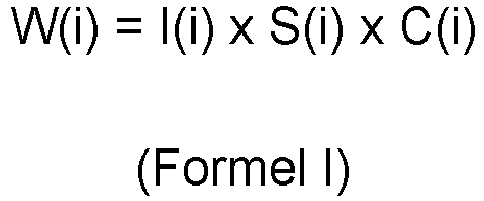
- I(i), S(i) and C(i) are the beam intensity, the radiation sensitive coefficient of the organ (i) and the boron concentration of the organ (i), respectively.
- the evaluation coefficient that is, the ratio of organ evaluation coefficient to tumor evaluation coefficient, can also be used.
- the “medical image data” may be Magnetic Resonance Imaging (MRI) or Computed Tomography (CT) or Positron Emission computed Tomography (PET-CT).
- MRI Magnetic Resonance Imaging
- CT Computed Tomography
- PET-CT Positron Emission computed Tomography
- the step of reading medical image data is a step of reading at least one kind of medical image data selected from the group consisting of CT image data, MRI image data, or PET-CT image data.
- Organ track refers to a beam track through skin, bone, tissue and tumor when irradiated a beam at a certain position and at a certain angle.
- the organ track is a track of a beam sequentially passing through the skin, bone, tissue, tumor, tissue, bone, and skin.
- the weighting factor of the tumor may not be included.
- the organ track is a track of a beam sequentially through the skin, skull, brain tissue, tumor, brain tissue, skull, and skin. This clearly shows the track of the beam through the brain.
- the organ track may be a beam sequentially through other part of the human body other than the brain, for example, the liver.
- the method for evaluating the irradiation angle of the beam further includes a step of displaying each evaluation coefficient in a 3D image.
- a step of displaying each evaluation coefficient in a 3D image can also display each evaluation coefficient in other ways, as long as the doctor or the physicists can identify each evaluation coefficient displayed.
- the “beam” may be one or more radioactive beams.
- the beam is a mixed beam of neutron beam and gamma beam, or may be an individual neutron beam, an individual proton beam or an individual heavy particle beam.
- the method for evaluating the irradiation angle of the beam further includes a step of reading the medical image data; a step of defining or reading the profile of an organ, tissue and tumor; and a step of defining the material and the density of the organ, tissue and tumor.
- a method for evaluating the irradiation angle of a beam for neutron capture therapy is taken as an embodiment of the present disclosure.
- the following will briefly introduce neutron capture therapy, especially boron neutron capture therapy.
- Neutron capture therapy has been increasingly practiced as an effective cancer curing means in recent years, and BNCT is the most common.
- Neutrons for NCT may be supplied by nuclear reactors or accelerators.
- its principal components include, in general, an accelerator for accelerating charged particles (such as protons and deuterons), a target, a heat removal system and a beam shaping assembly.
- the accelerated charged particles interact with the metal target to produce the neutrons, and suitable nuclear reactions are always determined according to such characteristics as desired neutron yield and energy, available accelerated charged particle energy and current and materialization of the metal target, among which the most discussed two are 7 Li (p, n) 7 Be and 9 Be (p, n) 9 B and both are endothermic reaction.
- BNCT takes advantage that the boron ( 10 B)-containing pharmaceuticals have high neutron capture cross section and produces 4 He and 7 Li heavy charged particles through 10 B(n, ⁇ ) 7 Li neutron capture and nuclear fission reaction.
- FIGS. 1 and 2 a schematic drawing of BNCT and a nuclear reaction formula of 10 B (n, ⁇ ) 7 Li neutron capture are shown, the two charged particles, with average energy at about 2.33MeV, are of linear energy transfer (LET) and short-range characteristics. LET and range of the alpha particle are 150keV/micrometer and 8 micrometers respectively while those of the heavy charged particle 7 Li are 175keV/micrometer and 5 micrometers respectively, and the total range of the two particles approximately amounts to a cell size. Therefore, radiation damage to living organisms may be restricted at the cells' level. When the boronated pharmaceuticals are gathered in the tumor cells selectively, only the tumor cells will be destroyed locally with a proper neutron source on the premise of having no major normal tissue damage.
- BNCT neutron sources are from the nuclear reactor or the nuclear reactions between the accelerator charged particles and the target, only mixed radiation fields are produced, that is, beams include neutrons and photons having energies from low to high.
- beams include neutrons and photons having energies from low to high.
- dose is calculated using a human head tissue prosthesis in order to understand dose distribution of the neutrons in the human body. The prosthesis beam quality factors are later used as design reference to the neutron beams, which is elaborated hereinafter.
- the International Atomic Energy Agency has given five suggestions on the air beam quality factors for the clinical BNCT neutron sources.
- the suggestions may be used for differentiating the neutron sources and as reference for selecting neutron production pathways and designing the beam shaping assembly, and are shown as follows:
- the epithermal neutron energy range is between 0.5eV and 40keV
- the thermal neutron energy range is lower than 0.5eV
- the fast neutron energy range is higher than 40keV.
- the epithermal neutron flux and the concentration of the boronated pharmaceuticals at the tumor site codetermine clinical therapy time. If the boronated pharmaceuticals at the tumor site are high enough in concentration, the epithermal neutron flux may be reduced. On the contrary, if the concentration of the boronated pharmaceuticals in the tumors is at a low level, it is required that the epithermal neutrons in the high epithermal neutron flux should provide enough doses to the tumors.
- the given standard on the epithermal neutron flux from IAEA is more than 10 9 epithermal neutrons per square centimeter per second. In this flux of neutron beams, therapy time may be approximately controlled shorter than an hour with the boronated pharmaceuticals. Thus, except that patients are well positioned and feel more comfortable in shorter therapy time, and limited residence time of the boronated pharmaceuticals in the tumors may be effectively utilized.
- Gamma-ray long-range penetration radiation will selectively result in dose deposit of all tissues in beam paths, so that lowering the quantity of gamma-ray is also the exclusive requirement in neutron beam design.
- Gamma-ray dose accompanied per unit epithermal neutron flux is defined as gamma-ray contamination which is suggested being less than 2 ⁇ 10 -13 Gy-cm 2 /n according to IAEA.
- the thermal neutrons are so fast in rate of decay and poor in penetration that they leave most of energy in skin tissue after entering the body. Except for skin tumors like melanocytoma, the thermal neutrons serve as neutron sources of BNCT, in other cases like brain tumors, the quantity of the thermal neutrons has to be lowered.
- the thermal to epithermal neutron flux ratio is recommended at lower than 0.05 in accordance with IAEA.
- the epithermal neutron current to flux ratio stands for beam direction, the higher the ratio is, the better the forward direction of the neutron beams is, and the neutron beams in the better forward direction may reduce dose surrounding the normal tissue resulted from neutron scattering. In addition, treatable depth as well as positioning posture is improved.
- the epithermal neutron current to flux ratio is better of larger than 0.7 according to IAEA.
- the prosthesis beam quality factors are deduced by virtue of the dose distribution in the tissue obtained by the prosthesis according to a dose-depth curve of the normal tissue and the tumors.
- the three parameters as follows may be used for comparing different neutron beam therapy effects.
- Tumor dose is equal to the depth of the maximum dose of the normal tissue. Dose of the tumor cells at a position behind the depth is less than the maximum dose of the normal tissue, that is, boron neutron capture loses its advantages.
- the advantage depth indicates penetrability of neutron beams. Calculated in cm, the larger the advantage depth is, the larger the treatable tumor depth is.
- the advantage depth dose rate is the tumor dose rate of the advantage depth and also equal to the maximum dose rate of the normal tissue. It may have effects on length of the therapy time as the total dose on the normal tissue is a factor capable of influencing the total dose given to the tumors. The higher it is, the shorter the irradiation time for giving a certain dose on the tumors is, calculated by Gy/mA-min.
- the average dose ratio received by the tumors and the normal tissue from the brain surface to the advantage depth is called as advantage ratio.
- the average ratio may be calculated using dose-depth curvilinear integral. The higher the advantage ratio is, the better the therapy effect of the neutron beams is.
- RBE stands for relative biological effectiveness. Since photons and neutrons express different biological effectiveness, the dose above should be multiplied with RBE of different tissues to obtain equivalent dose.
- the step is: read the images of patients with definite human anatomy, such as CT/MRI/PET-CT, to define the profile of each organ, tissue and tumor one by one, and to assign the type and density of the material. After the completion of the definition of the geometric material and the density, it is decided to calculate the starting position and the angle of the beam.
- the determination of the starting position and angle in the calculation can be a forward algorithm or a reverse algorithm.
- the starting position is determined in an in-vitro position and can be sampled sequentially at a fixed angle or distance interval, or sampled randomly; regarding the beam angle, it can be set as the vector direction from the irradiation point of the beam to the centroid of the tumor or the deepest point in the tumor, and the location of the specific endpoint of the tumor can be adjusted according to user's needs.
- the starting position is determined in the range of a tumor, and the starting position can be the tumor centroid, the deepest or a random point within the tumor, and the beam angle can be sampled at random intervals or at specified intervals.
- the organ track of the beam passing through the organs that is, calculate the type and thickness of the organ which the beam passes after entering the human body.
- the track information of the beam axis passing through the human body judge whether the tumor range falls within the maximum treatable depth range. If yes, calculate the evaluation coefficient of the track based on the track information, the boron concentration in the organ, the radiation sensitive coefficient of the organ and the beam characteristic information set by the user; If not, give the worst evaluation coefficient, and re-sample the beam position and irradiation angle. After the calculation of the evaluation coefficient is completed, record of the irradiation position, angle and evaluation coefficient.
- the data can also be expressed in the form of 3D images to more conveniently judge the pros and cons based on the evaluation coefficients around the beam axis.
- the evaluation coefficient is calculated based on the beam characteristics, the organ radiation sensitive coefficient and the boron concentration in the organ.
- the weighting factor (W(i)) of organ i is calculated as shown in Formula I, wherein, I(i), S(i) and C(i) are the beam intensity, the radiation sensitive coefficient of the organ i and the boron concentration of the organ i, respectively.
- W i I i ⁇ S i ⁇ C i
- the I(i) is obtained by integrating the depth intensity or dose curve of the human body according to the beam used, as shown in Formula II.
- i(x) is the depth intensity or dose curve function of the therapeutic beam in an approximate human body and x 0 -x is the depth range of the organ i in the beam track.
- I i ⁇ x 0 x i x dx
- the evaluation ratio coefficient can also be used to evaluate the irradiation position and angle, which is defined as a ratio of the evaluation coefficient to the weighting factor of the tumor, as shown in Formula IV. In this way, the expected therapeutic effect of the irradiation position and angle can be more fully revealed.
Landscapes
- Health & Medical Sciences (AREA)
- Engineering & Computer Science (AREA)
- Biomedical Technology (AREA)
- Pathology (AREA)
- Nuclear Medicine, Radiotherapy & Molecular Imaging (AREA)
- Radiology & Medical Imaging (AREA)
- Life Sciences & Earth Sciences (AREA)
- Animal Behavior & Ethology (AREA)
- General Health & Medical Sciences (AREA)
- Public Health (AREA)
- Veterinary Medicine (AREA)
- Physics & Mathematics (AREA)
- General Engineering & Computer Science (AREA)
- High Energy & Nuclear Physics (AREA)
- Radiation-Therapy Devices (AREA)
Claims (9)
- Computerrealisiertes Verfahren zum Bestimmen eines Bestrahlungswinkels in einem Behandlungsplanungssystem zum Behandeln eines Tumors in einem Körper, der das Beurteilen von Probebestrahlungswinkeln eines Strahls umfasst, die jeweils als eine Vektorrichtung von einer Bestrahlungsstelle des Strahls zu einer voreingestellten Stelle des Tumors definiert sind, wobei das Verfahren umfasst:einen Schritt des Ausprobierens der Probebestrahlungswinkel des Strahls durch Auswählen der Bestrahlungsstellen;einen Schritt des Berechnens der Bahn des Strahls, der durch den Körper einer Bestrahlungsbahn entlang bis zu einer wirksamen Behandlungstiefe für jeden Probebestrahlungswinkels hindurchgeht; undeinen Schritt des Bestimmens des Bestrahlungswinkels von den Probebestrahlungswinkelnwobei für jeden Probebestrahlungswinkel bestimmt wird, ob der Tumor innerhalb der wirksamen Behandlungstiefe vollständig bedeckt ist:falls ja, Eingeben von Schritten zum Berechnen der Berechnungsschritte eines Bewertungskoeffizienten des Probebestrahlungswinkels, Aufzeichnen der Bestrahlungsbedingungen und Berechnen der Ergebnisse und Zurückkehren zum Schritt des Ausprobierens des Bestrahlungswinkels des Strahls; undfalls nein, Eingeben eines Schritts des Einstellens eines schlechtesten Bewertungskoeffizienten des Bestrahlungswinkels und Zurückkehren zum Schritt des Ausprobierens des Bestrahlungswinkels des Strahls;dadurch gekennzeichnet, dass der Strahl ein Neutronenstrahl ist.
- Verfahren nach Anspruch 1, wobei der Bewertungskoeffizient auf der Basis von Strahlcharakteristiken, Strahlungsempfindlichkeitskoeffizienten von Gewebe innerhalb des Körpers und von dem Strahl bestrahlt und einer Borkonzentration innerhalb des Körpers berechnet wird.
- Verfahren nach Anspruch 2, wobei für den ausprobierten Bestrahlungswinkel und die Bestrahlungsbahn ein Gewichtungsfaktor (W(i)) eines bestrahlten Organs (i) unter Anwendung der Formel I berechnet wird:
- Verfahren nach Anspruch 3, wobei I(i) unter Anwendung der Formel II berechnet wird, die eine Tiefenintensität oder Dosiskurve des Körpers dem verwendeten Strahl entsprechend integriert:

- Verfahren nach Anspruch 3 oder 4, wobei der Bewertungskoeffizient unter Anwendung der Formel III berechnet wird:

- sich Verfahren nach Anspruch 5, wobei das Verhältnis von (QR(x, z, Φ, θ)) des Bewertungskoeffizienten zu einem Tumorbewertungskoeffizienten des Tumors unter Anwendung der Formel IV berechnet wird:

- Verfahren nach einem der Ansprüche 1 bis 4, wobei das Verfahren ferner einen Schritt des Lesens medizinischer Bilddaten ausgewählt aus der Gruppe bestehend aus CT-Bilddaten, MRI-Bilddaten oder PET-CT Bilddaten umfasst.
- Verfahren nach einem der Ansprüche 1 bis 4, wobei das Verfahren ferner einen Schritt des Anzeigens jedes Bewertungskoeffizienten in einem 3D-Bild umfasst.
- Verfahren nach Anspruch 7, wobei das Verfahren ferner einen Schritt des Definierens oder Lesens des Profils eines Organs, Gewebes oder Tumors in dem Körper und einen Schritt des Definierens des Materials und der Dichte des Organs, Gewebes oder Tumors umfasst.
Applications Claiming Priority (2)
| Application Number | Priority Date | Filing Date | Title |
|---|---|---|---|
| CN201510894752.1A CN106853272A (zh) | 2015-12-08 | 2015-12-08 | 射束的照射角度评价方法 |
| PCT/CN2016/102312 WO2017097035A1 (zh) | 2015-12-08 | 2016-10-18 | 射束的照射角度评价方法 |
Publications (3)
| Publication Number | Publication Date |
|---|---|
| EP3369458A1 EP3369458A1 (de) | 2018-09-05 |
| EP3369458A4 EP3369458A4 (de) | 2018-12-05 |
| EP3369458B1 true EP3369458B1 (de) | 2020-06-10 |
Family
ID=59012664
Family Applications (1)
| Application Number | Title | Priority Date | Filing Date |
|---|---|---|---|
| EP16872229.6A Active EP3369458B1 (de) | 2015-12-08 | 2016-10-18 | Verfahren zur auswertung des bestrahlungswinkels eines strahls |
Country Status (6)
| Country | Link |
|---|---|
| US (1) | US10643761B2 (de) |
| EP (1) | EP3369458B1 (de) |
| JP (1) | JP6695981B2 (de) |
| CN (1) | CN106853272A (de) |
| TW (1) | TWI610086B (de) |
| WO (1) | WO2017097035A1 (de) |
Families Citing this family (18)
| Publication number | Priority date | Publication date | Assignee | Title |
|---|---|---|---|---|
| EP3291884B1 (de) | 2015-05-06 | 2021-02-17 | Neutron Therapeutics Inc. | Neutronentarget für bor-neutronen-einfangtherapie |
| US10462893B2 (en) | 2017-06-05 | 2019-10-29 | Neutron Therapeutics, Inc. | Method and system for surface modification of substrate for ion beam target |
| CN117130035A (zh) * | 2017-08-18 | 2023-11-28 | 南京中硼联康医疗科技有限公司 | 生物剂量计及具有其的中子捕获治疗系统 |
| CN107823807A (zh) * | 2017-11-24 | 2018-03-23 | 北京新核医疗科技有限公司 | 治疗床系统及控制方法 |
| CN112546454B (zh) * | 2019-09-25 | 2025-04-04 | 中硼(厦门)医疗器械有限公司 | 中子捕获治疗设备及照射参数选取装置的使用方法 |
| CN112546455B (zh) * | 2019-09-25 | 2023-09-15 | 中硼(厦门)医疗器械有限公司 | 照射参数选取装置及其使用方法 |
| CN112546456B (zh) * | 2019-09-25 | 2023-09-15 | 中硼(厦门)医疗器械有限公司 | 用于中子捕获治疗的控制系统及其使用方法 |
| WO2021057828A1 (zh) * | 2019-09-25 | 2021-04-01 | 中硼(厦门)医疗器械有限公司 | 照射参数选取装置及其使用方法、含该装置的控制系统及其使用方法 |
| EP3824953B1 (de) * | 2019-11-21 | 2022-01-05 | RaySearch Laboratories AB | Erhalt eines energiespektrums eines fokussierten ionenstrahls |
| CN113797447A (zh) * | 2020-06-11 | 2021-12-17 | 中硼(厦门)医疗器械有限公司 | 放射治疗系统及其治疗计划生成方法 |
| CN113877073B (zh) * | 2020-07-03 | 2023-09-12 | 中硼(厦门)医疗器械有限公司 | 放射治疗系统及其治疗计划生成方法 |
| CN111921098B (zh) * | 2020-08-06 | 2022-07-08 | 北京连心医疗科技有限公司 | 一种基于放射治疗生物效应的鲁棒性优化系统 |
| CN116832342A (zh) | 2020-08-15 | 2023-10-03 | 中硼(厦门)医疗器械有限公司 | 放射线照射系统及其控制方法 |
| CN114367061B (zh) | 2020-10-14 | 2023-06-23 | 中硼(厦门)医疗器械有限公司 | 硼中子捕获治疗系统及其治疗计划生成方法 |
| KR20240134260A (ko) * | 2020-11-30 | 2024-09-09 | 카오 그룹, 인코포레이티드 | 비침습적 다-파장 레이저 암 치료 |
| JP2024511277A (ja) | 2021-02-19 | 2024-03-13 | メビオン・メディカル・システムズ・インコーポレーテッド | 粒子線治療システムのためのガントリー |
| CN113642386B (zh) * | 2021-07-02 | 2024-06-21 | 广州金域医学检验中心有限公司 | 基于深度学习评价鼻咽癌治疗效果的方法、装置、设备和介质 |
| CN117982810A (zh) * | 2022-11-07 | 2024-05-07 | 中硼(厦门)医疗器械有限公司 | 中子捕获治疗系统及剂量评估方法 |
Family Cites Families (12)
| Publication number | Priority date | Publication date | Assignee | Title |
|---|---|---|---|---|
| US5341292A (en) * | 1992-06-04 | 1994-08-23 | New England Medical Center Hospitals, Inc. | Monte Carlo based treatment planning for neutron capture therapy |
| US5976066A (en) * | 1996-08-30 | 1999-11-02 | Massachusetts Institute Of Technology | Neutron capture therapies |
| CN101014383A (zh) * | 2003-12-02 | 2007-08-08 | 福克斯·彻斯癌症中心 | 调制用于放射治疗的激光-加速质子的方法 |
| EP1795229A1 (de) * | 2005-12-12 | 2007-06-13 | Ion Beam Applications S.A. | Einrichtung und Verfahren zur Patientenpositionierung in einem Radiotherapiegerät |
| US7876882B2 (en) * | 2007-02-02 | 2011-01-25 | Wisconsin Alumni Research Foundation | Automated software system for beam angle selection in teletherapy |
| US9616247B2 (en) * | 2007-03-30 | 2017-04-11 | Koninklijke Philips N.V. | Treatment plan evaluation in radiotherapy by stochastic analysis of delineation uncertainty |
| WO2011042819A1 (en) * | 2009-10-06 | 2011-04-14 | Koninklijke Philips Electronics, N.V. | Combination of vmat and standard imrt |
| CN102068763B (zh) * | 2010-03-23 | 2013-03-27 | 北京大基康明医疗设备有限公司 | 放射处理的验证方法和放射处理装置 |
| US20130033700A1 (en) * | 2011-08-05 | 2013-02-07 | Abdelbasset Hallil | Radiation dosimeter with localization means and methods |
| CN103083820B (zh) * | 2013-01-13 | 2015-05-13 | 中国科学院合肥物质科学研究院 | 一种剂量引导精确放射治疗系统 |
| JP6095117B2 (ja) * | 2013-08-07 | 2017-03-15 | 株式会社日立製作所 | ビームモニタシステムおよび粒子線照射システム |
| EP3130375A4 (de) * | 2014-04-07 | 2017-11-29 | Mitsubishi Electric Corporation | Vorrichtung zur planung einer teilchenstrahlbehandlung und verfahren zur simulation einer teilchenstrahlbestrahlung |
-
2015
- 2015-12-08 CN CN201510894752.1A patent/CN106853272A/zh active Pending
-
2016
- 2016-10-18 EP EP16872229.6A patent/EP3369458B1/de active Active
- 2016-10-18 WO PCT/CN2016/102312 patent/WO2017097035A1/zh not_active Ceased
- 2016-10-18 JP JP2018529629A patent/JP6695981B2/ja active Active
- 2016-11-15 TW TW105137298A patent/TWI610086B/zh active
-
2018
- 2018-05-29 US US15/991,290 patent/US10643761B2/en active Active
Non-Patent Citations (1)
| Title |
|---|
| None * |
Also Published As
| Publication number | Publication date |
|---|---|
| JP2019501694A (ja) | 2019-01-24 |
| TWI610086B (zh) | 2018-01-01 |
| US20180277278A1 (en) | 2018-09-27 |
| JP6695981B2 (ja) | 2020-05-20 |
| EP3369458A1 (de) | 2018-09-05 |
| CN106853272A (zh) | 2017-06-16 |
| WO2017097035A1 (zh) | 2017-06-15 |
| EP3369458A4 (de) | 2018-12-05 |
| TW201721184A (zh) | 2017-06-16 |
| US10643761B2 (en) | 2020-05-05 |
Similar Documents
| Publication | Publication Date | Title |
|---|---|---|
| EP3369458B1 (de) | Verfahren zur auswertung des bestrahlungswinkels eines strahls | |
| US12599782B2 (en) | Boron neutron capture therapy system and treatment plan generation method therefor | |
| US10692283B2 (en) | Geometric model establishment method based on medical image data | |
| US12296192B2 (en) | Radiotherapy system and treatment plan generation method therefor | |
| US12172031B2 (en) | Radiotherapy system and therapy plan generation method therefor | |
| TWI862255B (zh) | 硼中子捕獲治療系統及其治療計畫生成方法 | |
| TWI791390B (zh) | 中子捕獲治療設備及照射參數選取裝置的使用方法 | |
| TWI903287B (zh) | 蒙特卡羅計算的優化方法及中子捕獲治療系統 | |
| CN107292075A (zh) | 增进放射治疗系统计算效益的方法 | |
| RU2824926C1 (ru) | Система бор-нейтронозахватной терапии и способ создания плана лечения для нее |
Legal Events
| Date | Code | Title | Description |
|---|---|---|---|
| STAA | Information on the status of an ep patent application or granted ep patent |
Free format text: STATUS: THE INTERNATIONAL PUBLICATION HAS BEEN MADE |
|
| PUAI | Public reference made under article 153(3) epc to a published international application that has entered the european phase |
Free format text: ORIGINAL CODE: 0009012 |
|
| STAA | Information on the status of an ep patent application or granted ep patent |
Free format text: STATUS: REQUEST FOR EXAMINATION WAS MADE |
|
| 17P | Request for examination filed |
Effective date: 20180601 |
|
| AK | Designated contracting states |
Kind code of ref document: A1 Designated state(s): AL AT BE BG CH CY CZ DE DK EE ES FI FR GB GR HR HU IE IS IT LI LT LU LV MC MK MT NL NO PL PT RO RS SE SI SK SM TR |
|
| AX | Request for extension of the european patent |
Extension state: BA ME |
|
| A4 | Supplementary search report drawn up and despatched |
Effective date: 20181029 |
|
| RIC1 | Information provided on ipc code assigned before grant |
Ipc: A61N 5/10 20060101AFI20181023BHEP |
|
| DAV | Request for validation of the european patent (deleted) | ||
| DAX | Request for extension of the european patent (deleted) | ||
| STAA | Information on the status of an ep patent application or granted ep patent |
Free format text: STATUS: EXAMINATION IS IN PROGRESS |
|
| 17Q | First examination report despatched |
Effective date: 20190705 |
|
| GRAJ | Information related to disapproval of communication of intention to grant by the applicant or resumption of examination proceedings by the epo deleted |
Free format text: ORIGINAL CODE: EPIDOSDIGR1 |
|
| STAA | Information on the status of an ep patent application or granted ep patent |
Free format text: STATUS: GRANT OF PATENT IS INTENDED |
|
| GRAP | Despatch of communication of intention to grant a patent |
Free format text: ORIGINAL CODE: EPIDOSNIGR1 |
|
| INTG | Intention to grant announced |
Effective date: 20200225 |
|
| RIN1 | Information on inventor provided before grant (corrected) |
Inventor name: LIU, YUAN-HAO Inventor name: CHEN, WEI-LIN |
|
| GRAS | Grant fee paid |
Free format text: ORIGINAL CODE: EPIDOSNIGR3 |
|
| GRAA | (expected) grant |
Free format text: ORIGINAL CODE: 0009210 |
|
| STAA | Information on the status of an ep patent application or granted ep patent |
Free format text: STATUS: THE PATENT HAS BEEN GRANTED |
|
| AK | Designated contracting states |
Kind code of ref document: B1 Designated state(s): AL AT BE BG CH CY CZ DE DK EE ES FI FR GB GR HR HU IE IS IT LI LT LU LV MC MK MT NL NO PL PT RO RS SE SI SK SM TR |
|
| REG | Reference to a national code |
Ref country code: GB Ref legal event code: FG4D |
|
| REG | Reference to a national code |
Ref country code: CH Ref legal event code: EP Ref country code: AT Ref legal event code: REF Ref document number: 1278722 Country of ref document: AT Kind code of ref document: T Effective date: 20200615 |
|
| REG | Reference to a national code |
Ref country code: DE Ref legal event code: R096 Ref document number: 602016038032 Country of ref document: DE |
|
| REG | Reference to a national code |
Ref country code: IE Ref legal event code: FG4D |
|
| REG | Reference to a national code |
Ref country code: LT Ref legal event code: MG4D |
|
| PG25 | Lapsed in a contracting state [announced via postgrant information from national office to epo] |
Ref country code: FI Free format text: LAPSE BECAUSE OF FAILURE TO SUBMIT A TRANSLATION OF THE DESCRIPTION OR TO PAY THE FEE WITHIN THE PRESCRIBED TIME-LIMIT Effective date: 20200610 Ref country code: NO Free format text: LAPSE BECAUSE OF FAILURE TO SUBMIT A TRANSLATION OF THE DESCRIPTION OR TO PAY THE FEE WITHIN THE PRESCRIBED TIME-LIMIT Effective date: 20200910 Ref country code: GR Free format text: LAPSE BECAUSE OF FAILURE TO SUBMIT A TRANSLATION OF THE DESCRIPTION OR TO PAY THE FEE WITHIN THE PRESCRIBED TIME-LIMIT Effective date: 20200911 Ref country code: SE Free format text: LAPSE BECAUSE OF FAILURE TO SUBMIT A TRANSLATION OF THE DESCRIPTION OR TO PAY THE FEE WITHIN THE PRESCRIBED TIME-LIMIT Effective date: 20200610 Ref country code: LT Free format text: LAPSE BECAUSE OF FAILURE TO SUBMIT A TRANSLATION OF THE DESCRIPTION OR TO PAY THE FEE WITHIN THE PRESCRIBED TIME-LIMIT Effective date: 20200610 |
|
| REG | Reference to a national code |
Ref country code: NL Ref legal event code: MP Effective date: 20200610 |
|
| PG25 | Lapsed in a contracting state [announced via postgrant information from national office to epo] |
Ref country code: HR Free format text: LAPSE BECAUSE OF FAILURE TO SUBMIT A TRANSLATION OF THE DESCRIPTION OR TO PAY THE FEE WITHIN THE PRESCRIBED TIME-LIMIT Effective date: 20200610 Ref country code: LV Free format text: LAPSE BECAUSE OF FAILURE TO SUBMIT A TRANSLATION OF THE DESCRIPTION OR TO PAY THE FEE WITHIN THE PRESCRIBED TIME-LIMIT Effective date: 20200610 Ref country code: BG Free format text: LAPSE BECAUSE OF FAILURE TO SUBMIT A TRANSLATION OF THE DESCRIPTION OR TO PAY THE FEE WITHIN THE PRESCRIBED TIME-LIMIT Effective date: 20200910 Ref country code: RS Free format text: LAPSE BECAUSE OF FAILURE TO SUBMIT A TRANSLATION OF THE DESCRIPTION OR TO PAY THE FEE WITHIN THE PRESCRIBED TIME-LIMIT Effective date: 20200610 |
|
| REG | Reference to a national code |
Ref country code: AT Ref legal event code: MK05 Ref document number: 1278722 Country of ref document: AT Kind code of ref document: T Effective date: 20200610 |
|
| PG25 | Lapsed in a contracting state [announced via postgrant information from national office to epo] |
Ref country code: NL Free format text: LAPSE BECAUSE OF FAILURE TO SUBMIT A TRANSLATION OF THE DESCRIPTION OR TO PAY THE FEE WITHIN THE PRESCRIBED TIME-LIMIT Effective date: 20200610 Ref country code: AL Free format text: LAPSE BECAUSE OF FAILURE TO SUBMIT A TRANSLATION OF THE DESCRIPTION OR TO PAY THE FEE WITHIN THE PRESCRIBED TIME-LIMIT Effective date: 20200610 |
|
| PG25 | Lapsed in a contracting state [announced via postgrant information from national office to epo] |
Ref country code: ES Free format text: LAPSE BECAUSE OF FAILURE TO SUBMIT A TRANSLATION OF THE DESCRIPTION OR TO PAY THE FEE WITHIN THE PRESCRIBED TIME-LIMIT Effective date: 20200610 Ref country code: PT Free format text: LAPSE BECAUSE OF FAILURE TO SUBMIT A TRANSLATION OF THE DESCRIPTION OR TO PAY THE FEE WITHIN THE PRESCRIBED TIME-LIMIT Effective date: 20201012 Ref country code: EE Free format text: LAPSE BECAUSE OF FAILURE TO SUBMIT A TRANSLATION OF THE DESCRIPTION OR TO PAY THE FEE WITHIN THE PRESCRIBED TIME-LIMIT Effective date: 20200610 Ref country code: AT Free format text: LAPSE BECAUSE OF FAILURE TO SUBMIT A TRANSLATION OF THE DESCRIPTION OR TO PAY THE FEE WITHIN THE PRESCRIBED TIME-LIMIT Effective date: 20200610 Ref country code: SM Free format text: LAPSE BECAUSE OF FAILURE TO SUBMIT A TRANSLATION OF THE DESCRIPTION OR TO PAY THE FEE WITHIN THE PRESCRIBED TIME-LIMIT Effective date: 20200610 Ref country code: RO Free format text: LAPSE BECAUSE OF FAILURE TO SUBMIT A TRANSLATION OF THE DESCRIPTION OR TO PAY THE FEE WITHIN THE PRESCRIBED TIME-LIMIT Effective date: 20200610 Ref country code: CZ Free format text: LAPSE BECAUSE OF FAILURE TO SUBMIT A TRANSLATION OF THE DESCRIPTION OR TO PAY THE FEE WITHIN THE PRESCRIBED TIME-LIMIT Effective date: 20200610 |
|
| PG25 | Lapsed in a contracting state [announced via postgrant information from national office to epo] |
Ref country code: PL Free format text: LAPSE BECAUSE OF FAILURE TO SUBMIT A TRANSLATION OF THE DESCRIPTION OR TO PAY THE FEE WITHIN THE PRESCRIBED TIME-LIMIT Effective date: 20200610 Ref country code: SK Free format text: LAPSE BECAUSE OF FAILURE TO SUBMIT A TRANSLATION OF THE DESCRIPTION OR TO PAY THE FEE WITHIN THE PRESCRIBED TIME-LIMIT Effective date: 20200610 Ref country code: IS Free format text: LAPSE BECAUSE OF FAILURE TO SUBMIT A TRANSLATION OF THE DESCRIPTION OR TO PAY THE FEE WITHIN THE PRESCRIBED TIME-LIMIT Effective date: 20201010 |
|
| REG | Reference to a national code |
Ref country code: DE Ref legal event code: R097 Ref document number: 602016038032 Country of ref document: DE |
|
| PLBE | No opposition filed within time limit |
Free format text: ORIGINAL CODE: 0009261 |
|
| STAA | Information on the status of an ep patent application or granted ep patent |
Free format text: STATUS: NO OPPOSITION FILED WITHIN TIME LIMIT |
|
| PG25 | Lapsed in a contracting state [announced via postgrant information from national office to epo] |
Ref country code: DK Free format text: LAPSE BECAUSE OF FAILURE TO SUBMIT A TRANSLATION OF THE DESCRIPTION OR TO PAY THE FEE WITHIN THE PRESCRIBED TIME-LIMIT Effective date: 20200610 |
|
| 26N | No opposition filed |
Effective date: 20210311 |
|
| PG25 | Lapsed in a contracting state [announced via postgrant information from national office to epo] |
Ref country code: SI Free format text: LAPSE BECAUSE OF FAILURE TO SUBMIT A TRANSLATION OF THE DESCRIPTION OR TO PAY THE FEE WITHIN THE PRESCRIBED TIME-LIMIT Effective date: 20200610 |
|
| REG | Reference to a national code |
Ref country code: CH Ref legal event code: PL |
|
| PG25 | Lapsed in a contracting state [announced via postgrant information from national office to epo] |
Ref country code: MC Free format text: LAPSE BECAUSE OF FAILURE TO SUBMIT A TRANSLATION OF THE DESCRIPTION OR TO PAY THE FEE WITHIN THE PRESCRIBED TIME-LIMIT Effective date: 20200610 Ref country code: LU Free format text: LAPSE BECAUSE OF NON-PAYMENT OF DUE FEES Effective date: 20201018 |
|
| REG | Reference to a national code |
Ref country code: BE Ref legal event code: MM Effective date: 20201031 |
|
| PG25 | Lapsed in a contracting state [announced via postgrant information from national office to epo] |
Ref country code: LI Free format text: LAPSE BECAUSE OF NON-PAYMENT OF DUE FEES Effective date: 20201031 Ref country code: CH Free format text: LAPSE BECAUSE OF NON-PAYMENT OF DUE FEES Effective date: 20201031 Ref country code: BE Free format text: LAPSE BECAUSE OF NON-PAYMENT OF DUE FEES Effective date: 20201031 |
|
| PG25 | Lapsed in a contracting state [announced via postgrant information from national office to epo] |
Ref country code: IE Free format text: LAPSE BECAUSE OF NON-PAYMENT OF DUE FEES Effective date: 20201018 |
|
| PG25 | Lapsed in a contracting state [announced via postgrant information from national office to epo] |
Ref country code: TR Free format text: LAPSE BECAUSE OF FAILURE TO SUBMIT A TRANSLATION OF THE DESCRIPTION OR TO PAY THE FEE WITHIN THE PRESCRIBED TIME-LIMIT Effective date: 20200610 Ref country code: MT Free format text: LAPSE BECAUSE OF FAILURE TO SUBMIT A TRANSLATION OF THE DESCRIPTION OR TO PAY THE FEE WITHIN THE PRESCRIBED TIME-LIMIT Effective date: 20200610 Ref country code: CY Free format text: LAPSE BECAUSE OF FAILURE TO SUBMIT A TRANSLATION OF THE DESCRIPTION OR TO PAY THE FEE WITHIN THE PRESCRIBED TIME-LIMIT Effective date: 20200610 |
|
| PG25 | Lapsed in a contracting state [announced via postgrant information from national office to epo] |
Ref country code: MK Free format text: LAPSE BECAUSE OF FAILURE TO SUBMIT A TRANSLATION OF THE DESCRIPTION OR TO PAY THE FEE WITHIN THE PRESCRIBED TIME-LIMIT Effective date: 20200610 |
|
| PGFP | Annual fee paid to national office [announced via postgrant information from national office to epo] |
Ref country code: DE Payment date: 20251020 Year of fee payment: 10 |
|
| PGFP | Annual fee paid to national office [announced via postgrant information from national office to epo] |
Ref country code: GB Payment date: 20251020 Year of fee payment: 10 |
|
| PGFP | Annual fee paid to national office [announced via postgrant information from national office to epo] |
Ref country code: IT Payment date: 20251031 Year of fee payment: 10 |
|
| PGFP | Annual fee paid to national office [announced via postgrant information from national office to epo] |
Ref country code: FR Payment date: 20251014 Year of fee payment: 10 |