EP3368551B1 - A modified epha4 polypeptide - Google Patents
A modified epha4 polypeptide Download PDFInfo
- Publication number
- EP3368551B1 EP3368551B1 EP16858502.4A EP16858502A EP3368551B1 EP 3368551 B1 EP3368551 B1 EP 3368551B1 EP 16858502 A EP16858502 A EP 16858502A EP 3368551 B1 EP3368551 B1 EP 3368551B1
- Authority
- EP
- European Patent Office
- Prior art keywords
- epha4
- amino acid
- sequence
- protein
- seq
- Prior art date
- Legal status (The legal status is an assumption and is not a legal conclusion. Google has not performed a legal analysis and makes no representation as to the accuracy of the status listed.)
- Active
Links
Images









Classifications
-
- A—HUMAN NECESSITIES
- A61—MEDICAL OR VETERINARY SCIENCE; HYGIENE
- A61K—PREPARATIONS FOR MEDICAL, DENTAL OR TOILETRY PURPOSES
- A61K38/00—Medicinal preparations containing peptides
- A61K38/16—Peptides having more than 20 amino acids; Gastrins; Somatostatins; Melanotropins; Derivatives thereof
- A61K38/17—Peptides having more than 20 amino acids; Gastrins; Somatostatins; Melanotropins; Derivatives thereof from animals; from humans
- A61K38/177—Receptors; Cell surface antigens; Cell surface determinants
- A61K38/1796—Receptors; Cell surface antigens; Cell surface determinants for hormones
-
- A—HUMAN NECESSITIES
- A61—MEDICAL OR VETERINARY SCIENCE; HYGIENE
- A61K—PREPARATIONS FOR MEDICAL, DENTAL OR TOILETRY PURPOSES
- A61K45/00—Medicinal preparations containing active ingredients not provided for in groups A61K31/00 - A61K41/00
- A61K45/06—Mixtures of active ingredients without chemical characterisation, e.g. antiphlogistics and cardiaca
-
- A—HUMAN NECESSITIES
- A61—MEDICAL OR VETERINARY SCIENCE; HYGIENE
- A61P—SPECIFIC THERAPEUTIC ACTIVITY OF CHEMICAL COMPOUNDS OR MEDICINAL PREPARATIONS
- A61P35/00—Antineoplastic agents
-
- A—HUMAN NECESSITIES
- A61—MEDICAL OR VETERINARY SCIENCE; HYGIENE
- A61P—SPECIFIC THERAPEUTIC ACTIVITY OF CHEMICAL COMPOUNDS OR MEDICINAL PREPARATIONS
- A61P9/00—Drugs for disorders of the cardiovascular system
-
- C—CHEMISTRY; METALLURGY
- C07—ORGANIC CHEMISTRY
- C07K—PEPTIDES
- C07K14/00—Peptides having more than 20 amino acids; Gastrins; Somatostatins; Melanotropins; Derivatives thereof
- C07K14/435—Peptides having more than 20 amino acids; Gastrins; Somatostatins; Melanotropins; Derivatives thereof from animals; from humans
- C07K14/705—Receptors; Cell surface antigens; Cell surface determinants
- C07K14/70503—Immunoglobulin superfamily
- C07K14/70535—Fc-receptors, e.g. CD16, CD32, CD64 (CD2314/705F)
-
- C—CHEMISTRY; METALLURGY
- C07—ORGANIC CHEMISTRY
- C07K—PEPTIDES
- C07K14/00—Peptides having more than 20 amino acids; Gastrins; Somatostatins; Melanotropins; Derivatives thereof
- C07K14/435—Peptides having more than 20 amino acids; Gastrins; Somatostatins; Melanotropins; Derivatives thereof from animals; from humans
- C07K14/705—Receptors; Cell surface antigens; Cell surface determinants
- C07K14/715—Receptors; Cell surface antigens; Cell surface determinants for cytokines; for lymphokines; for interferons
-
- C—CHEMISTRY; METALLURGY
- C12—BIOCHEMISTRY; BEER; SPIRITS; WINE; VINEGAR; MICROBIOLOGY; ENZYMOLOGY; MUTATION OR GENETIC ENGINEERING
- C12N—MICROORGANISMS OR ENZYMES; COMPOSITIONS THEREOF; PROPAGATING, PRESERVING, OR MAINTAINING MICROORGANISMS; MUTATION OR GENETIC ENGINEERING; CULTURE MEDIA
- C12N15/00—Mutation or genetic engineering; DNA or RNA concerning genetic engineering, vectors, e.g. plasmids, or their isolation, preparation or purification; Use of hosts therefor
- C12N15/09—Recombinant DNA-technology
- C12N15/11—DNA or RNA fragments; Modified forms thereof; Non-coding nucleic acids having a biological activity
-
- A—HUMAN NECESSITIES
- A61—MEDICAL OR VETERINARY SCIENCE; HYGIENE
- A61K—PREPARATIONS FOR MEDICAL, DENTAL OR TOILETRY PURPOSES
- A61K38/00—Medicinal preparations containing peptides
-
- C—CHEMISTRY; METALLURGY
- C07—ORGANIC CHEMISTRY
- C07K—PEPTIDES
- C07K2319/00—Fusion polypeptide
- C07K2319/30—Non-immunoglobulin-derived peptide or protein having an immunoglobulin constant or Fc region, or a fragment thereof, attached thereto
Definitions
- the present disclosure relates generally to a modified erythropoietin-producing-hepatoma 4 (Eph4) kinase protein, and its medical use.
- Eph4 modified erythropoietin-producing-hepatoma 4
- the adult mammalian central nervous system has only a limited capacity for functional regeneration following disease or trauma ( Spanevello et al. (2013) J. Neurotrauma 30:1023-1034 ).
- inhibitory molecules Blocking of inhibitory molecules at the sites of CNS disease or injury has been proposed as a strategy to promote axonal regeneration and functional recovery ( Goldshmit et al. (2004) J. Neurosci. 24:10,064-10,073 ; Goldshmit et al. (2011) PLos ONE 6:e24636 ).
- One group of inhibitory molecules are members of the Eph receptor:ephrin ligand signaling system (International Patent Publication No. WO 2000/024413 ). Eph receptor activity is also involved in conditions outside the CNS such as myocardial infarction, inflammation and cancer (reviewed by Boyd et al. (2014) Nat. Rev. Drug Discovery 13:39-62 ; Coulthard et al. (2012) Am J Path 181:1493-1503 ).
- Eph:ephrin family is divided into two subgroups, A and B ( Qin et al. (2010) J. Biol. Chem. 285:644-654 ; Bowden et al. (2009) Structure 17:1386-1397 ).
- EphA4 EphA4
- EphA4 EphA4
- ligands are upregulated following spinal cord injury and this antagonizes axonal regeneration ( Fabes et al. (2006) Eur. J. Neurosci. 23:1721-1730 ; Arocho et al. (2011) Cell. Mol. Neurobiol. 31:1057-1069 ). It is not surprising, therefore, that components of the Eph:ephrin signaling pathway have been considered as suitable therapeutic targets.
- EP2260864A1 discloses methods for treating a neurodegenerative disease such as multiple sclerosis by administering to a subject in need an EphA4 antagonist or an EphA4 ligand antagonist.
- the antagonist may be a soluble EphA4 or EphA4-binding ephrin or a functional variant thereof such as an EphA4-Fc or an ephrin A5-Fc.
- EphA4-Fc limits the efficacy of this form of therapy.
- agents the administration of which can maintain inhibitory serum concentrations There is an urgent need to develop agents the administration of which can maintain inhibitory serum concentrations.
- One option is to investigate post-translation modifications of proteins such as glycosylation.
- SEQ ID NO amino acid sequences are referred to by a sequence identifier number (SEQ ID NO).
- the SEQ ID NOs correspond numerically to the sequence identifiers ⁇ 400>1 (SEQ ID NO:1), ⁇ 400>2 (SEQ ID NO:2), etc.
- SEQ ID NO:1 sequence identifier 1
- SEQ ID NO:2 sequence identifier 2
- a summary of the sequence identifiers is provided in Table 1.
- a sequence listing is provided after the claims.
- an EphA4-X comprising a EphA4 polypeptide and X, wherein the EphA4 polypeptide comprises a modified amino acid sequence in which at least one N-glycosylation site has been eliminated relative to the sequence of its wild-type form, and wherein X is a half-life extending molecule selected from the group consisting of a portion of an immunoglobulin, a protein and a polyether.
- the X of may be an Fc portion of an immunoglobin.
- the the amino acid substitution may be from asparagine to glutamine.
- the EphA4-X may further comprise an amino acid sequence selected from the group consisting of SEQ ID NO:2 through 8 or a sequence having at least 95% sequence identity thereto.
- the EphA4-X may further comprise the amino acid sequence as set forth in SEQ ID NO:8 or a sequence having at least 95% sequence identity thereto.
- Disclosed herein but not claimed is a method for treating a disease or condition, the functional recovery from which, is adversely affected by Eph:ephrin-mediated signaling.
- an EphA4-X for use in treating a disease or condition of the central nervous system (CNS), a disease or condition of the systemic vasculature, myocardial infarction, an inflammatory condition or cancer in a mammalian subject.
- the mammalian subject may be a human.
- the disease or condition of the CNS may be a neurodegenerative condition, trauma or injury to the brain or spinal cord, or neuronal inflammation.
- the neurodegenerative condition may be motor neuron disease (MND).
- MND motor neuron disease
- the injury to the brain may be stroke, traumatic brain injury or brain injury following thrombolysis.
- the disease or condition of the systemic vasculature may be ischemic reperfusion injury or organ reperfusion.
- the ischemic reperfusion injury is intestinal ischemic reperfusion injury, kidney reperfusion or hepatic reperfusion.
- EphA4-Fc the Eph:ephrin signaling antagonist
- the development of the present invention is predicated in part on the determination that the Eph:ephrin signaling antagonist, EphA4-Fc, has a particularly short half-life.
- EphA4-Fc the Eph:ephrin signaling antagonist
- the modified forms of Eph molecules retain effective antagonistic activity longer in serum than the non-modified Eph molecules.
- Any Eph molecule can benefit from the modifying mutations including an EphA molecule (e.g.
- EphA1 through A8) and an EphB molecule e.g. EphB1 through B6 as well as these forms fused or coupled to a half-life extending or stabilizing molecule such as but not limited to an immunoglobulin or immunoglobulin fragment (e.g. an Fc portion), a protein or protein fragment (e.g. human serum albumin [HSA]) or a polyether compound (e.g. polyethylene glycol [PEG]).
- the disease or condition referred to herein may be in the central nervous system (CNS) or the systemic vasculature. Examples include brain or spinal cord injury, traumatic brain injury or the brain injury after thrombolysis, a neurodegenerative condition (e.g. motor neuron disease [MND]), neuronal inflammation, and ischemic-reperfusion injury of the heart or other organ (e.g. kidney reperfusion), myocardial infarction and hepatic reperfusion, inflammation and cancer.
- MND motor neuron disease
- Eph glycosylation-based antagonist is referred to as "Eph-X" meaning an Eph, modified to eliminate at least one N-glycosylation site, fused or coupled to molecule X wherein X is a half-life extending molecule selected from but not limited to an immunoglobulin or immunoglobulin fragment (e.g. an Fc portion), a protein or protein fragment (e.g. HSA) or a polyether (e.g. PEG).
- Eph-X may be EphA4-X wherein X is a portion of an immunoglobulin molecule, a protein or a polyether wherein the EphA4 is modified to eliminate at least one N-glycosylation site.
- a method for treating a disease or condition exacerbated by Eph-mediated signaling in a mammalian subject comprising the administration of an effective amount of fusion molecule, Eph-X, the Eph modified to eliminate at least one N-glycosylation site wherein the Eph in the Eph-X fusion molecule is the Eph associated with the Eph-mediated signaling and X is an immunoglobulin or immunoglobulin fragment (e.g. an Fc portion), a protein or protein fragment (e.g. HSA) or a polyether (e.g. PEG).
- an immunoglobulin or immunoglobulin fragment e.g. an Fc portion
- a protein or protein fragment e.g. HSA
- a polyether e.g. PEG
- a method for treating a disease or condition exacerbated by EphA4-mediated signaling in a mammalian subject comprising the administration of an effective amount of EphA4-X, wherein the Eph is modified to eliminate at least one N-glycosylation site and X is an immunoglobulin or immunoglobulin fragment (e.g. an Fc portion) a protein or protein fragment (e.g. HSA) or a polyether (e.g. PEG).
- an immunoglobulin or immunoglobulin fragment e.g. an Fc portion
- a protein or protein fragment e.g. HSA
- a polyether e.g. PEG
- an immunoglobulin or immunoglobulin fragment e.g. an Fc portion
- a protein or protein fragment e.g. HSA
- PEG polyether
- X may be an Fc such as but not limited to IgG4 Fc or IgG1 Fc.
- the mammalian subject may be a human subject.
- a mammalian subject includes a human subject.
- the Fc includes an IgG4 Fc or an IgG1 Fc.
- the eliminated N-glycosylation site may be located at an amino acid residue selected from the group consisting of positions 216, 321 and 389 of human EphA4-Fc having the amino acid sequence set forth in SEQ ID NO:1 or the equivalent in an EphA4 from another species or the equivalent in another EphA or an EphB. These amino acid positions are calculated based on the absence of the 19 amino acid signal peptide sequence (SEQ ID NO:33). The corresponding amino acid positions with the signal sequence are 235, 340 and 408, respectively.
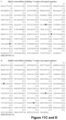
- Murine-derived EphA4-Fc (SEQ ID NO:9), for example, has N-glycosylation sites at the same location as the human form. Two or more N-glycosylation sites may be eliminated. Two or all three N-glycosylation sites may be eliminated. Potential N-glycosylation sites in EphA2, A3, A4 and EphB4 are shown in Figures 11A through D [SEQ ID NOs:29 to 32].
- the N-glycosylation sites are eliminated by a substitution of the asparagine (Asn;N) residue at one or more of amino acid positions 216, 321 and/or 389 of human EphA4-Fc (corresponding to positions 235, 340 and 408 with the leader sequence) or the equivalent position in an EphA4-Fc derived from another species or the equivalent in another EphA or an EphB.
- This is referred to as a Z 1 n b Z 2 substitution where Z 1 is asparagine (Asn;N) and Z 2 is any amino acid residue except Asparagine.
- Z 2 may be glutamine (Gln;Q).
- a method for treating a disease or condition exacerbated by EphA4-mediated signaling in a human subject comprising the administration of an effective amount of an N-glycosylated modified EphA4-Fc having an amino acid sequence selected from the list consisting of SEQ ID NO:2 through 8 or an amino acid sequence having at least 80% similarity to any of SEQ ID NO:2 through 8 after optimal alignment provided the same N-glycosylation sites remain eliminated.
- a method of treating a disease or condition of the CNS or systemic vasculature or ischemic-reperfusion injury of the heart or other organ (e.g. kidney or liver) or myocardial infarction, inflammation (neuronal or systemic) or cancer in a human subject comprising administering to the subject an effective amount of a human EphA4-Fc molecule as defined by the amino acid sequence set forth in SEQ ID NO:1 but carrying a single or multiple amino acid substitution defined by the group consisting of N216Z, N321Z, N389Z, N216Z + N321Z, N216Z + N389Z, N321Z + N389Z and N216Z + N321Z + N389Z wherein Z is any amino acid other than asparagine.
- amino acid positions are calculated in the absence of the 19 amino acid leader (signal) peptide sequence. If the leader sequence is included (SEQ ID NO:33), the positions are: N235Z, N340Z, N408Z, N235Z + N340Z, N235Z + N408Z, N340Z + N408Z and N235Z + N340Z + N408Z, respectively.
- Z may be glutamine (Gln;Q).
- modified EphA4-Fc molecules with an elimination of at least one N-glycosylation site which has an increased serum half-life and which retains EphA4 signaling antagonism.
- modified human EphA4-Fc molecules include SEQ ID NO:2 through 8 or the equivalent in non-human mammals such as mice as set forth in SEQ ID NO: 10 through 16.
- a modified Eph such as but not limited to an EphA (e.g. EphA1 through A8) and an EphB (e.g. EphB1 through B6) which have N-glycosylation sites eliminated.
- Pharmaceutical compositions and therapeutic kits are also contemplated herein.
- a pharmaceutical composition comprising a modified EphA4-X according to the invention and one or more pharmaceutically acceptable carriers, diluents and/or excipients Table 1 Summary of sequence identifiers SEQUENCE ID NO: DESCRIPTION 1 Amino acid sequence of unmodified human EphA4-Fc 2 Amino acid sequence of modified human EphA4-Fc comprising an asparagine to glutamine substitution at amino acid 216 3 Amino acid sequence of modified human EphA4-Fc comprising an asparagine to glutamine substitution at amino acid 321 4 Amino acid sequence of modified human EphA4-Fc comprising an asparagine to glutamine substitution at amino acid 389 5 Amino acid sequence of modified human EphA4-Fc comprising an asparagine to glutamine substitution at amino acid 216 and 321 6 Amino acid sequence of modified human EphA4-Fc comprising an asparagine to glutamine substitution at amino acid 216
- the present disclosure teaches a fusion or coupled molecule between an Eph, modified by at least one amino acid substitution to eliminate on N-glycosylation site (a glycosylation-based Eph antagonist) and component or molecule X wherein X is an immunoglobulin or immunoglobulin fragment (e.g. an Fc portion), a protein or protein fragment (e.g. HSA) or a polyether (e.g. PEG).
- X is an immunoglobulin or immunoglobulin fragment (e.g. an Fc portion), a protein or protein fragment (e.g. HSA) or a polyether (e.g. PEG).
- Reference to "EphA” includes EphA1, EphA2, EphA3, EphA4, EphA5, EphA6, EphA7 and EphA8.
- Reference to "EphB” includes EphB1, EphB2, EphB3, EphB4, EphB5 and EphB6.
- Reference to a "modified” form includes a "modification", “mutant” and “mutation” to Eph at an amino acid residue to eliminate at least on N-glycosylation site. The instant disclosure teaches single or multiple mutations of amino acid residues wherein the mutation is a substitution.
- a mutation or modification in the form of an amino acid substitution is defined herein as Z 1 n b Z 2 wherein Z 1 is the amino acid before the substitution, Z 2 is the amino acid after the substitution and n b is the amino acid residue number.
- the present invention extends to an Eph comprising a modified amino acid sequence which eliminates at least one N-glycosylation site.
- the Eph includes an EphA (e.g. EphA1 through A8) and an EphB (e.g. EphB 1 through B6).
- an Eph glycosylation-based antagonist means an Eph modified to eliminate at least one N-glycosylation site fused or coupled to X where X is a half-life extending molecule such as an Fc portion.
- Eph EphA4
- the molecule is EphA4-X wherein X is a portion of an immunoglobulin molecule (e.g. Fc), a protein or a polyether.
- the Eph may be EphA4 modified to eliminate at least one N-glycosylation site fused to an IgG Fc (e.g. IgG4 Fc or IgG1 Fc).
- IgG Fc e.g. IgG4 Fc or IgG1 Fc.
- EphA4-Fc This fusion molecule of human EphA4 with the human IgG Fc portion is referred to as "EphA4-Fc".
- a non-mutated EphA4-Fc is referred to herein as wild-type (WT) EphA4-Fc even though it is an artificially created molecule.
- WT Eph-X Equally a non-mutated Eph-X is referred to as WT Eph-X wherein X is an immunoglobulin or immunoglobulin fragment (e.g. an Fc portion), a protein or protein fragment (e.g. HA) or polyether (e.g. PEG).
- Eph is an EphA or an EphB and X is an immunoglobulin or immunoglobulin fragment (e.g. an Fc portion), a protein or protein fragment (e.g. HSA) or a polyether (e.g. PEG).
- X is an immunoglobulin or immunoglobulin fragment
- HSA protein or protein fragment
- PEG polyether
- EphA4-X is an immunoglobulin or immunoglobulin fragment
- the X component is a half-life or stability conferring molecule.
- Eph-X may be EphA4-X such as EphA4-Fc.
- EphA4-Fc may be represented in various ways such as recombinant (r) human (Hu) EphA4-Fc.
- the amino acid sequence for WT human EphA4-Fc is set forth in SEQ ID NO:1. Substitution mutations which remove an N-glycosylation site are contemplated in SEQ ID NO:1.
- Examples include substitution of an asparagine (Asn;N) at a site selected from the group consisting of amino acid residue number 216, 321 and 389 represented as N216Z, N321Z and N389Z, respectively, wherein Z is any amino acid other than asparagine (Asn;N) and wherein the mutation removes an N-glycosylation site at this residue.
- amino acid positions are based on a sequence where the 19 amino acid leader (signal) sequence has been cleaved off. The signal sequence is SEQ ID NO:33. If the signal sequence is included, the positions are 235, 340 and 408, respectively.
- Single mutations in SEQ ID NO:1 WT EphA4-Fc corresponding to the site 216, 321 or 389 include a substitution to glutamine (Gln;Q), i.e. N216Q, N321Q and N389Q, respectively. These correspond to SEQ ID NO:2, SEQ ID NO:3 and SEQ ID NO:4, respectively. Again, based on the absence of the 19 amino acid N-terminal signal sequence. In the avoidance of doubt, the amino acid sequence of EphA4-Fc, without the leader sequence, begins with the amino acid seuqnece VTGSRVYPANE.
- Examples include N216Q + N321Q, N216Q + N389Q and N321Q + N389Q (SEQ ID NO:5, SEQ ID NO:6 and SEQ ID NO:7, respectively).
- An example includes N216Q + N321Q + N389Q (SEQ ID NO:8).
- Non-human derived EphA4-Fc molecules such as wild-type murine EphA4-Fc (SEQ ID NO:9).
- This may contain the same substitution mutations at amino acid positions 216, 321 and/or 389 as represented by N216Z, N321Z, N389Z, N216Z + N321Z, N216Z + N389Z, N321Z + N389Z and N216Z + N321Z + N389Z, wherein Z is any amino acid except asparagine(Asn;N) and the mutations remove 1, 2 or 3 N-glycosylation sites.
- Examples include N216Q, N321Q, N389Q, N216Q + N321Q, N216Q + N389Q, N321Q + N389Q and N216Q + N321Q + N389Q (SEQ ID NOs:10 through 16, respectively.
- N-glycosylation site such as 1, 2 or 3 N-glycosylation sites from wild-type EphA4-Fc increases its serum half-life without decreasing its ability to antagonize EphA4-mediated signaling thus making the molecule surprisingly more efficacious in the treatment of a disease or condition of the central nervous system (CNS) or of the systemic vasculature which would otherwise be exacerbated by EphA4-mediated signaling.
- CNS central nervous system
- EphA4-mediated signaling Similar comments apply to other Eph molecules carrying an amino acid mutation to eliminate at least an N-glycosylation site.
- EphA2 comprises predicted N-glycosylation sites at amino acid positions 407 and 435;
- EphA3 comprises predicted N-glycosylation sites at amino acid positions 232, 337, 391, 404 and 493;
- EphB4 comprises sites at amino acids 203, 335 and 426.
- Diseases or conditions of the CNS include injury or disease of the brain (e.g. stroke, neurodegenerative disease (e.g. motor neuron disease [MND]), traumatic brain injury or brain injury following thrombolysis) or spinal cord leading to gliosis and/or glial scarring and/or neuronal inflammation.
- MND motor neuron disease
- spinal cord leading to gliosis and/or glial scarring and/or neuronal inflammation.
- MND motor neuron disease
- spinal cord leading to gliosis and/or glial scarring and/or neuronal inflammation.
- gliosis includes any condition resulting in a gliotic response including inhibition of axon growth.
- a disease or condition of the systemic vasculature includes cardiovascular conditions and ischemic-reperfusion injury.
- the latter may occur in the heart or it may be elsewhere such as intestinal ischemia-reperfusion injury or an organ such as kidney reperfusion or hepatic reperfusion.
- Other conditions include myocardial infarction, non-CNS-related inflammation, reperfusion injury, organ damage such as kidney or hepatic reperfusion and cancer.
- a method for treating a disease or condition exacerbated by Eph-mediated signaling in a mammalian subject comprising the administration of an effective amount of Eph-X, the Eph modified to eliminate at least one N-glycosylation site wherein the Eph is selected from EphA1 through A8 and EphB 1 through B6 and X is an immunoglobulin or immunoglobulin fragment (e.g. an Fc portion), a protein or protein fragment (e.g. HSA) or a polyether (e.g. PEG). It is proposed and enabled herein that elimination of an N-glycosylation site can result in longer serum half-life with no significant loss of antagonistic function.
- the Eph is coupled or fused to X.
- Eph-X may be EphA4-X such as EphA4-Fc.
- a method of treatment for a disease or condition exacerbated by EphA4-mediated signaling in a mammalian subject comprising the administration of an effective amount of an EphA4-Fc modified to eliminate at least on N-glycosylation site.
- Diseases and conditions include and encompass a disease or condition of the CNS or systemic vasculature as well as consequential diseases or conditions as well as myocardial infarction, non-CNS-related inflammation, reperfusion injury, organ damage and cancer.
- the mammalian subject may be a human subject.
- the present specification discloses but does not claima method for treating a disease or condition exacerbated by EphA4-mediated signaling in a mammalian subject, the method comprising the administration of an effective amount of EphA4-X, the Eph modified to eliminate at least one N-glycosylation site where X is an immunoglobulin or immunoglobulin fragment (e.g. an Fc portion), a protein or protein fragment (e.g. HSA) or a polyether (e.g. PEG).
- X is an immunoglobulin or immunoglobulin fragment
- HSA protein or protein fragment
- PEG polyether
- the disease or condition exacerbated by Eph-mediated signaling may be a disease or condition of the CNS.
- Eph-X is an immunoglobulin or immunoglobulin fragment (e.g. an Fc portion), a protein or protein fragment (e.g. HSA) or a polyether (e.g. PEG).
- Eph-X is EphA4-X such as EphA4-Fc.
- the disease or condition may be a disease or condition of the systemic vasculature.
- a method of treating a disease or condition of the systemic vasculature in a mammalian subject comprising administering to the subject an effective amount of an Eph-X molecule, the Eph modified to eliminate at least one N-glycosylation site wherein X is an immunoglobulin or immunoglobulin fragment (e.g. an Fc portion), a protein or protein fragment (e.g. HSA) or a polyether (e.g. PEG).
- an immunoglobulin or immunoglobulin fragment e.g. an Fc portion
- a protein or protein fragment e.g. HSA
- a polyether e.g. PEG
- the modified EphA4 may be selected depending on the subject being treated. For example, a human derived EphA4-Fc mutant would be used to treat a human subject.
- a method of a disease or condition of the CNS exacerbated by Eph-mediated signaling in a human subject comprising administering to the subject an effective amount of a human Eph-X molecule, the Eph modified to eliminate at least one N-glycosylation site wherein the Eph is selected from EphA1 through A8 and EhB1 through B6 and X is an immunoglobulin or immunoglobulin fragment (e.g. an Fc portion), a protein or protein fragment (e.g. HSA) or a polyether (e.g. PEG).
- an immunoglobulin or immunoglobulin fragment e.g. an Fc portion
- a protein or protein fragment e.g. HSA
- a polyether e.g. PEG
- a method of treating a disease or condition of the systemic vasculature in a human subject comprising administering to the subject an effective amount of a human EphA4-Fc molecule modified to eliminate at least one N-glycosylation site.
- Suitable modified human EphA4-Fc molecules include those having one, two or three N-glycosylation sites eliminated. This is achieved by a substitution of an asparagine (Asp;N) at any one or more of residue numbers 216, 321 and/or 389 of SEQ ID NO:1 (or 235, 340 and/or 408 if the 19 amino acid leader sequence (SEQ ID NO:33) is included) for any other amino acid except an asparagine residue as well as the functionally equivalent positions in EphA or EphB molecule.
- an asparagine Asp;N
- the present specification discloses but does not claim a method of treating a disease or condition of the CNS or systemic vasculature in a human subject, the method comprising administering to the subject an effective amount of a human EphA4-Fc molecule as defined by the amino acid sequence set forth in SEQ ID NO:1 but carrying a single or multiple amino acid substitution defined by the group consisting of N216Z, N321Z, N389Z, N216Z + N321Z, N216Z + N389Z, N321Z + N389Z and N216Z + N321Z + N389Z wherein Z is any amino acid other than asparagine. Amino acid position numbers calculated in absence of the 19 amino acid signal sequence (SEQ ID NO:33).
- Z may be glutamine (Gln;Q).
- the present specification discloses but does not claim a method for treating a disease or condition of the CNS or systemic vasculature in a human subject, the method comprising administering to the subject an effective amount of an EphA4-Fc defined by the amino acid sequence selected from the group consisting of SEQ ID NO:2 through SEQ ID NO:8.
- EphA4-Fc may contain a triple amino acid substitution of N216Q + N321Q + N389Q. Amino acid position numbers calculated in absence of the 19 amino acid signal sequence (SEQ ID NO:33).
- the present specification discloses but does not claim a method for treating a disease or condition of the CNS or systemic vasculature in a human subject, the method comprising administering to the subject an effective amount of an EphA4-Fc defined by the amino acid sequence SEQ ID NO:8.
- EphA4-Fc molecule is dependent on the mammal being treated.
- the present invention extends to testing a mouse animal model using a murine EphA4-Fc modified as taught herein.
- the modified EphA4-Fc has lost at least one N-glycosylation site but maintains its ability to antagonize EphA4-mediated signaling while having a longer serum half-life compared to a corresponding wild-type EphA4-Fc.
- the selected EphA4-Fc may not contain another amino acid substitution, deletion and/or addition, post-translational modification or additional changes in glycosylation pattern.
- reference to SEQ ID NO:2 through 8 and SEQ ID NO: 10 through 16 includes an amino acid sequence having at least about 80% similarity to any one of SEQ ID NOs:2 through 8 or SEQ ID NO: 10 through 16 after optimal alignment with the proviso that at amino acid residue number 216, 321 and/or 389 there is a substitution for asparagine to any other amino acid other than asparagine and this removes the N-glycosylation site.
- Amino acid position numbers calculated in absence of the 19 amino acid signal sequence (SEQ ID NO:33).
- At least 80% similarity means 80, 81, 82, 83, 84, 85, 86, 87, 88, 89, 90, 91, 92, 93, 94, 95, 96, 97, 98, 99 or 100%.
- similarity includes exact identity between compared sequences at the amino acid level. Where there is non-identity at the amino acid level, “similarity” includes amino acids that are nevertheless related to each other at the structural, functional, biochemical and/or conformational levels. Amino acid sequence comparisons may be made at the level of identity rather than similarity.
- references to describe sequence relationships between two or more polypeptides include “reference sequence”, “comparison window”, “sequence similarity”, “sequence identity”, “percentage sequence similarity”, “percentage sequence identity”, “substantially similar” and “substantial identity”.
- a “reference sequence” includes, but is not limited to, from 10 to 100 amino acid residues in length.
- two polypeptides may each comprise (1) a sequence (i.e., only a portion of the complete amino acid sequence) that is similar between the two polypeptides, and (2) a sequence that is divergent between the two polypeptides
- sequence comparisons between two (or more) polypeptides are typically performed by comparing sequences of the two polypeptides over a "comparison window" to identify and compare local regions of sequence similarity.
- a "comparison window” refers to a conceptual segment of typically 12 contiguous residues that is compared to a reference sequence.
- the comparison window may comprise additions or deletions (i.e. gaps) of about 20% or less as compared to the reference sequence (which does not comprise additions or deletions) for optimal alignment of the two sequences.
- Optimal alignment of sequences for aligning a comparison window may be conducted by computerized implementations of algorithms (BLASTP 2.2.32+, GAP, BESTFIT, FASTA, and TFASTA in the Wisconsin Genetics Software Package Release 7.0, Genetics Computer Group, 575 Science Drive Madison, WI, USA) or by inspection and the best alignment (i.e. resulting in the highest percentage homology over the comparison window) generated by any of the various methods selected.
- BLASTP 2.2.32+, GAP, BESTFIT, FASTA, and TFASTA in the Wisconsin Genetics Software Package Release 7.0, Genetics Computer Group, 575 Science Drive Madison, WI, USA
- Best alignment i.e. resulting in the highest percentage homology over the comparison window
- sequence similarity and “sequence identity” as used herein refer to the extent that sequences are identical or functionally or structurally similar on an amino acid-by-amino acid basis over a window of comparison.
- a “percentage of sequence identity” is calculated by comparing two optimally aligned sequences over the window of comparison, determining the number of positions at which the identical amino acid residue (e.g.
- sequence identity will be understood to mean the "match percentage” calculated by any suitable method or computer algorithm using standard defaults as used in the reference manual accompanying the software. Similar comments apply in relation to sequence similarity.
- mutants contemplated herein include analogs with a modification to a side chain, incorporation of an unnatural amino acid during protein synthesis and the use of a crosslinker which impose conformational constrains on the Eph-X. This term also does not exclude other modifications of the Eph-X, for example, acetylations and phosphorylations and the like. Included within the definition are, for example, polypeptides containing one or more analogs of an amino acid.
- side chain modifications contemplated by the present invention include modifications of amino groups such as by reductive alkylation by reaction with an aldehyde followed by reduction with NaBH4; amidination with methylacetimidate; acylation with acetic anhydride; carbamoylation of amino groups with cyanate; trinitrobenzylation of amino groups with 2, 4, 6-trinitrobenzene sulphonic acid (TNBS); acylation of amino groups with succinic anhydride and tetrahydrophthalic anhydride; and pyridoxylation of lysine with pyridoxal-5-phosphate followed by reduction with NaBH4.
- modifications of amino groups such as by reductive alkylation by reaction with an aldehyde followed by reduction with NaBH4; amidination with methylacetimidate; acylation with acetic anhydride; carbamoylation of amino groups with cyanate; trinitrobenzylation of amino groups with 2, 4, 6-trinitrobenzene sulphonic acid (TNBS); acylation of
- the guanidine group of arginine residues may be modified by the formation of heterocyclic condensation products with reagents such as 2,3-butanedione, phenylglyoxal and glyoxal.
- the carboxyl group may be modified by carbodiimide activation via O-acylisourea formation followed by subsequent derivatisation, for example, to a corresponding amide.
- Sulphydryl groups may be modified by methods such as carboxymethylation with iodoacetic acid or iodoacetamide; performic acid oxidation to cysteic acid; formation of a mixed disulphides with other thiol compounds; reaction with maleimide, maleic anhydride or other substituted maleimide; formation of mercurial derivatives using 4-chloromercuribenzoate, 4-chloromercuriphenylsulphonic acid, phenyl mercury chloride, 2-chloromercuri-4-nitrophenol and other mercurials; carbamoylation with cyanate at alkaline pH.
- Tryptophan residues may be modified by, for example, oxidation with N-bromosuccinimide or alkylation of the indole ring with 2-hydroxy-5-nitrobenzyl bromide or sulphenyl halides.
- Tyrosine residues on the other hand, may be altered by nitration with tetranitromethane to form a 3-nitrotyrosine derivative.
- Modification of the imidazole ring of a histidine residue may be accomplished by alkylation with iodoacetic acid derivatives or N-carboethoxylation with diethylpyrocarbonate.
- Examples of incorporating unnatural amino acids and derivatives during peptide synthesis include, but are not limited to, use of norleucine, 4-amino butyric acid, 4-amino-3-hydroxy-5-phenylpentanoic acid, 6-aminohexanoic acid, t-butylglycine, norvaline, phenylglycine, ornithine, sarcosine, 4-amino-3-hydroxy-6-methylheptanoic acid, 2-thienyl alanine and/or D-isomers of amino acids.
- a modified EphA4-Fc comprising a modified amino acid sequence which eliminates at least one N-glycosylated site.
- the asparagine (Asn;N) at residue 216, 321 and/or 389 is substituted by any amino acid other than asparagine.
- a modified human EphA4-Fc comprising an amino acid sequence before modification as set forth in SEQ ID NO: 1 and wherein the modification is selected from the group consisting of N216Z, N321Z, N389Z, N216Z + N321Z, N216Z + N389Z, N321Z + N389Z and N216Z + N321Z + N389Z wherein Z is any amino acid other than asparagine (Asn;N).
- Z may be glutamine (Gln;Q).
- modified human EphA4-Fc having an amino acid sequence selected from the group consisting of SEQ ID NO:2 through 8.
- the modified human EphA4-Fc may be defined by SEQ ID NO:8 and comprises the triple substitution N216Q + N321Q + N389Q.
- Non-human modified EphA4-Fc molecules are also contemplated herein such as a murine EphA4-Fc modified to eliminate at least one N-glycosylation site.
- Examples include murine EphA4-Fc defined by the amino acid sequence set forth in SEQ ID NO:9 with a substitution mutation selected from N216Z, N321Z, N389Z, N216Z + N321Z, N216Z + N321Z, N321Z + N389Z and N216Z + N321Z + N389Z wherein Z is any amino acid other than asparagine (Asn;N).
- examples include a modified murine EphA4-Fc selected from the group consisting of SEQ ID NO:10 through 16.
- the amino acid positions given above are calculated in the absence of the 19 amino acid leader sequence (SEQ ID NO:33).
- the corresponding positions are determined by adding 19 to the amino acid position.
- the corresponding positions for 261, 321 and 389 are 235, 340 and 408, respectively.
- the modified EphA4-Fc molecules may be in isolated form.
- Eph molecules comprising a modified amino acid sequence which eliminates at least one N-glycosylation site.
- Eph molecules include EphA1 through A8 and EphB1 through B6.
- Such modified Eph molecule may be coupled or fused to an immunoglobulin or immunoglobulin fragment (e.g. an Fc portion), a protein or protein fragment (e.g. HSA) or a polyether (e.g. PEG).
- the modified Eph-X (e.g. EphA4-Fc) molecules can also be combined with one or more pharmaceutically acceptable carriers, diluents and/or excipients to form a pharmacological composition.
- Pharmaceutically acceptable carriers can contain a physiologically acceptable compound that acts to, for example, stabilize the formulation.
- Physiologically acceptable compounds can include, for example, carbohydrates, such as glucose, sucrose, or dextrans, antioxidants, such as ascorbic acid or glutathione, chelating agents, low molecular weight proteins, compositions that reduce the clearance or hydrolysis of the peptides or polypeptides, or excipients or other stabilizers and/or buffers.
- Detergents can also used to stabilize or to increase or decrease the absorption of the pharmaceutical composition, including liposomal carriers.
- Pharmaceutically acceptable carriers and formulations for peptides and polypeptide are known to the skilled artisan and are described in detail in the scientific and patent literature, see e.g. Remington's Pharmaceutical Sciences, 18th Edition, Mack Publishing Company, Easton, PA, 1990 ("Remington's").
- physiologically acceptable compounds include wetting agents, emulsifying agents, dispersing agents or preservatives which are particularly useful for preventing the growth or action of microorganisms.
- Various preservatives are well known and include, e.g. phenol and ascorbic acid.
- a pharmaceutically acceptable carrier including a physiologically acceptable compound depends, for example, on the route of administration of the modulatory agent of the invention and on its particular physio-chemical characteristics.
- Administration of the agent, in the form of a pharmaceutical composition may be performed by any convenient means known to one skilled in the art and depending on the disease or condition or site of injury.
- Routes of administration include, but are not limited to, respiratorally, intratracheally, nasopharyngeally, intravenously, intraperitoneally, subcutaneously, intracranially, intradermally, intramuscularly, intraoccularly, intrathecally, intracereberally, intranasally, infusion, orally, rectally, patch and implant. Retrograde transport or direct injection into the brain may also be used.
- the compounds can be formulated into solid or liquid preparations such as capsules, pills, tablets, lozenges, powders, suspensions or emulsions.
- any of the usual pharmaceutical media may be employed, such as, for example, water, glycols, oils, alcohols, flavoring agents, preservatives, coloring agents, suspending agents, and the like in the case of oral liquid preparations (such as, for example, suspensions, elixirs and solutions); or carriers such as starches, sugars, diluents, granulating agents, lubricants, binders, disintegrating agents and the like in the case of oral solid preparations (such as, for example, powders, capsules and tablets).
- tablets and capsules represent the most advantageous oral dosage unit form, in which case solid pharmaceutical carriers are obviously employed. If desired, tablets may be sugar-coated or enteric-coated by standard techniques.
- the active agent can be encapsulated to make it stable to passage through the gastrointestinal tract while at the same time allowing for passage across the blood brain barrier, see, e.g. International Patent Publication Number WO 96/11698 .
- Agents disclosed herein may, when administered orally, be protected from digestion. This can be accomplished either by complexing the nucleic acid, peptide or polypeptide with a composition to render it resistant to acidic and enzymatic hydrolysis or by packaging the nucleic acid, peptide or polypeptide in an appropriately resistant carrier such as a liposome.
- Means of protecting compounds from digestion are well known in the art, see, e.g Fix (1996) Pharm Res 13:1760-1764 ; Samanen et al. (1996) J Pharm Pharmacol 48:119-135 ; U.S. Patent Number 5,391,377 , describing lipid compositions for oral delivery of therapeutic agents.
- the pharmaceutical forms suitable for injectable use include sterile aqueous solutions (where water-soluble) or dispersions and sterile powders for the extemporaneous preparation of sterile injectable solutions or dispersion or may be in the form of a cream or other form suitable for topical application.
- topical administration is aimed at the Eph-X (e.g. EphA4-Fc) molecule being in a formulation which enables it to enter the body systemically. It must be stable under the conditions of manufacture and storage and must be preserved against the contaminating action of microorganisms such as bacteria and fungi.
- the carrier can be a solvent or dispersion medium containing, for example, water, ethanol, polyol (for example, glycerol, propylene glycol and liquid polyethylene glycol, and the like), suitable mixtures thereof, and vegetable oils.
- the proper fluidity can be maintained, for example, by the use of a coating such as lecithin, by the maintenance of the required particle size in the case of dispersion and by the use of superfactants.
- the prevention of the action of microorganisms can be brought about by various antibacterial and antifungal agents, for example, parabens, chlorobutanol, phenol, sorbic acid, thimerosal and the like.
- isotonic agents for example, sugars or sodium chloride.
- Prolonged absorption of the injectable compositions can be brought about by the use in the compositions of agents delaying absorption, for example, aluminum monostearate and gelatin.
- Sterile injectable solutions are prepared by incorporating the agents in the required amount in the appropriate solvent with various of the other ingredients enumerated above, as required, followed by filtered sterilisation.
- dispersions are prepared by incorporating the various sterilized active ingredient into a sterile vehicle which contains the basic dispersion medium and the required other ingredients from those enumerated above.
- the preferred methods of preparation are vacuum drying and the freeze-drying technique which yield a powder of the active ingredient plus any additional desired ingredient from previously sterile-filtered solution thereof.
- the agent may be dissolved in a pharmaceutical carrier and administered as either a solution or a suspension.
- suitable carriers are water, saline, dextrose solutions, fructose solutions, ethanol, or oils of animal, vegetative or synthetic origin.
- the carrier may also contain other ingredients, for example, preservatives, suspending agents, solubilizing agents, buffers and the like.
- the agents When the agents are being administered intrathecally, they may also be dissolved in cerebrospinal fluid.
- penetrants appropriate to the barrier to be permeated can be used for delivering the agent.
- penetrants are generally known in the art e.g. for transmucosal administration, bile salts and fusidic acid derivatives.
- detergents can be used to facilitate permeation.
- Transmucosal administration can be through nasal sprays or using suppositories e.g. Sayani and Chien (1996) Crit Rev Ther Drug Carrier Syst 13:85-184 .
- the agents are formulated into ointments, creams, salves, powders and gels.
- Transdermal delivery systems can also include patches.
- the agents of the invention can be delivered using any system known in the art, including dry powder aerosols, liquids delivery systems, air jet nebulizers, propellant systems, and the like, see, e.g. Patton (1998) Nat Biotech 16:141-143 ; product and inhalation delivery systems for polypeptide macromolecules.
- the pharmaceutical formulation can be administered in the form of an aerosol or mist.
- the formulation can be supplied in finely divided form along with a surfactant and propellant.
- the device for delivering the formulation to respiratory tissue is an inhaler in which the formulation vaporizes.
- Other liquid delivery systems include, for example, air jet nebulizers.
- the agents of the invention can also be administered in sustained delivery or sustained release mechanisms, which can deliver the formulation internally.
- sustained delivery or sustained release mechanisms can deliver the formulation internally.
- biodegradeable microspheres or capsules or other biodegradeable polymer configurations capable of sustained delivery of a peptide can be included in the formulations of the invention (e.g. Putney and Burke (1998) Nat Biotech 16:153-157 ) .
- compositions of the invention in vesicles composed of substances such as proteins, lipids (for example, liposomes), carbohydrates, or synthetic polymers.
- lipids for example, liposomes
- synthetic polymers for a general discussion of pharmacokinetics, see, e.g. Remington's.
- compositions of the invention can be administered in a variety of unit dosage forms depending upon the method of administration. Dosages for typical pharmaceutical compositions are well known to those of skill in the art. Such dosages are typically advisorial in nature and are adjusted depending on the particular therapeutic context, patient tolerance, etc. The amount of agent adequate to accomplish this is defined as the "effective amount”.
- the dosage schedule and effective amounts for this use, i.e., the "dosing regimen" will depend upon a variety of factors, including the stage of the disease or condition, the severity of the disease or condition, the general state of the patient's health, the patient's physical status, age, pharmaceutical formulation and concentration of active agent, and the like. In calculating the dosage regimen for a patient, the mode of administration also is taken into consideration.
- the dosage regimen must also take into consideration the pharmacokinetics, i.e., the pharmaceutical composition's rate of absorption, bioavailability, metabolism, clearance, and the like. See, e.g. Remington's; Egleton and Davis (1997) Peptides 18:1431-1439 ; Langer (1990) Science 249:1527-1533 .
- the glycosylation site modified Eph-X such as EphA4-Fc may be administered in an amount which provides detectable serum levels of from about 5 to 100 ⁇ g/mL for from 3 to 20 days.
- 5-100 means 5, 6, 7, 8, 9, 10, 11, 12, 13, 14, 15, 16, 17, 18, 19, 20, 21, 22, 23, 24, 25, 26, 27, 28, 29, 30, 31, 32, 33, 34, 35, 36, 37, 38, 39, 40, 41, 42, 43, 44, 45, 46, 47, 48, 49, 50, 51, 52, 53, 54, 55, 56, 57, 58, 59, 60, 61, 62, 63, 64, 65, 66, 67, 68, 69, 70, 71, 72, 73, 74, 75, 76, 77, 78, 79, 80, 81, 82, 83, 84, 85, 86, 87, 88, 89, 90, 91, 92, 93, 94, 95, 96, 97, 98, 99 or 100 ⁇ g
- the expression “3 to 20” means 3, 4, 5, 6, 7, 8, 9, 10, 11, 12, 13, 14, 15, 16, 17, 18, 19 or 20 days.
- the glycosylation site modified Eph-X such as EphA4-Fc carrying one or more modified N-glycosylation sites may be provided in an amount which gives serum levels of from 5 to 20 ⁇ g/mL over from 3 to 10 days. These amounts include about 10 ⁇ g/mL serum levels for about 6-7 days. Hence, dosing includes weekly amounts.
- agents and/or pharmaceutical compositions defined in accordance with the present invention may be co-administered in combination with one or more other agents.
- Reference herein to "co-administered” means simultaneous administration in the same formulation or in two different formulations via the same or different routes or sequential administration by the same or different routes.
- Reference herein to "sequential" administration is meant a time difference of from seconds, minutes, hours or days between the administration of the two types of agents and/or pharmaceutical compositions.
- Co-administration of the agents and/or pharmaceutical compositions may occur in any order.
- Agents which are particularly preferred in this regard are agents which promote neurogenesis and/or axon growth and/or inhibit inflammation such as, but not limited to cytokines and growth factors and inhibitors of inflammatory cytokines such as INF ⁇ antagonists.
- targeting therapies may be used to deliver the active agent more specifically to certain types of cell, by the use of targeting systems such as antibodies or cell specific ligands or specific nucleic acid molecules. Targeting may be desirable for a variety of reasons, e.g, if the agent is unacceptably toxic or if it would otherwise require too high a dosage or if it would not otherwise be able to enter the target cells.
- the agents could be produced in the target cell, e.g. in a viral vector such as described above or in a cell based delivery system such as described in U.S. Patent Number 5,550,050 and International Patent Publication Numbers WO 92/19195 , WO 94/25503 , WO 95/01203 , WO 95/05452 , WO 96/02286 , WO 96/02646 , WO 96/38971 , WO 96/40959 and WO 97/12635 .
- the vector could be targeted to the target cells.
- the cell based delivery system is designed to be implanted in a patient's body at the desired target site and contains a coding sequence for the target agent.
- the agent could be administered in a precursor form for conversion to the active form by an activating agent produced in, or targeted to, the cells to be treated. See, for example, European Patent Application Number 0 425 731A and International Patent Publication Number WO 90/07936 .
- Eph-X modified to eliminate at least one N-glycosylation site in the manufacture of a medicament for the treatment of a disease or condition exacerbated by Eph-mediated signaling in a mammalian subject including a human subject
- the Eph is selected from EphA1 through A8 and EhB1 through B6 and X is an immunoglobulin or immunoglobulin fragment (e.g. an Fc portion), a protein or protein fragment (e.g. HSA) or a polyether (e.g. PEG).
- Eph-X modified to eliminate at least one N-glycosylation site for use in the treatment of a disease or condition exacerbated by Eph-mediated signaling in a mammalian subject including a human subject, wherein the Eph is selected from EphA1 through A8 and EhB1 through B6 and X is an immunoglobulin or immunoglobulin fragment (e.g. an Fc portion), a protein or protein fragment (e.g. HSA) or a polyether (e.g. PEG).
- an immunoglobulin or immunoglobulin fragment e.g. an Fc portion
- a protein or protein fragment e.g. HSA
- PEG polyether
- EphA4-Fc modified to eliminate at least one N-glycosylation site in the manufacture of a medicament for the treatment of a disease or condition exacerbated by EphA4-mediated signaling in a mammalian subject including a human subject.
- EphA4-Fc modified to eliminate at least one N-glycosylation site for use in the treatment of a disease or condition exacerbated by EphA4-mediated signaling in a mammalian subject including a human subject, wherein the Eph is selected from EphA1 through A8 and EhB1 through B6 and X is an immunoglobulin or immunoglobulin fragment (e.g. an Fc portion), a protein or protein fragment (e.g. HSA) or a polyether (e.g. PEG).
- an immunoglobulin or immunoglobulin fragment e.g. an Fc portion
- a protein or protein fragment e.g. HSA
- PEG polyether
- kits comprising the compositions e.g. agents of the present invention.
- the kits can also contain instructional material teaching the methodologies and uses of the invention, as described herein.
- all references to methods of of treatment by therapy or surgery or in vivo diagnosis methods are to be interpreted as references to compounds, pharmaceutical compositions and medicamnets of the present invention for use in those methods.
- Nucleotides coding for asparagine (Asn;N) at predicted glycosylation sites 216, 321 and 389 were mutated sequentially to encode glutamine using Quik Change Site Directed Mutagenesis (Agilent Technologies Inc., Santa Clara, CA). Briefly, complementary oligonucleotides (Table 2 and 3) flanking the desired mutagenesis sites in human and mouse EphA4-Fc were annealed to codon optimized wt-hEphA4-hFc and wt-mEphA4-mFc template DNA, respectively and extended using PfuTurbo DNA polymerase.
- HEK293T cells ATCC, CRL-11268 were cultured in RPMI 1640 Media (GIBCO Life Technologies) supplemented with 10% v/v fetal calf serum (GIBCO Life Technologies), in a humidified atmosphere containing 5% v/v CO 2 . Plasmid DNA was transfected into HEK293T cells using Lipofectamine 2000 (Invitrogen) according to manufacturer's guidelines. Culture supernatant was harvested on day 6 post transfection and purified by Protein A affinity chromatography using MabSelect agarose matrix (GE Healthcare Life Sciences).
- Protein A purified samples were subjected to SDS-PAGE analysis in the presence of the reducing agent ⁇ mercaptoethanol. Briefly, samples were electrophoresed on a 10% v/v SDS polyacrylamide gel followed by staining with Coomassie Brilliant Blue R-250 (Sigma).
- EIA 96 well plates (Costar, Corning Inc.) were coated with 1F9 mAb (3 ⁇ g/ml) in 50mM carbonate buffer pH9.5 overnight at 4°C prior to blocking with 5% w/v BSA, 0.05% v/v Tween-20 in PBS (PBST) for one hour at room temperature. After three washes with PBST diluted EphA4-Fc analyte was added and incubated for one hour at room temperature. Following three washes with PBST biotinylated 1A7mAb (1 ⁇ g/ml) in PBS was added and incubated for one hour at room temperature.
- the protein sample was co-precipitated with 1 ⁇ g of sequencing grade trypsin (Roche Diagnostics GmbH, Mannheim, Germany) using 1 mLof methanol (-20°C) and incubated at -20°C overnight. The precipitate was then centrifuged for 15 min 4°C and the supernatant aspirated. The pellet was washed twice more with 1 mLof -20°C methanol (90% v/v) and centrifuged before 30 ⁇ L of 0.1M triethylammonium bicarbonate was added. The protein was resuspended by gentle vortex-mixing and after a brief centrifugation the protein was incubated at 37°C for 2 h.
- sequencing grade trypsin Roche Diagnostics GmbH, Mannheim, Germany
- trypsin was added (final ratio of protein: enzyme, 38:1, w/w) and the digest incubated at 22°C for a further 6 h.
- An aliquot of the trypsin digested protein was further digested with Glu-C isolated from Staphylococcus aureus V8 (Roche Diagnostics GmbH, Mannheim, Germany) at 37°C for 12 h (protein: enzyme, 40:1, w/w).
- Glu-C digestion the resultant peptides and glycopeptides were desalted with a C18 ZipTip (10 ⁇ L pipette tip with a 0.6 ⁇ L resin bed; Millipore, MA, USA) using the manufactures' guidelines before MS analysis.
- MS analysis was performed on an Orbitrap Fusion (Trade Mark) Tribrid (Trade Mark) Mass Spectrometer (Thermo Fischer Scientific, San Jose, CA) coupled to a nanoACQUITY UPLC (Waters Corporation, MA), where trapping was performed on a Waters C18 2G Symmetry (100 ⁇ , 5 ⁇ m, 180 ⁇ m ⁇ 20 mm) trap column and gradient elution on a Waters C18 BEH (130 ⁇ , 1.7 ⁇ m particle size, 75 ⁇ m ⁇ 200 mm) column in-line with the trap column. This is referred to as "LC-MS” (Dave et al. (2015) supra) Digested samples were acidified trifluoroacetic acid before MS and 50 ng of the tryptic digest and 100 ng of the tryptic/Glu-C digest were injected for each analysis.
- MS survey scans of nUHPLC-fractionated tryptic peptides was performed in the Orbitrap over the range of 300-1800 (m/z) at a resolution of 120K at 200 m/z with an automatic gain control (AGC) target of 200,000 and a maximum injection time of 50 ms.
- AGC automatic gain control
- the most intense precursors with charge states of 2-7 and intensities greater than 5000 were selected using an isolation window of 2.5 and fragmented by higher-energy (beam-type) collisional dissociation (HCD) using 30% normalized collision energy.
- Mass analysis of the fragment ions was performed in the Orbitrap where the resolution was set at 60K with an AGC target of 50,000 and a maximum injection time of 60 ms. Once selected the precursors were excluded for 30 sec.
- the MS RAW file generated from the analysis of trypsin digested EphA4-Fc was searched using Proteome Discoverer (v. 1.4.1.14 Thermo Fisher Scientific Inc. Bremen, Germany) and the search engine Mascot (v. 2.5.1, Matrix Science Ltd., London, UK) with the Percolator function against a complete human proteome database (ID: UP000005640 with 70,076 sequences downloaded from the Uniprot webiste) and the EphA4-Fc sequence.
- the MS RAW files from the trypsin and trypsin/Glu-C digestions of EphA4-Fc were analyzed with Byonic software ( Bern et al. (2002) Current Protocols in Bioinformatic John Wiley & Sons, Inc., NJ, USA ) using the same mass tolerances and fixed modifications from the Proteome Discoverer search.
- the enzyme rules were set as cleavage C-terminal to Arg or Lys (trypsin digested sample) or C-terminal to Arg, Lys, Glu or Asp (combined trypsin/Glu-C digestion) and missed cleavages were set to two for the trypsin digested sample and three for the trypsin/Glu-C sample.
- One glycan attached at an N-linked consensus site (Asn-X-S/T) and one mono-oxidized methionine were allowed per peptide.
- the peptide output options were changed to "Show all N-glycopeptides" and the spectra were searched against a protein FASTA file containing the sequence for EphA4-Fc and a Byonic N-linked glycan database (309_Mammalian no sodium) with all glycans compositions containing N-glycolylneuraminic acid (NeuGc) removed. After manual inspection of the Byonic results a cut-off score of 100 was chosen for glycopeptides.
- the MS RAW files from the trypsin and trypsin/Glu-C digestions of EphA4-Fc were additionally converted to mzML in Proteome Discoverer using a signal to noise (S/N) threshold of zero for analysis with OxoExtract, an in-house software program.
- OxoExtract selected every MS/MS scan with the oxonium ion [HexNAc+H] + present within a ⁇ 10 ppm mass window.
- This diagnostic oxonium ion is derived from fragmentation the glycan portion of the glycopeptide and identification of the ion facilitates selection of MS/MS spectra of glycopeptides.
- HexNAc oxonium ion and other mono- and oligosaccharide ions can also be used to confirm the composition of the attached glycan. All HexNAc oxonium ion-containing MS/MS spectra selected by OxoExtract were additionally searched for other pre-defined mono- and oligosaccharide oxonium ions and theoretical N-linked glycopeptide fragment ions derived from in-silico digestions of EphA4-Fc.
- the N-linked glycopeptide fragment ions were calculated using theoretical EphA4-Fc peptides containing the N-linked consensus sequence N-X-S/T and included the peptide+HexNAci, peptide+HexNAc 2 and peptide+HexNAcidHexi and peptide b- and y-ions.
- the peptide+HexNAci ion is commonly produced when fragmenting N-linked glycopeptides using HCD and can be used to determine the mass of the peptide moiety.
- the minimum requirement to accept any glycopeptide assignment was the presence of the peptide+HexNAci ion or greater than four peptide b- and y-ions. If the sequence of the peptide moiety included a methionine residue at least two peptide b- or y-ions were required to evidence potential oxidation or lack thereof. Relevant glycan oxonium ions had to be present to validate the assigned glycan composition and the elution profile was checked to ensure glycopeptides were eluting at expected retention times.
- thyroglobin (670 kDa), bovine ⁇ -globin (158 kDa), ovalbumin (44 kDa), equine myoglobin (17 kDa), and vitamin B 12 (1.35 kDa) [BioRad].
- Purified proteins were dialyzed overnight against a buffer containing 10 mM potassium phosphate (pH 7.6). Samples were analyzed using an XL-I analytical ultracentrifuge (Beckman Coulter, Fullerton, CA) equipped with an AnTi-60 rotor. Protein samples were loaded in the sample compartment of double-sector epon centrepieces, with buffer in the reference compartment. Radial absorbance data were acquired at 20°C using a rotor speed of 40,000 rpm and a wavelength of 280 nm, with radial increments of 0.003 cm in continuous scanning mode.
- the three N-glycosylation sites in EphA4 may be numbered with the amino acid sequence including the 19 amino acid leader (signal) sequence as set forth in SEQ ID NO:33, or determined without this sequence. Without the sequence, the sites are N216, N321 and N389. If the leader sequence is included, the positions are N235, N340 and N408, respectively. Both numbering systems are used herein.
- a glycosylation deficient form of EphA4-Fc fusion protein shows improved pharmacokinetic behavior
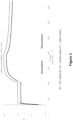
- Wild-type and mutant forms of the expression plasmid were transfected into 293T cells and culture supernatants were harvested after 5 days. Recombinant Fc proteins were recovered by protein A sepharose chromatography. In both the mouse and human EphA4-Fc cases there was a slightly lower yield of the triple mutant protein, in different runs this was between 60-70% of the yield of wild-type protein. In each case the triple mutant protein was of lower molecular weight with a mass decrease consistent with deglycosylation of the EphA4 extracellular domain ( Figures 2B and 2C ), compared to the wild-type. A preliminary binding study did show binding of the triple (and a double) mutant to ephrin A4 which was similar to wild-type ( Figure 3 ).
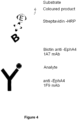
- a sandwich ELISA assay was established using two EphA4 monoclonal antibodies which bind to independent epitopes in the extracellular domain of EphA4 ( Figure 4 ). As shown in Figure 5 , this assay was equally sensitive in measuring wild-type and mutant human EphA4-Fc.
- Wistar rats (6-8 weeks of age) were randomly divided into groups (3 per group) and injected with hEphA4-hFc mutant or wild-type Fc protein at 6 mg/kg through tail vein injections.
- 150-200 ⁇ L of blood was collected by cutting the tips of tails and collection into a Microvette blood collection tube. Following incubation for 30-45 minutes in an upright position, tubes were centrifuged at 11,000 rpm for 10 minutes prior to the removal of the serum. Serum was stored at -80°C prior to analysis by ELISA ( Figure 6 ).
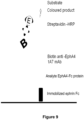
- the wild-type protein had a half-life of less than 24 hours and fell below 1 ⁇ g/mLbefore 48 hours. Based on previous experiments using wild-type EphA4-Fc, binding to the key ephrin B3 ligand ( Figures 7 and 8 ) at this level is inadequate to block ephrin B3 and indeed insufficient to block lower affinity interactions with ephrin A proteins. In contrast, the mutant protein was still above 10 ⁇ g/mLat 6 days indicating this may be effective in competitive blocking over most of this interval.
- Figures 11A through D provide amino acid sequence of EphA2, EphA3, EphA4 and EphB4 extracellular domains with the putative N-glycosylation sites marked (see also Table 1).
- an immunoglobulin or immunoglobulin fragment e.g. an Fc portion
- a protein or protein fragment e.g. HSA
- a polyether e.g. PEG
- the modified Eph molecule is fused to an immunoglobulin (Ig) Fc portion such as IgG1 Fc or IgG4 Fc.
- EphA4 Fc digested with trypsin identified 44 proteins when searched against a protein database containing EphA4-Fc and the human proteome.
- the protein sequence for EphA4-Fc was the top scoring protein with 93% protein coverage. Peptides bearing all four N-linked consensus sites from EphA4-Fc were observed and the spectra were manually investigated to confirm these peptide allocations.
- One region at the N-terminus of the protein was not sequenced (amino acid residues 1-24) containing the signal peptide.
- the high level of sequence coverage indicates the correct protein was purified and confirms the expected amino acid sequence.
- Of the remaining 43 proteins only 19 contained more than two peptides and six had more than 30% sequence coverage. Given the low number of peptide matches and level of sequence coverage it is unlikely these proteins would contribute to observed glycopeptide pool.
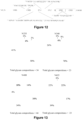
- the recombinant fusion protein EphA4-Fc contains four N-linked consensus sites ( Figure 12 ); three are located in the EphA4 portion of the fusion protein, corresponding to sites N235, N340 and N408 in the extracellular domain of full length EphA4 (UniProt ID: P54764-1).
- the fourth N-linked site of recombinant EphA4-Fc, site N625, resides within the IgG4 Fc domain of the protein and corresponds to N297 in the C H 2 domain of each heavy chain of all IgG subclasses ( Zauner et al. (2013) Mol. Cell. Proteomics 12:856-865 ).
- the trypsin digested sample was then subjected to digestion with Glu-C which cleaves peptide bonds C-terminal to glutamic acid (Glu/E) and at a lower rate C-terminal to aspartic acid (Asp/D) [ Breddam and Meldal (1992) European Journal of Biochemistry FEBS 206:103-107 ] .
- Both the trypsin and trypsin/Glu-C digested samples were analyzed in separate chromatographic MS/MS experiments. Mass spectral analysis of the digests of EphA4 Fc enabled identification of 212 intact glycopeptides containing one of the four potential N-linked glycosylation sites. Due to different enzyme digestions and cleavage events the identified glycopeptides contained one of twelve peptide moieties with spanning an N-linked consensus sites.
- Nomenclature has been implemented in this work to represent this ambiguity, where N-Acetylhexosamine (HexNAc) and hexosamine (Hex) are used to represent GlcNAc/GalNAc and Man/Gal/Glu, respectively.
- Deoxyhexose (dHex) represents the isomeric monosaccharides fucose (Fuc) and xylose; in this paper dHex is assumed to be Fuc from known rules of mammalian N-linked biosynthesis and observed N-linked glycans produced in HEK cells ( Moremen et al. (2012) Nat. Rev. Mol. Cell Biol 13:448-462 ; Andre et al.
- the human EphA4-Fc expression vector was systematically mutated such that the codons for the three key asparagine residues in the EphA4 extracellular domain were replaced with codons for glutamine residues similar to Example 2.
- the resulting single, double and triple mutant vectors were transfected into HEK293 cells and expressed proteins recovered from cell supernatants using protein A affinity chromatography. As shown in Figure 14A , the mutated proteins showed progressively lower molecular weights consistent with the loss of sugar moieties.
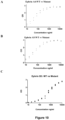
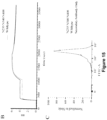
- EphA4 Fc proteins were carried out using three methods: ephrin-binding ELISA ( Figure 15A ), Octet biosensor analysis ( Figure 15B ) and flow cytometric analysis of binding to ephrin-expressing cell lines Figure 15C ). All of these techniques showed that the mutant proteins retained the ability to bind to ephrin ligands with a comparable affinity to the un-mutated EphA4-Fc protein. The same procedure was carried out using a vector encoding an EphA4-mouse Fc protein and again the mutations were shown not to affect function. Taken together, the data implied that a concentration of >1 ⁇ g/mL would saturate all ephrin A ligands and that >10 ⁇ g/mLwould be sufficient to saturate ephrin B3 sites.
- the triple mutant protein exhibits a simple log-linear clearance in contrast to the un-mutated protein which shows a more complex rapid initial clearance followed by a plateau, consistent with the heterogeneity of glycosylation at the predicted asparagine linkage residues.
- the "wild-type" and mutated mouse EphA4-Fc protein were also analyzed in mice. As with the human EphA4-Fc, the triple mutant protein showed a greatly extended in vivo half-life.
- EphA4-Fc is cleared rapidly, requiring frequent dosing in mouse and rat SCI studies (Goldshmit et al. (2011) supra). To explore the possible involvement of glycosylation in this rapid clearance the glycosylation of EphA4-Fc was analyzed (Examples 2-4). Mass spectral analysis of intact glycopeptides derived from trypsin digested and trypsin/Glu-C digested EphA4-Fc confirmed that the four predicted N-linked sites within the fusion protein were glycosylated. Consistent with prediction, no O-linked glycosylation sites within the EphA4 region of the protein were detected.
- peptides bearing all four N-linked sites were also observed without glycosylation indicating that within the pool of EphA4-Fc proteins the N-linked sites are utilized but they are not always glycosylated.
- the proportion of glycans with sialylation was highest at site N235 (41%) followed by sites N340 (26%), N408 (22%) and N625 (22%).
- the higher degree of sialylation observed at site N235 may reduce the level of asialoglycoprotein or mannose receptor-mediated clearance, thus accounting for the minimal impact of mutating this site on clearance.
- These amino acid positions are based on the presence of the 19 amino acid N-terminal leader sequence.
- EphA4-Fc The wild-type EphA4-Fc exhibited rapid clearance in the first 24-48 hours, accounting for the vast majority of circulating drug, but then plateaued for the remaining time points. This may be due to preferred clearance of EphA4-Fc variants containing asialylated N-glycans, while those structures containing sialylated glycans or no N-glycosylation were retained in vivo.
- the pharmacokinetic studies show a pronounced effect of glycosylation on the protein half-life in vivo. Whilst the mutation of individual sites showed a variable effect, the protein with a completely deglycosylated EphA4 region showed the greatest prolongation of availability.
- the present invention is predicated in part on the interesting result where functionality was preserved and pharmacokinetic properties were markedly improved after the elimination of three N-linked sites. Furthermore, the results provide an insight into the role of EphA4 N-linked glycosylation, revealing that N-linked consensus sites are not essential for ligand binding properties.
- EphA4-Fc administration in the MND SOD1 G93A mouse model improves behavioral performance.
- the systemic administration of EphA4-Fc to SOD1 G93A mice was investigated. Briefly, SOD1 G93A mice were treated with either the murine homolog of the EphA4-Fc fusion or a saline control. Functional tests were performed on a weekly basis with the experiment terminated at week 24. Fore and hind-limb grip strength were assessed, as well as balance and coordination using the RotaRod test. Treated mice had significantly greater hind-limb grip strength at 18, 19, 20 and 21 weeks of age, compared with control groups.
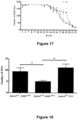
- Treated mice also had increased behavioral performance in the RotaRod test compared to controls, during weeks 18 to 24, with the increase reaching statistical significance by week 20 ( Figures 16A and B ).
- These results should be examined in the light of challenges associated with the SOD1 G93A model ( Vaqueur et al. (2013) Nat Rev Drug Disocv 12:287-305 ; Kobeleva et al. (2013) Neurodgene Dis. Manag. 3:525-537 ) in particular the degree of disease severity induced by the SOD1 mutation. Given the substantial loss of induced motor function, there is a statistically significant difference in the treatment group. This experiment has been repeated 4 times with individual cohorts of animals and in all cases significant improvement in behavioral performance has been seen with EphA4-Fc treatment.
- EphA4 gene was deleted in motor neurons of SOD1 G93A mice, providing an insight into both the involvement of EphA4 in SOD-1 dependent disease and the relative effectiveness of the EphA4-Fc therapy. This was performed by crossing 3 strains of mice to establish a cell type-specific EphA4 gene-deletion system in SOD1 G93A mice, which could assess the effect of specific genetic ablation of EphA4 on MND progression (SOD1 G93A , EphA4 flox/flox and ChAT-Cre KI/KI ).
- EphA4 flox/flox mice have a conditional allele of EphA4 with a floxed exon 3 ( Hermannetal (2010) Genesis 48:101-105 ).
- EphA4 flox/flox mice are crossed with ChAT-Cre KI/KI mice, Cre-mediated excision of exon3 splicing exon2 to exon4 causes a frameshift in the downstream sequence, producing a null of EphA4 gene in ChAT-expressing cells.
- This conditional depletion of EphA4 was built on the SOD1 G93A mice background.
- the breeding strategy requires four rounds of breeding and the numbers are based on production of 6 animals per litter, achieving the expected ratio of genotypes.
- Codon optimized human EphA2-Fc DNA was synsthesized, cloned and sequence verified by (GenScript USA Inc.) with the nucleotides coding for asparainge (ASn; N) at predicted glycosylation sites 407 and 435 encoding glutamine. Plasmid was transformed into NEB 5-alpha competent E. coli (New England BioLabs), expanded from a single colony, with DNA purified using QIAGEN plasmid midiprep kit.
- HEK293T cells ATCC, CRL-11268 were cultured in RPMI 1640 Media (GIBCO Life Technologies) supplemented with 10% v/v fetal calf serum (GIBCO Life Technologies), in a humidified atmosphere containing 5% v/v CO 2 . Plasmid DNA was transfected into HEK293T cells using Lipofectamine 2000 (Invitrogen) according to manufacturer's guidelines. Culture supernatant was harvested on day 6 post transfection and purified by Protein A affinity chromatography using MabSelect agarose matrix (GE Healthcare Life Sciences).
- Rats were randomly divided into two groups, injected with either mutant EphA2-Fc or wild-type EphA2-Fc at a concentration of 1mg/kg through the tail vein. Then, 300-400 ⁇ l of blood samples were collected by cutting the tips of rat tails at different time points after the treatment, namely 2 h, 18 h, 48 h and 6 d. After each blood collection, all samples were incubated in an upright position at room temperature for 1 h to allow clotting, and then centrifuged for 10 min at 11000 rpm. The serum was stored at -80°C for ELISA assay.
- EIA 96 well plates (Costar, Corning Inc.) were coated with 4B3 mAb (3 ⁇ g/ml) in 50mM carbonate buffer pH9.5 overnight at 4°C prior to blocking with 5%w/v BSA, 0.05%v/v Tween-20 in PBS (PBST) for one hour at room temperature. After three washes with PBST diluted EphA4-Fc analyte was added and incubated for one hour at room temperature. Following threewashes with PBST biotinylated 1F7 mAb (1 ⁇ g/ml) in PBS was added and incubated for one hourat room temperature.
Landscapes
- Health & Medical Sciences (AREA)
- Life Sciences & Earth Sciences (AREA)
- Chemical & Material Sciences (AREA)
- Organic Chemistry (AREA)
- General Health & Medical Sciences (AREA)
- Engineering & Computer Science (AREA)
- Medicinal Chemistry (AREA)
- Genetics & Genomics (AREA)
- Zoology (AREA)
- Animal Behavior & Ethology (AREA)
- Veterinary Medicine (AREA)
- Pharmacology & Pharmacy (AREA)
- Public Health (AREA)
- Bioinformatics & Cheminformatics (AREA)
- Immunology (AREA)
- Biomedical Technology (AREA)
- Molecular Biology (AREA)
- Gastroenterology & Hepatology (AREA)
- Proteomics, Peptides & Aminoacids (AREA)
- Cell Biology (AREA)
- Biophysics (AREA)
- Biochemistry (AREA)
- Chemical Kinetics & Catalysis (AREA)
- Nuclear Medicine, Radiotherapy & Molecular Imaging (AREA)
- General Chemical & Material Sciences (AREA)
- Toxicology (AREA)
- Epidemiology (AREA)
- Biotechnology (AREA)
- General Engineering & Computer Science (AREA)
- Wood Science & Technology (AREA)
- Cardiology (AREA)
- Neurology (AREA)
- Endocrinology (AREA)
- Heart & Thoracic Surgery (AREA)
- Microbiology (AREA)
- Plant Pathology (AREA)
- Physics & Mathematics (AREA)
- Peptides Or Proteins (AREA)
- Medicines That Contain Protein Lipid Enzymes And Other Medicines (AREA)
- Medicinal Preparation (AREA)
Applications Claiming Priority (2)
| Application Number | Priority Date | Filing Date | Title |
|---|---|---|---|
| AU2015904387A AU2015904387A0 (en) | 2015-10-27 | A method of treatment and agents useful for same | |
| PCT/AU2016/051010 WO2017070738A1 (en) | 2015-10-27 | 2016-10-27 | A method of treatment and agents useful for same |
Publications (3)
| Publication Number | Publication Date |
|---|---|
| EP3368551A1 EP3368551A1 (en) | 2018-09-05 |
| EP3368551A4 EP3368551A4 (en) | 2019-06-05 |
| EP3368551B1 true EP3368551B1 (en) | 2023-07-12 |
Family
ID=58629613
Family Applications (1)
| Application Number | Title | Priority Date | Filing Date |
|---|---|---|---|
| EP16858502.4A Active EP3368551B1 (en) | 2015-10-27 | 2016-10-27 | A modified epha4 polypeptide |
Country Status (8)
| Country | Link |
|---|---|
| US (1) | US10617738B2 (cg-RX-API-DMAC7.html) |
| EP (1) | EP3368551B1 (cg-RX-API-DMAC7.html) |
| JP (1) | JP6877419B2 (cg-RX-API-DMAC7.html) |
| CN (1) | CN108884135B (cg-RX-API-DMAC7.html) |
| AU (1) | AU2016345063B2 (cg-RX-API-DMAC7.html) |
| CA (1) | CA3003294A1 (cg-RX-API-DMAC7.html) |
| ES (1) | ES2959601T3 (cg-RX-API-DMAC7.html) |
| WO (1) | WO2017070738A1 (cg-RX-API-DMAC7.html) |
Families Citing this family (4)
| Publication number | Priority date | Publication date | Assignee | Title |
|---|---|---|---|---|
| CN110702916B (zh) * | 2019-04-15 | 2022-06-21 | 四川大学华西医院 | 一种整合蛋白质组和糖蛋白组的定量分析方法 |
| AU2022239581A1 (en) * | 2021-03-18 | 2023-10-26 | Valery Krasnoperov | Use of sephb4-hsa fusion protein as a first-line therapy in cancer treatment |
| US20240385190A1 (en) * | 2021-11-11 | 2024-11-21 | Eisai R&D Management Co., Ltd. | Anti-epha4 antibody |
| WO2023154948A1 (en) * | 2022-02-14 | 2023-08-17 | Vasgene Therapeutics Inc. | Ephrin type-b receptor 4 (ephb4) agents and production thereof |
Family Cites Families (22)
| Publication number | Priority date | Publication date | Assignee | Title |
|---|---|---|---|---|
| JP2752788B2 (ja) | 1989-01-23 | 1998-05-18 | カイロン コーポレイション | 感染および過剰増殖障害の為の組換え療法 |
| EP0425731B1 (de) | 1989-11-03 | 1994-01-19 | Siemens Aktiengesellschaft | Controller-Bussystem für einen programmierbaren, flexiblen Digitalsignal-Multiplexer |
| GB9022788D0 (en) | 1990-10-19 | 1990-12-05 | Cortecs Ltd | Pharmaceutical formulations |
| ES2107537T3 (es) | 1991-04-25 | 1997-12-01 | Univ Brown Res Found | Vehiculo inmunoaislante biocompatible implantable para suministrar productos terapeuticos seleccionados. |
| US5854217A (en) | 1992-09-28 | 1998-12-29 | Bearsden Bio, Inc. | Allosteric modulators of the NMDA receptor and their use in the treatment of CNS disorders and enhancement of CNS function |
| FI954774A0 (fi) | 1993-04-27 | 1995-10-06 | Cytotherapeutics Inc | Aryylinitriiliin perustuvan polymeerin muodostama membraani |
| AU688776B2 (en) | 1993-06-23 | 1998-03-19 | Brown University Research Foundation | Method and apparatus for sealing implantable, membrane encapsulation devices |
| EP1179350A3 (en) | 1993-08-12 | 2003-01-02 | Cytotherapeutics, Inc. | Encapsulated cell system for implantation into the human CNS |
| US5550050A (en) | 1994-04-15 | 1996-08-27 | Cytotherapeutics, Inc. | Method for implanting encapsulated cells in a host |
| US5776747A (en) | 1994-07-20 | 1998-07-07 | Cytotherapeutics, Inc. | Method for controlling the distribution of cells within a bioartificial organ using polycthylene oxide-poly (dimethylsiloxane) copolymer |
| US5834029A (en) | 1994-07-20 | 1998-11-10 | Cytotherapeutics, Inc. | Nerve guidance channel containing bioartificial three-dimensional hydrogel extracellular matrix derivatized with cell adhesive peptide fragment |
| CA2202747A1 (en) | 1995-06-01 | 1996-12-05 | Dennis Keen Warren | Communication system to provide called party location and pre-call warning |
| IN181898B (cg-RX-API-DMAC7.html) | 1995-06-07 | 1998-10-24 | Cytotherapeutics Inc | |
| WO1997012635A1 (en) | 1995-10-02 | 1997-04-10 | Cytotherapeutics, Inc. | Method for treating amyotrophic lateral sclerosis |
| AUPP674898A0 (en) * | 1998-10-27 | 1998-11-19 | Walter And Eliza Hall Institute Of Medical Research, The | A method of treatment |
| TW200538739A (en) * | 2004-02-27 | 2005-12-01 | Oncotherapy Science Inc | EphA4 as therapeutic target of PRC and PDACa |
| US20080003210A1 (en) * | 2006-03-13 | 2008-01-03 | Medimmune, Inc. | Non-human primate receptor tyrosine kinases |
| EP2166110B1 (en) * | 2007-06-08 | 2012-02-22 | Eisai R&D Management Co., Ltd. | Screening method utilizing novel substrate epha4 for gamma-secretase |
| DK2223999T3 (en) * | 2007-11-30 | 2017-12-18 | Eisai R&D Man Co Ltd | EPHA4 POLYPEPTIDE WITH UNKNOWN ACTIVITY AND USE THEREOF |
| EP2260864A1 (en) * | 2009-06-10 | 2010-12-15 | University of Melbourne | Therapeutic applications |
| EP2653552B1 (en) * | 2010-12-17 | 2016-10-19 | Eisai R&D Management Co., Ltd. | SCREENING METHOD USING GELATINASE-MEDIATED EphA4 CLEAVAGE REACTION AS AN INDICATOR |
| AU2014218318B2 (en) | 2013-02-18 | 2018-02-15 | Vegenics Pty Limited | Ligand binding molecules and uses thereof |
-
2016
- 2016-10-27 US US15/771,788 patent/US10617738B2/en active Active
- 2016-10-27 JP JP2018521887A patent/JP6877419B2/ja active Active
- 2016-10-27 WO PCT/AU2016/051010 patent/WO2017070738A1/en not_active Ceased
- 2016-10-27 CN CN201680074679.6A patent/CN108884135B/zh active Active
- 2016-10-27 ES ES16858502T patent/ES2959601T3/es active Active
- 2016-10-27 EP EP16858502.4A patent/EP3368551B1/en active Active
- 2016-10-27 AU AU2016345063A patent/AU2016345063B2/en active Active
- 2016-10-27 CA CA3003294A patent/CA3003294A1/en active Pending
Also Published As
| Publication number | Publication date |
|---|---|
| ES2959601T3 (es) | 2024-02-27 |
| US10617738B2 (en) | 2020-04-14 |
| EP3368551A1 (en) | 2018-09-05 |
| WO2017070738A1 (en) | 2017-05-04 |
| AU2016345063B2 (en) | 2021-08-05 |
| US20180339020A1 (en) | 2018-11-29 |
| CA3003294A1 (en) | 2017-05-04 |
| CN108884135A (zh) | 2018-11-23 |
| JP6877419B2 (ja) | 2021-05-26 |
| CN108884135B (zh) | 2024-03-26 |
| EP3368551A4 (en) | 2019-06-05 |
| AU2016345063A1 (en) | 2018-05-17 |
| JP2019501112A (ja) | 2019-01-17 |
| AU2016345063A2 (en) | 2018-07-19 |
Similar Documents
| Publication | Publication Date | Title |
|---|---|---|
| EP3368551B1 (en) | A modified epha4 polypeptide | |
| AU2020411480B2 (en) | Progranulin variants | |
| CZ386392A3 (en) | Alpha interferon | |
| JP2002543837A (ja) | 組換えセトマンナン結合性レクチン | |
| WO2000006724A1 (en) | Remedies for neuropathy containing as the active ingredient galectin-1 or its derivatives | |
| EP0337799B1 (en) | 14-Beta-gal mammalian lectins | |
| US20220280619A1 (en) | Dna vaccine against amyloid-beta and tau | |
| JP5231214B2 (ja) | エリスロポエチン変異体 | |
| EP1132402B1 (en) | Peptide fragments having cell death inhibitory activity | |
| JP2009062372A (ja) | 高分子質量レクチンの生産 | |
| JP2001512971A (ja) | 癌および腫瘍随伴性神経症候群の診断および治療におけるulipの使用 | |
| JP6120133B2 (ja) | 人工ポリクローナル免疫グロブリン組成物 | |
| JP2025036661A (ja) | 抗体酵素の革新的製造技術 | |
| CN109593123B (zh) | 一种衍生自rps23rg1的多肽及其应用 | |
| Maity et al. | A non-innovator version of etanercept for treatment of arthritis | |
| KR102485892B1 (ko) | 고양이 과립구 집락 자극인자 및 혈청 알부민에 대한 항원 결합 단편을 포함하는 융합 단백질 및 이의 용도 | |
| CN116139278B (zh) | 一种tim-3棕榈酰化修饰及靶向多肽在肿瘤免疫治疗中的应用 | |
| US20250250320A1 (en) | Thrombopoietin receptor fragments and uses thereof | |
| CN117642422A (zh) | 用于降低抗体-脂肪酶结合的结构 | |
| KR20240087579A (ko) | 항-타우 항체 및 펩티드를 포함하는 융합체와 그의 용도 | |
| CN120500541A (zh) | 制备融合多肽的方法 | |
| JPWO2009017255A1 (ja) | 変異導入MyD88蛋白によるToll様受容体/インターロイキン18シグナルの特異的制御法 | |
| JP2000083672A (ja) | アポトーシス関連タンパク質 | |
| HK1165461A (en) | In tumours differentially expressed gene products and use of the same | |
| HK1165467A (en) | In tumours differentially expressed gene products and use of the same |
Legal Events
| Date | Code | Title | Description |
|---|---|---|---|
| STAA | Information on the status of an ep patent application or granted ep patent |
Free format text: STATUS: THE INTERNATIONAL PUBLICATION HAS BEEN MADE |
|
| PUAI | Public reference made under article 153(3) epc to a published international application that has entered the european phase |
Free format text: ORIGINAL CODE: 0009012 |
|
| STAA | Information on the status of an ep patent application or granted ep patent |
Free format text: STATUS: REQUEST FOR EXAMINATION WAS MADE |
|
| 17P | Request for examination filed |
Effective date: 20180523 |
|
| AK | Designated contracting states |
Kind code of ref document: A1 Designated state(s): AL AT BE BG CH CY CZ DE DK EE ES FI FR GB GR HR HU IE IS IT LI LT LU LV MC MK MT NL NO PL PT RO RS SE SI SK SM TR |
|
| AX | Request for extension of the european patent |
Extension state: BA ME |
|
| DAV | Request for validation of the european patent (deleted) | ||
| DAX | Request for extension of the european patent (deleted) | ||
| A4 | Supplementary search report drawn up and despatched |
Effective date: 20190503 |
|
| RIC1 | Information provided on ipc code assigned before grant |
Ipc: A61P 9/00 20060101ALI20190426BHEP Ipc: A61P 25/28 20060101ALI20190426BHEP Ipc: A61P 35/00 20060101ALI20190426BHEP Ipc: A61K 38/17 20060101ALI20190426BHEP Ipc: C07K 14/435 20060101AFI20190426BHEP |
|
| STAA | Information on the status of an ep patent application or granted ep patent |
Free format text: STATUS: EXAMINATION IS IN PROGRESS |
|
| 17Q | First examination report despatched |
Effective date: 20201103 |
|
| GRAP | Despatch of communication of intention to grant a patent |
Free format text: ORIGINAL CODE: EPIDOSNIGR1 |
|
| STAA | Information on the status of an ep patent application or granted ep patent |
Free format text: STATUS: GRANT OF PATENT IS INTENDED |
|
| INTG | Intention to grant announced |
Effective date: 20230201 |
|
| GRAS | Grant fee paid |
Free format text: ORIGINAL CODE: EPIDOSNIGR3 |
|
| GRAA | (expected) grant |
Free format text: ORIGINAL CODE: 0009210 |
|
| STAA | Information on the status of an ep patent application or granted ep patent |
Free format text: STATUS: THE PATENT HAS BEEN GRANTED |
|
| AK | Designated contracting states |
Kind code of ref document: B1 Designated state(s): AL AT BE BG CH CY CZ DE DK EE ES FI FR GB GR HR HU IE IS IT LI LT LU LV MC MK MT NL NO PL PT RO RS SE SI SK SM TR |
|
| REG | Reference to a national code |
Ref country code: CH Ref legal event code: EP |
|
| REG | Reference to a national code |
Ref country code: IE Ref legal event code: FG4D |
|
| REG | Reference to a national code |
Ref country code: DE Ref legal event code: R096 Ref document number: 602016081049 Country of ref document: DE |
|
| REG | Reference to a national code |
Ref country code: LT Ref legal event code: MG9D |
|
| REG | Reference to a national code |
Ref country code: NL Ref legal event code: MP Effective date: 20230712 |
|
| PG25 | Lapsed in a contracting state [announced via postgrant information from national office to epo] |
Ref country code: NL Free format text: LAPSE BECAUSE OF FAILURE TO SUBMIT A TRANSLATION OF THE DESCRIPTION OR TO PAY THE FEE WITHIN THE PRESCRIBED TIME-LIMIT Effective date: 20230712 |
|
| PG25 | Lapsed in a contracting state [announced via postgrant information from national office to epo] |
Ref country code: GR Free format text: LAPSE BECAUSE OF FAILURE TO SUBMIT A TRANSLATION OF THE DESCRIPTION OR TO PAY THE FEE WITHIN THE PRESCRIBED TIME-LIMIT Effective date: 20231013 |
|
| PG25 | Lapsed in a contracting state [announced via postgrant information from national office to epo] |
Ref country code: IS Free format text: LAPSE BECAUSE OF FAILURE TO SUBMIT A TRANSLATION OF THE DESCRIPTION OR TO PAY THE FEE WITHIN THE PRESCRIBED TIME-LIMIT Effective date: 20231112 |
|
| PG25 | Lapsed in a contracting state [announced via postgrant information from national office to epo] |
Ref country code: SE Free format text: LAPSE BECAUSE OF FAILURE TO SUBMIT A TRANSLATION OF THE DESCRIPTION OR TO PAY THE FEE WITHIN THE PRESCRIBED TIME-LIMIT Effective date: 20230712 Ref country code: RS Free format text: LAPSE BECAUSE OF FAILURE TO SUBMIT A TRANSLATION OF THE DESCRIPTION OR TO PAY THE FEE WITHIN THE PRESCRIBED TIME-LIMIT Effective date: 20230712 Ref country code: PT Free format text: LAPSE BECAUSE OF FAILURE TO SUBMIT A TRANSLATION OF THE DESCRIPTION OR TO PAY THE FEE WITHIN THE PRESCRIBED TIME-LIMIT Effective date: 20231113 Ref country code: NO Free format text: LAPSE BECAUSE OF FAILURE TO SUBMIT A TRANSLATION OF THE DESCRIPTION OR TO PAY THE FEE WITHIN THE PRESCRIBED TIME-LIMIT Effective date: 20231012 Ref country code: LV Free format text: LAPSE BECAUSE OF FAILURE TO SUBMIT A TRANSLATION OF THE DESCRIPTION OR TO PAY THE FEE WITHIN THE PRESCRIBED TIME-LIMIT Effective date: 20230712 Ref country code: LT Free format text: LAPSE BECAUSE OF FAILURE TO SUBMIT A TRANSLATION OF THE DESCRIPTION OR TO PAY THE FEE WITHIN THE PRESCRIBED TIME-LIMIT Effective date: 20230712 Ref country code: IS Free format text: LAPSE BECAUSE OF FAILURE TO SUBMIT A TRANSLATION OF THE DESCRIPTION OR TO PAY THE FEE WITHIN THE PRESCRIBED TIME-LIMIT Effective date: 20231112 Ref country code: HR Free format text: LAPSE BECAUSE OF FAILURE TO SUBMIT A TRANSLATION OF THE DESCRIPTION OR TO PAY THE FEE WITHIN THE PRESCRIBED TIME-LIMIT Effective date: 20230712 Ref country code: GR Free format text: LAPSE BECAUSE OF FAILURE TO SUBMIT A TRANSLATION OF THE DESCRIPTION OR TO PAY THE FEE WITHIN THE PRESCRIBED TIME-LIMIT Effective date: 20231013 Ref country code: FI Free format text: LAPSE BECAUSE OF FAILURE TO SUBMIT A TRANSLATION OF THE DESCRIPTION OR TO PAY THE FEE WITHIN THE PRESCRIBED TIME-LIMIT Effective date: 20230712 |
|
| REG | Reference to a national code |
Ref country code: ES Ref legal event code: FG2A Ref document number: 2959601 Country of ref document: ES Kind code of ref document: T3 Effective date: 20240227 |
|
| PG25 | Lapsed in a contracting state [announced via postgrant information from national office to epo] |
Ref country code: PL Free format text: LAPSE BECAUSE OF FAILURE TO SUBMIT A TRANSLATION OF THE DESCRIPTION OR TO PAY THE FEE WITHIN THE PRESCRIBED TIME-LIMIT Effective date: 20230712 |
|
| REG | Reference to a national code |
Ref country code: AT Ref legal event code: UEP Ref document number: 1587054 Country of ref document: AT Kind code of ref document: T Effective date: 20230712 |
|
| REG | Reference to a national code |
Ref country code: DE Ref legal event code: R097 Ref document number: 602016081049 Country of ref document: DE |
|
| PG25 | Lapsed in a contracting state [announced via postgrant information from national office to epo] |
Ref country code: SM Free format text: LAPSE BECAUSE OF FAILURE TO SUBMIT A TRANSLATION OF THE DESCRIPTION OR TO PAY THE FEE WITHIN THE PRESCRIBED TIME-LIMIT Effective date: 20230712 Ref country code: RO Free format text: LAPSE BECAUSE OF FAILURE TO SUBMIT A TRANSLATION OF THE DESCRIPTION OR TO PAY THE FEE WITHIN THE PRESCRIBED TIME-LIMIT Effective date: 20230712 Ref country code: EE Free format text: LAPSE BECAUSE OF FAILURE TO SUBMIT A TRANSLATION OF THE DESCRIPTION OR TO PAY THE FEE WITHIN THE PRESCRIBED TIME-LIMIT Effective date: 20230712 Ref country code: DK Free format text: LAPSE BECAUSE OF FAILURE TO SUBMIT A TRANSLATION OF THE DESCRIPTION OR TO PAY THE FEE WITHIN THE PRESCRIBED TIME-LIMIT Effective date: 20230712 Ref country code: CZ Free format text: LAPSE BECAUSE OF FAILURE TO SUBMIT A TRANSLATION OF THE DESCRIPTION OR TO PAY THE FEE WITHIN THE PRESCRIBED TIME-LIMIT Effective date: 20230712 Ref country code: SK Free format text: LAPSE BECAUSE OF FAILURE TO SUBMIT A TRANSLATION OF THE DESCRIPTION OR TO PAY THE FEE WITHIN THE PRESCRIBED TIME-LIMIT Effective date: 20230712 |
|
| PLBE | No opposition filed within time limit |
Free format text: ORIGINAL CODE: 0009261 |
|
| STAA | Information on the status of an ep patent application or granted ep patent |
Free format text: STATUS: NO OPPOSITION FILED WITHIN TIME LIMIT |
|
| 26N | No opposition filed |
Effective date: 20240415 |
|
| PG25 | Lapsed in a contracting state [announced via postgrant information from national office to epo] |
Ref country code: SI Free format text: LAPSE BECAUSE OF FAILURE TO SUBMIT A TRANSLATION OF THE DESCRIPTION OR TO PAY THE FEE WITHIN THE PRESCRIBED TIME-LIMIT Effective date: 20230712 |
|
| PG25 | Lapsed in a contracting state [announced via postgrant information from national office to epo] |
Ref country code: BG Free format text: LAPSE BECAUSE OF FAILURE TO SUBMIT A TRANSLATION OF THE DESCRIPTION OR TO PAY THE FEE WITHIN THE PRESCRIBED TIME-LIMIT Effective date: 20230712 |
|
| PG25 | Lapsed in a contracting state [announced via postgrant information from national office to epo] |
Ref country code: BG Free format text: LAPSE BECAUSE OF FAILURE TO SUBMIT A TRANSLATION OF THE DESCRIPTION OR TO PAY THE FEE WITHIN THE PRESCRIBED TIME-LIMIT Effective date: 20230712 |
|
| PGFP | Annual fee paid to national office [announced via postgrant information from national office to epo] |
Ref country code: DE Payment date: 20241021 Year of fee payment: 9 |
|
| PGFP | Annual fee paid to national office [announced via postgrant information from national office to epo] |
Ref country code: MC Payment date: 20241024 Year of fee payment: 9 |
|
| PGFP | Annual fee paid to national office [announced via postgrant information from national office to epo] |
Ref country code: BE Payment date: 20241021 Year of fee payment: 9 |
|
| PGFP | Annual fee paid to national office [announced via postgrant information from national office to epo] |
Ref country code: GB Payment date: 20241025 Year of fee payment: 9 |
|
| PGFP | Annual fee paid to national office [announced via postgrant information from national office to epo] |
Ref country code: FR Payment date: 20241030 Year of fee payment: 9 Ref country code: AT Payment date: 20241022 Year of fee payment: 9 |
|
| PGFP | Annual fee paid to national office [announced via postgrant information from national office to epo] |
Ref country code: IE Payment date: 20241028 Year of fee payment: 9 |
|
| PGFP | Annual fee paid to national office [announced via postgrant information from national office to epo] |
Ref country code: IT Payment date: 20241025 Year of fee payment: 9 Ref country code: ES Payment date: 20241127 Year of fee payment: 9 |
|
| PGFP | Annual fee paid to national office [announced via postgrant information from national office to epo] |
Ref country code: CH Payment date: 20241101 Year of fee payment: 9 |
|
| PG25 | Lapsed in a contracting state [announced via postgrant information from national office to epo] |
Ref country code: CY Free format text: LAPSE BECAUSE OF FAILURE TO SUBMIT A TRANSLATION OF THE DESCRIPTION OR TO PAY THE FEE WITHIN THE PRESCRIBED TIME-LIMIT; INVALID AB INITIO Effective date: 20161027 |
|
| PG25 | Lapsed in a contracting state [announced via postgrant information from national office to epo] |
Ref country code: HU Free format text: LAPSE BECAUSE OF FAILURE TO SUBMIT A TRANSLATION OF THE DESCRIPTION OR TO PAY THE FEE WITHIN THE PRESCRIBED TIME-LIMIT; INVALID AB INITIO Effective date: 20161027 |
|
| REG | Reference to a national code |
Ref country code: CH Ref legal event code: U11 Free format text: ST27 STATUS EVENT CODE: U-0-0-U10-U11 (AS PROVIDED BY THE NATIONAL OFFICE) Effective date: 20251101 |
|
| PGFP | Annual fee paid to national office [announced via postgrant information from national office to epo] |
Ref country code: LU Payment date: 20251022 Year of fee payment: 10 |
|
| PG25 | Lapsed in a contracting state [announced via postgrant information from national office to epo] |
Ref country code: TR Free format text: LAPSE BECAUSE OF FAILURE TO SUBMIT A TRANSLATION OF THE DESCRIPTION OR TO PAY THE FEE WITHIN THE PRESCRIBED TIME-LIMIT Effective date: 20230712 |