EP3365442B1 - Verfahren zur herstellung chemisch induzierter dimerisierungsproteinsysteme zur regulierung zellulärer ereignisse - Google Patents
Verfahren zur herstellung chemisch induzierter dimerisierungsproteinsysteme zur regulierung zellulärer ereignisse Download PDFInfo
- Publication number
- EP3365442B1 EP3365442B1 EP16858357.3A EP16858357A EP3365442B1 EP 3365442 B1 EP3365442 B1 EP 3365442B1 EP 16858357 A EP16858357 A EP 16858357A EP 3365442 B1 EP3365442 B1 EP 3365442B1
- Authority
- EP
- European Patent Office
- Prior art keywords
- small molecule
- protein
- dna
- scfv
- vhh
- Prior art date
- Legal status (The legal status is an assumption and is not a legal conclusion. Google has not performed a legal analysis and makes no representation as to the accuracy of the status listed.)
- Active
Links
Images








Classifications
-
- C—CHEMISTRY; METALLURGY
- C12—BIOCHEMISTRY; BEER; SPIRITS; WINE; VINEGAR; MICROBIOLOGY; ENZYMOLOGY; MUTATION OR GENETIC ENGINEERING
- C12N—MICROORGANISMS OR ENZYMES; COMPOSITIONS THEREOF; PROPAGATING, PRESERVING, OR MAINTAINING MICROORGANISMS; MUTATION OR GENETIC ENGINEERING; CULTURE MEDIA
- C12N9/00—Enzymes; Proenzymes; Compositions thereof; Processes for preparing, activating, inhibiting, separating or purifying enzymes
- C12N9/14—Hydrolases (3)
- C12N9/48—Hydrolases (3) acting on peptide bonds (3.4)
- C12N9/50—Proteinases, e.g. Endopeptidases (3.4.21-3.4.25)
- C12N9/52—Proteinases, e.g. Endopeptidases (3.4.21-3.4.25) derived from bacteria or Archaea
-
- C—CHEMISTRY; METALLURGY
- C07—ORGANIC CHEMISTRY
- C07K—PEPTIDES
- C07K14/00—Peptides having more than 20 amino acids; Gastrins; Somatostatins; Melanotropins; Derivatives thereof
- C07K14/435—Peptides having more than 20 amino acids; Gastrins; Somatostatins; Melanotropins; Derivatives thereof from animals; from humans
- C07K14/705—Receptors; Cell surface antigens; Cell surface determinants
-
- C—CHEMISTRY; METALLURGY
- C07—ORGANIC CHEMISTRY
- C07K—PEPTIDES
- C07K16/00—Immunoglobulins [IG], e.g. monoclonal or polyclonal antibodies
- C07K16/005—Immunoglobulins [IG], e.g. monoclonal or polyclonal antibodies constructed by phage libraries
-
- C—CHEMISTRY; METALLURGY
- C07—ORGANIC CHEMISTRY
- C07K—PEPTIDES
- C07K16/00—Immunoglobulins [IG], e.g. monoclonal or polyclonal antibodies
- C07K16/44—Immunoglobulins [IG], e.g. monoclonal or polyclonal antibodies against material not provided for elsewhere, e.g. haptens, metals, DNA, RNA, amino acids
-
- C—CHEMISTRY; METALLURGY
- C07—ORGANIC CHEMISTRY
- C07K—PEPTIDES
- C07K16/00—Immunoglobulins [IG], e.g. monoclonal or polyclonal antibodies
- C07K16/46—Hybrid immunoglobulins
- C07K16/468—Immunoglobulins having two or more different antigen binding sites, e.g. multifunctional antibodies
-
- C—CHEMISTRY; METALLURGY
- C12—BIOCHEMISTRY; BEER; SPIRITS; WINE; VINEGAR; MICROBIOLOGY; ENZYMOLOGY; MUTATION OR GENETIC ENGINEERING
- C12N—MICROORGANISMS OR ENZYMES; COMPOSITIONS THEREOF; PROPAGATING, PRESERVING, OR MAINTAINING MICROORGANISMS; MUTATION OR GENETIC ENGINEERING; CULTURE MEDIA
- C12N9/00—Enzymes; Proenzymes; Compositions thereof; Processes for preparing, activating, inhibiting, separating or purifying enzymes
- C12N9/14—Hydrolases (3)
- C12N9/48—Hydrolases (3) acting on peptide bonds (3.4)
- C12N9/50—Proteinases, e.g. Endopeptidases (3.4.21-3.4.25)
-
- C—CHEMISTRY; METALLURGY
- C12—BIOCHEMISTRY; BEER; SPIRITS; WINE; VINEGAR; MICROBIOLOGY; ENZYMOLOGY; MUTATION OR GENETIC ENGINEERING
- C12N—MICROORGANISMS OR ENZYMES; COMPOSITIONS THEREOF; PROPAGATING, PRESERVING, OR MAINTAINING MICROORGANISMS; MUTATION OR GENETIC ENGINEERING; CULTURE MEDIA
- C12N9/00—Enzymes; Proenzymes; Compositions thereof; Processes for preparing, activating, inhibiting, separating or purifying enzymes
- C12N9/14—Hydrolases (3)
- C12N9/48—Hydrolases (3) acting on peptide bonds (3.4)
- C12N9/50—Proteinases, e.g. Endopeptidases (3.4.21-3.4.25)
- C12N9/64—Proteinases, e.g. Endopeptidases (3.4.21-3.4.25) derived from animal tissue
- C12N9/6421—Proteinases, e.g. Endopeptidases (3.4.21-3.4.25) derived from animal tissue from mammals
- C12N9/6472—Cysteine endopeptidases (3.4.22)
-
- C—CHEMISTRY; METALLURGY
- C12—BIOCHEMISTRY; BEER; SPIRITS; WINE; VINEGAR; MICROBIOLOGY; ENZYMOLOGY; MUTATION OR GENETIC ENGINEERING
- C12N—MICROORGANISMS OR ENZYMES; COMPOSITIONS THEREOF; PROPAGATING, PRESERVING, OR MAINTAINING MICROORGANISMS; MUTATION OR GENETIC ENGINEERING; CULTURE MEDIA
- C12N9/00—Enzymes; Proenzymes; Compositions thereof; Processes for preparing, activating, inhibiting, separating or purifying enzymes
- C12N9/96—Stabilising an enzyme by forming an adduct or a composition; Forming enzyme conjugates
-
- C—CHEMISTRY; METALLURGY
- C07—ORGANIC CHEMISTRY
- C07K—PEPTIDES
- C07K2317/00—Immunoglobulins specific features
- C07K2317/20—Immunoglobulins specific features characterized by taxonomic origin
- C07K2317/22—Immunoglobulins specific features characterized by taxonomic origin from camelids, e.g. camel, llama or dromedary
-
- C—CHEMISTRY; METALLURGY
- C07—ORGANIC CHEMISTRY
- C07K—PEPTIDES
- C07K2317/00—Immunoglobulins specific features
- C07K2317/30—Immunoglobulins specific features characterized by aspects of specificity or valency
- C07K2317/32—Immunoglobulins specific features characterized by aspects of specificity or valency specific for a neo-epitope on a complex, e.g. antibody-antigen or ligand-receptor
-
- C—CHEMISTRY; METALLURGY
- C07—ORGANIC CHEMISTRY
- C07K—PEPTIDES
- C07K2317/00—Immunoglobulins specific features
- C07K2317/50—Immunoglobulins specific features characterized by immunoglobulin fragments
- C07K2317/56—Immunoglobulins specific features characterized by immunoglobulin fragments variable (Fv) region, i.e. VH and/or VL
- C07K2317/569—Single domain, e.g. dAb, sdAb, VHH, VNAR or nanobody®
-
- C—CHEMISTRY; METALLURGY
- C07—ORGANIC CHEMISTRY
- C07K—PEPTIDES
- C07K2317/00—Immunoglobulins specific features
- C07K2317/60—Immunoglobulins specific features characterized by non-natural combinations of immunoglobulin fragments
- C07K2317/62—Immunoglobulins specific features characterized by non-natural combinations of immunoglobulin fragments comprising only variable region components
- C07K2317/622—Single chain antibody (scFv)
-
- C—CHEMISTRY; METALLURGY
- C07—ORGANIC CHEMISTRY
- C07K—PEPTIDES
- C07K2317/00—Immunoglobulins specific features
- C07K2317/90—Immunoglobulins specific features characterized by (pharmaco)kinetic aspects or by stability of the immunoglobulin
- C07K2317/92—Affinity (KD), association rate (Ka), dissociation rate (Kd) or EC50 value
-
- C—CHEMISTRY; METALLURGY
- C07—ORGANIC CHEMISTRY
- C07K—PEPTIDES
- C07K2317/00—Immunoglobulins specific features
- C07K2317/90—Immunoglobulins specific features characterized by (pharmaco)kinetic aspects or by stability of the immunoglobulin
- C07K2317/94—Stability, e.g. half-life, pH, temperature or enzyme-resistance
-
- C—CHEMISTRY; METALLURGY
- C07—ORGANIC CHEMISTRY
- C07K—PEPTIDES
- C07K2319/00—Fusion polypeptide
- C07K2319/61—Fusion polypeptide containing an enzyme fusion for detection (lacZ, luciferase)
-
- C—CHEMISTRY; METALLURGY
- C07—ORGANIC CHEMISTRY
- C07K—PEPTIDES
- C07K2319/00—Fusion polypeptide
- C07K2319/70—Fusion polypeptide containing domain for protein-protein interaction
-
- C—CHEMISTRY; METALLURGY
- C07—ORGANIC CHEMISTRY
- C07K—PEPTIDES
- C07K2319/00—Fusion polypeptide
- C07K2319/70—Fusion polypeptide containing domain for protein-protein interaction
- C07K2319/71—Fusion polypeptide containing domain for protein-protein interaction containing domain for transcriptional activaation, e.g. VP16
-
- C—CHEMISTRY; METALLURGY
- C07—ORGANIC CHEMISTRY
- C07K—PEPTIDES
- C07K2319/00—Fusion polypeptide
- C07K2319/70—Fusion polypeptide containing domain for protein-protein interaction
- C07K2319/71—Fusion polypeptide containing domain for protein-protein interaction containing domain for transcriptional activaation, e.g. VP16
- C07K2319/715—Fusion polypeptide containing domain for protein-protein interaction containing domain for transcriptional activaation, e.g. VP16 containing a domain for ligand dependent transcriptional activation, e.g. containing a steroid receptor domain
-
- C—CHEMISTRY; METALLURGY
- C07—ORGANIC CHEMISTRY
- C07K—PEPTIDES
- C07K2319/00—Fusion polypeptide
- C07K2319/80—Fusion polypeptide containing a DNA binding domain, e.g. Lacl or Tet-repressor
-
- C—CHEMISTRY; METALLURGY
- C12—BIOCHEMISTRY; BEER; SPIRITS; WINE; VINEGAR; MICROBIOLOGY; ENZYMOLOGY; MUTATION OR GENETIC ENGINEERING
- C12N—MICROORGANISMS OR ENZYMES; COMPOSITIONS THEREOF; PROPAGATING, PRESERVING, OR MAINTAINING MICROORGANISMS; MUTATION OR GENETIC ENGINEERING; CULTURE MEDIA
- C12N15/00—Mutation or genetic engineering; DNA or RNA concerning genetic engineering, vectors, e.g. plasmids, or their isolation, preparation or purification; Use of hosts therefor
- C12N15/09—Recombinant DNA-technology
- C12N15/63—Introduction of foreign genetic material using vectors; Vectors; Use of hosts therefor; Regulation of expression
- C12N15/70—Vectors or expression systems specially adapted for E. coli
-
- C—CHEMISTRY; METALLURGY
- C12—BIOCHEMISTRY; BEER; SPIRITS; WINE; VINEGAR; MICROBIOLOGY; ENZYMOLOGY; MUTATION OR GENETIC ENGINEERING
- C12N—MICROORGANISMS OR ENZYMES; COMPOSITIONS THEREOF; PROPAGATING, PRESERVING, OR MAINTAINING MICROORGANISMS; MUTATION OR GENETIC ENGINEERING; CULTURE MEDIA
- C12N15/00—Mutation or genetic engineering; DNA or RNA concerning genetic engineering, vectors, e.g. plasmids, or their isolation, preparation or purification; Use of hosts therefor
- C12N15/09—Recombinant DNA-technology
- C12N15/63—Introduction of foreign genetic material using vectors; Vectors; Use of hosts therefor; Regulation of expression
- C12N15/79—Vectors or expression systems specially adapted for eukaryotic hosts
- C12N15/80—Vectors or expression systems specially adapted for eukaryotic hosts for fungi
- C12N15/81—Vectors or expression systems specially adapted for eukaryotic hosts for fungi for yeasts
Definitions
- FKBP12 has been shown to alter calcium influx in muscle and processing of the Alzheimer's associated APP protein in neurons [34, 35].
- These systems can also have poor ON/OFF kinetics and thus cannot be regulated with enough precision.
- Currently existing systems can also cause off target effects on endogenous gene expression.
- AB1 and AB2 can each be associated with an initiator caspase.
- AB1 and AB2 will not interact, and cell death processes will not be initiated based on the CID system.
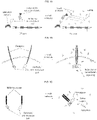
- the selected small molecule When the selected small molecule is administered, it will bind AB1 leading to binding of AB2 to the AB1/small molecule complex. Following this binding, the caspases will come together, resulting in initiation of cell death processes.
- Bind means that the binding domain associates with its target epitope with a dissociation constant (1(D) of 10 -5 M or less, in one embodiment of from 10 -5 M to 10 -13 M, or in one embodiment of from 10 -5 M to 10 -10 M.
- the term can be further used to indicate that the binding domain does not bind to other biomolecules present, (e.g., it binds to other biomolecules with a dissociation constant (KD) of 10 -4 M or more, in one embodiment of from 10 -4 M to 1 M.
- KD dissociation constant
- Binding domains can be obtained using methods of obtaining monoclonal antibodies, methods of phage display, methods to generate human or humanized antibodies, or methods using a transgenic animal or plant engineered to produce antibodies as is known to those of ordinary skill in the art (see, for example, U.S. Patent Nos. 6,291,161 and 6,291,158 ) and as described elsewhere herein.
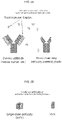
- Phage display libraries of partially or fully synthetic antibodies are available and can be screened for an antibody or fragment thereof that can bind to a selected small molecule or AB1/small molecule complex.
- Exemplary anti-septics include alcohols (e.g., ethanol, 1-propanol, 2-propanol), quaternary ammonium salts also known as quats or QAC's (e.g., benzalkonium chloride (BAC), cetyl trimethylammonium bromide (CTMB), cetylpyridinium chloride (Cetrim, CPC) and benzethonium chloride (BZT)), boric acid, brilliant green, calcium hypochlorite, chlorhexidine gluconate, hydrogen peroxide, iodine (e.g., providone-iodine and Lugol's iodine), Mercurochrome, octenidine dihydrochloride, phenol (carbolic acid) compounds, polyhexanide (polyhexamethylene biguanide, PHMB), sodium bicarbonate, sodium chloride, and sodium hyposhlorite.
- QAC's e.g., benzalkon
- anti-viral agents include 5-bromouridine, acyclovir, alovudine, amantadine, antiviral proteins, arbidol, brivudine, cidofovir, daclatasvir, docosanol, doublestranded RNA (dsRNA) activated caspase oligomerizer (DRACO), famciclovir, FGI-104, fialuridine, fomivirsen, foscarnet, FV-100, ganciclovir, ibacitabine, idoxuridine, imiquimod, inosine, inosine pranobex, interferon, maribavir, methisazone, moroxydine, nucleotide antivirals, oragen, penciclovir, pleconaril, podophyllotoxin, prosetta, PSI-6130, reciGen, resiquimod, ribavirin, rintatolimod, semap
- effector molecules are those that regulate a process in a cell when dimerized.
- effector molecules can be DNA binding domains, transcription activation domains, portions of receptors (e.g., intracellular receptors), caspases, enzymes, kinases, etc.
- Exemplary DNA-binding domain proteins and transcription activation domain proteins include zinc fingers, helix-loop-helixes, helix-turn-helixes, leucine zippers, catabolite activator protein (CAP), activator protein-1 (AP-1), CCAAT/Enhancer Binding Protein (C/EBP), heat shock proteins, activating transcription factor (ATF), cAMP response element-binding protein (CREB), cMyc, and N-Myc.
- CAP catabolite activator protein
- AP-1 activator protein-1
- C/EBP CCAAT/Enhancer Binding Protein
- ATF activating transcription factor
- CREB cAMP response element-binding protein
- cMyc cMyc
- N-Myc N-Myc
- AP-1, C/EBP, and ATF/CREB are leucine zipper proteins that bind the DNA recognition sequence as a dimer.
- Heat shock proteins are also leucine zipper proteins, but bind as a trimer.
- cMyc and N-Myc are basic helix-loop-helix proteins that bind as a dimer.
- Exemplary intracellular receptors include nuclear receptors and cytoplasmic receptors. These types of receptors are soluble proteins.
- the ligand for these receptors e.g., non-polar hormones, vitamin A, retinoic acid, vitamin D, and derivatives and metabolites
- HRE hormone-specific hormone-responsive element
- Nuclear receptors can also have DNA-binding domains containing zinc fingers and a ligand-binding domain.
- Particular embodiments include selecting, identifying and/or generating a small molecule, selecting, identifying and/or generating a first antibody binding domain (AB1) that binds the selected small molecule, and selecting a metatype antibody binding domain (AB2) that binds a portion of a first antibody binding domain (AB1), but only when AB1 is bound to a small molecule to form an AB1/small molecule complex; and expressing AB1 as a fusion protein with a first effector molecule and expressing AB2 as a fusion protein with a second effector molecule.
- AB1 first antibody binding domain
- AB2 metatype antibody binding domain
- Suitable regulatory sequences include binding sites corresponding to tissue-specific transcription factors based on endogenous nuclear proteins, sequences that direct expression in a specific cell type, the lac operator, the tetracycline operator and the steroid hormone operator. Any inducible regulatory sequence known to those of skill in the art may be used in conjunction with uses of CID systems as claimed.
- Therapeutically effective amounts can be achieved by administering single or multiple doses of AB1 fusion protein, AB2 fusion protein and the small molecule during the course of a treatment regimen (e.g., QID, TID, BID, daily, every other day, every 3 days, every 4 days, every 5 days, every 6 days, weekly, every 2 weeks, every 3 weeks, monthly, every 2 months, every 3 months, every 4 months, every 5 months, every 6 months, every 7 months, every 8 months, every 9 months, every 10 months, every 11 months, or yearly).
- a treatment regimen e.g., QID, TID, BID, daily, every other day, every 3 days, every 4 days, every 5 days, every 6 days, weekly, every 2 weeks, every 3 weeks, monthly, every 2 months, every 3 months, every 4 months, every 5 months, every 6 months, every 7 months, every 8 months, every 9 months, every 10 months, every 11 months, or yearly).
- Mata [47] describes methods to modify small molecule ⁇ -lactams (such as penicillin) for coupling to a solid support.
- doxycycline modified by nitration followed by reduction to contain a primary amine reactive group can be coupled to a carrier protein by reaction with NHS ester, imidoester, or a number of different chemical groups [44].
- the carrier protein used maybe any number of proteins used for immunization against haptens, including, for example, keyhole limpet hemocyanin (KLH), bovine serum albumin (BSA), blue carrier protein (BIP), etc.
- Southern blot, real-time PCR, or similar methods can be used to assess transgene copy number in transfected cells and the amount of vector, transposase, and Lipofectamine (or virus) can be titrated to find the appropriate amount of each to ensure single copy integration. Alternate methods of transfection or cell infection by viruses (if using retroviral or lentiviral delivery) can also be used with similar caveats.
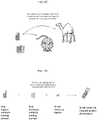
- the small molecule can be coupled to either dye using the same reactive group on the small molecule as was used for coupling to a carrier protein in Step 1 ( FIG. 3 ).
- the position on the small molecule where the fluorophore is attached is critical.
- the small molecule-dye coupling is done with a spacer arm (such as polyethylene glycol based linkers) to further minimize steric interference in the binding assay.
- BODIPY FL and fluorescein are commercially available in multiple formats (including with different spacer arms) which allow direct chemical conjugation using a variety of chemistries (Thermo Fischer, Sigma-Aldrich, etc.). Coupling can be done according to manufacturer instructions and the small molecule-dye conjugate can be purified by column chromatography. Identity and structure of the small molecule-dye conjugate can be confirmed by mass spectrometry or nuclear magnetic resonance spectroscopy based methods. All small molecule-dye conjugates can be then tested for cell permeability.
- the rate of small molecule-dye flux out of the cells and the "time to background" can be parameters used in the subsequent screen of the VHH or scFV library.
- Chemical variants of the small molecule can also be tested as described above to determine the specificity of the VHH or scFV for families of molecules. For example if doxycycline is used as the small molecule hapten, other tetracyclines (such as tetracycline, minocycline, tigecycline, etc.) can be tested for their ability to bind the VHH or scFV in competition against a doxycycline-dye conjugate. Similarly, if penicillin is used as the small molecule hapten, other ⁇ -lactam molecules can be tested for binding to the binding domains.
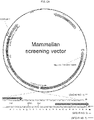
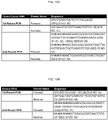
- Ligated plasmids can be transformed into E. coli strain DH5 ⁇ or DH10B (or other similar strains used for routine cloning). Plasmid DNA from individual bacterial clones can be checked by diagnostic restriction digest and sequenced by standard Sanger sequencing using the genomic DNA amplification primers in FIG. 10C [56].
- grafted VHH or scFV clones can be mutated either by point mutagenesis or DNA shuffling using known techniques [68, 76]; subsequently these mutants can be screened (either individually or in a library format) as described in Steps 8 and 9 to select for antibodies with specificity and binding affinity similar to the original VHH or scFV. That is, binding affinity should not be reduced in a statistically-significant manner. Iterative rounds of mutagenesis and selection can be done to obtain VHH or scFV with the desired specificity and binding affinity.
- the VHH or scFV library cloned into the mammalian activation domain vector can be introduced into the cell line by co-transfection of the library plasmid with a plasmid expressing, for example, the Sleeping Beauty transposase [83]. Transfection can be done using Invitrogen Lipofectamine 2000 according to the manufacturer's protocol, with modifications as necessary to ensure single copy integration of the activation domain vector (that is, each cell has at most one copy of the integrated VHH or scFV transgene).
- VHH or scFV can be re-introduced into cells as described above for re-testing and confirmation.
- Clones which retest positive are anti-metatype VHH or scFV specific for the AB1/small molecule complex.
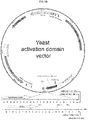
- the VHH or scFV library cloned into the yeast activation domain library ( FIG. 8B ) can be introduced into the screening strain by high efficiency LiAc transformation or electroporation [65, 66].
- Cells can be plated onto synthetic media agar plates lacking tryptophan and leucine to select for cells with the VHH or scFV activation domain plasmid. After 5-7 days growth, cell colonies (now containing the entire VHH or scFV activation domain library) can be replica plated onto synthetic media agar plates containing the small molecule, and lacking the amino acids leucine, histidine, and uracil (the small molecule can be added to the agar plates at saturating concentrations).
- the surviving cells represent those in which VHH or scFV binds to the AB1/small molecule complex, but not AB1 alone. As with mammalian cells, these cells can be further screened to identify cells with stronger binding interactions. Individual clones can be grown on appropriate selection plates or in liquid culture (-trp, -leu) containing X-gal and increasing concentrations of the small molecule. As the concentration of the small molecule is increased the interaction between the VHH or scFV AD and AB1 Gal4 DBD should also increase, giving rise to more ⁇ -galactosidase enzyme (due to the Gal4 driven LacZ gene) and more X-gal cleavage and colonies of deeper blue.
- each embodiment disclosed herein can comprise, consist essentially of or consist of its particular stated element, step, ingredient or component.
- the terms “include” or “including” should be interpreted to recite: “comprise, consist of, or consist essentially of.”
- the transition term “comprise” or “comprises” means includes, but is not limited to, and allows for the inclusion of unspecified elements, steps, ingredients, or components, even in major amounts.
- the transitional phrase “consisting of' excludes any element, step, ingredient or component not specified.
- the transition phrase “consisting essentially of” limits the scope of the embodiment to the specified elements, steps, ingredients or components and to those that do not materially affect the embodiment. A material effect would cause a statistically-significant reduction in ability to induce gene expression in a cell using a CID system created according to the methods as claimed.
Landscapes
- Health & Medical Sciences (AREA)
- Chemical & Material Sciences (AREA)
- Life Sciences & Earth Sciences (AREA)
- Organic Chemistry (AREA)
- Genetics & Genomics (AREA)
- Zoology (AREA)
- Engineering & Computer Science (AREA)
- Wood Science & Technology (AREA)
- Bioinformatics & Cheminformatics (AREA)
- Medicinal Chemistry (AREA)
- Molecular Biology (AREA)
- General Health & Medical Sciences (AREA)
- Biochemistry (AREA)
- Biomedical Technology (AREA)
- Immunology (AREA)
- General Engineering & Computer Science (AREA)
- Biotechnology (AREA)
- Microbiology (AREA)
- Biophysics (AREA)
- Proteomics, Peptides & Aminoacids (AREA)
- Virology (AREA)
- Cell Biology (AREA)
- Toxicology (AREA)
- Gastroenterology & Hepatology (AREA)
- Peptides Or Proteins (AREA)
- Medicines That Contain Protein Lipid Enzymes And Other Medicines (AREA)
- Micro-Organisms Or Cultivation Processes Thereof (AREA)
Claims (15)
- Ein Verfahren zum Herstellen eines chemisch induzierten Dimerisierungsproteinsystems, das Folgendes beinhaltet:a. Auswählen einer Metatyp-Antikörperbindungsdomäne (AB2), die einen Anteil einer ersten Antikörperbindungsdomäne (AB1) bindet, aber nur wenn AB1 an ein kleines Molekül gebunden ist, um einen Komplex aus AB1/kleinem Molekül zu bilden; undb. Exprimieren von AB1 als einem Fusionsprotein mit einem ersten Effektormolekül und Exprimieren von AB2 als einem Fusionsprotein mit einem zweiten Effektormolekül.
- Verfahren nach Anspruch 1, wobei AB1 und/oder AB2 Fragmente von Antikörperbindungsdomänen sind, wobei die Fragmente von Antikörperbindungsdomänen bevorzugt lediglich Schwerketten- (VHH-) Fragmente oder ein Einzelketten-Antikörperfragment (scFV) sind, wobei das scFV noch bevorzugter im Wesentlichen aus einer variablen schweren Kette und einer variablen leichten Kette besteht.
- Verfahren nach Anspruch 1 oder 2, das ferner Folgendes beinhaltet:Auswählen von AB 1; und/oderAuswählen des kleinen Moleküls.
- Verfahren nach Anspruch 1 oder 2, wobei das Auswählen auf dem Bestätigen der AB2-Bindung an den Komplex aus AB1/kleinem Molekül und/oder der AB1-Bindung an das kleine Molekül basiert.
- Verfahren nach einem der Ansprüche 1-4, wobei AB1 und das kleine Molekül mit hoher Affinität binden, um den Komplex aus AB1/kleinem Molekül zu bilden.
- Verfahren nach einem der Ansprüche 1-5, das ferner das Humanisieren von AB2 und/oder AB1 beinhaltet, wobei das Humanisieren bevorzugt die Immunogenität von AB2 und/oder AB1 in einem menschlichen Individuum reduziert.
- Verfahren nach einem der Ansprüche 1-6, das ferner das Optimieren von AB2 und/oder AB1 beinhaltet, um die Bindungsaffinität zwischen AB1 und dem kleinen Molekül zu erhöhen, die Bindungsaffinität zwischen AB2 und dem Komplex aus AB1/kleinem Molekül zu erhöhen; und/oder die In-vivo-Halbwertzeit von AB2 und/oder AB1 zu erhöhen.
- Verfahren nach Anspruch 6 oder 7, das ferner das Bestätigen beinhaltet, dass die Bindungsaffinität zwischen AB2 und dem Komplex aus AB1/kleinem Molekül und zwischen AB1 und dem kleinen Molekül durch das Humanisieren oder Optimieren nicht reduziert worden ist.
- Verfahren nach einem der Ansprüche 1-8:das ferner das Anhängen des kleinen Moleküls an ein Protein oder festes Substrat beinhaltet, das ferner bevorzugt das Bestätigen beinhaltet, dass AB1 das Protein oder feste Substrat nicht bindet; und/oderdas Folgendes beinhaltet:Umkehrtranskribieren der RNA von aus einem Tier isolierten B-Zellen in cDNA; und/oderAmplifizieren der von B-Zellen, die aus einem Tier isoliert wurden, umkehrtranskribierten cDNA.
- Verfahren nach einem der Ansprüche 1-9, das das Ligieren von cDNA, die für AB1 oder AB2 kodiert, in einen Screening-Vektor beinhaltet.
- Verfahren nach Anspruch 10, das das Transfizieren des Screening-Vektors in Zellen einer Wachstumskolonie beinhaltet, wobei die Zellen der Wachstumskolonie bevorzugt elektrokompetente E. coli sind.
- Verfahren nach einem der Ansprüche 1-11:wobei die von einem Tier als Reaktion auf die Immunisierung gebildeten AB1-Antikörperbindungsdomänen identifiziert werden und wobei das Identifizieren das Screenen der transfizierten Zellen von Anspruch 11 auf Bindungsdomänen, die das kleine Molekül mit hoher Affinität spezifisch binden, umfasst; und/oderwobei das erste und/oder zweite Effektormolekül ein DNA-Bindungsdomänenprotein, ein TranskriptionsAktivierungsdomänenprotein, ein Transkriptions-Repressordomänenprotein, ein intrazellulärer Anteil eines Rezeptors, ein intrazellulärer Rezeptor, eine Caspase, eine Kinase, ein Enzym oder eine Protease ist.
- Eine therapeutisch wirksame Menge eines Antikörperbindungsdomänen(AB1)-Fusionsproteins, eines Metatyp-Antikörperbindungsdomänen(AB2)-Fusionsproteins und eines kleinen Moleküls eines chemisch induzierten Dimerisierungsproteinsystems, wobei AB2 einen Anteil von AB1 bindet, aber nur wenn AB1 an ein kleines Molekül gebunden ist, um einen Komplex aus AB1/kleinem Molekül zu bilden, wobei das AB1-Fusionsprotein AB1 und ein erstes Effektormolekül beinhaltet und das AB2-Fusionsprotein AB2 und ein zweites Effektormolekül beinhaltet, zur Verwendung in einem Verfahren zum Behandeln einer Krankheit durch das Regulieren zellulärer Ereignisse, wobei das Verfahren das Verabreichen der therapeutisch wirksamen Menge des AB1-Fusionsproteins und des AB2-Fusionsproteins des chemisch induzierten Dimerisierungsproteinsystems an ein Individuum und das kontrollierbare Verabreichen der therapeutisch wirksamen Menge des kleinen Moleküls des Systems an das Individuum beinhaltet, wodurch die Krankheit durch Regulieren zellulärer Ereignisse behandelt wird.
- Eine therapeutisch wirksame Menge des AB1-Fusionsproteins, des AB2-Fusionsproteins und des kleinen Moleküls eines chemisch induzierten Dimerisierungsproteinsystems zur Verwendung nach Anspruch 13:wobei das erste und/oder zweite Effektormolekül ein DNA-Bindungsdomänenprotein, ein Transkriptionsaktivierungsdomänenprotein, ein Transkriptions-Repressordomänenprotein, ein intrazellulärer Anteil eines Rezeptors, ein intrazellulärer Rezeptor, eine Caspase, eine Kinase, ein Enzym oder eine Protease ist; und/oderwobei das regulierte zelluläre Ereignis Genexpression, intrazelluläre Rezeptorsignalgebung und/oder Zelltod ist und/oder wobei die Krankheit aus den Folgenden ausgewählt ist: Krebs, Graft-versus-Host-Krankheit, Alzheimer-Krankheit, Parkinson-Krankheit, AIDS, einer sensorischen Störung oder Schädigung, Lähmung, Taubheitsgefühl, einer Demyelinisierungskrankheit, einer Stoffwechselkrankheit, einer Autoimmunkrankheit, einer neurologischen Krankheit, einer Herzkrankheit, Diabetes, Organ- oder Gewebeabstoßung, Verbrennungen, einer Hautkrankheit und einer Knochenkrankheit.
- Verfahren nach einem der Ansprüche 1-12 oder eine therapeutisch wirksame Menge des AB1-Fusionsproteins, des AB2-Fusionsproteins und des kleinen Moleküls eines chemisch induzierten Dimerisierungsproteinsystems zur Verwendung nach Anspruch 13 oder 14, wobei AB1 lediglich ein Schwerketten- (VHH) oder ein variables Einzelkettenfragment (scFv) ist.
Applications Claiming Priority (2)
| Application Number | Priority Date | Filing Date | Title |
|---|---|---|---|
| US201562245756P | 2015-10-23 | 2015-10-23 | |
| PCT/US2016/058237 WO2017070554A1 (en) | 2015-10-23 | 2016-10-21 | Methods to create chemically-induced dimerizing protein systems for regulation of cellular events |
Publications (4)
| Publication Number | Publication Date |
|---|---|
| EP3365442A1 EP3365442A1 (de) | 2018-08-29 |
| EP3365442A4 EP3365442A4 (de) | 2019-05-01 |
| EP3365442B1 true EP3365442B1 (de) | 2022-04-27 |
| EP3365442B8 EP3365442B8 (de) | 2022-06-08 |
Family
ID=58558080
Family Applications (1)
| Application Number | Title | Priority Date | Filing Date |
|---|---|---|---|
| EP16858357.3A Active EP3365442B8 (de) | 2015-10-23 | 2016-10-21 | Verfahren zur herstellung chemisch induzierter dimerisierungsproteinsysteme zur regulierung zellulärer ereignisse |
Country Status (6)
| Country | Link |
|---|---|
| US (2) | US10954500B2 (de) |
| EP (1) | EP3365442B8 (de) |
| CA (1) | CA3002903A1 (de) |
| ES (1) | ES2923755T3 (de) |
| HK (1) | HK1258313A1 (de) |
| WO (1) | WO2017070554A1 (de) |
Families Citing this family (11)
| Publication number | Priority date | Publication date | Assignee | Title |
|---|---|---|---|---|
| US11939379B2 (en) | 2017-05-19 | 2024-03-26 | The Regents Of The University Of California | Antibody chemically induced dimerizer (AbCID) as molecular switches for regulating cellular therapies |
| US12517124B2 (en) * | 2017-06-08 | 2026-01-06 | Inserm (Institute National De La Sante Et De La Recherche Medicale) | Chimeric receptor for use in whole-cell sensors for detecting analytes of interest |
| WO2019122188A1 (en) * | 2017-12-20 | 2019-06-27 | St. Anna Kinderkrebsforschung | Ligand regulated protein-protein interaction system |
| US12460215B2 (en) * | 2018-12-06 | 2025-11-04 | William Marsh Rice University | Bacillus expression system |
| US12415869B2 (en) | 2019-04-22 | 2025-09-16 | University Of Washington | Chemically induced protein dimerization systems |
| WO2021009692A1 (en) * | 2019-07-15 | 2021-01-21 | Medimmune Limited | Tripartite systems for protein dimerization and methods of use |
| EP4028412A2 (de) * | 2019-09-13 | 2022-07-20 | The Regents of The University of California | Systeme und verfahren zum herstellen von peptid-mhc-i-komplexen mit nativen glycan-modifikationen |
| US12534510B2 (en) | 2020-04-16 | 2026-01-27 | The Regents Of The University Of California | Peptide-receptive MHC-I complex compositions and methods |
| AU2022208480A1 (en) * | 2021-01-15 | 2023-08-17 | Outpace Bio, Inc. | Small molecule-regulated gene expression system |
| US20250304983A1 (en) * | 2022-05-02 | 2025-10-02 | Regents Of The University Of Minnesota | Transcription activators and programmable transcription engineering |
| EP4471067A1 (de) | 2023-06-01 | 2024-12-04 | Miltenyi Biotec B.V. & Co. KG | Chemisch induzierbares heterodimerisierungssystem und verfahren zur erzeugung davon |
Family Cites Families (15)
| Publication number | Priority date | Publication date | Assignee | Title |
|---|---|---|---|---|
| US5530101A (en) * | 1988-12-28 | 1996-06-25 | Protein Design Labs, Inc. | Humanized immunoglobulins |
| DE3920358A1 (de) | 1989-06-22 | 1991-01-17 | Behringwerke Ag | Bispezifische und oligospezifische, mono- und oligovalente antikoerperkonstrukte, ihre herstellung und verwendung |
| US5571894A (en) | 1991-02-05 | 1996-11-05 | Ciba-Geigy Corporation | Recombinant antibodies specific for a growth factor receptor |
| GB9114948D0 (en) | 1991-07-11 | 1991-08-28 | Pfizer Ltd | Process for preparing sertraline intermediates |
| FI941572L (fi) | 1991-10-07 | 1994-05-27 | Oncologix Inc | Anti-erbB-2-monoklonaalisten vasta-aineiden yhdistelmä ja käyttömenetelmä |
| WO1993016185A2 (en) | 1992-02-06 | 1993-08-19 | Creative Biomolecules, Inc. | Biosynthetic binding protein for cancer marker |
| US5869046A (en) | 1995-04-14 | 1999-02-09 | Genentech, Inc. | Altered polypeptides with increased half-life |
| EP1254179A4 (de) * | 2000-01-24 | 2005-06-01 | Univ Columbia | In vivo screen unter verwendung von chemischen induktoren |
| US7094579B2 (en) | 2002-02-13 | 2006-08-22 | Xoma Technology Ltd. | Eukaryotic signal sequences for prokaryotic expression |
| FI20022048A0 (fi) | 2002-11-18 | 2002-11-18 | Valtion Teknillinen | Ei-kompetetiivinen immunomääritys pienille analyyteille |
| US8236925B1 (en) | 2005-08-26 | 2012-08-07 | University Of Minnesota | Protein nanorings |
| EP2836507A4 (de) * | 2012-04-13 | 2016-08-24 | Whitehead Biomedical Inst | Sortasemodifizierte vhh-domänen und verwendungen davon |
| WO2013156054A1 (en) | 2012-04-16 | 2013-10-24 | Universität Stuttgart | The igm and ige heavy chain domain 2 as covalently linked homodimerization modules for the generation of fusion proteins with dual specificity |
| EP2968502B1 (de) | 2013-03-14 | 2020-08-26 | Bellicum Pharmaceuticals, Inc. | Verfahren zur steuerung einer t-zellen-proliferation |
| GB201405845D0 (en) | 2014-04-01 | 2014-05-14 | Ucl Business Plc | Signalling system |
-
2016
- 2016-10-21 HK HK19100680.4A patent/HK1258313A1/zh unknown
- 2016-10-21 CA CA3002903A patent/CA3002903A1/en active Pending
- 2016-10-21 WO PCT/US2016/058237 patent/WO2017070554A1/en not_active Ceased
- 2016-10-21 EP EP16858357.3A patent/EP3365442B8/de active Active
- 2016-10-21 US US15/770,433 patent/US10954500B2/en active Active
- 2016-10-21 ES ES16858357T patent/ES2923755T3/es active Active
-
2021
- 2021-03-16 US US17/203,473 patent/US11993794B2/en active Active
Also Published As
| Publication number | Publication date |
|---|---|
| ES2923755T3 (es) | 2022-09-30 |
| US11993794B2 (en) | 2024-05-28 |
| HK1258313A1 (zh) | 2019-11-08 |
| CA3002903A1 (en) | 2017-04-27 |
| EP3365442A4 (de) | 2019-05-01 |
| EP3365442B8 (de) | 2022-06-08 |
| US20180319870A1 (en) | 2018-11-08 |
| US20210198646A1 (en) | 2021-07-01 |
| EP3365442A1 (de) | 2018-08-29 |
| US10954500B2 (en) | 2021-03-23 |
| WO2017070554A1 (en) | 2017-04-27 |
Similar Documents
| Publication | Publication Date | Title |
|---|---|---|
| US11993794B2 (en) | Methods to create chemically-induced dimerizing protein systems for regulation of cellular events | |
| AU2019253221B2 (en) | PD-L1 binding affimers, and uses related thereto | |
| JP2024528697A (ja) | 微細藻類由来の細胞外小胞、その調製および使用 | |
| WO2018232355A1 (en) | Rna antibodies | |
| JP2019068829A (ja) | I型インターフェロンの環状ジヌクレオチド誘導法 | |
| EP3530736A3 (de) | Humane monoklonale antikörper für den programmierten tod 1 (pd-1) und verfahren zur behandlung von krebs mit pd-1-antikörpern allein oder in kombination mit anderen immunotherapeutika | |
| CN105143263A (zh) | Bcma抗原结合蛋白 | |
| CN110121506A (zh) | 条件活性多肽及产生它们的方法 | |
| US20220251177A1 (en) | Methods and compositions relating to anti-nucleolin recombinant immunoagents | |
| TWI546381B (zh) | 用以標的黑色素瘤相關抗原a3胜肽之寡核苷酸適體及其用途 | |
| US20240409638A1 (en) | Serum half-life extended pd-l1 binding polypeptides | |
| WO2023218243A1 (en) | Lag-3/pd-l1 binding fusion proteins | |
| CN118201625A (zh) | 微藻胞外囊泡、其制备和用途 | |
| JP2025505440A (ja) | 微細藻類由来の細胞外小胞、投与の際のその体内分布および使用 | |
| TW201806970A (zh) | 嵌合抗原受體、及其利用 | |
| US20250243277A1 (en) | Pd-l1 binding affimers | |
| Orlik et al. | Liver toxicity of amanitin-based antibody drug conjugates (ATAC® s) is caused by unspecific uptake of the ATAC® into liver cells | |
| AU2022315530B2 (en) | Extracellular vesicles from microalgae, their preparation, and uses | |
| WO2023039528A1 (en) | Nanobody-mediated control of gene expression and epigenetic memory | |
| WO2025085950A1 (en) | Compositions and methods for targeting lipid nanoparticles | |
| AU2023470588A1 (en) | Compositions and methods for targeting lipid nanoparticles | |
| HK40079513A (en) | Antagonistic anti-tumor necrosis factor receptor superfamily antibodies | |
| HK1117850A1 (zh) | 能與程序性死亡配體1(pd-l1)結合的人類單克隆抗體 | |
| UA113308C2 (uk) | St2-антигензв'язувальний білок | |
| DE102007015377A1 (de) | Verfahren zur Herstellung einer transformierten Zelle |
Legal Events
| Date | Code | Title | Description |
|---|---|---|---|
| STAA | Information on the status of an ep patent application or granted ep patent |
Free format text: STATUS: THE INTERNATIONAL PUBLICATION HAS BEEN MADE |
|
| PUAI | Public reference made under article 153(3) epc to a published international application that has entered the european phase |
Free format text: ORIGINAL CODE: 0009012 |
|
| STAA | Information on the status of an ep patent application or granted ep patent |
Free format text: STATUS: REQUEST FOR EXAMINATION WAS MADE |
|
| 17P | Request for examination filed |
Effective date: 20180516 |
|
| AK | Designated contracting states |
Kind code of ref document: A1 Designated state(s): AL AT BE BG CH CY CZ DE DK EE ES FI FR GB GR HR HU IE IS IT LI LT LU LV MC MK MT NL NO PL PT RO RS SE SI SK SM TR |
|
| AX | Request for extension of the european patent |
Extension state: BA ME |
|
| DAV | Request for validation of the european patent (deleted) | ||
| DAX | Request for extension of the european patent (deleted) | ||
| A4 | Supplementary search report drawn up and despatched |
Effective date: 20190401 |
|
| RIC1 | Information provided on ipc code assigned before grant |
Ipc: C07K 16/46 20060101ALI20190326BHEP Ipc: C07K 14/705 20060101ALI20190326BHEP Ipc: C07K 16/00 20060101ALI20190326BHEP Ipc: C12N 9/64 20060101ALI20190326BHEP Ipc: C12N 9/96 20060101AFI20190326BHEP Ipc: C12N 5/0783 20100101ALI20190326BHEP Ipc: C12N 9/50 20060101ALI20190326BHEP |
|
| REG | Reference to a national code |
Ref country code: HK Ref legal event code: DE Ref document number: 1258313 Country of ref document: HK |
|
| STAA | Information on the status of an ep patent application or granted ep patent |
Free format text: STATUS: EXAMINATION IS IN PROGRESS |
|
| 17Q | First examination report despatched |
Effective date: 20200319 |
|
| REG | Reference to a national code |
Ref country code: DE Ref legal event code: R079 Ref document number: 602016071588 Country of ref document: DE Free format text: PREVIOUS MAIN CLASS: C12N0009960000 Ipc: C12N0009520000 |
|
| RIC1 | Information provided on ipc code assigned before grant |
Ipc: C12N 9/52 20060101AFI20210407BHEP Ipc: C07K 14/705 20060101ALI20210407BHEP Ipc: C07K 16/00 20060101ALI20210407BHEP Ipc: C12N 9/64 20060101ALI20210407BHEP Ipc: C12N 9/96 20060101ALI20210407BHEP |
|
| GRAP | Despatch of communication of intention to grant a patent |
Free format text: ORIGINAL CODE: EPIDOSNIGR1 |
|
| STAA | Information on the status of an ep patent application or granted ep patent |
Free format text: STATUS: GRANT OF PATENT IS INTENDED |
|
| INTG | Intention to grant announced |
Effective date: 20210607 |
|
| RIN1 | Information on inventor provided before grant (corrected) |
Inventor name: AMIN, RUPESH |
|
| GRAJ | Information related to disapproval of communication of intention to grant by the applicant or resumption of examination proceedings by the epo deleted |
Free format text: ORIGINAL CODE: EPIDOSDIGR1 |
|
| STAA | Information on the status of an ep patent application or granted ep patent |
Free format text: STATUS: EXAMINATION IS IN PROGRESS |
|
| INTC | Intention to grant announced (deleted) | ||
| GRAP | Despatch of communication of intention to grant a patent |
Free format text: ORIGINAL CODE: EPIDOSNIGR1 |
|
| STAA | Information on the status of an ep patent application or granted ep patent |
Free format text: STATUS: GRANT OF PATENT IS INTENDED |
|
| INTG | Intention to grant announced |
Effective date: 20211116 |
|
| GRAS | Grant fee paid |
Free format text: ORIGINAL CODE: EPIDOSNIGR3 |
|
| GRAA | (expected) grant |
Free format text: ORIGINAL CODE: 0009210 |
|
| STAA | Information on the status of an ep patent application or granted ep patent |
Free format text: STATUS: THE PATENT HAS BEEN GRANTED |
|
| AK | Designated contracting states |
Kind code of ref document: B1 Designated state(s): AL AT BE BG CH CY CZ DE DK EE ES FI FR GB GR HR HU IE IS IT LI LT LU LV MC MK MT NL NO PL PT RO RS SE SI SK SM TR |
|
| REG | Reference to a national code |
Ref country code: GB Ref legal event code: FG4D |
|
| REG | Reference to a national code |
Ref country code: CH Ref legal event code: EP |
|
| REG | Reference to a national code |
Ref country code: DE Ref legal event code: R081 Ref document number: 602016071588 Country of ref document: DE Owner name: FRED HUTCHINSON CANCER CENTER, SEATTLE, US Free format text: FORMER OWNER: FRED HUTCHINSON CANCER RESEARCH CENTER, SEATTLE, WA, US |
|
| REG | Reference to a national code |
Ref country code: CH Ref legal event code: PK Free format text: BERICHTIGUNG B8 |
|
| REG | Reference to a national code |
Ref country code: AT Ref legal event code: REF Ref document number: 1486963 Country of ref document: AT Kind code of ref document: T Effective date: 20220515 |
|
| REG | Reference to a national code |
Ref country code: DE Ref legal event code: R096 Ref document number: 602016071588 Country of ref document: DE |
|
| REG | Reference to a national code |
Ref country code: IE Ref legal event code: FG4D |
|
| RAP2 | Party data changed (patent owner data changed or rights of a patent transferred) |
Owner name: FRED HUTCHINSON CANCER CENTER |
|
| REG | Reference to a national code |
Ref country code: GB Ref legal event code: 732E Free format text: REGISTERED BETWEEN 20220519 AND 20220525 |
|
| REG | Reference to a national code |
Ref country code: LT Ref legal event code: MG9D |
|
| REG | Reference to a national code |
Ref country code: NL Ref legal event code: MP Effective date: 20220427 |
|
| REG | Reference to a national code |
Ref country code: AT Ref legal event code: MK05 Ref document number: 1486963 Country of ref document: AT Kind code of ref document: T Effective date: 20220427 |
|
| PG25 | Lapsed in a contracting state [announced via postgrant information from national office to epo] |
Ref country code: NL Free format text: LAPSE BECAUSE OF FAILURE TO SUBMIT A TRANSLATION OF THE DESCRIPTION OR TO PAY THE FEE WITHIN THE PRESCRIBED TIME-LIMIT Effective date: 20220427 |
|
| REG | Reference to a national code |
Ref country code: ES Ref legal event code: FG2A Ref document number: 2923755 Country of ref document: ES Kind code of ref document: T3 Effective date: 20220930 |
|
| PG25 | Lapsed in a contracting state [announced via postgrant information from national office to epo] |
Ref country code: SE Free format text: LAPSE BECAUSE OF FAILURE TO SUBMIT A TRANSLATION OF THE DESCRIPTION OR TO PAY THE FEE WITHIN THE PRESCRIBED TIME-LIMIT Effective date: 20220427 Ref country code: PT Free format text: LAPSE BECAUSE OF FAILURE TO SUBMIT A TRANSLATION OF THE DESCRIPTION OR TO PAY THE FEE WITHIN THE PRESCRIBED TIME-LIMIT Effective date: 20220829 Ref country code: NO Free format text: LAPSE BECAUSE OF FAILURE TO SUBMIT A TRANSLATION OF THE DESCRIPTION OR TO PAY THE FEE WITHIN THE PRESCRIBED TIME-LIMIT Effective date: 20220727 Ref country code: LT Free format text: LAPSE BECAUSE OF FAILURE TO SUBMIT A TRANSLATION OF THE DESCRIPTION OR TO PAY THE FEE WITHIN THE PRESCRIBED TIME-LIMIT Effective date: 20220427 Ref country code: HR Free format text: LAPSE BECAUSE OF FAILURE TO SUBMIT A TRANSLATION OF THE DESCRIPTION OR TO PAY THE FEE WITHIN THE PRESCRIBED TIME-LIMIT Effective date: 20220427 Ref country code: GR Free format text: LAPSE BECAUSE OF FAILURE TO SUBMIT A TRANSLATION OF THE DESCRIPTION OR TO PAY THE FEE WITHIN THE PRESCRIBED TIME-LIMIT Effective date: 20220728 Ref country code: FI Free format text: LAPSE BECAUSE OF FAILURE TO SUBMIT A TRANSLATION OF THE DESCRIPTION OR TO PAY THE FEE WITHIN THE PRESCRIBED TIME-LIMIT Effective date: 20220427 Ref country code: BG Free format text: LAPSE BECAUSE OF FAILURE TO SUBMIT A TRANSLATION OF THE DESCRIPTION OR TO PAY THE FEE WITHIN THE PRESCRIBED TIME-LIMIT Effective date: 20220727 Ref country code: AT Free format text: LAPSE BECAUSE OF FAILURE TO SUBMIT A TRANSLATION OF THE DESCRIPTION OR TO PAY THE FEE WITHIN THE PRESCRIBED TIME-LIMIT Effective date: 20220427 |
|
| PG25 | Lapsed in a contracting state [announced via postgrant information from national office to epo] |
Ref country code: RS Free format text: LAPSE BECAUSE OF FAILURE TO SUBMIT A TRANSLATION OF THE DESCRIPTION OR TO PAY THE FEE WITHIN THE PRESCRIBED TIME-LIMIT Effective date: 20220427 Ref country code: PL Free format text: LAPSE BECAUSE OF FAILURE TO SUBMIT A TRANSLATION OF THE DESCRIPTION OR TO PAY THE FEE WITHIN THE PRESCRIBED TIME-LIMIT Effective date: 20220427 Ref country code: LV Free format text: LAPSE BECAUSE OF FAILURE TO SUBMIT A TRANSLATION OF THE DESCRIPTION OR TO PAY THE FEE WITHIN THE PRESCRIBED TIME-LIMIT Effective date: 20220427 Ref country code: IS Free format text: LAPSE BECAUSE OF FAILURE TO SUBMIT A TRANSLATION OF THE DESCRIPTION OR TO PAY THE FEE WITHIN THE PRESCRIBED TIME-LIMIT Effective date: 20220827 |
|
| REG | Reference to a national code |
Ref country code: DE Ref legal event code: R097 Ref document number: 602016071588 Country of ref document: DE |
|
| PG25 | Lapsed in a contracting state [announced via postgrant information from national office to epo] |
Ref country code: SM Free format text: LAPSE BECAUSE OF FAILURE TO SUBMIT A TRANSLATION OF THE DESCRIPTION OR TO PAY THE FEE WITHIN THE PRESCRIBED TIME-LIMIT Effective date: 20220427 Ref country code: SK Free format text: LAPSE BECAUSE OF FAILURE TO SUBMIT A TRANSLATION OF THE DESCRIPTION OR TO PAY THE FEE WITHIN THE PRESCRIBED TIME-LIMIT Effective date: 20220427 Ref country code: RO Free format text: LAPSE BECAUSE OF FAILURE TO SUBMIT A TRANSLATION OF THE DESCRIPTION OR TO PAY THE FEE WITHIN THE PRESCRIBED TIME-LIMIT Effective date: 20220427 Ref country code: EE Free format text: LAPSE BECAUSE OF FAILURE TO SUBMIT A TRANSLATION OF THE DESCRIPTION OR TO PAY THE FEE WITHIN THE PRESCRIBED TIME-LIMIT Effective date: 20220427 Ref country code: DK Free format text: LAPSE BECAUSE OF FAILURE TO SUBMIT A TRANSLATION OF THE DESCRIPTION OR TO PAY THE FEE WITHIN THE PRESCRIBED TIME-LIMIT Effective date: 20220427 Ref country code: CZ Free format text: LAPSE BECAUSE OF FAILURE TO SUBMIT A TRANSLATION OF THE DESCRIPTION OR TO PAY THE FEE WITHIN THE PRESCRIBED TIME-LIMIT Effective date: 20220427 |
|
| PLBE | No opposition filed within time limit |
Free format text: ORIGINAL CODE: 0009261 |
|
| STAA | Information on the status of an ep patent application or granted ep patent |
Free format text: STATUS: NO OPPOSITION FILED WITHIN TIME LIMIT |
|
| PG25 | Lapsed in a contracting state [announced via postgrant information from national office to epo] |
Ref country code: AL Free format text: LAPSE BECAUSE OF FAILURE TO SUBMIT A TRANSLATION OF THE DESCRIPTION OR TO PAY THE FEE WITHIN THE PRESCRIBED TIME-LIMIT Effective date: 20220427 |
|
| 26N | No opposition filed |
Effective date: 20230130 |
|
| PG25 | Lapsed in a contracting state [announced via postgrant information from national office to epo] |
Ref country code: SI Free format text: LAPSE BECAUSE OF FAILURE TO SUBMIT A TRANSLATION OF THE DESCRIPTION OR TO PAY THE FEE WITHIN THE PRESCRIBED TIME-LIMIT Effective date: 20220427 Ref country code: MC Free format text: LAPSE BECAUSE OF FAILURE TO SUBMIT A TRANSLATION OF THE DESCRIPTION OR TO PAY THE FEE WITHIN THE PRESCRIBED TIME-LIMIT Effective date: 20220427 |
|
| REG | Reference to a national code |
Ref country code: CH Ref legal event code: PL |
|
| P01 | Opt-out of the competence of the unified patent court (upc) registered |
Effective date: 20230515 |
|
| REG | Reference to a national code |
Ref country code: BE Ref legal event code: MM Effective date: 20221031 |
|
| PG25 | Lapsed in a contracting state [announced via postgrant information from national office to epo] |
Ref country code: LU Free format text: LAPSE BECAUSE OF NON-PAYMENT OF DUE FEES Effective date: 20221021 |
|
| PG25 | Lapsed in a contracting state [announced via postgrant information from national office to epo] |
Ref country code: LI Free format text: LAPSE BECAUSE OF NON-PAYMENT OF DUE FEES Effective date: 20221031 Ref country code: CH Free format text: LAPSE BECAUSE OF NON-PAYMENT OF DUE FEES Effective date: 20221031 |
|
| PG25 | Lapsed in a contracting state [announced via postgrant information from national office to epo] |
Ref country code: BE Free format text: LAPSE BECAUSE OF NON-PAYMENT OF DUE FEES Effective date: 20221031 |
|
| PG25 | Lapsed in a contracting state [announced via postgrant information from national office to epo] |
Ref country code: IE Free format text: LAPSE BECAUSE OF NON-PAYMENT OF DUE FEES Effective date: 20221021 |
|
| PG25 | Lapsed in a contracting state [announced via postgrant information from national office to epo] |
Ref country code: HU Free format text: LAPSE BECAUSE OF FAILURE TO SUBMIT A TRANSLATION OF THE DESCRIPTION OR TO PAY THE FEE WITHIN THE PRESCRIBED TIME-LIMIT; INVALID AB INITIO Effective date: 20161021 |
|
| PG25 | Lapsed in a contracting state [announced via postgrant information from national office to epo] |
Ref country code: CY Free format text: LAPSE BECAUSE OF FAILURE TO SUBMIT A TRANSLATION OF THE DESCRIPTION OR TO PAY THE FEE WITHIN THE PRESCRIBED TIME-LIMIT Effective date: 20220427 |
|
| PG25 | Lapsed in a contracting state [announced via postgrant information from national office to epo] |
Ref country code: MK Free format text: LAPSE BECAUSE OF FAILURE TO SUBMIT A TRANSLATION OF THE DESCRIPTION OR TO PAY THE FEE WITHIN THE PRESCRIBED TIME-LIMIT Effective date: 20220427 |
|
| PG25 | Lapsed in a contracting state [announced via postgrant information from national office to epo] |
Ref country code: MT Free format text: LAPSE BECAUSE OF FAILURE TO SUBMIT A TRANSLATION OF THE DESCRIPTION OR TO PAY THE FEE WITHIN THE PRESCRIBED TIME-LIMIT Effective date: 20220427 |
|
| PG25 | Lapsed in a contracting state [announced via postgrant information from national office to epo] |
Ref country code: BG Free format text: LAPSE BECAUSE OF FAILURE TO SUBMIT A TRANSLATION OF THE DESCRIPTION OR TO PAY THE FEE WITHIN THE PRESCRIBED TIME-LIMIT Effective date: 20220427 |
|
| PG25 | Lapsed in a contracting state [announced via postgrant information from national office to epo] |
Ref country code: BG Free format text: LAPSE BECAUSE OF FAILURE TO SUBMIT A TRANSLATION OF THE DESCRIPTION OR TO PAY THE FEE WITHIN THE PRESCRIBED TIME-LIMIT Effective date: 20220427 |
|
| PGFP | Annual fee paid to national office [announced via postgrant information from national office to epo] |
Ref country code: DE Payment date: 20241029 Year of fee payment: 9 |
|
| PGFP | Annual fee paid to national office [announced via postgrant information from national office to epo] |
Ref country code: GB Payment date: 20241028 Year of fee payment: 9 |
|
| PGFP | Annual fee paid to national office [announced via postgrant information from national office to epo] |
Ref country code: FR Payment date: 20241025 Year of fee payment: 9 |
|
| PGFP | Annual fee paid to national office [announced via postgrant information from national office to epo] |
Ref country code: IT Payment date: 20241021 Year of fee payment: 9 Ref country code: ES Payment date: 20241104 Year of fee payment: 9 |
|
| PG25 | Lapsed in a contracting state [announced via postgrant information from national office to epo] |
Ref country code: TR Free format text: LAPSE BECAUSE OF FAILURE TO SUBMIT A TRANSLATION OF THE DESCRIPTION OR TO PAY THE FEE WITHIN THE PRESCRIBED TIME-LIMIT Effective date: 20220427 |
|
| REG | Reference to a national code |
Ref country code: HK Ref legal event code: WD Ref document number: 1258313 Country of ref document: HK |